EP1075461B1 - Perfluorinated esters of alkanoyl l-carnitine for the preparation of cationic lipids for the intracellular delivery of pharmacologically active compounds - Google Patents
Perfluorinated esters of alkanoyl l-carnitine for the preparation of cationic lipids for the intracellular delivery of pharmacologically active compounds Download PDFInfo
- Publication number
- EP1075461B1 EP1075461B1 EP99921126A EP99921126A EP1075461B1 EP 1075461 B1 EP1075461 B1 EP 1075461B1 EP 99921126 A EP99921126 A EP 99921126A EP 99921126 A EP99921126 A EP 99921126A EP 1075461 B1 EP1075461 B1 EP 1075461B1
- Authority
- EP
- European Patent Office
- Prior art keywords
- acid
- ester
- carnitine
- alkanoyl
- undecanoyl
- Prior art date
- Legal status (The legal status is an assumption and is not a legal conclusion. Google has not performed a legal analysis and makes no representation as to the accuracy of the status listed.)
- Expired - Lifetime
Links
- 0 *OC(CC*(N)(N)N)CC(O*)=O Chemical compound *OC(CC*(N)(N)N)CC(O*)=O 0.000 description 1
Classifications
-
- A—HUMAN NECESSITIES
- A61—MEDICAL OR VETERINARY SCIENCE; HYGIENE
- A61K—PREPARATIONS FOR MEDICAL, DENTAL OR TOILETRY PURPOSES
- A61K48/00—Medicinal preparations containing genetic material which is inserted into cells of the living body to treat genetic diseases; Gene therapy
-
- A—HUMAN NECESSITIES
- A61—MEDICAL OR VETERINARY SCIENCE; HYGIENE
- A61K—PREPARATIONS FOR MEDICAL, DENTAL OR TOILETRY PURPOSES
- A61K9/00—Medicinal preparations characterised by special physical form
- A61K9/10—Dispersions; Emulsions
- A61K9/127—Synthetic bilayered vehicles, e.g. liposomes or liposomes with cholesterol as the only non-phosphatidyl surfactant
- A61K9/1271—Non-conventional liposomes, e.g. PEGylated liposomes or liposomes coated or grafted with polymers
- A61K9/1272—Non-conventional liposomes, e.g. PEGylated liposomes or liposomes coated or grafted with polymers comprising non-phosphatidyl surfactants as bilayer-forming substances, e.g. cationic lipids or non-phosphatidyl liposomes coated or grafted with polymers
-
- C—CHEMISTRY; METALLURGY
- C07—ORGANIC CHEMISTRY
- C07C—ACYCLIC OR CARBOCYCLIC COMPOUNDS
- C07C229/00—Compounds containing amino and carboxyl groups bound to the same carbon skeleton
- C07C229/02—Compounds containing amino and carboxyl groups bound to the same carbon skeleton having amino and carboxyl groups bound to acyclic carbon atoms of the same carbon skeleton
- C07C229/04—Compounds containing amino and carboxyl groups bound to the same carbon skeleton having amino and carboxyl groups bound to acyclic carbon atoms of the same carbon skeleton the carbon skeleton being acyclic and saturated
- C07C229/22—Compounds containing amino and carboxyl groups bound to the same carbon skeleton having amino and carboxyl groups bound to acyclic carbon atoms of the same carbon skeleton the carbon skeleton being acyclic and saturated the carbon skeleton being further substituted by oxygen atoms
Definitions
- the present invention relates to a class of perfluorinated esters of alkanoyl L-carnitine and their use as cationic lipids suitable for favouring the intracellular delivery of pharmacologically active compounds, facilitating their transmembrane transport, or for promoting their interaction with specific cell membrane sites (receptors).
- Intracellular delivery is cellular transfection with polynucleotides endowed with therapeutic action and the introduction of antiviral drugs or immunogenic polypeptides into the cells.
- the cell membrane constitutes a selectively impermeable barrier.
- the cell membrane performs a protective function, preventing the entry of potentially toxic substances, but also that of compounds with therapeutic activity.
- the complex composition of the cell membrane includes phospholipids, glycolipids and proteins; its function is influenced by cytoplasmatic components such as Ca ++ and other ions, ATP, microfilaments, microtubules, enzymes and proteins that bind Ca ++ .
- the interaction between the structural and cytoplasmatic components of the cells and the response to external signals are responsible for the selectivity shown by and the various different cell types.
- the barrier effect of the membranes can be overcome by combining substances in complexes with lipid formulations that reproduce the composition of naturally occurring membrane lipids. These lipids are capable of fusing with the membranes and of releasing the substances combined with them into the cells.
- the lipid complexes are capable not only of facilitating intracellular transfer by means of fusion with the membranes, but can also diminish the charge repulsion between the membrane and the molecule that has to penetrate into the cell.
- Amphipathic lipids, such as membrane phospholipids form lipid vesicles or liposomes in the aqueous systems.
- Liposomes are vesicles in which an aqueous volume is entirely enclosed by one or more membranes composed of lipid molecules, usually phospholipids.
- Phospholipids which consist in a hydrophilic head and a pair of carbon chains (hydrophobic tail), are the main components of biological membranes. In aqueous solution the hydrophobic tails autoassociate to exclude water, while the hydrophilic heads interact with the medium, spontaneously forming populations of vesicles of varying diameters.
- the lipids are generally zwitterionic, neutral or anionic. These vesicles can be used as carriers of drugs, small molecules, proteins, nucleotides and plasmids.
- the cationic liposomes a class of positively charged vesicles prepared from synthetic lipids, have been extensively used for the transfer of genetic material into the cells.
- the negative charge of DNA can interact with the positive charges of the cationic lipids, forming a stable DNA-liposome complex.
- the simplicity and versatility of this technology have made liposomes an important vehicle for the delivery of genes for gene therapy in human subjects.
- most of the vectors used for gene therapy and approved by the NIH Recombinant Advisory Committee include viral and synthetic systems.
- Viral infection involves a series of complex mechanisms in order to be able to attack a specific cell and carry the DNA into the nucleus.
- the rationale for the use of viral vectors for gene therapy is based on the possibility of replacing the viral genes with genes that code for a therapeutic function, while eliminating the ability of the viral particle to infect the cells.
- the limitations of viral therapy have to do with those viral elements that may be immunogenic, cytopathic and recombinogenic.
- Cationic lipids play a very important role in the formation of the DNA-lipid complex, in cell-complex interaction, in fusion with the membrane, in DNA release inside the cell and in transcription.
- cationic lipids Four constituent elements are generally identified in the structure of cationic lipids: the positively charged cationic head, the spacer, the anchor lipid and the linker bond.
- the cationic head is responsible for the interactions between cationic liposomes and DNA, between the DNA-liposome complex and the cell membrane and the other components of the cell. It consists of mono- or polycationic groups (depending on the number of charges) that can be variably substituted.
- the spacer is the part of the molecule that separates the cationic head from the hydrophobic tail and is involved in ensuring optimal contact between the cationic head and the negative charges of the DNA phosphates.
- the anchor lipid is the non-polar hydrocarbon part of the molecule and determines the physical properties of the double lipid layer, such as its rigidity and rate of exchange with membrane lipids.
- linker bond is the bond between the hydrocarbon chains and the rest of the molecule. This bond determines the chemical stability and biodegradability of the cationic lipids.
- liposomes of phosphatidyl carnitine are produced which incorporate propranolol, a drug known to be active as an antihypertensive, anti-angina and antiarrhythmia agent.
- the carnitine derivative is used here on account of the pronounced myocardial tropism of carnitine. This tropism makes it possible to avoid the liposomes being metabolised by the liver, rather than reaching the desired target site.
- phosphatidyl carnitine makes it possible to administer the liposomes orally, since they are resistant to intestinal lipases.
- cationic lipids with a potent action favouring intracellular delivery of biologically active compounds consist in the perfluorinated esters of alkanoyl L-carnitine with the following formula (I): where:
- esters of formula (I) are new, accordingly, they represent a further object of the present invention, together with their use in the preparation of cationic liposomes.
- Another object of the present invention is the use of a cationic liposome as above defined for the preparation of a medicament useful for the intracellular delivery of a pharmacologically active compound, said medicament being also useful for promoting the interaction of a pharmacologically active compound with cell membrane receptors.
- the pharmacologically active compound is a gene, optionally comprised in a suitable vector. Therefore, the medicament provided by the present invention is useful for gene therapy, for example wherein said gene is ⁇ -gal.
- R 1 examples of R 1 , though not exclusively these are: acetyl, propionyl, butyryl, valeryl, isovaleryl, undecanoyl, lauroyl, tridecafluoroheptanoyl, heptadecafluorononanoyl, heptacosafluoromyristoyl, pentadecafluoro-octanoyl and 5H-octafluoropentanoyl.
- R 2 is an alkyl in which at least 40% of the hydrogen atoms are replaced by fluorine atoms. Examples of such alkyls, though not exclusively these, are:
- pharmacologically acceptable acid is the anion of an acid that does not give rise to unwanted toxic or side effects.
- chloride bromide; iodide; aspartate; acid aspartate; citrate; acid citrate; tartrate; mucate; phosphate; acid phosphate; fumarate; acid fumarate; glycerophosphate; glucose phosphate; lactate; maleate; acid maleate; orotate; oxalate; acid oxalate; sulphate; acid sulphate; trichloroacetate; trifluoroacetate and methane sulphonate.
- Undecanoyl-L-carnitine chloride (6.6 g; 0.018 mol), previously vacuum-dried at 40°C, was dissolved in 20 mL of anhydrous CH 2 Cl 2 .
- Thionyl chloride (2.2 mL; 0.03 mol) was added dropwise to the solution thus obtained at 0°C under stirring.
- the undecanoyl-L-carnitine acid chloride thus obtained was solubilised in 20 mL of anhydrous methylene chloride and the resulting solution added dropwise at 0°C to 1,1H-2,2H-hepatdecafluorodecanol-1 (13.9 g; 0.03 mol).
- the resulting mixture was kept for one night under stirring at room temperature.
- Liposomes were prepared starting with 200 mg of ST1223, synthesised according to the procedure described in EXAMPLE 1 and solubilised in 50 mL of chloroform (solubilisation phase). The solvent was then eliminated under vacuum for one night (t 30-40°C; 400-700 mm Hg i.e. 52.60-92.10 kPa). The sample was hydrated with deionised water to a final concentration of 5 mM (hydration phase). The liposomes were then subjected to sonication for 1 h at 10-second intervals using a sonication bath. The liposomes thus prepared produced unilaminar vesicles.
- the liposome-DNA complex was prepared by mixing the two solutions A and B described here below:
- the two solutions were mixed by stirring gently and incubated for 10-30 min at room temperature.
- the efficiency of transfection mediated by cationic liposomes is influenced by various parameters such as the presence or absence of serum in the incubation medium, and the cell line and density. DNA transfection was performed according to the following parameters:
- pCMV- ⁇ -Gal DNA transfection mediated by cationic liposomes in the various cell lines HeLa, MCF-7, Caco2, and T98-G was performed at different cell densities: 100,000 cells/dish 200.000 cells/dish and 300.000 cells/dish. The greatest transfection efficiency was observed at a density of 100.000 cells/dish for Caco2, 200.000 cells/dish for HeLa and MCF-7, and 300.000 cells/dish for T98-G.
- the transfection procedure is described as follows:
- Cells were plated at different densities (100.000 cells/dish, 200.000 cells/dish, 300.000 cells/dish) in Petri dishes (Coming or Falcon) measuring approximately 3 cm in diameter and incubated in 2 mL of medium for 18 h before being treated.
- Table 1 and Figure 1 give the expression data for the enzyme ⁇ -galactosidase ( ⁇ -Gal) as a function of cell density in HeLa cells.
- the transfection procedure is described in EXAMPLE 9.
- Density (cells/dish) Total proteins ( ⁇ g /dish) ⁇ -Gal (pg /dish) 100.000 141 87 200.000 282 303 300.000 413 83
- Table 2 and Figure 1 give the expression data for the enzyme ⁇ -galactosidase ( ⁇ -Gal) as a function of cell density in MCF-7 cells.
- the transfection procedure is described in EXAMPLE 9. Density (cells/dish) Total proteins ( ⁇ g /dish) ⁇ -Gal (pg /dish) 100.000 99 234 200.000 205 422 300.000 276 409
- Table 3 and Figure 1 give the expression data for the enzyme ⁇ -galactosidase ( ⁇ -Gal) as a function of cell density in T98-G cells.
- the transfection procedure is described in EXAMPLE 9. Density (cells/dish) Total proteins ( ⁇ g/ dish) ⁇ -Gal ( ⁇ g/dish) 100.000 75 126 200.000 129 330 300.000 218 491
- Table 4 and Figure 1 give the expression data for the enzyme ⁇ -galactosidase ( ⁇ -Gal) as a function of cell density in Caco2 cells.
- the transfection procedure is described in EXAMPLE 9. Density (cells/dish) Total proteins ( ⁇ g/ dish) ⁇ -Gal (pg/dish) 100.000 42 422 200.000 132 395 300.000 193 385
Landscapes
- Chemical & Material Sciences (AREA)
- Health & Medical Sciences (AREA)
- Organic Chemistry (AREA)
- Life Sciences & Earth Sciences (AREA)
- Public Health (AREA)
- Veterinary Medicine (AREA)
- Medicinal Chemistry (AREA)
- Molecular Biology (AREA)
- Pharmacology & Pharmacy (AREA)
- Epidemiology (AREA)
- Animal Behavior & Ethology (AREA)
- General Health & Medical Sciences (AREA)
- Genetics & Genomics (AREA)
- Biotechnology (AREA)
- Engineering & Computer Science (AREA)
- Biophysics (AREA)
- Dispersion Chemistry (AREA)
- Medicinal Preparation (AREA)
- Organic Low-Molecular-Weight Compounds And Preparation Thereof (AREA)
- Pharmaceuticals Containing Other Organic And Inorganic Compounds (AREA)
- Medicines That Contain Protein Lipid Enzymes And Other Medicines (AREA)
- Acyclic And Carbocyclic Compounds In Medicinal Compositions (AREA)
Abstract
Description

Examples of such alkyls, though not exclusively these, are:
- 1,1H-2,2H-tridecafluoro-octyl;
- 1,1H-2,2H-3,3H-pentafluoropentyl;
- 1,1H-2,2H-nonafluorohexyl;
- 1,1H-2,2H-3,3H-4,4H-5,5H-6,6H-nonafluorodecyl;
- 1,1H-2,2H-heptadecafluorodecyl;
- 1,1H-2,2H-heinicosafluorododecyl; and
- 1,1H-tricosafluorododecyl.
4 g of titre product were obtained. Yield: 27%.
| Elemental analysis for C28H39NO4F17Cl: | |||||
| C% | H% | N% | Cl% | F% | |
| Calculated | 41.4 | 4.84 | 1.72 | 4.36 | 39.77 |
| Found | 40.03 | 4.77 | 0.86 | 5.68 | 38.9 |
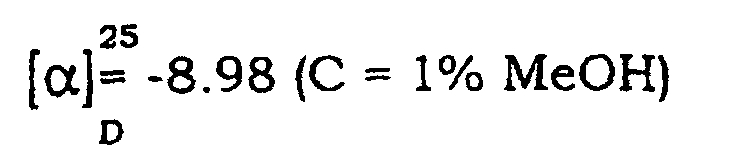
- Column:
- µBondapak - C18 (10 µm) 3.9 mm X 300 mm
- Temp.
- 30°C
- Eluent
- CH3CN/NH4H2PO4 50mM 80/20 pH = 3.0
- Flow rate
- 1.0 mL/min
- Rt
- 19.42 min


- HeLa
- human uterine carcinoma
- MCF-7
- human mammary adenocarcinoma
- Caco2
- human colon adenocarcinoma
- T98-G
- human glioblastoma
- HeLa cells
- RPMI-1640 (HyQ catalogue), 10% fetal calf serum, 1% L-glutamine, 1% streptomycin, 1% penicillin
- MCF-7 cells
- DMEM (Dulbecco Modified Eagle Medium, SIGMA catalogue), 10% fetal calf serum, 1% L-glutamine, 1% streptomycin, 1% penicillin
- Caco2 cells
- EMEM (Essential Minimum Eagle Medium, SIGMA
catalogue),
15% fetal calf serum, 1% L-glutamine, 1% streptomycin, 1%, penicillin - T98-G cells
- EMEM (Essential Minimum Eagle Medium, SIGMA
catalogue),
10% fetal calf serum, 1% L-glutamine, 1% streptomycin, 1%
penicillin.
| Density (cells/dish) | Total proteins (µg /dish) | β-Gal (pg /dish) |
| 100.000 | 141 | 87 |
| 200.000 | 282 | 303 |
| 300.000 | 413 | 83 |
| Density (cells/dish) | Total proteins (µg /dish) | β-Gal (pg /dish) |
| 100.000 | 99 | 234 |
| 200.000 | 205 | 422 |
| 300.000 | 276 | 409 |
| Density (cells/dish) | Total proteins (µg/ dish) | β-Gal (µg/dish) |
| 100.000 | 75 | 126 |
| 200.000 | 129 | 330 |
| 300.000 | 218 | 491 |
| Density (cells/dish) | Total proteins (µg/ dish) | β-Gal (pg/dish) |
| 100.000 | 42 | 422 |
| 200.000 | 132 | 395 |
| 300.000 | 193 | 385 |
Claims (19)
- Perfluorinated ester of alkanoyl-L-carnitine with formula (I) :where:
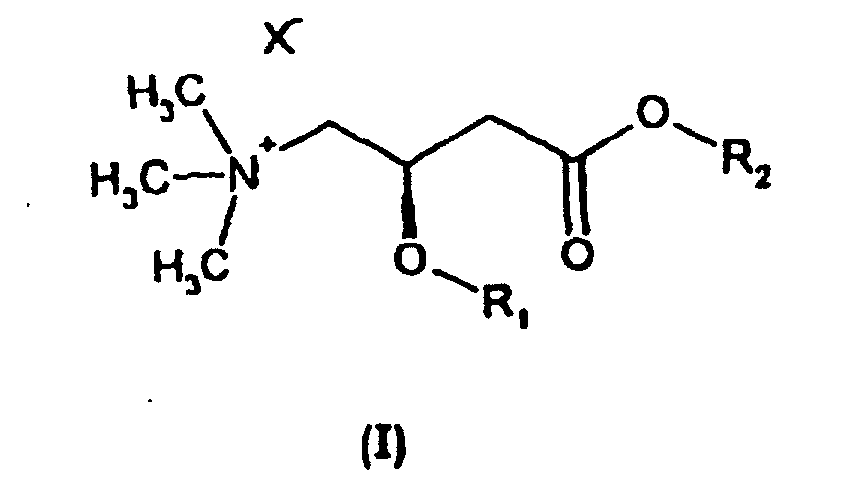 R1 is alkanoyl, linear or branched, with 2-20 carbon atoms, optionally perfluorinatedR2 is an alkyl, linear or branched, with 4-20 carbon atom, in which at least 40% of the hydrogen atoms are replaced by fluorine atoms; andX- is the anion of a pharmacologically acceptable acid.
 - Ester according to claim 1 in which R1 is selected from the group consisting of acetyl, propionyl, butyryl, valeryl, isovaleryl, undecanoyl, lauroyl, tridecafluoroheptanoyl, heptadecafluorononanoyl, heptacosafluoromyristoyl, pentadecafluoro-octanoyl and 5H-octafluoropentanoyl.
- Ester according to claims 1 or 2 in which R2 is selected from the group consisting of: 1,1H-2,2H-tridecafluoro-octyl; 1,1H-2,2H-3,3H-pentafluoropentyl; 1,1H-2,2H-nonafluorohexyl; 1,1H-2,2H-3,3H-4,4H-5,5H-6,6H-nonafluorodecyl; 1,1H-2,2H-heptadecafluorodecyl; 1,1H-2,2H-heinicosafluorododecyl; and 1, 1H-tricosafluorododecyl.
- Ester according to claim 1, in which R1 has 4-12 carbon atoms and R2 has 5-12 carbon atoms.
- Ester according to claims 1 or 2 in which X- is selected from the group consisting of: chloride: bromide; iodide; aspartate; acid aspartate; citrate; acid citrate; tartrate; mucate; phosphate; acid phosphate; fumarate; acid fumarate; glycerophosphate; glucose phosphate; lactate; maleate; acid maleate; orotate; oxalate; acid oxalate; sulphate; acid sulphate; trichloroacetate; trifluoroacetate and methane sulphonate.
- Undecanoyl-L-carnitine chloride 1,1H-2,2H-heptadecafluorodecyl ester.
- Lauroyl-L-carnitine chloride 1,1H-2,2H-tridecafluoro-octyl ester.
- Lauroyl-L-carnitine chloride 1,1H-2,2H-3,3H-pentafluoropentyl ester.
- Undecanoyl-L-carnitine chloride 1,1H-2,2H-nonafluorohexyl ester.
- Isovaleryl-L-carnitine chloride 1,1H-2,2H-3,3H-4,4H-5,5H-6,6H nonafluoro-decyl ester.
- Undecanoyl-L-carnitine chloride 1,1H-2,2H-3,3H-4,4H-5,5H-6,6H nonafluoro-decyl ester.
- Use of an ester according to anyone of claims 1-11 for the production of liposomes.
- Liposome containing a perfluorinated ester of alkanoyl L-camitine with formula (I):where:
 R1 is alkanoyl, linear or branched, with 2-20 carbon atoms, optionally perfluorinatedR2 is an alkyl, linear or branched, with 4-20 carbon atoms, in which at least 40% of the hydrogen atoms are replaced by fluorine atoms; andX- is the anion of a pharmacologically acceptable acid.
 - Liposome according to claim 13 in which R1 is selected from the group consisting of acetyl, propionyl, butyryl, valeryl, isovaleryl, undecanoyl, lauroyl, tridecafluoroheptanoyl, heptadecafluorononanoyl, heptacosafluoromyristoyl, pentadecafluoro-octanoyl and 5H-octafluoropentanoyl, R2 is selected from the group consisting of: 1,1H-2,2H-tridecafluoro-octyl; 1,1H-2,2H-3,3H-pentafluoropentyl; 1,1H-2,2H-nonafluorohexyl; 1,1H-2,2H-3,3H-4,4H-5,5H-6,6H-nonafluorodecyl; 1,1H-2,2H-heptadecafluorodecyl; 1,1H-2,2H-heinicosa-fluorododecyl; and 1,1H-tricosafluorododecyl, and X- is selected from the group consisting of: chloride: bromide; iodide; aspartate; acid aspartate; citrate; acid citrate; tartrate; mucate; phosphate; acid phosphate; fumarate; acid fumarate; glycerophosphate; glucose phosphate; lactate; maleate; acid maleate; orotate; oxalate; acid oxalate; sulphate; acid sulphate; trichloroacetate; trifluoroacetate and methane sulphonate.
- Use of a cationic liposome of claim 13 or 14 for the preparation of a medicament useful for the intracellular delivery of a pharmacologically active compound.
- Use of a cationic liposome of claim 13 or 14 for the preparation of a medicament useful for promoting the interaction of a pharmacologically active compound with cell membrane receptors.
- Use according to claim 15, wherein said pharmacologically active compound is a gene, optionally comprised in a suitable vector.
- Use according to claim 15, wherein said medicament is useful for gene therapy.
- Use according to claim 17 or 18, wherein said gene is β-gal.
Priority Applications (1)
| Application Number | Priority Date | Filing Date | Title |
|---|---|---|---|
| DK99921126T DK1075461T3 (en) | 1998-05-06 | 1999-05-04 | Perfluorinated esters of alkanoyl-L-carnitine for the preparation of cationic lipids for the intracellular delivery of pharmacologically active compounds |
Applications Claiming Priority (3)
| Application Number | Priority Date | Filing Date | Title |
|---|---|---|---|
| IT98RM000293A IT1299172B1 (en) | 1998-05-06 | 1998-05-06 | PERFLUORINATED ESTERS OF ALCANOYL L-CARNITINE USABLE AS CATIONIC LIPIDS FOR THE INTRACELLULAR DELIVERY OF COMPOUNDS |
| ITRM980293 | 1998-05-06 | ||
| PCT/IT1999/000117 WO1999057094A2 (en) | 1998-05-06 | 1999-05-04 | Perfluorinated esters of alkanoyl l-carnitine for the preparation of cationic lipids for the intracellular delivery of pharmacologically active compounds |
Publications (2)
| Publication Number | Publication Date |
|---|---|
| EP1075461A2 EP1075461A2 (en) | 2001-02-14 |
| EP1075461B1 true EP1075461B1 (en) | 2004-07-28 |
Family
ID=11405901
Family Applications (1)
| Application Number | Title | Priority Date | Filing Date |
|---|---|---|---|
| EP99921126A Expired - Lifetime EP1075461B1 (en) | 1998-05-06 | 1999-05-04 | Perfluorinated esters of alkanoyl l-carnitine for the preparation of cationic lipids for the intracellular delivery of pharmacologically active compounds |
Country Status (13)
| Country | Link |
|---|---|
| US (1) | US6476243B1 (en) |
| EP (1) | EP1075461B1 (en) |
| JP (1) | JP4366014B2 (en) |
| KR (1) | KR100573008B1 (en) |
| AT (1) | ATE272047T1 (en) |
| AU (1) | AU3846599A (en) |
| CA (1) | CA2329659C (en) |
| DE (1) | DE69918974T2 (en) |
| DK (1) | DK1075461T3 (en) |
| ES (1) | ES2226384T3 (en) |
| IT (1) | IT1299172B1 (en) |
| PT (1) | PT1075461E (en) |
| WO (1) | WO1999057094A2 (en) |
Families Citing this family (2)
| Publication number | Priority date | Publication date | Assignee | Title |
|---|---|---|---|---|
| IT1306129B1 (en) * | 1999-04-13 | 2001-05-30 | Sigma Tau Ind Farmaceuti | ESTERS OF L-CARNITINE OR ALCANOYL L-CARNITINE USABLE CATIONIC COMELIPIDS FOR INTRACELLULAR PLACING OF COMPOUNDS |
| IT1316990B1 (en) * | 2000-02-17 | 2003-05-26 | Sigma Tau Ind Farmaceuti | METHOD TO INCREASE GENE EXPRESSION FOR TRANSFECTED GENES. |
Family Cites Families (4)
| Publication number | Priority date | Publication date | Assignee | Title |
|---|---|---|---|---|
| IT1116037B (en) * | 1979-04-23 | 1986-02-10 | Sigma Tau Ind Farmaceuti | ACIL CARNITINE ESTERS AND AMIDS THEIR PREPARATION PROCEDURES AND THERAPEUTIC USE |
| IT1258370B (en) * | 1992-03-02 | 1996-02-26 | Sigma Tau Ind Farmaceuti | ESTERS OF L-CARNITINE AND ACIL L-CARNITINE EQUIPPED WITH SELECTIVE MYO-RELAXING ACTIVITY ON THE GASTRO-INTESTINAL APPARATUS AND PHARMACEUTICAL COMPOSITIONS CONTAINING THEM. |
| US5846516A (en) * | 1992-06-03 | 1998-12-08 | Alliance Pharmaceutial Corp. | Perfluoroalkylated amphiphilic phosphorus compounds: preparation and biomedical applications |
| FR2694195B1 (en) * | 1992-07-30 | 1994-09-23 | Sederma Sa | New slimming cosmetic compositions. |
-
1998
- 1998-05-06 IT IT98RM000293A patent/IT1299172B1/en active IP Right Grant
-
1999
- 1999-05-04 DK DK99921126T patent/DK1075461T3/en active
- 1999-05-04 JP JP2000547064A patent/JP4366014B2/en not_active Expired - Fee Related
- 1999-05-04 KR KR1020007012174A patent/KR100573008B1/en not_active Expired - Fee Related
- 1999-05-04 AU AU38465/99A patent/AU3846599A/en not_active Abandoned
- 1999-05-04 AT AT99921126T patent/ATE272047T1/en not_active IP Right Cessation
- 1999-05-04 DE DE69918974T patent/DE69918974T2/en not_active Expired - Lifetime
- 1999-05-04 CA CA2329659A patent/CA2329659C/en not_active Expired - Fee Related
- 1999-05-04 EP EP99921126A patent/EP1075461B1/en not_active Expired - Lifetime
- 1999-05-04 ES ES99921126T patent/ES2226384T3/en not_active Expired - Lifetime
- 1999-05-04 WO PCT/IT1999/000117 patent/WO1999057094A2/en not_active Ceased
- 1999-05-04 PT PT99921126T patent/PT1075461E/en unknown
-
2000
- 2000-09-27 US US09/670,620 patent/US6476243B1/en not_active Expired - Fee Related
Also Published As
| Publication number | Publication date |
|---|---|
| AU3846599A (en) | 1999-11-23 |
| DE69918974D1 (en) | 2004-09-02 |
| ES2226384T3 (en) | 2005-03-16 |
| DE69918974T2 (en) | 2005-08-11 |
| ATE272047T1 (en) | 2004-08-15 |
| JP4366014B2 (en) | 2009-11-18 |
| IT1299172B1 (en) | 2000-02-29 |
| US6476243B1 (en) | 2002-11-05 |
| ITRM980293A1 (en) | 1999-11-06 |
| DK1075461T3 (en) | 2004-12-06 |
| KR100573008B1 (en) | 2006-04-24 |
| CA2329659A1 (en) | 1999-11-11 |
| JP2002513779A (en) | 2002-05-14 |
| CA2329659C (en) | 2010-07-20 |
| WO1999057094A2 (en) | 1999-11-11 |
| ITRM980293A0 (en) | 1998-05-06 |
| WO1999057094A3 (en) | 2000-01-27 |
| PT1075461E (en) | 2004-11-30 |
| EP1075461A2 (en) | 2001-02-14 |
| KR20010043234A (en) | 2001-05-25 |
Similar Documents
| Publication | Publication Date | Title |
|---|---|---|
| JP7758717B2 (en) | Vitamin Cationic Lipids | |
| TWI801477B (en) | cationic lipid | |
| CN112424214A (en) | Cationic lipids comprising steroidal moieties | |
| WO2020257611A1 (en) | Cationic lipids comprising an hydroxy moiety | |
| ES2234591T3 (en) | ESTERES OF L-CARNITINE OR ALCANOIL L-CARNITINES USED AS CATIONIC LIPIDS FOR THE INTRACELLULAR ADMINISTRATION OF PHARMACOLOGICALLY ACTIVE COMPOUNDS. | |
| JP2018095653A (en) | Ionizable cationic lipids | |
| WO2023086514A1 (en) | Ionizable cationic lipids for rna delivery | |
| CN114230521B (en) | Ionizable cationic compound and application of compound thereof | |
| CN116675624B (en) | Lipid compound and lipid nanoparticles | |
| TW202448424A (en) | Ionizable cationic lipids for rna delivery | |
| US6476243B1 (en) | Perfluorinated esters of alkanoyl L-carnitine for the preparation of cationic lipids for the intracellular delivery of pharmacologically active compounds | |
| CN120682115A (en) | An amino acid skeleton ionizable lipid and its preparation method and application | |
| CN118515706A (en) | A phosphatidylcholine structural compound and preparation method thereof | |
| WO2021233352A1 (en) | Compound having response to endocytic release of cells and use thereof | |
| US20050048108A1 (en) | Sulphur-containing amphiphilic agents for the transfer of biologically active molecules into cells | |
| WO2023241314A1 (en) | Type of novel lipid compound and use thereof | |
| CN121752256A (en) | Lipid nanoparticles with nucleic acid supports and ionizable lipids | |
| KR20260065891A (en) | lipid nanoparticles having nucleic acid cargo and ionizable lipids | |
| CN119136789A (en) | Method for producing lipid nanoparticles encapsulating nucleic acid, method for producing a pharmaceutical composition comprising the same, and method for introducing nucleic acid into cells or target cells | |
| HK1092732B (en) | Esters of l-carnitine or alkanoyl l-carnitines useful as cationic lipids for the intracellular delivery of pharmacologically active compounds |
Legal Events
| Date | Code | Title | Description |
|---|---|---|---|
| PUAI | Public reference made under article 153(3) epc to a published international application that has entered the european phase |
Free format text: ORIGINAL CODE: 0009012 |
|
| 17P | Request for examination filed |
Effective date: 20000929 |
|
| AK | Designated contracting states |
Kind code of ref document: A2 Designated state(s): AT BE CH CY DE DK ES FI FR GB GR IE IT LI LU MC NL PT SE |
|
| 17Q | First examination report despatched |
Effective date: 20020905 |
|
| GRAP | Despatch of communication of intention to grant a patent |
Free format text: ORIGINAL CODE: EPIDOSNIGR1 |
|
| GRAS | Grant fee paid |
Free format text: ORIGINAL CODE: EPIDOSNIGR3 |
|
| GRAL | Information related to payment of fee for publishing/printing deleted |
Free format text: ORIGINAL CODE: EPIDOSDIGR3 |
|
| GRAS | Grant fee paid |
Free format text: ORIGINAL CODE: EPIDOSNIGR3 |
|
| GRAA | (expected) grant |
Free format text: ORIGINAL CODE: 0009210 |
|
| AK | Designated contracting states |
Kind code of ref document: B1 Designated state(s): AT BE CH CY DE DK ES FI FR GB GR IE IT LI LU MC NL PT SE |
|
| REG | Reference to a national code |
Ref country code: GB Ref legal event code: FG4D |
|
| REG | Reference to a national code |
Ref country code: CH Ref legal event code: EP |
|
| REG | Reference to a national code |
Ref country code: IE Ref legal event code: FG4D |
|
| REG | Reference to a national code |
Ref country code: CH Ref legal event code: NV Representative=s name: ISLER & PEDRAZZINI AG |
|
| REF | Corresponds to: |
Ref document number: 69918974 Country of ref document: DE Date of ref document: 20040902 Kind code of ref document: P |
|
| REG | Reference to a national code |
Ref country code: GR Ref legal event code: EP Ref document number: 20040402761 Country of ref document: GR |
|
| REG | Reference to a national code |
Ref country code: SE Ref legal event code: TRGR |
|
| REG | Reference to a national code |
Ref country code: PT Ref legal event code: SC4A Free format text: AVAILABILITY OF NATIONAL TRANSLATION Effective date: 20040920 |
|
| REG | Reference to a national code |
Ref country code: DK Ref legal event code: T3 |
|
| REG | Reference to a national code |
Ref country code: ES Ref legal event code: FG2A Ref document number: 2226384 Country of ref document: ES Kind code of ref document: T3 |
|
| ET | Fr: translation filed | ||
| PLBE | No opposition filed within time limit |
Free format text: ORIGINAL CODE: 0009261 |
|
| STAA | Information on the status of an ep patent application or granted ep patent |
Free format text: STATUS: NO OPPOSITION FILED WITHIN TIME LIMIT |
|
| 26N | No opposition filed |
Effective date: 20050429 |
|
| REG | Reference to a national code |
Ref country code: CH Ref legal event code: PCAR Free format text: ISLER & PEDRAZZINI AG;POSTFACH 1772;8027 ZUERICH (CH) |
|
| PGFP | Annual fee paid to national office [announced via postgrant information from national office to epo] |
Ref country code: PT Payment date: 20100421 Year of fee payment: 12 Ref country code: MC Payment date: 20100420 Year of fee payment: 12 Ref country code: LU Payment date: 20100602 Year of fee payment: 12 Ref country code: IE Payment date: 20100525 Year of fee payment: 12 Ref country code: FR Payment date: 20100601 Year of fee payment: 12 Ref country code: FI Payment date: 20100527 Year of fee payment: 12 Ref country code: ES Payment date: 20100526 Year of fee payment: 12 Ref country code: DK Payment date: 20100527 Year of fee payment: 12 |
|
| PGFP | Annual fee paid to national office [announced via postgrant information from national office to epo] |
Ref country code: NL Payment date: 20100524 Year of fee payment: 12 Ref country code: IT Payment date: 20100526 Year of fee payment: 12 Ref country code: DE Payment date: 20100527 Year of fee payment: 12 Ref country code: AT Payment date: 20100421 Year of fee payment: 12 |
|
| PGFP | Annual fee paid to national office [announced via postgrant information from national office to epo] |
Ref country code: CH Payment date: 20100525 Year of fee payment: 12 Ref country code: BE Payment date: 20100525 Year of fee payment: 12 |
|
| PGFP | Annual fee paid to national office [announced via postgrant information from national office to epo] |
Ref country code: SE Payment date: 20100527 Year of fee payment: 12 Ref country code: GB Payment date: 20100525 Year of fee payment: 12 |
|
| PGFP | Annual fee paid to national office [announced via postgrant information from national office to epo] |
Ref country code: GR Payment date: 20100528 Year of fee payment: 12 Ref country code: CY Payment date: 20100510 Year of fee payment: 12 |
|
| BERE | Be: lapsed |
Owner name: *SIGMA-TAU INDUSTRIE FARMACEUTICHE RIUNITE S.P.A. Effective date: 20110531 |
|
| REG | Reference to a national code |
Ref country code: DE Ref legal event code: R119 Ref document number: 69918974 Country of ref document: DE |
|
| REG | Reference to a national code |
Ref country code: DE Ref legal event code: R119 Ref document number: 69918974 Country of ref document: DE |
|
| REG | Reference to a national code |
Ref country code: NL Ref legal event code: V1 Effective date: 20111201 |
|
| PG25 | Lapsed in a contracting state [announced via postgrant information from national office to epo] |
Ref country code: MC Free format text: LAPSE BECAUSE OF NON-PAYMENT OF DUE FEES Effective date: 20110531 |
|
| REG | Reference to a national code |
Ref country code: CH Ref legal event code: PL |
|
| REG | Reference to a national code |
Ref country code: DK Ref legal event code: EBP |
|
| REG | Reference to a national code |
Ref country code: SE Ref legal event code: EUG |
|
| GBPC | Gb: european patent ceased through non-payment of renewal fee |
Effective date: 20110504 |
|
| PG25 | Lapsed in a contracting state [announced via postgrant information from national office to epo] |
Ref country code: PT Free format text: LAPSE BECAUSE OF NON-PAYMENT OF DUE FEES Effective date: 20111104 Ref country code: NL Free format text: LAPSE BECAUSE OF NON-PAYMENT OF DUE FEES Effective date: 20111201 Ref country code: FI Free format text: LAPSE BECAUSE OF NON-PAYMENT OF DUE FEES Effective date: 20110504 Ref country code: CH Free format text: LAPSE BECAUSE OF NON-PAYMENT OF DUE FEES Effective date: 20110531 Ref country code: LI Free format text: LAPSE BECAUSE OF NON-PAYMENT OF DUE FEES Effective date: 20110531 |
|
| REG | Reference to a national code |
Ref country code: GR Ref legal event code: ML Ref document number: 20040402761 Country of ref document: GR Effective date: 20111202 |
|
| REG | Reference to a national code |
Ref country code: AT Ref legal event code: MM01 Ref document number: 272047 Country of ref document: AT Kind code of ref document: T Effective date: 20110504 |
|
| REG | Reference to a national code |
Ref country code: FR Ref legal event code: ST Effective date: 20120131 |
|
| PG25 | Lapsed in a contracting state [announced via postgrant information from national office to epo] |
Ref country code: GR Free format text: LAPSE BECAUSE OF NON-PAYMENT OF DUE FEES Effective date: 20111202 Ref country code: IT Free format text: LAPSE BECAUSE OF NON-PAYMENT OF DUE FEES Effective date: 20110504 Ref country code: AT Free format text: LAPSE BECAUSE OF NON-PAYMENT OF DUE FEES Effective date: 20110504 Ref country code: CY Free format text: LAPSE BECAUSE OF NON-PAYMENT OF DUE FEES Effective date: 20110504 |
|
| REG | Reference to a national code |
Ref country code: IE Ref legal event code: MM4A |
|
| PG25 | Lapsed in a contracting state [announced via postgrant information from national office to epo] |
Ref country code: BE Free format text: LAPSE BECAUSE OF NON-PAYMENT OF DUE FEES Effective date: 20110531 |
|
| PG25 | Lapsed in a contracting state [announced via postgrant information from national office to epo] |
Ref country code: IE Free format text: LAPSE BECAUSE OF NON-PAYMENT OF DUE FEES Effective date: 20110504 Ref country code: FR Free format text: LAPSE BECAUSE OF NON-PAYMENT OF DUE FEES Effective date: 20110531 |
|
| PG25 | Lapsed in a contracting state [announced via postgrant information from national office to epo] |
Ref country code: GB Free format text: LAPSE BECAUSE OF NON-PAYMENT OF DUE FEES Effective date: 20110504 Ref country code: DK Free format text: LAPSE BECAUSE OF NON-PAYMENT OF DUE FEES Effective date: 20110531 |
|
| REG | Reference to a national code |
Ref country code: ES Ref legal event code: FD2A Effective date: 20130417 |
|
| PG25 | Lapsed in a contracting state [announced via postgrant information from national office to epo] |
Ref country code: SE Free format text: LAPSE BECAUSE OF NON-PAYMENT OF DUE FEES Effective date: 20110505 Ref country code: ES Free format text: LAPSE BECAUSE OF NON-PAYMENT OF DUE FEES Effective date: 20110505 |
|
| PG25 | Lapsed in a contracting state [announced via postgrant information from national office to epo] |
Ref country code: LU Free format text: LAPSE BECAUSE OF NON-PAYMENT OF DUE FEES Effective date: 20110504 |
|
| PG25 | Lapsed in a contracting state [announced via postgrant information from national office to epo] |
Ref country code: DE Free format text: LAPSE BECAUSE OF NON-PAYMENT OF DUE FEES Effective date: 20111130 |
|
| REG | Reference to a national code |
Ref country code: PT Ref legal event code: MM4A Free format text: LAPSE DUE TO NON-PAYMENT OF FEES Effective date: 20111104 |