EP1069788A2 - A method of issuing passwords - Google Patents
A method of issuing passwords Download PDFInfo
- Publication number
- EP1069788A2 EP1069788A2 EP00303575A EP00303575A EP1069788A2 EP 1069788 A2 EP1069788 A2 EP 1069788A2 EP 00303575 A EP00303575 A EP 00303575A EP 00303575 A EP00303575 A EP 00303575A EP 1069788 A2 EP1069788 A2 EP 1069788A2
- Authority
- EP
- European Patent Office
- Prior art keywords
- password
- passwords
- issued
- entity
- information
- Prior art date
- Legal status (The legal status is an assumption and is not a legal conclusion. Google has not performed a legal analysis and makes no representation as to the accuracy of the status listed.)
- Withdrawn
Links
- 238000000034 method Methods 0.000 title claims abstract description 70
- 238000004891 communication Methods 0.000 claims abstract description 8
- 238000004590 computer program Methods 0.000 claims description 7
- 230000004044 response Effects 0.000 abstract description 3
- 238000010586 diagram Methods 0.000 description 19
- 238000009434 installation Methods 0.000 description 5
- 230000008901 benefit Effects 0.000 description 4
- 238000012423 maintenance Methods 0.000 description 2
- 238000012360 testing method Methods 0.000 description 2
- 238000004458 analytical method Methods 0.000 description 1
- 230000001934 delay Effects 0.000 description 1
- 230000000694 effects Effects 0.000 description 1
- 230000007257 malfunction Effects 0.000 description 1
- 238000007726 management method Methods 0.000 description 1
- 238000012549 training Methods 0.000 description 1
Images





Classifications
-
- H—ELECTRICITY
- H04—ELECTRIC COMMUNICATION TECHNIQUE
- H04L—TRANSMISSION OF DIGITAL INFORMATION, e.g. TELEGRAPHIC COMMUNICATION
- H04L63/00—Network architectures or network communication protocols for network security
- H04L63/08—Network architectures or network communication protocols for network security for authentication of entities
- H04L63/083—Network architectures or network communication protocols for network security for authentication of entities using passwords
-
- H—ELECTRICITY
- H04—ELECTRIC COMMUNICATION TECHNIQUE
- H04Q—SELECTING
- H04Q2213/00—Indexing scheme relating to selecting arrangements in general and for multiplex systems
- H04Q2213/1305—Software aspects
-
- H—ELECTRICITY
- H04—ELECTRIC COMMUNICATION TECHNIQUE
- H04Q—SELECTING
- H04Q2213/00—Indexing scheme relating to selecting arrangements in general and for multiplex systems
- H04Q2213/13095—PIN / Access code, authentication
-
- H—ELECTRICITY
- H04—ELECTRIC COMMUNICATION TECHNIQUE
- H04Q—SELECTING
- H04Q2213/00—Indexing scheme relating to selecting arrangements in general and for multiplex systems
- H04Q2213/13103—Memory
-
- H—ELECTRICITY
- H04—ELECTRIC COMMUNICATION TECHNIQUE
- H04Q—SELECTING
- H04Q2213/00—Indexing scheme relating to selecting arrangements in general and for multiplex systems
- H04Q2213/13106—Microprocessor, CPU
-
- H—ELECTRICITY
- H04—ELECTRIC COMMUNICATION TECHNIQUE
- H04Q—SELECTING
- H04Q2213/00—Indexing scheme relating to selecting arrangements in general and for multiplex systems
- H04Q2213/13109—Initializing, personal profile
Definitions
- This invention relates to a method of issuing passwords and in particular, but not limited to a method of issuing passwords to enable users to install software on telecommunications switches.
- the invention also relates to a computer program for implementing this method and to a computer system arranged to provide the method.
- Telecommunications switches such as the Nortel Networks (trade mark) proprietary DMS 100 family of switches are typically updated to meet particular customer requirements using so called "software patches".
- These software patches are pieces of computer software that are created to add to the functionality of the software on a switch and perhaps to solve particular problems. Typically, software patches are created for particular situations and are only designed to cope with these situations. Later when a full software upgrade is undertaken by issuing a new release or version of the software to control a switch then any patches previously used are not required because they are taken account of in the upgrade.
- a maintenance contract is usually set up whereby the software provider agrees to address problems and errors that may occur in the switch software. If an error occurs as the result of unauthorised installation of a software patch, the software provider still has to identify that this is the case before pointing out that the terms of the maintenance contract may have been breached. This is wasteful of resources and time consuming. Also evidence that the installation of the software patch was unauthorised often needs to be provided but this may be difficult and time consuming to identify.
- a corresponding computer system for issuing passwords, each password being associated with a specified, unique, entity, said computer system comprising:-
- a corresponding computer program is provided stored on a computer readable medium, said computer program being arranged to control a system for issuing passwords, each password being associated with a specified, unique, entity, said computer program being arranged to control said system for issuing passwords such that:-
- This provides the advantage that a customer's request for a password is only granted under certain conditions which may be controlled by an operator.
- an entity may be a switch in a telecommunications network and the operator is able to control the stored information about switches for which passwords may be issued.
- This method of issuing passwords may be centralised.
- a fast password request process is provided which gives a high level of control over password issuing and which is easy to maintain.
- the method described above further comprises the step of storing information about the request.
- This provides the advantage that the information about the request can be analysed later by a user of the password issuing system. This helps to quickly identify unsuccessful and potentially unauthorised use of the password issuing system.
- each password is further associated with a piece of computer software.
- the piece of computer software may be a software patch for a switch in a telecommunications network.
- the method is repeated a plurality of times and further comprises the step of presenting information about identical requests. If identical or duplicate requests are made this is an indication of potential misuse of the password issuing system. By presenting information about this a manager of the password issuing system is quickly able to identify potential misuse and to take appropriate action.
- Embodiments of the present invention are described below by way of example only. These examples represent the best ways of putting the invention into practice that are currently known to the Applicant although they are not the only ways in which this could be achieved.
- Each software patch is provided with code which requests a password from a user and checks this password before allowing that patch to become operational.
- Any suitable method for generating and checking passwords may be used as is known in the art.
- each password may be formed using information about a customer's identity, a unique site at which the software patch is to be used, and the particular software patch involved. The method of forming the password is "known" by the software patch and this enables the software patch to check that a password given by the user is correct.
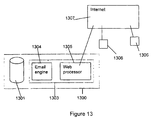
- FIG. 13 shows a computer system 1300 for issuing passwords, each password being associated with a specified, unique, entity, said computer system comprising:-
- Any suitable form of memory 1301 may be used, for example an SQL database. Information may also be stored in the memory as text files if required although this may result in slow response times. In a preferred embodiment a mySQL database is used which is low cost and is operable on Unix and NT platforms.
- the processor 1303 comprises an email engine to return passwords to the requester and to notify a software provider.
- a web interface 1305 is provided to provide a means by which requesters can interact with the password issuing system.
- the web interface 1305 is connected to a communications network such as the Internet 1307 from which terminals 1306 are provided. Any suitable form of processor 1303 may be used.
- the email engine and system for interacting with and controlling the database may be implemented on a Sun Server and the web interface on an Apache Web Server or a Microsoft IIS server.
- a user accesses the web interface 1305 via a terminal 1306 and enters details about the user's identify, site at which a software patch is require, and the identity of the particular software patch that is required.
- a record of each software patch is kept in a database 1301 and a software operator provides information about which software patches may be used for particular sites. This information is recorded in the database 1301 and a processor 1304 checks this information to determine whether a password may be issued. If so, a password is generated, issued and emailed to the requester using email engine 1304. Any suitable method for generating the password may be used.
- the password may be generated from information about the particular software patch, customer identity and site at which the software patch is to be installed.
- an email message is also sent to the software operator to notify him/her that a password has been issued and to provide details about the issued password. If the processor 1304 determines that a password may not be issued, an email message to this effect is sent to the requester and also to the software operator.
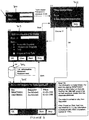
- FIG. 1 A number of flow diagrams ( Figures 1 to 12) are now described which illustrate different aspects of a password issuing system.
- a symbol in the form of a cylinder is used to represent database 1301 and a symbol comprising a rectangle containing short horizontal lines is used to represent an email message. Rectangles with grey shading are intended to illustrate examples of screen displays provided on the web interface 1305.
- Each screen display provided on the web interface 1305 is preferably provided with an associated "help" screen (not shown) which provides instructions to a user about how to use the web interface and which provides contact details for the software provider.
- Figures 1, 5, 7, 8, 9, 10, 11 and 12 represent methods that are available to the software operator only and which are not intended to be accessed by customers. For example, this can be achieved by password protecting certain parts of the web interface 1305 to prevent access by non-authorised users.
- Figure 1 is a flow diagram of a method for enabling a patch for a specific site.
- the software provider accesses the web interface 1305 and is first presented with a dialog box 100 requesting his or her user name and password. If these user details are validated then a main menu 101 is displayed that is specific for the software provider. From this main menu 101 the software provider is able to select an option to "enable a patch for a site". A list of all possible sites (for example these may be switches in a telecommunications network) is then retrieved 102 from the database 1301. It is also possible to select certain groups of sites at this stage for example, only European sites.
- Another display screen 103 is then presented to the software provider via the web interface 1305.
- This is a so called "enabling screen” via which the software provider is required to enter the identity of the software patch involved and to check boxes against a list of all possible sites, as to which sites should be enabled for the given software patch.
- the software provider has entered the required information he or she selects "OK” and a further display screen 104 is presented. This lists the sites that the software provider selected for the particular software patch and requests acknowledgement from the software provider that this is correct. If so the software provider selects "OK".
- Information about the name and location of the selected sites may also be presented on this display screen 104 as well as a unique identifier for each of these sites. In another application of the present invention the unique identifier may be that of a Pentium 3 (trade mark) computer processor.
- FIG. 2 is a flow diagram of a method for requesting a pre-enabled password.
- a user for example an employee of the software provider who is on site at a customer location in order to update a customer switch using a software patch, requests a password via the web interface 1305.
- a patch password request screen 200 is first presented and the employee enters his or her employee identity, details about the software patch involved and a unique identifier for the site (e.g. telecommunications switch).
- the employee's identity may then be checked against a list of known employees although this is not essential. If the employee is unknown access to the web interface is restricted.
- the database 1301 is then checked 201 to find out whether the requested software patch has previously been "enabled” by the software provider. In this example, the requested software patch has indeed been enabled.
- a check 202 is then made to find out whether details about the site are given in the database 1301. If not a display screen 203 is presented to the employee requesting these details. For example the requested information can include the customer identity, and address details for the site.
- an acknowledgement screen 204 is displayed which lists the information about the site entered by the employee. The employee is requested to check this information and if it is correct the information is stored in the database 1301 (step 205).
- Details about the request are then recorded in the database 1301 (step 206) and these details include for example, the time when the request was made, who made the request, and which software patch and site the request was in respect of.
- An email 207 is then sent to the employee to provide the password and the software provider is notified that the password has been provided.
- a final display screen 208 is then given detailing the password.
- Figure 3 is a flow diagram of a method for requesting a pre-enabled password for a site for which information is already available. This method is very similar to that described in Figure 2.
- the first three steps 300, 301 and 302 are equivalent to steps 200, 201 and 202 of Figure 2.
- details about the site are already stored in database 1301 and these are simply displayed to the employee via display screen 303.
- the employee is requested to check these and if they are correct steps 304, 305 and 306 ensue which are equivalent to steps 206, 207 and 208 of Figure 2. If the site details are not correct the procedure of steps 203 to 208 is followed.
- FIG 4 is a flow diagram of a method for requesting a non-enabled password.
- the first two steps of this method 401, 402 are the same as steps 200 and 201 of Figure 2.
- details about the request are recorded 403 in the database 1301. These details include a time at which the request occurred, details about who made the request and which software patch and site the request was for.
- An email alert is then sent 404 to the software provider and any people that the software provider has included in an email alert list (this is described in more detail below).
- a display 405 is given which explains to the requester that a password will not be issued because permission has not been granted.
- FIG. 5 is a flow diagram of a method for enabling a captive site.
- a captive site is a test site which is used for training and testing purposes. Captive sites are preferably enabled for all software patches and no password is required for each software patch on the captive site.
- First a display 501 is given requesting the user's (software provider's) identity and password. If these are validated, access to the software provider's main menu 502 is given and the software provider selects an option to enable a captive site.
- Information about the captive site is then entered via a display screen 503. For example, this may include details about the identity of the captive site, which customer has the captive site and details about the geographical location of the site.
- a display screen 504 is then given which lists these details about the captive site for the software provider to check. If the details are correct the information is stored 505 in the database 1301 and the software provider's main menu is redisplayed 502.
- FIG 6 is a flow diagram of a method for requesting a password for a captive site.
- An employee accesses the web interface and selects an option to request a password for a captive site.
- a display screen 601 is given that is the same as screen 201 given in Figure 2.
- the employee enters the requested information and a check is made that the employee is known. If so, a check 602 is made to see if the requested site is a captive site. This is possible because a record is kept in database 1301 which indicates whether each site is a captive site or not. Details about the site are then displayed (not shown in Figure 6) in order that the employee may check that the correct site is being referred to. However, this step is not essential.
- a record is then made of the request 603 and assuming that the request is successful, an email sent to the employee to provide a password 604. Emails may also be sent to a number of other people indicating that the request has been granted and this is described further below. Finally a display screen 605 is given which indicates the password details.
- the user enters details about the software patch, customer and site location for which a password is required.
- this information is also possible for this information to be obtained directly from the site, for example a communications switch or an information processor. This is achieved by establishing a communication link between the computer system of the present invention and the communications switch, information processor or other entity. Any suitable type of communication link can be used, for example, an internet connection. By obtaining information from the communications switch or other entity in this way the user information can be checked. Alternatively, the user does not have to enter as much information.
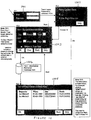
- Figures 7, 8, 9 and 10 give examples of queries that the software provider may make to help him or her in management of passwords. For each of these cases the software provider or manager is requested for his or her user name and password via a dialog box 701, 801, 901, 1001 and is then presented with a main menu 702, 802, 902, 1002 provided that their user name and password are validated.
- the manager is able, for a given software patch, to list all the requests for passwords. Via display screen 703 the manager enters details of the software patch and is able to ask for all requests in respect of that patch to be presented or just successful or unsuccessful requests to be presented.
- the required information is retrieved 704 from the database and presented to the manager in a table-like display 705.
- the information in the table-like display may be hyperlinked. That is, by selecting a particular site in the display full details for that site may be presented. Similarly, selecting details about a particular employee requester results in full details about that employee being presented.
- Figure 8 illustrates a similar method for listing all those employees who have requested a particular software patch. This enables the same information that was presented in the method of Figure 7 to be presented again but in a different format. It is possible for more than one person to make a request for the same password but this should not often be necessary. The presence of duplicate requests is therefore a potential indicator of misuse of the password issuing system.
- the display of 805 is particularly useful to enable the manager to quickly identify duplicate requests in order that action can be taken to stop the possible misuse.
- Figure 9 illustrates a method for querying site status.
- information about all the sites is retrieved 904 from database 1301.
- the manager is then requested to specify the site for which he or she requires information. This is done using display screen 904.
- Information about the requested site is retrieved 905 from the database 1301 and displayed using display screen 906.
- the information in display screen 905 may be hyperlinked in order that clicking on items in this display screen causes full information about that item to be displayed.
- This method for querying site status is particularly advantageous because it enables the manager to check details for particular sites quickly and easily for example, when planning upgrades and in response to customer queries.
- Figure 10 illustrates a method for listing "illegal” or "unsuccessful” requests.
- a dialog box 1003 is given in which the manager enters time limits between which he requires information about unsuccessful requests. Default values for these time limits are used in the case that the manager does not enter any time limits. It is also possible for the manager to specify how he wishes the required data to be sorted, for example, in chronological order or by site order.
- the requested information is retrieved 1004 from the database 1301 and presented in a table-like display 1005. Information in this display 1005 is hyperlinked as for display 906 in Figure 9. This method is very useful to enable the manager to identify potentially fraudulent use of software patches and to analyse information about this.
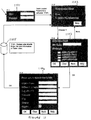
- Figure 11 describes a method by which the manager may update information about a particular site.
- User details and password are requested for the manager as for Figure 10 and the option of updating site information is selected from the main menu 1102.
- a display screen 1103 is given in which the manager indicates which site he requires to update the information for.
- the updated information is then entered by the manager using dialog box 1104 and this information stored 1105 in the database 1301.
- Two notification lists are stored. One is termed a "pass list” and contains a list of people who should be notified when a password is successfully requested. The other is termed a "fail list” and contains a list of people who should be notified when a password is unsuccessfully requested.
- the main menu 1202 contains options for updating these lists.
- Figure 12 describes the method for updating the pass list; however the method for updating the fail list is equivalent for all practical purposes.
- a dialog box 1203 is presented containing a list of employees.
- the manager checks or checks boxes against the list of employees to indicate any employees who should be deleted from the pass list.
- a display screen 1204 is then given requesting the manager to confirm his delete request.
- the required entry(ies) are then deleted 1205 from the pass list and the display 1203 is represented.
- an option to add is selected from display screen 1203 and a dialog box 1206 presented in which details about who to add are entered. The manager is asked to confirm these details via display screen 1207 and if confirmed the new details are added 1208 to the pass list. The display screen 1203 is then represented.
- a bypass facility is provided. This enables the manager to issue passwords independently of the password issuing system. However, details of passwords issued in this way are stored in the database. Access to the bypass facility is restricted to the managers of the password issuing system only.
- a range of applications are within the scope of the invention. These include situations in which it is required to issue passwords for specified entities. For example, when passwords are required installation of software patches on switches in a telecommunications network.
Landscapes
- Engineering & Computer Science (AREA)
- Computer Hardware Design (AREA)
- Computer Security & Cryptography (AREA)
- Computing Systems (AREA)
- General Engineering & Computer Science (AREA)
- Computer Networks & Wireless Communication (AREA)
- Signal Processing (AREA)
- Storage Device Security (AREA)
- Information Transfer Between Computers (AREA)
Abstract
Description
Claims (19)
- A method of issuing passwords, each password being associated with a specified, unique, entity, said method comprising the Steps of:-(i) storing information about entities for which passwords may be issued;(ii) receiving a request for a password associated with a given entity; and(iii) if the password request is made for an entity for which there is stored information indicating that a password may be issued, then issuing the requested password.
- A method as claimed in claim 1 which further comprises the step of creating the requested password.
- A method as claimed in claim 2 wherein the password is created using information about the specified, unique entity.
- A method as claimed in claim 1 which further comprises the step of storing information about the request.
- A method as claimed in claim 4 wherein said information about the request comprises information about the result of the request.
- A method as claimed in claim 1 wherein each password is further associated with a piece of computer software.
- A method as claimed in claim 6 which further comprises the step of storing information about which pieces of computer software passwords may be issued in respect of.
- A method as claimed in claim 7 wherein said request is for a password associated with a given entity and a given piece of computer software.
- A method as claimed in claim 8 wherein said step (iii) further comprises the condition that the requested password is only issued if its associated given piece of computer software is one for which there is stored information indicating that a password may be issued.
- A method as claimed in claim 1 which further comprises the step of storing additional information about entities for which passwords may be issued.
- A method as claimed in claim 6 which further comprises the step of storing additional information about pieces of software for which passwords may be issued.
- A method as claimed in claim 4 which is repeated a plurality of times and which further comprises the step of presenting information about identical requests.
- A method as claimed in claim 1 wherein said entities are nodes in a communications network.
- A method as claimed in claim 1 wherein if a request for a password is received but the requested password is not issued then a message is sent to an operator.
- A computer system for issuing passwords, each password being associated with a specified, unique, entity, said computer system comprising:-(i) a memory arranged to store information about entities for which passwords may be issued;(ii) an input arranged to receive a request for a password associated with a given entity; and(iii) a processor arranged to issue the requested password if the password request is made for an entity for which there is stored information indicating that a password may be issued.
- A computer system as claimed in claim 15 wherein said input comprises a user interface provided on a web site.
- A computer program stored on a computer readable medium, said computer program being arranged to control a system for issuing passwords, each password being associated with a specified, unique, entity, said computer program being arranged to control said system for issuing passwords such that:-(i) information about entities for which passwords may be issued is stored;(ii) a request for a password associated with a given entity is received; and(iii) if the password request is made for an entity for which there is stored information indicating that a password may be issued, then the requested password is issued.
- A method of issuing passwords using an information processor, each password being associated with a specified, unique, entity, said method comprising the steps of:-(i) storing information about entities for which passwords may be issued in a memory;(ii) receiving a request for a password associated with a given entity; and(iii) using an information processor, determining whether the password request is made for an entity for which there is stored information indicating that a password may be issued, and if so, then issuing the requested password.
- A method of operating a computer system for issuing passwords, each password being associated with a specified, unique, entity, said method comprising the steps of:-(i) causing a memory arranged to store information about entities for which passwords may be issued to be accessed;(ii) making a user input to request a password associated with a given entity; and(iii) causing a processor to issue the requested password if the password request is made for an entity for which there is stored information indicating that a password may be issued.
Applications Claiming Priority (2)
| Application Number | Priority Date | Filing Date | Title |
|---|---|---|---|
| US34235799A | 1999-06-29 | 1999-06-29 | |
| US342357 | 1999-06-29 |
Publications (2)
| Publication Number | Publication Date |
|---|---|
| EP1069788A2 true EP1069788A2 (en) | 2001-01-17 |
| EP1069788A3 EP1069788A3 (en) | 2003-10-29 |
Family
ID=23341491
Family Applications (1)
| Application Number | Title | Priority Date | Filing Date |
|---|---|---|---|
| EP00303575A Withdrawn EP1069788A3 (en) | 1999-06-29 | 2000-04-27 | A method of issuing passwords |
Country Status (2)
| Country | Link |
|---|---|
| EP (1) | EP1069788A3 (en) |
| CA (1) | CA2309397A1 (en) |
Cited By (2)
| Publication number | Priority date | Publication date | Assignee | Title |
|---|---|---|---|---|
| US7619645B2 (en) | 2002-08-23 | 2009-11-17 | Tandberg Nz Limited | Audio visual media encoding system |
| DE112010003971B4 (en) | 2009-10-06 | 2022-07-07 | International Business Machines Corporation | Temporarily granting higher privileges to a computing system for a user identifier |
Family Cites Families (3)
| Publication number | Priority date | Publication date | Assignee | Title |
|---|---|---|---|---|
| US5790664A (en) * | 1996-02-26 | 1998-08-04 | Network Engineering Software, Inc. | Automated system for management of licensed software |
| JP3924342B2 (en) * | 1997-02-14 | 2007-06-06 | 富士通株式会社 | Software license management system and software license management apparatus |
| US6134593A (en) * | 1997-09-30 | 2000-10-17 | Cccomplete, Inc. | Automated method for electronic software distribution |
-
2000
- 2000-04-27 EP EP00303575A patent/EP1069788A3/en not_active Withdrawn
- 2000-05-24 CA CA 2309397 patent/CA2309397A1/en not_active Abandoned
Cited By (2)
| Publication number | Priority date | Publication date | Assignee | Title |
|---|---|---|---|---|
| US7619645B2 (en) | 2002-08-23 | 2009-11-17 | Tandberg Nz Limited | Audio visual media encoding system |
| DE112010003971B4 (en) | 2009-10-06 | 2022-07-07 | International Business Machines Corporation | Temporarily granting higher privileges to a computing system for a user identifier |
Also Published As
| Publication number | Publication date |
|---|---|
| CA2309397A1 (en) | 2000-12-29 |
| EP1069788A3 (en) | 2003-10-29 |
Similar Documents
| Publication | Publication Date | Title |
|---|---|---|
| KR950010833B1 (en) | Automated enrollement of a computer system into a service network of computer systems | |
| US5193152A (en) | Network management system with group naming | |
| US8544098B2 (en) | Security vulnerability information aggregation | |
| US9928480B2 (en) | Method and system for network connectivity migration management | |
| US20020010867A1 (en) | Performance path method and apparatus for exchanging data among systems using different data formats | |
| CA2513492A1 (en) | System and method for efficiently capturing and reporting maintenance, repair, and overhaul data | |
| EP1442419A1 (en) | Method and apparatus for work management for facility maintenance | |
| JP2002108728A (en) | How to post trouble information and provider equipment | |
| US6449365B1 (en) | Method and apparatus providing notification of network conditions | |
| US12026237B2 (en) | Software license manager | |
| US20120110058A1 (en) | Management system and information processing method for computer system | |
| US20080120395A1 (en) | Methods and Systems for Communicating with Service Technicians in a Telecommunications System | |
| US6957366B1 (en) | System and method for an interactive web-based data catalog for tracking software bugs | |
| US20210182249A1 (en) | Granular analytics for software license management | |
| US20210182407A1 (en) | Execution type software license management | |
| US8307064B2 (en) | Methods and apparatus for automated software generic information retrieval | |
| US7116759B2 (en) | Method, system and computer program product for facilitating the analysis of automatic line insulation testing data | |
| US7845001B2 (en) | Method and system for managing secure platform administration | |
| US20020006791A1 (en) | Troubleshooting method and apparatus | |
| CA2309397A1 (en) | A method of issuing passwords | |
| JPH07225723A (en) | Software distribution / maintenance system and method utilizing network | |
| AU735348B2 (en) | Management of computer workstations | |
| CN114971657A (en) | Trade power station and transport maintenance system after sale and terminal | |
| KR950010834B1 (en) | Flexible Service Networks for Computer Systems | |
| KR950010835B1 (en) | Problem prevention on a computer system in a service network of computer systems |
Legal Events
| Date | Code | Title | Description |
|---|---|---|---|
| PUAI | Public reference made under article 153(3) epc to a published international application that has entered the european phase |
Free format text: ORIGINAL CODE: 0009012 |
|
| AK | Designated contracting states |
Kind code of ref document: A2 Designated state(s): AT BE CH CY DE DK ES FI FR GB GR IE IT LI LU MC NL PT SE |
|
| AX | Request for extension of the european patent |
Free format text: AL;LT;LV;MK;RO;SI |
|
| RIN1 | Information on inventor provided before grant (corrected) |
Inventor name: MITCHELL, JONATHAN Inventor name: WORRINGHAM, JOHN EDWARD PETER Inventor name: BAKER, GUY JAMES Inventor name: GRAY, GARY |
|
| PUAL | Search report despatched |
Free format text: ORIGINAL CODE: 0009013 |
|
| RAP1 | Party data changed (applicant data changed or rights of an application transferred) |
Owner name: NORTEL NETWORKS LIMITED |
|
| AK | Designated contracting states |
Kind code of ref document: A3 Designated state(s): AT BE CH CY DE DK ES FI FR GB GR IE IT LI LU MC NL PT SE |
|
| AX | Request for extension of the european patent |
Extension state: AL LT LV MK RO SI |
|
| RIC1 | Information provided on ipc code assigned before grant |
Ipc: 7G 06F 1/00 B Ipc: 7H 04Q 3/545 A |
|
| STAA | Information on the status of an ep patent application or granted ep patent |
Free format text: STATUS: THE APPLICATION HAS BEEN WITHDRAWN |
|
| 18W | Application withdrawn |
Effective date: 20031209 |