EP1068350B1 - Directed antisense libraries - Google Patents
Directed antisense libraries Download PDFInfo
- Publication number
- EP1068350B1 EP1068350B1 EP99914226A EP99914226A EP1068350B1 EP 1068350 B1 EP1068350 B1 EP 1068350B1 EP 99914226 A EP99914226 A EP 99914226A EP 99914226 A EP99914226 A EP 99914226A EP 1068350 B1 EP1068350 B1 EP 1068350B1
- Authority
- EP
- European Patent Office
- Prior art keywords
- antisense
- library
- dna
- target
- transcript
- Prior art date
- Legal status (The legal status is an assumption and is not a legal conclusion. Google has not performed a legal analysis and makes no representation as to the accuracy of the status listed.)
- Expired - Lifetime
Links
- 230000000692 anti-sense effect Effects 0.000 title claims abstract description 115
- 239000012634 fragment Substances 0.000 claims abstract description 83
- 238000000034 method Methods 0.000 claims abstract description 64
- 108090000623 proteins and genes Proteins 0.000 claims abstract description 60
- 238000012217 deletion Methods 0.000 claims abstract description 51
- 230000037430 deletion Effects 0.000 claims abstract description 51
- 230000003197 catalytic effect Effects 0.000 claims abstract description 26
- 239000002299 complementary DNA Substances 0.000 claims abstract description 24
- 108090001102 Hammerhead ribozyme Proteins 0.000 claims abstract description 14
- 230000005764 inhibitory process Effects 0.000 claims abstract description 10
- 239000013599 cloning vector Substances 0.000 claims abstract description 9
- 230000001404 mediated effect Effects 0.000 claims abstract description 9
- 108020004414 DNA Proteins 0.000 claims description 98
- 108090000994 Catalytic RNA Proteins 0.000 claims description 43
- 102000053642 Catalytic RNA Human genes 0.000 claims description 43
- 108091092562 ribozyme Proteins 0.000 claims description 43
- 210000004027 cell Anatomy 0.000 claims description 29
- 238000010367 cloning Methods 0.000 claims description 22
- 230000029087 digestion Effects 0.000 claims description 22
- 108020005544 Antisense RNA Proteins 0.000 claims description 21
- 210000004962 mammalian cell Anatomy 0.000 claims description 16
- 108010052305 exodeoxyribonuclease III Proteins 0.000 claims description 14
- 108091008146 restriction endonucleases Proteins 0.000 claims description 13
- 238000000338 in vitro Methods 0.000 claims description 11
- 239000013604 expression vector Substances 0.000 claims description 9
- 230000002779 inactivation Effects 0.000 claims description 4
- 239000006166 lysate Substances 0.000 claims description 4
- 238000002271 resection Methods 0.000 claims description 3
- 230000001131 transforming effect Effects 0.000 claims description 3
- 230000008569 process Effects 0.000 claims description 2
- 102000053602 DNA Human genes 0.000 claims 2
- 108060002716 Exonuclease Proteins 0.000 claims 2
- 102000013165 exonuclease Human genes 0.000 claims 2
- 239000003607 modifier Substances 0.000 claims 1
- 239000013612 plasmid Substances 0.000 abstract description 20
- 108091032973 (ribonucleotides)n+m Proteins 0.000 description 32
- 230000014509 gene expression Effects 0.000 description 29
- 239000002773 nucleotide Substances 0.000 description 21
- 238000003752 polymerase chain reaction Methods 0.000 description 21
- 125000003729 nucleotide group Chemical group 0.000 description 20
- 239000003795 chemical substances by application Substances 0.000 description 18
- 238000003776 cleavage reaction Methods 0.000 description 18
- 230000007017 scission Effects 0.000 description 18
- 241000700584 Simplexvirus Species 0.000 description 17
- 238000010276 construction Methods 0.000 description 16
- 239000013598 vector Substances 0.000 description 15
- YQYJSBFKSSDGFO-UHFFFAOYSA-N Epihygromycin Natural products OC1C(O)C(C(=O)C)OC1OC(C(=C1)O)=CC=C1C=C(C)C(=O)NC1C(O)C(O)C2OCOC2C1O YQYJSBFKSSDGFO-UHFFFAOYSA-N 0.000 description 12
- 101150027427 ICP4 gene Proteins 0.000 description 11
- 241000251131 Sphyrna Species 0.000 description 11
- 239000003184 complementary RNA Substances 0.000 description 11
- 230000001580 bacterial effect Effects 0.000 description 10
- 238000006243 chemical reaction Methods 0.000 description 10
- 230000010076 replication Effects 0.000 description 10
- 230000000694 effects Effects 0.000 description 9
- 238000013518 transcription Methods 0.000 description 9
- 230000035897 transcription Effects 0.000 description 9
- 238000013459 approach Methods 0.000 description 8
- 101150055766 cat gene Proteins 0.000 description 8
- 239000000758 substrate Substances 0.000 description 8
- 108010014303 DNA-directed DNA polymerase Proteins 0.000 description 7
- 102000016928 DNA-directed DNA polymerase Human genes 0.000 description 7
- 229960005091 chloramphenicol Drugs 0.000 description 7
- WIIZWVCIJKGZOK-RKDXNWHRSA-N chloramphenicol Chemical compound ClC(Cl)C(=O)N[C@H](CO)[C@H](O)C1=CC=C([N+]([O-])=O)C=C1 WIIZWVCIJKGZOK-RKDXNWHRSA-N 0.000 description 7
- 238000001727 in vivo Methods 0.000 description 7
- 229930027917 kanamycin Natural products 0.000 description 7
- 229960000318 kanamycin Drugs 0.000 description 7
- SBUJHOSQTJFQJX-NOAMYHISSA-N kanamycin Chemical compound O[C@@H]1[C@@H](O)[C@H](O)[C@@H](CN)O[C@@H]1O[C@H]1[C@H](O)[C@@H](O[C@@H]2[C@@H]([C@@H](N)[C@H](O)[C@@H](CO)O2)O)[C@H](N)C[C@@H]1N SBUJHOSQTJFQJX-NOAMYHISSA-N 0.000 description 7
- 229930182823 kanamycin A Natural products 0.000 description 7
- 230000008685 targeting Effects 0.000 description 7
- CSNNHWWHGAXBCP-UHFFFAOYSA-L Magnesium sulfate Chemical compound [Mg+2].[O-][S+2]([O-])([O-])[O-] CSNNHWWHGAXBCP-UHFFFAOYSA-L 0.000 description 6
- 108010086093 Mung Bean Nuclease Proteins 0.000 description 6
- 230000007547 defect Effects 0.000 description 6
- 239000000203 mixture Substances 0.000 description 6
- 239000013603 viral vector Substances 0.000 description 6
- 108010006654 Bleomycin Proteins 0.000 description 5
- 241000701044 Human gammaherpesvirus 4 Species 0.000 description 5
- 108091034057 RNA (poly(A)) Proteins 0.000 description 5
- 229960001561 bleomycin Drugs 0.000 description 5
- OYVAGSVQBOHSSS-UAPAGMARSA-O bleomycin A2 Chemical compound N([C@H](C(=O)N[C@H](C)[C@@H](O)[C@H](C)C(=O)N[C@@H]([C@H](O)C)C(=O)NCCC=1SC=C(N=1)C=1SC=C(N=1)C(=O)NCCC[S+](C)C)[C@@H](O[C@H]1[C@H]([C@@H](O)[C@H](O)[C@H](CO)O1)O[C@@H]1[C@H]([C@@H](OC(N)=O)[C@H](O)[C@@H](CO)O1)O)C=1N=CNC=1)C(=O)C1=NC([C@H](CC(N)=O)NC[C@H](N)C(N)=O)=NC(N)=C1C OYVAGSVQBOHSSS-UAPAGMARSA-O 0.000 description 5
- 230000000295 complement effect Effects 0.000 description 5
- 230000009977 dual effect Effects 0.000 description 5
- 238000007069 methylation reaction Methods 0.000 description 5
- 238000001890 transfection Methods 0.000 description 5
- 108020005345 3' Untranslated Regions Proteins 0.000 description 4
- 108091026890 Coding region Proteins 0.000 description 4
- 102000012410 DNA Ligases Human genes 0.000 description 4
- 108010061982 DNA Ligases Proteins 0.000 description 4
- 108010017826 DNA Polymerase I Proteins 0.000 description 4
- 102000004594 DNA Polymerase I Human genes 0.000 description 4
- 102000004190 Enzymes Human genes 0.000 description 4
- 108090000790 Enzymes Proteins 0.000 description 4
- AIYUHDOJVYHVIT-UHFFFAOYSA-M caesium chloride Chemical compound [Cl-].[Cs+] AIYUHDOJVYHVIT-UHFFFAOYSA-M 0.000 description 4
- 238000005520 cutting process Methods 0.000 description 4
- 238000010369 molecular cloning Methods 0.000 description 4
- 238000000746 purification Methods 0.000 description 4
- 238000009827 uniform distribution Methods 0.000 description 4
- 241000894006 Bacteria Species 0.000 description 3
- 108091034117 Oligonucleotide Proteins 0.000 description 3
- 108010002747 Pfu DNA polymerase Proteins 0.000 description 3
- 239000002202 Polyethylene glycol Substances 0.000 description 3
- 101710137500 T7 RNA polymerase Proteins 0.000 description 3
- 108010001244 Tli polymerase Proteins 0.000 description 3
- 241000700605 Viruses Species 0.000 description 3
- 238000003556 assay Methods 0.000 description 3
- 230000001413 cellular effect Effects 0.000 description 3
- 238000000099 in vitro assay Methods 0.000 description 3
- 238000003780 insertion Methods 0.000 description 3
- 230000037431 insertion Effects 0.000 description 3
- 229910052943 magnesium sulfate Inorganic materials 0.000 description 3
- 238000004519 manufacturing process Methods 0.000 description 3
- 239000000463 material Substances 0.000 description 3
- 108020004999 messenger RNA Proteins 0.000 description 3
- 230000011987 methylation Effects 0.000 description 3
- 230000004048 modification Effects 0.000 description 3
- 238000012986 modification Methods 0.000 description 3
- 238000005498 polishing Methods 0.000 description 3
- 229920001223 polyethylene glycol Polymers 0.000 description 3
- 238000002360 preparation method Methods 0.000 description 3
- 238000012216 screening Methods 0.000 description 3
- 238000002741 site-directed mutagenesis Methods 0.000 description 3
- 238000010561 standard procedure Methods 0.000 description 3
- QKNYBSVHEMOAJP-UHFFFAOYSA-N 2-amino-2-(hydroxymethyl)propane-1,3-diol;hydron;chloride Chemical compound Cl.OCC(N)(CO)CO QKNYBSVHEMOAJP-UHFFFAOYSA-N 0.000 description 2
- 101150026888 84 gene Proteins 0.000 description 2
- 108020004491 Antisense DNA Proteins 0.000 description 2
- HEDRZPFGACZZDS-UHFFFAOYSA-N Chloroform Chemical compound ClC(Cl)Cl HEDRZPFGACZZDS-UHFFFAOYSA-N 0.000 description 2
- 108010031111 EBV-encoded nuclear antigen 1 Proteins 0.000 description 2
- 241000620209 Escherichia coli DH5[alpha] Species 0.000 description 2
- LFQSCWFLJHTTHZ-UHFFFAOYSA-N Ethanol Chemical compound CCO LFQSCWFLJHTTHZ-UHFFFAOYSA-N 0.000 description 2
- TWRXJAOTZQYOKJ-UHFFFAOYSA-L Magnesium chloride Chemical compound [Mg+2].[Cl-].[Cl-] TWRXJAOTZQYOKJ-UHFFFAOYSA-L 0.000 description 2
- 101710163270 Nuclease Proteins 0.000 description 2
- FAPWRFPIFSIZLT-UHFFFAOYSA-M Sodium chloride Chemical compound [Na+].[Cl-] FAPWRFPIFSIZLT-UHFFFAOYSA-M 0.000 description 2
- 229920004890 Triton X-100 Polymers 0.000 description 2
- 101150078190 Ugcg gene Proteins 0.000 description 2
- DRTQHJPVMGBUCF-XVFCMESISA-N Uridine Chemical compound O[C@@H]1[C@H](O)[C@@H](CO)O[C@H]1N1C(=O)NC(=O)C=C1 DRTQHJPVMGBUCF-XVFCMESISA-N 0.000 description 2
- 101100383240 Xenopus laevis ugcg-a gene Proteins 0.000 description 2
- 101100383241 Xenopus laevis ugcg-b gene Proteins 0.000 description 2
- BFNBIHQBYMNNAN-UHFFFAOYSA-N ammonium sulfate Chemical compound N.N.OS(O)(=O)=O BFNBIHQBYMNNAN-UHFFFAOYSA-N 0.000 description 2
- 229910052921 ammonium sulfate Inorganic materials 0.000 description 2
- 230000003321 amplification Effects 0.000 description 2
- 238000004458 analytical method Methods 0.000 description 2
- 239000003816 antisense DNA Substances 0.000 description 2
- 210000004671 cell-free system Anatomy 0.000 description 2
- 210000000349 chromosome Anatomy 0.000 description 2
- 238000001514 detection method Methods 0.000 description 2
- 230000001627 detrimental effect Effects 0.000 description 2
- 238000005516 engineering process Methods 0.000 description 2
- 238000005462 in vivo assay Methods 0.000 description 2
- 230000002401 inhibitory effect Effects 0.000 description 2
- 230000003993 interaction Effects 0.000 description 2
- 239000003550 marker Substances 0.000 description 2
- 230000007246 mechanism Effects 0.000 description 2
- 238000003199 nucleic acid amplification method Methods 0.000 description 2
- 102000039446 nucleic acids Human genes 0.000 description 2
- 108020004707 nucleic acids Proteins 0.000 description 2
- 150000007523 nucleic acids Chemical class 0.000 description 2
- 239000013600 plasmid vector Substances 0.000 description 2
- 230000008488 polyadenylation Effects 0.000 description 2
- 238000012545 processing Methods 0.000 description 2
- 239000011541 reaction mixture Substances 0.000 description 2
- 238000012163 sequencing technique Methods 0.000 description 2
- 230000009466 transformation Effects 0.000 description 2
- DGVVWUTYPXICAM-UHFFFAOYSA-N β‐Mercaptoethanol Chemical compound OCCS DGVVWUTYPXICAM-UHFFFAOYSA-N 0.000 description 2
- 102000040650 (ribonucleotides)n+m Human genes 0.000 description 1
- GNFTZDOKVXKIBK-UHFFFAOYSA-N 3-(2-methoxyethoxy)benzohydrazide Chemical compound COCCOC1=CC=CC(C(=O)NN)=C1 GNFTZDOKVXKIBK-UHFFFAOYSA-N 0.000 description 1
- 101150007523 32 gene Proteins 0.000 description 1
- 229920000936 Agarose Polymers 0.000 description 1
- 102000002260 Alkaline Phosphatase Human genes 0.000 description 1
- 108020004774 Alkaline Phosphatase Proteins 0.000 description 1
- 108020000948 Antisense Oligonucleotides Proteins 0.000 description 1
- 108091032955 Bacterial small RNA Proteins 0.000 description 1
- FGUUSXIOTUKUDN-IBGZPJMESA-N C1(=CC=CC=C1)N1C2=C(NC([C@H](C1)NC=1OC(=NN=1)C1=CC=CC=C1)=O)C=CC=C2 Chemical compound C1(=CC=CC=C1)N1C2=C(NC([C@H](C1)NC=1OC(=NN=1)C1=CC=CC=C1)=O)C=CC=C2 FGUUSXIOTUKUDN-IBGZPJMESA-N 0.000 description 1
- 108020004394 Complementary RNA Proteins 0.000 description 1
- 108091035707 Consensus sequence Proteins 0.000 description 1
- 241000701022 Cytomegalovirus Species 0.000 description 1
- HMFHBZSHGGEWLO-SOOFDHNKSA-N D-ribofuranose Chemical compound OC[C@H]1OC(O)[C@H](O)[C@@H]1O HMFHBZSHGGEWLO-SOOFDHNKSA-N 0.000 description 1
- 230000004544 DNA amplification Effects 0.000 description 1
- 238000001712 DNA sequencing Methods 0.000 description 1
- 230000006820 DNA synthesis Effects 0.000 description 1
- 241000238557 Decapoda Species 0.000 description 1
- 241000702421 Dependoparvovirus Species 0.000 description 1
- 101150059079 EBNA1 gene Proteins 0.000 description 1
- 241000588724 Escherichia coli Species 0.000 description 1
- XQFRJNBWHJMXHO-RRKCRQDMSA-N IDUR Chemical compound C1[C@H](O)[C@@H](CO)O[C@H]1N1C(=O)NC(=O)C(I)=C1 XQFRJNBWHJMXHO-RRKCRQDMSA-N 0.000 description 1
- 108091092195 Intron Proteins 0.000 description 1
- 102000003960 Ligases Human genes 0.000 description 1
- 108090000364 Ligases Proteins 0.000 description 1
- 108700026244 Open Reading Frames Proteins 0.000 description 1
- 229910019142 PO4 Inorganic materials 0.000 description 1
- 108010010677 Phosphodiesterase I Proteins 0.000 description 1
- PYMYPHUHKUWMLA-LMVFSUKVSA-N Ribose Natural products OC[C@@H](O)[C@@H](O)[C@@H](O)C=O PYMYPHUHKUWMLA-LMVFSUKVSA-N 0.000 description 1
- 108091081021 Sense strand Proteins 0.000 description 1
- VMHLLURERBWHNL-UHFFFAOYSA-M Sodium acetate Chemical compound [Na+].CC([O-])=O VMHLLURERBWHNL-UHFFFAOYSA-M 0.000 description 1
- 241000272534 Struthio camelus Species 0.000 description 1
- 108091036066 Three prime untranslated region Proteins 0.000 description 1
- 239000013504 Triton X-100 Substances 0.000 description 1
- 240000004922 Vigna radiata Species 0.000 description 1
- 235000010721 Vigna radiata var radiata Nutrition 0.000 description 1
- 235000011469 Vigna radiata var sublobata Nutrition 0.000 description 1
- JLCPHMBAVCMARE-UHFFFAOYSA-N [3-[[3-[[3-[[3-[[3-[[3-[[3-[[3-[[3-[[3-[[3-[[5-(2-amino-6-oxo-1H-purin-9-yl)-3-[[3-[[3-[[3-[[3-[[3-[[5-(2-amino-6-oxo-1H-purin-9-yl)-3-[[5-(2-amino-6-oxo-1H-purin-9-yl)-3-hydroxyoxolan-2-yl]methoxy-hydroxyphosphoryl]oxyoxolan-2-yl]methoxy-hydroxyphosphoryl]oxy-5-(5-methyl-2,4-dioxopyrimidin-1-yl)oxolan-2-yl]methoxy-hydroxyphosphoryl]oxy-5-(6-aminopurin-9-yl)oxolan-2-yl]methoxy-hydroxyphosphoryl]oxy-5-(6-aminopurin-9-yl)oxolan-2-yl]methoxy-hydroxyphosphoryl]oxy-5-(6-aminopurin-9-yl)oxolan-2-yl]methoxy-hydroxyphosphoryl]oxy-5-(6-aminopurin-9-yl)oxolan-2-yl]methoxy-hydroxyphosphoryl]oxyoxolan-2-yl]methoxy-hydroxyphosphoryl]oxy-5-(5-methyl-2,4-dioxopyrimidin-1-yl)oxolan-2-yl]methoxy-hydroxyphosphoryl]oxy-5-(4-amino-2-oxopyrimidin-1-yl)oxolan-2-yl]methoxy-hydroxyphosphoryl]oxy-5-(5-methyl-2,4-dioxopyrimidin-1-yl)oxolan-2-yl]methoxy-hydroxyphosphoryl]oxy-5-(5-methyl-2,4-dioxopyrimidin-1-yl)oxolan-2-yl]methoxy-hydroxyphosphoryl]oxy-5-(6-aminopurin-9-yl)oxolan-2-yl]methoxy-hydroxyphosphoryl]oxy-5-(6-aminopurin-9-yl)oxolan-2-yl]methoxy-hydroxyphosphoryl]oxy-5-(4-amino-2-oxopyrimidin-1-yl)oxolan-2-yl]methoxy-hydroxyphosphoryl]oxy-5-(4-amino-2-oxopyrimidin-1-yl)oxolan-2-yl]methoxy-hydroxyphosphoryl]oxy-5-(4-amino-2-oxopyrimidin-1-yl)oxolan-2-yl]methoxy-hydroxyphosphoryl]oxy-5-(6-aminopurin-9-yl)oxolan-2-yl]methoxy-hydroxyphosphoryl]oxy-5-(4-amino-2-oxopyrimidin-1-yl)oxolan-2-yl]methyl [5-(6-aminopurin-9-yl)-2-(hydroxymethyl)oxolan-3-yl] hydrogen phosphate Polymers Cc1cn(C2CC(OP(O)(=O)OCC3OC(CC3OP(O)(=O)OCC3OC(CC3O)n3cnc4c3nc(N)[nH]c4=O)n3cnc4c3nc(N)[nH]c4=O)C(COP(O)(=O)OC3CC(OC3COP(O)(=O)OC3CC(OC3COP(O)(=O)OC3CC(OC3COP(O)(=O)OC3CC(OC3COP(O)(=O)OC3CC(OC3COP(O)(=O)OC3CC(OC3COP(O)(=O)OC3CC(OC3COP(O)(=O)OC3CC(OC3COP(O)(=O)OC3CC(OC3COP(O)(=O)OC3CC(OC3COP(O)(=O)OC3CC(OC3COP(O)(=O)OC3CC(OC3COP(O)(=O)OC3CC(OC3COP(O)(=O)OC3CC(OC3COP(O)(=O)OC3CC(OC3COP(O)(=O)OC3CC(OC3COP(O)(=O)OC3CC(OC3CO)n3cnc4c(N)ncnc34)n3ccc(N)nc3=O)n3cnc4c(N)ncnc34)n3ccc(N)nc3=O)n3ccc(N)nc3=O)n3ccc(N)nc3=O)n3cnc4c(N)ncnc34)n3cnc4c(N)ncnc34)n3cc(C)c(=O)[nH]c3=O)n3cc(C)c(=O)[nH]c3=O)n3ccc(N)nc3=O)n3cc(C)c(=O)[nH]c3=O)n3cnc4c3nc(N)[nH]c4=O)n3cnc4c(N)ncnc34)n3cnc4c(N)ncnc34)n3cnc4c(N)ncnc34)n3cnc4c(N)ncnc34)O2)c(=O)[nH]c1=O JLCPHMBAVCMARE-UHFFFAOYSA-N 0.000 description 1
- 239000011543 agarose gel Substances 0.000 description 1
- 238000000246 agarose gel electrophoresis Methods 0.000 description 1
- HMFHBZSHGGEWLO-UHFFFAOYSA-N alpha-D-Furanose-Ribose Natural products OCC1OC(O)C(O)C1O HMFHBZSHGGEWLO-UHFFFAOYSA-N 0.000 description 1
- 229960000723 ampicillin Drugs 0.000 description 1
- AVKUERGKIZMTKX-NJBDSQKTSA-N ampicillin Chemical compound C1([C@@H](N)C(=O)N[C@H]2[C@H]3SC([C@@H](N3C2=O)C(O)=O)(C)C)=CC=CC=C1 AVKUERGKIZMTKX-NJBDSQKTSA-N 0.000 description 1
- 239000000427 antigen Substances 0.000 description 1
- 108091007433 antigens Proteins 0.000 description 1
- 102000036639 antigens Human genes 0.000 description 1
- 239000000074 antisense oligonucleotide Substances 0.000 description 1
- 238000012230 antisense oligonucleotides Methods 0.000 description 1
- DRTQHJPVMGBUCF-PSQAKQOGSA-N beta-L-uridine Natural products O[C@H]1[C@@H](O)[C@H](CO)O[C@@H]1N1C(=O)NC(=O)C=C1 DRTQHJPVMGBUCF-PSQAKQOGSA-N 0.000 description 1
- 230000003115 biocidal effect Effects 0.000 description 1
- 108010006025 bovine growth hormone Proteins 0.000 description 1
- 238000004113 cell culture Methods 0.000 description 1
- 108091092328 cellular RNA Proteins 0.000 description 1
- YTRQFSDWAXHJCC-UHFFFAOYSA-N chloroform;phenol Chemical compound ClC(Cl)Cl.OC1=CC=CC=C1 YTRQFSDWAXHJCC-UHFFFAOYSA-N 0.000 description 1
- 238000011109 contamination Methods 0.000 description 1
- 210000004748 cultured cell Anatomy 0.000 description 1
- 230000002950 deficient Effects 0.000 description 1
- 238000009826 distribution Methods 0.000 description 1
- 230000002255 enzymatic effect Effects 0.000 description 1
- 230000010502 episomal replication Effects 0.000 description 1
- 238000011156 evaluation Methods 0.000 description 1
- 239000000499 gel Substances 0.000 description 1
- 238000001502 gel electrophoresis Methods 0.000 description 1
- 238000001415 gene therapy Methods 0.000 description 1
- 230000006872 improvement Effects 0.000 description 1
- 239000004615 ingredient Substances 0.000 description 1
- 239000003112 inhibitor Substances 0.000 description 1
- 238000009630 liquid culture Methods 0.000 description 1
- 230000004807 localization Effects 0.000 description 1
- 229910001629 magnesium chloride Inorganic materials 0.000 description 1
- 238000013507 mapping Methods 0.000 description 1
- 238000007857 nested PCR Methods 0.000 description 1
- 229940046166 oligodeoxynucleotide Drugs 0.000 description 1
- 235000021317 phosphate Nutrition 0.000 description 1
- 150000003013 phosphoric acid derivatives Chemical group 0.000 description 1
- -1 polymerases Proteins 0.000 description 1
- 229940124606 potential therapeutic agent Drugs 0.000 description 1
- 230000001105 regulatory effect Effects 0.000 description 1
- 238000011160 research Methods 0.000 description 1
- 230000029058 respiratory gaseous exchange Effects 0.000 description 1
- 150000003839 salts Chemical class 0.000 description 1
- 239000013605 shuttle vector Substances 0.000 description 1
- 235000017281 sodium acetate Nutrition 0.000 description 1
- 239000001632 sodium acetate Substances 0.000 description 1
- 239000011780 sodium chloride Substances 0.000 description 1
- 108010068698 spleen exonuclease Proteins 0.000 description 1
- 230000002103 transcriptional effect Effects 0.000 description 1
- 238000011144 upstream manufacturing Methods 0.000 description 1
- DRTQHJPVMGBUCF-UHFFFAOYSA-N uracil arabinoside Natural products OC1C(O)C(CO)OC1N1C(=O)NC(=O)C=C1 DRTQHJPVMGBUCF-UHFFFAOYSA-N 0.000 description 1
- 229940045145 uridine Drugs 0.000 description 1
- 239000011592 zinc chloride Substances 0.000 description 1
- JIAARYAFYJHUJI-UHFFFAOYSA-L zinc dichloride Chemical compound [Cl-].[Cl-].[Zn+2] JIAARYAFYJHUJI-UHFFFAOYSA-L 0.000 description 1
Images





Classifications
-
- C—CHEMISTRY; METALLURGY
- C12—BIOCHEMISTRY; BEER; SPIRITS; WINE; VINEGAR; MICROBIOLOGY; ENZYMOLOGY; MUTATION OR GENETIC ENGINEERING
- C12N—MICROORGANISMS OR ENZYMES; COMPOSITIONS THEREOF; PROPAGATING, PRESERVING, OR MAINTAINING MICROORGANISMS; MUTATION OR GENETIC ENGINEERING; CULTURE MEDIA
- C12N15/00—Mutation or genetic engineering; DNA or RNA concerning genetic engineering, vectors, e.g. plasmids, or their isolation, preparation or purification; Use of hosts therefor
- C12N15/09—Recombinant DNA-technology
- C12N15/11—DNA or RNA fragments; Modified forms thereof; Non-coding nucleic acids having a biological activity
- C12N15/113—Non-coding nucleic acids modulating the expression of genes, e.g. antisense oligonucleotides; Antisense DNA or RNA; Triplex- forming oligonucleotides; Catalytic nucleic acids, e.g. ribozymes; Nucleic acids used in co-suppression or gene silencing
-
- C—CHEMISTRY; METALLURGY
- C12—BIOCHEMISTRY; BEER; SPIRITS; WINE; VINEGAR; MICROBIOLOGY; ENZYMOLOGY; MUTATION OR GENETIC ENGINEERING
- C12N—MICROORGANISMS OR ENZYMES; COMPOSITIONS THEREOF; PROPAGATING, PRESERVING, OR MAINTAINING MICROORGANISMS; MUTATION OR GENETIC ENGINEERING; CULTURE MEDIA
- C12N15/00—Mutation or genetic engineering; DNA or RNA concerning genetic engineering, vectors, e.g. plasmids, or their isolation, preparation or purification; Use of hosts therefor
- C12N15/09—Recombinant DNA-technology
- C12N15/11—DNA or RNA fragments; Modified forms thereof; Non-coding nucleic acids having a biological activity
- C12N15/113—Non-coding nucleic acids modulating the expression of genes, e.g. antisense oligonucleotides; Antisense DNA or RNA; Triplex- forming oligonucleotides; Catalytic nucleic acids, e.g. ribozymes; Nucleic acids used in co-suppression or gene silencing
- C12N15/1131—Non-coding nucleic acids modulating the expression of genes, e.g. antisense oligonucleotides; Antisense DNA or RNA; Triplex- forming oligonucleotides; Catalytic nucleic acids, e.g. ribozymes; Nucleic acids used in co-suppression or gene silencing against viruses
- C12N15/1133—Non-coding nucleic acids modulating the expression of genes, e.g. antisense oligonucleotides; Antisense DNA or RNA; Triplex- forming oligonucleotides; Catalytic nucleic acids, e.g. ribozymes; Nucleic acids used in co-suppression or gene silencing against viruses against herpetoviridae, e.g. HSV
-
- C—CHEMISTRY; METALLURGY
- C12—BIOCHEMISTRY; BEER; SPIRITS; WINE; VINEGAR; MICROBIOLOGY; ENZYMOLOGY; MUTATION OR GENETIC ENGINEERING
- C12N—MICROORGANISMS OR ENZYMES; COMPOSITIONS THEREOF; PROPAGATING, PRESERVING, OR MAINTAINING MICROORGANISMS; MUTATION OR GENETIC ENGINEERING; CULTURE MEDIA
- C12N2310/00—Structure or type of the nucleic acid
- C12N2310/10—Type of nucleic acid
- C12N2310/11—Antisense
- C12N2310/111—Antisense spanning the whole gene, or a large part of it
-
- C—CHEMISTRY; METALLURGY
- C12—BIOCHEMISTRY; BEER; SPIRITS; WINE; VINEGAR; MICROBIOLOGY; ENZYMOLOGY; MUTATION OR GENETIC ENGINEERING
- C12N—MICROORGANISMS OR ENZYMES; COMPOSITIONS THEREOF; PROPAGATING, PRESERVING, OR MAINTAINING MICROORGANISMS; MUTATION OR GENETIC ENGINEERING; CULTURE MEDIA
- C12N2310/00—Structure or type of the nucleic acid
- C12N2310/10—Type of nucleic acid
- C12N2310/12—Type of nucleic acid catalytic nucleic acids, e.g. ribozymes
- C12N2310/121—Hammerhead
Definitions
- This invention relates to antisense agents. More particularly, the invention relates to compositions and methods for generation of directed antisense libraries and methods of use thereof wherein the antisense agents in the libraries can potentially bind to every binding site on a selected RNA transcript.
- Antisense RNA, DNA, and ribozymes have been widely studied as research tools and potential therapeutic agents for inhibiting the expression of specific genes. These agents operate by binding to a complementary region on an RNA transcript produced from the gene of interest. On binding, the antisense agent can prevent expression of the RNA, and this can occur through a variety of different mechanisms. There are many sites on any given RNA for targeted inhibition by an antisense molecule. For a typical RNA transcript of 2000 nucleotides, just under 2000 target sites are available. Examination of a few to tens of randomly chosen target sites reveals a great variability in activity. Clearly, not all target sites are equivalent in their ability to permit antisense mediated inhibition.
- RNA transcript for interaction with the antisense molecule is imperative for successful application of antisense technology.
- Methods currently available for this purpose include the use of computer algorithms to predict target accessibility based on the predicted secondary structure of the mRNA, the use of randomized oligonucleotide and ribozyme libraries in cell free systems, and the examination of a few to tens of antisense oligonucleotides, targeted to arbitrarily chosen sites, in cell culture assays. These approaches have met with limited success.
- the following conditions should be met. First, all possible sites on the target RNA should be evaluated. Second, evaluation should be carried out in the normal cellular milieu. This insures that the target is in its natural structure, associated with its normal complement of cellular factors. Additionally, the antisense agent has the opportunity to act on alternate structures that may arise as a result of the many RNA processing reactions.
- antisense libraries must be used. These libraries should contain antisense molecules targeted to every site.
- One approach is the use of completely randomized DNA, RNA, or ribozyme libraries.
- completely randomized libraries suffers from two major disadvantages. First, while such libraries may contain antisense molecules directed at all sites on the target RNA, they also contain antisense molecules directed at all sites of all potential RNA transcripts produced by the cell. Therefore, these random libraries potentially have the capability to inhibit expression of every gene in the cell. Because of this, random libraries are limited to in vitro use in cell free assays. Second, the complexity of these libraries is enormous.
- a random library that uses 14 nucleotides to recognize its target must contain at least 2.6 x 10 8 (i.e., 4 14 ) different members.
- the size of the library must be at least 10- to 100-fold greater in size to insure representation of all sequences. The production and screening of such large libraries is likely beyond current capabilities.
- this approach uses an antisense library that targets every site on any selected RNA and only sites present on the selected RNA. This library, therefore, does not inhibit other non-target RNA transcripts.
- This approach is also an improvement over known methods because it uses relatively small libraries. For example, a library targeting an RNA transcript of 2000 nucleotides, and using 14 nucleotides to recognize its target, theoretically needs 1986 members. In practice, the library would need to be 10- to 50- times this size. At 50 times, or 99,300 members, this is still a relatively small library.
- These directed libraries can be used in both in vitro and in vivo assays for the detection of effective target sites for antisense mediated gene inhibition.
- a method for generating directed antisense libraries would be a significant advancement in the art.
- a method for examining the entire length of any RNA transcript for sites that are accessible to antisense agents This approach allows for the localization of the most effective sites for targeting with antisense agents.
- compositions for use in constructing directed antisense libraries are still another object of the invention.
- Preferred cloning vectors comprise multi-cloning sequences comprising SEQ ID NO:1 1 and a combination of SEQ ID NO:2 and SEQ ID NO:3.
- the deletion derivatives are created with exonuclease III resection of the cloned cDNA.
- the size of the cDNA contained in the deletion library is preferably reduced to a preselected size by digesting the deletion library with a type IIS restriction endonuclease.
- inserting the antisense gene DNA into the central site of the cDNA in the fragment library preferably comprises digesting the fragment library with a type IIS restriction endonuclease, thereby creating the central site, and ligating the antisense gene DNA at the central site.
- a preferred antisense gene comprises a ribozyme catalytic core, more preferably, a hammerhead ribozyme catalytic core.
- Another aspect of the invention relates to a method for generating a library of DNA fragments of a selected size wherein the fragments collectively span all possible sites of the selected size in a source DNA comprising a first end, a second end, and a central site thereof, comprising:
- Still another aspect of the invention relates to a method for identifying target sites for antisense-mediated inhibition of a selected gene comprising:
- Yet another aspect of the invention relates to a method for identifying target sites for antisense-mediated inhibition of a selected gene comprising:
- antisense agent and similar terms mean antisense RNA, antisense DNA, and ribozymes.
- the present invention includes a procedure that allows construction of directed antisense libraries of a variety of types. This requires the use of specially designed bacterial and/or mammalian plasmid vectors. Most importantly, these vectors possess a specially designed multi-cloning sequence (MCS). This approach is not restricted to a single MCS, as many can be designed that allow the procedure to be performed. Two illustrative MCS's are shown in FIGS. 1A (SEQ ID NO:1) and 1B (SEQ ID NO:2 and SEQ ID NO:3). These simply illustrate two possible multi-cloning sequences that could be used for this method. While some of the same restriction enzyme sites are used in both of these MCS's, such particular sites are not necessarily the only sites that could be used. Many other restriction enzyme sites could substitute for any of the restriction sites, allowing the same procedure to be performed.
- MCS multi-cloning sequence
- the procedure uses a special multi-cloning sequence and a series of enzymatic manipulations to produce DNA fragment libraries directed against any desired gene of interest.
- the fragment libraries contain all overlapping fragments spanning the entire length of the gene of interest. Transcription in vitro or in vivo of the DNA fragment allows the production of an antisense RNA targeted to the site on the RNA transcript that is encoded by the DNA fragment. Transcription of the entire DNA fragment library produces all antisense RNA molecules targeting all positions on the RNA target. Expression of the library in mammalian cells allows identification of effective target sites for antisense-mediated gene inhibition.
- FIG. 2 The procedure is illustrated in FIG. 2 using the MCS shown in FIG. 1A .
- a blunt-ended DNA fragment encoding the gene of interest 14 is ligated into the EcoRV-digested MCS ( FIG. 2 , step a). Since the gene can be inserted in one of two orientations, a clone is selected, according to methods well known in the in art such as nucleotide sequencing or restriction mapping, wherein the gene insert is suitably oriented.
- the orientation will depend on the placement of a transcriptional promoter adjacent to the MCS.
- the orientation of the insert will be chosen such that the antisense strand of the insert will be transcribed by the adjacent promoter.
- a deletion library is prepared.
- the plasmid containing the gene of interest is digested with both PmeI and BbeI ( FIG. 2 , step b).
- the BbeI terminus is protected from exonuclease III digestion because of its 3' overhang 18, while the PmeI terminus 22 is a suitable substrate therefor.
- the digested plasmid is then treated with exonuclease III and aliquots are removed over time into a stop mixture ( FIG. 2 , step c).
- the time points are chosen such that deletions are generated after every nucleotide across the entire gene.
- the combined aliquots are treated with mung bean nuclease to remove the resulting 5' overhang ( FIG. 2 , step c).
- the termini are then polished with T4 DNA polymerase ( FIG. 2 , step d) and the plasmid is recircularized with T4 DNA ligase to produce the deletion library ( FIG. 2 , step e).
- the deletion library is then converted into a fragment library (14 base-pair fragments 26 in this case) by digestion with restriction endonucleases BsmI and BpmI ( FIG. 2 , step f), purification of the plasmid containing the 14 bp fragment 26 from the excised BpmI/BsmI fragment 30 ( FIG.
- a gene of interest is converted into a library of fragments serially deleted after every nucleotide. This deletion library is subsequently converted into a fragment library containing all overlapping fragments encoded by the gene.
- the fragment library can also serve as the starting point for construction of other types of antisense libraries.
- One such library is an antisense hammerhead ribozyme library.
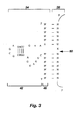
- a hammerhead ribozyme 34 is a small RNA that can catalyze the cleavage of a complementary RNA target 38 ( FIG. 3 ).
- the hammerhead comprises a catalytic core 42 (SEQ ID NO:4), essential for cleavage activity. Additionally, the hammerhead has a recognition domain 46 that is required for interaction with a complementary substrate, such as an RNA transcript. There are few sequence requirements for the recognition domain, thus by changing the sequence of the recognition domain almost any sequence can be targeted for cleavage by the hammerhead.
- Cleavage of the substrate 38 occurs at a cleavage site 50 containing an NUH sequence (where N is A, C, G, or U and H is A, C, or U).
- the hammerhead can be used as an antisense inhibitor of gene expression.
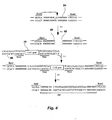
- a DNA fragment encoding the hammerhead catalytic core is inserted into the DNA fragment encoding the antisense RNA. This is performed as illustrated in FIG 4 .
- the 14 base-pair fragment 54 in the fragment library is bisected with HphI ( FIG. 4 , step a).
- the resulting single-stranded overhang on each terminus is then removed using the 3' to 5' exonuclease activity of T4 DNA polymerase ( FIG. 4 , step b) to result in blunt ends 58, 62.
- a DNA fragment encoding the hammerhead catalytic core 66 (SEQ ID NO:4) is then inserted by ligation ( FIG. 4 , step c).
- the catalytic core shown in FIG. 4 is interrupted by a promoter-less chloramphenicol resistance gene 70 (CAT).
- a promoter is provided flanking the MCS. Transforming bacteria and selecting for chloramphenicol resistance allows selection for clones in which the catalytic core is in the correct orientation to produce a bonafide hammerhead ribozyme.
- the CAT gene is removed and the sequence encoding a hammerhead ribozyme 74 is generated by NruI digestion ( FIG. 4 , step d) and ligation with T4 DNA ligase ( FIG. 4 , step e).
- antisense libraries can also be produced from the fragment library.
- other cassettes can be ligated into an HphI-digested fragment library. Catalytic cores from other ribozymes, including those currently known and those to be discovered, can be inserted.
- other cassettes could be used that encode sequences that cause modification to the target by mechanisms other than cleavage.
- ribozyme and non-ribozyme sequences can be added to the end of the antisense sequence. This is illustrated in FIG. 5A , wherein the DNA fragment library is digested with BpmI, which digests the DNA at the distal end of the inserted fragment 78 (step a).
- a cassette 90 is inserted by ligation to recircularize the modified plasmid 94, now containing the cassette inserted at an end of the insert fragment.
- a suitable cassette can be engineered into the starting multi-cloning sequence. For instance, the HphI site of the original MCS ( FIG. 1A ) could be replaced with a cassette encoding any desired sequence ( FIG. 5B ). Then, using the same procedure illustrated in FIG.
- the cassette can be placed against the fragment sequence in the conversion of the deletion library into the fragment library.
- An example of a possible cassette is one encoding the sequence CUGA.
- An antisense RNA with this sequence at its 3' end has been shown to be capable of directing the 2'-O-methylation of the complementary target (J. Cavaille et al., Targeted ribose methylation of RNA in vivo directed by tailored antisense RNA guides, 383 Nature 732-735 (1996 )).
- This reaction is catalyzed by modification machinery present in mammalian cells.
- 2'-O-methylation of a suitable target site could be used to inhibit expression of the RNA transcript.
- Other cellular RNA processing reactions can also be used in a similar fashion with the use of different cassettes placed adjacent to the antisense RNA sequence.
- Antisense libraries prepared according to the present invention can be assayed in vitro in a cell free system or in vivo in cultured cells, as will be described in more detail below.
- In vivo assay For in vivo, use the antisense library is introduced by transfection into a suitable cell line that expresses the gene of interest. The transfection conditions are chosen such that only one member of the library is taken up by each individual cell. The individual cells then each express a different antisense molecule targeted to a different site on the RNA transcript of interest. All target sites are represented in the entire cell population produced by transfection. Using a suitable detection method, cell clones can be identified in which expression of the target RNA has been reduced or eliminated. These clones possess an antisense molecule that targets an effective site on the RNA transcript of interest. The plasmid encoding this antisense molecule is recovered and the target sequence is identified by DNA sequencing.
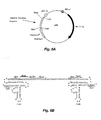
- FIGS. 6A and 7B show two such episomal vectors, pBK (SEQ ID NO: 17) and pShuttle (SEQ ID NO:14), respectively.
- Vector pBK possesses the origin of replication and the gene encoding the T/t antigen from the human papova virus BK (BKV).
- Vector pShuttle possesses the origin of replication and the EBNA1 gene from the human Epstein-Barr virus (EBV). These sequence elements allow each of the plasmids to replicate extrachromosomally (episomally).
- Episomal expression is desirable for several reasons. First, it eliminates the clone-to-clone variation in expression that occurs if stable transfectants are used. P.B. Belt et al., 84 Gene 407-417 (1989 ). Second, since the copy number of the episomal vector is determined primarily by the transfection conditions and, once established, remains tightly regulated, J.L. Yates & N. Guan, 65 J. Virol. 483-488 (1991 ), then effects on expression due to differences in copy number are minimal. Consequently, the selection of antisense efficacy is based on accessibility and not the level of expression. Third, the use of an episomal expression vector allows for high transfection efficiency. P.B.
- Vector pBK illustrates other features of value for in vivo expression of antisense libraries.
- pBK has a single antibiotic resistance gene, bleomycin R , driven by dual mammalian (CMV) and bacterial (em7) promoters. This allows the same selectable marker to be used in both bacterial and mammalian cells. This helps to minimize the size of the vector, since large vectors transfect at a lower efficiency.
- pBK has both the BK origin of replication and the origin of replication from the pUC series of bacterial plasmids. Therefore pBK can be replicated in both bacterial and mammalian cells, and can be shuttled between them.
- pBK was designed such that the antisense library could be constructed and expressed from the same vector.
- the antisense sequence is expressed by read-through expression of the bleomycin R gene. This ensures expression of the antisense agent when the cells are grown in the presence of bleomycin.
- the antisense fragment is released from the larger bleomycin transcript by the activity of cis-acting ribozymes (CAR), hammerhead ribozymes in this case, that flank the antisense sequence. In the absence of CAR, flanking sequences of the larger bleomycin transcript could inhibit the activity of the antisense agent.
- CAR cis-acting ribozymes
- FIG. 6B encode the cis-acting ribozymes. They are illustrated in FIG. 6B where only the sequence of the upper strand of the MCS is shown (SEQ ID NO:18). On cleavage by the CAR, the antisense agent is released and stable hairpin loops form to increase the nuclease resistance of the antisense agent.
- this episomal vector is EBV-based rather than BKV-based.
- the second and more significant difference is that construction of the antisense library is not possible in pShuttle. Instead, the antisense library is first constructed in pASlib (SEQ ID NO:7), and subsequently transferred to pShuttle for expression in mammalian cells. The antisense encoding fragment of pASlib is removed by digestion with HindIII and SalI ( Figure 7A ). Subsequently, the HindIII/SalI fragment is ligated into the multi-cloning site of pShuttle via the HindIII and XhoI sites ( Figure 7C ). This places the antisense sequence downstream of a dual CMV/T7 promoter for expression in vivo in mammalian cells or, alternatively, in vitro by transcription using T7 RNA polymerase.
- viral vectors can also be used. Many viruses are currently being examined for expression of foreign genes for the purpose of gene therapy. These same viral vectors would be suitable for expression of directed antisense libraries. Some of these vectors replicate extrachromosomally and therefore behave similarly to the described episomal vectors. Others integrate into chromosomes. For the use of integrative viral vectors, two minor problems would need to be dealt with. First, the antisense gene present within the viral vector would integrate into the chromosome with the virus. Consequently, recovering the gene to determine the site at which it targets is not readily possible. This can be dealt with by using polymerase chain reaction (PCR) to amplify the integrated antisense gene.
- PCR polymerase chain reaction
- the PCR product could be sequenced directly, or cloned and sequenced to identify the target site.
- some of these viral vectors integrate randomly and this would produce differing levels of expression from different members of the directed antisense library. As discussed, it is important that expression of all members of the library be comparable. This problem can be dealt with by using a viral vector that integrates at a specific preferred site, such as adeno-associated virus.
- In vitro assay Identification of effective antisense target sites using antisense libraries can also be performed using in vitro assays. For instance, an assay such as that used by Lieber and Strauss (A. Lieber & M. Strauss, Selection of efficient cleavage sites in target RNAs by using a ribozyme expression library, 15 Molecular and Cellular Biology 540-551 (1995)), can be used.
- the antisense library is produced by in vitro transcription from a suitable promoter.
- an antisense ribozyme library in pShuttle might be used.
- other types of antisense libraries could be used similarly.
- the library-containing pShuttle is digested with XbaI and used as a template for run-off transcription of the antisense ribozyme by in vitro transcription with T7 RNA polymerase, according to methods well known in the art (e.g., C.J. Noren et al., 18 Nucleic Acids Res. 83-88 (1990 ).
- the transcribed ribozyme library is incubated in a lysate prepared from a mammalian cell line expressing the gene of interest.
- Effective target sites are identified by performing a primer extension reaction on purified RNA from the lysate using a primer specific for the gene of interest.
- Primer extension products terminate at the sites of cleavage by effective ribozymes. These sites are identified by gel electrophoresis of the primer extension products with suitable size markers.
- HindIII-HpaI fragment of pLA2917 J.N. Allen & R.S. Hanson, 161 J. Bact. 955-962 (1985 )
- pUCKan The HindIII-HpaI fragment of pLA2917 ( J.N. Allen & R.S. Hanson, 161 J. Bact. 955-962 (1985 )), containing the kanamycin resistance gene, was inserted into HindIII/SmaI-digested pUC19 to produce-pUCKan.
- An HphI and two BsaHI sites were eliminated from the kanamycin resistance gene by site-directed mutagenesis, according to methods well known in the art, to produce pUCKan*.
- the mutagenized kanamycin resistance gene was removed by HindlII/EcoRI digestion, and the termini were blunted by 5'-overhang fill-in using the Klenow fragment of DNA polymerase I and ligated to the 843 bp BspHI-SapI fragment of pUC19 containing the origin of replication.
- a clone (pKan) was selected wherein the EcoRI and BspHI sites were juxtaposed.
- the BsmFI and PstI sites were eliminated from pKan by site-directed mutagenesis using the procedure of E. Merino et al., 12 Biotechniques 508-510 (1992 ).
- the multiple cloning site for pASlib was constructed from the overlapping oligodeoxynucleotides MCS-L (SEQ ID NO:5) and MCS-R (SEQ ID NO:6) by 5'-overhang fill-in with the Klenow fragment of DNA polymerase I. Oligonucleotides were synthesized using an Applied Biosystems automated oligonucleotide synthesizer. The double-stranded multiple cloning site was inserted into EcoRI-linearized and blunted pKan to result in pASlib (SEQ ID NO:7). Restriction endonuclease digestions, primer extension reactions, ligation reactions, and the like were carried out according to methods well known in the art.
- pASlib possesses the pUC19 origin of replication and a kanamycin resistance gene allowing selection in bacterial cells.
- the kanamycin resistance gene was chosen as the selectable marker since, of all the available bacterial selection markers, it possessed the fewest sites present in the MCS. Therefore, it was the simplest to modify by site-specific mutagenesis to eliminate the undesirable sites.
- the MCS contains the following salient features. It possesses a short polylinker that allows much flexibility in the cloning of the gene or cDNA sequence of interest, which represents the first step in the construction of an antisense library.
- the polylinker includes several restriction sites that leave sticky ends upon digestion. These sites can be used to directionally clone the cDNA or genomic fragment in the correct orientation.
- the fragment can be cloned by blunt-end ligation, and the correctly oriented clone can be selected by restriction analysis.
- the PstI and PmeI sites allow the generation of a substrate for unidirectional digestion by exonuclease III into the cloned cDNA or genomic fragment. This allows preparation of a serial deletion library of the cloned insert.
- the BsmFI and BbsI sites are used together to convert the deletion library into a 14 bp fragment library.
- the HphI site allows bisection of the 14 bp fragment library for introduction of the antisense agent.
- a hygromycin expression cassette capable of being expressed in both mammalian and prokaryotic systems was constructed using overlap extension PCR.
- PCR was carried out according to methods well known in the art, e.g., U.S. Patent No. 4,683,195 ; U.S. Patent No. 4,683,202 ; U.S. Patent No. 4,800,159 ; U.S. Patent No. 4,965,188 ; PCR Technology: Principles and Applications for DNA Amplification (H. Erlich ed., Stockton Press, New York, 1989 ); PCR Protocols: A guide to Methods and Applications (Innis et al. eds, Academic Press, San Diego, Calif., 1990 ).
- the 1026 bp hygromycin resistance coding sequence from EBOpLPP was joined at its 3'-end to the 322 bp 3'-untranslated region (UTR)/SV40 early polyadenylation sequence from pRC/CMV (Invitrogen Corp., Carlsbad, California), while the 527 bp dual ampicillin/SV40 early promoter from pEGFP-1 was joined to the 5'-end.
- sequences of the primers used in the PCR were as follows: 3'-UTR/poly(A) segment, SEQ ID NO:8 and SEQ ID NO:9; hygromycin coding region, SEQ ID NO:10 and SEQ ID NO:11; amp/SV40 early promoter, SEQ ID NO:12 and SEQ ID NO: 13.
- Each portion of the hygromycin cassette was prepared by PCR using one of the three primer sets and the appropriate template. The resulting fragments were gel purified. The hygromycin-encoding and the 3'-UTR/poly(A) fragments were combined and used in a second PCR reaction to produce the hygromycin-3'-UTR/poly(A) fragment.
- this fragment was combined with the amp/SV40 fragment to produce the complete 1875 bp hygromycin gene cassette.
- the hygromycin gene cassette was ligated into the 843 bp BspHI-SapI oriP-containing fragment of pUC19, producing pHyg.
- the 4914 bp EcoRI-BamHI fragment containing the EBNA-1 and EBV oriP sequences from EBOpLPP was inserted between the hygromycin cassette and the pUC19 origin of XhoI-digested pHyg to make pEBV.
- the 1060 bp expression cassette was excised from pRC/CMV using NruI and PvuII and inserted into the BamHI site of pEBV to produce pShuttle (SEQ ID NO:14).
- pShuttle was designed to allow replication and expression of the antisense library in mammalian cells. It possesses an MCS for insertion of the antisense library. The MCS is flanked on one end by a dual CMV/T7 promoter for allowing expression of the antisense agent gene both in mammalian cells as well as by in vitro transcription using T7 RNA polymerase. On the other end of the MCS is a bovine growth hormone polyadenylation signal for efficient expression in mammalian cells. pShuttle possesses a hygromycin resistance gene driven by a dual promoter for allowing selection in bacterial and mammalian cells. The pUC19 origin of replication allows replication in bacterial cells.
- a cassette encoding the hammerhead catalytic core, interrupted by the CAT gene ( S. Horinouchi & B. Weisblum, 150 J. Bact. 815-825 (1982 )), was constructed as follows. PCR primers were prepared that were complementary to the CAT gene on their 3'-ends and encoded the hammerhead catalytic core on their 5'-ends. The sequences of the primers were SEQ ID NO:15 and SEQ ID NO:16. Located between the CAT and hammerhead catalytic core sequences were NruI restriction sites.
- the PCR contained 5 ng CAT gene DNA, 100 pmol each of the primers CatCass 1 and CatCass 2, 1 mM of each of the four dNTPs, 5 units of VENT polymerase (New England Biolabs, Beverly, Massachusetts) in the standard VENT polymerase buffer except that the concentration of the MgSO 4 was increased to 5.2 mM (i.e., 10 mM KCl, 10 mM (NH 4 ) 2 SO 4 , 20 mM Tris-HCl (pH 8.8 at 24°C), 5.2 mM MgSO 4 , 0.1% Triton X-100).
- the use of VENT polymerase ensured that the cassette possessed blunt ends.
- the reaction mixture was incubated as follows:
- the cassette was purified from unincorporated primers by agarose gel electrophoresis, and the agarose was subsequently removed from the cassette DNA using standard procedures.
- CAT selection allows the use of a non-phosphorylated cassette. This prevents insertion of multimers and selects against non-recombinants. Additionally, the CAT gene allows selection of clones acquiring a correctly oriented catalytic core.
- Herpes ICP4 ribozyme library Construction of a Herpes ICP4 ribozyme library .
- the 4489 bp BglII-EcoRI fragment from pTEG2, X.X. Zhu et al., 184 Virology 67-78 (1991 ), containing a herpes simplex virus ICP4 genomic fragment was cloned into EcoRI-EcoRV-digested pASlib. This fragment included 125 bp upstream of the translational start site, 466 bp downstream of the translational termination sequence, and the entire genomic coding sequence of ICP4.
- the resulting clone, pASlib-ICP4 contained the ICP4 fragment with the sense strand as the upper strand.
- a deletion library was produced as follows. Twenty ⁇ g of CsCl gradient purified plasmid DNA was digested with Pst I and Xba I, then concentrated and desalted using a Microcon 50 spin filter (Amicon). The DNA was brought up to a volume of 60.4 ⁇ l of exonuclease III buffer (i.e., 50 mM Tris-HCl, pH 8.0, 5 mM MgCl2, 10 mM 2-mercaptoethanol), warmed to 37°C, and then 300 units of exonuclease III were added.
- exonuclease III buffer i.e., 50 mM Tris-HCl, pH 8.0, 5 mM MgCl2, 10 mM 2-mercaptoethanol
- the DNA was then pelleted and dried. The DNA was then resuspended in 18 ⁇ l of d.i. H 2 O, 2.5 ⁇ l of 10 mM of each of the four dNTPs, 2.5 ⁇ l of 10x Pfu polymerase buffer (e.g., 100 mM KCl, 100 mM (NH 4 ) 2 SO 4 , 200 mM Tris-Cl (pH 8.75), 20 mM MgSO 4 , 1% Triton® X-100, 1000 mg/ml BSA), and 5 units of Pfu polymerase (Stratagene, La Jolla, California), then incubated at 72°C for 15 minutes, and cooled to room temperature.
- Pfu polymerase buffer e.g., 100 mM KCl, 100 mM (NH 4 ) 2 SO 4 , 200 mM Tris-Cl (pH 8.75), 20 mM MgSO 4 , 1% Triton® X-
- the plasmid DNA was recircularized by ligating in a large volume (1.25 ml) in a buffer containing 5% PEG for 4 hours at room temperature. Except for the modifications indicated, all ligations were performed with T4 DNA ligase under the conditions suggested by the manufacturer.
- the cells were grown in liquid culture to amplify the deletion library.
- the library DNA was purified and digested with Bsm FI and Bbs I, and then the ends were blunted with Pfu polymerase as described above.
- the DNA was then recircularized by ligation in a 600 ⁇ l volume in a buffer containing 5% polyethylene glycol (PEG) at room temperature for 4 hours.
- PEG polyethylene glycol
- the hammerhead core cassette was inserted by ligating 0.5 ⁇ g of the HphI-digested library DNA with 5 ⁇ g of the ribozyme core sequence cassette prepared according to the procedure of Example 3. That ligation product was transformed into DH5 ⁇ and grown in culture under chloramphenicol selection. After purification, 2 ⁇ g of the DNA was digested with HindIII and SalI, and the terminal phosphates were removed using shrimp alkaline phosphatase (Amersham, Arlington Heights, Illinois). The HindIII/SalI digest was fractionated on an agarose gel, and the dephosphorylated ribozyme/chloramphenicol cassette was purified using standard procedures.
- the cassette was combined with an equimolar amount of HindIII-XhoI-digested pShuttle, prepared according to the procedure of Example 2, and ligated using a modified two-step ligation procedure, S. Damak & D.W. Bullock, 15 Biotechniques 448-450 (1993 ) (hereby incorporated by reference).
- the first step was performed at room temperature for 1 hour, and the second step was incubated overnight at 16°C.
- the ligation mixture was transformed in DH5a and grown in culture under chloramphenicol selection.
- the library DNA was purified and then digested with NruI to release the chloramphenicol gene.
- the digested DNA was then recircularized by ligation in a volume of 600 ⁇ l.
- the final ligation product was transformed into DH5a, and the plasmid DNA was purified on a CsCl gradient.
- BsmFI and HphI For construction of the library, two type IIS restriction enzymes are required, BsmFI and HphI.
- Typical of type IIS restriction enzymes, BsmFI and HphI cleave downstream of their recognition sequences in a sequence-independent manner.
- Cleavage by type IIS restriction enzymes can pose some problems since they can exhibit infidelity in how far from their recognition site they cleave.
- Cleavage by BsmFI was largely at the expected distance (10/14), but also at 11/15.
- the reported 9/13 activity for this enzyme, V.E. Velculescu et al., 270 Science 484-487 (1995 ) was not seen in any of the clones sequenced.
- Infidelity of BsmFI does not present a problem for construction of ribozyme libraries. The result of this infidelity is that the recognition domains of the ribozymes in the library can vary from 13 to 15 nucleotides.
- HphI infidelity can be problematical.
- HphI digestion is a critical step in the construction of ribozyme libraries. This enzyme produces a 1 nucleotide 3'-overhang that is later removed by polishing with T4 DNA polymerase. It is essential to the proper functioning of the resulting ribozyme that this 1 nucleotide be removed, since it does not have an antisense binding partner in the ribozyme ( FIG. 1 , X).
- HphI cleaves at 8/7, but also at 9/8. D. Kleid et al., 73 Proc. Nat'l Acad. Sci. USA 293-297 (1976 ). This infidelity is demonstrated in the present library by the presence of ribozymes with flanking helices of length 8 and 5, as would be expected if HphI cleaved at 9/8. This type of infidelity, in itself, is not problematical. It simply alters the relative lengths of the two arms of the binding domain, leaving the total length of the binding arms unchanged.
- the problem that arises with HphI infidelity is that the enzyme can cleave twice at the same target, i.e., if it first cleaves at 9/8 it can rebind and cleave at 8/7.
- the result is that 2 bp are removed from the sequence upon polishing with T4 DNA polymerase. Removal of 2 bp from the insertion site of the ribozyme core produces a non-functional ribozyme.
- >40% of the clones were the product of double cutting. This is close to the statistically predicted 50% that would occur if HphI has no preference for either 8/7 or 9/8 cutting. To minimize the possibility of double cutting, HphI digestion was performed under near "single hit" conditions.
- double cleavage was only 13% of the final library. It should be possible to further reduce the percentage of double hits by performing the cleavage under "sub-single hit" conditions. This should not present any problem so long as the amount of plasmid digested is sufficient to allow full representation of the ribozyme library. Undigested molecules cannot accept the catalytic core and are removed in the later step by selection for chloramphenicol resistance. Other class IIS restriction enzymes, such as MboII, could likely substitute for HphI, but fidelity may not be any better.
- HphI is also sensitive to overlapping dam methylation. This is also true of MboII. Since 2 nucleotides of the four base consensus sequence for dam methylation are provided by the variable sequence of the cDNA insert, mathematically 1/16 of the clones in the 14 bp fragment library (6.25%) will not be cleaved with HphI and will be eliminated from the final ribozyme library. This can be prevented by passage of the 14 bp fragment library in a dam- strain prior to HphI digestion.
- the target locations of the 56 sequenced clones are illustrated in FIG. 8 .
- the histogram indicates that the target sites are fairly evenly distributed across the entire ICP4 gene, with the exception that no clones were identified targeting the 5'- and 3'-termini. It is unlikely that the library is devoid of members targeting these regions since the libraries are prepared with complexities far exceeding the total number of sites on the gene. It is even possible that target sites in these regions are similarly represented as those identified by the sequenced clones. Due to the small number of clones sequenced, it is likely that some larger gaps in the data could be observed even for a uniformly represented library, such as the gap between positions 966 and 1282.
- NruI site used to remove CAT from the catalytic core.
- the ends must have been damaged during this step for this clone.
- the other two non-detrimental defects were the result of incomplete digestion by BsmFI. These clones have a longer flanking arm corresponding to helix III (Rzl2 and Rzl4). This appears to be the result of a lack of cleavage of the BsmFI site on pASlib and, instead, an internal BsmFI site on ICP4 was used. These clones would be expected to produce functional ribozymes had they targeted an NUH sequence.
- the remaining 12 clones (39% of 31) possessed defects that would prevent them from being potentially functional ribozymes.
- the success rate of this library was 61%. As discussed, a few procedural changes would increase the success rate to 70-80%. This could be increased a further 16% by placing the CAT promoter outside the MCS. Even at 61%, the success rate is more than adequate. This just means that it is necessary to screen an antisense library 140% the size needed if 100% success were achieved. This would still be a small library relative to a non-directed library approach.
- a library of 81,057 (18-fold excess) is expected to contain all sequences with probability of 99.9%.
- Preparation, manipulation, and screening of such a library is well within the limitations of current practice.
- a non-directed library targeting 14 nucleotides would require a minimum size of 2.7 x 10 8 (4 14 ).
- the ability to prepare and screen such a library is questionable. Even if possible, the vast majority of members of the library are directed at non-target genes. Inhibition of non-target genes could pose problems in interpreting the results.
Landscapes
- Life Sciences & Earth Sciences (AREA)
- Genetics & Genomics (AREA)
- Health & Medical Sciences (AREA)
- Engineering & Computer Science (AREA)
- Biomedical Technology (AREA)
- Bioinformatics & Cheminformatics (AREA)
- Wood Science & Technology (AREA)
- Organic Chemistry (AREA)
- Chemical & Material Sciences (AREA)
- Biotechnology (AREA)
- General Engineering & Computer Science (AREA)
- Zoology (AREA)
- Molecular Biology (AREA)
- Microbiology (AREA)
- Virology (AREA)
- Plant Pathology (AREA)
- Biophysics (AREA)
- Biochemistry (AREA)
- General Health & Medical Sciences (AREA)
- Physics & Mathematics (AREA)
- Measuring Or Testing Involving Enzymes Or Micro-Organisms (AREA)
- Steroid Compounds (AREA)
- Pharmaceuticals Containing Other Organic And Inorganic Compounds (AREA)
- Medicines Containing Material From Animals Or Micro-Organisms (AREA)
- Medicines That Contain Protein Lipid Enzymes And Other Medicines (AREA)
Abstract
Description
- This invention relates to antisense agents. More particularly, the invention relates to compositions and methods for generation of directed antisense libraries and methods of use thereof wherein the antisense agents in the libraries can potentially bind to every binding site on a selected RNA transcript.
- Antisense RNA, DNA, and ribozymes have been widely studied as research tools and potential therapeutic agents for inhibiting the expression of specific genes. These agents operate by binding to a complementary region on an RNA transcript produced from the gene of interest. On binding, the antisense agent can prevent expression of the RNA, and this can occur through a variety of different mechanisms. There are many sites on any given RNA for targeted inhibition by an antisense molecule. For a typical RNA transcript of 2000 nucleotides, just under 2000 target sites are available. Examination of a few to tens of randomly chosen target sites reveals a great variability in activity. Clearly, not all target sites are equivalent in their ability to permit antisense mediated inhibition. Consequently, identification of effective target sites on the RNA transcript for interaction with the antisense molecule is imperative for successful application of antisense technology. Methods currently available for this purpose include the use of computer algorithms to predict target accessibility based on the predicted secondary structure of the mRNA, the use of randomized oligonucleotide and ribozyme libraries in cell free systems, and the examination of a few to tens of antisense oligonucleotides, targeted to arbitrarily chosen sites, in cell culture assays. These approaches have met with limited success.
- To identify the most effective target site(s), the following conditions should be met. First, all possible sites on the target RNA should be evaluated. Second, evaluation should be carried out in the normal cellular milieu. This insures that the target is in its natural structure, associated with its normal complement of cellular factors. Additionally, the antisense agent has the opportunity to act on alternate structures that may arise as a result of the many RNA processing reactions.
- To evaluate all target sites, antisense libraries must be used. These libraries should contain antisense molecules targeted to every site. One approach is the use of completely randomized DNA, RNA, or ribozyme libraries. The use of completely randomized libraries suffers from two major disadvantages. First, while such libraries may contain antisense molecules directed at all sites on the target RNA, they also contain antisense molecules directed at all sites of all potential RNA transcripts produced by the cell. Therefore, these random libraries potentially have the capability to inhibit expression of every gene in the cell. Because of this, random libraries are limited to in vitro use in cell free assays. Second, the complexity of these libraries is enormous. For example, a random library that uses 14 nucleotides to recognize its target must contain at least 2.6 x 10⁸ (i.e., 414) different members. Realistically, the size of the library must be at least 10- to 100-fold greater in size to insure representation of all sequences. The production and screening of such large libraries is likely beyond current capabilities.
- Herein there is described a new method for identifying optimal antisense target sites against any desired RNA transcript. This is a directed library approach. In other words, this approach uses an antisense library that targets every site on any selected RNA and only sites present on the selected RNA. This library, therefore, does not inhibit other non-target RNA transcripts. This approach is also an improvement over known methods because it uses relatively small libraries. For example, a library targeting an RNA transcript of 2000 nucleotides, and using 14 nucleotides to recognize its target, theoretically needs 1986 members. In practice, the library would need to be 10- to 50- times this size. At 50 times, or 99,300 members, this is still a relatively small library. These directed libraries can be used in both in vitro and in vivo assays for the detection of effective target sites for antisense mediated gene inhibition.
- In view of the foregoing, it will be appreciated that a method for generating directed antisense libraries would be a significant advancement in the art. Herein is described a method for examining the entire length of any RNA transcript for sites that are accessible to antisense agents. This approach allows for the localization of the most effective sites for targeting with antisense agents.
- It is an object of the present invention to provide a simple and inexpensive method for producing directed antisense libraries against any selected RNA transcript.
- It is also an object of the invention to provide a method of producing directed antisense libraries wherein such libraries contain antisense agents directed against all targets spanning the entire selected RNA transcript.
- It is another object of the invention to provide a method of using directed antisense libraries for locating efficient target sites on the selected RNA transcript.
- It is still another object of the invention to provide compositions for use in constructing directed antisense libraries.
- It is yet another object to provide a method for making fragment libraries of a selected size of DNA fragment inserted in a cloning vector.
- These and other objects can be addressed by providing a method for generating an antisense library targeted to a selected RNA transcript comprising:
- (a) preparing a double-stranded cDNA, comprising a first end, a second end, and a central site thereof, from the selected RNA transcript and cloning the cDNA in a cloning vector comprising a promoter configured such that an antisense transcript of the cDNA is synthesized upon transcription mediated by the promoter, resulting in a cloned cDNA;
- (b) creating a plurality of deletion derivatives of the cloned cDNA wherein each of the plurality of deletion derivatives has a deletion extending from the first end into the cloned cDNA such that the plurality of deletion derivatives comprises a deletion library comprising deletions extend serially into the cDNA;
- (c) reducing the size of the cDNA contained in the deletion library to a preselected size by removing a portion of the cDNA from the second end thereof to result in a fragment library;
- (d) inserting an antisense gene DNA into the central site of the cDNA in the fragment library, thereby obtaining the antisense library.
- Preferred cloning vectors comprise multi-cloning sequences comprising SEQ ID NO:1 1 and a combination of SEQ ID NO:2 and SEQ ID NO:3. In a preferred embodiment of the invention, the deletion derivatives are created with exonuclease III resection of the cloned cDNA. The size of the cDNA contained in the deletion library is preferably reduced to a preselected size by digesting the deletion library with a type IIS restriction endonuclease. Further, inserting the antisense gene DNA into the central site of the cDNA in the fragment library preferably comprises digesting the fragment library with a type IIS restriction endonuclease, thereby creating the central site, and ligating the antisense gene DNA at the central site. A preferred antisense gene comprises a ribozyme catalytic core, more preferably, a hammerhead ribozyme catalytic core.
- Another aspect of the invention relates to a method for generating a library of DNA fragments of a selected size wherein the fragments collectively span all possible sites of the selected size in a source DNA comprising a first end, a second end, and a central site thereof, comprising:
- (a) cloning the source DNA in a cloning vector;
- (b) creating a plurality of deletion derivatives of the cloned source DNA wherein each of the plurality of deletion derivatives has a deletion extending from the first end into the cloned DNA such that the plurality of deletion derivatives comprises a deletion library comprising deletions extend serially into the cloned DNA; and
- (c) reducing the size of the DNA contained in the deletion library to a preselected size by removing a portion of the DNA from the second end thereof to result in the library of fragments.
- Still another aspect of the invention relates to a method for identifying target sites for antisense-mediated inhibition of a selected gene comprising:
- (a) constructing a directed antisense library targeted at the selected gene wherein the library is contained in a cloning vector having a promoter configured for transcribing antisense transcripts from the directed antisense library in suitable cells wherein the selected gene is expressed as a target transcript;
- (b) transforming a plurality of the suitable cells such that each of the plurality of suitable cells transcribes an antisense transcript that has access to the target transcript for potential inactivation thereof;
- (c) identifying a cell wherein an antisense transcript inactivates the target transcript; and
- (d) analyzing the antisense transcript that inactivates the target transcript and determining a target site on the antisense transcript that is associated with inactivation of the target transcript.
- Yet another aspect of the invention relates to a method for identifying target sites for antisense-mediated inhibition of a selected gene comprising:
- (a) constructing a directed antisense library targeted at the selected gene wherein the library is contained in a cloning vector having a promoter configured for transcribing antisense transcripts from the directed antisense library in vitro;
- (b) transcribing antisense transcripts from the directed antisense library in vitro;
- (c) incubating the antisense transcripts with a lysate from a cell containing target transcripts transcribed from the selected gene such that antisense transcripts targeted to the target transcripts bind to such target transcripts; and
- (d) analyzing the antisense transcripts that bind the target transcript and determining a target site on the antisense transcript that is associated with binding of the target transcript.
-
-
FIGS. 1A and 1B show illustrative multi-cloning sequences (MCS's) according to an aspect of the present invention. -
FIG. 2 summarizes an illustrative method for making a DNA fragment library containing 14 bp fragments according to the present invention. -
FIG. 3 shows a schematic representation of a hammerhead ribozyme bound to a target substrate; the hammerhead ribozyme comprises a catalytic core that cleaves the substrate at the cleavage site indicated by the arrow and a recognition domain for binding to the substrate by base pairing. -
FIG. 4 summarizes an illustrative method for making a hammerhead ribozyme library from an antisense RNA library according to the present invention. -
FIG. 5A shows an illustrative method for inserting a selected cassette at an end of a deletion fragment in a deletion fragment library according to the present invention. -
FIG. 5B shows an illustrative method for inserting a selected cassette in a MCS prior to preparation of a deletion fragment library according to the present invention. -
FIG. 6A shows a map of expression vector pBK, which is suitable for use in identifying antisense targets in mammalian cells according to the present invention. -
FIG. 6B shows base pairing of nucleotides in a multi-cloning sequence flanked by cis-acting ribozymes (CAR's). -
FIG. 7A shows a map of vector pASlib according to the present invention. -
FIG. 7B shows a map of vector pShuttle according to the present invention. -
FIG. 7C shows a map of the MCS of pShuttle according to the present invention. -
FIG. 8 shows a histogram of the distribution of 56 target sites in an illustrative antisense library according to the present invention. - Before the present compositions and methods for generating directed antisense libraries and methods of use thereof are disclosed and described, it is to be understood that this invention is not limited to the particular configurations, process steps, and materials disclosed herein as such configurations, process steps, and materials may vary somewhat. It is also to be understood that the terminology employed herein is used for the purpose of describing particular embodiments only and is not intended to be limiting since the scope of the present invention will be limited only by the appended claims and equivalents thereof.
- It must be noted that, as used in this specification and the appended claims, the singular forms "a," "an," and "the" include plural referents unless the context clearly dictates otherwise.
- In describing and claiming the present invention, the following terminology will be used in accordance with the definitions set out herein.
- As used herein, "antisense agent" and similar terms mean antisense RNA, antisense DNA, and ribozymes.
- As used herein, "comprising," "including," "containing," "characterized by," and grammatical equivalents thereof are inclusive or open-ended terms that do not exclude additional, unrecited elements or method steps. "Comprising" is to be interpreted as including the more restrictive terms "consisting of" and "consisting essentially of."
- As used herein, "consisting of" and grammatical equivalents thereof exclude any element, step, or ingredient not specified in the claim.
- As used herein, "consisting essentially of" and grammatical equivalents thereof limit the scope of a claim to the specified materials or steps and those that do not materially affect the basic and novel characteristic or characteristics of the claimed invention.
- The present invention includes a procedure that allows construction of directed antisense libraries of a variety of types. This requires the use of specially designed bacterial and/or mammalian plasmid vectors. Most importantly, these vectors possess a specially designed multi-cloning sequence (MCS). This approach is not restricted to a single MCS, as many can be designed that allow the procedure to be performed. Two illustrative MCS's are shown in
FIGS. 1A (SEQ ID NO:1) and 1B (SEQ ID NO:2 and SEQ ID NO:3). These simply illustrate two possible multi-cloning sequences that could be used for this method. While some of the same restriction enzyme sites are used in both of these MCS's, such particular sites are not necessarily the only sites that could be used. Many other restriction enzyme sites could substitute for any of the restriction sites, allowing the same procedure to be performed. - The procedure uses a special multi-cloning sequence and a series of enzymatic manipulations to produce DNA fragment libraries directed against any desired gene of interest. The fragment libraries contain all overlapping fragments spanning the entire length of the gene of interest. Transcription in vitro or in vivo of the DNA fragment allows the production of an antisense RNA targeted to the site on the RNA transcript that is encoded by the DNA fragment. Transcription of the entire DNA fragment library produces all antisense RNA molecules targeting all positions on the RNA target. Expression of the library in mammalian cells allows identification of effective target sites for antisense-mediated gene inhibition.
- The procedure is illustrated in
FIG. 2 using the MCS shown inFIG. 1A . Beginning with theMCS 10 in a suitable circular plasmid vector (described in more detail below), a blunt-ended DNA fragment encoding the gene ofinterest 14 is ligated into the EcoRV-digested MCS (FIG. 2 , step a). Since the gene can be inserted in one of two orientations, a clone is selected, according to methods well known in the in art such as nucleotide sequencing or restriction mapping, wherein the gene insert is suitably oriented. The orientation will depend on the placement of a transcriptional promoter adjacent to the MCS. The orientation of the insert will be chosen such that the antisense strand of the insert will be transcribed by the adjacent promoter. Next, a deletion library is prepared. The plasmid containing the gene of interest is digested with both PmeI and BbeI (FIG. 2 , step b). The BbeI terminus is protected from exonuclease III digestion because of its 3'overhang 18, while thePmeI terminus 22 is a suitable substrate therefor. The digested plasmid is then treated with exonuclease III and aliquots are removed over time into a stop mixture (FIG. 2 , step c). The time points are chosen such that deletions are generated after every nucleotide across the entire gene. After exonuclease III digestion, the combined aliquots are treated with mung bean nuclease to remove the resulting 5' overhang (FIG. 2 , step c). The termini are then polished with T4 DNA polymerase (FIG. 2 , step d) and the plasmid is recircularized with T4 DNA ligase to produce the deletion library (FIG. 2 , step e). The deletion library is then converted into a fragment library (14 base-pair fragments 26 in this case) by digestion with restriction endonucleases BsmI and BpmI (FIG. 2 , step f), purification of the plasmid containing the 14bp fragment 26 from the excised BpmI/BsmI fragment 30 (FIG. 2 , step g), end-polishing with T4 DNA polymerase (FIG. 2 , step h), and ligation with T4 DNA ligase (FIG. 2 , step i). Not stated, but implied, after each ligation step (i.e., steps a, e, and i) the ligation mixture is transformed into bacteria, the DNA is recovered from the bacteria, and the recovered DNA is used in the subsequent step. All of these reactions involving restriction endonucleases, ligases, polymerases, nucleases, and the like are well known in the art and are performed according to standard methods, e.g., J. Sambrook et al., Molecular Cloning: A Laboratory Manual (2d ed., 1989); T. Maniatis et al., Molecular Cloning: A Laboratory Manual (1982); F. Ausubel et al., Current Protocols in Molecular Biology (1987), relevant parts of which are hereby incorporated by reference. - The essence of the procedure is as follows. A gene of interest is converted into a library of fragments serially deleted after every nucleotide. This deletion library is subsequently converted into a fragment library containing all overlapping fragments encoded by the gene.
- The fragment library can also serve as the starting point for construction of other types of antisense libraries. One such library is an antisense hammerhead ribozyme library.
- A
hammerhead ribozyme 34 is a small RNA that can catalyze the cleavage of a complementary RNA target 38 (FIG. 3 ). The hammerhead comprises a catalytic core 42 (SEQ ID NO:4), essential for cleavage activity. Additionally, the hammerhead has arecognition domain 46 that is required for interaction with a complementary substrate, such as an RNA transcript. There are few sequence requirements for the recognition domain, thus by changing the sequence of the recognition domain almost any sequence can be targeted for cleavage by the hammerhead. Cleavage of thesubstrate 38 occurs at acleavage site 50 containing an NUH sequence (where N is A, C, G, or U and H is A, C, or U). In the case where the substrate is a gene transcript, the hammerhead can be used as an antisense inhibitor of gene expression. - To convert the fragment (antisense RNA) library into a hammerhead ribozyme library, a DNA fragment encoding the hammerhead catalytic core is inserted into the DNA fragment encoding the antisense RNA. This is performed as illustrated in
FIG 4 . The 14 base-pair fragment 54 in the fragment library is bisected with HphI (FIG. 4 , step a). The resulting single-stranded overhang on each terminus is then removed using the 3' to 5' exonuclease activity of T4 DNA polymerase (FIG. 4 , step b) to result in blunt ends 58, 62. A DNA fragment encoding the hammerhead catalytic core 66 (SEQ ID NO:4) is then inserted by ligation (FIG. 4 , step c). The catalytic core shown inFIG. 4 is interrupted by a promoter-less chloramphenicol resistance gene 70 (CAT). A promoter is provided flanking the MCS. Transforming bacteria and selecting for chloramphenicol resistance allows selection for clones in which the catalytic core is in the correct orientation to produce a bonafide hammerhead ribozyme. Next, the CAT gene is removed and the sequence encoding ahammerhead ribozyme 74 is generated by NruI digestion (FIG. 4 , step d) and ligation with T4 DNA ligase (FIG. 4 , step e). - Other types of antisense libraries can also be produced from the fragment library. For instance, other cassettes can be ligated into an HphI-digested fragment library. Catalytic cores from other ribozymes, including those currently known and those to be discovered, can be inserted. Additionally, other cassettes could be used that encode sequences that cause modification to the target by mechanisms other than cleavage. Similarly, ribozyme and non-ribozyme sequences can be added to the end of the antisense sequence. This is illustrated in
FIG. 5A , wherein the DNA fragment library is digested with BpmI, which digests the DNA at the distal end of the inserted fragment 78 (step a). The unpaired nucleotides resulting from this reaction are then removed with T4 DNA polymerase (step b) to result in blunt ends 82, 86. Next, acassette 90 is inserted by ligation to recircularize the modifiedplasmid 94, now containing the cassette inserted at an end of the insert fragment. Alternatively, instead of inserting a cassette after the fragment library is produced, a suitable cassette can be engineered into the starting multi-cloning sequence. For instance, the HphI site of the original MCS (FIG. 1A ) could be replaced with a cassette encoding any desired sequence (FIG. 5B ). Then, using the same procedure illustrated inFIG. 2 , the cassette can be placed against the fragment sequence in the conversion of the deletion library into the fragment library. An example of a possible cassette is one encoding the sequence CUGA. An antisense RNA with this sequence at its 3' end has been shown to be capable of directing the 2'-O-methylation of the complementary target (J. Cavaille et al., Targeted ribose methylation of RNA in vivo directed by tailored antisense RNA guides, 383 Nature 732-735 (1996)). This reaction is catalyzed by modification machinery present in mammalian cells. 2'-O-methylation of a suitable target site could be used to inhibit expression of the RNA transcript. Other cellular RNA processing reactions can also be used in a similar fashion with the use of different cassettes placed adjacent to the antisense RNA sequence. - Antisense libraries prepared according to the present invention can be assayed in vitro in a cell free system or in vivo in cultured cells, as will be described in more detail below.
- In vivo assay. For in vivo, use the antisense library is introduced by transfection into a suitable cell line that expresses the gene of interest. The transfection conditions are chosen such that only one member of the library is taken up by each individual cell. The individual cells then each express a different antisense molecule targeted to a different site on the RNA transcript of interest. All target sites are represented in the entire cell population produced by transfection. Using a suitable detection method, cell clones can be identified in which expression of the target RNA has been reduced or eliminated. These clones possess an antisense molecule that targets an effective site on the RNA transcript of interest. The plasmid encoding this antisense molecule is recovered and the target sequence is identified by DNA sequencing.
- To identify suitable targets in vivo, specially designed expression vectors are required. One key feature of such expression vectors is that they are designed to replicate episomally in mammalian cells.
FIGS. 6A and7B show two such episomal vectors, pBK (SEQ ID NO: 17) and pShuttle (SEQ ID NO:14), respectively. Vector pBK possesses the origin of replication and the gene encoding the T/t antigen from the human papova virus BK (BKV). Vector pShuttle possesses the origin of replication and the EBNA1 gene from the human Epstein-Barr virus (EBV). These sequence elements allow each of the plasmids to replicate extrachromosomally (episomally). Episomal expression is desirable for several reasons. First, it eliminates the clone-to-clone variation in expression that occurs if stable transfectants are used. P.B. Belt et al., 84 Gene 407-417 (1989). Second, since the copy number of the episomal vector is determined primarily by the transfection conditions and, once established, remains tightly regulated, J.L. Yates & N. Guan, 65 J. Virol. 483-488 (1991), then effects on expression due to differences in copy number are minimal. Consequently, the selection of antisense efficacy is based on accessibility and not the level of expression. Third, the use of an episomal expression vector allows for high transfection efficiency. P.B. Belt et al., 84 Gene 407-417 (1989); R.F. Maragolskee et al., 8 Mol. Cell. Biol. 2837-2847 (1988). This is important to ensure that all antisense agents present in the library are represented in the mammalian transfectants. Finally, the plasmid can be recovered and shuttled back into bacterial cells. This allows the sequence of effective antisense agents to be determined, thereby identifying accessible target sites. As a demonstration of episomal replication, pShuttle was used to transfect HeLa cells, and the cells were grown in culture under 400 µg/ml hygromycin selection. After 1 month in culture, low molecular weight DNA was isolated from 1 x 10⁷ cells and used to transform Escherichia coli DH5a, producing a total of 2475 hygromycin-resistant colonies. - Vector pBK illustrates other features of value for in vivo expression of antisense libraries. pBK has a single antibiotic resistance gene, bleomycinR, driven by dual mammalian (CMV) and bacterial (em7) promoters. This allows the same selectable marker to be used in both bacterial and mammalian cells. This helps to minimize the size of the vector, since large vectors transfect at a lower efficiency. pBK has both the BK origin of replication and the origin of replication from the pUC series of bacterial plasmids. Therefore pBK can be replicated in both bacterial and mammalian cells, and can be shuttled between them. pBK was designed such that the antisense library could be constructed and expressed from the same vector. The antisense sequence is expressed by read-through expression of the bleomycinR gene. This ensures expression of the antisense agent when the cells are grown in the presence of bleomycin. The antisense fragment is released from the larger bleomycin transcript by the activity of cis-acting ribozymes (CAR), hammerhead ribozymes in this case, that flank the antisense sequence. In the absence of CAR, flanking sequences of the larger bleomycin transcript could inhibit the activity of the antisense agent. Sequences outside of the MCS (
FIG. 1A ) encode the cis-acting ribozymes. They are illustrated inFIG. 6B where only the sequence of the upper strand of the MCS is shown (SEQ ID NO:18). On cleavage by the CAR, the antisense agent is released and stable hairpin loops form to increase the nuclease resistance of the antisense agent. - pShuttle shares many of the same features as pBK, with two significant differences. First, this episomal vector is EBV-based rather than BKV-based. The second and more significant difference is that construction of the antisense library is not possible in pShuttle. Instead, the antisense library is first constructed in pASlib (SEQ ID NO:7), and subsequently transferred to pShuttle for expression in mammalian cells. The antisense encoding fragment of pASlib is removed by digestion with HindIII and SalI (
Figure 7A ). Subsequently, the HindIII/SalI fragment is ligated into the multi-cloning site of pShuttle via the HindIII and XhoI sites (Figure 7C ). This places the antisense sequence downstream of a dual CMV/T7 promoter for expression in vivo in mammalian cells or, alternatively, in vitro by transcription using T7 RNA polymerase. - Although it is believed that episomal shuttle vectors are advantageous for expression of directed antisense libraries, viral vectors can also be used. Many viruses are currently being examined for expression of foreign genes for the purpose of gene therapy. These same viral vectors would be suitable for expression of directed antisense libraries. Some of these vectors replicate extrachromosomally and therefore behave similarly to the described episomal vectors. Others integrate into chromosomes. For the use of integrative viral vectors, two minor problems would need to be dealt with. First, the antisense gene present within the viral vector would integrate into the chromosome with the virus. Consequently, recovering the gene to determine the site at which it targets is not readily possible. This can be dealt with by using polymerase chain reaction (PCR) to amplify the integrated antisense gene. The PCR product could be sequenced directly, or cloned and sequenced to identify the target site. Second, some of these viral vectors integrate randomly and this would produce differing levels of expression from different members of the directed antisense library. As discussed, it is important that expression of all members of the library be comparable. This problem can be dealt with by using a viral vector that integrates at a specific preferred site, such as adeno-associated virus.
- In vitro assay. Identification of effective antisense target sites using antisense libraries can also be performed using in vitro assays. For instance, an assay such as that used by Lieber and Strauss (A. Lieber & M. Strauss, Selection of efficient cleavage sites in target RNAs by using a ribozyme expression library, 15 Molecular and Cellular Biology 540-551 (1995)), can be used. For this, the antisense library is produced by in vitro transcription from a suitable promoter. In the present case, an antisense ribozyme library in pShuttle might be used. Of course other types of antisense libraries could be used similarly. The library-containing pShuttle is digested with XbaI and used as a template for run-off transcription of the antisense ribozyme by in vitro transcription with T7 RNA polymerase, according to methods well known in the art (e.g., C.J. Noren et al., 18 Nucleic Acids Res. 83-88 (1990). Subsequently, the transcribed ribozyme library is incubated in a lysate prepared from a mammalian cell line expressing the gene of interest. Effective target sites are identified by performing a primer extension reaction on purified RNA from the lysate using a primer specific for the gene of interest. Primer extension products terminate at the sites of cleavage by effective ribozymes. These sites are identified by gel electrophoresis of the primer extension products with suitable size markers.
- Construction of pASlib. In this example, there is described an illustrative plasmid according to the present invention for making a deletion library of a selected DNA. This plasmid was constructed as follows.
- The HindIII-HpaI fragment of pLA2917 (J.N. Allen & R.S. Hanson, 161 J. Bact. 955-962 (1985)), containing the kanamycin resistance gene, was inserted into HindIII/SmaI-digested pUC19 to produce-pUCKan. An HphI and two BsaHI sites were eliminated from the kanamycin resistance gene by site-directed mutagenesis, according to methods well known in the art, to produce pUCKan*. The mutagenized kanamycin resistance gene was removed by HindlII/EcoRI digestion, and the termini were blunted by 5'-overhang fill-in using the Klenow fragment of DNA polymerase I and ligated to the 843 bp BspHI-SapI fragment of pUC19 containing the origin of replication. A clone (pKan) was selected wherein the EcoRI and BspHI sites were juxtaposed. The BsmFI and PstI sites were eliminated from pKan by site-directed mutagenesis using the procedure of E. Merino et al., 12 Biotechniques 508-510 (1992). The multiple cloning site for pASlib was constructed from the overlapping oligodeoxynucleotides MCS-L (SEQ ID NO:5) and MCS-R (SEQ ID NO:6) by 5'-overhang fill-in with the Klenow fragment of DNA polymerase I. Oligonucleotides were synthesized using an Applied Biosystems automated oligonucleotide synthesizer. The double-stranded multiple cloning site was inserted into EcoRI-linearized and blunted pKan to result in pASlib (SEQ ID NO:7). Restriction endonuclease digestions, primer extension reactions, ligation reactions, and the like were carried out according to methods well known in the art. E.g., J. Sambrook et al., Molecular Cloning: A Laboratory Manual (2d ed., 1989); T. Maniatis et al., Molecular Cloning: A Laboratory Manual (1982); F. Ausubel et al., Current Protocols in Molecular Biology (1987).
- Therefore, pASlib possesses the pUC19 origin of replication and a kanamycin resistance gene allowing selection in bacterial cells. The kanamycin resistance gene was chosen as the selectable marker since, of all the available bacterial selection markers, it possessed the fewest sites present in the MCS. Therefore, it was the simplest to modify by site-specific mutagenesis to eliminate the undesirable sites. The MCS contains the following salient features. It possesses a short polylinker that allows much flexibility in the cloning of the gene or cDNA sequence of interest, which represents the first step in the construction of an antisense library. The polylinker includes several restriction sites that leave sticky ends upon digestion. These sites can be used to directionally clone the cDNA or genomic fragment in the correct orientation. Alternatively, the fragment can be cloned by blunt-end ligation, and the correctly oriented clone can be selected by restriction analysis. The PstI and PmeI sites allow the generation of a substrate for unidirectional digestion by exonuclease III into the cloned cDNA or genomic fragment. This allows preparation of a serial deletion library of the cloned insert. The BsmFI and BbsI sites are used together to convert the deletion library into a 14 bp fragment library. The HphI site allows bisection of the 14 bp fragment library for introduction of the antisense agent.
- Construction of pShuttle. In this example, there is described the construction of an illustrative plasmid for use according to the present invention for expressing an antisense agent in either mammalian cells using the intermediate-early promoter from cytomegalovirus or in vitro using T7 polymerase.
- A hygromycin expression cassette capable of being expressed in both mammalian and prokaryotic systems was constructed using overlap extension PCR. PCR was carried out according to methods well known in the art, e.g.,
U.S. Patent No. 4,683,195 ;U.S. Patent No. 4,683,202 ;U.S. Patent No. 4,800,159 ;U.S. Patent No. 4,965,188 ; PCR Technology: Principles and Applications for DNA Amplification (H. Erlich ed., Stockton Press, New York, 1989); PCR Protocols: A guide to Methods and Applications (Innis et al. eds, Academic Press, San Diego, Calif., 1990). The 1026 bp hygromycin resistance coding sequence from EBOpLPP (ATCC) was joined at its 3'-end to the 322 bp 3'-untranslated region (UTR)/SV40 early polyadenylation sequence from pRC/CMV (Invitrogen Corp., Carlsbad, California), while the 527 bp dual ampicillin/SV40 early promoter from pEGFP-1 was joined to the 5'-end. The sequences of the primers used in the PCR were as follows: 3'-UTR/poly(A) segment, SEQ ID NO:8 and SEQ ID NO:9; hygromycin coding region, SEQ ID NO:10 and SEQ ID NO:11; amp/SV40 early promoter, SEQ ID NO:12 and SEQ ID NO: 13. Each portion of the hygromycin cassette was prepared by PCR using one of the three primer sets and the appropriate template. The resulting fragments were gel purified. The hygromycin-encoding and the 3'-UTR/poly(A) fragments were combined and used in a second PCR reaction to produce the hygromycin-3'-UTR/poly(A) fragment. In a final PCR, this fragment was combined with the amp/SV40 fragment to produce the complete 1875 bp hygromycin gene cassette. The hygromycin gene cassette was ligated into the 843 bp BspHI-SapI oriP-containing fragment of pUC19, producing pHyg. The 4914 bp EcoRI-BamHI fragment containing the EBNA-1 and EBV oriP sequences from EBOpLPP was inserted between the hygromycin cassette and the pUC19 origin of XhoI-digested pHyg to make pEBV. The 1060 bp expression cassette was excised from pRC/CMV using NruI and PvuII and inserted into the BamHI site of pEBV to produce pShuttle (SEQ ID NO:14). - pShuttle was designed to allow replication and expression of the antisense library in mammalian cells. It possesses an MCS for insertion of the antisense library. The MCS is flanked on one end by a dual CMV/T7 promoter for allowing expression of the antisense agent gene both in mammalian cells as well as by in vitro transcription using T7 RNA polymerase. On the other end of the MCS is a bovine growth hormone polyadenylation signal for efficient expression in mammalian cells. pShuttle possesses a hygromycin resistance gene driven by a dual promoter for allowing selection in bacterial and mammalian cells. The pUC19 origin of replication allows replication in bacterial cells. For replication in mammalian cells, the EBV origin and EBNA-1 gene were included. J. Yates et al., 81 Proc. Nat'l Acad. Sci. USA 3806-3810 (1984); J. Yates et al., 313 Nature 812-815 (1985).
- Construction of a hammerhead ribozyme catalytic core cassette. A cassette encoding the hammerhead catalytic core, interrupted by the CAT gene (S. Horinouchi & B. Weisblum, 150 J. Bact. 815-825 (1982)), was constructed as follows. PCR primers were prepared that were complementary to the CAT gene on their 3'-ends and encoded the hammerhead catalytic core on their 5'-ends. The sequences of the primers were SEQ ID NO:15 and SEQ ID NO:16. Located between the CAT and hammerhead catalytic core sequences were NruI restriction sites. The PCR contained 5 ng CAT gene DNA, 100 pmol each of the primers CatCass 1 and
CatCass - The reaction mixture was incubated as follows:
- (A) 2 minutes at 94°C;
- (B) 5 cycles of 1 minute at 94°C, 30 seconds at 45°C, and 2 minutes at 72°C;
- (C) 15 cycles of 30 seconds at 94°C, 15 seconds at 60°C, and 2 minutes at 72°C; and
- (D) 5 minutes at 73 °C.
- After amplification, the cassette was purified from unincorporated primers by agarose gel electrophoresis, and the agarose was subsequently removed from the cassette DNA using standard procedures.
- Introduction of a catalytic core into a fragment library presents several difficulties. The core must be inserted by blunt-end ligation and in the correct orientation to produce a functional ribozyme. Additionally, due to its small size, it is difficult to prevent the introduction of concatamers of the core and/or contamination of the library with clones that do not acquire a catalytic core. To increase the effectiveness and efficiency of this step, the core interrupted by the CAT gene was designed. CAT selection allows the use of a non-phosphorylated cassette. This prevents insertion of multimers and selects against non-recombinants. Additionally, the CAT gene allows selection of clones acquiring a correctly oriented catalytic core. In the desired orientation, transcription of the CAT and kanamycin genes is in the same direction. In the incorrect orientation, CAT expression is inhibited by antisense expression from the kanamycin resistance gene. This phenomenon has been noted previously, R. Bruckner et al., 32 Gene 151-1160 (1984). After selection, the CAT gene is removed by digestion with NruI to produce a sequence encoding a hammerhead ribozyme.
- Construction of a Herpes ICP4 ribozyme library. The 4489 bp BglII-EcoRI fragment from pTEG2, X.X. Zhu et al., 184 Virology 67-78 (1991), containing a herpes simplex virus ICP4 genomic fragment was cloned into EcoRI-EcoRV-digested pASlib. This fragment included 125 bp upstream of the translational start site, 466 bp downstream of the translational termination sequence, and the entire genomic coding sequence of ICP4. The resulting clone, pASlib-ICP4, contained the ICP4 fragment with the sense strand as the upper strand.
- From pASlib-ICP4 a deletion library was produced as follows. Twenty µg of CsCl gradient purified plasmid DNA was digested with PstI and XbaI, then concentrated and desalted using a
Microcon 50 spin filter (Amicon). The DNA was brought up to a volume of 60.4 µl of exonuclease III buffer (i.e., 50 mM Tris-HCl, pH 8.0, 5 mM MgCl2, 10 mM 2-mercaptoethanol), warmed to 37°C, and then 300 units of exonuclease III were added. At 1-minute intervals after the addition of the exonuclease III, 2.5 µl of the reaction mixture was removed and placed in microfuge tubes on ice containing 7.5 µl of 66.7 mM sodium acetate, pH 5.2, 200 mM NaCl, 1.3 mM ZnCl2, and 1 unit of mung bean nuclease. After 25 aliquots had been removed, the mung bean nuclease-containing tubes were incubated at 20°C for 30 minutes. After 30 minutes, the contents of all of the mung bean nuclease-containing tubes were combined and extracted with phenol-chloroform (50:50), extracted with chloroform, and then were precipitated with two volumes of 100% ethanol. The DNA was then pelleted and dried. The DNA was then resuspended in 18 µl of d.i. H2O, 2.5 µl of 10 mM of each of the four dNTPs, 2.5 µl of 10x Pfu polymerase buffer (e.g., 100 mM KCl, 100 mM (NH4)2SO4, 200 mM Tris-Cl (pH 8.75), 20 mM MgSO4, 1% Triton® X-100, 1000 mg/ml BSA), and 5 units of Pfu polymerase (Stratagene, La Jolla, California), then incubated at 72°C for 15 minutes, and cooled to room temperature. The plasmid DNA was recircularized by ligating in a large volume (1.25 ml) in a buffer containing 5% PEG for 4 hours at room temperature. Except for the modifications indicated, all ligations were performed with T4 DNA ligase under the conditions suggested by the manufacturer. - After transformation into E. coli DH5α, the cells were grown in liquid culture to amplify the deletion library. The library DNA was purified and digested with BsmFI and BbsI, and then the ends were blunted with Pfu polymerase as described above. The DNA was then recircularized by ligation in a 600 µl volume in a buffer containing 5% polyethylene glycol (PEG) at room temperature for 4 hours. After transformation into E. coli DH5α, amplification and plasmid purification, 1 µg of library plasmid DNA was then subjected to digestion with 8 units of HphI for 1 hour at 37°C, and the ends were polished with T4 DNA polymerase. The hammerhead core cassette was inserted by ligating 0.5 µg of the HphI-digested library DNA with 5 µg of the ribozyme core sequence cassette prepared according to the procedure of Example 3. That ligation product was transformed into DH5α and grown in culture under chloramphenicol selection. After purification, 2 µg of the DNA was digested with HindIII and SalI, and the terminal phosphates were removed using shrimp alkaline phosphatase (Amersham, Arlington Heights, Illinois). The HindIII/SalI digest was fractionated on an agarose gel, and the dephosphorylated ribozyme/chloramphenicol cassette was purified using standard procedures. The cassette was combined with an equimolar amount of HindIII-XhoI-digested pShuttle, prepared according to the procedure of Example 2, and ligated using a modified two-step ligation procedure, S. Damak & D.W. Bullock, 15 Biotechniques 448-450 (1993) (hereby incorporated by reference). The first step was performed at room temperature for 1 hour, and the second step was incubated overnight at 16°C. The ligation mixture was transformed in DH5a and grown in culture under chloramphenicol selection. The library DNA was purified and then digested with NruI to release the chloramphenicol gene. The digested DNA was then recircularized by ligation in a volume of 600 µl. The final ligation product was transformed into DH5a, and the plasmid DNA was purified on a CsCl gradient.
- To verify the effectiveness of this procedure, 56 clones obtained at various steps were sequenced. Thirty-one were from the final ribozyme library, and the remainder were from earlier steps, beginning with the 14 bp fragment library. The results of the sequencing are discussed below.
- One observation made after the mung bean digestion was that the deletions infrequently stopped at A-T base pairs. While exonuclease III has been shown to exhibit a preference for stopping at certain nucleotides (C>A=T>G), W. Linxweiler & W. Horz, 10 Nucleic Acids Res. 4845-4859 (1982), this was not believed to be the cause of the observed sequence bias. Instead, it is believed that this is the result of a greater degree of "breathing" at A-T terminated deletions and the subsequent removal of A-T terminal pairs by mung bean nuclease. The mung bean nuclease digestion was later performed at higher salt concentrations (150 mM) and at a lower temperature (20°C). This eliminated the under-representation of A-T terminated deletions.
- For construction of the library, two type IIS restriction enzymes are required, BsmFI and HphI. Typical of type IIS restriction enzymes, BsmFI and HphI cleave downstream of their recognition sequences in a sequence-independent manner. Cleavage by type IIS restriction enzymes can pose some problems since they can exhibit infidelity in how far from their recognition site they cleave. Cleavage by BsmFI was largely at the expected distance (10/14), but also at 11/15. The reported 9/13 activity for this enzyme, V.E. Velculescu et al., 270 Science 484-487 (1995), was not seen in any of the clones sequenced. Infidelity of BsmFI does not present a problem for construction of ribozyme libraries. The result of this infidelity is that the recognition domains of the ribozymes in the library can vary from 13 to 15 nucleotides.
- In contrast, HphI infidelity can be problematical. HphI digestion is a critical step in the construction of ribozyme libraries. This enzyme produces a 1 nucleotide 3'-overhang that is later removed by polishing with T4 DNA polymerase. It is essential to the proper functioning of the resulting ribozyme that this 1 nucleotide be removed, since it does not have an antisense binding partner in the ribozyme (
FIG. 1 , X). - HphI cleaves at 8/7, but also at 9/8. D. Kleid et al., 73 Proc. Nat'l Acad. Sci. USA 293-297 (1976). This infidelity is demonstrated in the present library by the presence of ribozymes with flanking helices of
length - The infidelity of HphI raises another issue. It is possible that some sequences favor digestion at 8/7 and others at 9/8. This could lead to the absence of some ribozyme target sequences in the final library. This appears to be unlikely, however. First, as discussed, under conditions that give nearly 100% cleavage by HphI, >40% of the molecules are cut twice. This is close to the 50% predicted if HphI exhibits no preference for 8/7 versus 9/8 cutting. Second, two clones that both contain the same 14 bp sequence of ICP4, Rz8 and Rz9 (Table 1), are the products of 8/7 and 9/8 cleavage, respectively. This suggests that the intervening sequence between the binding site and the cleavage site does not affect where HphI cleaves.
- HphI is also sensitive to overlapping dam methylation. This is also true of MboII. Since 2 nucleotides of the four base consensus sequence for dam methylation are provided by the variable sequence of the cDNA insert, mathematically 1/16 of the clones in the 14 bp fragment library (6.25%) will not be cleaved with HphI and will be eliminated from the final ribozyme library. This can be prevented by passage of the 14 bp fragment library in a dam- strain prior to HphI digestion.
Table 1 Clone (Position) Target Sequencea SEQ ID NO: Rz1 (1754) cgacgccgcccgcc 19 Rz2(1992) cugcgcgcguggcu 20 Rz3 (2045) gcgccugcgcgggg 21 Rz4 (2252) cgccgccgacgcgc 22 Rz5 (2411) cccccuccccgcg 23 Rz6 (2517) guggcccugucgcg 24 Rz7 (2590) gccacacggcggcg 25 Rz8 (2729) cgccgcgcggugcg 26 Rz9(2729)b cgccgcgcggugcg 27 Rz10(2837) cccccugcgcgccuc 28 Rz11(2915) gguggugcuguacuc 29 Rz12(3246) gggcccgcgguguc 30 Rz13(3275)c ccuggcgugcgagc 31 Rz14(3569) ggggaccaccgacgccauggc 32 Rz15(3680) cguggcgcuggggc 33 Rz16(3842) cgggauucgcugggd 34 a The nucleotide in bold indicates the unbound nucleotide, i.e., position X in FIG. 3 .
b Clone repeated 2 times.
c Clone repeated 3 times.
d Bona fide ribozyme target. - The target locations of the 56 sequenced clones are illustrated in
FIG. 8 . The histogram indicates that the target sites are fairly evenly distributed across the entire ICP4 gene, with the exception that no clones were identified targeting the 5'- and 3'-termini. It is unlikely that the library is devoid of members targeting these regions since the libraries are prepared with complexities far exceeding the total number of sites on the gene. It is even possible that target sites in these regions are similarly represented as those identified by the sequenced clones. Due to the small number of clones sequenced, it is likely that some larger gaps in the data could be observed even for a uniformly represented library, such as the gap between positions 966 and 1282. - Of the 56 sequences determined, 42 (75%) occurred only once, while four occurred multiple times (
FIG. 8 ). Three were only mildly over-represented, with two or three occurrences compared with the single occurrence for the majority of clones. The three positions were 2054 and 3246, with two occurrences each, and position 2729, with three occurrences. One position, 3275, was significantly over-represented, occurring seven times. Five of the occurrences were observed within the 32 clones sequenced from the final library, and the other two were found at early stages of the construction. The over-representation of particular sites is likely caused by some local sequence and/or structure in the DNA that either stalls exonuclease III or causes it to fall off the template. P. Abarzua & K.J. Marians, 81 Proc. Nat'1 Acad. Sci. USA 2030-2034 (1984). Performing the exonuclease III deletion at higher temperatures might reduce this phenomenon if an inhibitory structure is forming at certain sequences. Higher temperature also allows for more distributive activity from the enzyme, J.D. Hoheisel, 209 Anal. Biochem. 238-246 (1993), which is desirable in this type of exonuclease III digestion. While it is possible that the exonuclease III digestion conditions may need to be optimized for each target cDNA, creating libraries larger than would be necessary to represent every position would ensure complete representation of all target sites. - Examination of the 31 clones obtained from the final library allowed determination of the overall effectiveness of the procedure. All 31 possessed a catalytic core, demonstrating the effectiveness of the use of CAT selection for this purpose. Nineteen of the 31 clones *\(61%) contained sequences that could potentially be ribozymes if the sequence that they targeted included the required NUH sequence at the correct location. These are shown in Table 1. Counted among these potential ribozymes were three clones that possess non-detrimental defects. One has a single nucleotide deleted from loop II of the ribozyme (Rz13). This produces a three-, instead of a four-nucleotide loop II. The site of this defect is the NruI site used to remove CAT from the catalytic core. The ends must have been damaged during this step for this clone. The other two non-detrimental defects were the result of incomplete digestion by BsmFI. These clones have a longer flanking arm corresponding to helix III (Rzl2 and Rzl4). This appears to be the result of a lack of cleavage of the BsmFI site on pASlib and, instead, an internal BsmFI site on ICP4 was used. These clones would be expected to produce functional ribozymes had they targeted an NUH sequence.
- The remaining 12 clones (39% of 31) possessed defects that would prevent them from being potentially functional ribozymes. Four of these (13%) were defective in that they were cleaved twice with HphI. As discussed above, it is likely that this defect can be reduced to close to zero by performing the HphI digestion under "sub-single hit" conditions. Three (9.7%) were missing 1 nucleotide from one end of the catalytic core. Since the deletion always occurred at the same end of the cassette and the thermostable polymerase used to make the cassette does not contain any 5' to 3' exonuclease activity, the PCR primer constituting that end of the cassette must have been contaminated with a small percentage of a failure fragment of the DNA synthesis. This defect can be eliminated by better purification of the primers. Five clones (16%) possessed the catalytic core in the incorrect orientation. This is in contrast to the expected 50% if there were no selection for orientation. Incorrectly oriented clones could be eliminated by moving the promoter for the CAT gene outside the MCS of pASlib. Finally, three clones were the result of various unknown cloning artifacts.
- Therefore, the success rate of this library was 61%. As discussed, a few procedural changes would increase the success rate to 70-80%. This could be increased a further 16% by placing the CAT promoter outside the MCS. Even at 61%, the success rate is more than adequate. This just means that it is necessary to screen an antisense library 140% the size needed if 100% success were achieved. This would still be a small library relative to a non-directed library approach.
- Three of the 31 clones (9.7%) targeted a site on the ICP4 mRNA that contained a uridine at the proper position of the consensus NUH site (Rz3, Rz5, and Rz16). Of the three, only one targeted a consensus NUH site (Rz16). Due to the unusually high G/C content of the ICP4 genomic fragment used to make the ribozyme library, only 9.2% of the nucleotides in the mRNA are uridines, of which 203 occur as an NUH triplet. The fact that the percentage of sequenced clones in the library targeting an NU site is virtually identical to the percentage of uridines in the ICP4 gene suggests that the library is unbiased and likely to contain a fairly uniform distribution of target sites.
- The use of a direct library for target site selection significantly simplifies the screening process, since only very small libraries need be prepared and assayed. For ICP4, assuming the library contains a uniform distribution of the 4475 distinct sequences (4489-14), a library of 67,125 (15-fold excess) is expected to have a probability of 99.9% of containing all sequences. W. Feller, An Introduction to Probability Theory and Its Applications (3d ed. 1968). Based on a χ2 goodness-of-fit analysis of the 56 sequences, the multiples observed at positions 2729 and 3275 occur with a higher frequency than would be expected for a uniform distribution. All other positions are consistent with a uniform distribution. Correcting for the two over-represented sequences, a library of 81,057 (18-fold excess) is expected to contain all sequences with probability of 99.9%. Preparation, manipulation, and screening of such a library is well within the limitations of current practice. In contrast, a non-directed library targeting 14 nucleotides would require a minimum size of 2.7 x 10⁸ (414). The ability to prepare and screen such a library is questionable. Even if possible, the vast majority of members of the library are directed at non-target genes. Inhibition of non-target genes could pose problems in interpreting the results.
-
- <110> Ruffner, Duane E.
Pierce, Michael L.
Chen, Zhidong - <120> Directed Antisense Libraries
- <130> T6678.PCT
- <140>
PCT/US99/06742 - <141> 1999-03-28
- <150>
60/079,792 - <151> 1998-03-28
- <160> 34
- <170> Word97
- <210> 1
- <211> 62
- <212> DNA
- <213> Artificial Sequence
- <220>
- <223> Multiple cloning site for use in making deletion libraries.
- <400> 1

- <210> 2
- <211> 24
- <212> DNA
- <213> Artificial Sequence
- <220>
- <223> Portion of a multiple cloning site for use in making deletion libraries.
- <400> 2
gtcgacggga ctgcaggttt aaac 24 - <210> 3
- <211> 23
- <212> DNA
- <213> Artificial Sequence
- <220>
- <223> Portion of a multiple cloning site for use in making deletion libraries.
- <400> 3
gaagacagtc accaagcttc agc 23 - <210> 4
- <211> 23
- <212> DNA
- <213> Unknown
- <220>
- <223> Catalytic core of hammerhead ribozyme.
- <400> 4
ctgatgaggt cgcgagaccg aaa 23 - <210> 5
- <211> 49
- <212> DNA
- <213> Artificial Sequence
- <220>
- <223> PCR primer for construction of pASlib.
- <400> 5
aagcttggtg actgtcttcg agctcgaatt catcgatatc tagagttta 49 - <210> 6
- <211> 34
- <212> DNA
- <213> Artificial Sequence -
- <220>
- <223> PCR primer for construction of pASlib.
- <400> 6
gtcgacggga ctgcaggttt aaactctaga tatc 34 - <210> 7
- <211> 2077
- <212> DNA
- <213> Artificial Sequence
- <220>
- <223> pASlib
- <400> 7


- <210> 8
- <211> 33
- <212> DNA
- <213> Artificial Sequence
- <220>
- <223> PCR primer for amplifying a 3'-UTR/poly(A) segment.
- <400> 8
ccgagggcaa aggaataggc gggactctgg ggt 33 - <210> 9
- <211> 21
- <212> DNA
- <213> Artificial Sequence
- <220>
- <223> PCR primer for amplifying a 3'-UTR/poly(A) segment.
- <400> 9
ctcgaggtcg acgggatcca g 21 - <210> 10
- <211> 33
- <212> DNA
- <213> Artificial Sequence
- <220>
- <223> PCR primer for amplifying a hygromycin coding region.
- <400> 10
ggatgaggat cgtttcgcat gaaaaagcct gaa 33 - <210> 11
- <211> 33
- <212> DNA
- <213> Artificial Sequence
- <220>
- <223> PCR primer for amplifying a hygromycin coding region.
- <400> 11
accccagagt cccgcctatt cctttgccct cgg 33 - <210> 12
- <211> 20
- <212> DNA
- <213> Artificial Sequence
- <220>
- <223> PCR primer for amplifying an amp/SV40 early promoter.
- <400> 12
cgtcaggtgg cacttttcgg 20 - <210> 13
- <211> 33
- <212> DNA
- <213> Artificial Sequence
- <220>
- <223> PCR primer for amplifying the amp/SV40 early promoter.
- <400> 13
ttcaggcttt ttcatgcgaa acgatcctca tcc 33 - <210> 14
- <211> 8705
- <212> DNA
- <213> Artificial Sequence
- <220>
<223> pShuttle
<400> 14


- <210> 15
- <211> 29
- <212> DNA
- <213> Artificial Sequence
- <220>
- <223> CatCass1
- <400> 15
ctgatgaggt cgcgactagt gttgacaat 29 - <210> 16
- <211> 27
- <212> DNA
- <213> Artificial Sequence
- <220>
- <223> CatCass2
- <400> 16
ttcggtctcg cgagcaggtt agtgaca 27 - <210> 17
- <211> 5658
- <212> DNA
- <213> Artificial Sequence
- <220>
- <223> pBK
- <400> 17


- <210> 18
- <211> 178
- <212> DNA
- <213> Artificial Sequence
- <220>
- <223> Multi-cloning sequence flanked by two cis-acting ribozymes (CAR' a).
- <400> 18
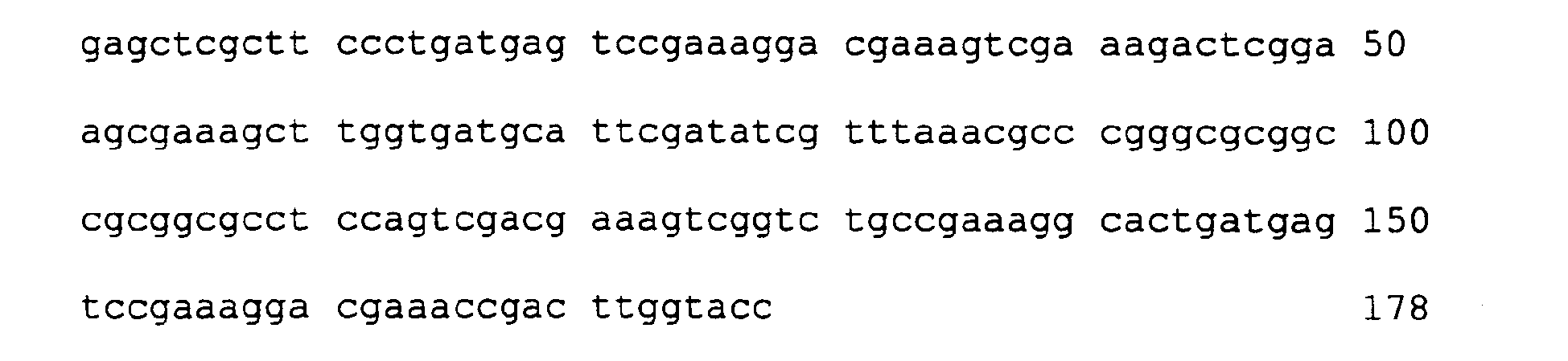
- <210> 19
- <211> 14
- <212> DNA
- <213> herpes simplex virus
- <400> 19
cgacgccgcc cgcc 14 - <210> 20
- <211> 13
- <212> DNA
- <213> herpes simplex virus
- <400> 20
cugcgcgcgu ggc 13 - <210> 21
- <211> 14
- <212> DNA
- <213> herpes simplex virus
- <400> 21
gcgccugcgc gggg 14 - <210> 22
- <211> 14
- <212> DNA
- <213> herpes simplex virus
- <400> 22
cgccgccgac gcgc 14 - <210> 23
- <211> 13
- <212> DNA
- <213> herpes simplex virus
- <400> 23
cccccucccc gcg 13 - <210> 24
- <211> 14
- <212> DNA
- <213> herpes simplex virus
- <400> 24
guggccgugu cgcg 14 - <210> 25
- <211> 14
- <212> DNA
- <213> herpes simplex virus
- <400> 25
gccacacggc ggcg 14 - <210> 26
- <211> 14
- <212> DNA
- <213> herpes simplex virus
- <400> 26
cgccgcgcgg ugcg 14 - <210> 27
- <211> 14
- <212> DNA
- <213> herpes simplex virus
- <400> 27
cgccgcgcgg ugcg 14 - <210> 28
- <211> 15
- <212> DNA
- <213> herpes simplex virus
- <400> 28
cccccugcgc gccuc 15 - <210> 29
- <211> 15
- <212> DNA
- <213> herpes simplex virus
- <400> 29
gguggugcug uacuc 15 - <210> 30
- <211> 14
- <212> DNA
- <213> herpes simplex virus
- <400> 30
gggcccgcgg uguc 14 - <210> 31
- <211> 14
- <212> DNA
- <213> herpes simplex virus
- <400> 31
ccuggcgugc gagc 14 - <210> 32
- <211> 21
- <212> DNA
- <213> herpes simplex virus
- <400> 32
ggggaccacc gacgccaugg c 21 - <210> 33
- <211> 14
- <212> DNA
- <213> herpes simplex virus
- <400> 33
cguggcgcug gggc 14 - <210> 34
- <211> 14
- <212> DNA
- <213> herpes simplex virus
- <400> 34
cgggauucgc uggg 14
Claims (16)
- A method for identifying target sites for antiscnse-mediated inhibition of a target transcript expressed by a selected gene comprising:(a) constructing a directed antisense library comprising cloned DNA fragments by a process comprising:(i) preparing a double-stranded DNA. comprising a first end and a second end, from the selected gene or the target transcript and cloning the double-stranded DNA in a cloning vector, resulting in a cloned DNA,(ii) creating a plurality of deletion derivatives of the cloned DNA by exonuclease resection thereof, wherein each of the plurality of deletion derivatives has a deletion extending from the first end toward the second end such that the plurality of deletion derivatives comprises a deletion library comprising deletions that extend serially into the cloned DNA.(iii) reducing the size of the cloned DNA contained in the deletion library to a preselected size by removing a portion of the cloned DNA from the second end thereof to result in a DNA fragment library, and(iv) transferring the DNA fragment library into an expression vector having a promoter configured for transcribing antisense transcripts from the cloned DNA fragments in suitable cells, thereby resulting in the directed antisense library;(b) transforming the suitable cells with the directed antisense library wherein the selected gene is expressed as a target transcript in such suitable cells such that each of the transformed cells transcribes an antisense transcript that has access to the larget transcript for potential inactivation thereof;(c) identifying a cell transformed with the directed antisense library wherein an antisense transcript inactivates the target transcript; and(d) analyzing the antisense transcript that inactivates the target transcript and determining a target site on the antisense transcript that is associated with inactivation of the target transcript.
- The method of claim 1 wherein the suitable cells arc mammalian cells.
- The method of claim 1 or wherein the cloned DNA fragments comprise cDNA.
- The method of any of claims 1-3 wherein the expression vector comprises a multi-cloning sequence represented by SEQ ID NO:1.
- The method of any of claims 1-3 wherein the expression vector comprises a multi-cloning sequence comprising SEQ ID NO:2 and SEQ ID NO:3.
- The method or any of claims 1-5 wherein the exonuclease resection is carried out by exonuclease III digestion.
- The method of any of claims 1-6 wherein said reducing the size of the cloned DNA contained in the deletion library to a preselected size comprises digesting the deletion library with a type IIS restriction endonuclease.
- The method or any of claims 1-7 wherein the cloning vector is pASlib (SEQ ID NO:7).
- The method of any of claims 1-8 wherein the expression vector is pShuttle (SEQ ID NO:14).
- The method of any of claims 1-8 wherein the expression vector is pBK (SEQ ID NO:17).
- The method of any of claims 1-10 further comprising digesting the DNA fragment library with a type HS restriction endonuclease, thereby creating a central site in each of the cloned DNA fragments, and ligating a DNA cassette at the central site.
- The method of any of claims 1-10 further comprising inserting a DNA cassette in the cloning vector adjacent to the first end or the second end.
- The method of claim 11 or 12 wherein said DNA cassette comprises a ribozyme catalytic core.
- The method of claim 1 wherein said ribozyme catalytic core is a hammerhead ribozyme catalytic core.
- The method of claim 11 or 12 wherein said DNA cassette codes for a modifier of the target transcript.
- The method of claim 1 further comprising transcribing antisense transcripts from said DNA fragment library in vitro, incubating said antisense transcripts with a lysate from a cell containing target transcripts transcribed from said selected gene such that antisense transcripts targeted to the target transcripts bind to such target transcripts, and analyzing the antisense transcripts that bind the target transcript and determining a target site on the antisense transcript that is associated with binding of the target transcript.
Applications Claiming Priority (5)
| Application Number | Priority Date | Filing Date | Title |
|---|---|---|---|
| US7979298P | 1998-03-28 | 1998-03-28 | |
| US79792P | 1998-03-28 | ||
| US10750498P | 1998-11-06 | 1998-11-06 | |
| US107504P | 1998-11-06 | ||
| PCT/US1999/006742 WO1999050457A1 (en) | 1998-03-28 | 1999-03-28 | Directed antisense libraries |
Publications (3)
| Publication Number | Publication Date |
|---|---|
| EP1068350A1 EP1068350A1 (en) | 2001-01-17 |
| EP1068350A4 EP1068350A4 (en) | 2005-07-20 |
| EP1068350B1 true EP1068350B1 (en) | 2008-02-13 |
Family
ID=26762440
Family Applications (1)
| Application Number | Title | Priority Date | Filing Date |
|---|---|---|---|
| EP99914226A Expired - Lifetime EP1068350B1 (en) | 1998-03-28 | 1999-03-28 | Directed antisense libraries |
Country Status (7)
| Country | Link |
|---|---|
| US (3) | US6586180B1 (en) |
| EP (1) | EP1068350B1 (en) |
| JP (1) | JP2002509733A (en) |
| AT (1) | ATE386138T1 (en) |
| CA (1) | CA2324440A1 (en) |
| DE (1) | DE69938128D1 (en) |
| WO (1) | WO1999050457A1 (en) |
Families Citing this family (12)
| Publication number | Priority date | Publication date | Assignee | Title |
|---|---|---|---|---|
| US6586180B1 (en) * | 1998-03-28 | 2003-07-01 | University Of Utah | Directed antisense libraries |
| JP2002522091A (en) * | 1998-08-17 | 2002-07-23 | フィロス インク. | Methods for generating nucleic acid lacking the 3 'untranslated region to optimize cellular RNA protein fusion formation |
| GB9912965D0 (en) * | 1999-06-03 | 1999-08-04 | Oxford Biomedica Ltd | In vivo selection method |
| US7198924B2 (en) | 2000-12-11 | 2007-04-03 | Invitrogen Corporation | Methods and compositions for synthesis of nucleic acid molecules using multiple recognition sites |
| US20040077082A1 (en) * | 2002-10-18 | 2004-04-22 | Koehn Richard K. | RNA-based inhibitory oligonucleotides |
| AU2003295561A1 (en) * | 2002-11-14 | 2004-06-15 | Genta Salus Llc | Inhibitory oliogonucleotides targeted to bcl-2 |
| JP2006523103A (en) * | 2003-02-21 | 2006-10-12 | ザ ペン ステイト リサーチ ファウンデーション | RNA interference compositions and methods |
| US20050069929A1 (en) | 2003-08-08 | 2005-03-31 | Invitrogen Corporation | Methods and compositions for seamless cloning of nucleic acid molecules |
| WO2005023991A2 (en) * | 2003-09-05 | 2005-03-17 | The General Hospital Corporation | Small hairpin rna libraries |
| US8304189B2 (en) | 2003-12-01 | 2012-11-06 | Life Technologies Corporation | Nucleic acid molecules containing recombination sites and methods of using the same |
| US20080275731A1 (en) * | 2005-05-18 | 2008-11-06 | Rao R Bharat | Patient data mining improvements |
| US20140288097A1 (en) | 2013-02-07 | 2014-09-25 | The Regents Of The University Of California | Use of translational profiling to identify target molecules for therapeutic treatment |
Family Cites Families (7)
| Publication number | Priority date | Publication date | Assignee | Title |
|---|---|---|---|---|
| US5496698A (en) * | 1992-08-26 | 1996-03-05 | Ribozyme Pharmaceuticals, Inc. | Method of isolating ribozyme targets |
| US5525468A (en) * | 1992-05-14 | 1996-06-11 | Ribozyme Pharmaceuticals, Inc. | Assay for Ribozyme target site |
| US5733541A (en) * | 1995-04-21 | 1998-03-31 | The Regent Of The University Of Michigan | Hematopoietic cells: compositions and methods |
| US6365344B1 (en) * | 1996-01-23 | 2002-04-02 | The Board Of Trustees Of The Leland Stanford Junior University | Methods for screening for transdominant effector peptides and RNA molecules |
| US6605429B1 (en) * | 1997-01-23 | 2003-08-12 | Immusol, Incorporated | Gene functional analysis and discovery using randomized or target-specific ribozyme gene vector libraries |
| US5922576A (en) * | 1998-02-27 | 1999-07-13 | The John Hopkins University | Simplified system for generating recombinant adenoviruses |
| US6586180B1 (en) * | 1998-03-28 | 2003-07-01 | University Of Utah | Directed antisense libraries |
-
1999
- 1999-03-28 US US09/647,344 patent/US6586180B1/en not_active Expired - Fee Related
- 1999-03-28 EP EP99914226A patent/EP1068350B1/en not_active Expired - Lifetime
- 1999-03-28 WO PCT/US1999/006742 patent/WO1999050457A1/en not_active Ceased
- 1999-03-28 CA CA002324440A patent/CA2324440A1/en not_active Abandoned
- 1999-03-28 AT AT99914226T patent/ATE386138T1/en not_active IP Right Cessation
- 1999-03-28 JP JP2000541344A patent/JP2002509733A/en active Pending
- 1999-03-28 DE DE69938128T patent/DE69938128D1/en not_active Expired - Lifetime
-
2002
- 2002-11-07 US US10/291,249 patent/US20030119041A1/en not_active Abandoned
- 2002-11-07 US US10/291,230 patent/US20030108939A1/en not_active Abandoned
Also Published As
| Publication number | Publication date |
|---|---|
| US20030119041A1 (en) | 2003-06-26 |
| JP2002509733A (en) | 2002-04-02 |
| DE69938128D1 (en) | 2008-03-27 |
| EP1068350A1 (en) | 2001-01-17 |
| CA2324440A1 (en) | 1999-10-07 |
| US6586180B1 (en) | 2003-07-01 |
| ATE386138T1 (en) | 2008-03-15 |
| EP1068350A4 (en) | 2005-07-20 |
| US20030108939A1 (en) | 2003-06-12 |
| WO1999050457A1 (en) | 1999-10-07 |
Similar Documents
| Publication | Publication Date | Title |
|---|---|---|
| AU651380B2 (en) | Selection of ribozymes that efficiently cleave target RNA | |
| US5998193A (en) | Ribozymes with optimized hybridizing arms, stems, and loops, tRNA embedded ribozymes and compositions thereof | |
| JP3046318B2 (en) | Ribozyme | |
| Tanner | Ribozymes: the characteristics and properties of catalytic RNAs | |
| US5874414A (en) | Trans-splicing ribozymes | |
| US5496698A (en) | Method of isolating ribozyme targets | |
| US5869254A (en) | Alteration of sequence of a target molecule by ribozyme catalyzed trans-splicing | |
| US6183959B1 (en) | Method for target site selection and discovery | |
| EP1068350A1 (en) | Directed antisense libraries | |
| Symons et al. | Ribozymes | |
| Ruffner et al. | Construction of a directed hammerhead ribozyme library: towards the identification of optimal target sites for antisense-mediated gene inhibition | |
| Thomson et al. | The hammerhead ribozyme | |
| EP1032707A2 (en) | Method for identifying and inhibiting functional nucleic acid molecules in cells | |
| US6897016B1 (en) | Alteration of sequence of a target molecule | |
| RU2144080C1 (en) | Ribosime, method of inactivation of rna-target, method of ribosime preparing | |
| US20020115207A1 (en) | Methods and compositions for use in spliceosome mediated RNA trans-splicing | |
| JP2005118056A (en) | Methods and reagents for inhibiting the expression of disease-related genes | |
| Pierce | The use and optimization of hammerhead ribozymes for therapeutic purposes | |
| CA2175703C (en) | Alteration of sequence of a target molecule | |
| James | Development of hammerhead ribozymes and modified snRNAs to down-regulate gene expression | |
| Chen | Identification of optimal target sequences for antisense-, ribozyme-, and decoy-mediated gene inhibition | |
| Beckley | Reduction of gene expression by U1 snRNA: A step toward somatic gene therapy | |
| Sproat et al. | Interfering with Gene Function at the RNA Level with Oligozymes—the Development of New Tools and Therapeutics | |
| Feldstein et al. | Two sequences participating in the autolytic processing of satellite tobacco ringspot virus comple | |
| Been et al. | Circular RNAs: Generation of Small RNAs with Unique Properties by Splicing Permuted Intron-Exon Sequences |
Legal Events
| Date | Code | Title | Description |
|---|---|---|---|
| PUAI | Public reference made under article 153(3) epc to a published international application that has entered the european phase |
Free format text: ORIGINAL CODE: 0009012 |
|
| 17P | Request for examination filed |
Effective date: 20001003 |
|
| AK | Designated contracting states |
Kind code of ref document: A1 Designated state(s): AT BE CH CY DE DK ES FI FR GB GR IE IT LI LU MC NL PT SE |
|
| A4 | Supplementary search report drawn up and despatched |
Effective date: 20050607 |
|
| GRAP | Despatch of communication of intention to grant a patent |
Free format text: ORIGINAL CODE: EPIDOSNIGR1 |
|
| GRAS | Grant fee paid |
Free format text: ORIGINAL CODE: EPIDOSNIGR3 |
|
| GRAA | (expected) grant |
Free format text: ORIGINAL CODE: 0009210 |
|
| AK | Designated contracting states |
Kind code of ref document: B1 Designated state(s): AT BE CH CY DE DK ES FI FR GB GR IE IT LI LU MC NL PT SE |
|
| REG | Reference to a national code |
Ref country code: GB Ref legal event code: FG4D |
|
| REG | Reference to a national code |
Ref country code: CH Ref legal event code: EP |
|
| REG | Reference to a national code |
Ref country code: IE Ref legal event code: FG4D |
|
| REF | Corresponds to: |
Ref document number: 69938128 Country of ref document: DE Date of ref document: 20080327 Kind code of ref document: P |
|
| PG25 | Lapsed in a contracting state [announced via postgrant information from national office to epo] |
Ref country code: FI Free format text: LAPSE BECAUSE OF FAILURE TO SUBMIT A TRANSLATION OF THE DESCRIPTION OR TO PAY THE FEE WITHIN THE PRESCRIBED TIME-LIMIT Effective date: 20080213 Ref country code: ES Free format text: LAPSE BECAUSE OF FAILURE TO SUBMIT A TRANSLATION OF THE DESCRIPTION OR TO PAY THE FEE WITHIN THE PRESCRIBED TIME-LIMIT Effective date: 20080524 |
|
| NLV1 | Nl: lapsed or annulled due to failure to fulfill the requirements of art. 29p and 29m of the patents act | ||
| PG25 | Lapsed in a contracting state [announced via postgrant information from national office to epo] |
Ref country code: AT Free format text: LAPSE BECAUSE OF FAILURE TO SUBMIT A TRANSLATION OF THE DESCRIPTION OR TO PAY THE FEE WITHIN THE PRESCRIBED TIME-LIMIT Effective date: 20080213 |
|
| PG25 | Lapsed in a contracting state [announced via postgrant information from national office to epo] |
Ref country code: BE Free format text: LAPSE BECAUSE OF FAILURE TO SUBMIT A TRANSLATION OF THE DESCRIPTION OR TO PAY THE FEE WITHIN THE PRESCRIBED TIME-LIMIT Effective date: 20080213 |
|
| PG25 | Lapsed in a contracting state [announced via postgrant information from national office to epo] |
Ref country code: SE Free format text: LAPSE BECAUSE OF FAILURE TO SUBMIT A TRANSLATION OF THE DESCRIPTION OR TO PAY THE FEE WITHIN THE PRESCRIBED TIME-LIMIT Effective date: 20080513 Ref country code: PT Free format text: LAPSE BECAUSE OF FAILURE TO SUBMIT A TRANSLATION OF THE DESCRIPTION OR TO PAY THE FEE WITHIN THE PRESCRIBED TIME-LIMIT Effective date: 20080714 Ref country code: NL Free format text: LAPSE BECAUSE OF FAILURE TO SUBMIT A TRANSLATION OF THE DESCRIPTION OR TO PAY THE FEE WITHIN THE PRESCRIBED TIME-LIMIT Effective date: 20080213 Ref country code: MC Free format text: LAPSE BECAUSE OF NON-PAYMENT OF DUE FEES Effective date: 20080331 Ref country code: DK Free format text: LAPSE BECAUSE OF FAILURE TO SUBMIT A TRANSLATION OF THE DESCRIPTION OR TO PAY THE FEE WITHIN THE PRESCRIBED TIME-LIMIT Effective date: 20080213 Ref country code: DE Free format text: LAPSE BECAUSE OF FAILURE TO SUBMIT A TRANSLATION OF THE DESCRIPTION OR TO PAY THE FEE WITHIN THE PRESCRIBED TIME-LIMIT Effective date: 20080514 |
|
| REG | Reference to a national code |
Ref country code: CH Ref legal event code: PL |
|
| EN | Fr: translation not filed | ||
| PLBE | No opposition filed within time limit |
Free format text: ORIGINAL CODE: 0009261 |
|
| STAA | Information on the status of an ep patent application or granted ep patent |
Free format text: STATUS: NO OPPOSITION FILED WITHIN TIME LIMIT |
|
| 26N | No opposition filed |
Effective date: 20081114 |
|
| GBPC | Gb: european patent ceased through non-payment of renewal fee |
Effective date: 20080513 |
|
| PG25 | Lapsed in a contracting state [announced via postgrant information from national office to epo] |
Ref country code: LI Free format text: LAPSE BECAUSE OF NON-PAYMENT OF DUE FEES Effective date: 20080331 Ref country code: IE Free format text: LAPSE BECAUSE OF NON-PAYMENT OF DUE FEES Effective date: 20080328 Ref country code: CH Free format text: LAPSE BECAUSE OF NON-PAYMENT OF DUE FEES Effective date: 20080331 |
|
| PG25 | Lapsed in a contracting state [announced via postgrant information from national office to epo] |
Ref country code: FR Free format text: LAPSE BECAUSE OF FAILURE TO SUBMIT A TRANSLATION OF THE DESCRIPTION OR TO PAY THE FEE WITHIN THE PRESCRIBED TIME-LIMIT Effective date: 20081205 |
|
| PG25 | Lapsed in a contracting state [announced via postgrant information from national office to epo] |
Ref country code: GB Free format text: LAPSE BECAUSE OF NON-PAYMENT OF DUE FEES Effective date: 20080513 |
|
| PG25 | Lapsed in a contracting state [announced via postgrant information from national office to epo] |
Ref country code: CY Free format text: LAPSE BECAUSE OF FAILURE TO SUBMIT A TRANSLATION OF THE DESCRIPTION OR TO PAY THE FEE WITHIN THE PRESCRIBED TIME-LIMIT Effective date: 20080213 |
|
| PG25 | Lapsed in a contracting state [announced via postgrant information from national office to epo] |
Ref country code: IT Free format text: LAPSE BECAUSE OF FAILURE TO SUBMIT A TRANSLATION OF THE DESCRIPTION OR TO PAY THE FEE WITHIN THE PRESCRIBED TIME-LIMIT Effective date: 20080213 |
|
| PG25 | Lapsed in a contracting state [announced via postgrant information from national office to epo] |
Ref country code: LU Free format text: LAPSE BECAUSE OF NON-PAYMENT OF DUE FEES Effective date: 20080328 |
|
| PG25 | Lapsed in a contracting state [announced via postgrant information from national office to epo] |
Ref country code: GR Free format text: LAPSE BECAUSE OF FAILURE TO SUBMIT A TRANSLATION OF THE DESCRIPTION OR TO PAY THE FEE WITHIN THE PRESCRIBED TIME-LIMIT Effective date: 20080514 |