EP1062345B1 - Biosynthetic genes for spinosyn insecticide production - Google Patents
Biosynthetic genes for spinosyn insecticide production Download PDFInfo
- Publication number
- EP1062345B1 EP1062345B1 EP99907034A EP99907034A EP1062345B1 EP 1062345 B1 EP1062345 B1 EP 1062345B1 EP 99907034 A EP99907034 A EP 99907034A EP 99907034 A EP99907034 A EP 99907034A EP 1062345 B1 EP1062345 B1 EP 1062345B1
- Authority
- EP
- European Patent Office
- Prior art keywords
- seq
- spinosyn
- bases
- amino acid
- domain
- Prior art date
- Legal status (The legal status is an assumption and is not a legal conclusion. Google has not performed a legal analysis and makes no representation as to the accuracy of the status listed.)
- Expired - Lifetime
Links
- 229930185156 spinosyn Natural products 0.000 title claims description 174
- 108090000623 proteins and genes Proteins 0.000 title claims description 147
- 230000001851 biosynthetic effect Effects 0.000 title claims description 29
- 238000004519 manufacturing process Methods 0.000 title claims description 23
- 239000002917 insecticide Substances 0.000 title description 2
- 108020004414 DNA Proteins 0.000 claims description 77
- 244000300264 Spinacia oleracea Species 0.000 claims description 72
- 108010030975 Polyketide Synthases Proteins 0.000 claims description 52
- 108091028043 Nucleic acid sequence Proteins 0.000 claims description 46
- 239000012634 fragment Substances 0.000 claims description 45
- 150000001413 amino acids Chemical class 0.000 claims description 42
- 238000000034 method Methods 0.000 claims description 30
- 102000053602 DNA Human genes 0.000 claims description 26
- 102000004190 Enzymes Human genes 0.000 claims description 25
- 108090000790 Enzymes Proteins 0.000 claims description 25
- 244000005700 microbiome Species 0.000 claims description 25
- 239000013598 vector Substances 0.000 claims description 23
- 230000000694 effects Effects 0.000 claims description 19
- 238000006467 substitution reaction Methods 0.000 claims description 18
- 150000001875 compounds Chemical class 0.000 claims description 17
- 239000003120 macrolide antibiotic agent Substances 0.000 claims description 14
- 101100366459 Saccharopolyspora spinosa spnS gene Proteins 0.000 claims description 13
- 239000000523 sample Substances 0.000 claims description 13
- -1 spnP Proteins 0.000 claims description 13
- 101100422141 Saccharopolyspora spinosa spnN gene Proteins 0.000 claims description 12
- 101100422142 Saccharopolyspora spinosa spnO gene Proteins 0.000 claims description 12
- 101100422143 Saccharopolyspora spinosa spnQ gene Proteins 0.000 claims description 12
- 101100422144 Saccharopolyspora spinosa spnR gene Proteins 0.000 claims description 12
- 239000002243 precursor Substances 0.000 claims description 12
- 108020004511 Recombinant DNA Proteins 0.000 claims description 11
- 230000008569 process Effects 0.000 claims description 11
- 101100311670 Bacillus subtilis (strain 168) cysS gene Proteins 0.000 claims description 10
- 101100310822 Dictyostelium discoideum spnA gene Proteins 0.000 claims description 10
- 230000006696 biosynthetic metabolic pathway Effects 0.000 claims description 8
- 238000009396 hybridization Methods 0.000 claims description 8
- 230000014509 gene expression Effects 0.000 claims description 5
- 230000001131 transforming effect Effects 0.000 claims description 5
- 238000012258 culturing Methods 0.000 claims description 4
- 230000037361 pathway Effects 0.000 claims description 4
- 102100036426 Acid phosphatase type 7 Human genes 0.000 claims description 3
- 102100022734 Acyl carrier protein, mitochondrial Human genes 0.000 claims description 3
- 101000928881 Homo sapiens Acid phosphatase type 7 Proteins 0.000 claims description 3
- 101000678845 Homo sapiens Acyl carrier protein, mitochondrial Proteins 0.000 claims description 3
- 101000611240 Homo sapiens Low molecular weight phosphotyrosine protein phosphatase Proteins 0.000 claims description 3
- 101000620894 Homo sapiens Lysophosphatidic acid phosphatase type 6 Proteins 0.000 claims description 3
- 101001001294 Homo sapiens Lysosomal acid phosphatase Proteins 0.000 claims description 3
- 101001001272 Homo sapiens Prostatic acid phosphatase Proteins 0.000 claims description 3
- 101000620880 Homo sapiens Tartrate-resistant acid phosphatase type 5 Proteins 0.000 claims description 3
- 101001122914 Homo sapiens Testicular acid phosphatase Proteins 0.000 claims description 3
- 102100022916 Lysophosphatidic acid phosphatase type 6 Human genes 0.000 claims description 3
- 102100035699 Lysosomal acid phosphatase Human genes 0.000 claims description 3
- 101100271175 Oryza sativa subsp. japonica AT10 gene Proteins 0.000 claims description 3
- 101100342486 Oryza sativa subsp. japonica KSL10 gene Proteins 0.000 claims description 3
- 102100035703 Prostatic acid phosphatase Human genes 0.000 claims description 3
- 102100022919 Tartrate-resistant acid phosphatase type 5 Human genes 0.000 claims description 3
- 102100028526 Testicular acid phosphatase Human genes 0.000 claims description 3
- 230000032823 cell division Effects 0.000 claims description 2
- 230000010261 cell growth Effects 0.000 claims description 2
- 125000003275 alpha amino acid group Chemical group 0.000 claims 20
- 101000715489 Acinetobacter lwoffii Probable cat1 operon transcriptional activator Proteins 0.000 claims 1
- 241000868102 Saccharopolyspora spinosa Species 0.000 description 36
- 230000015572 biosynthetic process Effects 0.000 description 35
- 239000013612 plasmid Substances 0.000 description 33
- SRJQTHAZUNRMPR-UYQKXTDMSA-N spinosyn A Chemical compound O([C@H]1CCC[C@@H](OC(=O)C[C@H]2[C@@H]3C=C[C@@H]4C[C@H](C[C@H]4[C@@H]3C=C2C(=O)[C@@H]1C)O[C@H]1[C@@H]([C@H](OC)[C@@H](OC)[C@H](C)O1)OC)CC)[C@H]1CC[C@H](N(C)C)[C@@H](C)O1 SRJQTHAZUNRMPR-UYQKXTDMSA-N 0.000 description 29
- SRJQTHAZUNRMPR-UHFFFAOYSA-N spinosyn A Natural products CC1C(=O)C2=CC3C4CC(OC5C(C(OC)C(OC)C(C)O5)OC)CC4C=CC3C2CC(=O)OC(CC)CCCC1OC1CCC(N(C)C)C(C)O1 SRJQTHAZUNRMPR-UHFFFAOYSA-N 0.000 description 28
- 101150019455 gdh gene Proteins 0.000 description 26
- 238000000855 fermentation Methods 0.000 description 25
- 230000004151 fermentation Effects 0.000 description 25
- 239000000047 product Substances 0.000 description 25
- 239000004606 Fillers/Extenders Substances 0.000 description 19
- SZGAAHDUAFVZSS-SFYZADRCSA-N forosamine Chemical compound C[C@@H](O)[C@@H](N(C)C)CCC=O SZGAAHDUAFVZSS-SFYZADRCSA-N 0.000 description 18
- 239000013615 primer Substances 0.000 description 18
- SHZGCJCMOBCMKK-UHFFFAOYSA-N D-mannomethylose Natural products CC1OC(O)C(O)C(O)C1O SHZGCJCMOBCMKK-UHFFFAOYSA-N 0.000 description 17
- SHZGCJCMOBCMKK-JFNONXLTSA-N L-rhamnopyranose Chemical compound C[C@@H]1OC(O)[C@H](O)[C@H](O)[C@H]1O SHZGCJCMOBCMKK-JFNONXLTSA-N 0.000 description 17
- PNNNRSAQSRJVSB-UHFFFAOYSA-N L-rhamnose Natural products CC(O)C(O)C(O)C(O)C=O PNNNRSAQSRJVSB-UHFFFAOYSA-N 0.000 description 17
- 235000001014 amino acid Nutrition 0.000 description 17
- 235000000346 sugar Nutrition 0.000 description 17
- 230000006870 function Effects 0.000 description 16
- CEAGUSGLAUVBEQ-UHFFFAOYSA-N Forosamine Natural products CC1CC(N(C)C)CC(O)O1 CEAGUSGLAUVBEQ-UHFFFAOYSA-N 0.000 description 15
- 229920001184 polypeptide Polymers 0.000 description 14
- 108090000765 processed proteins & peptides Proteins 0.000 description 14
- 102000004196 processed proteins & peptides Human genes 0.000 description 14
- 238000003786 synthesis reaction Methods 0.000 description 14
- TWCMVXMQHSVIOJ-UHFFFAOYSA-N Aglycone of yadanzioside D Natural products COC(=O)C12OCC34C(CC5C(=CC(O)C(O)C5(C)C3C(O)C1O)C)OC(=O)C(OC(=O)C)C24 TWCMVXMQHSVIOJ-UHFFFAOYSA-N 0.000 description 13
- PLMKQQMDOMTZGG-UHFFFAOYSA-N Astrantiagenin E-methylester Natural products CC12CCC(O)C(C)(CO)C1CCC1(C)C2CC=C2C3CC(C)(C)CCC3(C(=O)OC)CCC21C PLMKQQMDOMTZGG-UHFFFAOYSA-N 0.000 description 13
- 108700026244 Open Reading Frames Proteins 0.000 description 13
- PFOARMALXZGCHY-UHFFFAOYSA-N homoegonol Natural products C1=C(OC)C(OC)=CC=C1C1=CC2=CC(CCCO)=CC(OC)=C2O1 PFOARMALXZGCHY-UHFFFAOYSA-N 0.000 description 13
- 239000000543 intermediate Substances 0.000 description 12
- 238000007069 methylation reaction Methods 0.000 description 12
- UCSJYZPVAKXKNQ-HZYVHMACSA-N streptomycin Chemical compound CN[C@H]1[C@H](O)[C@@H](O)[C@H](CO)O[C@H]1O[C@@H]1[C@](C=O)(O)[C@H](C)O[C@H]1O[C@@H]1[C@@H](NC(N)=N)[C@H](O)[C@@H](NC(N)=N)[C@H](O)[C@H]1O UCSJYZPVAKXKNQ-HZYVHMACSA-N 0.000 description 12
- 241000187559 Saccharopolyspora erythraea Species 0.000 description 11
- 238000002474 experimental method Methods 0.000 description 11
- 102000004169 proteins and genes Human genes 0.000 description 11
- ULGZDMOVFRHVEP-RWJQBGPGSA-N Erythromycin Chemical compound O([C@@H]1[C@@H](C)C(=O)O[C@@H]([C@@]([C@H](O)[C@@H](C)C(=O)[C@H](C)C[C@@](C)(O)[C@H](O[C@H]2[C@@H]([C@H](C[C@@H](C)O2)N(C)C)O)[C@H]1C)(C)O)CC)[C@H]1C[C@@](C)(OC)[C@@H](O)[C@H](C)O1 ULGZDMOVFRHVEP-RWJQBGPGSA-N 0.000 description 10
- 210000004027 cell Anatomy 0.000 description 10
- 150000002596 lactones Chemical class 0.000 description 10
- 239000002773 nucleotide Substances 0.000 description 10
- 125000003729 nucleotide group Chemical group 0.000 description 10
- WEVYAHXRMPXWCK-UHFFFAOYSA-N Acetonitrile Chemical compound CC#N WEVYAHXRMPXWCK-UHFFFAOYSA-N 0.000 description 9
- 238000009825 accumulation Methods 0.000 description 9
- 230000004048 modification Effects 0.000 description 9
- 238000012986 modification Methods 0.000 description 9
- 235000018102 proteins Nutrition 0.000 description 9
- 241000588724 Escherichia coli Species 0.000 description 8
- 101001014220 Monascus pilosus Dehydrogenase mokE Proteins 0.000 description 8
- 101000573542 Penicillium citrinum Compactin nonaketide synthase, enoyl reductase component Proteins 0.000 description 8
- 150000008266 deoxy sugars Chemical class 0.000 description 8
- 230000011987 methylation Effects 0.000 description 8
- 230000009466 transformation Effects 0.000 description 8
- 108020004705 Codon Proteins 0.000 description 7
- 108090001042 Hydro-Lyases Proteins 0.000 description 7
- 102000004867 Hydro-Lyases Human genes 0.000 description 7
- XZNUGFQTQHRASN-XQENGBIVSA-N apramycin Chemical compound O([C@H]1O[C@@H]2[C@H](O)[C@@H]([C@H](O[C@H]2C[C@H]1N)O[C@@H]1[C@@H]([C@@H](O)[C@H](N)[C@@H](CO)O1)O)NC)[C@@H]1[C@@H](N)C[C@@H](N)[C@H](O)[C@H]1O XZNUGFQTQHRASN-XQENGBIVSA-N 0.000 description 7
- 229950006334 apramycin Drugs 0.000 description 7
- 238000006243 chemical reaction Methods 0.000 description 7
- 231100000219 mutagenic Toxicity 0.000 description 7
- 230000003505 mutagenic effect Effects 0.000 description 7
- 210000004940 nucleus Anatomy 0.000 description 7
- RDECBWLKMPEKPM-UHFFFAOYSA-N spinosyn D Natural products CC1C(=O)C2=CC3C4CC(OC5C(C(OC)C(OC)C(C)O5)OC)CC4C(C)=CC3C2CC(=O)OC(CC)CCCC1OC1CCC(N(C)C)C(C)O1 RDECBWLKMPEKPM-UHFFFAOYSA-N 0.000 description 7
- 102000052553 3-Hydroxyacyl CoA Dehydrogenase Human genes 0.000 description 6
- WQZGKKKJIJFFOK-GASJEMHNSA-N Glucose Natural products OC[C@H]1OC(O)[C@H](O)[C@@H](O)[C@@H]1O WQZGKKKJIJFFOK-GASJEMHNSA-N 0.000 description 6
- 101001045218 Homo sapiens Peroxisomal multifunctional enzyme type 2 Proteins 0.000 description 6
- OKKJLVBELUTLKV-UHFFFAOYSA-N Methanol Chemical compound OC OKKJLVBELUTLKV-UHFFFAOYSA-N 0.000 description 6
- JVXKZYLRDBNKCL-KXRJSVEISA-N Spinosyn K Chemical compound O([C@H]1CCC[C@@H](OC(=O)C[C@H]2[C@@H]3C=C[C@@H]4C[C@H](C[C@H]4[C@@H]3C=C2C(=O)[C@@H]1C)O[C@H]1[C@@H]([C@H](OC)[C@@H](O)[C@H](C)O1)OC)CC)[C@H]1CC[C@H](N(C)C)[C@@H](C)O1 JVXKZYLRDBNKCL-KXRJSVEISA-N 0.000 description 6
- 239000008103 glucose Substances 0.000 description 6
- 238000000338 in vitro Methods 0.000 description 6
- 239000003999 initiator Substances 0.000 description 6
- 231100000350 mutagenesis Toxicity 0.000 description 6
- 238000002703 mutagenesis Methods 0.000 description 6
- 229960005322 streptomycin Drugs 0.000 description 6
- 102000057234 Acyl transferases Human genes 0.000 description 5
- 108700016155 Acyl transferases Proteins 0.000 description 5
- IOCQRADVOJDJIS-SGFJDKLNSA-N Spinosyn H Chemical compound O([C@H]1CCC[C@@H](OC(=O)C[C@H]2[C@@H]3C=C[C@@H]4C[C@H](C[C@H]4[C@@H]3C=C2C(=O)[C@@H]1C)O[C@H]1[C@@H]([C@H](OC)[C@@H](OC)[C@H](C)O1)O)CC)[C@H]1CC[C@H](N(C)C)[C@@H](C)O1 IOCQRADVOJDJIS-SGFJDKLNSA-N 0.000 description 5
- 102000005488 Thioesterase Human genes 0.000 description 5
- 102000004357 Transferases Human genes 0.000 description 5
- 108090000992 Transferases Proteins 0.000 description 5
- 210000000349 chromosome Anatomy 0.000 description 5
- 238000010367 cloning Methods 0.000 description 5
- 229960003276 erythromycin Drugs 0.000 description 5
- 238000002744 homologous recombination Methods 0.000 description 5
- 230000006801 homologous recombination Effects 0.000 description 5
- 230000010354 integration Effects 0.000 description 5
- 229930001119 polyketide Natural products 0.000 description 5
- 150000003881 polyketide derivatives Chemical class 0.000 description 5
- 238000012163 sequencing technique Methods 0.000 description 5
- RDECBWLKMPEKPM-PSCJHHPTSA-N spinosyn D Chemical compound O([C@H]1CCC[C@@H](OC(=O)C[C@H]2[C@@H]3C=C(C)[C@@H]4C[C@H](C[C@H]4[C@@H]3C=C2C(=O)[C@@H]1C)O[C@H]1[C@@H]([C@H](OC)[C@@H](OC)[C@H](C)O1)OC)CC)[C@H]1CC[C@H](N(C)C)[C@@H](C)O1 RDECBWLKMPEKPM-PSCJHHPTSA-N 0.000 description 5
- 108020002982 thioesterase Proteins 0.000 description 5
- 101710146995 Acyl carrier protein Proteins 0.000 description 4
- 108700023372 Glycosyltransferases Proteins 0.000 description 4
- GWXUECNDJTYZFN-PNXRJMMDSA-N Spinosyn P Chemical compound O([C@H]1CCC[C@@H](OC(=O)C[C@H]2[C@@H]3C=C[C@@H]4C[C@H](C[C@H]4[C@@H]3C=C2C(=O)[C@@H]1C)O[C@H]1[C@@H]([C@H](O)[C@@H](O)[C@H](C)O1)OC)CC)[C@H]1CC[C@H](N(C)C)[C@@H](C)O1 GWXUECNDJTYZFN-PNXRJMMDSA-N 0.000 description 4
- 239000004182 Tylosin Substances 0.000 description 4
- 229930194936 Tylosin Natural products 0.000 description 4
- 239000013599 cloning vector Substances 0.000 description 4
- 230000007812 deficiency Effects 0.000 description 4
- 150000002337 glycosamines Chemical class 0.000 description 4
- UYTPUPDQBNUYGX-UHFFFAOYSA-N guanine Chemical compound O=C1NC(N)=NC2=C1N=CN2 UYTPUPDQBNUYGX-UHFFFAOYSA-N 0.000 description 4
- 125000002887 hydroxy group Chemical group [H]O* 0.000 description 4
- 229940041033 macrolides Drugs 0.000 description 4
- 230000002829 reductive effect Effects 0.000 description 4
- WBPYTXDJUQJLPQ-VMXQISHHSA-N tylosin Chemical compound O([C@@H]1[C@@H](C)O[C@H]([C@@H]([C@H]1N(C)C)O)O[C@@H]1[C@@H](C)[C@H](O)CC(=O)O[C@@H]([C@H](/C=C(\C)/C=C/C(=O)[C@H](C)C[C@@H]1CC=O)CO[C@H]1[C@@H]([C@H](OC)[C@H](O)[C@@H](C)O1)OC)CC)[C@H]1C[C@@](C)(O)[C@@H](O)[C@H](C)O1 WBPYTXDJUQJLPQ-VMXQISHHSA-N 0.000 description 4
- 229960004059 tylosin Drugs 0.000 description 4
- 235000019375 tylosin Nutrition 0.000 description 4
- 238000011144 upstream manufacturing Methods 0.000 description 4
- 244000063299 Bacillus subtilis Species 0.000 description 3
- 235000014469 Bacillus subtilis Nutrition 0.000 description 3
- 241000894006 Bacteria Species 0.000 description 3
- 102000051366 Glycosyltransferases Human genes 0.000 description 3
- 241000238631 Hexapoda Species 0.000 description 3
- 108060004795 Methyltransferase Proteins 0.000 description 3
- 102000016397 Methyltransferase Human genes 0.000 description 3
- 238000012408 PCR amplification Methods 0.000 description 3
- 101000961726 Pseudanabaena tenuis (strain PCC 7409) Uncharacterized phycocyanin operon protein Y Proteins 0.000 description 3
- IHGXGNJRCONUAC-WNTSOVQUSA-N Spinosyn J Chemical compound O([C@H]1CCC[C@@H](OC(=O)C[C@H]2[C@@H]3C=C[C@@H]4C[C@H](C[C@H]4[C@@H]3C=C2C(=O)[C@@H]1C)O[C@H]1[C@@H]([C@H](O)[C@@H](OC)[C@H](C)O1)OC)CC)[C@H]1CC[C@H](N(C)C)[C@@H](C)O1 IHGXGNJRCONUAC-WNTSOVQUSA-N 0.000 description 3
- 241000958215 Streptomyces filamentosus Species 0.000 description 3
- 230000000295 complement effect Effects 0.000 description 3
- 230000021615 conjugation Effects 0.000 description 3
- OPTASPLRGRRNAP-UHFFFAOYSA-N cytosine Chemical compound NC=1C=CNC(=O)N=1 OPTASPLRGRRNAP-UHFFFAOYSA-N 0.000 description 3
- 238000012217 deletion Methods 0.000 description 3
- 230000037430 deletion Effects 0.000 description 3
- 238000004128 high performance liquid chromatography Methods 0.000 description 3
- 230000006872 improvement Effects 0.000 description 3
- 230000007935 neutral effect Effects 0.000 description 3
- 230000006798 recombination Effects 0.000 description 3
- 238000005215 recombination Methods 0.000 description 3
- 101150098466 rpsL gene Proteins 0.000 description 3
- 230000002269 spontaneous effect Effects 0.000 description 3
- 239000000758 substrate Substances 0.000 description 3
- 150000008163 sugars Chemical class 0.000 description 3
- ZUGIGWIPEYNYJV-FZWPAWTOSA-N (3r,4s,5r,6s,7s,9r,11r,12r,13s,14r)-6-[(2s,3r,4s,6r)-4-(dimethylamino)-3-hydroxy-6-methyloxan-2-yl]oxy-14-ethyl-12,13-dihydroxy-4-[(2r,4r,5s,6s)-5-hydroxy-4-methoxy-4,6-dimethyloxan-2-yl]oxy-3,5,7,9,11,13-hexamethyl-oxacyclotetradecane-2,10-dione Chemical compound O([C@@H]1[C@@H](C)C(=O)O[C@@H]([C@@]([C@H](O)[C@@H](C)C(=O)[C@H](C)C[C@H](C)[C@H](O[C@H]2[C@@H]([C@H](C[C@@H](C)O2)N(C)C)O)[C@H]1C)(C)O)CC)[C@H]1C[C@@](C)(OC)[C@@H](O)[C@H](C)O1 ZUGIGWIPEYNYJV-FZWPAWTOSA-N 0.000 description 2
- 229920001817 Agar Polymers 0.000 description 2
- 101000916330 Agrobacterium vitis UPF0065 protein in the TAR-I ttuE-ttuC' intergenic region Proteins 0.000 description 2
- USFZMSVCRYTOJT-UHFFFAOYSA-N Ammonium acetate Chemical compound N.CC(O)=O USFZMSVCRYTOJT-UHFFFAOYSA-N 0.000 description 2
- 239000005695 Ammonium acetate Substances 0.000 description 2
- 101000786425 Bacillus subtilis (strain 168) Uncharacterized membrane protein YsxD Proteins 0.000 description 2
- 101000762567 Bacillus subtilis (strain 168) Uncharacterized oxidoreductase YhxD Proteins 0.000 description 2
- 101000769186 Bacillus subtilis (strain 168) Uncharacterized protein YpoC Proteins 0.000 description 2
- 101000948224 Bacillus subtilis (strain 168) Uncharacterized protein YtxO Proteins 0.000 description 2
- 108010078626 CDP-4-keto-6-deoxy-D-glucose-3-dehydrase Proteins 0.000 description 2
- 101000792152 Citrobacter freundii Uncharacterized 15.0 kDa protein in dhaT-dhaS intergenic region Proteins 0.000 description 2
- 101000752165 Clostridium kluyveri (strain ATCC 8527 / DSM 555 / NCIMB 10680) Uncharacterized transporter CKL_3017 Proteins 0.000 description 2
- 108700010070 Codon Usage Proteins 0.000 description 2
- 101000783581 Coptis japonica 3'-hydroxy-N-methyl-(S)-coclaurine 4'-O-methyltransferase Proteins 0.000 description 2
- 101000626118 Escherichia coli Transposon Tn10 TetC protein Proteins 0.000 description 2
- 101000626117 Escherichia coli Transposon Tn10 TetD protein Proteins 0.000 description 2
- 101000827747 Latilactobacillus sakei Uncharacterized 16.5 kDa protein in ptsI 3'region Proteins 0.000 description 2
- CSNNHWWHGAXBCP-UHFFFAOYSA-L Magnesium sulfate Chemical compound [Mg+2].[O-][S+2]([O-])([O-])[O-] CSNNHWWHGAXBCP-UHFFFAOYSA-L 0.000 description 2
- 101000823665 Mycolicibacterium smegmatis Uncharacterized 35.9 kDa protein in asd 3'region Proteins 0.000 description 2
- 101000961405 Myxococcus xanthus Uncharacterized 18.1 kDa protein in carS 3'region Proteins 0.000 description 2
- 101710128228 O-methyltransferase Proteins 0.000 description 2
- 108091034117 Oligonucleotide Proteins 0.000 description 2
- 241001138501 Salmonella enterica Species 0.000 description 2
- 108020004682 Single-Stranded DNA Proteins 0.000 description 2
- 238000002105 Southern blotting Methods 0.000 description 2
- 229930182558 Sterol Natural products 0.000 description 2
- 241001518138 Streptomyces nogalater Species 0.000 description 2
- 240000008042 Zea mays Species 0.000 description 2
- 235000007244 Zea mays Nutrition 0.000 description 2
- JLCPHMBAVCMARE-UHFFFAOYSA-N [3-[[3-[[3-[[3-[[3-[[3-[[3-[[3-[[3-[[3-[[3-[[5-(2-amino-6-oxo-1H-purin-9-yl)-3-[[3-[[3-[[3-[[3-[[3-[[5-(2-amino-6-oxo-1H-purin-9-yl)-3-[[5-(2-amino-6-oxo-1H-purin-9-yl)-3-hydroxyoxolan-2-yl]methoxy-hydroxyphosphoryl]oxyoxolan-2-yl]methoxy-hydroxyphosphoryl]oxy-5-(5-methyl-2,4-dioxopyrimidin-1-yl)oxolan-2-yl]methoxy-hydroxyphosphoryl]oxy-5-(6-aminopurin-9-yl)oxolan-2-yl]methoxy-hydroxyphosphoryl]oxy-5-(6-aminopurin-9-yl)oxolan-2-yl]methoxy-hydroxyphosphoryl]oxy-5-(6-aminopurin-9-yl)oxolan-2-yl]methoxy-hydroxyphosphoryl]oxy-5-(6-aminopurin-9-yl)oxolan-2-yl]methoxy-hydroxyphosphoryl]oxyoxolan-2-yl]methoxy-hydroxyphosphoryl]oxy-5-(5-methyl-2,4-dioxopyrimidin-1-yl)oxolan-2-yl]methoxy-hydroxyphosphoryl]oxy-5-(4-amino-2-oxopyrimidin-1-yl)oxolan-2-yl]methoxy-hydroxyphosphoryl]oxy-5-(5-methyl-2,4-dioxopyrimidin-1-yl)oxolan-2-yl]methoxy-hydroxyphosphoryl]oxy-5-(5-methyl-2,4-dioxopyrimidin-1-yl)oxolan-2-yl]methoxy-hydroxyphosphoryl]oxy-5-(6-aminopurin-9-yl)oxolan-2-yl]methoxy-hydroxyphosphoryl]oxy-5-(6-aminopurin-9-yl)oxolan-2-yl]methoxy-hydroxyphosphoryl]oxy-5-(4-amino-2-oxopyrimidin-1-yl)oxolan-2-yl]methoxy-hydroxyphosphoryl]oxy-5-(4-amino-2-oxopyrimidin-1-yl)oxolan-2-yl]methoxy-hydroxyphosphoryl]oxy-5-(4-amino-2-oxopyrimidin-1-yl)oxolan-2-yl]methoxy-hydroxyphosphoryl]oxy-5-(6-aminopurin-9-yl)oxolan-2-yl]methoxy-hydroxyphosphoryl]oxy-5-(4-amino-2-oxopyrimidin-1-yl)oxolan-2-yl]methyl [5-(6-aminopurin-9-yl)-2-(hydroxymethyl)oxolan-3-yl] hydrogen phosphate Polymers Cc1cn(C2CC(OP(O)(=O)OCC3OC(CC3OP(O)(=O)OCC3OC(CC3O)n3cnc4c3nc(N)[nH]c4=O)n3cnc4c3nc(N)[nH]c4=O)C(COP(O)(=O)OC3CC(OC3COP(O)(=O)OC3CC(OC3COP(O)(=O)OC3CC(OC3COP(O)(=O)OC3CC(OC3COP(O)(=O)OC3CC(OC3COP(O)(=O)OC3CC(OC3COP(O)(=O)OC3CC(OC3COP(O)(=O)OC3CC(OC3COP(O)(=O)OC3CC(OC3COP(O)(=O)OC3CC(OC3COP(O)(=O)OC3CC(OC3COP(O)(=O)OC3CC(OC3COP(O)(=O)OC3CC(OC3COP(O)(=O)OC3CC(OC3COP(O)(=O)OC3CC(OC3COP(O)(=O)OC3CC(OC3COP(O)(=O)OC3CC(OC3CO)n3cnc4c(N)ncnc34)n3ccc(N)nc3=O)n3cnc4c(N)ncnc34)n3ccc(N)nc3=O)n3ccc(N)nc3=O)n3ccc(N)nc3=O)n3cnc4c(N)ncnc34)n3cnc4c(N)ncnc34)n3cc(C)c(=O)[nH]c3=O)n3cc(C)c(=O)[nH]c3=O)n3ccc(N)nc3=O)n3cc(C)c(=O)[nH]c3=O)n3cnc4c3nc(N)[nH]c4=O)n3cnc4c(N)ncnc34)n3cnc4c(N)ncnc34)n3cnc4c(N)ncnc34)n3cnc4c(N)ncnc34)O2)c(=O)[nH]c1=O JLCPHMBAVCMARE-UHFFFAOYSA-N 0.000 description 2
- 230000009471 action Effects 0.000 description 2
- 239000008272 agar Substances 0.000 description 2
- 229940043376 ammonium acetate Drugs 0.000 description 2
- 235000019257 ammonium acetate Nutrition 0.000 description 2
- 230000003115 biocidal effect Effects 0.000 description 2
- 125000004432 carbon atom Chemical group C* 0.000 description 2
- 230000008859 change Effects 0.000 description 2
- 238000007385 chemical modification Methods 0.000 description 2
- 239000003795 chemical substances by application Substances 0.000 description 2
- 238000009833 condensation Methods 0.000 description 2
- 230000005494 condensation Effects 0.000 description 2
- 238000012937 correction Methods 0.000 description 2
- 125000004122 cyclic group Chemical group 0.000 description 2
- 101710200786 dTDP-4-dehydro-6-deoxy-alpha-D-glucopyranose 2,3-dehydratase Proteins 0.000 description 2
- 230000002950 deficient Effects 0.000 description 2
- 238000006392 deoxygenation reaction Methods 0.000 description 2
- 238000001514 detection method Methods 0.000 description 2
- 239000001177 diphosphate Substances 0.000 description 2
- 235000011180 diphosphates Nutrition 0.000 description 2
- 230000009088 enzymatic function Effects 0.000 description 2
- 108700014210 glycosyltransferase activity proteins Proteins 0.000 description 2
- 238000001727 in vivo Methods 0.000 description 2
- 230000000749 insecticidal effect Effects 0.000 description 2
- 238000003780 insertion Methods 0.000 description 2
- 230000037431 insertion Effects 0.000 description 2
- 239000002609 medium Substances 0.000 description 2
- 239000000203 mixture Substances 0.000 description 2
- 238000004806 packaging method and process Methods 0.000 description 2
- 230000004260 plant-type cell wall biogenesis Effects 0.000 description 2
- 125000000830 polyketide group Chemical group 0.000 description 2
- ZAHRKKWIAAJSAO-UHFFFAOYSA-N rapamycin Natural products COCC(O)C(=C/C(C)C(=O)CC(OC(=O)C1CCCCN1C(=O)C(=O)C2(O)OC(CC(OC)C(=CC=CC=CC(C)CC(C)C(=O)C)C)CCC2C)C(C)CC3CCC(O)C(C3)OC)C ZAHRKKWIAAJSAO-UHFFFAOYSA-N 0.000 description 2
- 230000002441 reversible effect Effects 0.000 description 2
- 150000008264 rhamnoses Chemical class 0.000 description 2
- QFJCIRLUMZQUOT-HPLJOQBZSA-N sirolimus Chemical compound C1C[C@@H](O)[C@H](OC)C[C@@H]1C[C@@H](C)[C@H]1OC(=O)[C@@H]2CCCCN2C(=O)C(=O)[C@](O)(O2)[C@H](C)CC[C@H]2C[C@H](OC)/C(C)=C/C=C/C=C/[C@@H](C)C[C@@H](C)C(=O)[C@H](OC)[C@H](O)/C(C)=C/[C@@H](C)C(=O)C1 QFJCIRLUMZQUOT-HPLJOQBZSA-N 0.000 description 2
- 229960002930 sirolimus Drugs 0.000 description 2
- 238000001228 spectrum Methods 0.000 description 2
- UIAITJJURURSIS-ZQJSKHGQSA-N spinosyn e Chemical compound CO[C@@H]1[C@H](OC)[C@@H](OC)[C@H](C)O[C@H]1O[C@H]1C[C@H]2[C@@H]3C=C4C(=O)[C@H](C)[C@@H](O[C@@H]5O[C@H](C)[C@H](CC5)N(C)C)CCC[C@H](C)OC(=O)C[C@H]4[C@@H]3C=C[C@@H]2C1 UIAITJJURURSIS-ZQJSKHGQSA-N 0.000 description 2
- 235000003702 sterols Nutrition 0.000 description 2
- 238000005891 transamination reaction Methods 0.000 description 2
- 238000012546 transfer Methods 0.000 description 2
- FERWBHFUQDIXNF-PGMHMLKASA-N (3r)-3-aminopentanoic acid;hydrochloride Chemical compound Cl.CC[C@@H](N)CC(O)=O FERWBHFUQDIXNF-PGMHMLKASA-N 0.000 description 1
- 101150072531 10 gene Proteins 0.000 description 1
- OWEGMIWEEQEYGQ-UHFFFAOYSA-N 100676-05-9 Natural products OC1C(O)C(O)C(CO)OC1OCC1C(O)C(O)C(O)C(OC2C(OC(O)C(O)C2O)CO)O1 OWEGMIWEEQEYGQ-UHFFFAOYSA-N 0.000 description 1
- 101150000874 11 gene Proteins 0.000 description 1
- 101150025032 13 gene Proteins 0.000 description 1
- ACTOXUHEUCPTEW-BWHGAVFKSA-N 2-[(4r,5s,6s,7r,9r,10r,11e,13e,16r)-6-[(2s,3r,4r,5s,6r)-5-[(2s,4r,5s,6s)-4,5-dihydroxy-4,6-dimethyloxan-2-yl]oxy-4-(dimethylamino)-3-hydroxy-6-methyloxan-2-yl]oxy-10-[(2s,5s,6r)-5-(dimethylamino)-6-methyloxan-2-yl]oxy-4-hydroxy-5-methoxy-9,16-dimethyl-2-o Chemical compound O([C@H]1/C=C/C=C/C[C@@H](C)OC(=O)C[C@@H](O)[C@@H]([C@H]([C@@H](CC=O)C[C@H]1C)O[C@H]1[C@@H]([C@H]([C@H](O[C@@H]2O[C@@H](C)[C@H](O)[C@](C)(O)C2)[C@@H](C)O1)N(C)C)O)OC)[C@@H]1CC[C@H](N(C)C)[C@@H](C)O1 ACTOXUHEUCPTEW-BWHGAVFKSA-N 0.000 description 1
- YKAVHPRGGAUFDN-JTQLBUQXSA-N 24464-30-0 Chemical class O([C@@H]1[C@@H](C)C(=O)O[C@@H]([C@@]2(C)O[C@]3([C@@H]([C@H]2O)C)[C@H](C)C[C@](O3)(C)[C@H](O[C@H]2[C@@H]([C@H](C[C@@H](C)O2)N(C)C)O)[C@H]1C)CC)[C@H]1C[C@@](C)(OC)[C@@H](O)[C@H](C)O1 YKAVHPRGGAUFDN-JTQLBUQXSA-N 0.000 description 1
- HHISDDYPOXZZDO-UHFFFAOYSA-N 3,4,5-trimethoxy-4,6-dimethyloxan-2-ol Chemical compound COC1C(C)OC(O)C(OC)C1(C)OC HHISDDYPOXZZDO-UHFFFAOYSA-N 0.000 description 1
- 101150033839 4 gene Proteins 0.000 description 1
- FWMNVWWHGCHHJJ-SKKKGAJSSA-N 4-amino-1-[(2r)-6-amino-2-[[(2r)-2-[[(2r)-2-[[(2r)-2-amino-3-phenylpropanoyl]amino]-3-phenylpropanoyl]amino]-4-methylpentanoyl]amino]hexanoyl]piperidine-4-carboxylic acid Chemical compound C([C@H](C(=O)N[C@H](CC(C)C)C(=O)N[C@H](CCCCN)C(=O)N1CCC(N)(CC1)C(O)=O)NC(=O)[C@H](N)CC=1C=CC=CC=1)C1=CC=CC=C1 FWMNVWWHGCHHJJ-SKKKGAJSSA-N 0.000 description 1
- 239000005660 Abamectin Substances 0.000 description 1
- 108700037654 Acyl carrier protein (ACP) Proteins 0.000 description 1
- 102000048456 Acyl carrier protein (ACP) Human genes 0.000 description 1
- 241000239223 Arachnida Species 0.000 description 1
- 101710132601 Capsid protein Proteins 0.000 description 1
- 241000206575 Chondrus crispus Species 0.000 description 1
- 101710094648 Coat protein Proteins 0.000 description 1
- 108091026890 Coding region Proteins 0.000 description 1
- 239000003155 DNA primer Substances 0.000 description 1
- 239000003298 DNA probe Substances 0.000 description 1
- 230000004543 DNA replication Effects 0.000 description 1
- 108010016626 Dipeptides Proteins 0.000 description 1
- 241000255925 Diptera Species 0.000 description 1
- 241001524679 Escherichia virus M13 Species 0.000 description 1
- 108010039731 Fatty Acid Synthases Proteins 0.000 description 1
- 102100021181 Golgi phosphoprotein 3 Human genes 0.000 description 1
- 229930194542 Keto Natural products 0.000 description 1
- 101001110310 Lentilactobacillus kefiri NADP-dependent (R)-specific alcohol dehydrogenase Proteins 0.000 description 1
- 241000255777 Lepidoptera Species 0.000 description 1
- 101710125418 Major capsid protein Proteins 0.000 description 1
- GUBGYTABKSRVRQ-PICCSMPSSA-N Maltose Natural products O[C@@H]1[C@@H](O)[C@H](O)[C@@H](CO)O[C@@H]1O[C@@H]1[C@@H](CO)OC(O)[C@H](O)[C@H]1O GUBGYTABKSRVRQ-PICCSMPSSA-N 0.000 description 1
- 241001134671 Micromonospora griseorubida Species 0.000 description 1
- 241000187479 Mycobacterium tuberculosis Species 0.000 description 1
- 241000244206 Nematoda Species 0.000 description 1
- 229930193140 Neomycin Natural products 0.000 description 1
- 101710141454 Nucleoprotein Proteins 0.000 description 1
- 102000004316 Oxidoreductases Human genes 0.000 description 1
- 108090000854 Oxidoreductases Proteins 0.000 description 1
- 241000364057 Peoria Species 0.000 description 1
- 108050008880 Polysaccharide biosynthesis proteins Proteins 0.000 description 1
- 101710083689 Probable capsid protein Proteins 0.000 description 1
- 241000607142 Salmonella Species 0.000 description 1
- WBAXJMCUFIXCNI-WDSKDSINSA-N Ser-Pro Chemical compound OC[C@H](N)C(=O)N1CCC[C@H]1C(O)=O WBAXJMCUFIXCNI-WDSKDSINSA-N 0.000 description 1
- 241000569510 Spino Species 0.000 description 1
- 239000004187 Spiramycin Substances 0.000 description 1
- 241000187747 Streptomyces Species 0.000 description 1
- 241000187758 Streptomyces ambofaciens Species 0.000 description 1
- 241000187434 Streptomyces cinnamonensis Species 0.000 description 1
- 241000187438 Streptomyces fradiae Species 0.000 description 1
- 241000187081 Streptomyces peucetius Species 0.000 description 1
- 101100063899 Streptomyces peucetius dnrS gene Proteins 0.000 description 1
- 241000187410 Streptomyces purpurascens Species 0.000 description 1
- 229930006000 Sucrose Natural products 0.000 description 1
- CZMRCDWAGMRECN-UGDNZRGBSA-N Sucrose Chemical compound O[C@H]1[C@H](O)[C@@H](CO)O[C@@]1(CO)O[C@@H]1[C@H](O)[C@@H](O)[C@H](O)[C@@H](CO)O1 CZMRCDWAGMRECN-UGDNZRGBSA-N 0.000 description 1
- 102000003929 Transaminases Human genes 0.000 description 1
- 108090000340 Transaminases Proteins 0.000 description 1
- 241000607734 Yersinia <bacteria> Species 0.000 description 1
- 241000607479 Yersinia pestis Species 0.000 description 1
- GNTQICZXQYZQNE-HSUXUTPPSA-N abequose Chemical group C[C@@H](O)[C@H](O)C[C@@H](O)C=O GNTQICZXQYZQNE-HSUXUTPPSA-N 0.000 description 1
- 238000002835 absorbance Methods 0.000 description 1
- 230000004913 activation Effects 0.000 description 1
- 125000002252 acyl group Chemical group 0.000 description 1
- 229960000723 ampicillin Drugs 0.000 description 1
- AVKUERGKIZMTKX-NJBDSQKTSA-N ampicillin Chemical compound C1([C@@H](N)C(=O)N[C@H]2[C@H]3SC([C@@H](N3C2=O)C(O)=O)(C)C)=CC=CC=C1 AVKUERGKIZMTKX-NJBDSQKTSA-N 0.000 description 1
- 230000003321 amplification Effects 0.000 description 1
- 238000004458 analytical method Methods 0.000 description 1
- 238000000137 annealing Methods 0.000 description 1
- 230000002141 anti-parasite Effects 0.000 description 1
- 239000000427 antigen Substances 0.000 description 1
- 239000003096 antiparasitic agent Substances 0.000 description 1
- RRZXIRBKKLTSOM-XPNPUAGNSA-N avermectin B1a Chemical compound C1=C[C@H](C)[C@@H]([C@@H](C)CC)O[C@]11O[C@H](C\C=C(C)\[C@@H](O[C@@H]2O[C@@H](C)[C@H](O[C@@H]3O[C@@H](C)[C@H](O)[C@@H](OC)C3)[C@@H](OC)C2)[C@@H](C)\C=C\C=C/2[C@]3([C@H](C(=O)O4)C=C(C)[C@@H](O)[C@H]3OC\2)O)C[C@H]4C1 RRZXIRBKKLTSOM-XPNPUAGNSA-N 0.000 description 1
- 230000001580 bacterial effect Effects 0.000 description 1
- 235000010633 broth Nutrition 0.000 description 1
- 210000004899 c-terminal region Anatomy 0.000 description 1
- 229940041514 candida albicans extract Drugs 0.000 description 1
- 150000001721 carbon Chemical class 0.000 description 1
- 229910052799 carbon Inorganic materials 0.000 description 1
- 239000011203 carbon fibre reinforced carbon Substances 0.000 description 1
- 150000001732 carboxylic acid derivatives Chemical class 0.000 description 1
- 210000002421 cell wall Anatomy 0.000 description 1
- 238000012512 characterization method Methods 0.000 description 1
- 239000007795 chemical reaction product Substances 0.000 description 1
- 239000003153 chemical reaction reagent Substances 0.000 description 1
- 229960005091 chloramphenicol Drugs 0.000 description 1
- WIIZWVCIJKGZOK-RKDXNWHRSA-N chloramphenicol Chemical compound ClC(Cl)C(=O)N[C@H](CO)[C@H](O)C1=CC=C([N+]([O-])=O)C=C1 WIIZWVCIJKGZOK-RKDXNWHRSA-N 0.000 description 1
- 230000002759 chromosomal effect Effects 0.000 description 1
- 238000004891 communication Methods 0.000 description 1
- 238000010276 construction Methods 0.000 description 1
- GICLSALZHXCILJ-UHFFFAOYSA-N ctk5a5089 Chemical compound NCC(O)=O.NCC(O)=O GICLSALZHXCILJ-UHFFFAOYSA-N 0.000 description 1
- 235000018417 cysteine Nutrition 0.000 description 1
- XUJNEKJLAYXESH-UHFFFAOYSA-N cysteine Natural products SCC(N)C(O)=O XUJNEKJLAYXESH-UHFFFAOYSA-N 0.000 description 1
- 229940104302 cytosine Drugs 0.000 description 1
- 230000018044 dehydration Effects 0.000 description 1
- 238000006297 dehydration reaction Methods 0.000 description 1
- 238000010586 diagram Methods 0.000 description 1
- 230000029087 digestion Effects 0.000 description 1
- XPPKVPWEQAFLFU-UHFFFAOYSA-J diphosphate(4-) Chemical compound [O-]P([O-])(=O)OP([O-])([O-])=O XPPKVPWEQAFLFU-UHFFFAOYSA-J 0.000 description 1
- 238000002330 electrospray ionisation mass spectrometry Methods 0.000 description 1
- 238000005538 encapsulation Methods 0.000 description 1
- 239000002158 endotoxin Substances 0.000 description 1
- 238000005516 engineering process Methods 0.000 description 1
- 230000002255 enzymatic effect Effects 0.000 description 1
- 238000006345 epimerization reaction Methods 0.000 description 1
- 230000037433 frameshift Effects 0.000 description 1
- 108091008053 gene clusters Proteins 0.000 description 1
- 108091006104 gene-regulatory proteins Proteins 0.000 description 1
- 102000034356 gene-regulatory proteins Human genes 0.000 description 1
- 230000002068 genetic effect Effects 0.000 description 1
- 125000000404 glutamine group Chemical group N[C@@H](CCC(N)=O)C(=O)* 0.000 description 1
- 150000004676 glycans Chemical class 0.000 description 1
- 230000012010 growth Effects 0.000 description 1
- 108010018734 hexose oxidase Proteins 0.000 description 1
- 229910052739 hydrogen Inorganic materials 0.000 description 1
- 229960003444 immunosuppressant agent Drugs 0.000 description 1
- 230000001861 immunosuppressant effect Effects 0.000 description 1
- 239000003018 immunosuppressive agent Substances 0.000 description 1
- 230000002779 inactivation Effects 0.000 description 1
- 208000015181 infectious disease Diseases 0.000 description 1
- 230000000977 initiatory effect Effects 0.000 description 1
- 239000002054 inoculum Substances 0.000 description 1
- 125000000468 ketone group Chemical group 0.000 description 1
- 229920006008 lipopolysaccharide Polymers 0.000 description 1
- 238000004811 liquid chromatography Methods 0.000 description 1
- UFUYRGNJTFAODM-HQCAVAADSA-N macrocin Chemical compound O([C@@H]1[C@@H](C)O[C@H]([C@@H]([C@H]1N(C)C)O)O[C@@H]1[C@@H](C)[C@H](O)CC(=O)O[C@@H]([C@H](/C=C(\C)/C=C/C(=O)[C@H](C)C[C@@H]1CC=O)CO[C@H]1[C@@H]([C@H](O)[C@H](O)[C@@H](C)O1)OC)CC)[C@H]1C[C@@](C)(O)[C@@H](O)[C@H](C)O1 UFUYRGNJTFAODM-HQCAVAADSA-N 0.000 description 1
- 229910052943 magnesium sulfate Inorganic materials 0.000 description 1
- 235000019341 magnesium sulphate Nutrition 0.000 description 1
- 230000013011 mating Effects 0.000 description 1
- 239000002207 metabolite Substances 0.000 description 1
- 230000035772 mutation Effects 0.000 description 1
- FPIDCOOKEJFXFI-WKUFBULYSA-N mycinamicin III Chemical compound O([C@@H]1[C@@H](C)/C=C/C(=O)O[C@@H]([C@H](/C=C/C=C/C(=O)[C@H](C)C[C@@H]1C)CO[C@H]1[C@@H]([C@H](O)[C@H](O)[C@@H](C)O1)OC)CC)[C@@H]1O[C@H](C)C[C@H](N(C)C)[C@H]1O FPIDCOOKEJFXFI-WKUFBULYSA-N 0.000 description 1
- 229960004927 neomycin Drugs 0.000 description 1
- 229910052757 nitrogen Inorganic materials 0.000 description 1
- 238000003199 nucleic acid amplification method Methods 0.000 description 1
- 102000039446 nucleic acids Human genes 0.000 description 1
- 108020004707 nucleic acids Proteins 0.000 description 1
- 150000007523 nucleic acids Chemical class 0.000 description 1
- 229910052760 oxygen Inorganic materials 0.000 description 1
- 239000002245 particle Substances 0.000 description 1
- 229910052698 phosphorus Inorganic materials 0.000 description 1
- 239000013600 plasmid vector Substances 0.000 description 1
- 239000004033 plastic Substances 0.000 description 1
- 238000003752 polymerase chain reaction Methods 0.000 description 1
- 229920001282 polysaccharide Polymers 0.000 description 1
- 239000005017 polysaccharide Substances 0.000 description 1
- 238000002360 preparation method Methods 0.000 description 1
- 125000002924 primary amino group Chemical group [H]N([H])* 0.000 description 1
- 238000012545 processing Methods 0.000 description 1
- 238000009789 rate limiting process Methods 0.000 description 1
- 230000009467 reduction Effects 0.000 description 1
- 230000022532 regulation of transcription, DNA-dependent Effects 0.000 description 1
- 230000010076 replication Effects 0.000 description 1
- 230000003362 replicative effect Effects 0.000 description 1
- 238000011160 research Methods 0.000 description 1
- 108091008146 restriction endonucleases Proteins 0.000 description 1
- 229920006395 saturated elastomer Polymers 0.000 description 1
- VESRDXZDAAOUHS-KXRJSVEISA-N spinosyn B Chemical compound O([C@H]1CCC[C@@H](OC(=O)C[C@H]2[C@@H]3C=C[C@@H]4C[C@H](C[C@H]4[C@@H]3C=C2C(=O)[C@@H]1C)O[C@H]1[C@@H]([C@H](OC)[C@@H](OC)[C@H](C)O1)OC)CC)[C@H]1CC[C@H](NC)[C@@H](C)O1 VESRDXZDAAOUHS-KXRJSVEISA-N 0.000 description 1
- 229960001294 spiramycin Drugs 0.000 description 1
- 235000019372 spiramycin Nutrition 0.000 description 1
- 229930191512 spiramycin Natural products 0.000 description 1
- 239000005720 sucrose Substances 0.000 description 1
- 238000010189 synthetic method Methods 0.000 description 1
- 238000004885 tandem mass spectrometry Methods 0.000 description 1
- 231100000583 toxicological profile Toxicity 0.000 description 1
- 238000013518 transcription Methods 0.000 description 1
- 230000035897 transcription Effects 0.000 description 1
- 238000010361 transduction Methods 0.000 description 1
- 230000026683 transduction Effects 0.000 description 1
- 238000013519 translation Methods 0.000 description 1
- 239000001974 tryptic soy broth Substances 0.000 description 1
- 108010050327 trypticase-soy broth Proteins 0.000 description 1
- 108700026220 vif Genes Proteins 0.000 description 1
- 239000012138 yeast extract Substances 0.000 description 1
Images


Classifications
-
- C—CHEMISTRY; METALLURGY
- C12—BIOCHEMISTRY; BEER; SPIRITS; WINE; VINEGAR; MICROBIOLOGY; ENZYMOLOGY; MUTATION OR GENETIC ENGINEERING
- C12N—MICROORGANISMS OR ENZYMES; COMPOSITIONS THEREOF; PROPAGATING, PRESERVING, OR MAINTAINING MICROORGANISMS; MUTATION OR GENETIC ENGINEERING; CULTURE MEDIA
- C12N15/00—Mutation or genetic engineering; DNA or RNA concerning genetic engineering, vectors, e.g. plasmids, or their isolation, preparation or purification; Use of hosts therefor
- C12N15/09—Recombinant DNA-technology
- C12N15/11—DNA or RNA fragments; Modified forms thereof; Non-coding nucleic acids having a biological activity
- C12N15/52—Genes encoding for enzymes or proenzymes
-
- C—CHEMISTRY; METALLURGY
- C07—ORGANIC CHEMISTRY
- C07K—PEPTIDES
- C07K14/00—Peptides having more than 20 amino acids; Gastrins; Somatostatins; Melanotropins; Derivatives thereof
- C07K14/195—Peptides having more than 20 amino acids; Gastrins; Somatostatins; Melanotropins; Derivatives thereof from bacteria
-
- C—CHEMISTRY; METALLURGY
- C12—BIOCHEMISTRY; BEER; SPIRITS; WINE; VINEGAR; MICROBIOLOGY; ENZYMOLOGY; MUTATION OR GENETIC ENGINEERING
- C12P—FERMENTATION OR ENZYME-USING PROCESSES TO SYNTHESISE A DESIRED CHEMICAL COMPOUND OR COMPOSITION OR TO SEPARATE OPTICAL ISOMERS FROM A RACEMIC MIXTURE
- C12P19/00—Preparation of compounds containing saccharide radicals
- C12P19/44—Preparation of O-glycosides, e.g. glucosides
- C12P19/60—Preparation of O-glycosides, e.g. glucosides having an oxygen of the saccharide radical directly bound to a non-saccharide heterocyclic ring or a condensed ring system containing a non-saccharide heterocyclic ring, e.g. coumermycin, novobiocin
- C12P19/62—Preparation of O-glycosides, e.g. glucosides having an oxygen of the saccharide radical directly bound to a non-saccharide heterocyclic ring or a condensed ring system containing a non-saccharide heterocyclic ring, e.g. coumermycin, novobiocin the hetero ring having eight or more ring members and only oxygen as ring hetero atoms, e.g. erythromycin, spiramycin, nystatin
Definitions
- the present invention provides novel biosynthetic genes, vectors incorporating the biosynthetic genes, Saccharopolyspora spinosa strains transformed with the biosynthetic genes, methods using these genes to increase production of spinosyn insecticidal macrolides, and methods using the genes or fragments thereof to change the products produced by spinosyn-producing strains of Saccharopolyspora spinosa.
- fermentation product A83543 is a family of related compounds produced by Saccharopolyspora spinosa.
- the known members of this family have been referred to as factors or components, and each has been given an identifying letter designation. These compounds are hereinafter referred to as spinosyn A, B, etc.
- the spinosyn compounds are useful for the control of arachnids, nematodes and insects, in particular Lepidoptera and Diptera species, and they are quite environmentally friendly and have an appealing toxicological profile.
- Tables 1 and 2 identify the structures of a variety of known spinosyn compounds: Table 1 Factor R 1' R 2' R 3' R 4' R 5' R 6' R 7' spinosyn A H CH 3 C 2 H 5 CH 3 CH 3 CH 3 spinosyn B H CH 3 C 2 H 5 CH 3 CH 3 CH 3 spinosyn C H CH 3 C 2 H 5 CH 3 CH 3 CH 3 spinosyn D CH 3 CH 3 (a) C 2 H 5 CH 3 CH 3 CH 3 spinosyn E H CH 3 (a) CH 3 CH 3 CH 3 CH 3 spinosyn F H H (a) C 2 H 5 CH 3 CH 3 CH 3 spinosyn G H CH 3 C 2 H 5 CH 3 CH 3 CH 3 spinosyn H H CH 3 (a) C 2 H 5 H CH 3 CH 3 spinosyn J H CH 3 (a) C 2 H 5 CH 3 H CH 3 spinosyn K H CH 3 (a) C 2 H 5 CH 3 CH 3 H spinosyn
- the naturally produced spinosyn compounds consist of a 5,6,5-tricylic ring system, fused to a 12-membered macrocyclic lactone, a neutral sugar (rhamnose) and an amino sugar (forosamine) (see Kirst et al. (1991). If the amino sugar is not present the compounds have been referred to as the pseudoaglycone of A, D, etc., and if the neutral sugar is not present then the compounds have been referred to as the reverse pseudoaglycone of A, D, etc.
- a more preferred nomenclature is to refer to the pseudoaglycones as spinosyn A 17-Psa, spinosyn D 17-Psa, etc., and to the reverse pseudoaglycones as spinosyn A 9-Psa, spinosyn D 9-Psa, etc.
- the naturally produced spinosyn compounds may be produced via fermentation from cultures NRRL 18395, 18537, 18538, 18539, 18719, 18720, 18743 and 18823. These cultures have been deposited and made part of the stock culture collection of the Midwest Area Northern Regional Research Center, Agricultural Research Service, United States Department of Agriculture, 1815 North University Street, Peoria, IL 61604.
- U.S. Patent No. 5,362,634 and corresponding European Patent Application No. 375316 A1 disclose spinosyns A, B, C, D, E, F, G, H, and J. These compounds are disclosed as being produced by culturing a strain of the novel microorganism Saccharopolyspora spinosa selected from NRRL 18395, NRL 18537, NRRL 18538, and NRRL 18539.
- WO 93/09126 disclosed spinosyns L, M, N, Q, R, S, and T. Also disclosed therein are two spinosyn J producing strains: NRRL 18719 and NRRL 18720, and a strain that produces spinosyns Q, R, S, and T: NRRL 18823.
- WO 94/20518 and US 5,6704,486 disclose spinosyns K, O, P, U, V, W, and Y, and derivatives thereof. Also disclosed is spinosyn K-producing strain NRRL 18743.
- a challenge in producing spinosyn compounds arises from the fact that a very large fermentation volume is required to produce a very small quantity of spinosyns. It is highly desired to increase spinosyn production efficiency and thereby increase availability of the spinosyns while reducing their cost.
- a cloned fragment of DNA containing genes for spinosyn biosynthetic enzymes would enable duplication of genes coding for rate limiting enzymes in the production of spinosyns. This could be used to increase yield in any circumstance when one of the encoded activities limited synthesis of the desired spinosyn.
- WO 97/06266 shows insertion of a second copy of ery G into a nonessential region of the Sac. erythraea chromosome to improve conversion of 6-deoxyerythromycin D to 6,12-dideoxyerythromycin A.
- Cloned biosynthetic genes would also provide a method for producing new derivatives of the spinosyns which may have a different spectrum of insecticidal activity. New derivatives are desirable because, although known spinosyns inhibit a broad spectrum of insects, they do not control all pests. Different patterns of control may be provided by biosynthetic intermediates of the spinosyns, or by their derivatives produced in vivo, or by derivatives resulting from their chemical modification in vitro. Specific intermediates (or their natural derivatives) could be synthesized by mutant strains of S. spinosa in which certain genes encoding enzymes for spinosyn biosynthesis have been disrupted.
- Such strains can be generated by integrating, via homologous recombination, a mutagenic plasmid containing an internal fragment ot me target gene. Upon plasmid integration, two incomplete copies of the biosynthetic gene are formed, thereby eliminating the enzymatic function it encoded. The substrate for this enzyme, or some natural derivative thereof, should accumulate upon fermentation of the mutant strain. Such a strategy was used effectively to generate a strain of Saccharopolyspora erythraea producing novel 6-deoxyerythromycin derivatives (Weber & McAlpine, 1992).
- Novel intermediates could also be synthesized by mutant strains of S. spinosa in which parts of certain genes encoding enzymes for spinosyn biosynthesis have been replaced with parts of the same gene which have been specifically mutated in vitro, or with corresponding parts of genes from other organisms.
- Such strains could be generated by swapping the target region, via double homologous recombination, with a mutagenic plasmid containing the new fragment between non-mutated sequences which flank the target region.
- the hybrid gene would produce protein with altered functions, either lacking an activity or performing a novel enzymatic transformation. A new derivative would accumulate upon fermentation of the mutant strain.
- nucleic acids of the invention can be used in production of engineered polyketide synthases of the type disclosed in WO 93/13663 and US 5,824,513 , in production of hybrid polyketide synthases of the type described in and WO 98/01546 , WO 98/49315 , and WO98/51695 , and in construction of polyketide synthase libraries and polyketide libraries as described in WO 96/40968 , WO 98/49315 , WO 98/27203 , US 5,783,431 , US 5,824,485 , and US 5,811,238 .
- Biosynthesis of spinosyns proceeds via stepwise condensation and modification of 2- and 3-carbon carboxylic acid precursors, generating a linear polyketide that is cyclized and bridged to produce the tetracyclic aglycone.
- Pseudoaglycone (containing tri-O-methylated rhamnose) is formed next, then di-N-methylated forosamine is added to complete the biosynthesis (Broughton et al., 1991).
- Other macrolides such as the antibiotic erythromycin, the antiparasitic avermectin and the immunosuppressant rapamycin, are synthesized in a similar fashion.
- a module comprises several domains, each of which performs a specific function.
- the initiator module consists of an acyl transferase (AT) domain for addition of the acyl group from the precursor to an acyl carrier protein (ACP) domain.
- the extender modules contain these domains, along with a ⁇ -ketosynthase (KS) domain that adds the pre-existing polyketide chain to the new acyl-ACP by decarboxylative condensation.
- AT acyl transferase
- ACP acyl carrier protein
- KS ⁇ -ketosynthase
- Additional domains may also be present in the extender modules to carry out specific ⁇ -keto modifications: a ⁇ -ketoreductase (KR) domain to reduce the ⁇ -keto group to a hydroxyl group, a dehydratase (DH) domain to remove the hydroxyl group and leave a double bond, and an enoyl reductase (ER) domain to reduce the double bond and leave a saturated carbon.
- KR ⁇ -ketoreductase
- DH dehydratase
- ER enoyl reductase
- the last extender module terminates with a thioesterase (TE) domain that liberates the polyketide from the PKS enzyme in the form of a macrocyclic lactone.
- TE thioesterase
- Macrolides are derived from macrocyclic lactones by additional modifications, such as methylation and changes in reductive state, and the addition of unusual sugars. Most of the genes required for these modifications, and for the synthesis and attachment of the sugars, are clustered around the PKS genes.
- deoxysugar biosynthetic enzymes are similar in producers of macrolide antibiotics, such as erythromycin and tylosin (Donadio et al., 1993; Merson-Davies & Cundliffe, 1994), and producers of extracellular polysaccharides, such as the O-antigens of Salmonella and Yersinia (Jiang et al., 1991; Kessler et al., 1993). All these syntheses involve activation of glucose by the addition of a nucleotide diphosphate, followed by dehydration, reduction and/or epimerization.
- macrolide antibiotics such as erythromycin and tylosin
- extracellular polysaccharides such as the O-antigens of Salmonella and Yersinia
- the resultant sugar could undergo one or more modifications such as deoxygenation, transamination and methylation, depending upon the type of sugar moiety present in the macrolide.
- the sugars are incorporated into macrolides by the action of specific glycosyltransferases. Genes involved in the synthesis and attachment of a sugar may be tightly clustered - even transcribed as a single operon - or they may be dispersed (Decker & Hutchinson, 1993; Jarvis & Hutchinson, 1994). Spinosyn synthesis also involves bridging of the lactone nucleus, an activity that is rare in macrolide producers. Therefore, the spinosyn biosynthetic cluster may uniquely contain additional genes encoding enzymes for this function.
- the invention provides an isolated DNA molecule comprising a DNA sequence that encodes a spinosyn biosynthetic enzyme, wherein said enzyme is defined by an amino acid sequence selected from the group consisting of SEQ ID NOS 2-6, 7-24, 26, 27, 29, and 33, or said enzyme is defined by an amino acid selected from SEQ ID NOS 2-6, 7-24, 26, 27, 29, 33 in which one or more amino acid substitutions have been made that do not affect the functional properties of the enzyme.
- the DNA sequence is selected from the group of genes consisting of spnA, spnB, spnC, spnD, spnE, spnF, spnG, spnH, spnI, spnJ, spnK, spnL, spnM, spnN, spnO, spnP, spnQ, spnR, spnS, ORFL15, ORFL16, ORFR1, ORFR2, S. spinosa gtt, S. spinosa gdh, S. spinosa epi, and S.
- the invention provides an isolated DNA molecule comprising a DNA sequence that encodes a spinosyn polyketide synthase domain, where said domain is selected from KSi, ATi, ACPi, KS1, AT1, KR1, and ACP1, corresponding, respectively, to amino acid sequences 6-423, 528-853, 895-977, 998-1413, 1525-1858, 2158-2337, and 2432-2513 of SEQ ID NO:2, or said domain is one of said amino acid sequences in which one or more amino acid substitutions have been made that do not affect the functional properties of the domain.
- the DNA sequence is selected from the group consisting of bases 21126-22379, 22692-23669, 23793-24041, 24102-25349, 25683-26684, 27582-28121, and 28404-28649 of SEQ ID NO:1.
- the invention provides an isolated DNA molecule comprising a DNA sequence that encodes a spinosyn polyketide synthase domain, where said domain is selected from KS2, AT2, DH2, ER2, KR2, and ACP2, corresponding, respectively, to amino acid sequences 1-424, 536-866, 892-1077, 1338-1683, 1687-1866 and 1955-2034 of SEQ ID NO:3, or said domain is one of said amino acid sequences in which one or more amino acid substitutions have been made that do not affect the functional properties of the domain.
- the DNA sequence is selected from the group consisting of bases 29024-30295, 30629-31621, 31697-32254, 33035-34072, 34082-34621, 34886-35125 of SEQ ID NO:1.
- the invention provides an isolated DNA molecule comprising a DNA sequence that encodes a spinosyn polyketide synthase domain, where said domain is selected from KS3, AT3, KR3, ACP3, KS4, AT4, KR4, and ACP4, corresponding, respectively, to amino acid sequences 1-423, 531-860, 1159-1337, 1425-1506, 1529-1952, 2066-2396, 2700-2880, and 2972-3053 of SEQ ID NO:4, or said domain is one of said amino acid sequences in which one or more amino acid substitutions have been made that do not affect the functional properties of the domain.
- the DNA sequence is selected from the group consisting of bases 35518-36786, 37108-38097, 38992-39528, 39790-40035, 40102-41373, 41713-42705, 43615-44157, and 44431-44676 of SEQ ID NO:1.
- the invention provides an isolated DNA molecule comprising a DNA sequence that encodes a spinosyn polyketide synthase domain, where said domain is selected from KS5, AT5, DH5, KR5, ACP5, KS6, AT6, KR6, ACP6, KS7, AT7, KR7, and ACP7, corresponding, respectively to amino acid sequences 1-424, 539-866, 893-1078, 1384-1565, 1645-1726, 1748-2172, 2283-2613, 2916-3095, 3188-3269, 3291-3713, 3825-4153, 4344-4638, and 4725-4806 of SEQ ID NO:5, or said domain is one of said amino acid sequences in which one or more amino acid substitutions have been made that do not affect the functional properties of the domain.
- the DNA sequence is selected from the group consisting of bases 45077-46348, 46691-47674, 47753-48310, 49226-49771, 50009-50254, 50318-51592, 51923-52915, 53822-54361, 54638-54883, 54947-56215, 56549-57535, 58106-58990, and 59249-59494 of SEQ ID NO: 1.
- the invention provides an isolated DNA molecule comprising a DNA sequence that encodes a spinosyn polyketide synthase domain, where said domain is selected from KS8, AT8, DH8, KR8, ACP8, KS9, AT9, DH9, KR9, ACP9, KS10, AT10, DH10, KR10, ACP10, and TE 10, corresponding, respectively, to amino acids 1-424, 530-848, 883-1070, 1369-1552, 1648-1726, 1749-2173, 2287-2614, 2640-2800, 3157-3341, 3422-3500, 3534-3948, 4060-4390, 4413-4597, 4900-5078, 5172-5253, and 5302-5555 of SEQ ID NO:6, or said domain is one of said amino acid sequences which one or more amino acid substitutions have been made that do not affect the functional properties of the domain.
- the DNA sequence is selected from the group consisting of bases 59902-61173, 61489-62445, 62548-63111, 64006-64557, 64843-65079, 65146-66420, 66760-67743, 67819-68301, 69370-69924, 70165-70401, 70471-71745, 72079-73071, 73138-73692, 74599-75135, 75415-75660, and 75805-76566 of SEQ ID NO:1.
- the invention provides an isolated DNA molecule consisting of a DNA sequence that encodes a spinosyn polyketide synthase module, where said module is selected from the group consisting of amino acid sequences 6-1413 of SEQ ID NO:2, 1525-2513 of SEQ ID NO:2, 1-2034 of SEQ ID NO:3, 1-1506 of SEQ ID NO:4, 1529-3053 of SEQ ID NO:4,, 1748-3269 of SEQ ID NO:5, 3291-4806 of SEQ ID NO:5, 1-1726 of SEQ ID NO:5,1-1726 of SEQ ID NO:6, 1749-3500 of SEQ ID NO:6, and 3524-5555 of SEQ ID NO:6, or said module is one of the said amino acid sequences in which one or more amino acid substitutions have been made that do not affect the functional properties of the domain.
- the DNA sequence is selected from the group consisting of bases 21126-24041, 24102-28649, 29024-35125, 35518-40035, 40102-44676, 45077-50254, 50318-54883, 54947-59494, 59902-65079, 65146-70401, and 70471-76566 of SEQ ID NO:1.
- the invention provides a recombinant DNA vector which comprises a DNA sequence of the invention as described above.
- the invention provides a host cell transformed with a recombinant vector of the invention as described above.
- the invention provides a method of producing spinosyn comprising the steps of
- step 1) comprises transforming said microorganism with a vector or portion thereof comprising a DNA sequence that codes for S. spinosa gtt and S. spinosa gdh, corresponding to SEQ ID NOS. 29 and 26, respectively.
- the invention provides a transformed spinosyn-producing microorganism having spinosyn biosynthetic genes wherein at least one of the spinosyn biosynthetic genes selected from spnA, spnB, spnC, spnD, spnE, spnF, spnG, spnH, spnI, spnJ, spnK, spnL, spnM, spnN, spnO, spnP, spnQ, spnR, spnS, S. spinosa gtt, S. spinosa gdh, S.
- S. spinosa gtt and S. spinos gdh are duplicated, said genes being described by bases 334-1119 of SEQ ID NO. 28 and bases 88-1077 of SEQ ID NO. 25, respectively.
- the invention provides a process for producing a spinosyn compound which comprises cultivating a transformed spinosyn-producing microorganism as described above.
- the invention provides a transformed spinosyn producing microorganism as described above, wherein S. spinosa gtt, S. spinosa gdh, and S. spinosa kre are duplicated, said genes being described by bases 334-1119 of SEQ ID NO. 28, bases 88-1077 of SEQ ID NO. 25, and bases 1165-1995-1992 of SEQ ID NO. 25 respectively.
- the invention provides a process for producing a spinosyn compound which comprises cultivating a transformed spinosyn-producing microorganism as described above.
- the invention also provides spinosyns produced by cultivation of the novel microorganisms of the invention.
- the invention provides a process for isolating macrolide biosynthetic genes which comprises creating a genomic library of a macrolide producing microorganism, and using a labeled fragment of SEQ ID NO. 1, SEQ ID NO. 28, SEQ ID NO. 32 that is at least 20 bases long as a hybridization probe.
- the microorganism is a spinosyn producing microorganism.
- a cosmid library of S . spinosa (NRRL 18395) DNA was constructed from fragments generated by partial digestion with Sau 3A I. They were cloned into the Bam HI site of vector pOJ436 (See Fig. 3) (Bierman et al., 1992) and introduced into E. coli cells by in vitro packaging and transduction.
- the library of recombinant bacteria thus prepared was screened for homology to two radiolabelled DNA probes by hybridization using the methods of Solenberg & Burgett (1989). One probe was the 400 kb Spe I fragment which is often deleted in non-producing S.
- the second probe was a 300 bp piece of S. spinosa DNA that codes for part of a ketosynthase not involved in spinosyn biosynthesis (B.E. Schoner, personal communication). It includes a region which is highly conserved in all polyketide and fatty acid synthase genes, and was therefore expected to cross-hybridize with the spinosyn PKS genes.
- Cosmids 9A6 and 2C10 were two of seven clones that hybridized to both probes.
- Cosmid 3E11 was selected from the genomic library by hybridization to a radiolabelled Sgr A1- Bam H1 fragment of cosmid 9A6 (bases 26757-26936 in SEQ ID NO: 1).
- Sgr A1- Bam H1 fragment of cosmid 9A6 bases 26757-26936 in SEQ ID NO: 1.
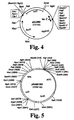
- Bam HI fragments were subcloned into the Bam HI site of plasmid pOJ260 (See Fig. 4) (Bierman et al., 1992). The sequences of the inserts in these plasmids were determined by either of two methods.
- subcloned fragments were partially digested with Sau3A I, and size-selected pieces were cloned into the Bam HI site of DNA from the phage M13mp19.
- Single-stranded DNA was prepared from randomly selected recombinants, and sequenced by fluorescent cycle sequencing using reagents and equipment from ABI (Applied Biosystems, Inc., Foster, CA), according to the methods of Burgett & Rosteck (1994). The sequences from phage subclones of each plasmid were assembled into one contiguous sequence.
- double-stranded plasmid DNAs were primed reiteratively with single-stranded oligonucleotides, each designed to complement a region near the end of previously determined sequence.
- the complete sequence was thus compiled from a series of partially-overlapping sequences.
- Prism-Ready Sequencing Kits (ABI) were used according to the manufacturer's instructions, and analyzed on an ABD73A Sequencer. The same strategy was employed to sequence across the Bam HI sites of double-stranded 9A6 DNA.
- FIG. 2 gives a graphical representation of the relationship of the three inserts to the 80kb of sequence.
- cosmid 2C10 was missing bases G41877, C45570, C57845 and G73173 of SEQ ID NO:1. These deletions were determined to be cloning artifacts. The deletions generated in-frame stop codons that truncated PKS polypeptides. One of them occurred in a region also cloned in cosmid 3E11, but was not present in the region of 3E11 for which sequence was obtained. Uncloned DNA spanning all 8 stop codons in the PKS region was therefore sequenced directly from PCR-amplified regions of the genome of S. spinosa (NRRL 18395). The sequences from uncloned DNA confirmed the existence of the 4 stop codons at the end of ACP domains, and proved that the 4 frameshifts within other coding regions were cloning artifacts unique to cosmid 2C10.
- SEQ ID NO:1 includes a central region of about 55 kb with striking homology to the DNA encoding the polyketide synthases of known macrolide producers (Donadio et al., 1991; MacNeil et al., 1992; Schwecke et al., 1995; Dehoff et al., 1997).
- the spinosyn PKS DNA region consists of 5 ORFs with in-frame stop codons at the end of ACP domains, similar to the PKS ORFs in the other macrolide-producing bacteria.
- the five spinosyn PKS genes are arranged head-to-tail (see FIG.
- Table 4 GENE BASES IN SEQ ID NO:1 CORRESPONDING POLYPEPTIDE spnA 21111-28898 SEQ ID NO: 2 spnB 28916-35374 SEQ ID NO: 3 spnC 35419-44931 SEQ ID NO: 4 spnD 44966-59752 SEQ ID NO: 5 spnE 59803-76569 SEQ ID NO: 6
- spnA encodes the initiator module (SEQ ID NO: 1, bases 21126-24041) and extender module 1 (SEQ ID NO:1, bases 24102-28649).
- the nucleotide sequence and corresponding amino acid sequence for each of the functional domains within the initiator module and extender module 1 are identified in the following Table 5: Table 5 SpnA DOMAIN BASES IN SEQ ID NO:1 AMINO ACIDS IN SEQ ID NO:2 KSi 21126-22379 6-423 ATi 22692-23669 528-853 ACPi 23793-24041 895-977 KS1 24102-25349 998-1413 AT1 25683-26684 1525-1858 KR1 27582-28121 2158-2337 ACP1 28404-28649 2432-2513
- spnB encodes extender module 2 (SEQ ID NO:1, bases 29024-35125).
- the nucleotide sequence and corresponding amino acid sequence for each of the functional domains within extender module 2 are identified in the following Table 6: Table 6 SpnB DOMAIN BASES IN SEQ ID NO:1 AMINO ACIDS IN SEQUENCE ID NO. 3 KS2 29024-30295 1-424 AT2 30629-31621 536-866 DH2 31697-32254 892-1077 ER2 33035-34072 1338-1683 KR2 34082-34621 1687-1866 ACP2 34886-35125 1955-2034
- spnC encodes extender module 3 (SEQ ID NO:1, bases 35518-40035) and extender module 4 (SEQ ID NO:1, bases 40102-44676).
- the nucleotide sequence and corresponding amino acid sequence for each of the functional domains within extender modules 3 and 4 are identified in the following Table 7: Table 7 SpnC DOMAIN BASES IN SEQ ID NO:1 AMINO ACIDS IN SEQ ID NO:4 KS3 35518-36786 1-423 AT3 37108-38097 531-860 KR3 38992-39528 1159-1337 ACP3 39790-40035 1425-1506 KS4 40102-41373 1529-1952 AT4 41713-42705 2066-2396 KR4 43615-44157 2700-2880 ACP4 44431-44676 2972-3053
- spnD encodes extender module 5 (SEQ ID NO:1, bases 45077-50254), extender module 6 (SEQ ID NO:1, bases 50318-54883), and extender module 7 (SEQ ID NO:1, bases 54947-59494).
- nucleotide sequence and corresponding amino acid sequence for each of the functional domains within extender modules 5, 6, and 7 is identified in the following Table 8: Table 8 spnD DOMAIN BASES IN SEQ ID NO:1 AMINO ACIDS IN SEQ ID NO:5 KS5 45077-46348 1-424 AT5 46691-47674 539-866 DH5 47753-48310 893-1078 KR5 49226-49771 1384-1565 ACP5 50009-50254 1645-1726 KS6 50318-51592 1748-2172 AT6 51923-52915 2283-2613 KR6 53822-54361 2916-3095 ACP6 54638-54883 3188-3269 KS7 54947-56215 3291-3713 AT7 56549-57535 3825-4153 KR7 58106-58990 4344-4638 ACP7 59249-59494 4725-4806
- spnE encodes extender module 8 (SEQ ID NO:1, bases 59902-65079), extender module 9 (SEQ ID NO:1, bases 65146-70401), and extender module 10 (SEQ ID NO:1, bases 70471-76566).
- the nucleotide sequence and corresponding amino acid sequence for each of the functional domains within extender modules 8, 9, and 10 is identified in the following Table 9: Table 9 spnE DOMAIN BASES IN SEQ ID NO: 1 AMINO ACIDS IN SEQ ID NO:6 KS8 59902-61173 1-424 AT8 61489-62445 530-848 DH8 62548-63111 883-1070 KR8 64006-64557 1369-1552 ACP8 64843-65079 1648-1726 KS9 65146-66420 1749-2173 AT9 66760-67743 2287-2614 DH9 67819-68301 2640-2800 KR9 69370-69924 3157-3341 ACP9 70165-
- the boundaries and functions of the 50 domains identified in the foregoing Tables 5-9 are predicted based on similarities to the conserved amino acid sequences of the domains in other polyketide synthases, particularly the erythromycin polyketide synthase (Donadio et al., 1992).
- the unexpected KSi domain at the amino terminus of the initiator module is presumed to be non-functional because it contains a glutamine residue at amino acid 172, in place of the cysteine required for ⁇ -ketosynthase activity (Siggard-Andersen, 1993).
- a similar non-functional KS domain has been discovered in the initiator module of the tylosin PKS (Dehoff et al., 1997).
- the other spinosyn PKS domains are functional. None of them has the sequence characteristics of the inactive domains found in the erythromycin and rapamycin PKS genes (Donadio et al., 1991; Aparicio et al., 1996).
- the cloned PKS genes were shown to be essential for spinosyn biosynthesis by the discovery that strains of S. spinosa in which these genes had been disrupted were unable to produce spinosyns by fermentation. Gene disruption was achieved by cloning an internal fragment of the gene into plasmid pOJ260 (Fig. 4), using procedures well-known to those skilled in the art. The recombinant plasmids were then introduced into S.
- Plasmids based on pOJ260 do not replicate independently in S. spinosa, and are stably maintained by integrating the plasmid into the chromosome via recombination between the cloned DNA and its homologous sequence in the genome. Integration creates two incomplete versions of the targeted gene (one lacking 5' sequences and one lacking 3' sequences) in the chromosome, with the pOJ260 DNA between them.
- Bam H1 fragments C bases 44612-47565 in SEQ ID NO: 1
- B bases 55936-63219 in SEQ ID NO: 1
- Bam H1 fragment C spans the junction between spnC and spnD
- Bam H1 fragment B spans the junction between spnD and spnE. In these cases, integration leaves one complete version of each gene.
- ORFs open reading frames
- spinosyn biosynthetic genes namely: spnF, spnG, spnH, spnI, spnJ, spnK, spnL, spnM, spnN, spnO, spnP, spnQ, spnR, and spnS (they are labeled F through S in FIG. 2).
- spnF, spnG, spnH, spnI, spnJ, spnK, spnL, spnM, spnN, spnO, spnP, spnQ, spnR, and spnS they are labeled F through S in FIG. 2.
- Table 10 the DNA sequence and the amino acid sequence for the corresponding polypeptide are identified for each of these genes, as well as for two ORFs (ORFL15 and ORFL16)
- Table 10 GENE BASES IN SEQUENCE ID NO: 1 POLYPEPTIDE spnF 20168-20995 SEQ ID NO: 7 spnG 18541-19713 (C) SEQ ID NO: 8 spnH 17749-18501 (C) SEQ ID NO: 9 spnI 16556-17743 SEQ ID NO: 10 spnJ 14799-16418 (C) SEQ ID NO: 11 spnK 13592-14785 (C) SEQ ID NO: 12 spnL 12696-13547 (C) SEQ ID NO: 13 spnM 11530-12492 (C) SEQ ID NO: 14 spnN 10436-11434 SEQ ID NO: 15 spnO 8967-10427 SEQ ID NO: 16 sp
- the amino acid sequences of the predicted polypeptides were compared to sequences deposited in the databases at the National Center for Biotechnology Information (NCBI, Washington, DC), using the BLAST algorithm to determine how well they are related to known proteins.
- NCBI National Center for Biotechnology Information
- the BLAST searches of the NCBI databases were also repeated periodically to obtain new insights from additional homologies.
- Table 11 gives the best matches from a basic BLAST search on January 12, 1998: Table 11 Gene Significant Protein Match GenBank Accession BLAST Score* Reported function spnF C-24 sterol methyltransferase ( Zea mays ) U79669 202 C-methylation spnG Daunosamyl transferase dnrS ( Streptomyces peucetius ) L47164 202 sugar addition spnH Mycinamicin III O-metbyltransferase ( Micromonospora griseorubida ) D16097 408 sugar methylation spnI ORFY ( Streptomyces nogalater ) Z48262 192 unknown spnJ Hexose oxidase ( Chondrus crispus ) U89770 143 oxido-reduction spnK ORFY ( Streptomyces nogalater ) Z48262 137 unknown spnL C-24 sterol methyl
- the 11 genes upstream of the PKS were shown to be involved in spinosyn biosynthesis because strains in which they were disrupted failed to accumulate the major spinosyns A and D (Table 12).
- the next 2 genes upstream (ORFL15, ORFL16), and the large gene downstream (ORFR2) of the PKS, do not contribute to spinosyn production because fermentation was not affected by their disruption (Table 12).
- Disruption of the ORF immediately downstream of the PKS genes (ORFR1) was not attempted because it was too small to yield an internal fragment that would recombine at an acceptable frequency.
- spnQ had 53% identity between its gene product and the CDP-4-keto-6-deoxy-D-glucose-3-dehydrase involved in synthesis of the abequose moiety of the Salmonella enterica cell surface lipopolysaccharide (Jiang et al., 1991); spnR had up to 40% identity between its product and a group of proteins proposed to function as deoxysugar transaminases (Thorson et al., 1993); and spnS had 42% identity between its product and the SrmX product of Streptomyces ambofaciens, an organism that synthesizes the forosamine-containing antibiotic spiramycin (Geistlich et al., 1992).
- Roles for spnF and spnL in the formation of carbon-carbon bridges are consistent with their similarities to enzymes that methylate carbon atoms (Table 11).
- the absence of partially modified intermediates in the blocked mutants may result from instability of the compounds, or from reduced biosynthesis due to lack of glycosylated molecules to act as positive regulators, analogous to those of the tylosin pathway (Fish & Cundliffe, 1997).
- the mutant with a disrupted spnG also lacked a functional 4'-O-methyltransferase (OMT) because it converted the 3',4'-didesmethyl spinosyn (P) to the 4'-desmethyl spinosyn (K), but not to the fully methylated spinosyn A.
- OMT 4'-O-methyltransferase
- the 4'-OMT activity was presumably not expressed in the mutant because the encoding gene ( spnH ) lies downstream of the disrupting integration in the same operon. The existence of this operon was confirmed by disrupting Bam H1 fragment T, which spans the junction between spnG and spnH but is not internal to any open reading frame.
- the overlapping inserts cloned in cosmids 9A6, 3E11 and 2C10 do not contain genes that encode the four enzymes required to produce rhamnose from glucose (Liu & Thorson, 1994).
- the first enzyme is a glucose thymidylate transferase ( gtt ) , or equivalent enzyme, that activates glucose by addition of a nucleotidyl diphosphate (NDP).
- NDP nucleotidyl diphosphate
- the second is a glucose dehydratase ( gdh ) to produce NDP-4-keto-6-deoxy-glucose, an intermediate common to many deoxysugar biosynthetic pathways.
- An epimerase ( epi ) and a ketoreductase ( kre ) specific for rhamnose synthesis are also required, to convert the NDP-4-keto-6-deoxy-glucose to NDP-L-rhamnose, the activated sugar that is the substrate of the glycosyltransferase adding rhamnose to the aglycone.
- Genes that code for these enzymes in S. spinosa were cloned from a separate library of 7-12 kb partial Sau 3A I fragments in the ⁇ vector ZAP Express TM (Stratagene, LaJolla, CA).
- Radiolabelled probes were prepared by random primer extension (Boehringer Mannheim, Indianapolis, IN) of fragments from plasmid pESC1 containing the Saccharopolyspora erythraea gdh (Linton et al., 1995) and gtt genes. Plaque hybridizations to screen the phage library were performed with a stringent wash ofO.Sx SSC, 0.1%SDS at 65°C for 1h. The plasmid (pDAB1620 and pDAB1621) portions of the vector containing inserts were excised from two of the three hybridizing phage, and partially sequenced using Prism-Ready Sequencing Kits (ABI) and multiple primers.
- ABSI Prism-Ready Sequencing Kits
- the sequenced part of the insert in pDAB1620 includes an ORF that would encode a 329-amino acid polypeptide (SEQ ID NO:26) with 82% identity to the gdh product of S. erythraea. Adjacent to this gene is an ORF coding for a 275-amino acid polypeptide (SEQ ID NO:27) with 72% identity to the S. erythraea kre gene product.
- the sequenced part of the insert in pDAB 1621 contains an ORF encoding a 261-amino acid polypeptide (SEQ ID NO: 29) with 83% identity to the S.
- erythraea gtt gene product A second probe for rhamnose genes was prepared by PCR amplification of S. spinosa genomic DNA using degenerate oligonucleotide primers (SEQ ID NO: 30 and SEQ ID NO: 31) based on conserved amino acid regions in known epi proteins (Jiang et al., 1991; Linton et al., 1995). PCR reactions were performed in a GeneAmp 9600 Thermocycler with AmpliTaq polymerase (Perkm-Elmer) using 30 cycles of 30 sec at 94°C, 30 sec at 60°C and 45 sec at 72°C.
- the genes were disrupted by recombination with plasmids containing internal fragments (bases 382-941 in SEQ ID NO: 25, 1268-1867 in SEQ ID NO:25, 447-994 in SEQ ID NO:28 or 346-739 in SEQ ID NO:32).
- Apramycin-resistant exconjugants were obtained in all cases, but they were only capable of growth on osmotically-stabilized media such as CSM supplemented with sucrose at 200 g/L, or R6 (Matsushima et al., 1994). Even under these conditions, they grew much slower than the parent S. spinosa (NRRL 18395), and were morphologically distinct, with highly fragmented mycelia. These results could be due to the presence of rhamnose in the cell wall in S. spinosa and a requirement that these four genes be present for normal cell wall synthesis in this organism. Mutants disrupted in these genes grew too slowly to be fermented under conditions known to produce spinosyns. However, Southern hybridizations of S.
- the nucleotide sequence and corresponding amino acid sequence for each of the four S. spinosa genes required to produce rhamnose are identified in the following Table 13: Table 13 gene DNA sequence amino acid sequence S. spinosa gtt SEQ ID NO:28, bases 334-1119 SEQ ID NO:29 S. spinosa gdh SEQ ID NO:25, bases 88-1077 SEQ ID NO:26 S. spinosa epi SEQ ID NO:32, bases 226-834 SEQ ID NO:33 S. spinosa kre SEQ ID NO:25, bases 1165-1992 SEQ ID NO:27
- the cloned genes can be used to improve yields of spinosyns and to produce new spinosyns. Improved yields can be obtained by integrating into the genome of a particular strain a duplicate copy of the gene for whatever enzyme is rate limiting in that strain. In the extreme case where the biosynthetic pathway is blocked in a particular mutant strain due to lack of a required enzyme, production of the desired spinosyns can be restored by integrating a copy of the required gene. Yield improvement obtained by integrating copies of spinosyn genes is illustrated hereinafter in Examples 1-3 and 6.
- Novel spinosyns can be produced using fragments of the cloned DNA to disrupt steps in the biosynthesis of spinosyns. Such disruption may lead to the accumulation of precursors or "shunt" products (the naturally-processed derivatives of precursors).
- the fragments useful in carrying out disruptions are those internal to a gene with bases omitted from both the 5' and 3' ends of the gene. Homologous recombination events utilizing such fragments result in two partial copies of the gene: one that is missing the omitted bases from the 5' end and one that is missing the omitted bases from the 3' end. The number of bases omitted at each end of the fragment must be large enough so that neither of the partial copies of the gene retains activity.
- At least 50 bases will normally be omitted from each end, and more preferably at least 100 bases are omitted from each end.
- the length of the partial gene fragment should be large enough so that recombination frequency is high enough for a practical experiment.
- Useful fragments for disruptions are desirably at least 300 bases long, and more preferably at least about 600 bases long.
- Modified spinosyns produced by disrupting genes may be insect control agents themselves, or serve as substrates for further chemical modification, creating new semi-synthetic spinosyns with unique properties and spectra of activity. Example 4 hereinafter illustrates the use of disruption.
- Novel spinosyns can also be produced by mutagenesis of the cloned genes, and substitution of the mutated genes for their unmutated counterparts in a spinosyn-producing organism. Mutagenesis may involve, for example: 1) deletion or inactivation of a KR, DH or ER domain so that one or more of these functions is blocked and the strain produces a spinosyn having a lactone nucleus with a double bond, a hydroxyl group, or a keto group that is not present in the nucleus of spinosyn A ( see Donadio et al., 1993); 2) replacement of an AT domain so that a different carboxylic acid is incorporated in the lactone nucleus ( see Ruan et al., 1997); 3) addition of a KR, DH, or ER domain to an existing PKS module so that the strain produces a spinosyn having a lactone nucleus with a saturated bond, hydroxyl group, or double bond that is not present
- the DNA from the spinosyn gene cluster region can be used as a hybridization probe to identify homologous sequences.
- the DNA cloned here could be used to locate additional plasmids from the Saccharopolyspora spinosa gene libraries which overlap the region described here but also contain previously uncloned DNA from adjacent regions in the genome of Saccharopolyspora spinosa.
- DNA from the region cloned here may be used to identify non-identical but similar sequences in other organisms.
- Hybridization probes are normally at least about 20 bases long and are labeled to permit detection.
- the modified strains provided by the invention may be cultivated to provide spinosyns using conventional protocols such as those disclosed in U.S. Patent No. 5,362,634 .
- Vegetative cultures of S. spinosa strain NRRL18538 were grown in 50 ml CSM medium (trypticase soy broth 30 g/l, yeast extract 3 g/l, magnesium sulfate 2 g/l, glucose 5 g/l, maltose 4 g/l) in 250 ml Erlenmeyer flasks shaken at 300 rpm at 30°C for 48h. Fermentation cultures contained a 1 ml inoculum of this vegetative culture in 7 ml of INF202, a proprietary medium similar to that described in Strobel & Nakatsukasa (1993).
- CSM medium trypticase soy broth 30 g/l, yeast extract 3 g/l, magnesium sulfate 2 g/l, glucose 5 g/l, maltose 4 g/l
- Fermentation cultures contained a 1 ml inoculum of this vegetative culture in 7 ml of INF202, a proprietary medium similar
- the cultures were grown in 30 ml plastic bottles arranged in 10x10 modules, shaken at 300 rpm in a 30°C room for 3, 5 or 7 days. Broths were extracted with 4 volumes of acetonitrile, then analyzed for spinosyns A+D by isocratic high pressure liquid chromatography (HPLC) through a C-18 reversed-phase column (Strobel and Nakatsukasa, 1993). The amount of spinosyns was determined from absorbance at 250 nm. For each time point, spinosyns A + D were determined from 10 fermentation bottles.
- the cultures contain not only the insect-active spinosyns A and D, but also pseudoaglycone (Table 14).
- Table 14 Spinosyn production in strain NRRL 18538 Time A+D ( ⁇ g/ml) PSA ( ⁇ g/ml) 3d 101 ⁇ 3 109 ⁇ 11 5d 269 ⁇ 14 155 ⁇ 26 7d 334 ⁇ 32 110 ⁇ 53 The values are means ⁇ 95% confidence levels.
- the accumulation of the pseudoaglycone, a forosamine-deficient precursor of spinosyn A suggests that, in this strain grown under these conditions, the yield of spinosyns A + D is limited by the supply and/or addition of forosamine
- Cosmid 9A6 was conjugated from E. coli strain S17-1 (Simon et al., 1983) into S. spinosa strain NRRL 18538 using the method of Matsushima et al. (1994). Six independent isolates transformed with Cosmid 9A6 were subsequently grown and analyzed for spinosyn factor production under the fermentation conditions described above. The average yield of spinosyns A + D from these strains was higher than from their parent, by 35 ⁇ g/ml after 3 days of fermentation, and by 37 ⁇ g/ml after 5 days.
- spinosyn synthesis is limited by forosamine supply/addition in strain NRRL 18358, other biosynthetic functions may be limiting in other strains.
- S. spinosa strain NRRL18823 accumulates spinosyn H (2'-desmethyl-spinosyn A; Kirst et al., 1992), rather than spinosyn A.
- Spinosyn H is not an intermediate in the spinosyn A biosynthetic pathway, but a "shunt" product synthesized naturally when 2'-O-methylation does not occur.
- Cosmid 9A6 was conjugated from E. coli strain S17-1 into strain NRRL 18823 using the method described above.
- S. spinosa strain NRRL18743 accumulates spinosyn K (4'-desmethyl-spinosyn A), an intermediate in the spinosyn A biosynthetic pathway.
- spinosyn K (4'-desmethyl-spinosyn A)
- Two of the exconjugants of strain NRRL 18743 containing Cosmid 9A6 produced predominantly spinosyn A, with little spinosyn K, while the third produced no detectable spinosyn K (Table 19).
- spnP bases 7391 - 8159
- AmpliTaq polymerase Perkin Elmer, Foster City, CA
- the mixture was subjected to 25 cycles of 60 sec at 94°C, 60 sec at 37°C and 120 sec at 72°C.
- the amplification product was cloned as an Eco R1- Hin dIII fragment into the plasmid vector pOJ260 (Bierman et al., 1992), then conjugated from E.
- Stable exconjugants resulting from a single homologous recombination event between the plasmid-born and chromosomal sequences, contain a copy of the vector DNA integrated into the chromosome between two incomplete copies of spnP. When fermented, these exconjugants accumulate the forosamine-deficient precursor pseudoaglycones, rather than the end products spinosyns A and D (Table 20).
- oligonucleotides SEQ ID NO: 36 and SEQ ID NO: 37 were designed to modify the gene encoding the enoyl reductase function in module 2 of the spinosyn PKS.
- These mutagenic primers provide for substitution of the sequence TCACC in place of GGTGG at bases 33563-33567 of SEQ ID NO:1, so that the sequence encodes a serine-proline dipeptide instead of a glycine-glycine dipeptide in the putative NAD(P)H-binding motif.
- a similar substitution was successfully used to inactivate an erythromycin ER without affecting any other PKS functions (Donadio et al., 1993).
- the substitution simultaneously introduced a novel Pin A1 restriction site, and eliminated a Sgr A1 site, to facilitate detection of the engineered DNA in recombinant organisms.
- the first step of the mutagenesis two separate PCR amplifications were performed, one using the mutagenic primer SEQ ID NO: 36 and flanking primer SEQ ID NO: 38, the other using mutagenic primer SEQ ID NO: 37 and flanking primer SEQ ID NO: 39.
- the products of the first reactions were diluted 100-fold, pooled and amplified with only the flanking primers SEQ ID NO: 38 and SEQ ID NO: 39.
- the products of the second PCR reaction were cloned into the plasmid pCRII according to the manufacturer's instructions (InVitrogen, San Diego, CA).
- a portion of the mutated ER2 domain (spanning bases 33424-33626 in SEQ ID NO: 1) was excised as a Van 911 -Nhe I fragment, and inserted in place of the wild-type Van 911 -Nhe I fragment in a 3.5 kb Eco R1 fragment of cosmid 3E11 (bases 32162-35620 in SEQ ID NO: 1) cloned in the plasmid pBluescript SK- (Stratagene).
- the mutated Eco R1 fragment was then transferred into the conjugative plasmid pDAB 1523 (FIG 5), a derivative of pOJ260 containing the rpsL gene of Streptomyces roseosporus that confers a counter-selectable streptomycin-sensitive phenotype (Hosted & Baltz, 1997).
- the resultant plasmid containing the mutated Eco R1 fragment was conjugated from E. coli S17-1 (Simon et al., 1983) into SS 15, a spontaneous streptomycin-resistant derivative of S. spinosa strain NRRL18538, using the method of Matsushima et al . (1994).
- Spontaneous revertants to streptomycin-resistance were selected on the basis of their ability to grow and produce white, aerial mycelium on BHI agar containing streptomycin at 150 mg/L. Southern analysis indicated that these strains no longer contained the S. roseosporus rpsL gene or any other pDAB 1523 sequences. Some strains had lost the entire cluster of spinosyn biosynthetic genes, including the ER2 domain, as well as pDAB1523. In other strains the pDAB1523 sequences had been excised along with the mutant ER2 domain, re-creating the parental gene structure.
- a strain of this third type produced a novel metabolite, separable from spinosyn A by liquid chromatography on a C18 column (ODS-AQ, YMC, Wilmington, NC) using a mobile phase of acetonitrile: methanol: 2% ammonium acetate (44:44:12).
- the new entity was analyzed by electrospray ionization and tandem mass spectroscopy (Balcer et al., 1996) using a triple quadrupole mass spectrometer (TSQ700, Finnigan MAT, San Jose, CA). It had the properties expected of the C18:C19-anhydrospinosyn A, with a mass of 729.5 daltons and produced the 142 dalton forosamine fragment.
- TSQ700 triple quadrupole mass spectrometer
- Each plasmid was conjugated from E. coli S17-1 (Simon et al., 1983) into S. spinosa NRRL 18538 by the method of Matsushima et al. (1994). Apramycin-resistant exconjugants, presumably containing a plasmid integrated into the chromosome by homologous recombination, were selected and fermented (Table 22).
- Table 22 Spinosyn production in derivatives of NRRL 15328 transformed with rhamnose genes Strain Duplicated Genes A+D ( ⁇ g/ml) Experiment 1 Experiment 2 NRRL 18538 None 344 ⁇ 39 405 ⁇ 25 NRRL 18538/1632-1 gtt 410 ⁇ 21 418 ⁇ 38 NRRL 18538/1634-1 gdh + kre 351 ⁇ 27 360 ⁇ 21 NRRL 18538/1633-1 epi 318 ⁇ 29 315 ⁇ 18 The values are means ⁇ 95% confidence limits.
- the fragments containing the gtt and gdh + kre genes were combined in a single plasmid.
- Two plasmids containing the combined gtt, gdh and kre genes (pDAB 1654 and pDAB1655) were isolated, and conjugated from E. coli S17-1 (Simon et al., 1983) into S. spinosa NRRL 18538 by the method of Matsushima et al. (1994). Apramycin-resistant exconjugants were selected and fermented (Table 23).
- the present invention is not limited to a particular vector comprising spinosyn genes of the invention, but rather encompasses the biosynthetic genes in whatever vector is used to introduce the genes into a recombinant host cell.
Landscapes
- Health & Medical Sciences (AREA)
- Genetics & Genomics (AREA)
- Chemical & Material Sciences (AREA)
- Life Sciences & Earth Sciences (AREA)
- Organic Chemistry (AREA)
- Engineering & Computer Science (AREA)
- Wood Science & Technology (AREA)
- Zoology (AREA)
- Biomedical Technology (AREA)
- Molecular Biology (AREA)
- Biotechnology (AREA)
- General Engineering & Computer Science (AREA)
- Bioinformatics & Cheminformatics (AREA)
- General Health & Medical Sciences (AREA)
- Biochemistry (AREA)
- Biophysics (AREA)
- Microbiology (AREA)
- Plant Pathology (AREA)
- Physics & Mathematics (AREA)
- Medicinal Chemistry (AREA)
- General Chemical & Material Sciences (AREA)
- Gastroenterology & Hepatology (AREA)
- Chemical Kinetics & Catalysis (AREA)
- Proteomics, Peptides & Aminoacids (AREA)
- Micro-Organisms Or Cultivation Processes Thereof (AREA)
- Preparation Of Compounds By Using Micro-Organisms (AREA)
- Peptides Or Proteins (AREA)
- Enzymes And Modification Thereof (AREA)
- Breeding Of Plants And Reproduction By Means Of Culturing (AREA)
- Measuring Or Testing Involving Enzymes Or Micro-Organisms (AREA)
- Saccharide Compounds (AREA)
Description
- The present invention provides novel biosynthetic genes, vectors incorporating the biosynthetic genes, Saccharopolyspora spinosa strains transformed with the biosynthetic genes, methods using these genes to increase production of spinosyn insecticidal macrolides, and methods using the genes or fragments thereof to change the products produced by spinosyn-producing strains of Saccharopolyspora spinosa.
- As disclosed in
US Patent No. 5,362,634 , fermentation product A83543 is a family of related compounds produced by Saccharopolyspora spinosa. The known members of this family have been referred to as factors or components, and each has been given an identifying letter designation. These compounds are hereinafter referred to as spinosyn A, B, etc. The spinosyn compounds are useful for the control of arachnids, nematodes and insects, in particular Lepidoptera and Diptera species, and they are quite environmentally friendly and have an appealing toxicological profile. Tables 1 and 2 identify the structures of a variety of known spinosyn compounds:Table 1 
Factor R1' R2' R3' R4' R5' R6' R7' spinosyn A H CH3 
C2H5 CH3 CH3 CH3 spinosyn B H CH3 
C2H5 CH3 CH3 CH3 spinosyn C H CH3 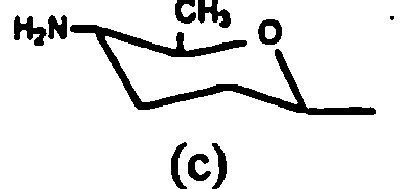
C2H5 CH3 CH3 CH3 spinosyn D CH3 CH3 (a) C2H5 CH3 CH3 CH3 spinosyn E H CH3 (a) CH3 CH3 CH3 CH3 spinosyn F H H (a) C2H5 CH3 CH3 CH3 spinosyn G H CH3 
C2H5 CH3 CH3 CH3 spinosyn H H CH3 (a) C2H5 H CH3 CH3 spinosyn J H CH3 (a) C2H5 CH3 H CH3 spinosyn K H CH3 (a) C2H5 CH3 CH3 H spinosyn L CH3 CH3 (a) C2H5 CH3 H CH3 spinosyn M H CH3 (b) C2H5 CH3 H CH3 spinosyn N CH3 CH3 (b) C2H5 CH3 H CH3 spinosyn O CH3 CH3 (a) C2H5 CH3 CH3 H spinosyn P H CH3 (a) C2H5 CH3 H H spinosyn Q CH3 CH3 (a) C2H5 H CH3 CH3 spinosyn R H CH3 (b) C2H5 H CH3 CH3 spinosyn S H CH3 (a) CH3 H CH3 CH3 spinosyn T H CH3 (a) C2H5 H H CH3 spinosyn U H CH3 (a) C2H5 H CH3 H spinosyn V CH3 CH3 (a) C2H5 H CH3 H spinosyn W CH3 CH3 (a) C2H5 CH3 H H spinosyn Y H CH3 (a) CH3 CH3 CH3 H spinosyn A 17-Psa H CH3 H C2H5 CH3 CH3 CH3 spinosyn D 17-Psa CH3 CH3 H C2H5 CH3 CH3 CH3 spinosyn E 17-Psa H CH3 H CH3 CH3 CH3 CH3 spinosyn F 17-Psa H H H C2H5 CH3 CH3 CH3 spinosyn H 17-Psa H CH3 H C2H5 H CH3 CH3 spinosyn J 17-Psa H CH3 H C2H5 CH3 H CH3 spinosyn L 17-Psa CH3 CH3 H C2H5 CH3 H CH3 Table 2 
Factor R1' R2' R3' R4' R5' spinosyn A 9-Psa H CH3 
C2H5 H spinosyn D 9-Psa CH3 CH3 (a) C2H5 H spinosyn A Aglycone H CH3 H C2H5 H spinosyn D Aglycone CH3 CH3 H C2H5 H - The naturally produced spinosyn compounds consist of a 5,6,5-tricylic ring system, fused to a 12-membered macrocyclic lactone, a neutral sugar (rhamnose) and an amino sugar (forosamine) (see Kirst et al. (1991). If the amino sugar is not present the compounds have been referred to as the pseudoaglycone of A, D, etc., and if the neutral sugar is not present then the compounds have been referred to as the reverse pseudoaglycone of A, D, etc. A more preferred nomenclature is to refer to the pseudoaglycones as spinosyn A 17-Psa, spinosyn D 17-Psa, etc., and to the reverse pseudoaglycones as spinosyn A 9-Psa, spinosyn D 9-Psa, etc.
- The naturally produced spinosyn compounds may be produced via fermentation from cultures NRRL 18395, 18537, 18538, 18539, 18719, 18720, 18743 and 18823. These cultures have been deposited and made part of the stock culture collection of the Midwest Area Northern Regional Research Center, Agricultural Research Service, United States Department of Agriculture, 1815 North University Street, Peoria, IL 61604.
- U.S. Patent No.
5,362,634 and correspondingEuropean Patent Application No. 375316 A1 -
WO 93/09126 -
WO 94/20518 US 5,6704,486 - A challenge in producing spinosyn compounds arises from the fact that a very large fermentation volume is required to produce a very small quantity of spinosyns. It is highly desired to increase spinosyn production efficiency and thereby increase availability of the spinosyns while reducing their cost. A cloned fragment of DNA containing genes for spinosyn biosynthetic enzymes would enable duplication of genes coding for rate limiting enzymes in the production of spinosyns. This could be used to increase yield in any circumstance when one of the encoded activities limited synthesis of the desired spinosyn. A yield increase of this type was achieved in fermentations of Streptomyces fradiae by duplicating the gene encoding a rate-limiting methyltransferase that converts macrocin to tylosin (Baltz et al., 1997). In another example,
WO 97/06266 - Cloned biosynthetic genes would also provide a method for producing new derivatives of the spinosyns which may have a different spectrum of insecticidal activity. New derivatives are desirable because, although known spinosyns inhibit a broad spectrum of insects, they do not control all pests. Different patterns of control may be provided by biosynthetic intermediates of the spinosyns, or by their derivatives produced in vivo, or by derivatives resulting from their chemical modification in vitro. Specific intermediates (or their natural derivatives) could be synthesized by mutant strains of S. spinosa in which certain genes encoding enzymes for spinosyn biosynthesis have been disrupted. Such strains can be generated by integrating, via homologous recombination, a mutagenic plasmid containing an internal fragment ot me target gene. Upon plasmid integration, two incomplete copies of the biosynthetic gene are formed, thereby eliminating the enzymatic function it encoded. The substrate for this enzyme, or some natural derivative thereof, should accumulate upon fermentation of the mutant strain. Such a strategy was used effectively to generate a strain of Saccharopolyspora erythraea producing novel 6-deoxyerythromycin derivatives (Weber & McAlpine, 1992).
- Novel intermediates could also be synthesized by mutant strains of S. spinosa in which parts of certain genes encoding enzymes for spinosyn biosynthesis have been replaced with parts of the same gene which have been specifically mutated in vitro, or with corresponding parts of genes from other organisms. Such strains could be generated by swapping the target region, via double homologous recombination, with a mutagenic plasmid containing the new fragment between non-mutated sequences which flank the target region. The hybrid gene would produce protein with altered functions, either lacking an activity or performing a novel enzymatic transformation. A new derivative would accumulate upon fermentation of the mutant strain. Such a strategy was used to generate a strain of Saccharopolyspora erythraea producing a novel anhydroerythromycin derivative (Donadio et al., 1993). The nucleic acids of the invention can be used in production of engineered polyketide synthases of the type disclosed in
WO 93/13663 US 5,824,513 , in production of hybrid polyketide synthases of the type described in andWO 98/01546 WO 98/49315 WO98/51695 WO 96/40968 WO 98/49315 WO 98/27203 US 5,783,431 ,US 5,824,485 , andUS 5,811,238 . - Biosynthesis of spinosyns proceeds via stepwise condensation and modification of 2- and 3-carbon carboxylic acid precursors, generating a linear polyketide that is cyclized and bridged to produce the tetracyclic aglycone. Pseudoaglycone (containing tri-O-methylated rhamnose) is formed next, then di-N-methylated forosamine is added to complete the biosynthesis (Broughton et al., 1991). Other macrolides, such as the antibiotic erythromycin, the antiparasitic avermectin and the immunosuppressant rapamycin, are synthesized in a similar fashion. In the bacteria producing these compounds, most of the macrolide biosynthetic genes are clustered together in a 70-80 kb region of the genome (Donadio et al., 1991; MacNeil et al., 1992; Schwecke et al., 1995). At the centers of these clusters are 3-5 highly conserved genes coding for the very large, multifunctional proteins of a Type I polyketide synthase (PKS). Together the polypeptides form a complex consisting of an initiator module and several extender modules, each of which adds a specific acyl-CoA precursor to a growing polyketide chain, and modifies the β-keto group in a specific manner. The structure of a polyketide is therefore determined by the composition and order of the modules in the PKS. A module comprises several domains, each of which performs a specific function. The initiator module consists of an acyl transferase (AT) domain for addition of the acyl group from the precursor to an acyl carrier protein (ACP) domain. The extender modules contain these domains, along with a β-ketosynthase (KS) domain that adds the pre-existing polyketide chain to the new acyl-ACP by decarboxylative condensation. Additional domains may also be present in the extender modules to carry out specific β-keto modifications: a β-ketoreductase (KR) domain to reduce the β-keto group to a hydroxyl group, a dehydratase (DH) domain to remove the hydroxyl group and leave a double bond, and an enoyl reductase (ER) domain to reduce the double bond and leave a saturated carbon. The last extender module terminates with a thioesterase (TE) domain that liberates the polyketide from the PKS enzyme in the form of a macrocyclic lactone.
- Macrolides are derived from macrocyclic lactones by additional modifications, such as methylation and changes in reductive state, and the addition of unusual sugars. Most of the genes required for these modifications, and for the synthesis and attachment of the sugars, are clustered around the PKS genes. The genes encoding deoxysugar biosynthetic enzymes are similar in producers of macrolide antibiotics, such as erythromycin and tylosin (Donadio et al., 1993; Merson-Davies & Cundliffe, 1994), and producers of extracellular polysaccharides, such as the O-antigens of Salmonella and Yersinia (Jiang et al., 1991; Kessler et al., 1993). All these syntheses involve activation of glucose by the addition of a nucleotide diphosphate, followed by dehydration, reduction and/or epimerization. The resultant sugar could undergo one or more modifications such as deoxygenation, transamination and methylation, depending upon the type of sugar moiety present in the macrolide. The sugars are incorporated into macrolides by the action of specific glycosyltransferases. Genes involved in the synthesis and attachment of a sugar may be tightly clustered - even transcribed as a single operon - or they may be dispersed (Decker & Hutchinson, 1993; Jarvis & Hutchinson, 1994). Spinosyn synthesis also involves bridging of the lactone nucleus, an activity that is rare in macrolide producers. Therefore, the spinosyn biosynthetic cluster may uniquely contain additional genes encoding enzymes for this function.
- The following terms are used herein as defined below:
- AmR - the apramycin resistance-conferring gene.
- ApR - the ampicillin resistance-conferring gene.
- ACP - acyl carrier protein.
- AT - acyltransferase.
- bp - base pairs.
- Cloning - the process of incorporating a segment of DNA into a recombinant DNA cloning vector and transforming a host cell with the recombinant DNA.
- CmR - the chloramphenicol resistance-conferring gene.
- Codon bias - the propensity to use a particular codon to specify a specific amino acid. In the case of S. spinosa, the propensity is to use a codon having cytosine or guanine as the third base.
- Complementation - the restoration of a mutant strain to its normal phenotype by a cloned gene.
- Conjugation - a process in which genetic material is transferred from one bacterial cell to another.
- cos - the lambda cohesive end sequence.
- Cosmid - a recombinant DNA cloning vector which is a plasmid that not only can replicate in a host cell in the same manner as a plasmid but also can be packaged into phage heads.
- DH - dehydratase.
- ER - enoyl reductase.
- Exconjugant - recombinant strain derived from a conjugal mating.
- Gene - a DNA sequence that encodes a polypeptide.
- Genomic Library - a set of recombinant DNA cloning vectors into which segments of DNA, representing substantially all DNA sequences in a particular organism have been cloned.
- Homology - degree of similarity between sequences
- Hybridization - the process of annealing two single stranded DNA molecules to form a double stranded DNA molecule, which may or may not be completely base paired.
- In vitro packaging - the in vitro encapsulation of DNA in coat protein to produce a virus-like particle that can introduce DNA into a host cell by infection
- kb - kilo base pairs.
- KR - β-keto reductase.
- KS - ketosynthase.
- Mutagenesis - creation of changes in DNA sequence. They can be random or targeted, generated in vivo or in vitro. Mutations can be silent, or can result in changes in the amino acid sequence of the translation product which alter the properties of the protein and produce a mutant phenotype.
- NmR - the neomycin resistance-conferring gene.
- ORF - open reading frame.
- ori - a plasmid origin of replication (oriR)or transfer (oriT).
- PKS - polyketide synthase.
- Promoter - a DNA sequence that directs the initiation of transcription.
- Recombinant DNA cloning vector - any autonomously replicating or integrating agent, including, but not limited to, plasmids, comprising a DNA molecule to which one or more additional DNA molecules can be or have been added.
- Recombinant DNA methodology - technologies used for the creation, characterization, and modification of DNA segments cloned in recombinant DNA vectors.
- Restriction fragment - any linear DNA molecule generated by the action of one or more restriction enzymes.
- Spinosyn - a fermentation product typically characterized by a 5,6,5-tricylic ring system, fused to a 12-membered macrocyclic lactone, a neutral sugar (rhamnose) and an amino sugar (forosamine), or a similar macrocyclic lactone fermentation product produced by a microorganism utilizing all or most of the spinosyn genes.
- Spinosyn genes- the DNA sequences that encode the products required for spinosyn biosynthesis, more specifically the genes spnA, spnB, spnC, spnD, spnE, spnF, spnG, spnH, spnI, spnJ, spnK, spnL, spnM, spnN, spnO, spnP, spnQ, spnR, spnS, S. spinosa gtt, S. spinosa gdh, S. spinosa epi, and S. spinosa kre, as described hereinafter, or functional equivalents thereof.
- Subclone - a cloning vector with an insert DNA derived from another DNA of equal size or larger.
- TE - thioesterase.
- Transformation - the introduction of DNA (heterologous or homologous) into a recipient host cell that changes the genotype and results in a change in the recipient cell.
-
- FIG. 1 is a diagram illustrating the spinosyn biosynthetic pathway.
- FIG. 2 is a map illustrating the arrangement of BamHI fragments and open reading frames in the cloned region of S. spinosa DNA.
- FIG. 3 is a restriction site and functional map of Cosmid pOJ436.
- FIG. 4 is a restriction site and functional map of Cosmid pOJ260.
- FIG. 5 is a restriction site and functional map ofpDAB 1523.
- Spinosyn biosynthetic genes and related ORFs were cloned and the DNA sequence of each was determined. The cloned genes and ORFs are designated hereinafter as spnA, spnB, spnC, spnD, spnE, spnF, spnG, spnH, spnI, spnJ, spnK, spnL, spnM, spnN, spnO, spnP, spnQ, spnR, spnS, ORFL15, ORFL16, ORFR1, ORFR2, S. spinosa gtt, S. spinosa gdh, S. spinosa epi, and S. spinosa kre. The proposed functions of the cloned genes in spinosyn biosynthesis are identified FZG. 1 and in the discussion hereinafter.
- In one of its aspects, the invention provides an isolated DNA molecule comprising a DNA sequence that encodes a spinosyn biosynthetic enzyme, wherein said enzyme is defined by an amino acid sequence selected from the group consisting of SEQ ID NOS 2-6, 7-24, 26, 27, 29, and 33, or said enzyme is defined by an amino acid selected from SEQ ID NOS 2-6, 7-24, 26, 27, 29, 33 in which one or more amino acid substitutions have been made that do not affect the functional properties of the enzyme. In a preferred embodiment, the DNA sequence is selected from the group of genes consisting of spnA, spnB, spnC, spnD, spnE, spnF, spnG, spnH, spnI, spnJ, spnK, spnL, spnM, spnN, spnO, spnP, spnQ, spnR, spnS, ORFL15, ORFL16, ORFR1, ORFR2, S. spinosa gtt, S. spinosa gdh, S. spinosa epi, and S. spinosa kre, said genes being described by, respectively, bases 21111-28898, 28916-35374, 35419-44931, 44966-59752, 59803-76569, 20168-20995, 18541-19713, 17749-18501, 16556-17743, 14799-16418, 13592-14785, 12696-13547, 11530-12492, 10436-11434, 8967-10427, 7083-8450, 5363-6751, 4168-5325, 3416-4165, 2024-2791, 1135-1971, 76932-77528 and 77729-79984 of SBQ ID NO:1, bases 334-1119 of SEQ ID NO:28, bases 88-1077 of SEQ ID NO:25, bases 226-834 of SEQ ID NO:32, and bases 1165-1992 of SEQ ID NO:25.
- In another of its aspects, the invention provides an isolated DNA molecule comprising a DNA sequence that encodes a spinosyn polyketide synthase domain, where said domain is selected from KSi, ATi, ACPi, KS1, AT1, KR1, and ACP1, corresponding, respectively, to amino acid sequences 6-423, 528-853, 895-977, 998-1413, 1525-1858, 2158-2337, and 2432-2513 of SEQ ID NO:2, or said domain is one of said amino acid sequences in which one or more amino acid substitutions have been made that do not affect the functional properties of the domain. In a preferred embodiment, the DNA sequence is selected from the group consisting of bases 21126-22379, 22692-23669, 23793-24041, 24102-25349, 25683-26684, 27582-28121, and 28404-28649 of SEQ ID NO:1.
- In another of its aspects, the invention provides an isolated DNA molecule comprising a DNA sequence that encodes a spinosyn polyketide synthase domain, where said domain is selected from KS2, AT2, DH2, ER2, KR2, and ACP2, corresponding, respectively, to amino acid sequences 1-424, 536-866, 892-1077, 1338-1683, 1687-1866 and 1955-2034 of SEQ ID NO:3, or said domain is one of said amino acid sequences in which one or more amino acid substitutions have been made that do not affect the functional properties of the domain. In a preferred embodiment the DNA sequence is selected from the group consisting of bases 29024-30295, 30629-31621, 31697-32254, 33035-34072, 34082-34621, 34886-35125 of SEQ ID NO:1.
- In another of its aspects, the invention provides an isolated DNA molecule comprising a DNA sequence that encodes a spinosyn polyketide synthase domain, where said domain is selected from KS3, AT3, KR3, ACP3, KS4, AT4, KR4, and ACP4, corresponding, respectively, to amino acid sequences 1-423, 531-860, 1159-1337, 1425-1506, 1529-1952, 2066-2396, 2700-2880, and 2972-3053 of SEQ ID NO:4, or said domain is one of said amino acid sequences in which one or more amino acid substitutions have been made that do not affect the functional properties of the domain. In a preferred embodiment the DNA sequence is selected from the group consisting of bases 35518-36786, 37108-38097, 38992-39528, 39790-40035, 40102-41373, 41713-42705, 43615-44157, and 44431-44676 of SEQ ID NO:1.
- In another of its aspects the invention provides an isolated DNA molecule comprising a DNA sequence that encodes a spinosyn polyketide synthase domain, where said domain is selected from KS5, AT5, DH5, KR5, ACP5, KS6, AT6, KR6, ACP6, KS7, AT7, KR7, and ACP7, corresponding, respectively to amino acid sequences 1-424, 539-866, 893-1078, 1384-1565, 1645-1726, 1748-2172, 2283-2613, 2916-3095, 3188-3269, 3291-3713, 3825-4153, 4344-4638, and 4725-4806 of SEQ ID NO:5, or said domain is one of said amino acid sequences in which one or more amino acid substitutions have been made that do not affect the functional properties of the domain. In a preferred embodiment the DNA sequence is selected from the group consisting of bases 45077-46348, 46691-47674, 47753-48310, 49226-49771, 50009-50254, 50318-51592, 51923-52915, 53822-54361, 54638-54883, 54947-56215, 56549-57535, 58106-58990, and 59249-59494 of SEQ ID NO: 1.
- In another of its aspects, the invention provides an isolated DNA molecule comprising a DNA sequence that encodes a spinosyn polyketide synthase domain, where said domain is selected from KS8, AT8, DH8, KR8, ACP8, KS9, AT9, DH9, KR9, ACP9, KS10, AT10, DH10, KR10, ACP10, and
TE 10, corresponding, respectively, to amino acids 1-424, 530-848, 883-1070, 1369-1552, 1648-1726, 1749-2173, 2287-2614, 2640-2800, 3157-3341, 3422-3500, 3534-3948, 4060-4390, 4413-4597, 4900-5078, 5172-5253, and 5302-5555 of SEQ ID NO:6, or said domain is one of said amino acid sequences which one or more amino acid substitutions have been made that do not affect the functional properties of the domain. In a preferred embodiment, the DNA sequence is selected from the group consisting of bases 59902-61173, 61489-62445, 62548-63111, 64006-64557, 64843-65079, 65146-66420, 66760-67743, 67819-68301, 69370-69924, 70165-70401, 70471-71745, 72079-73071, 73138-73692, 74599-75135, 75415-75660, and 75805-76566 of SEQ ID NO:1. - In another of its aspects the invention provides an isolated DNA molecule consisting of a DNA sequence that encodes a spinosyn polyketide synthase module, where said module is selected from the group consisting of amino acid sequences 6-1413 of SEQ ID NO:2, 1525-2513 of SEQ ID NO:2, 1-2034 of SEQ ID NO:3, 1-1506 of SEQ ID NO:4, 1529-3053 of SEQ ID NO:4,, 1748-3269 of SEQ ID NO:5, 3291-4806 of SEQ ID NO:5, 1-1726 of SEQ ID NO:5,1-1726 of SEQ ID NO:6, 1749-3500 of SEQ ID NO:6, and 3524-5555 of SEQ ID NO:6, or said module is one of the said amino acid sequences in which one or more amino acid substitutions have been made that do not affect the functional properties of the domain. In a preferred embodiment the DNA sequence is selected from the group consisting of bases 21126-24041, 24102-28649, 29024-35125, 35518-40035, 40102-44676, 45077-50254, 50318-54883, 54947-59494, 59902-65079, 65146-70401, and 70471-76566 of SEQ ID NO:1.
- In another of its aspects, the invention provides a recombinant DNA vector which comprises a DNA sequence of the invention as described above.
- In another of its aspects the invention provides a host cell transformed with a recombinant vector of the invention as described above.
- In another of its aspects, the invention provides a method of producing spinosyn comprising the steps of
- 1) transforming with a recombinant DNA vector or portion thereof a microorganism that produces spinosyn or a spinosyn precursor by means of a biosynthetic pathway, said vector or portion thereof comprising a DNA sequence of the invention, as described above, that codes for the expression of an activity that is rate limiting in said pathway, and
- 2) culturing said microorganism transformed with said vector under conditions suitable for cell growth and division, expression of said DNA sequence, and production of spinosyn.
- Preferably, step 1) comprises transforming said microorganism with a vector or portion thereof comprising a DNA sequence that codes for S. spinosa gtt and S. spinosa gdh, corresponding to SEQ ID NOS. 29 and 26, respectively.
- In another of its aspects the invention provides a transformed spinosyn-producing microorganism having spinosyn biosynthetic genes wherein at least one of the spinosyn biosynthetic genes selected from spnA, spnB, spnC, spnD, spnE, spnF, spnG, spnH, spnI, spnJ, spnK, spnL, spnM, spnN, spnO, spnP, spnQ, spnR, spnS, S. spinosa gtt, S. spinosa gdh, S. spinosa epi, or S. spinosa kre has been duplicated, said genes being described by bases 21111-28898, 28916-35374, 35419-44931, 44966-59752, 59803-76569, 20168-20995, 18541-19713, 17749-18501, 16556-17743, 14799-16418, 13592-14785, 12696-13547, 11530-12492, 10436-11434, 8967-10427, 7083-8450, 5363-6751, 4168-5325, 3416-4165, 2024-2791, 1135-1971, 76932-77528 and 77729-79984 of SEQ ID NO. 1, bases 334-1119 of SEQ ID NO. 28, bases 88-1077 of SEQ ID NO. 25, bases 226-834 of SEQ ID NO. 32, and bases 1165-1992 of SEQ ID NO. 25.
- Preferably, S. spinosa gtt and S. spinos gdh are duplicated, said genes being described by bases 334-1119 of SEQ ID NO. 28 and bases 88-1077 of SEQ ID NO. 25, respectively.
- In another of its aspects, the invention provides a process for producing a spinosyn compound which comprises cultivating a transformed spinosyn-producing microorganism as described above.
- In another of its aspects, the invention provides a transformed spinosyn producing microorganism as described above, wherein S. spinosa gtt, S. spinosa gdh, and S. spinosa kre are duplicated, said genes being described by bases 334-1119 of SEQ ID NO. 28, bases 88-1077 of SEQ ID NO. 25, and bases 1165-1995-1992 of SEQ ID NO. 25 respectively.
- In another of its aspects, the invention provides a process for producing a spinosyn compound which comprises cultivating a transformed spinosyn-producing microorganism as described above.
- The invention also provides spinosyns produced by cultivation of the novel microorganisms of the invention.
- In another of its aspects the invention provides a process for isolating macrolide biosynthetic genes which comprises creating a genomic library of a macrolide producing microorganism, and using a labeled fragment of SEQ ID NO. 1, SEQ ID NO. 28, SEQ ID NO. 32 that is at least 20 bases long as a hybridization probe.
- Preferably, the microorganism is a spinosyn producing microorganism.
- A cosmid library of S. spinosa (NRRL 18395) DNA was constructed from fragments generated by partial digestion with Sau3A I. They were cloned into the BamHI site of vector pOJ436 (See Fig. 3) (Bierman et al., 1992) and introduced into E. coli cells by in vitro packaging and transduction. The library of recombinant bacteria thus prepared was screened for homology to two radiolabelled DNA probes by hybridization using the methods of Solenberg & Burgett (1989). One probe was the 400 kb SpeI fragment which is often deleted in non-producing S. spinosa strains generated by transformation or mutagenesis with N-methyl-N'-nitro-N-nitxosoguanidine (Matsushima et al., 1994). The second probe was a 300 bp piece of S. spinosa DNA that codes for part of a ketosynthase not involved in spinosyn biosynthesis (B.E. Schoner, personal communication). It includes a region which is highly conserved in all polyketide and fatty acid synthase genes, and was therefore expected to cross-hybridize with the spinosyn PKS genes. Cosmids 9A6 and 2C10 were two of seven clones that hybridized to both probes. Cosmid 3E11 was selected from the genomic library by hybridization to a radiolabelled SgrA1-BamH1 fragment of cosmid 9A6 (bases 26757-26936 in SEQ ID NO: 1). To determine the nucleotide sequence of the insert in cosmid 9A6, BamHI fragments were subcloned into the BamHI site of plasmid pOJ260 (See Fig. 4) (Bierman et al., 1992). The sequences of the inserts in these plasmids were determined by either of two methods. In one method, subcloned fragments were partially digested with Sau3A I, and size-selected pieces were cloned into the BamHI site of DNA from the phage M13mp19. Single-stranded DNA was prepared from randomly selected recombinants, and sequenced by fluorescent cycle sequencing using reagents and equipment from ABI (Applied Biosystems, Inc., Foster, CA), according to the methods of Burgett & Rosteck (1994). The sequences from phage subclones of each plasmid were assembled into one contiguous sequence. In the other sequencing method, double-stranded plasmid DNAs were primed reiteratively with single-stranded oligonucleotides, each designed to complement a region near the end of previously determined sequence. The complete sequence was thus compiled from a series of partially-overlapping sequences. Prism-Ready Sequencing Kits (ABI) were used according to the manufacturer's instructions, and analyzed on an ABD73A Sequencer. The same strategy was employed to sequence across the BamHI sites of double-stranded 9A6 DNA. These data allowed the subcloned sequences to be aligned and oriented relative to one another using the AssemblyLIGN module of the MacVector program (Oxford Molecular, Campbell, KY), and thereby allowed the entire nucleotide sequence of the S. spinosa DNA in cosmid 9A6 to be assembled. The complete sequences of cosmids 2C10 and 3E11 were determined by the method of fluorescent cycle sequencing of random DNA fragments cloned in phage M13 (SeqWright, Houston, TX). The inserts in cosmids 2C10 and 3E11 overlapped, and the insert in 3E11 overlapped the end of the insert in cosmid 9A6. See Fig. 2. Together, the three cosmid inserts spanned about 80 kb of unique sequence (SEQ ID NO: 1). The following Table 3 identifies the portions of SEQ ID NO:1 included in each of the three inserts.
Table 3 insert bases in SEQ ID NO:1 cosmid 9A6 1-26941 cosmid 3E11 23489-57287 cosmid 2C 10 (corrected) 41429-80161 - It should be noted that cosmid 2C10 was missing bases G41877, C45570, C57845 and G73173 of SEQ ID NO:1. These deletions were determined to be cloning artifacts. The deletions generated in-frame stop codons that truncated PKS polypeptides. One of them occurred in a region also cloned in cosmid 3E11, but was not present in the region of 3E11 for which sequence was obtained. Uncloned DNA spanning all 8 stop codons in the PKS region was therefore sequenced directly from PCR-amplified regions of the genome of S. spinosa (NRRL 18395). The sequences from uncloned DNA confirmed the existence of the 4 stop codons at the end of ACP domains, and proved that the 4 frameshifts within other coding regions were cloning artifacts unique to cosmid 2C10.
- SEQ ID NO:1 includes a central region of about 55 kb with striking homology to the DNA encoding the polyketide synthases of known macrolide producers (Donadio et al., 1991; MacNeil et al., 1992; Schwecke et al., 1995; Dehoff et al., 1997). The spinosyn PKS DNA region consists of 5 ORFs with in-frame stop codons at the end of ACP domains, similar to the PKS ORFs in the other macrolide-producing bacteria. The five spinosyn PKS genes are arranged head-to-tail (see FIG. 2), without any intervening non-PKS functions such as the insertion element found between the erythromycin PKS genes AI and AII (Donadio et al., 1993). They are designated spnA, spnB, spnC, spnD, and spnE. The nucleotide sequence for each of the five spinosyn PKS genes, and the corresponding polypeptides, are identified in the following Table 4:
Table 4 GENE BASES IN SEQ ID NO:1 CORRESPONDING POLYPEPTIDE spnA 21111-28898 SEQ ID NO: 2 spnB 28916-35374 SEQ ID NO: 3 spnC 35419-44931 SEQ ID NO: 4 spnD 44966-59752 SEQ ID NO: 5 spnE 59803-76569 SEQ ID NO: 6 - spnA encodes the initiator module (SEQ ID NO: 1, bases 21126-24041) and extender module 1 (SEQ ID NO:1, bases 24102-28649). The nucleotide sequence and corresponding amino acid sequence for each of the functional domains within the initiator module and
extender module 1 are identified in the following Table 5:Table 5 SpnA DOMAIN BASES IN SEQ ID NO:1 AMINO ACIDS IN SEQ ID NO:2 KSi 21126-22379 6-423 ATi 22692-23669 528-853 ACPi 23793-24041 895-977 KS1 24102-25349 998-1413 AT1 25683-26684 1525-1858 KR1 27582-28121 2158-2337 ACP1 28404-28649 2432-2513 - spnB encodes extender module 2 (SEQ ID NO:1, bases 29024-35125). The nucleotide sequence and corresponding amino acid sequence for each of the functional domains within
extender module 2 are identified in the following Table 6:Table 6 SpnB DOMAIN BASES IN SEQ ID NO:1 AMINO ACIDS IN SEQUENCE ID NO. 3 KS2 29024-30295 1-424 AT2 30629-31621 536-866 DH2 31697-32254 892-1077 ER2 33035-34072 1338-1683 KR2 34082-34621 1687-1866 ACP2 34886-35125 1955-2034 - spnC encodes extender module 3 (SEQ ID NO:1, bases 35518-40035) and extender module 4 (SEQ ID NO:1, bases 40102-44676). The nucleotide sequence and corresponding amino acid sequence for each of the functional domains within
extender modules Table 7 SpnC DOMAIN BASES IN SEQ ID NO:1 AMINO ACIDS IN SEQ ID NO:4 KS3 35518-36786 1-423 AT3 37108-38097 531-860 KR3 38992-39528 1159-1337 ACP3 39790-40035 1425-1506 KS4 40102-41373 1529-1952 AT4 41713-42705 2066-2396 KR4 43615-44157 2700-2880 ACP4 44431-44676 2972-3053 - spnD encodes extender module 5 (SEQ ID NO:1, bases 45077-50254), extender module 6 (SEQ ID NO:1, bases 50318-54883), and extender module 7 (SEQ ID NO:1, bases 54947-59494). The nucleotide sequence and corresponding amino acid sequence for each of the functional domains within
extender modules Table 8 spnD DOMAIN BASES IN SEQ ID NO:1 AMINO ACIDS IN SEQ ID NO:5 KS5 45077-46348 1-424 AT5 46691-47674 539-866 DH5 47753-48310 893-1078 KR5 49226-49771 1384-1565 ACP5 50009-50254 1645-1726 KS6 50318-51592 1748-2172 AT6 51923-52915 2283-2613 KR6 53822-54361 2916-3095 ACP6 54638-54883 3188-3269 KS7 54947-56215 3291-3713 AT7 56549-57535 3825-4153 KR7 58106-58990 4344-4638 ACP7 59249-59494 4725-4806 - spnE encodes extender module 8 (SEQ ID NO:1, bases 59902-65079), extender module 9 (SEQ ID NO:1, bases 65146-70401), and extender module 10 (SEQ ID NO:1, bases 70471-76566). The nucleotide sequence and corresponding amino acid sequence for each of the functional domains within
extender modules Table 9 spnE DOMAIN BASES IN SEQ ID NO: 1 AMINO ACIDS IN SEQ ID NO:6 KS8 59902-61173 1-424 AT8 61489-62445 530-848 DH8 62548-63111 883-1070 KR8 64006-64557 1369-1552 ACP8 64843-65079 1648-1726 KS9 65146-66420 1749-2173 AT9 66760-67743 2287-2614 DH9 67819-68301 2640-2800 KR9 69370-69924 3157-3341 ACP9 70165-70401 3422-3500 KS10 70471-71745 3534-3948 AT10 72079-73071 4060-4390 DH10 73138-73692 4413-4597 KR10 74599-75135 4900-5078 ACP10 75415-75660 5172-5253 TE10 75805-76566 5302-5555 - The boundaries and functions of the 50 domains identified in the foregoing Tables 5-9 are predicted based on similarities to the conserved amino acid sequences of the domains in other polyketide synthases, particularly the erythromycin polyketide synthase (Donadio et al., 1992). The unexpected KSi domain at the amino terminus of the initiator module is presumed to be non-functional because it contains a glutamine residue at amino acid 172, in place of the cysteine required for β-ketosynthase activity (Siggard-Andersen, 1993). A similar non-functional KS domain has been discovered in the initiator module of the tylosin PKS (Dehoff et al., 1997). The other spinosyn PKS domains are functional. None of them has the sequence characteristics of the inactive domains found in the erythromycin and rapamycin PKS genes (Donadio et al., 1991; Aparicio et al., 1996). The cloned PKS genes were shown to be essential for spinosyn biosynthesis by the discovery that strains of S. spinosa in which these genes had been disrupted were unable to produce spinosyns by fermentation. Gene disruption was achieved by cloning an internal fragment of the gene into plasmid pOJ260 (Fig. 4), using procedures well-known to those skilled in the art. The recombinant plasmids were then introduced into S. spinosa by conjugation from E. coli using the procedures of Matsushima et al. (1994), and selecting for apramycin-resistant exconjugants. Plasmids based on pOJ260 do not replicate independently in S. spinosa, and are stably maintained by integrating the plasmid into the chromosome via recombination between the cloned DNA and its homologous sequence in the genome. Integration creates two incomplete versions of the targeted gene (one lacking 5' sequences and one lacking 3' sequences) in the chromosome, with the pOJ260 DNA between them. Spinosyn biosynthesis was blocked by disrupting the spnA ORF with the BamH1 fragments V, N, or K, corresponding respectively to the following segments of SEQ ID NO: 1: 21365-22052, 22052-24338, or 24338-26227. Spinosyn biosynthesis was also blocked by disrupting the spnD ORF with BamH1 fragments G, E, or K, corresponding respectively to the following segments of SEQ ID NO: 1: bases 48848-50578, 50578-52467, or 55207-55888. Spinosyn biosynthesis was also blocked by disrupting the spnE ORF with BamH1 fragments J, I, D, H, and F, corresponding respectively to the following segments of SEQ ID NO: 1: 63219-63989, 65406-66733, 66733-68997, 69369-70731, and 70731-72675. Spinosyn biosynthesis was not blocked by integration via BamH1 fragments C (bases 44612-47565 in SEQ ID NO: 1) or B (bases 55936-63219 in SEQ ID NO: 1) because they are not internal to any one gene; BamH1 fragment C spans the junction between spnC and spnD, and BamH1 fragment B spans the junction between spnD and spnE. In these cases, integration leaves one complete version of each gene.
- In the DNA upstream of the PKS genes (cloned in cosmid 9A6) there were 16 open reading frames (ORFs), each consisting of at least 100 codons, beginning with ATG or GTG and ending with TAA, TAG or TGA, and having the codon bias expected of protein-coding regions in an organism whose DNA contains a high percentage of guanine and cytosine residues (Bibb et al., 1984). See the bottom right hand side of FIG. 2 for a graphical representation of the 16 ORFs in 9A6. Based on evidence that will be discussed hereinafter, 14 of the ORFs have been designated as spinosyn biosynthetic genes, namely: spnF, spnG, spnH, spnI, spnJ, spnK, spnL, spnM, spnN, spnO, spnP, spnQ, spnR, and spnS (they are labeled F through S in FIG. 2). In the following Table 10, the DNA sequence and the amino acid sequence for the corresponding polypeptide are identified for each of these genes, as well as for two ORFs (ORFL15 and ORFL16) found immediately upstream of spnS. Also identified in Table 10 are the nucleotide sequences for ORFR1 and ORFR2 downstream of the PKS genes (in cosmid 2C10), and the amino acid sequences corresponding to them.
Table 10 GENE BASES IN SEQUENCE ID NO: 1 POLYPEPTIDE spnF 20168-20995 SEQ ID NO: 7 spnG 18541-19713 (C) SEQ ID NO: 8 spnH 17749-18501 (C) SEQ ID NO: 9 spnI 16556-17743 SEQ ID NO: 10 spnJ 14799-16418 (C) SEQ ID NO: 11 spnK 13592-14785 (C) SEQ ID NO: 12 spnL 12696-13547 (C) SEQ ID NO: 13 spnM 11530-12492 (C) SEQ ID NO: 14 spnN 10436-11434 SEQ ID NO: 15 spnO 8967-10427 SEQ ID NO: 16 spnP 7083-8450 SEQ ID NO: 17 spnQ 5363-6751 (C) SEQ ID NO: 18 spnR 4168-5325 (C) SEQ ID NO: 19 spnS 3416-4165 (C) SEQ ID NO: 20 ORFL 152024-2791 SEQ ID NO: 21 ORFL 16 1135-1971 (C) SEQ ID NO: 22 ORFR 176932-77528 SEQ ID NO: 23 ORFR 277729-79984 SEQ ID NO: 24 - To assign functions to the polypeptides identified in Table 10, three lines of evidence were utilized: similarity to sequences of known function, results of targeted gene disruption experiments, and results of bioconversion experiments.
- The amino acid sequences of the predicted polypeptides were compared to sequences deposited in the databases at the National Center for Biotechnology Information (NCBI, Washington, DC), using the BLAST algorithm to determine how well they are related to known proteins. The BLAST searches of the NCBI databases were also repeated periodically to obtain new insights from additional homologies. Table 11 gives the best matches from a basic BLAST search on January 12, 1998:
Table 11 Gene Significant Protein Match GenBank Accession BLAST Score* Reported function spnF C-24 sterol methyltransferase (Zea mays) U79669 202 C-methylation spnG Daunosamyl transferase dnrS (Streptomyces peucetius) L47164 202 sugar addition spnH Mycinamicin III O-metbyltransferase (Micromonospora griseorubida) D16097 408 sugar methylation spnI ORFY (Streptomyces nogalater) Z48262 192 unknown spnJ Hexose oxidase (Chondrus crispus) U89770 143 oxido-reduction spnK ORFY (Streptomyces nogalater) Z48262 137 unknown spnL C-24 sterol methyltransferase (Zea mays) U79669 166 C-methylation spnM Unknown (Mycobacterium tuberculosis) Z95586 132 unknown spnN RdmF (Streptomyces purpurascens) U10405 409 unknown spnO 2,3 dehydratase EryBV1 (Saccharopolyspora erythraea) Y11199 595 deoxysugar synthesis spnP Mycarosyl transferase EryBV (Saccharopolyspora erythraea) U77459 336 sugar addition spnQ CDP-4-keto-6-deoxy-D-glucose-3-dehydrase (Salmonella enterica) P26398 784 dideoxysugar synthesis spnR Spore coat polysaccharide biosynthesis protein (Bacillus subtilis) P39623 286 sugar transamination spnS TDP-N-dimethyldesosamine-N-methyltransferase EryCVI (Saccharopolyspora erythraea) U77459 484 aminosugar methylation ORFL15 Keto acyl reductase (Streptomyces cinnamonensis) Z11511 132 oxido-reduction ORFL16 Regulatory protein of the als operon, (Bacillus subtilis) transcription control ORFR1 None ORFR2 Conjugation transfer protein (Bacillus subtilis) Z99117 328 DNA replication * Greater similarity is associated with higher BLAST scores (Altschul et al., 1990). - In targeted gene disruptions, internal fragments were generated by PCR amplification from the cosmid DNAs, and cloned into plasmid pOJ260. The resulting plasmids were then conjugated into S. spinosa (NRRL 18395), and apramycin-resistant exconjugants were isolated and fermented. As stated earlier, the basis of disruption experiments is that when a plasmid bearing an internal gene fragment is integrated, two incomplete copies of the biosynthetic gene result, thereby eliminating the enzymatic function. Resulting fermentation products were analyzed to determine which spinosyns accumulated. The results of the targeted gene disruption experiments are summarized in Table 12.
- In bioconversion studies, strains in which spinosyn synthesis was altered were tested for their ability to convert available spinosyn intermediates to other spinosyns. The intermediates used were spinosyn A Aglycone (AGL), spinosyn P (P), spinosyn K (K), and spinosyn A 9-Psa (PSA). The results of the bioconversion experiments are also summarized in Table 12.
Table 12 Disrupted Gene Internal Fragment in SEQ ID NO:1 spinosyns accumulated Bioconversion products AGL→ P→ K→ PSA→ None None A+D spnF 20325-20924 None A A A spnG 18818-19426 None AGL K A spnG-H 18511-19559 P K A spnI 16699-17400 None J A A spnJ 14866-15470 None A A spnK 13785-14574 None spnL 12791-13428 None A A A spnM 11705-12371 3% A A A spnN 10636-11369 PSA spn0 9262-10226 PSA spnP 7391-8159 PSA PSA ORFL15 2145-2719 A+D ORFL16 1226-1852 A+D ORFR2 79321-79855 A+D - The conclusions drawn from BLAST searches, the gene disruption experiments, and the bioconversion studies will now be discussed in greater detail on a gene by gene basis.
- The 11 genes upstream of the PKS were shown to be involved in spinosyn biosynthesis because strains in which they were disrupted failed to accumulate the major spinosyns A and D (Table 12). The next 2 genes upstream (ORFL15, ORFL16), and the large gene downstream (ORFR2) of the PKS, do not contribute to spinosyn production because fermentation was not affected by their disruption (Table 12). Disruption of the ORF immediately downstream of the PKS genes (ORFR1) was not attempted because it was too small to yield an internal fragment that would recombine at an acceptable frequency. Disruptions of the spnQ, spnR, and spnS genes were not attempted because early BLAST searches showed that these genes had striking similarity to enzymes known to be involved in the biosynthesis of unusual deoxysugars. spnQ had 53% identity between its gene product and the CDP-4-keto-6-deoxy-D-glucose-3-dehydrase involved in synthesis of the abequose moiety of the Salmonella enterica cell surface lipopolysaccharide (Jiang et al., 1991); spnR had up to 40% identity between its product and a group of proteins proposed to function as deoxysugar transaminases (Thorson et al., 1993); and spnS had 42% identity between its product and the SrmX product of Streptomyces ambofaciens, an organism that synthesizes the forosamine-containing antibiotic spiramycin (Geistlich et al., 1992). Even stronger similarities have emerged from recent BLAST searches (Table 11). Based on these similarities, and the close linkage of the genes to other spinosyn biosynthetic genes, it is concluded that spnQ, spnR, and spnS are involved in production of the forosamine moiety of spinosyns.
- Strains disrupted in genes spnF, spnJ, spnL or spnM did not accumulate any spinosyns to significant levels (the low level of spinosyn A in the spnM mutant presumably resulted from some residual activity in the gene product deleted at its carboxy terminus). However, they bioconverted exogenously-supplied aglycone to spinosyn A, and therefore contained all the enzymes necessary for the later steps in spinosyn biosynthesis. These particular genes must be involved in generation of the aglycone from the putative monocyclic lactone product of the PKS genes. Roles for spnF and spnL in the formation of carbon-carbon bridges are consistent with their similarities to enzymes that methylate carbon atoms (Table 11). The absence of partially modified intermediates in the blocked mutants may result from instability of the compounds, or from reduced biosynthesis due to lack of glycosylated molecules to act as positive regulators, analogous to those of the tylosin pathway (Fish & Cundliffe, 1997).
- Disruption of spnG also prevented spinosyn production, but the mutant strain could not bioconvert aglycone so this gene is required for a later step in the pathway (Table 12). Its sequence similarity to known glycosyl transferase genes (Table 11) suggests that spnG encodes the rhamnosyl transferase required for addition of the first sugar to the aglycone. The mutant with a disrupted spnG also lacked a functional 4'-O-methyltransferase (OMT) because it converted the 3',4'-didesmethyl spinosyn (P) to the 4'-desmethyl spinosyn (K), but not to the fully methylated spinosyn A. The 4'-OMT activity was presumably not expressed in the mutant because the encoding gene (spnH) lies downstream of the disrupting integration in the same operon. The existence of this operon was confirmed by disrupting BamH1 fragment T, which spans the junction between spnG and spnH but is not internal to any open reading frame. Nevertheless, its disruption altered spinosyn synthesis, so this fragment must be internal to a single transcript that encompasses both genes. In addition to the expected loss of 4'-OMT activity encoded by spnH, this disruption also caused the unexpected loss of 3'-OMT function, leading to accumulation of spinosyn P (Table 12). The 3'OMT activity appears to be encoded by the convergent downstream gene, spnI. This gene has most sequence similarity to the ORF Y gene of Streptomyces nogalator (Table 11). The function of the ORF Y product is unknown, but the organism produces an unusual tetra-methylated deoxysugar (nogalose) that is similar to the tri-methylated rhamnose of spinosyn A, so presumably both genes are involved in sugar methylation. Consistent with this hypothesis, disruption of spnI created a mutant that bioconverted spinosyn P only to the 3'-desmethyl spinosyn (J), not spinosyn A (Table 12). The disruption prevented any spinosyn accumulation in unsupplemented fermentations. spnK has a sequence similar to spnI and ORF Y, and presumably encodes the 2'-OMT. Its disruption also prevented accumulation of any spinosyns in unsupplemented fermentations (Table 12).
- Disruption of genes spnN, spnO and spnP led to accumulation of the pseudoaglycone (Table 12). These genes are therefore involved in the biosynthesis or addition of the forosamine sugar. The similarity of spnP to glycosyl transferases (Table 11) indicates that it encodes the spinosyn forosamyl transferase. The high degree of similarity between spnO and a 2,3 dehydratase (Table 11) indicates that it is involved in the 2'-deoxygenation step of forosamine synthesis.
- The overlapping inserts cloned in cosmids 9A6, 3E11 and 2C10 do not contain genes that encode the four enzymes required to produce rhamnose from glucose (Liu & Thorson, 1994). The first enzyme is a glucose thymidylate transferase (gtt), or equivalent enzyme, that activates glucose by addition of a nucleotidyl diphosphate (NDP). The second is a glucose dehydratase (gdh) to produce NDP-4-keto-6-deoxy-glucose, an intermediate common to many deoxysugar biosynthetic pathways. An epimerase (epi) and a ketoreductase (kre) specific for rhamnose synthesis are also required, to convert the NDP-4-keto-6-deoxy-glucose to NDP-L-rhamnose, the activated sugar that is the substrate of the glycosyltransferase adding rhamnose to the aglycone. Genes that code for these enzymes in S. spinosa were cloned from a separate library of 7-12 kb partial Sau3A I fragments in the λ vector ZAP Express™ (Stratagene, LaJolla, CA). Radiolabelled probes were prepared by random primer extension (Boehringer Mannheim, Indianapolis, IN) of fragments from plasmid pESC1 containing the Saccharopolyspora erythraea gdh (Linton et al., 1995) and gtt genes. Plaque hybridizations to screen the phage library were performed with a stringent wash ofO.Sx SSC, 0.1%SDS at 65°C for 1h. The plasmid (pDAB1620 and pDAB1621) portions of the vector containing inserts were excised from two of the three hybridizing phage, and partially sequenced using Prism-Ready Sequencing Kits (ABI) and multiple primers. The sequenced part of the insert in pDAB1620 (SEQ ID NO: 25) includes an ORF that would encode a 329-amino acid polypeptide (SEQ ID NO:26) with 82% identity to the gdh product of S. erythraea. Adjacent to this gene is an ORF coding for a 275-amino acid polypeptide (SEQ ID NO:27) with 72% identity to the S. erythraea kre gene product. The sequenced part of the insert in pDAB 1621 (SEQ ID NO: 28) contains an ORF encoding a 261-amino acid polypeptide (SEQ ID NO: 29) with 83% identity to the S. erythraea gtt gene product. A second probe for rhamnose genes was prepared by PCR amplification of S. spinosa genomic DNA using degenerate oligonucleotide primers (SEQ ID NO: 30 and SEQ ID NO: 31) based on conserved amino acid regions in known epi proteins (Jiang et al., 1991; Linton et al., 1995). PCR reactions were performed in a GeneAmp 9600 Thermocycler with AmpliTaq polymerase (Perkm-Elmer) using 30 cycles of 30 sec at 94°C, 30 sec at 60°C and 45 sec at 72°C. The probe hybridized to one phage in the 7-12 kb library; the plasmid portion of the vector containing this insert (pDAB 1622) was excised and partially sequenced (SEQ ID NO:32). It includes an ORF for a 202-amino acid polypeptide (SEQ ID N0:33) with 57% homology to the S. erythraea epi protein. The genes were disrupted by recombination with plasmids containing internal fragments (bases 382-941 in SEQ ID NO: 25, 1268-1867 in SEQ ID NO:25, 447-994 in SEQ ID NO:28 or 346-739 in SEQ ID NO:32). Apramycin-resistant exconjugants were obtained in all cases, but they were only capable of growth on osmotically-stabilized media such as CSM supplemented with sucrose at 200 g/L, or R6 (Matsushima et al., 1994). Even under these conditions, they grew much slower than the parent S. spinosa (NRRL 18395), and were morphologically distinct, with highly fragmented mycelia. These results could be due to the presence of rhamnose in the cell wall in S. spinosa and a requirement that these four genes be present for normal cell wall synthesis in this organism. Mutants disrupted in these genes grew too slowly to be fermented under conditions known to produce spinosyns. However, Southern hybridizations of S. spinosa genomic DNA with the S. erythraea gttlgdh probe (washed in 2x SSC, 0.1%SDS at 65°C for 1h) or with the degenerate epi probe (washed in 0.1x SSC, 0.1%SDS at 65°C for 1h) indicated that there are no other homologues of these genes present in the S. spinosa genome. Therefore, the four cloned S. spinosa genes must be the sole source of rhamnose for both cell wall formation and spinosyn biosynthesis.
- The nucleotide sequence and corresponding amino acid sequence for each of the four S. spinosa genes required to produce rhamnose are identified in the following Table 13:
Table 13 gene DNA sequence amino acid sequence S. spinosa gtt SEQ ID NO:28, bases 334-1119 SEQ ID NO:29 S. spinosa gdh SEQ ID NO:25, bases 88-1077 SEQ ID NO:26 S. spinosa epi SEQ ID NO:32, bases 226-834 SEQ ID NO:33 S. spinosa kre SEQ ID NO:25, bases 1165-1992 SEQ ID NO:27 - Thus 23 genes from S. spinosa can be assigned roles in spinosyn biosynthesis: 5 PKS genes to produce a macrocyclic lactone, 4 genes to modify this to the aglycone, 5 genes to synthesize and add rhamnose, 3 genes to methylate the rhamnose, and 6 genes to synthesize and add forosamine. The hypothetical biosynthetic pathway is summarized in Fig 1.
- There are many uses for the cloned Saccharopolyspora spinosa DNA. The cloned genes can be used to improve yields of spinosyns and to produce new spinosyns. Improved yields can be obtained by integrating into the genome of a particular strain a duplicate copy of the gene for whatever enzyme is rate limiting in that strain. In the extreme case where the biosynthetic pathway is blocked in a particular mutant strain due to lack of a required enzyme, production of the desired spinosyns can be restored by integrating a copy of the required gene. Yield improvement obtained by integrating copies of spinosyn genes is illustrated hereinafter in Examples 1-3 and 6.
- Novel spinosyns can be produced using fragments of the cloned DNA to disrupt steps in the biosynthesis of spinosyns. Such disruption may lead to the accumulation of precursors or "shunt" products (the naturally-processed derivatives of precursors). The fragments useful in carrying out disruptions are those internal to a gene with bases omitted from both the 5' and 3' ends of the gene. Homologous recombination events utilizing such fragments result in two partial copies of the gene: one that is missing the omitted bases from the 5' end and one that is missing the omitted bases from the 3' end. The number of bases omitted at each end of the fragment must be large enough so that neither of the partial copies of the gene retains activity. At least 50 bases will normally be omitted from each end, and more preferably at least 100 bases are omitted from each end. The length of the partial gene fragment should be large enough so that recombination frequency is high enough for a practical experiment. Useful fragments for disruptions are desirably at least 300 bases long, and more preferably at least about 600 bases long. Modified spinosyns produced by disrupting genes may be insect control agents themselves, or serve as substrates for further chemical modification, creating new semi-synthetic spinosyns with unique properties and spectra of activity. Example 4 hereinafter illustrates the use of disruption.
- Novel spinosyns can also be produced by mutagenesis of the cloned genes, and substitution of the mutated genes for their unmutated counterparts in a spinosyn-producing organism. Mutagenesis may involve, for example: 1) deletion or inactivation of a KR, DH or ER domain so that one or more of these functions is blocked and the strain produces a spinosyn having a lactone nucleus with a double bond, a hydroxyl group, or a keto group that is not present in the nucleus of spinosyn A (see Donadio et al., 1993); 2) replacement of an AT domain so that a different carboxylic acid is incorporated in the lactone nucleus (see Ruan et al., 1997); 3) addition of a KR, DH, or ER domain to an existing PKS module so that the strain produces a spinosyn having a lactone nucleus with a saturated bond, hydroxyl group, or double bond that is not present in the nucleus of spinosyn A; or 4) addition or subtraction of a complete PKS module so that the cyclic lactone nucleus has a greater or lesser number of carbon atoms. Example 5 illustrates use of mutagenesis to produce a spinosyn with modified functionality.
- The DNA from the spinosyn gene cluster region can be used as a hybridization probe to identify homologous sequences. Thus, the DNA cloned here could be used to locate additional plasmids from the Saccharopolyspora spinosa gene libraries which overlap the region described here but also contain previously uncloned DNA from adjacent regions in the genome of Saccharopolyspora spinosa. In addition, DNA from the region cloned here may be used to identify non-identical but similar sequences in other organisms. Hybridization probes are normally at least about 20 bases long and are labeled to permit detection.
- The modified strains provided by the invention may be cultivated to provide spinosyns using conventional protocols such as those disclosed in U.S. Patent No.
5,362,634 . - The following examples are provided in order that the invention might be more completely understood. They should not be construed as limitations of the invention.
- Vegetative cultures of S. spinosa strain NRRL18538 were grown in 50 ml CSM medium (trypticase soy broth 30 g/l, yeast extract 3 g/l, magnesium sulfate 2 g/l, glucose 5 g/l, maltose 4 g/l) in 250 ml Erlenmeyer flasks shaken at 300 rpm at 30°C for 48h. Fermentation cultures contained a 1 ml inoculum of this vegetative culture in 7 ml of INF202, a proprietary medium similar to that described in Strobel & Nakatsukasa (1993). The cultures were grown in 30 ml plastic bottles arranged in 10x10 modules, shaken at 300 rpm in a 30°C room for 3, 5 or 7 days. Broths were extracted with 4 volumes of acetonitrile, then analyzed for spinosyns A+D by isocratic high pressure liquid chromatography (HPLC) through a C-18 reversed-phase column (Strobel and Nakatsukasa, 1993). The amount of spinosyns was determined from absorbance at 250 nm. For each time point, spinosyns A + D were determined from 10 fermentation bottles. Two representative samples from each set of replicates were also analyzed by a slightly modified HPLC system for pseudoaglycone (PSA), the spinosyn precursor which lacks forosamine. In this system the mobile phase is 35:35:30 acetonitrile/methanol/0.5% (w/v) aqueous ammonium acetate (R. Wijayaratne, unpublished).
- The cultures contain not only the insect-active spinosyns A and D, but also pseudoaglycone (Table 14).
Table 14 Spinosyn production in strain NRRL 18538 Time A+D (µg/ml) PSA (µg/ml) 3d 101 ± 3 109 ± 11 5d 269 ± 14 155 ± 26 7d 334 ± 32 110 ± 53 The values are means ± 95% confidence levels. - Cosmid 9A6 was conjugated from E. coli strain S17-1 (Simon et al., 1983) into S. spinosa strain NRRL 18538 using the method of Matsushima et al. (1994). Six independent isolates transformed with Cosmid 9A6 were subsequently grown and analyzed for spinosyn factor production under the fermentation conditions described above. The average yield of spinosyns A + D from these strains was higher than from their parent, by 35 µg/ml after 3 days of fermentation, and by 37 µg/ml after 5 days. The amount of pseudoaglycone in the transformed cultures was lower than in the parent strain throughout the fermentation (Table 15)
Table 15 Spinosyn production in derivatives ofNRRL 18538 transformed with Cosmid 9A6. Time A+D (µg/ml) PSA (µg/ml) 3d 136 ± 4 31 ± 2 5d 306 ± 5 7 ± 2 7d 365 ± 7 7 ± 1 The values are means ± 95% confidence levels. -
Strain NRRL 18538 and 6 independent isolates transformed with Cosmid 9A6 were analyzed for spinosyn content at different times during fermentation. For each strain, spinosyns A+D were determined from 10 fermentation bottles (Table 16). Two samples from each set of replicates were also analyzed for pseudoaglycone content (Table 17).Table 16 Effect of Cosmid 9A6 on spinosyn A+D in NRRL 18538 Time - 9A6 + 9A6 Effect of 9A6 3d 101 ± 3 136 ± 4 +35% 5d 269 ± 14 306 ± 5 +14% 7d 334 ± 32 365 ± 7 +9% 9d 414 ± 17 411 ± 8 -1% The values are means in µg/ml ± 95% confidence levels. Table 17 Effect of Cosmid 9A6 on pseudoaglycone accumulation in NRRL 18538 Time -9A6 +9A6 Effect of 9A6 3d 109 ± 11 31 ± 2 -72% 5d 155 ± 26 7 ± 2 -95% 7d 110 ± 53 7 ± 1 -94% 9d 119 ± 11 5 ± 1 96% The values are means in µg/ml ± 95% confidence levels. - It has therefore been demonstrated that transformation with Cosmid 9A6 can improve the efficiency with which precursor pseudoaglycone is processed to spinosyns. In NRRL 18538, the yield improvements for spinosyn A+D were 35% after 3 days of fermentation, and 14% after 5 days (Table 15). The rate-limiting process appears be the supply and/or addition of forosamine because pseudoaglycone was present in the parent at about 120 µg/ml throughout the fermentation, but in the transconjugants it was reduced to about 30 µg/ml at 3 days, and essentially depleted thereafter (Table 15). Although the conversion was not quantitative, the data are consistent with an improved efficiency in the processing of pseudoaglycone to spinosyn A+D in strains transformed with Cosmid 9A6. The effect could be the result of duplicating a forosamine biosynthetic gene, a forosaminyltransferase gene, or a combination of improvements. There was no statistically significant difference between the spinosyn A+D yields from the NRRL 18358 strains with or without Cosmid 9A6 after 7 or 9 days fermentation. Pseudoaglycone was still reduced in the transconjugants, but the extra spinosyn A+D produced by its conversion may not have been detectable against the higher background of spinosyns accumulated by this stage of the fermentation.
- Although spinosyn synthesis is limited by forosamine supply/addition in strain NRRL 18358, other biosynthetic functions may be limiting in other strains. S. spinosa strain NRRL18823 accumulates spinosyn H (2'-desmethyl-spinosyn A; Kirst et al., 1992), rather than spinosyn A. Spinosyn H is not an intermediate in the spinosyn A biosynthetic pathway, but a "shunt" product synthesized naturally when 2'-O-methylation does not occur. Cosmid 9A6 was conjugated from E. coli strain S17-1 into strain NRRL 18823 using the method described above. Two of the resulting exconjugants, when fermented, produced predominantly spinosyn A, with little spinosyn H (Table 18).
Table 18 Strain H (µg/ml) A+D (µg/ml) NRRL 18823 323 0 NRRL 18823/9A6-2 36 551 NRRL 18823/9A6-5 45 646 - S. spinosa strain NRRL18743 accumulates spinosyn K (4'-desmethyl-spinosyn A), an intermediate in the spinosyn A biosynthetic pathway. Two of the exconjugants of strain NRRL 18743 containing Cosmid 9A6 produced predominantly spinosyn A, with little spinosyn K, while the third produced no detectable spinosyn K (Table 19).
Table 19 Strain K (µg/ml) A+D (µg/ml) NRRL 18743 488 0 NRRL 18743/9A6-1 38 829 NRRL 18743/9A6-2 22 725 NRRL 18743/9A6-3 0 706 - An internal fragment of spnP (bases 7391 - 8159) was amplified in a polymerase chain reaction using primers given in SEQ ID NO:34 and SEQ ID NO:35. AmpliTaq polymerase (Perkin Elmer, Foster City, CA) was used according to the manufacturer's instructions, in a 100 µl reaction with 20 pmoles of each primer and 1 µg of 9A6 DNA. The mixture was subjected to 25 cycles of 60 sec at 94°C, 60 sec at 37°C and 120 sec at 72°C. The amplification product was cloned as an EcoR1-HindIII fragment into the plasmid vector pOJ260 (Bierman et al., 1992), then conjugated from E. coli S17-1 into S. spinosa NRRL 18538. Stable exconjugants, resulting from a single homologous recombination event between the plasmid-born and chromosomal sequences, contain a copy of the vector DNA integrated into the chromosome between two incomplete copies of spnP. When fermented, these exconjugants accumulate the forosamine-deficient precursor pseudoaglycones, rather than the end products spinosyns A and D (Table 20).
Table 20 Strain PSA (µg/ml) A+D (µg/ml) NRRL 18538 79 284 NRRL 18538/1614-2 416 22 NRRL 18538/1615-1 372 21 NRRL 18538/1615-2 543 21 NRRL 18538/1615-5 476 19 NRRL 18538/1615-6 504 18 International Application WO 93/49126 - Overlapping, complementary oligonucleotides SEQ ID NO: 36 and SEQ ID NO: 37 were designed to modify the gene encoding the enoyl reductase function in
module 2 of the spinosyn PKS. These mutagenic primers provide for substitution of the sequence TCACC in place of GGTGG at bases 33563-33567 of SEQ ID NO:1, so that the sequence encodes a serine-proline dipeptide instead of a glycine-glycine dipeptide in the putative NAD(P)H-binding motif. A similar substitution was successfully used to inactivate an erythromycin ER without affecting any other PKS functions (Donadio et al., 1993). The substitution simultaneously introduced a novel PinA1 restriction site, and eliminated a SgrA1 site, to facilitate detection of the engineered DNA in recombinant organisms. - In the first step of the mutagenesis, two separate PCR amplifications were performed, one using the mutagenic primer SEQ ID NO: 36 and flanking primer SEQ ID NO: 38, the other using mutagenic primer SEQ ID NO: 37 and flanking primer SEQ ID NO: 39. In the second step, the products of the first reactions were diluted 100-fold, pooled and amplified with only the flanking primers SEQ ID NO: 38 and SEQ ID NO: 39. In the third step, the products of the second PCR reaction were cloned into the plasmid pCRII according to the manufacturer's instructions (InVitrogen, San Diego, CA). A portion of the mutated ER2 domain (spanning bases 33424-33626 in SEQ ID NO: 1) was excised as a Van911-NheI fragment, and inserted in place of the wild-type Van911-NheI fragment in a 3.5 kb EcoR1 fragment of cosmid 3E11 (bases 32162-35620 in SEQ ID NO: 1) cloned in the plasmid pBluescript SK- (Stratagene). The mutated EcoR1 fragment was then transferred into the conjugative plasmid pDAB 1523 (FIG 5), a derivative of pOJ260 containing the rpsL gene of Streptomyces roseosporus that confers a counter-selectable streptomycin-sensitive phenotype (Hosted & Baltz, 1997). The resultant plasmid containing the mutated EcoR1 fragment was conjugated from E. coli S17-1 (Simon et al., 1983) into
SS 15, a spontaneous streptomycin-resistant derivative of S. spinosa strain NRRL18538, using the method of Matsushima et al. (1994). (Spontaneous streptomycin-resistant derivatives of S. spinosa strain NRRL18538 can be readily isolated by those skilled in the art.) Apramycin-resistant exconjugants were shown to contain both wild-type and mutated versions of the ER2 domain by Southern hybridization with digoxygenin-labeled probes (Boehringer Mannheim). They also contained the S. roseosporus rpsL gene and consequently, on BHI agar (Difco, Detroit, MI) containing streptomycin at 150 mg/L, they grew poorly and failed to produce aerial mycelium. Spontaneous revertants to streptomycin-resistance were selected on the basis of their ability to grow and produce white, aerial mycelium on BHI agar containing streptomycin at 150 mg/L. Southern analysis indicated that these strains no longer contained the S. roseosporus rpsL gene or any other pDAB 1523 sequences. Some strains had lost the entire cluster of spinosyn biosynthetic genes, including the ER2 domain, as well as pDAB1523. In other strains the pDAB1523 sequences had been excised along with the mutant ER2 domain, re-creating the parental gene structure. In a third type of streptomycin-resistant strain, the pDAB 1523 had been excised with the wild-type ER2 domain, leaving the mutated version in its place. When fermented, a strain of this third type produced a novel metabolite, separable from spinosyn A by liquid chromatography on a C18 column (ODS-AQ, YMC, Wilmington, NC) using a mobile phase of acetonitrile: methanol: 2% ammonium acetate (44:44:12). The new entity was analyzed by electrospray ionization and tandem mass spectroscopy (Balcer et al., 1996) using a triple quadrupole mass spectrometer (TSQ700, Finnigan MAT, San Jose, CA). It had the properties expected of the C18:C19-anhydrospinosyn A, with a mass of 729.5 daltons and produced the 142 dalton forosamine fragment. We conclude that modification of DNA encoding PKS domains results in the production of novel fermentation products. - Fragments containing the rhamnose biosynthetic genes were cloned independently into the conjugative vector pOJ260 (Bierman et al., 1992). The resulting plasmids are listed in Table 21.
Table 21 Plasmid Genes pDAB1632 gtt pDAB1634 gdh+kre pDAB1633 epi - Each plasmid was conjugated from E. coli S17-1 (Simon et al., 1983) into S. spinosa NRRL 18538 by the method of Matsushima et al. (1994). Apramycin-resistant exconjugants, presumably containing a plasmid integrated into the chromosome by homologous recombination, were selected and fermented (Table 22).
Table 22 Spinosyn production in derivatives of NRRL 15328 transformed with rhamnose genes Strain Duplicated Genes A+D (µg/ml) Experiment 1Experiment 2NRRL 18538 None 344 ± 39 405 ± 25 NRRL 18538/1632-1 gtt 410 ± 21 418 ± 38 NRRL 18538/1634-1 gdh+kre 351 ± 27 360 ± 21 NRRL 18538/1633-1 epi 318 ± 29 315 ± 18 The values are means ± 95% confidence limits. - In derivatives ofNRRL 15328 transformed with gtt or epi, or the combination of gdh and kre, there was no consistent increase in the yield of spinosyns.
- The fragments containing the gtt and gdh+kre genes were combined in a single plasmid. Two plasmids containing the combined gtt, gdh and kre genes (pDAB 1654 and pDAB1655) were isolated, and conjugated from E. coli S17-1 (Simon et al., 1983) into S. spinosa NRRL 18538 by the method of Matsushima et al. (1994). Apramycin-resistant exconjugants were selected and fermented (Table 23).
Table 23 Spinosyn production in derivatives of NRRL 15328 transformed with rhamnose genes Strain Duplicated Genes A+D (µg/ml) Experiment 1Experiment 2NRRL 18538 None 109±9 133±36 NRRL 18538/1654-2 gtt, gdh and kre 323±19 244±34 NRRL 18538/1654-5 gtt, gdh and kre 571±23 412±61 NRRL 18538/1654-6 gtt, gdh and kre 577±17 425±51 NRRL 18538/1654-11 gtt, gdh and kre 587±23 426±55 NRRL 18538/1655-1 gtt, gdh and kre 501±20 395±59 NRRL 18538/1655-3 gtt, gdh and kre 537±27 421±63 NRRL 18538/1655-5 gtt, gdh and kre 529±21 428±47 NRRL 18538/1655-12 gtt, gdh and kre 526±26 401±60 The values are means + 95% confidence limits. - In derivatives ofNRRL 15328 transformed with the gtt, gdh and kre genes, significant increases in spinosyn yields were observed. This probably results from overcoming a rate-limiting supply of NDP-4-keto-6-deoxy-glucose by simultaneously increasing the amounts of both gtt and gdh gene products, the enzymes necessary for its biosynthesis (see Fig. 1). A greater supply of the NDP-4-keto-6-deoxy-glucose intermediate would lead to increased production of both rhamnose and forosamine, the hypothesis that deoxysugar supply is limiting spinosyn production in NRRL 18538, many mutants blocked in forosamine synthesis or addition accumulate PSA to very high levels. More of this intermediate can be made because it requires only one deoxysugar, compared with the two required for spinosyns A or D.
- The present invention is not limited to a particular vector comprising spinosyn genes of the invention, but rather encompasses the biosynthetic genes in whatever vector is used to introduce the genes into a recombinant host cell.
- In addition, due to the degeneracy of the genetic code, those skilled in the art are familiar with synthetic methods of preparing DNA sequences which may code for the same or functionally the same activity as that of the natural gene sequence. Likewise, those skilled in the art are familiar with techniques for modifying or mutating the gene sequence to prepare new sequences which encode the same or substantially the same polypeptide activity as the natural sequences. Consequently, these synthetic mutant and modified forms of the genes and expression products of these genes are also meant to be encompassed by the present invention.
-
- 1. Altschul, S.F., W. Gish, W. Miller, E.W. Myers, and David J. Lipman (1990). Basic local alignment search tool. J. Molec. Biol. 215:403-10.
- 2. Aparicio, J.F., I. Molnar, T. Schwecke, A. Konig, S.F. Haydock, L.E. Khaw, J. Staunton & J.F. Leadlay (1996). "Organization of the biosynthetic gene cluster for rapamycin in Streptomyces hygroscopicus: analysis of the enzymatic domains in the modular polyketide synthase," Gene 169: 9-16.
- 3. Balcer, J.L., S.M. Brown & D.F. Berard (1996). "A rapid screening technique for identification of Spinosad photolysis products using ESI/MS/MS," Proc. 44th Conf. Amer. Soc. Mass Spec .
- 4. Baltz, R.H., M.A. McHenney, C.A. Cantwell, S.W. Queener & P.J. Solenberg (1997). "Applications of transposition mutagenesis in antibiotic producing streptomycetes," Ant. van Leeuw. 71:179-187.
- 5. Bibb, M.J., P.R. Findlay & M.W. Johnson (1984). "The relationship between base composition and codon usage in bacterial genes and its use for the simple and reliable identification of protein-coding sequences," Gene 30: 157-166.
- 6. Bierman, M., R. Logan, K. O'Brien, E.T. Seno, R.N. Rao & B.E. Schoner (1992). "Plasmid cloning vectors for the conjugal transfer of DNA from Escherichia coli to Streptomyces spp," Gene 116: 43-49.
- 7. Broughton, M.C., M.L.B. Huber, L.C. Creemer, H.A. Kirst & J.A. Turner (1991). "Biosynthesis of the macrolide insecticidal compound A83543 by Saccharopolyspora spinosa," Ann. Mtg. Amer. Soc. Microbiol.
- 8. Burgett, S.G. & P.R.J. Rosteck (1994). "Use of dimethyl sulfoxide to improve fluorescent, Taq cycle sequencing. in Automated DNA sequencing and analysis,". M. Adams, C. Fields & J.C. Venter, eds. NY, Academic Press: pp. 211-215.
- 9. Dehoff, B.S., S.A. Kuhstoss, P.R. Rosteck & K.L. Sutton (1997). "Polyketide synthase genes."
EPA 0791655 . - 10. Don, R.H., P.T. Cox, B.J. Wainwright, K. Baker & J.S. Mattick (1991). "'Touchdown' PCR to circumvent spurious priming during gene amplification," Nucl. Acid Res. 19: 4008.
- 11. Donadio, S., J.B. McAlpine, P.S. Sheldon, M. Jackson & L. Katz (1993). "An erythromycin analog produced by reprogramming of polyketide synthesis," Proc. Natn. Acad Sci. USA 90: 7119-7123.
- 12. Donadio, S. & L. Katz (1992). "Organization of the enzymatic domains in the multifunctional polyketide synthase involved in erythromycin formation in Saccharopolyspora erythrae," Gene 111: 51-60.
- 13. Donadio, S., M.J. Staver, J.B. McAlpine, S.J. Swanson & L. Katz (1991). "Modular organization of genes required for complex polyketide biosynthesis," Science 252: 675-679.
- 14. Fish, S.A. & E. Cundliffe (1997). "Stimulation of polyketide metabolism in Streptomyces fradiae by tylosin and its glycosylated precursors," Microbiology 143: 3871-3876.
- 15. Geistlich, M., R. Losick, J.R. Turner & RN. Rao (1992). "Characterization of a novel regulatory gene governing the expression of a polyketide synthase gene in Streptomyces ambofaciens," Mol. Microbiol. 6: 2019-2029.
- 16. Hosted, T.J. & R.H. Baltz (1997). "Use of rpsL for dominance selection and gene replacement in Streptomyces roseosporus", J. Bacteriol. 179: 180-186.
- 17. Inouye, M., H. Suzuki, Y. Takada, N. Muto, S. Horinouchi & T. Beppu (1994). "A gene encoding mycinamicin III O-methyltransferase from Micromonospora griseorubida," Gene 141: 121-124.
- 18. Jiang, X.M., B. Neal, F. Santiago, S.J. Lee, L.K. Romana & P.R. Reeves (1991). "Structure and sequence of the rfb (O antigen) gene cluster of Salmonella serovar typhimurium (strain LT2)," Mol. Microbiol. 5: 695-713.
- 20. Kirst, H.A., K.H. Michel, J.S. Mynderse, E.H. Chio, RC. Yao, W.M. Nakatsukasa, L.D. Boeck, J.L. Occlowitz, J.W. Paschal, J.B. Deeter & G.D. Thompson (1992). "Discovery, isolation and structure elucidation of a family of structurally unique, fermentation-derived tetracyclic macrolides. in Synthesis and Chemistry of Agrochemicals III," D.R. Baker, J.G. Fenyes & J.J. Steffens, eds. Washington, DC, American Chemical Society: pp. 214-225.
- 21. Linton, K.J., B.W. Jarvis & C.R Hutchinson (1995). "Cloning the genes encoding
- 22. Liu, H.W. & J.S. Thorson (1994). "Pathways and mechanisms in the biogenesis of novel deoxysugars by bacteria," Ann Rev Microbiol 48: 223-256.
- 23. Matsushima, P., M.C. Broughton, J.R. Turner & R.H. Baltz (1994). "Conjugal transfer of cosmid DNA from Escherichia coli to Saccharopolyspora spinosa: effects of chromosomal insertion on macrolide A83543 production," Gene 146: 39-45.
- 24. Ruan, X., et al.(1997). "Acyltransferase Domain Substitutions in Erythromycin Polyketide Synthase Yield Novel Erythromycin Derivatives," J. Bacteriology 179,6416.
- 25. Siggard-Andersen, M. (1993). "Conserved residues in condensing enzyme domains of fatty acid synthases and related sequences," Protein Seq. Data Anal. 5: 325-335.
- 26. Simon, R., U. Preifer & A. Puhler (1983). "A broad host range mobilization system for in vivo genetic engineering: transposon mutagenesis in Gram negative bacteria," BiolTechnology 1: 784-791.
- 27. Solenberg, P.J. & S.G. Burgett (1989). "Method for selection of transposable DNA and characterization of a new insertion sequence, IS493, from Streptomyces lividans," J. Bacteriol. 171: 4807-4813.
- 28. Strobel, R.J. & W.M. Nakatsukasa (1993). "Response surface methods for optimizing Saccharopolyspora spinosa, a novel macrolide producer," J. Ind. Microbiol. 11: 121-127.
- 29. Thorson, J.S., S.F. Lo & H. Liu (1993). "Biosynthesis of3,6-dideoxyhexoses: new mechanistic reflections upon 2,6-dideoxy, 4,6-dideoxy, and amino sugar construction." J. Am. Chem. Soc. 115: 6993-6994.
- 30. Weber, J.M. & J.B. McAlpine (1992). "Erythromycin derivatives,"
U.S. Patent 5,141,926 . -
- <110> Baltz, Richard H
Broughton, Mary C
Crawford, Kathryn P
Madduri, Krishnamurthy
Treadway, Patti J
Turner, Jan R
Waldron, Clive - <120> Biosynthetic Genes For Spinosyn Insecticide
- <130> 50489
- <140>
<141> - <150>
US 09/36987
<151> 1998-03-09 - <160> 39
- <170> Patent In Ver. 2.0
- <210> 1
<211> 80161
<212> DNA
<213> Saccharopolyspora spinosa - <400> 1


- <210> 2
<211> 2595
<212> PRT
<213> Saccharopolyspora spinosa - <400> 2


- <210> 3
<211> 2152
<212> PRT
<213> Saccharopolyspora spinosa - <400> 3


- <210> 4
<211> 3170
<212> PRT
<213> Saccharopolyspora spinosa - <400> 4


- <210> 5
<211> 4928
<212> PRT
<213> Saccharopolyspora spinosa - <400> 5


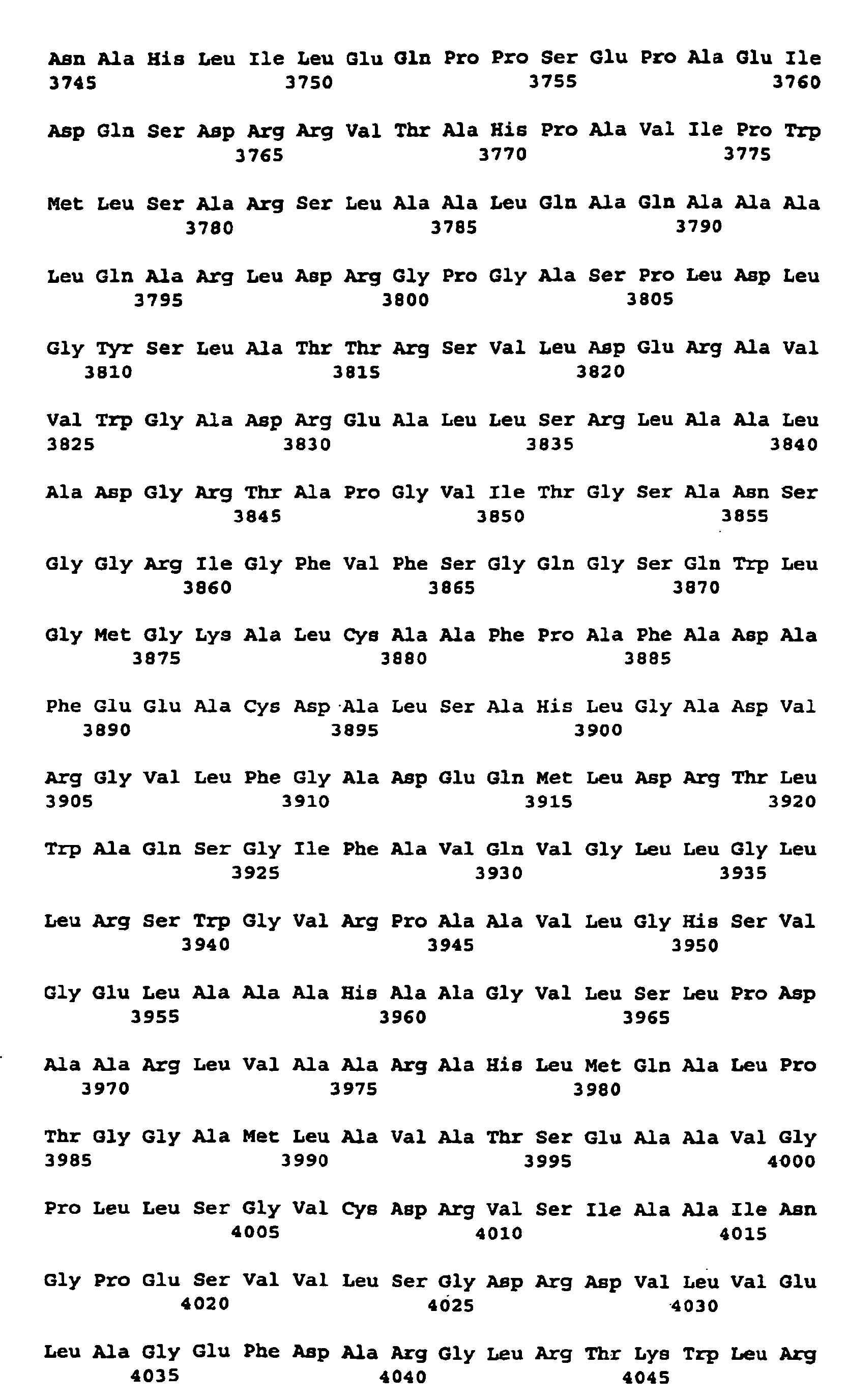


- <210> 6
<211> 5588
<212> PRT
<213> Saccharopolyspora spinosa - <400> 6


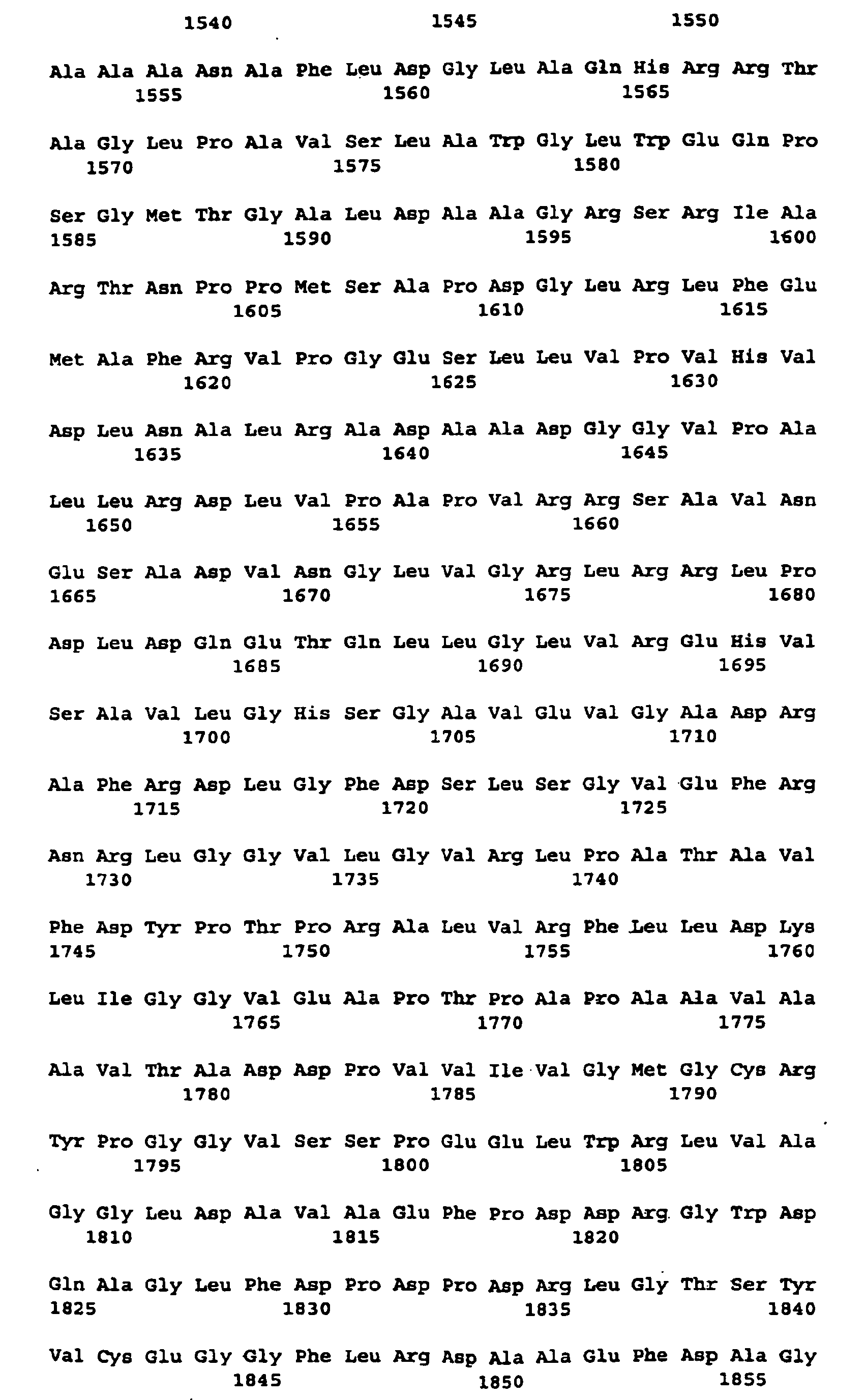


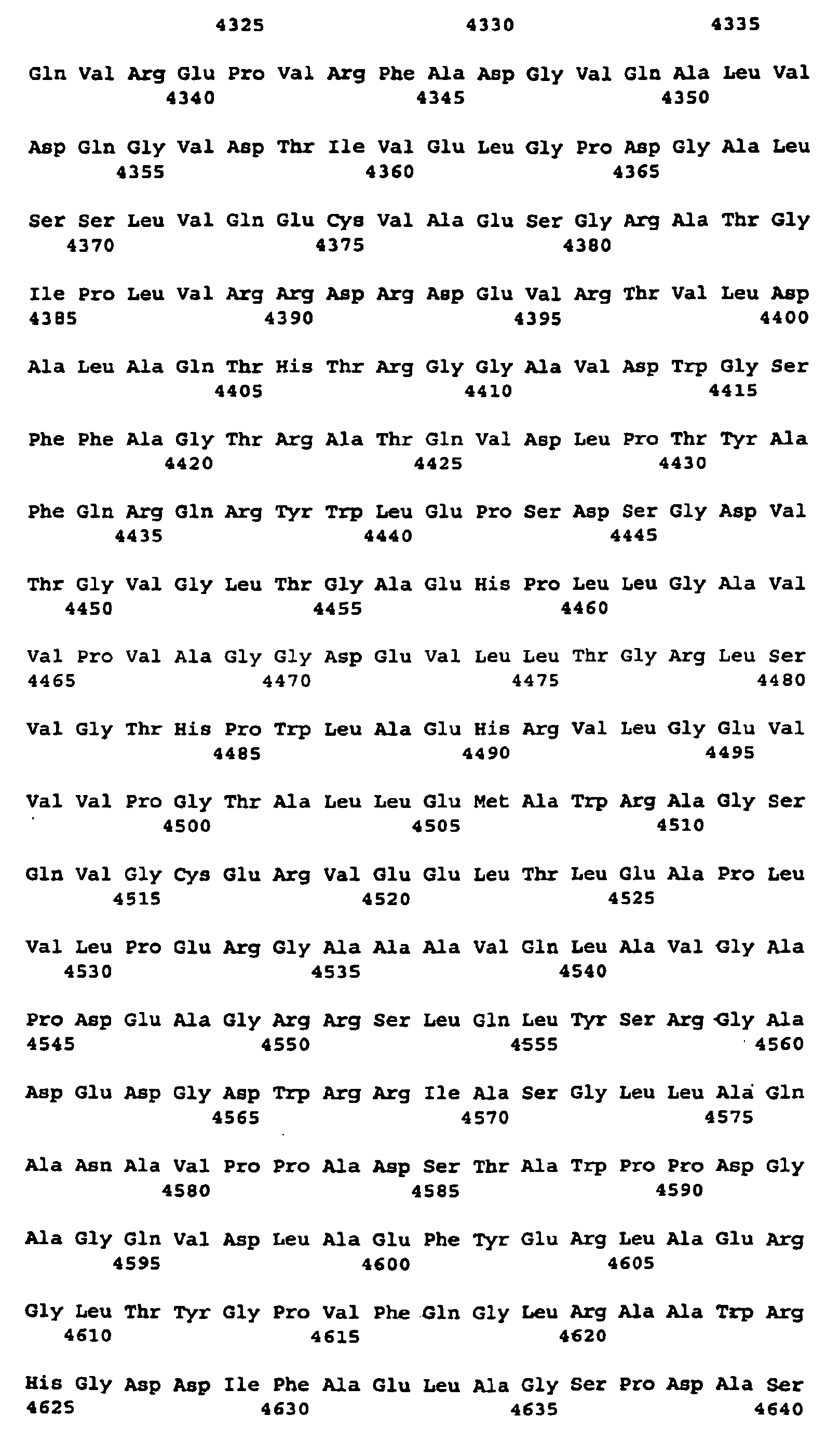

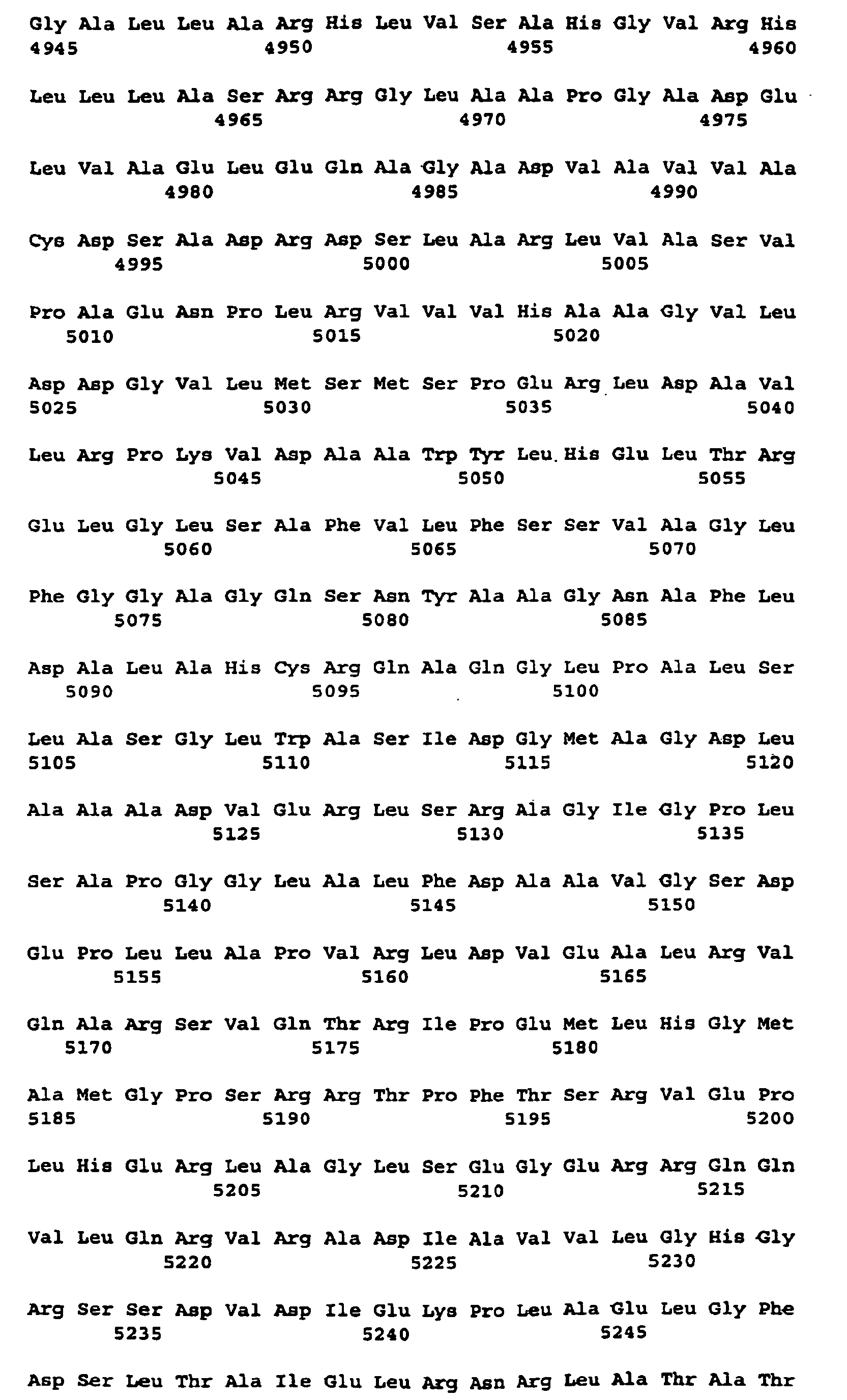


- <210> 7
<211> 275
<212> PRT
<213> Saccharopolyspora spinosa - <400> 7


- <210> 8
<211> 390
<212> PRT
<213> Saccharopolyspora spinosa - <400> 8


- <210> 9
<211> 250
<212> PRT
<213> Saccharopolyspora spinosa - <400> 9


- <210> 10
<211> 395
<212> PRT
<213> Saccharopolyspora spinosa - <400> 10


- <210> 11
<211> 539
<212> PRT
<213> Saccharopolyspora spinosa - <400> 11


- <210> 12
<211> 397
<212> PRT
<213> Saccharopolyspora spinosa - <400> 12


- <210> 13
<211> 283
<212> PRT
<213> Saccharopolyspora spinosa - <400> 13


- <210> 14
<211> 320
<212> PRT
<213> Saccharopolyspora spinosa - <400> 14


- <210> 15
<211> 332
<212> PRT
<213> Saccharopolyspora spinosa - <400> 15


- <210> 16
<211> 486
<212> PRT
<213> Saccharopolyspora spinosa - <400> 16


- <210> 17
<211> 455
<212> PRT
<213> Saccharopolyspora spinosa - <400> 17


- <210> 18
<211> 462
<212> PRT
<213> Saccharopolyspora spinosa - <400> 18


- <210> 19
<211> 385
<212> PRT
<213> Saccharopolyspora spinosa - <400> 19


- <210> 20
<211> 249
<212> PRT
<213> Saccharopolyspora spinosa - <400> 20

- <210> 21
<211> 255
<212> PRT
<213> Saccharopolyspora spinosa - <400> 21

- <210> 22
<211> 278
<212> PRT
<213> Saccharopolyspora spinosa - <400> 22

- <210> 23
<211> 198
<212> PRT
<213> Saccharopolyspora spinosa - <400> 23

- <210> 24
<211> 751
<212> PRT
<213> Saccharopolyspora spinosa - <400> 24


- <210> 25
<211> 2310
<212> DNA
<213> Saccharopolyspora spinosa - <220>
<221> CDS
<222> (88)..(1077) - <220>
<221> CDS
<222> (1165)..(1992) - <400> 25


- <210> 26
<211> 329
<212> PRT
<213> Saccharopolyspora spinosa - <400> 26


- <210> 27
<211> 275
<212> PRT
<213> Saccharopolyspora spinosa - <400> 27


- <210> 28
<211> 1272
<212> DNA
<213> Saccharopolyspora spinosa - <220>
<221> CDS
<222> (334)..(1119) - <400> 28
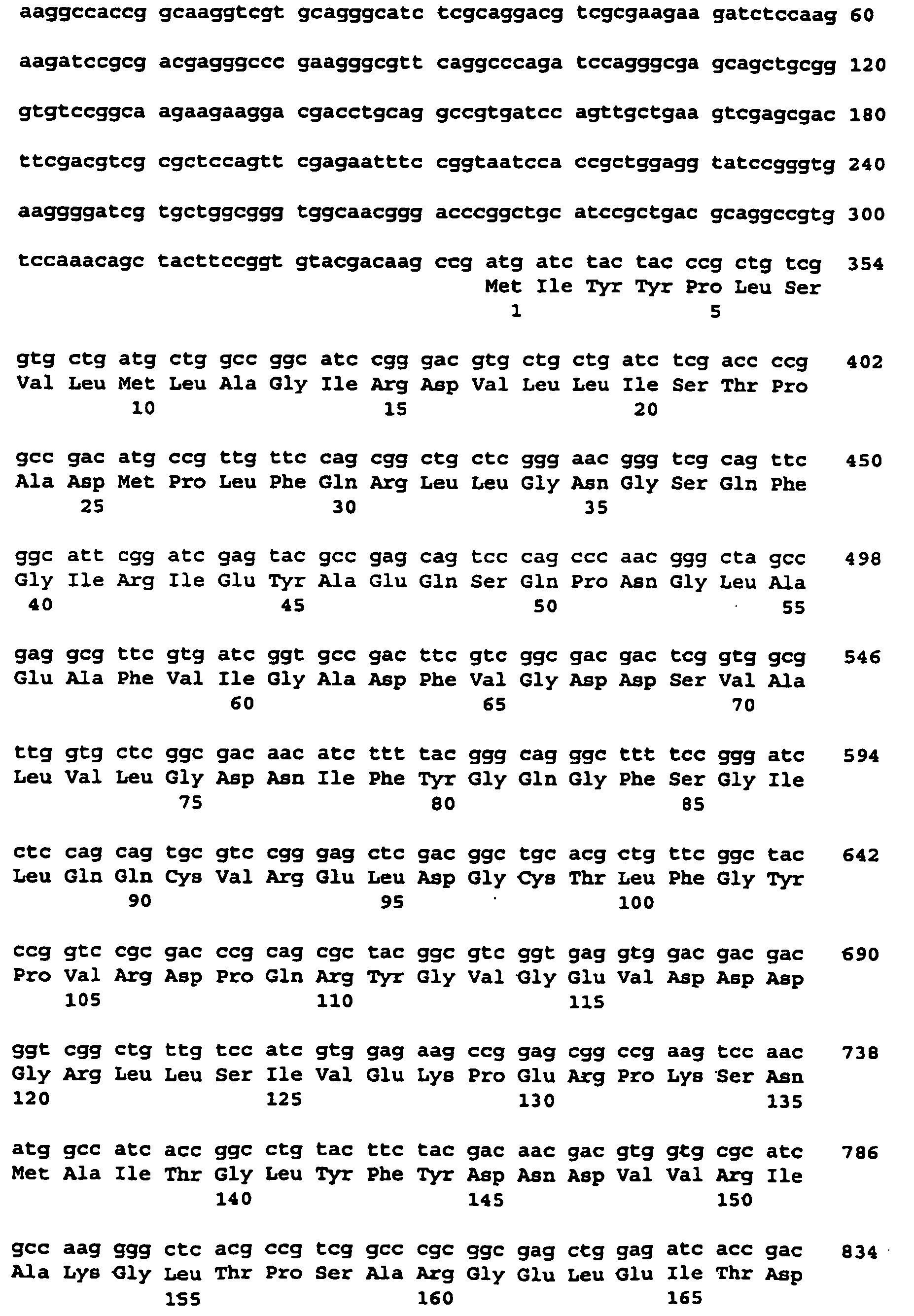

- <210> 29
<211> 261
<212> PRT
<213> Saccharopolyspora spinosa - <400> 29


- <210> 30
<211> 23
<212> DNA
<213> Artificial Sequence - <220>
<223> Description of Artificial Sequence: primer - <220>
<221> unsure
<222> (1)
<223> n is a, t, c, or g - <220>
<221> unsure
<222> (10)
<223> n is a, t, c, or g - <400> 30
ngsgtsggsn ssccaccttc cgg 23 - <210> 31
<211> 33
<212> DNA
<213> Artificial Sequence - <220>
<223> Description of Artificial Sequence: primer - <220>
<221> unsure
<222> (6)
<223> n is a, t, c, or g - <220>
<221> unsure
<222> (18)
<223> n is a, t, c, or g - <400> 31
catsangtcg tcytcsansg csacgaacgc gtg 33 - <210> 32
<211> 1165
<212> DNA
<213> Artificial Sequence - <220>
<221> CDS
<222> (226)..(834) - <220>
<223> Description of Artificial Sequence:pDAB1622 - <400> 32


- <210> 33
<211> 202
<212> PRT
<213> Artificial Sequence - <400> 33

- <210> 34
<211> 28
<212> DNA
<213> Artificial Sequence - <220>
<223> Description of Artificial Sequence:primer - <400> 34
cccgaattcg agctgctgtc aatcaact 28 - <210> 35
<211> 29
<212> DNA
<213> Artificial Sequence - <220>
<223> Description of Artificial Sequence:primer - <400> 35
gggaagcttg ttgaccgtgg cggtttcct 29 - <210> 36
<211> 42
<212> DNA
<213> Artificial Sequence - <220>
<223> Description of Artificial Sequence:mutagenic primer - <400> 36
ctggttcatt cggccgcctc accggtgggg atggccgcga tc 42 - <210> 37
<211> 42
<212> DNA
<213> Artificial Sequence - <220>
<223> Description of Artificial Sequence:mutagenic primer - <400> 37
gatcgcggcc atccccaccg gtgaggcggc cgaatgaacc ag 42 - <210> 38
<211> 20
<212> DNA
<213> Artificial Sequence - <220>
<223> Description of Artificial Sequence:flanking primer - <400> 38
gctgctcgaa atcgcacgtc 20 - <210> 39
<211> 19
<212> DNA
<213> Artificail Sequence - <220>
<223> Description of Artificial Sequence:flanking primer - <400> 39
gcatcgctgg gcagtgagg 19
Claims (26)
- An isolated DNA molecule consisting of a DNA sequence that encodes a spinosyn biosynthetic enzyme, wherein said enzyme is defined by an amino acid sequence selected from the group consisting of SEQ ID NOS 2-6, 7-24, 26, 27, 29, 33, or said enzyme is defined by an amino acid selected from SEQ ID NOS 2-6, 7-24, 26, 27, 29, 33 in which one or more amino acid substitutions have been made that do not affect the functional properties of the enzyme.
- An isolated DNA molecule of claim 1 wherein said DNA sequence is selected from the group of genes consisting of spnA, spnB, spnC, spnD, spnE, spnF, spnG, spnH, spnI, spnJ, spnK, spnL, spnM, spnN, spnO, spnP, spnQ, spnR, spnS, ORFL15, ORFL16, ORFR1, ORFR2. S. spinosa gtt, S. spinosa gdh, S. spinosa epi, and S. spinosa kre, said genes being described by bases 21111-28898, 28916-35374, 35419-449931, 44966-59752, 59803-76569, 20168-20995, 18541-19713, 17749-18501, 16556-17743, 14799-16418, 13592-14785, 12696-13547, 11530-12492, 10436-11434, 8967-10427, 7083-8450, 5363-6751, 4168-5325, 3416-4165, 2024-2791, 1135-1971, 76932-77528, and 77729-79984 of SEQ ID NO: 1, bases 334-1119 of SEQ ID NO:28, bases 88-1077 of SEQ ID NO:25, bases 226-834 of SEQ ID NO:3 2, and bases 1165-1992 of SEQ ID NO:25.
- An isolated DNA molecule consisting of a DNA sequence that encodes a spinosyn polyketide synthase domain, where said domain is selected from KSi, ATi, ACPi, KS1, AT1, KR1 and ACP1, corresponding, respectively, to amino acid sequences 6-423, 528-853, 895-977, 998-1413, 1525-1858, 2158-2337, and 2432-2513 of SEQ ID NO:2, or said domain is one of said amino acid sequences in which one or more amino acid substitutions have been made that do not affect the functional properties of the domain.
- An isolated DNA molecule of claim 3, wherein said DNA sequence is selected from the group consisting of bases 21126-22379, 22692-23669, 23793-24041, 24102-25349, 25683-26684, 27582-28121, and 28404-28649 of SEQ ID NO: 1.
- An isolated DNA molecule consisting of a DNA sequence that encodes a spinosyn polyketide synthase domain, where said domain is selected from KS2, AT2, DH2, ER2, KR2, and ACP2, corresponding, respectively, to amino acid sequences 1-424, 536-866, 892-1077, 1338-1683, 1687-1866, and 1955-2034 of SEQ ID NO:3, or said domain is one of said amino acid sequences in which one or more amino acid substitutions have been made that do not affect the functional properties of the domain.
- An isolated DNA molecule of claim 5, wherein said DNA sequence is selected from the group consisting of bases 29024-30295, 30629-31621, 31697-32254, 33035-34072, 34082-34621, 34886-35125 of SEQ ID NO: 1.
- An isolated DNA molecule consisting of a DNA sequence that encodes a spinosyn polyketide synthase domain, where said domain is selected from KS3, AT3, KR3, ACP3, KS4, AT4, KR4, and ACP4, corresponding, respectively, to amino acid sequences 1-423, 531-860, 1159-1337, 1425-1506, 1529-1952, 2066-2396, 2700-2880, and 2972-3053 of SEQ ID NO: 4, or said domain is one of said amino acid sequences in which one or more amino acid substitutions have been made that do not affect the functional properties of the domain.
- An isolated DNA molecule of claim 7, wherein said DNA sequence is selected from the group consisting of bases 35518-36786, 37108-38097, 38992-39528, 39790-40035, 40102-41373, 41713-42705, 43615-44157, and 44431-44676 of SEQ ID NO:1.
- An isolated DNA molecule consisting of a DNA sequence that encodes a spinosyn polyketide synthase domain, where said domain is selected from KS5, AT5, DH5, KR5, ACP5, KS6, AT6, KR6. ACP6, KS7, AT7, KR7, and ACP7, corresponding, respectively to amino acid sequences 1-424, 539-866, 893-1078, 1384-1565, 1645-1726, 1748-2172, 2283-2613, 2916-3095, 3188-3269, 3291-3713, 3825-4153, 4344-4638, and 4725-4806 of SEQ ID NO: 5, or said domain is one of said amino acid sequences in which one or more amino acid substitutions have been made that do not affect the functional properties of the domain.
- An isolated DNA molecule of claim 9, wherein said DNA sequence is selected from the group consisting of bases 45077-46348, 46691-47674, 47753-483 1 0, 49226-49771 50009-50254, 50318-51592, 51923-52915 53822-54361, 54638-54883, 54947-56215, 56549-57535, 58106-58990, and 59249-59494 of SEQ ID NO: 1.
- An isolated DNA molecule consisting of a DNA sequence that encodes a spinosyn PKS domain, where said domain is selected from KS8, AT8, DH8, KR8, ACP8, KS9, AT9, DH9, KR9, ACP9,KS10, AT10, DH10, KR10, ACP10, and TE10, corresponding, respectively, to amino acid sequences 1-424, 530-848, 883-1070, 1369-1552, 1648-1726, 1749-2173, 2287-2614, 2640-2800, 3157-3341, 3422-3500, 3534-3948, 4060-4390, 4413-4597, 4900-5078, 5172-5253, and 5302-5555 of SEQ ID NO:6, or said domain is one of said amino acid sequences in which one or more amino acid substitutions have been made that do not affect the functional properties of the domain.
- An isolated DNA molecule of claim 11, wherein said DNA sequence is selected from the group consisting of bases 59902-61173, 61489-62445, 62548-63111, 64006-64557, 64843-65079, 65146-66420, 66760-67743, 67819-68301, 69370-69924, 70165-70401, 70471-71745, 72079-73071, 73138-73692, 74599-75135, 75415-75660, and 75805-76566 of SEQ ID NO:1.
- An isolated DNA molecule consisting of a DNA sequence that encodes a spinosyn PKS module, where said module is selected from the group consisting of amino acid sequences 6-1413 of SEQ ID NO:2, 1525-2513 of SEQ ID NO:2, 1-2034 of SEQ ID
NO:3, 1-1506 of SEQ ID NO:4, 1529-3053 of SEQ ID NO:4, 1-1726 of SEQ ID NO:5, 1748-3269 of SEQ ID NO:5, 3291-4806 of SEQ ID NO:5, 1 - 1726 of SEQ ID NO:6, 1749-3500 of SEQ ID NO:6, and 3524-5555 of SEQ ID NO:6, or said module is one of the said amino acid sequences in which one or more amino acid substitutions have been made that do not affect the functional properties of the module. - An isolated DNA molecule of claim 13, wherein said DNA sequence is selected from the group consisting of bases 21126-24041, 24102-28649, 29024-35125, 35518-40035, 40102-44676, 45077-50254, 50318-54883, 54947-59494, 59902-65079, 65146-70401, and 70471-76566 of SEQ ID NO:1.
- A recombinant DNA vector which comprises a DNA sequence as defined in claim 1.
- A host cell transformed with a recombinant vector as claimed in claim 15.
- A method of producing spinosyn comprising the steps of:1) transforming with a recombinant DNA vector or portion thereof a micro-organism that produces spinosyn or a spinosyn precursor by means of a biosynthetic pathway, said vector or portion thereof comprising a DNA sequence of claim 1 that codes for the expression of an activity that is rate limiting in said pathway, and2) culturing said microorganism transformed with said vector under conditions suitable for cell growth and division, expression of said DNA sequence, and production of spinosyn.
- A method of claim 17 wherein step 1) comprises transforming said microorganism with a vector or portion thereof comprising a DNA sequence that codes for S. spinosa gtt and S. spinosa gdh, corresponding to SEQ ID NOS. 29 and 26, respectively.
- A transformed spinosyn-producing microorganism having spinosyn biosynthetic genes in its genome wherein at least one of the spinosyn biosynthetic genes, selected from spnA, spnB, spnC, spnD, spnE, spnF, spnG, spnH, spnI, spnJ, spnK, spnL, spnM, spnN, spnO, spnP, spnQ, spnR, spnS, S. spinosa gtt, S. spinosa gdh, S. spinosa epi, and S. spinosa Kre, is duplicated, said genes being described by bases 21111-28898, 29816-35374, 35419-44931, 44966-59752, 59803-76569, 20168-20995, 18541-19713, 17749-18501, 16556-17743, 14799-16418, 13592-14785, 12696-13547, 11530-12492, 10436-11434, 8967-10427, 7083-8450, 5363-6751, 4168-5325, 3416-4165, bases 334-1 119 9 of SEQ ID NO. 28, bases 88-1077 of SEQ ID NO. 25, bases 226-834 of SEQ ID NO. 32, and bases 1165-1992 of SEQ ID NO. 25.
- A transformed spinosyn producing microorganism of claim 19 wherein S. spinosa gtt and S. spinosa gdh are duplicated, said genes being described by bases 334-1119 of SEQ ID NO. 28 and bases 88-1077 of SEQ ID NO. 25, respectively.
- A process for producing a spinosyn compound which comprises culturing a transformed spinosyn-producing microorganism of claim 20.
- A transformed spinosyn producing microorganism of claim 19 wherein S. spinosa gtt, S. spinosa gdh, and S. spinosa kre are duplicated, said genes being described by bases 334-1119 of SEQ ID NO. 28, bases 88-1077 of SEQ ID NO. 25, and bases 1165-1992 of SEQ ID NO: 25 respectively.
- A process for producing a spinsyn compound which comprises cultivating a transformed spinosyn-producing microorganism of claim 22.
- A process for producing a spinosyn compound which comprises cultivating a transformed spinosyn-producing microorganism of claim 19.
- A process for isolating a macrolide biosynthetic gene which comprises creating a genomic library of a macrolide producing microorganism, and using a labeled fragment of SEQ ID NO.1, SEQ ID NO. 25, SEQ ID NO. 28, or SEQ ID NO. 32 that is at least 20 bases long as a hybridization probe.
- A process of claim 25 wherein the microorganism is a spinosyn producing micro-organism.
Applications Claiming Priority (3)
| Application Number | Priority Date | Filing Date | Title |
|---|---|---|---|
| US36987 | 1998-03-09 | ||
| US09/036,987 US6143526A (en) | 1998-03-09 | 1998-03-09 | Biosynthetic genes for spinosyn insecticide production |
| PCT/US1999/003212 WO1999046387A1 (en) | 1998-03-09 | 1999-02-16 | Biosynthetic genes for spinosyn insecticide production |
Publications (2)
| Publication Number | Publication Date |
|---|---|
| EP1062345A1 EP1062345A1 (en) | 2000-12-27 |
| EP1062345B1 true EP1062345B1 (en) | 2007-12-12 |
Family
ID=21891822
Family Applications (1)
| Application Number | Title | Priority Date | Filing Date |
|---|---|---|---|
| EP99907034A Expired - Lifetime EP1062345B1 (en) | 1998-03-09 | 1999-02-16 | Biosynthetic genes for spinosyn insecticide production |
Country Status (18)
| Country | Link |
|---|---|
| US (4) | US6143526A (en) |
| EP (1) | EP1062345B1 (en) |
| JP (1) | JP2002505881A (en) |
| KR (1) | KR100588436B1 (en) |
| CN (1) | CN1227362C (en) |
| AR (1) | AR014687A1 (en) |
| AT (1) | ATE380872T1 (en) |
| AU (1) | AU764737B2 (en) |
| BR (1) | BR9909257B1 (en) |
| CA (1) | CA2322449C (en) |
| DE (1) | DE69937732T2 (en) |
| ES (1) | ES2299240T3 (en) |
| ID (1) | ID26862A (en) |
| IL (2) | IL138241A0 (en) |
| NZ (1) | NZ506624A (en) |
| TW (1) | TWI237058B (en) |
| WO (1) | WO1999046387A1 (en) |
| ZA (1) | ZA991837B (en) |
Families Citing this family (36)
| Publication number | Priority date | Publication date | Assignee | Title |
|---|---|---|---|---|
| US6143526A (en) * | 1998-03-09 | 2000-11-07 | Baltz; Richard H. | Biosynthetic genes for spinosyn insecticide production |
| US7285653B1 (en) | 1999-08-27 | 2007-10-23 | Bayer Aktiengesellschaft | Nucleic acids which code for the enzyme activities of the spinosyn biosynthesis |
| AR033022A1 (en) | 2001-03-30 | 2003-12-03 | Dow Agrosciences Llc | BIOSYNTHETIC GENES FOR THE PRODUCTION OF BUTENYLESPINOSINE INSECTICIDE |
| IL160169A0 (en) * | 2001-08-06 | 2004-07-25 | Cubist Pharm Inc | Nucleic acid molecules that encode a daptomycin non-ribosomal peptide synthetase and methods for the production thereof |
| JP4765032B2 (en) * | 2002-02-19 | 2011-09-07 | ダウ・アグロサイエンス・エル・エル・シー | Polyketide synthase producing a novel spinosyn |
| EP1477563A3 (en) * | 2003-05-16 | 2004-11-24 | Wyeth | Cloning genes from streptomyces cyaneogriseus subsp.noncyanogenus for biosynthesis of antibiotics and methods of use |
| GB0327721D0 (en) * | 2003-11-28 | 2003-12-31 | Biotica Tech Ltd | Polyketides and their synthesis |
| US8470381B2 (en) * | 2008-09-22 | 2013-06-25 | Christine Kritikou | Spinosyn antifouling compositions, methods of use thereof and articles protected from attachment of biofouling organisms |
| TW201041510A (en) | 2009-04-30 | 2010-12-01 | Dow Agrosciences Llc | Pesticide compositions exhibiting enhanced activity |
| TW201041507A (en) * | 2009-04-30 | 2010-12-01 | Dow Agrosciences Llc | Pesticide compositions exhibiting enhanced activity and methods for preparing same |
| TW201041509A (en) | 2009-04-30 | 2010-12-01 | Dow Agrosciences Llc | Pesticide compositions exhibiting enhanced activity |
| TW201041508A (en) | 2009-04-30 | 2010-12-01 | Dow Agrosciences Llc | Pesticide compositions exhibiting enhanced activity |
| EP2445506B1 (en) | 2009-06-24 | 2014-12-31 | Entarco SA | The use of spinosyns and spinosyn compositions against diseases caused by protozoans, viral infections and cancer |
| CN102191208A (en) * | 2010-03-17 | 2011-09-21 | 上海医药工业研究院 | Gene engineering bacteria capable of highly producing pleocidin and preparation method thereof |
| KR20130080007A (en) | 2010-05-11 | 2013-07-11 | 다우 아그로사이언시즈 엘엘씨 | Spnk strains |
| EP2654757A1 (en) | 2010-12-22 | 2013-10-30 | Entarco SA | The use of spinosyns and spinosyn compositions as local anesthetics and as antiarrhythmic agents |
| AU2012211052A1 (en) | 2011-01-28 | 2013-09-05 | Amyris, Inc. | Gel-encapsulated microcolony screening |
| HUE034838T2 (en) | 2011-05-03 | 2018-03-28 | Dow Agrosciences Llc | Integration of genes into the chromosome of saccharopolyspora spinosa |
| US8741603B2 (en) * | 2011-05-03 | 2014-06-03 | Agrigenetics Inc. | Enhancing spinosyn production with oxygen binding proteins |
| US9404107B2 (en) | 2011-05-03 | 2016-08-02 | Dow Agrosciences Llc | Integration of genes into the chromosome of Saccharopolyspora spinosa |
| BR112013027954A2 (en) | 2011-05-13 | 2017-01-17 | Amyris Inc | methods and compositions for detecting microbial production of water immiscible compounds |
| US9334306B2 (en) * | 2011-07-09 | 2016-05-10 | The Regents Of The University Of California | Leukemia stem cell targeting ligands and methods of use |
| US9631195B2 (en) * | 2011-12-28 | 2017-04-25 | Dow Agrosciences Llc | Identification and characterization of the spinactin biosysnthesis gene cluster from spinosyn producing saccharopolyspora spinosa |
| WO2014025941A1 (en) | 2012-08-07 | 2014-02-13 | Jiang Hanxiao | Methods for stabilizing production of acetyl-coenzyme a derived compounds |
| CN105189772B (en) | 2013-03-15 | 2019-09-13 | 阿迈瑞斯公司 | Use of phosphoketolase and phosphotransacetylase to produce acetyl-CoA derivative compounds |
| AU2013397496B2 (en) | 2013-08-07 | 2020-03-12 | Amyris, Inc. | Methods for stabilizing production of acetyl-coenzyme a derived compounds |
| CN103740631B (en) * | 2013-12-31 | 2015-09-30 | 天津大学 | The genetic engineering bacterium of pleocidin output and construction process and application can be improved |
| WO2016074221A1 (en) * | 2014-11-14 | 2016-05-19 | 浙江海正药业股份有限公司 | Spinosad heterologous expression strain and construction method thereof and use |
| WO2016210350A1 (en) | 2015-06-25 | 2016-12-29 | Amyris, Inc. | Maltose dependent degrons, maltose-responsive promoters, stabilization constructs, and their use in production of non-catabolic compounds |
| JP2018531912A (en) | 2015-09-03 | 2018-11-01 | アグリメティス,エルエルシー | Spinosyn derivatives as insecticides |
| US10570165B2 (en) | 2017-01-13 | 2020-02-25 | Agrimetis, Llc | Aziridine spinosyn derivatives and methods of making |
| EP3635111A1 (en) * | 2017-06-06 | 2020-04-15 | Zymergen, Inc. | High throughput transposon mutagenesis |
| CN109096366B (en) * | 2017-06-21 | 2021-09-10 | 中南大学 | RGD cyclopeptide coupled lipophilic cation spinosad derivative and preparation method and application thereof |
| CN116334021B (en) * | 2023-03-30 | 2026-02-03 | 上海交通大学 | Spinosad acylase mutant and application thereof |
| WO2025003522A1 (en) * | 2023-06-30 | 2025-01-02 | Acies Bio D.O.O | Genetically modified organism and method for spinosyn production |
| CN118420725A (en) * | 2024-05-07 | 2024-08-02 | 武汉大学 | Application of ORF-L16 gene in regulating the synthesis of spinosad |
Family Cites Families (18)
| Publication number | Priority date | Publication date | Assignee | Title |
|---|---|---|---|---|
| US4935340A (en) * | 1985-06-07 | 1990-06-19 | Eli Lilly And Company | Method of isolating antibiotic biosynthetic genes |
| EP0262154A1 (en) * | 1985-12-17 | 1988-04-06 | Lubrizol Genetics Inc. | Isolation of genes for biosynthesis of polyketide antibiotics |
| US5672497A (en) * | 1986-03-21 | 1997-09-30 | Eli Lilly And Company | Method for increasing the antibiotic-producing ability of antibiotic-producing microorganisms |
| US4874748A (en) * | 1986-03-24 | 1989-10-17 | Abbott Laboratories | Cloning vectors for streptomyces and use thereof in macrolide antibiotic production |
| US5149638A (en) * | 1988-09-29 | 1992-09-22 | Eli Lilly And Company | Tylosin biosynthetic genes tylA, tylB and tylI |
| US5362634A (en) * | 1989-10-30 | 1994-11-08 | Dowelanco | Process for producing A83543 compounds |
| US5252474A (en) * | 1989-03-31 | 1993-10-12 | Merck & Co., Inc. | Cloning genes from Streptomyces avermitilis for avermectin biosynthesis and the methods for their use |
| WO1993013663A1 (en) * | 1992-01-17 | 1993-07-22 | Abbott Laboratories | Method of directing biosynthesis of specific polyketides |
| WO1993006219A1 (en) | 1991-09-18 | 1993-04-01 | Hoechst Aktiengesellschaft | Secondary-metabolite biosynthesis genes from actinomycetes, method of isolating them, and their use |
| US5591606A (en) * | 1992-11-06 | 1997-01-07 | Dowelanco | Process for the production of A83543 compounds with Saccharopolyspora spinosa |
| ES2164713T3 (en) * | 1993-09-20 | 2002-03-01 | Univ Leland Stanford Junior | RECOMBINANT PRODUCTION OF NEW POLYCHETIDES. |
| US5672491A (en) * | 1993-09-20 | 1997-09-30 | The Leland Stanford Junior University | Recombinant production of novel polyketides |
| US5712146A (en) * | 1993-09-20 | 1998-01-27 | The Leland Stanford Junior University | Recombinant combinatorial genetic library for the production of novel polyketides |
| CA2197524A1 (en) * | 1996-02-22 | 1997-08-22 | Bradley Stuart Dehoff | Polyketide synthase genes |
| US6143526A (en) * | 1998-03-09 | 2000-11-07 | Baltz; Richard H. | Biosynthetic genes for spinosyn insecticide production |
| US7285653B1 (en) * | 1999-08-27 | 2007-10-23 | Bayer Aktiengesellschaft | Nucleic acids which code for the enzyme activities of the spinosyn biosynthesis |
| DE19957268A1 (en) * | 1999-08-27 | 2001-03-08 | Bayer Ag | Nucleic acids that encode enzyme activities of spinosyn biosynthesis |
| AR033022A1 (en) * | 2001-03-30 | 2003-12-03 | Dow Agrosciences Llc | BIOSYNTHETIC GENES FOR THE PRODUCTION OF BUTENYLESPINOSINE INSECTICIDE |
-
1998
- 1998-03-09 US US09/036,987 patent/US6143526A/en not_active Expired - Lifetime
-
1999
- 1999-02-16 IL IL13824199A patent/IL138241A0/en active IP Right Grant
- 1999-02-16 AU AU26800/99A patent/AU764737B2/en not_active Expired
- 1999-02-16 CN CNB998051462A patent/CN1227362C/en not_active Expired - Lifetime
- 1999-02-16 CA CA2322449A patent/CA2322449C/en not_active Expired - Lifetime
- 1999-02-16 EP EP99907034A patent/EP1062345B1/en not_active Expired - Lifetime
- 1999-02-16 KR KR1020007009988A patent/KR100588436B1/en not_active Expired - Lifetime
- 1999-02-16 NZ NZ506624A patent/NZ506624A/en not_active IP Right Cessation
- 1999-02-16 ID IDW20001725A patent/ID26862A/en unknown
- 1999-02-16 BR BRPI9909257-3A patent/BR9909257B1/en not_active IP Right Cessation
- 1999-02-16 WO PCT/US1999/003212 patent/WO1999046387A1/en not_active Ceased
- 1999-02-16 AT AT99907034T patent/ATE380872T1/en not_active IP Right Cessation
- 1999-02-16 DE DE69937732T patent/DE69937732T2/en not_active Expired - Lifetime
- 1999-02-16 ES ES99907034T patent/ES2299240T3/en not_active Expired - Lifetime
- 1999-02-16 JP JP2000535754A patent/JP2002505881A/en active Pending
- 1999-03-08 TW TW088103537A patent/TWI237058B/en not_active IP Right Cessation
- 1999-03-08 ZA ZA9901837A patent/ZA991837B/en unknown
- 1999-03-08 AR ARP990100978A patent/AR014687A1/en active IP Right Grant
- 1999-08-09 US US09/370,700 patent/US6274350B1/en not_active Expired - Lifetime
-
2000
- 2000-06-23 US US09/603,207 patent/US6521406B1/en not_active Expired - Lifetime
- 2000-09-04 IL IL138241A patent/IL138241A/en not_active IP Right Cessation
-
2002
- 2002-12-23 US US10/329,148 patent/US7015001B2/en not_active Expired - Lifetime
Also Published As
| Publication number | Publication date |
|---|---|
| ATE380872T1 (en) | 2007-12-15 |
| IL138241A0 (en) | 2001-10-31 |
| US20040023343A1 (en) | 2004-02-05 |
| EP1062345A1 (en) | 2000-12-27 |
| DE69937732T2 (en) | 2008-12-04 |
| AU2680099A (en) | 1999-09-27 |
| CN1298447A (en) | 2001-06-06 |
| DE69937732D1 (en) | 2008-01-24 |
| CA2322449A1 (en) | 1999-09-16 |
| ID26862A (en) | 2001-02-15 |
| ZA991837B (en) | 2000-09-08 |
| US7015001B2 (en) | 2006-03-21 |
| CA2322449C (en) | 2013-01-15 |
| BR9909257A (en) | 2000-11-28 |
| WO1999046387A1 (en) | 1999-09-16 |
| US6143526A (en) | 2000-11-07 |
| TWI237058B (en) | 2005-08-01 |
| NZ506624A (en) | 2003-08-29 |
| JP2002505881A (en) | 2002-02-26 |
| BR9909257B1 (en) | 2014-01-14 |
| CN1227362C (en) | 2005-11-16 |
| AR014687A1 (en) | 2001-03-28 |
| AU764737B2 (en) | 2003-08-28 |
| IL138241A (en) | 2007-09-20 |
| US6274350B1 (en) | 2001-08-14 |
| US6521406B1 (en) | 2003-02-18 |
| KR100588436B1 (en) | 2006-06-13 |
| WO1999046387A9 (en) | 2001-10-04 |
| KR20010041750A (en) | 2001-05-25 |
| ES2299240T3 (en) | 2008-05-16 |
Similar Documents
| Publication | Publication Date | Title |
|---|---|---|
| US7015001B2 (en) | DNA encoding SPNF of the spinosyn cluster | |
| AU758421B2 (en) | Recombinant oleandolide polyketide synthase | |
| EP2271666B1 (en) | Nrps-pks gene cluster and its manipulation and utility | |
| EP2182067A2 (en) | Hybrid polyketide synthases | |
| HUP0102945A2 (en) | Polyketides and their synthesis | |
| CA2405958C (en) | Hybrid glycosylated products and their production and use | |
| JP2008278895A (en) | Biosynthetic gene for producing butenyl-spinosyn insecticide | |
| CA2463167A1 (en) | Production, detection and use of transformant cells | |
| US6960453B1 (en) | Hybrid polyketide synthases combining heterologous loading and extender modules | |
| AU2008201937B2 (en) | Biosynthetic genes for butenyl-spinosyn insecticide production | |
| WO2001068867A1 (en) | Polyketides and their synthesis | |
| AU2002305118A1 (en) | Biosynthetic genes for butenyl-spinosyn insecticide production | |
| MXPA00008811A (en) | Biosynthetic genes for spinosyn insecticide production | |
| FR2766496A1 (en) | New nucleic acid sequences encoding enzymes involved in macrolide biosynthesis |
Legal Events
| Date | Code | Title | Description |
|---|---|---|---|
| PUAI | Public reference made under article 153(3) epc to a published international application that has entered the european phase |
Free format text: ORIGINAL CODE: 0009012 |
|
| 17P | Request for examination filed |
Effective date: 20000916 |
|
| AK | Designated contracting states |
Kind code of ref document: A1 Designated state(s): AT BE CH DE DK ES FR GB GR IE IT LI LU NL PT SE |
|
| 17Q | First examination report despatched |
Effective date: 20030805 |
|
| GRAP | Despatch of communication of intention to grant a patent |
Free format text: ORIGINAL CODE: EPIDOSNIGR1 |
|
| GRAS | Grant fee paid |
Free format text: ORIGINAL CODE: EPIDOSNIGR3 |
|
| GRAA | (expected) grant |
Free format text: ORIGINAL CODE: 0009210 |
|
| AK | Designated contracting states |
Kind code of ref document: B1 Designated state(s): AT BE CH DE DK ES FR GB GR IE IT LI LU NL PT SE |
|
| REG | Reference to a national code |
Ref country code: GB Ref legal event code: FG4D |
|
| REG | Reference to a national code |
Ref country code: CH Ref legal event code: EP |
|
| REG | Reference to a national code |
Ref country code: IE Ref legal event code: FG4D |
|
| REF | Corresponds to: |
Ref document number: 69937732 Country of ref document: DE Date of ref document: 20080124 Kind code of ref document: P |
|
| PG25 | Lapsed in a contracting state [announced via postgrant information from national office to epo] |
Ref country code: SE Free format text: LAPSE BECAUSE OF FAILURE TO SUBMIT A TRANSLATION OF THE DESCRIPTION OR TO PAY THE FEE WITHIN THE PRESCRIBED TIME-LIMIT Effective date: 20080312 Ref country code: LI Free format text: LAPSE BECAUSE OF FAILURE TO SUBMIT A TRANSLATION OF THE DESCRIPTION OR TO PAY THE FEE WITHIN THE PRESCRIBED TIME-LIMIT Effective date: 20071212 Ref country code: CH Free format text: LAPSE BECAUSE OF FAILURE TO SUBMIT A TRANSLATION OF THE DESCRIPTION OR TO PAY THE FEE WITHIN THE PRESCRIBED TIME-LIMIT Effective date: 20071212 |
|
| REG | Reference to a national code |
Ref country code: ES Ref legal event code: FG2A Ref document number: 2299240 Country of ref document: ES Kind code of ref document: T3 |
|
| PG25 | Lapsed in a contracting state [announced via postgrant information from national office to epo] |
Ref country code: NL Free format text: LAPSE BECAUSE OF FAILURE TO SUBMIT A TRANSLATION OF THE DESCRIPTION OR TO PAY THE FEE WITHIN THE PRESCRIBED TIME-LIMIT Effective date: 20071212 |
|
| NLV1 | Nl: lapsed or annulled due to failure to fulfill the requirements of art. 29p and 29m of the patents act | ||
| REG | Reference to a national code |
Ref country code: CH Ref legal event code: PL |
|
| PG25 | Lapsed in a contracting state [announced via postgrant information from national office to epo] |
Ref country code: AT Free format text: LAPSE BECAUSE OF FAILURE TO SUBMIT A TRANSLATION OF THE DESCRIPTION OR TO PAY THE FEE WITHIN THE PRESCRIBED TIME-LIMIT Effective date: 20071212 |
|
| ET | Fr: translation filed | ||
| PG25 | Lapsed in a contracting state [announced via postgrant information from national office to epo] |
Ref country code: BE Free format text: LAPSE BECAUSE OF FAILURE TO SUBMIT A TRANSLATION OF THE DESCRIPTION OR TO PAY THE FEE WITHIN THE PRESCRIBED TIME-LIMIT Effective date: 20071212 |
|
| PG25 | Lapsed in a contracting state [announced via postgrant information from national office to epo] |
Ref country code: PT Free format text: LAPSE BECAUSE OF FAILURE TO SUBMIT A TRANSLATION OF THE DESCRIPTION OR TO PAY THE FEE WITHIN THE PRESCRIBED TIME-LIMIT Effective date: 20080512 |
|
| PLBE | No opposition filed within time limit |
Free format text: ORIGINAL CODE: 0009261 |
|
| STAA | Information on the status of an ep patent application or granted ep patent |
Free format text: STATUS: NO OPPOSITION FILED WITHIN TIME LIMIT |
|
| PG25 | Lapsed in a contracting state [announced via postgrant information from national office to epo] |
Ref country code: DK Free format text: LAPSE BECAUSE OF FAILURE TO SUBMIT A TRANSLATION OF THE DESCRIPTION OR TO PAY THE FEE WITHIN THE PRESCRIBED TIME-LIMIT Effective date: 20071212 |
|
| 26N | No opposition filed |
Effective date: 20080915 |
|
| PG25 | Lapsed in a contracting state [announced via postgrant information from national office to epo] |
Ref country code: IE Free format text: LAPSE BECAUSE OF NON-PAYMENT OF DUE FEES Effective date: 20080218 Ref country code: GR Free format text: LAPSE BECAUSE OF FAILURE TO SUBMIT A TRANSLATION OF THE DESCRIPTION OR TO PAY THE FEE WITHIN THE PRESCRIBED TIME-LIMIT Effective date: 20080313 |
|
| PG25 | Lapsed in a contracting state [announced via postgrant information from national office to epo] |
Ref country code: LU Free format text: LAPSE BECAUSE OF NON-PAYMENT OF DUE FEES Effective date: 20080216 |
|
| REG | Reference to a national code |
Ref country code: FR Ref legal event code: PLFP Year of fee payment: 18 |
|
| REG | Reference to a national code |
Ref country code: FR Ref legal event code: PLFP Year of fee payment: 19 |
|
| REG | Reference to a national code |
Ref country code: FR Ref legal event code: PLFP Year of fee payment: 20 |
|
| PGFP | Annual fee paid to national office [announced via postgrant information from national office to epo] |
Ref country code: ES Payment date: 20180301 Year of fee payment: 20 Ref country code: GB Payment date: 20180214 Year of fee payment: 20 Ref country code: DE Payment date: 20180206 Year of fee payment: 20 |
|
| PGFP | Annual fee paid to national office [announced via postgrant information from national office to epo] |
Ref country code: IT Payment date: 20180221 Year of fee payment: 20 Ref country code: FR Payment date: 20180111 Year of fee payment: 20 |
|
| REG | Reference to a national code |
Ref country code: DE Ref legal event code: R071 Ref document number: 69937732 Country of ref document: DE |
|
| REG | Reference to a national code |
Ref country code: GB Ref legal event code: PE20 Expiry date: 20190215 |
|
| PG25 | Lapsed in a contracting state [announced via postgrant information from national office to epo] |
Ref country code: GB Free format text: LAPSE BECAUSE OF EXPIRATION OF PROTECTION Effective date: 20190215 |
|
| REG | Reference to a national code |
Ref country code: ES Ref legal event code: FD2A Effective date: 20220103 |
|
| PG25 | Lapsed in a contracting state [announced via postgrant information from national office to epo] |
Ref country code: ES Free format text: LAPSE BECAUSE OF EXPIRATION OF PROTECTION Effective date: 20190217 |