EP1059780A2 - Methods and apparatus for permitting transactions across firewalls - Google Patents
Methods and apparatus for permitting transactions across firewalls Download PDFInfo
- Publication number
- EP1059780A2 EP1059780A2 EP00304838A EP00304838A EP1059780A2 EP 1059780 A2 EP1059780 A2 EP 1059780A2 EP 00304838 A EP00304838 A EP 00304838A EP 00304838 A EP00304838 A EP 00304838A EP 1059780 A2 EP1059780 A2 EP 1059780A2
- Authority
- EP
- European Patent Office
- Prior art keywords
- firewall
- client
- acknowledgement
- document
- Prior art date
- Legal status (The legal status is an assumption and is not a legal conclusion. Google has not performed a legal analysis and makes no representation as to the accuracy of the status listed.)
- Withdrawn
Links
- 238000000034 method Methods 0.000 title claims abstract description 78
- 238000004891 communication Methods 0.000 claims description 11
- 238000004806 packaging method and process Methods 0.000 claims description 6
- 238000012790 confirmation Methods 0.000 claims description 5
- 230000008569 process Effects 0.000 description 26
- 238000010586 diagram Methods 0.000 description 20
- 238000012546 transfer Methods 0.000 description 3
- 238000011161 development Methods 0.000 description 2
- 238000001914 filtration Methods 0.000 description 2
- 230000007246 mechanism Effects 0.000 description 2
- 238000012545 processing Methods 0.000 description 2
- 241000699670 Mus sp. Species 0.000 description 1
- 230000009286 beneficial effect Effects 0.000 description 1
- 230000005540 biological transmission Effects 0.000 description 1
- 238000013500 data storage Methods 0.000 description 1
- 238000012986 modification Methods 0.000 description 1
- 230000004048 modification Effects 0.000 description 1
- 230000004044 response Effects 0.000 description 1
Images






Classifications
-
- H—ELECTRICITY
- H04—ELECTRIC COMMUNICATION TECHNIQUE
- H04L—TRANSMISSION OF DIGITAL INFORMATION, e.g. TELEGRAPHIC COMMUNICATION
- H04L63/00—Network architectures or network communication protocols for network security
- H04L63/02—Network architectures or network communication protocols for network security for separating internal from external traffic, e.g. firewalls
- H04L63/029—Firewall traversal, e.g. tunnelling or, creating pinholes
-
- H—ELECTRICITY
- H04—ELECTRIC COMMUNICATION TECHNIQUE
- H04L—TRANSMISSION OF DIGITAL INFORMATION, e.g. TELEGRAPHIC COMMUNICATION
- H04L51/00—User-to-user messaging in packet-switching networks, transmitted according to store-and-forward or real-time protocols, e.g. e-mail
-
- H—ELECTRICITY
- H04—ELECTRIC COMMUNICATION TECHNIQUE
- H04L—TRANSMISSION OF DIGITAL INFORMATION, e.g. TELEGRAPHIC COMMUNICATION
- H04L51/00—User-to-user messaging in packet-switching networks, transmitted according to store-and-forward or real-time protocols, e.g. e-mail
- H04L51/21—Monitoring or handling of messages
- H04L51/23—Reliability checks, e.g. acknowledgments or fault reporting
Definitions
- the present invention relates generally to computer software and computer network applications. More particularly, the present invention relates to methods and apparatus for permitting transactions across a firewall via Electronic Mail.
- One standard firewall configuration includes two routers that filter packets and an application gateway.
- One router filters outgoing packets while another router filters incoming packets according to various filtering rules.
- tables store these filtering rules, which may list, for example, those sources and destinations that are acceptable.
- the application gateway operates at the application level. By way of example, an application gateway may be set up to examine the content of each incoming or outgoing e-mail message. In this manner, an added level of security may be added to any network.
- firewall While a firewall is desirable in many instances to provide a high level of security in a given network, such a security feature may create undesirable limitations. For instance, it is common for two or more companies to collaborate in their development efforts. In order to facilitate this joint development, it may desirable to permit employees of one company to access documents maintained by another company. However, it is typically impossible to share documents such as source code where a firewall separates the two networks.
- a firewall could be selectively bypassed to permit source code or other files on one side of a firewall to be accessed by an entity on another side of the firewall.
- An invention is described herein that enables document access across a firewall. This is accomplished via a document access request sent via e-mail. In this manner, documents such as source code files may be sent and received across a firewall.
- a method of accessing a document across a firewall includes obtaining a document access request on the first side of the firewall, where the document access request specifies a document control command and an associated file name.
- the document access request is then packaged in at least one client e-mail.
- the client e-mail is then sent across the firewall to the second side of the firewall.
- One or more acknowledgement e-mails are then received across the firewall from the second side of the firewall, where the acknowledgement e-mails specify a status of the executed document control command.
- a method of providing access to a document across a firewall includes receiving a client e-mail across the firewall from the first side of the firewall, where the client e-mail includes a document access request specifying a document control command and an associated file name. The document access request is then executed such that a status of the executed document access request is obtained. An acknowledgement e-mail specifying the status is then sent across the firewall to the first side of the firewall.
- FIG. 1 is a block diagram illustrating a system in which the present invention may be implemented.
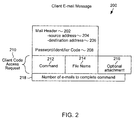
- FIG. 2 is a block diagram illustrating an exemplary e-mail message that may be sent across a firewall to request access to a document according to an embodiment of the invention.
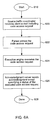
- FIG. 3 is a flow diagram illustrating a method of implementing the source code control system on the client side of a firewall according to an embodiment of the invention.
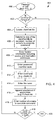
- FIG. 4 is a flow diagram illustrating a method of packaging a client code access request in one or more client e-mail messages as shown at block 304 of FIG. 3.
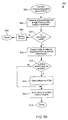
- FIG. 5A is a flow diagram illustrating a method of handling an acknowledgement of the status of the executed code access request as shown at block 310 of FIG. 3.
- FIG. 5B is a block diagram illustrating exemplary formats for an acknowledgement e-mail communicating the status of the executed code access request and reply composed from the acknowledgement e-mail.
- FIG. 6A is a flow diagram illustrating one method of providing access to source code across a firewall (i.e., on the server side of the firewall) according to an embodiment of the invention.
- FIG. 6B is a flow diagram illustrating one method of implementing the source traffic coordinator shown at block 110 of FIG. 1.
- FIG. 7 is a flow diagram illustrating one method of parsing the client e-mail to obtain information associated with the code access request.
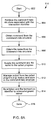
- FIG. 8A is a flow diagram illustrating one method of implementing the execution engine shown at block 114 of FIG. 1.
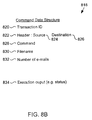
- FIG. 8B is a block diagram illustrating an exemplary command data structure that may be used to store information associated with the code access request.
- FIG. 9 is a flow diagram illustrating one method of implementing the acknowledgement server as shown at block 116.
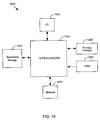
- FIG. 10 is a block diagram illustrating a typical, general-purpose computer system suitable for implementing the present invention.
- the present invention permits a user to access and modify information maintained on a network that is protected by a firewall.
- the present invention may be used to enable employees of one company to access documents maintained by another company. This is particularly useful where multiple companies are collaborating on a project where documents such as source code are being produced. It is important to note that such document access may be implemented even where a firewall separates the two networks.
- the present invention enables a user to access a single set of information (e.g., source code) that is stored on a system protected by a firewall. This is accomplished via a document access request sent via e-mail, as will be described with reference to the following figures.
- the portion requesting access to a document will be referred to as the client portion, while the portion executing the document access request will be referred to as the server portion.
- the server portion may provide a status or other information across the firewall to the client portion upon completion of execution.
- the present invention will described as accessing a source code file. However, the present invention may equally apply to documents (e.g., files) other than source code.
- FIG. 1 A block diagram illustrating a system in which the present invention may be implemented is presented in FIG. 1.
- each block illustrates a separate process.
- the client code access request may include a source code control command as well as an associated file name.
- the source code control command may be a "check in,” “check out,” “view,” or “copy” command.
- the source code control command will therefore allow a client to check in source code associated with the specified file name, check out the source code in the specified file name, view or copy the source code made available in the specified file.
- the client code access request is sent to the client interface engine 104.
- the client interface engine 104 then packages the client code access request in one or more client e-mails 106 and sends these client e-mail messages across firewall 108 to source traffic coordinator 110.
- Each client may send multiple code access requests. Moreover, client code access requests may be sent by multiple clients. Therefore, the source traffic coordinator 110 is responsible for routing the client code access requests as they are received to the appropriate process block on one or more servers. One method of implementing the source traffic coordinator 110 will be described in further detail with reference to FIG. 6B.
- the code access request is parsed into the appropriate components (e.g., source code control command and file name).
- the source traffic coordinator 110 routes each client code access request to a parser 112 adapted for parsing a client code access request, as will be described in further detail with reference to FIG. 7.
- the components may be temporarily stored in a data structure for further processing.
- the parsed client code access request is forwarded to an execution engine 114 for execution.
- the execution engine 114 then executes the client code access request.
- the execution engine may execute a code control command such as a "check in" command to check in an updated version of selected source code associated with the specified file name.
- a code control command such as a "check in" command to check in an updated version of selected source code associated with the specified file name.
- the execution engine 114 transfers control to an acknowledgement module or server 116 to obtain and transmit the status (e.g., success or failure) of the access request. More particularly, the acknowledgement server 116 composes an acknowledgement e-mail 118 indicating the status (e.g., success or failure) of the executed command.
- the acknowledgement e-mail 118 may indicate that the source code has been successfully checked in.
- the acknowledgement e-mail 118 may include a portion of source code that has been successfully checked out.
- the acknowledgement server 116 then sends the acknowledgement email 118 to the client interface engine 104, which may compose a reply suitable for the originator of the access request.
- the reply is forwarded to the source control engine 102 to be routed to the originator of the access request.
- a user may access and update a single set of source code across a firewall 102 via e-mail.
- the operations on each side of the firewall are shown as separate blocks, these operations may be performed on one or more servers. Accordingly, the present invention may be advantageously used to implement an effective source code control system that may be accessed by multiple companies.
- FIG. 2 is a block diagram illustrating an exemplary client e-mail message that may be sent across a firewall to request access to a document (e.g., source code) according to an embodiment of the invention.
- the client e-mail message 200 includes a mail header 202 including a source address 204 and a destination address 206.
- the present invention preferably handles only those e-mails that are addressed to the source code control system of the present invention. It is therefore desirable to implement a password or identifier code 208 that may be used to designate those e-mails that are addressed to the source code control system.
- a client code access request 210 includes a source code control command 212 and a file name associated with the source code control command 212.
- the file name 214 therefore permits the source code control system to access the specified file 214.
- the command 212 is a check in command
- the source code being checked in may be appended as attachment 216.
- the client code access request may be necessary to send the client code access request in multiple e-mails.
- a file being checked into the source code control system may be fragmented into smaller portions, which may then be sent in separate client e-mails.
- the number of client e-mail packets 218 to be sent in order to complete the client code access request may be specified in each client e-mail message 200. In this manner, the source traffic coordinator may easily determine which client e-mails correspond to a single code access request.
- the source code control system is implemented on both sides of the firewall.
- the client i.e., client portion
- the source code control system executes the source code control commands and provides an acknowledgement of the status of these commands on the opposite side of the firewall (i.e., server portion).
- FIG. 3 One method of implementing the client portion of the source code control system shown in FIG. 1 is illustrated in FIG. 3.
- the process begins at block 300 and at block 302, the source control engine obtains and sends the desired source code control command and associated file name to the client interface engine. More particularly, the source code control command and associated file name may be obtained via a menu, file, or other mechanism.
- the client interface engine then packages the source code control command and associated file name in one or more client e-mails at block 304, as will be described in further detail below with reference to FIG. 4.
- the client interface engine then sends the client e-mail(s) to the source traffic coordinator at block 306.
- the client then waits for a status acknowledgement regarding the status of execution of the source code control command at block 308.
- the status acknowledgement is handled at block 310, as will be described in further detail below with reference to FIG. 5A. More particularly, the status acknowledgement may be handled such that notification of the status is sent to the originator of the document access request. In this manner, the originator may be notified of any errors that occurred during execution of the document access request.
- the process ends at block 312. Although the previously described process refers to one document access request, each client may send multiple document access requests.
- each code access request is packaged in one or more client e-mails to be transmitted across the firewall to be processed by the server portion of the source code control system.
- FIG. 4 is a flow diagram illustrating a method of packaging a client code access request in one or more client e-mail messages as shown at block 304 of FIG. 3.
- the process fills the fields of one or more client e-mail messages such as that illustrated in FIG. 2, and sends the client e-mail messages across the firewall for execution of the corresponding access request.
- the process begins at block 400 and at block 402, it is determined whether the source code control command is a "check in" command indicating that source code in the associated identified file is being checked into the source code control system.
- the associated file is identified at block 404 and the size of the file is determined at block 406. The size of the file may then be used to ascertain the number of e-mails that are to be sent in order to complete the command. If the command is not a check in command, steps 404 and 406 are bypassed and the process continues to package the e-mail in blocks 408 through 420. As shown, the mail header information such as source and destination addresses is entered in the client e-mail packet at block 408. Next, at block 410, a password/identifier code is entered to indicate that the e-mail is addressed to the source code control system.
- the source code control command (e.g., check in command) is entered at block 412 and the associated file name is similarly entered at block 414.
- the command is a check in command
- the source code is appended to the e-mail as an attachment at block 416.
- the number of e-mails required to complete the command is entered in the client e-mail at block 418. In this manner, the fields of a client e-mail may be filled in order to transmit an access request across the firewall. If it is determined at block 419 that each of the number of e-mails associated with the corresponding access request has been composed and sent, the process ends at block 420. Alternatively, the process continues at block 408 to package the remaining client e-mail messages associated with the access request. In this manner, one or more client e-mail messages such as that shown in FIG. 2 may be packaged by the client to execute a single source code control command.
- FIG. 5A is a flow diagram illustrating a method of handling an acknowledgement of the status of the executed code access request as shown at block 310 of FIG. 3.
- the process begins at block 500 and at block 502, an acknowledgement e-mail is received by the client interface engine from an acknowledgement server.
- a password may be used to indicate those e-mails that are to be processed by the source code control system.
- the password provided by the client in the client e-mail message may similarly be provided in the return acknowledgement e-mail to indicate that the e-mail has been processed by the source code control system.
- the e-mail is ignored at block 506 and the process completes at block 508.
- a reply to the original client source code access request is created based upon the information in the acknowledgement e-mail at block 510. In this manner, selected information provided in the acknowledgement e-mail may be used to compose a reply suitable for the originator of the source code access request.
- an attachment to the client e-mail message may be supplied when code is being checked into the source code control system.
- an attachment to the acknowledgement e-mail message may be provided when code is being checked out of the source code control system.
- the reply is then sent by the client interface engine to the source control engine at block 516 for distribution to the client that originated the access request.
- the process ends at block 518.
- a client may receive source code being checked out of the source code control system as well as a status indicating the success or failure of the access request previously sent by the client.
- FIG. 5B is a block diagram illustrating exemplary formats for an acknowledgement e-mail communicating the status of the executed code access request and reply composed from the acknowledgement e-mail.
- an acknowledgement e-mail 520 includes a header 522 specifying source 524 and destination 526 addresses.
- a status 528 associated with the client code control command is provided.
- the status 528 may indicate that the check in of the file was successful where the client code control command is a check in command.
- the password 529 that indicates that the e-mail has been processed by the source code control system may also be provided.
- a log file may be maintained indicating that the command has been executed and any information pertaining to this execution.
- a confirmation code 530 associated with this log entry may be provided to the client to permit the client to verify that the command has been successfully executed.
- the file name 532 associated with the executed command may be provided.
- the client code control command is a check out command
- the content of the file (e.g., source code) being checked out of the source code control system may be provided as an attachment file 534 to the acknowledgement e-mail.
- the number of e-mails to complete the command is specified at 536.
- multiple acknowledgement e-mails may be provided where a file being checked out of the source code control system is large.
- each acknowledgement e-mail may contain a portion of a checked out file as an attachment to the acknowledgement e-mail. Therefore, there may be multiple acknowledgement e-mails associated with an executed command. As a result, it may be desirable to compose a single reply suitable for transmission to the client as source of the command.
- a reply 538 is composed from one or more associated acknowledgement e-mails 520.
- the reply 538 may include a status 540 and confirmation code 542 such as those provided in the acknowledgement e-mail.
- a file name 544 that identifies the executed source code control command may be supplied.
- a client receives a "check in successful" reply, it is desirable to identify the file that has been checked in.
- a client receives a "check out successful” reply it is desirable to identify the file name or location of the file that was received in the attachment to the acknowledgement e-mail(s). Accordingly, the client may later obtain the file that has been retrieved from the system, update the file, and check the updated file back into the source code control system.
- the client is capable of transmitting client code access requests and receiving acknowledgement of the status these requests.
- the source code control system executes the client code access requests and provides acknowledgement of this execution. The operations performed to successfully execute each client code access request and provide acknowledgement upon completion of execution are described with reference to FIGS. 6A through 9.
- FIG. 6A is a flow diagram illustrating one method of providing access to source code across a firewall (i.e., on the server side of the firewall) according to an embodiment of the invention.
- the process begins at block 618 and at block 620, the source traffic coordinator receives a client e-mail including a code access request across the firewall.
- the client e-mail is then routed to the parser, which parses the code access request at block 622 such that the code access request may be executed.
- the execution engine executes the parsed code access request at block 624.
- a status indicating success or failure of the executed code access request may be obtained by the execution engine.
- the status is then forwarded to the acknowledgement server.
- the acknowledgement server then composes and sends an acknowledgement e-mail specifying the status of the executed code access request, as well as other information identifying the code access request.
- the process ends at block 628.
- a client e-mail is routed by the source traffic coordinator to the parser and executed.
- one or more acknowledgement e-mails are composed and sent to communicate the status of the corresponding access request.
- FIG. 6B one method of implementing the source traffic coordinator shown at block 110 of FIG. 1 is presented. The process begins at block 602 and at block 604, the source traffic coordinator listens for incoming mail at block 604. When an e-mail is received at block 606, it is preferable to discard those e-mails that are not addressed to the source code control system. Thus, at block 608, it is determined whether the password/code identifier is valid.
- the e-mail may be ignored or discarded at block 610 and the process completes at block 612. If the password is valid, the e-mail is then passed to the parser at block 614. The process ends at block 616. In this manner, the source traffic coordinator may route client e-mails as they are received across the firewall.
- the parser parses the e-mail to obtain information associated with the source code access request.
- One method of parsing the client e-mail to obtain information associated with the code access request as shown at block 112 of FIG. 1 is presented in FIG. 7. As shown, the parser begins at block 702 and at block 704, the header information, including source and destination addresses, are obtained from the e-mail. Next, the command is obtained from the client e-mail at block 706 and the associated file name is obtained at block 708. In addition, the number of client e-mails that are to be received in order to complete the command is obtained at block 710.
- the information may be stored in a command data structure.
- the command data structure may therefore be created at block 712 to temporarily store this obtained information.
- a transaction identifier may be associated with the command data structure for each client e-mail being handled by the source code control system.
- the client e-mail may include an attachment containing source code that is being checked in to the system.
- the command is a check in command. If the command is a check in command, the attachments are concatenated for all e-mails sent to complete the command. In other words, the attachment for each one of the number of client e-mails obtained at block 710 are concatenated.
- the attachment is obtained at block 716 and the attachment is concatenated at block 718 to previously retrieved attachments associated with the command. In this manner, source code or other documents being checked in to the system may be constructed from multiple attachments.
- the parser determines whether the parser has not completed parsing the number of client e-mails sent to complete the command. If it is determined at block 70 that the parser has not completed parsing the number of client e-mails sent to complete the command, the next e-mail is obtained at block 722 and the process continues at block 704. In this manner, information in each client e-mail may be retrieved. Therefore, if the newly received client e-mail is associated with the previous access request, concatenation of the attachment is performed as described above. However, if all e-mails associated with the command have been parsed, the parser indicates that parsing has been completed at block 724. More particularly, the parser may send a token to the execution engine indicating that parsing is completed as well as a transaction identifier associated with the transaction. The execution engine may therefore identify the command data structure and retrieve any associated files through the use of the transaction identifier. The process ends at block 726.
- the execution engine may identify the information associated with the command to be executed. The information may therefore be obtained in order to execute the command.
- One method of implementing the execution engine as shown at block 114 of FIG. 1 is illustrated in FIG. 8A.
- the process begins at block 802 and at block 804, the command data structure associated with the transaction identifier is retrieved. The command is then obtained from the command data structure at block 806. Similarly, the file name associated with the command is obtained from the command data structure at block 808. The command and the file name are then supplied as parameters to a program capable of executing the source code control commands (e.g., check in, check out) at block 810.
- the source code control commands e.g., check in, check out
- a Source Code Control System (SCCS), provided as a standard utility with Solaris Operating systems, is available from Sun Microsystems, Inc., located in Palo Alto, CA.
- SCCS Source Code Control System
- the output is then obtained from the called program and managed at block 812.
- the output may include the status (e.g., fail or pass) of the command execution which may then be stored in the command data structure.
- a token indicating that the command has been executed and the transaction identifier may then be sent to the acknowledgement server at block 814. The process ends at block 816.
- a command data structure 818 may include a transaction identifier 820, header information 822 such as source 824 and destination 826 addresses.
- the command data structure 818 may further include the command to be executed 828, the file name 830 associated with the command, and the number of e-mails 832 required to complete execution of the command.
- output 834 obtained from the called program such as a status (e.g., pass or fail) may be stored in the command data structure.
- a status e.g., pass or fail
- Each command data structure may be made available to the source traffic coordinator, the parser, the execution engine, and the acknowledgement server in a common memory location.
- any files identified by the file name 830 may be temporarily stored in a common memory location. Once execution and acknowledgement of each command is performed, this memory may be re-allocated as necessary.
- the acknowledgement server When the acknowledgement server receives notification that the command has executed, it then composes an appropriate acknowledgement e-mail from the information in the command data structure.
- One method of implementing the acknowledgement server as shown at block 116 is presented in FIG. 9. The process begins at block 902 and at block 904, the command data structure associated with the transaction identifier is retrieved. The status (e.g., pass or fail) is then obtained from the command data structure at block 906. In addition, the confirmation code is obtained from the command data structure at block 908. Next, at block 910, the file name is obtained from the command data structure. In addition, the executed command (e.g., check in) may be obtained from the command data structure at block 912.
- any associated file is then retrieved.
- a file is checked out of the system, it is sent in one or more attachments to the client via the client interface engine.
- the file identified by the obtained file name is located at block 916.
- the size of the identified file is then determined at block 918 to ascertain the number of acknowledgement e-mails that are to be sent in order to complete the command.
- blocks 920 through 934 are performed.
- header information including source and destination addresses are provided in the acknowledgement e-mail.
- the destination address may be obtained from the source address provided in the command data structure or from a username database.
- the password is entered at block 922, where the password indicates that the acknowledgement e-mail has been handled by the source code control system.
- a command status 924 indicating the command (e.g., check in) and execution status (e.g., successful) are entered at block 924.
- the confirmation code is entered to permit a user to verify that a command has executed successfully.
- the file name 928 may be provided to permit a user to identify which file has, for example, been checked in or out of the source code control system.
- An attachment is appended to the acknowledgement e-mail if appropriate at block 930. By way of example, if the command is a check out command, an attachment containing at least a portion of the file is appended as an attachment. The number of acknowledgement e-mails that are to be sent in order to transmit all information associated with the executed command is then entered at block 932.
- the acknowledgement e-mail is then sent to the client interface engine at block 934. If it is determined at block 936 that each of the number of acknowledgement e-mails associated with the executed command have been sent, all temporary memory such as that used to store the command data structure(s) as well as files that have been checked out may be deleted at block 938. If it is determined at block 936 that one or more acknowledgement e-mails associated with the executed command remain to be sent, the remaining acknowledgement e-mails are composed and sent at block 920. The process ends at block 940.
- the present invention enables information that is stored on a network to be retrieved and modified, even where the network is protected by a firewall.
- the present invention therefore provides numerous advantages since entities may share a single set of documents without modifying or eliminating the firewall separating the entities. Accordingly, through the application of the present invention, a balance may be achieved between security and the level of information sharing that is crucial to technological advancement.
- FIG. 10 illustrates a typical, general-purpose computer system 1002 suitable for implementing the present invention.
- the computer system 1002 includes any number of processors 1004 (also referred to as central processing units, or CPUs) that may be coupled to memory devices including primary storage device 1006 (typically a read only memory, or ROM) and primary storage device 1008 (typically a random access memory, or RAM).
- processors 1004 also referred to as central processing units, or CPUs
- primary storage device 1006 typically a read only memory, or ROM
- primary storage device 1008 typically a random access memory, or RAM
- ROM acts to transfer data and instructions uni-directionally to the CPUs 1004, while RAM is used typically to transfer data and instructions in a bi-directional manner.
- Both the primary storage devices 1006, 1008 may include any suitable computer-readable media.
- the CPUs 1004 may generally include any number of processors.
- a secondary storage medium 1010 which is typically a mass memory device, may also be coupled bi-directionally to CPUs 1004 and provides additional data storage capacity.
- the mass memory device 1010 is a computer-readable medium that may be used to store programs including computer code, data, and the like.
- the mass memory device 1010 is a storage medium such as a hard disk which is generally slower than primary storage devices 1006, 1008.
- the CPUs 1004 may also be coupled to one or more input/output devices 1012 that may include, but are not limited to, devices such as video monitors, track balls, mice, keyboards, microphones, touch-sensitive displays, transducer card readers, magnetic or paper tape readers, tablets, styluses, voice or handwriting recognizers, or other well-known input devices such as, of course, other computers.
- the CPUs 1004 optionally may be coupled to a computer or telecommunications network, e.g. , an internet network or an intranet network, using a network connection as shown generally at 1014. With such a network connection, it is contemplated that the CPUs 1004 might receive information from the network, or might output information to the network in the course of performing the below-described method steps. Such information, which is often represented as a sequence of instructions to be executed using the CPUs 1004, may be received from and outputted to the network, for example, in the form of a computer data signal embodied in a carrier wave.
- the present invention is described as enabling access to source code across a firewall.
- source code the present invention may be used to access or modify any document or file across a firewall.
- process blocks are illustrative only. Therefore, accessing a file across a firewall may be accomplished via e-mail using alternate process blocks. Accordingly, the present embodiments are to be considered as illustrative and not restrictive, and the invention is not to be limited to the details given herein, but may be modified within the scope and equivalents of the appended claims.
Landscapes
- Engineering & Computer Science (AREA)
- Computer Networks & Wireless Communication (AREA)
- Signal Processing (AREA)
- Computer Hardware Design (AREA)
- Computer Security & Cryptography (AREA)
- Computing Systems (AREA)
- General Engineering & Computer Science (AREA)
- Information Transfer Between Computers (AREA)
- Data Exchanges In Wide-Area Networks (AREA)
Abstract
Description
Claims (33)
- A document control system for providing access on a first side of a firewall to a file that is available on a second side of the firewall, the system comprising:a source control engine on the first side of the firewall, the source control engine adapted for obtaining a document access request specifying a document control command and a file name associated with the document control command; anda client interface engine in communication with the source control engine, the client interface engine adapted for composing a client e-mail including the document access request and sending the client e-mail across the firewall to the second side of the firewall.
- The document control system as recited in claim 1, further including:a source traffic coordinator on the second side of the firewall and in communication with the client interface engine, the source traffic coordinator adapted for receiving the client e-mail from the client interface engine;a parser in communication with the source traffic coordinator and adapted for parsing the document access request to create a parsed document access request suitable for execution; andan acknowledgement module adapted for sending an acknowledgement e-mail across the firewall to the first side of the firewall, the acknowledgement e-mail specifying a status upon completion of the execution of the parsed document access request.
- The system as recited in claim 2, wherein the status indicates success or failure of the document access request.
- The system as recited in claim 2, wherein the document control command specifies at least one of check in, check out, view, or copy.
- The system as recited in claim 2, wherein the file name identifies a source code file.
- The document control system as recited in claim 1, further including:a source traffic coordinator on the second side of the firewall and in communication with the client interface engine, the source traffic coordinator adapted for receiving the client e-mail from the client interface engine;a parser in communication with the source traffic coordinator and adapted for parsing the document access request;an execution engine in communication with the parser and adapted for executing the parsed document access request; andan acknowledgement module in communication with the execution engine and adapted for sending an acknowledgement e-mail across the firewall to the first side of the firewall, the acknowledgement e-mail specifying a status of the executed access request.
- The document control system as recited in claim 6, wherein the acknowledgement e-mail is sent to the client interface engine, the client interface engine being adapted for composing a reply to the document access request from selected information provided in the acknowledgement e-mail.
- The document control system as recited in claim 7, wherein the client interface engine sends the reply to the source control engine.
- A document control system for providing access on a first side of a firewall to a file that is available on a second side of the firewall, the system comprising:a source traffic coordinator on the second side of the firewall, the source traffic coordinator adapted for receiving an e-mail across the firewall from the first side of the firewall, the e-mail including a document access request specifying a document control command and a file name associated with the document control command;a parser in communication with the source traffic coordinator and adapted for parsing the document access request to create a parsed document access request suitable for execution; andan acknowledgement module adapted for sending an acknowledgement e-mail across the firewall to the first side of the firewall, the acknowledgement e-mail specifying a status upon completion of the execution of the parsed document access request.
- A method of accessing a document across a firewall having a first side and a second side, the method comprising:obtaining a document access request on the first side of the firewall, the document access request specifying a document control command and an associated file name;packaging the document access request in at least one client e-mail;sending the client e-mail across the firewall to the second side of the firewall; andreceiving one or more acknowledgement e-mails across the firewall from the second side of the firewall, the one or more acknowledgement e-mails specifying a status of the executed document control command.
- The method as recited in claim 10, further including:
handling the one or more acknowledgement e-mails to provide notification of the status of the executed document control command. - The method as recited in claim 10, wherein packaging the document access request includes:determining whether the document control command is a check in command;wherein when it is determined that the document control command is a check in command, an attachment is appended to the client e-mail, the attachment including at least a portion of a file identified by the associated file name.
- The method as recited in claim 12, wherein appending includes:locating the file; anddetermining a size of the file to ascertain a number of client e-mails to be sent in order to complete the document control command.
- The method as recited in claim 13, further including:
entering in the client e-mail the number of e-mails to complete the document control command. - The method as recited in claim 10, wherein packaging the document access request includes:entering header information in the client e-mail, the header information including source and destination addresses;entering a password in the client e-mail, the password indicating that the client e-mail is to be handled by a document control system;entering the document control command in the client e-mail; andentering the file name associated with the document control command in the client e-mail.
- The method as recited in claim 15, further including:
entering in the client e-mail a total number of client e-mails to be sent in order to complete the document access request. - The method as recited in claim 11, wherein handling the acknowledgement e-mails includes:
creating a reply to the document access request based on information in the one or more acknowledgement e-mails. - The method as recited in claim 11, wherein handling the acknowledgement e-mails includes:determining whether the one or more acknowledgement e-mails include a valid password;wherein when it is determined that the one or more acknowledgement e-mails include a valid password, creating a reply to the document access request based on information in the one or more acknowledgement e-mails; andwherein when it is determined that the one or more acknowledgement e-mails do not include a valid password, dropping the one or more acknowledgement e-mails.
- The method as recited in claim 11, wherein handling the one or more acknowledgement e-mails includes:determining whether the one or more acknowledgement e-mails include an attachment; andwherein when it is determined that the one or more acknowledgement e-mails include an attachment, saving the attachment.
- The method as recited in claim 19, wherein determining whether the one or more acknowledgement e-mails include an attachment includes:
determining whether the document control command is a check out command. - A method of providing access to a document across a firewall having a first side and a second side, the method comprising:receiving a client e-mail across the firewall from the first side of the firewall, the client e-mail including a document access request specifying a document control command and an associated file name;executing the document access request such that a status of the executed document access request is obtained; andsending an acknowledgement e-mail specifying the status across the firewall to the first side of the firewall.
- The method as recited in claim 21, further including:determining whether the client e-mail includes a valid password; andwherein when it is determined that the client e-mail does not include a valid password, dropping the client e-mail.
- The method as recited in claim 21, further including:parsing the client e-mail to obtain information associated with the document access request;determining whether the client e-mail includes an attachment; andwherein when it is determined that the client e-mail includes an attachment, concatenating the attachment to previously retrieved attachments associated with the document access request.
- The method as recited in claim 23, wherein determining whether the client e-mail includes an attachment includes determining whether the document control command is a check in command.
- The method as recited in claim 21, further including:determining whether the document control command is a check out command;wherein when it is determined that the document control command is a check out command, appending an attachment to the acknowledgement e-mail including at least a portion of a file identified by the file name associated with the document control command.
- The method as recited in claim 25, wherein appending includes:locating the file identified by the file name; anddetermining a size of the file to ascertain a number of acknowledgement e-mails to be sent.
- The method as recited in claim 21, further including:entering a header in the acknowledgement e-mail, the header including source and destination addresses;entering a password in the acknowledgement e-mail, the password indicating that the acknowledgement e-mail has been handled by a document control system; andentering the file name associated with the document control command in the acknowledgement e-mail, wherein the status indicates success or failure of the document control command.
- The method as recited in claim 27, further including:
entering a confirmation code associated with the document access request in the acknowledgement e-mail. - The method as recited in claim 27, further including:
entering in the acknowledgement e-mail a total number of acknowledgement e-mails that are to be received in association with the document access request. - The method as recited in claim 21, further including:
deleting information associated with the document access request from memory. - A method of enabling document access across a firewall having a first side and a second side, the method comprising:receiving on the second side of the firewall an e-mail sent from the first side of the firewall, the e-mail having an attached source code file;unpacking the source code file on the second side of the firewall; andsending an acknowledgment e-mail from the second side of the firewall to the first side of the firewall to acknowledge receipt of the source code file.
- A computer-readable medium having thereon computer readable instructions configured for accessing a document across a firewall having a first side and a second side, the instructions comprising:instructions for obtaining a document access request on the first side of the firewall, the document access request specifying a document control command and an associated file name;instructions for packaging the document access request in at least one client e-mail;instructions for sending the client e-mail across the firewall to the second side of the firewall; andinstructions for receiving one or more acknowledgement e-mails across the firewall from the second side of the firewall, the one or more acknowledgement e-mails specifying a status of the executed document control command.
- A computer-readable medium having thereon computer readable instructions configured for providing access to a document across a firewall having a first side and a second side, the instructions comprising:instructions for receiving a client e-mail across the firewall from the first side of the firewall, the client e-mail including a document access request specifying a document control command and an associated file name;instructions for executing the document access request such that a status of the executed document access request is obtained; andinstructions for sending an acknowledgement e-mail specifying the status across the firewall to the first side of the firewall.
Applications Claiming Priority (2)
| Application Number | Priority Date | Filing Date | Title |
|---|---|---|---|
| US328178 | 1999-06-08 | ||
| US09/328,178 US6654892B1 (en) | 1999-06-08 | 1999-06-08 | Methods and apparatus for permitting transactions across firewalls |
Publications (2)
| Publication Number | Publication Date |
|---|---|
| EP1059780A2 true EP1059780A2 (en) | 2000-12-13 |
| EP1059780A3 EP1059780A3 (en) | 2006-10-04 |
Family
ID=23279853
Family Applications (1)
| Application Number | Title | Priority Date | Filing Date |
|---|---|---|---|
| EP00304838A Withdrawn EP1059780A3 (en) | 1999-06-08 | 2000-06-07 | Methods and apparatus for permitting transactions across firewalls |
Country Status (3)
| Country | Link |
|---|---|
| US (1) | US6654892B1 (en) |
| EP (1) | EP1059780A3 (en) |
| IL (1) | IL136629A (en) |
Cited By (2)
| Publication number | Priority date | Publication date | Assignee | Title |
|---|---|---|---|---|
| WO2002103566A3 (en) * | 2001-06-18 | 2004-02-19 | Hewlett Packard Co | System and method for remote document retrieval |
| EP1298870A3 (en) * | 2001-09-26 | 2004-04-21 | Toyota Caelum Incorporated | Methods for intersystem communication and program for computers and interface modules |
Families Citing this family (13)
| Publication number | Priority date | Publication date | Assignee | Title |
|---|---|---|---|---|
| US6631247B1 (en) * | 1999-09-29 | 2003-10-07 | Ricoh Co., Ltd. | Method and system for remote diagnostic, control and information collection based on various communication modes for sending messages to a resource manager |
| US5898830A (en) | 1996-10-17 | 1999-04-27 | Network Engineering Software | Firewall providing enhanced network security and user transparency |
| US5826014A (en) | 1996-02-06 | 1998-10-20 | Network Engineering Software | Firewall system for protecting network elements connected to a public network |
| JP2001117843A (en) * | 1999-10-19 | 2001-04-27 | Fujitsu Ltd | Content delivery system, client machine, server machine, and computer-readable medium |
| US20070214262A1 (en) * | 2000-02-25 | 2007-09-13 | Anywheremobile, Inc. | Personal server technology with firewall detection and penetration |
| US20020078198A1 (en) * | 2000-02-25 | 2002-06-20 | Buchbinder John E. | Personal server technology with firewall detection and penetration |
| JP4290309B2 (en) * | 2000-03-13 | 2009-07-01 | シャープ株式会社 | Information communication apparatus, information communication method, and remote management system |
| US20020019851A1 (en) * | 2000-07-26 | 2002-02-14 | Jordan Pollack | System and method for the electronic mail based management and manipulation of stored files |
| US20020099808A1 (en) * | 2001-01-24 | 2002-07-25 | Ravikumar Pisupati | Accessing services across network security mechanisms |
| JP2003249919A (en) * | 2001-12-17 | 2003-09-05 | Fujitsu Ltd | Two-way communication method |
| US7735127B1 (en) * | 2002-11-26 | 2010-06-08 | Dell Marketing Usa, L.P. | Method and system for communicating with a managed system located behind a firewall |
| US7555526B1 (en) * | 2008-07-11 | 2009-06-30 | International Business Machines Corporation | Actions on auto-generated emails from the inbox |
| US9494931B2 (en) * | 2009-09-23 | 2016-11-15 | Fisher-Rosemount Systems, Inc. | Dynamic hyperlinks for process control systems |
Family Cites Families (7)
| Publication number | Priority date | Publication date | Assignee | Title |
|---|---|---|---|---|
| US5649099A (en) * | 1993-06-04 | 1997-07-15 | Xerox Corporation | Method for delegating access rights through executable access control program without delegating access rights not in a specification to any intermediary nor comprising server security |
| US5841978A (en) * | 1993-11-18 | 1998-11-24 | Digimarc Corporation | Network linking method using steganographically embedded data objects |
| US5812398A (en) * | 1996-06-10 | 1998-09-22 | Sun Microsystems, Inc. | Method and system for escrowed backup of hotelled world wide web sites |
| US5987611A (en) * | 1996-12-31 | 1999-11-16 | Zone Labs, Inc. | System and methodology for managing internet access on a per application basis for client computers connected to the internet |
| WO1998031124A1 (en) * | 1997-01-10 | 1998-07-16 | Hanson Gordon L | Reverse proxy server |
| CA2301147C (en) * | 1997-07-24 | 2010-07-13 | Worldtalk Corporation | E-mail firewall with stored key encryption/decryption |
| US6092114A (en) * | 1998-04-17 | 2000-07-18 | Siemens Information And Communication Networks, Inc. | Method and system for determining the location for performing file-format conversions of electronics message attachments |
-
1999
- 1999-06-08 US US09/328,178 patent/US6654892B1/en not_active Expired - Lifetime
-
2000
- 2000-06-07 EP EP00304838A patent/EP1059780A3/en not_active Withdrawn
- 2000-06-07 IL IL13662900A patent/IL136629A/en not_active IP Right Cessation
Cited By (3)
| Publication number | Priority date | Publication date | Assignee | Title |
|---|---|---|---|---|
| WO2002103566A3 (en) * | 2001-06-18 | 2004-02-19 | Hewlett Packard Co | System and method for remote document retrieval |
| GB2394097A (en) * | 2001-06-18 | 2004-04-14 | Hewlett Packard Co | System and method for remote document retrieval |
| EP1298870A3 (en) * | 2001-09-26 | 2004-04-21 | Toyota Caelum Incorporated | Methods for intersystem communication and program for computers and interface modules |
Also Published As
| Publication number | Publication date |
|---|---|
| EP1059780A3 (en) | 2006-10-04 |
| IL136629A0 (en) | 2001-06-14 |
| US6654892B1 (en) | 2003-11-25 |
| IL136629A (en) | 2005-07-25 |
Similar Documents
| Publication | Publication Date | Title |
|---|---|---|
| US6654892B1 (en) | Methods and apparatus for permitting transactions across firewalls | |
| US5577202A (en) | Message handling system for automated gateway between first and second handling systems wherein first envelope is added to a second envelope respectively without changing text | |
| US6643684B1 (en) | Sender- specified delivery customization | |
| US6788648B1 (en) | Method and apparatus for load balancing a distributed processing system | |
| US6275937B1 (en) | Collaborative server processing of content and meta-information with application to virus checking in a server network | |
| US6975595B2 (en) | Method and apparatus for monitoring and logging the operation of a distributed processing system | |
| US6230156B1 (en) | Electronic mail interface for a network server | |
| US7668902B2 (en) | Application programming interface for implementing directory service access using directory service markup language | |
| JP3532854B2 (en) | System and method for synchronizing email across a network | |
| CN1123186C (en) | Token-based deadline enforcement system for electronic document submission | |
| KR101137132B1 (en) | Send by reference in a customizable, tag-based protocol | |
| US7447743B1 (en) | Methods and systems for attachment processing in association with electronic messages | |
| EP1170910A2 (en) | Method and device for managing mail addresses | |
| US20070299926A1 (en) | Method and Apparatus for Dynamically Managing Electronic Mail Messages on a Remote Electronic Mail Messaging System | |
| EP0725523A2 (en) | Transaction message routing in digital communications networks | |
| EP0909068A1 (en) | Method and apparatus for structured communication | |
| JPH0583263A (en) | Method and apparatus for processing communication of open-type system in plural-user environment | |
| EP0858201A2 (en) | Method and apparatus for allowing secure transactions through a firewall | |
| CN115665274B (en) | Heterogeneous protocol data transmission method, system, electronic device and storage medium | |
| US20040122902A1 (en) | Method, apparatus and system for processing message bundles on a network | |
| US7111062B2 (en) | Apparatus and method of generating an XML document to represent network protocol packet exchanges | |
| US20030110279A1 (en) | Apparatus and method of generating an XML schema to validate an XML document used to describe network protocol packet exchanges | |
| WO2002013469A2 (en) | Recipient-specified automated processing in a secure data file delivery system | |
| US7136895B2 (en) | System and method for forward chaining web-based procedure calls | |
| US20020026481A1 (en) | Electronic mail system and electronic mail delivery method |
Legal Events
| Date | Code | Title | Description |
|---|---|---|---|
| PUAI | Public reference made under article 153(3) epc to a published international application that has entered the european phase |
Free format text: ORIGINAL CODE: 0009012 |
|
| AK | Designated contracting states |
Kind code of ref document: A2 Designated state(s): AT BE CH CY DE DK ES FI FR GB GR IE IT LI LU MC NL PT SE |
|
| AX | Request for extension of the european patent |
Free format text: AL;LT;LV;MK;RO;SI |
|
| PUAL | Search report despatched |
Free format text: ORIGINAL CODE: 0009013 |
|
| AK | Designated contracting states |
Kind code of ref document: A3 Designated state(s): AT BE CH CY DE DK ES FI FR GB GR IE IT LI LU MC NL PT SE |
|
| AX | Request for extension of the european patent |
Extension state: AL LT LV MK RO SI |
|
| 17P | Request for examination filed |
Effective date: 20070309 |
|
| AKX | Designation fees paid |
Designated state(s): DE FR GB |
|
| 17Q | First examination report despatched |
Effective date: 20071217 |
|
| STAA | Information on the status of an ep patent application or granted ep patent |
Free format text: STATUS: THE APPLICATION IS DEEMED TO BE WITHDRAWN |
|
| 18D | Application deemed to be withdrawn |
Effective date: 20080429 |