EP1051387B1 - Anticancer platinum (iv) complexes for oral administration - Google Patents
Anticancer platinum (iv) complexes for oral administration Download PDFInfo
- Publication number
- EP1051387B1 EP1051387B1 EP98961662A EP98961662A EP1051387B1 EP 1051387 B1 EP1051387 B1 EP 1051387B1 EP 98961662 A EP98961662 A EP 98961662A EP 98961662 A EP98961662 A EP 98961662A EP 1051387 B1 EP1051387 B1 EP 1051387B1
- Authority
- EP
- European Patent Office
- Prior art keywords
- platinum
- diamine
- formula
- dimethaneamine
- complexes
- Prior art date
- Legal status (The legal status is an assumption and is not a legal conclusion. Google has not performed a legal analysis and makes no representation as to the accuracy of the status listed.)
- Expired - Lifetime
Links
Classifications
-
- C—CHEMISTRY; METALLURGY
- C07—ORGANIC CHEMISTRY
- C07F—ACYCLIC, CARBOCYCLIC OR HETEROCYCLIC COMPOUNDS CONTAINING ELEMENTS OTHER THAN CARBON, HYDROGEN, HALOGEN, OXYGEN, NITROGEN, SULFUR, SELENIUM OR TELLURIUM
- C07F13/00—Compounds containing elements of Groups 7 or 17 of the Periodic Table
-
- C—CHEMISTRY; METALLURGY
- C07—ORGANIC CHEMISTRY
- C07C—ACYCLIC OR CARBOCYCLIC COMPOUNDS
- C07C53/00—Saturated compounds having only one carboxyl group bound to an acyclic carbon atom or hydrogen
- C07C53/122—Propionic acid
-
- A—HUMAN NECESSITIES
- A61—MEDICAL OR VETERINARY SCIENCE; HYGIENE
- A61P—SPECIFIC THERAPEUTIC ACTIVITY OF CHEMICAL COMPOUNDS OR MEDICINAL PREPARATIONS
- A61P35/00—Antineoplastic agents
-
- C—CHEMISTRY; METALLURGY
- C07—ORGANIC CHEMISTRY
- C07C—ACYCLIC OR CARBOCYCLIC COMPOUNDS
- C07C211/00—Compounds containing amino groups bound to a carbon skeleton
- C07C211/01—Compounds containing amino groups bound to a carbon skeleton having amino groups bound to acyclic carbon atoms
- C07C211/02—Compounds containing amino groups bound to a carbon skeleton having amino groups bound to acyclic carbon atoms of an acyclic saturated carbon skeleton
- C07C211/09—Diamines
- C07C211/10—Diaminoethanes
-
- C—CHEMISTRY; METALLURGY
- C07—ORGANIC CHEMISTRY
- C07C—ACYCLIC OR CARBOCYCLIC COMPOUNDS
- C07C211/00—Compounds containing amino groups bound to a carbon skeleton
- C07C211/01—Compounds containing amino groups bound to a carbon skeleton having amino groups bound to acyclic carbon atoms
- C07C211/02—Compounds containing amino groups bound to a carbon skeleton having amino groups bound to acyclic carbon atoms of an acyclic saturated carbon skeleton
- C07C211/09—Diamines
- C07C211/11—Diaminopropanes
-
- C—CHEMISTRY; METALLURGY
- C07—ORGANIC CHEMISTRY
- C07C—ACYCLIC OR CARBOCYCLIC COMPOUNDS
- C07C211/00—Compounds containing amino groups bound to a carbon skeleton
- C07C211/01—Compounds containing amino groups bound to a carbon skeleton having amino groups bound to acyclic carbon atoms
- C07C211/16—Compounds containing amino groups bound to a carbon skeleton having amino groups bound to acyclic carbon atoms of a saturated carbon skeleton containing rings other than six-membered aromatic rings
- C07C211/18—Compounds containing amino groups bound to a carbon skeleton having amino groups bound to acyclic carbon atoms of a saturated carbon skeleton containing rings other than six-membered aromatic rings containing at least two amino groups bound to the carbon skeleton
-
- C—CHEMISTRY; METALLURGY
- C07—ORGANIC CHEMISTRY
- C07C—ACYCLIC OR CARBOCYCLIC COMPOUNDS
- C07C211/00—Compounds containing amino groups bound to a carbon skeleton
- C07C211/33—Compounds containing amino groups bound to a carbon skeleton having amino groups bound to carbon atoms of rings other than six-membered aromatic rings
- C07C211/34—Compounds containing amino groups bound to a carbon skeleton having amino groups bound to carbon atoms of rings other than six-membered aromatic rings of a saturated carbon skeleton
- C07C211/36—Compounds containing amino groups bound to a carbon skeleton having amino groups bound to carbon atoms of rings other than six-membered aromatic rings of a saturated carbon skeleton containing at least two amino groups bound to the carbon skeleton
-
- C—CHEMISTRY; METALLURGY
- C07—ORGANIC CHEMISTRY
- C07C—ACYCLIC OR CARBOCYCLIC COMPOUNDS
- C07C53/00—Saturated compounds having only one carboxyl group bound to an acyclic carbon atom or hydrogen
- C07C53/124—Acids containing four carbon atoms
-
- C—CHEMISTRY; METALLURGY
- C07—ORGANIC CHEMISTRY
- C07D—HETEROCYCLIC COMPOUNDS
- C07D309/00—Heterocyclic compounds containing six-membered rings having one oxygen atom as the only ring hetero atom, not condensed with other rings
- C07D309/02—Heterocyclic compounds containing six-membered rings having one oxygen atom as the only ring hetero atom, not condensed with other rings having no double bonds between ring members or between ring members and non-ring members
- C07D309/04—Heterocyclic compounds containing six-membered rings having one oxygen atom as the only ring hetero atom, not condensed with other rings having no double bonds between ring members or between ring members and non-ring members with only hydrogen atoms, hydrocarbon or substituted hydrocarbon radicals, directly attached to ring carbon atoms
-
- C—CHEMISTRY; METALLURGY
- C07—ORGANIC CHEMISTRY
- C07F—ACYCLIC, CARBOCYCLIC OR HETEROCYCLIC COMPOUNDS CONTAINING ELEMENTS OTHER THAN CARBON, HYDROGEN, HALOGEN, OXYGEN, NITROGEN, SULFUR, SELENIUM OR TELLURIUM
- C07F15/00—Compounds containing elements of Groups 8, 9, 10 or 18 of the Periodic Table
- C07F15/0006—Compounds containing elements of Groups 8, 9, 10 or 18 of the Periodic Table compounds of the platinum group
- C07F15/0086—Platinum compounds
- C07F15/0093—Platinum compounds without a metal-carbon linkage
Definitions
- the present invention relates to anticancer platinum(IV) complexes for oral administration and a preparation method thereof. More particularly, the present invention relates to lipophilic platinum(IV) complexes, which are potent anticancer agents when administered orally, represented by Formula I and a preparation method thereof.
- A-A is a symmetric diamine that can chelate to platinum and is selected from the group consisting of ethylene diamine (NH 2 CH 2 CH 2 NH 2 ), t ( ⁇ )-1,2-diaminocyclohexane 2,2-dimethyl-1,3-propanediamine (NH 2 CH 2 C(CH 3 ) 2 CH 2 NH 2 ), cyclohexane-1,1-dimethaneamine and tetrahydro-4H-pyran-4,4-dimethaneamine (O(CH 2 CH 2 ) 2 C(CH 2 NH 2 ) 2 ), and an anionic group R is selected from the group consisting of propionyl (C 2 H 5 CO), butyryl (C 3 H 7 CO) and valeryl (C 4 H 9 CO) groups.
- the platinum(IV) complexes which contain one of the symmetric diamines above and four identical carboxylic groups can be easily absorbed in the gastro-intestinal track due to their high lipophilicity, and thus are potent oral anticancer drugs.
- the only two platinum complexes that are currently in clinical use are cisplatin ( cis -(NH 3 ) 2 PtCl 2 ), and carboplatin These platinum complexes are administered via injection, and orally administrable anticancer drugs have not yet been developed.
- nephrotoxicity and neurotoxicity F.K.V.
- the oral platinum (IV) anticancer drugs must have an appropriate reduction properties since they need to be reduced to a platinum (II) complex to combine with deoxyribonucleic acid (DNA) in the cell (L.T. Ellis et. al., Aust. J. Chem . 48, 793 (1995)). Therefore, despite the efforts, the 6-coordinate platinum (IV) complex anticancer agents have not been commercialized to date. Only JM216 (M.
- the conventional method for preparation of preparing the 6-coodinate platinum(IV) complexes is to first synthesize 4-coordinate platinum(II) complexes which are expected to have anticancer activity, and oxidize them by using hydrogen peroxide or halogens. Then the newly added axial ligands, that is hydroxyl or halide (such as chloride and bromide) groups are substituted with a different ligand such as carboxylate groups (C.M. Giandomenico et. al., Inorg. Chem . 34, 1015 (1995)). Such conventional oxidative addition reaction for the 6-coordinate platinum(IV) complexes can afford only variation of the axial ligands.
- EP 0328274 discloses Pt(TV) complexes of the formula: wherein A and A' are NH 3 or an amino group; R and R 1 are hydrogen, alkyl, alkenyl, aryl, aralkyl, alkylamino or alkoxy or functionatized derivatives thereof; and X is halogen or alkyl mono- or dicarboxylate.
- EP 0646589 discloses Pt(IV) complexes of the formula: wherein A-A- designates a diamine, L designates a ligand forming a five or six-membered ring and X designates carboxylate, carbonate, carbamate, sulfate or phosphate.
- Another object of the present invention is to provide a method of preparing anticancer platinum(IV) complexes for oral administration.
- 6-coordinate platinum(IV) complexes can be prepared by first preparing an intermediate, (diamine)tetrahydroxyplatinum(IV) (A 2 Pt(OH) 4 ), by oxidizing a 4-coodinate (diamine)platinum(II) complex with hydrogen peroxide and then by synthesizing the 6-coordinate platinum(IV) complexes by substituting the four hydroxy groups via electrophilic substitution reaction.
- platinum(IV) complexes of 'Formula I where the four hydroxy groups were substituted with acyl groups were efficient anticancer agents (see Table 1) since they were more lipophilic than the existing platinum(IV) complexes, such as A 2 PtCl 2 (OR) 2 or a un-acylated intermediate, A 2 Pt(OH) 4 .
- the preparation method of the platinum(IV) complexes of Formula I is as follows. Potassium tetrachloroplatinum (K 2 PtCl 4 ), potassium iodide (KI) and corresponding amine were reacted as described in the literature (R.C. Harrison, et. al, Inorg. Chimica Acta, 46, L15 (1980)) to obtain (diamine)platinum(II) iodide of Formula II, which was reacted with the same equivalent of silver sulfate or silver nitrate for 5 hours at room temperature to obtain water soluble (diamine)platinum(II) sulfate or nitrate of Formula III or Formula IV, respectively.
- Another method of obtaining the 6-coordinate platinum(IV) complex of Formula I is, first, to disperse the (diamine)platinum(IV) hydroxide of Formula V into a polar solvent such as dichloromethane or acetone, and to this solution, 6 to 10 equivalent carboxylic anhydride (R 2 O) or acyl chloride (RCI) per mole of (diamine)platinum(IV) hydroxide of Formula V is added for reaction for 5-10 hours at room temperature or below 60 °C.
- the white or pale yellow crystalline powders of the 6-coordinate platinum(IV) complexes of Formula I are obtained when an excess amount of a nonpolar organic solvent, such as diethylether or n-hexane, is added.
- the elemental analysis for the platinum complexes of the present invention was performed in the Chemical Analysis Center at Korea Institute of Science and Technology by using a CHN analyzer (Perkin Elmer).
- the infrared spectra of the samples were obtained as KBr pellet by Perkin Elmer 16F PC Ft-IR in the range of 4000 and 400 cm -1 .
- the oral anticancer activity of the hexa-coordinate platinum(IV) complexes of the present invention was evaluated as follows. A group of eight 6-week old BDF1 mice was employed to test for each compound. 1 x 10 5 cells of L1210 leukemia in ascitic fluid from DBA/2 mice were implanted intraperitoneally in each mouse. The test solutions containing platinum(IV) complexes at different concentrations were orally administered daily for consecutive five days. The survival time of each group of the mice was recorded. The percent increase in the survival time as compared to the control group, T/C(%), was calculated as an indicator of the anticancer activity. The results are summarized in Table I.
- T/C (%) values Drugs that have more than 125 % of the T/C (%) values can be considered as efficient anticancer drugs.
- the new platinum(IV) complexes can be administered orally.
- the platinum(IV) complexes of the present invention when orally administered, are highly lipophilic, can be absorbed efficiently in the stomach, have excellent anticancer activities and have low toxicity.
- oral anticancer drug is cost-effective and provides convenience to the patients since they can be treated without being hospitalized.
Landscapes
- Chemical & Material Sciences (AREA)
- Organic Chemistry (AREA)
- Health & Medical Sciences (AREA)
- Chemical Kinetics & Catalysis (AREA)
- General Chemical & Material Sciences (AREA)
- Medicinal Chemistry (AREA)
- Nuclear Medicine, Radiotherapy & Molecular Imaging (AREA)
- Pharmacology & Pharmacy (AREA)
- Life Sciences & Earth Sciences (AREA)
- Animal Behavior & Ethology (AREA)
- General Health & Medical Sciences (AREA)
- Public Health (AREA)
- Veterinary Medicine (AREA)
- Acyclic And Carbocyclic Compounds In Medicinal Compositions (AREA)
- Pharmaceuticals Containing Other Organic And Inorganic Compounds (AREA)
- Organic Low-Molecular-Weight Compounds And Preparation Thereof (AREA)
Abstract
Description
- The present invention relates to anticancer platinum(IV) complexes for oral administration and a preparation method thereof. More particularly, the present invention relates to lipophilic platinum(IV) complexes, which are potent anticancer agents when administered orally, represented by Formula I and a preparation method thereof.(wherein A-A is a symmetric diamine that can chelate to platinum and is selected from the group consisting of ethylene diamine (NH2CH2CH2NH2), t(±)-1,2-diaminocyclohexane
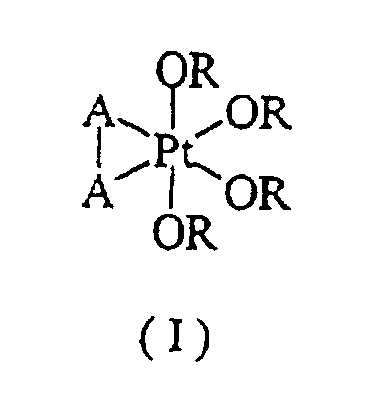 2,2-dimethyl-1,3-propanediamine (NH2CH2C(CH3)2CH2NH2), cyclohexane-1,1-dimethaneamine
 and tetrahydro-4H-pyran-4,4-dimethaneamine (O(CH2CH2)2C(CH2NH2)2), and an anionic group R is selected from the group consisting of propionyl (C2H5CO), butyryl (C3H7CO) and valeryl (C4H9CO) groups.
- The present inventors have found that the platinum(IV) complexes which contain one of the symmetric diamines above and four identical carboxylic groups can be easily absorbed in the gastro-intestinal track due to their high lipophilicity, and thus are potent oral anticancer drugs. The only two platinum complexes that are currently in clinical use are cisplatin (cis-(NH3)2PtCl2), and carboplatinThese platinum complexes are administered via injection, and orally administrable anticancer drugs have not yet been developed. Moreover, despite the high anticancer activity of these platinum (II) complexes for injection, their use is limited due to their severe side effects, such as nephrotoxicity and neurotoxicity (F.K.V. Leh, et. al, J. Pharm. Sciences, 65, 315 (1976)). Furthermore, these platinum (II) complexes for injection exhibit narrow therapeutic spectrum and cross-resistance. Therefore, a great deal of efforts have been made to develop the third generation anticancer drug for oral administration which show a wider therapeutic specturm and no cross-resistance. To date, however, such efforts have not been successful. Recently, researches are actively underway to find orally active platinum(IV) anticancer drugs. The oral route is preferred to injection since not only oral administration is presumed to reduce the side effects due to cytotoxicity resulting from injection of the drug, but also, it is more convenient and cost-effective for patients since they do not have to be hospitalized for treatment. Despite the need for such oral anticancer drugs, development has not been successful because some strict requirements should be satisfied. First of all, the oral anticancer drug must be chemically stable in the highly acidic (pH=1-2) environment of the stomach, and secondly, it must be well absorbed in the gastro-intestinal track. Most of the 4-coordinate platinum (II) complexes do not satisfy these requirements, and only 6-coordinate platinum(IV) complexes can be considered as a possible oral anticancer agent (C.M. Giadomenico et.al., Inorg. Chem. 34, 1015 (1995)). Thirdly, the oral platinum (IV) anticancer drugs must have an appropriate reduction properties since they need to be reduced to a platinum (II) complex to combine with deoxyribonucleic acid (DNA) in the cell (L.T. Ellis et. al., Aust. J. Chem. 48, 793 (1995)). Therefore, despite the efforts, the 6-coordinate platinum (IV) complex anticancer agents have not been commercialized to date. Only JM216
 (M. Abrans, European patent pending 89300787.2) developed by Johnson-Matthey of Great Britain is in the clinical phase II study and Cn-OHP
 (oxalato) (Y.Kidany, European patent pending 94202874.7) of the Kidany's group in Japan is in preparation for clinical studies.
- The conventional method for preparation of preparing the 6-coodinate platinum(IV) complexes is to first synthesize 4-coordinate platinum(II) complexes which are expected to have anticancer activity, and oxidize them by using hydrogen peroxide or halogens. Then the newly added axial ligands, that is hydroxyl or halide (such as chloride and bromide) groups are substituted with a different ligand such as carboxylate groups (C.M. Giandomenico et. al., Inorg. Chem. 34, 1015 (1995)). Such conventional oxidative addition reaction for the 6-coordinate platinum(IV) complexes can afford only variation of the axial ligands. And moreover, such nucleophilic substitution is known to be very difficult because of the intrinsic inertness of metal-ligand bonds in the octahedral platinum(IV) complexes (M.Galanski et. al., Inorg. Chem 1996, 35, 1709)
- EP 0328274 discloses Pt(TV) complexes of the formula:wherein A and A' are NH3 or an amino group; R and R1 are hydrogen, alkyl, alkenyl, aryl, aralkyl, alkylamino or alkoxy or functionatized derivatives thereof; and X is halogen or alkyl mono- or dicarboxylate.

- EP 0646589 discloses Pt(IV) complexes of the formula:wherein A-A- designates a diamine, L designates a ligand forming a five or six-membered ring and X designates carboxylate, carbonate, carbamate, sulfate or phosphate.

- It is an object of the present invention to develop new platinum complexes that are efficient anticancer agents when administered orally.
- More particularly, it is an object of the present invention to develop anticancer platinum(IV) complexes for oral administration.
- Another object of the present invention is to provide a method of preparing anticancer platinum(IV) complexes for oral administration.
- While exploring the synthetic schemes for various 6-coordinate platinum(IV) complexes, we, the inventors have found that 6-coordinate platinum(IV) complexes can be prepared by first preparing an intermediate, (diamine)tetrahydroxyplatinum(IV) (A2Pt(OH)4), by oxidizing a 4-coodinate (diamine)platinum(II) complex with hydrogen peroxide and then by synthesizing the 6-coordinate platinum(IV) complexes by substituting the four hydroxy groups via electrophilic substitution reaction. Especially, the platinum(IV) complexes of 'Formula I where the four hydroxy groups were substituted with acyl groups were efficient anticancer agents (see Table 1) since they were more lipophilic than the existing platinum(IV) complexes, such as A2PtCl2(OR)2 or a un-acylated intermediate, A2Pt(OH)4.
- The manner in which the foregoing and other objects of this invention are accomplished will be apparent from the accompanying specification and claims considered together with the working examples.
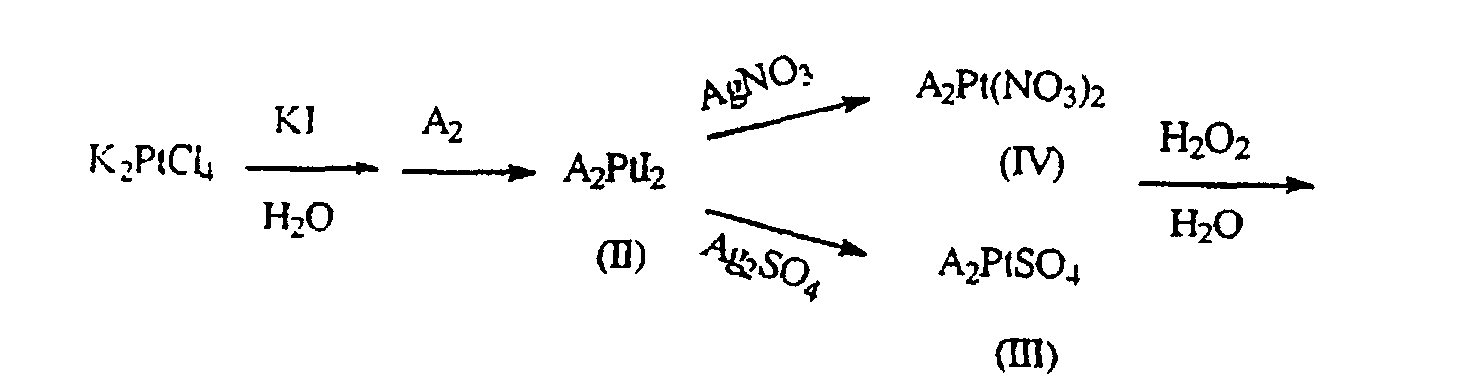
- The preparation method of the platinum(IV) complexes of Formula I is as follows. Potassium tetrachloroplatinum (K2PtCl4), potassium iodide (KI) and corresponding amine were reacted as described in the literature (R.C. Harrison, et. al, Inorg. Chimica Acta, 46, L15 (1980)) to obtain (diamine)platinum(II) iodide of Formula II, which was reacted with the same equivalent of silver sulfate or silver nitrate for 5 hours at room temperature to obtain water soluble (diamine)platinum(II) sulfate or nitrate of Formula III or Formula IV, respectively.
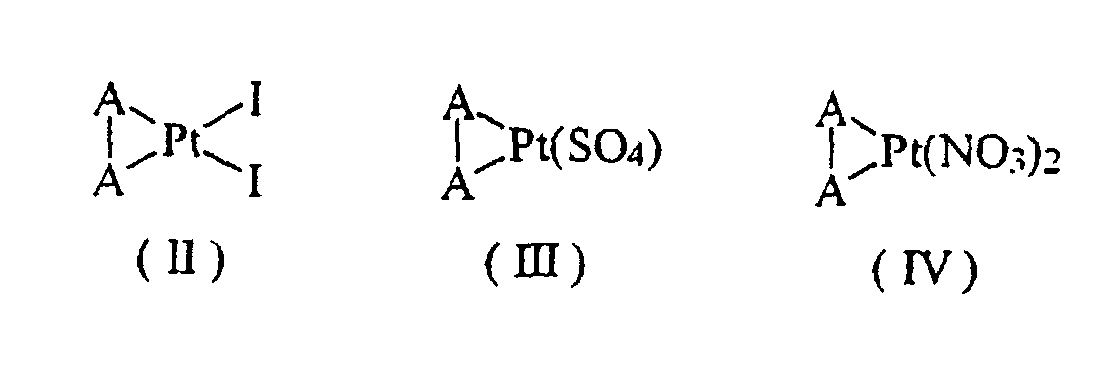
- (In the above Formulas, A-A is identical to the A-A of Formula I)
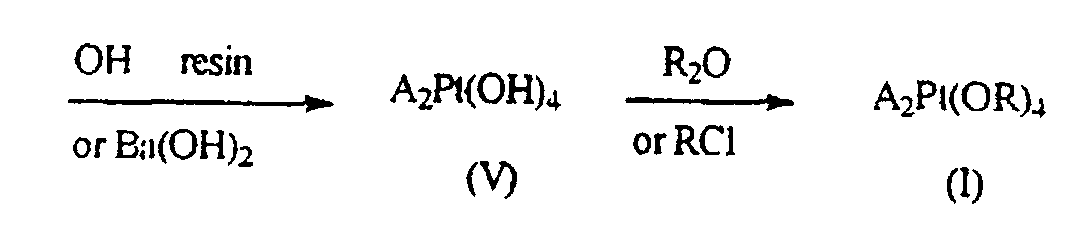
- To (diamine)platinum(II) sulfate or nitrate of Formula III or Formula IV, respectively, 50 to 100 % excess amount, i.e., 1.5 to 2.0 equivalent of 30 % aqueous hydrogen peroxide solution was added and the reaction mixture was stirred for 2 hours at room temperature. The sulfate or nitrate anion was removed by using an anion exchange column, and then the solution was evaporated to obtain platinum(IV) hydroxide of Formula V. In case of (diamine)platinum(II) sulfate of Formula III, it is also possible to obtain the platinum(IV) hydroxide crystals of Formula V by using an exact amount of barium hydroxide (Ba(OH)2×8H2O) equivalent to platinum(II) to remove the sulfate ion as the barium sulfate form, instead of using an anionic exchange column,

- (In the above Formula, A-A is identical to the A-A of Formula I)
- White or pale yellow crystalline products of the 6-coordinate platinum(IV) complex of Formula I were obtained as follows. An intermediate, (diamine)platinum(IV) hydroxide of Formula V is dispersed directly in a neat carboxylic anhydride and reacted for 5 to 10 hours at room temperature to obtain the 6-coordinate platinum(IV) complexes of Formula I. Another method of obtaining the 6-coordinate platinum(IV) complex of Formula I is, first, to disperse the (diamine)platinum(IV) hydroxide of Formula V into a polar solvent such as dichloromethane or acetone, and to this solution, 6 to 10 equivalent carboxylic anhydride (R2O) or acyl chloride (RCI) per mole of (diamine)platinum(IV) hydroxide of Formula V is added for reaction for 5-10 hours at room temperature or below 60 °C. The white or pale yellow crystalline powders of the 6-coordinate platinum(IV) complexes of Formula I are obtained when an excess amount of a nonpolar organic solvent, such as diethylether or n-hexane, is added. Especially when the (diamine)platinum(IV) hydroxide of Formula V is reacted with acyl chloride (RCI), the reaction should be performed in the presence of a hydrogen chloride removing agent such as pyridine or triethylamine at 30 ∼ 60 °C. The preparation procedure of the present invention can be described as in the following reaction Scheme.
- The invention will be further illustrated by the following examples, but not limited to the examples given.
- The elemental analysis for the platinum complexes of the present invention was performed in the Chemical Analysis Center at Korea Institute of Science and Technology by using a CHN analyzer (Perkin Elmer). The infrared spectra of the samples were obtained as KBr pellet by Perkin Elmer 16F PC Ft-IR in the range of 4000 and 400 cm-1.
- To an aqueous solution containing 6.23 g (15.0 mmole) of K2PtCl4, 12.45 g (75 mmol) of potassium iodide was added. After the reaction mixture was stirred for 30 min., 20 ml of an aqueous solution containing 2.06 g (18 mmol) trans (±)-1,2-diaminocyclohexane was slowly added and the reaction mixture was stirred for 3 hours. The yellow precipitate was filtered, washed with distilled water 3 times (30 ml x 3) and dried under reduced pressure at warm temperature (3 mmHg, 40 °C) to obtain 7.47 g (yield, 88.5 %) of.

- After 5.63 g (10.0 mmol) ofand 3.40 g (20.0 mmol) of AgNO3 are reacted in 200 ml of distilled water for 5 hours, the Agl precipitate formed was filtered out to obtain an aqueous solution of
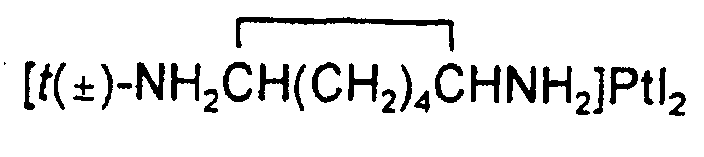 An excess amount of 30 % aqueous hydrogen peroxide solution was added to the
 solution, which was stirred for 5 hours. After filtering out a small amount of precipitate, the filtrate was concentrated to a total volume of 100 ml under reduced pressure at warm temperature (3 mm Hg, 40 °C). The condensed aqueous solution was passed through a glass column containing anionic resin (OH- type, 100 ml), which was eluted by 400 ml of distilled water. The total aqueous solution (500 ml) that passed through the anionic resin was dried under reduced pressure at warm temperature (3 mm Hg, 40 °C) to obtain 2.43 g (yield, 64.3 %) of [t(±)-NH2CH(CH2)4CHNH2]Pt(OH)4.
- To a solution of 1.00 g (2.65 mmol) ofdispersed in 25 ml of dichloromethane, 6.4 ml (50.0 mmol) of propionic anhydride was added, and the reaction mixture was stirred for 8 hours at room temperature. The product was precipitated by adding an excess amount of diethylether (60 ml). The precipitate was filtered and washed twice (15 ml x 2) with diethylether under reduced pressure (3 mm Hg) at room temperature to obtain 0.89 g (yield, 55.8 %) of the platinum complex,

 .
.
- Melting point: 169 °C (decomposition)
- Molecular formula: (C18H34N2O8)Pt
- Elemental analysis: C, 36.2; H, 5.73; N, 4.54
- Theoretical value: C, 35.9; H, 5.70; N, 4.66
- Infrared absorbance bands (KBr cm-1): 642(m), 700(m), 1032(m), 1152(m), 1273(s), 1344(s), 1456(m), 1632(s), 2884(m), 2940(m), 3102(m), 3448(m)
-
- One gram (2.65 mmol) ofprepared by using the same procedure as described in Example 1 and 4.1 ml (25.0 mmol) of butyric anhydride were used to prepare 0.91 g (yield, 49.3 %) of
 using the same method as described in Example 1.
- Melting point: 174 °C (decomposition)
- Molecular formula: (C22H42N2O8)Pt(2H2O)
- Elemental analysis: C, 38.3; H, 6.65; N, 4.01
- Theoretical value: C, 38.1; H, 6.68; N, 4.04
- Infrared absorbance bands (KBr cm-1): 636(m), 696(m), 1048(m), 1156(m), 1297(s), 1366(m), 1392(s), 1481(m), 1627(s), 2848(m), 2987(s), 3127(m), 3452(m)
-
- One gram (2.65 mmol) ofprepared by using the same procedure as described in Example 1, and 4.9 ml (25.0 mmol) of valeric anhydride were used to prepare 1.11 g (yield, 57.2 %) of
 by using the same method as described in Example 1.
- Melting point: 183 °C (decomposition)
- Molecular formula: (C26H50N2O8)Pt(H2O)
- Elemental analysis: C, 42.5; H, 7.18; N, 3.81
- Theoretical Value: C, 42.7; H, 7.16; N, 3.83
- Infrared absorbance bands (KBr cm-1): 574(m), 702(m), 1062(m), 1086(m), 1143(m), 1282(s), 1396(s), 1447(m), 1492(m), 1622(s), 2836(m), 2976(s), 3224(m), 3446 (m)
-
- By following the same procedure as in Example 1, 6.96 g (yield, 91.2 %) of (NH2CH2CH2NH2)Ptl2 was obtained using the same equivalent of ethylenediamine instead of t(±)-1,2-diaminocyclohexane.
- After reaction of 5.09 g (10.0 mmol) of (NH2CH2CH2NH2)Ptl2 and 3.12 g (10.0 mmol) of Ag2SO4 in distilled water for 5 hours, the Agl precipitate formed was filtered out to obtain an aqueous solution of (NH2CH2CH2NH2)PtSO4. An excess amount of 30 % aqueous hydrogen peroxide solution (5 ml) was added to the (NH2CH2CH2NH2)PtSO4 solution, which was stirred for 4 hours. After filtering out a small amount of precipitate, the filtrate was concentrated to a total volume of 50 ml under reduced pressure at warm temperature (3 mm Hg, 40 °C). 20 ml of an aqueous solution containing 3.15 g (10.0 mmol) of barium hydroxide (Ba(OH)2·8H2O) was added to this concentrated solution and the reaction mixture was stirred for 3 hours. After filtering out the precipitate(BaSO4), the filtrate was evaporated under reduced pressure at warm temperature (3 mm Hg, 40 °C) to obtain 1.57 g (yield, 48.6 %) of (NH2CH2CH2NH2)Pt(OH)4.
- One gram (3.1 mmol) of (NH2CH2CH2NH2)Pt(OH)4 was dispersed in 10 ml (61.0 ml) of butyric anhydride, and the mixture was stirred for 8 hours at room temperature until the solid reactant was completely dissolved. The carboxylated product was precipitated by adding an excess amount of diethylether (100 ml). The precipitate was filtered, washed twice (15 ml x 2) with diethylether, and dried under reduced pressure (3 mm Hg) at room temperatures (25 °C) to obtain 0.86 g (yield, 46.0 %) of the platinum complex, (NH2CH2CH2NH2)Pt(OOCC3H7)4.
- Melting point: 182 °C (decomposition)
- Molecular formula: (C18H36N2O8)Pt
- Elemental analysis: C, 35.5; H, 5.97; N, 4.62
- Theoretical value: C, 35.8; H, 6.01; N, 4.64
- Infrared absorbance bands (KBr cm-1): 582(m), 670(m), 1062(m), 1176(m), 1212(s), 1288(s), 1360(s), 1452(m), 1638(m), 2878(m), 2964(m), 3230(m), 3448(m)
-
- One gram (3.10 mmol) of (NH2CH2CH2NH2)Pt(OH)4 prepared by using the procedure described in Example 4, and 4.9 ml (25.0 mmol) of valeric anhydride were used to prepare 1.07 g (yield, 52.5 %) of (NH2CH2CH2NH2)Pt(OOCC4H9)4 by using the same method as described in Example 4.
- Melting point: 194 °C (decomposition)
- Molecular formula: (C22H44N2O8)Pt
- Elemental analysis: C, 40.0; H, 6.75; N, 4.28
- Theoretical value: C, 40.1; H, 6.72; N, 4.25
- Infrared absorbance bands (KBr cm-1): 614(m), 712(m), 934(m), 1018(m), 1180(m), 1282(s), 1347(s), 1364(s), 1648(s), 2880(m), 2971(s), 3223(m), 3442(m)
-
- To an aqueous solution (150 ml) containing 6.23 g (15.0 mmol) of K2PtCl4, 12.45 g (75 mmol) of potassium iodide was added. After stirring the mixture for 30 minutes, 1.84 g (18 mmol) of 2,2-dimethyl-1,3-propanediamine was slowly added and the reaction mixture was stirred for 3 hours. The yellow precipitate formed was filtered, washed three times (30 ml x 3) with distilled water and dried under reduced pressure at warm temperature (3 mmHg, 40 °C) to obtain 7.50 g (yield, 90.7 %) of [NH2CH2C(CH3)2CH2NH2]Ptl2.
- By following the same procedure as in Example 4, 2.10 g (yield, 57.5 %) of [NH2CH2C(CH3)2CH2NH2]Pt(OH)4 was obtained using the same equivalent of [NH2CH2C(CH3)2CH2NH2]Ptl2 instead of [NH2CH2CH2NH2]Ptl2.
- By reaction of 1.00 g (2.74 mmol) of [NH2CH2C(CH3)2CH2NH2]Pt(OH)4 and 6.4 ml (50.0 mmol) of propionic anhydride in the same way as in Example 4, 1.00 g (yield, 62.1 %) of [NH2CH2C(CH3)2CH2NH2]Pt(OOCC2H5)4 was obtained.
- Melting point: 187 °C (decomposition)
- Molecular formula: (C17H34N2O8)Pt
- Elemental analysis: C, 34.8; H, 5.80; N, 4.77
- Theoretical value: C, 34.6; H, 5.81; N, 4.75
- Infrared absorbance bands (KBr cm-1): 632(m), 700(m), 802(m), 1047(m), 1138(m), 1237(m), 1382(s), 1467(m), 1618(s), 1632(s), 2893(m), 2944(s), 3135(m), 3407(m)
-
- One gram (2.74 mmol) of [NH2CH2C(CH3)2CH2NH2]Pt(OH)4 prepared by using the procedure described in Example 6 and 4.1 ml (25.0 mmol) of isobutyric anhydride were used to prepare 0.78g (yield, 42.7%) of [NH2CH2C(CH3)2CH2NH2]Pt(OOCCH(CH3)2]4· H2O using the same method as described in Example 6.
- Melting point: 191 °C (decomposition)
- Molecular formula: (C21H42N2O8)Pt(H2O)
- Elemental analysis: C, 37.8; H, 6.65; N, 4.16
- Theoretical value: C, 38.0; H, 6.68; N, 4.22
- Infrared absorbance bands (KBr cm-1): 614(m), 696(m), 1042(m), 1256(m), 1297(m), 1367(m), 1397(s), 1458(m), 1637(s), 2948(m), 3133(m), 3221(m), 3448(m)
-
- The same equivalent of tetrahydro-4H-pyran-4,4-dimethaneamine was used instead of t(±)-1,2-diaminocyclohexane to prepare 7.62 g (yield, 85.6 %) of [O(CH2CH2)2C (CH2NH2)2]Ptl2 using the same procedure as described in Example 1.
- The same equivalent of [O(CH2CH2)2C(CH2NH2)2]Ptl2 was used instead of [t(±)-NH2CH(CH2)4CHNH2]Ptl2 to prepare 2.55 g (yield, 62.5 %) of [O(CH2CH2)2C(CH2NH2)2]Pt(OH)4 using the same procedure as described in Example 1.
- One gram (2.45 mmol) of [O(CH2CH2)2C(CH2NH2)2]Pt(OH)4 and 6.4 ml (50.0 mmol) of propionic anhydride were reacted to prepare 0.81 g (yield, 50.6 %) of [O(CH2CH2)2C(CH2NH2)2]Pt(OOCC2H5)4·H2O using the same method as described in Example 1.
- Melting point: 194 °C (decomposition)
- Molecular formula: (C19H36N2O9)Pt(H2O)
- Elemental analysis: C, 35.4; H, 5.90; N, 4.33
- Theoretical value: C, 35.1; H, 5.90; N, 4.31
- Infrared absorbance bands (KBr cm-1): 603(m), 695(m), 1036(m), 1135(m), 1162(m), 1257(m), 1345(m), 1382(s), 1447(m), 1612(s), 2940(s), 3092(m), 3216(m), 3435(m)
-
- One gram (2.45 mmol) of [O(CH2CH2)2C(CH2NH2)2]Pt(OH)4 obtained by using the same procedure as in Example 8 and 4.1 ml (25.0 mmol) of butyric anhydride were reacted to prepare 0.79 g (yield, 46.7 %) of [O(CH2CH2)2C(CH2NH2)2]Pt(OOCC3H7)4 using the same method as described in Example 8.
- Melting point: 201 °C (decomposition)
- Molecular formula: (C23H44N2O9)Pt
- Elemental analysis: C, 40.0; H, 6.42; N, 4.09
- Theoretical value: C, 40.2; H, 6.45; N, 4.07
- Infrared absorbance bands (KBr cm-1): 612(m), 752(m), 838(m), 1147(m), 1220(m), 1347(s), 1376(s), 1432(m), 1635(s), 2778(m), 2972(s), 3324(m), 3440(m)
-
- The same equivalent of cyclohexane-1,1-dimethaneamine was used instead of t(±)-1,2-diaminocyclohexane to prepare 8.22 g (yield, 92.7 %) ofusing the same procedure as described in Example 1.

- The same equivalent ofwas used instead of
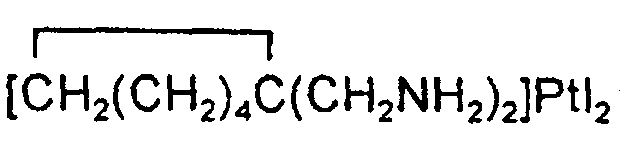 prepare 2.14 g (yield, 52.8 %) of
 using the same procedure as described in Example 1.
- After 1.00 g (2.47 mmol) ofand 1.62 ml (20.0 mmol) of pyridine were dispersed in 25 ml of acetone, 0.87 ml (10.0 mmol) of propionyl chloride was added to the mixture, which was stirred for 8 hours at 60 °C. After the reaction mixture was cooled to room temperature (25 °C), the product was precipitated by adding an excess amount of diethylether (100 ml). The precipitate was filtered, washed twice (15 ml x 2) with diethyl ether and dried under reduced pressure (3 mmHg) at room temperature (25 °C) to obtain 0.81 g (yield, 49.4 %) of the platinum complex


- Melting point: 189 °C (decomposition)
- Molecular formula: (C20H88N2O8)Pt(2H2O)
- Elemental analysis: C, 36.0; H, 6.32; N, 4.25
- Theoretical value: C, 36.1; H, 6.36; N, 4.21
- Infrared absorbance bands (KBr cm-1): 597(m), 691(m), 846(m), 1135(m), 1287(s), 1348(s), 1398(m), 1467(m), 1647(s), 2893(m), 2988(s), 3105(m), 3451(m)
-
- The oral anticancer activity of the hexa-coordinate platinum(IV) complexes of the present invention was evaluated as follows. A group of eight 6-week old BDF1 mice was employed to test for each compound. 1 x 10⁵ cells of L1210 leukemia in ascitic fluid from DBA/2 mice were implanted intraperitoneally in each mouse. The test solutions containing platinum(IV) complexes at different concentrations were orally administered daily for consecutive five days. The survival time of each group of the mice was recorded. The percent increase in the survival time as compared to the control group, T/C(%), was calculated as an indicator of the anticancer activity. The results are summarized in Table I. Drugs that have more than 125 % of the T/C (%) values can be considered as efficient anticancer drugs. As shown in Table 1, the platinum (IV) complexes of Example 1 have excellent anticancer activity. It is expected that the complex in Example 1 could be practically applicable since the acute toxicity was also low (LD50 = 300 mg/kg).
Platinum complex Dose (mg/kg) Increase ratio in The survival time (T/C, %) Octanol partition coefficient (P) EXAMPLE 1 150 160.9 1.7 EXAMPLE 2 150 139.1 1.90 EXAMPLE 4 150 115.4 1.20 EXAMPLE 6 150 130.8 1.74 EXAMPLE 10 150 113.5 1.15 COMPARATIVE EXAMPLE 1 150 108.8 0.57 COMPARATIVE EXAMPLE 2 150 103.1 0.81 - According to the present invention, the new platinum(IV) complexes can be administered orally. The platinum(IV) complexes of the present invention, when orally administered, are highly lipophilic, can be absorbed efficiently in the stomach, have excellent anticancer activities and have low toxicity. Moreover, oral anticancer drug is cost-effective and provides convenience to the patients since they can be treated without being hospitalized.







Claims (6)
- Platinum (IV) complexes represented by Formula I:wherein A-A is a symmetric diamine that can chelate to platinum and is selected from the group consisting of ethylene diamine, t(±)-1,2-diaminocyclohexane, 2,2-dimethyl-1,3-propanediamine, cyclohexane-1,1-dimethaneamine, and tetrahydro-4H-pyran-4,4-dimethaneamine, and an anionic group R is selected from the group consisting of propionyl, butyryl and valeryl groups.

- A method for preparing hexa-coordinate platinum(IV) complex of Formula I:(wherein A-A is a symmetric diamine that can chelate to platinum and is selected from the group consisting of ethylene diamine, t(±)-1,2-diaminocyclohexane, 2,2-dimethyl-1 3-propanediamine, cyclohexane-1,1-dimethaneamine, and tetrahydro-4H-pyran-4,4-dimethaneamine, and an anionic group R is selected from the group consisting of propionyl, butyryl and valeryl groups).
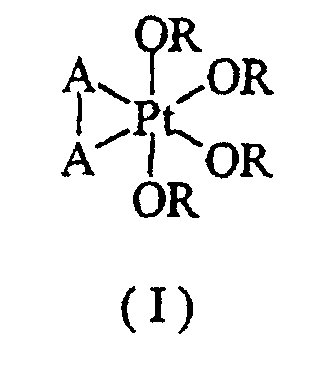
comprising the steps of preparing diamineplatinum(IV) tetrahydroxide of Formula V,(wherein A-A is a symmetric diamine that can chelate to platinum and is selected from the group consisting of ethylene diamine, t(±)-1,2-diaminocyclohexane, 2,2-dimethyl-1,3-propanediamine, cyclohexane-1,1-dimethaneamine, and tetrahydro-4H-pyran-4,4-dimethaneamine),
by direct oxidization of (diamine)platinum(II) sulfate of Formula III or (diamine)platinum(II) nitrate of Formula IV with hydrogen peroxide,(wherein A-A is a symmetric diamine that can chelate to platinum and is selected from the group consisting of ethylene diamine, t(±)-1,2-diaminocyclohexane, 2,2-dimethyl-1,3-propanediamine, cyclohexane-1,1-dimethaneamine, and tetrahydro-4H-pyran-4,4-dimethaneamine),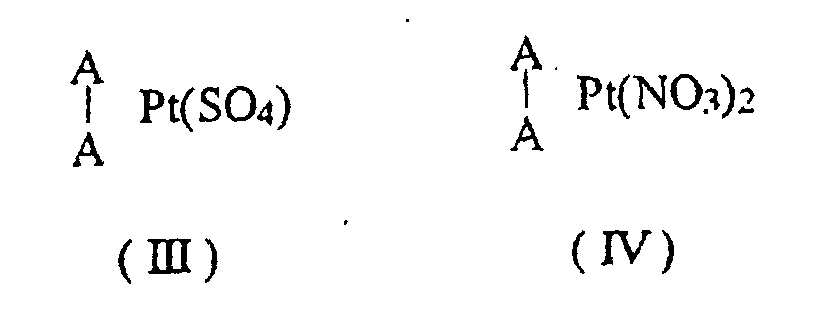
and reacting (diamine)platinum(IV) tetrahydroxide of Formula V with an electrophilic reagent, R2O or RCl, to produce hexa-coordinate platinum (IV) complex of Formula I. - The method according to claim 2, wherein the (diamine)platinum(IV) tetrahydroxide of Formula V is dispersed in an excess amount of carboxylic anhydride and then precipitated by adding diethylether.
- The method according to claim 2, wherein the (diamine)platinum(IV) tetrahydroxide of Formula V is dispersed in dichloromethane or acetone solvent and reacted with carboxylic anhydride and then precipitated by adding diethylether.
- The method according to claim 2, wherein the (diamine)platinum(IV) tetrahydroxide is dispersed in dichloromethane or acetone solvent and reacted with acyl chloride in the presence of hydrogen chloride acceptor and then precipitated by adding diethylether.
- The method according to claim 4, wherein pyridine is used as a hydrogen chloride acceptor, and the reaction is carried out at 30 ∼ 60 °C for 5 ∼ 10 hours.
Applications Claiming Priority (3)
| Application Number | Priority Date | Filing Date | Title |
|---|---|---|---|
| KR1019970079743A KR100246722B1 (en) | 1997-12-30 | 1997-12-30 | Oral platinum complex compound anticancer agent and preparation method thereof |
| KR9779743 | 1997-12-30 | ||
| PCT/KR1998/000456 WO1999033782A1 (en) | 1997-12-30 | 1998-12-23 | Anticancer platinum (iv) complexes for oral administration |
Publications (2)
| Publication Number | Publication Date |
|---|---|
| EP1051387A1 EP1051387A1 (en) | 2000-11-15 |
| EP1051387B1 true EP1051387B1 (en) | 2003-04-23 |
Family
ID=19530197
Family Applications (1)
| Application Number | Title | Priority Date | Filing Date |
|---|---|---|---|
| EP98961662A Expired - Lifetime EP1051387B1 (en) | 1997-12-30 | 1998-12-23 | Anticancer platinum (iv) complexes for oral administration |
Country Status (9)
| Country | Link |
|---|---|
| US (1) | US5998648A (en) |
| EP (1) | EP1051387B1 (en) |
| JP (1) | JP3648452B2 (en) |
| KR (2) | KR100246722B1 (en) |
| AT (1) | ATE238269T1 (en) |
| AU (1) | AU1693899A (en) |
| DE (1) | DE69813903T2 (en) |
| ES (1) | ES2196634T3 (en) |
| WO (1) | WO1999033782A1 (en) |
Families Citing this family (12)
| Publication number | Priority date | Publication date | Assignee | Title |
|---|---|---|---|---|
| JP4776843B2 (en) | 1999-10-01 | 2011-09-21 | イムノゲン インコーポレーティッド | Cancer composition and method using immunoconjugate and chemotherapeutic agent |
| RU2178702C1 (en) * | 2001-02-21 | 2002-01-27 | Общество с ограниченной ответственностью "Нобель" | Anticancer agent |
| CA2535762A1 (en) * | 2003-08-13 | 2005-03-17 | University Of South Florida | Methods for inhibiting tumor cell proliferation |
| US20050288365A1 (en) * | 2004-01-06 | 2005-12-29 | Heidi Kay | Platinum complexes and methods for inhibiting tumor cell proliferation |
| CZ2004964A3 (en) * | 2004-09-14 | 2006-03-15 | Pliva-Lachema A. S. | An oral pharmaceutical composition for the targeted delivery of the platinum complex to the colorectal region, a method for its preparation, and the composition for use as a medicament |
| US7977500B2 (en) * | 2004-11-10 | 2011-07-12 | University Of South Florida | Platinum complexes for targeted drug delivery |
| KR100698609B1 (en) * | 2005-05-06 | 2007-03-22 | 서울시립대학교 산학협력단 | Wick watering pot |
| WO2007006019A1 (en) * | 2005-07-06 | 2007-01-11 | University Of South Florida | Materials and methods for screening, diagnosis and prognosis of conditions associated with stat protein expression |
| DE602006017567D1 (en) * | 2005-09-12 | 2010-11-25 | Bendale N | NEW BIOPLATIN, METHOD OF MANUFACTURING, METHOD FOR THE ADMINISTRATION OF ANTITUMOROUS TREATMENT |
| CZ300424B6 (en) * | 2006-06-20 | 2009-05-13 | Pliva - Lachema A. S. | Pharmaceutical composition for peroral administration |
| EP2208731B1 (en) * | 2009-06-26 | 2012-08-15 | Umicore AG & Co. KG | Process for preparation of 1,2-diamino-cyclohexane-platinum(II) complexes |
| KR20240025177A (en) | 2022-08-18 | 2024-02-27 | 정민우 | Concave lens manufacturing method |
Family Cites Families (10)
| Publication number | Priority date | Publication date | Assignee | Title |
|---|---|---|---|---|
| US4937358A (en) * | 1987-06-23 | 1990-06-26 | American Cyanamid Company | Synthesis of cisplatin analogs |
| US4996337A (en) * | 1987-06-23 | 1991-02-26 | American Cyanamid Company | Synthesis of cisplatin analogs |
| ATE113054T1 (en) * | 1988-02-02 | 1994-11-15 | Johnson Matthey Inc | PT(IV) COMPLEXES. |
| US5072011A (en) * | 1988-02-02 | 1991-12-10 | Johnson Matthey, Inc. | Pt(IV) complexes |
| US5041578A (en) * | 1988-11-22 | 1991-08-20 | Board Of Regents, The University Of Texas System | Water soluble 1,2-diaminocyclohexane platinum (IV) complexes as antitumor agents |
| JPH07101970A (en) * | 1993-10-04 | 1995-04-18 | Tanaka Kikinzoku Kogyo Kk | Novel lipophilic platinum (IV) complex of antitumor cyclohexanediamine derivative |
| JPH07138274A (en) * | 1993-11-12 | 1995-05-30 | Tanaka Kikinzoku Kogyo Kk | Antitumor cyclohexanediamine derivative platinum (IV) complex having a lipophilic group on the Z axis |
| EP0646589A3 (en) * | 1993-10-04 | 1995-06-28 | Tanaka Precious Metal Ind | Anti-tumor platinum (IV) complexes. |
| EP0909288B1 (en) * | 1996-07-02 | 2007-06-27 | Ciba SC Holding AG | Process for curing a polymerizable composition |
| JPH10251285A (en) * | 1997-03-14 | 1998-09-22 | Ss Pharmaceut Co Ltd | Platinum (IV) complex and pharmaceutical containing the same |
-
1997
- 1997-12-30 KR KR1019970079743A patent/KR100246722B1/en not_active Expired - Fee Related
-
1998
- 1998-08-14 US US09/134,697 patent/US5998648A/en not_active Expired - Fee Related
- 1998-12-23 KR KR10-2000-7007188A patent/KR100377328B1/en not_active Expired - Fee Related
- 1998-12-23 DE DE69813903T patent/DE69813903T2/en not_active Expired - Fee Related
- 1998-12-23 AT AT98961662T patent/ATE238269T1/en not_active IP Right Cessation
- 1998-12-23 WO PCT/KR1998/000456 patent/WO1999033782A1/en not_active Ceased
- 1998-12-23 EP EP98961662A patent/EP1051387B1/en not_active Expired - Lifetime
- 1998-12-23 JP JP2000526469A patent/JP3648452B2/en not_active Expired - Fee Related
- 1998-12-23 ES ES98961662T patent/ES2196634T3/en not_active Expired - Lifetime
- 1998-12-23 AU AU16938/99A patent/AU1693899A/en not_active Abandoned
Non-Patent Citations (2)
| Title |
|---|
| KRATOCHWIL, N.A., BEDNARSKI, P.J.: "Relationship between reduction properties and cancer cell growth inhibitory activities of cis-dichloro- and cis-diiodo-Pt(IV)-ethylenediamines", ARCH.PHARM. PHARM. MED. CHEM., vol. 332, 1999, pages 279 - 285 * |
| YOUNG-A LEE ET AL.: "Synthesis and oral antitumor activity of Tetrakis(carboxylato)platinum(IV) complexes", J. MED.CHEM, vol. 43, no. 7, 2002, pages 1409 - 1412 * |
Also Published As
| Publication number | Publication date |
|---|---|
| EP1051387A1 (en) | 2000-11-15 |
| KR100246722B1 (en) | 2000-04-01 |
| ATE238269T1 (en) | 2003-05-15 |
| WO1999033782A1 (en) | 1999-07-08 |
| JP3648452B2 (en) | 2005-05-18 |
| KR100377328B1 (en) | 2003-03-26 |
| KR19990059535A (en) | 1999-07-26 |
| DE69813903D1 (en) | 2003-05-28 |
| ES2196634T3 (en) | 2003-12-16 |
| KR20000064233A (en) | 2000-11-06 |
| DE69813903T2 (en) | 2003-12-18 |
| AU1693899A (en) | 1999-07-19 |
| US5998648A (en) | 1999-12-07 |
| JP2001527059A (en) | 2001-12-25 |
Similar Documents
| Publication | Publication Date | Title |
|---|---|---|
| EP0318464B1 (en) | Antitumor platinum complexes | |
| Scattolin et al. | Palladium (0) olefin complexes bearing purine-based N-heterocyclic carbenes and 1, 3, 5-triaza-7-phosphaadamantane (PTA): Synthesis, characterization and antiproliferative activity toward human ovarian cancer cell lines | |
| KR970010594B1 (en) | Platinum Compounds of Malonic Acid Derivatives and Methods for the Preparation | |
| US5998648A (en) | Anticancer (IV) complexes for oral administration and a method of making the same | |
| CA1134378A (en) | Cis-platinum(ii) amine lactate complexes | |
| EP0701440B1 (en) | Tri(platinum) complexes | |
| KR910009823B1 (en) | Platinum complexes | |
| EP0163316B1 (en) | Platinum-intercalative complexes for the treatment of cancer | |
| US4687780A (en) | Anti-tumor compounds of platinum | |
| Song et al. | Synthesis and cytotoxicity of new platinum (IV) complexes of mixed carboxylates | |
| Kilpin et al. | Organogold (III) complexes containing chelating bis (amidate) ligands: Synthesis, characterisation and biological activity | |
| FI79713C (en) | FREEZING FOR CARBOXYLATPLATIN (II) BLANDKOMPLEX MED AKTIVITET MOT TUMOERER. | |
| EP0176005B1 (en) | Novel platinum complexes | |
| Galanski et al. | Synthesis and characterization of new ethylenediamine platinum (IV) complexes containing lipophilic carboxylate ligands | |
| EP0333351A2 (en) | Platinum coordination compounds | |
| US5028726A (en) | Platinum amine sulfoxide complexes | |
| EP1749015B1 (en) | A process for the preparation of an anti-tumor platinum(ii)-complex | |
| EP0237829A2 (en) | Heterocyclic tetrahydro-3,4-diamine-N-N'-platinum complexes | |
| KR20000061478A (en) | Platinum complex conjugated to cyclotriphosphazene, prepration thereof, and anticancer agent comprising the same | |
| Yoo et al. | Synthesis of stable platinum complexes containing carborane in a carrier group for potential BNCT agents | |
| KR20100107015A (en) | Platinum complex compound and utilization of the same | |
| Lee et al. | Synthesis, structure, and properties of isopropylidenemalonatoplatinum (IV) complexes | |
| EP0308910A2 (en) | Novel platinum complex | |
| US5142075A (en) | Anti-tumor platinum(II) complexes and process for the preparation thereof | |
| KR100197162B1 (en) | Platinum(ii) complexes of substituted malonates and preparation method thereof |
Legal Events
| Date | Code | Title | Description |
|---|---|---|---|
| PUAI | Public reference made under article 153(3) epc to a published international application that has entered the european phase |
Free format text: ORIGINAL CODE: 0009012 |
|
| 17P | Request for examination filed |
Effective date: 20000727 |
|
| AK | Designated contracting states |
Kind code of ref document: A1 Designated state(s): AT CH DE ES FR GB IT LI NL SE |
|
| 17Q | First examination report despatched |
Effective date: 20010703 |
|
| GRAH | Despatch of communication of intention to grant a patent |
Free format text: ORIGINAL CODE: EPIDOS IGRA |
|
| GRAH | Despatch of communication of intention to grant a patent |
Free format text: ORIGINAL CODE: EPIDOS IGRA |
|
| GRAA | (expected) grant |
Free format text: ORIGINAL CODE: 0009210 |
|
| AK | Designated contracting states |
Designated state(s): AT CH DE ES FR GB IT LI NL SE |
|
| REG | Reference to a national code |
Ref country code: GB Ref legal event code: FG4D |
|
| REG | Reference to a national code |
Ref country code: CH Ref legal event code: EP |
|
| REF | Corresponds to: |
Ref document number: 69813903 Country of ref document: DE Date of ref document: 20030528 Kind code of ref document: P |
|
| REG | Reference to a national code |
Ref country code: CH Ref legal event code: PFA Owner name: KOREA INSTITUTE OF SCIENCE AND TECHNOLOGY Free format text: KOREA INSTITUTE OF SCIENCE AND TECHNOLOGY#39-1 HAWOLLKOG-DONG, SUNGBUK-KU#SEOUL 136-791 (KR) -TRANSFER TO- KOREA INSTITUTE OF SCIENCE AND TECHNOLOGY#39-1 HAWOLGOK-DONG, SUNGBOOK-KU#SEOUL 136-791 (KR) Ref country code: CH Ref legal event code: NV Representative=s name: BOVARD AG PATENTANWAELTE |
|
| RAP2 | Party data changed (patent owner data changed or rights of a patent transferred) |
Owner name: KOREA INSTITUTE OF SCIENCE AND TECHNOLOGY |
|
| REG | Reference to a national code |
Ref country code: SE Ref legal event code: TRGR |
|
| NLT2 | Nl: modifications (of names), taken from the european patent patent bulletin |
Owner name: KOREA INSTITUTE OF SCIENCE AND TECHNOLOGY |
|
| ET | Fr: translation filed | ||
| REG | Reference to a national code |
Ref country code: ES Ref legal event code: FG2A Ref document number: 2196634 Country of ref document: ES Kind code of ref document: T3 |
|
| PLBE | No opposition filed within time limit |
Free format text: ORIGINAL CODE: 0009261 |
|
| STAA | Information on the status of an ep patent application or granted ep patent |
Free format text: STATUS: NO OPPOSITION FILED WITHIN TIME LIMIT |
|
| 26N | No opposition filed |
Effective date: 20040126 |
|
| PGFP | Annual fee paid to national office [announced via postgrant information from national office to epo] |
Ref country code: NL Payment date: 20081203 Year of fee payment: 11 Ref country code: CH Payment date: 20081230 Year of fee payment: 11 |
|
| PGFP | Annual fee paid to national office [announced via postgrant information from national office to epo] |
Ref country code: AT Payment date: 20081211 Year of fee payment: 11 |
|
| PGFP | Annual fee paid to national office [announced via postgrant information from national office to epo] |
Ref country code: SE Payment date: 20081205 Year of fee payment: 11 Ref country code: IT Payment date: 20081223 Year of fee payment: 11 |
|
| PGFP | Annual fee paid to national office [announced via postgrant information from national office to epo] |
Ref country code: FR Payment date: 20081212 Year of fee payment: 11 Ref country code: ES Payment date: 20090120 Year of fee payment: 11 |
|
| PGFP | Annual fee paid to national office [announced via postgrant information from national office to epo] |
Ref country code: DE Payment date: 20090123 Year of fee payment: 11 |
|
| PGFP | Annual fee paid to national office [announced via postgrant information from national office to epo] |
Ref country code: GB Payment date: 20090122 Year of fee payment: 11 |
|
| REG | Reference to a national code |
Ref country code: NL Ref legal event code: V1 Effective date: 20100701 |
|
| EUG | Se: european patent has lapsed | ||
| REG | Reference to a national code |
Ref country code: CH Ref legal event code: PL |
|
| GBPC | Gb: european patent ceased through non-payment of renewal fee |
Effective date: 20091223 |
|
| PG25 | Lapsed in a contracting state [announced via postgrant information from national office to epo] |
Ref country code: AT Free format text: LAPSE BECAUSE OF NON-PAYMENT OF DUE FEES Effective date: 20091223 |
|
| REG | Reference to a national code |
Ref country code: FR Ref legal event code: ST Effective date: 20100831 |
|
| PG25 | Lapsed in a contracting state [announced via postgrant information from national office to epo] |
Ref country code: NL Free format text: LAPSE BECAUSE OF NON-PAYMENT OF DUE FEES Effective date: 20100701 Ref country code: LI Free format text: LAPSE BECAUSE OF NON-PAYMENT OF DUE FEES Effective date: 20091231 Ref country code: FR Free format text: LAPSE BECAUSE OF NON-PAYMENT OF DUE FEES Effective date: 20091231 Ref country code: CH Free format text: LAPSE BECAUSE OF NON-PAYMENT OF DUE FEES Effective date: 20091231 |
|
| PG25 | Lapsed in a contracting state [announced via postgrant information from national office to epo] |
Ref country code: DE Free format text: LAPSE BECAUSE OF NON-PAYMENT OF DUE FEES Effective date: 20100701 |
|
| PG25 | Lapsed in a contracting state [announced via postgrant information from national office to epo] |
Ref country code: GB Free format text: LAPSE BECAUSE OF NON-PAYMENT OF DUE FEES Effective date: 20091223 |
|
| REG | Reference to a national code |
Ref country code: ES Ref legal event code: FD2A Effective date: 20110330 |
|
| PG25 | Lapsed in a contracting state [announced via postgrant information from national office to epo] |
Ref country code: IT Free format text: LAPSE BECAUSE OF NON-PAYMENT OF DUE FEES Effective date: 20091223 |
|
| PG25 | Lapsed in a contracting state [announced via postgrant information from national office to epo] |
Ref country code: SE Free format text: LAPSE BECAUSE OF NON-PAYMENT OF DUE FEES Effective date: 20091224 |
|
| PG25 | Lapsed in a contracting state [announced via postgrant information from national office to epo] |
Ref country code: ES Free format text: LAPSE BECAUSE OF NON-PAYMENT OF DUE FEES Effective date: 20110317 |
|
| PG25 | Lapsed in a contracting state [announced via postgrant information from national office to epo] |
Ref country code: ES Free format text: LAPSE BECAUSE OF NON-PAYMENT OF DUE FEES Effective date: 20091224 |