EP1050780B1 - Photographic element with a layer improving the adhesion to the support - Google Patents
Photographic element with a layer improving the adhesion to the support Download PDFInfo
- Publication number
- EP1050780B1 EP1050780B1 EP00108524A EP00108524A EP1050780B1 EP 1050780 B1 EP1050780 B1 EP 1050780B1 EP 00108524 A EP00108524 A EP 00108524A EP 00108524 A EP00108524 A EP 00108524A EP 1050780 B1 EP1050780 B1 EP 1050780B1
- Authority
- EP
- European Patent Office
- Prior art keywords
- layer
- self
- photographic element
- copolymer
- crosslinkable
- Prior art date
- Legal status (The legal status is an assumption and is not a legal conclusion. Google has not performed a legal analysis and makes no representation as to the accuracy of the status listed.)
- Expired - Lifetime
Links
- 239000010410 layer Substances 0.000 claims description 177
- 229920001577 copolymer Polymers 0.000 claims description 57
- 239000000839 emulsion Substances 0.000 claims description 54
- 230000001737 promoting effect Effects 0.000 claims description 53
- -1 silver halide Chemical class 0.000 claims description 53
- 229910052709 silver Inorganic materials 0.000 claims description 35
- 239000004332 silver Substances 0.000 claims description 35
- 239000000178 monomer Substances 0.000 claims description 33
- 229920002554 vinyl polymer Polymers 0.000 claims description 33
- 229920000642 polymer Polymers 0.000 claims description 32
- 125000000391 vinyl group Chemical group [H]C([*])=C([H])[H] 0.000 claims description 30
- PPBRXRYQALVLMV-UHFFFAOYSA-N Styrene Chemical compound C=CC1=CC=CC=C1 PPBRXRYQALVLMV-UHFFFAOYSA-N 0.000 claims description 23
- 239000000084 colloidal system Substances 0.000 claims description 15
- 229920000159 gelatin Polymers 0.000 claims description 12
- 235000019322 gelatine Nutrition 0.000 claims description 12
- 108010010803 Gelatin Proteins 0.000 claims description 11
- 125000000217 alkyl group Chemical group 0.000 claims description 11
- 239000008273 gelatin Substances 0.000 claims description 11
- 235000011852 gelatine desserts Nutrition 0.000 claims description 11
- CNCOEDDPFOAUMB-UHFFFAOYSA-N N-Methylolacrylamide Chemical compound OCNC(=O)C=C CNCOEDDPFOAUMB-UHFFFAOYSA-N 0.000 claims description 9
- 239000002318 adhesion promoter Substances 0.000 claims description 8
- 125000004432 carbon atom Chemical group C* 0.000 claims description 7
- 239000010954 inorganic particle Substances 0.000 claims description 7
- VYPSYNLAJGMNEJ-UHFFFAOYSA-N Silicium dioxide Chemical class O=[Si]=O VYPSYNLAJGMNEJ-UHFFFAOYSA-N 0.000 claims description 6
- 125000004435 hydrogen atom Chemical group [H]* 0.000 claims description 6
- 239000000314 lubricant Substances 0.000 claims description 5
- 230000005291 magnetic effect Effects 0.000 claims description 5
- NIXOWILDQLNWCW-UHFFFAOYSA-M Acrylate Chemical compound [O-]C(=O)C=C NIXOWILDQLNWCW-UHFFFAOYSA-M 0.000 claims description 4
- DNTMQTKDNSEIFO-UHFFFAOYSA-N n-(hydroxymethyl)-2-methylprop-2-enamide Chemical compound CC(=C)C(=O)NCO DNTMQTKDNSEIFO-UHFFFAOYSA-N 0.000 claims description 4
- 150000004756 silanes Chemical class 0.000 claims description 4
- 239000004593 Epoxy Substances 0.000 claims description 3
- 150000002430 hydrocarbons Chemical group 0.000 claims description 3
- 239000011241 protective layer Substances 0.000 claims description 2
- 239000000203 mixture Substances 0.000 description 22
- 239000002585 base Substances 0.000 description 17
- 239000000975 dye Substances 0.000 description 16
- 239000000463 material Substances 0.000 description 16
- 150000001875 compounds Chemical class 0.000 description 13
- 238000000034 method Methods 0.000 description 13
- 238000011282 treatment Methods 0.000 description 11
- 238000000576 coating method Methods 0.000 description 10
- 229920006267 polyester film Polymers 0.000 description 10
- 238000012545 processing Methods 0.000 description 10
- 239000000654 additive Substances 0.000 description 9
- 239000011248 coating agent Substances 0.000 description 9
- GNTDGMZSJNCJKK-UHFFFAOYSA-N divanadium pentaoxide Chemical compound O=[V](=O)O[V](=O)=O GNTDGMZSJNCJKK-UHFFFAOYSA-N 0.000 description 8
- 229920000728 polyester Polymers 0.000 description 8
- 150000003839 salts Chemical class 0.000 description 8
- NIXOWILDQLNWCW-UHFFFAOYSA-N 2-Propenoic acid Natural products OC(=O)C=C NIXOWILDQLNWCW-UHFFFAOYSA-N 0.000 description 7
- 239000003795 chemical substances by application Substances 0.000 description 7
- 238000012360 testing method Methods 0.000 description 7
- SMZOUWXMTYCWNB-UHFFFAOYSA-N 2-(2-methoxy-5-methylphenyl)ethanamine Chemical compound COC1=CC=C(C)C=C1CCN SMZOUWXMTYCWNB-UHFFFAOYSA-N 0.000 description 6
- OEPOKWHJYJXUGD-UHFFFAOYSA-N 2-(3-phenylmethoxyphenyl)-1,3-thiazole-4-carbaldehyde Chemical compound O=CC1=CSC(C=2C=C(OCC=3C=CC=CC=3)C=CC=2)=N1 OEPOKWHJYJXUGD-UHFFFAOYSA-N 0.000 description 6
- XEEYBQQBJWHFJM-UHFFFAOYSA-N Iron Chemical compound [Fe] XEEYBQQBJWHFJM-UHFFFAOYSA-N 0.000 description 6
- 238000004061 bleaching Methods 0.000 description 6
- 238000003851 corona treatment Methods 0.000 description 6
- 238000011161 development Methods 0.000 description 6
- 208000028659 discharge Diseases 0.000 description 6
- 230000002209 hydrophobic effect Effects 0.000 description 6
- 229910044991 metal oxide Inorganic materials 0.000 description 6
- 150000004706 metal oxides Chemical class 0.000 description 6
- 239000011112 polyethylene naphthalate Substances 0.000 description 6
- 238000011160 research Methods 0.000 description 6
- BQCADISMDOOEFD-UHFFFAOYSA-N Silver Chemical compound [Ag] BQCADISMDOOEFD-UHFFFAOYSA-N 0.000 description 5
- 239000002253 acid Substances 0.000 description 5
- 239000000126 substance Substances 0.000 description 5
- JAHNSTQSQJOJLO-UHFFFAOYSA-N 2-(3-fluorophenyl)-1h-imidazole Chemical compound FC1=CC=CC(C=2NC=CN=2)=C1 JAHNSTQSQJOJLO-UHFFFAOYSA-N 0.000 description 4
- JIGUQPWFLRLWPJ-UHFFFAOYSA-N Ethyl acrylate Chemical compound CCOC(=O)C=C JIGUQPWFLRLWPJ-UHFFFAOYSA-N 0.000 description 4
- CERQOIWHTDAKMF-UHFFFAOYSA-N Methacrylic acid Chemical compound CC(=C)C(O)=O CERQOIWHTDAKMF-UHFFFAOYSA-N 0.000 description 4
- BAPJBEWLBFYGME-UHFFFAOYSA-N Methyl acrylate Chemical compound COC(=O)C=C BAPJBEWLBFYGME-UHFFFAOYSA-N 0.000 description 4
- 238000004132 cross linking Methods 0.000 description 4
- 239000013078 crystal Substances 0.000 description 4
- 235000014113 dietary fatty acids Nutrition 0.000 description 4
- 239000000194 fatty acid Substances 0.000 description 4
- 229930195729 fatty acid Natural products 0.000 description 4
- LVHBHZANLOWSRM-UHFFFAOYSA-N methylenebutanedioic acid Natural products OC(=O)CC(=C)C(O)=O LVHBHZANLOWSRM-UHFFFAOYSA-N 0.000 description 4
- 230000003287 optical effect Effects 0.000 description 4
- PNJWIWWMYCMZRO-UHFFFAOYSA-N pent‐4‐en‐2‐one Natural products CC(=O)CC=C PNJWIWWMYCMZRO-UHFFFAOYSA-N 0.000 description 4
- 229920003207 poly(ethylene-2,6-naphthalate) Polymers 0.000 description 4
- 229920000139 polyethylene terephthalate Polymers 0.000 description 4
- 239000005020 polyethylene terephthalate Substances 0.000 description 4
- 229920002635 polyurethane Polymers 0.000 description 4
- 239000004814 polyurethane Substances 0.000 description 4
- XLYOFNOQVPJJNP-UHFFFAOYSA-N water Substances O XLYOFNOQVPJJNP-UHFFFAOYSA-N 0.000 description 4
- HRPVXLWXLXDGHG-UHFFFAOYSA-N Acrylamide Chemical compound NC(=O)C=C HRPVXLWXLXDGHG-UHFFFAOYSA-N 0.000 description 3
- NLHHRLWOUZZQLW-UHFFFAOYSA-N Acrylonitrile Chemical compound C=CC#N NLHHRLWOUZZQLW-UHFFFAOYSA-N 0.000 description 3
- QGZKDVFQNNGYKY-UHFFFAOYSA-O Ammonium Chemical compound [NH4+] QGZKDVFQNNGYKY-UHFFFAOYSA-O 0.000 description 3
- ZLMJMSJWJFRBEC-UHFFFAOYSA-N Potassium Chemical compound [K] ZLMJMSJWJFRBEC-UHFFFAOYSA-N 0.000 description 3
- 150000001298 alcohols Chemical class 0.000 description 3
- 239000011324 bead Substances 0.000 description 3
- 229920002678 cellulose Polymers 0.000 description 3
- 238000009792 diffusion process Methods 0.000 description 3
- FQPSGWSUVKBHSU-UHFFFAOYSA-N methacrylamide Chemical compound CC(=C)C(N)=O FQPSGWSUVKBHSU-UHFFFAOYSA-N 0.000 description 3
- 229920003229 poly(methyl methacrylate) Polymers 0.000 description 3
- 229920000768 polyamine Polymers 0.000 description 3
- 239000004926 polymethyl methacrylate Substances 0.000 description 3
- 229910052700 potassium Inorganic materials 0.000 description 3
- 239000011591 potassium Substances 0.000 description 3
- 238000002360 preparation method Methods 0.000 description 3
- 230000035945 sensitivity Effects 0.000 description 3
- 230000003595 spectral effect Effects 0.000 description 3
- 125000001424 substituent group Chemical group 0.000 description 3
- 229910001887 tin oxide Inorganic materials 0.000 description 3
- 238000012546 transfer Methods 0.000 description 3
- MYRTYDVEIRVNKP-UHFFFAOYSA-N 1,2-Divinylbenzene Chemical class C=CC1=CC=CC=C1C=C MYRTYDVEIRVNKP-UHFFFAOYSA-N 0.000 description 2
- CBCKQZAAMUWICA-UHFFFAOYSA-N 1,4-phenylenediamine Chemical class NC1=CC=C(N)C=C1 CBCKQZAAMUWICA-UHFFFAOYSA-N 0.000 description 2
- XNCSCQSQSGDGES-UHFFFAOYSA-N 2-[2-[bis(carboxymethyl)amino]propyl-(carboxymethyl)amino]acetic acid Chemical compound OC(=O)CN(CC(O)=O)C(C)CN(CC(O)=O)CC(O)=O XNCSCQSQSGDGES-UHFFFAOYSA-N 0.000 description 2
- DLFVBJFMPXGRIB-UHFFFAOYSA-N Acetamide Chemical compound CC(N)=O DLFVBJFMPXGRIB-UHFFFAOYSA-N 0.000 description 2
- QGZKDVFQNNGYKY-UHFFFAOYSA-N Ammonia Chemical compound N QGZKDVFQNNGYKY-UHFFFAOYSA-N 0.000 description 2
- KAKZBPTYRLMSJV-UHFFFAOYSA-N Butadiene Chemical compound C=CC=C KAKZBPTYRLMSJV-UHFFFAOYSA-N 0.000 description 2
- SOGAXMICEFXMKE-UHFFFAOYSA-N Butylmethacrylate Chemical compound CCCCOC(=O)C(C)=C SOGAXMICEFXMKE-UHFFFAOYSA-N 0.000 description 2
- 229920002284 Cellulose triacetate Polymers 0.000 description 2
- 229920001634 Copolyester Polymers 0.000 description 2
- KCXVZYZYPLLWCC-UHFFFAOYSA-N EDTA Chemical compound OC(=O)CN(CC(O)=O)CCN(CC(O)=O)CC(O)=O KCXVZYZYPLLWCC-UHFFFAOYSA-N 0.000 description 2
- LFQSCWFLJHTTHZ-UHFFFAOYSA-N EtOH Substances CCO LFQSCWFLJHTTHZ-UHFFFAOYSA-N 0.000 description 2
- 206010070834 Sensitisation Diseases 0.000 description 2
- KKEYFWRCBNTPAC-UHFFFAOYSA-N Terephthalic acid Chemical compound OC(=O)C1=CC=C(C(O)=O)C=C1 KKEYFWRCBNTPAC-UHFFFAOYSA-N 0.000 description 2
- XTXRWKRVRITETP-UHFFFAOYSA-N Vinyl acetate Chemical compound CC(=O)OC=C XTXRWKRVRITETP-UHFFFAOYSA-N 0.000 description 2
- NNLVGZFZQQXQNW-ADJNRHBOSA-N [(2r,3r,4s,5r,6s)-4,5-diacetyloxy-3-[(2s,3r,4s,5r,6r)-3,4,5-triacetyloxy-6-(acetyloxymethyl)oxan-2-yl]oxy-6-[(2r,3r,4s,5r,6s)-4,5,6-triacetyloxy-2-(acetyloxymethyl)oxan-3-yl]oxyoxan-2-yl]methyl acetate Chemical compound O([C@@H]1O[C@@H]([C@H]([C@H](OC(C)=O)[C@H]1OC(C)=O)O[C@H]1[C@@H]([C@@H](OC(C)=O)[C@H](OC(C)=O)[C@@H](COC(C)=O)O1)OC(C)=O)COC(=O)C)[C@@H]1[C@@H](COC(C)=O)O[C@@H](OC(C)=O)[C@H](OC(C)=O)[C@H]1OC(C)=O NNLVGZFZQQXQNW-ADJNRHBOSA-N 0.000 description 2
- 230000004913 activation Effects 0.000 description 2
- WNLRTRBMVRJNCN-UHFFFAOYSA-N adipic acid Chemical compound OC(=O)CCCCC(O)=O WNLRTRBMVRJNCN-UHFFFAOYSA-N 0.000 description 2
- 229910052783 alkali metal Inorganic materials 0.000 description 2
- 125000005907 alkyl ester group Chemical group 0.000 description 2
- 229910052787 antimony Inorganic materials 0.000 description 2
- WATWJIUSRGPENY-UHFFFAOYSA-N antimony atom Chemical compound [Sb] WATWJIUSRGPENY-UHFFFAOYSA-N 0.000 description 2
- 239000002216 antistatic agent Substances 0.000 description 2
- 239000007844 bleaching agent Substances 0.000 description 2
- 238000009835 boiling Methods 0.000 description 2
- 238000009833 condensation Methods 0.000 description 2
- 230000005494 condensation Effects 0.000 description 2
- 150000002148 esters Chemical class 0.000 description 2
- 125000001495 ethyl group Chemical group [H]C([H])([H])C([H])([H])* 0.000 description 2
- 150000004665 fatty acids Chemical class 0.000 description 2
- 229910052742 iron Inorganic materials 0.000 description 2
- 239000012948 isocyanate Substances 0.000 description 2
- 150000002513 isocyanates Chemical class 0.000 description 2
- QQVIHTHCMHWDBS-UHFFFAOYSA-N isophthalic acid Chemical compound OC(=O)C1=CC=CC(C(O)=O)=C1 QQVIHTHCMHWDBS-UHFFFAOYSA-N 0.000 description 2
- 239000004816 latex Substances 0.000 description 2
- 229920000126 latex Polymers 0.000 description 2
- 239000002609 medium Substances 0.000 description 2
- DZVCFNFOPIZQKX-LTHRDKTGSA-M merocyanine Chemical compound [Na+].O=C1N(CCCC)C(=O)N(CCCC)C(=O)C1=C\C=C\C=C/1N(CCCS([O-])(=O)=O)C2=CC=CC=C2O\1 DZVCFNFOPIZQKX-LTHRDKTGSA-M 0.000 description 2
- 125000002496 methyl group Chemical group [H]C([H])([H])* 0.000 description 2
- ULYOZOPEFCQZHH-UHFFFAOYSA-N n-(methoxymethyl)prop-2-enamide Chemical compound COCNC(=O)C=C ULYOZOPEFCQZHH-UHFFFAOYSA-N 0.000 description 2
- 125000002347 octyl group Chemical group [H]C([*])([H])C([H])([H])C([H])([H])C([H])([H])C([H])([H])C([H])([H])C([H])([H])C([H])([H])[H] 0.000 description 2
- 239000007800 oxidant agent Substances 0.000 description 2
- 150000004989 p-phenylenediamines Chemical class 0.000 description 2
- 239000002245 particle Substances 0.000 description 2
- 238000009832 plasma treatment Methods 0.000 description 2
- 229920000233 poly(alkylene oxides) Polymers 0.000 description 2
- 239000004848 polyfunctional curative Substances 0.000 description 2
- 229920000098 polyolefin Polymers 0.000 description 2
- 229920001296 polysiloxane Polymers 0.000 description 2
- 230000037452 priming Effects 0.000 description 2
- 230000001681 protective effect Effects 0.000 description 2
- 235000018102 proteins Nutrition 0.000 description 2
- 108090000623 proteins and genes Proteins 0.000 description 2
- 102000004169 proteins and genes Human genes 0.000 description 2
- GHMLBKRAJCXXBS-UHFFFAOYSA-N resorcinol Chemical compound OC1=CC=CC(O)=C1 GHMLBKRAJCXXBS-UHFFFAOYSA-N 0.000 description 2
- 230000008313 sensitization Effects 0.000 description 2
- 239000000377 silicon dioxide Substances 0.000 description 2
- 229920002545 silicone oil Polymers 0.000 description 2
- 239000002904 solvent Substances 0.000 description 2
- 239000003381 stabilizer Substances 0.000 description 2
- 238000003860 storage Methods 0.000 description 2
- 150000003440 styrenes Chemical class 0.000 description 2
- KDYFGRWQOYBRFD-UHFFFAOYSA-N succinic acid Chemical compound OC(=O)CCC(O)=O KDYFGRWQOYBRFD-UHFFFAOYSA-N 0.000 description 2
- 238000004381 surface treatment Methods 0.000 description 2
- 229920001897 terpolymer Polymers 0.000 description 2
- ANRHNWWPFJCPAZ-UHFFFAOYSA-M thionine Chemical compound [Cl-].C1=CC(N)=CC2=[S+]C3=CC(N)=CC=C3N=C21 ANRHNWWPFJCPAZ-UHFFFAOYSA-M 0.000 description 2
- UMGDCJDMYOKAJW-UHFFFAOYSA-N thiourea Chemical compound NC(N)=S UMGDCJDMYOKAJW-UHFFFAOYSA-N 0.000 description 2
- XOLBLPGZBRYERU-UHFFFAOYSA-N tin dioxide Chemical compound O=[Sn]=O XOLBLPGZBRYERU-UHFFFAOYSA-N 0.000 description 2
- 238000001429 visible spectrum Methods 0.000 description 2
- 239000001993 wax Substances 0.000 description 2
- GVEYRUKUJCHJSR-UHFFFAOYSA-N (4-azaniumyl-3-methylphenyl)-ethyl-(2-hydroxyethyl)azanium;sulfate Chemical compound OS(O)(=O)=O.OCCN(CC)C1=CC=C(N)C(C)=C1 GVEYRUKUJCHJSR-UHFFFAOYSA-N 0.000 description 1
- YLYDRLOKLHJOQR-UPHRSURJSA-N (z)-n'-(hydroxymethyl)but-2-enediamide Chemical compound NC(=O)\C=C/C(=O)NCO YLYDRLOKLHJOQR-UPHRSURJSA-N 0.000 description 1
- JYEUMXHLPRZUAT-UHFFFAOYSA-N 1,2,3-triazine Chemical compound C1=CN=NN=C1 JYEUMXHLPRZUAT-UHFFFAOYSA-N 0.000 description 1
- BCMCBBGGLRIHSE-UHFFFAOYSA-N 1,3-benzoxazole Chemical compound C1=CC=C2OC=NC2=C1 BCMCBBGGLRIHSE-UHFFFAOYSA-N 0.000 description 1
- ZXFZCOKNNQANDP-UHFFFAOYSA-N 1-(4-amino-n-ethyl-3-methylanilino)ethanol Chemical compound CCN(C(C)O)C1=CC=C(N)C(C)=C1 ZXFZCOKNNQANDP-UHFFFAOYSA-N 0.000 description 1
- OEVVKKAVYQFQNV-UHFFFAOYSA-N 1-ethenyl-2,4-dimethylbenzene Chemical class CC1=CC=C(C=C)C(C)=C1 OEVVKKAVYQFQNV-UHFFFAOYSA-N 0.000 description 1
- NVZWEEGUWXZOKI-UHFFFAOYSA-N 1-ethenyl-2-methylbenzene Chemical compound CC1=CC=CC=C1C=C NVZWEEGUWXZOKI-UHFFFAOYSA-N 0.000 description 1
- JZHGRUMIRATHIU-UHFFFAOYSA-N 1-ethenyl-3-methylbenzene Chemical compound CC1=CC=CC(C=C)=C1 JZHGRUMIRATHIU-UHFFFAOYSA-N 0.000 description 1
- QQHQTCGEZWTSEJ-UHFFFAOYSA-N 1-ethenyl-4-propan-2-ylbenzene Chemical class CC(C)C1=CC=C(C=C)C=C1 QQHQTCGEZWTSEJ-UHFFFAOYSA-N 0.000 description 1
- ZIGUAZMWILHVOU-UHFFFAOYSA-N 1-n,4-n-diethyl-4-n-methoxy-2-methylbenzene-1,4-diamine Chemical compound CCNC1=CC=C(N(CC)OC)C=C1C ZIGUAZMWILHVOU-UHFFFAOYSA-N 0.000 description 1
- QEDJMOONZLUIMC-UHFFFAOYSA-N 1-tert-butyl-4-ethenylbenzene Chemical class CC(C)(C)C1=CC=C(C=C)C=C1 QEDJMOONZLUIMC-UHFFFAOYSA-N 0.000 description 1
- KJUGUADJHNHALS-UHFFFAOYSA-N 1H-tetrazole Substances C=1N=NNN=1 KJUGUADJHNHALS-UHFFFAOYSA-N 0.000 description 1
- OMRXVBREYFZQHU-UHFFFAOYSA-N 2,4-dichloro-1,3,5-triazine Chemical class ClC1=NC=NC(Cl)=N1 OMRXVBREYFZQHU-UHFFFAOYSA-N 0.000 description 1
- IZXIZTKNFFYFOF-UHFFFAOYSA-N 2-Oxazolidone Chemical class O=C1NCCO1 IZXIZTKNFFYFOF-UHFFFAOYSA-N 0.000 description 1
- JGBOVFKUKBGAJQ-UHFFFAOYSA-N 2-methylidenebutanediamide Chemical compound NC(=O)CC(=C)C(N)=O JGBOVFKUKBGAJQ-UHFFFAOYSA-N 0.000 description 1
- UWRZIZXBOLBCON-UHFFFAOYSA-N 2-phenylethenamine Chemical compound NC=CC1=CC=CC=C1 UWRZIZXBOLBCON-UHFFFAOYSA-N 0.000 description 1
- OFNISBHGPNMTMS-UHFFFAOYSA-N 3-methylideneoxolane-2,5-dione Chemical compound C=C1CC(=O)OC1=O OFNISBHGPNMTMS-UHFFFAOYSA-N 0.000 description 1
- IHDBZCJYSHDCKF-UHFFFAOYSA-N 4,6-dichlorotriazine Chemical compound ClC1=CC(Cl)=NN=N1 IHDBZCJYSHDCKF-UHFFFAOYSA-N 0.000 description 1
- JLBJTVDPSNHSKJ-UHFFFAOYSA-N 4-Methylstyrene Chemical compound CC1=CC=C(C=C)C=C1 JLBJTVDPSNHSKJ-UHFFFAOYSA-N 0.000 description 1
- JAFWPMOKZQEYBT-UHFFFAOYSA-N 4-ethenyl-n-(hydroxymethyl)benzamide Chemical compound OCNC(=O)C1=CC=C(C=C)C=C1 JAFWPMOKZQEYBT-UHFFFAOYSA-N 0.000 description 1
- XBTWVJKPQPQTDW-UHFFFAOYSA-N 4-n,4-n-diethyl-2-methylbenzene-1,4-diamine Chemical compound CCN(CC)C1=CC=C(N)C(C)=C1 XBTWVJKPQPQTDW-UHFFFAOYSA-N 0.000 description 1
- QNGVNLMMEQUVQK-UHFFFAOYSA-N 4-n,4-n-diethylbenzene-1,4-diamine Chemical compound CCN(CC)C1=CC=C(N)C=C1 QNGVNLMMEQUVQK-UHFFFAOYSA-N 0.000 description 1
- 244000215068 Acacia senegal Species 0.000 description 1
- QTBSBXVTEAMEQO-UHFFFAOYSA-M Acetate Chemical compound CC([O-])=O QTBSBXVTEAMEQO-UHFFFAOYSA-M 0.000 description 1
- 229920001817 Agar Polymers 0.000 description 1
- 102000009027 Albumins Human genes 0.000 description 1
- 108010088751 Albumins Proteins 0.000 description 1
- NOWKCMXCCJGMRR-UHFFFAOYSA-N Aziridine Chemical compound C1CN1 NOWKCMXCCJGMRR-UHFFFAOYSA-N 0.000 description 1
- 229930185605 Bisphenol Natural products 0.000 description 1
- 229920002799 BoPET Polymers 0.000 description 1
- JLFNPRKNQHRSGH-UHFFFAOYSA-N C(O)NC(C(=C)C)=O.C(C)OC(C=C)=O.C=CC1=CC=CC=C1 Chemical compound C(O)NC(C(=C)C)=O.C(C)OC(C=C)=O.C=CC1=CC=CC=C1 JLFNPRKNQHRSGH-UHFFFAOYSA-N 0.000 description 1
- JJVLOGPNQJXPLD-UHFFFAOYSA-N C(O)NC(C(=C)C)=O.COC(C=C)=O.C=CC1=CC=CC=C1 Chemical compound C(O)NC(C(=C)C)=O.COC(C=C)=O.C=CC1=CC=CC=C1 JJVLOGPNQJXPLD-UHFFFAOYSA-N 0.000 description 1
- CHWBKXXDDFLQDG-UHFFFAOYSA-N C(O)NC(C=C)=O.C(C)OC(C=C)=O.C=CC1=CC=CC=C1 Chemical compound C(O)NC(C=C)=O.C(C)OC(C=C)=O.C=CC1=CC=CC=C1 CHWBKXXDDFLQDG-UHFFFAOYSA-N 0.000 description 1
- PQGHEONGXMJLBB-UHFFFAOYSA-N C(O)NC(C=C)=O.COC(C=C)=O.C=CC1=CC=CC=C1 Chemical compound C(O)NC(C=C)=O.COC(C=C)=O.C=CC1=CC=CC=C1 PQGHEONGXMJLBB-UHFFFAOYSA-N 0.000 description 1
- VYZAMTAEIAYCRO-UHFFFAOYSA-N Chromium Chemical compound [Cr] VYZAMTAEIAYCRO-UHFFFAOYSA-N 0.000 description 1
- 102000008186 Collagen Human genes 0.000 description 1
- 108010035532 Collagen Proteins 0.000 description 1
- LEVWYRKDKASIDU-QWWZWVQMSA-N D-cystine Chemical compound OC(=O)[C@H](N)CSSC[C@@H](N)C(O)=O LEVWYRKDKASIDU-QWWZWVQMSA-N 0.000 description 1
- 229940090898 Desensitizer Drugs 0.000 description 1
- 229920002307 Dextran Polymers 0.000 description 1
- LYCAIKOWRPUZTN-UHFFFAOYSA-N Ethylene glycol Chemical compound OCCO LYCAIKOWRPUZTN-UHFFFAOYSA-N 0.000 description 1
- 239000001828 Gelatine Substances 0.000 description 1
- 241000206672 Gelidium Species 0.000 description 1
- 229920000084 Gum arabic Polymers 0.000 description 1
- 244000043261 Hevea brasiliensis Species 0.000 description 1
- DGAQECJNVWCQMB-PUAWFVPOSA-M Ilexoside XXIX Chemical compound C[C@@H]1CC[C@@]2(CC[C@@]3(C(=CC[C@H]4[C@]3(CC[C@@H]5[C@@]4(CC[C@@H](C5(C)C)OS(=O)(=O)[O-])C)C)[C@@H]2[C@]1(C)O)C)C(=O)O[C@H]6[C@@H]([C@H]([C@@H]([C@H](O6)CO)O)O)O.[Na+] DGAQECJNVWCQMB-PUAWFVPOSA-M 0.000 description 1
- 244000151018 Maranta arundinacea Species 0.000 description 1
- 235000010804 Maranta arundinacea Nutrition 0.000 description 1
- CERQOIWHTDAKMF-UHFFFAOYSA-M Methacrylate Chemical compound CC(=C)C([O-])=O CERQOIWHTDAKMF-UHFFFAOYSA-M 0.000 description 1
- VVQNEPGJFQJSBK-UHFFFAOYSA-N Methyl methacrylate Chemical compound COC(=O)C(C)=C VVQNEPGJFQJSBK-UHFFFAOYSA-N 0.000 description 1
- GYCMBHHDWRMZGG-UHFFFAOYSA-N Methylacrylonitrile Chemical compound CC(=C)C#N GYCMBHHDWRMZGG-UHFFFAOYSA-N 0.000 description 1
- BZORFPDSXLZWJF-UHFFFAOYSA-N N,N-dimethyl-1,4-phenylenediamine Chemical compound CN(C)C1=CC=C(N)C=C1 BZORFPDSXLZWJF-UHFFFAOYSA-N 0.000 description 1
- YMXOAKGESXGBGV-UHFFFAOYSA-N O.S(=O)(=O)(O)O.NC1=C(C=C(N(C(C)NS(=O)(=O)C)CC)C=C1)C.S(=O)(=O)(O)O.S(=O)(=O)(O)O.NC1=C(C=C(N(CC)C(C)NS(=O)(=O)C)C=C1)C.O Chemical compound O.S(=O)(=O)(O)O.NC1=C(C=C(N(C(C)NS(=O)(=O)C)CC)C=C1)C.S(=O)(=O)(O)O.S(=O)(=O)(O)O.NC1=C(C=C(N(CC)C(C)NS(=O)(=O)C)C=C1)C.O YMXOAKGESXGBGV-UHFFFAOYSA-N 0.000 description 1
- 229910019142 PO4 Inorganic materials 0.000 description 1
- 229920003171 Poly (ethylene oxide) Polymers 0.000 description 1
- 239000004952 Polyamide Substances 0.000 description 1
- 239000004793 Polystyrene Substances 0.000 description 1
- 239000004372 Polyvinyl alcohol Substances 0.000 description 1
- OFOBLEOULBTSOW-UHFFFAOYSA-N Propanedioic acid Natural products OC(=O)CC(O)=O OFOBLEOULBTSOW-UHFFFAOYSA-N 0.000 description 1
- KJTLSVCANCCWHF-UHFFFAOYSA-N Ruthenium Chemical compound [Ru] KJTLSVCANCCWHF-UHFFFAOYSA-N 0.000 description 1
- BUGBHKTXTAQXES-UHFFFAOYSA-N Selenium Chemical compound [Se] BUGBHKTXTAQXES-UHFFFAOYSA-N 0.000 description 1
- 229910052581 Si3N4 Inorganic materials 0.000 description 1
- 229910021607 Silver chloride Inorganic materials 0.000 description 1
- 229920002125 Sokalan® Polymers 0.000 description 1
- NINIDFKCEFEMDL-UHFFFAOYSA-N Sulfur Chemical compound [S] NINIDFKCEFEMDL-UHFFFAOYSA-N 0.000 description 1
- 235000012419 Thalia geniculata Nutrition 0.000 description 1
- XSQUKJJJFZCRTK-UHFFFAOYSA-N Urea Natural products NC(N)=O XSQUKJJJFZCRTK-UHFFFAOYSA-N 0.000 description 1
- QYKIQEUNHZKYBP-UHFFFAOYSA-N Vinyl ether Chemical class C=COC=C QYKIQEUNHZKYBP-UHFFFAOYSA-N 0.000 description 1
- 229920002494 Zein Polymers 0.000 description 1
- LWVVNNZRDBXOQL-AATRIKPKSA-O [(e)-3-(dimethylamino)prop-2-enyl]-dimethylazanium Chemical compound CN(C)\C=C\C[NH+](C)C LWVVNNZRDBXOQL-AATRIKPKSA-O 0.000 description 1
- MPLZNPZPPXERDA-UHFFFAOYSA-N [4-(diethylamino)-2-methylphenyl]azanium;chloride Chemical compound [Cl-].CC[NH+](CC)C1=CC=C(N)C(C)=C1 MPLZNPZPPXERDA-UHFFFAOYSA-N 0.000 description 1
- SJOOOZPMQAWAOP-UHFFFAOYSA-N [Ag].BrCl Chemical compound [Ag].BrCl SJOOOZPMQAWAOP-UHFFFAOYSA-N 0.000 description 1
- HOLVRJRSWZOAJU-UHFFFAOYSA-N [Ag].ICl Chemical compound [Ag].ICl HOLVRJRSWZOAJU-UHFFFAOYSA-N 0.000 description 1
- 239000000205 acacia gum Substances 0.000 description 1
- 235000010489 acacia gum Nutrition 0.000 description 1
- 150000001241 acetals Chemical class 0.000 description 1
- 230000002378 acidificating effect Effects 0.000 description 1
- 150000001252 acrylic acid derivatives Chemical class 0.000 description 1
- 125000003647 acryloyl group Chemical group O=C([*])C([H])=C([H])[H] 0.000 description 1
- 230000000996 additive effect Effects 0.000 description 1
- 239000000853 adhesive Substances 0.000 description 1
- 230000001070 adhesive effect Effects 0.000 description 1
- 239000001361 adipic acid Substances 0.000 description 1
- 235000011037 adipic acid Nutrition 0.000 description 1
- 235000010419 agar Nutrition 0.000 description 1
- 150000001299 aldehydes Chemical class 0.000 description 1
- 125000001931 aliphatic group Chemical group 0.000 description 1
- 239000003513 alkali Substances 0.000 description 1
- 150000001340 alkali metals Chemical class 0.000 description 1
- 125000003545 alkoxy group Chemical group 0.000 description 1
- 125000005250 alkyl acrylate group Chemical group 0.000 description 1
- 125000005376 alkyl siloxane group Chemical group 0.000 description 1
- 150000008051 alkyl sulfates Chemical class 0.000 description 1
- HTKFORQRBXIQHD-UHFFFAOYSA-N allylthiourea Chemical compound NC(=S)NCC=C HTKFORQRBXIQHD-UHFFFAOYSA-N 0.000 description 1
- XYLMUPLGERFSHI-UHFFFAOYSA-N alpha-Methylstyrene Chemical compound CC(=C)C1=CC=CC=C1 XYLMUPLGERFSHI-UHFFFAOYSA-N 0.000 description 1
- PNEYBMLMFCGWSK-UHFFFAOYSA-N aluminium oxide Inorganic materials [O-2].[O-2].[O-2].[Al+3].[Al+3] PNEYBMLMFCGWSK-UHFFFAOYSA-N 0.000 description 1
- 238000000137 annealing Methods 0.000 description 1
- 239000002518 antifoaming agent Substances 0.000 description 1
- 229910000410 antimony oxide Inorganic materials 0.000 description 1
- 239000003963 antioxidant agent Substances 0.000 description 1
- 238000013459 approach Methods 0.000 description 1
- 239000012736 aqueous medium Substances 0.000 description 1
- 125000003118 aryl group Chemical group 0.000 description 1
- 239000011230 binding agent Substances 0.000 description 1
- 230000015572 biosynthetic process Effects 0.000 description 1
- IISBACLAFKSPIT-UHFFFAOYSA-N bisphenol A Chemical compound C=1C=C(O)C=CC=1C(C)(C)C1=CC=C(O)C=C1 IISBACLAFKSPIT-UHFFFAOYSA-N 0.000 description 1
- MPMBRWOOISTHJV-UHFFFAOYSA-N but-1-enylbenzene Chemical class CCC=CC1=CC=CC=C1 MPMBRWOOISTHJV-UHFFFAOYSA-N 0.000 description 1
- CQEYYJKEWSMYFG-UHFFFAOYSA-N butyl acrylate Chemical compound CCCCOC(=O)C=C CQEYYJKEWSMYFG-UHFFFAOYSA-N 0.000 description 1
- 239000000298 carbocyanine Substances 0.000 description 1
- 125000003178 carboxy group Chemical group [H]OC(*)=O 0.000 description 1
- 150000007942 carboxylates Chemical group 0.000 description 1
- 239000005018 casein Substances 0.000 description 1
- BECPQYXYKAMYBN-UHFFFAOYSA-N casein, tech. Chemical compound NCCCCC(C(O)=O)N=C(O)C(CC(O)=O)N=C(O)C(CCC(O)=N)N=C(O)C(CC(C)C)N=C(O)C(CCC(O)=O)N=C(O)C(CC(O)=O)N=C(O)C(CCC(O)=O)N=C(O)C(C(C)O)N=C(O)C(CCC(O)=N)N=C(O)C(CCC(O)=N)N=C(O)C(CCC(O)=N)N=C(O)C(CCC(O)=O)N=C(O)C(CCC(O)=O)N=C(O)C(COP(O)(O)=O)N=C(O)C(CCC(O)=N)N=C(O)C(N)CC1=CC=CC=C1 BECPQYXYKAMYBN-UHFFFAOYSA-N 0.000 description 1
- 235000021240 caseins Nutrition 0.000 description 1
- 239000001913 cellulose Substances 0.000 description 1
- VZWXIQHBIQLMPN-UHFFFAOYSA-N chromane Chemical compound C1=CC=C2CCCOC2=C1 VZWXIQHBIQLMPN-UHFFFAOYSA-N 0.000 description 1
- 239000008199 coating composition Substances 0.000 description 1
- 229920001436 collagen Polymers 0.000 description 1
- 239000008119 colloidal silica Substances 0.000 description 1
- 239000002131 composite material Substances 0.000 description 1
- 238000007796 conventional method Methods 0.000 description 1
- 238000005336 cracking Methods 0.000 description 1
- 239000003431 cross linking reagent Substances 0.000 description 1
- PDXRQENMIVHKPI-UHFFFAOYSA-N cyclohexane-1,1-diol Chemical compound OC1(O)CCCCC1 PDXRQENMIVHKPI-UHFFFAOYSA-N 0.000 description 1
- 229960003067 cystine Drugs 0.000 description 1
- 230000032798 delamination Effects 0.000 description 1
- 230000001419 dependent effect Effects 0.000 description 1
- 150000008049 diazo compounds Chemical class 0.000 description 1
- 150000001991 dicarboxylic acids Chemical class 0.000 description 1
- 150000001993 dienes Chemical class 0.000 description 1
- 125000005442 diisocyanate group Chemical group 0.000 description 1
- 239000006185 dispersion Substances 0.000 description 1
- AFOSIXZFDONLBT-UHFFFAOYSA-N divinyl sulfone Chemical compound C=CS(=O)(=O)C=C AFOSIXZFDONLBT-UHFFFAOYSA-N 0.000 description 1
- UIYCHXAGWOYNNA-UHFFFAOYSA-N divinyl sulphide Natural products C=CSC=C UIYCHXAGWOYNNA-UHFFFAOYSA-N 0.000 description 1
- GMSCBRSQMRDRCD-UHFFFAOYSA-N dodecyl 2-methylprop-2-enoate Chemical compound CCCCCCCCCCCCOC(=O)C(C)=C GMSCBRSQMRDRCD-UHFFFAOYSA-N 0.000 description 1
- 150000002118 epoxides Chemical class 0.000 description 1
- SUPCQIBBMFXVTL-UHFFFAOYSA-N ethyl 2-methylprop-2-enoate Chemical compound CCOC(=O)C(C)=C SUPCQIBBMFXVTL-UHFFFAOYSA-N 0.000 description 1
- 230000005294 ferromagnetic effect Effects 0.000 description 1
- 125000000524 functional group Chemical group 0.000 description 1
- 239000000499 gel Substances 0.000 description 1
- 150000004676 glycans Chemical class 0.000 description 1
- 150000002334 glycols Chemical class 0.000 description 1
- PCHJSUWPFVWCPO-UHFFFAOYSA-N gold Chemical compound [Au] PCHJSUWPFVWCPO-UHFFFAOYSA-N 0.000 description 1
- 229910052737 gold Inorganic materials 0.000 description 1
- 239000010931 gold Substances 0.000 description 1
- 229910052736 halogen Inorganic materials 0.000 description 1
- 150000002367 halogens Chemical group 0.000 description 1
- 125000004836 hexamethylene group Chemical group [H]C([H])([*:2])C([H])([H])C([H])([H])C([H])([H])C([H])([H])C([H])([H])[*:1] 0.000 description 1
- 229920001477 hydrophilic polymer Polymers 0.000 description 1
- 230000005661 hydrophobic surface Effects 0.000 description 1
- 238000003384 imaging method Methods 0.000 description 1
- 150000004693 imidazolium salts Chemical class 0.000 description 1
- 239000003112 inhibitor Substances 0.000 description 1
- 229910052741 iridium Inorganic materials 0.000 description 1
- GKOZUEZYRPOHIO-UHFFFAOYSA-N iridium atom Chemical compound [Ir] GKOZUEZYRPOHIO-UHFFFAOYSA-N 0.000 description 1
- 230000001788 irregular Effects 0.000 description 1
- CTAPFRYPJLPFDF-UHFFFAOYSA-N isoxazole Chemical compound C=1C=NOC=1 CTAPFRYPJLPFDF-UHFFFAOYSA-N 0.000 description 1
- PBOSTUDLECTMNL-UHFFFAOYSA-N lauryl acrylate Chemical compound CCCCCCCCCCCCOC(=O)C=C PBOSTUDLECTMNL-UHFFFAOYSA-N 0.000 description 1
- 239000007788 liquid Substances 0.000 description 1
- 230000001050 lubricating effect Effects 0.000 description 1
- ORUIBWPALBXDOA-UHFFFAOYSA-L magnesium fluoride Chemical compound [F-].[F-].[Mg+2] ORUIBWPALBXDOA-UHFFFAOYSA-L 0.000 description 1
- 229910001635 magnesium fluoride Inorganic materials 0.000 description 1
- 239000011976 maleic acid Substances 0.000 description 1
- FPYJFEHAWHCUMM-UHFFFAOYSA-N maleic anhydride Chemical compound O=C1OC(=O)C=C1 FPYJFEHAWHCUMM-UHFFFAOYSA-N 0.000 description 1
- 238000004519 manufacturing process Methods 0.000 description 1
- 230000000873 masking effect Effects 0.000 description 1
- 239000006224 matting agent Substances 0.000 description 1
- 150000002734 metacrylic acid derivatives Chemical class 0.000 description 1
- 229920003145 methacrylic acid copolymer Polymers 0.000 description 1
- 125000005395 methacrylic acid group Chemical group 0.000 description 1
- 238000002156 mixing Methods 0.000 description 1
- 239000003607 modifier Substances 0.000 description 1
- HZHRYYYIOGLPCB-UHFFFAOYSA-N n,n-bis(hydroxymethyl)prop-2-enamide Chemical compound OCN(CO)C(=O)C=C HZHRYYYIOGLPCB-UHFFFAOYSA-N 0.000 description 1
- VHJQYUYRTBJTTH-UHFFFAOYSA-N n-(1-hydroxyethyl)prop-2-enamide Chemical compound CC(O)NC(=O)C=C VHJQYUYRTBJTTH-UHFFFAOYSA-N 0.000 description 1
- AADPGYDUTSGSMI-UHFFFAOYSA-N n-(1-hydroxypropyl)prop-2-enamide Chemical compound CCC(O)NC(=O)C=C AADPGYDUTSGSMI-UHFFFAOYSA-N 0.000 description 1
- PKCCDYUUMWGUHX-UHFFFAOYSA-N n-(2-butoxyethyl)-2-methylprop-2-enamide Chemical compound CCCCOCCNC(=O)C(C)=C PKCCDYUUMWGUHX-UHFFFAOYSA-N 0.000 description 1
- AJDUTMFFZHIJEM-UHFFFAOYSA-N n-(9,10-dioxoanthracen-1-yl)-4-[4-[[4-[4-[(9,10-dioxoanthracen-1-yl)carbamoyl]phenyl]phenyl]diazenyl]phenyl]benzamide Chemical compound O=C1C2=CC=CC=C2C(=O)C2=C1C=CC=C2NC(=O)C(C=C1)=CC=C1C(C=C1)=CC=C1N=NC(C=C1)=CC=C1C(C=C1)=CC=C1C(=O)NC1=CC=CC2=C1C(=O)C1=CC=CC=C1C2=O AJDUTMFFZHIJEM-UHFFFAOYSA-N 0.000 description 1
- JBJWFQTUIARRKZ-UHFFFAOYSA-N n-[1-(4-amino-n-ethyl-3-methylanilino)ethyl]methanesulfonamide Chemical compound CS(=O)(=O)NC(C)N(CC)C1=CC=C(N)C(C)=C1 JBJWFQTUIARRKZ-UHFFFAOYSA-N 0.000 description 1
- XNTPFBZUZJBMIG-UHFFFAOYSA-N n-[1-[2-amino-5-(diethylamino)phenyl]ethyl]methanesulfonamide Chemical compound CCN(CC)C1=CC=C(N)C(C(C)NS(C)(=O)=O)=C1 XNTPFBZUZJBMIG-UHFFFAOYSA-N 0.000 description 1
- YPHQUSNPXDGUHL-UHFFFAOYSA-N n-methylprop-2-enamide Chemical compound CNC(=O)C=C YPHQUSNPXDGUHL-UHFFFAOYSA-N 0.000 description 1
- XFHJDMUEHUHAJW-UHFFFAOYSA-N n-tert-butylprop-2-enamide Chemical compound CC(C)(C)NC(=O)C=C XFHJDMUEHUHAJW-UHFFFAOYSA-N 0.000 description 1
- RXOHFPCZGPKIRD-UHFFFAOYSA-N naphthalene-2,6-dicarboxylic acid Chemical compound C1=C(C(O)=O)C=CC2=CC(C(=O)O)=CC=C21 RXOHFPCZGPKIRD-UHFFFAOYSA-N 0.000 description 1
- WPUMVKJOWWJPRK-UHFFFAOYSA-N naphthalene-2,7-dicarboxylic acid Chemical compound C1=CC(C(O)=O)=CC2=CC(C(=O)O)=CC=C21 WPUMVKJOWWJPRK-UHFFFAOYSA-N 0.000 description 1
- 229920003052 natural elastomer Polymers 0.000 description 1
- 229920001194 natural rubber Polymers 0.000 description 1
- 230000007935 neutral effect Effects 0.000 description 1
- 230000003472 neutralizing effect Effects 0.000 description 1
- SFDJOSRHYKHMOK-UHFFFAOYSA-N nitramide Chemical group N[N+]([O-])=O SFDJOSRHYKHMOK-UHFFFAOYSA-N 0.000 description 1
- 229910000510 noble metal Inorganic materials 0.000 description 1
- 229940065472 octyl acrylate Drugs 0.000 description 1
- ANISOHQJBAQUQP-UHFFFAOYSA-N octyl prop-2-enoate Chemical compound CCCCCCCCOC(=O)C=C ANISOHQJBAQUQP-UHFFFAOYSA-N 0.000 description 1
- 150000007524 organic acids Chemical class 0.000 description 1
- 239000003960 organic solvent Substances 0.000 description 1
- RPQRDASANLAFCM-UHFFFAOYSA-N oxiran-2-ylmethyl prop-2-enoate Chemical compound C=CC(=O)OCC1CO1 RPQRDASANLAFCM-UHFFFAOYSA-N 0.000 description 1
- VTRUBDSFZJNXHI-UHFFFAOYSA-N oxoantimony Chemical class [Sb]=O VTRUBDSFZJNXHI-UHFFFAOYSA-N 0.000 description 1
- SOQBVABWOPYFQZ-UHFFFAOYSA-N oxygen(2-);titanium(4+) Chemical class [O-2].[O-2].[Ti+4] SOQBVABWOPYFQZ-UHFFFAOYSA-N 0.000 description 1
- MMSLOZQEMPDGPI-UHFFFAOYSA-N p-Mentha-1,3,5,8-tetraene Chemical compound CC(=C)C1=CC=C(C)C=C1 MMSLOZQEMPDGPI-UHFFFAOYSA-N 0.000 description 1
- 239000001814 pectin Substances 0.000 description 1
- 229920001277 pectin Polymers 0.000 description 1
- 235000010987 pectin Nutrition 0.000 description 1
- 230000000737 periodic effect Effects 0.000 description 1
- 230000035699 permeability Effects 0.000 description 1
- WVDDGKGOMKODPV-ZQBYOMGUSA-N phenyl(114C)methanol Chemical compound O[14CH2]C1=CC=CC=C1 WVDDGKGOMKODPV-ZQBYOMGUSA-N 0.000 description 1
- 235000021317 phosphate Nutrition 0.000 description 1
- 229920002401 polyacrylamide Polymers 0.000 description 1
- 229920002647 polyamide Polymers 0.000 description 1
- 239000004417 polycarbonate Substances 0.000 description 1
- 229920000515 polycarbonate Polymers 0.000 description 1
- 229920005906 polyester polyol Polymers 0.000 description 1
- 229920006254 polymer film Polymers 0.000 description 1
- 229920001184 polypeptide Polymers 0.000 description 1
- 229920001282 polysaccharide Polymers 0.000 description 1
- 239000005017 polysaccharide Substances 0.000 description 1
- 229920002223 polystyrene Polymers 0.000 description 1
- 229920002689 polyvinyl acetate Polymers 0.000 description 1
- 229920002451 polyvinyl alcohol Polymers 0.000 description 1
- 229920002717 polyvinylpyridine Polymers 0.000 description 1
- 238000001556 precipitation Methods 0.000 description 1
- 150000003141 primary amines Chemical class 0.000 description 1
- 102000004196 processed proteins & peptides Human genes 0.000 description 1
- 108090000765 processed proteins & peptides Proteins 0.000 description 1
- 230000002035 prolonged effect Effects 0.000 description 1
- 229940080818 propionamide Drugs 0.000 description 1
- QQONPFPTGQHPMA-UHFFFAOYSA-N propylene Natural products CC=C QQONPFPTGQHPMA-UHFFFAOYSA-N 0.000 description 1
- 125000004805 propylene group Chemical group [H]C([H])([H])C([H])([*:1])C([H])([H])[*:2] 0.000 description 1
- 230000002040 relaxant effect Effects 0.000 description 1
- 229910052703 rhodium Inorganic materials 0.000 description 1
- 239000010948 rhodium Substances 0.000 description 1
- MHOVAHRLVXNVSD-UHFFFAOYSA-N rhodium atom Chemical compound [Rh] MHOVAHRLVXNVSD-UHFFFAOYSA-N 0.000 description 1
- 229910052707 ruthenium Inorganic materials 0.000 description 1
- 229910052711 selenium Inorganic materials 0.000 description 1
- 239000011669 selenium Substances 0.000 description 1
- HBMJWWWQQXIZIP-UHFFFAOYSA-N silicon carbide Chemical compound [Si+]#[C-] HBMJWWWQQXIZIP-UHFFFAOYSA-N 0.000 description 1
- 229910010271 silicon carbide Inorganic materials 0.000 description 1
- HQVNEWCFYHHQES-UHFFFAOYSA-N silicon nitride Chemical compound N12[Si]34N5[Si]62N3[Si]51N64 HQVNEWCFYHHQES-UHFFFAOYSA-N 0.000 description 1
- 150000003378 silver Chemical class 0.000 description 1
- ADZWSOLPGZMUMY-UHFFFAOYSA-M silver bromide Chemical compound [Ag]Br ADZWSOLPGZMUMY-UHFFFAOYSA-M 0.000 description 1
- ZUNKMNLKJXRCDM-UHFFFAOYSA-N silver bromoiodide Chemical compound [Ag].IBr ZUNKMNLKJXRCDM-UHFFFAOYSA-N 0.000 description 1
- HKZLPVFGJNLROG-UHFFFAOYSA-M silver monochloride Chemical compound [Cl-].[Ag+] HKZLPVFGJNLROG-UHFFFAOYSA-M 0.000 description 1
- 229910052708 sodium Inorganic materials 0.000 description 1
- 239000011734 sodium Substances 0.000 description 1
- 230000003068 static effect Effects 0.000 description 1
- 125000005504 styryl group Chemical group 0.000 description 1
- 238000006467 substitution reaction Methods 0.000 description 1
- 239000001384 succinic acid Substances 0.000 description 1
- 125000000020 sulfo group Chemical group O=S(=O)([*])O[H] 0.000 description 1
- 229940124530 sulfonamide Drugs 0.000 description 1
- 150000003456 sulfonamides Chemical group 0.000 description 1
- 229910052717 sulfur Inorganic materials 0.000 description 1
- 239000011593 sulfur Substances 0.000 description 1
- 150000003467 sulfuric acid derivatives Chemical group 0.000 description 1
- 239000004094 surface-active agent Substances 0.000 description 1
- 230000008961 swelling Effects 0.000 description 1
- KKEYFWRCBNTPAC-UHFFFAOYSA-L terephthalate(2-) Chemical compound [O-]C(=O)C1=CC=C(C([O-])=O)C=C1 KKEYFWRCBNTPAC-UHFFFAOYSA-L 0.000 description 1
- 150000003536 tetrazoles Chemical class 0.000 description 1
- 150000003568 thioethers Chemical class 0.000 description 1
- QHGNHLZPVBIIPX-UHFFFAOYSA-N tin(ii) oxide Chemical class [Sn]=O QHGNHLZPVBIIPX-UHFFFAOYSA-N 0.000 description 1
- OGIDPMRJRNCKJF-UHFFFAOYSA-N titanium oxide Inorganic materials [Ti]=O OGIDPMRJRNCKJF-UHFFFAOYSA-N 0.000 description 1
- VZCYOOQTPOCHFL-UHFFFAOYSA-N trans-butenedioic acid Natural products OC(=O)C=CC(O)=O VZCYOOQTPOCHFL-UHFFFAOYSA-N 0.000 description 1
- LDHQCZJRKDOVOX-UHFFFAOYSA-N trans-crotonic acid Natural products CC=CC(O)=O LDHQCZJRKDOVOX-UHFFFAOYSA-N 0.000 description 1
- 150000003852 triazoles Chemical class 0.000 description 1
- BPSIOYPQMFLKFR-UHFFFAOYSA-N trimethoxy-[3-(oxiran-2-ylmethoxy)propyl]silane Chemical compound CO[Si](OC)(OC)CCCOCC1CO1 BPSIOYPQMFLKFR-UHFFFAOYSA-N 0.000 description 1
- 229940124543 ultraviolet light absorber Drugs 0.000 description 1
- 229920001567 vinyl ester resin Chemical class 0.000 description 1
- 229920003176 water-insoluble polymer Polymers 0.000 description 1
- 239000001043 yellow dye Substances 0.000 description 1
- 239000005019 zein Substances 0.000 description 1
- 229940093612 zein Drugs 0.000 description 1
Classifications
-
- G—PHYSICS
- G03—PHOTOGRAPHY; CINEMATOGRAPHY; ANALOGOUS TECHNIQUES USING WAVES OTHER THAN OPTICAL WAVES; ELECTROGRAPHY; HOLOGRAPHY
- G03C—PHOTOSENSITIVE MATERIALS FOR PHOTOGRAPHIC PURPOSES; PHOTOGRAPHIC PROCESSES, e.g. CINE, X-RAY, COLOUR, STEREO-PHOTOGRAPHIC PROCESSES; AUXILIARY PROCESSES IN PHOTOGRAPHY
- G03C1/00—Photosensitive materials
- G03C1/76—Photosensitive materials characterised by the base or auxiliary layers
- G03C1/91—Photosensitive materials characterised by the base or auxiliary layers characterised by subbing layers or subbing means
- G03C1/93—Macromolecular substances therefor
Definitions
- This invention relates to photographic elements having a film support carrying an adhesion promoting layer on at least one side of the support.
- polyester supports such as polyethylene terephthalate (PET) and polyethylene naphthalate (PEN), triacetyl cellulose, polystyrene, polycarbonate and polyolefin laminate are usually employed due to their excellent transparency.
- PET polyethylene terephthalate
- PEN polyethylene naphthalate
- triacetyl cellulose polystyrene
- polycarbonate polycarbonate
- polyolefin laminate polystyl cellulose
- such polymer film has a hydrophobic surface, and therefore it is difficult to firmly bond a photographic emulsion layer comprising a hydrophilic polymer (hydrophilic colloid) mainly containing gelatin on the support of the polymer in the case of employing the polymer as the base film of the support for the photographic material.
- hydrophilic polymer hydrophilic colloid
- Two processes can be utilised as a conventional technique which has been tried to overcome the above difficulty: (1) a process in which a photographic emulsion layer is directly formed on the support to obtain a high bonding strength after having provided the support with a surface activation treatment such as a corona discharge treatment, a glow discharge treatment, an active plasma treatment, a chemical treatment, a mechanical treatment, a UV treatment and similar and (2) a process in which an adhesion promoting layer is provided on the support subjected to the above surface treatment by coating, and then a photographic emulsion layer is formed thereon.
- a surface activation treatment such as a corona discharge treatment, a glow discharge treatment, an active plasma treatment, a chemical treatment, a mechanical treatment, a UV treatment and similar
- an adhesion promoting layer is provided on the support subjected to the above surface treatment by coating, and then a photographic emulsion layer is formed thereon.
- the latter process is effective so that it is widely performed.
- any of these surface treatments is effected by forming some polar groups on a surface of a base film which is originally hydrophobic and by increasing a cross linking density on a surface, and as a result, it is considered that the affinity of the components contained in the adhesion promoting layer with the polar group is increased or the bonding strength between the adhesion promoting layer and the base film is enhanced.
- compositions for adhesion promoting layers include polymers containing vinylidene chloride such as vinylidene chloride/methyl acrylate/itaconic acid terpolymers or vinylidene chloride/acrylonitrile/acrylic acid and the like; butadiene-based copolymers, glycidyl acrylate or methacrylate containing copolymers, or maleic anhydride-containing copolymers.
- vinylidene chloride such as vinylidene chloride/methyl acrylate/itaconic acid terpolymers or vinylidene chloride/acrylonitrile/acrylic acid and the like
- butadiene-based copolymers glycidyl acrylate or methacrylate containing copolymers, or maleic anhydride-containing copolymers.
- 2,627,088; 2,698,240; 2,943,937; 3,143,421; 3,201,249; 3,271,178; 3,443,950 and 3,501,301 provide the required adhesion when applied before orientation but are not effective when applied on oriented support.
- the effectiveness of these adhesive materials may be enhanced by the use of swelling or attack agents such as resorcinol.
- US Pat. No. 4,689,359 discloses a polymer composition comprising (a) 1-60 wt. % of recurring units from a vinyl monomer having a primary amine addition salt component and/or a vinyl monomer having an aminostyrene addition salt component; (b) 0-50 wt. % recurring units derived from a hydrophilic vinyl monomer and (c) 20-98 wt. % recurring units from a hydrophobic non-ionic vinyl monomer.
- the polymers are useful in aqueous coating compositions, for coating onto discharge-treated polyester film supports to form cross-linked layers to promote adhesion between the film support and other emulsion layers in photographic elements such as silver halide emulsion layers.
- polyester photographic film supports comprising a surface coated with a subbing layer comprising a mixture of gelatin and the same polymer composition described in US Pat. No. 4,689,359. High dry adhesion even with a thinner subbing layer and/or higher gelatin:polymer ratio is obtained.
- US Pat. No. 4,213,783 discloses subbing layers for polyester film supports comprising copolymers of 75 to 90 mole % of vinylidene chloride, 2 to 16 mole % of acrylonitrile or methacrylonitrile or a copolymerizable ester, 0.5 to 5 mole % of itaconic acid or a monoalkyl ester of itaconic acid, wherein the alkyl group contains 1 to 4 carbon atoms and 3 to 8 mole % of acrylamide, methacrylamide or N-methylolacrylamide.
- US Pat. No. 5,532,118 discloses photographic element comprising a polyester film support having coated thereon a self-crosslinkable polyurethane derived from an isocyanate terminated prepolymer extended with an aliphatic polyamine and endcapped with N-methylol hydrazide groups, the prepolymer being derived from a diisocyanate and a polyester polyol and having pendant water dispersing, carboxylic salt groups on the polymer chain.
- the photographic element disclosed therein exhibits good wet adhesion and dry adhesion, before and after photographic processing.
- US Pat. No. 4,329,423 discloses a light-sensitive photographic film, which comprises a support base, a copolymeric subbing layer applied to at least one surface of said base and a light-sensitive photographic emulsion layer bonded directly to the copolymeric subbing layer, said copolymeric subbing layer comprising a copolymer prepared from a comonomer mixture consisting essentially of 35 to 55 mole % acrylic acid or a lower alkyl ester, 35 to 55 mole % methacrylic acid or a lower alkyl ester thereof, and 1 to 15 mole % of itaconic acid or itaconic anhydride and 0 to 8 mole % of additional monomer selected from the class consisting of acrylamide, methacrylamide, N-methylol acrylamide, etc.
- US Pat. No. 4,123,277 discloses a photographic element which comprises a support having superimposed thereon an adhesion promoting layer of a composition comprising a copolymer containing a) an N-alkanolamide moiety or an N-alkoxyalkylamide moiety, b) a monomer which provides a carboxyl group and c) a hydrophobic monomer, and a hydrophilic colloid layer coated on said adhesion promoting layer, said hydrophilic colloid layer containing light-sensitive silver halide emulsion, physical development nuclei as used in a diffusion transfer process or diazo compounds.
- US Pat. No. 5,510,233 discloses a photographic material having a first and a second adhesion promoting layer and an emulsion layer coated in this order on a same side of a polyester support base, in which the first adhesion promoting layer is a hardened layer comprising polyurethane latex and an ethoxy compound or a dichloro-s-triazine derivative, and the second adhesion promoting layer is a hydrophilic colloid layer substantially consisting of gelatin.
- the polyurethane latex has breaking elongation lower than 300% or tensile stress of at least 130 kg/cm2 at 100% elongation.
- composition of the adhesion promoting layers improves adhesion between emulsion layer and the support and prevents delamination even under prolonged storage at high humidity condition. It also prevents emulsion from cracking even at extremely low humidity storage. Additional advantage is the resistance against reticulation at the processing and the background clarity of the processed images.
- US Pat. No. 4,339,531 discloses a coated film base suitable for coating with a light-sensitive photographic emulsion layer comprising a self-supporting film of a synthetic linear polyester and a continuous layer applied to at least one surface of said self-supporting film comprising a water-insoluble polymer of (a) styrene or a derivative of styrene, (b) a comonomer selected from acrylic acid, methacrylic acid or a derivative of acrylic acid or methacrylic acid and (c) a copolymerizable sulphonated ethylenically unsaturated comonomer.
- Photographic emulsions adhere strongly to the layer, especially after corona discharge treatment.
- US Pat. No. 4,571,363 describes a melt-extruded, oriented, self-supporting polyester film having an extensive crosslinked acrylic adhesion promoter coating on one or both sides.
- the adhesion promoter coating consists essentially of a crosslinked copolymer containing at least 50% by weight of acrylic and/or methacrylic monomers, from 1 % to 15% by weight of a comonomer capable of intermolecular crosslinking upon the application of heat, and up to 49% by weight of halogen-free monoethylenically unsaturated monomers copolymerizable therewith.
- PCT Patent Application No. 94-13,481 discloses a biaxially oriented copolyester film coated on one or both sides with vinyl acetate polymers which render the copolyester film surface receptive to additional reprographic or matte coatings applied thereto.
- British Patent No. 1,496,967 discloses a polymeric priming layer applied to at least one side of a support film and a resinous hydrophilic layer applied thereto, the priming layer comprising a complete or partial salt of a polymer of acrylic and/or methacrylic acid that has been crosslinked with the aid of a crosslinking agent.
- US Pat. No. 5,514,528 discloses a photographic element having a polyester support carrying a light-sensitive layer on one surface and an antistatic layer containing a conductive metal oxide in a hydrophilic binder on the other surface.
- a subbing layer consisting of an addition or condensation polymer is provided between the support and the antistatic layer.
- the subbing layer is an addition polymer containing a vinylidene chloride/acrylonitrile copolymer or vinylidene chloride/acrylonitrile/acrylic acid terpolymer.
- the element is resistant to formation of minute areas where a loss of adhesion occurs between adjacent layers, in the backing layers.
- US Pat. No. 5,705,329 discloses a photographic material comprising a support, a first layer comprising a polymer composition composed of a polyester component with a styrene polymer component, a second layer comprising a diene type polymer, and a silver halide emulsion layer.
- the first layer close to the support does not contains a self-crosslinkable vinyl addition copolymer
- polyester film supports having improved adhesion of emulsion layers coated thereon before, during and after photographic processing.
- a photographic element comprising a film support base, an adhesion promoting layer, a subbing layer and at least one light-sensitive silver halide emulsion layer, wherein the adhesion promoting layer is close to the support and contains a self-crosslinkable vinyl addition copolymer and the subbing layer is positioned between the adhesion promoting layer and the emulsion layer.
- the present invention also refers to a photographic element comprising a film support base having coated on one side thereof at least one light-sensitive silver halide emulsion layer and on the opposite side thereof an adhesion promoting layer and at least one auxiliary layer, wherein the adhesion promoting layer is close to the support and contains a self-crosslinkable vinyl addition copolymer.
- the present invention further refers to a film support base having coated on at least one side thereof an adhesion promoting layer and a subbing layer, wherein the adhesion promoting layer is close to the support and contains a self-crosslinkable vinyl addition copolymer and the subbing layer is selected among the group consisting of a hydrophilic colloid layer or layers comprising a continuous gelled network of inorganic particles.
- the adhesion of emulsion layers and/or of auxiliary layers to the support base are improved both in wet and dry conditions.
- the layers of the photographic element can be coated on a variety of supports, such as cellulose ester supports (e.g., cellulose triacetate supports), paper supports, polyester film supports (e.g., polyethylene terephthalate or PET film supports and polyethylene naphthalate or PEN film supports), and the like, as described in Research Disclosure 308119, Section XVII, 1989.
- supports are the polyester film supports, well known in the art and that can be prepared from any of the polyester compositions described, for example, in US Pat. Nos. 2,943,937 or 2,627,088.
- Suitable polyesters for use as supports include those prepared from dicarboxylic acids or derivatives thereof, such as terephthalic acid, isophthalic acid, 2,6-naphthalene dicarboxylic acid, 2,7-naphthalene dicarboxylic acid, adipic acid, succinic acid and mixtures thereof and glycols, such as, ethylene glycole, propylene glycole, bytylene glycole, hexamethylene glycole, cyclohexane diol and mixtures thereof.
- Especially useful polyester film supports are polytethylene terephthalate (PET) or polyethylene naphthalate (PEN).
- the supports preferably are initially treated with a surface activation treatment such as, for example, a corona discharge treatment, a glow discharge treatment, an active plasma treatment, a chemical treatment, a mechanical treatment, a UV treatment, flame and similar.
- a surface activation treatment such as, for example, a corona discharge treatment, a glow discharge treatment, an active plasma treatment, a chemical treatment, a mechanical treatment, a UV treatment, flame and similar.
- the preferred methods are corona discharge treatment, as described, for example, in US Pat. Nos. 4,055,685; 4,135,932; 4,220,471 and 5,194,291; and glow discharge treatment as described, for example, in US Pat. Nos. 3,288,638; 4,451,497; 4,933,267 and 5,425,980.
- Light-sensitive photographic elements generally consist in a film support base coated with at least one silver halide emulsion layer on one side thereof and auxiliary layers on the other side of the support.
- the adhesion promoting layer of the present invention is close to the support and it may be applied on the emulsion side or on the side opposite to the emulsion side.
- the adhesion promoting layer may be applied to the film support either during the preparation of the film support or subsequently thereto. That is, in the preparation of film supports, the polymer is melt extruded into a sheet and subsequently oriented by stretching in both longitudinal and transversal directions and then treated by several steps including heat treating, heat relaxing, annealing and the like.
- the adhesion promoting layer may be applied at any stage in the known process of preparing photographic film base, including before orienting, between the orienting steps, or before or after any of the subsequent steps in the preparation of the support. The application of the adhesion promoting layer is particularly advantageous after completion of the support.
- the adhesion promoting layer contains a self-crosslinkable vinyl addition copolymer containing a) styrene monomers, b) acrylate monomers and c) self-crosslinkable monomers.
- Suitable examples of the styrene monomer include styrene, ⁇ -methylstyrene, o-methylstyrene, m-methylstyrene, p-methylstyrene, ⁇ -methyl-p-methylstyrene, halogenated styrenes, ethylstyrene, p-isopropylstyrene, p-t-butyl-styrene, 2,4-dimethylstyrene and divinylbenzene.
- Suitable acrylates are alkyl acrylates, such as, for example, methylacrylate, ethylacrylate, butylacrylate, dodecylacrylate, octylacrylate, methylmethacrylate, ethylmethacrylate, butylmethacrylate, dodecylmethacrylate, etc.
- Suitable self-crosslinkable monomers are, for example, represented by the formulas: wherein R 1 and R 2 each represents a hydrogen atom or a substituted or unsubstituted alkyl group having 1 to 12 carbon atoms, R 3 represents a hydrogen atom or a substituted or unsubstituted hydrocarbon group having 1 to 12 carbon atoms, and Ap is a vinyl addition polymerizable group.
- the term "group” or “nucleus” is used to describe a chemical compound or substituent
- the described chemical material includes the basic group or nucleus and that group or nucleus with conventional substitution.
- moiety is used to describe a chemical compound or substituent, only the unsubstituted chemical material is intended to be included.
- alkyl group includes not only such alkyl moieties as methyl, ethyl, octyl, etc., but also such moieties bearing substituent groups such as halogen, cyano, hydroxyl, nitro, amine, carboxylate, sulfo, sulfates, sulfonamides, alkyl, alkoxy, etc.
- substituent groups such as halogen, cyano, hydroxyl, nitro, amine, carboxylate, sulfo, sulfates, sulfonamides, alkyl, alkoxy, etc.
- alkyl moiety or “alkyl” includes only methyl, ethyl, octyl, etc.
- Example of self-crosslinkable monomers include, for example, N-methylol acrylamide, N-methoxymethyl acrylamide, N-ethyl-N-methylol acrylamide, N,N-dimethylol acrylamide, N- ⁇ -hydroxyethyl acrylamide, N- ⁇ -hydroxypropyl acrylamide, N-methoxymethyl acrylamide, N-methylol methacrylamide, N-ethanol acrylamide, N-propanolacrylamide, N-butoxyethyl methacrylamide, N-ethanol methacrylamide, N-methyl acrylamide, N-tertiary-butylacrylamide, N-methylol maleamide, N-methylol-N-butyl acrylamide, N-methylol itaconamide, N-methylol- ⁇ -ethyl propionamide and vinyl aromatic compounds, vinyl ether derivatives and vinyl ester derivatives such as, for example, N-methylol-p-vinylbenzamide, N-methylol-
- One or more of these monomers can be selected depending on the purposes of use.
- Preferred monomers from the above are N-methylolacrylamide and N-methylolmethacrylamide, mainly because copolymer chains containing one of these monomers are capable of condensing with one another with the application of heat to form the desired inter-molecular crosslinking.
- copolymers containing other functional monomers it is necessary to form blends of two or more copolymers containing different functional comonomers to achieve the desired crosslinking, e.g. blending a vinyl acetate/crotonic acid copolymer with a vinyl acetate copolymer containing isocyanate, epoxide or N-methylol functionality capable of reacting with acidic functional groups.
- the preferred self-crosslinkable copolymers for the purposes of this invention includes the copolymers essentially consisting in styrene-methylacrylate-N-methylolacrylamide, styrene-ethylacrylate-N-methylolacrylamide, styrene-methylacrylate-N-methylol-methacrylamide or styrene-ethylacrylate-N-methylol-methacrylamide.
- Proportion of styrene monomers in the copolymer is generally 10-90% by weight
- proportion of acrylate monomers in the copolymer is generally 10-90% by weight
- proportion of self-crosslinkable monomer in the copolymer is generally 0.01-10% by weight.
- Copolymers useful for the present invention and available in the market are, for example, HycarTM 26288, HycarTM 26315, CarbosetTM Ga 1103 and CarbosetTM Ga 1105, produced by BF Goodrich Co.
- the adhesion promoting layer can contain an additional adhesion promoter.
- Suitable adhesion promoters are, for example, silane derivatives, such as epoxy silane derivatives.
- Subbing layers include hydrophilic colloid layers or layers comprising a continuous gelled network of inorganic particles.
- Suitable hydrophilic colloidal materials include both naturally occurring substances such as proteins, protein derivatives, cellulose derivatives such as cellulose esters; gelatin including alkali-treated and acid-treated gelatin, phthalated gelatin, and the like; polysaccharides such as dextran, gum arabic, zein, casein, pectin, collagen derivatives, collodion, agar-agar, arrowroot, albumin and the like.
- the hydrophilic colloid layer composition preferably comprises a dispersion of the hydrophilic colloid in water at a percentage of at least 2% by weight of the resulting composition. Gelatin is the most preferred hydrophilic colloid.
- hydrophilic colloidal materials which can be used include poly(vinyllactams), acrylamide polymers, polyvinyl alcohol and its derivatives, polyvinyl acetals, polymers of alkyl and sulfoalkyl acrylates and methacrylates, hydrolyzed polyvinyl acetates, polyamides, polyvinyl pyridine, acrylic acid polymers, maleic anhydride copolymers, polyalkylene oxides, methacrylamide copolymers, polyvinyl oxazolidinones, maleic acid copolymers, vinylamine copolymers, methacrylic acid copolymers, acryloyloxyalkylsulfonic acid copolymers, sulfoalkylacrylamide copolymers, polyalkyleneimine copolymers, polyamines, N,N-dialkylaminoalkyl acrylates, vinyl imidazole copolymers, vinyl sulfide copolymers, halogenated
- Suitable layers comprising a continuous gelled network of inorganic particles are disclosed in US Pat. No.5,204,219.
- Inorganic metal oxides particularly suitable are those in which the metal oxide particles are negatively charged, which includes tin oxides, titanium oxides, antimony oxides, silica, and alumina-coated silica as well as other inorganic metal oxides of Groups III and IV of the Periodic Table and mixtures thereof.
- the selection of the inorganic metal oxides is dependent upon the ultimate balance of properties desired.
- Inorganics such as silicon nitride, silicon carbide, and magnesium fluoride when provided in sol form are also useful.
- auxiliary layers including, for example, antistatic layers, anti-halation layers, magnetic layers, protective or lubricant layers can be directly overcoated onto the adhesion promoting layer, without the need of a subbing layer.
- Antistatic layers and anti-halation layers are disclosed, for example, in Research Disclosure, Item 17643, December 1978 to prevent undesirable static discharges during manufacture, exposure and processing of the imaging element.
- Antistatic layers conventionally used in color films have been found to be satisfactory used herewith. Any of the antistatic agents described, for example, in US Pats. No. 4,374,924; 4,943,520; 5,147,768 and 5,582,963 can be used.
- Preferred antistatic agents include metal oxides, such as, for example, tin oxide, antimony doped tin oxide, vanadium pentoxide, antimony doped vanadium pentoxide, silver doped vanadium pentoxide and mixtures thereof as described, for example, in US Pat. Nos. 5,407,603; 5,427,835; 5,439,785; 5,468,498 and 5,709,985.
- Transparent magnetic recording layers as described, for example, in US Pat. Nos. 5,147,768; 5,215,874; 5,217,804; 5,250,404 and 5,395,743, are useful to record magnetic information. Ferromagnetic particles are generally employed in such magnetic layers.
- Protective or lubricating layers can contain known compounds such as, for example, suitable lubricants including silicone oil, silicones having polar groups, higher fatty acid glycerides, higher alcohol esters of higher fatty acids, waxes, alcohols, polyolefins, alkyl phosphates, alkyl sulfates, siloxanes and the like, as described, for example, in European Patent Applications Nos. 751,423; 833,194 and 855,619 and in US Patents Nos. US 5,723,270; 5,747,234; 5,766,836; US 5,821,027; 5,843,631 and 5,491,051.
- suitable lubricants including silicone oil, silicones having polar groups, higher fatty acid glycerides, higher alcohol esters of higher fatty acids, waxes, alcohols, polyolefins, alkyl phosphates, alkyl sulfates, siloxanes and the like, as described, for example, in European Patent Applications
- Suitable silver halide emulsion can be any of the silver halide emulsions known in the art such as silver chloride, silver bromide, silver bromo-chloride, silver chloro-iodide, silver bromo-iodide, silver chloro-bromo-iodide emulsions and mixtures thereof.
- the emulsions can be composed of coarse, medium and fine grains and can be monodispersed or polydispersed.
- the silver halide grains may be those having a regular crystal form, such as a cube or an octahedron, or those having an irregular crystal form, such as spherical or tabular, etc., or may be those having a composite crystal form. They may be composed of a mixture of grains having different crystal forms. Their size can be varied on a wide range, but in general average grain sizes from 0.1 to 4 ⁇ m are suitable.
- the silver halide emulsions may be obtained according to any of the known acid, neutral and ammoniacal method using conventional precipitation methods such as a single or twin jet method. Further, the silver halide emulsions may be chemically sensitized with a sulfur sensitizer, such as allylthiocarbamide, thiourea, cystine, etc.; an active or inert selenium sensitizer; a reducing sensitizer such as stannous salt, a polyamine, etc.; a noble metal sensitizer, such as gold sensitizer, more specifically potassium aurithiocyanate, potassium chloroaurate, etc.; or a sensitizer of a water soluble salt such as for instance of ruthenium, rhodium, iridium and the like, more specifically, ammonium chloropalladate, potassium chloroplatinate and sodium chloropalladite, etc.; each being employed either alone or in a suitable combination.
- a sulfur sensitizer such as allyl
- the above silver halide emulsions may contain various known additives for photography.
- additives for photography as disclosed in Research Disclosure, Item 17643, December 1978.
- hydrophobic photographic additives include dye-forming couplers, development-inhibitor-releasing (DIR) couplers, silver halide developers, oxidized developer scavengers, spectral sensitizers and desensitizers, diffusion transfer dye image-formers, visible and ultraviolet light absorbers, which are conventionally introduced in hydrophilic colloid layers of photographic elements dispersed in water-immiscible high boiling solvents.
- DIR development-inhibitor-releasing
- hydrophobic photographic additives include those used in silver halide photographic elements such as optical brighteners, antioxidants, silver halide solvents, bleachable dyes and the like. Hydrophobic photographic additives for use in the present invention are described in more details in Research Disclosure 15930, July 1977.
- the silver halides may be optically sensitized to a desired region of the visible spectrum.
- the method for spectral sensitization is not particularly limited.
- optical sensitization may be possible by using an optical sensitizer, including a cyanine dye, a merocyanine dye, complex cyanine and merocyanine dyes, oxonol dyes, hemioxonol dyes, styryl dyes and streptocyanine dyes, either alone or in combination.
- Particularly useful optical sensitizers are the dyes of the benzoxazole-, benzimidazole- and benzothiazole-carbocyanine type.
- the above emulsions may also contain various additives conveniently used depending upon their purpose.
- additives include, for example, stabilizers or antifoggants such as azaindenes, triazoles, tetrazoles, imidazolium salts, polyhydroxy compounds and others; film hardeners such as of the aldehyde, aziridine, isoxazole, vinylsulfone, acryloyl, triazine type, etc.; developing promoters such as benzyl alcohol, polyoxyethylene type compounds, etc.; image stabilizers such as compounds of the chromane, cumarane, bisphenol type, etc.
- stabilizers or antifoggants such as azaindenes, triazoles, tetrazoles, imidazolium salts, polyhydroxy compounds and others
- film hardeners such as of the aldehyde, aziridine, isoxazole, vinylsulfone, acryloyl, triazine type, etc
- auxiliary layer may contain a lubricant, such as wax.
- Suitable lubricants include silicone oil, silicones having polar groups, higher fatty acids glycerides, higher alcohol esters of higher fatty acids, and the like, as described, for example, in US Pat, No.5,532,118.
- the photographic emulsions can be used for black-and-white light-sensitive negative elements, light-sensitive positive elements, X-Ray elements, lithographic elements, black-and-white and color light-sensitive elements for diffusion transfer processes and light-sensitive elements which contain oil-soluble or water-soluble color couplers.
- the silver halide emulsions are designed for multicolor elements comprising dye image forming units sensitive to each of the three primary regions (blue, green and red) of the visible spectrum.
- Each unit can be formed by a single emulsion layer or multiple emulsion layers sensitive to the same spectral region.
- the silver halide emulsions are designed for a multicolor element comprising a support bearing at least one blue-sensitive silver halide emulsion layer and preferably two blue-sensitive silver halide emulsion layers of different sensitivity associated to yellow dye forming couplers, at least one green sensitive silver halide emulsion layer and preferably at least two green-sensitive silver halide emulsion layers of different sensitivity associated to magenta dye forming couplers, at least one red-sensitive silver halide emulsion layer and preferably at least two red-sensitive silver halide emulsion layers of different sensitivity associated to cyan dye forming couplers, and additional non light-sensitive hydrophilic colloid layers (such as protective layers, intermediate layers, filter layers, subbing layers, backing layers and the like), wherein at least one component layer of said material comprises incorporated therein a hydrophilic photographic additive dispersed with the aid of a water-immiscible high boiling organic solvent according to the present invention, said component layers comprising a
- the photographic elements can be processed after exposure to form a visible image. Processing can be the common processing employed to develop color photographic elements.
- a negative colored image can be obtained by color development followed by bleaching and fixing. Development is obtained by contacting the exposed silver halides of the element with an alkaline aqueous medium in the presence of an aromatic primary amine color developing agent contained in the medium or in the material, as known in the art.
- the aromatic primary amine color developing agent used in the photographic color developing composition can be any of known compounds of the class of p-phenylendiamine derivatives, widely employed in various color photographic process. Particularly useful color developing agents are the p-phenylenediamine derivatives, especially the N,N-dialkyl-p-phenylenediamine derivatives wherein the alkyl groups or the aromatic nucleus can be substituted or not substituted.
- Examples of p-phenylenediamine developers include the salts of: N,N-diethyl-p-phenylenediamine, 2-amino-5-diethylamino-toluene, 4-amino-N-ethyl-N-( ⁇ -methanesulphonamidoethyl)-m-toluidine, 4-amino-3-methyl-N-ethyl-N-( ⁇ -hydroxyethyl)-aniline, 4-amino-3-( ⁇ -methylsulfonamidoethyl)-N,N-diethylaniline, 4-amino-N,N-diethyl-3-(N'-methyl- ⁇ -methylsulfonamido)-aniline, N-ethyl-N-methoxy-ethyl-3-methyl-p-phenylenediamine and the like, as described, for instance, in US 2,552,241; 2,556,271; 3,656,950 and 3,65
- Examples of commonly used developing agents of the p-phenylene diamine salt type are: 2-amino-5-diethylaminotoluene hydrochloride (gene-rally known as CD2 and used in the developing solutions for color positive photographic material), 4-amino-N-ethyl-N-( ⁇ -methanesulfonamidoethyl)-m-toluidine sesquisulfate monohydrate (generally known as CD3 and used in the developing solution for photographic papers and color reversal materials) and 4-amino-3-methyl-N-ethyl-N-( ⁇ -hydroxyethyl)-aniline sulfate (generally known as CD4 and used in the developing solutions for color negative photographic materials).
- CD2 2-amino-5-diethylaminotoluene hydrochloride
- CD3 4-amino-N-ethyl-N-( ⁇ -methanesulfonamidoethyl)-m-tolui
- the color developing agents are generally used in a quantity from about 0.001 to about 0.1 moles per liter, preferably from about 0.0045 to about 0.04 moles per liter of photographic color developing compositions.
- the processing comprises at least a color developing bath and, optionally, a prehardening bath, a neutralizing bath, a first (black and white) developing bath, etc.
- a color developing bath and, optionally, a prehardening bath, a neutralizing bath, a first (black and white) developing bath, etc.
- These baths are well known in the art and are described for instance in Research Disclosure 17643, 1978, and in Research Disclosure 308119, Sections XIX and XX, 1989.
- the bleaching bath is a water solution having a pH equal to 5.60 and containing an oxidizing agent, normally a complex salt of an alkali metal or of ammonium and of trivalent iron with an organic acid, e.g., EDTA.Fe.NH 4 , wherein EDTA is the ethylenediamino-tetracetic acid, or PDTA.Fe.NH 4 , wherein PDTA is the propylenediaminotetraacetic acid.
- an oxidizing agent normally a complex salt of an alkali metal or of ammonium and of trivalent iron with an organic acid, e.g., EDTA.Fe.NH 4 , wherein EDTA is the ethylenediamino-tetracetic acid, or PDTA.Fe.NH 4 , wherein PDTA is the propylenediaminotetraacetic acid.
- this bath is continuously aired to oxidize the divalent iron which forms while bleaching the silver image and regenerated, as known in the art, to maintain the bleach effectiveness.
- the bad working of these operations may cause the drawback of the loss of cyan density of the dyes.
- the blix bath can contain known fixing agents, such as for example ammonium or alkali metal thiosulfates.
- Both bleaching and fixing baths can contain other additives, e.g., polyalkyleneoxide compounds, as described for example in GB patent 933,008 in order to increase the effectiveness of the bath, or thioether compounds known as bleach accelerators.
- Dry Adhesion Test the coating has been scored with a razor blade in a grid pattern (5 lines, 5 mm apart and another 5 lines at a 60° angle to the first set). A piece of 610 ScotchTM tape has been applied over the scored area and the tape is pulled off by hand. The amount of adhesion has been ranked using scholastis scores from 0 (no adhesion) to 10 (excellent adhesion).
- Wet Adhesion Test A 35 mm strip of the coating has been scored with a razor blade as above and placed in small troughs filled with developing, bleaching and fixing solutions. A weighted filled natural rubber pad has been placed on top and repeatedly moved back and forth across the strip, with a pression of 1.5 Kg on the strip. The same scholastic scores of above have been used.
- Dry Adhesion Test After Development the same dry adhesion test of above has been repeated after the sample has been developed and dried at 40 °C.
- Table 1 shows that comparison Sample 1, even if containing a self-crosslinkable vinyl addition polymer in the adhesion promoting layer, is not useful to the purpose of the present invention because presents bad dry and wet adhesion performances, caused by the absence of a subbing layer positioned between the adhesion promoting layer and the emulsion layers.
- Comparison Samples Nos. 4-7 and 10-12 are also not useful to the purpose of the present invention because presents bad dry and wet adhesion performances, caused by the absence of a self-crosslinkable vinyl addition polymer in the adhesion promoting layer, even if they do contain a subbing layer positioned between the adhesion promoting layer and the emulsion layers (Samples Nos. 4-7 contained a hydrophilic colloid type subbing layer, while Samples 10-12 contained a subbing layer made of gel network of inorganic particles).
- Sample 14 (invention) .
- a biaxially oriented and annealed polyethylene naphthalate support base has been subjected to a corona discharge treatment at 1.5 J/cm 2 and then overcoated, in the side opposite to the emulsion side, with an adhesion promoting layer containing 270 mg/m 2 of CarbosetTM GA1105, which is a self-crosslinkable vinyl addition copolymer mainly consisting in styrene/ethylacrylate/N-methylolacrylamide.
- the adhesion promoting layer further contained 27 mg/m 2 3-glycidyloxypropyl trimethoxysilane compound as adhesion promoter, 1 mg/m 2 of polymethylmethacrylate beads having an average diameter of 1.5 ⁇ m.
- the adhesion promoting layer has been overcoated with an antistatic layer containing 3.72 mg/m 2 of vanadium pentoxide, 300 mg/m 2 of a vinylidene chloride-methylmethacrylate-acrylonitrile copolymer, 30 mg/m 2 of 3-glycidyloxypropyl trimethoxysilane.
- Sample 15 (comparison) has been prepared as Sample 14, replacing CarbosetTM GA1105 with the same amount of CarbosetTM GA2136, a non self-crosslinkable vinyl addition polymer produced by BF Goodrich Co.
- Sample 16 (comparison) has been prepared as Sample 14, but with no adhesion promoting layer, the antistatic layer being directly close to the support base.
- Table 2 shows that Sample 14 is useful to the purpose of the present invention because presents good dry and wet adhesion performances, caused by the presence of a self-crosslinkable vinyl addition polymer in the adhesion promoting layer.
- Sample 15 wherein a self-crosslinkable vinyl addition polymer is not present, and Sample 16, wherein the adhesion promoting layer is not present, caused bad wet adhesion results.
Landscapes
- Physics & Mathematics (AREA)
- Spectroscopy & Molecular Physics (AREA)
- Chemical & Material Sciences (AREA)
- Engineering & Computer Science (AREA)
- Materials Engineering (AREA)
- General Physics & Mathematics (AREA)
- Coating Of Shaped Articles Made Of Macromolecular Substances (AREA)
- Photoreceptors In Electrophotography (AREA)
- Laminated Bodies (AREA)
- Optical Filters (AREA)
Description

When the adhesion promoting layer is coated on the polyester film support base on the side opposite to the emulsion side, auxiliary layers including, for example, antistatic layers, anti-halation layers, magnetic layers, protective or lubricant layers can be directly overcoated onto the adhesion promoting layer, without the need of a subbing layer. Antistatic layers and anti-halation layers are disclosed, for example, in Research Disclosure, Item 17643, December 1978 to prevent undesirable static discharges during manufacture, exposure and processing of the imaging element. Antistatic layers conventionally used in color films have been found to be satisfactory used herewith. Any of the antistatic agents described, for example, in US Pats. No. 4,374,924; 4,943,520; 5,147,768 and 5,582,963 can be used. Preferred antistatic agents include metal oxides, such as, for example, tin oxide, antimony doped tin oxide, vanadium pentoxide, antimony doped vanadium pentoxide, silver doped vanadium pentoxide and mixtures thereof as described, for example, in US Pat. Nos. 5,407,603; 5,427,835; 5,439,785; 5,468,498 and 5,709,985. Transparent magnetic recording layers as described, for example, in US Pat. Nos. 5,147,768; 5,215,874; 5,217,804; 5,250,404 and 5,395,743, are useful to record magnetic information. Ferromagnetic particles are generally employed in such magnetic layers. Protective or lubricating layers can contain known compounds such as, for example, suitable lubricants including silicone oil, silicones having polar groups, higher fatty acid glycerides, higher alcohol esters of higher fatty acids, waxes, alcohols, polyolefins, alkyl phosphates, alkyl sulfates, siloxanes and the like, as described, for example, in European Patent Applications Nos. 751,423; 833,194 and 855,619 and in US Patents Nos. US 5,723,270; 5,747,234; 5,766,836; US 5,821,027; 5,843,631 and 5,491,051.

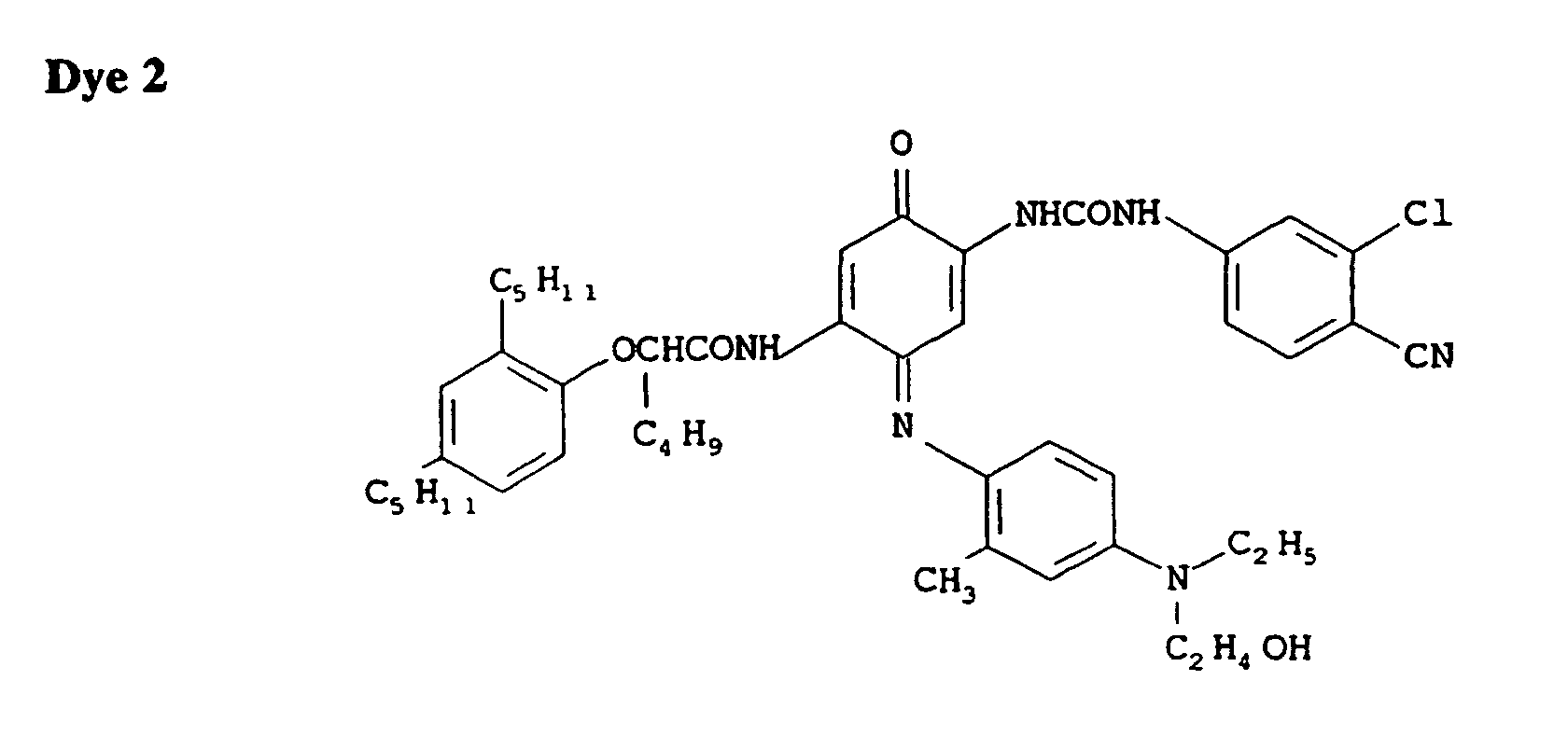
| Samples | Self-crosslinkable polymer in adhesion promoting layer | Dry Adhesion Test | Wet Adhesion Test | Dry Adhesion Test After Development |
| Sample 14 (inv.) | YES | 10 | 10 | 10 |
| Sample 15 (comp.) | NO | 10 | 0 | 10 |
| Sample 16 (comp.) | NO | 10 | 0 | 10 |
Claims (19)
- A photographic element comprising a film support base, an adhesion promoting layer, a subbing layer and at least one light-sensitive silver halide emulsion layer, wherein the adhesion promoting layer is close to the support and contains a self-crosslinkable vinyl addition copolymer and the subbing layer is positioned between the adhesion promoting layer and the emulsion layer.
- A photographic element of claim 1, wherein the self-crosslinkable vinyl addition copolymer contains styrene monomers, acrylate monomers and self-crosslinkable monomers.
- A photographic element of claim 2, wherein the self-crosslinkable monomers are represented by the formulas:wherein R1 and R2 each represents a hydrogen atom or a substituted or unsubstituted alkyl group having 1 to 12 carbon atoms, R3 represents a hydrogen atom or a substituted or unsubstituted hydrocarbon group having 1 to 12 carbon atoms, and Ap is a vinyl addition polymerizable group.

- A photographic element of claim 1, wherein the self-crosslinkable vinyl addition copolymer contains a self-crosslinkable monomer selected from N-methylolacrylamide or N-methylolmethacrylamide.
- A photographic element of claim 1, wherein the self-crosslinkable polymer is selected from styrene-methylacrylate-N-methylolacrylamide copolymer, styrene-ethylacrylate-N-methylolacrylamide copolymer, styrene-methylacrylate-N-methylol-methacrylamide copolymer and styrene-ethylacrylate-N-methylol-methacrylamide copolymer.
- A photographic element of claim 2, wherein the proportion of self-crosslinkable monomer in the copolymer is in the range from 0.01 to 10 % by weight.
- A photographic element of claim 1, wherein the subbing layer is a hydrophilic colloid subbing layer.
- A photographic element of claim 7, wherein the hydrophilic colloid type subbing layer is made of gelatin.
- A photographic element of claim 1, wherein the subbing layer is a continuous gelled network of inorganic particles.
- A photographic element of claim 9, wherein said inorganic particles are silica compounds.
- A photographic element of claim 1, wherein the adhesion promoting layer further contains an additional adhesion promoter selected from the group of epoxy silane compounds.
- A photographic element comprising a film support base having coated on one side thereof at least one light-sensitive silver halide emulsion layer and on the opposite side thereof an adhesion promoting layer and at least one auxiliary layer, wherein the adhesion promoting layer is close to the support and contains a self-crosslinkable vinyl addition copolymer.
- A photographic element of claim 12, wherein the self-crosslinkable vinyl addition copolymer contains styrene monomers, acrylate monomers and self-crosslinkable monomers.
- A photographic element of claim 13, wherein the self-crosslinkable monomers are represented by the formulas:wherein R1 and R2 each represents a hydrogen atom or a substituted or unsubstituted alkyl group having 1 to 12 carbon atoms, R3 represents a hydrogen atom or a substituted or unsubstituted hydrocarbon group having 1 to 12 carbon atoms, and Ap is a vinyl addition polymerizable group.

- A photographic element of claim 12, wherein the self-crosslinkable vinyl addition copolymer contains a self-crosslinkable monomer selected from N-methylolacrylamide or N-methylolmethacrylamide.
- A photographic element of claim 12, wherein the self-crosslinkable polymer is selected from styrene-methylacrylate-N-methylolacrylamide copolymer, styrene-ethylacrylate-N-methylolacrylamide copolymer, styrene-methylacrylate-N-methylol-methacrylamide copolymer and styrene-ethylacrylate-N-methylol-methacrylamide copolymer.
- A photographic element of claim 12, wherein the proportion of self-crosslinkable monomer in the copolymer is from 0.01 to 10 % by weight.
- A photographic element of claim 12, wherein the adhesion promoting layer further contains an additional adhesion promoter selected from the group of epoxy silane compounds.
- A photographic element of claim 12, wherein the auxiliary layer is selected from the group consisting of an antistatic layer, a magnetic layer, a protective layer, a lubricant layer.
Applications Claiming Priority (2)
| Application Number | Priority Date | Filing Date | Title |
|---|---|---|---|
| IT1999SV000012A IT1309912B1 (en) | 1999-05-07 | 1999-05-07 | PHOTOGRAPHIC ELEMENT WITH A LAYER THAT IMPROVES MEMBERSHIP TO THE SUPPORT |
| ITSV990012 | 1999-05-07 |
Publications (2)
| Publication Number | Publication Date |
|---|---|
| EP1050780A1 EP1050780A1 (en) | 2000-11-08 |
| EP1050780B1 true EP1050780B1 (en) | 2005-08-24 |
Family
ID=11408341
Family Applications (1)
| Application Number | Title | Priority Date | Filing Date |
|---|---|---|---|
| EP00108524A Expired - Lifetime EP1050780B1 (en) | 1999-05-07 | 2000-04-19 | Photographic element with a layer improving the adhesion to the support |
Country Status (5)
| Country | Link |
|---|---|
| US (1) | US6300048B1 (en) |
| EP (1) | EP1050780B1 (en) |
| JP (1) | JP2000330242A (en) |
| DE (1) | DE60022120T2 (en) |
| IT (1) | IT1309912B1 (en) |
Families Citing this family (3)
| Publication number | Priority date | Publication date | Assignee | Title |
|---|---|---|---|---|
| ITSV20000004A1 (en) * | 2000-02-15 | 2001-08-15 | Ferrania Spa | PHOTOGRAPHIC ELEMENT WITH A LAYER THAT IMPROVES THE ADHESION TO THE SUPPORT. |
| KR100586272B1 (en) | 2005-03-08 | 2006-06-07 | 삼화페인트공업주식회사 | Water dispersible acrylic resin composition, coating composition containing same, and method for producing same |
| EP3129440B1 (en) | 2014-04-10 | 2021-06-16 | 3M Innovative Properties Company | Adhesion promoting and/or dust suppression coating |
Family Cites Families (22)
| Publication number | Priority date | Publication date | Assignee | Title |
|---|---|---|---|---|
| JPS52117122A (en) | 1976-03-29 | 1977-10-01 | Konishiroku Photo Ind Co Ltd | Silver halide photographic light sensitive material |
| GB1496967A (en) | 1976-09-02 | 1978-01-05 | Ici Ltd | Coated film assemblies |
| JPS5569138A (en) * | 1978-11-20 | 1980-05-24 | Konishiroku Photo Ind Co Ltd | Photographic polyester substrate applied with undercoating treatment |
| US4389479A (en) * | 1981-05-14 | 1983-06-21 | Eastman Kodak Company | Neutralizing layer for color transfer assemblages |
| GB2124105A (en) * | 1982-07-23 | 1984-02-15 | Konishiroku Photo Ind | Photographic supports |
| EP0258903B1 (en) | 1986-09-04 | 1995-01-11 | Konica Corporation | Silver halide photographic light-sensitive material having a reflective base |
| AU603908B2 (en) * | 1987-07-30 | 1990-11-29 | Minnesota Mining And Manufacturing Company | Subbing layers for photographic elements and photographic elements incorporating such layers |
| US5204219A (en) * | 1987-07-30 | 1993-04-20 | Minnesota Mining And Manufacturing Company | Photographic element with novel subbing layer |
| AU606979B2 (en) * | 1987-08-03 | 1991-02-21 | Basf Aktiengesellschaft | Laminating adhesives |
| JP2646251B2 (en) | 1987-10-20 | 1997-08-27 | 富士写真フイルム株式会社 | Multilayer simultaneous coating method and apparatus |
| JPH0293640A (en) | 1988-09-30 | 1990-04-04 | Konica Corp | Production of silver halide photographic paper |
| JPH02266933A (en) * | 1989-04-07 | 1990-10-31 | Konica Corp | Antistatic layer |
| JP2879585B2 (en) | 1990-01-26 | 1999-04-05 | コニカ株式会社 | Silver halide photographic material with high sensitivity, high sharpness and little processing unevenness |
| JPH04177241A (en) | 1990-11-10 | 1992-06-24 | Konica Corp | Silver halide color photosensitive material |
| US5624467A (en) | 1991-12-20 | 1997-04-29 | Eastman Kodak Company | Microprecipitation process for dispersing photographic filter dyes |
| WO1994013481A1 (en) | 1992-12-09 | 1994-06-23 | Hoechst Aktiengesellschaft | Biaxially oriented copolyester film primed with vinyl acetate polymers |
| US5441856A (en) | 1993-12-17 | 1995-08-15 | Eastman Kodak Company | Photographic elements containing indoaniline dummy dyes |
| EP0706082A1 (en) * | 1994-10-06 | 1996-04-10 | Konica Corporation | A silver halide photographic light-sensitive material |
| EP0725312B1 (en) | 1995-02-01 | 2002-11-27 | Tulalip Consultoria Comercial Sociedade Unipessoal S.A. | Silver halide color photographic elements |
| DE69625105T2 (en) | 1995-02-17 | 2003-07-17 | Eastman Kodak Co., Rochester | Photographic element and photographic film base therefor |
| US5691123A (en) | 1995-06-30 | 1997-11-25 | Eastman Kodak Company | Method to selectively remove lubricant from one side of lubricant-coated support |
| JPH09189973A (en) | 1996-01-08 | 1997-07-22 | Fuji Photo Film Co Ltd | Silver halide emulsion and photographic sensitive material using the same |
-
1999
- 1999-05-07 IT IT1999SV000012A patent/IT1309912B1/en active
-
2000
- 2000-04-19 DE DE60022120T patent/DE60022120T2/en not_active Expired - Fee Related
- 2000-04-19 EP EP00108524A patent/EP1050780B1/en not_active Expired - Lifetime
- 2000-04-26 US US09/559,892 patent/US6300048B1/en not_active Expired - Fee Related
- 2000-05-08 JP JP2000134958A patent/JP2000330242A/en active Pending
Also Published As
| Publication number | Publication date |
|---|---|
| DE60022120T2 (en) | 2006-06-14 |
| DE60022120D1 (en) | 2005-09-29 |
| JP2000330242A (en) | 2000-11-30 |
| US6300048B1 (en) | 2001-10-09 |
| IT1309912B1 (en) | 2002-02-05 |
| EP1050780A1 (en) | 2000-11-08 |
| ITSV990012A1 (en) | 2000-11-07 |
Similar Documents
| Publication | Publication Date | Title |
|---|---|---|
| US4855219A (en) | Photographic element having polymer particles covalently bonded to gelatin | |
| US4920004A (en) | Gelatin-grafted polymer particles | |
| JPH04501324A (en) | Photographic support material consisting of antistatic layer and barrier layer | |
| JPH09171228A (en) | Photographic film | |
| JPS5866937A (en) | Matted surface of photographic material preparation of matted surface of photographic material and photographic material having matted surface | |
| EP0729063B1 (en) | Photographic element and photographic film base therefore | |
| US6300048B1 (en) | Photographic element with a layer improving the adhesion to the support | |
| JP2000338626A (en) | Scratch resistant and water resistant overcoat for photographic element | |
| EP1111454B1 (en) | Annealed adhesion promoting layer for photographic imaging elements | |
| US5441860A (en) | Silver halide photographic material having improved antistatic properties | |
| JPH1097028A (en) | Image forming element | |
| JPH09106039A (en) | Photographic recording material | |
| US5723273A (en) | Protective overcoat for antistatic layer | |
| US5393650A (en) | Pressure sensitivity relief for photographic products | |
| EP0829758B1 (en) | Method of forming a photographic paper having a backing layer comprising colloidal inorganic oxide particles, antistatic agent and film forming acrylic binder | |
| US5604083A (en) | Antistatic film bases and photographic elements comprising said antistatic film bases | |
| JPH06202264A (en) | Photographic photosensitve element | |
| US5723270A (en) | Photographic elements having a process-surviving polysiloxane block copolymer backing | |
| US6348305B2 (en) | Photographic element with a layer improving the adhesion to the support base | |
| JPS61281237A (en) | Photographic element for silver salt diffusion transfer process | |
| JP2004004858A (en) | Coating liquid for image forming element containing solubilized collagen gelatin and hardening solution | |
| JPH10268473A (en) | Silver halide photographic sensitive material | |
| JP2000010240A (en) | Motion picture film | |
| JPH0575099B2 (en) | ||
| JPS6364043A (en) | Silver halide photographic sensitive material having improved adhesion |
Legal Events
| Date | Code | Title | Description |
|---|---|---|---|
| PUAI | Public reference made under article 153(3) epc to a published international application that has entered the european phase |
Free format text: ORIGINAL CODE: 0009012 |
|
| AK | Designated contracting states |
Kind code of ref document: A1 Designated state(s): DE FR GB IT |
|
| AX | Request for extension of the european patent |
Free format text: AL;LT;LV;MK;RO;SI |
|
| AKX | Designation fees paid |
Free format text: DE FR GB IT |
|
| 17P | Request for examination filed |
Effective date: 20010501 |
|
| 17Q | First examination report despatched |
Effective date: 20040421 |
|
| GRAP | Despatch of communication of intention to grant a patent |
Free format text: ORIGINAL CODE: EPIDOSNIGR1 |
|
| GRAS | Grant fee paid |
Free format text: ORIGINAL CODE: EPIDOSNIGR3 |
|
| GRAA | (expected) grant |
Free format text: ORIGINAL CODE: 0009210 |
|
| AK | Designated contracting states |
Kind code of ref document: B1 Designated state(s): DE FR GB IT |
|
| REG | Reference to a national code |
Ref country code: GB Ref legal event code: FG4D |
|
| REF | Corresponds to: |
Ref document number: 60022120 Country of ref document: DE Date of ref document: 20050929 Kind code of ref document: P |
|
| PGFP | Annual fee paid to national office [announced via postgrant information from national office to epo] |
Ref country code: FR Payment date: 20060403 Year of fee payment: 7 |
|
| PGFP | Annual fee paid to national office [announced via postgrant information from national office to epo] |
Ref country code: DE Payment date: 20060428 Year of fee payment: 7 |
|
| ET | Fr: translation filed | ||
| PLBE | No opposition filed within time limit |
Free format text: ORIGINAL CODE: 0009261 |
|
| STAA | Information on the status of an ep patent application or granted ep patent |
Free format text: STATUS: NO OPPOSITION FILED WITHIN TIME LIMIT |
|
| 26N | No opposition filed |
Effective date: 20060526 |
|
| GBPC | Gb: european patent ceased through non-payment of renewal fee |
Effective date: 20070419 |
|
| PG25 | Lapsed in a contracting state [announced via postgrant information from national office to epo] |
Ref country code: DE Free format text: LAPSE BECAUSE OF NON-PAYMENT OF DUE FEES Effective date: 20071101 |
|
| PG25 | Lapsed in a contracting state [announced via postgrant information from national office to epo] |
Ref country code: GB Free format text: LAPSE BECAUSE OF NON-PAYMENT OF DUE FEES Effective date: 20070419 |
|
| PG25 | Lapsed in a contracting state [announced via postgrant information from national office to epo] |
Ref country code: FR Free format text: LAPSE BECAUSE OF NON-PAYMENT OF DUE FEES Effective date: 20070430 |
|
| PGFP | Annual fee paid to national office [announced via postgrant information from national office to epo] |
Ref country code: IT Payment date: 20080416 Year of fee payment: 9 |
|
| PGFP | Annual fee paid to national office [announced via postgrant information from national office to epo] |
Ref country code: GB Payment date: 20060314 Year of fee payment: 7 |
|
| PG25 | Lapsed in a contracting state [announced via postgrant information from national office to epo] |
Ref country code: IT Free format text: LAPSE BECAUSE OF NON-PAYMENT OF DUE FEES Effective date: 20090419 |