EP1050339A1 - Stable catalysts and processes for making and using the same - Google Patents
Stable catalysts and processes for making and using the same Download PDFInfo
- Publication number
- EP1050339A1 EP1050339A1 EP99201421A EP99201421A EP1050339A1 EP 1050339 A1 EP1050339 A1 EP 1050339A1 EP 99201421 A EP99201421 A EP 99201421A EP 99201421 A EP99201421 A EP 99201421A EP 1050339 A1 EP1050339 A1 EP 1050339A1
- Authority
- EP
- European Patent Office
- Prior art keywords
- support material
- palladium
- metal
- group
- catalyst
- Prior art date
- Legal status (The legal status is an assumption and is not a legal conclusion. Google has not performed a legal analysis and makes no representation as to the accuracy of the status listed.)
- Withdrawn
Links
- 239000003054 catalyst Substances 0.000 title claims abstract description 93
- 238000000034 method Methods 0.000 title claims abstract description 30
- 230000008569 process Effects 0.000 title claims abstract description 24
- KDLHZDBZIXYQEI-UHFFFAOYSA-N Palladium Chemical compound [Pd] KDLHZDBZIXYQEI-UHFFFAOYSA-N 0.000 claims abstract description 124
- 239000000463 material Substances 0.000 claims abstract description 81
- 229910052763 palladium Inorganic materials 0.000 claims abstract description 54
- 229910052751 metal Inorganic materials 0.000 claims abstract description 50
- 239000002184 metal Substances 0.000 claims abstract description 50
- BVKZGUZCCUSVTD-UHFFFAOYSA-M Bicarbonate Chemical compound OC([O-])=O BVKZGUZCCUSVTD-UHFFFAOYSA-M 0.000 claims abstract description 27
- 238000005984 hydrogenation reaction Methods 0.000 claims abstract description 21
- JHIVVAPYMSGYDF-UHFFFAOYSA-N cyclohexanone Chemical compound O=C1CCCCC1 JHIVVAPYMSGYDF-UHFFFAOYSA-N 0.000 claims abstract description 20
- 238000001354 calcination Methods 0.000 claims abstract description 16
- 238000001035 drying Methods 0.000 claims abstract description 15
- ISWSIDIOOBJBQZ-UHFFFAOYSA-N Phenol Chemical compound OC1=CC=CC=C1 ISWSIDIOOBJBQZ-UHFFFAOYSA-N 0.000 claims description 41
- 239000000243 solution Substances 0.000 claims description 28
- 150000002940 palladium Chemical class 0.000 claims description 24
- 239000012266 salt solution Substances 0.000 claims description 20
- UIIMBOGNXHQVGW-UHFFFAOYSA-M Sodium bicarbonate Chemical compound [Na+].OC([O-])=O UIIMBOGNXHQVGW-UHFFFAOYSA-M 0.000 claims description 16
- 239000011734 sodium Substances 0.000 claims description 15
- 239000000203 mixture Substances 0.000 claims description 14
- 229910052708 sodium Inorganic materials 0.000 claims description 13
- PIBWKRNGBLPSSY-UHFFFAOYSA-L palladium(II) chloride Chemical compound Cl[Pd]Cl PIBWKRNGBLPSSY-UHFFFAOYSA-L 0.000 claims description 12
- DGAQECJNVWCQMB-PUAWFVPOSA-M Ilexoside XXIX Chemical compound C[C@@H]1CC[C@@]2(CC[C@@]3(C(=CC[C@H]4[C@]3(CC[C@@H]5[C@@]4(CC[C@@H](C5(C)C)OS(=O)(=O)[O-])C)C)[C@@H]2[C@]1(C)O)C)C(=O)O[C@H]6[C@@H]([C@H]([C@@H]([C@H](O6)CO)O)O)O.[Na+] DGAQECJNVWCQMB-PUAWFVPOSA-M 0.000 claims description 11
- 229910002666 PdCl2 Inorganic materials 0.000 claims description 11
- 239000001257 hydrogen Substances 0.000 claims description 11
- 229910052739 hydrogen Inorganic materials 0.000 claims description 11
- 239000002245 particle Substances 0.000 claims description 11
- VYPSYNLAJGMNEJ-UHFFFAOYSA-N Silicium dioxide Chemical class O=[Si]=O VYPSYNLAJGMNEJ-UHFFFAOYSA-N 0.000 claims description 10
- -1 zirconium silicates Chemical class 0.000 claims description 10
- UFHFLCQGNIYNRP-UHFFFAOYSA-N Hydrogen Chemical compound [H][H] UFHFLCQGNIYNRP-UHFFFAOYSA-N 0.000 claims description 9
- CUJRVFIICFDLGR-UHFFFAOYSA-N acetylacetonate Chemical compound CC(=O)[CH-]C(C)=O CUJRVFIICFDLGR-UHFFFAOYSA-N 0.000 claims description 9
- TWNQGVIAIRXVLR-UHFFFAOYSA-N oxo(oxoalumanyloxy)alumane Chemical compound O=[Al]O[Al]=O TWNQGVIAIRXVLR-UHFFFAOYSA-N 0.000 claims description 8
- 235000012239 silicon dioxide Nutrition 0.000 claims description 8
- 229910000030 sodium bicarbonate Inorganic materials 0.000 claims description 8
- 230000009467 reduction Effects 0.000 claims description 7
- WSFSSNUMVMOOMR-UHFFFAOYSA-N Formaldehyde Chemical compound O=C WSFSSNUMVMOOMR-UHFFFAOYSA-N 0.000 claims description 6
- XLYOFNOQVPJJNP-UHFFFAOYSA-N water Substances O XLYOFNOQVPJJNP-UHFFFAOYSA-N 0.000 claims description 6
- PNEYBMLMFCGWSK-UHFFFAOYSA-N Alumina Chemical class [O-2].[O-2].[O-2].[Al+3].[Al+3] PNEYBMLMFCGWSK-UHFFFAOYSA-N 0.000 claims description 5
- 229910052749 magnesium Inorganic materials 0.000 claims description 4
- 239000011777 magnesium Substances 0.000 claims description 4
- GPNDARIEYHPYAY-UHFFFAOYSA-N palladium(II) nitrate Inorganic materials [Pd+2].[O-][N+]([O-])=O.[O-][N+]([O-])=O GPNDARIEYHPYAY-UHFFFAOYSA-N 0.000 claims description 4
- 229910010271 silicon carbide Inorganic materials 0.000 claims description 4
- 235000017557 sodium bicarbonate Nutrition 0.000 claims description 4
- 229910052566 spinel group Inorganic materials 0.000 claims description 4
- 238000005406 washing Methods 0.000 claims description 4
- NWZSZGALRFJKBT-KNIFDHDWSA-N (2s)-2,6-diaminohexanoic acid;(2s)-2-hydroxybutanedioic acid Chemical compound OC(=O)[C@@H](O)CC(O)=O.NCCCC[C@H](N)C(O)=O NWZSZGALRFJKBT-KNIFDHDWSA-N 0.000 claims description 3
- FYYHWMGAXLPEAU-UHFFFAOYSA-N Magnesium Chemical compound [Mg] FYYHWMGAXLPEAU-UHFFFAOYSA-N 0.000 claims description 3
- 101150003085 Pdcl gene Proteins 0.000 claims description 3
- 229910052782 aluminium Inorganic materials 0.000 claims description 3
- XAGFODPZIPBFFR-UHFFFAOYSA-N aluminium Chemical compound [Al] XAGFODPZIPBFFR-UHFFFAOYSA-N 0.000 claims description 3
- IKDUDTNKRLTJSI-UHFFFAOYSA-N hydrazine monohydrate Substances O.NN IKDUDTNKRLTJSI-UHFFFAOYSA-N 0.000 claims description 3
- 150000001450 anions Chemical class 0.000 claims description 2
- 150000002431 hydrogen Chemical class 0.000 claims description 2
- 150000002500 ions Chemical class 0.000 claims description 2
- 235000012245 magnesium oxide Nutrition 0.000 claims description 2
- 239000000391 magnesium silicate Substances 0.000 claims description 2
- 235000012243 magnesium silicates Nutrition 0.000 claims description 2
- AXZKOIWUVFPNLO-UHFFFAOYSA-N magnesium;oxygen(2-) Chemical class [O-2].[Mg+2] AXZKOIWUVFPNLO-UHFFFAOYSA-N 0.000 claims description 2
- 238000004519 manufacturing process Methods 0.000 claims description 2
- SOQBVABWOPYFQZ-UHFFFAOYSA-N oxygen(2-);titanium(4+) Chemical class [O-2].[O-2].[Ti+4] SOQBVABWOPYFQZ-UHFFFAOYSA-N 0.000 claims description 2
- RVTZCBVAJQQJTK-UHFFFAOYSA-N oxygen(2-);zirconium(4+) Chemical class [O-2].[O-2].[Zr+4] RVTZCBVAJQQJTK-UHFFFAOYSA-N 0.000 claims description 2
- 239000000377 silicon dioxide Substances 0.000 claims description 2
- 239000012279 sodium borohydride Substances 0.000 claims description 2
- 229910000033 sodium borohydride Inorganic materials 0.000 claims description 2
- OGIDPMRJRNCKJF-UHFFFAOYSA-N titanium oxide Inorganic materials [Ti]=O OGIDPMRJRNCKJF-UHFFFAOYSA-N 0.000 claims description 2
- 229910052721 tungsten Inorganic materials 0.000 claims description 2
- 239000010937 tungsten Substances 0.000 claims description 2
- 229910052726 zirconium Inorganic materials 0.000 claims description 2
- 229910001928 zirconium oxide Inorganic materials 0.000 claims description 2
- UIIMBOGNXHQVGW-DEQYMQKBSA-M Sodium bicarbonate-14C Chemical compound [Na+].O[14C]([O-])=O UIIMBOGNXHQVGW-DEQYMQKBSA-M 0.000 claims 1
- ZMCUDHNSHCRDBT-UHFFFAOYSA-M caesium bicarbonate Chemical compound [Cs+].OC([O-])=O ZMCUDHNSHCRDBT-UHFFFAOYSA-M 0.000 claims 1
- 229910052593 corundum Inorganic materials 0.000 claims 1
- 235000015497 potassium bicarbonate Nutrition 0.000 claims 1
- 229910000028 potassium bicarbonate Inorganic materials 0.000 claims 1
- 239000011736 potassium bicarbonate Substances 0.000 claims 1
- TYJJADVDDVDEDZ-UHFFFAOYSA-M potassium hydrogencarbonate Chemical compound [K+].OC([O-])=O TYJJADVDDVDEDZ-UHFFFAOYSA-M 0.000 claims 1
- 229910001845 yogo sapphire Inorganic materials 0.000 claims 1
- 238000006243 chemical reaction Methods 0.000 abstract description 16
- 150000002989 phenols Chemical class 0.000 abstract description 13
- 238000002360 preparation method Methods 0.000 abstract description 4
- 230000000694 effects Effects 0.000 description 11
- 238000005470 impregnation Methods 0.000 description 11
- 239000012071 phase Substances 0.000 description 11
- 239000000047 product Substances 0.000 description 8
- YXFVVABEGXRONW-UHFFFAOYSA-N Toluene Chemical compound CC1=CC=CC=C1 YXFVVABEGXRONW-UHFFFAOYSA-N 0.000 description 6
- 230000003197 catalytic effect Effects 0.000 description 6
- HPXRVTGHNJAIIH-UHFFFAOYSA-N cyclohexanol Chemical compound OC1CCCCC1 HPXRVTGHNJAIIH-UHFFFAOYSA-N 0.000 description 6
- 239000007789 gas Substances 0.000 description 6
- 150000002739 metals Chemical class 0.000 description 6
- 239000002904 solvent Substances 0.000 description 6
- 239000013543 active substance Substances 0.000 description 5
- 125000003118 aryl group Chemical group 0.000 description 5
- 230000000052 comparative effect Effects 0.000 description 5
- 150000003839 salts Chemical class 0.000 description 5
- HPYNZHMRTTWQTB-UHFFFAOYSA-N 2,3-dimethylpyridine Chemical compound CC1=CC=CN=C1C HPYNZHMRTTWQTB-UHFFFAOYSA-N 0.000 description 4
- CDBYLPFSWZWCQE-UHFFFAOYSA-L Sodium Carbonate Chemical compound [Na+].[Na+].[O-]C([O-])=O CDBYLPFSWZWCQE-UHFFFAOYSA-L 0.000 description 4
- 239000002585 base Substances 0.000 description 4
- 125000002887 hydroxy group Chemical group [H]O* 0.000 description 4
- 238000002203 pretreatment Methods 0.000 description 4
- VWDWKYIASSYTQR-UHFFFAOYSA-N sodium nitrate Chemical compound [Na+].[O-][N+]([O-])=O VWDWKYIASSYTQR-UHFFFAOYSA-N 0.000 description 4
- QTBSBXVTEAMEQO-UHFFFAOYSA-N Acetic acid Chemical compound CC(O)=O QTBSBXVTEAMEQO-UHFFFAOYSA-N 0.000 description 3
- CSCPPACGZOOCGX-UHFFFAOYSA-N Acetone Chemical compound CC(C)=O CSCPPACGZOOCGX-UHFFFAOYSA-N 0.000 description 3
- LFQSCWFLJHTTHZ-UHFFFAOYSA-N Ethanol Chemical compound CCO LFQSCWFLJHTTHZ-UHFFFAOYSA-N 0.000 description 3
- LYCAIKOWRPUZTN-UHFFFAOYSA-N Ethylene glycol Chemical compound OCCO LYCAIKOWRPUZTN-UHFFFAOYSA-N 0.000 description 3
- PEDCQBHIVMGVHV-UHFFFAOYSA-N Glycerine Chemical compound OCC(O)CO PEDCQBHIVMGVHV-UHFFFAOYSA-N 0.000 description 3
- OKKJLVBELUTLKV-UHFFFAOYSA-N Methanol Chemical compound OC OKKJLVBELUTLKV-UHFFFAOYSA-N 0.000 description 3
- 125000003178 carboxy group Chemical group [H]OC(*)=O 0.000 description 3
- 238000009903 catalytic hydrogenation reaction Methods 0.000 description 3
- 239000003638 chemical reducing agent Substances 0.000 description 3
- 150000001875 compounds Chemical class 0.000 description 3
- 230000009849 deactivation Effects 0.000 description 3
- 238000006356 dehydrogenation reaction Methods 0.000 description 3
- 125000004051 hexyl group Chemical group [H]C([H])([H])C([H])([H])C([H])([H])C([H])([H])C([H])([H])C([H])([H])* 0.000 description 3
- 125000000468 ketone group Chemical group 0.000 description 3
- 125000002496 methyl group Chemical group [H]C([H])([H])* 0.000 description 3
- 125000000449 nitro group Chemical group [O-][N+](*)=O 0.000 description 3
- 239000002243 precursor Substances 0.000 description 3
- 125000002924 primary amino group Chemical group [H]N([H])* 0.000 description 3
- RYFMWSXOAZQYPI-UHFFFAOYSA-K trisodium phosphate Chemical compound [Na+].[Na+].[Na+].[O-]P([O-])([O-])=O RYFMWSXOAZQYPI-UHFFFAOYSA-K 0.000 description 3
- 229910000406 trisodium phosphate Inorganic materials 0.000 description 3
- BSKHPKMHTQYZBB-UHFFFAOYSA-N 2-methylpyridine Chemical compound CC1=CC=CC=N1 BSKHPKMHTQYZBB-UHFFFAOYSA-N 0.000 description 2
- QTBSBXVTEAMEQO-UHFFFAOYSA-M Acetate Chemical compound CC([O-])=O QTBSBXVTEAMEQO-UHFFFAOYSA-M 0.000 description 2
- IJGRMHOSHXDMSA-UHFFFAOYSA-N Atomic nitrogen Chemical compound N#N IJGRMHOSHXDMSA-UHFFFAOYSA-N 0.000 description 2
- WKBOTKDWSSQWDR-UHFFFAOYSA-N Bromine atom Chemical compound [Br] WKBOTKDWSSQWDR-UHFFFAOYSA-N 0.000 description 2
- ZAMOUSCENKQFHK-UHFFFAOYSA-N Chlorine atom Chemical compound [Cl] ZAMOUSCENKQFHK-UHFFFAOYSA-N 0.000 description 2
- VEXZGXHMUGYJMC-UHFFFAOYSA-N Hydrochloric acid Chemical compound Cl VEXZGXHMUGYJMC-UHFFFAOYSA-N 0.000 description 2
- KFZMGEQAYNKOFK-UHFFFAOYSA-N Isopropanol Chemical compound CC(C)O KFZMGEQAYNKOFK-UHFFFAOYSA-N 0.000 description 2
- LRHPLDYGYMQRHN-UHFFFAOYSA-N N-Butanol Chemical compound CCCCO LRHPLDYGYMQRHN-UHFFFAOYSA-N 0.000 description 2
- 239000012696 Pd precursors Substances 0.000 description 2
- QAOWNCQODCNURD-UHFFFAOYSA-N Sulfuric acid Chemical compound OS(O)(=O)=O QAOWNCQODCNURD-UHFFFAOYSA-N 0.000 description 2
- 125000003545 alkoxy group Chemical group 0.000 description 2
- 239000003125 aqueous solvent Substances 0.000 description 2
- 125000004429 atom Chemical group 0.000 description 2
- 229910052788 barium Inorganic materials 0.000 description 2
- GDTBXPJZTBHREO-UHFFFAOYSA-N bromine Substances BrBr GDTBXPJZTBHREO-UHFFFAOYSA-N 0.000 description 2
- 229910052794 bromium Inorganic materials 0.000 description 2
- 239000006227 byproduct Substances 0.000 description 2
- 229910052792 caesium Inorganic materials 0.000 description 2
- VTYYLEPIZMXCLO-UHFFFAOYSA-L calcium carbonate Substances [Ca+2].[O-]C([O-])=O VTYYLEPIZMXCLO-UHFFFAOYSA-L 0.000 description 2
- 125000004432 carbon atom Chemical group C* 0.000 description 2
- 238000006555 catalytic reaction Methods 0.000 description 2
- 239000000460 chlorine Substances 0.000 description 2
- 229910052801 chlorine Inorganic materials 0.000 description 2
- 125000004122 cyclic group Chemical group 0.000 description 2
- 125000002243 cyclohexanonyl group Chemical class *C1(*)C(=O)C(*)(*)C(*)(*)C(*)(*)C1(*)* 0.000 description 2
- 238000001704 evaporation Methods 0.000 description 2
- 230000008020 evaporation Effects 0.000 description 2
- 229910052736 halogen Inorganic materials 0.000 description 2
- 125000005843 halogen group Chemical group 0.000 description 2
- 150000002367 halogens Chemical class 0.000 description 2
- 125000004435 hydrogen atom Chemical group [H]* 0.000 description 2
- 238000007327 hydrogenolysis reaction Methods 0.000 description 2
- 238000006317 isomerization reaction Methods 0.000 description 2
- 239000007788 liquid Substances 0.000 description 2
- 239000007791 liquid phase Substances 0.000 description 2
- 229910052744 lithium Inorganic materials 0.000 description 2
- BDAGIHXWWSANSR-UHFFFAOYSA-N methanoic acid Natural products OC=O BDAGIHXWWSANSR-UHFFFAOYSA-N 0.000 description 2
- 238000006384 oligomerization reaction Methods 0.000 description 2
- 230000003647 oxidation Effects 0.000 description 2
- 238000007254 oxidation reaction Methods 0.000 description 2
- 150000002941 palladium compounds Chemical class 0.000 description 2
- 231100000572 poisoning Toxicity 0.000 description 2
- 230000000607 poisoning effect Effects 0.000 description 2
- 238000006116 polymerization reaction Methods 0.000 description 2
- 229910052700 potassium Inorganic materials 0.000 description 2
- 238000007363 ring formation reaction Methods 0.000 description 2
- 229920006395 saturated elastomer Polymers 0.000 description 2
- 229910000029 sodium carbonate Inorganic materials 0.000 description 2
- 229910052712 strontium Inorganic materials 0.000 description 2
- 239000000126 substance Substances 0.000 description 2
- 125000001424 substituent group Chemical group 0.000 description 2
- 239000000725 suspension Substances 0.000 description 2
- BMYNFMYTOJXKLE-UHFFFAOYSA-N 3-azaniumyl-2-hydroxypropanoate Chemical compound NCC(O)C(O)=O BMYNFMYTOJXKLE-UHFFFAOYSA-N 0.000 description 1
- OSWFIVFLDKOXQC-UHFFFAOYSA-N 4-(3-methoxyphenyl)aniline Chemical compound COC1=CC=CC(C=2C=CC(N)=CC=2)=C1 OSWFIVFLDKOXQC-UHFFFAOYSA-N 0.000 description 1
- ZCYVEMRRCGMTRW-UHFFFAOYSA-N 7553-56-2 Chemical group [I] ZCYVEMRRCGMTRW-UHFFFAOYSA-N 0.000 description 1
- OKTJSMMVPCPJKN-UHFFFAOYSA-N Carbon Chemical compound [C] OKTJSMMVPCPJKN-UHFFFAOYSA-N 0.000 description 1
- KZBUYRJDOAKODT-UHFFFAOYSA-N Chlorine Chemical compound ClCl KZBUYRJDOAKODT-UHFFFAOYSA-N 0.000 description 1
- PXGOKWXKJXAPGV-UHFFFAOYSA-N Fluorine Chemical compound FF PXGOKWXKJXAPGV-UHFFFAOYSA-N 0.000 description 1
- 229910003603 H2PdCl4 Inorganic materials 0.000 description 1
- WHXSMMKQMYFTQS-UHFFFAOYSA-N Lithium Chemical compound [Li] WHXSMMKQMYFTQS-UHFFFAOYSA-N 0.000 description 1
- PWHULOQIROXLJO-UHFFFAOYSA-N Manganese Chemical compound [Mn] PWHULOQIROXLJO-UHFFFAOYSA-N 0.000 description 1
- 229910003204 NH2 Inorganic materials 0.000 description 1
- GRYLNZFGIOXLOG-UHFFFAOYSA-N Nitric acid Chemical compound O[N+]([O-])=O GRYLNZFGIOXLOG-UHFFFAOYSA-N 0.000 description 1
- 229910021605 Palladium(II) bromide Inorganic materials 0.000 description 1
- 229910021606 Palladium(II) iodide Inorganic materials 0.000 description 1
- HCHKCACWOHOZIP-UHFFFAOYSA-N Zinc Chemical compound [Zn] HCHKCACWOHOZIP-UHFFFAOYSA-N 0.000 description 1
- 238000005299 abrasion Methods 0.000 description 1
- 230000002411 adverse Effects 0.000 description 1
- 150000001298 alcohols Chemical class 0.000 description 1
- 239000003513 alkali Substances 0.000 description 1
- 125000003277 amino group Chemical group 0.000 description 1
- MDFFNEOEWAXZRQ-UHFFFAOYSA-N aminyl Chemical compound [NH2] MDFFNEOEWAXZRQ-UHFFFAOYSA-N 0.000 description 1
- 239000007864 aqueous solution Substances 0.000 description 1
- 150000001491 aromatic compounds Chemical class 0.000 description 1
- QVGXLLKOCUKJST-UHFFFAOYSA-N atomic oxygen Chemical compound [O] QVGXLLKOCUKJST-UHFFFAOYSA-N 0.000 description 1
- DSAJWYNOEDNPEQ-UHFFFAOYSA-N barium atom Chemical compound [Ba] DSAJWYNOEDNPEQ-UHFFFAOYSA-N 0.000 description 1
- 229910052790 beryllium Inorganic materials 0.000 description 1
- 230000015572 biosynthetic process Effects 0.000 description 1
- 229910052791 calcium Inorganic materials 0.000 description 1
- 239000011575 calcium Substances 0.000 description 1
- 235000010216 calcium carbonate Nutrition 0.000 description 1
- 229910052799 carbon Inorganic materials 0.000 description 1
- 150000004649 carbonic acid derivatives Chemical class 0.000 description 1
- 239000000919 ceramic Substances 0.000 description 1
- 239000003610 charcoal Substances 0.000 description 1
- 229910017052 cobalt Inorganic materials 0.000 description 1
- 239000010941 cobalt Substances 0.000 description 1
- GUTLYIVDDKVIGB-UHFFFAOYSA-N cobalt atom Chemical compound [Co] GUTLYIVDDKVIGB-UHFFFAOYSA-N 0.000 description 1
- 239000000571 coke Substances 0.000 description 1
- 125000000753 cycloalkyl group Chemical group 0.000 description 1
- JHIVVAPYMSGYDF-PTQBSOBMSA-N cyclohexanone Chemical class O=[13C]1CCCCC1 JHIVVAPYMSGYDF-PTQBSOBMSA-N 0.000 description 1
- 230000006866 deterioration Effects 0.000 description 1
- 238000004821 distillation Methods 0.000 description 1
- 125000001495 ethyl group Chemical group [H]C([H])([H])C([H])([H])* 0.000 description 1
- 239000012467 final product Substances 0.000 description 1
- 239000011737 fluorine Substances 0.000 description 1
- 229910052731 fluorine Inorganic materials 0.000 description 1
- 235000019253 formic acid Nutrition 0.000 description 1
- 239000012634 fragment Substances 0.000 description 1
- 239000008187 granular material Substances 0.000 description 1
- 238000000227 grinding Methods 0.000 description 1
- 125000005842 heteroatom Chemical group 0.000 description 1
- 150000002391 heterocyclic compounds Chemical class 0.000 description 1
- 229930195733 hydrocarbon Natural products 0.000 description 1
- 150000002430 hydrocarbons Chemical class 0.000 description 1
- XMBWDFGMSWQBCA-UHFFFAOYSA-N hydrogen iodide Chemical compound I XMBWDFGMSWQBCA-UHFFFAOYSA-N 0.000 description 1
- 238000011065 in-situ storage Methods 0.000 description 1
- 230000003993 interaction Effects 0.000 description 1
- 125000001449 isopropyl group Chemical group [H]C([H])([H])C([H])(*)C([H])([H])[H] 0.000 description 1
- 150000002576 ketones Chemical class 0.000 description 1
- 229910052748 manganese Inorganic materials 0.000 description 1
- 239000011572 manganese Substances 0.000 description 1
- 230000008018 melting Effects 0.000 description 1
- 238000002844 melting Methods 0.000 description 1
- 150000001247 metal acetylides Chemical class 0.000 description 1
- 229910044991 metal oxide Inorganic materials 0.000 description 1
- 150000004706 metal oxides Chemical class 0.000 description 1
- 239000002923 metal particle Substances 0.000 description 1
- 230000004048 modification Effects 0.000 description 1
- 238000012986 modification Methods 0.000 description 1
- 125000001280 n-hexyl group Chemical group C(CCCCC)* 0.000 description 1
- 125000004123 n-propyl group Chemical group [H]C([H])([H])C([H])([H])C([H])([H])* 0.000 description 1
- 229910017604 nitric acid Inorganic materials 0.000 description 1
- 229910052757 nitrogen Inorganic materials 0.000 description 1
- 229910000510 noble metal Inorganic materials 0.000 description 1
- 229910052760 oxygen Inorganic materials 0.000 description 1
- 239000001301 oxygen Substances 0.000 description 1
- RFLFDJSIZCCYIP-UHFFFAOYSA-L palladium(2+);sulfate Chemical compound [Pd+2].[O-]S([O-])(=O)=O RFLFDJSIZCCYIP-UHFFFAOYSA-L 0.000 description 1
- 229910000364 palladium(II) sulfate Inorganic materials 0.000 description 1
- YJVFFLUZDVXJQI-UHFFFAOYSA-L palladium(ii) acetate Chemical compound [Pd+2].CC([O-])=O.CC([O-])=O YJVFFLUZDVXJQI-UHFFFAOYSA-L 0.000 description 1
- INIOZDBICVTGEO-UHFFFAOYSA-L palladium(ii) bromide Chemical compound Br[Pd]Br INIOZDBICVTGEO-UHFFFAOYSA-L 0.000 description 1
- HNNUTDROYPGBMR-UHFFFAOYSA-L palladium(ii) iodide Chemical compound [Pd+2].[I-].[I-] HNNUTDROYPGBMR-UHFFFAOYSA-L 0.000 description 1
- 230000000737 periodic effect Effects 0.000 description 1
- 239000003208 petroleum Substances 0.000 description 1
- 125000000951 phenoxy group Chemical group [H]C1=C([H])C([H])=C(O*)C([H])=C1[H] 0.000 description 1
- 125000001997 phenyl group Chemical group [H]C1=C([H])C([H])=C(*)C([H])=C1[H] 0.000 description 1
- 239000000843 powder Substances 0.000 description 1
- 230000002035 prolonged effect Effects 0.000 description 1
- BDERNNFJNOPAEC-UHFFFAOYSA-N propan-1-ol Chemical compound CCCO BDERNNFJNOPAEC-UHFFFAOYSA-N 0.000 description 1
- 230000035484 reaction time Effects 0.000 description 1
- 229910052701 rubidium Inorganic materials 0.000 description 1
- 150000004760 silicates Chemical class 0.000 description 1
- 239000007787 solid Substances 0.000 description 1
- 229910052596 spinel Inorganic materials 0.000 description 1
- 239000011029 spinel Substances 0.000 description 1
- CIOAGBVUUVVLOB-UHFFFAOYSA-N strontium atom Chemical compound [Sr] CIOAGBVUUVVLOB-UHFFFAOYSA-N 0.000 description 1
- 238000005979 thermal decomposition reaction Methods 0.000 description 1
- 229910052723 transition metal Inorganic materials 0.000 description 1
- 150000003624 transition metals Chemical class 0.000 description 1
- 229910052725 zinc Inorganic materials 0.000 description 1
- 239000011701 zinc Substances 0.000 description 1
Images


Classifications
-
- B—PERFORMING OPERATIONS; TRANSPORTING
- B01—PHYSICAL OR CHEMICAL PROCESSES OR APPARATUS IN GENERAL
- B01J—CHEMICAL OR PHYSICAL PROCESSES, e.g. CATALYSIS OR COLLOID CHEMISTRY; THEIR RELEVANT APPARATUS
- B01J37/00—Processes, in general, for preparing catalysts; Processes, in general, for activation of catalysts
- B01J37/02—Impregnation, coating or precipitation
- B01J37/0201—Impregnation
- B01J37/0205—Impregnation in several steps
-
- B—PERFORMING OPERATIONS; TRANSPORTING
- B01—PHYSICAL OR CHEMICAL PROCESSES OR APPARATUS IN GENERAL
- B01J—CHEMICAL OR PHYSICAL PROCESSES, e.g. CATALYSIS OR COLLOID CHEMISTRY; THEIR RELEVANT APPARATUS
- B01J23/00—Catalysts comprising metals or metal oxides or hydroxides, not provided for in group B01J21/00
- B01J23/38—Catalysts comprising metals or metal oxides or hydroxides, not provided for in group B01J21/00 of noble metals
- B01J23/54—Catalysts comprising metals or metal oxides or hydroxides, not provided for in group B01J21/00 of noble metals combined with metals, oxides or hydroxides provided for in groups B01J23/02 - B01J23/36
- B01J23/56—Platinum group metals
- B01J23/58—Platinum group metals with alkali- or alkaline earth metals
-
- C—CHEMISTRY; METALLURGY
- C07—ORGANIC CHEMISTRY
- C07C—ACYCLIC OR CARBOCYCLIC COMPOUNDS
- C07C45/00—Preparation of compounds having >C = O groups bound only to carbon or hydrogen atoms; Preparation of chelates of such compounds
- C07C45/006—Preparation of compounds having >C = O groups bound only to carbon or hydrogen atoms; Preparation of chelates of such compounds by hydrogenation of aromatic hydroxy compounds
-
- C—CHEMISTRY; METALLURGY
- C07—ORGANIC CHEMISTRY
- C07C—ACYCLIC OR CARBOCYCLIC COMPOUNDS
- C07C2601/00—Systems containing only non-condensed rings
- C07C2601/12—Systems containing only non-condensed rings with a six-membered ring
- C07C2601/14—The ring being saturated
Definitions
- the present invention relates to reactively stable catalysts, to the preparation thereof, and to reaction processes using these catalysts. More specifically, the present invention relates to stable catalysts useful in hydrogenation reactions, in particular, hydrogenation of phenols to yield the corresponding cyclohexanone.
- a short activity lifetime i.e., high deactivation rate
- a short activity lifetime means high frequency of interruption of the process to regenerate or replace the catalyst which, of course, increases operating times and costs.
- Transition metal catalysts which are in widespread use by the petroleum and petrochemical industry, are particularly prone to deterioration during prolonged operation. Many attempts have been made to overcome this problem by trying to extend the activity lifetime of such catalysts.
- German Published Specification No. 2,752,291 also describes the hydrogenation of phenol to give cyclohexanone.
- catalysts consisting of carbon or charcoal particles coated with palladium and having an (inner) surface area of 100 to 2,000 m 2 /g, and a phenol containing a small amount of alkali compounds are employed.
- the effect achieved is, for example, that, after a hydrogenation time of 210 minutes, a product containing 1.1% by weight of cyclohexanol, 87.5% by weight of cyclohexanone and 11.4% by weight of phenol is obtained, whereas, if the promoter in the feed phenol is omitted under otherwise identical conditions, a product containing 1.4% by weight of cyclohexanol and only 65.9% by weight of cyclohexanone with 32.5% by weight of phenol remaining is obtained (see Example 1 in German Published Specification No. 2,752,291).
- a palladium catalyst comprising a group IA or IIA metal-doped support material which has long, stable activity lifetime.
- a process for forming a supported palladium catalyst wherein said support material is metal-doped by impregnating the support material with at least one group IA or IIA metal bicarbonate in a solution; drying the bicarbonate impregnated support material and calcining the bicarbonate-treated support material to form a group IA or IIA metal-doped support material.
- a further embodiment of the present invention provides a supported palladium catalyst as discussed above wherein the group IA or IIA metal-doped support material is palladium treated by further impregnating the support material with a palladium salt solution, drying and calcining.
- the invention also provides very diverse catalytic processes which include, for example, hydrogenation, dehydrogenation, hydrogenolysis, oxidation, oligomerization, polymerization, isomerisation, dehydrogenation and cyclization utilizing this catalyst.
- Figure 1 is a graph reporting the catalytic activity of exemplary and comparative catalysts tested under integral conditions.
- Figure 2 is a graph reporting the catalytic activity of exemplary and comparative catalysts tested under integral conditions.
- Figure 3 is a graph reporting the catalytic activity of comparative catalysts tested under integral conditions.
- Materials useful as support materials for the supported catalysts of the present invention include, for example, metal oxides, silicates, spinels, carbides, carbonates or mixtures thereof.
- Preferred supporting materials are aluminum oxides, silicon dioxides, silicon dioxide/aluminum oxide mixtures, amorphous silicas, kieselguhrs, barium, strontium or calcium carbonates, mixtures thereof optionally containing, in addition, silicon dioxides or aluminum oxides, titanium oxides, zirconium oxides, magnesium oxides, magnesium silicates, zirconium silicates, magnesium/aluminum spinels, silicon carbides, tungsten carbides, mixtures of silicon carbides with silicon dioxides, or any desired mixtures of the above mentioned materials.
- Aluminum oxide is particularly preferred.
- the supporting materials can be used in a very wide variety of forms, for example as spheres, granules, extrudates, tablets, saddle-shaped bodies, tubular sections, fragments and/or honeycomb ceramics. Although support materials of widely varying shapes and sizes may be useful, typically, the nominal size of the support material particles is between 0.1 mm to 40 mm, preferably 1 mm to 10 mm.
- the inert supporting material preferably has a BET surface area of between 20 and 300 m 2 /g, more preferably between 50 and 200 m 2 /g, and most preferably between 70 and 160 m 2 /g.
- the inert support material is metal-doped with a group IA or IIA metal bicarbonate solution by contacting the support material with the bicarbonate solution in any number of a variety of ways.
- Group IA or IIA herein refers to the metals within the respective group numbers of the Periodic Table of the Elements (CRC Handbook of Chemistry and Physics, 78 th ed. 1997-1998).
- the following group IA or IIA metals may be mentioned individually by way of example: Li, Na, K, Rb, Cs, Be, Mg, Ca, Sr, and Ba. Of these, Na, K and Cs are preferred, with Na being particularly preferred.
- the group IA or IIA metal is discussed herein in the singular preferred form, it will be appreciated that the support can be doped with one or more group IA or IIA metals either individually in sequence or as mixture of two or more simultaneously.
- the doping of the support material may be carried out at temperatures of 5° to 100°C, preferably at 10° to 60°C and particularly preferentially at 20° to 40°C.
- the treatment can be carried out at normal pressure, under elevated pressures or under reduced pressure.
- the ratio of the group IA or IIA metal to the palladium, also referred to herein as "the metal” is 0.01 to 50, preferably 0.5 to 20 gram equivalents and particularly preferentially 0.5 to 10 gram equivalents (based on the palladium desired in the final product).
- the bicarbonate solution and the support material should remain in contact for at least 5 minutes but typically not longer than 72 hours, preferably between about 2 to 12 hours.
- the preferred procedure for treating the support material with a group IA or IIA metal bicarbonate solution is known as incipient wetness impregnation wherein the support is saturated with a bicarbonate solution in, for example, a rotavapor at a reduced pressure until evaporation of the solvent is substantially complete.
- the group IA or IIA metal bicarbonate can be brought to act in very diverse forms on the inert support materials.
- the group IA or IIA metal bicarbonate can be employed either solvent-free in the liquid form or in the form of solutions in aqueous or non-aqueous solvents. It can sometimes be appropriate for the solvent used to form a homogeneous phase with the metal bicarbonate, but this is in no way necessary for carrying out the process according to the invention.
- Solvents which can be useful include, for example: water, straight-chain or branched hydrocarbons with 1 to 12 and preferably with 1 to 6 carbon atoms which contain a hydroxyl group, keto group and/or carboxyl group, cyclic hydrocarbons with 5 to 7 and preferably 6 carbon atoms in the ring system which contains a hydroxyl group, keto group and/or carboxyl group and heterocyclic compounds with preferably 6 atoms in the ring system which contain a hydroxyl group, keto group and/or carboxyl group and contain oxygen and/or nitrogen as hetero-atoms.
- Particularly preferred solvents include water, alcohols, such as methanol, ethanol, propanol, isopropanol, butanol, ethylene glycol and glycerol, and also ketones, such as acetone, and mixtures thereof, hydrochloric acid, sulfuric acid, nitric acid, hydriodic acid, hydrobromic acid, acetic acid and formic acid.
- alcohols such as methanol, ethanol, propanol, isopropanol, butanol, ethylene glycol and glycerol
- ketones such as acetone, and mixtures thereof
- hydrochloric acid sulfuric acid, nitric acid, hydriodic acid, hydrobromic acid, acetic acid and formic acid.
- the bicarbonate solution can be added, or metered, into the inert support, or vice versa.
- the base solution is metered into the support.
- the treated support is subsequently dried in a manner which is in itself known.
- the support may be dried discontinuously or continuously in a drying cabinet or in a stream of warm air at temperatures of about 50° to 200°C, and preferably at 100° to 150°C. Temperatures of 105° to 125°C and pressures of 1 atm are particularly preferred. All pressures indicated herein are absolute pressures.
- the support material loaded with group IA or IIA metal bicarbonate are dried in this way to a residual moisture content of less than 10%, preferably less than 5%, particularly preferentially less than 2% and very particularly preferentially less than 1% of the absorbency of the support.
- the group IA or IIA metal-doped support After the group IA or IIA metal-doped support is dried, it is calcined by exposure to an environment having a temperature greater than 200°C and below the melting point of the support, preferably greater than 250°C and less than 700°C, for a period of time sufficient to achieve at least partial thermal decomposition of the metal-doped support.
- the calcination step is conducted in air for a period of 1 to 12 hours, preferably 2 to 6 hours.
- the calcination step may be performed as a step separate from the drying step or as a continuation of the drying step by raising the drying temperature suitably and maintaining the metal-doped support in this environment for a period of time sufficient to achieve at least partial calcination.
- the support material is treated with a palladium salt solution by solution-support contact in a manner similar to that described above.
- the metal-doped support material may be treated by the palladium solution at temperatures of 5° to 100°C, preferably at 10° to 60°C and particularly preferentially at 20° to 40°C.
- the treatment can be carried out at normal pressure, under elevated pressures or under reduced pressure.
- the palladium salt solution and the support material should typically remain in contact for at least 5 minutes but typically not longer than 72 hours, preferably between about 2 to 12 hours.
- the preferred procedure for treating the metal-doped support material with palladium is known as incipient wetness impregnation wherein the support is saturated with a palladium salt solution in, for example, a rotavapor at a reduced pressure until evaporation of the solvent is substantially complete.
- the group IA or IIA metal-doped support material is impregnated, in accordance with its absorbency, to saturation with a palladium salt solution under conditions which, although independent, fall within the parameters discussed hereinabove except with a palladium salt solution in place of the bicarbonate solution.
- the palladium metal concentration of the solution(s) employed in this way are calculated so that the desired metal concentrations on the support materials are obtained either by a single impregnation or by multiple impregnations.
- the calculated palladium concentration is used to determine the requisite group IA or IIA metal to be employed for the pretreatment of the support.
- the palladium can be employed in the form of a salt or complex salt, either as a solution or as a suspension.
- salts and/or complexes of palladium which may be useful include: Na 2 [PdCl] 4 , PdCl 2 , PdBr 2 , PdI 2 , H 2 PdCl 4 , K 2 [PdCl 6 ], Pd(CH 3 COO) 2 , Pd(acac) 3 , Pd(NO 3 ) 2 , PdSO 4 and [Pd(NH 3 ) 2 ]Cl 2 , with Pd(acac) 3 , PdCl 2 , Pd(NO 3 ) 2 or Na 2 [PdCl] 4 being preferred, and Pd(acac) 3 , or PdCl 2 being particularly preferred.
- a halogen-free catalyst is another preferred embodiment of the present invention and is achieved by using one of the non-halogen containing palladium salts such as Pd(acac) 3 , or Pd(NO 3 ) 2 as the palladium precursor.
- the solutions or suspensions may include one or more of the above noted aqueous or non-aqueous solvents noted above, with water being the preferred solvent for the palladium salt solution.
- the chemical compositions of the palladium salt solutions are in-part determined by the nature of the catalysts to be prepared.
- the solutions may contain in addition to palladium one or more additional metals including other catalytically active metals, dissolved in the form of their salts.
- Physical parameters, such as, for example, the absorbency of the support and the solubility of the palladium salt solution can make it necessary to carry out repeated solution-support contact steps, for instance impregnations, in order to obtain the required concentration of active substance in the finished catalyst.
- the concentration of the palladium salt solution should be adjusted so that the finished catalyst contains 0.1 to 20 wt.%, preferably 0.3 to 5 wt.%, and more preferably 0.5 to 2 wt.% of palladium (based on the metal in its elemental form) , a side from any other additional active metals that optionally may be present.
- the support material After treating the metal-doped support material with palladium, the support material can be dried and calcined in accordance with the conditions herein discussed with respect to the drying and calcining steps in the pre-treatment stage.
- the conditions and preferred ranges discussed herein are applicable to the respective steps for the palladium treatment stage, it should be appreciated that each of these steps are independent and as such may employ the same or, typically, different conditions than those employed in the corresponding step.
- the palladium containing, group IA or IIA metal-doped support material is obtained it is still typically desired to have the palladium reduced to the metal.
- This reduction can be carried out at any time after the support is treated with the palladium salt solution. Preferably, this reduction is carried out immediately after the calcination step or in situ, that is to say immediately before carrying out the reaction to be catalyzed by the catalyst.
- This reduction can be carried out in any conventional manner and using reducing agents which are customary for reductions of this type.
- suitable reducing agents include hydrazine hydrate, hydrogen, formaldehyde and sodium borohydride.
- Preferred reducing agents are gaseous hydrogen and aqueous hydrazine hydrate.
- steps mentioned above a wide variety of optional steps may be introduced providing they do not adversely effect the advantages provided by the present invention.
- additional steps include calcining the support material by itself prior to the above process and/or grinding the support material either before or after pre-treatment or before or after palladium treatment.
- Other steps may include washing or rinsing the support materials either before or after the drying and/or calcining steps in either the pretreatment or palladium treatment stages or even after reduction of the palladium.
- the washing is continued until the wash water is substantially free of ions from the sodium bicarbonate and/or anions of the palladium salt.
- a quantity of Al 2 O 3 particles is pretreated, in accordance with its absorbency, with a solution of a bicarbonate solution, for example sodium bicarbonate in H 2 O, in a ratio of 0.01 to 50 equivalents of sodium per equivalent of palladium to be added (prior to the actual impregnation with the solution of palladium salt).
- the support material is then dried at a temperature of 100° to 200°C, for example 120° C, to a residual moisture content of ⁇ 10%, for example ⁇ 1%, of the absorbency of the support. Thereafter, the sodium-doped support is calcined in air at a temperature greater than 300°C but lower than 700°C, for a period of between 2 to 4 hours.
- the group IA or IIA metal-doped support particles are impregnated, in accordance with its absorbency (by processes which are in themselves known) with a solution of a palladium salt, for example palladium acetate in toluene, the metal content of the solution being adjusted to correspond to the amount previously considered to determine the concentration of the bicarbonate solution.
- a reaction time of from a few hours to several days, for example 24 hours, the palladium containing, sodium-doped support material is dried and calcined. If necessary, the metal salt applied is first reduced to the metal by known methods, for example by treatment with H 2 flow at between 100° to 400°C for 1-6 hours.
- the reactive stability enjoyed by the catalysts of the present invention may be understood by noting the relatively low metal surface area of less than 0.9 m 2 /g, preferably 0.7 m 2 /g or less, and the relatively high mean particle size of between 60 to 120 ⁇ , preferably more than about 70 ⁇ .
- the catalysts obtained in this way will experience minimal poisoning and minimal loss of palladium activity. As a result of this, it is expected that a very long catalyst life with constant activity is obtained.
- the supported catalysts prepared according to the invention can be used for very diverse catalytic processes, such as, for example, hydrogenation, dehydrogenation, hydrogenolysis, oxidation, oligomerization, polymerization, isomerisation or cyclization.
- the supported catalysts prepared by the process according to the invention can be employed either in the sump phase, the trickle phase or the gas phase.
- the trickle phase and the gas phase are preferred, with gas phase being particularly preferred.
- the reactions can be carried out either under normal pressure or excess pressure or under reduced pressure.
- Catalytic hydrogenation reactions are a preferred field of use for the supported catalysts according to the invention. They are particularly suitable for hydrogenating aromatic systems in the nucleus and for hydrogenating certain substituents, for example nitro groups on aromatic systems.
- the supported catalysts according to the invention are preferably used in the catalytic hydrogenation of phenol and substituted phenols, it being possible to hydrogenate the aromatic system and/or the substituent.
- the use, which is particularly preferred, of supported catalysts according to the invention is the hydrogenation of phenols to yield the corresponding cyclohexanones.
- the catalyzed reactions according to the invention can be carried out under customary reaction conditions and in customary reactors.
- the hydrogenation according to the invention can be carried out with readily vaporizable phenols in the gas phase and in tubular reactors, and with phenols which are difficult to vaporize in the down-flow liquid phase and in vertical reactors.
- the reaction temperatures can be, for example, between 100° and 350°C. They are preferably between 120° and 250°C.
- the pressure during the reaction can be, for example, between 1 and 350 atm.
- relatively low pressures for example pressures within the range of from 1 to 5 atm, are generally preferred.
- relatively high pressures for example pressures within the range from 100 to 350 atm, are generally preferred.
- the procedure followed is, for example, to vaporize the phenol in the feed stream of hydrogen and then to pass this combined stream into the reactor. If catalysts in which it is still necessary to reduce the palladium compounds present before the admission of a phenol are employed in the hydrogenation process according to the invention, this reduction can be carried out in a particularly simple manner by first allowing only hydrogen to flow over the catalyst located in the reactor and not introducing the particular phenol until the palladium compounds have been reduced.
- the active substance combination of palladium on a group IA or IIA metal-doped Al 2 O 3 support finds preferred application in the catalytic hydrogenation of aromatic compounds, such as, for example, phenol or substituted phenol compounds to the corresponding cyclohexanone or substituted cyclohexanone compounds.
- aromatic compounds such as, for example, phenol or substituted phenol compounds to the corresponding cyclohexanone or substituted cyclohexanone compounds.
- This hydrogenation reaction regardless of the which phase is employed is typically conducted by passing the compound to be reduced over a fixed catalyst.
- the reaction is advantageously carried out with an excess of hydrogen.
- phenols which can be employed in the hydrogenation reaction according to the invention include those represented by formula (I), as follows: in which
- Halo here includes fluorine, chlorine, bromine or iodine atoms.
- Optionally substituted amino may include, for example, an NH 2 group which is optionally monosubstituted or disubstituted by C 1 to C 6 alkyl or C 6 to C 10 aryl.
- R 1 preferably represents methyl, ethyl, n-propyl, i-propyl, n-hexyl, phenyl, hydroxyl, chlorine, bromine, NH 2 , methoxy, ethoxy or phenoxy and n preferably represents zero, 1 or 2. It is particularly preferable for R 1 to represent methyl in the meta-position and/or para-position and for n to represent zero or 1.
- the R 2 's independently represent a hydrogen atom or methyl and X represents -C(CH 3 ) 2 -.
- phenols of the formula (I) is preferred to the use of phenols of the formula (II).
- the hydrogenation process according to the invention is preferably carried out using catalysts which can be obtained by the measures described hereinabove.
- the products leaving the reactor are generally cooled, and the hydrogenated phenols are separated off in a liquid or solid form. They can, if appropriate, be purified further by customary methods, for example by distillation. The excess of hydrogen which is generally present can be recycled to the reactor, it being preferable to discharge a small proportion.
- the hydrogenation, according to the invention, of phenols by means of the supported catalysts according to the invention surprisingly affords products containing, very preponderantly, in general to the extent of over 90% by weight and frequently to the extent of over 95% by weight, the corresponding cyclohexanones, and only very little, in general less than 8%, of the corresponding cyclohexanols.
- the formation of other by-products being very slight; the service lives of the catalysts are long and stable.
- Al 2 O 3 supports commercially available from Engelhard as AlTO104 having an 1/8" nominal particle and a 90 m 2 /g surface, was ground to a powder having an average particle size in the range of 0.180-0.125 mm and pretreated with three different types of sodium precursors.
- the supports were sodium-doped by incipient wetness impregnation in a rotavapor at 30°C. After impregnation, all samples were dried at 120°C for 3 hours and then calcined at 400°C for 4 hours.
- the type of sodium precursor used and amounts are presented in Table 1.
- the sodium doped supports were treated by incipient wetness impregnation with either a toluene solution of Pd acetate or an aqueous solution of palladium chloride to achieve a palladium content of approximately 1 wt.%, relative to the total weight of the catalyst inclusive of the support.
- the catalyst were oven dried at 120°C overnight and then calcined in air at 400°C for 2 hours. Finally, the catalysts were reduced under hydrogen flow at 200°C for 2 hours.
- the catalyst properties are summarized in Table 1. Palladium Precursor Sodium Precursor Palladium (wt.%) Sodium (wt.%) Metal Surface Area (m 2 /g) Mean Particle Diameter (A) Ex.
Landscapes
- Chemical & Material Sciences (AREA)
- Organic Chemistry (AREA)
- Engineering & Computer Science (AREA)
- Materials Engineering (AREA)
- Chemical Kinetics & Catalysis (AREA)
- Catalysts (AREA)
- Organic Low-Molecular-Weight Compounds And Preparation Thereof (AREA)
Abstract
The present invention relates to reactively stable catalysts, to the
preparation thereof, and to reaction processes using these catalysts.
These stable catalysts are useful in hydrogenation reactions, in
particular, hydrogenation of phenols to yield the corresponding
cyclohexanone. A process for forming a supported palladium catalyst
wherein said support material is metal-doped by impregnating the support
material with a group IA or IIA metal bicarbonate solution; drying the
bicarbonate impregnated support material and calcining the
bicarbonate-treated support material to form a group IA or IIA
metal-doped support material.
Description
- The present invention relates to reactively stable catalysts, to the preparation thereof, and to reaction processes using these catalysts. More specifically, the present invention relates to stable catalysts useful in hydrogenation reactions, in particular, hydrogenation of phenols to yield the corresponding cyclohexanone.
- Important aspects of stable catalysts include its activity lifetime and its selectivity to the desired product. A short activity lifetime, i.e., high deactivation rate, means high frequency of interruption of the process to regenerate or replace the catalyst which, of course, increases operating times and costs. Transition metal catalysts, which are in widespread use by the petroleum and petrochemical industry, are particularly prone to deterioration during prolonged operation. Many attempts have been made to overcome this problem by trying to extend the activity lifetime of such catalysts.
- For example, palladium-containing supported catalysts and their use in the hydrogenation of phenol to cyclohexanone are described in German Published Specification No. 2,045,882, and British Patent Specification No. 1,368,419 wherein the preparation of which aluminum spinel supporting materials, such as lithium, magnesium, cobalt, manganese or zinc spinels, which have been calcined at a high temperature are employed. In such catalysts, the catalytically active substances are generally distributed irregularly over the whole supporting material. As a consequence of this, when these catalysts are employed industrially, undesirable differences in activity, selectivity of conversion and service life can occur. Furthermore, it frequently happens that substances present near to the center of a support particle have either no influence at all or only a minor influence on the reaction to be catalyzed. In the case of valuable catalytically active substances, for example in the case of noble metals and compounds thereof, this results in unnecessarily high catalyst costs.
- European Published Specification No. 0012,153 and U.S. Patents 4,407,733 and 4,774,221 describe, inter alia, supported catalysts in which an inert supporting material having a BET surface area less than 20 m2/g is impregnated to saturation with a solution of a base and dried to constant weight, then impregnated with a metal salt solution, also until saturation is reached, and finally reduced to the metal. The base being applied in an amount such that, before impregnation with the metal salt solution, 0.01 to 50 gram equivalents of base per gram equivalent of metal are present in the supporting material. Catalysts prepared by this process contain the catalytically active substances within a narrow, annular zone in the interior of these small surface area inert supporting materials and also have a relatively short activity lifetime.
- German Published Specification No. 2,752,291 also describes the hydrogenation of phenol to give cyclohexanone. In this case catalysts consisting of carbon or charcoal particles coated with palladium and having an (inner) surface area of 100 to 2,000 m2/g, and a phenol containing a small amount of alkali compounds are employed. Based on the interaction of the promoter contained in the phenol with the catalyst, the effect achieved is, for example, that, after a hydrogenation time of 210 minutes, a product containing 1.1% by weight of cyclohexanol, 87.5% by weight of cyclohexanone and 11.4% by weight of phenol is obtained, whereas, if the promoter in the feed phenol is omitted under otherwise identical conditions, a product containing 1.4% by weight of cyclohexanol and only 65.9% by weight of cyclohexanone with 32.5% by weight of phenol remaining is obtained (see Example 1 in German Published Specification No. 2,752,291).
- Finally, hydrogenations of phenol are also described in U.S. Pat. No. 3,076,810. It is proved by means of examples that, using a phenol containing 0.01 part of sodium carbonate in 1,000 parts and using a catalyst containing 5% of palladium on charcoal, as well as 5,000 ppm of sodium, a product mixture having the composition 97.2% of cyclohexanone, less than 0.5% of phenol and remainder cyclohexanol is obtained (see Example 1A). Varying the amount of sodium in the catalyst alters the cyclohexanol content (maximum approximately 3%) in the product only to an immaterial extent (see Examples 1B and 1D).
Products having a high content of cyclohexanol (maximum 80%) are only obtained if a palladium/charcoal catalyst doped with sodium and phenol containing a relatively large proportion of sodium carbonate are employed (see Example 4).
This state of the art also leads away from the present invention, since it suggests that the feed phenol, and not the catalyst, should be varied in order to increase the selectivity and conversion of the catalyst. - However, all these processes and the catalysts obtainable thereby still suffer from considerable disadvantages. These catalysts have support materials that are understood to interfere with the catalyst activity by forming by-products that prematurely coke up the catalytically active metal and/or these catalysts are disadvantaged by the arrangement of the catalytically active metal which is exposed to abrasion losses and poisoning. These factors seem to contribute to the high deactivation rate of these relatively unstable catalysts.
- In accordance with the present invention, there is provided a palladium catalyst comprising a group IA or IIA metal-doped support material which has long, stable activity lifetime. A process for forming a supported palladium catalyst wherein said support material is metal-doped by impregnating the support material with at least one group IA or IIA metal bicarbonate in a solution; drying the bicarbonate impregnated support material and calcining the bicarbonate-treated support material to form a group IA or IIA metal-doped support material. A further embodiment of the present invention provides a supported palladium catalyst as discussed above wherein the group IA or IIA metal-doped support material is palladium treated by further impregnating the support material with a palladium salt solution, drying and calcining. The invention also provides very diverse catalytic processes which include, for example, hydrogenation, dehydrogenation, hydrogenolysis, oxidation, oligomerization, polymerization, isomerisation, dehydrogenation and cyclization utilizing this catalyst.
- Figure 1 is a graph reporting the catalytic activity of exemplary and comparative catalysts tested under integral conditions.
- Figure 2 is a graph reporting the catalytic activity of exemplary and comparative catalysts tested under integral conditions.
- Figure 3 is a graph reporting the catalytic activity of comparative catalysts tested under integral conditions.
- Materials useful as support materials for the supported catalysts of the present invention include, for example, metal oxides, silicates, spinels, carbides, carbonates or mixtures thereof. Preferred supporting materials are aluminum oxides, silicon dioxides, silicon dioxide/aluminum oxide mixtures, amorphous silicas, kieselguhrs, barium, strontium or calcium carbonates, mixtures thereof optionally containing, in addition, silicon dioxides or aluminum oxides, titanium oxides, zirconium oxides, magnesium oxides, magnesium silicates, zirconium silicates, magnesium/aluminum spinels, silicon carbides, tungsten carbides, mixtures of silicon carbides with silicon dioxides, or any desired mixtures of the above mentioned materials. Aluminum oxide is particularly preferred. The supporting materials can be used in a very wide variety of forms, for example as spheres, granules, extrudates, tablets, saddle-shaped bodies, tubular sections, fragments and/or honeycomb ceramics. Although support materials of widely varying shapes and sizes may be useful, typically, the nominal size of the support material particles is between 0.1 mm to 40 mm, preferably 1 mm to 10 mm. The inert supporting material preferably has a BET surface area of between 20 and 300 m2/g, more preferably between 50 and 200 m2/g, and most preferably between 70 and 160 m2/g.
- In the pre-treatment stage, the inert support material is metal-doped with a group IA or IIA metal bicarbonate solution by contacting the support material with the bicarbonate solution in any number of a variety of ways. "Group IA or IIA" herein refers to the metals within the respective group numbers of the Periodic Table of the Elements (CRC Handbook of Chemistry and Physics, 78th ed. 1997-1998). The following group IA or IIA metals may be mentioned individually by way of example: Li, Na, K, Rb, Cs, Be, Mg, Ca, Sr, and Ba. Of these, Na, K and Cs are preferred, with Na being particularly preferred. Although the group IA or IIA metal is discussed herein in the singular preferred form, it will be appreciated that the support can be doped with one or more group IA or IIA metals either individually in sequence or as mixture of two or more simultaneously.
- In general, the doping of the support material may be carried out at temperatures of 5° to 100°C, preferably at 10° to 60°C and particularly preferentially at 20° to 40°C. The treatment can be carried out at normal pressure, under elevated pressures or under reduced pressure. The ratio of the group IA or IIA metal to the palladium, also referred to herein as "the metal", is 0.01 to 50, preferably 0.5 to 20 gram equivalents and particularly preferentially 0.5 to 10 gram equivalents (based on the palladium desired in the final product). The bicarbonate solution and the support material should remain in contact for at least 5 minutes but typically not longer than 72 hours, preferably between about 2 to 12 hours. The preferred procedure for treating the support material with a group IA or IIA metal bicarbonate solution is known as incipient wetness impregnation wherein the support is saturated with a bicarbonate solution in, for example, a rotavapor at a reduced pressure until evaporation of the solvent is substantially complete.
- The group IA or IIA metal bicarbonate can be brought to act in very diverse forms on the inert support materials. The group IA or IIA metal bicarbonate can be employed either solvent-free in the liquid form or in the form of solutions in aqueous or non-aqueous solvents. It can sometimes be appropriate for the solvent used to form a homogeneous phase with the metal bicarbonate, but this is in no way necessary for carrying out the process according to the invention. Solvents which can be useful include, for example: water, straight-chain or branched hydrocarbons with 1 to 12 and preferably with 1 to 6 carbon atoms which contain a hydroxyl group, keto group and/or carboxyl group, cyclic hydrocarbons with 5 to 7 and preferably 6 carbon atoms in the ring system which contains a hydroxyl group, keto group and/or carboxyl group and heterocyclic compounds with preferably 6 atoms in the ring system which contain a hydroxyl group, keto group and/or carboxyl group and contain oxygen and/or nitrogen as hetero-atoms.
- Particularly preferred solvents include water, alcohols, such as methanol, ethanol, propanol, isopropanol, butanol, ethylene glycol and glycerol, and also ketones, such as acetone, and mixtures thereof, hydrochloric acid, sulfuric acid, nitric acid, hydriodic acid, hydrobromic acid, acetic acid and formic acid.
- The bicarbonate solution can be added, or metered, into the inert support, or vice versa. Preferably, the base solution is metered into the support.
- After the pretreatment of the inert support materials with the group IA or IIA metal bicarbonate solution, the treated support is subsequently dried in a manner which is in itself known. For example, the support may be dried discontinuously or continuously in a drying cabinet or in a stream of warm air at temperatures of about 50° to 200°C, and preferably at 100° to 150°C. Temperatures of 105° to 125°C and pressures of 1 atm are particularly preferred. All pressures indicated herein are absolute pressures. The support material loaded with group IA or IIA metal bicarbonate are dried in this way to a residual moisture content of less than 10%, preferably less than 5%, particularly preferentially less than 2% and very particularly preferentially less than 1% of the absorbency of the support.
- After the group IA or IIA metal-doped support is dried, it is calcined by exposure to an environment having a temperature greater than 200°C and below the melting point of the support, preferably greater than 250°C and less than 700°C, for a period of time sufficient to achieve at least partial thermal decomposition of the metal-doped support. Typically, the calcination step is conducted in air for a period of 1 to 12 hours, preferably 2 to 6 hours. The calcination step may be performed as a step separate from the drying step or as a continuation of the drying step by raising the drying temperature suitably and maintaining the metal-doped support in this environment for a period of time sufficient to achieve at least partial calcination.
- In a subsequent process stage (or palladium treatment stage), the support material is treated with a palladium salt solution by solution-support contact in a manner similar to that described above. In general, the metal-doped support material may be treated by the palladium solution at temperatures of 5° to 100°C, preferably at 10° to 60°C and particularly preferentially at 20° to 40°C. The treatment can be carried out at normal pressure, under elevated pressures or under reduced pressure. The palladium salt solution and the support material should typically remain in contact for at least 5 minutes but typically not longer than 72 hours, preferably between about 2 to 12 hours. The preferred procedure for treating the metal-doped support material with palladium is known as incipient wetness impregnation wherein the support is saturated with a palladium salt solution in, for example, a rotavapor at a reduced pressure until evaporation of the solvent is substantially complete.
- More particularly, the group IA or IIA metal-doped support material is impregnated, in accordance with its absorbency, to saturation with a palladium salt solution under conditions which, although independent, fall within the parameters discussed hereinabove except with a palladium salt solution in place of the bicarbonate solution. The palladium metal concentration of the solution(s) employed in this way are calculated so that the desired metal concentrations on the support materials are obtained either by a single impregnation or by multiple impregnations. The calculated palladium concentration is used to determine the requisite group IA or IIA metal to be employed for the pretreatment of the support.
- The palladium can be employed in the form of a salt or complex salt, either as a solution or as a suspension. Examples of salts and/or complexes of palladium which may be useful include: Na2[PdCl]4, PdCl2, PdBr2, PdI2, H2PdCl4, K2[PdCl6], Pd(CH3COO)2, Pd(acac)3, Pd(NO3)2, PdSO4 and [Pd(NH3)2]Cl2, with Pd(acac)3, PdCl2, Pd(NO3)2 or Na2[PdCl]4 being preferred, and Pd(acac)3, or PdCl2 being particularly preferred. A halogen-free catalyst is another preferred embodiment of the present invention and is achieved by using one of the non-halogen containing palladium salts such as Pd(acac)3, or Pd(NO3)2 as the palladium precursor. The solutions or suspensions may include one or more of the above noted aqueous or non-aqueous solvents noted above, with water being the preferred solvent for the palladium salt solution.
- The chemical compositions of the palladium salt solutions are in-part determined by the nature of the catalysts to be prepared. The solutions may contain in addition to palladium one or more additional metals including other catalytically active metals, dissolved in the form of their salts. Physical parameters, such as, for example, the absorbency of the support and the solubility of the palladium salt solution can make it necessary to carry out repeated solution-support contact steps, for instance impregnations, in order to obtain the required concentration of active substance in the finished catalyst. For example, the concentration of the palladium salt solution should be adjusted so that the finished catalyst contains 0.1 to 20 wt.%, preferably 0.3 to 5 wt.%, and more preferably 0.5 to 2 wt.% of palladium (based on the metal in its elemental form) , a side from any other additional active metals that optionally may be present.
- After treating the metal-doped support material with palladium, the support material can be dried and calcined in accordance with the conditions herein discussed with respect to the drying and calcining steps in the pre-treatment stage. Although the conditions and preferred ranges discussed herein are applicable to the respective steps for the palladium treatment stage, it should be appreciated that each of these steps are independent and as such may employ the same or, typically, different conditions than those employed in the corresponding step.
- Once the palladium containing, group IA or IIA metal-doped support material is obtained it is still typically desired to have the palladium reduced to the metal. This reduction can be carried out at any time after the support is treated with the palladium salt solution. Preferably, this reduction is carried out immediately after the calcination step or in situ, that is to say immediately before carrying out the reaction to be catalyzed by the catalyst. This reduction can be carried out in any conventional manner and using reducing agents which are customary for reductions of this type. Examples of suitable reducing agents include hydrazine hydrate, hydrogen, formaldehyde and sodium borohydride. Preferred reducing agents are gaseous hydrogen and aqueous hydrazine hydrate.
- In addition to the steps mentioned above, a wide variety of optional steps may be introduced providing they do not adversely effect the advantages provided by the present invention. These additional steps include calcining the support material by itself prior to the above process and/or grinding the support material either before or after pre-treatment or before or after palladium treatment. Other steps may include washing or rinsing the support materials either before or after the drying and/or calcining steps in either the pretreatment or palladium treatment stages or even after reduction of the palladium. Preferably, the washing is continued until the wash water is substantially free of ions from the sodium bicarbonate and/or anions of the palladium salt.
- The possibility of carrying out the process according to the invention industrially is illustrated with the aid of the preparation of a palladium-containing Al2O3 catalyst.
- A quantity of Al2O3 particles is pretreated, in accordance with its absorbency, with a solution of a bicarbonate solution, for example sodium bicarbonate in H2O, in a ratio of 0.01 to 50 equivalents of sodium per equivalent of palladium to be added (prior to the actual impregnation with the solution of palladium salt). The support material is then dried at a temperature of 100° to 200°C, for example 120° C, to a residual moisture content of < 10%, for example < 1%, of the absorbency of the support. Thereafter, the sodium-doped support is calcined in air at a temperature greater than 300°C but lower than 700°C, for a period of between 2 to 4 hours. After completing the pre-treatment stage, the group IA or IIA metal-doped support particles are impregnated, in accordance with its absorbency (by processes which are in themselves known) with a solution of a palladium salt, for example palladium acetate in toluene, the metal content of the solution being adjusted to correspond to the amount previously considered to determine the concentration of the bicarbonate solution. After a reaction time of from a few hours to several days, for example 24 hours, the palladium containing, sodium-doped support material is dried and calcined. If necessary, the metal salt applied is first reduced to the metal by known methods, for example by treatment with H2 flow at between 100° to 400°C for 1-6 hours.
- Although not wishing to be held to any particular theory, the reactive stability enjoyed by the catalysts of the present invention may be understood by noting the relatively low metal surface area of less than 0.9 m2/g, preferably 0.7 m2/g or less, and the relatively high mean particle size of between 60 to 120 Å, preferably more than about 70 Å. When used industrially, it is believed that the catalysts obtained in this way will experience minimal poisoning and minimal loss of palladium activity. As a result of this, it is expected that a very long catalyst life with constant activity is obtained.
- The supported catalysts prepared according to the invention can be used for very diverse catalytic processes, such as, for example, hydrogenation, dehydrogenation, hydrogenolysis, oxidation, oligomerization, polymerization, isomerisation or cyclization. In these catalytic reactions, the supported catalysts prepared by the process according to the invention can be employed either in the sump phase, the trickle phase or the gas phase. The trickle phase and the gas phase are preferred, with gas phase being particularly preferred. The reactions can be carried out either under normal pressure or excess pressure or under reduced pressure. Catalytic hydrogenation reactions are a preferred field of use for the supported catalysts according to the invention. They are particularly suitable for hydrogenating aromatic systems in the nucleus and for hydrogenating certain substituents, for example nitro groups on aromatic systems. The supported catalysts according to the invention are preferably used in the catalytic hydrogenation of phenol and substituted phenols, it being possible to hydrogenate the aromatic system and/or the substituent. The use, which is particularly preferred, of supported catalysts according to the invention is the hydrogenation of phenols to yield the corresponding cyclohexanones.
- The catalyzed reactions according to the invention can be carried out under customary reaction conditions and in customary reactors. For example, the hydrogenation according to the invention can be carried out with readily vaporizable phenols in the gas phase and in tubular reactors, and with phenols which are difficult to vaporize in the down-flow liquid phase and in vertical reactors. The reaction temperatures can be, for example, between 100° and 350°C. They are preferably between 120° and 250°C. The pressure during the reaction can be, for example, between 1 and 350 atm. When the reaction is carried out in the gas phase, relatively low pressures, for example pressures within the range of from 1 to 5 atm, are generally preferred. When the reaction is carried out in the down-flow liquid phase, relatively high pressures, for example pressures within the range from 100 to 350 atm, are generally preferred.
- In general, at least 2 moles of hydrogen are fed to the reactor per mole of the particular phenol employed. It is preferable to introduce into the
reactor 4 or 12 moles of hydrogen per mole of the particular phenol employed. When the hydrogenation according to the invention is carried out in the gas phase, the procedure followed is, for example, to vaporize the phenol in the feed stream of hydrogen and then to pass this combined stream into the reactor. If catalysts in which it is still necessary to reduce the palladium compounds present before the admission of a phenol are employed in the hydrogenation process according to the invention, this reduction can be carried out in a particularly simple manner by first allowing only hydrogen to flow over the catalyst located in the reactor and not introducing the particular phenol until the palladium compounds have been reduced. - For example, the active substance combination of palladium on a group IA or IIA metal-doped Al2O3 support, which has been treated by the process according to the invention, finds preferred application in the catalytic hydrogenation of aromatic compounds, such as, for example, phenol or substituted phenol compounds to the corresponding cyclohexanone or substituted cyclohexanone compounds. This hydrogenation reaction regardless of the which phase is employed is typically conducted by passing the compound to be reduced over a fixed catalyst. The reaction is advantageously carried out with an excess of hydrogen. Examples of phenols which can be employed in the hydrogenation reaction according to the invention include those represented by formula (I), as follows:in which

- R1 independently represents halo, nitro, an unsubstituted or amino substituted C1 to C6 alkyl or C6 to C10 aryl, optionally substituted amino, C1 to C6 alkoxy or C6 to C10 aroxy, and
- n represents zero or an integer from 1 to 5, but, in the event that R1 = nitro, n only represents zero, 1 or 2.
-
- Halo here includes fluorine, chlorine, bromine or iodine atoms. Optionally substituted amino may include, for example, an NH2 group which is optionally monosubstituted or disubstituted by C1 to C6 alkyl or C6 to C10 aryl.
- R1 preferably represents methyl, ethyl, n-propyl, i-propyl, n-hexyl, phenyl, hydroxyl, chlorine, bromine, NH2, methoxy, ethoxy or phenoxy and n preferably represents zero, 1 or 2. It is particularly preferable for R1 to represent methyl in the meta-position and/or para-position and for n to represent zero or 1.
- It is also possible, for example, to employ phenols represented by formula (II), as follows:in which

- the R2's independently of one another each represent a hydrogen atom, C1 to C6 alkyl, C1 to C6 alkoxy or halogen, and
- X represents -CH2-, -C(CH3)2-, -cyclohexyl-, -CO-, -S-, -SO2-, -O- or a single bond.
-
- Preferably, the R2's independently represent a hydrogen atom or methyl and X represents -C(CH3)2-.
- The use of phenols of the formula (I) is preferred to the use of phenols of the formula (II). The hydrogenation process according to the invention is preferably carried out using catalysts which can be obtained by the measures described hereinabove.
- The products leaving the reactor are generally cooled, and the hydrogenated phenols are separated off in a liquid or solid form. They can, if appropriate, be purified further by customary methods, for example by distillation. The excess of hydrogen which is generally present can be recycled to the reactor, it being preferable to discharge a small proportion.
- The hydrogenation, according to the invention, of phenols by means of the supported catalysts according to the invention surprisingly affords products containing, very preponderantly, in general to the extent of over 90% by weight and frequently to the extent of over 95% by weight, the corresponding cyclohexanones, and only very little, in general less than 8%, of the corresponding cyclohexanols. The formation of other by-products being very slight; the service lives of the catalysts are long and stable.
- Other reaction wherein the palladium catalysts of the present invention may be useful include the production of alpha-picoline and 2,3-lutidine prepared in accordance with the following reaction schemes:
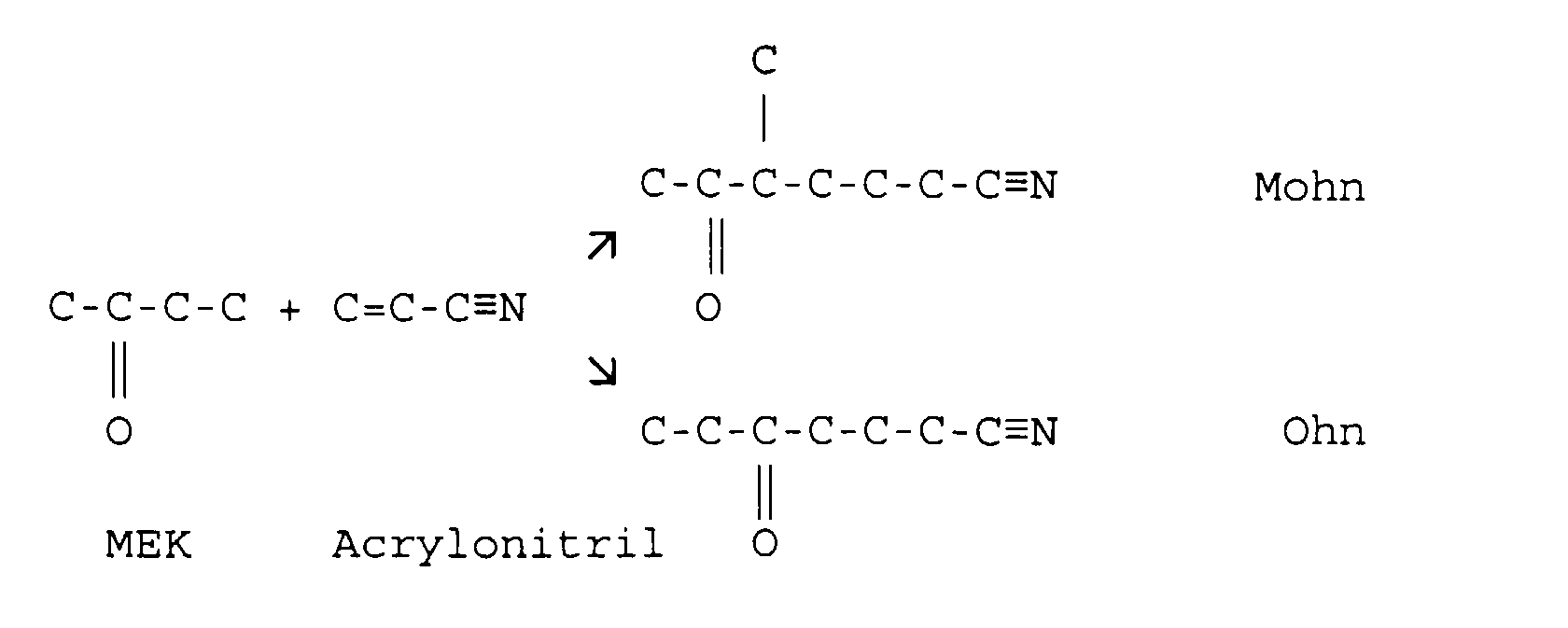
 Reactiecondities alpha pic, 2,3 lutidine
Temperatuur: 240-260°C
molverhouding H2/docan of H2/Mohn = 4-5
Totaal druk 1-1.6 atm
LHSV 0.15s-1 - The present invention will be hereinafter described in more detail by way of examples which are given for illustration of the present invention and shall not be construed as limiting the present invention.
- A series of aluminum oxide (Al2O3) supports, commercially available from Engelhard as AlTO104 having an 1/8" nominal particle and a 90 m2/g surface, was ground to a powder having an average particle size in the range of 0.180-0.125 mm and pretreated with three different types of sodium precursors. The supports were sodium-doped by incipient wetness impregnation in a rotavapor at 30°C. After impregnation, all samples were dried at 120°C for 3 hours and then calcined at 400°C for 4 hours. The type of sodium precursor used and amounts are presented in Table 1.
- In the palladium treatment stage, the sodium doped supports were treated by incipient wetness impregnation with either a toluene solution of Pd acetate or an aqueous solution of palladium chloride to achieve a palladium content of approximately 1 wt.%, relative to the total weight of the catalyst inclusive of the support. After impregnation with the palladium solution, the catalyst were oven dried at 120°C overnight and then calcined in air at 400°C for 2 hours. Finally, the catalysts were reduced under hydrogen flow at 200°C for 2 hours.
- The resulting catalyst were analyzed and compared with comparative 1, a conventional palladium-containing hydrogenation catalyst (commercially available from Johnson-Matthey), for palladium surface area, by CO chemisorption using a pulse technique at room temperature, determined by assuming a stoichiometry of Pd/CO=1 and a Pd surface density of 1.27 x 10¹⁹ atom/m2(wherein the average metal particles size was calculated by the equation d=6V/S where S= palladium metal surface area and V=volume of palladium bulk. The catalyst properties are summarized in Table 1.
Palladium Precursor Sodium Precursor Palladium (wt.%) Sodium (wt.%) Metal Surface Area (m2/g) Mean Particle Diameter (A) Ex. 1 Pd (acac)3 NaHCO 31 2 0.7 71 Ex. 2 PdCl2 NaHCO3 1 2 0.5 99 Comp. 1 PdCl2 Na acetate 1 1 0.9 55 Comp. 2 Pd (acac)3 NaHCO 31 0.5 1.8 28 Comp. 3 Pd (acac)3 NaHCO 31 1 1.1 45 Comp. 4 PdCl2 NaNO3 1 2 0.5 99 Comp. 5 PdCl2 NaNO3 1 1 0.9 55 Comp. 6 PdCl2 Na3PO4 1 0.5 1.3 38 Comp. 7 PdCl2 Na3PO4 1 1 0.9 55 Comp. 8 PdCl2 Na3PO4 1 2 0.9 55 - Having described specific embodiments of the present invention, it will be understood that many modifications thereof will readily appear or may be suggested to those skilled in the art, and it is intended therefore that this invention is limited only by the spirit and scope of the following claims.
Claims (27)
- A catalyst comprising:
a palladium containing, group IA or IIA metal-doped support material wherein said support material is metal-doped by:i) impregnating said support material with a group IA or IIA metal bicarbonate solution;ii) drying said bicarbonate impregnated support material to constant weight; andiii) calcining said bicarbonate-treated support material to form a group IA or IIA metal-doped support material. - The catalyst according to claim 1, wherein said group IA or IIA metal-doped support material is palladium treated by:i) further impregnating said group IA or IIA metal-doped support material with a palladium salt solution;ii) further drying said palladium salt impregnated support material to constant weight; andiii) further calcining said palladium treated support material.
- The catalyst according to claim 1, wherein said group IA or IIA metal bicarbonate includes sodium bicarbonate, potassium bicarbonate or cesium bicarbonate.
- The catalyst according to claim 1, wherein said group IA or IIA metal bicarbonate includes sodium bicarbonate.
- The catalyst according to claim 1, wherein said palladium salt solution includes Pd(acac)3, PdCl2, Pd(NO3)2 or Na2[PdCl]4.
- The catalyst according to claim 1, wherein said palladium salt solution includes Pd(acac)3.
- The catalyst according to claim 1, wherein said catalyst is halogen-free.
- The catalyst according to claim 1, wherein said group IA or IIA metal is present in an amount greater than 1 wt.%.
- The catalyst according to claim 1, wherein said group IA or IIA metal is present in an amount greater than 1.5 wt.%.
- The catalyst according to claim 1, wherein said group IA or IIA metal is present in an amount greater than 2 wt.%.
- The catalyst according to claim 1, wherein palladium is present in an amount between 0.5 and 2 wt.%.
- The catalyst according to claim 1, wherein said catalyst has a mean particle diameter of greater than 50 Å.
- The catalyst according to claim 1, wherein said catalyst has a mean particle diameter of greater than 60 Å.
- The catalyst according to claim 1, wherein said catalyst has a palladium metal surface area of less than 1.0 m2/g.
- The catalyst according to claim 1, wherein said catalyst has a palladium metal surface area of between 0.5 and 1.0 m2/g.
- The catalyst according to claim 1, wherein said palladium is present as a metal.
- A hydrogenation catalyst prepared by:(a) group IA or IIA metal-doping an inert support material, by:i) impregnating said support material with a group IA or IIA metal bicarbonate solution;ii) drying said metal-treated support material to constant weight; andiii) calcining said metal-treated support material to form a group IA or IIA metal-doped support material; and(b) treating said metal-doped support material with a palladium salt solution, by:i) further impregnating said support material with a palladium salt solution;ii) further drying said palladium salt impregnated support material to constant weight; andiii) further calcining said palladium-treated support material.
- A process for preparing a hydrogenation catalyst comprising:a) impregnating a support material with a group IA or IIA metal bicarbonate solution;b) drying said sodium impregnated support material to constant weight;c) calcining said sodium treated support material to form a group IA or IIA metal-doped support material;d) further impregnating said metal-doped support material with a palladium salt solution;e) further drying said palladium salt impregnated support material to constant weight; andf) further calcining said palladium-treated support material.
- The process of claim 18, wherein said metal-doped support material is impregnated with said palladium salt solution until saturation is reached.
- The process of claim 18, further comprising washing said palladium-treated support material with water.
- The process of claim 20, wherein said washing is continued until the wash water is substantially free of ions from the sodium bicarbonate and anions of the palladium salt.
- The process of claim 18, further comprising reducing said palladium present on said palladium-treated support material to palladium metal.
- The process of claim 22, wherein said reduction is carried out with hydrazine hydrate, hydrogen, formaldehyde or sodium borohydride.
- The process of claim 18, wherein said support material is selected from aluminum oxides, silicon dioxides, silicon dioxide/aluminum oxide mixtures, amorphous silicas, kieselguhrs, mixtures thereof optionally containing, in addition, silicon dioxides or aluminum oxides, titanium oxides, zirconium oxides, magnesium oxides, magnesium silicates, zirconium silicates, magnesium/aluminum spinels, silicon carbides, tungsten carbides, mixtures of silicon carbides with silicon dioxides or any desired mixtures of the abovementioned materials.
- The process of claim 1, wherein the support material is Al2O3.
- The process of claim 18, wherein said hydrogenating catalyst comprises 0.01 to 50_gram equivalents of a group IA or IIA metal per gram equivalent of palladium (reduced).
- A process for forming cyclohexanone comprising: exposing a catalyst in accordance with claim 1 to phenol in the presence of hydrogen.
Priority Applications (3)
| Application Number | Priority Date | Filing Date | Title |
|---|---|---|---|
| EP99201421A EP1050339A1 (en) | 1999-05-07 | 1999-05-07 | Stable catalysts and processes for making and using the same |
| AU46251/00A AU4625100A (en) | 1999-05-07 | 2000-05-02 | Stable catalysts and processes for making and using the same |
| CO00032422A CO5160360A1 (en) | 1999-05-07 | 2000-05-05 | PROCEDURE TO PREPARE A REACTIVELY STABLE CATALYST, USEFUL FOR HYDROGENCAION REACTIONS. |
Applications Claiming Priority (1)
| Application Number | Priority Date | Filing Date | Title |
|---|---|---|---|
| EP99201421A EP1050339A1 (en) | 1999-05-07 | 1999-05-07 | Stable catalysts and processes for making and using the same |
Publications (1)
| Publication Number | Publication Date |
|---|---|
| EP1050339A1 true EP1050339A1 (en) | 2000-11-08 |
Family
ID=8240184
Family Applications (1)
| Application Number | Title | Priority Date | Filing Date |
|---|---|---|---|
| EP99201421A Withdrawn EP1050339A1 (en) | 1999-05-07 | 1999-05-07 | Stable catalysts and processes for making and using the same |
Country Status (3)
| Country | Link |
|---|---|
| EP (1) | EP1050339A1 (en) |
| AU (1) | AU4625100A (en) |
| CO (1) | CO5160360A1 (en) |
Cited By (11)
| Publication number | Priority date | Publication date | Assignee | Title |
|---|---|---|---|---|
| EP1288188A1 (en) * | 2001-08-28 | 2003-03-05 | Avantium International B.V. | Supported catalyst composition, processes for the preparation thereof and use of the supported catalyst composition |
| US7390869B2 (en) | 2005-06-13 | 2008-06-24 | Eastman Chemical Company | Process for removing metal species in the presence of hydrogen and a porous material and polyester polymer containing reduced amounts of metal species |
| WO2011073233A1 (en) * | 2009-12-18 | 2011-06-23 | Dsm Ip Assets B.V. | Catalysed phenol hydrogenation |
| CN102741200A (en) * | 2010-02-05 | 2012-10-17 | 埃克森美孚化学专利公司 | Dehydrogenation catalyst and process |
| CN102753505A (en) * | 2010-02-05 | 2012-10-24 | 埃克森美孚化学专利公司 | Cyclohexanone dehydrogenation catalyst and process |
| US8487140B2 (en) | 2008-08-29 | 2013-07-16 | Exxonmobil Chemical Patents Inc. | Process for producing phenol |
| WO2014100132A1 (en) * | 2012-12-19 | 2014-06-26 | Celanese International Corporation | Catalysts and processes for producing butanol |
| US9249077B2 (en) | 2009-07-14 | 2016-02-02 | Exxonmobil Chemical Patents Inc. | Dehydrogenation process |
| US9382171B2 (en) | 2010-02-05 | 2016-07-05 | Exxonmobil Chemical Patents Inc. | Iridium-containing catalysts, their production and use |
| CN106946668A (en) * | 2017-03-14 | 2017-07-14 | 浙江工业大学 | A kind of method that phenol hydrogenation prepares cyclohexanone |
| CN114160128A (en) * | 2021-12-06 | 2022-03-11 | 苏州金宏气体股份有限公司 | Hydrogen-carrying catalyst for liquid hydrogen storage, preparation method and application |
Citations (5)
| Publication number | Priority date | Publication date | Assignee | Title |
|---|---|---|---|---|
| CH487107A (en) * | 1966-05-20 | 1970-03-15 | Hoechst Ag | Process for the preparation of carboxylic acid vinyl esters |
| DE2025726A1 (en) * | 1970-05-26 | 1971-12-09 | Ljubarskij, Grigorij Dawidowitsch; Streletz, Margarita Michailowna; Sokolskij, Wazlaw Alexandrowitsch; Moskau | Cyclohexanone prodn - by hydrogenation of phenol in the - presence of a promoted palladium catalyst |
| US4061598A (en) * | 1976-06-25 | 1977-12-06 | E. I. Du Pont De Nemours And Company | Catalyst for hydrogenating anthraquinones |
| US5189004A (en) * | 1991-11-18 | 1993-02-23 | Union Carbide Chemicals & Plastics Technology Corporation | Alkenyl alkanoate catalyst process |
| EP0764463A2 (en) * | 1995-09-23 | 1997-03-26 | Basf Aktiengesellschaft | Palladium containing supported catalyst for the selective hydrogenation of acetylen in hydrocarbon streams |
-
1999
- 1999-05-07 EP EP99201421A patent/EP1050339A1/en not_active Withdrawn
-
2000
- 2000-05-02 AU AU46251/00A patent/AU4625100A/en not_active Abandoned
- 2000-05-05 CO CO00032422A patent/CO5160360A1/en unknown
Patent Citations (5)
| Publication number | Priority date | Publication date | Assignee | Title |
|---|---|---|---|---|
| CH487107A (en) * | 1966-05-20 | 1970-03-15 | Hoechst Ag | Process for the preparation of carboxylic acid vinyl esters |
| DE2025726A1 (en) * | 1970-05-26 | 1971-12-09 | Ljubarskij, Grigorij Dawidowitsch; Streletz, Margarita Michailowna; Sokolskij, Wazlaw Alexandrowitsch; Moskau | Cyclohexanone prodn - by hydrogenation of phenol in the - presence of a promoted palladium catalyst |
| US4061598A (en) * | 1976-06-25 | 1977-12-06 | E. I. Du Pont De Nemours And Company | Catalyst for hydrogenating anthraquinones |
| US5189004A (en) * | 1991-11-18 | 1993-02-23 | Union Carbide Chemicals & Plastics Technology Corporation | Alkenyl alkanoate catalyst process |
| EP0764463A2 (en) * | 1995-09-23 | 1997-03-26 | Basf Aktiengesellschaft | Palladium containing supported catalyst for the selective hydrogenation of acetylen in hydrocarbon streams |
Cited By (25)
| Publication number | Priority date | Publication date | Assignee | Title |
|---|---|---|---|---|
| EP1288188A1 (en) * | 2001-08-28 | 2003-03-05 | Avantium International B.V. | Supported catalyst composition, processes for the preparation thereof and use of the supported catalyst composition |
| US7390869B2 (en) | 2005-06-13 | 2008-06-24 | Eastman Chemical Company | Process for removing metal species in the presence of hydrogen and a porous material and polyester polymer containing reduced amounts of metal species |
| US8530609B2 (en) | 2005-06-13 | 2013-09-10 | Grupo Petrotemex, S.A. De C.V. | Process for removing metal species in the presence of hydrogen and a porous material and polyester polymer containing reduced amounts of metal species |
| US8921509B2 (en) | 2005-06-13 | 2014-12-30 | Grupo Petrotemex, S.A. De C.V. | Process for removing metal species in the presence of hydrogen and a porous material and polyester polymer containing reduced amounts of metal species |
| US8487140B2 (en) | 2008-08-29 | 2013-07-16 | Exxonmobil Chemical Patents Inc. | Process for producing phenol |
| US9249077B2 (en) | 2009-07-14 | 2016-02-02 | Exxonmobil Chemical Patents Inc. | Dehydrogenation process |
| CN102791668B (en) * | 2009-12-18 | 2015-06-17 | 帝斯曼知识产权资产管理有限公司 | Catalysed phenol hydrogenation |
| WO2011073233A1 (en) * | 2009-12-18 | 2011-06-23 | Dsm Ip Assets B.V. | Catalysed phenol hydrogenation |
| TWI547475B (en) * | 2009-12-18 | 2016-09-01 | 卡普三世責任有限公司 | Catalyzed phenol hydrogenation |
| EP2513025B1 (en) | 2009-12-18 | 2016-08-17 | Cap Iii B.V. | Catalysed phenol hydrogenation |
| CN102791668A (en) * | 2009-12-18 | 2012-11-21 | 帝斯曼知识产权资产管理有限公司 | Catalysed phenol hydrogenation |
| US8772550B2 (en) | 2009-12-18 | 2014-07-08 | Dsm Ip Assets B.V. | Catalysed phenol hydrogenation |
| US20130090499A1 (en) * | 2010-02-05 | 2013-04-11 | Teng Xu | Cyclohexanone Dehydrogenation Catalyst and Process |
| US9061270B2 (en) | 2010-02-05 | 2015-06-23 | Exxonmobil Chemical Patents Inc. | Cyclohexanone dehydrogenation catalyst and process |
| US9242227B2 (en) | 2010-02-05 | 2016-01-26 | Exxonmobil Chemical Patents Inc. | Dehydrogenation catalyst and process |
| US9382171B2 (en) | 2010-02-05 | 2016-07-05 | Exxonmobil Chemical Patents Inc. | Iridium-containing catalysts, their production and use |
| CN102753505A (en) * | 2010-02-05 | 2012-10-24 | 埃克森美孚化学专利公司 | Cyclohexanone dehydrogenation catalyst and process |
| CN102741200B (en) * | 2010-02-05 | 2016-08-24 | 埃克森美孚化学专利公司 | Dehydrogenation and method |
| CN102741200A (en) * | 2010-02-05 | 2012-10-17 | 埃克森美孚化学专利公司 | Dehydrogenation catalyst and process |
| CN106824186A (en) * | 2010-02-05 | 2017-06-13 | 埃克森美孚化学专利公司 | Cyclohexanone dehydrogenation and method |
| US9024090B2 (en) | 2012-12-19 | 2015-05-05 | Celanese International Corporation | Catalysts and processes for producing butanol |
| WO2014100132A1 (en) * | 2012-12-19 | 2014-06-26 | Celanese International Corporation | Catalysts and processes for producing butanol |
| CN106946668A (en) * | 2017-03-14 | 2017-07-14 | 浙江工业大学 | A kind of method that phenol hydrogenation prepares cyclohexanone |
| CN114160128A (en) * | 2021-12-06 | 2022-03-11 | 苏州金宏气体股份有限公司 | Hydrogen-carrying catalyst for liquid hydrogen storage, preparation method and application |
| WO2023103822A1 (en) * | 2021-12-06 | 2023-06-15 | 苏州金宏气体股份有限公司 | Hydrogen-carrying catalyst for liquid hydrogen storage, preparation method, and application |
Also Published As
| Publication number | Publication date |
|---|---|
| CO5160360A1 (en) | 2002-05-30 |
| AU4625100A (en) | 2000-11-21 |
Similar Documents
| Publication | Publication Date | Title |
|---|---|---|
| US4265834A (en) | Process for the catalytic hydrogenation of nitrobenzene | |
| US4007135A (en) | Promoted silver catalyst for producing alkylene oxides | |
| US4407733A (en) | Supported catalysts and process for their preparation | |
| US5559071A (en) | Catalyst, process for the production thereof, and use thereof for the preparation of vinyl acetate | |
| JP4750283B2 (en) | Catalyst for the production of vinyl acetate by vapor phase oxidation of ethylene and acetic acid, its production and its use | |
| US4774221A (en) | Supported hydrogenation catalysts | |
| PL114020B1 (en) | Method of reactivating silver catalysts | |
| EP0361484A2 (en) | Process for preparation of allyl acetate | |
| EP3375522A1 (en) | Method for preparing dehydrogenation catalyst for straight chain-type light hydrocarbon using stabilized active material complex | |
| JP2002540942A (en) | Catalyst for producing acetic acid or acetic acid and ethyl acetate, method for producing the same, and method for producing acetic acid or acetic acid and ethyl acetate using the same | |
| JP5759381B2 (en) | Continuous process for the production of substituted cyclohexylmethanols | |
| CA2783604A1 (en) | Process for epoxidation start-up | |
| SK12699A3 (en) | Supported silver-containing catalysts, catalyst precursores, process for their preparation and their use | |
| US5089454A (en) | Catalytic composition for hydrogenation of chlorofluoroalkenes | |
| US4476250A (en) | Catalytic process for the production of methanol | |
| WO2000067902A1 (en) | Stable catalysts and processes for making and using the same | |
| US9067902B2 (en) | Epoxidation process with post-conditioning step | |
| EP3036213B1 (en) | Production of 1,6-hexanediol from adipic acid | |
| KR20030009490A (en) | Method for the epoxidation of hydrocarbons | |
| US5243103A (en) | Process for obtaining catalytic compositions and process for hydrogenation of chlorofluoroalkenes by means of these compositions | |
| HU180654B (en) | Process for producing nitrozo-benzene | |
| US5998659A (en) | Process and catalyst for producing vinyl acetate | |
| JP2002522202A (en) | Process for the preparation of a supported catalyst and its use for the production of vinyl acetate monomers | |
| JPH0542298B2 (en) | ||
| CA2222010C (en) | Catalyst and process for preparing vinyl acetate |
Legal Events
| Date | Code | Title | Description |
|---|---|---|---|
| PUAI | Public reference made under article 153(3) epc to a published international application that has entered the european phase |
Free format text: ORIGINAL CODE: 0009012 |
|
| AK | Designated contracting states |
Kind code of ref document: A1 Designated state(s): AT BE CH CY DE DK ES FI FR GB GR IE IT LI LU MC NL PT SE |
|
| AX | Request for extension of the european patent |
Free format text: AL;LT;LV;MK;RO;SI |
|
| AKX | Designation fees paid | ||
| REG | Reference to a national code |
Ref country code: DE Ref legal event code: 8566 |
|
| STAA | Information on the status of an ep patent application or granted ep patent |
Free format text: STATUS: THE APPLICATION IS DEEMED TO BE WITHDRAWN |
|
| 18D | Application deemed to be withdrawn |
Effective date: 20010509 |