EP1049478B1 - Composition containing propargylamine for enhancing cancer therapy - Google Patents
Composition containing propargylamine for enhancing cancer therapy Download PDFInfo
- Publication number
- EP1049478B1 EP1049478B1 EP99900405A EP99900405A EP1049478B1 EP 1049478 B1 EP1049478 B1 EP 1049478B1 EP 99900405 A EP99900405 A EP 99900405A EP 99900405 A EP99900405 A EP 99900405A EP 1049478 B1 EP1049478 B1 EP 1049478B1
- Authority
- EP
- European Patent Office
- Prior art keywords
- propargylamine
- methylpropargylamine
- use according
- antineoplastic drug
- drug
- Prior art date
- Legal status (The legal status is an assumption and is not a legal conclusion. Google has not performed a legal analysis and makes no representation as to the accuracy of the status listed.)
- Expired - Lifetime
Links
- JKANAVGODYYCQF-UHFFFAOYSA-N prop-2-yn-1-amine Chemical compound NCC#C JKANAVGODYYCQF-UHFFFAOYSA-N 0.000 title claims abstract description 59
- 230000002708 enhancing effect Effects 0.000 title description 5
- 239000000203 mixture Substances 0.000 title description 4
- 238000011275 oncology therapy Methods 0.000 title description 4
- 239000002246 antineoplastic agent Substances 0.000 claims abstract description 54
- 229940041181 antineoplastic drug Drugs 0.000 claims abstract description 46
- 206010028980 Neoplasm Diseases 0.000 claims abstract description 45
- 201000011510 cancer Diseases 0.000 claims abstract description 21
- 230000000694 effects Effects 0.000 claims abstract description 19
- 231100000433 cytotoxic Toxicity 0.000 claims abstract description 8
- 230000001472 cytotoxic effect Effects 0.000 claims abstract description 8
- 239000003814 drug Substances 0.000 claims description 25
- 150000001875 compounds Chemical class 0.000 claims description 10
- 229940079593 drug Drugs 0.000 claims description 10
- 229910052739 hydrogen Inorganic materials 0.000 claims description 10
- 239000001257 hydrogen Substances 0.000 claims description 10
- 238000004519 manufacturing process Methods 0.000 claims description 9
- 239000008194 pharmaceutical composition Substances 0.000 claims description 9
- AOJJSUZBOXZQNB-TZSSRYMLSA-N Doxorubicin Chemical compound O([C@H]1C[C@@](O)(CC=2C(O)=C3C(=O)C=4C=CC=C(C=4C(=O)C3=C(O)C=21)OC)C(=O)CO)[C@H]1C[C@H](N)[C@H](O)[C@H](C)O1 AOJJSUZBOXZQNB-TZSSRYMLSA-N 0.000 claims description 6
- 150000002431 hydrogen Chemical class 0.000 claims description 6
- 230000001965 increasing effect Effects 0.000 claims description 6
- VNEMYKBWMWWZIU-LLVKDONJSA-N (2r)-n-methyl-n-prop-2-ynylheptan-2-amine Chemical compound CCCCC[C@@H](C)N(C)CC#C VNEMYKBWMWWZIU-LLVKDONJSA-N 0.000 claims description 5
- AGQBAKDLUADXOF-SNVBAGLBSA-N (2r)-n-prop-2-ynylheptan-2-amine Chemical group CCCCC[C@@H](C)NCC#C AGQBAKDLUADXOF-SNVBAGLBSA-N 0.000 claims description 5
- 230000035945 sensitivity Effects 0.000 claims description 5
- GXWAOZIOMOIIEV-LLVKDONJSA-N (2r)-n-prop-2-ynyloctan-2-amine Chemical compound CCCCCC[C@@H](C)NCC#C GXWAOZIOMOIIEV-LLVKDONJSA-N 0.000 claims description 4
- 125000001997 phenyl group Chemical group [H]C1=C([H])C([H])=C(*)C([H])=C1[H] 0.000 claims description 4
- 150000003839 salts Chemical class 0.000 claims description 4
- ZIEVEMJNFUFOKC-GFCCVEGCSA-N (2r)-n-methyl-n-prop-2-ynyloctan-2-amine Chemical compound CCCCCC[C@@H](C)N(C)CC#C ZIEVEMJNFUFOKC-GFCCVEGCSA-N 0.000 claims description 3
- STQGQHZAVUOBTE-UHFFFAOYSA-N 7-Cyan-hept-2t-en-4,6-diinsaeure Natural products C1=2C(O)=C3C(=O)C=4C(OC)=CC=CC=4C(=O)C3=C(O)C=2CC(O)(C(C)=O)CC1OC1CC(N)C(O)C(C)O1 STQGQHZAVUOBTE-UHFFFAOYSA-N 0.000 claims description 3
- STQGQHZAVUOBTE-VGBVRHCVSA-N daunorubicin Chemical compound O([C@H]1C[C@@](O)(CC=2C(O)=C3C(=O)C=4C=CC=C(C=4C(=O)C3=C(O)C=21)OC)C(C)=O)[C@H]1C[C@H](N)[C@H](O)[C@H](C)O1 STQGQHZAVUOBTE-VGBVRHCVSA-N 0.000 claims description 3
- 230000001419 dependent effect Effects 0.000 claims description 3
- CJRQAPHWCGEATR-MRVPVSSYSA-N (2r)-n-methyl-n-prop-2-ynylbutan-2-amine Chemical compound CC[C@@H](C)N(C)CC#C CJRQAPHWCGEATR-MRVPVSSYSA-N 0.000 claims description 2
- SYTFCSLHNXBWJU-CQSZACIVSA-N (2r)-n-methyl-n-prop-2-ynyldecan-2-amine Chemical compound CCCCCCCC[C@@H](C)N(C)CC#C SYTFCSLHNXBWJU-CQSZACIVSA-N 0.000 claims description 2
- VAFDRBJZVFFWNL-MRXNPFEDSA-N (2r)-n-methyl-n-prop-2-ynyldodecan-2-amine Chemical compound CCCCCCCCCC[C@@H](C)N(C)CC#C VAFDRBJZVFFWNL-MRXNPFEDSA-N 0.000 claims description 2
- IKDYDBDHSTZVCB-OAHLLOKOSA-N (2r)-n-methyl-n-prop-2-ynylundecan-2-amine Chemical compound CCCCCCCCC[C@@H](C)N(C)CC#C IKDYDBDHSTZVCB-OAHLLOKOSA-N 0.000 claims description 2
- MMUSQLTVJWLCEI-SSDOTTSWSA-N (2r)-n-prop-2-ynylbutan-2-amine Chemical compound CC[C@@H](C)NCC#C MMUSQLTVJWLCEI-SSDOTTSWSA-N 0.000 claims description 2
- UZYDJMMHVXJTCF-CYBMUJFWSA-N (2r)-n-prop-2-ynyldecan-2-amine Chemical compound CCCCCCCC[C@@H](C)NCC#C UZYDJMMHVXJTCF-CYBMUJFWSA-N 0.000 claims description 2
- XGTXZOAAIYYBET-OAHLLOKOSA-N (2r)-n-prop-2-ynyldodecan-2-amine Chemical compound CCCCCCCCCC[C@@H](C)NCC#C XGTXZOAAIYYBET-OAHLLOKOSA-N 0.000 claims description 2
- UTRPGDMUSLMURV-SECBINFHSA-N (2r)-n-prop-2-ynylhexan-2-amine Chemical compound CCCC[C@@H](C)NCC#C UTRPGDMUSLMURV-SECBINFHSA-N 0.000 claims description 2
- AAUVMOAJOZSPSH-MRVPVSSYSA-N (2r)-n-prop-2-ynylpentan-2-amine Chemical compound CCC[C@@H](C)NCC#C AAUVMOAJOZSPSH-MRVPVSSYSA-N 0.000 claims description 2
- HYOONJMZFULRAW-CQSZACIVSA-N (2r)-n-prop-2-ynylundecan-2-amine Chemical compound CCCCCCCCC[C@@H](C)NCC#C HYOONJMZFULRAW-CQSZACIVSA-N 0.000 claims description 2
- UHDGCWIWMRVCDJ-CCXZUQQUSA-N Cytarabine Chemical compound O=C1N=C(N)C=CN1[C@H]1[C@@H](O)[C@H](O)[C@@H](CO)O1 UHDGCWIWMRVCDJ-CCXZUQQUSA-N 0.000 claims description 2
- WEAHRLBPCANXCN-UHFFFAOYSA-N Daunomycin Natural products CCC1(O)CC(OC2CC(N)C(O)C(C)O2)c3cc4C(=O)c5c(OC)cccc5C(=O)c4c(O)c3C1 WEAHRLBPCANXCN-UHFFFAOYSA-N 0.000 claims description 2
- GHASVSINZRGABV-UHFFFAOYSA-N Fluorouracil Chemical compound FC1=CNC(=O)NC1=O GHASVSINZRGABV-UHFFFAOYSA-N 0.000 claims description 2
- UFHFLCQGNIYNRP-UHFFFAOYSA-N Hydrogen Chemical compound [H][H] UFHFLCQGNIYNRP-UHFFFAOYSA-N 0.000 claims description 2
- NYRTXTOENVIINK-UHFFFAOYSA-N N-methyl-N-prop-2-ynylnonan-1-amine Chemical compound CCCCCCCCCN(C)CC#C NYRTXTOENVIINK-UHFFFAOYSA-N 0.000 claims description 2
- 229940009456 adriamycin Drugs 0.000 claims description 2
- 229960002949 fluorouracil Drugs 0.000 claims description 2
- 229910052736 halogen Inorganic materials 0.000 claims description 2
- 150000002367 halogens Chemical class 0.000 claims description 2
- 229910052740 iodine Inorganic materials 0.000 claims description 2
- NJBSAFGMLJQVNT-UHFFFAOYSA-N n-methyl-n-prop-2-ynylbutan-1-amine Chemical compound CCCCN(C)CC#C NJBSAFGMLJQVNT-UHFFFAOYSA-N 0.000 claims description 2
- MOEGUVNIRRGJBN-UHFFFAOYSA-N n-methyl-n-prop-2-ynyldecan-1-amine Chemical compound CCCCCCCCCCN(C)CC#C MOEGUVNIRRGJBN-UHFFFAOYSA-N 0.000 claims description 2
- QENZXWKNTMLABL-UHFFFAOYSA-N n-methyl-n-prop-2-ynyldodecan-1-amine Chemical compound CCCCCCCCCCCCN(C)CC#C QENZXWKNTMLABL-UHFFFAOYSA-N 0.000 claims description 2
- UGMQKDBCDDBMHW-UHFFFAOYSA-N n-methyl-n-prop-2-ynylheptan-1-amine Chemical compound CCCCCCCN(C)CC#C UGMQKDBCDDBMHW-UHFFFAOYSA-N 0.000 claims description 2
- DIYIPEPKHVUAPX-UHFFFAOYSA-N n-methyl-n-prop-2-ynylhexan-1-amine Chemical compound CCCCCCN(C)CC#C DIYIPEPKHVUAPX-UHFFFAOYSA-N 0.000 claims description 2
- QUIXWNZTZYQSAR-UHFFFAOYSA-N n-methyl-n-prop-2-ynyloctan-1-amine Chemical compound CCCCCCCCN(C)CC#C QUIXWNZTZYQSAR-UHFFFAOYSA-N 0.000 claims description 2
- ZLSSWZIIDZZNDQ-UHFFFAOYSA-N n-methyl-n-prop-2-ynylpentan-1-amine Chemical compound CCCCCN(C)CC#C ZLSSWZIIDZZNDQ-UHFFFAOYSA-N 0.000 claims description 2
- LMMHXOHVCPOLFQ-UHFFFAOYSA-N n-methyl-n-prop-2-ynylpropan-1-amine Chemical compound CCCN(C)CC#C LMMHXOHVCPOLFQ-UHFFFAOYSA-N 0.000 claims description 2
- MWMYHRMOZSWZLB-UHFFFAOYSA-N n-methyl-n-prop-2-ynylpropan-2-amine Chemical compound CC(C)N(C)CC#C MWMYHRMOZSWZLB-UHFFFAOYSA-N 0.000 claims description 2
- LTLDCXKRFLENNS-UHFFFAOYSA-N n-methyl-n-prop-2-ynylundecan-1-amine Chemical compound CCCCCCCCCCCN(C)CC#C LTLDCXKRFLENNS-UHFFFAOYSA-N 0.000 claims description 2
- IONYZQJNJQZUMX-UHFFFAOYSA-N n-prop-2-ynylbutan-1-amine Chemical compound CCCCNCC#C IONYZQJNJQZUMX-UHFFFAOYSA-N 0.000 claims description 2
- RHQTYPIWELTMCE-UHFFFAOYSA-N n-prop-2-ynyldecan-1-amine Chemical compound CCCCCCCCCCNCC#C RHQTYPIWELTMCE-UHFFFAOYSA-N 0.000 claims description 2
- FBSFXULFAIHOSG-UHFFFAOYSA-N n-prop-2-ynyldodecan-1-amine Chemical compound CCCCCCCCCCCCNCC#C FBSFXULFAIHOSG-UHFFFAOYSA-N 0.000 claims description 2
- YCSAIWCJDFBKIN-UHFFFAOYSA-N n-prop-2-ynylheptan-1-amine Chemical compound CCCCCCCNCC#C YCSAIWCJDFBKIN-UHFFFAOYSA-N 0.000 claims description 2
- ZRNFWXWWROPKMG-UHFFFAOYSA-N n-prop-2-ynylhexan-1-amine Chemical compound CCCCCCNCC#C ZRNFWXWWROPKMG-UHFFFAOYSA-N 0.000 claims description 2
- ZXTHBNFMIXFSCQ-UHFFFAOYSA-N n-prop-2-ynylnonan-1-amine Chemical compound CCCCCCCCCNCC#C ZXTHBNFMIXFSCQ-UHFFFAOYSA-N 0.000 claims description 2
- XBOIFYIOEHOMBU-UHFFFAOYSA-N n-prop-2-ynyloctan-1-amine Chemical compound CCCCCCCCNCC#C XBOIFYIOEHOMBU-UHFFFAOYSA-N 0.000 claims description 2
- PZDKPUHSLZLJNI-UHFFFAOYSA-N n-prop-2-ynylpentan-1-amine Chemical compound CCCCCNCC#C PZDKPUHSLZLJNI-UHFFFAOYSA-N 0.000 claims description 2
- MDMPAKJUMKBYNQ-UHFFFAOYSA-N n-prop-2-ynylpropan-1-amine Chemical compound CCCNCC#C MDMPAKJUMKBYNQ-UHFFFAOYSA-N 0.000 claims description 2
- BQMKURIMSKNDLR-UHFFFAOYSA-N n-prop-2-ynylpropan-2-amine Chemical compound CC(C)NCC#C BQMKURIMSKNDLR-UHFFFAOYSA-N 0.000 claims description 2
- DIGMSBSSHDJTID-UHFFFAOYSA-N n-prop-2-ynylundecan-1-amine Chemical compound CCCCCCCCCCCNCC#C DIGMSBSSHDJTID-UHFFFAOYSA-N 0.000 claims description 2
- RUOKEQAAGRXIBM-GFCCVEGCSA-N rasagiline Chemical compound C1=CC=C2[C@H](NCC#C)CCC2=C1 RUOKEQAAGRXIBM-GFCCVEGCSA-N 0.000 claims description 2
- 229960000245 rasagiline Drugs 0.000 claims description 2
- HQFYIDOMCULPIW-UHFFFAOYSA-N n-methylprop-2-yn-1-amine Chemical compound CNCC#C HQFYIDOMCULPIW-UHFFFAOYSA-N 0.000 claims 3
- 125000004178 (C1-C4) alkyl group Chemical group 0.000 claims 1
- 238000002512 chemotherapy Methods 0.000 abstract description 17
- 238000011282 treatment Methods 0.000 abstract description 16
- 206010059866 Drug resistance Diseases 0.000 abstract description 12
- 230000001988 toxicity Effects 0.000 abstract description 5
- 231100000419 toxicity Toxicity 0.000 abstract description 5
- 238000002560 therapeutic procedure Methods 0.000 abstract description 3
- 208000030453 Drug-Related Side Effects and Adverse reaction Diseases 0.000 abstract description 2
- 206010070863 Toxicity to various agents Diseases 0.000 abstract description 2
- 238000011269 treatment regimen Methods 0.000 abstract 1
- 210000004027 cell Anatomy 0.000 description 49
- 230000000118 anti-neoplastic effect Effects 0.000 description 13
- ZQISRDCJNBUVMM-YFKPBYRVSA-N L-histidinol Chemical compound OC[C@@H](N)CC1=CNC=N1 ZQISRDCJNBUVMM-YFKPBYRVSA-N 0.000 description 10
- ZQISRDCJNBUVMM-UHFFFAOYSA-N L-Histidinol Natural products OCC(N)CC1=CN=CN1 ZQISRDCJNBUVMM-UHFFFAOYSA-N 0.000 description 9
- 241000699670 Mus sp. Species 0.000 description 8
- 208000037265 diseases, disorders, signs and symptoms Diseases 0.000 description 8
- -1 aliphatic propargylamines Chemical class 0.000 description 7
- 229940034982 antineoplastic agent Drugs 0.000 description 7
- 230000002147 killing effect Effects 0.000 description 7
- 238000000034 method Methods 0.000 description 7
- 210000004881 tumor cell Anatomy 0.000 description 7
- 241001465754 Metazoa Species 0.000 description 6
- 238000013459 approach Methods 0.000 description 6
- 201000010099 disease Diseases 0.000 description 6
- 208000032839 leukemia Diseases 0.000 description 6
- 239000003795 chemical substances by application Substances 0.000 description 5
- 230000000973 chemotherapeutic effect Effects 0.000 description 5
- 238000001727 in vivo Methods 0.000 description 5
- 238000002360 preparation method Methods 0.000 description 5
- 238000002347 injection Methods 0.000 description 4
- 239000007924 injection Substances 0.000 description 4
- 210000002966 serum Anatomy 0.000 description 4
- 230000004083 survival effect Effects 0.000 description 4
- 206010025323 Lymphomas Diseases 0.000 description 3
- OKKJLVBELUTLKV-UHFFFAOYSA-N Methanol Chemical compound OC OKKJLVBELUTLKV-UHFFFAOYSA-N 0.000 description 3
- 125000000217 alkyl group Chemical group 0.000 description 3
- 238000003556 assay Methods 0.000 description 3
- 210000002950 fibroblast Anatomy 0.000 description 3
- 238000000338 in vitro Methods 0.000 description 3
- 238000001990 intravenous administration Methods 0.000 description 3
- 125000002496 methyl group Chemical group [H]C([H])([H])* 0.000 description 3
- 239000007921 spray Substances 0.000 description 3
- 239000000126 substance Substances 0.000 description 3
- 230000001225 therapeutic effect Effects 0.000 description 3
- 231100001274 therapeutic index Toxicity 0.000 description 3
- 210000001519 tissue Anatomy 0.000 description 3
- 230000005909 tumor killing Effects 0.000 description 3
- 231100000588 tumorigenic Toxicity 0.000 description 3
- 230000000381 tumorigenic effect Effects 0.000 description 3
- 229920001817 Agar Polymers 0.000 description 2
- DLGOEMSEDOSKAD-UHFFFAOYSA-N Carmustine Chemical compound ClCCNC(=O)N(N=O)CCCl DLGOEMSEDOSKAD-UHFFFAOYSA-N 0.000 description 2
- 241000282412 Homo Species 0.000 description 2
- GQYIWUVLTXOXAJ-UHFFFAOYSA-N Lomustine Chemical compound ClCCN(N=O)C(=O)NC1CCCCC1 GQYIWUVLTXOXAJ-UHFFFAOYSA-N 0.000 description 2
- 241000124008 Mammalia Species 0.000 description 2
- BAVYZALUXZFZLV-UHFFFAOYSA-N Methylamine Chemical compound NC BAVYZALUXZFZLV-UHFFFAOYSA-N 0.000 description 2
- 241000699666 Mus <mouse, genus> Species 0.000 description 2
- 239000013543 active substance Substances 0.000 description 2
- 208000009956 adenocarcinoma Diseases 0.000 description 2
- 239000008272 agar Substances 0.000 description 2
- 230000037396 body weight Effects 0.000 description 2
- 210000001185 bone marrow Anatomy 0.000 description 2
- 210000002798 bone marrow cell Anatomy 0.000 description 2
- 230000003021 clonogenic effect Effects 0.000 description 2
- 239000006071 cream Substances 0.000 description 2
- 238000011161 development Methods 0.000 description 2
- 230000018109 developmental process Effects 0.000 description 2
- 239000003085 diluting agent Substances 0.000 description 2
- 208000035475 disorder Diseases 0.000 description 2
- 238000002474 experimental method Methods 0.000 description 2
- 239000007903 gelatin capsule Substances 0.000 description 2
- 125000004435 hydrogen atom Chemical group [H]* 0.000 description 2
- 238000011534 incubation Methods 0.000 description 2
- 238000007918 intramuscular administration Methods 0.000 description 2
- 230000036210 malignancy Effects 0.000 description 2
- 230000003211 malignant effect Effects 0.000 description 2
- 229940002612 prodrug Drugs 0.000 description 2
- 239000000651 prodrug Substances 0.000 description 2
- 230000001681 protective effect Effects 0.000 description 2
- 238000001959 radiotherapy Methods 0.000 description 2
- 239000007787 solid Substances 0.000 description 2
- 238000007920 subcutaneous administration Methods 0.000 description 2
- 230000000699 topical effect Effects 0.000 description 2
- 231100000331 toxic Toxicity 0.000 description 2
- 230000002588 toxic effect Effects 0.000 description 2
- 238000005406 washing Methods 0.000 description 2
- OPNHJZDMXLCVAV-SNVBAGLBSA-N (2r)-n-methyl-n-prop-2-ynylhexan-2-amine Chemical compound CCCC[C@@H](C)N(C)CC#C OPNHJZDMXLCVAV-SNVBAGLBSA-N 0.000 description 1
- BSNWMBHBPLPDNI-SECBINFHSA-N (2r)-n-methyl-n-prop-2-ynylpentan-2-amine Chemical compound CCC[C@@H](C)N(C)CC#C BSNWMBHBPLPDNI-SECBINFHSA-N 0.000 description 1
- FDKXTQMXEQVLRF-ZHACJKMWSA-N (E)-dacarbazine Chemical compound CN(C)\N=N\c1[nH]cnc1C(N)=O FDKXTQMXEQVLRF-ZHACJKMWSA-N 0.000 description 1
- WUIABRMSWOKTOF-OYALTWQYSA-N 3-[[2-[2-[2-[[(2s,3r)-2-[[(2s,3s,4r)-4-[[(2s,3r)-2-[[6-amino-2-[(1s)-3-amino-1-[[(2s)-2,3-diamino-3-oxopropyl]amino]-3-oxopropyl]-5-methylpyrimidine-4-carbonyl]amino]-3-[(2r,3s,4s,5s,6s)-3-[(2r,3s,4s,5r,6r)-4-carbamoyloxy-3,5-dihydroxy-6-(hydroxymethyl)ox Chemical compound OS([O-])(=O)=O.N([C@H](C(=O)N[C@H](C)[C@@H](O)[C@H](C)C(=O)N[C@@H]([C@H](O)C)C(=O)NCCC=1SC=C(N=1)C=1SC=C(N=1)C(=O)NCCC[S+](C)C)[C@@H](O[C@H]1[C@H]([C@@H](O)[C@H](O)[C@H](CO)O1)O[C@@H]1[C@H]([C@@H](OC(N)=O)[C@H](O)[C@@H](CO)O1)O)C=1NC=NC=1)C(=O)C1=NC([C@H](CC(N)=O)NC[C@H](N)C(N)=O)=NC(N)=C1C WUIABRMSWOKTOF-OYALTWQYSA-N 0.000 description 1
- ZCYVEMRRCGMTRW-UHFFFAOYSA-N 7553-56-2 Chemical compound [I] ZCYVEMRRCGMTRW-UHFFFAOYSA-N 0.000 description 1
- 241000251468 Actinopterygii Species 0.000 description 1
- 208000003200 Adenoma Diseases 0.000 description 1
- 208000024827 Alzheimer disease Diseases 0.000 description 1
- 208000006096 Attention Deficit Disorder with Hyperactivity Diseases 0.000 description 1
- 208000036864 Attention deficit/hyperactivity disease Diseases 0.000 description 1
- 241000271566 Aves Species 0.000 description 1
- 206010005003 Bladder cancer Diseases 0.000 description 1
- 108010006654 Bleomycin Proteins 0.000 description 1
- 206010006187 Breast cancer Diseases 0.000 description 1
- 208000026310 Breast neoplasm Diseases 0.000 description 1
- WKBOTKDWSSQWDR-UHFFFAOYSA-N Bromine atom Chemical compound [Br] WKBOTKDWSSQWDR-UHFFFAOYSA-N 0.000 description 1
- KLWPJMFMVPTNCC-UHFFFAOYSA-N Camptothecin Natural products CCC1(O)C(=O)OCC2=C1C=C3C4Nc5ccccc5C=C4CN3C2=O KLWPJMFMVPTNCC-UHFFFAOYSA-N 0.000 description 1
- 201000009030 Carcinoma Diseases 0.000 description 1
- 206010008342 Cervix carcinoma Diseases 0.000 description 1
- ZAMOUSCENKQFHK-UHFFFAOYSA-N Chlorine atom Chemical compound [Cl] ZAMOUSCENKQFHK-UHFFFAOYSA-N 0.000 description 1
- 241000938605 Crocodylia Species 0.000 description 1
- 102100021906 Cyclin-O Human genes 0.000 description 1
- 238000011767 DBA/2J (JAX™ mouse strain) Methods 0.000 description 1
- 241000714475 Fujinami sarcoma virus Species 0.000 description 1
- 101000897441 Homo sapiens Cyclin-O Proteins 0.000 description 1
- 206010021143 Hypoxia Diseases 0.000 description 1
- 229930192392 Mitomycin Natural products 0.000 description 1
- 102000010909 Monoamine Oxidase Human genes 0.000 description 1
- 108010062431 Monoamine oxidase Proteins 0.000 description 1
- NWIBSHFKIJFRCO-WUDYKRTCSA-N Mytomycin Chemical compound C1N2C(C(C(C)=C(N)C3=O)=O)=C3[C@@H](COC(N)=O)[C@@]2(OC)[C@@H]2[C@H]1N2 NWIBSHFKIJFRCO-WUDYKRTCSA-N 0.000 description 1
- 206010029260 Neuroblastoma Diseases 0.000 description 1
- 108700020796 Oncogene Proteins 0.000 description 1
- 206010033128 Ovarian cancer Diseases 0.000 description 1
- 206010061535 Ovarian neoplasm Diseases 0.000 description 1
- 229930012538 Paclitaxel Natural products 0.000 description 1
- 208000018737 Parkinson disease Diseases 0.000 description 1
- 208000007452 Plasmacytoma Diseases 0.000 description 1
- 206010039491 Sarcoma Diseases 0.000 description 1
- 101710183280 Topoisomerase Proteins 0.000 description 1
- 208000007097 Urinary Bladder Neoplasms Diseases 0.000 description 1
- 208000008385 Urogenital Neoplasms Diseases 0.000 description 1
- 208000006105 Uterine Cervical Neoplasms Diseases 0.000 description 1
- 230000001464 adherent effect Effects 0.000 description 1
- 230000032683 aging Effects 0.000 description 1
- 229940100198 alkylating agent Drugs 0.000 description 1
- 239000002168 alkylating agent Substances 0.000 description 1
- 230000003466 anti-cipated effect Effects 0.000 description 1
- 230000000340 anti-metabolite Effects 0.000 description 1
- 230000000845 anti-microbial effect Effects 0.000 description 1
- 229940044684 anti-microtubule agent Drugs 0.000 description 1
- 229940100197 antimetabolite Drugs 0.000 description 1
- 239000002256 antimetabolite Substances 0.000 description 1
- 208000015802 attention deficit-hyperactivity disease Diseases 0.000 description 1
- 229960004395 bleomycin sulfate Drugs 0.000 description 1
- 210000000601 blood cell Anatomy 0.000 description 1
- GDTBXPJZTBHREO-UHFFFAOYSA-N bromine Substances BrBr GDTBXPJZTBHREO-UHFFFAOYSA-N 0.000 description 1
- 229910052794 bromium Inorganic materials 0.000 description 1
- 244000309466 calf Species 0.000 description 1
- VSJKWCGYPAHWDS-FQEVSTJZSA-N camptothecin Chemical compound C1=CC=C2C=C(CN3C4=CC5=C(C3=O)COC(=O)[C@]5(O)CC)C4=NC2=C1 VSJKWCGYPAHWDS-FQEVSTJZSA-N 0.000 description 1
- 229940127093 camptothecin Drugs 0.000 description 1
- 239000003560 cancer drug Substances 0.000 description 1
- 239000002775 capsule Substances 0.000 description 1
- 125000004432 carbon atom Chemical group C* 0.000 description 1
- 229960005243 carmustine Drugs 0.000 description 1
- 230000032823 cell division Effects 0.000 description 1
- 230000010261 cell growth Effects 0.000 description 1
- 230000022534 cell killing Effects 0.000 description 1
- 201000010881 cervical cancer Diseases 0.000 description 1
- JCKYGMPEJWAADB-UHFFFAOYSA-N chlorambucil Chemical compound OC(=O)CCCC1=CC=C(N(CCCl)CCCl)C=C1 JCKYGMPEJWAADB-UHFFFAOYSA-N 0.000 description 1
- 229960004630 chlorambucil Drugs 0.000 description 1
- 229910052801 chlorine Inorganic materials 0.000 description 1
- 239000000460 chlorine Substances 0.000 description 1
- 230000005025 clonogenic survival Effects 0.000 description 1
- 229940127089 cytotoxic agent Drugs 0.000 description 1
- 229960003901 dacarbazine Drugs 0.000 description 1
- 229960000975 daunorubicin Drugs 0.000 description 1
- ZBCBWPMODOFKDW-UHFFFAOYSA-N diethanolamine Chemical compound OCCNCCO ZBCBWPMODOFKDW-UHFFFAOYSA-N 0.000 description 1
- 239000012895 dilution Substances 0.000 description 1
- 238000010790 dilution Methods 0.000 description 1
- LOKCTEFSRHRXRJ-UHFFFAOYSA-I dipotassium trisodium dihydrogen phosphate hydrogen phosphate dichloride Chemical compound P(=O)(O)(O)[O-].[K+].P(=O)(O)([O-])[O-].[Na+].[Na+].[Cl-].[K+].[Cl-].[Na+] LOKCTEFSRHRXRJ-UHFFFAOYSA-I 0.000 description 1
- VSJKWCGYPAHWDS-UHFFFAOYSA-N dl-camptothecin Natural products C1=CC=C2C=C(CN3C4=CC5=C(C3=O)COC(=O)C5(O)CC)C4=NC2=C1 VSJKWCGYPAHWDS-UHFFFAOYSA-N 0.000 description 1
- 229960004679 doxorubicin Drugs 0.000 description 1
- 229960005420 etoposide Drugs 0.000 description 1
- VJJPUSNTGOMMGY-MRVIYFEKSA-N etoposide Chemical compound COC1=C(O)C(OC)=CC([C@@H]2C3=CC=4OCOC=4C=C3[C@@H](O[C@H]3[C@@H]([C@@H](O)[C@@H]4O[C@H](C)OC[C@H]4O3)O)[C@@H]3[C@@H]2C(OC3)=O)=C1 VJJPUSNTGOMMGY-MRVIYFEKSA-N 0.000 description 1
- 239000012530 fluid Substances 0.000 description 1
- 229910052731 fluorine Inorganic materials 0.000 description 1
- 239000011737 fluorine Substances 0.000 description 1
- 125000001153 fluoro group Chemical group F* 0.000 description 1
- 239000000499 gel Substances 0.000 description 1
- 238000009650 gentamicin protection assay Methods 0.000 description 1
- 210000003714 granulocyte Anatomy 0.000 description 1
- 125000005843 halogen group Chemical group 0.000 description 1
- 201000010536 head and neck cancer Diseases 0.000 description 1
- 208000014829 head and neck neoplasm Diseases 0.000 description 1
- 201000005787 hematologic cancer Diseases 0.000 description 1
- 208000024200 hematopoietic and lymphoid system neoplasm Diseases 0.000 description 1
- 201000000284 histiocytoma Diseases 0.000 description 1
- 230000001146 hypoxic effect Effects 0.000 description 1
- 208000035231 inattentive type attention deficit hyperactivity disease Diseases 0.000 description 1
- 238000001802 infusion Methods 0.000 description 1
- 239000003112 inhibitor Substances 0.000 description 1
- 230000002452 interceptive effect Effects 0.000 description 1
- 239000011630 iodine Substances 0.000 description 1
- 231100001231 less toxic Toxicity 0.000 description 1
- 210000004072 lung Anatomy 0.000 description 1
- 210000002540 macrophage Anatomy 0.000 description 1
- 230000001404 mediated effect Effects 0.000 description 1
- 201000001441 melanoma Diseases 0.000 description 1
- SGDBTWWWUNNDEQ-LBPRGKRZSA-N melphalan Chemical compound OC(=O)[C@@H](N)CC1=CC=C(N(CCCl)CCCl)C=C1 SGDBTWWWUNNDEQ-LBPRGKRZSA-N 0.000 description 1
- 229960001924 melphalan Drugs 0.000 description 1
- 239000012528 membrane Substances 0.000 description 1
- 206010061289 metastatic neoplasm Diseases 0.000 description 1
- CXKWCBBOMKCUKX-UHFFFAOYSA-M methylene blue Chemical class [Cl-].C1=CC(N(C)C)=CC2=[S+]C3=CC(N(C)C)=CC=C3N=C21 CXKWCBBOMKCUKX-UHFFFAOYSA-M 0.000 description 1
- 229960004857 mitomycin Drugs 0.000 description 1
- ZAHQPTJLOCWVPG-UHFFFAOYSA-N mitoxantrone dihydrochloride Chemical compound Cl.Cl.O=C1C2=C(O)C=CC(O)=C2C(=O)C2=C1C(NCCNCCO)=CC=C2NCCNCCO ZAHQPTJLOCWVPG-UHFFFAOYSA-N 0.000 description 1
- 229960004169 mitoxantrone hydrochloride Drugs 0.000 description 1
- 230000000897 modulatory effect Effects 0.000 description 1
- 201000011682 nervous system cancer Diseases 0.000 description 1
- 238000010899 nucleation Methods 0.000 description 1
- 239000002674 ointment Substances 0.000 description 1
- 229960001592 paclitaxel Drugs 0.000 description 1
- 239000000546 pharmaceutical excipient Substances 0.000 description 1
- 239000002953 phosphate buffered saline Substances 0.000 description 1
- 239000006187 pill Substances 0.000 description 1
- 239000004033 plastic Substances 0.000 description 1
- 238000007747 plating Methods 0.000 description 1
- 230000003389 potentiating effect Effects 0.000 description 1
- 239000000843 powder Substances 0.000 description 1
- 239000002243 precursor Substances 0.000 description 1
- YORCIIVHUBAYBQ-UHFFFAOYSA-N propargyl bromide Chemical compound BrCC#C YORCIIVHUBAYBQ-UHFFFAOYSA-N 0.000 description 1
- 238000011160 research Methods 0.000 description 1
- 239000000243 solution Substances 0.000 description 1
- 206010041823 squamous cell carcinoma Diseases 0.000 description 1
- 229960001052 streptozocin Drugs 0.000 description 1
- ZSJLQEPLLKMAKR-GKHCUFPYSA-N streptozocin Chemical compound O=NN(C)C(=O)N[C@H]1[C@@H](O)O[C@H](CO)[C@@H](O)[C@@H]1O ZSJLQEPLLKMAKR-GKHCUFPYSA-N 0.000 description 1
- 239000000829 suppository Substances 0.000 description 1
- 239000003826 tablet Substances 0.000 description 1
- RCINICONZNJXQF-MZXODVADSA-N taxol Chemical compound O([C@@H]1[C@@]2(C[C@@H](C(C)=C(C2(C)C)[C@H](C([C@]2(C)[C@@H](O)C[C@H]3OC[C@]3([C@H]21)OC(C)=O)=O)OC(=O)C)OC(=O)[C@H](O)[C@@H](NC(=O)C=1C=CC=CC=1)C=1C=CC=CC=1)O)C(=O)C1=CC=CC=C1 RCINICONZNJXQF-MZXODVADSA-N 0.000 description 1
- 150000004579 taxol derivatives Chemical class 0.000 description 1
- 239000003440 toxic substance Substances 0.000 description 1
- 238000011277 treatment modality Methods 0.000 description 1
- 210000000689 upper leg Anatomy 0.000 description 1
- 201000005112 urinary bladder cancer Diseases 0.000 description 1
- 210000003462 vein Anatomy 0.000 description 1
Images

Classifications
-
- A—HUMAN NECESSITIES
- A61—MEDICAL OR VETERINARY SCIENCE; HYGIENE
- A61K—PREPARATIONS FOR MEDICAL, DENTAL OR TOILETRY PURPOSES
- A61K33/00—Medicinal preparations containing inorganic active ingredients
- A61K33/24—Heavy metals; Compounds thereof
- A61K33/243—Platinum; Compounds thereof
-
- A—HUMAN NECESSITIES
- A61—MEDICAL OR VETERINARY SCIENCE; HYGIENE
- A61K—PREPARATIONS FOR MEDICAL, DENTAL OR TOILETRY PURPOSES
- A61K31/00—Medicinal preparations containing organic active ingredients
- A61K31/66—Phosphorus compounds
- A61K31/675—Phosphorus compounds having nitrogen as a ring hetero atom, e.g. pyridoxal phosphate
-
- A—HUMAN NECESSITIES
- A61—MEDICAL OR VETERINARY SCIENCE; HYGIENE
- A61K—PREPARATIONS FOR MEDICAL, DENTAL OR TOILETRY PURPOSES
- A61K31/00—Medicinal preparations containing organic active ingredients
- A61K31/13—Amines
-
- A—HUMAN NECESSITIES
- A61—MEDICAL OR VETERINARY SCIENCE; HYGIENE
- A61K—PREPARATIONS FOR MEDICAL, DENTAL OR TOILETRY PURPOSES
- A61K31/00—Medicinal preparations containing organic active ingredients
- A61K31/33—Heterocyclic compounds
- A61K31/395—Heterocyclic compounds having nitrogen as a ring hetero atom, e.g. guanethidine or rifamycins
- A61K31/495—Heterocyclic compounds having nitrogen as a ring hetero atom, e.g. guanethidine or rifamycins having six-membered rings with two or more nitrogen atoms as the only ring heteroatoms, e.g. piperazine or tetrazines
- A61K31/505—Pyrimidines; Hydrogenated pyrimidines, e.g. trimethoprim
-
- A—HUMAN NECESSITIES
- A61—MEDICAL OR VETERINARY SCIENCE; HYGIENE
- A61K—PREPARATIONS FOR MEDICAL, DENTAL OR TOILETRY PURPOSES
- A61K31/00—Medicinal preparations containing organic active ingredients
- A61K31/70—Carbohydrates; Sugars; Derivatives thereof
-
- A—HUMAN NECESSITIES
- A61—MEDICAL OR VETERINARY SCIENCE; HYGIENE
- A61K—PREPARATIONS FOR MEDICAL, DENTAL OR TOILETRY PURPOSES
- A61K45/00—Medicinal preparations containing active ingredients not provided for in groups A61K31/00 - A61K41/00
- A61K45/06—Mixtures of active ingredients without chemical characterisation, e.g. antiphlogistics and cardiaca
-
- A—HUMAN NECESSITIES
- A61—MEDICAL OR VETERINARY SCIENCE; HYGIENE
- A61P—SPECIFIC THERAPEUTIC ACTIVITY OF CHEMICAL COMPOUNDS OR MEDICINAL PREPARATIONS
- A61P35/00—Antineoplastic agents
-
- A—HUMAN NECESSITIES
- A61—MEDICAL OR VETERINARY SCIENCE; HYGIENE
- A61P—SPECIFIC THERAPEUTIC ACTIVITY OF CHEMICAL COMPOUNDS OR MEDICINAL PREPARATIONS
- A61P39/00—General protective or antinoxious agents
-
- A—HUMAN NECESSITIES
- A61—MEDICAL OR VETERINARY SCIENCE; HYGIENE
- A61P—SPECIFIC THERAPEUTIC ACTIVITY OF CHEMICAL COMPOUNDS OR MEDICINAL PREPARATIONS
- A61P39/00—General protective or antinoxious agents
- A61P39/02—Antidotes
-
- A—HUMAN NECESSITIES
- A61—MEDICAL OR VETERINARY SCIENCE; HYGIENE
- A61P—SPECIFIC THERAPEUTIC ACTIVITY OF CHEMICAL COMPOUNDS OR MEDICINAL PREPARATIONS
- A61P43/00—Drugs for specific purposes, not provided for in groups A61P1/00-A61P41/00
Definitions
- the present invention relates to the use of propargylamines of formula I below for the preparation of a medicament for enhancing cancer therapy by administering an effective amount of an antineoplastic modulator.
- Preferred antineoplastic modulators are propargylamines including aliphatic propargylamines and aromatic propargylamines.
- the invention also includes a pharmaceutical composition for enhancing the treatment of cancer comprising an effective amount of an antineoplastic modulator of the present invention in admixture with a suitable diluent or carrier.
- Cancer is a collection of diseases involving inappropriate and unregulated growth of cells in the body.
- the aim of chemical therapy (chemotherapy) of cancer is to introduce a chemical (antineoplastic drug) which will kill the cancerous cells but will not damage normal cells.
- chemotherapy chemical therapy
- antineoplastic drug antineoplastic drug
- the early rationale for the development of conventional antineoplastic drugs was that such agents would act selectively on cells undergoing cell division; since cancerous cells were thought to be invariably dividing more rapidly than normal cells in the body, it was believed that this would offer some therapeutic selectivity.
- antineoplastic agents collectively have the lowest therapeutic indices of any class of drugs used in humans. This lack of selectivity leads to the severe side effects associated with cancer chemotherapy; the major dose-limiting consideration for use of these agents is toxicity to bone marrow.
- One novel and potentially major means of improving the chemotherapeutic modality of cancer treatment would be to improve the selectivity of the currently-available agents. To the degree to which selectivity could be improved, such an approach would diminish the toxic side effects and allow treatment with more appropriate doses of antineoplastics which, in turn, would diminish the inadvertent selection of drug-resistance variants during treatment. If, in addition, such a strategy would circumvent drug-resistance traits of either the intrinsic or acquired types, it would diminish all of the major, known limitations to conventional cancer chemotherapy. Remarkably, such an approach has been developed and verified to have all of these advantages in experimental chemotherapeutic models (2- 17). Termed the modulator approach for improving cancer chemotherapy, this novel strategy solves the major limitations otherwise associated with the use of conventional antineoplastics.
- An antineoplastic modulator is a chemical which modifies the action of an antineoplastic drug, improving the selectivity, and therefore efficacy of the antineoplastic drug.
- An antineoplastic modulator acts, simultaneously, to advantage in three ways: i), it protects non-cancerous (normal) tissue from the toxic effects of the antineoplastic drug; ii), it increases the ability of the antineoplastic drug to kill cancerous cells, and iii), it suppresses the drug resistance traits exhibited by many cancerous cells.
- the present inventors have prepared many novel propargylamines as described in United States Patent No. 5,169,868 and 5,840,979.
- the inventors have shown that the novel propargylamines are useful as MAO-B inhibitors and are useful in treating various neuropsychiatric disorders including Parkinson's disease, Alzheimer's disease, depression, attention deficit disorder, hyperactive disorders as well as other aging-associated diseases.
- propargylamines are also useful as antineoplastic modulators and can enhance the effect of antineoplastic drugs.
- propargylamines enhance the killing of tumor cells by antineoplastic drugs and protect normal cells from the cytotoxic effects of antineoplastic drugs. Consequently, propargylamines are well-suited to enhance any chemotherapy regime and can increase the effectiveness while reducing the side-effects of cancer therapy.
- the present invention provides a use of a propargylamine of formula I for the preparation of a medicament to be used in the therapeutic methods described herein.
- the medicaments are for (i) enhancing the activity of an antineoplastic drug, (ii)increasing the sensitivity of a tumor to an antineoplastic drug and/or (iii) protecting normal cells from the cytotoxic effects of an antineoplastic drug.
- the present invention also includes a pharmaceutical composition useful for treating cancer comprising an antineoplastic drug and an effective amount of a propargylamine of formula I.
- propargylamines of formula I below enhance the killing of tumor cells by antineoplastic drugs and protect normal cells from the cytotoxic effects of antineoplastic drugs.
- the propargylamines have been shown to overcome a drug-resistance attribute of tumor cells.
- In vivo data is included which verifies that these three powerful attributes of the approach are operative in live, tumor bearing animals. Consequently, propargylamines are well-suited to enhance any chemotherapy regime.
- the propargylamines that may be included in the compositions of the present invention are of the general wherein
- the lower alkyl has between 1 and 4 carbon atoms and the halogen atom is selected from fluorine, chlorine, bromine and iodine. More preferably, the lower alkyl is selected from methyl.
- the propargylamine is of the general formula I wherein y is 1 and the pharmaceutically acceptable salts thereof.
- a preferred propargylamine of the formula I wherein y is 1 is R-2-heptylmethylpropargylamine (R-2HMP).
- propargylamines of the formula I wherein y is 1 include:
- the propargylamine is of the general formula I, described above, wherein y is 0, and the pharmaceutically acceptable salts thereof.
- the preferred propargylamines of the chiral compounds of the formula I are the R-enantiomers.
- the propargylamine is R-deprenyl.
- R-deprenyl is a compound of the formula I wherein R 1 is methyl, R 2 is hydrogen, R" is phenyl, R' is hydrogen, x is 1, y is 1, z is 1 and R 3 is hydrogen.
- the propargylamine is R-desmethyldeprenyl.
- R-desmethyldeprenyl is a compound of the formula I wherein R 1 is methyl, R 2 is hydrogen, R" is phenyl, R' is hydrogen, x is 1, y is 0, z is 1 and R 3 is hydrogen.
- the propargylamine is Rasagiline having the following formula II:
- the propargylamines of the present invention may be prepared using techniques known in the art.
- the aliphatic propargylamines may be prepared as described in the inventors United States Patent No. 5,169,868 and 5,840,979. Briefly, the compounds may be prepared by condensing propargyl bromide with a chiral aliphatic amine or N-methylamine in the presence of a base and recovering the desired compound.
- the R-enantiomers are prepared.
- the invention provides a use of a propargylamine of formula I for the manufacture of a medicament to enhance the effect of an antineoplastic drug.
- effective amount means an amount effective, at dosages and for periods of time necessary to achieve the desired result.
- animal as used herein means any member of the animal kingdom including all mammals, birds, fish, reptiles and amphibians.
- the animal to be treated is a mammal, more preferably a human.
- the present invention relates to use of a propargylamine of formula I for the manufacture of a medicament to increase the sensitivity of a tumor to an antineoplastic agent.
- the tumor may be one that is resistant to cancer therapy such as a multidrug resistant tumor or a radioresistant tumor.
- the propargylamines of the invention may enhance the effect of an antineoplastic drug is by protecting normal cells from the cytotoxic effects of the drug. Accordingly, in another aspect, the present invention provides a use of a propargylamine of formula I for the manufacture of a medicament to protect normal cells from the cytotoxic effects of an antineoplastic drug.
- the propargylamines of the invention can be used to enhance the treatment of all forms of cancer or malignant diseases for which chemotherapy is a bona fide treatment option.
- malignancies include, but are not limited to, leukemias, lymphomas (Hodgkins and non-Hodgkins), plasmacytomas, histiocytomas, melanomas, adenomas, sarcomas, carcinomas of solid tissues, hypoxic tumours, squamous cell carcinomas, genitourinary cancers such as cervical and bladder cancer, hematopoietic cancers, head and neck cancers, and nervous system cancers.
- Treatment with the propargylamine modulators may allow for treatment of tumors that are resistant to chemotherapy.
- MDR tumors include adenocarcinomas, neuroblastoma cells, leukemias, lymphomas, breast cancer and ovarian cancer cells. Treatment with the propargylamine modulators may also allow for more effective radiotherapy of tumours that currently respond poorly to radiotherapy such as adenocarcinomas of the bowel and lung.
- Antineoplastic drugs which may be potentiated or enhanced by the propargylamine modulators can be any antineoplastic drug including known, conventional drugs as well as those yet to be identified.
- classes of antineoplastic agents include antimetabolites, alkylating agents, antimicrobial antineoplastics, antimicrotubule agents, cisplatinum and its derivatives and the topoisomerase interactive agents.
- chemotherapeutic agents amenable to this modulatory effect may include but are not limited to, adriamycin, BCNU and CCNU (i.e., bis (2-chloroethyl)-3-cyclohexyl-1-nitrosurea and 1-(2-chloroethyl)-3-cyclohexyl -1-nitrosourea, respectively, bleomycin sulfate, camptothecin, carmustine, chlorambucil, cisplatinum, cyclophospamide, cytosine arabinoside, daunomycin/daunorubicin, dacarbazine, doxorubicin, 5-fluorouracil, melphalan, mitomycin, mitoxantrone hydrochloride, etoposide, streptozocin and taxol and taxol derivatives.
- adriamycin BCNU and CCNU
- BCNU i.e., bis (2-chloro
- propargylamines of the invention may be administered before, after and/or concurrently with the antineoplastic drug, they are likely best administered prior to chemotherapy.
- the propargylamines of the invention may be incorporated into a pharmaceutical composition along with an antineoplastic drug which may be useful in enhancing the activity of an antineoplastic drug, increasing the sensitivity of a tumor to an antineoplastic drug and/or protecting normal cells from the cytotoxic effects of an antineoplastic drug.
- the pharmaceutical compositions may be useful for treating cancer.
- compositions of the invention can be prepared by per se known methods for the preparation of pharmaceutically acceptable compositions which can be administered to patients, and such that an effective quantity of the active substance is combined in a mixture with a pharmaceutically acceptable vehicle.
- Suitable vehicles are described, for example, in Remington's Pharmaceutical Sciences (Remington's Pharmaceutical Sciences, Mack Publishing Company, Easton, Pa., USA 1985).
- the pharmaceutical compositions of the invention can be for oral, topical, rectal, parenteral, local, intravenous, inhalant or intracerebral use. They may be in solid or semisolid form, for example pills, tablets, creams, gelatin capsules, capsules, suppositories, soft gelatin capsules, gels, membranes, tubelets.
- those forms for intramuscular or subcutaneous administration can be used, or forms for infusion or intravenous or intracerebral injection can be used, and can therefore be prepared as solutions of the active compounds or as powders of the active compounds to be mixed with one or more pharmaceutically acceptable excipients or diluents, suitable for the aforesaid uses and with an osmolarity which is compatible with the physiological fluids.
- those preparations in the form of creams or ointments for topical use or in the form of sprays should be considered; for inhalant uses, preparations in the form of sprays, for example nose sprays, should be considered.
- Dosages to be administered depend on individual needs, on the desired effect and on the chosen route of administration, but daily dosages to humans by subcutaneous, intramuscular, intravenous or intracerebral injection generally vary between 100 ng and 100 ⁇ g of active substance per kg body weight, preferably between 1 ⁇ g and 50 ⁇ g per kg body weight for the aliphatic propargylamines.
- the above doses may be increased ten fold.
- Non-adherent lines (which includes most tumor cells, including NW16; consult references 5-10) require quantitation in soft agar.
- the present experiments are based on i) rat2 cells, a phenotypically normal, established rat fibroblast line and, ii) a tumorigenic derivative thereof, NW16 cells, which are rat2 cells transformed by a Fujinami sarcoma virus oncogene (see work of A. Pawson and P130 gag-fps ).
- Rat2 and NW16 cells are maintained in a sub-confluent randomly-proliferating state in Dulbecco's modified minimal essential media with 10% (vol/vol) calf serum in plates incubated at 37°C in a humidified CO 2 (10%) incubator. All experiments reported rely on clonogenic cell survival assays (see references 4-6). Assays using rat2 (normal cells) were performed as follows: cells are exposed, in 10 cm culture dishes, to various drugs in media plus serum for varying lengths of time; seeding is at varying cell numbers, over log 10 ranges, depending upon the degree of killing anticipated. [For the figure presented, incubation was for 72 hours prior to washing and assessment of clonogenic survival].
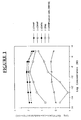
- FIG. 1 A simplified presentation of the data, by the RATIO method, is show in Figure 1.
- R.C.S. relative cell survival
- modulator By dividing the relative cell survival (R.C.S.) value obtained in cultures which have been exposed to the combination of anticancer drug (in this case, cisplatinum) and modulator by the corresponding R.C.S. value obtained for the anticancer drug alone reveals both the nature and the magnitude of the effect mediated by the modulator. Ratios greater than unity indicate that the modulator has conferred a protective response, whereas ratios less than unity indicate an enhanced cell killing.
- R.C.S. relative cell survival
- R-2-heptyl-propargylamine R-2HPA
- R-2HMP desmethyl metabolite of R-2-heptyl-methyl propargylamine
- R-2HMP the pro-drug
- R-2HPA is the more potent.
- R-Deprenyl whilst active, is less efficacious over a more limited concentration range (10 -7 - 10 -13 M).
- the usually inactive pro-drug isomer S-2HMP is also inactive in this assay.
- R-2HMP and R-2HPA both protect normal cells and enhance the killing of tumor cells in the presence of cisplatinum in this in vitro fibroblast model.
- the protection and the enhanced killing occur in the 10 -11 - 10 -15 M range.
- R-Deprenyl was also effective over a more limited concentration, in the 10 -7 to 10 -13 M range. Since L-histidinol exhibits similar properties (although higher doses are required) in this and several other in vitro and in vivo paradigms, and in the presence of other anticancer drugs, it is reasonable to predict that R-2HMP, R-2HPA and the other aliphatic propargylamines, by analogy, will also exhibit activity in these other systems.
- P388 cells (1 million) were injected into the tail vein of 22 female DBA/2J mice (Protocol first developed in reference 6 and 8). The mice were then randomly divided into the above groups and injected (ip) with drugs 96h later. Doses were cisplatinum 0.2 mg at 0 hour; Histidinol 5 mg/injection and R-2HPA 0.38 ug/injection; administered 5 times at -2, 0, +2, +4, and +6 hours.
- mice 48 h after drug treatment, cells from the femurs of the mice were harvested, washed and plated (at log10 dilutions) so as to allow quantitative and specific relative cell survival values to be generated for the responses of normal femoral bone marrow cells (specifically, CFU-C/GM or granulocyte/macrophage precursor cells) and clonogenic P388 leukemia cells (8).
- normal femoral bone marrow cells specifically, CFU-C/GM or granulocyte/macrophage precursor cells
- clonogenic P388 leukemia cells clonogenic P388 leukemia cells
- both histidinol and R-2HPA were effective at protecting normal bone marrow cells
- both histidinol and R-2HPA enhanced the killing by cisplatinum of P388 cells.
- the P388 leukemic line is substantially resistant to the cisplatinum (relative to the responses of the CFU-c/GM cells). This is an example of the poor therapeutic index common to conventional antineoplastics.
- the cisplatinum when used alone, can be seen to be about 100-times more effective at killing the crucial normal marrow cells than it is for killing the intrafemoral leukemia (tumor) cells.
- the modulator strategy has been shown to be remarkably effective in many in vivo tumor models (4-6; 7-11), in numerous types of human cancer cells (12,13) and in many kinds of drug resistance traits (5; 16,17). Consequently, considering the data cited herein, it is predicted that the use of propargylamines as antineoplastic modulators will improve the chemotherapeutic management of a wide variety of human malignant disease types which will include non-resistant, intrinsic and acquired drug-resistance types.
- the modulator approach has been validated experimentally to markedly improve treatment of malignancies of myeloid origin (leukemias, lymphomas, and cancers of "blood cell” origin; (7-10) and for disseminated or metastatic disease (11); these are the situations wherein chemotherapy is often the only available clinical treatment option, the least responsive to treatment and/or the most prone to failure due to either intrinic or acquired drug-resistance and hence incurable status.
- myeloid origin leukemias, lymphomas, and cancers of "blood cell” origin; (7-10) and for disseminated or metastatic disease (11); these are the situations wherein chemotherapy is often the only available clinical treatment option, the least responsive to treatment and/or the most prone to failure due to either intrinic or acquired drug-resistance and hence incurable status.
Landscapes
- Health & Medical Sciences (AREA)
- Life Sciences & Earth Sciences (AREA)
- Veterinary Medicine (AREA)
- Chemical & Material Sciences (AREA)
- Medicinal Chemistry (AREA)
- Pharmacology & Pharmacy (AREA)
- Animal Behavior & Ethology (AREA)
- General Health & Medical Sciences (AREA)
- Public Health (AREA)
- Epidemiology (AREA)
- Chemical Kinetics & Catalysis (AREA)
- General Chemical & Material Sciences (AREA)
- Nuclear Medicine, Radiotherapy & Molecular Imaging (AREA)
- Organic Chemistry (AREA)
- Toxicology (AREA)
- Inorganic Chemistry (AREA)
- Molecular Biology (AREA)
- Engineering & Computer Science (AREA)
- Bioinformatics & Cheminformatics (AREA)
- Acyclic And Carbocyclic Compounds In Medicinal Compositions (AREA)
- Pharmaceuticals Containing Other Organic And Inorganic Compounds (AREA)
- Medicines That Contain Protein Lipid Enzymes And Other Medicines (AREA)
Abstract
Description
- The present invention relates to the use of propargylamines of formula I below for the preparation of a medicament for enhancing cancer therapy by administering an effective amount of an antineoplastic modulator. Preferred antineoplastic modulators are propargylamines including aliphatic propargylamines and aromatic propargylamines. The invention also includes a pharmaceutical composition for enhancing the treatment of cancer comprising an effective amount of an antineoplastic modulator of the present invention in admixture with a suitable diluent or carrier.
- Cancer is a collection of diseases involving inappropriate and unregulated growth of cells in the body. The aim of chemical therapy (chemotherapy) of cancer is to introduce a chemical (antineoplastic drug) which will kill the cancerous cells but will not damage normal cells. The early rationale for the development of conventional antineoplastic drugs was that such agents would act selectively on cells undergoing cell division; since cancerous cells were thought to be invariably dividing more rapidly than normal cells in the body, it was believed that this would offer some therapeutic selectivity. However, antineoplastic agents collectively have the lowest therapeutic indices of any class of drugs used in humans. This lack of selectivity leads to the severe side effects associated with cancer chemotherapy; the major dose-limiting consideration for use of these agents is toxicity to bone marrow. Furthermore, the poor selectivity of these agents means they must be used at sub-optimal doses. The latter, in turn, may cause the development of a variety of drug resistance traits by cancerous cells. Thus, many types of cancers are ultimately unresponsive to chemotherapy and are therefore incurable.
- Notwithstanding such limitations, chemotherapy remains the only and thus the most important treatment option for disseminated cancers. Despite decades of effort to find more effective and less toxic agents, the poor response of patients to conventional anticancer drugs and the limitations arising from intrinsic or acquired drug-resistance continue to limit the chemotherapeutic approach. It is estimated that over 50% of patients with advanced cancer will fail to respond, or will relapse from their initial response to chemotherapy, and will thus ultimately succumb to their disease. Given the prevalence and severity of disseminated disease, improving the chemotherapeutic treatment modality nevertheless remains a crucial objective of cancer research (1).
- One novel and potentially major means of improving the chemotherapeutic modality of cancer treatment would be to improve the selectivity of the currently-available agents. To the degree to which selectivity could be improved, such an approach would diminish the toxic side effects and allow treatment with more appropriate doses of antineoplastics which, in turn, would diminish the inadvertent selection of drug-resistance variants during treatment. If, in addition, such a strategy would circumvent drug-resistance traits of either the intrinsic or acquired types, it would diminish all of the major, known limitations to conventional cancer chemotherapy. Remarkably, such an approach has been developed and verified to have all of these advantages in experimental chemotherapeutic models (2- 17). Termed the modulator approach for improving cancer chemotherapy, this novel strategy solves the major limitations otherwise associated with the use of conventional antineoplastics.
- An antineoplastic modulator is a chemical which modifies the action of an antineoplastic drug, improving the selectivity, and therefore efficacy of the antineoplastic drug. An antineoplastic modulator acts, simultaneously, to advantage in three ways: i), it protects non-cancerous (normal) tissue from the toxic effects of the antineoplastic drug; ii), it increases the ability of the antineoplastic drug to kill cancerous cells, and iii), it suppresses the drug resistance traits exhibited by many cancerous cells.
- The present inventors have prepared many novel propargylamines as described in United States Patent No. 5,169,868 and 5,840,979. The inventors have shown that the novel propargylamines are useful as MAO-B inhibitors and are useful in treating various neuropsychiatric disorders including Parkinson's disease, Alzheimer's disease, depression, attention deficit disorder, hyperactive disorders as well as other aging-associated diseases.
- Surprisingly, the present inventors have found that the propargylamines are also useful as antineoplastic modulators and can enhance the effect of antineoplastic drugs.
- The present inventors have shown that propargylamines enhance the killing of tumor cells by antineoplastic drugs and protect normal cells from the cytotoxic effects of antineoplastic drugs. Consequently, propargylamines are well-suited to enhance any chemotherapy regime and can increase the effectiveness while reducing the side-effects of cancer therapy.
- The present invention provides a use of a propargylamine of formula I for the preparation of a medicament to be used in the therapeutic methods described herein.
- Specifically, the medicaments are for (i) enhancing the activity of an antineoplastic drug, (ii)increasing the sensitivity of a tumor to an antineoplastic drug and/or (iii) protecting normal cells from the cytotoxic effects of an antineoplastic drug.
- The present invention also includes a pharmaceutical composition useful for treating cancer comprising an antineoplastic drug and an effective amount of a propargylamine of formula I.
- Other features and advantages of the present invention will become apparent from the following detailed description.
- The invention will now be described in relation to the drawings in which:
- Figure 1 is graph showing the RATIO of various antineoplastic modulators versus the concentration of the antineoplastic modulator. The definition of RATIO is provided in Example 1.
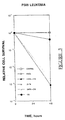
- Figure 2 is a graph showing the relative cell survival of normal bone marrow versus time, in the presence of various modulators. HISOL=histindinol, cis=cisplatinum, 2HPA=R-2HPA.
- Figure 3 is a graph showing the relative cell survival of cancer cells versus time, in the presence of various modulators.
-
- The present inventors have shown that propargylamines of formula I below enhance the killing of tumor cells by antineoplastic drugs and protect normal cells from the cytotoxic effects of antineoplastic drugs. In addition, the propargylamines have been shown to overcome a drug-resistance attribute of tumor cells. In vivo data is included which verifies that these three powerful attributes of the approach are operative in live, tumor bearing animals. Consequently, propargylamines are well-suited to enhance any chemotherapy regime.
- The propargylamines that may be included in the compositions of the present invention are of the generalwherein
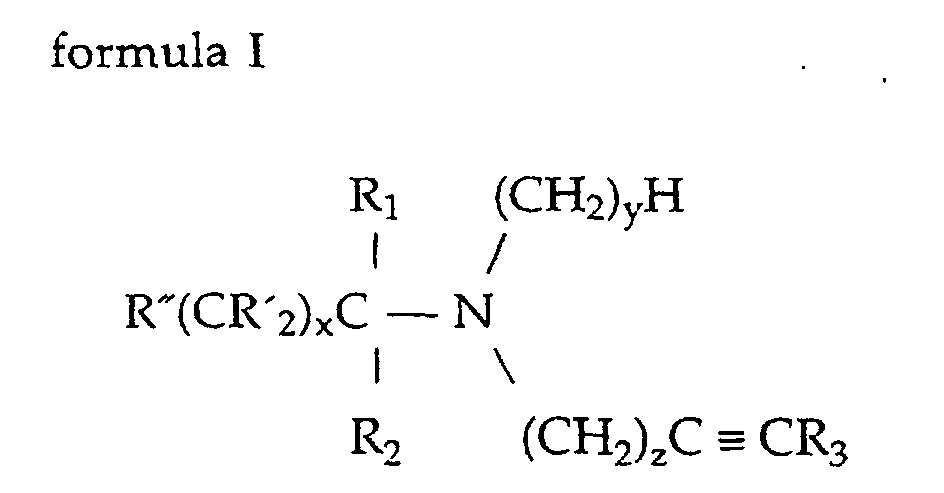
- x is an integer ranging from 0 to 13;
- y is an integer ranging from 0 to 5;
- z is 1;
- R1, R2 and R3 are the same or different and represent hydrogen or a straight chain or branched lower alkyl; and
- R' and R" are the same or different and represent hydrogen, phenyl or a halogen and pharmaceutically acceptable salts thereof.
-
- The lower alkyl has between 1 and 4 carbon atoms and the halogen atom is selected from fluorine, chlorine, bromine and iodine. More preferably, the lower alkyl is selected from methyl.
- In another embodiment, the propargylamine is of the general formula I wherein y is 1 and the pharmaceutically acceptable salts thereof. A preferred propargylamine of the formula I wherein y is 1 is R-2-heptylmethylpropargylamine (R-2HMP).
- Other propargylamines of the formula I wherein y is 1 include:
- N-(1-Propyl) N-methylpropargylamine;
- N-(2-Propyl) N-methylpropargylamine;
- N-(1-Butyl) N-methylpropargylamine;
- N-(1-Pentyl) N-methylpropargylamine;
- N-(1-Hexyl) N-methylpropargylamine;
- N-(1-Heptyl) N-methylpropargylamine;
- N-(1-Octyl) N-methylpropargylamine;
- N-(1-Nonyl) N-methylpropargylamine;
- N-(1-Decyl) N-methylpropargylamine;
- N-(1-Undecyl) N-methylpropargylamine;
- N-(1-Dodecyl) N-methylpropargylamine;
- (R)-N-(2-Butyl) N-methylpropargylamine;
- (R)-N-(2-Pentyl) N-methylpropargylamine;
- (R)-N-(2-Hexyl) N-methylpropargylamine;
- (R)-N-(2-Heptyl) N-methylpropargylamine;
- (R)-N-(2-Octyl) N-methylpropargylamine;
- (R)-N-(2-Octyl) N-methylpropargylamine;
- (R)-N-(2-Decyl) N-methylpropargylamine;
- (R)-N-(2-Undecyl) N-methylpropargylamine; and
- (R)-N-(2-Dodecyl) N-methylpropargylamine.
-
- In yet another embodiment, the propargylamine is of the general formula I, described above, wherein y is 0, and the pharmaceutically acceptable salts thereof. A preferred propargylamine of the formula I where y=0, is R-2-heptyl-propargylamine (R-2HPA).
- Other compounds of the formula I, wherein y is 0, include:
- N-(1-Propyl) propargylamine;
- N-(2-Propyl) propargylamine;
- N-(1-Butyl) propargylamine;
- N-(1-Pentyl) propargylamine;
- N-(1-Hexyl) propargylamine;
- N-(1-Heptyl) propargylamine;
- N-(1-Octyl) propargylamine;
- N-(1-Nonyl) propargylamine;
- N-(1-Decyl) propargylamine;
- N-(1-Undecyl) propargylamine;
- N-(1-Dodecyl) propargylamine;
- (R)-N-(2-Butyl) propargylamine;
- (R)-N-(2-Pentyl) propargylamine;
- (R)-N-(2-Hexyl) propargylamine;
- (R)-N-(2-Heptyl) propargylamine;
- (R)-N-(2-Octyl) propargylamine;
- (R)-N-(2-Octyl) propargylamine;
- (R)-N-(2-Decyl) propargylamine;
- (R)-N-(2-Undecyl) propargylamine; and
- (R)-N-(2-Dodecyl) propargylamine.
-
- The preferred propargylamines of the chiral compounds of the formula I are the R-enantiomers.
- In a further embodiment, the propargylamine is R-deprenyl. R-deprenyl is a compound of the formula I wherein R1 is methyl, R2 is hydrogen, R" is phenyl, R' is hydrogen, x is 1, y is 1, z is 1 and R3 is hydrogen.
- In another embodiment, the propargylamine is R-desmethyldeprenyl. R-desmethyldeprenyl is a compound of the formula I wherein R1 is methyl, R2 is hydrogen, R" is phenyl, R' is hydrogen, x is 1, y is 0, z is 1 and R3 is hydrogen.
- In yet another embodiment, the propargylamine is Rasagiline having the following formula II:

- All of the above described propargylamines may be collectively referred to as "the propargylamines of the invention".
- The propargylamines of the present invention may be prepared using techniques known in the art. For example, the aliphatic propargylamines may be prepared as described in the inventors United States Patent No. 5,169,868 and 5,840,979. Briefly, the compounds may be prepared by condensing propargyl bromide with a chiral aliphatic amine or N-methylamine in the presence of a base and recovering the desired compound. Preferably the R-enantiomers are prepared.
- The invention provides a use of a propargylamine of formula I for the manufacture of a medicament to enhance the effect of an antineoplastic drug.
- The term "effective amount" as used herein means an amount effective, at dosages and for periods of time necessary to achieve the desired result.
- The term "animal" as used herein means any member of the animal kingdom including all mammals, birds, fish, reptiles and amphibians. Preferably, the animal to be treated is a mammal, more preferably a human.
- One method by which the propargylamines of the invention may enhance the effect of an antineoplastic drug is by increasing the sensitivity of the tumor to the drug. Accordingly, in one aspect, the present invention relates to use of a propargylamine of formula I for the manufacture of a medicament to increase the sensitivity of a tumor to an antineoplastic agent. The tumor may be one that is resistant to cancer therapy such as a multidrug resistant tumor or a radioresistant tumor.
- Another method by which the propargylamines of the invention may enhance the effect of an antineoplastic drug is by protecting normal cells from the cytotoxic effects of the drug. Accordingly, in another aspect, the present invention provides a use of a propargylamine of formula I for the manufacture of a medicament to protect normal cells from the cytotoxic effects of an antineoplastic drug.
- Further aspects of the invention are set forth in the claims.
- The propargylamines of the invention can be used to enhance the treatment of all forms of cancer or malignant diseases for which chemotherapy is a bona fide treatment option. These malignancies include, but are not limited to, leukemias, lymphomas (Hodgkins and non-Hodgkins), plasmacytomas, histiocytomas, melanomas, adenomas, sarcomas, carcinomas of solid tissues, hypoxic tumours, squamous cell carcinomas, genitourinary cancers such as cervical and bladder cancer, hematopoietic cancers, head and neck cancers, and nervous system cancers. Treatment with the propargylamine modulators may allow for treatment of tumors that are resistant to chemotherapy. The latter are diverse, but one common, well-studied example is the so-called multi-drug resistant (MDR) tumor cells. MDR tumors include adenocarcinomas, neuroblastoma cells, leukemias, lymphomas, breast cancer and ovarian cancer cells. Treatment with the propargylamine modulators may also allow for more effective radiotherapy of tumours that currently respond poorly to radiotherapy such as adenocarcinomas of the bowel and lung.
- Antineoplastic drugs which may be potentiated or enhanced by the propargylamine modulators can be any antineoplastic drug including known, conventional drugs as well as those yet to be identified. Examples of classes of antineoplastic agents include antimetabolites, alkylating agents, antimicrobial antineoplastics, antimicrotubule agents, cisplatinum and its derivatives and the topoisomerase interactive agents. In particular, chemotherapeutic agents amenable to this modulatory effect may include but are not limited to, adriamycin, BCNU and CCNU (i.e., bis (2-chloroethyl)-3-cyclohexyl-1-nitrosurea and 1-(2-chloroethyl)-3-cyclohexyl -1-nitrosourea, respectively, bleomycin sulfate, camptothecin, carmustine, chlorambucil, cisplatinum, cyclophospamide, cytosine arabinoside, daunomycin/daunorubicin, dacarbazine, doxorubicin, 5-fluorouracil, melphalan, mitomycin, mitoxantrone hydrochloride, etoposide, streptozocin and taxol and taxol derivatives.
- Although the propargylamines of the invention may be administered before, after and/or concurrently with the antineoplastic drug, they are likely best administered prior to chemotherapy.
- The propargylamines of the invention may be incorporated into a pharmaceutical composition along with an antineoplastic drug which may be useful in enhancing the activity of an antineoplastic drug, increasing the sensitivity of a tumor to an antineoplastic drug and/or protecting normal cells from the cytotoxic effects of an antineoplastic drug. The pharmaceutical compositions may be useful for treating cancer.
- The pharmaceutical compositions of the invention can be prepared by per se known methods for the preparation of pharmaceutically acceptable compositions which can be administered to patients, and such that an effective quantity of the active substance is combined in a mixture with a pharmaceutically acceptable vehicle. Suitable vehicles are described, for example, in Remington's Pharmaceutical Sciences (Remington's Pharmaceutical Sciences, Mack Publishing Company, Easton, Pa., USA 1985). The pharmaceutical compositions of the invention can be for oral, topical, rectal, parenteral, local, intravenous, inhalant or intracerebral use. They may be in solid or semisolid form, for example pills, tablets, creams, gelatin capsules, capsules, suppositories, soft gelatin capsules, gels, membranes, tubelets. For parenteral and intracerebral uses, those forms for intramuscular or subcutaneous administration can be used, or forms for infusion or intravenous or intracerebral injection can be used, and can therefore be prepared as solutions of the active compounds or as powders of the active compounds to be mixed with one or more pharmaceutically acceptable excipients or diluents, suitable for the aforesaid uses and with an osmolarity which is compatible with the physiological fluids. For local use, those preparations in the form of creams or ointments for topical use or in the form of sprays should be considered; for inhalant uses, preparations in the form of sprays, for example nose sprays, should be considered. Dosages to be administered depend on individual needs, on the desired effect and on the chosen route of administration, but daily dosages to humans by subcutaneous, intramuscular, intravenous or intracerebral injection generally vary between 100 ng and 100 µg of active substance per kg body weight, preferably between 1 µg and 50 µg per kg body weight for the aliphatic propargylamines. For aromatic propargylamines, the above doses may be increased ten fold.
- The following examples are illustrative of the present invention:
- The protocol detailed below can be used for any normal/tumorigenic cell pair which will attach to plastic. Non-adherent lines (which includes most tumor cells, including NW16; consult references 5-10) require quantitation in soft agar. The present experiments are based on i) rat2 cells, a phenotypically normal, established rat fibroblast line and, ii) a tumorigenic derivative thereof, NW16 cells, which are rat2 cells transformed by a Fujinami sarcoma virus oncogene (see work of A. Pawson and P130gag-fps). Rat2 and NW16 cells are maintained in a sub-confluent randomly-proliferating state in Dulbecco's modified minimal essential media with 10% (vol/vol) calf serum in plates incubated at 37°C in a humidified CO2 (10%) incubator. All experiments reported rely on clonogenic cell survival assays (see references 4-6). Assays using rat2 (normal cells) were performed as follows: cells are exposed, in 10 cm culture dishes, to various drugs in media plus serum for varying lengths of time; seeding is at varying cell numbers, over log10 ranges, depending upon the degree of killing anticipated. [For the figure presented, incubation was for 72 hours prior to washing and assessment of clonogenic survival]. Both control and the experimental cultures are then gently washed, twice, with phosphate buffered saline, then once more with media minus serum, and then left in media plus serum, undisturbed until macroscopic colonies appear (7-9 days of incubation). The colonies are then fixed and stained with saturated methylene blue in 50% methanol and counted. The number of colonies, evaluated from 2 or more sets of duplicate cultures seeded at initial densities differing by factors of 10, are determined and converted to relative number of colonies, using the 0-hour control value as 1.0. Assays of NW16 cells were similar; however, because these cells are poorly adherent, following drug exposure, the washing procedure is modified, as is the quantitation of survivors step. In the latter case, quantitation requires plating the cells in soft agar (references 5-10).
- A simplified presentation of the data, by the RATIO method, is show in Figure 1. By dividing the relative cell survival (R.C.S.) value obtained in cultures which have been exposed to the combination of anticancer drug (in this case, cisplatinum) and modulator by the corresponding R.C.S. value obtained for the anticancer drug alone reveals both the nature and the magnitude of the effect mediated by the modulator. Ratios greater than unity indicate that the modulator has conferred a protective response, whereas ratios less than unity indicate an enhanced cell killing.
- As can be seen from Figure 1, R-2-heptyl-propargylamine (R-2HPA), the desmethyl metabolite of R-2-heptyl-methyl propargylamine (R-2HMP), and R-2HMP (the pro-drug) are effective, over a wide concentration range (107 - 10-15 M), at protecting normal fibroblasts which are p53 dependent. R-2HPA is the more potent. R-Deprenyl whilst active, is less efficacious over a more limited concentration range (10-7 - 10-13 M). The usually inactive pro-drug isomer S-2HMP is also inactive in this assay. In the tumorigenic cells (mutants in which p53 is absent) it can be seen that enhanced killing by cisplatinum occurs in the range (10-11 - 10-15 M) but with a reversal to a protective effect when the concentration of R-2HMP is 10-9M or greater.
- R-2HMP and R-2HPA both protect normal cells and enhance the killing of tumor cells in the presence of cisplatinum in this in vitro fibroblast model. The protection and the enhanced killing occur in the 10-11 - 10-15 M range. R-Deprenyl was also effective over a more limited concentration, in the 10-7 to 10-13 M range. Since L-histidinol exhibits similar properties (although higher doses are required) in this and several other in vitro and in vivo paradigms, and in the presence of other anticancer drugs, it is reasonable to predict that R-2HMP, R-2HPA and the other aliphatic propargylamines, by analogy, will also exhibit activity in these other systems.
- Seven groups of mice were treated and assessed in this model as follows:
- 1. Nil control (1 mouse)
- 2. P388 control (1 mouse)
- 3. Cisplatinum (5 mice)
- 4. Histidinol (2 mice)
- 5. Histidinol + cisplatinum (5 mice)
- 6. R-2HPA (4 mice)
- 7. R-2HPA + cisplatinum (5 mice)
-
- P388 cells (1 million) were injected into the tail vein of 22 female DBA/2J mice (Protocol first developed in
reference 6 and 8). The mice were then randomly divided into the above groups and injected (ip) with drugs 96h later. Doses were cisplatinum 0.2 mg at 0 hour; Histidinol 5 mg/injection and R-2HPA 0.38 ug/injection; administered 5 times at -2, 0, +2, +4, and +6 hours. 48 h after drug treatment, cells from the femurs of the mice were harvested, washed and plated (at log10 dilutions) so as to allow quantitative and specific relative cell survival values to be generated for the responses of normal femoral bone marrow cells (specifically, CFU-C/GM or granulocyte/macrophage precursor cells) and clonogenic P388 leukemia cells (8). - As can be seen in Figure 2, both histidinol and R-2HPA were effective at protecting normal bone marrow cells, whereas in Figure 3, it can be seen that both histidinol and R-2HPA enhanced the killing by cisplatinum of P388 cells. It should be emphasized that the P388 leukemic line is substantially resistant to the cisplatinum (relative to the responses of the CFU-c/GM cells). This is an example of the poor therapeutic index common to conventional antineoplastics. In this example, the cisplatinum, when used alone, can be seen to be about 100-times more effective at killing the crucial normal marrow cells than it is for killing the intrafemoral leukemia (tumor) cells. In the presence of the modulators histidinol and R-2HPA, the therapeutic index of cisplatinum is vastly improved; thus, the toxicity to the marrow cells is essentially eliminated and the toxicity to the leukemia cells is increased by almost a 1000-fold. In other words, both histidinol and R-2HPA are simultaneously protecting the most vulnerable normal cells from cancer drug toxicity and simultaneously circumventing a profound drug-resistance trait. That these effects are observed in vivo (i.e., in live animals) and in the same tissue of those animals cannot be over-emphasized in terms of its potential capacity to improve chemotherapy, in as much as it reveals clearly and dramatically the ability of modulators to improve selectivity, efficacy and to circumvent the problem of drug-resistance shown by tumor cells. It can also be seen that this remarkable effect is obtained with R-2HPA at the low dose of 0.38 ug, producing a therapeutic index of about 50,000 between the protection of healthy normal cells and the killing of the cancerous cells. This effect is known to be p53 dependent vis a vis histidinol and it is likely to be the same with R-2HPA.
- The modulator strategy has been shown to be remarkably effective in many in vivo tumor models (4-6; 7-11), in numerous types of human cancer cells (12,13) and in many kinds of drug resistance traits (5; 16,17). Consequently, considering the data cited herein, it is predicted that the use of propargylamines as antineoplastic modulators will improve the chemotherapeutic management of a wide variety of human malignant disease types which will include non-resistant, intrinsic and acquired drug-resistance types. The modulator approach has been validated experimentally to markedly improve treatment of malignancies of myeloid origin (leukemias, lymphomas, and cancers of "blood cell" origin; (7-10) and for disseminated or metastatic disease (11); these are the situations wherein chemotherapy is often the only available clinical treatment option, the least responsive to treatment and/or the most prone to failure due to either intrinic or acquired drug-resistance and hence incurable status.
- While the present invention has been described with reference to what are presently considered to be the preferred examples, it is to be understood that the invention is not limited to the disclosed examples.
Claims (24)
- A use of a propargylamine for the manufacture of a medicament to enhance the activity of an antineoplastic drug wherein the propargylamine is of the general formula Iwherein
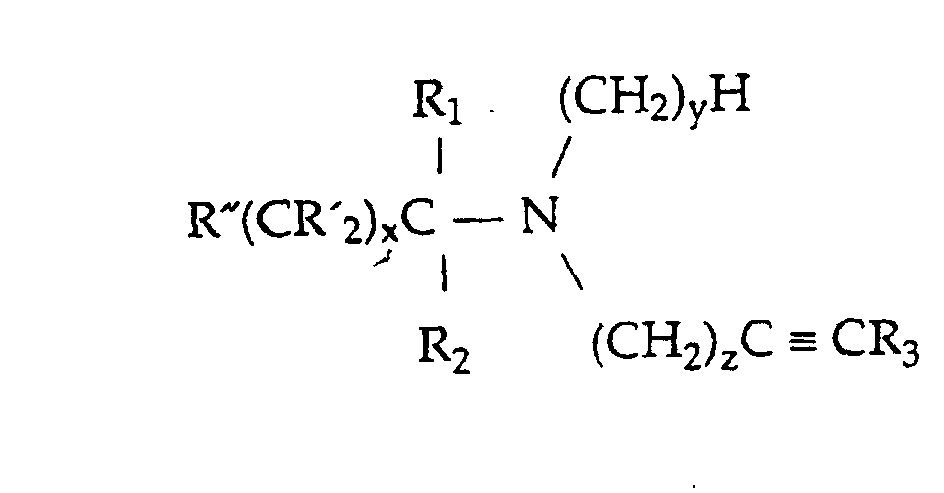 x is an integer ranging from 0 to 13;y is an integer ranging from 0 to 5;z is 1;R1, R2 and R3 are the same or different and represent hydrogen or a straight chain or branched C1-4 alkyl; andR' and R" are the same or different and represent hydrogen, phenyl or a halogen and pharmaceutically acceptable salts thereof.
 - A use according to claim 1 wherein the medicament is for increasing the sensitivity of a tumor to the antineoplastic drug.
- A use according to claim 2 wherein the tumor is a drug resistant tumor.
- A use according to claim 1 wherein the medicament is for protecting normal cells from the cytotoxic effects of the antineoplastic drug.
- A use of (a) a propargylamine of the formula I as defined in claim 1 and (b) an antineoplastic drug for the manufacture of a medicament to treat cancer.
- A use according to any one of claims 1 to 5 wherein, in the formula I, y is 1.
- A use according to claim 6 wherein the compound is the propargylamine R-2-heptyl-methyl propargylamine (R-2HMP).
- A use according to claim 6 wherein the propargylamine is selected from the group consisting of N-(1-Propyl)N-methylpropargylamine; N-(2-Propyl) N-methylpropargylamine; N-(1-Butyl) N-methylpropargylamine; N-(1-Pentyl)N-methylpropargylamine; N-(1-Hexyl) N-methylpropargylamine; N-(1-Heptyl) N-methylpropargylamine; N-(1-Octyl)N-methylpropargylamine; N-(1-Nonyl) N-methylpropargylamine; N-(1-Decyl) N-methylpropargylamine; N-(1-Undecyl)N-methylpropargylamine; N-(1-Dodecyl) N-methylpropargylamine; (R)-N-(2-Butyl) N-methylpropargylamine;(R)-N-(2-Pentyl)N-methylpropargylamine;(R)-N-(2-Hexyl) N-methylpropargylamine; (R)-N-(2-Heptyl) N-methylpropargylamine;(R)-N-(2-Octyl)N-methylpropargylamine; (R)-N-(2-Octyl) N-methylpropargylamine; (R)-N-(2-Decyl) N-methylpropargylamine; (R)-N-(2-Undecyl)N-methylpropargylamine; and (R)-N-(2-Dodecyl)N-methylpropargylamine.
- A use according to any one of claims 1 to 5 wherein y is 0.
- A use according to claim 9 wherein the propargylamine is R-2-heptyl-propargylamine (R-2HPA).
- A use according to claim 9 wherein the propargylamine is selected from the group consisting of N-(1-Propyl) propargylamine; N-(2-Propyl) propargylamine; N-(1-Butyl) propargylamine; N-(1-Pentyl) propargylamine; N-(1-Hexyl) propargylamine; N-(1-Heptyl) propargylamine; N-(1-Octyl) propargylamine; N-(1-Nonyl) propargylamine; N-(1-Decyl) propargylamine; N-(1-Undecyl) propargylamine; N-(1-Dodecyl) propargylamine; (R)-N-(2-Butyl) propargylamine; (R)-N-(2-Pentyl) propargylamine; (R)-N-(2-Hexyl) propargylamine; (R)-N-(2-Heptyl) propargylamine; (R)-N-(2-Octyl) propargylamine; (R)-N-(2-Octyl) propargylamine; (R)-N-(2-Decyl) propargylamine; (R)-N-(2-Undecyl) propargylamine; and (R)-N-(2-Dodecyl) propargylamine.
- A use according to any one of claims 1 to 6, 8, 9 or 11 wherein the propargylamine is a chiral propargylamine and is the R-enantiomer.
- A use according to any one of claims 1-5 wherein the propargylamine is R-deprenyl.
- A use according to any one of claims 1-5 wherein the propargylamine is R-desmethyldeprenyl.
- A use of the propargylamine Rasagiline for the manufacture of a medicament to enhance the activity of an antineoplastic drug.
- A use according to any one of claims 1-15 wherein the antineoplastic drug is selected from the group consisting of cytosine arabinoside, cisplatinum, cyclophospamide, adriamycin, daunomycin, and 5-fluorouracil.
- A pharmaceutical composition for treating cancer comprising an antineoplastic drug and an effective amount of a propargylamine of the formula I as defined in claim 1.
- A pharmaceutical composition according to claim 17 wherein the propargylamine is as defined in any of claims 6, 7, 8, 9, 10, 11, 12, 13 and 14.
- A use for the manufacture of a medicament for treating cancer in combination with an antineoplastic drug of a propargylamine as defined in claim 1.
- A use of a proparglyamine as defined in claim 1 for the manufacture of a medicament comprising the propargylamine and an antineoplastic drug and for treating cancer.
- A use for the manufacture of a medicament for treating cancer in combination with a propargylamine as defined in claim 1 of an antineoplastic drug.
- A use of any of claims 19 to 21, wherein the propargylamine is as defined in any of claims 6, 7, 8, 9, 10, 11, 12, 13 and 14.
- A use of any of claims 19 to 22 wherein the antineoplastic drug is as defined in claim 16.
- A use of any of claims 19 and 21, or of claim 22 or 23 when dependent on claim 19 or claim 21 wherein the medicament is for administration prior to the antineoplastic drug.
Applications Claiming Priority (3)
| Application Number | Priority Date | Filing Date | Title |
|---|---|---|---|
| US7102398P | 1998-01-13 | 1998-01-13 | |
| US71023P | 1998-01-13 | ||
| PCT/CA1999/000005 WO1999036076A1 (en) | 1998-01-13 | 1999-01-13 | Composition containing propargylamine for enhancing cancer therapy |
Publications (2)
| Publication Number | Publication Date |
|---|---|
| EP1049478A1 EP1049478A1 (en) | 2000-11-08 |
| EP1049478B1 true EP1049478B1 (en) | 2002-09-04 |
Family
ID=22098802
Family Applications (1)
| Application Number | Title | Priority Date | Filing Date |
|---|---|---|---|
| EP99900405A Expired - Lifetime EP1049478B1 (en) | 1998-01-13 | 1999-01-13 | Composition containing propargylamine for enhancing cancer therapy |
Country Status (7)
| Country | Link |
|---|---|
| EP (1) | EP1049478B1 (en) |
| JP (1) | JP2004519409A (en) |
| AT (1) | ATE223209T1 (en) |
| AU (1) | AU1956399A (en) |
| CA (1) | CA2318693A1 (en) |
| DE (1) | DE69902748T2 (en) |
| WO (1) | WO1999036076A1 (en) |
Cited By (1)
| Publication number | Priority date | Publication date | Assignee | Title |
|---|---|---|---|---|
| US20130302441A1 (en) * | 2011-11-09 | 2013-11-14 | Teikoku Pharma Usa, Inc. | Methods for the treatment of skin neoplasms |
Families Citing this family (5)
| Publication number | Priority date | Publication date | Assignee | Title |
|---|---|---|---|---|
| US6033682A (en) | 1995-01-13 | 2000-03-07 | Somerset Pharmaceuticals, Inc. | S(+) desmethylselegiline and its use in therapeutic methods and pharmaceutical compositions |
| AU8679801A (en) * | 2000-08-28 | 2002-03-22 | Somerset Pharmaceuticals Inc | Methods and pharmaceutical compositions employing desmethylselegiline to treat neoplastic diseases or conditions |
| CA2631731A1 (en) * | 2005-12-01 | 2007-06-07 | University Of Pittsburgh Of The Commonwealth System Of Higher Education | Compounds and methods for inhibiting apoptosis |
| RU2714893C2 (en) * | 2014-12-05 | 2020-02-20 | Земмельвайс Юнивёрсити | Arylalkylamine compounds for use in preventing or treating cancer |
| HUP1900281A1 (en) * | 2019-08-06 | 2021-03-01 | Toxie Europe Intelligens Kemiai Szenzorokat Kutato | Use of monoamine-oxidase-b inhibitors in the prevention or treatment of prostate cancer |
Family Cites Families (2)
| Publication number | Priority date | Publication date | Assignee | Title |
|---|---|---|---|---|
| US4460599A (en) * | 1979-12-05 | 1984-07-17 | University Patents, Inc. | Mitomycin analogs |
| US5169868A (en) * | 1991-03-01 | 1992-12-08 | University Of Saskatchewan | Aliphatic propargylamines as specific mao-b inhibitors |
-
1999
- 1999-01-13 WO PCT/CA1999/000005 patent/WO1999036076A1/en not_active Ceased
- 1999-01-13 CA CA002318693A patent/CA2318693A1/en not_active Abandoned
- 1999-01-13 AU AU19563/99A patent/AU1956399A/en not_active Abandoned
- 1999-01-13 AT AT99900405T patent/ATE223209T1/en not_active IP Right Cessation
- 1999-01-13 EP EP99900405A patent/EP1049478B1/en not_active Expired - Lifetime
- 1999-01-13 JP JP2000539849A patent/JP2004519409A/en active Pending
- 1999-01-13 DE DE69902748T patent/DE69902748T2/en not_active Expired - Fee Related
Cited By (2)
| Publication number | Priority date | Publication date | Assignee | Title |
|---|---|---|---|---|
| US20130302441A1 (en) * | 2011-11-09 | 2013-11-14 | Teikoku Pharma Usa, Inc. | Methods for the treatment of skin neoplasms |
| US9913812B2 (en) * | 2011-11-09 | 2018-03-13 | Teikoku Pharma Usa, Inc. | Methods for the treatment of skin neoplasms |
Also Published As
| Publication number | Publication date |
|---|---|
| AU1956399A (en) | 1999-08-02 |
| HK1032204A1 (en) | 2001-07-13 |
| DE69902748D1 (en) | 2002-10-10 |
| CA2318693A1 (en) | 1999-07-22 |
| EP1049478A1 (en) | 2000-11-08 |
| DE69902748T2 (en) | 2003-08-07 |
| ATE223209T1 (en) | 2002-09-15 |
| JP2004519409A (en) | 2004-07-02 |
| WO1999036076A1 (en) | 1999-07-22 |
Similar Documents
| Publication | Publication Date | Title |
|---|---|---|
| US6809120B1 (en) | Composition containing propargylamine for enhancing cancer therapy | |
| EP1339399B1 (en) | Combinations of drugs (e.g., chlorpromazine and pentamidine) for the treatment of neoplastic disorders | |
| AU723047B2 (en) | Deprenyl compounds for treatment of glaucoma | |
| US10369120B2 (en) | T type calcium channel inhibitors | |
| US20020165261A1 (en) | Combinations of drugs (e.g., a benzimidazole and pentamidine) for the treatment of neoplastic disorders | |
| JPH07508000A (en) | 1,2,3-triazole and imidazole compounds and their antitumor uses | |
| SK282403B6 (en) | 2,4-Disulfonyl-alpha-phenyl-tert-butylnitrone or a pharmaceutically acceptable salt thereof, a pharmaceutical composition thereof and their use | |
| JPH01254623A (en) | Cancer treatment drug containing an inhibitor of glycosphingolipid metabolism as an active ingredient | |
| AU2002311985B9 (en) | Methods for inhibiting angiogenesis | |
| US6063814A (en) | Phorbol esters as anti-neoplastic and white blood cell elevating agents | |
| JP2002507571A (en) | Antitumor composition containing a synergistic combination of anthracycline derivative and camptothecin derivative | |
| CN1190344A (en) | Use of 1,2,4-triazole derivatives in preparing medicines for treating cancer | |
| de Jong | Ropivacaine: White knight or dark horse? | |
| CA2318693A1 (en) | Composition containing propargylamine for enhancing cancer therapy | |
| CA2098593C (en) | Treatment method for cancer | |
| HK1032204B (en) | Composition containing propargylamine for enhancing cancer therapy | |
| CN102838567B (en) | Benzenesulfonyl piperazine compounds or benzoyl piperazine compounds, preparation methods and uses thereof | |
| US20030004136A1 (en) | IL-8 receptor ligands-drugs for inflammatory and autoimmune diseases | |
| US20100227831A1 (en) | Compositions and methods for cancer treatment | |
| US4376782A (en) | Complexes of square planar platinum II compounds and N-methyl glucamine | |
| US5783606A (en) | Deprenyl compounds for treatment of glaucoma | |
| US4931433A (en) | Method for treating certain neoplastic diseases | |
| HU194809B (en) | Process for producing acyl-enamide compounds and pharmaceutical compositions containing them as active components | |
| CN107007608B (en) | Treatment of type I and type II diabetes | |
| JPS5857317A (en) | Agent for increasing anticancer activity |
Legal Events
| Date | Code | Title | Description |
|---|---|---|---|
| PUAI | Public reference made under article 153(3) epc to a published international application that has entered the european phase |
Free format text: ORIGINAL CODE: 0009012 |
|
| 17P | Request for examination filed |
Effective date: 20000811 |
|
| AK | Designated contracting states |
Kind code of ref document: A1 Designated state(s): AT BE CH CY DE DK ES FI FR GB GR IE IT LI LU MC NL PT SE |
|
| 17Q | First examination report despatched |
Effective date: 20010719 |
|
| RIC1 | Information provided on ipc code assigned before grant |
Free format text: 7A 61K 31/13 A, 7A 61P 35/00 B, 7A 61P 43/00 B |
|
| GRAG | Despatch of communication of intention to grant |
Free format text: ORIGINAL CODE: EPIDOS AGRA |
|
| RIC1 | Information provided on ipc code assigned before grant |
Free format text: 7A 61K 31/13 A, 7A 61P 35/00 B, 7A 61P 43/00 B |
|
| GRAG | Despatch of communication of intention to grant |
Free format text: ORIGINAL CODE: EPIDOS AGRA |
|
| GRAH | Despatch of communication of intention to grant a patent |
Free format text: ORIGINAL CODE: EPIDOS IGRA |
|
| GRAH | Despatch of communication of intention to grant a patent |
Free format text: ORIGINAL CODE: EPIDOS IGRA |
|
| GRAA | (expected) grant |
Free format text: ORIGINAL CODE: 0009210 |
|
| AK | Designated contracting states |
Kind code of ref document: B1 Designated state(s): AT BE CH CY DE DK ES FI FR GB GR IE IT LI LU MC NL PT SE |
|
| PG25 | Lapsed in a contracting state [announced via postgrant information from national office to epo] |
Ref country code: NL Free format text: LAPSE BECAUSE OF FAILURE TO SUBMIT A TRANSLATION OF THE DESCRIPTION OR TO PAY THE FEE WITHIN THE PRESCRIBED TIME-LIMIT Effective date: 20020904 Ref country code: LI Free format text: LAPSE BECAUSE OF FAILURE TO SUBMIT A TRANSLATION OF THE DESCRIPTION OR TO PAY THE FEE WITHIN THE PRESCRIBED TIME-LIMIT Effective date: 20020904 Ref country code: GR Free format text: LAPSE BECAUSE OF FAILURE TO SUBMIT A TRANSLATION OF THE DESCRIPTION OR TO PAY THE FEE WITHIN THE PRESCRIBED TIME-LIMIT Effective date: 20020904 Ref country code: FI Free format text: LAPSE BECAUSE OF FAILURE TO SUBMIT A TRANSLATION OF THE DESCRIPTION OR TO PAY THE FEE WITHIN THE PRESCRIBED TIME-LIMIT Effective date: 20020904 Ref country code: CH Free format text: LAPSE BECAUSE OF FAILURE TO SUBMIT A TRANSLATION OF THE DESCRIPTION OR TO PAY THE FEE WITHIN THE PRESCRIBED TIME-LIMIT Effective date: 20020904 Ref country code: BE Free format text: LAPSE BECAUSE OF FAILURE TO SUBMIT A TRANSLATION OF THE DESCRIPTION OR TO PAY THE FEE WITHIN THE PRESCRIBED TIME-LIMIT Effective date: 20020904 Ref country code: AT Free format text: LAPSE BECAUSE OF FAILURE TO SUBMIT A TRANSLATION OF THE DESCRIPTION OR TO PAY THE FEE WITHIN THE PRESCRIBED TIME-LIMIT Effective date: 20020904 |
|
| REF | Corresponds to: |
Ref document number: 223209 Country of ref document: AT Date of ref document: 20020915 Kind code of ref document: T |
|
| REG | Reference to a national code |
Ref country code: GB Ref legal event code: FG4D |
|
| REG | Reference to a national code |
Ref country code: CH Ref legal event code: EP |
|
| REG | Reference to a national code |
Ref country code: IE Ref legal event code: FG4D |
|
| REF | Corresponds to: |
Ref document number: 69902748 Country of ref document: DE Date of ref document: 20021010 |
|
| PG25 | Lapsed in a contracting state [announced via postgrant information from national office to epo] |
Ref country code: SE Free format text: LAPSE BECAUSE OF FAILURE TO SUBMIT A TRANSLATION OF THE DESCRIPTION OR TO PAY THE FEE WITHIN THE PRESCRIBED TIME-LIMIT Effective date: 20021204 Ref country code: DK Free format text: LAPSE BECAUSE OF FAILURE TO SUBMIT A TRANSLATION OF THE DESCRIPTION OR TO PAY THE FEE WITHIN THE PRESCRIBED TIME-LIMIT Effective date: 20021204 |
|
| PG25 | Lapsed in a contracting state [announced via postgrant information from national office to epo] |
Ref country code: PT Free format text: LAPSE BECAUSE OF FAILURE TO SUBMIT A TRANSLATION OF THE DESCRIPTION OR TO PAY THE FEE WITHIN THE PRESCRIBED TIME-LIMIT Effective date: 20021213 |
|
| PG25 | Lapsed in a contracting state [announced via postgrant information from national office to epo] |
Ref country code: LU Free format text: LAPSE BECAUSE OF NON-PAYMENT OF DUE FEES Effective date: 20030113 Ref country code: IE Free format text: LAPSE BECAUSE OF NON-PAYMENT OF DUE FEES Effective date: 20030113 Ref country code: CY Free format text: LAPSE BECAUSE OF FAILURE TO SUBMIT A TRANSLATION OF THE DESCRIPTION OR TO PAY THE FEE WITHIN THE PRESCRIBED TIME-LIMIT Effective date: 20030113 |
|
| PG25 | Lapsed in a contracting state [announced via postgrant information from national office to epo] |
Ref country code: MC Free format text: LAPSE BECAUSE OF NON-PAYMENT OF DUE FEES Effective date: 20030131 |
|
| NLV1 | Nl: lapsed or annulled due to failure to fulfill the requirements of art. 29p and 29m of the patents act | ||
| REG | Reference to a national code |
Ref country code: CH Ref legal event code: PL |
|
| ET | Fr: translation filed | ||
| PG25 | Lapsed in a contracting state [announced via postgrant information from national office to epo] |
Ref country code: ES Free format text: LAPSE BECAUSE OF FAILURE TO SUBMIT A TRANSLATION OF THE DESCRIPTION OR TO PAY THE FEE WITHIN THE PRESCRIBED TIME-LIMIT Effective date: 20030328 |
|
| PLBE | No opposition filed within time limit |
Free format text: ORIGINAL CODE: 0009261 |
|
| STAA | Information on the status of an ep patent application or granted ep patent |
Free format text: STATUS: NO OPPOSITION FILED WITHIN TIME LIMIT |
|
| 26N | No opposition filed |
Effective date: 20030605 |
|
| REG | Reference to a national code |
Ref country code: IE Ref legal event code: MM4A |
|
| PGFP | Annual fee paid to national office [announced via postgrant information from national office to epo] |
Ref country code: FR Payment date: 20061219 Year of fee payment: 9 |
|
| PGFP | Annual fee paid to national office [announced via postgrant information from national office to epo] |
Ref country code: GB Payment date: 20061229 Year of fee payment: 9 |
|
| PGFP | Annual fee paid to national office [announced via postgrant information from national office to epo] |
Ref country code: DE Payment date: 20070130 Year of fee payment: 9 |
|
| REG | Reference to a national code |
Ref country code: GB Ref legal event code: 732E |
|
| PGFP | Annual fee paid to national office [announced via postgrant information from national office to epo] |
Ref country code: IT Payment date: 20070512 Year of fee payment: 9 |
|
| REG | Reference to a national code |
Ref country code: FR Ref legal event code: TP |
|
| GBPC | Gb: european patent ceased through non-payment of renewal fee |
Effective date: 20080113 |
|
| PG25 | Lapsed in a contracting state [announced via postgrant information from national office to epo] |
Ref country code: DE Free format text: LAPSE BECAUSE OF NON-PAYMENT OF DUE FEES Effective date: 20080801 |
|
| REG | Reference to a national code |
Ref country code: FR Ref legal event code: ST Effective date: 20081029 |
|
| PG25 | Lapsed in a contracting state [announced via postgrant information from national office to epo] |
Ref country code: GB Free format text: LAPSE BECAUSE OF NON-PAYMENT OF DUE FEES Effective date: 20080113 |
|
| PG25 | Lapsed in a contracting state [announced via postgrant information from national office to epo] |
Ref country code: FR Free format text: LAPSE BECAUSE OF NON-PAYMENT OF DUE FEES Effective date: 20080131 |
|
| PG25 | Lapsed in a contracting state [announced via postgrant information from national office to epo] |
Ref country code: IT Free format text: LAPSE BECAUSE OF NON-PAYMENT OF DUE FEES Effective date: 20080113 |