EP1047238B1 - Information distributing and receiving method, apparatus and program product - Google Patents
Information distributing and receiving method, apparatus and program product Download PDFInfo
- Publication number
- EP1047238B1 EP1047238B1 EP00108473A EP00108473A EP1047238B1 EP 1047238 B1 EP1047238 B1 EP 1047238B1 EP 00108473 A EP00108473 A EP 00108473A EP 00108473 A EP00108473 A EP 00108473A EP 1047238 B1 EP1047238 B1 EP 1047238B1
- Authority
- EP
- European Patent Office
- Prior art keywords
- information
- request
- providing resource
- information providing
- password
- Prior art date
- Legal status (The legal status is an assumption and is not a legal conclusion. Google has not performed a legal analysis and makes no representation as to the accuracy of the status listed.)
- Expired - Lifetime
Links
Images




Classifications
-
- G—PHYSICS
- G06—COMPUTING OR CALCULATING; COUNTING
- G06F—ELECTRIC DIGITAL DATA PROCESSING
- G06F21/00—Security arrangements for protecting computers, components thereof, programs or data against unauthorised activity
- G06F21/30—Authentication, i.e. establishing the identity or authorisation of security principals
- G06F21/31—User authentication
-
- G—PHYSICS
- G06—COMPUTING OR CALCULATING; COUNTING
- G06F—ELECTRIC DIGITAL DATA PROCESSING
- G06F21/00—Security arrangements for protecting computers, components thereof, programs or data against unauthorised activity
- G06F21/60—Protecting data
- G06F21/62—Protecting access to data via a platform, e.g. using keys or access control rules
-
- H—ELECTRICITY
- H04—ELECTRIC COMMUNICATION TECHNIQUE
- H04L—TRANSMISSION OF DIGITAL INFORMATION, e.g. TELEGRAPHIC COMMUNICATION
- H04L9/00—Cryptographic mechanisms or cryptographic arrangements for secret or secure communications; Network security protocols
- H04L9/40—Network security protocols
-
- G—PHYSICS
- G06—COMPUTING OR CALCULATING; COUNTING
- G06F—ELECTRIC DIGITAL DATA PROCESSING
- G06F2221/00—Indexing scheme relating to security arrangements for protecting computers, components thereof, programs or data against unauthorised activity
- G06F2221/21—Indexing scheme relating to G06F21/00 and subgroups addressing additional information or applications relating to security arrangements for protecting computers, components thereof, programs or data against unauthorised activity
- G06F2221/2119—Authenticating web pages, e.g. with suspicious links
-
- H—ELECTRICITY
- H04—ELECTRIC COMMUNICATION TECHNIQUE
- H04L—TRANSMISSION OF DIGITAL INFORMATION, e.g. TELEGRAPHIC COMMUNICATION
- H04L69/00—Network arrangements, protocols or services independent of the application payload and not provided for in the other groups of this subclass
- H04L69/30—Definitions, standards or architectural aspects of layered protocol stacks
- H04L69/32—Architecture of open systems interconnection [OSI] 7-layer type protocol stacks, e.g. the interfaces between the data link level and the physical level
- H04L69/322—Intralayer communication protocols among peer entities or protocol data unit [PDU] definitions
- H04L69/329—Intralayer communication protocols among peer entities or protocol data unit [PDU] definitions in the application layer [OSI layer 7]
Definitions
- the present invention relates to an information distribution system in which information mutually related as hypertexts to each other is distributed via a network.
- the present invention particularly relates to a method of and an apparatus for distributing information, a method of and an apparatus for receiving information, a system for distributing information, and a program product for conducting information distribution in which when first information in an information providing unit is quoted by a second information, transmission of the first information from the information providing unit can be automatically limited or controlled.
- HTTP Hypertext Transfer Protocol
- HTML hypertext markup language
- URI uniform resource identifier
- the URI is described, for example, in “HTTP: Hypertext Transfer Protocol” Chapter 13, pages 161 to 176 of "TCP/IP Illustrated, Volume 3 written by W. Richard Stevens and published from Addison-Wesley Publishing Company.
- HTTP Hypertext Transfer Protocol
- the HTTP is a representative protocol used in the WWW and its outline is described in the literature above. In short, this is a protocol to transmit information in which an information requesting unit sends a request to an information providing unit, and the providing unit sends in response to the request a response to the requesting unit.
- the WWW provides information using an information providing unit connected to a network called Web server.
- Web browser Software called Web browser is ordinarily used to request and to display information.
- the Web browser is software which requests information from the Web server to display the information.
- the Web browser can acquire, according to description of hypertext described in the HTML, information from a Web server connected to a network to display the information.
- the Web browser can display multimedia information including images and sounds.
- the Web browser has ability in many cases to attain program codes called Java applet via a network and to execute the Java applet.
- the Java applet is described, for example, in pages 9 to 13 of "Java in a Nutshell, Second Edition” written by David Flanagan and published from O'Reilly & Associates, Inc. in May 1997.
- Information can be quoted and referred to by the HTML description without paying attention to which one of the servers provides the information. This consequently promotes development of relationships between information to be provided and effective uses of the information. On the other hand, there arise problems, for example, the information quoted is used apart from a purpose of a person who has originally provided the information and/or an operation to refer to the information is against interests of the person.
- Fig. 15 schematically shows a screen image including a quote or an icon 12 in a homepage 11 provided by a server A as an information providing unit.
- Icon 12 is used to access, via a communication network 10 such as the Internet, a site of a homepage or information contents (images, characters, sounds) provided by another server B to open information thereof.
- a homepage 13 provided by server B is displayed to overlap with homepage 11 of server A or information contents are displayed therein as shown in Fig. 15B.
- Fig. 15C shows a screen image in which a homepage of server B or information contents is or are embedded in homepage 11 of server A. The operation above is as follows.
- Web page which is described in the HTML and which is open on a display of computer as a user of information on a client side
- another Web page is quoted.
- the Web page or information contents quoted is or are acquired from a server storing the Web page or information contents and is or are loaded in the computer on the client side.
- Such an example of quotation of information and display of information quoted are described, for example, in pages 66 to 71 of "HTML for Fun and Profit" written by Mary E. S. Morris and published from SunSoft Press.
- US-A-5 796 952 discloses a method for monitoring client interaction with a resource when information is downloaded from a server in a computer network. This document has been chosen to establish the two-part form of the appended independent claims.
- JP-A-11 045228 discloses a method to re-direct an applet communication at a transmission source server and to enable an applet to communicate with hosts.
- WO-A-9642041 discloses an internet server access control and monitoring system. When the user selects a link that is directed to an access controlled file, the server subjects the request to a secondary server which determines whether the client has an authorisation or a valid account.
- a supplier of the Web page who quotes a Web page (serve A side) beforehand obtains approval or allowance of a supplier of the Web page to be quoted (server B side). Thereafter, the supplier on the server A side operates to display quote or icon 12 in his or her Web page and quotes the target Web page to thereby establish a link between these Web pages.
- the supplier on the server A side operates to display quote or icon 12 in his or her Web page and quotes the target Web page to thereby establish a link between these Web pages.
- the contents of Web page 13 quoted conflict with those of Web page 11 quoting Web page 13, interests respectively of Web pages 13 and 12 are related to each other, or the operation to quote Web page 13 is against interests of the supplier of Web page 13.
- information of homepage image 11 provided by server A and information of homepage 13 of server B respectively shown in Figs. 15A and 15B are referred to respectively as primary information and quoted information in this application.
- a side to provide primary information such as server A is called first information providing resource and a side to supply quoted information such as server B is called second information providing resource.
- “information providing resource” indicates an entire server computer, a storage under control of the server computer, or a file in the storage depending on cases.
- First information namely, primary information and second information, i.e., quoted information may be stored in different servers or in one server.
- “information display” indicates a unit to use information which receives information distributed from a server to display the information. In Fig. 15A, this indicates an overall client computer or only a display section thereof.
- the first and second information may include a still picture, a moving picture, a text, and sound information.
- Another object of the present invention is to provide a method of and an apparatus for allowing, when first information received by an information user unit quotes second information other than the first information, the second information can be transmitted to the information user unit only when a predetermined condition is satisfied.
- Fig. 1 shows in a block diagram a general configuration of a first embodiment of an information distribution system in accordance with the present invention.
- This system at least includes a primary information providing unit 100, a quoted information providing unit 110, an information display unit 120, and a network 130 to connect these constituent components to each other.
- Units 100 and 110 are servers and display unit 120 is a client.
- Unit 100 and 110 respectively include central processing units 101 and 111, main storages 102 and 112, auxiliary storages 103 and 113, communication network interfaces 104 and 114, and buses 105 and 115 for connections of these units. It is assumed in the following description of this embodiment that second information provided by unit 110 is quoted in first information provided by unit 100 and the information quoted is displayed on display 124.
- the present invention is also applicable to a system configuration shown in Fig. 13 in which units 100 and 110 are implemented in one server 140 and display unit 120 serves as a client.
- Fig. 14 shows processing of the system of Fig. 13 in a flowchart.
- the system configuration and the processing are basically similar to Figs. 1 and 3. Consequently, reference is to be made to description of Figs. 1 and 3.
- Display unit 120 includes a CPU 121, a main storage 122, a communication network interface 123, a display 124, an input unit 125, and a bus 126 to connect these components to each other.
- Main storage 122 is loaded with a Web browser program, and results of operation of the program are displayed on display 124.
- display unit 120 is not limited to an image displaying apparatus which uses the sense of sight, but may be a device which outputs various multimedia information in a form which can be used by the user. Namely, display unit 120 may include a device which utilizes the sense of touch and/or the sense of hearing.
- the Web browser to operate in display 120 has a function which acquires a Java applet via network 130 from an external device to operate the applet.
- a set of the program codes acquired by display unit 120 via network 130 for operation thereof is a Java applet in this embodiment, there may be used program codes of another language specification.
- the Java applet is obtained from quoted information providing unit 110.
- Primary information providing unit 100 operates according to a Web server program loaded from auxiliary storage 103 in main storage 102. On receiving via network 130 an information request in the HTTP from display unit 120, unit 100 provides hypertext information from auxiliary storage 103 to display unit 120.
- the hypertext information includes contents such as a text, a still picture, a moving picture, and sound and is, for example, a Web page.
- a password update program and a Web server program are loaded in main storage 112 and are executed. These programs operate in a multiprocessing manner.
- the password update program updates, at a sufficiently short interval of time, a password of a Java applet provided by quoted information providing unit 110 and updates a password database (Fig. 2) stored in auxiliary storage 113.
- the sufficiently short interval of time above indicates an interval of time which is as short as possible to make it difficult that a third party analyzes the Java applet to obtain a password and uses the password for an illegal information request.
- the update is conducted, for example, at an interval of one minute.
- the password database (Fig. 2) is a database in auxiliary storage 113 to store a certain number of latest passwords, i.e., late passwords.
- two passwords including a previous password and a current password are stored.
- the password includes an 8-digit numeric character string in this embodiment, there may be used another character string.
- the Web server program operating in quoted information providing unit 110 is called common gateway interface (CGI)
- CGI common gateway interface
- the CGI provides a mechanism in which in response to a request from display unit 120, a program to operate in unit 110 is called via a network from auxiliary storage 113 and then results of execution of the program are passed via a network to display unit 120.
- the CGI is a function included in many Web browser programs.
- the CGI can be called through communication with the Web server using a predetermined URI.
- the scheme of CGI can implement ways and means to provide the quoted information. Details of the ways and means will be described later.
- the Web server program is implemented by the CGI in this embodiment, another configuration may also be used.
- Display 120 issues a request with specification of an URI 1 to primary information providing unit 110 for desired hyper text information (step 201).
- the URI 1 is assumed to be "HTTP://machineA/index.html”.
- Hypertext information 2 requested to unit 100 by URI 1 includes a description to quote information, e.g., an image to be provided by unit 110.
- Fig. 15A shows an example of display image in this operation.
- a tag description shown in Fig. 4 is assumed to be included.
- character strings enclosed by " ⁇ PARAM” and ">” indicate parameters to be passed to a Java applet.
- This example indicates that a character string “pict1” is passed as a value of a parameter "ID” and a character string “HTTP://machineA/index.html” is passed as a value of a parameter "CGI”.
- These parameters respectively indicates an identifier to specify information to be quoted from quoted information providing unit 110 and a character string to indicate details of a quoted information request destination for unit 110. The notation and the contents thereof are adjusted according to changes in the HTML specification and in the embodying mode.
- display unit 120 On receiving the hypertext information (Fig. 4) from unit 100 (step 202), display unit 120 displays a Web page on display 124 according to description of information received (step 203) and issues a request to unit 110 for another image quoted.
- display unit 120 issues a request 3 of program codes (step 204).
- Unit 110 sends a program code (Java applet) 4 to display unit 120.
- Display unit 120 then activates the program codes received (step 206).
- the program codes acquires an URI of the primary information (step 207) and issues an information request 5 with a password included in the program codes to the CGI of unit 110 (step 208).
- Unit 110 receives a request 5 for quoted information and then sends image information 6 allowed for quotation by judge processing (step 209), which will be described later (step 210).
- Display unit 120 displays quoted information thus received (step 211).
- step 206 the program code conducts processing of initialization and then acquires an URI of the primary information in step 207. Thereafter, the program code generates a quoted information request message 5 using an URI of a CGI of unit 110 in the program codes, a password similarly embedded in the program codes, an URI of the primary information, and an identifier of quoted information specified by a parameter. Conforming to a grammatical definition of the URI, a parameter for the CGI is described following the URI of CGI and "?” in message 5.
- "&" is used as a separation character. Therefore, when the URI of CGI is http://machineB/pict.cgi and the password is "12345678", the message is as shown in Fig. 5.
- the program code sends this message to the CGI of unit 110.
- Display unit 120 displays quoted information 6 received from unit 110.
- the CGI program of unit 110 On receiving request 5 of quoted information (Fig. 5), the CGI program of unit 110 first verifies a password (step 220). The verification is carried out by checking whether or not a password stored in the password database matches the password contained in the request message. Next, the program checks to determine whether or not an identifier of requested information exists (step 221). In this embodiment, a check is made to determine whether or not the quoted information specified by the identifier exists as a file at a predetermined position of auxiliary storage 113. Next, the program determines whether or not the primary information is allowed for quotation (step 222). This is conducted by checking a quotation allowance database (Fig.
- quoted information 251 is displayed in primary information 250 in the Web browser screen of display 124.
- a response signal indicating "NG” or "UNAVAILABLE” is transmitted, and then warning information 251 is displayed in primary information 250 as shown in Fig. 9.
- the second embodiment is equal in the basic embodying mode to the first embodiment above, description will be given of different sections therebetween.
- the second embodiment has a general configuration substantially equal to that shown in Fig. 1.
- a primary information providing unit and an information display are the same as those of the first embodiment.
- Quoted information providing unit 110 operates according to an encryption key update program and a Web server program which are loaded in main storage 112. It is assumed that these programs operate in a multiprocessing manner.
- the encryption key update program updates, at a sufficiently short interval of time, an encryption key of a Java applet (program codes) provided by unit 110 and updates an encryption key database (Fig. 10) stored in auxiliary storage 113.
- the sufficiently short interval of time above indicates an interval of time which is as short as enough to make it difficult that a third person analyzes the Java applet to obtain an encryption key and uses the key for an illegal information request. It is assumed in this embodiment that the update is conducted at an interval of one minute.
- the Java applet is provided to the information requesting unit.
- the encryption key database (Fig. 10) is a database to store a certain number of latest encryption keys. In this embodiment, two encryption keys including a current encryption key and a previous key are stored. When an encryption key is updated, the oldest one of the encryption keys stored in the encryption key database is deleted and the new encryption key is stored.
- the encryption key includes an 8-bit binary number in this embodiment, the key may be configured in another structure.
- the program code which operates in display unit 120 conducts, in place of the information request using a password, an operation to encrypt a message 3 of an information request using an encryption key.
- the CGI in unit 110 accomplishes, in place of the confirmation of the password, an operation to confirm whether or not the message encrypted can be decoded by an encryption key stored.
- step 206 the program codes conduct processing of initialization and then acquires an URI of the primary information in step 207.
- the program codes produces a quoted information request message 5 using an URI of a CGI of unit 110 in the program codes, an URI of the primary information, and an identifier of quoted information specified by a parameter.
- a parameter for the CGI is described following the URI of CGI and "?” in message 5.
- "&" is used as a separation character. Therefore, when the URI of CGI is http://machineB/pict.cgi, the message is as shown in Fig. 11.
- the program codes then encrypts a last portion of the message beginning at a letter "?" using the encryption key. It is assumed in this description that the encryption processing is an exclusive logical addition between each character and the encryption key. It is also possible to employ another encryption method.
- the program code sends message 5 to the CGI of unit 110 and then displays quoted information 6 acquired as a result on display unit 120.
- the CGI program On receiving a quoted information request 5, the CGI program first encodes request 5 (Fig. 11). A check is made in the encoding operation to determine whether or not an encrypted portion included in the request message can be encoded by an encryption key stored in the encryption key database of auxiliary storage 113 (step 301). The program then checks to determine whether or not a file of an identifier of the quoted information thus requested exists in storage 113 (step 302). Next, the program checks to determine whether or not the primary information is allowed to be quoted (step 303). This is conducted by checking a quotation allowance database (Fig.
- programs to execute the procedures of the present invention shown in Figs. 3, 6, 12, and 14 are stored on a computer-readable recording media such as a hard disk, a flexible disk, an optical disk, a magnetooptical disk, and semiconductor disk such that the programs are read therefrom, at execution thereof, to be respectively loaded in main storages 102, 112, 122, and 142 respectively of units 100, 110, 120, and 140 shown in Fig. 1 and are executed therein.
- These programs may be downloaded from an external device via network 130 into main storages 102, 112, 122, and 142 respectively of units 100, 110, 120, and 140
- the quoted information is not directly quoted, namely, an authenticating function can be introduced by using a program code as an intervention item. It is also possible that the program code acquires an identifier of hypertext of the primary and passes the identifier to quoted information providing units 110 and 140.
- units 110 and 140 can determine information to be provided.
- a password is employed in an information request to quoted information providing units 110 and 140, it becomes difficult that an information request is issued to the quoted information providing units without using a program code as an intervention item.
- the password is changed as occasion demands and hence an illegal information request becomes difficult as in a situation in which the information request is issued via the program codes.
- an encryption unit is utilized for the information request to the quoted information providing unit, it becomes more difficult to issue an information request to the quoted information providing unit without using a program codes as an intervention item.
- the encryption unit is altered when necessary and hence an illegal information request is much more difficult as in a situation in which the information request is issued via program codes.
Landscapes
- Engineering & Computer Science (AREA)
- Computer Security & Cryptography (AREA)
- Theoretical Computer Science (AREA)
- General Physics & Mathematics (AREA)
- Computer Hardware Design (AREA)
- Software Systems (AREA)
- Physics & Mathematics (AREA)
- General Engineering & Computer Science (AREA)
- Health & Medical Sciences (AREA)
- Computer Networks & Wireless Communication (AREA)
- Signal Processing (AREA)
- Bioethics (AREA)
- General Health & Medical Sciences (AREA)
- Information Transfer Between Computers (AREA)
- Storage Device Security (AREA)
- Computer And Data Communications (AREA)
- Information Retrieval, Db Structures And Fs Structures Therefor (AREA)
- Two-Way Televisions, Distribution Of Moving Picture Or The Like (AREA)
Description
- The present invention relates to an information distribution system in which information mutually related as hypertexts to each other is distributed via a network.
- The present invention particularly relates to a method of and an apparatus for distributing information, a method of and an apparatus for receiving information, a system for distributing information, and a program product for conducting information distribution in which when first information in an information providing unit is quoted by a second information, transmission of the first information from the information providing unit can be automatically limited or controlled.
- Recently, the World Wide Web (WWW) has been increasingly employed as a system to provide information via the Internet. In many cases, information used by the WWW is hypertext described in the hypertext markup language (HTML). It is possible in the HTML to describe quotation of and reference to information by a notation called uniform resource identifier (URI). The URI is described, for example, in "HTTP: Hypertext Transfer Protocol"
Chapter 13, pages 161 to 176 of "TCP/IP Illustrated,Volume 3 written by W. Richard Stevens and published from Addison-Wesley Publishing Company. According to description of this literature, the URI is used to identify a particular resource available via the hypertext transfer protocol (HTTP). The HTTP is a representative protocol used in the WWW and its outline is described in the literature above. In short, this is a protocol to transmit information in which an information requesting unit sends a request to an information providing unit, and the providing unit sends in response to the request a response to the requesting unit. - The WWW provides information using an information providing unit connected to a network called Web server.
- Software called Web browser is ordinarily used to request and to display information. The Web browser is software which requests information from the Web server to display the information. The Web browser can acquire, according to description of hypertext described in the HTML, information from a Web server connected to a network to display the information. In many cases, the Web browser can display multimedia information including images and sounds.
- The Web browser has ability in many cases to attain program codes called Java applet via a network and to execute the Java applet. The Java applet is described, for example, in pages 9 to 13 of "Java in a Nutshell, Second Edition" written by David Flanagan and published from O'Reilly & Associates, Inc. in May 1997.
- Information can be quoted and referred to by the HTML description without paying attention to which one of the servers provides the information. This consequently promotes development of relationships between information to be provided and effective uses of the information. On the other hand, there arise problems, for example, the information quoted is used apart from a purpose of a person who has originally provided the information and/or an operation to refer to the information is against interests of the person.
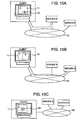
- Description will be given of an example of such a disadvantageous quotation of information. Fig. 15 schematically shows a screen image including a quote or an
icon 12 in ahomepage 11 provided by a server A as an information providing unit.Icon 12 is used to access, via acommunication network 10 such as the Internet, a site of a homepage or information contents (images, characters, sounds) provided by another server B to open information thereof. When the quote oricon 12 is clicked in the screen, ahomepage 13 provided by server B is displayed to overlap withhomepage 11 of server A or information contents are displayed therein as shown in Fig. 15B. Fig. 15C shows a screen image in which a homepage of server B or information contents is or are embedded inhomepage 11 of server A. The operation above is as follows. In a Web page which is described in the HTML and which is open on a display of computer as a user of information on a client side, another Web page is quoted. The Web page or information contents quoted is or are acquired from a server storing the Web page or information contents and is or are loaded in the computer on the client side. Such an example of quotation of information and display of information quoted are described, for example, in pages 66 to 71 of "HTML for Fun and Profit" written by Mary E. S. Morris and published from SunSoft Press. - US-A-5 796 952 discloses a method for monitoring client interaction with a resource when information is downloaded from a server in a computer network. This document has been chosen to establish the two-part form of the appended independent claims.
- JP-A-11 045228 discloses a method to re-direct an applet communication at a transmission source server and to enable an applet to communicate with hosts.
- WO-A-9642041 discloses an internet server access control and monitoring system. When the user selects a link that is directed to an access controlled file, the server subjects the request to a secondary server which determines whether the client has an authorisation or a valid account.
- It is preferable that a supplier of the Web page who quotes a Web page (serve A side) beforehand obtains approval or allowance of a supplier of the Web page to be quoted (server B side). Thereafter, the supplier on the server A side operates to display quote or
icon 12 in his or her Web page and quotes the target Web page to thereby establish a link between these Web pages. However, by a feature of the HTML, it would be possible to freely quote an external Web page to open the page without acquiring approval of the other party. There possibly arise troublesome situations, for example, the contents ofWeb page 13 quoted conflict with those ofWeb page 11 quotingWeb page 13, interests respectively ofWeb pages Web page 13 is against interests of the supplier ofWeb page 13. These situations may also occur between mutually different Web pages supplied by one server. That is, it often occurs that Web pages of different information suppliers exist in one server and the different Web pages quote each other. In these situation, for a request of transmission of the contents of the Web page quoted in a Web page of another person, it is desirable that the supplier of the Web page quoted has control over the request. Even for different Web pages supplied from one information supplier, there may exist a case in which it is allowed or not allowed that one of the pages quotes the other one page to open the page. It is favorable for the information providing side to have control when necessary over the operation in which the contents of his or her Web page is quoted to be opened in a Web page of the other party. - For easy understanding of description, information of
homepage image 11 provided by server A and information ofhomepage 13 of server B respectively shown in Figs. 15A and 15B are referred to respectively as primary information and quoted information in this application. A side to provide primary information such as server A is called first information providing resource and a side to supply quoted information such as server B is called second information providing resource. In this regard, "information providing resource" indicates an entire server computer, a storage under control of the server computer, or a file in the storage depending on cases. First information, namely, primary information and second information, i.e., quoted information may be stored in different servers or in one server. In the description of embodiments below, "information display" indicates a unit to use information which receives information distributed from a server to display the information. In Fig. 15A, this indicates an overall client computer or only a display section thereof. In the present invention, the first and second information may include a still picture, a moving picture, a text, and sound information. - It is therefore an object of the present invention to provide a method of and an apparatus for restricting an operation to open second information in first information other than the second information by quotation of the second information and thereby increasing security of the information
- Another object of the present invention is to provide a method of and an apparatus for allowing, when first information received by an information user unit quotes second information other than the first information, the second information can be transmitted to the information user unit only when a predetermined condition is satisfied.
- The objects are met by the present invention as defined in the appended independent claims. The subclaims relate to preferred modifications thereof.
- The objects and features of the present invention will become more apparent from the consideration of the following detailed description taken in conjunction with the accompanying drawings in which:
- Fig. 1 is a diagram showing an overall configuration of a first embodiment of an information distribution system in accordance with the present invention;
- Fig. 2 is a diagram for explaining a password database;
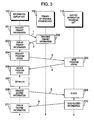
- Fig. 3 is a flow diagram for explaining operation of the first embodiment;
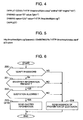
- Fig. 4 is a diagram showing an example of a tag to quote quoted information;
- Fig. 5 is a diagram showing an example of a message to acquire quoted information using a password;
- Fig. 6 is flowchart showing processing of a CGI to provide quoted information by a message using a password;
- Fig. 7 is a diagram to explain a quotation allowance information database;
- Fig. 8 is a display example in which quoted information is displayed in an image of contents allowed for quotation;
- Fig. 9 is a display example in which information to be quoted cannot be displayed in an image of contents not allowed for quotation;
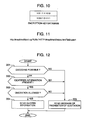
- Fig. 10 is a diagram for explaining an encryption key database;
- Fig. 11 is a diagram showing a message example which is used to acquire quoted information and which is to be encrypted using cryptography;
- Fig. 12 is a flowchart showing processing of a CGI to provide quoted information by a message encrypted;
- Fig. 13 is a block diagram showing a system in which operations of the primary and quoted information providing units are achieved by one server unit;
- Fig. 14 is a flowchart showing information distribution processing of the system of Fig. 13;
- Figs. 15A and 15B are diagrams for explaining operation in which on a Web page displayed on a screen, other information contents are displayed by quotation;
- Fig. 15C is a diagram for explaining an operation in which in a Web page displayed on a screen, contents of a Web page of another server is embedded.
- Referring next to drawings, description will be given of embodiments of the present invention. The present invention is not restricted by embodiments described below.
- Fig. 1 shows in a block diagram a general configuration of a first embodiment of an information distribution system in accordance with the present invention. This system at least includes a primary
information providing unit 100, a quotedinformation providing unit 110, aninformation display unit 120, and anetwork 130 to connect these constituent components to each other.Units display unit 120 is a client.Unit central processing units main storages auxiliary storages buses unit 110 is quoted in first information provided byunit 100 and the information quoted is displayed ondisplay 124. - The present invention is also applicable to a system configuration shown in Fig. 13 in which
units server 140 anddisplay unit 120 serves as a client. Fig. 14 shows processing of the system of Fig. 13 in a flowchart. The system configuration and the processing are basically similar to Figs. 1 and 3. Consequently, reference is to be made to description of Figs. 1 and 3. -
Display unit 120 includes aCPU 121, amain storage 122, acommunication network interface 123, adisplay 124, aninput unit 125, and abus 126 to connect these components to each other.Main storage 122 is loaded with a Web browser program, and results of operation of the program are displayed ondisplay 124. Although the embodiment is configured on assumption thatdisplay unit 120 is a general personal computer, another configuration is also possible. For example, there may be used a personal digital assistant or a device implemented by adding an information display function to a television set. Moreover,display unit 120 is not limited to an image displaying apparatus which uses the sense of sight, but may be a device which outputs various multimedia information in a form which can be used by the user. Namely,display unit 120 may include a device which utilizes the sense of touch and/or the sense of hearing. - The Web browser to operate in
display 120 has a function which acquires a Java applet vianetwork 130 from an external device to operate the applet. Although a set of the program codes acquired bydisplay unit 120 vianetwork 130 for operation thereof is a Java applet in this embodiment, there may be used program codes of another language specification. In this embodiment, the Java applet is obtained from quotedinformation providing unit 110. - Primary
information providing unit 100 operates according to a Web server program loaded fromauxiliary storage 103 inmain storage 102. On receiving vianetwork 130 an information request in the HTTP fromdisplay unit 120,unit 100 provides hypertext information fromauxiliary storage 103 to displayunit 120. The hypertext information includes contents such as a text, a still picture, a moving picture, and sound and is, for example, a Web page. - In quoted
information providing unit 110, a password update program and a Web server program are loaded inmain storage 112 and are executed. These programs operate in a multiprocessing manner. - The password update program updates, at a sufficiently short interval of time, a password of a Java applet provided by quoted
information providing unit 110 and updates a password database (Fig. 2) stored inauxiliary storage 113. The sufficiently short interval of time above indicates an interval of time which is as short as possible to make it difficult that a third party analyzes the Java applet to obtain a password and uses the password for an illegal information request. In this example, the update is conducted, for example, at an interval of one minute. When a Java applet is requested toWeb server 110 fromclient 120 using a predetermined URI, the Java applet is provided toclient 120 as the information requesting source. - The password database (Fig. 2) is a database in
auxiliary storage 113 to store a certain number of latest passwords, i.e., late passwords. In this embodiment, two passwords including a previous password and a current password are stored. When a password is updated, the oldest one of the passwords stored in the database is deleted and the new password is stored. Although the password includes an 8-digit numeric character string in this embodiment, there may be used another character string. - The Web server program operating in quoted
information providing unit 110 is called common gateway interface (CGI) The CGI provides a mechanism in which in response to a request fromdisplay unit 120, a program to operate inunit 110 is called via a network fromauxiliary storage 113 and then results of execution of the program are passed via a network to displayunit 120. The CGI is a function included in many Web browser programs. The CGI can be called through communication with the Web server using a predetermined URI. The scheme of CGI can implement ways and means to provide the quoted information. Details of the ways and means will be described later. Although the Web server program is implemented by the CGI in this embodiment, another configuration may also be used. - First, an outline of overall processing will be described and then description will be given of processing of program codes operating in
display unit 120 and processing executed by the CGI in quotedinformation providing unit 110. - Description will now given of an outline of overall processing by referring to Fig. 3. Display 120 issues a request with specification of an
URI 1 to primaryinformation providing unit 110 for desired hyper text information (step 201). In this description, theURI 1 is assumed to be "HTTP://machineA/index.html".Hypertext information 2 requested tounit 100 byURI 1 includes a description to quote information, e.g., an image to be provided byunit 110. Fig. 15A shows an example of display image in this operation. As an example of the description ofhypertext information 2, a tag description shown in Fig. 4 is assumed to be included. In this example, character strings following "CODE=" are a URI to specify a program code to be provided by quotedinformation providing unit 110, and character strings enclosed by "<PARAM" and ">" indicate parameters to be passed to a Java applet. This example indicates that a character string "pict1" is passed as a value of a parameter "ID" and a character string "HTTP://machineA/index.html" is passed as a value of a parameter "CGI". These parameters respectively indicates an identifier to specify information to be quoted from quotedinformation providing unit 110 and a character string to indicate details of a quoted information request destination forunit 110. The notation and the contents thereof are adjusted according to changes in the HTML specification and in the embodying mode. - On receiving the hypertext information (Fig. 4) from unit 100 (step 202),
display unit 120 displays a Web page ondisplay 124 according to description of information received (step 203) and issues a request tounit 110 for another image quoted. First,display unit 120 issues arequest 3 of program codes (step 204).Unit 110 sends a program code (Java applet) 4 to displayunit 120.Display unit 120 then activates the program codes received (step 206). The program codes then acquires an URI of the primary information (step 207) and issues aninformation request 5 with a password included in the program codes to the CGI of unit 110 (step 208).Unit 110 receives arequest 5 for quoted information and then sendsimage information 6 allowed for quotation by judge processing (step 209), which will be described later (step 210).Display unit 120 displays quoted information thus received (step 211). - Next, description will be given in detail of processing of program codes which corresponds to
steps display unit 120. When initiated instep 206, the program code conducts processing of initialization and then acquires an URI of the primary information instep 207. Thereafter, the program code generates a quotedinformation request message 5 using an URI of a CGI ofunit 110 in the program codes, a password similarly embedded in the program codes, an URI of the primary information, and an identifier of quoted information specified by a parameter. Conforming to a grammatical definition of the URI, a parameter for the CGI is described following the URI of CGI and "?" inmessage 5. For the parameter of the CGI, a value is described after "=" following a parameter name. To describe a plurality of parameters, "&" is used as a separation character. Therefore, when the URI of CGI is http://machineB/pict.cgi and the password is "12345678", the message is as shown in Fig. 5. The program code sends this message to the CGI ofunit 110.Display unit 120 displays quotedinformation 6 received fromunit 110. - Referring next to Fig. 6, description will be given in detail of processing of the CGI of
unit 110 insteps request 5 of quoted information (Fig. 5), the CGI program ofunit 110 first verifies a password (step 220). The verification is carried out by checking whether or not a password stored in the password database matches the password contained in the request message. Next, the program checks to determine whether or not an identifier of requested information exists (step 221). In this embodiment, a check is made to determine whether or not the quoted information specified by the identifier exists as a file at a predetermined position ofauxiliary storage 113. Next, the program determines whether or not the primary information is allowed for quotation (step 222). This is conducted by checking a quotation allowance database (Fig. 7) storing a pair of the identifier of the quoted information and an URI of primary information allowed for quotation. If the checks are successfully passed up to this point, the program sends the quoted information to display 120 having issued the request (223). Otherwise, the program sends information indicating that the quotation is not allowed for the quoted information to the request source unit (224). - For example, when the quoted information requested is an image of a
circle 251 and is allowed for quotation, quotedinformation 251 is displayed inprimary information 250 in the Web browser screen ofdisplay 124. When the quotation is not allowed, a response signal indicating "NG" or "UNAVAILABLE" is transmitted, and then warninginformation 251 is displayed inprimary information 250 as shown in Fig. 9. - Since the second embodiment is equal in the basic embodying mode to the first embodiment above, description will be given of different sections therebetween. The second embodiment has a general configuration substantially equal to that shown in Fig. 1. In this embodiment, a primary information providing unit and an information display are the same as those of the first embodiment.
- Quoted
information providing unit 110 operates according to an encryption key update program and a Web server program which are loaded inmain storage 112. It is assumed that these programs operate in a multiprocessing manner. - The encryption key update program updates, at a sufficiently short interval of time, an encryption key of a Java applet (program codes) provided by
unit 110 and updates an encryption key database (Fig. 10) stored inauxiliary storage 113. The sufficiently short interval of time above indicates an interval of time which is as short as enough to make it difficult that a third person analyzes the Java applet to obtain an encryption key and uses the key for an illegal information request. It is assumed in this embodiment that the update is conducted at an interval of one minute. When requested to the Web server using a predetermined URI, the Java applet is provided to the information requesting unit. - The encryption key database (Fig. 10) is a database to store a certain number of latest encryption keys. In this embodiment, two encryption keys including a current encryption key and a previous key are stored. When an encryption key is updated, the oldest one of the encryption keys stored in the encryption key database is deleted and the new encryption key is stored. Although the encryption key includes an 8-bit binary number in this embodiment, the key may be configured in another structure.
- Overall processing of the second embodiment is fundamentally similar to that of the first embodiment. Differences are processing of a program code which operates in
display unit 120 and processing of the CGI inunit 110. - The program code which operates in
display unit 120 conducts, in place of the information request using a password, an operation to encrypt amessage 3 of an information request using an encryption key. The CGI inunit 110 accomplishes, in place of the confirmation of the password, an operation to confirm whether or not the message encrypted can be decoded by an encryption key stored. Each processing will be described in detail. - Subsequently, description will be given in detail of processing of program codes which corresponds to
steps display unit 120 in the second embodiment. When activated instep 206, the program codes conduct processing of initialization and then acquires an URI of the primary information instep 207. Next, the program codes produces a quotedinformation request message 5 using an URI of a CGI ofunit 110 in the program codes, an URI of the primary information, and an identifier of quoted information specified by a parameter. Conforming to a grammatical definition of the URI, a parameter for the CGI is described following the URI of CGI and "?" inmessage 5. For the parameter of the CGI, a value is described after "=" following a parameter name. To describe a plurality of parameters, "&" is used as a separation character. Therefore, when the URI of CGI is http://machineB/pict.cgi, the message is as shown in Fig. 11. The program codes then encrypts a last portion of the message beginning at a letter "?" using the encryption key. It is assumed in this description that the encryption processing is an exclusive logical addition between each character and the encryption key. It is also possible to employ another encryption method. The program code sendsmessage 5 to the CGI ofunit 110 and then displays quotedinformation 6 acquired as a result ondisplay unit 120. - Next, referring to Fig. 12, description will be given in detail of processing in
steps unit 110 . On receiving a quotedinformation request 5, the CGI program first encodes request 5 (Fig. 11). A check is made in the encoding operation to determine whether or not an encrypted portion included in the request message can be encoded by an encryption key stored in the encryption key database of auxiliary storage 113 (step 301). The program then checks to determine whether or not a file of an identifier of the quoted information thus requested exists in storage 113 (step 302). Next, the program checks to determine whether or not the primary information is allowed to be quoted (step 303). This is conducted by checking a quotation allowance database (Fig. 7) for a pair of the identifier of the quoted information and an URI of primary information allowed for quotation. If the checks are successfully carried out up to this point, the program sends the quoted information to display unit 120 (step 304). Otherwise, the program sends information indicating that the quotation is not allowed for the quoted information to display unit 120 (step 305). Results displayed ondisplay 124 is the same as for the first embodiment. - It is also possible that programs to execute the procedures of the present invention shown in Figs. 3, 6, 12, and 14 are stored on a computer-readable recording media such as a hard disk, a flexible disk, an optical disk, a magnetooptical disk, and semiconductor disk such that the programs are read therefrom, at execution thereof, to be respectively loaded in
main storages units network 130 intomain storages units - In accordance with the present invention, the quoted information is not directly quoted, namely, an authenticating function can be introduced by using a program code as an intervention item. It is also possible that the program code acquires an identifier of hypertext of the primary and passes the identifier to quoted
information providing units - Using the identifier of a hypertext of the primary information,
units information providing units - The password is changed as occasion demands and hence an illegal information request becomes difficult as in a situation in which the information request is issued via the program codes. When an encryption unit is utilized for the information request to the quoted information providing unit, it becomes more difficult to issue an information request to the quoted information providing unit without using a program codes as an intervention item. The encryption unit is altered when necessary and hence an illegal information request is much more difficult as in a situation in which the information request is issued via program codes.
- While the present invention has been described with reference to the particular illustrative embodiments, it is not to be restricted by those embodiments but only by the appended claims. It is to be appreciated that those skilled in the art can change or modify the embodiments without departing from the scope of the appended claims.
Claims (25)
- A method for distributing information via a communication path (130) to an information user unit (120), comprising the steps of:transmitting (202, 2) first information (Fig. 4) from a first information providing resource (100) to the information user unit (120);transmitting (204, 3) a first request from the information user unit (120) to a second information providing resource (110);transmitting (205, 4), according to the first request, a predetermined program code from the second information providing resource (110) to the information user unit (120),characterised by:generating (206, 207), in the information user unit (120) on the basis of the program code, a second request (Fig. 5) to receive from the second information providing resource (110) second information quoted in the first information (Fig. 4), wherein said second request includes identifying information, URI, identifying the first information providing resource (100);transmitting (208, 5) the second request from the information user unit (120) to the second information providing resource (110); anddetermining (209), in the second information providing resource (110) on the basis of at least the identifying information URI, whether or not the second request is allowed.
- The method of claim 1, wherein the determining step comprises determining whether or not the second request is allowed according to a database (Fig. 7) which includes a correspondence between an identifier code, specifying second information for which quotation is allowed in the second information providing resource (110), and said identifying information.
- The method of claim 2, wherein:the program code has a password;the second request includes an identifier code to identify the second information to be quoted and the password; andthe determining step further includes a step (220) of collating the password in the second request with a valid password.
- The method of claim 3, wherein the determining step allows the second request when the password is a valid password and the identifier code is included in the database.
- The method of claim 4, further including a step of frequently changing the password in the program code to be sent to the information user unit (120).
- The method of claim 2, wherein:the program code includes an encryption key to encrypt the second request;the second request includes information obtained by encrypting an identifier code to identify the second information according to the encryption key; andthe determining step further includes a step (301) of verifying whether or not the second request can be decoded.
- The method of claim 6, wherein the determining step comprises allowing (303) the second request when the second request can be decoded and the identifier code to identify the second information is included in the database.
- The method of claim 7, further including a step of frequently changing the encryption key in the program code to be sent to the information user unit (120).
- The method of claim 1, further comprising the step of transmitting (6) the second information from the second information providing resource (110) to the information user unit (120) when the second request has been determined allowable.
- An information distributing apparatus including a second information providing resource (110) for distributing information via a communication path (130) to an information user unit (120), which has received first information (Fig. 4) from a first information providing resource. (100), comprising:means for sending a predetermined program code to the information user unit (120) in response to a first request from the information user unit,characterised by means for determining, in response to a second request (Fig. 5) from the information user unit (120) to receive from the second information providing resource (110) second information quoted in said first information, whether or not the second request is allowed on the basis of at least identifying information URI included in said second request and identifying the first information providing resource (100).
- The apparatus of claim 10, wherein the determining means includes a database (Fig. 7) including a correspondence between an identifier code, specifying second information for which quotation is allowed in the second information providing resource (110), and said identifying information.
- The apparatus of claim 11, wherein:the program code has a password;the second request includes an identifier code to identify the second information to be quoted and the password; andthe determining means further includes means for collating the password in the second request with a valid password.
- The apparatus of claim 12, wherein the determining means allows the second request when the password is a valid password and the identifier code is included in the database.
- The apparatus of claim 13, further including means for frequently changing the password in the program code to be sent to the information user unit (120).
- The apparatus of claim 14, further including a database (Fig. 2) for storing therein a certain number of previous passwords and a current password.
- The apparatus of claim 11, wherein:the program code includes an encryption key to encrypt the second request;the second request includes information obtained by encrypting an identifier code to identify the second information according to the encryption key; andthe determining means further includes means for verifying whether or not the second request can be decoded.
- The apparatus of claim 16, wherein the determining means allows the second request when the second request can be decoded and the identifier code to identify the second information is included in the database.
- The apparatus of claim 17, further including means for frequently changing the encryption key in the program code to be sent to the information user unit (120).
- The apparatus of claim 18, further including a database (Fig. 10) for storing therein a certain number of previous encryption keys and a current encryption key.
- The subject matter of any preceding claim, wherein the first information providing resource (100) is a first server, the second information providing resource (110) is a second server, and the information user unit (120) is a client.
- The subject matter of claim 20, wherein the second server (110) conducts the transmission of the program code and the determination of allowance of the second request by a Web server program.
- The subject matter of any of claims 1 to 19, wherein the first information providing resource (100) and the second information providing resource (110) are implemented by a common server (140), and the information user unit (120) is a client.
- An information user unit (120) for receiving information via a communication path (130) from first and second information providing resources (100, 110), comprising:means for receiving first information (Fig. 4) from the first information providing resource (100);means for issuing a first request to the second information providing resource (110);means for receiving a predetermined program code from the second information providing resource (110) according to the first request,characterised by:means for generating, on the basis of the program code, a second request (Fig. 5) to receive from the second information providing resource (110) second information quoted in the first information (Fig. 4), wherein said second request includes identifying information, URI, identifying the first information providing resource (100);means for transmitting the second request to the second information providing resource (110); andmeans for receiving the second information from the second information providing resource (110), when the second request has been determined allowable by the second information providing resource (110) on the basis of at least the identifying information URI.
- The unit of claim 23, further including means (124) for displaying or outputting the first information and the second information simultaneously.
- A computer program product comprising a computer usable medium having computer readable program code means stored therein for carrying out the method of any of claims 1 to 9.
Applications Claiming Priority (2)
| Application Number | Priority Date | Filing Date | Title |
|---|---|---|---|
| JP11182799 | 1999-04-20 | ||
| JP11111827A JP2000305880A (en) | 1999-04-20 | 1999-04-20 | Information distribution system |
Publications (3)
| Publication Number | Publication Date |
|---|---|
| EP1047238A2 EP1047238A2 (en) | 2000-10-25 |
| EP1047238A3 EP1047238A3 (en) | 2004-01-02 |
| EP1047238B1 true EP1047238B1 (en) | 2006-07-26 |
Family
ID=14571170
Family Applications (1)
| Application Number | Title | Priority Date | Filing Date |
|---|---|---|---|
| EP00108473A Expired - Lifetime EP1047238B1 (en) | 1999-04-20 | 2000-04-18 | Information distributing and receiving method, apparatus and program product |
Country Status (4)
| Country | Link |
|---|---|
| US (1) | US7188136B1 (en) |
| EP (1) | EP1047238B1 (en) |
| JP (1) | JP2000305880A (en) |
| DE (1) | DE60029508T2 (en) |
Families Citing this family (13)
| Publication number | Priority date | Publication date | Assignee | Title |
|---|---|---|---|---|
| FR2815740B1 (en) * | 2000-10-19 | 2003-01-17 | France Telecom | METHOD FOR CONTROLLING ACCESS TO WEBSITE ADDRESSES, IMPLEMENTATION CONTROL DEVICE AND SERVERS |
| US20040088333A1 (en) * | 2002-01-25 | 2004-05-06 | David Sidman | Apparatus method and system for tracking information access |
| EP1293857A1 (en) * | 2001-09-17 | 2003-03-19 | Caplin Systems Limited | Server access control |
| JP4365612B2 (en) * | 2003-04-15 | 2009-11-18 | 白光株式会社 | Electrical component attachment / detachment device |
| US7549171B2 (en) * | 2004-06-10 | 2009-06-16 | Hitachi, Ltd. | Method and apparatus for validation of application data on a storage system |
| US20060167841A1 (en) * | 2004-11-18 | 2006-07-27 | International Business Machines Corporation | Method and system for a unique naming scheme for content management systems |
| US8116312B2 (en) | 2006-02-08 | 2012-02-14 | Solarflare Communications, Inc. | Method and apparatus for multicast packet reception |
| JP5089091B2 (en) * | 2006-06-20 | 2012-12-05 | 株式会社日立製作所 | Content collection system |
| JP4941916B2 (en) * | 2009-05-18 | 2012-05-30 | ヤフー株式会社 | Map server device |
| JP4750904B2 (en) * | 2009-12-14 | 2011-08-17 | 楽天株式会社 | Page transition device, page transition system, and page transition method |
| US9166958B2 (en) * | 2012-07-17 | 2015-10-20 | Texas Instruments Incorporated | ID-based control unit-key fob pairing |
| US9003204B2 (en) * | 2013-07-10 | 2015-04-07 | Sap Se | Optimal re-encryption strategy for joins in encrypted databases |
| CN112528595B (en) | 2020-12-15 | 2023-05-09 | 北京字跳网络技术有限公司 | Document processing method, device and electronic device |
Family Cites Families (11)
| Publication number | Priority date | Publication date | Assignee | Title |
|---|---|---|---|---|
| EP0830774B1 (en) | 1995-06-07 | 2004-10-06 | divine technology ventures | Internet server access control and monitoring systems |
| US5708780A (en) * | 1995-06-07 | 1998-01-13 | Open Market, Inc. | Internet server access control and monitoring systems |
| US6125384A (en) * | 1996-12-23 | 2000-09-26 | International Business Machines Corporation | Computer apparatus and method for communicating between software applications and computers on the world-wide web |
| US6052730A (en) * | 1997-01-10 | 2000-04-18 | The Board Of Trustees Of The Leland Stanford Junior University | Method for monitoring and/or modifying web browsing sessions |
| US5796952A (en) | 1997-03-21 | 1998-08-18 | Dot Com Development, Inc. | Method and apparatus for tracking client interaction with a network resource and creating client profiles and resource database |
| US6314565B1 (en) * | 1997-05-19 | 2001-11-06 | Intervu, Inc. | System and method for automated identification, retrieval, and installation of multimedia software components |
| US5987523A (en) | 1997-06-04 | 1999-11-16 | International Business Machines Corporation | Applet redirection for controlled access to non-orginating hosts |
| US6253288B1 (en) * | 1998-04-30 | 2001-06-26 | Hewlett-Packard Company | Hybrid cache/SIRO buffer system |
| US6643690B2 (en) * | 1998-12-29 | 2003-11-04 | Citrix Systems, Inc. | Apparatus and method for determining a program neighborhood for a client node in a client-server network |
| US6754826B1 (en) * | 1999-03-31 | 2004-06-22 | International Business Machines Corporation | Data processing system and method including a network access connector for limiting access to the network |
| US6442687B1 (en) * | 1999-12-02 | 2002-08-27 | Ponoi Corp. | System and method for secure and anonymous communications |
-
1999
- 1999-04-20 JP JP11111827A patent/JP2000305880A/en active Pending
-
2000
- 2000-04-17 US US09/550,898 patent/US7188136B1/en not_active Expired - Fee Related
- 2000-04-18 EP EP00108473A patent/EP1047238B1/en not_active Expired - Lifetime
- 2000-04-18 DE DE60029508T patent/DE60029508T2/en not_active Expired - Lifetime
Also Published As
| Publication number | Publication date |
|---|---|
| EP1047238A2 (en) | 2000-10-25 |
| US7188136B1 (en) | 2007-03-06 |
| DE60029508D1 (en) | 2006-09-07 |
| JP2000305880A (en) | 2000-11-02 |
| EP1047238A3 (en) | 2004-01-02 |
| DE60029508T2 (en) | 2007-08-02 |
Similar Documents
| Publication | Publication Date | Title |
|---|---|---|
| EP1645971B1 (en) | Database access control method, database access controller, agent processing server, database access control program, and medium recording the program | |
| US7757075B2 (en) | State reference | |
| US8689295B2 (en) | Firewalls for providing security in HTTP networks and applications | |
| US20060106802A1 (en) | Stateless methods for resource hiding and access control support based on URI encryption | |
| CA2494513C (en) | Digital-signed digital document exchange supporting method and information processor | |
| JP2020184800A (en) | Resource locator with key | |
| US20140344164A1 (en) | Purchase Transaction System with Encrypted Payment Card Data | |
| US20060080546A1 (en) | System and method for regulating access to objects in a content repository | |
| US7188136B1 (en) | Method of and an apparatus for distributing information, a method of and an apparatus for receiving information, a system for distributing information, and a program product for conducting information distribution | |
| JP2003122724A (en) | Process for providing access of client to content provider server under control of resource locator server | |
| JP2002132730A (en) | Authentication or access management system and management method based on reliability and disclosure of personal information | |
| US7100045B2 (en) | System, method, and program for ensuring originality | |
| GB2379039A (en) | Transaction processing in a distributed data processing system | |
| JP2002118551A (en) | Authentication method | |
| KR20050116907A (en) | System and method for digital rights management using a standard rendering engine | |
| US20060047662A1 (en) | Capability support for web transactions | |
| JPH09251426A (en) | File encryption system and control method thereof, and encrypted file reception system and control method thereof | |
| US8694788B1 (en) | Security system | |
| US7941840B2 (en) | Secure resource access | |
| JP2008226015A (en) | Session authority management method | |
| KR102093600B1 (en) | Method of issusing electronic document agent service apparatus thereof | |
| EP1293857A1 (en) | Server access control | |
| JP5649627B2 (en) | Access authorization apparatus and method, service providing apparatus and system | |
| US6763355B2 (en) | Method and apparatus in mark-up language documents for providing mark-up language hidden attributes | |
| US8600880B2 (en) | Method and system for providing point of sale services |
Legal Events
| Date | Code | Title | Description |
|---|---|---|---|
| PUAI | Public reference made under article 153(3) epc to a published international application that has entered the european phase |
Free format text: ORIGINAL CODE: 0009012 |
|
| AK | Designated contracting states |
Kind code of ref document: A2 Designated state(s): AT BE CH CY DE DK ES FI FR GB GR IE IT LI LU MC NL PT SE |
|
| AX | Request for extension of the european patent |
Free format text: AL;LT;LV;MK;RO;SI |
|
| PUAL | Search report despatched |
Free format text: ORIGINAL CODE: 0009013 |
|
| AK | Designated contracting states |
Kind code of ref document: A3 Designated state(s): AT BE CH CY DE DK ES FI FR GB GR IE IT LI LU MC NL PT SE |
|
| AX | Request for extension of the european patent |
Extension state: AL LT LV MK RO SI |
|
| RIC1 | Information provided on ipc code assigned before grant |
Ipc: 7G 06F 1/00 B Ipc: 7H 04L 29/06 A |
|
| 17P | Request for examination filed |
Effective date: 20040625 |
|
| AKX | Designation fees paid |
Designated state(s): DE FR GB |
|
| 17Q | First examination report despatched |
Effective date: 20040824 |
|
| GRAP | Despatch of communication of intention to grant a patent |
Free format text: ORIGINAL CODE: EPIDOSNIGR1 |
|
| GRAS | Grant fee paid |
Free format text: ORIGINAL CODE: EPIDOSNIGR3 |
|
| GRAA | (expected) grant |
Free format text: ORIGINAL CODE: 0009210 |
|
| AK | Designated contracting states |
Kind code of ref document: B1 Designated state(s): DE FR GB |
|
| REG | Reference to a national code |
Ref country code: GB Ref legal event code: FG4D |
|
| REF | Corresponds to: |
Ref document number: 60029508 Country of ref document: DE Date of ref document: 20060907 Kind code of ref document: P |
|
| ET | Fr: translation filed | ||
| PLBE | No opposition filed within time limit |
Free format text: ORIGINAL CODE: 0009261 |
|
| STAA | Information on the status of an ep patent application or granted ep patent |
Free format text: STATUS: NO OPPOSITION FILED WITHIN TIME LIMIT |
|
| 26N | No opposition filed |
Effective date: 20070427 |
|
| REG | Reference to a national code |
Ref country code: GB Ref legal event code: 732E |
|
| REG | Reference to a national code |
Ref country code: FR Ref legal event code: TQ |
|
| PGFP | Annual fee paid to national office [announced via postgrant information from national office to epo] |
Ref country code: FR Payment date: 20110315 Year of fee payment: 12 |
|
| PGFP | Annual fee paid to national office [announced via postgrant information from national office to epo] |
Ref country code: GB Payment date: 20110221 Year of fee payment: 12 |
|
| PGFP | Annual fee paid to national office [announced via postgrant information from national office to epo] |
Ref country code: DE Payment date: 20110627 Year of fee payment: 12 |
|
| GBPC | Gb: european patent ceased through non-payment of renewal fee |
Effective date: 20120418 |
|
| REG | Reference to a national code |
Ref country code: FR Ref legal event code: ST Effective date: 20121228 |
|
| PG25 | Lapsed in a contracting state [announced via postgrant information from national office to epo] |
Ref country code: GB Free format text: LAPSE BECAUSE OF NON-PAYMENT OF DUE FEES Effective date: 20120418 |
|
| REG | Reference to a national code |
Ref country code: DE Ref legal event code: R119 Ref document number: 60029508 Country of ref document: DE Effective date: 20121101 |
|
| PG25 | Lapsed in a contracting state [announced via postgrant information from national office to epo] |
Ref country code: FR Free format text: LAPSE BECAUSE OF NON-PAYMENT OF DUE FEES Effective date: 20120430 |
|
| PG25 | Lapsed in a contracting state [announced via postgrant information from national office to epo] |
Ref country code: DE Free format text: LAPSE BECAUSE OF NON-PAYMENT OF DUE FEES Effective date: 20121101 |