EP1043652A2 - Method and apparatus for displaying data patterns in information systems - Google Patents
Method and apparatus for displaying data patterns in information systems Download PDFInfo
- Publication number
- EP1043652A2 EP1043652A2 EP00107604A EP00107604A EP1043652A2 EP 1043652 A2 EP1043652 A2 EP 1043652A2 EP 00107604 A EP00107604 A EP 00107604A EP 00107604 A EP00107604 A EP 00107604A EP 1043652 A2 EP1043652 A2 EP 1043652A2
- Authority
- EP
- European Patent Office
- Prior art keywords
- display
- image data
- tile image
- display area
- information
- Prior art date
- Legal status (The legal status is an assumption and is not a legal conclusion. Google has not performed a legal analysis and makes no representation as to the accuracy of the status listed.)
- Withdrawn
Links
Images



Classifications
-
- G—PHYSICS
- G06—COMPUTING OR CALCULATING; COUNTING
- G06F—ELECTRIC DIGITAL DATA PROCESSING
- G06F3/00—Input arrangements for transferring data to be processed into a form capable of being handled by the computer; Output arrangements for transferring data from processing unit to output unit, e.g. interface arrangements
- G06F3/14—Digital output to display device ; Cooperation and interconnection of the display device with other functional units
- G06F3/1454—Digital output to display device ; Cooperation and interconnection of the display device with other functional units involving copying of the display data of a local workstation or window to a remote workstation or window so that an actual copy of the data is displayed simultaneously on two or more displays, e.g. teledisplay
-
- G—PHYSICS
- G09—EDUCATION; CRYPTOGRAPHY; DISPLAY; ADVERTISING; SEALS
- G09G—ARRANGEMENTS OR CIRCUITS FOR CONTROL OF INDICATING DEVICES USING STATIC MEANS TO PRESENT VARIABLE INFORMATION
- G09G5/00—Control arrangements or circuits for visual indicators common to cathode-ray tube indicators and other visual indicators
- G09G5/36—Control arrangements or circuits for visual indicators common to cathode-ray tube indicators and other visual indicators characterised by the display of a graphic pattern, e.g. using an all-points-addressable [APA] memory
- G09G5/39—Control of the bit-mapped memory
- G09G5/393—Arrangements for updating the contents of the bit-mapped memory
Definitions
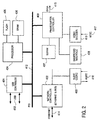
- the display method includes the steps of the service computer system 312 determining the number of repetitions of the tile image 600 to fill at least a portion of the display area 602 (step 612) and transmitting display information to the HID 321 via the interface fabric 121, including a tile image data (step 614), and replication information including information representing a number of repetitions of said tile image data to fill said portion of said display area 602 (step 616).
Landscapes
- Engineering & Computer Science (AREA)
- Theoretical Computer Science (AREA)
- Physics & Mathematics (AREA)
- General Physics & Mathematics (AREA)
- Human Computer Interaction (AREA)
- General Engineering & Computer Science (AREA)
- Computer Hardware Design (AREA)
- Digital Computer Display Output (AREA)
- Controls And Circuits For Display Device (AREA)
Abstract
Description
Claims (24)
- In an information processing system including a host system interconnected to a remote system via a communication link, a method of updating a remote display device associated with said remote system to fill at least a portion of a display area on the display device with a tiled pattern including repetitions of a tile image data stored at the host system, the method comprising the steps of:(a) the host system determining the number of repetitions of the tile image data to fill said portion of the display area and transmitting display information to the remote system via the communication link, the display information including:(1) said tile image data; and(2) replication information including: (i) information representing a number of repetitions of said tile image data to fill said portion of said display area, and (ii) coordinate data representing the position of the display area on the display device; and(b) the remote system receiving the display information and generating said tile pattern by performing steps including:(1) storing the tile image data in a frame buffer starting at a location corresponding to a coordinate location within the display area relative to said display area coordinate data; and(2) replicating the tile image data into the frame buffer based on the replication information until said portion of the display area is filled with said tiled pattern.
- The method of claim 1 wherein: (i) transmitting display information from the host system to the remote system further comprises transmitting a coordinate location on the display device for each repetition of the tile image, and (ii) copying tile image data by the remote system comprises copying the tile image data into the frame buffer at locations corresponding to said coordinate locations on the display device.
- The method of claim 1 further comprising the step of the remote system performing image processing of the received tile image data before displaying on the display device.
- The method of claim 1, wherein: (i) the tile image is rectangular and (ii) the display area is rectangular.
- The method of claim 1, wherein the display area is rectangular and comprises a non-rectangular display region and a non-display clipped region, said method further comprising the steps of the host system dividing the display region into one or more rectangular display regions and performing the steps (a) and (b) for each rectangular display region utilizing at least a portion the tile image data for filling each rectangular display region with repetitions of said portion of the tile image data.
- The method of claim 1, wherein (a) the host system comprises a data source system, and (b) the remote system comprises a human interface device.
- The method of claim 1, wherein said display area coordinate data comprises an offset specifying the position of the display area relative to an origin coordinate on the display device.
- The method of claim 1, wherein the information processing system comprises a plurality of host systems and a plurality of remote systems with associated display devices.
- In an information processing system including a host system interconnected to a remote system via a communication link, a method of updating a remote display device associated with said remote system to fill at least a portion of a display area on the display device with a tiled pattern including repetitions of a tile image data stored at the host system, the method comprising the steps of:(a) the host system determining the number of repetitions of the said tile image data to fill said position of the display are and transmitting display information to the remote system via the communication link, the display information including:(1) said tile image data; and(2) replication information including: (i) replication commands corresponding to a number of repetitions of said tile image data to fill said portion of said display area, and (ii) a coordinate location on the display device for each repetition of the tile image; and(b) the remote system receiving the display information and generating said tile pattern by performing steps including:(1) storing the tile image data in a frame buffer starting at a location corresponding to a coordinate location within the display area relative to said display area coordinate data; and(2) replicating the tile image data into the frame buffer at locations corresponding to said coordinate locations on the display device in response to the replication commands until said portion of the display area is filled with said tiled pattern.
- The method of claim 9, wherein the display area is rectangular and comprises a non-rectangular display region and a non-display clipped region, said method further comprising the steps of the host system dividing the display region into one or more rectangular display regions and performing the steps (a) and (b) for each rectangular display region utilizing at least a portion the tile image data for filling each rectangular display region with repetitions of said portion of the tile image data.
- The method of claim 9 further comprising the step of the remote system performing image processing of the received tile image data before displaying on the display device.
- The method of claim 9, wherein (a) the host system comprises a data source system, and (b) the remote system comprises a human interface device.
- The method of claim 9, wherein the information processing system comprises a plurality of host systems and a plurality of remote systems with associated display devices.
- An information processing system including a host system interconnected to a remote system via a communication link for updating a remote display device associated with said remote system to fill at least a portion of a display area on the display device with a tiled pattern including repetitions of a tile image data stored at the host system, wherein:the host system is configured by program instructions for determining the number of repetitions of the tile image data to fill the display area and for transmitting display information to the remote system via the communication link, the display information including:(a) said tile image data; and(b) replication information including: (1) information representing a number of repetitions of said tile image data to fill said portion of said display area, and (2) coordinate data representing the position of the display area on the display device; andthe remote system is configured by program instructions for receiving the display information and generating said tile pattern by performing steps including:(c) storing the tile image data in a frame buffer starting at a location corresponding to a coordinate location within the display area relative to said display area coordinate data; and(d) replicating the tile image data into the frame buffer based on the replication information until said portion of the display area is filled with said tiled pattern.
- The information system of claim 14 wherein: (i) the host system further incudes program instructions for transmitting a coordinate location on the display device for each repetition of the tile image, and (ii) the remote system further includes program instructions for copying the tile image data into the frame buffer at locations corresponding to said coordinate locations on the display device.
- The information system of claim 14 wherein the remote system further includes program instructions for performing image processing of the received tile image data before displaying on the display device.
- The information system of claim 14, wherein the display area is rectangular and comprises a non-rectangular display region and a non-display clipped region, and wherein the host system further includes program instructions for dividing the display region into one or more rectangular display regions and performing the steps (a) through (d) for each rectangular display region utilizing at least a portion the tile image data for filling each rectangular display region with repetitions of said portion of the tile image data.
- The information system of claim 14, wherein (a) the host system comprises a data source system, and (b) the remote system comprises a human interface device.
- The information system of claim 1, wherein the information processing system comprises a plurality of host systems and a plurality of remote systems with associated display devices.
- In an information processing system including a host system interconnected to a remote system via a communication link, a display system for updating a remote display device associated with said remote system to fill at least a portion of a display area on the display device with a tiled pattern including repetitions of a tile image data stored at the host system, the display system comprising:means for determining the number of replications of the tile image data to fill the display area,means for transmitting display information from the host system to the remote system via the communication link, the display information including:(a) said tile image data;(b) replication information including: (1) replication commands corresponding to a number of repetitions of said tile image data to fill said portion of said display area, and (2) a coordinate location on the display device for each repetition of the tile image; andmeans for receiving the display information in the remote system receiving and generating said tile pattern including:(c) means for storing the tile image data in a frame buffer starting at a location corresponding to a coordinate location within the display area relative to said display area coordinate data; and(d) means for replicating the tile image data into the frame buffer at locations corresponding to said coordinate locations on the display device in response to the replication commands until said portion of the display area is filled with said tiled pattern.
- The display system of claim 20, wherein the display area is rectangular and includes a non-rectangular display region and a non-display clipped region, and wherein the display system further includes means for dividing the display region into one or more rectangular display regions and for each rectangular display region utilizing at least a portion the tile image data for filling each rectangular display region with repetitions of said portion of the tile image data.
- The display system of claim 20 further comprising means for performing image processing of the received tile image data before displaying on the display device.
- The display system of claim 20, wherein (a) the host system comprises a data source system, and (b) the remote system comprises a human interface device.
- The display system of claim 20, wherein the information processing system comprises a plurality of host systems and a plurality of remote systems with associated display devices.
Applications Claiming Priority (2)
| Application Number | Priority Date | Filing Date | Title |
|---|---|---|---|
| US09/289,798 US6483515B1 (en) | 1999-04-09 | 1999-04-09 | Method and apparatus for displaying data patterns in information systems |
| US289798 | 1999-04-09 |
Publications (2)
| Publication Number | Publication Date |
|---|---|
| EP1043652A2 true EP1043652A2 (en) | 2000-10-11 |
| EP1043652A3 EP1043652A3 (en) | 2009-07-15 |
Family
ID=23113148
Family Applications (1)
| Application Number | Title | Priority Date | Filing Date |
|---|---|---|---|
| EP00107604A Withdrawn EP1043652A3 (en) | 1999-04-09 | 2000-04-07 | Method and apparatus for displaying data patterns in information systems |
Country Status (2)
| Country | Link |
|---|---|
| US (1) | US6483515B1 (en) |
| EP (1) | EP1043652A3 (en) |
Cited By (1)
| Publication number | Priority date | Publication date | Assignee | Title |
|---|---|---|---|---|
| CN106327427A (en) * | 2016-08-22 | 2017-01-11 | 广东暨通信息发展有限公司 | Three-dimensional spliced displaying system and building method thereof |
Families Citing this family (23)
| Publication number | Priority date | Publication date | Assignee | Title |
|---|---|---|---|---|
| US7028025B2 (en) | 2000-05-26 | 2006-04-11 | Citrix Sytems, Inc. | Method and system for efficiently reducing graphical display data for transmission over a low bandwidth transport protocol mechanism |
| US7030892B1 (en) * | 2000-09-19 | 2006-04-18 | Honeywell International Inc. | Methods and apparatus for displaying information |
| US7027072B1 (en) * | 2000-10-13 | 2006-04-11 | Silicon Graphics, Inc. | Method and system for spatially compositing digital video images with a tile pattern library |
| US7358974B2 (en) | 2001-01-29 | 2008-04-15 | Silicon Graphics, Inc. | Method and system for minimizing an amount of data needed to test data against subarea boundaries in spatially composited digital video |
| US6965785B2 (en) * | 2001-07-17 | 2005-11-15 | Wildseed Ltd. | Cooperative wireless luminescent imagery |
| US7034837B2 (en) * | 2003-05-05 | 2006-04-25 | Silicon Graphics, Inc. | Method, system, and computer program product for determining a structure of a graphics compositor tree |
| US7080181B2 (en) * | 2003-06-13 | 2006-07-18 | International Business Machines Corporation | Hot-pluggable video architecture |
| US8171169B2 (en) | 2005-03-14 | 2012-05-01 | Citrix Systems, Inc. | Method and apparatus for updating a graphical display in a distributed processing environment |
| US8453148B1 (en) | 2005-04-06 | 2013-05-28 | Teradici Corporation | Method and system for image sequence transfer scheduling and restricting the image sequence generation |
| US8766993B1 (en) * | 2005-04-06 | 2014-07-01 | Teradici Corporation | Methods and apparatus for enabling multiple remote displays |
| US9195428B2 (en) | 2006-04-05 | 2015-11-24 | Nvidia Corporation | Method and system for displaying data from auxiliary display subsystem of a notebook on a main display of the notebook |
| US8775704B2 (en) * | 2006-04-05 | 2014-07-08 | Nvidia Corporation | Method and system for communication between a secondary processor and an auxiliary display subsystem of a notebook |
| US8054241B2 (en) | 2006-09-14 | 2011-11-08 | Citrix Systems, Inc. | Systems and methods for multiple display support in remote access software |
| US7791559B2 (en) * | 2006-09-14 | 2010-09-07 | Citrix Systems, Inc. | System and method for multiple display support in remote access software |
| CN101197044B (en) * | 2006-12-06 | 2011-02-02 | 鸿富锦精密工业(深圳)有限公司 | Image synthesis system and method |
| US20080165200A1 (en) * | 2007-01-05 | 2008-07-10 | Raymond Chow | Hardware Background Tile Generation |
| US20080231634A1 (en) * | 2007-03-22 | 2008-09-25 | Honeywell International, Inc. | Intuitive modification of visual output from a multi-function display |
| US8736617B2 (en) * | 2008-08-04 | 2014-05-27 | Nvidia Corporation | Hybrid graphic display |
| US8073990B1 (en) | 2008-09-23 | 2011-12-06 | Teradici Corporation | System and method for transferring updates from virtual frame buffers |
| US8224885B1 (en) | 2009-01-26 | 2012-07-17 | Teradici Corporation | Method and system for remote computing session management |
| US9111325B2 (en) * | 2009-12-31 | 2015-08-18 | Nvidia Corporation | Shared buffer techniques for heterogeneous hybrid graphics |
| US8780122B2 (en) * | 2009-09-16 | 2014-07-15 | Nvidia Corporation | Techniques for transferring graphics data from system memory to a discrete GPU |
| TWI610292B (en) * | 2015-11-19 | 2018-01-01 | 瑞鼎科技股份有限公司 | Driving circuit and operating method thereof |
Family Cites Families (15)
| Publication number | Priority date | Publication date | Assignee | Title |
|---|---|---|---|---|
| JPS60232596A (en) * | 1984-05-02 | 1985-11-19 | 株式会社日立製作所 | Multi-window display method |
| US4646078A (en) * | 1984-09-06 | 1987-02-24 | Tektronix, Inc. | Graphics display rapid pattern fill using undisplayed frame buffer memory |
| US5357605A (en) * | 1988-09-13 | 1994-10-18 | Microsoft Corporation | Method and system for displaying patterns using a bitmap display |
| US5179640A (en) * | 1990-02-01 | 1993-01-12 | Oce Graphics Usa Inc. | Generating repeating patterns from a pattern header |
| US5313567A (en) * | 1991-06-13 | 1994-05-17 | At&T Bell Laboratories | Arrangement for determining and displaying volumetric data in an imaging system |
| US5673120A (en) * | 1993-12-24 | 1997-09-30 | Nec Corporation | Image output device |
| US5454076A (en) * | 1994-03-02 | 1995-09-26 | Vlsi Technology, Inc. | Method and apparatus for simultaneously minimizing storage and maximizing total memory bandwidth for a repeating pattern |
| US5751293A (en) * | 1994-08-24 | 1998-05-12 | Nippon Telegraph And Telephone Corp. | Pattern generation method and apparatus for automatic generation of continuous tile patterns along any arbitrary side |
| US5668941A (en) * | 1995-06-22 | 1997-09-16 | Cirrus Logic, Inc. | Optimum implementation of X-Y clipping on pixel boundary |
| US6333750B1 (en) * | 1997-03-12 | 2001-12-25 | Cybex Computer Products Corporation | Multi-sourced video distribution hub |
| US6091418A (en) * | 1997-06-18 | 2000-07-18 | Hewlett-Packard Company | Printer with procedure for pattern tiling and scaling |
| US6229544B1 (en) * | 1997-09-09 | 2001-05-08 | International Business Machines Corporation | Tiled image editor |
| US6400361B2 (en) * | 1998-04-23 | 2002-06-04 | United Technologies Dearborn, Inc | Graphics processor architecture employing variable refresh rates |
| US6064407A (en) * | 1998-04-30 | 2000-05-16 | Ati Technologies, Inc. | Method and apparatus for tiling a block of image data |
| US6329997B1 (en) * | 1998-12-04 | 2001-12-11 | Silicon Motion, Inc. | 3-D graphics chip with embedded DRAM buffers |
-
1999
- 1999-04-09 US US09/289,798 patent/US6483515B1/en not_active Expired - Lifetime
-
2000
- 2000-04-07 EP EP00107604A patent/EP1043652A3/en not_active Withdrawn
Cited By (1)
| Publication number | Priority date | Publication date | Assignee | Title |
|---|---|---|---|---|
| CN106327427A (en) * | 2016-08-22 | 2017-01-11 | 广东暨通信息发展有限公司 | Three-dimensional spliced displaying system and building method thereof |
Also Published As
| Publication number | Publication date |
|---|---|
| EP1043652A3 (en) | 2009-07-15 |
| US6483515B1 (en) | 2002-11-19 |
Similar Documents
| Publication | Publication Date | Title |
|---|---|---|
| US6483515B1 (en) | Method and apparatus for displaying data patterns in information systems | |
| US6710753B2 (en) | Multi-screen session mobility between terminal groups | |
| US6915347B2 (en) | Associating multiple display units in a grouped server environment | |
| US6167442A (en) | Method and system for accessing and of rendering an image for transmission over a network | |
| EP1043865B1 (en) | Distributed settings control protocol | |
| US7184057B2 (en) | Systems and methods for providing color management | |
| US6003065A (en) | Method and system for distributed processing of applications on host and peripheral devices | |
| US6466982B1 (en) | Exclusive use of peripheral devices | |
| JP3833483B2 (en) | Image display system, image data transmission apparatus, display image data transmission method, differential transfer method, program, and storage medium | |
| US6785894B1 (en) | Virtual device driver | |
| US20060010454A1 (en) | Architecture for rendering graphics on output devices | |
| US20010034770A1 (en) | Method and device for implementing networked terminals in graphical operating environment | |
| US20040008214A1 (en) | Tagging repeating images for improved compression | |
| US6694379B1 (en) | Method and apparatus for providing distributed clip-list management | |
| CN113254130A (en) | Method for adaptively adjusting resolution of cloud desktop | |
| US20020095500A1 (en) | Method and apparatus for aggregate resource management of active computing environments | |
| US7075544B2 (en) | Apparatus and method of processing image in thin-client environment and apparatus and method of receiving the processed image | |
| JP3368014B2 (en) | Image data processing method and system | |
| WO1999026222A1 (en) | Data processing system | |
| JP3533811B2 (en) | Data conversion device, network system including data conversion device, and data transmission method | |
| JP2002512470A (en) | Method and apparatus for supporting a video protocol in a network environment | |
| JP3466914B2 (en) | Control method for network facsimile communication system | |
| CN101520719B (en) | Screen sharing system and screen sharing method | |
| US7286140B2 (en) | Hardware acceleration of display data clipping | |
| JPH0855069A (en) | Network system |
Legal Events
| Date | Code | Title | Description |
|---|---|---|---|
| PUAI | Public reference made under article 153(3) epc to a published international application that has entered the european phase |
Free format text: ORIGINAL CODE: 0009012 |
|
| AK | Designated contracting states |
Kind code of ref document: A2 Designated state(s): AT BE CH CY DE DK ES FI FR GB GR IE IT LI LU MC NL PT SE |
|
| AX | Request for extension of the european patent |
Free format text: AL;LT;LV;MK;RO;SI |
|
| PUAL | Search report despatched |
Free format text: ORIGINAL CODE: 0009013 |
|
| AK | Designated contracting states |
Kind code of ref document: A3 Designated state(s): AT BE CH CY DE DK ES FI FR GB GR IE IT LI LU MC NL PT SE |
|
| AX | Request for extension of the european patent |
Extension state: AL LT LV MK RO SI |
|
| AKX | Designation fees paid |
Designated state(s): AT BE CH CY DE DK ES FI FR GB GR IE IT LI LU MC NL PT SE |
|
| STAA | Information on the status of an ep patent application or granted ep patent |
Free format text: STATUS: THE APPLICATION IS DEEMED TO BE WITHDRAWN |
|
| 18D | Application deemed to be withdrawn |
Effective date: 20091102 |