EP1043402A2 - Assays for the determination of pesticidal damage, resistance, and pesticide mode of action - Google Patents
Assays for the determination of pesticidal damage, resistance, and pesticide mode of action Download PDFInfo
- Publication number
- EP1043402A2 EP1043402A2 EP20000302765 EP00302765A EP1043402A2 EP 1043402 A2 EP1043402 A2 EP 1043402A2 EP 20000302765 EP20000302765 EP 20000302765 EP 00302765 A EP00302765 A EP 00302765A EP 1043402 A2 EP1043402 A2 EP 1043402A2
- Authority
- EP
- European Patent Office
- Prior art keywords
- strain
- deficient
- enzyme
- culture
- pesticidal
- Prior art date
- Legal status (The legal status is an assumption and is not a legal conclusion. Google has not performed a legal analysis and makes no representation as to the accuracy of the status listed.)
- Withdrawn
Links
- 230000000361 pesticidal effect Effects 0.000 title claims abstract description 44
- 239000000575 pesticide Substances 0.000 title claims description 21
- 238000003556 assay Methods 0.000 title abstract description 24
- 241000196324 Embryophyta Species 0.000 claims abstract description 80
- 102000004190 Enzymes Human genes 0.000 claims abstract description 52
- 108090000790 Enzymes Proteins 0.000 claims abstract description 52
- 230000002950 deficient Effects 0.000 claims abstract description 52
- 238000000034 method Methods 0.000 claims abstract description 45
- 239000000284 extract Substances 0.000 claims abstract description 36
- 230000012010 growth Effects 0.000 claims abstract description 22
- 241000238631 Hexapoda Species 0.000 claims abstract description 16
- 238000009629 microbiological culture Methods 0.000 claims abstract description 15
- 244000052769 pathogen Species 0.000 claims abstract description 15
- 230000001717 pathogenic effect Effects 0.000 claims abstract description 6
- 241000588724 Escherichia coli Species 0.000 claims description 28
- 239000004009 herbicide Substances 0.000 claims description 27
- 230000000813 microbial effect Effects 0.000 claims description 27
- 239000000463 material Substances 0.000 claims description 26
- 230000002363 herbicidal effect Effects 0.000 claims description 23
- 230000005764 inhibitory process Effects 0.000 claims description 23
- 239000005562 Glyphosate Substances 0.000 claims description 18
- XDDAORKBJWWYJS-UHFFFAOYSA-N glyphosate Chemical group OC(=O)CNCP(O)(O)=O XDDAORKBJWWYJS-UHFFFAOYSA-N 0.000 claims description 18
- 229940097068 glyphosate Drugs 0.000 claims description 18
- 239000003795 chemical substances by application Substances 0.000 claims description 17
- 230000000694 effects Effects 0.000 claims description 17
- 230000002255 enzymatic effect Effects 0.000 claims description 13
- 238000012360 testing method Methods 0.000 claims description 12
- 108010020183 3-phosphoshikimate 1-carboxyvinyltransferase Proteins 0.000 claims description 7
- CAAMSDWKXXPUJR-UHFFFAOYSA-N 3,5-dihydro-4H-imidazol-4-one Chemical compound O=C1CNC=N1 CAAMSDWKXXPUJR-UHFFFAOYSA-N 0.000 claims description 6
- 108010006873 Threonine Dehydratase Proteins 0.000 claims description 5
- 238000001514 detection method Methods 0.000 claims description 5
- 229940100389 Sulfonylurea Drugs 0.000 claims description 4
- YROXIXLRRCOBKF-UHFFFAOYSA-N sulfonylurea Chemical class OC(=N)N=S(=O)=O YROXIXLRRCOBKF-UHFFFAOYSA-N 0.000 claims description 4
- 239000003153 chemical reaction reagent Substances 0.000 claims description 2
- 230000007812 deficiency Effects 0.000 claims description 2
- 238000012544 monitoring process Methods 0.000 claims description 2
- 238000011002 quantification Methods 0.000 abstract description 2
- JXOHGGNKMLTUBP-HSUXUTPPSA-N shikimic acid Chemical compound O[C@@H]1CC(C(O)=O)=C[C@@H](O)[C@H]1O JXOHGGNKMLTUBP-HSUXUTPPSA-N 0.000 description 21
- JXOHGGNKMLTUBP-JKUQZMGJSA-N shikimic acid Natural products O[C@@H]1CC(C(O)=O)=C[C@H](O)[C@@H]1O JXOHGGNKMLTUBP-JKUQZMGJSA-N 0.000 description 21
- 239000002609 medium Substances 0.000 description 10
- QGZKDVFQNNGYKY-UHFFFAOYSA-N Ammonia Chemical compound N QGZKDVFQNNGYKY-UHFFFAOYSA-N 0.000 description 8
- 238000009825 accumulation Methods 0.000 description 8
- 108010000700 Acetolactate synthase Proteins 0.000 description 7
- VEXZGXHMUGYJMC-UHFFFAOYSA-N Hydrochloric acid Chemical compound Cl VEXZGXHMUGYJMC-UHFFFAOYSA-N 0.000 description 7
- 239000002207 metabolite Substances 0.000 description 7
- QTBSBXVTEAMEQO-UHFFFAOYSA-N Acetic acid Chemical compound CC(O)=O QTBSBXVTEAMEQO-UHFFFAOYSA-N 0.000 description 6
- 229920001817 Agar Polymers 0.000 description 6
- 239000008272 agar Substances 0.000 description 6
- 239000000543 intermediate Substances 0.000 description 6
- 238000005259 measurement Methods 0.000 description 6
- 230000037361 pathway Effects 0.000 description 6
- 238000000605 extraction Methods 0.000 description 5
- 239000001963 growth medium Substances 0.000 description 5
- 238000002360 preparation method Methods 0.000 description 5
- UTDPHALOLFEIHB-UHFFFAOYSA-N 2-dimethylphosphoryl-2-hydroxyacetic acid Chemical compound CP(C)(=O)C(O)C(O)=O UTDPHALOLFEIHB-UHFFFAOYSA-N 0.000 description 4
- 229910021529 ammonia Inorganic materials 0.000 description 4
- 238000011534 incubation Methods 0.000 description 4
- 239000000758 substrate Substances 0.000 description 4
- WTLNOANVTIKPEE-UHFFFAOYSA-N 2-acetyloxypropanoic acid Chemical compound OC(=O)C(C)OC(C)=O WTLNOANVTIKPEE-UHFFFAOYSA-N 0.000 description 3
- HEMHJVSKTPXQMS-UHFFFAOYSA-M Sodium hydroxide Chemical compound [OH-].[Na+] HEMHJVSKTPXQMS-UHFFFAOYSA-M 0.000 description 3
- 240000008042 Zea mays Species 0.000 description 3
- 235000005824 Zea mays ssp. parviglumis Nutrition 0.000 description 3
- 235000002017 Zea mays subsp mays Nutrition 0.000 description 3
- 235000005822 corn Nutrition 0.000 description 3
- 102000005396 glutamine synthetase Human genes 0.000 description 3
- 108020002326 glutamine synthetase Proteins 0.000 description 3
- 239000003112 inhibitor Substances 0.000 description 3
- 238000011081 inoculation Methods 0.000 description 3
- 239000000203 mixture Substances 0.000 description 3
- 239000013641 positive control Substances 0.000 description 3
- 239000000047 product Substances 0.000 description 3
- 239000000243 solution Substances 0.000 description 3
- TYEYBOSBBBHJIV-UHFFFAOYSA-M 2-oxobutanoate Chemical compound CCC(=O)C([O-])=O TYEYBOSBBBHJIV-UHFFFAOYSA-M 0.000 description 2
- IJGRMHOSHXDMSA-UHFFFAOYSA-N Atomic nitrogen Chemical compound N#N IJGRMHOSHXDMSA-UHFFFAOYSA-N 0.000 description 2
- 241001057636 Dracaena deremensis Species 0.000 description 2
- 241000233866 Fungi Species 0.000 description 2
- 108010023555 GTP Cyclohydrolase Proteins 0.000 description 2
- 102000036509 GTP Cyclohydrolase Human genes 0.000 description 2
- DHMQDGOQFOQNFH-UHFFFAOYSA-N Glycine Chemical compound NCC(O)=O DHMQDGOQFOQNFH-UHFFFAOYSA-N 0.000 description 2
- 241001465754 Metazoa Species 0.000 description 2
- 238000003149 assay kit Methods 0.000 description 2
- 230000001580 bacterial effect Effects 0.000 description 2
- 239000008366 buffered solution Substances 0.000 description 2
- 230000010261 cell growth Effects 0.000 description 2
- 238000005119 centrifugation Methods 0.000 description 2
- 230000001627 detrimental effect Effects 0.000 description 2
- 238000010790 dilution Methods 0.000 description 2
- 239000012895 dilution Substances 0.000 description 2
- 238000009472 formulation Methods 0.000 description 2
- SXTAYKAGBXMACB-UHFFFAOYSA-N methionine sulfoximine Chemical compound CS(=N)(=O)CCC(N)C(O)=O SXTAYKAGBXMACB-UHFFFAOYSA-N 0.000 description 2
- QVIOSGUKMDGWNN-UHFFFAOYSA-N n-hydroxy-n-isopropyloxamic acid Chemical compound CC(C)N(O)C(=O)C(O)=O QVIOSGUKMDGWNN-UHFFFAOYSA-N 0.000 description 2
- 108010085336 phosphoribosyl-AMP cyclohydrolase Proteins 0.000 description 2
- 230000029553 photosynthesis Effects 0.000 description 2
- 238000010672 photosynthesis Methods 0.000 description 2
- YGWZDGCPAVYUHT-UHFFFAOYSA-M potassium;2-[hydroxy(propan-2-yl)amino]-2-oxoacetate Chemical compound [K+].CC(C)N(O)C(=O)C([O-])=O YGWZDGCPAVYUHT-UHFFFAOYSA-M 0.000 description 2
- 239000002904 solvent Substances 0.000 description 2
- 238000002798 spectrophotometry method Methods 0.000 description 2
- 239000012086 standard solution Substances 0.000 description 2
- QEGVVEOAVNHRAA-UHFFFAOYSA-N 2-chloro-6-(4,6-dimethoxypyrimidin-2-yl)sulfanylbenzoic acid Chemical compound COC1=CC(OC)=NC(SC=2C(=C(Cl)C=CC=2)C(O)=O)=N1 QEGVVEOAVNHRAA-UHFFFAOYSA-N 0.000 description 1
- NGBMMSDIZNGAOK-UHFFFAOYSA-N 2h-triazolo[4,5-d]pyrimidine-5-sulfonamide Chemical compound NS(=O)(=O)C1=NC=C2NN=NC2=N1 NGBMMSDIZNGAOK-UHFFFAOYSA-N 0.000 description 1
- 108010080376 3-Deoxy-7-Phosphoheptulonate Synthase Proteins 0.000 description 1
- KSFOVUSSGSKXFI-GAQDCDSVSA-N CC1=C/2NC(\C=C3/N=C(/C=C4\N\C(=C/C5=N/C(=C\2)/C(C=C)=C5C)C(C=C)=C4C)C(C)=C3CCC(O)=O)=C1CCC(O)=O Chemical compound CC1=C/2NC(\C=C3/N=C(/C=C4\N\C(=C/C5=N/C(=C\2)/C(C=C)=C5C)C(C=C)=C4C)C(C)=C3CCC(O)=O)=C1CCC(O)=O KSFOVUSSGSKXFI-GAQDCDSVSA-N 0.000 description 1
- 101710198928 Gamma-glutamyl phosphate reductase Proteins 0.000 description 1
- 102000005133 Glutamate 5-kinase Human genes 0.000 description 1
- 239000004471 Glycine Substances 0.000 description 1
- 244000068988 Glycine max Species 0.000 description 1
- 235000010469 Glycine max Nutrition 0.000 description 1
- 108010045940 L-3,4-dihydroxy-2-butanone-4-phosphate synthase Proteins 0.000 description 1
- AGPKZVBTJJNPAG-WHFBIAKZSA-N L-isoleucine Chemical compound CC[C@H](C)[C@H](N)C(O)=O AGPKZVBTJJNPAG-WHFBIAKZSA-N 0.000 description 1
- KZSNJWFQEVHDMF-BYPYZUCNSA-N L-valine Chemical compound CC(C)[C@H](N)C(O)=O KZSNJWFQEVHDMF-BYPYZUCNSA-N 0.000 description 1
- 241000215452 Lotus corniculatus Species 0.000 description 1
- IAJOBQBIJHVGMQ-UHFFFAOYSA-N Phosphinothricin Natural products CP(O)(=O)CCC(N)C(O)=O IAJOBQBIJHVGMQ-UHFFFAOYSA-N 0.000 description 1
- 231100000674 Phytotoxicity Toxicity 0.000 description 1
- 108020001991 Protoporphyrinogen Oxidase Proteins 0.000 description 1
- 102000005135 Protoporphyrinogen oxidase Human genes 0.000 description 1
- 240000004808 Saccharomyces cerevisiae Species 0.000 description 1
- KZSNJWFQEVHDMF-UHFFFAOYSA-N Valine Natural products CC(C)C(N)C(O)=O KZSNJWFQEVHDMF-UHFFFAOYSA-N 0.000 description 1
- 241000607479 Yersinia pestis Species 0.000 description 1
- QWCKQJZIFLGMSD-UHFFFAOYSA-N alpha-aminobutyric acid Chemical compound CCC(N)C(O)=O QWCKQJZIFLGMSD-UHFFFAOYSA-N 0.000 description 1
- 101150019536 aroF gene Proteins 0.000 description 1
- GINJFDRNADDBIN-FXQIFTODSA-N bilanafos Chemical compound OC(=O)[C@H](C)NC(=O)[C@H](C)NC(=O)[C@@H](N)CCP(C)(O)=O GINJFDRNADDBIN-FXQIFTODSA-N 0.000 description 1
- 230000015572 biosynthetic process Effects 0.000 description 1
- 150000005693 branched-chain amino acids Chemical class 0.000 description 1
- 150000001875 compounds Chemical class 0.000 description 1
- 238000011109 contamination Methods 0.000 description 1
- 238000007796 conventional method Methods 0.000 description 1
- 238000007821 culture assay Methods 0.000 description 1
- 230000001086 cytosolic effect Effects 0.000 description 1
- 230000001419 dependent effect Effects 0.000 description 1
- 239000012153 distilled water Substances 0.000 description 1
- 238000002474 experimental method Methods 0.000 description 1
- 239000011536 extraction buffer Substances 0.000 description 1
- 235000013305 food Nutrition 0.000 description 1
- 230000002538 fungal effect Effects 0.000 description 1
- 230000002068 genetic effect Effects 0.000 description 1
- IAJOBQBIJHVGMQ-BYPYZUCNSA-N glufosinate-P Chemical compound CP(O)(=O)CC[C@H](N)C(O)=O IAJOBQBIJHVGMQ-BYPYZUCNSA-N 0.000 description 1
- 230000002401 inhibitory effect Effects 0.000 description 1
- 229960000310 isoleucine Drugs 0.000 description 1
- AGPKZVBTJJNPAG-UHFFFAOYSA-N isoleucine Natural products CCC(C)C(N)C(O)=O AGPKZVBTJJNPAG-UHFFFAOYSA-N 0.000 description 1
- 230000003902 lesion Effects 0.000 description 1
- 239000007788 liquid Substances 0.000 description 1
- 230000010534 mechanism of action Effects 0.000 description 1
- 230000002503 metabolic effect Effects 0.000 description 1
- 230000004060 metabolic process Effects 0.000 description 1
- 230000002906 microbiologic effect Effects 0.000 description 1
- 238000012986 modification Methods 0.000 description 1
- 230000004048 modification Effects 0.000 description 1
- 238000010369 molecular cloning Methods 0.000 description 1
- 230000035772 mutation Effects 0.000 description 1
- 229910052757 nitrogen Inorganic materials 0.000 description 1
- 230000003287 optical effect Effects 0.000 description 1
- KHIWWQKSHDUIBK-UHFFFAOYSA-N periodic acid Chemical compound OI(=O)(=O)=O KHIWWQKSHDUIBK-UHFFFAOYSA-N 0.000 description 1
- 230000008635 plant growth Effects 0.000 description 1
- 230000003389 potentiating effect Effects 0.000 description 1
- 238000004382 potting Methods 0.000 description 1
- 108090000623 proteins and genes Proteins 0.000 description 1
- 229950003776 protoporphyrin Drugs 0.000 description 1
- 238000000746 purification Methods 0.000 description 1
- 230000001105 regulatory effect Effects 0.000 description 1
- 239000007261 sc medium Substances 0.000 description 1
- 241000894007 species Species 0.000 description 1
- 239000006228 supernatant Substances 0.000 description 1
- 230000009261 transgenic effect Effects 0.000 description 1
- -1 typically buffered Chemical compound 0.000 description 1
- 239000004474 valine Substances 0.000 description 1
- 238000003260 vortexing Methods 0.000 description 1
- XLYOFNOQVPJJNP-UHFFFAOYSA-N water Chemical compound O XLYOFNOQVPJJNP-UHFFFAOYSA-N 0.000 description 1
Images
Classifications
-
- C—CHEMISTRY; METALLURGY
- C12—BIOCHEMISTRY; BEER; SPIRITS; WINE; VINEGAR; MICROBIOLOGY; ENZYMOLOGY; MUTATION OR GENETIC ENGINEERING
- C12Q—MEASURING OR TESTING PROCESSES INVOLVING ENZYMES, NUCLEIC ACIDS OR MICROORGANISMS; COMPOSITIONS OR TEST PAPERS THEREFOR; PROCESSES OF PREPARING SUCH COMPOSITIONS; CONDITION-RESPONSIVE CONTROL IN MICROBIOLOGICAL OR ENZYMOLOGICAL PROCESSES
- C12Q1/00—Measuring or testing processes involving enzymes, nucleic acids or microorganisms; Compositions therefor; Processes of preparing such compositions
- C12Q1/02—Measuring or testing processes involving enzymes, nucleic acids or microorganisms; Compositions therefor; Processes of preparing such compositions involving viable microorganisms
- C12Q1/025—Measuring or testing processes involving enzymes, nucleic acids or microorganisms; Compositions therefor; Processes of preparing such compositions involving viable microorganisms for testing or evaluating the effect of chemical or biological compounds, e.g. drugs, cosmetics
Definitions
- the present invention relates to the assessment of pesticidal damage, pesticide resistance and pesticide mode of action in various agricultural products, especially food crops.
- the present invention relates generally to the detection and measurement of enzyme substrates and other intermediates of the pathway, particularly in plants, insects, and pathogens such as fungi.
- protoprophyrin IX due to inhibition of protoporphyrinogen oxidase due to different classes of inhibitors (Becerril and Duke, "Protoporphyrin IX content correlates with activity of photobleaching herbicides", Plant Physiol , 90, 1175-1181, 1989 ); acetolactate, due to inhibition of acetolactate reductoisomerase by Hoe 704 (Schulz et al.
- the herbicidally active experimental compound Hoe 704 is a potent inhibitor of enzyme acetolactate reductiosomerase", FEBS Letters , 238, 375-378, 1988 ); and ammonia, due to inhibition of glutamine synthetase by bialaphos (Martin et al. "Effect of methionine sulfoximine on the accumulation of ammonia in C3 and C4 leaves", Plant Physiol . 71, 177-181, 1983; Wils, Sauer and Ruhle, "The effect of phosphinothricin on photosynthesis I. Inhibition of photosynthesis and accumulation of ammonia", Z Naturforsch . 42c, 263-269, 1986 ).
- the present invention is directed to a method of determining damage in plants, insects and pathogens; resultant from exposure to a suspected pesticidal agent which comprises:
- the enzyme-deficient microbial strains are used to assess the enzymatic damage to plants, insects or pathogens by a particular pesticidal agent, especially by a herbicide.
- a culture of an enzyme deficient microbe the ability of the microbe to grow when an extract of a plant, insect or pathogen treated with a pesticide is added provides a measurement of the extent of enzyme inhibition or damage to the organism.
- the assays and methods of the present invention can be used to identify crops which have been treated with various pesticides, as well as particular strains of crops and/or weeds and/or plants which are either tolerant or resistant to certain pesticides.
- the methods and assays of the present invention can be utilized to identify the mechanism of action of a particular pesticide so that the impact of the pesticide on other plant and animal species can be determined without the need for actual testing of the various species.
- a further object of the invention is to provide a method for the assessment and measurement of pesticidal resistance in plants, insects or pathogens and particularly in crops, weeds, or other undesirable plants or pests which are detrimental to commercially important agricultural crops.
- Such assessment can identify strains of crops which are resistant to the pesticides which are most detrimental to the weeds, insects, or pathogens such as fungi typically encountered in the area, as well as identify particular weed, fungal or insect species which is a particular problem due to their resistance to a particular type of pesticide, especially a herbicide.
- Yet a further object of the invention is to provide a method which can be used to identify and assess the mode of action of a particular pesticidal agent. Such identification is particularly important for the assessment of potential damage to other plant and animal species which may come into contact with the particular pesticide.
- a further object of the present invention is the assay or kit utilized in the practice of the method of the invention.
- a still further object of the invention is to provide an inexpensive, portable assay which can be utilized in the field by relatively unskilled technicians to make a qualitative assessment of pesticidal damage to plant material, especially from a herbicide.
- the present invention thus relates to methods of determining damage in plants, insects or pathogens resultant from exposure to a suspected pesticidal agent which comprise the preparation of an extract of a portion of the plant; inoculation of an enzyme-deficient microbial culture with said extract; incubation of the culture for a standard period of time to allow growth if such growth is possible and assessment of the amount of growth of the microbe either by comparison to a control or standard in order to assess the type and degree of damage from pesticidal exposure.
- the enzyme-deficient microbial culture is selected from the group consisting of the AB2826 strain of Escherichia coli (aroB351) obtained from A.J. Pittard, University of Melbourne, Victoria, Australia.
- this method may be repeated with different enzyme-deficient microbial cultures in order to identify the general type of pesticide to which the plant has been exposed.
- the method of the present invention can be used to identify the herbicide(s) to which plant material is susceptible, or to which it has been exposed.
- a variety of cultures can be included on a single culture apparatus in order to enable multiple tests using a single extract, or if desirable, the microbial cultures can each individually be present on a single culture apparatus.
- a further embodiment of the present is a method of identifying plant material which is resistant to the effect of a particular class of herbicidal/pesticidal agents which comprises the selection of an enzyme-deficient microbial strain which correlates with the type of enzymatic inhibition exhibited by said class of herbicidal/pesticidal agents; preparation of an extract of a portion of said plant material; inoculation of a culture of said enzyme-deficient microbial strain with said extract; incubation of the culture for a standard period of time; and assessment of the amount of growth of the microbe either by comparison to said control or standard in order to assess the presence and degree of resistance of the plant material to damage from exposure of said class of pesticidal/herbicidal agents.
- the class of pesticidal/herbicidal agents is an imidazolinone or sulfonylurea herbicide and the enzyme-deficient microbial strain is deficient in threonine deaminase.
- Another preferred embodiment is the method wherein the pesticidal/herbicidal agent is glyphosate and the enzyme-deficient microbial strain in deficient in EPSP synthase.
- a preferred microbial stain for use in this embodiment is the enzyme-deficient AB2826 strain of Escherichia coli (aroB351) , obtained from A.J. Pittard, University of Melbourne, Victoria, Australia, deposited with the American Type Culture Collection (ATCC) on March 16, 1999, and assigned Accession Number ATCC 202209.
- Still another embodiment of the present invention involves a method for determining the mode of action of a pesticidal/herbicidal agent which comprises application of the pesticidal/herbicidal agent to plant material wherein the pesticidal/herbicidal activity is observed; preparation of an extract of a portion of said plant material; inoculation of a culture of an enzyme-deficient microbial strain with said extract; incubation of the culture for a standard period of time to allow for growth; observation of the effects of said extract on said culture in order to determine if the activity of pesticidal/herbicidal is consistent with the enzymatic deficiency of said microbial strain and detection of growth of the culture indicates the presence of pesticidal/herbicidal activity via the inhibition of the enzyme which is deficient in the culture.
- this method can utilize an enzyme-deficient microbial strain which is deficient in acetohydroxyacid synthase or EPSP synthase.
- a still further embodiment of the present invention comprises a method for monitoring the application of a pesticidal/herbicidal agent to an agricultural crop to prevent damage to said crop which comprises sequential and repeated use of the method of the aforesaid methods.
- the present invention also includes test kits for assessing and/or quantifying the amount of herbicidal/pesticidal damage to an agricultural crop for use in the various described methods of the present invention.
- test kits include one or more enzyme-deficient microbial cultures selected for correlation to the ability of a particular class of pesticidal/herbicidal agents via enzymatic inhibition in plant material; other reagents and equipment, such as those necessary for the preparation of an extract of the plant material; and directions for use of the kit.
- these kits can include an enzyme-deficient microbial strain which is deficient in acetohydroxyacid synthase or EPSP synthase.
- Such kits can find particular utility for the identification of exposure of plant material to imidazolinone or sulfonylurea-type enzymatic inhibition.
- the present invention includes an assay, or combination of assays, which comprise one or more culture mediums containing an enzyme-deficient microbial strain.
- an assay or combination of assays, which comprise one or more culture mediums containing an enzyme-deficient microbial strain.
- the kit may also contain various apparatus/implements for facilitating the preparation and application of the extracts to the culture plate/dish, such as pipettes and applicators, along with lids/covers to prevent contamination of the culture plate/dish after the extract has been applied thereto. Suitable directions, along with standards, are also typically included, to facilitate the interpretation of the results of the incubation.
- an assay to be performed in the field may utilize more portable types of supports for the cultures and be of a disposable nature, while assays designed for laboratory use of the present methods will typically utilize glassware and/or apparatus which can be reused and/or recycled.
- the system is very simple that uses any standard plate and standard media that is used in routine microbiological procedures. There is no special requirement for individual strains other than the metabolic lesion which is already given in the references for each strain.
- FIG. 3 A typical system is shown in Figure 3 which contains three wells containing M9 agar medium. In the center of these wells, a 10 ⁇ l aliquot of 1:1000 dilution of an appropriate strain of E. coli cells grown overnight is placed. These wells can be stored at 4°C till use. A standard solution of the metabolite (e.g. shikimate) will be applied to one well as a positive control and extracts from an untreated and a treated plant will be applied to the other two wells. The plate can then be placed at room temperature or at 37°C for 24 hours to allow bacterial growth. Growth of cells in the well containing extract from a treated plant will indicate the presence of a metabolite that complements the growth of E. coli.
- a standard solution of the metabolite e.g. shikimate
- kits will contain at least one culture medium containing the particular microbial strain for use in the method of the present invention. More specifically, a preferred kit may contain, for instance, the AB2826 strain of E. coli ( aro B351) which can be used to detect the use of glyphosate on plant material.
- a sample of plant material is tested with multiple numbers of strains to identify the possible herbicidal/pesticidal agent to which the plant material has been exposed.
- the following table illustrates the various strains which can be utilized to detect various type of herbicides.
- the AB2826 strain of E. Coli did not grow on M9 agar medium containing extracts prepared from untreated plants. Consistent with the spectrophotometric assay, this result indicates that the untreated plants have extremely low levels of shikimate. In contrast, as low as 1 ⁇ l of extract prepared from glyphosate treated plants allowed growth of the AB2826 strain of E. coli. This result thus confirms the results from the spectrophotometric assay that glyphosate treated plants contain high levels of shikimate which can be utilized as an indicator of glyphosate exposure.
- the extract of the plant material can be assayed to determine if it allows the growth of the corresponding enzyme-deficient microbe. If the microbial culture shows growth, then the crop will be sensitive to a herbicide/pesticide with the particular enzyme-inhibiting properties.
- the particular type of pesticide to which plant material has been exposed can thus be determined by placing a group of enzyme-deficient strains on a single culture plate, and incubating them with an extract of the plant material under test. By knowing which type of pesticide will allow growth of a particular strain (by prior testing of known pesticides), the nature and/or identity of an unknown pesticide to which the plant was exposed can be determined.
Landscapes
- Chemical & Material Sciences (AREA)
- Engineering & Computer Science (AREA)
- Organic Chemistry (AREA)
- Life Sciences & Earth Sciences (AREA)
- Health & Medical Sciences (AREA)
- Proteomics, Peptides & Aminoacids (AREA)
- Bioinformatics & Cheminformatics (AREA)
- Zoology (AREA)
- Wood Science & Technology (AREA)
- Immunology (AREA)
- Toxicology (AREA)
- Biotechnology (AREA)
- Analytical Chemistry (AREA)
- Microbiology (AREA)
- Molecular Biology (AREA)
- Physics & Mathematics (AREA)
- Biophysics (AREA)
- Medicinal Chemistry (AREA)
- Biochemistry (AREA)
- General Engineering & Computer Science (AREA)
- General Health & Medical Sciences (AREA)
- Genetics & Genomics (AREA)
- Measuring Or Testing Involving Enzymes Or Micro-Organisms (AREA)
- Agricultural Chemicals And Associated Chemicals (AREA)
Abstract
The present invention relates to an assay, and methods for the use thereof, for
the assessment and quantification of pesticidal damage to plants, insects or
pathogens which comprises an enzyme-deficient microbial culture to which is
added the extract of a plant, insect or pathogen in which such damage is
suspected. The culture is then allowed a suitable period of growth, and such
growth is indicative of the amount of the damage resultant from pesticidal
exposure of the plant, insect or pathogen.
Description
- The present invention relates to the assessment of pesticidal damage, pesticide resistance and pesticide mode of action in various agricultural products, especially food crops.
- The present invention relates generally to the detection and measurement of enzyme substrates and other intermediates of the pathway, particularly in plants, insects, and pathogens such as fungi.
- It has long been known that the inhibition of an enzyme leads to the accumulation of its substrate(s) and intermediates in the pathway. The measurement of these products can provide a quantitative assessment of the extent of the inhibition. However, the conventional methods for measuring the presence of these substrates and intermediates typically involve tedious extractions and purification of the particular substrate or intermediate and measurement with expensive and bulky equipment.
- In plants, insects and pathogens, pesticidal damage is frequently the result of enzyme inhibition. Such enzyme inhibition leads to accumulation of intermediates of the pathway. For example, inhibition of acetohydroxyacid synthase (AHAS) by imidazolinone or sulfonylurea herbicides causes the accumulation of 2-ketobutyrate (Shaner and Singh, "Phytotoxicity of acetohydroxyacid synthase inhibitors is not due to accumulation of 2-ketobutyrate and/or 2-aminobutyrate" Plant Physiol. 103:1221-1226, 1993, Singh and Shaner, "Biosynthesis of branched chain amino acids: From test tube to field" The Plant Cell 7:935-944, 1995). Similarly, inhibition of EPSP synthase by glyphosate causes accumulation of shikimate in plants (Amrhein et al., "The site of inhibition of the shikimate pathway by glyphosate" Plant Physiol., 66:830-834, 1980, Amrhein et al., "Interference of glyphosate with the shikimate pathway" Proc. Plant Growth Regul. Soc. Am. 8:99-106, 1981). Other well-known intermediates that accumulate due to an enzyme inhibition include protoprophyrin IX, due to inhibition of protoporphyrinogen oxidase due to different classes of inhibitors (Becerril and Duke, "Protoporphyrin IX content correlates with activity of photobleaching herbicides", Plant Physiol, 90, 1175-1181, 1989); acetolactate, due to inhibition of acetolactate reductoisomerase by Hoe 704 (Schulz et al. "The herbicidally active experimental compound Hoe 704 is a potent inhibitor of enzyme acetolactate reductiosomerase", FEBS Letters, 238, 375-378, 1988); and ammonia, due to inhibition of glutamine synthetase by bialaphos (Martin et al. "Effect of methionine sulfoximine on the accumulation of ammonia in C3 and C4 leaves", Plant Physiol. 71, 177-181, 1983; Wils, Sauer and Ruhle, "The effect of phosphinothricin on photosynthesis I. Inhibition of photosynthesis and accumulation of ammonia", Z Naturforsch. 42c, 263-269, 1986).
- There is a need in the art for an assay which can provide a clear and rapid assessment and quantification of the damage resultant from various pesticide, especially herbicide, products. Especially desirable would be an assay which would not need the support of complicated and expensive laboratory procedures and equipment. Such an assay could also be utilized to specifically identify the particular enzyme which is being inhibited by the pesticide, and to quantify the amount of such inhibition. It is to these aims that the present invention is directed.
- The citation of references herein shall not be construed as an admission that such is prior art to the present invention.
- The present invention is directed to a method of determining damage in plants, insects and pathogens; resultant from exposure to a suspected pesticidal agent which comprises:
- a) preparing an extract of a portion of the plant, insect or pathogen;
- b) inoculating an enzyme-deficient microbial culture with said extract;
- c) allowing the culture to incubate for a standard period of time;
- d) incubating a control or standard enzyme-deficient microbial culture; and assessing the amount of growth of the microbe either by comparison to said control or standard in order to assess the type and degree of damage from pesticidal exposure. Further, this invention relates to an assay, or combination of assays, and kits thereof, for use in the method.
-
- In the method of the present invention, the enzyme-deficient microbial strains are used to assess the enzymatic damage to plants, insects or pathogens by a particular pesticidal agent, especially by a herbicide. Using a culture of an enzyme deficient microbe, the ability of the microbe to grow when an extract of a plant, insect or pathogen treated with a pesticide is added provides a measurement of the extent of enzyme inhibition or damage to the organism. Utilizing the same theory, the assays and methods of the present invention can be used to identify crops which have been treated with various pesticides, as well as particular strains of crops and/or weeds and/or plants which are either tolerant or resistant to certain pesticides. Finally, the methods and assays of the present invention can be utilized to identify the mechanism of action of a particular pesticide so that the impact of the pesticide on other plant and animal species can be determined without the need for actual testing of the various species.
- It is thus a primary object of the invention to provide a method for the assessment and measurement of the type and extent of herbicidal damage to plants, and particularly to agricultural crops.
- A further object of the invention is to provide a method for the assessment and measurement of pesticidal resistance in plants, insects or pathogens and particularly in crops, weeds, or other undesirable plants or pests which are detrimental to commercially important agricultural crops. Such assessment can identify strains of crops which are resistant to the pesticides which are most detrimental to the weeds, insects, or pathogens such as fungi typically encountered in the area, as well as identify particular weed, fungal or insect species which is a particular problem due to their resistance to a particular type of pesticide, especially a herbicide.
- Yet a further object of the invention is to provide a method which can be used to identify and assess the mode of action of a particular pesticidal agent. Such identification is particularly important for the assessment of potential damage to other plant and animal species which may come into contact with the particular pesticide.
- A further object of the present invention is the assay or kit utilized in the practice of the method of the invention.
- A still further object of the invention is to provide an inexpensive, portable assay which can be utilized in the field by relatively unskilled technicians to make a qualitative assessment of pesticidal damage to plant material, especially from a herbicide.
- These and other objects of the invention will be better understood by reference to the following drawings, detailed description of the invention, and the Examples.
-
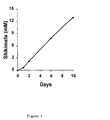
- FIGURE 1 is a graph showing the accumulation of shikimate in glyphosate-treated corn plants. The treated plants were spayed with 750 g/Ha rate of glyphosate and the plants were harvested on different days. Extraction of the plants and spectrophotometric analysis thereof is as described in Example 1.
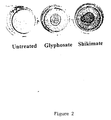
- FIGURE 2 is a depiction of the growth of AB2826 strain of E. coli on M9 agar medium containing extracts from untreated or glyphosate-treated plants six (6) days after treatment. Pure shikimate (1mM) was used as a positive control.
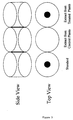
- FIGURE 3 is a depiction of a typical apparatus to be utilized in the conduct of the assays of the present invention. This simple system can contain three wells containing M9 agar medium. In the center of these wells is placed a 10 µl aliquot of 1:1000 dilution of an appropriate strain of E. coli cells grown overnight. These wells can be stored at 4°C until use. A standard solution of the metabolite (e.g. shikimate) will be applied to one well as a positive control and extracts from an untreated and a treated plant will be applied to the other two wells. The plate can then be placed at room temperature or at 37°C for 24 hours to allow bacterial growth. Growth of cells in the well containing extract from a treated plant will indicate the presence of a metabolite that complements the growth of E. coli.
-
- The present invention thus relates to methods of determining damage in plants, insects or pathogens resultant from exposure to a suspected pesticidal agent which comprise the preparation of an extract of a portion of the plant; inoculation of an enzyme-deficient microbial culture with said extract; incubation of the culture for a standard period of time to allow growth if such growth is possible and assessment of the amount of growth of the microbe either by comparison to a control or standard in order to assess the type and degree of damage from pesticidal exposure.
- In a preferred embodiment, the enzyme-deficient microbial culture is selected from the group consisting of the AB2826 strain of Escherichia coli (aroB351) obtained from A.J. Pittard, University of Melbourne, Victoria, Australia. In the typical utilization of the invention, this method may be repeated with different enzyme-deficient microbial cultures in order to identify the general type of pesticide to which the plant has been exposed. In a particularly preferred embodiment, the method of the present invention can be used to identify the herbicide(s) to which plant material is susceptible, or to which it has been exposed.
- A variety of cultures can be included on a single culture apparatus in order to enable multiple tests using a single extract, or if desirable, the microbial cultures can each individually be present on a single culture apparatus.
- A further embodiment of the present is a method of identifying plant material which is resistant to the effect of a particular class of herbicidal/pesticidal agents which comprises the selection of an enzyme-deficient microbial strain which correlates with the type of enzymatic inhibition exhibited by said class of herbicidal/pesticidal agents; preparation of an extract of a portion of said plant material; inoculation of a culture of said enzyme-deficient microbial strain with said extract; incubation of the culture for a standard period of time; and assessment of the amount of growth of the microbe either by comparison to said control or standard in order to assess the presence and degree of resistance of the plant material to damage from exposure of said class of pesticidal/herbicidal agents. In another preferred embodiment, the class of pesticidal/herbicidal agents is an imidazolinone or sulfonylurea herbicide and the enzyme-deficient microbial strain is deficient in threonine deaminase. Another preferred embodiment is the method wherein the pesticidal/herbicidal agent is glyphosate and the enzyme-deficient microbial strain in deficient in EPSP synthase.
- A preferred microbial stain for use in this embodiment is the enzyme-deficient AB2826 strain of Escherichia coli (aroB351), obtained from A.J. Pittard, University of Melbourne, Victoria, Australia, deposited with the American Type Culture Collection (ATCC) on March 16, 1999, and assigned Accession Number ATCC 202209.
- Still another embodiment of the present invention involves a method for determining the mode of action of a pesticidal/herbicidal agent which comprises application of the pesticidal/herbicidal agent to plant material wherein the pesticidal/herbicidal activity is observed; preparation of an extract of a portion of said plant material; inoculation of a culture of an enzyme-deficient microbial strain with said extract; incubation of the culture for a standard period of time to allow for growth;
observation of the effects of said extract on said culture in order to determine if the activity of pesticidal/herbicidal is consistent with the enzymatic deficiency of said microbial strain and detection of growth of the culture indicates the presence of pesticidal/herbicidal activity via the inhibition of the enzyme which is deficient in the culture. Typically this method can utilize an enzyme-deficient microbial strain which is deficient in acetohydroxyacid synthase or EPSP synthase. - A still further embodiment of the present invention comprises a method for monitoring the application of a pesticidal/herbicidal agent to an agricultural crop to prevent damage to said crop which comprises sequential and repeated use of the method of the aforesaid methods.
- The present invention also includes test kits for assessing and/or quantifying the amount of herbicidal/pesticidal damage to an agricultural crop for use in the various described methods of the present invention. These test kits include one or more enzyme-deficient microbial cultures selected for correlation to the ability of a particular class of pesticidal/herbicidal agents via enzymatic inhibition in plant material; other reagents and equipment, such as those necessary for the preparation of an extract of the plant material; and directions for use of the kit.
In preferred embodiments, these kits can include an enzyme-deficient microbial strain which is deficient in acetohydroxyacid synthase or EPSP synthase. Such kits can find particular utility for the identification of exposure of plant material to imidazolinone or sulfonylurea-type enzymatic inhibition. - Thus, the present invention includes an assay, or combination of assays, which comprise one or more culture mediums containing an enzyme-deficient microbial strain. By adding an extract of a plant treated with a herbicide/pesticide to the culture medium containing the particular enzyme-deficient microbial strain, the enzymatic damage to plants by a particular herbicidal/pesticidal agent can be assessed and quantified. Suitable culture media are dependent upon the particular microbial strain, and such media are well-known in the art. Typical culture media include, but are not limited to M9 agar medium, NZM medium (Sambrook et al. Molecular Cloning, A Laboratory Manual, Cold Spring Harbor Laboratory Press, 1989); SMM and SC medium (Adams et al., Methods in Yeast Genetics: A Labroratory Course Manual, 1998).
The various enzyme-deficient microbial strains utilized in the assays of the present invention are well-known in the art. Particular strains of Escherichia coli having utility in the present invention are those such as - ilv- (MI262) strain: CGSC # 5769 (Genetic Stock Center, Dept. of Biology, Yale University, New Haven, Ct.); lacks acetohydroxyacid synthase activity.
- proB- strain CGSC # 4513; lacks γ-glutamyl kinase activity;
- Δ[his-gnd] (WB353) strain: Nagai et al., Structural and functional conservation of histidinol dehydrogenase between plants and microbes, Proc Natl Acad Sci, 88, 4133-4137, 1991; lacks histidinol dehydrogenase activity;
- ilv- (MF2000) strain: M. Freundlich, State University of New York, Stony Brook, New York; lacks acetohydroxyacid synthase activity;
- gln A- (A 318) strain: Miao et al. Ammonia regulated expression of a soybean gene encoding cytoplasmic glutamine synthetase in transgenic Lotus corniculatus. The Plant Cell, 3, 11-22, 1991; lacks glutamine synthetase activity;
- ΔaroG ΔaroF (HE628) strain: Garner and Herrmann, Operator mutations of the Escherichia coli aroF gene. J Biol Chem, 260, 3820-3825, 1985; lacks DAHP synthase activity;
- ribB- and ribA strain- : Katzenmeir, Klonierung und molekularbiologische Charakterisierung des Gens fur GTP-cyclohydrolase I aus Escherichia coli, Thesis , Technical University of Munich, 1991; lacks GTP cyclohydrolase II and dihydroxy butanone phosphate synthase activity; and
- ilvA- (CU5125) strain; Pledger and Umbarger, Isoleucine and valine metabolism in Escherichia coli, J Bacteriol, 114, 183-194, 1973; lacks threonine deaminase activity. As stated earlier, the kits of the present invention may be used to measure the pesticidal/herbicidal damage in plant material. Each kit will contain a pre-inoculated culture plate/dish containing a suitable growth media and an area with one or more of the microbial strains, along with solvents and glassware or plasticware to perform the extraction of the plant material and procure an extract for application to the culture/plate dish, hydrochloric acid, acetic acid or buffered solutions with a pH that will minimize the enzymatic activity on the metabolites.
-
- Typically, the kit may also contain various apparatus/implements for facilitating the preparation and application of the extracts to the culture plate/dish, such as pipettes and applicators, along with lids/covers to prevent contamination of the culture plate/dish after the extract has been applied thereto. Suitable directions, along with standards, are also typically included, to facilitate the interpretation of the results of the incubation.
- The actual apparatus utilized in the performance of the assays of the present invention may, of course, vary according to the particular situation for which the assay is performed. Thus, an assay to be performed in the field may utilize more portable types of supports for the cultures and be of a disposable nature, while assays designed for laboratory use of the present methods will typically utilize glassware and/or apparatus which can be reused and/or recycled.
- The system is very simple that uses any standard plate and standard media that is used in routine microbiological procedures. There is no special requirement for individual strains other than the metabolic lesion which is already given in the references for each strain.
- A typical system is shown in Figure 3 which contains three wells containing M9 agar medium. In the center of these wells, a 10 µl aliquot of 1:1000 dilution of an appropriate strain of E. coli cells grown overnight is placed. These wells can be stored at 4°C till use. A standard solution of the metabolite (e.g. shikimate) will be applied to one well as a positive control and extracts from an untreated and a treated plant will be applied to the other two wells. The plate can then be placed at room temperature or at 37°C for 24 hours to allow bacterial growth. Growth of cells in the well containing extract from a treated plant will indicate the presence of a metabolite that complements the growth of E. coli.
- In accordance with the testing techniques discussed above, one class of such kits will contain at least one culture medium containing the particular microbial strain for use in the method of the present invention. More specifically, a preferred kit may contain, for instance, the AB2826 strain of E. coli (aroB351) which can be used to detect the use of glyphosate on plant material.
- In a preferred embodiment, a sample of plant material is tested with multiple numbers of strains to identify the possible herbicidal/pesticidal agent to which the plant material has been exposed.
- The following table illustrates the various strains which can be utilized to detect various type of herbicides.
STRAIN HERBICIDE DETECTED AB 2826 Glyphosate HE 628 Glyphosate MI262 Hoe 704 MI262 IpOHA (N-hydroxy-N-isopropyloxamate) MF2000 Hoe 704 MF2000 IpOHA (N-hydroxy-N-isopropyloxamate) CU5125 Imidazolinone herbicides CU5125 Sulfonylurea herbicides CU5125 Triazolopyrimidine Sulfonamide herbicides CU5125 Pyrithiobac herbicides - The present invention will be better understood by reference to the following Examples, which are illustrative of the invention, and are not intended as limiting of the invention. Naturally the foregoing formulations are illustrative and may vary within the skill of the art, and are presented herein in fulfillment of the duty to present the best mode for the practice of the invention.
-
- Plant Material. Corn plants were grown in an artificial potting mixture in a greenhouse or outside in the field. Plants of different ages were used for the various experiments as described hereinbelow. The actively growing portion of the plant, i.e. the bottom portion of the corn shoot, was used to prepare the extracts.
- Microbial strain. AB2826 strain of Escherichia coli(aroB351) was obtained from Prof. A. J. Pittard, University of Melbourne, Parkville Victoria, Australia). The cells were maintained in M9 medium in the presence of 1 mM shikimate.
- Herbicide Treatment and Plant Extraction. Corn seedlings were sprayed with 750 g/ha rate of a commercial formulation of glyphosate. Plant material was ground in liquid nitrogen and then further ground in 0.25 N HCl in 1:1 (weight of tissue/volume of extraction buffer) ratio. The extract was centrifuged at 25,000 g for 15 minutes. The supernatant was collected and directly used for the spectrophotometric assay or sterilized by passing through a 0.22µ syringe filter and used for the assay using E. coli.
- Spectrophotometric Determination of Shikimate. Shikimate was determined according to a modification of the method of Gaitonde and Gordon, "A microchemical method for the detection and determination of shikimic acid" J. Biol. Chem., 230:1043-1050, 1958. An aliquot of the test sample (10-50 µ1) was mixed with 0.5 ml of a 1 % solution of periodic acid to oxidize shikimic acid. After three (3) hours, 0.5 ml of 1N NaOH was added, mixed, and 0.3 ml of 0.1 M glycine was immediately added. The solution was thoroughly mixed and the optical density at 380 nm was immediately measured.
- Determination of Shikimate Using E. Coli. The AB2826 strain of E. coli was grown overnight in M63 medium containing 1 mM shikimate. The cells were collected by centrifugation and the medium was discarded. The cells were washed twice with distilled water by vortexing and centrifugation. The cells were then diluted 1000-fold from their original density after overnight culture. An aliquot of these cells (10µl) was placed on an agar plate containing M9 medium and different amounts of extract from untreated and treated plants.
-
- Samples from untreated and glyphosate treated plants were harvested at different times and analyzed for the levels of shikimate in them. The untreated plants had negligible amounts of shikimate in them as shown in the graph of Figure 1. In contrast, the concentration of shikimate increased with increasing time following glyphosate treatment.
- The AB2826 strain of E. Coli did not grow on M9 agar medium containing extracts prepared from untreated plants. Consistent with the spectrophotometric assay, this result indicates that the untreated plants have extremely low levels of shikimate. In contrast, as low as 1 µl of extract prepared from glyphosate treated plants allowed growth of the AB2826 strain of E. coli. This result thus confirms the results from the spectrophotometric assay that glyphosate treated plants contain high levels of shikimate which can be utilized as an indicator of glyphosate exposure.
- Using particular strains of E. coli or other microbes that are deficient in different enzymes of different pathways, various metabolites which are the result of enzymatic inhibition can be similarly detected. For instance, corn which is glyphosate-resistant or glyphosate-tolerant will not support the growth of AB2826 strain of E. coli, and thus show low levels of shikimate The use of a culture assay avoids the necessary spectrophotometric assay of shikimate for this determination.
- To determine the resistance of a particular agricultural crop to a particular type of herbicide which is known to inhibit a certain enzyme, the extract of the plant material can be assayed to determine if it allows the growth of the corresponding enzyme-deficient microbe. If the microbial culture shows growth, then the crop will be sensitive to a herbicide/pesticide with the particular enzyme-inhibiting properties.
- Further, the particular type of pesticide to which plant material has been exposed can thus be determined by placing a group of enzyme-deficient strains on a single culture plate, and incubating them with an extract of the plant material under test. By knowing which type of pesticide will allow growth of a particular strain (by prior testing of known pesticides), the nature and/or identity of an unknown pesticide to which the plant was exposed can be determined.
- This invention may be embodied in other forms or carried out in other ways without departing from the spirit or essential characteristics thereof. The present disclosure is therefore to be considered as in all respects illustrative and not restrictive, the scope of the invention being indicated by the appended Claims, and all changes which come within the meaning and range of equivalency are intended to be embraced therein
Representative extraction solvents include, but are not limited to, diluted solutions of hydrochloric acid, typically buffered, hydrochloric acid, acetic acid or buffered solutions with a pH that will minimize the enzymatic activity on the metabolites.
Claims (17)
- A method of determining damage in plants, insects or pathogens resultant from exposure to a suspected pesticidal agent which comprises:a) preparing an extract of a portion of the plant, insect or pathogen;b) inoculating an enzyme-deficient microbial culture with said extract;c) allowing the culture to incubate for a standard period of time;d) incubating a control or standard enzyme-deficient microbial culture; ande) assessing the amount of growth of the microbe either by comparison to said control or standard in order to assess the type and degree of damage from pesticidal exposure.
- The method according to Claim 1 wherein the enzyme-deficient microbial culture is an E. coli strain selected from the group consisting of the ilv-(MI262) strain: CGSC #5769; pro B- strain CGSC# 4513; Δ[his-gnd] (WB353) strain; ilv-(MF2000) strain; gln A- (A 318) strain; ΔaroG ΔaroF (HE628) strain; rib B- and ribA strain; ilvA- (CU5125) strain.
- The method according to Claim 1 wherein the method is repeated with two or more different enzyme-deficient microbial cultures in order to identify the general type of pesticide to which the plant has been exposed.
- The method according to Claim 1 wherein the method includes a variety of cultures on a single culture apparatus in order to enable multiple tests.
- A method of identifying plant material which is resistant to the effect of a particular class of pesticidal agents which comprises:a) selecting an enzyme-deficient microbial strain which correlates with the type of type of enzymatic inhibition exhibited by said class of pesticidal agents;b) preparing an extract of a portion of said plant material;c) inoculating a culture of said enzyme-deficient microbial strain with said extract;d) allowing the culture to incubate for a standard period of time;e) incubating a control or standard enzyme-deficient microbial culture; andf) assessing the amount of growth of the microbe either by comparison to said control or standard in order to assess the presence and degree of resistance of the plant material to damage from exposure said class of pesticidal/herbicidal agents.
- A method according to Claim 5 wherein the class of pesticidal agents is an imidazolinone or sulfonylurea herbicide and the enzyme-deficient microbial strain is deficient in threonine deaminase.
- A method according to Claim 6 wherein the enzyme-deficient strain of E. coli is CU5125.
- A method according to Claim 5 wherein the pesticidal agent is glyphosate and the enzyme-deficient microbial strain is an E. coli strain in deficient in EPSP synthase.
- A method according to Claim 8 wherein the enzyme-deficient strain is the AB2826 strain of Escherichia coli (aroB351), deposited with the American Type Culture Collection (ATCC) on March 16, 1999, and assigned Accession Number 202209.
- A method for determining the mode of action of a pesticidal agent which comprises:observing the effects of said extract on said culture in order to determine if the activity of pesticidal is consistent with the enzymatic deficiency of said microbial strain and detection of growth of the culture indicates the presence of pesticidal/herbicidal activity via the inhibition of the enzyme which is deficient in said culture.a) applying said pesticidal agent to plant, insect or pathogen material wherein the pesticidal activity is observed;b) preparing an extract of a growing portion of said plant material;c) inoculating a culture of an enzyme-deficient microbial strain with said extract;d) allowing the culture to incubate for a standard period of time;
- A method according to Claim 10 wherein the enzyme-deficient microbial strain is an E. coli strain deficient in threonine deaminase.
- A method according to Claim 10 wherein the enzyme deficient microbial strain is an E. coli strain deficient in EPSP synthase.
- A method for monitoring the application of a pesticidal agent to an agricultural crop to prevent damage to said crop which comprises sequential and repeated use of the method of Claim 1.
- A test kit for assessing and/or quantifying the amount of pesticidal damage to an agricultural crop which comprises;a) an enzyme-deficient microbial culture selected for correlation to the ability of a particular class of pesticidal agents via enzymatic inhibition in plant material;b) other reagents; andc) directions for use of the kit.
- The test kit of Claim 14, wherein the enzyme-deficient microbial strain is an E. coli strain deficient in threonine deaminase.
- The test kit of Claim 14 wherein the enzyme-deficient microbial strain is an E. coli strain deficient in EPSP synthase.
- A test kit of Claim 14 for detection of imidazolinone or sulfonylurea-type enzymatic inhibition.
Applications Claiming Priority (2)
| Application Number | Priority Date | Filing Date | Title |
|---|---|---|---|
| US28747499A | 1999-04-06 | 1999-04-06 | |
| US287474 | 1999-04-06 |
Publications (1)
| Publication Number | Publication Date |
|---|---|
| EP1043402A2 true EP1043402A2 (en) | 2000-10-11 |
Family
ID=23103066
Family Applications (1)
| Application Number | Title | Priority Date | Filing Date |
|---|---|---|---|
| EP20000302765 Withdrawn EP1043402A2 (en) | 1999-04-06 | 2000-03-31 | Assays for the determination of pesticidal damage, resistance, and pesticide mode of action |
Country Status (4)
| Country | Link |
|---|---|
| EP (1) | EP1043402A2 (en) |
| JP (1) | JP2000290116A (en) |
| AU (1) | AU2525100A (en) |
| CA (1) | CA2304424A1 (en) |
-
2000
- 2000-03-30 JP JP2000094191A patent/JP2000290116A/en active Pending
- 2000-03-31 EP EP20000302765 patent/EP1043402A2/en not_active Withdrawn
- 2000-04-04 CA CA 2304424 patent/CA2304424A1/en not_active Abandoned
- 2000-04-04 AU AU25251/00A patent/AU2525100A/en not_active Abandoned
Also Published As
| Publication number | Publication date |
|---|---|
| CA2304424A1 (en) | 2000-10-06 |
| JP2000290116A (en) | 2000-10-17 |
| AU2525100A (en) | 2000-10-12 |
Similar Documents
| Publication | Publication Date | Title |
|---|---|---|
| Barker et al. | Discovery, mode of action, resistance mechanisms, and plan of action for sustainable use of Group 14 herbicides | |
| Ngo et al. | EPSPS gene amplification conferring resistance to glyphosate in windmill grass (Chloris truncata) in Australia | |
| Yu et al. | Distinct non-target site mechanisms endow resistance to glyphosate, ACCase and ALS-inhibiting herbicides in multiple herbicide-resistant Lolium rigidum | |
| Vega et al. | A rapid resazurin-based microtiter assay to evaluate QoI sensitivity for Alternaria alternata isolates and their molecular characterization | |
| Belz et al. | Dose/response relationships in allelopathy research | |
| Kumar et al. | Physiological response of Lemna species to herbicides and its probable use in toxicity testing | |
| Shilo et al. | Mechanism of glyphosate control of Phelipanche aegyptiaca | |
| Ahtiainen et al. | Effects of different plant protection programs on soil microbes | |
| Correa et al. | Glyphosate-resistant and conventional canola (Brassica napus L.) responses to glyphosate and aminomethylphosphonic acid (AMPA) treatment | |
| US20190177774A1 (en) | Molecular reference controls | |
| Brosnan et al. | A biotype of annual bluegrass (Poa annua) in Tennessee is resistant to inhibitors of ALS and photosystem II | |
| Wu et al. | A nondestructive leaf-disk assay for rapid diagnosis of weed resistance to multiple herbicides | |
| Porter et al. | Quantifying acquired thermal tolerance in winter wheat | |
| Zhang et al. | Quantifying herbicide dose–response and resistance in Echinochloa spp. by measuring root length in growth pouches | |
| Kaundun et al. | A Simple In-Season Bioassay for Detecting Glyphosate Resistancein Grass and Broadleaf Weeds Prior to Herbicide Application in theField | |
| Avila et al. | Assessment of acetolactate synthase (ALS) tolerance to imazethapyr in red rice ecotypes (Oryza spp) and imidazolinone tolerant/resistant rice (Oryza sativa) varieties | |
| Letouzé et al. | A pollen test to detect ACCase target‐site resistance within Alopecurus myosuroides populations | |
| Dayan et al. | Clues in the search for new herbicides | |
| Burke et al. | A seedling assay to screen aryloxyphenoxypropionic acid and cyclohexanedione resistance in johnsongrass (Sorghum halepense) | |
| Federico et al. | Phenylurea herbicides induce cytogenetic effects in Chinese hamster cell lines | |
| Lassiter et al. | Yield and physiological response of peanut to glyphosate drift | |
| Upper et al. | Factors that affect spread of Pseudomonas syringae in the phyllosphere | |
| Hoagland et al. | Bioassay and characterization of several Palmer amaranth (Amaranthus palmeri) biotypes with varying tolerances to glyphosate | |
| EP1043402A2 (en) | Assays for the determination of pesticidal damage, resistance, and pesticide mode of action | |
| Tranel et al. | Physiological responses of downy brome (Bromus tectorum) roots to Pseudomonas fluorescens strain D7 phytotoxin |
Legal Events
| Date | Code | Title | Description |
|---|---|---|---|
| PUAI | Public reference made under article 153(3) epc to a published international application that has entered the european phase |
Free format text: ORIGINAL CODE: 0009012 |
|
| AK | Designated contracting states |
Kind code of ref document: A2 Designated state(s): AT BE CH CY DE DK ES FI FR GB GR IE IT LI LU MC NL PT SE |
|
| AX | Request for extension of the european patent |
Free format text: AL;LT;LV;MK;RO;SI |
|
| RAP1 | Party data changed (applicant data changed or rights of an application transferred) |
Owner name: BASF AKTIENGESELLSCHAFT |
|
| STAA | Information on the status of an ep patent application or granted ep patent |
Free format text: STATUS: THE APPLICATION IS DEEMED TO BE WITHDRAWN |
|
| 18D | Application deemed to be withdrawn |
Effective date: 20021001 |