EP1041960B1 - Use of polyanionic and polyanionically-derivatised natural polysaccharides for inhibiting alkaline phosphatase - Google Patents
Use of polyanionic and polyanionically-derivatised natural polysaccharides for inhibiting alkaline phosphatase Download PDFInfo
- Publication number
- EP1041960B1 EP1041960B1 EP98965242A EP98965242A EP1041960B1 EP 1041960 B1 EP1041960 B1 EP 1041960B1 EP 98965242 A EP98965242 A EP 98965242A EP 98965242 A EP98965242 A EP 98965242A EP 1041960 B1 EP1041960 B1 EP 1041960B1
- Authority
- EP
- European Patent Office
- Prior art keywords
- derivatised
- polyanionic
- polyanionically
- use according
- formula
- Prior art date
- Legal status (The legal status is an assumption and is not a legal conclusion. Google has not performed a legal analysis and makes no representation as to the accuracy of the status listed.)
- Expired - Lifetime
Links
Classifications
-
- A—HUMAN NECESSITIES
- A61—MEDICAL OR VETERINARY SCIENCE; HYGIENE
- A61Q—SPECIFIC USE OF COSMETICS OR SIMILAR TOILETRY PREPARATIONS
- A61Q11/00—Preparations for care of the teeth, of the oral cavity or of dentures; Dentifrices, e.g. toothpastes; Mouth rinses
-
- A—HUMAN NECESSITIES
- A61—MEDICAL OR VETERINARY SCIENCE; HYGIENE
- A61K—PREPARATIONS FOR MEDICAL, DENTAL OR TOILETRY PURPOSES
- A61K8/00—Cosmetics or similar toiletry preparations
- A61K8/18—Cosmetics or similar toiletry preparations characterised by the composition
- A61K8/30—Cosmetics or similar toiletry preparations characterised by the composition containing organic compounds
- A61K8/33—Cosmetics or similar toiletry preparations characterised by the composition containing organic compounds containing oxygen
- A61K8/34—Alcohols
- A61K8/347—Phenols
-
- A—HUMAN NECESSITIES
- A61—MEDICAL OR VETERINARY SCIENCE; HYGIENE
- A61K—PREPARATIONS FOR MEDICAL, DENTAL OR TOILETRY PURPOSES
- A61K8/00—Cosmetics or similar toiletry preparations
- A61K8/18—Cosmetics or similar toiletry preparations characterised by the composition
- A61K8/72—Cosmetics or similar toiletry preparations characterised by the composition containing organic macromolecular compounds
- A61K8/73—Polysaccharides
- A61K8/736—Chitin; Chitosan; Derivatives thereof
-
- A—HUMAN NECESSITIES
- A61—MEDICAL OR VETERINARY SCIENCE; HYGIENE
- A61P—SPECIFIC THERAPEUTIC ACTIVITY OF CHEMICAL COMPOUNDS OR MEDICINAL PREPARATIONS
- A61P1/00—Drugs for disorders of the alimentary tract or the digestive system
- A61P1/02—Stomatological preparations, e.g. drugs for caries, aphtae, periodontitis
-
- A—HUMAN NECESSITIES
- A61—MEDICAL OR VETERINARY SCIENCE; HYGIENE
- A61P—SPECIFIC THERAPEUTIC ACTIVITY OF CHEMICAL COMPOUNDS OR MEDICINAL PREPARATIONS
- A61P43/00—Drugs for specific purposes, not provided for in groups A61P1/00-A61P41/00
-
- A—HUMAN NECESSITIES
- A61—MEDICAL OR VETERINARY SCIENCE; HYGIENE
- A61K—PREPARATIONS FOR MEDICAL, DENTAL OR TOILETRY PURPOSES
- A61K2800/00—Properties of cosmetic compositions or active ingredients thereof or formulation aids used therein and process related aspects
- A61K2800/74—Biological properties of particular ingredients
- A61K2800/78—Enzyme modulators, e.g. Enzyme agonists
- A61K2800/782—Enzyme inhibitors; Enzyme antagonists
Definitions
- the present invention relates to the use of polyanionic and polyanionically-derivatised natural polysaccharides or non-derivatised natural polysaccharides for inhibiting alkaline phosphatase as well as to oral preparations comprising these compounds.
- Tartar is understood to mean deposits which form at the margin of the gum on the surface of the teeth. These deposits consist both of inorganic material - in particular calcium hydrogenoxylapatite (HAP) - and of organic components, such as epithelial cells, food particles, saliva sediments and different kinds of microorganisms.
- HAP calcium hydrogenoxylapatite
- This whitish, yellowish or often blotchy tartar is undesirable not only because of its appearance but mainly because it gives constant occasion to irritations of the oral mucosa and to the development of gingivitis and diseases of the theeth and teeth socket. Such deposits are prevented on the one hand by daily dental care and by the concomitant microdecalcification. In addition, it is usually necessary to have the dentist remove tartar mechanically from time to time.
- Safe and effective agents for inhibiting tartar formation are, for example, the water-soluble, molecularly dehydrated polyphosphates known as sequestrants and chelating agents, such as hexametaphosphates, tripolyphosphates and pyrophosphates, which prevent the formation of HAP (cf. US-A-4,515,722).
- sequestrants and chelating agents such as hexametaphosphates, tripolyphosphates and pyrophosphates, which prevent the formation of HAP (cf. US-A-4,515,722).
- the effect of these compounds is significantly reduced by the saliva enzymes present in the mouth and throat area, such phosphate compounds being hydrolysed in particular by alkaline phosphatases.
- US-A-5,094,844 proposes to reduce the deactivating effect of alkaline phosphatase, i.e. the hydrolysis of the linear molecularly dehydrated polyphosphates, by addition of an anionic polyvinyl phosphonate.
- EP-A-0803243 describes an oral composition comprising 0-2% of carageenan, 0-10% of pyrophosphate salts as well as Triclosan (TM).
- TM Triclosan
- WO 97 48372 A discloses a toothpaste containing carageenan and tetrasodium pyrophosphate.
- this invention relates to the use of polyanionic and polyanionically-derivatised natural polysaccharides or non-derivatised natural polysaccharides for inhibiting alkaline phosphatase.
- this invention relates to the use of polyanionic and polyanionically-derivatised natural polysaccharides for inhibiting alkaline phosphatase.
- polyanionic and polyanionically-derivatised natural polysaccharides used are preferably
- Polyanionically-derivatised natural polysaccharides are preferably those compounds which contain phosphate groups, phosphonate groups or methylphosphonate groups, such as
- the polyanionic and polyanionically-derivatised natural polysaccharides used according to this invention preferably have a molecular weight of > 5000.
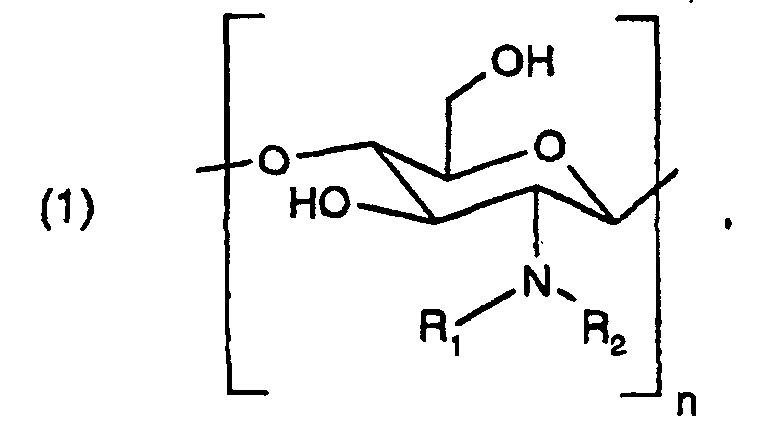
- Preferred phosphochitosans are in particular phosphonomethylated chitosans corresponding to formula wherein
- the non-derivatised natural polysaccharides used according to this invention are preferably glucans. It is preferred to use ⁇ -1,3-glucans corresponding to formula wherein
- the polyanionic and polyanionically-derivatised natural polysaccharides and the non-derivatised natural polysaccharides used according to this invention inhibit the adhesion of microorganisms, in particular of anaerobic microorganisms, on solid surfaces, especially in holes, interspaces, deposits, pockets in the mouth and throat area, and that they thus reduce or inhibit the negative effects of these germs, in particular the formation of plaque and calculus, or dental decay, bad breath (malodor) and deposits on dentures.
- These compounds can also detach the microorganisms from solid surfaces (desorption).
- the buffer capacity of the phosphonomethylated chitosan stabilises the intrabuccal pH and prevents hyperacidity and hence tooth decay.
- the phosphonomethylated chitosans of formulae (1) and (2) and the glucans of formula (3) are compounds which are biocompatible and completely bio-degradable.
- this invention relates to an oral composition, which comprises .
- Component (a) in the novel oral composition is preferably hexametaphosphate, tripolyphosphate, pyrophosphate or mixtures of these compounds.
- the polyphosphates can comprise, for example, 2 to 120 phosphorus atoms and are used in the novel oral composition in amounts from 0.01 to 10 % by weight, preferably from 2 to 5 % by weight, based on the total weight of the composition.
- Pyrophosphate is preferably used as a mixture of tetrapotassium pyrophosphate and tetrasodium pyrophosphate.
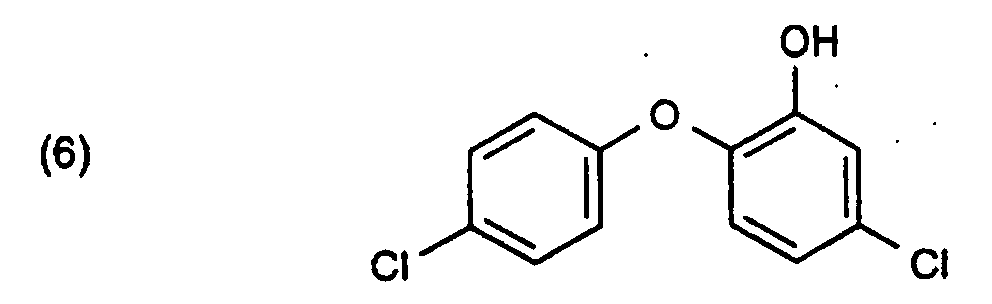
- the novel composition may also contain antimicrobial active substances, for example phenol derivatives, diphenyl compounds, benzyl alcohols, chlorohexidine, C 12 -C 14 alkylbetaine, C 8 -C 18 fatty acid amidoalkylbetaine, amphoteric surfactants, trihalocarbanilides, quaternary ammonium salts and, very particularly, 2-hydroxydiphenyl ethers of formula wherein
- the novel oral composition can also comprise compounds releasing fluoride ions which are effective against caries formation, for example inorganic fluoride salts, such as sodium fluoride, potassium fluoride, ammonium fluoride or calcium fluoride, or organic fluoride salts, for example amine fluorides which are known under the tradename Olafluor. These compounds may be present in the novel composition in amounts of 0.005 to 3 % by weight, depending on solubility and kind of composition.
- inorganic fluoride salts such as sodium fluoride, potassium fluoride, ammonium fluoride or calcium fluoride
- organic fluoride salts for example amine fluorides which are known under the tradename Olafluor.
- the novel oral composition is preferably liquid, for example in the form of a mouth wash or mouth rinse, the composition preferably being a 1:1 to 20:1, preferably a 2:1 to 10:1, mixture of water and alcohol.
- the pH of the novel oral composition is 4.5 to 9, preferably 5.5 to 8.
- the novel oral composition can also be in solid or pasty form, for example in the form of tooth powder, tooth tablet, toothpaste, tooth gel or tooth cream.
- a solid or pasty composition usually comprises an orally acceptable, water-insoluble polishing material.
- polishing materials are water-insoluble metaphosphates, tricalcium phosphates, dehydrated dicalcium phosphates, calcium pyrophosphates, aluminium silicates, zirconium silicates, bentonite, or mixtures of these compounds.
- the polishing material is usually present in the solid or pasty composition in amounts of 10 to 90 % by weight, preferably of 10 to 75 % by weight.
- the novel oral composition can also contain further materials, for example whitening agents, preservatives, silicones, chlorophyll compounds, other agents for the prevention of bacterial plaque, urea, diammonium phosphates, and mixtures thereof.
- These adjuvants are present in the novel compositions in such concentrations that the positive properties of the composition are not affected.
- novel composition may contain flavouring and sweetening agents, for example peppermint oil, eucalyptus, marjoram, cinnamon, saccharin and the like.
- flavouring and sweetening agents for example peppermint oil, eucalyptus, marjoram, cinnamon, saccharin and the like.
- the novel oral composition can be incorporated into lozenges, chewing gum or other products, for example by being stirred into a warm gum material or by coating the exterior surfaces of a chewing gum.
- alkaline phosphatase The activity of alkaline phosphatase is measured using the kinetic colour test for clinical-chemical analytical systems (Olympus System Reagents 800, MIT Serice Inc.; San Diego CA).
- each of the enzyme solution A 100 ⁇ l each of the enzyme solution A are mixed with 900 ⁇ l of the dilutions of B or C.
- the activity of the enzyme is determined spectrophotometrically via its ability of degrading the slightly coloured p-nitrophenylphosphate to the intensely coloured p-nitrophenol (see Table 1). Defined inhibitory concentration [mg/l] Alk.
- phosphatase activity [units] phosphonomethylated chitosan Reference [units] 4536 205 907.2 104 453.6 39 90.72 15.5 45.36 23 9.072 41.5 4.536 73.5 0.9072 302 0.4536 302.5 0.09072 381.5 blind 1 reference ⁇ 325.5
- This mouth wash is excellently suitable for prophylaxis against bacterial plaque.
- Example 4 Measurement of the adsorption and desorption of microorganisms
- S. mutans (ZIB6008); S. mitis (KL-stab.); S. anguinosus (ZIB6006) and S. sanguis (ZIB6010) are plated out anaerobically on BA plates and incubated. One colony each is allowed to grow to a density of about 0.5 OD 660 in Todd-Hewitt broth as stock solution.
- HA Macro-Prep Ceramic Hydroxylapatite, 80micron, of BioRad
- 50mg of hydroxylapatite pearls are washed once with 1 ml of sterile H 2 O and three times with 1 ml of absorption buffer sterilised by filtration (5mM KCL, 1mM CCl 2 ; 0.1mM MgCl 2 ; 1mM K 2 HPO 4 , pH 7.2) (cf. Berry & Siragusa (1997); Appl. Environ. Microbiol. 63 , 4069-4074).
- 2ml of the bacterial solution are centrifuged (10,000 rpm, 5 min) and washed twice with adsorption buffer and are then resuspended in 1ml of adsorption buffer containing different concentrations of test substance or no test substance.
- This solution is combined with the hydroxylapatite pearls suspended in 1 ml of adsorption buffer and incubated, with slight shaking, for 30 min at 37°C. After the HA pearls have sedimented, the supernatant is removed. The HA pearls are dissolved in 1.6 ml of 0.5 N HCl.
- the optical density (OD 660 ) of this solution is determined and is placed in relation to the control containing no test substance prepared for each dilution series (control: 100% adsorption).
- S. mutans (ZIB6008); S. mitis (KL-stab.); S. anguinosus (ZIB6006) and S. sanguis (ZIB6010) are plated out anaerobically on BA plates and incubated. One colony each is allowed to grow to a density of about 0.5 OD 660 in Todd-Hewitt broth as stock solution.
- hydroxylapatite pearls (HA: Macro-Prep Ceramic Hydroxylapatite, 80micron, of BioRad) are washed once with 1 ml of sterile H 2 O and three times with 1 ml of absorption buffer sterilised by filtration (5mM KCl, 1mM CCl 2 ; 0.1 mM MgCl 2 ; 1mM K 2 HPO 4 , pH 7.2) (cf. Berry & Siragusa (1997); Appl. Environ. Microbiol. 63 , 4069-4074).
- 2 ml of the bacterial solution are centrifuged (10,000 rpm, 5 min) and washed twice with adsorption buffer and are then resuspended in 1 ml of adsorption buffer.
- This solution is combined with the hydroxylapatite pearls suspended in 1ml of adsorption buffer and incubated, with slight shaking, for 30 min at 37°C. After the HA pearls have sedimented, the supernatant is removed. The HA pearls are washed once with adsorption buffer and are then incubated, with slight shaking, for 30 min at 37°C with 1ml of adsorption buffer containing different concentrations of the test substance.
- the optical density (OD 660 ) of this solution is determined and is placed in relation to the control containing no test substance prepared for each dilution series (control: 0% desorption).
Landscapes
- Health & Medical Sciences (AREA)
- Life Sciences & Earth Sciences (AREA)
- Veterinary Medicine (AREA)
- Public Health (AREA)
- General Health & Medical Sciences (AREA)
- Animal Behavior & Ethology (AREA)
- Birds (AREA)
- Epidemiology (AREA)
- Medicinal Chemistry (AREA)
- Pharmacology & Pharmacy (AREA)
- Nuclear Medicine, Radiotherapy & Molecular Imaging (AREA)
- General Chemical & Material Sciences (AREA)
- Chemical Kinetics & Catalysis (AREA)
- Chemical & Material Sciences (AREA)
- Bioinformatics & Cheminformatics (AREA)
- Engineering & Computer Science (AREA)
- Organic Chemistry (AREA)
- Emergency Medicine (AREA)
- Oral & Maxillofacial Surgery (AREA)
- Cosmetics (AREA)
- Polysaccharides And Polysaccharide Derivatives (AREA)
Description
- mucopolysaccharides and other polyanionic natural polysaccharides, such as hyaluronic acid or carageenan,
- polyanionic derivatives, for example sulfates, methylcarboxylates, phosphates etc. of natural, nonanionic polysaccharides, such as dextrans, xanthans, glucans.
- chitin derivatives, for example sulfochitins, carboxymethylchitins, phosphochitins or, in particular,
- chitosan derivatives, for example sulfochitosans, carboxymethylchitosans or, very particularly, phosphochitosans.

- R1
- is hydrogen or a radical of formula
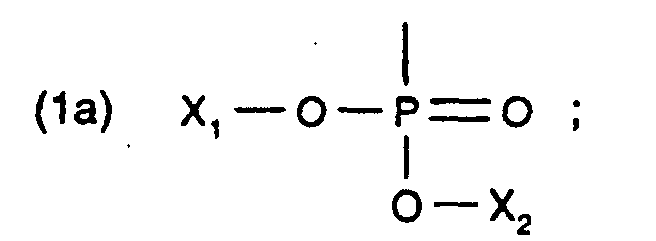
- R2
- is a radical of formula (1a);
- X1 and X2
- are each independently of the other hydrogen, C1-C5alkyl or an alkali ion or ammonium ion; and
- n
- is 20 to 4000.
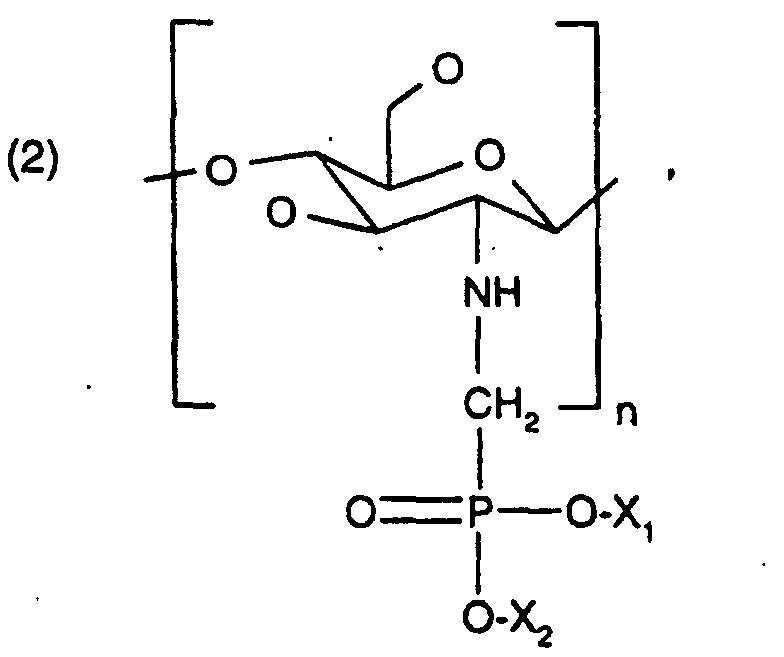
- X1 and X2
- are as defined for formula (1).
- X1 and X2
- are each independently of the other alkali metal, and
- n
- is 20 to 1000.
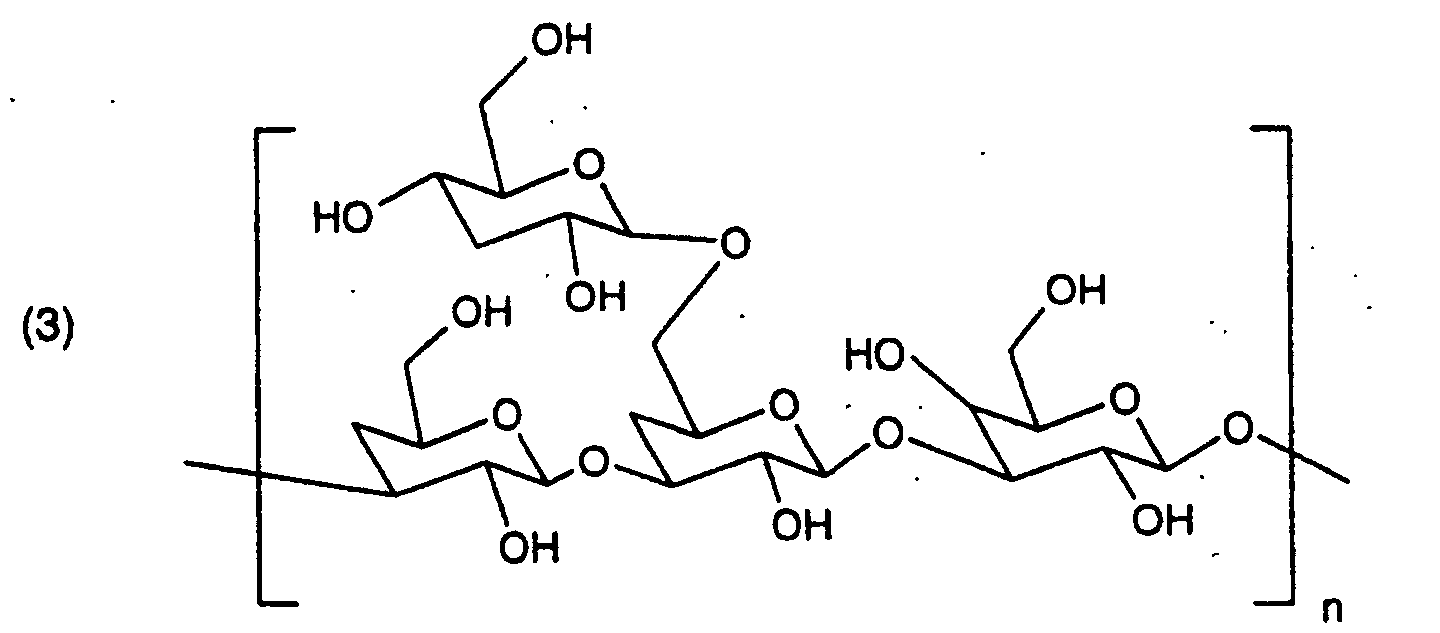
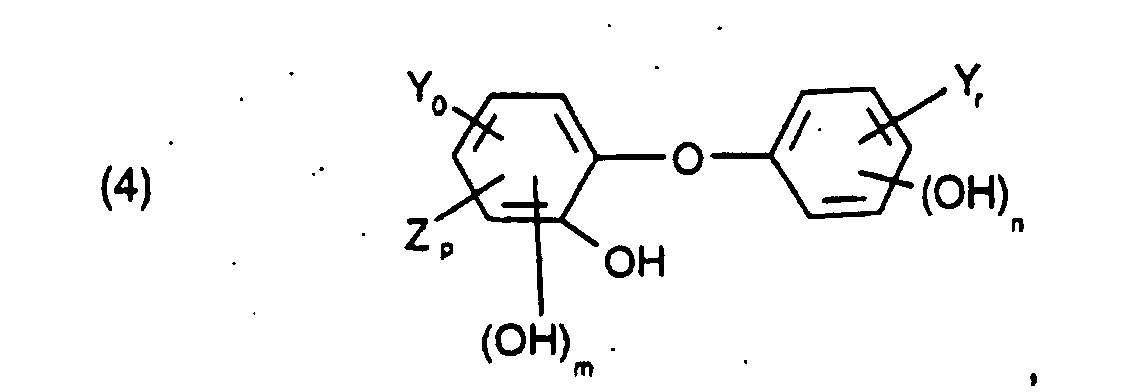
- Y
- is chloro or bromo,
- Z
- is SO2H, NO2 or C1-C4alkyl,
- r
- is 0 to 3,
- o
- is 0 to 3,
- p
- is 0 or 1,
- m
- is 0 or 1, and
- n
- is 0 or 1.

| Defined inhibitory concentration [mg/l] | Alk. phosphatase activity [units] phosphonomethylated chitosan | Reference [units] |
| 4536 | 205 | |
| 907.2 | 104 | |
| 453.6 | 39 | |
| 90.72 | 15.5 | |
| 45.36 | 23 | |
| 9.072 | 41.5 | |
| 4.536 | 73.5 | |
| 0.9072 | 302 | |
| 0.4536 | 302.5 | |
| 0.09072 | 381.5 | |
| blind | 1 | |
| reference | ― | 325.5 |
| Ingredients | % by weight |
| Distilled water | ad 100 |
| D-glucitol | 40.0 |
| Zeodent 113 (TM) | 20.0 |
| glycerol | 20.0 |
| tetrasodium pyrophosphate | 12.0 |
| disodium pyrophosphate | 3.40 |
| sodium lauryl sulfate | 1.37 |
| aromatics | 1.35 |
| PEG-6 | 1.33 |
| sodium carboxymethylcellulose | 1.00 |
| sodium fluoride | 0.50 |
| acrylic acid homopolymer | 0.20 |
| saccharin sodium | 0.20 |
| titanium dioxide | 0.16 |
| P-chitosan | 0.03 |
| FD&C Blau CI 42090 (No.1, 1% sol). (TM) | 0.03 |
| Ingredients | Percent by weight |
| Distilled water | ad 100 |
| ethanol | 10.00 |
| glycerol | 10.00 |
| PEO-PPO-PEO block polymer | 2.00 |
| tetrasodium pyrophosphate | 1.50 |
| aromatics | 1.35 |
| disodium pyrophosphate | 0.50 |
| sodium fluoride | 0.50 |
| saccharin sodium | 0.3 |
| P-chitosan | 0.02 |
| In vitro inhibition of the adhesion of microorganisms essential for plaque and tartar formation | |||
| Microorganism | P-chitosan [%] | Inhibition+/-[%] | Average error |
| S. mutans | 0.2 | 76.0 | +/- 5.26 |
| 0.02 | 38.8 | +/- 7.16 | |
| 0.002 | 27.0 | +/- 4.29 | |
| 0.0002 | 13.4 | +/- 4.14 | |
| S. mitis | 0.2 | 84.1 | +/- 0.97 |
| 0.02 | 67.8 | +/- 3.37 | |
| 0.002 | 27.4 | +/- 6.43 | |
| 0.0002 | 7.1 | +/- 4.56 | |
| S. sanguis | 0.200 | 85.1 | +/- 0.81 |
| 0.02 | 72.7 | +/- 4.84 | |
| 0.002 | 43.6 | +/- 9.05 | |
| 0.0002 | 35.4 | +/- 10.37 | |
| S. anguinosus | 0.200 % | 74.3% | +/- 3.78 |
| 0.02 % | 43.1% | +/- 10.92 | |
| 0.002% | 24.8% | +/- 9.67 | |
| 0.0002% | 8.5% | +/- 1.44 |
| In vitro desorption of adhering microorganisms essential for plaque and tartar formation | |||
| Microorganism | P-chitosan [%] | Desorption/- [%] | Average error |
| S. mutans | 0.2 | 87.3 | +/- 10.65 |
| 0.02 | 60.2 | +/- 2.93 | |
| 0.002 | 35.9 | +/- 5.98 | |
| 0.0002 | 14.7 | +/- 8.31 | |
| S. mitis | 0.2 | 89.2 | +/- 2.06 |
| 0.02 | 59.4 | +/- 7.70 | |
| 0.002 | 30.8 | +/- 8.21 | |
| 0.0002 | 17.3 | +/- 7.56 |
| In vitro inhibition of the adhesion of microorganisms essential for plaque and tartar formation | |||
| Microorganism | 1-6 1,3-β-Glucan [%] | Desorption+/- [%] | Average error |
| S. mutans | 0.2 | 79.8 | +/- 1.68 |
| 0.02 | 59.3 | +/- 1.53 | |
| 0.002 | 41.0 | +/- 2.53 | |
| 0.0002 | 27.35 | +/- 7.20 | |
| S. mitis | 0.2 | 73.1 | +/- 2.72 |
| 0.02 | 46.7 | +/- 3.67 | |
| 0.002 | 25.6 | +/- 3.09 | |
| 0.0002 | 15.6 | +/- 4.77 |
| In vitro desorption of adhering microorganisms essential for plaque and tartar formation | |||
| Microorganism | 1-6 1,3-β-Glucan [%] | % Desorption | Average error |
| S. mutans | 0.2 | 79.8 | 1.68 |
| 0.02 | 59.3 | 1.53 | |
| 0.002 | 41.0 | 2.53 | |
| 0.0002 | 27.35 | 7.20 | |
| S. mitis | 0.2 | 73.1 | 2.72 |
| 0.02 | 46.7 | 3.67 | |
| 0.002 | 25.6 | 3.09 | |
| 0.0002 | 15.6 | 4.77 |
| In vitro inhibition of the adhesion of microorganisms essential for plaque and tartar formation | |||
| Microorganism | N-dicarboxymethylchitosan [%] | Inhibition+/- [%] | Average error |
| S. mutans | 0.2 | 48.9 | +/- 8.87 |
| 0.02 | 19.1 | +/- 9.82 | |
| 0.002 | 14.6 | +/- 4.60 | |
| 0.0002 | 7.5 | +/- 4.60 | |
| S. mitis | 0.200 | 42.1 | +/- 5.26 |
| 0.02 | 32.8 | +/- 3.38 | |
| 0.002 | 23.43 | +/- 2.30 | |
| 0.0002 | 14.5 | +/- 8.05 |
Claims (17)
- Use of polyanionic and polyanionically-derivatised natural polysaccharides or non-derivatised natural polysaccharides for inhibiting alkaline phosphatase.
- Use of polyanionic and polyanionically-derivatised natural polysaccharides for inhibiting alkaline phosphatase.
- Use according to either claim 1 or claim 2, wherein the natural polyanionic polysaccharides are mucopolysaccharides and other polyanionic polysaccharides.
- Use according to any one of claims 1 to 3, wherein the polyanionic and polyanionically-derivatised natural polysaccharides have a molecular weight of > 5000.
- Use according to either claim 1 or claim 2, wherein the polyanionically-derivatised natural polysaccharides are derived from dextrans, xanthans and glucans.
- Use according to any one of claims 1 to 5, wherein the derivatised natural polysaccharides contain phosphate groups, phosphonate groups or methylphosphonate groups.
- Use according to either claim 1 or claim 2, wherein the natural polysaccharide used is chitin.
- Use according to claim 1, wherein the natural polysaccharide used is chitosan.
- Use according to either claim 1, claim 2 or claim 8, wherein the polyanionically-derivatised polysaccharide used is phosphonomethylated chitosan containing repeating units of formulawherein
- R1
- is hydrogen or a radical of formula

- R2
- is a radical of formula (1 a),
- X1 and X2
- are each independently of the other hydrogen, C1-C5alkyl or an alkali ion or ammonium ion, and
- n
- is 20 to 4000.
- Use according to claim 9, which comprises using phosphonomethylated chitosan of formulawherein

- X1 and X2
- are as defined for formula (1).
- Use according to either claim 9 or claim 10, which comprises using compounds of formula (1) or (2), wherein
- X1 and X2
- are each independently of the other alkali metal, and
- n
- is 20 to 1000.
- Use according to claim 1, wherein the non-derivatised natural polysaccharide used is 1,3-β-glucan.
- An oral composition, which comprises(a) 0.01 to 10 % by weight of at least one linear molecularly dehydrated polyphosphate salt, and(b) 0.0001 to 5 % by weight of a polyanionic natural polysaccharide selected from β-glucan or polyanionically-derivatised natural polysaccharide selected from sulfochitosans, carboxymethylchitosans or, very particularly, phosphochitosans.
- A composition according to claim 13, wherein component (a) is hexametaphosphate, tripolyphosphate, pyrophosphate or a mixture of these compounds.
- A composition according to either claim 13 or claim 14, which additionally comprises as antimicrobial active substance a compound of formulawherein

- Y
- is chloro or bromo,
- Z
- is SO2H, NO2 or C1-C4alkyl,
- r
- is 0 to 3,
- o
- is 0 to 3,
- p
- is 0 or 1,
- m
- is 0 or 1, and
- n
- is 0 or 1.
- Use of the oral composition according to any one of claims 13 to 15 in the preparation of a medicament for the prevention or removal of bacterial plaque.
- Use of the oral composition according to any one of claims 13 to 15 in the preparation of a medicament for the prevention of the adhesion of microorganisms on solid surfaces and for the desorbing of microorganisms on solid surfaces.
Priority Applications (1)
| Application Number | Priority Date | Filing Date | Title |
|---|---|---|---|
| EP98965242A EP1041960B1 (en) | 1997-12-22 | 1998-12-09 | Use of polyanionic and polyanionically-derivatised natural polysaccharides for inhibiting alkaline phosphatase |
Applications Claiming Priority (6)
| Application Number | Priority Date | Filing Date | Title |
|---|---|---|---|
| EP97811012 | 1997-12-22 | ||
| EP97811012 | 1997-12-22 | ||
| EP98810616 | 1998-07-02 | ||
| EP98810616 | 1998-07-02 | ||
| PCT/EP1998/007999 WO1999032073A1 (en) | 1997-12-22 | 1998-12-09 | Use of polyanionic and polyanionically-derivatised natural polysaccharides for inhibiting alkaline phosphatase |
| EP98965242A EP1041960B1 (en) | 1997-12-22 | 1998-12-09 | Use of polyanionic and polyanionically-derivatised natural polysaccharides for inhibiting alkaline phosphatase |
Publications (2)
| Publication Number | Publication Date |
|---|---|
| EP1041960A1 EP1041960A1 (en) | 2000-10-11 |
| EP1041960B1 true EP1041960B1 (en) | 2002-07-17 |
Family
ID=26148115
Family Applications (1)
| Application Number | Title | Priority Date | Filing Date |
|---|---|---|---|
| EP98965242A Expired - Lifetime EP1041960B1 (en) | 1997-12-22 | 1998-12-09 | Use of polyanionic and polyanionically-derivatised natural polysaccharides for inhibiting alkaline phosphatase |
Country Status (7)
| Country | Link |
|---|---|
| US (1) | US6514950B1 (en) |
| EP (1) | EP1041960B1 (en) |
| JP (1) | JP4064627B2 (en) |
| CN (1) | CN1283100A (en) |
| AU (1) | AU2052699A (en) |
| DE (1) | DE69806638T2 (en) |
| WO (1) | WO1999032073A1 (en) |
Families Citing this family (9)
| Publication number | Priority date | Publication date | Assignee | Title |
|---|---|---|---|---|
| DE19911055A1 (en) | 1999-03-12 | 2000-09-21 | Cognis Deutschland Gmbh | Use of surface-active mixtures |
| US20030207945A1 (en) | 2001-12-20 | 2003-11-06 | Harper David Scott | Non-halogenated phenyl substituted phenols, antimicrobial compositions containing the same, and methods of using the same |
| WO2002050008A2 (en) | 2000-12-20 | 2002-06-27 | Warner-Lambert Company Llc | Non-halogenated phenoxy and/or benzyloxy phenols and antimicrobial compositions containing them |
| US7619008B2 (en) * | 2004-11-12 | 2009-11-17 | Kimberly-Clark Worldwide, Inc. | Xylitol for treatment of vaginal infections |
| US20060217443A1 (en) * | 2005-03-28 | 2006-09-28 | Kimberly-Clark Worldwide, Inc. | Method for preventing and/or treating vaginal and vulval infections |
| US7786176B2 (en) * | 2005-07-29 | 2010-08-31 | Kimberly-Clark Worldwide, Inc. | Vaginal treatment composition containing xylitol |
| CN102516413B (en) * | 2011-12-09 | 2014-02-12 | 中国科学院海洋研究所 | A kind of furyl α-amino phosphonate chitosan derivative and preparation method thereof |
| US20150328250A1 (en) * | 2012-12-19 | 2015-11-19 | Hill's Pet Nutrition, Inc. | Animal Food Composition and Method |
| US10239960B2 (en) | 2015-06-10 | 2019-03-26 | Rhodia Operations | Phosphonated polysaccharides and gels and process for making same |
Family Cites Families (11)
| Publication number | Priority date | Publication date | Assignee | Title |
|---|---|---|---|---|
| US4515722A (en) | 1982-03-30 | 1985-05-07 | Merck & Co., Inc. | Phosphatidyl inositol analogs useful as anti-inflammatory/analgesic agents |
| US4512968A (en) | 1982-11-30 | 1985-04-23 | Lion Corporation | Oral compositions |
| US4627977A (en) | 1985-09-13 | 1986-12-09 | Colgate-Palmolive Company | Anticalculus oral composition |
| SE512333C2 (en) | 1989-08-25 | 2000-02-28 | Colgate Palmolive Co | Antibacterial oral composition with plaque- and tartar-limiting action |
| US5094844A (en) | 1990-12-20 | 1992-03-10 | Colgate-Palmolive Company | Anticalculus oral composition |
| US5202111A (en) | 1991-05-09 | 1993-04-13 | Chesebrough-Pond's Usa Co., Division Of Conopco, Inc. | Phosphorylated polyhydroxy compounds for tartar control |
| GB9403153D0 (en) | 1994-02-18 | 1994-04-06 | Ciba Geigy Ag | Cosmetic compositions |
| SE518597C2 (en) | 1994-05-04 | 2002-10-29 | Medicarb Ab | Use of chitosan in combination with a sulfated, negatively charged polysaccharide for the preparation of a dental active oral hygiene composition for the treatment of periodontitis, plaques and / or caries |
| DE59504682D1 (en) | 1994-11-24 | 1999-02-11 | Ciba Geigy Ag | Phosphonomethylated chitosans |
| EP0803243B1 (en) * | 1996-04-24 | 2003-03-19 | Pfizer Inc. | Cyclodextrins and phenolic compounds in dental products |
| US5869029A (en) | 1996-06-21 | 1999-02-09 | Hercules Incorporated | Dispersible water-soluble or water-swellable polymers and process for making toothpastes containing them |
-
1998
- 1998-12-09 DE DE69806638T patent/DE69806638T2/en not_active Expired - Fee Related
- 1998-12-09 US US09/581,876 patent/US6514950B1/en not_active Expired - Fee Related
- 1998-12-09 JP JP2000525069A patent/JP4064627B2/en not_active Expired - Fee Related
- 1998-12-09 AU AU20526/99A patent/AU2052699A/en not_active Abandoned
- 1998-12-09 CN CN98812506A patent/CN1283100A/en active Pending
- 1998-12-09 EP EP98965242A patent/EP1041960B1/en not_active Expired - Lifetime
- 1998-12-09 WO PCT/EP1998/007999 patent/WO1999032073A1/en not_active Ceased
Also Published As
| Publication number | Publication date |
|---|---|
| JP4064627B2 (en) | 2008-03-19 |
| US6514950B1 (en) | 2003-02-04 |
| DE69806638D1 (en) | 2002-08-22 |
| WO1999032073A1 (en) | 1999-07-01 |
| CN1283100A (en) | 2001-02-07 |
| EP1041960A1 (en) | 2000-10-11 |
| DE69806638T2 (en) | 2003-03-13 |
| AU2052699A (en) | 1999-07-12 |
| JP2001526201A (en) | 2001-12-18 |
Similar Documents
| Publication | Publication Date | Title |
|---|---|---|
| US5294432A (en) | Anticalculus dentifrices | |
| CN1750807B (en) | Anti-allergic, anti-caries, anti-stain, anti-plaque, ultra-mild oral hygiene agent | |
| KR100221157B1 (en) | Oral composition for preventing tartar | |
| JP3895388B2 (en) | Mouthwash consisting of calcium and phosphate ions in supersaturated solution | |
| HUT72042A (en) | Oral compositions containing antiplaque, anticalculus agents | |
| HRP931109A2 (en) | Remineralizing tooth-care agent | |
| HUT72041A (en) | Oral compositions containing antiplaque, anticalculus agents | |
| EP0875238A2 (en) | Dentifrice compositions containing Beta-phase calcium pyrophosphate, an anticalculus agent & fluoride | |
| EP0329069A1 (en) | Anticalculus oral composition | |
| US4816245A (en) | Antiplaque/antigingivitis method using certain polyphosphonic acids | |
| US6514950B1 (en) | Use of polyanionic and polyanionically-derivatised natural polysaccharides for inhibiting alkaline phosphatase | |
| EP0772431B1 (en) | Oral hygiene composition | |
| AU2015346163A1 (en) | Oral care composition containing zinc salts and calcium carbonate | |
| CN115916352A (en) | oral care composition | |
| US5013541A (en) | Poly(alpha-hydroxy acrylic acid) and derivatives as antitartar actives in oral compositions | |
| WO1993024103A1 (en) | Oral hygiene composition | |
| CN1222271C (en) | Anti-calculus and plaque toothpaste composition | |
| KR880002522B1 (en) | Jig and gingivitis inhibitory composition | |
| JPH09249541A (en) | Dentifrice | |
| JPS6216923B2 (en) | ||
| EP1355620A2 (en) | Dental compositions | |
| GB2224204A (en) | Antiplaque/antigingivitis composition | |
| RU2732396C2 (en) | Compositions for oral care and methods of using compositions | |
| JPH04217613A (en) | Composition for oral cavity | |
| JPH0539213A (en) | Oral composition |
Legal Events
| Date | Code | Title | Description |
|---|---|---|---|
| PUAI | Public reference made under article 153(3) epc to a published international application that has entered the european phase |
Free format text: ORIGINAL CODE: 0009012 |
|
| 17P | Request for examination filed |
Effective date: 20000525 |
|
| AK | Designated contracting states |
Kind code of ref document: A1 Designated state(s): CH DE FR GB IT LI |
|
| 17Q | First examination report despatched |
Effective date: 20001213 |
|
| GRAG | Despatch of communication of intention to grant |
Free format text: ORIGINAL CODE: EPIDOS AGRA |
|
| GRAG | Despatch of communication of intention to grant |
Free format text: ORIGINAL CODE: EPIDOS AGRA |
|
| GRAH | Despatch of communication of intention to grant a patent |
Free format text: ORIGINAL CODE: EPIDOS IGRA |
|
| GRAH | Despatch of communication of intention to grant a patent |
Free format text: ORIGINAL CODE: EPIDOS IGRA |
|
| GRAA | (expected) grant |
Free format text: ORIGINAL CODE: 0009210 |
|
| AK | Designated contracting states |
Kind code of ref document: B1 Designated state(s): CH DE FR GB IT LI |
|
| REG | Reference to a national code |
Ref country code: GB Ref legal event code: FG4D |
|
| REG | Reference to a national code |
Ref country code: CH Ref legal event code: EP |
|
| REF | Corresponds to: |
Ref document number: 69806638 Country of ref document: DE Date of ref document: 20020822 |
|
| ET | Fr: translation filed | ||
| PLBE | No opposition filed within time limit |
Free format text: ORIGINAL CODE: 0009261 |
|
| STAA | Information on the status of an ep patent application or granted ep patent |
Free format text: STATUS: NO OPPOSITION FILED WITHIN TIME LIMIT |
|
| 26N | No opposition filed |
Effective date: 20030422 |
|
| PGFP | Annual fee paid to national office [announced via postgrant information from national office to epo] |
Ref country code: CH Payment date: 20071108 Year of fee payment: 10 Ref country code: IT Payment date: 20071211 Year of fee payment: 10 |
|
| PGFP | Annual fee paid to national office [announced via postgrant information from national office to epo] |
Ref country code: GB Payment date: 20071120 Year of fee payment: 10 Ref country code: FR Payment date: 20071113 Year of fee payment: 10 |
|
| REG | Reference to a national code |
Ref country code: CH Ref legal event code: PFA Owner name: CIBA HOLDING INC. Free format text: CIBA SPECIALTY CHEMICALS HOLDING INC.#KLYBECKSTRASSE 141#4057 BASEL (CH) -TRANSFER TO- CIBA HOLDING INC.#KLYBECKSTRASSE 141#4057 BASEL (CH) |
|
| PGFP | Annual fee paid to national office [announced via postgrant information from national office to epo] |
Ref country code: DE Payment date: 20071115 Year of fee payment: 10 |
|
| REG | Reference to a national code |
Ref country code: CH Ref legal event code: PL |
|
| GBPC | Gb: european patent ceased through non-payment of renewal fee |
Effective date: 20081209 |
|
| REG | Reference to a national code |
Ref country code: FR Ref legal event code: ST Effective date: 20090831 |
|
| PG25 | Lapsed in a contracting state [announced via postgrant information from national office to epo] |
Ref country code: LI Free format text: LAPSE BECAUSE OF NON-PAYMENT OF DUE FEES Effective date: 20081231 Ref country code: DE Free format text: LAPSE BECAUSE OF NON-PAYMENT OF DUE FEES Effective date: 20090701 Ref country code: CH Free format text: LAPSE BECAUSE OF NON-PAYMENT OF DUE FEES Effective date: 20081231 |
|
| PG25 | Lapsed in a contracting state [announced via postgrant information from national office to epo] |
Ref country code: GB Free format text: LAPSE BECAUSE OF NON-PAYMENT OF DUE FEES Effective date: 20081209 |
|
| PG25 | Lapsed in a contracting state [announced via postgrant information from national office to epo] |
Ref country code: FR Free format text: LAPSE BECAUSE OF NON-PAYMENT OF DUE FEES Effective date: 20081231 |
|
| PG25 | Lapsed in a contracting state [announced via postgrant information from national office to epo] |
Ref country code: IT Free format text: LAPSE BECAUSE OF NON-PAYMENT OF DUE FEES Effective date: 20081209 |