EP1041077A2 - Phosphine derivative and polymer thereof and transition metal complex comprising the same - Google Patents
Phosphine derivative and polymer thereof and transition metal complex comprising the same Download PDFInfo
- Publication number
- EP1041077A2 EP1041077A2 EP00400848A EP00400848A EP1041077A2 EP 1041077 A2 EP1041077 A2 EP 1041077A2 EP 00400848 A EP00400848 A EP 00400848A EP 00400848 A EP00400848 A EP 00400848A EP 1041077 A2 EP1041077 A2 EP 1041077A2
- Authority
- EP
- European Patent Office
- Prior art keywords
- group
- formula
- substituted
- unsubstituted
- transition metal
- Prior art date
- Legal status (The legal status is an assumption and is not a legal conclusion. Google has not performed a legal analysis and makes no representation as to the accuracy of the status listed.)
- Granted
Links
Classifications
-
- C—CHEMISTRY; METALLURGY
- C07—ORGANIC CHEMISTRY
- C07C—ACYCLIC OR CARBOCYCLIC COMPOUNDS
- C07C231/00—Preparation of carboxylic acid amides
- C07C231/16—Preparation of optical isomers
- C07C231/18—Preparation of optical isomers by stereospecific synthesis
-
- C—CHEMISTRY; METALLURGY
- C07—ORGANIC CHEMISTRY
- C07F—ACYCLIC, CARBOCYCLIC OR HETEROCYCLIC COMPOUNDS CONTAINING ELEMENTS OTHER THAN CARBON, HYDROGEN, HALOGEN, OXYGEN, NITROGEN, SULFUR, SELENIUM OR TELLURIUM
- C07F15/00—Compounds containing elements of Groups 8, 9, 10 or 18 of the Periodic Table
- C07F15/0006—Compounds containing elements of Groups 8, 9, 10 or 18 of the Periodic Table compounds of the platinum group
- C07F15/0033—Iridium compounds
-
- C—CHEMISTRY; METALLURGY
- C07—ORGANIC CHEMISTRY
- C07F—ACYCLIC, CARBOCYCLIC OR HETEROCYCLIC COMPOUNDS CONTAINING ELEMENTS OTHER THAN CARBON, HYDROGEN, HALOGEN, OXYGEN, NITROGEN, SULFUR, SELENIUM OR TELLURIUM
- C07F15/00—Compounds containing elements of Groups 8, 9, 10 or 18 of the Periodic Table
- C07F15/0006—Compounds containing elements of Groups 8, 9, 10 or 18 of the Periodic Table compounds of the platinum group
- C07F15/0033—Iridium compounds
- C07F15/004—Iridium compounds without a metal-carbon linkage
-
- C—CHEMISTRY; METALLURGY
- C07—ORGANIC CHEMISTRY
- C07F—ACYCLIC, CARBOCYCLIC OR HETEROCYCLIC COMPOUNDS CONTAINING ELEMENTS OTHER THAN CARBON, HYDROGEN, HALOGEN, OXYGEN, NITROGEN, SULFUR, SELENIUM OR TELLURIUM
- C07F15/00—Compounds containing elements of Groups 8, 9, 10 or 18 of the Periodic Table
- C07F15/0006—Compounds containing elements of Groups 8, 9, 10 or 18 of the Periodic Table compounds of the platinum group
- C07F15/0046—Ruthenium compounds
-
- C—CHEMISTRY; METALLURGY
- C07—ORGANIC CHEMISTRY
- C07F—ACYCLIC, CARBOCYCLIC OR HETEROCYCLIC COMPOUNDS CONTAINING ELEMENTS OTHER THAN CARBON, HYDROGEN, HALOGEN, OXYGEN, NITROGEN, SULFUR, SELENIUM OR TELLURIUM
- C07F15/00—Compounds containing elements of Groups 8, 9, 10 or 18 of the Periodic Table
- C07F15/0006—Compounds containing elements of Groups 8, 9, 10 or 18 of the Periodic Table compounds of the platinum group
- C07F15/0046—Ruthenium compounds
- C07F15/0053—Ruthenium compounds without a metal-carbon linkage
-
- C—CHEMISTRY; METALLURGY
- C07—ORGANIC CHEMISTRY
- C07F—ACYCLIC, CARBOCYCLIC OR HETEROCYCLIC COMPOUNDS CONTAINING ELEMENTS OTHER THAN CARBON, HYDROGEN, HALOGEN, OXYGEN, NITROGEN, SULFUR, SELENIUM OR TELLURIUM
- C07F15/00—Compounds containing elements of Groups 8, 9, 10 or 18 of the Periodic Table
- C07F15/0006—Compounds containing elements of Groups 8, 9, 10 or 18 of the Periodic Table compounds of the platinum group
- C07F15/006—Palladium compounds
-
- C—CHEMISTRY; METALLURGY
- C07—ORGANIC CHEMISTRY
- C07F—ACYCLIC, CARBOCYCLIC OR HETEROCYCLIC COMPOUNDS CONTAINING ELEMENTS OTHER THAN CARBON, HYDROGEN, HALOGEN, OXYGEN, NITROGEN, SULFUR, SELENIUM OR TELLURIUM
- C07F15/00—Compounds containing elements of Groups 8, 9, 10 or 18 of the Periodic Table
- C07F15/0006—Compounds containing elements of Groups 8, 9, 10 or 18 of the Periodic Table compounds of the platinum group
- C07F15/006—Palladium compounds
- C07F15/0066—Palladium compounds without a metal-carbon linkage
-
- C—CHEMISTRY; METALLURGY
- C07—ORGANIC CHEMISTRY
- C07F—ACYCLIC, CARBOCYCLIC OR HETEROCYCLIC COMPOUNDS CONTAINING ELEMENTS OTHER THAN CARBON, HYDROGEN, HALOGEN, OXYGEN, NITROGEN, SULFUR, SELENIUM OR TELLURIUM
- C07F15/00—Compounds containing elements of Groups 8, 9, 10 or 18 of the Periodic Table
- C07F15/0006—Compounds containing elements of Groups 8, 9, 10 or 18 of the Periodic Table compounds of the platinum group
- C07F15/0073—Rhodium compounds
-
- C—CHEMISTRY; METALLURGY
- C07—ORGANIC CHEMISTRY
- C07F—ACYCLIC, CARBOCYCLIC OR HETEROCYCLIC COMPOUNDS CONTAINING ELEMENTS OTHER THAN CARBON, HYDROGEN, HALOGEN, OXYGEN, NITROGEN, SULFUR, SELENIUM OR TELLURIUM
- C07F15/00—Compounds containing elements of Groups 8, 9, 10 or 18 of the Periodic Table
- C07F15/0006—Compounds containing elements of Groups 8, 9, 10 or 18 of the Periodic Table compounds of the platinum group
- C07F15/0073—Rhodium compounds
- C07F15/008—Rhodium compounds without a metal-carbon linkage
-
- C—CHEMISTRY; METALLURGY
- C07—ORGANIC CHEMISTRY
- C07F—ACYCLIC, CARBOCYCLIC OR HETEROCYCLIC COMPOUNDS CONTAINING ELEMENTS OTHER THAN CARBON, HYDROGEN, HALOGEN, OXYGEN, NITROGEN, SULFUR, SELENIUM OR TELLURIUM
- C07F9/00—Compounds containing elements of Groups 5 or 15 of the Periodic Table
- C07F9/02—Phosphorus compounds
- C07F9/28—Phosphorus compounds with one or more P—C bonds
- C07F9/50—Organo-phosphines
- C07F9/5027—Polyphosphines
-
- Y—GENERAL TAGGING OF NEW TECHNOLOGICAL DEVELOPMENTS; GENERAL TAGGING OF CROSS-SECTIONAL TECHNOLOGIES SPANNING OVER SEVERAL SECTIONS OF THE IPC; TECHNICAL SUBJECTS COVERED BY FORMER USPC CROSS-REFERENCE ART COLLECTIONS [XRACs] AND DIGESTS
- Y02—TECHNOLOGIES OR APPLICATIONS FOR MITIGATION OR ADAPTATION AGAINST CLIMATE CHANGE
- Y02P—CLIMATE CHANGE MITIGATION TECHNOLOGIES IN THE PRODUCTION OR PROCESSING OF GOODS
- Y02P20/00—Technologies relating to chemical industry
- Y02P20/50—Improvements relating to the production of bulk chemicals
- Y02P20/582—Recycling of unreacted starting or intermediate materials
Definitions
- This invention relates to a phosphine derivative, a polymer comprising the phosphine derivative, a transition metal complex comprising the phosphine derivative or a polymer thereof, and a process for producing an optically active compound by asymmetric hydrogenation using the transition metal complex as a catalyst.
- transition metal complexes have been used in catalyst systems for organic syntheses.
- noble metal complexes though expensive, have enjoyed wide use for their stability and ease of handling.
- Extensive study has been given to use of transition metal complexes, such as nobel metal complexes, as a catalyst in various syntheses, and we can find many reports on the transition metal complexes which have effected organic synthesis reactions, inclusive of asymmetric reactions, that had been regarded as impossible with traditional means.
- Optically active ligands useful in asymmetric catalytic reactions include various types. Taking note of asymmetric hydrogenation using a transition metal-phosphine complex, 2,2'-bis(diphenylphosphino)-1,1'-binaphthalene (hereinafter referred to as BINAP) is among the optically active ligands having the most excellent ability of asymmetric recognition. There are many reports on hydrogenation reaction of olefins or ketone compounds using a Rh or Ru complex comprising BINAP as a ligand (see, for example, Ryoji Noyori, Asymmetric Catalysis in Organic Synthesis, pp. 16-85, A Wiley-Interscience Publication (1994)).
- BINAP 2,2'-bis(diphenylphosphino)-1,1'-binaphthalene
- Platinum chloride is coordinated to the resulting polymer ligand to obtain a chiral polymer catalyst.
- Styrene is hydroformylated by using the resulting polymer catalyst in the copresence of tin chloride (J.K. Stille, et al., J. Org. Chem. , vol. 51, p. 4189 (1986)).
- any of these known polymeric catalysts has not been put to practical use due to insufficient catalytic activity or a lower reaction yield than reached by using the corresponding monomer.
- An object of the present invention is to provide a polymer-bearing ligand making a catalyst for asymmetric synthesis reactions which exhibits satisfactory performance in catalytic activity, optical purity, and the like.
- the present inventors synthesized a monomer having a binaphthyl skeleton with a diarylphosphino group at the 2,2'-positions and a vinyl group at the 6-position and prepared a copolymer comprising the monomer, a styrene derivative, and divinylbenzene. They have found the resulting polymer excellent as a ligand of a catalyst for asymmetric hydrogenation reaction.
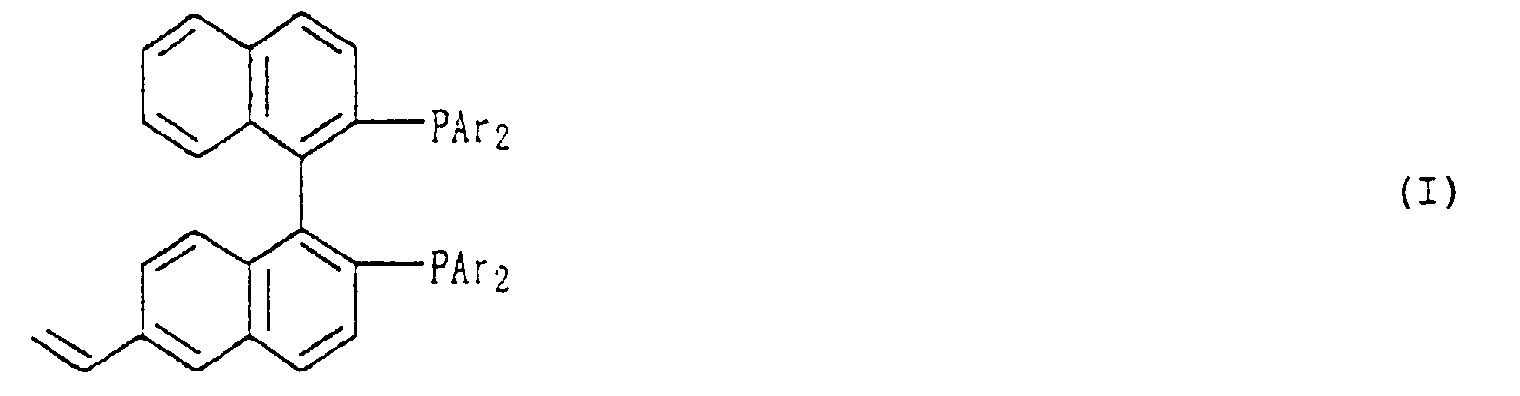
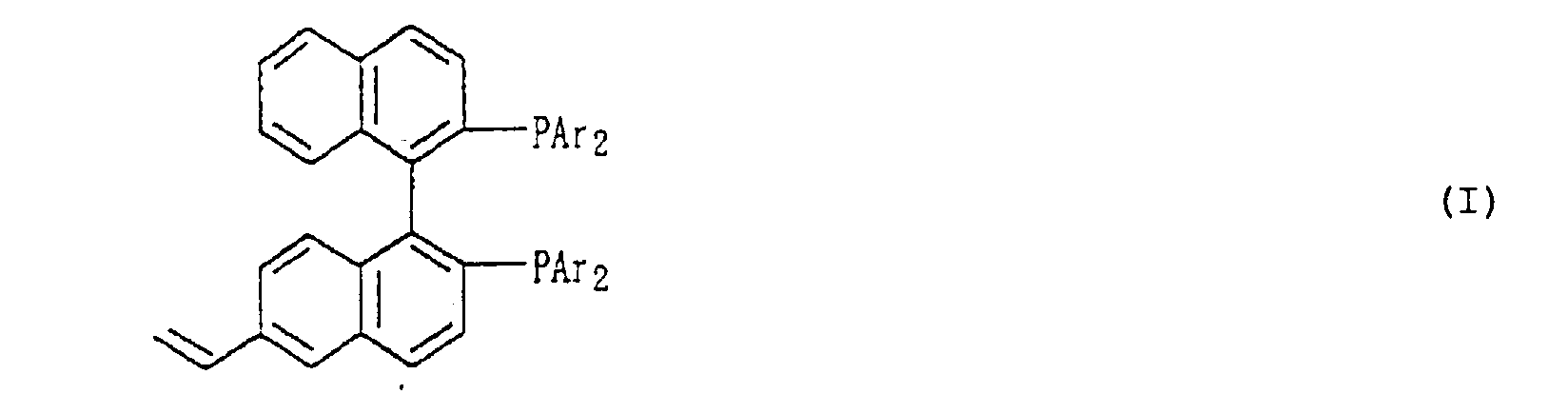
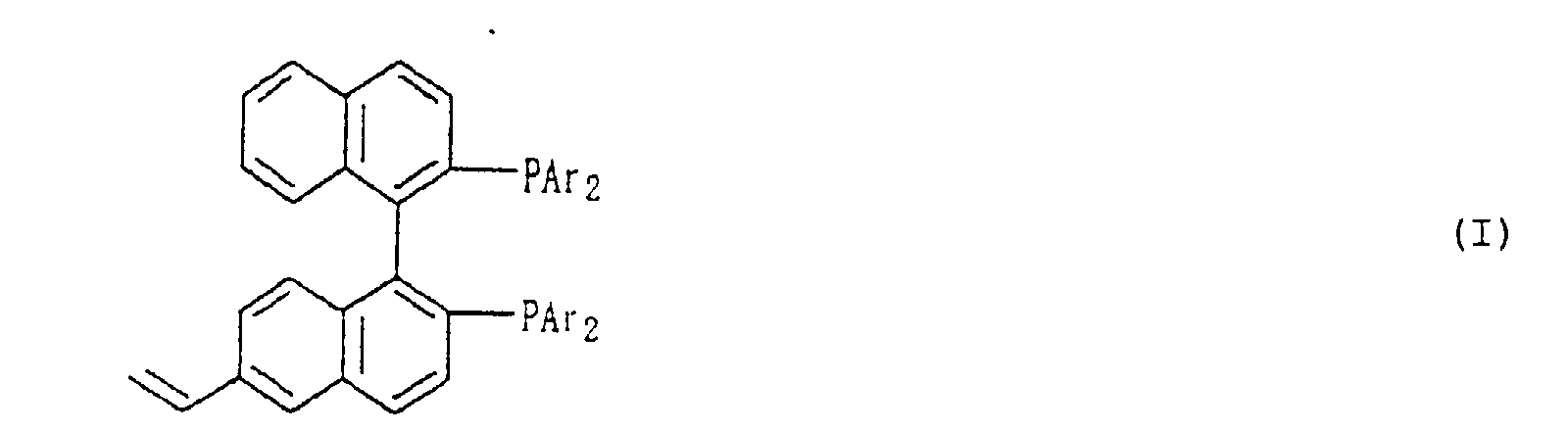
- the invention provides a phosphine derivative represented by formula (I): wherein Ar represents a substituted or unsubstituted phenyl group or a substituted or unsubstituted naphthyl group.
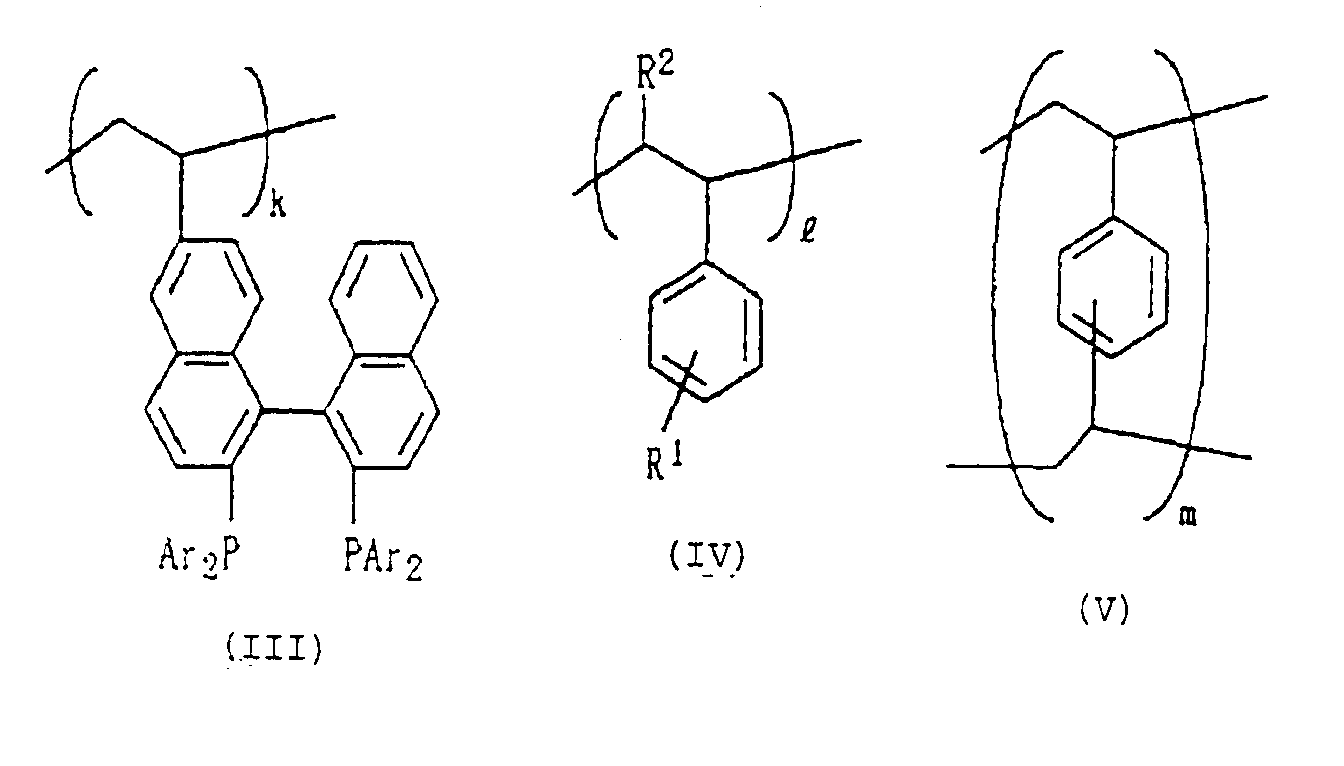
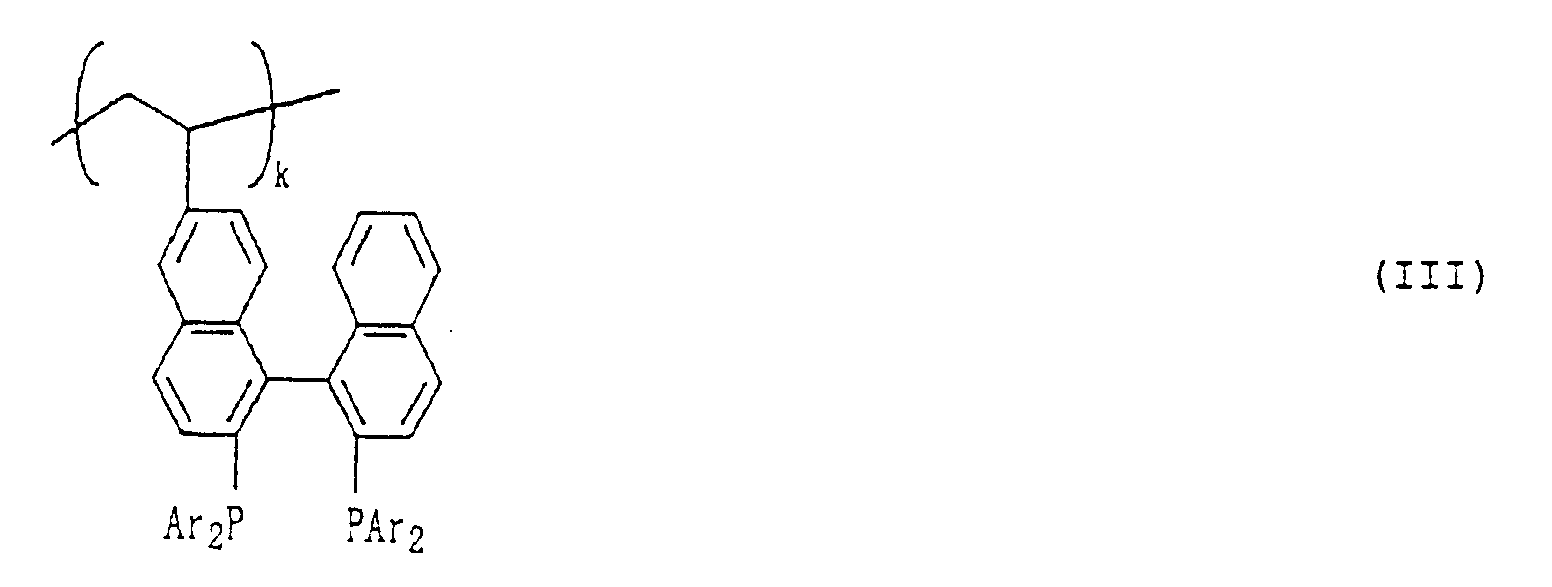
- the invention also provides an oligomer or polymer comprising a structural unit represented by formula (III): wherein Ar is as defined above; and k represents an integer of 2 to 100.
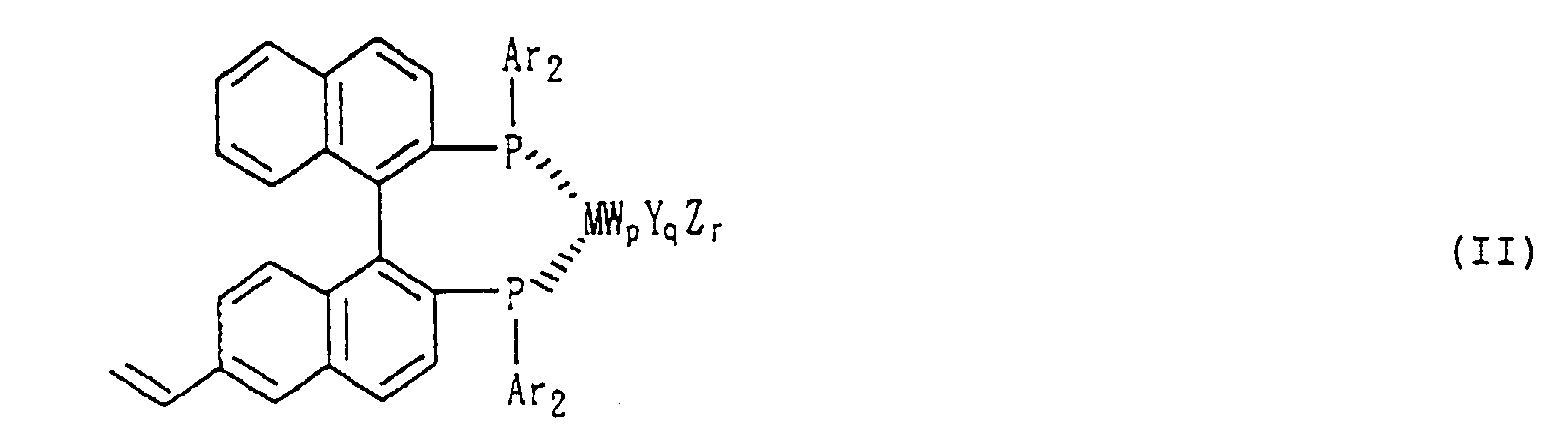
- the invention further provides a transition metal complex obtained by allowing a transition metal compound to react on the compound represented by formula (I) or the oligomer or polymer having the structural unit of formula (III).
- the invention furthermore provides a process for producing an optically active amino acid compound represented by formula (B) : wherein R 3 represents a substituted or unsubstituted alkyl group or a substituted or unsubstituted aryl group; R 4 represents a hydrogen atom, an alkyl group, a substituted or unsubstituted aryl group or a substituted or unsubstituted aralkyl group; R 5 represents a hydrogen atom, an alkyl group, an alkoxy group, a substituted or unsubstituted aryl group or a substituted or unsubstituted aralkyloxy group; and * indicates an asymmetric carbon atom, which comprises asymmetrically hydrogenating a dehydroamino acid compound represented by formula (A): wherein R 3 , R 4 , and R 5 are as defined above, in the presence of the above-described transition metal complex.
- R 3 , R 4 , and R 5 are as defined above, in the
- Ar represents a substituted or unsubstituted phenyl group or a substituted or unsubstituted naphthyl group.
- the substituents that may be on the phenyl or naphthyl group include a lower alkyl group having 1 to 4 carbon atoms, such as methyl, ethyl, propyl, isopropyl, n-butyl, t-butyl or isobutyl; a halogen atom, such as fluorine, chlorine or bromine; a lower alkoxy group, such as methoxy, ethoxy, propoxy or butoxy; a halogenated lower alkyl group, such as trifluoromethyl or trichloromethyl; and a benzyloxy group.
- Ar preferably represents phenyl, 4-tolyl, 4-methoxyphenyl, 3,5-xylyl, and naphthyl groups.
- the compound (I) of the invention can be prepared through, for example, the following reaction scheme, in which a phenyl group is taken as an example of Ar:
- Optically active binaphthol (VII) and trifluoromethanesulfonic acid anhydride (Tf 2 O) are allowed to react in methylene chloride in the presence of pyridine to obtain 2,2'-bis(trifluoromethanesulfonyloxy)-1,1'-binaphthalene (VIII) in accordance with the method taught in the literature (M. Vondenhof and J. Mattay, Tetrahedron Lett. , vol. 31, pp. 985-988 (1990), L. Kurz, et al., Tetrahedron Lett., vol. 31, pp. 6321-6324 (1990), and Y. Uozumi, et al., J. Org. Chem., vol.
- the compound (VIII) is allowed to react with diphenylphosphine oxide (Ph 2 PHO) in the presence of a catalytic amount of a palladium-phosphine complex to obtain 2'-diphenylphosphinyl-2-trifluoromethanesulfonyloxy-1,1'-binaphthalene (IX), which is then hydrolyzed with lithium hydroxide (LiOH) to form 2'-diphenylphosphinyl-2-hydroxy-1,1'-binaphthalene (X).
- IX lithium hydroxide
- the compound (X) is brominated in dioxane to give 2'-diphenylphosphinyl-2-hydroxy-6-bromo-1,1'-binaphthalene (XI).
- the compound (XI) is reduced with trichlorosilane (HSiCl 3 ) in the presence of an amine to obtain 2'-diphenylphosphino-2-hydroxy-6-bromo-1,1'-binaphthalene (XII).
- the compound (XII) is allowed to react with 2-vinyl-5,5-dimethyl-1,3,2-dioxaborinane in the presence of a palladium catalyst to obtain 6-vinyl-2-diphenylphosphino-2-hydroxy-1,1'-binaphthalene (XIII) in accordance with the method described in the literature (Y. Miyaura and A. Suzuki, J.C.S. Chem. Commun., p. 866 (1979)).
- the compound (XIV) is allowed to react with diphenylphosphine oxide (Ph 2 PHO) in the presence of a nickel-phosphine complex and 1,4-diazabicyclo[2,2,2]octane (DABCO) to afford 6-vinyl-2'-diphenylphosphino-2-diphenylphosphinyl-1,1'-binaphthalene (XV), which is reduced with trichlorosilane (HSiCl 3 ) in the presence of an amine to yield 6-vinyl-2,2'-bis(diphenylphosphino)-1,1'-binaphthalene (XVI) as a final product.
- DABCO 1,4-diazabicyclo[2,2,2]octane
- the compound (I) coordinates to a transition metal as a ligand to form a transition metal complex.
- transition metal complexes obtainable preferred are those represented by formula (II) : wherein Ar is as defined above; M represents ruthenium, rhodium, iridium or palladium; W represents an allyl group, a methallyl group, 1,5-cyclooctadiene, norbornadiene, a halogen atom, an acetoxy group or an acetylacetonato group; Y represents a hydrogen atom, a halogen atom, ClO 4 , BP 4 , PF 6 , BPh 4 (tetraphenylborate) , OTf (trifluoromethanesulfonyloxy) or SbF 6 ; Z represents a substituted or unsubstituted benzene; p, q, and r each represent a number of 0 to 2 provided that p, q
- substituents which may be on benzene as Z include a lower alkyl group, a halogen atom, a lower alkoxy group, a halogenated lower alkyl group, and a benzyloxy group.
- Examples of the lower alkyl group, halogen atom, lower alkoxy group and halogenated lower alkyl group include those listed above as the substituents of Ar.
- transition metal complexes according to the invention are shown below.
- cod stands for 1,5-cyclooctadiene; nbd, norbornadiene; Ph, phenyl; Ac, acetyl; OAc, acetoxy; acac, acetylacetonato; and OTf, trifluoromethanesulfonyloxy, respectively.
- L stands for a ligand of formula (I) and is intended to specifically means (R)-6-vinyl-2,2'-bis(diphenylphosphino)-1,1'-binaphthalene as a typical example.
- Rhodium compounds used as a complex precursor for forming rhodium complexes include RhCl 3 , RhBr 3 , RhI 3 , [Rh(cod)Cl] 2 , [Rh(cod)Br] 2 , [Rh(cod)I] 2 , [Rh(nbd)Cl] 2 , [Rh(nbd)Br] 2 , [Rh(nbd)I] 2 , [Rh(cod) (OAc)] 2 , [Rh(nbd) (OAc)] 2 , Rh(cod) (acac) , Rh(nbd) (acac) , Rh(CO) 2 (acac), [Rh(CO) 2 Cl] 2 , [Rh(CO) 2 Br] 2 , [Rh(CO) 2 I] 2 , [Rh(cod) 2 ]BF 4 , [Rh(cod) 2 ]ClO 4 , [Rh(
- Ruthenium compounds useful as a complex precursor include [RuCl 2 (benzene)] 2 , [RuBr 2 (benzene)] 2 , [RuI 2 (benzene)] 2 , [RuCl 2 (p-cymene)] 2 , [RuBr 2 (p-cymene)] 2 , [RuI 2 (p-cymene)] 2 , [RuCl 2 (mesitylene)] 2 , [RuBr 2 (mesitylene)] 2 , [RuI 2 (mesitylene)] 2 , [RuCl 2 (hexamethylbenzene)] 2 , [RuBr 2 (hexamethylbenzene)] 2 , [RuI 2 (hexamethylbenzene)] 2 , [( ⁇ -allyl)Ru (cod)] 2 , [( ⁇ -allyl)Ru(nbd)] 2 , [( ⁇ -methallyl)Ru(cod)] 2 , and [( ⁇ -meth
- the ruthenium complexes are prepared by, for example, heating bis[ruthenium(p-cymene) iodide] ([RuI 2 (p-cymene)] 2 ) and L in methylene chloride with stirring under heat as taught in the literature (K. Mashima, et al., J. Chem. Soc., Chem. Commun ., p. 1208 (1989)).
- ruthenium complexes are [RuCl(benzene) (L)]Cl, [RuBr(benzene) (L)]Br, [RuI(benzene)(L)]I, [RuCl(p-cymene)(L)]Cl, [RuBr(p-cymene)(L)]Br, [RuI(p-cymene) (L)]I, [RuCl(mesitylene)(L)]Cl, [RuBr(mesitylene)(L)]Br, [RuI(mesitylene)(L)]I, [RuCl(hexamethylbenzene)(L)]Cl, [RuBr(hexamethylbenzene) (L)]Br, and [RuI(hexamethylbenzene)(L)]I.
- Palladium compounds which can be used as a palladium complex precursor include PdCl 2 , PdBr 2 , PdI 2 , [( ⁇ -allyl)PdCl] 2 , [( ⁇ -allyl)PdBr] 2 , [( ⁇ -allyl)PdI] 2 , [(p-methallyl)PdCl] 2 , [( ⁇ -methallyl) PdBr] 2 , [( ⁇ -methallyl)PdI] 2 , PdCl 2 (CH 3 CN) 2 , PdBr 2 (CH 3 CN) 2 , PdI 2 (CH 3 CN) 2 , PdCl 2 (C 6 H 5 CN) 2 , PdBr 2 (C 6 R 5 CN) 2 , PdI 2 (C 6 H 5 CN) 2 , PdCl 2 (cod), PdBr 2 (cod), PdI 2 (cod), PdCl 2 (nbd
- Palladium complexes are prepared by, for example, allowing L and ⁇ -allylpalladium chloride ([( ⁇ -allyl)PdCl] 2 ) to react in accordance with the method disclosed in the literature (Y. Uozumi and T. Hayashi, J. Am . Chem. Soc. , vol. 113, p. 9887 (1991)).
- Specific examples of the palladium complexes are PdCl 2 (L), ( ⁇ -allyl)Pd(L), [Pd(L)]ClO 4 , [Pd(L)]PF 6 , and [Pd(L)]BF 4 .
- Iridium compounds used as an iridium complex precursor include IrCl 3 , IrBr 3 , IrI 3 , [Ir(cod)Cl] 2 , [Ir(cod)Br] 2 , [Ir(cod)I] 2 , [Ir(nbd)Cl] 2 , [Ir(nbd)Br] 2 , [Ir(nbd)I] 2 , [Ir(cod)(OAc)] 2 , [Ir(nbd)(OAc)] 2 , Ir(cod)(acac) , Ir(nbd)(acac) , Ir(CO) 2 (acac), [Ir(CO) 2 Cl] 2 , [Ir(CO) 2 Br] 2 , [Ir(CO) 2 I] 2 , [Ir(cod) 2 ]BF 4 , [Ir(cod) 2 ]ClO 4 , [Ir(cod
- the iridium complexes are prepared by, for example, stirring L and [(1,5-cyclooctadiene)(acetonitrile)iridium] tetrafluoroborate ([Ir (cod) (CH 3 CN) 2 ]BF 4 ) in tetrahydrofuran in accordance with the method disclosed in the literature (K. Mashima, et al., J. Organomet. Chem., vol. 428, p. 213 (1992)).
- iridium complexes include [Ir(cod)(L)]ClO 4 , [Ir(cod) (L)]PF 6 , [Ir(cod) (L)]BF 4 , [Ir(nbd) (L)]ClO 4 , [Ir(nbd) (L)]PF 6 , [Ir(nbd) (L)]BF 4 , Ir(cod) (L)Cl, Ir(nbd) (L)Cl, Ir(cod) (L)Br, and Ir(nbd) (L)Br.
- the oligomer or polymer according to the invention comprises a structural unit represented by formula (III): wherein Ar and k are as defined above.
- the polymer preferably includes a copolymer comprising the structural unit represented by formula (III) and a structural unit represented by formula (IV) and/or a structural unit represented by formula (V): wherein Ar and k are as defined above; R 1 represents a hydrogen atom, a lower alkyl group, a lower alkoxy group or a halogen atom; R 2 represents a hydrogen atom or a methyl group; 1 and m each represent an integer of 0 to 1000 provided that l and m do not simultaneously represent 0 and that (k+l+m) ranges 10 to 1000.
- R 1 includes a hydrogen atom, a lower alkyl group having 1 to 4 carbon atoms, such as methyl, ethyl, isopropyl, n-butyl, and t-butyl, a lower alkoxy group having 1 to 4 carbon atoms, such as methoxy, ethoxy, propoxy and butoxy, and a halogen atom, such as fluorine, chlorine, and bromine.
- the oligomer or polymer comprising the unit (III) is obtained by polymerizing the phosphine derivative of formula (I).
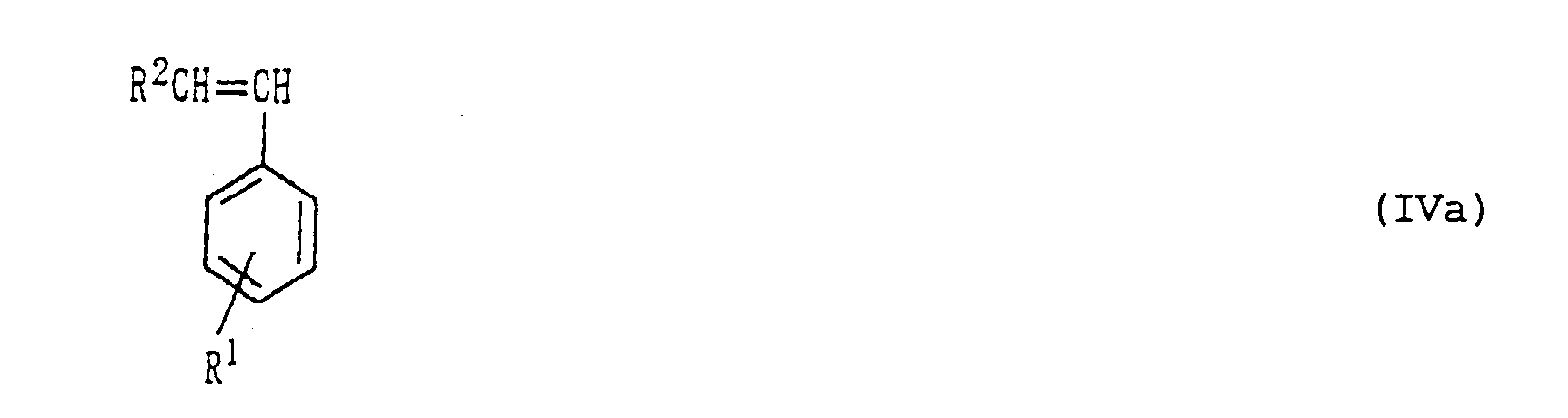
- the polymer comprising the units (III) and (IV) and/or (V) is obtained by copolymerizing the phosphine derivative (I) and a styrene derivative represented by formula (IVa) : wherein R 1 and R 2 are as defined above, and/or divinylbenzene represented by formula (Va):
- the polymerization reaction is carried out by solution polymerization, suspension polymerization and the like.
- a solution or suspension of the monomer(s) in a solvent such as a polyvinyl alcohol aqueous solution, a halogenated hydrocarbon (e.g., chloroform) or a hydrocarbon (e.g., toluene)
- a solvent such as a polyvinyl alcohol aqueous solution, a halogenated hydrocarbon (e.g., chloroform) or a hydrocarbon (e.g., toluene)
- an inert atmosphere e.g., nitrogen or argon
- An azo compound e.g., 2,2'-azobis(2,4-dimethylvaleronitrile) or azobisisobutyronitrile
- a peroxide is added as a radical polymerization initiator, and the mixture was allowed to react at 60 to 100°C under atmospheric pressure for 1 hour to 2 days.
- the copolymerization ratio of the units (III), (IV), and (V) represented by the molar ratio k:l:m, is 2 to 100:0 to 1000:0 to 1000, preferably 2 to 100:100 to 1000:0 to 1000.
- the degrees of polymerization of the units (III), (IV), and (V) are represented by k, 1, and m, respectively, and (k+l+m) is in the range of from 10 to 1000.
- the oligomer or polymer having the structural unit (III) and the polymer having the structural units (III) and (IV) and/or (V) act as a ligand coordinating to a transition metal to form transition metal complexes.
- the transition metal complexes formed include those having a structural unit represented by formula (VI) : wherein Ar, M, W, Y, Z, p, q, r, and k are as defined above, and those comprising the following structural units (VI) , (IV) and (V): wherein Ar, R 1 , R 2 , M, W, Y, Z, p, q, r, k, l, and m are as defined above.
- oligomeric or polymeric complexes examples are described below.
- cod, nbd, Ph, Ac, OAc, acac, and OTf have the same meanings as defined above.
- L stands for a ligand of formula (III) and is specifically intended to mean a structural unit derived from 6-vinyl-2,2'-bis(diarylphosphino)-1,1'-binaphthalene.
- k the degree of polymerization, is as defined above (an integer of 2 to 100).
- the polymer having the unit (III) can be replaced with the polymer having the units (III), (IV), and (V).
- Rhodium compounds used as a rhodium complex precursor include RhCl 3 , RhBr 3 , RhI 3 , [Rh(cod)Cl] 2 , [Rh(cod)Br] 2 , [Rh(cod)I] 2 , [Rh(nbd)Cl] 2 , [Rh(nbd)Br] 2 , [Rh(nbd)I] 2 , [Rh(cod)(OAc)] 2 , [Rh(nbd)(OAc)] 2 , Rh(cod) (acac) , Rh(nbd) (acac), Rh(CO) 2 (acac), [Rh(CO) 2 Cl] 2 , [Rh(CO) 2 Br] 2 , [Rh(CO) 2 I] 2 , [Rh(cod) 2 ]BF 4 , [Rh(cod) 2 ]ClO 4 , [Rh(cod) 2 ]PF 6
- oligomeric or polymeric rhodium complexes are Rh(acac) k (L), [Rh(cod)Cl] k (L), [Rh(nbd)Cl] k (L), [Rh k (cod) k (L)] (ClO 4 ) k , [Rh k (cod) k (L) ] (BF 4 ) k , [Rh k (cod) k (L)] ](PF 6 ) k , [Rh k (nbd) k (L)](ClO 4 ) k , [Rh k (nbd) k (L)](BF 4 ) k , and [Rh k (nbd) k (L)] (PF 6 ) k .
- Ruthenium compounds useful as a complex precursor include [RuCl 2 (benzene)] 2 , [RuBr 2 (benzene)] 2 , [RuI 2 (benzene)] 2 , [RuCl 2 (p-cymene)] 2 , [RuBr 2 (p-cymene)] 2 , [RuI 2 (p-cymene)] 2 , [RuCl 2 (mesitylene)] 2 , [RuBr 2 (mesitylene)] 2 , [RuI 2 (mesitylene)] 2 , [RuCl 2 (hexamethylbenzene)] 2 , [RuBr 2 (hexamethylbenzene)] 2 , [RuI2(hexamethylbenzene)] 2 , [( ⁇ -allyl)Ru(cod)] 2 , [( ⁇ -allyl)Ru(nbd)] 2 , [( ⁇ -methallyl)Ru(cod)] 2 , and [( ⁇ -meth
- the ruthenium complexes are prepared by, for example, heating bis[ruthenium(p-cymene) iodide] ([RuI 2 (p-cymene)] 2 ) and L in methylene chloride with stirring as taught in the literature (K. Mashima, et al., J. Chem. Soc., Chem. Commun., p. 1208 (1989)).
- oligomeric or polymeric ruthenium complexes are [Ru k Cl k (benzene) k (L)]Cl k , [Ru k Br k (benzene) k (L)]Br k , [Ru k I k (benzene) k (L)]I k , [Ru k Cl k (p-cymene) k (L)]Cl k , [Ru k Br k (p-cymene) k (L)]Br k , [Ru k I k (p-cymene) k (L)]I k , [Ru k Cl k (mesitylene) k (L)]Cl k , [Ru k Br k (mesitylene) k (L)]Br k , [Ru k I k (mesitylene) k (L)]I k , [Ru k Cl k (hexamethylbenzen
- Palladium compounds which can be used as a palladium complex precursor include PdCl 2 , PdBr 2 , PdI 2 , [( ⁇ -allyl)PdCl] 2 , [( ⁇ -allyl)PdBr] 2 , [( ⁇ -allyl)PdI] 2 , [( ⁇ -methallyl)PdCl] 2 , [( ⁇ -methallyl)PdBr] 2 , [( ⁇ -methallyl) PdI] 2 , PdCl 2 (CH 3 CN) 2 , PdBr 2 (CH 3 CN) 2 , PdI 2 (CH 3 CN) 2 , PdCl 2 (C 6 H 5 CN) 2 , PdBr 2 (C 6 H 5 CN) 2 , PdI 2 (C 6 H 5 CN) 2 , PdCl 2 (cod), PdBr 2 (cod), PdI 2 (cod), PdCl 2 (nbd
- Palladium complexes are prepared by, for example, allowing L and ⁇ -allylpalladium chloride ([( ⁇ -allyl)PdCl] 2 ) to react in accordance with the method disclosed in the literature (Y. Uozumi and T. Hayashi, J. Am. Chem. Soc., vol. 113, p. 9887 (1991)).
- oligomeric or polymeric palladium complexes are (PdCl 2 ) k (L), [( ⁇ -allyl)Pd] k (L), [Pd k (L) ] (ClO 4 ) k , [Pd k (L)](PF 6 ) k , and [Pd k (L)] (BF 4 ) k .
- Iridium compounds used as an iridium complex precursor include IrCl 3 , IrBr 3 , IrI 3 , [Ir(cod)Cl] 2 , [Ir(cod)Br] 2 , [Ir(cod)I] 2 , [Ir(nbd)Cl] 2 , [Ir(nbd)Br] 2 , [Ir(nbd)I] 2 , [Ir(cod)(OAc)] 2 , [Ir(nod)(OAc)] 2 , Ir(cod) (acac), Ir(nbd) (acac), Ir(CO) 2 (acac), [Ir(CO) 2 Cl] 2 , [Ir(CO) 2 Br] 2 , [Ir(CO) 2 I] 2 , [Ir(cod) 2 ]BF 4 , [Ir(cod) 2 ]ClO 4 , [Ir(cod) 2 ]
- the iridium complexes are prepared by, for example, stirring L and [(1,5-cyclooctadiene) (acetonitrile)iridium] tetrafluoroborate ([Ir (cod) (CH 3 CN) 2 ]BF 4 ) in tetrahydrofuran in accordance with the method disclosed in the literature (K. Mashima, et al., J. Organomet. Chem., vol. 428, p. 213 (1992)).
- oligomeric or polymeric iridium complexes include [Ir k (cod) k (L) (ClO 4 ) k , [Ir k (cod) k (L)] (PF 6 ) k , [Ir k (cod) k (L)] (BP 4 ) k , [Ir k (nbd) k (L)] (ClO 4 ) k , [Ir k (nbd) k (L) ](PF 6 ) k , [Ir k (nbd) k (L)] (BF 4 ) k , Ir k (cod) k (L)Cl k , Ir k (nbd) k (L)Cl k , Ir k (cod) k (L)Br k , and Ir k (nbd) k (L)Br k .
- the oligomeric or polymeric transition metal complex having the structural unit (VI) is preferably prepared by polymerizing the transition metal complex (II) or allowing a polymer having the structural unit (III) obtained by polymerizing the phosphine derivative (I) to react with a transition metal compound.
- the polymeric transition metal complex having the structural units (VI), (IV), and (V) is preferably prepared by copolymerizing the transition metal complex (II), the styrene derivative (IVa), and the divinylbenzene (Va) or allowing a copolymer having the structural units (III), (IV), and (V) obtained by copolymerizing the phosphine derivative (I), the styrene derivative (IVa), and the divinylbenzene (Va) to react with a transition metal compound.
- the polymerization reaction is carried out by solution polymerization, suspension polymerization and the like.
- a solution or suspension of the monomer(s) in a solvent such as a polyvinyl alcohol aqueous solution, a halogenated hydrocarbon (e.g., chloroform) or a hydrocarbon (e.g., toluene)
- a solvent such as a polyvinyl alcohol aqueous solution, a halogenated hydrocarbon (e.g., chloroform) or a hydrocarbon (e.g., toluene)
- an inert atmosphere e.g., nitrogen or argon
- An azo compound e.g., 2,2'-azobis(2,4-dimethylvaleronitrile) or azobisisobutyronitrile
- a peroxide is added as a radical polymerization initiator, and the mixture was allowed to react at 60 to 100°C under atmospheric pressure for 1 hour to 2 days.
- the copolymerization ratio of the units (VI), (IV), and (V), represented by the molar ratio k:l:m, is 2 to 100:0 to 1000:0 to 1000, preferably 2 to 100:100 to 1000:0 to 1000.
- the degrees of polymerization of the units (VI) , (IV), and (V) are represented by k, l, and m, respectively, and (k+l+m) is in the range of from 10 to 1000.
- the oligomeric or polymeric transition metal complex having the structural unit (VI) and the polymeric transition metal complex having the structural units (VI) and (IV) and/or (V) are useful as a catalyst for asymmetrical synthesis. For example, they catalyze asymmetrical hydrogenation of an olefin compound (A) to obtain an optically active amino acid compound (B): wherein R 3 represents a substituted or unsubstituted alkyl group or a substituted or unsubstituted aryl group; R 4 represents a hydrogen atom, an alkyl group, a substituted or unsubstituted aryl group or a substituted or unsubstituted aralkyl group; R 5 represents a hydrogen atom, an alkyl group, an alkoxy group, a substituted or unsubstituted aryl group or a substituted or unsubstituted aralkyloxy group; and * indicates an asymmetric carbon atom.
- an optically active amino acid compound (B) having a desired absolute configuration can be synthesized by the above reaction being carried out in the presence of a transition metal complex having, as a ligand, either the (R)-form or the (S)-form of the phosphine derivative (I) or of the oligomer or polymer (III) as a catalyst.
- the alkyl group as R 3 includes an alkyl group having 1 to 8 carbon atoms, such as methyl, ethyl, propyl, isopropyl, n-butyl, t-butyl, pentyl, hexyl, heptyl and octyl, which may be substituted with a halogen atom, an alkoxy group, etc.
- the aryl group as R 3 , R 4 or R 5 includes an aryl group having 6 to 14 carbon atoms, such as phenyl or naphthyl, which may be substituted with a lower alkyl group having 1 to 4 carbon atoms (e.g., methyl, ethyl, propyl, isopropyl, n-butyl, t-butyl, isobutyl), a halogen atom (e.g., fluorine, chlorine, bromine), a lower alkoxy group having 1 to 4 carbon atoms (e.g., methoxy, ethoxy, propoxy, butoxy), a halogenated lower alkyl group (e.g., trifluoromethyl, trichloromethyl, a benzyloxy group, etc.
- a lower alkyl group having 1 to 4 carbon atoms e.g., methyl, ethyl, propyl, isopropyl, n-but
- the substituted or unsubstituted aryl group preferably includes phenyl, 2-, 3- or 4-methoxyphenyl, 2-, 3- or 4-chlorophenyl, 2-, 3- or 4-fluorophenyl, 2-, 3- or 4-trifluoromethylphenyl, and 2-, 3- or 4-tolyl.
- the aralkyl group as represented by R 4 preferably includes a substituted or unsubstituted aralkyl group having 7 to 11 carbon atoms, particularly a benzyl group which may be substituted.
- the aralkyloxy group as R 5 preferably includes a substituted or unsubstituted aralkyloxy group having 7 to 11 carbon atoms, particularly a benzyloxy group which may be substituted.
- Substituents of the aralkyl group and the aralkyloxy group include a lower alkyl group having 1 to 4 carbon atoms (e.g., methyl, ethyl, propyl, isopropyl, n-butyl, t-butyl, isobutyl), a halogen atom (e.g., fluorine, chlorine, bromine), a lower alkoxy group having 1 to 4 carbon atoms (e.g., methoxy, ethoxy, propoxy, butoxy), a halogenated lower alkyl group (e.g., trifluoromethyl, trichloromethyl), and a benzyloxy group.
- a lower alkyl group having 1 to 4 carbon atoms e.g., methyl, ethyl, propyl, isopropyl, n-butyl, t-butyl, isobutyl
- a halogen atom e
- the alkyl group as R 4 or R 5 preferably includes a lower alkyl group, particularly an alkyl group having 1 to 4 carbon atoms, such as methyl, ethyl, propyl, isopropyl, butyl, t-butyl, and isobutyl groups.
- the alkoxy group as R 5 preferably includes a lower alkoxy group, particularly an alkoxy group having 1 to 4 carbon atoms, such as methoxy, ethoxy, propoxy, isopropoxy, butoxy, and t-butoxy groups.
- solvents that do not hinder the reaction can be used.
- Useful solvents include alcohols, such as methanol, ethanol, propanol, isopropyl alcohol, butanol, and benzyl alcohol; aromatic hydrocarbons, such as benzene, toluene, and xylene; ethers, such as diethyl ether, diisopropyl ether, dioxane, dioxolane, and tetrahydrofuran; halogenated hydrocarbons, such as methylene chloride, chloroform, 1,2-dichloroethane, 1,1,2,2-tetrachloroethane; esters, such as ethyl acetate; nitriles, such as acetonitrile; and amides, such as N,N-dimethylformamide.
- alcohols such as methanol, ethanol, propanol, isopropyl alcohol, butanol, and benzyl alcohol
- solvents can be used either individually or as a mixture of two or more thereof in an appropriate mixing ratio.
- the solvent is usually used in an amount of 1 to 1,000 parts by volume, preferably 2 to 500 parts by volume, still preferably 2 to 20 parts by volume, per part by weight of compound (A).
- the complex catalyst is preferably used in an amount of about 0.01 to 10 mol%, particularly 0.05 to 5 mol%, in terms of the transition metal complex (II) or the oligomeric or polymeric transition metal complex having the unit (VI) or the polymeric transition metal complex having the units (VI) and (IV) and/or (V), based on the reaction substrate.
- the reaction is usually carried out at about 10 to 100°C, preferably about 20 to 50°C, under a hydrogen pressure of about 2 to 120 atm. for about 10 minutes to 30 hours. These reaction conditions are subject to variation depending on the amount of the reactant used, and the like.
- the oligomeric or polymeric transition metal complex comprising the unit (VI) or the units (VI) and (IV) and/or (V) can be separated practically completely from the reaction product through simple means, such as centrifugation or filtration.
- the catalyst thus recovered can be reused.
- the reaction mixture was cooled to room temperature, and 75 ml of methylene chloride was added thereto.
- the solution was cooled in an ice bath, and 100 ml of 2N hydrochloric acid was slowly dropped therein, followed by stirring at room temperature for 30 minutes. After liquid-liquid separation, the aqueous layer was extracted with methylene chloride.
- the combined organic layer was washed with water, dried over anhydrous magnesium sulfate, followed by concentration.
- reaction mixture was diluted with water and extracted with diethyl ether.
- organic layer was washed with a saturated aqueous solution of sodium chloride and dried over anhydrous magnesium sulfate.
- the solvent was evaporated, and the residue was purified by silica gel column chromatography (chloroform) to afford 618 mg (68%) of the title compound.
- a 0.4% aqueous solution of polyvinyl alcohol was stirred well.
- the reaction mixture was stirred at a speed of 400 rpm for 24 hours.
- the resulting polymer was collected by filtration, washed with water and then with methanol, and dried under reduced pressure to obtain a yellowish white solid (310 mg).
- a 0.4% aqueous solution of polyvinyl alcohol was stirred well.
- the polymer-bearing phosphine ligand of the invention is an excellent ligand for asymmetric synthesis.
- a rhodium, ruthenium or like transition metal complex of the polymeric phosphine ligand exhibits excellent catalyst performance, such as catalytic activity, in asymmetric hydrogenation. Because the complex is insoluble in most solvents, it can easily be separated from the reaction product by filtration. Therefore, the complex is a superior catalyst for industrial use.
Landscapes
- Chemical & Material Sciences (AREA)
- Organic Chemistry (AREA)
- Health & Medical Sciences (AREA)
- Life Sciences & Earth Sciences (AREA)
- Biochemistry (AREA)
- General Health & Medical Sciences (AREA)
- Molecular Biology (AREA)
- Catalysts (AREA)
- Organic Low-Molecular-Weight Compounds And Preparation Thereof (AREA)
- Low-Molecular Organic Synthesis Reactions Using Catalysts (AREA)
- Polymerisation Methods In General (AREA)
- Addition Polymer Or Copolymer, Post-Treatments, Or Chemical Modifications (AREA)
Abstract
Description





in the presence of the above-described transition metal complex.


and/or divinylbenzene represented by formula (Va):


1H-NMR: JMN-EX-270 (270 MHz), made by JEOL, Ltd.
31P-NMR: JMN-EX-270 (109 MHz), made by JEOL, Ltd.
Specific rotation: DIP-360, made by JASCO, Inc.
GLC: GC-15A, made by Shimadzu Corp.
Mass: QP-1000, made by Shimadzu Corp.
1H-NMR (CDCl3) δ: 7.25-8.15 (m, aromatic)
[α]4: +44.45° (c=0.50, CHCl3)
1H-NMR (CDCl3) δ: 7.0-8.01 (m, aromatic)
31P-NMR (CDCl3) δ: 28.73 (s)
1H-NMR (CDCl3) δ: 9.05 (bs, 1H), 7.95-7.17 (m, 2H), 7.65-7.53 (m, 7H), 7.42-7.32 (m, 2H), 7.26-7.17 (m, 2H), 7.06-6.88 (m, 3H), 6.81-6.72 (m, 2H), 6.27 (d, J=8.91 Hz, 1H)
31P-NMR (CDCl3) δ: 31.26(s)
1H-NMR(CDCl3) δ: 7.96-7.80 (m, 4H), 7.52-7.43 (m, 2H), 7.33-6.98 (m, 14H), 6.55 (d, J=8.91 Hz, 1H), 4.62 (s, 1H)
31P-NMR (CDCl3) δ: -12.82 (s)
1H-NMR (CDCl3) δ: 7.95-7.86 (m, 3H) , 7.72 (bs, 1H) , 7.54-7.01 (m, 16H), 6.79 (dd, J=17.15, 10.55 Hz, 1H), 6.69 (d, J=8.91 Hz, 1H), 5.70 (d, J=17.15 Hz, 1H), 5.22 (d, J=10.55 Hz, 1H), 4.53 (s, 1H) 31P-NMR (CDCl3) δ: -13.01 (s)
1H-NMR (CDCl3) δ: 8.04-7.82 (m, 4H), 7.54-7.42 (m, 3H), 7.33-6.77 (m, 15H), 5.79 (d, J=17.49 Hz, 1H), 5.35 (d, J=10.89 Hz, 1H)
31P-NMR (CDCl3) δ: -12.51 (s)
1H-NMR (CDCl3) δ: 7.90-7.54 (m, 5H), 7.41-6.70 (m, 26H), 6.49 (d, J=9.2 Hz, 1H), 5.69 (d, J=17.48 Hz, 1H) , 5.29 (d, J=11.32 Hz, 1H) 31P-NMR (CDCl3) δ: 27.94 (s), -14.34 (s)
1H-NMR (CDCl3) δ: 7.89-7.72 (m, 4H), 7.45-6.71 (m, 28H), 5.72 (d, J=17.48 Hz, 1H), 5.27 (d, J=11.55 Hz, 1H), 5.29 (d, J=11.32 Hz, 1H)
31P-NMR (CDCl3) δ: -14.8 (d, J=10.7 Hz), -14.9 (d, J=10.7 Hz)
1H-NMR (CDCl3) δ: 7.89-7.72 (m, 4H), 7.45-6.71 (m, 28H), 5.72 (d, J=17.48Hz, 1H), 5.27 (d, J=11.55 Hz, 1H), 5.29 (d, J=11.32 Hz, 1H) 31P-NMR (CDCl3) δ: -14.8 (d, J=10.7 Hz), -14.9 (d, J=10.7 Hz)
Claims (13)
- A phosphine derivative represented by formula (I)wherein Ar represents a substituted or unsubstituted phenyl group or a substituted or unsubstituted naphthyl group.
- A transition metal complex obtained by allowing a transition metal compound to react on a phosphine derivative represented by formula (I):wherein Ar represents a substituted or unsubstituted phenyl group or a substituted or unsubstituted naphthyl group.
- A transition metal complex according to claim 2, which is represented by formula (II):wherein Ar is as defined in claim 2 ; M represents ruthenium, rhodium, iridium or palladium; W represents an allyl group, a methallyl group, 1,5-cyclooctadiene, norbornadiene, a halogen atom, an acetoxy group or an acetylacetonato group; Y represents a hydrogen atom, a halogen atom, ClO4, BF4, PF6, BPh4 (tetraphenylborate), OTf (trifluoromethanesulfonyloxy) or SbF6; Z represents a substituted or unsubstituted benzene; p, q, and r each represent a number of 0 to 2 provided that p, q, and r do not simultaneously represent 0.
- An oligomer or polymer having a structural unit represented by formula (III):wherein Ar represents a substituted or unsubstituted phenyl group or a substituted or unsubstituted naphthyl group, and k represents an integer of 2 to 100.
- A polymer having a structural unit represented by formula (III) and a structural unit represented by formula (IV) and/or a structural unit represented by formula (V):wherein Ar represents a substituted or unsubstituted phenyl group or a substituted or unsubstituted napthyl group; R1 represents a hydrogen atom, a lower alkyl group having 1 to 4 carbon atoms, a lower alkoxy group having 1 to 4 carbon atoms or a halogen atom; R2 represents a hydrogen atom or a methyl group; k represents an integer of 2 to 100; and l and m each represent an integer of 0 to 1000 provided that l and m do not simultaneously represent 0 and that the sum of k, l, and m ranges from 10 to 1000.

- A transition metal complex obtained by allowing a transition metal compound to react with the oligomer or polymer according to claim 4 or 5.
- A transition metal complex according to claim 6, which has a structural unit represented by formula (VI):wherein Ar and k are as defined in claim 4 or 5; M represents ruthenium, rhodium, iridium or palladium; W represents an allyl group, a methallyl group, 1,5-cyclooctadiene, norbornadiene, a halogen atom, an acetoxy group or an acetylacetonato group; Y represents a hydrogen atom, a halogen atom, ClO4, BF4, PF6, BPh4 (tetraphenylborate), OTf (trifluoromethanesulfonyloxy) or SbF6; Z represents a substituted or unsubstituted benzene; and p, q, and r each represent a number of 0 to 2 provided that p, q, and r do not simultaneously represent 0.

- A transition metal complex according to claim 6, which has a structural unit represented by formula (VI) and a structural unit represented by formula (IV) and/or a structural unit represented by formula (V):wherein Ar, R1, R2, k, l, and m are as defined in claim 4 or 5; M represents ruthenium, rhodium, iridium or palladium; W represents an allyl group, a methallyl group, 1,5-cyclooctadiene, norbornadiene, a halogen atom, an acetoxy group or an acetylacetonato group; Y represents a hydrogen atom, a halogen atom, ClO4, BF4, PF6, BPh4 (tetraphenylborate) , OTf (trifluoromethanesulfonyloxy) or SbF6; Z represents a substituted or unsubstituted benzene; and p, q, and r each represent a number of 0 to 2 provided that p, q, and r do not simultaneously represent 0.

- A process for producing an oligomer or polymer having a structural unit represented by formula (III):wherein Ar represents a substituted or unsubstituted phenyl group or a substituted or unsubstituted naphthyl group; and k represents an integer of 2 to 100,

comprising solution polymerization or suspension polymerization of a phosphine derivative represented by formula (I):wherein Ar is as defined above.
- A process for producing a copolymer having a structural unit represented by formula (III) and a structural unit represented by formula (IV) and/or a structural unit represented by formula (V):wherein Ar represents a substituted or unsubstituted phenyl group or a substituted or unsubstituted naphtyl group; R1 represents a hydrogen atom, a lower alkyl group having 1 to 4 carbon atoms, a lower alkoxy group having 1 to 4 carbon atoms or a halogen atom; R2 represents a hydrogen atom or a methyl group; k represents an integer of 2 to 100; and l and m each represent an integer of 0 to 1000 provided that l and m do not simultaneously represent 0 and that the sum of k, l, and m ranges from 10 to 1000,

comprising solution copolymerization or suspension copolymerization of a phosphine derivative represented by formula (I):wherein Ar is as defined above,
with a styrene derivative represented by formula (IVa):wherein R1 and R2 are as defined above,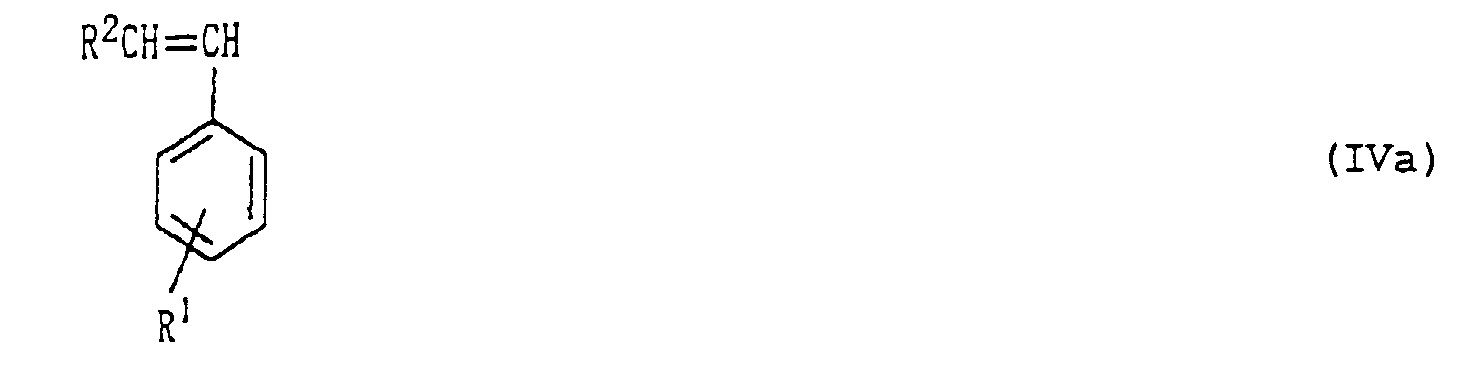
and/or divinylbenzene represented by formula (Va):
- Aprocess for producing a transition metal complex having a structural unit represented by formula (VI):wherein Ar represents a substituted or unsubstituted phenyl group or a substituted or unsubstituted naphthyl group; M represents ruthenium, rhodium, iridium or palladium; W represents an allyl group, a methallyl group, 1,5-cyclooctadiene, norbornadiene, a halogen atom, an acetoxy group or an acetylacetonato group; Y represents a hydrogen atom, a halogen atom, ClO4, BF4, PF6, BPh4 (tetraphenylborate), OTf (trifluoromethanesulfonyloxy) or SbF6; Z represents a substituted or unsubstituted benzene; k represents an integer of 2 to 100; and p, q, and r each represent a number of 0 to 2 provided that p, q, and r do not simultaneously represent 0,
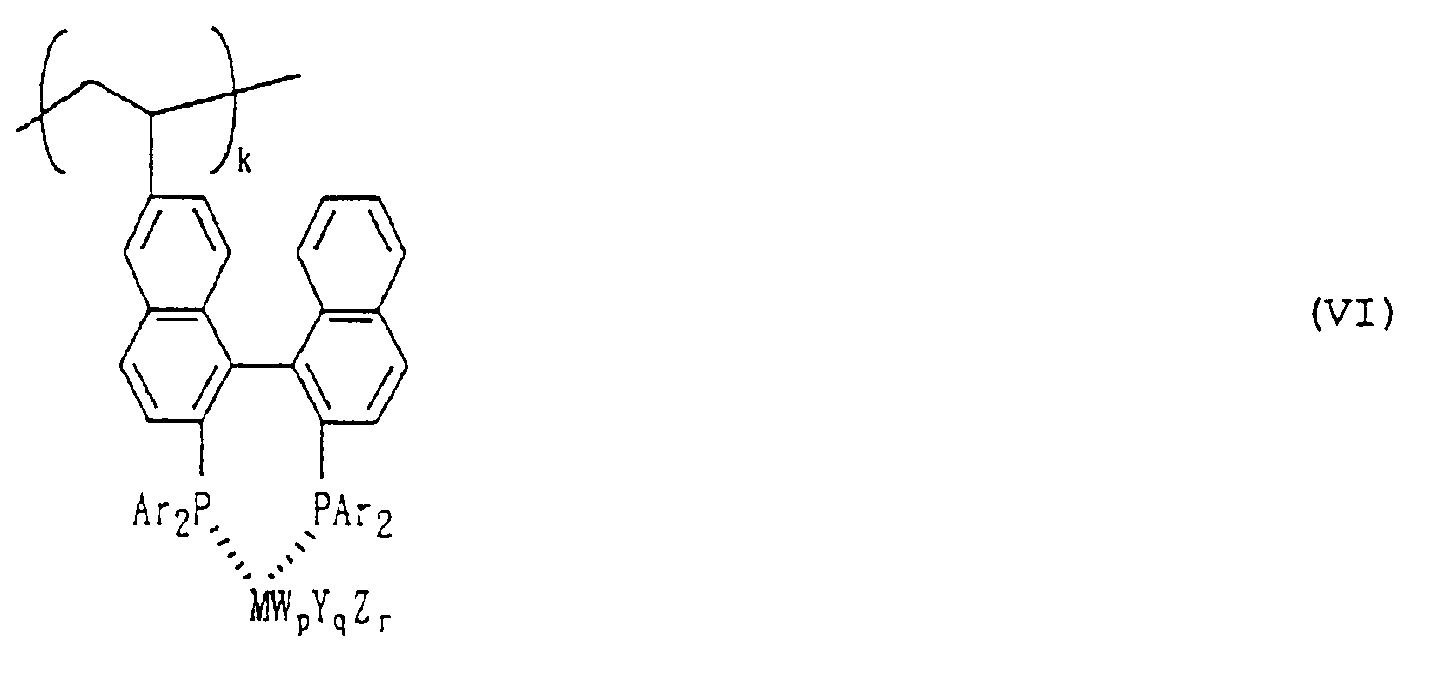
comprising solution polymerization or suspension polymerization of a transition metal complex represented by formula (II):wherein Ar, M, W, Y, Z, p, q, and r are as defined above.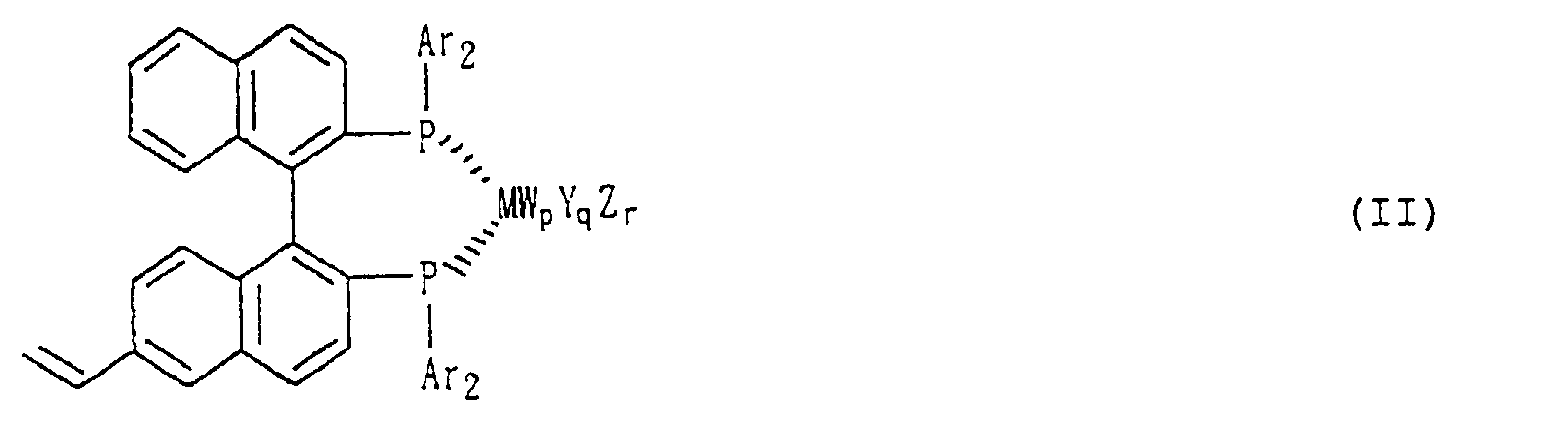
- A process for producing a transition metal complex having a structural unit represented by formula (VI) and a structural unit represented by formula (IV) and/or a structural unit represented by formula (V):wherein Ar represents a substituted or unsubstituted phenyl group or a substituted or unsubstituted naphtyl group; R1 represents a hydrogen atom, a lower alkyl group having 1 to 4 carbon atoms, a lower alkoxy group having 1 to 4 carbon atoms or a halogen atom; R2 represents a hydrogen atom or a methyl group; M represents ruthenium, rhodium, iridium or palladium; W represents an allyl group, a methallyl group, 1,5-cyclooctadiene, norbornadiene, a halogen atom, an acetoxy group or an acetylacetonato group; Y represents a hydrogen atom, a halogen atom, ClO4, BF4, PF6, BPh4 (tetraphenylborate), OTf (trifluoromethanesulfonyloxy) or SbF6; Z represents a substituted or unsubstituted benzene; p, q, and r each represent a number of 0 to 2 provided that p, q, and r do not simultaneously represent 0; k represents an integer of 2 to 100; and 1 and m each represent an integer of 0 to 1000 provided that l and m do not simultaneously represent 0 and that the sum of k, l, and m ranges from 10 to 1000,
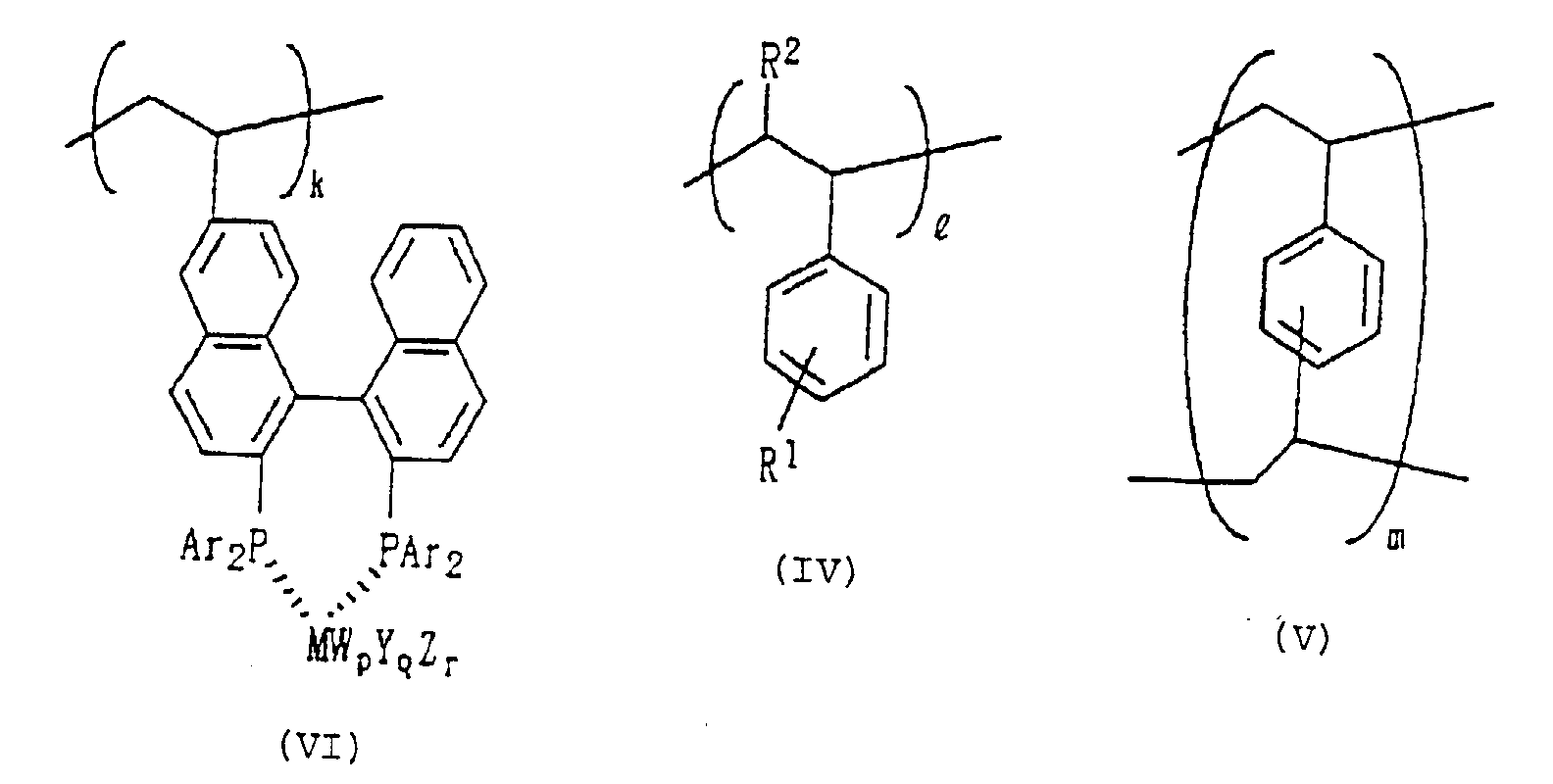
comprising solution copolymerization or suspension copolymerization of a transition metal complex represented by formula (II):wherein Ar, M, W, Y, Z, p, q, and r are as defined above,
with a styrene derivative represented by formula (IVa):wherein R1 and R2 are as defined above,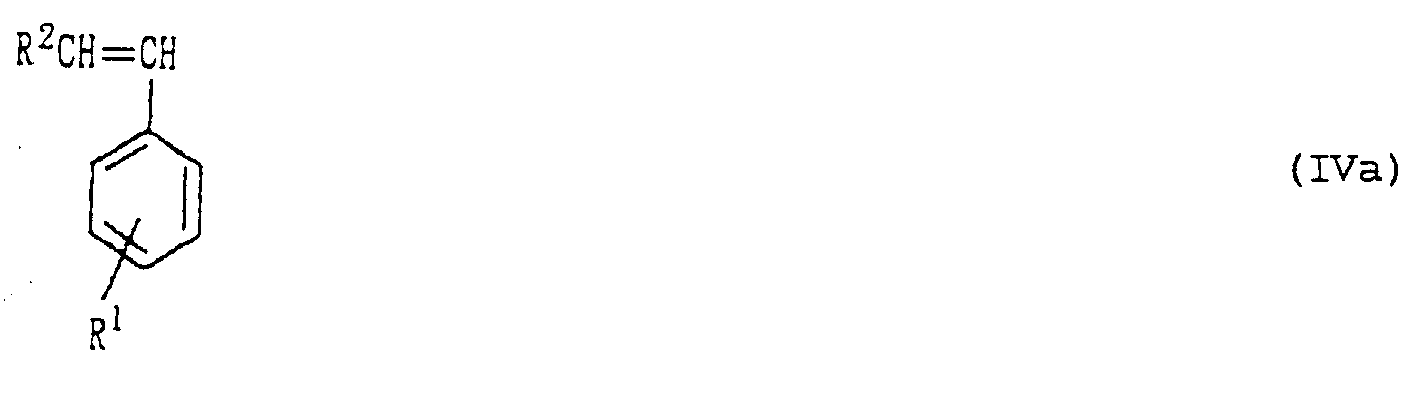
and/or divinylbenzene represented by formula (Va):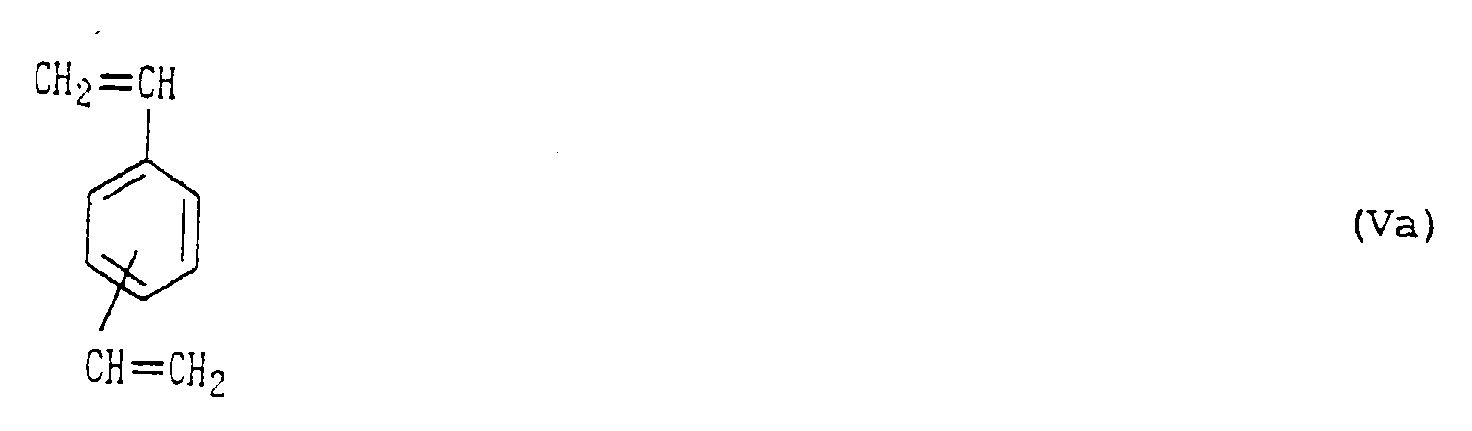
- A process for producing an optically active amino acid compound represented by formula (B):wherein R3 represents a substituted or unsubstituted alkyl group or a substituted or unsubstituted aryl group; R4 represents a hydrogen atom, an alkyl group, a substituted or unsubstituted aryl group or a substituted or unsubstituted aralkyl group; R5 represents a hydrogen atom, an alkyl group, an alkoxy group, a substituted or unsubstituted aryl group or a substituted or unsubstituted aralkyloxy group; and * indicates an asymmetric carbon atom, which comprises asymmetrically hydrogenating a dehydroamino acid compound represented by formula (A):
 wherein R3, R4, and R5 are as defined above,
in the presence of a transition metal complex as set forth in claim 6, 7 or 8.
Applications Claiming Priority (2)
| Application Number | Priority Date | Filing Date | Title |
|---|---|---|---|
| JP08860199A JP4275795B2 (en) | 1999-03-30 | 1999-03-30 | Phosphine derivatives having a vinyl group, polymers using the same, and transition metal complexes thereof |
| JP8860199 | 1999-03-30 |
Publications (3)
| Publication Number | Publication Date |
|---|---|
| EP1041077A2 true EP1041077A2 (en) | 2000-10-04 |
| EP1041077A3 EP1041077A3 (en) | 2002-06-12 |
| EP1041077B1 EP1041077B1 (en) | 2003-11-05 |
Family
ID=13947361
Family Applications (1)
| Application Number | Title | Priority Date | Filing Date |
|---|---|---|---|
| EP00400848A Expired - Lifetime EP1041077B1 (en) | 1999-03-30 | 2000-03-28 | Phosphine derivative and polymer thereof and transition metal complex comprising the same |
Country Status (4)
| Country | Link |
|---|---|
| US (1) | US6465594B1 (en) |
| EP (1) | EP1041077B1 (en) |
| JP (1) | JP4275795B2 (en) |
| DE (1) | DE60006306T2 (en) |
Cited By (3)
| Publication number | Priority date | Publication date | Assignee | Title |
|---|---|---|---|---|
| WO2002062809A1 (en) * | 2001-02-06 | 2002-08-15 | Nagoya Industrial Science Research Institute | Ruthenium complex and process for producing alcohol compound |
| CN104119382A (en) * | 2014-07-15 | 2014-10-29 | 同济大学 | 1,3-disubstituted-allylphosphine oxide compounds and preparation method thereof |
| CN110331286A (en) * | 2019-07-10 | 2019-10-15 | 青海柴达木兴华锂盐有限公司 | Application of alkyl phosphine oxide compound and method for extracting lithium from salt lake brine |
Families Citing this family (7)
| Publication number | Priority date | Publication date | Assignee | Title |
|---|---|---|---|---|
| US7073246B2 (en) | 1999-10-04 | 2006-07-11 | Roche Diagnostics Operations, Inc. | Method of making a biosensor |
| JP4519498B2 (en) * | 2004-03-29 | 2010-08-04 | 北興化学工業株式会社 | Novel polymer-supported transition metal complex having phosphorus-containing α-methylstyrene copolymer as ligand and catalyst comprising the complex |
| JP4554266B2 (en) * | 2004-04-27 | 2010-09-29 | 日本曹達株式会社 | Method for producing N-acylamino acid |
| JP4576584B2 (en) * | 2005-01-31 | 2010-11-10 | 独立行政法人科学技術振興機構 | Phosphorus-containing polymer-immobilized palladium catalyst and use thereof |
| JP2007302859A (en) * | 2006-04-12 | 2007-11-22 | Hokko Chem Ind Co Ltd | Novel polymer-supported transition metal complex having p-phosphine group-containing styrene-styrene copolymer as a ligand and catalyst comprising the complex |
| EP2195305A2 (en) | 2007-08-17 | 2010-06-16 | Cornell Research Foundation, Inc. | Isoselective polymerization of epoxides |
| JP5303142B2 (en) * | 2007-11-30 | 2013-10-02 | 東京応化工業株式会社 | Fluorine-containing compound, fluorine-containing polymer compound, resist composition for immersion exposure, and method for forming resist pattern |
Family Cites Families (8)
| Publication number | Priority date | Publication date | Assignee | Title |
|---|---|---|---|---|
| US3847997A (en) * | 1969-06-12 | 1974-11-12 | Phillips Petroleum Co | Hydroformylation process and catalyst |
| JPS6061587A (en) * | 1983-09-16 | 1985-04-09 | Takasago Corp | Rhodium-phosphine complex |
| US4506030A (en) * | 1984-02-17 | 1985-03-19 | The Board Of Regents, University Of Texas System | Catalysts for hydrogenation of aromatic compounds |
| JPH0249009A (en) * | 1988-05-21 | 1990-02-19 | Tokuyama Soda Co Ltd | Monomer composition |
| US6162951A (en) * | 1996-09-20 | 2000-12-19 | Oxford Asymmetry International Plc | Phosphine ligands |
| GB9619684D0 (en) | 1996-09-20 | 1996-11-06 | Oxford Asymmetry Ltd | Phosphine ligands |
| JP3892931B2 (en) * | 1997-03-11 | 2007-03-14 | 高砂香料工業株式会社 | Optically active phosphine derivative having two vinyl groups, polymer using the same, and transition metal complexes thereof |
| JP3892932B2 (en) * | 1997-03-11 | 2007-03-14 | 高砂香料工業株式会社 | Optically active phosphine derivatives having a vinyl group, polymers using the same, and transition metal complexes thereof |
-
1999
- 1999-03-30 JP JP08860199A patent/JP4275795B2/en not_active Expired - Fee Related
-
2000
- 2000-03-28 DE DE60006306T patent/DE60006306T2/en not_active Expired - Fee Related
- 2000-03-28 EP EP00400848A patent/EP1041077B1/en not_active Expired - Lifetime
- 2000-03-30 US US09/539,413 patent/US6465594B1/en not_active Expired - Lifetime
Cited By (3)
| Publication number | Priority date | Publication date | Assignee | Title |
|---|---|---|---|---|
| WO2002062809A1 (en) * | 2001-02-06 | 2002-08-15 | Nagoya Industrial Science Research Institute | Ruthenium complex and process for producing alcohol compound |
| CN104119382A (en) * | 2014-07-15 | 2014-10-29 | 同济大学 | 1,3-disubstituted-allylphosphine oxide compounds and preparation method thereof |
| CN110331286A (en) * | 2019-07-10 | 2019-10-15 | 青海柴达木兴华锂盐有限公司 | Application of alkyl phosphine oxide compound and method for extracting lithium from salt lake brine |
Also Published As
| Publication number | Publication date |
|---|---|
| DE60006306D1 (en) | 2003-12-11 |
| DE60006306T2 (en) | 2004-09-16 |
| US6465594B1 (en) | 2002-10-15 |
| EP1041077A3 (en) | 2002-06-12 |
| JP4275795B2 (en) | 2009-06-10 |
| JP2000281691A (en) | 2000-10-10 |
| EP1041077B1 (en) | 2003-11-05 |
Similar Documents
| Publication | Publication Date | Title |
|---|---|---|
| EP0877029B1 (en) | Optically active phosphine derivative having vinyl group, polymer produced using the same as monomer and transition metal complexes of these | |
| EP0864577B1 (en) | Optically active phosphine derivative having at least two vinyl groups, polymer produced using the same as monomer and transition metal complexes of these | |
| US5510503A (en) | Bisphosphines for asymmetric hydrogenation catalysts | |
| CA2258018A1 (en) | Asymmetric synthesis catalyzed by transition metal complexes with cyclic chiral phosphine ligands | |
| EP1041077B1 (en) | Phosphine derivative and polymer thereof and transition metal complex comprising the same | |
| EP0826691B1 (en) | Optically active diphosphine compound, method for making the compound, transition metal complex having the compound as ligand and method for making optically active substance by use of the complex | |
| US5223632A (en) | 2,2'-bis(di-(3,5-dialkylphenyl)phosphino)-1,1'-binaphthyl and transition metal complex containing the samd ligand | |
| CN101959898B (en) | The ruthenium complexe with the Ferrocenyl diphosp hine ligand of (P-P) coordination, the method preparing them and their purposes in homogeneous catalysis | |
| US6043380A (en) | Ruthenium-I0D0-optically active phosphine complex | |
| EP0839818B1 (en) | Optically active diphosphines, transition metal complex containing the same, and process for producing an optically active compound using the complex | |
| EP0732337B1 (en) | Optically active asymmetric diphosphine and process for producing optically active substance in its presence | |
| US5808162A (en) | Chiral unsymmetric diphosphine compound and transition metal complex containing the same as ligand | |
| EP1371655B1 (en) | Novel diphosphine compound, production intermediate thereof, transition metal complex containing the compound as ligand and asymmetric hydrogenation catalyst containing the complex | |
| JP2981621B2 (en) | Biphenyl bisphosphine complex | |
| JPH0730104B2 (en) | Ruthenium-phosphine complex | |
| JP4902952B2 (en) | Chiral phosphane for use in asymmetric synthesis | |
| JP4713134B2 (en) | Process for producing optically active alkylphthalides |
Legal Events
| Date | Code | Title | Description |
|---|---|---|---|
| PUAI | Public reference made under article 153(3) epc to a published international application that has entered the european phase |
Free format text: ORIGINAL CODE: 0009012 |
|
| 17P | Request for examination filed |
Effective date: 20000401 |
|
| AK | Designated contracting states |
Kind code of ref document: A2 Designated state(s): AT BE CH CY DE DK ES FI FR GB GR IE IT LI LU MC NL PT SE |
|
| AX | Request for extension of the european patent |
Free format text: AL;LT;LV;MK;RO;SI |
|
| PUAL | Search report despatched |
Free format text: ORIGINAL CODE: 0009013 |
|
| AK | Designated contracting states |
Kind code of ref document: A3 Designated state(s): AT BE CH CY DE DK ES FI FR GB GR IE IT LI LU MC NL PT SE |
|
| AX | Request for extension of the european patent |
Free format text: AL;LT;LV;MK;RO;SI |
|
| RIC1 | Information provided on ipc code assigned before grant |
Free format text: 7C 07F 9/50 A, 7C 07F 15/00 B, 7C 08F 30/02 B, 7C 08F 30/04 B, 7C 07B 53/00 B, 7C 07C 231/18 B, 7C 07M 7:00 Z |
|
| AKX | Designation fees paid |
Designated state(s): CH DE FR GB LI |
|
| GRAH | Despatch of communication of intention to grant a patent |
Free format text: ORIGINAL CODE: EPIDOS IGRA |
|
| GRAH | Despatch of communication of intention to grant a patent |
Free format text: ORIGINAL CODE: EPIDOS IGRA |
|
| GRAS | Grant fee paid |
Free format text: ORIGINAL CODE: EPIDOSNIGR3 |
|
| GRAA | (expected) grant |
Free format text: ORIGINAL CODE: 0009210 |
|
| AK | Designated contracting states |
Kind code of ref document: B1 Designated state(s): CH DE FR GB LI |
|
| REG | Reference to a national code |
Ref country code: GB Ref legal event code: FG4D |
|
| REG | Reference to a national code |
Ref country code: CH Ref legal event code: EP |
|
| REF | Corresponds to: |
Ref document number: 60006306 Country of ref document: DE Date of ref document: 20031211 Kind code of ref document: P |
|
| REG | Reference to a national code |
Ref country code: IE Ref legal event code: FG4D |
|
| REG | Reference to a national code |
Ref country code: CH Ref legal event code: NV Representative=s name: BOVARD AG PATENTANWAELTE |
|
| ET | Fr: translation filed | ||
| PLBE | No opposition filed within time limit |
Free format text: ORIGINAL CODE: 0009261 |
|
| STAA | Information on the status of an ep patent application or granted ep patent |
Free format text: STATUS: NO OPPOSITION FILED WITHIN TIME LIMIT |
|
| 26N | No opposition filed |
Effective date: 20040806 |
|
| REG | Reference to a national code |
Ref country code: IE Ref legal event code: MM4A |
|
| PGFP | Annual fee paid to national office [announced via postgrant information from national office to epo] |
Ref country code: FR Payment date: 20060308 Year of fee payment: 7 |
|
| PGFP | Annual fee paid to national office [announced via postgrant information from national office to epo] |
Ref country code: DE Payment date: 20060323 Year of fee payment: 7 |
|
| PGFP | Annual fee paid to national office [announced via postgrant information from national office to epo] |
Ref country code: CH Payment date: 20060329 Year of fee payment: 7 |
|
| REG | Reference to a national code |
Ref country code: CH Ref legal event code: PL |
|
| GBPC | Gb: european patent ceased through non-payment of renewal fee |
Effective date: 20070328 |
|
| REG | Reference to a national code |
Ref country code: FR Ref legal event code: ST Effective date: 20071130 |
|
| PG25 | Lapsed in a contracting state [announced via postgrant information from national office to epo] |
Ref country code: DE Free format text: LAPSE BECAUSE OF NON-PAYMENT OF DUE FEES Effective date: 20071002 |
|
| PG25 | Lapsed in a contracting state [announced via postgrant information from national office to epo] |
Ref country code: CH Free format text: LAPSE BECAUSE OF NON-PAYMENT OF DUE FEES Effective date: 20070331 Ref country code: LI Free format text: LAPSE BECAUSE OF NON-PAYMENT OF DUE FEES Effective date: 20070331 |
|
| PG25 | Lapsed in a contracting state [announced via postgrant information from national office to epo] |
Ref country code: GB Free format text: LAPSE BECAUSE OF NON-PAYMENT OF DUE FEES Effective date: 20070328 |
|
| PG25 | Lapsed in a contracting state [announced via postgrant information from national office to epo] |
Ref country code: FR Free format text: LAPSE BECAUSE OF NON-PAYMENT OF DUE FEES Effective date: 20070402 |
|
| PGFP | Annual fee paid to national office [announced via postgrant information from national office to epo] |
Ref country code: GB Payment date: 20060322 Year of fee payment: 7 |