This invention pertains to a method for replicating (copying) a hologram
into a photosensitive layer to produce a copy (replicate) of the hologram in a
manner such that the copy is an accurate and true replication of the hologram (e.g.,
master hologram) with minimum defects.
Commercially acceptable holograms, used as security elements in graphic
arts or as holographic optical elements, must be free of imaging defects.
Holographic prior art teaches the importance and necessity of using optically
clear, smooth materials which do not cause unwanted surface reflections during
holographic processing, and especially during replication of a master hologram to
produce a copy (replicate) of the master hologram. Replication by direct contact
copying of a master hologram (either a reflection hologram or a transmission
hologram) in which the master hologram is in direct contact with a photosensitive
layer (e.g., a holographic recording film) is known from the art. With respect to
reflection holograms, see, for example, the following references:
1) "Photographic Reconstruction of the Optical Properties of an Object in its Own
Scattered Radiation Field", by Yu N. Denisyuk, Soviet Physics ― Doklady, 7,
pages 543-5 (1962); 2) "Copying Reflection Holograms", by Clark N. Kurtz,
Journal of the Optical Society of America, 58, pages 856-7 (1968); and U.S.
Patent 4,995,685. With respect to transmission holograms, see, for example, U.S.
Patent 4,209,250, which discloses a system for making multiple copies from a
stationary planar transmission master hologram, and U.S. Patent 4,973,113, which
describes a method and apparatus for making a copy of a transmission hologram
from a master. The prior art teaches that such direct contact copying is done by
contacting a photosensitive element, comprised of a photosensitive layer and a
smooth coversheet, to a smooth master hologram such that a smooth surface of the
coversheet is in direct contact with a smooth surface of the master hologram.
Frequently, contacting of the two smooth surfaces is effected with use of a
vacuum platen that draws the coversheet in close contact with the master
hologram. Contact copies made using the above prior art process frequently
exhibit a defect known as "Newton's ring" defects, which are circular rings of
interference patterns of light and dark areas that appear together with an image of
the master hologram in the copied hologram. The present invention provides a
contact copying process for accurately reproducing a hologram which is devoid of
"Newton's ring" defects and other interference-related defects
In one embodiment, the invention is a method for copying (replicating) a
hologram comprising:
characterized in that the placing step is performed with the outer surface of the
holographic element having a matte surface with a surface roughness measured by
profilometry in the range from 5 to 200 nanometers.
The present method for holographic replication involves using a
holographic element (as holographic master) that has an outer surface that is
matte, having a surface roughness measured by profilometry in the range from
5 nanometers to about 200 nanometers. The outer surface can be inherently matte
or it can be made to be matte either by applying a matting agent (e.g., in a spray,
in a coating, etc.).
Various embodiments of the present invention will now be described by way
of example only, and with reference to the accompanying drawings in which:
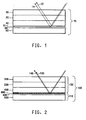
Figure 1 shows how an interference pattern of light and dark areas
(Newton's rings) can form in an imaging stack 10 and be recorded in a
photosensitive layer 20 as a result of reflected light rays 12 and 14 following
slightly different path lengths within the imaging stack 10 and consequently being
out of phase with one another. Other layers of the imaging stack 10 in Figure 1
are base 30, cover sheet 40, and holographic master 50 with a glass cover layer 60.
As illustrated in Figure 1, there is an air gap 70 between the cover sheet 40 and the
glass cover layer 60.
With Newton's ring defects (and more broadly other interference-related
defects), this phenomenon results from light interference that arises when light
waves are refracted off various interfaces in an imaging stack. At each interface
where there is a refractive index mismatch, some of the light is reflected back. In
the case where there are two interfaces as illustrated in Figure 1 (e.g., the outer
surface of the cover sheet and the top surface of the glass master), the light waves
reflected from these two surfaces, which follow slightly different path lengths,
will be out of phase with each other and will interfere with each other. This
results in a pattern of light and dark interference fringes. These fringes are
sometimes referred to as "Newton's rings". A photosensitive layer, e.g,
holographic recording film (HRF), is capable of recording these interference
fringes. Since they tend to occur at a frequency and size that is easily visible to
the naked eye, they are quite objectionable and make the replicated hologram
unacceptable. The intensity of the fringes and any defects in the replicated
hologram that result will depend on the refractive index mismatch and the
difference in path length between interfering rays.
It is believed that there are two main factors that make it likely that
Newton's ring defects will be present in contact copies of holograms with copying
done with a smooth interface. First, trapped air cannot escape easily (there is
insufficient space for air to be removed, even under vacuum) leaving an air gap
between the surfaces, resulting in a large path length difference that produces
interference fringes, as shown in Figure 1. Second, since the differences in
refractive indices between cover sheet and air and air and glass are large, there
will be a lot of surface reflection. This results in a strong interference pattern
which disrupts the replicated image.
The refractive index mismatch is eliminated in either of two ways. One
can introduce a "refractive index matching" fluid, which fills in the gap between
cover sheet and master with a liquid which has a refractive index close to that of
both surfaces. This effectively eliminates surface reflections. The other method is
by direct contact of the surface of the photosensitive layer of the HRF to the
surface of the master. This eliminates the cover sheet interface from the picture.
When the HRF photosensitive layer is in intimate contact with the master, there is
also no air gap, with its large refractive index mismatch (the HRF photosensitive
layer and glass are close in refractive index), hence there are no surface reflections
in this case.
Figure 2 shows a preferred embodiment of the present invention in a
holographic imaging stack 100 similar to the stack 10 shown in Figure 1. A
holographic element 110 comprises a master hologram 500 disposed adjacent to
an optically transparent layer 600. An outer surface 800 of the holographic
element 110 has a matte surface with a surface roughness measured by
profilometry in the range from 5 to 200 nanometers. In the present embodiment,
the outer surface 800 of the holographic element 110 comprises the top surface of
the optically transparent layer 600, with the transparent layer 600 either attached
to or just contacting the master hologram 500. The rough surface allows for air to
be more effectively removed, eliminating the air gap. That eliminates the path
length difference between reflected rays 120 and 140, as shown in Figure 2. In
addition, the rough surface promotes light scattering, breaking up the specular
reflections. Thus the light interference which causes damage to the replicated
images is eliminated. A matte surface at the interface during copying according to
this invention has surface roughness measured by profilometry which ranges from
5 to 200 nanometers (or about 200 nanometers). Preferably, the surface roughness
is 10 to 130 nanometers; more preferably, it is 20 to 100 nanometers, still more
preferably, it is 30 to 90 nanometers; and most preferably, it is 40 to
80 nanometers. The upper limit of surface roughness of about 200 nanometers is
only approximate in this invention, since further increases will lead to loss of
resolution of the image but for some applications this may be tolerable and
suitable if there are tradeoffs in performance of other key properties.
This invention provides a method for replicating a hologram, which may
be a holographic master, in a manner such that the resulting replicate (copy) of the
hologram is devoid of Newton's ring defects and/or other interference-related
defects. In some embodiments, a matting agent is present on the holographic
element to provide a matte or roughened outer surface having surface roughness in
the range from 5 to 200 nanometers. A variety of matting agents can be
employed. Suitable matting agents include, but are not limited to, acid etched
glass (anti-Newton ring glass) and various fine powders, such as alumina, silica,
or talcum. These powders can either be applied as a spray or as a coating on a
glass or other optically transparent outer layer of a master hologram.
In some embodiments, the outer surface of the holographic element is
comprised of a material that is inherently matte and imparts, to the outer surface,
surface roughness in the range from 5 to 200 nanometers. Examples of materials
that are inherently matte include, but are not limited to, a variety of extruded
optically transparent polymers, e.g., poly(methyl methacrylate), and glass that is
etched, e.g., acid etched. Suitable matting agents for this invention are those that
afford a matte surface (e.g., after application in a coating and drying) on the
holographic element (and consequently at the interface during copying according
to this invention) having surface roughness measured by profilometry which
ranges from 5 to about 200 nanometers. Suitable master holograms for use in this
invention include, but are not limited to, those made by holographic exposure of
photosensitive layers comprising photopolymer, dichromated gelatin, or silver
halide emulsion.
During holographic replication of a master hologram 500 using a
photosensitive element 130 comprising a base 300, photosensitive layer 200 and
coversheet 400, the outer surface of the coversheet 400 of the photosensitive
element 130 is preferably contacted with the outer surface 800 of the holographic
element 100 to form an imaging stack, as illustrated in Figure 2. In this invention,
it is critical that the interface be matte having surface roughness measured by
profilometry which ranges from 5 to 200 nanometers. The interface can be matte
having this degree of surface roughness by 1) making the outer surface 800 of the
holographic element 110 matte; or 2) applying a matting agent in the outer surface
800 of the holographic element 110, which results in an effective and suitable
degree of surface roughness at the interface between the photosensitive element
130 and the holographic element 110. The outer surface 800 of the holographic
element 110 can be an imaged photosensitive element, which is an imaged and
cured photopolymer layer. Preferably, though, it is a glass surface having this
degree of surface roughness. Most preferably, the outer surface of the glass is
either acid-etched glass or glass that is coated with a matting agent to give the
above degree of surface roughness.
EXAMPLES
The surface roughness averages and statistics for materials in the examples
reported below were calculated as an average of 25 averages (average of 25
10 micron segments in a 2.0 mm segment of a given surface analyzed by
profilometry) collected using a Sloan DEKTAK 3030ST profilometer (vendor:
Veeco Instruments, Inc., Sloan Technical Division, 602 East Montecito St., Santa
Barbara, CA 93103). A total scan length of 2 mm was measured without
autoleveling, without smoothing, at stylus force of 20 mg, and at medium speed.
Roughness was calculated using DEKTAK internal software for each 80 micron
interval along the 2.0 mm scan.
UV-A exposure in the examples and comparative examples was made in
each case using a Vaculux Integrated Exposure System (Unit #2k-3343VSA,
Vendor: Burgess Industries, Inc., Plymouth, MN 55441) with a 2 kW metal
halide bulb. Each exposure was measured using a UV radiometer from EIT
Instruments (Sterling, VA 20164). UV-A is defined to be the 315-400 nm region
of the electromagnetic spectrum. See, for example, Light Measurement
Handbook, by Alex Ryer, International Light, Inc., Newburyport, MA (1997).
COMPARATIVE EXAMPLE 1
This example illustrates that a contact copy, which was made with a
photosensitive element having a smooth coversheet in contact with a holographic
master having a smooth surface, exhibited a large number of interface-related
defects known as Newton's rings.
A contact copy was made with a photosensitive element having a smooth
coversheet in contact with a holographic master having a smooth surface. The
photosensitive element was OmniDex® 706L film (E. I. du Pont de Nemours and
Company, Wilmington, DE) and consisted of in sequence the following three
layers: polyester base, photopolymer layer, and cover sheet. The smooth surface
of the master was 30 mil thick drawn glass available from Focal Point Industries
(Sanford, FL). With cover sheet in place, the outer surface of the film was
contacted to the smooth surface of the holographic master using a laydown roll
and held in place by vacuum, approximately 19" Hg (64.3 kPa). A settling time of
15 seconds was used to draw air from the contact interface. A laser exposure was
done with intensity of 1 mW/cm2 of approximately 50 mJ/cm2 using the 476 nm
line of an Ar+ laser at the master reconstruction angle of 35° from normal
incidence. After laser exposure, the copy was decoupled from the master and
exposed with UV-A (details given supra) for an approximate exposure of
100 mJ/cm2. Using anOmniDex® Laminator (E. I. du Pont de Nemours and
Company, Inc., Wilmington, DE), the cover sheet was removed from the exposed
film and another photopolymer layer, OmniDex® CTF 75 (E. I. du Pont
de Nemours and Company, Wilmington, DE) was contacted to the hologram
layer, using a heated roller (100°C) at a line speed of 2 meters/minute under
standard pressure. This laminate was baked at 140°C for eight minutes. The
processed hologram copy was inspected for Newton's rings and other interface-related
defects. The hologram copy exhibited a large number of interface-related
defects (Newton rings) that were clearly visible as objectionable defects to the
naked eyes (of an observer observing under room light conditions).
The OmniDex® 706L coversheet roughness statistics as determined by
profilometry were as follows:
| mean | 2.0 nm |
| std. dev. | 2.1 nm |
| max. | 11.8 nm |
| min. | 1.0 nm |
The coversheet in this example was made by solution coating poly (vinyl
chloride) onto a polished stainless steel belt. The "belt side", which had only a
very slight surface roughness from the polished steel belt, was the surface which
contacted the master hologram in this example.
The master hologram surface roughness statistics as determined by
profilometry were as follows:
| mean | 2.8 nm |
| std. dev. | 1.0 nm |
| max. | 6.7 nm |
| min. | 1.9 nm |
This example illustrates that a contact copy, which was made with a
photosensitive element having a smooth coversheet in contact with a holographic
master having a roughened, matte surface, exhibited no interface-related defects
known as Newton's rings.
Example 1 was done in the same manner as Comparative Example 1,
except that the outer surface of the holographic master in contact with
photosensitive element during contact copying had a roughened, matte surface, which
consisted of 0.030" (0.076 cm) thick anti-Newton glass. The processed hologram copy
was inspected for Newton's rings and other interface-related defects. The
hologram copy exhibited no Newton's rings or other interference defects. No
defects were visible to the naked eyes (of an observer observing under room light
conditions). The master hologram surface roughness statistics measured by
profilometry on the outer surface of anti-Newton ring glass were as follows:
| mean | 57.6 nm |
| std. dev. | 28.4 nm |
| max. | 118.7 nm |
| min. | 16.9 nm |
The anti-Newton glass employed in this example was obtained from Focal Point
Industries, Inc. in Sanford, Florida 32773, telephone (407) 322-2123, and is sold
for use in graphic arts applications.
COMPARATIVE EXAMPLE 2 AND EXAMPLE 2
This example illustrates that a contact copy, which was made with a
photosensitive element having a smooth coversheet in contact with a holographic
master having a roughened, matte surface (to a significantly higher degree than in
Example 1), exhibits other types of defects.
Comparative Example 2 and Example 2 were done in the same manner as
Comparative Example 1, except that the outer surface of the holographic master in
contact with the photosensitive element during contact copying had an excessive
roughened, matte source, which consisted of 0.030" (0.076 cm) acid etched glass. The
master hologram surface roughness statistics were as follows:
| mean | 133.5 nm |
| std. dev. | 71.1 nm |
| max. | 446.5 nm |
| min. | 17.2 nm |
The replicated hologram exhibited no interface-related defects known as Newton's
rings but did exhibit other imaging defects, including some loss of resolution and
fuzziness of the copied hologram, which may be objectionable in some
applications and tolerable in others.
PROPHETIC EXAMPLE 1
A contact copy is made with a photosensitive element having a smooth
coversheet in contact with a holographic master having an initially smooth surface
which is coated with graphic arts anti-Newton ring spray to afford a slightly
roughened outer surface. The photosensitive element is OmniDex® 706L film
(E. I. du Pont de Nemours and Company, Wilmington, DE) and consists of in
sequence the following three layers: polyester base, photopolymer layer, and
cover sheet. The smooth surface of the master is 30 mil (0.76 mm) thick drawn glass
available from Focal Point Industries in Sanford, Florida 32773, telephone
(407) 322-2123). A light application of Policrom Anti-Newton Ring Spray
LS-41, available from Momentum Graphics, Inc., telephone (800) 848-2583
(which spray is sold for use in graphic arts applications) is applied to the smooth
glass surface of the master.
With cover sheet in place, the outer surface of the film is contacted to the
now slightly roughened surface of the holographic master using a laydown roll
and held in place by vacuum, approximately 19" Hg (64.3 kPa). A settling time of
15 seconds is used to draw air from the contact interface. A laser exposure is done
with intensity of 1 mW/cm2 of approximately 50 mJ/cm2 using the 476 nm line of
an Ar+ laser at the master reconstruction angle of 35° from normal incidence.
After laser exposure, the copy is decoupled from the master and is exposed with
UV-A for an approximate exposure of 100 mJ/cm2. Using an OmniDex®
Laminator (E. I. du Pont de Nemours and Company, Wilmington, DE), the cover
sheet is removed from the exposed film and another photopolymer layer,
OmniDex® CTF 75 (E. I. du Pont de Nemours and Company, Wilmington, DE) is
contacted to the hologram layer, using a heated roller (100°C) at a line speed of
2 meters/minute under standard pressure. This laminate is baked at 140°C for
eight minutes. The processed hologram copy was inspected for Newton's rings
and other interface-related defects. The hologram copy exhibits no interface-related
defects (Newton's rings).
PROPHETIC EXAMPLE 2
A contact copy is made with a photosensitive element having a smooth
coversheet in contact with a holographic master having an initially smooth
surface, which is coated with talcum powder to afford a slightly roughened outer
surface. The photosensitive element is OmniDex® 706L film (E. I. du Pont
de Nemours and Company, Wilmington, DE) and consists of in sequence the
following three layers: polyester base, photopolymer layer, and cover sheet. The initially
smooth surface of the master is 30 mil (0.76 mm) thick drawn glass available from
Focal Point Industries in Sanford, Florida 32773, telephone (407) 322-2123. A
light application of finely divided talcum powder is applied in the following way:
a small amount of the powder (Johnson & Johnson Baby Powder, commonly
available at drug or grocery stores) is wafted into the air. The larger, heavier
particles are allowed to settle out of the air for several seconds. Then the master is
passed through the remaining cloud of fine particles, depositing some on the
surface of the master.
With cover sheet in place, the outer surface of the film is contacted to the
powdered surface of the holographic master using a laydown roll and held in place
by vacuum, approximately 19" Hg (64.3 kPa). A settling time of 15 seconds is used
to draw air from the contact interface. A laser exposure is done with intensity of
1 mW/cm2 of approximately 50 mJ/cm2 using the 476 nm line of an Ar+ laser at
the master reconstruction angle of 35° from normal incidence. After laser
exposure, the copy is decoupled from the master and is exposed with UV A for an
approximate exposure of 100 mJ/cm2. Using an OmniDex® Laminator
(E. I. du Pont de Nemours and Company, Wilmington, DE), the cover sheet is
removed from the exposed film and another photopolymer layer, OmniDex®
CTF 75 (E. I. du Pont de Nemours and Company, Wilmington, DE) is contacted
to the hologram layer, using a heated roller (100°C) at a line speed of
2 meters/minute under standard pressure. This laminate is baked at 140°C for
eight minutes. The processed hologram copy is inspected for Newton's rings and
other interface related defects. The hologram copy exhibits no interface-related
defects (Newton's rings).
PROPHETIC EXAMPLE 3
A contact copy is made with a photosensitive element having a roughened
coversheet as in Example 2 in contact with a holographic master having a
roughened surface as in Example 1. The photosensitive element is OmniDex®
706 film (E. I. du Pont de Nemours and Company, Wilmington, DE) and consists
of in sequence the following three layers: polyester base, photopolymer layer, and
cover sheet. The surface of the master is 30 mil (0.76 mm) thick anti-Newton ring
glass, which is available from Focal Point Industries in Sanford, Florida 32773,
telephone (407) 322-2123 and which is sold for use in graphic arts applications.
With cover sheet in place, the outer surface of the film is contacted to the
surface of the holographic master using a laydown roll and held in place by vacuum,
approximately 19" Hg (64.3 kPa). A settling time of 15 seconds is used to draw air
from the contact interface. A laser exposure is done with intensity of 1 mW/cm2
of approximately 50 mJ/cm2 using the 476 nm line of an Ar+ laser at the master
reconstruction angle of 35° from normal incidence. After laser exposure, the copy
is decoupled from the master and is exposed with UV-A for an approximate
exposure of 100 mJ/cm2. Using an OmniDex® Laminator (E. I. du Pont
de Nemours and Company, Wilmington, DE), the cover sheet is removed from the
exposed film and another photopolymer layer, OmniDex® CTF 75 (E. I. du Pont
de Nemours and Company, Wilmington, DE) is contacted to the hologram layer,
using a heated roller (100°C) at a line speed of 2 meters/minute under standard
pressure. This laminate is baked at 140°C for eight minutes. The processed
hologram copy is inspected for Newton's rings and other interface-related defects.
The hologram copy exhibits no interface-related defects (Newton's rings).