EP1034185B1 - Pharmaceutical compositions containing the long pentraxin ptx3 - Google Patents
Pharmaceutical compositions containing the long pentraxin ptx3 Download PDFInfo
- Publication number
- EP1034185B1 EP1034185B1 EP98962665A EP98962665A EP1034185B1 EP 1034185 B1 EP1034185 B1 EP 1034185B1 EP 98962665 A EP98962665 A EP 98962665A EP 98962665 A EP98962665 A EP 98962665A EP 1034185 B1 EP1034185 B1 EP 1034185B1
- Authority
- EP
- European Patent Office
- Prior art keywords
- ptx3
- long pentraxin
- sequence
- treatment
- cells
- Prior art date
- Legal status (The legal status is an assumption and is not a legal conclusion. Google has not performed a legal analysis and makes no representation as to the accuracy of the status listed.)
- Expired - Lifetime
Links
Images


Classifications
-
- A—HUMAN NECESSITIES
- A61—MEDICAL OR VETERINARY SCIENCE; HYGIENE
- A61K—PREPARATIONS FOR MEDICAL, DENTAL OR TOILETRY PURPOSES
- A61K38/00—Medicinal preparations containing peptides
- A61K38/16—Peptides having more than 20 amino acids; Gastrins; Somatostatins; Melanotropins; Derivatives thereof
- A61K38/17—Peptides having more than 20 amino acids; Gastrins; Somatostatins; Melanotropins; Derivatives thereof from animals; from humans
- A61K38/1703—Peptides having more than 20 amino acids; Gastrins; Somatostatins; Melanotropins; Derivatives thereof from animals; from humans from vertebrates
- A61K38/1709—Peptides having more than 20 amino acids; Gastrins; Somatostatins; Melanotropins; Derivatives thereof from animals; from humans from vertebrates from mammals
-
- A—HUMAN NECESSITIES
- A61—MEDICAL OR VETERINARY SCIENCE; HYGIENE
- A61P—SPECIFIC THERAPEUTIC ACTIVITY OF CHEMICAL COMPOUNDS OR MEDICINAL PREPARATIONS
- A61P29/00—Non-central analgesic, antipyretic or antiinflammatory agents, e.g. antirheumatic agents; Non-steroidal antiinflammatory drugs [NSAID]
-
- A—HUMAN NECESSITIES
- A61—MEDICAL OR VETERINARY SCIENCE; HYGIENE
- A61P—SPECIFIC THERAPEUTIC ACTIVITY OF CHEMICAL COMPOUNDS OR MEDICINAL PREPARATIONS
- A61P31/00—Antiinfectives, i.e. antibiotics, antiseptics, chemotherapeutics
-
- A—HUMAN NECESSITIES
- A61—MEDICAL OR VETERINARY SCIENCE; HYGIENE
- A61P—SPECIFIC THERAPEUTIC ACTIVITY OF CHEMICAL COMPOUNDS OR MEDICINAL PREPARATIONS
- A61P31/00—Antiinfectives, i.e. antibiotics, antiseptics, chemotherapeutics
- A61P31/04—Antibacterial agents
-
- A—HUMAN NECESSITIES
- A61—MEDICAL OR VETERINARY SCIENCE; HYGIENE
- A61P—SPECIFIC THERAPEUTIC ACTIVITY OF CHEMICAL COMPOUNDS OR MEDICINAL PREPARATIONS
- A61P31/00—Antiinfectives, i.e. antibiotics, antiseptics, chemotherapeutics
- A61P31/12—Antivirals
-
- A—HUMAN NECESSITIES
- A61—MEDICAL OR VETERINARY SCIENCE; HYGIENE
- A61P—SPECIFIC THERAPEUTIC ACTIVITY OF CHEMICAL COMPOUNDS OR MEDICINAL PREPARATIONS
- A61P35/00—Antineoplastic agents
-
- A—HUMAN NECESSITIES
- A61—MEDICAL OR VETERINARY SCIENCE; HYGIENE
- A61P—SPECIFIC THERAPEUTIC ACTIVITY OF CHEMICAL COMPOUNDS OR MEDICINAL PREPARATIONS
- A61P35/00—Antineoplastic agents
- A61P35/02—Antineoplastic agents specific for leukemia
-
- C—CHEMISTRY; METALLURGY
- C07—ORGANIC CHEMISTRY
- C07K—PEPTIDES
- C07K14/00—Peptides having more than 20 amino acids; Gastrins; Somatostatins; Melanotropins; Derivatives thereof
- C07K14/435—Peptides having more than 20 amino acids; Gastrins; Somatostatins; Melanotropins; Derivatives thereof from animals; from humans
- C07K14/46—Peptides having more than 20 amino acids; Gastrins; Somatostatins; Melanotropins; Derivatives thereof from animals; from humans from vertebrates
- C07K14/47—Peptides having more than 20 amino acids; Gastrins; Somatostatins; Melanotropins; Derivatives thereof from animals; from humans from vertebrates from mammals
-
- C—CHEMISTRY; METALLURGY
- C07—ORGANIC CHEMISTRY
- C07K—PEPTIDES
- C07K14/00—Peptides having more than 20 amino acids; Gastrins; Somatostatins; Melanotropins; Derivatives thereof
- C07K14/435—Peptides having more than 20 amino acids; Gastrins; Somatostatins; Melanotropins; Derivatives thereof from animals; from humans
- C07K14/705—Receptors; Cell surface antigens; Cell surface determinants
- C07K14/71—Receptors; Cell surface antigens; Cell surface determinants for growth factors; for growth regulators
-
- A—HUMAN NECESSITIES
- A61—MEDICAL OR VETERINARY SCIENCE; HYGIENE
- A61K—PREPARATIONS FOR MEDICAL, DENTAL OR TOILETRY PURPOSES
- A61K48/00—Medicinal preparations containing genetic material which is inserted into cells of the living body to treat genetic diseases; Gene therapy
-
- Y—GENERAL TAGGING OF NEW TECHNOLOGICAL DEVELOPMENTS; GENERAL TAGGING OF CROSS-SECTIONAL TECHNOLOGIES SPANNING OVER SEVERAL SECTIONS OF THE IPC; TECHNICAL SUBJECTS COVERED BY FORMER USPC CROSS-REFERENCE ART COLLECTIONS [XRACs] AND DIGESTS
- Y02—TECHNOLOGIES OR APPLICATIONS FOR MITIGATION OR ADAPTATION AGAINST CLIMATE CHANGE
- Y02A—TECHNOLOGIES FOR ADAPTATION TO CLIMATE CHANGE
- Y02A50/00—TECHNOLOGIES FOR ADAPTATION TO CLIMATE CHANGE in human health protection, e.g. against extreme weather
- Y02A50/30—Against vector-borne diseases, e.g. mosquito-borne, fly-borne, tick-borne or waterborne diseases whose impact is exacerbated by climate change
Definitions
- the present invention relates to pharmaceutical compositions containing the long pentraxin PTX3 (PTX3) or one of its functional derivatives.
- the invention relates to the aforesaid compositions for the therapy of infectious and inflammatory diseases or tumours.
- the invention also relates to expression vectors containing the complete cDNA sequence coding for PTX3 or one of its functional derivatives, recombinant host cells transfected with such expression vectors and a method for producing PTX3 or one of its functional derivatives. Further, the invention relates to gene therapy methods for the treatment of tumours, based on the use of the aforesaid expression vectors.
- PTX3 a protein which is expressed in various types of cells, most notably in mononuclear phagocytes and endothelial cells, after exposure to the inflammatory cytokines Interleukin 1 beta (IL-1beta) and Tumour Necrosis Factor alpha (TNF-alpha).
- IL-1beta Interleukin 1 beta
- TNF-alpha Tumour Necrosis Factor alpha
- PTX3 consists of two structural domains, an N-terminal unrelated to any known molecule, and a C-terminal similar to the short pentraxins such as C-reactive protein (CRP).
- CRP C-reactive protein
- the PTX3 gene is located on chromosome 3 of the mouse in a region similar to the human 3q region (q24-28), in agreement with the documented location of hPTX3 in the 3q 25 region.
- mouse PTX3 (mPTX3) (Introna M., Vidal Alles V., Castellano M., Picardi G., De Gioia L., Bottazzi B., Peri G., Breviario F., Salmona M., De Gregorio L., Dragani T.A., Srinivasan N., Blundell T.L., Hamilton T.A.
- the degree of identity between the sequences is 82% between the human and mouse gene and reaches 90% if conservative substitutions are considered.
- the high degree of similarity between the hPTX3 and mPTX3 sequences is a sign of the high degree of conservation of pentraxin during evolution (Pepys M.B., Baltz M.L.: Acute phase proteins with special reference to C-reactive protein and related proteins (pentraxins) and serum amyloid A protein. Adv. Immunol. 34:141, 1983).
- CRP is a marker for immuno-inflammatory and infectious disease. After a trauma, a lesion or infection of a tissue triggers off, in the affected subject, a complex series of reactions aimed at preventing extension of the damage, at destroying the infecting organism and at activating the repair process in order to restore normal function. This process constitutes the so-called acute-phase response, and the main marker currently used for the acute-phase response is CRP.
- CRP In normal human serum, in fact, it is present in concentrations of less than 10 ⁇ g/ml, but can increase more than 1,000-fold in response to a trauma or inflammation (Koj A.: "Acute phase reactants” in "Structure and Function of Plasma Proteins". Allison A., ed. Plenum Press, New York, 1974, pp. 73-131).
- Short pentraxins such as CRP and SAP (serum amyloid P component) are characterised by their ability to recognise and bind in a calcium-dependent manner to a broad spectrum of ligands, including phosphocholine, phosphoethanolamine, many sugars, the best characterised of which is an agarose derivative rich in pyruvate [methyl 4-6-O-(1-carboxyethylidene)-beta-D-galacto-pyranoside) or MO ⁇ DG, complement fragments and proteins of the extracellular matrix, particularly fibronectin and type IV collagen.
- PTX3 is unable to bind either calcium (assessed by Inductive Coupled Plasma/Atomic Emission Spectroscopy) or phosphocholine, phosphoethanolamine or MO ⁇ DG. Moreover, PTX3 is unable to bind extracellular matrix proteins such as fibronectin or type IV collagen. On the other hand, PTX3 is capable of binding the C1q complement fragment which is also recognised by the short pentraxins (Table 1). It should be stressed, however, that, whereas CRP and SAP have to be cross-linked to bind C1q, PTX3 is capable of recognising and binding this complement fragment in the naturally occurring form.
- the long pentraxin PTX3 or its functional derivatives are useful therapeutic agents, particularly for the therapy of infectious and inflammatory diseases or tumours.
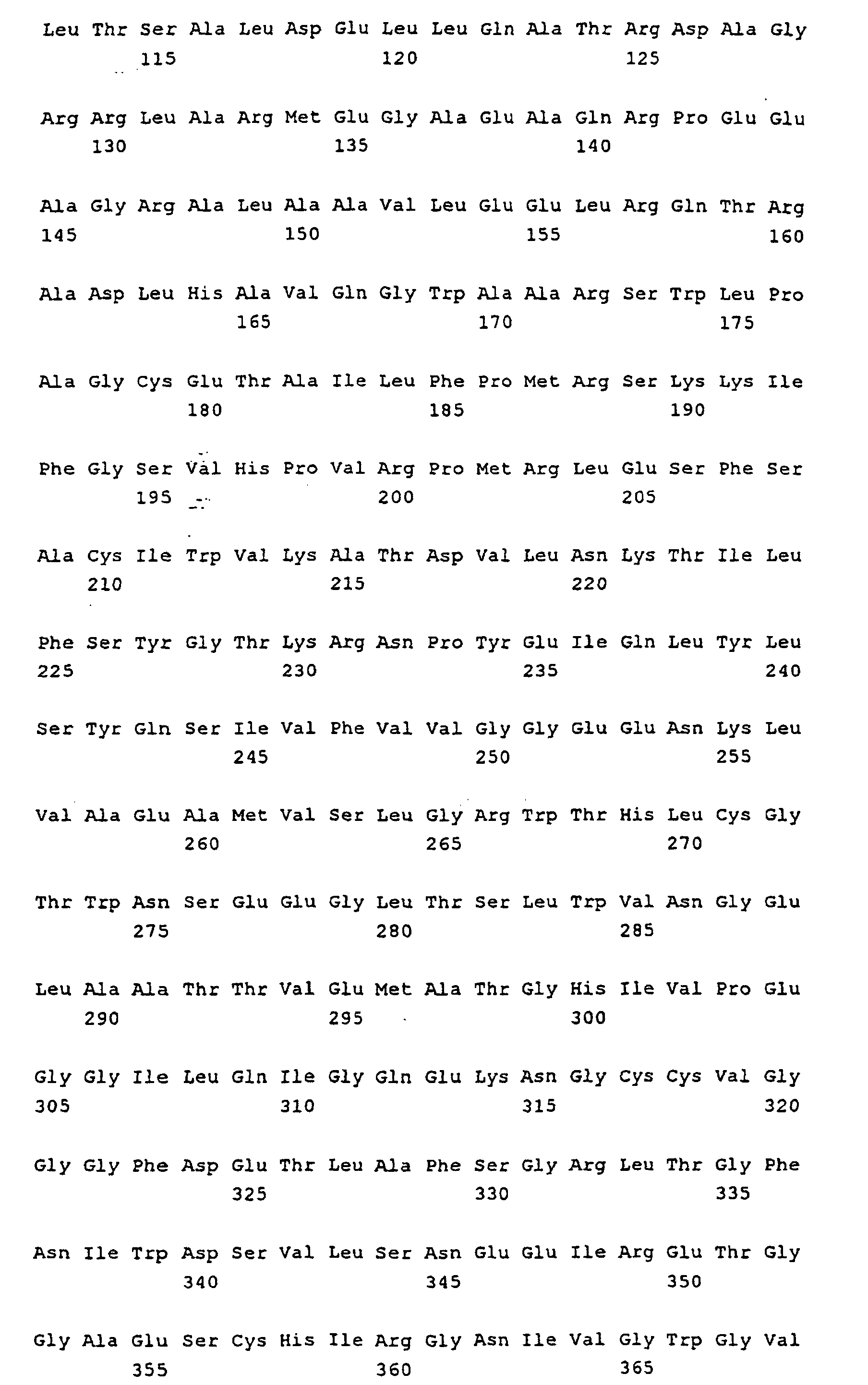
- long pentraxin PTX3 is any long pentraxin PTX3, i.e. regardless of its natural (human or animal) or synthetic origin. Human long pentraxin PTX3 (see sequence 1 and Fig. 5) is the preferred form.
- a convenient method of producing substantial amounts of long pentraxin PTX3 or one of its functional derivatives consists in preparing expression vectors (e.g. plasmids) containing the complete cDNA sequence coding for PTX3 or one of its functional derivatives and in using these to transfer eukaryotic cells in culture (e.g. Chinese hamster ovary cells, CHO). After cloning the recombinant host cells thus transfected, the cell clone capable of producing the highest levels of PTX3 is selected.
- expression vectors e.g. plasmids
- eukaryotic cells in culture e.g. Chinese hamster ovary cells, CHO.
- the above-mentioned expression vectors containing the cDNA sequence coding for long pentraxin PTX3 are also utilised in gene therapy methods for the treatment of tumour conditions.
- a first gene therapy method consists in:
- a second gene therapy method for the treatment of tumours consists in:
- PTX3 or its functional derivatives have yet to be definitively clarified, their anticancer activity in any event is not attributable to a direct cytolytic or cytostatic effect on the tumour cells, but rather to mechanisms mediated by the host and related to the leukocyte recruitment ability exerted by these compounds, as will be described below.
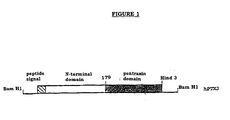
- PTX3 a fragment containing the complete cDNA sequence of human PTX3 (sequence 2 and Fig. 6) was subcloned in the Bam H1 site of the expression vector pSG5 (Fig. 1) (Stratagene, La Jolla, CA, USA) and transfected in CHO cells using the precipitated calcium procedure.
- pSG5 Fig. 1 (Stratagene, La Jolla, CA, USA) and transfected in CHO cells using the precipitated calcium procedure.
- G418 capable of producing large amounts of PTX3 was used as a source from which the protein was purified by chromatography by means of ion exchange and gel filtration.
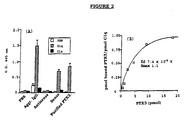
- Binding of PTX3 to C1q the binding of PTX3 to C1q was assessed in an ELISA system.
- a 96-well plate was covered with 250-500 ng of C1q per well (one night at 4°C) and then washed with PBS with Ca ++ and Mg ++ containing 0.05% Tween 20 (PBS). The wells were then blocked with 5% milk in PBS (2 h at room temperature) and subsequently incubated with variable concentrations of PTX3 (30 min at 37°C).
- the plate was incubated with a rat monoclonal antibody to PTX3 (1 h at room temperature) and then with the second antibody, a peroxidase-conjugated rat anti-IgG antibody (1 h at room temperature). After washing, chromogen was added and absorbance was read at 405 nm using an automatic plate reader. In a number of experiments, the wells were covered with PTX3 and C1q binding was evaluated using an anti-C1q antibody.
- Biotinylated protein was used to determine the C1q binding affinity.
- PTX3 was biotinylated according to standard procedures using an activated biotin modified by the addition of a "spacer arm”. (SPA - Società Prodotti Antibiotici).
- Figures 2(A) and 2(B) give the C1q binding and binding affinity results. These results show the very substantial degree of C1q binding and binding affinity of PTX3.
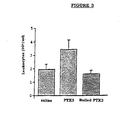
- Leukocyte recruitment the leukocyte recruitment induced by PTX3 was studied in vivo in the subcutaneous pocket system.
- the subcutaneous pocket was induced in the experimental animal by means of two subcutaneous injections of 5 mL of air into the animal's back with an intervening interval of three days. On day 6, 1 ⁇ g of PTX3 in 0.5% carboxymethylcellulose was administered into the pocket. After 4 h, the animals were anaesthetised and the pocket was washed with 1 mL of saline solution. The washing liquid was recovered and was submitted to a total count and a differential count of the cells present.
- Anticancer activity a line of murine mastocytoma P815 was co-transfected by electroporation with the expression vector pSG5 containing the cDNA of human PTX3 or its antisense and the vector pSV2 which endows the transfected cells with neomycin resistance. After selection with neomycin 0.5 mg/mL, the cells were cloned by limit dilution.
- PTX3 To assess the production of PTX3, 2.5x10 5 cells were cultivated in 200 ⁇ L of RPMI + 3% FCS for 24 h and the supernatant was tested by ELISA. The clones obtained produced protein levels ranging from 1 to 35 ng/mL, while the clones containing the antisense produced no measurable levels of PTX3. The clones considered showed the same growth rate in vivo .
- mice Male DBA/2N Cr1BR mice aged 8-10 weeks were subcutaneously injected with 1x10 5 cells of P815 PTX3-producing clones or with clones containing the antisense gene. The mice were monitored 3 times daily for occurrence of tumours and once daily for survival.
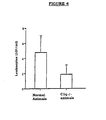
- the anticancer activity reported above correlates closely with the leukocyte recruitment which occurs in the mouse as a result of recognition of the C1q by PTX3. In genetically modified mice, no such leukocyte recruitment occurs.
- the leukocyte recruitment capacity indicates that these compounds may also have a useful application in the treatment of diseases caused by pathogens such as bacteria, fungi, protozoa or viruses.
Landscapes
- Health & Medical Sciences (AREA)
- Life Sciences & Earth Sciences (AREA)
- Chemical & Material Sciences (AREA)
- Organic Chemistry (AREA)
- General Health & Medical Sciences (AREA)
- Medicinal Chemistry (AREA)
- Veterinary Medicine (AREA)
- Public Health (AREA)
- Animal Behavior & Ethology (AREA)
- Pharmacology & Pharmacy (AREA)
- Gastroenterology & Hepatology (AREA)
- Proteomics, Peptides & Aminoacids (AREA)
- Zoology (AREA)
- Nuclear Medicine, Radiotherapy & Molecular Imaging (AREA)
- General Chemical & Material Sciences (AREA)
- Chemical Kinetics & Catalysis (AREA)
- Toxicology (AREA)
- Molecular Biology (AREA)
- Biochemistry (AREA)
- Biophysics (AREA)
- Genetics & Genomics (AREA)
- Oncology (AREA)
- Immunology (AREA)
- Communicable Diseases (AREA)
- Bioinformatics & Cheminformatics (AREA)
- Marine Sciences & Fisheries (AREA)
- Engineering & Computer Science (AREA)
- Epidemiology (AREA)
- Cell Biology (AREA)
- Virology (AREA)
- Hematology (AREA)
- Pain & Pain Management (AREA)
- Rheumatology (AREA)
- Medicines That Contain Protein Lipid Enzymes And Other Medicines (AREA)
- Micro-Organisms Or Cultivation Processes Thereof (AREA)
- Medicines Containing Material From Animals Or Micro-Organisms (AREA)
- Preparation Of Compounds By Using Micro-Organisms (AREA)
- Peptides Or Proteins (AREA)
- Acyclic And Carbocyclic Compounds In Medicinal Compositions (AREA)
- Pharmaceuticals Containing Other Organic And Inorganic Compounds (AREA)
Abstract
Description
| PENTRAXIN BINDING ABILITY TO VARIOUS LIGANDS | |||
| CRP | SAP | PTX3 | |
| Ca2+ | + | + | - |
| Phosphocholine | + | - | - |
| Phosphoethanolamine | + | + | - |
| MOβDG | - | + | - |
| C1q | + | + | + |
| Type IV collagen | + | - | |
| Fibronectin | ND | + | - |
| IN VIVO ANTICANCER ACTIVITY OF PTX3 | |
| Clone | Reject |
| Parent P815 (control) | 4/25 |
| P815-AS1 (antisense) | 3/8 |
| P815-PTX3-1 (sense) | 14/ 14 |
- Figure 2:
- PTX3 binding to C1q. Panel A shows the binding of the supernatant of the culture containing PTX3 (sense) and of the purified protein to C1q and C1s immobilised on plate. The binding is assessed as optical density (O.D.) at 405 nm. Panel B shows the saturation curve obtained with the biotinylated protein. The kinetic parameters were calculated using the non-linear fitting statistical method.
- Figure 3:
- PTX3-induced leukocyte recruitment: 1 µg of FTX3 is
injected into a subcutaneous pocket induced in the back
of
CD 1 mice by inoculation of 5 ml of air. - Figure 4:
- PTX3-induced leukocyte recruitment in normal animals and in genetically modified animals without, C1q. PTX3 is injected into a subcutaneous induced on the back of the animals.
- Sequence SEQ. ID. NO 1:
- Amino acid sequence of human FITX3. The underlined amino acids constitute the peptide signal. Mature hPTX3 consists of 364 amino acids.
- Sequence SEQ. ID. NO 2:
- Nucleotide sequence of fragment of cDNA of human PTX3. Upper case letters denote nucleotides coding for the protein, while lower case letters denote regions at 3' and 5'not translated but present in the construct.
<141>
<151> 1997-12-19
<211> 381
<212> PRT
<213> HUMAN LONG PENTRAXIN PTX3


<211> 1404
<212> DNA
<213> HUMAN LONG PENTRAXIN PTX3

Claims (11)
- Orally, parenterally, transdermally or subcutaneously administrable pharmaceutical composition containing as active ingredient the amino acid sequence of the long pentraxin PTX3, and a pharmacologically acceptable excipient, for use as therapeutical agent.
- Composition according to claim 1, in which the sequence of the long pentraxin PTX3 is the sequence of naturally occurring PTX3.
- Composition according to claim 2, in which the sequence of the long pentraxin PTX3 is the sequence of human PTX3.
- Composition according to claims 1-3, for the treatment of infectious diseases or tumours.
- Composition according to claim 4, for the treatment of diseases caused by bacteria, fungi, protozoa o viruses.
- Use of cells from a patient suffering from a cancer, in which such cells were transfected with an expression vector containing the complete cDNA sequence coding for the long pentraxin PTX3 or one of its functional derivatives, for preparing a medicament for the gene therapy of tumor in said patient.
- Use of an expression vector of viral origin containing the complete cDNA sequence coding for the long pentraxin PXT3 or one of its functional derivatives, for preparing a medicament for the gene therapy of tumour conditions.
- Use according to claim 7, in which the expression vector of viral origin is an adenovirus or retrovirus.
- Use of the long pentraxin PTX3 for the preparation of a medicament for the treatment of infectious, or tumour diseases.
- Use according to claim 9, in which the long pentraxin PTX3 is the human pentraxin having sequence SEQ. ID. NO: 1.
- Use according to claim 10, for the preparation of a medicament for the treatment of diseases caused by bacteria, fungi, protozoa or viruses.
Priority Applications (2)
| Application Number | Priority Date | Filing Date | Title |
|---|---|---|---|
| SI9830763T SI1034185T1 (en) | 1997-12-19 | 1998-12-16 | |
| DK98962665T DK1034185T3 (en) | 1997-12-19 | 1998-12-16 | Pharmaceutical composition containing the long pentraxin PTX3 |
Applications Claiming Priority (3)
| Application Number | Priority Date | Filing Date | Title |
|---|---|---|---|
| IT97RM000796A IT1298487B1 (en) | 1997-12-19 | 1997-12-19 | PHARMACEUTICAL COMPOSITIONS INCLUDING PENTRAXIN LONG PTX3 FOR THE THERAPY OF INFECTIOUS, INFLAMMATORY OR CANCER TYPE DISEASES, |
| ITRM970796 | 1997-12-19 | ||
| PCT/IT1998/000364 WO1999032516A2 (en) | 1997-12-19 | 1998-12-16 | Pharmaceutical compositions containing the long pentraxin ptx3 |
Publications (2)
| Publication Number | Publication Date |
|---|---|
| EP1034185A2 EP1034185A2 (en) | 2000-09-13 |
| EP1034185B1 true EP1034185B1 (en) | 2005-05-18 |
Family
ID=11405409
Family Applications (1)
| Application Number | Title | Priority Date | Filing Date |
|---|---|---|---|
| EP98962665A Expired - Lifetime EP1034185B1 (en) | 1997-12-19 | 1998-12-16 | Pharmaceutical compositions containing the long pentraxin ptx3 |
Country Status (13)
| Country | Link |
|---|---|
| US (1) | US8003109B2 (en) |
| EP (1) | EP1034185B1 (en) |
| JP (1) | JP4173633B2 (en) |
| KR (1) | KR100560085B1 (en) |
| AT (1) | ATE295853T1 (en) |
| AU (1) | AU756974B2 (en) |
| CA (1) | CA2315277C (en) |
| DE (1) | DE69830251T2 (en) |
| ES (1) | ES2242309T3 (en) |
| IT (1) | IT1298487B1 (en) |
| NZ (1) | NZ505063A (en) |
| PT (1) | PT1034185E (en) |
| WO (1) | WO1999032516A2 (en) |
Families Citing this family (22)
| Publication number | Priority date | Publication date | Assignee | Title |
|---|---|---|---|---|
| IT1298487B1 (en) | 1997-12-19 | 2000-01-10 | Sigma Tau Ind Farmaceuti | PHARMACEUTICAL COMPOSITIONS INCLUDING PENTRAXIN LONG PTX3 FOR THE THERAPY OF INFECTIOUS, INFLAMMATORY OR CANCER TYPE DISEASES, |
| IT1317927B1 (en) * | 2000-11-03 | 2003-07-15 | Sigma Tau Ind Farmaceuti | USE OF LONG PENTRAXIN PTX3 FOR THE PREPARATION OF A MEDICINE FOR THE TREATMENT OF AUTOIMMUNE PATHOLOGIES. |
| IT1317930B1 (en) * | 2000-11-08 | 2003-07-15 | Sigma Tau Ind Farmaceuti | USE OF LONG PENTRAXIN PTX3 FOR THE PREPARATION OF A MEDICATION FOR THE TREATMENT OF PATALOGIES ASSOCIATED WITH AN ALTERED ACTIVATION |
| PL205928B1 (en) * | 2001-08-03 | 2010-06-30 | Sigma Tau Ind Farmaceuti | Use of long pentraxin ptx3 for treating female infertility |
| US7041648B2 (en) | 2001-08-03 | 2006-05-09 | Sigma-Tau Industrie Farmaceutiche Riunite S.P.A. | Compositions and methods for treating female fertility |
| ITRM20020109A1 (en) * | 2002-02-28 | 2003-08-28 | Sigma Tau Ind Farmaceuti | FUNCTIONAL DERIVATIVES OF PENTRAXIN LONG PTX3 TO PREPARE AN AUTOLOGOUS VACCINE FOR THE TREATMENT OF CANCERS. |
| ITRM20020191A1 (en) * | 2002-04-08 | 2003-10-08 | Sigma Tau Ind Farmaceuti | USE OF LONG PENTRAXIN PTX3 FOR THE PREPARATION OF A MEDICINE FOR THE TREATMENT OF CANCER PATHOLOGIES ASSOCIATED WITH AN ALTERED ATT |
| ITRM20030596A1 (en) * | 2003-12-23 | 2005-06-24 | Sigma Tau Ind Farmaceuti | USE OF INHIBITORS OF LONG PTX3 PENTRAXINE, FOR THE PREPARATION OF A MEDICATION FOR THE PREVENTION AND TREATMENT OF PATHOLOGIES WHICH REPLY TO THE INHIBITION OF THE BIOLOGICAL ACTIVITY OF ITS PTX3. |
| ITRM20040223A1 (en) * | 2004-05-07 | 2004-08-07 | Sigma Tau Ind Farmaceuti | MEDICATION FOR THE TREATMENT OF FUNGAL INFECTIONS, IN PARTICULAR ASPERGILLOSIS. |
| ITRM20040489A1 (en) * | 2004-10-08 | 2005-01-08 | Sigma Tau Ind Farmaceuti | LONG PENTRAXINE PTX3 DEGLICOSILATA OR DESIALIDATA. |
| PT1973944T (en) * | 2006-01-24 | 2016-07-07 | Sigma Tau Ind Farmaceuti | Fgf2-binding peptides and uses thereof |
| EP1832295A1 (en) * | 2006-03-10 | 2007-09-12 | Tecnogen S.P.A. | Use of PTX3 for the treatment of viral diseases |
| DK2012816T3 (en) * | 2006-05-02 | 2012-09-03 | Sigma Tau Ind Farmaceuti | Use of Thymosin 1, alone or in combination with PTX3 or Ganciclovir, for the treatment of Cytomegalovirus infection. |
| WO2009095403A1 (en) * | 2008-01-29 | 2009-08-06 | Tecnogen S.P.A. | Expression system and uses thereof for the production of human long pentraxin 3 |
| ES2432242T3 (en) | 2009-07-29 | 2013-12-02 | Sigma-Tau Industrie Farmaceutiche Riunite S.P.A. | Improved human long pentraxin 3 expression system and its uses |
| KR101305515B1 (en) | 2011-06-10 | 2013-09-06 | 경북대학교 산학협력단 | Use of Pentraxin 3 protein for diagnosing Parkinson's disease |
| WO2013191280A1 (en) * | 2012-06-22 | 2013-12-27 | 国立大学法人 東京大学 | Agent for treating or preventing systemic inflammatory response syndrome |
| TWI528969B (en) * | 2013-06-07 | 2016-04-11 | 國立成功大學 | Use of amino acid sequence for manufcaturing pharmaceutical compositions for inhibiting ptx3 to treat nasopharyngeal carcinoma |
| TWI531375B (en) | 2015-05-29 | 2016-05-01 | 國立成功大學 | Short peptide-based therapeutic agent and medicinal composition including the same for inhibiting activities of cancer cells |
| CN105132459B (en) * | 2015-09-14 | 2019-01-29 | 武汉市星熠艾克生物医药有限责任公司 | The preparation method and application of mankind's PTX3 recombinant protein |
| JP2023513735A (en) * | 2020-02-12 | 2023-04-03 | ティッシュテック,インク. | Methods of Killing Cancer Cells or Inhibiting Cancer Cell Growth |
| WO2021230233A1 (en) * | 2020-05-14 | 2021-11-18 | 学校法人日本医科大学 | Therapeutic or prophylactic agent for infectious disease |
Family Cites Families (18)
| Publication number | Priority date | Publication date | Assignee | Title |
|---|---|---|---|---|
| IT1196564B (en) * | 1986-08-04 | 1988-11-16 | Sigma Tau Ind Farmaceuti | USE OF ACETYL L-CARNITINE IN THE THERAPEUTIC TREATMENT OF PERIPHERAL NEUROPATHIES |
| EP0571442A4 (en) * | 1991-01-14 | 1995-05-03 | Univ New York | CYTOKIN INDUCIBLE PROTEIN TSG-14, ITS ENCODING DNA AND THEIR USE. |
| IT1254687B (en) * | 1992-04-14 | 1995-09-28 | Italfarmaco Spa | GENE INDUCIBLE BY CYTOKINES |
| US6210941B1 (en) * | 1997-06-27 | 2001-04-03 | The Trustees Of Boston University | Methods for the detection and isolation of proteins |
| US5632983A (en) * | 1994-11-17 | 1997-05-27 | University Of South Florida | Method for treating secondary immunodeficiency |
| US5939423A (en) * | 1997-04-16 | 1999-08-17 | Sciclone Pharmaceuticals, Inc. | Treatment of hepatitis B infection with thymosin alpha 1 and famciclovir |
| IT1298487B1 (en) | 1997-12-19 | 2000-01-10 | Sigma Tau Ind Farmaceuti | PHARMACEUTICAL COMPOSITIONS INCLUDING PENTRAXIN LONG PTX3 FOR THE THERAPY OF INFECTIOUS, INFLAMMATORY OR CANCER TYPE DISEASES, |
| IT1317927B1 (en) * | 2000-11-03 | 2003-07-15 | Sigma Tau Ind Farmaceuti | USE OF LONG PENTRAXIN PTX3 FOR THE PREPARATION OF A MEDICINE FOR THE TREATMENT OF AUTOIMMUNE PATHOLOGIES. |
| IT1317930B1 (en) * | 2000-11-08 | 2003-07-15 | Sigma Tau Ind Farmaceuti | USE OF LONG PENTRAXIN PTX3 FOR THE PREPARATION OF A MEDICATION FOR THE TREATMENT OF PATALOGIES ASSOCIATED WITH AN ALTERED ACTIVATION |
| US6872541B2 (en) * | 2001-07-25 | 2005-03-29 | Coulter International Corp. | Method and compositions for analysis of pentraxin receptors as indicators of disease |
| PL205928B1 (en) * | 2001-08-03 | 2010-06-30 | Sigma Tau Ind Farmaceuti | Use of long pentraxin ptx3 for treating female infertility |
| US7041648B2 (en) * | 2001-08-03 | 2006-05-09 | Sigma-Tau Industrie Farmaceutiche Riunite S.P.A. | Compositions and methods for treating female fertility |
| US20040137544A1 (en) * | 2002-10-31 | 2004-07-15 | Roberto Latini | PTX3 as an early prognostic indicator of cardiovascular and cerebrovascular pathologies |
| KR20060013515A (en) | 2003-04-23 | 2006-02-10 | 사이클론 파아머슈티컬 인코오퍼레이티드 | Treatment or prevention of respiratory viral infections with alpha thymosin peptides |
| ITRM20030596A1 (en) * | 2003-12-23 | 2005-06-24 | Sigma Tau Ind Farmaceuti | USE OF INHIBITORS OF LONG PTX3 PENTRAXINE, FOR THE PREPARATION OF A MEDICATION FOR THE PREVENTION AND TREATMENT OF PATHOLOGIES WHICH REPLY TO THE INHIBITION OF THE BIOLOGICAL ACTIVITY OF ITS PTX3. |
| ITRM20040489A1 (en) * | 2004-10-08 | 2005-01-08 | Sigma Tau Ind Farmaceuti | LONG PENTRAXINE PTX3 DEGLICOSILATA OR DESIALIDATA. |
| EP1832295A1 (en) * | 2006-03-10 | 2007-09-12 | Tecnogen S.P.A. | Use of PTX3 for the treatment of viral diseases |
| DK2012816T3 (en) * | 2006-05-02 | 2012-09-03 | Sigma Tau Ind Farmaceuti | Use of Thymosin 1, alone or in combination with PTX3 or Ganciclovir, for the treatment of Cytomegalovirus infection. |
-
1997
- 1997-12-19 IT IT97RM000796A patent/IT1298487B1/en active IP Right Grant
-
1998
- 1998-12-16 WO PCT/IT1998/000364 patent/WO1999032516A2/en not_active Ceased
- 1998-12-16 NZ NZ505063A patent/NZ505063A/en not_active IP Right Cessation
- 1998-12-16 AT AT98962665T patent/ATE295853T1/en active
- 1998-12-16 AU AU17829/99A patent/AU756974B2/en not_active Ceased
- 1998-12-16 ES ES98962665T patent/ES2242309T3/en not_active Expired - Lifetime
- 1998-12-16 JP JP2000525453A patent/JP4173633B2/en not_active Expired - Fee Related
- 1998-12-16 PT PT98962665T patent/PT1034185E/en unknown
- 1998-12-16 CA CA2315277A patent/CA2315277C/en not_active Expired - Fee Related
- 1998-12-16 KR KR1020007006739A patent/KR100560085B1/en not_active Expired - Fee Related
- 1998-12-16 EP EP98962665A patent/EP1034185B1/en not_active Expired - Lifetime
- 1998-12-16 DE DE69830251T patent/DE69830251T2/en not_active Expired - Lifetime
-
2007
- 2007-07-31 US US11/882,180 patent/US8003109B2/en not_active Expired - Fee Related
Also Published As
| Publication number | Publication date |
|---|---|
| WO1999032516A2 (en) | 1999-07-01 |
| CA2315277C (en) | 2010-02-23 |
| KR20010033297A (en) | 2001-04-25 |
| AU1782999A (en) | 1999-07-12 |
| PT1034185E (en) | 2005-07-29 |
| ES2242309T3 (en) | 2005-11-01 |
| JP2002503642A (en) | 2002-02-05 |
| DE69830251D1 (en) | 2005-06-23 |
| EP1034185A2 (en) | 2000-09-13 |
| DE69830251T2 (en) | 2005-10-27 |
| ATE295853T1 (en) | 2005-06-15 |
| ITRM970796A1 (en) | 1999-06-19 |
| US8003109B2 (en) | 2011-08-23 |
| WO1999032516A3 (en) | 1999-10-28 |
| NZ505063A (en) | 2002-12-20 |
| AU756974B2 (en) | 2003-01-30 |
| KR100560085B1 (en) | 2006-03-13 |
| CA2315277A1 (en) | 1999-07-01 |
| US20080015153A1 (en) | 2008-01-17 |
| JP4173633B2 (en) | 2008-10-29 |
| IT1298487B1 (en) | 2000-01-10 |
Similar Documents
| Publication | Publication Date | Title |
|---|---|---|
| US8003109B2 (en) | Pharmaceutical compositions containing the long pentraxin PTX3 | |
| US5898066A (en) | Trophic factors for central nervous system regeneration | |
| JP2003159083A (en) | Novel neurotrophic factors | |
| US9783588B2 (en) | Chemokine-immunoglobulin fusion polypeptides, compositions, method of making and use thereof | |
| EP0451194A1 (en) | RECOMBINANT DNA MOLECULES, INNKEEPERS, AND HUMAN SOMATOMEDIN CARRIER PROTEIN-LIKE POLYPEPTIDES. | |
| US20130323245A1 (en) | Chemokine-immunoglobulin fusion polypeptides, compositions, method of making and use thereof | |
| WO2025001335A1 (en) | Intervention target for advanced fibrosis of ischemic heart disease and use thereof | |
| US8071716B2 (en) | Thymus-specific protein | |
| US6849602B1 (en) | Compositions for alleviating neuropathic pain with prosaposin receptor agonists | |
| CN113501862B (en) | A kind of polypeptide and its application in preparing immunomodulatory medicine | |
| WO1998039357A1 (en) | Method of alleviating neuropathic pain | |
| US6524591B1 (en) | Monocyte locomotion inhibitory factor | |
| JPWO1999014325A1 (en) | Novel Fas ligand derivative | |
| CN120738166B (en) | Peptides and compositions thereof that target phosphorylation of PGAM1 and their applications | |
| KR102241134B1 (en) | Oncolytic virus for expressing peptide derived from FGF2 or API5 and uses thereof | |
| JP3450006B2 (en) | Cell cycle control compositions and methods of using the same | |
| CN102838660B (en) | A small peptide for inhibiting inflammatory immune response and its application | |
| KR20010071798A (en) | Remedies for apoptosis-associated diseases | |
| JP2001524944A (en) | How to relieve neuropathic pain | |
| Kennedy et al. | Royal academy of medicine in Ireland section of surgery: Proceedings of registrar’s prize meeting held 22nd January, 1996 | |
| CN1387535A (en) | A new human thrombin-1 mediator and its application and preparation method | |
| CN101306192A (en) | Application of human neurite growth factor in the preparation of antitumor drugs |
Legal Events
| Date | Code | Title | Description |
|---|---|---|---|
| PUAI | Public reference made under article 153(3) epc to a published international application that has entered the european phase |
Free format text: ORIGINAL CODE: 0009012 |
|
| 17P | Request for examination filed |
Effective date: 20000530 |
|
| AK | Designated contracting states |
Kind code of ref document: A2 Designated state(s): AT BE CH CY DE DK ES FI FR GB GR IE IT LI LU MC NL PT SE |
|
| AX | Request for extension of the european patent |
Free format text: AL PAYMENT 20000527;LT PAYMENT 20000527;LV PAYMENT 20000527;MK PAYMENT 20000527;RO PAYMENT 20000527;SI PAYMENT 20000527 |
|
| 17Q | First examination report despatched |
Effective date: 20030703 |
|
| GRAP | Despatch of communication of intention to grant a patent |
Free format text: ORIGINAL CODE: EPIDOSNIGR1 |
|
| GRAS | Grant fee paid |
Free format text: ORIGINAL CODE: EPIDOSNIGR3 |
|
| GRAA | (expected) grant |
Free format text: ORIGINAL CODE: 0009210 |
|
| AK | Designated contracting states |
Kind code of ref document: B1 Designated state(s): AT BE CH CY DE DK ES FI FR GB GR IE IT LI LU MC NL PT SE |
|
| AX | Request for extension of the european patent |
Extension state: AL LT LV MK RO SI |
|
| REG | Reference to a national code |
Ref country code: GB Ref legal event code: FG4D |
|
| REG | Reference to a national code |
Ref country code: CH Ref legal event code: EP |
|
| REG | Reference to a national code |
Ref country code: CH Ref legal event code: NV Representative=s name: KEMIA S.A. Ref country code: IE Ref legal event code: FG4D |
|
| REF | Corresponds to: |
Ref document number: 69830251 Country of ref document: DE Date of ref document: 20050623 Kind code of ref document: P |
|
| REG | Reference to a national code |
Ref country code: DK Ref legal event code: T3 |
|
| REG | Reference to a national code |
Ref country code: PT Ref legal event code: SC4A Effective date: 20050525 |
|
| REG | Reference to a national code |
Ref country code: SE Ref legal event code: TRGR |
|
| REG | Reference to a national code |
Ref country code: GR Ref legal event code: EP Ref document number: 20050402379 Country of ref document: GR |
|
| REG | Reference to a national code |
Ref country code: ES Ref legal event code: FG2A Ref document number: 2242309 Country of ref document: ES Kind code of ref document: T3 |
|
| ET | Fr: translation filed | ||
| PLBE | No opposition filed within time limit |
Free format text: ORIGINAL CODE: 0009261 |
|
| STAA | Information on the status of an ep patent application or granted ep patent |
Free format text: STATUS: NO OPPOSITION FILED WITHIN TIME LIMIT |
|
| 26N | No opposition filed |
Effective date: 20060221 |
|
| REG | Reference to a national code |
Ref country code: CH Ref legal event code: PFA Owner name: SIGMA-TAU INDUSTRIE FARMACEUTICHE RIUNITE S.P.A. Free format text: SIGMA-TAU INDUSTRIE FARMACEUTICHE RIUNITE S.P.A.#VIALE SHAKESPEARE, 47#00144 ROMA (IT) -TRANSFER TO- SIGMA-TAU INDUSTRIE FARMACEUTICHE RIUNITE S.P.A.#VIALE SHAKESPEARE, 47#00144 ROMA (IT) |
|
| PGFP | Annual fee paid to national office [announced via postgrant information from national office to epo] |
Ref country code: MC Payment date: 20141204 Year of fee payment: 17 Ref country code: GR Payment date: 20141229 Year of fee payment: 17 Ref country code: FI Payment date: 20141230 Year of fee payment: 17 Ref country code: CH Payment date: 20141229 Year of fee payment: 17 Ref country code: DK Payment date: 20141230 Year of fee payment: 17 Ref country code: ES Payment date: 20141226 Year of fee payment: 17 Ref country code: GB Payment date: 20141229 Year of fee payment: 17 Ref country code: IE Payment date: 20141229 Year of fee payment: 17 |
|
| PGFP | Annual fee paid to national office [announced via postgrant information from national office to epo] |
Ref country code: AT Payment date: 20141203 Year of fee payment: 17 Ref country code: PT Payment date: 20141202 Year of fee payment: 17 Ref country code: LU Payment date: 20150106 Year of fee payment: 17 Ref country code: FR Payment date: 20141217 Year of fee payment: 17 Ref country code: NL Payment date: 20141226 Year of fee payment: 17 |
|
| PGFP | Annual fee paid to national office [announced via postgrant information from national office to epo] |
Ref country code: IT Payment date: 20141227 Year of fee payment: 17 Ref country code: DE Payment date: 20141230 Year of fee payment: 17 |
|
| PGFP | Annual fee paid to national office [announced via postgrant information from national office to epo] |
Ref country code: CY Payment date: 20141205 Year of fee payment: 17 Ref country code: SE Payment date: 20150102 Year of fee payment: 17 |
|
| PGFP | Annual fee paid to national office [announced via postgrant information from national office to epo] |
Ref country code: BE Payment date: 20141229 Year of fee payment: 17 |
|
| PG25 | Lapsed in a contracting state [announced via postgrant information from national office to epo] |
Ref country code: BE Free format text: LAPSE BECAUSE OF NON-PAYMENT OF DUE FEES Effective date: 20151231 |
|
| REG | Reference to a national code |
Ref country code: PT Ref legal event code: MM4A Free format text: LAPSE DUE TO NON-PAYMENT OF FEES Effective date: 20160616 |
|
| REG | Reference to a national code |
Ref country code: DE Ref legal event code: R119 Ref document number: 69830251 Country of ref document: DE |
|
| REG | Reference to a national code |
Ref country code: LT Ref legal event code: MM9D Effective date: 20151216 |
|
| REG | Reference to a national code |
Ref country code: DK Ref legal event code: EBP Effective date: 20151231 |
|
| PG25 | Lapsed in a contracting state [announced via postgrant information from national office to epo] |
Ref country code: MC Free format text: LAPSE BECAUSE OF NON-PAYMENT OF DUE FEES Effective date: 20151231 Ref country code: LU Free format text: LAPSE BECAUSE OF NON-PAYMENT OF DUE FEES Effective date: 20151216 Ref country code: CY Free format text: LAPSE BECAUSE OF NON-PAYMENT OF DUE FEES Effective date: 20151216 |
|
| REG | Reference to a national code |
Ref country code: CH Ref legal event code: PL |
|
| REG | Reference to a national code |
Ref country code: SE Ref legal event code: EUG |
|
| REG | Reference to a national code |
Ref country code: AT Ref legal event code: MM01 Ref document number: 295853 Country of ref document: AT Kind code of ref document: T Effective date: 20151216 |
|
| GBPC | Gb: european patent ceased through non-payment of renewal fee |
Effective date: 20151216 |
|
| PG25 | Lapsed in a contracting state [announced via postgrant information from national office to epo] |
Ref country code: PT Free format text: LAPSE BECAUSE OF NON-PAYMENT OF DUE FEES Effective date: 20160616 Ref country code: SE Free format text: LAPSE BECAUSE OF NON-PAYMENT OF DUE FEES Effective date: 20151217 |
|
| REG | Reference to a national code |
Ref country code: NL Ref legal event code: MM Effective date: 20160101 |
|
| REG | Reference to a national code |
Ref country code: IE Ref legal event code: MM4A |
|
| REG | Reference to a national code |
Ref country code: FR Ref legal event code: ST Effective date: 20160831 Ref country code: SI Ref legal event code: KO00 Effective date: 20160830 |
|
| REG | Reference to a national code |
Ref country code: GR Ref legal event code: ML Ref document number: 20050402379 Country of ref document: GR Effective date: 20160707 |
|
| PG25 | Lapsed in a contracting state [announced via postgrant information from national office to epo] |
Ref country code: CH Free format text: LAPSE BECAUSE OF NON-PAYMENT OF DUE FEES Effective date: 20151231 Ref country code: IE Free format text: LAPSE BECAUSE OF NON-PAYMENT OF DUE FEES Effective date: 20151216 Ref country code: DE Free format text: LAPSE BECAUSE OF NON-PAYMENT OF DUE FEES Effective date: 20160701 Ref country code: GB Free format text: LAPSE BECAUSE OF NON-PAYMENT OF DUE FEES Effective date: 20151216 Ref country code: NL Free format text: LAPSE BECAUSE OF NON-PAYMENT OF DUE FEES Effective date: 20160101 Ref country code: LI Free format text: LAPSE BECAUSE OF NON-PAYMENT OF DUE FEES Effective date: 20151231 |
|
| PG25 | Lapsed in a contracting state [announced via postgrant information from national office to epo] |
Ref country code: GR Free format text: LAPSE BECAUSE OF NON-PAYMENT OF DUE FEES Effective date: 20160707 Ref country code: FR Free format text: LAPSE BECAUSE OF NON-PAYMENT OF DUE FEES Effective date: 20151231 Ref country code: AT Free format text: LAPSE BECAUSE OF NON-PAYMENT OF DUE FEES Effective date: 20151216 |
|
| PG25 | Lapsed in a contracting state [announced via postgrant information from national office to epo] |
Ref country code: IT Free format text: LAPSE BECAUSE OF NON-PAYMENT OF DUE FEES Effective date: 20151216 |
|
| REG | Reference to a national code |
Ref country code: ES Ref legal event code: FD2A Effective date: 20170127 |
|
| PG25 | Lapsed in a contracting state [announced via postgrant information from national office to epo] |
Ref country code: DK Free format text: LAPSE BECAUSE OF NON-PAYMENT OF DUE FEES Effective date: 20151231 |
|
| PG25 | Lapsed in a contracting state [announced via postgrant information from national office to epo] |
Ref country code: ES Free format text: LAPSE BECAUSE OF NON-PAYMENT OF DUE FEES Effective date: 20151217 |
|
| PG25 | Lapsed in a contracting state [announced via postgrant information from national office to epo] |
Ref country code: FI Free format text: LAPSE BECAUSE OF NON-PAYMENT OF DUE FEES Effective date: 20151216 |