EP1033667A2 - Transaction assisting apparatus and program - Google Patents
Transaction assisting apparatus and program Download PDFInfo
- Publication number
- EP1033667A2 EP1033667A2 EP00301548A EP00301548A EP1033667A2 EP 1033667 A2 EP1033667 A2 EP 1033667A2 EP 00301548 A EP00301548 A EP 00301548A EP 00301548 A EP00301548 A EP 00301548A EP 1033667 A2 EP1033667 A2 EP 1033667A2
- Authority
- EP
- European Patent Office
- Prior art keywords
- order
- chain
- goods
- chain order
- buy
- Prior art date
- Legal status (The legal status is an assumption and is not a legal conclusion. Google has not performed a legal analysis and makes no representation as to the accuracy of the status listed.)
- Withdrawn
Links
Images








Classifications
-
- G—PHYSICS
- G06—COMPUTING OR CALCULATING; COUNTING
- G06Q—INFORMATION AND COMMUNICATION TECHNOLOGY [ICT] SPECIALLY ADAPTED FOR ADMINISTRATIVE, COMMERCIAL, FINANCIAL, MANAGERIAL OR SUPERVISORY PURPOSES; SYSTEMS OR METHODS SPECIALLY ADAPTED FOR ADMINISTRATIVE, COMMERCIAL, FINANCIAL, MANAGERIAL OR SUPERVISORY PURPOSES, NOT OTHERWISE PROVIDED FOR
- G06Q30/00—Commerce
- G06Q30/06—Buying, selling or leasing transactions
-
- G—PHYSICS
- G06—COMPUTING OR CALCULATING; COUNTING
- G06Q—INFORMATION AND COMMUNICATION TECHNOLOGY [ICT] SPECIALLY ADAPTED FOR ADMINISTRATIVE, COMMERCIAL, FINANCIAL, MANAGERIAL OR SUPERVISORY PURPOSES; SYSTEMS OR METHODS SPECIALLY ADAPTED FOR ADMINISTRATIVE, COMMERCIAL, FINANCIAL, MANAGERIAL OR SUPERVISORY PURPOSES, NOT OTHERWISE PROVIDED FOR
- G06Q20/00—Payment architectures, schemes or protocols
- G06Q20/08—Payment architectures
- G06Q20/10—Payment architectures specially adapted for electronic funds transfer [EFT] systems; specially adapted for home banking systems
-
- G—PHYSICS
- G06—COMPUTING OR CALCULATING; COUNTING
- G06Q—INFORMATION AND COMMUNICATION TECHNOLOGY [ICT] SPECIALLY ADAPTED FOR ADMINISTRATIVE, COMMERCIAL, FINANCIAL, MANAGERIAL OR SUPERVISORY PURPOSES; SYSTEMS OR METHODS SPECIALLY ADAPTED FOR ADMINISTRATIVE, COMMERCIAL, FINANCIAL, MANAGERIAL OR SUPERVISORY PURPOSES, NOT OTHERWISE PROVIDED FOR
- G06Q40/00—Finance; Insurance; Tax strategies; Processing of corporate or income taxes
- G06Q40/04—Trading; Exchange, e.g. stocks, commodities, derivatives or currency exchange
Definitions
- the present invention relates to a transaction assisting apparatus and a recording medium, and more particularly, to a transaction assisting apparatus for assisting transactions wherein sell/buy orders from a plurality of customers are displayed on display units and when a deal for a certain order is offered, an agent places an order for corresponding goods to thereby conduct the deal of goods, and to a program for causing a computer to perform such a transaction assisting process.
- FIG. 22 is a block diagram exemplifying a configuration of a transaction assisting system comprising a transaction assisting apparatus for assisting transactions in bonds, terminal units, etc.
- a transaction assisting apparatus 1 accepts and stores sell and buy orders etc. for bonds, which are input from a terminal unit 2 used by an agent, performs a predetermined process on the orders, and makes the orders displayed at the terminal unit 2 as well as at display units 3-1 to 3-n installed at customers' side.
- a telephone 4 installed at the agent's side is connected via a leased line (hot line) 6 to customers' telephones 5-1 to 5-n.
- the agent On receiving the order, the agent operates the terminal unit 2 to input the sell order for "183".
- the transaction assisting apparatus 1 detects the input of the sell order for the bonds "183", stores the input sell order in a storage device therein, and displays the sell order at the agent's terminal unit 2 as well as at the display units 3-1 to 3-n.
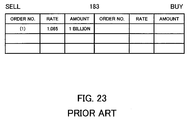
- FIG. 23 shows an example of a screen displayed in this case at the terminal unit 2 and the display units 3-1 to 3-n.
- sell and buy orders for the bonds "183" are shown in list form.
- sell orders and buy orders are shown in left- and right-hand regions of the list, respectively.
- ORDER NO.” is a number assigned so as to specify each sell or buy order, and "RATE” indicates the yield of the bond concerned.
- AMOUNT indicates an amount ordered, and "1 BILLION" means one billion yen.
- the display screen as shown in the figure is called a board screen.
- the transaction assisting apparatus 1 performs a contracting process (process executed when a deal is to be closed) with respect to the sell order for "183".
- the transaction assisting apparatus 1 deletes the sell order for "183” from the storage device and also deletes the display item corresponding to the sell order for "183" from the display screens of the terminal unit 2 and the display units 3-1 to 3-n. If there are other sell orders remaining, display items corresponding thereto are appropriately rearranged according to rates.
- the use of the aforementioned transaction assisting apparatus 1 permits reliable and speedy transactions.
- bonds for example, a chain deal is conducted in such a manner that one purchases somebody else's "200" bonds if a buy order is offered for his/her "183" bonds, or conversely, one sells his/her "183” bonds if a sell order for "200" bonds is offered by somebody else.
- This chain order is a sell order premised on the presence of a chained order (in this example, "200") on which the chain order chains (depends), and so the agent must always check if there is a sell order for "200", which is a chained order, and must immediately suspend the sell order for "183" when there is no chained order present.
- a chained order in this example, "200”
- the agent must always check if there is a sell order for "200”, which is a chained order, and must immediately suspend the sell order for "183" when there is no chained order present.
- a so-called replacement deal is a customary practice wherein one purchases somebody else's goods or real estate on condition that a buy order is offered for his or her goods or real estate, or conversely, one sells his/her goods or real estate on condition that a sell order for goods or real estate is offered by somebody else. Problems similar to those described above also arise in this kind of transactions.
- the transaction assisting apparatus comprises a chain order input means permitting input of a chain order, the chain order being an order requesting, on condition of sale or purchase of first goods, purchase or sale of second goods different from the first goods; an order detecting means for detecting an order for purchase or sale of the first goods with respect to which the chain order is placed; and a chain order processing means, responsive to the detection of a buy or sell order with respect to a predetermined chain order by the order detecting means, for performing a selling or purchasing process with respect to the first goods and performing a purchasing or selling process with respect to the second goods.
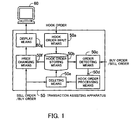
- FIG. 1 illustrates the principle of operation of a transaction assisting apparatus according to the present invention.
- a chain (hook) order input means 50a permits input of a chain (hook) order, which is an order requesting, on condition of sale or purchase of first goods, purchase or sale of second goods different from the first goods.
- Chain (hook) order storing means 50b stores the chain order input from the chain order input means 50a.
- the chain order storing means 50b stores, in addition to chain orders, ordinary sell orders and buy orders.
- Order detecting means 50c detects a buy or sell order for the first goods which are a target of a predetermined chain order stored in the chain order storing means 50b.
- chain (hook) order processing means 50d performs a selling or purchasing process with respect to the first goods and a purchasing or selling process with respect to the second goods.
- Deleting means 50e deletes, from the chain order storing means 50b, a chain order with respect to which processing has been completed by the chain order processing means 50d.
- price changing means 50f changes the price of the first goods in a manner interlocked with the change of the price of the second goods.
- the price changing means 50f supplies the chain orders stored in the chain order storing means 50b directly to display means 50g.
- the display means 50g causes a display unit 60 to display the chain order of which the price has been appropriately changed by the price changing means 50f.
- the chain order is entered by, for example, an agent, through the chain order input means 50a.
- the bonds (in this example, "183") which are to be sold by the chain order are called chain issue, and the bonds (in the example, "200") to be purchased are called chained issue.
- the chain order input from the chain order input means 50a is stored in the chain order storing means 50b.
- FIG. 2 shows, by way of example, a chain order stored in the chain order storing means 50b.
- information indicative of a chain order specifying the aforementioned "200" as the chained (hooked) issue (on which the chain issue chains) and "183" as the chain (hook) issue.
- AMOUNT indicates an amount of the chain issue to be sold and, in this example, "1 BILLION” yen.
- RATE is a value determining the selling rate of "183", and the illustrated example indicates that "0.1” is to be added to the rate of the chained issue "200". Accordingly, if the rate of "200" is "1.05", the rate of "183" is "1.15".
- the price changing means 50f reads out the chain order stored in the chain order storing means 50b, and if the price of the chained issue has changed, it changes the price of the chain issue and supplies the changed price to the display means 50g. If there has been no change in price, the information is supplied to the display means 50g without being modified.
- the display means 50g causes the display unit 60 to display the information supplied from the price changing means 50f.
- the display means 50g assigns an order number to each order, and also affixes information indicative of chain order (as described in detail later) to an order if the order is a chain order.
- FIG. 3 shows an example of a display screen displayed at the display unit 60 as a result of the aforementioned process.
- information relating to "183" and "200" is shown with the order number "8" assigned thereto.
- "H” appearing in the lower right corner of the cell with the order number "8” indicates that the order concerned is a chain order, and is information affixed by the display means 50g.
- a chain order is a sell/buy order for chained goods, and thus sell/buy orders for other goods should also be displayed on the display (board)screen. If, however, such a sell/buy order for other goods is displayed, it is possible for a sell order, for example, to be placed for the buy order, and therefore, such a sell/buy order is shown temporarily after the deal of the chain issue is transacted, and not at the time when the order is placed.
- the order detecting means 50c makes reference to the chain order storing means 50b to determine whether there is a chain order which chains on the input buy order. If, as a result, it is found that there is an applicable chain order, the order detecting means 50c acquires the corresponding information from the chain order storing means 50b and supplies the acquired information to the chain order processing means 50d.
- the chain order processing means 50d While referring to the chain order supplied from the order detecting means 50c, the chain order processing means 50d performs a selling process with respect to the chain issue and a purchasing process with respect to the chained issue.
- the chain order processing means 50d After the processing of the chain order is completed, the chain order processing means 50d notifies the deleting means 50e of completion of the processing. On receiving such notification from the chain order processing means 50d, the deleting means 50e deletes the corresponding chain order from the chain order storing means 50b.
- the display means 50g causes the display unit 60 to temporarily display a message informing that a buy order for the chain issue has been accepted.
- Such a buy order for the chain issue may alternatively be displayed on the board screen while specifying that the order concerned is a buy order related to the chain order.
- the transaction assisting apparatus 50 embodying the present invention automatically conducts chain orders, whereby the burden imposed on the agent etc. can be mitigated.
- the price changing means 50f detects the change in the best rate of the chained issue, changes the rate of the chain issue "183", and supplies the changed rate to the display means 50g.
- the rate of the chain issue is the sum of the rate of the chained issue and "0.1", as shown in FIG. 2, "1.155” is calculated as the new rate and is supplied to the display means 50g.
- the display means 50g generates a new order number "12" for the chain order whose rate has been changed, and updates the contents of information displayed at the display unit 60.
- the rate of the chain issue is varied automatically in a manner interlocked with fluctuation in the rate of the chained issue, whereby the burden imposed on the agent etc. can be mitigated.
- the following describes a process executed in cases where the best rate of the chained issue becomes outside the designation range, the chained issue is sold out, or the sell order has been canceled and there no longer exists a chained issue to be dealt in.
- the display means 50g immediately stops the output of this chain order, so that the corresponding information disappears from the screen of the display unit 60.
- the display of the chain order is stopped only temporarily, and if the best rate of the chained issue comes to fall within the designation range or a new sell order is placed for the chained issue, the chain order is again displayed on screen.
- the transaction assisting apparatus 50 embodying the present invention in cases where a sell order for the chained issue has gone or the best rate of the chained issue becomes outside the designation range, the display of the chain order is temporarily stopped. It is therefore unnecessary for the agent to stop or restart the display of the chain order while watching the conditions for display, whereby the burden imposed on the agent can be mitigated.
- the chain order processing means 50d performs a similar process also with respect to the chained issue, so that a chain of chain orders can be coped with. If, in the example stated above, an order for the issue "200", on which "183" chains, is a chain order specifying "201" as the chained issue, for example, the purchasing process for "201" is additionally executed following the aforementioned process.
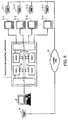
- FIG. 5 an exemplary configuration according to one embodiment of the present invention will be described.
- FIG. 5 is a block diagram exemplifying a configuration according to the embodiment of the present invention.
- a transaction assisting apparatus 1 accepts and stores sell orders, buy orders, etc. input through a terminal unit 2 owned by an agent, subjects the input orders etc. to a predetermined process such as sorting, and causes the terminal unit 2 and display units 3-1 to 3-n installed at customers' side to display the processed data.
- the transaction assisting apparatus 1 comprises a CPU (Central Processing Unit) 1a, a ROM (Read Only Memory) 1b, a RAM (Random Access Memory) 1c, an HDD (Hard Disk Drive) 1d, I/Fs (Interfaces) 1e and 1f, and a bus 1g.
- CPU Central Processing Unit
- ROM Read Only Memory
- RAM Random Access Memory
- HDD Hard Disk Drive
- I/Fs Interfaces
- the CPU 1a controls various sections of the apparatus in accordance with programs etc. stored in the ROM 1b, the RAM 1c and the HDD 1d, and performs various operations.
- the ROM 1b stores basic programs executed by the CPU 1a, as well as data, etc.
- the RAM 1c temporarily stores programs to be executed by the CPU 1a, data derived in the middle of calculations, etc.
- the HDD 1d stores various programs executed by the CPU 1a, and also stores sell orders, buy orders, chain orders, etc. input through the terminal unit 2.
- the I/F 1e is an interface for the terminal unit 2, and converts data formats from one to another to permit exchange of information between the terminal unit 2 and the transaction assisting apparatus 1.
- the I/F 1f supplies image information simultaneously to the display units 3-1 to 3-n and causes the display units to display a board screen as shown in FIG. 23.
- the information displayed on terminal unit 2 is the same as that displayed on units 3-1 to 3-n, and thus the agent and the customers share identical information.
- the bus 1g interconnects the CPU 1a, the ROM 1b, the RAM 1c, the HDD 1d, and the I/Fs 1e and 1f, to permit information to be exchanged with one another.
- a telephone 4 installed at the agent's side is connected via a leased line (hot line) 6 to telephones 5-1 to 5-n installed at the customers' side.
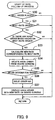
- FIG. 6 is a flowchart illustrating an example of a process executed when a chain order is placed in the embodiment shown in FIG. 5. When the process is started, the following steps are executed.
- Step S2 when a chain order has been input through manipulation of the terminal unit 2, the CPU 1a executes Step S2; otherwise it executes Step S3.
- the CPU 1a records the chain order input in Step S1 in a predetermined file (reserved order file; see FIG. 2) stored in the HDD 1d.
- the CPU 1a performs, with respect to the terminal unit 2 and the display units 3-1 to 3-n, a "DISPLAY PROCESS" whereby the chain orders stored in the reserved order file shown in FIG. 2 are suitably displayed at these units.
- Step S1 For example, if execution of a process other than the illustrated process is requested, the CPU 1a terminates the process; otherwise the flow returns to Step S1.
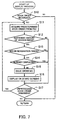
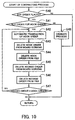
- FIG. 7 the "DISPLAY PROCESS" shown in FIG. 6 will be described in detail. Upon start of the process shown in the flowchart, the following steps are executed.
- the CPU 1a determines whether or not a chain order is recorded in the reserved order file stored in the HDD 1d. If a chain order is recorded, the flow proceeds to Step S11; otherwise the flow returns to the original process (RETURN).
- the CPU 1a acquires one predetermined chain order from the reserved order file.
- Step S12 The CPU 1a determines whether or not there remains the amount of the chained issue requested by the chain order acquired in Step S11, that is, whether or not there is a sufficient amount of the chained issue with the best rate. If there is a sufficient amount of the chained issue, the flow proceeds to Step S13; if not, the flow proceeds to Step S17.
- the CPU 1a determines whether or not the rate of the best-rate chained issue falls within the designation range. If the rate is within the designation range, the flow proceeds to Step S14, and if not, the flow proceeds to Step S17.
- Step S14 The CPU 1a determines whether or not the chain order being processed is already displayed. If the chain order is already displayed, the flow proceeds to Step S17; if not, the flow proceeds to Step S15.
- the CPU 1a causes the terminal unit 2 and the display units 3-1 to 3-n to display the chain order being processed on their board screen.
- chain order involves a sell/buy order (in this example, buy order) for chained goods
- the sell/buy order is displayed also on the board screen associated with the chained goods.
- a buy order is not displayed because it is not transacted singly.
- the CPU 1a refers to the reserved order file to determine whether or not there is an unprocessed chain order. If an unprocessed chain order exists, the flow returns to Step S11 to repeat the same process as described above; if not, the flow returns to the original process (RETURN).
- a chain order is recorded in the reserved order file and if it fulfills the chain order display conditions (if there remains a sufficient amount of the chained issue, if the rate is within the designation range, and if the chain order is not displayed yet), the chain order is displayed on the board screens with an order number assigned thereto. If the chain order thereafter fails to satisfy the display conditions, it is deleted from the board screens in the "CANCELLATION PROCESS" or the "RATE FOLLOW-UP PROCESS" described below.
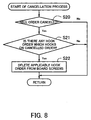
- the CPU 1a determines whether or not a sell order has been canceled. If a sell order has been canceled, the flow proceeds to Step S21; otherwise the flow returns to the original process (RETURN).
- the CPU 1a refers to the reserved order file to determine whether or not there is a chain order which chains on the canceled sell order. If such a chain order exists, the flow proceeds to Step S22, and if not, the flow returns to the original process (RETURN).
- Step S30 The CPU 1a determines whether or not a new sell order has been placed. If a sell order has been newly placed, the flow proceeds to Step S31; otherwise the flow returns to the original process (RETURN).
- the CPU 1a determines whether or not the sell order is an order with the best rate (best-rate order). If the sell order is a best-rate order, the flow proceeds to Step S32; if not, the flow returns to the original process (RETURN).
- the CPU 1a refers to the reserved order file to determine whether or not there exists a chain order which chains on the best-rate order. If such a chain order exists, the flow proceeds to Step S33; otherwise the flow returns to the original process (RETURN).
- the CPU 1a calculates a new rate corresponding to the best rate. Specifically, the CPU 1a adds the rate specified when the chain order was placed (the rate shown in FIG. 2) to the rate of the chained issue whose rate has been judged to be highest (best rate) in Step S31, thereby calculating the rate of the chain issue.
- the CPU 1a looks up the designation range stored in the reserved order file, and determines whether or not the new rate falls within the designation range. If the new rate is within the designation range, the flow proceeds to Step S36; if not, the flow returns to the original process (RETURN).
- the CPU 1a displays, on the board screens, the chain order to which the new order number and the new rate have been assigned.
- the corresponding chain issue is deleted from the board screens, and the chain order is again displayed with a new order number and a new rate assigned thereto. Also, if the new rate does not fall within the designation range, the corresponding chain order is deleted from the board screens.
- the CPU 1a determines whether or not a buy order has been placed. If a buy order has been placed, the flow proceeds to Step S41; otherwise the flow returns to the original process (RETURN).
- the CPU 1a refers to the reserved order file, and if the buy order placed is a buy order for a chain order, the flow proceeds to Step S42; otherwise the flow proceeds to Step S48.
- the CPU 1a automatically conducts a deal with respect to the chain order concerned. Specifically, a selling process for the chain issue and a purchasing process for the chained issue are performed.
- the CPU 1a deletes the corresponding chained order from the board screens. At this time, the CPU 1a temporarily displays, on the board screens, information indicating that a buy order for the chained goods has been conducted.
- the remainder of the chained order is displayed with a new order number issued (for example, the number "1-2" is issued to indicate that the order is derived from the original order with the order number "1").
- the CPU 1a determines whether or not the chained order is a chain order. If the chained order is a chain order, the flow returns to Step S42 to repeat the same process as described above; if not, the flow returns to the original process (RETURN).
- the process may be interrupted if more than a predetermined number of chain orders are chained.
- chain orders are automatically transacted, permitting reliable and speedy transactions.
- the rate of the chain issue is automatically varied so as to follow up the best rate, whereby the burden imposed on the agent can be mitigated.
- a buy order (or sell order) for chained goods is temporarily displayed on the board screens after a chain deal is conducted, but may be displayed from the first on the board screens while explicitly indicating that the goods are chained goods.
- FIG. 11 a second embodiment of the present invention will be described.
- identical reference numerals are used to denote identical elements appearing in FIG. 5 and description of such elements is omitted.
- Terminal units 20 and 24-1 to 24-3 each comprise a personal computer or the like.
- the terminal unit 20 is installed at a broker's side while the terminal units 24-1 to 24-3 are installed at the agencies' side.
- a network 21 is, for example, a public network such as ISDN (Integrated Service Digital Network), and interconnects the transaction assisting apparatus 1 with the terminal units 24-1 to 24-3, etc. to permit transmission of information from one to another.
- ISDN Integrated Service Digital Network
- a CAFIS (Credit And Finance Information System; trademark) 22 takes charge of a process for relaying credit data to a credit card company when payment is made by a credit card or the like, and also provides services on behalf of a credit card company when the operation of the company's computer center is suspended.
- a CMS (Cash Management Service) system 23 performs, among other processes, transfer of payment from one bank to another when payment is made from a bank account.
- FIG. 12 illustrates a replacement order which is transacted in this embodiment.
- a replacement order is an order in which one requests, on condition of sale or purchase of certain goods, purchase or sale of other goods.
- used cars are taken as an example of such goods and
- A denotes an orderer who placed a replacement order.
- B and C are a purchaser and a seller, respectively, involved in the replacement order.
- the replacement order placed by A is an order wherein A requests, on condition of sale of his/her vehicle A or purchase of a vehicle B, purchase of the vehicle B or sale of his/her vehicle A.
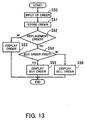
- FIG. 13 is a flowchart showing an example of a process executed when a sell/buy order for a used car is input in the embodiment shown in FIG. 11. Upon start of the process shown in the flowchart, the following steps are executed.
- the CPU 1a accepts input of orders (ordinary orders and replacement orders) from the terminal units 20 and 24-1 to 24-3 via the I/Fs 1e and 1f.
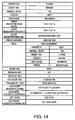
- FIG. 14 shows an example of an order (in the illustrated example, a replacement order) input from a terminal unit.
- ORDER NO.” is a serial number uniquely assigned to each order
- BODY NO.” is a number specifying a vehicle model.
- MODEL YEAR indicates the year in which the vehicle was produced
- COLOR indicates the color of the vehicle body.
- DISTANCE indicates the distance traveled by the vehicle.
- FIRST REGISTRATION DATE indicates the date on which the vehicle was purchased, and
- LAST REGISTRATION DATE indicates the date of the last vehicle inspection.
- LAST REGISTRATION NO.” indicates the vehicle number assigned to the vehicle at the time of the last registration
- PRICE DESIRED indicates a desired selling price of the vehicle.
- PRIORITY indicates which of buy order and sell order should be given priority. Namely, if buy order is to be given priority, a procedure for selling the vehicle is taken after the purchase of a desired vehicle. Conversely, if sell order is to be given priority, a procedure for purchasing a desired vehicle is taken after the sale of the vehicle.
- BANK NO. through “ACCOUNT HOLDER'S PHONE NO.” show information about a bank account from which payment is to be transferred when the deal is conducted.
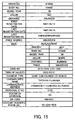
- FIG. 15 shows an example of an order wherein payment is to be made by a credit card.
- "CARD NO.” through “CARDHOLDER'S PHONE NO.” show information necessary for the payment by a credit card.
- the CPU 1a stores the input order in a predetermined area of the HDD 1d.
- the CPU 1a determines whether or not the input order is a replacement order. If the input order is a replacement order, the flow proceeds to Step S54, and if not, the flow proceeds to Step S53.
- the CPU 1a supplies the input order to the terminal units 20 and 24-1 to 24-3 via the I/Fs 1e and 1f to be displayed on their screens.
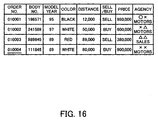
- FIG. 16 shows an example of a screen displayed at the terminal units 20 and 24-1 to 24-3.
- the order numbers "010001" through “010003" correspond to ordinary orders (not replacement orders).
- the contents of display appearing on the screen correspond to the individual items of orders input through the terminal units.
- "SELL/BUY" indicates whether the order concerned is a sell order or a buy order.
- the CPU 1a determines whether or not the replacement order specifies a buy order to be given priority. If a buy order is to be given priority, the flow proceeds to Step S55; if not, the flow proceeds to Step S56.
- the CPU 1a extracts a buy order from the replacement order, and supplies the buy order to the terminal units 20 and 24-1 to 24-3 to be displayed on their screen.
- FIG. 16 the buy order extracted from the replacement order shown in FIG. 14 is displayed at the lowermost row. Namely, the items appearing in the right-hand column of the "DEAL” section in FIG. 14 are shown in the row.
- the underscore of "010004" as the "ORDER NO.” indicates that the order concerned is a replacement order.
- the CPU 1a extracts a sell order from the replacement order, and supplies the sell order to the terminal units 20 and 24-1 to 24-3 to be displayed on their screen.
- orders input from the terminal units are stored in the HDD 1d shown in FIG. 11 and are also displayed at the individual terminal units as a screen as shown in FIG. 16, for example.
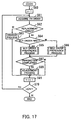
- FIG. 17 a process executed by the transaction assisting apparatus 1 shown in FIG. 11 when a stored order is transacted will be described.
- the process shown in the flowchart is executed at predetermined intervals as an interruption process, for example, to transact orders stored in the HDD 1d. Upon start of the process shown in the flowchart, the following steps are executed.
- the CPU 1a sets a variable i for counting the number of times the process is executed, to an initial value of "1".
- the CPU 1a searches the orders stored in the HDD 1d to acquire an ith order.
- the CPU 1a determines whether or not the acquired order is a replacement order. If the acquired order is a replacement order, the flow proceeds to Step S64, and if not, the flow proceeds to Step S63.
- the CPU 1a executes an ordinary process with respect to an ordinary order.
- the ordinary process means a process wherein a buy or sell order that fulfills the conditions of the acquired sell or buy order, if any, is reserved and the payment is adjusted.
- the CPU 1a determines whether or not the replacement order specifies buy order to be given priority. If a buy order is to be given priority, the flow proceeds to Step S65; if not, the flow proceeds to Step S66.
- the CPU 1a executes a "BUY ORDER PREFERENCE PROCESS" wherein, if a sell order is placed for the buy order, such a sell order is reserved and then the sell order of the replacement order is conducted.
- the CPU 1a executes a "SELL ORDER PREFERENCE PROCESS" wherein, if a buy order is placed for the sell order, such a buy order is reserved and then the buy order of the replacement order is conducted.
- Step S68 The CPU 1a determines whether or not the transaction of the replacement order has been completed. If the transaction has been completed, the flow proceeds to Step S68; if not, the flow proceeds to Step S69.
- the CPU 1a executes an "ADJUSTMENT PROCESS" wherein payments due arising from the transaction and taxes accompanying the transaction are calculated and money is collected from or transferred to the bank accounts etc. of the parties involved in the transaction.
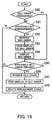
- FIG. 18 the "BUY ORDER PREFERENCE PROCESS" shown in FIG. 17 will be described in detail. Upon start of the process shown in the flowchart, the following steps are executed.
- the CPU 1a determines whether or not the buy order has been transacted. If the buy order has already been transacted, the flow proceeds to Step S85; if not, the flow proceeds to Step S81.
- Step S85 is executed if a sell order was placed for the buy order and the deal of the buy order has already been completed, or more specifically, if, in FIG. 12, only a contract for purchase of C's vehicle B by A has been concluded.
- the CPU 1a searches the HDD 1d to determine whether or not there is a sell order fulfilling the conditions of the buy order. If, as a result of the determination, there exists an applicable sell order, the flow proceeds to Step S82; if not, the flow returns to the original process.
- the buy order with the order number "010004" disappears from the screens of the individual terminal units.
- the CPU 1a causes the individual terminal units to display the sell order of the replacement order.
- FIG. 20 shows an example of a screen which is displayed at the individual terminal units as a result of execution of this step.
- a sell order with the order number "010004" is shown, specifying the vehicle with the body number "554845".
- the CPU 1a determines whether or not a buy order satisfying the conditions of the sell order is stored in the HDD 1d. If such a buy order exists, the flow proceeds to Step S86; if not, the flow returns to the original process.
- Step S86 For example, if there exists a buy order fulfilling the conditions of the sell order with the order number "010004" shown in FIG. 20, the flow proceeds to Step S86.
- the CPU 1a causes the individual terminal units to stop displaying the sell order of the replacement order.
- transactions can be carried out in a manner such that the buy order of a replacement order is conducted preferentially over the sell order of same.
- FIG. 19 the "SELL ORDER PREFERENCE PROCESS" shown in FIG. 17 will be described in detail. Upon start of the process shown in the flowchart, the following steps are executed.
- the CPU 1a determines whether or not a sell order has been transacted. If a sell order has already been transacted, the flow proceeds to Step S95; if not, the flow proceeds to Step S91.
- Step S95 is executed if a buy order was placed for a sell order and the deal of the sell order has already been completed, or more specifically, if, in FIG. 12, only a contract for purchase of A's vehicle A by B has been concluded.
- the CPU 1a searches the HDD 1d to determine whether or not there is a buy order fulfilling the conditions of the sell order. If, as a result of the determination, there exists an applicable buy order, the flow proceeds to Step S92; if not, the flow returns to the original process.
- the CPU 1a causes the individual terminal units to display the buy order of the replacement order.
- the CPU 1a determines whether or not a sell order satisfying the conditions of the buy order is stored in the HDD 1d. If such a sell order exists, the flow proceeds to Step S96; if not, the flow returns to the original process.
- the CPU 1a causes the individual terminal units to stop displaying the buy order of the replacement order.
- transactions can be carried out in a manner such that a sell order of a replacement order is conducted preferentially over a buy order of same.
- FIG. 21 details of the "ADJUSTMENT PROCESS" shown in FIG. 17 will be described.
- the steps stated below are executed.
- the deals shown in FIG. 12 are taken as an example.
- the CPU 1a calculates an overpayment r1 of weight and automobile taxes with respect to the vehicle B which A purchased from C.
- weight tax and automobile tax are collected according to a system wherein the amount required until the next vehicle inspection must be paid in advance, and accordingly, if the title to the vehicle changes as a result of the transfer of the ownership from C to A, then it means that C has overpaid the taxes for an amount taxable after the date of transfer of the title.
- the amount thus bone in advance is therefore calculated as the tax overpayment r1.
- the CPU 1a notifies the CMS system 23 of the sum of the price of the vehicle B and the tax overpayment r1, to have the sum transferred from A's account to C's account.
- the CPU 1a causes the CMS system 23 to transfer the sum of the broker's commission plus consumption tax and an acquisition tax imposed on A for the acquisition of the vehicle from A's bank account to the broker's bank account.
- the acquisition tax is calculated based on a price obtained by applying depreciation to a new car's price.
- the CPU 1a calculates an overpayment r2 of weight and automobile taxes with respect to the vehicle A which B purchased from A.
- the CPU 1a notifies the CMS system 23 of the sum of the price of the vehicle A and the tax overpayment r2, to have the sum transferred from B's account to A's account.
- the CPU 1a causes the CMS system to transfer the sum of the broker's commission plus consumption tax and an acquisition tax from B's account to the broker's account.
- taxes and prices are automatically calculated and also are automatically transferred from one bank account to another, whereby broker's procedures can be expedited and taxes accompanying transactions can be automatically calculated and collected.
- the second embodiment of the present invention permits reliable and speedy transactions of replacement orders in cases where goods such as automobiles are traded, for example. Further, taxes accompanying transactions can be accurately calculated and collected from the right person who has to pay the taxes, so that the burden imposed on the broker can be mitigated.
- used cars are taken as an example of goods to be dealt in, but the goods to be dealt in may be real estate or other goods, for example.
- the payment of the price and taxes may be settled by a credit card, for example. Such payment can be made by use of the CAFIS 22 shown in FIG. 11.
- the processing function described above can be performed by a computer.
- the contents of the process for performing the functions as the transaction assisting apparatus may be described in a program recorded on a computer-readable recording medium.
- the program is executed by a computer, whereupon the above-described process is performed by the computer.
- the computer-readable recording medium includes a magnetic recording device, a semiconductor memory, etc.
- the program may be stored in portable recording media, such as CD-ROM (Compact Disk Read Only Memory) or floppy disk, to be distributed, or the program may be stored in a storage device of a computer connected to a network so that it can be transferred to other computers through the network.
- the program may be stored in a hard disk unit or the like of a computer, and when it is to be executed by the computer, the program is loaded into the main memory and executed.
- a transaction assisting apparatus for assisting transactions in goods comprises chain order input means permitting input of a chain order, the chain order being an order requesting, on condition of sale or purchase of first goods, purchase or sale of second goods different from the first goods, order detecting means for detecting an order for purchase or sale of the first goods with respect to which the chain order is placed, and chain order processing means, responsive to the detection of a buy or sell order with respect to a predetermined chain order by the order detecting means, for performing a selling or purchasing process with respect to the first goods and performing a purchasing or selling process with respect to the second goods. Accordingly, chain deals can be transacted reliably and speedily, and the burden imposed on the agent etc. can be mitigated.
Landscapes
- Business, Economics & Management (AREA)
- Accounting & Taxation (AREA)
- Finance (AREA)
- Engineering & Computer Science (AREA)
- Physics & Mathematics (AREA)
- Economics (AREA)
- Strategic Management (AREA)
- Development Economics (AREA)
- General Business, Economics & Management (AREA)
- General Physics & Mathematics (AREA)
- Theoretical Computer Science (AREA)
- Marketing (AREA)
- Technology Law (AREA)
- Management, Administration, Business Operations System, And Electronic Commerce (AREA)
Abstract
Description
Claims (10)
- A transaction assisting apparatus for assisting transactions in goods, comprising:chain order input means permitting input of a chain order, the chain order being an order requesting, on condition of sale or purchase of first goods, purchase or sale of second goods different from the first goods;order detecting means for detecting an order for purchase or sale of the first goods with respect to which the chain order is placed; andchain order processing means, responsive to the detection of a buy or sell order with respect to a predetermined chain order by said order detecting means, for performing a selling or purchasing process with respect to the first goods and performing a purchasing or selling process with respect to the second goods.
- The transaction assisting apparatus according to claim 1, further comprising chain order storing means for storing the chain order input from said chain order input means; anddeleting means for deleting, from said chain order storing means, a chain order with respect to which processing has been completed by said chain order processing means.
- The transaction assisting apparatus according to clams 1 or 2, further comprising display means for selectively displaying those chain orders which include a sell or buy order for the second goods and which satisfy a condition for sale or purchase of the second goods.
- The transaction assisting apparatus according to claim 3, wherein said display means inhibits display of information about a buy or sell order for the second goods included in the chain order when the chain order is placed, and displays the information after the chain order is transacted.
- The transaction assisting apparatus according to claims 3 or 4, further comprising price changing means, responsive to change in price of the second goods among chain orders displayed by said display means, for changing the price of the corresponding first goods in an interlocked manner.
- The transaction assisting apparatus according to any preceding claim, wherein said chain order processing means performs chain order processing in series if an order placed with respect to the second goods to be transacted is a chain order.
- The transaction assisting apparatus according to any preceding claim, further comprising tax amount calculating means for calculating an amount of tax to be paid as a result of transaction; andnotifying means for notifying parties concerned in the transaction of the chain order of the amount of tax calculated by said tax amount calculating means.
- The transaction assisting apparatus according to any preceding claim, further comprising transfer means for automatically transferring a price and a tax payable as a result of transaction from one to another of accounts of parties concerned in the transaction.
- A program to be executed by a computer for causing the computer to perform a transaction assisting process for assisting transactions in goods,
wherein the program causes the computer to function as:chain order input means permitting input of a chain order, the chain order being an order requesting, on condition of sale or purchase of first goods, purchase or sale of second goods different from the first goods;order detecting means for detecting an order for purchase or sale of the first goods with respect to which the chain order is placed; andchain order processing means, responsive to the detection of a buy or sell order with respect to a predetermined chain order by the order detecting means, for performing a selling or purchasing process with respect to the first goods and performing a purchasing or selling process with respect to the second goods. - A computer-readable recording medium storing the program of claim 9.
Applications Claiming Priority (4)
| Application Number | Priority Date | Filing Date | Title |
|---|---|---|---|
| JP5485899 | 1999-03-03 | ||
| JP5485899 | 1999-03-03 | ||
| JP30260399 | 1999-10-25 | ||
| JP30260399A JP3976963B2 (en) | 1999-03-03 | 1999-10-25 | Transaction support apparatus and recording medium |
Publications (2)
| Publication Number | Publication Date |
|---|---|
| EP1033667A2 true EP1033667A2 (en) | 2000-09-06 |
| EP1033667A3 EP1033667A3 (en) | 2003-05-28 |
Family
ID=26395678
Family Applications (1)
| Application Number | Title | Priority Date | Filing Date |
|---|---|---|---|
| EP00301548A Withdrawn EP1033667A3 (en) | 1999-03-03 | 2000-02-28 | Transaction assisting apparatus and program |
Country Status (3)
| Country | Link |
|---|---|
| US (1) | US7386498B1 (en) |
| EP (1) | EP1033667A3 (en) |
| JP (1) | JP3976963B2 (en) |
Families Citing this family (4)
| Publication number | Priority date | Publication date | Assignee | Title |
|---|---|---|---|---|
| US7310616B2 (en) * | 2001-06-15 | 2007-12-18 | Goldman Sachs & Co. | Method for structuring a transaction |
| US8099352B2 (en) * | 2004-10-27 | 2012-01-17 | Bloomberg L.P. | System and method for trading financial instruments based on undisclosed values |
| US8898080B1 (en) * | 2005-08-25 | 2014-11-25 | Patshare Limited | Counterparty credit in electronic trading systems |
| JP4976563B1 (en) * | 2011-01-28 | 2012-07-18 | 田中貴金属工業株式会社 | Precious metal product purchase system |
Family Cites Families (25)
| Publication number | Priority date | Publication date | Assignee | Title |
|---|---|---|---|---|
| US3581072A (en) * | 1968-03-28 | 1971-05-25 | Frederick Nymeyer | Auction market computation system |
| US4382602A (en) * | 1978-11-13 | 1983-05-10 | Cusick Timothy H | Real estate game apparatus |
| JP2735213B2 (en) | 1988-03-04 | 1998-04-02 | 株式会社日立製作所 | Automatic ordering system |
| US5101353A (en) | 1989-05-31 | 1992-03-31 | Lattice Investments, Inc. | Automated system for providing liquidity to securities markets |
| US5297031A (en) * | 1990-03-06 | 1994-03-22 | Chicago Board Of Trade | Method and apparatus for order management by market brokers |
| US5970479A (en) * | 1992-05-29 | 1999-10-19 | Swychco Infrastructure Services Pty. Ltd. | Methods and apparatus relating to the formulation and trading of risk management contracts |
| JP3335407B2 (en) | 1993-03-01 | 2002-10-15 | 富士通株式会社 | Electronic trading system |
| US5794207A (en) * | 1996-09-04 | 1998-08-11 | Walker Asset Management Limited Partnership | Method and apparatus for a cryptographically assisted commercial network system designed to facilitate buyer-driven conditional purchase offers |
| CA2119921C (en) | 1994-03-23 | 2009-09-29 | Sydney H. Belzberg | Computerized stock exchange trading system |
| JPH07319964A (en) | 1994-05-23 | 1995-12-08 | Hitachi Ltd | Terminal control method in commodity trading system |
| US5592376A (en) | 1994-06-17 | 1997-01-07 | Commonweal Incorporated | Currency and barter exchange debit card and system |
| GB9416673D0 (en) * | 1994-08-17 | 1994-10-12 | Reuters Ltd | Data exchange filtering system |
| US5845266A (en) * | 1995-12-12 | 1998-12-01 | Optimark Technologies, Inc. | Crossing network utilizing satisfaction density profile with price discovery features |
| EP2312519A1 (en) | 1995-06-07 | 2011-04-20 | Citibank, N.A. | Method and system for providing integrated brokerage and other financial services through customer activated terminals |
| US5870722A (en) * | 1995-09-22 | 1999-02-09 | At&T Wireless Services Inc | Apparatus and method for batch processing of wireless financial transactions |
| US5787402A (en) * | 1996-05-15 | 1998-07-28 | Crossmar, Inc. | Method and system for performing automated financial transactions involving foreign currencies |
| JPH1011497A (en) | 1996-06-20 | 1998-01-16 | Kokusai Electric Co Ltd | Automatic trading cost calculator |
| US6014643A (en) * | 1996-06-28 | 2000-01-11 | Minton; Vernon F. | Interactive securities trading system |
| US5905974A (en) * | 1996-12-13 | 1999-05-18 | Cantor Fitzgerald Securities | Automated auction protocol processor |
| ES2152050T3 (en) | 1996-12-23 | 2001-01-16 | Swisscom Ag | PROCEDURE AND ORDER TRANSMISSION SYSTEM BY A TELECOMMUNICATIONS NETWORK. |
| US6112189A (en) * | 1997-03-19 | 2000-08-29 | Optimark Technologies, Inc. | Method and apparatus for automating negotiations between parties |
| US6058379A (en) * | 1997-07-11 | 2000-05-02 | Auction Source, L.L.C. | Real-time network exchange with seller specified exchange parameters and interactive seller participation |
| US20020138390A1 (en) * | 1997-10-14 | 2002-09-26 | R. Raymond May | Systems, methods and computer program products for subject-based addressing in an electronic trading system |
| US6260024B1 (en) * | 1998-12-02 | 2001-07-10 | Gary Shkedy | Method and apparatus for facilitating buyer-driven purchase orders on a commercial network system |
| US7080050B1 (en) * | 1999-08-05 | 2006-07-18 | Barter Securities | Electronic bartering system |
-
1999
- 1999-10-25 JP JP30260399A patent/JP3976963B2/en not_active Expired - Fee Related
-
2000
- 2000-02-11 US US09/502,825 patent/US7386498B1/en not_active Expired - Lifetime
- 2000-02-28 EP EP00301548A patent/EP1033667A3/en not_active Withdrawn
Also Published As
| Publication number | Publication date |
|---|---|
| US7386498B1 (en) | 2008-06-10 |
| JP2000315232A (en) | 2000-11-14 |
| JP3976963B2 (en) | 2007-09-19 |
| EP1033667A3 (en) | 2003-05-28 |
Similar Documents
| Publication | Publication Date | Title |
|---|---|---|
| US8204824B2 (en) | System and method of account reconciliation for electronic transactions | |
| US7107232B2 (en) | Method and system for facilitating a sale | |
| US8311944B2 (en) | System and method of currency conversion in financial transaction process | |
| US20030061150A1 (en) | Electronic transaction system | |
| US20090157520A1 (en) | System and methods for disclosing transaction information to customers | |
| JP7270801B1 (en) | Information processing device, information processing method and information processing program | |
| CA2461534A1 (en) | Systems and methods to facilitate payment for shipped goods | |
| JP2023025142A (en) | Information processing equipment | |
| JP2002366862A (en) | IC card and electronic money deposit system | |
| JP2002015174A (en) | System for providing service related to vehicle | |
| EP1033667A2 (en) | Transaction assisting apparatus and program | |
| JP2003248755A (en) | Fee management method and fee management system in ATM | |
| JP3339843B2 (en) | Electronic payment method by IC card | |
| JP2007172141A (en) | Loan institution information processing apparatus, loan system, loan method and loan program | |
| JP3980492B2 (en) | Transaction support apparatus, transaction support method, and recording medium for recording transaction support program | |
| JP2916354B2 (en) | Credit card issuing device | |
| JP5261734B2 (en) | Scheduling processing method and apparatus, and settlement processing method | |
| JP2010262566A (en) | Point processing system | |
| JP7139539B1 (en) | Information processing device, information processing method and information processing program | |
| JP7182682B1 (en) | Information processing device, information processing method and information processing program | |
| JP2002109417A (en) | Multi-currency pricing | |
| JP2001014384A (en) | Cash management system, management method and computer-readable recording medium | |
| JP2005317040A (en) | IC card and electronic money deposit system | |
| JP2002175417A (en) | Computer system and payment confirmation method | |
| JP2000163476A (en) | Credit processing equipment |
Legal Events
| Date | Code | Title | Description |
|---|---|---|---|
| PUAI | Public reference made under article 153(3) epc to a published international application that has entered the european phase |
Free format text: ORIGINAL CODE: 0009012 |
|
| AK | Designated contracting states |
Kind code of ref document: A2 Designated state(s): AT BE CH CY DE DK ES FI FR GB GR IE IT LI LU MC NL PT SE |
|
| AX | Request for extension of the european patent |
Free format text: AL;LT;LV;MK;RO;SI |
|
| PUAL | Search report despatched |
Free format text: ORIGINAL CODE: 0009013 |
|
| AK | Designated contracting states |
Designated state(s): AT BE CH CY DE DK ES FI FR GB GR IE IT LI LU MC NL PT SE |
|
| AX | Request for extension of the european patent |
Extension state: AL LT LV MK RO SI |
|
| 17P | Request for examination filed |
Effective date: 20030618 |
|
| 17Q | First examination report despatched |
Effective date: 20030724 |
|
| AKX | Designation fees paid |
Designated state(s): DE GB |
|
| STAA | Information on the status of an ep patent application or granted ep patent |
Free format text: STATUS: THE APPLICATION HAS BEEN WITHDRAWN |
|
| 18W | Application withdrawn |
Effective date: 20080402 |