EP1031352A2 - Use of desmopressin in the preparation of a metastatic dissemination inhibitor medicament during cancer surgery - Google Patents
Use of desmopressin in the preparation of a metastatic dissemination inhibitor medicament during cancer surgery Download PDFInfo
- Publication number
- EP1031352A2 EP1031352A2 EP00500025A EP00500025A EP1031352A2 EP 1031352 A2 EP1031352 A2 EP 1031352A2 EP 00500025 A EP00500025 A EP 00500025A EP 00500025 A EP00500025 A EP 00500025A EP 1031352 A2 EP1031352 A2 EP 1031352A2
- Authority
- EP
- European Patent Office
- Prior art keywords
- pharmaceutically acceptable
- desmopressin
- deamino
- acceptable salt
- arginine vasopressin
- Prior art date
- Legal status (The legal status is an assumption and is not a legal conclusion. Google has not performed a legal analysis and makes no representation as to the accuracy of the status listed.)
- Granted
Links
Images

Classifications
-
- A—HUMAN NECESSITIES
- A61—MEDICAL OR VETERINARY SCIENCE; HYGIENE
- A61K—PREPARATIONS FOR MEDICAL, DENTAL OR TOILETRY PURPOSES
- A61K38/00—Medicinal preparations containing peptides
- A61K38/04—Peptides having up to 20 amino acids in a fully defined sequence; Derivatives thereof
- A61K38/08—Peptides having 5 to 11 amino acids
- A61K38/095—Oxytocins; Vasopressins; Related peptides
-
- A—HUMAN NECESSITIES
- A61—MEDICAL OR VETERINARY SCIENCE; HYGIENE
- A61P—SPECIFIC THERAPEUTIC ACTIVITY OF CHEMICAL COMPOUNDS OR MEDICINAL PREPARATIONS
- A61P35/00—Antineoplastic agents
- A61P35/04—Antineoplastic agents specific for metastasis
Definitions
- the present invention relates to the use of 1- deamino- 8- D- arginine vasopressin (desmopressin) in the preparation of a metastatic dissemination-inhibitor medicament during cancer surgery. Additionally, the invention also refers to pharmaceutical compositions comprising the same and to a method of treating a mammal in order to inhibit metastatic spread in surgical extirpation of a cancer mass.
- European Patent Publication EP 380370 discloses local recurrence inhibition of a tumor surgical resection by the application of a high molecular weight polymer having extracellular matrix modulators, saccharides, and synthetic peptides (e.g. Gly- Arg- Gly- Asp- Ser). Wound irrigations to prevent tumor local recidives on the surgical wound are disclosed; there is no mention therein about a preventive action against distant metastases.
- metastases are lesions arising from a cancer mass, which have no contiguity relationship with the tumor from which they originate.
- the process by which malignant cells leave their primary site to disseminate throughout the body has become one of the main goals of cancer research and involves a wide scope, highly significant from a medical viewpoint.
- the metastasis producing capacity is an attribute that distinguishes malignant neoplasic cells; these can be released from the primary tumor and survive a complex series of interactions with the host normal tissues and cells, finally settling on a distant site.
- the overall phenomenon is triggered when cancer cells invade and occupy adjacent tissues, to penetrate into body cavities and into the circulation.
- US Patent 4,588,587 discloses metastasis inhibition in mammals, by the administration of a natural protein extract with anti- coagulating and anti- proteolytic properties, obtained from the leech salivary gland. This extract would block tumor cell passage from the circulation into other anatomic compartments. As this is a scarcely characterized natural extract, there is no defined pharmacological data available and no accurate process has been proposed to prevent the occurrence of metastatic spread during cancer surgery. Furthermore, its enhanced anticoagulant activity limits the application thereof during surgical manipulation because of the eventual risk of a severe bleeding.
- the process of invasion and metastasis via the blood stream includes a series of sequential stages which gave rise to the concept of a "cascade" phenomenon.
- the different steps follow a certain order and they are vital for a cancer cell to disseminate towards possible target organs (Fidler IJ: Cancer metastasis. Br. Med Bull 1991; 47: 157- 177).
- cancer cells become adhered to the new vessel walls, destroying their supportive matrices architecture and gaining access to the circulatory stream (Mignatti P, Rifkin DB: Biology and biochemistry of proteinases in tumor invasion. Physiol Rev 1993; 73: 161- 195).
- Tumor cells are then passively carried to secondary implantation sites. Finally, they stop and become adhered to the vascular endothelium, they extravasate and start their proliferation again to form a metastatic focus.
- Tumor cell spread towards circulation during surgical manipulation of a neoplasic mass was confirmed in experimental animal models and the scope of this observation in the surgery of patients affected with cancer was broadly discussed for a long time, from an empirical viewpoint.
- RT- PCR Reverse Transcription and Polymerase Chain Reaction
- Publication WO 9217492 discloses new RGD (Arg- Gly- Asp) or KGD (Lys- Gly- Asp) peptides which inhibit platelet aggregation and adhesion-molecule receptors, suggesting the potential usefulness thereof in atherosclerosis, coronary, disease, phlebitis or cancer.
- the reference to the use in cancer is rare and is oriented to the reversion of coagulation disorders associated to the disease rather than limiting metastases.
- these peptides are able to modulate breast cancer cell proliferation and urokinase secretion, a plasminogen- activating enzyme with profibrinolytic activity, involved in the metastasis via the hemal route.
- Deamino- 8- D- arginine- vasopressin also referred to as Desmopressin
- Desmopressin is a synthetic analog of the antidiuretic hormone, vasopressin.
- the antidiuretic hormone (ADH) vasopressin is released by the posterior hypophysis or neurohypophysis. It performs an important role in the regulation of urine concentration and in the maintenance of body fluids. Besides, it can regulate blood circulation by means of its potent vasopressor effect.
- Vasopressin is a nine amino acid peptide closely related to another neurohypophysis hormone, the oxytocin in terms of structure.
- the structure of vasopressin is well preserved, as it is identical in all mammals: [1Cys- 2Tyr- 3Phe-4Glu- 5Asp- 6Cys- 7Pro- 8Arg- 9Gly(NH2)], being the pigs the exception where the arginine in the - 8 position is superseded by lysine.
- Cysteine residues form a disulfide bridge between the - 1 and the - 6 position, which is an essential fact for the biological activity of all these nonapeptides (du Vigneaud V, Gish DT, Katsoyannis PG: A synthetic preparation possessing biological properties associated with arginine vasopressin. J Am Chem Soc 1954; 76: 4751- 4752).
- a synthetic analog of vasopressin that is 1- deamino- 8- D-vasopressin: S- CH 2 - CH 2 - CO- Tyr- Phe- Gln- Asn- Cys- Pro- DArg- GlyNH 2 , the so- called Desmopressin, was prepared for the first time by the end of the sixties (Zaoral M, Kole J, Sorm F: Amino acids and peptides.
- LXXI Synthesis of 1-deamino- 8- D- aminobutyrine- vasopressin, 1- deamino- 8- D- lysine- vasopressin, and 1- deamino- 8- D- arginine- vasopressin. Coll Czech. Chem.
- Desmopressin possesses a much longer half- life and pharmacological action in vivo than the naturally occurring peptide. These properties turn Desmopressin into the preferred agent in the treatment of diabetes insipidus, which disease is due to an inadequate hypophysial secretion of vasopressin.
- Desmopressin ability to alter the metastatic cascade in an animal model of solid tumor metastatic dissemination.
- the model reproduces the massive release of cancer cells into the circulating stream which could take place during surgical manipulation of a neoplasic mass.
- carcinomas and adenocarcinomas originated from organs capable of inducing peritumoral fibrin deposition and which are subject to intravascular transportation.
- Desmopressin 1- deamino- 8- D-arginine vasopressin
- a pharmaceutically acceptable salt thereof or a pharmaceutical composition containing any of these in the preparation of a medicament which inhibits metastatic dissemination in lungs by metastatic cells disseminated during breast cancer surgery.
- a pharmaceutical composition which inhibits metastatic dissemination in a second organ by metastatic tumor cells spread during the surgery of a cancerous tumor in a first organ, comprising 1- deamino- 8- D- arginine vasopressin (Desmopressin) or a pharmaceutically acceptable salt thereof, together with a pharmaceutically acceptable carrier or diluent.
- a pharmaceutical composition which inhibits lung metastatic dissemination by metastatic tumor cells spread during the surgery of a cancerous breast tumor, comprising 1-deamino- 8- D- arginine vasopressin (Desmopressin) or a pharmaceutically acceptable salt thereof, together with a pharmaceutically acceptable carrier or diluent.
- Desmopressin 1-deamino- 8- D- arginine vasopressin
- a pharmaceutically acceptable salt thereof a pharmaceutically acceptable carrier or diluent.
- a pharmaceutically acceptable carrier or diluent a pharmaceutically acceptable carrier or diluent.
- Another object of the present invention is based on a process to prepare a pharmaceutical composition which inhibits lung metastatic dissemination by metastatic tumor cells spread during the surgery of a cancerous breast tumor, comprising the formulation of 1- deamino- 8- D- arginine vasopressin (Desmopressin) or a pharmaceutically acceptable salt thereof, together with a pharmaceutically acceptable carrier or diluent.
- a pharmaceutically acceptable carrier or diluent a pharmaceutically acceptable carrier or diluent.
- another object of the present invention is a method to inhibit mammal metastatic dissemination in a second organ by metastatic tumor cells spread during the surgery of a cancerous tumor in a first organ, comprising the administration by injection of a therapeutically effective amount of 1-deamino- 8- D arginine vasopressin (Desmopressin) or a pharmaceutically acceptable salt thereof to the mammal, together with a pharmaceutical composition containing any of those.
- a therapeutically effective amount of 1-deamino- 8- D arginine vasopressin (Desmopressin) or a pharmaceutically acceptable salt thereof to the mammal, together with a pharmaceutical composition containing any of those.
- the object of the present invention is based on a method to inhibit lung metastatic dissemination in mammals by metastatic tumor cells spread during the surgery of breast cancer, comprising the administration by injection of a therapeutically effective amount of 1- deamino- 8-D arginine vasopressin (Desmopressin) or a pharmaceutically acceptable salt thereof to the mammal, together with a pharmaceutical composition containing any of those.
- a therapeutically effective amount of 1- deamino- 8-D arginine vasopressin (Desmopressin) or a pharmaceutically acceptable salt thereof to the mammal, together with a pharmaceutical composition containing any of those.
- Deamino- 9- D- arginine vasopressin can be preferably used in the form of a pharmaceutically acceptable salt.
- Desmopressin acetate is preferably used.
- Desmopressin to alter the metastatic cascade in an animal model of solid tumor metastatic dissemination was determined by an experience herein explained below.
- Assay 1 Inhibition of metastatic colonization by the application of Desmopressin.
- F3II sarcomatoid carcinoma
- LM3 poorly differenciated adenocarcinoma
- F3II sarcomatoid carcinoma
- LM3 poorly differenciated adenocarcinoma
- Desmopressin available from Ferring Pharmaceuticals (Malmo, Sweden) was used.
- Desmopressin as provided by Sigma Chemical Co. (St. Louis, MO, USA) was also employed.
- mice were inoculated with tumor cells at a concentration of 2 x 10 5 cells/0.3 ml MEM/mouse in the side vein of their tail, in accordance with the following schedule and using eight animals in each group:
- F3II tumor cell suspensions were incubated at 37°C in serum-free MEM:
- Desmopressin the synthetic derivative of the vasopressin hormone.
- Future research could confirm the precise biological action mechanism by which Desmopressin develops its effects on distant metastases.
- Desmopressin takes place at the early stages of the metastatic colonization process, most likely limiting the formation of the tumor cell embolus, as well as altering the interactions of cancer cells with the vascular endothelium in the target organ.
- Fibrin deposition causes a major aggregation of tumor cells together and favors the entrapment thereof in the target organ microvasculature; it also protects tumor cells from destruction by the immune system (Gunji Y, Gorelik E: Role of fibrin coagulation in protection of murine tumor cells from destruction by cytotoxic cells. Cancer Res 1988;48:5216- 5221).
- Desmopressin induces a fast and strong increase in the plasma levels of the plasminogen tissue activator, the main effector of endogenous fibrinolysis (Gader AMA, Da Costa J, Cash JD: A new vasopressin analogue and fibrinolysis. Lancet 1973;ii:1417- 1418; Mannucci PM, Aberg M, Nilsson IM, Robertson B: Mechanism of plasminogen activator and factor VIII increase after vasoactive drugs. Br J Haematol 1975; 30: 81- 93.).
- Desmopressin would contribute in the dissolution of the fibrin protector "shield" covering circulating tumor cells.
- Desmopressin could modify the adhesion of tumor cells by altering P- selectin expression in the vascular endothelium cells (Kanwar S, Woodman RC, Poon MC, Murohara T, Lefer AM, Davenpeck KL, Kubes P: Desmopressin induces endothelial P- selectin expression and leukocyte rolling in postcapillary venules. Blood 1995; 86: 2760- 2766) or blood platelets (Wun T, Paglieroni TG, Lachant NA: Desmopressin stimulates the expression of P- selectin on human platelets in vitro.
- Desmopressin could also modify the hemodynamics of the blood flow or induce lysis of metastatic cells through the production of nitric oxide from the vasculature (Yamada Y, Nakayama M, Nakano H, Mimura N, Yoshida S: Endothelium- dependent vasorelaxation evoked by desmopressin and involvement of nitric oxide in rat aorta. Am J Physiol 1993; 264: E203- E207).
- butanol type alcohols are capable of inhibiting intracellular signals which govern the production of profibrinolytic effectors, also in mary tumor cells themselves (Aguirre Ghiso JA, Far ⁇ as EF, Fernández DM, Klein S, Alonso DF, Bal de Kier Joffé E: Down modulation of tumor- associated proteolytic activity by n- butanol in cultured murine mammary adenocarcinoma cells.
- the new formulation of desmopressin to be used as an antimetastatic in accordance with the present invention should then be preferably established from the lyophilized peptide or one of its pharmaceutically acceptable salts, which is resuspended in saline at the moment of the i.v. application thereof.
- Cold-lyophilized desmopressin storage or that of the salts thereof ⁇ preferably desmopressin acetate ⁇ allows an adequate conservation, thus making the use of the preservative chlorobutanol redundant.
- the product can be presented in flask- ampoules containing 25 ⁇ g of lyophilized pure Desmopressin, in a set comprising 2 or 4 flask- ampoules, with a 50 ml flask or sachet of physiological saline solution (Table 2).
- desmopressin shall be resuspended in the physiological solution, in an adequate amount according to the body weight and shall be administered as a slow endovenous infusion.
- Desmopressin has been used in the classic formulation, including chlorobutanol, in patients suffering from diabetes insipidus in a variety of coagulation disorders (Richardson DW, Robinson AG: Desmopressin. Ann Intern Med 1985; 103: 228- 239; Mannucci PM: Desmopressin: A nontransfusional form of treatment for congenital and acquired bleeding disorders. Blood 1988; 72: 1449- 1455). Desmopressin is presented as a secure and effective hemostatic agent during surgery in patients with haemofilia or the von Willebrand disease (Horrow JC: Desmopressin and antifibrinolytics. Int Anesthesiol Clin 1990; 28: 230- 236).
- desmopressin administration is well tolerated and exhibits few side effects.
- a 2 mg/kg dose about 1,000- fold higher than that used in humans, has shown no relevant effects in mice. Very seldom, it causes transient cephalea, nausea, light abdominal cramps and fatigue.
- Intravenous administration might lead to a clinical pattern of arterial hypotension. The hyponatremia secondary to the hydric retention by the antidiuretic action of desmopressin, does not suggest calling for clinical solutions.
- the peptide half- life may amount to 160 min while their biological actions are held up to 6 h. Metabolization of desmopressin is produced in the liver and kidneys, 60% of the drug being eliminated unmetabolized (Richardson DW, Robinson AG: Desmopressin. Ann Intern Med 1985; 103: 228- 239).
- a method of treatment comprising the administration of desmopressin or a pharmaceutically acceptable salt thereof, in i.v. infusion during the neoplasic mass extirpation surgery.
- the endovenous infusion will be slow and extending from 15 to 30 minutes in correspondence with the manipulation and extirpation of the neoplasic mass themselves.
- a second post- operative dose may be applied, administered 24 h after surgery.
Landscapes
- Health & Medical Sciences (AREA)
- Life Sciences & Earth Sciences (AREA)
- Veterinary Medicine (AREA)
- Chemical & Material Sciences (AREA)
- Public Health (AREA)
- General Health & Medical Sciences (AREA)
- Animal Behavior & Ethology (AREA)
- Medicinal Chemistry (AREA)
- Pharmacology & Pharmacy (AREA)
- Epidemiology (AREA)
- Proteomics, Peptides & Aminoacids (AREA)
- Immunology (AREA)
- Bioinformatics & Cheminformatics (AREA)
- Engineering & Computer Science (AREA)
- Gastroenterology & Hepatology (AREA)
- Oncology (AREA)
- Chemical Kinetics & Catalysis (AREA)
- General Chemical & Material Sciences (AREA)
- Nuclear Medicine, Radiotherapy & Molecular Imaging (AREA)
- Organic Chemistry (AREA)
- Medicines That Contain Protein Lipid Enzymes And Other Medicines (AREA)
- Acyclic And Carbocyclic Compounds In Medicinal Compositions (AREA)
Abstract
Description
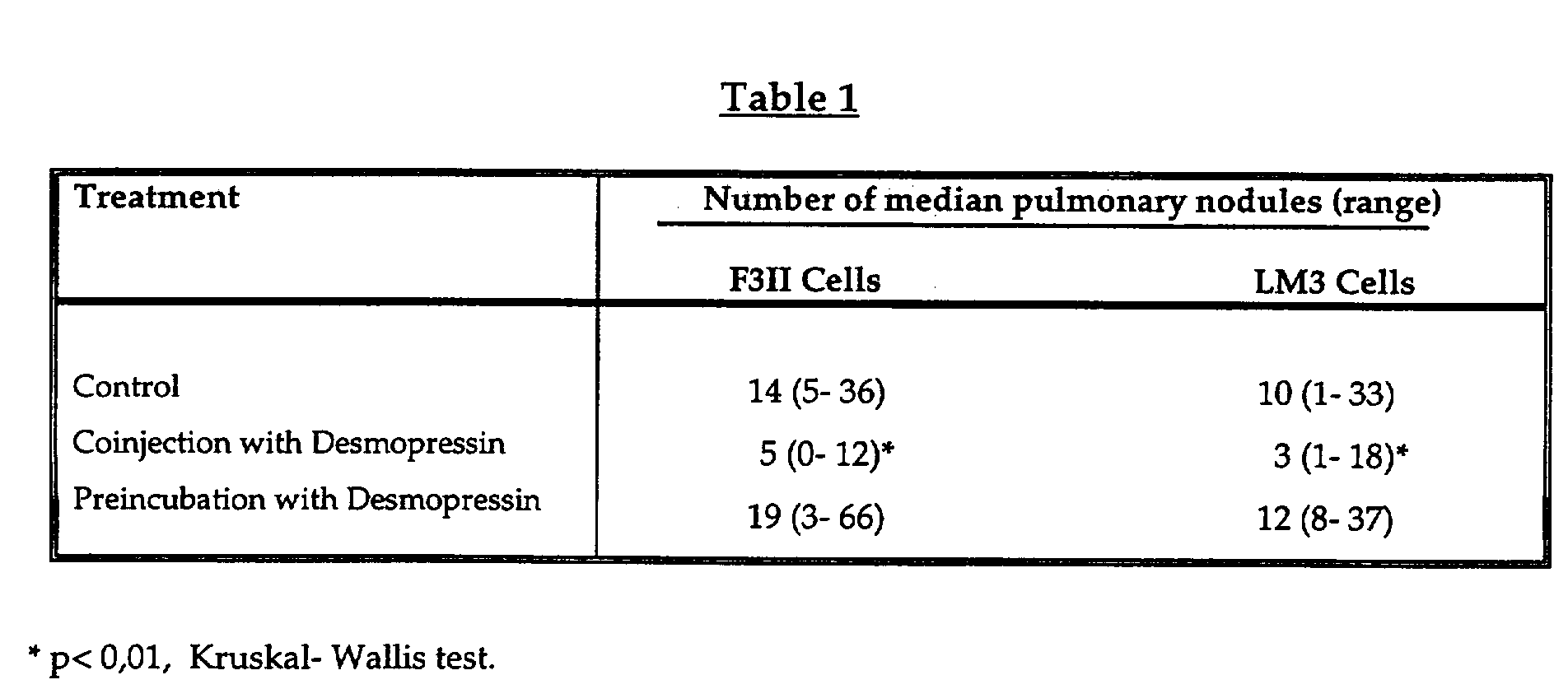
- Coinjection with Desmopressin: tumor cells were preincubated in serum- free MEM and i.v. coinjected with Desmopressin, at a final dose of 1µg (F3II cells) or 2 µg (LM3 cells) per kg of body weight.
- Preincubation with Desmopressin: tumor cell suspensions were preincubated in serum- free MEM for 30- 60 min at 37°C, in the presence of equivalent concentrations of Desmopressin (80- 160 ng/ml MEM). Then, cells were pelleted, resuspended in serum- free MEM and i.v. injected in the absence of Desmopressin.
- Control: animals inoculated with tumor cells, with no Desmopressin treatment.
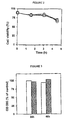
- in the absence of desmopressin,
- in the presence of desmopressin, at concentrations of 80 ng/ml,
- in the presence of Desmopressin, at concentrations of 160 ng/ml.

| 1st Intraoperative dose | 1- 2 µg/ kg of body weight of desmopressin, dissolved at the time, in 50-100 ml of 0,9% saline solution are administered in i.v. infusion for 15- 30 minutes during surgery, corresponding to the manipulation and extirpation of the neoplasic mass. |
| 2nd Post-operative dose | 1- 2 µg/ kg of body weight of desmopressin, dissolved at the time, in 50-100 ml of 0,9% saline solution are administered in i.v. infusion for 15- 30 minutes, 24 h after surgery. |
Claims (20)
- The use of 1- deamino- 8- D- arginine vasopressin (desmopressin), or a pharmaceutically acceptable salt thereof, or a pharmaceutical composition containing any of these, in the preparation of a medicament which inhibits metastatic dissemination in a second organ by metastatic tumor cells, spread during surgery of a cancerous tumor in a first organ.
- The use of 1- deamino- 8- D- arginine vasopressin (desmopressin), or a pharmaceutically acceptable salt thereof, or a pharmaceutical composition containing any of these, in the preparation of a pharmaceutical composition which inhibits lung metastatic dissemination by metastatic tumor cells, spread during breast cancer surgery according to claim 1.
- The use according to any of claims 1 or 2 of 1- deamino- 8- D-arginine vasopressin acetate as a pharmaceutically acceptable salt.
- A pharmaceutical composition which inhibits metastatic dissemination in a second organ by metastatic tumor cells spread during the surgery of a cancerous tumor in a first organ, characterized in that it comprises 1-deamino- 8- D- arginine vasopressin (desmopressin), or a pharmaceutically acceptable salt thereof together with a pharmaceutically acceptable carrier or diluent.
- A pharmaceutical composition according to claim 4, which inhibits lung metastatic dissemination by metastatic tumor cells spread during the surgery of breast cancer, characterized in that it comprises 1- deamino- 8- D-arginine vasopressin (desmopressin), or a pharmaceutically acceptable salt thereof together with a pharmaceutically acceptable carrier or diluent.
- A pharmaceutical composition according to any of claims 4 to 5, characterized in that the pharmaceutically acceptable carrier or diluent is an aqueous saline solution.
- A pharmaceutical composition according to any of claims 4 to 6, characterized in that the pharmaceutically acceptable carrier or diluent is a water based sodium chloride solution.
- A pharmaceutical composition according to any of claims 4 to 7, characterized in that the ratio of 1- deamino- 8- D- arginine vasopressin (Desmopressin) or a pharmaceutically acceptable salt thereof to the pharmaceutically acceptable carrier or diluent is between 18 and 960 µg/ 100 ml.
- A pharmaceutical composition according to claim 8, characterized in that the ratio of 1- deamino- 8- D- arginine vasopressin (Desmopressin) or a pharmaceutically acceptable salt thereof to the pharmaceutically acceptable carrier or diluent is between 60 and 240 µg per 100 ml.
- A pharmaceutical composition according to any of claims 4 to 9, characterized in that it comprises 1- deamino- 8- D- arginine vasopressin acetate as a pharmaceutically acceptable salt.
- A process to prepare a pharmaceutical composition to inhibit metastatic dissemination in a second organ by metastatic tumor cells spread during the surgery of a cancerous tumor in a first organ, characterized in that it comprises the formulation of 1- deamino- 8- D- arginine vasopressin (Desmopressin) or a pharmaceutically acceptable salt thereof together with a pharmaceutically acceptable carrier or diluent.
- A process according to claim 11, characterized in that it comprises the formulation of pure lyophilized 1- deamino- 8- D- arginine vasopressin or a pharmaceutically acceptable salt thereof, together with a pharmaceutically acceptable carrier or diluent.
- A process according to claim 11, to prepare a pharmaceutical composition which inhibits lung metastatic dissemination by metastatic tumor cells spread during breast cancer surgery, characterized in that it comprises the formulation of 1- deamino- 8- D- arginine vasopressin (desmopressin) or a pharmaceutically acceptable salt thereof, together with a pharmaceutically acceptable carrier or diluent.
- A process according to claim 13, characterized in that it comprises the formulation of pure lyophilized 1- deamino- 8- D- arginine vasopressin or a pharmaceutically acceptable salt thereof, together with a pharmaceutically acceptable carrier or diluent.
- A method of treating a mammal to inhibit metastatic dissemination in a second organ by metastatic tumor cells spread during the surgery of a cancerous tumor in a first organ, characterized in that it comprises the administration of a therapeutically effective amount of 1- deamino- 8- D arginine vasopressin (Desmopressin) or a pharmaceutically acceptable salt thereof or a pharmaceutical composition containing any of these to the mammal.
- A method for the treatment of a mammal according to claim 15, to inhibit lung metastatic dissemination in mammals by metastatic tumor cells spread during breast cancer surgery, characterized in that it involves the administration of a therapeutically effective amount of 1- deamino- 8- D arginine vasopressin (desmopressin) or a pharmaceutically acceptable salt thereof or a pharmaceutical composition containing any of these to the mammal.
- A method according to any of claims 15 or 16, characterized in that 1- deamino- 8- D- arginine vasopressin (desmopressin) or a pharmaceutically acceptable salt is administered at a dose ranging from 0.3 to 4 µg/kg of body weight in endovenous infusion during surgery.
- A method according to claim 17, characterized in that a 1 to 2 µg/kg of body weight dose is administered as endovenous infusion during surgery.
- A method according to any of claims 15 to 18, characterized in that 1- deamino- 8- D- arginine vasopressin (Desmopressin) or a pharmaceutically acceptable salt thereof is further administered as a second dose ranging from 0.3 to 4 µg/kg of body weight by way of an endovenous infusion, 24 hours after surgery.
- A method according to claim 19, characterized in that 1-deamino- 8- D- arginine vasopressin (desmopressin) or a pharmaceutically acceptable salt thereof is further administered as a second dose ranging from 1 to 2 µg/kg of body weight by way of an endovenous infusion, 24 hours after surgery.
Applications Claiming Priority (2)
| Application Number | Priority Date | Filing Date | Title |
|---|---|---|---|
| AR1000736 | 1999-02-23 | ||
| ARP990100736A AR014640A1 (en) | 1999-02-23 | 1999-02-23 | AN INHIBITING PHARMACEUTICAL COMPOSITION OF METASTASIC DISSEMINATION DURING THE SURGERY OF A CANCEROUS TUMOR, A PREPARATION PROCEDURE AND A KIT FOR AN INJECTABLE FORMULATION. |
Publications (3)
| Publication Number | Publication Date |
|---|---|
| EP1031352A2 true EP1031352A2 (en) | 2000-08-30 |
| EP1031352A3 EP1031352A3 (en) | 2001-12-05 |
| EP1031352B1 EP1031352B1 (en) | 2005-10-26 |
Family
ID=41037864
Family Applications (1)
| Application Number | Title | Priority Date | Filing Date |
|---|---|---|---|
| EP00500025A Expired - Lifetime EP1031352B1 (en) | 1999-02-23 | 2000-02-21 | Use of desmopressin in the preparation of a metastatic dissemination inhibitor medicament during cancer surgery |
Country Status (6)
| Country | Link |
|---|---|
| US (1) | US6693082B2 (en) |
| EP (1) | EP1031352B1 (en) |
| AR (1) | AR014640A1 (en) |
| AT (1) | ATE307602T1 (en) |
| DE (1) | DE60023373D1 (en) |
| ES (1) | ES2251953T3 (en) |
Cited By (3)
| Publication number | Priority date | Publication date | Assignee | Title |
|---|---|---|---|---|
| WO2005077405A1 (en) * | 2004-02-06 | 2005-08-25 | Cancer Treatment International | Compositions and methods for the treatment of cancer by systemic elevation of lactate and consequent depletion of arginine |
| EP2264049A2 (en) | 2002-12-27 | 2010-12-22 | Romikin S.A. | 1-Desamino-8-d-arginyl vasopressin analogs |
| US8815232B2 (en) | 2008-08-26 | 2014-08-26 | Kyon Biotech Ag | Compositions and methods for treating cancer |
Families Citing this family (9)
| Publication number | Priority date | Publication date | Assignee | Title |
|---|---|---|---|---|
| GB0210397D0 (en) * | 2002-05-07 | 2002-06-12 | Ferring Bv | Pharmaceutical formulations |
| PT1530967E (en) * | 2003-11-13 | 2006-09-29 | Ferring Bv | PACKAGING BLISTER AND A SOLID DOSAGE FORM WHICH UNDERSTANDS DESMOPRESSIN. |
| SE0600482L (en) * | 2006-03-02 | 2006-11-14 | Ferring Int Ct Sa | Pharmaceutical composition comprising desmopressin, silica and starch |
| WO2009021007A1 (en) | 2007-08-06 | 2009-02-12 | Serenity Pharmaceuticals Corporation | Methods and devices for desmopressin drug delivery |
| NO3085381T3 (en) * | 2008-05-21 | 2018-09-15 | ||
| US11963995B2 (en) | 2008-05-21 | 2024-04-23 | Ferring B.V. | Methods comprising desmopressin |
| US20100286045A1 (en) | 2008-05-21 | 2010-11-11 | Bjarke Mirner Klein | Methods comprising desmopressin |
| EP2335075A4 (en) * | 2008-09-05 | 2011-12-14 | Scripps Research Inst | METHODS OF DETECTING CIRCULATING TUMOR CELLS |
| CA2765221C (en) | 2009-06-18 | 2017-10-03 | Allergan, Inc. | Safe desmopressin administration |
Family Cites Families (3)
| Publication number | Priority date | Publication date | Assignee | Title |
|---|---|---|---|---|
| FR2275225A1 (en) * | 1974-06-20 | 1976-01-16 | Weil Bernard | Vasopressin and aldosterone antagonist compns. - for treating cellular metabolic disorders, e.g. tumours, due to excess antidiuretic hormone |
| SU1613956A1 (en) * | 1988-02-22 | 1990-12-15 | Научно-исследовательский институт онкологии им.проф.Н.Н.Петрова | Agent for modulating functional activity of natural killers in vitro |
| DE4236293A1 (en) * | 1992-10-23 | 1993-03-04 | Siegfried Knauf | Use of oxytocin, vasopressin and endorphins - for treatment and prevention of e.g. immunological, neurological and organ diseases and conditions caused by pituitary disorder |
-
1999
- 1999-02-23 AR ARP990100736A patent/AR014640A1/en not_active Application Discontinuation
-
2000
- 2000-02-21 EP EP00500025A patent/EP1031352B1/en not_active Expired - Lifetime
- 2000-02-21 AT AT00500025T patent/ATE307602T1/en not_active IP Right Cessation
- 2000-02-21 ES ES00500025T patent/ES2251953T3/en not_active Expired - Lifetime
- 2000-02-21 DE DE60023373T patent/DE60023373D1/en not_active Expired - Lifetime
-
2001
- 2001-06-05 US US09/875,671 patent/US6693082B2/en not_active Expired - Lifetime
Cited By (3)
| Publication number | Priority date | Publication date | Assignee | Title |
|---|---|---|---|---|
| EP2264049A2 (en) | 2002-12-27 | 2010-12-22 | Romikin S.A. | 1-Desamino-8-d-arginyl vasopressin analogs |
| WO2005077405A1 (en) * | 2004-02-06 | 2005-08-25 | Cancer Treatment International | Compositions and methods for the treatment of cancer by systemic elevation of lactate and consequent depletion of arginine |
| US8815232B2 (en) | 2008-08-26 | 2014-08-26 | Kyon Biotech Ag | Compositions and methods for treating cancer |
Also Published As
| Publication number | Publication date |
|---|---|
| DE60023373D1 (en) | 2005-12-01 |
| EP1031352B1 (en) | 2005-10-26 |
| AR014640A1 (en) | 2001-03-28 |
| ATE307602T1 (en) | 2005-11-15 |
| US20020013262A1 (en) | 2002-01-31 |
| EP1031352A3 (en) | 2001-12-05 |
| US6693082B2 (en) | 2004-02-17 |
| ES2251953T3 (en) | 2006-05-16 |
Similar Documents
| Publication | Publication Date | Title |
|---|---|---|
| Palladino Jr et al. | Characterization of the antitumor activities of human tumor necrosis factor-alpha and the comparison with other cytokines: induction of tumor-specific immunity. | |
| JP5504119B2 (en) | Methods for treating and preventing diseases of biological conduits | |
| EP1031352B1 (en) | Use of desmopressin in the preparation of a metastatic dissemination inhibitor medicament during cancer surgery | |
| Danese et al. | Protection by aspirin against experimentally induced arterial thrombosis in dogs | |
| JPH0680015B2 (en) | Pharmaceutical composition | |
| US11702449B2 (en) | Angiogenesis-inhibiting peptide and composition for preventing and treating angiogenesis-related disease comprising same as active ingredient | |
| US9522179B2 (en) | Compositions and methods for modulating cardiac conditions | |
| Alonso et al. | Antimetastatic effect of desmopressin in a mouse mammary tumor model | |
| JP2015524823A (en) | Use of antithrombin in extracorporeal membrane oxygenator | |
| EP0914830B1 (en) | Neovascularization inhibitor containing tissue factor pathway inhibitor | |
| TW200538466A (en) | Methods for controlling angiogenesis and cell proliferation | |
| CA2062388A1 (en) | Method and preparation for the inhibition or prevention of cancer metastasis | |
| HK1031820A (en) | Use of desmopressin in the preparation of a metastatic dissemination inhibitor medicament during cancer surgery | |
| US7498299B2 (en) | Procollagen (III) propeptides and related substances for treating fibrotic diseases | |
| ES2263582T3 (en) | USE OF THE GROWTH FACTOR TO PREVENT OR TREAT ISCHEMICAL CARDIOPATIAS OR CARDIOVASCULAR ACCIDENTS. | |
| KR20040004431A (en) | Use of melagatran for manufacture of a medicament for the treatment of ischemic disorders | |
| JP2003527337A (en) | Administration method of therapeutic agent based on anti-angiogenic schedule | |
| US7247611B2 (en) | Compositions and methods for promoting internalization and degradation of urokinase-type plasminogen activator | |
| US20040009920A1 (en) | Methods and compositions for inhibiting tumor growth and angiogenesis | |
| AU1360999A (en) | Compositions and methods for promoting internalization and degradation of urokinase-type plasminogen activator | |
| JPH09151137A (en) | Smooth muscle cell proliferation inhibitor | |
| AU2005215114B2 (en) | Use of factor XIII for stimulating the perfusion of ischemic tissue | |
| JP2007137771A (en) | Inflammatory disease therapeutic agent and use thereof | |
| KR100847979B1 (en) | Malignant Tumor Invasion Inhibitors Containing Vatroxobin | |
| CN121243384A (en) | Therapeutic use of sepsis-ARDS based on si-PRMT6 |
Legal Events
| Date | Code | Title | Description |
|---|---|---|---|
| PUAI | Public reference made under article 153(3) epc to a published international application that has entered the european phase |
Free format text: ORIGINAL CODE: 0009012 |
|
| AK | Designated contracting states |
Kind code of ref document: A2 Designated state(s): AT BE CH CY DE DK ES FI FR GB GR IE IT LI LU MC NL PT SE |
|
| AX | Request for extension of the european patent |
Free format text: AL;LT;LV;MK;RO;SI |
|
| PUAL | Search report despatched |
Free format text: ORIGINAL CODE: 0009013 |
|
| AK | Designated contracting states |
Kind code of ref document: A3 Designated state(s): AT BE CH CY DE DK ES FI FR GB GR IE IT LI LU MC NL PT SE |
|
| AX | Request for extension of the european patent |
Free format text: AL;LT;LV;MK;RO;SI |
|
| 17P | Request for examination filed |
Effective date: 20020524 |
|
| AKX | Designation fees paid |
Free format text: AT BE CH CY DE DK ES FI FR GB GR IE IT LI LU MC NL PT SE |
|
| 17Q | First examination report despatched |
Effective date: 20030509 |
|
| GRAP | Despatch of communication of intention to grant a patent |
Free format text: ORIGINAL CODE: EPIDOSNIGR1 |
|
| GRAS | Grant fee paid |
Free format text: ORIGINAL CODE: EPIDOSNIGR3 |
|
| RIN1 | Information on inventor provided before grant (corrected) |
Inventor name: SKILTON, GUILLERMO Inventor name: GOMEZ, DANIEL EDUARDO Inventor name: BAL DE KIER JOFFE, ELISA DORA Inventor name: FARIAS, EDUARDO FRANCISCO Inventor name: ALONSO, DANIEL FERNANDO |
|
| GRAA | (expected) grant |
Free format text: ORIGINAL CODE: 0009210 |
|
| RAP1 | Party data changed (applicant data changed or rights of an application transferred) |
Owner name: FARIAS, EDUARDO FRANCISCO Owner name: CASTELLON,, NOEMI, FRANCISCA Owner name: BAL DE KIER JOFFE, ELISA DORA Owner name: UNIVERSIDAD NACIONAL DE QUILMES Owner name: ALONSO, DANIEL FERNANDO Owner name: GOMEZ, DANIEL EDUARDO Owner name: RICARDO, SKILTON |
|
| AK | Designated contracting states |
Kind code of ref document: B1 Designated state(s): AT BE CH CY DE DK ES FI FR GB GR IE IT LI LU MC NL PT SE |
|
| PG25 | Lapsed in a contracting state [announced via postgrant information from national office to epo] |
Ref country code: AT Free format text: LAPSE BECAUSE OF FAILURE TO SUBMIT A TRANSLATION OF THE DESCRIPTION OR TO PAY THE FEE WITHIN THE PRESCRIBED TIME-LIMIT Effective date: 20051026 Ref country code: FI Free format text: LAPSE BECAUSE OF FAILURE TO SUBMIT A TRANSLATION OF THE DESCRIPTION OR TO PAY THE FEE WITHIN THE PRESCRIBED TIME-LIMIT Effective date: 20051026 |
|
| REG | Reference to a national code |
Ref country code: GB Ref legal event code: FG4D |
|
| REG | Reference to a national code |
Ref country code: CH Ref legal event code: EP |
|
| REG | Reference to a national code |
Ref country code: IE Ref legal event code: FG4D |
|
| REF | Corresponds to: |
Ref document number: 60023373 Country of ref document: DE Date of ref document: 20051201 Kind code of ref document: P |
|
| PG25 | Lapsed in a contracting state [announced via postgrant information from national office to epo] |
Ref country code: DK Free format text: LAPSE BECAUSE OF FAILURE TO SUBMIT A TRANSLATION OF THE DESCRIPTION OR TO PAY THE FEE WITHIN THE PRESCRIBED TIME-LIMIT Effective date: 20060126 Ref country code: SE Free format text: LAPSE BECAUSE OF FAILURE TO SUBMIT A TRANSLATION OF THE DESCRIPTION OR TO PAY THE FEE WITHIN THE PRESCRIBED TIME-LIMIT Effective date: 20060126 Ref country code: GR Free format text: LAPSE BECAUSE OF FAILURE TO SUBMIT A TRANSLATION OF THE DESCRIPTION OR TO PAY THE FEE WITHIN THE PRESCRIBED TIME-LIMIT Effective date: 20060126 |
|
| PG25 | Lapsed in a contracting state [announced via postgrant information from national office to epo] |
Ref country code: DE Free format text: LAPSE BECAUSE OF FAILURE TO SUBMIT A TRANSLATION OF THE DESCRIPTION OR TO PAY THE FEE WITHIN THE PRESCRIBED TIME-LIMIT Effective date: 20060127 |
|
| PG25 | Lapsed in a contracting state [announced via postgrant information from national office to epo] |
Ref country code: IE Free format text: LAPSE BECAUSE OF NON-PAYMENT OF DUE FEES Effective date: 20060221 |
|
| PG25 | Lapsed in a contracting state [announced via postgrant information from national office to epo] |
Ref country code: MC Free format text: LAPSE BECAUSE OF NON-PAYMENT OF DUE FEES Effective date: 20060228 Ref country code: LU Free format text: LAPSE BECAUSE OF NON-PAYMENT OF DUE FEES Effective date: 20060228 |
|
| PG25 | Lapsed in a contracting state [announced via postgrant information from national office to epo] |
Ref country code: PT Free format text: LAPSE BECAUSE OF FAILURE TO SUBMIT A TRANSLATION OF THE DESCRIPTION OR TO PAY THE FEE WITHIN THE PRESCRIBED TIME-LIMIT Effective date: 20060327 |
|
| REG | Reference to a national code |
Ref country code: CH Ref legal event code: NV Representative=s name: ING. MARCO ZARDI C/O M. ZARDI & CO. S.A. |
|
| REG | Reference to a national code |
Ref country code: ES Ref legal event code: FG2A Ref document number: 2251953 Country of ref document: ES Kind code of ref document: T3 |
|
| ET | Fr: translation filed | ||
| PLBE | No opposition filed within time limit |
Free format text: ORIGINAL CODE: 0009261 |
|
| STAA | Information on the status of an ep patent application or granted ep patent |
Free format text: STATUS: NO OPPOSITION FILED WITHIN TIME LIMIT |
|
| 26N | No opposition filed |
Effective date: 20060727 |
|
| REG | Reference to a national code |
Ref country code: IE Ref legal event code: MM4A |
|
| REG | Reference to a national code |
Ref country code: HK Ref legal event code: WD Ref document number: 1031820 Country of ref document: HK |
|
| PG25 | Lapsed in a contracting state [announced via postgrant information from national office to epo] |
Ref country code: CY Free format text: LAPSE BECAUSE OF FAILURE TO SUBMIT A TRANSLATION OF THE DESCRIPTION OR TO PAY THE FEE WITHIN THE PRESCRIBED TIME-LIMIT Effective date: 20051026 |
|
| REG | Reference to a national code |
Ref country code: FR Ref legal event code: PLFP Year of fee payment: 17 |
|
| REG | Reference to a national code |
Ref country code: FR Ref legal event code: PLFP Year of fee payment: 18 |
|
| REG | Reference to a national code |
Ref country code: FR Ref legal event code: PLFP Year of fee payment: 19 |
|
| PGFP | Annual fee paid to national office [announced via postgrant information from national office to epo] |
Ref country code: ES Payment date: 20190301 Year of fee payment: 20 Ref country code: NL Payment date: 20190128 Year of fee payment: 20 Ref country code: GB Payment date: 20190125 Year of fee payment: 20 Ref country code: IT Payment date: 20190122 Year of fee payment: 20 Ref country code: CH Payment date: 20190125 Year of fee payment: 20 Ref country code: FR Payment date: 20190123 Year of fee payment: 20 |
|
| PGFP | Annual fee paid to national office [announced via postgrant information from national office to epo] |
Ref country code: BE Payment date: 20190124 Year of fee payment: 20 |
|
| REG | Reference to a national code |
Ref country code: NL Ref legal event code: MK Effective date: 20200220 |
|
| REG | Reference to a national code |
Ref country code: CH Ref legal event code: PL |
|
| REG | Reference to a national code |
Ref country code: GB Ref legal event code: PE20 Expiry date: 20200220 |
|
| REG | Reference to a national code |
Ref country code: BE Ref legal event code: MK Effective date: 20200221 |
|
| PG25 | Lapsed in a contracting state [announced via postgrant information from national office to epo] |
Ref country code: GB Free format text: LAPSE BECAUSE OF EXPIRATION OF PROTECTION Effective date: 20200220 |
|
| REG | Reference to a national code |
Ref country code: ES Ref legal event code: FD2A Effective date: 20200803 |
|
| PG25 | Lapsed in a contracting state [announced via postgrant information from national office to epo] |
Ref country code: ES Free format text: LAPSE BECAUSE OF EXPIRATION OF PROTECTION Effective date: 20200222 |