EP1027861A1 - Body fat meter and body weight scales equipped with body fat meter - Google Patents
Body fat meter and body weight scales equipped with body fat meter Download PDFInfo
- Publication number
- EP1027861A1 EP1027861A1 EP98947788A EP98947788A EP1027861A1 EP 1027861 A1 EP1027861 A1 EP 1027861A1 EP 98947788 A EP98947788 A EP 98947788A EP 98947788 A EP98947788 A EP 98947788A EP 1027861 A1 EP1027861 A1 EP 1027861A1
- Authority
- EP
- European Patent Office
- Prior art keywords
- measuring
- voltage
- impedance
- human body
- measured
- Prior art date
- Legal status (The legal status is an assumption and is not a legal conclusion. Google has not performed a legal analysis and makes no representation as to the accuracy of the status listed.)
- Granted
Links
Images



Classifications
-
- G—PHYSICS
- G01—MEASURING; TESTING
- G01N—INVESTIGATING OR ANALYSING MATERIALS BY DETERMINING THEIR CHEMICAL OR PHYSICAL PROPERTIES
- G01N33/00—Investigating or analysing materials by specific methods not covered by groups G01N1/00 - G01N31/00
- G01N33/02—Food
- G01N33/04—Dairy products
- G01N33/06—Determining fat content, e.g. by butyrometer
-
- A—HUMAN NECESSITIES
- A61—MEDICAL OR VETERINARY SCIENCE; HYGIENE
- A61B—DIAGNOSIS; SURGERY; IDENTIFICATION
- A61B5/00—Measuring for diagnostic purposes; Identification of persons
- A61B5/05—Detecting, measuring or recording for diagnosis by means of electric currents or magnetic fields; Measuring using microwaves or radio waves
- A61B5/053—Measuring electrical impedance or conductance of a portion of the body
- A61B5/0537—Measuring body composition by impedance, e.g. tissue hydration or fat content
-
- A—HUMAN NECESSITIES
- A61—MEDICAL OR VETERINARY SCIENCE; HYGIENE
- A61B—DIAGNOSIS; SURGERY; IDENTIFICATION
- A61B5/00—Measuring for diagnostic purposes; Identification of persons
- A61B5/48—Other medical applications
- A61B5/4869—Determining body composition
- A61B5/4872—Body fat
Definitions
- the present invention relates to a weighing instrument with body fat meter for measuring simultaneously a bioelectrical impedance between both feet of a person in standing position and a weight, and for calculating and estimating a body fat amount based on such physical features as a height, a sex, an age and the like which are inputted other than above measurements, and, in particular, relates to a weighing instrument with body fat meter which responds to variations in a contact impedance between an electrode for measuring impedance and a sole of foot as a measured body.
- Body fat meter which utilizes the fact that the composition of a human body can be estimated by the use of an impedance between ends of human body which can be obtained by applying a feeble constant current to an end of a measured person's body and measuring a voltage drop between electrodes (The American Journal of Clinical Nutrition, 41(4) 810-817 1985 "Assessment of fat-free mass using bioelectrical impedance measurement of the human body") was proposed (by USP No. 4,008,721, JP 5-49050C, JP 7-51242A, etc.) and the products based on these proposals have been introduced into market.
- the product according to JP 5-49050C is introduced into market as an instrument which allows to estimate body fat with absolute ease, that is, a weighing instrument with body fat meter, wherein a flat metal electrode for measuring a bioelectrical impedance is attached to a position on a top surface of a loading board of a weighing instrument with which soles of both feet of a measured person come in contact when he gets on the weighing instrument, whereby, among factors for estimating the body fat amount, an impedance between ends of human body and a weight which vary in every measurement can be measured simultaneously and can be taken into calculation formulas.
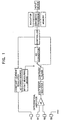
- a body fat meter In a conventional body fat meter, at first, such physical data as a height, a sex, a weight and the like are inputted through such an input device as a key switch and the like and are stored in a memory, and then an impedance measuring device is driven by a controller to output a bioelectrical impedance in an analogue form, and then said analogue impedance is converted into digital value by an A/D converter to be taken into an arithmetic processor, which calculates a body fat amount from the digital value of the bioelectrical impedance and the physical data such as the height and the like stored in the memory, and outputs to an indicator.
- an impedance measuring device is driven by a controller to output a bioelectrical impedance in an analogue form
- said analogue impedance is converted into digital value by an A/D converter to be taken into an arithmetic processor, which calculates a body fat amount from the digital value of the bioelectrical impedance and the physical data
- a weighing instrument is installed so as for a weight of a measured person to be measured every time when an impedance is measured in the weighing instrument with the body fat meter.
- This weighing instrument with the body fat meter has an alternation switch between an analogue output of the impedance measuring device and said A/D converter, and another end of the alternation switch is connected to an analogue output of the weighing instrument, and a control terminal of the alternation switch is connected to said controller, wherein, at first, an output of the weighing instrument is inputted into the A/D converter through the alternation switch to convert a weight value of a measured person into a digital value and to store said digital value in a memory, and then the alternation switch is switched to input an output of the impedance measuring device into the A/D converter to convert a measured value of the impedance into a digital value, so that the A/D converter is shared by the weighing instrument and the impedance measuring device (Fig. 1).
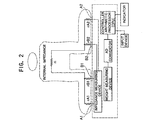
- bioelectrical impedance measuring device of said conventional weighing instrument with body fat meter employs four-terminal method in order to eliminate an influence of variation in a contact resistance between an electrode and a human body upon a measured value (Figs. 2 and 3).
- Electrodes A1, A2, B1 and B2 are arranged so that said electrodes come to contact with tiptoes and heels of both feet of the measured person when he gets on the loading plate of an electronic weighing instrument for measuring the weight of the measured person, and current terminals of a constant-current regulated AC power source with known current value of iR in 50 kHz are connected to the electrodes A1 and A2 and measurement terminals of AC voltmeter are connected to the electrodes B1 and B2.
- This system is designed so that little current would flow into the measurement terminals of the AC voltmeter.
- a bioelectrical impedance is represented by ri
- a contact impedance of the right tiptoe by rA1 a contact impedance of the left tiptoe by rA2
- a contact impedance of the right heel by rB1 a contact impedance of the left heel is represented by rB2.
- a constant-current regulated alternating current iR flows from rA1 through ri and rA2 and returns to the current terminal without being leaked to rB1 and rB2.
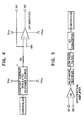
- the constant-current regulated AC power source comprises a constant-voltage regulated AC power source, a resistor R1 and an OP amplifier (Fig. 4).
- An output of the constant-voltage regulated AC power source is connected to an end of the resistor R1 and another end of the resistor R1 is connected to a negative terminal of the OP amplifier.
- To the negative terminal is connected said electrode A1, to an output terminal of the OP amplifier is connected said electrode A2, and a positive terminal of the OP amplifier is connected to GND (0V).
- the negative terminal of the OP amplifier has the same potential as the positive terminal does as far as the output terminal is not saturated, and no current flow in from the negative terminal into the OP amplifier. Accordingly, the current flowing into the resistor R1 directly flows into the electrode A1 through the human body, reaches to the electrode A2 and is absorbed by the output terminal of the OP amplifier.
- the AC voltmeter comprises a differential amplifier, a rectifier, a low pass filter and an A/D converter. At first, the voltage between the electrodes B1 and B2 is amplified into N-times thereof by the differential amplifier.
- the bioelectrical impedance free from the contact impedance of the feet can be measured.
- this system is designed generally on the assumption that the contact impedance is small to some degree and the system is used with bare feet.
- the contact impedance of a sole is generally less than 1 k ⁇ , so that the maximum current value for measuring the impedance is assumed to be less than 1 mA in the design specifications.
- the current value is derived to be 800 ⁇ A from the equation (5).
- the contact impedance of the sole is less than 1 k ⁇ , but, when the socks or stockings are put on the feet, it increases extremely.
- a circuit voltage is limited to a degree of ⁇ 5 V.
- a voltage of the output terminal of the OP amplifier used in the constant-current regulated power source is within said range, so that, when the socks or stockings are put on the feet (that is, the contact impedance is 10 k ⁇ ) as described above, the OP amplifier is saturated and the constant current cannot be applied thereto.
- ri is not a known value of constant current, and a wave form thereof is deformed and goes out of sinusoidal wave form.
- the AC voltmeter would detect said deformed and incorrect voltage output vi, and, using said vi value, the arithmetic processor would calculate the body fat amount to output it to the indicator.
- the bioelectrical impedance measuring device of the conventional weighing instrument with body fat meter is designed on the assumption that the measured person gets on the measuring instrument by the bare feet, and, accordingly, when the socks or stockings are put on the feet and thereby the contact impedance between the electrode of the measuring device and the measured body becomes too large, the voltage drop between the electrode of the measuring device and the measured body increases due to the constitution of the system and it goes out of a normal operation range of the constant-current power source, so that a predetermined degree of current cannot be applied to the human body and thereby an accurate measurement cannot be performed.
- An object of the present invention is to provide a weighing instrument with body fat meter which allows a body fat to be precisely and simply measured even if a contact impedance between a human body and an electrode for measuring a bioelectrical impedance increases as a result of wearing socks and the like.
- a constant-voltage power source is employed as a current power source for measuring a bioelectrical impedance, and a current measuring device is installed between said constant-voltage power source and an electrode of a voltage supply terminal to measure a current flowing into a human body (hereafter referred to as internal influent current), and then an impedance between both feet is determined based on a measured value of the internal influent current and a potential difference between voltage measurement terminals (Fig. 8).
- the internal influent current power source operates within the normal operating range without being affected by the contact impedance value, and the internal influent current and the potential difference between voltage measurement terminals which are used as base data for calculating the impedance are measured accurately, so that the bioelectrical impedance can be precisely measured even if there exists large contact impedance.
- two pairs of electrodes of a measuring device for measuring a bioelectrical impedance between both feet said two pairs of electrodes being composed of a pair of electrodes A (A1, A2) which comes in contact with the tiptoes of both feet when a measured person gets on a loading board of an electronic weighing instrument for measuring a weight thereof and makes a feeble current flow into the human body thereof and a pair of electrodes B (B1, B2) which comes in contact with the heels of both feet thereof and measures a potential difference between both heels, and an input device for inputting such physical features as a height, an age, a sex and the like.
- An output of a sinusoidal wave oscillator is lead to the electrode A via a resistor R1 with known resistance value, and the internal influent current is derived from the potential difference caused by the voltage drop by the resistor R1.
- the potential difference due to the voltage drop between the electrodes B is taken out by a differential amplifier, and the output thereof is, after a wave forming and a rectifying processing being applied thereto and being converted into the direct current, processed by the A/D conversion and then is taken into an arithmetic processing section as a digital data of the bioelectric impedance by the use of a current value derived from the potential difference between both ends of the resistor R1.
- the arithmetic processing section calculates a body fat amount based on the inputted physical features such as the height, the age, the sex and the like, a measured or inputted weight value and the bioelectrical impedance, and then the output is indicated on an indicator installed on a top surface of the loading board.
- an end of AC ammeter is connected to an AC power source of 50 kHz and another end thereof is connected to an A1 terminal.
- An A2 terminal is connected to the GND.
- Measurement terminals of an AC voltmeter are connected to electrodes B1 and B2.
- An alternation switch SW1 which selectively connects either both ends of a resistor R1 or the B1 and the B2 terminals to a differential amplifier is provided and a control terminal of the alternation switch SW1 is connected to a controller.
- a voltage vx is applied by the AC voltage power source, and a current flows into A1 through a resistor R1.
- the controller connects both ends of the resistor R1 to the differential amplifier by the alternation switch SW1 and converts an output thereof into a DC voltage by a half-wave rectifier and a low pass filter, and inputs it into an A/D converter to convert it into a digital value and then stores said digital value Nx in a memory.
- NR Nx / R1 and is stored in the memory.
- the controller connects the B1 and the B2 terminals to the differential amplifier by the alternation switch SW1 and, in the same manner, converts an output thereof into a digital value by inputting it into the A/D converter through the half-wave rectifier and the low pass filter, and then stores said digital value Ni in the memory.
- the voltage vi generated by the bioelectrical impedance ri has been obtained as a digital value Ni.
- the bioelectrical impedance can be found using the digital values Ni and NR.
- An arithmetic processor calculates the body fat amount based on the obtained bioelectrical impedance value and the physical data of the measured person, and outputs the result into an indicator.
- the voltage applied to the A1 terminal is nearly equal to the output vx of the AC voltage power source.
- the internal influent current is inversely proportional to a contact impedance and an internal impedance, so that the internal influent current is increased too much when the contact impedance is extremely small. It is absolutely necessary that this current is within the range where the human body is never influenced by that.
- a protective function such as that of breaker is required in which, for example, the current more than 2 mA is prevented from being applied to the AC voltage power source when the maximum allowable internal influent current is 2 mA.
- the resistor R1 serves also as a unit having a function to control a current value by selecting the resistance value thereof.
- the indicator is equipped with a "high precision” mark and a "low precision” mark, and, when a digital value which represent a lower limit of current for ensuring a high precision is specified to be NH and another digital value which represent a current level less than a measurable limit is specified to be NMIN, the body fat amount is calculated and then:
- the weighing instrument can share these devices with the impedance measuring system and make it more convenient with low cost by disposing an alternation switch between the impedance measuring device and said A/D converter, connecting another end of the alternation switch to an analogue output of a weight measuring device, and connecting a control terminal of the alternation switch to said controller, so that, at first, an output of the weight measuring device is inputted into the A/D converter through the alternation switch to convert a weight value of the measured person into a digital value and store it to the memory, and then the alternation switch is switched so as for the output of the impedance measuring device to be inputted into the A/D converter.
Landscapes
- Health & Medical Sciences (AREA)
- Life Sciences & Earth Sciences (AREA)
- Engineering & Computer Science (AREA)
- Pathology (AREA)
- General Health & Medical Sciences (AREA)
- Physics & Mathematics (AREA)
- Surgery (AREA)
- Public Health (AREA)
- Biomedical Technology (AREA)
- Heart & Thoracic Surgery (AREA)
- Medical Informatics (AREA)
- Molecular Biology (AREA)
- Veterinary Medicine (AREA)
- Animal Behavior & Ethology (AREA)
- Biophysics (AREA)
- Nuclear Medicine, Radiotherapy & Molecular Imaging (AREA)
- Radiology & Medical Imaging (AREA)
- Food Science & Technology (AREA)
- Chemical & Material Sciences (AREA)
- Medicinal Chemistry (AREA)
- Analytical Chemistry (AREA)
- Biochemistry (AREA)
- General Physics & Mathematics (AREA)
- Immunology (AREA)
- Measurement And Recording Of Electrical Phenomena And Electrical Characteristics Of The Living Body (AREA)
- Measurement Of Resistance Or Impedance (AREA)
Abstract
Description
Claims (5)
- A body fat meter comprising:an input means for measuring or inputting such physical data as a height and the like of a measured person;an impedance measuring means for measuring a bioelectrical impedance of the measured person;an arithmetic processing means for calculating a body fat amount by arithmetically processing an inputted physical data, a measured or inputted weight value, and a bioelectrical impedance obtained by the impedance measuring means; andan indicating means for indicating a body fat amount calculated by the arithmetic processing means; whereinsaid impedance measuring means for measuring the bioelectrical impedance is composed of:a voltage power source;a pair of voltage supply terminals for applying a predetermined voltage to a human body;an internal influent current measuring means for measuring current flowing into the human body, which is installed between said voltage power source and the human body;an internal voltage measuring means for measuring voltage generated by the current flowing into the human body; anda calculating means for calculating a bioelectrical impedance from the current flowing into the human body, which is measured by said internal influent current measuring means, and the internal voltage measured by the internal voltage measuring means.
- A weighing instrument with body fat meter comprising:an input means for inputting such physical data as a height and the like of a measured person;an impedance measuring means for measuring a bioelectrical impedance of the measured person;a weighing means for measuring a weight of the measured person;an arithmetic processing means for calculating a body fat amount by arithmetically processing an inputted physical data, a measured weight value, and a bioelectrical impedance obtained by the impedance measuring means; andan indicating means for indicating a body fat amount calculated by the arithmetic processing means; whereinsaid impedance measuring means for measuring the bioelectrical impedance is composed of:a voltage power source;a pair of voltage supply terminals for applying a predetermined voltage to a human body;an internal influent current measuring means for measuring current flowing into the human body, which is installed between said voltage power source and the human body;an internal voltage measuring means for measuring voltage generated by the current flowing into the human body; anda calculating means for calculating a bioelectrical impedance from the current flowing into the human body, which is measured by said internal influent current measuring means, and the internal voltage measured by the internal voltage measuring means.
- A body fat meter claimed in either of claim 1 or 2, in which said internal influent current measuring means is composed of a resistor disposed between the voltage power source and the human body, and a voltage measuring means of said resistor.
- A body fat meter claimed in claim 3, in which the resistor disposed between the voltage power source and the human body serves also as a limiting resistor of an influent current for limiting an internal influent current below a predetermined value.
- A weighing instrument with body fat meter comprising:an input means for inputting such physical data as a sex, a height, an age and the like of a measured person;a weighing means for measuring a weight of the measured person;an impedance measuring means for measuring a bioelectrical impedance between both feet of the measured person, said means having two pairs of electrodes in positions which are capable of coming in contact with soles of both feet of the measured person when said measured person gets on a loading board of said weighing means;an arithmetic processing means for calculating a body fat amount by arithmetically processing an inputted physical data, a measured weight value, and a impedance value between both feet; andan indicating means for indicating a measured weight, a calculated body fat amount; whereinsaid impedance measuring means for measuring the bioelectrical impedance is composed of:a voltage power source;a pair of voltage supply terminals for applying a predetermined voltage to a human body;an internal influent current measuring means for measuring current flowing into the human body, which is installed between said voltage power source and the human body;an internal voltage measuring means for measuring voltage generated by the current flowing into the human body; anda calculating means for calculating a bioelectrical impedance from the current flowing into the human body, which is measured by said internal influent current measuring means, and the internal voltage measured by the internal voltage measuring means.
Applications Claiming Priority (3)
| Application Number | Priority Date | Filing Date | Title |
|---|---|---|---|
| JP29960397 | 1997-10-17 | ||
| JP29960397A JP3734350B2 (en) | 1997-10-17 | 1997-10-17 | Body fat meter and body weight scale with body fat meter |
| PCT/JP1998/004547 WO1999020175A1 (en) | 1997-10-17 | 1998-10-08 | Body fat meter and body weight scales equipped with body fat meter |
Publications (3)
| Publication Number | Publication Date |
|---|---|
| EP1027861A1 true EP1027861A1 (en) | 2000-08-16 |
| EP1027861A4 EP1027861A4 (en) | 2004-04-07 |
| EP1027861B1 EP1027861B1 (en) | 2006-03-01 |
Family
ID=17874780
Family Applications (1)
| Application Number | Title | Priority Date | Filing Date |
|---|---|---|---|
| EP98947788A Expired - Lifetime EP1027861B1 (en) | 1997-10-17 | 1998-10-08 | Body fat meter and body weight scales equipped with body fat meter |
Country Status (10)
| Country | Link |
|---|---|
| US (1) | US6370425B1 (en) |
| EP (1) | EP1027861B1 (en) |
| JP (1) | JP3734350B2 (en) |
| KR (1) | KR100372370B1 (en) |
| CN (1) | CN1276709A (en) |
| AU (1) | AU9458698A (en) |
| DE (1) | DE69833673T2 (en) |
| IL (1) | IL126488A (en) |
| TW (1) | TW384393B (en) |
| WO (1) | WO1999020175A1 (en) |
Cited By (5)
| Publication number | Priority date | Publication date | Assignee | Title |
|---|---|---|---|---|
| EP1166716A1 (en) * | 2000-06-30 | 2002-01-02 | Tanita Corporation | Bioelectrical impedance measuring apparatus |
| EP1269912A3 (en) * | 2001-06-22 | 2003-03-19 | Terraillon Holdings Limited | A body fat monitoring device |
| EP2163194A3 (en) * | 2008-09-09 | 2010-12-15 | Aldo Vicinanza | System of impedentiometric evaluation on teleassistance for physics body condition |
| US9041582B2 (en) | 2010-07-16 | 2015-05-26 | Olympus Corporation | Organism state quantity measuring apparatus |
| EP3153099A1 (en) * | 2015-10-07 | 2017-04-12 | Samsung Electronics Co., Ltd. | Apparatus and method of measuring bio signal |
Families Citing this family (33)
| Publication number | Priority date | Publication date | Assignee | Title |
|---|---|---|---|---|
| JP4357049B2 (en) | 1999-10-07 | 2009-11-04 | 大和製衡株式会社 | Body fat measuring device |
| JP2001212098A (en) * | 2000-01-31 | 2001-08-07 | Tanita Corp | Bioelectrical impedance measuring device integrated on one chip |
| JP4525995B2 (en) * | 2000-05-26 | 2010-08-18 | 株式会社エー・アンド・デイ | Bioimpedance measurement device |
| JP4671467B2 (en) * | 2000-05-31 | 2011-04-20 | 大和製衡株式会社 | Impedance measuring device |
| JP4780824B2 (en) * | 2000-09-11 | 2011-09-28 | 大和製衡株式会社 | Body fat scale |
| JP4671490B2 (en) * | 2000-11-17 | 2011-04-20 | 大和製衡株式会社 | Body impedance measuring device |
| US6718200B2 (en) * | 2001-04-10 | 2004-04-06 | Koninklijke Philips Electronics N.V. | Wearable body-fat sensor |
| FR2830740B1 (en) * | 2001-10-12 | 2004-07-23 | Seb Sa | BODY COMPOSITION MEASURING APPARATUS |
| CN1214761C (en) | 2001-10-29 | 2005-08-17 | 船井电机株式会社 | TV remote controller with body fat detecting function and TV appts. |
| US7218961B2 (en) * | 2002-03-19 | 2007-05-15 | Funai Electric Co., Ltd. | Percent body fat measuring apparatus using a half-wave waveform |
| TWI292276B (en) | 2003-06-17 | 2008-01-01 | Benq Corp | A mobile telephone with the function of measuring fat |
| DE20321668U1 (en) * | 2003-07-22 | 2008-10-09 | Siemens Aktiengesellschaft | X-ray diagnostic device with a patient table |
| CN1316840C (en) * | 2003-07-28 | 2007-05-16 | 明基电通股份有限公司 | Mobile phone with fat-measuring function and its fat-measuring method |
| CN100456859C (en) * | 2003-08-22 | 2009-01-28 | 香港中文大学 | Wireless mobile communication device with comprehensive physiological parameter measuring function |
| US7474918B2 (en) * | 2004-03-24 | 2009-01-06 | Noninvasive Medical Technologies, Inc. | Thoracic impedance monitor and electrode array and method of use |
| JP4606459B2 (en) * | 2004-06-29 | 2011-01-05 | フレゼニウス メディカル ケア ドイッチェランド ゲゼルシャフト ミット ベシュレンクテル ハフツング | Method and apparatus for determining the moisture and / or nutritional status of a patient |
| US7283870B2 (en) * | 2005-07-21 | 2007-10-16 | The General Electric Company | Apparatus and method for obtaining cardiac data |
| CN100421617C (en) * | 2006-08-16 | 2008-10-01 | 中山市创源电子有限公司 | A human body impedance measuring device and a fat meter using the device |
| JP5189158B2 (en) * | 2010-12-16 | 2013-04-24 | 大和製衡株式会社 | Body fat scale |
| US8475367B1 (en) | 2011-01-09 | 2013-07-02 | Fitbit, Inc. | Biometric monitoring device having a body weight sensor, and methods of operating same |
| US9202111B2 (en) | 2011-01-09 | 2015-12-01 | Fitbit, Inc. | Fitness monitoring device with user engagement metric functionality |
| JP6159261B2 (en) * | 2011-03-02 | 2017-07-05 | コーニンクレッカ フィリップス エヌ ヴェKoninklijke Philips N.V. | Dry skin conductive electrode |
| CN104083168B (en) * | 2014-07-23 | 2016-02-24 | 缤刻普锐(北京)科技有限责任公司 | A kind of survey fat circuit and Human fat balance |
| KR102335768B1 (en) | 2014-10-21 | 2021-12-06 | 삼성전자주식회사 | Apparatus and method for measuring body fat |
| CN105455810A (en) * | 2015-12-31 | 2016-04-06 | 华南理工大学 | Bioelectricity-impedance-based wearable leg ring capable of measuring body compositions |
| CN105662411B (en) * | 2016-02-24 | 2019-07-02 | 芯海科技(深圳)股份有限公司 | A kind of ac impedance measurement circuit and method |
| CN106680570B (en) * | 2017-02-06 | 2019-09-06 | 缤刻普锐(北京)科技有限责任公司 | A kind of method and projection electronic weighing equipment of voltage detecting |
| CN106725474A (en) * | 2017-03-01 | 2017-05-31 | 南京大学 | A kind of human body impedance detection method |
| US11083392B2 (en) * | 2017-07-13 | 2021-08-10 | Samsung Electronics Co., Ltd. | Bio-processor, bio-signal detecting system, and operation method of bio-processor |
| WO2020187643A1 (en) | 2019-03-19 | 2020-09-24 | Smith & Nephew Plc | Systems and methods for measuring tissue impedance |
| US12502092B2 (en) | 2021-08-31 | 2025-12-23 | SeeMedX, Inc. | Bio electric impedance monitors, electrode arrays and method of use |
| JP7610857B2 (en) * | 2022-11-09 | 2025-01-09 | ジーニアルライト株式会社 | Needle removal detection system and needle removal detection method |
| JP7591836B2 (en) * | 2023-02-16 | 2024-11-29 | ジーニアルライト株式会社 | Needle removal detection system |
Family Cites Families (19)
| Publication number | Priority date | Publication date | Assignee | Title |
|---|---|---|---|---|
| US4008721A (en) | 1975-04-14 | 1977-02-22 | Medtronic, Inc. | Tape electrode for transmitting electrical signals through the skin |
| US4008712A (en) | 1975-11-14 | 1977-02-22 | J. M. Richards Laboratories | Method for monitoring body characteristics |
| JPS5320368A (en) * | 1976-08-09 | 1978-02-24 | Fujikura Ltd | Measuring device for resistance of conductor |
| JPS57154069A (en) * | 1981-03-19 | 1982-09-22 | Matsushita Electric Ind Co Ltd | Measuring device for electric resistance |
| JPS5982862U (en) * | 1982-11-25 | 1984-06-04 | 松下電器産業株式会社 | Conductivity measurement jig |
| JPS62169023A (en) | 1986-01-22 | 1987-07-25 | Ya Man Ltd | Fat in body weighting meter |
| JPH052164Y2 (en) * | 1987-05-27 | 1993-01-20 | ||
| JPH01287473A (en) * | 1988-05-14 | 1989-11-20 | Nippon Boshoku Kogyo Kk | Resistivity measuring method for concrete |
| US4947862A (en) * | 1988-10-28 | 1990-08-14 | Danninger Medical Technology, Inc. | Body composition analyzer |
| JPH02279135A (en) * | 1989-04-20 | 1990-11-15 | Olympus Optical Co Ltd | Vioimpedance measuring instrument |
| JPH0549050A (en) | 1991-08-09 | 1993-02-26 | Sony Corp | Crt adjustment device |
| US5415176A (en) * | 1991-11-29 | 1995-05-16 | Tanita Corporation | Apparatus for measuring body fat |
| US5372141A (en) * | 1992-07-01 | 1994-12-13 | Body Composition Analyzers, Inc. | Body composition analyzer |
| US5335667A (en) * | 1992-11-20 | 1994-08-09 | University Of Utah Research Foundation | Method and apparatus for determining body composition using bioelectrical impedance |
| JPH0712635A (en) * | 1993-06-25 | 1995-01-17 | Ya Man Ltd | Body-fat measuring apparatus |
| JP3182991B2 (en) | 1993-08-12 | 2001-07-03 | オムロン株式会社 | Health management guideline advice device |
| US5579782A (en) * | 1993-08-12 | 1996-12-03 | Omron Corporation | Device to provide data as a guide to health management |
| JP3240401B2 (en) * | 1994-12-07 | 2001-12-17 | オムロン株式会社 | Impedance measurement device and health management guideline advice device |
| KR0161602B1 (en) * | 1995-06-24 | 1999-01-15 | 이재석 | Human component analysis using bioelectrical impedance method and its analysis method |
-
1997
- 1997-10-17 JP JP29960397A patent/JP3734350B2/en not_active Expired - Fee Related
-
1998
- 1998-09-29 TW TW087116182A patent/TW384393B/en not_active IP Right Cessation
- 1998-10-08 DE DE69833673T patent/DE69833673T2/en not_active Expired - Fee Related
- 1998-10-08 IL IL12648898A patent/IL126488A/en not_active IP Right Cessation
- 1998-10-08 AU AU94586/98A patent/AU9458698A/en not_active Abandoned
- 1998-10-08 WO PCT/JP1998/004547 patent/WO1999020175A1/en not_active Ceased
- 1998-10-08 KR KR10-2000-7004070A patent/KR100372370B1/en not_active Expired - Fee Related
- 1998-10-08 EP EP98947788A patent/EP1027861B1/en not_active Expired - Lifetime
- 1998-10-08 CN CN98810287A patent/CN1276709A/en active Pending
-
2000
- 2000-04-17 US US09/551,397 patent/US6370425B1/en not_active Expired - Lifetime
Cited By (10)
| Publication number | Priority date | Publication date | Assignee | Title |
|---|---|---|---|---|
| EP1166716A1 (en) * | 2000-06-30 | 2002-01-02 | Tanita Corporation | Bioelectrical impedance measuring apparatus |
| EP1269912A3 (en) * | 2001-06-22 | 2003-03-19 | Terraillon Holdings Limited | A body fat monitoring device |
| EP2163194A3 (en) * | 2008-09-09 | 2010-12-15 | Aldo Vicinanza | System of impedentiometric evaluation on teleassistance for physics body condition |
| US9041582B2 (en) | 2010-07-16 | 2015-05-26 | Olympus Corporation | Organism state quantity measuring apparatus |
| EP3153099A1 (en) * | 2015-10-07 | 2017-04-12 | Samsung Electronics Co., Ltd. | Apparatus and method of measuring bio signal |
| KR20170041511A (en) * | 2015-10-07 | 2017-04-17 | 삼성전자주식회사 | Apparatus and method for measuring bio signal |
| US10285620B2 (en) | 2015-10-07 | 2019-05-14 | Samsung Electronics Co., Ltd. | Apparatus and method of measuring bio signal |
| US11653850B2 (en) | 2015-10-07 | 2023-05-23 | Samsung Electronics Co., Ltd. | Apparatus and method of measuring bio signal |
| KR102556007B1 (en) | 2015-10-07 | 2023-07-17 | 삼성전자주식회사 | Apparatus and method for measuring bio signal |
| US12102422B2 (en) | 2015-10-07 | 2024-10-01 | Samsung Electronics Co., Ltd. | Apparatus and method of measuring bio signal |
Also Published As
| Publication number | Publication date |
|---|---|
| AU9458698A (en) | 1999-05-10 |
| WO1999020175A1 (en) | 1999-04-29 |
| EP1027861A4 (en) | 2004-04-07 |
| TW384393B (en) | 2000-03-11 |
| DE69833673D1 (en) | 2006-04-27 |
| IL126488A0 (en) | 1999-08-17 |
| JPH11113873A (en) | 1999-04-27 |
| KR20010024517A (en) | 2001-03-26 |
| US6370425B1 (en) | 2002-04-09 |
| KR100372370B1 (en) | 2003-02-15 |
| DE69833673T2 (en) | 2007-01-04 |
| EP1027861B1 (en) | 2006-03-01 |
| CN1276709A (en) | 2000-12-13 |
| JP3734350B2 (en) | 2006-01-11 |
| IL126488A (en) | 2002-05-23 |
Similar Documents
| Publication | Publication Date | Title |
|---|---|---|
| US6370425B1 (en) | Body fat meter and weighing instrument with body fat meter | |
| US5415176A (en) | Apparatus for measuring body fat | |
| EP0545014B1 (en) | Apparatus for measuring body fat | |
| US6208890B1 (en) | Device and method for measuring the composition of the body | |
| EP1433420B1 (en) | Muscle fatigue level measuring device | |
| US7313435B2 (en) | Bioelectric impedance measuring apparatus | |
| EP1091215B1 (en) | Bioelectric impedance measuring apparatus | |
| CN100421617C (en) | A human body impedance measuring device and a fat meter using the device | |
| EP1013221A1 (en) | Living body impedance measuring instrument and body composition measuring instrument | |
| JPH11113873A5 (en) | ||
| EP1384435B1 (en) | Muscle fatigue measuring equipment | |
| JP3849955B2 (en) | Body fat meter and body weight scale with body fat meter | |
| KR0123408B1 (en) | Method and apparatus for determining body composition using bioelectrical impedance analysis | |
| EP1277434A1 (en) | Method and system for estimating visceral fat area | |
| JPS62169023A (en) | Fat in body weighting meter | |
| KR20030091052A (en) | Scale for Measuring Body Posture Balance | |
| USRE37954E1 (en) | Method and apparatus for measuring body fat | |
| JP3767869B2 (en) | Body scale with body fat meter | |
| KR101009388B1 (en) | Gymnastics system that can measure the gymnastics of the whole body accurately and make the operation easy | |
| US11808617B2 (en) | Measurement circuit for a body weight measuring apparatus for measuring body weight distribution | |
| JP2003265427A (en) | Health management device | |
| JP2007181524A (en) | Body composition meter | |
| JP2011191088A (en) | Load meter | |
| JP3809926B2 (en) | Body fat scale | |
| KR20230120832A (en) | Device and method for determining contact failure of a body composition analyzer |
Legal Events
| Date | Code | Title | Description |
|---|---|---|---|
| PUAI | Public reference made under article 153(3) epc to a published international application that has entered the european phase |
Free format text: ORIGINAL CODE: 0009012 |
|
| 17P | Request for examination filed |
Effective date: 20000427 |
|
| AK | Designated contracting states |
Kind code of ref document: A1 Designated state(s): DE FR GB |
|
| A4 | Supplementary search report drawn up and despatched |
Effective date: 20040219 |
|
| RIC1 | Information provided on ipc code assigned before grant |
Ipc: 7A 61B 5/053 B Ipc: 7A 61B 5/05 A |
|
| 17Q | First examination report despatched |
Effective date: 20050405 |
|
| GRAP | Despatch of communication of intention to grant a patent |
Free format text: ORIGINAL CODE: EPIDOSNIGR1 |
|
| GRAS | Grant fee paid |
Free format text: ORIGINAL CODE: EPIDOSNIGR3 |
|
| GRAA | (expected) grant |
Free format text: ORIGINAL CODE: 0009210 |
|
| AK | Designated contracting states |
Kind code of ref document: B1 Designated state(s): DE FR GB |
|
| REG | Reference to a national code |
Ref country code: GB Ref legal event code: FG4D |
|
| REF | Corresponds to: |
Ref document number: 69833673 Country of ref document: DE Date of ref document: 20060427 Kind code of ref document: P |
|
| ET | Fr: translation filed | ||
| PLBE | No opposition filed within time limit |
Free format text: ORIGINAL CODE: 0009261 |
|
| STAA | Information on the status of an ep patent application or granted ep patent |
Free format text: STATUS: NO OPPOSITION FILED WITHIN TIME LIMIT |
|
| 26N | No opposition filed |
Effective date: 20061204 |
|
| PGFP | Annual fee paid to national office [announced via postgrant information from national office to epo] |
Ref country code: DE Payment date: 20081014 Year of fee payment: 11 |
|
| PGFP | Annual fee paid to national office [announced via postgrant information from national office to epo] |
Ref country code: FR Payment date: 20081014 Year of fee payment: 11 |
|
| PGFP | Annual fee paid to national office [announced via postgrant information from national office to epo] |
Ref country code: GB Payment date: 20081008 Year of fee payment: 11 |
|
| REG | Reference to a national code |
Ref country code: FR Ref legal event code: ST Effective date: 20100630 |
|
| PG25 | Lapsed in a contracting state [announced via postgrant information from national office to epo] |
Ref country code: FR Free format text: LAPSE BECAUSE OF NON-PAYMENT OF DUE FEES Effective date: 20091102 Ref country code: DE Free format text: LAPSE BECAUSE OF NON-PAYMENT OF DUE FEES Effective date: 20100501 |
|
| PG25 | Lapsed in a contracting state [announced via postgrant information from national office to epo] |
Ref country code: GB Free format text: LAPSE BECAUSE OF NON-PAYMENT OF DUE FEES Effective date: 20091008 |