EP1026602A2 - Apparatus and method for retrieving moving picture using tree-structured moving picture index descriptor - Google Patents
Apparatus and method for retrieving moving picture using tree-structured moving picture index descriptor Download PDFInfo
- Publication number
- EP1026602A2 EP1026602A2 EP00300653A EP00300653A EP1026602A2 EP 1026602 A2 EP1026602 A2 EP 1026602A2 EP 00300653 A EP00300653 A EP 00300653A EP 00300653 A EP00300653 A EP 00300653A EP 1026602 A2 EP1026602 A2 EP 1026602A2
- Authority
- EP
- European Patent Office
- Prior art keywords
- index
- key frame
- moving picture
- frame number
- query
- Prior art date
- Legal status (The legal status is an assumption and is not a legal conclusion. Google has not performed a legal analysis and makes no representation as to the accuracy of the status listed.)
- Withdrawn
Links
Images




Classifications
-
- G—PHYSICS
- G06—COMPUTING OR CALCULATING; COUNTING
- G06V—IMAGE OR VIDEO RECOGNITION OR UNDERSTANDING
- G06V20/00—Scenes; Scene-specific elements
- G06V20/40—Scenes; Scene-specific elements in video content
-
- G—PHYSICS
- G06—COMPUTING OR CALCULATING; COUNTING
- G06F—ELECTRIC DIGITAL DATA PROCESSING
- G06F16/00—Information retrieval; Database structures therefor; File system structures therefor
- G06F16/70—Information retrieval; Database structures therefor; File system structures therefor of video data
- G06F16/71—Indexing; Data structures therefor; Storage structures
-
- Y—GENERAL TAGGING OF NEW TECHNOLOGICAL DEVELOPMENTS; GENERAL TAGGING OF CROSS-SECTIONAL TECHNOLOGIES SPANNING OVER SEVERAL SECTIONS OF THE IPC; TECHNICAL SUBJECTS COVERED BY FORMER USPC CROSS-REFERENCE ART COLLECTIONS [XRACs] AND DIGESTS
- Y10—TECHNICAL SUBJECTS COVERED BY FORMER USPC
- Y10S—TECHNICAL SUBJECTS COVERED BY FORMER USPC CROSS-REFERENCE ART COLLECTIONS [XRACs] AND DIGESTS
- Y10S707/00—Data processing: database and file management or data structures
- Y10S707/912—Applications of a database
- Y10S707/913—Multimedia
-
- Y—GENERAL TAGGING OF NEW TECHNOLOGICAL DEVELOPMENTS; GENERAL TAGGING OF CROSS-SECTIONAL TECHNOLOGIES SPANNING OVER SEVERAL SECTIONS OF THE IPC; TECHNICAL SUBJECTS COVERED BY FORMER USPC CROSS-REFERENCE ART COLLECTIONS [XRACs] AND DIGESTS
- Y10—TECHNICAL SUBJECTS COVERED BY FORMER USPC
- Y10S—TECHNICAL SUBJECTS COVERED BY FORMER USPC CROSS-REFERENCE ART COLLECTIONS [XRACs] AND DIGESTS
- Y10S707/00—Data processing: database and file management or data structures
- Y10S707/912—Applications of a database
- Y10S707/913—Multimedia
- Y10S707/914—Video
-
- Y—GENERAL TAGGING OF NEW TECHNOLOGICAL DEVELOPMENTS; GENERAL TAGGING OF CROSS-SECTIONAL TECHNOLOGIES SPANNING OVER SEVERAL SECTIONS OF THE IPC; TECHNICAL SUBJECTS COVERED BY FORMER USPC CROSS-REFERENCE ART COLLECTIONS [XRACs] AND DIGESTS
- Y10—TECHNICAL SUBJECTS COVERED BY FORMER USPC
- Y10S—TECHNICAL SUBJECTS COVERED BY FORMER USPC CROSS-REFERENCE ART COLLECTIONS [XRACs] AND DIGESTS
- Y10S707/00—Data processing: database and file management or data structures
- Y10S707/99941—Database schema or data structure
- Y10S707/99944—Object-oriented database structure
- Y10S707/99945—Object-oriented database structure processing
Definitions
- the present invention relates in general to a system and method for retrieving moving picture data, and more particularly to an apparatus and method for retrieving a moving picture using a descriptor of a tree-structured moving picture index, in which the tree-structured moving picture index is created on the basis of the contents of moving picture data, defined as the descriptor and then applied to a retrieval system, so that the moving picture data can readily be retrieved.
- the present invention has been made in view of the above problems, and it is an object of the present invention to provide an apparatus and method for retrieving a moving picture using a tree-structured moving picture index descriptor, thereby enhancing a moving picture retrieval efficiency.
- an apparatus for retrieving the moving picture using a descriptor of a tree-structured moving picture index comprising a decoder for storing the tree-structured index descriptor and feature vectors and outputting object information of the index descriptor and any one of the stored feature vectors designated by a specific key frame number in response to an external request; a query processor for receiving various user-defined values and a query picture/picture sequence from the user in response to the query from the user, extracting a feature vector and retrieval precision desired by the user from the received user-defined values and query picture/picture sequence and generating a retrieval request signal; a stack being a storage medium; a stack controller for sending a retrieval request signal to the decoder in response to the retrieval request signal from the query processor, receiving an in-index highest-order key frame number from the decoder, stacking the received highest-order key frame number in
- a method for retrieving a moving picture using a descriptor of a tree-structured moving picture index in response to a query from the user comprising the steps of a), if the user starts the query, allowing a query processor to receive user-defined values and a query picture/picture sequence from the user, extract a feature vector and retrieval precision desired by the user from the received user-defined values and query picture/picture sequence, output the extracted feature vector and retrieval precision respectively to a feature vector comparator and a threshold comparator and send a retrieval request signal to a stack controller; b) allowing the stack controller to send a retrieval request signal to a decoder upon receiving the retrieval request signal from the query processor; c) allowing the decoder to output a key frame number of an in-index highest-order node, included in an index object, and in-index edge information and a list of frame representative threshold values, included in a key frame object, to a syntax analyzer in response
- a method for retrieving a moving picture using a descriptor of a tree-structured moving picture index comprising the steps of a) creating the tree-structured moving picture index, the step a) including the steps of a-1) upwardly sampling an original moving picture partitioned into shots, defining each sample as a node and implying a quantitative representative relation between a sample layer and a mother layer in each edge, and a-2) repeating the step a-1) to accumulate samples into a tree structure; b) describing the created tree-structured moving picture index, the step b) including the steps of b-1) expressing key frame information and shot information respectively as randomly accessible individual objects and then expressing subordinate and representative relations between the objects using attributes, b-2) reflecting information about a highest-order node in the index and the entire information of moving picture data in a third object, and b-3) appending annotation to each of the objects using a descriptor created by the steps b-1)
- Fig. 1 is a view illustrating the concept of a tree-structured moving picture index applied to the present invention.
- each node signifies one frame in a moving picture
- a numeral within each circle represents a number of the corresponding frame
- R 0 denotes a lowermost layer of the index, which is equal to the original moving picture except overlapped scenes or gradually shifted scenes such as faded-in or faded-out scenes and is partitioned into shots, S 1 , S 2 and S 3 , by a given scene shift detection technique.
- R k denotes an upper kth layer from the lowermost layer, which is created from an adjacent lower layer R k-1 through a given sampling procedure.
- the above sampling procedure allows an arbitrary node X k i in a given layer R k to be representative of all nodes in a sub-tree T k i , which has the node X k i as a vertex, within the range of a quantitative threshold value ⁇ k i .
- the value of the node X k i is calculated in an index creation procedure and then applied to a description and storage procedure.
- the threshold value ⁇ k i may be calculated by a given method to allow an arbitrary node to be representative of all nodes in a sub-tree which has the node as a vertex.
- an edge of the index is created on the basis of a representative relation defined in the inter-layer sampling procedure.
- the upper one of two nodes interconnected by the edge is adapted to be representative of the lower node.
- the representation of the upper layer of the lower layer may be modeled as a mathematical relation of a fidelity and an inter-layer sampling rate and be subjected to a key frame extraction method based on a graph model so that it can be approximated to an optimum solution in a layer-unit extraction procedure.
- Fig. 2 is a view illustrating an object-based description method for describing the tree-structured moving picture index in Fig. 1.
- Fig. 2 objects of a key frame KEY_FRAME, shot SHOT and index INDEX are described to notify a given device of the tree structure of Fig. 1.
- the key frame object KEY_FRAME represents a corresponding one of nodes included in an R 1 layer and over in the tree-structured moving picture index, and is randomly accessible by a corresponding key frame number KEY_FRAME_ID.
- the key frame object KEY_FRAME has attributes such as a frame number FRAME_ID, a number SHOT_ID of an associated shot, a pointer POINTER_TO_FV to a corresponding feature vector, a level LEVEL of an uppermost layer in the index, a list LIST_OF_ ⁇ VALUES of quantitative threshold values representative of sub-trees in each layer, edge information LIST_OF_CHILDREN in the index, and frame annotation ANNOTATION_FIELD.
- the shot object SHOT signifies corresponding shot information in a lowermost layer in the tree-structured moving picture index, and is randomly accessible by a corresponding shot number SHOT_ID.
- the shot object SHOT has attributes such as a frame number FIRST_FRAME_ID corresponding to the start of a shot, a frame number LAST_FRAME_ID corresponding to the end of the shot, a list LIST_OF_KEY_FRAME_ID of key frame numbers of key frame objects belonging to the shot, order information LIST_OF_KEY_FRAME_ORDER of the key frame objects, and shot annotation ANNOTATION_FIELD.
- the index object INDEX expresses the entire information of moving picture data which cannot be expressed by the two objects, or the key frame object and shot object.
- the index object INDEX has attributes such as a shot number FIRST_SHOT_ID corresponding to the start of a moving picture, a shot number LAST_SHOT_ID corresponding to the end of the moving picture, a key frame number ROOT_KEY_FRAME_ID of a highest-order node in the index, a feature vector FEATURE in the index, distance function information DISTANCE_FUNC, and the entire annotation ANNOTATION_FIELD about the moving picture.
- a plurality of index objects may be provided to describe different features with respect to one moving picture and share common attributes with one another.
- the retrieval and sequential/hierarchical browsing can directly be supported on the basis of the above three types of objects, and information regarding a similarity between shots is implied in the edge.
- the above description method is able to prepare the ground for other operations.
- the above object-based description method comprises the step of expressing key frame information and shot information respectively as randomly accessible individual objects and then expressing subordinate and representative relations between the objects using attributes, the step of reflecting information about a highest-order node in an index and the entire information of moving picture data in a third object, and the step of appending annotation to each of the objects using a descriptor created by the above two steps.
- Fig. 3 is a block diagram illustrating a procedure of creating and storing a moving picture index descriptor, which is applied to the present invention.
- a feature vector extractor 60 extracts a feature vector from each frame of moving picture data 50, and a key frame extractor 10 performs a sampling operation using the feature vector extracted by the feature vector extractor 60.
- the key frame extractor 10 initially utilizes moving picture shot information from a shot boundary detector 65 and, thereafter, its output value fed back thereto, which is sampled layer information.
- an accumulator/index descriptor unit 20 accumulates layers obtained by the key frame extractor 10 to create a tree-structured index and then describes the created index on the basis of the objects in Fig. 2. Thereafter, the resultant descriptor from the accumulator/index descriptor unit 20 and the feature vector from the feature vector extractor 60 are stored in a storage unit 40.
- a compression-coder 30 is generally required for the efficient storage of the descriptor in the present invention, but a description thereof will be omitted because it is well known in the art.
- Fig. 4 is a block diagram illustrating general examples of application environments employing the moving picture index descriptor and feature vector stored in Fig. 3.
- a system manager at a server stage can utilize application environments 1, 2 and 3, each of which edits annotation, or one of attributes of each object, using a descriptor and feature vector decoded by a decoder 210.
- a plurality of remote users may perform a query retrieval operation on a retriever 300 through a coder 100 and decoder 200 or utilize other application environments such as browsing.
- Fig. 5 is a block diagram of an apparatus for retrieving a moving picture using a moving picture index descriptor in accordance with the preferred embodiment of the present invention
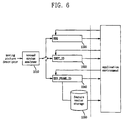
- Fig. 6 is a detailed block diagram of a decoder in Fig. 5.
- a query processor 1700 receives various user-defined values and a query picture/picture sequence from the user in response to a query from the user and extracts a feature vector and retrieval precision desired by the user from the received user-defined values and query picture/picture sequence. The query processor 1700 then acts to generate a retrieval request signal to a stack controller 110.
- a first syntax analyzer 1200 receives a key frame number ROOT_KEY_FRAME_ID of an in-index highest-order node, included in an index object, and in-index edge information LIST_OF_CHILDREN, included in a key frame object, from a decoder 1000 and transfers the received key frame number and in-index edge information to the stack controller 1100.
- the first syntax analyzer 1200 further receives a list LIST_OF_ ⁇ VALUES of frame representative threshold values, included in the key frame object, from the decoder 1000 and transfers the received threshold value list to a threshold comparator 1500.
- a stack 1300 is a storage medium.
- the stack controller 1100 Upon receiving the retrieval request signal from the query processor 1700, the stack controller 1100 first sends a retrieval request signal to the decoder 1000 to receive the key frame number ROOT_KEY_FRAME_ID of the in-index highest-order node from the first syntax analyzer 1200 and stack the received key frame number in the stack 1300. Then, the stack controller 1100 performs an operation of stacking a key frame number KEY_FRAME_ID based on the in-index edge information LIST_OF_CHILDREN from the first syntax analyzer 1200 in the stack 1300 or deleting it from the stack 1300.
- a feature vector comparator 1400 compares a feature vector designated by a key frame number KEY_FRAME_ID, from the decoder 1000 with the feature vector extracted by the query processor 1700 and outputs the compared result to the threshold comparator 1500.
- An accumulator 1600 is adapted to accumulate key frame numbers KEY_FRAME_ID associated with the query picture. In response to a control signal from the threshold comparator 1500, the accumulator 1600 determines whether a currently compared frame will be accumulated and outputs the accumulated result finally if the stack 1300 is empty.
- the decoder 1000 is adapted to store a tree-structured index descriptor and a feature vector. In response to the retrieval request signal from the stack controller 1100, the decoder 1000 outputs object information ROOT_KEY_FRAME_ID, LIST_OF_CHILDREN and LIST_OF_ ⁇ VALUES and a feature vector designated by a key frame number KEY_FRAME_ID.
- the decoder 1000 is provided with a second syntax analyzer 1010, first to third buffers 1020, 1030 and 1040 and a feature vector storage unit 1050.
- the feature vector storage unit 1050 functions to store feature vectors and transfer any one of the stored feature vectors designated by a key frame number KEY_FRAME_ID of the third buffer 1040 to an application environment.
- the second syntax analyzer 1010 receives a moving picture index descriptor stored in a storage space of a server or client and classifies the received index descriptor into an index object INDEX, a shot object SHOT and a key frame object KEY_FRAME according to attributes on the basis of a length or in response to a control signal in the index descriptor.
- the second syntax analyzer 1010 further outputs the index object INDEX, shot object SHOT and key frame object KEY_FRAME respectively to the first to third buffers 1020, 1030 and 1040.
- the first to third buffers 1020, 1030 and 1040 are adapted to store the index object INDEX, shot object SHOT and key frame object KEY_FRAME from the second syntax analyzer 1010, respectively.
- the first to third buffers 1020, 1030 and 1040 are randomly accessible by control signals such as a key frame number KEY_FRAME_ID and shot number SHOT_ID.
- each of the first to third buffers 1020, 1030 and 1040 transfers information of the associated object to the application environment.
- the key frame object KEY_FRAME includes a pointer to a corresponding feature vector FV.
- Figs. 7a and 7b are flowcharts illustrating a method for retrieving a moving picture using a moving picture index descriptor in accordance with the preferred embodiment of the present invention, which is performed by the retrieval apparatus of Fig. 5.
- the query processor 1700 receives various user-defined values and a query picture/picture sequence from the user at step S2. Then, the query processor 1700 extracts a feature vector and retrieval precision desired by the user from the received user-defined values and query picture/picture sequence and outputs the extracted feature vector and retrieval precision respectively to the feature vector comparator 1400 and threshold comparator 1500. Further, the query processor 1700 sends a retrieval request signal to the stack controller 110.
- the stack controller 1100 Upon receiving the retrieval request signal from the query processor 1700, the stack controller 1100 sends a retrieval request signal to the decoder 1000 at step S3.
- the decoder 1000 outputs a key frame number ROOT_KEY_FRAME_ID of an in-index highest-order node, included in an index object, and in-index edge information LIST_OF_CHILDREN and a list LIST_OF_ ⁇ VALUES of frame representative threshold values, included in a key frame object, to the first syntax analyzer 1200 at step S4.
- the first syntax analyzer 1200 transfers the key frame number ROOT_KEY_FRAME_ID of the in-index highest-order node and the in-index edge information LIST_OF_CHILDREN from the decoder 1000 to the stack controller 1100 at step S5.
- the first syntax analyzer 1200 further transfers the frame representative threshold value list LIST_OF_ ⁇ VALUES from the decoder 1000 to the threshold comparator 1500.
- the stack controller 1100 stacks the key frame number ROOT_KEY_FRAME_ID of the in-index highest-order node and the in-index edge information LIST_OF_CHILDREN from the first syntax analyzer 1200 in the stack 1300. Further, at step S7, the stack controller 1100 reads a key frame number KEY_FRAME_ID from the stack 1300 and transfers it to the decoder 1000 and accumulator 1600.
- the decoder 1000 outputs a feature vector designated by the key frame number KEY_FRAME_ID from the stack controller 1100 to the feature vector comparator 1400 at step S8.
- the feature vector comparator 1400 compares the feature vector from the decoder 1000 with the feature vector extracted by the query processor 1700 at the above step S2 and outputs the compared result to the threshold comparator 1500.
- the threshold comparator 1500 compares the compared result of the two feature vectors from the feature vector comparator 1400 with the retrieval precision extracted by the query processor 1700 at the above step S2 and the frame representative threshold value list LIST_OF_ ⁇ VALUES transferred by the first syntax analyzer 1200 at the above step S5 to determine whether the key frame number KEY_FRAME_ID from the stack controller 1100 is concerned with the query picture. If the key frame number KEY_FRAME_ID from the stack controller 1100 is not concerned with the query picture at step S11, the operation returns to the above step S7. To the contrary, in the case where the key frame number KEY_FRAME_ID from the stack controller 1100 is concerned with the query picture at step S11, it is accumulated in the accumulator 1600 at step S12.
- step S13 It is then determined at step S13 whether the stack 1300 is empty. Unless the stack 1300 is empty, the operation returns to the above step S4. However, if the stack 1300 is empty, the accumulator 1600 outputs the accumulated result, or retrieved result, to the user at step S14 and the operation is then ended.
- the key frame number ROOT_KEY_FRAME_ID of the in-index highest-order node is received and used from the decoder 1000 only at the beginning of the user's query.
- a decoder sends an in-index highest-order key frame number, in-index edge information and an intra-layer threshold value list of a tree-structured moving picture index descriptor stored therein to a server environment. Then, the server environment reads a key frame number and sends it to the decoder. The decoder sends a feature vector designated by the key frame number to the server environment. Subsequently, the server environment first compares the designated feature vector with a query feature vector and, thereafter, the compared result with a threshold value and retrieval precision desired by the user to determine whether the key frame number is concerned with a query picture. If the key frame number is concerned with the query picture, the server environment transfers the retrieved result to a user environment. This processing is sequentially carried out on the basis of a sequence of key frame numbers.
- the object-based descriptor of the present invention is capable of increasing an operation efficiency in performing operations based on any other contents than the retrieval system.
- the object-based descriptor of the present invention may be expressed as a scene shift graph through a relatively simple structural conversion because the inter-frame relation and inter-shot relation are previously implied in the index edge.
- a content-based data retrieval can generally be evaluated in two aspects, or effectiveness and efficiency.
- the present invention is able to greatly increase the efficiency under the condition that it inflicts no loss on the effectiveness. Further, the present invention is expected to prepare the ground for applying operations based on various contents including the retrieval to moving picture data on the basis of a relatively small descriptor.
- the moving picture retrieval apparatus and method using the tree-structured moving picture index descriptor have the effect of allowing the user to rapidly retrieve desired moving picture information.
Landscapes
- Engineering & Computer Science (AREA)
- Theoretical Computer Science (AREA)
- Physics & Mathematics (AREA)
- General Physics & Mathematics (AREA)
- Multimedia (AREA)
- Software Systems (AREA)
- Data Mining & Analysis (AREA)
- Databases & Information Systems (AREA)
- General Engineering & Computer Science (AREA)
- Information Retrieval, Db Structures And Fs Structures Therefor (AREA)
Abstract
Description
g) allowing the decoder to output a feature vector designated by the specific key frame number from the stack controller to a feature vector comparator and then allowing the feature vector comparator to compare the feature vector from the decoder with the feature vector extracted by the query processor at the step a) and output the compared result to the threshold comparator; h) allowing the threshold comparator to compare the compared result of the two feature vectors from the feature vector comparator with the retrieval precision extracted by the query processor at the step a) and the frame representative threshold value list transferred by the syntax analyzer at the step d) to determine whether the specific key frame number from the stack controller is concerned with the query picture; i) returning to the step f) if the specific key frame number from the stack controller is not concerned with the query picture at the step h) and accumulating the specific key frame number from the stack controller in the accumulator if the specific key frame number is concerned with the query picture at the step h); and j) determining whether the stack is empty and allowing the accumulator to output the accumulated result to the user if the stack is empty.
Claims (14)
- In a system for retrieving a moving picture in response to a query from the user, an apparatus for retrieving the moving picture using a descriptor of a tree-structured moving picture index, comprising:a decoder for storing said tree-structured index descriptor and feature vectors and outputting object information of said index descriptor and any one of the stored feature vectors designated by a specific key frame number in response to an external request;a query processor for receiving various user-defined values and a query picture/picture sequence from the user in response to the query from the user, extracting a feature vector and retrieval precision desired by the user from the received user-defined values and query picture/picture sequence and generating a retrieval request signal;a stack being a storage medium;a stack controller for sending a retrieval request signal to said decoder in response to said retrieval request signal from said query processor, receiving an in-index highest-order key frame number from said decoder, stacking the received highest-order key frame number in said stack, receiving in-index edge information from said decoder, stacking a key frame number based on the received in-index edge information in said stack, reading the stacked key frame number from said stack and outputting it as said specific key frame number to said decoder;a first syntax analyzer for receiving said in-index highest order key frame number and in-index edge information from said decoder, transferring them to said stack controller, receiving a list of frame representative threshold values from said decoder and transferring the received threshold value list externally;a feature vector comparator for comparing said feature vector designated by said specific key frame number from said decoder with said feature vector extracted by said query processor and outputting the compared result externally;a threshold comparator for comparing the compared result from said feature vector comparator with said retrieval precision extracted by said query processor and said frame representative threshold value list transferred by said first syntax analyzer to determine whether said specific key frame number from said stack controller is concerned with said query picture and generating a control signal in accordance with the determined result; andan accumulator for accumulating said specific key frame number from said stack controller in response to said control signal from said threshold comparator and outputting the accumulated result finally if said stack is empty.
- The apparatus as set forth in Claim 1, wherein said decoder includes:a second syntax analyzer for receiving said moving picture index descriptor, classifying it into an index object, a shot object and a key frame object according to attributes on the basis of a length or in response to a control signal in said index descriptor and outputting the classified index object, shot object and key frame object individually;a feature vector storage unit for storing said feature vectors and transferring any one of the stored feature vectors designated by said specific key frame number to an application environment; andfirst to third buffers, each of said buffers storing a corresponding one of said index object, shot object and key frame object from said second syntax analyzer and transferring information of the stored object to said application environment in response to an object request signal or access control signal from said application environment, said first to third buffers being randomly accessible by a key frame number and a shot number from said application environment.
- The apparatus as set forth in Claim 1, wherein said tree-structured moving picture index is created by performing the steps of:a) upwardly sampling an original moving picture partitioned into shots, defining each sample as a node and implying a quantitative representative relation between a sample layer and a mother layer in each edge; andb) repeating said step a) to accumulate samples into a tree structure.
- The apparatus as set forth in Claim 3, wherein said step a) includes the step of allowing said sample layer to be representative of said mother layer within the range of a quantitative threshold value and defining a representative relation between each sample and each frame in said mother layer and a representative threshold range of each sample.
- The apparatus as set forth in Claim 3, wherein said tree-structured moving picture index is composed of a key frame object, a shot object and an index object.
- The apparatus as set forth in Claim 5, wherein said key frame object has a plurality of attributes, said attributes being a frame number, a number of an associated shot, a pointer to a corresponding feature vector, a level of an uppermost layer in said index, a list of quantitative threshold values representative of sub-trees in each layer, edge information in said index, and frame annotation.
- The apparatus as set forth in Claim 5, wherein said shot object has a plurality of attributes, said attributes being a frame number corresponding to the start of a shot, a frame number corresponding to the end of said shot, a list of key frame numbers of key frame objects belonging to said shot, order information of said key frame objects, and shot annotation.
- The apparatus as set forth in Claim 5, wherein said index object has a plurality of attributes, said attributes being a shot number corresponding to the start of said moving picture, a shot number corresponding to the end of said moving picture, a key frame number of a highest-order node in said index, a feature vector in said index, distance function information, and the entire annotation about said moving picture.
- The apparatus as set forth in Claim 3, wherein said tree-structured moving picture index is described by performing the steps of:a) expressing key frame information and shot information respectively as randomly accessible individual objects and then expressing subordinate and representative relations between the objects using attributes;b) reflecting information about a highest-order node in said index and the entire information of moving picture data in a third object; andc) appending annotation to each of said objects using a descriptor created by said steps a) and b).
- The apparatus as set forth in Claim 9, wherein said tree-structured moving picture index includes a plurality of index objects for describing different features with respect to one moving picture.
- A method for retrieving a moving picture using a descriptor of a tree-structured moving picture index, comprising the step of interrupting a retrieval path in connection with a retrieval precision desired by the user on the basis of the fact that each frame in said index is representative of a sub-tree, which has it as a vertex, within the range of a quantitative threshold value.
- A method for retrieving a moving picture using a descriptor of a tree-structured moving picture index in response to a query from the user, comprising the steps of:a), if the user starts the query, allowing a query processor to receive user-defined values and a query picture/picture sequence from the user, extract a feature vector and retrieval precision desired by the user from the received user-defined values and query picture/picture sequence, output the extracted feature vector and retrieval precision respectively to a feature vector comparator and a threshold comparator and send a retrieval request signal to a stack controller;b) allowing said stack controller to send a retrieval request signal to a decoder upon receiving said retrieval request signal from said query processor;c) allowing said decoder to output a key frame number of an in-index highest-order node, included in an index object, and in-index edge information and a list of frame representative threshold values, included in a key frame object, to a syntax analyzer in response to said retrieval request signal from said stack controller;d) allowing said syntax analyzer to transfer said key frame number of said in-index highest-order node and said in-index edge information from said decoder to said stack controller and said frame representative threshold value list from said decoder to said threshold comparator;e) allowing said stack controller to stack said key frame number of said in-index highest-order node and said in-index edge information from said syntax analyzer in a stack;f) allowing said stack controller to read a specific key frame number from said stack and transfer it to said decoder and an accumulator;g) allowing said decoder to output a feature vector designated by said specific key frame number from said stack controller to a feature vector comparator and then allowing said feature vector comparator to compare said feature vector from said decoder with said feature vector extracted by said query processor at said step a) and output the compared result to said threshold comparator;h) allowing said threshold comparator to compare the compared result of said two feature vectors from said feature vector comparator with said retrieval precision extracted by said query processor at said step a) and said frame representative threshold value list transferred by said syntax analyzer at said step d) to determine whether said specific key frame number from said stack controller is concerned with said query picture;i) returning to said step f) if said specific key frame number from said stack controller is not concerned with said query picture at said step h) and accumulating said specific key frame number from said stack controller in said accumulator if said specific key frame number is concerned with said query picture at said step h); andj) determining whether said stack is empty and allowing said accumulator to output the accumulated result to the user if said stack is empty.
- The method as set forth in Claim 12, wherein said step j) includes the step of returning to said step c) if said stack is not empty and wherein said step c) includes the step of allowing said decoder to output said key frame number of said in-index highest-order node only at the beginning of said query from the user.
- A method for retrieving a moving picture using a descriptor of a tree-structured moving picture index, comprising the steps of:a) creating said tree-structured moving picture index, said step a) including the steps of a-1) upwardly sampling an original moving picture partitioned into shots, defining each sample as a node and implying a quantitative representative relation between a sample layer and a mother layer in each edge, and a-2) repeating said step a-1) to accumulate samples into a tree structure;b) describing the created tree-structured moving picture index, said step b) including the steps of b-1) expressing key frame information and shot information respectively as randomly accessible individual objects and then expressing subordinate and representative relations between the objects using attributes, b-2) reflecting information about a highest-order node in said index and the entire information of moving picture data in a third object, and b-3) appending annotation to each of said objects using a descriptor created by said steps b-1) and b-2); andc) retrieving said moving picture using the described tree-structured moving picture index, said step c) including the step of retrieving said moving picture in connection with a retrieval precision desired by the user on the basis of the fact that each frame in said index is representative of a sub-tree, which has it as a vertex, within the range of a quantitative threshold value.
Applications Claiming Priority (2)
| Application Number | Priority Date | Filing Date | Title |
|---|---|---|---|
| KR10-1999-0003248A KR100442991B1 (en) | 1999-02-01 | 1999-02-01 | Searching device using moving picture index descripter and method thereof |
| KR9903248 | 1999-02-01 |
Publications (2)
| Publication Number | Publication Date |
|---|---|
| EP1026602A2 true EP1026602A2 (en) | 2000-08-09 |
| EP1026602A3 EP1026602A3 (en) | 2004-09-15 |
Family
ID=19572965
Family Applications (1)
| Application Number | Title | Priority Date | Filing Date |
|---|---|---|---|
| EP00300653A Withdrawn EP1026602A3 (en) | 1999-02-01 | 2000-01-28 | Apparatus and method for retrieving moving picture using tree-structured moving picture index descriptor |
Country Status (4)
| Country | Link |
|---|---|
| US (1) | US6609134B1 (en) |
| EP (1) | EP1026602A3 (en) |
| JP (2) | JP2000222439A (en) |
| KR (1) | KR100442991B1 (en) |
Cited By (3)
| Publication number | Priority date | Publication date | Assignee | Title |
|---|---|---|---|---|
| FR2824159A1 (en) * | 2001-04-30 | 2002-10-31 | France Telecom | INDEXATION IN A MULTIMEDIA DOCUMENT DESCRIPTION |
| EP2521046A4 (en) * | 2010-05-14 | 2013-01-02 | Zte Corp | Method and mobile terminal for realizing video preview and retrieval |
| US8909026B2 (en) | 2001-06-22 | 2014-12-09 | Thomson Licensing | Method and apparatus for simplifying the access of metadata |
Families Citing this family (13)
| Publication number | Priority date | Publication date | Assignee | Title |
|---|---|---|---|---|
| US7386170B2 (en) * | 2000-06-30 | 2008-06-10 | Texas Instruments Incorporated | Image object ranking |
| US7079701B2 (en) * | 2001-09-07 | 2006-07-18 | Intergraph Software Technologies | Concealed object recognition |
| KR100721611B1 (en) * | 2005-08-10 | 2007-05-25 | 김두용 | How to build a database system |
| KR101396341B1 (en) | 2007-06-22 | 2014-05-26 | 삼성전자주식회사 | Method of controlling digital image processing apparatus wherein moving-picture photographing mode is performed, and digital image processing apparatus adopting the method |
| KR100912371B1 (en) * | 2007-12-17 | 2009-08-19 | 한국전자통신연구원 | Large high-dimensional data indexing device and method supporting high scalability in clustered environment |
| JP5510012B2 (en) * | 2010-04-09 | 2014-06-04 | ソニー株式会社 | Image processing apparatus and method, and program |
| US9298854B2 (en) | 2010-05-14 | 2016-03-29 | Hitachi, Ltd. | Time-series data management device, system, method, and program |
| KR101675785B1 (en) | 2010-11-15 | 2016-11-14 | 삼성전자주식회사 | Method and apparatus for image searching using feature point |
| US9659043B2 (en) * | 2013-02-07 | 2017-05-23 | Enigma Technologies, Inc. | Data system and method |
| CN105468781A (en) * | 2015-12-21 | 2016-04-06 | 小米科技有限责任公司 | Video query method and device |
| CN110598048B (en) * | 2018-05-25 | 2021-01-29 | 中科寒武纪科技股份有限公司 | Video retrieval method and video retrieval mapping relation generation method and device |
| CN111428516B (en) * | 2018-11-19 | 2022-08-19 | 腾讯科技(深圳)有限公司 | Information processing method and device |
| CN112000833B (en) * | 2020-07-29 | 2023-02-28 | 西安电子科技大学 | Encrypted image security retrieval method and retrieval system under edge environment |
Family Cites Families (14)
| Publication number | Priority date | Publication date | Assignee | Title |
|---|---|---|---|---|
| US3716840A (en) * | 1970-06-01 | 1973-02-13 | Texas Instruments Inc | Multimodal search |
| JPH06101018B2 (en) * | 1991-08-29 | 1994-12-12 | インターナショナル・ビジネス・マシーンズ・コーポレイション | Search of moving image database |
| JPH05282379A (en) * | 1992-02-06 | 1993-10-29 | Internatl Business Mach Corp <Ibm> | Method and device for retrieval of dynamic image |
| JPH0756652B2 (en) * | 1992-03-24 | 1995-06-14 | インターナショナル・ビジネス・マシーンズ・コーポレイション | Search for video frame sequence |
| JP3561930B2 (en) * | 1993-08-14 | 2004-09-08 | ソニー株式会社 | Recording method of image search ID signal, image search method, and recorded image reproduction device |
| JP3441807B2 (en) * | 1994-09-19 | 2003-09-02 | 株式会社日立製作所 | B-tree index management method and system |
| US5821945A (en) * | 1995-02-03 | 1998-10-13 | The Trustees Of Princeton University | Method and apparatus for video browsing based on content and structure |
| US5911139A (en) * | 1996-03-29 | 1999-06-08 | Virage, Inc. | Visual image database search engine which allows for different schema |
| JPH09282327A (en) * | 1996-04-15 | 1997-10-31 | Nippon Hoso Kyokai <Nhk> | Image search method |
| US5870754A (en) * | 1996-04-25 | 1999-02-09 | Philips Electronics North America Corporation | Video retrieval of MPEG compressed sequences using DC and motion signatures |
| US5918223A (en) * | 1996-07-22 | 1999-06-29 | Muscle Fish | Method and article of manufacture for content-based analysis, storage, retrieval, and segmentation of audio information |
| US5852823A (en) | 1996-10-16 | 1998-12-22 | Microsoft | Image classification and retrieval system using a query-by-example paradigm |
| US6119123A (en) * | 1997-12-02 | 2000-09-12 | U.S. Philips Corporation | Apparatus and method for optimizing keyframe and blob retrieval and storage |
| KR20010004808A (en) * | 1999-06-29 | 2001-01-15 | 박웅규 | Video Indexing Method for Semantic Search |
-
1999
- 1999-02-01 KR KR10-1999-0003248A patent/KR100442991B1/en not_active Expired - Fee Related
-
2000
- 2000-01-28 EP EP00300653A patent/EP1026602A3/en not_active Withdrawn
- 2000-02-01 US US09/496,306 patent/US6609134B1/en not_active Expired - Lifetime
- 2000-02-01 JP JP2000024382A patent/JP2000222439A/en active Pending
-
2006
- 2006-04-12 JP JP2006110156A patent/JP2006268866A/en active Pending
Cited By (5)
| Publication number | Priority date | Publication date | Assignee | Title |
|---|---|---|---|---|
| FR2824159A1 (en) * | 2001-04-30 | 2002-10-31 | France Telecom | INDEXATION IN A MULTIMEDIA DOCUMENT DESCRIPTION |
| WO2002089002A1 (en) * | 2001-04-30 | 2002-11-07 | France Telecom | Indexing in a multimedia document description |
| US8909026B2 (en) | 2001-06-22 | 2014-12-09 | Thomson Licensing | Method and apparatus for simplifying the access of metadata |
| EP2521046A4 (en) * | 2010-05-14 | 2013-01-02 | Zte Corp | Method and mobile terminal for realizing video preview and retrieval |
| US8737808B2 (en) | 2010-05-14 | 2014-05-27 | Zte Corporation | Method and mobile terminal for previewing and retrieving video |
Also Published As
| Publication number | Publication date |
|---|---|
| KR20000054899A (en) | 2000-09-05 |
| KR100442991B1 (en) | 2004-08-04 |
| US6609134B1 (en) | 2003-08-19 |
| JP2006268866A (en) | 2006-10-05 |
| JP2000222439A (en) | 2000-08-11 |
| EP1026602A3 (en) | 2004-09-15 |
Similar Documents
| Publication | Publication Date | Title |
|---|---|---|
| US6609134B1 (en) | Apparatus and method for retrieving moving picture using tree-structured moving picture index descriptor | |
| JP3568117B2 (en) | Method and system for video image segmentation, classification, and summarization | |
| RU2628192C2 (en) | Device for semantic classification and search in archives of digitized film materials | |
| US6977679B2 (en) | Camera meta-data for content categorization | |
| KR100471927B1 (en) | System for searching image data being based on web and method thereof | |
| TWI223171B (en) | System for classifying files of non-textual subject data, method for categorizing files of non-textual data and method for identifying a class for data file at a classification node | |
| US8391355B2 (en) | Method and device for online dynamic semantic video compression and video indexing | |
| US20090289942A1 (en) | Image learning, automatic annotation, retrieval method, and device | |
| WO2002033978A1 (en) | Non-linear quantization and similarity matching methods for retrieving image data | |
| CN109299324B (en) | Method for searching label type video file | |
| CN115238117B (en) | Image retrieval method based on attention fusion local super feature and global feature | |
| EP1830282A1 (en) | Storage device and recording medium | |
| CN111008294A (en) | Traffic image processing and image retrieval method and device | |
| CN120653807B (en) | A general method, apparatus and medium for constructing unstructured data indexes | |
| Truong et al. | Video search based on semantic extraction and locally regional object proposal | |
| WO2002033589A1 (en) | Dynamic image content search information managing apparatus | |
| WO2003105489A1 (en) | Method and device for online dynamic semantic video compression and video indexing | |
| JP4343038B2 (en) | Partial image search system, method and program | |
| JP2002207751A (en) | Method for classifying object group and search method for classifying object group | |
| JP2005505081A (en) | Indexing and comparing multimedia documents | |
| CN120030182B (en) | Fine-grained image retrieval methods based on compact representation modeling and semantic tag guidance | |
| KR102628460B1 (en) | Virtual space search method method and system for metaverse | |
| Wengang et al. | Content-based video retrieval using audio and visual clues | |
| CN117994724A (en) | File compact shelf intelligent management system and method based on artificial intelligence | |
| Muneesawang et al. | iARM-an interactive video retrieval system |
Legal Events
| Date | Code | Title | Description |
|---|---|---|---|
| PUAI | Public reference made under article 153(3) epc to a published international application that has entered the european phase |
Free format text: ORIGINAL CODE: 0009012 |
|
| AK | Designated contracting states |
Kind code of ref document: A2 Designated state(s): AT BE CH CY DE DK ES FI FR GB GR IE IT LI LU MC NL PT SE |
|
| AX | Request for extension of the european patent |
Free format text: AL;LT;LV;MK;RO;SI |
|
| RAP1 | Party data changed (applicant data changed or rights of an application transferred) |
Owner name: HYNIX SEMICONDUCTOR INC. |
|
| RAP1 | Party data changed (applicant data changed or rights of an application transferred) |
Owner name: HYUNDAI CURITEL, INC. |
|
| PUAL | Search report despatched |
Free format text: ORIGINAL CODE: 0009013 |
|
| AK | Designated contracting states |
Kind code of ref document: A3 Designated state(s): AT BE CH CY DE DK ES FI FR GB GR IE IT LI LU MC NL PT SE |
|
| AX | Request for extension of the european patent |
Extension state: AL LT LV MK RO SI |
|
| 17P | Request for examination filed |
Effective date: 20050315 |
|
| AKX | Designation fees paid |
Designated state(s): AT BE CH CY DE DK ES FI FR GB GR IE IT LI LU MC NL PT SE |
|
| 17Q | First examination report despatched |
Effective date: 20060727 |
|
| STAA | Information on the status of an ep patent application or granted ep patent |
Free format text: STATUS: THE APPLICATION IS DEEMED TO BE WITHDRAWN |
|
| 18D | Application deemed to be withdrawn |
Effective date: 20070207 |