EP1026235A1 - Levodione reductase - Google Patents
Levodione reductase Download PDFInfo
- Publication number
- EP1026235A1 EP1026235A1 EP00101742A EP00101742A EP1026235A1 EP 1026235 A1 EP1026235 A1 EP 1026235A1 EP 00101742 A EP00101742 A EP 00101742A EP 00101742 A EP00101742 A EP 00101742A EP 1026235 A1 EP1026235 A1 EP 1026235A1
- Authority
- EP
- European Patent Office
- Prior art keywords
- levodione
- microorganism
- molecular weight
- enzyme
- reductase
- Prior art date
- Legal status (The legal status is an assumption and is not a legal conclusion. Google has not performed a legal analysis and makes no representation as to the accuracy of the status listed.)
- Granted
Links
Classifications
-
- C—CHEMISTRY; METALLURGY
- C12—BIOCHEMISTRY; BEER; SPIRITS; WINE; VINEGAR; MICROBIOLOGY; ENZYMOLOGY; MUTATION OR GENETIC ENGINEERING
- C12N—MICROORGANISMS OR ENZYMES; COMPOSITIONS THEREOF; PROPAGATING, PRESERVING, OR MAINTAINING MICROORGANISMS; MUTATION OR GENETIC ENGINEERING; CULTURE MEDIA
- C12N9/00—Enzymes; Proenzymes; Compositions thereof; Processes for preparing, activating, inhibiting, separating or purifying enzymes
- C12N9/0004—Oxidoreductases (1.)
-
- C—CHEMISTRY; METALLURGY
- C12—BIOCHEMISTRY; BEER; SPIRITS; WINE; VINEGAR; MICROBIOLOGY; ENZYMOLOGY; MUTATION OR GENETIC ENGINEERING
- C12N—MICROORGANISMS OR ENZYMES; COMPOSITIONS THEREOF; PROPAGATING, PRESERVING, OR MAINTAINING MICROORGANISMS; MUTATION OR GENETIC ENGINEERING; CULTURE MEDIA
- C12N9/00—Enzymes; Proenzymes; Compositions thereof; Processes for preparing, activating, inhibiting, separating or purifying enzymes
- C12N9/0004—Oxidoreductases (1.)
- C12N9/0008—Oxidoreductases (1.) acting on the aldehyde or oxo group of donors (1.2)
-
- C—CHEMISTRY; METALLURGY
- C12—BIOCHEMISTRY; BEER; SPIRITS; WINE; VINEGAR; MICROBIOLOGY; ENZYMOLOGY; MUTATION OR GENETIC ENGINEERING
- C12P—FERMENTATION OR ENZYME-USING PROCESSES TO SYNTHESISE A DESIRED CHEMICAL COMPOUND OR COMPOSITION OR TO SEPARATE OPTICAL ISOMERS FROM A RACEMIC MIXTURE
- C12P41/00—Processes using enzymes or microorganisms to separate optical isomers from a racemic mixture
- C12P41/002—Processes using enzymes or microorganisms to separate optical isomers from a racemic mixture by oxidation/reduction reactions
-
- C—CHEMISTRY; METALLURGY
- C12—BIOCHEMISTRY; BEER; SPIRITS; WINE; VINEGAR; MICROBIOLOGY; ENZYMOLOGY; MUTATION OR GENETIC ENGINEERING
- C12P—FERMENTATION OR ENZYME-USING PROCESSES TO SYNTHESISE A DESIRED CHEMICAL COMPOUND OR COMPOSITION OR TO SEPARATE OPTICAL ISOMERS FROM A RACEMIC MIXTURE
- C12P7/00—Preparation of oxygen-containing organic compounds
- C12P7/24—Preparation of oxygen-containing organic compounds containing a carbonyl group
- C12P7/26—Ketones
Definitions
- the present invention relates to a novel enzyme, namely levodione reductase (hereinafter referred to as LR), a process for producing the enzyme and a process for producing (4R, 6R)-4-hydroxy-2,2,6-trimethylcyclohexanone (hereinafter referred to as actinol) from (6R)-2,2,6-trimethylcyclohexane-1,4-dione (hereinafter referred to as levodione) utilizing the enzyme.
- Actinol is an important intermediate for the production of zeaxanthin.
- the microorganism strain Corynebacterium aquaticum AKU611 has the following taxonomical properties: 1) Growable temperature : 15-40°C 2) Optimum temperature for growth : 30°C 3) Obligatory aerobic and gram negative microorganism 4) Spore formation : None 5) Polymorphism and traditional rod-cocus cycles can be observed during cultivation. 6) Motility : None
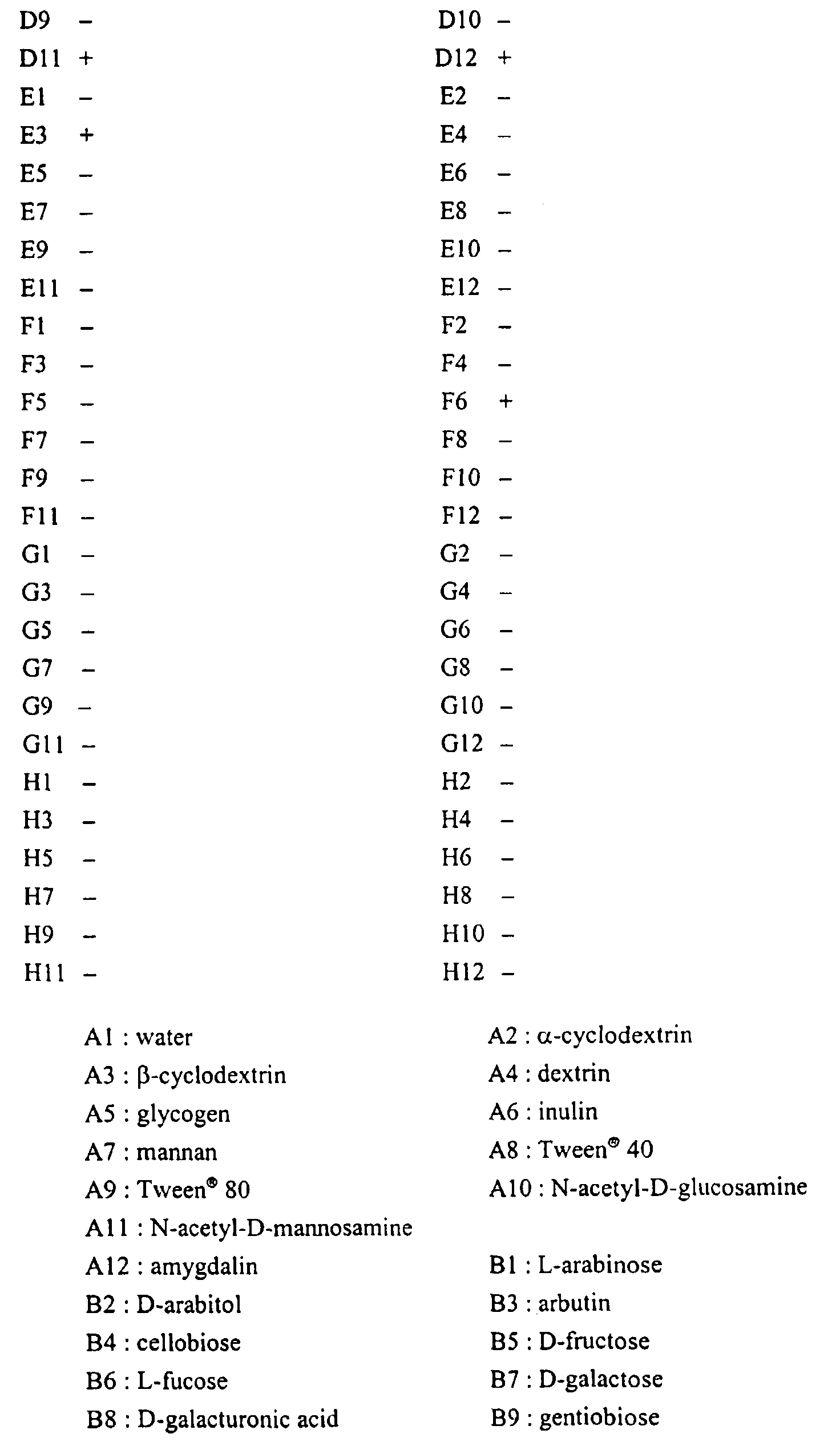
- the strain Corynebacterium aquaticum AKU611 was identified as such based on assimilation of various carbon sources by the Biolog System (Biolog Inc., 3447 Investment Blvd., Suite 3, Hayward, California 94545, USA : Nature Vol. 339, 157-158, May 11, 1989) as follows: Cells of the strain were inoculated with 96-well microtiter-plates and incubated for 24 hours at 28°C. Each well contained one of 96 kinds of carbon sources in BUGM+B medium (Biolog Universal Growth Media + Blood; Biolog Inc.).
- LR which acts on levodione to produce actinol.
- LR has the following physico-chemical properties:
- a still further object of the present invention is to provide a process for producing actinol from levodione utilizing the LR, which comprises contacting levodione with (i) an LR as defined above in the presence of the reduced form of nicotinamide adenine dinucleotide (NADH), or (ii) a cell-free extract of said microorganism, and in each of the cases (i) and (ii) isolating the resulting actinol from the reaction mixture.
- NADH nicotinamide adenine dinucleotide
- novel LR of the present invention catalyzes the reduction of levodione to actinol in the presence of a co-factor according to the following formula: Levodione + NADH ⁇ Actinol + NAD
- NADPH nicotinamide adenine dinucleotide phosphate
- the standard enzyme assay was performed as follows: The basal reaction mixture of total volume 500 ⁇ l and consisting of 100 ⁇ l of 1 M potassium phosphate buffer (pH 7.0), 20 ⁇ l of 8 mM NADH in 0.2 mM KOH, 10 - 40 ⁇ l of the enzyme solution, and water up to a total of 500 ⁇ l, was incubated for 1 minute at 37 °C. Then 2 ⁇ l of 0.5 M levodione solution were added to give a final concentration of 2 mM, and the whole was incubated for 1 minute at 37 °C. The enzyme activity was monitored with the decrease of the absorbance of NADH at 340 nm. One unit of the enzyme activity was defined as the amount of the enzyme which catalyzes the oxidation of 1 ⁇ mole of NADH per minute.
- NAD NAD
- NADH NADPH
- Oriental Yeast 3-6-10 Azusawa, Itabashi-ku, Tokyo, Japan.
- the protein concentration was determined by using a Bio-Rad protein assay kit (Bio-Rad Laboratories, 2000 Alfred Nobel Drive, Hercules, CA 94547, USA)
- the molecular weight (MW) of the enzyme was measured with a gel filtration HPLC column Cosmosil 5Diol-300 (nacalai tesque: Nishi-iru, Karasuma, Nijodohri, Nakagyouku, Kyoto-fu, Japan).
- the apparent molecular weight of the (whole) enzyme was calculated to be 142,000 - 155,000 ⁇ 10,000 in comparison with the molecular weight marker proteins: LMW + HMW gel filtration calibration kit, Amersham Pharmacia Biotech (SE-75184 Uppsala, Sweden); ferritin (MW 440,000), aldolase (MW 158,000), bovine serum albumin (MW 67,000), ovalbumin (MW 43,000), and ribonuclease A (MW 13,700).
- SDS-Polyacrylamide gel electrophoresis gave a single band with a molecular weight of 36,000 ⁇ 5,000 in comparison with the molecular weight marker proteins: LMW Electrophoresis calibration kit, Amersham Pharmacia Biotech; bovine serum albumin (MW 67,000), ovalbumin (MW 43,000), carbonic anhydrase (MW 30,000), soybean trypsin inhibitor (MW 20,100), and ⁇ -lactalbumin (MW 14,400). This indicates that the enzyme is composed of four homologous subunits. The values of the molecular weight of the whole enzyme (142,000-155,000 ⁇ 10,000) and of each subunit (36,000 ⁇ 5,000) were determined as accurately as the respective methods, i.e. the gel filtration column method and the SDS-PAGE method, allowed.
- the substrate specificity of the enzyme was determined using the same enzyme assay method as described under 1), except that various substrate solutions (2mM, final concentration in the reaction mixture) were used instead of levodione. It was shown that levodione was the only substrate for which the enzyme exhibited activity.
- Substrate Enzyme Activity (unit/ml) Levodione 5.66 Cyclohexanone Not detected (ND) 1,2-Cyclohcxane-dione ND 1,3-Cyclohexane-dione ND 1,4-cyclohexane-dione ND Cyclopentanone ND 2-Cyclohexene ND 1,5,5-Trimethylcyclohexene ND 1,3-Cyclopentane-dione ND DL-Mevalonolactone ND D-Camphor ND L-Camphor ND Maleic anhydride ND 4-Chloro-3-oxo-butanoic acid ethyl ester ND
- the enzyme activities were measured at temperatures from 2 to 45 °C.
- the optimum temperature of the enzyme activity was 15 - 20 °C Temperature (°C) Relative Activity (%) 2 77.8 5 83.8 10 89.1 15 100 20 92.4 25 90.9 30 78 35 70.7 40 59.4 45 31.6
- the correlation between the enzyme activity and the pH values of the reaction mixture was determined by using the same enzyme assay method as described under 1), except that various pHs and buffers were used and 40 ⁇ l of 2.5M KCl solution were added to the reaction mixture.
- the optimum pH of the enzyme reaction was found to be 7.5.
- the effect of metal ions on the enzyme activity was investigated by using the same enzyme assay method as described under 1), except that 100 ⁇ l of 1 M Tris-HCl buffer (pH 7.5) were used instead of 100 ⁇ l of 1 M potassium phosphate buffer (pH 7.0), and various metal solutions were added to the reaction mixture to give a final concentration of metal between 100 mM and 3 M. As a result, it was established that the enzyme activity was increased about 250-fold in the presence of 3 M RbCl and 1.8 M CsCl.
- the enzyme solution was treated at various temperatures for 10 minutes, and the remaining enzyme activities were measured by using the same enzyme assay method as described under 1). It was established that the enzyme was stable up to 35°C, and deactivated with increasing temperature, becoming completely de-activated at 55 °C. Temperature (°C) Relative Activity (%) 0 100 30 93.3 35 85.1 40 47.8 45 28.9 50 3.2 55 0
- the enzyme was treated in 1 M buffers of various pHs for 10 minutes at 30°C, and its remaining activity was measured by using the same enzyme assay method as described under 1). The enzyme was found to be most stable in the pH range between 8.0 and 8.5. Buffer pH Relative Activity (%) Bis-tris 6 40.6 7 71.9 HEPES 7 63.4 7.5 61.6 8 91.6 Tris-HCl 8.5 100 9 85.3
- the Km and Vmax values of the enzyme were measured by using levodione and actinol as the substrates.
- the basic enzyme assay method is the same as described under 1), but the substrate and the enzyme concentrations were varied.
- the Km and Vmax values against levodione as the substrate were 8.5 mM and 101.26 unit/mg, respectively.
- the Km and Vmax values against actinol as the substrate were 1.36 mM and 15.91 unit/mg, respectively.
- Km and Vmax values were calculated on the basis of the known Michaelis-Menten equation.
- Km is the concentration of the substrate that gives 50% of the Vmax of the enzyme reaction. The values give a useful indication of the catalytic properties of the enzyme for the involved substrate.
- the purification of the LR may in principle be effected by any combination of known purification methods, such as fractionation with precipitants, e.g. ammonium sulfate, polyethylene glycol and the like, ion exchange chromatography, adsorption chromatography, gel-filtration chromatography, gel electrophoresis and salting out and dialysis.
- the LR provided by the present invention can be prepared by cultivating an appropriate microorganism in an aqueous nutrient medium under aerobic conditions, disrupting the cells of the microorganism and isolating and purifying the LR from the cell-free-extract of the disrupted cells of the microorganism.
- microorganisms used for the present invention are microorganisms belonging to the genus Corynebacterium which are capable of producing LR as defined hereinbefore. Functional equivalents, subcultures, mutants and variants of said microorganism can also be used in the present invention.
- a preferred strain is Corynebacterium aquaticum .
- the specific strain most preferably used in the present invention is Corynebacterium aquaticum AKU611 (FERM BP-6448), a sample of which was deposited with the National Institute of Bioscience and Human-Technology, Agency of Industrial Science and Technology, Japan, on August 4, 1998, under the Budapest Treaty.
- the microorganism may be cultured in a nutrient medium containing saccharides such as glucose and sucrose, alcohols such as ethanol and glycerol, fatty acids such as oleic acid and stearic acid, or esters thereof, or oils such as rapeseed oil and soybean oil as carbon sources; ammonium sulfate, sodium nitrate, peptone, amino acids, corn steep liquor, bran, yeast extract and the like as nitrogen sources; magnesium sulfate, sodium chloride, calcium carbonate, potassium monohydrogen phosphate, potassium dihydrogen phosphate and the like as inorganic salt sources; and malt extract, meat extract and the like as other nutrient sources.
- the cultivation can be carried out aerobically, normally for a period of 1 to 7 days at a medium pH of 3 to 9 and a cultivation temperature of 10 to 40°C.
- An embodiment for isolation and purification of the LR from the microorganism after the cultivation is as follows:
- the LR provided by the present invention is useful as a catalyst for the production of actinol from levodione.
- the reaction of the LR-catalysed reduction of levodione to actinol is conveniently conducted at pH values of from about 6.0 to about 9.0 in the presence of NADH in a solvent.
- a solvent any buffer which maintains the pH in the range of about 6.0 to about 9.0, such as Tris-HCl buffer, phosphate buffer, Bis-tris buffer, HEPES buffer and the like, is suitable.
- a preferred temperature range for carrying out the reaction is from about 2 to about 30 °C.
- the reaction usually gives the best results when the pH and the temperature are in the ranges about 7.0 to 8.0 and 10 to 25 °C, respectively.
- the concentration of levodione in the solvent depends on the other reaction conditions, but in general is from 1 mM to 2 M, preferably from 10 mM to 100 mM.
- the amount of the LR and NADH suitably present in the reaction mixture depends on the other reaction conditions, but in general is in each case independently about 10 -4 to 10 -6 of the amount of the substrate.
- a regeneration system of NADH from NAD is coupled with the above reaction system, the reaction proceeds more efficiently.
- the LR may also be used in an immobilized state with an appropriate carrier.
- Any means of immobilizing enzymes generally known in the art may be used.
- the enzyme may be bound directly to a membrane, granules or the like of a resin having one or more functional groups, or it may be bound to the resin through bridging compounds having one or more functional groups, e.g. glutaraldehyde.
- Such enzyme immobilizing means are described for example on pages 369-394 of the 2 nd Edition of Microbial Enzymes and Biotechnology (Elsevier Applied Science 1990; Ed. W.M. Fogarty and C.T. Kelly).
- Corynebacterium aquaticum AKU 611 (FERM BP-6448) on an agar plate was inoculated into 5ml of the medium (pH 7.0) consisting of D-glucose (1%), KH 2 PO 4 (0.3%), MgSO 4 ⁇ 7H 2 O (0.02%), Peptone (1.5 %), NaCl (0.2%) and yeast extract (0.1%) in a tube, and incubated for 20 hours at 30°C.
- This culture was inoculated into 500 ml of the same medium as above in a 2 l Sakaguchi flask, and incubated for 20 hours at 30°C.
- a 250 ml portion of the seed culture was inoculated into 20 l of the same medium in a jar fermenter MSJ-U3W (Marubishi Bioengineering, 2-20-15 Higashikanda, Chiyoda-ku, Tokyo, Japan). Cultivation was effected at 30°C for 20 hours with aeration at the rate of 20 l/min. and agitation at 300 rpm. The culture thus obtained was centrifuged at 8,000 rpm for 20 minutes at 4°C. In total, 133.8 g of wet cells were obtained.
- the wet cells (30 g) were suspended in 90 ml of the buffer, and sonicated for 1 hour at 190 W using a Kubota Insonator 201 sonicator (Kubota, 3-29-9 Hongo, Bunkyo-ku, Tokyo, Japan). After sonication, the sample was centrifuged at 16,000 rpm for 20 minutes. As a result, 80 ml of the cell-free extract containing 2,444 mg of protein were obtained.
- the dialyzed sample prepared as described above was applied to a DEAE-Sephacel column (2.8 cm in diameter and 18 cm in height; Amersham Pharmacia Biotech) which was equilibrated with the buffer. After washing the column with the same buffer, the enzyme was eluted with 600 ml of a linear gradient of NaCl (0 - 0.8 M). The active fractions were collected and concentrated by ultrafiltration (ultrafilter YM-10 with Amicon concentration apparatus (Amicon Inc., Beverly, MA 01915, USA) to 10 ml.
- the dialyzed sample from the previous step was applied to a MONO Q 5/5 column (5 mm in diameter and 5 cm in height; Amersham Pharmacia Biotech) which was equilibrated by the buffer.
- the enzyme was eluted with 21 ml of a linear gradient of NaCl (0 - 0.8 M).
- the specific activity of the enzyme was not increased due to the de-activation of the enzyme during the dialyzation step before this chromatography. But the enzyme gave a homogenous band on SDS-PAGE analysis.
- the reaction mixture (3.33 ml) containing 50 mg of NADH, 833 ⁇ l of 1 M potassium phosphate buffer (pH 7.0), 2 ml of the enzyme sample from the purification step of DEAE Sephacel column chromatography, and 550 ⁇ l of distilled water was incubated at 30°C. To this reaction mixture, 10 ⁇ l of 0.5 M levodione solution were added five times at 6 minute intervals. The reaction mixture was incubated for a further 5 minutes, and extracted with 1 ml of ethyl acetate.
- the extract was analyzed by gas chromatography [column: HR-20M (Shinwa, 50 Keisho-Machi, Fushimi-ku, Kyoto-shi, Kyoto, Japan) 0.25 mm ⁇ x 30m, column temperature: 160°C (constant), injector temperature: 250°C, carrier gas: He (about 1ml/min.)].
- HR-20M Sudo-Machi, Fushimi-ku, Kyoto-shi, Kyoto, Japan
- injector temperature 250°C
- carrier gas He (about 1ml/min.)
Landscapes
- Chemical & Material Sciences (AREA)
- Organic Chemistry (AREA)
- Life Sciences & Earth Sciences (AREA)
- Zoology (AREA)
- Engineering & Computer Science (AREA)
- Wood Science & Technology (AREA)
- Health & Medical Sciences (AREA)
- Genetics & Genomics (AREA)
- Bioinformatics & Cheminformatics (AREA)
- Microbiology (AREA)
- General Engineering & Computer Science (AREA)
- Biotechnology (AREA)
- General Health & Medical Sciences (AREA)
- Biochemistry (AREA)
- General Chemical & Material Sciences (AREA)
- Chemical Kinetics & Catalysis (AREA)
- Molecular Biology (AREA)
- Medicinal Chemistry (AREA)
- Biomedical Technology (AREA)
- Analytical Chemistry (AREA)
- Enzymes And Modification Thereof (AREA)
- Preparation Of Compounds By Using Micro-Organisms (AREA)
- Micro-Organisms Or Cultivation Processes Thereof (AREA)
Abstract
Description
- The present invention relates to a novel enzyme, namely levodione reductase (hereinafter referred to as LR), a process for producing the enzyme and a process for producing (4R, 6R)-4-hydroxy-2,2,6-trimethylcyclohexanone (hereinafter referred to as actinol) from (6R)-2,2,6-trimethylcyclohexane-1,4-dione (hereinafter referred to as levodione) utilizing the enzyme. Actinol is an important intermediate for the production of zeaxanthin.
- In European Patent Application No. 98115564.1, filed on August 19, 1998, and in the later European application, No. 99115723.1, filed on August 16, 1999 and claiming the priority of the earlier one, there is disclosed a process for the manufacture of actinol which comprises contacting levodione with a microorganism which is selected from the group consisting of microorganisms of the genera Cellulomonas, Corynebacterium, Planococcus and Arthrobacter and which is capable of the selective asymmetric reduction of levodione to actinol, and recovering the resulting actinol from the reaction mixture. Corynebacterium aquaticum AKU611 (FERM BP-6448) was found to be one of the best microorganism strains for this purpose.
- The microorganism strain Corynebacterium aquaticum AKU611 has the following taxonomical properties:
1) Growable temperature : 15-40°C 2) Optimum temperature for growth : 30°C 3) Obligatory aerobic and gram negative microorganism 4) Spore formation : None 5) Polymorphism and traditional rod-cocus cycles can be observed during cultivation. 6) Motility : None - Moreover, the strain Corynebacterium aquaticum AKU611 was identified as such based on assimilation of various carbon sources by the Biolog System (Biolog Inc., 3447 Investment Blvd., Suite 3, Hayward, California 94545, USA : Nature Vol. 339, 157-158, May 11, 1989) as follows: Cells of the strain were inoculated with 96-well microtiter-plates and incubated for 24 hours at 28°C. Each well contained one of 96 kinds of carbon sources in BUGM+B medium (Biolog Universal Growth Media + Blood; Biolog Inc.).
- After incubation, the strain showed the following assimilation of carbon sources:



- It is an object of the present invention to provide the novel LR which acts on levodione to produce actinol. LR has the following physico-chemical properties:
- a) Molecular weight: 142,000 - 155,000 ± 10,000
(consisting of four homologous subunits having a molecular weight of 36,000 ± 5,000) - b) Co-factor: nicotinamide adenine dinucleotide (NAD/NADH)
- c) Substrate specificity: active on levodione
- d) Optimum temperature: 15 - 20 °C at pH 7.0
- e) Optimum pH: 7.5
- f) Activator: K+, Cs+, Rb+, Na+ and NH4 +
-
- It is another object of the present invention to provide a process for producing the novel LR as defined above by cultivation of a microorganism belonging to the genus Corynebacterium, which is capable of producing the LR having the above physico-chemical properties, in an aqueous nutrient medium under aerobic conditions, disrupting the cells of the microorganism and isolating and purifying the LR from the cell-free extract of the disrupted cells of the microorganism. A still further object of the present invention is to provide a process for producing actinol from levodione utilizing the LR, which comprises contacting levodione with (i) an LR as defined above in the presence of the reduced form of nicotinamide adenine dinucleotide (NADH), or (ii) a cell-free extract of said microorganism, and in each of the cases (i) and (ii) isolating the resulting actinol from the reaction mixture.
- The physico-chemical properties of the purified sample of the LR prepared according to the Examples presented below are as follows:
- The novel LR of the present invention catalyzes the reduction of levodione to actinol in the presence of a co-factor according to the following formula:
- The reduced form of nicotinamide adenine dinucleotide phosphate (NADPH) does not work as an electron donor in this reaction system.
- The standard enzyme assay was performed as follows: The basal reaction mixture of total volume 500 µl and consisting of 100 µl of 1 M potassium phosphate buffer (pH 7.0), 20 µl of 8 mM NADH in 0.2 mM KOH, 10 - 40 µl of the enzyme solution, and water up to a total of 500 µl, was incubated for 1 minute at 37 °C. Then 2 µl of 0.5 M levodione solution were added to give a final concentration of 2 mM, and the whole was incubated for 1 minute at 37 °C. The enzyme activity was monitored with the decrease of the absorbance of NADH at 340 nm. One unit of the enzyme activity was defined as the amount of the enzyme which catalyzes the oxidation of 1 µmole of NADH per minute.
- NAD, NADH and NADPH are available from Oriental Yeast, 3-6-10 Azusawa, Itabashi-ku, Tokyo, Japan.
- The protein concentration was determined by using a Bio-Rad protein assay kit (Bio-Rad Laboratories, 2000 Alfred Nobel Drive, Hercules, CA 94547, USA)
- The molecular weight (MW) of the enzyme was measured with a gel filtration HPLC column Cosmosil 5Diol-300 (nacalai tesque: Nishi-iru, Karasuma, Nijodohri, Nakagyouku, Kyoto-fu, Japan). The apparent molecular weight of the (whole) enzyme was calculated to be 142,000 - 155,000 ± 10,000 in comparison with the molecular weight marker proteins: LMW + HMW gel filtration calibration kit, Amersham Pharmacia Biotech (SE-75184 Uppsala, Sweden); ferritin (MW 440,000), aldolase (MW 158,000), bovine serum albumin (MW 67,000), ovalbumin (MW 43,000), and ribonuclease A (MW 13,700). SDS-Polyacrylamide gel electrophoresis (SDS-PAGE) gave a single band with a molecular weight of 36,000 ± 5,000 in comparison with the molecular weight marker proteins: LMW Electrophoresis calibration kit, Amersham Pharmacia Biotech; bovine serum albumin (MW 67,000), ovalbumin (MW 43,000), carbonic anhydrase (MW 30,000), soybean trypsin inhibitor (MW 20,100), and α-lactalbumin (MW 14,400). This indicates that the enzyme is composed of four homologous subunits. The values of the molecular weight of the whole enzyme (142,000-155,000 ± 10,000) and of each subunit (36,000 ± 5,000) were determined as accurately as the respective methods, i.e. the gel filtration column method and the SDS-PAGE method, allowed.
- The co-factor requirement of the enzyme to convert levodione to actinol was investigated. As a result, it was established that NADH could serve as a co-factor for this reductive reaction, but that NADPH could not.
- The substrate specificity of the enzyme was determined using the same enzyme assay method as described under 1), except that various substrate solutions (2mM, final concentration in the reaction mixture) were used instead of levodione. It was shown that levodione was the only substrate for which the enzyme exhibited activity.
Substrate Enzyme Activity (unit/ml) Levodione 5.66 Cyclohexanone Not detected (ND) 1,2-Cyclohcxane-dione ND 1,3-Cyclohexane-dione ND 1,4-cyclohexane-dione ND Cyclopentanone ND 2-Cyclohexene ND 1,5,5-Trimethylcyclohexene ND 1,3-Cyclopentane-dione ND DL-Mevalonolactone ND D-Camphor ND L-Camphor ND Maleic anhydride ND 4-Chloro-3-oxo-butanoic acid ethyl ester ND - The enzyme activities were measured at temperatures from 2 to 45 °C. The optimum temperature of the enzyme activity was 15 - 20 °C
Temperature (°C) Relative Activity (%) 2 77.8 5 83.8 10 89.1 15 100 20 92.4 25 90.9 30 78 35 70.7 40 59.4 45 31.6 - The correlation between the enzyme activity and the pH values of the reaction mixture was determined by using the same enzyme assay method as described under 1), except that various pHs and buffers were used and 40 µl of 2.5M KCl solution were added to the reaction mixture. The optimum pH of the enzyme reaction was found to be 7.5.
Buffer pH Relative Activity (%) Potassium phosphate buffer 5.5 59.3 6.0 68.5 7.0 78.4 7.5 100 [4-(2-Hydroxyethyl)piperazino]-ethanesulphonic acid (HEPES) 7.0 7.2 7.5 10.0 8.0 21.7 8.5 21.9 Tris-HCl 8.5 6.5 9.0 3.9 10.0 1.3 - The effect of metal ions on the enzyme activity was investigated by using the same enzyme assay method as described under 1), except that 100 µl of 1 M Tris-HCl buffer (pH 7.5) were used instead of 100 µl of 1 M potassium phosphate buffer (pH 7.0), and various metal solutions were added to the reaction mixture to give a final concentration of metal between 100 mM and 3 M. As a result, it was established that the enzyme activity was increased about 250-fold in the presence of 3 M RbCl and 1.8 M CsCl.
Metal Concentration (mM) Relative Activity (%) NaCl 3 0.4 RbCl (+ 3mM NaCl) 100 6.4 200 7.5 400 23.3 800 32.6 1600 66.4 1800 65.1 2000 93.2 2500 93.3 3000 100 CsCl(+ 3mM NaCl) 100 5.9 200 14.3 400 28.3 800 48.1 1600 71.4 1800 100 2000 86.8 2500 88.4 3000 88.0 Metal Concentration (mM) Relative Activity (%) None 0 2.8 KCl 200 11.5 400 22.2 800 40.5 1600 45.3 1800 33.5 2000 28.4 2500 25.9 3000 25.2 NH4Cl 100 6.4 200 21.3 400 39.3 800 67.1 1600 100 1800 75.3 NaCl 100 4.2 200 7.7 400 19.7 800 35.9 1600 75.3 1800 62.8 2000 62.8 2500 53.9 3000 34.1 - The enzyme solution was treated at various temperatures for 10 minutes, and the remaining enzyme activities were measured by using the same enzyme assay method as described under 1). It was established that the enzyme was stable up to 35°C, and deactivated with increasing temperature, becoming completely de-activated at 55 °C.
Temperature (°C) Relative Activity (%) 0 100 30 93.3 35 85.1 40 47.8 45 28.9 50 3.2 55 0 - The enzyme was treated in 1 M buffers of various pHs for 10 minutes at 30°C, and its remaining activity was measured by using the same enzyme assay method as described under 1). The enzyme was found to be most stable in the pH range between 8.0 and 8.5.
Buffer pH Relative Activity (%) Bis-tris 6 40.6 7 71.9 HEPES 7 63.4 7.5 61.6 8 91.6 Tris-HCl 8.5 100 9 85.3 - The Km and Vmax values of the enzyme were measured by using levodione and actinol as the substrates. The basic enzyme assay method is the same as described under 1), but the substrate and the enzyme concentrations were varied. The Km and Vmax values against levodione as the substrate were 8.5 mM and 101.26 unit/mg, respectively. On the other hand, the Km and Vmax values against actinol as the substrate were 1.36 mM and 15.91 unit/mg, respectively.
- The Km and Vmax values were calculated on the basis of the known Michaelis-Menten equation. Km is the concentration of the substrate that gives 50% of the Vmax of the enzyme reaction. The values give a useful indication of the catalytic properties of the enzyme for the involved substrate.
- The purification of the LR may in principle be effected by any combination of known purification methods, such as fractionation with precipitants, e.g. ammonium sulfate, polyethylene glycol and the like, ion exchange chromatography, adsorption chromatography, gel-filtration chromatography, gel electrophoresis and salting out and dialysis.
- As mentioned above, the LR provided by the present invention can be prepared by cultivating an appropriate microorganism in an aqueous nutrient medium under aerobic conditions, disrupting the cells of the microorganism and isolating and purifying the LR from the cell-free-extract of the disrupted cells of the microorganism.
- The microorganisms used for the present invention are microorganisms belonging to the genus Corynebacterium which are capable of producing LR as defined hereinbefore. Functional equivalents, subcultures, mutants and variants of said microorganism can also be used in the present invention.
- A preferred strain is Corynebacterium aquaticum. The specific strain most preferably used in the present invention is Corynebacterium aquaticum AKU611 (FERM BP-6448), a sample of which was deposited with the National Institute of Bioscience and Human-Technology, Agency of Industrial Science and Technology, Japan, on August 4, 1998, under the Budapest Treaty.
- Furthermore, European Patent Application No. 98115564.1, filed on August 19, 1998, and the later European application, No. 99115723.1, filed on August 16, 1999 and claiming the priority of the earlier one, disclose some characteristics of this strain.
- The microorganism may be cultured in a nutrient medium containing saccharides such as glucose and sucrose, alcohols such as ethanol and glycerol, fatty acids such as oleic acid and stearic acid, or esters thereof, or oils such as rapeseed oil and soybean oil as carbon sources; ammonium sulfate, sodium nitrate, peptone, amino acids, corn steep liquor, bran, yeast extract and the like as nitrogen sources; magnesium sulfate, sodium chloride, calcium carbonate, potassium monohydrogen phosphate, potassium dihydrogen phosphate and the like as inorganic salt sources; and malt extract, meat extract and the like as other nutrient sources. The cultivation can be carried out aerobically, normally for a period of 1 to 7 days at a medium pH of 3 to 9 and a cultivation temperature of 10 to 40°C.
- An embodiment for isolation and purification of the LR from the microorganism after the cultivation is as follows:
- (1) Cells are harvested from the liquid culture broth by centrifugation or filtration.
- (2) The harvested cells are washed with water, physiological saline or a buffer solution having an appropriate pH.
- (3) The washed cells are suspended in the buffer solution and disrupted by means of a homogenizer, sonicator, French press or treatment with lysozyme and the like to give a solution of disrupted cells.
- (4) The LR is isolated and purified from the cell-free extract of disrupted cells.
-
- The LR provided by the present invention is useful as a catalyst for the production of actinol from levodione.
- The reaction of the LR-catalysed reduction of levodione to actinol is conveniently conducted at pH values of from about 6.0 to about 9.0 in the presence of NADH in a solvent. As a solvent, any buffer which maintains the pH in the range of about 6.0 to about 9.0, such as Tris-HCl buffer, phosphate buffer, Bis-tris buffer, HEPES buffer and the like, is suitable.
- A preferred temperature range for carrying out the reaction is from about 2 to about 30 °C. The reaction usually gives the best results when the pH and the temperature are in the ranges about 7.0 to 8.0 and 10 to 25 °C, respectively.
- The concentration of levodione in the solvent depends on the other reaction conditions, but in general is from 1 mM to 2 M, preferably from 10 mM to 100 mM.
- The amount of the LR and NADH suitably present in the reaction mixture depends on the other reaction conditions, but in general is in each case independently about 10-4 to 10-6 of the amount of the substrate. When a regeneration system of NADH from NAD is coupled with the above reaction system, the reaction proceeds more efficiently.
- In the reaction, the LR may also be used in an immobilized state with an appropriate carrier. Any means of immobilizing enzymes generally known in the art may be used. For instance, the enzyme may be bound directly to a membrane, granules or the like of a resin having one or more functional groups, or it may be bound to the resin through bridging compounds having one or more functional groups, e.g. glutaraldehyde. Such enzyme immobilizing means are described for example on pages 369-394 of the 2nd Edition of Microbial Enzymes and Biotechnology (Elsevier Applied Science 1990; Ed. W.M. Fogarty and C.T. Kelly).
- The following Examples further illustrate the present invention.
- All the operations were performed at 4 °C, and the buffer was 10 mM potassium phosphate buffer (pH 7.0) containing 0.1 mM dithiothreitol unless otherwise stated.
- One colony of Corynebacterium aquaticum AKU 611 (FERM BP-6448) on an agar plate was inoculated into 5ml of the medium (pH 7.0) consisting of D-glucose (1%), KH2PO4 (0.3%), MgSO4·7H2O (0.02%), Peptone (1.5 %), NaCl (0.2%) and yeast extract (0.1%) in a tube, and incubated for 20 hours at 30°C. This culture was inoculated into 500 ml of the same medium as above in a 2 l Sakaguchi flask, and incubated for 20 hours at 30°C. A 250 ml portion of the seed culture was inoculated into 20 l of the same medium in a jar fermenter MSJ-U3W (Marubishi Bioengineering, 2-20-15 Higashikanda, Chiyoda-ku, Tokyo, Japan). Cultivation was effected at 30°C for 20 hours with aeration at the rate of 20 l/min. and agitation at 300 rpm. The culture thus obtained was centrifuged at 8,000 rpm for 20 minutes at 4°C. In total, 133.8 g of wet cells were obtained.
- The wet cells (30 g) were suspended in 90 ml of the buffer, and sonicated for 1 hour at 190 W using a Kubota Insonator 201 sonicator (Kubota, 3-29-9 Hongo, Bunkyo-ku, Tokyo, Japan). After sonication, the sample was centrifuged at 16,000 rpm for 20 minutes. As a result, 80 ml of the cell-free extract containing 2,444 mg of protein were obtained.
- To the cell-free extract (80 ml) obtained in the previous step was added ammonium sulfate until a 60% saturation concentration had been achieved. Then the resulting precipitate was collected by centrifugation, solubilized in 15 ml of the buffer, and dialyzed four times against 5 l of the buffer. The total enzyme activity in this solution was 38.8 units.
- The dialyzed sample prepared as described above was applied to a DEAE-Sephacel column (2.8 cm in diameter and 18 cm in height; Amersham Pharmacia Biotech) which was equilibrated with the buffer. After washing the column with the same buffer, the enzyme was eluted with 600 ml of a linear gradient of NaCl (0 - 0.8 M). The active fractions were collected and concentrated by ultrafiltration (ultrafilter YM-10 with Amicon concentration apparatus (Amicon Inc., Beverly, MA 01915, USA) to 10 ml.
- To the sample from the previous step was added (NH4)2SO4 to a final concentration of 2 M, and the mixture was filtered. An alkyl supersose 10/10 column (1 cm in diameter and 10 cm in height; Amersham Pharmacia Biotech) was equilibrated with the buffer containing 2 M (NH4)2SO4, and applied by the above sample. The enzyme was eluted by a 150 ml of linear gradient of the buffer [2 - 0 M (NH4)2SO4]. The active fractions were collected, and dialyzed four times against 5 l of the buffer.
- The dialyzed sample from the previous step was applied to a MONO Q 5/5 column (5 mm in diameter and 5 cm in height; Amersham Pharmacia Biotech) which was equilibrated by the buffer. The enzyme was eluted with 21 ml of a linear gradient of NaCl (0 - 0.8 M). The specific activity of the enzyme was not increased due to the de-activation of the enzyme during the dialyzation step before this chromatography. But the enzyme gave a homogenous band on SDS-PAGE analysis.
- A summary of the purification steps of the enzyme is shown in Table 7.
Step Total Activity (unit) Total Protein (mg) Specific Activity (unit/mg) Yield (%) Cell-free extract - 2444 - - Precipitate by 60% (NH4)2SO4 38.8 427 0.91 100 DEAE Sephacel 22 30 0.73 57 Alkyl Superose 15.2 0.92 16.5 39 MONO Q 5/5 5.4 0.38 14.2 14 - The reaction mixture (3.33 ml) containing 50 mg of NADH, 833 µl of 1 M potassium phosphate buffer (pH 7.0), 2 ml of the enzyme sample from the purification step of DEAE Sephacel column chromatography, and 550 µl of distilled water was incubated at 30°C. To this reaction mixture, 10 µl of 0.5 M levodione solution were added five times at 6 minute intervals. The reaction mixture was incubated for a further 5 minutes, and extracted with 1 ml of ethyl acetate. The extract was analyzed by gas chromatography [column: HR-20M (Shinwa, 50 Keisho-Machi, Fushimi-ku, Kyoto-shi, Kyoto, Japan) 0.25 mm ⊘ x 30m, column temperature: 160°C (constant), injector temperature: 250°C, carrier gas: He (about 1ml/min.)]. As a result, the product was identified as being actinol in comparison with a standard sample of actinol. When NADH was replaced with NADPH, only a trace amount of actinol was detected.
Claims (7)
- A levodione reductase having the following physico-chemical properties:a) Molecular weight: 142,000 - 155,000 ± 10,000
(consisting of four homologous subunits having a molecular weight of 36,000 ± 5,000)b) Co-factor: nicotinamide adenine dinucleotide (NAD/NADH)c) Substrate specificity: active on levodioned) Optimum temperature: 15 - 20 °C at pH 7.0e) Optimum pH: 7.5f) Activator: K+, Cs+, Rb+, Na+ and NH4 + - The levodione reductase according to claim 1, which is derived from a microorganism belonging to the genus Corynebacterium which is capable of producing the levodione reductase having the physico-chemical properties as given in claim 1.
- The levodione reductase according to claim 2, wherein the microorganism is Corynebacterium aquaticum AKU 611 (FERM BP-6448), a functional equivalent, subculture, mutant or variant thereof.
- A process for producing a levodione reductase having the following physico-chemical properties:which comprises cultivating a microorganism belonging to the genus Corynebacterium, which is capable of producing a levodione reductase having the above physico-chemical properties, in an aqueous nutrient medium under aerobic conditions, disrupting the cells of the microorganism and isolating and purifying the levodione reductase from the cell-free extract of the disrupted cells of the microorganism.a) Molecular weight: 142,000 - 155,000 ± 10,000
(consisting of four homologous subunits having a molecular weight of 36,000 ± 5,000)b) Co-factor: nicotinamide adenine dinucleotide (NAD/NADH)c) Substrate specificity: active on levodioned) Optimum temperature: 15 - 20 °C at pH 7.0e) Optimum pH: 7.5f) Activator: K+, Cs+, Rb+, Na+ and NH4 + - The process according to claim 4, wherein the microorganism is Corynebacterium aquaticum AKU 611 (FERM BP-6448), a functional equivalent, subculture, mutant or variant thereof.
- A process for producing actinol from levodione which comprises contacting levodione withand in each case isolating the resulting actinol from the reaction mixture.(i) a levodione reductase having the following physico-chemical properties:in the presence of the reduced form of nicotinamide adenine dinucleotide.a) Molecular weight: 142,000 - 155,000 ± 10,000
(Consisting of four homologous subunits having a molecular weight of 36,000 ± 5,000)b) Co-factor: nicotinamide adenine dinucleotide (NAD/NADH)c) Substrate specificity: active on levodioned) Optimum temperature: 15 - 20 °C at pH 7.0e) Optimum pH: 7.5f) Activator: K+, Cs+, Rb+, Na+ and NH4 +
or(ii) a cell-free extract of said microorganism, - The process according to claim 6, wherein the microorganism is Corynebacterium aquaticum AKU 611 (FERM BP-6448), a functional equivalent, subculture, mutant or variant thereof.
Applications Claiming Priority (2)
| Application Number | Priority Date | Filing Date | Title |
|---|---|---|---|
| EP99102037 | 1999-02-01 | ||
| EP99102037 | 1999-02-01 |
Publications (2)
| Publication Number | Publication Date |
|---|---|
| EP1026235A1 true EP1026235A1 (en) | 2000-08-09 |
| EP1026235B1 EP1026235B1 (en) | 2008-04-09 |
Family
ID=8237496
Family Applications (1)
| Application Number | Title | Priority Date | Filing Date |
|---|---|---|---|
| EP00101742A Expired - Lifetime EP1026235B1 (en) | 1999-02-01 | 2000-01-28 | Levodione reductase |
Country Status (10)
| Country | Link |
|---|---|
| US (1) | US6465228B1 (en) |
| EP (1) | EP1026235B1 (en) |
| JP (1) | JP2000217572A (en) |
| KR (1) | KR20000057820A (en) |
| CN (1) | CN1152133C (en) |
| AT (1) | ATE391770T1 (en) |
| BR (1) | BR0000539A (en) |
| CA (1) | CA2297440A1 (en) |
| DE (1) | DE60038513T2 (en) |
| ES (1) | ES2304915T3 (en) |
Cited By (2)
| Publication number | Priority date | Publication date | Assignee | Title |
|---|---|---|---|---|
| US6534297B2 (en) | 2000-02-01 | 2003-03-18 | Roche Vitamins, Inc. | Recombinantly producing levodione reductase |
| WO2004029263A3 (en) * | 2002-09-27 | 2004-05-27 | Dsm Ip Assets Bv | Process for actinol production from ketoisophorone |
Citations (1)
| Publication number | Priority date | Publication date | Assignee | Title |
|---|---|---|---|---|
| EP0982406A2 (en) * | 1998-08-19 | 2000-03-01 | F. Hoffmann-La Roche Ag | Microbial production of actinol |
Family Cites Families (1)
| Publication number | Priority date | Publication date | Assignee | Title |
|---|---|---|---|---|
| US4026949A (en) * | 1974-08-21 | 1977-05-31 | Hoffmann-La Roche Inc. | Optically active cyclohexane derivatives |
-
2000
- 2000-01-28 DE DE60038513T patent/DE60038513T2/en not_active Expired - Lifetime
- 2000-01-28 AT AT00101742T patent/ATE391770T1/en not_active IP Right Cessation
- 2000-01-28 ES ES00101742T patent/ES2304915T3/en not_active Expired - Lifetime
- 2000-01-28 CA CA002297440A patent/CA2297440A1/en not_active Abandoned
- 2000-01-28 KR KR1020000004169A patent/KR20000057820A/en not_active Abandoned
- 2000-01-28 EP EP00101742A patent/EP1026235B1/en not_active Expired - Lifetime
- 2000-01-28 JP JP2000019489A patent/JP2000217572A/en active Pending
- 2000-01-31 BR BR0000539-8A patent/BR0000539A/en not_active IP Right Cessation
- 2000-01-31 US US09/495,523 patent/US6465228B1/en not_active Expired - Lifetime
- 2000-02-01 CN CNB001018280A patent/CN1152133C/en not_active Expired - Fee Related
Patent Citations (1)
| Publication number | Priority date | Publication date | Assignee | Title |
|---|---|---|---|---|
| EP0982406A2 (en) * | 1998-08-19 | 2000-03-01 | F. Hoffmann-La Roche Ag | Microbial production of actinol |
Non-Patent Citations (2)
| Title |
|---|
| NISHII K. ET AL.: "Microbial conversion of dihydrooxoisophorone (DOIP) to 4-hydroxy-2,2,6-trimethylcyclohexanone (4-HTMCH) by thermophilic bacteria", J. BIOTECHNOLOGY, vol. 9, 1989, pages 117 - 128, XP002138563 * |
| WADA M. ET AL.: "Purification and characterization of monovalent cation-activated levodione reductase from Corynebacterium aquaticum M-13.", APPLIED & ENVIRONMENTAL MICROBIOLOGY, vol. 65, no. 10, October 1999 (1999-10-01), pages 4399 - 4403, XP000910999 * |
Cited By (3)
| Publication number | Priority date | Publication date | Assignee | Title |
|---|---|---|---|---|
| US6534297B2 (en) | 2000-02-01 | 2003-03-18 | Roche Vitamins, Inc. | Recombinantly producing levodione reductase |
| US6673583B2 (en) | 2000-02-01 | 2004-01-06 | Roche Vitamins, Inc. | Recombinantly producing levodione reductase |
| WO2004029263A3 (en) * | 2002-09-27 | 2004-05-27 | Dsm Ip Assets Bv | Process for actinol production from ketoisophorone |
Also Published As
| Publication number | Publication date |
|---|---|
| BR0000539A (en) | 2001-05-08 |
| CN1269406A (en) | 2000-10-11 |
| ES2304915T3 (en) | 2008-11-01 |
| DE60038513D1 (en) | 2008-05-21 |
| DE60038513T2 (en) | 2009-07-02 |
| ATE391770T1 (en) | 2008-04-15 |
| KR20000057820A (en) | 2000-09-25 |
| JP2000217572A (en) | 2000-08-08 |
| US6465228B1 (en) | 2002-10-15 |
| CN1152133C (en) | 2004-06-02 |
| CA2297440A1 (en) | 2000-08-01 |
| EP1026235B1 (en) | 2008-04-09 |
Similar Documents
| Publication | Publication Date | Title |
|---|---|---|
| RU2053300C1 (en) | Strain of bacterium rhodococcus rhodochrous - a producer of nitrile hydratase | |
| US5932463A (en) | Gluconobacter alcohol/aldehyde dehydrogenase | |
| JPH06233695A (en) | Stereoselective reduction of ketones | |
| KR100701819B1 (en) | Aldehyde dehydrogenase | |
| US4748122A (en) | 2,5-diketo-D-gluconic acid reductase | |
| JP3858505B2 (en) | Method for producing R-3-quinuclidinol | |
| CZ282337B6 (en) | Micro-organisms of pseudomonas strain and process of microbiological production of s-alpha-aminocarboxylic acids and amides of r-alpha-aminocarboxylic acids | |
| JP3014171B2 (en) | Method for producing 4-halo-3-hydroxybutyramide | |
| JP3086301B2 (en) | L-Glono-gamma-lactone dehydrogenase | |
| EP0790301B1 (en) | Aldehyde Dehydrogenase | |
| US4902617A (en) | Enzyme and process for producing the same | |
| EP1026235A1 (en) | Levodione reductase | |
| EP1476544B1 (en) | Enone reductase | |
| EP0982406A2 (en) | Microbial production of actinol | |
| US4463095A (en) | Process for producing α-glycerophosphate oxidase | |
| US20040176596A1 (en) | Vitamin b6-phosphate phosphatase | |
| JPH05328972A (en) | Novel aminoacylase and its production | |
| JP4160417B2 (en) | Secondary alcohol dehydrogenase and production method thereof | |
| JP2983695B2 (en) | Method for producing 4-halo-3-hydroxybutyric acid | |
| JP2801694B2 (en) | New enzyme | |
| Suzuki et al. | Purification and Characterization of α-Hydroxyglutarate Dehydrogenase from Alcaligenes sp. | |
| JPH05219979A (en) | Method for oxidizing NADH | |
| JPH04365490A (en) | Production of optically active alpha-methylbenzylamine |
Legal Events
| Date | Code | Title | Description |
|---|---|---|---|
| PUAI | Public reference made under article 153(3) epc to a published international application that has entered the european phase |
Free format text: ORIGINAL CODE: 0009012 |
|
| AK | Designated contracting states |
Kind code of ref document: A1 Designated state(s): AT BE CH CY DE DK ES FI FR GB GR IE IT LI LU MC NL PT SE |
|
| AX | Request for extension of the european patent |
Free format text: AL;LT;LV;MK;RO;SI |
|
| 17P | Request for examination filed |
Effective date: 20010209 |
|
| AKX | Designation fees paid |
Free format text: AT BE CH CY DE DK ES FI FR GB GR IE IT LI LU MC NL PT SE |
|
| 17Q | First examination report despatched |
Effective date: 20030522 |
|
| RAP1 | Party data changed (applicant data changed or rights of an application transferred) |
Owner name: DSM IP ASSETS B.V. |
|
| GRAP | Despatch of communication of intention to grant a patent |
Free format text: ORIGINAL CODE: EPIDOSNIGR1 |
|
| GRAS | Grant fee paid |
Free format text: ORIGINAL CODE: EPIDOSNIGR3 |
|
| GRAA | (expected) grant |
Free format text: ORIGINAL CODE: 0009210 |
|
| AK | Designated contracting states |
Kind code of ref document: B1 Designated state(s): AT BE CH CY DE DK ES FI FR GB GR IE IT LI LU MC NL PT SE |
|
| REG | Reference to a national code |
Ref country code: GB Ref legal event code: FG4D |
|
| REG | Reference to a national code |
Ref country code: CH Ref legal event code: EP |
|
| REG | Reference to a national code |
Ref country code: IE Ref legal event code: FG4D |
|
| REF | Corresponds to: |
Ref document number: 60038513 Country of ref document: DE Date of ref document: 20080521 Kind code of ref document: P |
|
| NLV1 | Nl: lapsed or annulled due to failure to fulfill the requirements of art. 29p and 29m of the patents act | ||
| PG25 | Lapsed in a contracting state [announced via postgrant information from national office to epo] |
Ref country code: FI Free format text: LAPSE BECAUSE OF FAILURE TO SUBMIT A TRANSLATION OF THE DESCRIPTION OR TO PAY THE FEE WITHIN THE PRESCRIBED TIME-LIMIT Effective date: 20080409 Ref country code: NL Free format text: LAPSE BECAUSE OF FAILURE TO SUBMIT A TRANSLATION OF THE DESCRIPTION OR TO PAY THE FEE WITHIN THE PRESCRIBED TIME-LIMIT Effective date: 20080409 Ref country code: PT Free format text: LAPSE BECAUSE OF FAILURE TO SUBMIT A TRANSLATION OF THE DESCRIPTION OR TO PAY THE FEE WITHIN THE PRESCRIBED TIME-LIMIT Effective date: 20080909 |
|
| REG | Reference to a national code |
Ref country code: ES Ref legal event code: FG2A Ref document number: 2304915 Country of ref document: ES Kind code of ref document: T3 |
|
| PG25 | Lapsed in a contracting state [announced via postgrant information from national office to epo] |
Ref country code: AT Free format text: LAPSE BECAUSE OF FAILURE TO SUBMIT A TRANSLATION OF THE DESCRIPTION OR TO PAY THE FEE WITHIN THE PRESCRIBED TIME-LIMIT Effective date: 20080409 |
|
| EN | Fr: translation not filed | ||
| PG25 | Lapsed in a contracting state [announced via postgrant information from national office to epo] |
Ref country code: DK Free format text: LAPSE BECAUSE OF FAILURE TO SUBMIT A TRANSLATION OF THE DESCRIPTION OR TO PAY THE FEE WITHIN THE PRESCRIBED TIME-LIMIT Effective date: 20080409 Ref country code: SE Free format text: LAPSE BECAUSE OF FAILURE TO SUBMIT A TRANSLATION OF THE DESCRIPTION OR TO PAY THE FEE WITHIN THE PRESCRIBED TIME-LIMIT Effective date: 20080709 |
|
| PLBE | No opposition filed within time limit |
Free format text: ORIGINAL CODE: 0009261 |
|
| STAA | Information on the status of an ep patent application or granted ep patent |
Free format text: STATUS: NO OPPOSITION FILED WITHIN TIME LIMIT |
|
| PG25 | Lapsed in a contracting state [announced via postgrant information from national office to epo] |
Ref country code: BE Free format text: LAPSE BECAUSE OF FAILURE TO SUBMIT A TRANSLATION OF THE DESCRIPTION OR TO PAY THE FEE WITHIN THE PRESCRIBED TIME-LIMIT Effective date: 20080409 |
|
| ET | Fr: translation filed | ||
| REG | Reference to a national code |
Ref country code: FR Ref legal event code: EERR Free format text: CORRECTION DE BOPI 09/05 - BREVETS EUROPEENS DONT LA TRADUCTION N A PAS ETE REMISE A L INPI. IL Y A LIEU DE SUPPRIMER : LA MENTION DE LA NON-REMISE. LA REMISE DE LA TRADUCTION EST PUBLIEE DANS LE PRESENT BOPI. |
|
| 26N | No opposition filed |
Effective date: 20090112 |
|
| PG25 | Lapsed in a contracting state [announced via postgrant information from national office to epo] |
Ref country code: MC Free format text: LAPSE BECAUSE OF NON-PAYMENT OF DUE FEES Effective date: 20090131 |
|
| PG25 | Lapsed in a contracting state [announced via postgrant information from national office to epo] |
Ref country code: CY Free format text: LAPSE BECAUSE OF FAILURE TO SUBMIT A TRANSLATION OF THE DESCRIPTION OR TO PAY THE FEE WITHIN THE PRESCRIBED TIME-LIMIT Effective date: 20080409 |
|
| PG25 | Lapsed in a contracting state [announced via postgrant information from national office to epo] |
Ref country code: IE Free format text: LAPSE BECAUSE OF NON-PAYMENT OF DUE FEES Effective date: 20090128 |
|
| PG25 | Lapsed in a contracting state [announced via postgrant information from national office to epo] |
Ref country code: GR Free format text: LAPSE BECAUSE OF FAILURE TO SUBMIT A TRANSLATION OF THE DESCRIPTION OR TO PAY THE FEE WITHIN THE PRESCRIBED TIME-LIMIT Effective date: 20080710 |
|
| PG25 | Lapsed in a contracting state [announced via postgrant information from national office to epo] |
Ref country code: LU Free format text: LAPSE BECAUSE OF NON-PAYMENT OF DUE FEES Effective date: 20090128 |
|
| REG | Reference to a national code |
Ref country code: FR Ref legal event code: PLFP Year of fee payment: 17 |
|
| REG | Reference to a national code |
Ref country code: FR Ref legal event code: PLFP Year of fee payment: 18 |
|
| PGFP | Annual fee paid to national office [announced via postgrant information from national office to epo] |
Ref country code: FR Payment date: 20161215 Year of fee payment: 18 Ref country code: ES Payment date: 20161214 Year of fee payment: 18 |
|
| PGFP | Annual fee paid to national office [announced via postgrant information from national office to epo] |
Ref country code: DE Payment date: 20170125 Year of fee payment: 18 Ref country code: CH Payment date: 20170112 Year of fee payment: 18 |
|
| PGFP | Annual fee paid to national office [announced via postgrant information from national office to epo] |
Ref country code: GB Payment date: 20170125 Year of fee payment: 18 |
|
| PGFP | Annual fee paid to national office [announced via postgrant information from national office to epo] |
Ref country code: IT Payment date: 20170123 Year of fee payment: 18 |
|
| REG | Reference to a national code |
Ref country code: DE Ref legal event code: R119 Ref document number: 60038513 Country of ref document: DE |
|
| REG | Reference to a national code |
Ref country code: CH Ref legal event code: PL |
|
| GBPC | Gb: european patent ceased through non-payment of renewal fee |
Effective date: 20180128 |
|
| PG25 | Lapsed in a contracting state [announced via postgrant information from national office to epo] |
Ref country code: FR Free format text: LAPSE BECAUSE OF NON-PAYMENT OF DUE FEES Effective date: 20180131 Ref country code: DE Free format text: LAPSE BECAUSE OF NON-PAYMENT OF DUE FEES Effective date: 20180801 |
|
| REG | Reference to a national code |
Ref country code: FR Ref legal event code: ST Effective date: 20180928 |
|
| PG25 | Lapsed in a contracting state [announced via postgrant information from national office to epo] |
Ref country code: LI Free format text: LAPSE BECAUSE OF NON-PAYMENT OF DUE FEES Effective date: 20180131 Ref country code: CH Free format text: LAPSE BECAUSE OF NON-PAYMENT OF DUE FEES Effective date: 20180131 Ref country code: GB Free format text: LAPSE BECAUSE OF NON-PAYMENT OF DUE FEES Effective date: 20180128 |
|
| PG25 | Lapsed in a contracting state [announced via postgrant information from national office to epo] |
Ref country code: IT Free format text: LAPSE BECAUSE OF NON-PAYMENT OF DUE FEES Effective date: 20180128 |
|
| REG | Reference to a national code |
Ref country code: ES Ref legal event code: FD2A Effective date: 20190731 |
|
| PG25 | Lapsed in a contracting state [announced via postgrant information from national office to epo] |
Ref country code: ES Free format text: LAPSE BECAUSE OF NON-PAYMENT OF DUE FEES Effective date: 20180129 |