EP1026133A2 - LaGaO3 sintered body - Google Patents
LaGaO3 sintered body Download PDFInfo
- Publication number
- EP1026133A2 EP1026133A2 EP00102641A EP00102641A EP1026133A2 EP 1026133 A2 EP1026133 A2 EP 1026133A2 EP 00102641 A EP00102641 A EP 00102641A EP 00102641 A EP00102641 A EP 00102641A EP 1026133 A2 EP1026133 A2 EP 1026133A2
- Authority
- EP
- European Patent Office
- Prior art keywords
- lagao
- sintered body
- body according
- oxide
- density
- Prior art date
- Legal status (The legal status is an assumption and is not a legal conclusion. Google has not performed a legal analysis and makes no representation as to the accuracy of the status listed.)
- Granted
Links
- 229910002331 LaGaO3 Inorganic materials 0.000 title claims abstract description 122
- 239000013078 crystal Substances 0.000 claims abstract description 61
- QVGXLLKOCUKJST-UHFFFAOYSA-N atomic oxygen Chemical compound [O] QVGXLLKOCUKJST-UHFFFAOYSA-N 0.000 claims abstract description 38
- 229910052760 oxygen Inorganic materials 0.000 claims abstract description 38
- 239000001301 oxygen Substances 0.000 claims abstract description 38
- 239000000203 mixture Substances 0.000 claims abstract description 23
- 229910052746 lanthanum Inorganic materials 0.000 claims abstract description 20
- 229910052733 gallium Inorganic materials 0.000 claims abstract description 19
- FZLIPJUXYLNCLC-UHFFFAOYSA-N lanthanum atom Chemical compound [La] FZLIPJUXYLNCLC-UHFFFAOYSA-N 0.000 claims abstract description 18
- GYHNNYVSQQEPJS-UHFFFAOYSA-N Gallium Chemical compound [Ga] GYHNNYVSQQEPJS-UHFFFAOYSA-N 0.000 claims abstract description 17
- 239000002245 particle Substances 0.000 claims description 38
- 239000000843 powder Substances 0.000 claims description 34
- 239000007784 solid electrolyte Substances 0.000 claims description 30
- NUJOXMJBOLGQSY-UHFFFAOYSA-N manganese dioxide Chemical compound O=[Mn]=O NUJOXMJBOLGQSY-UHFFFAOYSA-N 0.000 claims description 22
- 229910052782 aluminium Inorganic materials 0.000 claims description 20
- XAGFODPZIPBFFR-UHFFFAOYSA-N aluminium Chemical compound [Al] XAGFODPZIPBFFR-UHFFFAOYSA-N 0.000 claims description 19
- 239000002994 raw material Substances 0.000 claims description 16
- 229910044991 metal oxide Inorganic materials 0.000 claims description 14
- 150000004706 metal oxides Chemical class 0.000 claims description 14
- 238000000034 method Methods 0.000 claims description 13
- 238000013001 point bending Methods 0.000 claims description 9
- 230000003746 surface roughness Effects 0.000 claims description 9
- 229910052737 gold Inorganic materials 0.000 claims description 6
- 229910052697 platinum Inorganic materials 0.000 claims description 5
- 230000008569 process Effects 0.000 claims description 5
- GWEVSGVZZGPLCZ-UHFFFAOYSA-N Titan oxide Chemical compound O=[Ti]=O GWEVSGVZZGPLCZ-UHFFFAOYSA-N 0.000 claims description 4
- JKQOBWVOAYFWKG-UHFFFAOYSA-N molybdenum trioxide Chemical compound O=[Mo](=O)=O JKQOBWVOAYFWKG-UHFFFAOYSA-N 0.000 claims description 4
- ZKATWMILCYLAPD-UHFFFAOYSA-N niobium pentoxide Chemical compound O=[Nb](=O)O[Nb](=O)=O ZKATWMILCYLAPD-UHFFFAOYSA-N 0.000 claims description 4
- 229910052802 copper Inorganic materials 0.000 claims description 3
- 229910052738 indium Inorganic materials 0.000 claims description 3
- 229910052741 iridium Inorganic materials 0.000 claims description 3
- 229910052751 metal Inorganic materials 0.000 claims description 3
- 239000002184 metal Substances 0.000 claims description 3
- 229910052703 rhodium Inorganic materials 0.000 claims description 3
- QPLDLSVMHZLSFG-UHFFFAOYSA-N CuO Inorganic materials [Cu]=O QPLDLSVMHZLSFG-UHFFFAOYSA-N 0.000 claims description 2
- 229910019603 Rh2O3 Inorganic materials 0.000 claims description 2
- PJXISJQVUVHSOJ-UHFFFAOYSA-N indium(III) oxide Inorganic materials [O-2].[O-2].[O-2].[In+3].[In+3] PJXISJQVUVHSOJ-UHFFFAOYSA-N 0.000 claims description 2
- HTXDPTMKBJXEOW-UHFFFAOYSA-N iridium(IV) oxide Inorganic materials O=[Ir]=O HTXDPTMKBJXEOW-UHFFFAOYSA-N 0.000 claims description 2
- JEIPFZHSYJVQDO-UHFFFAOYSA-N iron(III) oxide Inorganic materials O=[Fe]O[Fe]=O JEIPFZHSYJVQDO-UHFFFAOYSA-N 0.000 claims description 2
- PLDDOISOJJCEMH-UHFFFAOYSA-N neodymium oxide Inorganic materials [O-2].[O-2].[O-2].[Nd+3].[Nd+3] PLDDOISOJJCEMH-UHFFFAOYSA-N 0.000 claims description 2
- 229910052763 palladium Inorganic materials 0.000 claims description 2
- PBCFLUZVCVVTBY-UHFFFAOYSA-N tantalum pentoxide Inorganic materials O=[Ta](=O)O[Ta](=O)=O PBCFLUZVCVVTBY-UHFFFAOYSA-N 0.000 claims description 2
- ZNOKGRXACCSDPY-UHFFFAOYSA-N tungsten(VI) oxide Inorganic materials O=[W](=O)=O ZNOKGRXACCSDPY-UHFFFAOYSA-N 0.000 claims description 2
- 239000012071 phase Substances 0.000 description 79
- 238000012360 testing method Methods 0.000 description 58
- MCMNRKCIXSYSNV-UHFFFAOYSA-N Zirconium dioxide Chemical compound O=[Zr]=O MCMNRKCIXSYSNV-UHFFFAOYSA-N 0.000 description 28
- 239000000523 sample Substances 0.000 description 26
- 239000011777 magnesium Substances 0.000 description 21
- 238000005086 pumping Methods 0.000 description 18
- 230000000052 comparative effect Effects 0.000 description 17
- AHKZTVQIVOEVFO-UHFFFAOYSA-N oxide(2-) Chemical compound [O-2] AHKZTVQIVOEVFO-UHFFFAOYSA-N 0.000 description 14
- 239000011148 porous material Substances 0.000 description 11
- 229930195733 hydrocarbon Natural products 0.000 description 10
- 150000002430 hydrocarbons Chemical class 0.000 description 10
- 239000011812 mixed powder Substances 0.000 description 10
- 229910000510 noble metal Inorganic materials 0.000 description 9
- 229910052749 magnesium Inorganic materials 0.000 description 8
- 238000002360 preparation method Methods 0.000 description 8
- 229910052712 strontium Inorganic materials 0.000 description 8
- 238000010304 firing Methods 0.000 description 7
- 239000000463 material Substances 0.000 description 7
- 239000011347 resin Substances 0.000 description 7
- 229920005989 resin Polymers 0.000 description 7
- 229910000422 cerium(IV) oxide Inorganic materials 0.000 description 6
- 238000001514 detection method Methods 0.000 description 6
- 239000007789 gas Substances 0.000 description 6
- 230000006872 improvement Effects 0.000 description 6
- XLYOFNOQVPJJNP-UHFFFAOYSA-N water Substances O XLYOFNOQVPJJNP-UHFFFAOYSA-N 0.000 description 6
- FYYHWMGAXLPEAU-UHFFFAOYSA-N Magnesium Chemical compound [Mg] FYYHWMGAXLPEAU-UHFFFAOYSA-N 0.000 description 5
- PNEYBMLMFCGWSK-UHFFFAOYSA-N aluminium oxide Inorganic materials [O-2].[O-2].[O-2].[Al+3].[Al+3] PNEYBMLMFCGWSK-UHFFFAOYSA-N 0.000 description 5
- 239000007772 electrode material Substances 0.000 description 5
- 238000002156 mixing Methods 0.000 description 5
- 229910002076 stabilized zirconia Inorganic materials 0.000 description 5
- CIOAGBVUUVVLOB-UHFFFAOYSA-N strontium atom Chemical compound [Sr] CIOAGBVUUVVLOB-UHFFFAOYSA-N 0.000 description 5
- 238000001238 wet grinding Methods 0.000 description 5
- 238000000975 co-precipitation Methods 0.000 description 4
- 238000011156 evaluation Methods 0.000 description 4
- 238000000227 grinding Methods 0.000 description 4
- 150000002500 ions Chemical class 0.000 description 4
- 238000005259 measurement Methods 0.000 description 4
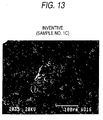
- 238000001000 micrograph Methods 0.000 description 4
- 239000002002 slurry Substances 0.000 description 4
- 229910002215 La0.9Sr0.1Ga0.8Mg0.2O3 Inorganic materials 0.000 description 3
- CETPSERCERDGAM-UHFFFAOYSA-N ceric oxide Chemical compound O=[Ce]=O CETPSERCERDGAM-UHFFFAOYSA-N 0.000 description 3
- 239000002003 electrode paste Substances 0.000 description 3
- -1 for example Chemical compound 0.000 description 3
- 239000010416 ion conductor Substances 0.000 description 3
- 150000002823 nitrates Chemical class 0.000 description 3
- 230000009467 reduction Effects 0.000 description 3
- 238000005245 sintering Methods 0.000 description 3
- 239000007787 solid Substances 0.000 description 3
- 239000000243 solution Substances 0.000 description 3
- 239000002904 solvent Substances 0.000 description 3
- 239000007858 starting material Substances 0.000 description 3
- 239000000126 substance Substances 0.000 description 3
- CSCPPACGZOOCGX-UHFFFAOYSA-N Acetone Chemical compound CC(C)=O CSCPPACGZOOCGX-UHFFFAOYSA-N 0.000 description 2
- LFQSCWFLJHTTHZ-UHFFFAOYSA-N Ethanol Chemical compound CCO LFQSCWFLJHTTHZ-UHFFFAOYSA-N 0.000 description 2
- 229910002262 LaCrO3 Inorganic materials 0.000 description 2
- 229910002328 LaMnO3 Inorganic materials 0.000 description 2
- 229910052581 Si3N4 Inorganic materials 0.000 description 2
- 238000004458 analytical method Methods 0.000 description 2
- 239000007864 aqueous solution Substances 0.000 description 2
- 239000011230 binding agent Substances 0.000 description 2
- 238000001354 calcination Methods 0.000 description 2
- 239000000919 ceramic Substances 0.000 description 2
- 230000008859 change Effects 0.000 description 2
- 238000005520 cutting process Methods 0.000 description 2
- 238000004090 dissolution Methods 0.000 description 2
- 238000001035 drying Methods 0.000 description 2
- 238000001914 filtration Methods 0.000 description 2
- 239000000446 fuel Substances 0.000 description 2
- 230000002706 hydrostatic effect Effects 0.000 description 2
- MRELNEQAGSRDBK-UHFFFAOYSA-N lanthanum(3+);oxygen(2-) Chemical compound [O-2].[O-2].[O-2].[La+3].[La+3] MRELNEQAGSRDBK-UHFFFAOYSA-N 0.000 description 2
- 229920002635 polyurethane Polymers 0.000 description 2
- 239000004814 polyurethane Substances 0.000 description 2
- 238000003825 pressing Methods 0.000 description 2
- 238000001878 scanning electron micrograph Methods 0.000 description 2
- HQVNEWCFYHHQES-UHFFFAOYSA-N silicon nitride Chemical compound N12[Si]34N5[Si]62N3[Si]51N64 HQVNEWCFYHHQES-UHFFFAOYSA-N 0.000 description 2
- 238000003980 solgel method Methods 0.000 description 2
- 238000005118 spray pyrolysis Methods 0.000 description 2
- 229910001220 stainless steel Inorganic materials 0.000 description 2
- 239000010935 stainless steel Substances 0.000 description 2
- IATRAKWUXMZMIY-UHFFFAOYSA-N strontium oxide Chemical compound [O-2].[Sr+2] IATRAKWUXMZMIY-UHFFFAOYSA-N 0.000 description 2
- RUDFQVOCFDJEEF-UHFFFAOYSA-N yttrium(III) oxide Inorganic materials [O-2].[O-2].[O-2].[Y+3].[Y+3] RUDFQVOCFDJEEF-UHFFFAOYSA-N 0.000 description 2
- VZSRBBMJRBPUNF-UHFFFAOYSA-N 2-(2,3-dihydro-1H-inden-2-ylamino)-N-[3-oxo-3-(2,4,6,7-tetrahydrotriazolo[4,5-c]pyridin-5-yl)propyl]pyrimidine-5-carboxamide Chemical compound C1C(CC2=CC=CC=C12)NC1=NC=C(C=N1)C(=O)NCCC(N1CC2=C(CC1)NN=N2)=O VZSRBBMJRBPUNF-UHFFFAOYSA-N 0.000 description 1
- OAYXUHPQHDHDDZ-UHFFFAOYSA-N 2-(2-butoxyethoxy)ethanol Chemical compound CCCCOCCOCCO OAYXUHPQHDHDDZ-UHFFFAOYSA-N 0.000 description 1
- 239000004215 Carbon black (E152) Substances 0.000 description 1
- 239000001856 Ethyl cellulose Substances 0.000 description 1
- ZZSNKZQZMQGXPY-UHFFFAOYSA-N Ethyl cellulose Chemical compound CCOCC1OC(OC)C(OCC)C(OCC)C1OC1C(O)C(O)C(OC)C(CO)O1 ZZSNKZQZMQGXPY-UHFFFAOYSA-N 0.000 description 1
- 206010067482 No adverse event Diseases 0.000 description 1
- 229910009474 Y2O3—ZrO2 Inorganic materials 0.000 description 1
- 239000000654 additive Substances 0.000 description 1
- 230000001174 ascending effect Effects 0.000 description 1
- 238000005452 bending Methods 0.000 description 1
- 238000004364 calculation method Methods 0.000 description 1
- 150000004649 carbonic acid derivatives Chemical class 0.000 description 1
- 230000003197 catalytic effect Effects 0.000 description 1
- 238000006555 catalytic reaction Methods 0.000 description 1
- 150000001805 chlorine compounds Chemical class 0.000 description 1
- 239000004020 conductor Substances 0.000 description 1
- 239000000470 constituent Substances 0.000 description 1
- 238000007796 conventional method Methods 0.000 description 1
- 230000007423 decrease Effects 0.000 description 1
- 230000007547 defect Effects 0.000 description 1
- 238000004925 denaturation Methods 0.000 description 1
- 230000036425 denaturation Effects 0.000 description 1
- AJNVQOSZGJRYEI-UHFFFAOYSA-N digallium;oxygen(2-) Chemical compound [O-2].[O-2].[O-2].[Ga+3].[Ga+3] AJNVQOSZGJRYEI-UHFFFAOYSA-N 0.000 description 1
- 239000002270 dispersing agent Substances 0.000 description 1
- 238000009826 distribution Methods 0.000 description 1
- 239000003792 electrolyte Substances 0.000 description 1
- 238000005516 engineering process Methods 0.000 description 1
- 229920001249 ethyl cellulose Polymers 0.000 description 1
- 235000019325 ethyl cellulose Nutrition 0.000 description 1
- 230000001747 exhibiting effect Effects 0.000 description 1
- 238000009472 formulation Methods 0.000 description 1
- 230000006870 function Effects 0.000 description 1
- LNTHITQWFMADLM-UHFFFAOYSA-N gallic acid Chemical compound OC(=O)C1=CC(O)=C(O)C(O)=C1 LNTHITQWFMADLM-UHFFFAOYSA-N 0.000 description 1
- 229910001195 gallium oxide Inorganic materials 0.000 description 1
- 150000004679 hydroxides Chemical class 0.000 description 1
- 238000010348 incorporation Methods 0.000 description 1
- 150000002604 lanthanum compounds Chemical class 0.000 description 1
- WABPQHHGFIMREM-UHFFFAOYSA-N lead(0) Chemical compound [Pb] WABPQHHGFIMREM-UHFFFAOYSA-N 0.000 description 1
- 238000003754 machining Methods 0.000 description 1
- CPLXHLVBOLITMK-UHFFFAOYSA-N magnesium oxide Inorganic materials [Mg]=O CPLXHLVBOLITMK-UHFFFAOYSA-N 0.000 description 1
- 239000000395 magnesium oxide Substances 0.000 description 1
- AXZKOIWUVFPNLO-UHFFFAOYSA-N magnesium;oxygen(2-) Chemical compound [O-2].[Mg+2] AXZKOIWUVFPNLO-UHFFFAOYSA-N 0.000 description 1
- 230000010534 mechanism of action Effects 0.000 description 1
- 238000002844 melting Methods 0.000 description 1
- 230000008018 melting Effects 0.000 description 1
- 239000012528 membrane Substances 0.000 description 1
- 150000002739 metals Chemical class 0.000 description 1
- 238000007431 microscopic evaluation Methods 0.000 description 1
- 238000012986 modification Methods 0.000 description 1
- 230000004048 modification Effects 0.000 description 1
- 150000007524 organic acids Chemical class 0.000 description 1
- 150000002902 organometallic compounds Chemical class 0.000 description 1
- TWNQGVIAIRXVLR-UHFFFAOYSA-N oxo(oxoalumanyloxy)alumane Chemical compound O=[Al]O[Al]=O TWNQGVIAIRXVLR-UHFFFAOYSA-N 0.000 description 1
- 238000005498 polishing Methods 0.000 description 1
- 238000010248 power generation Methods 0.000 description 1
- 230000001376 precipitating effect Effects 0.000 description 1
- 239000002243 precursor Substances 0.000 description 1
- 238000004445 quantitative analysis Methods 0.000 description 1
- 230000009257 reactivity Effects 0.000 description 1
- 150000003839 salts Chemical class 0.000 description 1
- 238000005070 sampling Methods 0.000 description 1
- 239000004065 semiconductor Substances 0.000 description 1
- 229910052709 silver Inorganic materials 0.000 description 1
- 239000007790 solid phase Substances 0.000 description 1
- 238000009987 spinning Methods 0.000 description 1
- 239000007921 spray Substances 0.000 description 1
- 238000001694 spray drying Methods 0.000 description 1
- 238000005507 spraying Methods 0.000 description 1
- 239000004575 stone Substances 0.000 description 1
- 150000003467 sulfuric acid derivatives Chemical class 0.000 description 1
- 229910052716 thallium Inorganic materials 0.000 description 1
- 239000004034 viscosity adjusting agent Substances 0.000 description 1
Images




Classifications
-
- C—CHEMISTRY; METALLURGY
- C04—CEMENTS; CONCRETE; ARTIFICIAL STONE; CERAMICS; REFRACTORIES
- C04B—LIME, MAGNESIA; SLAG; CEMENTS; COMPOSITIONS THEREOF, e.g. MORTARS, CONCRETE OR LIKE BUILDING MATERIALS; ARTIFICIAL STONE; CERAMICS; REFRACTORIES; TREATMENT OF NATURAL STONE
- C04B35/00—Shaped ceramic products characterised by their composition; Ceramics compositions; Processing powders of inorganic compounds preparatory to the manufacturing of ceramic products
- C04B35/01—Shaped ceramic products characterised by their composition; Ceramics compositions; Processing powders of inorganic compounds preparatory to the manufacturing of ceramic products based on oxide ceramics
-
- G—PHYSICS
- G01—MEASURING; TESTING
- G01N—INVESTIGATING OR ANALYSING MATERIALS BY DETERMINING THEIR CHEMICAL OR PHYSICAL PROPERTIES
- G01N27/00—Investigating or analysing materials by the use of electric, electrochemical, or magnetic means
- G01N27/26—Investigating or analysing materials by the use of electric, electrochemical, or magnetic means by investigating electrochemical variables; by using electrolysis or electrophoresis
- G01N27/403—Cells and electrode assemblies
- G01N27/406—Cells and probes with solid electrolytes
- G01N27/407—Cells and probes with solid electrolytes for investigating or analysing gases
- G01N27/4073—Composition or fabrication of the solid electrolyte
Definitions
- This invention relates to an LaGaO 3 -based sintered body (hereinafter LaGaO 3 sintered body). More particularly, it relates to an LaGaO 3 sintered body which has high mechanical strength and excellent electrical conductivity and is therefore applicable to practical big-volume products.
- the LaGaO 3 sintered body of the invention is useful as an oxygen-permeable membrane, a reactor, a sensor device, etc.
- This invention also relates to an LaGaO 3 -based sintered body which is suited for use in, for example a sensor device and a process for producing the same.
- This invention further relates to a sensor device using an oxide ion-conducting solid electrolyte. More particularly it relates to a critical current sensor device which has improved adhesibility between solid electrolyte and electrode, which has reduced solid electrolyte/electrode interfacial resistance by increasing three-phase interface comprising gas phase, electrode and solid electrolyte between solid electrolyte and electrode, and therefore exhibits improved oxygen pumping ability.
- an LaGaO 3 sintered body is far more electrically conductive than stabilized zirconia and can be used as an electrolyte of a solid electrolyte fuel cell that exhibits excellent power generation properties in a low-temperature range as disclosed in JP-A-9-161824.
- the problem of the LaGaO 3 sintered body of the background art is its low mechanical strength.
- the bending strength of yttrium-stabilized zirconia (hereinafter referred to as YSZ) as obtained by sintering at 1500°C is 500 MPa
- that of LaGaO 3 sintered body is as low as 200 MPa or even lower. Therefore, in order to apply LaGaO 3 sintered body to practical products, particularly big-volume products, it has been necessary to add extensive improvements in mechanical strength.
- An oxygen sensor device having an oxide ion conductor typically uses stabilized zirconia solid electrolyte as an oxide ion conductor.
- Such an oxygen sensor device has been used in practice as, for example, an oxygen sensor for automotive engines.
- Zirconia oxides have also been used in broad fields as fuel cells, reactors, etc. because of their chemical stability and high oxygen conductivity.
- the exhaust gas sensor disclosed in JP-A-9-311120 can be mentioned as an example of sensor devices using a zirconia oxide.
- an oxygen pump cell comprising an oxide ion-conducting solid electrolyte is operated in such a manner that an oxygen sensor cell comprising an oxide ion-conducting solid electrolyte which is placed in a detection chamber may give constant signals (the electromotive force of an oxygen concentration cell), and a component of an exhaust gas is detected from a resistivity change of a semiconductor detector placed in the detection chamber.
- hydrocarbons tend to react with oxygen and decompose (i.e., the concentration of the component to be detected decreases) by the catalytic action of the noble metal electrodes used in the oxygen pump cell and the oxygen sensor cell, resulting in reduction of detection accuracy. If at least the electrodes of the oxygen pump cell and the oxygen sensor cell that face the detection chamber are made of a material which is catalytically inert to hydrocarbons, hydrocarbons will hardly react and decompose in the detection chamber, whereby accurate detection of hydrocarbons could be achieved.
- the working temperature In order to achieve high oxide ion conduction by use of a zirconia oxide, the working temperature must be as high as 700°C or even higher because the zirconia oxide itself does not exhibit high oxide ion conductivity at low temperature. Further, the interfacial resistance between the electrodes (e.g., Pt electrodes or Au electrodes) and a zirconia oxide is high due to poor adhesion to each other.
- the electrodes e.g., Pt electrodes or Au electrodes
- An LaGaO 3 oxide is known as an oxide ion-conducting solid electrolyte that works at lower temperatures than a zirconia oxide.
- an LaGaO 3 oxide is reactive with a noble metal, particularly Pt, so that a sensor device comprising a Pt electrode in combination with an LaGaO 3 oxide has an increased interfacial resistance, failing to perform a high oxygen pumping function.
- a noble metal which is hardly oxidized even in high temperature, as an electrode material in sensor devices used at 500°C or higher.
- the reactivity of an LaGaO 3 oxide with a noble metal has been a hindrance to application of this oxide to a sensor device.
- Yttrium-stabilized zirconia is known as a solid electrolyte useful in a sensor, etc. and has been used widely.
- the problem of YSZ used in a sensor is that its oxide ion conductivity drastically reduces in low temperature so that the working temperature of the sensor should be high enough in order to obtain high ion conductivity.
- a sintered body of lanthanum-gallium mixed oxide having a perovskite structure i.e., lanthanum gallate-based sintered body (LaGaO 3 sintered body) has recently been attracting attention as a substance showing higher oxide ion conductivity than YSZ and been given much study.
- LaGaO 3 sintered body lanthanum gallate-based sintered body
- the LaGaO 3 sintered body comprises LaGaO 3 with part of La or Ga displaced with a less valent atom, such as Sr or Mg, by substitutional solid dissolution to have increased oxide ion conductivity.
- An object of the present invention is to provide an LaGaO 3 sintered body having markedly improved mechanical strength without greatly impairing the high electrical conductivity inherent thereto.
- An object of the invention is to provide a sensor device which has a markedly reduced interfacial resistance between an oxide ion-conducting solid electrode and a noble metal electrode and therefore exhibits greatly improved oxygen pumping ability and works satisfactorily even in temperatures of 700°C or lower.
- An object of the present invention is to provide a dense LaGaO 3 sintered body having a high density and a process for producing the same.
- the present invention provides an LaGaO 3 sintered body comprising lanthanum, gallium, oxygen, and at least one of other elements and having three or more crystal phases of different composition formulae.
- M La , M Ga , and M o The molar quantities of lanthanum, gallium, and other elements other than oxygen (in total) will hereinafter be represented by M La , M Ga , and M o .
- crystal phases of different composition formulae is intended to mean crystal phases which may be either the same or different in kinds of constituent elements but are different in content of a certain element when expressed in terms of molar ratio.
- the molar ratio of the same elements in another crystal phase is, for example, a':b:c:d:0, a':b':0:d:e, a:b':c':d':e, a':b':c':d':e',etc.provided that a ⁇ a',b ⁇ b',c ⁇ c',d ⁇ d', and e ⁇ e'.
- the LaGaO 3 sintered body additionally has still another crystal phase different in composition formula from either the first or the second crystal phase (hereinafter referred to as a third crystal phase), which is usually a grain boundary phase.
- the LaGaO 3 sintered body having the above-described structure can be formed by incorporation of aluminum.
- the content of aluminum in the sintered body being expressed by the ratio of the molar quantity of aluminum (hereinafter "M Al ") to the total of M La , M Ga , and M o (M Al /(M La +M Ga +M o )), preferably ranges from 0.05 to 0.5, still preferably 0.05 to 0.2, particularly preferably 0.05 to 0.1. With the above ratio being less than 0.05, it is difficult to form three crystal phases having different composition formulae, and the sintered body will have insufficient mechanical strength although it exhibits sufficiently high conductivity. If the aluminum ratio exceeds 0.5, sufficient strength is obtained, but aluminum remains non-solid-dissolved and tends to react with other elements to form a different phase, which may reduce the conductivity.
- the aluminum content in each of the first and second crystal phases being expressed as M Al /(M La +M Ga +M o ), is preferably from 0.06 to 0.55 and from 0.04 to 0.6, respectively.
- the LaGaO 3 sintered body having at least these two crystal phases is assured of sufficient mechanical strength.
- the ratio of the first or second crystal phase to the total crystal phases constituting the LaGaO 3 sintered body can be determined as follows.
- the cross section of an LaGaO 3 sintered body is polished for mirror finish and photographed under an electron microscope.
- An arbitrary straight line is drawn on the micrograph from one end to the other.
- Each of the total lengths of the first crystal phases and the second crystal phases appearing on the straight line is represented as a ratio, which will be referred to as a crystal phase ratio.
- the crystal phase ratio of the first crystal phase to the total crystal phases is preferably 0.55 to 0.9, still preferably 0.6 to 0.9, particularly preferably 0.8 to 0.9, and that of the second crystal phase is preferably 0.4 or less, still preferably 0.25 or less, particularly preferably 0.18 or less.
- An approximate volumetric ratio of the first or second crystal phase can be obtained as follows. At least two fields under an electron microscope are photographed, and two or more arbitrary straight lines are drawn on each micrograph. Lengths of the first crystal phases or the second crystal phases on each line are added up to obtain the length ratio to the total length of the line. The average of the resulting length ratios for each crystal phase is regarded as an approximate volumetric ratio of the crystal phase in the sintered body.
- An LaGaO 3 sintered body is a perovskite-type oxide represented by general formula: ABO 3 and has an orthorhombic crystal structure of monoclinic phase.
- a site centroid
- sexidentate ions having a smaller ionic radius are located at B sites to surround the central ion.
- the ratio of the molar amount of the element at A site (M A ) to that of the element at B site (M B ) , M A /M B is 1, and lanthanum exists at A site while gallium at B site.
- LaGaO 3 sintered body contains elements other than lanthanum and gallium, for example, strontium, magnesium and aluminum, lanthanum and strontium exist at A site while gallium, magnesium and aluminum at B site.
- the M A /M B deviates from the theoretical value.
- a preferred M A /M B of the first crystal phase is 0.65 to 0.80, and that of the second crystal phase is 0.55 to 0.70.
- the LaGaO 3 sintered body according to the invention which has three or more crystal phases having different composition formulae, particularly the one having the above-mentioned first and the second crystal phases can exhibit sufficient strength, having a four-point bending strength of 250 MPa or more, particularly 300 MPa or more, most preferably 350 MPa or more, as measured in accordance with JIS R1601. Further improvement on strength could be expected by properly controlling sintering conditions and the like.
- the compositions of crystal phases are subject to variation depending on the aluminum content thereby having controlled mechanical strength and controlled electrical conductivity.
- An LaGaO 3 sintered body is generally made up of two phases, a crystal and a grain boundary phase. With this phase form, satisfactory electrical conductivity is maintained.
- an element that is relatively difficult to solid-dissolve is added separately from a sintering aid, whereby a third phase, a fourth phase, etc. are formed in addition to the crystal phase and the grain boundary phase generally possessed by an LaGaO 3 sintered body to bring about improvement in strength.
- the invention provides a sensor device comprising an oxide ion-conducting solid electrolyte and a pair of electrodes formed on the solid electrolyte, in which the electrodes contains at least one of a mixed oxide and a metal oxide.
- the sensor device of the invention has high oxygen pumping ability.
- oxide ion-conducting solid electrolyte for a sensor device
- Those which can be used below 1000°C are preferred.
- oxide ion-conducting solid electrolytes which can be used at 800°C or lower are still preferred.
- Those which can be used practically at 700°C or lower such as an LaGaO 3 mixed oxide (LaGaO 3 , oxide), a ZrO 2 oxide or a CeO 2 oxide, are especially preferred.
- an LaGaO 3 oxide is preferred from the standpoint of performance, and a ZrO 2 oxide is suited from the viewpoint of stability and mechanical strength.
- the above mentioned LaGaO 3 sintered body comprising lanthanum, gallium, oxygen and at least one of other elements and having three or more crystal phases of different composition formulae is preferably used from the viewpoint of mechanical strength.
- the electrode for the sensor may or may not contain at least one of a mixed oxide and a metal oxide.
- the LaGaO 3 mixed oxide includes La 0.9 Sr 0.1 Ga 0.8 Mg 0.2 O 3 (hereinafter referred to as LSGM), which is characterized by its high oxide ion conductivity compared with conventional yttrium-stabilized zirconia (YSZ).
- LSGM La 0.9 Sr 0.1 Ga 0.8 Mg 0.2 O 3
- YSZ yttrium-stabilized zirconia
- the ZrO 2 oxide includes Y 2 O 3 -ZrO 2 (i.e., YSZ) and Sc 2 O 3 -ZrO 2 .
- YSZ is a typical oxide ion conductor and is preferred for its stability and mechanical strength.
- Sc 2 O 3 -ZrO 2 has a higher oxide ion conductivity than YSZ and is preferred where weight is put on performance.
- the CeO 2 oxide includes Gd 2 O 3 -CeO 2 , Sm 2 O 3 -CeO 2 , and Y 2 O 3 -CeO 2 . These CeO 2 oxides also have a higher oxide ion conductivity than YSZ and is therefore capable of reducing the working temperature of the sensor device.
- the electrodes formed on the oxide ion-conducting solid electrolyte may contain at least one of a mixed oxide and a metal oxide.
- the oxygen pumping ability of the oxide ion-conducting solid electrolyte can be increased by this structure, and the working temperature of the sensor device can be lowered thereby.
- the metal oxide to be incorporated into the electrode is selected from those capable of increasing the output current density from the sensor device, i.e., oxygen pumping ability, such as inorganic metal oxides, e.g., MnO 2 , MoO 3 , Nd 2 O 3 , Fe 2 O 3 , WO 3 , Nb 2 O 5 , Ta 2 O 5 , TiO 2 , In 2 O 3 , IrO 2 , Rh 2 O 3 , CuO, and CuO 2 .
- a metallo-organic or organometallic compound of a metal species such as an organic acid salt and a resinate, can be used as a precursor of the inorganic metal oxide, which is added to a conductor paste and converted to the corresponding metal oxide on firing.
- MnO 2 is particularly preferred for obtaining excellent oxygen pumping ability.
- the mixed oxide to be incorporated into the electrode is selected from those capable of increasing the output current density from the sensor device, which is in proportion to oxygen pumping ability, such as LaGaO 3 oxide (LaGaO 3 -based mixed oxide), LaMnO 3 oxide (LaMnO 3 -based mixed oxide) and LaCrO 3 oxide (LaCrO 3 -based mixed oxide).
- LaGaO 3 oxide, especially LSGM is preferred from the viewpoint of oxygen pumping ability.
- the total amount of the metal oxide and the mixed oxide to be added is preferably 0.1 to 50% by weight, still preferably 10 to 40% by weight, particularly preferably 10 to 35% by weight, based on the noble metal. It is preferred that both of the metal oxide, such as MnO 2 , and the mixed oxide, such as LaGaO 3 oxide, be added.
- a pair of Pt or Au electrodes containing 20% by weight of MnO 2 and 14% by weight of LSGM (34% by weight in total) based on Pt or Au secure extremely excellent oxygen pumping ability.
- the oxygen pumping ability of a sensor device using a pair of Pt electrodes at 700°C can be increased 18 or more times by addition of an LaGaO 3 mixed oxide or twice or more times by addition of a ZrO 2 oxide.
- the oxygen pumping ability at 700°C can be increased 100 or more times by addition of an LaGaO 3 mixed oxide or 6 or more times by addition of a ZrO 2 oxide.
- the sensor device of the invention can operate at far lower temperatures than conventional ones.
- the electrodes which can be used in the invention comprise at least one element selected from the group consisting of Pt, Au, Pd, Ir, Rh, In, Ag, Tl, and Cu. Where it is desired to form the electrodes and the oxide ion-conducting solid electrolyte by simultaneous firing, it is preferred to use Pt having a high melting point as a main electrode material. If desired, metals that will lessen the catalysis of Pt, such as Au, Ir, Rh, In, Cu, Ag, and Tl, can be added to the Pt-based electrodes.
- the Au electrodes according to the invention generate a sufficient output current density.
- the electrodes are formed by baking according to a thick film technology, the above-described various electrode materials can be used in an arbitrary combination. In this case, too, it is preferred for the characteristics to use Ptor Au as a main electrode material.
- an LaGaO 3 powder to be sintered has a large particle size, it is difficult to obtain a dense sintered body. That is, a green body of the powder or a sintered body obtained therefrom develops cracks, and observation of the sintered body under a scanning electron microscope (SEM) reveals gathering of pores.
- SEM scanning electron microscope
- the present inventors have found that a dense LaGaO 3 sintered body having a sinter density of 94% based on the theoretical density can be obtained by using a raw LaGaO 3 powder having its average particle size controlled to 1.7 ⁇ m or smaller (excluding 0 ⁇ m), by, for example, wet grinding.
- the present invention has been completed based on this finding.
- the invention provides an LaGaO 3 sintered body whose surface roughness profile (roughness curve) determined according to JIS B0601 shows that the proportion of valleys (i.e., surface concave portion) below the mean line having a size less than 10 ⁇ m (excluding 0 ⁇ m, more specifically a size of less than 10 ⁇ m and not less than 4 ⁇ m) in all the valleys (all the concave portions) below the mean line is 50% or more in number, the size being the distance between two adjacent intersections of the mean line with the roughness profile forming one or more valleys (concave portions) below the mean line.
- This LaGaO 3 sintered body may be the above-mentioned LaGaO 3 sintered body comprising lanthanum, gallium, oxygen, and at least one of other elements and having three or more crystal phases of different composition formulae.
- the LaGaO 3 sintered body of the invention Since the number of valleys (concave portions) whose size is less than 10 ⁇ m is 50% or more of all the valleys below the mean line, the LaGaO 3 sintered body of the invention is very dense. Therefore, it has few such defects as cracks and exhibits excellent performance properties, such as high strength, durability, and oxide ion conductivity, and is the most suitable as, for example, a sensor device.
- the term "surface" as used for the LaGaO 3 sintered body means the surface under analysis for obtaining a roughness profile or for measuring the size of valleys. Therefore, the surface includes not only the outer surface of the LaGaO 3 sintered body of the invention but a cut surface of the LaGaO 3 sintered body.
- the "unfilter profile (sectional profile)” is the surface profile which appears on cutting a surface to be assessed with a plane perpendicular to the surface.
- mean line indicates a straight line or curve having a geometric form of the surface measured within a sampling length which is decided so that the sum of the squares of the deviations of the roughness profile from the "mean line” may be the least (i.e., the line determined by a method of least squares).
- valley (concave portion) below the mean line of the roughness profile is intended to means a depression where the "unfilter profile (sectional profile)” as a straight line of "the vally (concave portion) of the unfilter profile” is converted to the roughness profile (as a segment) and is defined to be a depression below the mean line which appears on the roughness profile as a valley (concave portion) formed by the curve connecting adjacent two points crossing the mean line.
- the valleys or depressions (concave portions) below the mean line are referred to surface valleys (surface concave portions).
- the surface valleys are considered to be attributed to exposure of pores present in a sintered body.
- the LaGaO 3 sintered body of the invention has a sinter density of 94% or more of the theoretical density. Because the sintered body of the invention has small surface valleys (meaning small pores), it can have a sinter density of 94% or higher in terms of a relative density or density ratio to the theoretical density.
- the sintered body has extremely small and uniformly dispersed surface valleys (that is, the pores are extremely small and uniformly dispersed) and are therefore particularly superior in strength and durability.
- the sintered body prefferably has a sinter density of 97% or more of the theoretical density. Because the sintered body of this embodiment has smaller surface valleys (meaning smaller pores), it can have a relative density of 97% or higher.
- the LaGaO 3 sintered body be prepared from an LaGaO 3 powder having an average particle size of 1.7 ⁇ m or smaller.
- the powder as a raw material is particles to be used for forming a green body. That is, the powder is either directly or as mixed with a solution formed into a green body.
- the invention provides an LaGaO 3 sintered body prepared from an LaGaO 3 powder having an average particle size of 1.7 ⁇ m or smaller (particularly 1.4 ⁇ m or smaller) which has a relative density of 94% or more (particularly 97% or more).
- a dense LaGaO 3 sintered body having a relative density of 94% or more (particularly 97% or more) can be obtained by using LaGaO 3 particles having an average particle size of 1.7 ⁇ m or smaller (particularly 1.4 ⁇ m or smaller).
- the invention further provides a process for producing the above-described LaGaO 3 sintered body which comprises using an LaGaO 3 powder having an average particle size of 1.7 ⁇ m or smaller (excluding 0 ⁇ m) as a raw material.
- LaGaO 3 particles having an average particle size of 1.7 ⁇ m or smaller as a raw material to be formed into a green body, there is obtained a dense LaGaO 3 sintered body having a relative density of 94% or more and surface valleys having a size less than 10 ⁇ m in the proportion of 50% or more in number to the total surface valleys.
- LaGaO 3 particles having a smaller average particle size e.g., 1.4 ⁇ m or smaller
- the LaGaO 3 sintered body can be produced through the following procedures (1) to (3).
- the above-mentioned wet grinding an a solvent is an advantageous means for supplying a stable LaGaO 3 material because a hydrous lanthanum compound contained in the starting material does not undergo denaturation.
- Solvents which can be used in the wet grinding include not only organic ones, such as ethanol and acetone, but water.
- the LaGaO 3 powder as a raw material preferably includes LaGaO 3 -based mixed oxide particles.
- the LaGaO 3 -based mixed oxide particles are one or more kinds of LaGaO 3 with part of its La or Ga displaced with Sr, Mg, etc. by substitutional solid dissolution, i.e., La 1-x Sr x Ga 1-y Mg y O 3 , La 1-x-y Ln x Sr y Ga 1-2 Mg 2 O 3 , and La 1-x Sr x Ga 0.8 Mg 0.2-y Co y O 3 .
- the LaGaO 3 sintered body is the above-mentioned LaGaO 3 sintered body comprising lanthanum, gallium, oxygen, and at least one of other elements and having three or more crystal phases of different composition formulae
- the LaGaO 3 sintered body may be produced by mixing the LaGaO 3 powder with Al as a raw material.
- the sensor device to which the LaGaO 3 sintered body of the invention is applicable includes an oxygen sensor, a hydrocarbon sensor, and a NO x sensor.
- Nitrates each of lanthanum, gallium, strontium, and magnesium were weighed at a La:Ga:Sr:Mg molar ratio of about 0.9:0.1:0.8:0.2 and dissolved in a requisite amount of pure water.
- the pH of the solution was adjusted to form a coprecipitate of the elements, which was collected by filtration, dried, and calcined to obtain a mixed powder of the oxides of the elements.
- the mixed powder was put in a resin pot, and a weighed quantity of alumina powder was added thereto to give an aluminum content of about 0.05, 0.08, 0.1, 0.2, 0.3, 0.33, 0.4 or 0.5 mol% based on the total molar quantity of lanthanum, gallium, strontium, and magnesium in the mixed powder.
- the mixture in the pot was wet mixed for 16 hours.
- the resulting slurry was transferred to a stainless steel bowl, dried on a hot water bath with a submerged heater, and passed through a 60 mesh sieve to obtain a mixed powder of lanthanum oxide, gallium oxide, strontium oxide, magnesium oxide, and aluminum oxide.
- the mixed powder was formed in a mold into a 70 mm long, 70 mm wide and 10 mm thick body.
- the body was vacuum packaged in a polyurethane bag and pressed by hydrostatic pressing (CIP) under 1.5 ton/cm 2 for 10 seconds.
- CIP hydrostatic pressing
- the resulting green body was sintered by firing in the air at 1500°C for 3 hours.
- the sintered body was cut and flat polished to prepare test pieces in conformity to JIS, which were numbered individually from 1A to 8A in an ascending order of the aluminum content.
- a mixed oxide powder was prepared by coprecipitation in the same manner as in (1-i) above, except that alumina was not added.
- the mixed powder was formed and fired in the same manner as in (1-ii) to prepare a comparative test piece 1A.
- Zirconia and yttria were weighed at a Zr:Y molar ratio of 0.955:0.045, ground, and wet mixed to obtain a mixed powder.
- the mixed powder was formed and fired in the air at 1500°C for 2 hours.
- the sintered body was processed in the same manner as in (i-ii) to prepare a comparative test piece 2A comprising YSZ.
- test pieces 1A to 8A and comparative test piece 1A were analyzed with an electron probe X-ray microanalyzer (JXA-8800M, supplied by JEOL Ltd.). The results obtained are shown in Table 1 immediately below.
- Sample Element Molar Ratio Light Hue Phase Intermediate Hue Phase Deep Hue Phase Comparative Test Piece 1A La 53.24 0 0.21 Sr 5.34 0 0.02 Ga 37.71 0 0.06 Mg 3.71 0 99.71 Al 0.01 0 0
- Test Piece 1A La 38.84 17.42 0.82 Sr 4.36 20.83 0.13 Ga 43.49 54.44 0.59 Mg 6.60 2.80 97.56 Al 6.72 4.51 0.89
- Test Piece 2A La 40.33 17.72 1.76 Sr 2.58 20.58 1.51 Ga 42.18 52.71 2.87 Mg 4.11 2.09 92.95 Al 10.79 6.89 0.91
- Test Piece 3A La 40.47 17.84 0.35 Sr 1.54 20.12 0.18 Ga 40.88 51.08 5.
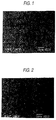
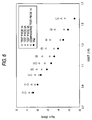
- test pieces 1A through 8A and comparative test piece 1A was mirror polished and photographed under a scanning electron microscope (JSM-840, manufactured by JEOL Ltd.) at a magnification of 1,000.
- the micrographs of test pieces 1A, 3A, 4A and comparative test piece 1A are shown in Figs. 1 to 4, respectively.
- Fig. 4 displays two phases, a light hue phase and a deep hue phase, while Figs. 1 to 3 additionally shows an intermediate hue phase. It is seen that the intermediate hue phase increases with an aluminum content.
- Test Piece 6A 55.0 31.2 13.8 Test Piece 6A 1 56.1 31.1 12.8 2 50.4 44.7 4.9 3 56.6 38.6 4.8 Avg. 54.4 38.1 7.5 Test Piece 7A 1 70.5 24.1 5.4 2 54.4 39.3 6.3 3 61.7 26.8 11.5 Avg. 62.2 30.1 7.7 Test Piece 8A 1 63.0 35.1 1.9 2 54.8 43.0 2.2 3 58.1 36.2 5.7 Avg. 58.6 38.1 3.3
- test pieces A1 to A8 and comparative test piece A1 were measured according to the following standards. The results are shown in Table 4 below. For better understanding, the results of the four-point bending test are graphically illustrated in Fig. 5. Standards of measurement:
- test pieces 1A to 3A and comparative test pieces 1A was measured in the air at room temperature by a DC four probe method. The results are graphically shown in Fig. 6.
- the raw material powders making up the mixed powder include carbonates, sulfates, hydroxides, chlorides, etc. of the elements, and mixtures thereof.
- three or more crystal phases different in composition formula are formed in an LaGaO 3 sintered body by addition of a prescribed element or elements to bring about marked improvement on mechanical strength with an increase of a prescribed crystal phase without being accompanied by large reduction in conductivity.
- the invention thereby provides an LaGaO 3 sintered body that can be used in practical volume products and so forth.
- LSGM powder prepared by a conventional coprecipitation method or YSZ powder containing 4.5 mol% of Y 2 O 3 prepared by conventional spray drying was compressed by CIP into a 70 mm long, 70 mm wide and 10 mm thick green body.
- the green body was fired in the air at 1500°C for 3 hours, cut to size, and flat polished to a thickness of 0.5 mm to obtain a solid electrolyte comprising LSGM or YSZ.
- Pt powder or Au powder were mixed with MnO 2 and LSGM according to the formulation shown in Table 5 below and kneaded with prescribed amounts of ethyl cellulose (binder), Ionet S-20 manufactured by Sanyo Chemical Industries, Ltd. (dispersant) and butyl carbitol (viscosity modifier) in a mixing and grinding machine to prepare an electrode paste for electrodes C, D, E, or F.
- ethyl cellulose binder
- Ionet S-20 manufactured by Sanyo Chemical Industries, Ltd.
- butyl carbitol viscosity modifier
- Each electrode paste was applied to the solid electrolyte, and a Pt mesh having a Pt lead wire was attached thereon as a current collector.
- the applied paste was baked at 850°C for 10 minutes to prepare a sensor device.
- a sensor device was prepared in the same manner, except that a Pt or Au paste containing neither MnO 2 nor LSGM was applied and baked at 1500°C or 850°C, respectively, for 10 minutes to form a Pt electrode (A in Table 5) or an Au electrode (B in Table 5).
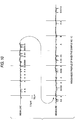
- Fig. 7 schematically illustrates a sensor device.
- Electrode Composition (wt%) Electrode Pt Au MnO 2 LSGM A 100 0 0 0 B 0 100 0 0 C 80 0 20 0 D 0 80 20 0 E 66 0 20 14 F 0 66 20 14
- the oxygen pumping ability of the sensor devices prepared in (3) above was evaluated as follows.
- the oxygen pumping ability can be evaluated from the current flowing with a voltage applied to the sensor device because both LSGM and YSZ are almost pure oxide ion-conducting solid electrolyte.
- the conditions of measurement were as follows.
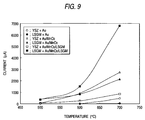
- Electrode Solid Electrolyte Current 500°C 600°C 700°C 7B B YSZ - 20.38 474.7 8B B LSGM - 11.19 54.59 9B D YSZ 49 928.4 2754.3 10B D LSGM 403.8 835.6 2137.7 11B F YSZ 50.7 257.8 873.8 12B F LSGM 361.8 1516 6789
- samples 5B and 6B having Pt-based electrodes and sample 12B having Au-based electrodes where both MnO 2 and LSGM were added exhibit remarkably improved oxygen pumping ability as is seen from the maximum current reached, which is 18 times that obtained from conventional sensor devices having Pt electrodes or 100 times that obtained from conventional sensor devices having Au electrodes. It is understood from these results that the sensor devices according to the present invention can work in lower temperatures.
- the interfacial resistance between the oxide ion-conducting solid electrolyte and noble metal electrodes can be reduced greatly.
- the sensor device of the invention exhibits improved oxygen pumping ability and is capable of working in low temperatures below 700°C.
- the invention provides a means for accurately detecting easily combustible gas, such as hydrocarbons.
- Nitrates of lanthanum, strontium, gallium or magnesium were weighed to give the stoichiometric composition of La 0.9 Sr 0.1 Ga 0.8 Mg 0.2 O 3 and dissolved in a predetermined amount of pure water. The pH of the solution was adjusted to form a coprecipitate, which was processed in a usual manner by filtration, drying, calcination, and grinding to prepare an LaGaO 3 -based oxide powder.
- the oxide powder was put in a resin pot together with a solvent and grinding balls selected appropriately as described below and wet ground for 1 hour.
- the resulting slurry was transferred to a stainless steel bowl, dried on a hot water bath with a submerged heater, and passed through a 60 mesh sieve to obtain an LaGaO 3 -based oxide powder having the average particle size shown in Table 8 below.
- the particle size was measured with a laser diffraction type particle size distribution measuring apparatus (LA-500, manufactured by Horiba).
- the particle size adjustment was achieved by selection of the grinding balls to be used in the wet grinding. That is, ceramic balls of alumina or silicon nitride were used for obtaining particles of small size, and resin balls were used for obtaining particles of relatively large size.
- the thus prepared oxide powders were designated sample Nos. 1C to 3C, as shown in Table 8.
- LaGaO 3 -based oxide powder having the average particle size shown in Table 8 was prepared without conducting wet grinding (designated sample No. 4C).
- the resulting green body was sintered by firing in the air at 1500°C for 3 hours to obtain an LaGaO 3 sintered body.
- the results obtained are shown in Table 8.
- a dense LaGaO 3 sintered body having a relative density of 94% or higher can be obtained by starting with an LaGaO 3 -based oxide powder having an average particle size of not greater than 1.7 ⁇ m.
- a denser sintered body having a relative density of 97% or higher can be obtained by using an LaGaO 3 -based oxide powder having an average particle size of 1.4 ⁇ m or smaller.
- the surface valleys being defined to be the pores of the sintered body exposed on the surface, were examined as follows. Each sample was buried in a resin, and its surface was polished for mirror finish. Polishing for mirror finish is machining by relative movement under pressure with an ultrafine wheel stone or loose abrasive particles to make a surface with reduced surface roughness and high dimensional accuracy.
- the roughness of the polished surface was measured in accordance with JIS B0601 to prepare a roughness profile.
- the assessment was made with a stylus-type profilometer (SE-30D, manufactured by Kosaka Kenkyusho) specified in JIS B0651 under the following conditions.
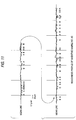
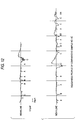
- a mean line was drawn on the profile of sample Nos. 1C, 2C and 4C.
- the depressions below the mean line of the roughness profile which are formed by the curve connecting adjacent two points crossing the mean line were regarded as surface valleys.
- the size of each surface valley was obtained by measuring the distance between the two points (the size thus measured can be regarded as a substantial diameter of a depression), and the surface valleys were grouped by sizes into A (less than 10 ⁇ m), B (10 ⁇ m or more and less than 50 ⁇ m), and C (50 ⁇ m or more).
- the number of the surface valleys was counted for each group, and the ratio of each group to the total number of the surface valleys was obtained. The results obtained are shown in Table 9 below.
- Table 9 also shows the center-line average surface roughness (Ra; ⁇ m) specified in JIS B0601. Sample No. Average Particle Size ( ⁇ m) Size of Surface Valleys Ra ( ⁇ m) A B C Number Ratio (%) Number Ratio (%) Number Ratio (%) 1C 1.65 23 51.1 19 42.2 3 6.7 0.025 2C 1.27 42 87.5 6 12.5 0 0 0.014 4C 5.52 8 34.8 8 34.8 7 30.4 0.058
- the surface profiles of sample Nos. 1C and 2C which were prepared from raw materials having an average particle size of 1.7 ⁇ m or smaller, show that 50% or more of the surface valleys were as small as less than 10 ⁇ m and the Ra is small. Additionally, the surface valleys are spaced relatively regularly, that is, distributed uniformly. The same observations apply to the pores inside the sintered body so that the sintered body has a large relative density of 94% or higher as shown in Table 8.
- a sintered body whose surface valleys smaller than 10 ⁇ m, as measured by roughness assessment, form 50% or more (preferably 87% or more) of the total surface valleys has the similar pore structure in the inside thereof and is therefore very dense, achieving a relative density of 94% or higher (preferably 97% or higher).
- a very dense LaGaO 3 sintered body can be produced.
- the thus produced sintered body exhibits high strength, high durability, and excellent oxide ion conductivity and is extremely useful as a material of, for example, a sensor device.
- the LaGaO 3 sintered body according to the invention is very dense as can be seen from its small surface valleys (i.e., small inside pores). It exhibits high strength, high durability, and excellent oxide ion conductivity and is extremely useful as a material of, for example, a sensor device.
- the process according to the invention being characterized by using a raw material having a controlled average particle size, easily provides an LaGaO 3 sintered body exhibiting the above-described superior characteristics.
Landscapes
- Chemical & Material Sciences (AREA)
- Engineering & Computer Science (AREA)
- Health & Medical Sciences (AREA)
- Ceramic Engineering (AREA)
- Life Sciences & Earth Sciences (AREA)
- Chemical Kinetics & Catalysis (AREA)
- Physics & Mathematics (AREA)
- Structural Engineering (AREA)
- Materials Engineering (AREA)
- Molecular Biology (AREA)
- Manufacturing & Machinery (AREA)
- Electrochemistry (AREA)
- Organic Chemistry (AREA)
- Analytical Chemistry (AREA)
- Biochemistry (AREA)
- General Health & Medical Sciences (AREA)
- General Physics & Mathematics (AREA)
- Immunology (AREA)
- Pathology (AREA)
- Fuel Cell (AREA)
- Compositions Of Oxide Ceramics (AREA)
Abstract
Description
| Sample | Element | Molar Ratio | ||
| Light Hue Phase | Intermediate Hue Phase | Deep Hue Phase | ||
| | La | 53.24 | 0 | 0.21 |
| Sr | 5.34 | 0 | 0.02 | |
| Ga | 37.71 | 0 | 0.06 | |
| Mg | 3.71 | 0 | 99.71 | |
| Al | 0.01 | 0 | 0 | |
| | La | 38.84 | 17.42 | 0.82 |
| Sr | 4.36 | 20.83 | 0.13 | |
| Ga | 43.49 | 54.44 | 0.59 | |
| Mg | 6.60 | 2.80 | 97.56 | |
| Al | 6.72 | 4.51 | 0.89 | |
| | La | 40.33 | 17.72 | 1.76 |
| Sr | 2.58 | 20.58 | 1.51 | |
| Ga | 42.18 | 52.71 | 2.87 | |
| Mg | 4.11 | 2.09 | 92.95 | |
| Al | 10.79 | 6.89 | 0.91 | |
| | La | 40.47 | 17.84 | 0.35 |
| Sr | 1.54 | 20.12 | 0.18 | |
| Ga | 40.88 | 51.08 | 5.82 | |
| Mg | 2.36 | 2.45 | 93.13 | |
| Al | 14.75 | 8.50 | 0.52 | |
| | La | 39.24 | 16.68 | 0.89 |
| Sr | 1.70 | 20.31 | 0.87 | |
| Ga | 29.24 | 45.10 | 44.70 | |
| Mg | 2.01 | 2.30 | 34.95 | |
| Al | 27.80 | 15.61 | 18.60 | |
| | La | 37.53 | 15.88 | 0.14 |
| Sr | 2.27 | 21.23 | 0.01 | |
| Ga | 21.04 | 39.73 | 39.15 | |
| Mg | 0.14 | 0.05 | 35.63 | |
| Al | 39.02 | 23.12 | 25.07 | |
| | La | 39.21 | 14.88 | 0.49 |
| Sr | 1.31 | 20.97 | 0.17 | |
| Ga | 13.74 | 32.94 | 31.21 | |
| Mg | 0.15 | 0.91 | 34.33 | |
| Al | 45.59 | 30.31 | 33.79 | |
| | La | 38.82 | 15.43 | 0.14 |
| Sr | 1.12 | 21.79 | 0.02 | |
| Ga | 17.40 | 37.75 | 36.25 | |
| Mg | 0.45 | 0.03 | 35.46 | |
| Al | 42.21 | 25.00 | 28.14 | |
| | La | 38.18 | 15.51 | 0.52 |
| Sr | 1.42 | 2.27 | 0.13 | |
| Ga | 10.16 | 19.86 | 24.32 | |
| Mg | 0.19 | 3.58 | 33.21 | |
| Al | 50.05 | 58.78 | 41.83 |
| Sample | Light Hue Phase | Intermediate Hue Phase | Deep Hue Phase | |||
| A Site (%) | B Site (%) | A Site (%) | B Site (%) | A Site (%) | B Site (%) | |
| | 58.6 | 41.4 | 0 | 0.2 | 99.8 | |
| | 43.2 | 56.8 | 38.2 | 61.8 | 1.0 | 99.0 |
| | 42.9 | 57.1 | 38.3 | 61.7 | 3.3 | 96.7 |
| | 42.0 | 58.0 | 38.0 | 62.0 | 0.5 | 99.5 |
| | 40.9 | 59.1 | 37.0 | 63.0 | 1.8 | 98.2 |
| | 39.8 | 60.2 | 37.1 | 62.9 | 0.2 | 99.8 |
| | 40.5 | 59.5 | 35.8 | 64.2 | 0.6 | 99.4 |
| | 39.9 | 60.1 | 37.2 | 62.8 | 0.2 | 99.8 |
| | 36.6 | 60.4 | 17.8 | 82.2 | 0.6 | 99.4 |
| Sample | Number of Measurements and Average | Light Hue Phase (%) | Intermediate Hue Phase (%) | Deep Hue Phase (%) |
| | 1 | 99.1 | 0.0 | 0.9 |
| 2 | 100.0 | 0.0 | 0.0 | |
| 3 | 99.1 | 0.0 | 0.9 | |
| Avg. | 99.4 | 0.0 | 0.6 | |
| | 1 | 84.9 | 7.3 | 7.8 |
| 2 | 83.5 | 8.7 | 7.8 | |
| 3 | 89.9 | 6.4 | 3.7 | |
| Avg | 86.1 | 7.5 | 6.4 | |
| | 1 | 78.0 | 17.4 | 4.6 |
| 2 | 68.5 | 28.3 | 3.2 | |
| 3 | 89.0 | 5.5 | 5.5 | |
| Avg. | 78.5 | 17.1 | 4.4 | |
| | 1 | 76.7 | 22.4 | 0.9 |
| 2 | 82.2 | 15.8 | 2.0 | |
| 3 | 81.7 | 17.4 | 0.9 | |
| Avg. | 80.2 | 18.5 | 1.3 | |
| | 1 | 71.2 | 25.0 | 3.8 |
| 2 | 70.4 | 19.6 | 10.0 | |
| 3 | 56.2 | 30.8 | 13.0 | |
| Avg. | 65.9 | 25.1 | 8.9 | |
| | 1 | 57.0 | 32.0 | 11.0 |
| 2 | 57.0 | 31.8 | 11.2 | |
| 3 | 51.1 | 29.7 | 19.2 | |
| Avg. | 55.0 | 31.2 | 13.8 | |
| | 1 | 56.1 | 31.1 | 12.8 |
| 2 | 50.4 | 44.7 | 4.9 | |
| 3 | 56.6 | 38.6 | 4.8 | |
| Avg. | 54.4 | 38.1 | 7.5 | |
| | 1 | 70.5 | 24.1 | 5.4 |
| 2 | 54.4 | 39.3 | 6.3 | |
| 3 | 61.7 | 26.8 | 11.5 | |
| Avg. | 62.2 | 30.1 | 7.7 | |
| | 1 | 63.0 | 35.1 | 1.9 |
| 2 | 54.8 | 43.0 | 2.2 | |
| 3 | 58.1 | 36.2 | 5.7 | |
| Avg. | 58.6 | 38.1 | 3.3 |
| Sample Density | (g/cm3) | Modulus of Elasticity (GPa) | Poisson's Ratio | Fracture Toughness (MPa·m0.5) | Hardness | Four-Point Bending Strength (MPa) |
| | 6.50 | 194 | 0.28 | 1.00 | 755 | 192 |
| | 6.51 | 199 | 0.29 | 1.69 | 810 | 250 |
| | 6.49 | 198 | 0.29 | 1.67 | 843 | 269 |
| | 6.41 | 205 | 0.28 | 2.12 | 846 | 287 |
| | 6.22 | 220 | 0.28 | 2.34 | 959 | 356 |
| | 5.99 | 229 | 0.28 | 2.12 | 968 | 309 |
| | 5.94 | 255 | 0.27 | 2.40 | 1078 | 336 |
| | 5.81 | 228 | 0.29 | 2.35 | 1010 | 328 |
| | 5.58 | 264 | 0.28 | 2.80 | 1088 | 354 |
| Electrode Composition (wt%) | ||||
| Electrode | Pt | Au | MnO2 | LSGM |
| A | 100 | 0 | 0 | 0 |
| | 0 | 100 | 0 | 0 |
| C | 80 | 0 | 20 | 0 |
| | 0 | 80 | 20 | 0 |
| E | 66 | 0 | 20 | 14 |
| | 0 | 66 | 20 | 14 |
| Sample No. | Electrode | Solid Electrolyte | Current (µA) | ||
| 500°C | 600°C | 700°C | |||
| 1B | A | YSZ | 46.9 | 210.7 | 3131.1 |
| 2B | A | LSGM | 20.7 | 548.1 | 1272.9 |
| 3B | C | YSZ | 685.9 | 866.1 | 6532.9 |
| 4B | C | LSGM | 1001.8 | 2818.8 | 12311.7 |
| 5B | E | YSZ | 252.1 | 1147 | 7914 |
| 6B | E | LSGM | 1229.6 | 4637 | 17970 |
| Sample No. | Electrode | Solid Electrolyte | Current (µA) | ||
| 500°C | 600°C | 700°C | |||
| 7B | B | YSZ | - | 20.38 | 474.7 |
| 8B | B | LSGM | - | 11.19 | 54.59 |
| 9B | D | YSZ | 49 | 928.4 | 2754.3 |
| 10B | D | LSGM | 403.8 | 835.6 | 2137.7 |
| 11B | F | YSZ | 50.7 | 257.8 | 873.8 |
| 12B | F | LSGM | 361.8 | 1516 | 6789 |
| Sample No. | Average Particle Size (µm) | Density (g/cm3) | Relative Density (%) |
| 1C | 1.65 | 6.29 | 94.5 |
| 2C | 1.27 | 6.48 | 97.4 |
| 3C | 1.36 | 6.55 | 98.5 |
| 4C (comparison) | 5.52 | 6.11 | 91.8 |
| Sample No. | Average Particle Size (µm) | Size of Surface Valleys | Ra (µm) | |||||
| A | B | C | ||||||
| Number | Ratio (%) | Number | Ratio (%) | Number | Ratio (%) | |||
| 1C | 1.65 | 23 | 51.1 | 19 | 42.2 | 3 | 6.7 | 0.025 |
| 2C | 1.27 | 42 | 87.5 | 6 | 12.5 | 0 | 0 | 0.014 |
| 4C | 5.52 | 8 | 34.8 | 8 | 34.8 | 7 | 30.4 | 0.058 |
Claims (18)
- An LaGaO3 sintered body which comprises lanthanum, gallium, oxygen and at least one of other elements, and has at least three crystal phases of different composition formulae.
- An LaGaO3 sintered body according to claim 1, wherein said at least one of other elements is aluminum, and the molar ratio of said aluminum is 0.05 to 0.5 to the total molar amount of lanthanum, gallium and said at least one of other elements.
- An LaGaO3 sintered body according to claim 1 or 2, which has a first crystal phase having an aluminum molar ratio of 0.06 to 0.55 to the total molar amount of lanthanum, gallium and said at least one of other elements, and a second crystal phase having an aluminum molar ratio of 0.04 to 0.6 to the total molar amount of lanthanum, gallium and said at least one of other elements.
- An LaGaO3 sintered body according to any one of claims 1 to 3, which has a four-point bending strength of 250 MPa or higher as measured in accordance with JIS R1601.
- An LaGaO3 sintered body according to any one of claims 2 to 4, which has controlled mechanical strength and controlled electrical conductivity by varying the composition of the crystal phases by the content of aluminum.
- An LaGaO3 sintered body according to claim 3, wherein the first and second crystal phases have crystal phase ratios to the total crystal phases of 0.55 to 0.9, and 0.4 or less, respectively.
- A sensor device comprising an oxide ion-conducting solid electrolyte comprising an LaGaO3 sintered body according to any one of claims 1 to 6 and an electrode formed on said solid electrolyte.
- A sensor device according to claim 7, wherein said electrode contains at least one of a mixed oxide and a metal oxide.
- A sensor device according to claim 8, wherein said metal oxide is at least one member selected from the group consisting of MnO2, MoO3, Nd2O3, Fe2O3, WO3, Nb2O5, Ta2O5, TiO2, In2O3, IrO2, Rh2O3, CuO and CuO2, and said mixed oxide is an LaGaO3 mixed oxide.
- A sensor device according to any one of claims 7 to 9, wherein said electrode comprises at least one metal selected from the group consisting of Pt, Au, Pd, Ir, Rh, In, Ag, Tl and Cu.
- An LaGaO3 sintered body according to any one of claims 1 to 6, wherein the LaGaO3 sintered body has a surface roughness profile determined according to JIS B0601 showing that the proportion of concave portions below the mean line having a size less than 10 µm, excluding 0 µm, in all the concave portions below the mean line is 50% or more in number, the size being the distance between two adjacent intersections of the mean line with the profile forming one or more concave portions below the mean line.
- An LaGaO3 sintered body according to claim 11, which has a density of 94% or more of the theoretical density.
- An LaGaO3 sintered body according to claim 11 or 12, wherein said proportion of concave portions below the mean line having a size less than 10 µm in all the convex portions below the mean line is 87% or more in number.
- An LaGaO3 sintered body according to claim 13, which has a density of 97% or more of the theoretical density.
- An LaGaO3 sintered body according to any one of claims 11 to 14, which is produced by using an LaGaO3-based powder having an average particle size of 1.7 µm or smaller as a raw material.
- An LaGaO3 sintered body according to claim 15, which has a density of 94% or more of the theoretical density.
- An LaGaO3 sintered body according to claim 16, which has a density of 97% or more of the theoretical density.
- A process for producing an LaGaO3 sintered body according to any one of claims 11 to 14, which comprises starting with an LaGaO3-based powder having an average particle size of 1.7 µm or smaller.
Applications Claiming Priority (6)
| Application Number | Priority Date | Filing Date | Title |
|---|---|---|---|
| JP3066199 | 1999-02-08 | ||
| JP11030661A JP2000226260A (en) | 1999-02-08 | 1999-02-08 | LaGaO3-based sintered body |
| JP10075299A JP4231587B2 (en) | 1999-04-08 | 1999-04-08 | Sensor device |
| JP10075299 | 1999-04-08 | ||
| JP15951299 | 1999-06-07 | ||
| JP11159512A JP2000351669A (en) | 1999-06-07 | 1999-06-07 | LaGaO3-based sintered body and method for producing the same |
Publications (3)
| Publication Number | Publication Date |
|---|---|
| EP1026133A2 true EP1026133A2 (en) | 2000-08-09 |
| EP1026133A3 EP1026133A3 (en) | 2001-03-07 |
| EP1026133B1 EP1026133B1 (en) | 2004-06-30 |
Family
ID=27287048
Family Applications (1)
| Application Number | Title | Priority Date | Filing Date |
|---|---|---|---|
| EP00102641A Expired - Lifetime EP1026133B1 (en) | 1999-02-08 | 2000-02-08 | LaGaO3 sintered body |
Country Status (3)
| Country | Link |
|---|---|
| US (1) | US6337006B1 (en) |
| EP (1) | EP1026133B1 (en) |
| DE (1) | DE60011825T2 (en) |
Cited By (2)
| Publication number | Priority date | Publication date | Assignee | Title |
|---|---|---|---|---|
| EP1378956A3 (en) * | 2002-06-28 | 2006-01-25 | Nissan Motor Co., Ltd. | Lanthanum gallate-based sintered body, manufacturing method thereof, and solid oxide fuel cell using the same as solid electrolyte |
| EP2562232A4 (en) * | 2010-04-23 | 2013-11-06 | Oceans King Lighting Science | LANTHANE GALLATE LUMINESCENT MATERIAL WITH RARE EARTH IONS CONTAINING METALLIC PARTICLES AND PREPARATION METHOD THEREOF |
Families Citing this family (7)
| Publication number | Priority date | Publication date | Assignee | Title |
|---|---|---|---|---|
| DE19910444C2 (en) * | 1999-03-10 | 2001-01-25 | Bosch Gmbh Robert | Temperature sensor |
| JP3743230B2 (en) * | 1999-08-30 | 2006-02-08 | 日産自動車株式会社 | Solid electrolyte sintered body, method for producing the same, and fuel cell using the solid electrolyte sintered body |
| JP4352594B2 (en) * | 2000-03-15 | 2009-10-28 | 三菱マテリアル株式会社 | Oxide ion conductor, method for producing the same, and fuel cell using the same |
| JP3598956B2 (en) * | 2000-08-28 | 2004-12-08 | 日産自動車株式会社 | Gallate composite oxide solid electrolyte material and method for producing the same |
| US20040247973A1 (en) * | 2003-03-27 | 2004-12-09 | Sammes Nigel Mark | Methods of manufacture of electrolyte tubes for solid oxide devices and the devices obtained therefrom |
| US7156968B2 (en) * | 2003-05-09 | 2007-01-02 | Mst Technology Gmbh | Electrode comprising material to help stabilize oxide of catalyst for electrochemical sensor |
| US20060091022A1 (en) * | 2004-11-03 | 2006-05-04 | General Electric Company | Nanoelectrocatalytic gas sensors for harsh environments |
Family Cites Families (7)
| Publication number | Priority date | Publication date | Assignee | Title |
|---|---|---|---|---|
| FR2599733B1 (en) * | 1986-06-10 | 1988-08-26 | Centre Nat Rech Scient | MIXED LANTHANIDE-MAGNESIUM GALLATES, LASER USING SINGLE CRYSTALS OF THESE GALLATES |
| NL8700109A (en) | 1987-01-19 | 1988-08-16 | Philips Nv | LUMINESCENT WITH THREE-VALUE THULIUM ACTIVATED LANTHANE PIPE, LUMINESCENT SCREEN WITH SUCH GALLATE AND CATHODIC SPRAY TUBE WITH SUCH SCREEN. |
| US4944833A (en) * | 1988-03-04 | 1990-07-31 | Litton Systems, Inc. | Czochralski pulling of monocrystalline lanthanum orthogallate |
| JP2572883B2 (en) * | 1990-09-04 | 1997-01-16 | 日本碍子株式会社 | Solid electrolyte membrane, solid electrolyte fuel cell having the same, and methods of manufacturing these |
| JPH09161824A (en) | 1995-12-05 | 1997-06-20 | Fuji Electric Co Ltd | Solid oxide fuel cell and method of manufacturing the same |
| JP3521170B2 (en) | 1996-03-19 | 2004-04-19 | 日本特殊陶業株式会社 | Exhaust gas sensor and sensor system using the same |
| US6004688A (en) * | 1997-07-16 | 1999-12-21 | The Board Of Regents Of The University Of Texas System | Solid oxide fuel cell and doped perovskite lanthanum gallate electrolyte therefor |
-
2000
- 2000-02-08 EP EP00102641A patent/EP1026133B1/en not_active Expired - Lifetime
- 2000-02-08 DE DE60011825T patent/DE60011825T2/en not_active Expired - Fee Related
- 2000-02-08 US US09/499,359 patent/US6337006B1/en not_active Expired - Fee Related
Cited By (4)
| Publication number | Priority date | Publication date | Assignee | Title |
|---|---|---|---|---|
| EP1378956A3 (en) * | 2002-06-28 | 2006-01-25 | Nissan Motor Co., Ltd. | Lanthanum gallate-based sintered body, manufacturing method thereof, and solid oxide fuel cell using the same as solid electrolyte |
| US7205063B2 (en) | 2002-06-28 | 2007-04-17 | Nissan Motor Co., Ltd. | Lanthanum gallate-based sintered body, manufacturing method thereof, and solid oxide fuel cell using the same as solid electrolyte |
| EP2562232A4 (en) * | 2010-04-23 | 2013-11-06 | Oceans King Lighting Science | LANTHANE GALLATE LUMINESCENT MATERIAL WITH RARE EARTH IONS CONTAINING METALLIC PARTICLES AND PREPARATION METHOD THEREOF |
| US8821759B2 (en) | 2010-04-23 | 2014-09-02 | Ocean's King Lighting Science & Technology Co., Ltd. | Rare earth ion doped lanthanum gallate luminous material containing metal particles and preparation method thereof |
Also Published As
| Publication number | Publication date |
|---|---|
| US6337006B1 (en) | 2002-01-08 |
| EP1026133A3 (en) | 2001-03-07 |
| DE60011825T2 (en) | 2004-11-04 |
| EP1026133B1 (en) | 2004-06-30 |
| DE60011825D1 (en) | 2004-08-05 |
Similar Documents
| Publication | Publication Date | Title |
|---|---|---|
| US5905000A (en) | Nanostructured ion conducting solid electrolytes | |
| Yahiro et al. | Electrical properties and microstructure in the system ceria-alkaline earth oxide | |
| EP0414575B1 (en) | Stabilized zirconia solid electrolyte and processes for the preparation thereof | |
| Fabbri et al. | High-performance composite cathodes with tailored mixed conductivity for intermediate temperature solid oxide fuel cells using proton conducting electrolytes | |
| Yahiro et al. | High Temperature fuel cell with ceria‐yttria solid electrolyte | |
| Babilo et al. | Processing of yttrium-doped barium zirconate for high proton conductivity | |
| US7220343B2 (en) | Solid-state electrochemical NOx sensors | |
| EP2012381A1 (en) | Electrode-Electrolyte Composite Particles for a Fuel Cell and Method for the Preparation thereof | |
| Horita et al. | Sintering behaviour and ionic conductivity of yttria-doped ceria | |
| JPH08503193A (en) | Sintered solid electrolyte with high oxygen ion conductivity | |
| US20140287342A1 (en) | High performance fuel electrode for a solid oxide electrochemical cell | |
| EP1026133B1 (en) | LaGaO3 sintered body | |
| CN104335033A (en) | Sensor employing internal reference electrode | |
| JPWO2006092912A1 (en) | Solid oxide fuel cell and method for producing solid oxide fuel cell | |
| JP4018377B2 (en) | Solid oxide fuel cell and manufacturing method thereof | |
| JP4456839B2 (en) | NOx detection cell, manufacturing method thereof, and NOx detection apparatus including the cell | |
| US8152980B2 (en) | Electronically conducting ceramic electron conductor material and the process for producing an air-tight seal in an oxygen sensor with an internal reference | |
| JP2010118155A (en) | Solid oxide fuel battery cell, and manufacturing method thereof | |
| JP2010108697A (en) | Solid oxide fuel battery cell and its manufacturing method | |
| US20030034246A1 (en) | Oxygen sensor and emission control system | |
| KR101806441B1 (en) | Zirconia-bismuth oxide sintered compound and manufacturing methods thereof | |
| Jung et al. | High Electrochemical Activity of Bi 2 O 3-based Composite SOFC Cathodes | |
| JP3323923B2 (en) | Zirconia polycrystalline thin film and method for producing the same | |
| JP3598956B2 (en) | Gallate composite oxide solid electrolyte material and method for producing the same | |
| Skarmoutsos et al. | Titania doped YSZ for SOFC anode Ni-cermet |
Legal Events
| Date | Code | Title | Description |
|---|---|---|---|
| PUAI | Public reference made under article 153(3) epc to a published international application that has entered the european phase |
Free format text: ORIGINAL CODE: 0009012 |
|
| AK | Designated contracting states |
Kind code of ref document: A2 Designated state(s): DE FR GB IT SE |
|
| AX | Request for extension of the european patent |
Free format text: AL;LT;LV;MK;RO;SI |
|
| PUAL | Search report despatched |
Free format text: ORIGINAL CODE: 0009013 |
|
| AK | Designated contracting states |
Kind code of ref document: A3 Designated state(s): AT BE CH CY DE DK ES FI FR GB GR IE IT LI LU MC NL PT SE |
|
| AX | Request for extension of the european patent |
Free format text: AL;LT;LV;MK;RO;SI |
|
| 17P | Request for examination filed |
Effective date: 20010611 |
|
| AKX | Designation fees paid |
Free format text: DE FR GB IT SE |
|
| 17Q | First examination report despatched |
Effective date: 20020527 |
|
| GRAP | Despatch of communication of intention to grant a patent |
Free format text: ORIGINAL CODE: EPIDOSNIGR1 |
|
| GRAS | Grant fee paid |
Free format text: ORIGINAL CODE: EPIDOSNIGR3 |
|
| GRAA | (expected) grant |
Free format text: ORIGINAL CODE: 0009210 |
|
| AK | Designated contracting states |
Kind code of ref document: B1 Designated state(s): DE FR GB IT SE |
|
| PG25 | Lapsed in a contracting state [announced via postgrant information from national office to epo] |
Ref country code: IT Free format text: LAPSE BECAUSE OF FAILURE TO SUBMIT A TRANSLATION OF THE DESCRIPTION OR TO PAY THE FEE WITHIN THE PRESCRIBED TIME-LIMIT;WARNING: LAPSES OF ITALIAN PATENTS WITH EFFECTIVE DATE BEFORE 2007 MAY HAVE OCCURRED AT ANY TIME BEFORE 2007. THE CORRECT EFFECTIVE DATE MAY BE DIFFERENT FROM THE ONE RECORDED. Effective date: 20040630 |
|
| REG | Reference to a national code |
Ref country code: GB Ref legal event code: FG4D |
|
| REF | Corresponds to: |
Ref document number: 60011825 Country of ref document: DE Date of ref document: 20040805 Kind code of ref document: P |
|
| PG25 | Lapsed in a contracting state [announced via postgrant information from national office to epo] |
Ref country code: SE Free format text: LAPSE BECAUSE OF FAILURE TO SUBMIT A TRANSLATION OF THE DESCRIPTION OR TO PAY THE FEE WITHIN THE PRESCRIBED TIME-LIMIT Effective date: 20040930 |
|
| PG25 | Lapsed in a contracting state [announced via postgrant information from national office to epo] |
Ref country code: GB Free format text: LAPSE BECAUSE OF NON-PAYMENT OF DUE FEES Effective date: 20050208 |
|
| PGFP | Annual fee paid to national office [announced via postgrant information from national office to epo] |
Ref country code: FR Payment date: 20050223 Year of fee payment: 6 |
|
| PGFP | Annual fee paid to national office [announced via postgrant information from national office to epo] |
Ref country code: DE Payment date: 20050330 Year of fee payment: 6 |
|
| ET | Fr: translation filed | ||
| PLBE | No opposition filed within time limit |
Free format text: ORIGINAL CODE: 0009261 |
|
| STAA | Information on the status of an ep patent application or granted ep patent |
Free format text: STATUS: NO OPPOSITION FILED WITHIN TIME LIMIT |
|
| 26N | No opposition filed |
Effective date: 20050331 |
|
| GBPC | Gb: european patent ceased through non-payment of renewal fee |
Effective date: 20050206 |
|
| PG25 | Lapsed in a contracting state [announced via postgrant information from national office to epo] |
Ref country code: DE Free format text: LAPSE BECAUSE OF NON-PAYMENT OF DUE FEES Effective date: 20060901 |
|
| REG | Reference to a national code |
Ref country code: FR Ref legal event code: ST Effective date: 20061031 |
|
| PG25 | Lapsed in a contracting state [announced via postgrant information from national office to epo] |
Ref country code: FR Free format text: LAPSE BECAUSE OF NON-PAYMENT OF DUE FEES Effective date: 20060228 |