FIELD OF THE INVENTION
The present invention relates generally to batteries and more
particularly to a battery compartment that is configured to accept standard batteries and
battery packs.
BACKGROUND OF THE INVENTION
A battery is a device which converts chemical energy into electricity.
Generally, a battery consists of two or more cells interconnected in either series or in
parallel. A cell consists of a paste or solid electrolyte, and positive and negative
electrodes. When the electrodes are connected to a device to be powered, an electrical
current flows from the positive electrode of the battery, through the device, and back
to the negative electrode of the battery. Batteries in which the chemicals cannot be
reconstituted once the energy has been converted are called primary cells. Batteries in
which the chemicals can be reconstituted via an electric current are called secondary
or rechargeable cells.
A well-known example of a primary cell is standard alkaline battery.
The electrolyte is an alkaline gel, usually potassium hydroxide. The positive electrode
is made of magnesium dioxide; the negative electrode is made of zinc. Well-known
rechargeable batteries are nickel-cadmium, nickel-metal hydride, or lithium ion
batteries. Secondary batteries self-discharge more rapidly than primary batteries and
must be recharged before they are used.
Manufacturers of battery-powered, portable consumer electronics
typically must select one form factor, or type of battery to use-typically either AA-sized
batteries or a rechargeable pack. Either choice necessarily limits the user to the
available battery chemistries that are available in the chosen form factor. The user is
also restricted to the inherent disadvantages of the selected solution. For example,
while batteries packaged in the more standard form factor (i.e., AA) are cheap and
readily available, the technical performance of the AA is often lacking in power,
voltage, size, and reusability over rechargeable battery packs, especially in high-drain
electronic devices. A rechargeable battery pack may hold more energy for its size
while being longer lasting and reusable. However, battery packs are difficult have
readily charged and available at all times and in all locations. This can be further
complicated by the fact that if the rechargeable pack is customized specifically to one
device, it may be very difficult and costly to get replacement and additional batteries.
Some manufacturers have tried to marry the two form factors by
creating an adapter frame that accepts standard AA batteries and has similar outside
dimensions and contact placement to a rechargeable battery pack. One such solution
is discussed in US Patent No. 5,225,29 for NON-RECHARGEABLE BATTERY
PACK of Arthur Schifrin. One disadvantage of this solution is the user must still make
a choice as to which type of battery to use-either the standard dry cell (placed in
Schifrin's pack, or a rechargeable battery.) Another disadvantage is the fact that the
user must purchase, and keep track of, an additional pack or adapter frame.
Other manufacturers have tried to marry the two form factors by
creating custom battery packs that attempt to mimic the shape and contact placement
of the primary cells. This, however, causes a loss in energy and efficiency in the
battery pack because the cell sizes are generally not the same size or voltage. This also
necessitates the construction, use, and sale of a custom, application-specific battery
pack. Both of these techniques also rely on the use of the same set of battery contacts
to provide power to the device, whether or not standard cells or a rechargeable pack
is used. This makes in-device battery charging problematic and dangerous, as it is
difficult for the device to distinguish between the insertion of a rechargeable pack and
primary batteries that should not be charged.
SUMMARY OF THE INVENTION
The present invention provides an apparatus that is an integral part of
the portable electronic device. This part is an end-loading, dual form factor battery
compartment which accepts first and second battery types-- standard batteries and
standard rechargeable battery packs- without requiring the user to purchase and keep
track of an adapter frame. The standard batteries fit in the same space designed to
accept the rechargeable pack, with each of the standard batteries referenced off of each
other and the walls of the compartment for mechanical stability. The standard batteries
are also designed to use separate contacts from the rechargeable batteries to provide
power to the electronic device, which improves the safety and simplicity of in-device
recharging since it is possible to easily determine electronically which battery type is
inserted. In a preferred embodiment, the compartment is configured to accept four
standard AA batteries or a two 18650 cell lithium ion rechargeable battery pack. The
present invention incorporates a standard end-loading scheme that is widely used in
consumer electronics today.
BRIEF DESCRIPTION OF THE DRAWINGS
Figures 1a and 1b show perspective views of the battery compartment
according to the present invention.
Figures 2a and 2b show a cut-away view of the battery compartment in
two different configurations to accommodate two different battery form factors.
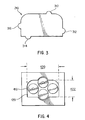
Figure 3 shows the battery compartment slider according to the present
invention.
Figure 4 shows a top view of the battery compartment with four AA
standard batteries inserted therein.
DETAILED DESCRIPTION OF THE PREFERRED EMBODIMENT
Briefly, the present invention provides an apparatus that, as an integral
part of a digital camera, accepts both standard batteries and standard rechargeable
battery packs without requiring the user to purchase and keep track of an adapter frame
or custom batteries. The claimed battery compartment comprises a slot in which first
and second battery types can be inserted, i.e., standard batteries fit in the slot designed
to accept the rechargeable pack. In a preferred embodiment, the compartment is
configured to accept four standard AA batteries or a lithium ion two 18650 cell
rechargeable battery pack in the normal, end-loading scheme.
The claimed apparatus will now be described with reference to figures
1a and 1b, which show perspective views of the battery compartment according to the
present invention. The battery compartment 100 is shown as a stand-alone apparatus
when in fact, the present invention contemplates being an integral part of a digital
camera, for example, or any other portable electronic device which uses batteries to
be powered. The slot 110 is configured to accept first and second battery types-- both
standard AA batteries and custom battery packs. Slot 110 has two separate perimeter
openings. The first, or top opening 120 is essentially configured so as to accept a
custom battery pack. The second, or bottom opening is configured to accept a battery
compartment slider as will be described more fully below. In a preferred embodiment,
the slot is configured to accept four standard AA batteries or a lithium ion two 18650
cell rechargeable battery pack. The lithium ion two 18650 cell rechargeable battery
pack was chosen as a preferred embodiment because they are becoming prevalent in
consumer electronic applications due to their light weight, smaller size and longer life
in comparison to the common nickel cadmium battery packs so widely used in the early
1990s. Their performance is also superior to other consumer- compatible (1.2-1.8V
nominal) rechargeable chemistries available in the AA form factor, such as nickelcadmium
and nickel-metal hydride. Other configurations could be used without
departing from the spirit and scope of the present invention.
Figures 2a and 2b show a cut-away side view of the battery
compartment in two different configurations to accommodate two different battery form
factors. Figure 2a shows a side view of the compartment 100 as it would be configured
with standard AA batteries inserted into slot 110. A slider 210 is disposed near the
bottom of the slot 210. A compliant member 220, such as a spring, is attached to the
slider 210 and a bottom plate 230. The compliant member 220 is in its relaxed, or
extended position when standard AA batteries are used. Contacts (not shown) adapted
for standard AA batteries can be disposed on the slider 210 or a compartment lid (not
shown).
Figure 2b shows the side view of the compartment 100 as it would be
configured with a rechargeable battery pack inserted into slot 110. As can be readily
seen, compliant member 220 is compressed by slider 210 and the battery pack which
is longer than standard cells. Contacts adapted for the battery pack can be either
disposed on slider 210 or, if contact posts are used, can extend through holes in slider
210.
Figure 3 shows the compartment slider 210 according to the present
invention. Stubs 310, 312, 314 and 316 are placed along the perimeter of slider 210
in such a way as to coordinate with grooves located in slot 110 (see figure 1b). These
stubs prevent the slider from rotating as the two different battery form factors are
interchanged in the compartment 100. Although figure 3 shows one configuration of
the slider 210, other shapes could be used without departing from the scope of the
present invention. For example, larger or smaller stubs could be used; and the space
between stubs 310 and 312, and between 314 and 316 could be increased or decreased.
Figure 4 shows a top view of the battery compartment with four AA
standard batteries 410 inserted therein. As mentioned above, the top opening 120 is
essentially configured so as to accept a rechargeable battery pack. In a preferred
embodiment, the width 420 is 38.2 mm while the height 422 is 20.6 mm. As shown,
curved grooves in both the top and bottom walls of the compartment 100 are
configured to accept the standard cells while allowing the four AA standard battery
cells to be referenced off each other and the walls of the compartment for mechanical
stability.
While the present invention has been illustrated and described in
connection with the preferred embodiment, it is not to be limited to the particular
structure shown. It should be understood by those skilled in the art that various
changes and modifications may be made within the purview of the appended claims
without departing from the spirit and scope of the invention in its broader aspects.