EP1022668A2 - Management of hypertext references in electronic mail messages - Google Patents
Management of hypertext references in electronic mail messages Download PDFInfo
- Publication number
- EP1022668A2 EP1022668A2 EP00300132A EP00300132A EP1022668A2 EP 1022668 A2 EP1022668 A2 EP 1022668A2 EP 00300132 A EP00300132 A EP 00300132A EP 00300132 A EP00300132 A EP 00300132A EP 1022668 A2 EP1022668 A2 EP 1022668A2
- Authority
- EP
- European Patent Office
- Prior art keywords
- hypertext
- relational
- messages
- Prior art date
- Legal status (The legal status is an assumption and is not a legal conclusion. Google has not performed a legal analysis and makes no representation as to the accuracy of the status listed.)
- Withdrawn
Links
Images





Classifications
-
- G—PHYSICS
- G06—COMPUTING OR CALCULATING; COUNTING
- G06Q—INFORMATION AND COMMUNICATION TECHNOLOGY [ICT] SPECIALLY ADAPTED FOR ADMINISTRATIVE, COMMERCIAL, FINANCIAL, MANAGERIAL OR SUPERVISORY PURPOSES; SYSTEMS OR METHODS SPECIALLY ADAPTED FOR ADMINISTRATIVE, COMMERCIAL, FINANCIAL, MANAGERIAL OR SUPERVISORY PURPOSES, NOT OTHERWISE PROVIDED FOR
- G06Q10/00—Administration; Management
- G06Q10/10—Office automation; Time management
- G06Q10/107—Computer-aided management of electronic mailing [e-mailing]
Definitions
- the present invention is directed, in general, to computer networks and, more specifically, to a system and method for establishing relationships between hypertext references and a electronic mail program incorporating the same.
- Hypertext Markup Language HTML provides a standardized method for constructing graphical displays that can be viewed on various types of computers.
- hypertext is textual information that, when acted upon (selected), performs a special function, such as invoking other text or information.
- hypertext information sent in e-mail messages is a universal resource locator ("URL") address.
- the URL address is the location of a specific piece of associated information, such as a World Wide Web page.
- hypertext URL address To view the information associated with a hypertext URL address with current e-mail programs, the user must view the e-mail message and then select the hypertext URL address. The user's Internet browser is then activated to display the associated information. After the Internet browser has displayed the information associated with the hypertext URL address, the e-mail program designates the hypertext URL address as having been viewed (most often by changing textual color). Unfortunately, designation of hypertext URL addresses is not uniform as between multiple messages.
- hypertext URL addresses contained within e-mail messages Another problem associated with displaying hypertext URL addresses contained within e-mail messages is that today's Internet browsers are indifferent to the order in which the e-mail message's URL addresses are presented. The Internet browsers display the URL address given to them. Once the web page is displayed, the user is limited to viewing the information defined by the author. However, the user cannot view the web page associated with the next e-mail message's hypertext URL address. What is needed in the art is a way to keep track of all the hypertext URL addresses received and a better way to view the web pages associated with each of the hypertext URL addresses.
- the present invention provides, for use with an e-mail program, a system for, and method of, establishing relationships between hypertext references contained in e-mail messages received by the e-mail program and an e-mail program containing the system or the method.
- the system includes: (1) a message parser that locates hypertext references in first and second e-mail messages received by the e-mail program and (2) a message organizer that allows a user to choose to display the first and second e-mail messages in an order that is based on the hypertext references.
- the present invention therefore introduces the broad concept of employing the hypertext references (or "links," such as, for example, Internet or Intranet URLs) that may be contained within e-mail messages to organize the messages or enhance viewing or navigation of resources (defined as units of information, such as sites or pages, designated by the hypertext references).
- hypertext references or "links," such as, for example, Internet or Intranet URLs
- links such as, for example, Internet or Intranet URLs
- the message organizer further causes the e-mail program to display a message field containing the hypertext references.
- the field may be sorted in ascending or descending order to assist a user in reading the messages and viewing the hypertext references contained therein.
- the first e-mail message is selected from the group consisting of: (1) a direct e-mail message and (2) a newsgroup posting.
- newsgroup postings are included within the broad scope of the present invention.
- the hypertext references have associated viewing statuses.
- the message organizer identically marks viewing statuses of identical ones of the hypertext references.
- the system can designate all identical hypertext references as having been viewed, thereby clarifying their state to the user so the user does not inadvertently review a previously-viewed resource.
- the message parser parses the hypertext references to determine relationships therebetween.
- One hypertext reference may point to a resource that is subordinate to a resource to which another hypertext reference may point.
- the present invention can, in this embodiment, recognize a hierarchy of resources and therefore determine relationships between or among the resources.
- the hypertext references are uniform resource locators (URLs).
- URLs uniform resource locators
- the message organizer allows the user to view referenced resources according to the order.
- the system can guide navigation through the referenced resources by allowing a user to move forwards or backwards through the ordered references.
- FIGURE 1 is a block diagram of one embodiment of a system for distributing, collecting and processing electronic mail over the Internet (one environment within which the present invention can function) constructed according to the principles of the present invention.
- the present invention comprises electronic mail communications terminals 110 and the Internet 120.
- Each of the electronic mail communications terminals 110 has a unique address associated with the Internet 120.
- each of the electronic mail communications terminals 110 comprise programs capable of generating, receiving, processing and displaying electronic mail messages.
- one of the electronic mail communications terminals 110 generates an electronic mail message (“e-mail") comprising a sender name and address, a receiver name and address, a subject, a message and other related information.
- the drafting electronic mail communications terminal 110 sends the e-mail to the Internet 120.
- the Internet 120 routes the e-mail to the one of the electronic mail communications terminals 110 specified in the receiver address field of the e-mail.
- the receiving electronic mail communications terminal 110 retrieves the e-mail from the Internet 120 and processes the e-mail.
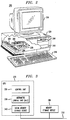
- FIGURE 2 illustrated is an isometric view of a computer system 200 operating as one of the electronic mail communications terminals 110 of FIGURE 1.
- the computer system 200 may be a conventional personal computer ("PC").
- the e-mail communications terminal 110 need not be embodied in a computer system. Instead, the e-mail communications terminal 110 may take the form of a wireless terminal.
- the computer system 200 includes a monitor 210, a chassis 220 and a keyboard 230.
- the monitor 210 and the keyboard 230 may be replaced by other conventional output and input devices, respectively.
- the chassis 220 includes both a floppy disk drive 240 and a hard disk drive 245.
- the floppy disk drive 240 is employed to receive, read and write to external disks; the hard disk drive 245 is employed for fast access storage and retrieval.
- the floppy disk drive 240 may be replaced by or combined with other conventional structures to receive and transmit data and instructions, including without limitation, tape and compact disc drives, telephony systems and devices (including videophone, paging and facsimile technologies), and serial and parallel ports.
- the chassis 220 is illustrated having a cut-away portion that includes a battery 250, a clock 260, a central processing unit ("CPU") 270 and a memory storage device 280.
- the processing circuitry of the present invention may be embodied in the CPU 270 and the communications circuitry of the present invention may be embodied in the CPU 270 in combination with the memory storage device 280.
- the computer system 200 is illustrated having a single CPU 270, hard disk drive 245 and memory storage device 280, the computer system 200 may be equipped with a plurality of CPUs and peripheral devices.
- any conventional computer system having at least one CPU that is suitable to function as an electronic mail communications terminal may be replaced, or be used in conjunction with, the computer system 200, including without limitation, videophones, telephones, televisions, sophisticated calculators, and hand-held, laptop/notebook, mini, mainframe and supercomputers, including RISC and parallel processing architectures, as well as within computer system network combinations.
- Conventional computer system architecture is more fully discussed in Computer Organization and Architecture, by William Stallings, MacMillan Publishing Co. (3rd ed. 1993) and incorporated herein by reference.
- Alternative computer system embodiments may be firmware-or hardware-based.
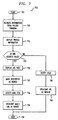
- FIGURE 3 illustrated is a schematic block diagram of the CPU 270 of FIGURE 2 incorporating an embodiment of the present invention.
- the CPU 270 is coupled to the memory storage device 280 by a data bus 310.
- the memory storage device 280 stores data and instructions that the CPU 270 uses to execute the functions necessary to operate the computer system 200.
- the memory storage device 280 may be any conventional memory storage device.
- the CPU 270 includes a control unit 320, an arithmetic logic unit (“ALU") 330 and a local memory storage device 340 (e.g., a stackable cache, a plurality of registers, etc.).
- the control unit 320 fetches the instructions from the memory storage device 280.
- the ALU 330 performs a plurality of operations, including addition and Boolean AND, necessary to carry out the instructions fetched from the memory storage device 280.
- the local memory storage device 340 provides a local high speed storage location for storing temporary results and control information generated and employed by the ALU 330.
- the processing circuitry of the present invention is embodied in the CPU 270 and the e-mail communications and processing circuitry of the present invention may be embodied in the CPU 270 in combination with the memory storage device 280.
- FIGURE 4 illustrated is a block diagram of an e-mail inbasket display 400 for the computer system 200 of FIGURE 2.
- the e-mail inbasket display 400 comprises an e-mail message A 410, an e-mail message B 420 and an e-mail message C 430.
- the e-mail inbasket display 400 shows an e-mail status, who the message is from, the subject of the e-mail message, the date received and the size of the e-mail message.
- the contents of the e-mail for e-mail message A 410, e-mail message B 420 and e-mail message C 430 are shown in magnified cutouts 412, 422 and 432 respectively.
- Contained within the magnified cutout 412 for e-mail message A 410 is a universal resource locator ("URL") link 414.
- the URL link 414 is a hypertext link which allows a user to double click on the URL link 414 and the Internet web page associated with the URL link 414 will be displayed within the computer system 200's Internet browser.
- the e-mail messages may contain one or more hypertext links or URL links.
- the present invention is not limited to the e-mail inbasket display 400 illustrated in FIGURE 4. Other e-mail programs may be used with the present invention.
- FIGURE 5 illustrated is a diagram of one embodiment of a hypertext email relational viewer 500 and a hypertext email relational browser 550 constructed according to the principles of the present invention.
- the hypertext email relational viewer 500 traverses the e-mail inbasket 400 and collects the unsolicited URL links 414 within e-mail messages.
- the unsolicited URL links 414 within e-mail messages are collected based upon a user profile.
- the hypertext email relational viewer 500 collects unsolicited URL links from e-mail messages and newsgroup articles downloaded from the Internet.
- the hypertext email relational viewer 500 comprises a hypertext message A 510, a hypertext message B 520 and a hypertext message C 530. For each hypertext message, the hypertext email relational viewer 500 displays a hypertext status, who the underlying e-mail message is from, the subject of the underlying e-mail message, the date the underlying e-mail message was received and a home link.
- the home link shows the URL links 414 found in the underlying e-mail message.
- the hypertext status displays if the home link is unviewed, viewed or invalid.
- the hypertext email relational browser 550 To display the hypertext email relational browser 550, the user double clicks on hypertext message A 510, hypertext message B 520 or hypertext message C 530.
- the hypertext email relational browser 550 comprises a from field 560, a subject field 562, an inbasket icon 564, an e-mail message icon 566, a current page display area 570, a previous button 580 and a next button 590.
- the from field 560 displays the name of the person who sent the hypertext message's underlying e-mail message. This information is similar to what is displayed in the hypertext email relational viewer 500.
- the subject field 562 displays the subject of the hypertext message's underlying e-mail message. This information is similar to what is display in the subject field of the hypertext email relational viewer 500.
- the inbasket icon 564 allows the user to view the e-mail inbasket entry associated with the displayed hypertext message.
- the e-mail message icon 566 allows the user to see the contents of the hypertext message's underlying e-mail message such as what is displayed in the magnified cutouts 412, 422 and 432 of FIGURE 4.
- the hypertext email relational browser 550 displays the web page associated with the hypertext message's home link in the current page display area 570.
- the hypertext email relational browser 550 also incorporates viewer centric viewing instead of author centric viewing.
- next and previous web page content In viewer centric viewing, the user defines the next and previous web page content. In author centric viewing, the author of the web page defines the next and previous web page content.
- the next and previous web page is defined by the order in which the hypertext messages are arranged in the hypertext email relational viewer. In another embodiment of the present invention, the user can determine the order of next and previous web pages. For example, the user could select to view only the unviewed home link web pages.
- next hypertext message's home link web page the user clicks on the next button 590.
- previous button 580 the user clicks on the previous button 580. The user may progress forward or backwards in the hypertext message list until the user reaches the end of list in that direction.
- hypertext email relational viewer 500 is not limited to 3 hypertext messages. In other embodiments of the present invention, the hypertext email relational viewer 500 and the hypertext email relational browser 550 may contain additional or fewer functions than described.
- FIGURE 6 illustrated is a flow diagram for collecting the hypertext messages for the hypertext email relational viewer 500 of FIGURE 5.
- the hypertext email relational viewer 500 first performs initialization and starts the collection process in a step 610.
- the hypertext email relational viewer 500 determines if there are any e-mail messages to process in a decisional step 620. If there are no more e-mail messages to process, the hypertext email relational viewer 500 stops processing in a step 630.
- the hypertext email relational viewer 500 If there are e-mail messages to process, the hypertext email relational viewer 500 reads the e-mail message from the e-mail inbasket 400 in a step 640. Next, the hypertext email relational viewer 500 determines if a hypertext message has been built for this e-mail message in a decisional step 650.
- the hypertext email relational viewer 500 determines if there are more e-mail messages to process in the decisional step 620. If a hypertext message has not been built, the hypertext email relational viewer 500 reads the viewer preferences in a step 660.
- the viewer preferences comprise e-mail message attributes such as date, time, subject, from, to, seen and unseen.
- the hypertext email relational viewer 500 determines if the e-mail message contains a universal resource locator ("URL") template in a decisional step 670.
- a URL template is a group of characters that signal the start of a URL address.
- a URL template may comprise "http://www.”
- the hypertext email relational viewer 500 determines if there are more e-mail messages to process in the decisional step 620. If the e-mail message does contain a URL template, the hypertext email relational viewer 500 extracts the complete URL address and builds a hypertext message from the e-mail message in a step 680.
- the hypertext email relational viewer 500 sorts the hypertext messages according the viewer preferences in a step 690.
- the hypertext email relational viewer 500 determines if there are more e-mail messages to process in the decisional step 620.
- the present invention is not limited to URL addresses in e-mail messages.
- the hypertext email relational viewer 500 may extract URL addresses from e-mail messages and newsgroup articles downloaded from the Internet.
- Other embodiments of the present invention may have additional or fewer steps than described above.
- FIGURE 7 illustrated is a flow diagram for building the hypertext email relational browser 550 of FIGURE 5.
- the hypertext email relational browser 550 first performs initialization and starts the display building process in a step 702.
- the hypertext email relational browser 550 retrieves the hypertext message information to be displayed from the calling program in a step 710. Next, the hypertext email relational browser 550 displays the hypertext message's information in the from field 560, the subject field 562, the inbasket icon 564 and the e-mail message icon 566.
- the hypertext email relational browser 550 determines if the hypertext message's URL address is valid in a decisional step 720. In determining if the URL address is valid, the hypertext email relational browser 550 accesses the Internet and issues transmission control protocol/Internet protocol ("TCP/IP") commands to validate the URL address.
- TCP/IP transmission control protocol/Internet protocol
- the hypertext email relational browser 550 If the URL address is not valid, the hypertext email relational browser 550 notifies the user that the URL address is invalid in a step 740. The hypertext email relational browser 550 then highlights the URL address in the hypertext email relational viewer 500 as invalid in a step 742. Next, the hypertext email relational browser 550 stops processing in a step 750.
- the hypertext email relational browser 550 retrieves the web page associated with the URL address from the Internet and displays the web page in the current page display area 570 in a step 730. Next, the hypertext email relational browser 550 marks the hypertext message's URL address descriptor as viewed in a step 732.
- the hypertext email relational browser 550 accesses the hypertext message's underlying e-mail message within the e-mail inbasket 400 in a step 734. Next, the hypertext email relational browser 550 highlights the URL address within the e-mail message as viewed in a step 736. In another embodiment of the present invention, the hypertext email relational browser 550 highlights the URL addresses in all of the hypertext messages and e-mail messages that contain the same URL address. The hypertext email relational browser then stops processing in the step 750.
- the present invention is not limited to URL addresses in e-mail messages.
- the hypertext email relational browser 550 may access and highlight URL addresses contained within e-mail messages and newsgroup articles downloaded from the Internet.
- Other embodiments of the present invention may have additional or fewer steps than described above.
- FIGURE 8 illustrated is a flow diagram for processing the next button 590 of the hypertext email relational browser 550 of FIGURE 5.
- the hypertext email relational browser 550 first performs initialization and starts the next button processing in a step 802.
- the hypertext email relational browser 550 waits for the user to select the next button 590 in a step 810. Once the user selects the next button 590, the hypertext email relational browser 550 reads the viewer preferences in a step 812.
- the hypertext email relational browser 550 determines if there are more hypertext messages in the hypertext email relational viewer's list in a decisional step 820. If the hypertext email relational browser 550 is at the end of the list, the hypertext email relational browser 550 notifies the user of this condition in a step 870. Then the hypertext email relational browser 550 stops processing the next button request in a step 880. In another embodiment of the present invention, if hypertext email relational browser 550 is at the end of the list, the hypertext email relational browser 550 restarts the process at the beginning of the list.
- the hypertext email relational browser 550 If the hypertext email relational, browser 550 is not at the end of the list, the hypertext email relational browser 550 reads the next hypertext message in the hypertext email relational viewer's list and obtains the associated URL address in a step 830. Next, the hypertext email relational browser 550 examines the viewer preferences and determines if the hypertext email relational browser 550 is to display only unseen URL addresses in a decisional step 840.
- the hypertext email relational browser 550 determines if the URL address for this hypertext message is unseen in a decisional step 850. If the URL address has been seen, the hypertext email relational browser 550 will process the next hypertext message if the hypertext email relational browser 550 is not at the end of the list in the decisional step 820.
- the hypertext email relational browser 550 accesses the hypertext message and builds the display according to the process described in the flow diagram of FIGURE 7 in a step 860.
- the hypertext email relational browser 550 then stops processing the next button request in the step 880.
- FIGURE 9 illustrated is a flow diagram for processing the previous button 580 of the hypertext email relational browser 550 of FIGURE 5.
- the hypertext email relational browser 550 first performs initialization and starts the next button processing in a step 902.
- the hypertext email relational browser 550 waits for the user to select the previous button 580 in a step 910. Once the user selects the previous button 580, the hypertext email relational browser 550 reads the viewer preferences in a step 912.
- the hypertext email relational browser 550 determines if there are more hypertext messages in the hypertext email relational viewer's list in a decisional step 920. If the hypertext email relational browser 550 is at the beginning of the list, the hypertext email relational browser 550 notifies the user of this condition in a step 970. Then the hypertext email relational browser 550 stops processing the previous button request in a step 980. In another embodiment of the present invention, if hypertext email relational browser 550 is at the beginning of the list, the hypertext email relational browser 550 restarts the process at the end of the list.
- the hypertext email relational browser 550 If the hypertext email relational browser 550 is not at the beginning of the list, the hypertext email relational browser 550 reads the previous hypertext message in the hypertext email relational viewer's list and obtains the associated URL address in a step 930. Next, the hypertext email relational browser 550 examines the viewer preferences and determines if the hypertext email relational browser 550 is to display only unseen URL addresses in a decisional step 940.
- the hypertext email relational browser 550 determines if the URL address for this hypertext message is unseen in a decisional step 950. If the URL address has been seen, the hypertext email relational browser 550 will process the previous hypertext message if the hypertext email relational browser 550 is not at the beginning of the list in the decisional step 920.
- the hypertext email relational browser 550 accesses the hypertext message and builds the display according to the process described in the flow diagram of FIGURE 7 in a step 960.
- the hypertext email relational browser 550 then stops processing the previous button request in the step 980.
- the present invention provides, for use with an e-mail program, a system for, and method of, establishing relationships between hypertext references contained in e-mail messages received by the e-mail program and an e-mail program containing the system or the method.
- the system includes: (1) a message parser that locates hypertext references in first and second e-mail messages received by the e-mail program and (2) a message organizer that allows a user to choose to display the first and second e-mail messages in an order that is based on the hypertext references.
Landscapes
- Engineering & Computer Science (AREA)
- Business, Economics & Management (AREA)
- Human Resources & Organizations (AREA)
- Entrepreneurship & Innovation (AREA)
- Strategic Management (AREA)
- Marketing (AREA)
- Physics & Mathematics (AREA)
- Economics (AREA)
- Computer Hardware Design (AREA)
- Operations Research (AREA)
- Quality & Reliability (AREA)
- Tourism & Hospitality (AREA)
- Data Mining & Analysis (AREA)
- General Business, Economics & Management (AREA)
- General Physics & Mathematics (AREA)
- Theoretical Computer Science (AREA)
- Information Transfer Between Computers (AREA)
- Data Exchanges In Wide-Area Networks (AREA)
- Computer And Data Communications (AREA)
Abstract
Description
Although the present invention has been described in detail, those skilled in the art should understand that they can make various changes, substitutions and alterations herein without departing from the spirit and scope of the invention in its broadest form.
Claims (12)
- For use with an electronic mail (e-mail) program, a method of establishing relationships between hypertext references contained in e-mail messages received by said e-mail program, comprising:locating hypertext references in first and second e-mail messages received by said e-mail program; andallowing a user to choose to display said first and second e-mail messages in an order that is based on said hypertext references.
- The method as recited in claim 1 further comprising causing said e-mail program to display a message field containing said hypertext references.
- The method as recited in claim 1 or claim 2 wherein said first e-mail message isa direct e-mail message, ora newsgroup posting.
- The method as recited in any of the preceding claims wherein said hypertext references have associated viewing statuses, said method comprising identically marking viewing statuses of identical ones of said hypertext references.
- The method as recited in any of the preceding claims further comprising parsing said hypertext references to determine relationships therebetween.
- The method as recited in any of the preceding claims wherein said hypertext references are uniform resource locators (URLs).
- The method as recited in any of the preceding claims further comprising allowing said user to view referenced resources according to said order.
- The method as recited in any of the preceding claims further comprising invoking a browser to view information associated with said hypertext references.
- The method as recited in claim 8 further comprising:paging between pages of information associated with said hypertext references of said message organizer; andidentically marking viewing statuses of identical ones of said hypertext references.
- A system for use with an e-mail program comprising means arranged to carry out the steps of a method as claimed in any of the preceding claims.
- An e-mail computer program product directly loadable into the internal memory of a digital computer including code for receiving messages, transmitting messages, composing messages and storing messages, and for performing a method as claimed in any of claims 1 to 9 when said product is run on a computer.
- An e-mail computer program product stored on a computer usable medium including computer readable program means for receiving messages, transmitting messages, composing messages and storing messages, and for causing a computer to perform a method as claimed in any of claims 1 to 9.
Applications Claiming Priority (2)
| Application Number | Priority Date | Filing Date | Title |
|---|---|---|---|
| US09/234,351 US7055091B1 (en) | 1999-01-20 | 1999-01-20 | System and method for establishing relationships between hypertext reference and electronic mail program incorporating the same |
| US234351 | 1999-01-20 |
Publications (2)
| Publication Number | Publication Date |
|---|---|
| EP1022668A2 true EP1022668A2 (en) | 2000-07-26 |
| EP1022668A3 EP1022668A3 (en) | 2002-04-03 |
Family
ID=22881008
Family Applications (1)
| Application Number | Title | Priority Date | Filing Date |
|---|---|---|---|
| EP00300132A Withdrawn EP1022668A3 (en) | 1999-01-20 | 2000-01-11 | Management of hypertext references in electronic mail messages |
Country Status (4)
| Country | Link |
|---|---|
| US (1) | US7055091B1 (en) |
| EP (1) | EP1022668A3 (en) |
| JP (1) | JP4076693B2 (en) |
| CA (1) | CA2293947C (en) |
Cited By (6)
| Publication number | Priority date | Publication date | Assignee | Title |
|---|---|---|---|---|
| GB2382005B (en) * | 2001-10-01 | 2004-06-30 | Nec Corp | A transceiver, a transmitting method and program therefor |
| US6842773B1 (en) | 2000-08-24 | 2005-01-11 | Yahoo ! Inc. | Processing of textual electronic communication distributed in bulk |
| US6965919B1 (en) * | 2000-08-24 | 2005-11-15 | Yahoo! Inc. | Processing of unsolicited bulk electronic mail |
| US7149778B1 (en) | 2000-08-24 | 2006-12-12 | Yahoo! Inc. | Unsolicited electronic mail reduction |
| US7321922B2 (en) | 2000-08-24 | 2008-01-22 | Yahoo! Inc. | Automated solicited message detection |
| US7536442B2 (en) | 2003-09-30 | 2009-05-19 | International Business Machines Corporation | Method, system, and storage medium for providing autonomic identification of an important message |
Families Citing this family (9)
| Publication number | Priority date | Publication date | Assignee | Title |
|---|---|---|---|---|
| US8447967B1 (en) * | 2000-06-29 | 2013-05-21 | Datamotion, Inc. | Controlled message distribution |
| US7555519B2 (en) * | 2001-06-13 | 2009-06-30 | Intel Corporation | Encoded electronic mail |
| EP1412874A4 (en) * | 2001-07-27 | 2007-10-17 | Quigo Technologies Inc | System and method for automated tracking and analysis of document usage |
| US7496623B2 (en) * | 2004-04-23 | 2009-02-24 | Yahoo! Inc. | System and method for enhanced messaging including a displayable status indicator |
| US7877703B1 (en) * | 2005-03-14 | 2011-01-25 | Seven Networks, Inc. | Intelligent rendering of information in a limited display environment |
| US20090070213A1 (en) * | 2006-12-08 | 2009-03-12 | Carol Miller | Method, system, and apparatus for providing supplemental content for a social expression product |
| US8028032B2 (en) * | 2008-09-04 | 2011-09-27 | Microsoft Corporation | Email messages |
| TW201209697A (en) | 2010-03-30 | 2012-03-01 | Michael Luna | 3D mobile user interface with configurable workspace management |
| CN107359996B (en) * | 2016-05-09 | 2020-05-05 | 阿里巴巴集团控股有限公司 | Automatic login method and device between multiple websites |
Family Cites Families (21)
| Publication number | Priority date | Publication date | Assignee | Title |
|---|---|---|---|---|
| JPH07175909A (en) * | 1993-12-20 | 1995-07-14 | Canon Inc | Data processing device |
| US5790793A (en) * | 1995-04-04 | 1998-08-04 | Higley; Thomas | Method and system to create, transmit, receive and process information, including an address to further information |
| US5991798A (en) * | 1996-05-17 | 1999-11-23 | Hitachi, Ltd. | Package medium system having URL hyper-linked to data in removable storage |
| JP3705654B2 (en) * | 1996-08-21 | 2005-10-12 | 株式会社日立製作所 | Terminal device |
| US5923848A (en) * | 1996-05-31 | 1999-07-13 | Microsoft Corporation | System and method for resolving names in an electronic messaging environment |
| US5727129A (en) * | 1996-06-04 | 1998-03-10 | International Business Machines Corporation | Network system for profiling and actively facilitating user activities |
| JP3012527B2 (en) * | 1996-07-22 | 2000-02-21 | 日本電気株式会社 | Page display processing method and apparatus of WWW browser |
| US6377978B1 (en) * | 1996-09-13 | 2002-04-23 | Planetweb, Inc. | Dynamic downloading of hypertext electronic mail messages |
| US6192407B1 (en) * | 1996-10-24 | 2001-02-20 | Tumbleweed Communications Corp. | Private, trackable URLs for directed document delivery |
| US6012087A (en) * | 1997-01-14 | 2000-01-04 | Netmind Technologies, Inc. | Unique-change detection of dynamic web pages using history tables of signatures |
| US5937160A (en) * | 1997-05-01 | 1999-08-10 | Reedy Creek Technologies, Inc. | Systems, methods and computer program products for updating hypertext documents via electronic mail |
| US6029164A (en) * | 1997-06-16 | 2000-02-22 | Digital Equipment Corporation | Method and apparatus for organizing and accessing electronic mail messages using labels and full text and label indexing |
| US6185551B1 (en) * | 1997-06-16 | 2001-02-06 | Digital Equipment Corporation | Web-based electronic mail service apparatus and method using full text and label indexing |
| US5960429A (en) * | 1997-10-09 | 1999-09-28 | International Business Machines Corporation | Multiple reference hotlist for identifying frequently retrieved web pages |
| US6742030B1 (en) * | 1997-11-24 | 2004-05-25 | International Business Machines Corporation | Method to keep a persistent trace of weblink use per user |
| US6240445B1 (en) * | 1998-04-24 | 2001-05-29 | Openware Systems Inc. | Computer implemented method and apparatus for receiving facsimile messages using an indentifier appended to a shared telephone number |
| US6151630A (en) * | 1998-05-15 | 2000-11-21 | Avaya Technology Corp. | Non-redundant browsing of a sequencing of web pages |
| US6209027B1 (en) * | 1998-06-01 | 2001-03-27 | International Business Machines Corporation | Recirculating network address list with single button sequencer/selector |
| US6226630B1 (en) * | 1998-07-22 | 2001-05-01 | Compaq Computer Corporation | Method and apparatus for filtering incoming information using a search engine and stored queries defining user folders |
| US6175823B1 (en) * | 1998-09-15 | 2001-01-16 | Amazon.Com, Inc. | Electronic gift certificate system |
| US6360254B1 (en) * | 1998-09-15 | 2002-03-19 | Amazon.Com Holdings, Inc. | System and method for providing secure URL-based access to private resources |
-
1999
- 1999-01-20 US US09/234,351 patent/US7055091B1/en not_active Expired - Fee Related
-
2000
- 2000-01-05 CA CA002293947A patent/CA2293947C/en not_active Expired - Fee Related
- 2000-01-11 EP EP00300132A patent/EP1022668A3/en not_active Withdrawn
- 2000-01-20 JP JP2000011322A patent/JP4076693B2/en not_active Expired - Fee Related
Cited By (8)
| Publication number | Priority date | Publication date | Assignee | Title |
|---|---|---|---|---|
| US6842773B1 (en) | 2000-08-24 | 2005-01-11 | Yahoo ! Inc. | Processing of textual electronic communication distributed in bulk |
| US6965919B1 (en) * | 2000-08-24 | 2005-11-15 | Yahoo! Inc. | Processing of unsolicited bulk electronic mail |
| US7149778B1 (en) | 2000-08-24 | 2006-12-12 | Yahoo! Inc. | Unsolicited electronic mail reduction |
| US7321922B2 (en) | 2000-08-24 | 2008-01-22 | Yahoo! Inc. | Automated solicited message detection |
| US7359948B2 (en) | 2000-08-24 | 2008-04-15 | Yahoo! Inc. | Automated bulk communication responder |
| GB2382005B (en) * | 2001-10-01 | 2004-06-30 | Nec Corp | A transceiver, a transmitting method and program therefor |
| US7058393B2 (en) | 2001-10-01 | 2006-06-06 | Nec Corporation | Transceiver and its transmitting method and receiving method |
| US7536442B2 (en) | 2003-09-30 | 2009-05-19 | International Business Machines Corporation | Method, system, and storage medium for providing autonomic identification of an important message |
Also Published As
| Publication number | Publication date |
|---|---|
| JP4076693B2 (en) | 2008-04-16 |
| CA2293947A1 (en) | 2000-07-20 |
| EP1022668A3 (en) | 2002-04-03 |
| CA2293947C (en) | 2007-11-06 |
| JP2000215127A (en) | 2000-08-04 |
| US7055091B1 (en) | 2006-05-30 |
Similar Documents
| Publication | Publication Date | Title |
|---|---|---|
| CA2293947C (en) | System and method for establishing relationships between hypertext references and electronic mail program incorporating the same | |
| US8943153B2 (en) | System and method for displaying search results including email attachments | |
| US9367618B2 (en) | Context based search arrangement for mobile devices | |
| JP5283299B2 (en) | Selective transmission of part of electronic content | |
| US7305381B1 (en) | Asynchronous unconscious retrieval in a network of information appliances | |
| US7822812B2 (en) | Techniques for sharing content information with members of a virtual user group in a network environment without compromising user privacy | |
| US6704031B1 (en) | Toolbar tracking | |
| US20030097361A1 (en) | Message center based desktop systems | |
| US20030163525A1 (en) | Ink instant messaging with active message annotation | |
| US9177263B2 (en) | Identifying and tracking grouped content in e-mail campaigns | |
| US7765268B2 (en) | System for determining user uniqueness in e-mail campaigns | |
| US20090276408A1 (en) | Systems And Methods For Generating A User Interface | |
| US20040098461A1 (en) | Method and system for publishing an electronic file attached to an electronic mail message | |
| US20020107925A1 (en) | Method and system for e-mail management | |
| EP0886228A2 (en) | WWW-based mail service system | |
| US20090248825A1 (en) | Method for Tagging and Tracking Non-Hypertext Markup Language Based E-Mail | |
| CN105493076A (en) | Capture services through communication channels | |
| Schilit et al. | m-links: An infrastructure for very small internet devices | |
| EP2089817A1 (en) | Method and system for intellegent processing of electronic information | |
| Trevor et al. | From desktop to phonetop: A UI for web interaction on very small devices | |
| US8775520B1 (en) | Systems and methods for viewing non-HTML email attachments | |
| JP4007893B2 (en) | Server device, program, and recording medium | |
| US20060143274A1 (en) | Email reply consolidation | |
| US7693907B1 (en) | Selection for a mobile device using weighted virtual titles | |
| WO2006071324A2 (en) | Imroved bitmask access for managing blog content |
Legal Events
| Date | Code | Title | Description |
|---|---|---|---|
| PUAI | Public reference made under article 153(3) epc to a published international application that has entered the european phase |
Free format text: ORIGINAL CODE: 0009012 |
|
| AK | Designated contracting states |
Kind code of ref document: A2 Designated state(s): AT BE CH CY DE DK ES FI FR GB GR IE IT LI LU MC NL PT SE Kind code of ref document: A2 Designated state(s): DE FR GB |
|
| AX | Request for extension of the european patent |
Free format text: AL;LT;LV;MK;RO;SI |
|
| PUAL | Search report despatched |
Free format text: ORIGINAL CODE: 0009013 |
|
| RIC1 | Information provided on ipc code assigned before grant |
Free format text: 7G 06F 17/60 A, 7G 06F 17/27 B |
|
| AK | Designated contracting states |
Kind code of ref document: A3 Designated state(s): AT BE CH CY DE DK ES FI FR GB GR IE IT LI LU MC NL PT SE |
|
| AX | Request for extension of the european patent |
Free format text: AL;LT;LV;MK;RO;SI |
|
| 17P | Request for examination filed |
Effective date: 20020715 |
|
| AKX | Designation fees paid |
Free format text: DE FR GB |
|
| 17Q | First examination report despatched |
Effective date: 20061227 |
|
| RAP3 | Party data changed (applicant data changed or rights of an application transferred) |
Owner name: LUCENT TECHNOLOGIES INC. |
|
| STAA | Information on the status of an ep patent application or granted ep patent |
Free format text: STATUS: THE APPLICATION IS DEEMED TO BE WITHDRAWN |
|
| 18D | Application deemed to be withdrawn |
Effective date: 20100803 |