BACKGROUND OF THE INVENTION
(FIELD OF THE INVENTION)
The present invention relates to a control apparatus for a hydraulic
excavator, and more specifically, to a control apparatus for a hydraulic
excavator for controlling a hydraulic excavator using a fuzzy inference.
(DESCRIPTION OF THE RELATED ART)
The work machine such as a hydraulic excavator performs many
works such as a scattering work, a slope tamping work, a normal finishing
work, a crane work, a press-excavating work, a loading work, a swing
ground-leveling work, a simple excavating work, a channel excavating work,
a horizontal ground-leveling work, etc., and the operating characteristics
suitable for these works are different. Therefore, some work modes are
prepared, and the work mode has been switched by performing switching
operation manually by an operator. However, since the switching
operation is complicated, the work mode has not been digested for use
sufficiently.
In view of the foregoing, a technique for automatically carrying out
a work discrimination in order to switch the work mode has been developed.
However, in the actual excavating work, only a specific work is less
accomplished, and a plurality of works are combined, for example, such that
the excavating work is first carried out, and the finishing work is then
carried out. Switching to these works is often carried out.
It is now supposed that the maximum flow-rate of a hydraulic pump
is set to 100% for the simple excavating work, and 70% for the normal
finishing work, respectively. It is further supposed that an operator
performed the work for shifting to the simple excavation from the normal
finishing. Then, the maximum flow-rate of the hydraulic pump rapidly
changes from 70% to 100% whereby the operator feels a considerable shock,
as a consequence of which the operability of the hydraulic excavator is
sometimes greatly impaired.
Further, historical data of each operating amount for a fixed time
(for example, for 15 seconds) are necessary in order to extract each
characteristic amount necessary for work discrimination. When an
operator switches the operation within the fixed time, data for different
kind of work are mixed within the historical data of the operating amount,
and an error tends to occur in discrimination of work. Accordingly, where
an operator switches the operation from the excavating work to the
operation for the normal finishing work, operation different from the
normal finishing work is discriminated immediately before the result of
discrimination is decided to the excavating work, as a consequence of which
the work is sometime switched to a work mode that is not intended by an
operator. A sense of incongruity of operation caused by switching to the
work not intended as described above is conspicuously felt by an operator
and as a result, the operability of the hydraulic excavator is sometimes
impaired.
SUMMARY OF THE INVENTION
It is an object of the present invention to provide a control apparatus
for a hydraulic excavator capable of minimizing a shock or a sense of
incongruity when operation is switched to enhance an operability of a
hydraulic excavator.
A control apparatus for a hydraulic excavator according to the
present invention comprises an operating amount detection means for
detecting operating amounts of operating levers corresponding to actuators
for works of a hydraulic excavator; a characteristic amount operation means
for operating a characteristic amount showing a characteristic of operation
of a hydraulic excavator on the basis of the operating amount detected; a
membership function memory means for storing a plurality of membership
functions for a fuzzing inference preset corresponding to the characteristic
amounts by kinds of work; a fitness operation means for operating fitnesses
relative to the works of the characteristic amount operated by applying the
operated characteristic amount to the stored membership function; an
operating characteristic set value memory means for storing operating
characteristic set values preset corresponding to operating characteristics
by kinds of work; and an operating characteristic output means for
outputting fitnesses operated corresponding to a plurality of kinds of work
and operating characteristics for controlling a hydraulic excavator on the
basis of the operating characteristics set values stored.
In this case, operating amounts of operating levers corresponding to
actuators for works of a hydraulic excavator are detected by an operating
amount detection means, a characteristic amount showing a characteristic
of operation of a hydraulic excavator on the basis of the operating amount
detected is operated by a characteristic amount operation means, a plurality
of membership functions for a fuzzing inference preset corresponding to the
characteristic amounts by kinds of work are stored by a membership
function memory means, and the characteristic amounts operated are
applied to the membership functions stored whereby fitnesses relative to
the works of the characteristic amounted operated are operated by a fitness
operation means. At this time, operating characteristic set values preset
corresponding to operating characteristics by kinds of work is stored in an
operating characteristic set value memory means, and an operating
characteristic output means fitnesses operated corresponding to a plurality
of kinds of work and operating characteristics for controlling a hydraulic
excavator on the basis of the operating characteristics set values stored are
output by an operating characteristic output means. That is, the operating
characteristic set value corresponding to a single kind of work is not output
without modification but an output value of the operating characteristic
obtained from the fitnesses corresponding to a plurality of kinds of work and
the operating characteristic set values are output. Thereby, a plurality of
fitnesses are generally reflected on the output values of the operating
characteristics.
More specifically, for example, a relationship between the
characteristic amount and the work is described by a fuzzing rule in
advance, so that the fitness to each rule as calculated on the basis of a preset
member function, and the output value of the operating characteristic is
obtained by an average of load with the fitness to each rule regarded as a
weight.
Thereby, the operating characteristic is not switched to a
predetermined value in an ON-OFF manner, but an intermediate value is
output. For example, where the maximum flow-rate of a hydraulic pump is
similar to that of the aforementioned relative art, its output value is 85%
which is an intermediate between 100% and 70%.
Accordingly, for example, even where an operator performs the work
from the normal finishing to the simple excavation, an intermediate output
value other than the operating characteristic set value stored in advance
before and after switching of work can be made as a control valve, and
therefore, the maximum flow-rate of the hydraulic pump is not changed
stepwise, but changed staircase-wise to make the switching of the operating
characteristic smooth.
Further, even where data of different kinds of works are mixed in
the operating amount historical data, the control in consideration of
fitnesses is employed, as compared to the ON-OFF switching, and even an
erroneous discrimination, i.e., where the fitness of work that is not intended
by an operator increase, the influence on the operating characteristics is
averaged to reduce a sense of incongruity of operation.
Further, suppose that the operating characteristic set values are
grouped by kinds of work having the same operating characteristic, and the
operating characteristic for controlling a hydraulic excavator is output on
the basis of the fitness and the operating characteristic set value by work
group, a specific operating characteristic appears repeatedly to enable
preventing the operating characteristic form being stressed.
More specifically, for example, a relationship between each
characteristic amount and each work group is described in a fuzzy rule, the
fitness to each rule is calculated on the basis of a preset membership
function, and an output value of the operating characteristic is obtained by
an average of load with the fitness to the rule being a weight using the
operating characteristic values set by each work group.
As a result, in any case, it is possible to minimize a shock or a sense
of incongruity when operation is switched to enhance the operating
characteristic of the hydraulic excavator.
BRIEF DESCRIPTION OF THE DRAWINGS
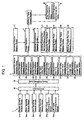
FIG. 1 is a block diagram showing a schematic constitution of a
control apparatus according to Embodiment 1 of the present invention;
FIG. 2 is a whole system constituent view of a hydraulic excavator
including a control apparatus according to Embodiment 1 of the present
invention;
FIG. 3 is an explanatory view of operation of a control apparatus
according to Embodiment 1 of the present invention;
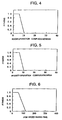
FIG. 4 illustrates a membership function with respect to the display
amount of boom operation complicatedness;
FIG. 5 illustrates a membership function with respect to the display
amount of bucket operation complicatedness;
FIG. 6 illustrates a membership function with respect to the display
amount of high speed swing time;
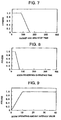
FIG. 7 illustrates a membership function with respect to the display
amount of bucket and arm stop time;
FIG. 8 illustrates a membership function with respect to the display
amount of boom reversing operation time;
FIG. 9 illustrates a membership function with respect to the display
amount of average value of boom operation time;
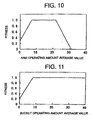
FIG. 10 illustrates a membership function with respect to the
display amount of average value of arm operation time;
FIG. 11 illustrates a membership function with respect to the
display amount of average value of bucket operation time;
FIG. 12 is a view illustrating a manner of grasping a
complicatedness display amount according to the present invention;
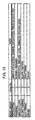
FIG. 13 is a view showing a relationship between work kind and
characteristic amount according to the present invention;
FIG. 14 is a view illustrating setting of operating characteristic set
value Pki and memory method according to the present invention;
FIG. 15 is a view illustrating a work grouping according to the
present invention; and
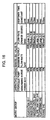
FIG. 16 is a view illustrating a relationship between each work
group and operating characteristic set value according to the present
invention.
DESCRIPTION OF THE PREFERRED EMBODIMENTS
The preferred embodiments of the present invention will be
described hereinafter with reference to the accompanying drawings. It is
to be noted that the following embodiments are concrete examples of the
present invention, and are not intended to limit the technical scope of the
present invention.
(EMBODIMENT 1)
FIG. 2 is a whole system constituent view of a hydraulic excavator
including a control apparatus according to Embodiment 1 of the present
invention. As shown in FIG. 2, The hydraulic excavator comprises, an
engine 10, two hydraulic pumps 11, 12 driven by the engine, a hydraulic
cylinder for boom 13 as an actuator for work, a hydraulic cylinder 14 for arm,
a hydraulic cylinder 15 for bucket a hydraulic motor 16 for swing, a
hydraulic motor 17 for right travel and a hydraulic motor 18 for left travel,
and a controller 19 for controlling operation of these devices 1 to 18.
The hydraulic pump 11 supplies pressure oil to the hydraulic
cylinder 13 for boom, the hydraulic cylinder for bucket 15 and the hydraulic
motor for right travel 17 through control valves 13a, 15a and 17a,
respectively, corresponding thereto to drive them. The hydraulic pump 12
supplies pressure oil to the hydraulic cylinder for arm 14, the hydraulic
motor for swing 16 and the hydraulic motor for left travel 18 through
control valves 14a, 16a and 18a, respectively, corresponding thereto to drive
them.
The control valves 13a to 18a are supplied with pilot pressure oil,
from a pilot valve not shown of an operating device comprising an operating
lever 20 for boom, an operating lever for bucket 21, an operating lever for
right travel 22, an operating lever for arm 23, an operating lever for swing
24 and an operating lever for left travel 25, according to the operating
amount and the operating direction of the operating levers 20 to 25, so that
the switching operation is carried out. It is noted that for the sake of
explanation, the operating levers are separately provided here, but in the
actual apparatus, are intended to be common.
The hydraulic pumps 11, 12 are of the variable capacity type, and a
tilting angle for controlling the discharge flow-rate can be adjusted, though
a regulator not shown, by a secondary pressure generated by a first
proportional electromagnetic valve 26 and a second proportional
electromagnetic valve 27.
That is, the discharge flow-rate of the hydraulic pumps 11, 12 can be
controlled by controlling energization relative to these electromagnetic
valves 26, 27.
On the other hand, the hydraulic excavator comprises a boom
operating amount sensor 20a, a bucket operating amount sensor 21a, a
right-travel operating amount sensor 22a, an arm operating amount sensor
23a, a swing operating amount sensor 24a, and a left-travel operating
amount sensor 25a, which are each operating amount sensor (corresponding
to an operating amount detection means) 1 for detecting the operating
amount including the operating direction of the operating levers 20 to 25,
respectively. The operating amount sensor 1 is composed of, for example, a
pressure sensor to output a signal according to the operating amount of the
operating levers 20 to 25 to the controller 19.
A pipeline not shown is connected to pipelines of the hydraulic
pumps 11, 12. Thereby, the hydraulic cylinder for boom 13 and the
hydraulic cylinder for arm 14 are supplied with pressure oil from both the
pumps, and when the actuators are not in operation, pressure is circulated
to a tank not shown.
FIG. 1 is a block diagram showing a schematic constitution of a
control apparatus (hereinafter, referred to as "the present apparatus")
according to Embodiment 1 of the present invention. As shown in FIGS. 1
and 2, the controller 19 constituting a main part of the present apparatus is
composed of, for example, a microcomputer. The functional constitution
thereof comprises an A/D converter 28 for A/D-converting an output signal
from the operating amount sensor 1, a data retaining portion 29 for
retaining data showing the operating amount of the D/A converted
operating levers 20 to 25 for a continuos fixed time (for example, 20 seconds)
and updating it, for example, every 5 seconds, a characteristic amount
extraction portion (corresponding to a characteristic operation means) 2 for
extracting the characteristic amount showing the characteristic of a
hydraulic excavator on the basis of the data retained, a membership
function memory portion (corresponding to a membership function memory
means) 3 for storing a plurality of membership functions for fuzzy inference
preset corresponding to the characteristic amount by kinds of work, and a
fitness operation portion (corresponding to a fitness operation means) 4 for
operating fitnesses relative to works of the characteristic amounts operated
by applying to the membership functions stored.
Further, the characteristic amount extraction portion 2 comprises a
boom operation complicatedness grasping portion 31, an arm operation
complicatedness grasping portion 32, a bucket operation complicatedness
grasping portion 33, a high speed swing time grasping portion 34, a boom
reversing operation time grasping portion 35, a bucket and arm stop time
grasping portion 36, boom operation average time grasping portion 37, an
arm operation average value grasping portion 38, and a bucket operation
average value grasping portion 39, for grasping a plurality of characteristic
amounts described later from the operating amount data for a fixed time of
the operating levers 20 to 25 retained in the data retaining portion 29
respectively, the fitness operation portion 4 being designed so that a
membership function stored in the membership function memory portion 3
is used to obtain a fitness by kinds of work of the characteristic amount
grasped by the grasping portions 31 to 39 as work takes place.
However, the controller 19 comprises an operating characteristic set
value memory portion (corresponding to an operating characteristic set
value memory means) 5 for storing operating characteristic set vales preset
corresponding to the operating characteristics by kinds of work, and an
operating characteristic operation portion (corresponding to an operating
characteristic output means) 6 for generally incorporating the fitnesses
operated corresponding to all kinds of work and the operating characteristic
set values stored, operating and outputting the operating characteristic for
controlling a hydraulic excavator having all these matters incorporated.
The hydraulic pump control portion 7 allows the first and second
proportional electromagnetic valves 26, 27 to actuate by an output signal
from the operating characteristic operation portion 6 of the controller 19.
In the following, the operation of the controller 19 and so on will be
explained with reference to FIGS. 3 to 11.
In the present Embodiment 1, kinds of work extracted by the
characteristic amount extraction portion 2 have ten kinds, i.e., a simple
excavating work, a normal finishing work, a channel excavating work, a
horizontal excavating work, a swing ground-leveling work, a slope tamping
work, a scattering work, a pressing work, a crane work and a loading work.
The outline of the work contents by kinds of work is as follows:
The simple excavating work is a work of pushing the bucket against
the ground at a position forward of the vehicle, and withdrawing the bucket
this side by the operation of the arm and boom to thereby dig a hole in the
ground. The normal finishing work is a work of placing the bucket along
the slanting surface by simultaneous operation of the bucket, arm and boom,
and actuating the arm and boom in this state to scrape the slanting surface
by the bucket. The channel excavating work is a work of pushing the
bucket against the ground at a position forward of the vehicle, and
withdrawing the bucket this side by the operation of the arm and boom to
thereby dig a channel in the ground. The horizontal excavating work is a
work of pushing the bucket against the swell portion of the ground at a
position forward of the vehicle, and withdrawing the bucket this side by the
operation of the arm and boom to thereby dig a swell portion in the ground.
The swing ground-leveling work is a work of placing the bucket in contact
with the ground, and effecting the swing operation in this state to thereby
perform ground-leveling. The slope tamping work is a work of repeating
up and down movements of the boom to throw the bucket against the
ground to harden the ground. The scattering work is a work of repeating
at high speeds a work of scooping earth in the bucket by simultaneous
operation of the bucket, arm and boom to scatter the earth by operation of
the bucket. The pressing excavating work is a work, where a channel is
dug in a longitudinal direction of a vehicle at a position sideways of the
vehicle, of pushing the bucket against the ground to pull it while effecting
the swing operation to perform excavation. The crane work is a work of
lifting an article to be carried at the edge of the bucket through a rope or the
like to move the article to be carried. The loading work is a work of loading
a hydraulic excavator on a trailer or the like when the hydraulic excavator
is transported.
A boom operation complicatedness grasping portion 31 of the
characteristic amount extraction portion 2 for extracting the characteristic
amounts by kinds of work grasps, from the operating amount data for the
fixed time of the operating lever for boom 20, a rate in which the operating
amount of the operating lever is varied to be increased and decreased within
the fixed time, as the complicatedness display amount. A bucket operation
complicatedness grasping portion 33 grasps, from the operating amount
data for the fixed time of the operating lever for bucket 21, a rate in which
the operating amount of the operating lever is varied to be increased and
decreased within the fixed time, as the complicatedness display amount. An
example for obtaining it in a manner as described is shown in FIG. 12
In the present Embodiment 1, in the boom operation
complicatedness grasping portion 31, a waveform a showing a change by
time of the operating amount relative to the boom operating lever 20 for the
fixed time (for example, 15 seconds), the number of points of intersections
P1 to P5 intersecting straight lines b1 to b5 representative of a plurality of
operating amounts S1 to S5 (in FIG. 12, -10.0, -5.0, 5.0, 10.0), in other words,
the frequency in which the operating amount of the operating lever for boom
20 is changed from the operating amount which is smaller or larger than
the operating amounts S1 to S5 to the operating amount which is larger or
smaller than the operating amounts S1 to S5 (the frequency which changes
above or below the operating amounts S1 to S5) is obtained every operating
amount S1 to S5. An average value of the number of the points of
intersection P1 to P5 corresponding to the operating amounts S1 to S5 is
obtained as a boom operation complicatedness display amount ch1.
For example, in the waveform a of the operating amount of the
operating lever for boom 21 as shown in FIG. 3, the complicatedness display
amount corresponding to the fixed operating amounts S1 to S5 is "9.6".
The same (how to obtain a complicatedness display amount as described) is
true for a complicatedness display amount ch2 of the bucket operation of the
bucket operation complicatedness grasping portion 33. However, the
operating amounts S1 to S5 are separately determined every operating
lever (in FIG. 12, only -5.0).
These complicatedness display amounts ch1 and ch2 of the boom
operation and the bucket operation show a degree in which the operating
lever for boom 20 and the operating lever for bucket 21 are frequently
repeated in increase and decrease within the fixed time, which means that
the greater the display amounts ch1 and ch2, the operating levers are
frequently operated to be increased and decreased and the complicated
boom operation and bucket operation are carried out.
In this case, the average value of the number of points of
intersection P1 to P5 with straight lines b1 to b5 corresponding to a
plurality of fixed operating amounts S1 to S5 is made to be the
complicatedness display amount of the boom operation and the bucket
operation, whereby even if the width of increase and decrease in the
operating amount of the operating levers is disordered due to the operator's
taste, work environment or the like in the same work, a degree in which the
operating levers are frequently repeated in increase and decrease
(complicatedness of operation) can be properly grasped by the display
amounts ch1 and ch2. Further, where the operating amount of the
operating lever is increased or decreased with minute width of increase or
decrease due to the simple vibration or the like, as shown at the right part
in FIG. 3, it is possible to eliminate the condition of misconception that the
operating lever is frequently operated in increase and decrease. With
respect to the complicatedness display amount, the minimum valve of the
number of the points of intersections P1 to P5 can be obtained as the
complicatedness display amount. In that case, in the waveform a in FIG. 3,
the complicatedness display amount is "8".
The high speed swing time grasping portion 34 obtains, from the
operating amount data for the fixed time of the swing operating lever, the
number of time in which the magnitude of the operating amount of the
operating lever exceeds a predetermined operating amount (in FIG. 12,
30.0), for example, the total of such time, which is grasped as the display
amount ch3 of the high speed swing time. The display amount ch3 of the
high speed swing time means the total time in which the high speed swing
operation of the hydraulic excavator was carried out within the fixed time.
The bucket and arm stop time grasping portion 36 obtains, from the
operating amount data for the fixed time of the operating levers for boom,
arm and bucket, the number of time in which the operating amount
(absolute value) of the operating lever for boom 20 exceeds a predetermined
operating amount (in FIG. 12, 3.0) within a fixed time and the operating
amounts (absolute values) of the operating lever for arm 23 and the
operating lever for bucket 21 are below a predetermined fixed operating
amount (in Table 1, 3.0), for example, the total of such time, which is
grasped as the display amount ch4 of the bucket and arm stop time. The
display amount ch4 of the bucket and arm stop time means the total time
within the fixed time in the state where only the boom is driven in the state
where the bucket and the arm substantially stopped.
The boom reversing operating time grasping portion 35 obtains,
from the operating amount data for the fixed time of the operating levers for
boom, arm and bucket, the number of time in which the operating amounts
of the operating lever for boom 20 and the operating lever for arm 23 exceed
a predetermined operating amount (in FIG. 12, 3.0) on the up side of the
boom and the arm within a fixed time and the operating amount of the
operating lever for bucket 21 is below a predetermined fixed operating
amount (In Table 1, -3.0) on the withdrawn side of the bucket, for example,
the total of such time, which is grasped as the display amount ch5 of the
boom reversing operating time. The display amount ch5 of the boom
reversing operating time means the total time within the fixed time in the
state where the boom and the arm are driven on the up side whereas the
bucket is driven on the withdrawn side.
A boom operation average value grasping portion 37, an arm
operation average valve grasping portion 38 and a bucket operation average
value grasping portion 39 obtain, from the operating amount data for the
fixed time with respect to the operating levers for boom, arm and bucket, an
average value of operating amounts (absolute values) of the operating levers
within the fixed time, which is grasped as a display amount ch6 of the boom
operating amount average value, a display amount ch7 of the arm operating
amount average value, and a display amount ch8 of the bucket operating
amount average value.
In the present Embodiment 1, the display amounts ch1 to ch8
grasped by these grasping portions 31 to 39 are employed as the
characteristic amounts showing the operating state of the hydraulic
excavator. A relationship between the kinds of work and the characteristic
amount thus obtained is shown in FIG. 13.
A membership function stored and retained in the membership
function memory portion 3 is derived from FIG. 13, which shows a
predetermined relationship between values of eight kinds of characteristic
amounts such as the complicatedness display amounts of the boom
operation and fitnesses of the characteristic amounts corresponding to the
kinds of work. The membership functions corresponding to the
characteristic amounts are stored and retained in the membership function
memory portion 3 every kind of work.
That is, the membership function is set every set of the kinds of
work and the characteristic amount. In this case, the membership
function corresponding to each set of the kinds of work and the
characteristic amounts is basically set so that the fitness is gradually
reduced as the fitness corresponding to the value of the characteristic
amount is the maximum (in the present embodiment, "1") in the range of
the value normally employed by the characteristic amounts in the actual
work by kinds of work, and the value of the characteristic amount is
deviated from said range.
For example, FIGS. 4 to 11 show an example of the simple
excavating work. Since normally, the operating lever for boom 20 and the
operating lever for bucket 21 are less operated in increase and decrease
frequently in a short period of time, the membership function is set so that
the fitness is "1" at the maximum in the range in which the values of the
complicatedness display amount of the boom operation and the
complicatedness display amount of the bucket operation are relatively low
including "0".
In the simple excavating work, since normally, the operation for
high speed swing, operation for driving only the boom in the state where the
bucket and arm are substantially stopped, and operation for driving the
bucket and the arm on the withdrawn side while driving the boom up are
less in frequency, the membership function is set so that the fitness is "1" at
the maximum in the range in which the values of the high speed swing time,
the bucket and arm stop time and the boom reversing operation time are
relatively low including "0", as shown in FIGS. 6 to 8.
Further, in the simple excavating work, since normally, the
operating lever for boom 20 and the operating lever for bucket 21 are often
operated in the relatively large operating amount, the membership function
is set so that the fitness is "1" at the maximum in the range in which the
average value of the boom operating amount and the average amount of the
bucket operating amount are relatively large in excess of a certain value, as
shown in FIGS. 9 and 11.
Since the operating lever for arm 23 is often operated in an
approximately intermediate operating amount, the membership function is
set so that the fitness is "1" at the maximum in the range in which the
average value of the arm operating amount is approximately intermediate,
as shown in FIG. 10.
The setting of the membership function with respect to the
characteristic amount every kind of work is similarly applied to the other
works. The membership function is set so that the fitness corresponding to
the value of the characteristic amount is "1" at the maximum in the range of
the value that is normally employed in work. Where with respect to the
kinds of work, the range of the normal value of the characteristic amount
extends over the whole range of the characteristic amount, the membership
function is set so that the fitness is "1" at the maximum over the whole
range of the characteristic amount.
The fitness operation portion 4 obtains, from the values of the
characteristic amounts actually grasped by the grasping portions 31 to 39
during the work, the fitnesses relative to the kinds of work of the
characteristic amounts every kind of work using the membership functions
set as described above.
More specifically, the fitness operation portion 4 computes, from the
logic product or logic sum of the fitness µij (i = 1 to 9, j = 1 to 8) relative to
the characteristic amount of work computed from the membership using the
characteristic amounts ch1 to ch8 in Table 1, the fitness hi (i = 1 to 9) of
work using the following equation:
hi = µi1 x µi8
or
hi = min (µi1, ..., µi8)
Note that i=1 designates the simple excavating work; 2 the normal
finishing work; 3 the channel excavating work; 4 the horizontal ground-leveling
work; 5 the swing ground-leveling work; 6 the slope tamping work;
7 the scattering work; 8 the pressing excavating work; 9 the crane work,
and min ( ) the processing for computing the minimum value.
The operating characteristic set value memory portion 5 comprises a
response time constant memory portion 41, an absorption horse power
memory portion 42, a flow-rate change memory portion 43, and a maximum
supply flow-rate memory portion 44, and an operating characteristic set
value Pki requested with respect to the work is set, for example, as shown in
FIG. 14, and stored in the memory portions 41 to 44.
That is, the response time constant memory portion 41 stores the
response time constant for controlling the change speed of the operating
speed of the actuators with respect to the change speed of the operating
amount of the operating lever. For example, as sown in FIG. 14, the
response time constants are set to 0, 0.2, 0.3, and 0.5 second according to
the kinds of work and stored. The smaller the response time constant, the
higher the respondence of the operating speed of the actuator when the
operating amount of the operating lever is changed. Note that the
operation in accordance with the response time constant is carried out, for
example, by, when the operating amount of the operating lever is changed,
delaying the timing of energization to the first and second proportional
electromagnetic valves 26, 27 for generating a change in flow-rate of the
hydraulic pumps 11, 12 corresponding thereto by the time of the response
time constant.
The absorption horse power memory portion 42 stores a rate of
absorbing output of the engine 10 by the hydraulic pumps 11, 12, a so-called
absorbing horse power, which sets the hydraulic pump absorbing horse
power to 100%, 80% and 70% according to the kinds of work as shown in
FIG. 14, for example, and stores them. The hydraulic pump absorbing
horse power of 100% shows the coincidence between output torque in
rotational frequency of the engine 10 and generated torque of the hydraulic
pumps 11, 12, in which state the output of the engine 10 is converted into
output of the hydraulic pumps 11, 12 for driving the actuator without
modification. Further, the hydraulic pump absorbing horse power of 80%
or 70% shows the state where the generated torque of the hydraulic pumps
11, 12 in the rotational frequency of the engine 10 and the output torque are
80% or 70%, in which state, 80% or 70% of the output of the engine 10 is
converted into output of the hydraulic pumps 11, 12 for driving the actuator.
The flow-rate change memory portion 43 stores, as the flow-rate
change amount, a rate of a static change amount with respect to the flow-rate
of pressure oil to the actuator from the hydraulic pumps 11 12 relative
to the change amount of the operating amount of the operating lever, which
sets the flow-rate change amount to three kinds, large, medium and small
according to the kinds of work, for example, as shown in FIG. 14, and stores
them. The larger the flow-rate change amount, the greater the change in
increase and decrease of the operating speed of the actuator with respect to
the increase and decrease in the operating amount of the operating lever.
The maximum supply flow-rate memory portion 44 stores the
maximum supply amount of pressure oil to the actuator from the hydraulic
pumps 11, 12, which sets the maximum supply flow-rate to 100%, 80% and
70% according to the kinds of work with the maximum supply flow-rate
equal to the allowable maximum discharge flow-rate of the hydraulic pumps
11, 12 being 100% and stores them, for example, as shown in FIG. 14. The
greater the maximum supply flow-rate, the higher the maximum operating
speed of the actuator caused by the operation of the operating lever.
The operating characteristic operation portion 6 computes an
operating characteristic output value Pk (k = 1 to 4) using the following
equation, from the fitness hi (i = 1 to 9) computed by the fitness operation
portion 4 and the operating characteristic set value Pki stored in the
memory portions 41 to 44 of the operating characteristic set value memory
portion 5. That is, a load average with a fitness to a fuzzy rule describing a
relationship between the characteristic amount and the work of the
operating characteristic set value set every work being a weight is employed
as an output value of the operating characteristic.
Pk = (h1 · Pk+ ... +h9 · Pk9)/(h1+ ... +h9)
The hydraulic pump control portion 7 decides, in accordance with
the operating characteristic output value Pk from the operating
characteristic operation portion 6, an amount of energization to the first
and second proportional electromagnetic valves 26, 27 so that pressure oil of
flow-rate according to momentary operating amount of the operating lever
is supplied to the actuator, whereby the electromagnetic valves 26, 17 are
energized to thereby control the discharge flow-rate of the hydraulic pumps
11, 12.
According to the present Embodiment 1, the operating
characteristic set value corresponding to the simple kind of work is not
output without modification, but the output value of the operating
characteristic obtained from the fitness corresponding to the whole kinds of
work and the operating characteristic set value is output. Thereby, all the
fitnesses are reflected on the output value of the operating characteristic.
More specifically, for example, a relationship between the
characteristic amount and the work is described in advance in a fuzzy rule,
the fitness to the rule is computed on the basis of the preset membership
function, and the output value of the operating characteristic is obtained by
the load average with the fitness to the rule being a weight using the
operating characteristic value set every work.
Thereby, the operating characteristic is not switched in an ON-OFF
manner to a predetermined value, but an intermediate value is output. For
example, the maximum flow-rate of the hydraulic pump is set to 100% and
70% for the simple excavating work and the normal finishing work,
respectively. Where an operator performs the work from the normal
finishing to the simple excavation, its output value is 85%, which is
intermediate between 100% and 70%.
Accordingly, even where such a combined work is performed, it is
possible to take an intermediate control value other than values set in
advance before and after the switching of work, and therefore, the
maximum flow-rate of the hydraulic pump is not changed stepwise, but
changed stairwaywise, thus making the switching of the operating
characteristic smooth.
Further, even where data of different kinds of work are mixed in the
operating amount historical data, control in consideration of the fitness is
provided as compared to the ON-Off switching. Even where erroneous
discrimination, or fitness of work not intended by an operator is large, the
influence on the operating characteristics is averaged, thus reducing a
sense of incongruity of operation. As a result, it is possible to enhance the
operating characteristic of the hydraulic excavator.
While in the present Embodiment 1, the output value of the
operating characteristic is obtained by the load average with the fitness to
the fuzzy rule representative of a relationship between the characteristic
amount and the work using the operating characteristic values set every
work, it is to be noted that in place of the weight by the fitness, or in
addition to the weight by the fitness, a weighting designated by an operator
may be employed. In this case, the operators experiences reflect on the
output value to enhance more practical operability. Further, it is of course
that such a weighting be done by learning.
Further, while in the present Embodiment 1, the fitness
corresponding to all the kinds of work prepared in advance and the
operating characteristic set value are used as basis, it is to be noted in the
present invention that the fitness corresponding to at least two kinds of
work or more and the operating characteristic set value be selected to
operate the composite operating characteristic output value, thus obtaining
excellent effects.
(EMBODIMENT 2)
In the above-described Embodiment 1, computation of the operating
characteristic output value Pk is carried out using the operating
characteristic set value Pki set every work. However, as will be understood
from FIG. 14, for example, the simple excavating work, the channel
excavating work and the pressing excavating work are set to exactly the
same operating characteristics (Pump absorbing horse power = 100%,
maximum supply flow-rate = 100%, weight change degree = 1.0, and
response time constant = 0 second).
In this case, if computation is carried out using the above-described
equation (A), a certain specific operating characteristic is stressed.
Because, for example, pump absorbing horse power = 100% appears three
times repeatedly in the above-described equation (A). Accordingly, if any
inconvenience should occurs thereby, it is contemplated that the work be
grouped. Specifically, the work grouping as shown in FIG. 15, for example,
is contemplated.
Here, the simple excavating work, the channel excavating work and
the pressing excavating work are represented by Group No. 1 as the
excavating work, and other works are similarly grouped and represented by
Group Nos. 2 to 6, respectively. Where the work is grouped as described
above, the aforementioned symbol i means the work group number. Then a
relationship between the work group and the operating characteristic set
value is as in FIG. 16.
However, the fitness hgi (i = 1 to 6) of the work group is the
maximum value of the fitness of the work belonging to the work group, and
is computed, in the
present Embodiment 2, by the following equation (D).
That is, here also, the load average with the fitness to the fuzzy rule
describing a relationship between the characteristic amount and the work of
the operating set value set every work being a weight is the output valve of
the operating characteristic, similarly to the above-described
Embodiment
1.
In this case, in the operating characteristic operation portion 6, the
operating characteristic output value Pk (k = 1 to 4) is computed using the
following equation (E) from the fitness hgi (i = 1 to 6) of the work group
computed by the fitness operation portion 4 and the operating characteristic
set value Pki stored in the memories 41 to 44 of the operating characteristic
set value memory portion 5. That is, the load average with the fitness to
the fuzzy rule describing a relationship between the characteristic amount
and the work of the operating set value set every work being a weight is the
output valve of the operating characteristic.
Pk = (hg1 · Pk1+ ... +hg6 · Pk6)/(hg1+ ... +hg6)
In the hydraulic pump control portion 7, the discharge amount of
the hydraulic pump is controlled through the first and second proportional
electromagnetic valves 26, 27 in accordance with the operating
characteristic output value Pk from the operating characteristic operation
portion 6.
From the foregoing, according to the present Embodiment 2, it is
possible to prevent such a situation that where exactly the same works are
present, they are grouped so that a certain specific operating characteristic
appears repeatedly whereby the operating characteristic is stressed, to
enhance the operability.
Note that the present Embodiment 2 is exactly the same in
constitution as hat of the above-described Embodiment 1 except the
grouping mentioned above. Accordingly, other operations and effects are
exactly the same as those of the above-described Embodiment 1.
The control apparatus for a hydraulic excavator according to the
present invention comprises: an operating amount sensor for detecting
operating amounts of operating levers; a characteristic amount extraction
portion for operating the characteristic amounts on the basis of the
operating amount; a membership function memory portion for storing a
plurality of membership functions; a fitness operation portion for operating
fitnesses with respect to works for the characteristic amounts by applying
the operated characteristic amounts to the membership functions; an
operating characteristic set value memory portion for storing preset
operating characteristic set values; and an operating characteristic
operation portion for outputting the operating characteristic for controlling
a hydraulic excavator on the basis of the fitnesses operated corresponding to
a plurality of kinds of work and the stored operating characteristic set
values. Therefore, the operating characteristic of the hydraulic excavator
can be enhanced.