EP1013665B1 - Polypeptide having water channel activity and dna sequence - Google Patents
Polypeptide having water channel activity and dna sequence Download PDFInfo
- Publication number
- EP1013665B1 EP1013665B1 EP98911039A EP98911039A EP1013665B1 EP 1013665 B1 EP1013665 B1 EP 1013665B1 EP 98911039 A EP98911039 A EP 98911039A EP 98911039 A EP98911039 A EP 98911039A EP 1013665 B1 EP1013665 B1 EP 1013665B1
- Authority
- EP
- European Patent Office
- Prior art keywords
- polypeptide
- sequence
- water channel
- channel activity
- water
- Prior art date
- Legal status (The legal status is an assumption and is not a legal conclusion. Google has not performed a legal analysis and makes no representation as to the accuracy of the status listed.)
- Expired - Lifetime
Links
- 102000010637 Aquaporins Human genes 0.000 title claims abstract description 34
- 108090000765 processed proteins & peptides Proteins 0.000 title claims abstract description 34
- 229920001184 polypeptide Polymers 0.000 title claims abstract description 32
- 102000004196 processed proteins & peptides Human genes 0.000 title claims abstract description 32
- 230000000694 effects Effects 0.000 title claims abstract description 24
- 108091028043 Nucleic acid sequence Proteins 0.000 title claims abstract description 19
- 125000003275 alpha amino acid group Chemical group 0.000 claims abstract description 15
- 239000002773 nucleotide Substances 0.000 claims description 25
- 125000003729 nucleotide group Chemical group 0.000 claims description 25
- XLYOFNOQVPJJNP-UHFFFAOYSA-N water Substances O XLYOFNOQVPJJNP-UHFFFAOYSA-N 0.000 description 27
- 210000000577 adipose tissue Anatomy 0.000 description 22
- 210000000287 oocyte Anatomy 0.000 description 20
- 239000002299 complementary DNA Substances 0.000 description 18
- 230000035699 permeability Effects 0.000 description 16
- 108020004414 DNA Proteins 0.000 description 13
- 238000000034 method Methods 0.000 description 13
- 108090000623 proteins and genes Proteins 0.000 description 11
- 108091032973 (ribonucleotides)n+m Proteins 0.000 description 10
- 108010052285 Membrane Proteins Proteins 0.000 description 10
- 241000269368 Xenopus laevis Species 0.000 description 9
- 108020004999 messenger RNA Proteins 0.000 description 8
- 108010063290 Aquaporins Proteins 0.000 description 6
- 241000588724 Escherichia coli Species 0.000 description 6
- PEDCQBHIVMGVHV-UHFFFAOYSA-N Glycerine Chemical compound OCC(O)CO PEDCQBHIVMGVHV-UHFFFAOYSA-N 0.000 description 6
- 108091034057 RNA (poly(A)) Proteins 0.000 description 6
- 150000001413 amino acids Chemical class 0.000 description 6
- 238000000746 purification Methods 0.000 description 6
- 102000004363 Aquaporin 3 Human genes 0.000 description 5
- 108090000991 Aquaporin 3 Proteins 0.000 description 5
- 102000018697 Membrane Proteins Human genes 0.000 description 5
- 230000014509 gene expression Effects 0.000 description 5
- 102000004169 proteins and genes Human genes 0.000 description 5
- 210000001519 tissue Anatomy 0.000 description 5
- 230000014616 translation Effects 0.000 description 5
- 102000004888 Aquaporin 1 Human genes 0.000 description 4
- 108090001004 Aquaporin 1 Proteins 0.000 description 4
- 210000000170 cell membrane Anatomy 0.000 description 4
- 238000000338 in vitro Methods 0.000 description 4
- 238000001243 protein synthesis Methods 0.000 description 4
- 239000004202 carbamide Substances 0.000 description 3
- 238000010367 cloning Methods 0.000 description 3
- 230000002068 genetic effect Effects 0.000 description 3
- 239000001963 growth medium Substances 0.000 description 3
- 108091008146 restriction endonucleases Proteins 0.000 description 3
- 102000012002 Aquaporin 4 Human genes 0.000 description 2
- 108010036280 Aquaporin 4 Proteins 0.000 description 2
- 102000004392 Aquaporin 5 Human genes 0.000 description 2
- 108090000976 Aquaporin 5 Proteins 0.000 description 2
- 108020004705 Codon Proteins 0.000 description 2
- 102100036263 Glutamyl-tRNA(Gln) amidotransferase subunit C, mitochondrial Human genes 0.000 description 2
- 101001001786 Homo sapiens Glutamyl-tRNA(Gln) amidotransferase subunit C, mitochondrial Proteins 0.000 description 2
- 102000003960 Ligases Human genes 0.000 description 2
- 108090000364 Ligases Proteins 0.000 description 2
- 241000124008 Mammalia Species 0.000 description 2
- XSQUKJJJFZCRTK-UHFFFAOYSA-N Urea Chemical compound NC(N)=O XSQUKJJJFZCRTK-UHFFFAOYSA-N 0.000 description 2
- 108010010430 asparagine-proline-alanine Proteins 0.000 description 2
- 210000004899 c-terminal region Anatomy 0.000 description 2
- 210000004027 cell Anatomy 0.000 description 2
- 230000001419 dependent effect Effects 0.000 description 2
- 201000010099 disease Diseases 0.000 description 2
- 208000037265 diseases, disorders, signs and symptoms Diseases 0.000 description 2
- 230000004060 metabolic process Effects 0.000 description 2
- 238000000520 microinjection Methods 0.000 description 2
- 210000000056 organ Anatomy 0.000 description 2
- 239000013612 plasmid Substances 0.000 description 2
- 238000007363 ring formation reaction Methods 0.000 description 2
- 210000003079 salivary gland Anatomy 0.000 description 2
- 239000000523 sample Substances 0.000 description 2
- 238000012216 screening Methods 0.000 description 2
- 238000000527 sonication Methods 0.000 description 2
- 241000894007 species Species 0.000 description 2
- 238000002560 therapeutic procedure Methods 0.000 description 2
- 238000012546 transfer Methods 0.000 description 2
- 210000005239 tubule Anatomy 0.000 description 2
- 238000011144 upstream manufacturing Methods 0.000 description 2
- 102000011899 Aquaporin 2 Human genes 0.000 description 1
- 108010036221 Aquaporin 2 Proteins 0.000 description 1
- 108091026890 Coding region Proteins 0.000 description 1
- 108091035707 Consensus sequence Proteins 0.000 description 1
- 102000004163 DNA-directed RNA polymerases Human genes 0.000 description 1
- 108090000626 DNA-directed RNA polymerases Proteins 0.000 description 1
- 108010074124 Escherichia coli Proteins Proteins 0.000 description 1
- 241001524679 Escherichia virus M13 Species 0.000 description 1
- 108700039691 Genetic Promoter Regions Proteins 0.000 description 1
- 101000923631 Homo sapiens Aquaporin-2 Proteins 0.000 description 1
- 102100034343 Integrase Human genes 0.000 description 1
- 239000000232 Lipid Bilayer Substances 0.000 description 1
- 241000283973 Oryctolagus cuniculus Species 0.000 description 1
- 230000006819 RNA synthesis Effects 0.000 description 1
- 108010092799 RNA-directed DNA polymerase Proteins 0.000 description 1
- 101710137500 T7 RNA polymerase Proteins 0.000 description 1
- GXBMIBRIOWHPDT-UHFFFAOYSA-N Vasopressin Natural products N1C(=O)C(CC=2C=C(O)C=CC=2)NC(=O)C(N)CSSCC(C(=O)N2C(CCC2)C(=O)NC(CCCN=C(N)N)C(=O)NCC(N)=O)NC(=O)C(CC(N)=O)NC(=O)C(CCC(N)=O)NC(=O)C1CC1=CC=CC=C1 GXBMIBRIOWHPDT-UHFFFAOYSA-N 0.000 description 1
- 108010004977 Vasopressins Proteins 0.000 description 1
- 102000002852 Vasopressins Human genes 0.000 description 1
- 101100020289 Xenopus laevis koza gene Proteins 0.000 description 1
- 230000003321 amplification Effects 0.000 description 1
- 238000004458 analytical method Methods 0.000 description 1
- KBZOIRJILGZLEJ-LGYYRGKSSA-N argipressin Chemical compound C([C@H]1C(=O)N[C@@H](CCC(N)=O)C(=O)N[C@@H](CC(N)=O)C(=O)N[C@@H](CSSC[C@@H](C(N[C@@H](CC=2C=CC(O)=CC=2)C(=O)N1)=O)N)C(=O)N1[C@@H](CCC1)C(=O)N[C@@H](CCCN=C(N)N)C(=O)NCC(N)=O)C1=CC=CC=C1 KBZOIRJILGZLEJ-LGYYRGKSSA-N 0.000 description 1
- 230000001580 bacterial effect Effects 0.000 description 1
- 210000004556 brain Anatomy 0.000 description 1
- 210000000621 bronchi Anatomy 0.000 description 1
- 239000000872 buffer Substances 0.000 description 1
- 239000001913 cellulose Substances 0.000 description 1
- 229920002678 cellulose Polymers 0.000 description 1
- 238000006243 chemical reaction Methods 0.000 description 1
- 238000009792 diffusion process Methods 0.000 description 1
- 229940079593 drug Drugs 0.000 description 1
- 239000003814 drug Substances 0.000 description 1
- 238000002474 experimental method Methods 0.000 description 1
- 210000001508 eye Anatomy 0.000 description 1
- 239000012634 fragment Substances 0.000 description 1
- 210000000232 gallbladder Anatomy 0.000 description 1
- 102000052558 human AQP2 Human genes 0.000 description 1
- 238000003018 immunoassay Methods 0.000 description 1
- 238000001727 in vivo Methods 0.000 description 1
- 238000011534 incubation Methods 0.000 description 1
- 238000002347 injection Methods 0.000 description 1
- 239000007924 injection Substances 0.000 description 1
- 238000003780 insertion Methods 0.000 description 1
- 230000037431 insertion Effects 0.000 description 1
- 210000000936 intestine Anatomy 0.000 description 1
- 238000002955 isolation Methods 0.000 description 1
- 210000003734 kidney Anatomy 0.000 description 1
- 208000017169 kidney disease Diseases 0.000 description 1
- 210000004937 luminal membrane Anatomy 0.000 description 1
- 210000005171 mammalian brain Anatomy 0.000 description 1
- QSHDDOUJBYECFT-UHFFFAOYSA-N mercury Chemical compound [Hg] QSHDDOUJBYECFT-UHFFFAOYSA-N 0.000 description 1
- 229910052753 mercury Inorganic materials 0.000 description 1
- 239000000203 mixture Substances 0.000 description 1
- 238000003199 nucleic acid amplification method Methods 0.000 description 1
- 108020004707 nucleic acids Proteins 0.000 description 1
- 102000039446 nucleic acids Human genes 0.000 description 1
- 150000007523 nucleic acids Chemical class 0.000 description 1
- 230000008488 polyadenylation Effects 0.000 description 1
- 238000003752 polymerase chain reaction Methods 0.000 description 1
- 238000002360 preparation method Methods 0.000 description 1
- 239000008213 purified water Substances 0.000 description 1
- 230000010076 replication Effects 0.000 description 1
- 150000003384 small molecules Chemical class 0.000 description 1
- 239000000126 substance Substances 0.000 description 1
- 238000006467 substitution reaction Methods 0.000 description 1
- 230000002194 synthesizing effect Effects 0.000 description 1
- 238000010998 test method Methods 0.000 description 1
- 230000009466 transformation Effects 0.000 description 1
- 238000013519 translation Methods 0.000 description 1
- 230000009452 underexpressoin Effects 0.000 description 1
- 210000002700 urine Anatomy 0.000 description 1
- 229960003726 vasopressin Drugs 0.000 description 1
Classifications
-
- C—CHEMISTRY; METALLURGY
- C07—ORGANIC CHEMISTRY
- C07K—PEPTIDES
- C07K14/00—Peptides having more than 20 amino acids; Gastrins; Somatostatins; Melanotropins; Derivatives thereof
- C07K14/435—Peptides having more than 20 amino acids; Gastrins; Somatostatins; Melanotropins; Derivatives thereof from animals; from humans
- C07K14/705—Receptors; Cell surface antigens; Cell surface determinants
-
- A—HUMAN NECESSITIES
- A61—MEDICAL OR VETERINARY SCIENCE; HYGIENE
- A61P—SPECIFIC THERAPEUTIC ACTIVITY OF CHEMICAL COMPOUNDS OR MEDICINAL PREPARATIONS
- A61P3/00—Drugs for disorders of the metabolism
-
- A—HUMAN NECESSITIES
- A61—MEDICAL OR VETERINARY SCIENCE; HYGIENE
- A61P—SPECIFIC THERAPEUTIC ACTIVITY OF CHEMICAL COMPOUNDS OR MEDICINAL PREPARATIONS
- A61P3/00—Drugs for disorders of the metabolism
- A61P3/06—Antihyperlipidemics
Definitions
- the present invention relates to a novel, human adipose tissue-derived polypeptide having water channel activity and to a DNA sequence encoding for the polypeptide.
- the permeation of water through a cell membrane generally occurs slowly by way of diffusion into the lipid bilayer which is the main structure of the cell membrane. Recently, however, it was discovered that, in certain kinds of cells, water is transferred rapidly through the cell membrane, suggesting the involvement in the above phenomenon of some membrane protein selectively permeable to water. Thereafter, such membrane proteins of various kinds have actually been isolated. Such membrane proteins are designated as water channels.
- water channel activity the function of the above water channels which has selective permeation of water through the cell membrane.
- the water channels may be permeable to water alone or permeable to not only water but also low-molecular-weight substances such as glycerol and urea.
- aquaporins As a membrane protein having such water channel activity, there have been isolated a group of membrane proteins known as aquaporins (AQPs). Furthermore, some aquaporin genes have so far been cloned, and aquaporins such as AQP1 through AQP5, FA-CHIP and AQP- ⁇ TIP have been discovered in mammals, amphibians, plants, etc. [cf. e.g. Akira Sasaki, Igaku no Ayumi (Advances in Medicine), vol. 173, No. 9, 1995].
- the aquaporin family mentioned above is considered to be involved in water metabolism in mammals and, for example, it has been confirmed that AQP2 is found only in the renal collecting tubule luminal membrane, which is indicative of its close association with the vasopressin-urea concentration system, and its involvement in renal diseases has become acknowledged. Therefore, such membrane proteins having water channel activity are of importance in any attempt to develop novel therapies for water-associated diseases.
- the present invention has for its object to provide a novel membrane protein having water channel activity and a DNA sequence encoding for the polypeptide.
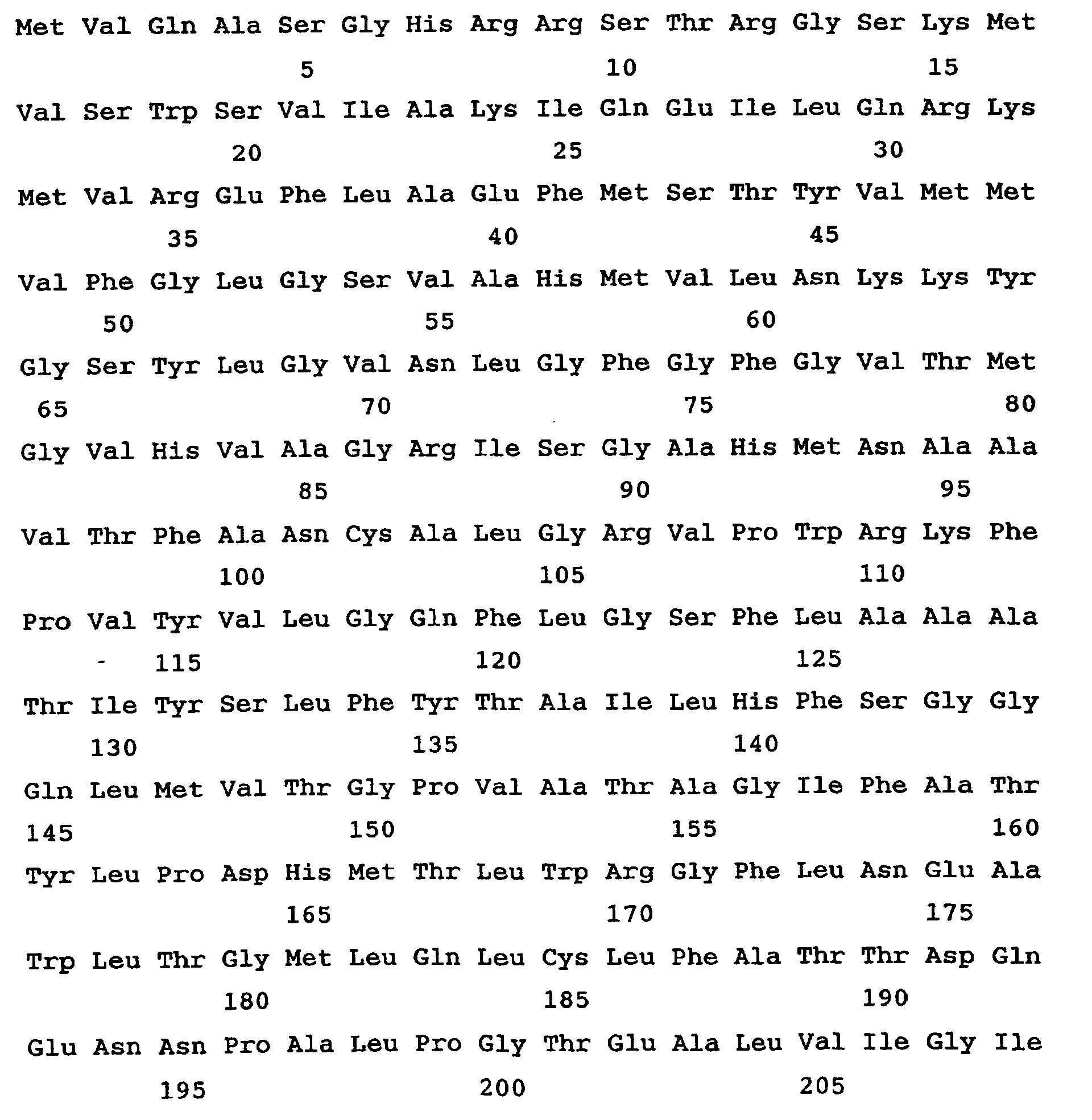
- the present invention is related to a novel polypeptide having water channel activity which has the amino acid sequence, within the molecule thereof, shown in the sequence listing under SEQ ID NO:1.
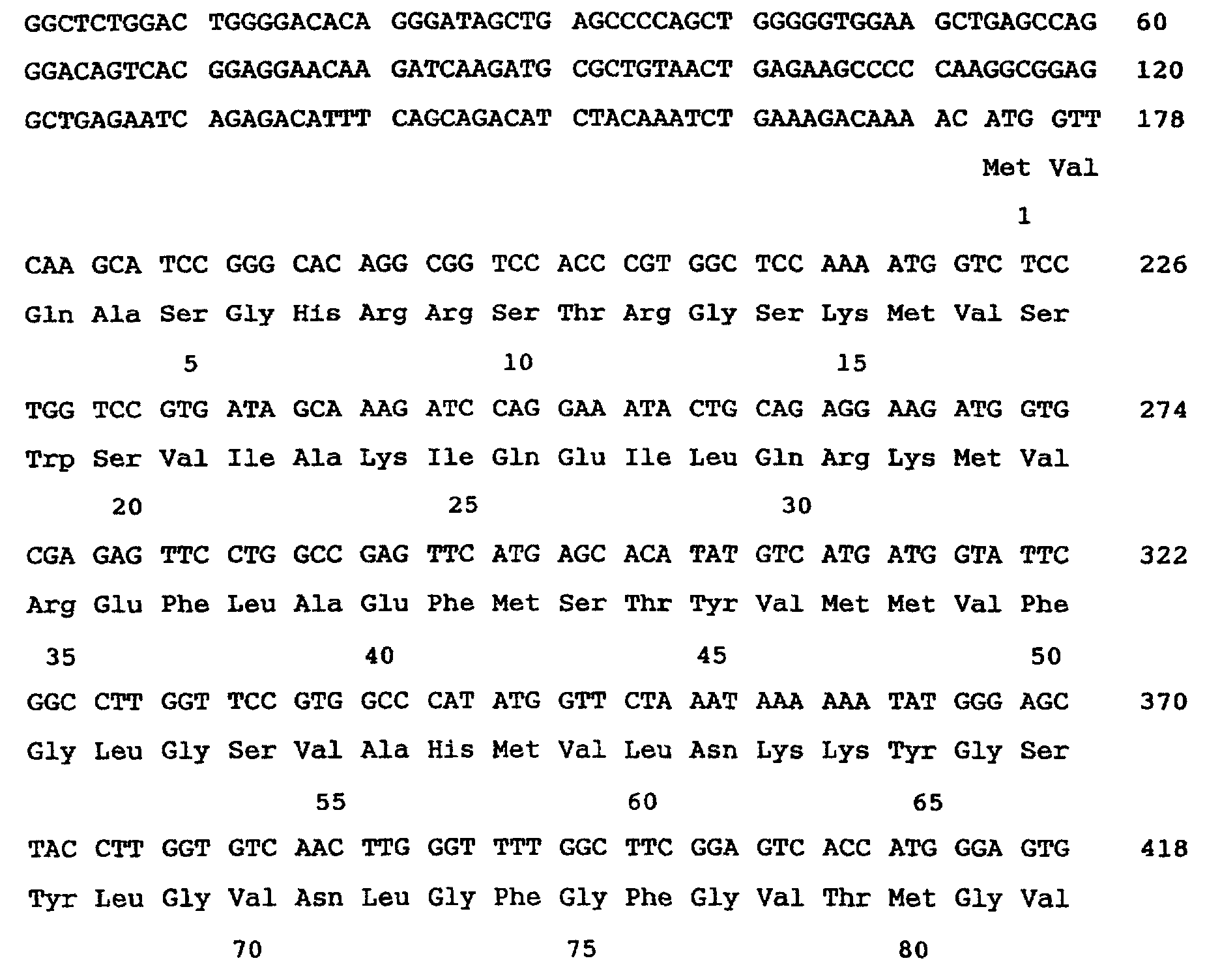
- the present invention is also related to a nucleotide sequence itself which codes for a polypeptide having, within the molecule thereof, the amino acid sequence shown in the sequence listing under SEQ ID NO:1 and having water channel activity.
- the present invention is further related to the DNA sequence shown in the sequence listing under SEQ ID NO:2.
- the present invention is still further related to a polypeptide having water channel activity which has the amino acid sequence, within the molecule thereof, encoded by the nucleotide No. 173 to No. 1198 of the nucleotide sequence shown in the sequence listing under SEQ ID NO:2.
- the polypeptide of the present invention has the amino acid sequence shown in the sequence listing under SEQ ID NO:1.
- This polypeptide has a sequence composed of three amino acids, namely asparagine-proline-alanine, as the amino acid Nos. 195 to 197.
- the characteristic feature common to the so-far known AQPs, that said asparagine-proline-alanine sequence occurs twice, is not found in the polypeptide of the present invention. That this polypeptide has water channel activity can be confirmed from the fact that it enhances the water permeability of Xenopus laevis oocytes.
- the above polypeptide may be generated by translation by a protein synthesis system constituted, in vivo or in vitro , based on the nucleotide sequence coding for the amino acid sequence of said polypeptide.
- the nucleotide sequence of the present invention substantially has a region coding for the amino acid sequence of said polypeptide and, where necessary, may contain one or more other regions such as a promoter region.
- the information carried by the gene DNA is transcribed into mRNA as the result of DNA-dependent RNA synthesis aided by RNA polymerase. And, this mRNA is translated into the amino acid sequence in a tRNA-containing protein synthesis system.
- RNA (10 ng) obtained in Example 1 from human adipose tissue was introduced into Xenopus laevis oocytes by microinjection and the oocytes were incubated at 20°C for 3 days in an isotonic culture medium (about 200 mOsm). The cultured oocytes were transferred to a hypotonic culture medium (about 40 mOsm). Photograph was taken 20 seconds and 40 seconds after transfer, and the sectional area and volume of each oocyte were determined using an image analyzer.
- the present invention provides a novel protein having water channel activity and a novel DNA sequence encoding the protein.
- Said protein is one found in human adipose tissue for which the occurrence of water channels has not been reported as yet.
- the present invention makes it possible to develop novel therapies for water or fat metabolism-associated diseases in which said tissue is involved.
Landscapes
- Health & Medical Sciences (AREA)
- Chemical & Material Sciences (AREA)
- Life Sciences & Earth Sciences (AREA)
- Organic Chemistry (AREA)
- General Health & Medical Sciences (AREA)
- Medicinal Chemistry (AREA)
- Public Health (AREA)
- Immunology (AREA)
- General Chemical & Material Sciences (AREA)
- Obesity (AREA)
- Nuclear Medicine, Radiotherapy & Molecular Imaging (AREA)
- Hematology (AREA)
- Pharmacology & Pharmacy (AREA)
- Diabetes (AREA)
- Animal Behavior & Ethology (AREA)
- Bioinformatics & Cheminformatics (AREA)
- Engineering & Computer Science (AREA)
- Veterinary Medicine (AREA)
- Cell Biology (AREA)
- Chemical Kinetics & Catalysis (AREA)
- Toxicology (AREA)
- Zoology (AREA)
- Gastroenterology & Hepatology (AREA)
- Biochemistry (AREA)
- Biophysics (AREA)
- Genetics & Genomics (AREA)
- Molecular Biology (AREA)
- Proteomics, Peptides & Aminoacids (AREA)
- Peptides Or Proteins (AREA)
- Preparation Of Compounds By Using Micro-Organisms (AREA)
- Micro-Organisms Or Cultivation Processes Thereof (AREA)
- Saccharide Compounds (AREA)
- Medicines That Contain Protein Lipid Enzymes And Other Medicines (AREA)
Abstract
Description
- The present invention relates to a novel, human adipose tissue-derived polypeptide having water channel activity and to a DNA sequence encoding for the polypeptide.
- The permeation of water through a cell membrane generally occurs slowly by way of diffusion into the lipid bilayer which is the main structure of the cell membrane. Recently, however, it was discovered that, in certain kinds of cells, water is transferred rapidly through the cell membrane, suggesting the involvement in the above phenomenon of some membrane protein selectively permeable to water. Thereafter, such membrane proteins of various kinds have actually been isolated. Such membrane proteins are designated as water channels. In this specification, the function of the above water channels which has selective permeation of water through the cell membrane is referred to as "water channel activity". The water channels may be permeable to water alone or permeable to not only water but also low-molecular-weight substances such as glycerol and urea.
- As a membrane protein having such water channel activity, there have been isolated a group of membrane proteins known as aquaporins (AQPs). Furthermore, some aquaporin genes have so far been cloned, and aquaporins such as AQP1 through AQP5, FA-CHIP and AQP-γTIP have been discovered in mammals, amphibians, plants, etc. [cf. e.g. Akira Sasaki, Igaku no Ayumi (Advances in Medicine), vol. 173, No. 9, 1995].
- P. Agre et al. reported, in Science (vol. 256, pp. 385 to 387, 1992) that Xenopus laevis oocytes in which the in vitro transcript RNA for CHIP28, the current designation of which is AQP1, had been introduced showed increased water permeability. In Science (vol. 264, pp. 92 to 95, 1994), B. A. van Oost et al. disclosed the amino acid sequence of human AQP2 and suggested that this should be involved in vasopressin-dependent urine concentration.
- In Proc. Natl. Acad. Sci. USA (vol. 91, pp. 6269 to 6273, 1994), Ishibashi et al. disclosed the nucleotide sequence of the gene for renal collecting tubule-derived AQP3 and the amino acid sequence encoded thereof. Ishibashi et al. confirmed its water channel activity by injecting the AQP3 cRNA into Xenopus laevis oocytes and measuring the water permeability thereof. Ishibashi et al. reported that this AQP3 transported not only water but also nonionic small molecules such as urea and glycerol.
- In Proc. Natl. Acad. Sci. USA (vol. 91, pp. 13052 to 13056, 1994), J. S. Jung et al. reported about the isolation of AQP4. This AQP4 is known to occur most abundantly in mammalian brains and have mercury resistance. In J. Biol. Chem. (vol. 270, pp. 1908 to 1912, 1995), S. Raina et al. who prepared rat salivary gland-derived AQP5 cDNA describe the nucleotide sequence of the cDNA and the amino acid sequence encoded thereby. S. Raina et al. cloned the cDNA by utilizing the occurrence of an NPA sequence and confirmed its function by observing that the cRNA enhances the water permeability of Xenopus laevis oocytes.
- The aquaporin family mentioned above is considered to be involved in water metabolism in mammals and, for example, it has been confirmed that AQP2 is found only in the renal collecting tubule luminal membrane, which is indicative of its close association with the vasopressin-urea concentration system, and its involvement in renal diseases has become acknowledged. Therefore, such membrane proteins having water channel activity are of importance in any attempt to develop novel therapies for water-associated diseases.
- Meanwhile, the expression of the aquporin family mentioned above has been confirmed in such organs as kidney, brain, gall bladder, eye, intestine, salivary gland and bronchus but there is no report as yet about the occurrence of membrane proteins having water channel activity in other organs or tissues, particularly in adipose tissue.
- In view of the above-mentioned state of the art, the present invention has for its object to provide a novel membrane protein having water channel activity and a DNA sequence encoding for the polypeptide.
- The present invention is related to a novel polypeptide having water channel activity which has the amino acid sequence, within the molecule thereof, shown in the sequence listing under SEQ ID NO:1.
- The present invention is also related to a nucleotide sequence itself which codes for a polypeptide having, within the molecule thereof, the amino acid sequence shown in the sequence listing under SEQ ID NO:1 and having water channel activity.
- The present invention is further related to the DNA sequence shown in the sequence listing under SEQ ID NO:2.
- The present invention is still further related to a polypeptide having water channel activity which has the amino acid sequence, within the molecule thereof, encoded by the nucleotide No. 173 to No. 1198 of the nucleotide sequence shown in the sequence listing under SEQ ID NO:2.
- In the following, the present invention is described in detail.
- The polypeptide of the present invention has the amino acid sequence shown in the sequence listing under SEQ ID NO:1. This polypeptide has a sequence composed of three amino acids, namely asparagine-proline-alanine, as the amino acid Nos. 195 to 197. However, the characteristic feature common to the so-far known AQPs, that said asparagine-proline-alanine sequence occurs twice, is not found in the polypeptide of the present invention. That this polypeptide has water channel activity can be confirmed from the fact that it enhances the water permeability of Xenopus laevis oocytes.
- The above polypeptide may be generated by translation by a protein synthesis system constituted, in vivo or in vitro, based on the nucleotide sequence coding for the amino acid sequence of said polypeptide. The nucleotide sequence of the present invention substantially has a region coding for the amino acid sequence of said polypeptide and, where necessary, may contain one or more other regions such as a promoter region. In the protein synthesis based on genetic information, the information carried by the gene DNA is transcribed into mRNA as the result of DNA-dependent RNA synthesis aided by RNA polymerase. And, this mRNA is translated into the amino acid sequence in a tRNA-containing protein synthesis system. Therefore, the nucleotide sequence of the present invention includes not only the DNA sequence but also the RNA sequence. Furthermore, since it is generally known that, for an amino acid, there is one or a plurality of codons corresponding thereto, it is a matter of course that the above-mentioned nucleotide sequence is not limited to only one sequence but may include nucleotide sequences resulting from substitution of another synomyous codon coding for the same amino acid.
- The above polypeptide can be formed based on the genetic information carried by the DNA sequence shown in the sequence listing under SEQ ID NO:2. This polypeptide is encoded by that portion of the nucleotide sequence shown in the sequence listing under SEQ ID NO:2 which ranges from the nucleotide No. 173 to No. 1198. Of the DNA sequence shown in the sequence listing under SEQ ID NO:2, the nucleotide sequences other than the portion of said nucleotide numbers are noncoding regions, among which the polyadenylation consensus sequence AATAAA occurs at the nucleotide No.1234 to No.1239. Other possible reading frames of said DNA sequence shown under SEQ ID NO:2 can be excluded from consideration, since the polypeptides encoded are very small-sized, hence considered to be incapable of performing any water channel function.
- It has been confirmed by the inventors that the full-length sequence of the above nucleic acid bases has no counterpart sequence either in GenBank or in dbEST.
- The polypeptide of the present invention has water channel activity in adipose tissue. While adipose tissue is distributed in various parts of the living organism, the polypeptide of the present invention has an action to control the transfer of water in such adipose tissue and is expected to be effective in upholding normal functions of adipose tissue at various sites.
- The above-mentioned DNA sequence given under SEQ ID NO:2 corresponds to the nucleotide sequence of cDNA obtained from human adipose tissue by cloning. Human adipose tissue is a tissue which stores fat as energy reserves. It is known that various proteins are formed in this adipose tissue. A 3'-directed DNA library is known as a cDNA library from which the genes actually expressed in this adipose tissue or, in other words, the mRNA composition in this adipose tissue can be copied faithfully. This 3'-directed DNA library contains only those specified 3'-terminal regions of mRNAs which range from poly(A) to the MboI site which is a restriction enzyme recognition site upstream of said poly(A) and, therefore, said library is suited for template preparation by the PCR technique. Therefore, by extracting a clone from this library and using it to determine a longer nucleotide sequence including the amino acid coding region from this complete adipose tissue cDNA library, it becomes possible to obtain the genetic information concerning the protein which is actually formed in adipose tissue. The DNA sequence of the present invention as shown under the above-mentioned SEQ ID NO:2 is found by such cloning. A method of obtaining the cDNA by cloning from human adopose tissue is now described in detail.
- Known as said method is, for example, the method described in Biochem. Biophys. Res. Commun., 221, 286 to 289 (1996). According to this method, the total RNA is first separated from adipose tissue and, when necessary, purified to give poly(A) RNA. For this purification, commercially available purification kits can be used. For example, Pharmacia's Quick prep mRNA purification kit or the like in which oligo(dT)-cellulose and various buffers are used in combination can judiciously be employed. Then, a double-stranded cDNA is synthesized using a pUC19 system vector primer and the double-stranded cDNA so synthesized is selectively cleaved with the restriction enzyme MboI (which recognizes the nucleotide sequence GATC). On that occasion, the GATC sequence on the vector molecule side, which can be methylated to give GmATC when replication is effected in dam+ bacterial cells, is not cleaved with MboI. As the cleaved cDNA is subjected to self-cyclization using E. coli ligase, a plasmid containing a cDNA fragment extending from poly(A) to the nearest MboI site is completed. This plasmid is introduced into Escherichia coli, followed by cultivation and selection of a transformant E. coli colony. Then, the cDNA in said colony is amplified by the PCR technique using appropriate PCR primers.
- On the other hand, the full-length double-stranded cDNA synthesized using the pUC19 system vector primer is cleaved at the 5' end using T4 polymerase and subjected to cyclization using T4 ligase and introduction into Escherichia coli for transformation. From among the thus-obtained transformant colonies, the desired colony is obtained by screening using, as a probe, a labeled form of the adipose tissue-specific cDNA obtained from said 3'-directed DNA library by the method mentioned above. The insert cDNA in this colony is amplified by the PCR technique using appropriate PCR primers. The amplification product is purified and, after sonication, subcloned into the M13 phage.
- The nucleotide sequence of the thus-cloned cDNA can be determined, for example, by reaction with a primer dye, purification and analysis using an automated sequencer or the like. In this manner, the DNA sequence of the present invention can be obtained.
- The polypeptide of the present invention has water channel activity. This water channel activity can be confirmed by observing an enhancement of water permeability in Xenopus laevis oocytes. It is known that no AQP family gene has been expressed in Xenopus laevis oocytes and, therefore, any increase in water permeability as caused by the injected mRNA can be easily confirmed. For this reason, said oocytes are widely used in confirming water channel activity. For example, in Proc. Natl. Acad. Sci. USA, vol. 91, pp. 6269 to 6273 (1994), Ishibashi et al. confirmed the water channel activity by inserting the AQP3 cDNA into the pSP64T-derived BlueScript vector, synthesizing the cRNA using T7 RNA polymerase, injecting this cRNA into Xenopus laevis oocytes and, after 48 to 62 hours of incubation following injection, observing an increase in water permeability and in the volume of the oocyte.
- The polypeptide encoded by the DNA sequence of the present invention can be identified by analyzing the amino acid sequence of the polypeptide synthesized in an Escherichia coli protein synthesis system constituted in vitro. In this case, the methods of identifying N-and C-terminal sequences of expression products as described in Shin Seikagaku Jikken Koza (Experiments in Biochemistry, A New Course) 1 (published by Tokyo Kagaku Dojin), pages 22 to 24 can be employed.
- The following examples illustrate the present invention in further detail. These examples are, however, by no means limitative of the scope of the present invention.
- According to a recent report [Biochem. Biophys. Res. Commun., 221, 286 to 289 (1996)], a DNA for an adipose tissue-specific collagen-like factor has been cloned using a 3'-directed DNA library containing only those specified 3'-terminal regions of RNA molecules which range from poly(A) to the restriction enzyme MboI site upstream thereof [Nature Genet., 2, 173 to 179 (1992)], which library makes it possible not only to identify the gene under expression but also to examine the frequency of expression or amount of expression. In accordance with the method described in the above report, the DNA nucleotide sequence of the present invention was determined using an adipose tissue-specific 3'-directed DNA library.
- Reverse transcriptase was added to poly(A)+ RNA separated and purified from human adipose tissue using a Quick prep mRNA purification kit, followed by insertion into λ ZAP II containing the pUC19 system vector pBluescript and introduction into Escherichia coli. Screening carried out using an adipose tissue-specific partial DNA as a probe gave a colony of transformant Escherichia coli. Then, together with two primers (SK: 5'CGCTCTAGAACTAGTGGATC3'; T7: 5'GTAATACGACTCACTATAGGGC3'), PCR [polymerase chain reaction; (30 seconds at 95°C + 30 seconds at 50°C + 60 seconds at 70°C) x 15 cycles, followed by (30 seconds at 95°C + 60 seconds at 70°C) x 15 cycles], was carried out and, after sonication, the product was subcloned in M13. A primer dye was added thereto and, after purification, the nucleotide sequence of the DNA was analyzed using an automated sequencer. The nucleotide sequence obtained is shown in the sequence listing under SEQ ID NO:2.
- As for the studies on the water permeability of the AQP family, there are reports about AQP1 [Science, 256, 385-387 (1992)] and AQP3 [Proc. Natl. Acad. Sci. USA, 91, 6269-6273 (1994)] in which RNA was introduced into Xenopus laevis oocytes, in which AQP family genes have not been expressed, and then the water permeability was calculated from changes in the surface area and volume of said oocytes in a hypotonic culture medium. Therefore, the membrane protein encoded by the DNA of the present invention was checked for water permeability according to the method described in the references cited above.
- The RNA (10 ng) obtained in Example 1 from human adipose tissue was introduced into Xenopus laevis oocytes by microinjection and the oocytes were incubated at 20°C for 3 days in an isotonic culture medium (about 200 mOsm). The cultured oocytes were transferred to a hypotonic culture medium (about 40 mOsm). Photograph was taken 20 seconds and 40 seconds after transfer, and the sectional area and volume of each oocyte were determined using an image analyzer. The water permeability of the membrane protein was calculated as follows:
- The result is shown in Table 1. The water permeability found when purified water was used for microinjection in lieu of the RNA is also shown.
- Further, the expression of the polypeptide of the present invention in said oocytes was confirmed by a C-terminal region immunoassay using the rabbit antiserum obtained by using the polypeptide of the present invention as synthesized in vitro.
Water permeability (cm/sec) Group in which RNA introduction was not made 30.0x10⁻⁴ Group in which RNA introduction was made 292.5x10⁻⁴ - As is evident from Table 1, the polypeptide encoded by the DNA sequence of the present invention caused an increase in water permeability after introduction into the oocytes. This result indicate that the polypeptide of the present invention has water channel activity.
- The present invention provides a novel protein having water channel activity and a novel DNA sequence encoding the protein. Said protein is one found in human adipose tissue for which the occurrence of water channels has not been reported as yet. The present invention makes it possible to develop novel therapies for water or fat metabolism-associated diseases in which said tissue is involved.
-
- SEQ ID No.: 1
- Length: 342
- Type: amino acid
- Topology: linear
- Species: peptide
- Sequence

- SEQ ID No: 2
- Length: 1258
- Type: nucleotide
- Strandedness: double strand
- Topology: linear
- Species: cDNA to mRNA
- Original source
- Organism: human
- Tissue type: adipose tissue
- Feature Information
- Name/Key: peptide
- Location: 173..1198
- Identification method: E
- Sequence


-
Claims (4)
- A polypeptide having water channel activity which has the amino acid sequence, within the molecule thereof, shown in the sequence listing under SEQ ID NO:1.
- A nucleotide sequence which codes for a polypeptide having, within the molecule thereof, the amino acid sequence shown in the sequence listing under SEQ ID NO:1 and having water channel activity.
- The DNA sequence shown in the sequence listing under SEQ ID NO:2.
- A polypeptide having water channel activity which has the amino acid sequence, within the molecule thereof, encoded by the nucleotide No. 173 to No. 1198 of the nucleotide sequence shown in the sequence listing under SEQ ID NO:2.
Applications Claiming Priority (3)
| Application Number | Priority Date | Filing Date | Title |
|---|---|---|---|
| JP09484597A JP3418085B2 (en) | 1997-03-28 | 1997-03-28 | Novel polypeptides and DNA sequences with water channel activity |
| JP9484597 | 1997-03-28 | ||
| PCT/JP1998/001371 WO1998043997A1 (en) | 1997-03-28 | 1998-03-27 | Novel polypeptide having water channel activity and dna sequence |
Publications (3)
| Publication Number | Publication Date |
|---|---|
| EP1013665A1 EP1013665A1 (en) | 2000-06-28 |
| EP1013665A4 EP1013665A4 (en) | 2004-10-27 |
| EP1013665B1 true EP1013665B1 (en) | 2005-09-14 |
Family
ID=14121381
Family Applications (1)
| Application Number | Title | Priority Date | Filing Date |
|---|---|---|---|
| EP98911039A Expired - Lifetime EP1013665B1 (en) | 1997-03-28 | 1998-03-27 | Polypeptide having water channel activity and dna sequence |
Country Status (7)
| Country | Link |
|---|---|
| US (2) | US6252046B1 (en) |
| EP (1) | EP1013665B1 (en) |
| JP (1) | JP3418085B2 (en) |
| AT (1) | ATE304553T1 (en) |
| DE (1) | DE69831584T2 (en) |
| ES (1) | ES2249825T3 (en) |
| WO (1) | WO1998043997A1 (en) |
Families Citing this family (4)
| Publication number | Priority date | Publication date | Assignee | Title |
|---|---|---|---|---|
| JP3504524B2 (en) * | 1998-07-22 | 2004-03-08 | 参天製薬株式会社 | Test method and diagnostic kit |
| CA2386895C (en) | 1999-10-13 | 2008-07-15 | Masao Miwa | Method of the diagnosis of renal disorder, hemolytic-uremic syndrome and intestinal hemorrhagic escherichia coli infection |
| US7082275B2 (en) * | 2004-03-19 | 2006-07-25 | Lexmark International, Inc. | Variable force biasing mechanism and electrical connection |
| JP2005335979A (en) * | 2004-05-25 | 2005-12-08 | Honda Motor Co Ltd | Control structure of sliding surface |
Family Cites Families (1)
| Publication number | Priority date | Publication date | Assignee | Title |
|---|---|---|---|---|
| US5858702A (en) * | 1991-12-13 | 1999-01-12 | The Johns Hopkins University | Isolation, cloning and expression of transmembrane water channel Aquaporin 5 (AQP5) |
-
1997
- 1997-03-28 JP JP09484597A patent/JP3418085B2/en not_active Expired - Fee Related
-
1998
- 1998-03-27 DE DE69831584T patent/DE69831584T2/en not_active Expired - Fee Related
- 1998-03-27 WO PCT/JP1998/001371 patent/WO1998043997A1/en not_active Ceased
- 1998-03-27 ES ES98911039T patent/ES2249825T3/en not_active Expired - Lifetime
- 1998-03-27 EP EP98911039A patent/EP1013665B1/en not_active Expired - Lifetime
- 1998-03-27 US US09/381,810 patent/US6252046B1/en not_active Expired - Fee Related
- 1998-03-27 AT AT98911039T patent/ATE304553T1/en not_active IP Right Cessation
-
2001
- 2001-05-08 US US09/849,980 patent/US6780983B2/en not_active Expired - Fee Related
Also Published As
| Publication number | Publication date |
|---|---|
| ATE304553T1 (en) | 2005-09-15 |
| JP3418085B2 (en) | 2003-06-16 |
| US20020123611A1 (en) | 2002-09-05 |
| US6780983B2 (en) | 2004-08-24 |
| WO1998043997A1 (en) | 1998-10-08 |
| EP1013665A4 (en) | 2004-10-27 |
| EP1013665A1 (en) | 2000-06-28 |
| JPH10271996A (en) | 1998-10-13 |
| DE69831584D1 (en) | 2005-10-20 |
| US6252046B1 (en) | 2001-06-26 |
| ES2249825T3 (en) | 2006-04-01 |
| DE69831584T2 (en) | 2006-06-14 |
Similar Documents
| Publication | Publication Date | Title |
|---|---|---|
| Paschal et al. | Identification of NTF2, a cytosolic factor for nuclear import that interacts with nuclear pore complex protein p62. | |
| Kikuchi et al. | The Warm Temperature Acclimation-related 65-kDa Protein, Wap65, in Goldfish and Its Gene Expression (∗) | |
| Yu et al. | Interaction of major intrinsic protein (aquaporin-0) with fiber connexins in lens development | |
| Hansen et al. | Corazonin gene expression in the waxmoth Galleria mellonella | |
| Goss et al. | SP-A2 gene expression in human fetal lung airways | |
| US5744594A (en) | DNA encoding ATP-sensitive potassium channel genes | |
| US5726298A (en) | Epimorphin and its encoding nucleic acids | |
| Vermunt et al. | The juvenile hormone binding protein of silkworm haemolymph: gene and functional analysis | |
| Ueki et al. | Exclusive expression of transketolase in the vanadocytes of the vanadium-rich ascidian, Ascidia sydneiensis samea | |
| US6780983B2 (en) | Polypeptide having water channel activity and DNA sequence | |
| Marcu et al. | A cuticular protein from the moulting stages of an insect | |
| US5410031A (en) | Nucleoside cotransporter protein cDNA | |
| AU714793B2 (en) | Novel stress proteins | |
| Lee et al. | Cloning and characterization of transferrin cDNA from coho salmon (Oncorhynchus kisutch) | |
| US5837239A (en) | Physiologically active substance designated as epimorphin genes encoding the same and antibodies thereto | |
| Tachibana et al. | G protein Gi2α in the cochlea: cloning and selective occurrence in receptor cells | |
| EP1482039A1 (en) | PRESYNAPTIC PROTEIN p120 | |
| Yamamoto et al. | Strong expression of the calreticulin gene in the liver of Rana rugosa tadpoles, but not adult frogs | |
| US7307145B2 (en) | Sodium-independent transporter transporting small-sized neutral amino acid, gene thereof and method of analyzing transporter function by constructing fused proteins enabling the specification of the function | |
| JP4278906B2 (en) | Sodium-independent transporter that transports acidic amino acids and its gene | |
| JP2025141928A (en) | Kit for detecting galactose, cell, and transformant | |
| JP2005527194A (en) | CDNA cloning and expression of Aplysia, Cypressic Cyprisin, Aplysiapuncata, bioreactive recombinant | |
| WO1997037018A1 (en) | Novel gene | |
| WO2005083075A1 (en) | Novel gene participating in epidermal differentiation and use thereof | |
| McDonough | Future perspectives: molecular biology and pathophysiology |
Legal Events
| Date | Code | Title | Description |
|---|---|---|---|
| PUAI | Public reference made under article 153(3) epc to a published international application that has entered the european phase |
Free format text: ORIGINAL CODE: 0009012 |
|
| 17P | Request for examination filed |
Effective date: 19991007 |
|
| AK | Designated contracting states |
Kind code of ref document: A1 Designated state(s): AT BE CH DE DK ES FI FR GB GR IE IT LI LU MC NL PT SE |
|
| A4 | Supplementary search report drawn up and despatched |
Effective date: 20040913 |
|
| GRAP | Despatch of communication of intention to grant a patent |
Free format text: ORIGINAL CODE: EPIDOSNIGR1 |
|
| RTI1 | Title (correction) |
Free format text: POLYPEPTIDE HAVING WATER CHANNEL ACTIVITY AND DNA SEQUENCE |
|
| GRAS | Grant fee paid |
Free format text: ORIGINAL CODE: EPIDOSNIGR3 |
|
| GRAA | (expected) grant |
Free format text: ORIGINAL CODE: 0009210 |
|
| AK | Designated contracting states |
Kind code of ref document: B1 Designated state(s): AT BE CH DE DK ES FI FR GB GR IE IT LI LU MC NL PT SE |
|
| PG25 | Lapsed in a contracting state [announced via postgrant information from national office to epo] |
Ref country code: NL Free format text: LAPSE BECAUSE OF FAILURE TO SUBMIT A TRANSLATION OF THE DESCRIPTION OR TO PAY THE FEE WITHIN THE PRESCRIBED TIME-LIMIT Effective date: 20050914 Ref country code: LI Free format text: LAPSE BECAUSE OF FAILURE TO SUBMIT A TRANSLATION OF THE DESCRIPTION OR TO PAY THE FEE WITHIN THE PRESCRIBED TIME-LIMIT Effective date: 20050914 Ref country code: FI Free format text: LAPSE BECAUSE OF FAILURE TO SUBMIT A TRANSLATION OF THE DESCRIPTION OR TO PAY THE FEE WITHIN THE PRESCRIBED TIME-LIMIT Effective date: 20050914 Ref country code: CH Free format text: LAPSE BECAUSE OF FAILURE TO SUBMIT A TRANSLATION OF THE DESCRIPTION OR TO PAY THE FEE WITHIN THE PRESCRIBED TIME-LIMIT Effective date: 20050914 Ref country code: BE Free format text: LAPSE BECAUSE OF FAILURE TO SUBMIT A TRANSLATION OF THE DESCRIPTION OR TO PAY THE FEE WITHIN THE PRESCRIBED TIME-LIMIT Effective date: 20050914 Ref country code: AT Free format text: LAPSE BECAUSE OF FAILURE TO SUBMIT A TRANSLATION OF THE DESCRIPTION OR TO PAY THE FEE WITHIN THE PRESCRIBED TIME-LIMIT Effective date: 20050914 |
|
| REG | Reference to a national code |
Ref country code: GB Ref legal event code: FG4D |
|
| REG | Reference to a national code |
Ref country code: CH Ref legal event code: EP |
|
| REG | Reference to a national code |
Ref country code: IE Ref legal event code: FG4D |
|
| REF | Corresponds to: |
Ref document number: 69831584 Country of ref document: DE Date of ref document: 20051020 Kind code of ref document: P |
|
| PG25 | Lapsed in a contracting state [announced via postgrant information from national office to epo] |
Ref country code: SE Free format text: LAPSE BECAUSE OF FAILURE TO SUBMIT A TRANSLATION OF THE DESCRIPTION OR TO PAY THE FEE WITHIN THE PRESCRIBED TIME-LIMIT Effective date: 20051214 Ref country code: GR Free format text: LAPSE BECAUSE OF FAILURE TO SUBMIT A TRANSLATION OF THE DESCRIPTION OR TO PAY THE FEE WITHIN THE PRESCRIBED TIME-LIMIT Effective date: 20051214 Ref country code: DK Free format text: LAPSE BECAUSE OF FAILURE TO SUBMIT A TRANSLATION OF THE DESCRIPTION OR TO PAY THE FEE WITHIN THE PRESCRIBED TIME-LIMIT Effective date: 20051214 |
|
| PG25 | Lapsed in a contracting state [announced via postgrant information from national office to epo] |
Ref country code: PT Free format text: LAPSE BECAUSE OF FAILURE TO SUBMIT A TRANSLATION OF THE DESCRIPTION OR TO PAY THE FEE WITHIN THE PRESCRIBED TIME-LIMIT Effective date: 20060214 |
|
| NLV1 | Nl: lapsed or annulled due to failure to fulfill the requirements of art. 29p and 29m of the patents act | ||
| PG25 | Lapsed in a contracting state [announced via postgrant information from national office to epo] |
Ref country code: IE Free format text: LAPSE BECAUSE OF NON-PAYMENT OF DUE FEES Effective date: 20060327 |
|
| PG25 | Lapsed in a contracting state [announced via postgrant information from national office to epo] |
Ref country code: MC Free format text: LAPSE BECAUSE OF NON-PAYMENT OF DUE FEES Effective date: 20060331 Ref country code: LU Free format text: LAPSE BECAUSE OF NON-PAYMENT OF DUE FEES Effective date: 20060331 |
|
| REG | Reference to a national code |
Ref country code: CH Ref legal event code: PL |
|
| REG | Reference to a national code |
Ref country code: ES Ref legal event code: FG2A Ref document number: 2249825 Country of ref document: ES Kind code of ref document: T3 |
|
| ET | Fr: translation filed | ||
| PLBE | No opposition filed within time limit |
Free format text: ORIGINAL CODE: 0009261 |
|
| STAA | Information on the status of an ep patent application or granted ep patent |
Free format text: STATUS: NO OPPOSITION FILED WITHIN TIME LIMIT |
|
| 26N | No opposition filed |
Effective date: 20060615 |
|
| REG | Reference to a national code |
Ref country code: IE Ref legal event code: MM4A |
|
| PGFP | Annual fee paid to national office [announced via postgrant information from national office to epo] |
Ref country code: FR Payment date: 20080311 Year of fee payment: 11 Ref country code: ES Payment date: 20080331 Year of fee payment: 11 Ref country code: DE Payment date: 20080407 Year of fee payment: 11 |
|
| PGFP | Annual fee paid to national office [announced via postgrant information from national office to epo] |
Ref country code: IT Payment date: 20080328 Year of fee payment: 11 |
|
| PGFP | Annual fee paid to national office [announced via postgrant information from national office to epo] |
Ref country code: GB Payment date: 20080402 Year of fee payment: 11 |
|
| GBPC | Gb: european patent ceased through non-payment of renewal fee |
Effective date: 20090327 |
|
| REG | Reference to a national code |
Ref country code: FR Ref legal event code: ST Effective date: 20091130 |
|
| PG25 | Lapsed in a contracting state [announced via postgrant information from national office to epo] |
Ref country code: DE Free format text: LAPSE BECAUSE OF NON-PAYMENT OF DUE FEES Effective date: 20091001 |
|
| PG25 | Lapsed in a contracting state [announced via postgrant information from national office to epo] |
Ref country code: GB Free format text: LAPSE BECAUSE OF NON-PAYMENT OF DUE FEES Effective date: 20090327 Ref country code: FR Free format text: LAPSE BECAUSE OF NON-PAYMENT OF DUE FEES Effective date: 20091123 |
|
| REG | Reference to a national code |
Ref country code: ES Ref legal event code: FD2A Effective date: 20090328 |
|
| PG25 | Lapsed in a contracting state [announced via postgrant information from national office to epo] |
Ref country code: ES Free format text: LAPSE BECAUSE OF NON-PAYMENT OF DUE FEES Effective date: 20090328 |
|
| PG25 | Lapsed in a contracting state [announced via postgrant information from national office to epo] |
Ref country code: IT Free format text: LAPSE BECAUSE OF NON-PAYMENT OF DUE FEES Effective date: 20090327 |