EP1010082B1 - Data cachins on the internet - Google Patents
Data cachins on the internet Download PDFInfo
- Publication number
- EP1010082B1 EP1010082B1 EP98905926A EP98905926A EP1010082B1 EP 1010082 B1 EP1010082 B1 EP 1010082B1 EP 98905926 A EP98905926 A EP 98905926A EP 98905926 A EP98905926 A EP 98905926A EP 1010082 B1 EP1010082 B1 EP 1010082B1
- Authority
- EP
- European Patent Office
- Prior art keywords
- information
- node
- data
- nodes
- services
- Prior art date
- Legal status (The legal status is an assumption and is not a legal conclusion. Google has not performed a legal analysis and makes no representation as to the accuracy of the status listed.)
- Expired - Lifetime
Links
Images
Classifications
-
- H—ELECTRICITY
- H04—ELECTRIC COMMUNICATION TECHNIQUE
- H04L—TRANSMISSION OF DIGITAL INFORMATION, e.g. TELEGRAPHIC COMMUNICATION
- H04L9/00—Cryptographic mechanisms or cryptographic arrangements for secret or secure communications; Network security protocols
- H04L9/40—Network security protocols
-
- H—ELECTRICITY
- H04—ELECTRIC COMMUNICATION TECHNIQUE
- H04L—TRANSMISSION OF DIGITAL INFORMATION, e.g. TELEGRAPHIC COMMUNICATION
- H04L67/00—Network arrangements or protocols for supporting network services or applications
- H04L67/2866—Architectures; Arrangements
- H04L67/2885—Hierarchically arranged intermediate devices, e.g. for hierarchical caching
Definitions
- the present invention relates to a method of dealing with requests for data information within a network that includes a plurality of users that request said data information, and a plurality of servers that supply data information.
- Newly used data information is stored in a cache acting between a server and a user and including a number of different nodes.
- the present invention also relates to a cache adapted to act in accordance with the method, and a node adapted to act within an inventive cache.
- a request for data information within a network may involve the user first connecting himself/herself with the network through a network operator and then addressing the server that contains the required information directly.
- the operator connects the user either persistently or temporarily to a computer unit or processor unit belonging to the operator and through which requests for information can be sent by the user on the network.
- the server concerned may be positioned at a geographically remote location in the wide network, it is known that an operator, or some other actor on the network, provides a cache for collected information, in which newly used information is stored so as to be available to other users who may seek the same information. This is economically advantageous with respect to the operator and provides a much faster network for the user.
- Such a cache may include a plurality of different nodes for connection to those users who avail themselves of the operator's services.
- ICP Internet Cache Protocol
- ICP causes a node to ask a plurality of mutually co-operating nodes if they have the information requested. This can result in hundreds of questions being asked. It is possible that tens of positive answers are obtained, and the first node, that is to say the querying node, must itself decide the node from which the information shall be taken. This may result in the first node attempting to fetch information from a node that is already heavily loaded while other nodes that have the desired information may have free capacity. The answer may also result in the questioning node going to the server that provides the requested information, in order to obtain this information.
- Patent Publication EP-A2-0 618 708 with regard to prior art technique.
- This publication describes a system of mutually coacting nodes.
- superordinate nodes store information relating to the resources available in nodes that are connected to themselves in a directory.
- the node searches for the resource in its own directory. If the information requested is not available, the server node requests the information from coacting server nodes. If none of these server nodes contains the information requested, a general broadcast is made to all nodes in the network. If this general broadcast fails to produce the information requested, the inquiry, or request, is sent to adjacent networks via selected gate nodes.
- TCP transmission control protocol
- IP Internet protocol
- a persistent connection is a logic persistent connection which guarantees transmitter and receiver a correct transmission of data and which need not be a physical persistent connection between transmitter and receiver.
- a persistent connection is meant more specifically a connection that is constantly activated and that if deactivated for some reason or another is again established.
- temporary connection is meant in this description a connection that is established temporarily when transmitting data and is then released upon completion of the transmission.
- a temporary connection can also be a connection that has already been established for some reason or another and that can be also used for the current transmission. Thus, this connection need not be established or released specifically with respect to the current transmission.
- connection need not necessarily be physical, but may also be achieved by means of a logic facility that enables one of several possible logic connections to be made in one or more physically established connections.
- connection is a persistent or a temporary connection in accordance with this description, it can equally as well be allocated the properties of a persistent connection according to TCP.
- Another technical problem resides in the distribution of traffic in a cache so as to prevent the occurrence of bottlenecks, where the transmission capacity in one or more connections limits/limit the total flow of data within or to and from a cache.
- Another technical problem is one of deciding the node from which desired information shall be collected when the information requested is found available in a number of nodes in one and the same cache.
- Another technical problem is to allocate functions and assignments to cache nodes and to arrange these nodes in relation to one another such that only a very small data quantity need be sent between different nodes in order to satisfy an inquiry or request for specific data-information.
- Another technical problem is one of providing a method of handling an inquiry in a manner which takes into account the available transmission capacity and the temporary loading of different nodes.
- Still another technical problem is one of providing a protocol according to which inquiries are made within a cache and which provides a specific inquiry and response order in different cases, depending on whether or not the requested information is available in the node to which the user is connection or in another node within the cache, or in a node within another cache, or possibly is only available from the server that provides the information requested.
- Another technical problem resides in connecting co-acting cache nodes together in a manner which is advantageous both from the aspect of economy and the aspect of transmission
- Another technical problem is one of providing co-action between different caches.
- Another technical problem is one of distributing the traffic occurring between different caches.
- Still another technical problem is one or adapting cache nodes for different loads or capacity requirements.
- Another technical problem is one of adapting these services to those functions or assignments that have been assigned to respective nodes.
- the present invention take as its starting point a method, a cache and a node according to known technology as described in the aforegoing, where the cache nodes form a hierarchical tree structure of nodes that includes a plurality of so-called object nodes, a plurality of so-called directory nodes, and a so-called root node.
- the object nodes arc positioned furthest out, the root node constitutes the root in the tree structure, and any intermediate levels between an object node and the root node are comprised of directory nodes.
- This structure and the division into different nodes enables different assignments to be distributed within a cache, thereby enabling the problems relating to hot spots and bottlenecks to be circumvented or at least considerably reduced.
- data-information is meant the information requested by a user, such as a home page on the Internet.
- meta-information is meant information used within the network between different nodes and which points to where the requested data-information is available in the network or in a cache, in several different ways.
- a particular feature of the present invention is that the data-information stored in the tree structure is stored solely in the object nodes.
- the directory nodes are intended to include a directory of all data-information stored in the object nodes which, in the tree structure, are located beneath respective directory nodes, and within which object nodes respective data-information is stored.
- the root node is intended to include a directory of all data-information that is stored in the tree structure and within which object node respective data-information is stored.
- the information that points to where the data-information is available is the earlier mentioned meta-information.
- One aspect of the present invention is a method as defined in independent claim 1.
- Another aspect of the invention is an apparatus as defined in independent claim 16.
- a node adapted to operate in the data cache of claim 16 is further defined in claim 21. Further embodiments of the invention are specified in the respective appended dependent claims.
- the object node that contains this information is ordered to send it to the first object node, also known as pushing.
- the commanding node issuing its order while taking into account the current load on different object nodes provides a solution to part of the problems concerning the distribution of the total load on the mutually coacting nodes of a cache.
- the first object node shall collect the requested data-information from the server concerned, therewith distributing the load created by fetching unavailable data-information from between the different object nodes.
- the commanding node when an object node is ordered to send data-information to the first object node, the commanding node will inform the first object node, either directly or via possible intermediate directory nodes, that the data-information is found within the tree structure, and that when the data-information is unavailable in the tree structure the root node informs the first object node, either directly or via possible intermediate directory nodes, that the data-information is unavailable in the tree structure.
- all cache nodes will communicate with other overlying nodes in the tree structure by means of persistent connections, and that all object nodes will communicate with other object nodes by means of temporary connections, and that solely inquiries, responses to inquiries and meta-information are sent via the persistent connections and data-information is sent via the temporary connections.
- a first root node of a cache is able to co-operate with a second root node belonging to another cache, and that respective root nodes include a directory that contains all data-information available in said co-operating root nodes.
- co-operating root nodes are mutually connected to a common service node via persistent connections, said service node functioning to direct traffic between mutually co-operating root nodes.
- each node will include four kinds of services, to wit data services, scheduling services, logic services and management services.
- the data services store information, the scheduling services distribute incoming inquiries from users to different logic services and sends responses from the toxic services to the users, the logic services search for and handle information in accordance with requests, and the management services handle information with regard to information updates, the information that shall be stored, the duration of such storage and under which conditions, and so on.
- the information consists of both data-information and meta-information concerning the own node.
- the logic service in the object node takes data-information from the server that can provide such information.
- the data-information taken from the server is stored in the data services in accordance with guidelines from the management services.
- Meta-information relating to said data-information is stored in the data services and replicated in overlying directory nodes or root nodes in the tree structure, via the scheduling services.
- the logic services then send the data-information to the user.
- the logic services fetch data-information from the data services belonging to the own node, and send this data-information to the logic services of the first object node.
- the logic services belonging to the first object node thus store received data-information in the data services belonging to the own node in accordance with guidelines from the management services belonging to the own node, whereafter the toxic services belonging to the first object node store meta-information relating to the data-information in the data services.
- the logic services belonging to the first object node cause the meta-information to be replicated in the overlying directory node or root node in the tree structure via the scheduling services, whereafter a logic service belonging to the first object node sends said data-information to the user.
- a node is a root node or a directory node, solely meta-information is concerned.
- Respective services are implemented with the aid of a processor unit and associated means that carry out the service concerned.
- Scalability in a node is achieved by virtue of enabling a plurality of processor units to operate in parallel within respective kinds of services.
- processor unit it is also possible to allow a processor unit to provide a plurality of services within one kind of service, or to allow a processor unit to provide a plurality of services within different kinds of services.
- processor units When needing to increase or decrease the available capacity of a node, by adding processor units to or removing processor units from the node and optionally causing the additional processor units to act as one or more service facilities according to one or more kinds of services.
- the present invention can be applied to particular advantage in large networks, such as the broad network Internet, where it is appropriate for a cache to be handled by an operator active on the Internet.
- cache or node reside in the provision of a cache that enables requests for specific data-information to be handled simply, quickly and positively, where the nodes active within the cache and the capacity of said nodes can be managed in a beneficial manner from the aspect of capacity so that hot spots and bottlenecks can be avoided to a large extent.
- the present invention provides nodes that can be scaled to suit requirements, which may change with time.
- the node structure also enables the load to be distributed between different processor units within the node.
- Figure 1 is a highly simplified illustration of the fundamental requirements of the present invention.
- the Figure shows three different users 1a, 1b, 1c connected to a large network.
- User 1a in Figure 1 seeks data-information that is available in a server 3 somewhere in the network. This is effected by user 1a making direct contact with the server 3.
- direct contact is not necessarily meant a direct physical line, but can often mean that the contact passes via a number of different nodes in the network .
- Direct contact with a server is often unsuitable, since it will frequency involve a long communications route through many different bottlenecks and hot spots. If all users seeking this particular data-information go directly to the server that provides said data-information, when the data-information concerned is much sought after, the server itself will become a hot spot and the connections leading to the server will become bottlenecks.
- User I b in Figure 1 searches for the same data-information and enters a request for said information via a cache 21.
- the cache checks for the availability of the requested data-information in one of the nodes 22, 23, 24 included in the cache 21. If the information is unavailable, the data-information is fetched from the server 3 to the cache 21 and there stored and sent to the user 1b
- the user 1c in Figure 1 also requests for the same data-information.
- the data-information is stored in the cache 2 and the user 1c is therefore able to receive the data-information requested from the cache without needing to load the server 3 and without needing to fetch the data-information from the large network. This gives faster handling of the request, or inquiry, and a quicker response on the part of user 1c.
- Handling of requests, or inquiries, for data-information within a network where the request is handled by a cache 21, thus comprises the steps in which
- the data-information is stored in the cache and is made available within the cache 21 for a given period of time, so as to be available for any other requests made for this information.
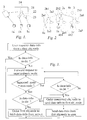
- nodes 2a1, 2a2, 2a3, 2a4, 2a5, 2a6, 2b1, 2b2, 2b3, 2c belonging to a cache 2 form a hierarchical tree structure.
- This tree structure includes a number of so-called object nodes 2a1, 2a2, 2a3, 2a4, 2a5, 2a6, a number of so-called directory nodes 2b1, 2b2, 2b3, and a so-called root node 2c.
- the object nodes 2a1, 2a2, 2a3, 2a4, 2a5, 2a6 are positioned furthest out in the tree structure, and the root node 2c constitutes the root of the tree structure.
- Possible intermediate levels between an object node and the root node are comprised of directory nodes 2b1, 2b2, 2b3.
- Figure 2 shows a tree structure that includes one level of directory nodes between the root node and the object nodes.
- the tree structure shown in Figure 2 is merely an explanatory example and it will be understood that a tree structure may be much large and have different configurations in the practical application of the present invention, all in accordance with prevailing requirements.
- Respective directory nodes 2b1, 2b2, 2b3 include a directory which covers all data-information stored in object nodes that are located in the tree structure beneath respective directory nodes, and in which object nodes respective data-information is stored.
- the root node 2c includes a directory covering all data-information stored in the total tree structure, and the identity of the object node in which respective data-information is stored.
- the information that points to where data-information is available is referred to here as meta-information in order to distinguish this information from the requested, so-called data-information.
- the present invention provides a method of handling a request for data-information. This method utilizes an inventive cache and an inventive node.
- Step k) is not explicitly shown in Figure 2 , since the node that is superordinate to the further node in the Figure is comprised of a root node according to step 1). However, the person skilled in this art will readily understand how step k) is implemented in a tree structure that has two or more levels of directory nodes in one of the branches of the tree structure.
- FIG. 3 is a flowchart that illustrates steps f) to m). This flowchart also illustrates step k).
- the commanding node 2b3 may be allowed to decide which object node 2a6 shall send the data-information, on the basis of the current loading of those object nodes that contain said requested data-information.
- the commanding node 2b3 informs the first object node 2a3, either directly or via possible intermediate directory nodes, that said data-information is available within the tree structure.
- the root node 2c informs the first object node 2a3, that the data-information is unavailable in the tree structure, either directly or via possible intermediate directory nodes 2b2.
- Figure 2 also shows that all cache nodes communicate with overlaying nodes in the tree structure by means of persistent connections 4a, shown in full lines.
- All object nodes communicate with other object nodes by means of temporary connections 4b1, 4b2, as shown in broken lines. Communication between the various object nodes takes place only in the transmission of data-information from one object node to another.
- Solely inquiries, answers to inquiries, and meta-information are sent via the persistent connections 4a, whereas data-information is sent via temporary connections 4b.
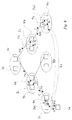
- a first root node 2c of a first cache 2 may be allowed to co-operate with a second root node 2'c belonging to a second cache 2'.
- each root node 2, 2' includes a respective directory that contains all data-information found available in root nodes belonging to co-operating caches.
- this meta-information contains solely the data-information that is available within co-operating caches and within which of these co-operating caches respective data-information is found.
- the meta-information relating to other caches does not include pointers as to where in the other cache the data-information requested is found, and neither how many copies of said requested data-information may be found in the cache.
- the second root node 2'c determines which object node in the own tree structure shall send the data-information.
- Figure 4 also shows that all co-operating root nodes 2c, 2'c are connected to each other via persistent connections with a common service node 2d whose function is to direct traffic between co-operating root nodes.
- Figure 4 also shows that several service nodes 2d, 2d', 2d" can be allowed to coact so as to enable several more caches 2, 2', 2", 2"', 2 4 and their respective root nodes to co-operate with one another.
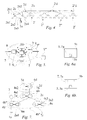
- each node includes four kinds of services, these being data services 5, scheduling services 6, logic services 7 and management services 8.
- the data services 5 store information, the scheduling services 6 distribute incoming inquiries from user to different logic services 7, and forward responses from the logic services 7 to the users, the logic services 7 search for and handle information related to the inquiry concerned, and the management services 8 handle the information with regard to updating said information, deciding which information shall be stored, the duration of such storage, the conditions of such storage, and so on.
- the information in an object node relates to both data-information and meta-information concerning the own node.
- the logic services 7 in the object node have the additional function of fetching data-information from the server providing said information, when necessary.
- the logic services 7 also store the collected data-information in the data services 5 in accordance with guidelines from the management services 8. Meta-information relating to the data-information is also stored in the data services 5 and replicated to overlying directory nodes or root nodes in the tree-structure, via the scheduling services 6.
- the logic services 7 also have the function in the object nodes of sending said data-information to the user.
- the logic services 7 fetch the data-information from the data services 5 belonging to the own node and transmit the data-information collected to logic services belonging to the first object node.
- the logic services 7 belonging to the first object node thus store received data-information in the data services 5 belonging to the own node in accordance with guidelines from the management services 8 belong to the own node. Meta-information relating to the data-information is also stored in the logic services 7 belonging to the first object node in the data services 5 and is replicated in overlying directory nodes or root nodes in the tree structure, via the scheduling services 6.
- the logic services 7 belonging to the first object node have the function of sending the data-information to the user also in this case.
- Information in a root node or a directory node relates solely to meta-information.
- respective services can be implicated by using a processor unit 9 and associated units to carry out the services, and by causing a plurality of processor units 9, 9', 9" to operate in parallel within respective kinds of services.
- a processor unit 9a may be allowed to provide a plurality of services 5a, 5b in one kind of service 5, according to Figure 6a , or to allow a processor unit 9b to provide a plurality of services 5a, 7a in different kinds of services 5, 7, according to Figure 6b , depending on the capacitor of the processor unit 9a, 9b concerned and depending on the capacity requirement of respective services.
- the node When needing to increase or decrease the available capacity of a node, the node is scaled to the capacity desired by adding processor units to or removing processor units from the node concerned, and by optionally allocating to the additional processor units the function of acting as one or more services in accordance with one or more kinds of services.
- Figure 7 illustrates the various connections that are active between the nodes in a tree structure according to a proposed embodiment of the present invention, where persistent connections are shown in full lines 4a and temporary connections are shown in broken lines.
- a user 1a is connected to the logic service 7a belonging to a first object node 2a1 by means of a temporary connection 4b'.
- All scheduling services 6a, 6b, 6c, 6d are connected to one another by means of persistent connections 4a1, 4a2, 4a3.
- Respective scheduling services then distribute incoming inquiries to the logic service within the own node that has the least load at that moment in time.
- Persistent connections transmits solely meta-information, inquiries and replies to inquiries, whereas temporary connections are used for the transmission of data-information.
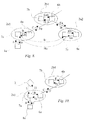
- Figure 8 is an illustration of an inquiry when the data-information requested is available in an object node 2a2 that is located immediately beneath the same directory node 2b1 as the first object node 2a1.
- This inquiry comprises the following steps:
- the superordinate node 2b 1 is a directory node.
- Figure 9 illustrates an inquiry when the requested data-information is available in an object node 2'a1 belonging to a second cache 2', where a first cache 2 co-operates with the second cache 2' via a service node 2d.
- This inquiry includes the following process steps:
- the first and the second superordinate nodes 2c, 2'c are root nodes.
- Figure 10 illustrates the procedure carried when the requested data-information is not available in the cache.
- This procedure comprises the following steps:
- the superordinate node 2c is a root node.
- the present invention is particularly beneficial in large networks, such as the internationally extended network Internet.
- it is suitable for a cache to be managed by an operator active on Internet, which provides the operator with the advantages of a powerful, scaleable and user-friendly cache.
- Another possible application of the present invention is its use in telecommunications networks.
Landscapes
- Engineering & Computer Science (AREA)
- Computer Networks & Wireless Communication (AREA)
- Signal Processing (AREA)
- Computer Security & Cryptography (AREA)
- Information Retrieval, Db Structures And Fs Structures Therefor (AREA)
- Information Transfer Between Computers (AREA)
- Data Exchanges In Wide-Area Networks (AREA)
Abstract
Description
- The present invention relates to a method of dealing with requests for data information within a network that includes a plurality of users that request said data information, and a plurality of servers that supply data information.
- Newly used data information is stored in a cache acting between a server and a user and including a number of different nodes.
- The present invention also relates to a cache adapted to act in accordance with the method, and a node adapted to act within an inventive cache.
- It is known that a request for data information within a network, for instance when a user of the international network Internet seeks a specific home page on the network, may involve the user first connecting himself/herself with the network through a network operator and then addressing the server that contains the required information directly. The operator connects the user either persistently or temporarily to a computer unit or processor unit belonging to the operator and through which requests for information can be sent by the user on the network. Since the server concerned may be positioned at a geographically remote location in the wide network, it is known that an operator, or some other actor on the network, provides a cache for collected information, in which newly used information is stored so as to be available to other users who may seek the same information. This is economically advantageous with respect to the operator and provides a much faster network for the user.
- Such a cache may include a plurality of different nodes for connection to those users who avail themselves of the operator's services.
- It is known to arrange the cache nodes in a hierarchical structure so as to be able to reduce the requirement of requisite bandwidths within the wide network; c.f. in this regard the publication "A Hierarchical Internet Object Cache", by Anawat Chankhunthod, Peter B. Danzig, Chuck Neerdaels, Michael F. Schwarz and Kurt J. Worrel, Computer Science Department, University of Southern California and Computer Science Department, University of Colorado - Boulder, 1995.
- It is also known that the request for data-information within a network may involve:
- a) the user requesting current or relevant data-information from a first node of a cache node set-up;
- b) sending the requested data-information to the user, when said data-information is available within said first node;
- c) the first node requesting said data-information from other cache nodes, when said data-information is unavailable in said first node;
- d) sending the data-information to the user when case c) is fulfilled and when data-information is available in the cache;
- e) fetching said data-information from the cache server and sending said data-information to the user when case c) is fulfilled and when data-information is unavailable in the cache;
- In a hierarchy of this kind, it is also known to implement e) above, by the higher level node fetching the requested information from the server concerned and then sending this information to the first node which, in turn, sends the information to the user.
- One drawback with this technique, and also with other similar hierarchical node structures within a cache resides in the generation of so-called hot spots through nodes that are heavily loaded, because it is necessary for much of the traffic to pass through the higher level node. Furthermore, Internet includes a plurality of smaller, independent networks where the links between these networks often constitute bottlenecks that restrict traffic information.
- There is used on the Internet an established protocol designated "the Internet Cache Protocol" (ICP), which is intended to facilitate the coaction of independent networks with other networks and thereby circumvent the hot spot problems.
- ICP causes a node to ask a plurality of mutually co-operating nodes if they have the information requested. This can result in hundreds of questions being asked. It is possible that tens of positive answers are obtained, and the first node, that is to say the querying node, must itself decide the node from which the information shall be taken. This may result in the first node attempting to fetch information from a node that is already heavily loaded while other nodes that have the desired information may have free capacity. The answer may also result in the questioning node going to the server that provides the requested information, in order to obtain this information.
- It is known from the publication "A Distributed Internet Cache" by Dean Povey, Department of Computer Science, University of Queensland, 1995, to implement d) above by allowing a higher level node in the hierarchy to inform the first node where the desired information can be found in the hierarchy, whereafter the first node contacts the node that has the desired information requesting the dispatch of said information. This is normally also referred to as pulling, i.e. the asking node pulls the information to itself, This publication also discloses that the first node can, itself, collect the desired information in accordance with e) above.
- Reference can also be made to Patent Publication
EP-A2-0 618 708 with regard to prior art technique. This publication describes a system of mutually coacting nodes. - According to the technique disclosed in this earlier publication, superordinate nodes (referred to as cache server nodes) store information relating to the resources available in nodes that are connected to themselves in a directory. When receiving an inquiry concerning a specific resource, the node searches for the resource in its own directory. If the information requested is not available, the server node requests the information from coacting server nodes. If none of these server nodes contains the information requested, a general broadcast is made to all nodes in the network. If this general broadcast fails to produce the information requested, the inquiry, or request, is sent to adjacent networks via selected gate nodes.
- In this context, it will also be mentioned what is meant in this description by persistent and temporary connections.
- In communication in large networks there is used a transmission control protocol (TCP), which is a connection orientated protocol that provides a reliable bit stream within an Internet protocol (IP) According to TCP, a persistent connection implies a guarantee that both ends of a connection will be able to receive all data that is sent from the other end of the connection. According to TCP, the data is received in the same order as that in which it was originally sent and without receiving a duplicate.
- Thus, according to TCP, a persistent connection is a logic persistent connection which guarantees transmitter and receiver a correct transmission of data and which need not be a physical persistent connection between transmitter and receiver. In this description, by a persistent connection is meant more specifically a connection that is constantly activated and that if deactivated for some reason or another is again established.
- By temporary connection is meant in this description a connection that is established temporarily when transmitting data and is then released upon completion of the transmission. A temporary connection can also be a connection that has already been established for some reason or another and that can be also used for the current transmission. Thus, this connection need not be established or released specifically with respect to the current transmission.
- The establishment and release of these connections need not necessarily be physical, but may also be achieved by means of a logic facility that enables one of several possible logic connections to be made in one or more physically established connections.
- Irrespective of whether a connection is a persistent or a temporary connection in accordance with this description, it can equally as well be allocated the properties of a persistent connection according to TCP.
- When considering the prior art as described above, it will be seen that a technical problem resides in the ability to balance the load in a cache node hierarchy, so as to avoid the problems associated with hot spots where one or a few nodes is/are heavily loaded with data transmissions.
- Another technical problem resides in the distribution of traffic in a cache so as to prevent the occurrence of bottlenecks, where the transmission capacity in one or more connections limits/limit the total flow of data within or to and from a cache.
- Another technical problem is one of deciding the node from which desired information shall be collected when the information requested is found available in a number of nodes in one and the same cache.
- Another technical problem is to allocate functions and assignments to cache nodes and to arrange these nodes in relation to one another such that only a very small data quantity need be sent between different nodes in order to satisfy an inquiry or request for specific data-information.
- Another technical problem is one of providing a method of handling an inquiry in a manner which takes into account the available transmission capacity and the temporary loading of different nodes.
- Still another technical problem is one of providing a protocol according to which inquiries are made within a cache and which provides a specific inquiry and response order in different cases, depending on whether or not the requested information is available in the node to which the user is connection or in another node within the cache, or in a node within another cache, or possibly is only available from the server that provides the information requested.
- Another technical problem resides in connecting co-acting cache nodes together in a manner which is advantageous both from the aspect of economy and the aspect of transmission Another technical problem is one of providing co-action between different caches.
- Another technical problem is one of distributing the traffic occurring between different caches.
- Still another technical problem is one or adapting cache nodes for different loads or capacity requirements.
- When a cache has been taken into operation, a technical problem resides in the ability to adapt the cache nodes to future capacity requirements, where this requirement may have increased or decreased.
- Another technical problem resides in dividing a node into several different functions or services and to allocate to these functions or services that enable the load to be distributed within a node between different services
- Another technical problem is one of adapting these services to those functions or assignments that have been assigned to respective nodes.
- Another technical problem is one of implementing respective services in a manner which provides scalability for adapting respective nodes to the capacity required
- With the intention of solving one or more of the aforesaid technical problems, the present invention take as its starting point a method, a cache and a node according to known technology as described in the aforegoing, where the cache nodes form a hierarchical tree structure of nodes that includes a plurality of so-called object nodes, a plurality of so-called directory nodes, and a so-called root node.
- In this tree structure, the object nodes arc positioned furthest out, the root node constitutes the root in the tree structure, and any intermediate levels between an object node and the root node are comprised of directory nodes.
- This structure and the division into different nodes enables different assignments to be distributed within a cache, thereby enabling the problems relating to hot spots and bottlenecks to be circumvented or at least considerably reduced.
- For the sake of clarity, the information handled in this description has been divided into two types of information, to-wit data-information and meta-information. By data-information is meant the information requested by a user, such as a home page on the Internet. By meta-information is meant information used within the network between different nodes and which points to where the requested data-information is available in the network or in a cache, in several different ways.
- A particular feature of the present invention is that the data-information stored in the tree structure is stored solely in the object nodes.
- The directory nodes are intended to include a directory of all data-information stored in the object nodes which, in the tree structure, are located beneath respective directory nodes, and within which object nodes respective data-information is stored.
- The root node is intended to include a directory of all data-information that is stored in the tree structure and within which object node respective data-information is stored.
- The information that points to where the data-information is available is the earlier mentioned meta-information.
- One aspect of the present invention is a method as defined in independent claim 1. Another aspect of the invention is an apparatus as defined in independent claim 16. A node adapted to operate in the data cache of claim 16 is further defined in
claim 21. Further embodiments of the invention are specified in the respective appended dependent claims. - In this case when the data-information requested is found, the object node that contains this information is ordered to send it to the first object node, also known as pushing, In combination with the commanding node issuing its order while taking into account the current load on different object nodes provides a solution to part of the problems concerning the distribution of the total load on the mutually coacting nodes of a cache.
- It is also proposed that when the data-information requested is unavailable in the tree structure, the first object node shall collect the requested data-information from the server concerned, therewith distributing the load created by fetching unavailable data-information from between the different object nodes.
- It is also proposed in accordance with one embodiment of the present invention that when an object node is ordered to send data-information to the first object node, the commanding node will inform the first object node, either directly or via possible intermediate directory nodes, that the data-information is found within the tree structure, and that when the data-information is unavailable in the tree structure the root node informs the first object node, either directly or via possible intermediate directory nodes, that the data-information is unavailable in the tree structure.
- With the intention of ensuring communication between these nodes of a tree structure, it is proposed in accordance with the invention that all cache nodes will communicate with other overlying nodes in the tree structure by means of persistent connections, and that all object nodes will communicate with other object nodes by means of temporary connections, and that solely inquiries, responses to inquiries and meta-information are sent via the persistent connections and data-information is sent via the temporary connections.
- In order to enable the searching capacity for requested information to be broadened, it is proposed in accordance with the invention that a first root node of a cache is able to co-operate with a second root node belonging to another cache, and that respective root nodes include a directory that contains all data-information available in said co-operating root nodes.
- According to one embodiment of the invention, co-operating root nodes are mutually connected to a common service node via persistent connections, said service node functioning to direct traffic between mutually co-operating root nodes.
- With the intention of providing a scaleable node that can be readily adapted to prevailing capacity requirements and that is able to handle high loads, it is proposed in accordance with the invention that each node will include four kinds of services, to wit data services, scheduling services, logic services and management services.
- The data services store information, the scheduling services distribute incoming inquiries from users to different logic services and sends responses from the toxic services to the users, the logic services search for and handle information in accordance with requests, and the management services handle information with regard to information updates, the information that shall be stored, the duration of such storage and under which conditions, and so on.
- When a node is an object node, the information consists of both data-information and meta-information concerning the own node.
- When necessary, the logic service in the object node takes data-information from the server that can provide such information. The data-information taken from the server is stored in the data services in accordance with guidelines from the management services. Meta-information relating to said data-information is stored in the data services and replicated in overlying directory nodes or root nodes in the tree structure, via the scheduling services. The logic services then send the data-information to the user.
- In response to a command to send the data-information to a first object node, the logic services fetch data-information from the data services belonging to the own node, and send this data-information to the logic services of the first object node.
- The logic services belonging to the first object node thus store received data-information in the data services belonging to the own node in accordance with guidelines from the management services belonging to the own node, whereafter the toxic services belonging to the first object node store meta-information relating to the data-information in the data services. The logic services belonging to the first object node cause the meta-information to be replicated in the overlying directory node or root node in the tree structure via the scheduling services, whereafter a logic service belonging to the first object node sends said data-information to the user.
- When a node is a root node or a directory node, solely meta-information is concerned.
- Respective services are implemented with the aid of a processor unit and associated means that carry out the service concerned. Scalability in a node is achieved by virtue of enabling a plurality of processor units to operate in parallel within respective kinds of services.
- It is also possible to allow a processor unit to provide a plurality of services within one kind of service, or to allow a processor unit to provide a plurality of services within different kinds of services.
- When needing to increase or decrease the available capacity of a node, by adding processor units to or removing processor units from the node and optionally causing the additional processor units to act as one or more service facilities according to one or more kinds of services.
- The present invention can be applied to particular advantage in large networks, such as the broad network Internet, where it is appropriate for a cache to be handled by an operator active on the Internet.
- Those advantages that are primarily afforded by an inventive method, cache or node reside in the provision of a cache that enables requests for specific data-information to be handled simply, quickly and positively, where the nodes active within the cache and the capacity of said nodes can be managed in a beneficial manner from the aspect of capacity so that hot spots and bottlenecks can be avoided to a large extent.
- The present invention provides nodes that can be scaled to suit requirements, which may change with time. The node structure also enables the load to be distributed between different processor units within the node.
- The main characteristic features of the inventive method are set forth in the characterizing clause of the following Claim 1, while the main characteristic features of an inventive cache are set forth in the characterizing clause of the following Claim 16, and the main characteristic features of an inventive node are set forth in the characterizing clause of the following
Claim 21. - A method, a cache, and a node having features characteristic of the present invention will now be described in more detail by way of example with reference to the accompanying drawings, in which
- Figure 1
- is a schematic, highly simplified illustration of a large network, showing a user, a cache, and a server;
- Figure 2
- illustrates schematically an hierarchical structure for nodes included in an inventive cache;
- Figure 3
- is a flowchart illustrating the basic method of requesting data-information in a cache;
- Figure 4
- is a schematic illustration of the co-operation between five different caches;
- Figure 5
- is a schematic illustration of the principle construction of a node belonging to a cache;
- Figures 6a and 6b
- illustrate schematically how a processor unit can provide a plurality of different services,
- Figure 7
- illustrates schematically the type of connections that interconnect the nodes of a cache;
- Figure 8
- is a schematic illustration of a first example of a procedure followed in response to a request in a cache;
- Figure 9
- is a schematic illustration of a second example of a alternative procedure followed in response to a request, or inquiry, between two caches; and
- Figure 10
- is a schematic illustration of a third example of a procedure followed in response to a request, or inquiry, in a cache.
-
Figure 1 is a highly simplified illustration of the fundamental requirements of the present invention. The Figure shows threedifferent users Figure 1 seeks data-information that is available in aserver 3 somewhere in the network. This is effected by user 1a making direct contact with theserver 3. By direct contact is not necessarily meant a direct physical line, but can often mean that the contact passes via a number of different nodes in the network. - Direct contact with a server is often unsuitable, since it will frequency involve a long communications route through many different bottlenecks and hot spots. If all users seeking this particular data-information go directly to the server that provides said data-information, when the data-information concerned is much sought after, the server itself will become a hot spot and the connections leading to the server will become bottlenecks.
- User I b in
Figure 1 searches for the same data-information and enters a request for said information via acache 21. The cache checks for the availability of the requested data-information in one of thenodes cache 21. If the information is unavailable, the data-information is fetched from theserver 3 to thecache 21 and there stored and sent to theuser 1b - The
user 1c inFigure 1 also requests for the same data-information. In this case, the data-information is stored in thecache 2 and theuser 1c is therefore able to receive the data-information requested from the cache without needing to load theserver 3 and without needing to fetch the data-information from the large network. This gives faster handling of the request, or inquiry, and a quicker response on the part ofuser 1c. - Handling of requests, or inquiries, for data-information within a network where the request is handled by a
cache 21, thus comprises the steps in which - a) a
user 1b asks to be provided with data-information from afirst node 22 of the number ofnodes cache 21; - b) when said data-information is available in the
first node 22, the data-information is sent to theuser 1b; - c) when the data-information is unavailable in the
first node 22, the first node inquires after the data-information in thenodes 20, 24, belonging to thecache 21; - d) when step c) is fulfilled and data-information is available in the
cache 21, said data-information is sent to theuser 1b; and - e) when c) is fulfilled and the data-information is unavailable in the
cache 21, the data-information is fetched from theserver 3 to thecache 21 and thereafter sent to theuser 1b. - Subsequent to having been fetched from the
server 3 to thecache 21, the data-information is stored in the cache and is made available within thecache 21 for a given period of time, so as to be available for any other requests made for this information. - As will be seen from
Figure 2 , nodes 2a1, 2a2, 2a3, 2a4, 2a5, 2a6, 2b1, 2b2, 2b3, 2c belonging to acache 2 form a hierarchical tree structure. - This tree structure includes a number of so-called object nodes 2a1, 2a2, 2a3, 2a4, 2a5, 2a6, a number of so-called directory nodes 2b1, 2b2, 2b3, and a so-called
root node 2c. - The object nodes 2a1, 2a2, 2a3, 2a4, 2a5, 2a6 are positioned furthest out in the tree structure, and the
root node 2c constitutes the root of the tree structure. Possible intermediate levels between an object node and the root node are comprised of directory nodes 2b1, 2b2, 2b3. -
Figure 2 shows a tree structure that includes one level of directory nodes between the root node and the object nodes. The tree structure shown inFigure 2 is merely an explanatory example and it will be understood that a tree structure may be much large and have different configurations in the practical application of the present invention, all in accordance with prevailing requirements. - The data-information stored in the tree structure is stored solely in the object nodes 2a1, 2a2, 2a3, 2a4, 2a5, 2a6. Respective directory nodes 2b1, 2b2, 2b3 include a directory which covers all data-information stored in object nodes that are located in the tree structure beneath respective directory nodes, and in which object nodes respective data-information is stored. The
root node 2c includes a directory covering all data-information stored in the total tree structure, and the identity of the object node in which respective data-information is stored. The information that points to where data-information is available is referred to here as meta-information in order to distinguish this information from the requested, so-called data-information. - Against this background, the present invention provides a method of handling a request for data-information. This method utilizes an inventive cache and an inventive node.
- Handling of a request for data-information will now be described with reference to several different situations.
- When a user 1a asks for data-information, the following steps are taken:
- f) the user 1a requests the data-information concerned from a first object node 2a1 of a number of available object node; and
- g) when said data-information is available in said first object node 2a1, the data-information is sent to the user 1a
- When a
user 1b requests data-information from a first object node, which in this case is the object node 2a3, the following steps are taken: - h) when data-information is unavailable in the first object node 2a3, the first object node 2a3 requests the data-information from a first directory node 2b2 which lies directly above the first object node 2a3 in the tree structure;
- i) when step h) is fulfilled and the data-information is available in a second object node 2a4 which lies beneath the first directory node 2b2 in the tree structure, and the directory of the first directory node 2b2 includes information of the identity of the object node 2a4 in which the data-information is found, the first directory node 2b2 commands the second object node 2a4, either directly or via possible intermediate directory nodes, to send the data-information to the first object node 2a3 by means of a connection 4b1, whereafter the data-information is sent to the
user 1b. - When a
user 1b requests data-information from a first object node, which in the illustrated case is the object node 2a3, the following procedural steps are taken: - j) when step h) is fulfilled and said data-information is available in a third object node 2a6 which lies beneath a second directory 2b3 separate from the first directory node 2b2 in the tree structure and the directory of this second directory node 2b3 includes information as to which object node 2a6 the data-information is available, the first directory node 2b2 requests the data-information from a further node that is located directly above the first directory node 2b2 in the tree structure;
- k) when step j) is fulfilled and the further node is a third directory node that is located above the second directory node in the tree structure, the third directory node orders the second object node, either directly or via possible intermediate directory nodes, to send said data-information to the first object node, whereafter said data-information is sent to the user; and
- l) when step j) is fulfilled and said further node is comprised of the
root node 2c, theroot node 2c orders the second object node 2a6, either directly or via possible intermediate directory nodes 2b3, to send the data-information to the first object node 2a3 by means of a connection 4b2, whereafter the data-information is sent to theuser 1b. - When a
user 1c asks for data-information from a first object node which, in the illustrated case, is the object node 2a5, the following procedural step is taken: - m) when the data-information is unavailable through the tree structure, the data-information is fetched from the
server 3 by the first object node 2a5, whereafter said data-information is sent to theuser 1c. - Step k) is not explicitly shown in
Figure 2 , since the node that is superordinate to the further node in the Figure is comprised of a root node according to step 1). However, the person skilled in this art will readily understand how step k) is implemented in a tree structure that has two or more levels of directory nodes in one of the branches of the tree structure. -
Figure 3 is a flowchart that illustrates steps f) to m). This flowchart also illustrates step k). - When the requested data-information is available in a plurality of different object nodes 2a5, 2a6, the commanding node 2b3 may be allowed to decide which object node 2a6 shall send the data-information, on the basis of the current loading of those object nodes that contain said requested data-information.
- When an object node 2a6 is ordered to send data-information to a first object node 2a3, the commanding node 2b3 informs the first object node 2a3, either directly or via possible intermediate directory nodes, that said data-information is available within the tree structure.
- When the data-information requested is unavailable in the tree structure, the
root node 2c informs the first object node 2a3, that the data-information is unavailable in the tree structure, either directly or via possible intermediate directory nodes 2b2. -
Figure 2 also shows that all cache nodes communicate with overlaying nodes in the tree structure by means ofpersistent connections 4a, shown in full lines. - All object nodes communicate with other object nodes by means of temporary connections 4b1, 4b2, as shown in broken lines. Communication between the various object nodes takes place only in the transmission of data-information from one object node to another.
- Solely inquiries, answers to inquiries, and meta-information are sent via the
persistent connections 4a, whereas data-information is sent viatemporary connections 4b. - As illustrated in
Figure 4 , afirst root node 2c of afirst cache 2 may be allowed to co-operate with a second root node 2'c belonging to a second cache 2'. - In the illustrated case, each
root node 2, 2' includes a respective directory that contains all data-information found available in root nodes belonging to co-operating caches. - Thus, this meta-information contains solely the data-information that is available within co-operating caches and within which of these co-operating caches respective data-information is found. The meta-information relating to other caches does not include pointers as to where in the other cache the data-information requested is found, and neither how many copies of said requested data-information may be found in the cache.
- Thus, in conjunction with an inquiry, or request, from a
first root node 2c to a second root node 2'c concerning certain data-information, the second root node 2'c determines which object node in the own tree structure shall send the data-information. -
Figure 4 also shows that allco-operating root nodes 2c, 2'c are connected to each other via persistent connections with acommon service node 2d whose function is to direct traffic between co-operating root nodes. -
Figure 4 also shows thatseveral service nodes more caches - It will be understood in this regard that when the data-information requested in a
first cache 2 is available from an object node 2'a1 in a second cache 2', through the route of aservice node 2d, meta-information to this effect is found in the directory of theroot node 2c in thefirst cache 2, and consequently the data-information requested is considered to be available through the tree structure, meaning that the condition of step m) is not fulfilled and that theroot node 2c can order the object node 2'a1 concerned to send said data-information to the first object node 2a3 by requesting the data-information from the second root node 2'c which, in turn, orders the object node 2'a1 concerned to send the data-information to the first object node 2a3. - According to a proposed embodiment of the present invention, and as illustrated in
Figure 5 , each node includes four kinds of services, these beingdata services 5, scheduling services 6,logic services 7 andmanagement services 8. - The data services 5 store information, the scheduling services 6 distribute incoming inquiries from user to
different logic services 7, and forward responses from thelogic services 7 to the users, thelogic services 7 search for and handle information related to the inquiry concerned, and themanagement services 8 handle the information with regard to updating said information, deciding which information shall be stored, the duration of such storage, the conditions of such storage, and so on. - The services in the different kinds of nodes function in slightly different ways.
- The information in an object node relates to both data-information and meta-information concerning the own node. The
logic services 7 in the object node have the additional function of fetching data-information from the server providing said information, when necessary. Thelogic services 7 also store the collected data-information in thedata services 5 in accordance with guidelines from the management services 8. Meta-information relating to the data-information is also stored in thedata services 5 and replicated to overlying directory nodes or root nodes in the tree-structure, via the scheduling services 6. Thelogic services 7 also have the function in the object nodes of sending said data-information to the user. - In response to a command to send data-information to a first object node, the
logic services 7 fetch the data-information from thedata services 5 belonging to the own node and transmit the data-information collected to logic services belonging to the first object node. - The
logic services 7 belonging to the first object node thus store received data-information in thedata services 5 belonging to the own node in accordance with guidelines from themanagement services 8 belong to the own node. Meta-information relating to the data-information is also stored in thelogic services 7 belonging to the first object node in thedata services 5 and is replicated in overlying directory nodes or root nodes in the tree structure, via the scheduling services 6. - The
logic services 7 belonging to the first object node have the function of sending the data-information to the user also in this case. - Information in a root node or a directory node relates solely to meta-information.
- As illustrated in
Figure 5 , respective services can be implicated by using aprocessor unit 9 and associated units to carry out the services, and by causing a plurality ofprocessor units - As shown in
Figure 6 , aprocessor unit 9a may be allowed to provide a plurality ofservices service 5, according toFigure 6a , or to allow aprocessor unit 9b to provide a plurality ofservices services Figure 6b , depending on the capacitor of theprocessor unit - When needing to increase or decrease the available capacity of a node, the node is scaled to the capacity desired by adding processor units to or removing processor units from the node concerned, and by optionally allocating to the additional processor units the function of acting as one or more services in accordance with one or more kinds of services.
- In
Figure 5 this is illustrated by increasing thedata services 5 by adding oneprocessor unit 9"' to the node and allocating this added processor unit the function of acting as adata service 5. - In the case of applications where security is of great importance, it may be suitable to allow respective services to be implemented by a processor unit, so as to thereby increase security should one of the processor units malfunction.
-
Figure 7 illustrates the various connections that are active between the nodes in a tree structure according to a proposed embodiment of the present invention, where persistent connections are shown infull lines 4a and temporary connections are shown in broken lines. - In the
Figure 7 illustration, a user 1a is connected to thelogic service 7a belonging to a first object node 2a1 by means of atemporary connection 4b'. Allscheduling services - When data-information shall be transmitted from an object node 2a2 to the first object node 2a1, the transmission is effected with the aid of a
temporary connection 4b" between thelogic services - When the first object node 2a1 shall fetch data-information from a
server 3, it does so with the aid of atemporary connection 4b"'. - In this way, all nodes have contact with superordinate nodes by means of persistent connections that guarantee good communication within the cache. Respective scheduling services then distribute incoming inquiries to the logic service within the own node that has the least load at that moment in time.
- Persistent connections transmits solely meta-information, inquiries and replies to inquiries, whereas temporary connections are used for the transmission of data-information.
- For the sake of clarity, the three different basic cases of inquiries will be described with a more detailed explanation of the functions of the various services in the inquiry process.
-
Figure 8 is an illustration of an inquiry when the data-information requested is available in an object node 2a2 that is located immediately beneath the same directory node 2b1 as the first object node 2a1. - This inquiry comprises the following steps:
- A: A user 1a establishes a connection with the
cache 2 and is allocated a connection to a specific node, a first object node 2a1, where the actual connection is effected with a temporarily availabletoxic service 7a. Theconnection 4b is a temporary connection. The user 1a requests for specific data-information. Thelogic service 7a checks if the requested data-information is available in the own node 2a1. - B: When the data-information requested is not available in the own node, the data-information is requested from a superordinate node, first via the
scheduling service 6a of the own node. - C: The
scheduling service 6a forwards the request to a superordinate node 2b1 and has there a persistent connection with one of thescheduling services 6b belonging to the superordinate node 2b 1. - D: The
scheduling service 6b belonging to the superordinate node 2b1 sends the request to the least loadedlogic service 7b belonging to the superordinate node 2b1. - Ea: The
logic service 6b sends an order intended for the object 2a2 that contains the data-information requested, commanding said object node to send the data-information. The order is sent to thescheduling service 6b belonging to the own node 2b1. - Eb: The
logic service 7b sends a message intended for thelogic service 7a that sent the original inquiry to the effect that the data-information is available in the cache. - Fa: The
scheduling service 6b forwards the order Ea to thescheduling service 6c belonging to the object node 2a2 that contains the data-information concerned. - Fb: The
scheduling service 6b forwards the message Eb to thescheduling service 6a belonging to the first object node 2a1. - Ga: The
scheduling service 6c sends the order Ea to the least loadedlogic service 7c in the own node. - Gb: The
scheduling service 6a sends the message Eb to thelogic service 7a concerned in the own node. - Ha: The data-information requested is pushed from the
logic service 7c to thelogic service 7a belonging to the first object node. - Hb: The
logic service 7c sends a confirmation message to the effect that the data-information has been pushed to thescheduling service 6c in the own node. - Ia: The data-information is sent from the
logic service 7a to the user 1a. - Ib: The confirmation message Hb is sent to the
scheduling service 6b belonging to the superordinate node 2b1. - Ic: The
logic service 7a belonging to the first object node 2a1 confirms the receipt of said data-information. - J : The confirmation message Hb is sent to the
logic service 7b in the own node from thescheduling service 6b belonging to the superordinate node 2b 1. - In this particular case, the superordinate node 2b 1 is a directory node.
-
Figure 9 illustrates an inquiry when the requested data-information is available in an object node 2'a1 belonging to a second cache 2', where afirst cache 2 co-operates with the second cache 2' via aservice node 2d. - This inquiry includes the following process steps:
- A: A user Ia establishes a connection with the
cache 2 and is allocated a connection to a specific node, a first object node 2a1, where the virtual connection is effected with a temporarilyavailable logic service 7a. Theconnection 4b is a temporary connection. The user I a requests specific data-information. Thelogic service 7a checks if the requested data-information is available in the own node 2a1. - B: When the requested data-information is unavailable in the own node, the data-information is requested from a first superordinate node, first via the
scheduling service 6a of the own node. - C: The
scheduling service 6a forwards the inquiry to the firstsuperordinate node 2c and has there a persistent connection with one of thescheduling services 6b belonging to the firstsuperordinate node 2c. - D: The
scheduling service 6b belonging to the firstsuperordinate node 2c sends the inquiry to the least loadedlogic service 7b belonging to the firstsuperordinate node 2c. - Ea: When the requested data-information is unavailable in the own node but, according to meta-information, is available in the co-operating cache 2', the
topic service 7b requests the data-information from theservice node 2d, first via thescheduling service 6b of the own node. - Eb: The
logic service 7b sends a message intended for thelogic service 7a that sent the original inquiry, to the effect that the data-information is available. - Fa: The
scheduling service 6b forwards the inquiry Ea to ascheduling service 6c belonging to theservice node 2d. - Fb: The
scheduling service 6b forwards the message Eb to thescheduling service 6a belonging to the first object node 2a1. - Ga: The
scheduling service 6c belonging to theservice node 2d forwards the inquiry Ea to a scheduling service 6'd belonging to a second superordinate node 2'c which is superior in status to the object node 2'a1 that has the requested data-information. - Gb: The
scheduling service 6a sends the message Eb to thelogic service 7a concerned in the own node. - H: A scheduling service 6'd belonging to the second superordinate node 2'c forwards the inquiry Ea to the least loaded
logic service 7'd belonging to the second superordinate node 2'c. - I: The
logic service 7'd sends an order addressed to the object node 2'a1 that has the data-information requested, commanding the node to send said data-information. The order, or command, is sent to the scheduling service 6'd belonging to the own node 2'c. - J: The scheduling service 6'd forwards the order 1 to the scheduling service 6'e belonging to the object node 2'a1 that has the data-information requested.
- K: The scheduling service 6'e sends the order 1 to the least loaded logic service 7'e in the own node.
- La: The data-information concerned is pushed from the logic service 7'e to the
logic service 7a belonging to the first object node. - Lb: The logic service 7'e sends a confirmation message to the effect that the data-information has been pushed to the scheduling service 6'e in the own node.
- Ma: The data-information is sent from the
logic service 7a to the user 1a. - Mb: The confirmation message Lb is sent to the scheduling service 6'e belonging to the second superordinate node 2'c.
- Mc: The
logic service 7a belonging to the first object node 2a1 confirms the receipt of the data-information. - N: The confirmation message Lb is sent to the
logic service 7'd in the own node from the scheduling service 6'd belonging to the second superordinate node 2'c. - In this case, the first and the second
superordinate nodes 2c, 2'c are root nodes. -
Figure 10 illustrates the procedure carried when the requested data-information is not available in the cache. - This procedure comprises the following steps:
- A: A user I a establishes a connection to the
cache 2 and is allocated a connection with a specific node, a first object node 2a1, wherein the virtual connection is effected with a temporarilyavailable logic service 7a. Theconnection 4b is a temporary connection. The user 1a inquires after specific data-information. Thelogic service 7a checks if the data-information requested is available in the own node 2a1. - B: When the requested data-information is not available in the own node, the data-information is requested from a superordinate node, first via the
scheduling service 6a of the own node. - C: The
scheduling service 6a forwards the inquiry to asuperordinate node 2c and has there a persistent connection with one of thescheduling services 6b belonging to thesuperordinate node 2c. - D: The
scheduling service 6b belonging to thesuperordinate node 2c sends the inquiry to the least loadedlogic service 7b belonging to thesuperordinate node 2c. - E: The
logic service 7b sends a message addressed to thelogic service 7a that sent the original inquiry, to the effect that the data-information is unavailable. - F: The
scheduling service 6b forwards the message E to thescheduling service 6a belonging to the first object node 2a 1. - G: The
scheduling service 6a sends the message E to thelogic service 7a concerned in the own node. - H: The
logic service 7a requests the data-information from theserver 3 that provides said information. - I: Data-information is sent from the
server 3 to thelogic service 7a. - J: Data-information is sent from the
logic service 7a to the user 1a. - In this particular case, the
superordinate node 2c is a root node. - The present invention is particularly beneficial in large networks, such as the internationally extended network Internet. In this particular application, it is suitable for a cache to be managed by an operator active on Internet, which provides the operator with the advantages of a powerful, scaleable and user-friendly cache.
- On Internet, the data-information will often comprise home pages and inquiries are made with the aid of an HTTP address.
- Another possible application of the present invention is its use in telecommunications networks.
Claims (30)
- A method of dealing with inquiries that concern data-information in a network that includes a plurality of users who ask to be provided with said data-information, a plurality of servers which provide said data-information, and at least one cache active between said servers and users, containing newly used data-information, and wherein said cache includes a plurality of nodes, in which methoda) the user requests the data-information concerned from a first node of said plurality of nodes;b) when the data-information requested is available in said first node, said data-information is sent to said user;c) when said data-information is unavailable in said first node, said first node requests said data-information from said nodes belonging to said cache;d) when step c) is fulfilled and the data-information is available within the cache, the data-information is sent to said user;e) when c) is fulfilled and said data-information is unavailable in said cache, the data-information is fetched from said server by said first node and deliver to said cache, whereafter said data-information is sent to said user;wherein subsequent to having been fetched from said server, said data-information is stored in said cache for a given period of time so as to be available for requests and inquiries from further users, wherein the nodes belonging to the cache form a hierarchical tree structure of nodes that includes a plurality of so-called object nodes, a plurality of so-called directory nodes, and a so-called root node, wherein said object nodes are positioned furthest out in said tree structure, wherein said root node forms the root of said tree structure, wherein possible intermediate levels between an object node and said root node are comprised of directory nodes, wherein data-information stored in said tree structure is stored solely in said object nodes, wherein respective directory nodes include a directory that covers all data-information stored in object nodes that are located beneath said directory nodes in said tree structure and in which object nodes respective data-information is stored, wherein said root node includes a directory of all data-information stored in said tree structure and in which object nodes respective data-information is stored, where information that discloses which data-information is available and where said information is available is designated meta-information, in which methodf) the user requests data-information concerned from a first object node of said plurality of object nodes;g) the data-information is sent to said user when said data-information is available in said first object node;h) said first object node requests said data-information from a first directory node that lies directly above said first object node in said tree structure, when said data-information is unavailable in said first object node; the methodis characterized in that the information inquiry procedure comprises the steps of:i) when step h) is fulfilled and said data-information is available in a second object node that is located beneath said first directory node in said tree structure, wherein the directory belonging to said first directory node includes data which points to the object node in which said data-information is available, said first directory node orders said second object node, directly or via possible intermediate directory nodes, to send said data-information to said first object node, whereafter said data-information is sent to said user;j) when step h) is fulfilled and said data-information is available in a third object node that lies beneath a second directory node separate in said tree structure from said first directory node, where said directory belonging to said second directory node includes data which points to the object node in which said data-information is available, said first directory node requests said data-information from a further node that lies directly above said first directory node in said tree structure;k) when step j) is fulfilled and said further node is comprised of a third directory node that lies above said second directory node in said tree structure, said third directory node orders said second object node, directly or via possible intermediate directory nodes, to send data-information to said first object node, whereafter said data-information is sent to said user;1) when step j) is fulfilled and said further node is comprised of said root node, the root node orders said second object node, directly or via possible intermediate directory nodes, to send said data-information to said first object node, whereafter said data-information is sent to said user;and that when the requested data-information is available in a plurality of different object nodes, the ordering node decides which object node shall send the data-information, on the basis of the current load on those object nodes that contain the requested data-information.
- A method according to Claim 1, characterized in that when an object node is ordered to send data-information to said first object node, the commanding node informs, directly or via possible intermediate directory nodes, the first object node that said data-information is available within the tree structure; and in that when said data-information is unavailable through said tree structure, the root node informs the first object node, directly or via possible intermediate directory nodes, that said data-information is unavailable in the tree structure.
- A method according to Claim 1, characterized in that all nodes belonging to a cache communicate with overlying nodes in said tree structure by means of persistent connections; in that all object nodes communicate with other object nodes by means of temporary connections; in that solely inquiries, answers to inquiries, and meta-information are sent via said persistent connections; and in that data-information is sent via said temporary connections.
- A method according to Claim 1, where a first and a second cache are active within one and the same network, characterized in that a first root node belonging to said first cache co-operates with a second root node belonging to said second cache; in that respective root nodes include a directory that covers all data-information which is available in said second root node of said tree structure through meta-information belonging to said second, co-operating root node.
- A method according to Claim 4, characterized in that all co-operating rood nodes are connected to one another via persistent connections with a common service node; and in that said service node directs the traffic between co-operating root nodes.
- A method according to Claim 1, characterized in that each node includes four kinds of services, i.e. data services, scheduling services, logic services and management services; in that said data services store information; in that, when necessary, said scheduling services distribute incoming inquiries between logic services belonging to different nodes and forward responses from logic services belonging to different nodes; in that logic services seek and handle the requested information; and in that said management services handle said information with respect to information updating, where the information shall be stored, the duration of such storage, and under which conditions, and so on.
- A method according to Claim 6, characterized in that said node is comprised of an object node; in that said information relates both to data-information and meta-information concerning the own node.
- A method according to Claim 7, characterized in that, when necessary, said logic service fetches data-information from said server, stores the fetched data-information in said data service in accordance with guidelines from said management service, stores meta-information relating to said data-information in said data service; replicates said meta-information in an overlying directory node or root node in said tree structure, via said scheduling service; and sends said data-information to said user.
- A method according to Claim 7, characterized in that in response to an order to send data-information to a first object node, said logic service fetches data-information from said data service belonging to the own node, sends thus fetched data-information to a logic service belonging to said first object node; in that logic services belonging to said first object node store the thus received data-information in said data services belonging to the own node in accordance with guidelines from said management services belonging to the own node; in that logic services belonging to said first object node store meta-information relating to data-information in said data services; in that logic services belonging to said first object node replicate said meta-information in overlying directory nodes or root nodes in said tree structure via said scheduling services; and in that logic services belonging to said first object node send said data-information to said user.
- A method according to Claim 6, characterized in that said node is comprised of a root node or a directory node; and in that said information is concerned solely with meta-information.
- A method according to Claim 6, characterized in that respective services are implemented by carrying out said services with a respective processor unit and associated units; and in that a plurality of processor units operate in parallel within respective kinds of services.
- A method according to Claim 6 or Claim 11, characterized in that a processor unit provides a plurality of services in one kind of service.
- A method according to Claim 6, 11 or 12, characterized in that a processor unit provides a plurality of services within different kinds of services.
- A method according to Claim 11, 12 or 13, characterized in that when needing to increase or decrease available capacity, said node is scaled to the capacity desired by adding further processor units to or removing processor units from said node; and in that processor units added to the node are allocated the function of acting as one or more services in accordance with one or more kinds of services.
- A method according to any one of the preceding Claims, characterized in that said network is the international extended network Internet; and in that said cache is managed by an operator active on Internet.
- A cache for newly used data-information within a network, wherein the cache is adapted to operate between a plurality of users that can request said data-information, and a plurality of servers from which said data-information can be obtained, wherein nodes belonging to said cache are adapted to handle inquiries concerning said data-information, wherein said cache is adapted to fetched data-information from the server to said cache and subsequently make the data-information available within said cache over a given period of time for possible inquiries from further users, wherein nodes that operate within said cache form a hierarchical tree structure that includes a plurality of so-called object nodes, a plurality of so-called directory nodes, and a so-called root node, wherein object nodes are positioned furthest out in said tree structure, wherein said root node comprises the root of said tree structure, wherein possible intermediate levels between an object node and said root node are comprised of directory nodes, wherein a possible user can be connected to said cache via a first object node, wherein said object nodes are adapted to be the only storage place for the data-information stored within said tree structure, wherein respective directory node is adapted to include a directory that covers all data-information found stored within object nodes that are located beneath said directory nodes in said tree structure, and within which object node respective data-information is stored, wherein said root node is adapted to include a directory that covers all data-information stored within said tree structure and within which object node respective data-information is stored; and wherein information concerning where data-information is available is designated meta-information, said cache being characterized in that when specific data-information requested by a user is available in at least one of said object nodes that are available through said tree structure, a superordinate node thereof decides, based on the current load of those object nodes containing said requested data information, which object node shall send said requested data information, and orders this object node to send said data-information to said first object node according to a received order.
- A cache according to Claim 16, characterized in that all nodes belonging to a cache are adapted to communicate with overlying nodes in said tree structure through persistent connections; in that all object nodes are adapted to communicate with other object nodes through temporary connections; in that solely inquiries, responses to inquiries, and meta-information is sent via said persistent connections; and in that data-information is sent via said temporary connections.
- A cache according to Claim 16, characterized in that the root node belonging to said cache is adapted to co-operate with a root node belonging to another cache; in that respective root nodes include a directory that covers all data-information that is available in the tree structure of said other root node, through meta-information belonging to said co-operating root node.
- A cache according to Claim 16, characterized in that co-operating root nodes can be connected to each other via persistent connections with a common service node; and in that said service node is adapted to direct traffic between co-operating root nodes.
- A cache according to any one of Claims 16 to 19, characterized in that said network is comprised of the internationally extended network Internet; and in that said cache is adapted to be managed by an operator active on the Internet.
- A node adapted to operate within a cache according to Claim 16, characterized in that said node is adapted to include four kinds of services consisting of data services, scheduling services, logic services and management services; in that said data services are adapted to store information; in that said scheduling services are adapted to distribute incoming inquiries to different logic services from the user and to forward responses from said logic services to said user; in that said logic services are adapted to search for and handle said requested information; and in that said management services are adapted to handle said information with respect to information updating, which information shall be stored, the duration of such storage, and under which conditions.
- A node according to Claim 21, characterized in that said node is comprised of an object node; in that said information relates both to data-information and meta-information concerning the own node.
- A node according to Claim 22, characterized in that said logic services are adapted, when necessary, to collect data-information from said server, store such fetched data-information in said data services in accordance with guidelines from said management services, store meta-information concerning said data-information in said data services, replicate said meta-information in overlying directory nodes or root nodes in said tree structure via said scheduling services, and send said data-information to said user.
- A node according to Claim 22, characterized in that said logic services are adapted to fetch data-information from said data services belonging to the own node when ordered to send data-information to a first object node, and to send the thus fetched data-information to logic services belonging to said first object node; in that logic services belonging to said first object node are adapted to store the thus received data-information in said data services belonging to the own node in accordance with guidelines from said management services belonging to said own node; in that logic services belonging to said first object node are adapted to store meta-information relating to said data-information in said data services; in that logic services belonging to said first object node are adapted to replicate said meta-information in overlying directory nodes or root nodes in said tree structure, via said scheduling services; and in that logic services belonging to said first object node are adapted to send said data-information to said user.
- A node according to Claim 21, characterized in that said node is a root node or a directory node; and in that said information solely relates to meta-information.
- A node according to Claim 21, characterized in that all nodes belonging to a cache are adapted to communicate with overlying nodes in said tree structure via associated scheduling services and by means of persistent connections; in that all object nodes are adapted to communicate with other object nodes via associated logic services and by means of temporary connections; and in that said node is adapted to send only inquiries, inquiry responses, and meta-information via said persistent connections; and data-information via said temporary connections.
- A node according to Claim 21, characterized in that respective services are implemented by means of a processor unit and associated units adapted to carry out said services; and in that a plurality of processor units are adapted to operate in parallel within respective kinds of services.
- A node according to Claim 21 or Claim 27, characterized in that a processor unit is adapted to provide a plurality of services within one kind of service.
- A node according to Claim 21, 27 or 28, characterized by a processor unit adapted to provide a plurality of services within different kinds of services.
- A node according to Claim 27, 28 or 29, characterized in that said node can be scaled to a desired capacity, for instance when needing to increase or decrease available capacity, by adding processor units to or removing processor units from said node; and in that any processor units added to the node are allocated the function of operating as one or more services in accordance with one or more kinds of services.
Applications Claiming Priority (3)
| Application Number | Priority Date | Filing Date | Title |
|---|---|---|---|
| SE9700622A SE9700622D0 (en) | 1997-02-21 | 1997-02-21 | Device and method for data networks |
| SE9700622 | 1997-02-21 | ||
| PCT/SE1998/000310 WO1998037667A2 (en) | 1997-02-21 | 1998-02-20 | Data caching on the internet |
Publications (2)
| Publication Number | Publication Date |
|---|---|
| EP1010082A2 EP1010082A2 (en) | 2000-06-21 |
| EP1010082B1 true EP1010082B1 (en) | 2011-11-30 |
Family
ID=20405882
Family Applications (1)
| Application Number | Title | Priority Date | Filing Date |
|---|---|---|---|
| EP98905926A Expired - Lifetime EP1010082B1 (en) | 1997-02-21 | 1998-02-20 | Data cachins on the internet |
Country Status (8)
| Country | Link |
|---|---|
| US (1) | US6263402B1 (en) |
| EP (1) | EP1010082B1 (en) |
| JP (1) | JP2001512604A (en) |
| CN (1) | CN1214580C (en) |
| AU (1) | AU6128898A (en) |
| CA (1) | CA2282456C (en) |
| SE (1) | SE9700622D0 (en) |
| WO (1) | WO1998037667A2 (en) |
Families Citing this family (42)
| Publication number | Priority date | Publication date | Assignee | Title |
|---|---|---|---|---|
| JP3627055B2 (en) * | 1998-02-10 | 2005-03-09 | インターナショナル・ビジネス・マシーンズ・コーポレーション | Cache object selection method, cache discard method, and computer |
| US6490615B1 (en) * | 1998-11-20 | 2002-12-03 | International Business Machines Corporation | Scalable cache |
| US6564251B2 (en) * | 1998-12-03 | 2003-05-13 | Microsoft Corporation | Scalable computing system for presenting customized aggregation of information |
| US7117273B1 (en) * | 2000-01-25 | 2006-10-03 | Cisco Technology, Inc. | Methods and apparatus for maintaining a map of node relationships for a network |
| US7428540B1 (en) | 2000-03-03 | 2008-09-23 | Intel Corporation | Network storage system |
| US7203731B1 (en) * | 2000-03-03 | 2007-04-10 | Intel Corporation | Dynamic replication of files in a network storage system |
| US7506034B2 (en) | 2000-03-03 | 2009-03-17 | Intel Corporation | Methods and apparatus for off loading content servers through direct file transfer from a storage center to an end-user |
| US7281168B1 (en) | 2000-03-03 | 2007-10-09 | Intel Corporation | Failover architecture for local devices that access remote storage |
| US7266555B1 (en) | 2000-03-03 | 2007-09-04 | Intel Corporation | Methods and apparatus for accessing remote storage through use of a local device |
| US6952737B1 (en) | 2000-03-03 | 2005-10-04 | Intel Corporation | Method and apparatus for accessing remote storage in a distributed storage cluster architecture |
| US6904460B1 (en) | 2000-06-01 | 2005-06-07 | Aerocast.Com, Inc. | Reverse content harvester |
| US6836806B1 (en) | 2000-06-01 | 2004-12-28 | Aerocast, Inc. | System for network addressing |
| US20010049732A1 (en) * | 2000-06-01 | 2001-12-06 | Raciborski Nathan F. | Content exchange apparatus |
| US6879998B1 (en) | 2000-06-01 | 2005-04-12 | Aerocast.Com, Inc. | Viewer object proxy |
| US7213062B1 (en) * | 2000-06-01 | 2007-05-01 | General Instrument Corporation | Self-publishing network directory |
| AR030285A1 (en) * | 2000-06-01 | 2003-08-20 | Aerocast Com Inc | CONTENT ADMINISTRATION SYSTEM |
| KR20020017926A (en) * | 2000-08-29 | 2002-03-07 | 오명철 | Sub- network aware distributed internet contents delivery network and control mechanism |
| JP2002202905A (en) * | 2000-10-27 | 2002-07-19 | Canon Inc | Data storage method and apparatus, and storage medium |
| US7266556B1 (en) | 2000-12-29 | 2007-09-04 | Intel Corporation | Failover architecture for a distributed storage system |
| US7035911B2 (en) | 2001-01-12 | 2006-04-25 | Epicrealm, Licensing Llc | Method and system for community data caching |
| JP3768406B2 (en) * | 2001-01-15 | 2006-04-19 | 株式会社エヌ・ティ・ティ・ドコモ | Information distribution control method and system in mobile communication network, and information storage method in communication node in mobile communication network |
| US7240105B2 (en) * | 2001-01-26 | 2007-07-03 | International Business Machines Corporation | Distributed multicast caching technique |
| EP1400085B1 (en) * | 2001-06-21 | 2008-09-17 | Telefonaktiebolaget LM Ericsson (publ) | Method for secure file transfer to multiple destinations with integrity check |
| FR2831741B1 (en) * | 2001-10-26 | 2003-12-19 | Thales Sa | METHODS AND SYSTEMS FOR RECORDING AND SYNCHRONIZED READING OF DATA FROM A PLURALITY OF TERMINAL EQUIPMENT |
| US7444393B2 (en) * | 2001-10-30 | 2008-10-28 | Keicy K. Chung | Read-only storage device having network interface, a system including the device, and a method of distributing files over a network |
| KR20030073891A (en) * | 2002-03-13 | 2003-09-19 | 주식회사 신텔정보통신 | Operating system and method for pull-typed contents delivery network |
| US6973546B2 (en) * | 2002-09-27 | 2005-12-06 | International Business Machines Corporation | Method, system, and program for maintaining data in distributed caches |
| US7774325B2 (en) * | 2002-10-17 | 2010-08-10 | Intel Corporation | Distributed network attached storage system |
| US6970975B2 (en) * | 2002-11-15 | 2005-11-29 | Exanet Co. | Method for efficient caching and enumerating objects in distributed storage systems |
| US20040117437A1 (en) * | 2002-12-16 | 2004-06-17 | Exanet, Co. | Method for efficient storing of sparse files in a distributed cache |
| JP4114873B2 (en) * | 2004-02-17 | 2008-07-09 | インターナショナル・ビジネス・マシーンズ・コーポレーション | Server apparatus, service method, program, and recording medium |
| US7975018B2 (en) * | 2004-07-07 | 2011-07-05 | Emc Corporation | Systems and methods for providing distributed cache coherence |
| US20060100997A1 (en) * | 2004-10-27 | 2006-05-11 | Wall Gary C | Data caching |
| US20060294115A1 (en) * | 2005-06-23 | 2006-12-28 | Emc Corporation | Methods and apparatus for storing content in a file system |
| US7996483B2 (en) | 2007-06-20 | 2011-08-09 | Microsoft Corporation | Adaptive caching in broadcast networks |
| US8769185B2 (en) * | 2007-10-23 | 2014-07-01 | Keicy Chung | Computer storage device having separate read-only space and read-write space, removable media component, system management interface, and network interface |
| JP5158635B2 (en) * | 2008-02-28 | 2013-03-06 | インターナショナル・ビジネス・マシーンズ・コーポレーション | Method, system, and apparatus for personal service support |
| CN102567419B (en) * | 2010-12-31 | 2014-07-16 | 中国银联股份有限公司 | Mass data storage device and method based on tree structure |
| EP2702550A4 (en) * | 2011-04-25 | 2014-10-01 | Ikanos Communications Inc | Method and apparatus for caching in a networked environment |
| JP2015115014A (en) * | 2013-12-13 | 2015-06-22 | 富士通株式会社 | NODE DEVICE, INFORMATION PROCESSING SYSTEM, INFORMATION PROCESSING METHOD, AND INFORMATION PROCESSING PROGRAM |
| US9128779B1 (en) * | 2014-07-31 | 2015-09-08 | Splunk Inc. | Distributed tasks for retrieving supplemental job information |
| CN105376151B (en) * | 2015-12-15 | 2018-11-30 | 广州品唯软件有限公司 | The shunt method and system of ABtest platform |
Family Cites Families (8)
| Publication number | Priority date | Publication date | Assignee | Title |
|---|---|---|---|---|
| GB9017261D0 (en) | 1990-08-07 | 1990-09-19 | Rover Group | Piston engines and manufacture thereof |
| US5511208A (en) * | 1993-03-23 | 1996-04-23 | International Business Machines Corporation | Locating resources in computer networks having cache server nodes |
| EP0707269A1 (en) * | 1994-10-11 | 1996-04-17 | International Business Machines Corporation | Cache coherence network for a multiprocessor data processing system |
| DE59608151D1 (en) | 1995-05-31 | 2001-12-13 | Siemens Ag | INTEGRATION OF COMPUTER NETWORKS AND COMMUNICATION NETWORKS |
| US5781924A (en) * | 1996-09-30 | 1998-07-14 | Sun Microsystems, Inc. | Computer caching methods and apparatus |
| US5787470A (en) | 1996-10-18 | 1998-07-28 | At&T Corp | Inter-cache protocol for improved WEB performance |
| US6104701A (en) * | 1996-12-13 | 2000-08-15 | International Business Machines Corporation | Method and system for performing a least cost routing function for data communications between end users in a multi-network environment |
| US6201863B1 (en) | 1997-02-10 | 2001-03-13 | Genesys Telecommunications Laboratories, Inc. | Personal desktop router |
-
1997
- 1997-02-21 SE SE9700622A patent/SE9700622D0/en unknown
-
1998
- 1998-02-20 US US09/367,817 patent/US6263402B1/en not_active Expired - Lifetime
- 1998-02-20 AU AU61288/98A patent/AU6128898A/en not_active Abandoned
- 1998-02-20 CA CA002282456A patent/CA2282456C/en not_active Expired - Lifetime
- 1998-02-20 CN CNB988041111A patent/CN1214580C/en not_active Expired - Lifetime
- 1998-02-20 WO PCT/SE1998/000310 patent/WO1998037667A2/en not_active Ceased
- 1998-02-20 JP JP53656598A patent/JP2001512604A/en active Pending
- 1998-02-20 EP EP98905926A patent/EP1010082B1/en not_active Expired - Lifetime
Also Published As
| Publication number | Publication date |
|---|---|
| JP2001512604A (en) | 2001-08-21 |
| US6263402B1 (en) | 2001-07-17 |
| SE9700622D0 (en) | 1997-02-21 |
| CN1260090A (en) | 2000-07-12 |
| WO1998037667A3 (en) | 1998-11-12 |
| CA2282456A1 (en) | 1998-08-27 |
| AU6128898A (en) | 1998-09-09 |
| CN1214580C (en) | 2005-08-10 |
| CA2282456C (en) | 2009-11-24 |
| WO1998037667A2 (en) | 1998-08-27 |
| EP1010082A2 (en) | 2000-06-21 |
Similar Documents
| Publication | Publication Date | Title |
|---|---|---|
| US6263402B1 (en) | Data caching on the internet | |
| EP1117222B1 (en) | Method and apparatus for performing a fast service lookup in cluster networking | |
| US8139483B2 (en) | Network traffic control in peer-to-peer environments | |
| US6266694B1 (en) | Architecture for network manager | |
| US6212521B1 (en) | Data management system, primary server, and secondary server for data registration and retrieval in distributed environment | |
| CA2094410C (en) | Distributed management communications network | |
| US7072965B2 (en) | Communication distribution controlling method and apparatus having improved response performance | |
| EP1094645B1 (en) | Method and apparatus for providing scalable services using a packet distribution table | |
| US5745680A (en) | Interconnected networks and methods for communicating therebetween using virtual communications links | |
| EP1180886B1 (en) | Load balancing method and system | |
| US20050216569A1 (en) | Method for implementing content delivery network (cdn) internetworking, respective networks and interface component | |
| US20060036747A1 (en) | System and method for resource handling of SIP messaging | |
| US20100005182A1 (en) | Distributed Selection of a Content Server | |
| JP2505063B2 (en) | Method and system for establishing and managing virtual chains | |
| CN100389392C (en) | Method for realizing load uniform in clustering system, system and storage controller | |
| EP0618708A2 (en) | Locating resources in computer networks having cache server nodes | |
| CN102640137A (en) | Hierarchical publish and subscribe system | |
| CN109547875B (en) | FC switching network arbitrary port access design method | |
| EP1565839B1 (en) | Index server support to file sharing applications | |
| US20030084140A1 (en) | Data relay method | |
| CN115103008A (en) | Service request forwarding system | |
| US20020065918A1 (en) | Method and apparatus for efficient and accountable distribution of streaming media content to multiple destination servers in a data packet network (DPN) | |
| CN110336844B (en) | Implementation method of station-end system cooperation mechanism based on service architecture | |
| JP2004201201A (en) | WAP terminal, communication method, and communication program | |
| CN115865996B (en) | Communication method, device, equipment and medium of distributed equipment registry |
Legal Events
| Date | Code | Title | Description |
|---|---|---|---|
| PUAI | Public reference made under article 153(3) epc to a published international application that has entered the european phase |
Free format text: ORIGINAL CODE: 0009012 |
|
| 17P | Request for examination filed |
Effective date: 19990921 |
|
| AK | Designated contracting states |
Kind code of ref document: A2 Designated state(s): DE FI FR GB SE |
|
| RAP1 | Party data changed (applicant data changed or rights of an application transferred) |
Owner name: TELEFONAKTIEBOLAGET LM ERICSSON (PUBL) |
|
| 17Q | First examination report despatched |
Effective date: 20070827 |
|
| GRAP | Despatch of communication of intention to grant a patent |
Free format text: ORIGINAL CODE: EPIDOSNIGR1 |
|
| RTI1 | Title (correction) |
Free format text: DATA CACHINS ON THE INTERNET |
|
| GRAS | Grant fee paid |
Free format text: ORIGINAL CODE: EPIDOSNIGR3 |
|
| GRAA | (expected) grant |
Free format text: ORIGINAL CODE: 0009210 |
|
| AK | Designated contracting states |
Kind code of ref document: B1 Designated state(s): DE FI FR GB SE |
|
| REG | Reference to a national code |
Ref country code: GB Ref legal event code: FG4D |
|
| REG | Reference to a national code |
Ref country code: DE Ref legal event code: R096 Ref document number: 69842519 Country of ref document: DE Effective date: 20120301 |
|
| REG | Reference to a national code |
Ref country code: SE Ref legal event code: TRGR |
|
| PLBE | No opposition filed within time limit |
Free format text: ORIGINAL CODE: 0009261 |
|
| STAA | Information on the status of an ep patent application or granted ep patent |
Free format text: STATUS: NO OPPOSITION FILED WITHIN TIME LIMIT |
|
| 26N | No opposition filed |
Effective date: 20120831 |
|
| REG | Reference to a national code |
Ref country code: DE Ref legal event code: R097 Ref document number: 69842519 Country of ref document: DE Effective date: 20120831 |
|
| REG | Reference to a national code |
Ref country code: FR Ref legal event code: PLFP Year of fee payment: 19 |
|
| REG | Reference to a national code |
Ref country code: FR Ref legal event code: PLFP Year of fee payment: 20 |
|
| PGFP | Annual fee paid to national office [announced via postgrant information from national office to epo] |
Ref country code: FR Payment date: 20170223 Year of fee payment: 20 Ref country code: DE Payment date: 20170227 Year of fee payment: 20 Ref country code: FI Payment date: 20170227 Year of fee payment: 20 Ref country code: SE Payment date: 20170227 Year of fee payment: 20 |
|
| PGFP | Annual fee paid to national office [announced via postgrant information from national office to epo] |
Ref country code: GB Payment date: 20170227 Year of fee payment: 20 |
|
| REG | Reference to a national code |
Ref country code: DE Ref legal event code: R071 Ref document number: 69842519 Country of ref document: DE |
|
| REG | Reference to a national code |
Ref country code: GB Ref legal event code: PE20 Expiry date: 20180219 |
|
| PG25 | Lapsed in a contracting state [announced via postgrant information from national office to epo] |
Ref country code: GB Free format text: LAPSE BECAUSE OF EXPIRATION OF PROTECTION Effective date: 20180219 |