EP1007628B1 - Transgenic model for heart failure - Google Patents
Transgenic model for heart failure Download PDFInfo
- Publication number
- EP1007628B1 EP1007628B1 EP97943597A EP97943597A EP1007628B1 EP 1007628 B1 EP1007628 B1 EP 1007628B1 EP 97943597 A EP97943597 A EP 97943597A EP 97943597 A EP97943597 A EP 97943597A EP 1007628 B1 EP1007628 B1 EP 1007628B1
- Authority
- EP
- European Patent Office
- Prior art keywords
- mouse
- nucleic acid
- acid sequence
- transgenic mouse
- transgene
- Prior art date
- Legal status (The legal status is an assumption and is not a legal conclusion. Google has not performed a legal analysis and makes no representation as to the accuracy of the status listed.)
- Expired - Lifetime
Links
- 206010019280 Heart failures Diseases 0.000 title claims abstract description 128
- 238000012301 transgenic model Methods 0.000 title description 6
- 238000011830 transgenic mouse model Methods 0.000 claims abstract description 193
- 150000007523 nucleic acids Chemical class 0.000 claims abstract description 112
- 206010007559 Cardiac failure congestive Diseases 0.000 claims abstract description 103
- 108700019146 Transgenes Proteins 0.000 claims abstract description 102
- 206010020871 hypertrophic cardiomyopathy Diseases 0.000 claims abstract description 64
- 238000000034 method Methods 0.000 claims abstract description 50
- 108020004707 nucleic acids Proteins 0.000 claims abstract description 39
- 102000039446 nucleic acids Human genes 0.000 claims abstract description 39
- 102000005604 Myosin Heavy Chains Human genes 0.000 claims description 90
- 108010051583 Ventricular Myosins Proteins 0.000 claims description 81
- 230000035772 mutation Effects 0.000 claims description 69
- 108091028043 Nucleic acid sequence Proteins 0.000 claims description 67
- 230000014509 gene expression Effects 0.000 claims description 52
- 238000012217 deletion Methods 0.000 claims description 47
- 230000037430 deletion Effects 0.000 claims description 47
- 125000003275 alpha amino acid group Chemical group 0.000 claims description 37
- 210000005003 heart tissue Anatomy 0.000 claims description 36
- 230000009261 transgenic effect Effects 0.000 claims description 32
- 241000282414 Homo sapiens Species 0.000 claims description 29
- 102000002151 Microfilament Proteins Human genes 0.000 claims description 28
- 108010040897 Microfilament Proteins Proteins 0.000 claims description 28
- 150000001413 amino acids Chemical class 0.000 claims description 28
- 201000010099 disease Diseases 0.000 claims description 28
- 208000037265 diseases, disorders, signs and symptoms Diseases 0.000 claims description 28
- 210000004027 cell Anatomy 0.000 claims description 22
- 108020004999 messenger RNA Proteins 0.000 claims description 19
- 210000005240 left ventricle Anatomy 0.000 claims description 18
- 108090000623 proteins and genes Proteins 0.000 claims description 18
- 150000001875 compounds Chemical class 0.000 claims description 17
- 230000000694 effects Effects 0.000 claims description 17
- 210000001519 tissue Anatomy 0.000 claims description 17
- 230000000747 cardiac effect Effects 0.000 claims description 16
- 230000010339 dilation Effects 0.000 claims description 16
- 102000003505 Myosin Human genes 0.000 claims description 15
- 108060008487 Myosin Proteins 0.000 claims description 15
- 230000002861 ventricular Effects 0.000 claims description 14
- 125000000539 amino acid group Chemical group 0.000 claims description 12
- 210000000107 myocyte Anatomy 0.000 claims description 12
- 230000001154 acute effect Effects 0.000 claims description 10
- 230000001413 cellular effect Effects 0.000 claims description 10
- 210000003365 myofibril Anatomy 0.000 claims description 10
- 238000010562 histological examination Methods 0.000 claims description 9
- 238000003556 assay Methods 0.000 claims description 8
- 210000004351 coronary vessel Anatomy 0.000 claims description 8
- 102000004169 proteins and genes Human genes 0.000 claims description 8
- 206010071436 Systolic dysfunction Diseases 0.000 claims description 7
- 235000005911 diet Nutrition 0.000 claims description 7
- 230000037213 diet Effects 0.000 claims description 7
- 238000011156 evaluation Methods 0.000 claims description 7
- 208000019622 heart disease Diseases 0.000 claims description 7
- 206010056370 Congestive cardiomyopathy Diseases 0.000 claims description 6
- 201000010046 Dilated cardiomyopathy Diseases 0.000 claims description 6
- 210000002064 heart cell Anatomy 0.000 claims description 6
- 206010002915 Aortic valve incompetence Diseases 0.000 claims description 5
- 206010003226 Arteriovenous fistula Diseases 0.000 claims description 5
- 208000031229 Cardiomyopathies Diseases 0.000 claims description 5
- 206010020772 Hypertension Diseases 0.000 claims description 5
- 206010020850 Hyperthyroidism Diseases 0.000 claims description 5
- 208000010191 Osteitis Deformans Diseases 0.000 claims description 5
- 208000027868 Paget disease Diseases 0.000 claims description 5
- 208000025584 Pericardial disease Diseases 0.000 claims description 5
- 206010034487 Pericarditis constrictive Diseases 0.000 claims description 5
- 206010044642 Tricuspid valve stenosis Diseases 0.000 claims description 5
- 206010047601 Vitamin B1 deficiency Diseases 0.000 claims description 5
- 208000007502 anemia Diseases 0.000 claims description 5
- 201000002064 aortic valve insufficiency Diseases 0.000 claims description 5
- 208000002894 beriberi Diseases 0.000 claims description 5
- 230000008859 change Effects 0.000 claims description 5
- 208000000839 constrictive pericarditis Diseases 0.000 claims description 5
- 206010014665 endocarditis Diseases 0.000 claims description 5
- 201000007119 infective endocarditis Diseases 0.000 claims description 5
- 208000028867 ischemia Diseases 0.000 claims description 5
- 208000027202 mammary Paget disease Diseases 0.000 claims description 5
- 210000005242 cardiac chamber Anatomy 0.000 claims description 4
- 210000004413 cardiac myocyte Anatomy 0.000 claims description 4
- 230000008488 polyadenylation Effects 0.000 claims description 4
- 230000004543 DNA replication Effects 0.000 claims description 3
- 102000004190 Enzymes Human genes 0.000 claims description 3
- 108090000790 Enzymes Proteins 0.000 claims description 3
- 241000283984 Rodentia Species 0.000 claims description 3
- 230000006907 apoptotic process Effects 0.000 claims description 3
- 210000002308 embryonic cell Anatomy 0.000 claims description 3
- 238000011206 morphological examination Methods 0.000 claims description 3
- 108700039855 mouse a Proteins 0.000 claims description 3
- 231100000915 pathological change Toxicity 0.000 claims description 3
- 230000036285 pathological change Effects 0.000 claims description 3
- 238000004904 shortening Methods 0.000 claims description 3
- 108091092195 Intron Proteins 0.000 claims description 2
- 238000012544 monitoring process Methods 0.000 claims description 2
- 102200136804 rs121913624 Human genes 0.000 claims 4
- FWMNVWWHGCHHJJ-SKKKGAJSSA-N 4-amino-1-[(2r)-6-amino-2-[[(2r)-2-[[(2r)-2-[[(2r)-2-amino-3-phenylpropanoyl]amino]-3-phenylpropanoyl]amino]-4-methylpentanoyl]amino]hexanoyl]piperidine-4-carboxylic acid Chemical group C([C@H](C(=O)N[C@H](CC(C)C)C(=O)N[C@H](CCCCN)C(=O)N1CCC(N)(CC1)C(O)=O)NC(=O)[C@H](N)CC=1C=CC=CC=1)C1=CC=CC=C1 FWMNVWWHGCHHJJ-SKKKGAJSSA-N 0.000 claims 1
- 238000011282 treatment Methods 0.000 abstract description 8
- 241000699660 Mus musculus Species 0.000 description 62
- 241000699666 Mus <mouse, genus> Species 0.000 description 52
- 241000699670 Mus sp. Species 0.000 description 31
- 241001465754 Metazoa Species 0.000 description 25
- 241000700159 Rattus Species 0.000 description 17
- 206010020880 Hypertrophy Diseases 0.000 description 12
- 230000006870 function Effects 0.000 description 11
- 108010084498 Myosin Heavy Chains Proteins 0.000 description 10
- 238000011161 development Methods 0.000 description 10
- 206010007572 Cardiac hypertrophy Diseases 0.000 description 9
- 208000006029 Cardiomegaly Diseases 0.000 description 9
- 241000282412 Homo Species 0.000 description 9
- 102000007469 Actins Human genes 0.000 description 8
- 108010085238 Actins Proteins 0.000 description 8
- 239000002299 complementary DNA Substances 0.000 description 8
- 108020004414 DNA Proteins 0.000 description 7
- 108010021466 Mutant Proteins Proteins 0.000 description 7
- 102000008300 Mutant Proteins Human genes 0.000 description 7
- 239000000203 mixture Substances 0.000 description 7
- 102000002585 Contractile Proteins Human genes 0.000 description 6
- 108010068426 Contractile Proteins Proteins 0.000 description 6
- 101100025404 Mus musculus Myh6 gene Proteins 0.000 description 6
- ISWSIDIOOBJBQZ-UHFFFAOYSA-N Phenol Chemical compound OC1=CC=CC=C1 ISWSIDIOOBJBQZ-UHFFFAOYSA-N 0.000 description 6
- 230000002159 abnormal effect Effects 0.000 description 6
- 230000005856 abnormality Effects 0.000 description 6
- 238000004458 analytical method Methods 0.000 description 6
- 238000004519 manufacturing process Methods 0.000 description 6
- 210000005241 right ventricle Anatomy 0.000 description 6
- 108091026890 Coding region Proteins 0.000 description 5
- 230000004064 dysfunction Effects 0.000 description 5
- 230000008506 pathogenesis Effects 0.000 description 5
- 230000002265 prevention Effects 0.000 description 5
- 238000006467 substitution reaction Methods 0.000 description 5
- 206010016654 Fibrosis Diseases 0.000 description 4
- 241000124008 Mammalia Species 0.000 description 4
- FAPWRFPIFSIZLT-UHFFFAOYSA-M Sodium chloride Chemical compound [Na+].[Cl-] FAPWRFPIFSIZLT-UHFFFAOYSA-M 0.000 description 4
- 208000029078 coronary artery disease Diseases 0.000 description 4
- 229940079593 drug Drugs 0.000 description 4
- 239000003814 drug Substances 0.000 description 4
- 230000004761 fibrosis Effects 0.000 description 4
- 239000000499 gel Substances 0.000 description 4
- 210000002837 heart atrium Anatomy 0.000 description 4
- 238000005259 measurement Methods 0.000 description 4
- 230000007246 mechanism Effects 0.000 description 4
- 230000004048 modification Effects 0.000 description 4
- 238000012986 modification Methods 0.000 description 4
- 241000894007 species Species 0.000 description 4
- 239000013598 vector Substances 0.000 description 4
- 239000004475 Arginine Substances 0.000 description 3
- 101800001288 Atrial natriuretic factor Proteins 0.000 description 3
- 101800001890 Atrial natriuretic peptide Proteins 0.000 description 3
- 102400001282 Atrial natriuretic peptide Human genes 0.000 description 3
- 208000007177 Left Ventricular Hypertrophy Diseases 0.000 description 3
- 241000288906 Primates Species 0.000 description 3
- 108020004511 Recombinant DNA Proteins 0.000 description 3
- ODKSFYDXXFIFQN-UHFFFAOYSA-N arginine Natural products OC(=O)C(N)CCCNC(N)=N ODKSFYDXXFIFQN-UHFFFAOYSA-N 0.000 description 3
- 239000008280 blood Substances 0.000 description 3
- 210000004369 blood Anatomy 0.000 description 3
- NSQLIUXCMFBZME-MPVJKSABSA-N carperitide Chemical compound C([C@H]1C(=O)NCC(=O)NCC(=O)N[C@@H](CCCNC(N)=N)C(=O)N[C@@H](CCSC)C(=O)N[C@@H](CC(O)=O)C(=O)N[C@@H](CCCNC(N)=N)C(=O)N[C@H](C(NCC(=O)N[C@@H](C)C(=O)N[C@@H](CCC(N)=O)C(=O)N[C@@H](CO)C(=O)NCC(=O)N[C@@H](CC(C)C)C(=O)NCC(=O)N[C@@H](CSSC[C@@H](C(=O)N1)NC(=O)[C@H](CO)NC(=O)[C@H](CO)NC(=O)[C@H](CCCNC(N)=N)NC(=O)[C@H](CCCNC(N)=N)NC(=O)[C@H](CC(C)C)NC(=O)[C@@H](N)CO)C(=O)N[C@@H](CC(N)=O)C(=O)N[C@@H](CO)C(=O)N[C@@H](CC=1C=CC=CC=1)C(=O)N[C@@H](CCCNC(N)=N)C(=O)N[C@@H](CC=1C=CC(O)=CC=1)C(O)=O)=O)[C@@H](C)CC)C1=CC=CC=C1 NSQLIUXCMFBZME-MPVJKSABSA-N 0.000 description 3
- 238000010367 cloning Methods 0.000 description 3
- 230000003247 decreasing effect Effects 0.000 description 3
- 238000000326 densiometry Methods 0.000 description 3
- 238000009795 derivation Methods 0.000 description 3
- 229940000406 drug candidate Drugs 0.000 description 3
- 238000005516 engineering process Methods 0.000 description 3
- 238000002474 experimental method Methods 0.000 description 3
- 230000002068 genetic effect Effects 0.000 description 3
- 210000004602 germ cell Anatomy 0.000 description 3
- 230000001969 hypertrophic effect Effects 0.000 description 3
- 238000003119 immunoblot Methods 0.000 description 3
- 238000001727 in vivo Methods 0.000 description 3
- 230000004899 motility Effects 0.000 description 3
- 238000010172 mouse model Methods 0.000 description 3
- 210000003205 muscle Anatomy 0.000 description 3
- 231100000350 mutagenesis Toxicity 0.000 description 3
- 230000001105 regulatory effect Effects 0.000 description 3
- 230000004044 response Effects 0.000 description 3
- 210000002235 sarcomere Anatomy 0.000 description 3
- 238000010561 standard procedure Methods 0.000 description 3
- 230000000699 topical effect Effects 0.000 description 3
- 108091032973 (ribonucleotides)n+m Proteins 0.000 description 2
- HRPVXLWXLXDGHG-UHFFFAOYSA-N Acrylamide Chemical compound NC(=O)C=C HRPVXLWXLXDGHG-UHFFFAOYSA-N 0.000 description 2
- 238000011740 C57BL/6 mouse Methods 0.000 description 2
- 108010051609 Cardiac Myosins Proteins 0.000 description 2
- 102000013602 Cardiac Myosins Human genes 0.000 description 2
- KCXVZYZYPLLWCC-UHFFFAOYSA-N EDTA Chemical compound OC(=O)CN(CC(O)=O)CCN(CC(O)=O)CC(O)=O KCXVZYZYPLLWCC-UHFFFAOYSA-N 0.000 description 2
- ZHNUHDYFZUAESO-UHFFFAOYSA-N Formamide Chemical compound NC=O ZHNUHDYFZUAESO-UHFFFAOYSA-N 0.000 description 2
- KFZMGEQAYNKOFK-UHFFFAOYSA-N Isopropanol Chemical compound CC(C)O KFZMGEQAYNKOFK-UHFFFAOYSA-N 0.000 description 2
- 241000283973 Oryctolagus cuniculus Species 0.000 description 2
- 238000012408 PCR amplification Methods 0.000 description 2
- 108010029485 Protein Isoforms Proteins 0.000 description 2
- 102000001708 Protein Isoforms Human genes 0.000 description 2
- 102000006382 Ribonucleases Human genes 0.000 description 2
- 108010083644 Ribonucleases Proteins 0.000 description 2
- 240000004808 Saccharomyces cerevisiae Species 0.000 description 2
- 102000005937 Tropomyosin Human genes 0.000 description 2
- 108010030743 Tropomyosin Proteins 0.000 description 2
- 108090001108 Troponin T Proteins 0.000 description 2
- 102000004987 Troponin T Human genes 0.000 description 2
- 239000002253 acid Substances 0.000 description 2
- 230000006978 adaptation Effects 0.000 description 2
- 230000004075 alteration Effects 0.000 description 2
- 230000003321 amplification Effects 0.000 description 2
- 238000010171 animal model Methods 0.000 description 2
- 102000023732 binding proteins Human genes 0.000 description 2
- 108091008324 binding proteins Proteins 0.000 description 2
- 238000012411 cloning technique Methods 0.000 description 2
- 230000001447 compensatory effect Effects 0.000 description 2
- 230000007547 defect Effects 0.000 description 2
- 230000007850 degeneration Effects 0.000 description 2
- 238000002592 echocardiography Methods 0.000 description 2
- 230000007613 environmental effect Effects 0.000 description 2
- 229940088598 enzyme Drugs 0.000 description 2
- 239000012634 fragment Substances 0.000 description 2
- ZDXPYRJPNDTMRX-UHFFFAOYSA-N glutamine Natural products OC(=O)C(N)CCC(N)=O ZDXPYRJPNDTMRX-UHFFFAOYSA-N 0.000 description 2
- UYTPUPDQBNUYGX-UHFFFAOYSA-N guanine Chemical compound O=C1NC(N)=NC2=C1N=CN2 UYTPUPDQBNUYGX-UHFFFAOYSA-N 0.000 description 2
- 238000003306 harvesting Methods 0.000 description 2
- 230000002962 histologic effect Effects 0.000 description 2
- 230000003993 interaction Effects 0.000 description 2
- 210000001161 mammalian embryo Anatomy 0.000 description 2
- 238000002703 mutagenesis Methods 0.000 description 2
- 230000007935 neutral effect Effects 0.000 description 2
- 238000003199 nucleic acid amplification method Methods 0.000 description 2
- 238000003752 polymerase chain reaction Methods 0.000 description 2
- 102000054765 polymorphisms of proteins Human genes 0.000 description 2
- 108090000765 processed proteins & peptides Proteins 0.000 description 2
- 230000000750 progressive effect Effects 0.000 description 2
- 229960000856 protein c Drugs 0.000 description 2
- 108091008146 restriction endonucleases Proteins 0.000 description 2
- 230000000717 retained effect Effects 0.000 description 2
- 239000000523 sample Substances 0.000 description 2
- 210000002460 smooth muscle Anatomy 0.000 description 2
- 239000011780 sodium chloride Substances 0.000 description 2
- 210000001082 somatic cell Anatomy 0.000 description 2
- 238000003786 synthesis reaction Methods 0.000 description 2
- 238000012360 testing method Methods 0.000 description 2
- 230000001225 therapeutic effect Effects 0.000 description 2
- 230000008719 thickening Effects 0.000 description 2
- 231100000331 toxic Toxicity 0.000 description 2
- 230000002588 toxic effect Effects 0.000 description 2
- QKNYBSVHEMOAJP-UHFFFAOYSA-N 2-amino-2-(hydroxymethyl)propane-1,3-diol;hydron;chloride Chemical compound Cl.OCC(N)(CO)CO QKNYBSVHEMOAJP-UHFFFAOYSA-N 0.000 description 1
- 108020005029 5' Flanking Region Proteins 0.000 description 1
- 206010000060 Abdominal distension Diseases 0.000 description 1
- 229930024421 Adenine Natural products 0.000 description 1
- GFFGJBXGBJISGV-UHFFFAOYSA-N Adenine Chemical compound NC1=NC=NC2=C1N=CN2 GFFGJBXGBJISGV-UHFFFAOYSA-N 0.000 description 1
- 108700028369 Alleles Proteins 0.000 description 1
- USFZMSVCRYTOJT-UHFFFAOYSA-N Ammonium acetate Chemical compound N.CC(O)=O USFZMSVCRYTOJT-UHFFFAOYSA-N 0.000 description 1
- 239000005695 Ammonium acetate Substances 0.000 description 1
- 102100028046 BAG family molecular chaperone regulator 5 Human genes 0.000 description 1
- 241000283690 Bos taurus Species 0.000 description 1
- 208000020446 Cardiac disease Diseases 0.000 description 1
- 102000008186 Collagen Human genes 0.000 description 1
- 108010035532 Collagen Proteins 0.000 description 1
- 239000003155 DNA primer Substances 0.000 description 1
- 241000282324 Felis Species 0.000 description 1
- 108700028146 Genetic Enhancer Elements Proteins 0.000 description 1
- 101000697498 Homo sapiens BAG family molecular chaperone regulator 5 Proteins 0.000 description 1
- 208000031309 Hypertrophic Familial Cardiomyopathy Diseases 0.000 description 1
- 206010067286 Left atrial dilatation Diseases 0.000 description 1
- 241001529936 Murinae Species 0.000 description 1
- 102000016349 Myosin Light Chains Human genes 0.000 description 1
- 108010067385 Myosin Light Chains Proteins 0.000 description 1
- 108010034119 Myosin Subfragments Proteins 0.000 description 1
- 238000011887 Necropsy Methods 0.000 description 1
- 238000000636 Northern blotting Methods 0.000 description 1
- 108091034117 Oligonucleotide Proteins 0.000 description 1
- 108020005187 Oligonucleotide Probes Proteins 0.000 description 1
- 108700026244 Open Reading Frames Proteins 0.000 description 1
- 241001494479 Pecora Species 0.000 description 1
- 108091081021 Sense strand Proteins 0.000 description 1
- 238000002105 Southern blotting Methods 0.000 description 1
- 101710172711 Structural protein Proteins 0.000 description 1
- 206010049418 Sudden Cardiac Death Diseases 0.000 description 1
- 241000282887 Suidae Species 0.000 description 1
- COQLPRJCUIATTQ-UHFFFAOYSA-N Uranyl acetate Chemical compound O.O.O=[U]=O.CC(O)=O.CC(O)=O COQLPRJCUIATTQ-UHFFFAOYSA-N 0.000 description 1
- 206010047295 Ventricular hypertrophy Diseases 0.000 description 1
- 238000009825 accumulation Methods 0.000 description 1
- 229960000643 adenine Drugs 0.000 description 1
- 239000000443 aerosol Substances 0.000 description 1
- 239000011543 agarose gel Substances 0.000 description 1
- 229940043376 ammonium acetate Drugs 0.000 description 1
- 235000019257 ammonium acetate Nutrition 0.000 description 1
- 230000000692 anti-sense effect Effects 0.000 description 1
- 206010002906 aortic stenosis Diseases 0.000 description 1
- 238000003782 apoptosis assay Methods 0.000 description 1
- 125000000637 arginyl group Chemical group N[C@@H](CCCNC(N)=N)C(=O)* 0.000 description 1
- 238000010009 beating Methods 0.000 description 1
- 238000012742 biochemical analysis Methods 0.000 description 1
- 230000005540 biological transmission Effects 0.000 description 1
- 230000015572 biosynthetic process Effects 0.000 description 1
- HOQPTLCRWVZIQZ-UHFFFAOYSA-H bis[[2-(5-hydroxy-4,7-dioxo-1,3,2$l^{2}-dioxaplumbepan-5-yl)acetyl]oxy]lead Chemical compound [Pb+2].[Pb+2].[Pb+2].[O-]C(=O)CC(O)(CC([O-])=O)C([O-])=O.[O-]C(=O)CC(O)(CC([O-])=O)C([O-])=O HOQPTLCRWVZIQZ-UHFFFAOYSA-H 0.000 description 1
- 230000037396 body weight Effects 0.000 description 1
- 239000003795 chemical substances by application Substances 0.000 description 1
- 238000003776 cleavage reaction Methods 0.000 description 1
- 239000013599 cloning vector Substances 0.000 description 1
- 229920001436 collagen Polymers 0.000 description 1
- 230000000295 complement effect Effects 0.000 description 1
- 235000020940 control diet Nutrition 0.000 description 1
- 230000006378 damage Effects 0.000 description 1
- 238000003745 diagnosis Methods 0.000 description 1
- 230000029087 digestion Effects 0.000 description 1
- 230000006806 disease prevention Effects 0.000 description 1
- 238000000635 electron micrograph Methods 0.000 description 1
- 238000001962 electrophoresis Methods 0.000 description 1
- 210000002257 embryonic structure Anatomy 0.000 description 1
- 239000003623 enhancer Substances 0.000 description 1
- YQGOJNYOYNNSMM-UHFFFAOYSA-N eosin Chemical compound [Na+].OC(=O)C1=CC=CC=C1C1=C2C=C(Br)C(=O)C(Br)=C2OC2=C(Br)C(O)=C(Br)C=C21 YQGOJNYOYNNSMM-UHFFFAOYSA-N 0.000 description 1
- 230000001747 exhibiting effect Effects 0.000 description 1
- 238000000605 extraction Methods 0.000 description 1
- 201000006692 familial hypertrophic cardiomyopathy Diseases 0.000 description 1
- 238000001502 gel electrophoresis Methods 0.000 description 1
- 238000012252 genetic analysis Methods 0.000 description 1
- 230000012010 growth Effects 0.000 description 1
- 230000004217 heart function Effects 0.000 description 1
- 239000005556 hormone Substances 0.000 description 1
- 229940088597 hormone Drugs 0.000 description 1
- 238000000338 in vitro Methods 0.000 description 1
- 238000000099 in vitro assay Methods 0.000 description 1
- 230000000977 initiatory effect Effects 0.000 description 1
- 238000003780 insertion Methods 0.000 description 1
- 230000037431 insertion Effects 0.000 description 1
- 230000010354 integration Effects 0.000 description 1
- 230000002452 interceptive effect Effects 0.000 description 1
- 238000007918 intramuscular administration Methods 0.000 description 1
- 238000007912 intraperitoneal administration Methods 0.000 description 1
- 238000001990 intravenous administration Methods 0.000 description 1
- 235000015263 low fat diet Nutrition 0.000 description 1
- 210000004072 lung Anatomy 0.000 description 1
- 239000011159 matrix material Substances 0.000 description 1
- 238000001000 micrograph Methods 0.000 description 1
- 238000010369 molecular cloning Methods 0.000 description 1
- 238000000329 molecular dynamics simulation Methods 0.000 description 1
- 230000009456 molecular mechanism Effects 0.000 description 1
- 230000000877 morphologic effect Effects 0.000 description 1
- 238000001964 muscle biopsy Methods 0.000 description 1
- 230000003387 muscular Effects 0.000 description 1
- 235000021590 normal diet Nutrition 0.000 description 1
- 239000002751 oligonucleotide probe Substances 0.000 description 1
- 239000012188 paraffin wax Substances 0.000 description 1
- 230000009745 pathological pathway Effects 0.000 description 1
- 230000001991 pathophysiological effect Effects 0.000 description 1
- 230000004962 physiological condition Effects 0.000 description 1
- 229920003023 plastic Polymers 0.000 description 1
- 239000000088 plastic resin Substances 0.000 description 1
- 231100000614 poison Toxicity 0.000 description 1
- 230000007096 poisonous effect Effects 0.000 description 1
- 229920002401 polyacrylamide Polymers 0.000 description 1
- 229920001184 polypeptide Polymers 0.000 description 1
- 230000004481 post-translational protein modification Effects 0.000 description 1
- 238000001556 precipitation Methods 0.000 description 1
- 238000002360 preparation method Methods 0.000 description 1
- 230000008569 process Effects 0.000 description 1
- 102000004196 processed proteins & peptides Human genes 0.000 description 1
- 230000005522 programmed cell death Effects 0.000 description 1
- 230000001902 propagating effect Effects 0.000 description 1
- 238000010188 recombinant method Methods 0.000 description 1
- 230000009467 reduction Effects 0.000 description 1
- 230000007017 scission Effects 0.000 description 1
- 238000012216 screening Methods 0.000 description 1
- 238000002741 site-directed mutagenesis Methods 0.000 description 1
- 210000002027 skeletal muscle Anatomy 0.000 description 1
- 230000029547 smooth muscle hypertrophy Effects 0.000 description 1
- 238000005507 spraying Methods 0.000 description 1
- 238000007920 subcutaneous administration Methods 0.000 description 1
- 239000000126 substance Substances 0.000 description 1
- 208000024891 symptom Diseases 0.000 description 1
- 238000013518 transcription Methods 0.000 description 1
- 230000035897 transcription Effects 0.000 description 1
- 230000005026 transcription initiation Effects 0.000 description 1
- 238000011824 transgenic rat model Methods 0.000 description 1
- 238000012762 unpaired Student’s t-test Methods 0.000 description 1
- 210000004291 uterus Anatomy 0.000 description 1
- 210000005166 vasculature Anatomy 0.000 description 1
- 210000000596 ventricular septum Anatomy 0.000 description 1
Images

Classifications
-
- A—HUMAN NECESSITIES
- A01—AGRICULTURE; FORESTRY; ANIMAL HUSBANDRY; HUNTING; TRAPPING; FISHING
- A01K—ANIMAL HUSBANDRY; AVICULTURE; APICULTURE; PISCICULTURE; FISHING; REARING OR BREEDING ANIMALS, NOT OTHERWISE PROVIDED FOR; NEW BREEDS OF ANIMALS
- A01K67/00—Rearing or breeding animals, not otherwise provided for; New or modified breeds of animals
- A01K67/027—New or modified breeds of vertebrates
- A01K67/0275—Genetically modified vertebrates, e.g. transgenic
-
- A—HUMAN NECESSITIES
- A61—MEDICAL OR VETERINARY SCIENCE; HYGIENE
- A61K—PREPARATIONS FOR MEDICAL, DENTAL OR TOILETRY PURPOSES
- A61K49/00—Preparations for testing in vivo
- A61K49/0004—Screening or testing of compounds for diagnosis of disorders, assessment of conditions, e.g. renal clearance, gastric emptying, testing for diabetes, allergy, rheuma, pancreas functions
- A61K49/0008—Screening agents using (non-human) animal models or transgenic animal models or chimeric hosts, e.g. Alzheimer disease animal model, transgenic model for heart failure
-
- C—CHEMISTRY; METALLURGY
- C07—ORGANIC CHEMISTRY
- C07K—PEPTIDES
- C07K14/00—Peptides having more than 20 amino acids; Gastrins; Somatostatins; Melanotropins; Derivatives thereof
- C07K14/435—Peptides having more than 20 amino acids; Gastrins; Somatostatins; Melanotropins; Derivatives thereof from animals; from humans
- C07K14/46—Peptides having more than 20 amino acids; Gastrins; Somatostatins; Melanotropins; Derivatives thereof from animals; from humans from vertebrates
- C07K14/47—Peptides having more than 20 amino acids; Gastrins; Somatostatins; Melanotropins; Derivatives thereof from animals; from humans from vertebrates from mammals
- C07K14/4701—Peptides having more than 20 amino acids; Gastrins; Somatostatins; Melanotropins; Derivatives thereof from animals; from humans from vertebrates from mammals not used
- C07K14/4716—Muscle proteins, e.g. myosin, actin
-
- C—CHEMISTRY; METALLURGY
- C12—BIOCHEMISTRY; BEER; SPIRITS; WINE; VINEGAR; MICROBIOLOGY; ENZYMOLOGY; MUTATION OR GENETIC ENGINEERING
- C12N—MICROORGANISMS OR ENZYMES; COMPOSITIONS THEREOF; PROPAGATING, PRESERVING, OR MAINTAINING MICROORGANISMS; MUTATION OR GENETIC ENGINEERING; CULTURE MEDIA
- C12N15/00—Mutation or genetic engineering; DNA or RNA concerning genetic engineering, vectors, e.g. plasmids, or their isolation, preparation or purification; Use of hosts therefor
- C12N15/09—Recombinant DNA-technology
- C12N15/63—Introduction of foreign genetic material using vectors; Vectors; Use of hosts therefor; Regulation of expression
- C12N15/79—Vectors or expression systems specially adapted for eukaryotic hosts
- C12N15/85—Vectors or expression systems specially adapted for eukaryotic hosts for animal cells
- C12N15/8509—Vectors or expression systems specially adapted for eukaryotic hosts for animal cells for producing genetically modified animals, e.g. transgenic
-
- G—PHYSICS
- G01—MEASURING; TESTING
- G01N—INVESTIGATING OR ANALYSING MATERIALS BY DETERMINING THEIR CHEMICAL OR PHYSICAL PROPERTIES
- G01N33/00—Investigating or analysing materials by specific methods not covered by groups G01N1/00 - G01N31/00
- G01N33/48—Biological material, e.g. blood, urine; Haemocytometers
- G01N33/50—Chemical analysis of biological material, e.g. blood, urine; Testing involving biospecific ligand binding methods; Immunological testing
- G01N33/5005—Chemical analysis of biological material, e.g. blood, urine; Testing involving biospecific ligand binding methods; Immunological testing involving human or animal cells
- G01N33/5008—Chemical analysis of biological material, e.g. blood, urine; Testing involving biospecific ligand binding methods; Immunological testing involving human or animal cells for testing or evaluating the effect of chemical or biological compounds, e.g. drugs, cosmetics
- G01N33/5082—Supracellular entities, e.g. tissue, organisms
- G01N33/5088—Supracellular entities, e.g. tissue, organisms of vertebrates
-
- A—HUMAN NECESSITIES
- A01—AGRICULTURE; FORESTRY; ANIMAL HUSBANDRY; HUNTING; TRAPPING; FISHING
- A01K—ANIMAL HUSBANDRY; AVICULTURE; APICULTURE; PISCICULTURE; FISHING; REARING OR BREEDING ANIMALS, NOT OTHERWISE PROVIDED FOR; NEW BREEDS OF ANIMALS
- A01K2217/00—Genetically modified animals
- A01K2217/05—Animals comprising random inserted nucleic acids (transgenic)
-
- A—HUMAN NECESSITIES
- A01—AGRICULTURE; FORESTRY; ANIMAL HUSBANDRY; HUNTING; TRAPPING; FISHING
- A01K—ANIMAL HUSBANDRY; AVICULTURE; APICULTURE; PISCICULTURE; FISHING; REARING OR BREEDING ANIMALS, NOT OTHERWISE PROVIDED FOR; NEW BREEDS OF ANIMALS
- A01K2227/00—Animals characterised by species
- A01K2227/10—Mammal
- A01K2227/105—Murine
-
- A—HUMAN NECESSITIES
- A01—AGRICULTURE; FORESTRY; ANIMAL HUSBANDRY; HUNTING; TRAPPING; FISHING
- A01K—ANIMAL HUSBANDRY; AVICULTURE; APICULTURE; PISCICULTURE; FISHING; REARING OR BREEDING ANIMALS, NOT OTHERWISE PROVIDED FOR; NEW BREEDS OF ANIMALS
- A01K2267/00—Animals characterised by purpose
- A01K2267/03—Animal model, e.g. for test or diseases
- A01K2267/0306—Animal model for genetic diseases
-
- A—HUMAN NECESSITIES
- A01—AGRICULTURE; FORESTRY; ANIMAL HUSBANDRY; HUNTING; TRAPPING; FISHING
- A01K—ANIMAL HUSBANDRY; AVICULTURE; APICULTURE; PISCICULTURE; FISHING; REARING OR BREEDING ANIMALS, NOT OTHERWISE PROVIDED FOR; NEW BREEDS OF ANIMALS
- A01K2267/00—Animals characterised by purpose
- A01K2267/03—Animal model, e.g. for test or diseases
- A01K2267/035—Animal model for multifactorial diseases
- A01K2267/0375—Animal model for cardiovascular diseases
-
- C—CHEMISTRY; METALLURGY
- C12—BIOCHEMISTRY; BEER; SPIRITS; WINE; VINEGAR; MICROBIOLOGY; ENZYMOLOGY; MUTATION OR GENETIC ENGINEERING
- C12N—MICROORGANISMS OR ENZYMES; COMPOSITIONS THEREOF; PROPAGATING, PRESERVING, OR MAINTAINING MICROORGANISMS; MUTATION OR GENETIC ENGINEERING; CULTURE MEDIA
- C12N2830/00—Vector systems having a special element relevant for transcription
- C12N2830/008—Vector systems having a special element relevant for transcription cell type or tissue specific enhancer/promoter combination
-
- G—PHYSICS
- G01—MEASURING; TESTING
- G01N—INVESTIGATING OR ANALYSING MATERIALS BY DETERMINING THEIR CHEMICAL OR PHYSICAL PROPERTIES
- G01N2333/00—Assays involving biological materials from specific organisms or of a specific nature
- G01N2333/435—Assays involving biological materials from specific organisms or of a specific nature from animals; from humans
- G01N2333/46—Assays involving biological materials from specific organisms or of a specific nature from animals; from humans from vertebrates
-
- G—PHYSICS
- G01—MEASURING; TESTING
- G01N—INVESTIGATING OR ANALYSING MATERIALS BY DETERMINING THEIR CHEMICAL OR PHYSICAL PROPERTIES
- G01N2333/00—Assays involving biological materials from specific organisms or of a specific nature
- G01N2333/435—Assays involving biological materials from specific organisms or of a specific nature from animals; from humans
- G01N2333/46—Assays involving biological materials from specific organisms or of a specific nature from animals; from humans from vertebrates
- G01N2333/47—Assays involving proteins of known structure or function as defined in the subgroups
- G01N2333/4701—Details
- G01N2333/4712—Muscle proteins, e.g. myosin, actin, protein
-
- G—PHYSICS
- G01—MEASURING; TESTING
- G01N—INVESTIGATING OR ANALYSING MATERIALS BY DETERMINING THEIR CHEMICAL OR PHYSICAL PROPERTIES
- G01N2500/00—Screening for compounds of potential therapeutic value
Definitions
- the present invention relates to a transgenic non-human animal model for studying heart failure.
- the present invention relates to methods of studying molecular/cellular events associated with congestive heart failure, of testing drug candidates for prevention or treatment of congestive heart failure, of studying the effects of factors such as diet or exercise on congestive heart failure, and of studying specific conditions or diseases associated with congestive heart failure.
- Heart failure is a physiological condition in which the heart fails to pump enough blood to meet the circulatory requirements of the body.
- the study of such a condition in genetically diverse humans is difficult and unpredictable. Therefore, there is a need for a model system which facilitates the study of the mechanisms and causes of heart failure as well as the identification of potential therapeutic targets.
- transgenic animal technology has provided significant advances for obtaining more complete information about complex systems in vivo.
- By manipulating the expression of gene(s) in vivo it is possible to gain insight into the roles of such genes in a particular system or to study aspects of the system in a genetically controlled environment.
- cardiac disease in a small mammal is inherently different from that seen in humans, mammals such as the mouse allow analysis of disease at molecular and cellular levels that is often impossible in humans.
- transgenic mouse which is a model for studying congestive heart failure.
- a transgenic mouse has incorporated into its genome a transgene which includes: (a) a heart tissue-specific promoter; and, (b) a nucleic acid sequence encoding an amino acid sequence of a ⁇ myosin heavy chain protein said nucleic acid sequence having a first mutation comprising a point mutation which results in an Arg403Gln mutation in the amino acid sequence, and a second mutation comprising an interstitial deletion in a portion of the nucleic acid sequence that encodes an actin binding domain, and said nucleic acid sequence being operatively linked to said heart tissue-specific promoter; wherein said transgene is expressed in the heart tissues of the transgenic mouse.
- transgenic non-human mammal which is a model for congestive heart failure.
- a transgenic non-human mammal has substantially the same transgene incorporated into its genome as is described above for a transgenic mouse of the present invention.
- Yet another embodiment of the present invention relates to a recombinant nucleic acid molecule which includes a nucleic acid sequence encoding an amino acid sequence of an ⁇ myosin heavy chain protein, such nucleic acid sequence being operatively linked to one or more expression control sequences said nucleic acid sequence having a first mutation comprising a point mutation which results in an Arg403Gln mutation in the amino acid sequence and a second mutation comprising an interstitial deletion in a portion of the nucleic acid sequence that encodes an actin binding domain.
- Yet another embodiment of the present invention relates to a method for studying the molecular and cellular events associated with congestive heart failure comprising the steps of: (a) harvesting cells and tissues from a transgenic mouse of the present invention as described above; and, (b) comparing the cells and tissues from the transgenic mouse to cells and tissues from a mouse which does not carry the transgene in an assay.
- an assay is selected from the group of morphological examination of cardiac cells; histological examination of coronary vessels; histological examination of heart sections; histological examination of myocytes; histological examination of myofibrils; evaluation of cardiac myocyte DNA replication and expression; evaluation of cardiac-related enzyme activity; and evaluation of apoptosis of cardiac cells.
- Another embodiment of the present invention relates to a method to identify compounds for treating congestive heart failure.
- Such a method includes the steps of: (a) administering a compound to be evaluated to a transgenic mouse of the present invention as described above; and, evaluating physiological and pathological changes in the transgenic mouse compared to a mouse that did not receive the compound to determine the efficacy of the compound for treating congestive heart failure.
- Yet another embodiment of the present invention relates to a method for evaluating the effects of external factors selected from the group of diet and exercise on congestive heart failure.
- Such method includes the steps of (a) establishing a normal control regimen for an external factor in a first transgenic mouse of the present invention as described above; (b) modulating the regimen for the external factor in a second transgenic mouse of the present invention as described above; and (c) monitoring the second transgenic mouse for a change in a characteristic associated with congestive heart failure compared to the first transgenic mouse.
- Another embodiment of the present invention relates to a method to study the molecular and cellular events connected with a condition associated with congestive heart failure.
- a condition or disease includes, but is not limited to dilated cardiomyopathy, hypertrophic cardiomyopathy, acute aortic regurgitation, tricuspid stenosis, constrictive pericarditis, acute infective endocarditis, ischemia heart disease, hypertension, primary myocardial disease, valvular disease, pericardial disease, hyperthyroidism, anemia, arteriovenous fistula, beriberi and Paget's disease.
- Yet another embodiment of the present invention relates to a method to produce a transgenic mouse that is a model for studying congestive heart failure.
- a method includes the steps of (a) introducing into an embryonic cell of a mouse a transgene as described previously herein; and (b) obtaining progeny having the transgene stably incorporated into the genome, such transgene being expressed in the heart tissues of the progeny.
- Such a method can further include step (c) of selecting male transgenic progeny, and further include the step of selecting male transgenic progeny that are at least about 5 months of age.
- transgenic mouse that is a model for hypertrophic cardiomyopathy.
- a transgene comprising (a) a heart tissue-specific promoter; and, (b) a nucleic acid sequence encoding an amino acid sequence of a ⁇ myosin heavy chain protein said nucleic acid sequence having a first mutation comprising a point mutation which results in an Arg403Gln mutation in the amino acid sequence and a second mutation comprising an interstitial deletion in a portion of the nucleic acid sequence that encodes an actin binding domain ,and said nucleic acid sequence being operatively linked to said heart tissue-specific promoter; wherein said transgene is expressed in the heart tissues of the transgenic mouse at a level sufficient to promote hypertrophic cardiomyopathy in the mouse.
- a transgenic mouse is preferably a female transgenic mouse, or a male transgenic mouse that is less than about 8 months of age.
- the present invention generally relates to a transgenic model for heart failure and methods to use such model for the study of heart failure.
- Transgenic mice of the present invention were constructed by the present inventors as a model for studying hypertrophic cardiomyopathy. Accordingly, it is one embodiment of the present invention to provide a transgenic mouse model for hypertrophic cardiomyopathy. It was unexpectedly found that older males of these mice uniformly exhibit particular phenotypic characteristics which are associated with congestive heart failure.
- the present invention is generally directed to the use of such transgenic mice as a model to study various aspects of congestive heart failure.
- HCM hypertrophic cardiomyopathy
- the present inventors have created the first transgenic mouse lines which phenotypically are virtually identical to human HCM and allow the impact of contractile protein mutations on the heart to be analyzed and factors contributing to the disease's natural history to be determined.
- the present inventors have created the first transgenic mouse lines which are a model for congestive heart failure.
- the transgenic mice of the present invention and methods of using these mice provide insight into the basic mechanisms underlying congestive heart failure and cardiac hypertrophy.
- the knowledge gained from studying cardiac pathogenesis in the transgenic mice of the present invention will impact knowledge of human congestive heart failure and human HCM.
- the power of using a combined molecular and morphological analysis of the transgenic mice of the present invention and the ability to breed them with other genetically altered mouse lines will facilitate the search for the elements involved in the pathogenesis of congestive heart failure and HCM and the identification of potential therapeutic targets.
- transgenic mouse which is a model for studying congestive heart failure.
- a transgenic mouse has incorporated into its genome a transgene which includes: (a) a heart tissue-specific promoter; and, (b) a nucleic acid sequence encoding an amino acid sequence of a ⁇ myosin heavy chain protein said nucleic acid sequence having a first mutation comprising a point mutation which results in an Arg403Gln mutation in the amino acid sequence, and a second mutation comprising an interstitial deletion in a portion of the nucleic acid sequence that encodes an actin binding domain, and said nucleic acid sequence being operatively linked to said heart tissue-specific promoter; wherein said transgene is expressed in the heart tissues of the transgenic mouse.
- male transgenic mice of the present invention are suitable models for congestive heart failure, whereas female transgenic mice are not suitable models for congestive heart failure.
- female transgenic mice of the present invention are included in this embodiment of the invention, because female transgenic mice may be useful models for studying congestive heart failure (i.e., for studying factors associated with resistance to development of heart failure, such as the effect of hormones).
- female transgenic mice of the present invention may be useful as control animals to which male transgenic mice that are models of congestive heart failure can be compared.
- the female transgenic mice of the present invention are also important as breeders for propagating the transgenic line.
- a transgenic mouse is a mouse which includes a recombinant nucleic acid molecule (i.e., transgene) that has been introduced into the genome of the mouse at the embryonic stage of the mouse's development.
- transgene will be present (i.e., incorporated into) in all of the germ cells and somatic cells of the mouse.
- Methods for the introduction of a transgene into a mouse embryo are known in the art and are described in detail in Hogan et al., "Manipulating the Mouse Embryo. A Laboratory Manual", Cold Spring Harbor press, Cold Spring Harbor, NY, 1986,
- a recombinant nucleic acid molecule i.e., transgene
- transgene can be injected into the male pronucleus of a fertilized mouse egg to cause one or more copies of the recombinant nucleic acid molecule to be retained in the cells of the developing mouse.
- a mouse retaining the transgene also called a "founder" mouse, usually transmits the transgene through the germ line to the next generation of mice, establishing transgenic lines.
- a transgenic mouse also includes all progeny of a transgenic mouse that inherit the transgene.
- a transgene-negative littermate is a mouse which is born into the same litter as a transgenic mouse described herein (i.e., a littermate), but did not inherit the transgene (i.e., is transgene-negative, or does not have the transgene incorporated into its genome).
- a transgenic mouse described herein i.e., a littermate
- Such a mouse is essentially a normal, or wild-type, mouse and is useful as an age-matched control for the methods described herein.
- any non-human mammal suitable for the study of heart failure may be used as a starting organism for the derivation of a transgenic animal of the present invention.
- a transgenic model of the present invention is a non-human mammal including, but not limited to, rabbits, primates and rodents.
- a transgenic model of the present invention is a rodent, and even more preferably, a mouse. It is an embodiment of the present invention that the transgene, methods and applications for using a transgenic mouse of the present invention as described below in detail can be modified and applied to any suitable transgenic non-human mammal of the present invention for the study of heart failure.
- congestive heart failure is the pathophysiological state in which an abnormality of cardiac function is responsible for the failure of the heart to pump enough blood to meet the circulatory requirements of the body.
- congestive heart failure can be characterized by at least one of the following phenotypic characteristics: dilation (dilatation), systolic dysfunction, and heart wall thinning.
- congestive heart failure can be the end-stage event, or secondary condition, of a variety of cardiac diseases and conditions, including, but not limited to dilated cardiomyopathy, hypertrophic cardiomyopathy, acute aortic regurgitation, tricuspid stenosis, constrictive pericarditis, acute infective endocarditis, ischemia heart disease, hypertension, primary myocardial disease, valvular disease, pericardial disease, hyperthyroidism, anemia, arteriovenous fistula, beriberi and Paget's disease.
- cardiac diseases and conditions including, but not limited to dilated cardiomyopathy, hypertrophic cardiomyopathy, acute aortic regurgitation, tricuspid stenosis, constrictive pericarditis, acute infective endocarditis, ischemia heart disease, hypertension, primary myocardial disease, valvular disease, pericardial disease, hyperthyroidism, anemia, arteriovenous fistula,
- hypertrophic cardiomyopathy is a clinically heterogenous disease of the heart with a dominant mode of inheritance which is characterized by thickening of the muscular walls in the ventricular septum and left ventricle (cardiac hypertrophy), resulting in a narrowing of the left ventricle outflow tract. More particular characteristics of hypertrophic cardiomyopathy include myocyte hypertrophy, myocellular disarray, interstitial fibrosis, small vessel coronary disease, and in some cases left ventricular outflow tract obstruction.
- Myh myosin heavy chain
- Myosin purified from HCM patients (which is a mixture of wild-type and mutant protein) exhibits decreased motility in in vitro motility assays.
- Biochemical analysis of a mutant allele (Arg403Gln) demonstrates a defect in actin-activated ATPase activity and decreased motility in an in vitro assay.
- the mutant myosin heavy chain exhibits a dominant effect when mixed with wild-type protein, disproportionately slowing the velocity of the mixture.
- Hypertrophic cardiomyopathy is distinguished from congestive heart failure in that although hypertrophic cardiomyopathy can lead to the secondary condition of congestive heart failure, hypertrophic cardiomyopathy is not the only cause of congestive heart failure. More particularly, congestive heart failure is characterized by phenotypic traits that are not typically associated with hypertrophic cardiomyopathy, such as dilation, wall thinning, and systolic dysfunction. Older, adult male transgenic mice of the present invention which are suitable models for congestive heart failure exhibit all of such phenotypic traits.
- transgenic mice of the present invention are useful as models for hypertrophic cardiomyopathy.
- a subset of such mice are useful as models for congestive heart failure.
- the present invention is primarily directed toward such a subset of transgenic mice which are models for congestive heart failure.
- transgenic mice of the present invention which are suitable models for congestive heart failure can be identified by criteria which include sex, age, and level of expression of the transgene. Such mice develop phenotypic characteristics of heart failure, including dilation, systolic dysfunction, and wall thinning, each of which are described in detail below.
- a transgenic mouse of the present invention has incorporated into its genome a transgene.
- a transgene is a recombinant nucleic acid molecule that has been introduced into the genome of the mouse at the embryonic stage of the mouse's development.
- a transgene that has been incorporated into the genome of an animal is a recombinant nucleic acid molecule that has stably integrated into the DNA of all of the germ cells and somatic cells in an animal.
- a transgene typically also includes regulatory sequences, such as expression control sequences (e.g., promoters), which control the expression of the transgene in the cells of the animal. Such sequences are described in detail below.
- the transgene includes (a) a heart tissue-specific promoter; and (b) a nucleic acid sequence encoding an amino acid sequence of an ⁇ myosin heavy chain protein said nucleic acid sequence containing two mutations: (1) a point mutation, wherein a guanine base at position 1445 is substituted with an adenine base, such substitution resulting in an amino acid substitution of an arginine with a glutamine at amino acid position 403 (Arg403Gln); and (2) an interstitial deletion in the portion of DNA encoding amino acids within the actin binding domain.
- An ⁇ myosin heavy chain cDNA having the above described mutations is also referred to herein as a mutant ⁇ myosin heavy chain (Myh), or a mutant ⁇ Myh.
- ⁇ myosin heavy chain gene which has been mutated as described herein is preferably used as the transgene in the production of a transgenic mouse of the present invention.
- ⁇ myosin heavy chain is the predominant cardiac myosin isoform
- ⁇ myosin heavy chain is the predominant isoform of the adult mouse ventricle. Therefore, a mutant rat ⁇ myosin heavy chain cDNA was selected by the present inventors to construct the transgene coding region of the transgenic mouse disclosed herein. It is within the scope of the present invention, however, to use any mammalian ⁇ myosin heavy chain gene for the production of a transgenic non-human mammal of the present invention.
- the ⁇ myosin heavy chain is highly conserved between mammalian species. Rat and mouse ⁇ myosin heavy chain are 98.9% identical at the amino acid level (22 differences out of 1938 amino acids) with the differences being similar to the neutral polymorphisms found between various inbred mouse strains.
- the ⁇ myosin heavy chain amino acid sequence is from about 96.9% to about 98.7% identical between rat, mouse and human.
- the arginine at position 403 of the amino acid sequence of the wild-type ⁇ myosin heavy chain protein is conserved between rat, mouse and human, suggesting that this amino acid residue is conserved among many mammalian species. If a transgenic non-human mammal other than a rat or mouse is produced (e.g., a pig or a primate), an ⁇ myosin heavy chain gene from the desired species is preferably used.
- nucleic acid sequences rat and mouse ⁇ myosin heavy chain nucleic acid molecules of the present invention allows one skilled in the art to, for example, (a) make copies of those nucleic acid molecules, (b) obtain nucleic acid molecules including at least a portion of such nucleic acid molecules (e.g., nucleic acid molecules including full-length genes, full-length coding regions, regulatory control sequences, truncated coding regions), and (c) obtain ⁇ myosin heavy chain nucleic acid molecules for other mammals.
- nucleic acid molecules can be obtained in a variety of ways including screening appropriate expression libraries with antibodies directed against ⁇ myosin heavy chain; traditional cloning techniques using oligonucleotide probes from conserved regions of the ⁇ myosin heavy chain to screen appropriate libraries or DNA; and PCR amplification of appropriate libraries or DNA using oligonucleotide primers. Methods of producing mutated ⁇ myosin heavy chain nucleic acid sequences are discussed in detail below.
- one of the mutations in a mutant ⁇ myosin heavy chain transgene of the present invention is an interstitial deletion which results in a deletion of amino acids within the actin binding domain of the ⁇ myosin heavy chain.
- Such an interstitial deletion results in at least about a 15 amino acid deletion, and more preferably, at least about a 30 amino acid deletion, and even more preferably, at least about a 45 amino acid deletion, and even more preferably, at least about a 60 amino acid deletion within the actin binding domain of an ⁇ myosin heavy chain.
- Such an interstitial deletion in conjunction with the above-described point mutation, Arg403Gln, preferably inhibits the binding of actin to the actin binding domain of the ⁇ myosin heavy chain. More particularly, such a deletion, in conjunction with the above-described point mutation encodes a mutant ⁇ myosin heavy chain which, when expressed in male transgenic mice of a particular age range and having a transgene expression level as described herein, results in such mouse having the phenotypic characteristics of congestive heart failure as described in detail below.
- a deletion in an actin binding domain comprises the deletion of amino acids from about position 468 to about position 527 of the rat alpha myosin heavy chain protein. It is another embodiment of the present invention that such a deletion of amino acids can include deletion of a portion of the putative actin binding domain that is less than or greater than the region defined by amino acids 468 to 527, if the characteristics of the transgenic mouse having phenotypic characteristics of congestive heart failure of the present invention, as described herein, are maintained or enhanced.
- Such an interstitial deletion in the actin binding domain is preferably bridged by the addition of a nucleic acid sequence encoding an addition of amino acid residues that do not encode a portion of the actin binding domain.
- the amino acid sequence of the addition of amino acid residues is not selected from a sequence of amino acid residues that is naturally found within the actin binding domain of the ⁇ myosin heavy chain.
- such an addition of amino acid residues comprises an amino acid sequence of about eight amino acids.
- such an addition of residues is the sequence, SerSerLeuProHisLeuLysLeu, represented herein as SEQ ID NO:1.
- a transgene used to produce a transgenic mouse of the present invention has a nucleic acid sequence encoding a mutant ⁇ myosin heavy chain that is represented herein by SEQ ID NO:2.
- SEQ ID NO:2 Such a nucleic acid sequence encodes an amino acid sequence represented herein as SEQ ID NO:3.
- the transgene used to produce a transgenic mouse of the present invention also has a heart tissue-specific promoter.
- a heart tissue-specific promoter is a promoter that drives expression of the transgene exclusively, or substantially exclusively, in the heart.
- examples of such a promoter include, but are not limited to ⁇ myosin heavy chain promoter and myosin light chain 2V (ventricular) promoter.
- the promoter is an ⁇ myosin heavy chain promoter which is operatively linked to the mutant ⁇ myosin heavy chain nucleic acid sequence.
- a promoter for use in a recombinant nucleic acid molecule of the present invention is an ⁇ myosin heavy chain promoter. If the recombinant nucleic acid molecule is to be used in the production of a transgenic mouse or rat, it is preferable to use a mouse or rat ⁇ myosin heavy chain promoter.
- expression control sequences are regulatory sequences that are compatible with the transgenic host's cells and that control the expression of the nucleic acid molecule of the present invention.
- expression control sequences control the initiation, elongation, and termination of transcription.
- Particularly important expression control sequences are those which control transcription initiation, such as promoter and enhancer sequences.
- Suitable expression control sequences include any expression control sequence that can function in at least one of the transgenic non-human mammals of the present invention. A variety of such expression control sequences are known to those skilled in the art.
- Expression control sequences of the present invention can also include naturally occurring expression control sequences naturally associated with an ⁇ myosin heavy chain nucleic acid sequence. Suitable expression control sequences include any expression control sequence that can function in the transgene expression system of the present invention.
- the mutant ⁇ myosin heavy chain transgene is constructed and cloned by standard methods known in the art.
- a mutated ⁇ myosin heavy chain transgene of the present invention can be constructed, for example, using recombinant DNA technology (e.g., polymerase chain reaction (PCR) amplification, cloning) or chemical synthesis.
- PCR polymerase chain reaction
- a nucleic acid sequence can include the sense strand as well as the nonsense, strand, or complement of such nucleic acid sequence.
- Nucleic acid sequences can be modified using a variety of techniques including, but not limited to, classic mutagenesis techniques and recombinant DNA techniques such as site-directed mutagenesis, chemical treatment of a nucleic acid molecule to induce mutations, restriction enzyme cleavage of a nucleic acid fragment, ligation of nucleic acid fragments, PCR amplification and/or mutagenesis of selected regions of a nucleic acid sequence, synthesis of oligonucleotide mixtures and ligation of mixture groups to "build" a mixture of nucleic acid molecules and combinations thereof.
- classic mutagenesis techniques such as site-directed mutagenesis
- chemical treatment of a nucleic acid molecule such as site-directed mutagenesis
- restriction enzyme cleavage of a nucleic acid fragment such as site-directed mutagenesis
- ligation of nucleic acid fragments such as PCR amplification and/or mutagenesis of selected regions of a nucleic acid sequence
- the ⁇ myosin heavy chain transgene incorporating the mutations as disclosed above is ligated into a prokaryotic cloning vector.
- Prokaryotic cloning vectors and methods for using such vectors to clone DNA are well known in the art.
- the transgene is constructed to include both the mutant ⁇ myosin heavy chain gene described above and a heart tissue-specific promoter. Further, the transgene can include 5' and 3' flanking introns, and polyadenylation sequences.
- Transgene sequences are cloned using a standard prokaryotic cloning system, and the transgene products are excised from the prokaryotic vector, purified, and injected into the pronuclei of fertilized mouse eggs. Stable integration of the transgene into the genome of the transgenic embryos allows permanent transgenic mouse lines to be established.
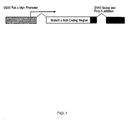
- a transgene of the present invention includes a mutant ⁇ myosin heavy chain cDNA as described herein; approximately 2936 base pairs of rat ⁇ myosin heavy chain 5'-flanking region as a promoter; a hybrid intron at the 5' end of the mutant cDNA, comprising the 113 base pair fragment flanked by HindIII and EcoRI restriction endonucleases sites which is derived from the mammalian expression construct pMT21 (Genetics Institute, Cambridge, MA); the SV40 small t intron at the 3' end of the mutant cDNA; and SV40 small t polyadenylation sequences.
- Mouse strains which are suitable for the derivation of transgenic mice as described herein are any common laboratory mouse strain.
- a preferred mouse strain to use for the derivation of transgenic mice founders of the present invention are (CBA X C57BL/6)F1 crosses.
- founder mice of this cross are bred onto C57BL/6 mice to create lines of transgenic mice.
- Transgenic mice of the present invention which are suitable models for congestive heart failure are adult male transgenic mice.
- Male and female transgenic mice of the present invention are suitable models for hypertrophic cardiomyopathy, but female transgenic mice are not suitable models for congestive heart failure, because female transgenic mice do not develop the phenotypic characteristics of congestive heart failure as described below.
- female transgenic mice of the present invention are suitable models for studying heart failure in conjunction with the male transgenic mice of the present invention, because the female mice are useful for studying resistance to heart failure and the environmental/gender-related factors which contribute to resistance or susceptibility to congestive heart failure.
- Transgenic mice of the present invention which are suitable models for congestive heart failure include male transgenic mice which are at least about 5 months of age. Preferably, such mice are at least about 6 months of age, and more preferably, at least about 7 months of age, and most preferably, at least about 8 months of age.
- transgene is expressed in the heart tissues of transgenic mice of the present invention.
- the transgene is expressed in the heart tissues of transgenic mice at a level sufficient to promote congestive heart failure if the transgenic mouse is a male of at least about 5 months of age.
- the level of mutant ⁇ myosin heavy chain mRNA is preferably at least about 25% of the endogenous ⁇ myosin heavy chain mRNA level.
- the level of mutant ⁇ myosin heavy chain mRNA is at least about 35%, and more preferably at least about 45%, and even more preferably, at least about 55% of the endogenous ⁇ myosin heavy chain mRNA level. It is noted that there is not a significant difference in the level of expression of the transgene between male and female transgenic mice of the present invention (i.e., males do not express significantly more or less transgene than females).
- the level of mutant ⁇ myosin heavy chain mRNA can be measured by any means of measuring mRNA levels known in the art. Such methods include, for example, Northern blots and RNAse protection assays.
- the interstitial deletion mutation in the transgene allows the transgene mRNA to be distinguished electrophoretically from the endogenous ⁇ myosin heavy chain mRNA.
- mutant ⁇ myosin heavy chain protein comprises at least about 1% of the total myosin protein in the heart by mass.
- the mutant ⁇ myosin heavy chain protein comprises at least about 3% by mass, and more preferably, at least about 9% by mass, and even more preferably, at least about 12% by mass of the total myosin protein in the heart.
- the amount of mutant ⁇ myosin heavy chain protein in a transgenic mouse or transgenic non-human mammal of the present invention can be determined by any means for quantifying protein amount. Such methods include, for example, immunoblot assays. Quantitation can be by way of a densitometry measurement, for example. As discussed below in Example 1, the interstitial deletion mutation allows the transgene protein to be distinguished electrophoretically from the endogenous ⁇ myosin heavy chain.
- Transgenic mice of the present invention which are suitable models for congestive heart failure display particular phenotypic characteristics associated with heart failure.
- a phenotypic characteristic is an measurable or observable characteristic which results from the interaction of the genetic constitution of the mouse with its environment. Examples of phenotypic characteristics associated with heart failure are described below.
- a phenotypic characteristic of transgenic mice of the present invention which are suitable models for congestive heart failure is dilation of the heart chambers.
- dilation also referred to as dilatation
- dilatation is described as an enlarging or expanding of the heart chamber.
- such mice exhibit dilation of the left ventricle, although dilation of other chambers of the heart can occur.
- Dilation can be assessed by direct measurement of a heart obtained by necropsy or of a beating heart inside an organism by echoradiography. Such a measurement by echoradiography is termed left ventricular end-diastolic dimension, or LVEDD.
- an adult transgene-negative mouse has an LVEDD of between about 1.8 mm and about 2.7 mm.
- a transgenic mouse of the present invention which is a suitable model for congestive heart failure has an LVEDD of between about 2.7 mm and about 4.0 mm.
- transgenic mice of the present invention which are suitable models for congestive heart failure are suitable models for congestive heart failure.
- the heart walls of a transgenic mouse which is a suitable model for congestive heart failure are at least about 10% thinner, and more preferably at least about 30% thinner, and even more preferably at least about 50% thinner, and most preferably at least about 70% thinner than the heart walls of a transgene-negative mouse.
- transgenic mice of the present invention which are suitable models for congestive heart failure do not display, or alternatively, no longer display, cardiac hypertrophy.
- cardiac hypertrophy refers to the distention or enlargement of the walls of the heart due to the amplification of its component cells, but not due to a quantitative increase in cells or new growth.
- Transgenic mice of the present invention which are suitable models for congestive heart failure have lost the hypertrophic characteristic if such characteristic was exhibited at a younger age.
- the overall dimensions of the heart of these mice may be greater than those of transgene-negative littermates, however, such enlargement would be due to dilation, as described above.
- systolic dysfunction is a dysfunction in the contractile process of the heart which is characterized by an inability to expel sufficient blood.
- Systolic function can be assessed in mice by measuring the percentage fractional shortening (%FS), which is a measure of the shortening of the left ventricular minor axis during systole.
- transgenic non-human mammal which is a model for studying congestive heart failure.
- a transgenic non-human mammal has incorporated into its genome a transgene comprising: (a) a heart tissue-specific promoter; and (b) a nucleic acid sequence encoding an amino acid sequence of an ⁇ myosin heavy chain protein said nucleic acid sequence having the first and second mutations as described above for a transgenic mouse of the present invention, such transgene being expressed in the heart tissues of the transgenic non-human mammal.
- suitable mammals for use in the production of a transgenic non-human mammal of the present invention include, but are not limited to, mice, rats, rabbits, sheep, pigs, cattle, and primates.
- One embodiment of the present invention relates to a recombinant nucleic acid molecule comprising a nucleic acid sequence encoding an amino acid sequence of an ⁇ myosin heavy chain protein, such nucleic acid sequence being operatively linked to one or more expression control sequences said nucleic acid sequence having a first mutation comprising a point mutation which results in an Arg403Gln mutation in the amino acid sequence; and a second mutation comprising an interstitial deletion in a portion of the nucleic acid sequence that encodes an actin binding domain.
- a preferred expression control sequence for use in a recombinant nucleic acid molecule of the present invention is a heart tissue-specific promoter.
- recombinant nucleic acid molecule when a recombinant nucleic acid molecule is incorporated into the genome of an animal at the embryonic stage, the terms "recombinant nucleic acid molecule” and “transgene” can be used interchangeably. Preferred and alternative embodiments of such a recombinant nucleic acid molecule are those described above for a transgene of a transgenic mouse of the present invention.
- Recombinant DNA technologies can improve expression of transgenes disclosed herein by manipulating, for example, the number of copies of the nucleic acid molecules integrated into a host cell, the efficiency with which those nucleic acid molecules are transcribed, the efficiency with which the resultant transcripts are translated, and the efficiency of post-translational modifications.
- Recombinant techniques useful for increasing the expression of nucleic acid molecules of the present invention include, but are not limited to, substitutions or modifications of expression control signals (e.g., promoters, operators, enhancers), substitutions or modifications of translational control signals (e.g., ribosome binding sites, Shine-Dalgarno sequences) and deletion of sequences that destabilize transcripts.
- a or “an” entity refers to one or more of that entity; for example, a characteristic refers to one or more characteristics or at least one characteristic.
- a characteristic refers to one or more characteristics or at least one characteristic.
- the terms “a” (or “an”), “one or more” and “at least one” can be used interchangeably herein.
- the terms “comprising”, “including”, and “having” can be used interchangeably.
- One embodiment of the present invention is a method to study the molecular and cellular events associated with congestive heart failure.
- Such a method comprises the use of a transgenic mouse having phenotypic characteristics of congestive heart failure of the present invention.
- a transgenic mouse of the present invention that is a suitable model for heart failure as defined by the criteria described previously herein, is sacrificed.
- the cells and/or tissues of the mouse are then examined at the cellular level and/or at the molecular level and compared to the cells and/or tissues from transgene-negative littermates.
- the cells and/or tissues from a transgenic mouse of the present invention that is a suitable model for heart failure are compared to the cells and/or tissues from a transgenic mouse of the present invention that is not a suitable model for congestive heart failure (e.g., a female transgenic mouse).
- Examples of experiments that can be performed to compare the cells and/or tissues of the mice include, but are not limited to, morphological examination of cardiac cells; histological examination of coronary vessels, of heart sections, of myocytes and/or of myofibrils; evaluation of cardiac myocyte DNA replication and/or expression; assays to evaluate enzyme activity; and assays studying programmed cell death, or apoptosis.
- the methods to perform such experiments are standard and are well known in the art. Many of these experiments are described in detail in the Examples section herein.
- a transgenic mouse which is a model for congestive heart failure serves as an in vivo system to evaluate the effect of drug candidates for prevention or treatment of congestive heart failure.
- a transgenic mouse of the present invention which meets the criteria for a model of congestive heart failure as described herein is administered a candidate compound to be evaluated. The mouse is then evaluated for physiological and pathological changes which indicate the efficacy of the compound for prevention or treatment of congestive heart failure. The mouse is compared to a transgenic mouse that meets the criteria for congestive heart failure that did not receive the compound.
- a transgene-negative littermate or a female transgenic mouse can also serve as a control or point of comparison.
- a drug or compound to be evaluated refers to any chemical compound that can be administered to an animal as an aid in the diagnosis, treatment or prevention of disease or an abnormal condition.
- acceptable protocols to administer a candidate drug or compound include the mode of administration and the effective amount of candidate drug or compound administered to an animal, including individual dose size, number of doses and frequency of dose administration. Determination of such protocols can be accomplished by those skilled in the art.
- Suitable modes of administration can include, but are not limited to, oral, nasal, topical, transdermal, rectal, and parenteral routes.
- Preferred parenteral routes can include, but are not limited to, subcutaneous, intradermal, intravenous, intramuscular and intraperitoneal routes.
- Preferred topical routes include inhalation by aerosol (i.e., spraying) or topical surface administration to the skin of an animal.
- an effective amount of a candidate drug or compound to administer to an animal comprises an amount that is capable of preventing or treating congestive heart failure, without being toxic to the animal.
- An amount that is toxic to an animal comprises any amount that causes damage to the structure or function of an animal (i.e., poisonous).
- Prevention or treatment of congestive heart failure can be assessed as a change (i.e., increase or reduction) in a phenotypic characteristic associated with congestive heart failure, such change being effective to prevent or treat congestive heart failure.
- a transgenic mouse having phenotypic characteristics of congestive heart failure to study the effects of external factors on congestive heart failure.
- factors include, but are not limited to, diet and exercise.
- a first transgenic mouse which meets the criteria of a model for congestive heart failure as described herein is fed a particular diet or submitted to a particular exercise regimen which is to be established as a normal, or control, regimen.
- a normal, or control diet can be the diet that is fed to wild type mice of the particular transgenic background (e.g., C57Bl/6) as established for a normal animal facility.
- Non-transgenic littermates and/or female transgenic mice can be used as additional controls.
- This regimen is then modulated to study the effect of such a modulated external factor on heart failure. Again, the same controls can be used.
- the second transgenic mouse is then monitored for a change in one or more characteristics of congestive heart failure in comparison to the first transgenic mouse (having a normal regimen) and to the transgene-negative littermates or female transgenic mice. For example, the effects of a low-fat diet or of moderate exercise on the development of characteristics associated with congestive heart failure can be evaluated using the transgenic mouse model for congestive heart failure of the present invention.
- Another embodiment of the present invention relates to the use of a transgenic mouse which meets the criteria for a model for congestive heart failure of the present invention to study specific conditions or diseases associated with congestive heart failure.
- a method includes the steps of (a) harvesting cells and tissues from a transgenic mouse of the present invention and comparing the cells and tissues to a transgene-negative littermate to evaluate a biochemical, physiological, and/or molecular event related to a disease or condition associated with congestive heart failure.
- a transgenic mouse of the present invention can be administered a compound to be tested for its affect on a disease or condition associated with congestive heart failure, such mouse being compared to a transgenic mouse that did not receive the compound.
- Such specific conditions or diseases associated with congestive heart failure include, but are not limited to dilated cardiomyopathy, hypertrophic cardiomyopathy, acute aortic regurgitation, tricuspid stenosis, constrictive pericarditis, acute infective endocarditis, ischemia heart disease, hypertension, primary myocardial disease, valvular disease, pericardial disease, hyperthyroidism, anemia, arteriovenous fistula, beriberi and Paget's disease.
- transgenic mouse of the present invention can be produced which carries one or more additional transgenes in addition to the mutated ⁇ myosin heavy chain transgene of the present invention.
- This embodiment can also be used to study a condition or disease associated with congestive heart failure.
- a mouse which has been genetically modified to be a model for a particular condition or disease associated with congestive heart failure can be bred with a transgenic mouse of the present invention to produce a mouse useful for studying the correlation between the particularcondition or disease and congestive heart failure.
- Such specific conditions or diseases associated with congestive heart failure include, but are not limited to dilated cardiomyopathy, hypertrophic cardiomyopathy, acute aortic regurgitation, tricuspid stenosis, constrictive pericarditis, acute infective endocarditis, ischemia heart disease, hypertension, primary myocardial disease, valvular disease, pericardial disease, hyperthyroidism, anemia, arteriovenous fistula, beriberi and Paget's disease.
- Another embodiment of the present invention relates to a method to produce a transgenic mouse which is a model for studying heart failure.
- Such a method includes the steps of: (a) introducing into an embryonic cell of a mouse a transgene comprising: (1) a heart tissue-specific promoter; and, (2) a nucleic acid sequence encoding an amino acid sequence of an ⁇ myosin heavy chain protein said nucleic acid sequence having a first mutation comprising a point mutation which results in an Arg403Gln mutation in the amino acid sequence and a second mutation comprising an interstitial deletion in a portion of the nucleic acid sequence that encodes an actin binding domain; and, (b) obtaining progeny having the transgene stably incorporated into the genome.
- the transgene is expressed in the heart tissues of the progeny.
- the method includes the further step (c) of selecting males from the progeny that have the transgene stably incorporated into the genome.
- the method can further include selecting male progeny of at least about 5 months of age.
- female transgenic mice can also be selected as a model for studying heart failure, because environmental and gender-biased contributions to the disease can be studied using female transgenic mice.
- transgenic mouse that is a model for hypertrophic cardiomyopathy.
- a transgenic mouse has incorporated into its genome a transgene comprising: (a) a heart tissue-specific promoter; and, (b) a nucleic acid sequence encoding an amino acid sequence of a ⁇ myosin heavy chain protein.
- the nucleic acid sequence has a first mutation comprising a point mutation which results in an Arg403Gln mutation in the amino acid sequence, and a second mutation comprising an interstitial deletion in a portion of the nucleic acid sequence that encodes an actin binding domain.
- the transgene is expressed in the heart tissues of the transgenic mouse at a level sufficient to promote hypertrophic cardiomyopathy in the mouse.
- male transgenic mice of the present invention that are suitable models for hypertrophic cardiomyopathy are less than about 8 months of age, preferably less than about 7 months of age, more preferably less than about 6 months of age, and most preferably, less than about 5 months of age.
- the transgene is expressed at least at the minimum levels disclosed herein for mice that can be a model for congestive heart failure.
- mice with cardiac-specific expression of a mutant ⁇ myosin heavy chain were created.
- ⁇ myosin heavy chain is the predominant cardiac myosin isoform
- ⁇ myosin heavy chain is the predominant isoform of the adult mouse ventricle. Therefore, a mutant rat ⁇ myosin heavy chain cDNA was used to construct the transgene coding region.
- Rat and mouse ⁇ myosin heavy chain are 98.9% identical at the amino acid level (22 differences out of 1938 amino acids) with the differences being similar to the neutral polymorphisms found between various inbred mouse strains.
- the transgene which is schematically illustrated in Fig. 1, was constructed using standard cloning techniques.
- the transgene coding region consists of a rat ⁇ myosin heavy chain cDNA containing two mutations: (a) a point mutation at position 1445 of a G to an A (G1445A), which results in an amino acid substitution at amino acid position 403 from an arginine to a glutamine (Arg403Gln); and, (b) a deletion of amino acids 468-527 in the putative actin binding domain, bridged by the addition of 8 nonmyosin amino acids (SerSerLeuProHisLeuLysLeu).
- the combination of these two mutations was predicted by the present inventors to produce a very strong dominant negative effect by altering the interaction of myosin with actin.
- the deletion mutation allowed the transgene protein to be distinguished electrophoretically from the endogenous mouse myosin heavy chain.
- the coding region of the transgene was flanked by a hybrid intron derived from the mammalian expression construct pMT21 at the 5' end (Genetics Institute, Cambridge MA) and the SV40 small t intron at the 3' end.
- Transgene expression was driven by approximately 3.3 kb of rat ⁇ myosin heavy chain 5' flanking DNA (obtained from B. Markham, Medical College of Wisconsin), and polyadenylation sequences were provided by SV40 small t DNA.
- Transgene sequences were excised from the prokaryotic vector sequences, purified on agarose gels, and then injected into the pronuclei of fertilized mouse eggs from CBA X C57B1/6 (Fl cross) mice according to standard techniques. Founder animals were identified by Southern blotting and bred to C57B1/6 mice.
- the probe hybridizes to approximately 300 and 200 bp protected fragments for the transgene and the endogenous mouse myosin heavy chain mRNAs, respectively.
- a five hundred thousand-counts per minute probe was combined with 3 ⁇ g of RNA and hybridized overnight at 55°C in 86% formamide, 2 mM EDTA, 0.433 M NaCl, 43 mM Pipes, pH 6.9.
- RNAase Boehringer Mannheim, Indianapolis, IN, U.S.A.
- RNAase A Boehringer Mannheim
- Digestion was stopped by the sequential addition of 10 ⁇ l 20% SDS and 50 ⁇ l stop buffer (4 M ammonium acetate, 100 mM EDTA, 1 mg/ml yeast tRNA).
- the samples were phenol:chloroform-extracted, ethanol-precipitated, and then electrophoresed on a 5% acrylamide gel under denaturing conditions. Long exposures revealed very low levels of the endogenous mouse ⁇ myosin heavy chain in the lung, however, transgene expression was detected only in the heart. Transgene message was abundant in the hearts of these mice and was found at 26-50% of the endogenous mouse myosin heavy chain levels (not shown).
- transgenic mice of the present invention are a model for familial hypertrophic cardiomyopathy (HCM).
- HCM familial hypertrophic cardiomyopathy
- transgenic mice of the present invention are to function as a model for HCM, they should exhibit several phenotypic features found in most individuals with the disease. These include myocyte hypertrophy, myocellular disarray, interstitial fibrosis, and small vessel coronary disease. Hearts from each transgenic line were examined at 12-14 weeks of age for evidence of these features. Briefly, paraffin sections of hearts from control and transgenic mice were stained with Masson's trichrome or hemotoxylin/eosin. In all cases the atria were normal but significant cardiac histopathology was evident in the left ventricle. In a few animals, some abnormal myocytes were seen in the right ventricle but the vast majority of hypertrophied cells were found in the left ventricle.
- Foci of myocellular disarray were found throughout the left ventricle accompanied by evidence of increased matrix accumulation.
- Hearts from 5 month old 140 line transgenic mice were embedded in plastic resin and abnormal regions within the left ventricle were identified in thick sections of plastic embedded tissue. Thin sections were cut from these regions, stained with uranyl acetate and lead citrate and examined on the electron microscope. Myofibrillar disarray as well as degeneration were evident. When areas with myocellular disarray were identified and then examined at the electron microscope level, several abnormalities were seen. Degenerating myofibrils, prominent collagen deposits and z-line streaming were apparent. It is interesting to note that severely damaged myocytes often were adjacent to apparently normal cells.
- Small vessel coronary disease seen histopathologically as thickening of the medial and intimal layer of small coronary vessels, is found in many patients with HCM and is also present in feline and porcine HCM.
- Abnormal coronary vessels were found in the hearts of all transgenic mouse lines. Not all vessels were hypertrophied, as evidenced by the presence of normal and abnormal vessels within the same animal.
- Such vessel-to-vessel heterogeneity is also seen in humans. Mutant ⁇ myosin heavy chain expression was not detected in smooth muscle rich tissues such as uterus, suggesting that it also is not expressed in the smooth muscle layer of the coronary arteries.
- Two transgenic lines (lines 131 and 140) were selected as examples of mild and strong phenotypes, respectively, and retained for further study.
- the amount of transgene protein in heart homogenates from control, 131 line, and 140 line mice was determined by SDS-acrylamide gel electrophoresis followed by immunoblotting and densitometry as follows. Heart homogenates or myofibrils were electrophoretically separated on 6% SDS-polyacrylamide gels according to Laemmli. Electrophoresis was continued until the myosin heavy chains had migrated approximately 8 cm through a 11 cm separating gel. Immunoblotting was performed using an anti- ⁇ myosin heavy chain monoclonal antibody, BAG5 (obtained from Dr. S. Schiaffino, Padova, Italy), and chemiluminescent images were quantified using a Molecular Dynamics laser densitometer.
- BAG5 anti- ⁇ myosin heavy chain monoclonal antibody
- Atria, left ventricle and right ventricle weights were determined in age-matched transgenic mice (12 weeks and 8 months of age) with negative littermates serving as controls (Table 1 and Fig. 2).
- Table 1 shows that at 12 weeks of age, the 140 line exhibited significant increases in left and right ventricular mass compared with controls (females: left ventricle (LV) 12% increase, and right ventricle (RV) 14% increase; males: LV 7% increase and RV 9% increase) while no difference in body weight or tibial length was seen.
- Data in Table 1 were analyzed using an unpaired Student's t test. p values are indicated in the table.
- the cardiac hypertrophy in these animals is accompanied by increased message levels of atrial natriuretic factor (ANF) and ⁇ -skeleton actin, two molecular markers of cardiac hypertrophy.
- ANF atrial natriuretic factor
- ⁇ -skeleton actin two molecular markers of cardiac hypertrophy.
- Animals from the 131 line did not exhibit significant cardiac hypertrophy at this age. Although large numbers of animals from the other three lines of mice were not examined for heart mass measurements, every transgenic heart from those three lines was hypertrophic by 12 weeks of age. Although the 131 line did exhibit increased levels of ANF and ⁇ -skeletal actin mRNAs, the levels of these molecular markers of hypertrophy were significantly less than in the 140 line. TABLE 1.
- HCM hypertrophic cardiomyopathy
- HCM pathogenesis at a cellular and molecular level will provide information helpful for addressing this question.
- the present inventors have created five independent transgenic mouse lines with cardiac-specific expression of a mutant myosin heavy chain. Like human HCM, the animal model shows left ventricular hypertrophy, myocyte hypertrophy, myocellular disarray, fibrosis, and small vessel coronary disease. Based on these findings, the transgenic mice of the present invention are a good model for HCM and their analysis provides insight into the mechanisms involved in developing the disease phenotype.
- mutant contractile proteins are the initial result in the development of HCM, but patients do not die purely as the result of sarcomeric dysfunction.
- the present inventors believe that mutations in ⁇ myosin heavy chain, cardiac troponin T, ⁇ -tropomyosin, and cardiac myosin binding protein C trigger a pathogenic pathway resulting in a common phenotype, hypertrophic cardiomyopathy.
- the present analysis of murine HCM suggests that the appearance of histologic abnormalities may be one of the "triggering" events in the development of HCM. Mice from both the 131 and 140 lines exhibit cardiac histopathology, while increased cardiac mass is seen only in the 140 line, suggesting that the appearance of histologic abnormalities precedes the development of hypertrophy.
- the present inventors believe that there exists a threshold of sarcomeric dysfunction which, when surpassed, triggers a greater hypertrophic response.
- the nature of the mutant protein, the work load imposed upon the muscle as well as the amount of the mutant protein may all determine when this threshold is reached.
- individuals with two copies of a fairly benign mutation would be predicted to exhibit a more severe phenotype than family members with only one copy of the mutant gene, as has been reported.
- mouse lines with greater (140 line) or lesser (131 line) expression of a mutant myosin heavy chain would be predicted to exhibit stronger or milder phenotypes, respectively, as shown by the data herein.
- mice of the present invention are models for congestive heart failure.
- left ventricle weights were determined for age-matched transgenic mice and their negative littermates and normalized to tibial lengths.
- degree of left ventricular hypertrophy seen in females from the 140 line had more than doubled to 32%.
- these changes were apparent in the absolute weight of the left ventricles (12-32%) or in ventricular weights normalized to tibial length (12-28%).
- mean heart weight of 140 line males while still slightly larger than controls, had lost all statistical significance ( p > 0.1).
- heart weight of 140 line males while still slightly larger than controls, had lost all statistical significance ( p > 0.1).
- heart and body sizes seen in older male mice both control and transgenic.
- gross examination of formaldehyde-fixed hearts indicated that the 140 line hearts had overall dimensions that were much greater than the controls (data not shown).
- Formaldehyde-fixed hearts both control and 140 line transgenic, were bisected axially by an incision through the anterior face of the left ventricle. The two halves of the heart were splayed open to reveal the left ventricular cavity. In this position, the atria are hidden behind the two halves of the heart, the left ventricular free wall is distal and the right ventricular free wall is medial to the ventricle axis. This group (i.e., older male mice from the 140 line) exhibited significant chamber dilation. In control hearts the left ventricular cavity was a normal crescent shape (seven out of seven hearts examined) while in all 8-month 140 line males (five hearts examined) the left ventricular cavity was dilated and almond-shaped.
- transgenic mouse of the present invention is a model of hypertrophic cardiomyopathy
- older, male transgenic mice of the present invention are models for congestive heart failure, exhibiting dilation, wall thinning and systolic dysfunction.
- Transgenic mice of the present invention which exhibit features of human HCM including myocyte hypertrophy, myocellular disarray, abnormal small intramural coronary arteries and significant LVH, were tested over time using echocardiography.
- IVS septal hypertrophy
- %FS systolic function
- LVEDD 2.48mm vs 2.66mm
- a genetic mouse model developed to study hypertrophic cardiomyopathy exhibits an unexpected gender specific difference in phenotypic expression of symptoms of congestive heart failure with age. This course parallels the course of hypertrophy leading to congestive heart failure in elderly humans with aortic stenosis, as documented by serial echocardiography.
Landscapes
- Health & Medical Sciences (AREA)
- Life Sciences & Earth Sciences (AREA)
- Engineering & Computer Science (AREA)
- Biomedical Technology (AREA)
- Chemical & Material Sciences (AREA)
- Zoology (AREA)
- General Health & Medical Sciences (AREA)
- Genetics & Genomics (AREA)
- Molecular Biology (AREA)
- Biotechnology (AREA)
- Organic Chemistry (AREA)
- Urology & Nephrology (AREA)
- Bioinformatics & Cheminformatics (AREA)
- Immunology (AREA)
- Veterinary Medicine (AREA)
- Biochemistry (AREA)
- Toxicology (AREA)
- Microbiology (AREA)
- Physics & Mathematics (AREA)
- General Engineering & Computer Science (AREA)
- Environmental Sciences (AREA)
- Animal Behavior & Ethology (AREA)
- Medicinal Chemistry (AREA)
- Wood Science & Technology (AREA)
- Cell Biology (AREA)
- Biophysics (AREA)
- Pathology (AREA)
- Hematology (AREA)
- Gastroenterology & Hepatology (AREA)
- Analytical Chemistry (AREA)
- Epidemiology (AREA)
- General Physics & Mathematics (AREA)
- Tropical Medicine & Parasitology (AREA)
- Diabetes (AREA)
- Endocrinology (AREA)
- Rheumatology (AREA)
- Food Science & Technology (AREA)
- Proteomics, Peptides & Aminoacids (AREA)
- Public Health (AREA)
- Animal Husbandry (AREA)
Abstract
Description
- The present invention relates to a transgenic non-human animal model for studying heart failure. In particular, the present invention relates to methods of studying molecular/cellular events associated with congestive heart failure, of testing drug candidates for prevention or treatment of congestive heart failure, of studying the effects of factors such as diet or exercise on congestive heart failure, and of studying specific conditions or diseases associated with congestive heart failure.
- A variety of human diseases and conditions which are manifested by cardiac abnormalities or cardiac dysfunction can lead to heart failure. Heart failure is a physiological condition in which the heart fails to pump enough blood to meet the circulatory requirements of the body. The study of such a condition in genetically diverse humans is difficult and unpredictable. Therefore, there is a need for a model system which facilitates the study of the mechanisms and causes of heart failure as well as the identification of potential therapeutic targets.
- The development of transgenic animal technology has provided significant advances for obtaining more complete information about complex systems in vivo. By manipulating the expression of gene(s) in vivo, it is possible to gain insight into the roles of such genes in a particular system or to study aspects of the system in a genetically controlled environment. Although cardiac disease in a small mammal is inherently different from that seen in humans, mammals such as the mouse allow analysis of disease at molecular and cellular levels that is often impossible in humans.
- Accordingly, it is an objective of the present invention to provide a transgenic model system for the study of heart failure and methods of use thereof.
- One embodiment of the present invention is a transgenic mouse which is a model for studying congestive heart failure. Such a transgenic mouse has incorporated into its genome a transgene which includes: (a) a heart tissue-specific promoter; and, (b) a nucleic acid sequence encoding an amino acid sequence of a α myosin heavy chain protein said nucleic acid sequence having a first mutation comprising a point mutation which results in an Arg403Gln mutation in the amino acid sequence, and a second mutation comprising an interstitial deletion in a portion of the nucleic acid sequence that encodes an actin binding domain, and said nucleic acid sequence being operatively linked to said heart tissue-specific promoter; wherein said transgene is expressed in the heart tissues of the transgenic mouse.
- Another embodiment of the present invention relates to a transgenic non-human mamal which is a model for congestive heart failure. Such a transgenic non-human mammal has substantially the same transgene incorporated into its genome as is described above for a transgenic mouse of the present invention.
- Yet another embodiment of the present invention relates to a recombinant nucleic acid molecule which includes a nucleic acid sequence encoding an amino acid sequence of an α myosin heavy chain protein, such nucleic acid sequence being operatively linked to one or more expression control sequences said nucleic acid sequence having a first mutation comprising a point mutation which results in an Arg403Gln mutation in the amino acid sequence and a second mutation comprising an interstitial deletion in a portion of the nucleic acid sequence that encodes an actin binding domain.
- Yet another embodiment of the present invention relates to a method for studying the molecular and cellular events associated with congestive heart failure comprising the steps of: (a) harvesting cells and tissues from a transgenic mouse of the present invention as described above; and, (b) comparing the cells and tissues from the transgenic mouse to cells and tissues from a mouse which does not carry the transgene in an assay. Such an assay is selected from the group of morphological examination of cardiac cells; histological examination of coronary vessels; histological examination of heart sections; histological examination of myocytes; histological examination of myofibrils; evaluation of cardiac myocyte DNA replication and expression; evaluation of cardiac-related enzyme activity; and evaluation of apoptosis of cardiac cells.
- Another embodiment of the present invention relates to a method to identify compounds for treating congestive heart failure. Such a method includes the steps of: (a) administering a compound to be evaluated to a transgenic mouse of the present invention as described above; and, evaluating physiological and pathological changes in the transgenic mouse compared to a mouse that did not receive the compound to determine the efficacy of the compound for treating congestive heart failure.
- Yet another embodiment of the present invention relates to a method for evaluating the effects of external factors selected from the group of diet and exercise on congestive heart failure. Such method includes the steps of (a) establishing a normal control regimen for an external factor in a first transgenic mouse of the present invention as described above; (b) modulating the regimen for the external factor in a second transgenic mouse of the present invention as described above; and (c) monitoring the second transgenic mouse for a change in a characteristic associated with congestive heart failure compared to the first transgenic mouse.
- Another embodiment of the present invention relates to a method to study the molecular and cellular events connected with a condition associated with congestive heart failure. Such a method includes the steps as described above for the method to study the molecular and cellular events connected with congestive heart failure. Such a condition or disease includes, but is not limited to dilated cardiomyopathy, hypertrophic cardiomyopathy, acute aortic regurgitation, tricuspid stenosis, constrictive pericarditis, acute infective endocarditis, ischemia heart disease, hypertension, primary myocardial disease, valvular disease, pericardial disease, hyperthyroidism, anemia, arteriovenous fistula, beriberi and Paget's disease.
- Yet another embodiment of the present invention relates to a method to produce a transgenic mouse that is a model for studying congestive heart failure. Such a method includes the steps of (a) introducing into an embryonic cell of a mouse a transgene as described previously herein; and (b) obtaining progeny having the transgene stably incorporated into the genome, such transgene being expressed in the heart tissues of the progeny. Such a method can further include step (c) of selecting male transgenic progeny, and further include the step of selecting male transgenic progeny that are at least about 5 months of age.
- Another embodiment of the present invention relates to a transgenic mouse that is a model for hypertrophic cardiomyopathy. Such a mouse has incorporated into its genome a transgene comprising (a) a heart tissue-specific promoter; and, (b) a nucleic acid sequence encoding an amino acid sequence of a α myosin heavy chain protein said nucleic acid sequence having a first mutation comprising a point mutation which results in an Arg403Gln mutation in the amino acid sequence and a second mutation comprising an interstitial deletion in a portion of the nucleic acid sequence that encodes an actin binding domain ,and said nucleic acid sequence being operatively linked to said heart tissue-specific promoter; wherein said transgene is expressed in the heart tissues of the transgenic mouse at a level sufficient to promote hypertrophic cardiomyopathy in the mouse. In this embodiment, such a transgenic mouse is preferably a female transgenic mouse, or a male transgenic mouse that is less than about 8 months of age.
-
- Fig. 1 is a schematic drawing of the mutant α myosin heavy chain transgene of the present invention.
- Fig. 2 is a graph illustrating left ventricle weights for aged matched transgenic male and female mice and their negative littermates.
- The present invention generally relates to a transgenic model for heart failure and methods to use such model for the study of heart failure. Transgenic mice of the present invention were constructed by the present inventors as a model for studying hypertrophic cardiomyopathy. Accordingly, it is one embodiment of the present invention to provide a transgenic mouse model for hypertrophic cardiomyopathy. It was unexpectedly found that older males of these mice uniformly exhibit particular phenotypic characteristics which are associated with congestive heart failure. The present invention is generally directed to the use of such transgenic mice as a model to study various aspects of congestive heart failure.
- Prior to the present invention, a mouse model of hypertrophic cardiomyopathy (HCM) was described which mimics several aspects of HCM in humans, namely the appearance of myocellular disarray, fibrosis, and cardiac dysfunction (Geisterfer-Lowrance et al., 1996, Science, 272:731-734). However, while this mouse model for HCM genetically most closely resembles the human disease, phenotypically it displays at least one substantial difference, namely profound left atrial enlargement in the absence of ventricular hypertrophy, features not typically seen in the human condition. Consequently, these animals are not suitable for studying many aspects of HCM pathogenesis. Moreover, the previously described transgenic mouse models of HCM are not also models of congestive heart failure.
- The present inventors have created the first transgenic mouse lines which phenotypically are virtually identical to human HCM and allow the impact of contractile protein mutations on the heart to be analyzed and factors contributing to the disease's natural history to be determined. In addition, the present inventors have created the first transgenic mouse lines which are a model for congestive heart failure.
- The transgenic mice of the present invention and methods of using these mice provide insight into the basic mechanisms underlying congestive heart failure and cardiac hypertrophy. In addition, the knowledge gained from studying cardiac pathogenesis in the transgenic mice of the present invention will impact knowledge of human congestive heart failure and human HCM. The power of using a combined molecular and morphological analysis of the transgenic mice of the present invention and the ability to breed them with other genetically altered mouse lines will facilitate the search for the elements involved in the pathogenesis of congestive heart failure and HCM and the identification of potential therapeutic targets.
- One embodiment of the present invention is a transgenic mouse which is a model for studying congestive heart failure. Such a transgenic mouse has incorporated into its genome a transgene which includes: (a) a heart tissue-specific promoter; and, (b) a nucleic acid sequence encoding an amino acid sequence of a α myosin heavy chain protein said nucleic acid sequence having a first mutation comprising a point mutation which results in an Arg403Gln mutation in the amino acid sequence, and a second mutation comprising an interstitial deletion in a portion of the nucleic acid sequence that encodes an actin binding domain, and said nucleic acid sequence being operatively linked to said heart tissue-specific promoter; wherein said transgene is expressed in the heart tissues of the transgenic mouse. As will be discussed in detail below, older, male transgenic mice of the present invention are suitable models for congestive heart failure, whereas female transgenic mice are not suitable models for congestive heart failure. It is to be understood, however, that female transgenic mice of the present invention are included in this embodiment of the invention, because female transgenic mice may be useful models for studying congestive heart failure (i.e., for studying factors associated with resistance to development of heart failure, such as the effect of hormones). In addition, female transgenic mice of the present invention may be useful as control animals to which male transgenic mice that are models of congestive heart failure can be compared. Of course, the female transgenic mice of the present invention are also important as breeders for propagating the transgenic line.
- According to the present invention, a transgenic mouse is a mouse which includes a recombinant nucleic acid molecule (i.e., transgene) that has been introduced into the genome of the mouse at the embryonic stage of the mouse's development. As such, the transgene will be present (i.e., incorporated into) in all of the germ cells and somatic cells of the mouse. Methods for the introduction of a transgene into a mouse embryo are known in the art and are described in detail in Hogan et al., "Manipulating the Mouse Embryo. A Laboratory Manual", Cold Spring Harbor press, Cold Spring Harbor, NY, 1986,
- Many U.S. patents also describe production of a transgenic animal (See for example, Leder et al., U.S. Patent No. 4,736,866, 1988; Cordell, U.S. Patent No. 5,387,742, 1995; Lonberg et al., U.S. Patent No. 5,545,806, 1996; Capecchi et al., U.S. Patent No. 5,487,992, 1996; Hammer et al., U.S. Patent No. 5,489,742, 1996; Bleck et al., U.S. Patent No. 5,530,177, 1996; Wheeler, U.S. Patent No. 5,523,226, 1996; Robinson et al., U.S. Patent No. 5,489,743, 1996; Krimpenfort et al., U.S. Patent No. 5,434,340, 1995; and Terhorst et al., U.S. Patent No. 5,530,179, 1996.
- For example, a recombinant nucleic acid molecule (i.e., transgene) can be injected into the male pronucleus of a fertilized mouse egg to cause one or more copies of the recombinant nucleic acid molecule to be retained in the cells of the developing mouse. A mouse retaining the transgene, also called a "founder" mouse, usually transmits the transgene through the germ line to the next generation of mice, establishing transgenic lines. According to the present invention, a transgenic mouse also includes all progeny of a transgenic mouse that inherit the transgene.
- As used herein, a transgene-negative littermate is a mouse which is born into the same litter as a transgenic mouse described herein (i.e., a littermate), but did not inherit the transgene (i.e., is transgene-negative, or does not have the transgene incorporated into its genome). Such a mouse is essentially a normal, or wild-type, mouse and is useful as an age-matched control for the methods described herein.
- According to the present invention, any non-human mammal suitable for the study of heart failure may be used as a starting organism for the derivation of a transgenic animal of the present invention. Preferably, a transgenic model of the present invention is a non-human mammal including, but not limited to, rabbits, primates and rodents. Most preferably, a transgenic model of the present invention is a rodent, and even more preferably, a mouse. It is an embodiment of the present invention that the transgene, methods and applications for using a transgenic mouse of the present invention as described below in detail can be modified and applied to any suitable transgenic non-human mammal of the present invention for the study of heart failure.
- As used herein, the condition referred to as congestive heart failure is the pathophysiological state in which an abnormality of cardiac function is responsible for the failure of the heart to pump enough blood to meet the circulatory requirements of the body. According to the present invention, congestive heart failure can be characterized by at least one of the following phenotypic characteristics: dilation (dilatation), systolic dysfunction, and heart wall thinning.
- According to the present invention, congestive heart failure can be the end-stage event, or secondary condition, of a variety of cardiac diseases and conditions, including, but not limited to dilated cardiomyopathy, hypertrophic cardiomyopathy, acute aortic regurgitation, tricuspid stenosis, constrictive pericarditis, acute infective endocarditis, ischemia heart disease, hypertension, primary myocardial disease, valvular disease, pericardial disease, hyperthyroidism, anemia, arteriovenous fistula, beriberi and Paget's disease. Each of these diseases and conditions may be associated with different or the same phenotypic characteristics as described above for congestive heart failure.
- As used herein, the condition referred to as hypertrophic cardiomyopathy (HCM) is a clinically heterogenous disease of the heart with a dominant mode of inheritance which is characterized by thickening of the muscular walls in the ventricular septum and left ventricle (cardiac hypertrophy), resulting in a narrowing of the left ventricle outflow tract. More particular characteristics of hypertrophic cardiomyopathy include myocyte hypertrophy, myocellular disarray, interstitial fibrosis, small vessel coronary disease, and in some cases left ventricular outflow tract obstruction. The potential for understanding the pathogenesis of human HCM has advanced with the identification of mutations in the β myosin heavy chain (Myh) gene in two kindreds with HCM. 40 β myosin heavy chain mutations, primarily in the "motor" domain of the molecule, have been reported. The identification of mutations in additional muscle structural proteins (cardiac troponin T, α-tropomyosin and cardiac myosin binding protein C) has shown that HCM is also genetically heterogenous and led to the hypothesis that HCM is also genetically heterogenous and led to the hypothesis that HCM is a disease of the sarcomere. Although the genetic evidence for contractile protein defects in HCM is unequivocal, the link between these mutations and the clinical phenotype remains unclear. The dominant mode of inheritance may imply that the mutant protein acts as a dominant negative, interfering with the function of the wild-type protein. Several lines of evidence support this hypothesis. Myosin purified from HCM patients (which is a mixture of wild-type and mutant protein) exhibits decreased motility in in vitro motility assays. Biochemical analysis of a mutant allele (Arg403Gln) demonstrates a defect in actin-activated ATPase activity and decreased motility in an in vitro assay. In addition, the mutant myosin heavy chain exhibits a dominant effect when mixed with wild-type protein, disproportionately slowing the velocity of the mixture.
- Hypertrophic cardiomyopathy is distinguished from congestive heart failure in that although hypertrophic cardiomyopathy can lead to the secondary condition of congestive heart failure, hypertrophic cardiomyopathy is not the only cause of congestive heart failure. More particularly, congestive heart failure is characterized by phenotypic traits that are not typically associated with hypertrophic cardiomyopathy, such as dilation, wall thinning, and systolic dysfunction. Older, adult male transgenic mice of the present invention which are suitable models for congestive heart failure exhibit all of such phenotypic traits.
- In one embodiment, transgenic mice of the present invention are useful as models for hypertrophic cardiomyopathy. In another embodiment, a subset of such mice are useful as models for congestive heart failure. The present invention is primarily directed toward such a subset of transgenic mice which are models for congestive heart failure. In particular, transgenic mice of the present invention which are suitable models for congestive heart failure can be identified by criteria which include sex, age, and level of expression of the transgene. Such mice develop phenotypic characteristics of heart failure, including dilation, systolic dysfunction, and wall thinning, each of which are described in detail below.
- A transgenic mouse of the present invention has incorporated into its genome a transgene. As used herein, a transgene is a recombinant nucleic acid molecule that has been introduced into the genome of the mouse at the embryonic stage of the mouse's development. A transgene that has been incorporated into the genome of an animal is a recombinant nucleic acid molecule that has stably integrated into the DNA of all of the germ cells and somatic cells in an animal. A transgene typically also includes regulatory sequences, such as expression control sequences (e.g., promoters), which control the expression of the transgene in the cells of the animal. Such sequences are described in detail below.
- In the transgenic mouse described herein, the transgene includes (a) a heart tissue-specific promoter; and (b) a nucleic acid sequence encoding an amino acid sequence of an α myosin heavy chain protein said nucleic acid sequence containing two mutations: (1) a point mutation, wherein a guanine base at position 1445 is substituted with an adenine base, such substitution resulting in an amino acid substitution of an arginine with a glutamine at amino acid position 403 (Arg403Gln); and (2) an interstitial deletion in the portion of DNA encoding amino acids within the actin binding domain. An α myosin heavy chain cDNA having the above described mutations is also referred to herein as a mutant α myosin heavy chain (Myh), or a mutant α Myh.
- An α myosin heavy chain gene which has been mutated as described herein is preferably used as the transgene in the production of a transgenic mouse of the present invention. In contrast to humans, where β myosin heavy chain is the predominant cardiac myosin isoform, α myosin heavy chain is the predominant isoform of the adult mouse ventricle. Therefore, a mutant rat α myosin heavy chain cDNA was selected by the present inventors to construct the transgene coding region of the transgenic mouse disclosed herein. It is within the scope of the present invention, however, to use any mammalian α myosin heavy chain gene for the production of a transgenic non-human mammal of the present invention. The α myosin heavy chain is highly conserved between mammalian species. Rat and mouse α myosin heavy chain are 98.9% identical at the amino acid level (22 differences out of 1938 amino acids) with the differences being similar to the neutral polymorphisms found between various inbred mouse strains. In addition, the α myosin heavy chain amino acid sequence is from about 96.9% to about 98.7% identical between rat, mouse and human. Moreover, the arginine at position 403 of the amino acid sequence of the wild-type α myosin heavy chain protein is conserved between rat, mouse and human, suggesting that this amino acid residue is conserved among many mammalian species. If a transgenic non-human mammal other than a rat or mouse is produced (e.g., a pig or a primate), an α myosin heavy chain gene from the desired species is preferably used.
- Knowing the nucleic acid sequences rat and mouse α myosin heavy chain nucleic acid molecules of the present invention allows one skilled in the art to, for example, (a) make copies of those nucleic acid molecules, (b) obtain nucleic acid molecules including at least a portion of such nucleic acid molecules (e.g., nucleic acid molecules including full-length genes, full-length coding regions, regulatory control sequences, truncated coding regions), and (c) obtain α myosin heavy chain nucleic acid molecules for other mammals. Such nucleic acid molecules can be obtained in a variety of ways including screening appropriate expression libraries with antibodies directed against α myosin heavy chain; traditional cloning techniques using oligonucleotide probes from conserved regions of the α myosin heavy chain to screen appropriate libraries or DNA; and PCR amplification of appropriate libraries or DNA using oligonucleotide primers. Methods of producing mutated α myosin heavy chain nucleic acid sequences are discussed in detail below.
- As discussed above, one of the mutations in a mutant α myosin heavy chain transgene of the present invention is an interstitial deletion which results in a deletion of amino acids within the actin binding domain of the α myosin heavy chain. Such an interstitial deletion results in at least about a 15 amino acid deletion, and more preferably, at least about a 30 amino acid deletion, and even more preferably, at least about a 45 amino acid deletion, and even more preferably, at least about a 60 amino acid deletion within the actin binding domain of an α myosin heavy chain. Such an interstitial deletion, in conjunction with the above-described point mutation, Arg403Gln, preferably inhibits the binding of actin to the actin binding domain of the α myosin heavy chain. More particularly, such a deletion, in conjunction with the above-described point mutation encodes a mutant α myosin heavy chain which, when expressed in male transgenic mice of a particular age range and having a transgene expression level as described herein, results in such mouse having the phenotypic characteristics of congestive heart failure as described in detail below.
- In one embodiment of the present invention, a deletion in an actin binding domain comprises the deletion of amino acids from about position 468 to about position 527 of the rat alpha myosin heavy chain protein. It is another embodiment of the present invention that such a deletion of amino acids can include deletion of a portion of the putative actin binding domain that is less than or greater than the region defined by amino acids 468 to 527, if the characteristics of the transgenic mouse having phenotypic characteristics of congestive heart failure of the present invention, as described herein, are maintained or enhanced.
- Such an interstitial deletion in the actin binding domain is preferably bridged by the addition of a nucleic acid sequence encoding an addition of amino acid residues that do not encode a portion of the actin binding domain. In other words, the amino acid sequence of the addition of amino acid residues is not selected from a sequence of amino acid residues that is naturally found within the actin binding domain of the α myosin heavy chain. Preferably, such an addition of amino acid residues comprises an amino acid sequence of about eight amino acids. In one embodiment, such an addition of residues is the sequence, SerSerLeuProHisLeuLysLeu, represented herein as SEQ ID NO:1.
- In one embodiment of the present invention, a transgene used to produce a transgenic mouse of the present invention has a nucleic acid sequence encoding a mutant α myosin heavy chain that is represented herein by SEQ ID NO:2. Such a nucleic acid sequence encodes an amino acid sequence represented herein as SEQ ID NO:3.
- The transgene used to produce a transgenic mouse of the present invention also has a heart tissue-specific promoter. According to the present invention, a heart tissue-specific promoter is a promoter that drives expression of the transgene exclusively, or substantially exclusively, in the heart. Examples of such a promoter include, but are not limited to α myosin heavy chain promoter and myosin light chain 2V (ventricular) promoter. Preferably, the promoter is an α myosin heavy chain promoter which is operatively linked to the mutant α myosin heavy chain nucleic acid sequence. In one embodiment, a promoter for use in a recombinant nucleic acid molecule of the present invention is an α myosin heavy chain promoter. If the recombinant nucleic acid molecule is to be used in the production of a transgenic mouse or rat, it is preferable to use a mouse or rat α myosin heavy chain promoter.
- The phrase "operatively linked" refers to insertion of nucleic acid sequences, including the expression control sequences, in a manner such that the molecule is able to be expressed in cardiac cells when integrated into a host genome. Expression control sequences are regulatory sequences that are compatible with the transgenic host's cells and that control the expression of the nucleic acid molecule of the present invention. In particular, expression control sequences control the initiation, elongation, and termination of transcription. Particularly important expression control sequences are those which control transcription initiation, such as promoter and enhancer sequences. Suitable expression control sequences include any expression control sequence that can function in at least one of the transgenic non-human mammals of the present invention. A variety of such expression control sequences are known to those skilled in the art. Expression control sequences of the present invention can also include naturally occurring expression control sequences naturally associated with an α myosin heavy chain nucleic acid sequence. Suitable expression control sequences include any expression control sequence that can function in the transgene expression system of the present invention.
- The mutant α myosin heavy chain transgene is constructed and cloned by standard methods known in the art. A mutated α myosin heavy chain transgene of the present invention can be constructed, for example, using recombinant DNA technology (e.g., polymerase chain reaction (PCR) amplification, cloning) or chemical synthesis. As used herein, a nucleic acid sequence can include the sense strand as well as the nonsense, strand, or complement of such nucleic acid sequence. Nucleic acid sequences can be modified using a variety of techniques including, but not limited to, classic mutagenesis techniques and recombinant DNA techniques such as site-directed mutagenesis, chemical treatment of a nucleic acid molecule to induce mutations, restriction enzyme cleavage of a nucleic acid fragment, ligation of nucleic acid fragments, PCR amplification and/or mutagenesis of selected regions of a nucleic acid sequence, synthesis of oligonucleotide mixtures and ligation of mixture groups to "build" a mixture of nucleic acid molecules and combinations thereof. Such standard methods are disclosed, for example, in Sambrook et al., 1989, Molecular Cloning: A Laboratory Manual, Cold Spring Harbor Labs Press.
- More particularly, the α myosin heavy chain transgene incorporating the mutations as disclosed above is ligated into a prokaryotic cloning vector. Prokaryotic cloning vectors and methods for using such vectors to clone DNA are well known in the art. The transgene is constructed to include both the mutant α myosin heavy chain gene described above and a heart tissue-specific promoter. Further, the transgene can include 5' and 3' flanking introns, and polyadenylation sequences.
- Transgene sequences are cloned using a standard prokaryotic cloning system, and the transgene products are excised from the prokaryotic vector, purified, and injected into the pronuclei of fertilized mouse eggs. Stable integration of the transgene into the genome of the transgenic embryos allows permanent transgenic mouse lines to be established.
- In a preferred embodiment, a transgene of the present invention includes a mutant α myosin heavy chain cDNA as described herein; approximately 2936 base pairs of rat α myosin heavy chain 5'-flanking region as a promoter; a hybrid intron at the 5' end of the mutant cDNA, comprising the 113 base pair fragment flanked by HindIII and EcoRI restriction endonucleases sites which is derived from the mammalian expression construct pMT21 (Genetics Institute, Cambridge, MA); the SV40 small t intron at the 3' end of the mutant cDNA; and SV40 small t polyadenylation sequences.
- Mouse strains which are suitable for the derivation of transgenic mice as described herein are any common laboratory mouse strain. A preferred mouse strain to use for the derivation of transgenic mice founders of the present invention are (CBA X C57BL/6)F1 crosses. Preferably, founder mice of this cross are bred onto C57BL/6 mice to create lines of transgenic mice.
- Transgenic mice of the present invention which are suitable models for congestive heart failure are adult male transgenic mice. Male and female transgenic mice of the present invention are suitable models for hypertrophic cardiomyopathy, but female transgenic mice are not suitable models for congestive heart failure, because female transgenic mice do not develop the phenotypic characteristics of congestive heart failure as described below. It is to be understood, however, that female transgenic mice of the present invention are suitable models for studying heart failure in conjunction with the male transgenic mice of the present invention, because the female mice are useful for studying resistance to heart failure and the environmental/gender-related factors which contribute to resistance or susceptibility to congestive heart failure.
- Transgenic mice of the present invention which are suitable models for congestive heart failure include male transgenic mice which are at least about 5 months of age. Preferably, such mice are at least about 6 months of age, and more preferably, at least about 7 months of age, and most preferably, at least about 8 months of age.
- The above-described transgene is expressed in the heart tissues of transgenic mice of the present invention. In particular, the transgene is expressed in the heart tissues of transgenic mice at a level sufficient to promote congestive heart failure if the transgenic mouse is a male of at least about 5 months of age. In a transgenic mouse of the present invention which is a suitable model for congestive heart failure, the level of mutant α myosin heavy chain mRNA is preferably at least about 25% of the endogenous α myosin heavy chain mRNA level. More preferably, the level of mutant α myosin heavy chain mRNA is at least about 35%, and more preferably at least about 45%, and even more preferably, at least about 55% of the endogenous α myosin heavy chain mRNA level. It is noted that there is not a significant difference in the level of expression of the transgene between male and female transgenic mice of the present invention (i.e., males do not express significantly more or less transgene than females). The level of mutant α myosin heavy chain mRNA can be measured by any means of measuring mRNA levels known in the art. Such methods include, for example, Northern blots and RNAse protection assays. The interstitial deletion mutation in the transgene allows the transgene mRNA to be distinguished electrophoretically from the endogenous α myosin heavy chain mRNA.
- In a transgenic mouse of the present invention which is a suitable model for congestive heart failure, mutant α myosin heavy chain protein comprises at least about 1% of the total myosin protein in the heart by mass. Preferably, the mutant α myosin heavy chain protein comprises at least about 3% by mass, and more preferably, at least about 9% by mass, and even more preferably, at least about 12% by mass of the total myosin protein in the heart. The amount of mutant α myosin heavy chain protein in a transgenic mouse or transgenic non-human mammal of the present invention can be determined by any means for quantifying protein amount. Such methods include, for example, immunoblot assays. Quantitation can be by way of a densitometry measurement, for example. As discussed below in Example 1, the interstitial deletion mutation allows the transgene protein to be distinguished electrophoretically from the endogenous α myosin heavy chain.
- Transgenic mice of the present invention which are suitable models for congestive heart failure display particular phenotypic characteristics associated with heart failure. As used herein, a phenotypic characteristic is an measurable or observable characteristic which results from the interaction of the genetic constitution of the mouse with its environment. Examples of phenotypic characteristics associated with heart failure are described below.
- A phenotypic characteristic of transgenic mice of the present invention which are suitable models for congestive heart failure is dilation of the heart chambers. As used herein, dilation, also referred to as dilatation, is described as an enlarging or expanding of the heart chamber. In particular, such mice exhibit dilation of the left ventricle, although dilation of other chambers of the heart can occur. Dilation can be assessed by direct measurement of a heart obtained by necropsy or of a beating heart inside an organism by echoradiography. Such a measurement by echoradiography is termed left ventricular end-diastolic dimension, or LVEDD. According to the present invention, an adult transgene-negative mouse has an LVEDD of between about 1.8 mm and about 2.7 mm. A transgenic mouse of the present invention which is a suitable model for congestive heart failure has an LVEDD of between about 2.7 mm and about 4.0 mm.
- Another phenotypic characteristic of transgenic mice of the present invention which are suitable models for congestive heart failure is that such mice exhibit thinning of the heart walls, also referred to herein as wall thinning. According to the present invention, the heart walls of a transgenic mouse which is a suitable model for congestive heart failure are at least about 10% thinner, and more preferably at least about 30% thinner, and even more preferably at least about 50% thinner, and most preferably at least about 70% thinner than the heart walls of a transgene-negative mouse. As such, transgenic mice of the present invention which are suitable models for congestive heart failure do not display, or alternatively, no longer display, cardiac hypertrophy. As used herein, cardiac hypertrophy refers to the distention or enlargement of the walls of the heart due to the amplification of its component cells, but not due to a quantitative increase in cells or new growth. Transgenic mice of the present invention which are suitable models for congestive heart failure have lost the hypertrophic characteristic if such characteristic was exhibited at a younger age. The overall dimensions of the heart of these mice may be greater than those of transgene-negative littermates, however, such enlargement would be due to dilation, as described above.
- Yet another phenotypic characteristic of transgenic mice of the present invention which are suitable models for congestive heart failure is systolic dysfunction. As used herein, systolic dysfunction is a dysfunction in the contractile process of the heart which is characterized by an inability to expel sufficient blood. Systolic function can be assessed in mice by measuring the percentage fractional shortening (%FS), which is a measure of the shortening of the left ventricular minor axis during systole. Transgene-negative mice of the present invention typically have systolic function of between about %FS=50 and about %FS=60, whereas transgenic mice of the present invention which are suitable models for heart failure have significantly reduced systolic function of between about %FS=18 and about %FS=30.
- Another embodiment of the present invention relates to a transgenic non-human mammal which is a model for studying congestive heart failure. Such a transgenic non-human mammal has incorporated into its genome a transgene comprising: (a) a heart tissue-specific promoter; and (b) a nucleic acid sequence encoding an amino acid sequence of an α myosin heavy chain protein said nucleic acid sequence having the first and second mutations as described above for a transgenic mouse of the present invention, such transgene being expressed in the heart tissues of the transgenic non-human mammal. In preferred embodiments, suitable mammals for use in the production of a transgenic non-human mammal of the present invention include, but are not limited to, mice, rats, rabbits, sheep, pigs, cattle, and primates.
- One embodiment of the present invention relates to a recombinant nucleic acid molecule comprising a nucleic acid sequence encoding an amino acid sequence of an α myosin heavy chain protein, such nucleic acid sequence being operatively linked to one or more expression control sequences said nucleic acid sequence having a first mutation comprising a point mutation which results in an Arg403Gln mutation in the amino acid sequence; and a second mutation comprising an interstitial deletion in a portion of the nucleic acid sequence that encodes an actin binding domain. Such a nucleic acid sequence has been described in detail herein. A preferred expression control sequence for use in a recombinant nucleic acid molecule of the present invention is a heart tissue-specific promoter. Such promoters have been described in detail herein. According to the present invention, when a recombinant nucleic acid molecule is incorporated into the genome of an animal at the embryonic stage, the terms "recombinant nucleic acid molecule" and "transgene" can be used interchangeably. Preferred and alternative embodiments of such a recombinant nucleic acid molecule are those described above for a transgene of a transgenic mouse of the present invention.
- It may be appreciated by one skilled in the art that use of recombinant DNA technologies can improve expression of transgenes disclosed herein by manipulating, for example, the number of copies of the nucleic acid molecules integrated into a host cell, the efficiency with which those nucleic acid molecules are transcribed, the efficiency with which the resultant transcripts are translated, and the efficiency of post-translational modifications. Recombinant techniques useful for increasing the expression of nucleic acid molecules of the present invention include, but are not limited to, substitutions or modifications of expression control signals (e.g., promoters, operators, enhancers), substitutions or modifications of translational control signals (e.g., ribosome binding sites, Shine-Dalgarno sequences) and deletion of sequences that destabilize transcripts.
- It is to be noted that the term "a" or "an" entity refers to one or more of that entity; for example, a characteristic refers to one or more characteristics or at least one characteristic. As such, the terms "a" (or "an"), "one or more" and "at least one" can be used interchangeably herein. It is also to be noted that the terms "comprising", "including", and "having" can be used interchangeably.
- One embodiment of the present invention is a method to study the molecular and cellular events associated with congestive heart failure. Such a method comprises the use of a transgenic mouse having phenotypic characteristics of congestive heart failure of the present invention. Specifically, a transgenic mouse of the present invention that is a suitable model for heart failure as defined by the criteria described previously herein, is sacrificed. The cells and/or tissues of the mouse are then examined at the cellular level and/or at the molecular level and compared to the cells and/or tissues from transgene-negative littermates. Alternatively, the cells and/or tissues from a transgenic mouse of the present invention that is a suitable model for heart failure are compared to the cells and/or tissues from a transgenic mouse of the present invention that is not a suitable model for congestive heart failure (e.g., a female transgenic mouse). Examples of experiments that can be performed to compare the cells and/or tissues of the mice include, but are not limited to, morphological examination of cardiac cells; histological examination of coronary vessels, of heart sections, of myocytes and/or of myofibrils; evaluation of cardiac myocyte DNA replication and/or expression; assays to evaluate enzyme activity; and assays studying programmed cell death, or apoptosis. The methods to perform such experiments are standard and are well known in the art. Many of these experiments are described in detail in the Examples section herein.
- Another embodiment of the present invention relates to a system in which to test drug candidates for prevention or treatment of congestive heart failure. In this embodiment, a transgenic mouse which is a model for congestive heart failure serves as an in vivo system to evaluate the effect of drug candidates for prevention or treatment of congestive heart failure. Specifically, a transgenic mouse of the present invention which meets the criteria for a model of congestive heart failure as described herein is administered a candidate compound to be evaluated. The mouse is then evaluated for physiological and pathological changes which indicate the efficacy of the compound for prevention or treatment of congestive heart failure. The mouse is compared to a transgenic mouse that meets the criteria for congestive heart failure that did not receive the compound. As for the method above, a transgene-negative littermate or a female transgenic mouse can also serve as a control or point of comparison. A drug or compound to be evaluated refers to any chemical compound that can be administered to an animal as an aid in the diagnosis, treatment or prevention of disease or an abnormal condition.
- In accordance with the present invention, acceptable protocols to administer a candidate drug or compound include the mode of administration and the effective amount of candidate drug or compound administered to an animal, including individual dose size, number of doses and frequency of dose administration. Determination of such protocols can be accomplished by those skilled in the art. Suitable modes of administration can include, but are not limited to, oral, nasal, topical, transdermal, rectal, and parenteral routes. Preferred parenteral routes can include, but are not limited to, subcutaneous, intradermal, intravenous, intramuscular and intraperitoneal routes. Preferred topical routes include inhalation by aerosol (i.e., spraying) or topical surface administration to the skin of an animal.
- According to the method of the present invention, an effective amount of a candidate drug or compound to administer to an animal comprises an amount that is capable of preventing or treating congestive heart failure, without being toxic to the animal. An amount that is toxic to an animal comprises any amount that causes damage to the structure or function of an animal (i.e., poisonous). Prevention or treatment of congestive heart failure can be assessed as a change (i.e., increase or reduction) in a phenotypic characteristic associated with congestive heart failure, such change being effective to prevent or treat congestive heart failure.
- Yet another embodiment of the present invention relates to the use of a transgenic mouse having phenotypic characteristics of congestive heart failure to study the effects of external factors on congestive heart failure. Such factors include, but are not limited to, diet and exercise. In this embodiment, a first transgenic mouse which meets the criteria of a model for congestive heart failure as described herein is fed a particular diet or submitted to a particular exercise regimen which is to be established as a normal, or control, regimen. For example, a normal, or control diet can be the diet that is fed to wild type mice of the particular transgenic background (e.g., C57Bl/6) as established for a normal animal facility. Non-transgenic littermates and/or female transgenic mice can be used as additional controls. This regimen is then modulated to study the effect of such a modulated external factor on heart failure. Again, the same controls can be used. The second transgenic mouse is then monitored for a change in one or more characteristics of congestive heart failure in comparison to the first transgenic mouse (having a normal regimen) and to the transgene-negative littermates or female transgenic mice. For example, the effects of a low-fat diet or of moderate exercise on the development of characteristics associated with congestive heart failure can be evaluated using the transgenic mouse model for congestive heart failure of the present invention.
- Another embodiment of the present invention relates to the use of a transgenic mouse which meets the criteria for a model for congestive heart failure of the present invention to study specific conditions or diseases associated with congestive heart failure. Such a method includes the steps of (a) harvesting cells and tissues from a transgenic mouse of the present invention and comparing the cells and tissues to a transgene-negative littermate to evaluate a biochemical, physiological, and/or molecular event related to a disease or condition associated with congestive heart failure. Alternatively, a transgenic mouse of the present invention can be administered a compound to be tested for its affect on a disease or condition associated with congestive heart failure, such mouse being compared to a transgenic mouse that did not receive the compound. Such specific conditions or diseases associated with congestive heart failure include, but are not limited to dilated cardiomyopathy, hypertrophic cardiomyopathy, acute aortic regurgitation, tricuspid stenosis, constrictive pericarditis, acute infective endocarditis, ischemia heart disease, hypertension, primary myocardial disease, valvular disease, pericardial disease, hyperthyroidism, anemia, arteriovenous fistula, beriberi and Paget's disease.
- Alternatively, a transgenic mouse of the present invention can be produced which carries one or more additional transgenes in addition to the mutated α myosin heavy chain transgene of the present invention.
- This embodiment can also be used to study a condition or disease associated with congestive heart failure. For example, a mouse which has been genetically modified to be a model for a particular condition or disease associated with congestive heart failure can be bred with a transgenic mouse of the present invention to produce a mouse useful for studying the correlation between the particularcondition or disease and congestive heart failure. Such specific conditions or diseases associated with congestive heart failure include, but are not limited to dilated cardiomyopathy, hypertrophic cardiomyopathy, acute aortic regurgitation, tricuspid stenosis, constrictive pericarditis, acute infective endocarditis, ischemia heart disease, hypertension, primary myocardial disease, valvular disease, pericardial disease, hyperthyroidism, anemia, arteriovenous fistula, beriberi and Paget's disease.
- Another embodiment of the present invention relates to a method to produce a transgenic mouse which is a model for studying heart failure. Such a method includes the steps of: (a) introducing into an embryonic cell of a mouse a transgene comprising: (1) a heart tissue-specific promoter; and, (2) a nucleic acid sequence encoding an amino acid sequence of an α myosin heavy chain protein said nucleic acid sequence having a first mutation comprising a point mutation which results in an Arg403Gln mutation in the amino acid sequence and a second mutation comprising an interstitial deletion in a portion of the nucleic acid sequence that encodes an actin binding domain; and, (b) obtaining progeny having the transgene stably incorporated into the genome. The transgene is expressed in the heart tissues of the progeny. In one embodiment, the method includes the further step (c) of selecting males from the progeny that have the transgene stably incorporated into the genome. The method can further include selecting male progeny of at least about 5 months of age. As discussed above, female transgenic mice can also be selected as a model for studying heart failure, because environmental and gender-biased contributions to the disease can be studied using female transgenic mice.
- Yet another embodiment of the present invention relates to a transgenic mouse that is a model for hypertrophic cardiomyopathy. Such a transgenic mouse has incorporated into its genome a transgene comprising: (a) a heart tissue-specific promoter; and, (b) a nucleic acid sequence encoding an amino acid sequence of a α myosin heavy chain protein. The nucleic acid sequence has a first mutation comprising a point mutation which results in an Arg403Gln mutation in the amino acid sequence, and a second mutation comprising an interstitial deletion in a portion of the nucleic acid sequence that encodes an actin binding domain. The transgene is expressed in the heart tissues of the transgenic mouse at a level sufficient to promote hypertrophic cardiomyopathy in the mouse. Such a mouse has been described in detail previously herein. In particular, a transgenic mouse of the present invention that is a suitable model for hypertrophic cardiomyopathy include any female transgenic mouse of the present invention and young, male transgenic mice of the present invention. Preferably, male transgenic mice of the present invention that are suitable models for hypertrophic cardiomyopathy are less than about 8 months of age, preferably less than about 7 months of age, more preferably less than about 6 months of age, and most preferably, less than about 5 months of age. Preferably, the transgene is expressed at least at the minimum levels disclosed herein for mice that can be a model for congestive heart failure.
- The following examples are provided for the purposes of illustration and are not intended to limit the scope of the present invention.
- The following example illustrates the production of transgenic mice of the present invention.
- Five transgenic mouse lines with cardiac-specific expression of a mutant α myosin heavy chain were created. In contrast to humans, where β myosin heavy chain is the predominant cardiac myosin isoform, α myosin heavy chain is the predominant isoform of the adult mouse ventricle. Therefore, a mutant rat α myosin heavy chain cDNA was used to construct the transgene coding region. Rat and mouse α myosin heavy chain are 98.9% identical at the amino acid level (22 differences out of 1938 amino acids) with the differences being similar to the neutral polymorphisms found between various inbred mouse strains. None of the seven nonconservative differences between rat and mouse α myosin heavy chain are found in the head or subfragment 1 (Sl) region of the myosin heavy chain, the site of most HCM mutations. The differences are found only in the subfragment 2 (S2; two amino acids) or light meromyosin (LMM; five amino acids) regions. In addition, no HCM mutations have been identified in amino acids that differ between rat and mouse α myosin heavy chain.
- The transgene which is schematically illustrated in Fig. 1, was constructed using standard cloning techniques. The transgene coding region consists of a rat α myosin heavy chain cDNA containing two mutations: (a) a point mutation at position 1445 of a G to an A (G1445A), which results in an amino acid substitution at amino acid position 403 from an arginine to a glutamine (Arg403Gln); and, (b) a deletion of amino acids 468-527 in the putative actin binding domain, bridged by the addition of 8 nonmyosin amino acids (SerSerLeuProHisLeuLysLeu). The combination of these two mutations was predicted by the present inventors to produce a very strong dominant negative effect by altering the interaction of myosin with actin. In addition, the deletion mutation allowed the transgene protein to be distinguished electrophoretically from the endogenous mouse myosin heavy chain. The coding region of the transgene was flanked by a hybrid intron derived from the mammalian expression construct pMT21 at the 5' end (Genetics Institute, Cambridge MA) and the SV40 small t intron at the 3' end. Transgene expression was driven by approximately 3.3 kb of rat α myosin heavy chain 5' flanking DNA (obtained from B. Markham, Medical College of Wisconsin), and polyadenylation sequences were provided by SV40 small t DNA.
- Transgene sequences were excised from the prokaryotic vector sequences, purified on agarose gels, and then injected into the pronuclei of fertilized mouse eggs from CBA X C57B1/6 (Fl cross) mice according to standard techniques. Founder animals were identified by Southern blotting and bred to C57B1/6 mice.
- Five independent transgenic lines were established (
lines 131, 136, 138, 140, and 143) and cardiac-specific expressions of the transgene mRNA was confirmed by ribonuclease (RNase) protection analysis as follows (data not shown). RNA was purified using the guanidinium-acid phenol method. An antisense riboprobe was generated from the 5' end of the transgene using the Promega Riboprobe kit (Promega, Madison, WI, U.S.A.) and purified by guanidinium-acid phenol extraction followed by isopropanol precipitation. The probe hybridizes to approximately 300 and 200 bp protected fragments for the transgene and the endogenous mouse myosin heavy chain mRNAs, respectively. A five hundred thousand-counts per minute probe was combined with 3 µg of RNA and hybridized overnight at 55°C in 86% formamide, 2 mM EDTA, 0.433 M NaCl, 43 mM Pipes, pH 6.9. Samples were digested at 37°C for 1.5 hours with 40 units of TI RNAase (Boehringer Mannheim, Indianapolis, IN, U.S.A.) and 0.5 µg of RNAase A (Boehringer Mannheim) in 0.5 ml of 0.3 M NaCl, 30 mM Tris-HCl, pH 7.5, 50 µg/ml yeast tRNA. Digestion was stopped by the sequential addition of 10 µl 20% SDS and 50 µl stop buffer (4 M ammonium acetate, 100 mM EDTA, 1 mg/ml yeast tRNA). The samples were phenol:chloroform-extracted, ethanol-precipitated, and then electrophoresed on a 5% acrylamide gel under denaturing conditions. Long exposures revealed very low levels of the endogenous mouse α myosin heavy chain in the lung, however, transgene expression was detected only in the heart. Transgene message was abundant in the hearts of these mice and was found at 26-50% of the endogenous mouse myosin heavy chain levels (not shown). - The following example shows that the transgenic mice of the present invention are a model for familial hypertrophic cardiomyopathy (HCM).
- If the transgenic mice of the present invention are to function as a model for HCM, they should exhibit several phenotypic features found in most individuals with the disease. These include myocyte hypertrophy, myocellular disarray, interstitial fibrosis, and small vessel coronary disease. Hearts from each transgenic line were examined at 12-14 weeks of age for evidence of these features. Briefly, paraffin sections of hearts from control and transgenic mice were stained with Masson's trichrome or hemotoxylin/eosin. In all cases the atria were normal but significant cardiac histopathology was evident in the left ventricle. In a few animals, some abnormal myocytes were seen in the right ventricle but the vast majority of hypertrophied cells were found in the left ventricle. Foci of myocellular disarray were found throughout the left ventricle accompanied by evidence of increased matrix accumulation. Hearts from 5 month old 140 line transgenic mice were embedded in plastic resin and abnormal regions within the left ventricle were identified in thick sections of plastic embedded tissue. Thin sections were cut from these regions, stained with uranyl acetate and lead citrate and examined on the electron microscope. Myofibrillar disarray as well as degeneration were evident. When areas with myocellular disarray were identified and then examined at the electron microscope level, several abnormalities were seen. Degenerating myofibrils, prominent collagen deposits and z-line streaming were apparent. It is interesting to note that severely damaged myocytes often were adjacent to apparently normal cells. In these instances, intact myofibrils were absent near the intercalated discs, implying a lack of force transmission between the adjacent myocytes. The electron micrographs of the myocellular disarray (not shown herein) are virtually indistinguishable from published micrographs of skeletal muscle biopsies from HCM human patients.
- Small vessel coronary disease, seen histopathologically as thickening of the medial and intimal layer of small coronary vessels, is found in many patients with HCM and is also present in feline and porcine HCM. Abnormal coronary vessels were found in the hearts of all transgenic mouse lines. Not all vessels were hypertrophied, as evidenced by the presence of normal and abnormal vessels within the same animal. Such vessel-to-vessel heterogeneity is also seen in humans. Mutant α myosin heavy chain expression was not detected in smooth muscle rich tissues such as uterus, suggesting that it also is not expressed in the smooth muscle layer of the coronary arteries. The smooth muscle hypertrophy seen in small coronary arteries is most likely the result of a compensatory response of the vasculature to dysfunctional cardiac myocytes. While all five lines of mice exhibited histopathology characteristic of HCM, two were relatively mild and three were quite strong in phenotype at the microscopic level. Two transgenic lines (
lines 131 and 140) were selected as examples of mild and strong phenotypes, respectively, and retained for further study. - Actin and myosin are normally found in a precise ratio in muscle and alterations in this stoichiometry could have profound effects. To determine whether expression of the mutant myosin heavy chain perturbed contractile protein stoichiometry in these transgenic mice, cardiac myofibrils were prepared from transgenic mice (131 and 140 lines). The ratio of myosin to actin in these preparations was determined by densitometry and compared with control mouse cardiac myofibrils (not shown). The myosin/actin ratios were found to be identical, although very small alterations undetectable by the present analysis cannot be ruled out.
- The amount of transgene protein in heart homogenates from control, 131 line, and 140 line mice was determined by SDS-acrylamide gel electrophoresis followed by immunoblotting and densitometry as follows. Heart homogenates or myofibrils were electrophoretically separated on 6% SDS-polyacrylamide gels according to Laemmli. Electrophoresis was continued until the myosin heavy chains had migrated approximately 8 cm through a 11 cm separating gel. Immunoblotting was performed using an anti-α myosin heavy chain monoclonal antibody, BAG5 (obtained from Dr. S. Schiaffino, Padova, Italy), and chemiluminescent images were quantified using a Molecular Dynamics laser densitometer.
- Acrylamide gels were run which optimized the size differences between the mutant and endogenous wild type species. Results showed that the mutant protein comprises 10-12% of the total myosin in Line 140 and 0.6-2.5% in
Line 12. Identical results were obtained whether heart homogenates or purified myofibrils were examined. The low levels of mutant protein, in conjunction with the apparently normal actin/myosin stoichiometry, suggest that the severe phenotype is due to the dominant effect of the mutant such that a relatively small number of mutant polypeptides exert a "drag" on sarcomere function. Consistent with this conclusion are findings that a mixture of mutant (Arg403Gln) and wild-type myosin proteins exhibits the properties of the mutant unless the wild-type constitutes greater than 60% of the mixture. - Atria, left ventricle and right ventricle weights were determined in age-matched transgenic mice (12 weeks and 8 months of age) with negative littermates serving as controls (Table 1 and Fig. 2). Table 1 shows that at 12 weeks of age, the 140 line exhibited significant increases in left and right ventricular mass compared with controls (females: left ventricle (LV) 12% increase, and right ventricle (RV) 14% increase; males:
LV 7% increase and RV 9% increase) while no difference in body weight or tibial length was seen. Data in Table 1 were analyzed using an unpaired Student's t test. p values are indicated in the table. The cardiac hypertrophy in these animals is accompanied by increased message levels of atrial natriuretic factor (ANF) and α-skeleton actin, two molecular markers of cardiac hypertrophy. Animals from the 131 line did not exhibit significant cardiac hypertrophy at this age. Although large numbers of animals from the other three lines of mice were not examined for heart mass measurements, every transgenic heart from those three lines was hypertrophic by 12 weeks of age. Although the 131 line did exhibit increased levels of ANF and α-skeletal actin mRNAs, the levels of these molecular markers of hypertrophy were significantly less than in the 140 line.TABLE 1. Cardiac hypertrophy in transgenic mice Heart (mg) Atria (mg) RV (mg) LV (mg) Body (g) Tibial Length (mm) A. Heart and Chamber Weights, Female Mice Control (n = 16) 99.6 ± 4.4 5.2 ± 0.6 19.1 ± 1.4 68.8 ± 3.7 22.2 ± 1.3 16.9 ± 0.2 131 line (n = 8) 94.3 ± 5.8a 4.3 ± 1.0a 18.5 ± 1.0a 65.0 ± 5.3a 21.1 ± 1.0a 16.8 ± 0.3 140 line (n = 9) 114.4 ± 12.4a 5.2 ± 1.0 21.8 ± 2.1b 76.9 ± 8.7b 22.0 ± 3.0 16.7±0.4 12 weeks 8 months Control (n = 8) 96.6 ± 2.9 4.5 ± 0.7 17.5 ± 1.3 66.8 ± 3.9 22.6 ± 2.1 17.3 ± 0.4 131 line (n=10) 104.4 ± 10.9a 4.8 ± 1.1 17.6 ± 2.0 73.0 ± 8.7 24.9±2.7 18.1 ± 0.8a 140 line (n = 16) 125.8 ± 14.9b 5.2 ± 1.0 23.3 ± 3.5b 88.4 ± 9.8b 28.0 ± 3.0b 17.7 ± 0.4a B. Heart and Chamber Weights, Male Mice 12 weeks Control (n = 13) 111.0 ± 5.5 5.8 ± 0.6 22.1±1.6 74.7 ± 4.2 26.2±1.0 17.2 ± 0.3 131 line (n = 9) 109.5 ± 5.7 5.0 ± 0.8a 21.8 ± 2.3 74.1 ± 3.2 25.6 ± 1.9 16.9 ± 0.2 140 line (n = 7) 119.0 ± 6.7a 5.9 ± 1.3 24.1 ± 1.8a 79.8 ± 4.6a 25.6 ± 1.5 17.0 ± 0.2 8 months Control (n = 7) 153.8 ± 26.9 7.6 ± 2.6 27.4 ± 5.9 107.3 ± 19.0 33.2±4.9 17.8 ± 0.3 131 line (n = 8) 138.1 ± 16.8 6.4 ± 1.0 24.5 ± 3.6 98.6±14.0 31.2 ± 3.8 17.7±0.2 140 line (n = 7) 161.4 ± 15.4 7.2 ± 21 27.4 ± 3.3 116.0 ± 11.9 33.5 ± 3.9 17.5 ± 0.3 a Values = SD. b p < 0.05. c < 0.005. - Molecular genetic analysis has revealed that hypertrophic cardiomyopathy is often associated with mutations in genes encoding contractile proteins. This has led to the hypothesis that HCM is a disease of the sarcomere. However, the exact relationship between mutant contractile proteins and the phenotype remains unclear. Characterizing HCM pathogenesis at a cellular and molecular level will provide information helpful for addressing this question. The present inventors have created five independent transgenic mouse lines with cardiac-specific expression of a mutant myosin heavy chain. Like human HCM, the animal model shows left ventricular hypertrophy, myocyte hypertrophy, myocellular disarray, fibrosis, and small vessel coronary disease. Based on these findings, the transgenic mice of the present invention are a good model for HCM and their analysis provides insight into the mechanisms involved in developing the disease phenotype.
- It is clear that mutant contractile proteins are the initial result in the development of HCM, but patients do not die purely as the result of sarcomeric dysfunction. Without being bound by theory, the present inventors believe that mutations in β myosin heavy chain, cardiac troponin T, α-tropomyosin, and cardiac myosin binding protein C trigger a pathogenic pathway resulting in a common phenotype, hypertrophic cardiomyopathy. The present analysis of murine HCM suggests that the appearance of histologic abnormalities may be one of the "triggering" events in the development of HCM. Mice from both the 131 and 140 lines exhibit cardiac histopathology, while increased cardiac mass is seen only in the 140 line, suggesting that the appearance of histologic abnormalities precedes the development of hypertrophy. Similar examples of HCM without chamber hypertrophy have been reported in the patient population. The ultrastructural abnormalities seen in these transgenic mice suggest a possible mechanism for the triggering event. The degeneration of myofibrils at the site of their attachment to the intercalated disk would result in a myocyte unable to transmit force to its neighbor. This "gap" in the force-producing machinery could then trigger compensatory responses in the tissue, such as reorientation of the surrounding myocytes (disarray) and hypertrophy. Thus, expression of low levels of a strongly dominant negative mutant protein (such as seen in the present transgenic mice) could trigger profound effects in the heart.
- Without being bound by theory, the present inventors believe that there exists a threshold of sarcomeric dysfunction which, when surpassed, triggers a greater hypertrophic response. The nature of the mutant protein, the work load imposed upon the muscle as well as the amount of the mutant protein may all determine when this threshold is reached. Thus, individuals with two copies of a fairly benign mutation would be predicted to exhibit a more severe phenotype than family members with only one copy of the mutant gene, as has been reported. In addition, mouse lines with greater (140 line) or lesser (131 line) expression of a mutant myosin heavy chain would be predicted to exhibit stronger or milder phenotypes, respectively, as shown by the data herein.
- The following example demonstrates that older male transgenic mice of the present invention are models for congestive heart failure.
- As described above in Example 2, left ventricle weights were determined for age-matched transgenic mice and their negative littermates and normalized to tibial lengths. By 8 months of age the degree of left ventricular hypertrophy seen in females from the 140 line had more than doubled to 32%. These changes were apparent in the absolute weight of the left ventricles (12-32%) or in ventricular weights normalized to tibial length (12-28%). In contrast, at 8 months of age the mean heart weight of 140 line males, while still slightly larger than controls, had lost all statistical significance (p > 0.1). There is extreme variability in heart and body sizes seen in older male mice (both control and transgenic). However, gross examination of formaldehyde-fixed hearts indicated that the 140 line hearts had overall dimensions that were much greater than the controls (data not shown).
- Formaldehyde-fixed hearts, both control and 140 line transgenic, were bisected axially by an incision through the anterior face of the left ventricle. The two halves of the heart were splayed open to reveal the left ventricular cavity. In this position, the atria are hidden behind the two halves of the heart, the left ventricular free wall is distal and the right ventricular free wall is medial to the ventricle axis. This group (i.e., older male mice from the 140 line) exhibited significant chamber dilation. In control hearts the left ventricular cavity was a normal crescent shape (seven out of seven hearts examined) while in all 8-month 140 line males (five hearts examined) the left ventricular cavity was dilated and almond-shaped.
- In summary, in the 140 line older male and female mice exhibit distinct phenotypes. While the cardiac hypertrophy was increased in older female animals, male 140 line mice exhibited significant dilation of the left ventricle. Although sex-specific differences in the HCM phenotype have not been reported in humans, clinical heterogeneity is a hallmark of this disease. In addition, HCM patients often exhibit progressive wall thinning or relative ventricular dilation as they age, indicating congestive heart failure. The development of ventricular dilation resulting in end-stage heart failure (i.e., congestive heart failure) has also been reported in families where the primary end result of the disease is cardiac sudden death. The development of sex-specific phenotypes in the 140 line animals provides a fortuitous tool for deciphering the factors contributing to the clinical course of congestive heart failure as well as the molecular mechanisms leading to dilated cardiomyopathy.
- The following example shows that the transgenic mouse of the present invention is a model of hypertrophic cardiomyopathy, and that older, male transgenic mice of the present invention are models for congestive heart failure, exhibiting dilation, wall thinning and systolic dysfunction.
- Transgenic mice of the present invention, which exhibit features of human HCM including myocyte hypertrophy, myocellular disarray, abnormal small intramural coronary arteries and significant LVH, were tested over time using echocardiography. By 3 months of age, both male and female transgenic mice had significant septal hypertrophy (IVS=1.19mm vs 0.85mm in controls) with preserved systolic function (%FS=54 vs 53) and chamber dimensions (LVEDD=2.48mm vs 2.66mm). At 10-12 months, females showed progressive hypertrophy and normal %FS. 10-12 month old males, however, have developed chamber dilation (LVEDD=3.48mm), loss of hypertrophy (IVS=0.92mm) and decreased systolic function (%FS=36). In summary, a genetic mouse model developed to study hypertrophic cardiomyopathy exhibits an unexpected gender specific difference in phenotypic expression of symptoms of congestive heart failure with age. This course parallels the course of hypertrophy leading to congestive heart failure in elderly humans with aortic stenosis, as documented by serial echocardiography.
- The following Sequence Listing is submitted pursuant to 37 CFR §1.821. A copy in computer readable form is also submitted herewith.
- Applicants assert pursuant to 37 CFR §1.821(f) that the content of the paper and computer readable copies of SEQ ID NO:1 through SEQ ID NO: 3 submitted herewith are the same.
- (1) GENERAL INFORMATION:
- (i) APPLICANT: Leinwand, Leslie A. Vikstrom, Karen L.
- (ii) TITLE OF INVENTION: TRANSGENIC MODEL FOR HEART FAILURE
- (iii) NUMBER OF SEQUENCES: 3
- (iv) CORRESPONDENCE ADDRESS:
- (A) ADDRESSEE: Sheridan Ross P.C.
- (B) STREET: 1700 Lincoln St., Suite 3500
- (C) CITY: Denver
- (D) STATE: CO
- (E) COUNTRY: U.S.A.
- (F) ZIP: 80203
- (v) COMPUTER READABLE FORM:
- (A) MEDIUM TYPE: Floppy disk
- (B) COMPUTER: IBM PC compatible
- (C) OPERATING SYSTEM: PC-DOS/MS-DOS
- (D) SOFTWARE: PatentIn Release #1.0, Version #1.30
- (vi) CURRENT APPLICATION DATA:
- (A) APPLICATION NUMBER:
- (B) FILING DATE:
- (C) CLASSIFICATION:
- (viii) ATTORNEY/AGENT INFORMATION:
- (A) NAME: Crook, Wannell M.
- (B) REGISTRATION NUMBER: 31,071
- (C) REFERENCE/DOCKET NUMBER: 3595-4-PCT
- (ix) TELECOMMUNICATION INFORMATION:
- (A) TELEPHONE: (303) 863-9700
- (B) TELEFAX: (303) 863-0223
- (2) INFORMATION FOR SEQ ID NO:1:
- (i) SEQUENCE CHARACTERISTICS:
- (A) LENGTH: 8 amino acids
- (B) TYPE: amino acid
- (C) STRANDEDNESS: single
- (D) TOPOLOGY: linear
- (ii) MOLECULE TYPE: peptide
- (xi) SEQUENCE DESCRIPTION: SEQ ID NO:1:

- (i) SEQUENCE CHARACTERISTICS:
- (2) INFORMATION FOR SEQ ID NO:2:
- (i) SEQUENCE CHARACTERISTICS:
- (A) LENGTH: 5661 base pairs
- (B) TYPE: nucleic acid
- (C) STRANDEDNESS: single
- (D) TOPOLOGY: linear
- (ii) MOLECULE TYPE: cDNA
- (ix) FEATURE:
- (A) NAME/KEY: CDS
- (B) LOCATION: 1..5661
- (xi) SEQUENCE DESCRIPTION: SEQ ID NO:2:


- (i) SEQUENCE CHARACTERISTICS:
- (2) INFORMATION FOR SEQ ID NO:3:
- (i) SEQUENCE CHARACTERISTICS:
- (A) LENGTH: 1887 amino acids
- (B) TYPE: amino acid
- (D) TOPOLOGY: linear
- (ii) MOLECULE TYPE: protein
- (xi) SEQUENCE DESCRIPTION: SEQ ID NO:3:


While various embodiments of the present invention have been described in detail, it is apparent that modifications and adaptations of those embodiments will occur to those skilled in the art. It is to be expressly understood, however, that such modifications and adaptations are within the scope of the present invention, as set forth in the following claims. - (i) SEQUENCE CHARACTERISTICS:
Claims (52)
- A transgenic mouse which is a model for studying congestive heart failure, said transgenic mouse having incorporated into its genome a transgene comprising:(a) a heart tissue-specific promoter; and,(b) a nucleic acid sequence encoding an amino acid sequence of a α myosin heavy chain protein, said nucleic acid sequence having a first mutation comprising a point mutation which results in an Arg403Gln mutation in said amino acid sequence and a second mutation comprising an interstitial deletion in a portion of said nucleic acid sequence that encodes an actin binding domain, and said nucleic acid sequence being operatively linked to said heart tissue-specific promoter;wherein said transgene is expressed in the heart tissues of said transgenic mouse.
- The transgenic mouse of claim 1, wherein said interstitial deletion comprises a deletion of said nucleic acid sequence encoding at least 15 amino acids of said actin binding domain.
- The transgenic mouse of claim 1, wherein said interstitial deletion comprises a deletion of said nucleic acid sequence encoding at least 30 amino acids of said actin binding domain.
- The transgenic mouse of claim 1, wherein said interstitial deletion comprises a deletion of said nucleic acid sequence encoding at least 45 amino acids of said actin binding domain.
- The transgenic mouse of claim 1, wherein said interstitial deletion comprises a deletion of said nucleic acid sequence encoding at least 60 amino acids of said actin binding domain.
- The transgenic mouse of claim 1, wherein said interstitial deletion comprises a deletion of the nucleic acid sequence encoding amino acid residues from position 468 to position 527 of the rat alpha myosin heavy chain protein.
- The transgenic mouse of claim 1, wherein said interstitial deletion is bridged by a nucleic acid sequence encoding an addition of amino acid residues that do not encode a portion of said actin binding domain.
- The transgenic mouse of claim 7, wherein said addition of amino acid residues comprises an amino acid sequence of about 8 amino acid residues.
- The transgenic mouse of claim 8, wherein said addition of amino acid residues is represented by amino acid sequence SEQ ID NO: 1.
- The transgenic mouse of claim 1, wherein said nucleic acid sequence is SEQ ID NO:2.
- The transgenic mouse of claim 1, wherein said amino acid sequence is SEQ ID NO:3.
- The transgenic mouse of claim 1, wherein said heart tissue-specific promoter is an α myosin heavy chain promoter.
- The transgenic mouse of claim 1, wherein said nucleic acid sequence further comprises 5' and 3' flanking introns and polyadenylation sequences.
- The transgenic mouse of claim 1, wherein said α myosin heavy chain protein is from a rodent α myosin heavy chain selected from the group consisting of a rat and a mouse.
- The transgenic mouse of claim 1, wherein said mouse is male.
- The transgenic mouse of claim 1, wherein said mouse is at least 5 months of age.
- The transgenic mouse of claim 1, wherein said mouse is at least 6 months of age.
- The transgenic mouse of claim 1, wherein said mouse is at least 7 months of age.
- The transgenic mouse of claim 1, wherein said mouse is at least 8 months of age.
- The transgenic mouse of claim 1, wherein the level of transgene mRNA expression in the heart of said mouse is at least 25% of the level of expression of endogenous α myosin heavy chain mRNA in said mouse.
- The transgenic mouse of claim 1, wherein the level of transgene mRNA expression in the heart of said mouse is at least 35% of the level of expression of endogenous α myosin heavy chain mRNA in said mouse.
- The transgenic mouse of claim 1, wherein the level of transgene mRNA expression in the heart of said mouse is at least 45% of the level of expression of endogenous α myosin heavy chain mRNA in said mouse.
- The transgenic mouse of claim 1, wherein the level of transgene mRNA expression in the heart of said mouse is at least 55% of the level of expression of endogenous α myosin heavy chain mRNA in said mouse.
- The transgenic mouse of claim 1, wherein the protein encoded by said transgene is at least 1% of the total amount of myosin protein by mass in the heart of said mouse.
- The transgenic mouse of claim 1, wherein the protein encoded by said transgene is at least 3% of the total amount of myosin protein by mass in the heart of said mouse.
- The transgenic mouse of claim 1, wherein the protein encoded by said transgene is at least 9% of the total amount of myosin protein by mass in the heart of said mouse.
- The transgenic mouse of claim 1, wherein the protein encoded by said transgene is at least 12% of the total amount of myosin protein by mass in the heart of said mouse.
- The transgenic mouse of claim 1, wherein said mouse exhibits dilation of at least one heart chamber.
- The transgenic mouse of claim 28, wherein said heart chamber is the left ventricle.
- The transgenic mouse of claim 1, wherein said mouse has a left ventricular end-diastolic dimension (LVEDD) of between 2.7 mm and 4.0 mm.
- The transgenic mouse of claim 1, wherein said mouse has heart walls that are at least 10% thinner than heart walls of a mouse that does not carry said transgene.
- The transgenic mouse of claim 1, wherein said mouse has heart walls that are at least 30% thinner than heart walls of a mouse that does not carry said transgene.
- The transgenic mouse of claim 1, wherein said mouse has heart walls that are at least 50% thinner than heart walls of a mouse that does not carry said transgene.
- The transgenic mouse of claim 1, wherein said mouse has heart walls that are at least 70% thinner than heart walls of a mouse that does not carry said transgene.
- The transgenic mouse of claim 1, wherein said mouse has a systolic dysfunction indicated by a percent fractional shortening (%FS) of between %FS=18 and %FS=30.
- A transgenic non-human mammal which is a model for studying congestive heart failure, said transgenic non-human mammal having incorporated into its genome a transgene comprising:(a) a heart tissue-specific promoter; and,(b) a nucleic acid sequence encoding an amino acid sequence of an α myosin heavy chain protein, said nucleic acid sequence having a first mutation comprising a point mutation which results in an Arg403Gln mutation in said amino acid sequence and a second mutation comprising an interstitial deletion in a portion of said nucleic acid sequence that encodes an actin binding domain, and said nucleic acid sequence being operatively linked to said heart tissue-specific promoter;wherein said transgene is expressed in the heart tissues of said transgenic non-human mammal.
- A recombinant nucleic acid molecule comprising a nucleic acid sequence encoding an amino acid sequence of an α myosin heavy chain protein, said nucleic acid sequence having a first mutation comprising a point mutation which results in an Arg403Gln mutation in said amino acid sequence and a second mutation comprising an interstitial deletion in a portion of said nucleic acid sequence that encodes an actin binding domain;
wherein said nucleic acid sequence is operatively linked to one or more expression control sequences. - The recombinant nucleic acid molecule of claim 37, wherein one of said expression control sequences is a heart tissue-specific promoter.
- The recombinant nucleic acid molecule of claim 38, wherein said heart tissue-specific promoter is an α myosin heavy chain promoter.
- The recombinant nucleic acid molecule of claim 37, wherein said interstitial deletion comprises a deletion of said nucleic acid sequence encoding at least 15 amino acids of said actin binding domain
- The recombinant nucleic acid molecule of claim 37, wherein said interstitial deletion comprises a deletion of the nucleic acid sequence that encodes amino acid residues from position 468 to position 527 of the rat alpha myosin heavy chain protein.
- The recombinant nucleic acid molecule of claim 37, wherein said interstitial deletion is bridged by a nucleic acid sequence encoding an addition of amino acid residues that do not encode a portion of said actin binding domain of said α myosin protein.
- The recombinant nucleic acid molecule of claim 37, wherein said nucleic acid sequence is SEQ ID NO: 2.
- The recombinant nucleic acid molecule of claim 37, wherein said amino acid sequence is SEQ ID NO: 3.
- An ex vivo method for studying the molecular and cellular events associated with congestive heart failure, the method comprising the step of:comparing cells and tissues previously harvested from a transgenic mouse according to claim 1 to cells and tissues previously harvested from a mouse selected from (i) a mouse that does not carry said transgene and (ii) a female transgenic mouse, in an assay selected from morphological examination of cardiac cells; histological examination of coronary vessels; histological examination of heart sections; histological examination of myocytes; histological examination of myofibrils; evaluation of cardiac myocyte DNA replication and expression; evaluation of cardiac-related enzyme activity; and evaluation of apoptosis of cardiac cells.
- A method to identify compounds useful for treating congestive heart failure, the method comprising the step of:comparing physiological and pathological changes of (i) a transgenic mouse according to claim 1 having received a compound to be evaluated with (ii) a transgenic mouse according to claim 1 that did not receive said compound.
- A method for evaluating the effects of external factors selected from the group consisting of diet and exercise on congestive heart failure, comprising the steps of:(a) establishing a normal control regimen for an external factor selected from the group consisting of diet and exercise in a first transgenic mouse according to claim 1;(b) modulating said regimen for said external factor in a second transgenic mouse according to claim 1; and,(c) monitoring said second transgenic mouse for a change in a characteristic associated with congestive heart failure compared to said first transgenic mouse.
- An ex vivo method to study the molecular and cellular events connected with a condition associated with congestive heart failure, the method comprising the step of:comparing cells and tissues previously harvested from a transgenic mouse according to claim 1 to cells and tissues previously harvested from a mouse selected from (i) a mouse which does not carry said transgene and (ii) a female transgenic mouse to evaluate a condition associated with congestive heart failure, said condition selected from dilated cardiomyopathy, hypertrophic cardiomyopathy, acute aortic regurgitation, tricuspid stenosis, constrictive pericarditis, acute infective endocarditis, ischemia heart disease, hypertension, primary myocardial disease, valvular disease, pericardial disease, hyperthyroidism, anemia, arteriovenous fistula, beriberi and Paget's disease.
- A method to produce a transgenic mouse according to claim 1 which is a model for studying heart failure, the method comprising the steps of:(a) introducing into an embryonic cell of a mouse a recombinant nucleic acid molecule according to claim 38; and(b) obtaining progeny having said recombinant nucleic acid molecule stably incorporated into the genome, wherein said recombinant nucleic acid molecule is expressed in the heart tissues of said progeny.
- The method of claim 49, the method further comprising:(c) selecting male progeny from said progeny having said transgene stably incorporated into the genome.
- The method of claim 50, wherein step (c) of selecting further comprises selecting male progeny of at least 5 months of age.
- A transgenic mouse that is a model for hypertrophic cardiomyopathy, said transgenic mouse having incorporated into its genome a transgene comprising:(a) a heart tissue-specific promoter; and,(b) a nucleic acid sequence encoding an amino acid sequence of an α myosin heavy chain protein, said nucleic acid sequence having a first mutation comprising a point mutation which results in an Arg403Gln mutation in said amino acid sequence and a second mutation comprising an interstitial deletion in a portion of said nucleic acid sequence that encodes an actin binding domain, and said nucleic acid sequence being operatively linked to said heart tissue-specific promoter;wherein said transgene is expressed in the heart tissues of said transgenic mouse at a level sufficient to promote hypertrophic cardiomyopathy in said mouse.
Applications Claiming Priority (3)
| Application Number | Priority Date | Filing Date | Title |
|---|---|---|---|
| US2674296P | 1996-09-26 | 1996-09-26 | |
| US26742P | 1996-09-26 | ||
| PCT/US1997/017296 WO1998013476A1 (en) | 1996-09-26 | 1997-09-26 | Transgenic model for heart failure |
Publications (3)
| Publication Number | Publication Date |
|---|---|
| EP1007628A1 EP1007628A1 (en) | 2000-06-14 |
| EP1007628A4 EP1007628A4 (en) | 2001-07-04 |
| EP1007628B1 true EP1007628B1 (en) | 2006-03-15 |
Family
ID=21833529
Family Applications (1)
| Application Number | Title | Priority Date | Filing Date |
|---|---|---|---|
| EP97943597A Expired - Lifetime EP1007628B1 (en) | 1996-09-26 | 1997-09-26 | Transgenic model for heart failure |
Country Status (5)
| Country | Link |
|---|---|
| US (1) | US6353151B1 (en) |
| EP (1) | EP1007628B1 (en) |
| AU (1) | AU4503497A (en) |
| DE (1) | DE69735498T2 (en) |
| WO (1) | WO1998013476A1 (en) |
Families Citing this family (7)
| Publication number | Priority date | Publication date | Assignee | Title |
|---|---|---|---|---|
| US5962636A (en) * | 1998-08-12 | 1999-10-05 | Amgen Canada Inc. | Peptides capable of modulating inflammatory heart disease |
| JP2001204475A (en) | 2000-01-27 | 2001-07-31 | Inst Of Physical & Chemical Res | Method for detecting abnormal prion gene in animal and prion gene-modified mouse showing cardiac abnormality |
| CA2410949A1 (en) * | 2000-05-30 | 2001-12-06 | Medigene Ag | Novel target genes for diseases of the heart |
| JP4489582B2 (en) * | 2002-05-28 | 2010-06-23 | オムリクス・バイオフアーマシユーチカルズ・インコーポレーテツド | Methods for obtaining anti-idiotype antibodies |
| WO2004005474A2 (en) * | 2002-07-03 | 2004-01-15 | Children's Hospital Medical Center | A robust, inducible cardiac preferred expression system for transgenesis |
| KR20040036833A (en) * | 2002-10-25 | 2004-05-03 | 광주과학기술원 | Transgenic mouse overexpressing junctate and method for preparing same |
| WO2023023645A1 (en) * | 2021-08-20 | 2023-02-23 | University Of Cincinnati | Myopeptides and methods of use in treating heart failure |
Family Cites Families (17)
| Publication number | Priority date | Publication date | Assignee | Title |
|---|---|---|---|---|
| US4736866B1 (en) | 1984-06-22 | 1988-04-12 | Transgenic non-human mammals | |
| US5510099A (en) | 1987-05-01 | 1996-04-23 | Stratagene | Mutagenesis testing using transgenic non-human animals carrying test DNA sequences |
| US5476996A (en) | 1988-06-14 | 1995-12-19 | Lidak Pharmaceuticals | Human immune system in non-human animal |
| US5175384A (en) | 1988-12-05 | 1992-12-29 | Genpharm International | Transgenic mice depleted in mature t-cells and methods for making transgenic mice |
| US5464764A (en) | 1989-08-22 | 1995-11-07 | University Of Utah Research Foundation | Positive-negative selection methods and vectors |
| WO1991007489A1 (en) | 1989-11-22 | 1991-05-30 | Childrens Hospital Of Los Angeles | Bcr/abl transgenic animals as models for philadelphia chromosome positive chronic myelogenous and acute lymphoblastic leukemia |
| WO1991019810A1 (en) | 1990-06-15 | 1991-12-26 | California Biotechnology Inc. | Transgenic non-human mammal displaying the amyloid-forming pathology of alzheimer's disease |
| US5545806A (en) | 1990-08-29 | 1996-08-13 | Genpharm International, Inc. | Ransgenic non-human animals for producing heterologous antibodies |
| US5489742A (en) | 1990-10-23 | 1996-02-06 | Board Of Regents, The University Of Texas System | Transgenic rats and animal models of inflammatory disease |
| ES2163398T3 (en) | 1991-03-15 | 2002-02-01 | Hsc Res Dev Ltd Partnership | GENE CONSTRUCTION FOR THE PRODUCTION OF TRANSGENIC FISH. |
| US5530178A (en) | 1991-05-29 | 1996-06-25 | The Ontario Cancer Institute | Mutant mouse lacking CD8 surface marker |
| JP3698369B2 (en) | 1991-08-13 | 2005-09-21 | ウィスコンシン ミルク マーケティング ボード | DNA sequence encoding α-lactalbumin and method of use |
| US5512281A (en) | 1991-11-05 | 1996-04-30 | Dana-Farber Cancer Institute, Inc. | Mammalian model system and methods of testing immuno-or drug prophylaxis of fetal infection by HIV-1 or other lentiviruses |
| US5489743A (en) | 1993-01-19 | 1996-02-06 | Amgen Inc. | Transgenic animal models for thrombocytopenia |
| US5530179A (en) | 1993-03-03 | 1996-06-25 | Beth Israel Hospital Association | Transgenic immunodeficient animal models |
| US5523226A (en) | 1993-05-14 | 1996-06-04 | Biotechnology Research And Development Corp. | Transgenic swine compositions and methods |
| US5532158A (en) | 1994-10-21 | 1996-07-02 | Ontario Cancer Institute | Interleukin-2 receptor deficient mammals |
-
1997
- 1997-09-26 WO PCT/US1997/017296 patent/WO1998013476A1/en not_active Ceased
- 1997-09-26 US US08/938,105 patent/US6353151B1/en not_active Expired - Lifetime
- 1997-09-26 DE DE69735498T patent/DE69735498T2/en not_active Expired - Fee Related
- 1997-09-26 AU AU45034/97A patent/AU4503497A/en not_active Abandoned
- 1997-09-26 EP EP97943597A patent/EP1007628B1/en not_active Expired - Lifetime
Also Published As
| Publication number | Publication date |
|---|---|
| DE69735498T2 (en) | 2006-11-09 |
| DE69735498D1 (en) | 2006-05-11 |
| US6353151B1 (en) | 2002-03-05 |
| EP1007628A1 (en) | 2000-06-14 |
| EP1007628A4 (en) | 2001-07-04 |
| WO1998013476A1 (en) | 1998-04-02 |
| AU4503497A (en) | 1998-04-17 |
Similar Documents
| Publication | Publication Date | Title |
|---|---|---|
| Vikstrom et al. | Mice expressing mutant myosin heavy chains are a model for familial hypertrophic cardiomyopathy | |
| Kuang et al. | Merosin-deficient congenital muscular dystrophy. Partial genetic correction in two mouse models. | |
| Marmorstein et al. | Formation and progression of sub-retinal pigment epithelium deposits in Efemp1 mutation knock-in mice: a model for the early pathogenic course of macular degeneration | |
| EP2377941A1 (en) | An animal model and a method for producing an animal model | |
| US20100319076A1 (en) | Transgenic non-human animals for pharmacological and toxicological studies | |
| US5917123A (en) | Transgenic mice containing a nucleic acid encoding tumor necrosis factor-α under the control of a cardiac specific regulatory region | |
| WO1998041620A9 (en) | TRANSGENIC MICE CONTAINING A NUCLEIC ACID ENCODING TUMOR NECROSIS FACTOR-α UNDER THE CONTROL OF A CARDIAC SPECIFIC REGULATORY REGION | |
| US10183978B2 (en) | Animal models of duchenne muscular dystrophy | |
| Matsunari et al. | Pigs with δ-sarcoglycan deficiency exhibit traits of genetic cardiomyopathy | |
| US6353151B1 (en) | Transgenic model for heart failure | |
| Sproule et al. | Functional analysis of Collagen 17a1: A genetic modifier of junctional epidermolysis bullosa in mice | |
| JP5080988B2 (en) | Transgenic animals as models for fibrotic diseases | |
| US6333447B1 (en) | Transgenic model of heart failure | |
| CN114317604B (en) | Spontaneous pulmonary hypertension model and construction method | |
| US7906701B2 (en) | p300 transgenic animal | |
| US20220217956A1 (en) | Rodent Model Of Increased Bone Mineral Density | |
| JP6650649B2 (en) | Genetically modified non-human model animals | |
| JP3817638B2 (en) | Transgenic non-human mammal | |
| JP4696316B2 (en) | CD9 / CD81 double deficient non-human animal | |
| US6657105B2 (en) | Prion gene modified mouse which exhibits heart anomalies | |
| WO2003068153A2 (en) | CARDIAC-SPECIFIC 11β HYDROXYSTEROID DEHYDROGENASE TYPE 2 TRANSGENIC MICE | |
| US20120180148A1 (en) | Transgenic mouse model for developing enzyme replacement therapy for iduronate-2-sulfatase deficiency syndrome | |
| JP6587091B2 (en) | Life shortening model non-human mammal | |
| WO1998044092A1 (en) | Transgenic model and treatment for heart disease | |
| JP2006042777A (en) | Dilated cardiomyopathy model animal and use thereof |
Legal Events
| Date | Code | Title | Description |
|---|---|---|---|
| PUAI | Public reference made under article 153(3) epc to a published international application that has entered the european phase |
Free format text: ORIGINAL CODE: 0009012 |
|
| 17P | Request for examination filed |
Effective date: 19990324 |
|
| AK | Designated contracting states |
Kind code of ref document: A1 Designated state(s): CH DE FR GB IT LI |
|
| A4 | Supplementary search report drawn up and despatched |
Effective date: 20010522 |
|
| AK | Designated contracting states |
Kind code of ref document: A4 Designated state(s): CH DE FR GB IT LI |
|
| RIC1 | Information provided on ipc code assigned before grant |
Free format text: 7C 12N 5/00 A, 7C 12N 15/00 B, 7C 07H 21/02 B, 7C 07H 21/04 B, 7A 61K 49/00 B, 7C 12Q 1/02 B, 7C 07K 14/705 B |
|
| 17Q | First examination report despatched |
Effective date: 20040128 |
|
| RAP1 | Party data changed (applicant data changed or rights of an application transferred) |
Owner name: THE REGENTS OF THE UNIVERSITY OF COLORADO |
|
| RIC1 | Information provided on ipc code assigned before grant |
Ipc: 7A 01K 67/027 B Ipc: 7C 07K 14/705 B Ipc: 7C 12Q 1/02 B Ipc: 7A 61K 49/00 B Ipc: 7C 07H 21/04 B Ipc: 7C 07H 21/02 B Ipc: 7C 12N 15/00 B Ipc: 7C 12N 5/00 A |
|
| RIC1 | Information provided on ipc code assigned before grant |
Ipc: 7A 01K 67/027 B Ipc: 7C 07K 14/705 B Ipc: 7C 12Q 1/02 B Ipc: 7A 61K 49/00 B Ipc: 7C 07H 21/04 B Ipc: 7C 07H 21/02 B Ipc: 7C 12N 15/00 B Ipc: 7C 12N 5/00 A |
|
| GRAP | Despatch of communication of intention to grant a patent |
Free format text: ORIGINAL CODE: EPIDOSNIGR1 |
|
| GRAS | Grant fee paid |
Free format text: ORIGINAL CODE: EPIDOSNIGR3 |
|
| GRAA | (expected) grant |
Free format text: ORIGINAL CODE: 0009210 |
|
| AK | Designated contracting states |
Kind code of ref document: B1 Designated state(s): CH DE FR GB IT LI |
|
| REG | Reference to a national code |
Ref country code: GB Ref legal event code: FG4D Ref country code: CH Ref legal event code: EP |
|
| REF | Corresponds to: |
Ref document number: 69735498 Country of ref document: DE Date of ref document: 20060511 Kind code of ref document: P |
|
| REG | Reference to a national code |
Ref country code: CH Ref legal event code: NV Representative=s name: PA ALDO ROEMPLER |
|
| ET | Fr: translation filed | ||
| PGFP | Annual fee paid to national office [announced via postgrant information from national office to epo] |
Ref country code: IT Payment date: 20060930 Year of fee payment: 10 |
|
| PLBE | No opposition filed within time limit |
Free format text: ORIGINAL CODE: 0009261 |
|
| STAA | Information on the status of an ep patent application or granted ep patent |
Free format text: STATUS: NO OPPOSITION FILED WITHIN TIME LIMIT |
|
| 26N | No opposition filed |
Effective date: 20061218 |
|
| PGFP | Annual fee paid to national office [announced via postgrant information from national office to epo] |
Ref country code: DE Payment date: 20070920 Year of fee payment: 11 |
|
| PGFP | Annual fee paid to national office [announced via postgrant information from national office to epo] |
Ref country code: CH Payment date: 20070927 Year of fee payment: 11 |
|
| PGFP | Annual fee paid to national office [announced via postgrant information from national office to epo] |
Ref country code: FR Payment date: 20070925 Year of fee payment: 11 |
|
| REG | Reference to a national code |
Ref country code: CH Ref legal event code: PCAR Free format text: ALDO ROEMPLER PATENTANWALT;BRENDENWEG 11 POSTFACH 154;9424 RHEINECK (CH) |
|
| REG | Reference to a national code |
Ref country code: CH Ref legal event code: PL |
|
| REG | Reference to a national code |
Ref country code: FR Ref legal event code: ST Effective date: 20090529 |
|
| PG25 | Lapsed in a contracting state [announced via postgrant information from national office to epo] |
Ref country code: IT Free format text: LAPSE BECAUSE OF NON-PAYMENT OF DUE FEES Effective date: 20070926 Ref country code: DE Free format text: LAPSE BECAUSE OF NON-PAYMENT OF DUE FEES Effective date: 20090401 |
|
| PG25 | Lapsed in a contracting state [announced via postgrant information from national office to epo] |
Ref country code: LI Free format text: LAPSE BECAUSE OF NON-PAYMENT OF DUE FEES Effective date: 20080930 Ref country code: FR Free format text: LAPSE BECAUSE OF NON-PAYMENT OF DUE FEES Effective date: 20080930 Ref country code: CH Free format text: LAPSE BECAUSE OF NON-PAYMENT OF DUE FEES Effective date: 20080930 |
|
| PGFP | Annual fee paid to national office [announced via postgrant information from national office to epo] |
Ref country code: GB Payment date: 20090923 Year of fee payment: 13 |
|
| GBPC | Gb: european patent ceased through non-payment of renewal fee |
Effective date: 20100926 |
|
| PG25 | Lapsed in a contracting state [announced via postgrant information from national office to epo] |
Ref country code: GB Free format text: LAPSE BECAUSE OF NON-PAYMENT OF DUE FEES Effective date: 20100926 |