EP1007002B1 - Lipid-containing compositions and uses thereof - Google Patents
Lipid-containing compositions and uses thereof Download PDFInfo
- Publication number
- EP1007002B1 EP1007002B1 EP98940374A EP98940374A EP1007002B1 EP 1007002 B1 EP1007002 B1 EP 1007002B1 EP 98940374 A EP98940374 A EP 98940374A EP 98940374 A EP98940374 A EP 98940374A EP 1007002 B1 EP1007002 B1 EP 1007002B1
- Authority
- EP
- European Patent Office
- Prior art keywords
- lipid
- polymer
- monomer
- critical
- composition
- Prior art date
- Legal status (The legal status is an assumption and is not a legal conclusion. Google has not performed a legal analysis and makes no representation as to the accuracy of the status listed.)
- Expired - Lifetime
Links
- 150000002632 lipids Chemical class 0.000 title claims abstract description 190
- 239000000203 mixture Substances 0.000 title claims abstract description 150
- 239000003814 drug Substances 0.000 claims abstract description 35
- 239000004094 surface-active agent Substances 0.000 claims abstract description 31
- 229920000642 polymer Polymers 0.000 claims description 153
- 239000000178 monomer Substances 0.000 claims description 76
- IJFVSSZAOYLHEE-SSEXGKCCSA-N 1,2-dilauroyl-sn-glycero-3-phosphocholine Chemical compound CCCCCCCCCCCC(=O)OC[C@H](COP([O-])(=O)OCC[N+](C)(C)C)OC(=O)CCCCCCCCCCC IJFVSSZAOYLHEE-SSEXGKCCSA-N 0.000 claims description 69
- -1 alkyl vinyl ether Chemical compound 0.000 claims description 47
- KILNVBDSWZSGLL-KXQOOQHDSA-N 1,2-dihexadecanoyl-sn-glycero-3-phosphocholine Chemical compound CCCCCCCCCCCCCCCC(=O)OC[C@H](COP([O-])(=O)OCC[N+](C)(C)C)OC(=O)CCCCCCCCCCCCCCC KILNVBDSWZSGLL-KXQOOQHDSA-N 0.000 claims description 40
- 150000003904 phospholipids Chemical class 0.000 claims description 40
- 239000012736 aqueous medium Substances 0.000 claims description 36
- 125000003545 alkoxy group Chemical group 0.000 claims description 32
- 229920001577 copolymer Polymers 0.000 claims description 32
- 125000001165 hydrophobic group Chemical group 0.000 claims description 30
- 238000000429 assembly Methods 0.000 claims description 29
- 230000000712 assembly Effects 0.000 claims description 29
- 125000004432 carbon atom Chemical group C* 0.000 claims description 26
- 230000002209 hydrophobic effect Effects 0.000 claims description 26
- 230000007704 transition Effects 0.000 claims description 26
- 229940079593 drug Drugs 0.000 claims description 23
- 238000009472 formulation Methods 0.000 claims description 23
- PPBRXRYQALVLMV-UHFFFAOYSA-N Styrene Chemical compound C=CC1=CC=CC=C1 PPBRXRYQALVLMV-UHFFFAOYSA-N 0.000 claims description 22
- 125000000129 anionic group Chemical group 0.000 claims description 21
- 239000002245 particle Substances 0.000 claims description 20
- 150000008064 anhydrides Chemical class 0.000 claims description 18
- 150000001875 compounds Chemical class 0.000 claims description 18
- 239000003580 lung surfactant Substances 0.000 claims description 18
- 229940066294 lung surfactant Drugs 0.000 claims description 18
- 238000000034 method Methods 0.000 claims description 18
- OFOBLEOULBTSOW-UHFFFAOYSA-N Malonic acid Chemical compound OC(=O)CC(O)=O OFOBLEOULBTSOW-UHFFFAOYSA-N 0.000 claims description 17
- 239000007788 liquid Substances 0.000 claims description 17
- YBYIRNPNPLQARY-UHFFFAOYSA-N 1H-indene Chemical compound C1=CC=C2CC=CC2=C1 YBYIRNPNPLQARY-UHFFFAOYSA-N 0.000 claims description 16
- 229920001400 block copolymer Polymers 0.000 claims description 16
- 239000006185 dispersion Substances 0.000 claims description 16
- 229920001519 homopolymer Polymers 0.000 claims description 15
- 239000002253 acid Substances 0.000 claims description 14
- 239000001257 hydrogen Substances 0.000 claims description 14
- 229910052739 hydrogen Inorganic materials 0.000 claims description 14
- 230000003381 solubilizing effect Effects 0.000 claims description 14
- 239000003153 chemical reaction reagent Substances 0.000 claims description 13
- 239000011976 maleic acid Substances 0.000 claims description 12
- 239000013076 target substance Substances 0.000 claims description 12
- VZCYOOQTPOCHFL-UHFFFAOYSA-N trans-butenedioic acid Natural products OC(=O)C=CC(O)=O VZCYOOQTPOCHFL-UHFFFAOYSA-N 0.000 claims description 12
- UZKWTJUDCOPSNM-UHFFFAOYSA-N 1-ethenoxybutane Chemical compound CCCCOC=C UZKWTJUDCOPSNM-UHFFFAOYSA-N 0.000 claims description 10
- 206010001052 Acute respiratory distress syndrome Diseases 0.000 claims description 10
- 208000013616 Respiratory Distress Syndrome Diseases 0.000 claims description 10
- 125000004435 hydrogen atom Chemical group [H]* 0.000 claims description 10
- 238000004519 manufacturing process Methods 0.000 claims description 10
- 230000000007 visual effect Effects 0.000 claims description 10
- VZCYOOQTPOCHFL-UPHRSURJSA-N maleic acid Chemical compound OC(=O)\C=C/C(O)=O VZCYOOQTPOCHFL-UPHRSURJSA-N 0.000 claims description 9
- 238000002156 mixing Methods 0.000 claims description 9
- 238000002360 preparation method Methods 0.000 claims description 9
- 229920001059 synthetic polymer Polymers 0.000 claims description 7
- 208000003556 Dry Eye Syndromes Diseases 0.000 claims description 6
- 206010013774 Dry eye Diseases 0.000 claims description 6
- 239000002535 acidifier Substances 0.000 claims description 6
- WTJKGGKOPKCXLL-RRHRGVEJSA-N phosphatidylcholine Chemical compound CCCCCCCCCCCCCCCC(=O)OC[C@H](COP([O-])(=O)OCC[N+](C)(C)C)OC(=O)CCCCCCCC=CCCCCCCCC WTJKGGKOPKCXLL-RRHRGVEJSA-N 0.000 claims description 6
- CITHEXJVPOWHKC-UUWRZZSWSA-N 1,2-di-O-myristoyl-sn-glycero-3-phosphocholine Chemical compound CCCCCCCCCCCCCC(=O)OC[C@H](COP([O-])(=O)OCC[N+](C)(C)C)OC(=O)CCCCCCCCCCCCC CITHEXJVPOWHKC-UUWRZZSWSA-N 0.000 claims description 5
- 241000124008 Mammalia Species 0.000 claims description 5
- 229960003724 dimyristoylphosphatidylcholine Drugs 0.000 claims description 5
- 125000000391 vinyl group Chemical group [H]C([*])=C([H])[H] 0.000 claims description 5
- 229920005603 alternating copolymer Polymers 0.000 claims description 4
- 230000000975 bioactive effect Effects 0.000 claims description 4
- 239000002537 cosmetic Substances 0.000 claims description 4
- UFHFLCQGNIYNRP-UHFFFAOYSA-N Hydrogen Chemical compound [H][H] UFHFLCQGNIYNRP-UHFFFAOYSA-N 0.000 claims description 3
- 125000002252 acyl group Chemical group 0.000 claims description 3
- 125000000217 alkyl group Chemical group 0.000 claims description 3
- 125000001797 benzyl group Chemical group [H]C1=C([H])C([H])=C(C([H])=C1[H])C([H])([H])* 0.000 claims description 3
- 229910052799 carbon Inorganic materials 0.000 claims description 3
- 125000004185 ester group Chemical group 0.000 claims description 3
- 150000002148 esters Chemical group 0.000 claims description 3
- 239000000017 hydrogel Substances 0.000 claims description 3
- 230000003000 nontoxic effect Effects 0.000 claims description 3
- 239000008194 pharmaceutical composition Substances 0.000 claims description 3
- 125000001997 phenyl group Chemical group [H]C1=C([H])C([H])=C(*)C([H])=C1[H] 0.000 claims description 3
- 150000003440 styrenes Chemical class 0.000 claims description 3
- 229940124597 therapeutic agent Drugs 0.000 claims description 3
- 238000002560 therapeutic procedure Methods 0.000 claims description 3
- 125000004178 (C1-C4) alkyl group Chemical group 0.000 claims description 2
- 125000004209 (C1-C8) alkyl group Chemical group 0.000 claims description 2
- OKTJSMMVPCPJKN-UHFFFAOYSA-N Carbon Chemical compound [C] OKTJSMMVPCPJKN-UHFFFAOYSA-N 0.000 claims description 2
- 239000000654 additive Substances 0.000 claims description 2
- 239000000470 constituent Substances 0.000 claims description 2
- 239000003085 diluting agent Substances 0.000 claims description 2
- 239000003937 drug carrier Substances 0.000 claims description 2
- 125000001301 ethoxy group Chemical group [H]C([H])([H])C([H])([H])O* 0.000 claims description 2
- 125000001449 isopropyl group Chemical group [H]C([H])([H])C([H])(*)C([H])([H])[H] 0.000 claims description 2
- 238000007911 parenteral administration Methods 0.000 claims description 2
- 239000000546 pharmaceutical excipient Substances 0.000 claims description 2
- 150000008103 phosphatidic acids Chemical class 0.000 claims description 2
- 230000004962 physiological condition Effects 0.000 claims description 2
- 125000001436 propyl group Chemical group [H]C([*])([H])C([H])([H])C([H])([H])[H] 0.000 claims description 2
- 150000001991 dicarboxylic acids Chemical class 0.000 claims 8
- PAQZWJGSJMLPMG-UHFFFAOYSA-N 2,4,6-tripropyl-1,3,5,2$l^{5},4$l^{5},6$l^{5}-trioxatriphosphinane 2,4,6-trioxide Chemical compound CCCP1(=O)OP(=O)(CCC)OP(=O)(CCC)O1 PAQZWJGSJMLPMG-UHFFFAOYSA-N 0.000 claims 2
- 125000003903 2-propenyl group Chemical group [H]C([*])([H])C([H])=C([H])[H] 0.000 claims 1
- 125000001142 dicarboxylic acid group Chemical group 0.000 claims 1
- 125000001495 ethyl group Chemical group [H]C([H])([H])C([H])([H])* 0.000 claims 1
- 150000002431 hydrogen Chemical group 0.000 claims 1
- 239000002904 solvent Substances 0.000 abstract description 6
- 239000000243 solution Substances 0.000 description 17
- 239000012071 phase Substances 0.000 description 16
- 108010083590 Apoproteins Proteins 0.000 description 12
- 102000006410 Apoproteins Human genes 0.000 description 12
- 108090000623 proteins and genes Proteins 0.000 description 12
- 210000004072 lung Anatomy 0.000 description 11
- 235000018102 proteins Nutrition 0.000 description 11
- 102000004169 proteins and genes Human genes 0.000 description 11
- XLYOFNOQVPJJNP-UHFFFAOYSA-N water Substances O XLYOFNOQVPJJNP-UHFFFAOYSA-N 0.000 description 11
- 239000000596 artificial lung surfactant Substances 0.000 description 10
- 230000000694 effects Effects 0.000 description 10
- 239000002502 liposome Substances 0.000 description 9
- 238000012384 transportation and delivery Methods 0.000 description 9
- 238000012377 drug delivery Methods 0.000 description 8
- 239000000463 material Substances 0.000 description 8
- FAPWRFPIFSIZLT-UHFFFAOYSA-M Sodium chloride Chemical compound [Na+].[Cl-] FAPWRFPIFSIZLT-UHFFFAOYSA-M 0.000 description 7
- 230000015572 biosynthetic process Effects 0.000 description 7
- 150000001990 dicarboxylic acid derivatives Chemical class 0.000 description 7
- 239000012530 fluid Substances 0.000 description 7
- 239000000126 substance Substances 0.000 description 6
- 238000012360 testing method Methods 0.000 description 6
- 230000001225 therapeutic effect Effects 0.000 description 6
- WOCXQMCIOTUMJV-UHFFFAOYSA-N cb1954 Chemical compound C1=C([N+]([O-])=O)C(C(=O)N)=CC(N2CC2)=C1[N+]([O-])=O WOCXQMCIOTUMJV-UHFFFAOYSA-N 0.000 description 5
- 238000010348 incorporation Methods 0.000 description 5
- 239000012528 membrane Substances 0.000 description 5
- 239000000693 micelle Substances 0.000 description 5
- 238000005063 solubilization Methods 0.000 description 5
- 230000007928 solubilization Effects 0.000 description 5
- 229940063649 survanta Drugs 0.000 description 5
- 108090001030 Lipoproteins Proteins 0.000 description 4
- 102000004895 Lipoproteins Human genes 0.000 description 4
- 241001465754 Metazoa Species 0.000 description 4
- 102000007620 Pulmonary Surfactant-Associated Protein C Human genes 0.000 description 4
- 108010007125 Pulmonary Surfactant-Associated Protein C Proteins 0.000 description 4
- 239000007864 aqueous solution Substances 0.000 description 4
- 230000001050 lubricating effect Effects 0.000 description 4
- FPYJFEHAWHCUMM-UHFFFAOYSA-N maleic anhydride Chemical compound O=C1OC(=O)C=C1 FPYJFEHAWHCUMM-UHFFFAOYSA-N 0.000 description 4
- 230000001839 systemic circulation Effects 0.000 description 4
- 230000008685 targeting Effects 0.000 description 4
- 229920002554 vinyl polymer Polymers 0.000 description 4
- RTZKZFJDLAIYFH-UHFFFAOYSA-N Diethyl ether Chemical compound CCOCC RTZKZFJDLAIYFH-UHFFFAOYSA-N 0.000 description 3
- XEKOWRVHYACXOJ-UHFFFAOYSA-N Ethyl acetate Chemical compound CCOC(C)=O XEKOWRVHYACXOJ-UHFFFAOYSA-N 0.000 description 3
- PEDCQBHIVMGVHV-UHFFFAOYSA-N Glycerine Chemical compound OCC(O)CO PEDCQBHIVMGVHV-UHFFFAOYSA-N 0.000 description 3
- OKKJLVBELUTLKV-UHFFFAOYSA-N Methanol Chemical compound OC OKKJLVBELUTLKV-UHFFFAOYSA-N 0.000 description 3
- HEMHJVSKTPXQMS-UHFFFAOYSA-M Sodium hydroxide Chemical compound [OH-].[Na+] HEMHJVSKTPXQMS-UHFFFAOYSA-M 0.000 description 3
- YXFVVABEGXRONW-UHFFFAOYSA-N Toluene Chemical compound CC1=CC=CC=C1 YXFVVABEGXRONW-UHFFFAOYSA-N 0.000 description 3
- 230000008901 benefit Effects 0.000 description 3
- 238000006243 chemical reaction Methods 0.000 description 3
- 239000003795 chemical substances by application Substances 0.000 description 3
- 229940124447 delivery agent Drugs 0.000 description 3
- 238000011161 development Methods 0.000 description 3
- 238000002474 experimental method Methods 0.000 description 3
- 235000013305 food Nutrition 0.000 description 3
- 238000001415 gene therapy Methods 0.000 description 3
- 230000036541 health Effects 0.000 description 3
- 239000000787 lecithin Substances 0.000 description 3
- 229940067606 lecithin Drugs 0.000 description 3
- 235000010445 lecithin Nutrition 0.000 description 3
- LXCFILQKKLGQFO-UHFFFAOYSA-N methylparaben Chemical compound COC(=O)C1=CC=C(O)C=C1 LXCFILQKKLGQFO-UHFFFAOYSA-N 0.000 description 3
- 229920001983 poloxamer Polymers 0.000 description 3
- 239000000047 product Substances 0.000 description 3
- QELSKZZBTMNZEB-UHFFFAOYSA-N propylparaben Chemical compound CCCOC(=O)C1=CC=C(O)C=C1 QELSKZZBTMNZEB-UHFFFAOYSA-N 0.000 description 3
- 229960003415 propylparaben Drugs 0.000 description 3
- 239000008213 purified water Substances 0.000 description 3
- 108020003175 receptors Proteins 0.000 description 3
- 102000005962 receptors Human genes 0.000 description 3
- 239000011780 sodium chloride Substances 0.000 description 3
- 235000019333 sodium laurylsulphate Nutrition 0.000 description 3
- 239000000725 suspension Substances 0.000 description 3
- 229920006163 vinyl copolymer Polymers 0.000 description 3
- OVGRCEFMXPHEBL-UHFFFAOYSA-N 1-ethenoxypropane Chemical compound CCCOC=C OVGRCEFMXPHEBL-UHFFFAOYSA-N 0.000 description 2
- IIZPXYDJLKNOIY-JXPKJXOSSA-N 1-palmitoyl-2-arachidonoyl-sn-glycero-3-phosphocholine Chemical compound CCCCCCCCCCCCCCCC(=O)OC[C@H](COP([O-])(=O)OCC[N+](C)(C)C)OC(=O)CCC\C=C/C\C=C/C\C=C/C\C=C/CCCCC IIZPXYDJLKNOIY-JXPKJXOSSA-N 0.000 description 2
- IJFVSSZAOYLHEE-UHFFFAOYSA-N 2,3-di(dodecanoyloxy)propyl 2-(trimethylazaniumyl)ethyl phosphate Chemical compound CCCCCCCCCCCC(=O)OCC(COP([O-])(=O)OCC[N+](C)(C)C)OC(=O)CCCCCCCCCCC IJFVSSZAOYLHEE-UHFFFAOYSA-N 0.000 description 2
- GVNWZKBFMFUVNX-UHFFFAOYSA-N Adipamide Chemical compound NC(=O)CCCCC(N)=O GVNWZKBFMFUVNX-UHFFFAOYSA-N 0.000 description 2
- HSEMFIZWXHQJAE-UHFFFAOYSA-N Amide-Hexadecanoic acid Natural products CCCCCCCCCCCCCCCC(N)=O HSEMFIZWXHQJAE-UHFFFAOYSA-N 0.000 description 2
- ATRRKUHOCOJYRX-UHFFFAOYSA-N Ammonium bicarbonate Chemical compound [NH4+].OC([O-])=O ATRRKUHOCOJYRX-UHFFFAOYSA-N 0.000 description 2
- 108010041397 CD4 Antigens Proteins 0.000 description 2
- 241000238631 Hexapoda Species 0.000 description 2
- VEXZGXHMUGYJMC-UHFFFAOYSA-N Hydrochloric acid Chemical compound Cl VEXZGXHMUGYJMC-UHFFFAOYSA-N 0.000 description 2
- 239000000232 Lipid Bilayer Substances 0.000 description 2
- 239000004952 Polyamide Substances 0.000 description 2
- REFJWTPEDVJJIY-UHFFFAOYSA-N Quercetin Chemical compound C=1C(O)=CC(O)=C(C(C=2O)=O)C=1OC=2C1=CC=C(O)C(O)=C1 REFJWTPEDVJJIY-UHFFFAOYSA-N 0.000 description 2
- DBMJMQXJHONAFJ-UHFFFAOYSA-M Sodium laurylsulphate Chemical compound [Na+].CCCCCCCCCCCCOS([O-])(=O)=O DBMJMQXJHONAFJ-UHFFFAOYSA-M 0.000 description 2
- 229920002125 Sokalan® Polymers 0.000 description 2
- 235000021355 Stearic acid Nutrition 0.000 description 2
- ATBOMIWRCZXYSZ-XZBBILGWSA-N [1-[2,3-dihydroxypropoxy(hydroxy)phosphoryl]oxy-3-hexadecanoyloxypropan-2-yl] (9e,12e)-octadeca-9,12-dienoate Chemical compound CCCCCCCCCCCCCCCC(=O)OCC(COP(O)(=O)OCC(O)CO)OC(=O)CCCCCCC\C=C\C\C=C\CCCCC ATBOMIWRCZXYSZ-XZBBILGWSA-N 0.000 description 2
- 230000000172 allergic effect Effects 0.000 description 2
- AWUCVROLDVIAJX-UHFFFAOYSA-N alpha-glycerophosphate Natural products OCC(O)COP(O)(O)=O AWUCVROLDVIAJX-UHFFFAOYSA-N 0.000 description 2
- 239000001099 ammonium carbonate Substances 0.000 description 2
- 235000012501 ammonium carbonate Nutrition 0.000 description 2
- 238000004458 analytical method Methods 0.000 description 2
- 239000002246 antineoplastic agent Substances 0.000 description 2
- 108010078299 apolipophorin III Proteins 0.000 description 2
- 208000010668 atopic eczema Diseases 0.000 description 2
- 210000004027 cell Anatomy 0.000 description 2
- 230000008859 change Effects 0.000 description 2
- HVYWMOMLDIMFJA-DPAQBDIFSA-N cholesterol Chemical compound C1C=C2C[C@@H](O)CC[C@]2(C)[C@@H]2[C@@H]1[C@@H]1CC[C@H]([C@H](C)CCCC(C)C)[C@@]1(C)CC2 HVYWMOMLDIMFJA-DPAQBDIFSA-N 0.000 description 2
- 238000010668 complexation reaction Methods 0.000 description 2
- 239000000562 conjugate Substances 0.000 description 2
- 229940092456 curosurf Drugs 0.000 description 2
- 235000014113 dietary fatty acids Nutrition 0.000 description 2
- 208000037265 diseases, disorders, signs and symptoms Diseases 0.000 description 2
- NOPFSRXAKWQILS-UHFFFAOYSA-N docosan-1-ol Chemical compound CCCCCCCCCCCCCCCCCCCCCCO NOPFSRXAKWQILS-UHFFFAOYSA-N 0.000 description 2
- CYUUZGXOQDCCGH-UHFFFAOYSA-N dodecyl dodecanoate Chemical compound CCCCCCCCCCCCOC(=O)CCCCCCCCCCC CYUUZGXOQDCCGH-UHFFFAOYSA-N 0.000 description 2
- 239000000839 emulsion Substances 0.000 description 2
- FJKIXWOMBXYWOQ-UHFFFAOYSA-N ethenoxyethane Chemical compound CCOC=C FJKIXWOMBXYWOQ-UHFFFAOYSA-N 0.000 description 2
- CZEPJJXZASVXQF-ZETCQYMHSA-N ethyl (2s)-2,6-diaminohexanoate Chemical compound CCOC(=O)[C@@H](N)CCCCN CZEPJJXZASVXQF-ZETCQYMHSA-N 0.000 description 2
- 229930195729 fatty acid Natural products 0.000 description 2
- 239000000194 fatty acid Substances 0.000 description 2
- 238000001914 filtration Methods 0.000 description 2
- 230000036571 hydration Effects 0.000 description 2
- 238000006703 hydration reaction Methods 0.000 description 2
- 238000002347 injection Methods 0.000 description 2
- 239000007924 injection Substances 0.000 description 2
- 239000013554 lipid monolayer Substances 0.000 description 2
- QZGIWPZCWHMVQL-UIYAJPBUSA-N neocarzinostatin chromophore Chemical compound O1[C@H](C)[C@H](O)[C@H](O)[C@@H](NC)[C@H]1O[C@@H]1C/2=C/C#C[C@H]3O[C@@]3([C@@H]3OC(=O)OC3)C#CC\2=C[C@H]1OC(=O)C1=C(O)C=CC2=C(C)C=C(OC)C=C12 QZGIWPZCWHMVQL-UIYAJPBUSA-N 0.000 description 2
- 150000008105 phosphatidylcholines Chemical class 0.000 description 2
- 239000013612 plasmid Substances 0.000 description 2
- 229920002647 polyamide Polymers 0.000 description 2
- 229920000656 polylysine Polymers 0.000 description 2
- 238000001556 precipitation Methods 0.000 description 2
- 102000004196 processed proteins & peptides Human genes 0.000 description 2
- 108090000765 processed proteins & peptides Proteins 0.000 description 2
- 210000003456 pulmonary alveoli Anatomy 0.000 description 2
- 238000010791 quenching Methods 0.000 description 2
- 230000000171 quenching effect Effects 0.000 description 2
- 230000029058 respiratory gaseous exchange Effects 0.000 description 2
- 238000001179 sorption measurement Methods 0.000 description 2
- 238000003860 storage Methods 0.000 description 2
- 210000001519 tissue Anatomy 0.000 description 2
- 239000003981 vehicle Substances 0.000 description 2
- 229950009268 zinostatin Drugs 0.000 description 2
- WWUZIQQURGPMPG-UHFFFAOYSA-N (-)-D-erythro-Sphingosine Natural products CCCCCCCCCCCCCC=CC(O)C(N)CO WWUZIQQURGPMPG-UHFFFAOYSA-N 0.000 description 1
- BEQKKZICTDFVMG-UHFFFAOYSA-N 1,2,3,4,6-pentaoxepane-5,7-dione Chemical compound O=C1OOOOC(=O)O1 BEQKKZICTDFVMG-UHFFFAOYSA-N 0.000 description 1
- PORPENFLTBBHSG-MGBGTMOVSA-N 1,2-dihexadecanoyl-sn-glycerol-3-phosphate Chemical group CCCCCCCCCCCCCCCC(=O)OC[C@H](COP(O)(O)=O)OC(=O)CCCCCCCCCCCCCCC PORPENFLTBBHSG-MGBGTMOVSA-N 0.000 description 1
- VBICKXHEKHSIBG-UHFFFAOYSA-N 1-monostearoylglycerol Chemical compound CCCCCCCCCCCCCCCCCC(=O)OCC(O)CO VBICKXHEKHSIBG-UHFFFAOYSA-N 0.000 description 1
- 238000005160 1H NMR spectroscopy Methods 0.000 description 1
- HEBDGRTWECSNNT-UHFFFAOYSA-N 2-methylidenepentanoic acid Chemical compound CCCC(=C)C(O)=O HEBDGRTWECSNNT-UHFFFAOYSA-N 0.000 description 1
- JLBJTVDPSNHSKJ-UHFFFAOYSA-N 4-Methylstyrene Chemical compound CC1=CC=C(C=C)C=C1 JLBJTVDPSNHSKJ-UHFFFAOYSA-N 0.000 description 1
- NIXOWILDQLNWCW-UHFFFAOYSA-N Acrylic acid Chemical class OC(=O)C=C NIXOWILDQLNWCW-UHFFFAOYSA-N 0.000 description 1
- APKFDSVGJQXUKY-KKGHZKTASA-N Amphotericin-B Natural products O[C@H]1[C@@H](N)[C@H](O)[C@@H](C)O[C@H]1O[C@H]1C=CC=CC=CC=CC=CC=CC=C[C@H](C)[C@@H](O)[C@@H](C)[C@H](C)OC(=O)C[C@H](O)C[C@H](O)CC[C@@H](O)[C@H](O)C[C@H](O)C[C@](O)(C[C@H](O)[C@H]2C(O)=O)O[C@H]2C1 APKFDSVGJQXUKY-KKGHZKTASA-N 0.000 description 1
- 108010071619 Apolipoproteins Proteins 0.000 description 1
- 102000007592 Apolipoproteins Human genes 0.000 description 1
- 239000004342 Benzoyl peroxide Substances 0.000 description 1
- OMPJBNCRMGITSC-UHFFFAOYSA-N Benzoylperoxide Chemical compound C=1C=CC=CC=1C(=O)OOC(=O)C1=CC=CC=C1 OMPJBNCRMGITSC-UHFFFAOYSA-N 0.000 description 1
- YDNKGFDKKRUKPY-JHOUSYSJSA-N C16 ceramide Natural products CCCCCCCCCCCCCCCC(=O)N[C@@H](CO)[C@H](O)C=CCCCCCCCCCCCCC YDNKGFDKKRUKPY-JHOUSYSJSA-N 0.000 description 1
- 102000013138 Drug Receptors Human genes 0.000 description 1
- 108010065556 Drug Receptors Proteins 0.000 description 1
- 102000002322 Egg Proteins Human genes 0.000 description 1
- 108010000912 Egg Proteins Proteins 0.000 description 1
- 208000032571 Infant acute respiratory distress syndrome Diseases 0.000 description 1
- 208000019693 Lung disease Diseases 0.000 description 1
- CRJGESKKUOMBCT-VQTJNVASSA-N N-acetylsphinganine Chemical compound CCCCCCCCCCCCCCC[C@@H](O)[C@H](CO)NC(C)=O CRJGESKKUOMBCT-VQTJNVASSA-N 0.000 description 1
- 238000005481 NMR spectroscopy Methods 0.000 description 1
- UFWIBTONFRDIAS-UHFFFAOYSA-N Naphthalene Chemical compound C1=CC=CC2=CC=CC=C21 UFWIBTONFRDIAS-UHFFFAOYSA-N 0.000 description 1
- 101710204212 Neocarzinostatin Proteins 0.000 description 1
- 206010028974 Neonatal respiratory distress syndrome Diseases 0.000 description 1
- 229930012538 Paclitaxel Natural products 0.000 description 1
- 235000021314 Palmitic acid Nutrition 0.000 description 1
- 229920003171 Poly (ethylene oxide) Polymers 0.000 description 1
- ZVOLCUVKHLEPEV-UHFFFAOYSA-N Quercetagetin Natural products C1=C(O)C(O)=CC=C1C1=C(O)C(=O)C2=C(O)C(O)=C(O)C=C2O1 ZVOLCUVKHLEPEV-UHFFFAOYSA-N 0.000 description 1
- HWTZYBCRDDUBJY-UHFFFAOYSA-N Rhynchosin Natural products C1=C(O)C(O)=CC=C1C1=C(O)C(=O)C2=CC(O)=C(O)C=C2O1 HWTZYBCRDDUBJY-UHFFFAOYSA-N 0.000 description 1
- 206010070834 Sensitisation Diseases 0.000 description 1
- 210000001744 T-lymphocyte Anatomy 0.000 description 1
- 229920002359 Tetronic® Polymers 0.000 description 1
- 238000009825 accumulation Methods 0.000 description 1
- 150000001252 acrylic acid derivatives Chemical class 0.000 description 1
- 238000013019 agitation Methods 0.000 description 1
- 150000001298 alcohols Chemical class 0.000 description 1
- APKFDSVGJQXUKY-INPOYWNPSA-N amphotericin B Chemical compound O[C@H]1[C@@H](N)[C@H](O)[C@@H](C)O[C@H]1O[C@H]1/C=C/C=C/C=C/C=C/C=C/C=C/C=C/[C@H](C)[C@@H](O)[C@@H](C)[C@H](C)OC(=O)C[C@H](O)C[C@H](O)CC[C@@H](O)[C@H](O)C[C@H](O)C[C@](O)(C[C@H](O)[C@H]2C(O)=O)O[C@H]2C1 APKFDSVGJQXUKY-INPOYWNPSA-N 0.000 description 1
- 229960003942 amphotericin b Drugs 0.000 description 1
- 235000021120 animal protein Nutrition 0.000 description 1
- 230000000843 anti-fungal effect Effects 0.000 description 1
- 239000003429 antifungal agent Substances 0.000 description 1
- 229940121375 antifungal agent Drugs 0.000 description 1
- 239000000427 antigen Substances 0.000 description 1
- 102000036639 antigens Human genes 0.000 description 1
- 108091007433 antigens Proteins 0.000 description 1
- 230000002917 arthritic effect Effects 0.000 description 1
- 235000019400 benzoyl peroxide Nutrition 0.000 description 1
- 239000003012 bilayer membrane Substances 0.000 description 1
- 239000000227 bioadhesive Substances 0.000 description 1
- 210000004369 blood Anatomy 0.000 description 1
- 239000008280 blood Substances 0.000 description 1
- 230000015556 catabolic process Effects 0.000 description 1
- 230000001413 cellular effect Effects 0.000 description 1
- 229940106189 ceramide Drugs 0.000 description 1
- ZVEQCJWYRWKARO-UHFFFAOYSA-N ceramide Natural products CCCCCCCCCCCCCCC(O)C(=O)NC(CO)C(O)C=CCCC=C(C)CCCCCCCCC ZVEQCJWYRWKARO-UHFFFAOYSA-N 0.000 description 1
- 235000012000 cholesterol Nutrition 0.000 description 1
- OEYIOHPDSNJKLS-UHFFFAOYSA-N choline Chemical group C[N+](C)(C)CCO OEYIOHPDSNJKLS-UHFFFAOYSA-N 0.000 description 1
- 238000007906 compression Methods 0.000 description 1
- 230000006835 compression Effects 0.000 description 1
- 230000008602 contraction Effects 0.000 description 1
- 239000002872 contrast media Substances 0.000 description 1
- 239000003246 corticosteroid Substances 0.000 description 1
- 239000006071 cream Substances 0.000 description 1
- 239000002254 cytotoxic agent Substances 0.000 description 1
- 229940127089 cytotoxic agent Drugs 0.000 description 1
- 230000007423 decrease Effects 0.000 description 1
- 238000006731 degradation reaction Methods 0.000 description 1
- 238000013461 design Methods 0.000 description 1
- UREBDLICKHMUKA-CXSFZGCWSA-N dexamethasone Chemical compound C1CC2=CC(=O)C=C[C@]2(C)[C@]2(F)[C@@H]1[C@@H]1C[C@@H](C)[C@@](C(=O)CO)(O)[C@@]1(C)C[C@@H]2O UREBDLICKHMUKA-CXSFZGCWSA-N 0.000 description 1
- 229960003957 dexamethasone Drugs 0.000 description 1
- 201000010099 disease Diseases 0.000 description 1
- 208000035475 disorder Diseases 0.000 description 1
- 229960000735 docosanol Drugs 0.000 description 1
- 125000003438 dodecyl group Chemical group [H]C([H])([H])C([H])([H])C([H])([H])C([H])([H])C([H])([H])C([H])([H])C([H])([H])C([H])([H])C([H])([H])C([H])([H])C([H])([H])C([H])([H])* 0.000 description 1
- 239000013583 drug formulation Substances 0.000 description 1
- 235000013345 egg yolk Nutrition 0.000 description 1
- 210000002969 egg yolk Anatomy 0.000 description 1
- 238000004945 emulsification Methods 0.000 description 1
- 239000003995 emulsifying agent Substances 0.000 description 1
- 230000002708 enhancing effect Effects 0.000 description 1
- 235000019441 ethanol Nutrition 0.000 description 1
- 239000000284 extract Substances 0.000 description 1
- 230000002349 favourable effect Effects 0.000 description 1
- 239000012467 final product Substances 0.000 description 1
- 239000012634 fragment Substances 0.000 description 1
- WOLATMHLPFJRGC-UHFFFAOYSA-N furan-2,5-dione;styrene Chemical compound O=C1OC(=O)C=C1.C=CC1=CC=CC=C1 WOLATMHLPFJRGC-UHFFFAOYSA-N 0.000 description 1
- 230000002068 genetic effect Effects 0.000 description 1
- 229940075529 glyceryl stearate Drugs 0.000 description 1
- 238000004128 high performance liquid chromatography Methods 0.000 description 1
- 230000000887 hydrating effect Effects 0.000 description 1
- 150000002430 hydrocarbons Chemical group 0.000 description 1
- 230000028993 immune response Effects 0.000 description 1
- 230000005847 immunogenicity Effects 0.000 description 1
- 230000006872 improvement Effects 0.000 description 1
- 238000000338 in vitro Methods 0.000 description 1
- 238000001727 in vivo Methods 0.000 description 1
- 239000004615 ingredient Substances 0.000 description 1
- 239000003999 initiator Substances 0.000 description 1
- 239000013546 insoluble monolayer Substances 0.000 description 1
- 238000007918 intramuscular administration Methods 0.000 description 1
- 238000001990 intravenous administration Methods 0.000 description 1
- 238000010253 intravenous injection Methods 0.000 description 1
- MWDZOUNAPSSOEL-UHFFFAOYSA-N kaempferol Natural products OC1=C(C(=O)c2cc(O)cc(O)c2O1)c3ccc(O)cc3 MWDZOUNAPSSOEL-UHFFFAOYSA-N 0.000 description 1
- 210000003734 kidney Anatomy 0.000 description 1
- 239000003446 ligand Substances 0.000 description 1
- OYHQOLUKZRVURQ-IXWMQOLASA-N linoleic acid Natural products CCCCC\C=C/C\C=C\CCCCCCCC(O)=O OYHQOLUKZRVURQ-IXWMQOLASA-N 0.000 description 1
- 235000020778 linoleic acid Nutrition 0.000 description 1
- 230000007774 longterm Effects 0.000 description 1
- 239000006210 lotion Substances 0.000 description 1
- 229920002521 macromolecule Polymers 0.000 description 1
- 230000007246 mechanism Effects 0.000 description 1
- 239000002609 medium Substances 0.000 description 1
- 125000002496 methyl group Chemical group [H]C([H])([H])* 0.000 description 1
- XJRBAMWJDBPFIM-UHFFFAOYSA-N methyl vinyl ether Chemical compound COC=C XJRBAMWJDBPFIM-UHFFFAOYSA-N 0.000 description 1
- 230000003278 mimic effect Effects 0.000 description 1
- 238000010995 multi-dimensional NMR spectroscopy Methods 0.000 description 1
- 125000001419 myristoyl group Chemical group O=C([*])C([H])([H])C([H])([H])C([H])([H])C([H])([H])C([H])([H])C([H])([H])C([H])([H])C([H])([H])C([H])([H])C([H])([H])C([H])([H])C([H])([H])C([H])([H])[H] 0.000 description 1
- 229930014626 natural product Natural products 0.000 description 1
- 201000002652 newborn respiratory distress syndrome Diseases 0.000 description 1
- VVGIYYKRAMHVLU-UHFFFAOYSA-N newbouldiamide Natural products CCCCCCCCCCCCCCCCCCCC(O)C(O)C(O)C(CO)NC(=O)CCCCCCCCCCCCCCCCC VVGIYYKRAMHVLU-UHFFFAOYSA-N 0.000 description 1
- 239000012299 nitrogen atmosphere Substances 0.000 description 1
- 239000002736 nonionic surfactant Substances 0.000 description 1
- 231100000252 nontoxic Toxicity 0.000 description 1
- OQCDKBAXFALNLD-UHFFFAOYSA-N octadecanoic acid Natural products CCCCCCCC(C)CCCCCCCCC(O)=O OQCDKBAXFALNLD-UHFFFAOYSA-N 0.000 description 1
- 229960001592 paclitaxel Drugs 0.000 description 1
- 150000002943 palmitic acids Chemical class 0.000 description 1
- 125000001312 palmitoyl group Chemical group O=C([*])C([H])([H])C([H])([H])C([H])([H])C([H])([H])C([H])([H])C([H])([H])C([H])([H])C([H])([H])C([H])([H])C([H])([H])C([H])([H])C([H])([H])C([H])([H])C([H])([H])C([H])([H])[H] 0.000 description 1
- 239000000825 pharmaceutical preparation Substances 0.000 description 1
- 239000008180 pharmaceutical surfactant Substances 0.000 description 1
- 230000000144 pharmacologic effect Effects 0.000 description 1
- 125000002467 phosphate group Chemical group [H]OP(=O)(O[H])O[*] 0.000 description 1
- 210000002381 plasma Anatomy 0.000 description 1
- 229920000867 polyelectrolyte Polymers 0.000 description 1
- 239000000580 polymer-drug conjugate Substances 0.000 description 1
- 229920001184 polypeptide Polymers 0.000 description 1
- 229920001451 polypropylene glycol Polymers 0.000 description 1
- 230000002028 premature Effects 0.000 description 1
- 230000006916 protein interaction Effects 0.000 description 1
- 230000010349 pulsation Effects 0.000 description 1
- 229960001285 quercetin Drugs 0.000 description 1
- 235000005875 quercetin Nutrition 0.000 description 1
- 238000007342 radical addition reaction Methods 0.000 description 1
- 150000003254 radicals Chemical class 0.000 description 1
- 239000011541 reaction mixture Substances 0.000 description 1
- 230000009467 reduction Effects 0.000 description 1
- 238000010992 reflux Methods 0.000 description 1
- 230000003252 repetitive effect Effects 0.000 description 1
- 239000011347 resin Substances 0.000 description 1
- 229920005989 resin Polymers 0.000 description 1
- 230000000241 respiratory effect Effects 0.000 description 1
- 230000004202 respiratory function Effects 0.000 description 1
- 230000004044 response Effects 0.000 description 1
- 235000015067 sauces Nutrition 0.000 description 1
- 210000002966 serum Anatomy 0.000 description 1
- 239000007790 solid phase Substances 0.000 description 1
- 239000011877 solvent mixture Substances 0.000 description 1
- 238000004611 spectroscopical analysis Methods 0.000 description 1
- WWUZIQQURGPMPG-KRWOKUGFSA-N sphingosine Chemical compound CCCCCCCCCCCCC\C=C\[C@@H](O)[C@@H](N)CO WWUZIQQURGPMPG-KRWOKUGFSA-N 0.000 description 1
- 230000007480 spreading Effects 0.000 description 1
- 238000003892 spreading Methods 0.000 description 1
- 239000008117 stearic acid Substances 0.000 description 1
- 150000003431 steroids Chemical class 0.000 description 1
- 238000007920 subcutaneous administration Methods 0.000 description 1
- 230000004083 survival effect Effects 0.000 description 1
- 230000001360 synchronised effect Effects 0.000 description 1
- 208000011580 syndromic disease Diseases 0.000 description 1
- 238000003786 synthesis reaction Methods 0.000 description 1
- 229920002994 synthetic fiber Polymers 0.000 description 1
- 238000010189 synthetic method Methods 0.000 description 1
- 230000009885 systemic effect Effects 0.000 description 1
- RCINICONZNJXQF-MZXODVADSA-N taxol Chemical compound O([C@@H]1[C@@]2(C[C@@H](C(C)=C(C2(C)C)[C@H](C([C@]2(C)[C@@H](O)C[C@H]3OC[C@]3([C@H]21)OC(C)=O)=O)OC(=O)C)OC(=O)[C@H](O)[C@@H](NC(=O)C=1C=CC=CC=1)C=1C=CC=CC=1)O)C(=O)C1=CC=CC=C1 RCINICONZNJXQF-MZXODVADSA-N 0.000 description 1
- 125000000999 tert-butyl group Chemical group [H]C([H])([H])C(*)(C([H])([H])[H])C([H])([H])[H] 0.000 description 1
- 238000010998 test method Methods 0.000 description 1
- 230000000699 topical effect Effects 0.000 description 1
- 239000002691 unilamellar liposome Substances 0.000 description 1
- 229960005486 vaccine Drugs 0.000 description 1
- 239000012646 vaccine adjuvant Substances 0.000 description 1
- 229940124931 vaccine adjuvant Drugs 0.000 description 1
Images

Classifications
-
- A—HUMAN NECESSITIES
- A61—MEDICAL OR VETERINARY SCIENCE; HYGIENE
- A61K—PREPARATIONS FOR MEDICAL, DENTAL OR TOILETRY PURPOSES
- A61K9/00—Medicinal preparations characterised by special physical form
- A61K9/0012—Galenical forms characterised by the site of application
- A61K9/0019—Injectable compositions; Intramuscular, intravenous, arterial, subcutaneous administration; Compositions to be administered through the skin in an invasive manner
-
- A—HUMAN NECESSITIES
- A61—MEDICAL OR VETERINARY SCIENCE; HYGIENE
- A61K—PREPARATIONS FOR MEDICAL, DENTAL OR TOILETRY PURPOSES
- A61K9/00—Medicinal preparations characterised by special physical form
- A61K9/0012—Galenical forms characterised by the site of application
- A61K9/007—Pulmonary tract; Aromatherapy
- A61K9/0082—Lung surfactant, artificial mucus
-
- A—HUMAN NECESSITIES
- A61—MEDICAL OR VETERINARY SCIENCE; HYGIENE
- A61K—PREPARATIONS FOR MEDICAL, DENTAL OR TOILETRY PURPOSES
- A61K9/00—Medicinal preparations characterised by special physical form
- A61K9/10—Dispersions; Emulsions
- A61K9/107—Emulsions ; Emulsion preconcentrates; Micelles
- A61K9/1075—Microemulsions or submicron emulsions; Preconcentrates or solids thereof; Micelles, e.g. made of phospholipids or block copolymers
-
- A—HUMAN NECESSITIES
- A61—MEDICAL OR VETERINARY SCIENCE; HYGIENE
- A61K—PREPARATIONS FOR MEDICAL, DENTAL OR TOILETRY PURPOSES
- A61K9/00—Medicinal preparations characterised by special physical form
- A61K9/10—Dispersions; Emulsions
- A61K9/127—Synthetic bilayered vehicles, e.g. liposomes or liposomes with cholesterol as the only non-phosphatidyl surfactant
- A61K9/1271—Non-conventional liposomes, e.g. PEGylated liposomes or liposomes coated or grafted with polymers
-
- A—HUMAN NECESSITIES
- A61—MEDICAL OR VETERINARY SCIENCE; HYGIENE
- A61P—SPECIFIC THERAPEUTIC ACTIVITY OF CHEMICAL COMPOUNDS OR MEDICINAL PREPARATIONS
- A61P11/00—Drugs for disorders of the respiratory system
-
- A—HUMAN NECESSITIES
- A61—MEDICAL OR VETERINARY SCIENCE; HYGIENE
- A61P—SPECIFIC THERAPEUTIC ACTIVITY OF CHEMICAL COMPOUNDS OR MEDICINAL PREPARATIONS
- A61P27/00—Drugs for disorders of the senses
- A61P27/02—Ophthalmic agents
-
- A—HUMAN NECESSITIES
- A61—MEDICAL OR VETERINARY SCIENCE; HYGIENE
- A61P—SPECIFIC THERAPEUTIC ACTIVITY OF CHEMICAL COMPOUNDS OR MEDICINAL PREPARATIONS
- A61P27/00—Drugs for disorders of the senses
- A61P27/02—Ophthalmic agents
- A61P27/04—Artificial tears; Irrigation solutions
-
- A—HUMAN NECESSITIES
- A61—MEDICAL OR VETERINARY SCIENCE; HYGIENE
- A61K—PREPARATIONS FOR MEDICAL, DENTAL OR TOILETRY PURPOSES
- A61K47/00—Medicinal preparations characterised by the non-active ingredients used, e.g. carriers or inert additives; Targeting or modifying agents chemically bound to the active ingredient
- A61K47/06—Organic compounds, e.g. natural or synthetic hydrocarbons, polyolefins, mineral oil, petrolatum or ozokerite
- A61K47/24—Organic compounds, e.g. natural or synthetic hydrocarbons, polyolefins, mineral oil, petrolatum or ozokerite containing atoms other than carbon, hydrogen, oxygen, halogen, nitrogen or sulfur, e.g. cyclomethicone or phospholipids
-
- A—HUMAN NECESSITIES
- A61—MEDICAL OR VETERINARY SCIENCE; HYGIENE
- A61K—PREPARATIONS FOR MEDICAL, DENTAL OR TOILETRY PURPOSES
- A61K47/00—Medicinal preparations characterised by the non-active ingredients used, e.g. carriers or inert additives; Targeting or modifying agents chemically bound to the active ingredient
- A61K47/30—Macromolecular organic or inorganic compounds, e.g. inorganic polyphosphates
- A61K47/32—Macromolecular compounds obtained by reactions only involving carbon-to-carbon unsaturated bonds, e.g. carbomers, poly(meth)acrylates, or polyvinyl pyrrolidone
Definitions
- the present invention relates primarily to the field of biochemistry and medicine. More particularly, it is concerned with lipid-containing compositions which, in one main aspect of the invention, provide useful surfactants or solubilizing agents for certain substances, particularly drugs or other bioactive materials, and can be especially useful for producing aqueous solutions of substances that are lipid soluble but have poor aqueous solubility. Thus, they can be used as formulating and delivery agents for the formulation and/or delivery, possibly site-specific delivery, of drugs or other bioactive materials in connection with therapeutic (or cosmetic) treatment of mammals. These lipid-containing compositions also provide artificial surfactants having useful therapeutic applications in medicine, e.g.
- compositions can, however, have other uses and applications, particularly as solubilizing agents, in different areas of biochemistry or biotechnology and in the food industry for example.
- solubilising agents that can be used for solubilising proteins, especially drug receptor proteins for example within phospholipid membranes in such a way as to retain their native conformation and thereby to enable their structure to be determined e.g. by NMR spectroscopy. Elucidation of their structures in this manner may enable more efficient agents to be designed to interact with such receptors and act as potential drugs. Some embodiments of this invention may help to meet these various needs.
- lung surfactants As is well known, to achieve a proper respiratory function and gaseous exchange, all mammals secrete in their lungs a surfactant for controlling during exhalation and inhalation the surface tension of the fluid film that covers the epithelial respiratory surface lining the alveoli.
- the alveoli form in effect a series of minute interconnecting fluid-lined sacks, arranged so as to maximize the surface area for gaseous exchange across a fluid/air interface.
- lung surfactant is synthesized around two months prior to term, enabling the lungs to inflate and normal breathing to commence at birth.
- the quantities of lung surfactant may be greatly reduced or completely absent and this situation prevents the lungs from inflating, resulting in the development of neonatal respiratory distress syndrome (RDS) which remains the most common cause of neonatal mortality.
- RDS neonatal respiratory distress syndrome
- Endogenous lung surfactant generally consists of 90% (wt./vol.) lipid in combination with 10% protein.
- the lipoidal fraction is made up of 90% phospholipid of which 80% is phosphatidylcholine (PC), with some 40-45% in the form of the dipalmitoyl ester (DPPC) and the remainder as monoenoic PC.
- the lipid usually also contains 10-15% phosphatidylglycerol (PG) and 7-8% cholesterol.
- surfactants are also needed for treatment of other medical conditions affecting membraneous or mucosal surfaces, e.g. tear film surfactants for ocular use in treatment of the condition known as "dry eye” syndrome, and surfactants for lubricating or treating the surfaces of articulated joints in connection with arthritic conditions.
- surfactants for lubricating or treating the surfaces of articulated joints in connection with arthritic conditions.
- lubricating surfactants to lubricate surfaces of medical devices and prostheses, e.g. artificial joints and contact lenses, that are fitted in the human or animal body.
- the present invention provides a lipid-containing liquid composition in which a membrane-forming polar lipid is dispersed in an aqueous medium together with a synthetic amphipathic polymer that interacts with the polar lipid to produce a polymer/lipid complex whereby said polymer interacts with and solubilises the polar lipid in the aqueous medium whilst the pH is below a critical lipid-solubilizing value and whilst the temperature is above a predetermined phase transition temperature dependant upon the particular polar lipid, said composition being pH variable such that the pH can be raised from below said critical lipid-solubilizing value to above said critical lipid-solubilizing value by addition of an alkaline reagent, and also being characterised by the following combination of features:
- lipid-containing compositions of this invention will be used or formulated for use in therapy.
- the invention also resides in the use of a lipid-containing composition as defined above for the manufacture of a medical preparation.
- the invention also provides a lipid-containing liquid composition in which a membrane-forming polar lipid is dispersed in an aqueous medium together with a lipid-soluble target substance of poor aqueous solubility and a synthetic amphipathic polymer that interacts with the polar lipid to produce a polymer/lipid complex and solubilize said target substance and said polar lipid in the aqueous medium whilst the pH is below a critical lipid-solubilizing value and whilst the temperature is above a predetermined phase transition temperature dependant upon the particular polar lipid, said composition being pH variable such that the pH can be raised from below said critical lipid-solubilizing value to above said critical lipid-solubilizing value by addition of an alkaline reagent, and also being characterised by the following combination of features:
- the additional lipid-soluble target substance may be present either to be delivered, (e.g. drug delivery) or, in the case of a lipid-soluble protein, to assist in the targeting of the lipid/polymer combination to particular tissues within the body, or in some cases to hold the protein in a correct conformation for analysis.
- the lipid will usually comprise a phospholipid and the synthetic amphipathic polymer with which it is combined will have a balance of hydrophobic and anionic hydrophilic groups evenly arranged along a linear backbone.
- lipid-solubilizing synthetic amphipathic polymer including both hydrophobic groups and anionic hydrophilic groups which can be used in carrying out the invention is the homopolymer poly(2-ethyl acrylic acid) (PEAA) that has previously been reported as interacting in aqueous solutions at pH >7 with phosphatidylcholines such as dilauroylphosphatidylcholine (DLPC) and dipalmitoylphosphatidylcholine (DPPC) to yield suspensions of multilamellar vesicles which clear when the pH is lowered below a critical value of approximately 6.5. See for example K. Seki et al .
- PEAA homopolymer poly(2-ethyl acrylic acid)
- DLPC dilauroylphosphatidylcholine
- DPPC dipalmitoylphosphatidylcholine
- membrane-forming polar lipid is used herein to denote lipids having a highly polar head portion attached to a nonpolar hydrophobic tail, generally composed of a pair of relatively long hydrocarbon chains, such that in aqueous media the lipid molecules tend to associate and form membrane structures at interfaces, possibly as lipid monolayers or bilayers.
- these polar lipids used in connection with the invention will usually be phospholipids based on glycerol in the form of phosphatidic acid derivatives in which the non-polar acyl ester groups contain between 8 and 25 carbon atoms.
- These acyl ester groups are preferably selected from lauryl, palmitoyl and myristoyl, and the polar head of the molecule will be provided by the phosphate group with a choline substituent, i.e. the lipid will be a phosphatidylcholine.
- polar lipids especially phospholipids, based on different structures, for example sphingosine or a ceramide from which may be derived the phospholipid sphingomyelin.
- DPPC dipalmitoylphosphatidylcholine
- T m main thermal phase transition temperature
- DLPC dilauroylphosphatidylcholine
- the selected synthetic lipid-solubilizing amphipathic polymer will be a copolymer as hereinbefore defined, especially a linear alternating vinyl copolymer formed by free radical addition polymerisation of an unsaturated dicarboxylic acid, or an anhydride or monoester of said dicarboxylic acid, with a monoenoic vinyl monomer or monomers in alternating relationship.
- this will generally be a compound of formula: where R 1 and R 2 are each independently hydrogen or C 1 - C 9 alkyl, at least one of R 3 and R 4 is hydrogen and the other is hydrogen or C 2 -C 9 alkyl, and the copolymer structure is such that the second monomer units alternate with the dicarboxylic acid or ester units providing a regular arrangement of alternate pendant anionic hydrophilic side groups and hydrophobic side groups along a linear backbone, subject to the proviso that if, in the above-defined monoenoic vinyl monomer, R is hydrogen or is ethoxy (C 2 alkoxy), R 3 and R 4 in said second monomer should not then both be hydrogen.
- R 1 and R 2 are both hydrogen, and also alkyl vinyl ether monomer-containing copolymers with alkyl groups longer than seven carbon atoms will not be suitable because of low aqueous solubility.
- the dicarboxylic acid may be presented in the form of its anhydride.
- the number of carbon atoms in the hydrophobic side groups of the polymer or copolymer should usually be equal to or greater than the number of carbon atoms in the backbone of the polymer, and when ionized the average charge ratio per backbone carbon is less than or equal to unity.
- Especially suitable polymers may be formed as alternating copolymers of maleic acid (or the anhydride thereof) with styrene, indene or a C 1-4 alkyl, e.g. methyl, substituted styrene or indene, or with propyl (or isopropyl) or butyl vinyl ether. It is also possible to use a mixture of the styrene; or indene, or alkylated styrene or indene, and alkyl vinyl ether components.
- suitable copolymers that may be used are commercially available from Aldrich Chemical Co., e.g. those marketed under the Aldrich Chemical Co. catalogue number 43,529-5 (CAS Registry No. 25736-61-2). Pharmaceutical grade polymers or copolymers that can be used are available from Kuraray Co. Ltd. of Japan.
- the polymer will have physiologically or pharmaceutically acceptable non-toxic properties, and the molecular weight (number average) or relative mass of the polymer will generally be within the range of 2,000 to 20,000 daltons. In some cases, however, unless the composition is to be formulated for parenteral injection the molecular weight may be higher, e.g. up to 500,000 daltons, although usually the molecular weight will not be greater than 100,000 daltons, and will preferably be no greater than 50,000 daltons as for example with poly(maleic anhydride-butyl vinyl ether) that has a number average molecular weight equal to 43 kDa approximately.
- the polymer must not, however, be in the form of a "block copolymer".
- Examples of typical number average molecular weights of the polymers used in carrying out this invention, especially for solubilizing drugs, are as. follows: Poly(maleic anhydride-styrene) 7,000 Poly(maleic anhydride-propyl vinyl ether) 5,500 Poly(maleic anhydride-butyl vinyl ether) 43,300
- the particular synthetic method used in synthesising the maleic anhydride styrene copolymers described herein involves a step of quenching the reaction mixture after a certain interval and favours the formation of alternating copolymers which is an essential feature in the formation of a coil with an amphipathic character such that one facet is hydrophobic and one is hydrophilic. This cannot generally be achieved in copolymers which are 'blocky' or produced by other means, e.g. in the poly(maleic anhydride-styrene) copolymers supplied by Sigma Chemical Co. St. Louis, Missouri and sold as 50% styrene (number average molecular weight 350,000), or those sold by Scientific Polymer Products Inc. Ontario, New York as 50/50 maleic anhydride-styrene copolymers with a molecular weight of 50,000.
- poly(maleic anhydride-styrene) will be a preferred polymer.
- This polymer of molecular weight 14,000 daltons, is disclosed in U.S. Patent No. 4,732,933 (Yamanouchi) and is already used in an approved pharmaceutical preparation conjugated to the proteinaceous antitumor agent neocarzinostatin, the polymer there acting to raise both the molecular weight and lipophilicity so leading to accumulation of the drug in certain target tissues.
- This polymer drug conjugate is known as SMANCS.
- JP 01061424A discloses a pharmaceutical formulation of SMANCS, a conjugate of a styrene/maleic acid copolymer bound to molecules of the drug neocarcinostatin, prepared by mixing a solution of SMANCS in ammonium carbonate buffer (pH 7.5 to 9.5) with a solution of a phospholipid such as egg yolk also in ammonium carbonate buffer (pH 7.5 to 9.5) to form a mixture which after being freeze dried to remove water is dispersed in a non-aqueous oily contrast medium so as then to provide a clear and transparent dispersion therein of the SMANCS conjugate.
- non-degradable vinyl-based polymers such as PMAS offer a potential advantage over synthetic polypeptides of analogous or identical structure to apoproteins in that they will not be rapidly hydrolysed in the blood plasma, and hence will be more likely to deliver any drug to the target site before degradation of the micelle and loss of its contents. In addition, they lack the allergic or pharmacological potential of non-native peptides or proteins.
- the solubilizing synthetic amphipathic polymers specified in the present invention will generally adopt a helical coil configuration with the hydrophobic side groups presented along one facet and the anionic hydrophilic groups presented along the opposite facet, and that they interact with the lipid in the aqueous medium to form discoidal micellar particles or assemblies of sub-liposomal dimensions in which the lipid forms a bilayer core.
- these micellar particles or assemblies in the compositions of the present invention at least when freshly prepared, have a maximum diameter or cross-sectional dimension of less than 50nm under physiological conditions of temperature and pH.
- Sizes of the discoidal micellar assemblies usually appear to be in the range of 10-40nm in diameter, typically 20nm, and 5-7nm thick. This compares favourably with the dimensions of lipoprotein micellar assemblies found in nature, such as the well characterized system between apolipophorin III and dimyristoylphosphatidylcholine (DMPC) that has been identified in insects, where the micelles are reported to have a diameter of 18.5 +/- 2.0mn and a thickness of 4.8 +/- 0.8nm (see Wientzek, M., Kay, C.M., Oikawa, K.
- DMPC dimyristoylphosphatidylcholine
- compositions in accordance with the invention will generally be prepared by mixing the polymer and the polar lipid in the aqueous medium and adjusting the pH to effect solubilization. Then, particularly if required for administration to a mammal and for medical use, the pH will usually be further adjusted to a physiologically acceptable value.
- the invention provides a method of preparing a lipid-containing composition as hereinbefore specified which comprises the steps of mixing the constituents together in an aqueous medium at a pH above the critical solubilizing value thereby to form a cloudy or turbid aqueous dispersion, and then treating the mixture with an acidifying agent to lower the pH below said critical solubilizing value whilst the temperature is above said predetermined phase transition temperature characteristic of the lipid, so that the synthetic amphipathic polymer solubilizes the lipid and causes the dispersion to clarify.
- the invention also provides a method of solubilizing in an aqueous medium a lipid-soluble target substance that has poor aqueous solubility, said method comprising the steps of mixing together in said aqueous medium the said target substance, a membrane-forming polar lipid, and a synthetic amphipathic polymer, at a pH above a critical solubilizing value thereby to form a cloudy or turbid aqueous dispersion, and then treating the mixture with an acidifying agent to lower the pH below said critical solubilizing value whilst the temperature is above a predetermined phase transition temperature characteristic of the lipid, whereby said synthetic amphipathic polymer interacts with and solubilizes said lipid together with said target substance in the aqueous medium so as to produce a polymer/lipid complex in the form of non-liposomal micellar particles or assemblies of discoidal form in which the polar lipid forms a bilayer core and so as to clarify the dispersion, wherein said synthetic amphipathic polymer has
- a method of preparing a lipid-containing composition comprises the steps of mixing together in an aqueous medium a membrane-forming polar lipid and a synthetic amphipathic polymer at a pH above a critical lipid-solubilizing value thereby to form a cloudy or turbid aqueous dispersion, and then treating the mixture with an acidifying agent to lower the pH below said critical lipid-solubilizing value whilst the temperature is above a predetermined phase transition temperature characteristic of the lipid, whereby said synthetic amphipathic polymer interacts with and solubilizies said lipid so as to produce a polymer/lipid complex in the form of non-liposomal micellar particles or assemblies of discoidal form in which the polar lipid forms a bilayer core and so as to clarify the dispersion, wherein said synthetic amphipathic polymer has a linear backbone along which hydrophobic groups and anionic hydrophilic groups are evenly arranged and is selected from:
- the predetermined phase transition temperature may be greater than 25°C.
- the lipid-containing compositions of the present invention will be incorporated in formulations made up to suit the particular purpose and manner of use, or mode of administration in the case of pharmaceutical applications.
- the lipid-containing compositions may be mixed with one or more pharmaceutically acceptable carriers, additives, diluents or excipients, and optionally with any other therapeutic ingredients desired.
- Such formulations may be prepared by any of the methods well known in the art of pharmacy, and may be designed for inhalation, topical or parenteral (including intravenous, intra-articular, intra-muscular and subcutaneous) administration for example.
- Formulations suitable for parenteral administration conveniently comprise sterile aqueous preparations that, for intravenous injection, are preferably isotonic with the blood of the recipient.
- the invention also includes pharmaceutical formulations comprising compositions of lipid/polymer complexes as herein disclosed.
- compositions of the present invention may be converted into alternative forms, e.g. for storage and transport, and in particular the compositions may be converted into a freeze-dried state, either before or after being incorporated into a pharmaceutical or other formulation, from which they can be reconstituted, if necessary, when required for use. All such alternative forms are to be regarded as falling within the scope of the invention.
- the polar lipid component is preferably a phospholipid and contains a lipid soluble drug, e.g. a steroid, or other bioactive therapeutic agent, e.g. a DNA-containing vector or plasmid for gene therapy, whereby the polymer/phospholipid complex is adapted for use as a drug delivery vehicle.
- the present invention provides the use of a lipid-containing liquid composition in the manufacture of a medicament for the treatment of respiratory distress syndrome, said lipid-containing liquid composition comprising a membrane-forming polar lipid dispersed in an aqueous medium together with a synthetic amphipathic polymer that interacts with the polar lipid to produce a polymer/lipid complex whereby said polymer interacts with and solubilises the polar lipid in the aqueous medium whilst the pH is below a critical lipid-solubilizing value and whilst the temperature is above a predetermined phase transition temperature dependant upon the particular polar lipid, said composition being pH variable such that the pH can be raised from below said critical lipid-solubilizing value to above said critical lipid-solubilizing value by addition of an alkaline reagent, and also being characterised by the following combination of features:
- the present invention provides the use of a lipid-containing liquid composition in the manufacture of a medicament for the treatment of dry-eye, said lipid-containing liquid composition comprising a membrane-forming polar lipid dispersed in an aqueous medium together with a synthetic amphipathic polymer that interacts with the polar lipid to produce a polymer/lipid complex whereby said polymer interacts with and solubilises the polar lipid in the aqueous medium whilst the pH is below a critical lipid-solubilizing value and whilst the temperature is above a predetermined phase transition temperature dependant upon the particular polar lipid, said composition being pH variable such that the pH can be raised from below said critical lipid-solubilizing value to above said critical lipid-solubilizing value by addition of an alkaline reagent, and also being characterised by the following combination of features:
- composition as defined therein, said composition being for use in therapy.
- compositions as lung surfactants there may be noted that for some time synthetic polymers have been sought having secondary structures analogous to those of the native lung surfactant apoproteins in order to mimic the lipid/protein interactions found with the latter. It is surprising, however, that although a number of polymers with similar structural elements have been synthesised, these have failed to show functional behaviour analogous to those of the native target apoproteins, but on the other hand some relatively simple copolymers such as are described in connection with the present invention and which have no apparent structural similarity have been found to perform functionally in a manner that closely resembles that of the native apoproteins.
- SP-C multi-dimensional NMR analysis has revealed SP-C as having a secondary structure in the form of a transmembrane coil which is dipalmitoylated at one end and spans the phospholipid bilayer with the dipalmitoyl chains projecting outwards such as to render the surface hydrophobic.
- apoprotein SP-B forms an amphipathic coil analogous to the coiled structures found in serum lipoproteins and surrounds discoidal segments or micelles of the phospholipid bilayer in the form of a hydrophilic annulus.
- the arrangement envisaged is similar to the now well established arrangement described by Ryan, R.O. "Stural studies of lipoproteins and their apolipoprotein components", Biochem. Cell Biol . 74 , 155-164 (1996) in connection with certain plasma lipoproteins, illustrated in FIGURE 1 of the accompanying drawing.
- the polar lipid generally a phospholipid
- an additional synthetic polymer a synthetic amphipathic polyamide polymer, that is adapted to simulate the transmembrane apoprotein known as SP-C of natural endogenous lung surfactant.
- additional polyamide polymer may be poly(lysine ethyl ester adipamide) (PLETESA) which has a coiled configuration that changes according to whether it is in a polar or non-polar medium.
- compositions are intended for use as lung surfactants
- additional hydrophobic esters designed to span or extend through the lipid bilayer in a manner somewhat analogous to the SP-C apoprotein of natural lung surfactant may be advantageous for assisting orientation at air/fluid interfaces of the lipid/polymer complexes of these compositions.
- a fatty acid ester e.g. lauric acid lauryl ester, can be used for this purpose.
- WO 9511700A discloses an oil-in-water submicron emulsion (SME) for use as a vaccine adjuvant for enhancing the immunogenicity and improving the immune response of antigens in vaccines.
- the submicron particles of the emulsion generally have a non-polar hydrophobic lipid core stabilized with an amphiphilic or non-ionic surfactant.
- a phospholipid compound may be included as an emulsifier, and a synthetic polymer such as poly(methylvinyl ether/maleic acid) copolymer may also be included to provide bioadhesive properties.
- JP 5228358A relates to the production of temperature sensitive liposomes in which conventional lipid liposomes at a temperature near their "clouding" point have a high polymer compound, such as a polyacrylic acid polymer substituted with hydrophobic groups, deposited thereon so as to generate a disturbance of the liposome film enabling the release at a specific temperature of materials contained within the liposome.
- a high polymer compound such as a polyacrylic acid polymer substituted with hydrophobic groups
- vinyl copolymers of maleic anhydride and either styrene or alkyl vinyl ethers are synthesised in a resin flask under a nitrogen atmosphere by refluxing at 80°C. 0.125 moles of each monomer is dissolved in 225 mls of an equimolar mixture of reagent grade toluene and ethyl acetate, and into this mixture (450mls) is added approximately 1% or less by weight of an initiator such as di-(4-tert-butyl cyclohcxyl)peroxydicarbonate (0.25g) or benzoyl peroxide (0.4g).
- an initiator such as di-(4-tert-butyl cyclohcxyl)peroxydicarbonate (0.25g) or benzoyl peroxide (0.4g).
- the reacting solution becomes cloudy upon formation of the polymer in the case of poly(maleic anhydride styrene) since this polymer is insoluble in the solvent system used.
- the reaction is allowed to proceed for ten minutes after the first appearance of precipitated polymer and is stopped by quenching in an ice bath.
- the resultant polymer is then removed by filtration, refluxed with excess solvent to remove any unreacted monomer, and finally refiltered, washed in methanol and dried in vacuo .
- the reaction is allowed to proceed for thirty minutes to two hours.
- the polymer is then recovered by precipitation into supercooled diethyl ether and collected by filtration and dried in vacuo .
- alternating copolymers of maleic anhydride and methyl styrene, or other alkyl styrene compounds or indene may be used in place of maleic anhydride/styrene.
- micellar polymer/lipid complex compositions are formed by hydrating a sample of the maleic acid based copolymer from Example 1 at a suitable concentration. either in water or in isotonic saline at above pH 7.0, and mixing it by means of mechanical agitation with a hydrated sample of a selected phospholipid, either DPPC or DLPC, until a homogeneous suspension results.
- a selected phospholipid either DPPC or DLPC
- the resultant clear and transparent colourless solution can be cooled if necessary, e.g. if DPPC is present, and can be adjusted to the desired pH by the addition of either sodium hydroxide (0.1 M) or hydrochloric acid (0.1 M). Once the desired pH is obtained the solution can be freeze-dried for storage.
- sodium hydroxide 0.1 M
- hydrochloric acid 0.1 M
- Complexes that have been prepared and tested include a number of complexes formed from DPPC or DLPC and poly(maleic acid styrene) (PMAS), poly(maleic acid butyl vinyl ether) (PMBE), or poly(maleic acid propyl vinyl ether) (PMPE).
- PMAS poly(maleic acid styrene)
- PMBE poly(maleic acid butyl vinyl ether)
- PMPE poly(maleic acid propyl vinyl ether)
- the sample chamber is made up of a capillary tube (ID 0.5mm) inserted into a wider diameter tube (ID 1.5mm). The latter is filled with the sample liquid and connected to a pulsator unit and pressure transducer. Air is drawn in through the capillary tube which acts as an airway, forming a bubble of air within the sample chamber.
- This bubble serves as a model alveolus.
- the column of liquid within the sample chamber is raised and lowered by a small diameter piston connected to a synchronous motor which enables the surface area to be repeatedly reduced to 50% of its original volume.
- Variations of pressure within the bubble, during each pulsation cycle, are measured by a transducer and combined with values of bubble volume to calculate changes in surface tension.
- This pulsating bubble technique simulates to some extent the contraction and expansion of the alveoli sacks in the lungs and allows the surface tension to be assessed at minimum and maximum bubble volumes, and allows the effect of repeated expansion and compression cycles upon the adsorption of surface active components to be observed and quantified.
- This technique has been used as a model in vitro system for testing the efficacy of synthetic lung surfactants.
- Pulsating bubble surfactometry control experiments were first conducted with the compositions listed in Table II on their own. None of the polymers used in these control experiments, when tested in aqueous solution, showed any significant surface activity. In contrast, the commercial surfactants that contain animal derived apoproteins, CurosurfTM and SurvantaTM, were found rapidly to develop excessively low surface tensions after relatively short periods of pulsing (5 minutes), as shown in Table I.
- the synthetic surfactants described also have the ability to deliver conventional drugs, DNA or RNA or gene based pharmaceuticals locally to the lung, or via the highly permeable membranes lining the deep lung into the systemic circulation.
- the lipid-containing compositions containing the discoidal micellar assemblies described may therefore be used to deliver drugs for the treatment of pulmonary disease or for transport into the systemic circulation for use in treating systemic disease.
- compositions described containing the micellar systems of sub-liposomal dimensions could be directly injected into the systemic circulation for delivery or active targeting of drugs contained within the bilayer core.
- these compositions are made using the relatively low molecular weight copolymer PMAS hereinbefore referred to, although this is non-degradable as pointed out it has been previously used in medicine and is likely to be readily excreted through the kidneys.
- PMAS molecular weight copolymer
- the phospholipid DPPC this is endogenous to the body, and in any event is likely to be broken down fairly readily in the body without causing serious problems.
- compositions in accordance with the invention have been successfully incorporated into micellar assemblies and solubilized.
- biological ligands e.g. antibodies, receptors
- Other drugs having poor aqueous solubility that are possible candidates for incorporation, solubilization and delivery in phospholipid micellar assemblies of compositions of the present invention include taxol and quercetin.
- CD4 receptors can also be possible to incorporate a DNA plasmid into the core of the micellar assemblies for use in gene therapy and, in addition, it is quite feasible to incorporate CD4 receptors during preparation. Such CD4 receptors could protrude above the plane of the bilayer membrane of the micellar assemblies and allow active targeting to particular cellular regions.
- compositions made in accordance with the invention for delivery of drugs with a potential to target particular body areas is provided by the successful solubilization of the anti-cancer agent CB 1954 into a DLPC/PMAS complex at the 1% level.
- a formulation to solubilize the aqueous insoluble cytotoxic drug CB1954: 5-(aziridin-1-yl)-2,4-dinitrobenzamide into a DLPC/PMAS micelle is made as follows:
- compositions made in accordance with the invention for the targeted delivery of drugs into the lung or into the systemic circulation is provided by the following corticosteroid formulation: DLPC 2.5% PMAS 0.25% Dexamethasone 0.25% methyl hydroxy benzoate 0.3% propyl hydroxy benzoate 0.3% sodium chloride 0.8% purified water q.s. pH 5.5
- compositions made in accordance with the invention for the delivery of an antifungal drug is provided by the following antifungal formulation: DLPC 2.5% PMAS 0.25% amphotericin B 0.25% methyl hydroxy benzoate 0.3% propyl hydroxy benzoate 0.3% sodium chloride 0.8% purified water q.s. pH 5.5
- compositions in accordance with the invention can also be used to treat or lubricate surfaces of damaged or diseased articulated joints, e.g. by intra-articular injection, and may also be used to coat and treat surfaces of medical devices and prostheses, e.g. artificial joints or contact lenses.
- a typical ophthalmic or ocular formulation to treat dry eye syndrome, to coat contact lenses, or for incorporation into contact lens care products is set out below.
- compositions in accordance with the invention are referred to below.
- the solubilising ability of the polymer/lipid micellar system can be further enhanced by incorporation of additional surfactants.
- additional surfactants such as toxicologically acceptable polyethylene oxide/polypropylene oxide block copolymers (available from BASF Corporation and sold under the trade names Pluronic and Tetronic), can result in marked improvement in the solubilisation obtained.
- This formulation shows limited solubilising ability above pH 7 but as the pH is lowered to below a critical pH of 3-4 at which conformational changes occur within the PMAS then solubilisation of the hydrophobic material occurs.
- the presence of the Pluronic copolymer also prevents precipitation of the PMAS as the pH is lowered below pH 3 indicating some emulsification of the PMAS.
- compositions of this invention containing membrane-forming polar lipid, surfactant and a synthetic amphipathic polymer such as poly(maleic acid-styrene) (PMAS) may also be advantageously incorporated into monomer mixes used in making hydrogels, prior to their polymerisation, thereby to form a semi-interpenetrating polymer network or SIPN.
- PMAS-containing hydrophobes exhibit a change in their surface characteristics upon contact with micellar hydrophobes since the amphipathic polymer at the surface appears to reorientate to expose hydrophobic portions of the molecule. This effect may enable surface components to be selectively adsorbed e.g. simple surfactants, polymeric surfactants and hydrophobe/surfactant mixtures. In the latter case it may be noted that surface components partially replace the phospholipid as the film forming agent.
- compositions in accordance with the invention may also have many other useful applications, especially in connection with the solubilization of lipid soluble substances that have poor aqueous solubility, and the invention may be particularly applicable in this respect in the cosmetics industry, and also in the food industry where problems are frequently encountered in dissolving lecithin phospholipids or other amphipathic lipids and water insoluble substances, e.g. in the manufacture of lotions, creams, sauces and like materials of colloidal form.
- polymer/lipid micellar assemblies described herein can also be used as a platform for incorporation of membrane, receptor or lipodial proteins in order to maintain the proteins within a physiologically valid phospholipid bilayer environment where they retain their native conformation while at the same time solubilising them in an aqueous environment.
- the structure of such proteins can be determined by spectroscopic methods such as proton NMR spectroscopy. This offers a marked advantage over existing solid phase techniques which are considerably less sensitive and thereby will enable improved structural resolution and more effective design of potential drug molecules or assessment of drug binding.
Landscapes
- Health & Medical Sciences (AREA)
- Chemical & Material Sciences (AREA)
- Life Sciences & Earth Sciences (AREA)
- Animal Behavior & Ethology (AREA)
- Veterinary Medicine (AREA)
- Medicinal Chemistry (AREA)
- Public Health (AREA)
- General Health & Medical Sciences (AREA)
- Pharmacology & Pharmacy (AREA)
- Epidemiology (AREA)
- Pulmonology (AREA)
- Dispersion Chemistry (AREA)
- General Chemical & Material Sciences (AREA)
- Organic Chemistry (AREA)
- Nuclear Medicine, Radiotherapy & Molecular Imaging (AREA)
- Chemical Kinetics & Catalysis (AREA)
- Bioinformatics & Cheminformatics (AREA)
- Engineering & Computer Science (AREA)
- Dermatology (AREA)
- Biophysics (AREA)
- Molecular Biology (AREA)
- Ophthalmology & Optometry (AREA)
- Medicinal Preparation (AREA)
- Manufacturing Of Micro-Capsules (AREA)
- Pharmaceuticals Containing Other Organic And Inorganic Compounds (AREA)
Abstract
Description
- The present invention relates primarily to the field of biochemistry and medicine. More particularly, it is concerned with lipid-containing compositions which, in one main aspect of the invention, provide useful surfactants or solubilizing agents for certain substances, particularly drugs or other bioactive materials, and can be especially useful for producing aqueous solutions of substances that are lipid soluble but have poor aqueous solubility. Thus, they can be used as formulating and delivery agents for the formulation and/or delivery, possibly site-specific delivery, of drugs or other bioactive materials in connection with therapeutic (or cosmetic) treatment of mammals. These lipid-containing compositions also provide artificial surfactants having useful therapeutic applications in medicine, e.g. as lung surfactants or as lubricating surfactant materials for inclusion in ocular formulations or other lubricating formulations for medical use. The compositions can, however, have other uses and applications, particularly as solubilizing agents, in different areas of biochemistry or biotechnology and in the food industry for example.
- There is a continual need for new or improved drug formulation and/or delivery agents, particularly for example in connection with administration of active drugs that have poor aqueous solubility. Improved drug delivery methods are also important in connection with the development of gene therapy where the drug to be administered or delivered is therapeutic genetic DNA or RNA or DNA/RNA fragments which need a carrier vehicle for protection and for facilitating take-up by target cells. Also, there is a need for improved delivery agents for achieving efficient delivery of other sensitive or unstable drugs as well as for achieving efficient delivery of drugs of poor aqueous solubility. There is moreover often a need for efficient and non-toxic solubilizing agents in other fields, for example in the food and cosmetic industries.
- Also, a need has been identified for solubilising agents that can be used for solubilising proteins, especially drug receptor proteins for example within phospholipid membranes in such a way as to retain their native conformation and thereby to enable their structure to be determined e.g. by NMR spectroscopy. Elucidation of their structures in this manner may enable more efficient agents to be designed to interact with such receptors and act as potential drugs. Some embodiments of this invention may help to meet these various needs.
- With regard to lung surfactants, as is well known, to achieve a proper respiratory function and gaseous exchange, all mammals secrete in their lungs a surfactant for controlling during exhalation and inhalation the surface tension of the fluid film that covers the epithelial respiratory surface lining the alveoli. The alveoli form in effect a series of minute interconnecting fluid-lined sacks, arranged so as to maximize the surface area for gaseous exchange across a fluid/air interface. However, this arrangement presents a potential physicochemical problem for the body in that the alveoli sacks approximate in form to small bubbles subject to Laplace's law whereby the gaseous pressure within the bubble is inversely proportional to the radius or diameter and is directly proportional to the surface tension of the fluid in the boundary film. Thus, as the diameter of an alveolar sack decreases during exhalation, the pressure therein will tend to increase and this could lead to pressure disparities. Pressure disparities between the alveoli, however, would tend to force air from the smaller alveolar sacks into the larger ones, resulting in a collapse of the former. If this situation occurred in vivo subsequent expansion of the lungs would be far more difficult and the entire lungs may even collapse.
- To avoid these problems mammals produce a natural surfactant to lower the surface tension of the fluid film of the alveolar surfaces when the surface area is constricted during exhalation. Conversely, the force needed to inflate the lungs is also equalised. In both cases the lungs are able to deflate and inflate uniformly with a variation in terminal size of different alveoli. Such a degree of functional control is achieved by reducing surface tension in direct proportion to the reduction in surface area and this, in turn, is achieved by an increase in the concentration of surfactant per unit area at the surface. The mechanism is similar to that employed in a Langmuir trough, whereby constriction of an insoluble monolayer squeezes water out of the interface so minimizing the cohesive forces between water molecules acting to 'pull' the surface together.
- In human neonates, lung surfactant is synthesized around two months prior to term, enabling the lungs to inflate and normal breathing to commence at birth. However, in infants born more than two months premature the quantities of lung surfactant may be greatly reduced or completely absent and this situation prevents the lungs from inflating, resulting in the development of neonatal respiratory distress syndrome (RDS) which remains the most common cause of neonatal mortality.
- Endogenous lung surfactant generally consists of 90% (wt./vol.) lipid in combination with 10% protein. The lipoidal fraction is made up of 90% phospholipid of which 80% is phosphatidylcholine (PC), with some 40-45% in the form of the dipalmitoyl ester (DPPC) and the remainder as monoenoic PC. The lipid usually also contains 10-15% phosphatidylglycerol (PG) and 7-8% cholesterol.
- In early attempts to develop artificial phospholipid-based surfactants using only phospholipids, or lipoidal mixtures simulating the lipid composition of native lung surfactant, it was found that such artificial surfactants were significantly less effective than the natural product in treating RDS. In particular, it was found that the phospholipids used often failed to completely adsorb and spread at the alveolar air/fluid interface in the absence of certain apoproteins, termed surfactant proteins, which occur in endogeneous surfactant. It is believed that these surfactant proteins act to modify the assembly of phospholipids and transport the latter from T cells lining each alveolus across the aqueous subphase to form a lipid monolayer at the air interface.
- This difficulty has been partly overcome by the recent introduction into clinical practice of artificial lung surfactants for treatment of RDS based upon animal derived apoprotein extracts (see Table of Commercial Surfactants below and also Table I at the end of the present description). However, although this development has revolutionized treatment of this disorder. it can result in dramatic cost increases being imposed on health care providers as these known artificial lung surfactants are generally very costly, and also they pose serious questions as to the suitability of using animal proteins in treatment of human neonates.
Table of Existing Commercially Available Artificial Lung Surfactants Name Dose/12Hrs/Kg Cocentration Conc. Ratio Surfactant [%] Exosurf* 67.5mg/5mls 13.5 mg/ml 1.35 1 Curosurf 120mg/1.5mls 80 mg/ml 8.0 5.9 ALEC 100mg/1.2mls 83.3 mg/ml 8.33 6.2 Survanta 200mg/8mls 25.0 mg/ml 2.5 1.85 - There is accordingly a need for an effective artificial lung surfactant that can be manufactured cheaply from synthetic materials, and the provision of such an artificial surfactant represents one object of the present invention. It will be appreciated that the implications of this work in developing an effective and cheap artificial lung surfactant may have far reaching consequences in terms of the numbers of individuals that could benefit. A conservative estimate of the mortality rate arising from respiratory distress syndrome (RDS) would suggest, based upon published statistics ("Infant mortality rates" from US Dept. Health and Human Services, 1992), that globally there are some 100,000 cases per annum, mainly in developing countries. Hence, a cheaply available lung surfactant may significantly influence both the survival rate and subsequent health of a considerable number of children world-wide.
- Apart from a need for artificial lung surfactants, pharmaceutically acceptable surfactants are also needed for treatment of other medical conditions affecting membraneous or mucosal surfaces, e.g. tear film surfactants for ocular use in treatment of the condition known as "dry eye" syndrome, and surfactants for lubricating or treating the surfaces of articulated joints in connection with arthritic conditions. There is also a need for lubricating surfactants to lubricate surfaces of medical devices and prostheses, e.g. artificial joints and contact lenses, that are fitted in the human or animal body.
- From one aspect the present invention provides a lipid-containing liquid composition in which a membrane-forming polar lipid is dispersed in an aqueous medium together with a synthetic amphipathic polymer that interacts with the polar lipid to produce a polymer/lipid complex whereby said polymer interacts with and solubilises the polar lipid in the aqueous medium whilst the pH is below a critical lipid-solubilizing value and whilst the temperature is above a predetermined phase transition temperature dependant upon the particular polar lipid, said composition being pH variable such that the pH can be raised from below said critical lipid-solubilizing value to above said critical lipid-solubilizing value by addition of an alkaline reagent, and also being characterised by the following combination of features:
- (a) the composition has the visual appearance of a substantially clear solution;
- (b) the polymer/lipid complex produced is in the form of non-liposomal micellar particles or assemblies of discoidal form in which the polar lipid forms a bilayer core;
- (c) the synthetic amphipathic polymer has a linear backbone along which hydrophobic groups and anionic hydrophilic groups are evenly arranged and is a copolymer, other than a block copolymer, of a first monomer which is an unsaturated dicarboxylic acid, or an anhydride thereof, and a second monomer which is a monoenoic compound, said first and second monomers being arranged in alternating relationship along said linear backbone, subject to the proviso that if said second monomer is an alkyl vinyl ether, the alkoxy group thereof is in the range C3 - C8 alkoxy, and
- (d) the number of carbon atoms in hydrophobic side groups of the amphipathic polymer is equal or greater than the number of carbon atoms in the polymer backbone.
-
- In many embodiments the lipid-containing compositions of this invention will be used or formulated for use in therapy.
- Thus, from another aspect the invention also resides in the use of a lipid-containing composition as defined above for the manufacture of a medical preparation.
- From another aspect the invention also provides a lipid-containing liquid composition in which a membrane-forming polar lipid is dispersed in an aqueous medium together with a lipid-soluble target substance of poor aqueous solubility and a synthetic amphipathic polymer that interacts with the polar lipid to produce a polymer/lipid complex and solubilize said target substance and said polar lipid in the aqueous medium whilst the pH is below a critical lipid-solubilizing value and whilst the temperature is above a predetermined phase transition temperature dependant upon the particular polar lipid, said composition being pH variable such that the pH can be raised from below said critical lipid-solubilizing value to above said critical lipid-solubilizing value by addition of an alkaline reagent, and also being characterised by the following combination of features:
- (a) the composition has the visual appearance of a substantially clear solution;
- (b) the polymer/lipid complex produced is in the form of non-liposomal micellar particles or assemblies of discoidal form in which the polar lipid forms a bilayer core;
- (c) the synthetic amphipathic polymer has a linear backbone along which
hydrophobic groups and anionic hydrophilic groups are evenly arranged
and is selected from:
- (i) a polycarboxylic acid homopolymer in which the hydrophobic groups are pendant side groups, and
- (ii) a copolymer, other than a block copolymer, of a first monomer which is an unsaturated dicarboxylic acid, or an anhydride thereof, and a second monomer which is a monoenoic compound, said first and second monomers being arranged in alternating relationship along said linear backbone, subject to the proviso that if said second monomer is an alkyl vinyl ether, the alkoxy group thereof is in the range C3- C8 alkoxy, and
- (d) the number of carbon atoms in hydrophobic side groups of the amphipathic polymer is equal or greater than the number of carbon atoms in the polymer backbone.
-
- In this case the additional lipid-soluble target substance may be present either to be delivered, (e.g. drug delivery) or, in the case of a lipid-soluble protein, to assist in the targeting of the lipid/polymer combination to particular tissues within the body, or in some cases to hold the protein in a correct conformation for analysis.
- In preferred embodiments the lipid will usually comprise a phospholipid and the synthetic amphipathic polymer with which it is combined will have a balance of hydrophobic and anionic hydrophilic groups evenly arranged along a linear backbone.
- An example of one lipid-solubilizing synthetic amphipathic polymer including both hydrophobic groups and anionic hydrophilic groups which can be used in carrying out the invention is the homopolymer poly(2-ethyl acrylic acid) (PEAA) that has previously been reported as interacting in aqueous solutions at pH >7 with phosphatidylcholines such as dilauroylphosphatidylcholine (DLPC) and dipalmitoylphosphatidylcholine (DPPC) to yield suspensions of multilamellar vesicles which clear when the pH is lowered below a critical value of approximately 6.5. See for example K. Seki et al. (1984) "pH-Depéndent Complexation of Poly(acrylic acid) Derivatives with Phospholipid Vesicle Membranes", Macromolecules, 17, 1692-1698, D.A.Tirrell et al. (1985) "pH Sensitisation of Phospholipid Vesicles via Complexation with Synthetic Poly(carboxylic acid)s", Ann. N.Y. Acad. Sci 446, 237-248, and K.A. Borden et al. (1987) "Polyelectrolyte adsorption induces a vesicle-to-micelle transition in aqueous dispersions of dipalmitoylphosphatidylcholine", Polymer Preprints, 28, 284-285).
- The solubilization effect described in the literature referred to was attributed to a break-up and reorganisation of the vesicle structures accompanying conformational changes occurring in the polymer upon lowering of the pH, leading to the formation of lipid/polymer complexes producing small micellar discoidal particles or assemblies. Suggestions were also made in the above-mentioned papers that the materials described could have useful medical applications if they are prepared so that therapeutic substances are entrapped within the vesicles because upon administering such preparations in the course of medical treatment these vesicles, known as liposomes, would break up and quickly release their contents upon entering a target region of low pH. It should be noted, however, that these proposals related only to the use of compositions comprising intact vesicles or liposomes within the interior of which an aqueous soluble drug or other therapeutic agent is entrapped, the vesicles or liposomes themselves being used merely as mechanical containers. No recognition was expressed of any value, for therapeutic purposes or otherwise, of the lipid/polymer complexes of the micellar particles or assemblies produced after the break-up of the liposomes. It has now been appreciated, however, that such lipid/polymer complexes can in themselves provide useful compositions having regard to advantageous surface activity and/or solubilizing characteristics, combined with favourable small dimensional characteristics. It is these hitherto unrecognised properties and practical applications thereof which are exploited in the present invention.
- The term "membrane-forming polar lipid" is used herein to denote lipids having a highly polar head portion attached to a nonpolar hydrophobic tail, generally composed of a pair of relatively long hydrocarbon chains, such that in aqueous media the lipid molecules tend to associate and form membrane structures at interfaces, possibly as lipid monolayers or bilayers.
- In preferred embodiments these polar lipids used in connection with the invention will usually be phospholipids based on glycerol in the form of phosphatidic acid derivatives in which the non-polar acyl ester groups contain between 8 and 25 carbon atoms. These acyl ester groups, however, are preferably selected from lauryl, palmitoyl and myristoyl, and the polar head of the molecule will be provided by the phosphate group with a choline substituent, i.e. the lipid will be a phosphatidylcholine. Nevertheless, it is also possible in some embodiments to use other polar lipids, especially phospholipids, based on different structures, for example sphingosine or a ceramide from which may be derived the phospholipid sphingomyelin.
- It should be pointed out that many of these polar lipids, especially phospholipids such as phosphatidylcholines, undergo phase transitional changes in aqueous media at predeterminded temperatures at which they may change from a relatively ordered to a relatively disordered state. Dipalmitoylphosphatidylcholine (DPPC), for example, has a main thermal phase transition temperature (Tm) of around 42°C, although for dilauroylphosphatidylcholine (DLPC) the main thermal phase transition temperature is about -2°C so that it is in a disordered bilayer or liquid crystalline phase at room temperature.
- In carrying out the invention, instead of PEAA other similar vinyl homopolymers of an acrylic acid derivative having a hydrophobic side chain, e.g. 2-propyl acrylic acid, or other poly(carboxylic acid) polymers having pendant hydrophobic side groups in addition to anionic hydrophilic groups, may be used. In preferred embodiments, however, the selected synthetic lipid-solubilizing amphipathic polymer will be a copolymer as hereinbefore defined, especially a linear alternating vinyl copolymer formed by free radical addition polymerisation of an unsaturated dicarboxylic acid, or an anhydride or monoester of said dicarboxylic acid, with a monoenoic vinyl monomer or monomers in alternating relationship.
- The monoenoic monomer or monomers will generally be selected from indene or napthalene and compounds of formula R - CH = CH2 where R is hydrogen, C1-C8 alkyl, C3-C6 alkoxy, or is phenyl or benzyl which may be optionally substituted with an alkyl or other hydrophobic group. With regard to the dicarboxylic acid, that provides said first monomer, this will generally be a compound of formula:where R1 and R2 are each independently hydrogen or C1 - C9 alkyl, at least one of R3 and R4 is hydrogen and the other is hydrogen or C2-C9 alkyl, and the copolymer structure is such that the second monomer units alternate with the dicarboxylic acid or ester units providing a regular arrangement of alternate pendant anionic hydrophilic side groups and hydrophobic side groups along a linear backbone, subject to the proviso that if, in the above-defined monoenoic vinyl monomer, R is hydrogen or is ethoxy (C2 alkoxy), R3 and R4 in said second monomer should not then both be hydrogen. Usually, in preferred embodiments, R1 and R2 are both hydrogen, and also alkyl vinyl ether monomer-containing copolymers with alkyl groups longer than seven carbon atoms will not be suitable because of low aqueous solubility. As indicated, the dicarboxylic acid may be presented in the form of its anhydride.
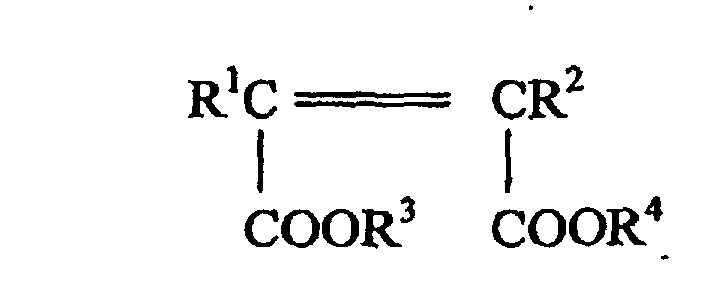
- Also, at least in preferred embodiments, the number of carbon atoms in the hydrophobic side groups of the polymer or copolymer should usually be equal to or greater than the number of carbon atoms in the backbone of the polymer, and when ionized the average charge ratio per backbone carbon is less than or equal to unity.
- Especially suitable polymers may be formed as alternating copolymers of maleic acid (or the anhydride thereof) with styrene, indene or a C1-4 alkyl, e.g. methyl, substituted styrene or indene, or with propyl (or isopropyl) or butyl vinyl ether. It is also possible to use a mixture of the styrene; or indene, or alkylated styrene or indene, and alkyl vinyl ether components. A number of suitable copolymers that may be used are commercially available from Aldrich Chemical Co., e.g. those marketed under the Aldrich Chemical Co. catalogue number 43,529-5 (CAS Registry No. 25736-61-2). Pharmaceutical grade polymers or copolymers that can be used are available from Kuraray Co. Ltd. of Japan.
- In preferred embodiments, the polymer will have physiologically or pharmaceutically acceptable non-toxic properties, and the molecular weight (number average) or relative mass of the polymer will generally be within the range of 2,000 to 20,000 daltons. In some cases, however, unless the composition is to be formulated for parenteral injection the molecular weight may be higher, e.g. up to 500,000 daltons, although usually the molecular weight will not be greater than 100,000 daltons, and will preferably be no greater than 50,000 daltons as for example with poly(maleic anhydride-butyl vinyl ether) that has a number average molecular weight equal to 43 kDa approximately. The polymer must not, however, be in the form of a "block copolymer".
- Examples of typical number average molecular weights of the polymers used in carrying out this invention, especially for solubilizing drugs, are as. follows:
Poly(maleic anhydride-styrene) 7,000 Poly(maleic anhydride-propyl vinyl ether) 5,500 Poly(maleic anhydride-butyl vinyl ether) 43,300 - The particular synthetic method used in synthesising the maleic anhydride styrene copolymers described herein involves a step of quenching the reaction mixture after a certain interval and favours the formation of alternating copolymers which is an essential feature in the formation of a coil with an amphipathic character such that one facet is hydrophobic and one is hydrophilic. This cannot generally be achieved in copolymers which are 'blocky' or produced by other means, e.g. in the poly(maleic anhydride-styrene) copolymers supplied by Sigma Chemical Co. St. Louis, Missouri and sold as 50% styrene (number average molecular weight 350,000), or those sold by Scientific Polymer Products Inc. Ontario, New York as 50/50 maleic anhydride-styrene copolymers with a molecular weight of 50,000.
- In many cases, especially for pharmaceutical applications, poly(maleic anhydride-styrene) (PMAS) will be a preferred polymer. This polymer, of molecular weight 14,000 daltons, is disclosed in U.S. Patent No. 4,732,933 (Yamanouchi) and is already used in an approved pharmaceutical preparation conjugated to the proteinaceous antitumor agent neocarzinostatin, the polymer there acting to raise both the molecular weight and lipophilicity so leading to accumulation of the drug in certain target tissues. This polymer drug conjugate is known as SMANCS. JP 01061424A discloses a pharmaceutical formulation of SMANCS, a conjugate of a styrene/maleic acid copolymer bound to molecules of the drug neocarcinostatin, prepared by mixing a solution of SMANCS in ammonium carbonate buffer (pH 7.5 to 9.5) with a solution of a phospholipid such as egg yolk also in ammonium carbonate buffer (pH 7.5 to 9.5) to form a mixture which after being freeze dried to remove water is dispersed in a non-aqueous oily contrast medium so as then to provide a clear and transparent dispersion therein of the SMANCS conjugate.
- For drug delivery, non-degradable vinyl-based polymers such as PMAS offer a potential advantage over synthetic polypeptides of analogous or identical structure to apoproteins in that they will not be rapidly hydrolysed in the blood plasma, and hence will be more likely to deliver any drug to the target site before degradation of the micelle and loss of its contents. In addition, they lack the allergic or pharmacological potential of non-native peptides or proteins.
- It is believed that in aqueous media, at least over a particular pH range, the solubilizing synthetic amphipathic polymers specified in the present invention will generally adopt a helical coil configuration with the hydrophobic side groups presented along one facet and the anionic hydrophilic groups presented along the opposite facet, and that they interact with the lipid in the aqueous medium to form discoidal micellar particles or assemblies of sub-liposomal dimensions in which the lipid forms a bilayer core. In any event, it has been found that these micellar particles or assemblies in the compositions of the present invention, at least when freshly prepared, have a maximum diameter or cross-sectional dimension of less than 50nm under physiological conditions of temperature and pH. Sizes of the discoidal micellar assemblies usually appear to be in the range of 10-40nm in diameter, typically 20nm, and 5-7nm thick. This compares favourably with the dimensions of lipoprotein micellar assemblies found in nature, such as the well characterized system between apolipophorin III and dimyristoylphosphatidylcholine (DMPC) that has been identified in insects, where the micelles are reported to have a diameter of 18.5 +/- 2.0mn and a thickness of 4.8 +/- 0.8nm (see Wientzek, M., Kay, C.M., Oikawa, K. and Ryan, R.O (1994), "Binding of Insect Apolipophorin III to Dimyristoylphosphatidylcholine Vesicles." J. Biological Chem. 269 (6). 4605-4612). In comparison, typical phospholipid-containing liposomes currently used in drug delivery systems have a diameter of 50-1000nm for unilamellar vesicles and 400-3500nm for multilamellar vesicles.
- The compositions in accordance with the invention will generally be prepared by mixing the polymer and the polar lipid in the aqueous medium and adjusting the pH to effect solubilization. Then, particularly if required for administration to a mammal and for medical use, the pH will usually be further adjusted to a physiologically acceptable value.
- Accordingly, from yet a further aspect the invention provides a method of preparing a lipid-containing composition as hereinbefore specified which comprises the steps of mixing the constituents together in an aqueous medium at a pH above the critical solubilizing value thereby to form a cloudy or turbid aqueous dispersion, and then treating the mixture with an acidifying agent to lower the pH below said critical solubilizing value whilst the temperature is above said predetermined phase transition temperature characteristic of the lipid, so that the synthetic amphipathic polymer solubilizes the lipid and causes the dispersion to clarify.
- The invention also provides a method of solubilizing in an aqueous medium a lipid-soluble target substance that has poor aqueous solubility, said method comprising the steps of mixing together in said aqueous medium the said target substance, a membrane-forming polar lipid, and a synthetic amphipathic polymer, at a pH above a critical solubilizing value thereby to form a cloudy or turbid aqueous dispersion, and then treating the mixture with an acidifying agent to lower the pH below said critical solubilizing value whilst the temperature is above a predetermined phase transition temperature characteristic of the lipid, whereby said synthetic amphipathic polymer interacts with and solubilizes said lipid together with said target substance in the aqueous medium so as to produce a polymer/lipid complex in the form of non-liposomal micellar particles or assemblies of discoidal form in which the polar lipid forms a bilayer core and so as to clarify the dispersion, wherein said synthetic amphipathic polymer has a linear backbone along which hydrophobic groups and anionic hydrophilic groups are evenly arranged and is selected from:
- (i) a polycarboxylic acid homopolymer in which the hydrophobic groups are pendant side groups, and
- (ii) a copolymer, other than a block copolymer, of a first monomer which is an unsaturated dicarboxylic acid, or an anhydride thereof, and a second monomer which is a monoenoic compound, said first and second monomers being arranged in alternating relationship along said linear backbone, subject to the proviso that if said second monomer is an alkyl vinyl ether the alkoxy group thereof is in the range C3- C8 alkoxy.
-
- Also, according to the invention, a method of preparing a lipid-containing composition comprises the steps of mixing together in an aqueous medium a membrane-forming polar lipid and a synthetic amphipathic polymer at a pH above a critical lipid-solubilizing value thereby to form a cloudy or turbid aqueous dispersion, and then treating the mixture with an acidifying agent to lower the pH below said critical lipid-solubilizing value whilst the temperature is above a predetermined phase transition temperature characteristic of the lipid, whereby said synthetic amphipathic polymer interacts with and solubilizies said lipid so as to produce a polymer/lipid complex in the form of non-liposomal micellar particles or assemblies of discoidal form in which the polar lipid forms a bilayer core and so as to clarify the dispersion, wherein said synthetic amphipathic polymer has a linear backbone along which hydrophobic groups and anionic hydrophilic groups are evenly arranged and is selected from:
- (i) a polycarboxylic acid homopolymer in which the hydrophobic groups are pendant side groups, and
- (ii) a copolymer, other than a block copolymer, of a first monomer which is an unsaturated dicarboxylic acid, or an anhydride thereof, and a second monomer which is a monoenoic compound, said first and second monomers being arranged in alternating relationship along said linear backbone, subject to the proviso that if said second monomer is an alkyl vinyl ether the alkoxy group thereof is in the range C3- C8 alkoxy, and wherein after the dispersion clears the temperature is reduced below said phase transition temperature to stabilise the solution, followed by the step of treating the solution with an alkaline reagent so as to raise the pH and adjust it to a final value above said critical lipid-solubilizing value.
-
- The predetermined phase transition temperature may be greater than 25°C.
- In general, before use, the lipid-containing compositions of the present invention will be incorporated in formulations made up to suit the particular purpose and manner of use, or mode of administration in the case of pharmaceutical applications. For making up formulations for pharmaceutical use, the lipid-containing compositions may be mixed with one or more pharmaceutically acceptable carriers, additives, diluents or excipients, and optionally with any other therapeutic ingredients desired. Such formulations may be prepared by any of the methods well known in the art of pharmacy, and may be designed for inhalation, topical or parenteral (including intravenous, intra-articular, intra-muscular and subcutaneous) administration for example. Formulations suitable for parenteral administration conveniently comprise sterile aqueous preparations that, for intravenous injection, are preferably isotonic with the blood of the recipient. Thus, the invention also includes pharmaceutical formulations comprising compositions of lipid/polymer complexes as herein disclosed.
- It will also be understood that the lipid-containing compositions of the present invention may be converted into alternative forms, e.g. for storage and transport, and in particular the compositions may be converted into a freeze-dried state, either before or after being incorporated into a pharmaceutical or other formulation, from which they can be reconstituted, if necessary, when required for use. All such alternative forms are to be regarded as falling within the scope of the invention.
- As already indicated, particularly important applications of the invention related to advantageous surface active characteristics of the lipid-containing compositions described lie in the provision of lung surfactant formulations for use in treatment of respiratory distress syndrome (RDS), and in the provision of ocular formulations e.g. for treatment of dry eye syndrome.
- Other important applications of the invention related to the advantageous solubilizing properties of the lipid/polymer complexes include the use of the compositions for drug delivery purposes. In this case the polar lipid component is preferably a phospholipid and contains a lipid soluble drug, e.g. a steroid, or other bioactive therapeutic agent, e.g. a DNA-containing vector or plasmid for gene therapy, whereby the polymer/phospholipid complex is adapted for use as a drug delivery vehicle.
- From another aspect, the present invention provides the use of a lipid-containing liquid composition in the manufacture of a medicament for the treatment of respiratory distress syndrome, said lipid-containing liquid composition comprising a membrane-forming polar lipid dispersed in an aqueous medium together with a synthetic amphipathic polymer that interacts with the polar lipid to produce a polymer/lipid complex whereby said polymer interacts with and solubilises the polar lipid in the aqueous medium whilst the pH is below a critical lipid-solubilizing value and whilst the temperature is above a predetermined phase transition temperature dependant upon the particular polar lipid, said composition being pH variable such that the pH can be raised from below said critical lipid-solubilizing value to above said critical lipid-solubilizing value by addition of an alkaline reagent, and also being characterised by the following combination of features:
- (a) the composition has the visual appearance of a substantially clear solution;
- (b) the polymer/lipid complex produced is in the form of non-liposomal micellar particles or assemblies of discoidal form in which the polar lipid forms a bilayer core;
- (c) the synthetic amphipathic polymer has a linear backbone along
which hydrophobic groups and anionic hydrophilic groups are
evenly arranged and is selected from:
- (i) a polycarboxylic acid homopolymer in which the hydrophobic groups are pendant side groups, and
- (ii) a copolymer, other than a block copolymer, of a first monomer which is an unsaturated dicarboxylic acid, or an anhydride thereof, and a second monomer which is a monoenoic compound, said first and second monomers being arranged in alternating relationship along said linear backbone, subject to the proviso that if said second monomer is an alkyl vinyl ether, the alkoxy group thereof is in the range C3- C8 alkoxy, and
- (d) the number of carbon atoms in hydrophobic side groups of the amphipathic polymer is equal or greater than the number of carbon atoms in the polymer backbone.
-
- Also, from yet another aspect, the present invention provides the use of a lipid-containing liquid composition in the manufacture of a medicament for the treatment of dry-eye, said lipid-containing liquid composition comprising a membrane-forming polar lipid dispersed in an aqueous medium together with a synthetic amphipathic polymer that interacts with the polar lipid to produce a polymer/lipid complex whereby said polymer interacts with and solubilises the polar lipid in the aqueous medium whilst the pH is below a critical lipid-solubilizing value and whilst the temperature is above a predetermined phase transition temperature dependant upon the particular polar lipid, said composition being pH variable such that the pH can be raised from below said critical lipid-solubilizing value to above said critical lipid-solubilizing value by addition of an alkaline reagent, and also being characterised by the following combination of features:
- (a) the composition has the visual appearance of a substantially clear solution;
- (b) the polymer/lipid complex produced is in the form of non-liposomal micellar particles or assemblies of discoidal form in which the polar lipid forms a bilayer core;
- (c) the synthetic amphipathic polymer has a linear backbone along
which hydrophobic groups and anionic hydrophilic groups are
evenly arranged and is selected from:
- (i) a polycarboxylic acid homopolymer in which the hydrophobic groups are pendant side groups, and
- (ii) a copolymer, other than a block copolymer, of a first monomer which is an unsaturated dicarboxylic acid, or an anhydride thereof, and a second monomer which is a monoenoic compound, said first and second monomers being arranged in alternating relationship along said linear backbone, subject to the proviso that if said second monomer is an alkyl vinyl ether, the alkoxy group thereof is in the range C3 - C8 alkoxy, and
- (d) the number of carbon atoms in hydrophobic side groups of the amphipathic polymer is equal or greater than the number of carbon atoms in the polymer backbone.
-
- According to yet another aspect of the present invention there is provided a composition as defined therein, said composition being for use in therapy.
- In relation to the proposed use of the compositions as lung surfactants, it may be noted that for some time synthetic polymers have been sought having secondary structures analogous to those of the native lung surfactant apoproteins in order to mimic the lipid/protein interactions found with the latter. It is surprising, however, that although a number of polymers with similar structural elements have been synthesised, these have failed to show functional behaviour analogous to those of the native target apoproteins, but on the other hand some relatively simple copolymers such as are described in connection with the present invention and which have no apparent structural similarity have been found to perform functionally in a manner that closely resembles that of the native apoproteins.
- Recently a fairly clear view has emerged regarding the macromolecular structure of native lung surfactant, and the active components thereof have been identified as a bilayer structure consisting mainly of the phospholipid, dipalmitoylphosphatidylcholine (DPPC), in association with two principal apoproteins termed SP-B and SP-C which appear to be involved in spreading of the lipid at the air/fluid interface.
- Of these two apoproteins, multi-dimensional NMR analysis has revealed SP-C as having a secondary structure in the form of a transmembrane coil which is dipalmitoylated at one end and spans the phospholipid bilayer with the dipalmitoyl chains projecting outwards such as to render the surface hydrophobic. On the other hand, it is believed that apoprotein SP-B forms an amphipathic coil analogous to the coiled structures found in serum lipoproteins and surrounds discoidal segments or micelles of the phospholipid bilayer in the form of a hydrophilic annulus. The arrangement envisaged is similar to the now well established arrangement described by Ryan, R.O. "Structural studies of lipoproteins and their apolipoprotein components", Biochem. Cell Biol. 74, 155-164 (1996) in connection with certain plasma lipoproteins, illustrated in FIGURE 1 of the accompanying drawing.
- In developing the compositions of the present invention for use as a lung surfactant the polar lipid, generally a phospholipid, may be advantageously associated also with an additional synthetic polymer, a synthetic amphipathic polyamide polymer, that is adapted to simulate the transmembrane apoprotein known as SP-C of natural endogenous lung surfactant. Such additional polyamide polymer may be poly(lysine ethyl ester adipamide) (PLETESA) which has a coiled configuration that changes according to whether it is in a polar or non-polar medium.
- When the compositions are intended for use as lung surfactants, the inclusion of additional hydrophobic esters designed to span or extend through the lipid bilayer in a manner somewhat analogous to the SP-C apoprotein of natural lung surfactant may be advantageous for assisting orientation at air/fluid interfaces of the lipid/polymer complexes of these compositions. A fatty acid ester, e.g. lauric acid lauryl ester, can be used for this purpose.
- In regard to other lipid-containing compositions disclosed in the prior art, it may further be noted that WO 9511700A discloses an oil-in-water submicron emulsion (SME) for use as a vaccine adjuvant for enhancing the immunogenicity and improving the immune response of antigens in vaccines. The submicron particles of the emulsion generally have a non-polar hydrophobic lipid core stabilized with an amphiphilic or non-ionic surfactant. As an optional addition a phospholipid compound may be included as an emulsifier, and a synthetic polymer such as poly(methylvinyl ether/maleic acid) copolymer may also be included to provide bioadhesive properties. Also, JP 5228358A relates to the production of temperature sensitive liposomes in which conventional lipid liposomes at a temperature near their "clouding" point have a high polymer compound, such as a polyacrylic acid polymer substituted with hydrophobic groups, deposited thereon so as to generate a disturbance of the liposome film enabling the release at a specific temperature of materials contained within the liposome.
- The following examples and description of stages in the preparation and use of various exemplary compositions containing polymer/phospholipid complexes serve further to illustrate the present invention and will enable the skilled person in the art more readily to appreciate the nature of the invention and to put it into practical effect. They should not, however, be construed in any way as a limitation thereof.
- In a typical procedure, vinyl copolymers of maleic anhydride and either styrene or alkyl vinyl ethers are synthesised in a resin flask under a nitrogen atmosphere by refluxing at 80°C. 0.125 moles of each monomer is dissolved in 225 mls of an equimolar mixture of reagent grade toluene and ethyl acetate, and into this mixture (450mls) is added approximately 1% or less by weight of an initiator such as di-(4-tert-butyl cyclohcxyl)peroxydicarbonate (0.25g) or benzoyl peroxide (0.4g). The reacting solution becomes cloudy upon formation of the polymer in the case of poly(maleic anhydride styrene) since this polymer is insoluble in the solvent system used. The reaction is allowed to proceed for ten minutes after the first appearance of precipitated polymer and is stopped by quenching in an ice bath. The resultant polymer is then removed by filtration, refluxed with excess solvent to remove any unreacted monomer, and finally refiltered, washed in methanol and dried in vacuo.
- Where the polymer is soluble in the solvent mixture, as is the case in copolymers containing alkyl vinyl ethers, the reaction is allowed to proceed for thirty minutes to two hours. The polymer is then recovered by precipitation into supercooled diethyl ether and collected by filtration and dried in vacuo.
- In carrying out the invention, alternating copolymers of maleic anhydride and methyl styrene, or other alkyl styrene compounds or indene, may be used in place of maleic anhydride/styrene.
- The micellar polymer/lipid complex compositions are formed by hydrating a sample of the maleic acid based copolymer from Example 1 at a suitable concentration. either in water or in isotonic saline at above pH 7.0, and mixing it by means of mechanical agitation with a hydrated sample of a selected phospholipid, either DPPC or DLPC, until a homogeneous suspension results. Using DPPC it will be necessary of course to maintain the mixture at an elevated temperature above the main phase transition temperature, e.g. at about 50°C, at this stage. The pH is then reduced until the pH is between 3 and 5, at which point the suspension will spontaneously clear indicating the formation of micellar structures of smaller dimensions than those of the wavelength of visible light.
- The resultant clear and transparent colourless solution can be cooled if necessary, e.g. if DPPC is present, and can be adjusted to the desired pH by the addition of either sodium hydroxide (0.1 M) or hydrochloric acid (0.1 M). Once the desired pH is obtained the solution can be freeze-dried for storage.
- A similar procedure is adopted with three component systems in which a fatty acid ester, or another polymer such as PLETESA, or a substance to be solubilized and/or transported in the lipid component of the micellar complexes, is also added to the mixture before lowering the pH.
- For checking and testing the properties of compositions of polymer/phospholipid complexes in accordance with the invention, a number of examples were prepared and the results of various tests of surface activity characteristics carried out for some of these are shown in Tables hereinafter referred to. To facilitate carrying out experiments at room temperature rather than at an elevated temperature, most of the complexes prepared and tested were based on the use of dilaurylphosphatidylcholine (DLPC) as the membrane-forming phospholipid rather than dipalmitoylphosphalidylcholine (DPPC) since at room temperature DLPC is above its phase transition temperature in a liquid crystalline state. Thus, molecules of DLPC readily assemble into bilayers when mixed with the amphipathic polymers. As already noted, using DPPC it is generally necessary for reactions and testing to be carried out at a much higher temperature, above its phase transition temperature of about 42°C, although in the final product DPPC could be preferable because of better surface activity or stability characteristics.
- Complexes that have been prepared and tested include a number of complexes formed from DPPC or DLPC and poly(maleic acid styrene) (PMAS), poly(maleic acid butyl vinyl ether) (PMBE), or poly(maleic acid propyl vinyl ether) (PMPE).
- One of the most important properties of the polymer/phospholipid complexes in accordance with the invention, especially for use as artificial lung surfactants, is the manner in which the surface tension varies with repetitive changes in surface area, and one test method that has been used is a pulsating bubble technique using a pulsating bubble surfactometer which consists of a sample chamber, pulsator unit and pressure-recording device. In a particular example, the sample chamber is made up of a capillary tube (ID 0.5mm) inserted into a wider diameter tube (ID 1.5mm). The latter is filled with the sample liquid and connected to a pulsator unit and pressure transducer. Air is drawn in through the capillary tube which acts as an airway, forming a bubble of air within the sample chamber. This bubble serves as a model alveolus. The column of liquid within the sample chamber is raised and lowered by a small diameter piston connected to a synchronous motor which enables the surface area to be repeatedly reduced to 50% of its original volume. Variations of pressure within the bubble, during each pulsation cycle, are measured by a transducer and combined with values of bubble volume to calculate changes in surface tension.
- This pulsating bubble technique simulates to some extent the contraction and expansion of the alveoli sacks in the lungs and allows the surface tension to be assessed at minimum and maximum bubble volumes, and allows the effect of repeated expansion and compression cycles upon the adsorption of surface active components to be observed and quantified. This technique has been used as a model in vitro system for testing the efficacy of synthetic lung surfactants. Some results of tests carried out not only on the complexes prepared in accordance with the invention, but also on the membrane-forming phospholipids used and the polymers themselves, as well as on commercially available lung surfactants, are summarised in the Tables at the end of the present description.
- Pulsating bubble surfactometry control experiments were first conducted with the compositions listed in Table II on their own. None of the polymers used in these control experiments, when tested in aqueous solution, showed any significant surface activity. In contrast, the commercial surfactants that contain animal derived apoproteins, Curosurf™ and Survanta™, were found rapidly to develop excessively low surface tensions after relatively short periods of pulsing (5 minutes), as shown in Table I.
- When PMAS was combined with the phospholipid DLPC in a two-component system, low surface tension values were recorded after 5 minutes pulsing at pH 4.9 (see Table III). Similar low surface tension values were also obtained with DLPC/PMBE complexes, with the lowest values after 5 minutes pulsing being recorded when using 2.5% DLPC tested at pH 4.17 with a lipid/polymer ratio of 10:1. A low surface tension was also observed with the DLPC/PMPE surfactant complexes when tested at 2.5% in a 1:1 ratio at pH 4.30, as is also shown in Table III although a somewhat longer pulsing period was required. Similar results are shown in Table IV obtained with three component surfactant complexes. Further results are shown in Table V.
- These results in Tables III, IV and V indicate a high suitability for use as artificial lung surfactants. It may be stressed that these synthetic assemblies contrast with the commercial lung surfactants based on animal derived proteins for which long term, potentially allergic, responses are as yet undefined.
- The synthetic surfactants described also have the ability to deliver conventional drugs, DNA or RNA or gene based pharmaceuticals locally to the lung, or via the highly permeable membranes lining the deep lung into the systemic circulation. The lipid-containing compositions containing the discoidal micellar assemblies described may therefore be used to deliver drugs for the treatment of pulmonary disease or for transport into the systemic circulation for use in treating systemic disease.
- Alternatively, suitable formulations of the compositions described containing the micellar systems of sub-liposomal dimensions, could be directly injected into the systemic circulation for delivery or active targeting of drugs contained within the bilayer core. If these compositions are made using the relatively low molecular weight copolymer PMAS hereinbefore referred to, although this is non-degradable as pointed out it has been previously used in medicine and is likely to be readily excreted through the kidneys. As for the phospholipid DPPC, this is endogenous to the body, and in any event is likely to be broken down fairly readily in the body without causing serious problems.
- Already using compositions in accordance with the invention, several aqueous insoluble drug entities have been successfully incorporated into micellar assemblies and solubilized. To enable site specific targeting, it is also possible additionally to incorporate biological ligands (e.g. antibodies, receptors) into the micellar assemblies. Other drugs having poor aqueous solubility that are possible candidates for incorporation, solubilization and delivery in phospholipid micellar assemblies of compositions of the present invention include taxol and quercetin. It can also be possible to incorporate a DNA plasmid into the core of the micellar assemblies for use in gene therapy and, in addition, it is quite feasible to incorporate CD4 receptors during preparation. Such CD4 receptors could protrude above the plane of the bilayer membrane of the micellar assemblies and allow active targeting to particular cellular regions.
- An example of the use of complexes of phospholipids and amphipathic associating polymers in compositions made in accordance with the invention for delivery of drugs with a potential to target particular body areas is provided by the successful solubilization of the anti-cancer agent CB 1954 into a DLPC/PMAS complex at the 1% level.
- In this Example, a formulation to solubilize the aqueous insoluble cytotoxic drug CB1954: 5-(aziridin-1-yl)-2,4-dinitrobenzamide into a DLPC/PMAS micelle is made as follows:
- 1 ml of 2% DLPC (20mg) is hydrated in HPLC grade water and to this solution is added lmg of CB1954. The mixture is then mixed with 1ml of a 2% solution of PMAS (20mg) at pH 6.2 to give a final concentration by weight of 1% DLPC, 0.05% CB1954 and 1% PMAS in 2mls which forms a turbid solution. The pH of this solution is lowered towards pH 3 and then raised to pH 5.8 after which the solution clears and is adjusted to pH 7.0.
-
- An example of the formulation of compositions made in accordance with the invention for the targeted delivery of drugs into the lung or into the systemic circulation is provided by the following corticosteroid formulation:
DLPC 2.5% PMAS 0.25% Dexamethasone 0.25% methyl hydroxy benzoate 0.3% propyl hydroxy benzoate 0.3% sodium chloride 0.8% purified water q.s. pH 5.5 - An example of the potential formulation of compositions made in accordance with the invention for the delivery of an antifungal drug. either in a medical or a non-medical application, is provided by the following antifungal formulation:
DLPC 2.5% PMAS 0.25% amphotericin B 0.25% methyl hydroxy benzoate 0.3% propyl hydroxy benzoate 0.3% sodium chloride 0.8% purified water q.s. pH 5.5 - Apart from drug delivery, pharmaceutically acceptable formulations of the compositions in accordance with the invention can also be used to treat or lubricate surfaces of damaged or diseased articulated joints, e.g. by intra-articular injection, and may also be used to coat and treat surfaces of medical devices and prostheses, e.g. artificial joints or contact lenses.
- By way of further example, set out below is a typical ophthalmic or ocular formulation to treat dry eye syndrome, to coat contact lenses, or for incorporation into contact lens care products.
-
DLPC 2.5% PMAS 0.25% methyl hydroxy benzoate 0.3% propyl hydroxy benzoate 0.3% sodium chloride 0.8% purified water q.s. pH 5.5 - Other examples relating to the solubilising properties of the compositions in accordance with the invention are referred to below.
- The solubilising ability of the polymer/lipid micellar system can be further enhanced by incorporation of additional surfactants. This can be especially useful when solubilising excessively hydrophobic materials where the solubilising ability of the PMAS is insufficient to form a stable aqueous solution. In this case the incorporation of surfactants such as toxicologically acceptable polyethylene oxide/polypropylene oxide block copolymers (available from BASF Corporation and sold under the trade names Pluronic and Tetronic), can result in marked improvement in the solubilisation obtained.
- This represents one example of a formulation of the above kind and consists of:
- (a) A mixture of lipids containing lecithin (diacyl phosphatidylcholine) as available from International Speciality Products ISP (USA) and sold under the trade mark ProLipid 141 (this mixture also includes Behenyl alcohol, C12-C16 alcohols, stearic and palmitic acids and glyceryl stearate in addition to lecithin), used at 0.1% wt/wt;
- (b) PMAS from Aldrich Chemical Co. (USA), Cat. No. 43,529-5, used at 0.5% wt/wt;
- (c) Pluronic grade L64 (BASF Corp.), used at 0.25% wt/wt.
-
- This formulation shows limited solubilising ability above pH 7 but as the pH is lowered to below a critical pH of 3-4 at which conformational changes occur within the PMAS then solubilisation of the hydrophobic material occurs. The presence of the Pluronic copolymer also prevents precipitation of the PMAS as the pH is lowered below pH 3 indicating some emulsification of the PMAS.
- It may be noted that compositions of this invention containing membrane-forming polar lipid, surfactant and a synthetic amphipathic polymer such as poly(maleic acid-styrene) (PMAS) may also be advantageously incorporated into monomer mixes used in making hydrogels, prior to their polymerisation, thereby to form a semi-interpenetrating polymer network or SIPN. Such PMAS-containing hydrophobes exhibit a change in their surface characteristics upon contact with micellar hydrophobes since the amphipathic polymer at the surface appears to reorientate to expose hydrophobic portions of the molecule. This effect may enable surface components to be selectively adsorbed e.g. simple surfactants, polymeric surfactants and hydrophobe/surfactant mixtures. In the latter case it may be noted that surface components partially replace the phospholipid as the film forming agent.
- As previously indicated, compositions in accordance with the invention may also have many other useful applications, especially in connection with the solubilization of lipid soluble substances that have poor aqueous solubility, and the invention may be particularly applicable in this respect in the cosmetics industry, and also in the food industry where problems are frequently encountered in dissolving lecithin phospholipids or other amphipathic lipids and water insoluble substances, e.g. in the manufacture of lotions, creams, sauces and like materials of colloidal form.
- The polymer/lipid micellar assemblies described herein can also be used as a platform for incorporation of membrane, receptor or lipodial proteins in order to maintain the proteins within a physiologically valid phospholipid bilayer environment where they retain their native conformation while at the same time solubilising them in an aqueous environment. In this environment the structure of such proteins can be determined by spectroscopic methods such as proton NMR spectroscopy. This offers a marked advantage over existing solid phase techniques which are considerably less sensitive and thereby will enable improved structural resolution and more effective design of potential drug molecules or assessment of drug binding.
- Pulse Rate (PR) = 34, Temp = Room Temp & pH = 7.0 unless otherwise stated.
-
- DLPC
- = Dilaurylphosphatidylcholine
- PMAS
- = Poly(maleic acid styrene)
- PMBE
- = Poly(maleic acid butyl vinyl ether)
- PMPE
- = Poly(maleic acid propyl vinyl ether)
- PMEE
- = Poly(maleic acid ethyl vinyl ether)
- PAAEA
- = Poly(acrylic acid ethyl acrylate)
- LALE
- = Lauric acid lauryl ester
- PLETESA-P
- = Poly(lysine ethyl ester adipamide) - palmitamide
| Surface Properties of Commercially Available Artificial Lung Surfactants | |||
| The following data shows the minimum surface tension (ST) value achieved and time taken to reach this level. Solutions with an ability to lower the surface tension to less than 5×10⁻⁵ newtons/cm (5 dynes/cm) in 20 minutes or less of pulsing are considered to be effective surfactants. | |||
| Composition % (wt./wt.) | Minimal ST dynes/cm newtons × 10-5(cm) | Time to Develop (mins) | |
| Curosurf | 1.35% | 3.73 | 5 |
| Survanta | 2.50% | 1.05 | 5 |
| Survanta | 2.50% | 0.42 | 5 |
| Survanta | 2.50% | 0.00 | 5 |
| Survanta | 1.35% | 4.16 | 5 |
| Controls | |||||
| Composition % (wt./wt.) | pH | Minimal ST (dynes/cm) 10-5 newtons/cm | Time to Develop (mins) | Comments | |
| DLPC | 2.5 | 9.60 | 30 | Sonicated | |
| DLPC | 1.0 | 3.22 | 6.39 | 30 | PR=12 |
| DLPC | 1.0 | 9.33 | 15.66 | 30 | PR=12 |
| DLPC | 1.0 | 6.82 | 20 | 2hrs hydration | |
| DLPC | 1.0 | 24.89 | 30 | 12hr hydration | |
| DPLC | 1.0 | 12.00 | 15.10 | 30 | |
| PMAS | 0.67 | 6.74 | 16.93 | 25 | |
| PMAS | 0.50 | 5.05 | 28.39 | 5 | |
| PMAS | 0.50 | 7.96 | 32.90 | 5 | |
| PMAS | 0.50 | 9.90 | 40.10 | 5 | |
| PMAS | 2.50 | 7.3 | 19.41 | 30 | |
| PMBE | 1.0 | 27.35 | 10 | PR=12 | |
| 2.5 | 40.88 | 10 | |||
| 1.0 | 4.3 | 24.07 | 5 | ||
| 1.0 | 7.0 | 9.90 | 15 | ||
| PMPE | 2.5 | 22.85 | 15 | ||
| PMEE | 2.5 | 30.33 | 15 | ||
| PAAEA | 0.25 | 4.5 | 30.38 | 5 | |
| 0.25 | 6.0 | 28.37 | 5 | ||
| 0.25 | 7.1 | 27.84 | 5 | ||
| 0.25 | 8.48 | 23.64 | 5 | ||
| LALE | 1.0 | 22.61 | 30 | ||
| PLETESA-P | 1.0 | 25.10 | 30 |
| Phospholipid/Polymer Complexes DLPC - PMAS/PMBE/PMPE in Two Component Systems | ||||
| Composition % (wt./wt.) | pH | Minimal ST (dynes/cm) 10-5 newtons /cm | Time to Develop (mins) | Comments |
| DLPC/PMAS | ||||
| 0.5/1.25 | 4.9 | 3.32 | 5 | |
| DLPC/PMBE | ||||
| 1.0/2.5 | 6.90 | 0.00 | 20 | |
| DLPC/PMBE | ||||
| 1.0/0.5 | 7.78 | 0.43 | 20 | PR=12 |
| 1.0/0.5 | 6.10 | 3.32 | 20 | PR=12 |
| DLPC/PMBE | ||||
| 2.5/0.25 | 4.17 | 4.48 | 5 | |
| 2.5/0.25 | 1.57 | 10 | ||
| DLPC/PMBE | ||||
| 1.0/0.1 | 4.82 | 3.25 | 20 | PR=12 |
| DLPC/PMPE | ||||
| 2.5/2.5 | 4.30 | 0.00 | 20 | |
| 2.5/2.5 | 7.00 | 3.86 | 15 |
| Phospholipid/Polymer Complexes DLPC - PMAS/LALE/PLETESA - PALMITAMIDE (PP) in Three Component Systems | |||||
| Composition % (wt./wt.) | pH | Minimal ST (dynes/cm) 10-5 newtons/cm | Time to Develop (Mins) | Comments | |
| DLPC/PMAS/ LALE | 0.31/0.31/0.02 | 0.20 | 1 | ||
| DLPC/PMAS/ PP | 0.5/0.5/0.05 | 6.13 | 1.67 | 20 | |
| DLPC/PMAS/ PP | 1.0/1.0/0.5 | 5.62 | 3.15 | 20 | PR=12 |
| DLPC/PMAS/ PP | 1.0/1.0/0.5 | 6.31 | 1.04 | 20 |
| Control Phospholipids and DLPC - Dilauryl Phosphatidylcholine Recombinants | |||||||
| Code | Lipid/Polymer | Composition | pH | Temp 0C | Minimal ST (<10dynes/cm) <10-4 newtons/cm | Time to Develop | Comment |
| dlfs7 | DLPC (fresh) | 0.5 | 7.12 | 25.1 | 18.25 | 20 | |
| dlf5 | DLPC (fresh) | 0.5 | 5.47 | 24.0 | 12.57 | 20 | |
| DLPC (fresh) | 0.5 | 5.47 | 24.0 | 0.04 | 40 | ||
| dlfs5 | DLPC (fresh) | 0.5 | 5.47 | 24.8 | 1.61 | 7 | |
| sonicated | |||||||
| dlfs4 | DLPC (fresh) | 0.5 | 3.92 | 24.0 | 1.67 | 10 | |
| sonicated | |||||||
| dlpf7 | DPPC sonicated | 0.5 | 7.3 | 23.1 | 20.36 | 40 | |
| dlpf6 | DPPC (fresh) | 0.5 | 6.3 | 24.9 | 16.18 | 30 | |
| dlpf4 | DPPC | 0.5 | 4.1 | 21.9 | 5.31 | 30 | |
| dpf7s | DPPC sonicated | 0.5 | 73 | 24.0 | 9.99 | 20 | |
| DPPC sonicated | 0.5 | 7.3 | 37.5 | 27.95 | 40 | after 40 mins | |
| at room temp | |||||||
| dp7st | DPPC sonicated | 0.5 | 7.3 | 37.5 | 26.58 | 2 | |
| dlst3 | DLPC/PMA-IH | 0.5/0.2 | 5.34 | 23.3 | 17.61 | 40 | |
| dlst2 | DLPC/PMA-IH | 0.5/0.1 | 5.7 | 23.1 | 2.33 | 10 | |
| dlst1 | DLPC/PMA-IH | 0.5/0.05 | 5.6 | 21.9 | 8.93 | 30 | |
| dlst4 | DLPC/PMA-IH | 0.2/0.4 | 5.8 | 23.5 | 14.66 | 40 | |
| dlst6 | DLPC/PMA-IH | 0.1/0.5 | 5.5 | 23.9 | 7.93 | 40 | |
| dlst5 | DLPC/PMA-IH | 0.1/0.5 | 7.5 | 22.9 | 6.12 | 30 | |
| dlih1 | DLPC/PMA-IH | 0.5/0.5 | 7.53 | 22.7 | 19.47 | 10 | (12/min pulse r) |
| 11.04 | 10 | (30/min pulse r) | |||||
| 1.67 | 45 | (30/min pulse r) | |||||
| 5dlst | DLPC/PMA-IH | 0.5/0.5 | 7.34 | 24.4 | 12.52 | 40 | |
| dlih7 | DLPC/PMA-IH | 0.5/0.5 | 7.3 | 23.5 | 16.04 | 30 | |
| 7dlst | DLPC/PMA-IH | 0.5/0.5 | 7.2 | 21.6 | 14.89 | 30 | |
| dli5/ | DLPC/PMA-IH | 0.5/0.5 | 5.6 | 23.6 | 6.12 | 40 | |
| dlpil | |||||||
| 52dst | DLPC/PMA-IH | 0.5/0.5 | 5.6 | 22.0 | 7.69 | 20 | stored |
| 53dst | DLPC/PMA-IH | 0.5/0.5 | 5.6 | 22.5 | 7.44 | 10 | |
| 37.2 | 5.07 | 2 | |||||
| 54dst | DLPC/PMA-IH | 0.5/0.5 | 5.6 | 37.2 | 3.08 | 5 | |
| dl5/ | DLPC/PMA-IH | 0.5/0.5 | 5.5 | 24.3 | 8.15 | 5 | |
| dlin5 | |||||||
| dlin4 | DLPC/PMA-IH | 0.5/0.5 | 4.3 | 23.3 | 9.21 | 2 | |
| dlal7 | DLPC/PMA-ald | 0.5/0.5 | 7.2 | 26.0 | 7.06 | 20 | |
| dla7_r | DLPC/PMA-ald | 0.5/0.5 | 6.9 | 23.9 | 17.76 | 40 | (overnight 20C) |
| dlal5 | DLPC/PMA-ald | 0.5/0.5 | 5.37 | 252 | 7.79 | 30 | |
| dlal5_r/dla5_r | dlal5_r/DLPC/PMA-ald | 0.5/0.5 | 5.3 | 22.7 | 5.82 | 20 | (overnight 20C) |
| dust4 | DLPC/PMA-ald | 0.5/0.5 | 4.3 | 26.2 | 2.73 | 2 | |
| Lipids Other than DLPC - Dilauryl Phosphatidylcholine | |||||||
| Code | Lipid/Polymer | Composition | pH | Temp 0C | Minimal ST (<10dynes/cm) <10-4 newtons/cm | Time to Develop | Comment |
| dpih1 | DPPC/PMA-IH | 0.5/0.5 | 7.2 | 22.7 | 52.78 | 30 | |
| dpih5 | DPPC/PMA-IH | 0.5/0.5 | 4.87 | 23.4 | 44.17 | 10 | |
| dpih4 | DPPC/PMA-IH | 0.5/0.5 | 3.89 | 23.4 | 33.91 | 25 | |
| dpih73 | DPPC/PMA-IH | 0.5/0.5 | 7.2 | 35.0 | 31.85 | 30 | |
| dpih53 | DPPC/PMA-IH | 0.5/0.5 | 5.3 | 35.0 | 45.15 | 30 | |
| 56dst | DPPC/PMA-IH | 0.5/0.5 | 7.43 | 37.4 | 56.19 | 2 | fresh DPPC |
| 55dst | DPPC/PMA-IH | 0.5/0.5 | 5.36 | 37.4 | 47.46 | 40 | fresh DPPC |
| 57dst | DPPC/PMA-IH | 0.5/0.5 | 453 | 37.3 | 41.39 | 2 | fresh DPPC overheat 88°C |
| dpst7 | DPPC/PMA-ald | 0.5/0.5 | 7.3 | 23.1 | 50.69 | 40 | |
| dps53 | DPPC/PMA-ald | 0.5/0.5 | 5.4 | 37.5 | 18.34 | 10 | |
| dpst5 | DPPC/PMA-ald | 0.5/0.5 | 5.3 | 22.9 | 6.52 | 40 | |
| dpst4 | DPPC/PMA-ald | 0.5/0.5 | 4.1 | 23.0 | 35.26 | 30 | |
| list5 | Lino.A./PMA-IH | 0.5/0.5 | 5.5 | 25.3 | 31.24 | 30 | |
| list? | Lino.A./PMA-IH | 0.5/0.5 | 7.3 | 25.3 | 26.01 | 30 | |
| stst7 | Steanic/PMA-IH | 0.5/0.5 | 7.2 | 24.7 | 23.12 | 30 | |
| stst5 | Stearic/PMA-IH | 0.5/0.5 | 5.3 | 25.1 | 28.59 | 30 | |
| pma-sd | SDS/PMA-ald | 0.1/0.5 | 24.8 | 27.38 | 40 | ||
| KEY: | |||||||
| DLPC - Dilauryl phosphatidylcholine | |||||||
| DPPC - Dipalmitoyl phosphatidylcholine | |||||||
| Lino.A. - Linoleic acid | |||||||
| PMA-IH - Poly(maleic acid/styrene) synthesised in-house | |||||||
| PMA-ald - Poly(maleic acid/styrene) ex. Aldrich Chem. Co. | |||||||
| SDS - Sodium dodecyl sulphate | |||||||
| ST - Surface Tension mN/m | |||||||
| Stearic - Stearic acid | |||||||
| Pulse Rate = 30/min unless otherwise stated. |
Claims (35)
- A lipid-containing liquid composition in which a membrane-forming polar lipid is dispersed in an aqueous medium together with a synthetic amphipathic polymer that interacts with the polar lipid to produce a polymer/lipid complex whereby said polymer interacts with and solubilises the polar lipid in the aqueous medium whilst the pH is below a critical lipid-solubilizing value and whilst the temperature is above a predetermined phase transition temperature dependant upon the particular polar lipid, said composition being pH variable such that the pH can be raised from below said critical lipid-solubilizing value to above said critical lipid-solubilizing value by addition of an alkaline reagent, and also being characterised by the following combination of features:(a) the composition has the visual appearance of a substantially clear solution;(b) the polymer/lipid complex produced is in the form of non-liposomal micellar particles or assemblies of discoidal form in which the polar lipid forms a bilayer core;(c) the synthetic amphipathic polymer has a linear backbone along which hydrophobic groups and anionic hydrophilic groups are evenly arranged and is a copolymer, other than a block copolymer, of a first monomer which is an unsaturated dicarboxylic acid, or an anhydride thereof, and a second monomer which is a monoenoic compound, said first and second monomers being arranged in alternating relationship along said linear backbone, subject to the proviso that if said second monomer is an alkyl vinyl ether, the alkoxy group thereof is in the range C3 - C8 alkoxy, and(d) the number of carbon atoms in hydrophobic side groups of the amphipathic polymer is equal or greater than the number of carbon atoms in the polymer backbone.
- A lipid-containing liquid composition in which a membrane-forming polar lipid is dispersed in an aqueous medium together with a lipid-soluble target substance of poor aqueous solubility and a synthetic amphipathic polymer that interacts with the polar lipid to produce a polymer/lipid complex and solubilize said target substance and said polar lipid in the aqueous medium whilst the pH is below a critical lipid-solubilizing value and whilst the temperature is above a predetermined phase transition temperature dependant upon the particular polar lipid, said composition being pH variable such that the pH can be raised from below said critical lipid-solubilizing value to above said critical lipid-solubilizing value by addition of an alkaline reagent, and also being characterised by the following combination of features:(a) the composition has the visual appearance of a substantially clear solution;(b) the polymer/lipid complex produced is in the form of non-liposomal micellar particles or assemblies of discoidal form in which the polar lipid forms a bilayer core;(c) the synthetic amphipathic polymer has a linear backbone along which hydrophobic groups and anionic hydrophilic groups are evenly arranged and is selected from:(i) a polycarboxylic acid homopolymer in which the hydrophobic groups are pendant side groups, and(ii) a copolymer, other than a block copolymer, of a first monomer which is an unsaturated dicarboxylic acid, or an anhydride thereof, and a second monomer which is a monoenoic compound, said first and second monomers being arranged in alternating relationship along said linear backbone, subject to the proviso that if said second monomer is an alkyl vinyl ether, the alkoxy group thereof is in the range C3 - C8 alkoxy, and(d) the number of carbon atoms in hydrophobic side groups of the amphipathic polymer is equal or greater than the number of carbon atoms in the polymer backbone.
- A lipid-containing composition as claimed in Claim 2 wherein said synthetic amphipathic polymer is a homopolymer selected from poly(2-ethylacrylic) acid (PEAA) and poly(2-propylacrylic) acid (PPAA).
- A lipid-containing composition as claimed in Claim 1 or Claim 2 wherein said second monomer of said copolymer is a compound of formula R-CH=CH2, where R is selected from hydrogen, C1-C8 alkyl, C3-C6 alkoxy, phenyl, benzyl and phenyl or benzyl substituted with an allyl or other hydrophobic group.
- A lipid-containing composition as claimed in Claim 4 wherein the first monomer of said copolymer is a dicarboxylic acid having the formula:where R1 and R2 are each independently hydrogen or C1 - C9 alkyl, one of R3 and R4 is hydrogen and the other is hydrogen or C2-C9 alkyl, and wherein the copolymer structure is such that the second monomer units and the first monomer dicarboxylic acid or half ester units provide a regular arrangement of alternate pendant anionic hydrophilic side groups and hydrophobic side groups along the linear backbone, subject to the proviso that if in said second monomer R is hydrogen or is ethoxy (C2 alkoxy), R3 and R4 in said first monomer are not both hydrogen.
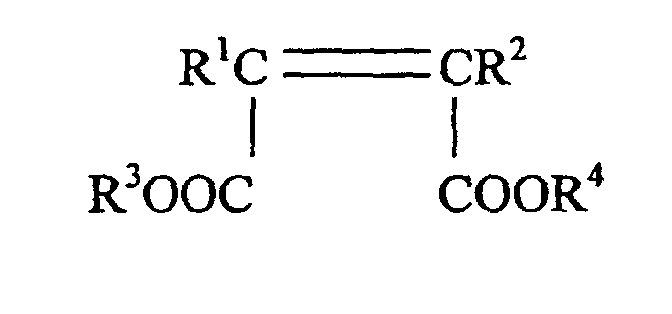
- A lipid-containing composition as claimed in Claim 5 wherein R1 and R2 of said first monomer are both hydrogen and R of said second monomer, if alkyl, contains less than eight carbon atoms.
- A lipid-containing composition as claimed in any one of the preceding claims wherein the average charge ratio per backbone carbon of said amphipathic polymer when ionized is less than or equal to unity.
- A lipid-containing composition as claimed in any one of the preceding claims wherein said synthetic amphipathic polymer is an alternating copolymer of maleic acid (or anhydride thereof) with styrene, indene, a C1-4 alkyl substituted styrene or indene, or with an alkyl vinyl ether selected from ethyl, propyl, isopropyl and butyl vinyl ether.
- A lipid-containing composition as claimed in any one of the preceding claims wherein said synthetic amphipathic polymer has a balance of hydrophobic and anionic hydrophilic groups evenly arranged along a linear backbone.
- A lipid-containing composition as claimed in any one of the preceding claims wherein said lipid comprises a phospholipid.
- A lipid-containing composition as claimed in Claim 10 wherein the phospholipid is a phosphatidic acid derivative in which the non-polar acyl ester groups contain eight to twenty five carbon atoms.
- A lipid-containing composition as claimed in Claim 11 wherein the phospholipid is a phosphatidylcholine.
- A lipid-containing composition as claimed in Claim 11 wherein the phospholipid is selected from dipalmitoylphosphatidylcholine (DPPC), dilauroylphosphatidylcholine (DLPC) and dimyristoylphosphatidylcholine (DMPC).
- A lipid-containing composition as claimed in any one of the preceding claims wherein said synthetic polymer has physiologically and pharmaceutically acceptable non-toxic properties suitable for administration to mammals.
- A lipid-containing composition as claimed in any one of the preceding claims wherein the molecular weight (number average) or relative mass of the synthetic polymer lies within a range of 2,000 to 500,000 daltons.
- A lipid-containing composition as claimed in Claim 15 wherein the molecular weight (number average) or relative mass of the synthetic polymer is less than 50,000 daltons.
- A lipid-containing composition as claimed in any one of Claims 8 to 16 wherein said synthetic polymer is a poly(maleic acid-styrene) copolymer (PMAS).
- A lipid-containing composition as claimed in any one of the preceding claims wherein the solubilizing micellar particles or assemblies formed by the polymer/lipid complex in the aqueous medium have a maximum diameter or cross-sectional dimension of less than 50nm under physiological conditions of temperature and pH.
- A lipid-containing composition as claimed in any one of the preceding claims which includes an additional surfactant or surfactants that enhances its solubilising properties.
- A lipid-containing composition as claimed in Claim 2 wherein said lipid-soluble target substance is a drug or a bioactive therapeutic agent.
- A lipid-containing composition as claimed in any one of the preceding claims incorporated in a formulation for pharmaceutical use in which it is admixed with one or more pharmaceutically acceptable carriers, additives, diluents or excipients.
- A formulation for pharmaceutical use as defined in Claim 21 comprising a sterile aqueous preparation suitable for parenteral administration.
- A lung surfactant formulation for use in the treatment of respiratory distress syndrome comprising a membrane-forming polar lipid dispersed in an aqueous medium together with a synthetic amphipathic polymer that interacts with the polar lipid to produce a polymer/lipid complex whereby said polymer interacts with and solubilises the polar lipid in the aqueous medium whilst the pH is below a critical lipid-solubilizing value and whilst the temperature is above a predetermined phase transition temperature dependant upon the particular polar lipid, said composition being pH variable such that the pH can be raised from below said critical lipid-solubilizing value to above said critical lipid-solubilizing value by addition of an alkaline reagent, and also being characterised by the following combination of features:(a) the composition has the visual appearance of a substantially clear solution;(b) the polymer/lipid complex produced is in the form of non-liposomal micellar particles or assemblies of discoidal form in which the polar lipid forms a bilayer core;(c) the synthetic amphipathic polymer has a linear backbone along which hydrophobic groups and anionic hydrophilic groups are evenly arranged and is selected from:(i) a polycarboxylic acid homopolymer in which the hydrophobic groups are pendant side groups, and(ii) a copolymer, other than a block copolymer, of a first monomer which is an unsaturated dicarboxylic acid, or an anhydride thereof, and a second monomer which is a monoenoic compound, said first and second monomers being arranged in alternating relationship along said linear backbone, subject to the proviso that if said second monomer is an alkyl vinyl ether, the alkoxy group thereof is in the range C3 - C8 alkoxy, and(d) the number of carbon atoms in hydrophobic side groups of the amphipathic polymer is equal or greater than the number of carbon atoms in the polymer backbone.
- An ocular pharmaceutical formulation for use in the treatment of dry eye comprising a membrane-forming polar lipid dispersed in an aqueous medium together with a synthetic amphipathic polymer that interacts with the polar lipid to produce a polymer/lipid complex whereby said polymer interacts with and solubilises the polar lipid in the aqueous medium whilst the pH is below a critical lipid-solubilizing value and whilst the temperature is above a predetermined phase transition temperature dependant upon the particular polar lipid, said composition being pH variable such that the pH can be raised from below said critical lipid-solubilizing value to above said critical lipid-solubilizing value by addition of an alkaline reagent, and also being characterised by the following combination of features:(a) the composition has the visual appearance of a substantially clear solution;(b) the polymer/lipid complex produced is in the form of non-liposomal micellar particles or assemblies of discoidal form in which the polar lipid forms a bilayer core;(c) the synthetic amphipathic polymer has a linear backbone along which hydrophobic groups and anionic hydrophilic groups are evenly arranged and is selected from:(i) a polycarboxylic acid homopolymer in which the hydrophobic groups are pendant side groups, and(ii) a copolymer, other than a block copolymer, of a first monomer which is an unsaturated dicarboxylic acid, or an anhydride thereof, and a second monomer which is a monoenoic compound, said first and second monomers being arranged in alternating relationship along said linear backbone, subject to the proviso that if said second monomer is an alkyl vinyl ether, the alkoxy group thereof is in the range C3 - C8 alkoxy, and(d) the number of carbon atoms in hydrophobic side groups of the amphipathic polymer is equal or greater than the number of carbon atoms in the polymer backbone.
- Use of a lipid-containing liquid composition in the manufacture of a medicament for the treatment of respiratory distress syndrome, said lipid-containing liquid composition comprising a membrane-forming polar lipid dispersed in an aqueous medium together with a synthetic amphipathic polymer that interacts with the polar lipid to produce a polymer/lipid complex whereby said polymer interacts with and solubilises the polar lipid in the aqueous medium whilst the pH is below a critical lipid-solubilizing value and whilst the temperature is above a predetermined phase transition temperature dependant upon the particular polar lipid, said composition being pH variable such that the pH can be raised from below said critical lipid-solubilizing value to above said critical lipid-solubilizing value by addition of an alkaline reagent, and also being characterised by the following combination of features:(a) the composition has the visual appearance of a substantially clear solution;(b) the polymer/lipid complex produced is in the form of non-liposomal micellar particles or assemblies of discoidal form in which the polar lipid forms a bilayer core;(c) the synthetic amphipathic polymer has a linear backbone along which hydrophobic groups and anionic hydrophilic groups are evenly arranged and is selected from:(i) a polycarboxylic acid homopolymer in which the hydrophobic groups are pendant side groups, and(ii) a copolymer, other than a block copolymer, of a first monomer which is an unsaturated dicarboxylic acid, or an anhydride thereof, and a second monomer which is a monoenoic compound, said first and second monomers being arranged in alternating relationship along said linear backbone, subject to the proviso that if said second monomer is an alkyl vinyl ether, the alkoxy group thereof is in the range C3 - C8 alkoxy, and(d) the number of carbon atoms in hydrophobic side groups of the amphipathic polymer is equal or greater than the number of carbon atoms in the polymer backbone.
- Use of a lipid-containing liquid composition in the manufacture of a medicament for the treatment of dry-eye, said lipid-containing liquid composition comprising a membrane-forming polar lipid dispersed in an aqueous medium together with a synthetic amphipathic polymer that interacts with the polar lipid to produce a polymer/lipid complex whereby said polymer interacts with and solubilises the polar lipid in the aqueous medium whilst the pH is below a critical lipid-solubilizing value and whilst the temperature is above a predetermined phase transition temperature dependant upon the particular polar lipid, said composition being pH variable such that the pH can be raised from below said critical lipid-solubilizing value to above said critical lipid-solubilizing value by addition of an alkaline reagent, and also being characterised by the following combination of features:(a) the composition has the visual appearance of a substantially clear solution;(b) the polymer/lipid complex produced is in the form of non-liposomal micellar particles or assemblies of discoidal form in which the polar lipid forms a bilayer core;(c) the synthetic amphipathic polymer has a linear backbone along which hydrophobic groups and anionic hydrophilic groups are evenly arranged and is selected from:(i) a polycarboxylic acid homopolymer in which the hydrophobic groups are pendant side groups, and(ii) a copolymer, other than a block copolymer, of a first monomer which is an unsaturated dicarboxylic acid, or an anhydride thereof, and a second monomer which is a monoenoic compound, said first and second monomers being arranged in alternating relationship along said linear backbone, subject to the proviso that if said second monomer is an alkyl vinyl ether, the alkoxy group thereof is in the range C3 - C8 alkoxy, and(d) the number of carbon atoms in hydrophobic side groups of the amphipathic polymer is equal or greater than the number of carbon atoms in the polymer backbone.
- Use of a lipid-containing composition as claimed in any one of the preceding claims for the manufacture of a medical preparation.
- Use of a lipid-containing liquid composition as defined in any one of the preceding claims in the manufacture of a cosmetic preparation.
- Use of a lipid-containing composition as claimed in any preceding claim in the manufacture of a hydrogel, prior to polymerisation of the latter, to form a semi-interpenetrating polymer network (SIPN).
- A hydrogel containing a semi-interpenetrating polymer network obtainable by use of a lipid-containing composition as claimed in any preceding claim.
- A method of preparing a lipid-containing composition as claimed in any preceding claim which comprises the steps of mixing the constituents together in an aqueous medium at a pH above said critical lipid-solubilizing value thereby to form a cloudy or turbid aqueous dispersion, and then treating the mixture with an acidifying agent to lower the pH below said critical solubilizing value whilst the temperature is above said predetermined phase transition temperature characteristic of the lipid, so that the synthetic amphipathic polymer solubilizes the lipid and causes the dispersion to clarify.
- A method of preparing a lipid-containing composition said method comprising the steps of mixing together in an aqueous medium a membrane-forming polar lipid and a synthetic amphipathic polymer at a pH above a critical lipid-solubilizing value thereby to form a cloudy or turbid aqueous dispersion, and then treating the mixture with an acidifying agent to lower the pH below said critical lipid-solubilizing value whilst the temperature is above a predetermined phase transition temperature characteristic of the lipid, whereby said synthetic amphipathic polymer interacts with and solubilizies said lipid so as to produce a polymer/lipid complex in the form of non-liposomal micellar particles or assemblies of discoidal form in which the polar lipid forms a bilayer core and so as to clarify the dispersion, wherein said synthetic amphipathic polymer has a linear backbone along which hydrophobic groups and anionic hydrophilic groups are evenly arranged and is selected from:(i) a polycarboxylic acid homopolymer in which the hydrophobic groups are pendant side groups, and(ii) a copolymer, other than a block copolymer, of a first monomer which is an unsaturated dicarboxylic acid, or an anhydride thereof, and a second monomer which is a monoenoic compound, said first and second monomers being arranged in alternating relationship along said linear backbone, subject to the proviso that if said second monomer is an alkyl vinyl ether, the alkoxy group thereof is in the range C3 - C8 alkoxy, and wherein after the dispersion clears the temperature is reduced below said phase transition temperature to stabilise the solution, followed by the step of treating the solution with an alkaline reagent so as to raise the pH and adjust it to a final value above said critical lipid-solubilizing value.
- A method according to Claim 32, wherein said phase transition temperature is greater than 25°C.
- A method of solubilizing in an aqueous medium a lipid-soluble target substance that has poor aqueous solubility, said method comprising the steps of mixing together in said aqueous medium the said target substance, a membrane-forming polar lipid, and a synthetic amphipathic polymer, at a pH above a critical solubilizing value thereby to form a cloudy or turbid aqueous dispersion, and then treating the mixture with an acidifying agent to lower the pH below said critical solubilizing value whilst the temperature is above a predetermined phase transition temperature characteristic of the lipid, whereby said synthetic amphipathic polymer interacts with and solubilizes said lipid together with said target substance in the aqueous medium so as to produce a polymer/lipid complex in the form of non-liposomal micellar particles or assemblies of discoidal form in which the polar lipid forms a bilayer core and so as to clarify the dispersion, wherein said synthetic amphipathic polymer has a linear backbone along which hydrophobic groups and anionic hydrophilic groups are evenly arranged and is selected from:(i) a polycarboxylic acid homopolymer in which the hydrophobic groups are pendant side groups, and(ii) a copolymer, other than a block copolymer, of a first monomer which is an unsaturated dicarboxylic acid, or an anhydride thereof, and a second monomer which is a monoenoic compound, said first and second monomers being arranged in alternating relationship along said linear backbone, subject to the proviso that if said second monomer is an alkyl vinyl ether, the alkoxy group thereof is in the range C3 - C8 alkoxy.
- A lipid-containing composition as claimed in any one of the preceding claims, said composition being for use in therapy.
Applications Claiming Priority (3)
| Application Number | Priority Date | Filing Date | Title |
|---|---|---|---|
| GBGB9717905.5A GB9717905D0 (en) | 1997-08-22 | 1997-08-22 | Lipid-containing compositions and uses thereof |
| GB9717905 | 1997-08-22 | ||
| PCT/GB1998/002546 WO1999009955A2 (en) | 1997-08-22 | 1998-08-24 | Lipid-containing compositions and uses thereof |
Publications (2)
| Publication Number | Publication Date |
|---|---|
| EP1007002A1 EP1007002A1 (en) | 2000-06-14 |
| EP1007002B1 true EP1007002B1 (en) | 2003-10-29 |
Family
ID=10817944
Family Applications (1)
| Application Number | Title | Priority Date | Filing Date |
|---|---|---|---|
| EP98940374A Expired - Lifetime EP1007002B1 (en) | 1997-08-22 | 1998-08-24 | Lipid-containing compositions and uses thereof |
Country Status (11)
| Country | Link |
|---|---|
| US (1) | US6436905B1 (en) |
| EP (1) | EP1007002B1 (en) |
| JP (1) | JP2001513544A (en) |
| AT (1) | ATE252888T1 (en) |
| AU (1) | AU752508B2 (en) |
| CA (1) | CA2301711C (en) |
| DE (1) | DE69819338T2 (en) |
| ES (1) | ES2210802T3 (en) |
| GB (1) | GB9717905D0 (en) |
| NZ (1) | NZ502839A (en) |
| WO (1) | WO1999009955A2 (en) |
Cited By (2)
| Publication number | Priority date | Publication date | Assignee | Title |
|---|---|---|---|---|
| US9714890B2 (en) | 2008-07-21 | 2017-07-25 | Becton, Dickinson And Company | Density phase separation device |
| WO2023285982A1 (en) | 2021-07-13 | 2023-01-19 | Stellenbosch University | Zwitterionic polymers for forming nanodiscs |
Families Citing this family (24)
| Publication number | Priority date | Publication date | Assignee | Title |
|---|---|---|---|---|
| US6180142B1 (en) * | 1998-08-21 | 2001-01-30 | The Regents Of The University Of California | Reduction of surfactant inactivation in pulmonary surfactant therapy |
| RU2326699C2 (en) | 2001-11-17 | 2008-06-20 | Авентис Фарма Лимитед | Adsorbents and their application |
| US7495116B2 (en) | 2002-03-29 | 2009-02-24 | Nof Corporation | Phospholipid derivative |
| EP1550675B1 (en) * | 2002-09-30 | 2008-01-02 | Nof Corporation | Phospholipid derivative |
| CN100339382C (en) | 2003-01-06 | 2007-09-26 | 日本油脂株式会社 | Phospholipid derivatives and process for the production there |
| US7871818B2 (en) * | 2003-01-31 | 2011-01-18 | Roche Madison Inc. | Membrane active polymers |
| WO2004083219A1 (en) | 2003-03-20 | 2004-09-30 | Nof Corporation | Phospholipid derivative |
| GB2426703B (en) * | 2005-05-31 | 2007-09-19 | Malvern Cosmeceutics Ltd | Compositions |
| WO2007047498A2 (en) * | 2005-10-14 | 2007-04-26 | The Regents Of The University Of California | Formation and encapsulation of molecular bilayer and monolayer membranes |
| US9233846B2 (en) * | 2005-10-14 | 2016-01-12 | The Regents Of The University Of California | Formation and encapsulation of molecular bilayer and monolayer membranes |
| GB0601251D0 (en) * | 2006-01-21 | 2006-03-01 | Babraham Bioscience Technologi | Protein solubilisation composition |
| GB2442202A (en) * | 2006-09-30 | 2008-04-02 | Morvus Technology Ltd | Vermin poison |
| GB0623838D0 (en) | 2006-11-29 | 2007-01-10 | Malvern Cosmeceutics Ltd | Novel compositions |
| EP1932517A3 (en) * | 2006-12-11 | 2008-07-16 | Universiteit Utrecht Holding B.V. | Liposomes containing a polyphenol derivative such as caffeic acid and a method of post-loading thereof |
| ES2355773T3 (en) * | 2006-12-15 | 2011-03-30 | BAUSCH & LOMB INCORPORATED | SURFACE TREATMENT OF MEDICAL DEVICES. |
| WO2009143425A1 (en) * | 2008-05-22 | 2009-11-26 | The Regents Of The University Of California | Membrane precursors and membranes formed therefrom |
| EP2452199A1 (en) * | 2009-07-08 | 2012-05-16 | The University of Birmingham | Solubilisation of membrane proteins |
| EP2521650A4 (en) | 2010-01-05 | 2013-05-15 | Univ California | DRYLET BILOLET FORMATION USING LIQUID VACUUM HANDLING TECHNIQUES |
| GB201107737D0 (en) | 2011-05-09 | 2011-06-22 | Univ Birmingham | Extraction from cells |
| EP2578207A3 (en) | 2011-10-05 | 2015-10-07 | Jacob J. Schmidt | Masking apertures enabling automation and solution exchange in sessile droplet lipid bilayers |
| GB201312343D0 (en) * | 2013-07-10 | 2013-08-21 | Univ Aston | Lipid-Containing Nanoparticle |
| WO2019046573A1 (en) | 2017-08-31 | 2019-03-07 | Texas Tech University System | Polymer-encased nanodiscs with improved buffer compatibility |
| GB201909680D0 (en) | 2019-07-05 | 2019-08-21 | Malvern Cosmeceutics Ltd | Hypercoiling polymer derivatives |
| CN115364111B (en) * | 2021-05-17 | 2024-04-02 | 中国医学科学院基础医学研究所 | The use of glycerophospholipids in the treatment of tumors |
Family Cites Families (5)
| Publication number | Priority date | Publication date | Assignee | Title |
|---|---|---|---|---|
| JPS6461424A (en) * | 1987-09-01 | 1989-03-08 | Yamanouchi Pharma Co Ltd | Smancs preparation dispersible in administration |
| JP2699038B2 (en) * | 1992-02-21 | 1998-01-19 | 株式会社ノエビア | Temperature sensitive liposomes |
| US5374420A (en) * | 1993-01-22 | 1994-12-20 | Revlon Consumer Products Corporation | Hair setting compositions |
| US5436010A (en) * | 1993-07-30 | 1995-07-25 | Sdg Technology, Inc. | Hair penetrant and carrier |
| AU5543294A (en) * | 1993-10-29 | 1995-05-22 | Pharmos Corp. | Submicron emulsions as vaccine adjuvants |
-
1997
- 1997-08-22 GB GBGB9717905.5A patent/GB9717905D0/en active Pending
-
1998
- 1998-08-24 AT AT98940374T patent/ATE252888T1/en active
- 1998-08-24 DE DE69819338T patent/DE69819338T2/en not_active Expired - Lifetime
- 1998-08-24 WO PCT/GB1998/002546 patent/WO1999009955A2/en not_active Ceased
- 1998-08-24 NZ NZ502839A patent/NZ502839A/en unknown
- 1998-08-24 ES ES98940374T patent/ES2210802T3/en not_active Expired - Lifetime
- 1998-08-24 AU AU88714/98A patent/AU752508B2/en not_active Ceased
- 1998-08-24 EP EP98940374A patent/EP1007002B1/en not_active Expired - Lifetime
- 1998-08-24 JP JP2000507346A patent/JP2001513544A/en active Pending
- 1998-08-24 CA CA002301711A patent/CA2301711C/en not_active Expired - Fee Related
-
2000
- 2000-02-22 US US09/510,223 patent/US6436905B1/en not_active Expired - Fee Related
Non-Patent Citations (1)
| Title |
|---|
| Tirrell, D.A. et al (1985). pH sensitisation of phospholipid vesicles via complexation with synthetic (poly)carboxylic acids. Ann. N.Y. Sci., vol. 446, pp. 237-248 * |
Cited By (3)
| Publication number | Priority date | Publication date | Assignee | Title |
|---|---|---|---|---|
| US9714890B2 (en) | 2008-07-21 | 2017-07-25 | Becton, Dickinson And Company | Density phase separation device |
| US9933344B2 (en) | 2008-07-21 | 2018-04-03 | Becton, Dickinson And Company | Density phase separation device |
| WO2023285982A1 (en) | 2021-07-13 | 2023-01-19 | Stellenbosch University | Zwitterionic polymers for forming nanodiscs |
Also Published As
| Publication number | Publication date |
|---|---|
| CA2301711C (en) | 2007-04-24 |
| ATE252888T1 (en) | 2003-11-15 |
| NZ502839A (en) | 2003-01-31 |
| WO1999009955A2 (en) | 1999-03-04 |
| ES2210802T3 (en) | 2004-07-01 |
| DE69819338T2 (en) | 2004-07-15 |
| CA2301711A1 (en) | 1999-03-04 |
| AU8871498A (en) | 1999-03-16 |
| DE69819338D1 (en) | 2003-12-04 |
| US6436905B1 (en) | 2002-08-20 |
| WO1999009955A3 (en) | 1999-07-08 |
| JP2001513544A (en) | 2001-09-04 |
| GB9717905D0 (en) | 1997-10-29 |
| EP1007002A1 (en) | 2000-06-14 |
| AU752508B2 (en) | 2002-09-19 |
Similar Documents
| Publication | Publication Date | Title |
|---|---|---|
| AU752508B2 (en) | Lipid-containing compositions and uses thereof | |
| EP0852490B1 (en) | Emulsion formulations for the delivery of nucleic acids to cells | |
| ES2643938T3 (en) | Transpulmonary liposome to control the arrival of the drug | |
| JPH11500727A (en) | Novel cationic lipids and their use | |
| JP2855594B2 (en) | Lipid particle forming matrix and method for producing the same | |
| JPH11508237A (en) | Reversed phase fluorocarbon emulsion composition for drug delivery | |
| Shanmugam et al. | Nanostructured self assembled lipid materials for drug delivery and tissue engineering | |
| JP3804452B2 (en) | Hepatitis treatment agent | |
| US20050058697A1 (en) | Cell penetrating therapeutic agents | |
| WO2003015753A1 (en) | Liposome preparations | |
| KR20220149400A (en) | Nanoparticle composition for drug delivery by using cationic lipid having disulfide bond and preparation method thereof | |
| RU2275899C2 (en) | Structured low toxic emulsion of amphothericin b for parantheral administration and method for production thereof | |
| WO2023183082A1 (en) | Silyl lipids suitable for enhanced delivery of anti-viral therapeutics | |
| JP2001515503A (en) | Composition comprising soft particles, a nonionic surfactant and a nonionic cloud point modifier | |
| AU758303B2 (en) | Emulsion and micellar formulations for the delivery of biologically active substances to cells | |
| AU721245B2 (en) | Emulsion and micellar formulations for the delivery of biologically active substances to cells | |
| JP3443939B2 (en) | Lipid endoplasmic reticulum and sustained-release preparations | |
| Barenholz | Gert Storm, Christien Oussoren, Pierre AM Peeters | |
| Papahadjopoulos | Brigitte Sternberg¹, Keelung Hong², Weiwen Zheng², and | |
| JP2001181207A (en) | Method for enabling filtration sterilization of poorly water-soluble pharmacologically active substances | |
| JPWO1999009992A1 (en) | Angiogenesis promoters |
Legal Events
| Date | Code | Title | Description |
|---|---|---|---|
| PUAI | Public reference made under article 153(3) epc to a published international application that has entered the european phase |
Free format text: ORIGINAL CODE: 0009012 |
|
| 17P | Request for examination filed |
Effective date: 20000317 |
|
| AK | Designated contracting states |
Kind code of ref document: A1 Designated state(s): AT BE CH CY DE DK ES FI FR GB GR IE IT LI LU MC NL PT SE |
|
| 17Q | First examination report despatched |
Effective date: 20001201 |
|
| GRAH | Despatch of communication of intention to grant a patent |
Free format text: ORIGINAL CODE: EPIDOS IGRA |
|
| GRAH | Despatch of communication of intention to grant a patent |
Free format text: ORIGINAL CODE: EPIDOS IGRA |
|
| GRAA | (expected) grant |
Free format text: ORIGINAL CODE: 0009210 |
|
| AK | Designated contracting states |
Kind code of ref document: B1 Designated state(s): AT BE CH CY DE DK ES FI FR GB GR IE IT LI LU MC NL PT SE |
|
| PG25 | Lapsed in a contracting state [announced via postgrant information from national office to epo] |
Ref country code: FI Free format text: LAPSE BECAUSE OF FAILURE TO SUBMIT A TRANSLATION OF THE DESCRIPTION OR TO PAY THE FEE WITHIN THE PRESCRIBED TIME-LIMIT Effective date: 20031029 Ref country code: CY Free format text: LAPSE BECAUSE OF FAILURE TO SUBMIT A TRANSLATION OF THE DESCRIPTION OR TO PAY THE FEE WITHIN THE PRESCRIBED TIME-LIMIT Effective date: 20031029 |
|
| REG | Reference to a national code |
Ref country code: GB Ref legal event code: FG4D |
|
| REG | Reference to a national code |
Ref country code: CH Ref legal event code: EP |
|
| REG | Reference to a national code |
Ref country code: IE Ref legal event code: FG4D |
|
| REF | Corresponds to: |
Ref document number: 69819338 Country of ref document: DE Date of ref document: 20031204 Kind code of ref document: P |
|
| PG25 | Lapsed in a contracting state [announced via postgrant information from national office to epo] |
Ref country code: SE Free format text: LAPSE BECAUSE OF FAILURE TO SUBMIT A TRANSLATION OF THE DESCRIPTION OR TO PAY THE FEE WITHIN THE PRESCRIBED TIME-LIMIT Effective date: 20040129 Ref country code: GR Free format text: LAPSE BECAUSE OF FAILURE TO SUBMIT A TRANSLATION OF THE DESCRIPTION OR TO PAY THE FEE WITHIN THE PRESCRIBED TIME-LIMIT Effective date: 20040129 Ref country code: DK Free format text: LAPSE BECAUSE OF FAILURE TO SUBMIT A TRANSLATION OF THE DESCRIPTION OR TO PAY THE FEE WITHIN THE PRESCRIBED TIME-LIMIT Effective date: 20040129 |
|
| REG | Reference to a national code |
Ref country code: CH Ref legal event code: NV Representative=s name: E. BLUM & CO. PATENTANWAELTE |
|
| REG | Reference to a national code |
Ref country code: ES Ref legal event code: FG2A Ref document number: 2210802 Country of ref document: ES Kind code of ref document: T3 |
|
| ET | Fr: translation filed | ||
| PG25 | Lapsed in a contracting state [announced via postgrant information from national office to epo] |
Ref country code: IE Free format text: LAPSE BECAUSE OF NON-PAYMENT OF DUE FEES Effective date: 20040824 |
|
| PG25 | Lapsed in a contracting state [announced via postgrant information from national office to epo] |
Ref country code: MC Free format text: LAPSE BECAUSE OF NON-PAYMENT OF DUE FEES Effective date: 20040831 |
|
| PLBE | No opposition filed within time limit |
Free format text: ORIGINAL CODE: 0009261 |
|
| STAA | Information on the status of an ep patent application or granted ep patent |
Free format text: STATUS: NO OPPOSITION FILED WITHIN TIME LIMIT |
|
| 26N | No opposition filed |
Effective date: 20040730 |
|
| REG | Reference to a national code |
Ref country code: IE Ref legal event code: MM4A |
|
| REG | Reference to a national code |
Ref country code: CH Ref legal event code: PFA Owner name: ASTON UNIVERSITY Free format text: ASTON UNIVERSITY#ASTON TRIANGLE#BIRMINGHAM B4 7ET (GB) -TRANSFER TO- ASTON UNIVERSITY#ASTON TRIANGLE#BIRMINGHAM B4 7ET (GB) |
|
| PG25 | Lapsed in a contracting state [announced via postgrant information from national office to epo] |
Ref country code: PT Free format text: LAPSE BECAUSE OF NON-PAYMENT OF DUE FEES Effective date: 20040329 |
|
| PGFP | Annual fee paid to national office [announced via postgrant information from national office to epo] |
Ref country code: LU Payment date: 20080822 Year of fee payment: 11 |
|
| PGFP | Annual fee paid to national office [announced via postgrant information from national office to epo] |
Ref country code: AT Payment date: 20100826 Year of fee payment: 13 |
|
| PG25 | Lapsed in a contracting state [announced via postgrant information from national office to epo] |
Ref country code: LU Free format text: LAPSE BECAUSE OF NON-PAYMENT OF DUE FEES Effective date: 20090824 |
|
| PGFP | Annual fee paid to national office [announced via postgrant information from national office to epo] |
Ref country code: CH Payment date: 20110825 Year of fee payment: 14 |
|
| PGFP | Annual fee paid to national office [announced via postgrant information from national office to epo] |
Ref country code: GB Payment date: 20110825 Year of fee payment: 14 Ref country code: FR Payment date: 20110908 Year of fee payment: 14 Ref country code: DE Payment date: 20110829 Year of fee payment: 14 Ref country code: ES Payment date: 20110823 Year of fee payment: 14 |
|
| PGFP | Annual fee paid to national office [announced via postgrant information from national office to epo] |
Ref country code: IT Payment date: 20110831 Year of fee payment: 14 Ref country code: NL Payment date: 20110831 Year of fee payment: 14 Ref country code: BE Payment date: 20110825 Year of fee payment: 14 |
|
| REG | Reference to a national code |
Ref country code: AT Ref legal event code: MM01 Ref document number: 252888 Country of ref document: AT Kind code of ref document: T Effective date: 20110824 |
|
| PG25 | Lapsed in a contracting state [announced via postgrant information from national office to epo] |
Ref country code: AT Free format text: LAPSE BECAUSE OF NON-PAYMENT OF DUE FEES Effective date: 20110824 |
|
| BERE | Be: lapsed |
Owner name: *ASTON UNIVERSITY Effective date: 20120831 |
|
| REG | Reference to a national code |
Ref country code: NL Ref legal event code: V1 Effective date: 20130301 |
|
| REG | Reference to a national code |
Ref country code: CH Ref legal event code: PL |
|
| GBPC | Gb: european patent ceased through non-payment of renewal fee |
Effective date: 20120824 |
|
| PG25 | Lapsed in a contracting state [announced via postgrant information from national office to epo] |
Ref country code: CH Free format text: LAPSE BECAUSE OF NON-PAYMENT OF DUE FEES Effective date: 20120831 Ref country code: NL Free format text: LAPSE BECAUSE OF NON-PAYMENT OF DUE FEES Effective date: 20130301 Ref country code: LI Free format text: LAPSE BECAUSE OF NON-PAYMENT OF DUE FEES Effective date: 20120831 |
|
| REG | Reference to a national code |
Ref country code: FR Ref legal event code: ST Effective date: 20130430 |
|
| PG25 | Lapsed in a contracting state [announced via postgrant information from national office to epo] |
Ref country code: BE Free format text: LAPSE BECAUSE OF NON-PAYMENT OF DUE FEES Effective date: 20120831 Ref country code: IT Free format text: LAPSE BECAUSE OF NON-PAYMENT OF DUE FEES Effective date: 20120824 |
|
| PG25 | Lapsed in a contracting state [announced via postgrant information from national office to epo] |
Ref country code: DE Free format text: LAPSE BECAUSE OF NON-PAYMENT OF DUE FEES Effective date: 20130301 Ref country code: GB Free format text: LAPSE BECAUSE OF NON-PAYMENT OF DUE FEES Effective date: 20120824 |
|
| PG25 | Lapsed in a contracting state [announced via postgrant information from national office to epo] |
Ref country code: FR Free format text: LAPSE BECAUSE OF NON-PAYMENT OF DUE FEES Effective date: 20120831 |
|
| REG | Reference to a national code |
Ref country code: DE Ref legal event code: R119 Ref document number: 69819338 Country of ref document: DE Effective date: 20130301 |
|
| REG | Reference to a national code |
Ref country code: ES Ref legal event code: FD2A Effective date: 20131018 |
|
| PG25 | Lapsed in a contracting state [announced via postgrant information from national office to epo] |
Ref country code: ES Free format text: LAPSE BECAUSE OF NON-PAYMENT OF DUE FEES Effective date: 20120825 |