EP1007000B1 - Stable particle in liquid formulations - Google Patents
Stable particle in liquid formulations Download PDFInfo
- Publication number
- EP1007000B1 EP1007000B1 EP98910875A EP98910875A EP1007000B1 EP 1007000 B1 EP1007000 B1 EP 1007000B1 EP 98910875 A EP98910875 A EP 98910875A EP 98910875 A EP98910875 A EP 98910875A EP 1007000 B1 EP1007000 B1 EP 1007000B1
- Authority
- EP
- European Patent Office
- Prior art keywords
- formulation according
- microparticles
- formulation
- continuous phase
- biomolecular
- Prior art date
- Legal status (The legal status is an assumption and is not a legal conclusion. Google has not performed a legal analysis and makes no representation as to the accuracy of the status listed.)
- Revoked
Links
- 239000002245 particle Substances 0.000 title claims abstract description 38
- 239000012669 liquid formulation Substances 0.000 title claims abstract description 8
- 239000011521 glass Substances 0.000 claims abstract description 47
- 235000000346 sugar Nutrition 0.000 claims abstract description 46
- HDTRYLNUVZCQOY-UHFFFAOYSA-N α-D-glucopyranosyl-α-D-glucopyranoside Natural products OC1C(O)C(O)C(CO)OC1OC1C(O)C(O)C(O)C(CO)O1 HDTRYLNUVZCQOY-UHFFFAOYSA-N 0.000 claims abstract description 26
- HDTRYLNUVZCQOY-WSWWMNSNSA-N Trehalose Natural products O[C@@H]1[C@@H](O)[C@@H](O)[C@@H](CO)O[C@@H]1O[C@@H]1[C@H](O)[C@@H](O)[C@@H](O)[C@@H](CO)O1 HDTRYLNUVZCQOY-WSWWMNSNSA-N 0.000 claims abstract description 25
- 239000007788 liquid Substances 0.000 claims abstract description 25
- 239000000725 suspension Substances 0.000 claims abstract description 25
- -1 palatnit Chemical compound 0.000 claims abstract description 19
- 239000011859 microparticle Substances 0.000 claims abstract description 17
- 229930195725 Mannitol Natural products 0.000 claims abstract description 10
- 239000000594 mannitol Substances 0.000 claims abstract description 10
- 235000010355 mannitol Nutrition 0.000 claims abstract description 10
- 239000006104 solid solution Substances 0.000 claims abstract description 9
- FBPFZTCFMRRESA-KVTDHHQDSA-N D-Mannitol Chemical compound OC[C@@H](O)[C@@H](O)[C@H](O)[C@H](O)CO FBPFZTCFMRRESA-KVTDHHQDSA-N 0.000 claims abstract description 6
- FBPFZTCFMRRESA-FSIIMWSLSA-N D-Glucitol Natural products OC[C@H](O)[C@H](O)[C@@H](O)[C@H](O)CO FBPFZTCFMRRESA-FSIIMWSLSA-N 0.000 claims abstract description 4
- SQUHHTBVTRBESD-UHFFFAOYSA-N Hexa-Ac-myo-Inositol Natural products CC(=O)OC1C(OC(C)=O)C(OC(C)=O)C(OC(C)=O)C(OC(C)=O)C1OC(C)=O SQUHHTBVTRBESD-UHFFFAOYSA-N 0.000 claims abstract description 4
- CDAISMWEOUEBRE-GPIVLXJGSA-N inositol Chemical compound O[C@H]1[C@H](O)[C@@H](O)[C@H](O)[C@H](O)[C@@H]1O CDAISMWEOUEBRE-GPIVLXJGSA-N 0.000 claims abstract description 4
- 229960000367 inositol Drugs 0.000 claims abstract description 4
- CDAISMWEOUEBRE-UHFFFAOYSA-N scyllo-inosotol Natural products OC1C(O)C(O)C(O)C(O)C1O CDAISMWEOUEBRE-UHFFFAOYSA-N 0.000 claims abstract description 4
- 239000000600 sorbitol Substances 0.000 claims abstract description 4
- 239000000832 lactitol Substances 0.000 claims abstract description 3
- VQHSOMBJVWLPSR-JVCRWLNRSA-N lactitol Chemical compound OC[C@H](O)[C@@H](O)[C@@H]([C@H](O)CO)O[C@@H]1O[C@H](CO)[C@H](O)[C@H](O)[C@H]1O VQHSOMBJVWLPSR-JVCRWLNRSA-N 0.000 claims abstract description 3
- 235000010448 lactitol Nutrition 0.000 claims abstract description 3
- 229960003451 lactitol Drugs 0.000 claims abstract description 3
- 239000000203 mixture Substances 0.000 claims description 58
- 238000009472 formulation Methods 0.000 claims description 48
- 239000012071 phase Substances 0.000 claims description 32
- 238000000034 method Methods 0.000 claims description 30
- 102000004190 Enzymes Human genes 0.000 claims description 23
- 108090000790 Enzymes Proteins 0.000 claims description 23
- 229940079593 drug Drugs 0.000 claims description 23
- 239000003814 drug Substances 0.000 claims description 23
- 239000003921 oil Substances 0.000 claims description 17
- 235000019198 oils Nutrition 0.000 claims description 17
- 239000004094 surface-active agent Substances 0.000 claims description 16
- 230000008569 process Effects 0.000 claims description 15
- PEDCQBHIVMGVHV-UHFFFAOYSA-N Glycerine Chemical compound OCC(O)CO PEDCQBHIVMGVHV-UHFFFAOYSA-N 0.000 claims description 9
- 108091008146 restriction endonucleases Proteins 0.000 claims description 9
- 230000002209 hydrophobic effect Effects 0.000 claims description 8
- VBICKXHEKHSIBG-UHFFFAOYSA-N 1-monostearoylglycerol Chemical compound CCCCCCCCCCCCCCCCCC(=O)OCC(O)CO VBICKXHEKHSIBG-UHFFFAOYSA-N 0.000 claims description 6
- LYCAIKOWRPUZTN-UHFFFAOYSA-N Ethylene glycol Chemical compound OCCO LYCAIKOWRPUZTN-UHFFFAOYSA-N 0.000 claims description 6
- DNIAPMSPPWPWGF-UHFFFAOYSA-N Propylene glycol Chemical compound CC(O)CO DNIAPMSPPWPWGF-UHFFFAOYSA-N 0.000 claims description 6
- 238000006243 chemical reaction Methods 0.000 claims description 6
- 238000005520 cutting process Methods 0.000 claims description 6
- 239000007791 liquid phase Substances 0.000 claims description 6
- LVGKNOAMLMIIKO-UHFFFAOYSA-N Elaidinsaeure-aethylester Natural products CCCCCCCCC=CCCCCCCCC(=O)OCC LVGKNOAMLMIIKO-UHFFFAOYSA-N 0.000 claims description 5
- LVGKNOAMLMIIKO-QXMHVHEDSA-N ethyl oleate Chemical compound CCCCCCCC\C=C/CCCCCCCC(=O)OCC LVGKNOAMLMIIKO-QXMHVHEDSA-N 0.000 claims description 5
- 229940093471 ethyl oleate Drugs 0.000 claims description 5
- 239000002480 mineral oil Substances 0.000 claims description 5
- 235000010446 mineral oil Nutrition 0.000 claims description 5
- CUNWUEBNSZSNRX-RKGWDQTMSA-N (2r,3r,4r,5s)-hexane-1,2,3,4,5,6-hexol;(z)-octadec-9-enoic acid Chemical group OC[C@H](O)[C@@H](O)[C@H](O)[C@H](O)CO.OC[C@H](O)[C@@H](O)[C@H](O)[C@H](O)CO.CCCCCCCC\C=C/CCCCCCCC(O)=O.CCCCCCCC\C=C/CCCCCCCC(O)=O.CCCCCCCC\C=C/CCCCCCCC(O)=O CUNWUEBNSZSNRX-RKGWDQTMSA-N 0.000 claims description 4
- IJCWFDPJFXGQBN-RYNSOKOISA-N [(2R)-2-[(2R,3R,4S)-4-hydroxy-3-octadecanoyloxyoxolan-2-yl]-2-octadecanoyloxyethyl] octadecanoate Chemical compound CCCCCCCCCCCCCCCCCC(=O)OC[C@@H](OC(=O)CCCCCCCCCCCCCCCCC)[C@H]1OC[C@H](O)[C@H]1OC(=O)CCCCCCCCCCCCCCCCC IJCWFDPJFXGQBN-RYNSOKOISA-N 0.000 claims description 4
- 239000007864 aqueous solution Substances 0.000 claims description 4
- 102000004169 proteins and genes Human genes 0.000 claims description 4
- 108090000623 proteins and genes Proteins 0.000 claims description 4
- 235000011078 sorbitan tristearate Nutrition 0.000 claims description 4
- LUXUAZKGQZPOBZ-SAXJAHGMSA-N [(3S,4S,5S,6R)-3,4,5-trihydroxy-6-(hydroxymethyl)oxan-2-yl] (Z)-octadec-9-enoate Chemical compound CCCCCCCC\C=C/CCCCCCCC(=O)OC1O[C@H](CO)[C@@H](O)[C@H](O)[C@@H]1O LUXUAZKGQZPOBZ-SAXJAHGMSA-N 0.000 claims description 3
- 210000001124 body fluid Anatomy 0.000 claims description 3
- 239000010839 body fluid Substances 0.000 claims description 3
- 239000013583 drug formulation Substances 0.000 claims description 3
- YQEMORVAKMFKLG-UHFFFAOYSA-N glycerine monostearate Natural products CCCCCCCCCCCCCCCCCC(=O)OC(CO)CO YQEMORVAKMFKLG-UHFFFAOYSA-N 0.000 claims description 3
- SVUQHVRAGMNPLW-UHFFFAOYSA-N glycerol monostearate Natural products CCCCCCCCCCCCCCCCC(=O)OCC(O)CO SVUQHVRAGMNPLW-UHFFFAOYSA-N 0.000 claims description 3
- 239000002243 precursor Substances 0.000 claims description 3
- 229960005078 sorbitan sesquioleate Drugs 0.000 claims description 3
- 239000001589 sorbitan tristearate Substances 0.000 claims description 3
- 229960004129 sorbitan tristearate Drugs 0.000 claims description 3
- NRJAVPSFFCBXDT-HUESYALOSA-N 1,2-distearoyl-sn-glycero-3-phosphocholine Chemical compound CCCCCCCCCCCCCCCCCC(=O)OC[C@H](COP([O-])(=O)OCC[N+](C)(C)C)OC(=O)CCCCCCCCCCCCCCCCC NRJAVPSFFCBXDT-HUESYALOSA-N 0.000 claims description 2
- SERLAGPUMNYUCK-DCUALPFSSA-N 1-O-alpha-D-glucopyranosyl-D-mannitol Chemical compound OC[C@@H](O)[C@@H](O)[C@H](O)[C@H](O)CO[C@H]1O[C@H](CO)[C@@H](O)[C@H](O)[C@H]1O SERLAGPUMNYUCK-DCUALPFSSA-N 0.000 claims description 2
- IIZPXYDJLKNOIY-JXPKJXOSSA-N 1-palmitoyl-2-arachidonoyl-sn-glycero-3-phosphocholine Chemical compound CCCCCCCCCCCCCCCC(=O)OC[C@H](COP([O-])(=O)OCC[N+](C)(C)C)OC(=O)CCC\C=C/C\C=C/C\C=C/C\C=C/CCCCC IIZPXYDJLKNOIY-JXPKJXOSSA-N 0.000 claims description 2
- 235000003911 Arachis Nutrition 0.000 claims description 2
- 244000105624 Arachis hypogaea Species 0.000 claims description 2
- 239000002202 Polyethylene glycol Substances 0.000 claims description 2
- GOOHAUXETOMSMM-UHFFFAOYSA-N Propylene oxide Chemical compound CC1CO1 GOOHAUXETOMSMM-UHFFFAOYSA-N 0.000 claims description 2
- LWZFANDGMFTDAV-BURFUSLBSA-N [(2r)-2-[(2r,3r,4s)-3,4-dihydroxyoxolan-2-yl]-2-hydroxyethyl] dodecanoate Chemical compound CCCCCCCCCCCC(=O)OC[C@@H](O)[C@H]1OC[C@H](O)[C@H]1O LWZFANDGMFTDAV-BURFUSLBSA-N 0.000 claims description 2
- 235000013361 beverage Nutrition 0.000 claims description 2
- IPCSVZSSVZVIGE-UHFFFAOYSA-M hexadecanoate Chemical compound CCCCCCCCCCCCCCCC([O-])=O IPCSVZSSVZVIGE-UHFFFAOYSA-M 0.000 claims description 2
- 239000000787 lecithin Substances 0.000 claims description 2
- 229940067606 lecithin Drugs 0.000 claims description 2
- 235000010445 lecithin Nutrition 0.000 claims description 2
- QIQXTHQIDYTFRH-UHFFFAOYSA-N octadecanoic acid Chemical compound CCCCCCCCCCCCCCCCCC(O)=O QIQXTHQIDYTFRH-UHFFFAOYSA-N 0.000 claims description 2
- WTJKGGKOPKCXLL-RRHRGVEJSA-N phosphatidylcholine Chemical compound CCCCCCCCCCCCCCCC(=O)OC[C@H](COP([O-])(=O)OCC[N+](C)(C)C)OC(=O)CCCCCCCC=CCCCCCCCC WTJKGGKOPKCXLL-RRHRGVEJSA-N 0.000 claims description 2
- 229920001223 polyethylene glycol Polymers 0.000 claims description 2
- 229920001451 polypropylene glycol Polymers 0.000 claims description 2
- 229950006451 sorbitan laurate Drugs 0.000 claims description 2
- 235000011067 sorbitan monolaureate Nutrition 0.000 claims description 2
- 229950004959 sorbitan oleate Drugs 0.000 claims description 2
- 229950003429 sorbitan palmitate Drugs 0.000 claims description 2
- 229950011392 sorbitan stearate Drugs 0.000 claims description 2
- 235000012424 soybean oil Nutrition 0.000 claims description 2
- 125000000647 trehalose group Chemical group 0.000 claims description 2
- CITHEXJVPOWHKC-UUWRZZSWSA-N 1,2-di-O-myristoyl-sn-glycero-3-phosphocholine Chemical compound CCCCCCCCCCCCCC(=O)OC[C@H](COP([O-])(=O)OCC[N+](C)(C)C)OC(=O)CCCCCCCCCCCCC CITHEXJVPOWHKC-UUWRZZSWSA-N 0.000 claims 1
- KILNVBDSWZSGLL-KXQOOQHDSA-N 1,2-dihexadecanoyl-sn-glycero-3-phosphocholine Chemical compound CCCCCCCCCCCCCCCC(=O)OC[C@H](COP([O-])(=O)OCC[N+](C)(C)C)OC(=O)CCCCCCCCCCCCCCC KILNVBDSWZSGLL-KXQOOQHDSA-N 0.000 claims 1
- 229960003724 dimyristoylphosphatidylcholine Drugs 0.000 claims 1
- 239000000975 dye Substances 0.000 claims 1
- 238000000338 in vitro Methods 0.000 claims 1
- ZQPPMHVWECSIRJ-KTKRTIGZSA-N oleic acid Chemical compound CCCCCCCC\C=C/CCCCCCCC(O)=O ZQPPMHVWECSIRJ-KTKRTIGZSA-N 0.000 claims 1
- 235000011803 sesame oil Nutrition 0.000 claims 1
- 239000008159 sesame oil Substances 0.000 claims 1
- HDTRYLNUVZCQOY-LIZSDCNHSA-N alpha,alpha-trehalose Chemical compound O[C@@H]1[C@@H](O)[C@H](O)[C@@H](CO)O[C@@H]1O[C@@H]1[C@H](O)[C@@H](O)[C@H](O)[C@@H](CO)O1 HDTRYLNUVZCQOY-LIZSDCNHSA-N 0.000 abstract description 24
- XLYOFNOQVPJJNP-UHFFFAOYSA-N water Substances O XLYOFNOQVPJJNP-UHFFFAOYSA-N 0.000 description 33
- 239000000843 powder Substances 0.000 description 29
- 230000000694 effects Effects 0.000 description 24
- 239000000047 product Substances 0.000 description 18
- 238000003860 storage Methods 0.000 description 15
- 229960005486 vaccine Drugs 0.000 description 14
- 238000002347 injection Methods 0.000 description 13
- 239000007924 injection Substances 0.000 description 13
- 239000000872 buffer Substances 0.000 description 12
- 238000001035 drying Methods 0.000 description 12
- 238000002360 preparation method Methods 0.000 description 12
- 239000000243 solution Substances 0.000 description 11
- 230000006641 stabilisation Effects 0.000 description 11
- 239000000126 substance Substances 0.000 description 10
- 239000002904 solvent Substances 0.000 description 9
- 102000003951 Erythropoietin Human genes 0.000 description 8
- 108090000394 Erythropoietin Proteins 0.000 description 8
- 229940105423 erythropoietin Drugs 0.000 description 8
- OXCMYAYHXIHQOA-UHFFFAOYSA-N potassium;[2-butyl-5-chloro-3-[[4-[2-(1,2,4-triaza-3-azanidacyclopenta-1,4-dien-5-yl)phenyl]phenyl]methyl]imidazol-4-yl]methanol Chemical compound [K+].CCCCC1=NC(Cl)=C(CO)N1CC1=CC=C(C=2C(=CC=CC=2)C2=N[N-]N=N2)C=C1 OXCMYAYHXIHQOA-UHFFFAOYSA-N 0.000 description 8
- 230000003019 stabilising effect Effects 0.000 description 8
- 239000002671 adjuvant Substances 0.000 description 7
- 238000005516 engineering process Methods 0.000 description 7
- 238000005057 refrigeration Methods 0.000 description 7
- 102000002260 Alkaline Phosphatase Human genes 0.000 description 6
- 108020004774 Alkaline Phosphatase Proteins 0.000 description 6
- PMZURENOXWZQFD-UHFFFAOYSA-L Sodium Sulfate Chemical compound [Na+].[Na+].[O-]S([O-])(=O)=O PMZURENOXWZQFD-UHFFFAOYSA-L 0.000 description 6
- 239000003153 chemical reaction reagent Substances 0.000 description 6
- 239000000839 emulsion Substances 0.000 description 6
- 239000000463 material Substances 0.000 description 6
- 239000012053 oil suspension Substances 0.000 description 6
- 150000008163 sugars Chemical class 0.000 description 6
- 239000000546 pharmaceutical excipient Substances 0.000 description 5
- 239000007921 spray Substances 0.000 description 5
- DHMQDGOQFOQNFH-UHFFFAOYSA-N Glycine Chemical compound NCC(O)=O DHMQDGOQFOQNFH-UHFFFAOYSA-N 0.000 description 4
- TWRXJAOTZQYOKJ-UHFFFAOYSA-L Magnesium chloride Chemical compound [Mg+2].[Cl-].[Cl-] TWRXJAOTZQYOKJ-UHFFFAOYSA-L 0.000 description 4
- 239000008346 aqueous phase Substances 0.000 description 4
- 238000011161 development Methods 0.000 description 4
- 230000018109 developmental process Effects 0.000 description 4
- 239000007789 gas Substances 0.000 description 4
- 239000004005 microsphere Substances 0.000 description 4
- 239000002687 nonaqueous vehicle Substances 0.000 description 4
- 238000003752 polymerase chain reaction Methods 0.000 description 4
- 238000012545 processing Methods 0.000 description 4
- 238000001694 spray drying Methods 0.000 description 4
- JIAARYAFYJHUJI-UHFFFAOYSA-L zinc dichloride Chemical compound [Cl-].[Cl-].[Zn+2] JIAARYAFYJHUJI-UHFFFAOYSA-L 0.000 description 4
- CSCPPACGZOOCGX-UHFFFAOYSA-N Acetone Chemical compound CC(C)=O CSCPPACGZOOCGX-UHFFFAOYSA-N 0.000 description 3
- YMWUJEATGCHHMB-UHFFFAOYSA-N Dichloromethane Chemical compound ClCCl YMWUJEATGCHHMB-UHFFFAOYSA-N 0.000 description 3
- GUBGYTABKSRVRQ-QKKXKWKRSA-N Lactose Natural products OC[C@H]1O[C@@H](O[C@H]2[C@H](O)[C@@H](O)C(O)O[C@@H]2CO)[C@H](O)[C@@H](O)[C@H]1O GUBGYTABKSRVRQ-QKKXKWKRSA-N 0.000 description 3
- HEMHJVSKTPXQMS-UHFFFAOYSA-M Sodium hydroxide Chemical compound [OH-].[Na+] HEMHJVSKTPXQMS-UHFFFAOYSA-M 0.000 description 3
- 239000003125 aqueous solvent Substances 0.000 description 3
- 230000015572 biosynthetic process Effects 0.000 description 3
- 238000010790 dilution Methods 0.000 description 3
- 239000012895 dilution Substances 0.000 description 3
- 238000007496 glass forming Methods 0.000 description 3
- 229940090046 jet injector Drugs 0.000 description 3
- 238000010902 jet-milling Methods 0.000 description 3
- 239000006193 liquid solution Substances 0.000 description 3
- 239000002773 nucleotide Substances 0.000 description 3
- 125000003729 nucleotide group Chemical group 0.000 description 3
- 229910052938 sodium sulfate Inorganic materials 0.000 description 3
- 235000011152 sodium sulphate Nutrition 0.000 description 3
- 239000000758 substrate Substances 0.000 description 3
- 150000005846 sugar alcohols Chemical class 0.000 description 3
- 239000003981 vehicle Substances 0.000 description 3
- JDRAOGVAQOVDEB-KTKRTIGZSA-N (3-hydroxy-2,3,3a,5,6,6a-hexahydrofuro[3,2-b]furan-6-yl) (z)-octadec-9-enoate Chemical compound OC1COC2C(OC(=O)CCCCCCC\C=C/CCCCCCCC)COC21 JDRAOGVAQOVDEB-KTKRTIGZSA-N 0.000 description 2
- IJGRMHOSHXDMSA-UHFFFAOYSA-N Atomic nitrogen Chemical compound N#N IJGRMHOSHXDMSA-UHFFFAOYSA-N 0.000 description 2
- 108091003079 Bovine Serum Albumin Proteins 0.000 description 2
- 102000016928 DNA-directed DNA polymerase Human genes 0.000 description 2
- 108010014303 DNA-directed DNA polymerase Proteins 0.000 description 2
- 239000004471 Glycine Substances 0.000 description 2
- 241001465754 Metazoa Species 0.000 description 2
- 239000011543 agarose gel Substances 0.000 description 2
- 239000000427 antigen Substances 0.000 description 2
- 102000036639 antigens Human genes 0.000 description 2
- 108091007433 antigens Proteins 0.000 description 2
- 230000008901 benefit Effects 0.000 description 2
- 229940098773 bovine serum albumin Drugs 0.000 description 2
- 239000007853 buffer solution Substances 0.000 description 2
- 230000015556 catabolic process Effects 0.000 description 2
- 238000006731 degradation reaction Methods 0.000 description 2
- 230000018044 dehydration Effects 0.000 description 2
- 238000006297 dehydration reaction Methods 0.000 description 2
- 239000006185 dispersion Substances 0.000 description 2
- 238000002474 experimental method Methods 0.000 description 2
- 239000010419 fine particle Substances 0.000 description 2
- 238000004108 freeze drying Methods 0.000 description 2
- 238000007710 freezing Methods 0.000 description 2
- 230000008014 freezing Effects 0.000 description 2
- 229930182470 glycoside Natural products 0.000 description 2
- 150000002338 glycosides Chemical class 0.000 description 2
- 238000003018 immunoassay Methods 0.000 description 2
- 230000006872 improvement Effects 0.000 description 2
- 208000015181 infectious disease Diseases 0.000 description 2
- NOESYZHRGYRDHS-UHFFFAOYSA-N insulin Chemical compound N1C(=O)C(NC(=O)C(CCC(N)=O)NC(=O)C(CCC(O)=O)NC(=O)C(C(C)C)NC(=O)C(NC(=O)CN)C(C)CC)CSSCC(C(NC(CO)C(=O)NC(CC(C)C)C(=O)NC(CC=2C=CC(O)=CC=2)C(=O)NC(CCC(N)=O)C(=O)NC(CC(C)C)C(=O)NC(CCC(O)=O)C(=O)NC(CC(N)=O)C(=O)NC(CC=2C=CC(O)=CC=2)C(=O)NC(CSSCC(NC(=O)C(C(C)C)NC(=O)C(CC(C)C)NC(=O)C(CC=2C=CC(O)=CC=2)NC(=O)C(CC(C)C)NC(=O)C(C)NC(=O)C(CCC(O)=O)NC(=O)C(C(C)C)NC(=O)C(CC(C)C)NC(=O)C(CC=2NC=NC=2)NC(=O)C(CO)NC(=O)CNC2=O)C(=O)NCC(=O)NC(CCC(O)=O)C(=O)NC(CCCNC(N)=N)C(=O)NCC(=O)NC(CC=3C=CC=CC=3)C(=O)NC(CC=3C=CC=CC=3)C(=O)NC(CC=3C=CC(O)=CC=3)C(=O)NC(C(C)O)C(=O)N3C(CCC3)C(=O)NC(CCCCN)C(=O)NC(C)C(O)=O)C(=O)NC(CC(N)=O)C(O)=O)=O)NC(=O)C(C(C)CC)NC(=O)C(CO)NC(=O)C(C(C)O)NC(=O)C1CSSCC2NC(=O)C(CC(C)C)NC(=O)C(NC(=O)C(CCC(N)=O)NC(=O)C(CC(N)=O)NC(=O)C(NC(=O)C(N)CC=1C=CC=CC=1)C(C)C)CC1=CN=CN1 NOESYZHRGYRDHS-UHFFFAOYSA-N 0.000 description 2
- 150000002632 lipids Chemical class 0.000 description 2
- 229910001629 magnesium chloride Inorganic materials 0.000 description 2
- 238000004519 manufacturing process Methods 0.000 description 2
- HEBKCHPVOIAQTA-UHFFFAOYSA-N meso ribitol Natural products OCC(O)C(O)C(O)CO HEBKCHPVOIAQTA-UHFFFAOYSA-N 0.000 description 2
- 229940031348 multivalent vaccine Drugs 0.000 description 2
- 150000002894 organic compounds Chemical class 0.000 description 2
- 238000004321 preservation Methods 0.000 description 2
- 229940002612 prodrug Drugs 0.000 description 2
- 239000000651 prodrug Substances 0.000 description 2
- 238000011084 recovery Methods 0.000 description 2
- 230000001105 regulatory effect Effects 0.000 description 2
- 238000012163 sequencing technique Methods 0.000 description 2
- 210000002966 serum Anatomy 0.000 description 2
- 235000021309 simple sugar Nutrition 0.000 description 2
- 239000007787 solid Substances 0.000 description 2
- 238000002411 thermogravimetry Methods 0.000 description 2
- 231100000331 toxic Toxicity 0.000 description 2
- 230000002588 toxic effect Effects 0.000 description 2
- 230000007704 transition Effects 0.000 description 2
- 238000002255 vaccination Methods 0.000 description 2
- 239000007762 w/o emulsion Substances 0.000 description 2
- 239000011592 zinc chloride Substances 0.000 description 2
- 235000005074 zinc chloride Nutrition 0.000 description 2
- RZRNAYUHWVFMIP-KTKRTIGZSA-N 1-oleoylglycerol Chemical compound CCCCCCCC\C=C/CCCCCCCC(=O)OCC(O)CO RZRNAYUHWVFMIP-KTKRTIGZSA-N 0.000 description 1
- XZKIHKMTEMTJQX-UHFFFAOYSA-N 4-Nitrophenyl Phosphate Chemical compound OP(O)(=O)OC1=CC=C([N+]([O-])=O)C=C1 XZKIHKMTEMTJQX-UHFFFAOYSA-N 0.000 description 1
- PVXPPJIGRGXGCY-TZLCEDOOSA-N 6-O-alpha-D-glucopyranosyl-D-fructofuranose Chemical compound O[C@@H]1[C@@H](O)[C@H](O)[C@@H](CO)O[C@@H]1OC[C@@H]1[C@@H](O)[C@H](O)C(O)(CO)O1 PVXPPJIGRGXGCY-TZLCEDOOSA-N 0.000 description 1
- PVXPPJIGRGXGCY-DJHAAKORSA-N 6-O-alpha-D-glucopyranosyl-alpha-D-fructofuranose Chemical compound O[C@@H]1[C@@H](O)[C@H](O)[C@@H](CO)O[C@@H]1OC[C@@H]1[C@@H](O)[C@H](O)[C@](O)(CO)O1 PVXPPJIGRGXGCY-DJHAAKORSA-N 0.000 description 1
- GUBGYTABKSRVRQ-XLOQQCSPSA-N Alpha-Lactose Chemical compound O[C@@H]1[C@@H](O)[C@@H](O)[C@@H](CO)O[C@H]1O[C@@H]1[C@@H](CO)O[C@H](O)[C@H](O)[C@H]1O GUBGYTABKSRVRQ-XLOQQCSPSA-N 0.000 description 1
- 241000894006 Bacteria Species 0.000 description 1
- 241000283690 Bos taurus Species 0.000 description 1
- 230000005653 Brownian motion process Effects 0.000 description 1
- 241000207881 Craterostigma plantagineum Species 0.000 description 1
- 108020003215 DNA Probes Proteins 0.000 description 1
- 239000003298 DNA probe Substances 0.000 description 1
- 241000196324 Embryophyta Species 0.000 description 1
- 241000701959 Escherichia virus Lambda Species 0.000 description 1
- 241000233866 Fungi Species 0.000 description 1
- 241000238631 Hexapoda Species 0.000 description 1
- 101000987586 Homo sapiens Eosinophil peroxidase Proteins 0.000 description 1
- 101000920686 Homo sapiens Erythropoietin Proteins 0.000 description 1
- UFHFLCQGNIYNRP-UHFFFAOYSA-N Hydrogen Chemical compound [H][H] UFHFLCQGNIYNRP-UHFFFAOYSA-N 0.000 description 1
- 206010061218 Inflammation Diseases 0.000 description 1
- 102000004877 Insulin Human genes 0.000 description 1
- 108090001061 Insulin Proteins 0.000 description 1
- 241000187479 Mycobacterium tuberculosis Species 0.000 description 1
- 229910019142 PO4 Inorganic materials 0.000 description 1
- 239000005662 Paraffin oil Substances 0.000 description 1
- 229910000564 Raney nickel Inorganic materials 0.000 description 1
- NPXOKRUENSOPAO-UHFFFAOYSA-N Raney nickel Chemical compound [Al].[Ni] NPXOKRUENSOPAO-UHFFFAOYSA-N 0.000 description 1
- 241000700159 Rattus Species 0.000 description 1
- 102000007056 Recombinant Fusion Proteins Human genes 0.000 description 1
- 108010008281 Recombinant Fusion Proteins Proteins 0.000 description 1
- JVWLUVNSQYXYBE-UHFFFAOYSA-N Ribitol Natural products OCC(C)C(O)C(O)CO JVWLUVNSQYXYBE-UHFFFAOYSA-N 0.000 description 1
- 244000000231 Sesamum indicum Species 0.000 description 1
- 235000003434 Sesamum indicum Nutrition 0.000 description 1
- CZMRCDWAGMRECN-UGDNZRGBSA-N Sucrose Chemical compound O[C@H]1[C@H](O)[C@@H](CO)O[C@@]1(CO)O[C@@H]1[C@H](O)[C@@H](O)[C@H](O)[C@@H](CO)O1 CZMRCDWAGMRECN-UGDNZRGBSA-N 0.000 description 1
- 229930006000 Sucrose Natural products 0.000 description 1
- TVXBFESIOXBWNM-UHFFFAOYSA-N Xylitol Natural products OCCC(O)C(O)C(O)CCO TVXBFESIOXBWNM-UHFFFAOYSA-N 0.000 description 1
- 230000009471 action Effects 0.000 description 1
- 239000004480 active ingredient Substances 0.000 description 1
- 239000000654 additive Substances 0.000 description 1
- 238000000246 agarose gel electrophoresis Methods 0.000 description 1
- WNROFYMDJYEPJX-UHFFFAOYSA-K aluminium hydroxide Chemical compound [OH-].[OH-].[OH-].[Al+3] WNROFYMDJYEPJX-UHFFFAOYSA-K 0.000 description 1
- 229910021502 aluminium hydroxide Inorganic materials 0.000 description 1
- 125000003277 amino group Chemical group 0.000 description 1
- 238000013459 approach Methods 0.000 description 1
- 239000012062 aqueous buffer Substances 0.000 description 1
- 238000003556 assay Methods 0.000 description 1
- 230000004888 barrier function Effects 0.000 description 1
- 239000012620 biological material Substances 0.000 description 1
- 238000005537 brownian motion Methods 0.000 description 1
- 239000000337 buffer salt Substances 0.000 description 1
- MKJXYGKVIBWPFZ-UHFFFAOYSA-L calcium lactate Chemical compound [Ca+2].CC(O)C([O-])=O.CC(O)C([O-])=O MKJXYGKVIBWPFZ-UHFFFAOYSA-L 0.000 description 1
- 239000001527 calcium lactate Substances 0.000 description 1
- 229960002401 calcium lactate Drugs 0.000 description 1
- 235000011086 calcium lactate Nutrition 0.000 description 1
- QXJJQWWVWRCVQT-UHFFFAOYSA-K calcium;sodium;phosphate Chemical compound [Na+].[Ca+2].[O-]P([O-])([O-])=O QXJJQWWVWRCVQT-UHFFFAOYSA-K 0.000 description 1
- 230000008469 cellular response to desiccation Effects 0.000 description 1
- 230000008859 change Effects 0.000 description 1
- 239000007795 chemical reaction product Substances 0.000 description 1
- 239000003795 chemical substances by application Substances 0.000 description 1
- 238000013270 controlled release Methods 0.000 description 1
- 239000013078 crystal Substances 0.000 description 1
- 230000006378 damage Effects 0.000 description 1
- 230000001419 dependent effect Effects 0.000 description 1
- 238000013461 design Methods 0.000 description 1
- 230000001066 destructive effect Effects 0.000 description 1
- 230000006866 deterioration Effects 0.000 description 1
- 206010012601 diabetes mellitus Diseases 0.000 description 1
- 238000009792 diffusion process Methods 0.000 description 1
- LOKCTEFSRHRXRJ-UHFFFAOYSA-I dipotassium trisodium dihydrogen phosphate hydrogen phosphate dichloride Chemical compound P(=O)(O)(O)[O-].[K+].P(=O)(O)([O-])[O-].[Na+].[Na+].[Cl-].[K+].[Cl-].[Na+] LOKCTEFSRHRXRJ-UHFFFAOYSA-I 0.000 description 1
- 150000002016 disaccharides Chemical class 0.000 description 1
- 238000009826 distribution Methods 0.000 description 1
- 238000001647 drug administration Methods 0.000 description 1
- 230000002708 enhancing effect Effects 0.000 description 1
- 230000007613 environmental effect Effects 0.000 description 1
- ZMMJGEGLRURXTF-UHFFFAOYSA-N ethidium bromide Chemical compound [Br-].C12=CC(N)=CC=C2C2=CC=C(N)C=C2[N+](CC)=C1C1=CC=CC=C1 ZMMJGEGLRURXTF-UHFFFAOYSA-N 0.000 description 1
- 229960005542 ethidium bromide Drugs 0.000 description 1
- 238000001704 evaporation Methods 0.000 description 1
- 230000008020 evaporation Effects 0.000 description 1
- 230000007717 exclusion Effects 0.000 description 1
- 239000000284 extract Substances 0.000 description 1
- 238000010304 firing Methods 0.000 description 1
- 239000012530 fluid Substances 0.000 description 1
- 239000006260 foam Substances 0.000 description 1
- 239000012634 fragment Substances 0.000 description 1
- 239000000499 gel Substances 0.000 description 1
- 238000010353 genetic engineering Methods 0.000 description 1
- 238000000227 grinding Methods 0.000 description 1
- 102000044890 human EPO Human genes 0.000 description 1
- 239000001257 hydrogen Substances 0.000 description 1
- 229910052739 hydrogen Inorganic materials 0.000 description 1
- 210000000987 immune system Anatomy 0.000 description 1
- 238000002649 immunization Methods 0.000 description 1
- 238000011065 in-situ storage Methods 0.000 description 1
- 230000004054 inflammatory process Effects 0.000 description 1
- 239000004615 ingredient Substances 0.000 description 1
- 229940125396 insulin Drugs 0.000 description 1
- 230000003993 interaction Effects 0.000 description 1
- 210000004347 intestinal mucosa Anatomy 0.000 description 1
- 230000003834 intracellular effect Effects 0.000 description 1
- 238000007918 intramuscular administration Methods 0.000 description 1
- 239000007927 intramuscular injection Substances 0.000 description 1
- 238000010255 intramuscular injection Methods 0.000 description 1
- 238000007913 intrathecal administration Methods 0.000 description 1
- 238000001990 intravenous administration Methods 0.000 description 1
- 239000008101 lactose Substances 0.000 description 1
- 238000011068 loading method Methods 0.000 description 1
- 231100000053 low toxicity Toxicity 0.000 description 1
- 229960001855 mannitol Drugs 0.000 description 1
- 239000011159 matrix material Substances 0.000 description 1
- 238000002844 melting Methods 0.000 description 1
- 230000008018 melting Effects 0.000 description 1
- 229910052751 metal Inorganic materials 0.000 description 1
- 239000002184 metal Substances 0.000 description 1
- 239000004530 micro-emulsion Substances 0.000 description 1
- 230000003278 mimic effect Effects 0.000 description 1
- 238000002156 mixing Methods 0.000 description 1
- 238000001823 molecular biology technique Methods 0.000 description 1
- 229910052757 nitrogen Inorganic materials 0.000 description 1
- 231100000252 nontoxic Toxicity 0.000 description 1
- 230000003000 nontoxic effect Effects 0.000 description 1
- ZQPPMHVWECSIRJ-KTKRTIGZSA-M oleate Chemical compound CCCCCCCC\C=C/CCCCCCCC([O-])=O ZQPPMHVWECSIRJ-KTKRTIGZSA-M 0.000 description 1
- 125000000636 p-nitrophenyl group Chemical group [H]C1=C([H])C(=C([H])C([H])=C1*)[N+]([O-])=O 0.000 description 1
- 230000000149 penetrating effect Effects 0.000 description 1
- 238000005191 phase separation Methods 0.000 description 1
- 239000010452 phosphate Substances 0.000 description 1
- NBIIXXVUZAFLBC-UHFFFAOYSA-K phosphate Chemical compound [O-]P([O-])([O-])=O NBIIXXVUZAFLBC-UHFFFAOYSA-K 0.000 description 1
- 239000002953 phosphate buffered saline Substances 0.000 description 1
- 230000003389 potentiating effect Effects 0.000 description 1
- 238000001556 precipitation Methods 0.000 description 1
- 102000004196 processed proteins & peptides Human genes 0.000 description 1
- 108090000765 processed proteins & peptides Proteins 0.000 description 1
- 230000000750 progressive effect Effects 0.000 description 1
- 230000002035 prolonged effect Effects 0.000 description 1
- 229940043274 prophylactic drug Drugs 0.000 description 1
- 230000000069 prophylactic effect Effects 0.000 description 1
- 230000015227 regulation of liquid surface tension Effects 0.000 description 1
- 230000004043 responsiveness Effects 0.000 description 1
- HEBKCHPVOIAQTA-ZXFHETKHSA-N ribitol Chemical compound OC[C@H](O)[C@H](O)[C@H](O)CO HEBKCHPVOIAQTA-ZXFHETKHSA-N 0.000 description 1
- 239000013049 sediment Substances 0.000 description 1
- 230000035939 shock Effects 0.000 description 1
- 239000007790 solid phase Substances 0.000 description 1
- 238000000527 sonication Methods 0.000 description 1
- 239000003381 stabilizer Substances 0.000 description 1
- 238000010186 staining Methods 0.000 description 1
- 239000008223 sterile water Substances 0.000 description 1
- 238000007920 subcutaneous administration Methods 0.000 description 1
- 239000005720 sucrose Substances 0.000 description 1
- 238000012360 testing method Methods 0.000 description 1
- 229940126585 therapeutic drug Drugs 0.000 description 1
- 230000036962 time dependent Effects 0.000 description 1
- 238000012549 training Methods 0.000 description 1
- 238000001291 vacuum drying Methods 0.000 description 1
- 230000035899 viability Effects 0.000 description 1
- 239000000811 xylitol Substances 0.000 description 1
- 235000010447 xylitol Nutrition 0.000 description 1
- HEBKCHPVOIAQTA-SCDXWVJYSA-N xylitol Chemical compound OC[C@H](O)[C@@H](O)[C@H](O)CO HEBKCHPVOIAQTA-SCDXWVJYSA-N 0.000 description 1
- 229960002675 xylitol Drugs 0.000 description 1
Images


Classifications
-
- C—CHEMISTRY; METALLURGY
- C12—BIOCHEMISTRY; BEER; SPIRITS; WINE; VINEGAR; MICROBIOLOGY; ENZYMOLOGY; MUTATION OR GENETIC ENGINEERING
- C12N—MICROORGANISMS OR ENZYMES; COMPOSITIONS THEREOF; PROPAGATING, PRESERVING, OR MAINTAINING MICROORGANISMS; MUTATION OR GENETIC ENGINEERING; CULTURE MEDIA
- C12N9/00—Enzymes; Proenzymes; Compositions thereof; Processes for preparing, activating, inhibiting, separating or purifying enzymes
- C12N9/96—Stabilising an enzyme by forming an adduct or a composition; Forming enzyme conjugates
-
- A—HUMAN NECESSITIES
- A61—MEDICAL OR VETERINARY SCIENCE; HYGIENE
- A61K—PREPARATIONS FOR MEDICAL, DENTAL OR TOILETRY PURPOSES
- A61K38/00—Medicinal preparations containing peptides
- A61K38/16—Peptides having more than 20 amino acids; Gastrins; Somatostatins; Melanotropins; Derivatives thereof
- A61K38/17—Peptides having more than 20 amino acids; Gastrins; Somatostatins; Melanotropins; Derivatives thereof from animals; from humans
- A61K38/18—Growth factors; Growth regulators
- A61K38/1816—Erythropoietin [EPO]
-
- A—HUMAN NECESSITIES
- A61—MEDICAL OR VETERINARY SCIENCE; HYGIENE
- A61K—PREPARATIONS FOR MEDICAL, DENTAL OR TOILETRY PURPOSES
- A61K38/00—Medicinal preparations containing peptides
- A61K38/16—Peptides having more than 20 amino acids; Gastrins; Somatostatins; Melanotropins; Derivatives thereof
- A61K38/43—Enzymes; Proenzymes; Derivatives thereof
- A61K38/46—Hydrolases (3)
- A61K38/465—Hydrolases (3) acting on ester bonds (3.1), e.g. lipases, ribonucleases
-
- A—HUMAN NECESSITIES
- A61—MEDICAL OR VETERINARY SCIENCE; HYGIENE
- A61K—PREPARATIONS FOR MEDICAL, DENTAL OR TOILETRY PURPOSES
- A61K9/00—Medicinal preparations characterised by special physical form
- A61K9/10—Dispersions; Emulsions
-
- A—HUMAN NECESSITIES
- A61—MEDICAL OR VETERINARY SCIENCE; HYGIENE
- A61K—PREPARATIONS FOR MEDICAL, DENTAL OR TOILETRY PURPOSES
- A61K9/00—Medicinal preparations characterised by special physical form
- A61K9/14—Particulate form, e.g. powders, Processes for size reducing of pure drugs or the resulting products, Pure drug nanoparticles
- A61K9/141—Intimate drug-carrier mixtures characterised by the carrier, e.g. ordered mixtures, adsorbates, solid solutions, eutectica, co-dried, co-solubilised, co-kneaded, co-milled, co-ground products, co-precipitates, co-evaporates, co-extrudates, co-melts; Drug nanoparticles with adsorbed surface modifiers
- A61K9/145—Intimate drug-carrier mixtures characterised by the carrier, e.g. ordered mixtures, adsorbates, solid solutions, eutectica, co-dried, co-solubilised, co-kneaded, co-milled, co-ground products, co-precipitates, co-evaporates, co-extrudates, co-melts; Drug nanoparticles with adsorbed surface modifiers with organic compounds
-
- A—HUMAN NECESSITIES
- A61—MEDICAL OR VETERINARY SCIENCE; HYGIENE
- A61K—PREPARATIONS FOR MEDICAL, DENTAL OR TOILETRY PURPOSES
- A61K9/00—Medicinal preparations characterised by special physical form
- A61K9/14—Particulate form, e.g. powders, Processes for size reducing of pure drugs or the resulting products, Pure drug nanoparticles
- A61K9/16—Agglomerates; Granulates; Microbeadlets ; Microspheres; Pellets; Solid products obtained by spray drying, spray freeze drying, spray congealing,(multiple) emulsion solvent evaporation or extraction
- A61K9/1605—Excipients; Inactive ingredients
- A61K9/1617—Organic compounds, e.g. phospholipids, fats
- A61K9/1623—Sugars or sugar alcohols, e.g. lactose; Derivatives thereof; Homeopathic globules
-
- A—HUMAN NECESSITIES
- A61—MEDICAL OR VETERINARY SCIENCE; HYGIENE
- A61P—SPECIFIC THERAPEUTIC ACTIVITY OF CHEMICAL COMPOUNDS OR MEDICINAL PREPARATIONS
- A61P43/00—Drugs for specific purposes, not provided for in groups A61P1/00-A61P41/00
Definitions
- the most effective is trehalose ( ⁇ -D-glucopyranosyl ⁇ -D-glucopyranoside) but the anhydrobiotic plant Craterostigma plantagineum for example accumulates sucrose rather than trehalose. It is clear that intracellular and extracellular sugars are necessary for the viability of dried cells or organisms. That trehalose alone can be sufficient for anhydrobiosis is confirmed by work in which the disaccharide has been artificially introduced into living cells, allowing them to be dried and rehydrated successfully.
- Trehalose derives its stabilising ability from a combination of several properties. Like many other sugars, it can replace structural water by hydrogen-bonding with molecular surfaces. Trehalose is inert and cannot react with other molecules in the dry state. Certain other analogues are also stable and inert but most sugars react with amino groups (the so called Maillard reaction) at temperatures above freezing and destroy the product. When molecules are dried from a sugar solution using the correct procedure, a glass is formed in which molecules become embedded, minimising molecular diffusion and any associated degradation.
- sugar solutions can behave in two very different ways upon drying.
- the commonest behaviour is that the sugar crystallises. Molecules in solution with the sugar are not protected when this occurs, since they are excluded from the crystals.
- the alternative behaviour is that the solution progressively becomes more concentrated until it is so viscous that it forms a solid glass at room temperature.
- the biomolecular product has undergone a smooth change from being in liquid solution at the beginning to being in solid solution in the glass at the end. In this state the molecules of product can be visualised as embedded and tightly immobilised in the glass matrix. This is analogous to the ancient insects which are found embedded in fossil amber in a perfect state of preservation.
- Parenterally administered drugs are conventionally injected through a hollow metal needle as a solution in water containing buffer salts. Injections may be intradermal, subcutaneous, intramuscular or intravenous. More rarely another route such as intrathecal or intraocular may be appropriate. Drugs have been administered in this traditional way for over 100 years and in spite of the fear, pain and risk of infection associated with injections there has not been any major generally accepted improvement in the process in that time.
- the liquid jet injector which works by firing a very thin stream of liquid directly through the skin under very high pressure, achieved some success in vaccination programs but early models were unreliable. More recent developments such as the Mediject and Bioject devices have found significant niche applications in diabetes their uses and are being extended into other areas.
- a major disadvantage of the present technology is shared both by syringe and needle and by jet injector technology.
- Many parenteral drugs are unstable in aqueous solution and are manufactured and stored as a more stable freeze-dried cake or as a powder which requires reconstitution with water or buffer just before injection. This extra step demands training in the technique and adds risks in the form of inaccurate dispensing of solvent and therefore of dosage, or the introduction of infection by non-sterile .. technique.
- Drugs which are stored as a solution or a suspension require refrigeration to prevent degradation and have a limited shelf life.
- trehalose-dried vaccines were in the form of a solid glass foam and required reconstitution (for example with sterile water or buffer solution) before injection by conventional needle and syringe technology.
- Dry vaccines can be formulated in powder form and can be delivered through the skin using hypersonic shock waves of gas. Because of limitations of gas velocity and consequent penetrating power, there is some doubt as to whether deep intramuscular injections can be achieved by these means.
- a more useful formulation would be a ready to use stable liquid which did not require the transport of separate buffer solutions or reconstitution in the field yet which still had the extraordinary stability of trehalose-dried material.
- Such a vaccine could be formulated in multi-dose containers and delivered conveniently in mass immunisation campaigns by standard jet-injectors.
- a drug may be dried as a fine powder under conditions which ensure its optimal stabilisation in trehalose or other stabilising excipient in the glass state.
- Other sugars which spontaneously form good stabilising glasses are palatinit (a mixture of glucopyranosyl sorbitol and glucopyranosyl mannitol made by reducing palatinose (isomaltulose) with Hydrogen and Raney nickel catalyst: produced by Sudzucker AG in Germany).
- the pure isomers glucopyranosyl sorbitol and glucopyranosyl mannitol are also good, as is Lactitol (the reduced product of lactose or milk sugar).
- dry glass powders containing stabilised actives can be accomplished using any suitable sugar or sugar derivative from these groups. This may be achieved directly by spray drying or by some other drying process including standard processes like vacuum or freeze drying followed by a grinding step such as jet-milling, to reduce the dried formulation to a fine powder.
- This fine powder of sugar glass (discontinuous phase), containing the drug in a stable solid solution in the glass, is then formulated as a suspension in a two phase system containing, as the continuous phase, a biocompatible non-aqueous liquid in which the sugar is insoluble.
- the exclusion of water from this system preserves the stabilising effect of the trehalose or other stabilising excipient used.
- the liquid phase can be any injectable hydrophobic solvent such as an injectable sesame, arachis or soya oil, ethyl oleate or a water miscible non-aqueous solvent like polyethylene glycol. Since most of the suitable non-aqueous liquids are themselves very stable at room or elevated temperatures and do not need refrigeration, the resulting two phase preparation is inherently stable.
- the fine particles of sugar glass have an inherent tendency to form clumps in many non-aqueous liquids because of phase separation. Since the sugar glass is intensely hydrophilic, the particles have a strong tendency to be excluded from a continuous hydrophobic phase and are forced together in clumps. These aggregates settle out of suspension and cannot be readily reconstituted as a monodisperse suspension by shaking or sonication. This leads to non-uniformity of drug dosage in the suspension and in the worst cases the formulation is not injectable due to large clumps which can block the needle.
- surfactants which are usually used to stabilise water in oil (WIO) emulsions have a dramatic effect at about 0.01% to 10%, preferably about 1%. They reduce the aggregates of glass particles back to a smooth monodisperse suspension which shows essentially no tendency to re-clump.
- WIO water in oil
- HLB Hydrophilic Lipophilic Balance
- WIO emulsions such as Freund's adjuvant for injection and are also approved by the regulatory authorities for this purpose.
- the surfactant is added to the continuous non-aqueous liquid phase before addition of the powder particles.
- Arlacel A is an essential component of the so called "Freund's adjuvant" which is widely used in immunising animals to produce maximum titres of serum antibodies.
- Freund's adjuvant is basically a fine water in oil emulsion in which the antigen is dissolved in the discontinuous water phase while the continuous phase of light paraffin oil acts as a reservoir from which the antigen is slowly released.
- Complete Freund's adjuvant also contains heat-killed Mycobacterium tuberculosis which causes violent inflammation, enhancing the responsiveness of the immune system. This precludes its use in humans.
- a major difference between a fine water in oil emulsion like Freund's adjuvant and the monodisperse glass in oil suspensions described here is the relatively low dispersion energy required to produce the latter. While dispersion of the aqueous phase as fine droplets in a WIO emulsion requires prolonged and vigorous mixing (a high speed homogeniser is used to produce Freund's adjuvant and it is usually run for 15 to 30 minutes at top speed of >18,000 RPM before a stable emulsion is achieved) the stable suspensions described herein require only the addition of the finely powdered drug to the oil/surfactant base and a vigorous shake to mix the phases. A brief ⁇ 5 min exposure to an ultrasonic bath can be used to ensure the break up of any small clumps which may have formed before or during addition to the hydrophobic phase.
- the fine microspheres of sugar glass are completely insoluble in the hydrophobic solvent, they are stable in the glass phase with no tendency to re-crystallise and the stabilised molecules in solid solution in the glass spheres are also stable.
- a significant disadvantage of powders produced by conventional spray drying technology is the wide variation in particle size usually produced.
- conventional spray dryers have great difficulty in producing particles with a mean diameter significantly smaller than 5-10 ⁇ . Particles of this size sediment quickly in low viscosity liquids. This can lead to large variation in dose distribution within the vial and a requirement for frequent and vigorous shaking to re-suspend the particles. Particles of sugar glass of about 0.1 to 1 ⁇ diameter would be better as they are maintained in even suspension by normal thermodynamic forces such as Brownian motion.
- standard pharmaceutical processing techniques such as jet milling can reduce the size of powders to a mean diameter of around 1 to 2 ⁇ , it is not usually practicable to go much below this. An additional step such as jet milling would, of course add to the cost of processing.
- the present invention provides a process for producing stable particle in liquid (PIL) formulations together with the products of the processes.
- the particles are in fine powder form, preferably being microparticles of 10 microns diameter or less, most preferably 1 micron or less. Preferably the particles do not exhibit a wide variation in particle size.
- the particles are essentially dry, having a very low water content of less than about 1%.
- the particles may contain one or more biomolecular product and may contain other additives, excipients and the like.
- the biomolecular product is preferably a drug or other biologically active ingredient such as a protein, antibody, enzyme (e.g. restriction endonuclease) and the like, but does not exclude other biological materials (e.g. foodstuffs, dye stuffs, beverages and the like).
- the particles are suspended in a non-aqueous liquid in which they are insoluble.
- a formulation of fine dry powder particles which comprise a biomolecular product, the particles constituting a monodisperse suspension in a continuous phase of a bio-compatible non-aqueous liquid in which the particles are not soluble, wherein the continuous phase may include a low HLB lipid-soluble surfactant.
- the suspension formulation may, for example, contain from about 1% to more than 50%, e.g. 10%, particulate product although a loading of more or less may be preferred depending on the chosen application and the chosen ingredients of the mixture.
- the particles comprise or consist of molecules of the product in a sugar glass.
- the product in the sugar glass is either in stable solid solution or is itself in suspension in the sugar glass.
- the sugar glass is formed from trehalose.
- sucrose is to be understood as covering not only disaccharide sugars such as trehalose, but also monosaccharide sugars and their non-reducing derivatives such as sugar alcohols including mannitol, inositol, xylitol, ribitol and the like, which form a general class of stabilising glass-forming sugars and sugar derivatives.
- sugar glass is to be understood as covering not only glasses which are readily and rapidly dissolved in an aqueous environment such as trehalose glass, but also sugar glasses in which the sugar molecule has been modified by the attachment of one or more hydrophobic side chains to make the glass more slowly soluble in body fluids than the native sugar in order to give controlled release of a biomolecular product.
- the non-aqueous continuous phase liquid must be bio-compatible.
- the liquid phase may be an injectable hydrophobic solvent or a water miscible non-aqueous solvent. Since sugar glass stabilisation of the biomolecular product is utilised, it is clear that the non-aqueous liquid must be a non-solvent for sugar.
- any non-aqueous non-toxic oil approved for parenteral use could be employed in the invention.
- a low viscosity oil such as ethyloleate is suitable and has the advantage that it is easy to inject.
- Water miscible non-aqueous solvents include glycerol, ethylene glycol, propylene glycol, propylene oxide, polypropylene glycol.
- the lipid soluble surfactant has a low or very low HLB.
- HLB high-density lipoprotein
- a surfactant which would have been especially developed by the commercial manufacturer for stabilising water in oil emulsions would have any activity or utility whatsoever in formulating an essentially anhydrous preparation.
- the surfactants include sorbitan sesquioleate, mannide monooleate, sorbitan tristearate and glycerol monostearate, plus Lecithin (phosphatidyl choline) and also di-palmitoyl phosphatidyl choline, di-stearoyl phosphatidyl choline and di-myristoyl phosphatidyl choline as examples of normal body components with surfactant activity which are advantageously used in this technology.
- the synthetic and already approved surfactants such as Sorbitan laurate, palmitate, stearate and oleate.
- the formulations of the invention can also be used for diagnostics and reagents if the non-aqueous liquid is water soluble or miscible.
- a liquid dispenser can then store unstable diagnostic reagents without refrigeration and dispense them into test systems which are water-based such as immunoassays, DNA probe based diagnostics, PCR reactions and the like.
- test systems which are water-based such as immunoassays, DNA probe based diagnostics, PCR reactions and the like.
- the finely powdered diagnostic reagent in the non-aqueous vehicle will instantly dissolve and the reagent will become fully active.
- this process can be used for restriction enzymes used to digest DNA at specific sequence sites.
- the particles in a particular continuous phase preparation can be of more than one type which interact rapidly together when they are released in water.
- the example we give is alkaline phosphatase in one particle and p-nitropyenyl phosphate (its substrate) in the other. These could just as easily be the two pro-drug components which need to interact to produce an active drug from two prodrugs.
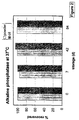
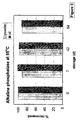
- Alkaline phosphatase from bovine intestinal mucosa EC number 3.1.3.1 (Sigma-Aldrich Co. Ltd. p8647) is usually obtained as a freeze-dried powder. This requires storage desiccated in a freezer at ⁇ 0°C in order to preserve the activity of the enzyme. Even at this temperature the freeze-dried enzyme gradually loses activity. When stored at higher temperatures there is more rapid, temperature dependent loss of activity (Figure 1).
- the enzyme was dissolved in a buffer composed of:- Substance concentration Trehalose 0.6M Sodium sulphate 0.35 M Bovine serum albumin 0.75 mM Alkaline phosphatase 40 units/ml Zinc chloride 1 mM Magnesium chloride 1mM and dried in a Labplant SD1 spray dryer. Drying conditions were:- inlet temperature 135°C outlet temperature 80°C with a maximum airflow. The residual water content of the glass powder at the end of this process was measured to be 2% by Thermogravimetric analysis (TGA) on a Seiko SSC/5200 machine (Seiko Instruments Inc.).
- TGA Thermogravimetric analysis
- the activity was measured using a kinetic procedure for determination of "Glycine units” (Sigma-Aldrich Co Ltd.) on a Shimadzu UV-160A Spectrophotometer at 37°C using p-nitrophenyl phosphate substrate and measuring colour development at a wavelength of 405 nm.
- EPO was chosen as an example of a modern pharmaceutical which is produced by genetic engineering of a recombinant protein in E coli .
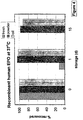
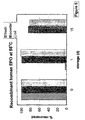
- Freeze dried EPO was re-hydrated and diluted 100 fold with a buffer of the following composition:- Substance concentration Trehalose 0.6 M Sodium sulphate 0.7 M Bovine serum albumin 0.75 mM and dried in a spray dryer as above. The powder was weighed into 125 mg aliquots and subjected to secondary drying at a temperature ramping from 40°C to 80°C at a rate of 15 degrees per hour under vacuum and then either sealed in a serum vial or re-suspended in 0.5 ml of mineral oil BP and sealed. They were then stored at 37°C or 55°C for up to 15 days.
- Restriction enzymes are customarily stored in freezers at -20°C in buffers containing 50% glycerol to prevent ice formation. Even under these conditions some of them have a limited storage life and need to be replaced at intervals.
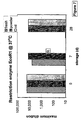
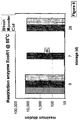
- Several enzymes were dried using the technique of the present invention with similar results. The data with one enzyme, EcoR1, is illustrated. The enzyme solution was diluted 100 fold in SC buffer (Colaco C.A.L.S., Sen S., Thangavelu M., Pinder S. and Roser B. "Extraordinary stability of enzymes dried in trehalose: Simplified molecular biology.” Biotechnol . 10 1007-1011 (1992)).
- the dried enzyme was produced in the spray dryer as above, sealed in vials with or without oil and its stability was compared with fresh liquid enzyme diluted in cutting buffer at three storage temperatures 4°C, 37°C and 55°C. To determine residual activity after storage, the enzyme was recovered into the aqueous phase as described earlier, diluted with SC buffer in a 2-fold dilution series and used to cut 0.5 ⁇ g of phage lambda DNA (Life .. Technologies Inc). The completeness of cutting at various dilutions was assessed by separating the DNA fragments by agarose gel electrophoresis in which the bands were visualised under UV light by ethidium bromide staining. The titre of the enzyme was expressed as the maximum dilution which showed complete cutting with no partial bands appearing.
Landscapes
- Health & Medical Sciences (AREA)
- Life Sciences & Earth Sciences (AREA)
- Chemical & Material Sciences (AREA)
- Bioinformatics & Cheminformatics (AREA)
- Engineering & Computer Science (AREA)
- Medicinal Chemistry (AREA)
- General Health & Medical Sciences (AREA)
- Veterinary Medicine (AREA)
- Pharmacology & Pharmacy (AREA)
- Animal Behavior & Ethology (AREA)
- Public Health (AREA)
- Epidemiology (AREA)
- Zoology (AREA)
- Organic Chemistry (AREA)
- Wood Science & Technology (AREA)
- Genetics & Genomics (AREA)
- Molecular Biology (AREA)
- Proteomics, Peptides & Aminoacids (AREA)
- Immunology (AREA)
- Gastroenterology & Hepatology (AREA)
- Biochemistry (AREA)
- General Engineering & Computer Science (AREA)
- Dispersion Chemistry (AREA)
- Biomedical Technology (AREA)
- Biotechnology (AREA)
- Biophysics (AREA)
- Microbiology (AREA)
- Chemical Kinetics & Catalysis (AREA)
- Nuclear Medicine, Radiotherapy & Molecular Imaging (AREA)
- General Chemical & Material Sciences (AREA)
- Medicinal Preparation (AREA)
- Medicines Containing Antibodies Or Antigens For Use As Internal Diagnostic Agents (AREA)
- Agricultural Chemicals And Associated Chemicals (AREA)
- Enzymes And Modification Thereof (AREA)
- Medicines That Contain Protein Lipid Enzymes And Other Medicines (AREA)
- Peptides Or Proteins (AREA)
- Medicines Containing Material From Animals Or Micro-Organisms (AREA)
Abstract
Description
- All living organisms require water. Indeed, to a large extent, most creatures are water. One of the few unifying themes in biology is that water accounts for about 75% of an organism's weight. Yet, remarkably, there are a number of creatures which can survive in a dry state after losing almost all of their water. This ability, called anhydrobiosis ("life without water"), is found across all biological kingdoms, including bacteria, fungi, animals and plants, and probably evolved at least two billion years ago. Such anhydrobiotic organisms are able to dry out completely and apparently die, yet they are not dead; they survive, inert and lifeless for indefinite periods in a state of suspended animation, until brought back to life by the presence of water. All these living things have solved the problem of how to preserve biological molecules without refrigeration or freezing.
- A clearly defined characteristic which is common to anhydrobiotic organisms, and which is probably crucial to their desiccation tolerance, is their ability to make large amounts of a simple sugar. The most effective is trehalose (α-D-glucopyranosyl α-D-glucopyranoside) but the anhydrobiotic plant Craterostigma plantagineum for example accumulates sucrose rather than trehalose. It is clear that intracellular and extracellular sugars are necessary for the viability of dried cells or organisms. That trehalose alone can be sufficient for anhydrobiosis is confirmed by work in which the disaccharide has been artificially introduced into living cells, allowing them to be dried and rehydrated successfully.
- Trehalose derives its stabilising ability from a combination of several properties. Like many other sugars, it can replace structural water by hydrogen-bonding with molecular surfaces. Trehalose is inert and cannot react with other molecules in the dry state. Certain other analogues are also stable and inert but most sugars react with amino groups (the so called Maillard reaction) at temperatures above freezing and destroy the product. When molecules are dried from a sugar solution using the correct procedure, a glass is formed in which molecules become embedded, minimising molecular diffusion and any associated degradation.
- Many sugar solutions can behave in two very different ways upon drying. The commonest behaviour is that the sugar crystallises. Molecules in solution with the sugar are not protected when this occurs, since they are excluded from the crystals. The alternative behaviour is that the solution progressively becomes more concentrated until it is so viscous that it forms a solid glass at room temperature. When this happens, the biomolecular product has undergone a smooth change from being in liquid solution at the beginning to being in solid solution in the glass at the end. In this state the molecules of product can be visualised as embedded and tightly immobilised in the glass matrix. This is analogous to the ancient insects which are found embedded in fossil amber in a perfect state of preservation.
- Since sugar glass is water soluble, the process is easily reversed in water so that the product smoothly goes back into its native state in liquid solution. These smooth, transitions ensure that there is no product damage during drying. As far as the product is concerned, the transition from liquid solution to solid solution is imperceptible. Because glasses of the best sugars are inert and have a high melting point when dry, the product is also protected on storage, even under hostile conditions.
- Parenterally administered drugs are conventionally injected through a hollow metal needle as a solution in water containing buffer salts. Injections may be intradermal, subcutaneous, intramuscular or intravenous. More rarely another route such as intrathecal or intraocular may be appropriate. Drugs have been administered in this traditional way for over 100 years and in spite of the fear, pain and risk of infection associated with injections there has not been any major generally accepted improvement in the process in that time.
- The liquid jet injector, which works by firing a very thin stream of liquid directly through the skin under very high pressure, achieved some success in vaccination programs but early models were unreliable. More recent developments such as the Mediject and Bioject devices have found significant niche applications in diabetes their uses and are being extended into other areas. However, a major disadvantage of the present technology is shared both by syringe and needle and by jet injector technology. Many parenteral drugs are unstable in aqueous solution and are manufactured and stored as a more stable freeze-dried cake or as a powder which requires reconstitution with water or buffer just before injection. This extra step demands training in the technique and adds risks in the form of inaccurate dispensing of solvent and therefore of dosage, or the introduction of infection by non-sterile .. technique. Drugs which are stored as a solution or a suspension (such as insulin) require refrigeration to prevent degradation and have a limited shelf life.
- Reconstitution of dry drugs must be done correctly and precisely to ensure correct dosage and any errors in this step can be dangerous and, with highly potent drugs, can even be fatal. Often it is necessary to give more than one drug at a time. This may require multiple painful injections because certain drugs cannot be mixed in the one syringe as there are chemical incompatibilities between the molecules in solution which lead to loss of potency or even the generation of toxic reaction products.
- The optimal solution to these problems which has long been a goal of drug formulation scientists is a stable liquid formulation that requires no reconstitution with solvent before injection. Although some minor improvements in aqueous solution stability have been achieved they do not provide the very high levels of drug stability which can be obtained with modern dry formulations using trehalose or similar stabilising excipients. However these latter preparations although extremely stable, even under very hostile environmental conditions, still require reconstitution before injection. They are also only stable so long as they are very dry. The uptake of moisture even in small amounts can render these dry preparations unstable on storage. They are usually stored as two-phase systems in which the drug is in the discontinuous solid phase and the continuous fluid phase is dry air, often under reduced pressure, or dry nitrogen, in a sealed glass vial.
- Of the two main problems with existing vaccines for jet injection, instability on storage and the need to reconstitute dried vaccines, the former is solved by a drying process now patented by Quadrant Holdings Cambridge Ltd. using the simple sugar trehalose. Trehalose-dried vaccines can be stored at ambient temperatures of at least 45°C without detectable deterioration. Most remarkably, even the aluminium hydroxide adjuvant gels are stabilised by trehalose during drying and storage and regain their full hydrated volume and function without clumping or precipitation.
- Although the instability problem is addressed by this drying process, the previously described trehalose-dried vaccines were in the form of a solid glass foam and required reconstitution (for example with sterile water or buffer solution) before injection by conventional needle and syringe technology. Dry vaccines can be formulated in powder form and can be delivered through the skin using hypersonic shock waves of gas. Because of limitations of gas velocity and consequent penetrating power, there is some doubt as to whether deep intramuscular injections can be achieved by these means. A more useful formulation would be a ready to use stable liquid which did not require the transport of separate buffer solutions or reconstitution in the field yet which still had the extraordinary stability of trehalose-dried material. Such a vaccine could be formulated in multi-dose containers and delivered conveniently in mass immunisation campaigns by standard jet-injectors. We now describe a development using fine powders and non-aqueous vehicles in which the powders can be smoothly distributed as a stable monodisperse suspension.
- Based on the phenomenon of anhydrobiosis, we have devised and validated processing conditions which ensure the formation of stable glasses which fully mimic the anhydrobiotic phenomenon. They can be used for stabilisation and preservation of most types of molecules and biological systems, including many vaccines, without the need for freeze-drying or refrigeration.
- We now describe a process which can be used for formulating even the most unstable of drugs in a liquid formulation that is as stable as the best trehalose-dried formulations but has all the safety and convenience of ready to use liquid preparations.
- A drug may be dried as a fine powder under conditions which ensure its optimal stabilisation in trehalose or other stabilising excipient in the glass state. Other sugars which spontaneously form good stabilising glasses are palatinit (a mixture of glucopyranosyl sorbitol and glucopyranosyl mannitol made by reducing palatinose (isomaltulose) with Hydrogen and Raney nickel catalyst: produced by Sudzucker AG in Germany). The pure isomers glucopyranosyl sorbitol and glucopyranosyl mannitol are also good, as is Lactitol (the reduced product of lactose or milk sugar). (Ref: (i) Colaco C.A.L.S., Smith C.J.S., Sen S., Roser D.H., Newman Y., Ring S. and Roser B.J. Chemistry of protein stabilisation by trehalose in "Formulation and delivery of proteins and peptides" Cleland and Langer eds American Chemical Society .. Washington 222-240 (1994); (ii) PCT application No WO 91/18091 "Stabilisation of biological macro-molecular substances and other organic compounds". Roser B.J. and Colaco C.; (iii) US patent Number 5,621,094 "Method of Preserving Agarose Gel Structure During Dehydration by Adding a Non-reducing Glycoside of a Straight Chain Sugar Alcohol" Roser B. and Colaco C.; (iv) PCT application Nc WO 96/05809 "Improved method for stabilisation of biological substances during drying and subsequent storage and compositions thereof" Colaco C. Roser B.J. and Sen S.).
- We have also found that a whole class of monosaccharide alcohols stated in the prior art to be useless as glass forming excipients can indeed form excellent stable formulations if correctly formulated. These include mannitol and inositol.
- The formation of dry glass powders containing stabilised actives can be accomplished using any suitable sugar or sugar derivative from these groups. This may be achieved directly by spray drying or by some other drying process including standard processes like vacuum or freeze drying followed by a grinding step such as jet-milling, to reduce the dried formulation to a fine powder. This fine powder of sugar glass (discontinuous phase), containing the drug in a stable solid solution in the glass, is then formulated as a suspension in a two phase system containing, as the continuous phase, a biocompatible non-aqueous liquid in which the sugar is insoluble. The exclusion of water from this system preserves the stabilising effect of the trehalose or other stabilising excipient used. We have previously reported that trehalose-dried actives remain stable for several days in non-aqueous liquids in which the trehalose itself is insoluble. Gribbon E.M., Sen S., Roser B.J. and Kampinga J. Stabilisation of Vaccines Using Trehalose (Q-T4) Technology. In F. Brown (ed) New Approaches to Stabilisation of Vaccine Potency Dev Biol Stand Karger Basel 87 193-199 (1996). Providing the non-aqueous vehicle is stable and providing the preparation does not absorb significant amounts of water, it seems probable that such formulations would be as indefinitely stable as the trehalose-dried material itself. While experiments using non-aqueous laboratory solvents like acetone or dichloromethane establish the principle of the stability of active molecules in suspended sugar glass microspheres, such preparations are, of course, not injectable because the vehicle is toxic. There are, however, various non-aqueous vehicles which are approved by the regulatory authorities for parenteral injection and which have demonstrated safety and convenience. The liquid phase can be any injectable hydrophobic solvent such as an injectable sesame, arachis or soya oil, ethyl oleate or a water miscible non-aqueous solvent like polyethylene glycol. Since most of the suitable non-aqueous liquids are themselves very stable at room or elevated temperatures and do not need refrigeration, the resulting two phase preparation is inherently stable.
- However, the fine particles of sugar glass have an inherent tendency to form clumps in many non-aqueous liquids because of phase separation. Since the sugar glass is intensely hydrophilic, the particles have a strong tendency to be excluded from a continuous hydrophobic phase and are forced together in clumps. These aggregates settle out of suspension and cannot be readily reconstituted as a monodisperse suspension by shaking or sonication. This leads to non-uniformity of drug dosage in the suspension and in the worst cases the formulation is not injectable due to large clumps which can block the needle. Although the ideal suspension is anhydrous or nearly so, we have found that surprisingly simple procedures derived from the field of stabilisation of water in oil (WIO) emulsions, can produce a smooth, monodisperse single-particle suspension of microspheres in a non-aqueous liquid.
- Although the water content of these systems are very low (<1%), surfactants which are usually used to stabilise water in oil (WIO) emulsions have a dramatic effect at about 0.01% to 10%, preferably about 1%. They reduce the aggregates of glass particles back to a smooth monodisperse suspension which shows essentially no tendency to re-clump. These surfactants, which have either a low or very low Hydrophilic Lipophilic Balance (HLB), are themselves insoluble in water but are lipid soluble. Low HLB surfactants such as sorbitan sesquioleate (Arlacel C, HLB=3.7), mannide monooleate (Arlacel A,HLB=4.3), sorbitan tristearate (Span 65, HLB=2.1) and glycerol monostearate (Arlacel 129, HLB=3.2) have very low toxicity (oral LD50 in rats > 15 g/kg), are already used clinically in WIO emulsions such as Freund's adjuvant for injection and are also approved by the regulatory authorities for this purpose.
- Preferably, the surfactant is added to the continuous non-aqueous liquid phase before addition of the powder particles.
- Arlacel A is an essential component of the so called "Freund's adjuvant" which is widely used in immunising animals to produce maximum titres of serum antibodies. (Ref: Handbook of
Experimental Immunology 4th Edition Eds DM Weir, Co-editors L. Herzenberg and L Herzenberg Vol 1 p 8.10 (1986)). Freund's adjuvant is basically a fine water in oil emulsion in which the antigen is dissolved in the discontinuous water phase while the continuous phase of light paraffin oil acts as a reservoir from which the antigen is slowly released. Complete Freund's adjuvant also contains heat-killed Mycobacterium tuberculosis which causes violent inflammation, enhancing the responsiveness of the immune system. This precludes its use in humans. - A major difference between a fine water in oil emulsion like Freund's adjuvant and the monodisperse glass in oil suspensions described here is the relatively low dispersion energy required to produce the latter. While dispersion of the aqueous phase as fine droplets in a WIO emulsion requires prolonged and vigorous mixing (a high speed homogeniser is used to produce Freund's adjuvant and it is usually run for 15 to 30 minutes at top speed of >18,000 RPM before a stable emulsion is achieved) the stable suspensions described herein require only the addition of the finely powdered drug to the oil/surfactant base and a vigorous shake to mix the phases. A brief <5 min exposure to an ultrasonic bath can be used to ensure the break up of any small clumps which may have formed before or during addition to the hydrophobic phase.
- Providing the fine microspheres of sugar glass are completely insoluble in the hydrophobic solvent, they are stable in the glass phase with no tendency to re-crystallise and the stabilised molecules in solid solution in the glass spheres are also stable.
- A significant disadvantage of powders produced by conventional spray drying technology is the wide variation in particle size usually produced. In addition, conventional spray dryers have great difficulty in producing particles with a mean diameter significantly smaller than 5-10µ. Particles of this size sediment quickly in low viscosity liquids. This can lead to large variation in dose distribution within the vial and a requirement for frequent and vigorous shaking to re-suspend the particles. Particles of sugar glass of about 0.1 to 1µ diameter would be better as they are maintained in even suspension by normal thermodynamic forces such as Brownian motion. While standard pharmaceutical processing techniques such as jet milling can reduce the size of powders to a mean diameter of around 1 to 2µ, it is not usually practicable to go much below this. An additional step such as jet milling would, of course add to the cost of processing.
- By using ultrasonic nebulisers instead of conventional spray nozzles, it is possible to modify spray drying equipment to yield small and very uniform microspheres. There seems to be no reason why this process should not be adapted to sterile processing of stabilised vaccines in large quantities. One disadvantage of reducing the particle size to sub-micron dimensions in air or a continuous phase of some other gas, is the losses of material often experienced because of the difficulty of separating the fine particles from the gas stream. Alternatively, standard pharmaceutical high pressure microhomogenising equipment such as the Microfluidizer (Constant Systems Inc.) which is widely used to produce sterile, stable microemulsions is also efficient in producing stable microsuspensions by reducing the mean size of particles suspended in a continuous liquid phase. This process gives virtually total recovery of material and is probably the method of choice particularly for rare or expensive actives. A single step such as this could be inexpensively incorporated into the production process as production costs are around $1,000 per Kilogram of powder. This would contain around 20,000 doses of a standard childhood vaccine such as DTP, adding 5 cents to the cost of each dose. Since losses of the current unstable vaccines can be 50% to 90% in the field even with the expensive cold chain (refrigeration) in place, the additional cost of stable liquid vaccines, which could do away with the cold chain, would be quickly recouped.
- The present invention provides a process for producing stable particle in liquid (PIL) formulations together with the products of the processes. The particles are in fine powder form, preferably being microparticles of 10 microns diameter or less, most preferably 1 micron or less. Preferably the particles do not exhibit a wide variation in particle size. The particles are essentially dry, having a very low water content of less than about 1%. The particles may contain one or more biomolecular product and may contain other additives, excipients and the like. The biomolecular product is preferably a drug or other biologically active ingredient such as a protein, antibody, enzyme (e.g. restriction endonuclease) and the like, but does not exclude other biological materials (e.g. foodstuffs, dye stuffs, beverages and the like). The particles are suspended in a non-aqueous liquid in which they are insoluble.
- According to the invention there is provided a formulation of fine dry powder particles which comprise a biomolecular product, the particles constituting a monodisperse suspension in a continuous phase of a bio-compatible non-aqueous liquid in which the particles are not soluble, wherein the continuous phase may include a low HLB lipid-soluble surfactant.
- The suspension formulation may, for example, contain from about 1% to more than 50%, e.g. 10%, particulate product although a loading of more or less may be preferred depending on the chosen application and the chosen ingredients of the mixture.
- The particles comprise or consist of molecules of the product in a sugar glass. The product in the sugar glass is either in stable solid solution or is itself in suspension in the sugar glass. Preferably the sugar glass is formed from trehalose.
- In this application the term "sugar" is to be understood as covering not only disaccharide sugars such as trehalose, but also monosaccharide sugars and their non-reducing derivatives such as sugar alcohols including mannitol, inositol, xylitol, ribitol and the like, which form a general class of stabilising glass-forming sugars and sugar derivatives. The term "sugar glass" is to be understood as covering not only glasses which are readily and rapidly dissolved in an aqueous environment such as trehalose glass, but also sugar glasses in which the sugar molecule has been modified by the attachment of one or more hydrophobic side chains to make the glass more slowly soluble in body fluids than the native sugar in order to give controlled release of a biomolecular product.
- Where the formulation is intended for medicinal use, e.g. as an injection formulation, the non-aqueous continuous phase liquid must be bio-compatible. The liquid phase may be an injectable hydrophobic solvent or a water miscible non-aqueous solvent. Since sugar glass stabilisation of the biomolecular product is utilised, it is clear that the non-aqueous liquid must be a non-solvent for sugar. For example any non-aqueous non-toxic oil approved for parenteral use could be employed in the invention. A low viscosity oil such as ethyloleate is suitable and has the advantage that it is easy to inject. Water miscible non-aqueous solvents include glycerol, ethylene glycol, propylene glycol, propylene oxide, polypropylene glycol.
- The lipid soluble surfactant has a low or very low HLB. Those skilled in the art will readily appreciate the meaning of these general terms, particularly in the context of the HLB values given in the attached description relating to preferred examples of low HLB surfactants. It is a particularly surprising aspect of the present invention that a surfactant which would have been especially developed by the commercial manufacturer for stabilising water in oil emulsions would have any activity or utility whatsoever in formulating an essentially anhydrous preparation. The surfactants include sorbitan sesquioleate, mannide monooleate, sorbitan tristearate and glycerol monostearate, plus Lecithin (phosphatidyl choline) and also di-palmitoyl phosphatidyl choline, di-stearoyl phosphatidyl choline and di-myristoyl phosphatidyl choline as examples of normal body components with surfactant activity which are advantageously used in this technology. Also the synthetic and already approved surfactants such as Sorbitan laurate, palmitate, stearate and oleate.
- By virtue of the invention it is possible to produce stable particle in liquid formulations in which fine dry powder is smoothly distributed as a stable monodisperse suspension. Those skilled in the art will readily appreciate that such monodisperse suspensions could be injected directly either by syringe and needle or by liquid jet injector. The formulations may be injected as such without requiring reconstitution with solvent before injection. This is clearly advantageous where the provision of sterile conditions and sterile reconstituting solvents and/or buffers is problematic. The particle in liquid formulations are stable and consequently it is possible to dispense with the need for refrigeration.
- Solid solutions of anhydrous drug stabilised in sugar glass in fine particulate form are readily hydratable. It is a particular further advantage of the present invention that biocompatible formulations can be injected directly into a recipient with the effect that the normal physiological aqueous environment will hydrate the drug in situ. It can readily be appreciated that a stable, temperature insensitive, directly injectable drug formulation has enormous potential in vaccination programmes and for widespread prophylactic or therapeutic drug administration.
- The formulations of the invention can also be used for diagnostics and reagents if the non-aqueous liquid is water soluble or miscible. A liquid dispenser can then store unstable diagnostic reagents without refrigeration and dispense them into test systems which are water-based such as immunoassays, DNA probe based diagnostics, PCR reactions and the like. On contact with water in the diagnostic system, the finely powdered diagnostic reagent in the non-aqueous vehicle will instantly dissolve and the reagent will become fully active. As an example, this process can be used for restriction enzymes used to digest DNA at specific sequence sites.
- The particles in a particular continuous phase preparation can be of more than one type which interact rapidly together when they are released in water. The example we give is alkaline phosphatase in one particle and p-nitropyenyl phosphate (its substrate) in the other. These could just as easily be the two pro-drug components which need to interact to produce an active drug from two prodrugs. One can also have several different particles such as the individual components of a multivalent vaccine. These do not undergo destructive interactions in the oil and they do not have time to interact when they are rehydrated in the body because they are absorbed from the point of injection and transported to their site of action.
- In the restriction enzyme example we can use multiple reagents in separate particles for complex molecular biology techniques such as the components of the Polymerase Chain Reaction (PCR) or sequencing reactions. In the former, one particle would contain the DNA polymerase, one would contain one primer and the third would contain the other primer and a fourth could contain the nucleotides. In a sequencing reaction the DNA polymerase could be in one particle and the nucleotides and di-deoxy chain terminating nucleotides in another. It is clear that the ability to mix different reagents in non-interacting particles in the oil opens up many possibilities for the design of powerful and convenient kits.
-
- Figure 1 shows the time-dependent activity of freeze-dried alkaline phosphatase at 37°, 4°C and -20°C;
- Figures 2 and 3 show the activity of dry powder or oil suspension formulations of trehalose stabilised alkaline phosphatase at 37°C and 55°C;
- Figures 4 and 5 show the activity of freeze dried, and trehalose stabilised dry powder or oil suspension formulations of recombinant EPO at 37°C and 55°C; and
- Figures 6, 7 and 8 show the activity of freeze dried, and trehalose stabilised dry powder or oil suspension formulations of EcoR1 at 4°C, 37°C and 55°C.
- The enzyme Alkaline phosphatase from bovine intestinal mucosa EC number 3.1.3.1 (Sigma-Aldrich Co. Ltd. p8647) is usually obtained as a freeze-dried powder. This requires storage desiccated in a freezer at <0°C in order to preserve the activity of the enzyme. Even at this temperature the freeze-dried enzyme gradually loses activity. When stored at higher temperatures there is more rapid, temperature dependent loss of activity (Figure 1).
- The enzyme was dissolved in a buffer composed of:-
Substance concentration Trehalose 0.6M Sodium sulphate 0.35 M Bovine serum albumin 0.75 mM Alkaline phosphatase 40 units/ ml Zinc chloride 1 mM Magnesium chloride 1mM C outlet temperature 80°C with a maximum airflow. The residual water content of the glass powder at the end of this process was measured to be 2% by Thermogravimetric analysis (TGA) on a Seiko SSC/5200 machine (Seiko Instruments Inc.). - Aliquots of 100 mg of the powder were weighed into 5 ml vaccine vials and sealed under vacuum. Other aliquots were weighed into vials and resuspended in pharmaceutical grade ethyl oleate (Croda Chemical Company Ltd.) at a concentration of 200 mg/ml oil. These vials were also sealed under vacuum. Samples of both the dry powder and the oil suspension were then stored for various periods of time at either 37°C or 55°C.
- At the end of the storage period 5 ml volumes of buffer of the following composition, adjusted to pH 10.0 with sodium hydroxide solution,
Substance concentration Glycine 100 mM Zinc chloride 1 mM Magnesium chloride 1 mM - When stored at 37°C, there was no loss of enzyme activity over 84 days of storage in either the dry powder or the oil suspension. (Figure 2). When stored at 55°C there was a slight loss within the first 7 days but over 90% of the activity was again stable for up to 84 days (Figure 3). Wherever there was a difference between the oil and powder samples the former was better but the difference was not significant. Essentially identical results were obtained whether mineral oil or ethyl oleate was used as the continuous phase.
- In other experiments spray drying was done using different buffer compositions containing Calcium lactate in place of sodium sulphate or mannitol in place of trehalose. These gave essentially similar results. The good results with mannitol-based glass-forming buffers was particularly surprising as previously disclosed work had stated that it was not possible to use monosaccharide sugar alcohols as stabilising agents (PCT application No WO 91/18091 "Stabilisation of biological macro-molecular substances and other organic compounds", Roser B.J. and Colaco C.; US patent Number 5,621,094 "Method of Preserving Agarose Gel Structure During Dehydration by Adding a Non-reducing Glycoside of a Straight Chain Sugar Alcohol" Roser B. and Colaco C.; PCT application No WO 96/05809 "Improved method for stabilisation of biological substances during drying and subsequent storage and compositions thereof" Colaco C. Roser B.J. and Sen S.). This is clearly not the case providing that the formulation and drying technique is such as to ensure that a good glass is formed.
- As an indication of the inertness and stability of the actives dried in the glass powders in suspension, mixtures of powders containing alkaline phosphatase- and powders containing p-nitrophenyl phosphate- were made in mineral oil and stored at 55°C for 7 days. These suspensions appeared unchanged at the end of this time. Upon addition of 1 ml of water and shaking, an intense yellow colour promptly developed in the separated aqueous phase indicating that the water had reactivated both the enzyme and the substrate. This result shows that these preparations can accommodate, in the same vehicle, components that would react together in conventional aqueous mixtures. This property should be of great value in multivalent vaccines for example. It has not escaped our notice that it is also a good model system for the development of so called "binary" drugs where the final active component is synthesised or released by a chemical reaction which only begins when the precursor molecules are wetted by body fluids.
- EPO was chosen as an example of a modern pharmaceutical which is produced by genetic engineering of a recombinant protein in E coli.
- Freeze dried EPO was re-hydrated and diluted 100 fold with a buffer of the following composition:-
Substance concentration Trehalose 0.6 M Sodium sulphate 0.7 M Bovine serum albumin 0.75 mM - Within one day at 37°C fresh EPO has lost 88% of its activity while the dried material, whether suspended in oil or not is fully active (Figure 4). There is a small loss of activity by 15 days but more than 90% of activity remains. When stored at 55°C fresh EPO loses >95% activity within one day (Figure 5). In contrast, the dried material loses no activity in the first day and >80% activity can still be recovered 15 days later.
- Restriction enzymes are customarily stored in freezers at -20°C in buffers containing 50% glycerol to prevent ice formation. Even under these conditions some of them have a limited storage life and need to be replaced at intervals. Several enzymes were dried using the technique of the present invention with similar results. The data with one enzyme, EcoR1, is illustrated. The enzyme solution was diluted 100 fold in SC buffer (Colaco C.A.L.S., Sen S., Thangavelu M., Pinder S. and Roser B. "Extraordinary stability of enzymes dried in trehalose: Simplified molecular biology." Biotechnol. 10 1007-1011 (1992)). The dried enzyme was produced in the spray dryer as above, sealed in vials with or without oil and its stability was compared with fresh liquid enzyme diluted in cutting buffer at three
storage temperatures 4°C, 37°C and 55°C. To determine residual activity after storage, the enzyme was recovered into the aqueous phase as described earlier, diluted with SC buffer in a 2-fold dilution series and used to cut 0.5 µg of phage lambda DNA (Life .. Technologies Inc). The completeness of cutting at various dilutions was assessed by separating the DNA fragments by agarose gel electrophoresis in which the bands were visualised under UV light by ethidium bromide staining. The titre of the enzyme was expressed as the maximum dilution which showed complete cutting with no partial bands appearing. - When stored at 4°C, none of the preparations showed progressive loss of activity over 28 days. Even the fresh liquid preparation was stable at this temperature (Figure 6). At 37°C, the fresh enzyme lost essentially all activity by 28 days while the dried enzyme with or without added oil was highly active (Figure 7). The dried preparations showed the same recovery of activity after storage at 55°C while, at this temperature, the fresh enzyme was completely inactive within 7 days (Figure 8).
- These formulations of restriction enzymes provide a convenient new way to cut DNA. The oil containing suspended enzyme powder is overlaid on a solution of DNA, vortexed and centrifuged in an Eppendorf centrifuge. The suspension of enzyme dissolves in the aqueous phase containing the DNA and begins cutting at 37°C. The oil phase forms a convenient vapour barrier overlying the digest preventing evaporation. This process is already familiar to molecular biologists being a common part of the polymerase chain reaction technique. Room temperature storable restriction enzymes in a non-hygroscopic mineral oil vehicle constitutes a valuable and convenient new product for molecular biology.
Claims (29)
- A stable particle-in-liquid formulation comprising a discontinuous phase of microparticles suspended in a continuous phase which is a non-aqueous liquid in which the microparticles are insoluble, wherein the microparticles comprise finely powdered sugar glass holding at least one biomolecular product, the biomolecular product in the sugar glass either being in stable solid solution or being itself in suspension in the sugar glass.
- A formulation according to claim 1, wherein the continuous phase is biocompatible.
- A formulation according to claim 1, wherein the continuous phase is hydrophobic.
- A formulation according to claim 1, wherein the continuous phase comprises or consists of one or more hydrophobic liquids selected from sesame oil, arachis oil, soya oil, ethyl oleate and mineral oil.
- A formulation according to claim 1, wherein the continuous phase is water-miscible.
- A formulation according to claim 1, wherein the continuous phase comprises or consists of a water-miscible liquid selected from polyethylene glycol, glycerol, ethylene glycol, propylene glycol, propylene oxide and polypropylene glycol.
- A formulation according to any preceding claim, wherein the sugar is selected from trehalose, palatinit, glucopyranosyl sorbitol, glucopyranosyl mannitol, lactitol and monosaccharide alcohols such as mannitol and inositol.
- A formulation according to any preceding claim, wherein the microparticles are 0.1 to 10 µm in diameter.
- A formulation according to any preceding claim, wherein the microparticles are less than 1 µm in diameter.
- A formulation according to claim 7 or claim 8, wherein the microparticles do not exhibit a wide variation in particle size.
- A formulation according to any preceding claim, wherein the microparticles are essentially dry.
- A formulation according to any preceding claim, wherein the microparticles constitute a monodisperse suspension in the continuous phase.
- A formulation according to any preceding claim, which contains from 1% to 50% by weight microparticles in the discontinuous phase.
- A formulation according to any preceding claim, wherein the continuous phase includes a low or very low HLB lipid-soluble surfactant.
- A formulation according to claim 14, wherein the amount of the surfactant in the continuous phase is from 0.01% to 10% by volume.
- A formulation according to claim 14 or claim 15, wherein the surfactant is selected from sorbitan sesquioleate, mannide monooleate, sorbitan tristearate and glycerol monostearate, lecithin (phosphatidylcholine), dipalmitoyl phosphatidylcholine, distearoyl phosphatidylcholine, dimyristoyl phosphatidylcholine, and sorbitan laurate, palmitate, stearate and oleate.
- A formulation according to any preceding claim, wherein the biomolecular product is a drug.
- A formulation according to any preceding claim, wherein the biomolecular product is a protein, antibody or enzyme.
- A formulation according to claim 18, wherein the biomolecular product is a restriction endonuclease.
- A formulation according to any of claims 1 to 16, wherein the biomolecular product is a foodstuff, dyestuff or beverage.
- A formulation according to any of claims 1 to 16, including a binary drug formulation, wherein the biomolecular product is a drug precursor and wherein the active drug is synthesised or released by a chemical reaction which only begins when the precursor is wetted by body fluids after administration of the formulation to a patient.
- A formulation according to any preceding claim, which comprises microparticles holding more than one biomolecular product.
- A formulation according to any preceding claim, which comprises a mixture of microparticles which release more than one type of biomolecular product when contacted with an aqueous environment.
- A formulation according to claim 22 or claim 23, which comprises two or more biomolecular products that interact when released in an aqueous environment
- A process for producing a stable particle-in-liquid formulation, which comprises adding microparticles containing one or more biomolecular products held in a sugar glass to a non-aqueous continuous liquid phase in which the particles are not soluble, to form a suspension, the biomolecular product in the sugar glass either being in stable solid solution or being itself in suspension in the sugar glass.
- A process according to claim 24, wherein a monodisperse single-particle suspension of microparticles is produced in the continuous phase by inclusion in the continuous phase of at least one surfactant having a low or very low HLB.
- A process according to claim 26, wherein the surfactant is added to the continuous non-aqueous liquid phase before addition of the particles.
- A process according to any of claims 25 to 27, wherein the formulation is as defined in any of claims 2 to 24.
- A method for cutting DNA in-vitro which comprises contacting a formulation according to claim 19, with an aqueous solution of DNA, whereby the suspended restriction endonuclease held in the sugar glass dissolves in the aqueous solution and is capable of cutting the DNA.
Applications Claiming Priority (3)
| Application Number | Priority Date | Filing Date | Title |
|---|---|---|---|
| GBGB9705588.3A GB9705588D0 (en) | 1997-03-18 | 1997-03-18 | Stable particle in liquid formulations |
| GB9705588 | 1997-03-18 | ||
| PCT/GB1998/000817 WO1998041188A2 (en) | 1997-03-18 | 1998-03-18 | Stable particle in liquid formulations |
Publications (2)
| Publication Number | Publication Date |
|---|---|
| EP1007000A2 EP1007000A2 (en) | 2000-06-14 |
| EP1007000B1 true EP1007000B1 (en) | 2006-05-10 |
Family
ID=10809442
Family Applications (1)
| Application Number | Title | Priority Date | Filing Date |
|---|---|---|---|
| EP98910875A Revoked EP1007000B1 (en) | 1997-03-18 | 1998-03-18 | Stable particle in liquid formulations |
Country Status (14)
| Country | Link |
|---|---|
| US (1) | US6669963B1 (en) |
| EP (1) | EP1007000B1 (en) |
| JP (1) | JP2002504090A (en) |
| CN (1) | CN1256626A (en) |
| AT (1) | ATE325605T1 (en) |
| AU (1) | AU722627B2 (en) |
| BR (1) | BR9808920A (en) |
| CA (1) | CA2293682C (en) |
| DE (1) | DE69834495T2 (en) |
| EA (1) | EA001873B1 (en) |
| GB (1) | GB9705588D0 (en) |
| NO (1) | NO994508L (en) |
| NZ (1) | NZ337666A (en) |
| WO (1) | WO1998041188A2 (en) |
Cited By (1)
| Publication number | Priority date | Publication date | Assignee | Title |
|---|---|---|---|---|
| US9089529B2 (en) | 2011-10-25 | 2015-07-28 | Prothena Therapeutics Limited | Antibody formulations and methods |
Families Citing this family (54)
| Publication number | Priority date | Publication date | Assignee | Title |
|---|---|---|---|---|
| CZ88697A3 (en) | 1994-09-22 | 1997-09-17 | Quadrant Holdings Cambridge | Composition used for re-hydration and nourishment in the course of athletic outputs and processes for preparing thereof |
| US6309623B1 (en) | 1997-09-29 | 2001-10-30 | Inhale Therapeutic Systems, Inc. | Stabilized preparations for use in metered dose inhalers |
| US6565885B1 (en) | 1997-09-29 | 2003-05-20 | Inhale Therapeutic Systems, Inc. | Methods of spray drying pharmaceutical compositions |
| US6433040B1 (en) | 1997-09-29 | 2002-08-13 | Inhale Therapeutic Systems, Inc. | Stabilized bioactive preparations and methods of use |
| US6946117B1 (en) * | 1997-09-29 | 2005-09-20 | Nektar Therapeutics | Stabilized preparations for use in nebulizers |
| US20060165606A1 (en) | 1997-09-29 | 2006-07-27 | Nektar Therapeutics | Pulmonary delivery particles comprising water insoluble or crystalline active agents |
| AU2945199A (en) * | 1998-03-18 | 1999-10-11 | Ronai, Peter | Amorphous glasses for stabilising sensitive products |
| US6190701B1 (en) | 1999-03-17 | 2001-02-20 | Peter M. Ronai | Composition and method for stable injectable liquids |
| US6102896A (en) * | 1999-09-08 | 2000-08-15 | Cambridge Biostability Limited | Disposable injector device |
| DE19943491B4 (en) * | 1999-09-10 | 2010-04-01 | Südzucker AG Mannheim/Ochsenfurt | Improved compressed |
| WO2001037804A2 (en) * | 1999-11-22 | 2001-05-31 | Universal Preservation Technologies, Inc. | Preservation and formulation of bioactive materials |
| US7871598B1 (en) | 2000-05-10 | 2011-01-18 | Novartis Ag | Stable metal ion-lipid powdered pharmaceutical compositions for drug delivery and methods of use |
| US6653062B1 (en) | 2000-07-26 | 2003-11-25 | Wisconsin Alumni Research Foundation | Preservation and storage medium for biological materials |
| GB0024271D0 (en) * | 2000-09-25 | 2000-11-15 | Colaco Camilo | Improved methods and compositions for pulmonary delivery of actives |
| EP1452171B1 (en) * | 2000-10-13 | 2009-12-02 | Cambridge Biostability Limited | Pharmaceutical liquid suspensions |
| PL360052A1 (en) * | 2000-10-13 | 2004-09-06 | Cambridge Biostability Ltd. | Composition and method for stable injectable liquids |
| RU2259817C2 (en) * | 2000-10-13 | 2005-09-10 | Кембридж Байостэбилити Лтд. | Composition for delivering stable injectable liquids and method for delivery |
| US20020150621A1 (en) * | 2000-10-16 | 2002-10-17 | Kohane Daniel S. | Lipid-protein-sugar particles for drug delivery |
| US7153472B1 (en) | 2000-11-22 | 2006-12-26 | Quadrant Drug Delivery Limited | Preservation and formulation of bioactive materials for storage and delivery in hydrophobic carriers |
| US6623762B2 (en) * | 2001-02-16 | 2003-09-23 | Cambridge Biostability Ltd. | Composition and method for controlled release injections |
| FR2825276B1 (en) * | 2001-05-31 | 2004-11-26 | Seppic Sa | SOLID FORM IMMUNITY ADDICTIVE AND VACCINE CONTAINING THEM |
| CN1306029C (en) * | 2001-07-02 | 2007-03-21 | 旭化成制药株式会社 | Method of stabilizing alkaline phosphatase |
| JP4340151B2 (en) * | 2001-08-10 | 2009-10-07 | 株式会社林原生物化学研究所 | Association of trehalose or maltitol with metal ion compound |
| GB2379390B (en) | 2001-09-11 | 2005-01-26 | Caretek Medical Ltd | A novel drug delivery technology |
| US7368102B2 (en) | 2001-12-19 | 2008-05-06 | Nektar Therapeutics | Pulmonary delivery of aminoglycosides |
| US7943179B2 (en) | 2003-09-23 | 2011-05-17 | Massachusetts Institute Of Technology | pH triggerable polymeric particles |
| BRPI0415531B8 (en) * | 2003-10-23 | 2021-05-25 | Otsuka Pharma Co Ltd | formulation of sterile injectable controlled-release aripiprazole and method for its preparation |
| FR2873386B1 (en) | 2004-07-22 | 2011-01-14 | Agence Francaise De Securite Sanitaire Des Aliments Afssa | VACCINE COMPOSITION AGAINST RHODOCOCCUS EQUI |
| US20060045891A1 (en) * | 2004-08-24 | 2006-03-02 | Lovalenti Phillip M | Density-matched suspension vehicles and pharmaceutical suspensions |
| US20060142630A1 (en) * | 2004-12-29 | 2006-06-29 | Attila Meretei | Systems and methods for treating a thrombus in a blood vessel |
| US7515971B1 (en) * | 2005-09-09 | 2009-04-07 | Pacesetter, Inc. | Left atrial pressure sensor lead |
| GB2430880A (en) * | 2005-10-04 | 2007-04-11 | Cambridge Biostability Ltd | Pharmaceutical compositions stabilized in glassy particles |
| GB0523638D0 (en) | 2005-11-21 | 2005-12-28 | Cambridge Biostability Ltd | Pharmaceutical device for the administration of substances to patients |
| US8946200B2 (en) | 2006-11-02 | 2015-02-03 | Southwest Research Institute | Pharmaceutically active nanosuspensions |
| DE102006056790B3 (en) * | 2006-12-01 | 2008-01-17 | IfP Privates Institut für Produktqualität GmbH | Kit for carrying out a polymerase chain reaction comprises reaction vessels loaded by drying aqueous solutions of the reagents in the presence of trehalose alone |
| ATE515554T1 (en) * | 2006-12-04 | 2011-07-15 | Merck Patent Gmbh | FUROCHROMEDER DERIVATIVES |
| US20090022727A1 (en) | 2007-01-26 | 2009-01-22 | Alza Corp. | Injectable, nonaqueous suspension with high concentration of therapeutic agent |
| JP4879349B2 (en) * | 2007-07-31 | 2012-02-22 | 大塚製薬株式会社 | Method for producing aripiprazole suspension and lyophilized preparation |
| WO2009108689A1 (en) * | 2008-02-25 | 2009-09-03 | Novavax, Inc. | Sugar glassified virus like particles (vlps) |
| US8404850B2 (en) | 2008-03-13 | 2013-03-26 | Southwest Research Institute | Bis-quaternary pyridinium-aldoxime salts and treatment of exposure to cholinesterase inhibitors |
| US8722706B2 (en) | 2008-08-15 | 2014-05-13 | Southwest Research Institute | Two phase bioactive formulations of bis-quaternary pyridinium oxime sulfonate salts |
| US8309134B2 (en) | 2008-10-03 | 2012-11-13 | Southwest Research Institute | Modified calcium phosphate nanoparticle formation |
| WO2011007327A2 (en) * | 2009-07-16 | 2011-01-20 | Koninklijke Philips Electronics N.V. | Suspension for therapeutic use and device for delivering said suspension |
| US8293299B2 (en) | 2009-09-11 | 2012-10-23 | Kraft Foods Global Brands Llc | Containers and methods for dispensing multiple doses of a concentrated liquid, and shelf stable Concentrated liquids |
| CN102115737B (en) * | 2009-12-31 | 2015-06-03 | 深圳迈瑞生物医疗电子股份有限公司 | Reagent and method for stabilizing alkaline phosphatase or marker of alkaline phosphatase |
| US9028873B2 (en) | 2010-02-08 | 2015-05-12 | Southwest Research Institute | Nanoparticles for drug delivery to the central nervous system |
| CN102269761A (en) | 2010-06-04 | 2011-12-07 | 深圳迈瑞生物医疗电子股份有限公司 | Synthesis process for alkaline phosphatase conjugate |
| CN102269762B (en) | 2010-06-04 | 2014-12-10 | 深圳迈瑞生物医疗电子股份有限公司 | Preparation method of conjugate and relative kit |
| US20120222979A1 (en) | 2011-03-04 | 2012-09-06 | Elwha LLC, a limited liability company of the State of Delaware | Glassy compositions |
| BR112014005499B1 (en) | 2011-09-09 | 2020-09-15 | Kraft Foods Group Brands Llc | LIQUID COFFEE DRINK CONCENTRATE AND ITS PREPARATION METHOD |
| US11013248B2 (en) | 2012-05-25 | 2021-05-25 | Kraft Foods Group Brands Llc | Shelf stable, concentrated, liquid flavorings and methods of preparing beverages with the concentrated liquid flavorings |
| US10525057B2 (en) | 2013-09-24 | 2020-01-07 | Otsuka Pharmaceutical Co., Ltd. | Method of providing aripiprazole to patients having impaired CYP2D6 or CYP3A4 enzyme function |
| US10863754B2 (en) | 2014-07-03 | 2020-12-15 | Kraft Foods Group Brands Llc | Low water coffee and tea beverage concentrates and methods for making the same |
| CN111558046A (en) * | 2020-05-27 | 2020-08-21 | 华润昂德生物药业有限公司 | Application of trehalose in preparation of recombinant human erythropoietin liquid preparation, preparation method and application |
Family Cites Families (17)
| Publication number | Priority date | Publication date | Assignee | Title |
|---|---|---|---|---|
| US3970765A (en) * | 1975-07-03 | 1976-07-20 | General Foods Corporation | Method for producing sucrose fixed volatile flavors |
| US4031255A (en) * | 1975-07-03 | 1977-06-21 | General Foods Corporation | Fixing acetaldehyde in sucrose |
| GB1490814A (en) * | 1975-07-22 | 1977-11-02 | Cadbury Ltd | Heat-resistant chocolate product and method of manufacturing same |
| JPS562908A (en) * | 1979-06-20 | 1981-01-13 | Nikken Kagaku Kk | Preparation of stable live bacterial pharmaceutical remedy |
| DE3484584D1 (en) * | 1983-10-14 | 1991-06-20 | Sumitomo Pharma | INJECTIONS WITH DELAYED DELIVERY. |
| WO1989003671A1 (en) * | 1987-10-29 | 1989-05-05 | Dainippon Pharmaceutical Co., Ltd. | Sustained-release preparation |
| US5250429A (en) * | 1991-09-20 | 1993-10-05 | Pharmacia P-L Biochemicals Inc. | Glassified restriction enzymes |
| US5424289A (en) * | 1993-07-30 | 1995-06-13 | Alza Corporation | Solid formulations of therapeutic proteins for gastrointestinal delivery |
| US5955448A (en) | 1994-08-19 | 1999-09-21 | Quadrant Holdings Cambridge Limited | Method for stabilization of biological substances during drying and subsequent storage and compositions thereof |
| US6290991B1 (en) * | 1994-12-02 | 2001-09-18 | Quandrant Holdings Cambridge Limited | Solid dose delivery vehicle and methods of making same |
| DE69531992T2 (en) | 1994-08-04 | 2004-07-22 | Elan Drug Delivery Ltd., Ruddington | SOLID ADMINISTRATION SYSTEMS FOR THE TAXED RELEASE OF MOLECULARS BUILT IN IT AND METHOD FOR THE PRODUCTION THEREOF |
| US5593824A (en) * | 1994-09-02 | 1997-01-14 | Pharmacia Biotech, Inc. | Biological reagent spheres |
| GB9508691D0 (en) * | 1995-04-28 | 1995-06-14 | Pafra Ltd | Stable compositions |
| JP4502406B2 (en) | 1995-06-07 | 2010-07-14 | クアドラント、ドラッグ、デリバリー、リミテッド | Method for stably blending a substance in a dry foam glass matrix and composition obtained thereby |
| US5958455A (en) | 1996-02-09 | 1999-09-28 | Quadrant Holdings Cambridge Ltd | Oral solid dosage forms, methods of making same and compositions thereof |
| US5762961A (en) | 1996-02-09 | 1998-06-09 | Quadrant Holdings Cambridge Ltd. | Rapidly soluble oral solid dosage forms, methods of making same, and compositions thereof |
| US5766520A (en) | 1996-07-15 | 1998-06-16 | Universal Preservation Technologies, Inc. | Preservation by foam formation |
-
1997
- 1997-03-18 GB GBGB9705588.3A patent/GB9705588D0/en active Pending
-
1998
- 1998-03-18 DE DE69834495T patent/DE69834495T2/en not_active Expired - Lifetime
- 1998-03-18 EA EA199900835A patent/EA001873B1/en not_active IP Right Cessation
- 1998-03-18 BR BR9808920-0A patent/BR9808920A/en not_active IP Right Cessation
- 1998-03-18 JP JP54026298A patent/JP2002504090A/en not_active Ceased
- 1998-03-18 WO PCT/GB1998/000817 patent/WO1998041188A2/en not_active Ceased
- 1998-03-18 US US09/380,485 patent/US6669963B1/en not_active Expired - Fee Related
- 1998-03-18 CA CA002293682A patent/CA2293682C/en not_active Expired - Fee Related
- 1998-03-18 AU AU65101/98A patent/AU722627B2/en not_active Ceased
- 1998-03-18 AT AT98910875T patent/ATE325605T1/en not_active IP Right Cessation
- 1998-03-18 CN CN98803450A patent/CN1256626A/en active Pending
- 1998-03-18 NZ NZ337666A patent/NZ337666A/en unknown
- 1998-03-18 EP EP98910875A patent/EP1007000B1/en not_active Revoked
-
1999
- 1999-09-17 NO NO994508A patent/NO994508L/en not_active Application Discontinuation
Cited By (3)
| Publication number | Priority date | Publication date | Assignee | Title |
|---|---|---|---|---|
| US9089529B2 (en) | 2011-10-25 | 2015-07-28 | Prothena Therapeutics Limited | Antibody formulations and methods |
| US9884020B2 (en) | 2011-10-25 | 2018-02-06 | Prothena Therapeutics Limited | Antibody formulations and methods for treating AL amyloidosis |
| US10517830B2 (en) | 2011-10-25 | 2019-12-31 | Prothena Biosciences Limited | Antibody formulations and methods |
Also Published As
| Publication number | Publication date |
|---|---|
| DE69834495T2 (en) | 2006-09-07 |
| BR9808920A (en) | 2000-08-01 |
| NO994508L (en) | 1999-11-17 |
| EA199900835A1 (en) | 2000-04-24 |
| AU722627B2 (en) | 2000-08-10 |
| ATE325605T1 (en) | 2006-06-15 |
| CA2293682A1 (en) | 1998-09-24 |
| EA001873B1 (en) | 2001-10-22 |
| CA2293682C (en) | 2007-01-16 |
| EP1007000A2 (en) | 2000-06-14 |
| GB9705588D0 (en) | 1997-05-07 |
| NO994508D0 (en) | 1999-09-17 |
| WO1998041188A2 (en) | 1998-09-24 |
| CN1256626A (en) | 2000-06-14 |
| NZ337666A (en) | 2001-04-27 |
| DE69834495D1 (en) | 2006-06-14 |
| JP2002504090A (en) | 2002-02-05 |
| US6669963B1 (en) | 2003-12-30 |
| WO1998041188A3 (en) | 1998-12-10 |
| AU6510198A (en) | 1998-10-12 |
Similar Documents
| Publication | Publication Date | Title |
|---|---|---|
| US6669963B1 (en) | Stable particle in liquid formulations | |
| AU2004277419B2 (en) | Nanoparticulate therapeutic biologically active agents | |
| US6730328B2 (en) | Stable protein and nucleic acid formulations using non-aqueous, anhydrous, aprotic, hydrophobic, non-polar vehicles with low reactivity | |
| CA2482448C (en) | Preservation of bioactive materials by freeze dried foam | |
| US7153472B1 (en) | Preservation and formulation of bioactive materials for storage and delivery in hydrophobic carriers | |
| CA2565296C (en) | Sustained-release microspheres and methods of making and using same | |
| CZ20003784A3 (en) | Incorporation method of active substances into carrier matrices | |
| US4520019A (en) | Stable composition and preparation thereof | |
| US20140178478A1 (en) | Immuno-Adjuvant Emulsion | |
| US20080152738A1 (en) | Formulations useful for immunotherapy for cancers containing bacterial component as an active ingredient | |
| WO2023126053A1 (en) | Lipid-based formulations for administration of rna | |
| CA2689856C (en) | Composition and method for stable injectable liquids | |
| AU2001211986A1 (en) | Composition and method for stable injectable liquids | |
| WO2001037804A2 (en) | Preservation and formulation of bioactive materials | |
| AU2022374004A1 (en) | Compositions for administration of different doses of rna | |
| CA1202903A (en) | Stable composition and preparation thereof | |
| EP1452171B1 (en) | Pharmaceutical liquid suspensions | |
| AU2005203369B2 (en) | Pharmaceutical liquid suspensions | |
| JP4382706B2 (en) | Pharmaceutical liquid suspension | |
| CN109125251A (en) | A kind of Thermo-sensitive gel with liquid crystal structure preparation and preparation method thereof containing protein medicaments | |
| KR100743442B1 (en) | Pharmaceutical liquid suspension | |
| EA050946B1 (en) | Lyophilized preparations of mRNA adsorbed on lipid nanoemulsion particles | |
| Cottle | Development of methods and formulation for maintaining aluminum salt adjuvant stability and adsorption capacity during freeze-drying | |
| JPH013115A (en) | liposome formulation | |
| NZ538681A (en) | A pharmaceutical composition comprising active biological ingredient carried by particles that form a stable suspension in a liquid indefinitely |
Legal Events
| Date | Code | Title | Description |
|---|---|---|---|
| PUAI | Public reference made under article 153(3) epc to a published international application that has entered the european phase |
Free format text: ORIGINAL CODE: 0009012 |
|
| 17P | Request for examination filed |
Effective date: 19990920 |
|
| AK | Designated contracting states |
Kind code of ref document: A2 Designated state(s): AT BE CH DE DK ES FI FR GB GR IE IT LI LU MC NL PT SE |
|
| RIN1 | Information on inventor provided before grant (corrected) |
Inventor name: SEN, SHEVANTI DEVIKA |
|
| RAP1 | Party data changed (applicant data changed or rights of an application transferred) |
Owner name: QUADRANT HEALTHCARE (UK) LIMITED |
|
| RAP1 | Party data changed (applicant data changed or rights of an application transferred) |
Owner name: ELAN DRUG DELIVERY LIMITED |
|
| RAP1 | Party data changed (applicant data changed or rights of an application transferred) |
Owner name: QUADRANT DRUG DELIVERY LIMITED |
|
| 17Q | First examination report despatched |
Effective date: 20041111 |
|
| GRAP | Despatch of communication of intention to grant a patent |
Free format text: ORIGINAL CODE: EPIDOSNIGR1 |
|
| GRAC | Information related to communication of intention to grant a patent modified |
Free format text: ORIGINAL CODE: EPIDOSCIGR1 |
|
| GRAS | Grant fee paid |
Free format text: ORIGINAL CODE: EPIDOSNIGR3 |
|
| RIN1 | Information on inventor provided before grant (corrected) |
Inventor name: KAMPINGA, JAAP |
|
| GRAA | (expected) grant |
Free format text: ORIGINAL CODE: 0009210 |
|
| AK | Designated contracting states |
Kind code of ref document: B1 Designated state(s): AT BE CH DE DK ES FI FR GB GR IE IT LI LU MC NL PT SE |
|
| PG25 | Lapsed in a contracting state [announced via postgrant information from national office to epo] |
Ref country code: NL Free format text: LAPSE BECAUSE OF FAILURE TO SUBMIT A TRANSLATION OF THE DESCRIPTION OR TO PAY THE FEE WITHIN THE PRESCRIBED TIME-LIMIT Effective date: 20060510 Ref country code: IT Free format text: LAPSE BECAUSE OF FAILURE TO SUBMIT A TRANSLATION OF THE DESCRIPTION OR TO PAY THE FEE WITHIN THE PRESCRIBED TIME-LIMIT;WARNING: LAPSES OF ITALIAN PATENTS WITH EFFECTIVE DATE BEFORE 2007 MAY HAVE OCCURRED AT ANY TIME BEFORE 2007. THE CORRECT EFFECTIVE DATE MAY BE DIFFERENT FROM THE ONE RECORDED. Effective date: 20060510 Ref country code: FI Free format text: LAPSE BECAUSE OF FAILURE TO SUBMIT A TRANSLATION OF THE DESCRIPTION OR TO PAY THE FEE WITHIN THE PRESCRIBED TIME-LIMIT Effective date: 20060510 Ref country code: AT Free format text: LAPSE BECAUSE OF FAILURE TO SUBMIT A TRANSLATION OF THE DESCRIPTION OR TO PAY THE FEE WITHIN THE PRESCRIBED TIME-LIMIT Effective date: 20060510 |
|
| REG | Reference to a national code |
Ref country code: GB Ref legal event code: FG4D |
|
| REG | Reference to a national code |
Ref country code: CH Ref legal event code: EP |
|
| REF | Corresponds to: |
Ref document number: 69834495 Country of ref document: DE Date of ref document: 20060614 Kind code of ref document: P |
|
| REG | Reference to a national code |
Ref country code: IE Ref legal event code: FG4D |
|
| REG | Reference to a national code |
Ref country code: CH Ref legal event code: NV Representative=s name: ISLER & PEDRAZZINI AG |
|
| PG25 | Lapsed in a contracting state [announced via postgrant information from national office to epo] |
Ref country code: SE Free format text: LAPSE BECAUSE OF FAILURE TO SUBMIT A TRANSLATION OF THE DESCRIPTION OR TO PAY THE FEE WITHIN THE PRESCRIBED TIME-LIMIT Effective date: 20060810 Ref country code: DK Free format text: LAPSE BECAUSE OF FAILURE TO SUBMIT A TRANSLATION OF THE DESCRIPTION OR TO PAY THE FEE WITHIN THE PRESCRIBED TIME-LIMIT Effective date: 20060810 |
|
| PG25 | Lapsed in a contracting state [announced via postgrant information from national office to epo] |
Ref country code: ES Free format text: LAPSE BECAUSE OF FAILURE TO SUBMIT A TRANSLATION OF THE DESCRIPTION OR TO PAY THE FEE WITHIN THE PRESCRIBED TIME-LIMIT Effective date: 20060821 |
|
| PG25 | Lapsed in a contracting state [announced via postgrant information from national office to epo] |
Ref country code: PT Free format text: LAPSE BECAUSE OF FAILURE TO SUBMIT A TRANSLATION OF THE DESCRIPTION OR TO PAY THE FEE WITHIN THE PRESCRIBED TIME-LIMIT Effective date: 20061010 |
|
| NLV1 | Nl: lapsed or annulled due to failure to fulfill the requirements of art. 29p and 29m of the patents act | ||
| ET | Fr: translation filed | ||
| PLAX | Notice of opposition and request to file observation + time limit sent |
Free format text: ORIGINAL CODE: EPIDOSNOBS2 |
|
| PLBI | Opposition filed |
Free format text: ORIGINAL CODE: 0009260 |
|
| 26 | Opposition filed |
Opponent name: CAMBRIDGE BIOSTABILITY LTD NIAB Effective date: 20070209 Opponent name: ADVANCED INHALATION RESEARCH INC Effective date: 20070208 |
|
| PLAB | Opposition data, opponent's data or that of the opponent's representative modified |
Free format text: ORIGINAL CODE: 0009299OPPO |
|
| PLAF | Information modified related to communication of a notice of opposition and request to file observations + time limit |
Free format text: ORIGINAL CODE: EPIDOSCOBS2 |
|
| R26 | Opposition filed (corrected) |
Opponent name: CAMBRIDGE BIOSTABILITY LTD NIAB Effective date: 20070209 |
|
| PLAF | Information modified related to communication of a notice of opposition and request to file observations + time limit |
Free format text: ORIGINAL CODE: EPIDOSCOBS2 |
|
| REG | Reference to a national code |
Ref country code: CH Ref legal event code: PCAR Free format text: ISLER & PEDRAZZINI AG;POSTFACH 1772;8027 ZUERICH (CH) |
|
| PLBB | Reply of patent proprietor to notice(s) of opposition received |
Free format text: ORIGINAL CODE: EPIDOSNOBS3 |
|
| PG25 | Lapsed in a contracting state [announced via postgrant information from national office to epo] |
Ref country code: MC Free format text: LAPSE BECAUSE OF NON-PAYMENT OF DUE FEES Effective date: 20070331 Ref country code: IE Free format text: LAPSE BECAUSE OF NON-PAYMENT OF DUE FEES Effective date: 20070319 |
|
| PG25 | Lapsed in a contracting state [announced via postgrant information from national office to epo] |
Ref country code: GR Free format text: LAPSE BECAUSE OF FAILURE TO SUBMIT A TRANSLATION OF THE DESCRIPTION OR TO PAY THE FEE WITHIN THE PRESCRIBED TIME-LIMIT Effective date: 20060811 |
|
| PLAB | Opposition data, opponent's data or that of the opponent's representative modified |
Free format text: ORIGINAL CODE: 0009299OPPO |
|
| PG25 | Lapsed in a contracting state [announced via postgrant information from national office to epo] |
Ref country code: LU Free format text: LAPSE BECAUSE OF NON-PAYMENT OF DUE FEES Effective date: 20070318 |
|
| PLAB | Opposition data, opponent's data or that of the opponent's representative modified |
Free format text: ORIGINAL CODE: 0009299OPPO |
|
| R26 | Opposition filed (corrected) |
Opponent name: CAMBRIDGE BIOSTABILITY LTD NIAB Effective date: 20070209 Opponent name: ADVANCED INHALATION RESEARCH INC Effective date: 20070209 |
|
| APAH | Appeal reference modified |
Free format text: ORIGINAL CODE: EPIDOSCREFNO |
|
| APBM | Appeal reference recorded |
Free format text: ORIGINAL CODE: EPIDOSNREFNO |
|
| APBP | Date of receipt of notice of appeal recorded |
Free format text: ORIGINAL CODE: EPIDOSNNOA2O |
|
| PGFP | Annual fee paid to national office [announced via postgrant information from national office to epo] |
Ref country code: CH Payment date: 20100329 Year of fee payment: 13 |
|
| APBQ | Date of receipt of statement of grounds of appeal recorded |
Free format text: ORIGINAL CODE: EPIDOSNNOA3O |
|
| PGFP | Annual fee paid to national office [announced via postgrant information from national office to epo] |
Ref country code: GB Payment date: 20100329 Year of fee payment: 13 |
|
| APBM | Appeal reference recorded |
Free format text: ORIGINAL CODE: EPIDOSNREFNO |
|
| APBP | Date of receipt of notice of appeal recorded |
Free format text: ORIGINAL CODE: EPIDOSNNOA2O |
|
| PGFP | Annual fee paid to national office [announced via postgrant information from national office to epo] |
Ref country code: FR Payment date: 20100415 Year of fee payment: 13 |
|
| PGFP | Annual fee paid to national office [announced via postgrant information from national office to epo] |
Ref country code: IT Payment date: 20100429 Year of fee payment: 13 Ref country code: DE Payment date: 20100521 Year of fee payment: 13 Ref country code: BE Payment date: 20100329 Year of fee payment: 13 |
|
| BERE | Be: lapsed |
Owner name: *QUADRANT DRUG DELIVERY LTD Effective date: 20110331 |
|
| REG | Reference to a national code |
Ref country code: CH Ref legal event code: PL |
|
| GBPC | Gb: european patent ceased through non-payment of renewal fee |
Effective date: 20110318 |
|
| REG | Reference to a national code |
Ref country code: FR Ref legal event code: ST Effective date: 20111130 |
|
| PG25 | Lapsed in a contracting state [announced via postgrant information from national office to epo] |
Ref country code: BE Free format text: LAPSE BECAUSE OF NON-PAYMENT OF DUE FEES Effective date: 20110331 |
|
| PG25 | Lapsed in a contracting state [announced via postgrant information from national office to epo] |
Ref country code: LI Free format text: LAPSE BECAUSE OF NON-PAYMENT OF DUE FEES Effective date: 20110331 Ref country code: FR Free format text: LAPSE BECAUSE OF NON-PAYMENT OF DUE FEES Effective date: 20110331 Ref country code: CH Free format text: LAPSE BECAUSE OF NON-PAYMENT OF DUE FEES Effective date: 20110331 Ref country code: DE Free format text: LAPSE BECAUSE OF NON-PAYMENT OF DUE FEES Effective date: 20111001 |
|
| REG | Reference to a national code |
Ref country code: DE Ref legal event code: R119 Ref document number: 69834495 Country of ref document: DE Effective date: 20111001 |
|
| PG25 | Lapsed in a contracting state [announced via postgrant information from national office to epo] |
Ref country code: GB Free format text: LAPSE BECAUSE OF NON-PAYMENT OF DUE FEES Effective date: 20110318 Ref country code: IT Free format text: LAPSE BECAUSE OF NON-PAYMENT OF DUE FEES Effective date: 20110318 |
|
| APBU | Appeal procedure closed |
Free format text: ORIGINAL CODE: EPIDOSNNOA9O |
|
| RDAF | Communication despatched that patent is revoked |
Free format text: ORIGINAL CODE: EPIDOSNREV1 |
|
| RDAG | Patent revoked |
Free format text: ORIGINAL CODE: 0009271 |
|
| STAA | Information on the status of an ep patent application or granted ep patent |
Free format text: STATUS: PATENT REVOKED |
|
| 27W | Patent revoked |
Effective date: 20130208 |