EP1003333A1 - Receiver - Google Patents
Receiver Download PDFInfo
- Publication number
- EP1003333A1 EP1003333A1 EP98924647A EP98924647A EP1003333A1 EP 1003333 A1 EP1003333 A1 EP 1003333A1 EP 98924647 A EP98924647 A EP 98924647A EP 98924647 A EP98924647 A EP 98924647A EP 1003333 A1 EP1003333 A1 EP 1003333A1
- Authority
- EP
- European Patent Office
- Prior art keywords
- vehicle
- broadcasting system
- television
- broadcasting
- receiver
- Prior art date
- Legal status (The legal status is an assumption and is not a legal conclusion. Google has not performed a legal analysis and makes no representation as to the accuracy of the status listed.)
- Ceased
Links
Images


Classifications
-
- H—ELECTRICITY
- H04—ELECTRIC COMMUNICATION TECHNIQUE
- H04N—PICTORIAL COMMUNICATION, e.g. TELEVISION
- H04N5/00—Details of television systems
- H04N5/44—Receiver circuitry for the reception of television signals according to analogue transmission standards
- H04N5/46—Receiver circuitry for the reception of television signals according to analogue transmission standards for receiving on more than one standard at will
-
- H—ELECTRICITY
- H04—ELECTRIC COMMUNICATION TECHNIQUE
- H04H—BROADCAST COMMUNICATION
- H04H60/00—Arrangements for broadcast applications with a direct linking to broadcast information or broadcast space-time; Broadcast-related systems
- H04H60/35—Arrangements for identifying or recognising characteristics with a direct linkage to broadcast information or to broadcast space-time, e.g. for identifying broadcast stations or for identifying users
- H04H60/49—Arrangements for identifying or recognising characteristics with a direct linkage to broadcast information or to broadcast space-time, e.g. for identifying broadcast stations or for identifying users for identifying locations
- H04H60/51—Arrangements for identifying or recognising characteristics with a direct linkage to broadcast information or to broadcast space-time, e.g. for identifying broadcast stations or for identifying users for identifying locations of receiving stations
-
- H—ELECTRICITY
- H04—ELECTRIC COMMUNICATION TECHNIQUE
- H04H—BROADCAST COMMUNICATION
- H04H60/00—Arrangements for broadcast applications with a direct linking to broadcast information or broadcast space-time; Broadcast-related systems
- H04H60/61—Arrangements for services using the result of monitoring, identification or recognition covered by groups H04H60/29-H04H60/54
- H04H60/65—Arrangements for services using the result of monitoring, identification or recognition covered by groups H04H60/29-H04H60/54 for using the result on users' side
-
- H—ELECTRICITY
- H04—ELECTRIC COMMUNICATION TECHNIQUE
- H04N—PICTORIAL COMMUNICATION, e.g. TELEVISION
- H04N21/00—Selective content distribution, e.g. interactive television or video on demand [VOD]
- H04N21/40—Client devices specifically adapted for the reception of or interaction with content, e.g. set-top-box [STB]; Operations thereof
- H04N21/41—Structure of client; Structure of client peripherals
- H04N21/414—Specialised client platforms, e.g. receiver in car or embedded in a mobile appliance
- H04N21/41422—Specialised client platforms, e.g. receiver in car or embedded in a mobile appliance located in transportation means, e.g. personal vehicle
-
- H—ELECTRICITY
- H04—ELECTRIC COMMUNICATION TECHNIQUE
- H04N—PICTORIAL COMMUNICATION, e.g. TELEVISION
- H04N21/00—Selective content distribution, e.g. interactive television or video on demand [VOD]
- H04N21/40—Client devices specifically adapted for the reception of or interaction with content, e.g. set-top-box [STB]; Operations thereof
- H04N21/41—Structure of client; Structure of client peripherals
- H04N21/422—Input-only peripherals, i.e. input devices connected to specially adapted client devices, e.g. global positioning system [GPS]
- H04N21/42202—Input-only peripherals, i.e. input devices connected to specially adapted client devices, e.g. global positioning system [GPS] environmental sensors, e.g. for detecting temperature, luminosity, pressure, earthquakes
-
- H—ELECTRICITY
- H04—ELECTRIC COMMUNICATION TECHNIQUE
- H04N—PICTORIAL COMMUNICATION, e.g. TELEVISION
- H04N21/00—Selective content distribution, e.g. interactive television or video on demand [VOD]
- H04N21/40—Client devices specifically adapted for the reception of or interaction with content, e.g. set-top-box [STB]; Operations thereof
- H04N21/43—Processing of content or additional data, e.g. demultiplexing additional data from a digital video stream; Elementary client operations, e.g. monitoring of home network or synchronising decoder's clock; Client middleware
- H04N21/438—Interfacing the downstream path of the transmission network originating from a server, e.g. retrieving encoded video stream packets from an IP network
- H04N21/4383—Accessing a communication channel
-
- H—ELECTRICITY
- H04—ELECTRIC COMMUNICATION TECHNIQUE
- H04N—PICTORIAL COMMUNICATION, e.g. TELEVISION
- H04N21/00—Selective content distribution, e.g. interactive television or video on demand [VOD]
- H04N21/40—Client devices specifically adapted for the reception of or interaction with content, e.g. set-top-box [STB]; Operations thereof
- H04N21/45—Management operations performed by the client for facilitating the reception of or the interaction with the content or administrating data related to the end-user or to the client device itself, e.g. learning user preferences for recommending movies, resolving scheduling conflicts
- H04N21/4508—Management of client data or end-user data
- H04N21/4524—Management of client data or end-user data involving the geographical location of the client
Definitions
- the present invention relates to a receiver which detects a television broadcasting system in effect where the vehicle is currently located and tuning automatically to the detected system in order to ensure optimal status of reception at all times.
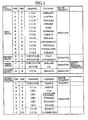
- Fig. 1 shows television broadcasting systems corresponding to channel groups in Europe and Fig. 2 showing television broadcasting systems matched with channels in European countries.
- Fig. 2 shows television broadcasting systems matched with channels in European countries.
- Different countries adopt different systems with specific channel frequencies assigned to each nation.
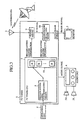
- Fig. 3 depicts schematically the typical format of a conventional television receiver for use on board a vehicle in European countries.
- reference numeral 1 stands for a television tuner, 2 for a reception antenna attached to the television tuner 1, 3 for a display connected to the television tuner 1, 4 for an audio unit connected to the television tuner 1, and 5R and 5L for speakers.
- the television tuner 1 comprises: a television tuner CPU 7 having broadcasting area discriminating means 6 for selecting a specific broadcasting system from among many systems; an operation unit 8 for manually operating the broadcasting area discriminating means 6 from outside the television tuner 1; tuning means 9 for tuning to signals received by the reception antenna on the basis of broadcasting system information output by the television tuner CPU 7; and audio/video detecting means 10 for detecting audio and video signals from an intermediate frequency (IF) signal output by the tuning means 9.
- Television broadcasting systems A, B, ..., N to choose from by use of the broadcasting area discriminating means 6 are stored beforehand in a memory 11.
- the conventional television receiver in the above format works as follows: when television reception is normal, television signals received by the reception antenna 2 are input to the tuning means 9. On the basis of the broadcasting system information obtained, the tuning means 9 tunes to a desired channel and outputs an appropriate intermediate frequency signal.
- the IF signal is input to the audio/video detecting means 10 which detects audio and video signals based on the broadcasting system information.
- the video signal is fed to the display 3 for display.
- the audio signal is supplied to the audio unit 4 which activates the speakers 5R and 5L for audio output.
- a receiver for use on board a vehicle comprising: a vehicle position detecting unit for detecting a current position of the vehicle; a memory means remembering and coupling a plurality of location information and the broadcasting systems that correspond to the location information; broadcasting system selecting unit for selecting a broadcast corresponding to the location information from the memory means and a receiver means for receiving television transmissions based on the selected broadcast system.
- the apparatus in the format outlined above allows a matching broadcasting system to be selected automatically every time a mismatch occurs between the vehicle position and the currently selected broadcasting system. Working as it does, the apparatus ensures an optimum state of television reception without burdening the user with manual operation.
- the receiver of the present invention is adapted for use with TV broadcast systems and can normally ensure optimal receiving conditions for the TV broadcasts.
- the receiver of the present invention is adapted to couple a plurality of regional information with the area information pertaining to each country and can automatically ensure optimal receiving conditions with each area change.
- the receiver for use on board a vehicle may utilize as its vehicle position detecting unit an onboard navigator that receives global positioning satellite signals to determine where the vehicle is currently located.
- the use of the navigator simplifies the format of the apparatus and reduces its cost.
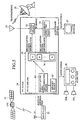
- Fig. 5 is a schematic block diagram of a television receiver incorporating a receiver practiced as a first embodiment of the invention.
- reference numeral 21 stands for a satellite that outputs a global positioning satellite (GPS) signal
- 22 is for a navigator equipped with an antenna 23 for receiving the GPS signal and acting as vehicle position detecting means
- 24 is for a television tuner for admitting position information from the navigator 22
- 25 is for a reception antenna for receiving television transmissions from an antenna 26 of a broadcasting station
- 27 is for a display for admitting and displaying an video signal from the television tuner 24
- 28 is for an audio unit which admits an audio signal from the television tuner 24 and which has speakers 29R and 29L for audio signal output.
- the television tuner 24 comprises: a television tuner CPU 31 having broadcasting area discriminating means 30 for selecting from a memory means 35 a broadcasting system matching the current vehicle position based on the position information from the navigator 22 and coupling the preset plurality of location information with the broadcasting system corresponding respectively to the location information; tuning means 32 for tuning to a signal received by the antenna 23 on the basis of broadcasting system information output from the television tuner CPU 31; and audio/video detecting means 33 for detecting audio and video signals from an intermediate frequency (IF) signal output by the tuning means 32.
- Broadcasting systems A, B, ..., N, any one of which is selected by the broadcasting area discriminating means 30, are stored beforehand in a memory 34.
- Fig. 6 is a flow chart of steps showing how the apparatus of Fig. 5 operates.
- step ST1 normal television reception is in effect
- the television signal received by the reception antenna 25 is input to the tuning means 32.
- the tuning means 32 tunes to an appropriate channel based on the broadcasting system information acquired and outputs an IF signal accordingly.
- the IF signal is input to the audio/video detecting means 33 which in turn detects audio and video signals based on the broadcasting system information.
- the video signal is fed to the display 27 for display, and the audio signal is supplied to the audio unit 28 for audio output from the speakers 29R and 29L.
- the navigator 22 receives, via the antenna 23, the GPS signal from the satellite 21 and detects the vehicle's current position based on the received signal.
- the apparatus receives the current vehicle position from the navigator (step ST2).
- a check is made to see if the currently selected broadcasting system matches the vehicle position (step ST3). In the case of a match, the sequence returns to step ST1 and the process is repeated.
- the broadcasting area discriminating means 31 selects from the memory 34 another broadcasting system corresponding to the vehicle's current position and switches automatically to the newly selected system (step ST4).
- the first embodiment selects and switches automatically to an optimal broadcasting system every time the currently selected broadcasting system fails to match the vehicle's detected position. This eliminates the need for manual switching operations unlike the conventional apparatus. Furthermore it frees the user and television broadcasts can be seen in a normally optimal state of reception.
- Dedicated vehicle position detecting means may be included in the apparatus.
- an existing onboard navigator may be used as the vehicle position detecting means.
- the alternative setup will simplify the format of the apparatus and reduce its cost.
- the accompanying figures list illustratively television broadcasting systems categorized by country for search purposes.
- the broadcasting systems may be coded by area. It is also possible for channel frequencies to be selected in the same manner as described, i.e., on the basis of the vehicle's detected position.
- embodiment 1 above was explained using a TV broadcast as a received signal, it is possible to use a receiver receiving a radio broadcast or the like.
- the receiver for use on board a vehicle automatically selects and switches to a local broadcasting system of the geographical area that the traveling vehicle has crossed into from another area where a different broadcasting system is in effect.
- the apparatus is adapted for use on board vehicles whose movement crosses over areas of different broadcasting systems.
Landscapes
- Engineering & Computer Science (AREA)
- Signal Processing (AREA)
- Multimedia (AREA)
- Biodiversity & Conservation Biology (AREA)
- Business, Economics & Management (AREA)
- Life Sciences & Earth Sciences (AREA)
- Databases & Information Systems (AREA)
- Ecology (AREA)
- Emergency Management (AREA)
- Environmental & Geological Engineering (AREA)
- Environmental Sciences (AREA)
- Remote Sensing (AREA)
- Circuits Of Receivers In General (AREA)
Abstract
Description
Claims (4)
- A receiver for use on board a vehicle, comprising:vehicle position detecting means for detecting a current position of said vehicle;a memory means for coupling a plurality of location information and broadcasting systems corresponding respectively to the location information;a broadcasting system selection means for selecting a broadcasting system corresponding to the location information from said memory means based on the vehicle position information as detected by said vehicle position detecting means; anda receiving means which receives on the basis of the selected broadcasting system.
- A receiver according to claim 1 wherein the broadcasting system is a TV broadcast system.
- A receiver according to claim 1 wherein the plurality of location information is regional information with respect to each country.
- A receiver for use on board a vehicle according to claim 1, wherein said vehicle position detecting means is an onboard navigator receiving global positioning satellite signals.
Applications Claiming Priority (1)
| Application Number | Priority Date | Filing Date | Title |
|---|---|---|---|
| PCT/JP1998/002652 WO1999066723A1 (en) | 1998-06-16 | 1998-06-16 | Receiver |
Publications (2)
| Publication Number | Publication Date |
|---|---|
| EP1003333A1 true EP1003333A1 (en) | 2000-05-24 |
| EP1003333A4 EP1003333A4 (en) | 2004-03-17 |
Family
ID=14208401
Family Applications (1)
| Application Number | Title | Priority Date | Filing Date |
|---|---|---|---|
| EP98924647A Ceased EP1003333A4 (en) | 1998-06-16 | 1998-06-16 | RECEIVER |
Country Status (2)
| Country | Link |
|---|---|
| EP (1) | EP1003333A4 (en) |
| WO (1) | WO1999066723A1 (en) |
Cited By (11)
| Publication number | Priority date | Publication date | Assignee | Title |
|---|---|---|---|---|
| EP1014714A1 (en) * | 1998-12-19 | 2000-06-28 | BECKER GmbH | Television receiver |
| EP1209910A3 (en) * | 2000-11-28 | 2004-03-03 | Mitsubishi Denki Kabushiki Kaisha | Receiving apparatus |
| EP1696663A1 (en) * | 2005-02-25 | 2006-08-30 | Kabushiki Kaisha Toshiba | Tuner device and electronic apparatus |
| EP1401199A3 (en) * | 2002-09-11 | 2007-10-24 | Kabushiki Kaisha Toshiba | Television receiver and television broadcast receiving method |
| EP1739962A3 (en) * | 2005-06-29 | 2008-01-23 | Samsung Electronics Co., Ltd. | Broadcast receiver and method of providing a location guide service in a broadcast receiver |
| EP1997308A1 (en) * | 2006-03-23 | 2008-12-03 | Sony Ericsson Mobile Communications AB | Mobile communication based television standard selection apparatus |
| WO2009077898A1 (en) * | 2007-12-14 | 2009-06-25 | Arcelik Anonim Sirketi | A broadcast receiving device and control method |
| EP1815674A4 (en) * | 2004-11-22 | 2009-10-28 | Samsung Electronics Co Ltd | DISPLAY APPARATUS WITH BROADCAST SIGNAL RECEIVING FUNCTION AND ITS CONTROL METHOD |
| EP2131576A3 (en) * | 2008-05-16 | 2010-05-05 | LG Electronics, Inc. | Mobile terminal and method of controlling broadcast therein |
| EP2063641A4 (en) * | 2006-09-12 | 2011-04-27 | Panasonic Corp | MOBILE TERMINAL DEVICE |
| WO2013117515A1 (en) * | 2012-02-07 | 2013-08-15 | Hirschmann Car Communication Gmbh | Transmitter tracking of various standards |
Family Cites Families (7)
| Publication number | Priority date | Publication date | Assignee | Title |
|---|---|---|---|---|
| JPH0394884U (en) * | 1990-01-16 | 1991-09-27 | ||
| JPH04311107A (en) * | 1991-04-10 | 1992-11-02 | Japan Radio Co Ltd | Broadcast channel tuning device |
| JPH06268934A (en) * | 1993-03-15 | 1994-09-22 | Casio Comput Co Ltd | Television receiver |
| JPH07284040A (en) * | 1994-04-11 | 1995-10-27 | Fujitsu General Ltd | Satellite broadcasting receiver |
| JP3538907B2 (en) | 1994-08-19 | 2004-06-14 | セイコーエプソン株式会社 | Broadcast wave receiver for mobile |
| JPH08116281A (en) * | 1994-10-17 | 1996-05-07 | Matsushita Electric Ind Co Ltd | Broadcast receiver |
| JPH09331266A (en) * | 1996-06-10 | 1997-12-22 | Nec Corp | Broadcasting receiver |
-
1998
- 1998-06-16 WO PCT/JP1998/002652 patent/WO1999066723A1/en not_active Ceased
- 1998-06-16 EP EP98924647A patent/EP1003333A4/en not_active Ceased
Cited By (15)
| Publication number | Priority date | Publication date | Assignee | Title |
|---|---|---|---|---|
| EP1014714A1 (en) * | 1998-12-19 | 2000-06-28 | BECKER GmbH | Television receiver |
| EP1209910A3 (en) * | 2000-11-28 | 2004-03-03 | Mitsubishi Denki Kabushiki Kaisha | Receiving apparatus |
| US6873369B2 (en) | 2000-11-28 | 2005-03-29 | Mitsubishi Denki Kabushiki Kaisha | Receiving apparatus |
| EP1401199A3 (en) * | 2002-09-11 | 2007-10-24 | Kabushiki Kaisha Toshiba | Television receiver and television broadcast receiving method |
| EP1815674A4 (en) * | 2004-11-22 | 2009-10-28 | Samsung Electronics Co Ltd | DISPLAY APPARATUS WITH BROADCAST SIGNAL RECEIVING FUNCTION AND ITS CONTROL METHOD |
| EP1696663A1 (en) * | 2005-02-25 | 2006-08-30 | Kabushiki Kaisha Toshiba | Tuner device and electronic apparatus |
| EP1739962A3 (en) * | 2005-06-29 | 2008-01-23 | Samsung Electronics Co., Ltd. | Broadcast receiver and method of providing a location guide service in a broadcast receiver |
| EP1997308A1 (en) * | 2006-03-23 | 2008-12-03 | Sony Ericsson Mobile Communications AB | Mobile communication based television standard selection apparatus |
| EP2063641A4 (en) * | 2006-09-12 | 2011-04-27 | Panasonic Corp | MOBILE TERMINAL DEVICE |
| US8271027B2 (en) | 2006-09-12 | 2012-09-18 | Panasonic Corporation | Mobile terminal device |
| WO2009077898A1 (en) * | 2007-12-14 | 2009-06-25 | Arcelik Anonim Sirketi | A broadcast receiving device and control method |
| EP2131576A3 (en) * | 2008-05-16 | 2010-05-05 | LG Electronics, Inc. | Mobile terminal and method of controlling broadcast therein |
| US8260232B2 (en) | 2008-05-16 | 2012-09-04 | Lg Electronics Inc. | Mobile terminal and method of controlling broadcast therein |
| WO2013117515A1 (en) * | 2012-02-07 | 2013-08-15 | Hirschmann Car Communication Gmbh | Transmitter tracking of various standards |
| CN104160696A (en) * | 2012-02-07 | 2014-11-19 | 赫希曼汽车通讯有限公司 | Emitter Tracking for Different Standards |
Also Published As
| Publication number | Publication date |
|---|---|
| WO1999066723A1 (en) | 1999-12-23 |
| EP1003333A4 (en) | 2004-03-17 |
Similar Documents
| Publication | Publication Date | Title |
|---|---|---|
| EP0725489B1 (en) | Broadcast receiving system having position sensing means for moving bodies | |
| KR100305302B1 (en) | Broadcast signal receiver | |
| US8081938B2 (en) | Broadcast receiver and channel list display method | |
| US7034898B1 (en) | Mobile television receiver | |
| EP1003333A1 (en) | Receiver | |
| JPH08330908A (en) | Channel selection processor for mobile fm receiver | |
| JP4162800B2 (en) | Receiver | |
| US6980769B2 (en) | Method for determining the validity of a radio station lookup table | |
| JP4680722B2 (en) | In-vehicle digital broadcast receiver | |
| JPH06260897A (en) | Radio receiver | |
| JP3959187B2 (en) | In-vehicle receiver | |
| US8396413B2 (en) | Providing a virtual local channel in a satellite broadcast system | |
| JP4151917B2 (en) | Mobile receiver | |
| JP2000138566A (en) | Broadcast receiver | |
| JPH05102799A (en) | Rds radio reception method | |
| JP3053984B2 (en) | Automatic tracking method for digital data multiplex broadcasting station | |
| KR20050056569A (en) | Car audio system for changing radio receiving frequency according to region and method thereof | |
| JP2008042743A (en) | Radio receiver and antenna changeover control method | |
| EP1727362B1 (en) | Digital multimedia broadcasting receiver and channel managing method of the same | |
| JP3167206B2 (en) | Vehicle multiplex broadcast receiver | |
| JPH1013192A (en) | Receiver | |
| JP2006333180A (en) | Present area detector, digital television broadcast receiver for mobile unit and method and program for receiving digital television broadcast for mobile unit | |
| JPH10150374A (en) | Broadcast receiver | |
| JPH0683094B2 (en) | Car radio receiver | |
| JPH06268484A (en) | Receiver for rbds |
Legal Events
| Date | Code | Title | Description |
|---|---|---|---|
| PUAI | Public reference made under article 153(3) epc to a published international application that has entered the european phase |
Free format text: ORIGINAL CODE: 0009012 |
|
| 17P | Request for examination filed |
Effective date: 20000113 |
|
| AK | Designated contracting states |
Kind code of ref document: A1 Designated state(s): DE FR GB IT NL |
|
| A4 | Supplementary search report drawn up and despatched |
Effective date: 20040129 |
|
| RBV | Designated contracting states (corrected) |
Designated state(s): DE FR GB IT |
|
| RAP1 | Party data changed (applicant data changed or rights of an application transferred) |
Owner name: MITSUBISHI DENKI KABUSHIKI KAISHA |
|
| APBK | Appeal reference recorded |
Free format text: ORIGINAL CODE: EPIDOSNREFNE |
|
| APBN | Date of receipt of notice of appeal recorded |
Free format text: ORIGINAL CODE: EPIDOSNNOA2E |
|
| APBR | Date of receipt of statement of grounds of appeal recorded |
Free format text: ORIGINAL CODE: EPIDOSNNOA3E |
|
| APAF | Appeal reference modified |
Free format text: ORIGINAL CODE: EPIDOSCREFNE |
|
| REG | Reference to a national code |
Ref country code: DE Ref legal event code: R003 |
|
| APBT | Appeal procedure closed |
Free format text: ORIGINAL CODE: EPIDOSNNOA9E |
|
| STAA | Information on the status of an ep patent application or granted ep patent |
Free format text: STATUS: THE APPLICATION HAS BEEN REFUSED |
|
| 18R | Application refused |
Effective date: 20130415 |