EP1001774B1 - Use of phospholamban inhibitors for increasing coronary flow - Google Patents
Use of phospholamban inhibitors for increasing coronary flow Download PDFInfo
- Publication number
- EP1001774B1 EP1001774B1 EP98929466A EP98929466A EP1001774B1 EP 1001774 B1 EP1001774 B1 EP 1001774B1 EP 98929466 A EP98929466 A EP 98929466A EP 98929466 A EP98929466 A EP 98929466A EP 1001774 B1 EP1001774 B1 EP 1001774B1
- Authority
- EP
- European Patent Office
- Prior art keywords
- product
- phospholamban
- methyl
- nmr
- dmso
- Prior art date
- Legal status (The legal status is an assumption and is not a legal conclusion. Google has not performed a legal analysis and makes no representation as to the accuracy of the status listed.)
- Expired - Lifetime
Links
- 108010059929 phospholamban Proteins 0.000 title claims abstract description 95
- 102000005681 phospholamban Human genes 0.000 title claims abstract description 93
- 239000003112 inhibitor Substances 0.000 title claims abstract description 24
- 230000001965 increasing effect Effects 0.000 title description 4
- 150000001875 compounds Chemical class 0.000 claims abstract description 61
- 210000004351 coronary vessel Anatomy 0.000 claims abstract description 26
- 239000003814 drug Substances 0.000 claims description 9
- 230000010412 perfusion Effects 0.000 claims description 9
- 238000004519 manufacturing process Methods 0.000 claims description 7
- 230000007423 decrease Effects 0.000 claims description 5
- 150000003839 salts Chemical class 0.000 claims description 5
- 230000036772 blood pressure Effects 0.000 claims description 3
- 208000029078 coronary artery disease Diseases 0.000 claims description 3
- 230000000004 hemodynamic effect Effects 0.000 claims description 3
- 210000001908 sarcoplasmic reticulum Anatomy 0.000 abstract description 18
- 230000002401 inhibitory effect Effects 0.000 abstract description 13
- 238000000034 method Methods 0.000 abstract description 11
- 230000000747 cardiac effect Effects 0.000 abstract description 8
- IAZDPXIOMUYVGZ-WFGJKAKNSA-N Dimethyl sulfoxide Chemical compound [2H]C([2H])([2H])S(=O)C([2H])([2H])[2H] IAZDPXIOMUYVGZ-WFGJKAKNSA-N 0.000 description 120
- 239000000047 product Substances 0.000 description 94
- 238000005160 1H NMR spectroscopy Methods 0.000 description 70
- LFQSCWFLJHTTHZ-UHFFFAOYSA-N Ethanol Chemical compound CCO LFQSCWFLJHTTHZ-UHFFFAOYSA-N 0.000 description 41
- BWHMMNNQKKPAPP-UHFFFAOYSA-L potassium carbonate Chemical compound [K+].[K+].[O-]C([O-])=O BWHMMNNQKKPAPP-UHFFFAOYSA-L 0.000 description 40
- ZMXDDKWLCZADIW-UHFFFAOYSA-N N,N-dimethylformamide Substances CN(C)C=O ZMXDDKWLCZADIW-UHFFFAOYSA-N 0.000 description 39
- 125000002496 methyl group Chemical group [H]C([H])([H])* 0.000 description 38
- PXIPVTKHYLBLMZ-UHFFFAOYSA-N Sodium azide Chemical compound [Na+].[N-]=[N+]=[N-] PXIPVTKHYLBLMZ-UHFFFAOYSA-N 0.000 description 36
- NLXLAEXVIDQMFP-UHFFFAOYSA-N Ammonia chloride Chemical compound [NH4+].[Cl-] NLXLAEXVIDQMFP-UHFFFAOYSA-N 0.000 description 33
- 239000000243 solution Substances 0.000 description 32
- XEKOWRVHYACXOJ-UHFFFAOYSA-N Ethyl acetate Chemical compound CCOC(C)=O XEKOWRVHYACXOJ-UHFFFAOYSA-N 0.000 description 31
- 238000002844 melting Methods 0.000 description 31
- 230000008018 melting Effects 0.000 description 31
- IAZDPXIOMUYVGZ-UHFFFAOYSA-N Dimethylsulphoxide Chemical compound CS(C)=O IAZDPXIOMUYVGZ-UHFFFAOYSA-N 0.000 description 30
- 230000000694 effects Effects 0.000 description 30
- 238000002360 preparation method Methods 0.000 description 30
- XLYOFNOQVPJJNP-UHFFFAOYSA-N water Substances O XLYOFNOQVPJJNP-UHFFFAOYSA-N 0.000 description 28
- 239000000203 mixture Substances 0.000 description 24
- 238000002474 experimental method Methods 0.000 description 20
- 229910000027 potassium carbonate Inorganic materials 0.000 description 20
- HEMHJVSKTPXQMS-UHFFFAOYSA-M Sodium hydroxide Chemical compound [OH-].[Na+] HEMHJVSKTPXQMS-UHFFFAOYSA-M 0.000 description 18
- RENMDAKOXSCIGH-UHFFFAOYSA-N Chloroacetonitrile Chemical compound ClCC#N RENMDAKOXSCIGH-UHFFFAOYSA-N 0.000 description 17
- IJGRMHOSHXDMSA-UHFFFAOYSA-N Atomic nitrogen Chemical compound N#N IJGRMHOSHXDMSA-UHFFFAOYSA-N 0.000 description 16
- 125000000217 alkyl group Chemical group 0.000 description 16
- 235000019270 ammonium chloride Nutrition 0.000 description 16
- 239000011541 reaction mixture Substances 0.000 description 16
- 239000011575 calcium Substances 0.000 description 15
- 210000001519 tissue Anatomy 0.000 description 14
- VEXZGXHMUGYJMC-UHFFFAOYSA-N Hydrochloric acid Chemical compound Cl VEXZGXHMUGYJMC-UHFFFAOYSA-N 0.000 description 13
- 125000003118 aryl group Chemical group 0.000 description 13
- YXFVVABEGXRONW-UHFFFAOYSA-N Toluene Chemical compound CC1=CC=CC=C1 YXFVVABEGXRONW-UHFFFAOYSA-N 0.000 description 12
- 235000019439 ethyl acetate Nutrition 0.000 description 12
- 210000002027 skeletal muscle Anatomy 0.000 description 12
- 230000002861 ventricular Effects 0.000 description 12
- 125000001797 benzyl group Chemical group [H]C1=C([H])C([H])=C(C([H])=C1[H])C([H])([H])* 0.000 description 11
- 239000005457 ice water Substances 0.000 description 11
- 101000936911 Chionoecetes opilio Sarcoplasmic/endoplasmic reticulum calcium ATPase Proteins 0.000 description 10
- YMWUJEATGCHHMB-UHFFFAOYSA-N Dichloromethane Chemical compound ClCCl YMWUJEATGCHHMB-UHFFFAOYSA-N 0.000 description 10
- 230000003185 calcium uptake Effects 0.000 description 10
- 125000000956 methoxy group Chemical group [H]C([H])([H])O* 0.000 description 10
- 108091032973 (ribonucleotides)n+m Proteins 0.000 description 9
- JPYHHZQJCSQRJY-UHFFFAOYSA-N Phloroglucinol Natural products CCC=CCC=CCC=CCC=CCCCCC(=O)C1=C(O)C=C(O)C=C1O JPYHHZQJCSQRJY-UHFFFAOYSA-N 0.000 description 9
- 239000000872 buffer Substances 0.000 description 9
- QCDYQQDYXPDABM-UHFFFAOYSA-N phloroglucinol Chemical compound OC1=CC(O)=CC(O)=C1 QCDYQQDYXPDABM-UHFFFAOYSA-N 0.000 description 9
- 229960001553 phloroglucinol Drugs 0.000 description 9
- 239000002244 precipitate Substances 0.000 description 9
- 108090000623 proteins and genes Proteins 0.000 description 9
- 102000004169 proteins and genes Human genes 0.000 description 9
- RTZKZFJDLAIYFH-UHFFFAOYSA-N Diethyl ether Chemical compound CCOCC RTZKZFJDLAIYFH-UHFFFAOYSA-N 0.000 description 8
- AFVFQIVMOAPDHO-UHFFFAOYSA-N Methanesulfonic acid Chemical compound CS(O)(=O)=O AFVFQIVMOAPDHO-UHFFFAOYSA-N 0.000 description 8
- 210000000709 aorta Anatomy 0.000 description 8
- 125000003710 aryl alkyl group Chemical group 0.000 description 8
- -1 cyano compound Chemical class 0.000 description 8
- 229910052757 nitrogen Inorganic materials 0.000 description 8
- AOJFQRQNPXYVLM-UHFFFAOYSA-N pyridin-1-ium;chloride Chemical compound [Cl-].C1=CC=[NH+]C=C1 AOJFQRQNPXYVLM-UHFFFAOYSA-N 0.000 description 8
- OYPRJOBELJOOCE-UHFFFAOYSA-N Calcium Chemical compound [Ca] OYPRJOBELJOOCE-UHFFFAOYSA-N 0.000 description 7
- WSFSSNUMVMOOMR-UHFFFAOYSA-N Formaldehyde Chemical compound O=C WSFSSNUMVMOOMR-UHFFFAOYSA-N 0.000 description 7
- 229910052791 calcium Inorganic materials 0.000 description 7
- 238000002983 circular dichroism Methods 0.000 description 7
- 210000002889 endothelial cell Anatomy 0.000 description 7
- 210000005003 heart tissue Anatomy 0.000 description 7
- 229910052739 hydrogen Inorganic materials 0.000 description 7
- 108090000765 processed proteins & peptides Proteins 0.000 description 7
- HNLXNOZHXNSSPN-UHFFFAOYSA-N 2-[2-[2-[2-[2-[2-[2-[4-(2,4,4-trimethylpentan-2-yl)phenoxy]ethoxy]ethoxy]ethoxy]ethoxy]ethoxy]ethoxy]ethanol Chemical compound CC(C)(C)CC(C)(C)C1=CC=C(OCCOCCOCCOCCOCCOCCOCCO)C=C1 HNLXNOZHXNSSPN-UHFFFAOYSA-N 0.000 description 6
- 102000000584 Calmodulin Human genes 0.000 description 6
- 108010041952 Calmodulin Proteins 0.000 description 6
- KFZMGEQAYNKOFK-UHFFFAOYSA-N Isopropanol Chemical compound CC(C)O KFZMGEQAYNKOFK-UHFFFAOYSA-N 0.000 description 6
- 125000003342 alkenyl group Chemical group 0.000 description 6
- ILAHWRKJUDSMFH-UHFFFAOYSA-N boron tribromide Chemical compound BrB(Br)Br ILAHWRKJUDSMFH-UHFFFAOYSA-N 0.000 description 6
- 125000001495 ethyl group Chemical group [H]C([H])([H])C([H])([H])* 0.000 description 6
- 239000001257 hydrogen Substances 0.000 description 6
- 125000004435 hydrogen atom Chemical group [H]* 0.000 description 6
- 125000002887 hydroxy group Chemical group [H]O* 0.000 description 6
- 230000001404 mediated effect Effects 0.000 description 6
- 210000004165 myocardium Anatomy 0.000 description 6
- LPNYRYFBWFDTMA-UHFFFAOYSA-N potassium tert-butoxide Chemical compound [K+].CC(C)(C)[O-] LPNYRYFBWFDTMA-UHFFFAOYSA-N 0.000 description 6
- 239000007787 solid Substances 0.000 description 6
- AZUYLZMQTIKGSC-UHFFFAOYSA-N 1-[6-[4-(5-chloro-6-methyl-1H-indazol-4-yl)-5-methyl-3-(1-methylindazol-5-yl)pyrazol-1-yl]-2-azaspiro[3.3]heptan-2-yl]prop-2-en-1-one Chemical compound ClC=1C(=C2C=NNC2=CC=1C)C=1C(=NN(C=1C)C1CC2(CN(C2)C(C=C)=O)C1)C=1C=C2C=NN(C2=CC=1)C AZUYLZMQTIKGSC-UHFFFAOYSA-N 0.000 description 5
- 241000700199 Cavia porcellus Species 0.000 description 5
- 229930006000 Sucrose Natural products 0.000 description 5
- CZMRCDWAGMRECN-UGDNZRGBSA-N Sucrose Chemical compound O[C@H]1[C@H](O)[C@@H](CO)O[C@@]1(CO)O[C@@H]1[C@H](O)[C@@H](O)[C@H](O)[C@@H](CO)O1 CZMRCDWAGMRECN-UGDNZRGBSA-N 0.000 description 5
- 125000003545 alkoxy group Chemical group 0.000 description 5
- 125000004432 carbon atom Chemical group C* 0.000 description 5
- 238000001514 detection method Methods 0.000 description 5
- 150000002148 esters Chemical class 0.000 description 5
- 125000000816 ethylene group Chemical group [H]C([H])([*:1])C([H])([H])[*:2] 0.000 description 5
- 239000012528 membrane Substances 0.000 description 5
- 108020004999 messenger RNA Proteins 0.000 description 5
- 102000004196 processed proteins & peptides Human genes 0.000 description 5
- 239000000523 sample Substances 0.000 description 5
- 239000002904 solvent Substances 0.000 description 5
- 239000005720 sucrose Substances 0.000 description 5
- 239000006228 supernatant Substances 0.000 description 5
- WNRGWPVJGDABME-UHFFFAOYSA-N 3,5-Dimethoxyaniline Chemical compound COC1=CC(N)=CC(OC)=C1 WNRGWPVJGDABME-UHFFFAOYSA-N 0.000 description 4
- 108091006112 ATPases Proteins 0.000 description 4
- 102000057290 Adenosine Triphosphatases Human genes 0.000 description 4
- WTDHULULXKLSOZ-UHFFFAOYSA-N Hydroxylamine hydrochloride Chemical compound Cl.ON WTDHULULXKLSOZ-UHFFFAOYSA-N 0.000 description 4
- TWRXJAOTZQYOKJ-UHFFFAOYSA-L Magnesium chloride Chemical compound [Mg+2].[Cl-].[Cl-] TWRXJAOTZQYOKJ-UHFFFAOYSA-L 0.000 description 4
- CTQNGGLPUBDAKN-UHFFFAOYSA-N O-Xylene Chemical compound CC1=CC=CC=C1C CTQNGGLPUBDAKN-UHFFFAOYSA-N 0.000 description 4
- UIIMBOGNXHQVGW-UHFFFAOYSA-M Sodium bicarbonate Chemical compound [Na+].OC([O-])=O UIIMBOGNXHQVGW-UHFFFAOYSA-M 0.000 description 4
- 238000004458 analytical method Methods 0.000 description 4
- AGEZXYOZHKGVCM-UHFFFAOYSA-N benzyl bromide Chemical compound BrCC1=CC=CC=C1 AGEZXYOZHKGVCM-UHFFFAOYSA-N 0.000 description 4
- 230000001086 cytosolic effect Effects 0.000 description 4
- 230000003511 endothelial effect Effects 0.000 description 4
- 230000006870 function Effects 0.000 description 4
- 239000004615 ingredient Substances 0.000 description 4
- 229940098779 methanesulfonic acid Drugs 0.000 description 4
- 230000000638 stimulation Effects 0.000 description 4
- POSZUTFLHGNLHX-KSBRXOFISA-N tris maleate Chemical compound OCC(N)(CO)CO.OCC(N)(CO)CO.OC(=O)\C=C/C(O)=O POSZUTFLHGNLHX-KSBRXOFISA-N 0.000 description 4
- 238000001262 western blot Methods 0.000 description 4
- 239000008096 xylene Substances 0.000 description 4
- QDZOEBFLNHCSSF-PFFBOGFISA-N (2S)-2-[[(2R)-2-[[(2S)-1-[(2S)-6-amino-2-[[(2S)-1-[(2R)-2-amino-5-carbamimidamidopentanoyl]pyrrolidine-2-carbonyl]amino]hexanoyl]pyrrolidine-2-carbonyl]amino]-3-(1H-indol-3-yl)propanoyl]amino]-N-[(2R)-1-[[(2S)-1-[[(2R)-1-[[(2S)-1-[[(2S)-1-amino-4-methyl-1-oxopentan-2-yl]amino]-4-methyl-1-oxopentan-2-yl]amino]-3-(1H-indol-3-yl)-1-oxopropan-2-yl]amino]-1-oxo-3-phenylpropan-2-yl]amino]-3-(1H-indol-3-yl)-1-oxopropan-2-yl]pentanediamide Chemical compound C([C@@H](C(=O)N[C@H](CC=1C2=CC=CC=C2NC=1)C(=O)N[C@@H](CC(C)C)C(=O)N[C@@H](CC(C)C)C(N)=O)NC(=O)[C@@H](CC=1C2=CC=CC=C2NC=1)NC(=O)[C@H](CCC(N)=O)NC(=O)[C@@H](CC=1C2=CC=CC=C2NC=1)NC(=O)[C@H]1N(CCC1)C(=O)[C@H](CCCCN)NC(=O)[C@H]1N(CCC1)C(=O)[C@H](N)CCCNC(N)=N)C1=CC=CC=C1 QDZOEBFLNHCSSF-PFFBOGFISA-N 0.000 description 3
- 102000040650 (ribonucleotides)n+m Human genes 0.000 description 3
- DVNOTHMAOBZNRF-UHFFFAOYSA-N 1,3-dibenzyl-5,7-dihydroxy-4-methylquinolin-2-one Chemical compound O=C1N(CC=2C=CC=CC=2)C2=CC(O)=CC(O)=C2C(C)=C1CC1=CC=CC=C1 DVNOTHMAOBZNRF-UHFFFAOYSA-N 0.000 description 3
- QTBSBXVTEAMEQO-UHFFFAOYSA-N Acetic acid Chemical compound CC(O)=O QTBSBXVTEAMEQO-UHFFFAOYSA-N 0.000 description 3
- WEVYAHXRMPXWCK-UHFFFAOYSA-N Acetonitrile Chemical compound CC#N WEVYAHXRMPXWCK-UHFFFAOYSA-N 0.000 description 3
- 229910015845 BBr3 Inorganic materials 0.000 description 3
- LYCAIKOWRPUZTN-UHFFFAOYSA-N Ethylene glycol Chemical compound OCCO LYCAIKOWRPUZTN-UHFFFAOYSA-N 0.000 description 3
- FAPWRFPIFSIZLT-UHFFFAOYSA-M Sodium chloride Chemical compound [Na+].[Cl-] FAPWRFPIFSIZLT-UHFFFAOYSA-M 0.000 description 3
- 102400000096 Substance P Human genes 0.000 description 3
- 101800003906 Substance P Proteins 0.000 description 3
- ZMANZCXQSJIPKH-UHFFFAOYSA-N Triethylamine Chemical compound CCN(CC)CC ZMANZCXQSJIPKH-UHFFFAOYSA-N 0.000 description 3
- 230000008859 change Effects 0.000 description 3
- 238000001142 circular dichroism spectrum Methods 0.000 description 3
- 230000008602 contraction Effects 0.000 description 3
- 230000001419 dependent effect Effects 0.000 description 3
- 210000002472 endoplasmic reticulum Anatomy 0.000 description 3
- 150000002367 halogens Chemical class 0.000 description 3
- RAXXELZNTBOGNW-UHFFFAOYSA-N imidazole Natural products C1=CNC=N1 RAXXELZNTBOGNW-UHFFFAOYSA-N 0.000 description 3
- 230000003993 interaction Effects 0.000 description 3
- 239000004816 latex Substances 0.000 description 3
- 229920000126 latex Polymers 0.000 description 3
- 230000007246 mechanism Effects 0.000 description 3
- 210000001087 myotubule Anatomy 0.000 description 3
- 210000004898 n-terminal fragment Anatomy 0.000 description 3
- 239000008188 pellet Substances 0.000 description 3
- 125000006239 protecting group Chemical group 0.000 description 3
- 125000001412 tetrahydropyranyl group Chemical group 0.000 description 3
- 210000003556 vascular endothelial cell Anatomy 0.000 description 3
- 230000000304 vasodilatating effect Effects 0.000 description 3
- QCBXSNFQJIQQLN-UHFFFAOYSA-N 1,3-dibenzyl-4-methyl-5,7-bis(2h-tetrazol-5-ylmethoxy)quinolin-2-one Chemical compound O=C1N(CC=2C=CC=CC=2)C2=CC(OCC=3NN=NN=3)=CC(OCC=3NN=NN=3)=C2C(C)=C1CC1=CC=CC=C1 QCBXSNFQJIQQLN-UHFFFAOYSA-N 0.000 description 2
- DJBYUZAGHDRFHL-UHFFFAOYSA-N 1,3-dihydroxy-2,4-bis(2h-tetrazol-5-ylmethoxy)-7,8,9,10-tetrahydrobenzo[c]chromen-6-one Chemical compound OC1=C2C=3CCCCC=3C(=O)OC2=C(OCC2=NNN=N2)C(O)=C1OCC=1N=NNN=1 DJBYUZAGHDRFHL-UHFFFAOYSA-N 0.000 description 2
- CPSBMDFODMKVSN-UHFFFAOYSA-N 1-benzyl-3-[(2-fluorophenyl)methyl]-5,7-dihydroxy-4-methylquinolin-2-one Chemical compound O=C1N(CC=2C=CC=CC=2)C2=CC(O)=CC(O)=C2C(C)=C1CC1=CC=CC=C1F CPSBMDFODMKVSN-UHFFFAOYSA-N 0.000 description 2
- QYSAYAUOLUTQSC-UHFFFAOYSA-N 1-benzyl-4-methyl-5,7-bis(2h-tetrazol-5-ylmethoxy)quinolin-2-one Chemical compound C12=CC(OCC=3NN=NN=3)=CC(OCC=3NN=NN=3)=C2C(C)=CC(=O)N1CC1=CC=CC=C1 QYSAYAUOLUTQSC-UHFFFAOYSA-N 0.000 description 2
- GFGFCLIDSBPQSO-UHFFFAOYSA-N 2-[5-(cyanomethoxy)-2-oxo-4-phenylchromen-7-yl]oxyacetonitrile Chemical compound C12=C(OCC#N)C=C(OCC#N)C=C2OC(=O)C=C1C1=CC=CC=C1 GFGFCLIDSBPQSO-UHFFFAOYSA-N 0.000 description 2
- UQXBDKCUDUINDD-UHFFFAOYSA-N 3-[(4-chlorophenyl)methyl]-4-methyl-5,7-bis(2h-tetrazol-5-ylmethoxy)chromen-2-one Chemical compound O=C1OC=2C=C(OCC=3NN=NN=3)C=C(OCC=3NN=NN=3)C=2C(C)=C1CC1=CC=C(Cl)C=C1 UQXBDKCUDUINDD-UHFFFAOYSA-N 0.000 description 2
- NPICNJMUNQWUKH-UHFFFAOYSA-N 3-[[3-benzyl-4-methyl-2-oxo-5-[(5-oxo-1,2,4-oxadiazolidin-3-yl)methoxy]chromen-7-yl]oxymethyl]-1,2,4-oxadiazolidin-5-one Chemical compound O=C1OC=2C=C(OCC3NC(=O)ON3)C=C(OCC3NC(=O)ON3)C=2C(C)=C1CC1=CC=CC=C1 NPICNJMUNQWUKH-UHFFFAOYSA-N 0.000 description 2
- LUPVLAUGMZBPOB-UHFFFAOYSA-N 3-benzyl-1,4-dimethyl-5,7-bis(2h-tetrazol-5-ylmethoxy)quinolin-2-one Chemical compound O=C1N(C)C2=CC(OCC=3NN=NN=3)=CC(OCC=3NN=NN=3)=C2C(C)=C1CC1=CC=CC=C1 LUPVLAUGMZBPOB-UHFFFAOYSA-N 0.000 description 2
- MRMBHOCJZVMBJN-UHFFFAOYSA-N 3-benzyl-4-methyl-5,7-bis(2h-tetrazol-5-ylmethoxy)chromen-2-one Chemical compound O=C1OC=2C=C(OCC=3NN=NN=3)C=C(OCC=3NN=NN=3)C=2C(C)=C1CC1=CC=CC=C1 MRMBHOCJZVMBJN-UHFFFAOYSA-N 0.000 description 2
- HJCRSNVHQFLLFY-UHFFFAOYSA-N 3-benzyl-4-methyl-5,7-bis[1-(2h-tetrazol-5-yl)ethoxy]chromen-2-one Chemical compound N=1N=NNC=1C(C)OC(C=C1OC(=O)C(CC=2C=CC=CC=2)=C(C)C1=1)=CC=1OC(C)C1=NN=NN1 HJCRSNVHQFLLFY-UHFFFAOYSA-N 0.000 description 2
- GPWRWRFCGWATSF-UHFFFAOYSA-N 3-cyclopentyl-4-methyl-5,7-bis(2h-tetrazol-5-ylmethoxy)chromen-2-one Chemical compound O=C1OC=2C=C(OCC=3NN=NN=3)C=C(OCC=3NN=NN=3)C=2C(C)=C1C1CCCC1 GPWRWRFCGWATSF-UHFFFAOYSA-N 0.000 description 2
- ORVDBEYIVNINQD-UHFFFAOYSA-N 3-cyclopentyl-5,7-dihydroxy-4-methylchromen-2-one Chemical compound O=C1OC=2C=C(O)C=C(O)C=2C(C)=C1C1CCCC1 ORVDBEYIVNINQD-UHFFFAOYSA-N 0.000 description 2
- IVIBYQNWSVHUGZ-UHFFFAOYSA-N 4-methyl-3-(2-phenylethyl)-5,7-bis(2h-tetrazol-5-ylmethoxy)chromen-2-one Chemical compound O=C1OC=2C=C(OCC=3NN=NN=3)C=C(OCC=3NN=NN=3)C=2C(C)=C1CCC1=CC=CC=C1 IVIBYQNWSVHUGZ-UHFFFAOYSA-N 0.000 description 2
- SQFVXMCXCAOMKD-UHFFFAOYSA-N 4-methyl-3-[(4-nitrophenyl)methyl]-5,7-bis(2h-tetrazol-5-ylmethoxy)chromen-2-one Chemical compound O=C1OC=2C=C(OCC=3NN=NN=3)C=C(OCC=3NN=NN=3)C=2C(C)=C1CC1=CC=C([N+]([O-])=O)C=C1 SQFVXMCXCAOMKD-UHFFFAOYSA-N 0.000 description 2
- VYVPEDYTTFUFRM-UHFFFAOYSA-N 4-phenyl-5,7-bis(2h-tetrazol-5-ylmethoxy)chromen-2-one Chemical compound C12=C(OCC=3NN=NN=3)C=C(OCC=3NN=NN=3)C=C2OC(=O)C=C1C1=CC=CC=C1 VYVPEDYTTFUFRM-UHFFFAOYSA-N 0.000 description 2
- UKYMHVBZOSPIOA-UHFFFAOYSA-N 5,7-dihydroxy-4-methyl-3-(phenylmethyl)-1-benzopyran-2-one Chemical compound O=C1OC=2C=C(O)C=C(O)C=2C(C)=C1CC1=CC=CC=C1 UKYMHVBZOSPIOA-UHFFFAOYSA-N 0.000 description 2
- AZNCNTANNUIERW-UHFFFAOYSA-N 7-phenyl-1,3-bis(2h-tetrazol-5-ylmethoxy)-7,8,9,10-tetrahydrobenzo[c]chromen-6-one Chemical compound C1=C(OCC2=NNN=N2)C=2C=3CCCC(C=4C=CC=CC=4)C=3C(=O)OC=2C=C1OCC=1N=NNN=1 AZNCNTANNUIERW-UHFFFAOYSA-N 0.000 description 2
- GQYHZYMXKIZYKE-UHFFFAOYSA-N 8-phenyl-1,3-bis(2h-tetrazol-5-ylmethoxy)-7,8,9,10-tetrahydrobenzo[c]chromen-6-one Chemical compound C1=C(OCC2=NNN=N2)C=2C=3CCC(C=4C=CC=CC=4)CC=3C(=O)OC=2C=C1OCC=1N=NNN=1 GQYHZYMXKIZYKE-UHFFFAOYSA-N 0.000 description 2
- UXVMQQNJUSDDNG-UHFFFAOYSA-L Calcium chloride Chemical compound [Cl-].[Cl-].[Ca+2] UXVMQQNJUSDDNG-UHFFFAOYSA-L 0.000 description 2
- OKTJSMMVPCPJKN-UHFFFAOYSA-N Carbon Chemical compound [C] OKTJSMMVPCPJKN-UHFFFAOYSA-N 0.000 description 2
- 241000700198 Cavia Species 0.000 description 2
- HEDRZPFGACZZDS-UHFFFAOYSA-N Chloroform Chemical compound ClC(Cl)Cl HEDRZPFGACZZDS-UHFFFAOYSA-N 0.000 description 2
- 108090000790 Enzymes Proteins 0.000 description 2
- 102000004190 Enzymes Human genes 0.000 description 2
- OZLGRUXZXMRXGP-UHFFFAOYSA-N Fluo-3 Chemical compound CC1=CC=C(N(CC(O)=O)CC(O)=O)C(OCCOC=2C(=CC=C(C=2)C2=C3C=C(Cl)C(=O)C=C3OC3=CC(O)=C(Cl)C=C32)N(CC(O)=O)CC(O)=O)=C1 OZLGRUXZXMRXGP-UHFFFAOYSA-N 0.000 description 2
- 0 O=C(C1=C2CCCC1c1ccccc1)Oc1c2c(OCc2n[n]nn2)cc(OCC2=NN=N*2)c1 Chemical compound O=C(C1=C2CCCC1c1ccccc1)Oc1c2c(OCc2n[n]nn2)cc(OCC2=NN=N*2)c1 0.000 description 2
- ISWSIDIOOBJBQZ-UHFFFAOYSA-N Phenol Chemical compound OC1=CC=CC=C1 ISWSIDIOOBJBQZ-UHFFFAOYSA-N 0.000 description 2
- 102000001708 Protein Isoforms Human genes 0.000 description 2
- 108010029485 Protein Isoforms Proteins 0.000 description 2
- PMZURENOXWZQFD-UHFFFAOYSA-L Sodium Sulfate Chemical compound [Na+].[Na+].[O-]S([O-])(=O)=O PMZURENOXWZQFD-UHFFFAOYSA-L 0.000 description 2
- QAOWNCQODCNURD-UHFFFAOYSA-N Sulfuric acid Chemical compound OS(O)(=O)=O QAOWNCQODCNURD-UHFFFAOYSA-N 0.000 description 2
- OHULVMOXKLLMJR-MSOLQXFVSA-N [(2s,6r)-4-benzoyloxy-2-methoxy-5-oxo-2h-pyran-6-yl]methyl benzoate Chemical compound C([C@H]1O[C@@H](C=C(OC(=O)C=2C=CC=CC=2)C1=O)OC)OC(=O)C1=CC=CC=C1 OHULVMOXKLLMJR-MSOLQXFVSA-N 0.000 description 2
- 125000002252 acyl group Chemical group 0.000 description 2
- 239000011543 agarose gel Substances 0.000 description 2
- 229910052784 alkaline earth metal Inorganic materials 0.000 description 2
- 150000001413 amino acids Chemical class 0.000 description 2
- 210000002403 aortic endothelial cell Anatomy 0.000 description 2
- 125000004104 aryloxy group Chemical group 0.000 description 2
- 238000003556 assay Methods 0.000 description 2
- 125000000484 butyl group Chemical group [H]C([*])([H])C([H])([H])C([H])([H])C([H])([H])[H] 0.000 description 2
- 239000001110 calcium chloride Substances 0.000 description 2
- 229910001628 calcium chloride Inorganic materials 0.000 description 2
- 125000003917 carbamoyl group Chemical group [H]N([H])C(*)=O 0.000 description 2
- 210000004027 cell Anatomy 0.000 description 2
- 238000006243 chemical reaction Methods 0.000 description 2
- 125000004093 cyano group Chemical group *C#N 0.000 description 2
- 230000003247 decreasing effect Effects 0.000 description 2
- 230000002950 deficient Effects 0.000 description 2
- 210000003038 endothelium Anatomy 0.000 description 2
- IDGUHHHQCWSQLU-UHFFFAOYSA-N ethanol;hydrate Chemical compound O.CCO IDGUHHHQCWSQLU-UHFFFAOYSA-N 0.000 description 2
- GPRDAMCHHGGJNX-UHFFFAOYSA-N ethyl 3-oxo-2-(2-phenylethyl)butanoate Chemical compound CCOC(=O)C(C(C)=O)CCC1=CC=CC=C1 GPRDAMCHHGGJNX-UHFFFAOYSA-N 0.000 description 2
- 239000000706 filtrate Substances 0.000 description 2
- 125000001188 haloalkyl group Chemical group 0.000 description 2
- 229910052736 halogen Inorganic materials 0.000 description 2
- XLYOFNOQVPJJNP-ZSJDYOACSA-N heavy water Substances [2H]O[2H] XLYOFNOQVPJJNP-ZSJDYOACSA-N 0.000 description 2
- 238000009396 hybridization Methods 0.000 description 2
- 125000002768 hydroxyalkyl group Chemical group 0.000 description 2
- 230000005764 inhibitory process Effects 0.000 description 2
- 238000002347 injection Methods 0.000 description 2
- 239000007924 injection Substances 0.000 description 2
- INQOMBQAUSQDDS-UHFFFAOYSA-N iodomethane Chemical compound IC INQOMBQAUSQDDS-UHFFFAOYSA-N 0.000 description 2
- 210000005240 left ventricle Anatomy 0.000 description 2
- 239000007788 liquid Substances 0.000 description 2
- 229910001629 magnesium chloride Inorganic materials 0.000 description 2
- 238000005259 measurement Methods 0.000 description 2
- 230000004118 muscle contraction Effects 0.000 description 2
- 125000000449 nitro group Chemical group [O-][N+](*)=O 0.000 description 2
- 125000004430 oxygen atom Chemical group O* 0.000 description 2
- YBYRMVIVWMBXKQ-UHFFFAOYSA-N phenylmethanesulfonyl fluoride Chemical compound FS(=O)(=O)CC1=CC=CC=C1 YBYRMVIVWMBXKQ-UHFFFAOYSA-N 0.000 description 2
- 239000000843 powder Substances 0.000 description 2
- 230000035945 sensitivity Effects 0.000 description 2
- VYPSYNLAJGMNEJ-UHFFFAOYSA-N silicon dioxide Inorganic materials O=[Si]=O VYPSYNLAJGMNEJ-UHFFFAOYSA-N 0.000 description 2
- 210000000329 smooth muscle myocyte Anatomy 0.000 description 2
- 229910000030 sodium bicarbonate Inorganic materials 0.000 description 2
- 229910052938 sodium sulfate Inorganic materials 0.000 description 2
- 235000011152 sodium sulphate Nutrition 0.000 description 2
- 238000004611 spectroscopical analysis Methods 0.000 description 2
- 238000001228 spectrum Methods 0.000 description 2
- 239000000725 suspension Substances 0.000 description 2
- 238000012360 testing method Methods 0.000 description 2
- 238000012546 transfer Methods 0.000 description 2
- 125000002023 trifluoromethyl group Chemical group FC(F)(F)* 0.000 description 2
- 210000004509 vascular smooth muscle cell Anatomy 0.000 description 2
- DGVVWUTYPXICAM-UHFFFAOYSA-N β‐Mercaptoethanol Chemical compound OCCS DGVVWUTYPXICAM-UHFFFAOYSA-N 0.000 description 2
- BBVIDBNAYOIXOE-UHFFFAOYSA-N 1,2,4-oxadiazole Chemical compound C=1N=CON=1 BBVIDBNAYOIXOE-UHFFFAOYSA-N 0.000 description 1
- YGTAZGSLCXNBQL-UHFFFAOYSA-N 1,2,4-thiadiazole Chemical class C=1N=CSN=1 YGTAZGSLCXNBQL-UHFFFAOYSA-N 0.000 description 1
- SNDULORIDCAWCM-UHFFFAOYSA-N 1,3-dibenzyl-5,7-dimethoxy-4-methylquinolin-2-one Chemical compound O=C1N(CC=2C=CC=CC=2)C2=CC(OC)=CC(OC)=C2C(C)=C1CC1=CC=CC=C1 SNDULORIDCAWCM-UHFFFAOYSA-N 0.000 description 1
- WHOXXIZKHZBTOB-UHFFFAOYSA-N 1,3-dihydroxy-7,8,9,10-tetrahydrobenzo[c]chromen-6-one Chemical compound C1CCCC2=C1C1=C(O)C=C(O)C=C1OC2=O WHOXXIZKHZBTOB-UHFFFAOYSA-N 0.000 description 1
- HDCLBUVMTQHZQE-UHFFFAOYSA-N 1,3-dihydroxy-7-phenyl-7,8,9,10-tetrahydrobenzo[c]chromen-6-one Chemical compound C1=2C(=O)OC3=CC(O)=CC(O)=C3C=2CCCC1C1=CC=CC=C1 HDCLBUVMTQHZQE-UHFFFAOYSA-N 0.000 description 1
- MHOJTFDLYMLLTN-UHFFFAOYSA-N 1,3-dihydroxy-8-phenyl-7,8,9,10-tetrahydrobenzo[c]chromen-6-one Chemical compound C1C=2C(=O)OC3=CC(O)=CC(O)=C3C=2CCC1C1=CC=CC=C1 MHOJTFDLYMLLTN-UHFFFAOYSA-N 0.000 description 1
- IZXWCDITFDNEBY-UHFFFAOYSA-N 1-(chloromethyl)-4-fluorobenzene Chemical compound FC1=CC=C(CCl)C=C1 IZXWCDITFDNEBY-UHFFFAOYSA-N 0.000 description 1
- ZWMXPNVOJPHGOX-UHFFFAOYSA-N 1-benzyl-3-[(2-fluorophenyl)methyl]-5,7-dimethoxy-4-methylquinolin-2-one Chemical compound O=C1N(CC=2C=CC=CC=2)C2=CC(OC)=CC(OC)=C2C(C)=C1CC1=CC=CC=C1F ZWMXPNVOJPHGOX-UHFFFAOYSA-N 0.000 description 1
- HRAONIOFJXADOI-UHFFFAOYSA-N 1-benzyl-5,7-dihydroxy-4-methyl-3-(2-phenylethyl)quinolin-2-one Chemical compound O=C1N(CC=2C=CC=CC=2)C2=CC(O)=CC(O)=C2C(C)=C1CCC1=CC=CC=C1 HRAONIOFJXADOI-UHFFFAOYSA-N 0.000 description 1
- LSSSSKZFTCEULL-UHFFFAOYSA-N 1-benzyl-5,7-dihydroxy-4-methylquinolin-2-one Chemical compound C12=CC(O)=CC(O)=C2C(C)=CC(=O)N1CC1=CC=CC=C1 LSSSSKZFTCEULL-UHFFFAOYSA-N 0.000 description 1
- OHRJCFBKSUDVBL-UHFFFAOYSA-N 1-benzyl-5,7-dimethoxy-4-methyl-3-(2-phenylethyl)quinolin-2-one Chemical compound O=C1N(CC=2C=CC=CC=2)C2=CC(OC)=CC(OC)=C2C(C)=C1CCC1=CC=CC=C1 OHRJCFBKSUDVBL-UHFFFAOYSA-N 0.000 description 1
- HJEWJITUROKWRF-UHFFFAOYSA-N 1-benzyl-5,7-dimethoxy-4-methylquinolin-2-one Chemical compound C12=CC(OC)=CC(OC)=C2C(C)=CC(=O)N1CC1=CC=CC=C1 HJEWJITUROKWRF-UHFFFAOYSA-N 0.000 description 1
- DELVJDRJFAHDAH-UHFFFAOYSA-N 2-[1,3-dibenzyl-5-(carboxymethoxy)-4-methyl-2-oxoquinolin-7-yl]oxyacetic acid Chemical compound O=C1N(CC=2C=CC=CC=2)C2=CC(OCC(O)=O)=CC(OCC(O)=O)=C2C(C)=C1CC1=CC=CC=C1 DELVJDRJFAHDAH-UHFFFAOYSA-N 0.000 description 1
- XOZOZNVINGSQIS-UHFFFAOYSA-N 2-[1,3-dibenzyl-5-(cyanomethoxy)-4-methyl-2-oxoquinolin-7-yl]oxyacetonitrile Chemical compound O=C1N(CC=2C=CC=CC=2)C2=CC(OCC#N)=CC(OCC#N)=C2C(C)=C1CC1=CC=CC=C1 XOZOZNVINGSQIS-UHFFFAOYSA-N 0.000 description 1
- NCIANWKOUVNZAW-UHFFFAOYSA-N 2-[1,3-dibenzyl-5-[2-(hydroxyamino)-2-oxoethoxy]-4-methyl-2-oxoquinolin-7-yl]oxy-n-hydroxyacetamide Chemical compound O=C1N(CC=2C=CC=CC=2)C2=CC(OCC(=O)NO)=CC(OCC(=O)NO)=C2C(C)=C1CC1=CC=CC=C1 NCIANWKOUVNZAW-UHFFFAOYSA-N 0.000 description 1
- AFRKEWWZMHHPPN-UHFFFAOYSA-N 2-[1-benzyl-5-(cyanomethoxy)-3-[(2-fluorophenyl)methyl]-4-methyl-2-oxoquinolin-7-yl]oxyacetonitrile Chemical compound O=C1N(CC=2C=CC=CC=2)C2=CC(OCC#N)=CC(OCC#N)=C2C(C)=C1CC1=CC=CC=C1F AFRKEWWZMHHPPN-UHFFFAOYSA-N 0.000 description 1
- UCVLMVLEPBIXIQ-UHFFFAOYSA-N 2-[1-benzyl-5-(cyanomethoxy)-4-methyl-2-oxo-3-(2-phenylethyl)quinolin-7-yl]oxyacetonitrile Chemical compound O=C1N(CC=2C=CC=CC=2)C2=CC(OCC#N)=CC(OCC#N)=C2C(C)=C1CCC1=CC=CC=C1 UCVLMVLEPBIXIQ-UHFFFAOYSA-N 0.000 description 1
- JTNBVFAADQBRAA-UHFFFAOYSA-N 2-[1-benzyl-5-(cyanomethoxy)-4-methyl-2-oxoquinolin-7-yl]oxyacetonitrile Chemical compound C12=CC(OCC#N)=CC(OCC#N)=C2C(C)=CC(=O)N1CC1=CC=CC=C1 JTNBVFAADQBRAA-UHFFFAOYSA-N 0.000 description 1
- GBEMMLXPXQMFIN-UHFFFAOYSA-N 2-[3-[(4-chlorophenyl)methyl]-5-(cyanomethoxy)-4-methyl-2-oxochromen-7-yl]oxyacetonitrile Chemical compound O=C1OC=2C=C(OCC#N)C=C(OCC#N)C=2C(C)=C1CC1=CC=C(Cl)C=C1 GBEMMLXPXQMFIN-UHFFFAOYSA-N 0.000 description 1
- BZLDLBNVZKGDOA-UHFFFAOYSA-N 2-[3-benzyl-5-(cyanomethoxy)-1,4-dimethyl-2-oxoquinolin-7-yl]oxyacetonitrile Chemical compound O=C1N(C)C2=CC(OCC#N)=CC(OCC#N)=C2C(C)=C1CC1=CC=CC=C1 BZLDLBNVZKGDOA-UHFFFAOYSA-N 0.000 description 1
- YDAUASKUGSLGLD-UHFFFAOYSA-N 2-[3-benzyl-5-(cyanomethoxy)-1-[(4-fluorophenyl)methyl]-4-methyl-2-oxoquinolin-7-yl]oxyacetonitrile Chemical compound O=C1N(CC=2C=CC(F)=CC=2)C2=CC(OCC#N)=CC(OCC#N)=C2C(C)=C1CC1=CC=CC=C1 YDAUASKUGSLGLD-UHFFFAOYSA-N 0.000 description 1
- YTRVEKVFXMGPNT-UHFFFAOYSA-N 2-[3-benzyl-5-(cyanomethoxy)-4-methyl-2-oxochromen-7-yl]oxyacetonitrile Chemical compound O=C1OC=2C=C(OCC#N)C=C(OCC#N)C=2C(C)=C1CC1=CC=CC=C1 YTRVEKVFXMGPNT-UHFFFAOYSA-N 0.000 description 1
- IFVFMNVHVIAEJE-UHFFFAOYSA-N 2-[5-(2-amino-2-oxoethoxy)-1,3-dibenzyl-4-methyl-2-oxoquinolin-7-yl]oxyacetamide Chemical compound O=C1N(CC=2C=CC=CC=2)C2=CC(OCC(N)=O)=CC(OCC(N)=O)=C2C(C)=C1CC1=CC=CC=C1 IFVFMNVHVIAEJE-UHFFFAOYSA-N 0.000 description 1
- WAOSWIQPCUNHFH-UHFFFAOYSA-N 2-[5-(cyanomethoxy)-3-cyclopentyl-4-methyl-2-oxochromen-7-yl]oxyacetonitrile Chemical compound O=C1OC=2C=C(OCC#N)C=C(OCC#N)C=2C(C)=C1C1CCCC1 WAOSWIQPCUNHFH-UHFFFAOYSA-N 0.000 description 1
- VAXNTAPAFNTPHM-UHFFFAOYSA-N 2-[5-(cyanomethoxy)-4-methyl-2-oxo-3-(2-phenylethyl)chromen-7-yl]oxyacetonitrile Chemical compound O=C1OC=2C=C(OCC#N)C=C(OCC#N)C=2C(C)=C1CCC1=CC=CC=C1 VAXNTAPAFNTPHM-UHFFFAOYSA-N 0.000 description 1
- ZVFKZQMHCAPHAC-UHFFFAOYSA-N 2-[5-(cyanomethoxy)-4-methyl-3-[(4-nitrophenyl)methyl]-2-oxochromen-7-yl]oxyacetonitrile Chemical compound O=C1OC=2C=C(OCC#N)C=C(OCC#N)C=2C(C)=C1CC1=CC=C([N+]([O-])=O)C=C1 ZVFKZQMHCAPHAC-UHFFFAOYSA-N 0.000 description 1
- XAVAIVZVCLVYKK-UHFFFAOYSA-N 2-[5-[(2e)-2-amino-2-hydroxyiminoethoxy]-3-benzyl-4-methyl-2-oxochromen-7-yl]oxy-n'-hydroxyethanimidamide Chemical compound O=C1OC=2C=C(OCC(=N)NO)C=C(OCC(=N)NO)C=2C(C)=C1CC1=CC=CC=C1 XAVAIVZVCLVYKK-UHFFFAOYSA-N 0.000 description 1
- LYZKOZGYUKJDTM-UHFFFAOYSA-N 2-[[1-(cyanomethoxy)-6-oxo-7-phenyl-7,8,9,10-tetrahydrobenzo[c]chromen-3-yl]oxy]acetonitrile Chemical compound C1=2C(=O)OC=3C=C(OCC#N)C=C(OCC#N)C=3C=2CCCC1C1=CC=CC=C1 LYZKOZGYUKJDTM-UHFFFAOYSA-N 0.000 description 1
- XBPGQCGOCSWQRG-UHFFFAOYSA-N 2-[[1-(cyanomethoxy)-6-oxo-8-phenyl-7,8,9,10-tetrahydrobenzo[c]chromen-3-yl]oxy]acetonitrile Chemical compound C1C=2C(=O)OC=3C=C(OCC#N)C=C(OCC#N)C=3C=2CCC1C1=CC=CC=C1 XBPGQCGOCSWQRG-UHFFFAOYSA-N 0.000 description 1
- KHKXPRQFUZDNRT-UHFFFAOYSA-N 2-[[4-(cyanomethoxy)-1,3-dihydroxy-6-oxo-7,8,9,10-tetrahydrobenzo[c]chromen-2-yl]oxy]acetonitrile Chemical compound C1CCCC2=C1C1=C(O)C(OCC#N)=C(O)C(OCC#N)=C1OC2=O KHKXPRQFUZDNRT-UHFFFAOYSA-N 0.000 description 1
- RYMFRQMZMUGDDN-UHFFFAOYSA-N 2-benzyl-n-(3,5-dimethoxyphenyl)-3-oxobutanamide Chemical compound COC1=CC(OC)=CC(NC(=O)C(CC=2C=CC=CC=2)C(C)=O)=C1 RYMFRQMZMUGDDN-UHFFFAOYSA-N 0.000 description 1
- JNAYPRPPXRWGQO-UHFFFAOYSA-N 2-chloropropanenitrile Chemical compound CC(Cl)C#N JNAYPRPPXRWGQO-UHFFFAOYSA-N 0.000 description 1
- NEAQRZUHTPSBBM-UHFFFAOYSA-N 2-hydroxy-3,3-dimethyl-7-nitro-4h-isoquinolin-1-one Chemical compound C1=C([N+]([O-])=O)C=C2C(=O)N(O)C(C)(C)CC2=C1 NEAQRZUHTPSBBM-UHFFFAOYSA-N 0.000 description 1
- OYUJVBQGYQZNJP-UHFFFAOYSA-N 3-[(2-fluorophenyl)methyl]-5,7-dimethoxy-4-methyl-1h-quinolin-2-one Chemical compound O=C1NC2=CC(OC)=CC(OC)=C2C(C)=C1CC1=CC=CC=C1F OYUJVBQGYQZNJP-UHFFFAOYSA-N 0.000 description 1
- SZMMQOGQJJRYBY-UHFFFAOYSA-N 3-[(4-chlorophenyl)methyl]-5,7-dihydroxy-4-methylchromen-2-one Chemical compound O=C1OC=2C=C(O)C=C(O)C=2C(C)=C1CC1=CC=C(Cl)C=C1 SZMMQOGQJJRYBY-UHFFFAOYSA-N 0.000 description 1
- CIFXXADFFYSRII-UHFFFAOYSA-N 3-benzyl-1-[(4-fluorophenyl)methyl]-4-methyl-5,7-bis(2h-tetrazol-5-ylmethoxy)quinolin-2-one Chemical compound O=C1N(CC=2C=CC(F)=CC=2)C2=CC(OCC=3NN=NN=3)=CC(OCC=3NN=NN=3)=C2C(C)=C1CC1=CC=CC=C1 CIFXXADFFYSRII-UHFFFAOYSA-N 0.000 description 1
- HCMKTWJEPNFRAL-UHFFFAOYSA-N 3-benzyl-1-[(4-fluorophenyl)methyl]-5,7-dihydroxy-4-methylquinolin-2-one Chemical compound O=C1N(CC=2C=CC(F)=CC=2)C2=CC(O)=CC(O)=C2C(C)=C1CC1=CC=CC=C1 HCMKTWJEPNFRAL-UHFFFAOYSA-N 0.000 description 1
- JIIZOCQIPVOHHD-UHFFFAOYSA-N 3-benzyl-4-methyl-5,7-bis[(2-methyl-1,3-dihydrotetrazol-5-yl)methoxy]chromen-2-one Chemical compound N1N(C)NN=C1COC1=CC(OCC=2NN(C)NN=2)=C(C(C)=C(CC=2C=CC=CC=2)C(=O)O2)C2=C1 JIIZOCQIPVOHHD-UHFFFAOYSA-N 0.000 description 1
- BDICWSUWEGAXQQ-UHFFFAOYSA-N 3-benzyl-5,7-dihydroxy-1,4-dimethylquinolin-2-one Chemical compound O=C1N(C)C2=CC(O)=CC(O)=C2C(C)=C1CC1=CC=CC=C1 BDICWSUWEGAXQQ-UHFFFAOYSA-N 0.000 description 1
- CCUYMAWHFYNYEF-UHFFFAOYSA-N 3-benzyl-5,7-dihydroxy-4-methyl-1h-quinolin-2-one Chemical compound O=C1NC2=CC(O)=CC(O)=C2C(C)=C1CC1=CC=CC=C1 CCUYMAWHFYNYEF-UHFFFAOYSA-N 0.000 description 1
- DHTPPWBCEIUEJL-UHFFFAOYSA-N 3-benzyl-5,7-dimethoxy-1,4-dimethylquinolin-2-one Chemical compound O=C1N(C)C2=CC(OC)=CC(OC)=C2C(C)=C1CC1=CC=CC=C1 DHTPPWBCEIUEJL-UHFFFAOYSA-N 0.000 description 1
- LBKDUSGYYMNEAI-UHFFFAOYSA-N 3-benzyl-5,7-dimethoxy-4-methyl-1h-quinolin-2-one Chemical compound O=C1NC2=CC(OC)=CC(OC)=C2C(C)=C1CC1=CC=CC=C1 LBKDUSGYYMNEAI-UHFFFAOYSA-N 0.000 description 1
- WIODATYGCVHUDA-UHFFFAOYSA-N 5,7-dihydroxy-4-methyl-3-(2-phenylethyl)chromen-2-one Chemical compound O=C1OC=2C=C(O)C=C(O)C=2C(C)=C1CCC1=CC=CC=C1 WIODATYGCVHUDA-UHFFFAOYSA-N 0.000 description 1
- DOXGUIUXSZFGKA-UHFFFAOYSA-N 5,7-dihydroxy-4-methyl-3-(naphthalen-1-ylmethyl)chromen-2-one Chemical compound C1=C(O)C=C(O)C2=C1OC(=O)C(CC=1C3=CC=CC=C3C=CC=1)=C2C DOXGUIUXSZFGKA-UHFFFAOYSA-N 0.000 description 1
- SPTDVUOSLVNWDP-UHFFFAOYSA-N 5,7-dihydroxy-4-methyl-3-[(4-nitrophenyl)methyl]chromen-2-one Chemical compound O=C1OC=2C=C(O)C=C(O)C=2C(C)=C1CC1=CC=C([N+]([O-])=O)C=C1 SPTDVUOSLVNWDP-UHFFFAOYSA-N 0.000 description 1
- HUQKUJNSVHEHIH-UHFFFAOYSA-N 5,7-dihydroxy-4-phenylchromen-2-one Chemical compound C=1C(=O)OC2=CC(O)=CC(O)=C2C=1C1=CC=CC=C1 HUQKUJNSVHEHIH-UHFFFAOYSA-N 0.000 description 1
- XAZGMCJYQHTDIC-UHFFFAOYSA-N 5,7-dimethoxy-4-methyl-1h-quinolin-2-one Chemical compound CC1=CC(=O)NC2=CC(OC)=CC(OC)=C21 XAZGMCJYQHTDIC-UHFFFAOYSA-N 0.000 description 1
- KKADDYULGDRIOW-UHFFFAOYSA-N 5,7-dimethoxy-4-methyl-3-(2-phenylethyl)-1h-quinolin-2-one Chemical compound O=C1NC2=CC(OC)=CC(OC)=C2C(C)=C1CCC1=CC=CC=C1 KKADDYULGDRIOW-UHFFFAOYSA-N 0.000 description 1
- ZCYVEMRRCGMTRW-UHFFFAOYSA-N 7553-56-2 Chemical compound [I] ZCYVEMRRCGMTRW-UHFFFAOYSA-N 0.000 description 1
- WKBOTKDWSSQWDR-UHFFFAOYSA-N Bromine atom Chemical compound [Br] WKBOTKDWSSQWDR-UHFFFAOYSA-N 0.000 description 1
- FGGDTEFQRBXVMX-UHFFFAOYSA-N CC(C#N)Oc1cc(OC(C(Cc2ccccc2)=C2C)=O)c2c(OC(C)NC)c1 Chemical compound CC(C#N)Oc1cc(OC(C(Cc2ccccc2)=C2C)=O)c2c(OC(C)NC)c1 FGGDTEFQRBXVMX-UHFFFAOYSA-N 0.000 description 1
- RKRLQDJTVWZXMM-UHFFFAOYSA-N CC(N1)=NOC1=O Chemical compound CC(N1)=NOC1=O RKRLQDJTVWZXMM-UHFFFAOYSA-N 0.000 description 1
- WEUGMTIDOQQLNC-UHFFFAOYSA-N CC(N1)N(C)SC1=O Chemical compound CC(N1)N(C)SC1=O WEUGMTIDOQQLNC-UHFFFAOYSA-N 0.000 description 1
- AVECMMABUHMOHE-UHFFFAOYSA-N CC(OC1=O)=NC1=C Chemical compound CC(OC1=O)=NC1=C AVECMMABUHMOHE-UHFFFAOYSA-N 0.000 description 1
- TUHNVVKXNJNRHE-UHFFFAOYSA-N CC(ON1)=NC1=O Chemical compound CC(ON1)=NC1=O TUHNVVKXNJNRHE-UHFFFAOYSA-N 0.000 description 1
- UKJQFMUSQUQBCL-UHFFFAOYSA-N CC(c(c(O1)cc(OCCc2n[nH]nn2)c2)c2OCc2n[nH]nn2)=C(C2CCCC2)C1=O Chemical compound CC(c(c(O1)cc(OCCc2n[nH]nn2)c2)c2OCc2n[nH]nn2)=C(C2CCCC2)C1=O UKJQFMUSQUQBCL-UHFFFAOYSA-N 0.000 description 1
- WPYJFACMPAPYAH-UHFFFAOYSA-N CC(c(c(O1)cc(OCc2n[nH]nn2)c2)c2OCc2n[nH]nn2)=C(Cc(cc2)ccc2[N+](O)=O)C1=O Chemical compound CC(c(c(O1)cc(OCc2n[nH]nn2)c2)c2OCc2n[nH]nn2)=C(Cc(cc2)ccc2[N+](O)=O)C1=O WPYJFACMPAPYAH-UHFFFAOYSA-N 0.000 description 1
- VNBQDOGMKOGMEX-UHFFFAOYSA-N CC(c(c(OCC(N1)=NOC1=O)cc(OCC(N1)=NOC1=O)c1)c1O1)=C(Cc2ccccc2)C1=O Chemical compound CC(c(c(OCC(N1)=NOC1=O)cc(OCC(N1)=NOC1=O)c1)c1O1)=C(Cc2ccccc2)C1=O VNBQDOGMKOGMEX-UHFFFAOYSA-N 0.000 description 1
- BGIYKYMUBDINQS-UHFFFAOYSA-N CC1C=CC=CC1C(c(c(O1)cc(O)c2)c2O)=CC1=O Chemical compound CC1C=CC=CC1C(c(c(O1)cc(O)c2)c2O)=CC1=O BGIYKYMUBDINQS-UHFFFAOYSA-N 0.000 description 1
- 102000004612 Calcium-Transporting ATPases Human genes 0.000 description 1
- 108010017954 Calcium-Transporting ATPases Proteins 0.000 description 1
- 101710205660 Calcium-transporting ATPase Proteins 0.000 description 1
- 101710134161 Calcium-transporting ATPase sarcoplasmic/endoplasmic reticulum type Proteins 0.000 description 1
- ZAMOUSCENKQFHK-UHFFFAOYSA-N Chlorine atom Chemical compound [Cl] ZAMOUSCENKQFHK-UHFFFAOYSA-N 0.000 description 1
- 108091026890 Coding region Proteins 0.000 description 1
- SNRUBQQJIBEYMU-UHFFFAOYSA-N Dodecane Natural products CCCCCCCCCCCC SNRUBQQJIBEYMU-UHFFFAOYSA-N 0.000 description 1
- KCXVZYZYPLLWCC-UHFFFAOYSA-N EDTA Chemical compound OC(=O)CN(CC(O)=O)CCN(CC(O)=O)CC(O)=O KCXVZYZYPLLWCC-UHFFFAOYSA-N 0.000 description 1
- 102000002045 Endothelin Human genes 0.000 description 1
- 108050009340 Endothelin Proteins 0.000 description 1
- GKKZMYDNDDMXSE-UHFFFAOYSA-N Ethyl 3-oxo-3-phenylpropanoate Chemical compound CCOC(=O)CC(=O)C1=CC=CC=C1 GKKZMYDNDDMXSE-UHFFFAOYSA-N 0.000 description 1
- PXGOKWXKJXAPGV-UHFFFAOYSA-N Fluorine Chemical compound FF PXGOKWXKJXAPGV-UHFFFAOYSA-N 0.000 description 1
- WQZGKKKJIJFFOK-GASJEMHNSA-N Glucose Natural products OC[C@H]1OC(O)[C@H](O)[C@@H](O)[C@@H]1O WQZGKKKJIJFFOK-GASJEMHNSA-N 0.000 description 1
- 206010019280 Heart failures Diseases 0.000 description 1
- 101000572820 Homo sapiens MICOS complex subunit MIC60 Proteins 0.000 description 1
- 238000006000 Knoevenagel condensation reaction Methods 0.000 description 1
- 238000006945 Knorr synthesis reaction Methods 0.000 description 1
- 108090000362 Lymphotoxin-beta Proteins 0.000 description 1
- 241000699666 Mus <mouse, genus> Species 0.000 description 1
- 241000699670 Mus sp. Species 0.000 description 1
- BACYUWVYYTXETD-UHFFFAOYSA-N N-Lauroylsarcosine Chemical compound CCCCCCCCCCCC(=O)N(C)CC(O)=O BACYUWVYYTXETD-UHFFFAOYSA-N 0.000 description 1
- 238000005481 NMR spectroscopy Methods 0.000 description 1
- 239000000020 Nitrocellulose Substances 0.000 description 1
- 239000004677 Nylon Substances 0.000 description 1
- 101150068367 PLB gene Proteins 0.000 description 1
- 102000001253 Protein Kinase Human genes 0.000 description 1
- JUJWROOIHBZHMG-UHFFFAOYSA-N Pyridine Chemical compound C1=CC=NC=C1 JUJWROOIHBZHMG-UHFFFAOYSA-N 0.000 description 1
- 101100163901 Rattus norvegicus Asic2 gene Proteins 0.000 description 1
- SWDKDXWGADMDSP-UHFFFAOYSA-N Serratin Natural products C1C(=O)C23CCCN2CCCC23C1CC(C)(O)CC2O SWDKDXWGADMDSP-UHFFFAOYSA-N 0.000 description 1
- 241000282887 Suidae Species 0.000 description 1
- 241001325280 Tricardia watsonii Species 0.000 description 1
- 102000013534 Troponin C Human genes 0.000 description 1
- 206010047141 Vasodilatation Diseases 0.000 description 1
- RTTNGVZNORGWJR-UHFFFAOYSA-N [(e)-[1-amino-2-[5-[(2e)-2-amino-2-ethoxycarbonyloxyiminoethoxy]-3-benzyl-4-methyl-2-oxochromen-7-yl]oxyethylidene]amino] ethyl carbonate Chemical compound O=C1OC2=CC(OCC(=N)NOC(=O)OCC)=CC(OCC(=N)NOC(=O)OCC)=C2C(C)=C1CC1=CC=CC=C1 RTTNGVZNORGWJR-UHFFFAOYSA-N 0.000 description 1
- 238000002679 ablation Methods 0.000 description 1
- 239000002253 acid Substances 0.000 description 1
- 230000002378 acidificating effect Effects 0.000 description 1
- 125000001931 aliphatic group Chemical group 0.000 description 1
- 239000003513 alkali Substances 0.000 description 1
- 150000001342 alkaline earth metals Chemical class 0.000 description 1
- 125000005236 alkanoylamino group Chemical group 0.000 description 1
- 125000005090 alkenylcarbonyl group Chemical group 0.000 description 1
- 125000003282 alkyl amino group Chemical group 0.000 description 1
- 125000002877 alkyl aryl group Chemical group 0.000 description 1
- 125000004448 alkyl carbonyl group Chemical group 0.000 description 1
- 125000005119 alkyl cycloalkyl group Chemical group 0.000 description 1
- 239000002168 alkylating agent Substances 0.000 description 1
- 229940100198 alkylating agent Drugs 0.000 description 1
- 230000029936 alkylation Effects 0.000 description 1
- 238000005804 alkylation reaction Methods 0.000 description 1
- 239000003963 antioxidant agent Substances 0.000 description 1
- 125000003435 aroyl group Chemical group 0.000 description 1
- 125000004658 aryl carbonyl amino group Chemical group 0.000 description 1
- 125000005129 aryl carbonyl group Chemical group 0.000 description 1
- 239000012131 assay buffer Substances 0.000 description 1
- GOOXRYWLNNXLFL-UHFFFAOYSA-H azane oxygen(2-) ruthenium(3+) ruthenium(4+) hexachloride Chemical compound N.N.N.N.N.N.N.N.N.N.N.N.N.N.[O--].[O--].[Cl-].[Cl-].[Cl-].[Cl-].[Cl-].[Cl-].[Ru+3].[Ru+3].[Ru+4] GOOXRYWLNNXLFL-UHFFFAOYSA-H 0.000 description 1
- 238000010009 beating Methods 0.000 description 1
- MPYXTIHPALVENR-UHFFFAOYSA-N benzene-1,3,5-triol;dihydrate Chemical compound O.O.OC1=CC(O)=CC(O)=C1 MPYXTIHPALVENR-UHFFFAOYSA-N 0.000 description 1
- ZYGHJZDHTFUPRJ-UHFFFAOYSA-N benzo-alpha-pyrone Natural products C1=CC=C2OC(=O)C=CC2=C1 ZYGHJZDHTFUPRJ-UHFFFAOYSA-N 0.000 description 1
- 125000002619 bicyclic group Chemical group 0.000 description 1
- 230000000903 blocking effect Effects 0.000 description 1
- GDTBXPJZTBHREO-UHFFFAOYSA-N bromine Substances BrBr GDTBXPJZTBHREO-UHFFFAOYSA-N 0.000 description 1
- 229910052794 bromium Inorganic materials 0.000 description 1
- 108091000084 calmodulin binding Proteins 0.000 description 1
- 102000028861 calmodulin binding Human genes 0.000 description 1
- 239000002775 capsule Substances 0.000 description 1
- UBAZGMLMVVQSCD-UHFFFAOYSA-N carbon dioxide;molecular oxygen Chemical compound O=O.O=C=O UBAZGMLMVVQSCD-UHFFFAOYSA-N 0.000 description 1
- 125000004181 carboxyalkyl group Chemical group 0.000 description 1
- 210000004413 cardiac myocyte Anatomy 0.000 description 1
- 239000000969 carrier Substances 0.000 description 1
- 230000003915 cell function Effects 0.000 description 1
- 239000000460 chlorine Substances 0.000 description 1
- 229910052801 chlorine Inorganic materials 0.000 description 1
- VXIVSQZSERGHQP-UHFFFAOYSA-N chloroacetamide Chemical compound NC(=O)CCl VXIVSQZSERGHQP-UHFFFAOYSA-N 0.000 description 1
- 238000000978 circular dichroism spectroscopy Methods 0.000 description 1
- 239000003086 colorant Substances 0.000 description 1
- 238000004440 column chromatography Methods 0.000 description 1
- 230000000052 comparative effect Effects 0.000 description 1
- 238000007796 conventional method Methods 0.000 description 1
- 235000001671 coumarin Nutrition 0.000 description 1
- 150000004775 coumarins Chemical class 0.000 description 1
- 239000013078 crystal Substances 0.000 description 1
- 150000001923 cyclic compounds Chemical class 0.000 description 1
- 125000000753 cycloalkyl group Chemical group 0.000 description 1
- 125000000113 cyclohexyl group Chemical group [H]C1([H])C([H])([H])C([H])([H])C([H])(*)C([H])([H])C1([H])[H] 0.000 description 1
- 125000001511 cyclopentyl group Chemical group [H]C1([H])C([H])([H])C([H])([H])C([H])(*)C1([H])[H] 0.000 description 1
- 125000002704 decyl group Chemical group [H]C([H])([H])C([H])([H])C([H])([H])C([H])([H])C([H])([H])C([H])([H])C([H])([H])C([H])([H])C([H])([H])C([H])([H])* 0.000 description 1
- 230000035487 diastolic blood pressure Effects 0.000 description 1
- 238000010790 dilution Methods 0.000 description 1
- 239000012895 dilution Substances 0.000 description 1
- IRXRGVFLQOSHOH-UHFFFAOYSA-L dipotassium;oxalate Chemical compound [K+].[K+].[O-]C(=O)C([O-])=O IRXRGVFLQOSHOH-UHFFFAOYSA-L 0.000 description 1
- BNIILDVGGAEEIG-UHFFFAOYSA-L disodium hydrogen phosphate Chemical compound [Na+].[Na+].OP([O-])([O-])=O BNIILDVGGAEEIG-UHFFFAOYSA-L 0.000 description 1
- 229910000397 disodium phosphate Inorganic materials 0.000 description 1
- 239000006185 dispersion Substances 0.000 description 1
- 125000003438 dodecyl group Chemical group [H]C([H])([H])C([H])([H])C([H])([H])C([H])([H])C([H])([H])C([H])([H])C([H])([H])C([H])([H])C([H])([H])C([H])([H])C([H])([H])C([H])([H])* 0.000 description 1
- 239000002552 dosage form Substances 0.000 description 1
- 239000008298 dragée Substances 0.000 description 1
- 239000003480 eluent Substances 0.000 description 1
- 239000000839 emulsion Substances 0.000 description 1
- ZUBDGKVDJUIMQQ-UBFCDGJISA-N endothelin-1 Chemical compound C([C@@H](C(=O)N[C@@H](CC(C)C)C(=O)N[C@@H](CC(O)=O)C(=O)N[C@@H]([C@@H](C)CC)C(=O)N[C@@H]([C@@H](C)CC)C(=O)N[C@@H](CC=1C2=CC=CC=C2NC=1)C(O)=O)NC(=O)[C@H]1NC(=O)[C@H](CC=2C=CC=CC=2)NC(=O)[C@@H](CC=2C=CC(O)=CC=2)NC(=O)[C@H](C(C)C)NC(=O)[C@H]2CSSC[C@@H](C(N[C@H](CO)C(=O)N[C@@H](CO)C(=O)N[C@H](CC(C)C)C(=O)N[C@@H](CCSC)C(=O)N[C@H](CC(O)=O)C(=O)N[C@@H](CCCCN)C(=O)N[C@@H](CCC(O)=O)C(=O)N2)=O)NC(=O)[C@@H](CO)NC(=O)[C@H](N)CSSC1)C1=CNC=N1 ZUBDGKVDJUIMQQ-UBFCDGJISA-N 0.000 description 1
- 238000005516 engineering process Methods 0.000 description 1
- ZMMJGEGLRURXTF-UHFFFAOYSA-N ethidium bromide Chemical compound [Br-].C12=CC(N)=CC=C2C2=CC=C(N)C=C2[N+](CC)=C1C1=CC=CC=C1 ZMMJGEGLRURXTF-UHFFFAOYSA-N 0.000 description 1
- 229960005542 ethidium bromide Drugs 0.000 description 1
- NFZMJTBOIWWPES-UHFFFAOYSA-N ethyl 2-(naphthalen-1-ylmethyl)-3-oxobutanoate Chemical compound C1=CC=C2C(CC(C(=O)OCC)C(C)=O)=CC=CC2=C1 NFZMJTBOIWWPES-UHFFFAOYSA-N 0.000 description 1
- FYIXPASNYHVDHS-UHFFFAOYSA-N ethyl 2-[(2-fluorophenyl)methyl]-3-oxobutanoate Chemical compound CCOC(=O)C(C(C)=O)CC1=CC=CC=C1F FYIXPASNYHVDHS-UHFFFAOYSA-N 0.000 description 1
- HQZNZKQSSZWNEB-UHFFFAOYSA-N ethyl 2-[(4-chlorophenyl)methyl]-3-oxobutanoate Chemical compound CCOC(=O)C(C(C)=O)CC1=CC=C(Cl)C=C1 HQZNZKQSSZWNEB-UHFFFAOYSA-N 0.000 description 1
- XXLCRFPZOCQTPL-UHFFFAOYSA-N ethyl 2-[(4-nitrophenyl)methyl]-3-oxobutanoate Chemical compound CCOC(=O)C(C(C)=O)CC1=CC=C([N+]([O-])=O)C=C1 XXLCRFPZOCQTPL-UHFFFAOYSA-N 0.000 description 1
- QJVZAZHBUKOZAZ-UHFFFAOYSA-N ethyl 2-[1,3-dibenzyl-5-(2-ethoxy-2-oxoethoxy)-4-methyl-2-oxoquinolin-7-yl]oxyacetate Chemical compound O=C1N(CC=2C=CC=CC=2)C2=CC(OCC(=O)OCC)=CC(OCC(=O)OCC)=C2C(C)=C1CC1=CC=CC=C1 QJVZAZHBUKOZAZ-UHFFFAOYSA-N 0.000 description 1
- CRISDWSRLFVDOU-UHFFFAOYSA-N ethyl 2-cyclopentyl-3-oxobutanoate Chemical compound CCOC(=O)C(C(C)=O)C1CCCC1 CRISDWSRLFVDOU-UHFFFAOYSA-N 0.000 description 1
- JZNYKTFYDHOKCD-UHFFFAOYSA-N ethyl 2-oxo-5-phenylcyclohexane-1-carboxylate Chemical compound C1CC(=O)C(C(=O)OCC)CC1C1=CC=CC=C1 JZNYKTFYDHOKCD-UHFFFAOYSA-N 0.000 description 1
- JOKNPNPLOUWAQG-UHFFFAOYSA-N ethyl 2-oxo-6-phenylcyclohexane-1-carboxylate Chemical compound C1CCC(=O)C(C(=O)OCC)C1C1=CC=CC=C1 JOKNPNPLOUWAQG-UHFFFAOYSA-N 0.000 description 1
- FGSGHBPKHFDJOP-UHFFFAOYSA-N ethyl 2-oxocyclohexane-1-carboxylate Chemical compound CCOC(=O)C1CCCCC1=O FGSGHBPKHFDJOP-UHFFFAOYSA-N 0.000 description 1
- PQJJJMRNHATNKG-UHFFFAOYSA-N ethyl bromoacetate Chemical compound CCOC(=O)CBr PQJJJMRNHATNKG-UHFFFAOYSA-N 0.000 description 1
- DEFVIWRASFVYLL-UHFFFAOYSA-N ethylene glycol bis(2-aminoethyl)tetraacetic acid Chemical compound OC(=O)CN(CC(O)=O)CCOCCOCCN(CC(O)=O)CC(O)=O DEFVIWRASFVYLL-UHFFFAOYSA-N 0.000 description 1
- 230000005284 excitation Effects 0.000 description 1
- 238000000605 extraction Methods 0.000 description 1
- 238000003818 flash chromatography Methods 0.000 description 1
- 239000003269 fluorescent indicator Substances 0.000 description 1
- 239000011737 fluorine Substances 0.000 description 1
- 229910052731 fluorine Inorganic materials 0.000 description 1
- 235000003599 food sweetener Nutrition 0.000 description 1
- 239000000499 gel Substances 0.000 description 1
- 239000008103 glucose Substances 0.000 description 1
- 238000000227 grinding Methods 0.000 description 1
- ZJYYHGLJYGJLLN-UHFFFAOYSA-N guanidinium thiocyanate Chemical compound SC#N.NC(N)=N ZJYYHGLJYGJLLN-UHFFFAOYSA-N 0.000 description 1
- 150000002390 heteroarenes Chemical class 0.000 description 1
- 125000004051 hexyl group Chemical group [H]C([H])([H])C([H])([H])C([H])([H])C([H])([H])C([H])([H])C([H])([H])* 0.000 description 1
- 239000011539 homogenization buffer Substances 0.000 description 1
- 102000046079 human IMMT Human genes 0.000 description 1
- 238000003119 immunoblot Methods 0.000 description 1
- 230000003834 intracellular effect Effects 0.000 description 1
- 239000011630 iodine Substances 0.000 description 1
- 229910052740 iodine Inorganic materials 0.000 description 1
- 125000001449 isopropyl group Chemical group [H]C([H])([H])C([H])(*)C([H])([H])[H] 0.000 description 1
- 210000005246 left atrium Anatomy 0.000 description 1
- 230000000670 limiting effect Effects 0.000 description 1
- 230000014759 maintenance of location Effects 0.000 description 1
- 238000004949 mass spectrometry Methods 0.000 description 1
- CWWARWOPSKGELM-SARDKLJWSA-N methyl (2s)-2-[[(2s)-2-[[2-[[(2s)-2-[[(2s)-2-[[(2s)-5-amino-2-[[(2s)-5-amino-2-[[(2s)-1-[(2s)-6-amino-2-[[(2s)-1-[(2s)-2-amino-5-(diaminomethylideneamino)pentanoyl]pyrrolidine-2-carbonyl]amino]hexanoyl]pyrrolidine-2-carbonyl]amino]-5-oxopentanoyl]amino]-5 Chemical compound C([C@@H](C(=O)NCC(=O)N[C@@H](CC(C)C)C(=O)N[C@@H](CCSC)C(=O)OC)NC(=O)[C@H](CC=1C=CC=CC=1)NC(=O)[C@H](CCC(N)=O)NC(=O)[C@H](CCC(N)=O)NC(=O)[C@H]1N(CCC1)C(=O)[C@H](CCCCN)NC(=O)[C@H]1N(CCC1)C(=O)[C@@H](N)CCCN=C(N)N)C1=CC=CC=C1 CWWARWOPSKGELM-SARDKLJWSA-N 0.000 description 1
- 238000010369 molecular cloning Methods 0.000 description 1
- 125000002950 monocyclic group Chemical group 0.000 description 1
- 239000004570 mortar (masonry) Substances 0.000 description 1
- 210000000663 muscle cell Anatomy 0.000 description 1
- 210000002464 muscle smooth vascular Anatomy 0.000 description 1
- QAXZWHGWYSJAEI-UHFFFAOYSA-N n,n-dimethylformamide;ethanol Chemical compound CCO.CN(C)C=O QAXZWHGWYSJAEI-UHFFFAOYSA-N 0.000 description 1
- 125000001624 naphthyl group Chemical group 0.000 description 1
- 229920001220 nitrocellulos Polymers 0.000 description 1
- 229920001778 nylon Polymers 0.000 description 1
- 125000002347 octyl group Chemical group [H]C([*])([H])C([H])([H])C([H])([H])C([H])([H])C([H])([H])C([H])([H])C([H])([H])C([H])([H])[H] 0.000 description 1
- 230000001151 other effect Effects 0.000 description 1
- 125000001147 pentyl group Chemical group C(CCCC)* 0.000 description 1
- 238000010647 peptide synthesis reaction Methods 0.000 description 1
- 230000002093 peripheral effect Effects 0.000 description 1
- 239000000546 pharmaceutical excipient Substances 0.000 description 1
- 229940124531 pharmaceutical excipient Drugs 0.000 description 1
- 125000001997 phenyl group Chemical group [H]C1=C([H])C([H])=C(*)C([H])=C1[H] 0.000 description 1
- 239000008363 phosphate buffer Substances 0.000 description 1
- 230000026731 phosphorylation Effects 0.000 description 1
- 238000006366 phosphorylation reaction Methods 0.000 description 1
- 229920001184 polypeptide Polymers 0.000 description 1
- 125000002924 primary amino group Chemical group [H]N([H])* 0.000 description 1
- XTUSEBKMEQERQV-UHFFFAOYSA-N propan-2-ol;hydrate Chemical compound O.CC(C)O XTUSEBKMEQERQV-UHFFFAOYSA-N 0.000 description 1
- HHAVHBDPWSUKHZ-UHFFFAOYSA-N propan-2-ol;propan-2-one Chemical compound CC(C)O.CC(C)=O HHAVHBDPWSUKHZ-UHFFFAOYSA-N 0.000 description 1
- 125000001436 propyl group Chemical group [H]C([*])([H])C([H])([H])C([H])([H])[H] 0.000 description 1
- 108060006633 protein kinase Proteins 0.000 description 1
- 210000002097 psoas muscle Anatomy 0.000 description 1
- 210000003492 pulmonary vein Anatomy 0.000 description 1
- 238000005086 pumping Methods 0.000 description 1
- 238000000746 purification Methods 0.000 description 1
- 239000010453 quartz Substances 0.000 description 1
- LISFMEBWQUVKPJ-UHFFFAOYSA-N quinolin-2-ol Chemical class C1=CC=C2NC(=O)C=CC2=C1 LISFMEBWQUVKPJ-UHFFFAOYSA-N 0.000 description 1
- 229930185107 quinolinone Natural products 0.000 description 1
- 230000033904 relaxation of vascular smooth muscle Effects 0.000 description 1
- 230000004044 response Effects 0.000 description 1
- 210000003660 reticulum Anatomy 0.000 description 1
- 238000004007 reversed phase HPLC Methods 0.000 description 1
- 238000012552 review Methods 0.000 description 1
- 210000005245 right atrium Anatomy 0.000 description 1
- 108700004121 sarkosyl Proteins 0.000 description 1
- 238000004904 shortening Methods 0.000 description 1
- 230000011664 signaling Effects 0.000 description 1
- 210000002363 skeletal muscle cell Anatomy 0.000 description 1
- 210000003625 skull Anatomy 0.000 description 1
- 210000002460 smooth muscle Anatomy 0.000 description 1
- 235000017557 sodium bicarbonate Nutrition 0.000 description 1
- 239000011780 sodium chloride Substances 0.000 description 1
- 239000001509 sodium citrate Substances 0.000 description 1
- NLJMYIDDQXHKNR-UHFFFAOYSA-K sodium citrate Chemical compound O.O.[Na+].[Na+].[Na+].[O-]C(=O)CC(O)(CC([O-])=O)C([O-])=O NLJMYIDDQXHKNR-UHFFFAOYSA-K 0.000 description 1
- 238000002415 sodium dodecyl sulfate polyacrylamide gel electrophoresis Methods 0.000 description 1
- 239000011343 solid material Substances 0.000 description 1
- 229910001220 stainless steel Inorganic materials 0.000 description 1
- 239000010935 stainless steel Substances 0.000 description 1
- 238000003860 storage Methods 0.000 description 1
- 125000001424 substituent group Chemical class 0.000 description 1
- 125000000547 substituted alkyl group Chemical group 0.000 description 1
- 239000000758 substrate Substances 0.000 description 1
- 239000000829 suppository Substances 0.000 description 1
- 239000003765 sweetening agent Substances 0.000 description 1
- 238000003786 synthesis reaction Methods 0.000 description 1
- 239000003826 tablet Substances 0.000 description 1
- JKUYRAMKJLMYLO-UHFFFAOYSA-N tert-butyl 3-oxobutanoate Chemical compound CC(=O)CC(=O)OC(C)(C)C JKUYRAMKJLMYLO-UHFFFAOYSA-N 0.000 description 1
- 150000003573 thiols Chemical class 0.000 description 1
- 230000002792 vascular Effects 0.000 description 1
- 230000024883 vasodilation Effects 0.000 description 1
- 229940124549 vasodilator Drugs 0.000 description 1
- 239000003071 vasodilator agent Substances 0.000 description 1
- 238000005757 von Pechmann cycloaddition reaction Methods 0.000 description 1
- 238000005303 weighing Methods 0.000 description 1
- 238000009736 wetting Methods 0.000 description 1
Images


Classifications
-
- C—CHEMISTRY; METALLURGY
- C07—ORGANIC CHEMISTRY
- C07D—HETEROCYCLIC COMPOUNDS
- C07D215/00—Heterocyclic compounds containing quinoline or hydrogenated quinoline ring systems
- C07D215/02—Heterocyclic compounds containing quinoline or hydrogenated quinoline ring systems having no bond between the ring nitrogen atom and a non-ring member or having only hydrogen atoms or carbon atoms directly attached to the ring nitrogen atom
- C07D215/16—Heterocyclic compounds containing quinoline or hydrogenated quinoline ring systems having no bond between the ring nitrogen atom and a non-ring member or having only hydrogen atoms or carbon atoms directly attached to the ring nitrogen atom with hetero atoms or with carbon atoms having three bonds to hetero atoms with at the most one bond to halogen, e.g. ester or nitrile radicals, directly attached to ring carbon atoms
- C07D215/20—Oxygen atoms
- C07D215/22—Oxygen atoms attached in position 2 or 4
- C07D215/227—Oxygen atoms attached in position 2 or 4 only one oxygen atom which is attached in position 2
-
- A—HUMAN NECESSITIES
- A61—MEDICAL OR VETERINARY SCIENCE; HYGIENE
- A61K—PREPARATIONS FOR MEDICAL, DENTAL OR TOILETRY PURPOSES
- A61K31/00—Medicinal preparations containing organic active ingredients
-
- A—HUMAN NECESSITIES
- A61—MEDICAL OR VETERINARY SCIENCE; HYGIENE
- A61P—SPECIFIC THERAPEUTIC ACTIVITY OF CHEMICAL COMPOUNDS OR MEDICINAL PREPARATIONS
- A61P43/00—Drugs for specific purposes, not provided for in groups A61P1/00-A61P41/00
-
- A—HUMAN NECESSITIES
- A61—MEDICAL OR VETERINARY SCIENCE; HYGIENE
- A61P—SPECIFIC THERAPEUTIC ACTIVITY OF CHEMICAL COMPOUNDS OR MEDICINAL PREPARATIONS
- A61P9/00—Drugs for disorders of the cardiovascular system
-
- C—CHEMISTRY; METALLURGY
- C07—ORGANIC CHEMISTRY
- C07D—HETEROCYCLIC COMPOUNDS
- C07D401/00—Heterocyclic compounds containing two or more hetero rings, having nitrogen atoms as the only ring hetero atoms, at least one ring being a six-membered ring with only one nitrogen atom
- C07D401/14—Heterocyclic compounds containing two or more hetero rings, having nitrogen atoms as the only ring hetero atoms, at least one ring being a six-membered ring with only one nitrogen atom containing three or more hetero rings
-
- C—CHEMISTRY; METALLURGY
- C07—ORGANIC CHEMISTRY
- C07D—HETEROCYCLIC COMPOUNDS
- C07D405/00—Heterocyclic compounds containing both one or more hetero rings having oxygen atoms as the only ring hetero atoms, and one or more rings having nitrogen as the only ring hetero atom
- C07D405/14—Heterocyclic compounds containing both one or more hetero rings having oxygen atoms as the only ring hetero atoms, and one or more rings having nitrogen as the only ring hetero atom containing three or more hetero rings
-
- C—CHEMISTRY; METALLURGY
- C07—ORGANIC CHEMISTRY
- C07D—HETEROCYCLIC COMPOUNDS
- C07D413/00—Heterocyclic compounds containing two or more hetero rings, at least one ring having nitrogen and oxygen atoms as the only ring hetero atoms
- C07D413/14—Heterocyclic compounds containing two or more hetero rings, at least one ring having nitrogen and oxygen atoms as the only ring hetero atoms containing three or more hetero rings
Definitions
- This invention relates to use of a phospholamban inhibitor in the manufacture of a medicament for increasing coronary flow, particularly obtaining direct dilatation of the coronary arteries.
- Contraction of the muscle cell is controlled by the amount of free cytosolic calcium interacting with calmodulin in smooth muscle cells or with troponin C in cardiac and skeletal muscle cells. These calcium-activated proteins trigger a cascade of events leading to cell shortening and muscle contraction.
- SR sarcoplasmic reticulum
- SERCA SR Ca 2+ -ATPase
- phospholamban When phospholamban is unphosphorylated, it inhibits the SERCA. In contrast, when phosphorylated, phospholamban does not inhibit this calcium pump. The removal of the inhibitory effect of phospholamban is seen as a stimulation of the calcium uptake into the SR, since some of the SERCA molecules are all the time under the inhibitory control of phospholamban.
- Phospholamban has been shown to have an important role in the cardiac muscle (Lindemann, J. P. et al., "Beta-adrenergic stimulation of phospholamban phosphorylation and Ca 2+ -ATPase activity in guinea pig ventricles", J. Biol. Chem. 258:464-471, 1983) and in the slow skeletal muscles, whereas the fast skeletal muscle does not express phospholamban at all (Hoh, J. F. Y, "Muscle fiber types and function", Current Opinion in Rheumatology, 4:801-808, 1992). Moreover, phospholamban is expressed in mouse aorta (Lalli, J.
- phospholamban represses both the rates of relaxation and contraction in the mammalian heart. Therefore, a compound capable of relieving the inhibitory effects of phospholamban on cardiac SERCA, e.g. by interrupting phospholamban-SERCA interaction, would be useful in the treatment of heart failure.
- compounds of formulae (I) or (II) are effective in relieving the inhibitory effects of phospholamban on cardiac SR Ca 2+ -ATPase (SERCA).
- the compounds of formulae (I) or (II) act as phospholamban inhibitors through direct binding to the phospholamban protein.
- compounds of formulae (I) or (II) eliminate the inhibitory action of phospholamban on the SERCA like the protein kinases as they phosphorylate phospholamban.
- the phospholamban inhibitors of formula (I) or (II) increased coronary flow in isolated paced guinea-pig heart perfused with constant pressure.
- the magnitude of the effect on coronary flow markedly exceeded the increasing effects of the compounds on the relaxation and contraction velocities of the left ventricle of the heart indicating that compounds of formula (I) or (II) directly dilate the coronary arteries.
- phospholamban inhibitors of (I) or (II) are due to an endothelial-mediated mechanism. Therefore, we propose that phospholamban inhibitors induce vasodilatation and enhance the coronary flow by blocking the inhibitory effect of PLB on SERCA on the endoplasmic reticulum of the endothelial cells of the coronary arteries.
- phospholamban inhibitors such as compounds (I) or (II) are useful in the treatment of conditions where an increase in the coronary flow is desired, e.g. in coronary heart disease and in hemodynamic crisis in which the low aortic blood pressure decreases coronary perfusion pressure.
- the present invention provides use of a phospholamban inhibitor in the manufacture of a medicament for use in obtaining direct dilatation of the coronary arteries. Furthermore, the invention provides use of a phospholamban inhibitor in the manufacture of a medicament for use in treatment of coronary heart disease. The invention also provides use of a phospholamban inhibitor in the manufacture of a medicament for use in the treatment of hemodynamic crisis in which the low aortic blood pressure decreases coronary perfusion pressure.
- phospholamban inhibitor means here a compound which relieves the inhibitory effect of phospholamban on SR Ca 2+ -ATPase by direct binding to the phospholamban protein.
- the inhibitory effect of a given compound on phospholamban can be demonstrated by measuring the effect of the compound on calcium uptake into the SR vesicles prepared from cardiac tissue and into SR vesicles prepared from fast skeletal muscle (psoas m.). Both kind of SR vesicles contain Ca 2+ -ATPase but the vesicles from the fast skeletal muscle do not contain phospholamban (Hoh JFY, "Muscle fiber types and function", Current Opinion in Rheumatology, 4:801-808, 1992).
- An increase in the calcium uptake into the SR vesicles prepared from cardiac tissue but not into the SR vesicles prepared from fast skeletal muscle indicates that the compound relieves the inhibitory effect of phospholamban on SR Ca 2+ -ATPase by direct binding to the phospholamban protein and that the compound is applicable as a phospholamban inhibitor in the method of the invention.
- the direct binding of a compound to the phospholamban protein can be ascertained by the circular dichroism (CD) spectroscopy.
- CD circular dichroism
- the compounds of formula (I) or (II) can be prepared from the 1,3-dihydroxy substituted heteroaromatics by alkylation of the dihydroxy compounds by suitable alkylating agents, for example by chloroacetonitrile or bromoacetic ester according to the following Scheme 1, wherein R 1 , R 2 , R 3 , X and Y are the same as defined above, R' is a protecting group for the hydroxyl, e.g. methyl, benzyl or tetrahydropyranyl.
- the cyano compound (IV) described above is used to prepare the 1,2,4-oxadiazole and 1,2,4-thiadiazole derivatives using the methods described in J. Med. Chem. 1996, 39, 5228-5235.
- the dihydroxyaromatics (III) are made by use of the literature methods.
- the coumarins (XIV), (XVI) and (XX) are made by the use of the Knoevenagel condensation or von Pechmann reaction as presented in Scheme 3 and 4, where R 1 , R 2 and R 3 , are the same as defined above, Z is alkyl, aryl, arylalkyl or alkenyl and R' is a protecting group for the hydroxyls e.g. methyl, benzyl or tetrahydropyranyl.
- the quinolinones are prepared by the Knorr reaction as described in Scheme 5, wherein R 1 ,R 11 and R 3 are the same as defined above, X is a halogen.
- the cyclic compounds (II) can be prepared correspondingly from compound (XXXI) which can be prepared according to the Scheme 6, wherein R 2 and R 6 are the same as defined above, R' is a protecting group for the hydroxyls e.g. methyl, benzyl or tetrahydropyranyl.
- Cyclic quinolinone compounds (II) can be prepared correspondingly from (XXVI) using Scheme 5.
- Salts and esters of the compounds when applicable, may be prepared by known methods.
- Physiologically acceptable salts are useful as active medicaments, however, preferred are the salts with alkali or alkaline earth metals.
- Physiologically acceptable esters are also useful as active medicaments. Examples are the esters with aliphatic or aromatic alcohols.
- alkyl as employed herein by itself or as part of another group includes both straight, branched and cyclized chain radicals of up to 18 carbon atoms, preferably 1 to 8 carbon atoms, most preferably 1 to 4 carbon atoms.
- lower alkyl as employed herein by itself or as part of another group includes straight, branched and cyclized chain radicals of 1 to 7, preferably 1 to 4, most preferably 1 or 2 carbon atoms.
- Specific examples for the alkyl and lower alkyl residues, respectively, are methyl, ethyl, propyl, isopropyl, butyl, tert. butyl, pentyl, cyclopentyl, hexyl, cyclohexyl, octyl, decyl and dodecyl including the various branched chain isomers thereof.
- acyl as employed herein by itself or as part of another group refers to an alkylcarbonyl or alkenylcarbonyl group, the alkyl and alkenyl groups being defined above.
- aryl as used herein by itself or as part of another group refers to a monocyclic or bicyclic group containing from 6 to 10 carbon atoms in the ring portion. Specific examples for aryl groups are phenyl, naphtyl and the like. "Aroyl” means in a corresponding way an arylcarbonyl group.
- alkoxy as employed herein by itself or as part of another group includes an alkyl group as defined above linked to an oxygen atom.
- Aryloxy means in a corresponding way an aryl group linked to an oxygen atom.
- substituted refers to halogen substituents, such as fluorine, chlorine, bromine, iodine or trifluoromethyl group, amino, alkyl, alkoxy, aryl, alkyl-aryl, halogen-aryl, cycloalkyl, alkylcycloalkyl, hydroxy, alkylamino, alkanoylamino, arylcarbonylamino, nitro, cyano, thiol, or alkylthio substituents.
- halogen substituents such as fluorine, chlorine, bromine, iodine or trifluoromethyl group, amino, alkyl, alkoxy, aryl, alkyl-aryl, halogen-aryl, cycloalkyl, alkylcycloalkyl, hydroxy, alkylamino, alkanoylamino, arylcarbonylamino, nitro, cyano, thiol, or alkylthio substituents.
- substituted groups may contain 1 to 3, preferably 1 or 2, most preferably 1 of the above mentioned substituents.
- Phospholamban inhibitors such as compounds of formula (I) or (II) may be administered to a patient in therapeutically effective amounts which range usually from about 0.1 to 500 mg, more usually from about 0.5 to 50 mg, per day depending on the age, weight, condition of the patient, administration route and the phospholamban inhibitor used.
- therapeutically effective amount means here an amount which produces a direct dilatation of the coronary arteries of a patient.
- the active compound used in the invention which can be compound of formula (I) or (II) or any compound possessing phospholamban inhibiting activity as defined above, can be formulated into dosage forms using the principles known in the art.
- compositions containing the active compound can be given enterally or parenterally, the oral route being the preferred way.
- the contents of the active compound in the composition is from about 0.5 to 100 %, preferably from about 0.5 to about 20 %, per weight of the total composition.
- Guinea pigs (10-12) were decapited. Their hearts or the psoas muscles were excised, washed in ice-cold 0.9 % NaCl and cut into pieces in a buffer containing 20 mM Tris-maleate, 0.3 M sucrose, pH 7.0. Thereafter tissue pieces were homogenized with Polytron and further with Potter (10 strokes). The homogenate was centrifugated at 1000 g for 15 min at 4 °C. The supernatant was collected and the pellet was resuspended into 5 ml of the buffer (20 mM Tris-maleate, 0.3 M sucrose, pH 7.0) and recentrifugated at 1000 g for 10 min at 4 °C.
- the obtained supernatant was combined with the earlier collected supernatant and centrifugated once again at 10 000 g for 20 min at 4 °C.
- the final supernatant was filtered into a bottle equipped with a magnetic stirrer.
- KCl was added to the filtered supernatant to achieve the final concentration of 0.6 M (at 4 °C).
- the obtained solution was centrifugated at 100 000 g for 60 min at 4 °C.
- the pellet was suspended in 5 ml of the buffer containing 20 mM Tris-maleate, 0.3 M sucrose, pH 7.0 and centrifugated at 100 000 g for 60 min at 4 °C.
- the obtained pellet was suspended in 5 ml of buffer containing 20 mM Tris-maleate, 0.3 M sucrose, 0.1 M KCI, pH 7.0 and stored at -80 °C until use.
- the protein concentration was also measured in order to standardise the separately prepared vesicle preparations.
- the fluorescent indicator, fluo-3 was used to detect the decrease of the extravesicular Ca 2+ -concentration, when the SR Ca 2+ ATPase was transferring Ca 2+ from the extravesicular space into the SR-vesicles.
- the SR-vesicles obtained above were preincubated with or without the test compound at 37 °C for 5 min in the assay buffer containing 40 mM imidazole, 95 mM KCI, 5 mM NaN 3 , 5 mM MgCl 2 , 0.5 mM EGTA, 5 mM potassium oxalate, 2 ⁇ M ruthenium red, 5 ⁇ M fluo-3, pH 7.0.
- the free calcium was adjusted to 0.1 ⁇ M or to 0.04 ⁇ M by CaCl 2 .
- the reaction was initiated by adding ATP (5 mM).
- the final reaction volume was 1.5 ml.
- the fluorescence of reaction mixture was measured for 3 min by using the excitation and emission wavelengths of 510 nm and 530 nm, respectively.
- Figures 2A and 2B show the effect of compound of Example 1c (50 and 100 ⁇ M) on the Ca 2+ uptake rate into the cardiac (A) and fast skeletal muscle (B) SR vesicles. Given are means ⁇ SEM from three experiments per group. It can be seen that compound of Example 1 c accelerated the calcium uptake into the cardiac SR vesicles but did not change the calcium uptake into the SR vesicle prepared from the fast skeletal muscle.
- Table 1 shows the effects of various other phospholamban inhibitors of formula (I) or (II) on the Ca 2+ uptake rate into the cardiac (A) and fast skeletal muscle (B) SR vesicles.
- the experiments were carried out at 0.1 ⁇ M and 0.04 ⁇ M free calcium concentrations, respectively.
- the stimulation (%) of Ca 2 + uptake A B 3c 51 0 2c 26 -1 7c 5 -17 8g 18 0 11b 28 nd 12 32 nd 13d 23 nd 14c 18 nd 18e 13 nd 21 11 nd 23 20 nd nd not determined
- Circular dichroism spectra were acquired at 24 °C on samples of 100 ⁇ l. The spectra were recorded on a Jasco J-720 spectropolarimeter using a 1 mm path-length quartz cuvette. The band width was 1 nm, the sensitivity 20 mdeg, the step resolution 0.5 nm, the response time 0.5 sec, and the scan speed 20 nm/min (from 250 to 190 nm). The spectra were expressed in [ ⁇ ] x 10 -3 x degrees x cm 2 x dmol -1 .
- Tissue samples of the left ventricular myocardium of the heart, aorta, the proximal coronary artery (the first 2 cm of the coronary artery starting from the aorta) as well as of the more distal coronary artery (the next 2 cm) obtained and pooled from three pigs were powdered under liquid nitrogen and the powders suspended in homogenization buffer (50 mM K + -phosphate- buffer pH 7.0, 10 mM NaF, 1 mM EDTA, 0.3 mM PMSF, 0.5 mM DTT, 0.3 M sucrose). Each tissue sample was homogenized at (1100 rpm) with a Potter-Elvehjelm homogenizer at +4°C 20 times.
- homogenization buffer 50 mM K + -phosphate- buffer pH 7.0, 10 mM NaF, 1 mM EDTA, 0.3 mM PMSF, 0.5 mM DTT, 0.3 M sucrose.
- the membranes for detection of Ca 2+ -ATPase protein were incubated with anti-SR Ca 2+ ATPase polyclonal antibody (1:500) followed by anti-rabbit IgG-POD secondary antibody.
- anti-SR Ca 2+ ATPase monoclonal antibody (1:1000; Affinity Bioreagents) followed by anti-mouse IgG-POD was used for detection of the Ca 2+ -ATPase.
- the membranes for detection of PLB protein were incubated with anti-PLB monoclonal antibody (Upstate Biotechnology, Inc.) at a dilution of 1:1000, the membranes were further washed and incubated with anti-mouse IgG-POD.
- the membranes were developed by ECL immuno-detection (Amersham Life Science) followed by TMB stablilized substrate for HPR (Promega Corp.).
- RNA purification was carried out from tissue of the porcine left ventricular myocardium, aorta and coronary artery (proximal and more distal regions) by powdering 200 - 800 mg of the tissue under liquid nitrogen in a mortar. The powder was suspended into denaturing solution (4 M guanidinium thiocyanate, 25 mM sodium citrate, pH 7, 0.5 % N-lauroylsarcosine, 0.1 M 2-mercaptoethanol).
- denaturing solution 4 M guanidinium thiocyanate, 25 mM sodium citrate, pH 7, 0.5 % N-lauroylsarcosine, 0.1 M 2-mercaptoethanol.
- RNA was precipitated twice with isopropanol and finally dissolved in water.
- concentration of RNAs in the resulting preparations was determined spectrofotometrically and their integrity was analyzed in non-denaturing agarose gel stained by ethidiumbromide.
- the filter was hybridized with the 32 P-labeled coding region of the human PLB gene. After hybridization the filter was washed in stringent conditions well-known to those skilled in the art, and exposed to Kodak X-Omat film.
- Guinea-pigs of either sex weighing 300-400 g were used in the study. After the guinea-pig was sacrificed by a blow on the skull and decapitated the heart was rapidly excised. The heart was then rinsed in cold oxygenated perfusion buffer. A cannula was inserted into the aorta and secured with a ligature. Retrograde perfusion began as soon as the heart was placed in a thermostatically controlled moist chamber of the Langendorff apparatus. Modified Tyrode solution (37 °C), equilibrated in a thermostatically controlled bulb oxygenator with carbogen (95 % O 2 and 5% CO 2 ) was used as a perfusion buffer.
- the composition of the Tyrode solution was (in mM): NaCl 135; MgCl 2 x 6H 2 O 1; KCl 5; CaCl 2 x 2H 2 O 2; NaHCO 3 15; Na 2 HPO 4 x 2H 2 O 1; glucose 10; pH 7.3-7.4.
- the experiments were carried out under constant pressure condition (50 mmHg). After a short prestabilization (10 min) a latex balloon (size 4) was carefully placed into the left ventricle through the left pulmonary vein and the left atrium. The latex balloon was attached to a stainless-steel cannula coupled with a pressure transducer.
- the latex balloon, the cannula and the chamber of the pressure transducer were filled with ethylene glycol / water (1:1) mixture avoiding any air-bubble.
- the isovolumetric left ventricular pressure was recorded through the pressure transducer.
- the maximal positive and negative derivatives of the left ventricular pressure were calculated by using the digitized pressure signals.
- the volume of the balloon was adjusted to obtain a diastolic pressure of approximately 5 mmHg.
- Coronary flow (ml/min) was continuously recorded by an electromagnetic flow meter with a flow probe inserted above the aortic cannula.
- the heart was paced at 250 beats/min with a coaxial electrode localized on the surface of the right atrium. Before starting the experiment, the heart was allowed to stabilise further for 30 - 50 min with vehicle (0.1% DMSO) to reach a stable coronary flow.
- Example 1c After 15 min baseline recording various concentrations of the test compound of Example 1c were added to the perfusion buffer at 15 min intervals. The concentration range of 0.3 - 30 ⁇ M was tested. The vehicle concentration (0.1% DMSO) was kept constant throughout the experiment.
- Figure 3A shows the increase in coronary flow mediated through the direct dilatating effect of compound of Example 1c on the coronary arteries containing vascular smooth muscle cells and endothelial cells.
- Figures 3B and 3C show the effect of compound of Example 1c on the positive and negative derivatives (positive and negative dP/dt max) of the left ventricular pressure. Given are means ⁇ SEM from six hearts paced at 250 beats/min.
- Table 2 shows EC50-values and maximum effects of various other phospholamban inhibitors of formula (I) or (II) on the coronary flow. EC50-values and maximum effects (% change from baseline) on the coronary flow.
- Compound of Example No. EC50 ( ⁇ M) Maximum effect 3c 5 +174% at 30 ⁇ M 5c >10 +52% at 30 ⁇ M 14c 1.5 +112% at 10 ⁇ M 8g 1 +100% at 10 ⁇ M 12 5 +60% at 10 ⁇ M 11b 1 +38% at 3 ⁇ M 18e 5 +69% at 30 ⁇ M 13d 6 +104% at 30 ⁇ M 21 2 +141% at 10 ⁇ M 23 0.9 +55% at 3 ⁇ M
- the experiment was carried out under constant pressure condition (50 mmHg) on freely beating heart. Coronary flow (ml / min) was continuously recorded by an electromagnetic flow meter with a flow probe inserted above the aortic cannula.
- Example 2b The product from example 2b (0.6 g) was treated with sodium azide (0.2 g) and ammonium chloride (0.17 g) in DMF (5 ml) as in example 1c. The product was recrystallized from a mixture of DMF, ethanol and water (approximately 1:2:3). Yield 0.41 g. Melting point: 153-154°C.
- Triethylamine (1.94 ml) was added to a suspension of hydroxylamine hydrochloride (0.97 g) in DMSO (2 ml) and the resulting mixture stirred at room temperature for thirty minutes. The crystals were filtered and washed with THF. The filtrate was concentrated and the product from example 1b (0.5 g) added. This solution was kept at 75 °C overnight. The reaction mixture was treated with ice water, the pH adjusted to 11 and the solids filtered, washed with water, and dried. Yield 0.5 g. Melting point: 155-160°C.
- Phloroglucinol (1 g) and ethyl 2-oxocyclohexane carboxylate (1.32 g) were stirred in 75 % sulfuric acid (10 ml) overnight, the mixture poured into ice water and filtered. Yield: 1.55 g.
- 3,5-Dimethoxyaniline (5 g) was added in portions to a preheated (160 °C) ethyl 2-benzyl acetoacetate (15 ml) under nitrogen and kept at that temperature for 60 minutes. The cooled solution was diluted with heptane-ethyl ether and filtered. Yield 5.2 g (49 %).
- tert -Butyl acetoacetate (1.58 g) was heated to 120 °C and 3,5-dimethoxyaniline (1.53 g) dissolved in xylene (4 ml) was added. The mixture was heated at 120-130 °C for 20 minutes and then cooled to room temperature. Methanesulfonic acid (2 ml) was added and the mixture was stirred at ambient temperature for 10 minutes. Water (40 ml) was added and the precipitate filtered and dried. Yield 1.31 g (60 %).
Landscapes
- Chemical & Material Sciences (AREA)
- Organic Chemistry (AREA)
- Health & Medical Sciences (AREA)
- Animal Behavior & Ethology (AREA)
- Veterinary Medicine (AREA)
- Public Health (AREA)
- General Health & Medical Sciences (AREA)
- Pharmacology & Pharmacy (AREA)
- Medicinal Chemistry (AREA)
- Life Sciences & Earth Sciences (AREA)
- General Chemical & Material Sciences (AREA)
- Bioinformatics & Cheminformatics (AREA)
- Nuclear Medicine, Radiotherapy & Molecular Imaging (AREA)
- Chemical Kinetics & Catalysis (AREA)
- Engineering & Computer Science (AREA)
- Heart & Thoracic Surgery (AREA)
- Cardiology (AREA)
- Epidemiology (AREA)
- Pharmaceuticals Containing Other Organic And Inorganic Compounds (AREA)
- Medicines That Contain Protein Lipid Enzymes And Other Medicines (AREA)
- Quinoline Compounds (AREA)
- Plural Heterocyclic Compounds (AREA)
- Saccharide Compounds (AREA)
Abstract
Description
- This invention relates to use of a phospholamban inhibitor in the manufacture of a medicament for increasing coronary flow, particularly obtaining direct dilatation of the coronary arteries.
- Contraction of the muscle cell is controlled by the amount of free cytosolic calcium interacting with calmodulin in smooth muscle cells or with troponin C in cardiac and skeletal muscle cells. These calcium-activated proteins trigger a cascade of events leading to cell shortening and muscle contraction.
- One of the most important enzymes which aids to terminate or prevent the muscle contraction is the Ca2+-ATPase located inside the cell in the sarcoplasmic reticulum (SR). This enzyme transfers cytosolic calcium against the concentration gradient into the intracellular calcium storages. The function of the SR Ca2+-ATPase (SERCA) is controlled by a small protein called phospholamban. When phospholamban is unphosphorylated, it inhibits the SERCA. In contrast, when phosphorylated, phospholamban does not inhibit this calcium pump. The removal of the inhibitory effect of phospholamban is seen as a stimulation of the calcium uptake into the SR, since some of the SERCA molecules are all the time under the inhibitory control of phospholamban.
- Phospholamban has been shown to have an important role in the cardiac muscle (Lindemann, J. P. et al., "Beta-adrenergic stimulation of phospholamban phosphorylation and Ca2+-ATPase activity in guinea pig ventricles", J. Biol. Chem. 258:464-471, 1983) and in the slow skeletal muscles, whereas the fast skeletal muscle does not express phospholamban at all (Hoh, J. F. Y, "Muscle fiber types and function", Current Opinion in Rheumatology, 4:801-808, 1992). Moreover, phospholamban is expressed in mouse aorta (Lalli, J. et al., "Targeted ablation of the phospholamban gene is associated with a marked decrease in sensitivity in aortic smooth muscle", Circ. Res. 80(4): 506-513, 1997) and thereby it is thought that phospholamban controls SERCA in peripheral vascular tissue.
- Through its inhibitory effects on the SERCA present in the cardiac tissue phospholamban represses both the rates of relaxation and contraction in the mammalian heart. Therefore, a compound capable of relieving the inhibitory effects of phospholamban on cardiac SERCA, e.g. by interrupting phospholamban-SERCA interaction, would be useful in the treatment of heart failure.
- Evidence was very recently given that PLB is present in aortic endothelial cells (Sutliff, R.L. et al., "Functional and biochemical evidence for modulation of endothelial cell function by phospholamban", FASEB Journal 12 (5):A957, 1998), where it modulates the activity of the isoform of SERCA present on the endoplasmic reticulum. It was also shown that a decreased activity of the endoplasmic reticulum calcium pumping in aortic endothelial cells is leading to defective endothelium-dependent relaxation of aortic vascular smooth muscle (Liu, L.H. et al., "Defective endothelium-dependent relaxation of vascular smooth muscle and endothelial cell Ca2+ signalling in mice lacking sarco(endo)plasmic reticulum CA2+-
ATPase isoform 3", J. Biol. Chem. 272(48):30538-30545, 1997). - There is no published evidence of the presence of phospholamban in the endothelial cells of coronary arteries.
- It has now been found that compounds of formulae (I) or (II) are effective in relieving the inhibitory effects of phospholamban on cardiac SR Ca2+-ATPase (SERCA). The compounds of formulae (I) or (II) act as phospholamban inhibitors through direct binding to the phospholamban protein. Thereby, compounds of formulae (I) or (II) eliminate the inhibitory action of phospholamban on the SERCA like the protein kinases as they phosphorylate phospholamban.
 in which
- R1 is hydrogen, alkyl, alkenyl, aryl, arylalkyl, hydroxyalkyl, halogenalkyl, alkoxy, COR10, CONR10R11, OR10, S(O)mR10, NR10COR11 or NR10R11, where R10 is hydrogen, alkyl, alkenyl, aryl, arylalkyl, hydroxyalkyl, halogenalkyl, alkoxy or hydroxy and R11 is hydrogen, alkyl, aryl, arylalkyl, alkoxy, aryloxy, hydroxy or acyl, or in case where X is NR11, can R1 also be carboxylalkyl,
- R6 is hydrogen, alkyl, alkenyl, aryl, arylalkyl,
- R2 and R7 mean hydrogen, alkyl, aryl, arylalkyl, alkenyl, COR10, CONR10R11, halogen, trifluoromethyl, nitro or cyano, where R10 and R11 are defined as above,
- R3 is hydrogen, alkyl, aryl or arylalkyl,
- A means alkyl or substituted alkyl,
- m is 0-2 and n is 1-3,
- Y means O, NR11 or S, where R11 is the same as above,
- X means O, NR11 or S, where R11 is the same as above,
- R4, R5, R8 and R9 mean independently one of the following groups:

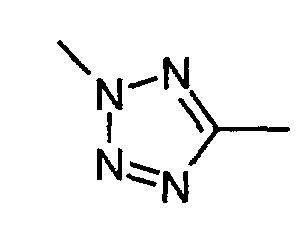 or in case where X is NR11, can R4, R5, R8 and R9 also
independently mean HOOC-, R12OOC-, H2NCO- or HOHNCO- wherein
R12 means alkyl, arylalkyl or aryl,
or in case where X is NR11, can R4, R5, R8 and R9 also
independently mean HOOC-, R12OOC-, H2NCO- or HOHNCO- wherein
R12 means alkyl, arylalkyl or aryl, -
- Furthermore, it was surprisingly found that the phospholamban inhibitors of formula (I) or (II) increased coronary flow in isolated paced guinea-pig heart perfused with constant pressure. The magnitude of the effect on coronary flow markedly exceeded the increasing effects of the compounds on the relaxation and contraction velocities of the left ventricle of the heart indicating that compounds of formula (I) or (II) directly dilate the coronary arteries. The effect of compounds (I) or (II) on coronary flow preceded the other effects confirming that the coronary dilatation was due to the direct effect of the compounds on the coronary arteries. Furthermore, it was found that the vasodilatory effect of the phospholamban inhibitors of (I) or (II) is due to an endothelial-mediated mechanism. Therefore, we propose that phospholamban inhibitors induce vasodilatation and enhance the coronary flow by blocking the inhibitory effect of PLB on SERCA on the endoplasmic reticulum of the endothelial cells of the coronary arteries.
- Having the unexpected ability to directly dilatate the coronary arteries, phospholamban inhibitors, such as compounds (I) or (II), are useful in the treatment of conditions where an increase in the coronary flow is desired, e.g. in coronary heart disease and in hemodynamic crisis in which the low aortic blood pressure decreases coronary perfusion pressure.
-
- FIG. 1 shows CD spectra of 50 µM of PLB[1-36 a.a] (plb), PLB[1-36 a.a.](Ser16PO3-, Thr17PO3-) (plbPP), compound of Example 1c, and of the mixtures PLB[1-36 a.a] + compound of Example 1c and PLB[1-36 a.a.](Ser16PO3-, Thr17PO3-) + compound of Example 1c in water at room temperature.
- FIG. 2A shows the effect of compound of Example 1c (50 and 100 µM) on the Ca2+ uptake rate into the cardiac muscle SR vesicles.
- FIG. 2B shows the effect of compound of Example 1c (50 and 100 µM) on the Ca2+ uptake rate into the fast skeletal muscle SR vesicles.
- FIG 3A shows the increase in coronary flow mediated through the direct dilatating effect of compound of Example 1c on the coronary arteries containing vascular smooth muscle cells and endothelial cells.
- FIG 3B shows the effect of compound of Example 1c on the positive derivative (positive dP/dt max) of the left ventricular pressure.
- FIG 3C shows the effect of compound of Example 1c on the negative derivative (negative dP/dt max) of the left ventricular pressure.
- FIG 4A shows the effect of compound of Example 1c on coronary flow (ml/min) without addition of Triton x 100.
- FIG 4B shows the effect of compound of Example 1c on coronary flow (ml/min) with Triton x 100 used to destroy the endothelial cells of the coronary vessels.
-
- The present invention provides use of a phospholamban inhibitor in the manufacture of a medicament for use in obtaining direct dilatation of the coronary arteries. Furthermore, the invention provides use of a phospholamban inhibitor in the manufacture of a medicament for use in treatment of coronary heart disease. The invention also provides use of a phospholamban inhibitor in the manufacture of a medicament for use in the treatment of hemodynamic crisis in which the low aortic blood pressure decreases coronary perfusion pressure.
- The term "phospholamban inhibitor" means here a compound which relieves the inhibitory effect of phospholamban on SR Ca2+-ATPase by direct binding to the phospholamban protein.
- The inhibitory effect of a given compound on phospholamban can be demonstrated by measuring the effect of the compound on calcium uptake into the SR vesicles prepared from cardiac tissue and into SR vesicles prepared from fast skeletal muscle (psoas m.). Both kind of SR vesicles contain Ca2+-ATPase but the vesicles from the fast skeletal muscle do not contain phospholamban (Hoh JFY, "Muscle fiber types and function", Current Opinion in Rheumatology, 4:801-808, 1992). An increase in the calcium uptake into the SR vesicles prepared from cardiac tissue but not into the SR vesicles prepared from fast skeletal muscle indicates that the compound relieves the inhibitory effect of phospholamban on SR Ca2+-ATPase by direct binding to the phospholamban protein and that the compound is applicable as a phospholamban inhibitor in the method of the invention. The direct binding of a compound to the phospholamban protein can be ascertained by the circular dichroism (CD) spectroscopy. The methods for determining whether a compound relieves the inhibitory effect of phospholamban on SR Ca2+-ATPase by direct binding to the phospholamban protein, i.e. is a phospholamban inhibitor, are illustrated in detail in the experimental section.
- The compounds of formula (I) or (II) can be prepared from the 1,3-dihydroxy substituted heteroaromatics by alkylation of the dihydroxy compounds by suitable alkylating agents, for example by chloroacetonitrile or bromoacetic ester according to the following
Scheme 1, wherein R1, R2, R3, X and Y are the same as defined above, R' is a protecting group for the hydroxyl, e.g. methyl, benzyl or tetrahydropyranyl.
- The cyano compound (IV) described above is used to prepare the 1,2,4-oxadiazole and 1,2,4-thiadiazole derivatives using the methods described in J. Med. Chem. 1996, 39, 5228-5235.
- The syntheses are shown in
Scheme 2, wherein R1, R2, R3, X and Y are the same as defined above.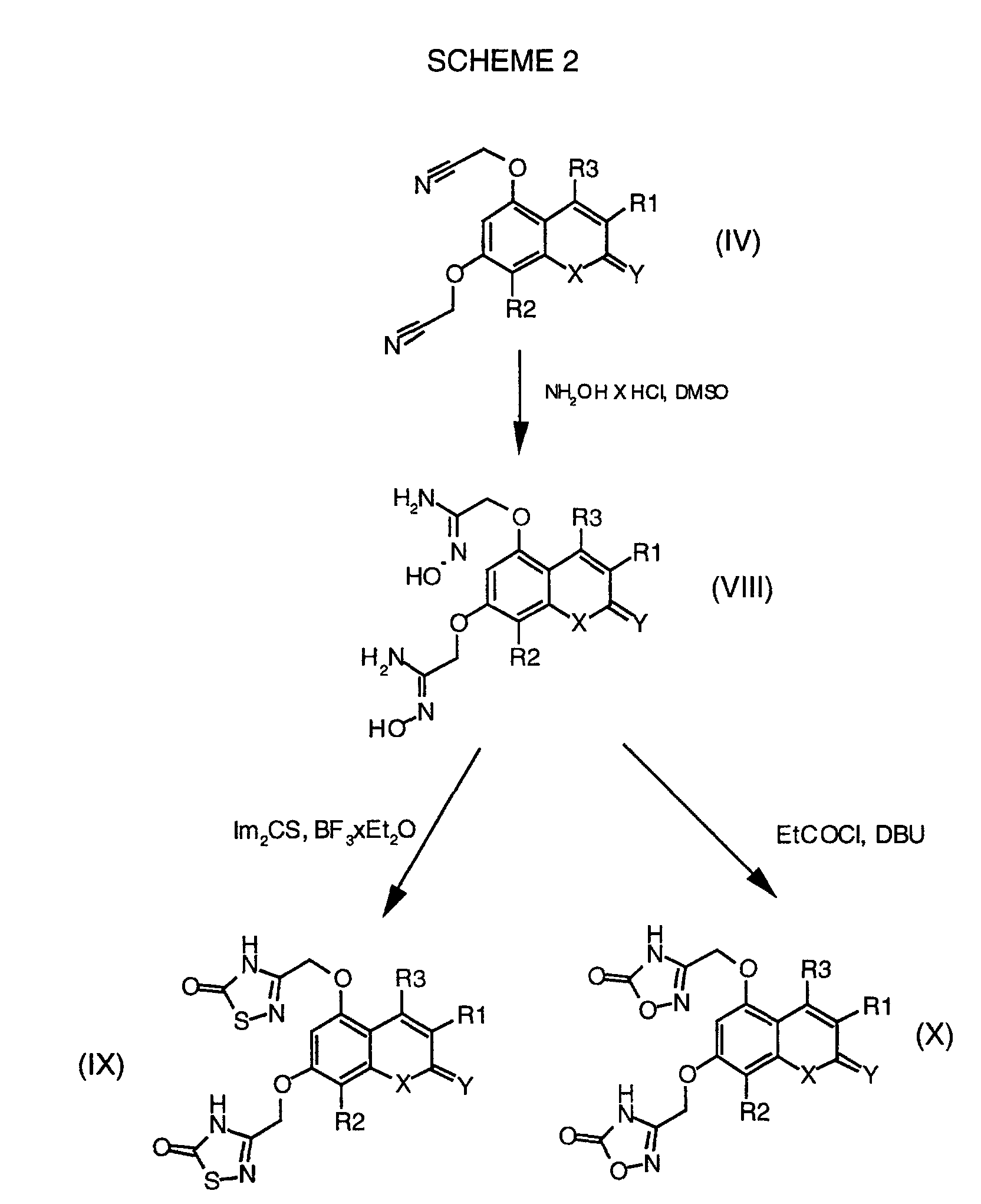
- The other heterocydics as groups R4, R5, R8 and R9 are prepared as described in Bioorg. Med. Chem. Lett., 1994, 4, 45-50.
- The dihydroxyaromatics (III) are made by use of the literature methods. The coumarins (XIV), (XVI) and (XX) are made by the use of the Knoevenagel condensation or von Pechmann reaction as presented in
Scheme  The quinolinones are prepared by the Knorr reaction as described in Scheme 5, wherein R1,R11 and R3 are the same as defined above, X is a halogen.

- The cyclic compounds (II) can be prepared correspondingly from compound (XXXI) which can be prepared according to the Scheme 6, wherein R2 and R6 are the same as defined above, R' is a protecting group for the hydroxyls e.g. methyl, benzyl or tetrahydropyranyl.
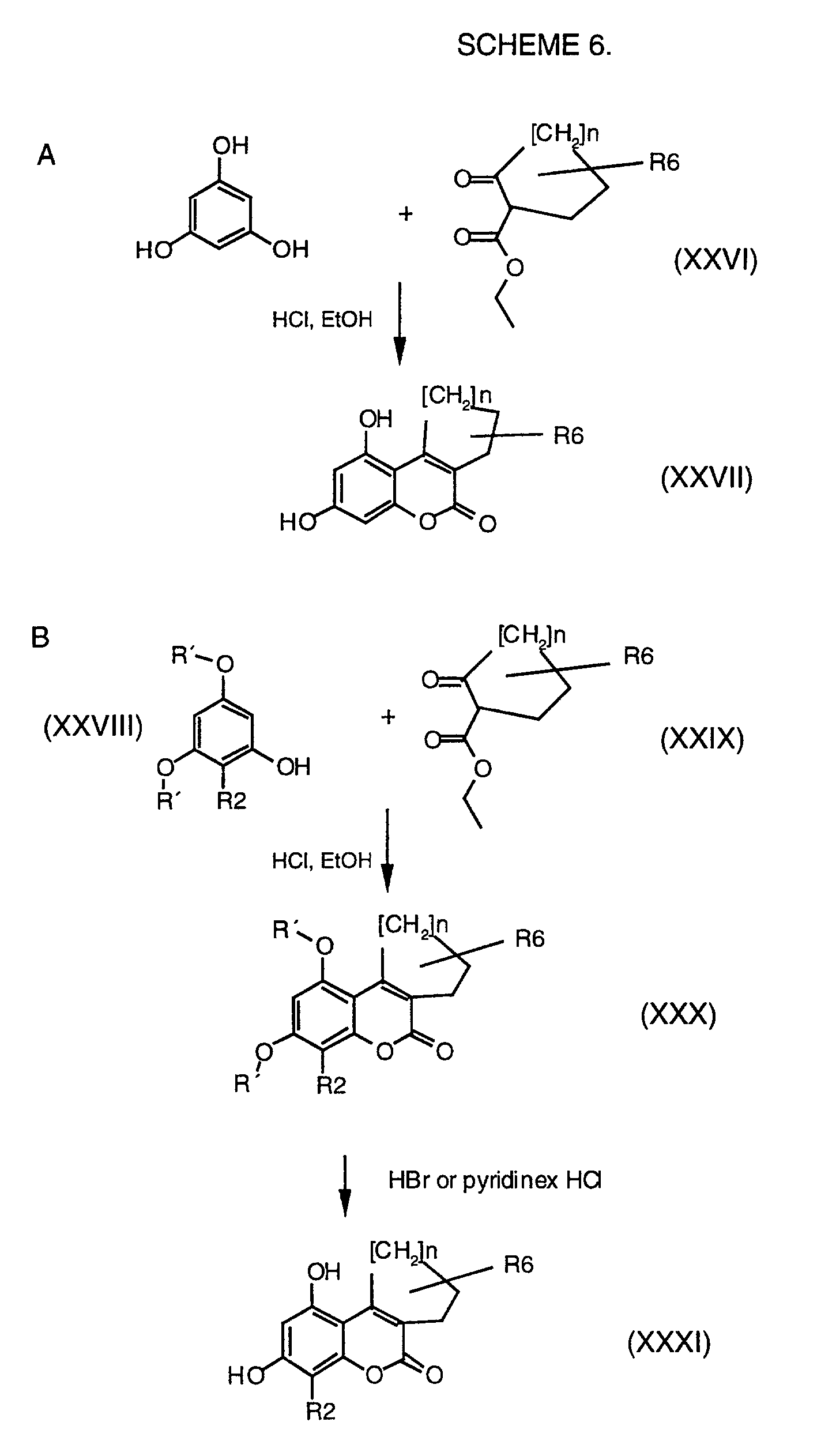
- Cyclic quinolinone compounds (II) can be prepared correspondingly from (XXVI) using Scheme 5.
- Salts and esters of the compounds, when applicable, may be prepared by known methods. Physiologically acceptable salts are useful as active medicaments, however, preferred are the salts with alkali or alkaline earth metals. Physiologically acceptable esters are also useful as active medicaments. Examples are the esters with aliphatic or aromatic alcohols.
- The term "alkyl" as employed herein by itself or as part of another group includes both straight, branched and cyclized chain radicals of up to 18 carbon atoms, preferably 1 to 8 carbon atoms, most preferably 1 to 4 carbon atoms. The term "lower alkyl" as employed herein by itself or as part of another group includes straight, branched and cyclized chain radicals of 1 to 7, preferably 1 to 4, most preferably 1 or 2 carbon atoms. Specific examples for the alkyl and lower alkyl residues, respectively, are methyl, ethyl, propyl, isopropyl, butyl, tert. butyl, pentyl, cyclopentyl, hexyl, cyclohexyl, octyl, decyl and dodecyl including the various branched chain isomers thereof.
- The term "acyl" as employed herein by itself or as part of another group refers to an alkylcarbonyl or alkenylcarbonyl group, the alkyl and alkenyl groups being defined above.
- The term "aryl" as used herein by itself or as part of another group refers to a monocyclic or bicyclic group containing from 6 to 10 carbon atoms in the ring portion. Specific examples for aryl groups are phenyl, naphtyl and the like. "Aroyl" means in a corresponding way an arylcarbonyl group.
- The term "alkoxy" as employed herein by itself or as part of another group includes an alkyl group as defined above linked to an oxygen atom. "Aryloxy" means in a corresponding way an aryl group linked to an oxygen atom.
- The term "substituted" as used herein in connection with various residues refers to halogen substituents, such as fluorine, chlorine, bromine, iodine or trifluoromethyl group, amino, alkyl, alkoxy, aryl, alkyl-aryl, halogen-aryl, cycloalkyl, alkylcycloalkyl, hydroxy, alkylamino, alkanoylamino, arylcarbonylamino, nitro, cyano, thiol, or alkylthio substituents.
- The "substituted" groups may contain 1 to 3, preferably 1 or 2, most preferably 1 of the above mentioned substituents.
- Phospholamban inhibitors such as compounds of formula (I) or (II) may be administered to a patient in therapeutically effective amounts which range usually from about 0.1 to 500 mg, more usually from about 0.5 to 50 mg, per day depending on the age, weight, condition of the patient, administration route and the phospholamban inhibitor used. The term "therapeutically effective amount" means here an amount which produces a direct dilatation of the coronary arteries of a patient. The active compound used in the invention, which can be compound of formula (I) or (II) or any compound possessing phospholamban inhibiting activity as defined above, can be formulated into dosage forms using the principles known in the art. It can be given to a patient as such or in combination with suitable pharmaceutical excipients in the form of tablets, dragees, capsules, suppositories, emulsions, suspensions or solutions. Choosing suitable ingredients for the composition is a routine for those of ordinary skill in the art. It is evident that suitable carriers, solvents, gel forming ingredients, dispersion forming ingredients, antioxidants, colours, sweeteners, wetting compounds and other ingredients normally used in this field of technology may be also used. The compositions containing the active compound can be given enterally or parenterally, the oral route being the preferred way. The contents of the active compound in the composition is from about 0.5 to 100 %, preferably from about 0.5 to about 20 %, per weight of the total composition.
- The effect on phospholamban of the compounds used in the invention was verified by measuring its effects on calcium uptake into the SR vesicles prepared from cardiac tissue and into vesicles prepared from fast skeletal muscle (psoas m.). Both kind of SR vesicles contain Ca2+-ATPase but the vesicles from the fast skeletal muscle do not contain phospholamban (Hoh JFY, "Muscle fiber types and function", Current Opinion in Rheumatology, 4:801-808, 1992). These calcium uptake experiments showed that compound of Example 1 c was active only in vesicles prepared from cardiac tissue suggesting that the effect was based on the relief of phospholamban inhibition. In addition to this, the direct binding of the compound of Example 1 c to phospholamban was demonstrated by using circular dichroism spectroscopy. Furthermore, the expression of phospholamban in porcine coronary arteries was proved by mRNA measurements and by using specific antibodies against phospholamban. Furthermore, the effects of compound of Example 1 c on the coronary flow and on the left ventricular pressure derivatives in isolated paced guinea-pig heart perfused with constant pressure are demonstrated. Finally, the endothelial-mediated mechanism of the vasodilatory effect of the compounds of the invention is demonstrated. The methods are described below in detail.
- Guinea pigs (10-12) were decapited. Their hearts or the psoas muscles were excised, washed in ice-cold 0.9 % NaCl and cut into pieces in a buffer containing 20 mM Tris-maleate, 0.3 M sucrose, pH 7.0. Thereafter tissue pieces were homogenized with Polytron and further with Potter (10 strokes). The homogenate was centrifugated at 1000 g for 15 min at 4 °C. The supernatant was collected and the pellet was resuspended into 5 ml of the buffer (20 mM Tris-maleate, 0.3 M sucrose, pH 7.0) and recentrifugated at 1000 g for 10 min at 4 °C. The obtained supernatant was combined with the earlier collected supernatant and centrifugated once again at 10 000 g for 20 min at 4 °C. The final supernatant was filtered into a bottle equipped with a magnetic stirrer. KCl was added to the filtered supernatant to achieve the final concentration of 0.6 M (at 4 °C). The obtained solution was centrifugated at 100 000 g for 60 min at 4 °C. The pellet was suspended in 5 ml of the buffer containing 20 mM Tris-maleate, 0.3 M sucrose, pH 7.0 and centrifugated at 100 000 g for 60 min at 4 °C. The obtained pellet was suspended in 5 ml of buffer containing 20 mM Tris-maleate, 0.3 M sucrose, 0.1 M KCI, pH 7.0 and stored at -80 °C until use. The protein concentration was also measured in order to standardise the separately prepared vesicle preparations.
- In the calcium uptake assay, the fluorescent indicator, fluo-3 was used to detect the decrease of the extravesicular Ca2+-concentration, when the SR Ca2+ATPase was transferring Ca2+ from the extravesicular space into the SR-vesicles.
- The SR-vesicles obtained above (50 µg protein/ml) were preincubated with or without the test compound at 37 °C for 5 min in the assay buffer containing 40 mM imidazole, 95 mM KCI, 5 mM NaN3, 5 mM MgCl2, 0.5 mM EGTA, 5 mM potassium oxalate, 2 µM ruthenium red, 5 µM fluo-3, pH 7.0. The free calcium was adjusted to 0.1 µM or to 0.04 µM by CaCl2. The reaction was initiated by adding ATP (5 mM). The final reaction volume was 1.5 ml. The fluorescence of reaction mixture was measured for 3 min by using the excitation and emission wavelengths of 510 nm and 530 nm, respectively.
- Figures 2A and 2B show the effect of compound of Example 1c (50 and 100 µM) on the Ca2+ uptake rate into the cardiac (A) and fast skeletal muscle (B) SR vesicles. Given are means ± SEM from three experiments per group. It can be seen that compound of Example 1 c accelerated the calcium uptake into the cardiac SR vesicles but did not change the calcium uptake into the SR vesicle prepared from the fast skeletal muscle.
- Table 1 shows the effects of various other phospholamban inhibitors of formula (I) or (II) on the Ca2+ uptake rate into the cardiac (A) and fast skeletal muscle (B) SR vesicles. The experiments were carried out at 0.1 µM and 0.04 µM free calcium concentrations, respectively.
Stimulation (%) of the Ca2+ uptake into the vesicle preparations obtained from the ventricular myocardium (A) and fast skeletal muscle (B) of the guinea-pig heart. Compound of Example No. The stimulation (%) of Ca2+ uptake A B 3c 51 0 2c 26 -1 7c 5 -17 8g 18 0 11b 28 nd 12 32 nd 13d 23 nd 14c 18 nd 18e 13 nd 21 11 nd 23 20 nd nd=not determined -
Experiment 2. Binding of compound of Example 1c to the cytosolic part of phospholamban demonstrated by circular dichroism (CD) spectroscopy - Both the 36 amino acid N-terminal fragment of human phospholamban (PLB [1-36 a.a.]) and the 36 amino acid N-terminal fragment of double phosphorylated human phospholamban (PLB [1-36 a.a.](Ser16PO3-, Thr17PO3-)) were obtained by peptide synthesis. The peptides were purified by reverse phase HPLC, analysed for homogenity by mass spectrometry and were found pure at 97 %. The peptides were lyophilized and then resuspended in water at the final concentration of 0.1 mM, for CD analysis. The pH of both solutions was between 3 and 4 and was not further adjusted. Compound of Example 1c was solved in water at a final concentration of 0.1 mM. The pH was adjusted at 7.2 by adding 1 N NaOH.
- Circular dichroism spectra were acquired at 24 °C on samples of 100 µl. The spectra were recorded on a Jasco J-720 spectropolarimeter using a 1 mm path-length quartz cuvette. The band width was 1 nm, the
sensitivity 20 mdeg, the step resolution 0.5 nm, the response time 0.5 sec, and thescan speed 20 nm/min (from 250 to 190 nm). The spectra were expressed in [] x 10-3 x degrees x cm2 x dmol-1. - The CD spectra of PLB[1-36 a.a] and of the mixtures PLB[1-36 a.a] + compound of Example 1c show that a dramatic change in the average structure of the peptide takes place after addition of compound of Example 1c. A marked increase of α-helical contribution can be seen (Fig.1). Such a behaviour was shown for many Calmodulin-binding peptides, which form helices in the bound state. CD studies showed that when such peptides bind Calmodulin, there is an increase in helicity of the complex over the sum of the two individual non interacting components (for a review, see: O'Neil, K.T. and DeGrado, W.F. "How calmodulin binds its targets: sequence independent recognition of amphiphilic α-helices", TIBS 15:59-64, 1990). Moreover, it was previously demonstrated by NMR that the N-terminal fragment of PLB [aa.1-25] interacts directly with Calmodulin (Gao, Y. et al. "Interaction of calmodulin with phospholamban and caldesmon: comparative studies by 1H-NMR spectroscopy", Biochim. Biophys. Acta 1160: 22-34, 1992). The present experiment thus verifies that compound of Example 1 c forms a complex with PLB at his N-terminal domain.
- Compound of Example 1c, added to PLB[1-36 a.a.](Ser16PO3-, Thr17PO3-), is not influencing the structure of the phosphorylated peptide as much as for the unphosphorylated. The CD measurements show that compound of Example 1 c interacts with the cytosolic part of phospholamban PLB[1-36 a.a.], and does not interact or interacts weakly with the phosphorylated phospholamban (PLB[1-36 a.a.](Ser16PO3-, Thr17PO3-)). Thus, the interaction is specific for the unphosphorylated phospholamban.
- Tissue samples of the left ventricular myocardium of the heart, aorta, the proximal coronary artery (the first 2 cm of the coronary artery starting from the aorta) as well as of the more distal coronary artery (the next 2 cm) obtained and pooled from three pigs were powdered under liquid nitrogen and the powders suspended in homogenization buffer (50 mM K+-phosphate- buffer pH 7.0, 10 mM NaF, 1 mM EDTA, 0.3 mM PMSF, 0.5 mM DTT, 0.3 M sucrose). Each tissue sample was homogenized at (1100 rpm) with a Potter-Elvehjelm homogenizer at +4°
C 20 times. The protein concentration was measured according to Bradford, M., (1976), Anal. Biochem., 72, 248-254. To determine the Ca2+-ATPase and phospholamban (PLB)proteins 30 µg of total protein of each tissue sample was analyzed by SDS-PAGE (13%) according to Laemmli, U., (1970), Nature, 227, 680-685. Proteins were detected by Western blotting (Towbin, H. et al., (1979), Proc. Natl. Acad. Sci., USA, 76, 4350-4354), onto a 0.45 µm nitrocellulose membrane (Bio-Rad Laboratories). The membranes for detection of Ca2+-ATPase protein were incubated with anti-SR Ca2+ ATPase polyclonal antibody (1:500) followed by anti-rabbit IgG-POD secondary antibody. Alternatively anti-SR Ca2+ATPase monoclonal antibody (1:1000; Affinity Bioreagents) followed by anti-mouse IgG-POD was used for detection of the Ca2+-ATPase. - The membranes for detection of PLB protein were incubated with anti-PLB monoclonal antibody (Upstate Biotechnology, Inc.) at a dilution of 1:1000, the membranes were further washed and incubated with anti-mouse IgG-POD. The membranes were developed by ECL immuno-detection (Amersham Life Science) followed by TMB stablilized substrate for HPR (Promega Corp.).
- According to the Western blots the Ca2+ATPase is detected in all tissue samples. Western blots also revealed that PLB is found in the left ventricular myocardium and in the distal coronary artery. Based on our Western blots no PLB could be detected from tissue samples derived from the aorta and the proximal part of the coronary artery.
- To answer the question if the smooth muscle or endothelial cells of porcine coronary artery contained phospholamban (PLB) mRNA, Northern analysis was carried out of samples from three hearts pooled with respect to the presence of PLB mRNA using methods well known in the art. A small-scale RNA purification was carried out from tissue of the porcine left ventricular myocardium, aorta and coronary artery (proximal and more distal regions) by powdering 200 - 800 mg of the tissue under liquid nitrogen in a mortar. The powder was suspended into denaturing solution (4 M guanidinium thiocyanate, 25 mM sodium citrate, pH 7, 0.5 % N-lauroylsarcosine, 0.1 M 2-mercaptoethanol). After acidic phenol/chloroform extraction total RNA was precipitated twice with isopropanol and finally dissolved in water. The concentration of RNAs in the resulting preparations was determined spectrofotometrically and their integrity was analyzed in non-denaturing agarose gel stained by ethidiumbromide.
- The Northern analysis of PLB mRNA in these preparations was carried out using conventional methods (Sambrook, J., Fritsch, E.F., Maniatis, T. (1989), Molecular Cloning: A laboratory Manual, 2. ed., Cold Spring Harbor Laboratory Press, Cold Spring Harbor, NY). Briefly, 10 µg and 20 µg of total RNA from each tissue was loaded into 1 % formaldehyde/agarose gel. As a
control 10 µg of RNA preparation derived from human heart muscle tissue was used, and commercially available RNA ladders (BRL, Gaithersburg, MD) were used to assess the molecular weights of RNAs. After the transfer of the separated RNAs onto nylon filter (Hybond-N, Amersham, UK), the filter was hybridized with the 32P-labeled coding region of the human PLB gene. After hybridization the filter was washed in stringent conditions well-known to those skilled in the art, and exposed to Kodak X-Omat film. - The results show that the left ventricular tissue of the porcine heart contains RNA which reacts with the PLB hybridization probe. A signal at the same position was also detected, albeit at much lower intensity, in the samples from porcine aorta and coronary artery tissues. Thus, these results support the view that PLB gene is active in porcine coronary artery tissue.
- Guinea-pigs of either sex weighing 300-400 g were used in the study. After the guinea-pig was sacrificed by a blow on the skull and decapitated the heart was rapidly excised. The heart was then rinsed in cold oxygenated perfusion buffer. A cannula was inserted into the aorta and secured with a ligature. Retrograde perfusion began as soon as the heart was placed in a thermostatically controlled moist chamber of the Langendorff apparatus. Modified Tyrode solution (37 °C), equilibrated in a thermostatically controlled bulb oxygenator with carbogen (95 % O2 and 5% CO2) was used as a perfusion buffer. The composition of the Tyrode solution was (in mM):
NaCl 135; MgCl2 x 6H2O 1; KCl 5; CaCl2 x 2H2O 2;NaHCO 3 15; Na2HPO4 x 2H2O 1;glucose 10; pH 7.3-7.4. The experiments were carried out under constant pressure condition (50 mmHg). After a short prestabilization (10 min) a latex balloon (size 4) was carefully placed into the left ventricle through the left pulmonary vein and the left atrium. The latex balloon was attached to a stainless-steel cannula coupled with a pressure transducer. The latex balloon, the cannula and the chamber of the pressure transducer were filled with ethylene glycol / water (1:1) mixture avoiding any air-bubble. The isovolumetric left ventricular pressure was recorded through the pressure transducer. The maximal positive and negative derivatives of the left ventricular pressure were calculated by using the digitized pressure signals. At the beginning of the experiment, the volume of the balloon was adjusted to obtain a diastolic pressure of approximately 5 mmHg. Coronary flow (ml/min) was continuously recorded by an electromagnetic flow meter with a flow probe inserted above the aortic cannula. The heart was paced at 250 beats/min with a coaxial electrode localized on the surface of the right atrium. Before starting the experiment, the heart was allowed to stabilise further for 30 - 50 min with vehicle (0.1% DMSO) to reach a stable coronary flow. - After 15 min baseline recording various concentrations of the test compound of Example 1c were added to the perfusion buffer at 15 min intervals. The concentration range of 0.3 - 30 µM was tested. The vehicle concentration (0.1% DMSO) was kept constant throughout the experiment.
- Figure 3A shows the increase in coronary flow mediated through the direct dilatating effect of compound of Example 1c on the coronary arteries containing vascular smooth muscle cells and endothelial cells. Figures 3B and 3C show the effect of compound of Example 1c on the positive and negative derivatives (positive and negative dP/dt max) of the left ventricular pressure. Given are means ± SEM from six hearts paced at 250 beats/min.
- It follows from the above experiments that the increase in coronary flow is mediated through the direct dilatating effect on the coronary arteries and that the dilatating effect is due to the inhibition of phospholamban present in the coronary arteries. Therefore the results suggest a potential use of phospholamban inhibitors in the treatment of patients who suffer from decreased coronary flow.
- Table 2 shows EC50-values and maximum effects of various other phospholamban inhibitors of formula (I) or (II) on the coronary flow.
EC50-values and maximum effects (% change from baseline) on the coronary flow. Compound of Example No. EC50 (µM) Maximum effect 3c 5 +174% at 30 µM 5c >10 +52% at 30 µM 14c 1.5 +112% at 10 µM 8g 1 +100% at 10 µM 12 5 +60% at 10 µM 11b 1 +38% at 3 µM 18e 5 +69% at 30 µM 13d 6 +104% at 30 µM 21 2 +141% at 10 µM 23 0.9 +55% at 3 µM - This experiment demonstrate that the vasodilatory effect of the phospholamban inhibitor of Example 1 c is due to an endothelial-mediated mechanism. Substance P, an endothelial-dependent vasodilator, was used as a reference compound.
Triton x 100 was used to destroy the endothelial cells of the coronary vessels. - The experiment was carried out under constant pressure condition (50 mmHg) on freely beating heart. Coronary flow (ml / min) was continuously recorded by an electromagnetic flow meter with a flow probe inserted above the aortic cannula.
- After 15 min baseline recording a bolus dose of substance P (0.1 µM / 0.3 ml) was added to the perfusion buffer via a side branch of the aortic cannula (Figure 4B). The addition of substance P was repeated twice before the injection of triton x 100 (0.05% / 0.2 ml) was given via a needle inserted into the cannula just above the aorta. After 85 min of triton x 100 injection a control dose of substance P was added twice to the perfusion buffer in order to check if the endothelial cells has destroyed. Thereafter the concentration range of 0.3 - 30 µM of the compound of Example 1c was tested. The vehicle concentration (0.1% DMSO) was kept constant throughout the experiment. A control experiment is shown in Figure 4A where the effect of Example 1 c is seen at the same concentration range when the endothelin is not disrupted by Triton x 100.
- The following non-limiting examples illustrates the preparation of phospholamban inhibitors.
-
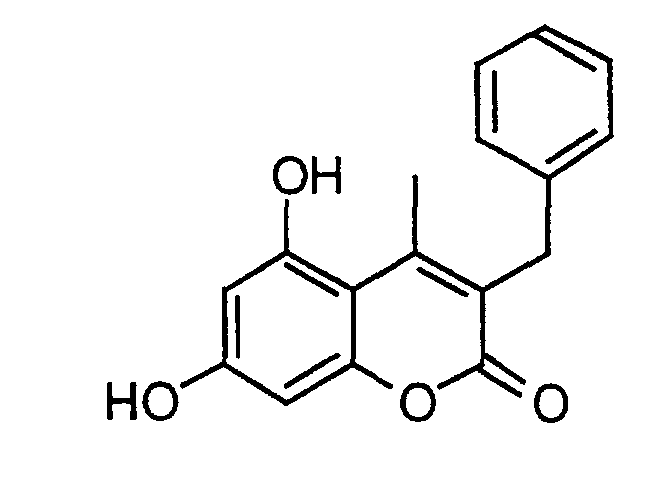
- A solution of phloroglucinol dihydrate (20 g) and ethyl 2-benzylaceto-acetate (27.5 ml) in ethanol (320 ml) was treated with dry HCl at 0°C for five hours and the solution was kept at that temperature overnight. The yellow solution was concentrated and triturated with water, the solids filtered, washed with water and dried. The resulting hydrate was thrice evaporated to dryness from toluene, triturated with pethroleum ether (bp. 40-60°C) and filtered. Yield 33,4 g (96 %). Melting point 258-260 °C.
- 1H-NMR (DMSO-d6, 400MHz): 2.525 (s, 3H, CH3), 3.887 (s, 2 H, CH2Ph), 6.171 (d, 1H, J = 2,4 Hz), 6.274 (d, 1H, J = 2,4 Hz), 7.167-7.279 (m, 5H, Ph), 10.2 (s, 1H, OH), 10.47 (s, 1H, OH).
-
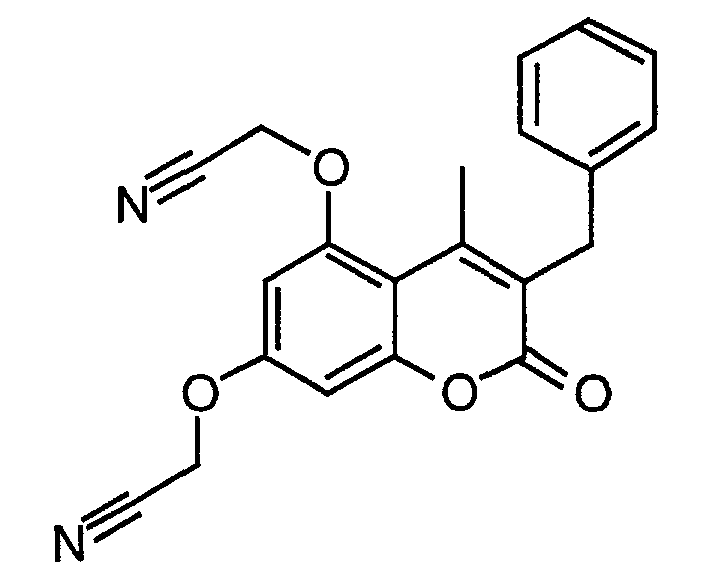
- Chloracetonitrile (6.86 g), potassium carbonate (23.9 g) and 12.2 g of the product from example 1 a were stirred in 120 ml of DMF at 100°C under nitrogen for two hours. The reaction mixture was cooled and poured into ice water. The solids were filtered and washed with water. Yield 13.8 g (88 %). Melting point 147-154°C.
- 1H-NMR (DMSO-d6, 400MHz): 2.525 (s, 3H, CH3), 3.969 (s, 2H, CH2Ph), 5.307 (s, 2H, OCH2CN), 5.314 (s, 2H, OCH2CN), 6.814 (d, 1 H, J = 2.5 Hz), 6.940 (d, 1H, J = 2.5 Hz), 7.18-7.292 (m, 5H, Ph).
-
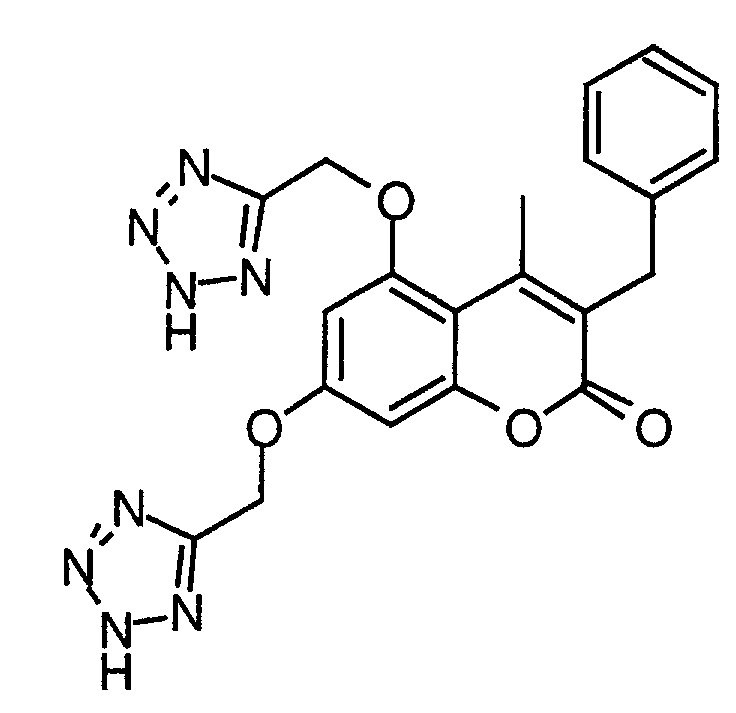
- The product from example 1b (1 g), sodium azide (0.42 g) and ammonium chloride (0.34 g) were stirred in DMF (5 ml) under nitrogen at 100 °C for 5 hours. The reaction mixture was allowed to cool down and then poured into ice water. The pH of the solution was adjusted to 10-11 and then the solution either extracted once with ethyl acetate or filtered through CELITE. The solution was acidified to
pH 2 with hydrochloric acid, kept at 5°C and filtered. Yield 0.96 g (81 %). Melting point 229-233°C. - 1H-NMR (DMSO-d6, 400MHz): 2.468 (s, 3H, CH3), 3.937 (s, 2H, CH2Ph), 5.596 (s, 2H, OCH2Tet), 5.602 (s, 2H, OCH2Tet), 6.832 (d, 1H, J = 2.4 Hz), 6.851 (d, 1H, J = 2.4 Hz), 7.171-7.283 (m, 5H, Ph).
-
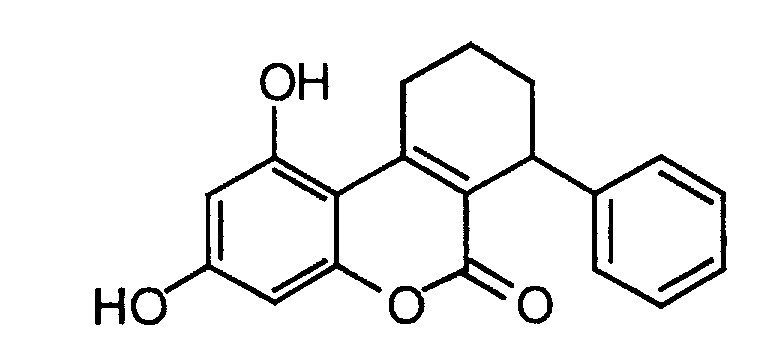
- A solution of phloroglucinol (0.7 g) and 2-ethoxycarbonyl-3-phenyl-cyclohexanone (1,5 g) in ethanol was treated with dry HClas described in example 1a. The product was first recrystallized from ethanol-water (1:1) and then triturated with ether. Yield 0.61 g.
- 1H-NMR (DMSO-d6, 400MHz): 1.38-1.52 (m, 1H), 1.57-1.66 (m, 1H), 1.69-1.78 (m, 1H), 1.86-1.96 (m, 1H), 2.9-3.02 (m, 1H), 3.3-3.4 (m,1H), 4.050 (b, 1H), 6.157 (d, 1H, J = 2.4 Hz), 6.297 (d, 1H, J = 2.4 Hz), 7.076-7.265 (m, 5H), 10.153 (s, 1 H), 10.456 (s, 1 H).
-

- The product from example 2a (0.5 g) was treated with chloroacetonitrile (0.25 g) and potassium carbonate (1.12g) in DMF (5 ml) as described in example 1b. Yield 0.6 g.
- 1H-NMR (DMSO-d6, 400MHz): 1.38-1.58 (m, 1H), 1.6-1.7 (m, 1H), 1.7-1.76 (m, 1H), 1.89-1.99 (m, 1H), 2.9-3.03 (m,1H), 3.2-3.28 (m 1H), 4.111 (b, 1H), 5.314 (s, 2H), 5.349 (s, 2H), 6.840 (d, 1H, J = 2.5 Hz), 6.925 (d, 1H, J = 2.5 Hz), 7.108-7.274 (m, 5H).
-
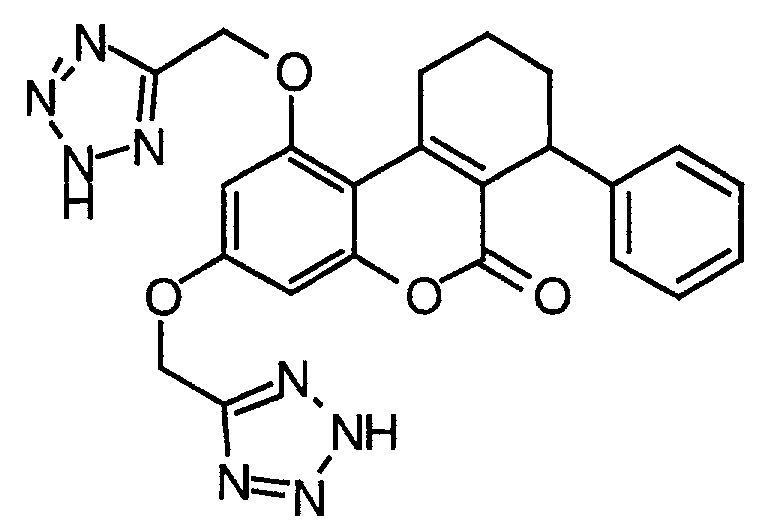
- The product from example 2b (0.6 g) was treated with sodium azide (0.2 g) and ammonium chloride (0.17 g) in DMF (5 ml) as in example 1c. The product was recrystallized from a mixture of DMF, ethanol and water (approximately 1:2:3). Yield 0.41 g. Melting point: 153-154°C.
- 1H-NMR (DMSO-d6, 400MHz): 1.38-1.5 (m, 1H), 1.5-1.6 (m, 1H), 1.69-1.76 (m, 1H), 1.87-1.96 (m, 1H), 2.9-3.05 (m, 1H), 3.2-3.3 (m, 1H), 4.094 (b, 1H), 5.602 (s, 2H), 5.643 (s, 2H), 6.832 (d, 1H, J = 2.3 Hz), 6.851 (d, 1H, J = 2.3.Hz), 7.089-7.212 (m, 5H).
-

- Triethylamine (1.94 ml) was added to a suspension of hydroxylamine hydrochloride (0.97 g) in DMSO (2 ml) and the resulting mixture stirred at room temperature for thirty minutes. The crystals were filtered and washed with THF. The filtrate was concentrated and the product from example 1b (0.5 g) added. This solution was kept at 75 °C overnight. The reaction mixture was treated with ice water, the pH adjusted to 11 and the solids filtered, washed with water, and dried. Yield 0.5 g. Melting point: 155-160°C.
- 1H-NMR (DMSO-d6, 400MHz): 2.56 (s, 3H, CH3), 3.938 (s, 2H), 4.466 (s, 2H), 4.486 (s, 2H), 5.565 (s, H, NH2), 5.709 (s, 2H, NH2), 6.658 (d, 1H, J = 2.4 Hz), 6.692 (d, 1H, J = 2.4 Hz), 7.168-7.284 (m, 5H, Ph), 9.346 (s, 1H, OH), 9.362 (s, 1H, OH).
-

- Ethyl chloroformiate (0.45 ml) was added to a solution of the product from example 3a (1 g) and pyridin (0.38 ml) in DMF (5 ml) at 0°C. The reaction mixture was kept at that temperature for an additional 30 minutes and then ice water added. The solids were filtered and washed with water. Yield 1.63 g. Melting point 87-92°C.
- 1H-NMR (DMSO-d6, 400MHz): 1.215-1.256 (m, 6H), 2.553 (s, 3H), 3.947 (s, 2H), 4.140-4.198 (m, 4H), 4.566 (s, 2H), 4.599 (s, 2H), 6.688 (d, 1H, J = 2.4 Hz), 6.718 (d, 1H, J = 2.4 Hz), 6.792 (b, 2H, NH2), 6.818 (b, 2H, NH2), 7.171-7.285 (m, 5H).
-
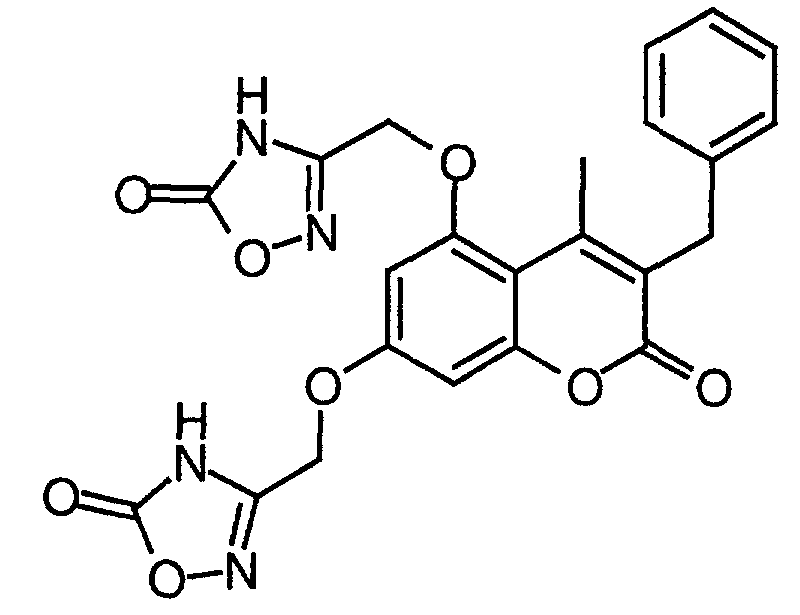
- The product from the previous example (1.5 g) and DBU (0.8 ml) in DMF (5 ml) was stirred at room temperature overnight. The reaction mixture was treated with ice water and acidified. The solids were filtered and washed with water. The resulting solid mass was taken in 0.1 N sodium hydroxide solution, treated with activated carbon and finally acidified. Yield 0.64 g. Melting point: 130-136°C.
- 1H-NMR (DMSO-d6, 400MHz): 2.524 (s, 3H), 3.954 (s, 2H), 5.187 (s, 2H), 5.215 (s, 2H), 6.748 (d, 1H, J = 2.4 Hz), 6.834 (d, 1H, J = 2.4 Hz), 7.158-7.289 (m, 5H), 12.8 (b, 2H).
-

- Phloroglucinol (1 g) and ethyl 2-oxocyclohexane carboxylate (1.32 g) were stirred in 75 % sulfuric acid (10 ml) overnight, the mixture poured into ice water and filtered. Yield: 1.55 g.
- 1H-NMR (DMSO-d6, 400MHz): 1.65 (b, 4H), 2.345 (b, 2H), 3.037 (b, 2H), 6.138 (d, 1H, J = 2.4 Hz), 6.245 (d, 1H, J = 2.4 Hz), 10.069 (b, 1H, OH), 10.322 (s, 1H, OH).
-
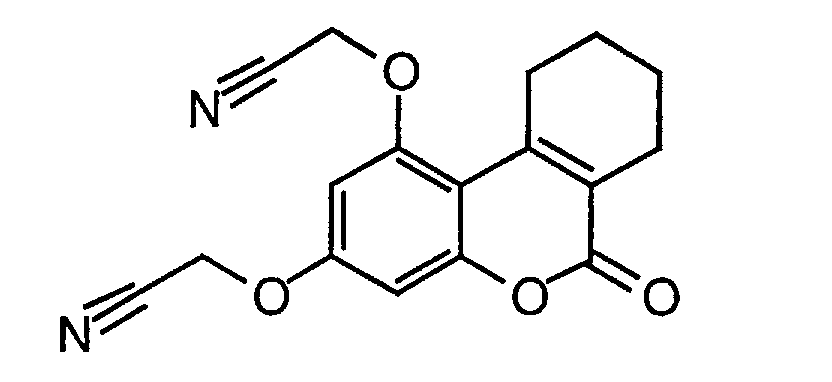
- The product from the previous example (0.5 g), chloroacetonitrile (0.34 g) and potassium carbonate (1.5 g) in DMF (5 ml) were reacted as in example 1 b. Yield: 0.44 g.
- 1H-NMR (DMSO-d6, 400MHz): 1.68 (b, 4H), 2.41 (b, 2H), 3.00 (b, 2H), 5.297 (s, 2H), 5.309 (s, 2H), 6.797 (d, 1H, J = 2.4 Hz), 6.899 (d, 1H, J = 2.4 Hz).
-
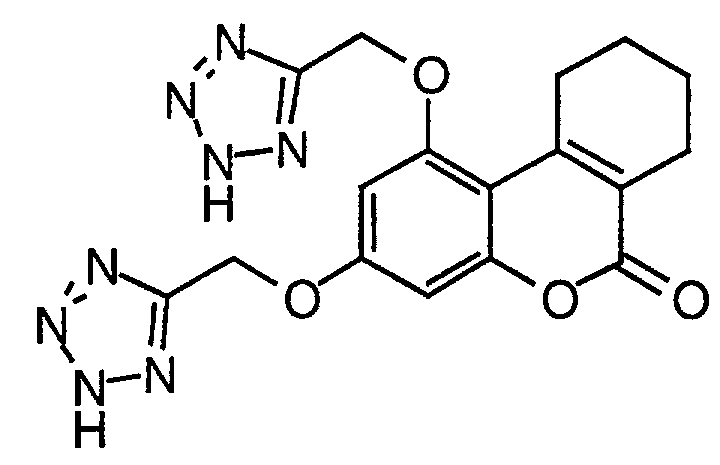
- The product from the previous example (0.4 g) was treated with sodium azide (0.18 g) and ammonium chloride (0.14 g) in DMF (2.5 ml) as in example 1c. The product was recrystallized from ethanol-DMF (1:1). Yield 0.17 g. Melting point 283-286°C.
- 1H-NMR (DMSO-d6, 400MHz): 1.626 (b, 4H), 2.393 (b, 2H), 2.971 (b, 2H), 5.583 (s, 2H), 5.599 (s, 2H), 6.811 (s, 2H).
-

- A solution of phloroglucinol (2.00 g) and ethyl benzoylacetate (3.05 g) in ethanol (30 ml) was treated with dry HCl as described in example 1a. The product was recrystallized from ethanol-water (1:1). Yield 3.0 g (75 %).
- 1H-NMR (DMSO-d6, 300 MHz): 5.739 (s, 1H, CH=C), 6.155 (d, 1H, J = 2.3 Hz), 6.263 (d, 1H, J = 2.3 Hz), 7.305-7.381 (m, 5H, Ph), 10.084 (s, 1H, OH), 10.368 (s, 1H, OH).
- The product from previous example (1.00 g) was treated with chloroacetonitrile (0.62 g) and potassium carbonate (2.72 g) in DMF (5 ml) as described in example 1b. The reaction mixture was poured into ice water and the mixture extracted with ethyl acetate. Ethyl acetate was washed with 1 M NaOH, dried with sodium sulfate and evaporated. The product was recrystallized from isopropanol. Yield 0.41 g (31 %).
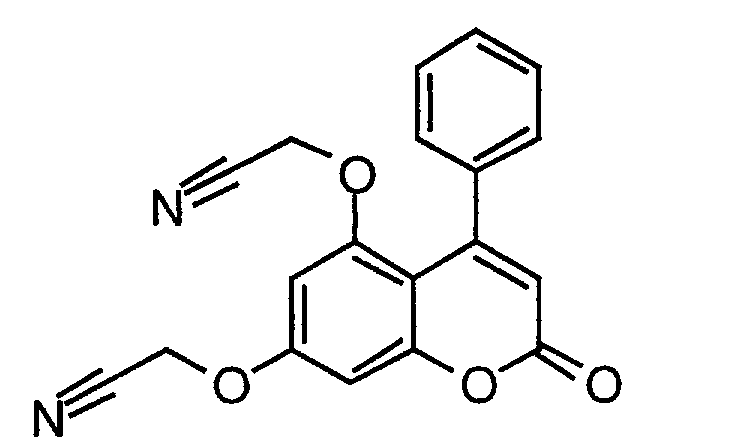
- 1H-NMR (DMSO-d6, 300 MHz): 4.845 (s, 2H, OCH2CN), 5.344 (s, 2H, OCH2CN), 6.086 (s, 1H, CH=C), 6.770 (d, 1H, J = 2.4 Hz), 7.040 (d, 1H, J = 2.4 Hz), 7.320-7.443 (m, 5H, Ph).
-
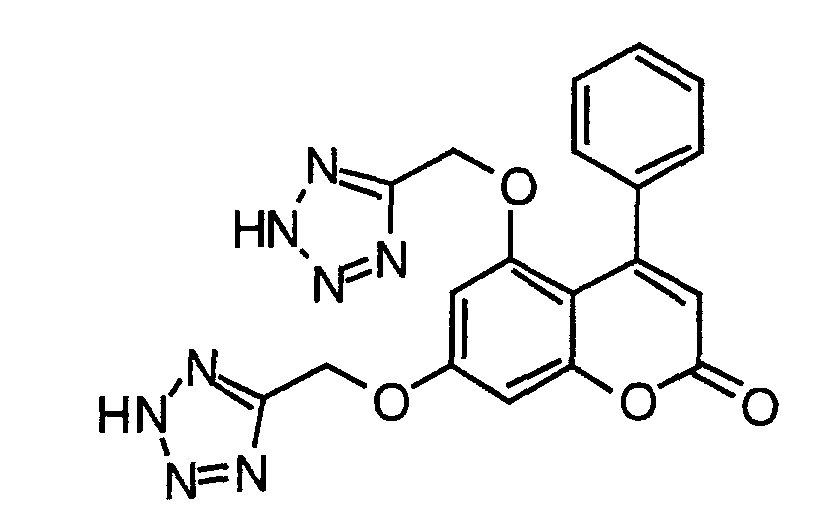
- The product from previous example (0.40g) was treated with sodium azide (0.16 g) and ammonium chloride (0.14 g) in DMF (2 ml) at 100 °C for 2 hours. The product was isolated as described in example 1c. Yield: 0.40 g (79 %). Melting point 222-224 °C.
- 1H-NMR (DMSO-d6, 400 MHz): 5.148 (s, 2H, OCH2Tet), 5.649 (s, 2H, OCH2Tet), 5.968 (s, 1H, CH=C), 6.811 (d, 1H, J = 2.3 Hz), 6.962 (d, 1H, J = 2.3 Hz), 6.994-7.185 (m, 5H, Ph).
-

- A solution of phloroglucinol (1.56 g) and ethyl 2-oxo-5-phenylcyclohexane-carboxylate (2.52 g) in ethanol (25 ml) was treated with dry HCl as described in example 1a. The precipitate was filtered and washed with water and EtOH. Yield 1.0 g (32 %).
- 1H-NMR (DMSO-d6, 400 MHz): 1.72-1.82 (m, 1H), 2.01 (b, 1H), 2.317-2.387 (m, 1H), 2,707-2,763 (m, 1H), 2,830 (b, 1H), 3,041 (b, 1H), 3.35 and 3.40 (b, 1H), 6.174 (d, 1H, J = 2.3 Hz), 6.277 (d, 1H, J = 2.3 Hz), 7.200-7.350 (m, 5H, Ph), 10.131 (s, 1H, OH), 10.401 (s, 1H, OH).
-

- The product from previous example (1.0 g) was treated with chloroacetonitrile (0.57 g) and potassium carbonate (1.0 g) in DMF (5 ml) as described in example 1b. DMF was evaporated and residue dissolved in EtOAc. Ethyl acetate was washed with 1 M NaOH, dried with sodium sulfate and evaporated. The product was recrystallized from acetone-isopropanol (1:3). Yield 0.50 g (40 %).
- 1H-NMR (DMSO-d6, 300 MHz): 1.75-1.88 (m, 1H), 2.05 (b, 1H), 2.38-2.48 (m, 1H), 2.77-2.85 (m, 1H), 2.90 (b, 1H), 3.07 (b, 1H), 3.22 and 3.28 (b, 1H), 5.316 (s, 2H, OCH2CN), 5.331 (s, 2H, OCH2CN), 6.829 (d, 1H, J = 2.5 Hz), 6.939 (d, 1H, J = 2.5 Hz), 7.210-7.380 (m, 5H, Ph).
-

- The product from previous example (0.30 g) was treated with sodium azide (0.10 g) and ammonium chloride (0.09 g) in DMF (2 ml) at 100 °C for 3.5 hours. The product was isolated in the same manner as in example 1c. Yield 0.30 g (82 %). Melting point 235-245 °C.
- 1H-NMR (DMSO-d6, 400 MHz): 1.70-1.80 (m, 1H), 1.96 (b, 1H), 2.38-2.446 (m, 1H), 2.836 (m, 2H), 3.052 (b, 1H), 3.252 and 3.301 (b, 1H), 5.604 (s, 2H, OCH2CN), 5.632 (s, 2H, OCH2CN), 6.827 (d, 1H, J = 2.5 Hz), 6.858 (d, 1H, J = 2.5 Hz), 7.209-7.351 (m, 5H, Ph).
-

- A solution of phloroglucinol (0.87 g) and ethyl 2-(2-phenylethyl)-acetoacetate (1.62 g) in ethanol (30 ml) was treated with dry HCl as described in example 1a. Yield: 1.77 g (87 %). Melting point 248-252 °C.
- 1H-NMR (DMSO-d6, 300 MHz): 2.413 (s, 3H, CH3), 2.652-2.782 (m, 4H, CH2CH2), 6.151 (d, 1H, J = 2.4 Hz), 6.256 (d, 1H, J = 2.4 Hz), 7.183-7.304 (m, 5H, Ph), 10.137 (s, 1H, OH), 10.369 (s, 1H, OH).
-
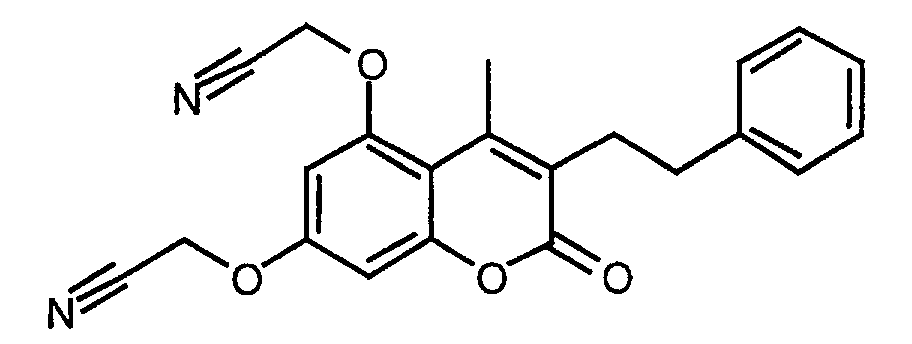
- The product from previous example (0.90 g) was treated with chloroacetonitrile (0.48 g) and potassium carbonate (2.1 g) in DMF (5 ml) at 100 °C for 0.5 hours. The product was isolated as described in example 1b. Yield 1.00 g (88 %). Melting point 179-183 °C.
- 1H-NMR (DMSO-d6, 300 MHz): 2,384 (s, 3H, CH3), 2.699-2,754 (m, 2H, CH2CH2), 2.805-2.841 (m, 2H, CH2CH2), 5,302 (s, 4H, OCH2CN), 6,790 (d, 1H, J = 2.5 Hz), 6.909 (d, 1H, J = 2.5 Hz), 7.190-7.307 (m, 5H, Ph).
-

- The product from previous example (0.40g) was treated with sodium azide (0.15 g) and ammonium chloride (0.12 g) in DMF (2 ml) at 100 °C for 2.5 hours. The product was isolated as described in example 1 c. Yield 0.385 g (78 %). Melting point 248-250 °C.
- 1H-NMR (DMSO-d6, 400 MHz): 2.368 (s, 3H, CH3), 2.668-2.707 (m, 2H, CH2CH2), 2.783-2.822 (m, 2H, CH2CH2), 5.593 (s, 2H, OCH2Tet), 5.604 (s, 2H, OCH2Tet), 6.819 (d, 1H, J = 2.3 Hz), 6.834 (d, 1H, J = 2.3 Hz), 7.161-7.291 (m, 5H, Ph).
-

- 3,5-Dimethoxyaniline (5 g) was added in portions to a preheated (160 °C) ethyl 2-benzyl acetoacetate (15 ml) under nitrogen and kept at that temperature for 60 minutes. The cooled solution was diluted with heptane-ethyl ether and filtered. Yield 5.2 g (49 %).
- 1-H-NMR (DMSO-d6, 300 MHz): 2.183 (s, 3H), 3.069 (d, 2H, J = 7.2 Hz), 3.923 (t, 1H, J = 7.2 Hz), 6.616 (dd. 1H, J = 2.3 Hz), 6.765 (d, 2H, J = 2.3 Hz), 7.13- 7.3 (m, 5H), 10.123 (s, 1H).
-

- The product from the previous example (1.2 g) was added to a preheated (85 °C) methanesulfonic acid (3.5 ml) and kept at that temperature for 15 minutes. The solution was allowed to cool and then treated with ice water. The product was filtered, washed with sodium bicarbonate and water. Yield 1.08 g (95 %).
- 1-H-NMR (300 MHz):2.486 (s, 3H), 3.785 (s, 3H), 3.808 (s, 3H), 3.985 (s, 2H), 6.315 (d, 1H, J = 2.4 Hz), 6.472 (d, 1H, J = 2.4 Hz), 7.1-7.3 (m, 5 H), 11.52 (s, 1H).
-

- The product from the previous example (1 g) was refluxed under nitrogen in pyridine hydrochloride (5 g) for twenty minutes. The reaction mixture was treated with water and the product filtered. Yield 0.9 g (100 %). Melting point: 307 - 312 °C.
- 1-H-NMR (300 MHz):2.503 (s, 3H), 3.942 (s, 2H), 6.102 (d, 1H, J = 2.3 Hz), 6.187 (d, 1H, J = 2.3 Hz), 7.1-7.25 (m, 5H), 9.725 (s, 1H), 9.984 (s, 1H), 11.285 (s, 1H).
-
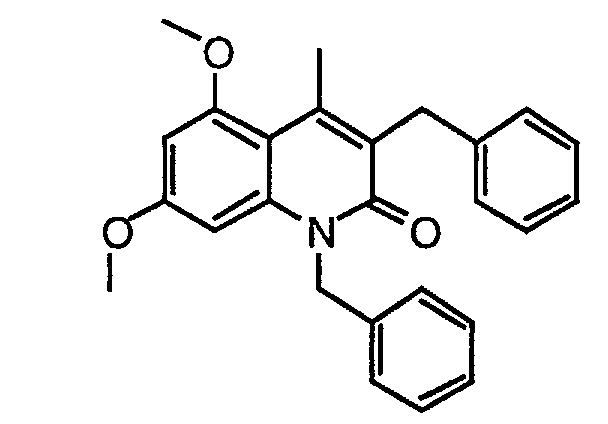
- The product from the example 8b (1 g), potassium t-butoxide (0.62 g) and benzyl bromide (0.68 ml) were stirred in DMSO (10 ml) at 60 °C for 4 hours. The reaction mixture was treated with water, extracted with toluene and evaporated. The product was triturated with ethyl ether and filtered. Yield 0.5 g (39 %).
- 1-H-NMR (400 MHz):2.537 (s, 3H), 3.708 (s, 3H), 3.826 (s, 3H), 4.124 (s, 2H), 5.56 (b, 2H), 6.413-6.434 (m, 2H), 7.154- 7.332 (m, 10H).
-

- The product from the previous example (2 g) was treated with pyridine hydrochloride (10 g) as described in example 8c. The product was extracted with ethyl acetate and evaporated.
Yield 1,4 g (75 %). - 1-H-NMR-(400 MHz):2.570 (s, 3H), 4.076 (s, 2H), 5.450 (b, 2H), 6.135 (d, 1H, J = 2.2 Hz), 6.199 (d, 1H, J = 2.2 Hz), 7.128 - 7.333 (m, 10 H), 9.83 (b, 1H), 10.166 (s, 1H).
-

- The product from the previous example (1.4 g) was treated with chloroacetonitrile (0.76 g) and K2CO3 (2.5 g) in DMF (20 ml) as described in example 1b. Yield 1.5 g (89 %).
- 1-H-NMR (400 MHz):2.555 (s, 3H), 4.146 (s, 2H), 5.214 (s, 2H), 5.275 (s, 2H), 5.578 (s, 2H), 6.735 (s, 2H), 7.13-7.33 (m, 10H).
-
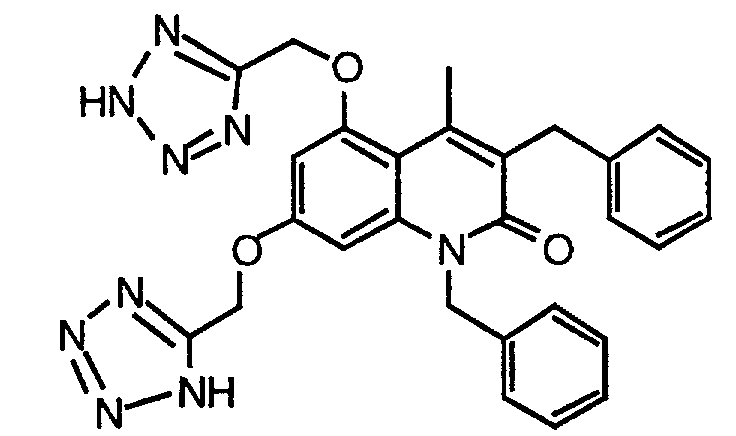
- The product from the previous example (1.3 g) was treated with sodium azide (0.41 g) and ammonium chloride (0.34 g) as described in example 1c. Yield: 0.69 g (45 %).
- 1-H-NMR (400 MHz):2.471 (s, 3H), 4.113 (s, 2H), 5.477 (s, 2H), 5.55 (b, 2H), 5.574 (s, 2H), 6.670 (d, 1H, J = 2.1 Hz), 6.775 (d, 1H, J = 2.1 Hz), 7.13-7.32 (m, 10 H).
-

- The product from example 8b (0.5 g), t-BuOK (0.2 g) and methyl iodide (0.4 ml) were stirred in DMSO (5 ml) at 35 °C for two days. The reaction mixture was treated with water and extracted with toluene. The product was purified by column chromatography using toluene-ethyl acetate-acetic acid 8 : 2 : 1 as the eluent. Yield 0.24 g (46 %).
- 1-H-NMR (300 MHz):2.51 (s, 3H), 3.632 (s, 2H), 3.846 (s, 3H), 3.896 (s, 3H), 4.047 (s, 2H), 6.468 (d, 1H, J = 2.3 Hz), 6.558 (d, 1H, J = 2.3 Hz), 7.1-7.26 (m, 5H).
-

- The product from the previous example (0.2 g) was treated with pyridine hydrochloride (2 g) as described in example 8c and the product extracted with ethyl acetate. Yield 0.16 g (89 %).
- 1-H-NMR (400 MHz):2.567 (s, 3H), 3.515 (s, 3H), 4.005 (s, 2H), 6.244 (d, 1H, J = 2.3 Hz), 6.268 (d, 1H, J = 2.3 Hz), 7.08-7.25 (m. 5H), 9.879 (s, 1H), 10.113 (s,1H).
-
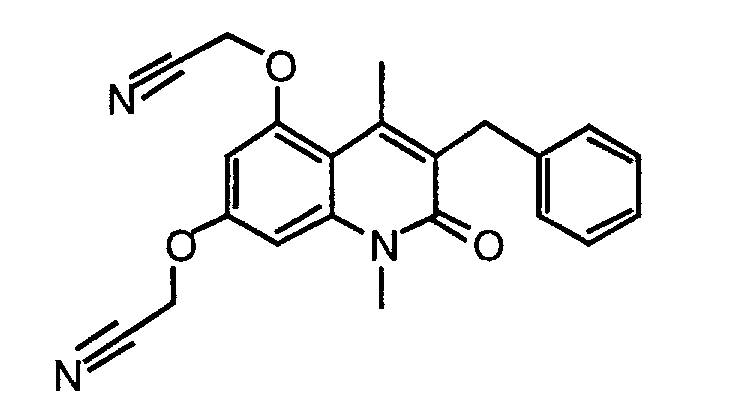
- The product from the previous example (0.15 g), chloroacetonitrile 0.08 g) and K2CO3 (0.28 g) were reacted in DMF (2 ml) as described in example 1b. Yield 0.16 g (84 %).
- 1-H-NMR (400 MHz): 2.524 (s, 3H), 3.658 (s, 3H), 4.079 (s, 2H), 5.292 (s, 2H), 5.379 (s, 2H), 6.766 (d, 1H, J = 2.3 Hz), 6.855 (d, 1H, J = 2.3 Hz), 7.13-7.24 (m 5H).
-
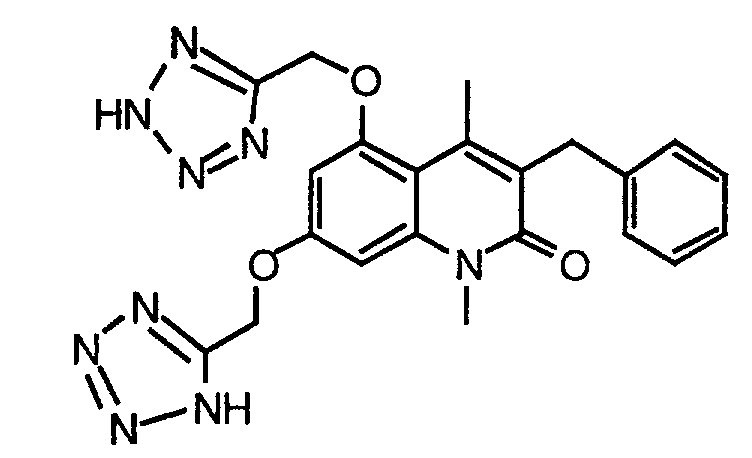
- The product from the previous example (0.15 g) was treated with NaN3 (57 mg) and NH4Cl (47 mg) in DMF (2 ml) as described in example 1c. Yield 0.115 g. Melting point: 250-253°C.
- 1-H-NMR (400 MHz): 2.451 (s, 3H), 3.649 (s, 3H), 4.042 (s, 2H), 6.792 (d, 1H, J = 2.2 Hz), 6.833 (d, 1H, J = Hz), 7.1-7.25 (m, 5H).
-

- 0.07 ml of methyl iodide was added to a solution of 0.2 g of the product from example 1c and 0.31 g of K2CO3 in 2 ml of DMF and the mixture stirred at room temperature for 4 hours. The reaction mixture was poured into ice water and filtered. Yield 0.2 g as a mixture of four regioisomers, melting point 71-76°C.
- 1H-NMR (DMSO-d6, 400MHz): 2.47 (s, CH3), 2.48 (s, CH3), 3.93 (s, CH2Ph), 4.11 (s, NCH3), 4.12 (s, NCH3), 4.15 (s, NCH3), 4.38 (s, NCH3), 4.40 (s, NCH3), 5.51 (s, OCH2), 5.52 (s, OCH2), 5.62 (s, OCH2), 5.67 (s, OCH2), 6.84-6.91 (m, 2H), 7.16-7.28 (m,5H, Ph).
-

- The product from example 1a (1g), 2-chlorpropionitrile (0.7 g) and potassium carbonate (2 g) were heated in DMF (15 ml) under nitrogen at 110°C for sixty minutes. The mixture was treated with water, filtered and washed with 1 N NaOH and water. Yield 1.2 g.
- 1H-NMR (DMSO-d6, 300MHz): 1.74-1.78 (t + t, 6 H, CH-CH3), 2.53 (s, 3 H), 3.97 (s, 2H), 5.58-5.66 (m, 2H, CH-CH3), 6.87 (m, 1H), 6.99 (d, 1H), 7.18-7.31 (m, 5H).
- The product from the previous example (0.5 g), sodium azide (0.18 g) and ammonium chloride (0.15 g) were heated in DMF (7 ml) at 100 °C for 90 minutes. The product was treated with water, extracted with ethyl acetate and evaporated. Yield 0.57 g. Melting point 91-104°C.
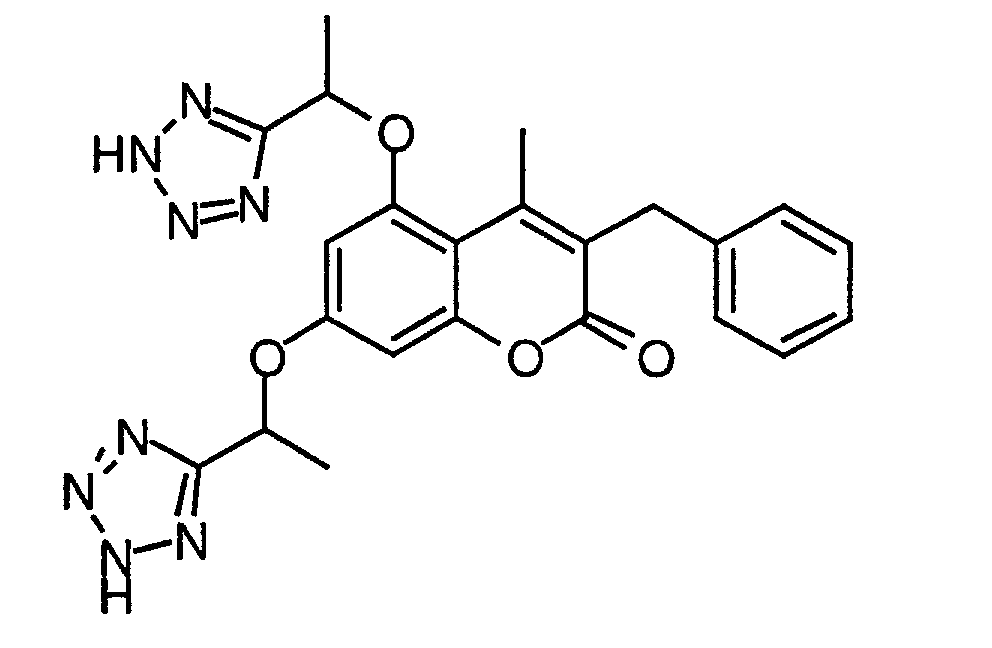
- 1H-NMR (DMSO-d6, 300MHz): 1.69-1.77 (m, 6 H, CH-CH3), 2.54 (s, 3H), 3.94 (s, 2H), 6.10-6.17 ((m, 2H, CH-CH3), 6.65 (dd, 1H), 6.74 (dd, 1H), 7.13-7.30 (m, 5H).
-
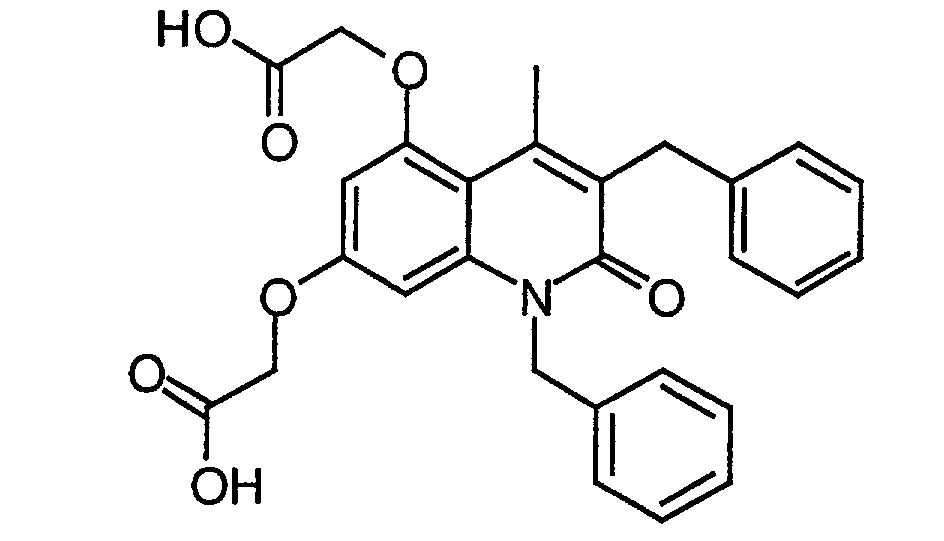
- The product from example 8f (0.2 g) was refluxed in a solution of concentrated hydrochloric acid (3 ml) and acetic acid (2 ml) for one hour. The product was filtered at 25 °C. Yield 0.14 g.
1H-NMR (300 Mhz, DMSO-d6): 2.63 (s, CH3), 4.14 (s, 2H, CH2Ph), 4.66 (s, 2 H, OCH2COOH), 4.79 (s, 2H, OCH2COOH), 5.53 (s, 2H, NCH2Ph), 6.41 (d, 1H, J = 2.2 Hz), 6.45 (d, 1H, J = 2.2 Hz), 7.13-7.34 (m, 10 H, Ph). -

- The product from example 8b (2 g), potassium -tert-butoxide (0.87 g) and 4-fluorobenzylchloride (1.12 g) were heated in DMSO (20 ml) at 60 °C for three hours as in example 8d. Yield 1.28 g.
- 1H-NMR (400 Mhz, DMSO-d6): 2.53 (s, 3H), 3.73 (s, 3H), 3.83 (s, 3H), 5.55 (s, 2H), 6.43 (s, 2H), 7.12-7.2 (m, 5 H), 7.26-7.28 (m, 4H).
-
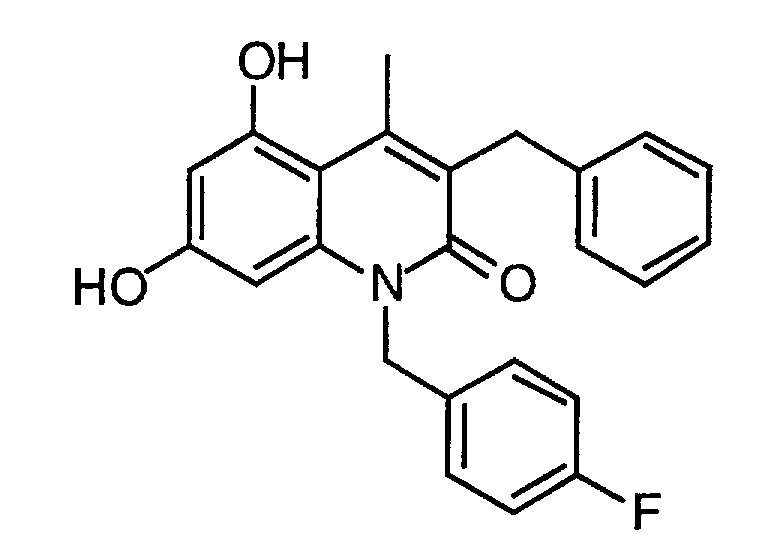
- The product from previous example (1.25 g) were heated in pyridine hydrochloride (12.5 g) at about 225 °C for 9 minutes. Yield 1 g.
- 1H-NMR (300 Mhz, DMSO-d6): 2.56 (s, 3H), 4.07 (s, 2H), 5.4 (b, 2H), 6.13 (d, 1H, J = 2.1 Hz), 6.20 (d, 1H, J = 2.1 Hz), 7.12-7.28 (m, 9H), 9.88 (s, 1H), 10.22 (s, 1H).
- The product from the previous example (1 g), ClCH2CN (0.43 g) and K2CO3 (1.42 g) were heated in DMF (8 ml) at 120 °C for one hour. Yield 0.94 g.
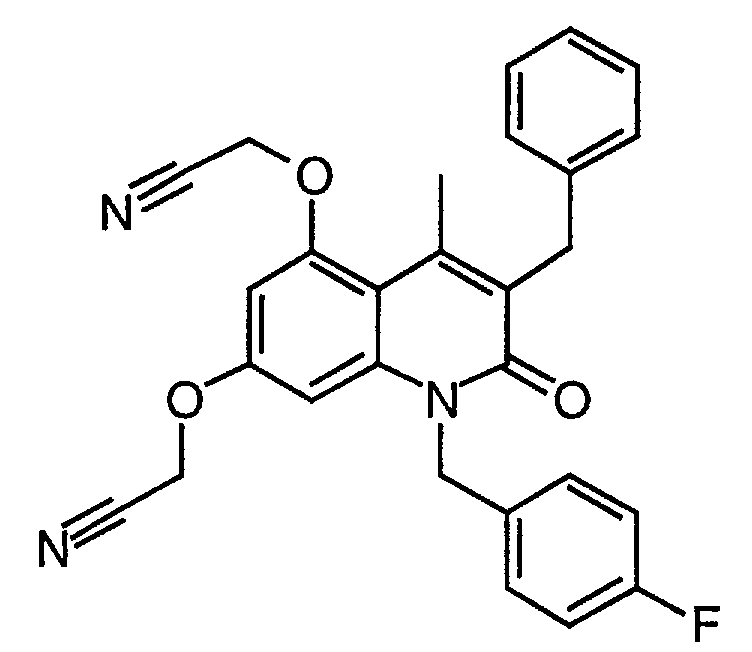
- 1H-NMR (300 Mhz, DMSO-d6): 2.55 (s, 3H), 4.14 (s, 2H), 5.25 (s, 2H), 5.28 (s, 2H), 5.57 (s, 2H), 6.74 (s, 2H, ArH), 7.1 -7.3 (m, 9H).
-
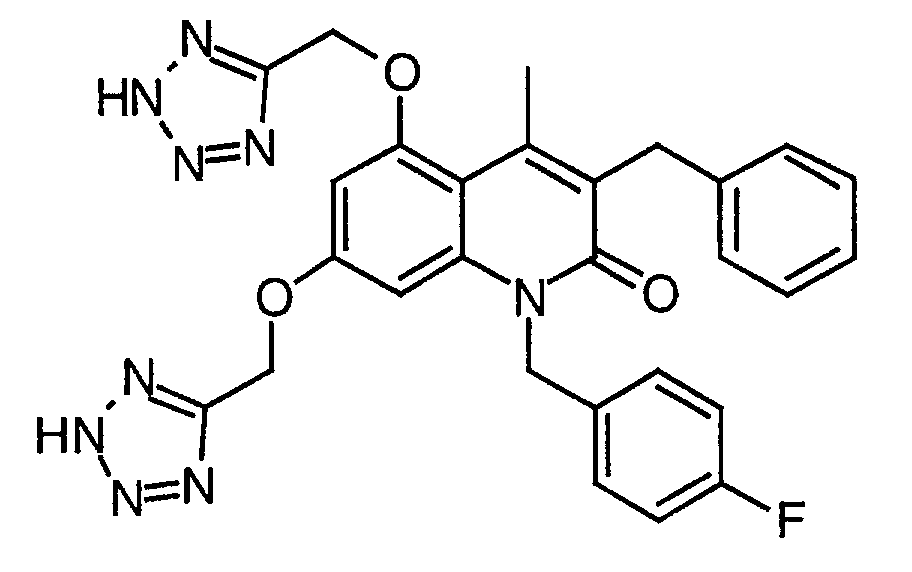
- The product from the previous example (0.5 g), sodium azide (0.14 g) and ammonium chloride (0.12 g) were heated in DMF (5 ml) at 120 °C for 90 min. The product was triturated with acetonitrile. Yield 0.28 g. Melting point: 126-132 °C.
1H-NMR (300 Mhz, DMSO-d6): 2.48 (s, 3H), 4.11 (s, 2H), 5.51 (s, 2H), 5.55 (s, 2H), 5.58 (s, 2H), 6.67 (d, 1H, J = 2.1 Hz), 6.78 (d, 1H, J = 2.1 Hz). -

- A solution of phloroglucinol (1.57 g) and ethyl 2-(4-chlorobenzyl)-acetoacetate (3.18 g) in ethanol (25 ml) was treated with dry HCl at 0 °C for 1.5 hours and the solution was kept at that temperature overnight. Solvent was evaporated and the precipitate triturated with water. Yield 3.87 g (98 %). Melting point 270-278 °C.
- 1H-NMR (DMSO-d6, 300 MHz): 2.52 (s, 3H, CH3), 3.87 (s, 2H, CH2), 6.17 (d, 1H, J = 2.4 Hz), 6.28 (d, 1H, J = 2.4 Hz), 7.18-7.34 (m, 4H, Ph), 10.21 (s, 1H, OH), 10.48 (s, 1H, OH).
-
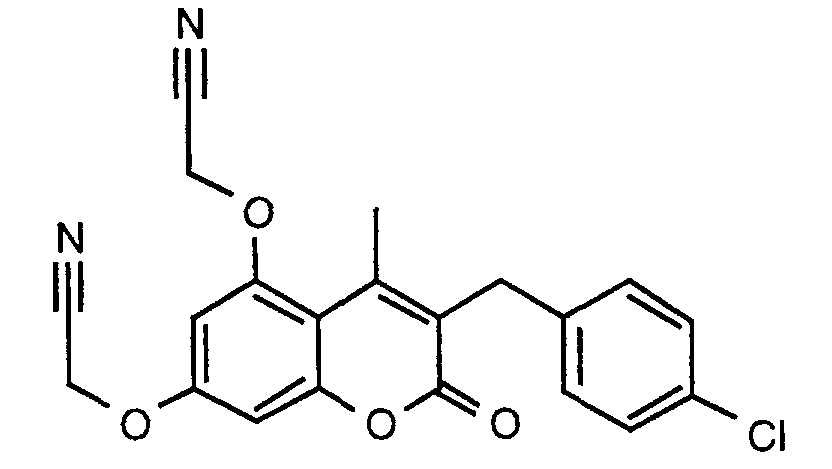
- The product from the previous example (1.00 g), chloroacetonitrile (0.50 g) and potassium carbonate (2.18 g) were heated in DMF (5 ml) at 100 °C for 30 minutes. The product was isolated as described in example 1b. Yield 0.90 g (72 %).
- 1H-NMR (DMSO-d6, 300 MHz): 2.52 (s, 3H, CH3), 3.95 (s, 2H, CH2), 5.308 (s, 2H, OCH2CN), 5.312 (s, 2H, OCH2CN), 6.81 (d, 1H, J = 2.5 Hz), 6.94 (d, 1H, J = 2.5 Hz), 7.22-7.33 (m, 4H, Ph).
- The product from the previous example (0.40 g), sodium azide (0.14 g) and ammonium chloride (0.11 g) were heated in DMF (2 ml) at 100 °C for 2 hours. The product was isolated as in example 1c. Yield 0.40 g (82 %).

- 1H-NMR (DMSO-d6, 300 MHz): 2.46 (s, 3H, CH3), 3.92 (s, 2H, CH2), 5.602 (s, 2H, OCH2Tet), 5.609 (s, 2H, OCH2Tet), 6.83 (d, 1H, J = 2.5 Hz), 6.85 (d, 1H, J = 2.5 Hz), 7.20-7.33 (m, 4H, Ph).
-

- A solution of phloroglucinol (0.48 g) and ethyl 2-(4-nitrobenzyl)aceto-acetate (1.00 g) in ethanol (150 ml) was treated with dry HCl at 0 °C for 7.5 hours and the solution was kept at that temperature overnight. Solvent was evaporated and the precipitate triturated with water. Yield 0.63 g (51 %). Melting point 280-285 °C.
- 1H-NMR (DMSO-d6, 300 MHz): 2.53 (s, 3H, CH3), 4.03 (s, 2H, CH2), 6.19 (d, 1H, J = 2.4 Hz), 6.29 (d, 1H, J = 2.4 Hz), 7.40-7.51 and 8.11-8.17 (m, 4 H, Ph), 10.25 (s, 1H, OH), 10.52 (s, 1H, OH).
-

- The product from the previous example (0.57 g), chloroacetonitrile (0.27 g) and potassium carbonate (1.20 g) were heated in DMF (2 ml) at 100 °C for 50 minutes. The product was isolated as described in example 1b. Yield 0.47 g (67 %). Melting point 178-185 °C.
- 1H-NMR (DMSO-d6, 400 MHz): 2.53 (s, 3H, CH3), 4.11 (s, 2H, CH2), 5.319 (s, 2H, OCH2CN), 5.323 (s, 2H, OCH2CN), 6.83 (d, 1H, J = 2.4 Hz), 6.96 (d, 1H, J = 2.4 Hz), 7.48-7.53 and 8.12-8.16 (m, 4H, Ph).
-

- The product from the previous example (0.38 g), sodium azide (0.12 g) and ammonium chloride (0.11 g) were heated in DMF (3 ml) at 100 °C for 2 hours. The product was isolated as described in example 1c. Yield 0.25 g (54 %). Melting point 240-244 °C.
- 1H-NMR (DMSO-d6, 400 MHz): 2.47 (s, 3H, CH3), 4.08 (s, 2H, CH2), 5.611 (s, 2H, OCH2Tet), 5.623 (s, 2H, OCH2Tet), 6.85 (d, 1H, J = 2.4 Hz), 6.87 (d, 1H, J = 2.4 Hz), 7.46-7.50 and 8.12-8.16 (m, 4H, Ph).
-

- A solution of phloroglucinol (2.00 g) and ethyl 2-cyclopentylaceto-acetate (3.14 g) in ethanol (40 ml) was treated with dry HCl at 0 °C for 2.5 hours and the solution kept at that temperature overnight. Solvent was evaporated and the precipitate purified with flash chromatography eluting with toluene-EtOAc-AcOH (8:1:1). Yield 1.22 g (29 %).
- 1H-NMR (DMSO-d6, 300 MHz): 1.50-1.88 (m, 8H, -(CH2)4-), 2.57 (s, 3H, CH3), 3.25 (m, 1H, CH), 6.11 (d, 1H, J = 2.4 Hz), 6.25 (d, 1H, J = 2.4 Hz), 10.25 (b, 2H, OH).
-

- The product from the previous example (0.50 g), chloroacetonitrile (0.31 g) and potassium carbonate (0.61 g) were heated in DMF (2 ml) at 80 °C for 40 minutes. The product was isolated as described in example 1b. Yield 0.56 g (86 %).
- 1H-NMR (DMSO-d6, 300 MHz): 1.55-1.90 (m, 8H, -(CH2)4-), 2.56 (s, 3H, CH3), 3.37 (m, 1H, CH), 5.29 (s, 2H, OCH2CN), 5.31 (s, 2H, OCH2CN), 6.75 (d, 1H, J = 2.5 Hz), 6.88 (d, 1H, J = 2.5 Hz).
-
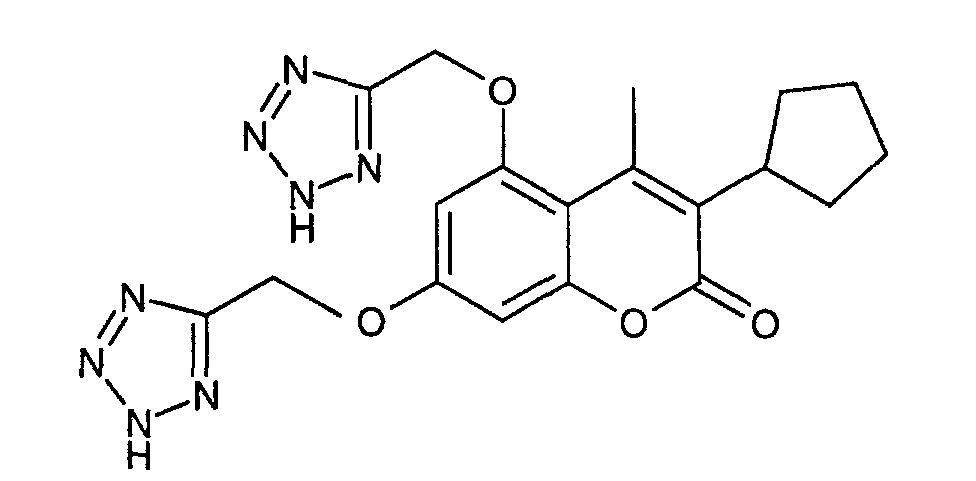
- The product from the previous example (0.30 g), sodium azide (0.13 g) and ammonium chloride (0.11 g) were heated in DMF (1ml) at 100 °C for 1.5 hours. The product was isolated as described in example 1 c. Yield 0.30 g (80 %). Melting point 248-252 °C.
- 1H-NMR (DMSO-d6, 400 MHz): 1.53-1.89 (m, 8H, -(CH2)4-), 2.51 (s, 3H, CH3), 3.34 (m, 1H, CH), 5.59 (s, 2H, OCH2Tet), 5.61 (s, 2H, OCH2Tet), 6.80 (s, 2H).
-

- A solution of phloroglucinol (0.47 g) and ethyl 2-(1-naphtylmethyl)-acetoacetate (1.00 g) in ethanol (20 ml) was treated with dry HCl at 0 °C for 3 hours and the solution kept at that temperature overnight. Solvent was evaporated and the precipitate triturated with water and recrystallized from isopropanol-water (1:1).
Yield 0,96 g (78 %). Melting point 275-280 °C. - 1H-NMR (DMSO-d6, 400 MHz): 2.45 (s, 3H, CH3), 4.32 (s, 2H, CH2), 6.23 (d, 1H, J = 2.5 Hz), 6.32 (d, 1H, J = 2.5 Hz), 6.97-8.25 (m, 7H, Naph), 10.26 (s, 1H, OH), 10.53 (s, 1H, OH).
-
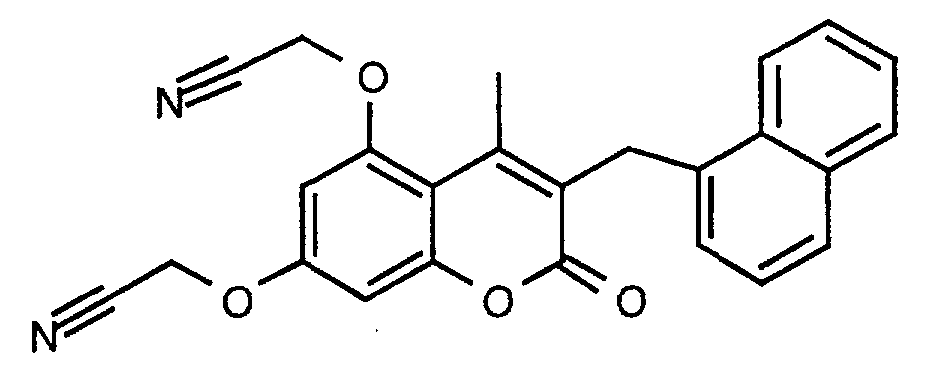
- The product from the previous example (0.80 g), chloroacetonitrile (0.36 g) and potassium carbonate (0.66 g) were heated in DMF (4 ml) at 100 °C for 1 hour. The product was isolated as described in example 1b. Yield 0.30 g (30 %).
- 1H-NMR (DMSO-d6, 300 MHz): 2.45 (s, 3H, CH3), 4.40 (s, 2H, CH2), 5.34 (s, 2H, OCH2CN), 5.36 (s, 2H, OCH2CN), 6.86 (d, 1H, J = 2.5 Hz), 7.010 (d, 1H, J = 2.5 Hz), 7.016-8.27 (m, 7H, Naph).
-

- The product from the previous example (0.25 g), sodium azide (0.080 g) and ammonium chloride (0.072 g) were heated in DMF (2 ml) at 100 °C for 2.5 hours. The product was isolated as described in example 1c. Yield 0.11 g (36 %). Melting point 164-174 °C.
- 1H-NMR (DMSO-d6, 300 MHz): 2.40 (s, 3H, CH3), 4.37 (s, 2H, CH2), 5.63 (s, 2H, OCH2Tet), 5.65 (s, 2H, OCH2Tet), 6.87 (d, 1H, J = 2.5 Hz), 6.92 (d, 1H, J = 2.5 Hz), 6.98-8.26 (m, 7H, Naph).
-

- tert-Butyl acetoacetate (1.58 g) was heated to 120 °C and 3,5-dimethoxyaniline (1.53 g) dissolved in xylene (4 ml) was added. The mixture was heated at 120-130 °C for 20 minutes and then cooled to room temperature. Methanesulfonic acid (2 ml) was added and the mixture was stirred at ambient temperature for 10 minutes. Water (40 ml) was added and the precipitate filtered and dried. Yield 1.31 g (60 %).
- 1H-NMR (DMSO-d6, 300 MHz): 2.50 (s, 3H, CH3), 3.79 (s, 3H, OCH3), 3.83 (s, 3H, OCH3), 6.03 (s, 1H, CH=C), 6.31 (d, 1H, J = 2.3 Hz), 6.45 (d, 1H, J = 2.3 Hz), 11.4 (b, 1H, NH).
-

- The product from the previous example (1.20 g) was suspended to DMSO (15 ml) and t-BuOK (0.68 g) and benzylbromide (1.03 g) were added. Reaction mixture was stirred at ambient temperature overnight. Water was added and the product extracted to EtOAc. EtOAc was dried and evaporated to dryness. The product was recrystallized from toluene. Yield 0.80 g (47 %).
- 1H-NMR (DMSO-d6, 300 MHz): 2.55 (d, 3H, J = 1.1 Hz, CH3), 3.71 (s, 3H, OCH3), 3.84 (s, 3H, OCH3), 5.48 (b, 2H, NCH2), 6.29 (d, 1H, J = 1.1 Hz, CH=C), 6.4 (s, 2H), 7.18-7.33 (m, 5H, Ph).
-
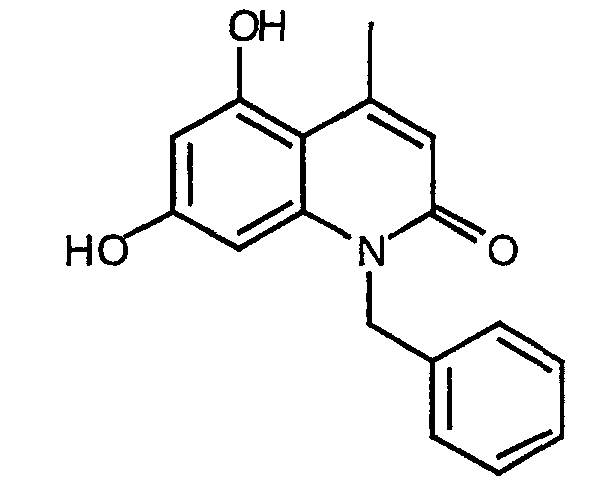
- The product from the previous example (0.69 g) was dissolved to CH2Cl2 (14 ml) and the reaction mixture cooled to -20 °C. BBr3 (2.4 g) in CH2Cl2 (1M solution) was added and the mixture was allowed to warm to ambient temperature during the night. The precipitate was filtered, washed with CH2Cl2 and dissolved to EtOAc. EtOAc was washed with dilute HCl, dryed and evapotated to dryness. Yield 0.34 g (54 %).
1H-NMR (DMSO-d6, 300 MHz): 2.56 (d, 3H, J = 1.0 Hz, CH3), 5.33 (b, 2H, NCH2), 6.11 (d, 1H, J =2.1 Hz), 6.13 (d, 1H, J = 1.0 Hz, CH=C), 6.17 (d, 1H, J = 2.1 Hz), 7.12-7.34 (m, 5H, Ph), 9.90 (b, 1H, OH), 10.22 (s, 1H,OH). -

- The product from the previous example (0.34 g), chloroacetonitrile (0.13 g) and potassium carbonate (0.34 g) were heated in DMF (2 ml) at 100 °C for 1.5 hours. Water was added and the precipitate filtered and dried. The product was recrystallized from isopropanol. Yield 0.20 g (46 %).
- 1H-NMR (DMSO-d6, 400 MHz): 2.57 (s, 3H, CH3), 5.22 (s, 2H, OCH2CN), 5.30 (s, 2H, OCH2CN), 5.50 (b, 2H, NCH2), 6.42 (s, 1H, CH=C), 6.70 (d, 1H, J = 2.1 Hz), 6.73 (d, 1H, J = 2.1 Hz), 7.21-7.32 (m, 5H, Ph).
-

- The product from the previous example (0.20 g), sodium azide (0.072 g) and ammonium chloride (0.060 g) were heated in DMF (2 ml) at 100 °C for 3 hours. The product was isolated as described in example 1c. Yield 0.21 g (85 %). Melting point 246-249 °C.
- 1H-NMR (DMSO-d6, 400 MHz): 2.50 (s, 3H, CH3), 5.48 (b, 4H, OCH2Tet, NCH2), 5.60 (s, 2H, OCH2Tet), 6.34 (s, 1H, CH=C), 6.64 (d, 1H, J = 1.9 Hz), 6.77 (d, 1H, J = 1.9 Hz), 7.18-7.32 (m, 5H, Ph).
-
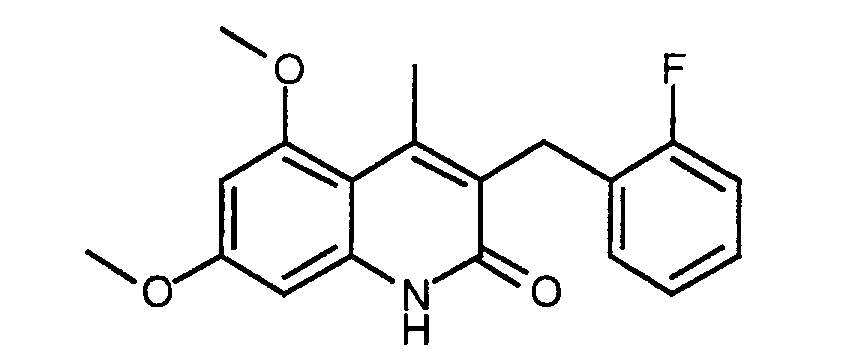
- Ethyl 2-(2-fluorobenzyl)acetoacetate (2.5 g) in xylene (1 ml) was heated to 150 °C and 3,5- dimethoxyaniline (1.46 g) in xylene (4 ml) was added in small portions during 30 minutes. The reaction mixture was heated at 160 °C for 3 hours and then cooled to room temperature. Methanesulfonic acid (1.7 ml) was added and the mixture was stirred at ambient temperature for 30 minutes. Water was added and the precipitate filtered and dried. The product was triturated with warm ethanol. Yield 0.64 g (21 %).
- 1H-NMR (DMSO-d6, 300 MHz): 2.45 (s, 3H), 3.79 (s, 3H), 3.82 (s, 3H), 3.97 (s, 2H), 6.33 (d, 1H, J = 2.4 Hz), 6.48 (d, 1H, J = 2.4 Hz), 6.90-7.25 (m, 4H), 11.61 (s, 1H).
- The product from the previous example (0.62 g) was treated with t-BuOK (0.23 g) and benzylbromide (0.36 g) in DMSO (12 ml) at 60 °C for 2.5 hours. The product was isolated as described in example 18b. Yield 0.39 g (49 %).

- 1H-NMR (DMSO-d6, 400 MHz): 2.51 (s, 3H), 3.72 (s, 3H), 3.84 (s, 3H), 4.11 (s, 2H), 5.55 (b, 2H), 6.433 (d, 1H, J = 2.1 Hz), 6.443 (d, 1H, J = 2.1 Hz), 6.97-7.33 (m, 9H).
-
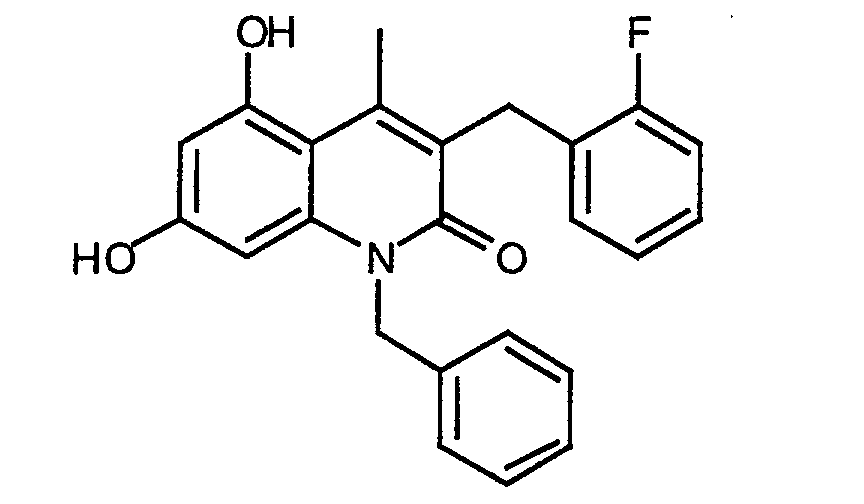
- The product from the previous example (0.34 g) was treated with BBr3 (8.48 g) in CH2Cl2 (7 ml) as in example 18c. Yield 0.30 g (82 %).
1H-NMR (DMSO-d6, 400 MHz): 2.55 (s, 3H), 4.06 (s, 2H), 5.40 (b, 2H), 6.13 (d, 1H, J = 2.1 Hz), 6.22 (d, 1H, J = 2.1 Hz), 6.97-7.33 (m, 9H), 10.3 (b, 2H). -
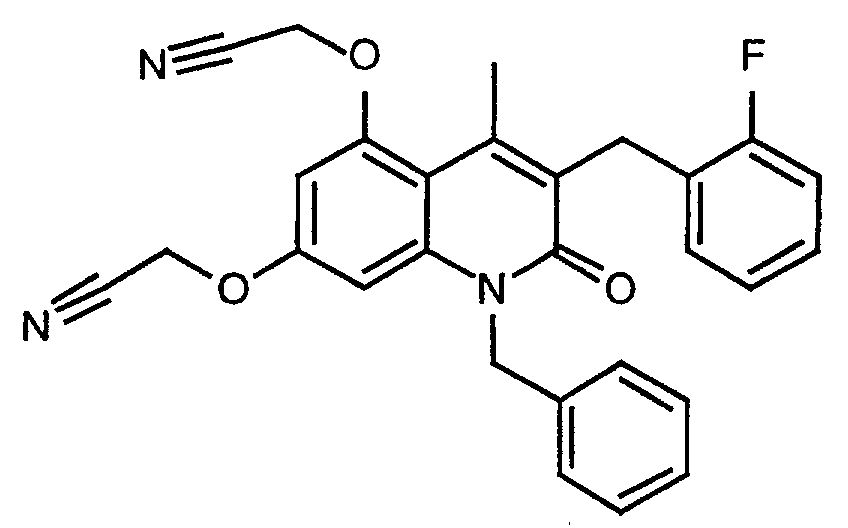
- The product from the previous example (0.21 g), chloroacetonitrile (0.086 g) and potassium carbonate (0.37 g) were heated in DMF (2 ml) at 100 °C for 2 hours. The product was isolated as described in example 1b. Yield 0.18 g (71 %).
- 1H-NMR (DMSO-d6, 400 MHz): 2.53 (s, 3H), 4.13 (s, 2H), 5.23 (s, 2H), 5.29 (s, 2H), 5.57 (b, 2H), 6.746 (d, 1H, J = 2.3 Hz), 6.756 (d, 1H, J = 2.3 Hz), 7.00-7.32 (m, 9H).
-
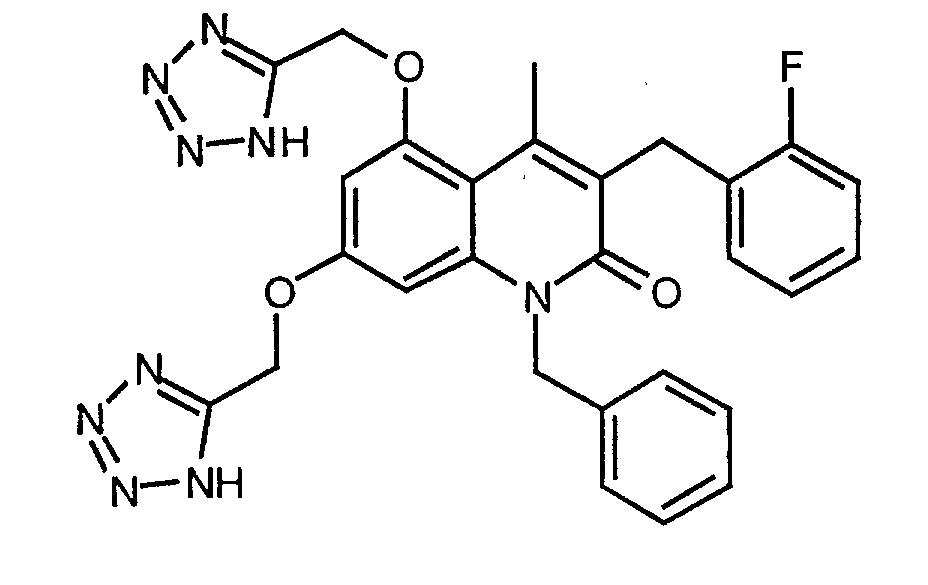
- The product from the previous example (0.17 g), sodium azide (0.051 g) and ammonium chloride (0.042 g) were heated in DMF at 100 °C for 3 hours. The product was isolated as described in example 1c. Yield 0.17 g (85 %). Melting point 135-140 °C.
- 1H-NMR (DMSO-d6, 400 MHz): 2.46 (s, 3H), 4.10 (s, 2H), 5.48 (s, 2H), 5.51 (b, 2H), 5.59 (s, 2H), 6.68 (d, 1H, J = 2.2 Hz), 6.79 (d, 1H, J = 2.2 Hz), 6.99-7.32 (m, 9H).
-

- Ethyl 2-(2-phenylethyl)acetoacetate (2.70 g) in xylene (5 ml) was treated with 3,5-dimethoxyaniline (1.60 g) at 150 °C as described in example 19a. Methanesulfonic acid (4.0 ml) was added at room temperature and the mixture heated at 80 °C for 1 hour. The product was isolated as described in example 19a. Yield 1.38 g (41 %).
- 1H-NMR (DMSO-d6, 400 MHz): 2.45 (s, 3H), 2.64-2.68 (m, 2H), 2.82-2.86 (m, 2H), 3.78 (s, 3H), 3.81 (s, 3H), 6.30 (d, 1H, J = 2.3 Hz), 6.45 (d, 1H, J = 2.3 Hz), 7.18-7.30 (m, 5H), 11.45 (s, 1H).
-

- The product from the previous example (0.61 g), t-BuOK (0.24 g) and benzylbromide (0.36 g) were heated in DMSO (12 ml) at 60 °C for 2 hours. The product was isolated as described in example 18b. Yield 0.31 g (40 %).
- 1H-NMR (DMSO-d6, 400 MHz): 2.51 (s, 3H), 2.73-2.77 (m, 2H), 2.96-3.00 (m, 2H), 3.70 (s, 3H), 3.83 (s, 3H), 5.55 (b, 2H), 6.40 (s, 2H), 7.17-7.33 (m, 10 H).
- The product from the previous example (0.31 g) was treated with BBr3 (0.75 g) in CH2Cl2 (5 ml) as described in example 18c. Yield 0.26 g (89 %).

- 1H-NMR (DMSO-d6, 300 MHz): 2.56 (s, 3H), 2.69-2.75 (m, 2H), 2.90-2.95 (m, 2H), 5.39 (b, 2H), 6.08 (d, 1H, J = 2.0 Hz), 6.19 (d, 1H, J = 2.0 Hz), 7.11-7.33 (m, 10H), 10.2 (b, 2H).
-
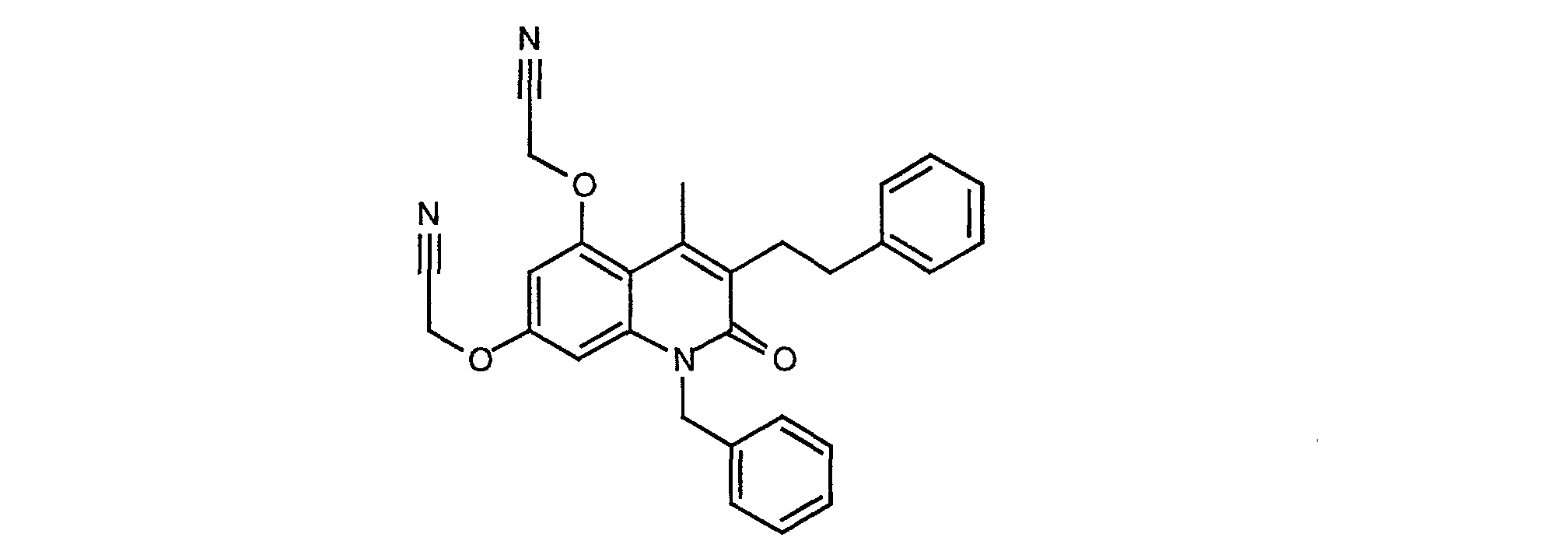
- The product from the previous example (0.22 g), chloroacetonitrile (0.091 g) and potassium carbonate (0.39 g) were heated at 100 °C for 2 hours. The product was isolated as in example 1b. Yield 0.20 g (76 %).
- 1H-NMR (DMSO-d6, 400 MHz): 2.50 (s, 3H), 2.73-2.77 (m, 2H), 2.98-3.02 (m, 2H), 5.21 (s, 2H), 5.29 (s, 2H), 5.56 (b, 2H), 6.70 (d, 1H, J = 2.1 Hz), 6.72 (d, 1H, J = 2.1 Hz), 7.18-7.33 (m, 10H).
-

- The product from the previous example (0.19 g), sodium azide (0.057 g) and ammonium chloride (0.047 g) were heated in DMF at 100 °C for 3 hours. The product was isolated as described in example 1c. Yield 0.18 g (78 %). Melting point 215-218 °C.
- 1H-NMR (DMSO-d6, 400 MHz): 2.46 (s, 3H), 2.70-2.74 (m, 2H), 2.95-2.99 (m, 2H), 5.47 (s, 2H), 5.54 (b, 2H), 5.57 (s, 2H), 6.64 (d, 1H, J = 2.0 Hz), 6.77 (d, 1H, J = 2.0 Hz), 7.16-7.33 (m, 10H).
-

- The mixture of 5,7-dihydroxy-1,3-dibenzyl-4-methyl-2(1H)-quinolinone (0.5 g), potassium carbonate (0.9 g) and 2-chloroacetamide ( 0.25 g) in DMF (6.5 ml) were reacted at 100 °C for two hours. The reaction mixture was treated with ice water and filtered. The product was triturated with hot ethanol. Yield: 0.32 g. Melting point 252-253°C.
- 1H-NMR (400 MHz, DMSO-d6): 2.63 (s, 3H, CH3), 4.13 (s, 2H, PhCH2), 4.37 (s, 2H, OCH2), 4.55 (s, 2H, OCH2), 5.54 (s, 2H, NCH2Ph), 6.40 (d, 1H, J = 2 Hz, ArH), 6.53 (d, 1 H, J = 2 Hz, ArH), 7.13-7.33 (m, 10 H, Ph), 7.44 (d, 2H, J = 65 Hz, CONH2), 7.47 (d, 2H, J = 68 Hz, CONH2)
-

- The mixture of 5,7-dihydroxy-1,3-dibenzyl-4-methyl-2(1H)-quinolinone (1 g), ethyl 2-bromoacetate (0.63 ml) and potassium carbonate (1.49 g) in DMF (5 ml) was heated under nitrogen at 110 °C for three hours, poured into ice water and filtered. The resulting solid material was triturated with ether and filtered again. Yield: 1.03 g, melting point 113-116 °C.
- 1H-NMR (400 MHz, DMSO-d6): 1.15 (t, 3H, CH3CH2, J = 7.1 Hz), 1.20 (t, 3H, CH3CH2, J = 7.1 Hz), 2.63 (s, 3H, CH3), 4.03 (q, 2H, CH2CH3, J = 7.1 Hz), 4.13 (s, 2H, CH2Ph), 4.17 (q, 2H, CH2CH3, J = 7.1 Hz), 4.78 (s, 2H, OCH2), 4.90 (s, 2H, OCH2), 6.41 (d, 1H, J = 2.2 Hz), 6.44 (d, 1H, J = 2.2 Hz), 7.13-7.33 (m, 10 H, Ph).
-
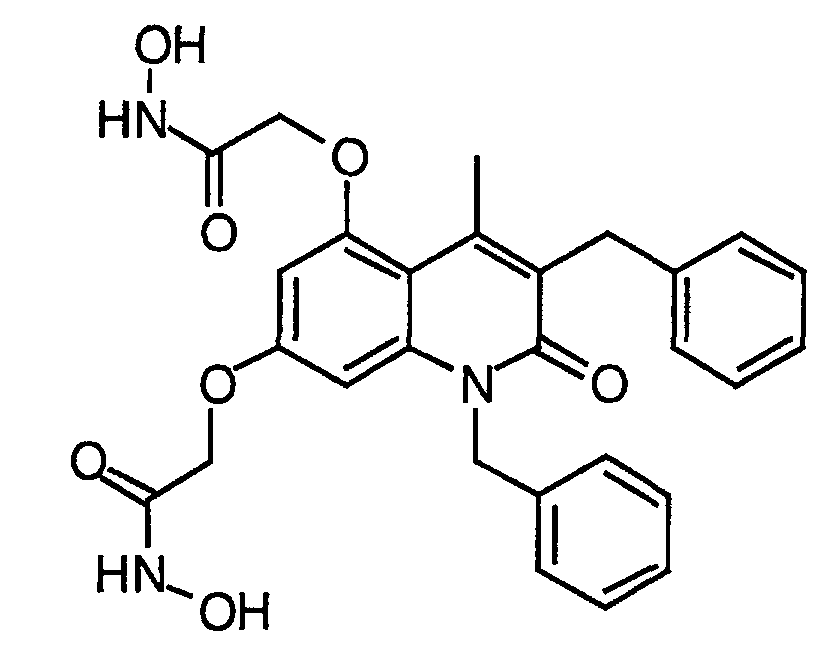
- The product from the previous example (0.3 g), hydroxylamine hydrochloride (0.32 g) and 5 N NaOH (1.05 ml) were reacted in ethanol (8 ml) at 50 °C for six hours. The reaction mixture was treated with water and made basic (pH 10) and filtered. The filtrate was acidified to
pH 2 and filtered. Yield: 0.2 g, melting point 121-127°C. - 1H-NMR (400 MHz, DMSO-d6): the tautomeric forms of hydroxamic acid are seen in OCH2-signals: 2.63 (s,3H, CH3), 4.13 (S, 2H, CH2Ph), 4.41 (s, 2H, OCH2), 4.54 (s, 2H,OCH2), 4.64 (s, 2H, HON=C(OH)CH2O), 4.65 (s, 2H, HON=C(OH)CH2O), 4.77 (s, 2H, HON=C(OH)CH2O), 4.78 ( (s, 2H, HON=C(OH)CH2O), 5.54 (s, 2H, NCH2Ph), 6.38-6.54 (m, 2H, ArH), 7.14-7.34 (m, 10 H, Ph), 9.05 (b, 2H, NOH), 10.84 (s, 1H, HONHCO), 10.88 (s, 1H, HONHCO).
and wherein each aryl residue defined above by itself or as part of another group may be substituted,
and pharmaceutically acceptable salts and esters thereof.
Claims (4)
- Use of a phospholamban inhibitor in the manufacture of a medicament for use in obtaining direct dilatation of the coronary arteries.
- Use of a phospholamban inhibitor in the manufacture of a medicament for use in the treatment of coronary heart disease.
- Use of a phospholamban inhibitor in the manufacture of a medicament for use in the treatment of hemodynamic crisis in which the low aortic blood pressure decreases coronary perfusion pressure.
- A compound of the formulaand pharmaceutically acceptable salts thereof.

Applications Claiming Priority (5)
| Application Number | Priority Date | Filing Date | Title |
|---|---|---|---|
| US88226297A | 1997-06-25 | 1997-06-25 | |
| US882262 | 1997-06-25 | ||
| US93711897A | 1997-09-24 | 1997-09-24 | |
| US937118 | 1997-09-24 | ||
| PCT/FI1998/000559 WO1999000132A1 (en) | 1997-06-25 | 1998-06-25 | Use of phospholamban inhibitors for increasing coronary flow |
Publications (2)
| Publication Number | Publication Date |
|---|---|
| EP1001774A1 EP1001774A1 (en) | 2000-05-24 |
| EP1001774B1 true EP1001774B1 (en) | 2004-09-15 |
Family
ID=27128657
Family Applications (1)
| Application Number | Title | Priority Date | Filing Date |
|---|---|---|---|
| EP98929466A Expired - Lifetime EP1001774B1 (en) | 1997-06-25 | 1998-06-25 | Use of phospholamban inhibitors for increasing coronary flow |
Country Status (9)
| Country | Link |
|---|---|
| EP (1) | EP1001774B1 (en) |
| JP (1) | JP2002506457A (en) |
| AT (1) | ATE275955T1 (en) |
| AU (1) | AU7921698A (en) |
| BR (1) | BR9810335A (en) |
| CA (1) | CA2294550A1 (en) |
| DE (1) | DE69826287T2 (en) |
| ES (1) | ES2227846T3 (en) |
| WO (1) | WO1999000132A1 (en) |
Families Citing this family (4)
| Publication number | Priority date | Publication date | Assignee | Title |
|---|---|---|---|---|
| US5968959A (en) * | 1997-12-12 | 1999-10-19 | Orion Corporation | Method for the prevention and treatment of stunned myocardium |
| GB0611781D0 (en) * | 2006-06-14 | 2006-07-26 | Argenta Discovery Ltd | 2-Oxo-2H-Chromene Compounds |
| WO2021161296A1 (en) | 2020-02-12 | 2021-08-19 | Aquabot Ltd. | Self-closing sack |
| UY40699A (en) | 2023-04-05 | 2024-08-30 | Ionis Pharmaceuticals Inc | COMPOUNDS AND METHODS FOR REDUCING NLP EXPRESSION |
-
1998
- 1998-06-25 CA CA002294550A patent/CA2294550A1/en not_active Abandoned
- 1998-06-25 WO PCT/FI1998/000559 patent/WO1999000132A1/en not_active Ceased
- 1998-06-25 JP JP50530799A patent/JP2002506457A/en not_active Ceased
- 1998-06-25 EP EP98929466A patent/EP1001774B1/en not_active Expired - Lifetime
- 1998-06-25 AU AU79216/98A patent/AU7921698A/en not_active Abandoned
- 1998-06-25 DE DE69826287T patent/DE69826287T2/en not_active Expired - Fee Related
- 1998-06-25 ES ES98929466T patent/ES2227846T3/en not_active Expired - Lifetime
- 1998-06-25 BR BR9810335-0A patent/BR9810335A/en not_active IP Right Cessation
- 1998-06-25 AT AT98929466T patent/ATE275955T1/en not_active IP Right Cessation
Also Published As
| Publication number | Publication date |
|---|---|
| JP2002506457A (en) | 2002-02-26 |
| ATE275955T1 (en) | 2004-10-15 |
| EP1001774A1 (en) | 2000-05-24 |
| CA2294550A1 (en) | 1999-01-07 |
| DE69826287T2 (en) | 2005-10-27 |
| AU7921698A (en) | 1999-01-19 |
| DE69826287D1 (en) | 2004-10-21 |
| ES2227846T3 (en) | 2005-04-01 |
| BR9810335A (en) | 2000-09-05 |
| WO1999000132A1 (en) | 1999-01-07 |
Similar Documents
| Publication | Publication Date | Title |
|---|---|---|
| EP1039884B1 (en) | A method for the prevention and treatment of stunned myocardium | |
| US6265421B1 (en) | Phospholamban inhibitors and a method for increasing coronary flow | |
| BG66065B1 (en) | 4-fluoro-n-indan-2-yl benzamide and its use as pharmaceutical | |
| US20140162986A1 (en) | Methods for treatment of thiol-containing compound deficient conditions | |
| JP2002504478A (en) | Combinations of aldose reductase inhibitors and glycogen phosphorylase inhibitors | |
| AU2006327105A1 (en) | Compounds and methods for thiol-containing compound efflux and cancer treatment | |
| WO2005037317A2 (en) | Mast cell-derived renin | |
| CN111356764A (en) | Compositions and methods for lowering serum cholesterol and PCSK9 | |
| WO2012126280A1 (en) | Rutaecarpine compound, preparation method therefor, and use thereof | |
| EP3204010A1 (en) | Methods for the treatment of cystic fibrosis | |
| EP1001774A1 (en) | Use of phospholamban inhibitors to increasing coronary flow | |
| WO2014006045A1 (en) | Psoralen derivatives for preventing or treating heart failure or cardiac hypertrophy | |
| AU735729B2 (en) | Bisethers of 1-oxa, aza and thianaphthalen-2-ones as phospholamban inhibitors | |
| Zhao et al. | TFPIα alleviated vascular endothelial cell injury by inhibiting autophagy and the class III PI3K/Beclin-1 pathway | |
| MXPA00002954A (en) | Bisethers of 1-oxa, aza and thianaphthalen-2-ones as phospholamban inhibitors | |
| US20250134889A1 (en) | Targeting ire1 kinase and fmrp for prophylaxis, management and treatment of atherosclerosis | |
| CN101204391A (en) | Isoflavone compounds and compositions thereof for preventing and treating atherosclerosis by enhancing cholesterol reverse transport mechanism | |
| CZ2000937A3 (en) | Bisethers of 1-oxa, aza and thianaphthalen-2-one functioning as inhibitors of phospholamban and pharmaceutical preparations containing thereof | |
| AU2004221792C1 (en) | A method of modulating smooth muscle cell functioning by modulating sphingosine kinase mediated signalling | |
| JP5360939B2 (en) | A therapeutic agent for arteriosclerosis comprising a nitrosonifedipine derivative as an active ingredient | |
| CN115151536A (en) | Antiviral compounds, compositions and methods of use | |
| CZ2022277A3 (en) | Triterpenes with inhibitory activity on the Hedgehog signaling pathway for use in the treatment of cancer |
Legal Events
| Date | Code | Title | Description |
|---|---|---|---|
| PUAI | Public reference made under article 153(3) epc to a published international application that has entered the european phase |
Free format text: ORIGINAL CODE: 0009012 |
|
| 17P | Request for examination filed |
Effective date: 19991220 |
|
| AK | Designated contracting states |
Kind code of ref document: A1 Designated state(s): AT BE CH CY DE DK ES FI FR GB GR IE IT LI LU MC NL PT SE |
|
| AX | Request for extension of the european patent |
Free format text: LT PAYMENT 19991220;LV PAYMENT 19991220;RO PAYMENT 19991220;SI PAYMENT 19991220 |
|
| 17Q | First examination report despatched |
Effective date: 20020524 |
|
| GRAP | Despatch of communication of intention to grant a patent |
Free format text: ORIGINAL CODE: EPIDOSNIGR1 |
|
| GRAS | Grant fee paid |
Free format text: ORIGINAL CODE: EPIDOSNIGR3 |
|
| GRAA | (expected) grant |
Free format text: ORIGINAL CODE: 0009210 |
|
| RTI1 | Title (correction) |
Free format text: USE OF PHOSPHOLAMBAN INHIBITORS FOR INCREASING CORONARY FLOW |
|
| AK | Designated contracting states |
Kind code of ref document: B1 Designated state(s): AT BE CH CY DE DK ES FI FR GB GR IE IT LI LU MC NL PT SE |
|
| AX | Request for extension of the european patent |
Extension state: LT LV RO SI |
|
| PG25 | Lapsed in a contracting state [announced via postgrant information from national office to epo] |
Ref country code: NL Free format text: LAPSE BECAUSE OF FAILURE TO SUBMIT A TRANSLATION OF THE DESCRIPTION OR TO PAY THE FEE WITHIN THE PRESCRIBED TIME-LIMIT Effective date: 20040915 Ref country code: LI Free format text: LAPSE BECAUSE OF FAILURE TO SUBMIT A TRANSLATION OF THE DESCRIPTION OR TO PAY THE FEE WITHIN THE PRESCRIBED TIME-LIMIT Effective date: 20040915 Ref country code: FI Free format text: LAPSE BECAUSE OF FAILURE TO SUBMIT A TRANSLATION OF THE DESCRIPTION OR TO PAY THE FEE WITHIN THE PRESCRIBED TIME-LIMIT Effective date: 20040915 Ref country code: CH Free format text: LAPSE BECAUSE OF FAILURE TO SUBMIT A TRANSLATION OF THE DESCRIPTION OR TO PAY THE FEE WITHIN THE PRESCRIBED TIME-LIMIT Effective date: 20040915 Ref country code: BE Free format text: LAPSE BECAUSE OF FAILURE TO SUBMIT A TRANSLATION OF THE DESCRIPTION OR TO PAY THE FEE WITHIN THE PRESCRIBED TIME-LIMIT Effective date: 20040915 Ref country code: AT Free format text: LAPSE BECAUSE OF FAILURE TO SUBMIT A TRANSLATION OF THE DESCRIPTION OR TO PAY THE FEE WITHIN THE PRESCRIBED TIME-LIMIT Effective date: 20040915 |
|
| REG | Reference to a national code |
Ref country code: GB Ref legal event code: FG4D Ref country code: CH Ref legal event code: EP |
|
| REG | Reference to a national code |
Ref country code: IE Ref legal event code: FG4D |
|
| REF | Corresponds to: |
Ref document number: 69826287 Country of ref document: DE Date of ref document: 20041021 Kind code of ref document: P |
|
| PG25 | Lapsed in a contracting state [announced via postgrant information from national office to epo] |
Ref country code: SE Free format text: LAPSE BECAUSE OF FAILURE TO SUBMIT A TRANSLATION OF THE DESCRIPTION OR TO PAY THE FEE WITHIN THE PRESCRIBED TIME-LIMIT Effective date: 20041215 Ref country code: GR Free format text: LAPSE BECAUSE OF FAILURE TO SUBMIT A TRANSLATION OF THE DESCRIPTION OR TO PAY THE FEE WITHIN THE PRESCRIBED TIME-LIMIT Effective date: 20041215 Ref country code: DK Free format text: LAPSE BECAUSE OF FAILURE TO SUBMIT A TRANSLATION OF THE DESCRIPTION OR TO PAY THE FEE WITHIN THE PRESCRIBED TIME-LIMIT Effective date: 20041215 |
|
| LTIE | Lt: invalidation of european patent or patent extension |
Effective date: 20040915 |
|
| REG | Reference to a national code |
Ref country code: CH Ref legal event code: PL |
|
| NLV1 | Nl: lapsed or annulled due to failure to fulfill the requirements of art. 29p and 29m of the patents act | ||
| REG | Reference to a national code |
Ref country code: ES Ref legal event code: FG2A Ref document number: 2227846 Country of ref document: ES Kind code of ref document: T3 |
|
| PGFP | Annual fee paid to national office [announced via postgrant information from national office to epo] |
Ref country code: FR Payment date: 20050512 Year of fee payment: 8 |
|
| PGFP | Annual fee paid to national office [announced via postgrant information from national office to epo] |
Ref country code: GB Payment date: 20050516 Year of fee payment: 8 |
|
| PGFP | Annual fee paid to national office [announced via postgrant information from national office to epo] |
Ref country code: DE Payment date: 20050520 Year of fee payment: 8 |
|
| PGFP | Annual fee paid to national office [announced via postgrant information from national office to epo] |
Ref country code: ES Payment date: 20050607 Year of fee payment: 8 |
|
| PG25 | Lapsed in a contracting state [announced via postgrant information from national office to epo] |
Ref country code: LU Free format text: LAPSE BECAUSE OF NON-PAYMENT OF DUE FEES Effective date: 20050625 Ref country code: CY Free format text: LAPSE BECAUSE OF FAILURE TO SUBMIT A TRANSLATION OF THE DESCRIPTION OR TO PAY THE FEE WITHIN THE PRESCRIBED TIME-LIMIT Effective date: 20050625 |
|
| PG25 | Lapsed in a contracting state [announced via postgrant information from national office to epo] |
Ref country code: IE Free format text: LAPSE BECAUSE OF NON-PAYMENT OF DUE FEES Effective date: 20050627 |
|
| PG25 | Lapsed in a contracting state [announced via postgrant information from national office to epo] |
Ref country code: MC Free format text: LAPSE BECAUSE OF NON-PAYMENT OF DUE FEES Effective date: 20050630 |
|
| PLBE | No opposition filed within time limit |
Free format text: ORIGINAL CODE: 0009261 |
|
| STAA | Information on the status of an ep patent application or granted ep patent |
Free format text: STATUS: NO OPPOSITION FILED WITHIN TIME LIMIT |
|
| ET | Fr: translation filed | ||
| 26N | No opposition filed |
Effective date: 20050616 |
|
| REG | Reference to a national code |
Ref country code: IE Ref legal event code: MM4A |
|
| PG25 | Lapsed in a contracting state [announced via postgrant information from national office to epo] |
Ref country code: GB Free format text: LAPSE BECAUSE OF NON-PAYMENT OF DUE FEES Effective date: 20060625 |
|
| PG25 | Lapsed in a contracting state [announced via postgrant information from national office to epo] |
Ref country code: ES Free format text: LAPSE BECAUSE OF NON-PAYMENT OF DUE FEES Effective date: 20060626 |
|
| PGFP | Annual fee paid to national office [announced via postgrant information from national office to epo] |
Ref country code: IT Payment date: 20060630 Year of fee payment: 9 |
|
| PG25 | Lapsed in a contracting state [announced via postgrant information from national office to epo] |
Ref country code: DE Free format text: LAPSE BECAUSE OF NON-PAYMENT OF DUE FEES Effective date: 20070103 |
|
| GBPC | Gb: european patent ceased through non-payment of renewal fee |
Effective date: 20060625 |
|
| REG | Reference to a national code |
Ref country code: FR Ref legal event code: ST Effective date: 20070228 |
|
| REG | Reference to a national code |
Ref country code: ES Ref legal event code: FD2A Effective date: 20060626 |
|
| PG25 | Lapsed in a contracting state [announced via postgrant information from national office to epo] |
Ref country code: PT Free format text: LAPSE BECAUSE OF NON-PAYMENT OF DUE FEES Effective date: 20050215 |
|
| PG25 | Lapsed in a contracting state [announced via postgrant information from national office to epo] |
Ref country code: FR Free format text: LAPSE BECAUSE OF NON-PAYMENT OF DUE FEES Effective date: 20060630 |
|
| PG25 | Lapsed in a contracting state [announced via postgrant information from national office to epo] |
Ref country code: IT Free format text: LAPSE BECAUSE OF NON-PAYMENT OF DUE FEES Effective date: 20070625 |