EP1001761B1 - Use of cholinesterase inhibitors for treating attention deficit disorders - Google Patents
Use of cholinesterase inhibitors for treating attention deficit disorders Download PDFInfo
- Publication number
- EP1001761B1 EP1001761B1 EP98938759A EP98938759A EP1001761B1 EP 1001761 B1 EP1001761 B1 EP 1001761B1 EP 98938759 A EP98938759 A EP 98938759A EP 98938759 A EP98938759 A EP 98938759A EP 1001761 B1 EP1001761 B1 EP 1001761B1
- Authority
- EP
- European Patent Office
- Prior art keywords
- substituted
- alkyl
- hydrogen
- group
- galantamine
- Prior art date
- Legal status (The legal status is an assumption and is not a legal conclusion. Google has not performed a legal analysis and makes no representation as to the accuracy of the status listed.)
- Expired - Lifetime
Links
- 208000006096 Attention Deficit Disorder with Hyperactivity Diseases 0.000 title claims abstract description 12
- 239000000544 cholinesterase inhibitor Substances 0.000 title abstract description 18
- ASUTZQLVASHGKV-JDFRZJQESA-N galanthamine Chemical compound O1C(=C23)C(OC)=CC=C2CN(C)CC[C@]23[C@@H]1C[C@@H](O)C=C2 ASUTZQLVASHGKV-JDFRZJQESA-N 0.000 claims abstract description 53
- ASUTZQLVASHGKV-UHFFFAOYSA-N galanthamine hydrochloride Natural products O1C(=C23)C(OC)=CC=C2CN(C)CCC23C1CC(O)C=C2 ASUTZQLVASHGKV-UHFFFAOYSA-N 0.000 claims abstract description 28
- 229960003980 galantamine Drugs 0.000 claims abstract description 27
- 239000003814 drug Substances 0.000 claims abstract description 13
- 238000004519 manufacturing process Methods 0.000 claims abstract description 8
- -1 carboxyalkyl amino Chemical group 0.000 claims description 26
- 208000036864 Attention deficit/hyperactivity disease Diseases 0.000 claims description 19
- 208000035231 inattentive type attention deficit hyperactivity disease Diseases 0.000 claims description 19
- 229910052739 hydrogen Inorganic materials 0.000 claims description 16
- 239000001257 hydrogen Substances 0.000 claims description 16
- 125000004435 hydrogen atom Chemical class [H]* 0.000 claims description 16
- 125000000217 alkyl group Chemical group 0.000 claims description 11
- 150000003839 salts Chemical class 0.000 claims description 10
- 125000005843 halogen group Chemical group 0.000 claims description 9
- 125000002252 acyl group Chemical group 0.000 claims description 8
- 125000003545 alkoxy group Chemical group 0.000 claims description 8
- 125000002887 hydroxy group Chemical group [H]O* 0.000 claims description 8
- 125000003118 aryl group Chemical class 0.000 claims description 7
- 208000037265 diseases, disorders, signs and symptoms Diseases 0.000 claims description 7
- 125000004104 aryloxy group Chemical group 0.000 claims description 6
- 208000015802 attention deficit-hyperactivity disease Diseases 0.000 claims description 6
- 125000000753 cycloalkyl group Chemical group 0.000 claims description 5
- 125000001072 heteroaryl group Chemical group 0.000 claims description 5
- 125000004169 (C1-C6) alkyl group Chemical group 0.000 claims description 4
- 125000004442 acylamino group Chemical group 0.000 claims description 4
- 125000004423 acyloxy group Chemical group 0.000 claims description 4
- 125000003342 alkenyl group Chemical group 0.000 claims description 4
- 125000002877 alkyl aryl group Chemical group 0.000 claims description 4
- 125000005037 alkyl phenyl group Chemical group 0.000 claims description 4
- 125000004103 aminoalkyl group Chemical group 0.000 claims description 4
- 125000003435 aroyl group Chemical group 0.000 claims description 4
- 125000003710 aryl alkyl group Chemical group 0.000 claims description 4
- 125000004659 aryl alkyl thio group Chemical group 0.000 claims description 4
- 125000005161 aryl oxy carbonyl group Chemical group 0.000 claims description 4
- 125000005110 aryl thio group Chemical group 0.000 claims description 4
- 229910052799 carbon Inorganic materials 0.000 claims description 4
- 150000001721 carbon Chemical group 0.000 claims description 4
- 125000004446 heteroarylalkyl group Chemical group 0.000 claims description 4
- 125000000623 heterocyclic group Chemical class 0.000 claims description 4
- 125000002768 hydroxyalkyl group Chemical group 0.000 claims description 4
- 125000002023 trifluoromethyl group Chemical group FC(F)(F)* 0.000 claims description 4
- 239000002253 acid Substances 0.000 claims description 3
- 125000004432 carbon atom Chemical group C* 0.000 claims description 3
- 125000001997 phenyl group Chemical group [H]C1=C([H])C([H])=C(*)C([H])=C1[H] 0.000 claims description 3
- 125000004076 pyridyl group Chemical group 0.000 claims description 3
- 125000004178 (C1-C4) alkyl group Chemical group 0.000 claims description 2
- 125000004191 (C1-C6) alkoxy group Chemical group 0.000 claims description 2
- 125000003903 2-propenyl group Chemical group [H]C([*])([H])C([H])=C([H])[H] 0.000 claims description 2
- VEXZGXHMUGYJMC-UHFFFAOYSA-N Hydrochloric acid Chemical compound Cl VEXZGXHMUGYJMC-UHFFFAOYSA-N 0.000 claims description 2
- UFHFLCQGNIYNRP-UHFFFAOYSA-N Hydrogen Chemical compound [H][H] UFHFLCQGNIYNRP-UHFFFAOYSA-N 0.000 claims description 2
- CPELXLSAUQHCOX-UHFFFAOYSA-N Hydrogen bromide Chemical compound Br CPELXLSAUQHCOX-UHFFFAOYSA-N 0.000 claims description 2
- OAICVXFJPJFONN-UHFFFAOYSA-N Phosphorus Chemical group [P] OAICVXFJPJFONN-UHFFFAOYSA-N 0.000 claims description 2
- 125000002777 acetyl group Chemical group [H]C([H])([H])C(*)=O 0.000 claims description 2
- 125000001931 aliphatic group Chemical class 0.000 claims description 2
- 125000003282 alkyl amino group Chemical group 0.000 claims description 2
- 125000005248 alkyl aryloxy group Chemical group 0.000 claims description 2
- 125000004414 alkyl thio group Chemical group 0.000 claims description 2
- 125000006196 aroyl alkyl group Chemical group 0.000 claims description 2
- QVGXLLKOCUKJST-UHFFFAOYSA-N atomic oxygen Chemical group [O] QVGXLLKOCUKJST-UHFFFAOYSA-N 0.000 claims description 2
- 125000001231 benzoyloxy group Chemical class C(C1=CC=CC=C1)(=O)O* 0.000 claims description 2
- 125000003917 carbamoyl group Chemical group [H]N([H])C(*)=O 0.000 claims description 2
- 125000001589 carboacyl group Chemical group 0.000 claims description 2
- 125000004093 cyano group Chemical group *C#N 0.000 claims description 2
- 125000004981 cycloalkylmethyl group Chemical group 0.000 claims description 2
- 125000001495 ethyl group Chemical group [H]C([H])([H])C([H])([H])* 0.000 claims description 2
- 125000001153 fluoro group Chemical group F* 0.000 claims description 2
- 125000004356 hydroxy functional group Chemical group O* 0.000 claims description 2
- 125000004029 hydroxymethyl group Chemical group [H]OC([H])([H])* 0.000 claims description 2
- INQOMBQAUSQDDS-UHFFFAOYSA-N iodomethane Chemical compound IC INQOMBQAUSQDDS-UHFFFAOYSA-N 0.000 claims description 2
- 125000001449 isopropyl group Chemical group [H]C([H])([H])C([H])(*)C([H])([H])[H] 0.000 claims description 2
- 125000005358 mercaptoalkyl group Chemical group 0.000 claims description 2
- 125000002496 methyl group Chemical group [H]C([H])([H])* 0.000 claims description 2
- JZMJDSHXVKJFKW-UHFFFAOYSA-M methyl sulfate(1-) Chemical compound COS([O-])(=O)=O JZMJDSHXVKJFKW-UHFFFAOYSA-M 0.000 claims description 2
- 229910052757 nitrogen Inorganic materials 0.000 claims description 2
- IJGRMHOSHXDMSA-UHFFFAOYSA-N nitrogen Substances N#N IJGRMHOSHXDMSA-UHFFFAOYSA-N 0.000 claims description 2
- QJGQUHMNIGDVPM-UHFFFAOYSA-N nitrogen group Chemical group [N] QJGQUHMNIGDVPM-UHFFFAOYSA-N 0.000 claims description 2
- 229910052760 oxygen Inorganic materials 0.000 claims description 2
- 239000001301 oxygen Substances 0.000 claims description 2
- 229910052698 phosphorus Chemical group 0.000 claims description 2
- 239000011574 phosphorus Chemical group 0.000 claims description 2
- 125000001436 propyl group Chemical group [H]C([*])([H])C([H])([H])C([H])([H])[H] 0.000 claims description 2
- 125000003373 pyrazinyl group Chemical group 0.000 claims description 2
- 125000000714 pyrimidinyl group Chemical group 0.000 claims description 2
- 150000007659 semicarbazones Chemical class 0.000 claims description 2
- 125000003396 thiol group Chemical group [H]S* 0.000 claims description 2
- 150000001875 compounds Chemical class 0.000 description 9
- 102100033639 Acetylcholinesterase Human genes 0.000 description 7
- 108010022752 Acetylcholinesterase Proteins 0.000 description 7
- 229940022698 acetylcholinesterase Drugs 0.000 description 7
- 230000000694 effects Effects 0.000 description 7
- 229960002024 galantamine hydrobromide Drugs 0.000 description 7
- QORVDGQLPPAFRS-XPSHAMGMSA-N galantamine hydrobromide Chemical compound Br.O1C(=C23)C(OC)=CC=C2CN(C)CC[C@]23[C@@H]1C[C@@H](O)C=C2 QORVDGQLPPAFRS-XPSHAMGMSA-N 0.000 description 7
- 238000000034 method Methods 0.000 description 7
- 108010053652 Butyrylcholinesterase Proteins 0.000 description 6
- 102100032404 Cholinesterase Human genes 0.000 description 6
- 229940079593 drug Drugs 0.000 description 6
- HQKMJHAJHXVSDF-UHFFFAOYSA-L magnesium stearate Chemical compound [Mg+2].CCCCCCCCCCCCCCCCCC([O-])=O.CCCCCCCCCCCCCCCCCC([O-])=O HQKMJHAJHXVSDF-UHFFFAOYSA-L 0.000 description 6
- 239000000203 mixture Substances 0.000 description 6
- 208000024891 symptom Diseases 0.000 description 6
- 239000003826 tablet Substances 0.000 description 6
- 238000000338 in vitro Methods 0.000 description 5
- 238000012360 testing method Methods 0.000 description 5
- 238000011282 treatment Methods 0.000 description 5
- VYFYYTLLBUKUHU-UHFFFAOYSA-N dopamine Chemical compound NCCC1=CC=C(O)C(O)=C1 VYFYYTLLBUKUHU-UHFFFAOYSA-N 0.000 description 4
- QZAYGJVTTNCVMB-UHFFFAOYSA-N serotonin Chemical compound C1=C(O)C=C2C(CCN)=CNC2=C1 QZAYGJVTTNCVMB-UHFFFAOYSA-N 0.000 description 4
- 229940122041 Cholinesterase inhibitor Drugs 0.000 description 3
- 208000000269 Hyperkinesis Diseases 0.000 description 3
- GUBGYTABKSRVRQ-QKKXKWKRSA-N Lactose Natural products OC[C@H]1O[C@@H](O[C@H]2[C@H](O)[C@@H](O)C(O)O[C@@H]2CO)[C@H](O)[C@@H](O)[C@H]1O GUBGYTABKSRVRQ-QKKXKWKRSA-N 0.000 description 3
- 229920000168 Microcrystalline cellulose Polymers 0.000 description 3
- 229920002472 Starch Polymers 0.000 description 3
- OIPILFWXSMYKGL-UHFFFAOYSA-N acetylcholine Chemical compound CC(=O)OCC[N+](C)(C)C OIPILFWXSMYKGL-UHFFFAOYSA-N 0.000 description 3
- 229960004373 acetylcholine Drugs 0.000 description 3
- 201000010099 disease Diseases 0.000 description 3
- 238000009472 formulation Methods 0.000 description 3
- 239000008101 lactose Substances 0.000 description 3
- 235000019359 magnesium stearate Nutrition 0.000 description 3
- 235000019813 microcrystalline cellulose Nutrition 0.000 description 3
- 239000008108 microcrystalline cellulose Substances 0.000 description 3
- 229940016286 microcrystalline cellulose Drugs 0.000 description 3
- YLJREFDVOIBQDA-UHFFFAOYSA-N tacrine Chemical compound C1=CC=C2C(N)=C(CCCC3)C3=NC2=C1 YLJREFDVOIBQDA-UHFFFAOYSA-N 0.000 description 3
- 239000000454 talc Substances 0.000 description 3
- 229910052623 talc Inorganic materials 0.000 description 3
- 229940100445 wheat starch Drugs 0.000 description 3
- HPOIPOPJGBKXIR-UHFFFAOYSA-N 3,6-dimethoxy-10-methyl-galantham-1-ene Natural products O1C(C(=CC=2)OC)=C3C=2CN(C)CCC23C1CC(OC)C=C2 HPOIPOPJGBKXIR-UHFFFAOYSA-N 0.000 description 2
- LPCKPBWOSNVCEL-UHFFFAOYSA-N Chlidanthine Natural products O1C(C(=CC=2)O)=C3C=2CN(C)CCC23C1CC(OC)C=C2 LPCKPBWOSNVCEL-UHFFFAOYSA-N 0.000 description 2
- 201000004311 Gilles de la Tourette syndrome Diseases 0.000 description 2
- 206010020651 Hyperkinesia Diseases 0.000 description 2
- AIXQQSTVOSFSMO-RBOXIYTFSA-N Norgalanthamine Chemical compound O1C(=C23)C(OC)=CC=C2CNCC[C@]23[C@@H]1C[C@@H](O)C=C2 AIXQQSTVOSFSMO-RBOXIYTFSA-N 0.000 description 2
- 208000000323 Tourette Syndrome Diseases 0.000 description 2
- 208000016620 Tourette disease Diseases 0.000 description 2
- 230000003542 behavioural effect Effects 0.000 description 2
- 229940049706 benzodiazepine Drugs 0.000 description 2
- 125000003310 benzodiazepinyl group Chemical class N1N=C(C=CC2=C1C=CC=C2)* 0.000 description 2
- 239000001506 calcium phosphate Substances 0.000 description 2
- 229910000389 calcium phosphate Inorganic materials 0.000 description 2
- 235000011010 calcium phosphates Nutrition 0.000 description 2
- 230000002490 cerebral effect Effects 0.000 description 2
- 239000003795 chemical substances by application Substances 0.000 description 2
- 239000006071 cream Substances 0.000 description 2
- 208000035475 disorder Diseases 0.000 description 2
- 229960003638 dopamine Drugs 0.000 description 2
- 230000002708 enhancing effect Effects 0.000 description 2
- BGLNUNCBNALFOZ-WMLDXEAASA-N galanthamine Natural products COc1ccc2CCCC[C@@]34C=CCC[C@@H]3Oc1c24 BGLNUNCBNALFOZ-WMLDXEAASA-N 0.000 description 2
- IYVSXSLYJLAZAT-NOLJZWGESA-N lycoramine Natural products CN1CC[C@@]23CC[C@H](O)C[C@@H]2Oc4cccc(C1)c34 IYVSXSLYJLAZAT-NOLJZWGESA-N 0.000 description 2
- 229940002612 prodrug Drugs 0.000 description 2
- 239000000651 prodrug Substances 0.000 description 2
- 229940076279 serotonin Drugs 0.000 description 2
- 239000000725 suspension Substances 0.000 description 2
- 230000002459 sustained effect Effects 0.000 description 2
- 229960001685 tacrine Drugs 0.000 description 2
- 238000002560 therapeutic procedure Methods 0.000 description 2
- QORWJWZARLRLPR-UHFFFAOYSA-H tricalcium bis(phosphate) Chemical compound [Ca+2].[Ca+2].[Ca+2].[O-]P([O-])([O-])=O.[O-]P([O-])([O-])=O QORWJWZARLRLPR-UHFFFAOYSA-H 0.000 description 2
- KWTSXDURSIMDCE-QMMMGPOBSA-N (S)-amphetamine Chemical compound C[C@H](N)CC1=CC=CC=C1 KWTSXDURSIMDCE-QMMMGPOBSA-N 0.000 description 1
- 0 *C(C1)CN(*)Cc2ccc(*)c(O[C@]3C4)c2[C@@]13C=C[C@@]4O* Chemical compound *C(C1)CN(*)Cc2ccc(*)c(O[C@]3C4)c2[C@@]13C=C[C@@]4O* 0.000 description 1
- ASUTZQLVASHGKV-IFIJOSMWSA-N 1668-85-5 Chemical compound O1C(=C23)C(OC)=CC=C2CN(C)CC[C@]23[C@@H]1C[C@H](O)C=C2 ASUTZQLVASHGKV-IFIJOSMWSA-N 0.000 description 1
- 229940100578 Acetylcholinesterase inhibitor Drugs 0.000 description 1
- 241000234270 Amaryllidaceae Species 0.000 description 1
- WKBOTKDWSSQWDR-UHFFFAOYSA-N Bromine atom Chemical group [Br] WKBOTKDWSSQWDR-UHFFFAOYSA-N 0.000 description 1
- 235000015256 Chionanthus virginicus Nutrition 0.000 description 1
- ZAMOUSCENKQFHK-UHFFFAOYSA-N Chlorine atom Chemical group [Cl] ZAMOUSCENKQFHK-UHFFFAOYSA-N 0.000 description 1
- 102000003914 Cholinesterases Human genes 0.000 description 1
- 108090000322 Cholinesterases Proteins 0.000 description 1
- 206010013486 Distractibility Diseases 0.000 description 1
- PXGOKWXKJXAPGV-UHFFFAOYSA-N Fluorine Chemical group FF PXGOKWXKJXAPGV-UHFFFAOYSA-N 0.000 description 1
- 241000234271 Galanthus Species 0.000 description 1
- 241001502107 Galanthus alpinus Species 0.000 description 1
- 241001502078 Galanthus woronowii Species 0.000 description 1
- 108010010803 Gelatin Proteins 0.000 description 1
- 101000801359 Homo sapiens Acetylcholinesterase Proteins 0.000 description 1
- DUGOZIWVEXMGBE-UHFFFAOYSA-N Methylphenidate Chemical compound C=1C=CC=CC=1C(C(=O)OC)C1CCCCN1 DUGOZIWVEXMGBE-UHFFFAOYSA-N 0.000 description 1
- 206010027940 Mood altered Diseases 0.000 description 1
- 102000014415 Muscarinic acetylcholine receptor Human genes 0.000 description 1
- 108050003473 Muscarinic acetylcholine receptor Proteins 0.000 description 1
- 241000234479 Narcissus Species 0.000 description 1
- 102000019315 Nicotinic acetylcholine receptors Human genes 0.000 description 1
- 108050006807 Nicotinic acetylcholine receptors Proteins 0.000 description 1
- 208000001431 Psychomotor Agitation Diseases 0.000 description 1
- 208000028017 Psychotic disease Diseases 0.000 description 1
- 206010038743 Restlessness Diseases 0.000 description 1
- 229940123445 Tricyclic antidepressant Drugs 0.000 description 1
- 229930013930 alkaloid Natural products 0.000 description 1
- 150000003797 alkaloid derivatives Chemical group 0.000 description 1
- 208000022531 anorexia Diseases 0.000 description 1
- 239000007900 aqueous suspension Substances 0.000 description 1
- 230000006399 behavior Effects 0.000 description 1
- 230000008499 blood brain barrier function Effects 0.000 description 1
- 210000001218 blood-brain barrier Anatomy 0.000 description 1
- GDTBXPJZTBHREO-UHFFFAOYSA-N bromine Chemical group BrBr GDTBXPJZTBHREO-UHFFFAOYSA-N 0.000 description 1
- 229910052794 bromium Inorganic materials 0.000 description 1
- 239000002775 capsule Substances 0.000 description 1
- 210000000170 cell membrane Anatomy 0.000 description 1
- 239000000460 chlorine Chemical group 0.000 description 1
- 229910052801 chlorine Inorganic materials 0.000 description 1
- 229940048961 cholinesterase Drugs 0.000 description 1
- 238000010276 construction Methods 0.000 description 1
- 238000007796 conventional method Methods 0.000 description 1
- 239000013078 crystal Substances 0.000 description 1
- 125000001995 cyclobutyl group Chemical group [H]C1([H])C([H])([H])C([H])(*)C1([H])[H] 0.000 description 1
- 125000001559 cyclopropyl group Chemical group [H]C1([H])C([H])([H])C1([H])* 0.000 description 1
- 206010061428 decreased appetite Diseases 0.000 description 1
- 230000003247 decreasing effect Effects 0.000 description 1
- 230000003111 delayed effect Effects 0.000 description 1
- 230000001419 dependent effect Effects 0.000 description 1
- 230000003001 depressive effect Effects 0.000 description 1
- 239000003085 diluting agent Substances 0.000 description 1
- 239000003210 dopamine receptor blocking agent Substances 0.000 description 1
- 239000003937 drug carrier Substances 0.000 description 1
- 230000005713 exacerbation Effects 0.000 description 1
- 238000002474 experimental method Methods 0.000 description 1
- 229910052731 fluorine Inorganic materials 0.000 description 1
- 239000011737 fluorine Substances 0.000 description 1
- 125000002541 furyl group Chemical group 0.000 description 1
- 229920000159 gelatin Polymers 0.000 description 1
- 239000008273 gelatin Substances 0.000 description 1
- 235000019322 gelatine Nutrition 0.000 description 1
- 235000011852 gelatine desserts Nutrition 0.000 description 1
- 150000004820 halides Chemical class 0.000 description 1
- 208000013403 hyperactivity Diseases 0.000 description 1
- 230000000147 hypnotic effect Effects 0.000 description 1
- 238000001727 in vivo Methods 0.000 description 1
- 239000003112 inhibitor Substances 0.000 description 1
- 230000002401 inhibitory effect Effects 0.000 description 1
- 230000005764 inhibitory process Effects 0.000 description 1
- 239000007972 injectable composition Substances 0.000 description 1
- 238000002347 injection Methods 0.000 description 1
- 239000007924 injection Substances 0.000 description 1
- 238000007918 intramuscular administration Methods 0.000 description 1
- 238000001990 intravenous administration Methods 0.000 description 1
- 239000006210 lotion Substances 0.000 description 1
- 239000007937 lozenge Substances 0.000 description 1
- 229960001344 methylphenidate Drugs 0.000 description 1
- 238000012986 modification Methods 0.000 description 1
- 230000004048 modification Effects 0.000 description 1
- 230000007510 mood change Effects 0.000 description 1
- 230000037023 motor activity Effects 0.000 description 1
- 238000010855 neuropsychological testing Methods 0.000 description 1
- 239000002858 neurotransmitter agent Substances 0.000 description 1
- 239000002674 ointment Substances 0.000 description 1
- 238000007911 parenteral administration Methods 0.000 description 1
- NRNCYVBFPDDJNE-UHFFFAOYSA-N pemoline Chemical compound O1C(N)=NC(=O)C1C1=CC=CC=C1 NRNCYVBFPDDJNE-UHFFFAOYSA-N 0.000 description 1
- 229960000761 pemoline Drugs 0.000 description 1
- 230000035515 penetration Effects 0.000 description 1
- 239000000546 pharmaceutical excipient Substances 0.000 description 1
- 150000003053 piperidines Chemical class 0.000 description 1
- 238000002360 preparation method Methods 0.000 description 1
- 238000011321 prophylaxis Methods 0.000 description 1
- 125000000168 pyrrolyl group Chemical group 0.000 description 1
- 230000035484 reaction time Effects 0.000 description 1
- 230000000241 respiratory effect Effects 0.000 description 1
- 239000000932 sedative agent Substances 0.000 description 1
- 230000001624 sedative effect Effects 0.000 description 1
- 230000007958 sleep Effects 0.000 description 1
- 239000000243 solution Substances 0.000 description 1
- 241000894007 species Species 0.000 description 1
- 239000000021 stimulant Substances 0.000 description 1
- 238000007920 subcutaneous administration Methods 0.000 description 1
- 239000000829 suppository Substances 0.000 description 1
- 238000003786 synthesis reaction Methods 0.000 description 1
- 230000001225 therapeutic effect Effects 0.000 description 1
- 125000001544 thienyl group Chemical group 0.000 description 1
- 239000003029 tricyclic antidepressant agent Substances 0.000 description 1
- XLYOFNOQVPJJNP-UHFFFAOYSA-N water Substances O XLYOFNOQVPJJNP-UHFFFAOYSA-N 0.000 description 1
Classifications
-
- A—HUMAN NECESSITIES
- A61—MEDICAL OR VETERINARY SCIENCE; HYGIENE
- A61K—PREPARATIONS FOR MEDICAL, DENTAL OR TOILETRY PURPOSES
- A61K31/00—Medicinal preparations containing organic active ingredients
- A61K31/66—Phosphorus compounds
- A61K31/662—Phosphorus acids or esters thereof having P—C bonds, e.g. foscarnet, trichlorfon
-
- A—HUMAN NECESSITIES
- A61—MEDICAL OR VETERINARY SCIENCE; HYGIENE
- A61K—PREPARATIONS FOR MEDICAL, DENTAL OR TOILETRY PURPOSES
- A61K31/00—Medicinal preparations containing organic active ingredients
-
- A—HUMAN NECESSITIES
- A61—MEDICAL OR VETERINARY SCIENCE; HYGIENE
- A61K—PREPARATIONS FOR MEDICAL, DENTAL OR TOILETRY PURPOSES
- A61K31/00—Medicinal preparations containing organic active ingredients
- A61K31/21—Esters, e.g. nitroglycerine, selenocyanates
- A61K31/27—Esters, e.g. nitroglycerine, selenocyanates of carbamic or thiocarbamic acids, meprobamate, carbachol, neostigmine
-
- A—HUMAN NECESSITIES
- A61—MEDICAL OR VETERINARY SCIENCE; HYGIENE
- A61K—PREPARATIONS FOR MEDICAL, DENTAL OR TOILETRY PURPOSES
- A61K31/00—Medicinal preparations containing organic active ingredients
- A61K31/33—Heterocyclic compounds
- A61K31/395—Heterocyclic compounds having nitrogen as a ring hetero atom, e.g. guanethidine or rifamycins
- A61K31/40—Heterocyclic compounds having nitrogen as a ring hetero atom, e.g. guanethidine or rifamycins having five-membered rings with one nitrogen as the only ring hetero atom, e.g. sulpiride, succinimide, tolmetin, buflomedil
- A61K31/407—Heterocyclic compounds having nitrogen as a ring hetero atom, e.g. guanethidine or rifamycins having five-membered rings with one nitrogen as the only ring hetero atom, e.g. sulpiride, succinimide, tolmetin, buflomedil condensed with other heterocyclic ring systems, e.g. ketorolac, physostigmine
-
- A—HUMAN NECESSITIES
- A61—MEDICAL OR VETERINARY SCIENCE; HYGIENE
- A61K—PREPARATIONS FOR MEDICAL, DENTAL OR TOILETRY PURPOSES
- A61K31/00—Medicinal preparations containing organic active ingredients
- A61K31/33—Heterocyclic compounds
- A61K31/395—Heterocyclic compounds having nitrogen as a ring hetero atom, e.g. guanethidine or rifamycins
- A61K31/435—Heterocyclic compounds having nitrogen as a ring hetero atom, e.g. guanethidine or rifamycins having six-membered rings with one nitrogen as the only ring hetero atom
-
- A—HUMAN NECESSITIES
- A61—MEDICAL OR VETERINARY SCIENCE; HYGIENE
- A61K—PREPARATIONS FOR MEDICAL, DENTAL OR TOILETRY PURPOSES
- A61K31/00—Medicinal preparations containing organic active ingredients
- A61K31/33—Heterocyclic compounds
- A61K31/395—Heterocyclic compounds having nitrogen as a ring hetero atom, e.g. guanethidine or rifamycins
- A61K31/435—Heterocyclic compounds having nitrogen as a ring hetero atom, e.g. guanethidine or rifamycins having six-membered rings with one nitrogen as the only ring hetero atom
- A61K31/44—Non condensed pyridines; Hydrogenated derivatives thereof
- A61K31/4425—Pyridinium derivatives, e.g. pralidoxime, pyridostigmine
-
- A—HUMAN NECESSITIES
- A61—MEDICAL OR VETERINARY SCIENCE; HYGIENE
- A61K—PREPARATIONS FOR MEDICAL, DENTAL OR TOILETRY PURPOSES
- A61K31/00—Medicinal preparations containing organic active ingredients
- A61K31/33—Heterocyclic compounds
- A61K31/395—Heterocyclic compounds having nitrogen as a ring hetero atom, e.g. guanethidine or rifamycins
- A61K31/435—Heterocyclic compounds having nitrogen as a ring hetero atom, e.g. guanethidine or rifamycins having six-membered rings with one nitrogen as the only ring hetero atom
- A61K31/44—Non condensed pyridines; Hydrogenated derivatives thereof
- A61K31/445—Non condensed piperidines, e.g. piperocaine
-
- A—HUMAN NECESSITIES
- A61—MEDICAL OR VETERINARY SCIENCE; HYGIENE
- A61K—PREPARATIONS FOR MEDICAL, DENTAL OR TOILETRY PURPOSES
- A61K31/00—Medicinal preparations containing organic active ingredients
- A61K31/33—Heterocyclic compounds
- A61K31/395—Heterocyclic compounds having nitrogen as a ring hetero atom, e.g. guanethidine or rifamycins
- A61K31/55—Heterocyclic compounds having nitrogen as a ring hetero atom, e.g. guanethidine or rifamycins having seven-membered rings, e.g. azelastine, pentylenetetrazole
-
- A—HUMAN NECESSITIES
- A61—MEDICAL OR VETERINARY SCIENCE; HYGIENE
- A61P—SPECIFIC THERAPEUTIC ACTIVITY OF CHEMICAL COMPOUNDS OR MEDICINAL PREPARATIONS
- A61P25/00—Drugs for disorders of the nervous system
Definitions
- the present invention relates to combatting attention deficit disorders (hereinafter referred to as ADD).
- the invention relates to the use of certain pharmaceutically acceptable cholinesterase inhibitors in the manufacture of a medicament for use in combatting ADD.
- ADHD attention-deficit hyperactivity disorder
- Symptoms usually first manifest between the ages of 2 - 5. These children have a short attention span, motor hyperactivity, and are disorganised, forgetful and impulsive. ADHD can have a serious effect on the child's academic progress and performance and causes stress to family and teachers and difficulties in interacting with the child's peer group.
- the condition can persist into adult life. In adults, the major symptoms include distractibility, disorganisation and accident proneness. The condition in adults and children causes serious disruption to normal lifestyle patterns, and creates great stresses to all aspects of daily life, in the home, the workplace and in social situations.
- ADD as used herein covers both the adult and child forms of the condition, as well as hyperkinetic disorders and disorders which include any of the characterising criteria of the American Psychiatric Association's DSM-IV Classification of the disorders.
- Stimulants such as dexamphetamine, methylphenidate and pemoline have been used clinically in the management of ADD. Whilst they have been found to improve the primary manifestations such as motor activity, distractability and impulsivity in some sufferers, their side effects including anorexia, delayed onset of sleep, mood changes and exacerbation of pre-existing psychotic symptoms together with the possible potential for abuse, limits their utility.
- Other classes of drug such as tricyclic antidepressants have been suggested in the literature but are not generally regarded as being effective agents for the management of ADD.
- WO-A-92 20328 discloses the use of cholinesterase inhibitors including galantamine for counteracting the sedative, hypnotic or respiratory depressive side effects of benzodiazepines when benzodiazepines are used to treat certain diseases, for example hyperactivity in children.
- WO-A-95 29909 discloses certain amide compounds for enhancing the release of neurotransmitters such as acetylcholine, dopamine and serotonin, and suggests their use in treating diseases treatable by enhancing acetylcholine, dopamine or serotonin release, for example attention deficit disorder.
- EP-A-0 229 391 discloses certain piperidine derivatives having anticholinesterase activity, and suggests their use as medicines based on this activity, for example in treating attention disturbances.
- EP-A-0 411 534 discloses certain tacrine derivatives and suggests their use in treating conditions of cerebral insufficiency characterised by decreased cerebral acetylcholine production or release, for example hyperkinesia.
- EP-A-0 607 864 discloses tricyclic compounds having acetylcholinesterase inhibitory activity, and suggests their use in treating cholinesterase dependent diseases, for example hyperkinesia.
- the present invention provides such a treatment.
- cholinesterase inhibitors such as galantamine can effectively combat ADD.
- the present invention provides a method of combatting ADD comprising administering to a subject a pharmaceutically acceptable cholinesterase inhibitor.
- the invention provides the use of a pharmaceutically acceptable galantamine compound of formula I or II in the manufacture of a medicament for combatting ADD.
- 'combatting' includes both therapy and prophylaxis.
- the invention encompasses the use of any cholinesterase inhibitor of formula I or II, provided of course that it is pharmaceutically acceptable.
- cholinesterase inhibitors which may be used according to the invention include pro-drugs of any of these in which the inhibitor is modified in accordance with principles of pro-drug construction known in the art. Examples of such modifications include the introduction of hydrophilic or lipophilic groups to enhance solubility, or penetration through cell membranes, respectively.
- acetylcholinesterase inhibitors of formula I or II particularly those which are capable of crossing the blood brain barrier.
- Galantamine was previously known as galanthamine. It is a tertiary alkaloid which can be extracted from various snowdrop bulbs e.g. the Caucasian snowdrop galanthus woronowii(Amaryllidaceae) and related species and daffodil bulbs or made by chemical synthesis. It has a high selectivity for acetylcholinesterase as opposed to butyrylcholinesterase. It is active substantially selectively at nicotinic receptor sites with substantially little effect on muscarinic receptor sites.
- the cholinesterase inhibitors for use in the invention are galantamine and its derivatives of formula (I): wherein the broken line represents an optionally present double bond between carbon atoms 3 and 4, each R 1 is independently selected from hydrogen, hydroxyl, straight or branched chain alkyl, hydroxyalkyl, carboxyalkyl amino, alkylamino, acyl, lower alkanoyl, cyano, sulfhydryl, C 1-6 alkoxy, alkylthio, aryloxy, arylthio, R 3 -substituted aryloxy, R 3 -substituted arylthio, aralkoxy, an optionally R 3 -substituted aliphatic or aryl carbamyl group, aralkylthio, R 3 -substituted aralkoxy, R 3 -substituted aralkylthio, aryloxymethyl, R 3 -substituted ary
- R 2 is selected from hydrogen, straight or branched chain C 1-6 alkyl, alkenyl or alkaryl group, optionally substituted by a halogen atom or a cycloalkyl, hydroxy, alkoxy, nitro, amino, aminoalkyl, acylamino, heteroaryl, heteroaryl-alkyl, aryl, arylalkyl, cyano, amyl, aroyl, cycloalkylmethyl, allyl, phenyl, R 3 -substituted phenyl, alkylphenyl, R 3 -substituted alkylphenyl, heterocyclyl selected from ⁇ - or ⁇ -furyl, ⁇ - or ⁇ -thienyl, thenyl, pyridyl, pyrazinyl, and pyrimidyl, alkyl-heterocyclyl or R'-substituted heterocyclyl, where R' is alkyl or alk
- alkyl moieties contain 1 to 8 carbon atoms
- halogen atoms are preferably fluorine, bromine, chlorine
- aryl moieties are preferably phenyl
- cycloalkyl groups are preferably 3- to 7-membered rings, especially cyclopropyl or cyclobutyl
- acyl groups are preferably lower alkanoyl groups
- heteroaryl moieties are preferably 5- to 8-membered rings, e.g., thienyl, furyl, pyridyl, pyrrolyl, or pyrizanyl.
- Preferred compounds of formula I are the compounds of formula II wherein R 1 and R 2 which may be the same or different each represents a hydrogen atom or an acyl group, such as a lower alkanoyl group, e.g. an acetyl group or a straight-chained or branched alkyl group, e.g.
- R 3 is a straight or branched chain alkyl, alkenyl or alkaryl group which is optionally substituted by a halogen atom or a cycloalkyl, hydroxy, alkoxy, nitro, amino, aminoalkyl, acylamino, heteroaryl, heteroarylalkyl, aroyl, aroylalkyl or cyano group; and R 4 represents a hydrogen or a halogen atom attached to at least one of the ring carbons of the tetracyclic skeleton, and pharmaceutically acceptable salts thereof, such as a hydrobromide, hydrochloride, methylsulphate or methiodide.
- Formula II includes galantamine itself.
- galantamine itself, and salts thereof such as halides for example galantamine hydrobromide and the use of these compounds in the manufacture of a medicament for combatting ADD provides a further aspect of the invention.
- Galantamine and its derivatives of formula I and II may be prepared by the methods described in these publications.
- the cholinesterase inhibitors of formula I or II for use in the invention include compounds which are functionally similar to galantamine. These are defined herein as compounds which possess an at least 10-fold selectivity, preferably an at least 20-fold selectivity, more preferably an at least 40-fold selectivity, and most preferably an at least 50 fold selectivity, for acetylcholinesterase as opposed to butyrylcholinesterase, when measured by the in vitro method of Thomsen and Kewitz: Selective Inhibition of Human Acetylcholinesterase by Galantamine in vitro and in vivo, Life Sciences, Vol 46, pp. 1553-1558 (1990), and T. Thomsen, H. Kewitz and O. Pleul, J. Clin. Chem. Clin.
- galantamine hydrobromide when tested under the conditions described, shows a 50-fold selectivity; this selectivity value is taken as the "fix-point" whenever in vitro selectivities are discussed herein and could be used, for the purpose of determining the selectivities for other cholinesterase inhibitors of formula I or II, as a calibration value which is the one to establish with galantamine hydrobromide in any repetition of the experiment described by Thomsen and Kewitz.
- a preferred acetylcholinesterase inhibitor is one which in the in vitro method described has an at least 10-fold selectivity for acetylcholinesterase as opposed to butyrylcholinesterase, such as an at least 20-fold selectivity for acetylcholinesterase as opposed to butyrylcholinesterase, e.g. an at least 40-fold selectivity for acetylcholinesterase as opposed to butyrylcholinesterase.
- a selectivity test is commercially available (from Sigma Diagnostics).
- the cholinesterase inhibitor such as galantamine and derivatives and salts thereof may be formulated according to conventional methods of pharmacy, together where appropriate with one or more pharmaceutically acceptable carriers, excipients or diluents such as, for example, are described in Remingtons Pharmaceutical Sciences.
- Such formulations may for example take the form of tablets, capsules, solutions, or lozenges, pessaries, creams, suppositories or transdermal formulations such as patches, creams, ointments or lotions, depending upon the administration route to be used, which may include enterally or parenterally, including orally or injection via the intravenous, intramuscular or subcutaneous routes, or intrathecally by means of an implanted device.
- Oral and transdermal administration routes are preferred.
- dosage rates and regimes will depend upon the individual patient and may be determined by the medical practitioner based on individual circumstances.
- doses may be within the range of 5-100 mg per day, such as 2 to 70 mg per day eg. 10 to 30 mg.
- galanthamine may be delivered in equivalent daily doses.
- dosages may be in the range of 0.1 to 100 mg per day, such as 5 to 100 mg per day, e.g. 10 to 50 mg per day, including 5 to 30 mg per day; lower dosages are often preferred.
- Galantamine and its acid addition salts form crystals. They are generally only sparingly soluble in water at room temperature; therefore, injectable compositions are normally in the form of an aqueous suspension. If necessary, pharmaceutically-acceptable suspension aids may be employed. Typically, such a suspension will be employed at a concentration of 0.1-50 mg/ml, such as 1-50 mg/ml, more commonly 5-40 mg/ml, for example, 5-30 mg/ml or 10-40 mg/ml, such as 10-30 mg/ml, especially 20-30 mg/ml of galantamine.
- Cholinesterase inhibitors such as galantamine and salts thereof may be used as the sole drug in the management of ADD, or may be used together with other agents useful in managing ADD.
- a further cohort of two 5 year old patients with ADD have been treated and again symptoms have generally improved, especially attention, as measured by ANT (Amsterdam Neuropsychological Tests), which are standard tests that measure reaction times for different tasks.
- the protocol in this case is first a baseline testing before medication and retesting after 2 days on medication and then after a week repeated testing. Ecological scales were also used before and are now being evaluated after one week after two weeks etc. for a treatment of one month duration. The following table shows a selection of results obtained for these two children before and after treatment with galantamine.
- mean Sd miss Fa mean Sd miss Fa Patient A Baseline: 685 766 727 470 GoNoGo 705 158 1 1 655 173 1 2 Sustained Att. 1302 565 14 13 1222 472 4 6 Focused Att.
Landscapes
- Health & Medical Sciences (AREA)
- Chemical & Material Sciences (AREA)
- Medicinal Chemistry (AREA)
- Pharmacology & Pharmacy (AREA)
- Life Sciences & Earth Sciences (AREA)
- Animal Behavior & Ethology (AREA)
- General Health & Medical Sciences (AREA)
- Public Health (AREA)
- Veterinary Medicine (AREA)
- Epidemiology (AREA)
- Biomedical Technology (AREA)
- Nuclear Medicine, Radiotherapy & Molecular Imaging (AREA)
- Engineering & Computer Science (AREA)
- Neurology (AREA)
- Neurosurgery (AREA)
- Chemical Kinetics & Catalysis (AREA)
- General Chemical & Material Sciences (AREA)
- Bioinformatics & Cheminformatics (AREA)
- Organic Chemistry (AREA)
- Emergency Medicine (AREA)
- Pharmaceuticals Containing Other Organic And Inorganic Compounds (AREA)
- Medicines That Contain Protein Lipid Enzymes And Other Medicines (AREA)
- Acyclic And Carbocyclic Compounds In Medicinal Compositions (AREA)
- Medicines Containing Material From Animals Or Micro-Organisms (AREA)
- Nitrogen Condensed Heterocyclic Rings (AREA)
Abstract
Description
- The present invention relates to combatting attention deficit disorders (hereinafter referred to as ADD). In particular, the invention relates to the use of certain pharmaceutically acceptable cholinesterase inhibitors in the manufacture of a medicament for use in combatting ADD.
- Attention deficit disorders affect children, adolescents and adults affecting up to 10% of children and at least 2% of adults. The childhood condition is often known as attention-deficit hyperactivity disorder (ADHD). Symptoms usually first manifest between the ages of 2 - 5. These children have a short attention span, motor hyperactivity, and are disorganised, forgetful and impulsive. ADHD can have a serious effect on the child's academic progress and performance and causes stress to family and teachers and difficulties in interacting with the child's peer group. The condition can persist into adult life. In adults, the major symptoms include distractibility, disorganisation and accident proneness. The condition in adults and children causes serious disruption to normal lifestyle patterns, and creates great stresses to all aspects of daily life, in the home, the workplace and in social situations. ADD as used herein covers both the adult and child forms of the condition, as well as hyperkinetic disorders and disorders which include any of the characterising criteria of the American Psychiatric Association's DSM-IV Classification of the disorders.
- Various therapies have been proposed but have not proved satisfactory, due inter alia to lack of efficacy and/or undesirable side effects. Stimulants such as dexamphetamine, methylphenidate and pemoline have been used clinically in the management of ADD. Whilst they have been found to improve the primary manifestations such as motor activity, distractability and impulsivity in some sufferers, their side effects including anorexia, delayed onset of sleep, mood changes and exacerbation of pre-existing psychotic symptoms together with the possible potential for abuse, limits their utility. Other classes of drug such as tricyclic antidepressants have been suggested in the literature but are not generally regarded as being effective agents for the management of ADD.
- WO-A-92 20328 discloses the use of cholinesterase inhibitors including galantamine for counteracting the sedative, hypnotic or respiratory depressive side effects of benzodiazepines when benzodiazepines are used to treat certain diseases, for example hyperactivity in children.
- J. L. Juncos et al., Neurology, 1997, 48, page A397 notes improvements in certain attention deficit disorder symptoms in a trial of tacrine on Tourette Syndrome patients, and suggests the use of tacrine as an alternative to dopamine blockers for treating Tourette Syndrome.
- WO-A-95 29909 discloses certain amide compounds for enhancing the release of neurotransmitters such as acetylcholine, dopamine and serotonin, and suggests their use in treating diseases treatable by enhancing acetylcholine, dopamine or serotonin release, for example attention deficit disorder.
- EP-A-0 229 391 discloses certain piperidine derivatives having anticholinesterase activity, and suggests their use as medicines based on this activity, for example in treating attention disturbances.
- EP-A-0 411 534 discloses certain tacrine derivatives and suggests their use in treating conditions of cerebral insufficiency characterised by decreased cerebral acetylcholine production or release, for example hyperkinesia.
- EP-A-0 607 864 discloses tricyclic compounds having acetylcholinesterase inhibitory activity, and suggests their use in treating cholinesterase dependent diseases, for example hyperkinesia.
- There is accordingly a need for a new therapeutic treatment for the management of ADD. The present invention provides such a treatment.
- Thus we have surprisingly found that cholinesterase inhibitors such as galantamine can effectively combat ADD.
- According to one aspect, the present invention provides a method of combatting ADD comprising administering to a subject a pharmaceutically acceptable cholinesterase inhibitor.
- Accordingly, the invention provides the use of a pharmaceutically acceptable galantamine compound of formula I or II in the manufacture of a medicament for combatting ADD.
- As used herein the term 'combatting' includes both therapy and prophylaxis.
- The invention encompasses the use of any cholinesterase inhibitor of formula I or II, provided of course that it is pharmaceutically acceptable.
- Examples of cholinesterase inhibitors which may be used according to the invention include pro-drugs of any of these in which the inhibitor is modified in accordance with principles of pro-drug construction known in the art. Examples of such modifications include the introduction of hydrophilic or lipophilic groups to enhance solubility, or penetration through cell membranes, respectively.
- Preferred for use according to the invention are acetylcholinesterase inhibitors of formula I or II, particularly those which are capable of crossing the blood brain barrier.
- Particularly preferred cholinesterase inhibitors of formula I or II for use according to the invention include galantamine, epigalantamine and norgalantamine, and analogues, salts and derivatives of any of these. Galantamine was previously known as galanthamine. It is a tertiary alkaloid which can be extracted from various snowdrop bulbs e.g. the Caucasian snowdrop galanthus woronowii(Amaryllidaceae) and related species and daffodil bulbs or made by chemical synthesis. It has a high selectivity for acetylcholinesterase as opposed to butyrylcholinesterase. It is active substantially selectively at nicotinic receptor sites with substantially little effect on muscarinic receptor sites.
- The cholinesterase inhibitors for use in the invention are galantamine and its derivatives of formula (I):wherein the broken line represents an optionally present double bond between carbon atoms 3 and 4, each R1 is independently selected from hydrogen, hydroxyl, straight or branched chain alkyl, hydroxyalkyl, carboxyalkyl amino, alkylamino, acyl, lower alkanoyl, cyano, sulfhydryl, C1-6alkoxy, alkylthio, aryloxy, arylthio, R3-substituted aryloxy, R3-substituted arylthio, aralkoxy, an optionally R3-substituted aliphatic or aryl carbamyl group, aralkylthio, R3-substituted aralkoxy, R3-substituted aralkylthio, aryloxymethyl, R3-substituted aryloxymethyl, alkanoyloxy, hydroxy-substituted alkanoyloxy, benzoyloxy, R3-substituted benzoyloxy, aryloxycarbonyl and R3-substituted aryloxycarbonyl,

- R2 is selected from hydrogen, straight or branched chain C1-6alkyl, alkenyl or alkaryl group, optionally substituted by a halogen atom or a cycloalkyl, hydroxy, alkoxy, nitro, amino, aminoalkyl, acylamino, heteroaryl, heteroaryl-alkyl, aryl, arylalkyl, cyano, amyl, aroyl, cycloalkylmethyl, allyl, phenyl, R3-substituted phenyl, alkylphenyl, R3-substituted alkylphenyl, heterocyclyl selected from α- or β-furyl, α- or β-thienyl, thenyl, pyridyl, pyrazinyl, and pyrimidyl, alkyl-heterocyclyl or R'-substituted heterocyclyl, where R' is alkyl or alkoxy,
each R3 is independently selected from hydrogen, hydroxyl, sulfhydryl, alkyl, hydroxyalkyl, aryl, aralkyl, alkoxy, mercaptoalkyl, aryloxy, thiaryloxy, alkaryloxy, mercaptoalkaryl, nitro, amino, N-alkylamino, N-arylamino, N-alkarylamino, fluoro, chloro, bromo, iodo, and trifluoromethyl,
each R4 is independently selected from hydrogen, halo, trifluoromethyl or C1-4-alkyl,
each R5 is independently selected from hydrogen or hydroxymethyl,
R6 is hydrogen or C1-6alkyl, or when R1 at carbon atom 2 is hydroxyl, R6 may be a moiety of formula I wherein R6 is hydrogen and R1 is a linking bond; or
R1 at carbon atom 2 and R6 may jointly form semicarbazone,
X is oxygen or NR3,
Y is nitrogen or phosphorus,
and methylenedioxy derivatives thereof and
pharmaceutically acceptable acid addition salts thereof. - Of the compounds of formula I which may be used in the method of the invention, preferred compounds are those in which the alkyl moieties contain 1 to 8 carbon atoms, halogen atoms are preferably fluorine, bromine, chlorine, aryl moieties are preferably phenyl, cycloalkyl groups are preferably 3- to 7-membered rings, especially cyclopropyl or cyclobutyl, acyl groups are preferably lower alkanoyl groups and heteroaryl moieties are preferably 5- to 8-membered rings, e.g., thienyl, furyl, pyridyl, pyrrolyl, or pyrizanyl.
- Preferred compounds of formula I are the compounds of formula IIwherein R1 and R2 which may be the same or different each represents a hydrogen atom or an acyl group, such as a lower alkanoyl group, e.g. an acetyl group or a straight-chained or branched alkyl group, e.g. methyl, ethyl, propyl, or isopropyl;
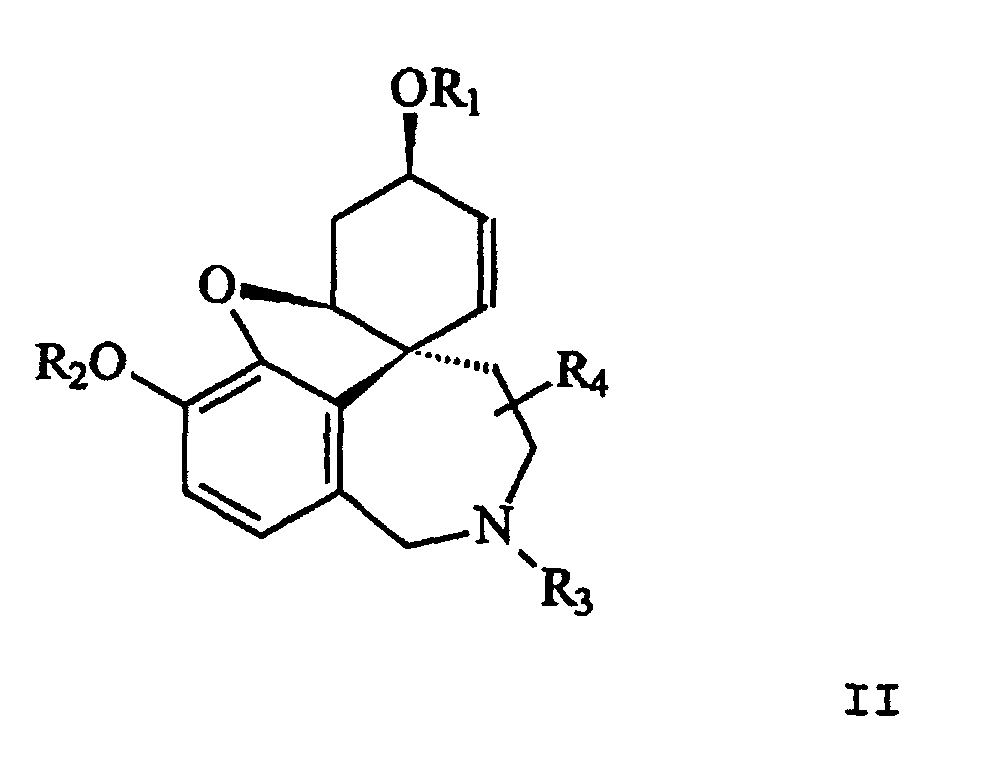
R3 is a straight or branched chain alkyl, alkenyl or alkaryl group which is optionally substituted by a halogen atom or a cycloalkyl, hydroxy, alkoxy, nitro, amino, aminoalkyl, acylamino, heteroaryl, heteroarylalkyl, aroyl, aroylalkyl or cyano group; and
R4 represents a hydrogen or a halogen atom attached to at least one of the ring carbons of the tetracyclic skeleton,
and pharmaceutically acceptable salts thereof, such as a hydrobromide, hydrochloride, methylsulphate or methiodide. - Formula II includes galantamine itself.
- Particularly preferred is galantamine itself, and salts thereof such as halides for example galantamine hydrobromide and the use of these compounds in the manufacture of a medicament for combatting ADD provides a further aspect of the invention.
- Among these compounds are those described in EP-A-236684 and WO88/08708, the disclosures of which are incorporated herein by reference. Galantamine and its derivatives of formula I and II may be prepared by the methods described in these publications.
- The cholinesterase inhibitors of formula I or II for use in the invention include compounds which are functionally similar to galantamine. These are defined herein as compounds which possess an at least 10-fold selectivity, preferably an at least 20-fold selectivity, more preferably an at least 40-fold selectivity, and most preferably an at least 50 fold selectivity, for acetylcholinesterase as opposed to butyrylcholinesterase, when measured by the in vitro method of Thomsen and Kewitz: Selective Inhibition of Human Acetylcholinesterase by Galantamine in vitro and in vivo, Life Sciences, Vol 46, pp. 1553-1558 (1990), and T. Thomsen, H. Kewitz and O. Pleul, J. Clin. Chem. Clin. Biochem. 26 469-475 (1988). The in vitro test described by Thomsen and Kewitz in Life Sciences, Vol 46, pp 1553-1558 (1990) is the one referred to herein whenever numeric (10-fold, 20-fold, 40-fold) reference to selectivity for acetylcholinesterase as opposed to butyrylcholinesterase is made. According to Thomsen and Kewitz, galantamine hydrobromide, when tested under the conditions described, shows a 50-fold selectivity; this selectivity value is taken as the "fix-point" whenever in vitro selectivities are discussed herein and could be used, for the purpose of determining the selectivities for other cholinesterase inhibitors of formula I or II, as a calibration value which is the one to establish with galantamine hydrobromide in any repetition of the experiment described by Thomsen and Kewitz. Thus, with reference to this determination method, a preferred acetylcholinesterase inhibitor is one which in the in vitro method described has an at least 10-fold selectivity for acetylcholinesterase as opposed to butyrylcholinesterase, such as an at least 20-fold selectivity for acetylcholinesterase as opposed to butyrylcholinesterase, e.g. an at least 40-fold selectivity for acetylcholinesterase as opposed to butyrylcholinesterase. A selectivity test is commercially available (from Sigma Diagnostics).
- For use in the invention the cholinesterase inhibitor such as galantamine and derivatives and salts thereof may be formulated according to conventional methods of pharmacy, together where appropriate with one or more pharmaceutically acceptable carriers, excipients or diluents such as, for example, are described in Remingtons Pharmaceutical Sciences. Such formulations may for example take the form of tablets, capsules, solutions, or lozenges, pessaries, creams, suppositories or transdermal formulations such as patches, creams, ointments or lotions, depending upon the administration route to be used, which may include enterally or parenterally, including orally or injection via the intravenous, intramuscular or subcutaneous routes, or intrathecally by means of an implanted device.
- Oral and transdermal administration routes are preferred.
- Precise dosage rates and regimes will depend upon the individual patient and may be determined by the medical practitioner based on individual circumstances. For oral administration doses may be within the range of 5-100 mg per day, such as 2 to 70 mg per day eg. 10 to 30 mg. For transdermal administration galanthamine may be delivered in equivalent daily doses. For parenteral administration, dosages may be in the range of 0.1 to 100 mg per day, such as 5 to 100 mg per day, e.g. 10 to 50 mg per day, including 5 to 30 mg per day; lower dosages are often preferred.
- Galantamine and its acid addition salts form crystals. They are generally only sparingly soluble in water at room temperature; therefore, injectable compositions are normally in the form of an aqueous suspension. If necessary, pharmaceutically-acceptable suspension aids may be employed. Typically, such a suspension will be employed at a concentration of 0.1-50 mg/ml, such as 1-50 mg/ml, more commonly 5-40 mg/ml, for example, 5-30 mg/ml or 10-40 mg/ml, such as 10-30 mg/ml, especially 20-30 mg/ml of galantamine.
- Cholinesterase inhibitors such as galantamine and salts thereof may be used as the sole drug in the management of ADD, or may be used together with other agents useful in managing ADD.
- The invention will now be described with reference to the following non-limiting examples.
-
Composition of 1 tablet containing 1 mg galantamine Galantamine hydrobromide 0.001 g Calcium phosphate 0.032 g Lactose 0.005 g Wheat Starch 0.0056 g Microcrystalline Cellulose 0.015 g Talc 0.0007 g Magnesium Stearate 0.0007 g Composition of 1 tablet containing 5 mg galantamine Galantamine hydrobromide 0.005 g Calcium phosphate 0.024 g Lactose 0.004 g Wheat Starch 0.004 g Microcrystalline Cellulose 0.04 g Talc 0.002 g Magnesium Stearate 0.001 g Composition of 1 tablet containing 10 mg galantamine Galantamine hydrobromide 0.010 g Lactose 0.040 g Wheat Starch 0.0234 g Microcrystalline Cellulose 0.0374 g Talc 0.0036 g Magnesium Stearate 0.0012 g Gelatin 0.0044 g - All the tablets are prepared according to routine tabletting procedures.
- Three patients aged 9 to 11 years diagnosed as having ADD were treated with 5 mg of galantamine given 3 times per day for a total of 14 days. After this period of time, the patients showed marked improvement of symptoms, particularly as regards attention and restlessness, as judged on an ecological behavioural scale (translated: Barkley, RA et al, Assessing situational variation in children's problem behaviours: The Home and School Situations Questionnaires, in RJ Prinz (Ed), Advances in Behavioural Assessment of Children and Families, vol 3, pp 157-176, Greenwich, CT, JAI Press, Inc).
- A further cohort of two 5 year old patients with ADD have been treated and again symptoms have generally improved, especially attention, as measured by ANT (Amsterdam Neuropsychological Tests), which are standard tests that measure reaction times for different tasks.
- The protocol in this case is first a baseline testing before medication and retesting after 2 days on medication and then after a week repeated testing. Ecological scales were also used before and are now being evaluated after one week after two weeks etc. for a treatment of one month duration. The following table shows a selection of results obtained for these two children before and after treatment with galantamine.
Before: After: mean Sd miss Fa mean Sd miss Fa Patient A Baseline: 685 766 727 470 GoNoGo 705 158 1 1 655 173 1 2 Sustained Att. 1302 565 14 13 1222 472 4 6 Focused Att. 1214 404 1352 434 0 Patient B Baseline: 1051 899 780 418 GoNoGo 804 162 2 9 766 172 3 3 Sustained Att. 1444 721 31 29 1152 600 20 50 Focused Att. 2444 1367 1 1166 270 3
Claims (5)
- The use of galantamine or a derivative thereof of formula I:wherein the broken line represents an optionally present double bond between carbon atoms 3 and 4, each R1 is independently selected from hydrogen, hydroxyl, straight or branched chain alkyl, hydroxyalkyl, carboxyalkyl amino, alkylamino, acyl, lower alkanoyl, cyano, sulfhydryl, C1-6alkoxy, alkylthio, aryloxy, arylthio, R3-substituted aryloxy, R3-substituted arylthio, aralkoxy, an optionally R3-substituted aliphatic or aryl carbamyl group, aralkylthio, R3-substituted aralkoxy, R3-substituted aralkylthio, aryloxymethyl, R3-substituted aryloxymethyl, alkanoyloxy, hydroxy-substituted alkanoyloxy, benzoyloxy, R3-substituted benzoyloxy, aryloxycarbonyl and R3-substituted aryloxycarbonyl,
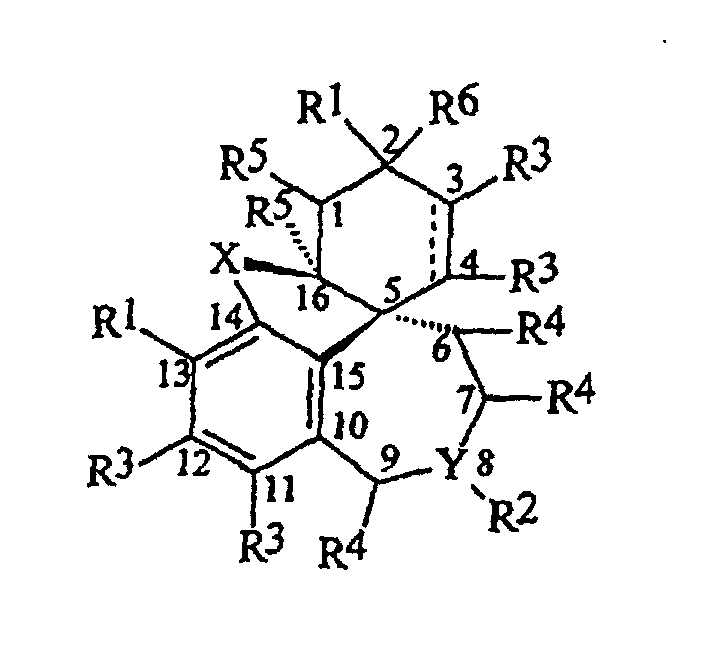
R2 is selected from hydrogen, straight or branched chain C1-6alkyl, alkenyl or alkaryl group, optionally substituted by a halogen atom or a cycloalkyl, hydroxy, alkoxy, nitro, amino, aminoalkyl, acylamino, heteroaryl, heteroaryl-alkyl, aryl, arylalkyl, cyano, amyl, aroyl, cycloalkylmethyl, allyl, phenyl, R3-substituted phenyl, alkylphenyl, R3-substituted alkylphenyl, heterocyclyl selected from α- or β-furyl, α- or β-thienyl, thenyl, pyridyl, pyrazinyl, and pyrimidyl, alkyl-heterocyclyl or R'-substituted heterocyclyl, where R' is alkyl or alkoxy,
each R3 is independently selected from hydrogen, hydroxyl, sulfhydryl, alkyl, hydroxyalkyl, aryl, aralkyl, alkoxy, mercaptoalkyl, aryloxy, thiaryloxy, alkaryloxy, mercaptoalkaryl, nitro, amino, N-alkylamino, N-arylamino, N-alkarylamino, fluoro, chloro, bromo, iodo, and trifluoromethyl,
each R4 is independently selected from hydrogen, halo, trifluoromethyl or C1-4-alkyl,
each R5 is independently selected from hydrogen or hydroxymethyl,
R6 is hydrogen or C1-6alkyl, or when R1 at carbon atom 2 is hydroxyl, R6 may be a moiety of formula I wherein R6 is hydrogen and R1 is a linking bond; or
R1 at carbon atom 2 and R6 may jointly form semicarbazone,
X is oxygen or NR3,
Y is nitrogen or phosphorus,
and methylenedioxy derivatives thereof and
pharmaceutically acceptable acid addition salts thereof
in the manufacture of a medicament for combatting attention deficit disorders. - The use of galantamine or a derivative thereof of formula IIwherein R1 and R2 which may be the same or different each represents a hydrogen atom or an acyl group, such as a lower alkanoyl group, e.g. an acetyl group or a straight-chained or branched alkyl group, e.g. methyl, ethyl, propyl, or isopropyl;

R3 is a straight or branched chain alkyl, alkenyl or alkaryl group which is optionally substituted by a halogen atom or a cycloalkyl, hydroxy, alkoxy, nitro, amino, aminoalkyl, acylamino, heteroaryl, heteroarylalkyl, aroyl, aroylalkyl or cyano group; and
R4 represents a hydrogen or a halogen atom attached to at least one of the ring carbons of the tetracyclic skeleton,
and pharmaceutically acceptable salts thereof, such as a hydrobromide, hydrochloride, methylsulphate or methiodide in the manufacture of a medicament for combatting attention deficit disorders. - The use of galantamine or a salt thereof in the manufacture of a medicament for combatting attention deficit disorders.
- The use as claimed in any one of claims 1 to 3 wherein the disorder is attention deficit hyperactivity disorder.
- The use as claimed in any one of claims 1 to 3 wherein the disorder is a hyperkinetic disorder.
Applications Claiming Priority (3)
| Application Number | Priority Date | Filing Date | Title |
|---|---|---|---|
| GB9716879 | 1997-08-08 | ||
| GBGB9716879.3A GB9716879D0 (en) | 1997-08-08 | 1997-08-08 | Treatment of attention deficit disorders |
| PCT/GB1998/002378 WO1999007359A1 (en) | 1997-08-08 | 1998-08-07 | Use of cholinesterase inhibitors for treating attention deficit disorders |
Publications (2)
| Publication Number | Publication Date |
|---|---|
| EP1001761A1 EP1001761A1 (en) | 2000-05-24 |
| EP1001761B1 true EP1001761B1 (en) | 2004-07-28 |
Family
ID=10817250
Family Applications (1)
| Application Number | Title | Priority Date | Filing Date |
|---|---|---|---|
| EP98938759A Expired - Lifetime EP1001761B1 (en) | 1997-08-08 | 1998-08-07 | Use of cholinesterase inhibitors for treating attention deficit disorders |
Country Status (12)
| Country | Link |
|---|---|
| EP (1) | EP1001761B1 (en) |
| JP (1) | JP2001513496A (en) |
| AT (1) | ATE271865T1 (en) |
| AU (1) | AU8736798A (en) |
| CA (1) | CA2300405C (en) |
| DE (1) | DE69825286T2 (en) |
| DK (1) | DK1001761T3 (en) |
| ES (1) | ES2224421T3 (en) |
| GB (1) | GB9716879D0 (en) |
| TW (1) | TW577742B (en) |
| WO (1) | WO1999007359A1 (en) |
| ZA (1) | ZA987140B (en) |
Families Citing this family (19)
| Publication number | Priority date | Publication date | Assignee | Title |
|---|---|---|---|---|
| US7081238B2 (en) * | 1995-11-03 | 2006-07-25 | The President And Fellows Of Harvard College | Methods for diagnosing and monitoring treatment ADHD by assessing the dopamine transporter level |
| US7553478B2 (en) | 1999-05-12 | 2009-06-30 | President And Fellows Of Harvard College | Methods for diagnosing and monitoring treatment ADHD by assessing the dopamine transporter level |
| PL202463B1 (en) * | 2000-03-31 | 2009-06-30 | Sanochemia Pharmazeutika Ag | Novel derivatives and analogues of galanthamin |
| WO2004075916A1 (en) * | 2003-02-27 | 2004-09-10 | Shirankai Kyoto University Faculty Of Medicine Alumni Association Inc. | Pharmaceutical composition for treatment of drug dependence |
| US8278345B2 (en) | 2006-11-09 | 2012-10-02 | Probiodrug Ag | Inhibitors of glutaminyl cyclase |
| JP5523107B2 (en) | 2006-11-30 | 2014-06-18 | プロビオドルグ エージー | Novel inhibitors of glutaminyl cyclase |
| EP2481408A3 (en) | 2007-03-01 | 2013-01-09 | Probiodrug AG | New use of glutaminyl cyclase inhibitors |
| WO2008128985A1 (en) | 2007-04-18 | 2008-10-30 | Probiodrug Ag | Thiourea derivatives as glutaminyl cyclase inhibitors |
| MX2012002993A (en) | 2009-09-11 | 2012-04-19 | Probiodrug Ag | Heterocylcic derivatives as inhibitors of glutaminyl cyclase. |
| US20110212928A1 (en) | 2010-02-09 | 2011-09-01 | The Johns Hopkins University | Methods and compositions for improving cognitive function |
| JP6026284B2 (en) | 2010-03-03 | 2016-11-16 | プロビオドルグ エージー | Inhibitors of glutaminyl cyclase |
| US8269019B2 (en) | 2010-03-10 | 2012-09-18 | Probiodrug Ag | Inhibitors |
| WO2011131748A2 (en) | 2010-04-21 | 2011-10-27 | Probiodrug Ag | Novel inhibitors |
| ES2570167T3 (en) | 2011-03-16 | 2016-05-17 | Probiodrug Ag | Benzimidazole derivatives as glutaminyl cyclase inhibitors |
| WO2014078568A1 (en) | 2012-11-14 | 2014-05-22 | The Johns Hopkins University | Methods and compositions for treating schizophrenia |
| EP2968220B1 (en) | 2013-03-15 | 2021-05-05 | Agenebio, Inc. | Methods and compositions for improving cognitive function |
| WO2014144663A1 (en) | 2013-03-15 | 2014-09-18 | The Johns Hopkins University | Methods and compositions for improving cognitive function |
| NZ738682A (en) | 2015-05-22 | 2022-01-28 | Agenebio Inc | Extended release pharmaceutical compositions of levetiracetam |
| PL3461819T3 (en) | 2017-09-29 | 2020-11-30 | Probiodrug Ag | Inhibitors of glutaminyl cyclase |
Family Cites Families (9)
| Publication number | Priority date | Publication date | Assignee | Title |
|---|---|---|---|---|
| US4550113A (en) * | 1982-08-19 | 1985-10-29 | Nauchno-Issledovatelsky Institut Po Biologicheskikm Ispytaniyam Khimicheskikh Soedineny | 9-Amino-2,3,5,6,7,8-hexahydro-1H-cyclopenta(b)quinoline monohydrate hydrochloride as stimulant of neuro-muscular transmission of smooth muscles |
| IL74497A (en) * | 1985-03-05 | 1990-02-09 | Proterra Ag | Pharmaceutical compositions containing phenyl carbamate derivatives and certain phenyl carbamate derivatives |
| DK623586A (en) * | 1985-12-27 | 1987-06-28 | Eisai Co Ltd | PIPERIDE INGREDIENTS OR SALTS THEREOF AND PHARMACEUTICAL COMPOSITIONS CONTAINING THE COMPOUNDS |
| US4999430A (en) * | 1989-07-31 | 1991-03-12 | Warner-Lambert Company | Derivatives of 1,2,3,4-tetrahydro-9-acrisinamine |
| US5336675A (en) * | 1991-05-14 | 1994-08-09 | Ernir Snorrason | Method of treating mania in humans |
| TW248556B (en) * | 1993-01-18 | 1995-06-01 | Takeda Pharm Industry Co | |
| MX9605218A (en) * | 1994-04-29 | 1997-10-31 | Pfizer | Novel acyclic and cyclic amides as neurotransmitter release enhancers. |
| ES2188946T3 (en) * | 1996-06-07 | 2003-07-01 | Eisai Co Ltd | DONEPECIL CHLORHYDRATE POLYMORPHES AND THE SAME MANUFACTURING PROCESS. |
| DK0971713T3 (en) * | 1997-03-03 | 2003-09-22 | Eisai Co Ltd | Use of cholinesterase inhibitors to treat attention disorders |
-
1997
- 1997-08-08 GB GBGB9716879.3A patent/GB9716879D0/en active Pending
-
1998
- 1998-08-07 AT AT98938759T patent/ATE271865T1/en not_active IP Right Cessation
- 1998-08-07 DK DK98938759T patent/DK1001761T3/en active
- 1998-08-07 AU AU87367/98A patent/AU8736798A/en not_active Abandoned
- 1998-08-07 WO PCT/GB1998/002378 patent/WO1999007359A1/en not_active Ceased
- 1998-08-07 ES ES98938759T patent/ES2224421T3/en not_active Expired - Lifetime
- 1998-08-07 ZA ZA987140A patent/ZA987140B/en unknown
- 1998-08-07 JP JP2000506951A patent/JP2001513496A/en active Pending
- 1998-08-07 CA CA002300405A patent/CA2300405C/en not_active Expired - Fee Related
- 1998-08-07 DE DE69825286T patent/DE69825286T2/en not_active Expired - Fee Related
- 1998-08-07 EP EP98938759A patent/EP1001761B1/en not_active Expired - Lifetime
- 1998-08-13 TW TW087113353A patent/TW577742B/en not_active IP Right Cessation
Also Published As
| Publication number | Publication date |
|---|---|
| AU8736798A (en) | 1999-03-01 |
| CA2300405C (en) | 2008-01-22 |
| EP1001761A1 (en) | 2000-05-24 |
| DK1001761T3 (en) | 2004-11-29 |
| CA2300405A1 (en) | 1999-02-18 |
| GB9716879D0 (en) | 1997-10-15 |
| JP2001513496A (en) | 2001-09-04 |
| DE69825286T2 (en) | 2005-08-11 |
| DE69825286D1 (en) | 2004-09-02 |
| TW577742B (en) | 2004-03-01 |
| ATE271865T1 (en) | 2004-08-15 |
| WO1999007359A1 (en) | 1999-02-18 |
| ES2224421T3 (en) | 2005-03-01 |
| ZA987140B (en) | 1999-03-09 |
Similar Documents
| Publication | Publication Date | Title |
|---|---|---|
| CA2300405C (en) | Use of cholinesterase inhibitors for treating attention deficit disorders | |
| EP0918523B1 (en) | Treatment of arthritis disorders, rheumatoid arthritis and manifestations associated with rheumatoid disorders | |
| EP0879596B1 (en) | Use of galanthamines to reduce benzodiazepine side effects | |
| EP0584185B1 (en) | Treatment of fatigue syndrome with cholinesterase inhibitors | |
| US20040214863A1 (en) | Liquid dosage formulations of donepezil | |
| US5965571A (en) | Cholinesterase inhibitors for treatment of Parkinson's disease | |
| US7297691B2 (en) | Treatment of sleep disorders with cholinesterase inhibitors | |
| WO1999008672A1 (en) | Use of cholinesterase inhibitor for treating diseases associated with proteolytic enzyme activity | |
| AU663086C (en) | Improvements in benzodiazepine treatment by cholinesterase inhibitors | |
| HK1020535B (en) | Treatment of arthritis disorders, rheumatoid arthritis and manifestations associated with rheumatoid disorders |
Legal Events
| Date | Code | Title | Description |
|---|---|---|---|
| PUAI | Public reference made under article 153(3) epc to a published international application that has entered the european phase |
Free format text: ORIGINAL CODE: 0009012 |
|
| 17P | Request for examination filed |
Effective date: 20000211 |
|
| AK | Designated contracting states |
Kind code of ref document: A1 Designated state(s): AT BE CH CY DE DK ES FI FR GB GR IE IT LI LU MC NL PT SE |
|
| RAP1 | Party data changed (applicant data changed or rights of an application transferred) |
Owner name: SNORRASON, ERNIR |
|
| 17Q | First examination report despatched |
Effective date: 20010911 |
|
| RIC1 | Information provided on ipc code assigned before grant |
Free format text: 7A 61K 31/27 A, 7A 61K 31/66 B, 7A 61K 31/44 B, 7A 61K 31/445 B, 7A 61K 31/40 B, 7A 61K 31/645 B, 7A 61K 31/435 B, 7A 61K 31/55 B, 7A 61P 25/00 B |
|
| RIC1 | Information provided on ipc code assigned before grant |
Free format text: 7A 61K 31/27 A, 7A 61K 31/66 B, 7A 61K 31/44 B, 7A 61K 31/445 B, 7A 61K 31/40 B, 7A 61K 31/645 B, 7A 61K 31/435 B, 7A 61K 31/55 B, 7A 61P 25/00 B |
|
| RIC1 | Information provided on ipc code assigned before grant |
Free format text: 7A 61K 31/27 A, 7A 61K 31/66 B, 7A 61K 31/44 B, 7A 61K 31/445 B, 7A 61K 31/40 B, 7A 61K 31/645 B, 7A 61K 31/435 B, 7A 61K 31/55 B, 7A 61P 25/00 B |
|
| GRAH | Despatch of communication of intention to grant a patent |
Free format text: ORIGINAL CODE: EPIDOS IGRA |
|
| RIC1 | Information provided on ipc code assigned before grant |
Free format text: 7A 61K 31/27 A, 7A 61K 31/66 B, 7A 61K 31/44 B, 7A 61K 31/445 B, 7A 61K 31/40 B, 7A 61K 31/645 B, 7A 61K 31/435 B, 7A 61K 31/55 B, 7A 61P 25/00 B |
|
| GRAH | Despatch of communication of intention to grant a patent |
Free format text: ORIGINAL CODE: EPIDOS IGRA |
|
| GRAA | (expected) grant |
Free format text: ORIGINAL CODE: 0009210 |
|
| RIC1 | Information provided on ipc code assigned before grant |
Ipc: 7A 61P 25/00 B Ipc: 7A 61K 31/55 B Ipc: 7A 61K 31/435 B Ipc: 7A 61K 31/40 B Ipc: 7A 61K 31/4406 B Ipc: 7A 61K 31/44 B Ipc: 7A 61K 31/66 B Ipc: 7A 61K 31/27 A |
|
| AK | Designated contracting states |
Kind code of ref document: B1 Designated state(s): AT BE CH CY DE DK ES FI FR GB GR IE IT LI LU MC NL PT SE |
|
| PG25 | Lapsed in a contracting state [announced via postgrant information from national office to epo] |
Ref country code: LI Free format text: LAPSE BECAUSE OF FAILURE TO SUBMIT A TRANSLATION OF THE DESCRIPTION OR TO PAY THE FEE WITHIN THE PRESCRIBED TIME-LIMIT Effective date: 20040728 Ref country code: CY Free format text: LAPSE BECAUSE OF FAILURE TO SUBMIT A TRANSLATION OF THE DESCRIPTION OR TO PAY THE FEE WITHIN THE PRESCRIBED TIME-LIMIT Effective date: 20040728 Ref country code: CH Free format text: LAPSE BECAUSE OF FAILURE TO SUBMIT A TRANSLATION OF THE DESCRIPTION OR TO PAY THE FEE WITHIN THE PRESCRIBED TIME-LIMIT Effective date: 20040728 |
|
| REG | Reference to a national code |
Ref country code: GB Ref legal event code: FG4D |
|
| REG | Reference to a national code |
Ref country code: CH Ref legal event code: EP |
|
| PG25 | Lapsed in a contracting state [announced via postgrant information from national office to epo] |
Ref country code: AT Free format text: LAPSE BECAUSE OF NON-PAYMENT OF DUE FEES Effective date: 20040807 |
|
| REG | Reference to a national code |
Ref country code: IE Ref legal event code: FG4D |
|
| PG25 | Lapsed in a contracting state [announced via postgrant information from national office to epo] |
Ref country code: MC Free format text: LAPSE BECAUSE OF NON-PAYMENT OF DUE FEES Effective date: 20040831 Ref country code: BE Free format text: LAPSE BECAUSE OF NON-PAYMENT OF DUE FEES Effective date: 20040831 |
|
| REF | Corresponds to: |
Ref document number: 69825286 Country of ref document: DE Date of ref document: 20040902 Kind code of ref document: P |
|
| PG25 | Lapsed in a contracting state [announced via postgrant information from national office to epo] |
Ref country code: LU Free format text: LAPSE BECAUSE OF NON-PAYMENT OF DUE FEES Effective date: 20040928 |
|
| REG | Reference to a national code |
Ref country code: SE Ref legal event code: TRGR |
|
| PG25 | Lapsed in a contracting state [announced via postgrant information from national office to epo] |
Ref country code: GR Free format text: LAPSE BECAUSE OF FAILURE TO SUBMIT A TRANSLATION OF THE DESCRIPTION OR TO PAY THE FEE WITHIN THE PRESCRIBED TIME-LIMIT Effective date: 20041028 Ref country code: GB Free format text: LAPSE BECAUSE OF NON-PAYMENT OF DUE FEES Effective date: 20041028 |
|
| REG | Reference to a national code |
Ref country code: DK Ref legal event code: T3 |
|
| REG | Reference to a national code |
Ref country code: CH Ref legal event code: PL |
|
| BERE | Be: lapsed |
Owner name: *SNORRASON ERNIR Effective date: 20040831 |
|
| REG | Reference to a national code |
Ref country code: ES Ref legal event code: FG2A Ref document number: 2224421 Country of ref document: ES Kind code of ref document: T3 |
|
| ET | Fr: translation filed | ||
| PLBE | No opposition filed within time limit |
Free format text: ORIGINAL CODE: 0009261 |
|
| STAA | Information on the status of an ep patent application or granted ep patent |
Free format text: STATUS: NO OPPOSITION FILED WITHIN TIME LIMIT |
|
| GBPC | Gb: european patent ceased through non-payment of renewal fee |
Effective date: 20041028 |
|
| 26N | No opposition filed |
Effective date: 20050429 |
|
| PG25 | Lapsed in a contracting state [announced via postgrant information from national office to epo] |
Ref country code: IT Free format text: LAPSE BECAUSE OF NON-PAYMENT OF DUE FEES;WARNING: LAPSES OF ITALIAN PATENTS WITH EFFECTIVE DATE BEFORE 2007 MAY HAVE OCCURRED AT ANY TIME BEFORE 2007. THE CORRECT EFFECTIVE DATE MAY BE DIFFERENT FROM THE ONE RECORDED. Effective date: 20050807 |
|
| PGFP | Annual fee paid to national office [announced via postgrant information from national office to epo] |
Ref country code: DE Payment date: 20051110 Year of fee payment: 8 |
|
| PGFP | Annual fee paid to national office [announced via postgrant information from national office to epo] |
Ref country code: IE Payment date: 20051111 Year of fee payment: 8 |
|
| PGFP | Annual fee paid to national office [announced via postgrant information from national office to epo] |
Ref country code: FI Payment date: 20051114 Year of fee payment: 8 |
|
| PGFP | Annual fee paid to national office [announced via postgrant information from national office to epo] |
Ref country code: DK Payment date: 20051115 Year of fee payment: 8 |
|
| PGFP | Annual fee paid to national office [announced via postgrant information from national office to epo] |
Ref country code: NL Payment date: 20051123 Year of fee payment: 8 |
|
| PGFP | Annual fee paid to national office [announced via postgrant information from national office to epo] |
Ref country code: FR Payment date: 20051125 Year of fee payment: 8 |
|
| PGFP | Annual fee paid to national office [announced via postgrant information from national office to epo] |
Ref country code: SE Payment date: 20051128 Year of fee payment: 8 |
|
| PG25 | Lapsed in a contracting state [announced via postgrant information from national office to epo] |
Ref country code: IE Free format text: LAPSE BECAUSE OF NON-PAYMENT OF DUE FEES Effective date: 20060807 Ref country code: FI Free format text: LAPSE BECAUSE OF NON-PAYMENT OF DUE FEES Effective date: 20060807 |
|
| PG25 | Lapsed in a contracting state [announced via postgrant information from national office to epo] |
Ref country code: SE Free format text: LAPSE BECAUSE OF NON-PAYMENT OF DUE FEES Effective date: 20060808 |
|
| PG25 | Lapsed in a contracting state [announced via postgrant information from national office to epo] |
Ref country code: DK Free format text: LAPSE BECAUSE OF NON-PAYMENT OF DUE FEES Effective date: 20060831 |
|
| PG25 | Lapsed in a contracting state [announced via postgrant information from national office to epo] |
Ref country code: NL Free format text: LAPSE BECAUSE OF NON-PAYMENT OF DUE FEES Effective date: 20070301 Ref country code: DE Free format text: LAPSE BECAUSE OF NON-PAYMENT OF DUE FEES Effective date: 20070301 |
|
| REG | Reference to a national code |
Ref country code: DK Ref legal event code: EBP |
|
| EUG | Se: european patent has lapsed | ||
| NLV4 | Nl: lapsed or anulled due to non-payment of the annual fee |
Effective date: 20070301 |
|
| REG | Reference to a national code |
Ref country code: IE Ref legal event code: MM4A |
|
| REG | Reference to a national code |
Ref country code: FR Ref legal event code: ST Effective date: 20070430 |
|
| BERE | Be: lapsed |
Owner name: *SNORRASON ERNIR Effective date: 20040831 |
|
| PG25 | Lapsed in a contracting state [announced via postgrant information from national office to epo] |
Ref country code: PT Free format text: LAPSE BECAUSE OF NON-PAYMENT OF DUE FEES Effective date: 20041228 |
|
| PG25 | Lapsed in a contracting state [announced via postgrant information from national office to epo] |
Ref country code: FR Free format text: LAPSE BECAUSE OF NON-PAYMENT OF DUE FEES Effective date: 20060831 |
|
| PGFP | Annual fee paid to national office [announced via postgrant information from national office to epo] |
Ref country code: ES Payment date: 20090902 Year of fee payment: 12 |
|
| REG | Reference to a national code |
Ref country code: ES Ref legal event code: FD2A Effective date: 20111019 |
|
| PG25 | Lapsed in a contracting state [announced via postgrant information from national office to epo] |
Ref country code: ES Free format text: LAPSE BECAUSE OF NON-PAYMENT OF DUE FEES Effective date: 20100808 |