EP1000347B1 - Method and apparatus for determining molecular crystal structures - Google Patents
Method and apparatus for determining molecular crystal structuresInfo
- Publication number
- EP1000347B1 EP1000347B1 EP98937640A EP98937640A EP1000347B1 EP 1000347 B1 EP1000347 B1 EP 1000347B1 EP 98937640 A EP98937640 A EP 98937640A EP 98937640 A EP98937640 A EP 98937640A EP 1000347 B1 EP1000347 B1 EP 1000347B1
- Authority
- EP
- European Patent Office
- Prior art keywords
- trial
- structures
- variables
- data
- ordinates
- Prior art date
- Legal status (The legal status is an assumption and is not a legal conclusion. Google has not performed a legal analysis and makes no representation as to the accuracy of the status listed.)
- Expired - Lifetime
Links
- 239000013078 crystal Substances 0.000 title claims description 75
- 238000000034 method Methods 0.000 title claims description 62
- 238000002447 crystallographic data Methods 0.000 claims description 49
- 239000000843 powder Substances 0.000 claims description 40
- 239000011159 matrix material Substances 0.000 claims description 12
- 238000002922 simulated annealing Methods 0.000 claims description 7
- 238000012544 monitoring process Methods 0.000 claims 2
- 230000004075 alteration Effects 0.000 claims 1
- 238000004458 analytical method Methods 0.000 description 25
- 210000004027 cell Anatomy 0.000 description 20
- 210000000349 chromosome Anatomy 0.000 description 18
- CCGSUNCLSOWKJO-UHFFFAOYSA-N cimetidine Chemical compound N#CNC(=N/C)\NCCSCC1=NC=N[C]1C CCGSUNCLSOWKJO-UHFFFAOYSA-N 0.000 description 17
- 229960001380 cimetidine Drugs 0.000 description 17
- 230000006870 function Effects 0.000 description 14
- YKPUWZUDDOIDPM-SOFGYWHQSA-N capsaicin Chemical compound COC1=CC(CNC(=O)CCCC\C=C\C(C)C)=CC=C1O YKPUWZUDDOIDPM-SOFGYWHQSA-N 0.000 description 8
- 239000012634 fragment Substances 0.000 description 8
- 108090000623 proteins and genes Proteins 0.000 description 8
- 238000004422 calculation algorithm Methods 0.000 description 7
- 238000007796 conventional method Methods 0.000 description 6
- 238000010586 diagram Methods 0.000 description 6
- VYFYYTLLBUKUHU-UHFFFAOYSA-N dopamine Chemical compound NCCC1=CC=C(O)C(O)=C1 VYFYYTLLBUKUHU-UHFFFAOYSA-N 0.000 description 6
- 230000002068 genetic effect Effects 0.000 description 6
- 230000008569 process Effects 0.000 description 5
- 230000009467 reduction Effects 0.000 description 5
- 229960002504 capsaicin Drugs 0.000 description 4
- 235000017663 capsaicin Nutrition 0.000 description 4
- 238000009395 breeding Methods 0.000 description 3
- 230000001488 breeding effect Effects 0.000 description 3
- 238000002050 diffraction method Methods 0.000 description 3
- 229960003638 dopamine Drugs 0.000 description 3
- 230000008901 benefit Effects 0.000 description 2
- 238000004364 calculation method Methods 0.000 description 2
- 150000001768 cations Chemical class 0.000 description 2
- 230000001276 controlling effect Effects 0.000 description 2
- CPELXLSAUQHCOX-DYCDLGHISA-N deuterium bromide Chemical compound [2H]Br CPELXLSAUQHCOX-DYCDLGHISA-N 0.000 description 2
- 238000011161 development Methods 0.000 description 2
- 238000011835 investigation Methods 0.000 description 2
- 230000035772 mutation Effects 0.000 description 2
- 238000000634 powder X-ray diffraction Methods 0.000 description 2
- BBEAQIROQSPTKN-UHFFFAOYSA-N pyrene Chemical compound C1=CC=C2C=CC3=CC=CC4=CC=C1C2=C43 BBEAQIROQSPTKN-UHFFFAOYSA-N 0.000 description 2
- 230000000717 retained effect Effects 0.000 description 2
- 239000000126 substance Substances 0.000 description 2
- CPELXLSAUQHCOX-UHFFFAOYSA-M Bromide Chemical compound [Br-] CPELXLSAUQHCOX-UHFFFAOYSA-M 0.000 description 1
- JZUFKLXOESDKRF-UHFFFAOYSA-N Chlorothiazide Chemical compound C1=C(Cl)C(S(=O)(=O)N)=CC2=C1NCNS2(=O)=O JZUFKLXOESDKRF-UHFFFAOYSA-N 0.000 description 1
- HEFNNWSXXWATRW-UHFFFAOYSA-N Ibuprofen Chemical compound CC(C)CC1=CC=C(C(C)C(O)=O)C=C1 HEFNNWSXXWATRW-UHFFFAOYSA-N 0.000 description 1
- 238000003991 Rietveld refinement Methods 0.000 description 1
- XUIMIQQOPSSXEZ-UHFFFAOYSA-N Silicon Chemical compound [Si] XUIMIQQOPSSXEZ-UHFFFAOYSA-N 0.000 description 1
- 208000007107 Stomach Ulcer Diseases 0.000 description 1
- 238000002441 X-ray diffraction Methods 0.000 description 1
- 239000008186 active pharmaceutical agent Substances 0.000 description 1
- 150000001450 anions Chemical class 0.000 description 1
- 230000003466 anti-cipated effect Effects 0.000 description 1
- 238000013528 artificial neural network Methods 0.000 description 1
- 229960002155 chlorothiazide Drugs 0.000 description 1
- 230000000295 complement effect Effects 0.000 description 1
- 150000001875 compounds Chemical class 0.000 description 1
- 230000002596 correlated effect Effects 0.000 description 1
- 230000000875 corresponding effect Effects 0.000 description 1
- 230000007423 decrease Effects 0.000 description 1
- 230000001419 dependent effect Effects 0.000 description 1
- 238000009826 distribution Methods 0.000 description 1
- 229940088679 drug related substance Drugs 0.000 description 1
- 230000000694 effects Effects 0.000 description 1
- 238000000556 factor analysis Methods 0.000 description 1
- GVEPBJHOBDJJJI-UHFFFAOYSA-N fluoranthrene Natural products C1=CC(C2=CC=CC=C22)=C3C2=CC=CC3=C1 GVEPBJHOBDJJJI-UHFFFAOYSA-N 0.000 description 1
- 239000003485 histamine H2 receptor antagonist Substances 0.000 description 1
- 229960001680 ibuprofen Drugs 0.000 description 1
- 230000006872 improvement Effects 0.000 description 1
- 238000012804 iterative process Methods 0.000 description 1
- 239000000463 material Substances 0.000 description 1
- 238000013508 migration Methods 0.000 description 1
- 230000005012 migration Effects 0.000 description 1
- 238000001383 neutron diffraction data Methods 0.000 description 1
- 238000002250 neutron powder diffraction Methods 0.000 description 1
- 238000012856 packing Methods 0.000 description 1
- 238000005381 potential energy Methods 0.000 description 1
- 238000012545 processing Methods 0.000 description 1
- 230000000750 progressive effect Effects 0.000 description 1
- 230000005855 radiation Effects 0.000 description 1
- 229910052710 silicon Inorganic materials 0.000 description 1
- 239000010703 silicon Substances 0.000 description 1
- 230000004083 survival effect Effects 0.000 description 1
- 238000013519 translation Methods 0.000 description 1
Images






Classifications
-
- G—PHYSICS
- G01—MEASURING; TESTING
- G01N—INVESTIGATING OR ANALYSING MATERIALS BY DETERMINING THEIR CHEMICAL OR PHYSICAL PROPERTIES
- G01N23/00—Investigating or analysing materials by the use of wave or particle radiation, e.g. X-rays or neutrons, not covered by groups G01N3/00 – G01N17/00, G01N21/00 or G01N22/00
- G01N23/20—Investigating or analysing materials by the use of wave or particle radiation, e.g. X-rays or neutrons, not covered by groups G01N3/00 – G01N17/00, G01N21/00 or G01N22/00 by using diffraction of the radiation by the materials, e.g. for investigating crystal structure; by using scattering of the radiation by the materials, e.g. for investigating non-crystalline materials; by using reflection of the radiation by the materials
Definitions
- the present invention provides an improved method and apparatus for determining molecular crystal structures from powder diffraction data.
- the present invention enables molecular crystal structures to be identified using only powder diffraction data in a manner that is considerably faster than is currently the case.
- the molecular crystal structure of large organic molecules, such as pharmaceutical compounds can be determined using data from powder diffraction analysis.
- Information on the molecular crystal structure of a molecule is usually obtained through irradiation of a single crystal of the molecule with neutrons or X-rays. Subsequent analysis of the resultant diffraction pattern, which consists of a series of angularly spaced intensity peaks with each peak representing an individual Bragg reflection, provides information on the structure. Whilst this single crystal diffraction technique is an effective technique for determining the crystal structure of a molecule, it can often prove difficult to grow the single crystals necessary for the analysis. Moreover, where the molecule can crystallise in more than one polymorphic form, it is sometimes the case that it can prove very difficult to grow a single crystal of a particular polymorph.
- diffraction patterns of this type are used in a point-to-point comparison with diffraction data calculated from a postulated model of the crystal structure. If there is good agreement between the measured and calculated diffraction data, it may be assumed that the postulated structure is close to the true crystal structure of the molecule. In general, good agreement is only obtained when there is significant prior knowledge of the true crystal structure of the molecule, as there is an infinite number of crystal structures that may be postulated and compared to the experimental data. Moreover, such analysis is very slow and time consuming because of the extremely large body of point-to-point data that must be compared for each postulated crystal model in turn.
- the present invention seeks to address the problems discussed above with respect to existing diffraction analysis techniques and in particular to provide a method and apparatus that is considerably faster than conventional techniques.
- the present invention further seeks to provide a method and apparatus for determining molecular crystal structures which employs data obtained from the irradiation of crystalline powders and permits analysis without the need for prior knowledge of any approximate crystal structure.
- the present invention provides a method for determining molecular crystal structures from powder diffraction data comprising the steps of:
- the present invention provides apparatus for determining molecular crystal structures
- a structure factor analyser for generating from experimental powder diffraction data for the molecule under examination a reduced representation of the powder diffraction pattern based on a predetermined unit cell and space group in which the total quantity of diffraction data is significantly reduced whilst the characteristics of the diffraction data representative of the crystal structure under examination are maintained;
- a controller for determining a set of variables for describing trial molecular structures, derived from predetermined internal co-ordinates and said space group;
- a searching processor for creating a population of trial structures each defined by a unique set of values for said variables said searching processor including a fitness analyser for calculating a fitness for each trial structure with respect to the reduced representation of the powder diffraction pattern, a thresholding device for determining whether any one of the calculated fitnesses is less than or equal to a predetermined threshold, a survivor selector for selecting at least one survivor from the population of trial structures, a variable adjustment device for altering
- the reduced representation preferably consists of identification of each reflection in the powder diffraction data along with associated weighting factors and ideally is in the form of a structure factor intensity listing and associated covariance matrix.
- Reference herein to reflections is intended as reference to individual Bragg reflections or peaks in the diffraction data resulting from reflections of the incident radiation from the structure of the molecule.
- the plurality of co-ordinates preferably consist of three co-ordinates representative of the location of the molecule within the unit cell, three co-ordinates representative of the orientation of the molecule within the unit cell and one or more co-ordinates representative of respective torsion angles.
- the structure factor analyser additionally automatically determines the optimal unit cell and space group for the molecule under examination instead of the unit cell and space group being predetemined manually and input into the structure factor analyser. More, preferably a co-ordinate generator is provided for automatically determining the set of internal co-ordinates instead of the set of internal co-ordinates being predetermined manually and input into the controller.
- the present invention relies on the fact that at its most basic, a molecular crystal structure can be represented by a set of internal co-ordinates describing the molecule under investigation together with co-ordinates describing the location and orientation of the molecule within a unit cell of which only some but not all need be variable.
- the reduction of the molecular crystal structure to such a set of variables enables analysis of the trial structures to be performed much more quickly than an analysis performed using the conventional method of describing the crystal structure in terms of the fractional or Cartesian co-ordinates of every atom in the asymmetric unit of the structure.
- Such conventional representations are considered to be unworkable in a model building sense because of the computing power necessary to position individual atoms independently of each other.
- the representation of the trial structures used in the invention along with the novel fitness function means that analyses can be performed in seconds or minutes on the current generation of conventional personal computers or workstations. Moreover, the representation is versatile as it allows the invention to work with flexible molecules as well as multiple fragments.
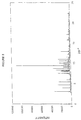
- a conventional powder diffraction pattern (10) is obtained from a crystalline powder sample of cimetidine.
- the resultant diffraction pattern is shown in Figure 1.
- the experimental diffraction data (10) is input into a cell dimension analyser (12).
- the cell dimension analyser (12) uses conventional techniques to assess the diffraction pattern in order to determine the unit cell dimensions of the crystal structure. The generation of the unit cell dimensions may alternatively be performed manually, however, it is preferred that the unit cell dimensions be generated automatically using the crystal modelling apparatus.
- the diffraction pattern is also input to a structure factor analyser (14) that also receives the unit cell dimensions determined by the analyser (12).
- the structure factor analyser (14) analyses the experimental diffraction pattern using the lowest symmetry space group consistent with the crystal class determined by the cell dimension analyser (12), reducing the data to a first structure factor intensity listing and an associated covariance matrix. From this listing, the true space group (16) of the crystal structure is determined and used by the structure factor analyser (14) to generate a second structure factor intensity listing and associated covariance matrix (18). By generating this second structure factor intensity listing and associated covariance matrix (18), the total quantity of the original experimental diffraction data is significantly reduced in amount without loss of those characteristics of the data representative of the crystal structure under examination.
- the original data can be reduced by a factor typically equal to the number of data points in the original powder diffraction data divided by the number Bragg reflections in the measured data range.
- the experimental diffraction data is not presented for analysis as a point-by-point profile, but rather in a reduced data form enabling the data to be analysed using a fitness function described in greater detail below.
- the individual Bragg reflections (peaks) are identified and each reflection is allocated a value representative of its intensity along with one or more factors that describe the extent to which the reflection overlaps with one or more adjacent reflections
- typically powder diffraction data will contain between 2000 and 5000 individual data points with the reduced representation of the diffraction data the total number of data points is reduced to between 100 and 400.
- the original data is reduced by a factor of between 10 and 30 whilst still retaining the characteristics of the original data.
- the speed of analysis of each individual data point is increased over conventional techniques because with the original powder diffraction data the analysis of each data point includes not only the structure factor but also a factor representative of the shape of the peak. With the reduced data the analysis of each data point is reduced to only the structure factor.
- the method described above is repeated using different space groups until the correct space group is identified.
- a co-ordinate generator (22) determines a set of internal co-ordinates (24) which completely describe the three dimensional structure of the molecule.
- the internal co-ordinates (24) include known data using tabulated bond lengths, bond angles and rigid torsion angles, where necessary, along with identification of unknown variables such as flexible torsion angles. When postulated values for the unknown variables are added, sufficient information is present in the internal co-ordinates to define the conformation of an isolated theoretical cimetidine molecule.
- the only unknown factors and so the only variables to be found in the internal co-ordinates are the values of the variable torsion angles (represented by variables ⁇ 1 , ⁇ 2 , ⁇ 3 , ⁇ 4 , ⁇ 5 ). It is not essential for the bond lengths and bond angles to be held fixed and where appropriate these factors too may be varied in determining the crystal structure of the molecule. It has been found though that variation of the bond lengths and bond angles within chemically sensible bounds has a much smaller effect on the calculated diffraction data than variation of the flexible torsion angles within the structure. Thus for most purposes, acceptable results can be achieved with these factors held fixed.
- Generation of the set of internal co-ordinates may alternatively be performed manually in which case the manually generated set of internal co-ordinates is input into the crystal modelling apparatus.
- the output (24) of the co-ordinate generator (22) is supplied to a controller (26) that is also connected to the space group output (16) of the structure factor analyser (14).
- the controller (26) also includes an input (28) to enable manual setting of selected operational parameters such as the number of trial structures to be analysed in each generation, i.e. the population size.
- the controller (26) uses the internal co-ordinates and the space group to determine additional variables representing the location and orientation of a molecular structure in the unit cell.
- the location of the molecular structure within the unit cell is defined using a single reference point in fractional co-ordinate space represented by external co-ordinates or variables (x, y, z).
- the orientation of the molecule at that point may be described using Euler angles ( ⁇ , ⁇ , ⁇ ).
- the orientation of the molecule may be described using a quaternion, q .
- the molecular crystal structure is reduced to a set of variables consisting of internal and external co-ordinates: ⁇ x, y, z, ⁇ , ⁇ , ⁇ , ⁇ 1 , ⁇ 2 , ⁇ 3 , ⁇ 4 , ⁇ 5 ... ⁇ or ⁇ x, y, z, q , ⁇ 1 , ⁇ 2 , ⁇ 3 , ⁇ 4 , ⁇ 5 ... ⁇ .
- These variables are suitable for iterative mathematical processing and are more amenable to search procedures than the full complement of individual atomic co-ordinates used in conventional techniques.
- the output (30) from the controller (26) is then supplied to an iterative searching processor (32).
- the output (30) consists of the set of variables determined by the controller (26); the complete internal co-ordinates produced by the co-ordinate generator (22); operating parameters such as the selected size of the population to be employed in the searching procedure; any rules restricting or controlling the values which can be allocated to each of the variables; and any rules controlling the selection of survivors, the breeding and the mutation of survivors, described in greater detail below.
- the iterative searching processor (32) employs a genetic algorithm to determine the correct molecular crystal structure.
- the above mentioned set of variables ⁇ x, y, z, ⁇ , ⁇ , ⁇ , ⁇ 1 , ⁇ 2 , ⁇ 3 , ⁇ 4 , ⁇ 5 ... ⁇ or ⁇ x, y, z, q , ⁇ 1 , ⁇ 2 , ⁇ 3 , ⁇ 4 , ⁇ 5 ... ⁇ are thus equated to chromosomes, with each individual variable equating to a gene.
- the genetic algorithm establishes certain protocols based on the concept of 'survival of the fittest', with respect to the selection of survivors, the breeding and the mutation of survivors.
- an initial population of chromosomes is created (33) by assigning random numbers to each of the genes of each of the chromosomes.
- the allowable random numbers for any particular gene may be restricted in accordance with rules input from the controller (26).
- the selected size of this initial population depends somewhat upon the complexity of the structure under investigation, with larger population sizes typically being required for problems involving more variables.
- a population size of 150 was chosen.
- the fractional co-ordinates (x, y, z) and Euler angles are randomly set as real numbers normally bounded by the Euclidian normalisers of the space group.
- the variable torsion angles ( ⁇ ) are typically randomly set as real numbers in the range 0°-360°.
- ⁇ 2 ⁇ h ⁇ k ⁇ (I h -c
- the optimal value of the scale factor c must be determined. This is preferably done by performing a conventional linear least squares analysis to determine the optimal scaling factor between the calculated structure factors and the reduced data.
- the fitness value, ⁇ 2 may also be optimised with respect to quantities such as an overall temperature factor or a preferred orientation parameter in which case a conventional non-linear least squares analysis is preferably performed.
- the fitness values for each of the chromosomes is compared to a predetermined threshold value (41) so that in the event any one of the chromosomes is less than or equal to the threshold value a solution for the molecular structure is output (43).
- the chromosomes are then supplied (45) to a survivor selector (47).
- a counter (49) is increased by one so that a record of the number of generations created is maintained.
- the survivor selector (47) employs a proportional selection scheme, in which the chances of a chromosome surviving are proportional to its fitness, to select a number of survivors.
- Other criteria for selecting survivors may alternatively be used.
- a tournament selection may be employed in which case two chromosomes are selected at random and compared with one another, with the fittest surviving.
- the Boltzmann tournament may be used as it introduces an element of simulated annealing to the selection process.
- the selection may be elitist with the best member of the population in terms of fitness always surviving to enter the next generation.
- Additional fitness functions may also be employed instead of, or in combination with the aforementioned fitness function, to further enhance the analysis of the trial structures. For example, simultaneous fitting of both X-ray and neutron diffraction data; use of a molecular packing function; use of an isolated molecule Lennard-Jones type calculation; use of a rotation / translation function: and use of phase information derived from direct / Patterson methods.
- the above method is described in terms of the entire population being subject to a common selection, the population may be divided into sub-populations in which each sub-population evolves independently of the other sub-populations albeit that migration from one sub-population to another can be enabled.
- the surviving chromosomes are then used to create offspring (51) by allowing the chromosomes to 'breed'. For example, individual genes from different chromosome survivors may be mixed and/or one or more of the genes in a chromosome survivor or its offspring may be mutated by random selection of a new value for the gene. Often, the population size is kept constant throughout this breeding process.
- the three dimensional structure of each of the offspring is then determined (35), as before, and theoretical diffraction data calculated (37).
- the fitness ( ⁇ 2 ) is then evaluated (39) for each of the offspring and the fitness results compared (41) to the predetermined threshold value to determine whether a likely crystal structure for the molecule has been identified. If one of the offspring chromosomes has a fitness value which is less than or equal to the threshold value, or if a predetermined maximum number of generations has been reached, then the search procedure is stopped (43). On the other hand, if the fitness functions of the chromosome offspring all exceed the threshold value and the counted number of generations is less than the maximum allowed number, then the offspring are returned for the selection of survivors (47) and for the creation of new offspring (51).
- Additional rules may also be employed where appropriate to constrain the allowable values for the variables. These rules are determined by the controller (26) that may utilise data on crystal fragments stored in a memory (53). For example, the controller (26) may search through stored crystallographic databases of known crystal structure fragments related to the molecule to provide prior information about torsion angle values likely to be adopted by the structure. Such information can then be implemented either as hard limits on the allowable values the torsion angles may adopt, or as probability distributions for the torsion angles. Furthermore, fragments of the molecule may be located using Patterson methods or direct methods. For example, the location of a heavy atom may be used to anchor a molecule during the analysis by the searching processor (32). This effectively reduces the dimensionality of the problem by three as the fractional reference co-ordinates are then known.
- Operation of the processor (32) in the search for the correct 3D molecular crystal structure is thus an iterative procedure with the average fitness for each generation gradually tending towards the global minimum in fitness function space.
- a trial cimetidine crystal structure corresponding to a chromosome in the first generation initialised at random by the processor (32), is shown overlying the true crystal structure first shown in Figure 4.
- the crystal structure could be refined using a conventional constrained Rietveld refinement.
- the processor (32) may be arranged so that the threshold value for the fitness function is set at around 450. This would result in the search procedure being stopped once the trial structure shown in Figure 5c had been generated, thereby enabling alternative methods to be used to refine the fine details of the trial structure.
- the advantage of stopping the search procedure at this point is that, usually, conventional methods will be able to refine the fine details of the structure more efficiently than the presently described method and apparatus.
- Figure 6 is a graph of trial results for cimetidine using the method described above showing the fitness value of offspring with respect to the number of generations for both average fitness and the best fitness.
- a refinable structure is obtained within a few hundred generations, and an easily refinable structure is obtained around 3000 generations. This latter structure corresponds to an elapsed time of approximate 40 minutes, with the processor running on a single 175MHz R10000 Silicon GraphicsTM workstation.
- the above method and apparatus may also be used with molecular structures consisting of more than one fragment.
- an easily refinable structure solution for dopamine deuterobromide using neutron powder diffraction data was achieved in around only 4000 generations.
- This structure involves not only a dopamine cation, but also a separate bromide anion.
- the location, orientation and conformation of the cation, and the location of the anion can be determined simultaneously.
- a genetic algorithm searching processor is employed to perform an iterative selection of candidate molecular crystal structures.
- Alternative iterative analysis processes such as simulated annealing, evolutionary strategies and neural network analysis may be used instead of the genetic algorithm. For example, using a simulated annealing process, only a single member is normally utilised and the same variables that were treated as genes by the genetic algorithm are individually adjusted by a small perturbation of their current values. If the function value ( ⁇ 2 as defined previously) is better than before, then the new values of the variables are retained. If the function value is worse, then the new values of the variables are not automatically rejected. Instead the new values may be retained if allowed by the temperature dependent Boltzmann selection protocol.
- 'uphill' in terms of ⁇ 2
- the initial choice of the temperature is usually high to allow large 'uphill' moves if necessary, but the temperature is usually lowered in some predetermined fashion during the iterative process.
- One such way is a temperature reduction that cools more slowly if the ⁇ 2 fluctuations are large.
- FIG. 8 An example employing the simulated annealing process to the determination of the crystal structure of capsaicin is shown in Figures 8 to 10.
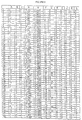
- Experimental powder diffraction data for capsaicin is shown in Figure 8 with the first page of a tabulation of the reduced representation of the data produced using the above mentioned method shown in Figure 9.
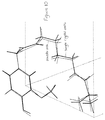
- Figure 10 the crystal structure obtained from powder diffraction data alone is overlaid upon the crystal structure obtained by the conventional single crystal diffraction route is shown.
- the experimental powder diffraction data consists of 9901 data points whilst the reduced representation of this data as exampled in Figure 9 contains only 379 data points, in total.
- Figure 9 shows the first page of the tabulated reduced representation consisting of twelve columns with columns A to C identifying the Miller indices of the Bragg reflections; column D identifying the Bragg intensity; column E an esd for the Bragg intensity; column F provides a numerical count of the separable reflections whereby identical numbers in consecutive rows indicates where reflections are so close together they cannot be separated; and columns G to L describe the percentage correlation between related reflections.
- the powder diffraction data has been Pawley fitted using a predetermined unit cell and space group. Reflection intensities have been allowed to vary as variables in a least squares fit to the diffraction data. The result is a file containing estimates of the individual reflection intensities.
- the correlation terms provide information on how the respective intensities are related.
- the first reflection at line 1: 1 0 0 10.047 0.1106 1 0 0 0 0 0 0 is an isolated reflection whereas at lines 18 and 19 two correlated reflections are identified.
- two reflections are identified that lie so close together that they are treated as a single variable intensity.
- the molecule under study is said to possess a total energy equal to the sum of its potential energy (proportional to the current ⁇ 2 ) and some kinetic energy applied to start the molecule moving over the ⁇ 2 hypersurface.
- the gradient of the ⁇ 2 hypersurface with respect to each of the degrees of freedom is calculated and it is these gradients that control the resultant trajectory of the molecule and thus the way in which it explores the hypersurface.
- Lowering the temperature of the system in a way analogous to that already described gradually decreases the kinetic energy of the system and that in turn leads to the molecular configuration conforming to the global minimum of the ⁇ 2 hypersurface.
- both local and semi-global optimisation methods can be invoked when the ⁇ 2 value reaches some predetermined value that is anticipated to be in the vicinity of the global minimum, thus providing accelerated convergence.
- molecular crystal structures may be solved from powder diffraction data alone.
- Definition of the molecular fragments in terms of internal co-ordinates means that for a single molecular fragment, problem complexity scales with the number of variable torsion angles rather than with the number of atoms in the fragment.
- complex structures can be represented by quite short chromosomes and solved relatively easily.
- the simple description of molecular geometry employed, together with the genetic algorithm /simulated annealing analyses and the specified fitness function has thus been shown to be particularly powerful in determining crystal structures from powder diffraction data in a relatively short time frame.
- the method has been described with reference to functional, i.e. analyser/processor units. It will of course be apparent that in practice the method is implemented as a program on a computer. Indeed, one of the advantages of this method is that the program can be implemented on a number of different computer architectures, including personal computers and a network of personal computers/workstations acting as a parallel computer.
Landscapes
- Chemical & Material Sciences (AREA)
- Crystallography & Structural Chemistry (AREA)
- Physics & Mathematics (AREA)
- Health & Medical Sciences (AREA)
- Life Sciences & Earth Sciences (AREA)
- Analytical Chemistry (AREA)
- Biochemistry (AREA)
- General Health & Medical Sciences (AREA)
- General Physics & Mathematics (AREA)
- Immunology (AREA)
- Pathology (AREA)
- Analysing Materials By The Use Of Radiation (AREA)
Description
- The present invention provides an improved method and apparatus for determining molecular crystal structures from powder diffraction data. In particular, the present invention enables molecular crystal structures to be identified using only powder diffraction data in a manner that is considerably faster than is currently the case. Furthermore, with the present invention the molecular crystal structure of large organic molecules, such as pharmaceutical compounds, can be determined using data from powder diffraction analysis.
- Information on the molecular crystal structure of a molecule is usually obtained through irradiation of a single crystal of the molecule with neutrons or X-rays. Subsequent analysis of the resultant diffraction pattern, which consists of a series of angularly spaced intensity peaks with each peak representing an individual Bragg reflection, provides information on the structure. Whilst this single crystal diffraction technique is an effective technique for determining the crystal structure of a molecule, it can often prove difficult to grow the single crystals necessary for the analysis. Moreover, where the molecule can crystallise in more than one polymorphic form, it is sometimes the case that it can prove very difficult to grow a single crystal of a particular polymorph.
- To address these problems, a powder diffraction analysis was developed in which a crystalline powder of the material under analysis is irradiated instead of a single crystal. Analysis of the resultant diffraction pattern is hampered by the fact that the diffraction pattern may include Bragg reflections that partially or fully overlap one another, making it difficult for individual reflections to be identified, and their associated intensities quantified. An example of experimental data from irradiation of a powder sample of the drug substance cimetidine in the form of a graph representing intensity of the Bragg reflections with respect to angular position is shown in Figure 1. Currently, in order to identify molecular crystal structures diffraction patterns of this type are used in a point-to-point comparison with diffraction data calculated from a postulated model of the crystal structure. If there is good agreement between the measured and calculated diffraction data, it may be assumed that the postulated structure is close to the true crystal structure of the molecule. In general, good agreement is only obtained when there is significant prior knowledge of the true crystal structure of the molecule, as there is an infinite number of crystal structures that may be postulated and compared to the experimental data. Moreover, such analysis is very slow and time consuming because of the extremely large body of point-to-point data that must be compared for each postulated crystal model in turn.
- The present invention seeks to address the problems discussed above with respect to existing diffraction analysis techniques and in particular to provide a method and apparatus that is considerably faster than conventional techniques. The present invention further seeks to provide a method and apparatus for determining molecular crystal structures which employs data obtained from the irradiation of crystalline powders and permits analysis without the need for prior knowledge of any approximate crystal structure.
- The present invention provides a method for determining molecular crystal structures from powder diffraction data comprising the steps of:
- generating a reduced representation of the powder diffraction pattern in dependence on a predetermined unit cell and space group of the molecule under examination in which the total quantity of diffraction data is significantly reduced whilst maintaining the characteristics of the diffraction data that are representative of the crystal structure under examination;
- determining a set of variables for describing trial molecular structures, derived from predetermined internal co-ordinates and said space group;
- assigning values to said variables thereby creating a population of trial structures each defined by a unique set of values for said variables;
- calculating a fitness for each trial structure with respect to the reduced representation of the powder diffraction pattern; determining whether any one of the calculated fitnesses is less than or equal to a predetermined threshold; where none of the calculated fitnesses is less than or equal to the threshold value, selecting at least one survivor from the population of trial structures, altering the values of the variables of at least one of the survivors in accordance with one or more predetermined rules, calculating the fitnesses of the new trial structures; and repeating the steps of selecting survivors, altering the values of the variables and calculating the fitnesses of the new trial structures until at least one of the calculated fitnesses is less than or equal to the threshold value, and where at least one of the calculated fitnesses is less than or equal to the threshold, outputting at least one trial molecular crystal structure represented by the successful sets of values.
-
- In a further aspect the present invention provides apparatus for determining molecular crystal structures comprising a structure factor analyser for generating from experimental powder diffraction data for the molecule under examination a reduced representation of the powder diffraction pattern based on a predetermined unit cell and space group in which the total quantity of diffraction data is significantly reduced whilst the characteristics of the diffraction data representative of the crystal structure under examination are maintained; a controller for determining a set of variables for describing trial molecular structures, derived from predetermined internal co-ordinates and said space group; a searching processor for creating a population of trial structures each defined by a unique set of values for said variables said searching processor including a fitness analyser for calculating a fitness for each trial structure with respect to the reduced representation of the powder diffraction pattern, a thresholding device for determining whether any one of the calculated fitnesses is less than or equal to a predetermined threshold, a survivor selector for selecting at least one survivor from the population of trial structures, a variable adjustment device for altering the values of the variables of at least one of the survivors and output means for outputting the one or more trial molecular crystal structures having calculated fitnesses less than or equal to the threshold value.
- The reduced representation preferably consists of identification of each reflection in the powder diffraction data along with associated weighting factors and ideally is in the form of a structure factor intensity listing and associated covariance matrix. Reference herein to reflections is intended as reference to individual Bragg reflections or peaks in the diffraction data resulting from reflections of the incident radiation from the structure of the molecule.
- Moreover, preferably, the fitness χ2 of each of the trial structures is determined using the following function:
- Ih,k = extracted intensity from the structure factor analyser
- Vhk = covariance matrix from the structure factor analyser
- c = a scale factor
- Fh,k = calculated structure factor from trial structure
-
- The plurality of co-ordinates preferably consist of three co-ordinates representative of the location of the molecule within the unit cell, three co-ordinates representative of the orientation of the molecule within the unit cell and one or more co-ordinates representative of respective torsion angles.
- In a preferred embodiment the structure factor analyser additionally automatically determines the optimal unit cell and space group for the molecule under examination instead of the unit cell and space group being predetemined manually and input into the structure factor analyser. More, preferably a co-ordinate generator is provided for automatically determining the set of internal co-ordinates instead of the set of internal co-ordinates being predetermined manually and input into the controller.
- The search for a three dimensional structure of a molecule which would produce a powder diffraction pattern nearly identical to available experimental results is greatly simplified with the present invention and considerably speeded up by a factor of typically up to 1000 or more. This is achieved by the reduction of trial molecular crystal structures to a unique set of variables that does not explicitly include the co-ordinates of individual atoms in the molecule but instead includes a single set of co-ordinates for the location and orientation of the entire molecule. Reduction of the experimental powder diffraction data to data representative of each reflection in combination with a weighting factor also assists in speeding up the analysis of trial crystal structures in which the fitness of each trial structure with respect to the reduced experimental data is determined using structure factor analysis.
- The present invention relies on the fact that at its most basic, a molecular crystal structure can be represented by a set of internal co-ordinates describing the molecule under investigation together with co-ordinates describing the location and orientation of the molecule within a unit cell of which only some but not all need be variable. The reduction of the molecular crystal structure to such a set of variables enables analysis of the trial structures to be performed much more quickly than an analysis performed using the conventional method of describing the crystal structure in terms of the fractional or Cartesian co-ordinates of every atom in the asymmetric unit of the structure. Such conventional representations are considered to be unworkable in a model building sense because of the computing power necessary to position individual atoms independently of each other.
- The representation of the trial structures used in the invention along with the novel fitness function means that analyses can be performed in seconds or minutes on the current generation of conventional personal computers or workstations. Moreover, the representation is versatile as it allows the invention to work with flexible molecules as well as multiple fragments.
- An embodiment of the present invention will now be described by way of example with reference to the accompanying drawings, in which:
- Figure 1 is a graph of experimental data from x-ray powder diffraction analysis of cimetidine showing 315 reflections, using an irradiation wavelength of 1.5285Å and a data range for 2 of 8°-56°:
- Figure 2 is a schematic representation of the 2D molecular structure of cimetidine;
- Figure 3 is a flow diagram of the method steps for determining a molecular structure in accordance with the present invention;
- Figure 4 is a diagram of the crystal structure of cimetidine;
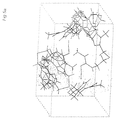
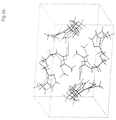
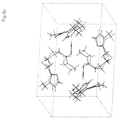
- Figures 5a, 5b, 5c and 5d are diagrams showing the progressive development of a trial crystal structure for cimetidine, employing the method and apparatus in accordance with the present invention, overlying the diagram of Figure 4;
- Figure 6 is a graph showing the fitness of a trial crystal structure for cimetidine with respect to generations, employing the method and apparatus in accordance with the present invention;
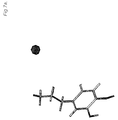
- Figures 7a, 7b and 7c show the molecular structure of dopamine deuterobromide, a graph of the development of a trial structure for the crystal and a diagram of the solution respectively, employing the method and apparatus of the present invention;
- Figure 8 is a graph of experimental data from x-ray powder diffraction analysis of capsaicin using an irradiation wavelength of 0.6528Å and a data range for 2 of 2.7°-22.5°;
- Figure 9 is a tabulation of part of the reduced representation of the powder diffraction data of Figure 8 generated in accordance with the method of the present invention; and
- Figure 10 is a diagram comparing the crystal structure of capsaicin obtained from single crystal diffraction data with the crystal structure obtained using powder diffraction data alone in a method in accordance with the present invention.
-
- The present invention will be described with reference to an experimental determination of the crystal structure of the molecule cimetidine, a histamine H2 antagonist used in the treatment of stomach ulcers, for which a full single crystal structure (monoclinic Form A) determination has already been performed. Figure 2 shows the 2D chemical formula of the cimetidine molecule, whilst the known arrangement of the cimetidine molecules within the unit cell of the crystal structure is shown in Figure 4.
- To determine the molecular crystal structure of cimetidine employing the method and apparatus of the present invention with reference to Figure 3, initially a conventional powder diffraction pattern (10) is obtained from a crystalline powder sample of cimetidine. The resultant diffraction pattern is shown in Figure 1. The experimental diffraction data (10) is input into a cell dimension analyser (12). The cell dimension analyser (12) uses conventional techniques to assess the diffraction pattern in order to determine the unit cell dimensions of the crystal structure. The generation of the unit cell dimensions may alternatively be performed manually, however, it is preferred that the unit cell dimensions be generated automatically using the crystal modelling apparatus. The diffraction pattern is also input to a structure factor analyser (14) that also receives the unit cell dimensions determined by the analyser (12). The structure factor analyser (14) analyses the experimental diffraction pattern using the lowest symmetry space group consistent with the crystal class determined by the cell dimension analyser (12), reducing the data to a first structure factor intensity listing and an associated covariance matrix. From this listing, the true space group (16) of the crystal structure is determined and used by the structure factor analyser (14) to generate a second structure factor intensity listing and associated covariance matrix (18). By generating this second structure factor intensity listing and associated covariance matrix (18), the total quantity of the original experimental diffraction data is significantly reduced in amount without loss of those characteristics of the data representative of the crystal structure under examination. The original data can be reduced by a factor typically equal to the number of data points in the original powder diffraction data divided by the number Bragg reflections in the measured data range. Thus, the experimental diffraction data is not presented for analysis as a point-by-point profile, but rather in a reduced data form enabling the data to be analysed using a fitness function described in greater detail below. In performing the reduction of the original data the individual Bragg reflections (peaks) are identified and each reflection is allocated a value representative of its intensity along with one or more factors that describe the extent to which the reflection overlaps with one or more adjacent reflections
- As an example of the extent to which the powder diffraction data is reduced, typically powder diffraction data will contain between 2000 and 5000 individual data points with the reduced representation of the diffraction data the total number of data points is reduced to between 100 and 400. Hence, the original data is reduced by a factor of between 10 and 30 whilst still retaining the characteristics of the original data. Furthermore, the speed of analysis of each individual data point is increased over conventional techniques because with the original powder diffraction data the analysis of each data point includes not only the structure factor but also a factor representative of the shape of the peak. With the reduced data the analysis of each data point is reduced to only the structure factor.
- Where the selected space group based on the unit cell dimensions does not prove to be the correct space group, the method described above is repeated using different space groups until the correct space group is identified.
- Using the known 2D chemical formula for cimetidine (20), a co-ordinate generator (22) determines a set of internal co-ordinates (24) which completely describe the three dimensional structure of the molecule. The internal co-ordinates (24) include known data using tabulated bond lengths, bond angles and rigid torsion angles, where necessary, along with identification of unknown variables such as flexible torsion angles. When postulated values for the unknown variables are added, sufficient information is present in the internal co-ordinates to define the conformation of an isolated theoretical cimetidine molecule.
- Preferably, the only unknown factors and so the only variables to be found in the internal co-ordinates are the values of the variable torsion angles (represented by variables τ1, τ2, τ3, τ4, τ5). It is not essential for the bond lengths and bond angles to be held fixed and where appropriate these factors too may be varied in determining the crystal structure of the molecule. It has been found though that variation of the bond lengths and bond angles within chemically sensible bounds has a much smaller effect on the calculated diffraction data than variation of the flexible torsion angles within the structure. Thus for most purposes, acceptable results can be achieved with these factors held fixed.
- Generation of the set of internal co-ordinates may alternatively be performed manually in which case the manually generated set of internal co-ordinates is input into the crystal modelling apparatus.
- The output (24) of the co-ordinate generator (22) is supplied to a controller (26) that is also connected to the space group output (16) of the structure factor analyser (14). The controller (26) also includes an input (28) to enable manual setting of selected operational parameters such as the number of trial structures to be analysed in each generation, i.e. the population size. The controller (26) uses the internal co-ordinates and the space group to determine additional variables representing the location and orientation of a molecular structure in the unit cell. Preferably, the location of the molecular structure within the unit cell is defined using a single reference point in fractional co-ordinate space represented by external co-ordinates or variables (x, y, z). The orientation of the molecule at that point may be described using Euler angles (α, β, γ). Alternatively, the orientation of the molecule may be described using a quaternion, q.
- In this way the molecular crystal structure is reduced to a set of variables consisting of internal and external co-ordinates:
{x, y, z, α, β, γ, τ1, τ2, τ3, τ4, τ5...} or {x, y, z, q, τ1, τ2, τ3, τ4, τ5...}.
These variables are suitable for iterative mathematical processing and are more amenable to search procedures than the full complement of individual atomic co-ordinates used in conventional techniques. - The output (30) from the controller (26) is then supplied to an iterative searching processor (32). The output (30) consists of the set of variables determined by the controller (26); the complete internal co-ordinates produced by the co-ordinate generator (22); operating parameters such as the selected size of the population to be employed in the searching procedure; any rules restricting or controlling the values which can be allocated to each of the variables; and any rules controlling the selection of survivors, the breeding and the mutation of survivors, described in greater detail below.
- In the method shown in Figure 3, the iterative searching processor (32) employs a genetic algorithm to determine the correct molecular crystal structure. The above mentioned set of variables {x, y, z, α, β, γ, τ1, τ2, τ3, τ 4, τ5 ...} or {x, y, z, q, τ1, τ2, τ3, τ4, τ5 ...} are thus equated to chromosomes, with each individual variable equating to a gene. The genetic algorithm establishes certain protocols based on the concept of 'survival of the fittest', with respect to the selection of survivors, the breeding and the mutation of survivors.
- Firstly, within the searching processor (32) an initial population of chromosomes is created (33) by assigning random numbers to each of the genes of each of the chromosomes. The allowable random numbers for any particular gene may be restricted in accordance with rules input from the controller (26). The selected size of this initial population depends somewhat upon the complexity of the structure under investigation, with larger population sizes typically being required for problems involving more variables. In the case of cimetidine, where seven torsion angles were allowed to vary, resulting in thirteen degrees of freedom, a population size of 150 was chosen. The fractional co-ordinates (x, y, z) and Euler angles are randomly set as real numbers normally bounded by the Euclidian normalisers of the space group. The variable torsion angles (τ) are typically randomly set as real numbers in the range 0°-360°.
- Using the internal co-ordinates a three dimensional structure of the trial molecule is constructed (35) for each parent in Cartesian space, and then in fractional space with respect to the crystal unit cell. Diffraction data is then determined (37) for each of the trial molecular structures and a fitness value, χ2, is calculated (39) for each trial structure with respect to the structure factor intensity listing and covariance matrix. The preferred fitness function employed is as follows:
- Ih,k = extracted intensity from the structure factor analyser
- Vhk = covariance matrix from the structure factor analyser
- c = a scale factor
- Fh,k = calculated structure factor from trial structure
-
- In determining the fitness value, χ2, the optimal value of the scale factor c must be determined. This is preferably done by performing a conventional linear least squares analysis to determine the optimal scaling factor between the calculated structure factors and the reduced data. In addition to optimising with respect to the scale factor, the fitness value, χ2, may also be optimised with respect to quantities such as an overall temperature factor or a preferred orientation parameter in which case a conventional non-linear least squares analysis is preferably performed.
- The fitness values for each of the chromosomes is compared to a predetermined threshold value (41) so that in the event any one of the chromosomes is less than or equal to the threshold value a solution for the molecular structure is output (43). In the event that the fitness values of all of the chromosomes exceed the threshold value, the chromosomes are then supplied (45) to a survivor selector (47). At the same time a counter (49) is increased by one so that a record of the number of generations created is maintained.
- Using the fitness values obtained for each of the chromosomes, the survivor selector (47) employs a proportional selection scheme, in which the chances of a chromosome surviving are proportional to its fitness, to select a number of survivors. Other criteria for selecting survivors may alternatively be used. For example, a tournament selection may be employed in which case two chromosomes are selected at random and compared with one another, with the fittest surviving. In particular the Boltzmann tournament may be used as it introduces an element of simulated annealing to the selection process. In addition, the selection may be elitist with the best member of the population in terms of fitness always surviving to enter the next generation.
- Additional fitness functions may also be employed instead of, or in combination with the aforementioned fitness function, to further enhance the analysis of the trial structures. For example, simultaneous fitting of both X-ray and neutron diffraction data; use of a molecular packing function; use of an isolated molecule Lennard-Jones type calculation; use of a rotation / translation function: and use of phase information derived from direct / Patterson methods.
- Although the above method is described in terms of the entire population being subject to a common selection, the population may be divided into sub-populations in which each sub-population evolves independently of the other sub-populations albeit that migration from one sub-population to another can be enabled.
- The surviving chromosomes are then used to create offspring (51) by allowing the chromosomes to 'breed'. For example, individual genes from different chromosome survivors may be mixed and/or one or more of the genes in a chromosome survivor or its offspring may be mutated by random selection of a new value for the gene. Often, the population size is kept constant throughout this breeding process. The three dimensional structure of each of the offspring is then determined (35), as before, and theoretical diffraction data calculated (37).
- The fitness (χ2) is then evaluated (39) for each of the offspring and the fitness results compared (41) to the predetermined threshold value to determine whether a likely crystal structure for the molecule has been identified. If one of the offspring chromosomes has a fitness value which is less than or equal to the threshold value, or if a predetermined maximum number of generations has been reached, then the search procedure is stopped (43). On the other hand, if the fitness functions of the chromosome offspring all exceed the threshold value and the counted number of generations is less than the maximum allowed number, then the offspring are returned for the selection of survivors (47) and for the creation of new offspring (51).
- Additional rules may also be employed where appropriate to constrain the allowable values for the variables. These rules are determined by the controller (26) that may utilise data on crystal fragments stored in a memory (53). For example, the controller (26) may search through stored crystallographic databases of known crystal structure fragments related to the molecule to provide prior information about torsion angle values likely to be adopted by the structure. Such information can then be implemented either as hard limits on the allowable values the torsion angles may adopt, or as probability distributions for the torsion angles. Furthermore, fragments of the molecule may be located using Patterson methods or direct methods. For example, the location of a heavy atom may be used to anchor a molecule during the analysis by the searching processor (32). This effectively reduces the dimensionality of the problem by three as the fractional reference co-ordinates are then known.
- Operation of the processor (32) in the search for the correct 3D molecular crystal structure is thus an iterative procedure with the average fitness for each generation gradually tending towards the global minimum in fitness function space. In Figure 5a, a trial cimetidine crystal structure, corresponding to a chromosome in the first generation initialised at random by the processor (32), is shown overlying the true crystal structure first shown in Figure 4. Figure 5b then shows one of the early offspring determined by the processor having a fitness value of χ2=980, again overlying the true crystal structure of cimetidine. In Figure 5c, a later offspring having a fitness value of χ2=430 is shown and the improvement in correspondence between the trial crystal structure and the actual crystal structure is immediately evident. At this point, the crystal structure could be refined using a conventional constrained Rietveld refinement. Hence, the processor (32) may be arranged so that the threshold value for the fitness function is set at around 450. This would result in the search procedure being stopped once the trial structure shown in Figure 5c had been generated, thereby enabling alternative methods to be used to refine the fine details of the trial structure. The advantage of stopping the search procedure at this point is that, usually, conventional methods will be able to refine the fine details of the structure more efficiently than the presently described method and apparatus.
- Continuing with the present method, in Figure 5d an offspring having a fitness value of χ2=110 is shown at which point the detail of the trial structure is easily refinable. Figure 6 is a graph of trial results for cimetidine using the method described above showing the fitness value of offspring with respect to the number of generations for both average fitness and the best fitness. As can be seen, a refinable structure is obtained within a few hundred generations, and an easily refinable structure is obtained around 3000 generations. This latter structure corresponds to an elapsed time of approximate 40 minutes, with the processor running on a single 175MHz R10000 Silicon Graphics™ workstation.
- As further examples for the speed of this method, easily refinable structures for pyrene were determined in around 33 seconds, around 15 seconds for chlorothiazide and 36 minutes for Ibuprofen, with all calculations being performed on a single 200MHz Pentium Pro™ personal computer.
- The above method and apparatus may also be used with molecular structures consisting of more than one fragment. As shown in Figures 7a, 7b and 7c an easily refinable structure solution for dopamine deuterobromide using neutron powder diffraction data was achieved in around only 4000 generations. This structure involves not only a dopamine cation, but also a separate bromide anion. Using the present method and apparatus the location, orientation and conformation of the cation, and the location of the anion can be determined simultaneously.
- Whilst in the examples given above the individual genes are real numbers, they could equally be represented by binary strings or integer approximations with appropriate scaling factors. Also, in the example given above the experimental diffraction data is reduced to a structure factor listing and associated covariance matrix, it will be apparent that alternative ways of reducing the total quantity of diffraction data may be employed which, although providing less faithful representations of the diffraction data, nevertheless preserve sufficient characteristics of the original diffraction data to enable a successful structure determination to be performed. For example the data relating to the correlation of reflections may be omitted from the reduced representation.
- In the above example a genetic algorithm searching processor is employed to perform an iterative selection of candidate molecular crystal structures. Alternative iterative analysis processes such as simulated annealing, evolutionary strategies and neural network analysis may be used instead of the genetic algorithm. For example, using a simulated annealing process, only a single member is normally utilised and the same variables that were treated as genes by the genetic algorithm are individually adjusted by a small perturbation of their current values. If the function value (χ2 as defined previously) is better than before, then the new values of the variables are retained. If the function value is worse, then the new values of the variables are not automatically rejected. Instead the new values may be retained if allowed by the temperature dependent Boltzmann selection protocol. In this way, 'uphill' (in terms of χ2) adjustment of the variables is permissible, helping the algorithm to escape from local minima. The initial choice of the temperature is usually high to allow large 'uphill' moves if necessary, but the temperature is usually lowered in some predetermined fashion during the iterative process. One such way is a temperature reduction that cools more slowly if the χ2 fluctuations are large.
- An example employing the simulated annealing process to the determination of the crystal structure of capsaicin is shown in Figures 8 to 10. Experimental powder diffraction data for capsaicin is shown in Figure 8 with the first page of a tabulation of the reduced representation of the data produced using the above mentioned method shown in Figure 9. In Figure 10 the crystal structure obtained from powder diffraction data alone is overlaid upon the crystal structure obtained by the conventional single crystal diffraction route is shown. The experimental powder diffraction data consists of 9901 data points whilst the reduced representation of this data as exampled in Figure 9 contains only 379 data points, in total.
- Figure 9 shows the first page of the tabulated reduced representation consisting of twelve columns with columns A to C identifying the Miller indices of the Bragg reflections; column D identifying the Bragg intensity; column E an esd for the Bragg intensity; column F provides a numerical count of the separable reflections whereby identical numbers in consecutive rows indicates where reflections are so close together they cannot be separated; and columns G to L describe the percentage correlation between related reflections. In this example the powder diffraction data has been Pawley fitted using a predetermined unit cell and space group. Reflection intensities have been allowed to vary as variables in a least squares fit to the diffraction data. The result is a file containing estimates of the individual reflection intensities. However, where reflections lie very close together in 20 they may be treated as a clump. Where the reflections are close, but not close enough to be treated as a clump, the correlation terms provide information on how the respective intensities are related. Thus, the first reflection at line 1:
1 0 0 10.047 0.1106 1 0 0 0 0 0 0
is an isolated reflection whereas at lines 18 and 19 two correlated reflections are identified. At lines 41 and 42 two reflections are identified that lie so close together that they are treated as a single variable intensity. With the reduced representation the diffraction data has been effectively condensed into the data contained in columns D and E in combination with non-zero elements of columns G to L. - The close agreement between the two structures shown in Figure 10 demonstrates one characteristic of the method described above - the ability of the simulated annealing method to 'fine tune' the structure, generally finding a solution very close to the global minimum in χ2 space. This structure solution, which involved the optimisation of 16 degrees of freedom (10 internal, 6 external) took approximately 40 minutes to execute on a DEC Alphastation 500/500.
- In another analysis, the molecule under study is said to possess a total energy equal to the sum of its potential energy (proportional to the current χ2) and some kinetic energy applied to start the molecule moving over the χ2 hypersurface. The gradient of the χ2 hypersurface with respect to each of the degrees of freedom is calculated and it is these gradients that control the resultant trajectory of the molecule and thus the way in which it explores the hypersurface. Lowering the temperature of the system in a way analogous to that already described gradually decreases the kinetic energy of the system and that in turn leads to the molecular configuration conforming to the global minimum of the χ2 hypersurface.
- In a further adaption of the method, regardless of the global optimisation strategy used, both local and semi-global optimisation methods (e.g. Newton-Raphson, simplex) can be invoked when the χ2 value reaches some predetermined value that is anticipated to be in the vicinity of the global minimum, thus providing accelerated convergence.
- With the method and apparatus described above, molecular crystal structures may be solved from powder diffraction data alone. Definition of the molecular fragments in terms of internal co-ordinates means that for a single molecular fragment, problem complexity scales with the number of variable torsion angles rather than with the number of atoms in the fragment. Thus, complex structures can be represented by quite short chromosomes and solved relatively easily. The simple description of molecular geometry employed, together with the genetic algorithm /simulated annealing analyses and the specified fitness function has thus been shown to be particularly powerful in determining crystal structures from powder diffraction data in a relatively short time frame.
- To assist in an understanding of the invention, the method has been described with reference to functional, i.e. analyser/processor units. It will of course be apparent that in practice the method is implemented as a program on a computer. Indeed, one of the advantages of this method is that the program can be implemented on a number of different computer architectures, including personal computers and a network of personal computers/workstations acting as a parallel computer.
Claims (20)
- A method for determining molecular crystal structures from powder diffraction data comprising the steps of: generating a reduced representation of the powder diffraction pattern in dependence on a predetermined unit cell and space group of the molecule under examination in which the total quantity of diffraction data is significantly reduced whilst maintaining the characteristics of the diffraction data that are representative of the crystal structure under examination; determining a set of variables for describing trial molecular structures, derived from predetermined internal co-ordinates and said space group; assigning values to said variables thereby creating a population of trial structures each defined by a unique set of values for said variables; calculating a fitness for each trial structure with respect to the reduced representation of the powder diffraction pattern; determining whether any one of the calculated fitnesses is less than or equal to a predetermined threshold; where none of the calculated fitnesses is less than or equal to the threshold value, selecting at least one survivor from the population of trial structures, altering the values of the variables of at least one of the survivors in accordance with one or more predetermined rules, calculating the fitnesses of the new trial structures; and repeating the steps of selecting survivors, altering the values of the variables and calculating the fitnesses of the new trial structures until at least one of the calculated fitnesses is less than or equal to the threshold value, and where at least one of the calculated fitnesses is less than or equal to the threshold, outputting at least one trial molecular crystal structure represented by the successful sets of values.
- A method as claimed in claim 1, wherein the reduced representation includes single values representative of the intensity of each reflection in the powder diffraction data and one or more factors representative of the extent to which adjacent reflections overlap.
- The method as claimed in claim 2, wherein the reduced representation consists of a structure factor intensity listing and associated covariance matrix.
- The method as claimed in either of claims 2 or 3, wherein the total data in the reduced representation is reduced by a factor substantially equal to the number of data points in the original powder diffraction data divided by the number Bragg reflections in the measured data range.
- The method as claimed in either of claims 3 or 4, wherein the fitness χ2 of each of the trial structures is determined using the following function:Ih,k = extracted intensityVhk = covariance matrixc = a scale factorFh,k = calculated structure factor from trial structure
- The method as claimed in any one of the preceding claims, wherein the set of variables consists of three co-ordinates representative of the location of the molecule within the unit cell and three independent co-ordinates representative of the orientation of the molecule within the unit cell.
- The method as claimed in claim 6, wherein the set of variables includes one or more co-ordinates representative of variable torsion angles, bond angles or bond lengths.
- The method as claimed in any one of the preceding claims including the step of determining the unit cell and space group for the molecule under examination.
- The method as claimed in any one of the preceding claims including the step of determining the set of internal co-ordinates.
- The method as claimed in any one of the preceding claims, further including the step of monitoring the number of iterations in which new trial structures are generated and halting the method and outputting the trial crystal structure with the best calculated fitness after completion of a predetermined number of iterations.
- The method as claimed in any one of the preceding claims, wherein the selection of survivors and the alteration of the values of the variables is based on a simulated annealing procedure.
- Apparatus for determining molecular crystal structures comprising a structure factor analyser for generating from experimental powder diffraction data for the molecule under examination a reduced representation of the powder diffraction pattern based on a predetermined unit cell and space group in which the total quantity of diffraction data is significantly reduced whilst the characteristics of the diffraction data representative of the crystal structure under examination are maintained; a controller for determining a set of variables for describing trial molecular structures, derived from predetermined internal co-ordinates and said space group; a searching processor for creating a population of trial structures each defined by a unique set of values for said variables said searching processor including a fitness analyser for calculating a fitness for each trial structure with respect to the reduced representation of the powder diffraction pattern, a thresholding device for determining whether any one of the calculated fitnesses is less than or equal to a predetermined threshold, a survivor selector for selecting at least one survivor from the population of trial structures, a variable adjustment device for altering the values of the variables of at least one of the survivors and output means for outputting the one or more trial molecular crystal structures having calculated fitnesses less than or equal to the threshold value.
- Apparatus as claimed in claim 12, wherein the reduced representation includes single values representative of the intensity of each reflection in the powder diffraction data and one or more factors representative of the extent to which adjacent reflections overlap.
- Apparatus as claimed in claim 13, wherein the structure factor analyser generates a reduced representation consists of a structure factor intensity listing and associated covariance matrix.
- The method as claimed in either of claims 13 or 14, wherein the total data in the reduced representation is reduced by a factor substantially equal to the number of data points in the original powder diffraction data divided by the number Bragg reflections in the measured data range.
- Apparatus as claimed in either of claims 14 or 15, wherein the fitness analyser determines the fitness χ2 of each of the trial structures using the following function:Ih,k = extracted intensity from the structure factor analyserVhk = covariance matrix from the structure factor analyserc = a scale factorFh,k = calculated structure factor from trial structure
- Apparatus as claimed in any one of claims 12 to 16, wherein controller determines a set of variables consists of three co-ordinates representative of the location of the molecule within the unit cell and three independent co-ordinates representative of the orientation of the molecule within the unit.
- Apparatus as claimed in any one of claims 12 to 17, wherein the structure factor analyser additionally determines the unit cell and space group for the molecule under examination.
- Apparatus as claimed in any one of claims 12 to 18 including a co-ordinate generator for determining the set of internal co-ordinates.
- Apparatus as claimed in any one of claims 12 to 19, further including a counter for monitoring the number of iterations of new trial structures.
Applications Claiming Priority (3)
| Application Number | Priority Date | Filing Date | Title |
|---|---|---|---|
| GB9716278A GB9716278D0 (en) | 1997-07-31 | 1997-07-31 | Method and apparatus for determining molecular crystal structures |
| GB9716278 | 1997-07-31 | ||
| PCT/GB1998/002316 WO1999006824A1 (en) | 1997-07-31 | 1998-07-31 | Method and apparatus for determining molecular crystal structures |
Publications (2)
| Publication Number | Publication Date |
|---|---|
| EP1000347A1 EP1000347A1 (en) | 2000-05-17 |
| EP1000347B1 true EP1000347B1 (en) | 2002-12-04 |
Family
ID=10816818
Family Applications (1)
| Application Number | Title | Priority Date | Filing Date |
|---|---|---|---|
| EP98937640A Expired - Lifetime EP1000347B1 (en) | 1997-07-31 | 1998-07-31 | Method and apparatus for determining molecular crystal structures |
Country Status (3)
| Country | Link |
|---|---|
| EP (1) | EP1000347B1 (en) |
| GB (1) | GB9716278D0 (en) |
| WO (1) | WO1999006824A1 (en) |
Cited By (1)
| Publication number | Priority date | Publication date | Assignee | Title |
|---|---|---|---|---|
| WO2014004370A1 (en) * | 2012-06-25 | 2014-01-03 | The Research Foundation For The State University Of New York | Method and apparatus for crystal structure optimization |
Families Citing this family (3)
| Publication number | Priority date | Publication date | Assignee | Title |
|---|---|---|---|---|
| KR100477793B1 (en) * | 2003-04-04 | 2005-03-21 | 한국과학기술연구원 | Method for designing peripheral equipment on the molecular modeling computer system |
| US9009009B2 (en) | 2011-06-27 | 2015-04-14 | The Research Foundation For The State University Of New York | Method for predicting optimized crystal structures |
| CN111968709B (en) * | 2020-08-12 | 2024-02-09 | 北京大学 | Structure model determining method, device, computer equipment and storable medium |
-
1997
- 1997-07-31 GB GB9716278A patent/GB9716278D0/en active Pending
-
1998
- 1998-07-31 EP EP98937640A patent/EP1000347B1/en not_active Expired - Lifetime
- 1998-07-31 WO PCT/GB1998/002316 patent/WO1999006824A1/en not_active Ceased
Cited By (2)
| Publication number | Priority date | Publication date | Assignee | Title |
|---|---|---|---|---|
| WO2014004370A1 (en) * | 2012-06-25 | 2014-01-03 | The Research Foundation For The State University Of New York | Method and apparatus for crystal structure optimization |
| US10133852B2 (en) | 2012-06-25 | 2018-11-20 | The Research Foundation Of The State University Of New York | Method and apparatus for crystal structure optimization |
Also Published As
| Publication number | Publication date |
|---|---|
| WO1999006824A1 (en) | 1999-02-11 |
| GB9716278D0 (en) | 1997-10-08 |
| EP1000347A1 (en) | 2000-05-17 |
Similar Documents
| Publication | Publication Date | Title |
|---|---|---|
| Xia et al. | Ab initio construction of protein tertiary structures using a hierarchical approach | |
| Djajaputra et al. | Algorithm and performance of a clinical IMRT beam-angle optimization system | |
| Liang et al. | Evolutionary Monte Carlo for protein folding simulations | |
| Pankratz et al. | Random‐effects Cox proportional hazards model: general variance components methods for time‐to‐event data | |
| AU2016280074B2 (en) | Systems and methods for patient-specific prediction of drug responses from cell line genomics | |
| US5200910A (en) | Method for modelling the electron density of a crystal | |
| KR20190101966A (en) | Methods and Systems for Predicting DNA Accessibility in the Pan-Cancer Genome | |
| Cabrera G et al. | A matheuristic approach to solve the multiobjective beam angle optimization problem in intensity‐modulated radiation therapy | |
| EP2575965A2 (en) | Multi-objective radiation therapy optimization method | |
| Aleman et al. | A response surface approach to beam orientation optimization in intensity-modulated radiation therapy treatment planning | |
| WO1993022740A1 (en) | High-resolution crystallographic modelling of a macromolecule | |
| Liang et al. | Monte Carlo simulation of ionizing radiation induced DNA strand breaks utilizing coarse grained high-order chromatin structures | |
| Nandhini et al. | An optimal stacked ResNet-BiLSTM-based accurate detection and classification of genetic disorders | |
| Luque-Rodriguez et al. | Initialization of feature selection search for classification | |
| EP1000347A1 (en) | Method and apparatus for determining molecular crystal structures | |
| Murphy et al. | Exploring the Effects of Mutagenesis on FusionRed by Using Excited‐State QM/MM Dynamics and Classical Force Field Simulations | |
| Lahanas et al. | Intensity modulated beam radiation therapy dose optimization with multiobjective evolutionary algorithms | |
| KR102317287B1 (en) | New molecular fingerprint of chemical compound inspired by NLP and method of quantatitive prediction of activity based on its strucuture | |
| Zhang et al. | Uniformly sampled genetic algorithm with gradient search for structural identification–Part I: global search | |
| Vahedi et al. | QSAR Study of PARP Inhibitors by GA-MLR, GA-SVM and GA-ANN Approaches | |
| Gayou et al. | A genetic algorithm for variable selection in logistic regression analysis of radiotherapy treatment outcomes | |
| Root et al. | Global analysis of large-scale chemical and biological experiments | |
| Lithio et al. | Hierarchical modeling and differential expression analysis for RNA-seq experiments with inbred and hybrid genotypes | |
| KR101128425B1 (en) | Methods for providing information for an inhibition prediction of hERG channel | |
| Häusler | Correlations reveal the hierarchical organization of biological networks with latent variables |
Legal Events
| Date | Code | Title | Description |
|---|---|---|---|
| PUAI | Public reference made under article 153(3) epc to a published international application that has entered the european phase |
Free format text: ORIGINAL CODE: 0009012 |
|
| 17P | Request for examination filed |
Effective date: 20000124 |
|
| AK | Designated contracting states |
Kind code of ref document: A1 Designated state(s): GB |
|
| GRAG | Despatch of communication of intention to grant |
Free format text: ORIGINAL CODE: EPIDOS AGRA |
|
| 17Q | First examination report despatched |
Effective date: 20020226 |
|
| GRAG | Despatch of communication of intention to grant |
Free format text: ORIGINAL CODE: EPIDOS AGRA |
|
| GRAH | Despatch of communication of intention to grant a patent |
Free format text: ORIGINAL CODE: EPIDOS IGRA |
|
| GRAH | Despatch of communication of intention to grant a patent |
Free format text: ORIGINAL CODE: EPIDOS IGRA |
|
| GRAA | (expected) grant |
Free format text: ORIGINAL CODE: 0009210 |
|
| AK | Designated contracting states |
Kind code of ref document: B1 Designated state(s): GB |
|
| REG | Reference to a national code |
Ref country code: GB Ref legal event code: FG4D |
|
| PLBE | No opposition filed within time limit |
Free format text: ORIGINAL CODE: 0009261 |
|
| STAA | Information on the status of an ep patent application or granted ep patent |
Free format text: STATUS: NO OPPOSITION FILED WITHIN TIME LIMIT |
|
| 26N | No opposition filed |
Effective date: 20030905 |
|
| PGFP | Annual fee paid to national office [announced via postgrant information from national office to epo] |
Ref country code: GB Payment date: 20040721 Year of fee payment: 7 |
|
| PG25 | Lapsed in a contracting state [announced via postgrant information from national office to epo] |
Ref country code: GB Free format text: LAPSE BECAUSE OF NON-PAYMENT OF DUE FEES Effective date: 20050731 |
|
| GBPC | Gb: european patent ceased through non-payment of renewal fee |
Effective date: 20050731 |