EP0994116B1 - Porous organic/metallic composite - Google Patents
Porous organic/metallic composite Download PDFInfo
- Publication number
- EP0994116B1 EP0994116B1 EP99939192A EP99939192A EP0994116B1 EP 0994116 B1 EP0994116 B1 EP 0994116B1 EP 99939192 A EP99939192 A EP 99939192A EP 99939192 A EP99939192 A EP 99939192A EP 0994116 B1 EP0994116 B1 EP 0994116B1
- Authority
- EP
- European Patent Office
- Prior art keywords
- apohost
- composite
- group
- organic
- compounds
- Prior art date
- Legal status (The legal status is an assumption and is not a legal conclusion. Google has not performed a legal analysis and makes no representation as to the accuracy of the status listed.)
- Expired - Lifetime
Links
- 0 C*(C1=C(*)C(c2c(C)c(O)ccc2[*+])=C(CC2)C2[C@@]11)c(cc2)c1cc2OC1CC1 Chemical compound C*(C1=C(*)C(c2c(C)c(O)ccc2[*+])=C(CC2)C2[C@@]11)c(cc2)c1cc2OC1CC1 0.000 description 1
Images

Classifications
-
- B—PERFORMING OPERATIONS; TRANSPORTING
- B01—PHYSICAL OR CHEMICAL PROCESSES OR APPARATUS IN GENERAL
- B01J—CHEMICAL OR PHYSICAL PROCESSES, e.g. CATALYSIS OR COLLOID CHEMISTRY; THEIR RELEVANT APPARATUS
- B01J31/00—Catalysts comprising hydrides, coordination complexes or organic compounds
- B01J31/02—Catalysts comprising hydrides, coordination complexes or organic compounds containing organic compounds or metal hydrides
- B01J31/0201—Oxygen-containing compounds
- B01J31/0211—Oxygen-containing compounds with a metal-oxygen link
- B01J31/0214—Aryloxylates, e.g. phenolates
-
- B—PERFORMING OPERATIONS; TRANSPORTING
- B01—PHYSICAL OR CHEMICAL PROCESSES OR APPARATUS IN GENERAL
- B01J—CHEMICAL OR PHYSICAL PROCESSES, e.g. CATALYSIS OR COLLOID CHEMISTRY; THEIR RELEVANT APPARATUS
- B01J31/00—Catalysts comprising hydrides, coordination complexes or organic compounds
- B01J31/02—Catalysts comprising hydrides, coordination complexes or organic compounds containing organic compounds or metal hydrides
-
- B—PERFORMING OPERATIONS; TRANSPORTING
- B01—PHYSICAL OR CHEMICAL PROCESSES OR APPARATUS IN GENERAL
- B01J—CHEMICAL OR PHYSICAL PROCESSES, e.g. CATALYSIS OR COLLOID CHEMISTRY; THEIR RELEVANT APPARATUS
- B01J2231/00—Catalytic reactions performed with catalysts classified in B01J31/00
- B01J2231/30—Addition reactions at carbon centres, i.e. to either C-C or C-X multiple bonds
- B01J2231/32—Addition reactions to C=C or C-C triple bonds
- B01J2231/324—Cyclisations via conversion of C-C multiple to single or less multiple bonds, e.g. cycloadditions
- B01J2231/326—Diels-Alder or other [4+2] cycloadditions, e.g. hetero-analogues
-
- Y—GENERAL TAGGING OF NEW TECHNOLOGICAL DEVELOPMENTS; GENERAL TAGGING OF CROSS-SECTIONAL TECHNOLOGIES SPANNING OVER SEVERAL SECTIONS OF THE IPC; TECHNICAL SUBJECTS COVERED BY FORMER USPC CROSS-REFERENCE ART COLLECTIONS [XRACs] AND DIGESTS
- Y10—TECHNICAL SUBJECTS COVERED BY FORMER USPC
- Y10S—TECHNICAL SUBJECTS COVERED BY FORMER USPC CROSS-REFERENCE ART COLLECTIONS [XRACs] AND DIGESTS
- Y10S502/00—Catalyst, solid sorbent, or support therefor: product or process of making
- Y10S502/506—Method of making inorganic composition utilizing organic compound, except formic, acetic, or oxalic acid or salt thereof
- Y10S502/513—Alcohol, phenol, or ether or metallate thereof
Definitions
- the invention of this application relates to a porous apohost composite. More specifically, the invention of this application relates to a novel organic apohost composite having a porous three-dimensional structure and useful as a functional material such as a catalyst, an optical response material, an organic electronic material or the like.
- Inorganic materials having pores including zeolites, have been widely used so far as an adsorbent, a catalyst and the like for gas separation, exhaust gas treatment and further various organic synthesis reactions. With respect to organic materials, studies or development on porous materials having pores has also proceeded.
- This organic apohost is formed with, for example, the following anthracene bisresorcin derivative (1) or monoresorcin derivative (2).
- the bisresorcin derivative (1) and the monoresorcin derivative (2) are crystallized from an appropriate solvent, a co-crystal containing a solvent molecule as a guest is obtained, and the structure forms a pseudo two-dimensional hydrogen bond network in which two-dimensional or one-dimensional chains are entangled with each other. And the guest molecule is incorporated quite selectively into the pore formed by this network structure. When the guest molecule is removed, a polycrystalline apohost is obtained.
- This apohost incorporates the guest in the gaseous, liquid or solid state in the solid phase to restore a monocrystalline structure.
- the guest molecules are also easily exchanged.
- the pore has the following characteristics.
- the pore of the organic apohost formed with the above-mentioned anthracene ⁇ bisresorcin derivative (1) has the size of approximately 14 x 10 x 7 A and a catalytic activity of a stereoselective Diels-Alder reaction by simultaneous incorporation of acrolein and 1,3-cyclohexadiene into a pore is exhibited.
- organic apohost may also be called an "organic zeolite", and its technical development in future has attracted much interest.
- the catalytic activity of the ordinary apohost is considered to be influenced by the incorporation into the pore and a hydrogen bond of a phenolic hydroxyl group that is not so strong inherently or an acid catalytic activity, to improve the catalytic activity and to enable the control and the modification of the porous structure or the hydrogen bond for further enlarging the functions have been important problems to the inventors of this application.
- the invention of this application has been made in this background, and it aims to provide novel technical means for the enlargement of the functions of the organic apohost and the structural control and the modification to this end.
- a porous composite comprising an organic apohost capable of forming a porous structure through hydrogen bonding, compounded with at least one of the following or with compounds of the following: Al, B, Ga, In, Sc, Y, lanthanides, Ti, Ge, Sn, Pb, Si, Zr and Hf, wherein said organic apohost is formed from unit compounds having the formula: B-A-B or A-B; wherein A represents a polycyclic aromatic hydrocarbyl group or a heterocyclic group which may have a substituent; and wherein B represents a monocyclic aromatic hydrocarbyl group or a heterocyclic group containing a substituent selected from the group comprising a hydroxy group, an amino group and a nitrogen-containing group other than an amino group, said nitrogen-containing group being capable of forming a hydrogen bond, and optionally a further substituent.
- a composite wherein the organic apohost has a three-dimensional extended structure by a hydrogen bond. Also provided is a composite wherein at least one type of the above-mentioned elements or compounds thereof is subjected to compounding by bonding between an oxygen or nitrogen atom of a functional group forming the hydrogen bond of the organic apohost and the above-mentioned elements or compounds thereof.
- this application also provides a catalyst for an organic synthesis reaction which is composed of the composite of the current invention.
- the porous apohost composite of this invention is basically composed of
- the former apohost may be formed with various compounds including the above-mentioned anthracene bisresorcin derivative (1) or monoresorcin derivative (2). These unit compounds forming the apohost are considered to be any compounds that constitute the network by the hydrogen bond, the pore thereof having the above-mentioned characteristics.
- the polycyclic aromatic hydrocarbon group may be a polycyclic aromatic hydrocarbon group having an aromatic ring of anthracene, phenanthrene or pyrene and wherein said heterocyclic group may be a polycyclic heterocyclic group based on a pyridine ring, a diazine ring, a triazine ring or a pyrrolidine ring.
- the organic apohost As the organic apohost, the following unit compounds (4), (5), (6), (7), (8) and the like are considered. wherein said X is a halogen atom, -SH, -NH 2 , -CN, - CONH 2 , or -OCONH 2 .
- X is a halogen atom, -SH, -NH 2 , -CN, - CONH 2 , or -OCONH 2 .
- an asymmetric structure is provided, and it is considered to be effectively used in an asymmetric catalytic reaction or the like.
- the element in this invention which is compounded with the apohost may be various elements selected from among aluminum (Al), boron (B), gallium (Ga) and indium (In) or scandium (Sc), yttrium (Y), lanthanide as rare earth metals, titanium (Ti), germanium (Ge), tin (Sn), lead (Pb), silicon (Si), zirconium (Zr), and hafnium (Hf) and the like.
- Al aluminum
- B gallium
- In indium
- Sc scandium
- yttrium (Y) lanthanide as rare earth metals
- titanium (Ti), germanium (Ge), tin (Sn), lead (Pb), silicon (Si), zirconium (Zr), and hafnium (Hf) and the like The compounding is achieved in these elements or the compounds thereof.
- the structure by this compounding is considered to be by coordination of the above-mentioned element into the hydrogen bond of the apohost, for example, by formation of the coordination network of O-M ⁇ n+>-O in the hydrogen bond O-H ... O-H, by formation of the coordination network of N-M ⁇ n+>-N in the hydrogen bond N-H ... N-H, and further by incorporation into the apohost pore or the like as required.
- the compounds may be various compounds, for example, inorganic compounds such as halides, mineral acid salts and the like, or organic compounds such as organic acid salts, alkoxides, amine salts, complex salts, organic complexes and organometallic compounds.
- the number of the unit compounds constituting the apohost and the size of the pore are controlled by the types of the unit compounds and the compounds of the elements, the proportions of the unit compounds and the elements or the compounds thereof used, the type of the solvent, the treatment temperature and the like. These are selected depending on the use purpose, for example, the purpose of using the same in a catalyst and the usage.
- the composite of this invention can easily be produced by, for example, mixing said organic apohost with a solution or a dispersion of one or more of said element or a compound thereof.
- the apohost present as a solid may be mixed, or the unit compound forming the apohost may be used.
- porous apohost composite of this invention can be used as a catalyst, an optical response material, an electronic material or the like.
- the Diels-Alder reaction or the like catalytically proceeds with the approaching effect of the reaction substrate by incorporation of the organic apohost into the pore and the Lewis acid catalytic effect accompanied by the coordination or the incorporation of the above-mentioned element or compound thereof.
- Example 1 The composite obtained in Example 1 was used as a catalyst in the Diels-Alder reaction of acrolein and 1,3-cyclohexadiene as schematically shown below.
- porous apohost composite as the adduct is not dissolved at all in the system of acrolein and 1,3-cyclohexadiene, and is present in a solid state.
- the reaction was conducted in a nitrogen atmosphere at 25°C using 3 mol% of the composite.
- the ratio (molar ratio) of acrolein/1,3-cyclohexadiene used was 1/20.
- the half-life was evaluated by using a catalytic activity as timecourses. Further, the stereoselectivity of the ratio of endo/exo formed was also evaluated.
- Ethyl acrylate was used instead of acrolein in Example 3, and the composite of Example 1 was used as a catalyst in the Diels-Alder reaction of this ethyl acrylate and 1,3-cyclohexadiene.
- Example 1 The composite obtained in Example 1 was used as a catalyst in the Diels-Alder reaction of acrolein and 1,3-cyclohexadiene as schematically shown below.
- porous organic metal composite as the adduct is not dissolved at all in the system of acrolein and 1,3-cyclohexadiene, and is present in a solid state.
- Fig. 2 shows the catalytic activity of the reaction as timecourses. The curves in Fig. 2 indicate the following.
- Table 2 shows the half-life and the ratio of endo/exo formed with respect to the above-mentioned ⁇ a>, ⁇ b>, ⁇ c>, and ⁇ d>.
- Table 2 Catalyst Half-life endo/exo No 500 h 90/10 apohost 50 h 95/5 TiCl 2 (OCH(CH 3 ) 2 ) 2 1 h 98/2 Ti-host 4 min > 99/1
- Ethyl acrylate was used instead of acrolein in Example 5, and the composite of Example 1 was used as a catalyst in the Diels-Alder reaction of this ethyl acrylate and 1,3-cyclohexadiene.
- the invention of this application provides, for example, a novel porous organic apohost composite having an excellent catalytic activity of a Lewis acid catalyst or the like and a high function.
Landscapes
- Chemical & Material Sciences (AREA)
- Engineering & Computer Science (AREA)
- Materials Engineering (AREA)
- Organic Chemistry (AREA)
- Chemical Kinetics & Catalysis (AREA)
- Catalysts (AREA)
- Organic Low-Molecular-Weight Compounds And Preparation Thereof (AREA)
- Polymers With Sulfur, Phosphorus Or Metals In The Main Chain (AREA)
Description
- The invention of this application relates to a porous apohost composite. More specifically, the invention of this application relates to a novel organic apohost composite having a porous three-dimensional structure and useful as a functional material such as a catalyst, an optical response material, an organic electronic material or the like.
- Inorganic materials having pores, including zeolites, have been widely used so far as an adsorbent, a catalyst and the like for gas separation, exhaust gas treatment and further various organic synthesis reactions. With respect to organic materials, studies or development on porous materials having pores has also proceeded.
- As organic materials having pores, foamed resins, resins obtained by using sol-gel transformation, resin films treated with plasma or electron beams and the like have been to date known. However, porous organic materials of which the pore size is controlled to a pore size of an atomic or molecular level and which can also be used as a catalyst of an organic synthesis reaction or the like have been almost unknown.
- Under the circumstances, the inventors of this application have developed an organic apohost capable of forming a porous structure as a three-dimensional network by a hydrogen bond with respect to a novel porous organic product which has been completely unknown so far, and have specifically reported the structure, the characteristics and the availability of this product.
- This organic apohost is formed with, for example, the following anthracene bisresorcin derivative (1) or monoresorcin derivative (2).

- When the bisresorcin derivative (1) and the monoresorcin derivative (2) are crystallized from an appropriate solvent, a co-crystal containing a solvent molecule as a guest is obtained, and the structure forms a pseudo two-dimensional hydrogen bond network in which two-dimensional or one-dimensional chains are entangled with each other. And the guest molecule is incorporated quite selectively into the pore formed by this network structure. When the guest molecule is removed, a polycrystalline apohost is obtained.
- This apohost incorporates the guest in the gaseous, liquid or solid state in the solid phase to restore a monocrystalline structure. The guest molecules are also easily exchanged.
- For example, with respect to the above-mentioned organic apohost, the pore has the following characteristics.
- <1> A hydrogen bond network is formed, but in the single state, a pore having a predetermined size is not present as such. Rather, a pore is present in a collapsed state.
- <2> However, guest molecules in various states (gaseous, liquid, solid and the like) are incorporated into a pore to form a solid-phase complex. A monocrystalline structure is restored by the inclusion of the guest molecules. A cooperative structural change comes to occur by trapping the guest molecules.
- It is also identified that the pore of the organic apohost formed with the above-mentioned anthracene·bisresorcin derivative (1) has the size of approximately 14 x 10 x 7 A and a catalytic activity of a stereoselective Diels-Alder reaction by simultaneous incorporation of acrolein and 1,3-cyclohexadiene into a pore is exhibited.
- The above-mentioned organic apohost may also be called an "organic zeolite", and its technical development in future has attracted much interest.
- Since the catalytic activity of the ordinary apohost is considered to be influenced by the incorporation into the pore and a hydrogen bond of a phenolic hydroxyl group that is not so strong inherently or an acid catalytic activity, to improve the catalytic activity and to enable the control and the modification of the porous structure or the hydrogen bond for further enlarging the functions have been important problems to the inventors of this application.
- The invention of this application has been made in this background, and it aims to provide novel technical means for the enlargement of the functions of the organic apohost and the structural control and the modification to this end.
- This application provides, for solving the above-mentioned problems, a porous composite comprising an organic apohost capable of forming a porous structure through hydrogen bonding, compounded with at least one of the following or with compounds of the following: Al, B, Ga, In, Sc, Y, lanthanides, Ti, Ge, Sn, Pb, Si, Zr and Hf,
wherein said organic apohost is formed from unit compounds having the formula:
B-A-B or A-B;
wherein A represents a polycyclic aromatic hydrocarbyl group or a heterocyclic group which may have a substituent; and
wherein B represents a monocyclic aromatic hydrocarbyl group or a heterocyclic group containing a substituent selected from the group comprising a hydroxy group, an amino group and a nitrogen-containing group other than an amino group, said nitrogen-containing group being capable of forming a hydrogen bond, and optionally a further substituent. Further provided is a composite wherein the organic apohost has a three-dimensional extended structure by a hydrogen bond. Also provided is a composite wherein at
least one type of the above-mentioned elements or compounds thereof is subjected to compounding by bonding between an oxygen or nitrogen atom of a functional group forming the hydrogen bond of the organic apohost and the above-mentioned elements or compounds thereof. - Further, this application also provides a catalyst for an organic synthesis reaction which is composed of the composite of the current invention.
-
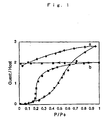
Fig. 1 is a view showing an adsorption isothermal curve of ethyl acetate by a vapor adsorption method. -
Fig. 2 is a view showing a catalytic activity as timecourses. - The invention of this application has the above-mentioned characteristics. The mode for carrying out the same is described below.
- The porous apohost composite of this invention is basically composed of
- <1> an organic apohost capable of forming a pore by a hydrogen bond, and
- <2> at least one type of the above-mentioned elements or compounds thereof.
- The former apohost may be formed with various compounds including the above-mentioned anthracene bisresorcin derivative (1) or monoresorcin derivative (2). These unit compounds forming the apohost are considered to be any compounds that constitute the network by the hydrogen bond, the pore thereof having the above-mentioned characteristics.
- Compounds having -OH (hydroxyl group), -NH2 (amino group) or another nitrogen-containing group in view of the requirement of forming a hydrogen bond and represented by the general formula
B-A-B or A-B
wherein A represents a polycyclic aromatic hydrocarbyl group or a heterocyclic group which may have a substituent; and
wherein B represents a monocyclic aromatic hydrocarbyl group or a heterocyclic group containing a substituent selected from the group comprising a hydroxy group, an amino group and a nitrogen-containing group other than an amino group, and optionally a further substituent.
in view of the requirement of enabling the formation of a three-dimensional pore by the network of the bond are typically mentioned. For example, the polycyclic aromatic hydrocarbon group may be a polycyclic aromatic hydrocarbon group having an aromatic ring of anthracene, phenanthrene or pyrene and wherein said heterocyclic group may be a polycyclic heterocyclic group based on a pyridine ring, a diazine ring, a triazine ring or a pyrrolidine ring. - As the above-mentioned A, various groups are considered.
- As the organic apohost, the following unit compounds (4), (5), (6), (7), (8) and the like are considered.


- The element in this invention which is compounded with the apohost may be various elements selected from among aluminum (Al), boron (B), gallium (Ga) and indium (In) or scandium (Sc), yttrium (Y), lanthanide as rare earth metals, titanium (Ti), germanium (Ge), tin (Sn), lead (Pb), silicon (Si), zirconium (Zr), and hafnium (Hf) and the like. The compounding is achieved in these elements or the compounds thereof.
- The structure by this compounding is considered to be by coordination of the above-mentioned element into the hydrogen bond of the apohost, for example, by formation of the coordination network of O-M<n+>-O in the hydrogen bond O-H ... O-H, by formation of the coordination network of N-M<n+>-N in the hydrogen bond N-H ... N-H, and further by incorporation into the apohost pore or the like as required.
- The compounds may be various compounds, for example, inorganic compounds such as halides, mineral acid salts and the like, or organic compounds such as organic acid salts, alkoxides, amine salts, complex salts, organic complexes and organometallic compounds.
- In the porous apohost composite of this invention, the number of the unit compounds constituting the apohost and the size of the pore are controlled by the types of the unit compounds and the compounds of the elements, the proportions of the unit compounds and the elements or the compounds thereof used, the type of the solvent, the treatment temperature and the like. These are selected depending on the use purpose, for example, the purpose of using the same in a catalyst and the usage.
- The composite of this invention can easily be produced by, for example, mixing said organic apohost with a solution or a dispersion of one or more of said element or a compound thereof. The apohost present as a solid may be mixed, or the unit compound forming the apohost may be used.
- And the porous apohost composite of this invention can be used as a catalyst, an optical response material, an electronic material or the like.
- The Diels-Alder reaction or the like catalytically proceeds with the approaching effect of the reaction substrate by incorporation of the organic apohost into the pore and the Lewis acid catalytic effect accompanied by the coordination or the incorporation of the above-mentioned element or compound thereof.
- Further, new optical materials and electronic materials can be developed by the interaction with the coordinating element through the incorporation of the optical response material into the pore of the apohost. This invention is illustrated more specifically by referring to the following Examples.
-
- (1) The above-mentioned anthracene-bisresorcin derivative (1): C26H14(OH)4 as the unit compound was crystallized from an ethyl acetate solvent to obtain a co-crystal containing two molecules of the ethyl acetate solvent as a guest. A polycrystalline apohost:1 free of this guest was obtained by thermally removing ethyl acetate as a volatile solvent.
This exhibited a high heat stability, and did not undergo melting or decomposition at 300°C. Nor was discoloration observed.
Further, when ethyl acetate was mixed as a liquid quest, the apohost:1 formed an adduct by including 2 molecules of ethyl acetate stoichiometrically (1:2). The X-ray powder pattern of this adduct was the same as that of the monocrystalline sample obtained by recrystallization. It was identified that a local monocrystalline structure was restored by the inclusion of the guest.
Moreover, with respect to the apohost:1, the specific surface area was A = 7 m2/g as measured by a standard BET analysis of nitrogen adsorption at a liquid nitrogen temperature. - (2) A toluene solution of trimethylaluminum: Al(CH3)3 was added to a suspension of the above-mentioned apohost:1 in benzene or 1,3-cyclohexadiene, and this was stirred in a nitrogen atmosphere at room temperature for 24 hours. This solution was removed by centrifugation, and the resulting powder was dried in vacuo at 80°C for from 1 to 2 days.
Further, the elemental analysis value of this powder was C, 70.63; H, 4.54; Al, 11.1 (according to elemental analysis through atomic absorption and/or fluorescent X-rays). This value agreed well with the calculated value, C, 70.89; H, 4.25; Al, 11.4 corresponding to
14-·2(AlCH3), namely C26H14(O-)4·2 (AlCH3)
in the apohost:1 = C26H14(OH)4.Further, the presence of CH3-Al could separately be identified by detecting generation of CPMAS (δc = -9 ppm) or methane. - (3) Besides, the BET specific surface area was evaluated as in the apohost:1, and it was identified to be A = 240 m2/g which was approximately more than 30 times that of the apohost:1.
The foregoing results reveal that in the porous apohost composite of this Example as an adduct, the pore occupies a higher proportion than in the apohost:1 -
- (1) The above-mentioned anthracene-bisresorcin derivative (1): C26H14(OH)4 as the unit compound was crystallized from an ethyl acetate solvent to obtain a co-crystal containing two molecules of the ethyl acetate solvent as a guest. A polycrystalline apohost:1 free of this guest was obtained by thermally removing ethyl acetate as a volatile solvent.
This exhibited a high heat stability, and did not undergo melting or decomposition at 300°C. Nor was discoloration observed.
Further, when ethyl acetate was mixed as a liquid quest, the apohost:1 formed an adduct by including 2 molecules of ethyl acetate stoichiometrically (1:2). The X-ray powder pattern of this adduct was the same as that of the monocrystalline sample obtained by recrystallization. It was identified that a local monocrystalline structure was restored by the inclusion of the guest.
Moreover, with respect to the apohost:1, the specific surface area was A = 7 m2/g as measured by a standard BET analysis of nitrogen adsorption at a liquid nitrogen temperature. - (2) The above-mentioned apohost:1 was mixed with a solution of di-isopropoxy-dichlorotitanium: (iPrO)2TiCl2 in benzene or 1,3-cyclohexadiene, and the suspension was stirred in a nitrogen atmosphere at room temperature for 24 hours.
An orange powder was thereby obtained.
The apohost:1 was immediately dissolved in a polar organic solvent, DMSO2-THF, but this orange powder was not dissolved therein.
Further, the elemental analysis value of this powder was C, 56.48; H, 4.43; Cl, 9.79; Ti, 14.5 (according to elemental analysis through atomic absorption and/or fluorescent X-rays). This value agreed well with the calculated value, C, 56.92; H, 4.18; Cl, 10.50; Ti, 14.2 corresponding to 14-·2[(iPrO)TiCl], namely C26H14(O-)4·2 [(iPrO)TiCl] in the apohost:1 = C26H14(OH)4.
The absence of an OH group was identified by lack of νOH in the IR spectrum.
When the powder was mixed with water, it turned yellow immediately, and it was identified that the apohost:1 was quantitatively regenerated.
In addition, the value of apohost:1/Ti = apohost:1/iPrOH = 1/2 as a stoichiometric ratio was also identified by the 1H-NMR (on apohost:1 and iPrOH) analysis of the powder after treatment with H2O or 2NH2SO4 and the atomic absorption (on Ti) analysis.
In view of the foregoing, it was judged that the above-mentioned powder was an adduct represented by
14-·2[(iPrO)TiCl]
and an adduct in which the OH group of the apohost:1 disappeared and [(iPrO)TiCl] was coordinated. - (3) with respect to the adduct powder, the incorporation of the guest molecule was evaluated. It was
Fig. 1 that depicted an adsorption isothermal curve of ethyl acetate by a vapor adsorption method. The guest/host molar ratio is plotted against an ethyl acetate gas partial pressure (P) up to a saturated vapor pressure (Po = 92 torr) at 25°C. - The change when the gas partial pressure (P) is increased (→) from 0 torr and decreased (←) from a saturated state is shown in
Fig. 1 with respect to - <a> adduct
- <b> apohost:1.
- In case of the adduct <curve a>, the incorporation of the guest is more flexible and changeable than in case of the apohost:1 <curve b>.
- Further, the BET specific surface area was evaluated in the same manner as in case of the apohost:1. Consequently, it was identified to be A = 80 m2/g which was approximately 10 times that of the apohost:1.
- From the above-mentioned results, it becomes apparent that in the porous organic metal composite of this Example as the adduct, the pore occupies a higher proportion than in the apohost:1 and more flexible, changeable properties are provided.
- The composite obtained in Example 1 was used as a catalyst in the Diels-Alder reaction of acrolein and 1,3-cyclohexadiene as schematically shown below.

- The porous apohost composite as the adduct is not dissolved at all in the system of acrolein and 1,3-cyclohexadiene, and is present in a solid state.
- The reaction was conducted in a nitrogen atmosphere at 25°C using 3 mol% of the composite. The ratio (molar ratio) of acrolein/1,3-cyclohexadiene used was 1/20. The half-life was evaluated by using a catalytic activity as timecourses. Further, the stereoselectivity of the ratio of endo/exo formed was also evaluated.
- For comparison, the case where no catalyst was used at all and the case where the apohost:1 was used as a catalyst were also evaluated.
- The results are shown in Table 1.
Table 1 Catalyst Half-life endo/exo No 500 h 90/10 apohost 50 h 95/5 Al-apohost < 1 min > 99/1 - From the results of Table 1, it becomes apparent that the catalytic activity of the composite in Example of this invention is quite high and further the stereoselectivity is also quite high.
- Ethyl acrylate was used instead of acrolein in Example 3, and the composite of Example 1 was used as a catalyst in the Diels-Alder reaction of this ethyl acrylate and 1,3-cyclohexadiene.
- The reaction was conducted at 60°C. It was identified that a catalytic activity of a half-life of 4.3 hours and quite a high stereoselectivity (endo/exo = 100/0) were provided by the use of 3 mol% of the composite. Meanwhile, in case of the apohost:1, the catalytic reaction did not proceed at all.
- The composite obtained in Example 1 was used as a catalyst in the Diels-Alder reaction of acrolein and 1,3-cyclohexadiene as schematically shown below.

- The porous organic metal composite as the adduct is not dissolved at all in the system of acrolein and 1,3-cyclohexadiene, and is present in a solid state.
- The reaction was conducted in a nitrogen atmosphere at 25°C. The ratio (molar ratio) of acrolein/1,3-cyclohexadiene used was 1/20.
Fig. 2 shows the catalytic activity of the reaction as timecourses. The curves inFig. 2 indicate the following. - <a> No catalyst is used.
- <b> Use of 3 mol% of the composite catalyst.
- <b'> Second use of 3 mol% of the composite catalyst as reuse.
- <c> Use of the apohost:1 at a ratio of 3 mol%.
- <d> Use of soluble (iPrO)2TiCl2 at a ratio of 3 mol%.
- <e> Use of 1 mol% of the composite catalyst.
- <f> Use of 6 mol% of the composite catalyst.
- Further, the following Table 2 shows the half-life and the ratio of endo/exo formed with respect to the above-mentioned <a>, <b>, <c>, and <d>.
Table 2 Catalyst Half-life endo/exo No 500 h 90/10 apohost 50 h 95/5 TiCl2(OCH(CH3)2)2 1 h 98/2 Ti-host 4 min > 99/1 - From the results of
Fig. 2 and Table 2, it becomes apparent that the catalytic activity of the composite in Example of this invention is quite high and further the stereoselectivity is also quite high. - Further, from the results of <b> and <b'> in
Fig. 2 , it becomes apparent that almost no activity is lost even by the reuse after the recovery. - Ethyl acrylate was used instead of acrolein in Example 5, and the composite of Example 1 was used as a catalyst in the Diels-Alder reaction of this ethyl acrylate and 1,3-cyclohexadiene.
- The reaction was conducted at 60°C. It was identified that a catalytic activity of the half-life of 5.3 hours and quite a high stereoselectivity (endo/exo = 100/0) were provided by the use of 3 mol% of the composite. Meanwhile, in case of the apohost:1, the catalytic reaction did not proceed at all.
- As having been described in detail above, the invention of this application provides, for example, a novel porous organic apohost composite having an excellent catalytic activity of a Lewis acid catalyst or the like and a high function.
- With respect to the control of the structure of the apohost and the modification thereof, the development of the new technology is accelerated.
Claims (9)
- A porous composite comprising an organic apohost capable of forming a porous structure through hydrogen bonding, compounded with at least one of the following or with compounds of the following: Al, B, Ga, In, Sc, Y, lanthanides, Ti, Ge, Sn, Pb, Si, Zr and Hf,
wherein said organic apohost is formed from unit compounds having the formula:
B-A-B or A-B;
wherein A represents a polycyclic aromatic hydrocarbyl group or a heterocyclic group which may have a substituent; and
wherein B represents a monocyclic aromatic hydrocarbyl group or a heterocyclic group containing a substituent selected from the group comprising a hydroxy group, an amino group and a nitrogen-containing group other than an amino group, said nitrogen-containing group being capable of forming a hydrogen bond, and optionally a further substituent. - A composite as claimed in claim 1 wherein the organic apohost has a three-dimensional extended structure formed by hydrogen bonding.
- A composite as claimed in either one of claim 1 or claim 2,
wherein said polycyclic aromatic hydrocarbyl group is a polycyclic aromatic hydrocarbyl group having an aromatic ring of anthracene, phenanthrene or pyrene; and
wherein said heterocyclic group is a polycyclic heterocyclic group based on a pyridine ring, a diazine ring, a triazine ring or a pyrrolidine ring. - A composite as claimed in claim 1 wherein the compound of said formula B-A-B is selected from the group consisting of the following compounds:


- A composite as claimed in any preceding claim wherein said compounds derived from said elements are halides, mineral acid salts, or organic acid salts,alkoxides, amine salts, complex salts, organic complexes and organometallic compounds.
- A composite as claimed in any preceding claim wherein said compounding is by coordination of said elements or compounds thereof into the hydrogen bonding network of the apohost.
- A method of preparing a porous composite as claimed in any preceding claim comprising mixing said organic apohost with a solution or a dispersion of one or more of said elements and/or one or more compounds derived from said elements.
- Use of a porous composite of any one of claims 1 to 7 as a catalyst, an optical response material or an electronic material.
- Use as claimed in claim 8 wherein said composite is used as a Diels-Alder catalyst.
Applications Claiming Priority (5)
| Application Number | Priority Date | Filing Date | Title |
|---|---|---|---|
| JP05670298A JP3565699B2 (en) | 1998-03-09 | 1998-03-09 | Porous organic-metal composite |
| JP5670198 | 1998-03-09 | ||
| JP05670198A JP3565698B2 (en) | 1998-03-09 | 1998-03-09 | Porous apohost complex |
| JP5670298 | 1998-03-09 | ||
| PCT/JP1999/001112 WO1999046269A1 (en) | 1998-03-09 | 1999-03-08 | Porous organic/metallic composite |
Publications (3)
| Publication Number | Publication Date |
|---|---|
| EP0994116A1 EP0994116A1 (en) | 2000-04-19 |
| EP0994116A4 EP0994116A4 (en) | 2003-02-05 |
| EP0994116B1 true EP0994116B1 (en) | 2010-09-29 |
Family
ID=26397685
Family Applications (1)
| Application Number | Title | Priority Date | Filing Date |
|---|---|---|---|
| EP99939192A Expired - Lifetime EP0994116B1 (en) | 1998-03-09 | 1999-03-08 | Porous organic/metallic composite |
Country Status (5)
| Country | Link |
|---|---|
| US (1) | US6380127B1 (en) |
| EP (1) | EP0994116B1 (en) |
| CA (1) | CA2290010C (en) |
| DE (1) | DE69942795D1 (en) |
| WO (1) | WO1999046269A1 (en) |
Family Cites Families (8)
| Publication number | Priority date | Publication date | Assignee | Title |
|---|---|---|---|---|
| US3775352A (en) * | 1971-03-22 | 1973-11-27 | Shell Oil Co | Metal-polymer matrices and their preparation |
| US3997472A (en) * | 1974-11-11 | 1976-12-14 | Polymeric Enzymes, Inc. | Novel catalyst systems and methods of preparation |
| US4797380A (en) * | 1986-03-06 | 1989-01-10 | Satoshi Motoo | Method for producing highly dispersed catalyst |
| DE4009575A1 (en) * | 1989-06-22 | 1991-01-03 | Gutec Gmbh | Supported catalyst for carbon mon:oxide oxidn., esp. in exhaust gas |
| JP2608484B2 (en) * | 1990-05-24 | 1997-05-07 | 東レ・ダウコーニング・シリコーン株式会社 | Method for producing catalyst-containing thermoplastic resin fine particles for hydrosilylation reaction |
| JPH06157912A (en) * | 1992-08-13 | 1994-06-07 | General Electric Co <Ge> | Preparation of one-component curable organopolysiloxane composition |
| US5419954A (en) * | 1993-02-04 | 1995-05-30 | The Alpha Corporation | Composition including a catalytic metal-polymer complex and a method of manufacturing a laminate preform or a laminate which is catalytically effective for subsequent electroless metallization thereof |
| CN1038395C (en) * | 1994-10-25 | 1998-05-20 | 中国石油化工总公司 | Ion exchange resin catalyzer for synthesising bisphenol and preparation thereof |
-
1999
- 1999-03-08 CA CA002290010A patent/CA2290010C/en not_active Expired - Fee Related
- 1999-03-08 WO PCT/JP1999/001112 patent/WO1999046269A1/en not_active Ceased
- 1999-03-08 DE DE69942795T patent/DE69942795D1/en not_active Expired - Lifetime
- 1999-03-08 US US09/423,450 patent/US6380127B1/en not_active Expired - Fee Related
- 1999-03-08 EP EP99939192A patent/EP0994116B1/en not_active Expired - Lifetime
Also Published As
| Publication number | Publication date |
|---|---|
| US6380127B1 (en) | 2002-04-30 |
| CA2290010C (en) | 2005-07-12 |
| CA2290010A1 (en) | 1999-09-16 |
| DE69942795D1 (en) | 2010-11-11 |
| EP0994116A1 (en) | 2000-04-19 |
| WO1999046269A1 (en) | 1999-09-16 |
| EP0994116A4 (en) | 2003-02-05 |
Similar Documents
| Publication | Publication Date | Title |
|---|---|---|
| Evans et al. | Organolanthanide hydride chemistry. 1. Synthesis and x-ray crystallographic characterization of dimeric organolanthanide and organoyttrium hydride complexes | |
| Mehrotra et al. | Coordination chemistry of lanthanides with emphasis on derivatives with Ln-OC bonds | |
| Laurent et al. | From well-defined Pt (II) surface species to the controlled growth of silica supported Pt nanoparticles | |
| Huang et al. | Surfactant‐Assisted Nanocrystalline Zinc Coordination Polymers: Controlled Particle Sizes and Synergistic Effects in Catalysis | |
| Wayda et al. | Divalent lanthanoid synthesis in liquid ammonia. I. The synthesis and x-ray crystal structure of (C5Me5) 2Yb (NH3)(THF) | |
| Inoue et al. | Alkoxyalumoxanes | |
| Dunham et al. | Nuclear magnetic resonance investigation of the hydrogen peroxide oxidation of platinum (II) complexes. Crystal and molecular structures of sodium trans-dihydroxobis (malonato) platinate (IV) hexahydrate and sodium trans-dihydroxobis (oxalato) platinate (IV) hexahydrate | |
| Niedermair et al. | Heteroleptic κ2 (N, C2)-2-phenylpyridine platinum complexes: The use of bis (pyrazolyl) borates as ancillary ligands | |
| Schumann et al. | Organometallic Compounds of the Lanthanides. 128.1 Donor-Functionalized Chiral Nonracemic Cyclopentadienyl Complexes of Yttrium, Samarium (III), and Lutetium | |
| Schulte et al. | Transition Metal Stabilized AlI and GaI Complexes; Structure of [(CO) 5Cr Ga {(CH3)(tmeda)}] | |
| Purdy et al. | Synthesis, structure, and thiolysis reactions of pyridine soluble alkaline earth and yttrium thiolates | |
| Edelmann | Multiple-decker sandwich complexes of f-elements | |
| Bhandari et al. | Thallium (I)-and organothallium (III)-substituted mono-, bis-and tris-tetrazoles: synthesis and supramolecular structures | |
| Gschwind et al. | Multitopic ligand design: a concept for single-source precursors | |
| Lee et al. | Structure and reactivity of novel alkylcobalt macrocycles | |
| Drake et al. | An Unexpected Product Derived from the Reaction of TbCl3 (H2O) 6 and [Na (hfa)] n: Synthesis, Characterization, and X-ray Structure of {[Tb2 (hfa) 4 (. mu. 2-O2CCF3) 2 (H2O) 4][Tb (hfa) 3 (H2O) 2] 2. cntdot. H2O}(hfa= CF3COCHCOCF3) | |
| Veith et al. | Synthesis and Spectroscopic Characterization of Novel Heterotermetallic Isopropoxides: X-ray Crystal Structures of ICd {M2 (OPri) 9} and [{Cd (OPri) 3} Ba {M2 (OPri) 9}] 2 (M= Ti, Hf) | |
| EP2347821A1 (en) | Gas adsorbing material, precursor of the gas adsorbing material, and process for producing gas adsorbing material | |
| US6380127B1 (en) | Porous organic/metallic composite | |
| Tella et al. | Solvent‐free Synthesis, Characterization and Solvent‐Vapor Interaction of Zinc (II) and Copper (II) Coordination Polymers containing Nitrogen‐donor Ligands | |
| Tang et al. | Coinage Metal (Bisfluorosulfonyl) imide Complexes: Preparation, Characterization, and Catalytic Applications | |
| Hernandez-Sanchez et al. | Alkaline earth titanate (AETiO3) perovskite nanoparticles synthesized from structurally characterized single-source alkoxides | |
| Chisholm et al. | Metal alkoxides-models for metal oxides. 11. Synthesis and properties of mixed alkyl/aryl/benzyl alkoxides of formula 1, 2-W2R2 (OR') 4 and W2R (OR') 5 (M. tplbond. M) | |
| John et al. | Synthesis and Characterization of Mixed-Metal Aryloxo-Organometallic Precursors for Oxide− Ceramic Materials | |
| JP3565698B2 (en) | Porous apohost complex |
Legal Events
| Date | Code | Title | Description |
|---|---|---|---|
| PUAI | Public reference made under article 153(3) epc to a published international application that has entered the european phase |
Free format text: ORIGINAL CODE: 0009012 |
|
| 17P | Request for examination filed |
Effective date: 19991206 |
|
| AK | Designated contracting states |
Kind code of ref document: A1 Designated state(s): BE DE FR GB NL |
|
| RIC1 | Information provided on ipc code assigned before grant |
Ipc: 7C 07C 67:347 J Ipc: 7C 07C 69:753 J Ipc: 7C 07C 45:69 J Ipc: 7C 07C 47/445 J Ipc: 7C 07C 47/445 B Ipc: 7B 01J 31/02 B Ipc: 7C 07F 7/28 B Ipc: 7C 07F 5/06 A |
|
| A4 | Supplementary search report drawn up and despatched |
Effective date: 20021220 |
|
| RAP1 | Party data changed (applicant data changed or rights of an application transferred) |
Owner name: JAPAN SCIENCE AND TECHNOLOGY AGENCY |
|
| GRAP | Despatch of communication of intention to grant a patent |
Free format text: ORIGINAL CODE: EPIDOSNIGR1 |
|
| RIC1 | Information provided on ipc code assigned before grant |
Ipc: C07C 47/445 20060101ALI20100318BHEP Ipc: B01J 31/02 20060101ALI20100318BHEP Ipc: C07F 7/28 20060101ALI20100318BHEP Ipc: C07F 5/06 20060101AFI20100318BHEP |
|
| GRAS | Grant fee paid |
Free format text: ORIGINAL CODE: EPIDOSNIGR3 |
|
| GRAA | (expected) grant |
Free format text: ORIGINAL CODE: 0009210 |
|
| AK | Designated contracting states |
Kind code of ref document: B1 Designated state(s): BE DE FR GB NL |
|
| REG | Reference to a national code |
Ref country code: GB Ref legal event code: FG4D |
|
| REF | Corresponds to: |
Ref document number: 69942795 Country of ref document: DE Date of ref document: 20101111 Kind code of ref document: P |
|
| REG | Reference to a national code |
Ref country code: NL Ref legal event code: T3 |
|
| PGFP | Annual fee paid to national office [announced via postgrant information from national office to epo] |
Ref country code: NL Payment date: 20110330 Year of fee payment: 13 |
|
| PGFP | Annual fee paid to national office [announced via postgrant information from national office to epo] |
Ref country code: FR Payment date: 20110413 Year of fee payment: 13 Ref country code: GB Payment date: 20110301 Year of fee payment: 13 Ref country code: BE Payment date: 20110328 Year of fee payment: 13 Ref country code: DE Payment date: 20110329 Year of fee payment: 13 |
|
| PLBE | No opposition filed within time limit |
Free format text: ORIGINAL CODE: 0009261 |
|
| STAA | Information on the status of an ep patent application or granted ep patent |
Free format text: STATUS: NO OPPOSITION FILED WITHIN TIME LIMIT |
|
| 26N | No opposition filed |
Effective date: 20110630 |
|
| REG | Reference to a national code |
Ref country code: DE Ref legal event code: R097 Ref document number: 69942795 Country of ref document: DE Effective date: 20110630 |
|
| BERE | Be: lapsed |
Owner name: JAPAN SCIENCE AND TECHNOLOGY AGENCY Effective date: 20120331 |
|
| REG | Reference to a national code |
Ref country code: NL Ref legal event code: V1 Effective date: 20121001 |
|
| GBPC | Gb: european patent ceased through non-payment of renewal fee |
Effective date: 20120308 |
|
| REG | Reference to a national code |
Ref country code: FR Ref legal event code: ST Effective date: 20121130 |
|
| PG25 | Lapsed in a contracting state [announced via postgrant information from national office to epo] |
Ref country code: FR Free format text: LAPSE BECAUSE OF NON-PAYMENT OF DUE FEES Effective date: 20120402 Ref country code: BE Free format text: LAPSE BECAUSE OF NON-PAYMENT OF DUE FEES Effective date: 20120331 Ref country code: GB Free format text: LAPSE BECAUSE OF NON-PAYMENT OF DUE FEES Effective date: 20120308 |
|
| REG | Reference to a national code |
Ref country code: DE Ref legal event code: R119 Ref document number: 69942795 Country of ref document: DE Effective date: 20121002 |
|
| PG25 | Lapsed in a contracting state [announced via postgrant information from national office to epo] |
Ref country code: NL Free format text: LAPSE BECAUSE OF NON-PAYMENT OF DUE FEES Effective date: 20121001 |
|
| PG25 | Lapsed in a contracting state [announced via postgrant information from national office to epo] |
Ref country code: DE Free format text: LAPSE BECAUSE OF NON-PAYMENT OF DUE FEES Effective date: 20121002 |