EP0980205B1 - Use of a combination of tall-104 cells with adriamycin or cisplatin in the therapy of malignancies - Google Patents
Use of a combination of tall-104 cells with adriamycin or cisplatin in the therapy of malignancies Download PDFInfo
- Publication number
- EP0980205B1 EP0980205B1 EP98920098A EP98920098A EP0980205B1 EP 0980205 B1 EP0980205 B1 EP 0980205B1 EP 98920098 A EP98920098 A EP 98920098A EP 98920098 A EP98920098 A EP 98920098A EP 0980205 B1 EP0980205 B1 EP 0980205B1
- Authority
- EP
- European Patent Office
- Prior art keywords
- cells
- tall
- tumor
- adriamycin
- therapy
- Prior art date
- Legal status (The legal status is an assumption and is not a legal conclusion. Google has not performed a legal analysis and makes no representation as to the accuracy of the status listed.)
- Expired - Lifetime
Links
- 206010028980 Neoplasm Diseases 0.000 title claims abstract description 98
- AOJJSUZBOXZQNB-TZSSRYMLSA-N Doxorubicin Chemical compound O([C@H]1C[C@@](O)(CC=2C(O)=C3C(=O)C=4C=CC=C(C=4C(=O)C3=C(O)C=21)OC)C(=O)CO)[C@H]1C[C@H](N)[C@H](O)[C@H](C)O1 AOJJSUZBOXZQNB-TZSSRYMLSA-N 0.000 title claims description 88
- 229940009456 adriamycin Drugs 0.000 title claims description 43
- 229960004316 cisplatin Drugs 0.000 title claims description 11
- DQLATGHUWYMOKM-UHFFFAOYSA-L cisplatin Chemical compound N[Pt](N)(Cl)Cl DQLATGHUWYMOKM-UHFFFAOYSA-L 0.000 title claims description 11
- 238000002560 therapeutic procedure Methods 0.000 title description 16
- 230000036210 malignancy Effects 0.000 title 1
- 239000002246 antineoplastic agent Substances 0.000 claims abstract description 34
- 229940127089 cytotoxic agent Drugs 0.000 claims abstract description 29
- 238000011282 treatment Methods 0.000 claims description 35
- 201000011510 cancer Diseases 0.000 claims description 19
- 230000001472 cytotoxic effect Effects 0.000 claims description 16
- 239000003814 drug Substances 0.000 claims description 15
- 238000000338 in vitro Methods 0.000 claims description 15
- 108010002350 Interleukin-2 Proteins 0.000 claims description 13
- 230000003013 cytotoxicity Effects 0.000 claims description 10
- 231100000135 cytotoxicity Toxicity 0.000 claims description 10
- 241000124008 Mammalia Species 0.000 claims description 9
- 230000004663 cell proliferation Effects 0.000 claims description 5
- 239000008194 pharmaceutical composition Substances 0.000 claims description 5
- 238000002360 preparation method Methods 0.000 claims description 4
- 239000003937 drug carrier Substances 0.000 claims description 3
- 238000002512 chemotherapy Methods 0.000 abstract description 25
- 238000002659 cell therapy Methods 0.000 abstract description 23
- 230000000694 effects Effects 0.000 abstract description 11
- 238000000034 method Methods 0.000 abstract description 8
- 230000009467 reduction Effects 0.000 abstract description 2
- 239000011885 synergistic combination Substances 0.000 abstract 1
- 210000004027 cell Anatomy 0.000 description 108
- 241000699670 Mus sp. Species 0.000 description 33
- 239000002953 phosphate buffered saline Substances 0.000 description 18
- 238000002474 experimental method Methods 0.000 description 17
- 230000000259 anti-tumor effect Effects 0.000 description 15
- 231100000673 dose–response relationship Toxicity 0.000 description 14
- 238000011579 SCID mouse model Methods 0.000 description 13
- 238000002347 injection Methods 0.000 description 13
- 239000007924 injection Substances 0.000 description 13
- 102000004127 Cytokines Human genes 0.000 description 12
- 108090000695 Cytokines Proteins 0.000 description 12
- 102000000588 Interleukin-2 Human genes 0.000 description 11
- 230000002354 daily effect Effects 0.000 description 9
- 229940079593 drug Drugs 0.000 description 9
- 230000001225 therapeutic effect Effects 0.000 description 9
- 210000004881 tumor cell Anatomy 0.000 description 9
- 210000001744 T-lymphocyte Anatomy 0.000 description 7
- 238000013459 approach Methods 0.000 description 7
- 230000012010 growth Effects 0.000 description 7
- 241001465754 Metazoa Species 0.000 description 6
- 231100000433 cytotoxic Toxicity 0.000 description 6
- 238000001727 in vivo Methods 0.000 description 6
- 238000001356 surgical procedure Methods 0.000 description 6
- 241000699666 Mus <mouse, genus> Species 0.000 description 5
- 230000000996 additive effect Effects 0.000 description 5
- 239000003795 chemical substances by application Substances 0.000 description 5
- 238000011342 chemoimmunotherapy Methods 0.000 description 5
- 238000011260 co-administration Methods 0.000 description 5
- 230000001085 cytostatic effect Effects 0.000 description 5
- 239000012634 fragment Substances 0.000 description 5
- 238000004519 manufacturing process Methods 0.000 description 5
- 239000000654 additive Substances 0.000 description 4
- 229940100198 alkylating agent Drugs 0.000 description 4
- 239000002168 alkylating agent Substances 0.000 description 4
- 230000001093 anti-cancer Effects 0.000 description 4
- 229940044683 chemotherapy drug Drugs 0.000 description 4
- 238000002648 combination therapy Methods 0.000 description 4
- 239000012636 effector Substances 0.000 description 4
- 238000002513 implantation Methods 0.000 description 4
- 230000001988 toxicity Effects 0.000 description 4
- 231100000419 toxicity Toxicity 0.000 description 4
- 230000004614 tumor growth Effects 0.000 description 4
- CMSMOCZEIVJLDB-UHFFFAOYSA-N Cyclophosphamide Chemical compound ClCCN(CCCl)P1(=O)NCCCO1 CMSMOCZEIVJLDB-UHFFFAOYSA-N 0.000 description 3
- IAZDPXIOMUYVGZ-UHFFFAOYSA-N Dimethylsulphoxide Chemical compound CS(C)=O IAZDPXIOMUYVGZ-UHFFFAOYSA-N 0.000 description 3
- 102000015696 Interleukins Human genes 0.000 description 3
- 108010063738 Interleukins Proteins 0.000 description 3
- 206010028851 Necrosis Diseases 0.000 description 3
- FAPWRFPIFSIZLT-UHFFFAOYSA-M Sodium chloride Chemical compound [Na+].[Cl-] FAPWRFPIFSIZLT-UHFFFAOYSA-M 0.000 description 3
- 230000001028 anti-proliverative effect Effects 0.000 description 3
- 238000003556 assay Methods 0.000 description 3
- 239000000969 carrier Substances 0.000 description 3
- 201000010099 disease Diseases 0.000 description 3
- 208000037265 diseases, disorders, signs and symptoms Diseases 0.000 description 3
- 230000001394 metastastic effect Effects 0.000 description 3
- 239000000203 mixture Substances 0.000 description 3
- 238000010172 mouse model Methods 0.000 description 3
- 230000017074 necrotic cell death Effects 0.000 description 3
- 230000035755 proliferation Effects 0.000 description 3
- 230000004044 response Effects 0.000 description 3
- 239000011780 sodium chloride Substances 0.000 description 3
- 230000002195 synergetic effect Effects 0.000 description 3
- 238000012546 transfer Methods 0.000 description 3
- 230000003442 weekly effect Effects 0.000 description 3
- MZOFCQQQCNRIBI-VMXHOPILSA-N (3s)-4-[[(2s)-1-[[(2s)-1-[[(1s)-1-carboxy-2-hydroxyethyl]amino]-4-methyl-1-oxopentan-2-yl]amino]-5-(diaminomethylideneamino)-1-oxopentan-2-yl]amino]-3-[[2-[[(2s)-2,6-diaminohexanoyl]amino]acetyl]amino]-4-oxobutanoic acid Chemical compound OC[C@@H](C(O)=O)NC(=O)[C@H](CC(C)C)NC(=O)[C@H](CCCN=C(N)N)NC(=O)[C@H](CC(O)=O)NC(=O)CNC(=O)[C@@H](N)CCCCN MZOFCQQQCNRIBI-VMXHOPILSA-N 0.000 description 2
- UZOVYGYOLBIAJR-UHFFFAOYSA-N 4-isocyanato-4'-methyldiphenylmethane Chemical compound C1=CC(C)=CC=C1CC1=CC=C(N=C=O)C=C1 UZOVYGYOLBIAJR-UHFFFAOYSA-N 0.000 description 2
- 206010061968 Gastric neoplasm Diseases 0.000 description 2
- 108010017213 Granulocyte-Macrophage Colony-Stimulating Factor Proteins 0.000 description 2
- 102100039620 Granulocyte-macrophage colony-stimulating factor Human genes 0.000 description 2
- 102100037850 Interferon gamma Human genes 0.000 description 2
- 108010074328 Interferon-gamma Proteins 0.000 description 2
- 102000004083 Lymphotoxin-alpha Human genes 0.000 description 2
- 108090000542 Lymphotoxin-alpha Proteins 0.000 description 2
- 108060008682 Tumor Necrosis Factor Proteins 0.000 description 2
- 102000000852 Tumor Necrosis Factor-alpha Human genes 0.000 description 2
- 238000009825 accumulation Methods 0.000 description 2
- 239000003242 anti bacterial agent Substances 0.000 description 2
- 230000003466 anti-cipated effect Effects 0.000 description 2
- 230000008901 benefit Effects 0.000 description 2
- 230000003115 biocidal effect Effects 0.000 description 2
- 238000001574 biopsy Methods 0.000 description 2
- 230000000973 chemotherapeutic effect Effects 0.000 description 2
- 230000002301 combined effect Effects 0.000 description 2
- 229960004397 cyclophosphamide Drugs 0.000 description 2
- 230000016396 cytokine production Effects 0.000 description 2
- 206010017758 gastric cancer Diseases 0.000 description 2
- 210000000987 immune system Anatomy 0.000 description 2
- 230000007246 mechanism Effects 0.000 description 2
- 206010061289 metastatic neoplasm Diseases 0.000 description 2
- 238000012986 modification Methods 0.000 description 2
- 230000004048 modification Effects 0.000 description 2
- 230000031942 natural killer cell mediated cytotoxicity Effects 0.000 description 2
- 241000894007 species Species 0.000 description 2
- 150000003431 steroids Chemical class 0.000 description 2
- 230000004936 stimulating effect Effects 0.000 description 2
- 238000007920 subcutaneous administration Methods 0.000 description 2
- 231100000331 toxic Toxicity 0.000 description 2
- 230000002588 toxic effect Effects 0.000 description 2
- 230000001052 transient effect Effects 0.000 description 2
- 241000282465 Canis Species 0.000 description 1
- 241001227713 Chiron Species 0.000 description 1
- 238000008157 ELISA kit Methods 0.000 description 1
- 208000002250 Hematologic Neoplasms Diseases 0.000 description 1
- 206010019695 Hepatic neoplasm Diseases 0.000 description 1
- 206010061598 Immunodeficiency Diseases 0.000 description 1
- 238000012404 In vitro experiment Methods 0.000 description 1
- FBOZXECLQNJBKD-ZDUSSCGKSA-N L-methotrexate Chemical compound C=1N=C2N=C(N)N=C(N)C2=NC=1CN(C)C1=CC=C(C(=O)N[C@@H](CCC(O)=O)C(O)=O)C=C1 FBOZXECLQNJBKD-ZDUSSCGKSA-N 0.000 description 1
- 206010062049 Lymphocytic infiltration Diseases 0.000 description 1
- 229930192392 Mitomycin Natural products 0.000 description 1
- 241001529936 Murinae Species 0.000 description 1
- 241000204031 Mycoplasma Species 0.000 description 1
- NWIBSHFKIJFRCO-WUDYKRTCSA-N Mytomycin Chemical compound C1N2C(C(C(C)=C(N)C3=O)=O)=C3[C@@H](COC(N)=O)[C@@]2(OC)[C@@H]2[C@H]1N2 NWIBSHFKIJFRCO-WUDYKRTCSA-N 0.000 description 1
- 238000009004 PCR Kit Methods 0.000 description 1
- 208000002151 Pleural effusion Diseases 0.000 description 1
- 208000007660 Residual Neoplasm Diseases 0.000 description 1
- 208000005718 Stomach Neoplasms Diseases 0.000 description 1
- 238000000692 Student's t-test Methods 0.000 description 1
- 230000005867 T cell response Effects 0.000 description 1
- 206010054094 Tumour necrosis Diseases 0.000 description 1
- 210000003815 abdominal wall Anatomy 0.000 description 1
- 238000010521 absorption reaction Methods 0.000 description 1
- 230000001464 adherent effect Effects 0.000 description 1
- 229940045799 anthracyclines and related substance Drugs 0.000 description 1
- 229940088710 antibiotic agent Drugs 0.000 description 1
- 229940045985 antineoplastic platinum compound Drugs 0.000 description 1
- 238000011888 autopsy Methods 0.000 description 1
- 229960002170 azathioprine Drugs 0.000 description 1
- LMEKQMALGUDUQG-UHFFFAOYSA-N azathioprine Chemical compound CN1C=NC([N+]([O-])=O)=C1SC1=NC=NC2=C1NC=N2 LMEKQMALGUDUQG-UHFFFAOYSA-N 0.000 description 1
- 210000003719 b-lymphocyte Anatomy 0.000 description 1
- 238000001815 biotherapy Methods 0.000 description 1
- 238000004364 calculation method Methods 0.000 description 1
- 229960004562 carboplatin Drugs 0.000 description 1
- YAYRGNWWLMLWJE-UHFFFAOYSA-L carboplatin Chemical compound O=C1O[Pt](N)(N)OC(=O)C11CCC1 YAYRGNWWLMLWJE-UHFFFAOYSA-L 0.000 description 1
- 238000004113 cell culture Methods 0.000 description 1
- 230000003915 cell function Effects 0.000 description 1
- 230000006037 cell lysis Effects 0.000 description 1
- 238000001516 cell proliferation assay Methods 0.000 description 1
- 230000000349 chemoimmunotherapeutic effect Effects 0.000 description 1
- 239000003636 conditioned culture medium Substances 0.000 description 1
- 238000011109 contamination Methods 0.000 description 1
- 230000009089 cytolysis Effects 0.000 description 1
- 210000001151 cytotoxic T lymphocyte Anatomy 0.000 description 1
- 238000002784 cytotoxicity assay Methods 0.000 description 1
- 231100000263 cytotoxicity test Toxicity 0.000 description 1
- LOKCTEFSRHRXRJ-UHFFFAOYSA-I dipotassium trisodium dihydrogen phosphate hydrogen phosphate dichloride Chemical compound P(=O)(O)(O)[O-].[K+].P(=O)(O)([O-])[O-].[Na+].[Na+].[Cl-].[K+].[Cl-].[Na+] LOKCTEFSRHRXRJ-UHFFFAOYSA-I 0.000 description 1
- 229960004679 doxorubicin Drugs 0.000 description 1
- 230000008030 elimination Effects 0.000 description 1
- 238000003379 elimination reaction Methods 0.000 description 1
- 210000003743 erythrocyte Anatomy 0.000 description 1
- 238000011156 evaluation Methods 0.000 description 1
- 230000003203 everyday effect Effects 0.000 description 1
- 208000010749 gastric carcinoma Diseases 0.000 description 1
- PCHJSUWPFVWCPO-UHFFFAOYSA-N gold Chemical compound [Au] PCHJSUWPFVWCPO-UHFFFAOYSA-N 0.000 description 1
- 239000010931 gold Substances 0.000 description 1
- 229910052737 gold Inorganic materials 0.000 description 1
- 230000002489 hematologic effect Effects 0.000 description 1
- 239000005556 hormone Substances 0.000 description 1
- 229940088597 hormone Drugs 0.000 description 1
- 230000002519 immonomodulatory effect Effects 0.000 description 1
- 230000028993 immune response Effects 0.000 description 1
- 230000002163 immunogen Effects 0.000 description 1
- 238000009169 immunotherapy Methods 0.000 description 1
- 238000010348 incorporation Methods 0.000 description 1
- 238000011534 incubation Methods 0.000 description 1
- 230000008595 infiltration Effects 0.000 description 1
- 238000001764 infiltration Methods 0.000 description 1
- 230000002401 inhibitory effect Effects 0.000 description 1
- 230000005764 inhibitory process Effects 0.000 description 1
- 230000000977 initiatory effect Effects 0.000 description 1
- 230000002427 irreversible effect Effects 0.000 description 1
- 230000002147 killing effect Effects 0.000 description 1
- 230000002045 lasting effect Effects 0.000 description 1
- 231100000518 lethal Toxicity 0.000 description 1
- 230000001665 lethal effect Effects 0.000 description 1
- 208000032839 leukemia Diseases 0.000 description 1
- 230000000670 limiting effect Effects 0.000 description 1
- 208000014018 liver neoplasm Diseases 0.000 description 1
- 210000004698 lymphocyte Anatomy 0.000 description 1
- 210000003810 lymphokine-activated killer cell Anatomy 0.000 description 1
- 230000014759 maintenance of location Effects 0.000 description 1
- 238000005259 measurement Methods 0.000 description 1
- 230000001404 mediated effect Effects 0.000 description 1
- 239000002609 medium Substances 0.000 description 1
- 201000001441 melanoma Diseases 0.000 description 1
- 229910052751 metal Inorganic materials 0.000 description 1
- 239000002184 metal Substances 0.000 description 1
- 230000008883 metastatic behaviour Effects 0.000 description 1
- MYWUZJCMWCOHBA-VIFPVBQESA-N methamphetamine Chemical compound CN[C@@H](C)CC1=CC=CC=C1 MYWUZJCMWCOHBA-VIFPVBQESA-N 0.000 description 1
- 229960000485 methotrexate Drugs 0.000 description 1
- 229960004857 mitomycin Drugs 0.000 description 1
- 238000002715 modification method Methods 0.000 description 1
- 230000001338 necrotic effect Effects 0.000 description 1
- 230000001613 neoplastic effect Effects 0.000 description 1
- 230000036961 partial effect Effects 0.000 description 1
- 150000003058 platinum compounds Chemical class 0.000 description 1
- 230000003389 potentiating effect Effects 0.000 description 1
- 238000002203 pretreatment Methods 0.000 description 1
- 230000002062 proliferating effect Effects 0.000 description 1
- 238000001959 radiotherapy Methods 0.000 description 1
- 238000004064 recycling Methods 0.000 description 1
- 208000016691 refractory malignant neoplasm Diseases 0.000 description 1
- 230000004043 responsiveness Effects 0.000 description 1
- 231100000241 scar Toxicity 0.000 description 1
- 230000035945 sensitivity Effects 0.000 description 1
- 230000002269 spontaneous effect Effects 0.000 description 1
- 201000011549 stomach cancer Diseases 0.000 description 1
- 201000000498 stomach carcinoma Diseases 0.000 description 1
- 239000000126 substance Substances 0.000 description 1
- 238000012360 testing method Methods 0.000 description 1
- 229940124597 therapeutic agent Drugs 0.000 description 1
- 238000011285 therapeutic regimen Methods 0.000 description 1
- 230000032258 transport Effects 0.000 description 1
- 230000002476 tumorcidal effect Effects 0.000 description 1
- OGWKCGZFUXNPDA-XQKSVPLYSA-N vincristine Chemical compound C([N@]1C[C@@H](C[C@]2(C(=O)OC)C=3C(=CC4=C([C@]56[C@H]([C@@]([C@H](OC(C)=O)[C@]7(CC)C=CCN([C@H]67)CC5)(O)C(=O)OC)N4C=O)C=3)OC)C[C@@](C1)(O)CC)CC1=C2NC2=CC=CC=C12 OGWKCGZFUXNPDA-XQKSVPLYSA-N 0.000 description 1
- 229960004528 vincristine Drugs 0.000 description 1
- OGWKCGZFUXNPDA-UHFFFAOYSA-N vincristine Natural products C1C(CC)(O)CC(CC2(C(=O)OC)C=3C(=CC4=C(C56C(C(C(OC(C)=O)C7(CC)C=CCN(C67)CC5)(O)C(=O)OC)N4C=O)C=3)OC)CN1CCC1=C2NC2=CC=CC=C12 OGWKCGZFUXNPDA-UHFFFAOYSA-N 0.000 description 1
Images


Classifications
-
- C—CHEMISTRY; METALLURGY
- C12—BIOCHEMISTRY; BEER; SPIRITS; WINE; VINEGAR; MICROBIOLOGY; ENZYMOLOGY; MUTATION OR GENETIC ENGINEERING
- C12N—MICROORGANISMS OR ENZYMES; COMPOSITIONS THEREOF; PROPAGATING, PRESERVING, OR MAINTAINING MICROORGANISMS; MUTATION OR GENETIC ENGINEERING; CULTURE MEDIA
- C12N5/00—Undifferentiated human, animal or plant cells, e.g. cell lines; Tissues; Cultivation or maintenance thereof; Culture media therefor
- C12N5/06—Animal cells or tissues; Human cells or tissues
- C12N5/0602—Vertebrate cells
- C12N5/0693—Tumour cells; Cancer cells
- C12N5/0694—Cells of blood, e.g. leukemia cells, myeloma cells
-
- A—HUMAN NECESSITIES
- A61—MEDICAL OR VETERINARY SCIENCE; HYGIENE
- A61K—PREPARATIONS FOR MEDICAL, DENTAL OR TOILETRY PURPOSES
- A61K31/00—Medicinal preparations containing organic active ingredients
- A61K31/70—Carbohydrates; Sugars; Derivatives thereof
- A61K31/7028—Compounds having saccharide radicals attached to non-saccharide compounds by glycosidic linkages
- A61K31/7034—Compounds having saccharide radicals attached to non-saccharide compounds by glycosidic linkages attached to a carbocyclic compound, e.g. phloridzin
- A61K31/704—Compounds having saccharide radicals attached to non-saccharide compounds by glycosidic linkages attached to a carbocyclic compound, e.g. phloridzin attached to a condensed carbocyclic ring system, e.g. sennosides, thiocolchicosides, escin, daunorubicin
-
- A—HUMAN NECESSITIES
- A61—MEDICAL OR VETERINARY SCIENCE; HYGIENE
- A61K—PREPARATIONS FOR MEDICAL, DENTAL OR TOILETRY PURPOSES
- A61K33/00—Medicinal preparations containing inorganic active ingredients
- A61K33/24—Heavy metals; Compounds thereof
- A61K33/243—Platinum; Compounds thereof
-
- A—HUMAN NECESSITIES
- A61—MEDICAL OR VETERINARY SCIENCE; HYGIENE
- A61K—PREPARATIONS FOR MEDICAL, DENTAL OR TOILETRY PURPOSES
- A61K40/00—Cellular immunotherapy
- A61K40/10—Cellular immunotherapy characterised by the cell type used
- A61K40/11—T-cells, e.g. tumour infiltrating lymphocytes [TIL] or regulatory T [Treg] cells; Lymphokine-activated killer [LAK] cells
-
- A—HUMAN NECESSITIES
- A61—MEDICAL OR VETERINARY SCIENCE; HYGIENE
- A61K—PREPARATIONS FOR MEDICAL, DENTAL OR TOILETRY PURPOSES
- A61K40/00—Cellular immunotherapy
- A61K40/40—Cellular immunotherapy characterised by antigens that are targeted or presented by cells of the immune system
- A61K40/41—Vertebrate antigens
- A61K40/42—Cancer antigens
-
- A—HUMAN NECESSITIES
- A61—MEDICAL OR VETERINARY SCIENCE; HYGIENE
- A61K—PREPARATIONS FOR MEDICAL, DENTAL OR TOILETRY PURPOSES
- A61K45/00—Medicinal preparations containing active ingredients not provided for in groups A61K31/00 - A61K41/00
- A61K45/06—Mixtures of active ingredients without chemical characterisation, e.g. antiphlogistics and cardiaca
-
- A—HUMAN NECESSITIES
- A61—MEDICAL OR VETERINARY SCIENCE; HYGIENE
- A61P—SPECIFIC THERAPEUTIC ACTIVITY OF CHEMICAL COMPOUNDS OR MEDICINAL PREPARATIONS
- A61P35/00—Antineoplastic agents
-
- A—HUMAN NECESSITIES
- A61—MEDICAL OR VETERINARY SCIENCE; HYGIENE
- A61P—SPECIFIC THERAPEUTIC ACTIVITY OF CHEMICAL COMPOUNDS OR MEDICINAL PREPARATIONS
- A61P43/00—Drugs for specific purposes, not provided for in groups A61P1/00-A61P41/00
-
- A—HUMAN NECESSITIES
- A61—MEDICAL OR VETERINARY SCIENCE; HYGIENE
- A61K—PREPARATIONS FOR MEDICAL, DENTAL OR TOILETRY PURPOSES
- A61K35/00—Medicinal preparations containing materials or reaction products thereof with undetermined constitution
- A61K35/12—Materials from mammals; Compositions comprising non-specified tissues or cells; Compositions comprising non-embryonic stem cells; Genetically modified cells
- A61K2035/124—Materials from mammals; Compositions comprising non-specified tissues or cells; Compositions comprising non-embryonic stem cells; Genetically modified cells the cells being hematopoietic, bone marrow derived or blood cells
-
- A—HUMAN NECESSITIES
- A61—MEDICAL OR VETERINARY SCIENCE; HYGIENE
- A61K—PREPARATIONS FOR MEDICAL, DENTAL OR TOILETRY PURPOSES
- A61K2239/00—Indexing codes associated with cellular immunotherapy of group A61K40/00
- A61K2239/31—Indexing codes associated with cellular immunotherapy of group A61K40/00 characterized by the route of administration
-
- A—HUMAN NECESSITIES
- A61—MEDICAL OR VETERINARY SCIENCE; HYGIENE
- A61K—PREPARATIONS FOR MEDICAL, DENTAL OR TOILETRY PURPOSES
- A61K2239/00—Indexing codes associated with cellular immunotherapy of group A61K40/00
- A61K2239/38—Indexing codes associated with cellular immunotherapy of group A61K40/00 characterised by the dose, timing or administration schedule
-
- A—HUMAN NECESSITIES
- A61—MEDICAL OR VETERINARY SCIENCE; HYGIENE
- A61K—PREPARATIONS FOR MEDICAL, DENTAL OR TOILETRY PURPOSES
- A61K2239/00—Indexing codes associated with cellular immunotherapy of group A61K40/00
- A61K2239/46—Indexing codes associated with cellular immunotherapy of group A61K40/00 characterised by the cancer treated
- A61K2239/51—Stomach
-
- A—HUMAN NECESSITIES
- A61—MEDICAL OR VETERINARY SCIENCE; HYGIENE
- A61K—PREPARATIONS FOR MEDICAL, DENTAL OR TOILETRY PURPOSES
- A61K38/00—Medicinal preparations containing peptides
-
- C—CHEMISTRY; METALLURGY
- C12—BIOCHEMISTRY; BEER; SPIRITS; WINE; VINEGAR; MICROBIOLOGY; ENZYMOLOGY; MUTATION OR GENETIC ENGINEERING
- C12N—MICROORGANISMS OR ENZYMES; COMPOSITIONS THEREOF; PROPAGATING, PRESERVING, OR MAINTAINING MICROORGANISMS; MUTATION OR GENETIC ENGINEERING; CULTURE MEDIA
- C12N2501/00—Active agents used in cell culture processes, e.g. differentation
- C12N2501/20—Cytokines; Chemokines
- C12N2501/23—Interleukins [IL]
-
- C—CHEMISTRY; METALLURGY
- C12—BIOCHEMISTRY; BEER; SPIRITS; WINE; VINEGAR; MICROBIOLOGY; ENZYMOLOGY; MUTATION OR GENETIC ENGINEERING
- C12N—MICROORGANISMS OR ENZYMES; COMPOSITIONS THEREOF; PROPAGATING, PRESERVING, OR MAINTAINING MICROORGANISMS; MUTATION OR GENETIC ENGINEERING; CULTURE MEDIA
- C12N2510/00—Genetically modified cells
- C12N2510/02—Cells for production
Definitions
- the invention relates generally to the treatment of cancers, and more particularly, to the treatment of drug-resistant cancers.
- adoptive transfer therapy in combination with chemotherapy to treat neoplastic disease forms the basis for adoptive chemo-immunotherapy.
- adoptive transfer of T cells in conjunction with administration of some chemotherapeutic agents has successfully treated significant numbers of tumor-bearing hosts [P. Greenberg et al, J. Exp. Med. , 161 :1122-1134 (1985); M. Bookman et al, J. Immunol. , 139 :3166-3170 (1987); and F. Fornelle et al, Int. J. Cancer, 42 :952-957 (1988)].
- a new adoptive transfer strategy to cancer that might overcome the limitations of LAK and TIL therapy because it does not require the concomitant administration of exogenous, toxic cytokines such as IL-2, for efficacy have been developed.
- This approach is based on the use of a lethally irradiated human T cell line (TALL-104), (CD3/TCR ⁇ + CD8 + CD16 - ) [A. Cesano et al, In Vitro Cell. Dev. Biol. , 28A :648 (1992); A. Cesano et al, J. Immunol., 151 :2943-2957 (1993); and A. Cesano et al. Cancer Immunol.
- hematological and non-hematological malignancies i.e. solid tumors
- single therapeutic approaches such as surgery, chemotherapy, radiation therapy, and biological therapies are often not effective in eradicating or drastically reducing tumor burden.
- Optimal therapy for refractory tumors requires multiple combination approaches.
- the invention provides means for preparing a medicament for treating a tumor in a mammal and for reducing the toxicity of a chemotherapeutic agent to a mammal.
- TALL-104 cells which cells have been modified in vitro with treatment with IL-2 to enhance their non-MHC-restricted cytotoxicity and with irradiation at a dose suitable to irreversibly arrest cell proliferation thereof but not interfere with the cytotoxic activity of the cells in combination with a chemotherapeutic agent selected from adriamycin and cisplatin, in the preparation of a medicament for treating cancer in a mammal.
- a chemotherapeutic agent selected from adriamycin and cisplatin
- chemotherapeutic agent selected from adriamycin and cisplatin and TALL-104 cells modified by treatment in vitro with IL-2 to enhance their non-MHC restricted cytotoxic activity and with irradiation at a dose suitable to arrest cell proliferation irreversibly but not to interfere with their cytotoxic activity
- the inventors have surprisingly found that this co-administration has an anti-tumor effect which exceeds the additive anti-tumor effects of the chemotherapy and the cell therapy alone.
- the invention therefore provides a means for reducing the toxicity of adriamycin or cisplatin as a chemotherapeutic agent to a mammal by co-administering to the mammal a course of therapy with the chemotherapeutic agent and a course of therapy with the IL-2-stimulated modified cells as defined above characterized by non-MHC restricted cytotoxic activity.
- the combined effect of the cell line and the chemotherapeutic agent permits a lower dose of chemotherapeutic agent to be effective than is required in the absence of the cell line.
- the present invention is concerned with the treatment of solid tumors.
- the co-administration of chemotherapy and cell therapy provides a synergistic effect, i.e., an anti-cancer effect which exceed the additive anti-cancer effects of the chemotherapy or cell therapy alone, or their additive effects.
- this co-administration provides anti-cancer effects which exceed administration of the chemotherapy or cell therapy alone.
- the invention is useful in overcoming resistance of a cancer to single therapeutic agents through mechanisms independent from the host immune system.
- Yet another advantage of the present invention is that it permits a lower dose of chemotherapeutic agent to be used where desired, e.g. to reduce undesirable side effects associated therewith.
- a course of chemotherapy with a chemotherapeutic agent is administered in conjunction with cell therapy to a human or veterinary patient.
- chemotherapeutic agent is administered in conjunction with cell therapy to a human or veterinary patient.
- Each of these therapies is discussed in more detail below.
- the invention provides for concurrent administration, sequential administration, or combined administration. These means of administration are termed herein, co-administration.
- the utilisation of the invention may be combined with other therapies useful in the treatment of cancer. It is also anticipated that this treatment may be administered to a mammal which is already immunosuppressed due to disease. The evaluation of the immune status of the human or veterinary patient may be readily determined by one of skill in the art.
- Chemotherapeutic agents are well known to those of skill in the art. Examples of such chemotherapeutics include alkylating agents and antibiotics. Among the alkylating agents are platinum compounds, such as cisplatin. Among the antibiotic agents are the anthracyclines, such as doxorubicin (also known as adriamycin). Here, the chemotherapeutic agent used is adriamycin or cisplatin.
- Suitable dosages for the selected chemotherapeutic agent are known to those of skill in the art.
- suitable dosage may include 30 mg/m 2 , administered intravenously, twice at 1 week intervals.
- one of skill in the art can readily adjust the route of administration, the number of doses received, the timing of the doses, and the dosage amount, as needed.
- co-administration of chemotherapy with the cell line according to the invention provides enhanced results, one of skill in the art may find it desirable to reduce the dose of chemotherapeutic agent administered to reduce any toxic side effects associated therewith.
- a suitable dose for a given chemotherapeutic agent when administered according to the invention is between 0.01 ⁇ g/mL and about 1 mg/mL, and more preferably, between 0.01 ⁇ g/mL and about 1 ⁇ g/mL.
- a dose which may be readily adjusted depending upon the particular drug or agent selected, may be administered by any suitable route, including, e.g., intravenously, intradermally, by direct site injection, intraperitoneally, intranasally, or the like. Doses may be repeated as needed.
- cell therapy involves administration of cells to a human or veterinary patient.
- the cells useful in the method of the invention have non-MHC restricted killer activity against a broad range of tumors across several species, while sparing cells from normal tissues. Desirably, these cells are stimulated by one or a combination of T-cell stimulatory cytokines.
- the cell line is a TALL-104, cell line.
- TALL-104 cell line.
- ATCC American Type Culture Collection
- 10801 University Boulevard, Manassas, Virginia 20110-2209 as well as from a variety of academic and commercial sources.
- the TALL-104 cell line is available from the ATCC under accession number CRL 11386.
- cells obtained from the selected cell line are treated in a manner which irreversibly arrests cell proliferation, but does not interfere with the cytotoxic activity of the cells.
- This treatment method involves irradiation, and particularly ⁇ -irradiation. Although ⁇ -irradiation is used as an example, it is anticipated that other irradiation methods could be used to stop the growth of the cells. One of skill in the art can readily select appropriate methods for arresting growth.
- the cells are derived from a TALL-104 cell line, which cells have been stimulated by a T-cell stimulatory cytokine, namely IL-2 TALL-104 cells may be modified in such a way as to provide them with an increased cytotoxicity against tumor and virus-infected targets.
- TALL-104 cells may be modified in such a way as to provide them with an increased cytotoxicity against tumor and virus-infected targets.
- modification methods have been described in detail in WO 94/26284, published November 24, 1994.
- the modification step comprises in vitro treatment of the TALL-104 cells with the selected cytokine.
- the interleukin, recombinant human (rh) interleukin (IL) IL-2 induces the cell line's cytotoxic activity. This cytokine can also be used together with rh IL-2.
- the modified cell line displays additive or increased cytotoxic effects. This results in a significant increase in cytotoxic activity and recycling capability, ultimately leading to 100% elimination of tumor targets at an E:T ratio ⁇ 0.1:1 [Cesano et al, J. Immunol. , 151 :2943 (1993)].
- a further modification step of this invention involves the exposure of the TALL-104 cell line to lethal irradiation to confer irreversible loss of growth capability with full retention of cytotoxic activity, both in vitro and in vivo .
- This is achieved by subjecting the cell lines to ⁇ -irradiation just prior to their use.
- the cells are irradiated at 4000 rads using a 137 Cs source.
- TALL-104 cells provide a modified cytotoxic cell line that has lost its proliferative ability and, therefore, the possibility of growing in an unrestrained fashion in the recipient organism.
- modified ⁇ -irradiated TALL-104 cells of this invention transplanted into SCID mice do not cause leukemia.
- modified TALL-104 cells are prepared as follows.
- TALL-104 cells (ATCC CRL 11386) are exponentially grown in tissue culture in the presence of recombinant human (rh) IL-2. If desired, IL-12 can be added for about 18 hrs to enhance the killing activity of the cell line.
- the cytokine-treated TALL-104 cells are then ⁇ -irradiated, preferably at about 4,000 rads. The irradiation may be continued for a selected time, such as about 30 minutes.
- about 10 4 to about 10 12 , and preferably about 10 12 , of the cells selected for use in the invention are suspended in a pharmaceutically acceptable carrier and administered daily for the desired length of time by an appropriate route.
- a pharmaceutically acceptable carrier is saline.
- other suitable carriers are well known to those of skill in the art and may be readily selected.
- cell therapy may be concurrent with chemotherapy, start shortly after the end of the chemotherapeutic regimen, or be combined into a single therapeutic regimen.
- administration of cell therapy preceding chemotherapy is administered.
- the preferred embodiment involves administration of the cell therapy during the course of chemotherapy, and particularly following saturation of the target tissue (i.e., the tumor) with the chemotherapeutic agent.
- the cell therapy is desirably administered one to about four days following administration of the chemotherapeutic agent. Administration of cell therapy is repeated as needed.
- cells e.g., about 2x10 7 cytokine-stimulated TALL-104 cells
- the cells may be administered daily for 2 weeks, concurrently with chemotherapy.
- the cells may be administered starting shortly after the end of chemotherapy.
- the cell therapy may be administered at different doses; different intervals (rather than daily) or for a shorter or longer period of time.
- Cell therapy may be administered by injection, e.g., intravenously, or by any of the means discussed above in connection with chemotherapy. Neither the time nor the mode of administration is a limitation on the present invention. As with chemotherapy, cell therapy regimens may be readily adjusted taking into account such factors as the cytotoxicity of the selected cell line, the type of solid tumor being treated, the stage of the disease and the condition of the patient, among other considerations known to those of skill in the art.
- compositions of the invention facilitate a combined chemotherapy-cell therapy approach.
- the present invention provides pharmaceutical compositions which contain a desired chemotherapeutic agent or agents and a desired cell, as described herein.
- These compositions may further contain a pharmaceutically acceptable carrier.
- Suitable carriers include, e.g., saline, phosphate buffered saline, and saline with 5% HSA or PPF.
- Other suitable carriers are well known to those of skill in the art and are not a limitation on the present invention.
- one of skill in the art may readily select other desired components for inclusion in a pharmaceutical composition of the invention, and such components are not a limitation of the present invention.
- the pharmaceutical compositions of the invention contain adriamycin or cisplatinum and modified TALL-104 cells, as defined herein.
- compositions of the invention may be administered by the routes and according to the regimens described above for chemotherapy and/or cell therapy.
- routes and regimens may be readily determined by one of skill in the art.
- the lack of in vivo activity might be merely due to the experimental conditions used, such as the time elapsed between tumor implantation and initiation of treatment, or the schedule and route of administration of adriamycin and TALL-104 cells. These conditions might have negatively affected the number of effector cells that migrated to, and persisted at, tumor site as well as the absorption of adriamycin, resulting in low seric levels of this drug.
- the SCID mouse model bearing a human tumor represents a very useful and relevant experimental system for testing the direct tumoricidal action of new therapeutic modalities.
- the TALL-104 cell line was maintained at 37°C in a humidified 10% CO 2 incubator in IMDM (Gibco-BRL, Grand Island, NY) supplemented with 10% FBS (Sigma Chemical Co., St. Louis, MO) and 100 U/ml of recombinant human (rh) IL-2 (Chiron, Emeryville, CA).
- IMDM Gibco-BRL, Grand Island, NY
- FBS Sigma Chemical Co., St. Louis, MO
- rh recombinant human IL-2
- the cell line was repeatedly monitored for mycoplasma contamination using a commercial PCR kit (ATCC, Manassas, VA).
- TALL-104 cells were ⁇ -irradiated (4000 rads) prior to use in vitro and in adoptive therapy.
- Frozen tumor fragments were minced through metal grids and centrifuged on AccuPrepTM lymphocyte gradients (Accurate Chemical, Westbury, NJ) to remove dead cells and erythrocytes.
- the gastric tumor cells recovered at the interface were resuspended in complete medium and incubated at 37°C in a humidified atmosphere at 5% CO 2 .
- mice Five- to 6-week-old CB-17 SCID mice (Charles River Laboratories, Wilmington, MA) were housed in a pathogen-free environment in The Wistar Institute Animal Facility. Mice were engrafted subcutaneously (s.c.) with metastatic pleural effusions (0.3 x 0.3 cm fragments) derived from a patient with gastric carcinoma (MGC #1).
- the biopsy sample Upon implantation, the biopsy sample grew as a local tumor mass that was subsequently harvested, cut, and serially passaged in other SCID mice. A portion of the tumors was frozen in IMDM containing 40% FBS and 10% DMSO (Sigma). Despite the highly metastatic behavior of this tumor in the original patient, the engrafted tumor fragments did not display metastatic properties in the mouse.
- TALL-104 cells were incubated at four different concentrations with a fixed number (10 4 /well) of 51 Cr-labeled MGC #1 cells for 18 hours. Percent specific 51 Cr release was calculated from the mean of three replicates [A. Cesano et al, Cancer Res. , 56 :3021 (1996)].
- TALL-104 cells (2x10 6 /ml) were incubated overnight at 37°C with MGC #1 cells at an E:T ratio of 10:1.
- Cell-free conditioned medium was harvested, filtered and tested for the presence of IFN- ⁇ , TNF- ⁇ , TNF- ⁇ , and GM-CSF using commercial ELISA kits (Endogen, R&D, Boston, MA) as described [A. Cesano et al, Cancer Res. , 56 :3021 (1996)].
- MGC #1 cell cultures incubated alone for 10 days were also tested for cytokine production.
- MGC #1 cells (10 4 /well) were tested in 18-h 3 HTdR incorporation assays, as described [A. Cesano et al, Cancer Res. , 56 :4444-4452 (1996)].
- MGC #1 cells (10 4 /well) were cultured for 48 hours in the presence and absence of this drug at concentrations from 0.01 to 100 ⁇ g/ml before being pulsed with 3 H-TdR.
- irradiated TALL-104 cells Gastric cancer cells recovered from the patient's biopsy specimen were totally resistant to lysis by irradiated TALL-104 cells, as measured in an 18-hour 51 Cr-release assay, but were highly sensitive to their cytostatic activity (Fig. 1A). Incubation of irradiated TALL-104 cells with MGC #1 cells also resulted in the production of significant levels of IFN- ⁇ , TNF- ⁇ , TNF- ⁇ , and GM-CSF (not shown). Among all the chemotherapeutic drugs tested for anti-proliferative activity against MGC #1 cells in vitro , adriamycin was the most potent, being able to inhibit proliferation of the tumor cells by 75% and 100% at the doses of 0.1 and 1 ⁇ g/ml, respectively (Fig. 1B).
- TALL-104 cells The effect of a variety of chemotherapeutic agents on TALL-104 cells was studied. Cytotoxicity, lymphokine production, and proliferation were assayed as described in Example 3 above using 0.01 to 100 ⁇ g/mL of the drugs listed in Table 1 below.
- dacarbazin (a nonclassic alkylating agent) did not affect cytotoxicity or lymphokine production.
- Adriamycin an antibiotic
- steroids hormones
- cisplatin an alkylating agent
- mice All treatments were initiated 3 weeks after implantation of the tumor fragments (except when specified otherwise), when a significant macroscopic growth of the tumors was appreciable.
- Each treatment group consisted of 4-6 mice.
- cytokine stimulated, ⁇ -irradiated, TALL-104 cells (2x10 7 /mouse in 500 ⁇ l PBS) or PBS alone were administered i.p. daily for 2 weeks;
- 10 7 cells/mouse in 100 ⁇ l PBS or PBS alone were injected intralesionally on alternate days, for a total of six injections.
- mice underwent surgical removal of the primary tumor mass followed by i.p. injection of either irradiated TALL-104 cells (2x10 7 /mouse) or PBS alone, daily for 2 weeks.
- the TALL-104 cells were injected i.p. every day for 2 weeks in SCID mice engrafted 3 weeks earlier with MGC #1 tumor fragments.
- all controls PBS injected
- experimental mice were sacrificed. No significant difference in weight between the tumors of the treated mice and that of the control mice was detected (Table 2).
- mice bearing MGC #1 grafts were injected intralesionally with the TALL-104 cells (or PBS) on alternate days for a total of 6 injections. All mice were sacrificed 1 month after the last injection and the tumor masses removed and weighed. Also in this setting, no significant difference in weight between the tumors of the treated mice and that of the controls was detected (Table 2).
- TALL-104 cells The antitumor efficacy of TALL-104 cells was then evaluated after surgical removal of the primary tumors to create a clinical setting similar to that of minimal residual disease in cancer patients.
- TALL-104 cell treatment did not have a significant inhibitory effect on the local regrowth of the tumor cells in the mice; these in vivo data are in contrast with the observed anti-proliferative effects displayed by TALL-104 cells against MGC #1 cells in vitro (Fig. 1A). Effects of Single Treatment with Either TALL-104 Cells or Adriamycin on the Local Growth of MGC #1 Tumor Grafts Experiment No. of Mice Treatment (2 wks duration) Route and Schedule of administration Tumor weight (SD) 1 6 PBS i.p. daily 0.957 (0.208) 1 6 TALL-104 i.p. daily 0.888 (0.606) 2 6 PBS i.t.
- SD Tumor weight
- mice bearing MGC #1 tumor grafts were treated with two i.p. injections of adriamycin (30 mg/m 2 at I week interval) or PBS. Autopsy performed 1 month after the last injection failed to reveal significant differences in tumor weights between controls and adriamycin-treated mice (Table 2).
- mice received two i.p. doses of adriamycin (day 1 and 7) and the cytokine stimulated, ⁇ -irradiated, TALL-104 cells (2x10 7 /mouse) from day 2 to 6 and from day 8 to 14.
- the tumors of the four remaining adriamycin/TALL-104 cell-treated animals were significantly smaller as compared to those present on PBS- or adriamycin-treated mice (p ⁇ 0.05 and p ⁇ 0.002, respectively).
- no statistically significant difference was observed, at this time point, between adriamycin/TALL-104 cell-treated mice and the group of mice that had received TALL-104 cells alone.
- a discrete shrinkage (36% and 20%, respectively) in tumor size was noted. Tumor reduction was already detectable (but not statistically significant) at the end of week 1.
- mice treated with adriamycin/TALL-104 cells were followed up for 4 more weeks: during this time the tumors slowly but progressively grew reaching, at the end of week 9, the size of the tumors displayed by the group of mice treated with TALL-104 cells alone at week 5. The experiment was ended at this point.
Landscapes
- Health & Medical Sciences (AREA)
- Life Sciences & Earth Sciences (AREA)
- General Health & Medical Sciences (AREA)
- Veterinary Medicine (AREA)
- Animal Behavior & Ethology (AREA)
- Public Health (AREA)
- Chemical & Material Sciences (AREA)
- Epidemiology (AREA)
- Engineering & Computer Science (AREA)
- Pharmacology & Pharmacy (AREA)
- Medicinal Chemistry (AREA)
- Biomedical Technology (AREA)
- Organic Chemistry (AREA)
- Bioinformatics & Cheminformatics (AREA)
- Wood Science & Technology (AREA)
- Biotechnology (AREA)
- Oncology (AREA)
- Genetics & Genomics (AREA)
- Zoology (AREA)
- Molecular Biology (AREA)
- General Chemical & Material Sciences (AREA)
- Biochemistry (AREA)
- General Engineering & Computer Science (AREA)
- Hematology (AREA)
- Cell Biology (AREA)
- Chemical Kinetics & Catalysis (AREA)
- Microbiology (AREA)
- Nuclear Medicine, Radiotherapy & Molecular Imaging (AREA)
- Inorganic Chemistry (AREA)
- Pharmaceuticals Containing Other Organic And Inorganic Compounds (AREA)
- Medicines That Contain Protein Lipid Enzymes And Other Medicines (AREA)
- Medicines Containing Material From Animals Or Micro-Organisms (AREA)
- Micro-Organisms Or Cultivation Processes Thereof (AREA)
- Medicines Containing Antibodies Or Antigens For Use As Internal Diagnostic Agents (AREA)
- Acyclic And Carbocyclic Compounds In Medicinal Compositions (AREA)
Abstract
Description
- The invention relates generally to the treatment of cancers, and more particularly, to the treatment of drug-resistant cancers.
- The use of adoptive transfer therapy in combination with chemotherapy to treat neoplastic disease forms the basis for adoptive chemo-immunotherapy. In murine models, adoptive transfer of T cells in conjunction with administration of some chemotherapeutic agents has successfully treated significant numbers of tumor-bearing hosts [P. Greenberg et al, J. Exp. Med., 161:1122-1134 (1985); M. Bookman et al, J. Immunol., 139:3166-3170 (1987); and F. Fornelle et al, Int. J. Cancer, 42:952-957 (1988)]. Results from the few clinical trials conducted so far have demonstrated that TIL/IL-2 therapy together with adriamycin, mitomycin or cyclophosphamide treatment represents a promising therapeutic approach in patients with metastatic or primary liver tumors and melanoma [A. Kawata et al, Am. J. Clin. Oncol., 18:257-262 (1995); S. Rosenberg et al, N. Engl. J. Med., 319:1676-1680 (1988); and J. Gold et al, Eur. J. Cancer, 31A:698-708 (1995)]. The mechanisms underlying the improved antitumor effects obtained with the combined regimens have not been fully elucidated. However, the immunomodulatory activity displayed by some chemotherapeutic agents seems to play a critical role in determining the superiority of chemo-immunotherapy versus single agent treatment [M. Awwad et al, Immunology, 65:87-92 (1988) and R. North, J. Exp. Med., 155:1063-1074 (1982)]. Despite these clinical results, the toxicity involved with LAK or TIL/IL-2 therapy [K. Margolin et al, J. Clin. Oncol., 7:486 (1989)] and the scarcity of tumor specimen for preparation and expansion of TIL [S. Topalian et al, J. Immunol. Meth., 102:127-141 (1987)] are important limiting factors for the use of cell therapy in conjunction with other approaches.
- A new adoptive transfer strategy to cancer that might overcome the limitations of LAK and TIL therapy because it does not require the concomitant administration of exogenous, toxic cytokines such as IL-2, for efficacy have been developed. This approach is based on the use of a lethally irradiated human T cell line (TALL-104), (CD3/TCRαβ+CD8+CD16-) [A. Cesano et al, In Vitro Cell. Dev. Biol., 28A:648 (1992); A. Cesano et al, J. Immunol., 151:2943-2957 (1993); and A. Cesano et al. Cancer Immunol. Immunoth., 40:139 (1995)],which is endowed with MHC non-restricted killer activity against a broad range of tumors across several species, while sparing cells from normal tissues Studies in immunodeficient and immunocompetent murine models with transplantable tumors and in canines with spontaneously arising cancers, suggest the potential of this cell line as an anti-tumor agent in a clinical setting [A. Cesano et al, J. Clin. Invest., 94:1076 (1994); A. Cesano et al, Cancer Res., 55:96 (1995); A. Cesano et al, Cancer Res., 56:3021 (1996); and A. Cesano et al, Cancer Res., 56:4444-4452 (1996)].
- However, despite the progress made in recent years in the management of various forms of hematological and non-hematological malignancies (i.e. solid tumors), it has become dear that single therapeutic approaches, such as surgery, chemotherapy, radiation therapy, and biological therapies are often not effective in eradicating or drastically reducing tumor burden. Optimal therapy for refractory tumors requires multiple combination approaches.
- There exists a need in the field for methods of treating cancers which are resistant to single forms of treatment and, particularly, which are resistant to chemotherapy. In addition, methods of reducing the toxicity of otherwise effective anti-cancer chemotherapeutic regimens are needed.
- The invention provides means for preparing a medicament for treating a tumor in a mammal and for reducing the toxicity of a chemotherapeutic agent to a mammal.
- According to the invention there is provided the use of TALL-104 cells, which cells have been modified in vitro with treatment with IL-2 to enhance their non-MHC-restricted cytotoxicity and with irradiation at a dose suitable to irreversibly arrest cell proliferation thereof but not interfere with the cytotoxic activity of the cells in combination with a chemotherapeutic agent selected from adriamycin and cisplatin, in the preparation of a medicament for treating cancer in a mammal.
- In a course of therapy which involves co-administering to a mammal for treating a cancer a chemotherapeutic agent selected from adriamycin and cisplatin and TALL-104 cells modified by treatment in vitro with IL-2 to enhance their non-MHC restricted cytotoxic activity and with irradiation at a dose suitable to arrest cell proliferation irreversibly but not to interfere with their cytotoxic activity, the inventors have surprisingly found that this co-administration has an anti-tumor effect which exceeds the additive anti-tumor effects of the chemotherapy and the cell therapy alone.
- The invention therefore provides a means for reducing the toxicity of adriamycin or cisplatin as a chemotherapeutic agent to a mammal by co-administering to the mammal a course of therapy with the chemotherapeutic agent and a course of therapy with the IL-2-stimulated modified cells as defined above characterized by non-MHC restricted cytotoxic activity. Advantageously, the combined effect of the cell line and the chemotherapeutic agent permits a lower dose of chemotherapeutic agent to be effective than is required in the absence of the cell line.
- Other aspects and advantages of the present invention are described further in the following detailed description of the preferred embodiments thereof.
-
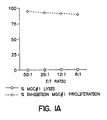
- Fig. 1A illustrates the cytotoxic and cytostatic activities of γ-irradiated TALL-104
cells against
MGC# 1 tumor cells in 18-hour 51Cr-release and 18-hour 3HTdR uptake inhibition assays, respectively. SD values <2.0 are not shown. - Fig. 1B illustrates effects of different chemotherapeutic drugs (at various doses) on
the in vitro growth of
MGC# 1 tumor cells. Results of one representative experiment out of three performed are shown. - Fig. 2 is a growth curve of
human MGC# 1 tumor grafts in SCID mice receiving i.p. injections of PBS, adriamycin and/or TALL-104 cells. -
- The present invention is concerned with the treatment of solid tumors. Surprisingly, the inventors have found that, in certain embodiments, the co-administration of chemotherapy and cell therapy, as described in detail below, provides a synergistic effect, i.e., an anti-cancer effect which exceed the additive anti-cancer effects of the chemotherapy or cell therapy alone, or their additive effects. In other embodiments, this co-administration provides anti-cancer effects which exceed administration of the chemotherapy or cell therapy alone. Further, the invention is useful in overcoming resistance of a cancer to single therapeutic agents through mechanisms independent from the host immune system. Yet another advantage of the present invention is that it permits a lower dose of chemotherapeutic agent to be used where desired, e.g. to reduce undesirable side effects associated therewith.
- When utilising the invention, a course of chemotherapy with a chemotherapeutic agent is administered in conjunction with cell therapy to a human or veterinary patient. Each of these therapies is discussed in more detail below. The invention provides for concurrent administration, sequential administration, or combined administration. These means of administration are termed herein, co-administration.
- The utilisation of the invention may be combined with other therapies useful in the treatment of cancer. It is also anticipated that this treatment may be administered to a mammal which is already immunosuppressed due to disease. The evaluation of the immune status of the human or veterinary patient may be readily determined by one of skill in the art.
- Chemotherapeutic agents are well known to those of skill in the art. Examples of such chemotherapeutics include alkylating agents and antibiotics. Among the alkylating agents are platinum compounds, such as cisplatin. Among the antibiotic agents are the anthracyclines, such as doxorubicin (also known as adriamycin). Here, the chemotherapeutic agent used is adriamycin or cisplatin.
- Suitable dosages for the selected chemotherapeutic agent are known to those of skill in the art. For example, where the agent is adriamycin, suitable dosage may include 30 mg/m2, administered intravenously, twice at 1 week intervals. However, one of skill in the art can readily adjust the route of administration, the number of doses received, the timing of the doses, and the dosage amount, as needed. Further, because co-administration of chemotherapy with the cell line according to the invention provides enhanced results, one of skill in the art may find it desirable to reduce the dose of chemotherapeutic agent administered to reduce any toxic side effects associated therewith.
- Bearing in mind the above considerations, generally, a suitable dose for a given chemotherapeutic agent when administered according to the invention, is between 0.01 µg/mL and about 1 mg/mL, and more preferably, between 0.01 µg/mL and about 1 µg/mL. Such a dose, which may be readily adjusted depending upon the particular drug or agent selected, may be administered by any suitable route, including, e.g., intravenously, intradermally, by direct site injection, intraperitoneally, intranasally, or the like. Doses may be repeated as needed.
- According to the invention, cell therapy involves administration of cells to a human or veterinary patient. The cells useful in the method of the invention have non-MHC restricted killer activity against a broad range of tumors across several species, while sparing cells from normal tissues. Desirably, these cells are stimulated by one or a combination of T-cell stimulatory cytokines.
- The cell line is a TALL-104, cell line. Such a cell line is available from the American Type Culture Collection (ATCC), 10801 University Boulevard, Manassas, Virginia 20110-2209, as well as from a variety of academic and commercial sources. For example, the TALL-104 cell line is available from the ATCC under accession number CRL 11386.
- Prior to use in the invention, cells obtained from the selected cell line are treated in a manner which irreversibly arrests cell proliferation, but does not interfere with the cytotoxic activity of the cells. This treatment method involves irradiation, and particularly γ-irradiation. Although γ-irradiation is used as an example, it is anticipated that other irradiation methods could be used to stop the growth of the cells. One of skill in the art can readily select appropriate methods for arresting growth.
- The cells are derived from a TALL-104 cell line, which cells have been stimulated by a T-cell stimulatory cytokine, namely IL-2 TALL-104 cells may be modified in such a way as to provide them with an increased cytotoxicity against tumor and virus-infected targets. Such modification methods have been described in detail in WO 94/26284, published November 24, 1994. The modification step comprises in vitro treatment of the TALL-104 cells with the selected cytokine. The interleukin, recombinant human (rh) interleukin (IL) IL-2 induces the cell line's cytotoxic activity. This cytokine can also be used together with rh IL-2. When these cytokines are used together to modify the cell line, the modified cell line displays additive or increased cytotoxic effects. This results in a significant increase in cytotoxic activity and recycling capability, ultimately leading to 100% elimination of tumor targets at an E:T ratio <0.1:1 [Cesano et al, J. Immunol., 151:2943 (1993)].
- A further modification step of this invention involves the exposure of the TALL-104 cell line to lethal irradiation to confer irreversible loss of growth capability with full retention of cytotoxic activity, both in vitro and in vivo. This is achieved by subjecting the cell lines to γ-irradiation just prior to their use. Preferably, the cells are irradiated at 4000 rads using a 137Cs source.
- Irradiation of TALL-104 cells provides a modified cytotoxic cell line that has lost its proliferative ability and, therefore, the possibility of growing in an unrestrained fashion in the recipient organism. In fact, unlike their non-irradiated counterparts, modified γ-irradiated TALL-104 cells of this invention transplanted into SCID mice do not cause leukemia.
- Preferably, modified TALL-104 cells are prepared as follows. TALL-104 cells (ATCC CRL 11386) are exponentially grown in tissue culture in the presence of recombinant human (rh) IL-2. If desired, IL-12 can be added for about 18 hrs to enhance the killing activity of the cell line. The cytokine-treated TALL-104 cells are then γ-irradiated, preferably at about 4,000 rads. The irradiation may be continued for a selected time, such as about 30 minutes.
- Desirably, about 104 to about 1012, and preferably about 1012, of the cells selected for use in the invention are suspended in a pharmaceutically acceptable carrier and administered daily for the desired length of time by an appropriate route. One particularly desirable carrier is saline. However, other suitable carriers are well known to those of skill in the art and may be readily selected.
- As discussed above, cell therapy may be concurrent with chemotherapy, start shortly after the end of the chemotherapeutic regimen, or be combined into a single therapeutic regimen. Alternatively, and currently less desirable, is administration of cell therapy preceding chemotherapy. Currently, the preferred embodiment involves administration of the cell therapy during the course of chemotherapy, and particularly following saturation of the target tissue (i.e., the tumor) with the chemotherapeutic agent. Thus, the cell therapy is desirably administered one to about four days following administration of the chemotherapeutic agent. Administration of cell therapy is repeated as needed.
- As one example, cells (e.g., about 2x10⁷ cytokine-stimulated TALL-104 cells) may be administered daily for 2 weeks, concurrently with chemotherapy. Alternatively, the cells may be administered starting shortly after the end of chemotherapy. In yet another alternative, the cell therapy may be administered at different doses; different intervals (rather than daily) or for a shorter or longer period of time.
- Cell therapy may be administered by injection, e.g., intravenously, or by any of the means discussed above in connection with chemotherapy. Neither the time nor the mode of administration is a limitation on the present invention. As with chemotherapy, cell therapy regimens may be readily adjusted taking into account such factors as the cytotoxicity of the selected cell line, the type of solid tumor being treated, the stage of the disease and the condition of the patient, among other considerations known to those of skill in the art.
- As illustrated in the examples below, although these treatments alone did not inhibit tumor growth, synergistic antitumor effects were seen following the condition of the veterinary or human patient.
- As an alternative to the separate administration of chemotherapy and cell therapy as described above, the compositions of the invention facilitate a combined chemotherapy-cell therapy approach.
- In another aspect, the present invention provides pharmaceutical compositions which contain a desired chemotherapeutic agent or agents and a desired cell, as described herein. These compositions may further contain a pharmaceutically acceptable carrier. Suitable carriers include, e.g., saline, phosphate buffered saline, and saline with 5% HSA or PPF. Other suitable carriers are well known to those of skill in the art and are not a limitation on the present invention. Similarly, one of skill in the art may readily select other desired components for inclusion in a pharmaceutical composition of the invention, and such components are not a limitation of the present invention. The pharmaceutical compositions of the invention contain adriamycin or cisplatinum and modified TALL-104 cells, as defined herein.
- The compositions of the invention may be administered by the routes and according to the regimens described above for chemotherapy and/or cell therapy. Alternatively, other suitable routes and regimens may be readily determined by one of skill in the art.
- The examples below demonstrate that the combination of chemotherapy (adriamycin) and adoptive immunotherapy with the MHC-unrestricted cytotoxic T cell line TALL-104 was effective in overcoming the total resistance to the single forms of treatment of a human gastric tumor-engrafted SCID mice (MGC #1). Although adriamycin and cytokine-stimulated TALL-104 cells displayed strong cytostatic effects against these tumor cells in vitro, the in vivo experiments indicated that neither agent alone had significant antitumor effects in the SCID mouse model. The lack of in vivo activity might be merely due to the experimental conditions used, such as the time elapsed between tumor implantation and initiation of treatment, or the schedule and route of administration of adriamycin and TALL-104 cells. These conditions might have negatively affected the number of effector cells that migrated to, and persisted at, tumor site as well as the absorption of adriamycin, resulting in low seric levels of this drug. When chemotherapy and cell therapy were used in combination (at the same doses, schedule and route of administration), a dramatic antitumor effect against
MGC # 1 tumor grafts was observed: specifically, 1/3 of the animals had a lasting complete response (necrosis and fall out of the tumor masses) and 2/3 of them experienced a clinical response that, although partial and transient, was significant when compared with the total lack of antitumor effects displayed, in the same experiment, by the single treatments. Despite the relatively low number of mice used in the combined therapy experiment (n=6), these results are considered highly significant because spontaneous necrosis and regression of the subcutaneous tumors have never been observed and, on the other hand, a high reproducibility of tumor growth in a large number of implanted mice has been observed. Moreover, in the combined therapy group, the standard deviations of the average tumor volumes at the different time points were always very low (Fig. 2). - Several conclusions can be drawn from the antitumor effects of the chemo-immunotherapy protocol of the invention. Studies in immunocompetent mice bearing syngeneic tumors have shown that the combination of adoptively transferred T cells and some chemotherapeutic agents (in particular, cyclophosphamide) could successfully treat significant numbers of animals and tumor regression was primarily T-cell mediated [P. Greenberg et al, J. Exp. Med., 161:1122-1134 (1985); M. Bookman et al, J. Immunol., 139:3166-3170 (1987); and F. Fornelle et al, Int. J. Cancer, 42:952-957 (1988)]. In support of these data, other studies have shown that, in addition to direct tumor cytotoxicity, some chemotherapeutic drugs can modulate host immune responsiveness [M. Awwad et al, Immunology, 65:87-92 (1988) and R. North, J. Exp. Med., 155:1063-1074 (1982)]. Because SCID mice, used as murine model in this study, are virtually devoid of functional T and B cells [G. Bosma et al, Nature, 301:527 (1983)], the antitumoral effects observed during and after chemo-immunotherapy are independent from the host's immune response and, therefore, different from the ones reported above [P. Greenberg et al, J. Exp. Med., 161:1122-1134 (1985); M. Bookman et al, J. Immunol., 139:3166-3170 (1987); and F. Fornelle et al, Int. J. Cancer, 42:952-957 (1988)]. In this respect, the use in this study of an immunocompromised animal to explore the antitumor effects of adriamycin-TALL-104 cell therapy excludes the role played by the host immune system in response to the combined chemo-immunotherapeutic approach. On the other hand, given that the majority of human neoplasms are non-immunogenic and, therefore, incapable of eliciting a significant T cell response in the autochthonous host, the SCID mouse model bearing a human tumor represents a very useful and relevant experimental system for testing the direct tumoricidal action of new therapeutic modalities.
- In vitro experiments indicated an additive anti-proliferative effect of low doses of adriamycin and TALL-104 cells against
MGC # 1 tumor cells. This finding is believed to translate in improved antitumor effects in an in vivo scenario in which sub-optimal concentrations of effector cells and/or drugs are likely to be present at tumor's site at different times during the treatment. In this regard, trafficking experiments using 51Cr-labeled, cytokine-stimulated TALL-104 cells in SCID mice bearingMGC # 1 tumors indicated that only few of the i.p. transferred effectors accumulated in tumor tissues (∼4% of the total number of administered cells per gram of tumor tissue). Because effector cell infiltration within the tumor mass is a key feature for successful adoptive therapy, the synergistic antitumor effects of adriamycin and TALL-104 cells might, at least in part, be the consequence of an increased TALL-104 cell accumulation at tumor site. This hypothesis is supported by the results of Kawata et al, Mol. Brother., 2:221-227 (1990), showing a two-fold accumulation of LAK cells into murine tumors after adriamycin injection, possibly consequent to a drug-induced increase in tumor vascularization which, in turn, would favor lymphocytic infiltration. The possibility, suggested in other systems [J. Gold et al, J. Surg. Oncol., 58:212-221 (1995)], that adriamycin (administered before the cytotoxic cells) induced surface changes on the tumor thereby increasing its sensitivity to TALL-104 cell lysis, appears unlikely because in vitro pre-treatment ofMGC # 1 tumor cells with different doses of adriamycin did not have such an effect (not shown). - These examples illustrate the invention. More particularly, the following examples demonstrate experiments which tested the combined effects of chemotherapy (adriamycin) with TALL-104 cells in SCID mice engrafted with a human tumor sample which is totally resistant to the single forms of treatment. These examples are illustrative only and do not limit the scope of the invention.
- The TALL-104 cell line was maintained at 37°C in a humidified 10% CO2 incubator in IMDM (Gibco-BRL, Grand Island, NY) supplemented with 10% FBS (Sigma Chemical Co., St. Louis, MO) and 100 U/ml of recombinant human (rh) IL-2 (Chiron, Emeryville, CA). The cell line was repeatedly monitored for mycoplasma contamination using a commercial PCR kit (ATCC, Manassas, VA). TALL-104 cells were γ-irradiated (4000 rads) prior to use in vitro and in adoptive therapy.
- Frozen tumor fragments were minced through metal grids and centrifuged on AccuPrep™ lymphocyte gradients (Accurate Chemical, Westbury, NJ) to remove dead cells and erythrocytes. The gastric tumor cells recovered at the interface were resuspended in complete medium and incubated at 37°C in a humidified atmosphere at 5% CO2.
- Five- to 6-week-old CB-17 SCID mice (Charles River Laboratories, Wilmington, MA) were housed in a pathogen-free environment in The Wistar Institute Animal Facility. Mice were engrafted subcutaneously (s.c.) with metastatic pleural effusions (0.3 x 0.3 cm fragments) derived from a patient with gastric carcinoma (MGC #1).
- Upon implantation, the biopsy sample grew as a local tumor mass that was subsequently harvested, cut, and serially passaged in other SCID mice. A portion of the tumors was frozen in IMDM containing 40% FBS and 10% DMSO (Sigma). Despite the highly metastatic behavior of this tumor in the original patient, the engrafted tumor fragments did not display metastatic properties in the mouse.
- The TALL-104 cells were incubated at four different concentrations with a fixed number (104/well) of 51Cr-labeled
MGC # 1 cells for 18 hours. Percent specific 51Cr release was calculated from the mean of three replicates [A. Cesano et al, Cancer Res., 56:3021 (1996)]. - The TALL-104 cells (2x10⁶/ml) were incubated overnight at 37°C with
MGC # 1 cells at an E:T ratio of 10:1. Cell-free conditioned medium was harvested, filtered and tested for the presence of IFN-γ, TNF-α, TNF-β, and GM-CSF using commercial ELISA kits (Endogen, R&D, Boston, MA) as described [A. Cesano et al, Cancer Res., 56:3021 (1996)].MGC # 1 cell cultures incubated alone for 10 days were also tested for cytokine production. - The cytostatic effects of the TALL-104 cells (at four different concentrations) on
MGC # 1 cells (104/well) were tested in 18-h 3HTdR incorporation assays, as described [A. Cesano et al, Cancer Res., 56:4444-4452 (1996)]. In experiments measuring the effects of adriamycin (Pharmacia, Piscataway, NJ),MGC # 1 cells (104/well) were cultured for 48 hours in the presence and absence of this drug at concentrations from 0.01 to 100 µg/ml before being pulsed with 3H-TdR. - Gastric cancer cells recovered from the patient's biopsy specimen were totally resistant to lysis by irradiated TALL-104 cells, as measured in an 18-hour 51Cr-release assay, but were highly sensitive to their cytostatic activity (Fig. 1A). Incubation of irradiated TALL-104 cells with
MGC # 1 cells also resulted in the production of significant levels of IFN-γ, TNF-α, TNF-β, and GM-CSF (not shown). Among all the chemotherapeutic drugs tested for anti-proliferative activity againstMGC # 1 cells in vitro, adriamycin was the most potent, being able to inhibit proliferation of the tumor cells by 75% and 100% at the doses of 0.1 and 1 µg/ml, respectively (Fig. 1B). - The effect of a variety of chemotherapeutic agents on TALL-104 cells was studied. Cytotoxicity, lymphokine production, and proliferation were assayed as described in Example 3 above using 0.01 to 100 µg/mL of the drugs listed in Table 1 below.
- As can be seen from results provided in Table 1 below, dacarbazin (a nonclassic alkylating agent) did not affect cytotoxicity or lymphokine production. Adriamycin (an antibiotic), steroids (hormones), and cisplatin (an alkylating agent) had no affect on cytotoxicity and only marginally affected lymphokine production at therapeutic levels.
Drug Cytotoxicity Lymphokine Production Proliferation Steroids none only marginally affected at therapeutic levels decrease (dose dependent) Carboplatin decrease (at >100 µg/ml) only marginally affected at therapeutic levels decrease (dose dependent) Adriamycin none only marginally affected at therapeutic levels decrease (dose dependent) Cisplatin none only marginally affected at therapeutic levels decrease (dose dependent) Dacarbazin none none decrease (dose dependent) Vincristine - decrease (dose dependent) decrease (dose dependent) decrease (dose dependent) Methotrexate none decrease (dose dependent) decrease (dose dependent) 5-FU none decrease (dose dependent) decrease at >100 µg/ml Cytoxan (as 4-Hc) decrease (dose dependent) decrease (dose dependent) decrease (dose dependent) Azathioprine none none decrease at >100 µg/ml - All treatments were initiated 3 weeks after implantation of the tumor fragments (except when specified otherwise), when a significant macroscopic growth of the tumors was appreciable. Each treatment group consisted of 4-6 mice. In the first experiment, cytokine stimulated, γ-irradiated, TALL-104 cells (2x10⁷/mouse in 500 µl PBS) or PBS alone were administered i.p. daily for 2 weeks; in a second experiment, 107 cells/mouse in 100 µl PBS or PBS alone were injected intralesionally on alternate days, for a total of six injections. In a third experiment, mice underwent surgical removal of the primary tumor mass followed by i.p. injection of either irradiated TALL-104 cells (2x10⁷/mouse) or PBS alone, daily for 2 weeks.
- Differences between treatment groups were tested for significance by the Student's t-test for unpaired data. P<0.05 was considered significant.
- In the first set of experiments, the TALL-104 cells were injected i.p. every day for 2 weeks in SCID mice engrafted 3 weeks earlier with
MGC # 1 tumor fragments. Four weeks after completion of therapy, all controls (PBS injected) and experimental mice were sacrificed. No significant difference in weight between the tumors of the treated mice and that of the control mice was detected (Table 2). - In the second set of experiments, mice bearing
MGC # 1 grafts were injected intralesionally with the TALL-104 cells (or PBS) on alternate days for a total of 6 injections. All mice were sacrificed 1 month after the last injection and the tumor masses removed and weighed. Also in this setting, no significant difference in weight between the tumors of the treated mice and that of the controls was detected (Table 2). - The antitumor efficacy of TALL-104 cells was then evaluated after surgical removal of the primary tumors to create a clinical setting similar to that of minimal residual disease in cancer patients. Mice bearing 3-week-
old MGC # 1 grafts, which appeared highly mobile and non-adherent to the skin nor to the abdominal wall, underwent surgical excision of the tumor followed by TALL-104 cell therapy (or PBS injections), according to the protocol used in the first experiment. At surgery, the tumors weighed 0.781±0.112 g. One month after the last cell injection, all mice were sacrificed and necropsied. As shown in Table 2, TALL-104 cell treatment did not have a significant inhibitory effect on the local regrowth of the tumor cells in the mice; these in vivo data are in contrast with the observed anti-proliferative effects displayed by TALL-104 cells againstMGC # 1 cells in vitro (Fig. 1A).Effects of Single Treatment with Either TALL-104 Cells or Adriamycin on the Local Growth of MGC # 1 Tumor GraftsExperiment No. of Mice Treatment (2 wks duration) Route and Schedule of administration Tumor weight (SD) 1 6 PBS i.p. daily 0.957 (0.208) 1 6 TALL-104 i.p. daily 0.888 (0.606) 2 6 PBS i.t. alternate days 1.227 (0.137) 2 6 TALL-104 i.t. alternate days 1.298 (0.372) 3 4 surgery + PBS i.p. daily 0.752 (0.166) 3 4 surgery + TALL-104 i.p. daily 0.748 (0.279) 4 6 PBS i.p. weekly 0.99 (0.165) 4 6 Adriamycin i.p. weekly 1.119 (0.234) - Based on the in vitro observation that
MGC # 1 tumor cells were highly sensitive to the cytotoxic effects of adriamycin (Fig. 1B), this drug was chosen for the in vivo study. Two groups of mice bearingMGC # 1 tumor grafts (n=6) were treated with two i.p. injections of adriamycin (30 mg/m2 at I week interval) or PBS. Autopsy performed 1 month after the last injection failed to reveal significant differences in tumor weights between controls and adriamycin-treated mice (Table 2). - In the attempt to overcome the high resistance shown by
MGC # 1 tumor grafts to treatment with either chemotherapy or adoptive therapy, a combined regimen based on sequential administration of two cycles of adriamycin followed by TALL-104 cells was tested for therapeutic efficacy in SCID mice (n=6)bearing MGC # 1 tumor grafts. In the last experiment, mice received two i.p. doses of adriamycin (day 1 and 7) and the cytokine stimulated, γ-irradiated, TALL-104 cells (2x10⁷/mouse) fromday 2 to 6 and from day 8 to 14. Control groups (n=4) received PBS, adriamycin or TALL-104 cells alone. Tumor masses were measured (using a millimeter vernier caliper) before therapy and then, at weekly intervals, for the entire 5 week follow-up period. Results of this experiment are summarized in Fig. 2. After the first week of treatments, no statistically significant differences were found between the average tumor sizes in the different groups of mice. Noteworthy, however, two mice that had received combined therapy presented a macroscopically noticeable tumor necrosis at the end of the first week of treatment; necrosis progressed until the tumor mass fell out in both mice, leaving behind a necrotic scar during the second week of follow-up. For this reason, the values relative to tumor measurement in these two mice do not show in Fig. 2 and could not be included in any statistical calculation made after the second follow-up week. At the end of the second week of treatment, the tumors of the four remaining adriamycin/TALL-104 cell-treated animals were significantly smaller as compared to those present on PBS- or adriamycin-treated mice (p<0.05 and p<0.002, respectively). By contrast, no statistically significant difference was observed, at this time point, between adriamycin/TALL-104 cell-treated mice and the group of mice that had received TALL-104 cells alone. In fact, in both groups, a discrete shrinkage (36% and 20%, respectively) in tumor size was noted. Tumor reduction was already detectable (but not statistically significant) at the end ofweek 1. Starting from the end of week 3 (1 week after all treatments had been halted), while the tumors shrinkage stabilized in the group of mice that had received the combined therapy (∼36%), tumor growth progressed in all other groups of mice, including the one that received TALL-104 cells alone. As a result, the difference in tumor volume between adriamycin/TALL-104 cell-treated animals and the ones receiving either PBS, adriamycin or TALL-104 cells alone was statistically significant (p<0.02, p<0.001 and p<0.05 respectively). Similar results were observed at the end of the fourth week. By the end of the fifth week, the tumor volume in the mice treated with TALL-104 cells alone increased to the point that it became very close to the one seen in PBS or adriamycin-treated mice. These data showed that, although TALL-104 cells by. themselves did have antitumor activity againstMGC # 1 tumor growth during the first 2 weeks of treatment, these effects were transient and the tumors quickly progressed as soon as the cell injections were halted. The three control groups were sacrificed at the end ofweek 5 because of high tumor burden (around 3 times the volume of the tumor seen in mice treated with the combined regimen). Mice treated with adriamycin/TALL-104 cells were followed up for 4 more weeks: during this time the tumors slowly but progressively grew reaching, at the end of week 9, the size of the tumors displayed by the group of mice treated with TALL-104 cells alone atweek 5. The experiment was ended at this point.
Claims (7)
- Use of TALL-104 cells, which cells have been modified in vitro with treatment with IL-2 to enhance their non-MHC-restricted cytotoxicity and with irradiation at a dose suitable to irreversibly arrest cell proliferation thereof but not interfere with the cytotoxic activity of the cells in combination with a chemotherapeutic agent selected from adriamycin and cisplatin, in the preparation of a medicament for treating cancer in a mammal.
- Use according to claim 1, wherein said TALL-104 cells are provided by said medicament during treatment by the chemotherapeutic agent.
- Use according to claim 1, wherein said TALL-104 cells are provided by said medicament after treatment by the chemotherapeutic agent
- Use according to claim 1, wherein the chemotherapeutic agent is adriamycin.
- Use according to claim 1, wherein the chemotherapeutic agent is cisplatin.
- Use according to claim 1, wherein said cancer is a resistant tumor in a mammal.
- A pharmaceutical composition comprising:(a) a chemotherapeutic agent selected from adriamycin and cisplatin,(b) TALL-104 cells, which cells have been modified in vitro with treatment with IL-2 to enhance their non-MHC-restricted cytotoxicity and with irradiation at a dose suitable to arrest cell proliferation thereof irreversibly but not to interfere with the cytotoxic activity of the cells, and optionally(c) a pharmaceutically acceptable carrier.
Applications Claiming Priority (3)
| Application Number | Priority Date | Filing Date | Title |
|---|---|---|---|
| US847000 | 1997-05-01 | ||
| US08/847,000 US6022538A (en) | 1995-06-06 | 1997-05-01 | Method of treating malignancies |
| PCT/US1998/008835 WO1998048630A1 (en) | 1997-05-01 | 1998-04-30 | Method of treating malignancies |
Publications (3)
| Publication Number | Publication Date |
|---|---|
| EP0980205A1 EP0980205A1 (en) | 2000-02-23 |
| EP0980205A4 EP0980205A4 (en) | 2001-11-07 |
| EP0980205B1 true EP0980205B1 (en) | 2003-06-25 |
Family
ID=25299529
Family Applications (1)
| Application Number | Title | Priority Date | Filing Date |
|---|---|---|---|
| EP98920098A Expired - Lifetime EP0980205B1 (en) | 1997-05-01 | 1998-04-30 | Use of a combination of tall-104 cells with adriamycin or cisplatin in the therapy of malignancies |
Country Status (11)
| Country | Link |
|---|---|
| US (1) | US6022538A (en) |
| EP (1) | EP0980205B1 (en) |
| JP (1) | JP4371437B2 (en) |
| AT (1) | ATE243522T1 (en) |
| AU (1) | AU734046B2 (en) |
| CA (1) | CA2288059C (en) |
| DE (1) | DE69815840T2 (en) |
| DK (1) | DK0980205T3 (en) |
| ES (1) | ES2202847T3 (en) |
| PT (1) | PT980205E (en) |
| WO (1) | WO1998048630A1 (en) |
Families Citing this family (11)
| Publication number | Priority date | Publication date | Assignee | Title |
|---|---|---|---|---|
| WO1998033527A2 (en) | 1997-01-31 | 1998-08-06 | Cohen Edward P | Cancer immunotherapy with semi-allogeneic cells |
| EP1690927A1 (en) * | 1997-04-30 | 2006-08-16 | Hans Klingemann | Natural killer cell lines and methods of use |
| US8034332B2 (en) | 1997-04-30 | 2011-10-11 | Conkwest, Inc. | Interleukin-secreting natural killer cell lines and methods of use |
| US6157376A (en) * | 1998-09-30 | 2000-12-05 | Genesis Microchip, Corp. | Method and apparatus for generating a target clock signal having a frequency of X/Y times the frequency of a reference clock signal |
| US6828147B1 (en) | 1999-02-24 | 2004-12-07 | The Wistar Institute Of Anatomy And Biology | Method of modifying cytotoxic cells and uses thereof |
| DE10112851C1 (en) | 2001-03-16 | 2002-10-10 | Gsf Forschungszentrum Umwelt | Semi-allogeneic anti-tumor vaccine with HLA-haplo-identical antigen-presenting cells |
| DE10132502A1 (en) * | 2001-07-05 | 2003-01-23 | Gsf Forschungszentrum Umwelt | Attack on tumor cells with missing, low or abnormal MHC expression by combining non-MHC-restricted T cells / NK cells and MHC-restricted cells |
| US20040115173A1 (en) * | 2002-02-15 | 2004-06-17 | Daniela Santoli | Method of treating inflammation, particularly diabetes |
| EP1809738B1 (en) * | 2004-11-02 | 2014-03-05 | THE GOVERNMENT OF THE UNITED STATES OF AMERICA, as represented by the Secretary, Department of Health and Human Services | Compositions and methods for treating hyperproliferative disorders |
| CA2603191A1 (en) * | 2005-03-29 | 2006-10-05 | The Board Of Trustees Of The University Of Illinois | Cancer vaccines and therapeutic methods |
| CN110179976A (en) * | 2019-05-22 | 2019-08-30 | 华中科技大学同济医学院附属同济医院 | Combined pharmaceutical formulation for treating cancer |
Family Cites Families (4)
| Publication number | Priority date | Publication date | Assignee | Title |
|---|---|---|---|---|
| US5166059A (en) * | 1987-06-16 | 1992-11-24 | The United States Of America As Represented By The Department Of Health And Human Services | Gene therapy using gene fusions for genetic or acquired disorders |
| US5126132A (en) * | 1989-08-21 | 1992-06-30 | The United States Of America As Represented By The Department Of Health And Human Services | Tumor infiltrating lymphocytes as a treatment modality for human cancer |
| US5272082A (en) * | 1992-03-30 | 1993-12-21 | The Wistar Institute Of Anatomy & Biology | Cytotoxic T-ALL cell lines and uses therefor |
| EP0697875B1 (en) * | 1993-05-14 | 2002-01-16 | THE WISTAR INSTITUTE OF ANATOMY & BIOLOGY | Use of modified tall-104 cells to treat cancer and viral diseases |
-
1997
- 1997-05-01 US US08/847,000 patent/US6022538A/en not_active Expired - Lifetime
-
1998
- 1998-04-30 EP EP98920098A patent/EP0980205B1/en not_active Expired - Lifetime
- 1998-04-30 WO PCT/US1998/008835 patent/WO1998048630A1/en not_active Ceased
- 1998-04-30 DK DK98920098T patent/DK0980205T3/en active
- 1998-04-30 AU AU72744/98A patent/AU734046B2/en not_active Expired
- 1998-04-30 ES ES98920098T patent/ES2202847T3/en not_active Expired - Lifetime
- 1998-04-30 PT PT98920098T patent/PT980205E/en unknown
- 1998-04-30 CA CA2288059A patent/CA2288059C/en not_active Expired - Lifetime
- 1998-04-30 AT AT98920098T patent/ATE243522T1/en active
- 1998-04-30 JP JP54743098A patent/JP4371437B2/en not_active Expired - Lifetime
- 1998-04-30 DE DE69815840T patent/DE69815840T2/en not_active Expired - Lifetime
Also Published As
| Publication number | Publication date |
|---|---|
| JP4371437B2 (en) | 2009-11-25 |
| US6022538A (en) | 2000-02-08 |
| AU7274498A (en) | 1998-11-24 |
| DK0980205T3 (en) | 2003-10-20 |
| ES2202847T3 (en) | 2004-04-01 |
| EP0980205A4 (en) | 2001-11-07 |
| AU734046B2 (en) | 2001-05-31 |
| EP0980205A1 (en) | 2000-02-23 |
| CA2288059C (en) | 2010-07-06 |
| JP2002512618A (en) | 2002-04-23 |
| PT980205E (en) | 2003-11-28 |
| CA2288059A1 (en) | 1998-11-05 |
| DE69815840T2 (en) | 2004-05-06 |
| WO1998048630A1 (en) | 1998-11-05 |
| DE69815840D1 (en) | 2003-07-31 |
| ATE243522T1 (en) | 2003-07-15 |
Similar Documents
| Publication | Publication Date | Title |
|---|---|---|
| Fowler et al. | Allospecific CD8+ Tc1 and Tc2 populations in graft-versus-leukemia effect and graft-versus-host disease | |
| US6713056B1 (en) | Combined preparation for the treatment of neoplasic diseases or of infectious diseases | |
| Lynch et al. | In vivo evaluation of the effects of interleukins 2, 4 and 7 on enhancing the immunotherapeutic efficacy of anti‐tumor cytotoxic T lymphocytes | |
| KR20000049096A (en) | Cancer immunotherapy using tumor cells combined with mixed lymphocytes | |
| Torelli et al. | Expansion of natural killer cells with lytic activity against autologous blasts from adult and pediatric acute lymphoid leukemia patients in complete hematologic remission | |
| US6022538A (en) | Method of treating malignancies | |
| Foa | Does interleukin-2 have a role in the management of acute leukemia? | |
| Malone et al. | Characterization of human tumor-infiltrating lymphocytes expanded in hollow-fiber bioreactors for immunotherapy of cancer | |
| Rutten et al. | Local interleukin-2 therapy in bovine ocular squamous cell carcinoma: a pilot study | |
| Chen et al. | Adoptively transferred antigen-specific T cells can be grown and maintained in large numbers in vivo for extended periods of time by intermittent restimulation with specific antigen plus IL-2. | |
| Salup et al. | Treatment of adenocarcinoma in the peritoneum of mice: chemoimmunotherapy with IL-2-stimulated cytotoxic lymphocytes as a model for treatment of minimal residual disease | |
| Silagi et al. | Successful immunotherapy of mouse melanoma and sarcoma with recombinant interleukin-2 and cyclophosphamide | |
| Ingram et al. | Salvage immunotherapy of malignant glioma | |
| Tuttle et al. | Bryostatin 1-activated T cells can traffic and mediate tumor regression | |
| Itoh et al. | Monocyte-dependent, serum-borne suppressor of induction of lymphokine-activated killer cells in lymphocytes from melanoma patients | |
| WO2006109300A1 (en) | Pre-transplantation treatment of donor cells to control graft versus host disease (gvhd) in transplant recipients | |
| Tzai et al. | Modulation of antitumor immunity of tumor-bearing mice with low-dose cyclophosphamide | |
| Harada et al. | Systemic administration of interleukin‐12 can restore the anti‐tumor potential of B16 melanoma‐draining lymph node cells impaired at a late tumor‐bearing state | |
| Tuttle et al. | Adoptive transfer of bryostatin 1-activated T cells provides long-term protection from tumour metastases | |
| Eggermont et al. | In vivo generation of lymphokine activated killer cell activity by ABPP and interleukin-2 and their antitumor effects against immunogenic and nonimmunogenic tumors in murine tumor models | |
| Naito et al. | Expansion of tumor-specific cytolytic T lymphocytes using in vitro restimulation with tumor-specific transplantation antigen | |
| Johnson et al. | Kinetic analysis of the inhibition of natural killer (NK) activity by multiple populations of tumor-activated suppressor cells | |
| Ueda et al. | Mobilization of peripheral blood stem cells (PBSCs) after etoposide, adriamycin and cisplatin therapy, and a multimodal cell therapy approach with PBSCs in advanced gastric cancer | |
| Kedar et al. | In vitro induction of cytotoxic effector cells against human neoplasms. I. Sensitization conditions and effect of cryopreservation on the induction and expression of cytotoxic responses to allogeneic leukemia cells | |
| Steller | Enhancement and abrogation: modifications of host immune status influence IL-2 and LAK cell immunotherapy |
Legal Events
| Date | Code | Title | Description |
|---|---|---|---|
| PUAI | Public reference made under article 153(3) epc to a published international application that has entered the european phase |
Free format text: ORIGINAL CODE: 0009012 |
|
| 17P | Request for examination filed |
Effective date: 19991119 |
|
| AK | Designated contracting states |
Kind code of ref document: A1 Designated state(s): AT BE CH DE DK ES FI FR GB GR IE IT LI LU MC NL PT SE |
|
| A4 | Supplementary search report drawn up and despatched |
Effective date: 20010920 |
|
| AK | Designated contracting states |
Kind code of ref document: A4 Designated state(s): AT BE CH DE DK ES FI FR GB GR IE IT LI LU MC NL PT SE |
|
| RIC1 | Information provided on ipc code assigned before grant |
Free format text: 7A 61K 35/12 A, 7A 61K 31/24 B, 7A 61K 31/70 B, 7A 61P 35/00 B, 7A 61K 35/12 J, 7A 61K 31:24 J, 7A 61K 31:70 J |
|
| 17Q | First examination report despatched |
Effective date: 20020103 |
|
| GRAH | Despatch of communication of intention to grant a patent |
Free format text: ORIGINAL CODE: EPIDOS IGRA |
|
| RIC1 | Information provided on ipc code assigned before grant |
Free format text: 7A 61K 35/12 A, 7A 61K 31/24 B, 7A 61K 31/70 B, 7A 61P 35/00 B, 7C 12N 5/06 B, 7A 61K 35/12 J, 7A 61K 31:24 J, 7A 61K 31:70 J |
|
| RTI1 | Title (correction) |
Free format text: USE OF A COMBINATION OF TALL-104 CELLS WITH ADRIAMYCIN OR CISPLATIN IN THE THERAPY OF MALIGNANCIES |
|
| RIC1 | Information provided on ipc code assigned before grant |
Free format text: 7A 61K 35/12 A, 7A 61K 31/24 B, 7A 61K 31/70 B, 7A 61P 35/00 B, 7C 12N 5/06 B, 7A 61K 35/12 J, 7A 61K 31:24 J, 7A 61K 31:70 J |
|
| RTI1 | Title (correction) |
Free format text: USE OF A COMBINATION OF TALL-104 CELLS WITH ADRIAMYCIN OR CISPLATIN IN THE THERAPY OF MALIGNANCIES |
|
| GRAH | Despatch of communication of intention to grant a patent |
Free format text: ORIGINAL CODE: EPIDOS IGRA |
|
| GRAA | (expected) grant |
Free format text: ORIGINAL CODE: 0009210 |
|
| AK | Designated contracting states |
Designated state(s): AT BE CH DE DK ES FI FR GB GR IE IT LI LU MC NL PT SE |
|
| REG | Reference to a national code |
Ref country code: GB Ref legal event code: FG4D |
|
| REG | Reference to a national code |
Ref country code: CH Ref legal event code: EP |
|
| REG | Reference to a national code |
Ref country code: IE Ref legal event code: FG4D |
|
| REF | Corresponds to: |
Ref document number: 69815840 Country of ref document: DE Date of ref document: 20030731 Kind code of ref document: P |
|
| REG | Reference to a national code |
Ref country code: CH Ref legal event code: NV Representative=s name: A. BRAUN, BRAUN, HERITIER, ESCHMANN AG PATENTANWAE |
|
| REG | Reference to a national code |
Ref country code: SE Ref legal event code: TRGR |
|
| REG | Reference to a national code |
Ref country code: GR Ref legal event code: EP Ref document number: 20030403507 Country of ref document: GR |
|
| REG | Reference to a national code |
Ref country code: ES Ref legal event code: FG2A Ref document number: 2202847 Country of ref document: ES Kind code of ref document: T3 |
|
| ET | Fr: translation filed | ||
| PLBE | No opposition filed within time limit |
Free format text: ORIGINAL CODE: 0009261 |
|
| STAA | Information on the status of an ep patent application or granted ep patent |
Free format text: STATUS: NO OPPOSITION FILED WITHIN TIME LIMIT |
|
| 26N | No opposition filed |
Effective date: 20040326 |
|
| REG | Reference to a national code |
Ref country code: CH Ref legal event code: PFA Owner name: THE WISTAR INSTITUTE OF ANATOMY AND BIOLOGY Free format text: THE WISTAR INSTITUTE OF ANATOMY AND BIOLOGY#3601 SPRUCE STREET#PHILADELPIA, PA 19104-4268 (US) -TRANSFER TO- THE WISTAR INSTITUTE OF ANATOMY AND BIOLOGY#3601 SPRUCE STREET#PHILADELPIA, PA 19104-4268 (US) |
|
| REG | Reference to a national code |
Ref country code: CH Ref legal event code: PCAR Free format text: NEW ADDRESS: HOLBEINSTRASSE 36-38, 4051 BASEL (CH) |
|
| REG | Reference to a national code |
Ref country code: FR Ref legal event code: PLFP Year of fee payment: 19 |
|
| REG | Reference to a national code |
Ref country code: FR Ref legal event code: PLFP Year of fee payment: 20 |
|
| PGFP | Annual fee paid to national office [announced via postgrant information from national office to epo] |
Ref country code: FR Payment date: 20170313 Year of fee payment: 20 Ref country code: GR Payment date: 20170313 Year of fee payment: 20 Ref country code: MC Payment date: 20170310 Year of fee payment: 20 |
|
| PGFP | Annual fee paid to national office [announced via postgrant information from national office to epo] |
Ref country code: BE Payment date: 20170313 Year of fee payment: 20 |
|
| PGFP | Annual fee paid to national office [announced via postgrant information from national office to epo] |
Ref country code: NL Payment date: 20170412 Year of fee payment: 20 Ref country code: ES Payment date: 20170317 Year of fee payment: 20 |
|
| PGFP | Annual fee paid to national office [announced via postgrant information from national office to epo] |
Ref country code: CH Payment date: 20170412 Year of fee payment: 20 Ref country code: DE Payment date: 20170426 Year of fee payment: 20 Ref country code: GB Payment date: 20170426 Year of fee payment: 20 Ref country code: IE Payment date: 20170410 Year of fee payment: 20 Ref country code: DK Payment date: 20170411 Year of fee payment: 20 |
|
| PGFP | Annual fee paid to national office [announced via postgrant information from national office to epo] |
Ref country code: PT Payment date: 20170418 Year of fee payment: 20 Ref country code: AT Payment date: 20170327 Year of fee payment: 20 Ref country code: IT Payment date: 20170420 Year of fee payment: 20 Ref country code: LU Payment date: 20170410 Year of fee payment: 20 Ref country code: FI Payment date: 20170410 Year of fee payment: 20 Ref country code: SE Payment date: 20170411 Year of fee payment: 20 |
|
| REG | Reference to a national code |
Ref country code: DE Ref legal event code: R071 Ref document number: 69815840 Country of ref document: DE |
|
| REG | Reference to a national code |
Ref country code: NL Ref legal event code: MK Effective date: 20180429 |
|
| REG | Reference to a national code |
Ref country code: DK Ref legal event code: EUP Effective date: 20180430 |
|
| REG | Reference to a national code |
Ref country code: CH Ref legal event code: PL |
|
| REG | Reference to a national code |
Ref country code: GB Ref legal event code: PE20 Expiry date: 20180429 |
|
| REG | Reference to a national code |
Ref country code: IE Ref legal event code: MK9A |
|
| REG | Reference to a national code |
Ref country code: AT Ref legal event code: MK07 Ref document number: 243522 Country of ref document: AT Kind code of ref document: T Effective date: 20180430 Ref country code: BE Ref legal event code: MK Effective date: 20180430 |
|
| REG | Reference to a national code |
Ref country code: SE Ref legal event code: EUG |
|
| PG25 | Lapsed in a contracting state [announced via postgrant information from national office to epo] |
Ref country code: PT Free format text: LAPSE BECAUSE OF EXPIRATION OF PROTECTION Effective date: 20180509 Ref country code: IE Free format text: LAPSE BECAUSE OF EXPIRATION OF PROTECTION Effective date: 20180430 Ref country code: GB Free format text: LAPSE BECAUSE OF EXPIRATION OF PROTECTION Effective date: 20180429 |
|
| REG | Reference to a national code |
Ref country code: ES Ref legal event code: FD2A Effective date: 20200723 |
|
| PG25 | Lapsed in a contracting state [announced via postgrant information from national office to epo] |
Ref country code: ES Free format text: LAPSE BECAUSE OF EXPIRATION OF PROTECTION Effective date: 20180501 |