EP0978764B1 - Photosensitive resin derived from saponified poly(vinyl acetate), photosensitive resin composition containing the resin, and pattern formation method making use of the composition - Google Patents
Photosensitive resin derived from saponified poly(vinyl acetate), photosensitive resin composition containing the resin, and pattern formation method making use of the composition Download PDFInfo
- Publication number
- EP0978764B1 EP0978764B1 EP99115407A EP99115407A EP0978764B1 EP 0978764 B1 EP0978764 B1 EP 0978764B1 EP 99115407 A EP99115407 A EP 99115407A EP 99115407 A EP99115407 A EP 99115407A EP 0978764 B1 EP0978764 B1 EP 0978764B1
- Authority
- EP
- European Patent Office
- Prior art keywords
- photosensitive resin
- group
- represented
- pattern formation
- formation method
- Prior art date
- Legal status (The legal status is an assumption and is not a legal conclusion. Google has not performed a legal analysis and makes no representation as to the accuracy of the status listed.)
- Expired - Lifetime
Links
- 239000011347 resin Substances 0.000 title claims description 45
- 229920005989 resin Polymers 0.000 title claims description 45
- -1 poly(vinyl acetate) Polymers 0.000 title claims description 22
- 238000000034 method Methods 0.000 title claims description 20
- 239000011342 resin composition Substances 0.000 title claims description 16
- 230000007261 regionalization Effects 0.000 title claims description 11
- 229920002689 polyvinyl acetate Polymers 0.000 title claims description 6
- 239000011118 polyvinyl acetate Substances 0.000 title claims description 6
- 239000000203 mixture Substances 0.000 title description 26
- OAICVXFJPJFONN-UHFFFAOYSA-N Phosphorus Chemical compound [P] OAICVXFJPJFONN-UHFFFAOYSA-N 0.000 claims description 23
- 150000007519 polyprotic acids Polymers 0.000 claims description 22
- 150000001450 anions Chemical class 0.000 claims description 14
- 239000000758 substrate Substances 0.000 claims description 14
- 125000000217 alkyl group Chemical group 0.000 claims description 7
- RTZKZFJDLAIYFH-UHFFFAOYSA-N Diethyl ether Chemical compound CCOCC RTZKZFJDLAIYFH-UHFFFAOYSA-N 0.000 claims description 4
- 239000011159 matrix material Substances 0.000 claims description 4
- 125000005078 alkoxycarbonylalkyl group Chemical group 0.000 claims description 3
- 125000006615 aromatic heterocyclic group Chemical group 0.000 claims description 3
- 125000003710 aryl alkyl group Chemical group 0.000 claims description 3
- 125000002091 cationic group Chemical group 0.000 claims description 3
- 229910052760 oxygen Inorganic materials 0.000 claims description 3
- 229910052711 selenium Inorganic materials 0.000 claims description 3
- 229910052717 sulfur Inorganic materials 0.000 claims description 3
- 125000003545 alkoxy group Chemical group 0.000 claims description 2
- 125000003917 carbamoyl group Chemical group [H]N([H])C(*)=O 0.000 claims description 2
- 125000004435 hydrogen atom Chemical group [H]* 0.000 claims description 2
- 125000002887 hydroxy group Chemical group [H]O* 0.000 claims description 2
- 125000000914 phenoxymethylpenicillanyl group Chemical group CC1(S[C@H]2N([C@H]1C(=O)*)C([C@H]2NC(COC2=CC=CC=C2)=O)=O)C 0.000 description 28
- 229920002451 polyvinyl alcohol Polymers 0.000 description 28
- 235000019422 polyvinyl alcohol Nutrition 0.000 description 28
- XLYOFNOQVPJJNP-UHFFFAOYSA-N water Substances O XLYOFNOQVPJJNP-UHFFFAOYSA-N 0.000 description 19
- 229920000642 polymer Polymers 0.000 description 15
- 150000001875 compounds Chemical class 0.000 description 13
- 239000003377 acid catalyst Substances 0.000 description 11
- 238000006243 chemical reaction Methods 0.000 description 11
- 239000011248 coating agent Substances 0.000 description 11
- 238000000576 coating method Methods 0.000 description 11
- 230000000052 comparative effect Effects 0.000 description 10
- 239000007864 aqueous solution Substances 0.000 description 9
- 239000000243 solution Substances 0.000 description 9
- 206010034972 Photosensitivity reaction Diseases 0.000 description 8
- 230000015572 biosynthetic process Effects 0.000 description 8
- 230000036211 photosensitivity Effects 0.000 description 8
- 239000000047 product Substances 0.000 description 8
- 238000003786 synthesis reaction Methods 0.000 description 8
- 239000011521 glass Substances 0.000 description 7
- 238000006116 polymerization reaction Methods 0.000 description 7
- CSCPPACGZOOCGX-UHFFFAOYSA-N Acetone Chemical compound CC(C)=O CSCPPACGZOOCGX-UHFFFAOYSA-N 0.000 description 6
- OKKJLVBELUTLKV-UHFFFAOYSA-N Methanol Chemical compound OC OKKJLVBELUTLKV-UHFFFAOYSA-N 0.000 description 6
- MUBZPKHOEPUJKR-UHFFFAOYSA-N Oxalic acid Chemical compound OC(=O)C(O)=O MUBZPKHOEPUJKR-UHFFFAOYSA-N 0.000 description 6
- NBIIXXVUZAFLBC-UHFFFAOYSA-N Phosphoric acid Chemical compound OP(O)(O)=O NBIIXXVUZAFLBC-UHFFFAOYSA-N 0.000 description 6
- 239000002002 slurry Substances 0.000 description 6
- NWUYHJFMYQTDRP-UHFFFAOYSA-N 1,2-bis(ethenyl)benzene;1-ethenyl-2-ethylbenzene;styrene Chemical compound C=CC1=CC=CC=C1.CCC1=CC=CC=C1C=C.C=CC1=CC=CC=C1C=C NWUYHJFMYQTDRP-UHFFFAOYSA-N 0.000 description 5
- LFQSCWFLJHTTHZ-UHFFFAOYSA-N Ethanol Chemical compound CCO LFQSCWFLJHTTHZ-UHFFFAOYSA-N 0.000 description 5
- 239000003456 ion exchange resin Substances 0.000 description 5
- 229920003303 ion-exchange polymer Polymers 0.000 description 5
- 238000007127 saponification reaction Methods 0.000 description 5
- 229920001429 chelating resin Polymers 0.000 description 4
- 238000000059 patterning Methods 0.000 description 4
- 239000011541 reaction mixture Substances 0.000 description 4
- 239000002904 solvent Substances 0.000 description 4
- KFZMGEQAYNKOFK-UHFFFAOYSA-N Isopropanol Chemical compound CC(C)O KFZMGEQAYNKOFK-UHFFFAOYSA-N 0.000 description 3
- ZMXDDKWLCZADIW-UHFFFAOYSA-N N,N-Dimethylformamide Chemical compound CN(C)C=O ZMXDDKWLCZADIW-UHFFFAOYSA-N 0.000 description 3
- KWYUFKZDYYNOTN-UHFFFAOYSA-M Potassium hydroxide Chemical compound [OH-].[K+] KWYUFKZDYYNOTN-UHFFFAOYSA-M 0.000 description 3
- HEMHJVSKTPXQMS-UHFFFAOYSA-M Sodium hydroxide Chemical compound [OH-].[Na+] HEMHJVSKTPXQMS-UHFFFAOYSA-M 0.000 description 3
- DHKHKXVYLBGOIT-UHFFFAOYSA-N acetaldehyde Diethyl Acetal Natural products CCOC(C)OCC DHKHKXVYLBGOIT-UHFFFAOYSA-N 0.000 description 3
- 125000002777 acetyl group Chemical class [H]C([H])([H])C(*)=O 0.000 description 3
- 239000000654 additive Substances 0.000 description 3
- 229910000147 aluminium phosphate Inorganic materials 0.000 description 3
- 230000018109 developmental process Effects 0.000 description 3
- 238000001914 filtration Methods 0.000 description 3
- 238000010348 incorporation Methods 0.000 description 3
- 239000003999 initiator Substances 0.000 description 3
- 150000003839 salts Chemical class 0.000 description 3
- 239000000126 substance Substances 0.000 description 3
- 230000008961 swelling Effects 0.000 description 3
- JOXIMZWYDAKGHI-UHFFFAOYSA-N toluene-4-sulfonic acid Chemical compound CC1=CC=C(S(O)(=O)=O)C=C1 JOXIMZWYDAKGHI-UHFFFAOYSA-N 0.000 description 3
- RYHBNJHYFVUHQT-UHFFFAOYSA-N 1,4-Dioxane Chemical compound C1COCCO1 RYHBNJHYFVUHQT-UHFFFAOYSA-N 0.000 description 2
- IKHGUXGNUITLKF-UHFFFAOYSA-N Acetaldehyde Chemical compound CC=O IKHGUXGNUITLKF-UHFFFAOYSA-N 0.000 description 2
- VEXZGXHMUGYJMC-UHFFFAOYSA-N Hydrochloric acid Chemical compound Cl VEXZGXHMUGYJMC-UHFFFAOYSA-N 0.000 description 2
- AFVFQIVMOAPDHO-UHFFFAOYSA-N Methanesulfonic acid Chemical compound CS(O)(=O)=O AFVFQIVMOAPDHO-UHFFFAOYSA-N 0.000 description 2
- SECXISVLQFMRJM-UHFFFAOYSA-N N-Methylpyrrolidone Chemical compound CN1CCCC1=O SECXISVLQFMRJM-UHFFFAOYSA-N 0.000 description 2
- NBBJYMSMWIIQGU-UHFFFAOYSA-N Propionic aldehyde Chemical compound CCC=O NBBJYMSMWIIQGU-UHFFFAOYSA-N 0.000 description 2
- QAOWNCQODCNURD-UHFFFAOYSA-N Sulfuric acid Chemical compound OS(O)(=O)=O QAOWNCQODCNURD-UHFFFAOYSA-N 0.000 description 2
- WYURNTSHIVDZCO-UHFFFAOYSA-N Tetrahydrofuran Chemical compound C1CCOC1 WYURNTSHIVDZCO-UHFFFAOYSA-N 0.000 description 2
- 238000006359 acetalization reaction Methods 0.000 description 2
- 239000002253 acid Substances 0.000 description 2
- 150000001299 aldehydes Chemical class 0.000 description 2
- HUMNYLRZRPPJDN-UHFFFAOYSA-N benzaldehyde Chemical compound O=CC1=CC=CC=C1 HUMNYLRZRPPJDN-UHFFFAOYSA-N 0.000 description 2
- 238000007664 blowing Methods 0.000 description 2
- ZTQSAGDEMFDKMZ-UHFFFAOYSA-N butyric aldehyde Natural products CCCC=O ZTQSAGDEMFDKMZ-UHFFFAOYSA-N 0.000 description 2
- 239000003054 catalyst Substances 0.000 description 2
- 238000004587 chromatography analysis Methods 0.000 description 2
- 239000000975 dye Substances 0.000 description 2
- 230000000694 effects Effects 0.000 description 2
- 239000000839 emulsion Substances 0.000 description 2
- 235000019441 ethanol Nutrition 0.000 description 2
- 238000009472 formulation Methods 0.000 description 2
- 150000002500 ions Chemical class 0.000 description 2
- QSHDDOUJBYECFT-UHFFFAOYSA-N mercury Chemical compound [Hg] QSHDDOUJBYECFT-UHFFFAOYSA-N 0.000 description 2
- 229910052753 mercury Inorganic materials 0.000 description 2
- JZMJDSHXVKJFKW-UHFFFAOYSA-M methyl sulfate(1-) Chemical compound COS([O-])(=O)=O JZMJDSHXVKJFKW-UHFFFAOYSA-M 0.000 description 2
- 239000000178 monomer Substances 0.000 description 2
- 230000007935 neutral effect Effects 0.000 description 2
- 235000006408 oxalic acid Nutrition 0.000 description 2
- 239000000049 pigment Substances 0.000 description 2
- 239000011369 resultant mixture Substances 0.000 description 2
- 239000007858 starting material Substances 0.000 description 2
- 125000005504 styryl group Chemical group 0.000 description 2
- 239000004094 surface-active agent Substances 0.000 description 2
- 238000000870 ultraviolet spectroscopy Methods 0.000 description 2
- 239000003021 water soluble solvent Substances 0.000 description 2
- XHWHHMNORMIBBB-UHFFFAOYSA-N 2,2,3,3-tetrahydroxybutanedioic acid Chemical compound OC(=O)C(O)(O)C(O)(O)C(O)=O XHWHHMNORMIBBB-UHFFFAOYSA-N 0.000 description 1
- XNWFRZJHXBZDAG-UHFFFAOYSA-N 2-METHOXYETHANOL Chemical compound COCCO XNWFRZJHXBZDAG-UHFFFAOYSA-N 0.000 description 1
- ZNQVEEAIQZEUHB-UHFFFAOYSA-N 2-ethoxyethanol Chemical compound CCOCCO ZNQVEEAIQZEUHB-UHFFFAOYSA-N 0.000 description 1
- NLGDWWCZQDIASO-UHFFFAOYSA-N 2-hydroxy-1-(7-oxabicyclo[4.1.0]hepta-1,3,5-trien-2-yl)-2-phenylethanone Chemical compound OC(C(=O)c1cccc2Oc12)c1ccccc1 NLGDWWCZQDIASO-UHFFFAOYSA-N 0.000 description 1
- 125000003903 2-propenyl group Chemical group [H]C([*])([H])C([H])=C([H])[H] 0.000 description 1
- MTOZJUDAPRQZML-UHFFFAOYSA-N 4-[2-(1-methylpyridin-1-ium-2-yl)ethenyl]benzaldehyde Chemical compound C[N+]1=CC=CC=C1C=CC1=CC=C(C=O)C=C1 MTOZJUDAPRQZML-UHFFFAOYSA-N 0.000 description 1
- RGHHSNMVTDWUBI-UHFFFAOYSA-N 4-hydroxybenzaldehyde Chemical compound OC1=CC=C(C=O)C=C1 RGHHSNMVTDWUBI-UHFFFAOYSA-N 0.000 description 1
- CDSULTPOCMWJCM-UHFFFAOYSA-N 4h-chromene-2,3-dione Chemical compound C1=CC=C2OC(=O)C(=O)CC2=C1 CDSULTPOCMWJCM-UHFFFAOYSA-N 0.000 description 1
- PQJUJGAVDBINPI-UHFFFAOYSA-N 9H-thioxanthene Chemical compound C1=CC=C2CC3=CC=CC=C3SC2=C1 PQJUJGAVDBINPI-UHFFFAOYSA-N 0.000 description 1
- HRPVXLWXLXDGHG-UHFFFAOYSA-N Acrylamide Chemical group NC(=O)C=C HRPVXLWXLXDGHG-UHFFFAOYSA-N 0.000 description 1
- VHUUQVKOLVNVRT-UHFFFAOYSA-N Ammonium hydroxide Chemical compound [NH4+].[OH-] VHUUQVKOLVNVRT-UHFFFAOYSA-N 0.000 description 1
- BTBUEUYNUDRHOZ-UHFFFAOYSA-N Borate Chemical compound [O-]B([O-])[O-] BTBUEUYNUDRHOZ-UHFFFAOYSA-N 0.000 description 1
- CPELXLSAUQHCOX-UHFFFAOYSA-M Bromide Chemical compound [Br-] CPELXLSAUQHCOX-UHFFFAOYSA-M 0.000 description 1
- VEXZGXHMUGYJMC-UHFFFAOYSA-M Chloride anion Chemical compound [Cl-] VEXZGXHMUGYJMC-UHFFFAOYSA-M 0.000 description 1
- FEWJPZIEWOKRBE-JCYAYHJZSA-N Dextrotartaric acid Chemical compound OC(=O)[C@H](O)[C@@H](O)C(O)=O FEWJPZIEWOKRBE-JCYAYHJZSA-N 0.000 description 1
- IMROMDMJAWUWLK-UHFFFAOYSA-N Ethenol Chemical compound OC=C IMROMDMJAWUWLK-UHFFFAOYSA-N 0.000 description 1
- HLJYBXJFKDDIBI-UHFFFAOYSA-N O=[PH2]C(=O)C1=CC=CC=C1 Chemical compound O=[PH2]C(=O)C1=CC=CC=C1 HLJYBXJFKDDIBI-UHFFFAOYSA-N 0.000 description 1
- OFOBLEOULBTSOW-UHFFFAOYSA-N Propanedioic acid Natural products OC(=O)CC(O)=O OFOBLEOULBTSOW-UHFFFAOYSA-N 0.000 description 1
- 239000006087 Silane Coupling Agent Substances 0.000 description 1
- FEWJPZIEWOKRBE-UHFFFAOYSA-N Tartaric acid Natural products [H+].[H+].[O-]C(=O)C(O)C(O)C([O-])=O FEWJPZIEWOKRBE-UHFFFAOYSA-N 0.000 description 1
- QYKIQEUNHZKYBP-UHFFFAOYSA-N Vinyl ether Chemical group C=COC=C QYKIQEUNHZKYBP-UHFFFAOYSA-N 0.000 description 1
- 125000002339 acetoacetyl group Chemical group O=C([*])C([H])([H])C(=O)C([H])([H])[H] 0.000 description 1
- 230000002378 acidificating effect Effects 0.000 description 1
- 239000012190 activator Substances 0.000 description 1
- 230000000996 additive effect Effects 0.000 description 1
- 239000003513 alkali Substances 0.000 description 1
- 125000002947 alkylene group Chemical group 0.000 description 1
- 229910052782 aluminium Inorganic materials 0.000 description 1
- XAGFODPZIPBFFR-UHFFFAOYSA-N aluminium Chemical compound [Al] XAGFODPZIPBFFR-UHFFFAOYSA-N 0.000 description 1
- 150000001412 amines Chemical class 0.000 description 1
- QGZKDVFQNNGYKY-UHFFFAOYSA-N ammonia Natural products N QGZKDVFQNNGYKY-UHFFFAOYSA-N 0.000 description 1
- JOSWYUNQBRPBDN-UHFFFAOYSA-P ammonium dichromate Chemical compound [NH4+].[NH4+].[O-][Cr](=O)(=O)O[Cr]([O-])(=O)=O JOSWYUNQBRPBDN-UHFFFAOYSA-P 0.000 description 1
- 239000003945 anionic surfactant Substances 0.000 description 1
- 239000002518 antifoaming agent Substances 0.000 description 1
- 239000012736 aqueous medium Substances 0.000 description 1
- 150000008365 aromatic ketones Chemical class 0.000 description 1
- 239000002585 base Substances 0.000 description 1
- WAKHLWOJMHVUJC-UHFFFAOYSA-N benzoin alpha-oxime Natural products C=1C=CC=CC=1C(=NO)C(O)C1=CC=CC=C1 WAKHLWOJMHVUJC-UHFFFAOYSA-N 0.000 description 1
- RWCCWEUUXYIKHB-UHFFFAOYSA-N benzophenone Chemical compound C=1C=CC=CC=1C(=O)C1=CC=CC=C1 RWCCWEUUXYIKHB-UHFFFAOYSA-N 0.000 description 1
- 239000012965 benzophenone Substances 0.000 description 1
- 125000001797 benzyl group Chemical group [H]C1=C([H])C([H])=C(C([H])=C1[H])C([H])([H])* 0.000 description 1
- 150000001768 cations Chemical class 0.000 description 1
- 239000003795 chemical substances by application Substances 0.000 description 1
- 229920001577 copolymer Polymers 0.000 description 1
- SOCTUWSJJQCPFX-UHFFFAOYSA-N dichromate(2-) Chemical class [O-][Cr](=O)(=O)O[Cr]([O-])(=O)=O SOCTUWSJJQCPFX-UHFFFAOYSA-N 0.000 description 1
- UUKHCUPMVISNFW-UHFFFAOYSA-L disodium;4-formylbenzene-1,3-disulfonate Chemical compound [Na+].[Na+].[O-]S(=O)(=O)C1=CC=C(C=O)C(S([O-])(=O)=O)=C1 UUKHCUPMVISNFW-UHFFFAOYSA-L 0.000 description 1
- 238000001035 drying Methods 0.000 description 1
- 238000005530 etching Methods 0.000 description 1
- KWIUHFFTVRNATP-UHFFFAOYSA-N glycine betaine Chemical group C[N+](C)(C)CC([O-])=O KWIUHFFTVRNATP-UHFFFAOYSA-N 0.000 description 1
- 238000006897 homolysis reaction Methods 0.000 description 1
- 239000000852 hydrogen donor Substances 0.000 description 1
- XMBWDFGMSWQBCA-UHFFFAOYSA-N hydrogen iodide Chemical compound I XMBWDFGMSWQBCA-UHFFFAOYSA-N 0.000 description 1
- 230000002209 hydrophobic effect Effects 0.000 description 1
- 229920001600 hydrophobic polymer Polymers 0.000 description 1
- NBZBKCUXIYYUSX-UHFFFAOYSA-N iminodiacetic acid Chemical compound OC(=O)CNCC(O)=O NBZBKCUXIYYUSX-UHFFFAOYSA-N 0.000 description 1
- 239000003112 inhibitor Substances 0.000 description 1
- 150000002576 ketones Chemical class 0.000 description 1
- VZCYOOQTPOCHFL-UPHRSURJSA-N maleic acid Chemical compound OC(=O)\C=C/C(O)=O VZCYOOQTPOCHFL-UPHRSURJSA-N 0.000 description 1
- 239000011976 maleic acid Substances 0.000 description 1
- 229910052751 metal Inorganic materials 0.000 description 1
- 239000002184 metal Substances 0.000 description 1
- 125000005641 methacryl group Chemical group 0.000 description 1
- 229940098779 methanesulfonic acid Drugs 0.000 description 1
- WSFSSNUMVMOOMR-NJFSPNSNSA-N methanone Chemical compound O=[14CH2] WSFSSNUMVMOOMR-NJFSPNSNSA-N 0.000 description 1
- MGFYIUFZLHCRTH-UHFFFAOYSA-N nitrilotriacetic acid Chemical compound OC(=O)CN(CC(O)=O)CC(O)=O MGFYIUFZLHCRTH-UHFFFAOYSA-N 0.000 description 1
- 239000002736 nonionic surfactant Substances 0.000 description 1
- 150000001451 organic peroxides Chemical class 0.000 description 1
- GEVPUGOOGXGPIO-UHFFFAOYSA-N oxalic acid;dihydrate Chemical compound O.O.OC(=O)C(O)=O GEVPUGOOGXGPIO-UHFFFAOYSA-N 0.000 description 1
- QNGNSVIICDLXHT-UHFFFAOYSA-N para-ethylbenzaldehyde Natural products CCC1=CC=C(C=O)C=C1 QNGNSVIICDLXHT-UHFFFAOYSA-N 0.000 description 1
- 239000004014 plasticizer Substances 0.000 description 1
- 239000002244 precipitate Substances 0.000 description 1
- 238000007639 printing Methods 0.000 description 1
- 239000002994 raw material Substances 0.000 description 1
- 238000007650 screen-printing Methods 0.000 description 1
- 239000004065 semiconductor Substances 0.000 description 1
- 239000007787 solid Substances 0.000 description 1
- 241000894007 species Species 0.000 description 1
- 238000005507 spraying Methods 0.000 description 1
- 239000003381 stabilizer Substances 0.000 description 1
- 229910001220 stainless steel Inorganic materials 0.000 description 1
- 239000010935 stainless steel Substances 0.000 description 1
- 230000002194 synthesizing effect Effects 0.000 description 1
- 239000011975 tartaric acid Substances 0.000 description 1
- 235000002906 tartaric acid Nutrition 0.000 description 1
- YLQBMQCUIZJEEH-UHFFFAOYSA-N tetrahydrofuran Natural products C=1C=COC=1 YLQBMQCUIZJEEH-UHFFFAOYSA-N 0.000 description 1
- 238000012719 thermal polymerization Methods 0.000 description 1
- YRHRIQCWCFGUEQ-UHFFFAOYSA-N thioxanthen-9-one Chemical compound C1=CC=C2C(=O)C3=CC=CC=C3SC2=C1 YRHRIQCWCFGUEQ-UHFFFAOYSA-N 0.000 description 1
- VZCYOOQTPOCHFL-UHFFFAOYSA-N trans-butenedioic acid Natural products OC(=O)C=CC(O)=O VZCYOOQTPOCHFL-UHFFFAOYSA-N 0.000 description 1
- 238000002834 transmittance Methods 0.000 description 1
- 125000000391 vinyl group Chemical group [H]C([*])=C([H])[H] 0.000 description 1
- 229920002554 vinyl polymer Polymers 0.000 description 1
Classifications
-
- G—PHYSICS
- G03—PHOTOGRAPHY; CINEMATOGRAPHY; ANALOGOUS TECHNIQUES USING WAVES OTHER THAN OPTICAL WAVES; ELECTROGRAPHY; HOLOGRAPHY
- G03F—PHOTOMECHANICAL PRODUCTION OF TEXTURED OR PATTERNED SURFACES, e.g. FOR PRINTING, FOR PROCESSING OF SEMICONDUCTOR DEVICES; MATERIALS THEREFOR; ORIGINALS THEREFOR; APPARATUS SPECIALLY ADAPTED THEREFOR
- G03F7/00—Photomechanical, e.g. photolithographic, production of textured or patterned surfaces, e.g. printing surfaces; Materials therefor, e.g. comprising photoresists; Apparatus specially adapted therefor
- G03F7/004—Photosensitive materials
-
- G—PHYSICS
- G03—PHOTOGRAPHY; CINEMATOGRAPHY; ANALOGOUS TECHNIQUES USING WAVES OTHER THAN OPTICAL WAVES; ELECTROGRAPHY; HOLOGRAPHY
- G03F—PHOTOMECHANICAL PRODUCTION OF TEXTURED OR PATTERNED SURFACES, e.g. FOR PRINTING, FOR PROCESSING OF SEMICONDUCTOR DEVICES; MATERIALS THEREFOR; ORIGINALS THEREFOR; APPARATUS SPECIALLY ADAPTED THEREFOR
- G03F7/00—Photomechanical, e.g. photolithographic, production of textured or patterned surfaces, e.g. printing surfaces; Materials therefor, e.g. comprising photoresists; Apparatus specially adapted therefor
- G03F7/0005—Production of optical devices or components in so far as characterised by the lithographic processes or materials used therefor
-
- G—PHYSICS
- G03—PHOTOGRAPHY; CINEMATOGRAPHY; ANALOGOUS TECHNIQUES USING WAVES OTHER THAN OPTICAL WAVES; ELECTROGRAPHY; HOLOGRAPHY
- G03F—PHOTOMECHANICAL PRODUCTION OF TEXTURED OR PATTERNED SURFACES, e.g. FOR PRINTING, FOR PROCESSING OF SEMICONDUCTOR DEVICES; MATERIALS THEREFOR; ORIGINALS THEREFOR; APPARATUS SPECIALLY ADAPTED THEREFOR
- G03F7/00—Photomechanical, e.g. photolithographic, production of textured or patterned surfaces, e.g. printing surfaces; Materials therefor, e.g. comprising photoresists; Apparatus specially adapted therefor
- G03F7/004—Photosensitive materials
- G03F7/038—Macromolecular compounds which are rendered insoluble or differentially wettable
- G03F7/0388—Macromolecular compounds which are rendered insoluble or differentially wettable with ethylenic or acetylenic bands in the side chains of the photopolymer
-
- Y—GENERAL TAGGING OF NEW TECHNOLOGICAL DEVELOPMENTS; GENERAL TAGGING OF CROSS-SECTIONAL TECHNOLOGIES SPANNING OVER SEVERAL SECTIONS OF THE IPC; TECHNICAL SUBJECTS COVERED BY FORMER USPC CROSS-REFERENCE ART COLLECTIONS [XRACs] AND DIGESTS
- Y10—TECHNICAL SUBJECTS COVERED BY FORMER USPC
- Y10S—TECHNICAL SUBJECTS COVERED BY FORMER USPC CROSS-REFERENCE ART COLLECTIONS [XRACs] AND DIGESTS
- Y10S430/00—Radiation imagery chemistry: process, composition, or product thereof
- Y10S430/1053—Imaging affecting physical property or radiation sensitive material, or producing nonplanar or printing surface - process, composition, or product: radiation sensitive composition or product or process of making binder containing
- Y10S430/1055—Radiation sensitive composition or product or process of making
- Y10S430/106—Binder containing
- Y10S430/11—Vinyl alcohol polymer or derivative
Definitions
- the present invention relates to a photosensitive resin derived from saponified poly(vinyl acetate), a photosensitive resin composition containing the resin, and a pattern formation method making use of the composition, and more particularly, to such a resin and resin composition which can be developed with an aqueous developer and which, when hardened, exhibits excellent water resistance and patterning characteristics, and to a pattern formation method making use of the composition.
- Conventional water-soluble photosensitive resins which are derived from saponified poly(vinyl acetate) (hereinafter referred to as "saponified PVA photosensitive resins") include those having a pendant group derived from a styryl derivative having a quaternary aromatic nitrogen-containing heterocyclic ring and are disclosed in, for example, Japanese Patent Publication ( kokoku ) Nos. 56-5761, 56-5762, and 2-276806 and Japanese Patent Application Laid-Open ( kokai ) Nos. 56-11906, 59-17550, 2-118575, and 6-43645. Although these photosensitive resins have high photosensitivity, hardened products thereof have poor water resistance and swell during development and thereby provide disadvantageously insufficient resolution in pattern formation.
- Japanese Patent Application Laid-Open ( kokai ) No. 2-160807 discloses a saponified poly(vinyl acetate), as a saponified PVA photosensitive resin, containing a pendant group derived from a styryl derivative having a quaternary aromatic nitrogen-containing heterocyclic ring which pendant group has a betaine structure.
- this photosensitive resin has drawbacks, such as relatively poor photosensitivity and poor developability attributed to low water-solubility.
- one object of the present invention is to provide a photosensitive resin having excellent water resistance after hardening, excellent developability, and excellent patterning characteristics.
- Another object of the present invention is to provide a photosensitive resin composition containing the resin.
- Still another object of the present invention is to provide a pattern formation method making use of the composition.
- the present inventors have conducted earnest studies to develop a photosensitive resin having excellent characteristics for eliminating the above drawbacks, and have found that such drawbacks are eliminated by a specific saponified PVA polymer compound.
- the specific saponified PVA polymer compound contains a predetermined content (by mol) of a pendant group formed of a styryl compound having a quaternary aromatic nitrogen-containing heterocyclic ring in which a fraction of anion moieties is converted to an anion moiety derived from a polybasic acid having a pK 1 of 3.5 or less which polybasic acid has two or more proton-releasing groups.
- the present invention was accomplished based on this finding.
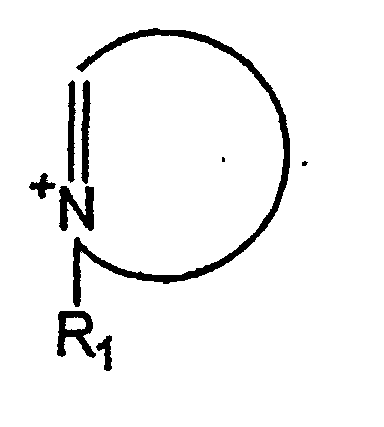
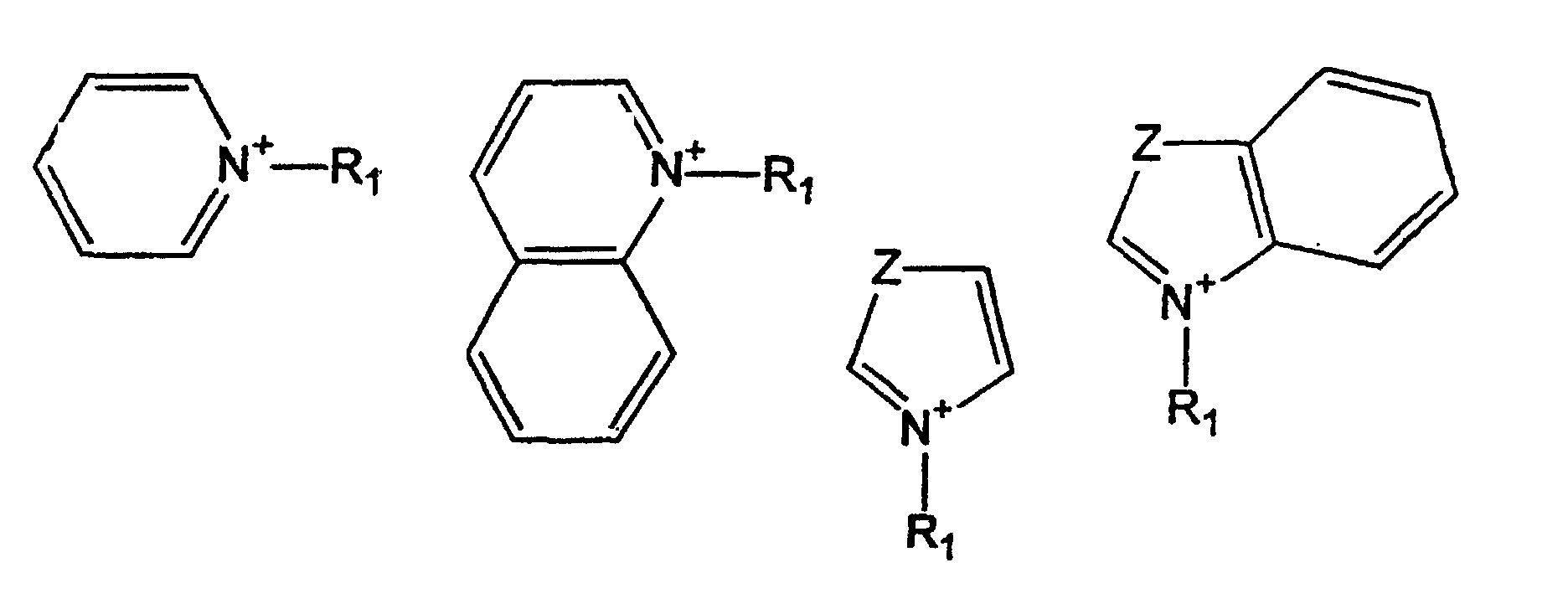
- a saponified PVA photosensitive resin which contains structural units represented by formulas (I) and (II): wherein R 1 represents an alkyl group, an aralkyl group, or a lower alkoxycarbonyl alkyl group, any of which groups may have a hydroxyl group, a carbamoyl group, an ether linkage, or an unsaturated group; R 2 represents a hydrogen atom or a lower alkoxy group; m is 0 or 1; n is an integer between 1 and 6 inclusive; a moiety represented by the following formula: represents a cationic portion of a quaternary aromatic heterocyclic group represented by the following formula: wherein Z represents O, S, Se, or NR 5 ; and R 5 represents a lower alkyl group; and wherein X 1 - represents an anion derived from polybasic acid having a pK 1 of 3.5 or less which polybasic acid has two or more proton-releasing groups
- the mol ratio of the structural unit represented by (I) to that represented by (II) is preferably 0.05 or more.
- a pattern formation method comprising the steps of: applying the photosensitive resin composition according to the second aspect of the present invention to a substrate so as to form a layer of the photosensitive resin; exposing the layer patternwise; and developing.
- the above-described substrate employed in the method according to the third aspect serves as an inner surface of a face plate of a color cathode-ray tube.
- a black matrix is formed on the above-described substrate and a phosphor pattern is formed by use of the above-described photosensitive resin composition incorporating a phosphor.
- the novel saponified PVA photosensitive resin of the present invention has excellent water resistance after hardening, excellent photosensitivity, and excellent resolution.
- a saponified PVA photosensitive resin having a mol ratio of the structural unit represented by formula (I) to that represented by formula (II) of 0.05 or more has excellent water resistance after hardening, excellent photosensitivity, and excellent resolution.
- the ratio is less than 0.05, these properties are deteriorated disadvantageously.
- the anions represented by X 1 - and X 2 - in formulas (I) and (II) are provided from a variety of sources.
- the sources include a catalyst and a raw material for synthesizing the photosensitive resin, and a post-synthesis additive.
- X 1 - so long as a polybasic anion having a pK 1 of 3.5 or less which polybasic acid has two or more proton-releasing groups serves as X 1 - .
- the saponified PVA polymer compound serving as the photosensitive resin of the present invention may be easily obtained through reaction of saponified PVA or an aqueous copolymer of vinyl alcohol and another vinyl compound with an aldehyde compound represented by the following formula (III): or with an acetal compound represented by the following formula (IV): wherein Y - represents an anion such as chloride, bromide, iodide, monoalkylsulfate, or p-toluenesulfonate; R 1 has the same meaning as described above; R 2 has the same meaning as described above; each of R 3 and R 4 represents a lower alkyl group; R 3 and R 4 may be bound to form an alkylene group; m is 0 or 1; n is an integer between 1 and 6 inclusive; and a moiety represented by the following formula: represents a cationic portion of a quaternary aromatic heterocyclic group represented by the following formulas: wherein R 1 represents an alkyl group, an aralky
- a polybasic acid having a pK 1 of 3.5 or less which polybasic acid has two or more proton-releasing groups is employed as an acid catalyst in synthetic, reaction.
- the polybasic acid which can be used in the present invention so long as the acid has a pK 1 of 3.5 or less.
- the polybasic acid include oxalic acid, tartaric acid, dihydroxytartaric acid, maleic acid, iminodiacetic acid, and nitrilotriacetic acid.
- customary acid catalysts such as phosphoric acid, hydrochloric acid, sulfuric acid, p-toluenesulfonic acid, methanesulfonic acid, and an acidic ion-exchange resin may be used in combination.
- X 1 - an anion derived from the polybasic acid.
- X 2 - is the above-described Y - in formulas (III) and (IV) or an anion derived from an acid catalyst other than X 1 - .
- the above-described acid catalyst is used in such an amount that the pH of the reaction system is 3 or less where reaction of compounds represented by formulas (III) and (IV); i.e., acetalization, can occur and such that the mol ratio of the structural unit represented by formula (I) to that represented by formula (II) is 0.05 or more.
- the pK 1 of a polybasic acid catalyst is above 3.5, a large amount of the catalyst is required for adjusting the pH to 3 or less where reaction of compounds represented by formulas (III) and (IV); i.e., acetalization, can occur, and the formed photosensitive resin has poor characteristics.
- reaction is performed in an aqueous medium, preferably in water.
- Reaction conditions are not particularly limited. Typically, the reaction may be performed in a temperature range from room temperature to 100°C for 2-72 hours.
- the resultant reaction mixture is poured into a large amount of a poor solvent such as acetone, ethanol, or dioxane to thereby precipitate a target polymer.
- the polymer is isolated, washed with methanol or the like, and dried to thereby obtain a saponified PVA polymer used in the present invention.
- the resultant reaction mixture is neutralized with an aqueous solution of an alkali (such as sodium hydroxide or potassium hydroxide) or aqueous ammonia, or is neutralized with a basic ion-exchange resin and the ion-exchange resin is removed by filtration, to thereby obtain an aqueous solution of a target polymer.
- the saponified PVA used as a starting compound of the above reaction has an average polymerization degree of 200-5000 and a saponification degree of 60-100%, preferably 300-3000 and 70-99%, respectively.
- the average polymerization degree is lower than 200, the formed resin has poor photosensitivity, whereas when it is in excess of 5000, the resultant photosensitive resin composition provides excessively high viscosity to a coating solution, and the coatability of the solution and the water-developability of the composition are disadvantageously deteriorated.
- the average polymerization degree is 200-5000.
- the saponification degree is 60-100%. When the saponification degree is lower than 60%, the water-solubility of the formed resin and the water-developability of the composition are insufficient.
- a modified saponified PVA may also be used as the saponified PVA used as a starting compound of the above reaction.
- the modified products include saponified PVA modified with a reactive group such as a hydrophilic group, an oleophilic group, an anion, a cation, or an acetoacetyl group.
- the above-described compound represented by formula (III) and/or an acetal thereof, and the above-described compound represented by (IV) are reacted in the presence of an acid catalyst, additional aldehydes or acetals thereof are simultaneously reacted.
- the aldehydes include formaldehyde, acetoaldehyde, propionaldehyde, butylaldehyde, benzaldehyde, hydroxybenzaldehyde, o-benzaldehydesulfonic acid or salts thereof, and benzaldehyde-2,4-disulfonic acid or salts thereof.
- the above-described compound represented by formula (III) and/or an acetal thereof is incorporated into the saponified PVAs in an amount of 0.5-10 mol% with respect to the entirety of the monomer units, preferably 0.8-7 mol%.
- the ratio is less than 0.5 mol%, the photosensitivity of the obtained resin is disadvantageously low for practical use, whereas when it is in excess of 10 mol%, the water-solubility of the obtained resin is insufficient.
- the incorporation ratio is 0.5-10 mol%.
- the above incorporation ratio must be increased in order to realize a resin of sufficient photosensitivity, whereas when the polymerization degree is high, even a low incorporation ratio can realize a resin of sufficient photosensitivity.
- the method for incorporating an anion derived from a polybasic acid is not limited to the above-described method in which a polybasic acid serves as an acid catalyst.
- the above-described polybasic acids may be added after synthesis of the modified resin, in the presence of an acid catalyst such as phosphoric acid, to thereby incorporate an anion derived from the polybasic acids.
- the effect of the present invention is not as strong as the case in which a polybasic acid serves as an acid catalyst.
- the effect in the alternative method is remarkably excellent as compared with the conventional case in which no polybasic acid is added.
- the photosensitive resin composition of the present invention may be prepared by addition of additives into the photosensitive resin of the present invention in accordance with needs, and dissolving or dispersing the mixture in a water-base solvent.
- an additional water-soluble solvent may be added in an amount of 50 wt.% or less.
- the additional solvents include water-soluble solvents such as methyl alcohol, ethyl alcohol, isopropyl alcohol, acetone, tetrahydrofuran, dioxane, dimethylformamide, and N-methylpyrrolidinone; ethylene glycol monomethyl ether; and ethylene glycol monoethyl ether.
- the photosensitive resin composition of the present invention further contains at least one species of a photopolymerizable unsaturated compound and a photopolymerization initiator system, the characteristics of the composition can be even more enhanced.
- the above-described photopolymerizable unsaturated compound may be hydrophobic or hydrophilic, and examples of the compounds include unsaturated monomers or prepolymers having at least one polymerizable unsaturated group such as an acryl group, a methacryl group, an allyl group, a vinyl ether group, a vinyl group, or an acrylamide group.
- ⁇ -homolysis initiators such as benzoin ether, hydroxyalkyl ketone, dialkoxyacetophenone, benzoylphosphine oxide, and benzoinoxime ketone; aromatic ketones such as benzophenone, benzyl, thioxanthone, and ketocoumarin; systems of these ketones and hydrogen-donors such as amine; organic peroxides; onium salts; systems of triphenylalkyl borate or an iron-arene complex and electron-donors such as thioxanthene dye and ⁇ -ketocoumarin; systems including N-arylglycine and an electron acceptor; and polyhalogen compounds.
- ⁇ -homolysis initiators such as benzoin ether, hydroxyalkyl ketone, dialkoxyacetophenone, benzoylphosphine oxide, and benzoinoxime ketone
- aromatic ketones such as benzophenone, benzyl, thioxanthone, and keto
- thermal polymerization inhibitor is preferably added to the above photopolymerization systems.
- the photosensitive resin composition containing the photosensitive resin of the present invention may contain other additives such as nonionic hydrophobic polymer emulsions, surfactants, dyes, pigments, inorganic filers, emulsion-stabilizers, plasticizers, leveling agents, silane coupling agents, and defoaming agents.
- nonionic surfactants are preferred as the surfactants, anionic surfactants may also be used.
- anionic surfactants may also be used.
- a variety of phosphors may be added to the composition, whereas a light-absorbing substance such as an organic or an inorganic black pigment may be added in order to form a black matrix.
- the thus-obtained saponified PVA photosensitive resin of the present invention and the composition containing the same are applied to a variety of substrates such as metal plates; e.g., aluminum and stainless steel; screen mesh; paper; glass plates; or semiconductor substrates and dried so as to have a coating thickness of, e.g., 0.5-1000 ⁇ m.
- substrates such as metal plates; e.g., aluminum and stainless steel; screen mesh; paper; glass plates; or semiconductor substrates and dried so as to have a coating thickness of, e.g., 0.5-1000 ⁇ m.
- the above coating film is irradiated with UV rays; e.g., active rays having a wavelength of 300-500 nm, to thereby harden the light-exposed portion. Thereafter, the non-exposed portion is removed by a coating-remover, such as water, to thereby obtain a pattern image.
- a coating-remover such as water
- the thus-processed coating film may be applied to screen printing plates, formation of black matrices or phosphor patterns of a color cathode-ray tube, color filters of CCD and LCD, color proofs for printing, and etching resists.
- the saponified PVA photosensitive resin of the present invention and the composition containing the same are applied to phosphor patterning in a color cathode-ray tube, the resolution and adhesion of the phosphor pattern are excellent as compared with the case of a similar resin and composition of conventional art.
- the resin and the composition of the present invention omit use of a high-resolution photosensitive resin composition containing a bichromate salt, chromium-free application is easy to realize.
- a saponified PVA (hereafter simply referred to as "PVA”; GH-17, product of The Nippon Synthetic Chemical Industry Co., Ltd.; polymerization degree 1700; saponification degree 88%) (100 g) was dissolved in pure water (900 g), to thereby form a solution.
- N-methyl-4-formylstyrylpyridinium metosulfate (hereinafter referred to as SbQ(MeS)) (9.90 g, 1.45 mol% with respect to the entirety of the structural units of PVA) and oxalic acid dihydrate (4 g) were dissolved in the solution, and the resultant solution was stirred at 30°C for 20 hours.
- Amberlite IR-45 (ion-exchange resin, product of Rohm & Haas Co.) (30 g) was added to the reaction mixture, and the resultant mixture was further stirred for two hours. When the pH of the mixture was confirmed to be neutral, Amberlite IR-45 was removed through filtration by use of 400-mesh plain gauze, to thereby obtain a pale yellow aqueous solution of a polymer.
- the ratio of SbQ-pendant units to the entirety of the structural units as obtained through UV spectrometry was 1.30 mol%.
- the mol ratio of COOH-COO - to CH 3 SO 4 - derived from SbQ(MeS) as obtained through ion chromatographic analysis was 18/82.
- PVA GH-17, product of The Nippon Synthetic Chemical Industry Co., Ltd.; polymerization degree 1700; saponification degree 88%) (100 g) was dissolved in pure water (900 g), to thereby form a solution.
- SbQ(MeS) (9.90 g, 1.45 mol% with respect to the entirety of the structural units of PVA) and phosphoric acid (2.5 g) were dissolved in the solution, and the resultant solution was stirred at 30°C for 20 hours.
- Amberlite IR-45 ion-exchange resin, product of Rohm & Haas Co.
- 20 g was added to the reaction mixture, and the resultant mixture was further stirred for two hours.
- Amberlite IR-45 was removed through filtration by use of 400-mesh plain gauze, to thereby obtain a pale yellow aqueous solution of a polymer.
- the ratio of SbQ-pendant units to the entirety of the structural units as obtained through UV spectrometry was 1.30 mol%.
- the mol ratio of H 2 PO 4 - to CH 3 SO 4 - derived from SbQ(MeS) as obtained through ion chromatographic analysis was 37/63.
- Formulation of a photosensitive composition 6 wt.% aqueous solution of the photosensitive polymer produced in the above Synthetic Example: 20 g Acryl emulsion (AC-140, product of Toyo Gosei Kogyo, solid content 40%) 1.5 g
- the photosensitive composition having the above formulation was applied to a glass plate so as to attain a thickness after drying of 5.0 ⁇ m, to thereby obtain a test plate.
- the coating was exposed for 30 seconds to light of an ultra-high pressure mercury lamp having an illuminance of 5.0 (mW/cm 2 ) at 350 nm. Subsequently, the test plate was soaked in pure water for one minute. Residual water on the coating surface was removed through air-blowing.
- the swelling ratio of the coating film was evaluated based on the equation: (W 2 /W 1 ) ⁇ 100, wherein W 1 represents (the weight of the test plate after coating) - (the weight of the glass plate) and W 2 represents (the weight of the test plate after air-blowing) - (the weight of the glass plate).
- W 1 represents (the weight of the test plate after coating) - (the weight of the glass plate)
- W 2 represents (the weight of the test plate after air-blowing) - (the weight of the glass plate).
- the swelling ratio was found to be 235%.
- a glass substrate on which a black matrix had been formed through a customary method was precoated with a 0.1% PVA solution, which was then dried.
- a phosphor slurry having the following composition was applied and dried, to thereby obtain a coating film having a thickness of 12-13 ⁇ m.
- a phosphor pattern was then formed under the below-described conditions.
- the obtained phosphor pattern exhibited low adhesion to the substrate and yielded considerable peeled portions, even in the case of a pattern having a diameter of 150 ⁇ m or more.
- the resolution of the pattern having a diameter of 150 ⁇ m was poor and accompanied by many fringes.
- Comparative Example 2 The procedure of Comparative Example 2 was repeated, except that a phosphor slurry having the following composition was applied and dried, to thereby obtain a coating film having a thickness of 12-13 ⁇ m. A phosphor pattern was then formed under the conditions of Comparative Example 2.
- the obtained phosphor pattern completely adhered to the substrate even in the case of a pattern having a diameter of 145 ⁇ m or more.
- the resolution of the pattern having a diameter of 150 ⁇ m was excellent and accompanied by less fringes as compared with the case of Comparative Example 1.
- Comparative Example 2 The procedure of Comparative Example 2 was repeated, except that a phosphor slurry having the following composition was applied and dried, to thereby obtain a coating film having a thickness of 12-13 ⁇ m. A phosphor pattern was then formed under the conditions of Comparative Example 2.
- the obtained phosphor pattern completely adhered to the substrate, even in the case of a pattern having a diameter of 135 ⁇ m or more.
- the resolution of the pattern having a diameter of 150 ⁇ m was excellent; the same as that obtained by use of a conventional PVA-ADC (ammonium dichromate) and the pattern was accompanied by substantially no fringes.
- the present invention provides a photosensitive resin and a photosensitive resin composition having excellent water resistance after hardening, excellent developability, and excellent patterning characteristics, and a pattern formation method making use of the composition.
Landscapes
- Physics & Mathematics (AREA)
- General Physics & Mathematics (AREA)
- Spectroscopy & Molecular Physics (AREA)
- Materials For Photolithography (AREA)
- Addition Polymer Or Copolymer, Post-Treatments, Or Chemical Modifications (AREA)
- Compositions Of Macromolecular Compounds (AREA)
Description




| Formulation of a photosensitive composition | |
| 6 wt.% aqueous solution of the photosensitive polymer produced in the above Synthetic Example: | 20 g |
| Acryl emulsion (AC-140, product of Toyo Gosei Kogyo, solid content 40%) | 1.5 g |
| Composition of the phosphor slurry | |
| Green phosphor (average grain size of 6.5 µm) | 50 g |
| Pure water | 56.7 g |
| 6 wt.% Aqueous solution containing a photosensitive polymer of the Comparative Synthesis Example | 45.67 g |
| 10 wt.% L-62 (BASF Co.) | 0.9 g |
| Conditions for pattern formation | |
| Shadowmask | pitch 0.25 mm |
| Shadowmask-glass substrate distanced 9 mm Light source-shadowmask distance | 270 mm |
| Light source: Ultra-high pressure mercury lamp Illuminance at glass substrate | 0.2 mW/cm2 2 |
| Exposure time | 20 seconds |
| Wedge filter (transmittance) | 0-100% |
| Development : development by hot water spraying |
| Composition of the phosphor slurry | |
| Green phosphor (average grain size of 6.5 µm) | 50 g |
| Pure water | 56.7 g |
| 6 wt.% Aqueous solution containing a photosensitive polymer of the Synthesis Example | |
| 45.67 g | |
| 10 wt.% L-62 (BASF Co.) | 0.9 g |
| Composition of the phosphor slurry | |
| Green phosphor (average grain size of 6.5 µm) | 50 g |
| Pure water | 55.9 g |
| 6 wt.% Aqueous solution containing a photosensitive polymer of Synthesis Example | 45.67 g |
| 10 wt.% Aqueous solution containing oxalic acid | 0.86 g |
| 10 wt.% L-62 (BASF Co.) | 0.9 g |
Claims (6)
- A saponified poly(vinyl acetate) photosensitive resin which contains structural units represented by formulae (I) and (II):
 wherein R1 represents an alkyl group, an aralkyl group, or a lower alkoxycarbonylalkyl group, any of which groups may have a hydroxyl group, a carbamoyl group, an ether linkage, or an unsaturated group, R2 represents a hydrogen atom or a lower alkoxy group; m is 0 or 1; n is an integer between 1 and 6 inclusive; a moiety represented by the following formula:
 represents a cationic portion of a quaternary aromatic heterocyclic group represented by the following formula:
 wherein Z represents O, S, Se, or NR5; and R5 represents a lower alkyl group;
and wherein X1 - represents an anion derived from a polybasic acid having a pK1 of 3.5 or less which polybasic acid has two or more proton-releasing groups; and X2 - represents an anion other than X1 -, the content of the structural units represented by formulae (I) and (II) in the resin being 0.5-10 mol% with respect to the entirety of the structural units of the saponified product of PVA. - A saponified poly(vinyl acetate) photosensitive resin according to Claim 1, wherein the mol ratio of the structural unit represented by (I) to that represented by (II) is 0.05 or more.
- A photosensitive resin composition containing the photosensitive resin as described in claim 1 or 2.
- A pattern formation method comprising the steps of: applying the photosensitive resin composition according to claim 3 to a substrate so as to form a layer of the photosensitive resin; exposing the layer patternwise; and developing.
- A pattern formation method according to claim 4, wherein the substrate serves as an inner surface of a face plate of a color cathode-ray tube.
- A pattern formation method according to claim 5, wherein a black matrix is formed on the substrate, and a phosphor pattern is formed by use of the photosensitive resin composition incorporating a phosphor.
Applications Claiming Priority (2)
| Application Number | Priority Date | Filing Date | Title |
|---|---|---|---|
| JP22211398 | 1998-08-05 | ||
| JP22211398 | 1998-08-05 |
Publications (2)
| Publication Number | Publication Date |
|---|---|
| EP0978764A1 EP0978764A1 (en) | 2000-02-09 |
| EP0978764B1 true EP0978764B1 (en) | 2003-07-02 |
Family
ID=16777361
Family Applications (1)
| Application Number | Title | Priority Date | Filing Date |
|---|---|---|---|
| EP99115407A Expired - Lifetime EP0978764B1 (en) | 1998-08-05 | 1999-08-04 | Photosensitive resin derived from saponified poly(vinyl acetate), photosensitive resin composition containing the resin, and pattern formation method making use of the composition |
Country Status (6)
| Country | Link |
|---|---|
| US (1) | US6140018A (en) |
| EP (1) | EP0978764B1 (en) |
| KR (1) | KR20000017053A (en) |
| CN (1) | CN1166985C (en) |
| DE (1) | DE69909195T2 (en) |
| TW (1) | TWI224715B (en) |
Families Citing this family (7)
| Publication number | Priority date | Publication date | Assignee | Title |
|---|---|---|---|---|
| US6797452B2 (en) | 1999-06-04 | 2004-09-28 | Toyo Gosei Kogyo Co., Ltd. | Photosensitive composition comprising photosensitive saponified poly(vinyl acetate) and pattern formation method making use of the composition |
| EP1058154A1 (en) * | 1999-06-04 | 2000-12-06 | Toyo Gosei Kogyo Co., Ltd. | Composition comprising photosensitive saponified poly(vinyl acetate) and pattern formation method making use of the composition |
| KR20010107288A (en) * | 2000-05-26 | 2001-12-07 | 박이순 | Manufacturing method of Photosensitive Polymeric Resin |
| JP4238003B2 (en) * | 2001-10-31 | 2009-03-11 | 三菱製紙株式会社 | Photosensitive composition and planographic printing plate |
| JP4278083B2 (en) * | 2002-12-10 | 2009-06-10 | 東洋合成工業株式会社 | Novel polyvinyl acetate saponified photosensitive resin, photosensitive resin composition, method for forming hydrogel using the same, and compound |
| JP6217711B2 (en) * | 2015-08-21 | 2017-10-25 | 日亜化学工業株式会社 | Method for manufacturing light emitting device |
| JP7405488B2 (en) | 2020-10-13 | 2023-12-26 | 昭和化工株式会社 | Photosensitive polymer based on polyvinyl acetate |
Family Cites Families (9)
| Publication number | Priority date | Publication date | Assignee | Title |
|---|---|---|---|---|
| JPS5523163A (en) * | 1978-08-09 | 1980-02-19 | Agency Of Ind Science & Technol | Polyvinyl alcohol type photosensitive resin and its preparation |
| JPS5562905A (en) * | 1978-11-06 | 1980-05-12 | Agency Of Ind Science & Technol | Photo-insolubilized resin and its preparation |
| JPS5611906A (en) * | 1979-07-11 | 1981-02-05 | Agency Of Ind Science & Technol | Photo-insolubilizable polyvinyl alcohol derivative and its preparation |
| US4564580A (en) * | 1983-06-30 | 1986-01-14 | Kogyo Gijutsuin | Photosensitive resin composition |
| JPH0642077B2 (en) * | 1984-07-04 | 1994-06-01 | 工業技術院長 | Screen photosensitive material for plate making |
| DE3889415T2 (en) * | 1987-10-17 | 1994-09-01 | Autotype Int Ltd | Photo stencil for screen printing. |
| JPH0713099B2 (en) * | 1988-12-14 | 1995-02-15 | 工業技術院長 | Photosensitive polyvinyl alcohol derivative |
| GB2226564B (en) * | 1988-12-16 | 1993-03-17 | Sericol Group Ltd | Photopolymerisable polyvinyl alcohols and compositions containing them |
| JP3561061B2 (en) * | 1995-12-11 | 2004-09-02 | 東洋合成工業株式会社 | Polyvinyl alcohol photosensitive resin, photosensitive resin composition, and pattern forming method using the same |
-
1999
- 1999-08-03 TW TW088113214A patent/TWI224715B/en not_active IP Right Cessation
- 1999-08-04 EP EP99115407A patent/EP0978764B1/en not_active Expired - Lifetime
- 1999-08-04 DE DE69909195T patent/DE69909195T2/en not_active Expired - Fee Related
- 1999-08-04 KR KR1019990031909A patent/KR20000017053A/en not_active Ceased
- 1999-08-05 CN CNB991193318A patent/CN1166985C/en not_active Expired - Fee Related
- 1999-08-05 US US09/368,835 patent/US6140018A/en not_active Expired - Fee Related
Also Published As
| Publication number | Publication date |
|---|---|
| DE69909195T2 (en) | 2004-05-19 |
| CN1166985C (en) | 2004-09-15 |
| US6140018A (en) | 2000-10-31 |
| TWI224715B (en) | 2004-12-01 |
| DE69909195D1 (en) | 2003-08-07 |
| CN1248729A (en) | 2000-03-29 |
| EP0978764A1 (en) | 2000-02-09 |
| KR20000017053A (en) | 2000-03-25 |
Similar Documents
| Publication | Publication Date | Title |
|---|---|---|
| DE69709874T2 (en) | AQUEOUS ANTIREFLEX COATING FOR PHOTORESIST COMPOSITIONS | |
| GB2076826A (en) | Photosensitive resinous materials | |
| JP3561061B2 (en) | Polyvinyl alcohol photosensitive resin, photosensitive resin composition, and pattern forming method using the same | |
| JPH039454B2 (en) | ||
| AU610263B2 (en) | Photostencils for screenprinting | |
| JPS6381101A (en) | Photosensitive resin | |
| US6140018A (en) | Photosensitive resin and composition thereof derived from saponified poly(vinyl acetate) and pattern formation method | |
| JP2952861B2 (en) | Polymer compound having substituted sulfonate group, radiation-sensitive composition containing this polymer compound, and method for producing polymer compound | |
| US6020093A (en) | Photosensitive compounds, photosensitive resin compositions, and pattern formation method making use of the compounds or compositions | |
| KR101334462B1 (en) | Photosensitive resin composition, and photosensitive film and stencil for screen printing using the photosensitive composition | |
| US6248498B1 (en) | Photosensitive resin composition | |
| AU772375B2 (en) | Photosensitive compounds, photosensitive resin compositions, and pattern formation method making use of the compounds or compositions | |
| JP3507221B2 (en) | Polyvinyl alcohol-based photosensitive resin composition and pattern forming method using the same | |
| DE69715020T2 (en) | A LIGHT SENSITIVE COMPOSITION CONTAINING AN ARYLHYDRAZO DYE | |
| EP4229482B1 (en) | Polyvinyl acetate based photopolymer | |
| JP3510001B2 (en) | Polyvinyl alcohol-based photosensitive resin and photosensitive resin composition using the same | |
| JP2000109517A (en) | Polyvinyl acetate saponification product-based photosensitive resin, and photosensitive resin composition and formation of pattern using the same | |
| KR100380663B1 (en) | Photosensitive compounds, photosensitive resin compositions, and pattern formation method making use of the compounds or compositions | |
| JPH10310769A (en) | Photosensitive compound and photosensitive resin | |
| JPH10316667A (en) | Photosensitive compound and photosensitive resin | |
| JPH0862831A (en) | Damping-waterless planographic printing plate and its formation | |
| JPH05173323A (en) | Negative photosensitive composition |
Legal Events
| Date | Code | Title | Description |
|---|---|---|---|
| PUAI | Public reference made under article 153(3) epc to a published international application that has entered the european phase |
Free format text: ORIGINAL CODE: 0009012 |
|
| AK | Designated contracting states |
Kind code of ref document: A1 Designated state(s): DE FR GB IT NL |
|
| AX | Request for extension of the european patent |
Free format text: AL;LT;LV;MK;RO;SI |
|
| 17P | Request for examination filed |
Effective date: 20000804 |
|
| AKX | Designation fees paid |
Free format text: DE FR GB IT NL |
|
| 17Q | First examination report despatched |
Effective date: 20020128 |
|
| GRAH | Despatch of communication of intention to grant a patent |
Free format text: ORIGINAL CODE: EPIDOS IGRA |
|
| GRAH | Despatch of communication of intention to grant a patent |
Free format text: ORIGINAL CODE: EPIDOS IGRA |
|
| GRAA | (expected) grant |
Free format text: ORIGINAL CODE: 0009210 |
|
| AK | Designated contracting states |
Designated state(s): DE FR GB IT NL |
|
| REG | Reference to a national code |
Ref country code: GB Ref legal event code: FG4D |
|
| REF | Corresponds to: |
Ref document number: 69909195 Country of ref document: DE Date of ref document: 20030807 Kind code of ref document: P |
|
| ET | Fr: translation filed | ||
| PLBE | No opposition filed within time limit |
Free format text: ORIGINAL CODE: 0009261 |
|
| STAA | Information on the status of an ep patent application or granted ep patent |
Free format text: STATUS: NO OPPOSITION FILED WITHIN TIME LIMIT |
|
| 26N | No opposition filed |
Effective date: 20040405 |
|
| PGFP | Annual fee paid to national office [announced via postgrant information from national office to epo] |
Ref country code: FR Payment date: 20040629 Year of fee payment: 6 |
|
| PGFP | Annual fee paid to national office [announced via postgrant information from national office to epo] |
Ref country code: GB Payment date: 20040805 Year of fee payment: 6 |
|
| PGFP | Annual fee paid to national office [announced via postgrant information from national office to epo] |
Ref country code: NL Payment date: 20040830 Year of fee payment: 6 |
|
| PGFP | Annual fee paid to national office [announced via postgrant information from national office to epo] |
Ref country code: DE Payment date: 20041025 Year of fee payment: 6 |
|
| PG25 | Lapsed in a contracting state [announced via postgrant information from national office to epo] |
Ref country code: IT Free format text: LAPSE BECAUSE OF NON-PAYMENT OF DUE FEES Effective date: 20050804 Ref country code: GB Free format text: LAPSE BECAUSE OF NON-PAYMENT OF DUE FEES Effective date: 20050804 |
|
| PG25 | Lapsed in a contracting state [announced via postgrant information from national office to epo] |
Ref country code: NL Free format text: LAPSE BECAUSE OF NON-PAYMENT OF DUE FEES Effective date: 20060301 Ref country code: DE Free format text: LAPSE BECAUSE OF NON-PAYMENT OF DUE FEES Effective date: 20060301 |
|
| GBPC | Gb: european patent ceased through non-payment of renewal fee |
Effective date: 20050804 |
|
| PG25 | Lapsed in a contracting state [announced via postgrant information from national office to epo] |
Ref country code: FR Free format text: LAPSE BECAUSE OF NON-PAYMENT OF DUE FEES Effective date: 20060428 |
|
| NLV4 | Nl: lapsed or anulled due to non-payment of the annual fee |
Effective date: 20060301 |
|
| REG | Reference to a national code |
Ref country code: FR Ref legal event code: ST Effective date: 20060428 |