EP0977780B1 - Hetero-polysaccharide conjugates, s-inp polysaccharide gels and methods of making and using the same - Google Patents
Hetero-polysaccharide conjugates, s-inp polysaccharide gels and methods of making and using the same Download PDFInfo
- Publication number
- EP0977780B1 EP0977780B1 EP98920055A EP98920055A EP0977780B1 EP 0977780 B1 EP0977780 B1 EP 0977780B1 EP 98920055 A EP98920055 A EP 98920055A EP 98920055 A EP98920055 A EP 98920055A EP 0977780 B1 EP0977780 B1 EP 0977780B1
- Authority
- EP
- European Patent Office
- Prior art keywords
- alginate
- glycosaminoglycan
- calcium
- biodritin
- solution
- Prior art date
- Legal status (The legal status is an assumption and is not a legal conclusion. Google has not performed a legal analysis and makes no representation as to the accuracy of the status listed.)
- Expired - Lifetime
Links
- 238000000034 method Methods 0.000 title claims abstract description 88
- 239000000499 gel Substances 0.000 title abstract description 131
- 229920001282 polysaccharide Polymers 0.000 title description 15
- 239000005017 polysaccharide Substances 0.000 title description 15
- 150000004676 glycans Chemical class 0.000 title 1
- 229920000615 alginic acid Polymers 0.000 claims abstract description 135
- 235000010443 alginic acid Nutrition 0.000 claims abstract description 131
- FHVDTGUDJYJELY-UHFFFAOYSA-N 6-{[2-carboxy-4,5-dihydroxy-6-(phosphanyloxy)oxan-3-yl]oxy}-4,5-dihydroxy-3-phosphanyloxane-2-carboxylic acid Chemical compound O1C(C(O)=O)C(P)C(O)C(O)C1OC1C(C(O)=O)OC(OP)C(O)C1O FHVDTGUDJYJELY-UHFFFAOYSA-N 0.000 claims abstract description 115
- 229940072056 alginate Drugs 0.000 claims abstract description 113
- 239000000203 mixture Substances 0.000 claims abstract description 97
- 229920002683 Glycosaminoglycan Polymers 0.000 claims abstract description 54
- 239000011324 bead Substances 0.000 claims abstract description 41
- 239000003094 microcapsule Substances 0.000 claims abstract description 40
- 238000005859 coupling reaction Methods 0.000 claims abstract description 27
- IXPNQXFRVYWDDI-UHFFFAOYSA-N 1-methyl-2,4-dioxo-1,3-diazinane-5-carboximidamide Chemical compound CN1CC(C(N)=N)C(=O)NC1=O IXPNQXFRVYWDDI-UHFFFAOYSA-N 0.000 claims abstract description 25
- 235000010413 sodium alginate Nutrition 0.000 claims abstract description 25
- 239000000661 sodium alginate Substances 0.000 claims abstract description 25
- 229940005550 sodium alginate Drugs 0.000 claims abstract description 25
- 238000004132 cross linking Methods 0.000 claims abstract description 14
- 230000000379 polymerizing effect Effects 0.000 claims abstract description 12
- 239000003973 paint Substances 0.000 claims abstract description 11
- 239000007921 spray Substances 0.000 claims abstract description 11
- 159000000007 calcium salts Chemical class 0.000 claims abstract description 10
- 229910017053 inorganic salt Inorganic materials 0.000 claims abstract description 9
- BHPQYMZQTOCNFJ-UHFFFAOYSA-N Calcium cation Chemical compound [Ca+2] BHPQYMZQTOCNFJ-UHFFFAOYSA-N 0.000 claims description 48
- 229910001424 calcium ion Inorganic materials 0.000 claims description 48
- UXVMQQNJUSDDNG-UHFFFAOYSA-L Calcium chloride Chemical compound [Cl-].[Cl-].[Ca+2] UXVMQQNJUSDDNG-UHFFFAOYSA-L 0.000 claims description 24
- 238000006243 chemical reaction Methods 0.000 claims description 24
- OYPRJOBELJOOCE-UHFFFAOYSA-N Calcium Chemical compound [Ca] OYPRJOBELJOOCE-UHFFFAOYSA-N 0.000 claims description 19
- 229910052791 calcium Inorganic materials 0.000 claims description 19
- 239000011575 calcium Substances 0.000 claims description 19
- 229910001410 inorganic ion Inorganic materials 0.000 claims description 19
- SQDAZGGFXASXDW-UHFFFAOYSA-N 5-bromo-2-(trifluoromethoxy)pyridine Chemical compound FC(F)(F)OC1=CC=C(Br)C=N1 SQDAZGGFXASXDW-UHFFFAOYSA-N 0.000 claims description 16
- 229920001287 Chondroitin sulfate Polymers 0.000 claims description 16
- LFQSCWFLJHTTHZ-UHFFFAOYSA-N Ethanol Chemical compound CCO LFQSCWFLJHTTHZ-UHFFFAOYSA-N 0.000 claims description 16
- 229940059329 chondroitin sulfate Drugs 0.000 claims description 16
- 238000011282 treatment Methods 0.000 claims description 15
- 102000005701 Calcium-Binding Proteins Human genes 0.000 claims description 13
- 108010045403 Calcium-Binding Proteins Proteins 0.000 claims description 13
- 229920000656 polylysine Polymers 0.000 claims description 12
- 108010039918 Polylysine Proteins 0.000 claims description 11
- AFOSIXZFDONLBT-UHFFFAOYSA-N divinyl sulfone Chemical group C=CS(=O)(=O)C=C AFOSIXZFDONLBT-UHFFFAOYSA-N 0.000 claims description 11
- 239000011159 matrix material Substances 0.000 claims description 11
- HZAXFHJVJLSVMW-UHFFFAOYSA-N 2-Aminoethan-1-ol Chemical group NCCO HZAXFHJVJLSVMW-UHFFFAOYSA-N 0.000 claims description 8
- 150000001875 compounds Chemical class 0.000 claims description 7
- 206010012601 diabetes mellitus Diseases 0.000 claims description 7
- 210000004153 islets of langerhan Anatomy 0.000 claims description 7
- 210000000496 pancreas Anatomy 0.000 claims description 5
- 208000027418 Wounds and injury Diseases 0.000 claims description 4
- 235000021463 dry cake Nutrition 0.000 claims description 4
- 238000004519 manufacturing process Methods 0.000 claims description 4
- 159000000000 sodium salts Chemical class 0.000 claims description 4
- 206010052428 Wound Diseases 0.000 claims description 3
- 238000004108 freeze drying Methods 0.000 claims description 3
- 125000000391 vinyl group Chemical group [H]C([*])=C([H])[H] 0.000 claims description 3
- 239000000560 biocompatible material Substances 0.000 claims description 2
- 150000003457 sulfones Chemical class 0.000 claims 5
- KCXVZYZYPLLWCC-UHFFFAOYSA-N EDTA Chemical compound OC(=O)CN(CC(O)=O)CCN(CC(O)=O)CC(O)=O KCXVZYZYPLLWCC-UHFFFAOYSA-N 0.000 claims 3
- 239000003814 drug Substances 0.000 claims 3
- 239000003349 gelling agent Substances 0.000 claims 2
- KRKNYBCHXYNGOX-UHFFFAOYSA-N citric acid Chemical group OC(=O)CC(O)(C(O)=O)CC(O)=O KRKNYBCHXYNGOX-UHFFFAOYSA-N 0.000 claims 1
- 230000001376 precipitating effect Effects 0.000 claims 1
- -1 e.g. Chemical compound 0.000 abstract description 52
- 239000000243 solution Substances 0.000 description 92
- 229920000642 polymer Polymers 0.000 description 45
- 210000004027 cell Anatomy 0.000 description 41
- FAPWRFPIFSIZLT-UHFFFAOYSA-M Sodium chloride Chemical compound [Na+].[Cl-] FAPWRFPIFSIZLT-UHFFFAOYSA-M 0.000 description 39
- 239000002775 capsule Substances 0.000 description 27
- 239000000047 product Substances 0.000 description 26
- 210000001519 tissue Anatomy 0.000 description 22
- 238000007792 addition Methods 0.000 description 21
- 239000011780 sodium chloride Substances 0.000 description 21
- 229960001126 alginic acid Drugs 0.000 description 19
- 239000000783 alginic acid Substances 0.000 description 19
- 125000005647 linker group Chemical group 0.000 description 19
- 239000000463 material Substances 0.000 description 18
- 230000015572 biosynthetic process Effects 0.000 description 17
- 238000009472 formulation Methods 0.000 description 17
- 238000002360 preparation method Methods 0.000 description 15
- XLYOFNOQVPJJNP-UHFFFAOYSA-N water Substances O XLYOFNOQVPJJNP-UHFFFAOYSA-N 0.000 description 15
- 230000008569 process Effects 0.000 description 13
- KFZMGEQAYNKOFK-UHFFFAOYSA-N Isopropanol Chemical compound CC(C)O KFZMGEQAYNKOFK-UHFFFAOYSA-N 0.000 description 12
- 210000004379 membrane Anatomy 0.000 description 12
- 239000012528 membrane Substances 0.000 description 12
- 241001465754 Metazoa Species 0.000 description 11
- 238000002513 implantation Methods 0.000 description 11
- 229920002567 Chondroitin Polymers 0.000 description 10
- 239000001110 calcium chloride Substances 0.000 description 10
- 229910001628 calcium chloride Inorganic materials 0.000 description 10
- DLGJWSVWTWEWBJ-HGGSSLSASA-N chondroitin Chemical compound CC(O)=N[C@@H]1[C@H](O)O[C@H](CO)[C@H](O)[C@@H]1OC1[C@H](O)[C@H](O)C=C(C(O)=O)O1 DLGJWSVWTWEWBJ-HGGSSLSASA-N 0.000 description 10
- NOESYZHRGYRDHS-UHFFFAOYSA-N insulin Chemical compound N1C(=O)C(NC(=O)C(CCC(N)=O)NC(=O)C(CCC(O)=O)NC(=O)C(C(C)C)NC(=O)C(NC(=O)CN)C(C)CC)CSSCC(C(NC(CO)C(=O)NC(CC(C)C)C(=O)NC(CC=2C=CC(O)=CC=2)C(=O)NC(CCC(N)=O)C(=O)NC(CC(C)C)C(=O)NC(CCC(O)=O)C(=O)NC(CC(N)=O)C(=O)NC(CC=2C=CC(O)=CC=2)C(=O)NC(CSSCC(NC(=O)C(C(C)C)NC(=O)C(CC(C)C)NC(=O)C(CC=2C=CC(O)=CC=2)NC(=O)C(CC(C)C)NC(=O)C(C)NC(=O)C(CCC(O)=O)NC(=O)C(C(C)C)NC(=O)C(CC(C)C)NC(=O)C(CC=2NC=NC=2)NC(=O)C(CO)NC(=O)CNC2=O)C(=O)NCC(=O)NC(CCC(O)=O)C(=O)NC(CCCNC(N)=N)C(=O)NCC(=O)NC(CC=3C=CC=CC=3)C(=O)NC(CC=3C=CC=CC=3)C(=O)NC(CC=3C=CC(O)=CC=3)C(=O)NC(C(C)O)C(=O)N3C(CCC3)C(=O)NC(CCCCN)C(=O)NC(C)C(O)=O)C(=O)NC(CC(N)=O)C(O)=O)=O)NC(=O)C(C(C)CC)NC(=O)C(CO)NC(=O)C(C(C)O)NC(=O)C1CSSCC2NC(=O)C(CC(C)C)NC(=O)C(NC(=O)C(CCC(N)=O)NC(=O)C(CC(N)=O)NC(=O)C(NC(=O)C(N)CC=1C=CC=CC=1)C(C)C)CC1=CN=CN1 NOESYZHRGYRDHS-UHFFFAOYSA-N 0.000 description 10
- 238000002156 mixing Methods 0.000 description 10
- 238000000746 purification Methods 0.000 description 10
- 229920000742 Cotton Polymers 0.000 description 9
- 239000000126 substance Substances 0.000 description 8
- 238000003786 synthesis reaction Methods 0.000 description 8
- 238000002054 transplantation Methods 0.000 description 8
- 229920000550 glycopolymer Polymers 0.000 description 7
- 239000002244 precipitate Substances 0.000 description 7
- QTBSBXVTEAMEQO-UHFFFAOYSA-N Acetic acid Chemical compound CC(O)=O QTBSBXVTEAMEQO-UHFFFAOYSA-N 0.000 description 6
- 108010037362 Extracellular Matrix Proteins Proteins 0.000 description 6
- 102000010834 Extracellular Matrix Proteins Human genes 0.000 description 6
- 238000005538 encapsulation Methods 0.000 description 6
- 210000002744 extracellular matrix Anatomy 0.000 description 6
- 239000005457 ice water Substances 0.000 description 6
- 229920000729 poly(L-lysine) polymer Polymers 0.000 description 6
- 229920002971 Heparan sulfate Polymers 0.000 description 5
- 102000004877 Insulin Human genes 0.000 description 5
- 108090001061 Insulin Proteins 0.000 description 5
- 150000004781 alginic acids Chemical class 0.000 description 5
- 235000012970 cakes Nutrition 0.000 description 5
- 150000007942 carboxylates Chemical class 0.000 description 5
- 239000012467 final product Substances 0.000 description 5
- 229940125396 insulin Drugs 0.000 description 5
- 239000002609 medium Substances 0.000 description 5
- 150000004804 polysaccharides Chemical class 0.000 description 5
- 239000008279 sol Substances 0.000 description 5
- 239000002904 solvent Substances 0.000 description 5
- 241000699670 Mus sp. Species 0.000 description 4
- 108010067787 Proteoglycans Proteins 0.000 description 4
- 102000016611 Proteoglycans Human genes 0.000 description 4
- 150000001768 cations Chemical class 0.000 description 4
- 239000003795 chemical substances by application Substances 0.000 description 4
- 239000003431 cross linking reagent Substances 0.000 description 4
- 238000012258 culturing Methods 0.000 description 4
- 238000004090 dissolution Methods 0.000 description 4
- 239000007943 implant Substances 0.000 description 4
- 238000011534 incubation Methods 0.000 description 4
- 150000002500 ions Chemical class 0.000 description 4
- 230000035699 permeability Effects 0.000 description 4
- 230000001954 sterilising effect Effects 0.000 description 4
- 239000000725 suspension Substances 0.000 description 4
- 238000005406 washing Methods 0.000 description 4
- KIUKXJAPPMFGSW-DNGZLQJQSA-N (2S,3S,4S,5R,6R)-6-[(2S,3R,4R,5S,6R)-3-Acetamido-2-[(2S,3S,4R,5R,6R)-6-[(2R,3R,4R,5S,6R)-3-acetamido-2,5-dihydroxy-6-(hydroxymethyl)oxan-4-yl]oxy-2-carboxy-4,5-dihydroxyoxan-3-yl]oxy-5-hydroxy-6-(hydroxymethyl)oxan-4-yl]oxy-3,4,5-trihydroxyoxane-2-carboxylic acid Chemical compound CC(=O)N[C@H]1[C@H](O)O[C@H](CO)[C@@H](O)[C@@H]1O[C@H]1[C@H](O)[C@@H](O)[C@H](O[C@H]2[C@@H]([C@@H](O[C@H]3[C@@H]([C@@H](O)[C@H](O)[C@H](O3)C(O)=O)O)[C@H](O)[C@@H](CO)O2)NC(C)=O)[C@@H](C(O)=O)O1 KIUKXJAPPMFGSW-DNGZLQJQSA-N 0.000 description 3
- KRKNYBCHXYNGOX-UHFFFAOYSA-K Citrate Chemical compound [O-]C(=O)CC(O)(CC([O-])=O)C([O-])=O KRKNYBCHXYNGOX-UHFFFAOYSA-K 0.000 description 3
- 241000699666 Mus <mouse, genus> Species 0.000 description 3
- 206010067584 Type 1 diabetes mellitus Diseases 0.000 description 3
- 238000010668 complexation reaction Methods 0.000 description 3
- 230000008878 coupling Effects 0.000 description 3
- 238000010168 coupling process Methods 0.000 description 3
- 230000003247 decreasing effect Effects 0.000 description 3
- 238000002474 experimental method Methods 0.000 description 3
- 229920002674 hyaluronan Polymers 0.000 description 3
- 229960003160 hyaluronic acid Drugs 0.000 description 3
- 238000007912 intraperitoneal administration Methods 0.000 description 3
- 238000006116 polymerization reaction Methods 0.000 description 3
- 239000000843 powder Substances 0.000 description 3
- 238000001556 precipitation Methods 0.000 description 3
- 238000004321 preservation Methods 0.000 description 3
- 102000004169 proteins and genes Human genes 0.000 description 3
- 108090000623 proteins and genes Proteins 0.000 description 3
- 239000000376 reactant Substances 0.000 description 3
- 150000003839 salts Chemical class 0.000 description 3
- 238000005063 solubilization Methods 0.000 description 3
- 230000007928 solubilization Effects 0.000 description 3
- 150000003467 sulfuric acid derivatives Chemical class 0.000 description 3
- 239000006228 supernatant Substances 0.000 description 3
- 238000001356 surgical procedure Methods 0.000 description 3
- 229920001661 Chitosan Polymers 0.000 description 2
- RGHNJXZEOKUKBD-UHFFFAOYSA-N D-gluconic acid Natural products OCC(O)C(O)C(O)C(O)C(O)=O RGHNJXZEOKUKBD-UHFFFAOYSA-N 0.000 description 2
- PHOQVHQSTUBQQK-SQOUGZDYSA-N D-glucono-1,5-lactone Chemical compound OC[C@H]1OC(=O)[C@H](O)[C@@H](O)[C@@H]1O PHOQVHQSTUBQQK-SQOUGZDYSA-N 0.000 description 2
- 102000003974 Fibroblast growth factor 2 Human genes 0.000 description 2
- 108090000379 Fibroblast growth factor 2 Proteins 0.000 description 2
- 102000016359 Fibronectins Human genes 0.000 description 2
- 108010067306 Fibronectins Proteins 0.000 description 2
- RGHNJXZEOKUKBD-SQOUGZDYSA-N Gluconic acid Natural products OC[C@@H](O)[C@@H](O)[C@H](O)[C@@H](O)C(O)=O RGHNJXZEOKUKBD-SQOUGZDYSA-N 0.000 description 2
- HTTJABKRGRZYRN-UHFFFAOYSA-N Heparin Chemical compound OC1C(NC(=O)C)C(O)OC(COS(O)(=O)=O)C1OC1C(OS(O)(=O)=O)C(O)C(OC2C(C(OS(O)(=O)=O)C(OC3C(C(O)C(O)C(O3)C(O)=O)OS(O)(=O)=O)C(CO)O2)NS(O)(=O)=O)C(C(O)=O)O1 HTTJABKRGRZYRN-UHFFFAOYSA-N 0.000 description 2
- 206010019663 Hepatic failure Diseases 0.000 description 2
- DGAQECJNVWCQMB-PUAWFVPOSA-M Ilexoside XXIX Chemical compound C[C@@H]1CC[C@@]2(CC[C@@]3(C(=CC[C@H]4[C@]3(CC[C@@H]5[C@@]4(CC[C@@H](C5(C)C)OS(=O)(=O)[O-])C)C)[C@@H]2[C@]1(C)O)C)C(=O)O[C@H]6[C@@H]([C@H]([C@@H]([C@H](O6)CO)O)O)O.[Na+] DGAQECJNVWCQMB-PUAWFVPOSA-M 0.000 description 2
- 206010061218 Inflammation Diseases 0.000 description 2
- XEEYBQQBJWHFJM-UHFFFAOYSA-N Iron Chemical compound [Fe] XEEYBQQBJWHFJM-UHFFFAOYSA-N 0.000 description 2
- 102000001068 Neural Cell Adhesion Molecules Human genes 0.000 description 2
- 108010069196 Neural Cell Adhesion Molecules Proteins 0.000 description 2
- CDBYLPFSWZWCQE-UHFFFAOYSA-L Sodium Carbonate Chemical compound [Na+].[Na+].[O-]C([O-])=O CDBYLPFSWZWCQE-UHFFFAOYSA-L 0.000 description 2
- 208000002847 Surgical Wound Diseases 0.000 description 2
- 230000009471 action Effects 0.000 description 2
- 238000004458 analytical method Methods 0.000 description 2
- 239000007864 aqueous solution Substances 0.000 description 2
- 230000000903 blocking effect Effects 0.000 description 2
- FNAQSUUGMSOBHW-UHFFFAOYSA-H calcium citrate Chemical compound [Ca+2].[Ca+2].[Ca+2].[O-]C(=O)CC(O)(CC([O-])=O)C([O-])=O.[O-]C(=O)CC(O)(CC([O-])=O)C([O-])=O FNAQSUUGMSOBHW-UHFFFAOYSA-H 0.000 description 2
- 239000001354 calcium citrate Substances 0.000 description 2
- 230000021164 cell adhesion Effects 0.000 description 2
- 230000017455 cell-cell adhesion Effects 0.000 description 2
- 238000012412 chemical coupling Methods 0.000 description 2
- 239000003153 chemical reaction reagent Substances 0.000 description 2
- 238000000576 coating method Methods 0.000 description 2
- 230000001276 controlling effect Effects 0.000 description 2
- 238000007334 copolymerization reaction Methods 0.000 description 2
- 238000011161 development Methods 0.000 description 2
- 230000018109 developmental process Effects 0.000 description 2
- 201000010099 disease Diseases 0.000 description 2
- 208000037265 diseases, disorders, signs and symptoms Diseases 0.000 description 2
- 230000000694 effects Effects 0.000 description 2
- 238000012869 ethanol precipitation Methods 0.000 description 2
- 210000002950 fibroblast Anatomy 0.000 description 2
- 238000001879 gelation Methods 0.000 description 2
- 239000000174 gluconic acid Substances 0.000 description 2
- 235000012208 gluconic acid Nutrition 0.000 description 2
- 235000012209 glucono delta-lactone Nutrition 0.000 description 2
- 229960003681 gluconolactone Drugs 0.000 description 2
- 229920000669 heparin Polymers 0.000 description 2
- 229960002897 heparin Drugs 0.000 description 2
- 125000002887 hydroxy group Chemical group [H]O* 0.000 description 2
- 230000002163 immunogen Effects 0.000 description 2
- 230000005847 immunogenicity Effects 0.000 description 2
- 230000004054 inflammatory process Effects 0.000 description 2
- 239000002198 insoluble material Substances 0.000 description 2
- 238000005304 joining Methods 0.000 description 2
- 239000007788 liquid Substances 0.000 description 2
- 208000007903 liver failure Diseases 0.000 description 2
- 231100000835 liver failure Toxicity 0.000 description 2
- 210000004962 mammalian cell Anatomy 0.000 description 2
- 230000007246 mechanism Effects 0.000 description 2
- 229910052751 metal Inorganic materials 0.000 description 2
- 239000002184 metal Substances 0.000 description 2
- 239000011325 microbead Substances 0.000 description 2
- 239000011148 porous material Substances 0.000 description 2
- 238000012545 processing Methods 0.000 description 2
- 230000001681 protective effect Effects 0.000 description 2
- 238000012552 review Methods 0.000 description 2
- 238000009958 sewing Methods 0.000 description 2
- 210000003491 skin Anatomy 0.000 description 2
- 229910052708 sodium Inorganic materials 0.000 description 2
- 239000011734 sodium Substances 0.000 description 2
- 239000001509 sodium citrate Substances 0.000 description 2
- NLJMYIDDQXHKNR-UHFFFAOYSA-K sodium citrate Chemical compound O.O.[Na+].[Na+].[Na+].[O-]C(=O)CC(O)(CC([O-])=O)C([O-])=O NLJMYIDDQXHKNR-UHFFFAOYSA-K 0.000 description 2
- 238000005507 spraying Methods 0.000 description 2
- 238000010186 staining Methods 0.000 description 2
- 238000004659 sterilization and disinfection Methods 0.000 description 2
- 239000011550 stock solution Substances 0.000 description 2
- QAOWNCQODCNURD-UHFFFAOYSA-L sulfate group Chemical group S(=O)(=O)([O-])[O-] QAOWNCQODCNURD-UHFFFAOYSA-L 0.000 description 2
- 238000012360 testing method Methods 0.000 description 2
- 235000013337 tricalcium citrate Nutrition 0.000 description 2
- 208000035408 type 1 diabetes mellitus 1 Diseases 0.000 description 2
- 230000037303 wrinkles Effects 0.000 description 2
- USZANDATRPORSZ-UHFFFAOYSA-N 1-cyclohexylethanesulfonic acid Chemical compound OS(=O)(=O)C(C)C1CCCCC1 USZANDATRPORSZ-UHFFFAOYSA-N 0.000 description 1
- FFRBMBIXVSCUFS-UHFFFAOYSA-N 2,4-dinitro-1-naphthol Chemical compound C1=CC=C2C(O)=C([N+]([O-])=O)C=C([N+]([O-])=O)C2=C1 FFRBMBIXVSCUFS-UHFFFAOYSA-N 0.000 description 1
- 229920000936 Agarose Polymers 0.000 description 1
- 208000024827 Alzheimer disease Diseases 0.000 description 1
- QGZKDVFQNNGYKY-UHFFFAOYSA-O Ammonium Chemical compound [NH4+] QGZKDVFQNNGYKY-UHFFFAOYSA-O 0.000 description 1
- 241000195940 Bryophyta Species 0.000 description 1
- 102100032912 CD44 antigen Human genes 0.000 description 1
- 108091016585 CD44 antigen Proteins 0.000 description 1
- 102000008186 Collagen Human genes 0.000 description 1
- 108010035532 Collagen Proteins 0.000 description 1
- 239000004971 Cross linker Substances 0.000 description 1
- 108010010803 Gelatin Proteins 0.000 description 1
- 208000031220 Hemophilia Diseases 0.000 description 1
- 208000009292 Hemophilia A Diseases 0.000 description 1
- 102000008055 Heparan Sulfate Proteoglycans Human genes 0.000 description 1
- 101001054921 Homo sapiens Lymphatic vessel endothelial hyaluronic acid receptor 1 Proteins 0.000 description 1
- 208000023105 Huntington disease Diseases 0.000 description 1
- 108010092694 L-Selectin Proteins 0.000 description 1
- WHXSMMKQMYFTQS-UHFFFAOYSA-N Lithium Chemical compound [Li] WHXSMMKQMYFTQS-UHFFFAOYSA-N 0.000 description 1
- 206010024769 Local reaction Diseases 0.000 description 1
- 102100026849 Lymphatic vessel endothelial hyaluronic acid receptor 1 Human genes 0.000 description 1
- 102000010836 Lymphocyte Homing Receptors Human genes 0.000 description 1
- 108010090054 Membrane Glycoproteins Proteins 0.000 description 1
- 102000012750 Membrane Glycoproteins Human genes 0.000 description 1
- 208000019022 Mood disease Diseases 0.000 description 1
- 239000004677 Nylon Substances 0.000 description 1
- 208000018737 Parkinson disease Diseases 0.000 description 1
- 239000004698 Polyethylene Substances 0.000 description 1
- 241000288906 Primates Species 0.000 description 1
- 241000283984 Rodentia Species 0.000 description 1
- 108090000054 Syndecan-2 Proteins 0.000 description 1
- 238000012084 abdominal surgery Methods 0.000 description 1
- 239000002253 acid Substances 0.000 description 1
- 230000002378 acidificating effect Effects 0.000 description 1
- 150000007513 acids Chemical class 0.000 description 1
- 238000013019 agitation Methods 0.000 description 1
- 230000001476 alcoholic effect Effects 0.000 description 1
- 239000004599 antimicrobial Substances 0.000 description 1
- 238000013459 approach Methods 0.000 description 1
- 239000012736 aqueous medium Substances 0.000 description 1
- 239000003125 aqueous solvent Substances 0.000 description 1
- 210000001367 artery Anatomy 0.000 description 1
- 230000004888 barrier function Effects 0.000 description 1
- 210000000227 basophil cell of anterior lobe of hypophysis Anatomy 0.000 description 1
- 230000008901 benefit Effects 0.000 description 1
- 210000004369 blood Anatomy 0.000 description 1
- 239000008280 blood Substances 0.000 description 1
- 230000023555 blood coagulation Effects 0.000 description 1
- 238000006664 bond formation reaction Methods 0.000 description 1
- 235000010410 calcium alginate Nutrition 0.000 description 1
- 239000000648 calcium alginate Substances 0.000 description 1
- 229960002681 calcium alginate Drugs 0.000 description 1
- OKHHGHGGPDJQHR-YMOPUZKJSA-L calcium;(2s,3s,4s,5s,6r)-6-[(2r,3s,4r,5s,6r)-2-carboxy-6-[(2r,3s,4r,5s,6r)-2-carboxylato-4,5,6-trihydroxyoxan-3-yl]oxy-4,5-dihydroxyoxan-3-yl]oxy-3,4,5-trihydroxyoxane-2-carboxylate Chemical compound [Ca+2].O[C@@H]1[C@H](O)[C@H](O)O[C@@H](C([O-])=O)[C@H]1O[C@H]1[C@@H](O)[C@@H](O)[C@H](O[C@H]2[C@H]([C@@H](O)[C@H](O)[C@H](O2)C([O-])=O)O)[C@H](C(O)=O)O1 OKHHGHGGPDJQHR-YMOPUZKJSA-L 0.000 description 1
- 239000001768 carboxy methyl cellulose Substances 0.000 description 1
- 235000010948 carboxy methyl cellulose Nutrition 0.000 description 1
- 239000008112 carboxymethyl-cellulose Substances 0.000 description 1
- 229940105329 carboxymethylcellulose Drugs 0.000 description 1
- 230000010261 cell growth Effects 0.000 description 1
- 230000008619 cell matrix interaction Effects 0.000 description 1
- 210000000170 cell membrane Anatomy 0.000 description 1
- 238000002659 cell therapy Methods 0.000 description 1
- 238000005119 centrifugation Methods 0.000 description 1
- 239000007795 chemical reaction product Substances 0.000 description 1
- KXKPYJOVDUMHGS-OSRGNVMNSA-N chondroitin sulfate Chemical compound CC(=O)N[C@H]1[C@H](O)O[C@H](OS(O)(=O)=O)[C@H](O)[C@@H]1O[C@H]1[C@H](O)[C@@H](O)[C@H](O)[C@@H](C(O)=O)O1 KXKPYJOVDUMHGS-OSRGNVMNSA-N 0.000 description 1
- 150000001860 citric acid derivatives Chemical class 0.000 description 1
- 239000011248 coating agent Substances 0.000 description 1
- 229920001436 collagen Polymers 0.000 description 1
- 210000002808 connective tissue Anatomy 0.000 description 1
- 239000000470 constituent Substances 0.000 description 1
- 230000006378 damage Effects 0.000 description 1
- 230000018044 dehydration Effects 0.000 description 1
- 238000006297 dehydration reaction Methods 0.000 description 1
- 125000000422 delta-lactone group Chemical group 0.000 description 1
- 238000009792 diffusion process Methods 0.000 description 1
- 125000000600 disaccharide group Chemical group 0.000 description 1
- 230000006806 disease prevention Effects 0.000 description 1
- 239000006185 dispersion Substances 0.000 description 1
- 238000012377 drug delivery Methods 0.000 description 1
- 230000003511 endothelial effect Effects 0.000 description 1
- 238000001125 extrusion Methods 0.000 description 1
- 230000035558 fertility Effects 0.000 description 1
- 239000000945 filler Substances 0.000 description 1
- 239000012530 fluid Substances 0.000 description 1
- 238000005194 fractionation Methods 0.000 description 1
- 229920000159 gelatin Polymers 0.000 description 1
- 239000008273 gelatin Substances 0.000 description 1
- 235000019322 gelatine Nutrition 0.000 description 1
- 235000011852 gelatine desserts Nutrition 0.000 description 1
- 108010074717 glycosaminoglycan receptor Proteins 0.000 description 1
- 230000005484 gravity Effects 0.000 description 1
- 239000001963 growth medium Substances 0.000 description 1
- 210000003958 hematopoietic stem cell Anatomy 0.000 description 1
- 238000004128 high performance liquid chromatography Methods 0.000 description 1
- 230000021158 homophilic cell adhesion Effects 0.000 description 1
- 238000006703 hydration reaction Methods 0.000 description 1
- 238000011065 in-situ storage Methods 0.000 description 1
- 230000005764 inhibitory process Effects 0.000 description 1
- 238000002347 injection Methods 0.000 description 1
- 239000007924 injection Substances 0.000 description 1
- 208000014674 injury Diseases 0.000 description 1
- 230000003993 interaction Effects 0.000 description 1
- 230000008611 intercellular interaction Effects 0.000 description 1
- 229910052742 iron Inorganic materials 0.000 description 1
- 230000007794 irritation Effects 0.000 description 1
- 210000002510 keratinocyte Anatomy 0.000 description 1
- 230000000670 limiting effect Effects 0.000 description 1
- 229910052744 lithium Inorganic materials 0.000 description 1
- 210000004698 lymphocyte Anatomy 0.000 description 1
- 238000005374 membrane filtration Methods 0.000 description 1
- 230000000813 microbial effect Effects 0.000 description 1
- 239000004005 microsphere Substances 0.000 description 1
- 239000003595 mist Substances 0.000 description 1
- 239000011259 mixed solution Substances 0.000 description 1
- 230000004048 modification Effects 0.000 description 1
- 238000012986 modification Methods 0.000 description 1
- 238000012544 monitoring process Methods 0.000 description 1
- 235000011929 mousse Nutrition 0.000 description 1
- 210000000663 muscle cell Anatomy 0.000 description 1
- 230000017074 necrotic cell death Effects 0.000 description 1
- 210000003061 neural cell Anatomy 0.000 description 1
- 230000001537 neural effect Effects 0.000 description 1
- 210000002569 neuron Anatomy 0.000 description 1
- 230000000269 nucleophilic effect Effects 0.000 description 1
- 229920001778 nylon Polymers 0.000 description 1
- 230000036961 partial effect Effects 0.000 description 1
- 239000002245 particle Substances 0.000 description 1
- 230000002572 peristaltic effect Effects 0.000 description 1
- 210000003200 peritoneal cavity Anatomy 0.000 description 1
- 239000006069 physical mixture Substances 0.000 description 1
- 229920003023 plastic Polymers 0.000 description 1
- 239000004033 plastic Substances 0.000 description 1
- 229920001308 poly(aminoacid) Polymers 0.000 description 1
- 229920000058 polyacrylate Polymers 0.000 description 1
- 229920000447 polyanionic polymer Polymers 0.000 description 1
- 229920000573 polyethylene Polymers 0.000 description 1
- 108010055896 polyornithine Proteins 0.000 description 1
- XOFYZVNMUHMLCC-ZPOLXVRWSA-N prednisone Chemical compound O=C1C=C[C@]2(C)[C@H]3C(=O)C[C@](C)([C@@](CC4)(O)C(=O)CO)[C@@H]4[C@@H]3CCC2=C1 XOFYZVNMUHMLCC-ZPOLXVRWSA-N 0.000 description 1
- 229960004618 prednisone Drugs 0.000 description 1
- 230000001737 promoting effect Effects 0.000 description 1
- 239000011541 reaction mixture Substances 0.000 description 1
- 102000005962 receptors Human genes 0.000 description 1
- 108020003175 receptors Proteins 0.000 description 1
- 230000002829 reductive effect Effects 0.000 description 1
- 230000008929 regeneration Effects 0.000 description 1
- 238000011069 regeneration method Methods 0.000 description 1
- 230000001105 regulatory effect Effects 0.000 description 1
- 230000003014 reinforcing effect Effects 0.000 description 1
- 238000009877 rendering Methods 0.000 description 1
- 238000001226 reprecipitation Methods 0.000 description 1
- 230000002441 reversible effect Effects 0.000 description 1
- 231100000241 scar Toxicity 0.000 description 1
- 238000007790 scraping Methods 0.000 description 1
- 238000006748 scratching Methods 0.000 description 1
- 230000002393 scratching effect Effects 0.000 description 1
- 230000028327 secretion Effects 0.000 description 1
- 150000003384 small molecules Chemical class 0.000 description 1
- 229910000029 sodium carbonate Inorganic materials 0.000 description 1
- 239000002195 soluble material Substances 0.000 description 1
- 238000002798 spectrophotometry method Methods 0.000 description 1
- 230000006641 stabilisation Effects 0.000 description 1
- 238000011105 stabilization Methods 0.000 description 1
- 238000003860 storage Methods 0.000 description 1
- 125000001174 sulfone group Chemical group 0.000 description 1
- 238000013268 sustained release Methods 0.000 description 1
- 239000012730 sustained-release form Substances 0.000 description 1
- UEUXEKPTXMALOB-UHFFFAOYSA-J tetrasodium;2-[2-[bis(carboxylatomethyl)amino]ethyl-(carboxylatomethyl)amino]acetate Chemical compound [Na+].[Na+].[Na+].[Na+].[O-]C(=O)CN(CC([O-])=O)CCN(CC([O-])=O)CC([O-])=O UEUXEKPTXMALOB-UHFFFAOYSA-J 0.000 description 1
- 230000001225 therapeutic effect Effects 0.000 description 1
- 230000017423 tissue regeneration Effects 0.000 description 1
- 210000003462 vein Anatomy 0.000 description 1
- 238000005303 weighing Methods 0.000 description 1
Images



Classifications
-
- A—HUMAN NECESSITIES
- A61—MEDICAL OR VETERINARY SCIENCE; HYGIENE
- A61L—METHODS OR APPARATUS FOR STERILISING MATERIALS OR OBJECTS IN GENERAL; DISINFECTION, STERILISATION OR DEODORISATION OF AIR; CHEMICAL ASPECTS OF BANDAGES, DRESSINGS, ABSORBENT PADS OR SURGICAL ARTICLES; MATERIALS FOR BANDAGES, DRESSINGS, ABSORBENT PADS OR SURGICAL ARTICLES
- A61L27/00—Materials for grafts or prostheses or for coating grafts or prostheses
- A61L27/36—Materials for grafts or prostheses or for coating grafts or prostheses containing ingredients of undetermined constitution or reaction products thereof, e.g. transplant tissue, natural bone, extracellular matrix
- A61L27/38—Materials for grafts or prostheses or for coating grafts or prostheses containing ingredients of undetermined constitution or reaction products thereof, e.g. transplant tissue, natural bone, extracellular matrix containing added animal cells
- A61L27/3804—Materials for grafts or prostheses or for coating grafts or prostheses containing ingredients of undetermined constitution or reaction products thereof, e.g. transplant tissue, natural bone, extracellular matrix containing added animal cells characterised by specific cells or progenitors thereof, e.g. fibroblasts, connective tissue cells, kidney cells
-
- A—HUMAN NECESSITIES
- A61—MEDICAL OR VETERINARY SCIENCE; HYGIENE
- A61K—PREPARATIONS FOR MEDICAL, DENTAL OR TOILETRY PURPOSES
- A61K9/00—Medicinal preparations characterised by special physical form
- A61K9/14—Particulate form, e.g. powders, Processes for size reducing of pure drugs or the resulting products, Pure drug nanoparticles
- A61K9/16—Agglomerates; Granulates; Microbeadlets ; Microspheres; Pellets; Solid products obtained by spray drying, spray freeze drying, spray congealing,(multiple) emulsion solvent evaporation or extraction
- A61K9/1605—Excipients; Inactive ingredients
- A61K9/1629—Organic macromolecular compounds
- A61K9/1652—Polysaccharides, e.g. alginate, cellulose derivatives; Cyclodextrin
-
- A—HUMAN NECESSITIES
- A61—MEDICAL OR VETERINARY SCIENCE; HYGIENE
- A61K—PREPARATIONS FOR MEDICAL, DENTAL OR TOILETRY PURPOSES
- A61K9/00—Medicinal preparations characterised by special physical form
- A61K9/48—Preparations in capsules, e.g. of gelatin, of chocolate
- A61K9/50—Microcapsules having a gas, liquid or semi-solid filling; Solid microparticles or pellets surrounded by a distinct coating layer, e.g. coated microspheres, coated drug crystals
- A61K9/5073—Microcapsules having a gas, liquid or semi-solid filling; Solid microparticles or pellets surrounded by a distinct coating layer, e.g. coated microspheres, coated drug crystals having two or more different coatings optionally including drug-containing subcoatings
-
- A—HUMAN NECESSITIES
- A61—MEDICAL OR VETERINARY SCIENCE; HYGIENE
- A61K—PREPARATIONS FOR MEDICAL, DENTAL OR TOILETRY PURPOSES
- A61K9/00—Medicinal preparations characterised by special physical form
- A61K9/70—Web, sheet or filament bases ; Films; Fibres of the matrix type containing drug
-
- A—HUMAN NECESSITIES
- A61—MEDICAL OR VETERINARY SCIENCE; HYGIENE
- A61L—METHODS OR APPARATUS FOR STERILISING MATERIALS OR OBJECTS IN GENERAL; DISINFECTION, STERILISATION OR DEODORISATION OF AIR; CHEMICAL ASPECTS OF BANDAGES, DRESSINGS, ABSORBENT PADS OR SURGICAL ARTICLES; MATERIALS FOR BANDAGES, DRESSINGS, ABSORBENT PADS OR SURGICAL ARTICLES
- A61L17/00—Materials for surgical sutures or for ligaturing blood vessels ; Materials for prostheses or catheters
- A61L17/14—Post-treatment to improve physical properties
- A61L17/145—Coating
-
- C—CHEMISTRY; METALLURGY
- C08—ORGANIC MACROMOLECULAR COMPOUNDS; THEIR PREPARATION OR CHEMICAL WORKING-UP; COMPOSITIONS BASED THEREON
- C08B—POLYSACCHARIDES; DERIVATIVES THEREOF
- C08B37/00—Preparation of polysaccharides not provided for in groups C08B1/00 - C08B35/00; Derivatives thereof
- C08B37/006—Heteroglycans, i.e. polysaccharides having more than one sugar residue in the main chain in either alternating or less regular sequence; Gellans; Succinoglycans; Arabinogalactans; Tragacanth or gum tragacanth or traganth from Astragalus; Gum Karaya from Sterculia urens; Gum Ghatti from Anogeissus latifolia; Derivatives thereof
- C08B37/0084—Guluromannuronans, e.g. alginic acid, i.e. D-mannuronic acid and D-guluronic acid units linked with alternating alpha- and beta-1,4-glycosidic bonds; Derivatives thereof, e.g. alginates
-
- C—CHEMISTRY; METALLURGY
- C08—ORGANIC MACROMOLECULAR COMPOUNDS; THEIR PREPARATION OR CHEMICAL WORKING-UP; COMPOSITIONS BASED THEREON
- C08L—COMPOSITIONS OF MACROMOLECULAR COMPOUNDS
- C08L5/00—Compositions of polysaccharides or of their derivatives not provided for in groups C08L1/00 or C08L3/00
- C08L5/04—Alginic acid; Derivatives thereof
Definitions
- This invention relates to methods for producing a novel hetero-polysaccharide conjugate or complex, gels therefrom and/or a composition, e.g., solutions having adjustable viscosity, prepared by manipulating the concentration of hetero-polysaccharide conjugate or complex, and/or ion concentrations, e.g., calcium; and/or a gel or sol comprising the hetero-polysaccharide conjugate; the synthesis, purification and utilization of a novel glycopolymer and/or hetero-polysaccharide and/or gels, solutions and/or sols; and especially, methods for producing a neo-heteropolysaccharide conjugate or complex, herein referred to as "Biodritin heteropolysaccharide", comprising a heteropolysaccharide from covalent bonding between at-least one glycosaminoglycan, e.g., chondroitin sulfate -4 and/or 6, and at least one alginic
- the invention especially relates to methods for producing Biodritin heteropolysaccharide, gels therefrom and/or a composition, e.g., solutions having adjustable viscosity, prepared by manipulating the concentration of Biodritin heteropolysaccharide, and/or ion concentrations, e.g., calcium; and/or a gel or sol comprising the Biodritin heteropolysaccharide; the synthesis, purification and utilization of Biodritin heteropolysaccharide as a novel glycopolymer and/or heteropolysaccharide and/or gels, solutions and/or sols comprising Biodritin heteropolysaccharide.
- a composition e.g., solutions having adjustable viscosity, prepared by manipulating the concentration of Biodritin heteropolysaccharide, and/or ion concentrations, e.g., calcium
- a gel or sol comprising the Biodritin heteropolysaccharide
- Gels are obtained by adding an inorganic ion, such as calcium ions, to Biodritin heteropolyeaccharide.
- Sols can be obtained by treatment of a gel with a suitable agent such as a sodium salt, e.g., citrate salts or ethylene-diamine-tetraacetic (EDTA) as sodium salt.
- Gels can have varying viscosity by varying the amount of Biodritin heteropolysaccharide and/or inorganic ion, e.g., calcium ion; and with an amount of calcium ions, infinite gels can be obtained.
- the invention further relates to methods for producing a composition herein termed "Biodritin polymer network", and to methods and formulations for preparing a Biodritin polymer network.
- a Biodritin polymer network comprises at least one glycosaminoglycan, e.g., chondroitin sulfate -4 and/or 6, and at least one alginic acid salt, e.g., sodium alginate, wherein at least one of the glycosaminoglycan and alginic acid salt is cross-linked.
- the methods and formulations for preparing a Biodritin polymer network comprises admixing the glycosaminoglycan and alginic acid salt and adding at least one cross-linking agent, e.g., an inorganic ion.
- a Biodritin polymer network which is believed, without necessarily wishing to be bound by any one particular theory, to be a semi-interpenetrating polymer network (s-IPN), is formed by addition of inorganic ions to a solution of a glycosaminoglycan and an alginic acid salt, e.g., calcium ions added to a solution of chondroitin sulfate -4 and/or -6 and sodium alginate (wherein sodium alginate is cross linked and has pockets of chondroitin sulfate -4 and/or -6 and/or non-cross-linked sodium alginate).
- a glycosaminoglycan e.g., calcium ions added to a solution of chondroitin sulfate -4 and/or -6 and sodium alginate (wherein sodium alginate is cross linked and has pockets of chondroitin sulfate -4 and/or -6 and/or non-cross-linked sodium alginate).
- a Biodritin polymer network containing at least one Bioditrin heteropolysaccharide can be obtained by covalently bonding the glycosaminoglycan and alginic acid salt present in a Biodritin polymer network, e.g., subjecting a Biodritin polymer network to a coupling reaction involving a linker molecule; for instance, forming network by addition of inorganic ions to a solution of a glycosaminoglycan and an alginic acid salt, e.g., calcium ions added to a solution of chondroitin sulfate -4 and/or -6 and sodium alginate, and subjecting network to coupling reaction, e.g., subjecting network to coupling reaction involving divinyl sulfone.
- a solution of GAG e.g., chondroitin sulfate-4 and/or -6 is linked to alginate, e.g., sodium alginate by covalent bonding via reaction with a linker molecule such as divinyl sulfone; the reaction is preferably in alkaline medium.
- GAG e.g., chondroitin sulfate-4 and/or -6
- alginate e.g., sodium alginate by covalent bonding via reaction with a linker molecule such as divinyl sulfone
- linker molecule e.g., divinyl sulfone
- GAG e.g., chondroitin sulfate.
- Biodritin after the synthesis reaction which involves removal of calcium with molecule which binds to or conjugates with calcium, e.g., EDTA, preferably followed by precipitation(s) with an alchol such as ethanol.
- the invention also relates to an additional process to prepare a Biodritin polymer network comprising dehydrothermal cross-linking of a mixture of the polymers that form a Biodritin heteropolysaccharide.
- the dehydrothermal reaction can be of a dry cake containing GAG, e.g., chondroitin sulfate and alginate, e.g., sodium alginate.
- the cake can be produced by freeze-drying a solution containing chondroitin sulfate and sodium alginate in proper concentrations.
- the calcium binding sites of alginate can be protected prior to the dehydrothermal treatment by adding calcium ions to bind to the 'egg-box" sites of alginate.
- the calcium can be removed from the "egg-box" complexes by treatment of the dehydrothermal reaction product with a material which complexes or conjugates or binds with calcium, e.g., sodium EDTA. Purification can be as discussed above.
- Biodritin polymer networks and Biodritin heteropolysaccharides may be termed “Biodritin” or “Biodritin products”.
- Biodritin products and/or products derived therefrom is in applications where biocompatibility with host tissues and/or immunoisolation are issues, for example, in cell encapsulation, such as immunoisolation by microencapsulation of islets of Langerhans for diabetes control, or of other cells types or tissues.
- a Biodritin gel formed from Biodritin heteropolysaccharide or comprised of a Biodritin polymer network e.g., a gel comprising at least one glycosaminoglycan, e.g., chondroitin -4 and/or -6 and at least one alginic acid salt wherein at least one of the glycosaminoglycan and alginic acid salt are cross-linked and the gycosaminoglycan and alginic acid salt are optionally (and preferably) covalently bound, preferably via a reaction involving a linker molecule such as divinyl sulfone, and the cross-linking can be performed after the covalent binding or prior thereto; generally, a Biodritin product or a product from reaction with Biodritin) can be used to form beads or microcapsules containing cells or tissues for implantation. And thus, the invention relates to such beads or microcapsules, and methods for making and using such beads or microcapsule
- Biodritin products and/or products therefrom can also be "painted", sprayed or applied to or on top of wounds, e.g., surgical wounds or sutures, and can be used to coat surgical, monitoring, or other equipment to avoid local reaction, injury or irritation.
- wounds e.g., surgical wounds or sutures
- Biodritin products and/or products therefrom serves as a matrix material for supporting cells for culturing or other applications in which cells must maintain a suspended or non- aggregated state. Accordingly, the invention relates to "paints", sprays, and matrices comprising Biodritin products and/or products therefrom, and to methods for making and using them.
- novel heteropolysaccharide produced according to the invention and products therefrom, as well as the semi-interpenetrating polymer network, i.e., Biodritin heteropolysaccharide and products therefrom and the Biodritin polymer network make use of: the biocompatibility of glycosaminoglycans (GAGs), preferably of a specific group of glycosaminoglycans, namely those which do not have defined cell binding properties, preferably chondroitin sulfates-4 and/or -6, herein referred to as CIS; and the desirable properties of algal polysaccharides and/or alginic acid,- preferably in the form of a salt of alginic acid, e.g.
- GAGs glycosaminoglycans
- CIS chondroitin sulfates-4 and/or -6
- M is a cation, such as a metal cation, which serves as a stoichiometric counterion to balance negative charges of the alginate anion, e.g., a Group I metal, such as sodium, lithium, or other cations, e.g., organic and complex cations, e.g., ammonium.
- the counterion is sodium and the salt of alginic acid is sodium alginate, which is able to form infinite gel networks in the presence of calcium ions.
- Chondroitin sulfates-4 and -6 are preferred as they are able to impart biocompatibility due to the following characteristics: their ubiquity in animal tissues, as components of the extra-cellular matrix or linked to proteins on cell surfaces; their lack of immunogenicity; and their apparent inability to bind specifically to known receptors or cell types. These properties, coupled with covalent bond formation, and the gel-forming properties of salts of alginic acid, forms a basis for the present invention.
- alginate is used in cell and tissue encapsulation studies, there is considerable discussion as to the extent of its biocompatibility (deVos et al., 1996).
- the present invention overcomes these obstacles by joining together alginate and CIS, through stable chemical bonds, or in physical gels, e.g., semi-interpenetrating polymer networks, in such a way that the desired properties of each could be preserved and become useful.
- the invention relates to methods for producing a hetero-polysaccharide, preferably from covalent bonding between at least one glycosaminoglycan, e.g., chondroitin sulfate-4 and/or -6, and at least one alginate or alginic acid salt, e.g., one that forms gels, such as infinite gels in the presence of calcium ions, for instance, sodium alginate, preferably via a coupling reaction with a linking molecule, e.g., DVS.
- a hetero-polysaccharide preferably from covalent bonding between at least one glycosaminoglycan, e.g., chondroitin sulfate-4 and/or -6, and at least one alginate or alginic acid salt, e.g., one that forms gels, such as infinite gels in the presence of calcium ions, for instance, sodium alginate, preferably via a coupling reaction with a linking molecule, e.g
- the invention additionally relates to methods for producing a formulation comprising at least one alginate and glycosaminoglycan, e.g., chondroitin sulfate-4 and/or -6 mixed together in solution and polymerized or cross-linked to form a physical gel or polymer network by addition of a polymerizing or cross-linking agent, e.g., calcium ions; e.g, a gel or polymer network which is a semi-interpenetrating polymer network.
- a polymerizing or cross-linking agent e.g., calcium ions
- a gel or polymer network which is a semi-interpenetrating polymer network.
- the invention relates to methods for producing a formulation comprising a gel or polymer network from polymerizing or cross-linking a mixture comprising at least one alginate and at least one glycosaminoglycan; for instance, a formulation comprising a gel or polymer network from adding calcium ions to a mixture comprising at least one alginate and at least one glycosaminoglycan.
- the invention also relates to methods for producing a formulation comprising a gel from covalently bonding and cross-linking or polymerizing a mixture comprising at least one alginate and at least one glycosaminoglycan; for instance, a gel from adding calcium ions to the inventive heteropolysaccharide, or a gel from subjecting an inventive gel or polymer network to a coupling reaction such as a coupling reaction involving a linker molecule such as DVS.
- a coupling reaction such as a coupling reaction involving a linker molecule such as DVS.
- the invention further relates to methods for producing a formulation comprising a combination (mixture) of the inventive heteropolysaccharide and/or gel therefrom and an inventive formulation or a mixture of inventive formulations, e.g., a mixture of inventive gels, described above.
- the invention even more broadly, relates to:
- a Biodritin heteropolysaccharide solution is transformed into gel microcapsules by dripping the solution into a calcium chloride solution.
- a Biodritin heteropolysaccharide solution is fashioned into a slab of any desired shape by contacting the Bioditrin heteropolysaccharide and calcium chloride solution and thus gelling the Biodritin in the forms of the desired shape, such that the shape of the gel may be varied, as desired.
- the gel microcapsules or slab can have pancreas islets of Langerhans therein.
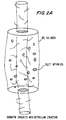
- Biodritin can also be formed into a "spaghetti"-like structure, prepared by extrusion of a Biodritin heteropolysaccharide solution over a line, e.g., through a cylindrical catheter tube containing inside a cotton or surgical line.
- the biodritin solution is extruded together with the line into a calcium ion containing solution, whereby a gel instantly forms that contains the line.
- the gel is then matured in a calcium ion solution.
- a protective outer layer e.g., of poly-lysine/Biodritin, over the Biodritin spaghetti, to provide limited permeability to the device.
- the structuring of the spaghetti device is by the line in the interior and extending further out therefrom towards the surrounding gel cylinder, e.g., by the lateral extensions of the line, or by those provoked on the surface of the line by scraping it, e.g., with a knife blade.
- a Biodritin spaghetti string can be used for implantation of cells or tissues therein contained, e.g., from the lateral extensions; or more than one Biodritin spaghetti strings may be used by being tied up together at each end.
- the strings can be further inserted within a biocompatible material such that the biodritin spaghetti strings are protected from mechanical strains after implantation.
- these string devices can be used as a means of implanting cells or tissues in humans and animals for disease prevention or treatment, as is the case of islets of Langerhans implants for diabetes treatment.
- composition containing cells such as islet cells
- cells such as islet cells
- rate of secretion of a desired expression product of the cells e.g., insulin (see also USSN 08/417,652, filed April 5, 1995, incorporated herein by reference).
- the invention relates to these products and methods for preparing and using them.
- Analogous methods can be used to prepare products from Biodritin polymer networks; and, the invention accordingly relates to these products and methods for preparing and using them.
- glycosaminoglycans such as heparan sulfate, heparin and hyaluronic acid
- these are not preferred for the invention as they can have defined cell binding properties.
- hyaluronic acid binds specifically to CD-44, also known as "lymphocyte homing receptor" (Hermes-antigen) or "major hyaluronic acid receptor of mammalian cells” (Aruffo et al, 1990).
- CD-44 is expressed on the surfaces of most mammalian cells, rodent and primate hematopoietic cell types, fibroblastoid, neural and muscle cells (Rosenmann and St.John, 1993).
- Hyaluronic acid also binds to Versican, a large proteoglycan secreted by fibroblasts that promotes cell adhesion through interactions with components of the extracellular matrix and cell surface glycoproteins (Zimmermann, 1993).
- Heparin is also not preferred to be linked to alginate in the composition due to its well known inhibition of the blood clotting mechanism.
- Heparan sulfate is also not preferred on the basis of its participation in cell-cell adhesion mechanisms. Heparan sulfate is linked to a membrane-bound proteoglycan that binds NCAM (neural cell adhesion molecule), thereby promoting homophilic cell adhesion(Cole et al, 1986).
- the heparan sulfate binding domain of fibronectin is responsible for the binding of neurons, lymphocytes and other cell types to fibronectin, in the process of cell-cell adhesion (Liao etal, 1988).
- bFGF basic fibroblast growth factor
- the inventive heteropolysaccharides made according to the invention arise from stable, covalent chemical bonds between the structures of the at least one alginic acid salt, e.g., sodium alginate and the at least one glycosaminoglycan, e.g., CIS, for example, by a coupling reaction with divinyl sulfone, DVS.
- these reactants can produce a novel neo-hetero-polysaccharide conjugate having desired properties for use in cell and tissue biology, whenever biocompatibility and/or immunoisolation are critical issues.
- a semi-interpenetrating polymer network can be prepared by mixing CIS and alginate, at desired concentrations and forming a gel by addition of calcium ions that has similar properties to and benefits of the inventive heteropolysaccharides.
- the invention can relate at least to two processes.
- the present invention provides a process for preparing a heteropolysaccharide comprising covalently bonding at least one glycosaminoglycan, e.g., CIS, and at least one alginic acid salt, e.g., sodium alginate, preferably by a coupling reaction with a linker molecule, e.g., DVS, such that the calcium binding sites in alginate are preserved and/or conserved during the coupling reaction.
- a linker molecule e.g., DVS
- the present invention relates such products from the heteropolysaccharide and to method for making and using them, e.g, by contacting with ions, such as calcium ions to prepare a gel, for instance, an infinite gel.
- the second process forms a physical gel, e.g., of the semi-interpenetrating polymer network type, by addition of a polymerizing or cross-linking agent, e.g., calcium ions to a solution containing both at least one alginate and at least one glycosaminoglycan, e.g., chondroitin sulfate-4 and/or -6.
- a polymerizing or cross-linking agent e.g., calcium ions
- a solution containing both at least one alginate and at least one glycosaminoglycan e.g., chondroitin sulfate-4 and/or -6.
- This gel can be a composition that can be varied to suit specific applications.
- the inventive s-IPN gel is stable and is formed by the complexation of calcium ions with poly-guluronic blocks of alginate to form the "egg-box" structures that stabilize the gel.
- another formulation can be prepared by suitable combination of the formulations described above, in which a given amount of the covalently bound heteropolysaccharide conjugate is mixed in solution with alginate and CIS, to which solution calcium ions are added to form the gel.
- another formulation can be prepared by subjecting an inventive gel to a linking reaction so as to covalently bond glycosaminoglycan and alginate units to each other, e.g., by subjecting the gel to a coupling reaction involving a linker molecule such as DVS.
- a linking reaction so as to covalently bond glycosaminoglycan and alginate units to each other, e.g., by subjecting the gel to a coupling reaction involving a linker molecule such as DVS.
- the invention further relates to uses of gels and compositions which can be formed into gels, especially biocompatible gels, such as in "paints", sprays, matrices, beads, microcapsules, and the like, including novel uses such as "spaghetti"-like material comprising a spine, e.g., a suture or thread, having a desired material connected thereto, e.g., cells connected to the spine, and an inventive gel surrounding the spine, e.g., in a cylindrical manner.
- a spine e.g., a suture or thread
- desired material connected thereto e.g., cells connected to the spine
- inventive gel surrounding the spine, e.g., in a cylindrical manner.
- Cells and tissues may be immobilized and immunoisolated by three basic techniques: in extravascular chambers isolated but in the path of the blood stream, in spherical dispersions or microcapsules, and within macrocapsules. Using these techniques a great variety of cells and tissues of different animals have been immunoisolated and implanted in animals for development of therapeutic systems (reviewed by Christenson et al (1993)). Indeed, future applications of immunoisolated cell therapy are envisaged for diseases or conditions such as diabetes, hemophilia, hepatic failure, Alzheimer's, Parkinson's and Huntington's diseases, affective disorders, hepatic failure and fertility problems (Christenson et al, 1993). A complete review of the questions involved in encapsulation and immunoisolation is presented in a recent volume edited by Goosen (1993).
- insulin-dependent diabetes mellitus In the case of diabetes mellitus, alternatives to daily insulin injections have been searched for control of type I diabetes, or insulin-dependent diabetes mellitus (IDDM). These included pancreas transplants, pumps to deliver insulin under a controlled program and, more recently, Langerhans' islets transplantation. A review of sustained-release implants for insulin delivery has been published (Wang, 1991).
- GAG's vascular endothelial lining
- proteoglycans a glycosaminoglycan that is immunogenic; the glycosaminoglycan, e.g., CIS component, is not immunogenic by itself (Hirschmann and Dziewiatkowski, 1966; Loewi and Muir, 1965).
- a GAG with an alginate salt for instance GAG-alginate biomolecules, e.g., via a coupling reaction with a linker molecule, to form a heteropolysaccharide conjugate and products therefrom and processes and uses of the invention
- a polymer network e.g., of a semi-interpenetrating polymer network, based on the two components, alginate and GAG, e.g., CIS, rendered in gel form by addition of ions such as inorganic ions, e.g., calcium ions, has not been taught nor suggested in the prior art.
- a polymer network comprising a heteropolysaccharide from coupling GAG-alginate present in a GAG-alginate polymer network, been heretofore taught or suggested.
- US Patent No. 4,409,331 to Lim relates to the encapsulation of islets in polymeric material formed from alginate and poly-lysine; Lim and Sun (1980) discussed the microencapsulation of islets to form a bioartificial pancreas.
- Chitosan microspheres were developed that bind to GAG receptors on cell surfaces (Gallo et al US 5,129,877).
- Collagen-GAG microcapsules were proposed as drug delivery systems, to deliver anti-microbial agents (Rase et al US 5,169,631).
- Polyacrylates were also developed as encapsulation materials and have also been co-polymerized with alginate, as discussed by Stevenson and Sefton (1993).
- GAG-alginate biomolecules e.g., in physical mixture or bound via a coupling reaction with a linker molecule, to form a heteropolysaccharide or a physical network, e.g., s-IPN, gel and products therefrom and processes and uses of the invention, are not taught or suggested.
- GAG acted as the major biocompatibility agent between a foreign chemical structure or device and host organism, especially in a composition with an alginate.
- glycoconjugates The synthesis and properties of glycoconjugates has been reviewed in a book edited by Lee and Lee (1994).
- the new class of structures now being described herein belongs to a group of glycopolymers formed by joining together two different natural heteropolysaccharides by reaction with an unnatural tether e.g., divinyl sulfone. This new class would enter the list of neoglycoconjugates compiled by Magnusson et al(1994) under the heading "glycopolymers with gel forming properties".
- the physical gel formed by adding calcium ions to solutions containing variable concentrations of GAG, e.g., CIS, and alginate belongs to the group of polymers known as semi-interpenetrating polymer networks, recently discussed by LaPorte (1997). In this category, one type of polymer is enmeshed and entrapped by a second polymer, which is cross-linked to stabilize the structure.
- compositions of the invention may be characterized as "glycopolymers with gel forming properties" or as a "polymer network”, e.g., "a semi-interpenetrating polymer network” does not mean that the invention has. heretofore been taught or suggested.
- the present invention provides methods for producing a novel hetero-polysaccharide conjugate or complex, gels and/or sols derived therefrom, and to the synthesis, purification and utilization of a novel glycopolymer and/or heteropolysaccharide and/or gels, solutions and/or sols, herein referred to as biodritin.
- the hetero-polysaccharide is preferably formed from covalent bonding between at least one glycosaminoglycan, e.g., chondroitin sulfate-4 and/or -6, and at least one alginic acid salt, e.g., such that a gel and/or sol is formed, e.g., in the presence of an appropriate counterion, e.g., calcium.
- at least one glycosaminoglycan e.g., chondroitin sulfate-4 and/or -6
- alginic acid salt e.g., such that a gel and/or sol is formed, e.g., in the presence of an appropriate counterion, e.g., calcium.
- An additional formulation produced according to the invention combines the two polysaccharides, alginate and GAG, e.g., CIS, in aqueous solutions having variable concentrations of either component, through the formation of a gel of the type semi-interpenetrating polymer network, by addition of a cross-linking or polymerizing agent, e.g., calcium ions.
- a third formulation combines the two concepts in the same preparation, in suitable proportion, which can be established by the skilled artisan, without undue experimentation, from this diclosure and the knowledge in the art.
- the invention provides methods for producing:
- the composition can be obtained by admixing 0.5% to 5.0%, e.g., 1% to 3%, by weight or by volume of alginate, e.g., sodium alginate, and about 1.0%, e.g., 1.5% or 2.0%, to up to 20% to 30%, e.g., 25%, by weight or by volume of GAG, e.g., CIS. That is, in general, in forming compositions the alginate to GAG ratio can be 0.5 : 30; but, preferably three (3) to four (4) times more GAG is present than alginate (by weight or by volume), i.e., a preferred alginate to GAG ratio in forming compositions is 1 : 3 to 1 : 4.
- Alginates come in varying viscosities, e.g., high viscosity, medium viscosity. Medium viscosity alginates are preferred as high viscosity alginates can result in harder beads. Further, the amount of alginate employed in forming an composition can be limited by the viscosity of the alginate; with a medium viscosity alginate, 5% by weight or volume alginate is rather viscous. Furthermore, the skilled artisan can readily appreciate that the volume and viscosity or hardness of compositions, gels and products therefrom, e.g., beads, etc.
- GAG e.g., CIS
- alginate e.g., sodium alginate.
- GAG e.g., CIS
- alginate e.g., sodium alginate
- a linker molecule when used in forming an inventive compound, it can be used in an amount relative to the amount of alginate, or to the amount of GAG present, e.g., an amount from 50% of to equal by weight, volume or stoichiometrically to the amount of alginate present, or to the amount of GAG present, or twice or thrice the weight, volume or stoichiometric amount of alginate or GAG present.
- the inorganic ion is preferably a calcium ion, e.g., calcium chloride, which can be used in an amount relative to the amount of alginate present, e.g., in an amount of about 0.05% to 2.0% by weight or by volume, e.g., about 1.0% by weight or by volume.
- a calcium ion e.g., calcium chloride
- Gels can be essentially covalent, or part covalent and part interpenetrating. From analysis of inventive gels, e.g., HPLC analysis showing bands corresponding to alginate, CIS and a covalent structure, it is believed that gels of the invention form interpenetrating networks. However, Applicants do not necessarily wish to be bound by any one particular theory.
- Biodritin can be applied to surgical wounds or sutures, to protect from adherences; it also serves as a matrix material for supporting cells for culturing or other applications in which cells must maintain a suspended or non-aggregated state.
- Biodritins are polyanions, carrying both carboxylate and sulfate groups (alginate contains carboxylates, while chondroitin sulfate contains both carboxylates and sulfates); Biodritins form infinite gels when treated with calcium ion, a property imparted by the alginate moiety. Biodritins dissolve readily in water. Additionally, the viscosity of the solutions can be regulated by adjusting the concentration of Biodritin, as well as the concentration of calcium.
- Biodritins can also be prepared by polymerization of CIS and alginate, in mixed solutions, by addition of calcium ions, thereby resulting in the formation of stable gels of semi-interpenetrating polymer network, in which the CIS component is entrapped in the gel network formed by calcium alginate.
- Biodritins form stable gels, as the synthesis process of the invention was designed to preserve, with extreme care, the calcium binding sites in the alginate component.
- the presence of the chondroitin sulfate component imparts a stronger negative charge of sulfates and similarity to an extra-cellular matrix to Biodritins, rendering them entirely biocompatible for applications in transplantation of cells and tissues, among others.
- Biodritin-derived materials can have their permeability barrier controlled by ionic complexation with positively charged polymers such as poly-L-lysine or poly-L ornitine, which form a thin external capsule to the gel.
- positively charged polymers such as poly-L-lysine or poly-L ornitine
- the pore size of this capsule can be adjusted as desired, by changing the concentration and molecular weight of the positively charged polymer during capsule formation.
- Biodritin preferably has a GAG content ranging from 2 to 200 % of the alginate composition by weight, depending on the specific reaction conditions.
- the final composition can be adjusted by combining Biodritin that has been cross-linked with Biodritin formed by the gelling of alginate and CIS, in the same solution.
- the compounds have the desired properties for use as transplantation materials.
- Insoluble materials can also be prepared by controlling the polymerization conditions. These may have utility as fillers in tissue repair, or as surfaces to allow cell growth in culture.
- Biodritin beads exposed to an aqueous solvent carries the functionalities of both alginate and chondroitin sulfate (GAG) carboxylates, sulfates, hydroxyls, as well as glycosidic links and the sulfone group of the cross-linker moiety; the negativelly charged sulfate and carboxylate groups are able to form strong ion-ion complexes with polycations such as poly-lysine or poly-ornithine, thereby providing additional external structure and protection to the beads, which has been observed for alginate capsules.
- GAG chondroitin sulfate
- the viscous solutions obtained by dissolving Biodritin in water or saline or other desired aqueous medium are easily handled, especially if the concentration is kept under 4 %(w/v) and that they are not exposed to calcium ions.
- Such solutions can be transformed into infinite gels by complexation with calcium ions; e.g., by dripping them from syringes or capillaries into solutions of calcium chloride one obtains microbeads of desired spherical size.
- Further treatment with positively charges molecules such as poly-lysine results in a thin external capsule that may, again, be protected by layering Biodritin on top of it from a dilute solution.
- a Biodritin solution can be extruded, e.g., from a thin tubing directly into a calcium chloride solution, whereby a gel in the form of a rod or cylinder of uniform diameter is obtained. Cells or tissues can be held within these cylinders for the purposes of culturing or transplantation.
- the biodritin gel may also be conformed, e.g., as a slab of desired size and shape where cells or tissues may become entrapped, for purposes of culturing or implantation.
- biodritin sol may be "painted” or applied directly with a sterile brush or sprayed around the suture area, followed by spraying with an appropriate calcium chloride solution.
- a soft, protecting gel forms immediately around the suture area, protecting it from invading cells by blocking cell adhesion.
- Biodritin gel itself can be sprayed, painted or applied on a suture to protect it from adherences.
- the skilled artisan can determine the suitable viscosity of the gel and the amount thereof to employ to spray, paint or apply, without undue experimentation, from the knowledge in the art, the disclosure herein, and typical factors such as the wound or suture, and the condition of the patient.
- the chemical coupling of the two major biodritin components preferably, sodium alginate and chondroitin sulfate-4 and/or -6 is carried out by reaction with a linker molecule, e.g., divinyl sulfone, abbreviated DVS.
- a linker molecule is a small molecule that is very susceptible to nucleophilic attack (see USSN 08/417,652, with respect to other types of linker molecules and types of coupling reactions).
- the reaction is carried out at alkaline pH, under conditions which allow the calcium binding sites in alginate to be protected from reaction.
- the final product of the cross-linking reaction is then rendered soluble and can be separated from the reagents through purification by repeated alcohol precipitation.
- the concentration of linker molecule, e.g., DVS, used in the reaction can define the final solubility of the glycopolymer complex; beyond a certain range insoluble materials are formed.
- CIS and alginate An alternative to the chemical coupling of CIS and alginate is the preparation of biodritin by formation of a physical gel from a solution containing both polymers, in desired concentrations.
- This gel forms when calcium ions are added, and the resulting gel is of the semi-interpenetrating polymer network type, s-IPN.
- the cross-linked structure is derived from only one component, e.g. alginate, by the formation of the "egg-box" structures resulting from the binding of calcium ions to poly-guluronic blocks in alginate.
- the resulting gel network entraps and holds the CIS chains that are intertwined with alginate, such that CIS molecules remain as components of the gel structure, imparting to that gel structure the properties of CIS.
- An element of the invention is the ability of the final product, Biodritin, to form gels with calcium ions. This is achieved by protecting the calcium binding sites in alginate, also called “egg-box” sites, from reacting with the cross-linking reagent during the synthesis of the chemically coupled variant of Biodritin. This is accomplished by adding the appropriate amount of calcium ions to the alginate solution prior to the coupling reaction in such a way that the calcium- "egg-box" complexes are pre-formed, while avoiding strong gelling, and the solution co-polymerization reaction is not blocked.
- the protecting calcium ions are removed from the "egg-box" complexes, allowing for the dissolution of the particles to form a viscous solution that can, then, be treated as desired.
- compositions to easily and rapidly go from solution to gel and from gel to solution, by manipulation of the calcium ion concentration, is another significant property of the invention, as it leads to additional applications of this new material outside the transplantation field.
- the chemical combination of alginate, e.g., sodium alginate and GAG, e.g., chondroitin sulfate-4 and/or -6 is made by dehydrothermal reaction, at temperatures of about 100 °C.
- DVS is not used and ester bonds are formed between the alcoholic hydroxyls and acidic groups in alginate and chondroitin sulfate.
- protection of the "egg-box" sites is obtained, and this is useful for preservation of the gelling properties of Biodritin.
- FIG. 1 A schematic representation of the complex chemical structure of biodritin is shown in Figs. 1 and 4, respectively, for the chemically coupled and the physical gel.
- Chondroitin sulfate the commercial CIS used contains 70 % of 4-sulfate and 30 % of 6-sulfate; 2.5 g was allowed to dissolve in 25 ml 0.1 M sodium carbonate solution, to give a 100 mg/ml final concentration. In other formulations, higher concentrations of CIS are used, to give final concentrations of 150, 200 or 250 mg/ml.
- Sodium alginate (5.0 g) was suspended in 45 ml of water, heated to 40 °C, after which another 30 ml water were added in 10 ml portions to facilitate dissolution and decrease viscosity of the final solution.
- the total blockage of the calcium sites in the alginate solution would require 6.5 ml of a 4.5 M CaCl 2 solution, which is not practical to use.
- a 4.5 M calcium chloride stock solution was diluted 1: 5 and 200 ⁇ l portions were added at intervals to the sodium alginate solution. During additions, and thereafter, the solution was vigorously mixed with the aid of a power mixer to completely avoid formation of gel clumps. Eight such additions, plus one, were made, in a total of 1800 ⁇ l, corresponding to 1.5 mmol of calcium ions added.
- Biodritin preparations can also be made in which the calcium binding sites are blocked to a lesser extent, from 25% to 75% of that described above. This also results in soluble materials, provided the coupling with DVS is not extensive.
- the solution was cooled in an ice-water bath, after which 3 X 100 ml portions of ice-cold ethanol were slowly added with strong mixing with spatula, to precipitate the'product. A white, thread-like, copious precipitate formed; the mixture was left for one hour in the ice-water bath, after which it was centrifuged at 4 °C, at 6000 rpm for a minimum of 20 minutes, in 250 ml plastic bottles.
- the centrifuge bottle was inverted for drainage of excess liquid, the precipitate was taken and pressed between filter papers, using gloved hands. It was, then, suspended in 50 ml 1 M ethanolamine at pH 9.4, to which 1 ml 0.63 M EDTA was also added. As dissolution started, an additional 50 ml ethanolamine solution was added in two equal portions; small clumps were broken with a spatula. The solution was then stirred while heated to about 40 °C, when complete solution occurred. The container was closed with parafilm and left overnight at room temperature or, alternatively, kept in a water bath at 40 °C for four hours. A golden-yellow, transparent solution resulted that was transferred to a 2 liter beaker for further treatment.
- the solution of the preceding step was cooled in an ice-water bath and, after 30 min, 3 X 100 ml portions of ice-cold ethanol were added with hefty mixing with spatula. A white, fibrous precipitate formed that sedimented easily by gravity. The suspension was kept for 1 hour in an ice-water bath, after which it was centrifuged at 6000rpm for 20 min at 4 °C, as before. The clear supernatant was discarded and the precipitate collected as in EXAMPLE 4 above and dried between filter papers.
- This precipitate was re-dissolved in 2 X 50 ml portions of water for a third ethanol precipitation.
- the solution was transferred to a 2 liter beaker and cooled to ice-water bath temperature. After slow addition of 3 X 100 ml portions of ice-cold ethanol a white, fibrous precipitate formed and the mixture was left for one hour in the ice-water bath.
- the precipitate was collected after centrifugation carried out exactly as described in this EXAMPLE; it was drained, pressed between filter papers and dissolved, with help of a spatula, in 100 ml water. The final solution was clear, very viscous. It was poured into petri dishes, frozen and freeze-dried.
- the dry material obtained after freeze-drying was white, weighing, on the average, 5.9 g for this batch size. It was recovered as brilliant, fibrous sheets that break into flakes. The final material is completely soluble in water or 0.15 M NaCl solution. Solutions in both solvents at the levels of 10 to 30 mg/ml form gel spheres when dripped into an 1% calcium chloride solution.
- Egg-box sites were combined with calcium ions as in Example 2.
- CIS solution was, then, added to alginate; CIS solution can also be added before the calcium ions addition.
- a power mixer was used to break any clumps that could have formed at the calcium chloride addition steps. The very viscous final mixture was transferred to petri dishes, frozen and freeze-dried.
- the hard, dry cake in the petri dishes was then submitted to the dehydrothermal treatment as follows: the dishes containing the cakes were placed in an electric hood maintained at 102-106 °C and kept there for 24 hours. After this time allowed for reaction, the cakes were left to cool to room temperature and further processed.
- the resulting powder is easily water soluble at concentrations from 10 to 40 mg/ml water or 0.1 M NaCl; the viscosity is a little less than that of equivalent concentrations of Biodritin prepared by chemical co-polymerization with DVS but microcapsules are formed when the solution is dripped into calcium chloride.
- Biodritin heteropolysaccharide Stock solutions of Biodritin heteropolysaccharide were prepared at 10, 15, 20 mg/ml (DVS polymerized Biodritin) or 30 mg/ml (DHT Biodritin) in 0.15 M NaCl, at room temperature. Dissolution is rapid and easy.
- the Biodritin heteropolysaccharide solution was dripped from a syringe into a 1.1 % CaCl 2 solution, with mild agitation, from a height of about 15 cm, forming beads. The beads were left to mature for different time intervals in the calcium chloride solution, from 5 to 40 min and were, then, processed as described by Sun et al (1984).
- microcapsules contained only Biodritin-calcium gel and the outside coatings. Pure microcapsules are used to investigate their biocompatibility in animal experiments.
- the external diameter of the microcapsules prepared in this EXAMPLE was 4-5 mm but, using devices where a coaxial air stream flows around the syringe needle tip, much smaller microcapsules can be prepared, as is known to those versed in this field.
- Example solutions were prepared having the following concentrations of components: solvent was 0.15 M sodium chloride; the alginate concentration was fixed at 3.0% and the CIS concentrations used were 1.5%, 3% and 6%, respectively, giving CIS/alginate ratios by weight of 0.5:1, 1:1 and 2:1.
- the semi-interpenetrating polymer network was prepared in bead form by dropping each of these solutions into a solution of calcium chloride at 1.1%, as described above.
- Beads were formed from a 20 gauge syringe needle, at a rate of 1 ml/min (peristaltic pump); this needle was inserted into a larger one linked to an air pump so that air could be blown around the dropping needle in order to form microbeads, by fractionation of the out-flowing liquid column, that dropped into a calcium chloride solution.
- a typical preparation consisted of forming beads from 3 ml of each solution, received in 30 ml 0.15 M NaCl in a small beaker. Immediately thereafter the beads were transferred to a 50 ml centrifuge tube, where they were gently mixed with the calcium solution for 10 minutes. In this step the periods can vary from a few minutes to much longer ones, as 40 min, for example, depending on the extent of gelling that is desired.
- the beads are centrifuged off at low force (1000rpm, 3 min), transferred to a 15 ml centrifuge tube and washed with 0.15 M NaCl. A washing sequence as described in Example 8 was applied.
- a poly-lysine capsule can be applied to the beads, exactly as described above.
- Biodritin beads of the s-IPN type were tested for stability, without the poly-lysine capsule, by incubation for 140 hours at room temperature, in 0.15 M NaCl.
- Analysis of CIS and alginate leakage made by ultra-violet spectrophotometry at 204 and 215 nm, revealed that only 6% of the total alginate in the beads leaked within the first 50 hours for the beads containing 6% CIS, about 4% alginate leaked from the beads with 3% CIS, and ca. 1% leaked from beads with 1.5% CIS, approximately the same leakage observed with alginate control beads.
- the leakage of CIS was minimal, in all cases, less than 1%.
- Example 10 s-IPN gel formed from a mixture of DVS-CIS-crosslinked Biodritin and added CIS
- a biodritin solution at 2% (w/v) was prepared in 0.15 M NaCl.
- the biodritin powder preparation used had a DVS-cross-linked CIS content of ca 2% by weight, which was raised to 15% by addition of CIS.
- the final solution thus, had a composition of 2.0% alginate and 0.3 % CIS, on a w/v basis.
- Beads were prepared by dropping this solution into 1.1% calcium chloride solution, followed by 40 min incubation in the same solution. Additional treatment included formation of a poly-L-lysine capsule, further layered with biodritin, and washing as described in Example 8.
- Beads and capsules prepared in this way have identical properties to beads of similar composition prepared from alginate and CIS as in Example 9. They can be treated exactly as the beads described in the next Examples.
- Biodritin microcapsules can also be sterilized by treatment with 70 % (v/v) isopropanol in 0.15 M NaCl.
- Biodritin microcapsules were successively treated by Isopropanol/0.15 M NaCl solution of increasing isopropanol concentrations, as follows: 25 %, 50 % and 70 %, all by volume. The first two treatments were applied for 30 min each, to allow slow dehydration of the capsules by the increasing concentrations of isopropanol. When submitted to 70 % isopropanol, the microcapsules were left for up to 4 days at room temperature.
- microcapsules prepared with alginate alone treated the same way and in parallel experiments, shrunk to 1/3 the original volume and did not recover the initial spherical shape. Most became ellipsoids of revolution, with intact surfaces showing wrinkles that did not disappear with time.
- Microcapsules treated as in EXAMPLES 8 and 9 were also implanted into mice to test their biocompatibility.
- Microcapsules were incubated with sodium citrate at room temperature for varying times while observed under a loupe at high magnification. Depending on the capsule size, the time course of events changes but, for a group of larger microcapsules the following results were obtained: after ⁇ 10 min, the central core was surrounded by a narrow, very transparent zone, the latter limited by the external membrane.
- the membrane Lacking the support of the subjacent gel structure, dissolved by action of citrate, the membrane can be broken by strong aspiration with a pipette.
- Example 13 Microcapsule Staining with Alcian Blue
- Alcian Blue is a well known stain for chondroitin sulfate ( Turnbull, 1993); we found that it also stains alginate, although with less intensity. Microcapsules were stained in 0.5 % Alcian Blue in 2% acetic acid, for 20 min; de-staining was in 2 % acetic acid, in repeated washings. Biodritin microcapsules give a deeper blue than alginate capsules, as expected. When Biodritin microcapsules prepared as in EXAMPLE 8, are cut in half and stained, the interior of the capsules stains more intensively than the outside, indicating that the external membrane has an effect on the stain diffusion to the capsule interior.
- Biodritin spaghetti A new use of the Biodritin invention is in the preparation of structured spaghetti-like cylinders to contain cells or tissues for implantation, itself an invention to be described for the first time herein, called biodritin spaghetti.
- These Biodritin spaghetti are called "structured” because the thin gel cylinder that receives the name spaghetti has an interior structure formed by a string of sewing cotton line or, alternatively, of surgical suture line.
- the cotton line has a multitude of very fine lateral extensions, as short branches in a long caulis, that spring from the line surface and are embedded into the gel.
- the surgical suture does not have such branches, but they can be created by scratching the surface of the line with a knife blade, before sterilizing.
- These lateral extensions of the central line core provide additional area for adhesion between the gel matrix and the central core, reinforcing the structure in a way similar to the iron wires in concrete.
- Structured Biodritin spaghetti are prepared as follows: 1) a sterilized cotton sewing line, size 50 or thinner is inserted into a 10 to 20 cm sterile polyethylene catheter of the desired diameter - usually size 60, but size 90 can be used with thinner lines - up to the point where the line reaches the needle, itself connected to a syringe. A surgical suture line can be used in place of the cotton line, with equivalent results. The line should extend beyond the free end of the catheter tubing for 4 to 5 cm, so that in can be handled, anchored or restrained later on in the process (see Figure 2A).
- solvent saline, culture medium, or Hank's medium
- a structured spaghetti is formed as follows: the catheter filled with Biodritin heteropolysaccharide solution containing cells and connected to the syringe is quickly placed into a calcium chloride solution in a large petri dish or shallow tray and the syringe plunger is pressed, as the catheter is continuously moved forward in the calcium chloride solution. As the Biodritin heteropolysaccharide solution exits the catheter, it enters into immediate contact with calcium ions and instantly forms a cylindrical gel around the cotton line or surgical line.
- the Biodritin spaghetti with the line extensions at each end, may be implanted individually or can be tied together by the line ends before inplantation, as shown in Figure 2B. In this way, a much larger mass of cells may be implanted, in a rather limited space, but under conditions that preserve the individual spaghetti.
- FIG. 7 Another embodiment of the present invention is that a group of Biodritin spaghetti strings with cells, tied together as in Figure 3B, can be placed inside a porous, protective and biocompatible external cylinder initially prepared from veins or arteries of an animal or from the recipient himself. Once attached within such a biocompatible container, to form a sort of living tissue cartridge, the Biodritin spaghetti strings can be implanted into a patient.
- a possible and interesting alternative proposed in this invention is through the umbelical scar in such a way that, eventually, replacement cartridges may be exchanged using rather simple surgical technique.
- a Biodritin spaghetti of gel length equal to 10 cm would have the following approximate dimensions ( Figure 4): A) gel length- 100 mm; B)total internal diameter-0.76 mm; C)cotton line diameter- 0.20 mm; D) thickness of Biodritin gel cylinder(B -C)- 0.50 mm; volume of Biodritin gel- 42.2 mm 3 , or 4.22 mm 3 per linear centimeter length.
- Biodritin microcapsules of 4-5 mm diameter were implanted intra-peritoneally in mice, 3 capsules per mouse, 2 mice per group, following standard surgical procedures and approved protocols.
- the capsules were removed from the animals.
- the week-long implanted capsules were found to be free in the peritoneal cavity, clean and with no adherences; no inflammatory reaction could be observed in or around the site where they were found.
- FIG. 4 shows a capsule removed from a mouse after three months intraperitoneal implantation. Histological study of the preparations fully supported the conclusion: no cells were found on the beads surface after intra-peritoneal implantation for eight days, one month and three months.
- a 0.8 to 1.5 % (w/v)Biodritin heteropolysaccharide solution in saline is painted on and around a surgical suture; immediately thereafter a 1% (w/v) calcium chloride solution is briefly sprayed as a mist over the painted area. There immediately forms a Biodritin gel over the painted area that protects it from invading cells or from adhering to adjoining tissue. This has important applications in abdominal surgeries, where undesired adherences may form after surgical procedures.
- the Biodritin heteropolysaccharide solution can be sprayed over and around the suture, followed by spraying of the calcium chloride solution to form the Biodritin gel.
- a third manner of Biodritin application is to mix the Biodritin heteropolysaccharide solution with an insoluble calcium salt, such as tricalcium citrate, forming an uniform suspension of the calcium salt and, immediately before application, mixing this with an aqueous solution of the ⁇ -lactone of gluconic acid, which slowly hydrolyzes to gluconic acid, which dissolves the calcium ions from the citrate, thereby forming the Biodritin gel in situ .
- This formulation is called "internal gelation” and has been employed to encapsulate microbial cells by Johansen and Fink (1988).
Landscapes
- Health & Medical Sciences (AREA)
- Chemical & Material Sciences (AREA)
- Engineering & Computer Science (AREA)
- Life Sciences & Earth Sciences (AREA)
- Medicinal Chemistry (AREA)
- General Health & Medical Sciences (AREA)
- Animal Behavior & Ethology (AREA)
- Epidemiology (AREA)
- Public Health (AREA)
- Veterinary Medicine (AREA)
- Bioinformatics & Cheminformatics (AREA)
- Chemical Kinetics & Catalysis (AREA)
- Pharmacology & Pharmacy (AREA)
- Biomedical Technology (AREA)
- Materials Engineering (AREA)
- Organic Chemistry (AREA)
- Polymers & Plastics (AREA)
- Biochemistry (AREA)
- Oral & Maxillofacial Surgery (AREA)
- Vascular Medicine (AREA)
- Surgery (AREA)
- Urology & Nephrology (AREA)
- Cell Biology (AREA)
- Zoology (AREA)
- Botany (AREA)
- Dermatology (AREA)
- Molecular Biology (AREA)
- Transplantation (AREA)
- Medicinal Preparation (AREA)
- Materials For Medical Uses (AREA)
- Polysaccharides And Polysaccharide Derivatives (AREA)
- Manufacturing Of Micro-Capsules (AREA)
- Processes Of Treating Macromolecular Substances (AREA)
- Colloid Chemistry (AREA)
Abstract
Description
- This invention relates to methods for producing a novel hetero-polysaccharide conjugate or complex, gels therefrom and/or a composition, e.g., solutions having adjustable viscosity, prepared by manipulating the concentration of hetero-polysaccharide conjugate or complex, and/or ion concentrations, e.g., calcium; and/or a gel or sol comprising the hetero-polysaccharide conjugate; the synthesis, purification and utilization of a novel glycopolymer and/or hetero-polysaccharide and/or gels, solutions and/or sols; and especially, methods for producing a neo-heteropolysaccharide conjugate or complex, herein referred to as "Biodritin heteropolysaccharide", comprising a heteropolysaccharide from covalent bonding between at-least one glycosaminoglycan, e.g., chondroitin sulfate -4 and/or 6, and at least one alginic acid salt, e.g., sodium alginate, preferably via a coupling reaction via a linking molecule such as divinyl sulfone.
- Thus, the invention especially relates to methods for producing Biodritin heteropolysaccharide, gels therefrom and/or a composition, e.g., solutions having adjustable viscosity, prepared by manipulating the concentration of Biodritin heteropolysaccharide, and/or ion concentrations, e.g., calcium; and/or a gel or sol comprising the Biodritin heteropolysaccharide; the synthesis, purification and utilization of Biodritin heteropolysaccharide as a novel glycopolymer and/or heteropolysaccharide and/or gels, solutions and/or sols comprising Biodritin heteropolysaccharide. Gels are obtained by adding an inorganic ion, such as calcium ions, to Biodritin heteropolyeaccharide. Sols can be obtained by treatment of a gel with a suitable agent such as a sodium salt, e.g., citrate salts or ethylene-diamine-tetraacetic (EDTA) as sodium salt. Gels can have varying viscosity by varying the amount of Biodritin heteropolysaccharide and/or inorganic ion, e.g., calcium ion; and with an amount of calcium ions, infinite gels can be obtained.
- The invention further relates to methods for producing a composition herein termed "Biodritin polymer network", and to methods and formulations for preparing a Biodritin polymer network. A Biodritin polymer network comprises at least one glycosaminoglycan, e.g., chondroitin sulfate -4 and/or 6, and at least one alginic acid salt, e.g., sodium alginate, wherein at least one of the glycosaminoglycan and alginic acid salt is cross-linked. And, the methods and formulations for preparing a Biodritin polymer network comprises admixing the glycosaminoglycan and alginic acid salt and adding at least one cross-linking agent, e.g., an inorganic ion. For instance, a Biodritin polymer network which is believed, without necessarily wishing to be bound by any one particular theory, to be a semi-interpenetrating polymer network (s-IPN), is formed by addition of inorganic ions to a solution of a glycosaminoglycan and an alginic acid salt, e.g., calcium ions added to a solution of chondroitin sulfate -4 and/or -6 and sodium alginate (wherein sodium alginate is cross linked and has pockets of chondroitin sulfate -4 and/or -6 and/or non-cross-linked sodium alginate).
- Of course, a Biodritin polymer network containing at least one Bioditrin heteropolysaccharide can be obtained by covalently bonding the glycosaminoglycan and alginic acid salt present in a Biodritin polymer network, e.g., subjecting a Biodritin polymer network to a coupling reaction involving a linker molecule; for instance, forming network by addition of inorganic ions to a solution of a glycosaminoglycan and an alginic acid salt, e.g., calcium ions added to a solution of chondroitin sulfate -4 and/or -6 and sodium alginate, and subjecting network to coupling reaction, e.g., subjecting network to coupling reaction involving divinyl sulfone.
- In preparing a Biodritin heteropolysaccharide or Biodritin polymer network comprising a Biodritin heteropolysaccharide, a solution of GAG, e.g., chondroitin sulfate-4 and/or -6 is linked to alginate, e.g., sodium alginate by covalent bonding via reaction with a linker molecule such as divinyl sulfone; the reaction is preferably in alkaline medium. In practicing the invention, one can emploly a process to protect the calcium binding sites of alginate, also known as "egg-box" sites, such that no reaction occurs to these sites during the linking reaction with the linker molecule, e.g., divinyl sulfone, and GAG, e.g., chondroitin sulfate. One can also employ a process to eliminate remaining active vinyl groups in Biodritin, after linking, by reaction with an alkanolamine such as ethanolamine, preferably at alkaline pH. And, one can employ a process to purify Biodritin after the synthesis reaction which involves removal of calcium with molecule which binds to or conjugates with calcium, e.g., EDTA, preferably followed by precipitation(s) with an alchol such as ethanol.
- The invention also relates to an additional process to prepare a Biodritin polymer network comprising dehydrothermal cross-linking of a mixture of the polymers that form a Biodritin heteropolysaccharide. The dehydrothermal reaction can be of a dry cake containing GAG, e.g., chondroitin sulfate and alginate, e.g., sodium alginate. The cake can be produced by freeze-drying a solution containing chondroitin sulfate and sodium alginate in proper concentrations. The calcium binding sites of alginate can be protected prior to the dehydrothermal treatment by adding calcium ions to bind to the 'egg-box" sites of alginate. The calcium can be removed from the "egg-box" complexes by treatment of the dehydrothermal reaction product with a material which complexes or conjugates or binds with calcium, e.g., sodium EDTA. Purification can be as discussed above.
- For ease of reference, Biodritin polymer networks and Biodritin heteropolysaccharides may be termed "Biodritin" or "Biodritin products".
- A primary use of Biodritin products and/or products derived therefrom is in applications where biocompatibility with host tissues and/or immunoisolation are issues, for example, in cell encapsulation, such as immunoisolation by microencapsulation of islets of Langerhans for diabetes control, or of other cells types or tissues. A Biodritin gel formed from Biodritin heteropolysaccharide or comprised of a Biodritin polymer network (e.g., a gel comprising at least one glycosaminoglycan, e.g., chondroitin -4 and/or -6 and at least one alginic acid salt wherein at least one of the glycosaminoglycan and alginic acid salt are cross-linked and the gycosaminoglycan and alginic acid salt are optionally (and preferably) covalently bound, preferably via a reaction involving a linker molecule such as divinyl sulfone, and the cross-linking can be performed after the covalent binding or prior thereto; generally, a Biodritin product or a product from reaction with Biodritin) can be used to form beads or microcapsules containing cells or tissues for implantation. And thus, the invention relates to such beads or microcapsules, and methods for making and using such beads or microcapsules.
- Biodritin products and/or products therefrom can also be "painted", sprayed or applied to or on top of wounds, e.g., surgical wounds or sutures, and can be used to coat surgical, monitoring, or other equipment to avoid local reaction, injury or irritation. The skilled artisan can apply such without undue experimentation considering the disclosure herein and the knowledge in the art, and typical factors such as the age, sex, weight, condition of the patient, etc. or the nature of the equipment to be coated. Biodritin products and/or products therefrom serves as a matrix material for supporting cells for culturing or other applications in which cells must maintain a suspended or non- aggregated state. Accordingly, the invention relates to "paints", sprays, and matrices comprising Biodritin products and/or products therefrom, and to methods for making and using them.
- The novel heteropolysaccharide produced according to the invention and products therefrom, as well as the semi-interpenetrating polymer network, i.e., Biodritin heteropolysaccharide and products therefrom and the Biodritin polymer network, make use of: the biocompatibility of glycosaminoglycans (GAGs), preferably of a specific group of glycosaminoglycans, namely those which do not have defined cell binding properties, preferably chondroitin sulfates-4 and/or -6, herein referred to as CIS; and the desirable properties of algal polysaccharides and/or alginic acid,- preferably in the form of a salt of alginic acid, e.g. M+ alginate-, wherein M is a cation, such as a metal cation, which serves as a stoichiometric counterion to balance negative charges of the alginate anion, e.g., a Group I metal, such as sodium, lithium, or other cations, e.g., organic and complex cations, e.g., ammonium. Preferably, the counterion is sodium and the salt of alginic acid is sodium alginate, which is able to form infinite gel networks in the presence of calcium ions.
- Chondroitin sulfates-4 and -6 are preferred as they are able to impart biocompatibility due to the following characteristics: their ubiquity in animal tissues, as components of the extra-cellular matrix or linked to proteins on cell surfaces; their lack of immunogenicity; and their apparent inability to bind specifically to known receptors or cell types. These properties, coupled with covalent bond formation, and the gel-forming properties of salts of alginic acid, forms a basis for the present invention. Although alginate is used in cell and tissue encapsulation studies, there is considerable discussion as to the extent of its biocompatibility (deVos et al., 1996). The present invention overcomes these obstacles by joining together alginate and CIS, through stable chemical bonds, or in physical gels, e.g., semi-interpenetrating polymer networks, in such a way that the desired properties of each could be preserved and become useful.
- Thus, broadly the invention relates to methods for producing a hetero-polysaccharide, preferably from covalent bonding between at least one glycosaminoglycan, e.g., chondroitin sulfate-4 and/or -6, and at least one alginate or alginic acid salt, e.g., one that forms gels, such as infinite gels in the presence of calcium ions, for instance, sodium alginate, preferably via a coupling reaction with a linking molecule, e.g., DVS.
- The invention additionally relates to methods for producing a formulation comprising at least one alginate and glycosaminoglycan, e.g., chondroitin sulfate-4 and/or -6 mixed together in solution and polymerized or cross-linked to form a physical gel or polymer network by addition of a polymerizing or cross-linking agent, e.g., calcium ions; e.g, a gel or polymer network which is a semi-interpenetrating polymer network. Thus, the invention relates to methods for producing a formulation comprising a gel or polymer network from polymerizing or cross-linking a mixture comprising at least one alginate and at least one glycosaminoglycan; for instance, a formulation comprising a gel or polymer network from adding calcium ions to a mixture comprising at least one alginate and at least one glycosaminoglycan.
- The invention also relates to methods for producing a formulation comprising a gel from covalently bonding and cross-linking or polymerizing a mixture comprising at least one alginate and at least one glycosaminoglycan; for instance, a gel from adding calcium ions to the inventive heteropolysaccharide, or a gel from subjecting an inventive gel or polymer network to a coupling reaction such as a coupling reaction involving a linker molecule such as DVS. The latter type of gel has a stabilized network, due to the linkages by covalent bonding via the linker molecule and the cross-linking or polymerizing prior thereto.
- The invention further relates to methods for producing a formulation comprising a combination (mixture) of the inventive heteropolysaccharide and/or gel therefrom and an inventive formulation or a mixture of inventive formulations, e.g., a mixture of inventive gels, described above.
- Therefore, the invention, even more broadly, relates to:
- methods for producing a composition comprising at least one
glycosaminoglycan and at least one alginate, wherein:
- the at least one glycosaminoglycan and/or the algninate are cross-linked or polymerized, e.g., the alginate is cross-linked or polymerized, for instance by addition of an inorganic salt, such as a calcium salt; or
- the at least one glycosaminoglycan and the alginate are covalently bound, e.g., by means of a coupling reaction involving a linker molecule such as DVS; or
- the at least one glycosaminoglycan and/or the algninate are cross-linked or polymerized, e.g., the alginate is cross-linked or polymerized, for instance by addition of an inorganic salt, such as a calcium salt, and the at least one glycosaminoglycan and the alginate are covalently bound, e.g., by means of a coupling reaction involving a linker molecule such as DVS, and the covalent binding can have been performed prior to cross-linking or polymerizing or vice versa; and,
- gels comprising the composition; mixtures of such gels or of at least one such gel and at least one such composition; and,
- methods for making such compositions and gels; and
- methods for using such compositions and gels, including as "paints", sprays, matrices, beads, microcapsules; and,
- products comprising the composition or gel, e.g., "paints", sprays, matrices, beads, microcapsules.
-
- A Biodritin heteropolysaccharide solution is transformed into gel microcapsules by dripping the solution into a calcium chloride solution. A Biodritin heteropolysaccharide solution is fashioned into a slab of any desired shape by contacting the Bioditrin heteropolysaccharide and calcium chloride solution and thus gelling the Biodritin in the forms of the desired shape, such that the shape of the gel may be varied, as desired. The gel microcapsules or slab can have pancreas islets of Langerhans therein.
- Biodritin can also be formed into a "spaghetti"-like structure, prepared by extrusion of a Biodritin heteropolysaccharide solution over a line, e.g., through a cylindrical catheter tube containing inside a cotton or surgical line. The biodritin solution is extruded together with the line into a calcium ion containing solution, whereby a gel instantly forms that contains the line. The gel is then matured in a calcium ion solution. One can form a protective outer layer, e.g., of poly-lysine/Biodritin, over the Biodritin spaghetti, to provide limited permeability to the device. The structuring of the spaghetti device is by the line in the interior and extending further out therefrom towards the surrounding gel cylinder, e.g., by the lateral extensions of the line, or by those provoked on the surface of the line by scraping it, e.g., with a knife blade.
- A Biodritin spaghetti string can be used for implantation of cells or tissues therein contained, e.g., from the lateral extensions; or more than one Biodritin spaghetti strings may be used by being tied up together at each end. The strings can be further inserted within a biocompatible material such that the biodritin spaghetti strings are protected from mechanical strains after implantation. And, these string devices can be used as a means of implanting cells or tissues in humans and animals for disease prevention or treatment, as is the case of islets of Langerhans implants for diabetes treatment.
- The skilled artisan can implant a composition containing cells, such as islet cells, without undue experimentation, taking into account typical factors such as the age, sex, condition etc. of the patient, and the rate of secretion of a desired expression product of the cells, e.g., insulin (see also USSN 08/417,652, filed April 5, 1995, incorporated herein by reference).
- Thus, the invention relates to these products and methods for preparing and using them.
- Analogous methods can be used to prepare products from Biodritin polymer networks; and, the invention accordingly relates to these products and methods for preparing and using them.
- With respect to glycosaminoglycans, such as heparan sulfate, heparin and hyaluronic acid, these are not preferred for the invention as they can have defined cell binding properties. With respect to material having defined cell binding properties which renders them unsuitable for use in the instant invention, hyaluronic acid binds specifically to CD-44, also known as "lymphocyte homing receptor" (Hermes-antigen) or "major hyaluronic acid receptor of mammalian cells" (Aruffo et al, 1990). CD-44 is expressed on the surfaces of most mammalian cells, rodent and primate hematopoietic cell types, fibroblastoid, neural and muscle cells (Rosenmann and St.John, 1993). Hyaluronic acid also binds to Versican, a large proteoglycan secreted by fibroblasts that promotes cell adhesion through interactions with components of the extracellular matrix and cell surface glycoproteins (Zimmermann, 1993).
- Further, as to the use of materials having undesirable defined cell binding properties, heparin is also not preferred to be linked to alginate in the composition due to its well known inhibition of the blood clotting mechanism. Heparan sulfate is also not preferred on the basis of its participation in cell-cell adhesion mechanisms. Heparan sulfate is linked to a membrane-bound proteoglycan that binds NCAM (neural cell adhesion molecule), thereby promoting homophilic cell adhesion(Cole et al, 1986). The heparan sulfate binding domain of fibronectin is responsible for the binding of neurons, lymphocytes and other cell types to fibronectin, in the process of cell-cell adhesion (Liao etal, 1988). Further, heparan sulfate proteoglycans found on cell surfaces and in the extracellular matrix are binding sites for the basic fibroblast growth factor (bFGF) (Moscatelli et al, 1988).
- Thus, having established that CIS is the most desirable glycosaminoglycan to utilize for the purposes of the present invention the inventive heteropolysaccharides made according to the invention arise from stable, covalent chemical bonds between the structures of the at least one alginic acid salt, e.g., sodium alginate and the at least one glycosaminoglycan, e.g., CIS, for example, by a coupling reaction with divinyl sulfone, DVS. These reactants can produce a novel neo-hetero-polysaccharide conjugate having desired properties for use in cell and tissue biology, whenever biocompatibility and/or immunoisolation are critical issues. Along the same line, a semi-interpenetrating polymer network can be prepared by mixing CIS and alginate, at desired concentrations and forming a gel by addition of calcium ions that has similar properties to and benefits of the inventive heteropolysaccharides.
- Thus, the invention can relate at least to two processes.
- First, the present invention provides a process for preparing a heteropolysaccharide comprising covalently bonding at least one glycosaminoglycan, e.g., CIS, and at least one alginic acid salt, e.g., sodium alginate, preferably by a coupling reaction with a linker molecule, e.g., DVS, such that the calcium binding sites in alginate are preserved and/or conserved during the coupling reaction. These sites provide the flexibility of using the hetereopolysaccharide as a sol or a gel of desired strength, or as a composition having adjustable viscosity; and, the present invention relates such products from the heteropolysaccharide and to method for making and using them, e.g, by contacting with ions, such as calcium ions to prepare a gel, for instance, an infinite gel.
- The second process forms a physical gel, e.g., of the semi-interpenetrating polymer network type, by addition of a polymerizing or cross-linking agent, e.g., calcium ions to a solution containing both at least one alginate and at least one glycosaminoglycan, e.g., chondroitin sulfate-4 and/or -6. This gel can be a composition that can be varied to suit specific applications. The inventive s-IPN gel is stable and is formed by the complexation of calcium ions with poly-guluronic blocks of alginate to form the "egg-box" structures that stabilize the gel. Still, further within the principles just delineated, another formulation can be prepared by suitable combination of the formulations described above, in which a given amount of the covalently bound heteropolysaccharide conjugate is mixed in solution with alginate and CIS, to which solution calcium ions are added to form the gel.
- Likewise, another formulation can be prepared by subjecting an inventive gel to a linking reaction so as to covalently bond glycosaminoglycan and alginate units to each other, e.g., by subjecting the gel to a coupling reaction involving a linker molecule such as DVS.
- The invention further relates to uses of gels and compositions which can be formed into gels, especially biocompatible gels, such as in "paints", sprays, matrices, beads, microcapsules, and the like, including novel uses such as "spaghetti"-like material comprising a spine, e.g., a suture or thread, having a desired material connected thereto, e.g., cells connected to the spine, and an inventive gel surrounding the spine, e.g., in a cylindrical manner.
- Documents are cited in this disclosure with a full citation for each appearing thereat. These documents relate to the state-of-the-art to which this invention pertains.
- Cells and tissues may be immobilized and immunoisolated by three basic techniques: in extravascular chambers isolated but in the path of the blood stream, in spherical dispersions or microcapsules, and within macrocapsules. Using these techniques a great variety of cells and tissues of different animals have been immunoisolated and implanted in animals for development of therapeutic systems (reviewed by Christenson et al (1993)). Indeed, future applications of immunoisolated cell therapy are envisaged for diseases or conditions such as diabetes, hemophilia, hepatic failure, Alzheimer's, Parkinson's and Huntington's diseases, affective disorders, hepatic failure and fertility problems (Christenson et al, 1993). A complete review of the questions involved in encapsulation and immunoisolation is presented in a recent volume edited by Goosen (1993).
- In the case of diabetes mellitus, alternatives to daily insulin injections have been searched for control of type I diabetes, or insulin-dependent diabetes mellitus (IDDM). These included pancreas transplants, pumps to deliver insulin under a controlled program and, more recently, Langerhans' islets transplantation. A review of sustained-release implants for insulin delivery has been published (Wang, 1991).
- Several researchers have proposed different approaches to protect islet tissue from host attack after transplantation; these include encapsulation of islets in different materials such that insulin may be secreted but the beta-cells in the islet tissue will be immunologically isolated from the host. Polysaccharides have been proposed to form membranes, as is the case of agarose, by Howell et al(1982) or alginate, by Tze and Tai (1982). Materials used include synthetic poly-acids and poly-bases, gelatin and polyamino acids (Young et al, 1989) as well as different polysaccharides: chemically modified dextran, to form poly-ionically bonded capsules (Lim and Hall, 1988, PCT Int. Appl. WO 8,800,327), entrapment in alginate followed by stabilization with poly-lysine and alginate (Chang and Wong, 1992, US 5,084,350), as well as a combination of chitosan and carboxy-methyl cellulose to form capsules of controlled permeability (Shioya and Hirano, 1990, US 5,089,272).
- Additionally, recent work bearing on regeneration of skin in culture has pointed out the important role of GAG's in the process, in studies where mixtures of collagen and GAG were used as support (Murphy et al, 1990; Yannas et al, 1990). Along the same line, keratinocytes and fibroblasts grown on a nylon mesh produced a dermal-like matrix containing proteoglycans (Slivka et al, 1993).
- The importance of the extra-cellular matrix components for the normal development of the skin system lends support to a basis of the instant invention, e.g., that foreign molecules combined or structured with specified GAG's, e.g., preferably CIS in the case of this invention, will constitute ideal protecting materials in transplantation or implantation of cells or tissues of human or animal origin, with the purpose of treating or controlling disease
- However, the art heretofore fails to teach or suggest the particular heteropolysaccharides polymer networks, and products therefrom and processes and uses of the invention.
- Further, essential constituents of the extra-cellular matrix in connective tissues, of cell membranes and endothelial lining, and the overall presence of GAG's demonstrates their importance in matrix formation and extension, and in cell-matrix and cell-cell interactions. Although GAG's occur in an organism mostly linked to proteins, as proteoglycans, it has been demonstrated that only the protein portion is immunogenic; the glycosaminoglycan, e.g., CIS component, is not immunogenic by itself (Hirschmann and Dziewiatkowski, 1966; Loewi and Muir, 1965).
- However, use of a GAG with an alginate salt, for instance GAG-alginate biomolecules, e.g., via a coupling reaction with a linker molecule, to form a heteropolysaccharide conjugate and products therefrom and processes and uses of the invention, are not heretofore taught or suggested. Moreover, the formation of a polymer network, e.g., of a semi-interpenetrating polymer network, based on the two components, alginate and GAG, e.g., CIS, rendered in gel form by addition of ions such as inorganic ions, e.g., calcium ions, has not been taught nor suggested in the prior art. Nor has a polymer network comprising a heteropolysaccharide from coupling GAG-alginate present in a GAG-alginate polymer network, been heretofore taught or suggested.
- In the case of diabetes, the depth of interest in discovering the best way to use islets in transplantation is demonstrated by two recently published papers, one dealing with storage and preservation of islets (Jindal and Gray, 1994) and the other with the action of prednisone on the islet autograft function (Rodrigues Rilo et al, 1994).
- US Patent No. 4,409,331 to Lim relates to the encapsulation of islets in polymeric material formed from alginate and poly-lysine; Lim and Sun (1980) discussed the microencapsulation of islets to form a bioartificial pancreas. Chitosan microspheres were developed that bind to GAG receptors on cell surfaces (Gallo et al US 5,129,877). Collagen-GAG microcapsules were proposed as drug delivery systems, to deliver anti-microbial agents (Rase et al US 5,169,631). Polyacrylates were also developed as encapsulation materials and have also been co-polymerized with alginate, as discussed by Stevenson and Sefton (1993). However, use of GAG with an alginate salt, GAG-alginate biomolecules, e.g., in physical mixture or bound via a coupling reaction with a linker molecule, to form a heteropolysaccharide or a physical network, e.g., s-IPN, gel and products therefrom and processes and uses of the invention, are not taught or suggested.
- It is emphasized, however, that none of the art heretofore has GAG acted as the major biocompatibility agent between a foreign chemical structure or device and host organism, especially in a composition with an alginate.
- The synthesis and properties of glycoconjugates has been reviewed in a book edited by Lee and Lee (1994). The new class of structures now being described herein belongs to a group of glycopolymers formed by joining together two different natural heteropolysaccharides by reaction with an unnatural tether e.g., divinyl sulfone. This new class would enter the list of neoglycoconjugates compiled by Magnusson et al(1994) under the heading "glycopolymers with gel forming properties".
- On the other hand, the physical gel formed by adding calcium ions to solutions containing variable concentrations of GAG, e.g., CIS, and alginate belongs to the group of polymers known as semi-interpenetrating polymer networks, recently discussed by LaPorte (1997). In this category, one type of polymer is enmeshed and entrapped by a second polymer, which is cross-linked to stabilize the structure.
- However, that compositions of the invention may be characterized as "glycopolymers with gel forming properties" or as a "polymer network", e.g., "a semi-interpenetrating polymer network" does not mean that the invention has. heretofore been taught or suggested.
- Thus, the present invention provides methods for producing a novel hetero-polysaccharide conjugate or complex, gels and/or sols derived therefrom, and to the synthesis, purification and utilization of a novel glycopolymer and/or heteropolysaccharide and/or gels, solutions and/or sols, herein referred to as biodritin. The hetero-polysaccharide is preferably formed from covalent bonding between at least one glycosaminoglycan, e.g., chondroitin sulfate-4 and/or -6, and at least one alginic acid salt, e.g., such that a gel and/or sol is formed, e.g., in the presence of an appropriate counterion, e.g., calcium.
- An additional formulation produced according to the invention combines the two polysaccharides, alginate and GAG, e.g., CIS, in aqueous solutions having variable concentrations of either component, through the formation of a gel of the type semi-interpenetrating polymer network, by addition of a cross-linking or polymerizing agent, e.g., calcium ions. A third formulation combines the two concepts in the same preparation, in suitable proportion, which can be established by the skilled artisan, without undue experimentation, from this diclosure and the knowledge in the art.
- Therefore, the invention, provides methods for producing:
- a composition comprising at least one
glycosaminoglycan, e.g., CIS, and at least one alginate,
e.g., sodium alginate, wherein:
- the at least one glycosaminoglycan and/or the algninate are cross-linked or polymerized, e.g., the alginate is cross-linked or polymerized, for instance by addition of an inorganic salt, such as a calcium salt; or
- the at least one glycosaminoglycan and the alginate are covalently bound, e.g., by means of a coupling reaction involving a linker molecule such as DVS; or
- the at least one glycosaminoglycan and/or the algninate are cross-linked or polymerized, e.g., the alginate is cross-linked or polymerized, for instance by addition of an inorganic salt, such as a calcium salt, and the at least one glycosaminoglycan and the alginate are covalently bound, e.g., by means of a coupling reaction involving a linker molecule such as DVS, and the covalent binding can have been performed prior to cross-linking or polymerizing or vice versa; and,
- gels comprising the composition; mixtures of such gels or of at least one such gel and at least one such composition; and,
- methods for making such compositions and gels; and
- methods for using such compositions and gels, including as "paints", sprays, matrices, beads, microcapsules; and,
- products comprising the composition or gel, e.g., "paints", sprays, matrices, beads, microcapsules.
-
- The composition can be obtained by admixing 0.5% to 5.0%, e.g., 1% to 3%, by weight or by volume of alginate, e.g., sodium alginate, and about 1.0%, e.g., 1.5% or 2.0%, to up to 20% to 30%, e.g., 25%, by weight or by volume of GAG, e.g., CIS. That is, in general, in forming compositions the alginate to GAG ratio can be 0.5 : 30; but, preferably three (3) to four (4) times more GAG is present than alginate (by weight or by volume), i.e., a preferred alginate to GAG ratio in forming compositions is 1 : 3 to 1 : 4. Alginates come in varying viscosities, e.g., high viscosity, medium viscosity. Medium viscosity alginates are preferred as high viscosity alginates can result in harder beads. Further, the amount of alginate employed in forming an composition can be limited by the viscosity of the alginate; with a medium viscosity alginate, 5% by weight or volume alginate is rather viscous. Furthermore, the skilled artisan can readily appreciate that the volume and viscosity or hardness of compositions, gels and products therefrom, e.g., beads, etc. can be varied without undue experimentation by varying the amount of GAG, e.g., CIS and alginate, e.g., sodium alginate. For instance, when a softer composition, gel or product, having more volume, is desired, more GAG is employed, i.e., the amount of GAG by weight or volume is increased; and, when physical resistance, hardness, and like properties are desired, more alginate is employed, i.e., the amount of alginate by weight or volume is increased.
- When a linker molecule is used in forming an inventive compound, it can be used in an amount relative to the amount of alginate, or to the amount of GAG present, e.g., an amount from 50% of to equal by weight, volume or stoichiometrically to the amount of alginate present, or to the amount of GAG present, or twice or thrice the weight, volume or stoichiometric amount of alginate or GAG present. When an inorganic ion is used as a cross-linking or polymerizing agent in forming a composition of the invention, the inorganic ion is preferably a calcium ion, e.g., calcium chloride, which can be used in an amount relative to the amount of alginate present, e.g., in an amount of about 0.05% to 2.0% by weight or by volume, e.g., about 1.0% by weight or by volume.
- Gels can be essentially covalent, or part covalent and part interpenetrating. From analysis of inventive gels, e.g., HPLC analysis showing bands corresponding to alginate, CIS and a covalent structure, it is believed that gels of the invention form interpenetrating networks. However, Applicants do not necessarily wish to be bound by any one particular theory.
- Biodritin can be applied to surgical wounds or sutures, to protect from adherences; it also serves as a matrix material for supporting cells for culturing or other applications in which cells must maintain a suspended or non-aggregated state.
- These and other embodiments will be described and/or will be obvious from the following detailed description.
-
- Figure 1 shows a schematic structure of Biodritin (in red - also labeled "r", coiled alginate chains that associate with calcium ions to form the "egg-box" structures, in the gel state; in blue - also labeled "b", alginate chains; green - also labeled "g", DVS molecules that cross-link CIS and alginate. The idealized picture at the bottom shows CIS molecules bound to alginate, with the "egg-box" structures characteristic of the gelled state; the cross-linking bonds have the structure -CH2-SO2-CH2-);
- Figure 2A shows a scheme of a Biodritin spaghetti cylinder showing the structuring cotton line, with its small lateral projections, the surrounding Biodritin gel cylinder containing islets, represented by round or oval black spots;
- Figure 2B shows a representation of a group of 9 Biodritin structured spaghetti tied together in a bundle;
- Figure 3 is photograph of a Biodritin bead with its poly-L-lysine/Biodritin external capsule, removed from a mouse after 3 months intraperitoneal implantation (a clean and translucent surface is clearly visible); and
- Figure 4 is a scheme of the structure of a semi-interpenetrating polymer network formed by CIS and alginate.
-
- Without wishing to necessarily limit the foregoing, the following shall discuss the invention with respect to certain preferred embodiments. It has now been found that the chemical polymerization of an algal polysaccharide, alginic acid, under the form of sodium alginate, with a specific group of animal heteropolysaccharides, e.g., chondroitin sulfate-4 and -6, CIS, results in new materials, e.g., Biodritins, that can be classified as neo-heteropolysaccharide conjugates having novel properties in relation to the parent molecules, while preserving most of the chemical characteristics of both parent molecules. The general properties of this class of compounds include any or all, and preferably all of Biodritins are polyanions, carrying both carboxylate and sulfate groups (alginate contains carboxylates, while chondroitin sulfate contains both carboxylates and sulfates); Biodritins form infinite gels when treated with calcium ion, a property imparted by the alginate moiety. Biodritins dissolve readily in water. Additionally, the viscosity of the solutions can be regulated by adjusting the concentration of Biodritin, as well as the concentration of calcium.
- Biodritins can also be prepared by polymerization of CIS and alginate, in mixed solutions, by addition of calcium ions, thereby resulting in the formation of stable gels of semi-interpenetrating polymer network, in which the CIS component is entrapped in the gel network formed by calcium alginate.
- By adding calcium in sufficient concentration, Biodritins form stable gels, as the synthesis process of the invention was designed to preserve, with extreme care, the calcium binding sites in the alginate component. The presence of the chondroitin sulfate component, on the other hand, imparts a stronger negative charge of sulfates and similarity to an extra-cellular matrix to Biodritins, rendering them entirely biocompatible for applications in transplantation of cells and tissues, among others.
- Biodritin-derived materials can have their permeability barrier controlled by ionic complexation with positively charged polymers such as poly-L-lysine or poly-L ornitine, which form a thin external capsule to the gel. The pore size of this capsule can be adjusted as desired, by changing the concentration and molecular weight of the positively charged polymer during capsule formation.
- In the synthesis of the invention compositions, Biodritin preferably has a GAG content ranging from 2 to 200 % of the alginate composition by weight, depending on the specific reaction conditions. The final composition can be adjusted by combining Biodritin that has been cross-linked with Biodritin formed by the gelling of alginate and CIS, in the same solution. Within this range, the compounds have the desired properties for use as transplantation materials. Insoluble materials can also be prepared by controlling the polymerization conditions. These may have utility as fillers in tissue repair, or as surfaces to allow cell growth in culture.
- The surface of Biodritin beads exposed to an aqueous solvent carries the functionalities of both alginate and chondroitin sulfate (GAG) carboxylates, sulfates, hydroxyls, as well as glycosidic links and the sulfone group of the cross-linker moiety; the negativelly charged sulfate and carboxylate groups are able to form strong ion-ion complexes with polycations such as poly-lysine or poly-ornithine, thereby providing additional external structure and protection to the beads, which has been observed for alginate capsules. These complexes formed at the outer surface of the microcapsules also help to define pore sizes.
- The viscous solutions obtained by dissolving Biodritin in water or saline or other desired aqueous medium are easily handled, especially if the concentration is kept under 4 %(w/v) and that they are not exposed to calcium ions. Such solutions can be transformed into infinite gels by complexation with calcium ions; e.g., by dripping them from syringes or capillaries into solutions of calcium chloride one obtains microbeads of desired spherical size. Further treatment with positively charges molecules such as poly-lysine results in a thin external capsule that may, again, be protected by layering Biodritin on top of it from a dilute solution.
- A Biodritin solution can be extruded, e.g., from a thin tubing directly into a calcium chloride solution, whereby a gel in the form of a rod or cylinder of uniform diameter is obtained. Cells or tissues can be held within these cylinders for the purposes of culturing or transplantation.
- The biodritin gel may also be conformed, e.g., as a slab of desired size and shape where cells or tissues may become entrapped, for purposes of culturing or implantation.
- Another use of biodritin is in the protection of recent sutures: a biodritin sol may be "painted" or applied directly with a sterile brush or sprayed around the suture area, followed by spraying with an appropriate calcium chloride solution. A soft, protecting gel forms immediately around the suture area, protecting it from invading cells by blocking cell adhesion. Biodritin gel itself can be sprayed, painted or applied on a suture to protect it from adherences. The skilled artisan can determine the suitable viscosity of the gel and the amount thereof to employ to spray, paint or apply, without undue experimentation, from the knowledge in the art, the disclosure herein, and typical factors such as the wound or suture, and the condition of the patient.
- The chemical coupling of the two major biodritin components, preferably, sodium alginate and chondroitin sulfate-4 and/or -6 is carried out by reaction with a linker molecule, e.g., divinyl sulfone, abbreviated DVS. A linker molecule is a small molecule that is very susceptible to nucleophilic attack (see USSN 08/417,652, with respect to other types of linker molecules and types of coupling reactions). The reaction is carried out at alkaline pH, under conditions which allow the calcium binding sites in alginate to be protected from reaction. The final product of the cross-linking reaction is then rendered soluble and can be separated from the reagents through purification by repeated alcohol precipitation.
- The concentration of linker molecule, e.g., DVS, used in the reaction can define the final solubility of the glycopolymer complex; beyond a certain range insoluble materials are formed.
- An alternative to the chemical coupling of CIS and alginate is the preparation of biodritin by formation of a physical gel from a solution containing both polymers, in desired concentrations. This gel forms when calcium ions are added, and the resulting gel is of the semi-interpenetrating polymer network type, s-IPN. In this type of polymeric gel, the cross-linked structure is derived from only one component, e.g. alginate, by the formation of the "egg-box" structures resulting from the binding of calcium ions to poly-guluronic blocks in alginate. The resulting gel network entraps and holds the CIS chains that are intertwined with alginate, such that CIS molecules remain as components of the gel structure, imparting to that gel structure the properties of CIS.
- An element of the invention is the ability of the final product, Biodritin, to form gels with calcium ions. This is achieved by protecting the calcium binding sites in alginate, also called "egg-box" sites, from reacting with the cross-linking reagent during the synthesis of the chemically coupled variant of Biodritin. This is accomplished by adding the appropriate amount of calcium ions to the alginate solution prior to the coupling reaction in such a way that the calcium- "egg-box" complexes are pre-formed, while avoiding strong gelling, and the solution co-polymerization reaction is not blocked.
- Early in the purification steps of the final product the protecting calcium ions are removed from the "egg-box" complexes, allowing for the dissolution of the particles to form a viscous solution that can, then, be treated as desired.
- The ability of the compositions to easily and rapidly go from solution to gel and from gel to solution, by manipulation of the calcium ion concentration, is another significant property of the invention, as it leads to additional applications of this new material outside the transplantation field.
- In another embodiment of the present invention, the chemical combination of alginate, e.g., sodium alginate and GAG, e.g., chondroitin sulfate-4 and/or -6 is made by dehydrothermal reaction, at temperatures of about 100 °C. In this case, DVS is not used and ester bonds are formed between the alcoholic hydroxyls and acidic groups in alginate and chondroitin sulfate. Also using DHT, protection of the "egg-box" sites is obtained, and this is useful for preservation of the gelling properties of Biodritin.
- It is emphasized that, given the purification steps after reaction, commercially available reactants have been used in all tests herein without preliminary purification, and with no negative effects on the properties of the final product, Biodritin.
- A schematic representation of the complex chemical structure of biodritin is shown in Figs. 1 and 4, respectively, for the chemically coupled and the physical gel.
- The following non-limiting Examples are given by way of illustration only and are not to be considered a limitation of this invention, many apparent variations of which are possible w/o departing from the spirit or scope thereof.
- Chondroitin sulfate: the commercial CIS used contains 70 % of 4-sulfate and 30 % of 6-sulfate; 2.5 g was allowed to dissolve in 25 ml 0.1 M sodium carbonate solution, to give a 100 mg/ml final concentration. In other formulations, higher concentrations of CIS are used, to give final concentrations of 150, 200 or 250 mg/ml.
- Sodium alginate (5.0 g) was suspended in 45 ml of water, heated to 40 °C, after which another 30 ml water were added in 10 ml portions to facilitate dissolution and decrease viscosity of the final solution. The amount of sodium alginate used corresponds to 28.3 mmoles of the unit disaccharide residue of alginate (F.Wt. = 176.2).
- The total blockage of the calcium sites in the alginate solution would require 6.5 ml of a 4.5 M CaCl2 solution, which is not practical to use. A 4.5 M calcium chloride stock solution was diluted 1: 5 and 200 µl portions were added at intervals to the sodium alginate solution. During additions, and thereafter, the solution was vigorously mixed with the aid of a power mixer to completely avoid formation of gel clumps. Eight such additions, plus one, were made, in a total of 1800 µl, corresponding to 1.5 mmol of calcium ions added.
- Biodritin preparations can also be made in which the calcium binding sites are blocked to a lesser extent, from 25% to 75% of that described above. This also results in soluble materials, provided the coupling with DVS is not extensive.
- In applications where the s-IPN gel is prepared, protection of the calcium binding sites is not necessary, as there is no chemical reaction with the alginate component of Biodritin prior to the gel-forming step.
- Keeping the alginate gel with protected calcium binding sites under continuous, vigorous mixing, 25 ml of the CIS solution were added, at which time the solution viscosity decreased. The solution was rapidly homogenized by the vigorous mixing and the coupling reagent, DVS, was added in 10 portions of 0.3 ml each, under continuous mixing at 2-3 min intervals.
- When DVS addition was complete the mixture was kept for 2 hours in a water bath at 40 °C. At the end of this interval the reaction mixture was slightly purple in color; it was removed from the water bath and left overnight at room temperature.
- During the reaction steps, continuous mixing is required, which can be easily achieved with help of an electrical mixer with blades or paddles.
- After reaction is complete, the mixture resembled a mousse. To each 100 ml portion of this material was added 15 ml of 1M NaCl and 5 x 1 ml portions of a 0.63 M EDTA solution, to remove calcium ions from the "egg-box" sites. Mixing was maintained to facilitate solubilization. A very viscous and brownish solution was finally obtained.
- The solution was cooled in an ice-water bath, after which 3 X 100 ml portions of ice-cold ethanol were slowly added with strong mixing with spatula, to precipitate the'product. A white, thread-like, copious precipitate formed; the mixture was left for one hour in the ice-water bath, after which it was centrifuged at 4 °C, at 6000 rpm for a minimum of 20 minutes, in 250 ml plastic bottles.
- After discarding the supernatant, the centrifuge bottle was inverted for drainage of excess liquid, the precipitate was taken and pressed between filter papers, using gloved hands. It was, then, suspended in 50 ml 1 M ethanolamine at pH 9.4, to which 1 ml 0.63 M EDTA was also added. As dissolution started, an additional 50 ml ethanolamine solution was added in two equal portions; small clumps were broken with a spatula. The solution was then stirred while heated to about 40 °C, when complete solution occurred. The container was closed with parafilm and left overnight at room temperature or, alternatively, kept in a water bath at 40 °C for four hours. A golden-yellow, transparent solution resulted that was transferred to a 2 liter beaker for further treatment.
- The solution of the preceding step was cooled in an ice-water bath and, after 30 min, 3 X 100 ml portions of ice-cold ethanol were added with hefty mixing with spatula. A white, fibrous precipitate formed that sedimented easily by gravity. The suspension was kept for 1 hour in an ice-water bath, after which it was centrifuged at 6000rpm for 20 min at 4 °C, as before. The clear supernatant was discarded and the precipitate collected as in EXAMPLE 4 above and dried between filter papers.
- This precipitate was re-dissolved in 2 X 50 ml portions of water for a third ethanol precipitation. The solution was transferred to a 2 liter beaker and cooled to ice-water bath temperature. After slow addition of 3 X 100 ml portions of ice-cold ethanol a white, fibrous precipitate formed and the mixture was left for one hour in the ice-water bath.
- The precipitate was collected after centrifugation carried out exactly as described in this EXAMPLE; it was drained, pressed between filter papers and dissolved, with help of a spatula, in 100 ml water. The final solution was clear, very viscous. It was poured into petri dishes, frozen and freeze-dried.
- The dry material obtained after freeze-drying was white, weighing, on the average, 5.9 g for this batch size. It was recovered as brilliant, fibrous sheets that break into flakes. The final material is completely soluble in water or 0.15 M NaCl solution. Solutions in both solvents at the levels of 10 to 30 mg/ml form gel spheres when dripped into an 1% calcium chloride solution.
- Sodium alginate and CIS solutions were prepared as in EXAMPLE 1 with the important modification that the solvent for each one was now water.
- "Egg-box" sites were combined with calcium ions as in Example 2. CIS solution was, then, added to alginate; CIS solution can also be added before the calcium ions addition. A power mixer was used to break any clumps that could have formed at the calcium chloride addition steps. The very viscous final mixture was transferred to petri dishes, frozen and freeze-dried.
- The hard, dry cake in the petri dishes was then submitted to the dehydrothermal treatment as follows:
the dishes containing the cakes were placed in an electric hood maintained at 102-106 °C and kept there for 24 hours. After this time allowed for reaction, the cakes were left to cool to room temperature and further processed. - At this point an average 6.7 g of cake is obtained; it is reduced to powder and suspended into ~75 ml water to which 5-6 ml 0.63 M EDTA is added to remove calcium from the "egg-box" sites. To 100 ml of the mixture is added 10 ml of 1 M NaCl, to render it 0.1 M in NaCl, and the mixture is gently heated. Coarse lumps that would not dissolve with a spatula are removed and the mixture is centrifuged to remove insolubles. The clear supernatant is purified by ethanol precipitation as described in EXAMPLE 6; a total of 3 reprecipitations are carried out, the first two after addition of 2 ml EDTA to assure complete calcium removal. After the third precipitation the cake is suspended in ∼75 ml water, gently warmed to facilitate solution. The clear solution obtained is transferred to petri dishes, frozen and freeze-dried. A typical yield for such a batch is 5.6 g of final product.
- The resulting powder is easily water soluble at concentrations from 10 to 40 mg/ml water or 0.1 M NaCl; the viscosity is a little less than that of equivalent concentrations of Biodritin prepared by chemical co-polymerization with DVS but microcapsules are formed when the solution is dripped into calcium chloride.
- Stock solutions of Biodritin heteropolysaccharide were prepared at 10, 15, 20 mg/ml (DVS polymerized Biodritin) or 30 mg/ml (DHT Biodritin) in 0.15 M NaCl, at room temperature. Dissolution is rapid and easy. The Biodritin heteropolysaccharide solution was dripped from a syringe into a 1.1 % CaCl2 solution, with mild agitation, from a height of about 15 cm, forming beads. The beads were left to mature for different time intervals in the calcium chloride solution, from 5 to 40 min and were, then, processed as described by Sun et al (1984).
- i- Briefly, beads are washed, successively in 0.1 % CHES (cyclohexyl-ethane sulfonic acid) and 1.1 % calcium chloride; they are then treated for 6 min with a 0.5 % poly-L-lysine solution, in order to form a capsule of Biodritin-poly-lysine complexes at the bead surface.
- ii- The beads are, then, washed in 0.1 % CHES, 1.1 % calcium chloride and 0.15 M NaCl, in this order; each washing lasts 2 minutes.
- iii- An outer coating of Biodritin is now applied by incubation of the capsules with a 0.03 % Biodritin heteropolysaccharide solution for 4 minutes, after which the capsules are extensively washed in 0.15 M NaCl. They are stored in 0.15 M NaCl until used.
-
- In this Example no cells were encapsulated; the microcapsules contained only Biodritin-calcium gel and the outside coatings. Pure microcapsules are used to investigate their biocompatibility in animal experiments. The external diameter of the microcapsules prepared in this EXAMPLE was 4-5 mm but, using devices where a coaxial air stream flows around the syringe needle tip, much smaller microcapsules can be prepared, as is known to those versed in this field.
- In this Example solutions were prepared having the following concentrations of components: solvent was 0.15 M sodium chloride; the alginate concentration was fixed at 3.0% and the CIS concentrations used were 1.5%, 3% and 6%, respectively, giving CIS/alginate ratios by weight of 0.5:1, 1:1 and 2:1.
The semi-interpenetrating polymer network was prepared in bead form by dropping each of these solutions into a solution of calcium chloride at 1.1%, as described above. - Beads were formed from a 20 gauge syringe needle, at a rate of 1 ml/min (peristaltic pump); this needle was inserted into a larger one linked to an air pump so that air could be blown around the dropping needle in order to form microbeads, by fractionation of the out-flowing liquid column, that dropped into a calcium chloride solution. A typical preparation consisted of forming beads from 3 ml of each solution, received in 30 ml 0.15 M NaCl in a small beaker. Immediately thereafter the beads were transferred to a 50 ml centrifuge tube, where they were gently mixed with the calcium solution for 10 minutes. In this step the periods can vary from a few minutes to much longer ones, as 40 min, for example, depending on the extent of gelling that is desired.
- After this period the beads are centrifuged off at low force (1000rpm, 3 min), transferred to a 15 ml centrifuge tube and washed with 0.15 M NaCl. A washing sequence as described in Example 8 was applied. A poly-lysine capsule can be applied to the beads, exactly as described above.
- Biodritin beads of the s-IPN type were tested for stability, without the poly-lysine capsule, by incubation for 140 hours at room temperature, in 0.15 M NaCl. Analysis of CIS and alginate leakage, made by ultra-violet spectrophotometry at 204 and 215 nm, revealed that only 6% of the total alginate in the beads leaked within the first 50 hours for the beads containing 6% CIS, about 4% alginate leaked from the beads with 3% CIS, and ca. 1% leaked from beads with 1.5% CIS, approximately the same leakage observed with alginate control beads. The leakage of CIS, on the other hand, was minimal, in all cases, less than 1%. After this period, the beads were further washed by daily exchanges of 0.15 M NaCl. The leaked amounts decreased and reached zero for all beads by the third exchange, i.e., after 72 hours. These data demonstrate that beads formed by s-IPN are stable and keep their composition after gelling. The beads formed in this Example had an average diameter of 550 µm.
- A biodritin solution at 2% (w/v) was prepared in 0.15 M NaCl. The biodritin powder preparation used had a DVS-cross-linked CIS content of
ca 2% by weight, which was raised to 15% by addition of CIS. The final solution, thus, had a composition of 2.0% alginate and 0.3 % CIS, on a w/v basis. Beads were prepared by dropping this solution into 1.1% calcium chloride solution, followed by 40 min incubation in the same solution. Additional treatment included formation of a poly-L-lysine capsule, further layered with biodritin, and washing as described in Example 8. Beads and capsules prepared in this way have identical properties to beads of similar composition prepared from alginate and CIS as in Example 9. They can be treated exactly as the beads described in the next Examples. - In addition to the possibility of sterilizing the Biodritin heteropolysaccharide solution, as well all other solutions used in the capsule preparation by membrane filtration before the gelation step, Biodritin microcapsules can also be sterilized by treatment with 70 % (v/v) isopropanol in 0.15 M NaCl. Thus, Biodritin microcapsules were successively treated by Isopropanol/0.15 M NaCl solution of increasing isopropanol concentrations, as follows: 25 %, 50 % and 70 %, all by volume. The first two treatments were applied for 30 min each, to allow slow dehydration of the capsules by the increasing concentrations of isopropanol. When submitted to 70 % isopropanol, the microcapsules were left for up to 4 days at room temperature.
- Under these conditions, they shrunk to about one-half the initial diameter, presenting wrinkles on the surface. When re-hydrated 4 days later, by decreasing concentrations of isopropanol, in the reverse order, as above, until 0.15 M NaCl was attained, they recovered the original spherical form, without shape deformations, breaks or peeling of the outer layer. The surface examination was done with help of a loupe with varying degrees of magnification.
- Differently from this, microcapsules prepared with alginate alone treated the same way and in parallel experiments, shrunk to 1/3 the original volume and did not recover the initial spherical shape. Most became ellipsoids of revolution, with intact surfaces showing wrinkles that did not disappear with time.
- Microcapsules treated as in EXAMPLES 8 and 9 were also implanted into mice to test their biocompatibility.
- The preservation of the outer membrane after sterilization and re-hydration was tested by dissolving a considerable part of the gel in the interior of the microcapsules by treatment with 0.050 M sodium citrate.
- Microcapsules were incubated with sodium citrate at room temperature for varying times while observed under a loupe at high magnification. Depending on the capsule size, the time course of events changes but, for a group of larger microcapsules the following results were obtained: after ∼10 min, the central core was surrounded by a narrow, very transparent zone, the latter limited by the external membrane.
- At 30 min observation, the solubilization of the Biodritin gel by calcium removal by citrate reached about 50% of the capsule diameter; the outer membrane was intact. Mixing the microcapsule suspension by rotation of the flask makes possible to observe the undulating movement of the intact external membrane, also indicating that it is permeable, allowing fluid to move in and out.
- Lacking the support of the subjacent gel structure, dissolved by action of citrate, the membrane can be broken by strong aspiration with a pipette.
- Alcian Blue is a well known stain for chondroitin sulfate ( Turnbull, 1993); we found that it also stains alginate, although with less intensity. Microcapsules were stained in 0.5 % Alcian Blue in 2% acetic acid, for 20 min; de-staining was in 2 % acetic acid, in repeated washings. Biodritin microcapsules give a deeper blue than alginate capsules, as expected. When Biodritin microcapsules prepared as in EXAMPLE 8, are cut in half and stained, the interior of the capsules stains more intensively than the outside, indicating that the external membrane has an effect on the stain diffusion to the capsule interior.
- A new use of the Biodritin invention is in the preparation of structured spaghetti-like cylinders to contain cells or tissues for implantation, itself an invention to be described for the first time herein, called biodritin spaghetti. These Biodritin spaghetti are called "structured" because the thin gel cylinder that receives the name spaghetti has an interior structure formed by a string of sewing cotton line or, alternatively, of surgical suture line. The cotton line has a multitude of very fine lateral extensions, as short branches in a long caulis, that spring from the line surface and are embedded into the gel. The surgical suture does not have such branches, but they can be created by scratching the surface of the line with a knife blade, before sterilizing. These lateral extensions of the central line core provide additional area for adhesion between the gel matrix and the central core, reinforcing the structure in a way similar to the iron wires in concrete.
- Structured Biodritin spaghetti are prepared as follows: 1) a sterilized cotton sewing line, size 50 or thinner is inserted into a 10 to 20 cm sterile polyethylene catheter of the desired diameter - usually size 60, but size 90 can be used with thinner lines - up to the point where the line reaches the needle, itself connected to a syringe. A surgical suture line can be used in place of the cotton line, with equivalent results. The line should extend beyond the free end of the catheter tubing for 4 to 5 cm, so that in can be handled, anchored or restrained later on in the process (see Figure 2A).
- 2) A Biodritin heteropolysaccharide solution of desired concentration, between 0.5 and 3.0 %, for example, in the required solvent (saline, culture medium, or Hank's medium), and containing the cell or tissue preparation desired, is introduced into the catheter tubing by syringe aspiration through the catheter, with the line in place. After a given length of the catheter is filled with the solution the catheter tip and the line extension are briefly rinsed with solvent and the set up is ready for spaghetti formation.
- 3) A structured spaghetti is formed as follows: the catheter filled with Biodritin heteropolysaccharide solution containing cells and connected to the syringe is quickly placed into a calcium chloride solution in a large petri dish or shallow tray and the syringe plunger is pressed, as the catheter is continuously moved forward in the calcium chloride solution. As the Biodritin heteropolysaccharide solution exits the catheter, it enters into immediate contact with calcium ions and instantly forms a cylindrical gel around the cotton line or surgical line. When all the Biodritin heteropolysaccharide solution in the catheter is expelled by the syringe, one is left with a cylindrical gel formed around the line, whose extension is dictated by the amount of Biodritin heteropolysaccharide solution originally in the catheter. At each end of the Biodritin gel there is a continuous piece of line that is now used to hold the gel cylinder during further processing.
- 4) The Biodritin spaghetti is now left in the calcium chloride solution for a given period of time to strengthen the gel; this period varies according to the type of gel desired, and ranges from 5 to 40 minutes. After the incubation with calcium ions the Biodritin spaghetti are treated exactly as under EXAMPLE 8, to form a Biodritin-poly-L-Lysine membrane covering the spaghetti surface area. This external Biodritin/polylysine/Biodritin membrane helps to support the gel and controls permeability according to molecular size.
- 5) When islets of Langerhans or other cells or tissue are suspended in the Biodritin spaghetti, they distribute themselves in the double cylindrical space contained within the limits of the cotton or surgical line surface, in the inside, and the Biodritin/polylysine/Biodritin membrane, in the outside, as shown in Figure 2A. The number of islets contained per unit cylindrical volume can be controlled by the islet suspension prepared originally in the Biodritin solution. The biocompatible Biodritin gel structure that forms the bulk of the spaghetti supports the islets away from each other and prevents that they clump together, thereby avoiding central necrosis in islets aggregates.
- 6) The Biodritin spaghetti, with the line extensions at each end, may be implanted individually or can be tied together by the line ends before inplantation, as shown in Figure 2B. In this way, a much larger mass of cells may be implanted, in a rather limited space, but under conditions that preserve the individual spaghetti.
- 7) Another embodiment of the present invention is that a group of Biodritin spaghetti strings with cells, tied together as in Figure 3B, can be placed inside a porous, protective and biocompatible external cylinder initially prepared from veins or arteries of an animal or from the recipient himself. Once attached within such a biocompatible container, to form a sort of living tissue cartridge, the Biodritin spaghetti strings can be implanted into a patient. A possible and interesting alternative proposed in this invention is through the umbelical scar in such a way that, eventually, replacement cartridges may be exchanged using rather simple surgical technique.
- 8) Under the preparation conditions described above, a Biodritin spaghetti of gel length equal to 10 cm would have the following approximate dimensions (Figure 4): A) gel length- 100 mm; B)total internal diameter-0.76 mm; C)cotton line diameter- 0.20 mm; D) thickness of Biodritin gel cylinder(B -C)- 0.50 mm; volume of Biodritin gel- 42.2 mm3, or 4.22 mm3 per linear centimeter length.
- Biodritin microcapsules of 4-5 mm diameter were implanted intra-peritoneally in mice, 3 capsules per mouse, 2 mice per group, following standard surgical procedures and approved protocols.
- After one week, one month and three months post-implantation periods the capsules were removed from the animals. The week-long implanted capsules were found to be free in the peritoneal cavity, clean and with no adherences; no inflammatory reaction could be observed in or around the site where they were found.
- Similar results were found with the microcapsules that stayed for one month or three months intra-peritoneally in mice. The capsules showed a clean, brilliant surface, free of any adherences. As with the week-long experiments, no inflammatory reaction was noticed. Figure 4 shows a capsule removed from a mouse after three months intraperitoneal implantation. Histological study of the preparations fully supported the conclusion: no cells were found on the beads surface after intra-peritoneal implantation for eight days, one month and three months.
- Thus, the biocompatibility of this novel material was established, as expected from the ubiquitousness of chondroitin sulfate in the animal kingdom and from its demonstrated inherent non-immunogenicity.
- In another embodiment of the present invention, a 0.8 to 1.5 % (w/v)Biodritin heteropolysaccharide solution in saline is painted on and around a surgical suture; immediately thereafter a 1% (w/v) calcium chloride solution is briefly sprayed as a mist over the painted area. There immediately forms a Biodritin gel over the painted area that protects it from invading cells or from adhering to adjoining tissue. This has important applications in abdominal surgeries, where undesired adherences may form after surgical procedures. As an alternative mode of application, the Biodritin heteropolysaccharide solution can be sprayed over and around the suture, followed by spraying of the calcium chloride solution to form the Biodritin gel.
- A third manner of Biodritin application is to mix the Biodritin heteropolysaccharide solution with an insoluble calcium salt, such as tricalcium citrate, forming an uniform suspension of the calcium salt and, immediately before application, mixing this with an aqueous solution of the δ-lactone of gluconic acid, which slowly hydrolyzes to gluconic acid, which dissolves the calcium ions from the citrate, thereby forming the Biodritin gel in situ. This formulation is called "internal gelation" and has been employed to encapsulate microbial cells by Johansen and Fink (1988). To perform this formulation the following proportions are recommended: to each 8 ml of Biodritin heteropolysaccharide solution of adequate concentration (2.5 %, for example) add 1 ml of a tricalcium citrate solution (11.4 mg /ml) and, finally, 1 ml of glucono-lactone ( 10 mg/ml). Upon addition of the glucono-lactone the solubilization of calcium oind takes place in minutes, when the gel starts forming. This is the preferred embodiment of this application.
- Having thus described in detail the preferred embodiments of the present invention, it is to be understood that the invention defined by the appended claims is not to be limited by particular details set forth in the above examples.
-
- 1. deVos, P., De Haan, B.J. and van Schilfgaarde, R. (1996) Effect of Alginate Composition on the Biocompatibility of Alginate-poly-L-Lysine microcapsules. PhD Thesis, University of Groningen, The Netherlands.
- 2. Aruffo, A., Stamenkovic, I., Melnick, M., Underhill, C.B. and Seed, B. (1990) CD44 is the Principal Cell Surface Receptor for Hyaluronate Cell 61, 1303-1313.
- 3. Rosenman, S. and St.John, T. (1993) CD-44, in Guidebook to the Extracellular Matrix and Adhesion Proteins, T. Kreis and R. Vale, Editors, Oxford University Press, p. 27-29.
- 4. Zimmerman, D.R. (1993) Versican, in Guidebook to the Extracelluuar Matrix and Adhesion Proteins, T. Kreis and R, Vale, Editors, Oxford University Press, Oxford, p.100-101.
- 5. Cole, G., Loewy,A. and Glaser, L. (1986) Neuronal Cell-Cell Adhesion depends on interactions of N-CAM with Heparin-like molecules. Nature, 320, 445-447.
- 6. Liao, N-S., St.John, J., McCarthy, J.B. and Furcht, L.T. and Cheung, H.T.(1988) Adhesion of Lymphoid Cells to the Carboxyl-terminal Heparin-binding Domains of Fibronectin. Exp. Cell Res. 181, 348-361.
- 7. Moscatelli, D. (1988) Metabolism of Receptor-bound and Matrix-bound Basic Fibroblast Growth Factor by Bovine Capillary Endothelial Cells. J. Cell. Biol. 107, 753-759.
- 8. Christenson, L., Dionne, K.E. and Lysach, M. (1993) Biomedical Applications of Immobilized Cells, in Fundamentals of Animal Cell Encapsulation and Immobilization, M.F.A. Goosen, editor, CRC Press, Boca Raton, p.7-41.
- 9. Goosen, M.F.A. (1993), editor, Fundamentals of Animal Cell Encapsulation and Immobilization, CRC Press, Boca Raton, p. 1, -326.
- 10. Wang, P.Y. (1991) Sustained-release implants for insulin delivery, in Biotechnology of Insulin Therapy, John C. Pickup, editor, Blackwell Scientific Publications, London, p. 42-74.
- 11. Howell, S.L., Ishaq, S. and Tyhurst, M. (1982) Possible use of agarose gels as encapsulating media for transplantation of islets of Langerhans. J. Physiol. 324, 20p-21p.
- 12. Tze, W.J. and Tai, J. (1982) Biocompatibility and immunological studies of microencapsulation with cross-linked alginate capsules. Transplantation 33, 563-564.
- 13. Young, D.V., Dobbels, S., King, L., Deer,
F. and Gillies, S.D. (1989) Inverted microcarriers:
using microencapsulation to grow anchorage-dependent
cells in suspension.
Biopharm 2, 34, 36, 38, 40-46. - 14. Murphy, G.F., Orgill, D.P. and Yannas, I. (1990) Partial dermal regeneration is induced by biodegradable collagen-glycosaminoglycan grafts. Laboratory Invest. 63, 305-313.
- 15. Yannas, I., Orgill, D.P. and Murphy, G.F. (1990) Chemical analogs of the extracellular matrix. Cell-matrix interactions. Polym. Mater. Sci. Eng. 62, 801-803.
- 16. Slivka, S.R., Landeen, L.K., Zeigler, F., Zimber, M.P. and Bartel, R.L. (1993) Characterization, barrier function and drug metabolism of an in vitro skin model. J. Invest. Dermatol. 100, 40-46.
- 17. Hirschman, A. and Dziewiatkowski, D.D. (1966) Protein-polysaccharide loss during endochondral ossification: immunochemical evidence. Science 154, 393-395.
- 18. Loewi, G. and Muir, H. (1965) The
antigenicity of chondromucoprotein.
Immunology 9, 119-127. - 19. Lim, F. and Sun, A.M. (1980) Microencapsulated islets as a bioartificial pancreas. Science 210, 908.
- 20. Stevenson, W.T.K. and Sefton, M.V. (1993) Development of polyacrylate.-microcapsules, in Fundamentals of Animal Cell Encapsulation and Immobilization, M.A.F. Goosen, Editor, CRC Press, Ch.7, p.143-181.
- 21. Jindal, R. and Gray, D. (1994) Preservation and storage of pancreatic islets. Transplantation 57, 317-321.
- 22. Rodriguez Rilo, H.L., Carroll, P.B., Zeng, Y.J., Fontes, P., Demetris, J. and Ricordi, C. (1994) Acceleration of chronic failure of intrahepatic canine islet autografts by a short course of prednisone. Transplantation 57, 181-187.
- 23. Lee, Y. C. and Lee, R.T. (1994) Neoglycoconjugates. Preparation and Applications, Academic Press
- 24. Magnusson, G., Chernyak, A.Ya., Kihlberg, Y. and Kononov, L.O. (1994) Synthesis of Neoglycoconjugates, Ch.3, p.53-143, in Lee and Lee (1994), loc.cit
- 25. Johansen, A. and Flink, J.M. (1986) A New Principle for Immobilized Yeast Reactors based on Internal Gelation of Alginate. Biotechnol Lett, 8, 121-126.
- 26. LaPorte, R.J. (1997) Hydrophilic Polymer Coatings for Medical Devices, Technomic Publishing Co,Inc, Lancaster, Ch.2, p.19-55.
-
Claims (54)
- A method for preparing a biocompatible composition comprising at least one glycosaminoglycan and at least one alginate, wherein:the at least one glycosaminoglycan and/or the alginate are cross-linked or polymerized and the at least one glycosaminoglycan and the alginate are covalently bound comprising the steps of admixing the at least one glycosaminoglycan and the at least one alginate, and contacting the mixture with an inorganic ion, and covalently bonding the at least one glycosaminoglycan and the at least one alginate either prior to contacting the mixture with the inorganic ion or after contacting the mixture with the inorganic ion and purifying the composition by contacting the composition with a compound which binds to or complexes or conjugates with the inorganic ion and precipitating the composition from an alcohol solution.
- The method of claim 1 wherein the alginate is cross linked or polymerized.
- The method of claim 1 wherein the inorganic salt is a calcium salt.
- The method of claim 1 wherein the at least one glycosaminoglycan and the alginate are covalently bound by means of a coupling reaction involving a linker molecule.
- The method of claim 4 wherein the linker molecule is a sulfone.
- The method of claim 5 wherein the linker molecule is divinyl sulfone.
- The method of claim 1 wherein the at least one glycosaminoglycan and/or the alginate are cross-linked or polymerized and the at least one glycosaminoglycan and the alginate are covalently bound.
- The method of claim 7 wherein the inorganic salt is a calcium salt.
- The method of claim 7 wherein the at least one glycosaminoglycan and the alginate are covalently bound by means of a coupling reaction involving a linker molecule.
- The method of claim 9 wherein the linker molecule is a sulfone.
- The method of claim 10 wherein the sulfone is divinyl sulfone.
- The method of claim 7 which is formed by performing the covalent bonding prior to cross-linking or polymerizing.
- The method of claim 7 which is formed by performing the cross- linking or polymerizing prior to performing the covalent bonding.
- The method of claim 1 wherein the at least one glycosaminoglycan does not have defined cell binding properties.
- The method of claim 14 wherein the at least one glycosaminoglycan comprises chondroitin sulfate -4 and/or 6.
- The method of claim 1 wherein the alginate forms a gel in the presence of an inorganic ion.
- The method of claim 16 wherein the inorganic ion is a calcium ion.
- The method of claim 17 wherein the alginate is sodium alginate.
- The method of claim 1 wherein the inorganic salt is a calcium ion,further comprising the step of adjusting the viscosity by varying the composition and/or calcium ion concentration(s).
- The method of claim 1 comprising the step of reacting the at least one glycosaminoglycan and the alginate with a linker molecule and protecting calcium binding sites of the alginate prior to reacting.
- The method of claim 20 wherein the linker molecule is a sulfone and the reaction is carried out in an alkaline medium.
- The method of claim 21 wherein the sulfone is divinyl sulfone.
- The method of claim 20 further comprising eliminating remaining active vinyl groups in the composition by reacting with an alkanolamine at an alkaline pH.
- The method of claim 23 wherein the alkanolamine is ethanolamine.
- The method of claim 1 wherein the alcohol is ethanol.
- The method of claim 1 wherein the inorganic ion is calcium and the compound is EDTA.
- The method of claim 1 comprising subjecting a dry cake comprising the at least one glycosaminoglycan and the at least one alginate to a dehydrothermal reaction.
- The method of claim 27 further comprising preparing the dry cake by freeze-drying a solution comprising the at least one glycosaminoglycan and the at least one alginate.
- The method of claim 27 further comprising protecting calcium binding sites by adding calcium ions.
- The method of claim 29 further comprising removal of calcium from calcium binding sites by contacting the composition with a compound which binds to or complexes or conjugates with calcium.
- The method of claim 30 wherein the compound is EDTA.
- The method of claim 27 wherein the alcohol is ethanol.
- A method for preparing a sol comprising contacting the composition prepared according to claim 1 or 20 with a sodium salt.
- The method of claim 33 wherein the sodium salt is a citrate salt or ethylene-diamine-tetraacetic acid salt.
- A method for preparing a gel microcapsule comprising dripping a solution comprising the composition prepared according to the method of claim 1 into an inorganic ion solution.
- The method of claim 35 wherein the inorganic ion solution is a calcium ion solution.
- The method of claim 36 wherein the calcium ion solution is a calcium chloride solution.
- A method for preparing a gel comprising fashioning the composition prepared according to the method of claim 1 into the form of the shaped object and contacting the composition with a gelling agent.
- The method of claim 38 wherein the gelling agent comprises a calcium ion and the composition is in solution when fashioned into the form of the shaped object.
- A method for preparing a matrix comprising co-extruding the line, composition prepared according to the method of claim 1 and an inorganic ion solution.
- The method of claim 40 wherein the inorganic ion solution comprises a calcium ion solution.
- The method of claim 41 further comprising forming an outer layer of polylysine/composition over the cylindrical structure.
- A matrix further comprising cells within the composition preparable according to the method of claim 1.
- The matrix of claim 43 further comprised of beads.
- The matrix of claim 43 further comprised of a cylindrical structure.
- The matrix of claim 43 further comprised of a gel microcapsule.
- The matrices of claim 43 to 46 wherein the cells are pancreas islets of Langerhans.
- Use of a matrix of claim 47 for the production of a medicament for the treatment of diabetes.
- A device comprising at least two matrices of claim 45 tied together at each end.
- The device of claim 49 further comprising an additional biocompatible material surrounding the cylindrical structure for protection from mechanical strains.
- The device of claim 49 wherein the cells are pancreas islets of Langerhans.
- Use of a device of claim 51 for the production of a medicament for the treatment of diabetes.
- Use of a paint or spray comprising a composition prepared according to claim 1 for the production of a medicament for the treatment of wounds or the covering of sutures.
- A method for covering surgical equipment comprising applying a paint or spray comprising a composition prepared according to claim 1.
Applications Claiming Priority (5)
| Application Number | Priority Date | Filing Date | Title |
|---|---|---|---|
| US4511197P | 1997-04-30 | 1997-04-30 | |
| US45111P | 1997-04-30 | ||
| US08/877,682 US6281341B1 (en) | 1997-04-30 | 1997-06-17 | Hetero-polysaccharide conjugate and methods of making and using the same |
| US877682 | 1997-06-17 | ||
| PCT/US1998/008752 WO1998049202A1 (en) | 1997-04-30 | 1998-04-30 | NOVEL HETERO-POLYSACCHARIDE CONJUGATES, NOVEL s-INP POLYSACCHARIDE GELS AND METHODS OF MAKING AND USING THE SAME |
Publications (3)
| Publication Number | Publication Date |
|---|---|
| EP0977780A1 EP0977780A1 (en) | 2000-02-09 |
| EP0977780A4 EP0977780A4 (en) | 2002-02-27 |
| EP0977780B1 true EP0977780B1 (en) | 2004-09-08 |
Family
ID=26722388
Family Applications (1)
| Application Number | Title | Priority Date | Filing Date |
|---|---|---|---|
| EP98920055A Expired - Lifetime EP0977780B1 (en) | 1997-04-30 | 1998-04-30 | Hetero-polysaccharide conjugates, s-inp polysaccharide gels and methods of making and using the same |
Country Status (6)
| Country | Link |
|---|---|
| US (1) | US6281341B1 (en) |
| EP (1) | EP0977780B1 (en) |
| AT (1) | ATE275585T1 (en) |
| BR (1) | BR9809326A (en) |
| DE (1) | DE69826119T2 (en) |
| WO (1) | WO1998049202A1 (en) |
Cited By (1)
| Publication number | Priority date | Publication date | Assignee | Title |
|---|---|---|---|---|
| US10085946B2 (en) | 2012-09-04 | 2018-10-02 | Technion Research & Development Foundation Limited | Use of decellularized extracellular matrix for encapsulating cells |
Families Citing this family (23)
| Publication number | Priority date | Publication date | Assignee | Title |
|---|---|---|---|---|
| US6919076B1 (en) | 1998-01-20 | 2005-07-19 | Pericor Science, Inc. | Conjugates of agents and transglutaminase substrate linking molecules |
| US6958148B1 (en) | 1998-01-20 | 2005-10-25 | Pericor Science, Inc. | Linkage of agents to body tissue using microparticles and transglutaminase |
| WO2000040252A1 (en) * | 1999-01-04 | 2000-07-13 | Biomm, Incorporated | Novel polymer formulations containing perfluorinated compounds for the engineering of cells and tissues for transplantation that improves cell metabolism and survival, and methods for making same |
| EP1859028B1 (en) | 2005-02-10 | 2015-12-02 | Regents Of The University Of Minnesota | Vascular endothelial cells |
| FR2925315B1 (en) * | 2007-12-21 | 2010-02-12 | Oreal | KIT COMPRISING AN ALGINATE AND A COMPLEXING AGENT IN THE FORM OF WATER-SOLUBLE SALT |
| FR2925316B1 (en) * | 2007-12-21 | 2010-02-12 | Oreal | KIT COMPRISING AN ALGINATE AND A COMPRISING AGENT IN THE FORM OF WATER-INSOLUBLE SALT |
| FR2925310B1 (en) * | 2007-12-21 | 2010-03-05 | Oreal | MASCARA KIT COMPRISING AN ALGINATE AND A COMPLEXING AGENT |
| FR2925306B1 (en) * | 2007-12-21 | 2010-03-05 | Oreal | KIT FOR SKIN AND LIPS COMPRISING ALGINATE AND COMPLEXING AGENT |
| US8668863B2 (en) | 2008-02-26 | 2014-03-11 | Board Of Regents, The University Of Texas System | Dendritic macroporous hydrogels prepared by crystal templating |
| EP2196196A1 (en) * | 2008-12-10 | 2010-06-16 | Medipol S.A. | Compound, medicament, vaccine composition and nanocapsules |
| CN101570582B (en) * | 2009-05-26 | 2011-07-20 | 中山大学附属第一医院 | A water-soluble and biodegradable electroactive polymer, its preparation method and application |
| WO2011160066A1 (en) | 2010-06-17 | 2011-12-22 | Regents Of The University Of Minnesota | Production of insulin producing cells |
| WO2012048283A1 (en) | 2010-10-08 | 2012-04-12 | Board Of Regents, The University Of Texas System | One-step processing of hydrogels for mechanically robust and chemically desired features |
| JP6042815B2 (en) | 2010-10-08 | 2016-12-14 | ザ ボード オブ リージェンツ オブ ザ ユニバーシティ オブ テキサス システム | Anti-adhesion barrier membranes using alginate and hyaluronic acid for biomedical applications |
| KR20140059238A (en) * | 2011-11-11 | 2014-05-15 | 미바 메디컬 아이엔시. | Injectable filler |
| JP6242910B2 (en) | 2012-12-11 | 2017-12-06 | ボード・オブ・リージエンツ,ザ・ユニバーシテイ・オブ・テキサス・システム | Hydrogel membrane for adhesion prevention |
| FI129934B (en) | 2015-02-13 | 2022-11-15 | Upm Kymmene Corp | Suture thread, method for producing suture thread and use thereof |
| MA46426A (en) | 2016-09-16 | 2019-07-24 | Glycologix Llc | SULPHATED GLYCOSAMINOGLYCANE BIOMATERIALS USED AS PROTEOGLYCAN MIMETICS |
| WO2018165327A1 (en) | 2017-03-08 | 2018-09-13 | Alafair Biosciences, Inc. | Hydrogel medium for the storage and preservation of tissue |
| JPWO2022145419A1 (en) | 2020-12-28 | 2022-07-07 | ||
| CN116710110A (en) | 2020-12-28 | 2023-09-05 | 持田制药株式会社 | Novel multilayer polymer-coated cross-linked alginate gel fibers |
| CN117089332A (en) * | 2023-07-05 | 2023-11-21 | 西南石油大学 | An environmentally friendly interpenetrating network gel temporary plugging agent for acidification and its preparation method |
| WO2025252718A1 (en) | 2024-06-04 | 2025-12-11 | Chemetall Gmbh | Amino acid-based copolymer comprising composition for use in chemical pretreatment of metallic substrates |
Family Cites Families (7)
| Publication number | Priority date | Publication date | Assignee | Title |
|---|---|---|---|---|
| US4409331A (en) * | 1979-03-28 | 1983-10-11 | Damon Corporation | Preparation of substances with encapsulated cells |
| US5129877A (en) * | 1988-04-29 | 1992-07-14 | University Of Georgia Research Foundation, Inc. | Receptor-mediated delivery system |
| FR2636339B1 (en) * | 1988-09-09 | 1992-07-17 | Auge Pier | AQUEOUS GEL BASED ON HYALURONIC ACID AND DEOXYRIBONUCLEIC ACID FOR USE IN COSMETICS, AND PREPARATION METHOD |
| FR2652741B1 (en) * | 1989-10-10 | 1994-03-04 | Laboratoires Care System | ANTIMICROBIAL COMPOSITION FOR APPLICATION TO THE SKIN, APPLICATIONS AS A BODY DEODORANT AND CUTANEOUS BACTERICIDE. |
| US5084350A (en) * | 1990-02-16 | 1992-01-28 | The Royal Institution For The Advance Of Learning (Mcgill University) | Method for encapsulating biologically active material including cells |
| IT1248666B (en) * | 1990-05-30 | 1995-01-26 | Fidia Spa | GEL IN THE FORM OF HIGHLY HYDRATED SELF-SUPPORTING FILMS, PROCESS FOR THEIR PREPARATION AND USE IN THE THERAPY OF INJURIES AND / OR SKIN PATHOLOGIES |
| GB9320232D0 (en) | 1993-10-01 | 1993-11-17 | C V Lab Ltd | Alginate wound dressing |
-
1997
- 1997-06-17 US US08/877,682 patent/US6281341B1/en not_active Expired - Fee Related
-
1998
- 1998-04-30 BR BR9809326-6A patent/BR9809326A/en not_active Application Discontinuation
- 1998-04-30 WO PCT/US1998/008752 patent/WO1998049202A1/en not_active Ceased
- 1998-04-30 DE DE69826119T patent/DE69826119T2/en not_active Expired - Fee Related
- 1998-04-30 AT AT98920055T patent/ATE275585T1/en not_active IP Right Cessation
- 1998-04-30 EP EP98920055A patent/EP0977780B1/en not_active Expired - Lifetime
Cited By (1)
| Publication number | Priority date | Publication date | Assignee | Title |
|---|---|---|---|---|
| US10085946B2 (en) | 2012-09-04 | 2018-10-02 | Technion Research & Development Foundation Limited | Use of decellularized extracellular matrix for encapsulating cells |
Also Published As
| Publication number | Publication date |
|---|---|
| ATE275585T1 (en) | 2004-09-15 |
| WO1998049202A1 (en) | 1998-11-05 |
| BR9809326A (en) | 2000-07-04 |
| DE69826119D1 (en) | 2004-10-14 |
| DE69826119T2 (en) | 2005-09-15 |
| EP0977780A1 (en) | 2000-02-09 |
| EP0977780A4 (en) | 2002-02-27 |
| US6281341B1 (en) | 2001-08-28 |
Similar Documents
| Publication | Publication Date | Title |
|---|---|---|
| US6281341B1 (en) | Hetero-polysaccharide conjugate and methods of making and using the same | |
| Dutta et al. | Functional cellulose-based hydrogels as extracellular matrices for tissue engineering | |
| EP1146884B1 (en) | Novel polymer formulations containing perfluorinated compounds for the engineering of cells and tissues for transplantation that improves cell metabolism and survival, and methods for making same | |
| Rinaudo | Main properties and current applications of some polysaccharides as biomaterials | |
| Wan et al. | Chitin—A promising biomaterial for tissue engineering and stem cell technologies | |
| AU2008296975B2 (en) | Delayed self-gelling alginate systems and uses thereof | |
| CA2583373C (en) | Self-gelling alginate systems and uses thereof | |
| CN101778891B (en) | Alginate coated, polysaccharide gel-containing foam composite, preparative methods, and uses thereof | |
| KR20210047271A (en) | Biogum and vegetable gum hydrogel bioink for physiological 3D bioprinting of tissue constructs for in vitro culture and transplantation | |
| TW574302B (en) | A method for producing cross-linked hyaluronic acid-protein bio-composites | |
| KR20150111372A (en) | Injectable filler | |
| CN111388755A (en) | A kind of injectable hyaluronic acid/chitosan hydrogel and preparation method thereof | |
| CN105169491B (en) | A kind of method for preparing fungi highly -branched polysaccharide xanthan gum hydrogel scaffold | |
| Ilomuanya | Hydrogels as biodegradable biopolymer formulations | |
| JP7625014B2 (en) | Implantable devices using chemically cross-linked alginate | |
| Neves et al. | Plant polysaccharides in formulation coating | |
| Paul et al. | Natural bioresorbable polymers | |
| Patil et al. | Gellan‐Based Delivery Systems for Pharmaceutical and Biomedical Applications | |
| Schenke-Layland et al. | Use of Extracellular Matrix Proteins and Natural Materials in Bioengineering | |
| Suresh et al. | Alginate, Its Chemistry and Applications in Advanced Drug Delivery | |
| Nandagiri et al. | Biomaterials of natural origin in regenerative medicine | |
| Joshy et al. | Alginate Properties, Pharmaceutical and Tissue Engineering Applications | |
| Sinha | Advanced hydrogels for biomedical applications | |
| CN120168719A (en) | Implantable recombinant collagen microparticles and preparation method thereof | |
| CN120983344A (en) | Methods for preparing composite injectable gels, composite injectable gels and their applications |
Legal Events
| Date | Code | Title | Description |
|---|---|---|---|
| PUAI | Public reference made under article 153(3) epc to a published international application that has entered the european phase |
Free format text: ORIGINAL CODE: 0009012 |
|
| 17P | Request for examination filed |
Effective date: 19991028 |
|
| AK | Designated contracting states |
Kind code of ref document: A1 Designated state(s): AT BE CH CY DE DK ES FI FR GB GR IE IT LI LU MC NL PT SE |
|
| RIN1 | Information on inventor provided before grant (corrected) |
Inventor name: RICORDI, CAMILLO Inventor name: MARES-GUIA, MARCOS |
|
| RIC1 | Information provided on ipc code assigned before grant |
Free format text: 7C 08B 37/04 A, 7A 61F 2/00 B, 7A 61K 9/22 B, 7A 61K 31/715 B, 7A 61L 17/14 B, 7C 08B 37/00 B, 7C 08L 5/04 B |
|
| A4 | Supplementary search report drawn up and despatched |
Effective date: 20020110 |
|
| AK | Designated contracting states |
Kind code of ref document: A4 Designated state(s): AT BE CH CY DE DK ES FI FR GB GR IE IT LI LU MC NL PT SE |
|
| 17Q | First examination report despatched |
Effective date: 20020419 |
|
| GRAP | Despatch of communication of intention to grant a patent |
Free format text: ORIGINAL CODE: EPIDOSNIGR1 |
|
| RTI1 | Title (correction) |
Free format text: HETERO-POLYSACCHARIDE CONJUGATES, S-INP POLYSACCHARIDE GELS AND METHODS OF MAKING AND USING THE SAME |
|
| RTI1 | Title (correction) |
Free format text: HETERO-POLYSACCHARIDE CONJUGATES, S-INP POLYSACCHARIDE GELS AND METHODS OF MAKING AND USING THE SAME |
|
| GRAS | Grant fee paid |
Free format text: ORIGINAL CODE: EPIDOSNIGR3 |
|
| GRAA | (expected) grant |
Free format text: ORIGINAL CODE: 0009210 |
|
| AK | Designated contracting states |
Kind code of ref document: B1 Designated state(s): AT BE CH CY DE DK ES FI FR GB GR IE IT LI LU MC NL PT SE |
|
| PG25 | Lapsed in a contracting state [announced via postgrant information from national office to epo] |
Ref country code: NL Free format text: LAPSE BECAUSE OF FAILURE TO SUBMIT A TRANSLATION OF THE DESCRIPTION OR TO PAY THE FEE WITHIN THE PRESCRIBED TIME-LIMIT Effective date: 20040908 Ref country code: IT Free format text: LAPSE BECAUSE OF FAILURE TO SUBMIT A TRANSLATION OF THE DESCRIPTION OR TO PAY THE FEE WITHIN THE PRESCRIBED TIME-LIMIT;WARNING: LAPSES OF ITALIAN PATENTS WITH EFFECTIVE DATE BEFORE 2007 MAY HAVE OCCURRED AT ANY TIME BEFORE 2007. THE CORRECT EFFECTIVE DATE MAY BE DIFFERENT FROM THE ONE RECORDED. Effective date: 20040908 Ref country code: FI Free format text: LAPSE BECAUSE OF FAILURE TO SUBMIT A TRANSLATION OF THE DESCRIPTION OR TO PAY THE FEE WITHIN THE PRESCRIBED TIME-LIMIT Effective date: 20040908 Ref country code: ES Free format text: LAPSE BECAUSE OF FAILURE TO SUBMIT A TRANSLATION OF THE DESCRIPTION OR TO PAY THE FEE WITHIN THE PRESCRIBED TIME-LIMIT Effective date: 20040908 |
|
| REG | Reference to a national code |
Ref country code: GB Ref legal event code: FG4D |
|
| REG | Reference to a national code |
Ref country code: CH Ref legal event code: EP |
|
| REG | Reference to a national code |
Ref country code: IE Ref legal event code: FG4D |
|
| REF | Corresponds to: |
Ref document number: 69826119 Country of ref document: DE Date of ref document: 20041014 Kind code of ref document: P |
|
| PG25 | Lapsed in a contracting state [announced via postgrant information from national office to epo] |
Ref country code: SE Free format text: LAPSE BECAUSE OF FAILURE TO SUBMIT A TRANSLATION OF THE DESCRIPTION OR TO PAY THE FEE WITHIN THE PRESCRIBED TIME-LIMIT Effective date: 20041208 Ref country code: GR Free format text: LAPSE BECAUSE OF FAILURE TO SUBMIT A TRANSLATION OF THE DESCRIPTION OR TO PAY THE FEE WITHIN THE PRESCRIBED TIME-LIMIT Effective date: 20041208 Ref country code: DK Free format text: LAPSE BECAUSE OF FAILURE TO SUBMIT A TRANSLATION OF THE DESCRIPTION OR TO PAY THE FEE WITHIN THE PRESCRIBED TIME-LIMIT Effective date: 20041208 |
|
| REG | Reference to a national code |
Ref country code: CH Ref legal event code: NV Representative=s name: BUECHEL, VON REVY & PARTNER |
|
| NLV1 | Nl: lapsed or annulled due to failure to fulfill the requirements of art. 29p and 29m of the patents act | ||
| PG25 | Lapsed in a contracting state [announced via postgrant information from national office to epo] |
Ref country code: MC Free format text: LAPSE BECAUSE OF NON-PAYMENT OF DUE FEES Effective date: 20050430 Ref country code: LU Free format text: LAPSE BECAUSE OF NON-PAYMENT OF DUE FEES Effective date: 20050430 Ref country code: CY Free format text: LAPSE BECAUSE OF FAILURE TO SUBMIT A TRANSLATION OF THE DESCRIPTION OR TO PAY THE FEE WITHIN THE PRESCRIBED TIME-LIMIT Effective date: 20050430 |
|
| PLBE | No opposition filed within time limit |
Free format text: ORIGINAL CODE: 0009261 |
|
| STAA | Information on the status of an ep patent application or granted ep patent |
Free format text: STATUS: NO OPPOSITION FILED WITHIN TIME LIMIT |
|
| ET | Fr: translation filed | ||
| 26N | No opposition filed |
Effective date: 20050609 |
|
| PGFP | Annual fee paid to national office [announced via postgrant information from national office to epo] |
Ref country code: AT Payment date: 20060403 Year of fee payment: 9 |
|
| PGFP | Annual fee paid to national office [announced via postgrant information from national office to epo] |
Ref country code: FR Payment date: 20060417 Year of fee payment: 9 |
|
| PGFP | Annual fee paid to national office [announced via postgrant information from national office to epo] |
Ref country code: GB Payment date: 20060424 Year of fee payment: 9 |
|
| PGFP | Annual fee paid to national office [announced via postgrant information from national office to epo] |
Ref country code: IE Payment date: 20060425 Year of fee payment: 9 |
|
| PGFP | Annual fee paid to national office [announced via postgrant information from national office to epo] |
Ref country code: CH Payment date: 20060426 Year of fee payment: 9 |
|
| PGFP | Annual fee paid to national office [announced via postgrant information from national office to epo] |
Ref country code: BE Payment date: 20060516 Year of fee payment: 9 |
|
| PGFP | Annual fee paid to national office [announced via postgrant information from national office to epo] |
Ref country code: DE Payment date: 20060531 Year of fee payment: 9 |
|
| REG | Reference to a national code |
Ref country code: CH Ref legal event code: PL |
|
| GBPC | Gb: european patent ceased through non-payment of renewal fee |
Effective date: 20070430 |
|
| BERE | Be: lapsed |
Owner name: *BIOMM INC. Effective date: 20070430 |
|
| PG25 | Lapsed in a contracting state [announced via postgrant information from national office to epo] |
Ref country code: PT Free format text: LAPSE BECAUSE OF NON-PAYMENT OF DUE FEES Effective date: 20050208 |
|
| PG25 | Lapsed in a contracting state [announced via postgrant information from national office to epo] |
Ref country code: DE Free format text: LAPSE BECAUSE OF NON-PAYMENT OF DUE FEES Effective date: 20071101 |
|
| REG | Reference to a national code |
Ref country code: IE Ref legal event code: MM4A |
|
| PG25 | Lapsed in a contracting state [announced via postgrant information from national office to epo] |
Ref country code: AT Free format text: LAPSE BECAUSE OF NON-PAYMENT OF DUE FEES Effective date: 20070430 Ref country code: CH Free format text: LAPSE BECAUSE OF NON-PAYMENT OF DUE FEES Effective date: 20070430 Ref country code: LI Free format text: LAPSE BECAUSE OF NON-PAYMENT OF DUE FEES Effective date: 20070430 |
|
| PG25 | Lapsed in a contracting state [announced via postgrant information from national office to epo] |
Ref country code: BE Free format text: LAPSE BECAUSE OF NON-PAYMENT OF DUE FEES Effective date: 20070430 |
|
| PG25 | Lapsed in a contracting state [announced via postgrant information from national office to epo] |
Ref country code: GB Free format text: LAPSE BECAUSE OF NON-PAYMENT OF DUE FEES Effective date: 20070430 |
|
| PG25 | Lapsed in a contracting state [announced via postgrant information from national office to epo] |
Ref country code: IE Free format text: LAPSE BECAUSE OF NON-PAYMENT OF DUE FEES Effective date: 20070430 |
|
| PG25 | Lapsed in a contracting state [announced via postgrant information from national office to epo] |
Ref country code: FR Free format text: LAPSE BECAUSE OF NON-PAYMENT OF DUE FEES Effective date: 20070430 |