EP0977396A2 - Method for establishing a key using over-the-air communication and password protocol - Google Patents
Method for establishing a key using over-the-air communication and password protocol Download PDFInfo
- Publication number
- EP0977396A2 EP0977396A2 EP99305706A EP99305706A EP0977396A2 EP 0977396 A2 EP0977396 A2 EP 0977396A2 EP 99305706 A EP99305706 A EP 99305706A EP 99305706 A EP99305706 A EP 99305706A EP 0977396 A2 EP0977396 A2 EP 0977396A2
- Authority
- EP
- European Patent Office
- Prior art keywords
- party
- mod
- network
- calculation result
- mobile
- Prior art date
- Legal status (The legal status is an assumption and is not a legal conclusion. Google has not performed a legal analysis and makes no representation as to the accuracy of the status listed.)
- Granted
Links
- 238000004891 communication Methods 0.000 title claims abstract description 44
- 238000000034 method Methods 0.000 title claims description 41
- 238000004364 calculation method Methods 0.000 claims abstract description 41
- 238000012546 transfer Methods 0.000 description 5
- 230000000694 effects Effects 0.000 description 2
- 238000012986 modification Methods 0.000 description 2
- 230000004048 modification Effects 0.000 description 2
- 230000004913 activation Effects 0.000 description 1
- 238000013475 authorization Methods 0.000 description 1
- 230000001413 cellular effect Effects 0.000 description 1
- 239000000284 extract Substances 0.000 description 1
- 238000006467 substitution reaction Methods 0.000 description 1
- 238000012795 verification Methods 0.000 description 1
Images


Classifications
-
- H—ELECTRICITY
- H04—ELECTRIC COMMUNICATION TECHNIQUE
- H04L—TRANSMISSION OF DIGITAL INFORMATION, e.g. TELEGRAPHIC COMMUNICATION
- H04L63/00—Network architectures or network communication protocols for network security
- H04L63/08—Network architectures or network communication protocols for network security for authentication of entities
- H04L63/083—Network architectures or network communication protocols for network security for authentication of entities using passwords
-
- H—ELECTRICITY
- H04—ELECTRIC COMMUNICATION TECHNIQUE
- H04L—TRANSMISSION OF DIGITAL INFORMATION, e.g. TELEGRAPHIC COMMUNICATION
- H04L63/00—Network architectures or network communication protocols for network security
- H04L63/04—Network architectures or network communication protocols for network security for providing a confidential data exchange among entities communicating through data packet networks
- H04L63/0428—Network architectures or network communication protocols for network security for providing a confidential data exchange among entities communicating through data packet networks wherein the data content is protected, e.g. by encrypting or encapsulating the payload
-
- H—ELECTRICITY
- H04—ELECTRIC COMMUNICATION TECHNIQUE
- H04L—TRANSMISSION OF DIGITAL INFORMATION, e.g. TELEGRAPHIC COMMUNICATION
- H04L63/00—Network architectures or network communication protocols for network security
- H04L63/06—Network architectures or network communication protocols for network security for supporting key management in a packet data network
- H04L63/061—Network architectures or network communication protocols for network security for supporting key management in a packet data network for key exchange, e.g. in peer-to-peer networks
-
- H—ELECTRICITY
- H04—ELECTRIC COMMUNICATION TECHNIQUE
- H04L—TRANSMISSION OF DIGITAL INFORMATION, e.g. TELEGRAPHIC COMMUNICATION
- H04L63/00—Network architectures or network communication protocols for network security
- H04L63/08—Network architectures or network communication protocols for network security for authentication of entities
-
- H—ELECTRICITY
- H04—ELECTRIC COMMUNICATION TECHNIQUE
- H04L—TRANSMISSION OF DIGITAL INFORMATION, e.g. TELEGRAPHIC COMMUNICATION
- H04L63/00—Network architectures or network communication protocols for network security
- H04L63/18—Network architectures or network communication protocols for network security using different networks or channels, e.g. using out of band channels
-
- H—ELECTRICITY
- H04—ELECTRIC COMMUNICATION TECHNIQUE
- H04L—TRANSMISSION OF DIGITAL INFORMATION, e.g. TELEGRAPHIC COMMUNICATION
- H04L9/00—Cryptographic mechanisms or cryptographic arrangements for secret or secure communications; Network security protocols
- H04L9/08—Key distribution or management, e.g. generation, sharing or updating, of cryptographic keys or passwords
- H04L9/0816—Key establishment, i.e. cryptographic processes or cryptographic protocols whereby a shared secret becomes available to two or more parties, for subsequent use
- H04L9/0838—Key agreement, i.e. key establishment technique in which a shared key is derived by parties as a function of information contributed by, or associated with, each of these
- H04L9/0841—Key agreement, i.e. key establishment technique in which a shared key is derived by parties as a function of information contributed by, or associated with, each of these involving Diffie-Hellman or related key agreement protocols
- H04L9/0844—Key agreement, i.e. key establishment technique in which a shared key is derived by parties as a function of information contributed by, or associated with, each of these involving Diffie-Hellman or related key agreement protocols with user authentication or key authentication, e.g. ElGamal, MTI, MQV-Menezes-Qu-Vanstone protocol or Diffie-Hellman protocols using implicitly-certified keys
-
- H—ELECTRICITY
- H04—ELECTRIC COMMUNICATION TECHNIQUE
- H04L—TRANSMISSION OF DIGITAL INFORMATION, e.g. TELEGRAPHIC COMMUNICATION
- H04L9/00—Cryptographic mechanisms or cryptographic arrangements for secret or secure communications; Network security protocols
- H04L9/32—Cryptographic mechanisms or cryptographic arrangements for secret or secure communications; Network security protocols including means for verifying the identity or authority of a user of the system or for message authentication, e.g. authorization, entity authentication, data integrity or data verification, non-repudiation, key authentication or verification of credentials
- H04L9/3236—Cryptographic mechanisms or cryptographic arrangements for secret or secure communications; Network security protocols including means for verifying the identity or authority of a user of the system or for message authentication, e.g. authorization, entity authentication, data integrity or data verification, non-repudiation, key authentication or verification of credentials using cryptographic hash functions
-
- H—ELECTRICITY
- H04—ELECTRIC COMMUNICATION TECHNIQUE
- H04W—WIRELESS COMMUNICATION NETWORKS
- H04W12/00—Security arrangements; Authentication; Protecting privacy or anonymity
- H04W12/06—Authentication
- H04W12/069—Authentication using certificates or pre-shared keys
-
- H—ELECTRICITY
- H04—ELECTRIC COMMUNICATION TECHNIQUE
- H04W—WIRELESS COMMUNICATION NETWORKS
- H04W12/00—Security arrangements; Authentication; Protecting privacy or anonymity
- H04W12/08—Access security
-
- H—ELECTRICITY
- H04—ELECTRIC COMMUNICATION TECHNIQUE
- H04L—TRANSMISSION OF DIGITAL INFORMATION, e.g. TELEGRAPHIC COMMUNICATION
- H04L2209/00—Additional information or applications relating to cryptographic mechanisms or cryptographic arrangements for secret or secure communication H04L9/00
- H04L2209/80—Wireless
-
- H—ELECTRICITY
- H04—ELECTRIC COMMUNICATION TECHNIQUE
- H04W—WIRELESS COMMUNICATION NETWORKS
- H04W12/00—Security arrangements; Authentication; Protecting privacy or anonymity
- H04W12/06—Authentication
Definitions
- the present invention relates to a password protocol and a method for establishing a key using over-the-air communication and, in one embodiment, the password protocol.
- the handsets In a wireless communication system, the handsets, often called mobiles, purchased by mobile users are typically taken to a network service provider, and long keys and parameters are entered into the handset to activate service.
- the network of the service provider also maintains and associates with the mobile, a copy of the long keys and parameters for the mobile. As is well-known, based on these long keys and parameters, information can be securely transferred between the network and the mobile over the air.
- the user receives long keys from the service provider over a secure communication channel, like a telephone/land line, and must manually enter these codes into the mobile.
- a secure communication channel like a telephone/land line
- the transfer of the long keys and parameters is performed via a telephone/land line or at the network service provider as opposed to over the air, the transfer is secure against over the air attacks.
- this method of securely transferring information places certain burdens and restrictions on the mobile user.
- the mobile user should be able to buy their handsets and then get service from any service provider without physically taking the handsets to the provider's location or having to manually, and error free, enter long keys into the mobile.
- the capability to activate and provision the mobile remotely is part of the North American wireless standards, and is referred to as over the air service provisioning" (OTASP).
- OTASP over the air service provisioning
- Fig. 1 illustrates the application of the DH key agreement to establishing a secret key between a mobile 20 and a network 10 used in IS41-C. Namely, Fig. 1 shows, in a simplified form for clarity, the communication between a network 10 and a mobile 20 according to the DH key agreement.
- network refers to the authentication centers, home location registers, visiting location registers, mobile switching centers, and base stations operated by a network service provider.
- the network 10 generates a random number R N , and calculates (g ⁇ R N mod p). As shown in Fig. 1, the network 10 sends a 512-bit prime number p, the generator g of the group generated by the prime number p, and (g ⁇ R N mod p) to the mobile 20. Next, the mobile 20 generates a random number R M , calculates (g ⁇ R M mod p), and sends (g ⁇ R M mod p) to the network 10.
- the mobile 20 raises the received (g ⁇ R N mod p) from the network 10 to the power R M to obtain (g ⁇ R M R N mod p).
- the network 10 raises the received (g ⁇ R M mod p) from the mobile 20 to the power R N to also obtain (g ⁇ R M R N mod p).
- Both the mobile 20 and the network 10 obtain the same result, and establish the 64 least significant bits as the long-lived key called the A-key.
- the A-key serves as a root key for deriving other keys used in securing the communication between the mobile 20 and the network 10.
- DH key exchange is unauthenticated and susceptible to a man-in-the-middle attack. For instance, in the above mobile-network two party example, an attacker can impersonate the network 10 and then in turn impersonate the mobile 20 to the network 10. This way the attacker can select and know the A-key as it relays messages between the mobile 20 and the network 10 to satisfy the authorization requirements.
- the DH key exchange is also susceptible to off-line dictionary attacks.
- DH-EKE Diffe-Hellman Encrypted Key Exchange
- DH-EKE is a password based protocol for exchanging information, and assumes that both the mobile user and the network service provider have established a password prior to the over-the-air transfer.
- the DH-EKE protects against man-in-the-middle attacks and off-line dictionary attacks.
- the DH-EKE will be described with respect to Fig. 2, which illustrates the communication between the mobile 20 and the network 10 according to the DH-EKE protocol.
- the mobile 20 sends a 512-bit prime number p and the generator g to the network 10 along with (g ⁇ R M mod p) encrypted according to an encryption/decryption algorithm ENC using the password P, known to the mobile user and the network 10, as the encryption key.
- ENC P g ⁇ R M mod p
- the network 10 decrypts (g ⁇ R M mod p) using the password P, and calculates (g ⁇ R M mod p) ⁇ R N , which equals (g ⁇ R M R N mod p).
- the network 10 selects (g ⁇ R M R N mod p), a hash of this value, or some portion thereof as a session key SK.
- the network 10 then sends (g ⁇ R N mod p) encrypted according to ENC using the password P and a random number R N ' encrypted according to ENC using the session key SK to the mobile 20.
- the mobile 20 decrypts (g ⁇ R N mod p) using the password P, and calculates (g ⁇ R N mod p) ⁇ R M , which equals (g ⁇ R M R N mod p). Then, the mobile 20 selects (g ⁇ R M R N mod p), the hash thereof, or a portion thereof as did the network 10 as the session key SK. Using the session key SK, the mobile 20 then decrypts R N '.
- the mobile 20 generates a random number R M ', encrypts the random numbers R M ' and R N ' according to ENC using the session key SK, and sends the encrypted random numbers R N ' and R M ' to the network 10.
- the network 10 decrypts the random numbers R N ' and R M ' using the session key SK, and determines whether the decrypted version of R N ' equals the version of R N ' originally sent to the mobile 20.
- the session key SK is verified by the network 10 when the decrypted version of R N ' equals the version of R N ' originally sent to the mobile 20.
- the network 10 then sends the random number R M ' encrypted according to ENC using the session key SK to the mobile 20.
- the mobile 20 decrypts the random number R M ' using the session key SK, and determines whether the calculated version of R M ' equals the version of R M ' originally sent to the network 10.
- the session key SK is verified by the mobile 20 when the decrypted version of R M ' equals the version of R M ' originally sent to the network 10.
- the session key SK is used as the A-key, and communication between the mobile 20 and the network 10 is reconfigured using the A-key.
- DH-EKE protocol eliminates man-in-the-middle and off-line dictionary attacks, information may still leak, and an attacker may recover the password P.
- the communicating parties exchange calculation results, which each include an exponential, to generate a key.
- each party adds the password to their respective exponential. If the authorizing information previously sent by one party is acceptable to the other party, then this other party uses the key established according to the password protocol. The authorizing information is sent over a secure communication channel. By adding the password to the respective exponentials, less information on the password leaks and the computation becomes more efficient.
- the secure communication channel is also used in other embodiments to verify a hash on at least one calculation result sent between the parties. Unlike the password protocol, however, the calculation results do not include the password. If the hash is verified, then a key is established using the calculation results sent between the parties. This verification process provides a measure of security prior to establishing the key.
- the present invention has various applications including the wireless industry wherein the parties are a mobile user and a network.
- the system and method according to the present invention for establishing a key using over-the-air communication will be described as applied to a wireless system. Namely, establishing a key between a mobile 20 and a network 10 using both a telephone/land line 30 and, according to one embodiment, a password protocol will be described.
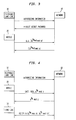
- Fig. 3 illustrates the communication between (1) the network provider and the network 10, collectively referred to as the network 10, and (2) a mobile user via a telephone/land line 30 and the mobile 20 according to a first embodiment of the present invention.
- a mobile user via the telephone/land line 30 a mobile user provides the network 10 with authorizing information (e.g., credit card information for billing purposes). If the network 10 accepts the authorizing information, the network 10 provides the mobile user with a four (4) digit password P via the telephone/land line 30. It should be, however, that the password P may be more or less than four digits.
- the mobile user then enters this short password P into the mobile 20 as part of an activation program.
- the mobile 20 uses a random number generator, the mobile 20 generates a random number R M , and using a pre-stored 512-bit prime number p and the generator g of the group generated by the prime number p, calculates ((g ⁇ R M + P) mod p).
- the mobile 20 sends the prime number p and the generator g to the network 10 along with ((g ⁇ R M + P) mod p). Because ((g ⁇ R M + P) mod P) equals (g ⁇ R M mod p) + (P mod p) and the network 10 knows the password P, the network 10 calculates (P mod p) and extracts (g ⁇ R M mod P) from ((g ⁇ R M + P) mod p). After generating a random number R N , the network 10 calculates (g ⁇ R M mod p) ⁇ R N , which equals (g ⁇ R M R N mod p). The network 10 selects (g ⁇ R M R N mod p), the hash thereof, or a portion thereof as a session key SK. For example, if incorporated in the IS41 protocol, the 64 least significant bits of (g ⁇ R M R N mod p) would be selected as a session key SK.
- the network 10 calculates and sends ((g ⁇ R N + P) mod p) to the mobile 20.
- the mobile 20 after extracting (g ⁇ R N mod p), calculates (g ⁇ R N mod p) ⁇ R M , which equals (g ⁇ R M R N mod p).
- the mobile 20 selects (g ⁇ R M R N mod p), the hash thereof, or a portion thereof in the same manner as the network 10 as a session key SK. For example, if incorporated in the IS41 protocol, the 64 least significant bits of (g ⁇ R M R N mod p) would be selected as a session key SK.
- the session key SK is used as the A-key, and communication between the mobile 20 and the network 10 is reconfigured using the A-key.
- the over-the-air exchange according to the present invention discussed above uses a password protocol (i.e., the transfers of ((g ⁇ R M + P) mod p) and ((g ⁇ R N + P) mod p) in Fig. 3) which does not leak information to the degree that the DH-EKE protocol leaks information. Furthermore, this password protocol is secure because removing the effect of the password does not reveal anything.
- R M and RN are uniform random numbers. Raising them to g and then reducing by mod p also results in uniform and random numbers because of the permutation induced by exponentiation mod p. So, adding a P mod p to that number does not change the uniformity and randomness of the result.
- FIG. 4 illustrates the communication between the network 10 and a mobile user via the telephone/land line 30 and the mobile 20 according to a second embodiment of the present invention.
- a mobile user via the telephone/land line 30 a mobile user provides the network 10 with authorizing information. If the network 10 accepts the authorizing information, then when the mobile 20 issues an initialization request as part of the mobile's initialization procedure, the initialization process will continue.
- the mobile 20 generates a random number R M , calculates (g ⁇ R M mod p), and sends an initialization request along with (g ⁇ R M mod p) to the network 10.
- the network 10 generates a random number R N and sends (g ⁇ R N mod p) to the mobile 20.
- Both the mobile 20 and the network 10 performs h((g ⁇ R N mod p), (g ⁇ R M mod p)), which is a collective hash on (g ⁇ R N mod p) and (g ⁇ R M mod P) using the well-known Secure Hashing Algorithm (SHA). It should be noted, however, that any hashing algorithm can be used.
- the mobile 20 displays the results of the hash, and the mobile user, via the telephone/land line 30, gives the digits of the hash to the network 10.
- the network 10 finds a match between the digits provided by the mobile user and the hash performed by the network 10, then communication is verified and the A-key is established as (g ⁇ R M R N mod p), the hash thereof, or a portion thereof. Namely, the mobile 20 will have established the A-key as such, but the network 10 will only associate this A-key with the mobile 20 if the hash is verified.
- the mobile user 20 supplies sufficient information (e.g., the mobile's identification number, etc.) to the network 10 such that the network 10 can contact the mobile 20 and send (g ⁇ R N mod p) as an initial communication.
- sufficient information e.g., the mobile's identification number, etc.
- This third embodiment is subject to a birthday attack; namely, half as many attempts by a man-in-the-middle need to be made to attack this protocol than one would initially assume.
- the hash is changed to h((g ⁇ R M mod p), (g ⁇ R N mod p), (g ⁇ R M R N mod p))
- the attack is significantly slowed because the attacker must do exponentiation along with the hashes.
- the hash performed to verify communication between the mobile 20 and the network 10 includes the identification number of the mobile 20.
- the mobile 20 does not send (g ⁇ R M mod p) to the network 10, as shown in Fig. 4, until after receiving (g ⁇ R N mod p) from the network 10.
- the man-in-the-middle attacker was able to see both (g ⁇ R M mod p) and (g ⁇ R N mod p), and thus exploit the birthday attack.
- the attacker has to commit to a (g ⁇ R N mod p) before the mobile 20 responds with a (g ⁇ R M mod p). This reduces, by one, the attacker's degrees of freedom.
- Fig. 5 illustrates the communication between the network 10 and a mobile user via the telephone/land line 30 and the mobile 20 according to a fifth embodiment of the present invention.
- a mobile user via the telephone/land line 30 a mobile user provides the network 10 with authorizing information.
- the mobile 20 can supply the network 10 with sufficient information (e.g., the mobile identifier, etc.) for the network 10 to make initial contact with the mobile 20. If the network 10 accepts the authorizing information, then the initialization process will continue.
- the initialization process continues with one of the mobile 20 and the network 10 sending an initialization request to the other party.
- the network 10 For example, if the mobile 20 sends the initialization request, then the network 10 generates a random number R N , calculates (g ⁇ R N mod p) and the hash of (g ⁇ R N mod p), and sends h(g ⁇ R N mod p) to the mobile 20.
- the mobile 20 generates a random number R M , calculates (g ⁇ R M mod p), and sends (g ⁇ R M mod p) to the network 10.
- the network 10 in return sends (g ⁇ R N mod p) to the mobile 20.
- the mobile 20 calculates the hash of the received (g ⁇ R N mod p), and confirms whether this calculated version of h(g ⁇ R N mod p) equals the version initially received from the network 10. If confirmed, the initialization process continues.
- both the mobile 20 and the network 10 perform h((g ⁇ R M mod p), h(g ⁇ R N mod p)).
- the mobile 20 displays the results of the hash, and the mobile user, via the telephone/land line 30, gives the digits of the hash to the network 10.
- the network 10 finds a match with the hash performed by the network 10, then communication is verified and the A-key is established as (g ⁇ R M R N mod p), the hash thereof, or a portion thereof. Namely, the mobile 20 will have established the A-key as such, but the network 10 will only associate this A-key with the mobile 20 if the hash is verified.
- the network 10 sends the initialization request. If the network 10 sends the initialization request, then the mobile 20 generates a random number R M , calculates (g ⁇ R N mod p), calculates the hash of (g ⁇ R M mod p), and sends h(g ⁇ R M mod p) to the network 10. The network 10 in return generates a random number R N , calculates (g ⁇ R N mod p) and sends (g ⁇ R N mod p) to the mobile 20.
- the mobile 20 sends (g ⁇ R M mod p) to the network 10, and the network 10 calculates the hash of (g ⁇ R M mod p). The network 10 then confirms whether the calculated version of h(g ⁇ R M mod p) equals the version initially received from the mobile 20. If equal, the initialization process continues.
- both the mobile 20 and the network 10 perform h((g ⁇ R N mod p), h(g ⁇ R M mod p)).
- the mobile 20 displays the results of the hash, and the mobile user, via the telephone/land line 30, gives the digits of the hash to the network 10.
- the network 10 finds a match with the hash performed by the network 10, then communication is verified and the A-key is established as (g ⁇ R M R N mod p), the hash thereof, or a portion thereof. Namely, the mobile 20 will have established the A-key as such, but the network 10 will only associate this A-key with the mobile 20 if the hash is verified.
- the final hash performed to verify communication between the mobile 20 and the network 10 includes the identification number of the mobile 20.
- a man-in-the-middle attacker cannot use a birthday type attack because when acting as the network 10 he has to commit to the exponential he is using (via the hash) before he sees the mobile users exponential. Similarly, the attacker, when acting as the mobile 20, has to commit to the exponential before the value of the network's exponential, associated with the hash, is revealed.
- the prime number p and the generator g were assumed to be fixed and pre-stored in the mobile 20. However, if that is not the case, then the attacker can replace g and p with g' and p', which will allow the attacker to calculate the discrete logarithm efficiently. If g and p are also sent over the air then they should also be used as part of the hash calculation, h(g,p, (g ⁇ R M mod p), (g ⁇ R N mod p)) in order to stop the substitution of g and p by the attacker.
- each embodiment was described using a telephone/land line 30, other forms of secure communication could replace the telephone/land line 30.
- a previously activated mobile could replace the telephone/land line.
- the telephone/land line communications could be performed over a voice channel between the mobile 20 and the network 10, and the remaining communication would occur over a control channel between the mobile 20 and the network 10.
Landscapes
- Engineering & Computer Science (AREA)
- Computer Security & Cryptography (AREA)
- Computer Networks & Wireless Communication (AREA)
- Signal Processing (AREA)
- Computer Hardware Design (AREA)
- Computing Systems (AREA)
- General Engineering & Computer Science (AREA)
- Mobile Radio Communication Systems (AREA)
- Data Exchanges In Wide-Area Networks (AREA)
- Communication Control (AREA)
- Telephonic Communication Services (AREA)
Abstract
Description
Claims (26)
- A method of establishing a key at a first party using a password, comprising:(a) generating, at said first party, a first random number RM;(b) producing a first calculation result by calculating ((g^RM + P) mod p), where P is a password, p is a prime number, and g is a generator of a group generated by said prime number p;(c) sending said prime number p, said generator g, and said first calculation result to a second party;(d) receiving a second calculation result equal to ((g^RN + P) mod p) from said second party, where RN is a second random number; and(e) establishing a key based on said second calculation result and said first random number.
- The method of claim 1, wherein said step (e) comprises:(e1) calculating (P mod p);(e2) subtracting (P mod p) from said second calculation result of ((g^RN + P) mod p) to obtain (g^RN mod p); and(e3) establishing said key based on (g^RN mod p) and said first random number.
- The method of claim 1, wherein said first party is a mobile in a wireless system and said second party is a network.
- The method of claim 1, prior to said step (b), further comprising:(f) sending authorizing information over a secure communication channel to said second party; and(g) receiving said password from said second party over said secure communication channel if said second party accepts said authorizing information.
- The method of claim 4, whereinsaid first party is a mobile user in a wireless system and said second party is a network; andsaid secure communication channel is a land line.
- A method of establishing a key at a first party using a password, comprising:(a) receiving, at a first party, a prime number p, a generator g of a group generated by said prime number p, and a first calculation result from a second party, said first calculation result being a result of calculating ((g^RM + P) mod p), where P is a password and RM is a first random number;(b) generating a second random number RN;(c) producing a second calculation result by calculating ((g^RN + P) mod p);(d) sending said second calculation result to said second party; and(e) establishing a key based on said first calculation result and said second random number.
- The method of claim 6, wherein said step (e) comprises:(e1) calculating (P mod p);(e2) subtracting (P mod p) from said first calculation result of ((g^RM + P) mod p) to obtain (g^RM mod p); and(e3) establishing said key based on (g^RM mod p) and said second random number.
- The method of claim 6, wherein said first party is a network in a wireless system and said second party is a mobile.
- The method of claim 6, prior to said step (a), further comprising:(f) receiving authorizing information over a secure communication channel from said second party; and(g) sending said password to said second party over said secure communication channel if said authorizing information is acceptable.
- The method of claim 9, whereinsaid first party is a network in a wireless system and said second party is a mobile user; andsaid secure communication channel is a land line.
- A method of establishing a key at a first party, comprising:(a) generating, at said first party, a first random number RM;(b) producing a first calculation result by calculating (g^RM mod p), where p is a prime number, and g is a generator of a group generated by said prime number p;(c) sending said first calculation result to a second party;(d) receiving a second calculation result equal to (g^RN mod p) from said second party, where RN is a second random number;(e) calculating a first hash of at least said first calculation result;(f) sending said first hash to said second party over a first secure communication channel; and(g) establishing a key based on said first random number and said second calculation result.
- The method of claim 11, further comprising:said step (d) receives said second calculation result if said authorizing information is acceptable to said second party.(h) sending authorizing information to said second party over a second secure communication channel; and wherein
- The method of claim 12, whereinsaid step (h) sends an identifier for said first party along with said authorizing information; andsaid step (d) is performed one of prior to and concurrent with said step (c).
- The method of claim 13, wherein said step (c) is not performed until after said step (d).
- The method of claim 14, whereinsaid step (h) sends an identifier for said first party along with said authorizing information; andsaid step (e) calculates said first hash as a hash of at least said first calculation result and said identifier for said first party.
- The method of claim 14, wherein said step (e) calculates said first hash as a hash of said first and second calculation results and (g^RN mod p)^RM.
- The method of claim 11, wherein said step (e) calculates said first hash as a hash of at least said first and second calculation results.
- The method of claim 11, wherein said first party is a mobile user in a wireless system and said second party is a network.
- A method of establishing a key at a first party, comprising:(a) receiving a first calculation result from a second party, said first calculation result being a result of calculating (g^RM mod p) where RM is a first random number, p is a prime number, and g is a generator of a group generated by said prime number p;(b) generating a second random number RN;(c) producing a second calculation result by calculating (g^RN mod p);(d) sending said second calculation result to said second party;(e) calculating a first hash of at least said first calculation result;(f) receiving a second hash from said second party over a first secure communication channel;(g) verifying said second party based on said first and second hashes; and(h) establishing a key based on said second random number and said first calculation result if said second party is verified.
- The method of claim 19, further comprising:said step (d) sends said second calculation result to said second party if said authorizing information is acceptable.(i) receiving authorizing information from said second party over a second secure communication channel; and wherein
- The method of claim 20, whereinsaid step (i) receives an identifier for said second party along with said authorizing information; andsaid step (d) is performed one of prior to and concurrent with said step (a).
- The method of claim 21, wherein said step (a) is not performed until after said step (d).
- The method of claim 22, whereinsaid step (i) receives an identifier for said second party along with said authorizing information; andsaid step (e) calculates said first hash as a hash of at least said first calculation result and said identifier for said second party.
- The method of claim 22, wherein said step (e) calculates said first hash as a hash of said first and second calculation results and (g^RM mod p)^RN.
- The method of claim 19, wherein said step (e) calculates said first hash as a hash of at least said first and second calculation results.
- The method of claim 19, wherein said first party is a network in a wireless system and said second party is a mobile user.
Priority Applications (1)
| Application Number | Priority Date | Filing Date | Title |
|---|---|---|---|
| EP03029144A EP1401141A3 (en) | 1998-07-31 | 1999-07-20 | Method for establishing a key using over-the-air communication |
Applications Claiming Priority (2)
| Application Number | Priority Date | Filing Date | Title |
|---|---|---|---|
| US127769 | 1998-07-31 | ||
| US09/127,769 US6192474B1 (en) | 1998-07-31 | 1998-07-31 | Method for establishing a key using over-the-air communication and password protocol and password protocol |
Related Child Applications (1)
| Application Number | Title | Priority Date | Filing Date |
|---|---|---|---|
| EP03029144A Division EP1401141A3 (en) | 1998-07-31 | 1999-07-20 | Method for establishing a key using over-the-air communication |
Publications (3)
| Publication Number | Publication Date |
|---|---|
| EP0977396A2 true EP0977396A2 (en) | 2000-02-02 |
| EP0977396A3 EP0977396A3 (en) | 2002-11-27 |
| EP0977396B1 EP0977396B1 (en) | 2004-10-13 |
Family
ID=22431856
Family Applications (2)
| Application Number | Title | Priority Date | Filing Date |
|---|---|---|---|
| EP99305706A Expired - Lifetime EP0977396B1 (en) | 1998-07-31 | 1999-07-20 | Method for establishing a key using over-the-air communication and password protocol |
| EP03029144A Ceased EP1401141A3 (en) | 1998-07-31 | 1999-07-20 | Method for establishing a key using over-the-air communication |
Family Applications After (1)
| Application Number | Title | Priority Date | Filing Date |
|---|---|---|---|
| EP03029144A Ceased EP1401141A3 (en) | 1998-07-31 | 1999-07-20 | Method for establishing a key using over-the-air communication |
Country Status (9)
| Country | Link |
|---|---|
| US (1) | US6192474B1 (en) |
| EP (2) | EP0977396B1 (en) |
| JP (3) | JP4105339B2 (en) |
| KR (1) | KR100572498B1 (en) |
| CN (1) | CN1247423A (en) |
| BR (1) | BR9917545A (en) |
| CA (1) | CA2277754A1 (en) |
| DE (1) | DE69921039T2 (en) |
| TW (1) | TW431108B (en) |
Cited By (6)
| Publication number | Priority date | Publication date | Assignee | Title |
|---|---|---|---|---|
| EP1134929A1 (en) * | 2000-03-17 | 2001-09-19 | Lucent Technologies Inc. | Secure mutual network authentication and key exchange protocol |
| WO2003077469A1 (en) * | 2002-03-08 | 2003-09-18 | Certicom Corp. | Key agreement and transport protocol |
| WO2007017882A1 (en) | 2005-08-05 | 2007-02-15 | Hewlett-Packard Development Company L.P. | System, method and apparatus for cryptography key management for mobile devices |
| US7334127B2 (en) | 1995-04-21 | 2008-02-19 | Certicom Corp. | Key agreement and transport protocol |
| US7779259B2 (en) | 1995-04-21 | 2010-08-17 | Certicom Corp. | Key agreement and transport protocol with implicit signatures |
| US8209533B2 (en) | 1995-04-21 | 2012-06-26 | Certicom Corp. | Key agreement and transport protocol |
Families Citing this family (26)
| Publication number | Priority date | Publication date | Assignee | Title |
|---|---|---|---|---|
| FI107487B (en) * | 1999-03-08 | 2001-08-15 | Nokia Mobile Phones Ltd | Procedure for encrypting data transmission in a radio system |
| US7330978B1 (en) * | 1999-04-08 | 2008-02-12 | Microsoft Corporation | Encrypted software installer |
| US6801941B1 (en) * | 1999-08-12 | 2004-10-05 | Sarnoff Corporation | Dynamic wireless internet address assignment scheme with authorization |
| GB0004178D0 (en) * | 2000-02-22 | 2000-04-12 | Nokia Networks Oy | Integrity check in a communication system |
| JP2001333082A (en) * | 2000-03-16 | 2001-11-30 | Sharp Corp | Wireless bus system, wireless communication device, and registration communication method |
| KR20010064678A (en) * | 2000-06-13 | 2001-07-11 | 윤종용 | Information service system and method using the bar code |
| JP3628250B2 (en) * | 2000-11-17 | 2005-03-09 | 株式会社東芝 | Registration / authentication method used in a wireless communication system |
| US20020078352A1 (en) * | 2000-12-15 | 2002-06-20 | International Business Machines Corporation | Secure communication by modification of security codes |
| US20020131600A1 (en) * | 2001-03-19 | 2002-09-19 | Ionescu Marius Constantin | Authentication and data security system for communications |
| US7092915B2 (en) * | 2002-01-07 | 2006-08-15 | International Business Machines Corporation | PDA password management tool |
| FR2841411B1 (en) * | 2002-06-19 | 2004-10-29 | Gemplus Card Int | ELECTRONIC KEY GENERATION METHOD FOR PUBLIC KEY CRYTOGRAPHY AND SECURE PORTABLE OBJECT IMPLEMENTING THE METHOD |
| KR100458255B1 (en) * | 2002-07-26 | 2004-11-26 | 학교법인 성균관대학 | Methode for key distribution using proxy server |
| US7702910B2 (en) | 2002-10-24 | 2010-04-20 | Telefonaktiebolaget L M Ericsson (Publ) | Message authentication |
| US7284127B2 (en) * | 2002-10-24 | 2007-10-16 | Telefonktiebolaget Lm Ericsson (Publ) | Secure communications |
| US7475254B2 (en) | 2003-06-19 | 2009-01-06 | International Business Machines Corporation | Method for authenticating software using protected master key |
| US7332998B2 (en) * | 2003-10-23 | 2008-02-19 | Audiovox Corporation | System and method for controlling a vehicle security system |
| US7764795B2 (en) * | 2004-10-20 | 2010-07-27 | Oracle International Corporation | Key-exchange protocol using a password-derived prime |
| JP4713955B2 (en) * | 2005-06-13 | 2011-06-29 | 株式会社日立製作所 | Authentication system, wireless communication terminal and wireless base station |
| KR101490687B1 (en) * | 2007-08-20 | 2015-02-06 | 삼성전자주식회사 | Method for devices to share secret information in home network and apparatus therefor |
| US7983656B2 (en) * | 2007-09-12 | 2011-07-19 | At&T Intellectual Property I, L.P. | Method and apparatus for end-to-end mobile user security |
| BRPI0919277A2 (en) | 2008-09-22 | 2015-12-15 | Visa Int Service Ass | wireless mobile device, computer readable storage medium, and method for controlling use of a payment application, for operating a mobile device, for authenticating a user of a mobile communication device, for managing access to a resident payment application from a mobile device, to reset a password, and to manage a counter |
| WO2010091534A1 (en) * | 2009-02-13 | 2010-08-19 | Telefonaktiebolaget L M Ericsson (Publ) | Method of and system for implementing privacy control |
| KR20110090602A (en) * | 2010-02-04 | 2011-08-10 | 삼성전자주식회사 | Method and device for authenticating public key without authentication server |
| CN102612027B (en) * | 2012-03-22 | 2014-08-13 | 李宗霖 | Safety transmission method of data in wireless communication system |
| KR20170035665A (en) * | 2015-09-23 | 2017-03-31 | 삼성에스디에스 주식회사 | Apparatus and method for exchanging encryption key |
| WO2024036435A1 (en) * | 2022-08-15 | 2024-02-22 | 华为技术有限公司 | Communication method, apparatus and system |
Family Cites Families (6)
| Publication number | Priority date | Publication date | Assignee | Title |
|---|---|---|---|---|
| DE3870558D1 (en) * | 1987-09-04 | 1992-06-04 | Ascom Radiocom Ag | METHOD FOR PRODUCING AND DISTRIBUTING SECRET KEYS. |
| US5153919A (en) | 1991-09-13 | 1992-10-06 | At&T Bell Laboratories | Service provision authentication protocol |
| US5241599A (en) * | 1991-10-02 | 1993-08-31 | At&T Bell Laboratories | Cryptographic protocol for secure communications |
| US5440635A (en) * | 1993-08-23 | 1995-08-08 | At&T Corp. | Cryptographic protocol for remote authentication |
| US5491749A (en) * | 1993-12-30 | 1996-02-13 | International Business Machines Corporation | Method and apparatus for entity authentication and key distribution secure against off-line adversarial attacks |
| US5515441A (en) * | 1994-05-12 | 1996-05-07 | At&T Corp. | Secure communication method and apparatus |
-
1998
- 1998-07-31 US US09/127,769 patent/US6192474B1/en not_active Expired - Lifetime
-
1999
- 1999-07-20 EP EP99305706A patent/EP0977396B1/en not_active Expired - Lifetime
- 1999-07-20 DE DE69921039T patent/DE69921039T2/en not_active Expired - Lifetime
- 1999-07-20 CA CA002277754A patent/CA2277754A1/en not_active Abandoned
- 1999-07-20 EP EP03029144A patent/EP1401141A3/en not_active Ceased
- 1999-07-21 TW TW088112362A patent/TW431108B/en not_active IP Right Cessation
- 1999-07-23 BR BR9917545-2A patent/BR9917545A/en not_active Application Discontinuation
- 1999-07-29 CN CN99110262A patent/CN1247423A/en active Pending
- 1999-07-29 JP JP21454499A patent/JP4105339B2/en not_active Expired - Fee Related
- 1999-07-31 KR KR1019990031537A patent/KR100572498B1/en not_active Expired - Fee Related
-
2004
- 2004-10-27 JP JP2004312237A patent/JP2005033840A/en active Pending
-
2008
- 2008-02-04 JP JP2008024126A patent/JP2008148354A/en active Pending
Cited By (13)
| Publication number | Priority date | Publication date | Assignee | Title |
|---|---|---|---|---|
| US8578165B2 (en) | 1995-04-21 | 2013-11-05 | Certicom Corp. | Key agreement and transport protocol |
| US7243232B2 (en) | 1995-04-21 | 2007-07-10 | Certicom Corp. | Key agreement and transport protocol |
| US7334127B2 (en) | 1995-04-21 | 2008-02-19 | Certicom Corp. | Key agreement and transport protocol |
| US7779259B2 (en) | 1995-04-21 | 2010-08-17 | Certicom Corp. | Key agreement and transport protocol with implicit signatures |
| US8090947B2 (en) | 1995-04-21 | 2012-01-03 | Certicom Corp. | Key agreement and transport protocol with implicit signatures |
| US8209533B2 (en) | 1995-04-21 | 2012-06-26 | Certicom Corp. | Key agreement and transport protocol |
| US8892890B2 (en) | 1995-04-21 | 2014-11-18 | Certicom Corp. | Key agreement and transport protocol |
| US7047408B1 (en) | 2000-03-17 | 2006-05-16 | Lucent Technologies Inc. | Secure mutual network authentication and key exchange protocol |
| EP1134929A1 (en) * | 2000-03-17 | 2001-09-19 | Lucent Technologies Inc. | Secure mutual network authentication and key exchange protocol |
| WO2003077469A1 (en) * | 2002-03-08 | 2003-09-18 | Certicom Corp. | Key agreement and transport protocol |
| EP3573283A1 (en) * | 2002-03-08 | 2019-11-27 | Certicom Corp. | Key agreement and transport protocol |
| WO2007017882A1 (en) | 2005-08-05 | 2007-02-15 | Hewlett-Packard Development Company L.P. | System, method and apparatus for cryptography key management for mobile devices |
| US9425958B2 (en) | 2005-08-05 | 2016-08-23 | Hewlett Packard Enterprise Development Lp | System, method and apparatus for cryptography key management for mobile devices |
Also Published As
| Publication number | Publication date |
|---|---|
| JP2005033840A (en) | 2005-02-03 |
| EP1401141A3 (en) | 2004-03-31 |
| US6192474B1 (en) | 2001-02-20 |
| EP0977396B1 (en) | 2004-10-13 |
| KR100572498B1 (en) | 2006-04-24 |
| JP4105339B2 (en) | 2008-06-25 |
| JP2008148354A (en) | 2008-06-26 |
| CN1247423A (en) | 2000-03-15 |
| DE69921039T2 (en) | 2006-02-16 |
| EP0977396A3 (en) | 2002-11-27 |
| TW431108B (en) | 2001-04-21 |
| BR9917545A (en) | 2002-07-30 |
| DE69921039D1 (en) | 2004-11-18 |
| CA2277754A1 (en) | 2000-01-31 |
| KR20000012131A (en) | 2000-02-25 |
| EP1401141A2 (en) | 2004-03-24 |
| JP2000078124A (en) | 2000-03-14 |
Similar Documents
| Publication | Publication Date | Title |
|---|---|---|
| US6192474B1 (en) | Method for establishing a key using over-the-air communication and password protocol and password protocol | |
| JP4772959B2 (en) | Secure processing for authentication of wireless communication devices | |
| US6249867B1 (en) | Method for transferring sensitive information using initially unsecured communication | |
| JP4185580B2 (en) | Method for safely communicating in a communication system | |
| US7352866B2 (en) | Enhanced subscriber authentication protocol | |
| US20030236983A1 (en) | Secure data transfer in mobile terminals and methods therefor | |
| EP0998080A2 (en) | Method for securing over-the-air communication in a wireless system | |
| JP2012110009A (en) | Methods and arrangements for secure linking of entity authentication and ciphering key generation | |
| CN110020524B (en) | A Two-way Authentication Method Based on Smart Card | |
| CN111314919B (en) | Enhanced 5G authentication method for protecting user identity privacy at authentication server | |
| EP0898397A2 (en) | Method for sending a secure communication in a telecommunications system | |
| Patel | Over the air service provisioning | |
| CN1983926A (en) | Safety method of equipment | |
| MXPA99006928A (en) | Method for establishing a key to using communication transaerea and protocol of contraseñay and protocol of contras | |
| MXPA99006932A (en) | Method for transferring sensitive information queusa initially communication not insurance |
Legal Events
| Date | Code | Title | Description |
|---|---|---|---|
| PUAI | Public reference made under article 153(3) epc to a published international application that has entered the european phase |
Free format text: ORIGINAL CODE: 0009012 |
|
| AK | Designated contracting states |
Kind code of ref document: A2 Designated state(s): AT BE CH CY DE DK ES FI FR GB GR IE IT LI LU MC NL PT SE |
|
| AX | Request for extension of the european patent |
Free format text: AL;LT;LV;MK;RO;SI |
|
| PUAL | Search report despatched |
Free format text: ORIGINAL CODE: 0009013 |
|
| AK | Designated contracting states |
Kind code of ref document: A3 Designated state(s): AT BE CH CY DE DK ES FI FR GB GR IE IT LI LU MC NL PT SE |
|
| AX | Request for extension of the european patent |
Free format text: AL;LT;LV;MK;RO;SI |
|
| 17P | Request for examination filed |
Effective date: 20030516 |
|
| AKX | Designation fees paid |
Designated state(s): DE FR GB |
|
| 17Q | First examination report despatched |
Effective date: 20030827 |
|
| RIN1 | Information on inventor provided before grant (corrected) |
Inventor name: PATEL,SARVAL. Inventor name: BERENZWEIG, ADAM L. |
|
| GRAP | Despatch of communication of intention to grant a patent |
Free format text: ORIGINAL CODE: EPIDOSNIGR1 |
|
| GRAS | Grant fee paid |
Free format text: ORIGINAL CODE: EPIDOSNIGR3 |
|
| GRAA | (expected) grant |
Free format text: ORIGINAL CODE: 0009210 |
|
| RIN1 | Information on inventor provided before grant (corrected) |
Inventor name: PATEL, SARVAR Inventor name: BERENZWEIG, ADAM L. |
|
| AK | Designated contracting states |
Kind code of ref document: B1 Designated state(s): DE FR GB |
|
| REG | Reference to a national code |
Ref country code: GB Ref legal event code: FG4D |
|
| REF | Corresponds to: |
Ref document number: 69921039 Country of ref document: DE Date of ref document: 20041118 Kind code of ref document: P |
|
| ET | Fr: translation filed | ||
| PLBE | No opposition filed within time limit |
Free format text: ORIGINAL CODE: 0009261 |
|
| STAA | Information on the status of an ep patent application or granted ep patent |
Free format text: STATUS: NO OPPOSITION FILED WITHIN TIME LIMIT |
|
| 26N | No opposition filed |
Effective date: 20050714 |
|
| REG | Reference to a national code |
Ref country code: GB Ref legal event code: 732E Free format text: REGISTERED BETWEEN 20131107 AND 20131113 |
|
| REG | Reference to a national code |
Ref country code: FR Ref legal event code: CD Owner name: ALCATEL-LUCENT USA INC. Effective date: 20131122 |
|
| REG | Reference to a national code |
Ref country code: FR Ref legal event code: GC Effective date: 20140410 |
|
| REG | Reference to a national code |
Ref country code: FR Ref legal event code: RG Effective date: 20141015 |
|
| REG | Reference to a national code |
Ref country code: FR Ref legal event code: PLFP Year of fee payment: 17 |
|
| REG | Reference to a national code |
Ref country code: FR Ref legal event code: PLFP Year of fee payment: 18 |
|
| PGFP | Annual fee paid to national office [announced via postgrant information from national office to epo] |
Ref country code: DE Payment date: 20160722 Year of fee payment: 18 Ref country code: GB Payment date: 20160721 Year of fee payment: 18 |
|
| PGFP | Annual fee paid to national office [announced via postgrant information from national office to epo] |
Ref country code: FR Payment date: 20160721 Year of fee payment: 18 |
|
| REG | Reference to a national code |
Ref country code: DE Ref legal event code: R119 Ref document number: 69921039 Country of ref document: DE |
|
| GBPC | Gb: european patent ceased through non-payment of renewal fee |
Effective date: 20170720 |
|
| REG | Reference to a national code |
Ref country code: FR Ref legal event code: ST Effective date: 20180330 |
|
| PG25 | Lapsed in a contracting state [announced via postgrant information from national office to epo] |
Ref country code: DE Free format text: LAPSE BECAUSE OF NON-PAYMENT OF DUE FEES Effective date: 20180201 Ref country code: GB Free format text: LAPSE BECAUSE OF NON-PAYMENT OF DUE FEES Effective date: 20170720 |
|
| PG25 | Lapsed in a contracting state [announced via postgrant information from national office to epo] |
Ref country code: FR Free format text: LAPSE BECAUSE OF NON-PAYMENT OF DUE FEES Effective date: 20170731 |
|
| REG | Reference to a national code |
Ref country code: DE Ref legal event code: R081 Ref document number: 69921039 Country of ref document: DE Owner name: WSOU INVESTMENTS, LLC, LOS ANGELES, US Free format text: FORMER OWNER: LUCENT TECHNOLOGIES INC., MURRAY HILL, N.J., US |