EP0975617B1 - Inhibitors of cholesterol esterase - Google Patents
Inhibitors of cholesterol esterase Download PDFInfo
- Publication number
- EP0975617B1 EP0975617B1 EP98918098A EP98918098A EP0975617B1 EP 0975617 B1 EP0975617 B1 EP 0975617B1 EP 98918098 A EP98918098 A EP 98918098A EP 98918098 A EP98918098 A EP 98918098A EP 0975617 B1 EP0975617 B1 EP 0975617B1
- Authority
- EP
- European Patent Office
- Prior art keywords
- present
- cholesterol
- inhibitors
- compounds
- scheme
- Prior art date
- Legal status (The legal status is an assumption and is not a legal conclusion. Google has not performed a legal analysis and makes no representation as to the accuracy of the status listed.)
- Expired - Lifetime
Links
- 108010055297 Sterol Esterase Proteins 0.000 title abstract description 33
- 102000000019 Sterol Esterase Human genes 0.000 title abstract description 33
- 239000003112 inhibitor Substances 0.000 title abstract description 21
- 150000001875 compounds Chemical class 0.000 claims description 53
- 229910052794 bromium Inorganic materials 0.000 claims description 7
- 125000004209 (C1-C8) alkyl group Chemical group 0.000 claims description 5
- 229910052801 chlorine Inorganic materials 0.000 claims description 5
- 125000004648 C2-C8 alkenyl group Chemical group 0.000 claims description 3
- 125000004649 C2-C8 alkynyl group Chemical group 0.000 claims description 3
- 125000001495 ethyl group Chemical group [H]C([H])([H])C([H])([H])* 0.000 claims description 3
- 125000006552 (C3-C8) cycloalkyl group Chemical group 0.000 claims description 2
- 235000012000 cholesterol Nutrition 0.000 abstract description 18
- 150000002596 lactones Chemical class 0.000 abstract description 4
- 208000035150 Hypercholesterolemia Diseases 0.000 abstract description 3
- 230000002401 inhibitory effect Effects 0.000 abstract description 2
- 230000000670 limiting effect Effects 0.000 abstract description 2
- HVYWMOMLDIMFJA-DPAQBDIFSA-N cholesterol Chemical compound C1C=C2C[C@@H](O)CC[C@]2(C)[C@@H]2[C@@H]1[C@@H]1CC[C@H]([C@H](C)CCCC(C)C)[C@@]1(C)CC2 HVYWMOMLDIMFJA-DPAQBDIFSA-N 0.000 description 24
- -1 diet restriction Chemical compound 0.000 description 19
- PCLIMKBDDGJMGD-UHFFFAOYSA-N N-bromosuccinimide Chemical compound BrN1C(=O)CCC1=O PCLIMKBDDGJMGD-UHFFFAOYSA-N 0.000 description 16
- 238000007363 ring formation reaction Methods 0.000 description 16
- 239000003795 chemical substances by application Substances 0.000 description 15
- 238000000034 method Methods 0.000 description 14
- 238000005481 NMR spectroscopy Methods 0.000 description 10
- HEDRZPFGACZZDS-MICDWDOJSA-N Trichloro(2H)methane Chemical compound [2H]C(Cl)(Cl)Cl HEDRZPFGACZZDS-MICDWDOJSA-N 0.000 description 10
- WETWJCDKMRHUPV-UHFFFAOYSA-N acetyl chloride Chemical compound CC(Cl)=O WETWJCDKMRHUPV-UHFFFAOYSA-N 0.000 description 9
- 239000012346 acetyl chloride Substances 0.000 description 9
- 150000001840 cholesterol esters Chemical class 0.000 description 7
- LJOODBDWMQKMFB-UHFFFAOYSA-N cyclohexylacetic acid Chemical compound OC(=O)CC1CCCCC1 LJOODBDWMQKMFB-UHFFFAOYSA-N 0.000 description 6
- 230000005764 inhibitory process Effects 0.000 description 6
- ZCSHNCUQKCANBX-UHFFFAOYSA-N lithium diisopropylamide Chemical compound [Li+].CC(C)[N-]C(C)C ZCSHNCUQKCANBX-UHFFFAOYSA-N 0.000 description 6
- 206010010144 Completed suicide Diseases 0.000 description 5
- 125000000217 alkyl group Chemical group 0.000 description 5
- GDTBXPJZTBHREO-UHFFFAOYSA-N bromine Chemical compound BrBr GDTBXPJZTBHREO-UHFFFAOYSA-N 0.000 description 5
- 125000004432 carbon atom Chemical group C* 0.000 description 5
- 230000002194 synthesizing effect Effects 0.000 description 5
- XHTCTUGLQUCSFJ-UHFFFAOYSA-N 3-benzyl-6-chloropyran-2-one Chemical compound O=C1OC(Cl)=CC=C1CC1=CC=CC=C1 XHTCTUGLQUCSFJ-UHFFFAOYSA-N 0.000 description 4
- WKBOTKDWSSQWDR-UHFFFAOYSA-N Bromine atom Chemical compound [Br] WKBOTKDWSSQWDR-UHFFFAOYSA-N 0.000 description 4
- 102000004190 Enzymes Human genes 0.000 description 4
- 108090000790 Enzymes Proteins 0.000 description 4
- JRNVZBWKYDBUCA-UHFFFAOYSA-N N-chlorosuccinimide Chemical compound ClN1C(=O)CCC1=O JRNVZBWKYDBUCA-UHFFFAOYSA-N 0.000 description 4
- LQZMLBORDGWNPD-UHFFFAOYSA-N N-iodosuccinimide Chemical compound IN1C(=O)CCC1=O LQZMLBORDGWNPD-UHFFFAOYSA-N 0.000 description 4
- 239000000460 chlorine Substances 0.000 description 4
- 208000029078 coronary artery disease Diseases 0.000 description 4
- 230000000694 effects Effects 0.000 description 4
- 210000001842 enterocyte Anatomy 0.000 description 4
- 229940088598 enzyme Drugs 0.000 description 4
- 150000004820 halides Chemical group 0.000 description 4
- 238000007245 halolactonization reaction Methods 0.000 description 4
- 230000007062 hydrolysis Effects 0.000 description 4
- 238000006460 hydrolysis reaction Methods 0.000 description 4
- 229910052740 iodine Inorganic materials 0.000 description 4
- 230000003389 potentiating effect Effects 0.000 description 4
- UORVCLMRJXCDCP-UHFFFAOYSA-N propynoic acid Chemical compound OC(=O)C#C UORVCLMRJXCDCP-UHFFFAOYSA-N 0.000 description 4
- WEVYAHXRMPXWCK-UHFFFAOYSA-N Acetonitrile Chemical compound CC#N WEVYAHXRMPXWCK-UHFFFAOYSA-N 0.000 description 3
- 230000001906 cholesterol absorption Effects 0.000 description 3
- 235000005911 diet Nutrition 0.000 description 3
- 229910052736 halogen Inorganic materials 0.000 description 3
- 150000002367 halogens Chemical class 0.000 description 3
- 239000000693 micelle Substances 0.000 description 3
- 108020002447 serine esterase Proteins 0.000 description 3
- 102000005428 serine esterase Human genes 0.000 description 3
- XVOUMQNXTGKGMA-OWOJBTEDSA-N (E)-glutaconic acid Chemical class OC(=O)C\C=C\C(O)=O XVOUMQNXTGKGMA-OWOJBTEDSA-N 0.000 description 2
- HURPWHMEQIWXPL-UHFFFAOYSA-N 2-(2-oxopropyl)cyclohexane-1-carboxylic acid Chemical compound CC(=O)CC1CCCCC1C(O)=O HURPWHMEQIWXPL-UHFFFAOYSA-N 0.000 description 2
- TUKYIYSUAUIYSI-UHFFFAOYSA-N 2-acetylcyclohexane-1-carboxylic acid Chemical compound CC(=O)C1CCCCC1C(O)=O TUKYIYSUAUIYSI-UHFFFAOYSA-N 0.000 description 2
- ZCYVEMRRCGMTRW-UHFFFAOYSA-N 7553-56-2 Chemical compound [I] ZCYVEMRRCGMTRW-UHFFFAOYSA-N 0.000 description 2
- ZAMOUSCENKQFHK-UHFFFAOYSA-N Chlorine atom Chemical compound [Cl] ZAMOUSCENKQFHK-UHFFFAOYSA-N 0.000 description 2
- 108090000317 Chymotrypsin Proteins 0.000 description 2
- PVNIIMVLHYAWGP-UHFFFAOYSA-N Niacin Chemical compound OC(=O)C1=CC=CN=C1 PVNIIMVLHYAWGP-UHFFFAOYSA-N 0.000 description 2
- 108090000854 Oxidoreductases Proteins 0.000 description 2
- 102000004316 Oxidoreductases Human genes 0.000 description 2
- 108090000631 Trypsin Proteins 0.000 description 2
- 102000004142 Trypsin Human genes 0.000 description 2
- 238000010521 absorption reaction Methods 0.000 description 2
- 230000029936 alkylation Effects 0.000 description 2
- 238000005804 alkylation reaction Methods 0.000 description 2
- 108010027597 alpha-chymotrypsin Proteins 0.000 description 2
- 125000003118 aryl group Chemical group 0.000 description 2
- 238000003556 assay Methods 0.000 description 2
- 230000003197 catalytic effect Effects 0.000 description 2
- 229960002376 chymotrypsin Drugs 0.000 description 2
- 230000000875 corresponding effect Effects 0.000 description 2
- 230000037213 diet Effects 0.000 description 2
- LXQXGFPPYLKKSD-UHFFFAOYSA-L disodium;2,2-diethylpropanedioate Chemical class [Na+].[Na+].CCC(CC)(C([O-])=O)C([O-])=O LXQXGFPPYLKKSD-UHFFFAOYSA-L 0.000 description 2
- 208000019622 heart disease Diseases 0.000 description 2
- 230000003301 hydrolyzing effect Effects 0.000 description 2
- 230000002779 inactivation Effects 0.000 description 2
- 210000000936 intestine Anatomy 0.000 description 2
- 239000011630 iodine Substances 0.000 description 2
- 125000002496 methyl group Chemical group [H]C([H])([H])* 0.000 description 2
- 229910000028 potassium bicarbonate Inorganic materials 0.000 description 2
- 235000015497 potassium bicarbonate Nutrition 0.000 description 2
- 239000011736 potassium bicarbonate Substances 0.000 description 2
- TYJJADVDDVDEDZ-UHFFFAOYSA-M potassium hydrogencarbonate Chemical compound [K+].OC([O-])=O TYJJADVDDVDEDZ-UHFFFAOYSA-M 0.000 description 2
- 230000002265 prevention Effects 0.000 description 2
- JQRYUMGHOUYJFW-UHFFFAOYSA-N pyridine;trihydrobromide Chemical compound [Br-].[Br-].[Br-].C1=CC=[NH+]C=C1.C1=CC=[NH+]C=C1.C1=CC=[NH+]C=C1 JQRYUMGHOUYJFW-UHFFFAOYSA-N 0.000 description 2
- 210000002966 serum Anatomy 0.000 description 2
- 238000002741 site-directed mutagenesis Methods 0.000 description 2
- 239000000758 substrate Substances 0.000 description 2
- QAEDZJGFFMLHHQ-UHFFFAOYSA-N trifluoroacetic anhydride Chemical compound FC(F)(F)C(=O)OC(=O)C(F)(F)F QAEDZJGFFMLHHQ-UHFFFAOYSA-N 0.000 description 2
- 239000012588 trypsin Substances 0.000 description 2
- MTCFGRXMJLQNBG-REOHCLBHSA-N (2S)-2-Amino-3-hydroxypropansäure Chemical compound OC[C@H](N)C(O)=O MTCFGRXMJLQNBG-REOHCLBHSA-N 0.000 description 1
- 125000004973 1-butenyl group Chemical group C(=CCC)* 0.000 description 1
- 125000004972 1-butynyl group Chemical group [H]C([H])([H])C([H])([H])C#C* 0.000 description 1
- 125000006017 1-propenyl group Chemical group 0.000 description 1
- 125000004974 2-butenyl group Chemical group C(C=CC)* 0.000 description 1
- 125000000069 2-butynyl group Chemical group [H]C([H])([H])C#CC([H])([H])* 0.000 description 1
- 125000006022 2-methyl-2-propenyl group Chemical group 0.000 description 1
- 125000001494 2-propynyl group Chemical group [H]C#CC([H])([H])* 0.000 description 1
- ZPSJGADGUYYRKE-UHFFFAOYSA-N 2H-pyran-2-one Chemical class O=C1C=CC=CO1 ZPSJGADGUYYRKE-UHFFFAOYSA-N 0.000 description 1
- DVPWHXXSWGHZOL-UHFFFAOYSA-N 6-chloro-3-(2-cyclohexylethyl)pyran-2-one Chemical compound O=C1OC(Cl)=CC=C1CCC1CCCCC1 DVPWHXXSWGHZOL-UHFFFAOYSA-N 0.000 description 1
- 201000001320 Atherosclerosis Diseases 0.000 description 1
- 102000014914 Carrier Proteins Human genes 0.000 description 1
- 108010078791 Carrier Proteins Proteins 0.000 description 1
- KZBUYRJDOAKODT-UHFFFAOYSA-N Chlorine Chemical compound ClCl KZBUYRJDOAKODT-UHFFFAOYSA-N 0.000 description 1
- 201000004624 Dermatitis Diseases 0.000 description 1
- 108090000371 Esterases Proteins 0.000 description 1
- 229940121710 HMGCoA reductase inhibitor Drugs 0.000 description 1
- 208000027109 Headache disease Diseases 0.000 description 1
- CKLJMWTZIZZHCS-REOHCLBHSA-N L-aspartic acid Chemical compound OC(=O)[C@@H](N)CC(O)=O CKLJMWTZIZZHCS-REOHCLBHSA-N 0.000 description 1
- HNDVDQJCIGZPNO-YFKPBYRVSA-N L-histidine Chemical compound OC(=O)[C@@H](N)CC1=CN=CN1 HNDVDQJCIGZPNO-YFKPBYRVSA-N 0.000 description 1
- 108010028554 LDL Cholesterol Proteins 0.000 description 1
- 238000008214 LDL Cholesterol Methods 0.000 description 1
- 241000700159 Rattus Species 0.000 description 1
- MTCFGRXMJLQNBG-UHFFFAOYSA-N Serine Natural products OCC(N)C(O)=O MTCFGRXMJLQNBG-UHFFFAOYSA-N 0.000 description 1
- 108010022999 Serine Proteases Proteins 0.000 description 1
- 102000012479 Serine Proteases Human genes 0.000 description 1
- FXXACINHVKSMDR-UHFFFAOYSA-N acetyl bromide Chemical compound CC(Br)=O FXXACINHVKSMDR-UHFFFAOYSA-N 0.000 description 1
- OIPILFWXSMYKGL-UHFFFAOYSA-N acetylcholine Chemical compound CC(=O)OCC[N+](C)(C)C OIPILFWXSMYKGL-UHFFFAOYSA-N 0.000 description 1
- 229960004373 acetylcholine Drugs 0.000 description 1
- 239000002253 acid Substances 0.000 description 1
- 150000007513 acids Chemical class 0.000 description 1
- 230000004913 activation Effects 0.000 description 1
- 125000002723 alicyclic group Chemical group 0.000 description 1
- 125000003545 alkoxy group Chemical group 0.000 description 1
- 235000003704 aspartic acid Nutrition 0.000 description 1
- 230000003143 atherosclerotic effect Effects 0.000 description 1
- 208000010668 atopic eczema Diseases 0.000 description 1
- 230000009286 beneficial effect Effects 0.000 description 1
- OQFSQFPPLPISGP-UHFFFAOYSA-N beta-carboxyaspartic acid Natural products OC(=O)C(N)C(C(O)=O)C(O)=O OQFSQFPPLPISGP-UHFFFAOYSA-N 0.000 description 1
- 210000000941 bile Anatomy 0.000 description 1
- 229920000080 bile acid sequestrant Polymers 0.000 description 1
- 229940096699 bile acid sequestrants Drugs 0.000 description 1
- 239000003833 bile salt Substances 0.000 description 1
- 108010087173 bile salt-stimulated lipase Proteins 0.000 description 1
- 229940093761 bile salts Drugs 0.000 description 1
- 125000000484 butyl group Chemical group [H]C([*])([H])C([H])([H])C([H])([H])C([H])([H])[H] 0.000 description 1
- 238000006243 chemical reaction Methods 0.000 description 1
- 238000004440 column chromatography Methods 0.000 description 1
- 230000006957 competitive inhibition Effects 0.000 description 1
- 230000002596 correlated effect Effects 0.000 description 1
- 125000000753 cycloalkyl group Chemical group 0.000 description 1
- 125000001995 cyclobutyl group Chemical group [H]C1([H])C([H])([H])C([H])(*)C1([H])[H] 0.000 description 1
- 125000000640 cyclooctyl group Chemical group [H]C1([H])C([H])([H])C([H])([H])C([H])([H])C([H])(*)C([H])([H])C([H])([H])C1([H])[H] 0.000 description 1
- 125000001511 cyclopentyl group Chemical group [H]C1([H])C([H])([H])C([H])([H])C([H])(*)C1([H])[H] 0.000 description 1
- 125000001559 cyclopropyl group Chemical group [H]C1([H])C([H])([H])C1([H])* 0.000 description 1
- 238000006114 decarboxylation reaction Methods 0.000 description 1
- 230000007423 decrease Effects 0.000 description 1
- 230000000378 dietary effect Effects 0.000 description 1
- 230000032050 esterification Effects 0.000 description 1
- 238000005886 esterification reaction Methods 0.000 description 1
- 231100000869 headache Toxicity 0.000 description 1
- 230000002440 hepatic effect Effects 0.000 description 1
- 125000004051 hexyl group Chemical group [H]C([H])([H])C([H])([H])C([H])([H])C([H])([H])C([H])([H])C([H])([H])* 0.000 description 1
- HNDVDQJCIGZPNO-UHFFFAOYSA-N histidine Natural products OC(=O)C(N)CC1=CN=CN1 HNDVDQJCIGZPNO-UHFFFAOYSA-N 0.000 description 1
- 125000000487 histidyl group Chemical group [H]N([H])C(C(=O)O*)C([H])([H])C1=C([H])N([H])C([H])=N1 0.000 description 1
- 239000002471 hydroxymethylglutaryl coenzyme A reductase inhibitor Substances 0.000 description 1
- 238000000338 in vitro Methods 0.000 description 1
- 230000000937 inactivator Effects 0.000 description 1
- 230000002427 irreversible effect Effects 0.000 description 1
- 239000013038 irreversible inhibitor Substances 0.000 description 1
- 125000000959 isobutyl group Chemical group [H]C([H])([H])C([H])(C([H])([H])[H])C([H])([H])* 0.000 description 1
- 125000001449 isopropyl group Chemical group [H]C([H])([H])C([H])(*)C([H])([H])[H] 0.000 description 1
- 238000007273 lactonization reaction Methods 0.000 description 1
- 235000013372 meat Nutrition 0.000 description 1
- 239000000203 mixture Substances 0.000 description 1
- 201000001119 neuropathy Diseases 0.000 description 1
- 230000007823 neuropathy Effects 0.000 description 1
- 235000001968 nicotinic acid Nutrition 0.000 description 1
- 229960003512 nicotinic acid Drugs 0.000 description 1
- 239000011664 nicotinic acid Substances 0.000 description 1
- 125000002347 octyl group Chemical group [H]C([*])([H])C([H])([H])C([H])([H])C([H])([H])C([H])([H])C([H])([H])C([H])([H])C([H])([H])[H] 0.000 description 1
- DVDUMIQZEUTAGK-UHFFFAOYSA-N p-nitrophenyl butyrate Chemical compound CCCC(=O)OC1=CC=C([N+]([O-])=O)C=C1 DVDUMIQZEUTAGK-UHFFFAOYSA-N 0.000 description 1
- 125000001147 pentyl group Chemical group C(CCCC)* 0.000 description 1
- 208000033808 peripheral neuropathy Diseases 0.000 description 1
- RGCLLPNLLBQHPF-HJWRWDBZSA-N phosphamidon Chemical compound CCN(CC)C(=O)C(\Cl)=C(/C)OP(=O)(OC)OC RGCLLPNLLBQHPF-HJWRWDBZSA-N 0.000 description 1
- 229940096701 plain lipid modifying drug hmg coa reductase inhibitors Drugs 0.000 description 1
- 230000002035 prolonged effect Effects 0.000 description 1
- 125000001436 propyl group Chemical group [H]C([*])([H])C([H])([H])C([H])([H])[H] 0.000 description 1
- 230000002441 reversible effect Effects 0.000 description 1
- 238000007127 saponification reaction Methods 0.000 description 1
- 229920006395 saturated elastomer Polymers 0.000 description 1
- 125000002914 sec-butyl group Chemical group [H]C([H])([H])C([H])([H])C([H])(*)C([H])([H])[H] 0.000 description 1
- 230000028327 secretion Effects 0.000 description 1
- 208000019116 sleep disease Diseases 0.000 description 1
- 210000000813 small intestine Anatomy 0.000 description 1
- GGCZERPQGJTIQP-UHFFFAOYSA-N sodium;9,10-dioxoanthracene-2-sulfonic acid Chemical compound [Na+].C1=CC=C2C(=O)C3=CC(S(=O)(=O)O)=CC=C3C(=O)C2=C1 GGCZERPQGJTIQP-UHFFFAOYSA-N 0.000 description 1
- 230000007928 solubilization Effects 0.000 description 1
- 238000005063 solubilization Methods 0.000 description 1
- 230000000707 stereoselective effect Effects 0.000 description 1
- 238000001308 synthesis method Methods 0.000 description 1
- 238000002560 therapeutic procedure Methods 0.000 description 1
- 230000032258 transport Effects 0.000 description 1
- 125000000391 vinyl group Chemical group [H]C([*])=C([H])[H] 0.000 description 1
- 229920002554 vinyl polymer Polymers 0.000 description 1
Images


Classifications
-
- C—CHEMISTRY; METALLURGY
- C07—ORGANIC CHEMISTRY
- C07D—HETEROCYCLIC COMPOUNDS
- C07D309/00—Heterocyclic compounds containing six-membered rings having one oxygen atom as the only ring hetero atom, not condensed with other rings
- C07D309/34—Heterocyclic compounds containing six-membered rings having one oxygen atom as the only ring hetero atom, not condensed with other rings having three or more double bonds between ring members or between ring members and non-ring members
- C07D309/36—Heterocyclic compounds containing six-membered rings having one oxygen atom as the only ring hetero atom, not condensed with other rings having three or more double bonds between ring members or between ring members and non-ring members with oxygen atoms directly attached to ring carbon atoms
- C07D309/38—Heterocyclic compounds containing six-membered rings having one oxygen atom as the only ring hetero atom, not condensed with other rings having three or more double bonds between ring members or between ring members and non-ring members with oxygen atoms directly attached to ring carbon atoms one oxygen atom in position 2 or 4, e.g. pyrones
-
- A—HUMAN NECESSITIES
- A61—MEDICAL OR VETERINARY SCIENCE; HYGIENE
- A61P—SPECIFIC THERAPEUTIC ACTIVITY OF CHEMICAL COMPOUNDS OR MEDICINAL PREPARATIONS
- A61P3/00—Drugs for disorders of the metabolism
- A61P3/06—Antihyperlipidemics
-
- A—HUMAN NECESSITIES
- A61—MEDICAL OR VETERINARY SCIENCE; HYGIENE
- A61P—SPECIFIC THERAPEUTIC ACTIVITY OF CHEMICAL COMPOUNDS OR MEDICINAL PREPARATIONS
- A61P43/00—Drugs for specific purposes, not provided for in groups A61P1/00-A61P41/00
-
- A—HUMAN NECESSITIES
- A61—MEDICAL OR VETERINARY SCIENCE; HYGIENE
- A61P—SPECIFIC THERAPEUTIC ACTIVITY OF CHEMICAL COMPOUNDS OR MEDICINAL PREPARATIONS
- A61P9/00—Drugs for disorders of the cardiovascular system
- A61P9/10—Drugs for disorders of the cardiovascular system for treating ischaemic or atherosclerotic diseases, e.g. antianginal drugs, coronary vasodilators, drugs for myocardial infarction, retinopathy, cerebrovascula insufficiency, renal arteriosclerosis
Definitions
- the present invention relates to inhibitors of cholesterol esterase.
- the inhibitors of the present invention provide a new approach to the treatment of hypercholesterolemia through limiting the bioavailability of dietary cholesterol.
- R 2 , R 3 , R 4 , R 5 , R 6 , R 7 , R 8 , R 9 , and R 10 H, C 1-8 alkyl, C 3-8 cycloalkyl, C 2-8 alkenyl, or C 2-8 alkynyl.
- C 1-8 alkyl refers to a straight or branched chain alkyl moiety having one of eight carbon atoms including for example, methyl, ethyl, propyl, isopropyl, butyl, sec-butyl, isobutyl, pentyl, dimethyl-propyl, hexyl, and octyl, and cognate terms (such as "C 1-8 alkoxy") are to be construed accordingly.
- C 1-5 alkyl refers to a straight or branched chain alkyl moiety having one to five carbon atoms (such as methyl or ethyl).
- C 1-8 cycloalkyl refers to a saturated alicyclic moiety having from 3 to 8 carbon atoms arranged in a ring and includes, for example, cyclopropyl, cyclobutyl, cyclopentyl, and cyclooctyl.
- C 2-8 alkenyl refers to a straight or branched chain alkyl moiety having one to eight carbon atoms and having in addition at least one double bond of either E or Z stereochemistry where applicable. This term would include, for example, vinyl, 1-propenyl, 1- and 2-butenyl and 2-methyl-2-propenyl.
- C 2-8 alkynyl refers to a straight or branched chain alkyl moiety having one to eight carbon atoms and having in addition at least one triple bond. This term would include, for example, propargyl, and 1- and 2-butynyl.
- X represents any one of the halide radicals Cl, Br and I and "X 2 " represents any one of Cl 2 , Br 2 and I 2 .
- Artherosclerotic heart disease is correlated to serum cholesterol levels. Therefore, a treatment which decreases the amount of dietary cholesterol absorbed from the intestine should also reduce a person's susceptibility to atherosclerotic heart disease.
- the compounds of the present invention act as cholesterol esterase (CE) inhibitors, that is they prevent CE from hydrolyzing dietary cholesterol esters in the intestines.
- CE cholesterol esterase
- the compounds of the present invention have structures which allow them to enter the active site of CE, a serine esterase, and bind covalently to certain residues. This results in a permanent inactivation of the enzyme.
- the compounds of the present invention combine structural features of known good inhibitors of serine esterases and the structural features of a known potent irreversible inhibitor of CE.
- Dietary cholesterol is comprised of free and esterified cholesterol, the ratio depending upon the dietary source. In diets rich in meats, up to 75% of cholesterol is esterified. Hydrolysis of cholesterol ester in the lumen of the small intestine is catalyzed by cholesterol esterase (CE) which liberates free cholesterol. Free cholesterol mixes with cholesterol contained in bile secretions to form the pool of cholesterol which is capable of being absorbed. Due to the low solubility of cholesterol, solubilization of cholesterol by bile salts into micelles is essential. In addition, transport proteins are required to deliver cholesterol from micelles to the enterocytes for absorption. CE provides both the hydrolytic activity for hydrolysis of cholesterol ester and the transport function for delivery of cholesterol from micelles to enterocytes.
- Esterification of cholesterol within the enterocyte also utilizes CE which can catalyze the reverse reaction under certain conditions.
- CE within the enterocyte is immunochemically related to pancreatic CE.
- the present invention's active site inhibitors of CE are effective in reducing the bioavailabilty of dietary cholesterol.
- pancreatic CE The catalytic mechanism of pancreatic CE resembles that of serine proteases such as trypsin and serine esterases such as acetylcholine esterase. Sequence comparisons indicate that S194, H435 and D79 comprise the active site triad of serine, histidine and aspartic acid in pancreatic CE, corresponding to S195, H57 and D102 in trypsin. The importance of these residues in CE has been demonstrated by site directed mutagenesis studies by DiPersio et al . in "Site-directed mutagenesis of an essential histidine residue in pancreatic cholesterol esterase," J. Biol. Chem., 266, 4033-4036 (1991).
- 3-Benzyl-6-chloropyrone is a prototype haloenol lactone that has been developed as a suicide inhibitor of chymotrypsin, although it is not highly selective as described in Daniels et al . in "Haloenol lactones. Potent enzyme-activated irreversible inhibitors for ⁇ -chymotrypsin," J. Biol. Chem., 250, 15046-15053 (1983) (Suicide inhibitors, also called suicide substrates, require catalytic activation to a form that irreversibly modifies the enzyme.).
- the compounds of the present invention improve on existing haloeonol lactone suicide inhibitors by being selective for CE.
- One method for synthesizing compounds of the present invention is Scheme 1 illustrated in Figure 1.
- An appropriately substituted diethylmalonate sodium salt (1A) is heated with a cis -2-chloroacrylate (1B) to give a triester compound (1C).
- Saponification and decarboxylation of the triester compound (1C) produces a substituted glutaconic acid (1D) which is often present as a mixture of the E and Z isomers.
- Cyclization is then performed using an acetyl halide cyclization agent (such as acetyl chloride or acetyl bromide) to give the 3-substituted 6-halopyrone (1E) and 5-substituted 6-halopyrone (1F).
- an acetyl halide cyclization agent such as acetyl chloride or acetyl bromide
- the 3-substituted 6-halopyrone of the invention (1E) is then separated form the other isomer and purified using conventional column chromatography techniques.
- the method of scheme 1 is similar to a procedure described by Boulanger and Katzenellenbogen in "Structure Activity Study of 6-Substituted 2-Pyranones as Inactivators of ⁇ -chymotrypsin" in J. Med. Chem ., 29, 1159-1163 (1986).
- a second method for synthesizing related compounds of the present invention is Scheme 2 illustrated in Figure 2.
- Halolactone compounds of the present invention (2G) are then produced by halolactonization of the acetylenic acid intermediate (2D) with an N-halosuccinimide (NXS; 2E) and potassium bicarbonate (2F).
- the N-halosuccinimide (2E) can be N-bromosuccinimide, N-chlorosuccinimide or N-iodosuccinimide.
- a third method for synthesizing related compounds of the present invention is Scheme 3 illustrated in Figure 3.
- Halolactone compounds of the present invention (3G) are then produced by halolactonization of the acetylenic acid intermediate (3D) with an N-halosuccinimide (NXS; 3E) and potassium bicarbonate (3F).
- the N-halosuccinimide (3E) can be N-bromosuccinimide, N-chlorosuccinimide or N-iodosuccinimide.
- a fourth method for synthesizing related compounds of the present invention is Scheme 4 illustrated in Figure 4.
- 2-(2-Oxopropyl)cyclohexanecarboxylic acid (4A) is reacted with a halogen X, (4B) to produce a halo keto acid intermediate (4C).
- X can be chlorine, bromine or iodine.
- Pyridinium tribromide can be used as the source of bromine.
- Halolactone compounds of the present invention (4E) are then produced by halolactonization of the intermediate (4C) with trifluoroacetic acid anhydride (4D).
- a fifth method for synthesizing related compounds of the present invention is Scheme 5 illustrated in Figure 5.
- 2-Acetylcyclohexanecarboxylic acid (5A) is reacted with a halogen X 2 (5B) to produce a halo keto acid intermediate (SC).
- X 2 can be chlorine, bromine or iodine.
- Pyridinium tribromide can be used as the source of bromine.
- Halolactone compounds of the present invention (5E) are then produced by halolactonization of the intermediate (5C) with trifluoroacetic acid anhydride (5D).
- treating the silver salt of compound 2D with a halogen X in acetonitrile can be used to provide the following Z isomer compound of the present invention 2H:
- treating the silver salts of compounds 3D, 4D, and 5D can be used to produce the following Z isomer compounds of the present invention 3H, 4H and 5H, respectively:
- a 3-substituted 6-chloropyrone of the invention was prepared according to Scheme 1, wherein and acetyl chloride was used as a cyclization agent. NMR analysis of this compound provided the following results: H'NMR (CDCl 3 ): 7.02(d, 1H), 6.16 (d,1H), 2.59 (m, 1H), 1.90-1.14 (m, 10H).
- a 3-substituted 6-chloropyrone of the invention was prepared according to Scheme 1, wherein and acetyl chloride was used as a cyclization agent. NMR analysis of this compound provided the following results: H'NMR (CDCl 3 ):7.05 (d, 1H), 6.16 (d, 1H), 2.45 (d, 2H), 1.80-0.81 (m, 11H).
- a 3-substituted 6-chloropyrone of the invention was prepared according to Scheme 1, wherein and acetyl chloride was used as a cyclization agent. NMR analysis of this compound provided the following results: H'NMR (CDCl 3 ):7.02(d, 1H), 6.11 (d, 1H), 2.39 (t, 2H), 1.72-0.85 (m, 13H).
- a 3-substituted 6-chloropyrone of the invention was prepared according to Scheme 1, wherein and acetyl chloride was used as a cyclization agent. NMR analysis of this compound provided the following results: H'NMR (CDCl 3 ):7.05 (d, 1H), 6.15 (d, 1H), 2.40 (t, 2H), 1.71-0.80 (m, 15H).
- a 3-substituted 6-chloropyrone of the invention was prepared according to Scheme 1, wherein and acetyl chloride was used as a cyclization agent.
- a 3-substituted 6-chloropyrone of the invention was prepared according to Scheme 1, wherein and acetyl chloride was used as a cyclization agent.
- a 3-substituted 6-chloropyrone of the invention was prepared according to Scheme 1, wherein and acetyl chloride was used as a cyclization agent. NMR analysis of this compound provided the following results: H'NMR (CDCl 3 ):7.09(d,1H), 6.16(d,1H), 2.95 (pent, 1H), 2.00-1.46 (m8H).
- a 3-substituted 6-chloropyrone of the invention was prepared according to Scheme 1, wherein and acetyl chloride was used as a cyclization agent.
- the compounds of the present invention are potent inhibitors of CE.
- the compounds of the present invention are also highly selective for CE, unlike 3-substituted 6-chloropyrones such as 3-benzyl-6-chloropyrone where the 3-substituent includes an aromatic ring.
- the compounds of the present invention which have a saturated ring as part of the 3-substituent provide tremendous selectivity when compared to compounds where the 3-substituent includes an aromatic ring.
Landscapes
- Chemical & Material Sciences (AREA)
- Health & Medical Sciences (AREA)
- Organic Chemistry (AREA)
- Engineering & Computer Science (AREA)
- Bioinformatics & Cheminformatics (AREA)
- Life Sciences & Earth Sciences (AREA)
- General Health & Medical Sciences (AREA)
- Veterinary Medicine (AREA)
- Chemical Kinetics & Catalysis (AREA)
- General Chemical & Material Sciences (AREA)
- Medicinal Chemistry (AREA)
- Nuclear Medicine, Radiotherapy & Molecular Imaging (AREA)
- Public Health (AREA)
- Pharmacology & Pharmacy (AREA)
- Animal Behavior & Ethology (AREA)
- Obesity (AREA)
- Heart & Thoracic Surgery (AREA)
- Vascular Medicine (AREA)
- Cardiology (AREA)
- Diabetes (AREA)
- Hematology (AREA)
- Urology & Nephrology (AREA)
- Pharmaceuticals Containing Other Organic And Inorganic Compounds (AREA)
- Medicines That Contain Protein Lipid Enzymes And Other Medicines (AREA)
- Acyclic And Carbocyclic Compounds In Medicinal Compositions (AREA)
- Steroid Compounds (AREA)
- Pyrane Compounds (AREA)
- Furan Compounds (AREA)
Abstract
Description
- The present application is based on U.S. Provisional Patent Application No. 60/041,988 filed April 16, 1997, the entire disclosure and contents of which is hereby incorporated by reference.
- The present invention relates to inhibitors of cholesterol esterase.
- Primary hypercholesterolemia is an established risk factor of atherosclerosis and coronary heart disease (CHD). Epidemiological data indicate a positive relationship between serum LDL-cholesterol and CHD which is the leading cause of death in both men and women in the United States. Clinical trials with cholesterol-lowering regimens are beneficial in the prevention of CHD morbidity and mortality. A variety of regimens have been used to lower serum cholesterol including diet restriction, nicotinic acid, bile acid sequestrants, and HMGCoA reductase inhibitors. Reductase inhibitors have become widely used in recent years. Although generally well tolerated and effective, side effects have been reported in up to 4% of participants in controlled trials, including increases in serum levels of hepatic headache, and sleep disorders. With prolonged use, other side effects have been reported including depression, sensorimotor neuropathy and eczema. Alternative therapies are needed, especially for populations that cannot tolerate reductase inhibitors.
- It is an object of the present invention to provide active site inhibitors of cholesterol esterase for prevention of the hydrolysis of the cholesterol ester. By inhibiting cholesterol esterase the inhibitors of the present invention provide a new approach to the treatment of hypercholesterolemia through limiting the bioavailability of dietary cholesterol.
- The present invention provides a compound comprising:wherein:

X = Cl, Br or I; and - R1 is a member of the group consisting of:

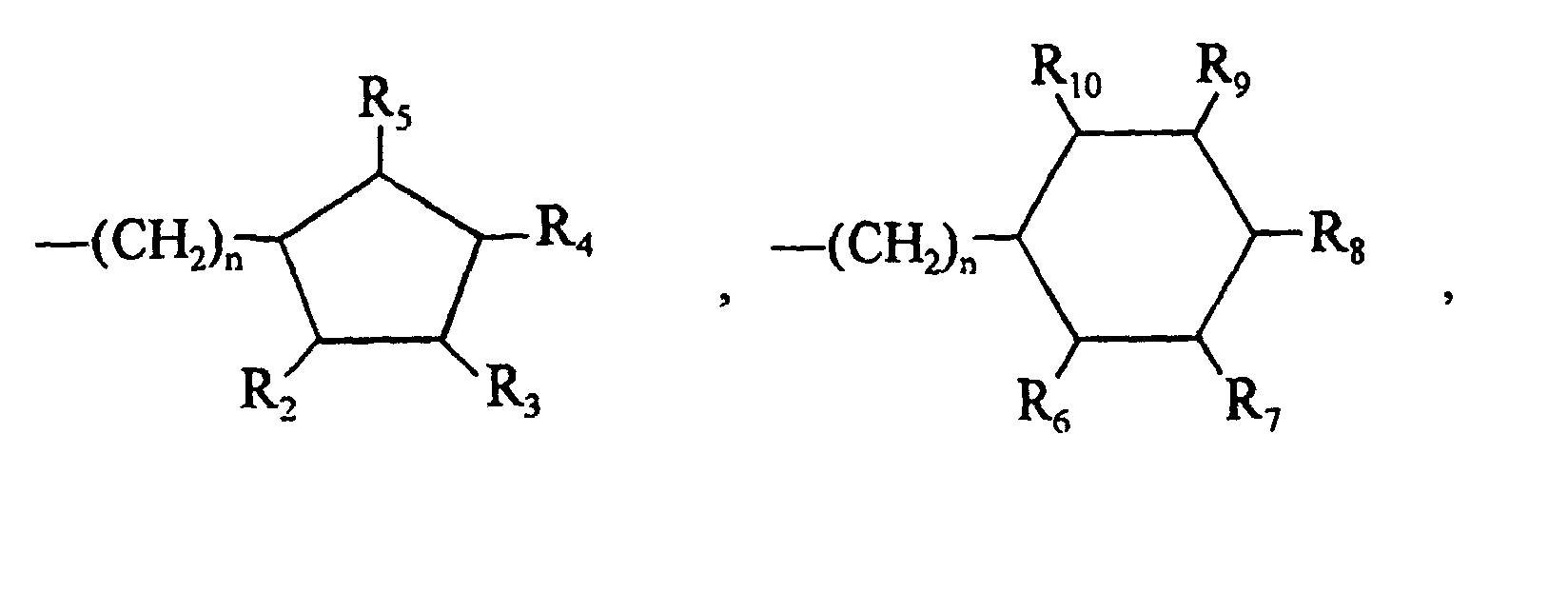
 wherein: n = 0 to 8; and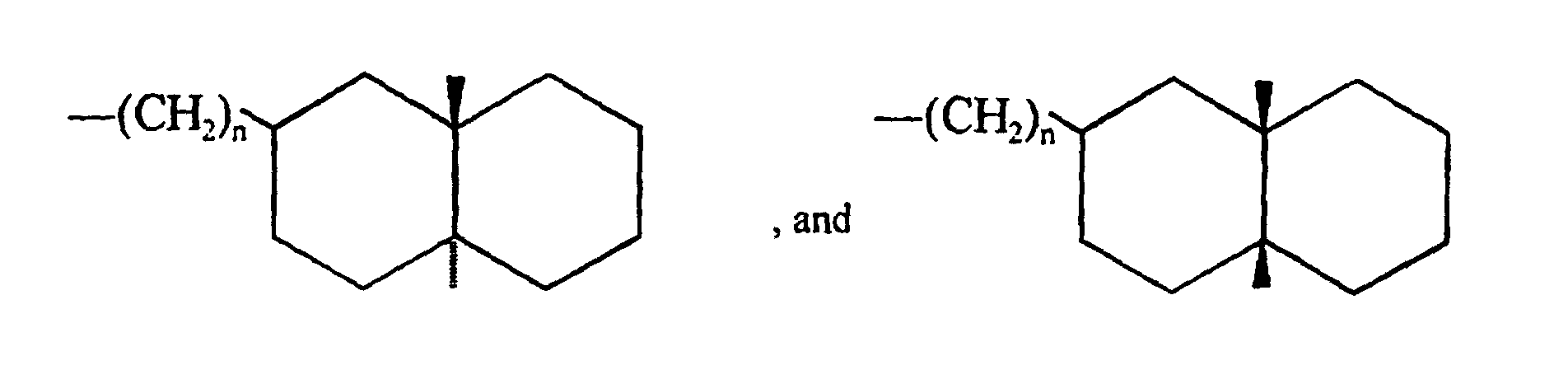
- R2, R3, R4, R5, R6, R7, R8, R9, and R10 = H, C1-8 alkyl, C3-8 cycloalkyl, C2-8 alkenyl, or C2-8 alkynyl.
- The invention will be described in conjunction with the accompanying drawings, in which:
- Figure 1 illustrates one method for forming compounds of the present invention;
- Figure 2 illustrates a second method for forming compounds of the present invention;
- Figure 3 illustrates a third method for forming compounds of the present invention;
- Figure 4 illustrates a fourth method for forming compounds of the present invention;
- Figure 5 illustrates a fifth method for forming compounds of the present invention; and
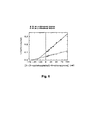
- Figure 6 is a graph showing the inhibition of cholesterol esterase by a compound of the present invention.
-
- The term "C1-8 alkyl" refers to a straight or branched chain alkyl moiety having one of eight carbon atoms including for example, methyl, ethyl, propyl, isopropyl, butyl, sec-butyl, isobutyl, pentyl, dimethyl-propyl, hexyl, and octyl, and cognate terms (such as "C1-8 alkoxy") are to be construed accordingly. Similarly, the term "C1-5 alkyl" refers to a straight or branched chain alkyl moiety having one to five carbon atoms (such as methyl or ethyl).
- The term "C1-8 cycloalkyl" refers to a saturated alicyclic moiety having from 3 to 8 carbon atoms arranged in a ring and includes, for example, cyclopropyl, cyclobutyl, cyclopentyl, and cyclooctyl.
- The term "C2-8 alkenyl" refers to a straight or branched chain alkyl moiety having one to eight carbon atoms and having in addition at least one double bond of either E or Z stereochemistry where applicable. This term would include, for example, vinyl, 1-propenyl, 1- and 2-butenyl and 2-methyl-2-propenyl.
- The term "C2-8 alkynyl" refers to a straight or branched chain alkyl moiety having one to eight carbon atoms and having in addition at least one triple bond. This term would include, for example, propargyl, and 1- and 2-butynyl.
- For the purposes of the present invention, including the accompanying drawing figures, the possible values for the radicals R1, R2, R3, R4, R5, R6, R7, R8, R9, R10, R11, R12, R13, R14, R15, R16, R17, R18, R19, R20, R21, R22, and R23 are set forth above in the summary of the invention section.
- For the purposes of the present invention, including the accompanying drawing figures, the letter "X" represents any one of the halide radicals Cl, Br and I and "X2" represents any one of Cl2, Br2 and I2.
- Artherosclerotic heart disease is correlated to serum cholesterol levels. Therefore, a treatment which decreases the amount of dietary cholesterol absorbed from the intestine should also reduce a person's susceptibility to atherosclerotic heart disease.
- The compounds of the present invention act as cholesterol esterase (CE) inhibitors, that is they prevent CE from hydrolyzing dietary cholesterol esters in the intestines. The compounds of the present invention have structures which allow them to enter the active site of CE, a serine esterase, and bind covalently to certain residues. This results in a permanent inactivation of the enzyme. The compounds of the present invention combine structural features of known good inhibitors of serine esterases and the structural features of a known potent irreversible inhibitor of CE.
- Dietary cholesterol is comprised of free and esterified cholesterol, the ratio depending upon the dietary source. In diets rich in meats, up to 75% of cholesterol is esterified. Hydrolysis of cholesterol ester in the lumen of the small intestine is catalyzed by cholesterol esterase (CE) which liberates free cholesterol. Free cholesterol mixes with cholesterol contained in bile secretions to form the pool of cholesterol which is capable of being absorbed. Due to the low solubility of cholesterol, solubilization of cholesterol by bile salts into micelles is essential. In addition, transport proteins are required to deliver cholesterol from micelles to the enterocytes for absorption. CE provides both the hydrolytic activity for hydrolysis of cholesterol ester and the transport function for delivery of cholesterol from micelles to enterocytes. Esterification of cholesterol within the enterocyte also utilizes CE which can catalyze the reverse reaction under certain conditions. CE within the enterocyte is immunochemically related to pancreatic CE. Given the essential role of CE in hydrolysis of cholesterol esters and in cholesterol absorption, the present invention's active site inhibitors of CE are effective in reducing the bioavailabilty of dietary cholesterol.
- The catalytic mechanism of pancreatic CE resembles that of serine proteases such as trypsin and serine esterases such as acetylcholine esterase. Sequence comparisons indicate that S194, H435 and D79 comprise the active site triad of serine, histidine and aspartic acid in pancreatic CE, corresponding to S195, H57 and D102 in trypsin. The importance of these residues in CE has been demonstrated by site directed mutagenesis studies by DiPersio et al. in "Site-directed mutagenesis of an essential histidine residue in pancreatic cholesterol esterase," J. Biol. Chem., 266, 4033-4036 (1991).
- The feasibility of using a active site inhibitor to reduce cholesterol absorption has been reported by Bailey et al in. "Inhibition of dietary cholesterol ester absorption by 3-BCP, a suicide inhibitor of cholesterol esterase," Biochem. Soc. Trans., 23, 408S (1995). Intragastric administration of a single dose of 3-benzyl-6-chloropyrone to rats simultaneous with feeding of cholesterol ester resulted in a 60% drop in cholesterol absorption, which resulted from a 63% inactivation of lumenal CE activity. In vitro CE was inactivated by this pyrone with a half life of 100 seconds. 3-Benzyl-6-chloropyrone is a prototype haloenol lactone that has been developed as a suicide inhibitor of chymotrypsin, although it is not highly selective as described in Daniels et al. in "Haloenol lactones. Potent enzyme-activated irreversible inhibitors for α-chymotrypsin," J. Biol. Chem., 250, 15046-15053 (1983) (Suicide inhibitors, also called suicide substrates, require catalytic activation to a form that irreversibly modifies the enzyme.). The compounds of the present invention improve on existing haloeonol lactone suicide inhibitors by being selective for CE.
- One method for synthesizing compounds of the present invention is
Scheme 1 illustrated in Figure 1. An appropriately substituted diethylmalonate sodium salt (1A) is heated with a cis-2-chloroacrylate (1B) to give a triester compound (1C). Saponification and decarboxylation of the triester compound (1C) produces a substituted glutaconic acid (1D) which is often present as a mixture of the E and Z isomers. Cyclization is then performed using an acetyl halide cyclization agent (such as acetyl chloride or acetyl bromide) to give the 3-substituted 6-halopyrone (1E) and 5-substituted 6-halopyrone (1F). The 3-substituted 6-halopyrone of the invention (1E) is then separated form the other isomer and purified using conventional column chromatography techniques. The method ofscheme 1 is similar to a procedure described by Boulanger and Katzenellenbogen in "Structure Activity Study of 6-Substituted 2-Pyranones as Inactivators of α-chymotrypsin" in J. Med. Chem., 29, 1159-1163 (1986). - A second method for synthesizing related compounds of the present invention is
Scheme 2 illustrated in Figure 2. Cyclohexylacetic acid (2A) is reacted with two moles of lithium diisopropyl amide (2B) followed by alkylation with a 4-alkyl-1-bromo-3-butyne (2C) to produce an acetylenic acid intermediate (2D) (Where Ra = C1-8 alkyl). Halolactone compounds of the present invention (2G) are then produced by halolactonization of the acetylenic acid intermediate (2D) with an N-halosuccinimide (NXS; 2E) and potassium bicarbonate (2F). Depending on the desired halide substituent (X) in the halolactone, the N-halosuccinimide (2E) can be N-bromosuccinimide, N-chlorosuccinimide or N-iodosuccinimide. - A third method for synthesizing related compounds of the present invention is
Scheme 3 illustrated in Figure 3. Cyclohexylacetic acid (3A) is reacted with two moles of lithium diisopropyl amide (3B) followed by alkylation with a 3-alkyl-1-bromo-2-propyne (3C) to produce an acetylenic acid intermediate (3D) (Where Rb = C1-8 alkyl). Halolactone compounds of the present invention (3G) are then produced by halolactonization of the acetylenic acid intermediate (3D) with an N-halosuccinimide (NXS; 3E) and potassium bicarbonate (3F). Depending on the desired halide substituent (X) in the halolactone, the N-halosuccinimide (3E) can be N-bromosuccinimide, N-chlorosuccinimide or N-iodosuccinimide. - A fourth method for synthesizing related compounds of the present invention is
Scheme 4 illustrated in Figure 4. 2-(2-Oxopropyl)cyclohexanecarboxylic acid (4A) is reacted with a halogen X, (4B) to produce a halo keto acid intermediate (4C). Depending on the desired halide substituent in the halolactone (4E), X, can be chlorine, bromine or iodine. Pyridinium tribromide can be used as the source of bromine. Halolactone compounds of the present invention (4E) are then produced by halolactonization of the intermediate (4C) with trifluoroacetic acid anhydride (4D). - A fifth method for synthesizing related compounds of the present invention is
Scheme 5 illustrated in Figure 5. 2-Acetylcyclohexanecarboxylic acid (5A) is reacted with a halogen X2 (5B) to produce a halo keto acid intermediate (SC). Depending on the desired halide substituent in the halolactone (5E), X2 can be chlorine, bromine or iodine. Pyridinium tribromide can be used as the source of bromine. Halolactone compounds of the present invention (5E) are then produced by halolactonization of the intermediate (5C) with trifluoroacetic acid anhydride (5D). - The synthesis methods of
scheme 2 andscheme 3 stereospecifically produce theE isomers compound 2D with a halogen X in acetonitrile can be used to provide the following Z isomer compound of the present invention 2H:Similarly, treating the silver salts of
compounds 
- A 3-substituted 6-chloropyrone of the invention was prepared according to
Scheme 1,
whereinand acetyl chloride was used as a cyclization agent. NMR analysis of this compound provided the following results: H'NMR (CDCl3): 7.02(d, 1H), 6.16 (d,1H), 2.59 (m, 1H), 1.90-1.14 (m, 10H).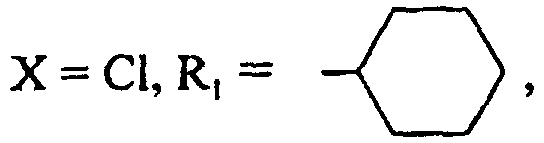
- A 3-substituted 6-chloropyrone of the invention was prepared according to
Scheme 1, whereinand acetyl chloride was used as a cyclization agent. NMR analysis of this compound provided the following results: H'NMR (CDCl3):7.05 (d, 1H), 6.16 (d, 1H), 2.45 (d, 2H), 1.80-0.81 (m, 11H).
- A 3-substituted 6-chloropyrone of the invention was prepared according to
Scheme 1, whereinand acetyl chloride was used as a cyclization agent. NMR analysis of this compound provided the following results: H'NMR (CDCl3):7.02(d, 1H), 6.11 (d, 1H), 2.39 (t, 2H), 1.72-0.85 (m, 13H).
- A 3-substituted 6-chloropyrone of the invention was prepared according to
Scheme 1, whereinand acetyl chloride was used as a cyclization agent. NMR analysis of this compound provided the following results: H'NMR (CDCl3):7.05 (d, 1H), 6.15 (d, 1H), 2.40 (t, 2H), 1.71-0.80 (m, 15H).
- A 3-substituted 6-chloropyrone of the invention was prepared according to
Scheme 1, whereinand acetyl chloride was used as a cyclization agent.
- A 3-substituted 6-chloropyrone of the invention was prepared according to
Scheme 1, whereinand acetyl chloride was used as a cyclization agent.
- A 3-substituted 6-chloropyrone of the invention was prepared according to
Scheme 1, whereinand acetyl chloride was used as a cyclization agent. NMR analysis of this compound provided the following results: H'NMR (CDCl3):7.09(d,1H), 6.16(d,1H), 2.95 (pent, 1H), 2.00-1.46 (m8H).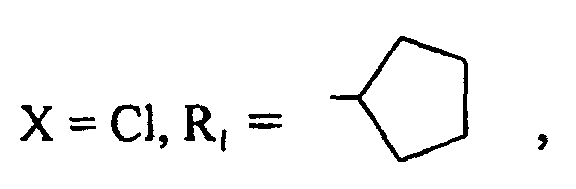
- A 3-substituted 6-chloropyrone of the invention was prepared according to
Scheme 1, whereinand acetyl chloride was used as a cyclization agent.
- A compound of the present invention is prepared according to
Scheme 2, wherein X =Br, R1 = C6H11, and n-bromosuccinimide is used as a cyclization agent. - A compound of the present invention prepared according to
Scheme 2, wherein X = Br, R1 = C7H13, and n-bromosuccinimide is used as a cyclization agent. - A compound of the present invention is prepared according to
Scheme 2, wherein X = Br, R1 = C8H15, and n-bromosuccinimide is used as a cyclization agent. - A compound of the present invention is prepared according to
Scheme 3, wherein X =Br, R1 = C6H11, and n-bromosuccinimide is used as a cyclization agent. - A compound of the present invention prepared according to
Scheme 3, wherein X = Br, R1 = C7H13, and n-bromosuccinimide is used as a cyclization agent. - A compound of the present invention is prepared according to
Scheme 3, wherein X = Br, R1 = C8H15, and n-bromosuccinimide is used as a cyclization agent. - Kinetic inhibition studies of the compounds of Examples 1, 2, 3 and 4 revealed that all four of the compounds are potent inhibitors of CE. Representative data is shown in Figure 6 for inhibition of CE by 3-(2-cyclohexylethyl)-6-chloropyrone. the compound of Example 3. The data were analyzed by Dixon plots. As shown in Figure 6, the plot of 1/V ν [I] at two different fixed concentrations of the substrate p-nitrophenylbutyrate intersect above the x-axis, indicative of competitive inhibition. The calculated Ki = 30ηM. However, a value of 30ηM corresponds to one half of the concentration of CE used in this assay, suggesting that the actual Ki << 30ηM.
- In inhibition studies with high affinity inhibitors under conditions where the concentration of enzyme used in the assay exceeds the concentration of the inhibitor, the Ki obtained is an apparent Ki corresponding to [E]/2. Therefore, clearly, the compounds of the present invention are potent inhibitors of CE.
- The compounds of the present invention are also highly selective for CE, unlike 3-substituted 6-chloropyrones such as 3-benzyl-6-chloropyrone where the 3-substituent includes an aromatic ring. For example, the compound of Example 3 has been found to inhibit chymotrypsin with Ki = 50µM compared to Ki << 30ηM for inhibition of CE. Thus, the compounds of the present invention which have a saturated ring as part of the 3-substituent provide tremendous selectivity when compared to compounds where the 3-substituent includes an aromatic ring.
Claims (9)
- A compound comprising:wherein:

X = Cl, Br, or 1; and
R1 is a member of the group consisting of:
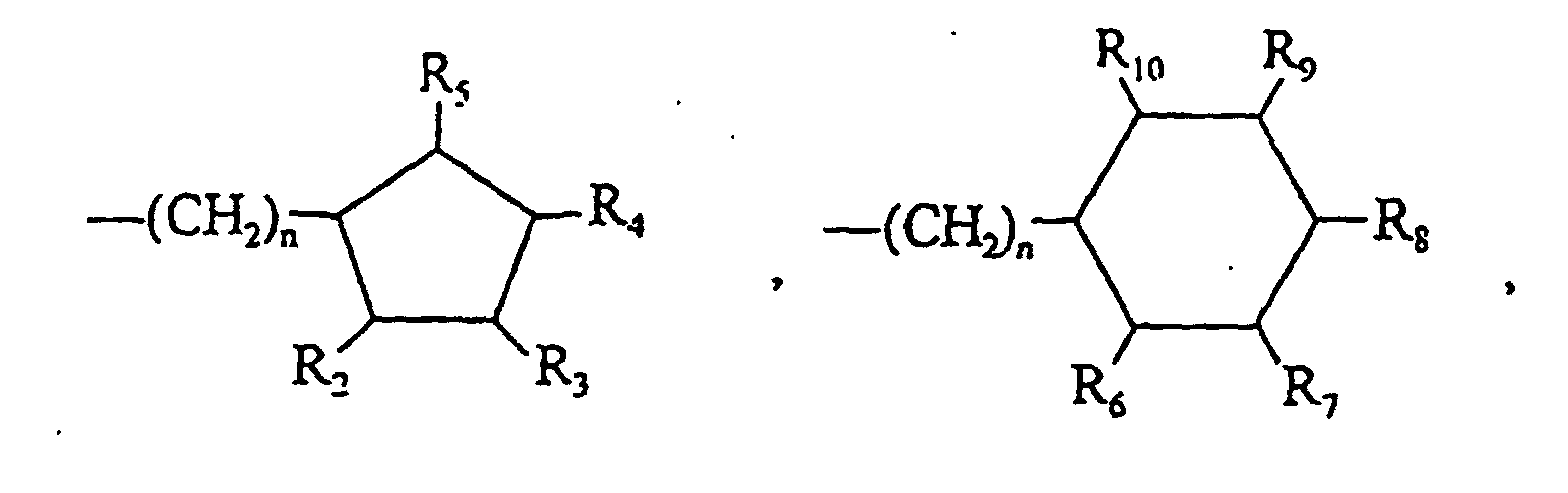
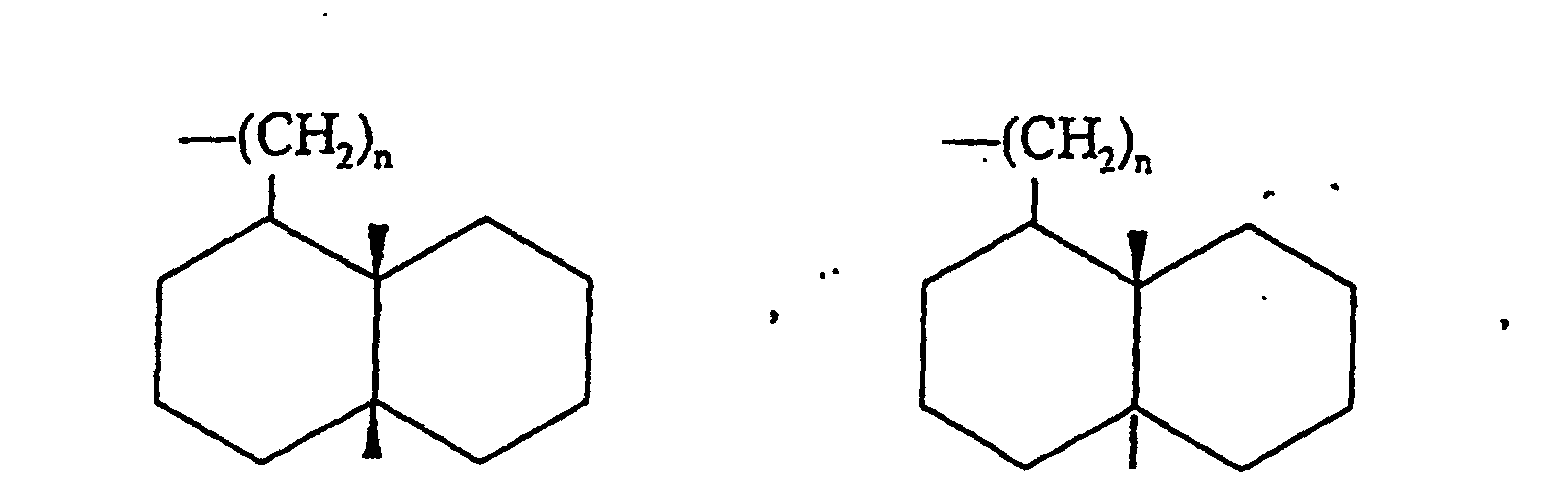 wherein: n = 0 to 8; and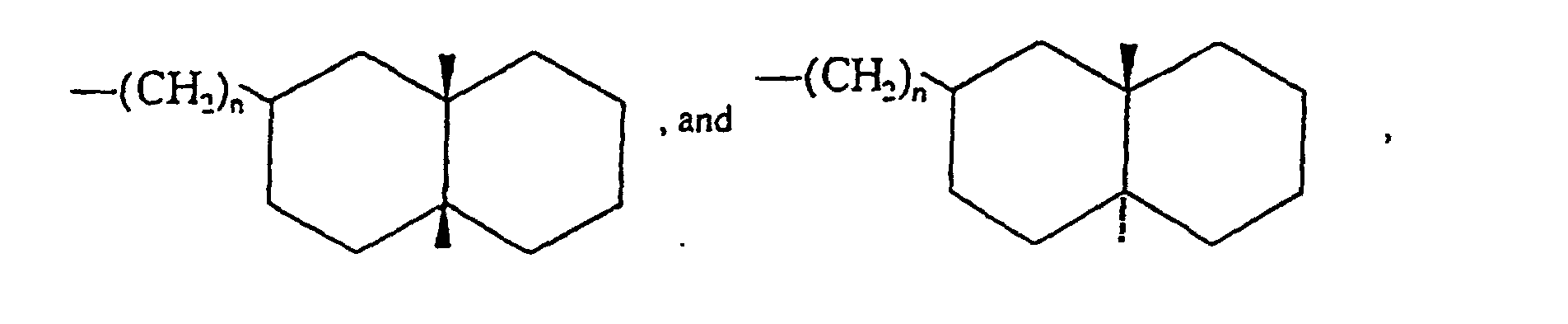
R2, R3, R4, R5, R6, R7, R8, R9, AND R10 = H, C1-8 alkyl, C3-8 cycloalkyl, C2-8 alkenyl, or C2-8 alkynyl. - The compound of claim 1, wherein R1 isand n = 0.

- The compound of claim 1, wherein R, isand n = 0.

- The compound of claim 1, wherein R1 isand n = 1.

- The compound of claim 1, wherein R1 isand n = 2.

- The compound of claim 1, wherein R1 isand n = 3.

- The compound of claim 1, wherein R1 isand n = 4.
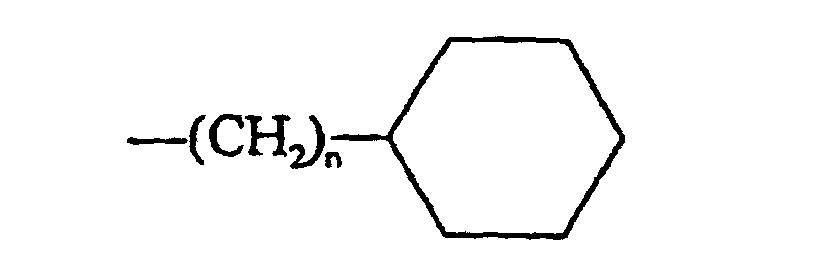
- The compound of claim 1, wherein R1 isand n = 0; R6 = H; R7 = CH3; R8 = H; R9 = CH3; and R10 = H.

- The compound of claim 1, wherein R1 isand n = 0; R6 = H; R7 = H; R8 = CH2CH3; R9 = H; and R10 = H.

Priority Applications (1)
| Application Number | Priority Date | Filing Date | Title |
|---|---|---|---|
| EP03006153A EP1323715B1 (en) | 1997-04-16 | 1998-04-15 | Inhibitors of cholesterol esterase |
Applications Claiming Priority (3)
| Application Number | Priority Date | Filing Date | Title |
|---|---|---|---|
| US4198897P | 1997-04-16 | 1997-04-16 | |
| US41988P | 1997-04-16 | ||
| PCT/US1998/007263 WO1998046585A1 (en) | 1997-04-16 | 1998-04-15 | Inhibitors of cholesterol esterase |
Related Child Applications (1)
| Application Number | Title | Priority Date | Filing Date |
|---|---|---|---|
| EP03006153A Division EP1323715B1 (en) | 1997-04-16 | 1998-04-15 | Inhibitors of cholesterol esterase |
Publications (3)
| Publication Number | Publication Date |
|---|---|
| EP0975617A1 EP0975617A1 (en) | 2000-02-02 |
| EP0975617A4 EP0975617A4 (en) | 2000-09-13 |
| EP0975617B1 true EP0975617B1 (en) | 2003-11-05 |
Family
ID=21919442
Family Applications (1)
| Application Number | Title | Priority Date | Filing Date |
|---|---|---|---|
| EP98918098A Expired - Lifetime EP0975617B1 (en) | 1997-04-16 | 1998-04-15 | Inhibitors of cholesterol esterase |
Country Status (7)
| Country | Link |
|---|---|
| US (3) | US5942631A (en) |
| EP (1) | EP0975617B1 (en) |
| JP (1) | JP2002512611A (en) |
| AT (2) | ATE253565T1 (en) |
| CA (1) | CA2284525A1 (en) |
| DE (2) | DE69824901D1 (en) |
| WO (1) | WO1998046585A1 (en) |
Families Citing this family (5)
| Publication number | Priority date | Publication date | Assignee | Title |
|---|---|---|---|---|
| US7115279B2 (en) | 2000-08-03 | 2006-10-03 | Curatolo William J | Pharmaceutical compositions of cholesteryl ester transfer protein inhibitors |
| WO2009086096A2 (en) * | 2007-12-21 | 2009-07-09 | University Of Cincinnati | Therapeutic use of carboxyl ester lipase inhibitors |
| US9061796B2 (en) * | 2009-04-23 | 2015-06-23 | H.J. Heinz Company | Multi-function condiment container |
| US20150133551A1 (en) | 2012-05-03 | 2015-05-14 | Beth Israel Deaconess Medical Center, Inc. | Lipids That Increase Insulin Sensitivity And Methods Of Using The Same |
| AU2014228786B2 (en) | 2013-03-15 | 2017-07-20 | Beth Israel Deaconess Medical Center, Inc. | Lipids that increase insulin sensitivity and methods of using the same |
Family Cites Families (10)
| Publication number | Priority date | Publication date | Assignee | Title |
|---|---|---|---|---|
| US3056802A (en) * | 1960-10-04 | 1962-10-02 | Union Carbide Corp | Alpha-halo lactones |
| US3227736A (en) * | 1962-10-31 | 1966-01-04 | Olin Mathieson | Production of alpha-fluorocarboxylic acids and esters |
| US3346594A (en) * | 1965-08-25 | 1967-10-10 | Gen Aniline & Film Corp | Haloalkyl and polyhaloalkyl lactones |
| US4338122A (en) * | 1979-09-26 | 1982-07-06 | Union Carbide Corporation | Biocidal 2-aryl-1,3-cyclopentanedione compounds and alkali metal and ammonium salts thereof |
| GB2168696B (en) * | 1984-12-21 | 1989-01-11 | Boehringer Biochemia Srl | Fluoro coumarins as antilymphoedema agents |
| US5025017A (en) * | 1989-09-28 | 1991-06-18 | E. R. Squibb & Sons, Inc. | Seco-mevinic acid derivatives useful as antihypercholesterolemic agents and new intermediates |
| US5059696A (en) * | 1990-03-15 | 1991-10-22 | Merck & Co., Inc. | Processes and intermediates for the preparation of 5-oxygenated hmg-coa reductase inhibitors |
| GB9100174D0 (en) * | 1991-01-04 | 1991-02-20 | British Bio Technology | Compounds |
| EP0621892B1 (en) * | 1992-11-18 | 1998-07-08 | Firmenich Sa | Use of furanones as scenting ingredients |
| FR2741620B1 (en) * | 1995-11-28 | 1997-12-26 | Oreal | PROCESS FOR THE PREPARATION OF COMPOUNDS WITH A BETA-HYDROXY -DELTA-LACTONE GROUP ANALOGS OF (+) COMPACTIN AND (+) MEVINOLINE |
-
1998
- 1998-04-15 CA CA002284525A patent/CA2284525A1/en not_active Abandoned
- 1998-04-15 AT AT98918098T patent/ATE253565T1/en not_active IP Right Cessation
- 1998-04-15 DE DE69824901T patent/DE69824901D1/en not_active Expired - Lifetime
- 1998-04-15 DE DE69819482T patent/DE69819482T2/en not_active Expired - Fee Related
- 1998-04-15 US US09/060,250 patent/US5942631A/en not_active Expired - Fee Related
- 1998-04-15 AT AT03006153T patent/ATE270284T1/en not_active IP Right Cessation
- 1998-04-15 JP JP54411598A patent/JP2002512611A/en active Pending
- 1998-04-15 WO PCT/US1998/007263 patent/WO1998046585A1/en not_active Ceased
- 1998-04-15 EP EP98918098A patent/EP0975617B1/en not_active Expired - Lifetime
-
1999
- 1999-04-15 US US09/291,990 patent/US6034255A/en not_active Expired - Fee Related
- 1999-12-16 US US09/464,194 patent/US6114545A/en not_active Expired - Fee Related
Also Published As
| Publication number | Publication date |
|---|---|
| DE69824901D1 (en) | 2004-08-05 |
| US5942631A (en) | 1999-08-24 |
| DE69819482D1 (en) | 2003-12-11 |
| EP0975617A1 (en) | 2000-02-02 |
| ATE270284T1 (en) | 2004-07-15 |
| CA2284525A1 (en) | 1998-10-22 |
| DE69819482T2 (en) | 2004-08-26 |
| WO1998046585A1 (en) | 1998-10-22 |
| EP0975617A4 (en) | 2000-09-13 |
| JP2002512611A (en) | 2002-04-23 |
| US6114545A (en) | 2000-09-05 |
| ATE253565T1 (en) | 2003-11-15 |
| US6034255A (en) | 2000-03-07 |
Similar Documents
| Publication | Publication Date | Title |
|---|---|---|
| US5294724A (en) | 4-hydroxytetrahydropyran-2-ones and the corresponding dihydroxycarboxylic acid derivatives, salts and esters and a process for their preparation | |
| EP0759917A1 (en) | Novel selective inhibitors of viral or bacterial neuraminidases | |
| US6034255A (en) | Inhibitors of cholesterol esterase | |
| EP0114720B1 (en) | 1'-ethoxycarbonyloxyethyl ester of valproic acid, its preparation and formulations containing it | |
| EP1323715B1 (en) | Inhibitors of cholesterol esterase | |
| WO2014205380A1 (en) | Compounds and compounds for use in methods for treating diseases or conditions mediated by protein disulfide isomerase | |
| Stalder et al. | Tetrahydrolipstatin: Degradation products produced by human carboxyl‐ester lipase | |
| Uesato et al. | Antitumor promoting activities of 3-O-acyl-(−)-epigallocatechins | |
| US5049578A (en) | 1-aroyl or 1-acyl-2-2pyrrolidinyl-3,5-dihydroxy alkanoic and alkenoic acids, salts, esters and lactones | |
| US20100160670A1 (en) | Novel process for the preparation of chiral compounds derived from hexanoic acid esters and intermediates used in the synthesis of chiral-2-(bromomethyl)-2-ethylhexanoic acid | |
| US4609650A (en) | Double ester of 16β-ethylestran-17β-ol derivatives | |
| RU2359954C2 (en) | Benzotropolone derivatives possessing anti hiv-activity, pharmaceutical composition; method of hiv-integrase inhibition | |
| Witiak et al. | Synthesis and pharmacological evaluation of a clofibrate-related tricyclic spirolactone, 5-chloro-4', 5'-dihydrospiro [benzofuran-2 (3H), 3'(2'H)-furan]-2'-one | |
| AU624013B2 (en) | Process for the preparation of castanospermine esters | |
| US4873260A (en) | Treatment of diabetic ketoacidosis | |
| JPH0676361B2 (en) | Pharmaceutical composition for treating or preventing atherosclerosis | |
| JPH07215992A (en) | 6- or 7-substituted androsta-1,4-diene derivative | |
| JP3231909B2 (en) | New production method and intermediate of 20-keto-21 (S) -hydroxysteroid compound | |
| JP3491296B2 (en) | Optically active 1,5-disubstituted-2,4-O-isopropylidene-2,4-dihydroxypentane and process for producing the same | |
| JPH03173848A (en) | Mebinic acid derivative | |
| JPH0782259A (en) | Succinamic acid derivative and therapeutic agent for diabetic complications containing the same | |
| US6855833B2 (en) | Methods for producing amino substituted chromanes and intermediates thereof | |
| CA1338017C (en) | Derivatives of physiologically active substance ml-236b and process for production thereof | |
| JP3002484B2 (en) | 4-hydroxy-6-octahydronaphthylethyltetrahydropyran-2-one derivative | |
| Fukushima et al. | Synthesis of α-Methylene-γ-lactone Structure by Cyclization of ω-Formylallylsilane in Water |
Legal Events
| Date | Code | Title | Description |
|---|---|---|---|
| PUAI | Public reference made under article 153(3) epc to a published international application that has entered the european phase |
Free format text: ORIGINAL CODE: 0009012 |
|
| 17P | Request for examination filed |
Effective date: 19990909 |
|
| AK | Designated contracting states |
Kind code of ref document: A1 Designated state(s): AT BE CH DE DK ES FI FR GB GR IE IT LI LU MC NL PT SE |
|
| RIC1 | Information provided on ipc code assigned before grant |
Free format text: 7C 07D 307/20 A, 7C 07D 307/88 B, 7C 07D 309/38 B, 7C 07D 311/76 B, 7C 07D 315/00 B, 7C 07D 309/32 B |
|
| A4 | Supplementary search report drawn up and despatched |
Effective date: 20000726 |
|
| AK | Designated contracting states |
Kind code of ref document: A4 Designated state(s): AT BE CH DE DK ES FI FR GB GR IE IT LI LU MC NL PT SE |
|
| 17Q | First examination report despatched |
Effective date: 20020903 |
|
| GRAH | Despatch of communication of intention to grant a patent |
Free format text: ORIGINAL CODE: EPIDOS IGRA |
|
| GRAS | Grant fee paid |
Free format text: ORIGINAL CODE: EPIDOSNIGR3 |
|
| GRAA | (expected) grant |
Free format text: ORIGINAL CODE: 0009210 |
|
| AK | Designated contracting states |
Kind code of ref document: B1 Designated state(s): AT BE CH DE DK ES FI FR GB GR IE IT LI LU MC NL PT SE |
|
| PG25 | Lapsed in a contracting state [announced via postgrant information from national office to epo] |
Ref country code: NL Free format text: LAPSE BECAUSE OF FAILURE TO SUBMIT A TRANSLATION OF THE DESCRIPTION OR TO PAY THE FEE WITHIN THE PRESCRIBED TIME-LIMIT Effective date: 20031105 Ref country code: LI Free format text: LAPSE BECAUSE OF FAILURE TO SUBMIT A TRANSLATION OF THE DESCRIPTION OR TO PAY THE FEE WITHIN THE PRESCRIBED TIME-LIMIT Effective date: 20031105 Ref country code: IT Free format text: LAPSE BECAUSE OF FAILURE TO SUBMIT A TRANSLATION OF THE DESCRIPTION OR TO PAY THE FEE WITHIN THE PRESCRIBED TIME-LIMIT;WARNING: LAPSES OF ITALIAN PATENTS WITH EFFECTIVE DATE BEFORE 2007 MAY HAVE OCCURRED AT ANY TIME BEFORE 2007. THE CORRECT EFFECTIVE DATE MAY BE DIFFERENT FROM THE ONE RECORDED. Effective date: 20031105 Ref country code: FR Free format text: LAPSE BECAUSE OF FAILURE TO SUBMIT A TRANSLATION OF THE DESCRIPTION OR TO PAY THE FEE WITHIN THE PRESCRIBED TIME-LIMIT Effective date: 20031105 Ref country code: FI Free format text: LAPSE BECAUSE OF FAILURE TO SUBMIT A TRANSLATION OF THE DESCRIPTION OR TO PAY THE FEE WITHIN THE PRESCRIBED TIME-LIMIT Effective date: 20031105 Ref country code: CH Free format text: LAPSE BECAUSE OF FAILURE TO SUBMIT A TRANSLATION OF THE DESCRIPTION OR TO PAY THE FEE WITHIN THE PRESCRIBED TIME-LIMIT Effective date: 20031105 Ref country code: BE Free format text: LAPSE BECAUSE OF FAILURE TO SUBMIT A TRANSLATION OF THE DESCRIPTION OR TO PAY THE FEE WITHIN THE PRESCRIBED TIME-LIMIT Effective date: 20031105 Ref country code: AT Free format text: LAPSE BECAUSE OF FAILURE TO SUBMIT A TRANSLATION OF THE DESCRIPTION OR TO PAY THE FEE WITHIN THE PRESCRIBED TIME-LIMIT Effective date: 20031105 |
|
| REG | Reference to a national code |
Ref country code: GB Ref legal event code: FG4D |
|
| REG | Reference to a national code |
Ref country code: CH Ref legal event code: EP |
|
| REF | Corresponds to: |
Ref document number: 69819482 Country of ref document: DE Date of ref document: 20031211 Kind code of ref document: P |
|
| REG | Reference to a national code |
Ref country code: IE Ref legal event code: FG4D |
|
| PG25 | Lapsed in a contracting state [announced via postgrant information from national office to epo] |
Ref country code: SE Free format text: LAPSE BECAUSE OF FAILURE TO SUBMIT A TRANSLATION OF THE DESCRIPTION OR TO PAY THE FEE WITHIN THE PRESCRIBED TIME-LIMIT Effective date: 20040205 Ref country code: GR Free format text: LAPSE BECAUSE OF FAILURE TO SUBMIT A TRANSLATION OF THE DESCRIPTION OR TO PAY THE FEE WITHIN THE PRESCRIBED TIME-LIMIT Effective date: 20040205 Ref country code: DK Free format text: LAPSE BECAUSE OF FAILURE TO SUBMIT A TRANSLATION OF THE DESCRIPTION OR TO PAY THE FEE WITHIN THE PRESCRIBED TIME-LIMIT Effective date: 20040205 |
|
| PG25 | Lapsed in a contracting state [announced via postgrant information from national office to epo] |
Ref country code: ES Free format text: LAPSE BECAUSE OF FAILURE TO SUBMIT A TRANSLATION OF THE DESCRIPTION OR TO PAY THE FEE WITHIN THE PRESCRIBED TIME-LIMIT Effective date: 20040216 |
|
| NLV1 | Nl: lapsed or annulled due to failure to fulfill the requirements of art. 29p and 29m of the patents act | ||
| PG25 | Lapsed in a contracting state [announced via postgrant information from national office to epo] |
Ref country code: LU Free format text: LAPSE BECAUSE OF NON-PAYMENT OF DUE FEES Effective date: 20040415 Ref country code: IE Free format text: LAPSE BECAUSE OF NON-PAYMENT OF DUE FEES Effective date: 20040415 |
|
| PG25 | Lapsed in a contracting state [announced via postgrant information from national office to epo] |
Ref country code: MC Free format text: LAPSE BECAUSE OF NON-PAYMENT OF DUE FEES Effective date: 20040430 |
|
| REG | Reference to a national code |
Ref country code: CH Ref legal event code: PL |
|
| PLBE | No opposition filed within time limit |
Free format text: ORIGINAL CODE: 0009261 |
|
| STAA | Information on the status of an ep patent application or granted ep patent |
Free format text: STATUS: NO OPPOSITION FILED WITHIN TIME LIMIT |
|
| 26N | No opposition filed |
Effective date: 20040806 |
|
| EN | Fr: translation not filed | ||
| REG | Reference to a national code |
Ref country code: IE Ref legal event code: MM4A |
|
| PG25 | Lapsed in a contracting state [announced via postgrant information from national office to epo] |
Ref country code: PT Free format text: LAPSE BECAUSE OF NON-PAYMENT OF DUE FEES Effective date: 20040405 |
|
| PGFP | Annual fee paid to national office [announced via postgrant information from national office to epo] |
Ref country code: GB Payment date: 20090424 Year of fee payment: 12 Ref country code: DE Payment date: 20090626 Year of fee payment: 12 |
|
| GBPC | Gb: european patent ceased through non-payment of renewal fee |
Effective date: 20100415 |
|
| PG25 | Lapsed in a contracting state [announced via postgrant information from national office to epo] |
Ref country code: DE Free format text: LAPSE BECAUSE OF NON-PAYMENT OF DUE FEES Effective date: 20101103 |
|
| PG25 | Lapsed in a contracting state [announced via postgrant information from national office to epo] |
Ref country code: GB Free format text: LAPSE BECAUSE OF NON-PAYMENT OF DUE FEES Effective date: 20100415 |