EP0974599A1 - Recombinant single-stranded equine chorionic gonadotropin - Google Patents
Recombinant single-stranded equine chorionic gonadotropin Download PDFInfo
- Publication number
- EP0974599A1 EP0974599A1 EP97912426A EP97912426A EP0974599A1 EP 0974599 A1 EP0974599 A1 EP 0974599A1 EP 97912426 A EP97912426 A EP 97912426A EP 97912426 A EP97912426 A EP 97912426A EP 0974599 A1 EP0974599 A1 EP 0974599A1
- Authority
- EP
- European Patent Office
- Prior art keywords
- ecg
- single chain
- recombinant single
- seq
- chain
- Prior art date
- Legal status (The legal status is an assumption and is not a legal conclusion. Google has not performed a legal analysis and makes no representation as to the accuracy of the status listed.)
- Withdrawn
Links
- 0 C*[C@@]1C(C2)CC2C1 Chemical compound C*[C@@]1C(C2)CC2C1 0.000 description 1
Images


Classifications
-
- C—CHEMISTRY; METALLURGY
- C07—ORGANIC CHEMISTRY
- C07K—PEPTIDES
- C07K14/00—Peptides having more than 20 amino acids; Gastrins; Somatostatins; Melanotropins; Derivatives thereof
- C07K14/435—Peptides having more than 20 amino acids; Gastrins; Somatostatins; Melanotropins; Derivatives thereof from animals; from humans
- C07K14/575—Hormones
- C07K14/59—Follicle-stimulating hormone [FSH]; Chorionic gonadotropins, e.g.hCG [human chorionic gonadotropin]; Luteinising hormone [LH]; Thyroid-stimulating hormone [TSH]
-
- A—HUMAN NECESSITIES
- A61—MEDICAL OR VETERINARY SCIENCE; HYGIENE
- A61K—PREPARATIONS FOR MEDICAL, DENTAL OR TOILETRY PURPOSES
- A61K38/00—Medicinal preparations containing peptides
Definitions
- the present invention relates to a recombinant single chain equine chorionic gonadotropin (eCG).
- eCG equine chorionic gonadotropin
- a recombinant single chain eCG in which an ⁇ chain and a ⁇ chain of the eCG are tethered to a single chain has potent FSH activity about 7 times than that of the native eCG, and can be used advantageously as a medicine for animals.
- Native chorionic gonadotropin is a member of the glycoprotein hormone family and is constituted by an ⁇ -subunit noncovalently linked to a ⁇ -subunit as in luteinizing hormone (LH) or follicle-stimulating hormone (FSH) derived from pituitary.
- An equine chorionic gonadotropin (eCG) has both of the LH activity and FSH activity, has common primary structures of the peptides to eLH and their amino acid sequences are identical. However, their sugar chain structures are different from each other and thus eCG is extremely unique among the glycoprotein hormone family.
- an amino acid sequence and a nucleic acid sequence of the ⁇ -subunit of eCG are as shown in SEQ.ID. NO:1 and SEQ.ID. NO:2, respectively, and comprise 96 amino acids having signal peptides of 24 amino acids (J. Repred. Dev. 40, 301 (1994)). And two asparagines at the 56th and the 82nd of the ⁇ -subunit are both N-bond glycosylated.
- SEQ.ID. NO:1. -24 to -1 are signal peptides and are not contained in the subunits of mature.
- an amino acid sequence and a nucleic acid sequence of the ⁇ -subunit of eCG are as shown in SEQ.ID. NO:3 and SEQ.ID. NO:4, respectively, and the ⁇ -subunit eCG comprises 149 amino acids having signal peptides of 20 amino acids (Mol. Endocrinol. 6, 951 (1992)). And asparagine at the 13th thereof is N-bond glycosylated, and the OH groups of Ser of 4 to 11 at the molecule C-terminus side are glycosylated (Fed. Proc. 45, 1843 (1986), Fed. Proc. 45, 188 (1986), J. Biol. Chem. 262, 8683 (1987), Ann. Meet Endocrinol. (Abstract) 1200 (1992)).
- SEQ.ID. NO:3 -20 to -1 are signal peptides and are not contained in the subunit of mature.
- the present invention comprises a recombinant single chain eCG represented by the amino acid sequence shown in SEQ. ID. NO:5, in which an ⁇ -chain (an ⁇ -subunit) and a ⁇ -chain (a ⁇ -subunit) of equine chorionic gonadotropin (eCG) are tethered to a single chain.
- eCG equine chorionic gonadotropin
- the present invention is also to provide a DNA sequence represented by SEQ.ID. NO:6 which encodes the recombinant single chain eCG.
- a veterinary drug containing the above-mentioned recombinant single chain eCG can be further provided.
- the recombinant single chain eCG has substantially the same biological activities, particularly in a luteinizing hormone (LH)-like activity as compared with the native eCG and the wild-type eCG (Endocrine Journal 1996, 43(5) 585-593) synthesized by two chains, but the inventors have found that it has a follicle-stimulating hormone (FSH)-like activity about 7 times more potent than those of the above. Accordingly, the present invention is to provide a novel recombinant single chain eCG which can advantageously express hormones in expression cell series such as CHO-K1 cells.
- LH luteinizing hormone
- FSH follicle-stimulating hormone
- the amino acid sequence of the recombinant single chain eCG according to the present invention is as shown in SEQ.ID. NO:5, and the amino acid sequence from the 1st to the 149th corresponds to a ⁇ -subunit, a sugar chain binds to Asn at the 13th, and a sugar chain (OCHO) also binds to seven Ser's.
- the amino acid sequence from the 150th to the 245th corresponds to an ⁇ -subunit, and sugar chains bind to Asn's at the 205th and the 231th.
- SEQ.ID. NO:5 -20 to -5 are signal peptides and are not contained in the single chain eCG of mature.
- the DNA sequence which encodes the recombinant single chain eCG of the present invention is shown by SEQ.ID. NO:6.
- the base sequences from 504th to the 530th are an anti-sense of Primer 2, and the base sequences from the 507th to the 533th are derived from Primer 3.
- the above-mentioned recombinant single chain eCG can be used as a veterinary drug.
- This veterinary drug can be applied to laboratory animals selected from rats, mice and rabbits, or animals such as domestic animals, etc. selected from bovines, horses, pigs and sheeps.
- the veterinary drug is effective for superovulation, folliclar cyst, ovulation failure, ovarian subfunction, induction of postpartum estrus or hypoorehidia by administering its effective dose.
- the recombinant single chain eCG of the present invention can be produced as mentioned below.
- Nucleic acid sequence which encodes eCG ⁇ -subunit is inserted into the 3' terminal frame of the eCG ⁇ -subunit by using the overlapping PCR mutangenesis (Fig. 1).
- PCR was carried out using previously cloning eCG ⁇ -subunit and ⁇ -subunit cDNA as templates.
- the first reaction I was carried out using Primers 1 and 2.
- Primer 2 contains the first four codons of the mature ⁇ -subunit and the five C-terminal codons of the eCG ⁇ -subunit.
- Primer 3 contains the sequence corresponding to the last four C-terminal codons of the eCG ⁇ -subunit and the first five codons of the matured ⁇ -subunit.
- the fragments of the reactions I and II were annealed, and PCR of the final reaction III was carried out using primers 1 and 4 so as to generate the tethered single chain eCG.
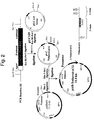
- This fragment was digested as shown in Fig. 2 with Eco RI/ Pst I, ligated into the same sites of pUC119 vector (pUC Tethered-eCG). To ensure that no errors had been introduced during the PCR, the sequence was determined.
- a nucleic acid sequence encoding a sufficient length eCG ⁇ -subunit (20-amino acid residue signal sequence and 149 amino acid residues of the matured protein) was fused with the 5'-end of the eCG ⁇ -subunit cDNA that includes the coding sequence for the mature protein, but not the signal sequence.
- the latter fragment was ligated into the unique Xho I site of the pABWN expression vector to be transfected into CHO-K1 cells.
- This expression vector was named as a pAB-tethered single chain eCG. The direction of the expression transfer vector was confirmed by restriction mapping.
- the expression vector was gene transfected into CHO-K1 cells by the liposome formulation (Lipofectamine) according to the supplier's instructions. Stable clones were selected by incubation in growth medium (Ham's F12 medium containing penicillin (50 units/ml), streptomycin (50 ⁇ g/ml), glutamine (2 mM) and 10% FCS) supplemented with G418 (800 ⁇ g/ml) in the presence of 5% CO 2 + 95% air at 37°C for 2 weeks after gene transfection.
- growth medium Ham's F12 medium containing penicillin (50 units/ml), streptomycin (50 ⁇ g/ml), glutamine (2 mM) and 10% FCS
- the supernatant of the selected cells was removed and the cells were treated with trypsin in a 125 cm 2 of tissue culture flask.
- the cells were collected and the whole RNAs were prepared by using Chomczynski's extracting method (1993).
- PCR was carried out to determine an expressing recombinant single chain eCG. 20 ⁇ g of RNA was used for the Northern blotting analysis. The eCG ⁇ -subunit and ⁇ -subunit cDNAs labeled by the random primer method as well as hybridization were used.
- the recombinant single chain eCG expressed in the supernatant was quantified using RIA according to the supplier's protocol (UCB-Bioproducts) of an anti-eCG antibody.
- eCG and the recombinant single chain eCG of the present invention were quantified using a polyclonal antibody (A540/R1H) by eCG radioimmunoassay. To each tube were added 200 ⁇ l of 0.02M phosphate buffer (0.017M Na 2 HPO 4 .
- the LH-like activities of the wild type eCG and the recombinant single chain eCG were determined using a rat Leydig cell in vitro culture system. Testes of four 60-days-old Sparague Dawley (SD) rats were cut off and decapsulated carefully. The cells were dispersed in a 199 medium containing collagenase (0.25 mg/ml) and BSA (1 mg/ml) while shaking under 150 cycles/min at 34°C for 30 minutes. After completing tubule dispersion, the tubes were stood vertically to sediment the tubule fraction at room temperature for 5 minutes. The supernatants were collected and filtered through a gauze made of Nylon, and centrifuged at 600 g for 15 minutes, and the sedimented interstitial cells were resuspended in a 199 medium.
- SD Sparague Dawley
- the bioassay of the wild type eCG and the recombinant single chain eCG was carried out using 24-well plates. Each well contained 0.5 ml of a medium containing 1 x 10 6 cells in a suspended state and 0.1 ml of the native eCG (2 to 128 ng) or a recombinant sample (2 to 128 ng) to be determined by RIA. The plates were incubated at 37°C for 4 hours while the plates were subjected to continuous shaking, then centrifuged at 2,500 rpm for 10 minutes, and the testosterone in the culture supernatant was measured by RIA mentioned below.
- This in vitro bioassay was performed based on measurement of the amount of estradiol converted from 19-hydroxy-androstene-dione by FSH induced aromatase activity in granulosa cells of 21 to 22-days-old rats. That is, a capsule (10 mm) made of a silicon containing about 10 mg of DES was implanted in SD rats to promote growth of the granulosa cells. Four days later, animals were sacrificed by cervical dislocation, ovaries were cut open and capsules were taken out. The ovarian follicles were punctured with a 27-gauge hypodermic needle and the granulosa cells were carefully expressed in a McCoy's 5a medium.
- a GAB assay medium 100 U/ml of penicillin, 100 ⁇ g/ml of streptomycin, 2 mM of L-glutamine, 1 ⁇ M of androstene-dione, 10 -7 M of DES, 30 ng/ml of hCG, 1 ⁇ g/ ⁇ l of insulin and 0.125 mM MIX in McCoy's 5a medium
- 40 ⁇ l of a sample (2 to 64 ng of native eCG or 2 to 64 ng of a recombinant sample to be determined by RIA) and 60 ⁇ l of the cell suspension.
- each portion was placed in a tube, 500 ⁇ l of an assay buffer, (0.1 M phosphate buffer (pH 7.0), 0.9% (w/v) NaCl, 0.05% (w/v) NaN 3 , 0.1% (w/v) gelatin), 100 ⁇ l of standard testosterone or estradiol (50, 100, 200, 400, 800 or 1,600 pg), 100 ⁇ l of anti-testosterone (diluted 1:1,500) or anti-estradiol (diluted 1:4,500) antiserum and 100 ⁇ l of 3 H-testosterone or 3 H-estradiol (10,000 cpm) were added.
- an assay buffer 0.1 M phosphate buffer (pH 7.0), 0.9% (w/v) NaCl, 0.05% (w/v) NaN 3 , 0.1% (w/v) gelatin
- 100 ⁇ l of standard testosterone or estradiol 50, 100, 200, 400, 800 or 1,600 pg
- the recombinant single chain eCG of the present invention was extremely similar to that of the wild type eCG (Fig. 3), but with regard to the FSH-like activity, the recombinant single chain eCG of the present invention had potent activity about 7 times than that of the wild type eCG (Fig. 4).
- the recombinant single chain eCG of the present invention can be used as a veterinary drug for animals such as laboratory animals selected from rats, mice and rabbits, or animals such as domestic animals, etc. selected from bovines, horses, pigs and sheeps.
- This veterinary drug is effective for super-ovulation, folliclar cyst, ovulation failure, ovarian subfunction, induction of postpartum estrus or hypoorchidia.
Landscapes
- Health & Medical Sciences (AREA)
- Chemical & Material Sciences (AREA)
- Endocrinology (AREA)
- Organic Chemistry (AREA)
- Life Sciences & Earth Sciences (AREA)
- Biochemistry (AREA)
- Medicinal Chemistry (AREA)
- Zoology (AREA)
- Toxicology (AREA)
- Biophysics (AREA)
- General Health & Medical Sciences (AREA)
- Genetics & Genomics (AREA)
- Gastroenterology & Hepatology (AREA)
- Molecular Biology (AREA)
- Proteomics, Peptides & Aminoacids (AREA)
- Reproductive Health (AREA)
- Peptides Or Proteins (AREA)
- Medicines That Contain Protein Lipid Enzymes And Other Medicines (AREA)
- Micro-Organisms Or Cultivation Processes Thereof (AREA)
Abstract
A novel recombinant single-stranded equine chorionic gonadotropin (eCG) having the amino acid sequence of SEQ ID NO: 5, comprising an alpha chain and a beta chain of eCG connected to each other. It has about seven times as high FSH-like activity as naturally occurring and wild type eCGs.
Description
The present invention relates to a recombinant single chain
equine chorionic gonadotropin (eCG). A recombinant single
chain eCG in which an α chain and a β chain of the eCG are tethered
to a single chain has potent FSH activity about 7 times than
that of the native eCG, and can be used advantageously as a
medicine for animals.
Native chorionic gonadotropin is a member of the glycoprotein
hormone family and is constituted by an α-subunit noncovalently
linked to a β-subunit as in luteinizing hormone (LH) or
follicle-stimulating hormone (FSH) derived from pituitary.
An equine chorionic gonadotropin (eCG) has both of the LH
activity and FSH activity, has common primary structures of
the peptides to eLH and their amino acid sequences are identical.
However, their sugar chain structures are different from each
other and thus eCG is extremely unique among the glycoprotein
hormone family.
That is, an amino acid sequence and a nucleic acid sequence
of the α-subunit of eCG are as shown in SEQ.ID. NO:1 and SEQ.ID.
NO:2, respectively, and comprise 96 amino acids having signal
peptides of 24 amino acids (J. Repred. Dev. 40, 301 (1994)).
And two asparagines at the 56th and the 82nd of the α-subunit
are both N-bond glycosylated. Incidentally, in the SEQ.ID.
NO:1. -24 to -1 are signal peptides and are not contained in
the subunits of mature.
Also, an amino acid sequence and a nucleic acid sequence of
the β-subunit of eCG are as shown in SEQ.ID. NO:3 and SEQ.ID.
NO:4, respectively, and the β-subunit eCG comprises 149 amino
acids having signal peptides of 20 amino acids (Mol. Endocrinol.
6, 951 (1992)). And asparagine at the 13th thereof is N-bond
glycosylated, and the OH groups of Ser of 4 to 11 at the molecule
C-terminus side are glycosylated (Fed. Proc. 45, 1843 (1986),
Fed. Proc. 45, 188 (1986), J. Biol. Chem. 262, 8683 (1987),
Ann. Meet Endocrinol. (Abstract) 1200 (1992)). Incidentally,
in the SEQ.ID. NO:3, -20 to -1 are signal peptides and are not
contained in the subunit of mature.
The present invention comprises a recombinant single chain eCG
represented by the amino acid sequence shown in SEQ. ID. NO:5,
in which an α-chain (an α-subunit) and a β-chain (a β-subunit)
of equine chorionic gonadotropin (eCG) are tethered to a single
chain.
The present invention is also to provide a DNA sequence
represented by SEQ.ID. NO:6 which encodes the recombinant
single chain eCG.
In the present invention, a veterinary drug containing the
above-mentioned recombinant single chain eCG can be further
provided.
The recombinant single chain eCG has substantially the same
biological activities, particularly in a luteinizing hormone
(LH)-like activity as compared with the native eCG and the
wild-type eCG (Endocrine Journal 1996, 43(5) 585-593)
synthesized by two chains, but the inventors have found that
it has a follicle-stimulating hormone (FSH)-like activity
about 7 times more potent than those of the above. Accordingly,
the present invention is to provide a novel recombinant single
chain eCG which can advantageously express hormones in
expression cell series such as CHO-K1 cells.
The amino acid sequence of the recombinant single chain eCG
according to the present invention is as shown in SEQ.ID. NO:5,
and the amino acid sequence from the 1st to the 149th
corresponds to a β-subunit, a sugar chain binds to Asn at the
13th, and a sugar chain (OCHO) also binds to seven Ser's. The
amino acid sequence from the 150th to the 245th corresponds
to an α-subunit, and sugar chains bind to Asn's at the 205th
and the 231th. Incidentally, in SEQ.ID. NO:5, -20 to -5 are
signal peptides and are not contained in the single chain eCG
of mature. The DNA sequence which encodes the recombinant
single chain eCG of the present invention is shown by SEQ.ID.
NO:6. The base sequences from 504th to the 530th are an
anti-sense of Primer 2, and the base sequences from the 507th
to the 533th are derived from Primer 3.
In the present invention, the above-mentioned recombinant
single chain eCG can be used as a veterinary drug. This
veterinary drug can be applied to laboratory animals selected
from rats, mice and rabbits, or animals such as domestic animals,
etc. selected from bovines, horses, pigs and sheeps. Also,
the veterinary drug is effective for superovulation, folliclar
cyst, ovulation failure, ovarian subfunction, induction of
postpartum estrus or hypoorehidia by administering its
effective dose.
The recombinant single chain eCG of the present invention can
be produced as mentioned below.
Nucleic acid sequence which encodes eCG α-subunit is inserted
into the 3' terminal frame of the eCG β-subunit by using the
overlapping PCR mutangenesis (Fig. 1).
The following primers were used in the construction.
PCR was carried out using previously cloning eCG α-subunit and
β-subunit cDNA as templates.
The first reaction I was carried out using Primers 1 and 2.
Primer 2 contains the first four codons of the mature α-subunit
and the five C-terminal codons of the eCG β-subunit.
In the second reaction II, Primer 3 was used. Primer 3 contains
the sequence corresponding to the last four C-terminal codons
of the eCG β-subunit and the first five codons of the matured
α-subunit.
The fragments of the reactions I and II were annealed, and PCR
of the final reaction III was carried out using primers 1 and
4 so as to generate the tethered single chain eCG. This
fragment was digested as shown in Fig. 2 with Eco RI/Pst I,
ligated into the same sites of pUC119 vector (pUC Tethered-eCG).
To ensure that no errors had been introduced during the PCR,
the sequence was determined.
With regard to the recombinant single chain eCG of the present
invention, a nucleic acid sequence encoding a sufficient
length eCG β-subunit (20-amino acid residue signal sequence
and 149 amino acid residues of the matured protein) was fused
with the 5'-end of the eCG α-subunit cDNA that includes the
coding sequence for the mature protein, but not the signal
sequence. Following Xho I/Sal I digestion (834 bp), the latter
fragment was ligated into the unique Xho I site of the pABWN
expression vector to be transfected into CHO-K1 cells. This
expression vector was named as a pAB-tethered single chain eCG.
The direction of the expression transfer vector was confirmed
by restriction mapping.
The expression vector was gene transfected into CHO-K1 cells
by the liposome formulation (Lipofectamine) according to the
supplier's instructions. Stable clones were selected by
incubation in growth medium (Ham's F12 medium containing
penicillin (50 units/ml), streptomycin (50 µg/ml), glutamine
(2 mM) and 10% FCS) supplemented with G418 (800 µg/ml) in the
presence of 5% CO2 + 95% air at 37°C for 2 weeks after gene
transfection.
The supernatant of the selected cells was removed and the cells
were treated with trypsin in a 125 cm2 of tissue culture flask.
The cells were collected and the whole RNAs were prepared by
using Chomczynski's extracting method (1993).
PCR was carried out to determine an expressing recombinant
single chain eCG. 20 µg of RNA was used for the Northern
blotting analysis. The eCG α-subunit and β-subunit cDNAs
labeled by the random primer method as well as hybridization
were used.
After incubation of selected stable cells (1 × 10⁶) in 20 ml
CHO-S-SFM-II containing penicillin (50 units/ml) and
streptomycin (50 µg/ml) at 37°C for 48 hours, the culture
supernatant were collected and centrifuged at 100,000 × g, 4°C
for 60 min to remove the cell debris.
The recombinant single chain eCG expressed in the supernatant
was quantified using RIA according to the supplier's protocol
(UCB-Bioproducts) of an anti-eCG antibody.
Known wild type eCG and the recombinant single chain eCG of
the present invention were quantified using a polyclonal
antibody (A540/R1H) by eCG radioimmunoassay. To each tube
were added 200 µl of 0.02M phosphate buffer (0.017M Na2HPO4.
12H2O, 0.003M KH2PO4, 0.9% (w/v) NaCl, 0.5% (w/v) BSA, 0.02%
(w/v) NaN3), 100 µl of native eCG standard (6.25, 12.5, 25,
50, 100, 200 or 400 ng), 100 µl of rabbit anti-eCG polyclonal
antibody (7 µg/ml) and 100 µl of 125I eCG tracer (20,000 cpm/100
µl) labeled by the chloramine T method (Katayama et al, 1990).
After incubation at 4°C overnight, 500 µl of anti-rabbit
precipitating antibody was added to the respective tubes and
each mixture was incubated for 30 minutes. Then, 2 ml of the
phosphate buffer was added to each mixture, each mixture was
centrifuged at 3,000 rpm for 15 minutes, the supernatant was
suctioned and a count was measured.
The LH-like activities of the wild type eCG and the recombinant
single chain eCG were determined using a rat Leydig cell in
vitro culture system. Testes of four 60-days-old Sparague
Dawley (SD) rats were cut off and decapsulated carefully. The
cells were dispersed in a 199 medium containing collagenase
(0.25 mg/ml) and BSA (1 mg/ml) while shaking under 150
cycles/min at 34°C for 30 minutes. After completing tubule
dispersion, the tubes were stood vertically to sediment the
tubule fraction at room temperature for 5 minutes. The
supernatants were collected and filtered through a gauze made
of Nylon, and centrifuged at 600 g for 15 minutes, and the
sedimented interstitial cells were resuspended in a 199
medium.
The bioassay of the wild type eCG and the recombinant single
chain eCG was carried out using 24-well plates. Each well
contained 0.5 ml of a medium containing 1 x 10⁶ cells in a
suspended state and 0.1 ml of the native eCG (2 to 128 ng) or
a recombinant sample (2 to 128 ng) to be determined by RIA.
The plates were incubated at 37°C for 4 hours while the plates
were subjected to continuous shaking, then centrifuged at
2,500 rpm for 10 minutes, and the testosterone in the culture
supernatant was measured by RIA mentioned below.
This in vitro bioassay was performed based on measurement of
the amount of estradiol converted from 19-hydroxy-androstene-dione
by FSH induced aromatase activity in granulosa
cells of 21 to 22-days-old rats. That is, a capsule (10 mm)
made of a silicon containing about 10 mg of DES was implanted
in SD rats to promote growth of the granulosa cells. Four days
later, animals were sacrificed by cervical dislocation,
ovaries were cut open and capsules were taken out. The ovarian
follicles were punctured with a 27-gauge hypodermic needle and
the granulosa cells were carefully expressed in a McCoy's 5a
medium. These cells were centrifuged at 800 rpm for 5 minutes,
the supernatant was removed, washed with a fresh McCoy's 5a
medium and centrifuged. These cells were suspended again in
the medium to produce a final concentration of 50,000 to 80,000
viable cells/60 µl. To each well of 24-well plates was added
400 µl of a GAB assay medium (100 U/ml of penicillin, 100 µg/ml
of streptomycin, 2 mM of L-glutamine, 1 µM of androstene-dione,
10-7 M of DES, 30 ng/ml of hCG, 1 µg/µl of insulin and 0.125
mM MIX in McCoy's 5a medium), and then, to the well were added
40 µl of a sample (2 to 64 ng of native eCG or 2 to 64 ng of
a recombinant sample to be determined by RIA) and 60 µl of the
cell suspension. These cells were cultured in an incubator
under an atmosphere of 95% air + 5% CO2 at 37°C for 3 days,
then these plates were removed from the incubator and
centrifuged at 1,000 rpm for 3 minutes, and the estradiol
concentrations in the culture supernatant were measured by RIA
mentioned below.
Concentrations of testosterone and estradiol secreted into
culture supernatant were measured by RIA using the culture
supernatant. The culture supernatant was extracted twice with
diethyl ether, the extract was diluted with 1 ml of acetone,
and the mixture was divided into two portions. Each portion
was placed in a tube, 500 µl of an assay buffer, (0.1 M phosphate
buffer (pH 7.0), 0.9% (w/v) NaCl, 0.05% (w/v) NaN3, 0.1% (w/v)
gelatin), 100 µl of standard testosterone or estradiol (50,
100, 200, 400, 800 or 1,600 pg), 100 µl of anti-testosterone
(diluted 1:1,500) or anti-estradiol (diluted 1:4,500)
antiserum and 100 µl of 3H-testosterone or 3H-estradiol (10,000
cpm) were added. After incubating at 4°C overnight, 200 µl
of an activated charcoal liquid (0.625% (w/v) Norita A and
0.0625% (w/v) dextrane T-70 in the assay buffer) was added and
incubation was carried out at 4°C for 20 minutes. The cells
were centrifuged at 3,000 rpm and 4°C for 20 minutes, and the
supernatant was decanted into vials, then, 3 ml of scintillator
(4.2% (v/v) Liquifluor TM/toluene) was added thereto and
radioactivity was measured by using a liquid scintillation
counter.
With regard to the LH-like activity, the recombinant single
chain eCG of the present invention was extremely similar to
that of the wild type eCG (Fig. 3), but with regard to the
FSH-like activity, the recombinant single chain eCG of the
present invention had potent activity about 7 times than that
of the wild type eCG (Fig. 4).
Incidentally, relative promotion activity obtained from EC50
values is shown in Table 1.
| Hormone expression in CHO-K1 cells | |||
| Hormone expression (ng/100 µl) | In vitro activity (%) | ||
| LH | FSH | ||
| Recombinant single chain-eCG | 201 ± 22 | 100 | 684.9 |
| Wild type eCG | 208 ± 29 | 100 | 100 |
The recombinant single chain eCG of the present invention can
be used as a veterinary drug for animals such as laboratory
animals selected from rats, mice and rabbits, or animals such
as domestic animals, etc. selected from bovines, horses, pigs
and sheeps. This veterinary drug is effective for super-ovulation,
folliclar cyst, ovulation failure, ovarian
subfunction, induction of postpartum estrus or hypoorchidia.
Claims (5)
- A recombinant single chain eCG represented by the amino acid sequence shown in SEQ.ID. NO:5 in which an α-chain and a β-chain of equine chorionic gonadotropin (eCG) are tethered to a single chain.
- A DNA sequence represented by SEQ.ID. NO:6 encoding the recombinant single chain eCG according to Claim 1.
- A veterinary drug containing the recombinant single chain eCG according to Claim 1.
- The veterinary drug according to Claim 3, wherein the animals to be applied to is laboratory animals selected from rats, mice and rabbits, or domestic animals selected from bovines, horses, pigs and sheeps.
- The veterinary drug according to Claim 3, which drug is used superovulation, folliclar cyst, ovulation failure, ovarian subfunction, induction of postpartum estrus or hypoorchidia.
Applications Claiming Priority (3)
| Application Number | Priority Date | Filing Date | Title |
|---|---|---|---|
| JP30004196 | 1996-11-12 | ||
| JP30004196 | 1996-11-12 | ||
| PCT/JP1997/004113 WO1998021238A1 (en) | 1996-11-12 | 1997-11-12 | Recombinant single-stranded equine chorionic gonadotropin |
Publications (2)
| Publication Number | Publication Date |
|---|---|
| EP0974599A1 true EP0974599A1 (en) | 2000-01-26 |
| EP0974599A4 EP0974599A4 (en) | 2002-06-12 |
Family
ID=17879994
Family Applications (1)
| Application Number | Title | Priority Date | Filing Date |
|---|---|---|---|
| EP97912426A Withdrawn EP0974599A4 (en) | 1996-11-12 | 1997-11-12 | EQUINE, SINGLE-STRANDED AND RECOMBINANT CHORIONIC GONADOTROPHIN |
Country Status (3)
| Country | Link |
|---|---|
| EP (1) | EP0974599A4 (en) |
| AU (1) | AU4964197A (en) |
| WO (1) | WO1998021238A1 (en) |
Cited By (7)
| Publication number | Priority date | Publication date | Assignee | Title |
|---|---|---|---|---|
| KR20010077538A (en) * | 2000-02-03 | 2001-08-20 | 김강권 | Single-chain human chorionicgonadotropin(hCG) and method for producing the same |
| WO2002030978A1 (en) * | 2000-10-06 | 2002-04-18 | Regeneron Pharmaceuticals, Inc. | Polypeptides, methods of making, and uses thereof |
| DE102007025107A1 (en) * | 2007-05-23 | 2008-12-04 | Universität Leipzig | Medicaments for the treatment of fertility and pregnancy disorders and immunological diseases and transplants for use in veterinary medicine, in particular in horses, and methods of production |
| WO2017112987A1 (en) * | 2015-12-28 | 2017-07-06 | Ouro Fino Saúde Animal Participações S.A. | Process of producing a recombinant equine chorionic gonadotropin (recg), veterinary composition and use thereof |
| WO2017161427A1 (en) * | 2016-03-22 | 2017-09-28 | Universidade De São Paulo - Usp | Method for producing and purifying hybrid or non-hybrid recombinant glycoprotein hormones, hybrid or non-hybrid recombinant glycoprotein hormones, expression vectors and uses of the recombinant glycoprotein hormones |
| EP3398609A4 (en) * | 2015-12-28 | 2019-05-08 | Ouro Fino Saúde Animal Participações S.A. | PROCESS FOR THE PRODUCTION OF RECOMBINANT EQUINE CHORIONIC CHRONIC GONADOTROPHIN (RECG), VETERINARY COMPOSITION AND USE |
| WO2020172728A1 (en) | 2019-02-28 | 2020-09-03 | Ouro Fino Saúde Animal Participações S.A. | Biologically active recombinant equine chorionic gonadotropin (recg) and process for obtaining same, veterinary composition and use |
Families Citing this family (2)
| Publication number | Priority date | Publication date | Assignee | Title |
|---|---|---|---|---|
| DE602004030546D1 (en) | 2003-03-04 | 2011-01-27 | Aspenbio Pharma Inc | LH for use in maintaining one or more pregnancies by inducing the formation of the secondary corpus luteum. |
| CA3149596A1 (en) * | 2019-08-30 | 2021-03-04 | Juan Manuel Perez Saez | Recombinant chorionic gonadotropin, procedure for preparation, pharmaceutical compositions and uses of the same |
Family Cites Families (2)
| Publication number | Priority date | Publication date | Assignee | Title |
|---|---|---|---|---|
| CA2183564C (en) * | 1994-02-18 | 2010-07-13 | William R. Moyle | Methods for altering fertility |
| DK0725795T3 (en) * | 1994-08-12 | 2004-05-17 | Univ Washington | Single-chain form of glycoprotein-hormone quartet |
-
1997
- 1997-11-12 AU AU49641/97A patent/AU4964197A/en not_active Abandoned
- 1997-11-12 EP EP97912426A patent/EP0974599A4/en not_active Withdrawn
- 1997-11-12 WO PCT/JP1997/004113 patent/WO1998021238A1/en not_active Ceased
Cited By (8)
| Publication number | Priority date | Publication date | Assignee | Title |
|---|---|---|---|---|
| KR20010077538A (en) * | 2000-02-03 | 2001-08-20 | 김강권 | Single-chain human chorionicgonadotropin(hCG) and method for producing the same |
| WO2002030978A1 (en) * | 2000-10-06 | 2002-04-18 | Regeneron Pharmaceuticals, Inc. | Polypeptides, methods of making, and uses thereof |
| DE102007025107A1 (en) * | 2007-05-23 | 2008-12-04 | Universität Leipzig | Medicaments for the treatment of fertility and pregnancy disorders and immunological diseases and transplants for use in veterinary medicine, in particular in horses, and methods of production |
| WO2008142162A3 (en) * | 2007-05-23 | 2009-02-12 | Univ Leipzig | Pharmaceutical agent for the treatment of fertility and gestation disorders, immunological diseases, and transplantation for use in veterinary medicine, particularly in horses, and methods for the production and treatment monitoring thereof |
| WO2017112987A1 (en) * | 2015-12-28 | 2017-07-06 | Ouro Fino Saúde Animal Participações S.A. | Process of producing a recombinant equine chorionic gonadotropin (recg), veterinary composition and use thereof |
| EP3398609A4 (en) * | 2015-12-28 | 2019-05-08 | Ouro Fino Saúde Animal Participações S.A. | PROCESS FOR THE PRODUCTION OF RECOMBINANT EQUINE CHORIONIC CHRONIC GONADOTROPHIN (RECG), VETERINARY COMPOSITION AND USE |
| WO2017161427A1 (en) * | 2016-03-22 | 2017-09-28 | Universidade De São Paulo - Usp | Method for producing and purifying hybrid or non-hybrid recombinant glycoprotein hormones, hybrid or non-hybrid recombinant glycoprotein hormones, expression vectors and uses of the recombinant glycoprotein hormones |
| WO2020172728A1 (en) | 2019-02-28 | 2020-09-03 | Ouro Fino Saúde Animal Participações S.A. | Biologically active recombinant equine chorionic gonadotropin (recg) and process for obtaining same, veterinary composition and use |
Also Published As
| Publication number | Publication date |
|---|---|
| AU4964197A (en) | 1998-06-03 |
| WO1998021238A1 (en) | 1998-05-22 |
| EP0974599A4 (en) | 2002-06-12 |
Similar Documents
| Publication | Publication Date | Title |
|---|---|---|
| ES2468318T3 (en) | Recombinant FSH that includes sialylation in alpha 2,3- and alpha 2,6 | |
| ES2704878T3 (en) | Composition for controlled ovarian stimulation | |
| JP7161511B2 (en) | Composition for treatment of infertility | |
| EP3611185A1 (en) | Pharmaceutical preparation | |
| EP0531407B1 (en) | Analogs of glycoprotein hormones having altered immunological characteristics, efficacy and/or receptor specificity | |
| EP3434686A1 (en) | Method for producing and purifying hybrid or non-hybrid recombinant glycoprotein hormones, hybrid or non-hybrid recombinant glycoprotein hormones, expression vectors and uses of the recombinant glycoprotein hormones | |
| El-Deiry et al. | Site-directed mutagenesis of the human chorionic gonadotropin β-subunit: bioactivity of a heterologous hormone, bovine α-human des-(122–145) β | |
| WO1998021238A1 (en) | Recombinant single-stranded equine chorionic gonadotropin | |
| EP0575357B1 (en) | Human follicle stimulating hormone receptor | |
| WO1990002757A1 (en) | Heteropolymeric protein | |
| US6455282B1 (en) | Cells, vectors and methods for producing biologically active TSH | |
| JPWO1998021238A1 (en) | Recombinant single-chain equine chorionic gonadotropin | |
| CN119490603B (en) | A long-acting recombinant single-chain follicle-stimulating hormone fusion protein, gene, preparation method and application thereof | |
| AU2019464037A1 (en) | Recombinant chorionic gonadotropin, procedure for preparation, pharmaceutical compositions and uses of the same | |
| US20240228571A9 (en) | Process of production and purification of hybrid or non-hybrid recombinant glycoprotein hormones, hybrid or non-hybrid recombinant glycoprotein hormones, expression vectors and uses of recombinant glycoprotein hormones | |
| Russell et al. | The N-terminal peptide of the inhibin α subunit: What are its endocrine and paracrine roles? | |
| JPH1036398A (en) | Method for producing gonadotropin | |
| HK40073204A (en) | Recombinant chorionic gonadotropin, procedure for preparation, pharmaceutical compositions and uses of the same | |
| HK40068781A (en) | Recombinant fsh including alpha 2,3- and alpha 2,6-sialylation | |
| HK40073204B (en) | Recombinant chorionic gonadotropin, procedure for preparation, pharmaceutical compositions and uses of the same | |
| HK40020346A (en) | Pharmaceutical preparation | |
| JPH06121687A (en) | Baculovirus-expressed porcine FSH (follicle stimulating hormone) and method for producing the same | |
| JPH1036285A (en) | Novel gonadotropin and method for producing the same | |
| HK1233276B (en) | Recombinant fsh including alpha 2,3- and alpha 2,6-sialylation | |
| HK1227049B (en) | Recombinant fsh including alpha 2,3- and alpha 2,6-sialylation |
Legal Events
| Date | Code | Title | Description |
|---|---|---|---|
| PUAI | Public reference made under article 153(3) epc to a published international application that has entered the european phase |
Free format text: ORIGINAL CODE: 0009012 |
|
| 17P | Request for examination filed |
Effective date: 19990611 |
|
| AK | Designated contracting states |
Kind code of ref document: A1 Designated state(s): DE FR GB IT |
|
| A4 | Supplementary search report drawn up and despatched |
Effective date: 20020503 |
|
| AK | Designated contracting states |
Kind code of ref document: A4 Designated state(s): DE FR GB IT |
|
| STAA | Information on the status of an ep patent application or granted ep patent |
Free format text: STATUS: THE APPLICATION IS DEEMED TO BE WITHDRAWN |
|
| 18D | Application deemed to be withdrawn |
Effective date: 20020601 |