EP0973103B1 - Method and device for controlling the processing of an electronic document - Google Patents
Method and device for controlling the processing of an electronic document Download PDFInfo
- Publication number
- EP0973103B1 EP0973103B1 EP99401479A EP99401479A EP0973103B1 EP 0973103 B1 EP0973103 B1 EP 0973103B1 EP 99401479 A EP99401479 A EP 99401479A EP 99401479 A EP99401479 A EP 99401479A EP 0973103 B1 EP0973103 B1 EP 0973103B1
- Authority
- EP
- European Patent Office
- Prior art keywords
- document
- entropy
- printer
- configuration
- processing
- Prior art date
- Legal status (The legal status is an assumption and is not a legal conclusion. Google has not performed a legal analysis and makes no representation as to the accuracy of the status listed.)
- Expired - Lifetime
Links
Images

Classifications
-
- H—ELECTRICITY
- H04—ELECTRIC COMMUNICATION TECHNIQUE
- H04N—PICTORIAL COMMUNICATION, e.g. TELEVISION
- H04N1/00—Scanning, transmission or reproduction of documents or the like, e.g. facsimile transmission; Details thereof
- H04N1/40—Picture signal circuits
- H04N1/40062—Discrimination between different image types, e.g. two-tone, continuous tone
-
- G—PHYSICS
- G06—COMPUTING OR CALCULATING; COUNTING
- G06F—ELECTRIC DIGITAL DATA PROCESSING
- G06F40/00—Handling natural language data
- G06F40/10—Text processing
Definitions
- the present invention concerns a method and device for controlling the processing of an electronic document. It should be stated here that an electronic document consists of one or more electronic files.
- peripherals computer or office machinery for data processing, acquisition or representation
- the operating mode used does not then directly take account of the characteristics of the document to be processed and/or of the constraints for processing this document by this peripheral.
- the constraints imposed by the printing of a document including images for example the constraints of the duration of printing, the restoration of shades or of the quantity of information to be processed, are not directly taken into account by the computer systems in order to fix the printing parameters.
- US 5 767 978 discloses an image an image segmentation system in which different areas of an image are rendered differently depending on whether the area is determined to be an image region, a pictorial region, or a graphic image. The areas are classified based on edge detection and image intensity calculations.
- US 4 668 995 discloses an image reproduction device that classifies areas of an image either text or image depending on values of pixels within the area.
- the present invention sets out to remedy these drawbacks.
- a method of configuring a printer for processing data of a document including:
- a pilot is a software module in a computer system including a processor, a module dedicated to communication with another system having its operating software for performing a set of elementary operations.
- the pilot translates a complex operation required by a high-level software application into a set of elementary operations which can be executed by the peripheral.
- Configuring a pilot amounts to fixing the value of each parameter of the said translation.
- These parameters concern, for example, the translation of the character font into a series of dots able to be formed by the printer, or of the document colour palette into a colour palette of the printer.
- the operation of determining a quantity representing symbol scatter includes an entropy determination operation.
- the quantities considered are easy to determine, and accurately discriminate the content of the document. This is because a document including only text has very low entropy whilst documents including coded images (in particular when the coding includes a so-called "entropic" coding) have very high entropy.
- the method as briefly disclosed above includes an operation of determining parts of the document and, for each of the said parts:
- the choice of the input/output means and/or the configuration of the input/output pilot can be optimised for each part of the document to be processed.
- a device for configuring a printer for processing data of a document comprising:
- the file processing consists of an application for printing data represented by this file.
- Figure 1 depicts the main components of an electronic device 101 implementing the present invention.
- This device 101 has an architecture which is known in the field of programmable electronic systems, based on the use of components connected together by a bus 102 and of a central unit 100 controlled by a program, a simplified algorithm of which was presented in connection with Figure 2 .
- these elements are conjointly associated in a personal computer, of a known type, for example of a type operating with a PENTIUM (registered trade mark) microprocessor 100 from the American company INTEL (registered trade mark), which has at least one random access memory 104, a non-volatile memory 105, a screen 106, a mouse 110 and a keyboard 111.
- PENTIUM registered trade mark
- INTEL registered trade mark
- An input/output port 103 receives the digital information coming from the user, by means of the keyboard 111, the mouse 110, a touch screen (not shown) or any other communication means, and transmits it, under the control of the central unit 100, to a random access memory RAM 104. In addition, the input/output port 103 transmits, under the control of the central unit 100:
- the random access memory RAM 104 contains registers intended to receive parameters, variables, digital data and intermediate processing values, as well as the databases mentioned above.
- the non-volatile memory 105 stores the program which enables the device and, in particular, the central unit 100, to operate.
- the central unit 100 of a known type, for example consisting of a microcontroller, controls the operation of the principal components of the information transmission device.
- the central unit initialises the device illustrated in Figure 1 , by implementing, for example, the known procedures for starting up the WINDOWS 95 (registered trade mark) operating system.
- the user enters an instruction for printing a file "file" stored in the non-volatile memory 105, using the mouse 110 or keyboard 111.
- the central unit 100 breaks the document down into pages to be printed. To this end, the central unit 100 accesses a segment of the file "file" where this information is arranged, or, according to a variant, opens an application able to enable said file to be printed, does the page makeup of said file, and collects the number of pages determined by said operation.
- the central unit 100 takes a following page into consideration.
- the first page of the document is taken into consideration.
- the central unit 100 determines a quantity representing the symbol scatter in the page under consideration.
- the central unit 100 determines, taking into account the bytes which represent the symbols in the document, the entropy of the page under consideration, in the following manner:
- the central unit 100 determines whether or not the said entropy is greater than a first threshold H 1 .
- H 1 6 .
- the central unit 100 determines whether or not the said entropy is greater than a second threshold H 2 .
- H 2 7.
- the content thus determined is stored in the register "content" of the random access memory 104.
- test 212 the central unit 100 determines whether or not the last page has been considered.
- operation 202 is reiterated.
- operation 204 is reiterated.
- a single threshold is used and the content "text and image" is not determined.
- This variant is suited particularly to the printing of document with a printer which does not have a configuration especially adapted to the "mixture of text and image” mode.
- more than two thresholds are used for associating a document content with each operating mode of a peripheral, for example with different data compression software packages, in order to determine the presence of sounds, colours, etc.
- the determination of the content does not only take account of the value of the entropy but also of at least one other index.
Landscapes
- Engineering & Computer Science (AREA)
- Theoretical Computer Science (AREA)
- Computational Linguistics (AREA)
- Health & Medical Sciences (AREA)
- Artificial Intelligence (AREA)
- Audiology, Speech & Language Pathology (AREA)
- Signal Processing (AREA)
- General Health & Medical Sciences (AREA)
- Physics & Mathematics (AREA)
- General Engineering & Computer Science (AREA)
- General Physics & Mathematics (AREA)
- Multimedia (AREA)
- Accessory Devices And Overall Control Thereof (AREA)
- Document Processing Apparatus (AREA)
Description
- The present invention concerns a method and device for controlling the processing of an electronic document. It should be stated here that an electronic document consists of one or more electronic files.
- In the computer systems known at the present time, the peripherals (computer or office machinery for data processing, acquisition or representation) generally have parametrizable operating modes, the parameters of which are fixed:
- either at the time of manufacturer of the peripheral,
- or, by default, by the central unit of the computer system,
- or by a dialogue between the user and this computer system.
- The operating mode used does not then directly take account of the characteristics of the document to be processed and/or of the constraints for processing this document by this peripheral.
- In particular, in the case of a peripheral consisting of a printer, the constraints imposed by the printing of a document including images, for example the constraints of the duration of printing, the restoration of shades or of the quantity of information to be processed, are not directly taken into account by the computer systems in order to fix the printing parameters.
-
US 5 767 978 discloses an image an image segmentation system in which different areas of an image are rendered differently depending on whether the area is determined to be an image region, a pictorial region, or a graphic image. The areas are classified based on edge detection and image intensity calculations. -
US 4 668 995 discloses an image reproduction device that classifies areas of an image either text or image depending on values of pixels within the area. - "Modern Digital an Analog Communication Systems" by B.P. Lathi and published in 1983 by CBS College Publishing discloses background information about the concept of entropy as the average information in a message and its calculation.
- The present invention sets out to remedy these drawbacks.
- According to a first aspect of the present invention there is provided a method of configuring a printer for processing data of a document, including:
- an entropy determination operation of determining an entropy quantity related to the said document,
- an operation of comparing said entropy quantity with at least one predetermined value, and
- a configuration operation during which the configuration of said printer intended to implement processing of the document is determined taking into account the result of each said comparison.
- the content of a file corresponds to a format of the data which it contains. By way of example, this content may include text, graphics (or drawings) and/or images;
- a pilot configuration concerns both:
- a pilot of an input/output means, which is configured, and
- several pilots of such means, which are chosen and possibly which are configured; and
- the approximate methods based on estimations form part of the methods referred to as heuristic in the literature and make reference to decision criteria, methods or principles used for choosing which of various alternatives is the most effective for achieving an aim. A heuristic is a compromise between on the one hand the need to use simple and/or rapid criteria and on the other hand to discriminate the best choice correctly.
- Thus the result of the choice can prove to be ill suited to the processing to be carried out, unlike exact determination methods, which determine a content in a certain manner.
- The reader can refer to the book by Judea Pearl, "Heuristics, intelligent search strategies for computer problem solving", published by Addison-Wesley Publishing Company, for more information on the concepts of heuristics and approximate determination.
- It should be noted here that, in the state of the art known at the date of the present invention, a pilot is a software module in a computer system including a processor, a module dedicated to communication with another system having its operating software for performing a set of elementary operations.
- The pilot translates a complex operation required by a high-level software application into a set of elementary operations which can be executed by the peripheral.
- Configuring a pilot amounts to fixing the value of each parameter of the said translation. These parameters concern, for example, the translation of the character font into a series of dots able to be formed by the printer, or of the document colour palette into a colour palette of the printer.
- Thus, in some embodiments, in order to choose the correct printer configuration:
- the document is analysed in order to determine at least one quantity respectively the symbol scatter belonging to said document, as the entropy,
- an estimation of the content of the file is then deduced therefrom, text, text and image, or images,
- at least one printer suited to this content is determined, which is configured for printing all or part of this document, and
- the printer is configured with the configuration data.
- It should be stated here that the printer configuration concerns all the operating parameters of the printer.
- In the case of the printing of a document, the invention makes it possible:
- to improve the print chain, and
- automatically to choose the correct configuration of this printer.
- According to particular characteristics, the operation of determining a quantity representing symbol scatter includes an entropy determination operation.
- By virtue of these provisions, the quantities considered are easy to determine, and accurately discriminate the content of the document. This is because a document including only text has very low entropy whilst documents including coded images (in particular when the coding includes a so-called "entropic" coding) have very high entropy.
- According to particular characteristics, the method as briefly disclosed above includes an operation of determining parts of the document and, for each of the said parts:
- an entropy determination operation related to the said document part to determine an entropy quantity,
- an operation of comparing each entropy quantity with at least one predetermined value, and
- a configuration determination operation during which the configuration of the printer intended to implement the processing on the said document part is determined taking into account the result of each said comparison.
- By virtue of these provisions, for the processing of each part, for example each page, the choice of the input/output means and/or the configuration of the input/output pilot can be optimised for each part of the document to be processed.
- According to a second aspect of the present invention, there is provided a device for configuring a printer for processing data of a document, comprising:
- a means for determining at least one entropy quantity related to the said document,
- a means of comparing said entropy quantity with at least one predetermined value, and
- a computer peripheral configuration means adapted to configure the printer intended to implement the processing of the document taking into account the result of said comparison.
- An embodiment of the present invention will now be described, by way of example only, with reference to the accompanying drawings in which:
-
Figure 1 depicts a device adapted to implement the present invention, and -
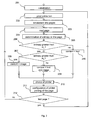
Figure 2 depicts a flow diagram for the operation of the device illustrated inFigure 1 . - In the embodiment described and depicted, the file processing consists of an application for printing data represented by this file.
-
Figure 1 depicts the main components of anelectronic device 101 implementing the present invention. Thisdevice 101 has an architecture which is known in the field of programmable electronic systems, based on the use of components connected together by abus 102 and of acentral unit 100 controlled by a program, a simplified algorithm of which was presented in connection withFigure 2 . - For example, these elements are conjointly associated in a personal computer, of a known type, for example of a type operating with a PENTIUM (registered trade mark)
microprocessor 100 from the American company INTEL (registered trade mark), which has at least onerandom access memory 104, anon-volatile memory 105, ascreen 106, amouse 110 and akeyboard 111. - An input/
output port 103 receives the digital information coming from the user, by means of thekeyboard 111, themouse 110, a touch screen (not shown) or any other communication means, and transmits it, under the control of thecentral unit 100, to a randomaccess memory RAM 104. In addition, the input/output port 103 transmits, under the control of the central unit 100: - to one of the
printers 107, which is a monochrome laser printer, or 109, which is an ink jet printer using different operating modes, some of which are adapted to monochrome printing and others to polychrome printing, the data frames intended to control the printer selected in order to print each page of the document to be printed, and - to the
screen 106, the data intended to be displayed. - The random
access memory RAM 104, of a known type, contains registers intended to receive parameters, variables, digital data and intermediate processing values, as well as the databases mentioned above. - The
non-volatile memory 105, of a known type, stores the program which enables the device and, in particular, thecentral unit 100, to operate. Thecentral unit 100, of a known type, for example consisting of a microcontroller, controls the operation of the principal components of the information transmission device. - In
Figure 2 , operations and tests successively performed by thecentral unit 100 can be seen. - During an
operation 201, the central unit initialises the device illustrated inFigure 1 , by implementing, for example, the known procedures for starting up the WINDOWS 95 (registered trade mark) operating system. - During an
operation 202, the user enters an instruction for printing a file "file" stored in thenon-volatile memory 105, using themouse 110 orkeyboard 111. - During an
operation 203, thecentral unit 100 breaks the document down into pages to be printed. To this end, thecentral unit 100 accesses a segment of the file "file" where this information is arranged, or, according to a variant, opens an application able to enable said file to be printed, does the page makeup of said file, and collects the number of pages determined by said operation. - During an
operation 204, thecentral unit 100 takes a following page into consideration. During the first iteration ofoperation 204, the first page of the document is taken into consideration. - During an
operation 205, thecentral unit 100 determines a quantity representing the symbol scatter in the page under consideration. - To this end, the
central unit 100 determines, taking into account the bytes which represent the symbols in the document, the entropy of the page under consideration, in the following manner: - H is the negative of the sum, for i from 0 to 255, of the products of the rate of appearance of the symbol represented by the byte i, in the page under consideration, and the logarithm to the base 2 of this rate.
- It should be stated here that the rate of appearance of a symbol represented by the byte i, appearing Ni times in a page including N symbols, is equal to Nl /N.
- During a
test 206, thecentral unit 100 determines whether or not the said entropy is greater than a first threshold H1. In the present case H1 = 6. - When the result of the
test 206 is positive, during atest 207, thecentral unit 100 determines whether or not the said entropy is greater than a second threshold H2. In the present case H2 = 7. - When the result of the
test 206 is negative, the page under consideration is allocated a characterisation "text", during anoperation 215. - When the result of the
test 207 is negative, the page under consideration is allocated a characterisation "text and image" during anoperation 208. - When the result of
test 207 is positive, the page under consideration is allocated a characterisation "image", during anoperation 209. - This is because the inventors discovered that the entropy represents the content of a document, text or image.
- By way of example, the following table gives a measurement of entropy for documents which are the most usual at the date of filing of the present patent application. In this table the words WORD and POWERPOINT are registered trade marks.
DOCUMENT ENTROPY Text (WORD ©) 3.2 bits/byte Text and graphics (POWERPOINT©) 3.9 bits/byte Text and image (POWERPOINT©) 6.4 bits/byte GIF image (in a POWERPOINT©) document 7.2 bits/byte in POWERPOINT © format) TIFF image 7.8 bits/byte JPEG image 7.9 bits/byte - The content thus determined is stored in the register "content" of the
random access memory 104. - In order to determine the values given above, the inventors used the following computer configuration:
- a so-called "IBM PC compatible" computer having an INTEL PENTIUM processor, with a 100 megahertz clock (IBM, INTEL and PENTIUM are registered trade marks), and a 16 megabyte random access memory RAM,
- using the WINDOWS 95 operating system sold by MICROSOFT (WINDOWS, WINDOWS 95 and MICROSOFT are registered trade marks), and
- sets of test documents commonly referred to as "benchmarks".
- Then, the choice of the printer best suited to the printing of the assumed content of the file is made,
operation 210, and the pilot of this printer is configured,operation 211, taking account of the content of the file "file". To this end, when each printer is installed, a question is posed to the user so that the latter indicates, according to known procedures for dialoging with the device, which printer and which printer configuration is most suited to each document content. - Next, the relevant page of the document is printed by the said printer in said configuration.
- Next, during
test 212, thecentral unit 100 determines whether or not the last page has been considered. When the result oftest 212 is positive,operation 202 is reiterated. When the result oftest 212 is negative,operation 204 is reiterated. - According to a first variant, not shown, a single threshold is used and the content "text and image" is not determined. This variant is suited particularly to the printing of document with a printer which does not have a configuration especially adapted to the "mixture of text and image" mode.
According to a second variant, not shown, more than two thresholds are used for associating a document content with each operating mode of a peripheral, for example with different data compression software packages, in order to determine the presence of sounds, colours, etc. - According to a third variant, not shown, the determination of the content does not only take account of the value of the entropy but also of at least one other index.
Claims (9)
- A Method of configuring a printer for processing data of a document, characterized in that it includes:- an entropy determination operation of determining an entropy quantity related to the said document (205),- an operation of comparing said entropy quantity with at least one predetermined value (206, 207), and- a configuration operation (210, 211) during which the configuration of said printer intended to implement processing of the document is determined taking into account the result of each said comparison.
- A Method according to claim 1, characterized in that during said entropy determination operation (205), said quantity representing entropy is equal to the negative of the sum, for i from 0 to 255, of the products of the rate of appearance of the symbol represented by the byte i in the page under consideration, and the logarithm to the base 2 of this rate.
- A Method according to claims 1 or 2, characterized in that it includes an operation of determining parts of the document (203) and, for each of the said parts:- an entropy determination operation related to the said document part to determine an entropy quantity (205),- an operation of comparing each entropy quantity with at least one predetermined value (206, 207), and- a configuration determination operation during which the configuration of the printer intended to implement the processing on the said document part (210, 211)is determined taking into account the result of each said comparison.
- A Device for configuring a printer for processing data of a document, characterized in that it includes:- a means for determining at least one entropy quantity related to the said document (100, 104, 105),- a means of comparing said entropy quantity with at least one predetermined value (100, 104, 105), and- a computer peripheral configuration means adapted to configure the printer intended to implement the processing of the document (100, 104, 105) taking into account the result of said comparison.
- A Device according to claim 4, characterized in that the means of determining a quantity representing entropy (100, 104, 105) is adapted so that the said quantity representing entropy is equal to the negative of the sum, for i from 0 to 255, of the products of the rate of appearance of the symbol represented by the byte i, in the page under consideration and the logarithm to the base 2 of this rate.
- A Device according to any one of claims 4 and 5, characterized in that it has means of determining parts of the document (100, 104, 105), the means of determining at least one quantity representing entropy relating to said document being adapted to determine entropy quantities for each part of the document, the comparison means being adapted to compare each entropy quantity of each part of the document with at least one predetermined value.
- A Device according to claim 6, characterized in that the configuration determination means is adapted, for each part of the document, to determine the configuration of the printer intended for implementing the processing on said part of the document taking into account the result of each said comparison concerning said document part.
- A Memory designed to be read by a data processing system, characterized in that it carries program instructions whose execution by said processing system implements the method of configuring a computer according to any one of claims 1 to 3.
- A Computer program on a data medium, characterized in that it comprises computer program instructions for performing the method of configuring a printer according to any one of claims 1 to 3, when said data medium is loaded into a computer.
Applications Claiming Priority (2)
| Application Number | Priority Date | Filing Date | Title |
|---|---|---|---|
| FR9808081 | 1998-06-25 | ||
| FR9808081 | 1998-06-25 |
Publications (2)
| Publication Number | Publication Date |
|---|---|
| EP0973103A1 EP0973103A1 (en) | 2000-01-19 |
| EP0973103B1 true EP0973103B1 (en) | 2008-08-06 |
Family
ID=9527866
Family Applications (1)
| Application Number | Title | Priority Date | Filing Date |
|---|---|---|---|
| EP99401479A Expired - Lifetime EP0973103B1 (en) | 1998-06-25 | 1999-06-16 | Method and device for controlling the processing of an electronic document |
Country Status (3)
| Country | Link |
|---|---|
| US (1) | US6462829B1 (en) |
| EP (1) | EP0973103B1 (en) |
| DE (1) | DE69939238D1 (en) |
Family Cites Families (7)
| Publication number | Priority date | Publication date | Assignee | Title |
|---|---|---|---|---|
| US4668995A (en) * | 1985-04-12 | 1987-05-26 | International Business Machines Corporation | System for reproducing mixed images |
| US4797741A (en) * | 1985-08-28 | 1989-01-10 | Canon Kabushiki Kaisha | Information signal transmission system |
| US5333212A (en) * | 1991-03-04 | 1994-07-26 | Storm Technology | Image compression technique with regionally selective compression ratio |
| US5638498A (en) * | 1992-11-10 | 1997-06-10 | Adobe Systems Incorporated | Method and apparatus for reducing storage requirements for display data |
| US6246485B1 (en) * | 1996-05-23 | 2001-06-12 | Lexmark International, Inc. | Printer communication system and method |
| US5630028A (en) * | 1996-05-28 | 1997-05-13 | Bowne & Co., Inc. | Method of representing graphic data using text |
| US5767978A (en) * | 1997-01-21 | 1998-06-16 | Xerox Corporation | Image segmentation system |
-
1999
- 1999-06-16 EP EP99401479A patent/EP0973103B1/en not_active Expired - Lifetime
- 1999-06-16 DE DE69939238T patent/DE69939238D1/en not_active Expired - Lifetime
- 1999-06-17 US US09/334,650 patent/US6462829B1/en not_active Expired - Lifetime
Also Published As
| Publication number | Publication date |
|---|---|
| US6462829B1 (en) | 2002-10-08 |
| DE69939238D1 (en) | 2008-09-18 |
| EP0973103A1 (en) | 2000-01-19 |
Similar Documents
| Publication | Publication Date | Title |
|---|---|---|
| US7471419B2 (en) | Image processing device | |
| CN101373465B (en) | Translation device and translation method | |
| US5233685A (en) | Method and apparatus for integrated graphical and textual character printing | |
| US20050248808A1 (en) | Printing control interface system and method with handwriting discrimination capability | |
| US5399029A (en) | Method of kerning in the processing of documents written in European languages | |
| EP1347632B1 (en) | Apparatus and method for recording document described in markup language | |
| US7084992B1 (en) | Method and device for determining a printer pilot configuration for a printing processing | |
| US4858171A (en) | Word processor with selective placement of printhead for printing of newly input print data after interruption of printing | |
| US6462829B1 (en) | Method and device for controlling the processing of an electronic document | |
| US11550517B2 (en) | Storage medium storing control program and information processing apparatus | |
| JP2001052110A (en) | Document processing method, recording medium recording document processing program, and document processing apparatus | |
| US20060061614A1 (en) | Image processing apparatus | |
| KR900002230B1 (en) | Printer controller | |
| JP2002279351A (en) | Character recognition device, method, and program, and recording medium computer-readable the program recorded | |
| JPS6162165A (en) | Character form changing system | |
| US6963421B1 (en) | Method and device for the automatic configuration of a peripheral for processing a computer document | |
| JPH08238814A (en) | Printer | |
| JP3137002B2 (en) | Print data generation method, print data generation device, and print system including print data generation device | |
| JP2026047726A (en) | Image processing device, method for controlling the image processing device, and program | |
| JPH0442193B2 (en) | ||
| JP2745546B2 (en) | Printer device | |
| JPH07256930A (en) | Recording device | |
| JPH08321943A (en) | Output device and output method | |
| JPH08282023A (en) | Printer received data analysis method | |
| JPH0635190B2 (en) | Character printing method |
Legal Events
| Date | Code | Title | Description |
|---|---|---|---|
| PUAI | Public reference made under article 153(3) epc to a published international application that has entered the european phase |
Free format text: ORIGINAL CODE: 0009012 |
|
| AK | Designated contracting states |
Kind code of ref document: A1 Designated state(s): DE FR GB |
|
| AX | Request for extension of the european patent |
Free format text: AL;LT;LV;MK;RO;SI |
|
| K1C3 | Correction of patent application (complete document) published |
Effective date: 20000119 |
|
| RTI1 | Title (correction) |
Free format text: METHOD AND DEVICE FOR CONTROLLING THE PROCESSING OF AN ELECTRONIC DOCUMENT |
|
| RTI1 | Title (correction) |
Free format text: METHOD AND DEVICE FOR CONTROLLING THE PROCESSING OF AN ELECTRONIC DOCUMENT |
|
| 17P | Request for examination filed |
Effective date: 20000706 |
|
| AKX | Designation fees paid |
Free format text: DE FR GB |
|
| 17Q | First examination report despatched |
Effective date: 20061106 |
|
| GRAP | Despatch of communication of intention to grant a patent |
Free format text: ORIGINAL CODE: EPIDOSNIGR1 |
|
| RIC1 | Information provided on ipc code assigned before grant |
Ipc: G06F 17/21 20060101AFI20071211BHEP |
|
| GRAS | Grant fee paid |
Free format text: ORIGINAL CODE: EPIDOSNIGR3 |
|
| GRAA | (expected) grant |
Free format text: ORIGINAL CODE: 0009210 |
|
| AK | Designated contracting states |
Kind code of ref document: B1 Designated state(s): DE FR GB |
|
| REG | Reference to a national code |
Ref country code: GB Ref legal event code: FG4D Free format text: NOT ENGLISH |
|
| REF | Corresponds to: |
Ref document number: 69939238 Country of ref document: DE Date of ref document: 20080918 Kind code of ref document: P |
|
| PLBE | No opposition filed within time limit |
Free format text: ORIGINAL CODE: 0009261 |
|
| STAA | Information on the status of an ep patent application or granted ep patent |
Free format text: STATUS: NO OPPOSITION FILED WITHIN TIME LIMIT |
|
| 26N | No opposition filed |
Effective date: 20090507 |
|
| REG | Reference to a national code |
Ref country code: FR Ref legal event code: PLFP Year of fee payment: 18 |
|
| REG | Reference to a national code |
Ref country code: FR Ref legal event code: PLFP Year of fee payment: 19 |
|
| REG | Reference to a national code |
Ref country code: FR Ref legal event code: PLFP Year of fee payment: 20 |
|
| PGFP | Annual fee paid to national office [announced via postgrant information from national office to epo] |
Ref country code: FR Payment date: 20180516 Year of fee payment: 20 |
|
| PGFP | Annual fee paid to national office [announced via postgrant information from national office to epo] |
Ref country code: GB Payment date: 20180622 Year of fee payment: 20 Ref country code: DE Payment date: 20180629 Year of fee payment: 20 |
|
| REG | Reference to a national code |
Ref country code: DE Ref legal event code: R071 Ref document number: 69939238 Country of ref document: DE |
|
| REG | Reference to a national code |
Ref country code: GB Ref legal event code: PE20 Expiry date: 20190615 |
|
| PG25 | Lapsed in a contracting state [announced via postgrant information from national office to epo] |
Ref country code: GB Free format text: LAPSE BECAUSE OF EXPIRATION OF PROTECTION Effective date: 20190615 |