EP0970033B1 - Process for preparation of aromatic compounds - Google Patents
Process for preparation of aromatic compounds Download PDFInfo
- Publication number
- EP0970033B1 EP0970033B1 EP98910828A EP98910828A EP0970033B1 EP 0970033 B1 EP0970033 B1 EP 0970033B1 EP 98910828 A EP98910828 A EP 98910828A EP 98910828 A EP98910828 A EP 98910828A EP 0970033 B1 EP0970033 B1 EP 0970033B1
- Authority
- EP
- European Patent Office
- Prior art keywords
- group
- general formula
- compound
- independently represent
- fluoride
- Prior art date
- Legal status (The legal status is an assumption and is not a legal conclusion. Google has not performed a legal analysis and makes no representation as to the accuracy of the status listed.)
- Expired - Lifetime
Links
Classifications
-
- C—CHEMISTRY; METALLURGY
- C07—ORGANIC CHEMISTRY
- C07C—ACYCLIC OR CARBOCYCLIC COMPOUNDS
- C07C201/00—Preparation of esters of nitric or nitrous acid or of compounds containing nitro or nitroso groups bound to a carbon skeleton
- C07C201/06—Preparation of nitro compounds
- C07C201/12—Preparation of nitro compounds by reactions not involving the formation of nitro groups
-
- C—CHEMISTRY; METALLURGY
- C07—ORGANIC CHEMISTRY
- C07C—ACYCLIC OR CARBOCYCLIC COMPOUNDS
- C07C45/00—Preparation of compounds having >C = O groups bound only to carbon or hydrogen atoms; Preparation of chelates of such compounds
- C07C45/27—Preparation of compounds having >C = O groups bound only to carbon or hydrogen atoms; Preparation of chelates of such compounds by oxidation
- C07C45/32—Preparation of compounds having >C = O groups bound only to carbon or hydrogen atoms; Preparation of chelates of such compounds by oxidation with molecular oxygen
- C07C45/33—Preparation of compounds having >C = O groups bound only to carbon or hydrogen atoms; Preparation of chelates of such compounds by oxidation with molecular oxygen of CHx-moieties
- C07C45/34—Preparation of compounds having >C = O groups bound only to carbon or hydrogen atoms; Preparation of chelates of such compounds by oxidation with molecular oxygen of CHx-moieties in unsaturated compounds
- C07C45/36—Preparation of compounds having >C = O groups bound only to carbon or hydrogen atoms; Preparation of chelates of such compounds by oxidation with molecular oxygen of CHx-moieties in unsaturated compounds in compounds containing six-membered aromatic rings
Definitions
- This invention relates to the preparation of aromatic compounds and particularly, although not exclusively, relates to the preparation of substituted benzophenone compounds, for example, 4,4'-difluorobenzophenone.
- 4,4'-difluorobenzophenone is an important monomeric reagent used in the production of polyketones, notably polyetheretherketone (PEEK), for example as described in EP 001 879 (Imperial Chemical Industries).
- PEEK polyetheretherketone
- JP 8961870 discloses a reaction which involves Friedel Crafts acylation of fluorobenzene using 4-fluorobenzoyl chloride in the presence of a catalyst.
- FR 2647108 discloses acylation of fluorobenzene using benzoic acid in the presence of a catalyst.
- Another processe which user fluorobenzene as a starting material is described in JP 61221146 (Asahi). The process involves the reaction of fluorobenzene with carbon monoxide in the presence of oxygen.
- a further process involves the reaction of fluorobenzene with phosgene to produce the desired product.
- fluorobenzene One problem associated with the use of fluorobenzene is its cost.
- the handling and disposal of large amounts of spent catalyst used in the various processes is costly.
- some of the processes described produce relatively low yields of 4,4'-difluorobenzophenone.
- EP 0 004 710 (Imperial Chemical Industries) and this involves the reaction of 4,4'-diaminodiphenylmethane with an aqueous solution of sodium nitrite and hydrogen fluoride to produce 4,4'-difluorodiphenylmethane which may then be oxidised using nitric acid to produce 4,4'-difluorobenzophenone.
- Problems associated with this process include the corrosiveness of hydrogen fluoride and undesirable nitrogen oxide biproducts of the reaction.
- the invention is based on the discovery that a fluorination system can be used in both the oxidation and functionalisation of diphenylmethane derivatives for preparing substituted benzophenone compounds.
- an alkyl group may have up to 10, suitably up to 8, preferably up to 6, more preferably up to 4, carbon atoms, with methyl and ethyl groups being especially preferred.
- an aryl group may be a benzyl or phenyl group, with a phenyl group being especially preferred.
- L 1 and L 2 may be independently selected from halogen atoms, especially fluorine, chlorine and bromine atoms, or nitro, amino, alkoxy or hydroxy groups. Said fluorinating system is preferably involved in the subsequent reaction of one or each active group.
- Leaving groups L 1 and L 2 are preferably arranged to be displaced in a nucleophilic substitution reaction involving said fluorinating system.
- L 1 and L 2 each independently represent a halogen, especially a chlorine atom, or a nitro or amino group. More preferably, L 1 and L 2 each independently represent a nitro group.
- L 1 and L 2 may be the same or different.
- L 1 and L 2 represent the same atom or group.
- Y and L 1 represent different atoms or groups and Z and L 2 represent different atoms or groups.
- a, b, c and d independently represent 0, 1 or 2. More preferably, a, b, c and d independently represent 0 or 1.
- the sum of a, b, c and d is 1, 2 or 3, and is more preferably 1 or 2. Especially preferred is the case wherein the sum is 1.
- a represents 0 or 1, more preferably 1.
- b may represent 0, 1 or 2 and preferably represents 0 or 1, more preferably 0.
- c represents 0 or 1, more preferably 0.
- d represents 0 or 1, more preferably 0.
- said compound of general formula II represents 4,4'-diaminodiphenylmethane or 4,4'-dinitrodiphenylmethane. More preferably, said compound of general formula II represents 4,4'-dinitrodiphenylmethane.
- Compounds of general formula II may be commercially available or may be prepared using standard techniques.
- the compounds may be prepared by reacting a 4-substituted (chloromethyl)benzene derivative, for example 4-nitro(chloromethyl)benzene, with a suitable benzene derivative in a Friedel Crafts reaction.
- Said fluorinating system is preferably involved in the oxidation of the or each group -CH 2 - in said compound of general formula II.
- said fluorinating system may catalyse the oxidation reaction.
- said fluorinating system acts as a base in the oxidation reaction. It is believed that the fluorinating system, for example a fluoride ion thereof, may deprotonate the or each group -CH 2 -.
- Said fluorination system is preferably involved in both the oxidation of the or each group -CH 2 - and in the reaction, for example the displacement, of the group L 1 and/or group L 2 .
- said fluorinating system is preferably capable of fluorodenitrating each nitro group.
- the oxidation of the or each group -CH 2 - and the reaction of group L 1 and/or group L 2 occur in the same reaction mixture and/or in the same vessel suitably without the need for the product of one step to be isolated or otherwise separated from the reaction mixture prior to a second step. It is believed that the first step comprises the oxidation of the or each group -CH 2 - and the second step comprises reaction of group L 1 and/or group L 2 .
- Said fluorinating system may include an organics soluble fluoride source and compounds for the preparation of the aforesaid in situ; and alkali metal fluorides, suitably in conjunction with a catalyst.
- said fluorinating system includes one or more compounds selected from only one class of reagents, wherein one class comprises an organics soluble fluoride source as described herein and another class comprises alkali metal fluorides as described herein.
- the fluorinating system preferably includes only one compound from one class of reagents described herein.
- said organics soluble fluoride source comprises an onium fluoride derivative.
- Said onium fluoride derivative may be selected from ammonium, phosphonium and sulphonium fluoride derivatives, with ammonium and phosphonium derivatives being preferred and ammonium derivatives being especially preferred.
- said onium fluoride derivative includes alkyl or aryl groups or mixed alkyl and/or aryl groups.
- each R 1 independently represents a C 1-20 alkyl group and each R 2 independently represents a C 1-20 alkyl group or a benzyl or a phenyl group.
- R 1 and/or R 2 are unsubstituted.
- Said onium fluoride derivative may be a fluoride material of general formula QR 1 x R 2 y F(HF) z where Q, R 1 , R 2 , X and y are as described above and z represents 0 to 3, preferably 0 or 1.
- Suitable ammonium fluoride derivatives are tetraalkyl derivatives with (CH 3 ) 4 NF, (C 2 H 5 ) 4 NF, (n-C 4 H 9 ) 4 NF and (CH 3 ) 4 NF(HF) being preferred. Of the aforesaid, (CH 3 ) 4 NF and (CH 3 ) 4 NF(HF) are especially preferred.
- a mixed alkyl derivative may be cetyldimethylethylammonium fluoride.
- Preferred phosphonium fluoride derivatives are tetraphenyl derivatives, with (C 6 H 5 ) 4 PHF 2 being especially preferred.
- ammonium or phosphonium fluoride derivatives may be accomplished using standard procedures.
- tetramethylammonium fluoride may be prepared in situ by reaction of tetramethylammonium chloride with potassium fluoride, optionally in the presence of a phase transfer catalyst, for example as described in J.Org.Chem 1989,54,4827.
- phase transfer catalyst for example as described in J.Org.Chem 1989,54,4827.
- Many ammonium or phosphonium fluoride derivatives are commercially available.
- sulphonium fluoride derivatives may be accomplished using standard procedures.
- tris (dimethylamino)sulphonium bifluoride can be prepared by treating tris(dimethylamino)sulphonium difluorotrimethylsilicate with water in acetonitrile.
- onium fluoride derivatives of the type described herein may be supported to provide an ion exchange resin.
- an onium fluoride derivative such as the group -CH 2 N + (CM 3 ) 3 F - may be bonded to the 4-position of a cross-linked polystyrene matrix to provide an ion exchange resin.
- Preferred alkali metal fluorides include potassium fluoride and caesium fluoride.
- Suitable catalysts include phase transfer catalysts, for example (C 6 H 5 ) 4 PBr and 18-crown-6.
- alkali metal fluorides may be supported.
- Suitable supported reagents include KF on CaF 2 and KF on alumina.
- an alkali metal fluoride fluorinating system is selected from KF, KF/(C 6 H 5 ) 4 PBr (phase transfer catalyst), KF/18-crown-6 (phase transfer catalyst), CsF, KF/CsF, KF-CaF 2 (supported reagent), CsF-CaF 2 (supported reagent), KF/tetramethylammonium fluoride and KF/tetramethylammonium chloride.
- said fluorinating system includes ammonium or phosphonium fluoride derivatives of the type described above, with organics soluble derivatives being especially preferred.
- Said oxygen is involved in the oxidation of the or each -CH 2 - group of said compound of general formula II.
- Said oxygen suitably refers to free oxygen gas which is arranged to contact the reactants in the process and react with said compound of general formula II.
- Said oxygen gas may be a component of air which contacts the reaction mixture or may be a component of another gaseous mixture which contacts the reaction mixture. In some circumstances, substantially pure oxygen gas may be used.
- a gas comprising or consisting essentially of oxygen may be directed into the reaction mixture. Conveniently, an air stream may be blown into the reaction mixture.
- Said process is preferably carried out in the presence of a solvent.
- Said solvent is preferably aprotic.
- Said solvent is preferably non-aqueous.
- Said solvent is preferably substantially free of water, at least at the beginning of the process.
- the solvent may be polar or non-polar. It is preferably polar and adapted to stabilise intermediates formed during the process.
- a preferred alkyl cyanide compound is acetonitrile.
- a preferred ether is tetrahydrofuran.
- Preferred amides may be aliphatic or cyclic.
- Preferred solvents include acetonitrile, tetrahydrofuran, ethers, dimethylsulphoxide, dimethylacetamide, dimethyl formamide, N-methylpyrrolidone, sulpholane, diphenylsulphone and diphenylsulphoxide.
- the process may be carried out in a mixture of solvents which mixture includes one or more of the aforementioned solvents.
- Preferred solvents have a boiling point of at least 120°C, preferably at least 140°C, more preferably at least 160°C. Said boiling point may be less than 500°C, preferably less than 400°C, more preferably less than 300°C.
- the process is preferably carried out above ambient temperature.
- the process may be carried out at a temperature of greater than 50°C, preferably of greater than 65°C and, more preferably, of greater than 80°C.
- water is preferably initially removed from the fluorinating system by suitable means.
- a fluorinating system such as an ammonium or phosphonium fluoride derivative in a solvent, such as dimethylsulphoxide may be azeotropically dried by adding a hydrocarbon solvent such as cyclohexane in large excess to the fluorinating system and heating at an elevated temperature for several hours under an inert atmosphere such as argon so that water is driven off (see D Wails, D. Phil. Thesis, University of York, England, 1994).
- Other drying techniques may also be used.
- a preferred technique involves the use of a vacuum, suitably at an elevated temperature. After drying, the argon atmosphere may be replaced with an atmosphere containing oxygen by providing an air feed.
- the temperature of the reaction mixture may be raised, for example to about 100°C and a compound of general formula II added. Heating of the reaction mixture may continue for more than 10 hours, preferably more than 20 hours.
- the desired product may be obtained by standard techniques, for example by column chromatography or, preferably, by distillation.
- the first step is the oxidation of the or each -CH 2 - group in the compound of general formula II by oxygen in conjunction with the fluorinating system which may act catalytically.
- the fluorinating system may deprotonate the or each -CH 2 - group to produce a carbanion or at least activate the or each -CH 2 - group, which then reacts with oxygen to produce a ketone group.
- Water may also be produced in the reaction. In order to aid the reaction, a means for removing water formed may be included.
- diphenylketone derivative formed in the first step is important for the stabilisation of intermediates formed in the second step which may comprise the nucleophilic substitution of the group L 1 and/or group L 2 .
- Nucleophilic substitution of group L 1 and/or L 2 preferably involves substitution by fluoride ions provided by said fluorinating system to produce a compound of general formula I wherein Y and Z represent fluorine atoms.
- Such a compound can advantageously be used directly in the production of polyketones for example polyetheretherketone (PEEK) when n and m represent 0.
- PEEK polyetheretherketone
- Compounds of general formula I wherein at least one of the substituents Y and Z represents a hydroxy group may involve nucleophilic substitution of group L 1 and/or group L 2 by hydroxide ions from water generated in the oxidation of the or each -CH 2 - group as described above or, alternatively, may involve nucleophilic substitution by hydroxide ions of a compound of general formula I wherein substituent Y and/or Z represent fluorine atoms.
- the group L 1 and/or the group L 2 of the compound of general formula II may be oxidised prior to undergoing a nucleophilic substitution reaction.
- Such an oxidation reaction may be achieved by said fluorinating system in the presence of oxygen or by addition of another oxidising agent.
- L 1 and/or L 2 represent an amine group in said compound of general formula II
- the or each amine group may be oxidised, initially, to a nitro group, which can then undergo a nucleophilic substitution reaction with fluorine or hydroxide ions, as described above.
- an amino group may be converted to a leaving group, for example a group -NH 3 + , which may be substituted.
- Nucleophilic substitution of compounds of general formula II wherein group L 1 and/or L 2 represent nitro groups result in the displacement of nitrite ions.
- the substitution reaction may, therefore, be aided by providing a nitrite trap to remove the nitrite ions.
- Phthaloyl dichloride may be added to the reaction mixture to act as a nitrite trap.
- group L' and group L 2 are preferably nitro groups in said compound of general formula II.
- a nitro compound can be prepared from a compound of general formula II wherein L 1 and L 2 represent amine groups, by oxidation using hydrogen peroxide.
- Such an amine compound of general formula II is commercially available and/or can be prepared using standard procedures from commercially available reagents.
- the invention extends to a process for the preparation of a compound of general formula I as described above wherein Y and Z each independently represent a halogen atom or a hydroxy, nitro or amino group, which includes the step of contacting a compound of general formula II as described above, wherein L 1 and L 2 each independently represent a halogen atom or a hydroxy, nitro or amino group, with an organics soluble fluoride source in the presence of oxygen.
- the organics soluble fluoride source may be as described in any statement herein.
- said organics soluble fluoride source acts as a catalyst in the oxidation reaction.
- Oxygen may be supplied in the process as described in any statement herein.
- a preferred halogen atom is a fluorine atom.
- Y, Z, L 1 and L 2 independently represent a fluorine atom or a hydroxy group.
- Y and L 1 and/or Z and L 2 represent the same atom or group.
- the process may include a solvent as described in any statement herein.
- the invention extends to a compound of general formula I prepared in a process as described herein.
- Tetramethylammonium fluoride tetrahydrate (0.097 g, 6 mmol) in dimethylsulphoxide (10 ml) was azeotropically dried, for 2.5 hours with efficient stirring, using cyclohexane (40 ml) under an argon atmosphere. The argon atmosphere was then removed and replaced with an air feed. The temperature was increased to 100°C and 4,4'-dinitrodiphenylmethane (0.05g, 2mmol) added. The reaction was monitored using gas chromatography (GC). Initially, the reaction mixture went blue but, after 20 minutes, the mixture went brown and 4,4'-difluorobenzophenone was visible in the GC trace.
- GC gas chromatography
- Tetramethylammonium fluoride tetrahydrate (TMAF) was dried under a dynamic vacuum at 60°C until a hygroscopic white solid was obtained (19.4 % water w/w by Karl Fischer titration).
- N,N-Dimethylacetamide was dried over 3 ⁇ and 4 ⁇ molecular sieves for at least three days before use.
- 4,4'-Dinitrodiphenylmethane (0.062 g, 0.24 mmol) was placed in a three-necked, 100 ml round bottomed flask along with biphenyl (0.03 g, 0.2 mmol), the internal standard.
- TMAF and N,N-dimethylacetamide were pre-dried as described in Example 2.
- 4,4'-Dinitrodiphenylmethane (0.062 g, 0.24 mmol) was placed in a 100 ml, three-necked round bottomed flask with an oxygen feed, along with biphenyl (0.03 g, 0.2 mmol), the internal standard. Keeping the flask at ambient temperature, TMAF (0.005g, 0.04 mmol) was added, resulting in immediate blue colouration of the solution. After stirring overnight, the solution had become red with GC and 'H-nmr analysis demonstrating that quantitative conversion to 4,4'dinitrobenzophenone had occurred.
- TMAF was dried as described in Example 2. Sulfolane was distilled from sodium hydroxide into a flask and kept over 3 ⁇ and 4 ⁇ molecular sieves. 4,4'-Dinitrodiphenylmethane (0.062g, 0.24 mmol) was added to a 100 ml round bottomed flask with an air feed, along with biphenyl (0.03 g, 0.2 mmol), the internal standard. TMAF (0.008 g, 0.07 mmol) was added along with sulfolane (10ml), giving an immediate blue colouration. After stirring overnight, the solution had become red. This solution was heated to 100°C and a further quantity of TMAF (0.086g, 0.7 mmol) added.
- Tetramethylammonium hydrogendifluoride (TMAHF 2 ) was dried under a dynamic vacuum at 60°C overnight to give a free-flowing white solid.
- N,N-Dimethylacetamide was dried as described in Example 2.
- 4,4'-Dinitrodiphenylmethane (0.069 g, 0.27 mmol) was placed in a 100 ml round bottomed flask with an oxygen feed, along with biphenyl (0.03 g, 0.2 mmol), the internal standard. Keeping the flask at ambient temperature, TMAHF 2 (0.0166, 0.015 mmol) was added, which slowly turned the mixture blue. After stirring overnight, the solution had become red.
Landscapes
- Chemical & Material Sciences (AREA)
- Organic Chemistry (AREA)
- Chemical Kinetics & Catalysis (AREA)
- Organic Low-Molecular-Weight Compounds And Preparation Thereof (AREA)
- Low-Molecular Organic Synthesis Reactions Using Catalysts (AREA)
Abstract
Description
- This invention relates to the preparation of aromatic compounds and particularly, although not exclusively, relates to the preparation of substituted benzophenone compounds, for example, 4,4'-difluorobenzophenone.
- 4,4'-difluorobenzophenone is an important monomeric reagent used in the production of polyketones, notably polyetheretherketone (PEEK), for example as described in EP 001 879 (Imperial Chemical Industries).
- Numerous processes have been proposed for the preparation of 4,4'-difluorobenzophenone. Many known processes use fluorobenzene as a starting material. For example, JP 8961870 (Ihara) discloses a reaction which involves Friedel Crafts acylation of fluorobenzene using 4-fluorobenzoyl chloride in the presence of a catalyst. FR 2647108 (Rhone-Poulenc) discloses acylation of fluorobenzene using benzoic acid in the presence of a catalyst. Another processe which user fluorobenzene as a starting material is described in JP 61221146 (Asahi). The process involves the reaction of fluorobenzene with carbon monoxide in the presence of oxygen. A further process involves the reaction of fluorobenzene with phosgene to produce the desired product. One problem associated with the use of fluorobenzene is its cost. In addition, the handling and disposal of large amounts of spent catalyst used in the various processes is costly. Furthermore, some of the processes described produce relatively low yields of 4,4'-difluorobenzophenone.
- Another known process is described in EP 0 004 710 (Imperial Chemical Industries) and this involves the reaction of 4,4'-diaminodiphenylmethane with an aqueous solution of sodium nitrite and hydrogen fluoride to produce 4,4'-difluorodiphenylmethane which may then be oxidised using nitric acid to produce 4,4'-difluorobenzophenone. Problems associated with this process include the corrosiveness of hydrogen fluoride and undesirable nitrogen oxide biproducts of the reaction.
- Other known processes involve the oxidation of 4,4'-difluorodiphenylmethane in the presence of a catalyst, for example a cerium (IV) compound as described in JP 1172845 (Asahi) or a cobalt compound as described in JP 61183245 (Ashai). One problem associated with each of these processes is the need to dispose of the catalyst.
- It is an object of the present invention to address problems associated with known processes for the preparation of substituted benzophenone compounds, for example 4,4'-difluorobenzophenone.
- The invention is based on the discovery that a fluorination system can be used in both the oxidation and functionalisation of diphenylmethane derivatives for preparing substituted benzophenone compounds.
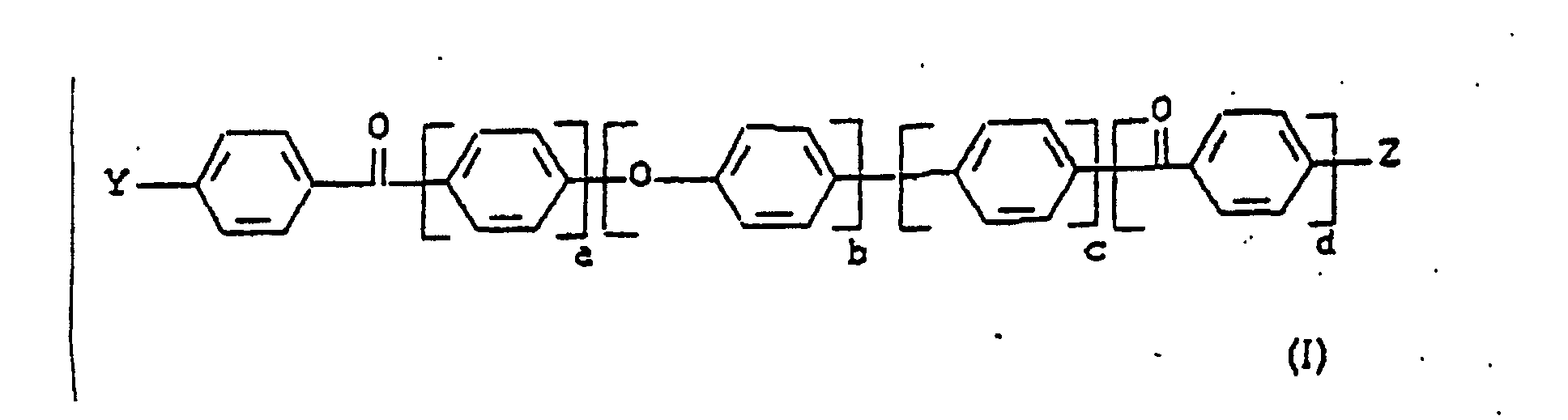
- According to the invention, there is provided a process for the preparation of a compound of general formulawherein Y and Z each independently represent a fluorine atom or a hydroxy group, and a, b, c and d independently represent 0, 1, 2 or 3 provided that the sum of a, b, c and d is 1, 2, 3 or 4, the process comprising treating a compound of general formula
 wherein a, b, c and d are as described above and L1 and L2 each independently represent a leaving group or a group which is oxidisable to a leaving group provided that either Y and L1 are different or Z and L2 are different, with a fluorinating system in the presence of oxygen.
- Unless otherwise stated in this specification, an alkyl group may have up to 10, suitably up to 8, preferably up to 6, more preferably up to 4, carbon atoms, with methyl and ethyl groups being especially preferred. Additionally, unless otherwise stated, an aryl group may be a benzyl or phenyl group, with a phenyl group being especially preferred.
- L1 and L2 may be independently selected from halogen atoms, especially fluorine, chlorine and bromine atoms, or nitro, amino, alkoxy or hydroxy groups. Said fluorinating system is preferably involved in the subsequent reaction of one or each active group.
- Leaving groups L1 and L2 are preferably arranged to be displaced in a nucleophilic substitution reaction involving said fluorinating system. Preferably, L1 and L2 each independently represent a halogen, especially a chlorine atom, or a nitro or amino group. More preferably, L1 and L2 each independently represent a nitro group.
- L1 and L2 may be the same or different. Preferably, L1 and L2 represent the same atom or group. Preferably, Y and L1 represent different atoms or groups and Z and L2 represent different atoms or groups.
- Preferably, a, b, c and d independently represent 0, 1 or 2. More preferably, a, b, c and d independently represent 0 or 1.
- Preferably, the sum of a, b, c and d is 1, 2 or 3, and is more preferably 1 or 2. Especially preferred is the case wherein the sum is 1.
- Preferably, a represents 0 or 1, more preferably 1. b may represent 0, 1 or 2 and preferably represents 0 or 1, more preferably 0.
- Preferably, c represents 0 or 1, more preferably 0. Preferably, d represents 0 or 1, more preferably 0.
- Preferred compounds of general formuli I and II are selected from compounds wherein a = 1, b = 0, c = 0, d = 0; a = 1, b = 0, c = 0, d = 1; a = 1, b = 0, c = 1, d = 1; a = 1, b = 1, c = 0, d = 1; a = 1, b = 2, c = 0, d = 1; and a = 1, b = 1, c = 0, d = 0. Most preferably, a = 1, b = 0, c = 0, d = 0.
- Preferably, said compound of general formula II represents 4,4'-diaminodiphenylmethane or 4,4'-dinitrodiphenylmethane. More preferably, said compound of general formula II represents 4,4'-dinitrodiphenylmethane.
- Compounds of general formula II may be commercially available or may be prepared using standard techniques. For example, the compounds may be prepared by reacting a 4-substituted (chloromethyl)benzene derivative, for example 4-nitro(chloromethyl)benzene, with a suitable benzene derivative in a Friedel Crafts reaction.
- Said fluorinating system is preferably involved in the oxidation of the or each group -CH2- in said compound of general formula II. For example, said fluorinating system may catalyse the oxidation reaction. Preferably, said fluorinating system acts as a base in the oxidation reaction. It is believed that the fluorinating system, for example a fluoride ion thereof, may deprotonate the or each group -CH2-.
- Said fluorination system is preferably involved in both the oxidation of the or each group -CH2- and in the reaction, for example the displacement, of the group L1 and/or group L2. For example, where group L1 and/or group L2 represent a nitro group, said fluorinating system is preferably capable of fluorodenitrating each nitro group.
- Preferably, the oxidation of the or each group -CH2- and the reaction of group L1 and/or group L2 occur in the same reaction mixture and/or in the same vessel suitably without the need for the product of one step to be isolated or otherwise separated from the reaction mixture prior to a second step. It is believed that the first step comprises the oxidation of the or each group -CH2- and the second step comprises reaction of group L1 and/or group L2.
- Said fluorinating system may include an organics soluble fluoride source and compounds for the preparation of the aforesaid in situ; and alkali metal fluorides, suitably in conjunction with a catalyst. Preferably, said fluorinating system includes one or more compounds selected from only one class of reagents, wherein one class comprises an organics soluble fluoride source as described herein and another class comprises alkali metal fluorides as described herein. The fluorinating system preferably includes only one compound from one class of reagents described herein.
- Preferably, said organics soluble fluoride source comprises an onium fluoride derivative. Said onium fluoride derivative may be selected from ammonium, phosphonium and sulphonium fluoride derivatives, with ammonium and phosphonium derivatives being preferred and ammonium derivatives being especially preferred. Preferably, said onium fluoride derivative includes alkyl or aryl groups or mixed alkyl and/or aryl groups. Where the onium fluoride derivative is an ammonium or phosphonium fluoride derivative, it may comprise a cation of general formula [QR1 xR2 y]+ wherein Q represents a nitrogen or phosphorous atom, each R1 independently represents an optionally substituted alkyl group, each R2 independently represents an optionally substituted alkyl or aryl group and x and y independently represent 0, 1, 2, 3 or 4 provided that x + y = 4. Preferably, each R1 independently represents a C1-20 alkyl group and each R2 independently represents a C1-20 alkyl group or a benzyl or a phenyl group. Preferably, R1 and/or R2 are unsubstituted. Said onium fluoride derivative may be a fluoride material of general formula QR1 xR2 yF(HF)z where Q, R1, R2, X and y are as described above and z represents 0 to 3, preferably 0 or 1. Suitable ammonium fluoride derivatives are tetraalkyl derivatives with (CH3)4NF, (C2H5)4NF, (n-C4H9)4NF and (CH3)4NF(HF) being preferred. Of the aforesaid, (CH3)4NF and (CH3)4NF(HF) are especially preferred. A mixed alkyl derivative may be cetyldimethylethylammonium fluoride. Preferred phosphonium fluoride derivatives are tetraphenyl derivatives, with (C6H5)4PHF2 being especially preferred.
- Preparation of the ammonium or phosphonium fluoride derivatives may be accomplished using standard procedures. For example, tetramethylammonium fluoride may be prepared in situ by reaction of tetramethylammonium chloride with potassium fluoride, optionally in the presence of a phase transfer catalyst, for example as described in J.Org.Chem 1989,54,4827. Many ammonium or phosphonium fluoride derivatives are commercially available.
- Preparation of sulphonium fluoride derivatives may be accomplished using standard procedures. For example, tris (dimethylamino)sulphonium bifluoride can be prepared by treating tris(dimethylamino)sulphonium difluorotrimethylsilicate with water in acetonitrile.
- In some cases, onium fluoride derivatives of the type described herein may be supported to provide an ion exchange resin. For example, an onium fluoride derivative such as the group -CH2N+(CM3)3F- may be bonded to the 4-position of a cross-linked polystyrene matrix to provide an ion exchange resin.
- Preferred alkali metal fluorides include potassium fluoride and caesium fluoride. Suitable catalysts include phase transfer catalysts, for example (C6H5)4PBr and 18-crown-6. Alternatively, alkali metal fluorides may be supported. Suitable supported reagents include KF on CaF2 and KF on alumina.
- Preferably, an alkali metal fluoride fluorinating system is selected from KF, KF/(C6H5)4PBr (phase transfer catalyst), KF/18-crown-6 (phase transfer catalyst), CsF, KF/CsF, KF-CaF2 (supported reagent), CsF-CaF2 (supported reagent), KF/tetramethylammonium fluoride and KF/tetramethylammonium chloride.
- Preferably, said fluorinating system includes ammonium or phosphonium fluoride derivatives of the type described above, with organics soluble derivatives being especially preferred.
- Said oxygen is involved in the oxidation of the or each -CH2- group of said compound of general formula II. Said oxygen suitably refers to free oxygen gas which is arranged to contact the reactants in the process and react with said compound of general formula II. Said oxygen gas may be a component of air which contacts the reaction mixture or may be a component of another gaseous mixture which contacts the reaction mixture. In some circumstances, substantially pure oxygen gas may be used. In the process, a gas comprising or consisting essentially of oxygen may be directed into the reaction mixture. Conveniently, an air stream may be blown into the reaction mixture.
- Said process is preferably carried out in the presence of a solvent. Said solvent is preferably aprotic. Said solvent is preferably non-aqueous. Said solvent is preferably substantially free of water, at least at the beginning of the process. The solvent may be polar or non-polar. It is preferably polar and adapted to stabilise intermediates formed during the process. Said solvent may be selected from cyanide compounds, especially alkylcyanide compounds; ethers, including cyclic ethers; solvents having -S=O moieties, for example sulphone or sulphoxide solvents; and amides, including cyclic amides.
- A preferred alkyl cyanide compound is acetonitrile. A preferred ether is tetrahydrofuran. Solvents having -S=O moieties include alkyl and/or aryl (including alkyl/aryl) sulphones and sulphoxides including cyclic compounds. Preferred amides may be aliphatic or cyclic. Preferred solvents include acetonitrile, tetrahydrofuran, ethers, dimethylsulphoxide, dimethylacetamide, dimethyl formamide, N-methylpyrrolidone, sulpholane, diphenylsulphone and diphenylsulphoxide. Especially preferred solvents are solvents having -S=O moieties and amides as described.
- The process may be carried out in a mixture of solvents which mixture includes one or more of the aforementioned solvents.
- Preferred solvents have a boiling point of at least 120°C, preferably at least 140°C, more preferably at least 160°C. Said boiling point may be less than 500°C, preferably less than 400°C, more preferably less than 300°C.
- The process is preferably carried out above ambient temperature. The process may be carried out at a temperature of greater than 50°C, preferably of greater than 65°C and, more preferably, of greater than 80°C.
- In the process, water is preferably initially removed from the fluorinating system by suitable means. For example, a fluorinating system, such as an ammonium or phosphonium fluoride derivative in a solvent, such as dimethylsulphoxide may be azeotropically dried by adding a hydrocarbon solvent such as cyclohexane in large excess to the fluorinating system and heating at an elevated temperature for several hours under an inert atmosphere such as argon so that water is driven off (see D Wails, D. Phil. Thesis, University of York, England, 1994). Other drying techniques may also be used. A preferred technique involves the use of a vacuum, suitably at an elevated temperature. After drying, the argon atmosphere may be replaced with an atmosphere containing oxygen by providing an air feed. The temperature of the reaction mixture may be raised, for example to about 100°C and a compound of general formula II added. Heating of the reaction mixture may continue for more than 10 hours, preferably more than 20 hours. The desired product may be obtained by standard techniques, for example by column chromatography or, preferably, by distillation.
- It is believed that, in the process, the first step is the oxidation of the or each -CH2- group in the compound of general formula II by oxygen in conjunction with the fluorinating system which may act catalytically. In the oxidation reaction, the fluorinating system may deprotonate the or each -CH2- group to produce a carbanion or at least activate the or each -CH2- group, which then reacts with oxygen to produce a ketone group. Water may also be produced in the reaction. In order to aid the reaction, a means for removing water formed may be included.
- It is believed that the diphenylketone derivative formed in the first step is important for the stabilisation of intermediates formed in the second step which may comprise the nucleophilic substitution of the group L1 and/or group L2.
- Nucleophilic substitution of group L1 and/or L2 preferably involves substitution by fluoride ions provided by said fluorinating system to produce a compound of general formula I wherein Y and Z represent fluorine atoms. Such a compound can advantageously be used directly in the production of polyketones for example polyetheretherketone (PEEK) when n and m represent 0.
- Compounds of general formula I wherein at least one of the substituents Y and Z represents a hydroxy group may involve nucleophilic substitution of group L1 and/or group L2 by hydroxide ions from water generated in the oxidation of the or each -CH2- group as described above or, alternatively, may involve nucleophilic substitution by hydroxide ions of a compound of general formula I wherein substituent Y and/or Z represent fluorine atoms.
- In some circumstances, the group L1 and/or the group L2 of the compound of general formula II may be oxidised prior to undergoing a nucleophilic substitution reaction. Such an oxidation reaction may be achieved by said fluorinating system in the presence of oxygen or by addition of another oxidising agent. For example, where L1 and/or L2 represent an amine group in said compound of general formula II, the or each amine group may be oxidised, initially, to a nitro group, which can then undergo a nucleophilic substitution reaction with fluorine or hydroxide ions, as described above. Alternatively, an amino group may be converted to a leaving group, for example a group -NH3 +, which may be substituted.
- Nucleophilic substitution of compounds of general formula II wherein group L1 and/or L2 represent nitro groups result in the displacement of nitrite ions. The substitution reaction may, therefore, be aided by providing a nitrite trap to remove the nitrite ions. Phthaloyl dichloride may be added to the reaction mixture to act as a nitrite trap.
- As described above, group L' and group L2 are preferably nitro groups in said compound of general formula II. Such a nitro compound can be prepared from a compound of general formula II wherein L1 and L2 represent amine groups, by oxidation using hydrogen peroxide. Such an amine compound of general formula II is commercially available and/or can be prepared using standard procedures from commercially available reagents.
- As described herein, it has been found, surprisingly, that fluorinating systems which comprise an organics soluble fluoride source can be used to oxidise certain diphenylmethanes to diphenylketones in the presence of oxygen. Accordingly, the invention extends to a process for the preparation of a compound of general formula I as described above wherein Y and Z each independently represent a halogen atom or a hydroxy, nitro or amino group, which includes the step of contacting a compound of general formula II as described above, wherein L1 and L2 each independently represent a halogen atom or a hydroxy, nitro or amino group, with an organics soluble fluoride source in the presence of oxygen.
- The organics soluble fluoride source may be as described in any statement herein.
- Preferably, said organics soluble fluoride source acts as a catalyst in the oxidation reaction.
- Oxygen may be supplied in the process as described in any statement herein.
- A preferred halogen atom is a fluorine atom.
- Preferably, Y, Z, L1 and L2 independently represent a fluorine atom or a hydroxy group. Preferably, Y and L1 and/or Z and L2 represent the same atom or group.
- The process may include a solvent as described in any statement herein.
- The invention extends to a compound of general formula I prepared in a process as described herein.
- Any feature of any aspect of an invention described herein may be combined with any feature of any other aspect described herein.
- The invention will now be described, by way of example.
- Tetramethylammonium fluoride tetrahydrate (0.097 g, 6 mmol) in dimethylsulphoxide (10 ml) was azeotropically dried, for 2.5 hours with efficient stirring, using cyclohexane (40 ml) under an argon atmosphere. The argon atmosphere was then removed and replaced with an air feed. The temperature was increased to 100°C and 4,4'-dinitrodiphenylmethane (0.05g, 2mmol) added. The reaction was monitored using gas chromatography (GC). Initially, the reaction mixture went blue but, after 20 minutes, the mixture went brown and 4,4'-difluorobenzophenone was visible in the GC trace. After 1 hour, no starting material was visible in the GC trace; the major product visible was 4,4'-difluorobenzophenone (75%), with minor products being 4-fluoro-4'-nitrobenzophenone, 4-fluoro-4'-hydroxybenzophenone and 4,4'-dinitrobenzophenone. After 24 hours, gas chromatography-mass spectrometry (GC-MS) showed that 100% conversion of 4,4'-dinitrodiphenylmethane had been achieved, with 84% conversion to 4,4'-difluorobenzophenone, 10% conversion to 4-fluoro-4'-hydroxybenzophenone and traces of other compounds being observed.
- Tetramethylammonium fluoride tetrahydrate (TMAF) was dried under a dynamic vacuum at 60°C until a hygroscopic white solid was obtained (19.4 % water w/w by Karl Fischer titration). N,N-Dimethylacetamide was dried over 3Å and 4Å molecular sieves for at least three days before use. 4,4'-Dinitrodiphenylmethane (0.062 g, 0.24 mmol) was placed in a three-necked, 100 ml round bottomed flask along with biphenyl (0.03 g, 0.2 mmol), the internal standard. N,N-Dimethylacetamide (10 ml) was added along with an oxygen feed. The solution was heated to 100°C with stirring. After 20 minutes of oxygen bubbling through the system, TMAF (0,086 g, 0.7 mmol) was added. The reaction was monitored by gas chromatography (GC). Initially, the reaction went blue, but gradually turned red over 15 minutes. During the course of the reaction, starting material, 4-fluoro-4'-nitrobenzophenone and 4,4'-difluorobenzophenone could be detected by GC. After 1 hour, no starting material was visible in the GC trace; the only detectable product was 4,4'-difluorobenzophenone (48 %).
- TMAF and N,N-dimethylacetamide were pre-dried as described in Example 2. 4,4'-Dinitrodiphenylmethane (0.062 g, 0.24 mmol) was placed in a 100 ml, three-necked round bottomed flask with an oxygen feed, along with biphenyl (0.03 g, 0.2 mmol), the internal standard. Keeping the flask at ambient temperature, TMAF (0.005g, 0.04 mmol) was added, resulting in immediate blue colouration of the solution. After stirring overnight, the solution had become red with GC and 'H-nmr analysis demonstrating that quantitative conversion to 4,4'dinitrobenzophenone had occurred. The solution was then heated to 100°C and a further quantity of TMAF (0.086g, 0.7 mmol) added. 4,4'-Dinitrobenzophenone, 4-fluoro-4'-nitrobenzophenone and 4,4'-difluorobenzophenone could be detected in the GC trace during the reaction, but after 1 hour, GC showed that 100% conversion of 4,4'-dinitrobenzophenone had been achieved, with the only detectable product being 4,4'-difluorobenzophenone (71%).
- TMAF was dried as described in Example 2. Sulfolane was distilled from sodium hydroxide into a flask and kept over 3Å and 4 Å molecular sieves. 4,4'-Dinitrodiphenylmethane (0.062g, 0.24 mmol) was added to a 100 ml round bottomed flask with an air feed, along with biphenyl (0.03 g, 0.2 mmol), the internal standard. TMAF (0.008 g, 0.07 mmol) was added along with sulfolane (10ml), giving an immediate blue colouration. After stirring overnight, the solution had become red. This solution was heated to 100°C and a further quantity of TMAF (0.086g, 0.7 mmol) added. 4,4'-Dinitrobenzophenone, 4-nitro-4'-fluorobenzophenone and 4,4' -difluorobenzophenone could be detected in the GC trace during the reaction. After two hours, GC showed that 100% conversion of 4,4'-dinitrobenzophenone had been achieved, with the only detectable product being 4,4'-difluorobenzophenone (70%).
- Tetramethylammonium hydrogendifluoride (TMAHF2) was dried under a dynamic vacuum at 60°C overnight to give a free-flowing white solid. N,N-Dimethylacetamide was dried as described in Example 2. 4,4'-Dinitrodiphenylmethane (0.069 g, 0.27 mmol) was placed in a 100 ml round bottomed flask with an oxygen feed, along with biphenyl (0.03 g, 0.2 mmol), the internal standard. Keeping the flask at ambient temperature, TMAHF2 (0.0166, 0.015 mmol) was added, which slowly turned the mixture blue. After stirring overnight, the solution had become red. The solution was heated to 140°C and a further quantity of TMAHF2 (0.1841, 1.6 mmol) added. During the reaction, 4,4'-dinitrobenzophenone, 4-fluoro-4'-nitrobenzophenone and 4,4'-difluorobenzophenone could be detected in the GC trace. After 4 hours, GC showed only the presence of 4-nitro-4'-fluorobenzophenone (6%) and 4,4'-difluorobenzophenone (71%).
Claims (10)
- A process for the preparation of a compound of general formulawherein Y and Z each independently represent a fluorine atom or a hydroxy group, and a, b, c and d independently represent 0, 1, 2 or 3 provided that the sum of a, b, c and d is 1, 2, 3 or 4, the process comprising treating a compound of general formula
 wherein a, b, c and d are as described above and L1 and L2 each independently represent a leaving group or a group which is oxidisable to a leaving group provided that either Y and L1 are different or Z and L2 are different, with a fluorinating system in the presence of oxygen.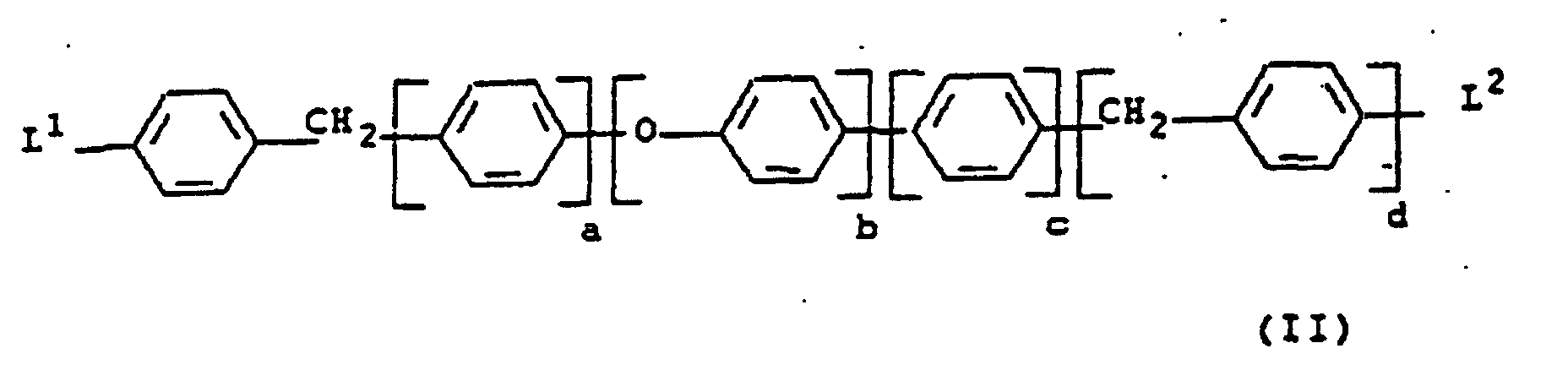
- A process according to claim 1, wherein L1 and L2 independently represent a halogen atom or a nitro or amino group.
- A process according to any preceding claim, wherein L1 and L2 represent the same atom or group.
- A process according to any preceding claim, wherein a represents 0 or 1, b represents 0, 1 or 2, c represents 0 or 1 and d represents 0 or 1.
- A process according to any preceding claim, wherein said fluorinating system is involved in both the oxidation of the or each group -CH2- and in the reaction of the group L1 and/or group L2.
- A process according to any preceding claims, wherein said fluorinating system includes an organics soluble fluoride source.
- A process according to any preceding claim, wherein said fluorinating system incudes an onium fluoride derivative.
- A process according to any preceding claim, wherein said fluorinating system is selected from ammonium, phosphonium and sulphonium fluoride derivatives.
- A process according to any preceding claim, wherein said process is carried out in the presence of an aprotic solvent.
- A process for the preparation of a compound of general formula I as described in claim 1, wherein Y and Z each independently represent a halogen atom or a hydroxy, nitro or amino group, the process comprising contacting a compound of general formula II as described in claim 1 wherein L1 and L2 each independently represent a halogen atom or a hydroxy, nitro or amino group, with an organics soluble fluoride source in the presence of oxygen.
Applications Claiming Priority (3)
| Application Number | Priority Date | Filing Date | Title |
|---|---|---|---|
| GB9705159 | 1997-03-13 | ||
| GBGB9705159.3A GB9705159D0 (en) | 1997-03-13 | 1997-03-13 | Process for preparation of aromatic compounds |
| PCT/GB1998/000622 WO1998040338A1 (en) | 1997-03-13 | 1998-03-12 | Process for preparation of aromatic compounds |
Publications (2)
| Publication Number | Publication Date |
|---|---|
| EP0970033A1 EP0970033A1 (en) | 2000-01-12 |
| EP0970033B1 true EP0970033B1 (en) | 2003-05-28 |
Family
ID=10809142
Family Applications (1)
| Application Number | Title | Priority Date | Filing Date |
|---|---|---|---|
| EP98910828A Expired - Lifetime EP0970033B1 (en) | 1997-03-13 | 1998-03-12 | Process for preparation of aromatic compounds |
Country Status (6)
| Country | Link |
|---|---|
| US (1) | US6274770B1 (en) |
| EP (1) | EP0970033B1 (en) |
| AU (1) | AU6506198A (en) |
| DE (1) | DE69815082T2 (en) |
| GB (2) | GB9705159D0 (en) |
| WO (1) | WO1998040338A1 (en) |
Families Citing this family (8)
| Publication number | Priority date | Publication date | Assignee | Title |
|---|---|---|---|---|
| US6703319B1 (en) * | 1999-06-17 | 2004-03-09 | Micron Technology, Inc. | Compositions and methods for removing etch residue |
| US9136036B2 (en) | 2008-07-02 | 2015-09-15 | Miller Waster Mills | Injection moldable, thermoplastic composite materials |
| US8956556B2 (en) * | 2008-07-02 | 2015-02-17 | Eaton Corporation | Dielectric isolators |
| US8003014B2 (en) | 2008-07-02 | 2011-08-23 | Eaton Corporation | Dielectric isolators |
| WO2012001131A1 (en) | 2010-07-02 | 2012-01-05 | Solvay Specialty Polymers Usa, L.L.C. | Method of making poly(aryl ether ketones) from 4,4' difluorobenzophenone comprising oxidizing species and/or nitro compounds |
| WO2016164837A1 (en) | 2015-04-09 | 2016-10-13 | Centinel Spine, Inc. | Spinal implants configured for tissue sparing angle of insertion and related methods |
| TWI726900B (en) * | 2015-08-04 | 2021-05-11 | 美商陶氏農業科學公司 | Process for fluorinating compounds |
| CN117486728B (en) * | 2023-12-28 | 2024-05-17 | 山东国邦药业有限公司 | Efficient circulating fluorination reagent and preparation method and application thereof |
Family Cites Families (3)
| Publication number | Priority date | Publication date | Assignee | Title |
|---|---|---|---|---|
| DE2961199D1 (en) | 1978-03-31 | 1982-01-14 | Ici Plc | Preparation of 4,4'-difluorobenzophenone |
| US4263458A (en) * | 1978-08-25 | 1981-04-21 | Imperial Chemical Industries Limited | Preparation of aromatic fluoro-compounds |
| JPS61172845A (en) | 1985-01-29 | 1986-08-04 | Asahi Chem Ind Co Ltd | Production of 4,4-difluorobenzophenone |
-
1997
- 1997-03-13 GB GBGB9705159.3A patent/GB9705159D0/en active Pending
-
1998
- 1998-03-12 US US09/380,598 patent/US6274770B1/en not_active Expired - Lifetime
- 1998-03-12 GB GB9805173A patent/GB2323086B/en not_active Expired - Fee Related
- 1998-03-12 DE DE69815082T patent/DE69815082T2/en not_active Expired - Lifetime
- 1998-03-12 AU AU65061/98A patent/AU6506198A/en not_active Abandoned
- 1998-03-12 EP EP98910828A patent/EP0970033B1/en not_active Expired - Lifetime
- 1998-03-12 WO PCT/GB1998/000622 patent/WO1998040338A1/en not_active Ceased
Also Published As
| Publication number | Publication date |
|---|---|
| GB2323086B (en) | 2000-09-06 |
| EP0970033A1 (en) | 2000-01-12 |
| US6274770B1 (en) | 2001-08-14 |
| AU6506198A (en) | 1998-09-29 |
| WO1998040338A1 (en) | 1998-09-17 |
| DE69815082D1 (en) | 2003-07-03 |
| GB2323086A (en) | 1998-09-16 |
| GB9705159D0 (en) | 1997-04-30 |
| GB9805173D0 (en) | 1998-05-06 |
| DE69815082T2 (en) | 2004-03-04 |
Similar Documents
| Publication | Publication Date | Title |
|---|---|---|
| JPS606339B2 (en) | Fluorination method | |
| US6274770B1 (en) | Process for preparation of aromatic compounds | |
| EP0253836B1 (en) | Preparation of fluoroaromatic compounds in dispersion of potassium fluoride | |
| US4453009A (en) | Process for producing fluorobenzophenone derivatives | |
| US6203670B1 (en) | Method for grafting a substituted difluoromethyl group | |
| JPH02218630A (en) | Preparation of halofluorobenzene | |
| KR910003471B1 (en) | Process for producing fluor benzaldehydes | |
| EP2066609B1 (en) | Process for the preparation of fluoromethyl 2,2,2-trifluoro-1-(trifluoromethyl) ethyl ether | |
| CA1298315C (en) | Process for the preparation of fluorobenzaldehydes | |
| EP0700885B1 (en) | Process for the introduction of fluoro-carbon substituents in organic compounds | |
| EP0101760B1 (en) | Process for producing fluorobenzophenone derivatives | |
| EP0249257A1 (en) | Preparation of aryl halides | |
| JPH024580B2 (en) | ||
| US5736012A (en) | Process for the preparation of a fluorinated acid | |
| JP7584991B2 (en) | Method for producing fluorine-containing cyclic compound | |
| US4943358A (en) | Oxidation process | |
| CN100567239C (en) | The preparation method of fluorohaloethers | |
| JPH1192446A (en) | Sulfonimide and its production | |
| JP4804762B2 (en) | Method for producing fluorohalogen ether | |
| US5227531A (en) | Process for the preparation of fluorobenzaldehydes | |
| JPH0717549B2 (en) | Fluorobenzene production method | |
| JPH0739376B2 (en) | Method for producing dinitrodiphenyl ethers | |
| JPH0323532B2 (en) | ||
| KR880000200B1 (en) | Process for the preparation of p-chlorobenzene | |
| JP2527596B2 (en) | Method for producing fluorobenzaldehydes |
Legal Events
| Date | Code | Title | Description |
|---|---|---|---|
| PUAI | Public reference made under article 153(3) epc to a published international application that has entered the european phase |
Free format text: ORIGINAL CODE: 0009012 |
|
| 17P | Request for examination filed |
Effective date: 19990923 |
|
| AK | Designated contracting states |
Kind code of ref document: A1 Designated state(s): DE GB |
|
| 17Q | First examination report despatched |
Effective date: 20010509 |
|
| GRAG | Despatch of communication of intention to grant |
Free format text: ORIGINAL CODE: EPIDOS AGRA |
|
| GRAG | Despatch of communication of intention to grant |
Free format text: ORIGINAL CODE: EPIDOS AGRA |
|
| GRAH | Despatch of communication of intention to grant a patent |
Free format text: ORIGINAL CODE: EPIDOS IGRA |
|
| GRAH | Despatch of communication of intention to grant a patent |
Free format text: ORIGINAL CODE: EPIDOS IGRA |
|
| GRAA | (expected) grant |
Free format text: ORIGINAL CODE: 0009210 |
|
| AK | Designated contracting states |
Designated state(s): DE GB |
|
| REG | Reference to a national code |
Ref country code: GB Ref legal event code: FG4D |
|
| REF | Corresponds to: |
Ref document number: 69815082 Country of ref document: DE Date of ref document: 20030703 Kind code of ref document: P |
|
| PLBE | No opposition filed within time limit |
Free format text: ORIGINAL CODE: 0009261 |
|
| STAA | Information on the status of an ep patent application or granted ep patent |
Free format text: STATUS: NO OPPOSITION FILED WITHIN TIME LIMIT |
|
| 26N | No opposition filed |
Effective date: 20040302 |
|
| PGFP | Annual fee paid to national office [announced via postgrant information from national office to epo] |
Ref country code: DE Payment date: 20140328 Year of fee payment: 17 |
|
| PGFP | Annual fee paid to national office [announced via postgrant information from national office to epo] |
Ref country code: GB Payment date: 20140328 Year of fee payment: 17 |
|
| REG | Reference to a national code |
Ref country code: DE Ref legal event code: R119 Ref document number: 69815082 Country of ref document: DE |
|
| GBPC | Gb: european patent ceased through non-payment of renewal fee |
Effective date: 20150312 |
|
| PG25 | Lapsed in a contracting state [announced via postgrant information from national office to epo] |
Ref country code: DE Free format text: LAPSE BECAUSE OF NON-PAYMENT OF DUE FEES Effective date: 20151001 Ref country code: GB Free format text: LAPSE BECAUSE OF NON-PAYMENT OF DUE FEES Effective date: 20150312 |