EP0965268A1 - Thermostabilization, osmoprotection, and protection against desiccation of enzymes, cell components and cells by di-glycerol-phosphate - Google Patents
Thermostabilization, osmoprotection, and protection against desiccation of enzymes, cell components and cells by di-glycerol-phosphate Download PDFInfo
- Publication number
- EP0965268A1 EP0965268A1 EP98670002A EP98670002A EP0965268A1 EP 0965268 A1 EP0965268 A1 EP 0965268A1 EP 98670002 A EP98670002 A EP 98670002A EP 98670002 A EP98670002 A EP 98670002A EP 0965268 A1 EP0965268 A1 EP 0965268A1
- Authority
- EP
- European Patent Office
- Prior art keywords
- phosphate
- glycerol
- utilization
- enzymes
- compound
- Prior art date
- Legal status (The legal status is an assumption and is not a legal conclusion. Google has not performed a legal analysis and makes no representation as to the accuracy of the status listed.)
- Granted
Links
Images


Classifications
-
- C—CHEMISTRY; METALLURGY
- C07—ORGANIC CHEMISTRY
- C07F—ACYCLIC, CARBOCYCLIC OR HETEROCYCLIC COMPOUNDS CONTAINING ELEMENTS OTHER THAN CARBON, HYDROGEN, HALOGEN, OXYGEN, NITROGEN, SULFUR, SELENIUM OR TELLURIUM
- C07F9/00—Compounds containing elements of Groups 5 or 15 of the Periodic Table
- C07F9/02—Phosphorus compounds
- C07F9/547—Heterocyclic compounds, e.g. containing phosphorus as a ring hetero atom
- C07F9/655—Heterocyclic compounds, e.g. containing phosphorus as a ring hetero atom having oxygen atoms, with or without sulfur, selenium, or tellurium atoms, as the only ring hetero atoms
- C07F9/65515—Heterocyclic compounds, e.g. containing phosphorus as a ring hetero atom having oxygen atoms, with or without sulfur, selenium, or tellurium atoms, as the only ring hetero atoms the oxygen atom being part of a five-membered ring
- C07F9/65517—Heterocyclic compounds, e.g. containing phosphorus as a ring hetero atom having oxygen atoms, with or without sulfur, selenium, or tellurium atoms, as the only ring hetero atoms the oxygen atom being part of a five-membered ring condensed with carbocyclic rings or carbocyclic ring systems
-
- A—HUMAN NECESSITIES
- A61—MEDICAL OR VETERINARY SCIENCE; HYGIENE
- A61K—PREPARATIONS FOR MEDICAL, DENTAL OR TOILETRY PURPOSES
- A61K8/00—Cosmetics or similar toiletry preparations
- A61K8/18—Cosmetics or similar toiletry preparations characterised by the composition
- A61K8/30—Cosmetics or similar toiletry preparations characterised by the composition containing organic compounds
- A61K8/55—Phosphorus compounds
-
- A—HUMAN NECESSITIES
- A61—MEDICAL OR VETERINARY SCIENCE; HYGIENE
- A61Q—SPECIFIC USE OF COSMETICS OR SIMILAR TOILETRY PREPARATIONS
- A61Q19/00—Preparations for care of the skin
-
- C—CHEMISTRY; METALLURGY
- C07—ORGANIC CHEMISTRY
- C07F—ACYCLIC, CARBOCYCLIC OR HETEROCYCLIC COMPOUNDS CONTAINING ELEMENTS OTHER THAN CARBON, HYDROGEN, HALOGEN, OXYGEN, NITROGEN, SULFUR, SELENIUM OR TELLURIUM
- C07F9/00—Compounds containing elements of Groups 5 or 15 of the Periodic Table
- C07F9/02—Phosphorus compounds
- C07F9/06—Phosphorus compounds without P—C bonds
- C07F9/08—Esters of oxyacids of phosphorus
- C07F9/09—Esters of phosphoric acids
- C07F9/091—Esters of phosphoric acids with hydroxyalkyl compounds with further substituents on alkyl
Definitions
- the invention concerns the use of di-glycerol-phosphate for the stabilisation of enzymes, other cellular components, and cells against general stress, namely caused by heat, high osmolarity, desiccation, freeze-drying, and repetitive use.
- solutes are known to accumulate in high levels when microorganisms are subjected to extreme environmental conditions, such as temperature or osmotic stress. These solutes generally serve as osmolytes in halotolerant and halophilic organisms.
- osmolytes are commonly designated as compatible solutes. In fact, compatible solutes are necessary for enzyme function in the dehydrated cytoplasm that exists under osmotic stress.
- the extremely halophilic Archaea and a few halophilic anaerobic Bacteria accumulate K + , Na + and Cl - in response to changes in the extracellular salt concentration, while all other microorganisms examined utilise organic compatible solutes for osmotic adjustment to water stress.
- the number of compatible solutes is relatively small, and fall into certain categories of compounds such as polyols and derivatives, sugars and derivatives, amino acids and amino acid derivatives, small peptides, betaines, and ectoines [1].
- osmolytes In addition to being compatible with the normal activities of the cell, osmolytes also seem to have a protective effect on the function of cell components, namely proteins. It has been shown that some compatible solutes are capable of stabilising proteins against temperature denaturation and denaturing agents such as detergents, organic solvents, urea and guanidine chloride [2, 3, 4].
- thermophilic and hypertermophilic Bacteria and Archaea produce low molecular weight solutes. These solutes generally accumulate intracellularly during growth at supraoptimal temperatures and/or salinities leading to the suggestion that they exert a protective effect on, at least, some cell components. Under high growth temperatures, di- myo -inositol-(1,1')-phosphate and cyclic 2,3'-bisphosphoglycerate accumulate to high levels in Pyrococcus furiosus and Methanothermus fervidus , respectively [9, 10].
- thermophilic and hyperthermophilic Bacteria and Archaea The novel compatible solute, ⁇ -mannosylglycerate, found in several thermophilic and hyperthermophilic Bacteria and Archaea , has recently been shown to have an important effect on the stabilisation of enzymes derived from mesophilic and thermophilic organisms [11].
- a novel compatible solute designated di-glycerol-phosphate (Figure 1) accumulates in the archaeon Archaeoglobus fulgidus [12].
- the compound represented in figure 1 can exist in all its stereoisomeric forms (racemic, meso and optically pure or mixtures thereof), and figure 1 is intended to include all such forms.
- the intracellular concentration of this solute increases concomitantly with the salinity of the growth medium, and to a lesser extent at supraoptimal growth temperatures [12], indicating that di-glycerol-phosphate can be a thermostabilizer or osmoprotective agent.
- stereospecific synthesis of (S,S)-1,1'-di-glycerol-phosphate can be accomplished from commonly available D-mannitol in four steps.
- Di-glycerol-phosphate is considerably better than glycerol as a thermoprotectant for enzymes.
- This product can be used as a stabilising agent of several biological systems, such as, proteins, enzymes, biological or artificial membranes or cells, vulnerable to damage and decreased efficiency (or viability) under harsh or stressing conditions, such as high temperatures, high salt concentrations, desiccation and/or freezing, and the action of denaturing agents (organic solvents, detergents, oxidizing agents and chaotropic substances).
- di-glycerol-phosphate can be used as an additive in cosmetics, either for stabilisation of liposomes or for the improvement of moisturising properties.
- 1,1'-bis(2,3-O-cyclohexylideneglycerol)phosphate triethylammonium salt was accomplished by the following manner: 1,2-O-cyclohexylideneglycerol (2.0 g, 11.6 mmol) (prepared according to [13] p573), in triethylamine (10 mL, 71.2 mmol) was added slowly to a vigorously stirred solution of phosphoroyl chloride (0.56 mL, 6.0 mmol) in anhydrous tetrahydrofuran (10 mL) at -78°C.
- reaction mixture Upon complete addition of the substrate/triethylamine the reaction mixture was allowed to stir at -78°C for 10 minutes before being treated with water (10 mL) and then warmed to room temperature. Stirring was continued for about 10 minutes before the organic phase was separated, and the aqueous phase extracted twice with ethyl acetate. The aqueous phase was evaporated to dryness giving a white solid which was dissolved in approximately 20 mL dichloromethane. Exhaustive treatment of this solution with diethyl ether allowed precipitation of the triethylammonium hydrochloride byproduct and eventually gave only the title compound as a colourless gum (1.458 g, 25%).
- 1,1'-bis(2,3-O-cyclohexylideneglycerol)phosphate triethylammonium salt (1.458 g, 2.87 mmol) dissolved in distilled water was treated with about 30 g of activated Dowex 50W-X8 ion exchange resin.
- the heterogeneous mixture was stirred vigorously overnight, at room temperature, after which the ion exchange resin was filtered, washed with distilled water and the filtrate evaporated to dryness to furnish the 1,1'-di-glycerol-phosphate (0.765 g, 85%).
- step 1 the (S)-1,2-O-isopropylideneglyceraldehyde (0.425 g, 3.22 mmol) was prepared from D-mannitol by the procedures delineated on pgs 654 and 592 of Vogel's Textbook of Practical Organic Chemistry, [13]
- Step 2 consisted in the preparation of (S)-1,2-O-isopropylideneglycerol by the reduction of the corresponding aldehyde, synthesised in step 1, according to the procedure of M. E. Jung and T. J. Shaw [14].
- step 3 (S)-1,2-O-isopropylideneglycerol was convened into (S,S)-1,1'-bis(2,3-O-isopropylideneglycerol)phosphate triethylammonium in exactly the same manner as 1,1'-bis(2,3-O-cyclohexylideneglycerol)phosphate triethylammonium of example 1 was prepared from 1,2-O-cyclohexylideneglycerol.
- di-glycerol-phosphate has a thermostabilising effect on protein structures using Desulfovibrio gigas rubredoxin as a model-system.
- Rubredoxin was obtained and purified as described by LeGall and Dragoni [15] from Desulfovibrio gigas . This protein was then stored at -20°C in 10 mM Tris-HCl buffer at pH 7.6.
- UV-Vis absorption spectrum of rubredoxins comes from the signals with maxima centered at 380, 494, and 570 nm which are attributed to metal to ligand transitions. These bands are bleached when rubredoxin undergoes denaturation.
- rubredoxin was prepared at a concentration of 84 ⁇ g . ml -1 in 10 mM Tris-HCl buffer pH 7.6 and the incubation mixtures, with or without the additions of solutes, were placed in 400 ⁇ l quartz cells in a Beckman spectrophotometer with a thermostated cell compartment. The protein was subjected to a temperature of 90°C and the decrease in the absorbance at 494 nm was monitored as a function of time.
- di-glycerol-phosphate has a thermoprotective effect on the activity of enzymes used as model-systems, namely rabbit muscle lactate dehydrogenase (LDH) and yeast alcohol dehydrogenase (ADH), and can be used to protect enzymes in general against thermal deactivation.
- enzymes used as model-systems namely rabbit muscle lactate dehydrogenase (LDH) and yeast alcohol dehydrogenase (ADH)
- Lactate dehydrogenase LDH (Sigma Type III, rabbit muscle), purchased as a suspension in ammonium sulphate, was centrifuged, the supernatant was discarded, and the enzyme was suspended in 50 mM potassium phosphate pH 7.5. Alcohol dehydrogenase (Sigma, baker's yeast) was obtained in the lyophilized form and used without further purification. Enzymes were assayed using a Beckman spectrophotometer with a thermostated cell compartment at 30°C.
- enzymes were prepared at a concentration of 50 mg . ml -1 in 20mM potassium phosphate buffer, and the reaction mixtures were placed in Eppendorf tubes, incubated in a water-bath at 50°C for 10 minutes, cooled in an ice-bath and assayed immediately under standard conditions.
- thermostability of rabbit muscle LDH and baker's yeast ADH was compared to that of glycerol, a compound that is generally described as an enzyme protector.
- Di-glycerol-phosphate exerted a protective effect on lactate dehydrogenase (LDH).
- LDH lactate dehydrogenase
- Alcohol dehydrogenase showed a similar behaviour.
Landscapes
- Chemical & Material Sciences (AREA)
- Health & Medical Sciences (AREA)
- Life Sciences & Earth Sciences (AREA)
- General Health & Medical Sciences (AREA)
- Organic Chemistry (AREA)
- Public Health (AREA)
- Biochemistry (AREA)
- Molecular Biology (AREA)
- Veterinary Medicine (AREA)
- Animal Behavior & Ethology (AREA)
- Epidemiology (AREA)
- Birds (AREA)
- Dermatology (AREA)
- Enzymes And Modification Thereof (AREA)
- Organic Low-Molecular-Weight Compounds And Preparation Thereof (AREA)
- Preparation Of Compounds By Using Micro-Organisms (AREA)
- Measuring Or Testing Involving Enzymes Or Micro-Organisms (AREA)
Abstract
Description
- The invention concerns the use of di-glycerol-phosphate for the stabilisation of enzymes, other cellular components, and cells against general stress, namely caused by heat, high osmolarity, desiccation, freeze-drying, and repetitive use.
- Several intracellular, small molecular solutes are known to accumulate in high levels when microorganisms are subjected to extreme environmental conditions, such as temperature or osmotic stress. These solutes generally serve as osmolytes in halotolerant and halophilic organisms.
- Cells use osmolytes in order to maintain turgor pressure and cell volume under osmotic stress. Their intracellular accumulation to high levels allows normal enzyme activity, without damaging cellular structures. Thus, osmolytes are commonly designated as compatible solutes. In fact, compatible solutes are necessary for enzyme function in the dehydrated cytoplasm that exists under osmotic stress.
- The extremely halophilic Archaea and a few halophilic anaerobic Bacteria, accumulate K+, Na+ and Cl- in response to changes in the extracellular salt concentration, while all other microorganisms examined utilise organic compatible solutes for osmotic adjustment to water stress. The number of compatible solutes is relatively small, and fall into certain categories of compounds such as polyols and derivatives, sugars and derivatives, amino acids and amino acid derivatives, small peptides, betaines, and ectoines [1].
- In addition to being compatible with the normal activities of the cell, osmolytes also seem to have a protective effect on the function of cell components, namely proteins. It has been shown that some compatible solutes are capable of stabilising proteins against temperature denaturation and denaturing agents such as detergents, organic solvents, urea and guanidine chloride [2, 3, 4].
- The addition of small molecular weight solutes to solutions containing proteins leads to alterations in the physical properties of water by increasing the surface tension and excluding solutes from the water-protein interface. In this way, the structure of water in the hydration shell of the protein becomes highly organised. This effect, reduces the entropy of the hydration shell, which is, by itself thermodynamically unfavourable, and leads to the formation of a smaller protein-water interface. The opening to the solvent of protein side-chains, and the consequent rise in the water-protein interface area, is a common feature of the denaturation process. It is believed that the addition of compatible solutes to a protein solution reduces the exposed area of the protein, making the denaturation process more difficult and thereby, leading to a higher ratio of native to denatured forms.
- The higher stability of proteins in the presence of certain small molecular weight organic solutes allows enzymes to function under more extreme conditions imposed by temperature, pressure, ionic strength, pH, detergents and organic solvents. One of the priorities of modern biotechnology is to obtain stable enzymes or agents that stabilise those enzymes against thermal or chemical denaturation. The ability of some compatible solutes to stabilise enzymes is, therefore, of the utmost importance to modem biotechnology.
- It must also be stressed that compatible solutes protect proteins [5], cell membranes [6] and cells [7, 8] from the deleterious effects of desiccation. The preservation of desiccated or lyophilized cell components has many applications in medicine (conservation of tissues and other products of biological origin), in the pharmaceutical industry (microencapsulation of medicines), the cosmetic industry (liposomes), in the food industry (conservation of food), and scientific research (maintenance of cultures and cell lines). In spite of the great importance of desiccation and freezing in the conservation of biological samples, denaturation of proteins or a decrease of the viable count of cultures inevitably takes place during its use.
- Dehydration of cell membranes and cells results in a phase transition of the lipid bilayer. After rehydration, the membranes undergo a reverse phase transition that can lead to the rupture of the membrane. The protection of membranes by low molecular weight solutes is related to the substitution of water between the polar head groups by these solutes, thereby maintaining the appropriate lipid phase when these structures are dehydrated.
- Some thermophilic and hypertermophilic Bacteria and Archaea produce low molecular weight solutes. These solutes generally accumulate intracellularly during growth at supraoptimal temperatures and/or salinities leading to the suggestion that they exert a protective effect on, at least, some cell components. Under high growth temperatures, di-myo-inositol-(1,1')-phosphate and cyclic 2,3'-bisphosphoglycerate accumulate to high levels in Pyrococcus furiosus and Methanothermus fervidus, respectively [9, 10]. The novel compatible solute, β-mannosylglycerate, found in several thermophilic and hyperthermophilic Bacteria and Archaea, has recently been shown to have an important effect on the stabilisation of enzymes derived from mesophilic and thermophilic organisms [11].
- A novel compatible solute designated di-glycerol-phosphate (Figure 1) accumulates in the archaeon Archaeoglobus fulgidus [12]. The compound represented in figure 1 can exist in all its stereoisomeric forms (racemic, meso and optically pure or mixtures thereof), and figure 1 is intended to include all such forms. In this species the intracellular concentration of this solute increases concomitantly with the salinity of the growth medium, and to a lesser extent at supraoptimal growth temperatures [12], indicating that di-glycerol-phosphate can be a thermostabilizer or osmoprotective agent.
- Although the biosynthetic pathway of di-glycerol-phosphate has not been elucidated yet, it will be possible to clone and overexpress the enzymatic machinery in a suitable production host. The chemical synthesis of this solute has already been successfully achieved, and has proved to be an attractive alternative to biological production.
- The chemical synthesis of 1,1'-di-glycerol-phosphate (Figure 1) can be accomplished readily and efficiently in three steps from commonly available glycerol in the following manner:
- Step1- synthesis of 1,2-O-cyclohexylideneglycerol (Figure 2) according to Vogel's Textbook of Practical Organic Chemistry, p573 [13].
-
-
- Step2- synthesis of 1,1'-bis(2,3-O-cyclohexylideneglycerol)phosphate triethylammonium salt (Figure 3) from the compound synthesized in step 1. This step is achieved by slowly adding 1,2-O-cyclohexylideneglycerol (prepared according to step 1) in triethylamine to a vigorously stirred solution of phosphoroyl chloride in anhydrous tetrahydrofuran at -78°C.
-
-
- Step3- synthesis of 1,1'-di-glycerol-phosphate from the compound prepared in step 2. This step is achieved by the overnight treatment, at room temperature, of 1,1'-bis(2,3-O-cyclohexylideneglycerol)phosphate triethylammonium salt with activated Dowex 50W-X8 (H+) ion exchange resin in order to remove the acetal protecting groups and for the isolation of the free 1,1'-di-glycerol-phosphate as the free acid.
-
- Also, stereospecific synthesis of (S,S)-1,1'-di-glycerol-phosphate can be accomplished from commonly available D-mannitol in four steps.
- In the first two steps (S)-1,2-O-isopropylideneglycerol is obtained by the reduction of the corresponding aldehyde (prepared from D-mannitol by the procedures delineated on pgs 654 and 592 of Vogel's Textbook of Practical Organic Chemistry, [13]), according to the procedure of M.E. Jung and T.J. Shaw [14]. As third and fourth steps (S)-1,2-O-isopropylideneglycerol is converted, through the intermediacy of (S,S)-1,1'-bis(2,3-O-isopropylideneglycerol)phosphate triethylammonium salt to (S,S)-1,1'-di-glycerol-phosphate, in exactly the same manner as described for the racemic compound.
- Di-glycerol-phosphate is considerably better than glycerol as a thermoprotectant for enzymes. This product can be used as a stabilising agent of several biological systems, such as, proteins, enzymes, biological or artificial membranes or cells, vulnerable to damage and decreased efficiency (or viability) under harsh or stressing conditions, such as high temperatures, high salt concentrations, desiccation and/or freezing, and the action of denaturing agents (organic solvents, detergents, oxidizing agents and chaotropic substances). In addition, di-glycerol-phosphate can be used as an additive in cosmetics, either for stabilisation of liposomes or for the improvement of moisturising properties.
-
- Figure 1 depicts the chemical structure of di-glycerol-phosphate in all its stereoisomeric forms.
- Figure 2 depicts the chemical structure of 1,2-O-cyclohexylideneglycerol.
- Figure 3 depicts the chemical structure of 1,1'-bis(2,3-O-cyclohexylideneglycerol)phosphate (triethylammonium salt).
- Figure 4 shows the effect of di-glycerol-phosphate on the thermostability of Desulfovibrio gigas rubredoxin. The percentage of native protein after 30 minutes at 90°C as judged from the measurement of absorbance at 494 nm in: A: absence of solutes, B: 100 mM potassium phosphate, C: 200 mM glycerol, and D: 100 mM di-glyderol-phosphate, is presented.
- Figure 5 shows the effect of di-glycerol-phosphate on enzymic activities after 10 min incubation at 50°C of rabbit muscle lactate dehydrogenase (A) and baker's yeast alcohol dehydrogenase (B); W: absence of solute; G: in the precence of 100mM di-glycerol-phosphate.
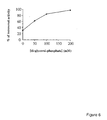
- Figure 6 shows the effect of the concentration of di-glycerol-phosphate () on the thermal stability of rabbit muscle lactate dehydrogenase after 10 min incubation at 50°C.
-
- This example shows that 1,1'-di-glycerol-phosphate (Figure 1) can be synthesised from 1,1'-bis(2,3-O-cyclohexylideneglycerol)phosphate triethylammonium.
- As a first step synthesis of 1,1'-bis(2,3-O-cyclohexylideneglycerol)phosphate triethylammonium salt was accomplished by the following manner: 1,2-O-cyclohexylideneglycerol (2.0 g, 11.6 mmol) (prepared according to [13] p573), in triethylamine (10 mL, 71.2 mmol) was added slowly to a vigorously stirred solution of phosphoroyl chloride (0.56 mL, 6.0 mmol) in anhydrous tetrahydrofuran (10 mL) at -78°C. Upon complete addition of the substrate/triethylamine the reaction mixture was allowed to stir at -78°C for 10 minutes before being treated with water (10 mL) and then warmed to room temperature. Stirring was continued for about 10 minutes before the organic phase was separated, and the aqueous phase extracted twice with ethyl acetate. The aqueous phase was evaporated to dryness giving a white solid which was dissolved in approximately 20 mL dichloromethane. Exhaustive treatment of this solution with diethyl ether allowed precipitation of the triethylammonium hydrochloride byproduct and eventually gave only the title compound as a colourless gum (1.458 g, 25%).
- As a second step, 1,1'-bis(2,3-O-cyclohexylideneglycerol)phosphate triethylammonium salt (1.458 g, 2.87 mmol) dissolved in distilled water was treated with about 30 g of activated Dowex 50W-X8 ion exchange resin. The heterogeneous mixture was stirred vigorously overnight, at room temperature, after which the ion exchange resin was filtered, washed with distilled water and the filtrate evaporated to dryness to furnish the 1,1'-di-glycerol-phosphate (0.765 g, 85%).
- This example shows that (S,S)-1,1'-di-glycerol-phosphate can be synthesised from D-mannitol in four steps.
- In step 1 the (S)-1,2-O-isopropylideneglyceraldehyde (0.425 g, 3.22 mmol) was prepared from D-mannitol by the procedures delineated on pgs 654 and 592 of Vogel's Textbook of Practical Organic Chemistry, [13]
- Step 2 consisted in the preparation of (S)-1,2-O-isopropylideneglycerol by the reduction of the corresponding aldehyde, synthesised in step 1, according to the procedure of M. E. Jung and T. J. Shaw [14].
- In step 3 (S)-1,2-O-isopropylideneglycerol was convened into (S,S)-1,1'-bis(2,3-O-isopropylideneglycerol)phosphate triethylammonium in exactly the same manner as 1,1'-bis(2,3-O-cyclohexylideneglycerol)phosphate triethylammonium of example 1 was prepared from 1,2-O-cyclohexylideneglycerol.
- As a final step (S,S)-1,1'-di-glycerol-phosphate (0.390 g, 49%), was obtained by the overnight treatment, at room temperature, of 1,1'-bis(2,3-O-isopropylideneglycerol)phosphate triethylammonium salt with about 20 g of activated Dowex 50W-X8 ion exchange resin. The heterogeneous mixture was stirred vigorously, after which the ion exchange resin was filtered, washed with distilled water and the filtrate evaporated to dryness to furnish the (S,S)-1,1'-di-glycerol-phosphate.
- This example shows that di-glycerol-phosphate has a thermostabilising effect on protein structures using Desulfovibrio gigas rubredoxin as a model-system.
- Rubredoxin was obtained and purified as described by LeGall and Dragoni [15] from Desulfovibrio gigas. This protein was then stored at -20°C in 10 mM Tris-HCl buffer at pH 7.6.
- The most informative feature of the UV-Vis absorption spectrum of rubredoxins comes from the signals with maxima centered at 380, 494, and 570 nm which are attributed to metal to ligand transitions. These bands are bleached when rubredoxin undergoes denaturation.
- In the experiments designed to evaluate denaturation caused by thermal stress, rubredoxin was prepared at a concentration of 84 µg . ml-1 in 10 mM Tris-HCl buffer pH 7.6 and the incubation mixtures, with or without the additions of solutes, were placed in 400 µl quartz cells in a Beckman spectrophotometer with a thermostated cell compartment. The protein was subjected to a temperature of 90°C and the decrease in the absorbance at 494 nm was monitored as a function of time.
- The protective effect of di-glycerol-phosphate (at a concentration of 100 mM) was compared with that of potassium phosphate (100 mM) and glycerol (200 mM) (Figure 4). After 30 min incubation of rubredoxin at 90°C the absorbance decreased by only 8.5% when di-glycerol-phosphate was present, whereas in the absence of any solute a decrease of 73% was observed. Furthermore, a comparison of the effect exerted by di-glycerol-phosphate with that of glycerol or potassium phosphate, clearly showed that these solutes were not as efficient as di-glycerol-phosphate. In fact, the decreases in absorption are as high as 61 and 58 % in the presence of 200 mM glycerol or 100 mM potassium phosphate, respectively. This demonstrates the strong thermoprotective effect exerted by di-glycerol-phosphate on rubredoxin.
- This example shows that di-glycerol-phosphate has a thermoprotective effect on the activity of enzymes used as model-systems, namely rabbit muscle lactate dehydrogenase (LDH) and yeast alcohol dehydrogenase (ADH), and can be used to protect enzymes in general against thermal deactivation.
- Lactate dehydrogenase, LDH (Sigma Type III, rabbit muscle), purchased as a suspension in ammonium sulphate, was centrifuged, the supernatant was discarded, and the enzyme was suspended in 50 mM potassium phosphate pH 7.5. Alcohol dehydrogenase (Sigma, baker's yeast) was obtained in the lyophilized form and used without further purification. Enzymes were assayed using a Beckman spectrophotometer with a thermostated cell compartment at 30°C.
- In the experiments where thermal stress was imposed, enzymes were prepared at a concentration of 50 mg . ml-1 in 20mM potassium phosphate buffer, and the reaction mixtures were placed in Eppendorf tubes, incubated in a water-bath at 50°C for 10 minutes, cooled in an ice-bath and assayed immediately under standard conditions.
- The effect of di-glycerol-phosphate on the thermostability of rabbit muscle LDH and baker's yeast ADH was compared to that of glycerol, a compound that is generally described as an enzyme protector. The percentage of residual activity in relation to pre-incubation activity, measured after 10 min of incubation at 50°C, is shown in Figure 5, for rabbit muscle LDH (A) and yeast ADH (B).
- Di-glycerol-phosphate exerted a protective effect on lactate dehydrogenase (LDH). In fact, after 10 min of incubation at 50°C, LDH retained 85% activity in the presence of 100 mM of di-glycerol-phosphate whereas in the presence of 100 mM glycerol or in the absence of any solute, only 37% or 30% of residual activity was recovered, respectively. Alcohol dehydrogenase showed a similar behaviour. The activity retained after 10 min incubation at a temperature of 50°C was only of 33% of the initial activity in the absence of any solute whereas in the presence of 100 mM di-glycerol-phosphate that value was as high as 88%, and in 200 mM glycerol it was 31%.
- This comparison of the effect exerted by di-glycerol-phosphate with that of glycerol, showed that this solute was not as efficient as di-glycerol-phosphate as thermoprotector of LDH and ADH.
- The effect of the concentration of di-glycerol-phosphate on the thermal stability of LDH was also monitored, and the results obtained after 10 min incubation at 50°C are shown in Figure 6. Increased concentrations of di-glycerol-phosphate were increasingly effective on protecting LDH against thermal stress. Concentrations of di-glycerol-phosphate higher than 200 mM were not tested; however, the increase in protection was much more pronounced when the concentration of di-glycerol-phosphate was increased from 50 to 100 mM, when compared to the effect when the concentration was further increased to 200 mM; this suggests "saturation" of the effect on LDH for a concentration of di-glycerol-phosphate in the
range 100 to 200 mM. - REFERENCES:
- [1] Brown, A. D.. (1990). Microbial Water Stress Physiology - Principles and Perspectives. John Wiley & Sons, Chichester, New York, Brisbane, Toronto, Singapore.
- [2] Arakawa, T. and S. N. Timasheff. (1985). The stabilization of proteins by osmolytes. Biophys. J.. 47: 411-414.
- [3] Arakawa, T. and S. N. Timasheff. (1983). Preferential interactions of proteins with solvent components in aqueous amino acid solutions. Arch. Biochem. Biophys.. 224: 169-177.
- [4] Arakawa, T. and S. N. Timasheff. (1982). The stabilization of protein structure by sugars. Biochem.. 21: 6536-6544.
- [5] Carpenter, J. F., Crowe, J. H. and T. Arakawa. (1990). Comparison of solute-induced protein stabilization in aqueous solution and in the frozen and dried states. J. Dairy Sci.. 73: 3627-3636.
- [6] Rudolph, A. S., Crowe, J. H. and L. M. Crowe. (1986). Effects of three stabilizing agents - proline, betaine, and trehalose - on membrane phospholipids. Arch. Biochem. Biophys.. 245: 134-143.
- [7] Louis, P., Truper, H. G. and E. A. Galinski. (1994). Survival of Escherichia coli during drying and storage in the presence of compatible solutes. Appl. Microbiol. Biotechnol.. 41: 684-688.
- [8] Leslie, S. B.. Teter, S. A., Crowe, L. M. and J. H. Crowe. (1994). Trehalose lowers membrane phase transitions in dry yeast cells. Biochm. Biophys. Acta. 1192: 7-13.
- [9] Martins, L. O. and H Santos. (1995). Accumulation of mannosylglycerate and di-myo-inositol-phosphate by Pyrococcus furiosus in response to salinity and temperature. Appl. Environ. Microbiol.. 61: 3299-3303.
- [10] Hensel, R. and H. Konig. (1988). Thermoadaptation of methanogenic bacteria by intracellular ion concentration. FEMS Microbiol. Lett.. 49: 75-79.
- [11] Ramos, A., N. D. H. Raven, R. J. Sharp, S. Bartolucci, M. Rossi, R. Cannio, J. Lebbink, J. van der Oost, W. M. de Vos and H. Santos. 1997. Stabilization of enzymes against thermal stress and freeze-drying by mannosylglycerate. Appl. Environ. Microbiol.. 63: 4020-4025.
- [12] Martins, L. O., R. Huber, H. Huber, K. O. Stetter, M. S. da Costa and H. Santos. 1997. Organic solutes in hyperthermophilic Archaea. Appl. Environ. Microbiol.. 63: 896-902.
- [13] Vogel, A. I.. Vogel's Textbook of Practical Organic Chemistry. Fifth edition, 1989. Rev, by B. S. Furniss, A. G. Hannaford, P. W. G. Smith, and A. R. Tatchell. Longman Scientific Technical. Burnt Mill, Harlow, Essex, England.
- [14] Jung, M. E. and T. J. Shaw. (1980). Total synthesis of (R)-glycerol acetonide and the antiepileptic and hypotensive drug (-)-γ-amino-β-hydroxybutyric acid (GABOB): use of vitamine C as a chiral starting material. J. Amer. Chem. Soc.. 102: 6304-6311.
- [15] J. LeGall and N. Dragoni (1966). Dependence of sulfite-reduction on a crystallized ferredoxin from Dessulfovibrio gigas.. Biochem. Biophys. Res. Comm. 23: 145-149.
-
Claims (15)
- The utilization of 1,1'-Di-glycerol-phosphate wherein the compound is in any of its possible stereoisomeric forms, specifically in its racemic, meso and/or optically active forms as a stabilizer of cell components or cells against stress.
- Chemical synthetic process of 1,1'-di-glycerol-phosphate represented in figure 1 wherein the compound is synthesized in three steps from commercially available glycerol. As a first step 1,2-O-cyclohexylideneglycerol is prepared according to Vogel's Textbook of Practical Organic Chemistry [13]. As a second step 1,1'-bis(2,3-O-cyclohexylideneglycerol)phosphate triethylammonium salt is prepared by the reaction of 1,2-O-cyclohexylideneglycerol with phosphoroyl chloride in anhydrous tetrahydrofuran. As a third step 1,1'-diglycerolphosphate is synthesized by treating 1,1'-bis(2,3-O-cyclohexylideneglycerol)phosphate triethylammonium salt with activated Dowex 50W-X8 ion exchange resin.
- Chemical synthetic process of optically pure (S,S)-1,1'-di-glycerol-phosphate wherein the compound is synthesized from commercially available D-mannitol. In the first two steps (S)-1,2-O-isopropylideneglycerol is obtained by the reduction of the corresponding aldehyde (prepared from D-mannitol by the procedures delineated on Vogel's Textbook of Practical Organic Chemistry, [13]), according to the procedure of M. E. Jung and T. J. Shaw [14]. In the third and fourth steps (S)-1,2-O-isopropylideneglycerol is converted, through the intermediacy of (S,S)-1,1'-bis(2,3-O-isopropylideneglycerol)phosphate triethylammonium into (S,S)-1,1'-Di-glycerol-phosphate, according to claim 2.
- Chemical synthetic process of optically pure (R,R)-1,1'-di-glycerol-phosphate wherein the compound is synthesized from commercially available D-mannitol. In the first two steps (R)-1,2-O-isopropylideneglycerol is obtained by the reduction of the corresponding aldehyde (prepared from D-mannitol by the procedures delineated on Vogel's Textbook of Practical Organic Chemistry, [13]), according to the procedure of M.E. Jung and T.J. Shaw [14]. In the third and fourth steps (R)-1,2-O-isopropylideneglycerol is converted, through the intermediacy of (R,R)-1,1'-bis(2,3-O-isopropylideneglycerol)phosphate triethylammonium salt into (R,R)-1,1'-di-glycerol-phosphate, according to claim 2.
- Chemical synthetic process of 1,1'-di-glycerol-phosphate according to claims 2 ,3 and 4 wherein the compound is in any of its possible stereoisomeric forms, specifically in its racemic, meso and/or optically active forms.
- The production of di-glycerol-phosphate (in its racemic, meso and/or optically pure forms) by cloning gene or genes involved in the biosynthetic pathway in a suitable production host. Overexpression of this pathway followed by extraction and purification will yield considerable quantities of this solute.
- The utilization of di-glycerol-phosphate of claims 2, 3, 4, 5 or 6, according to claim 1 wherein as thermostabilizing agent on lactate dehydrogenase, alcohol dehydrogenase, and rubredoxin, and any other enzyme of microbial, plant or animal sources to improve its thermal stability.
- The utilization of di-glycerol-phosphate of claims 2, 3, 4, 5 or 6, according to claim 1 wherein to protect enzymes or other proteins against temperature denaturation induced by purification, transport and/or storage. This compound has a greater efficiency on the thermoprotection of enzymes than other conventional low molecular weight solutes.
- The utilization of di-glycerol-phosphate of claims 2, 3, 4, 5 or 6, according to claim 1 wherein as a protector of the activity of polymerase chain reaction (PCR) enzymes which have to be stable to the repeated heating-cooling cycles involved in this process. The use of DNA polymerases for clinical, biological and industrial purposes can be improved by the above mentioned compatible solute during the storage, as well as the high-temperature recycling of the enzymes.
- The utilization of di-glycerol-phosphate of claims 2, 3, 4, 5 or 6, according to claim 1 wherein as a stabiliser of enzymes during lyophilization, desiccation and storage at low temperatures. The compound of claims 2, 3, 4, 5 or 6, according to claim 1 wherein will be useful to protect enzymes during those processes that involve any type of desiccation or freeze-drying.
- The utilization of di-glycerol-phosphate of claims 2, 3, 4, 5 or 6, according to claim 1 wherein as a stabilising agent during the manufacture, storage and assays using test kit enzymes, thereby prolonging storage and higher efficiency of said enzymatic test kits for diagnostic, biological and industrial purposes.
- The utilization of di-glycerol-phosphate of claims 2, 3, 4, 5 or 6, according to claim 1 wherein to stabilise enzymes or other proteins during their routine utilization for clinical, biological and industrial purposes, namely when used in biosensors.
- The utilization of di-glycerol-phosphate of claims 2, 3, 4, 5 or 6, according to claim 1 wherein for the protection against stress such as desiccation and lyophilization of cell membranes, liposomes, liposome-containing cosmetics or lipid related substances.
- The utilization of di-glycerol-phosphate of claims 2, 3, 4, 5 or 6, according to claim 1 wherein as an additive to cosmetics, namely skin moisturising products.
- The utilization of di-glycerol-phosphate of claims 2, 3, 4, 5 or 6, according to claim 1 wherein for protection against damage caused by lyophilization, desiccation, high temperatures, and freezing to microbial cells and cellular tissues.
Priority Applications (4)
| Application Number | Priority Date | Filing Date | Title |
|---|---|---|---|
| ES98670002T ES2195298T3 (en) | 1998-04-08 | 1998-04-08 | THERMOSTABILIZATION, OSMOPROTECTION AND PROTECTION AGAINST THE DESITION OF ENZYMES, CELL COMPONENTS AND CELLS BY DI-GLICEROL-PHOSPHATE. |
| DE69812330T DE69812330T2 (en) | 1998-04-08 | 1998-04-08 | Thermal stabilization, osmosis protection and drying protection of enzymes, cell contents and cells with di-glycerol-phosphate |
| EP98670002A EP0965268B1 (en) | 1998-04-08 | 1998-04-08 | Thermostabilization, osmoprotection, and protection against desiccation of enzymes, cell components and cells by di-glycerol-phosphate |
| AT98670002T ATE234550T1 (en) | 1998-04-08 | 1998-04-08 | THERMOSTABILIZATION, OSMOSIS PROTECTION AND DRYING PROTECTION OF ENZYMES, CELL CONTENTS AND CELLS WITH DI-GLYCEROL PHOSPHATE |
Applications Claiming Priority (1)
| Application Number | Priority Date | Filing Date | Title |
|---|---|---|---|
| EP98670002A EP0965268B1 (en) | 1998-04-08 | 1998-04-08 | Thermostabilization, osmoprotection, and protection against desiccation of enzymes, cell components and cells by di-glycerol-phosphate |
Publications (2)
| Publication Number | Publication Date |
|---|---|
| EP0965268A1 true EP0965268A1 (en) | 1999-12-22 |
| EP0965268B1 EP0965268B1 (en) | 2003-03-19 |
Family
ID=8235879
Family Applications (1)
| Application Number | Title | Priority Date | Filing Date |
|---|---|---|---|
| EP98670002A Expired - Lifetime EP0965268B1 (en) | 1998-04-08 | 1998-04-08 | Thermostabilization, osmoprotection, and protection against desiccation of enzymes, cell components and cells by di-glycerol-phosphate |
Country Status (4)
| Country | Link |
|---|---|
| EP (1) | EP0965268B1 (en) |
| AT (1) | ATE234550T1 (en) |
| DE (1) | DE69812330T2 (en) |
| ES (1) | ES2195298T3 (en) |
Cited By (13)
| Publication number | Priority date | Publication date | Assignee | Title |
|---|---|---|---|---|
| WO2001076572A3 (en) * | 2000-04-12 | 2002-04-11 | Bitop Gmbh | Use of compatible solutes as substances having free radical scavenging properties |
| WO2002049668A1 (en) * | 2000-12-21 | 2002-06-27 | Bitop Gesellschaft Für Biotechnische Optimierung Mbh | Use of compatible solutes as adjuvants for vaccines |
| WO2002015868A3 (en) * | 2000-08-18 | 2002-07-18 | Bitop Gmbh | Cosmetic formulation containing at least one di-sugar alcohol phosphate of c3 to c6 sugar alcohols |
| WO2004053042A1 (en) | 2002-12-06 | 2004-06-24 | Henkel Kommanditgesellschaft Auf Aktien | Multicomponent liquid detergent |
| WO2004094631A1 (en) * | 2003-04-22 | 2004-11-04 | Instituto De Biologia Experimentale E Técnologia (Ibet) | Di-glycosil glyceryl compounds for the stabilisation and preservation of biomaterials |
| EP1705246A1 (en) * | 2005-03-24 | 2006-09-27 | IBET - Instituto de Biologia Experimental e Tecnologica | Glycerophosphoinositol as a stabilizer and / or preservative of biological materials |
| US7153818B2 (en) | 2000-07-28 | 2006-12-26 | Henkel Kgaa | Amylolytic enzyme extracted from bacillus sp. A 7-7 (DSM 12368) and washing and cleaning agents containing this novel amylolytic enzyme |
| WO2011055165A1 (en) * | 2009-11-03 | 2011-05-12 | Chemyunion Química Ltda | Composition comprising a phosphate, a phosphonate, a phosphite or a phosphoramidate with polyol substructures |
| CN104560762A (en) * | 2013-10-15 | 2015-04-29 | 镇江拜因诺生物科技有限公司 | Diglycerol phosphate for spray drying of lactic acid bacteria |
| CN104561108A (en) * | 2013-10-16 | 2015-04-29 | 镇江拜因诺生物科技有限公司 | Synergist for increasing biogas yield |
| CN104561124A (en) * | 2013-10-15 | 2015-04-29 | 镇江拜因诺生物科技有限公司 | Diglycerol phosphate for increasing alcohol yield |
| CN104560947A (en) * | 2013-10-16 | 2015-04-29 | 镇江拜因诺生物科技有限公司 | Application of DP (diglycerol phosphate) serving as additive in PCR (polymerase chain reaction) |
| CN105543285A (en) * | 2016-02-02 | 2016-05-04 | 青岛天人环境股份有限公司 | Method for producing biogas by enhancing kitchen waste anaerobic fermentation |
Families Citing this family (2)
| Publication number | Priority date | Publication date | Assignee | Title |
|---|---|---|---|---|
| US7448556B2 (en) | 2002-08-16 | 2008-11-11 | Henkel Kgaa | Dispenser bottle for at least two active fluids |
| PT103441A (en) * | 2006-02-24 | 2007-08-24 | Stab Vida Investigacao E Servi | USE OF COMPATIBLE SOLUTIONS TO IMPROVE THE PERFORMANCE OF TECHNIQUES USING IMMOBILIZED BIOLOGICAL MATERIALS |
Citations (2)
| Publication number | Priority date | Publication date | Assignee | Title |
|---|---|---|---|---|
| US3975545A (en) * | 1975-06-16 | 1976-08-17 | Microlife Technics, Inc. | Stabilizing agents for frozen lactic acid producing bacteria compositions |
| EP0354474A2 (en) * | 1988-08-04 | 1990-02-14 | Thomas Glonek | Method and composition for cryopreservation of tissue |
-
1998
- 1998-04-08 ES ES98670002T patent/ES2195298T3/en not_active Expired - Lifetime
- 1998-04-08 AT AT98670002T patent/ATE234550T1/en not_active IP Right Cessation
- 1998-04-08 EP EP98670002A patent/EP0965268B1/en not_active Expired - Lifetime
- 1998-04-08 DE DE69812330T patent/DE69812330T2/en not_active Expired - Lifetime
Patent Citations (2)
| Publication number | Priority date | Publication date | Assignee | Title |
|---|---|---|---|---|
| US3975545A (en) * | 1975-06-16 | 1976-08-17 | Microlife Technics, Inc. | Stabilizing agents for frozen lactic acid producing bacteria compositions |
| EP0354474A2 (en) * | 1988-08-04 | 1990-02-14 | Thomas Glonek | Method and composition for cryopreservation of tissue |
Cited By (17)
| Publication number | Priority date | Publication date | Assignee | Title |
|---|---|---|---|---|
| WO2001076572A3 (en) * | 2000-04-12 | 2002-04-11 | Bitop Gmbh | Use of compatible solutes as substances having free radical scavenging properties |
| JP2003531833A (en) * | 2000-04-12 | 2003-10-28 | ビトプ アクチェンゲゼルシャフト フューア ビオテヒニシェ オプティミールング | Use of compatible solutes as materials with free radical scavenging properties |
| US7803604B2 (en) | 2000-07-28 | 2010-09-28 | Henkel Ag & Co. Kgaa | Amylolytic enzyme extracted from Bacillus sp. A 7-7 (DSM 12368) and washing and cleaning agents containing this novel amylolytic enzyme |
| US7153818B2 (en) | 2000-07-28 | 2006-12-26 | Henkel Kgaa | Amylolytic enzyme extracted from bacillus sp. A 7-7 (DSM 12368) and washing and cleaning agents containing this novel amylolytic enzyme |
| JP2004506676A (en) * | 2000-08-18 | 2004-03-04 | ビトプ アクチェンゲゼルシャフト フューア ビオテヒニシェ オプティミールング | Formulations for cosmetics |
| WO2002015868A3 (en) * | 2000-08-18 | 2002-07-18 | Bitop Gmbh | Cosmetic formulation containing at least one di-sugar alcohol phosphate of c3 to c6 sugar alcohols |
| WO2002049668A1 (en) * | 2000-12-21 | 2002-06-27 | Bitop Gesellschaft Für Biotechnische Optimierung Mbh | Use of compatible solutes as adjuvants for vaccines |
| WO2004053042A1 (en) | 2002-12-06 | 2004-06-24 | Henkel Kommanditgesellschaft Auf Aktien | Multicomponent liquid detergent |
| WO2004094631A1 (en) * | 2003-04-22 | 2004-11-04 | Instituto De Biologia Experimentale E Técnologia (Ibet) | Di-glycosil glyceryl compounds for the stabilisation and preservation of biomaterials |
| EP1705246A1 (en) * | 2005-03-24 | 2006-09-27 | IBET - Instituto de Biologia Experimental e Tecnologica | Glycerophosphoinositol as a stabilizer and / or preservative of biological materials |
| WO2011055165A1 (en) * | 2009-11-03 | 2011-05-12 | Chemyunion Química Ltda | Composition comprising a phosphate, a phosphonate, a phosphite or a phosphoramidate with polyol substructures |
| EP2496587A4 (en) * | 2009-11-03 | 2013-08-28 | Chemyunion Quimica Ltda | Composition comprising a phosphate, a phosphonate, a phosphite or a phosphoramidate with polyol substructures |
| CN104560762A (en) * | 2013-10-15 | 2015-04-29 | 镇江拜因诺生物科技有限公司 | Diglycerol phosphate for spray drying of lactic acid bacteria |
| CN104561124A (en) * | 2013-10-15 | 2015-04-29 | 镇江拜因诺生物科技有限公司 | Diglycerol phosphate for increasing alcohol yield |
| CN104561108A (en) * | 2013-10-16 | 2015-04-29 | 镇江拜因诺生物科技有限公司 | Synergist for increasing biogas yield |
| CN104560947A (en) * | 2013-10-16 | 2015-04-29 | 镇江拜因诺生物科技有限公司 | Application of DP (diglycerol phosphate) serving as additive in PCR (polymerase chain reaction) |
| CN105543285A (en) * | 2016-02-02 | 2016-05-04 | 青岛天人环境股份有限公司 | Method for producing biogas by enhancing kitchen waste anaerobic fermentation |
Also Published As
| Publication number | Publication date |
|---|---|
| DE69812330D1 (en) | 2003-04-24 |
| EP0965268B1 (en) | 2003-03-19 |
| ES2195298T3 (en) | 2003-12-01 |
| DE69812330T2 (en) | 2004-02-19 |
| ATE234550T1 (en) | 2003-04-15 |
Similar Documents
| Publication | Publication Date | Title |
|---|---|---|
| EP0965268B1 (en) | Thermostabilization, osmoprotection, and protection against desiccation of enzymes, cell components and cells by di-glycerol-phosphate | |
| Kunte et al. | Industrial production of the cell protectant ectoine: protection mechanisms, processes, and products | |
| Shivanand et al. | Halophilic bacteria and their compatible solutes–osmoregulation and potential applications | |
| EP3751001B1 (en) | Ergothioneine production method | |
| Brini et al. | Wheat dehydrin DHN-5 exerts a heat-protective effect on β-glucosidase and glucose oxidase activities | |
| EP0816509B1 (en) | Thermostabilization, osmoprotection, and protection against desiccation of enzymes, cell components and cells by mannosyl-glycerate | |
| EP2137292B1 (en) | Peptide mixture as wine stabiliser | |
| CN114058603B (en) | Freeze-drying protective agent for sphingomyelinase and preparation method thereof | |
| SU743600A3 (en) | Urease-containing stabilized composition for urea determining | |
| EP1238093B1 (en) | A method for preparing lysophosphatidylethanolamine | |
| BR112017027311B1 (en) | METHOD FOR PROPAGATING A MICROORGANISM AND SYSTEM FOR PROPAGATING SAID MICROORGANISM | |
| BR102012013110A2 (en) | CULTURE FOR CLOSTRIDIUM BACTERIA FREE OF ANIMAL COMPONENTS AND PROCESS FOR SUPERVISOR PRODUCTION CONTAINING ONE OR MORE PROTEASES WITH COLLAGENOLYTIC AND GELATINOLYTIC ACTIVITY | |
| EP4130277A1 (en) | Collagenase agent and use application thereof | |
| FR2485036A1 (en) | IMPROVEMENTS RELATING TO A PROTEOLYTIC AGENT, PROCESS FOR THE HYDROLYSIS OF PROTEINS AND PRODUCTS OBTAINED | |
| Hartmanis et al. | Solubilization of a membrane-bound diol dehydratase with retention of EPR g= 2.02 signal by using 2-(N-cyclohexylamino) ethanesulfonic acid buffer. | |
| EP4711454A1 (en) | Composition for stabilizing phospholipase and method for stabilizing phospholipase using same | |
| Goraj et al. | Biosynthesis and the possibility of using ectoine and hydroxyectoine in health care | |
| FR2557887A1 (en) | PROCESS FOR PRODUCING L-PHENYLALANINE | |
| JP2004161761A (en) | Antifreeze protein from microorganisms | |
| Yudkin | Cell structure and enzymic activity | |
| JP2006514678A (en) | Diglycosylglyceryl compounds for the stabilization and storage of biomaterials | |
| WO1994024273A1 (en) | Stable collagenase compositions and methods for their preparation | |
| Morihara | Studies on the Protease of Pseudomonas: Part VI. On the Role of Ca in the Enzyme Production (supplemented) Part VII. An Immunological Study of the Crystalline Proteinase | |
| SU1211289A1 (en) | Method of producing preparation of histidinedecarboxylase | |
| Jorg Kunte et al. | Industrial production of the cell protectant ectoine: protection mechanisms, processes, and products |
Legal Events
| Date | Code | Title | Description |
|---|---|---|---|
| PUAI | Public reference made under article 153(3) epc to a published international application that has entered the european phase |
Free format text: ORIGINAL CODE: 0009012 |
|
| AK | Designated contracting states |
Kind code of ref document: A1 Designated state(s): AT BE CH CY DE DK ES FI FR GB GR IE IT LI LU MC NL PT SE |
|
| AX | Request for extension of the european patent |
Free format text: AL;LT;LV;MK;RO;SI |
|
| RIN1 | Information on inventor provided before grant (corrected) |
Inventor name: MAYCOCK, CHRISTOPHER, IBET AND ITOB Inventor name: BURKE, ANTHONY, IBET AND ITOB Inventor name: LAMOSA, PEDRO, IBET AND ITOB Inventor name: SANTOS, HELENA, IBET AND ITOB |
|
| 17P | Request for examination filed |
Effective date: 20000207 |
|
| AKX | Designation fees paid |
Free format text: AT BE CH CY DE DK ES FI FR GB GR IE IT LI LU MC NL PT SE |
|
| 17Q | First examination report despatched |
Effective date: 20011015 |
|
| GRAH | Despatch of communication of intention to grant a patent |
Free format text: ORIGINAL CODE: EPIDOS IGRA |
|
| GRAH | Despatch of communication of intention to grant a patent |
Free format text: ORIGINAL CODE: EPIDOS IGRA |
|
| RAP1 | Party data changed (applicant data changed or rights of an application transferred) |
Owner name: BITOP AKTIENGESELLSCHAFT FUER BIOTECHNISCHE OPTIMI |
|
| GRAA | (expected) grant |
Free format text: ORIGINAL CODE: 0009210 |
|
| AK | Designated contracting states |
Designated state(s): AT BE CH CY DE DK ES FI FR GB GR IE IT LI LU MC NL PT SE |
|
| PG25 | Lapsed in a contracting state [announced via postgrant information from national office to epo] |
Ref country code: NL Free format text: LAPSE BECAUSE OF FAILURE TO SUBMIT A TRANSLATION OF THE DESCRIPTION OR TO PAY THE FEE WITHIN THE PRESCRIBED TIME-LIMIT Effective date: 20030319 Ref country code: LI Free format text: LAPSE BECAUSE OF FAILURE TO SUBMIT A TRANSLATION OF THE DESCRIPTION OR TO PAY THE FEE WITHIN THE PRESCRIBED TIME-LIMIT Effective date: 20030319 Ref country code: GR Free format text: LAPSE BECAUSE OF FAILURE TO SUBMIT A TRANSLATION OF THE DESCRIPTION OR TO PAY THE FEE WITHIN THE PRESCRIBED TIME-LIMIT Effective date: 20030319 Ref country code: FI Free format text: LAPSE BECAUSE OF FAILURE TO SUBMIT A TRANSLATION OF THE DESCRIPTION OR TO PAY THE FEE WITHIN THE PRESCRIBED TIME-LIMIT Effective date: 20030319 Ref country code: CH Free format text: LAPSE BECAUSE OF FAILURE TO SUBMIT A TRANSLATION OF THE DESCRIPTION OR TO PAY THE FEE WITHIN THE PRESCRIBED TIME-LIMIT Effective date: 20030319 Ref country code: BE Free format text: LAPSE BECAUSE OF FAILURE TO SUBMIT A TRANSLATION OF THE DESCRIPTION OR TO PAY THE FEE WITHIN THE PRESCRIBED TIME-LIMIT Effective date: 20030319 Ref country code: AT Free format text: LAPSE BECAUSE OF FAILURE TO SUBMIT A TRANSLATION OF THE DESCRIPTION OR TO PAY THE FEE WITHIN THE PRESCRIBED TIME-LIMIT Effective date: 20030319 |
|
| REG | Reference to a national code |
Ref country code: GB Ref legal event code: FG4D |
|
| REG | Reference to a national code |
Ref country code: CH Ref legal event code: EP |
|
| PG25 | Lapsed in a contracting state [announced via postgrant information from national office to epo] |
Ref country code: LU Free format text: LAPSE BECAUSE OF NON-PAYMENT OF DUE FEES Effective date: 20030408 Ref country code: IE Free format text: LAPSE BECAUSE OF NON-PAYMENT OF DUE FEES Effective date: 20030408 Ref country code: CY Free format text: LAPSE BECAUSE OF FAILURE TO SUBMIT A TRANSLATION OF THE DESCRIPTION OR TO PAY THE FEE WITHIN THE PRESCRIBED TIME-LIMIT Effective date: 20030408 |
|
| REG | Reference to a national code |
Ref country code: IE Ref legal event code: FG4D |
|
| REF | Corresponds to: |
Ref document number: 69812330 Country of ref document: DE Date of ref document: 20030424 Kind code of ref document: P |
|
| PG25 | Lapsed in a contracting state [announced via postgrant information from national office to epo] |
Ref country code: MC Free format text: LAPSE BECAUSE OF NON-PAYMENT OF DUE FEES Effective date: 20030430 |
|
| PG25 | Lapsed in a contracting state [announced via postgrant information from national office to epo] |
Ref country code: SE Free format text: LAPSE BECAUSE OF FAILURE TO SUBMIT A TRANSLATION OF THE DESCRIPTION OR TO PAY THE FEE WITHIN THE PRESCRIBED TIME-LIMIT Effective date: 20030619 Ref country code: DK Free format text: LAPSE BECAUSE OF FAILURE TO SUBMIT A TRANSLATION OF THE DESCRIPTION OR TO PAY THE FEE WITHIN THE PRESCRIBED TIME-LIMIT Effective date: 20030619 |
|
| PG25 | Lapsed in a contracting state [announced via postgrant information from national office to epo] |
Ref country code: PT Free format text: LAPSE BECAUSE OF FAILURE TO SUBMIT A TRANSLATION OF THE DESCRIPTION OR TO PAY THE FEE WITHIN THE PRESCRIBED TIME-LIMIT Effective date: 20030620 |
|
| NLV1 | Nl: lapsed or annulled due to failure to fulfill the requirements of art. 29p and 29m of the patents act | ||
| REG | Reference to a national code |
Ref country code: CH Ref legal event code: PL |
|
| ET | Fr: translation filed | ||
| PLBE | No opposition filed within time limit |
Free format text: ORIGINAL CODE: 0009261 |
|
| STAA | Information on the status of an ep patent application or granted ep patent |
Free format text: STATUS: NO OPPOSITION FILED WITHIN TIME LIMIT |
|
| REG | Reference to a national code |
Ref country code: IE Ref legal event code: MM4A |
|
| 26N | No opposition filed |
Effective date: 20031222 |
|
| PGFP | Annual fee paid to national office [announced via postgrant information from national office to epo] |
Ref country code: FR Payment date: 20110517 Year of fee payment: 14 Ref country code: ES Payment date: 20110530 Year of fee payment: 14 |
|
| PGFP | Annual fee paid to national office [announced via postgrant information from national office to epo] |
Ref country code: GB Payment date: 20110504 Year of fee payment: 14 |
|
| PGFP | Annual fee paid to national office [announced via postgrant information from national office to epo] |
Ref country code: DE Payment date: 20110630 Year of fee payment: 14 |
|
| PGFP | Annual fee paid to national office [announced via postgrant information from national office to epo] |
Ref country code: IT Payment date: 20110728 Year of fee payment: 14 |
|
| GBPC | Gb: european patent ceased through non-payment of renewal fee |
Effective date: 20120408 |
|
| REG | Reference to a national code |
Ref country code: FR Ref legal event code: ST Effective date: 20121228 |
|
| PG25 | Lapsed in a contracting state [announced via postgrant information from national office to epo] |
Ref country code: GB Free format text: LAPSE BECAUSE OF NON-PAYMENT OF DUE FEES Effective date: 20120408 |
|
| REG | Reference to a national code |
Ref country code: DE Ref legal event code: R119 Ref document number: 69812330 Country of ref document: DE Effective date: 20121101 |
|
| PG25 | Lapsed in a contracting state [announced via postgrant information from national office to epo] |
Ref country code: FR Free format text: LAPSE BECAUSE OF NON-PAYMENT OF DUE FEES Effective date: 20120430 Ref country code: IT Free format text: LAPSE BECAUSE OF NON-PAYMENT OF DUE FEES Effective date: 20120408 |
|
| REG | Reference to a national code |
Ref country code: ES Ref legal event code: FD2A Effective date: 20130715 |
|
| PG25 | Lapsed in a contracting state [announced via postgrant information from national office to epo] |
Ref country code: ES Free format text: LAPSE BECAUSE OF NON-PAYMENT OF DUE FEES Effective date: 20120409 |
|
| PG25 | Lapsed in a contracting state [announced via postgrant information from national office to epo] |
Ref country code: DE Free format text: LAPSE BECAUSE OF NON-PAYMENT OF DUE FEES Effective date: 20121101 |