EP0964690B1 - Peptide-lipid conjugates, liposomes and liposomal drug delivery - Google Patents
Peptide-lipid conjugates, liposomes and liposomal drug delivery Download PDFInfo
- Publication number
- EP0964690B1 EP0964690B1 EP97910950A EP97910950A EP0964690B1 EP 0964690 B1 EP0964690 B1 EP 0964690B1 EP 97910950 A EP97910950 A EP 97910950A EP 97910950 A EP97910950 A EP 97910950A EP 0964690 B1 EP0964690 B1 EP 0964690B1
- Authority
- EP
- European Patent Office
- Prior art keywords
- ala
- pro
- lipid
- liposome
- liposomes
- Prior art date
- Legal status (The legal status is an assumption and is not a legal conclusion. Google has not performed a legal analysis and makes no representation as to the accuracy of the status listed.)
- Expired - Lifetime
Links
Images







Classifications
-
- C—CHEMISTRY; METALLURGY
- C07—ORGANIC CHEMISTRY
- C07K—PEPTIDES
- C07K7/00—Peptides having 5 to 20 amino acids in a fully defined sequence; Derivatives thereof
- C07K7/04—Linear peptides containing only normal peptide links
- C07K7/06—Linear peptides containing only normal peptide links having 5 to 11 amino acids
-
- A—HUMAN NECESSITIES
- A61—MEDICAL OR VETERINARY SCIENCE; HYGIENE
- A61K—PREPARATIONS FOR MEDICAL, DENTAL OR TOILETRY PURPOSES
- A61K47/00—Medicinal preparations characterised by the non-active ingredients used, e.g. carriers or inert additives; Targeting or modifying agents chemically bound to the active ingredient
- A61K47/50—Medicinal preparations characterised by the non-active ingredients used, e.g. carriers or inert additives; Targeting or modifying agents chemically bound to the active ingredient the non-active ingredient being chemically bound to the active ingredient, e.g. polymer-drug conjugates
- A61K47/51—Medicinal preparations characterised by the non-active ingredients used, e.g. carriers or inert additives; Targeting or modifying agents chemically bound to the active ingredient the non-active ingredient being chemically bound to the active ingredient, e.g. polymer-drug conjugates the non-active ingredient being a modifying agent
- A61K47/54—Medicinal preparations characterised by the non-active ingredients used, e.g. carriers or inert additives; Targeting or modifying agents chemically bound to the active ingredient the non-active ingredient being chemically bound to the active ingredient, e.g. polymer-drug conjugates the non-active ingredient being a modifying agent the modifying agent being an organic compound
- A61K47/543—Lipids, e.g. triglycerides; Polyamines, e.g. spermine or spermidine
- A61K47/544—Phospholipids
-
- A—HUMAN NECESSITIES
- A61—MEDICAL OR VETERINARY SCIENCE; HYGIENE
- A61K—PREPARATIONS FOR MEDICAL, DENTAL OR TOILETRY PURPOSES
- A61K47/00—Medicinal preparations characterised by the non-active ingredients used, e.g. carriers or inert additives; Targeting or modifying agents chemically bound to the active ingredient
- A61K47/50—Medicinal preparations characterised by the non-active ingredients used, e.g. carriers or inert additives; Targeting or modifying agents chemically bound to the active ingredient the non-active ingredient being chemically bound to the active ingredient, e.g. polymer-drug conjugates
- A61K47/51—Medicinal preparations characterised by the non-active ingredients used, e.g. carriers or inert additives; Targeting or modifying agents chemically bound to the active ingredient the non-active ingredient being chemically bound to the active ingredient, e.g. polymer-drug conjugates the non-active ingredient being a modifying agent
- A61K47/62—Medicinal preparations characterised by the non-active ingredients used, e.g. carriers or inert additives; Targeting or modifying agents chemically bound to the active ingredient the non-active ingredient being chemically bound to the active ingredient, e.g. polymer-drug conjugates the non-active ingredient being a modifying agent the modifying agent being a protein, peptide or polyamino acid
-
- A—HUMAN NECESSITIES
- A61—MEDICAL OR VETERINARY SCIENCE; HYGIENE
- A61K—PREPARATIONS FOR MEDICAL, DENTAL OR TOILETRY PURPOSES
- A61K47/00—Medicinal preparations characterised by the non-active ingredients used, e.g. carriers or inert additives; Targeting or modifying agents chemically bound to the active ingredient
- A61K47/50—Medicinal preparations characterised by the non-active ingredients used, e.g. carriers or inert additives; Targeting or modifying agents chemically bound to the active ingredient the non-active ingredient being chemically bound to the active ingredient, e.g. polymer-drug conjugates
- A61K47/69—Medicinal preparations characterised by the non-active ingredients used, e.g. carriers or inert additives; Targeting or modifying agents chemically bound to the active ingredient the non-active ingredient being chemically bound to the active ingredient, e.g. polymer-drug conjugates the conjugate being characterised by physical or galenical forms, e.g. emulsion, particle, inclusion complex, stent or kit
- A61K47/6905—Medicinal preparations characterised by the non-active ingredients used, e.g. carriers or inert additives; Targeting or modifying agents chemically bound to the active ingredient the non-active ingredient being chemically bound to the active ingredient, e.g. polymer-drug conjugates the conjugate being characterised by physical or galenical forms, e.g. emulsion, particle, inclusion complex, stent or kit the form being a colloid or an emulsion
- A61K47/6911—Medicinal preparations characterised by the non-active ingredients used, e.g. carriers or inert additives; Targeting or modifying agents chemically bound to the active ingredient the non-active ingredient being chemically bound to the active ingredient, e.g. polymer-drug conjugates the conjugate being characterised by physical or galenical forms, e.g. emulsion, particle, inclusion complex, stent or kit the form being a colloid or an emulsion the form being a liposome
-
- A—HUMAN NECESSITIES
- A61—MEDICAL OR VETERINARY SCIENCE; HYGIENE
- A61K—PREPARATIONS FOR MEDICAL, DENTAL OR TOILETRY PURPOSES
- A61K9/00—Medicinal preparations characterised by special physical form
- A61K9/10—Dispersions; Emulsions
- A61K9/127—Synthetic bilayered vehicles, e.g. liposomes or liposomes with cholesterol as the only non-phosphatidyl surfactant
-
- A—HUMAN NECESSITIES
- A61—MEDICAL OR VETERINARY SCIENCE; HYGIENE
- A61K—PREPARATIONS FOR MEDICAL, DENTAL OR TOILETRY PURPOSES
- A61K9/00—Medicinal preparations characterised by special physical form
- A61K9/10—Dispersions; Emulsions
- A61K9/127—Synthetic bilayered vehicles, e.g. liposomes or liposomes with cholesterol as the only non-phosphatidyl surfactant
- A61K9/1271—Non-conventional liposomes, e.g. PEGylated liposomes or liposomes coated or grafted with polymers
-
- A—HUMAN NECESSITIES
- A61—MEDICAL OR VETERINARY SCIENCE; HYGIENE
- A61K—PREPARATIONS FOR MEDICAL, DENTAL OR TOILETRY PURPOSES
- A61K9/00—Medicinal preparations characterised by special physical form
- A61K9/10—Dispersions; Emulsions
- A61K9/127—Synthetic bilayered vehicles, e.g. liposomes or liposomes with cholesterol as the only non-phosphatidyl surfactant
- A61K9/1271—Non-conventional liposomes, e.g. PEGylated liposomes or liposomes coated or grafted with polymers
- A61K9/1272—Non-conventional liposomes, e.g. PEGylated liposomes or liposomes coated or grafted with polymers comprising non-phosphatidyl surfactants as bilayer-forming substances, e.g. cationic lipids or non-phosphatidyl liposomes coated or grafted with polymers
-
- C—CHEMISTRY; METALLURGY
- C07—ORGANIC CHEMISTRY
- C07K—PEPTIDES
- C07K1/00—General methods for the preparation of peptides, i.e. processes for the organic chemical preparation of peptides or proteins of any length
- C07K1/107—General methods for the preparation of peptides, i.e. processes for the organic chemical preparation of peptides or proteins of any length by chemical modification of precursor peptides
- C07K1/1072—General methods for the preparation of peptides, i.e. processes for the organic chemical preparation of peptides or proteins of any length by chemical modification of precursor peptides by covalent attachment of residues or functional groups
- C07K1/1077—General methods for the preparation of peptides, i.e. processes for the organic chemical preparation of peptides or proteins of any length by chemical modification of precursor peptides by covalent attachment of residues or functional groups by covalent attachment of residues other than amino acids or peptide residues, e.g. sugars, polyols, fatty acids
-
- C—CHEMISTRY; METALLURGY
- C07—ORGANIC CHEMISTRY
- C07K—PEPTIDES
- C07K5/00—Peptides containing up to four amino acids in a fully defined sequence; Derivatives thereof
- C07K5/04—Peptides containing up to four amino acids in a fully defined sequence; Derivatives thereof containing only normal peptide links
- C07K5/06—Dipeptides
- C07K5/06008—Dipeptides with the first amino acid being neutral
- C07K5/06017—Dipeptides with the first amino acid being neutral and aliphatic
- C07K5/06026—Dipeptides with the first amino acid being neutral and aliphatic the side chain containing 0 or 1 carbon atom, i.e. Gly or Ala
-
- C—CHEMISTRY; METALLURGY
- C07—ORGANIC CHEMISTRY
- C07K—PEPTIDES
- C07K5/00—Peptides containing up to four amino acids in a fully defined sequence; Derivatives thereof
- C07K5/04—Peptides containing up to four amino acids in a fully defined sequence; Derivatives thereof containing only normal peptide links
- C07K5/06—Dipeptides
- C07K5/06191—Dipeptides containing heteroatoms different from O, S, or N
-
- C—CHEMISTRY; METALLURGY
- C07—ORGANIC CHEMISTRY
- C07K—PEPTIDES
- C07K5/00—Peptides containing up to four amino acids in a fully defined sequence; Derivatives thereof
- C07K5/04—Peptides containing up to four amino acids in a fully defined sequence; Derivatives thereof containing only normal peptide links
- C07K5/08—Tripeptides
- C07K5/0802—Tripeptides with the first amino acid being neutral
- C07K5/0804—Tripeptides with the first amino acid being neutral and aliphatic
- C07K5/0806—Tripeptides with the first amino acid being neutral and aliphatic the side chain containing 0 or 1 carbon atoms, i.e. Gly, Ala
-
- C—CHEMISTRY; METALLURGY
- C07—ORGANIC CHEMISTRY
- C07K—PEPTIDES
- C07K5/00—Peptides containing up to four amino acids in a fully defined sequence; Derivatives thereof
- C07K5/04—Peptides containing up to four amino acids in a fully defined sequence; Derivatives thereof containing only normal peptide links
- C07K5/08—Tripeptides
- C07K5/0802—Tripeptides with the first amino acid being neutral
- C07K5/0804—Tripeptides with the first amino acid being neutral and aliphatic
- C07K5/0808—Tripeptides with the first amino acid being neutral and aliphatic the side chain containing 2 to 4 carbon atoms, e.g. Val, Ile, Leu
-
- C—CHEMISTRY; METALLURGY
- C07—ORGANIC CHEMISTRY
- C07K—PEPTIDES
- C07K5/00—Peptides containing up to four amino acids in a fully defined sequence; Derivatives thereof
- C07K5/04—Peptides containing up to four amino acids in a fully defined sequence; Derivatives thereof containing only normal peptide links
- C07K5/08—Tripeptides
- C07K5/0819—Tripeptides with the first amino acid being acidic
-
- C—CHEMISTRY; METALLURGY
- C07—ORGANIC CHEMISTRY
- C07K—PEPTIDES
- C07K5/00—Peptides containing up to four amino acids in a fully defined sequence; Derivatives thereof
- C07K5/04—Peptides containing up to four amino acids in a fully defined sequence; Derivatives thereof containing only normal peptide links
- C07K5/08—Tripeptides
- C07K5/0821—Tripeptides with the first amino acid being heterocyclic, e.g. His, Pro, Trp
- C07K5/0823—Tripeptides with the first amino acid being heterocyclic, e.g. His, Pro, Trp and Pro-amino acid; Derivatives thereof
-
- C—CHEMISTRY; METALLURGY
- C07—ORGANIC CHEMISTRY
- C07K—PEPTIDES
- C07K5/00—Peptides containing up to four amino acids in a fully defined sequence; Derivatives thereof
- C07K5/04—Peptides containing up to four amino acids in a fully defined sequence; Derivatives thereof containing only normal peptide links
- C07K5/08—Tripeptides
- C07K5/0827—Tripeptides containing heteroatoms different from O, S, or N
-
- C—CHEMISTRY; METALLURGY
- C07—ORGANIC CHEMISTRY
- C07K—PEPTIDES
- C07K5/00—Peptides containing up to four amino acids in a fully defined sequence; Derivatives thereof
- C07K5/04—Peptides containing up to four amino acids in a fully defined sequence; Derivatives thereof containing only normal peptide links
- C07K5/10—Tetrapeptides
- C07K5/1002—Tetrapeptides with the first amino acid being neutral
- C07K5/1005—Tetrapeptides with the first amino acid being neutral and aliphatic
- C07K5/1008—Tetrapeptides with the first amino acid being neutral and aliphatic the side chain containing 0 or 1 carbon atoms, i.e. Gly, Ala
-
- C—CHEMISTRY; METALLURGY
- C07—ORGANIC CHEMISTRY
- C07K—PEPTIDES
- C07K5/00—Peptides containing up to four amino acids in a fully defined sequence; Derivatives thereof
- C07K5/04—Peptides containing up to four amino acids in a fully defined sequence; Derivatives thereof containing only normal peptide links
- C07K5/10—Tetrapeptides
- C07K5/1002—Tetrapeptides with the first amino acid being neutral
- C07K5/1005—Tetrapeptides with the first amino acid being neutral and aliphatic
- C07K5/1013—Tetrapeptides with the first amino acid being neutral and aliphatic the side chain containing O or S as heteroatoms, e.g. Cys, Ser
-
- C—CHEMISTRY; METALLURGY
- C07—ORGANIC CHEMISTRY
- C07K—PEPTIDES
- C07K5/00—Peptides containing up to four amino acids in a fully defined sequence; Derivatives thereof
- C07K5/04—Peptides containing up to four amino acids in a fully defined sequence; Derivatives thereof containing only normal peptide links
- C07K5/10—Tetrapeptides
- C07K5/1027—Tetrapeptides containing heteroatoms different from O, S, or N
-
- C—CHEMISTRY; METALLURGY
- C07—ORGANIC CHEMISTRY
- C07K—PEPTIDES
- C07K9/00—Peptides having up to 20 amino acids, containing saccharide radicals and having a fully defined sequence; Derivatives thereof
- C07K9/001—Peptides having up to 20 amino acids, containing saccharide radicals and having a fully defined sequence; Derivatives thereof the peptide sequence having less than 12 amino acids and not being part of a ring structure
-
- A—HUMAN NECESSITIES
- A61—MEDICAL OR VETERINARY SCIENCE; HYGIENE
- A61K—PREPARATIONS FOR MEDICAL, DENTAL OR TOILETRY PURPOSES
- A61K38/00—Medicinal preparations containing peptides
Definitions
- Peptide-lipid conjugates are incorporated into liposomes so as to localize delivery of the liposomes' contents to the vicinity of target cells.
- Liposomes have been widely used as carriers to deliver a variety of therapeutic and diagnostic agents into cells. Encapsulation of active agents in liposomes protects the agents from premature degradation, and ameliorates side effects resulting from administration of the agents to animals (for a review, see, e.g., A. Bangham, 1992; M. Ostro, 1987; and, M. Ostro and P. Cullis, 1989). However, the efficiency of liposomal drug delivery has heretofor been constrained by the lack of a means of inducing liposomes to preferentially release their contents in the vicinity of, or into, target cells. This invention provides such a means, by incorporating peptide-lipid conjugates into liposomes and then contacting cells with these liposomes.
- the lipid portion of the peptide-lipid conjugate is a phosphatidylethanolamine ("PE").
- PE phosphatidylethanolamine
- These lipids ordinarily do not organize into bilayers at neutral pH. instead forming hexagonal (H II )-phase structures in aqueous environments which tend to destabilize the bilayers of liposomes into which the lipids have been incorporated. These same structures can also enhance the liposomes' fusogenicity (Verkieij, 1984; Cullis & de Kruijff, 1979; Ellens et al., 1989). Conjugation of a peptide to the PE stabilizes the PE in a bilayer conformation and hence, allows the conjugated lipid to be stably incorporated into liposome bilayers.
- the lipid then resumes its nonbilayer-preferring, hexagonal conformation, in which it tends to destabilize the same liposome bilayers.
- the peptide portion of the peptide-lipid conjugate is any of those peptides having amino acid sequences that are recognzied and cleaved by any of the various peptidases secreted by mammalian cells. e.g., at sites of inflammation and tumor metastases (see, e.g.: Aimes and Quigley, 1995; Fosang et al., 1994; Froelich et al., 1993; Knauper et al., 1996; Liotta et al., 1991; Moehrle et al., 1995; Nagase et al., 1994; Nakajima et al., 1979; Odake et al., 1991; Palmieri et al., 1989; Pei et al., 1994; Prechel et al., 1995; Yamashita et al., 1994). Neither linkage of peptidase-cleavable peptides nor the incorporation
- DSPE modified distearoyi phosphatidylcholine
- mPEG methoxypoly(ethylene glycol)
- liposomes containing mPEG-modified DSPE were stable in solution until thiolytic cleavage and removal of the mPEG moiety. Kirpotin does not describe the peptide-based modification of PEs, let alone with peptidase-cleavable peptides.
- WO-A-9 301 828 pertains to compounds wherein therapeutic peptides including HIV protease inhibitors, are covalently linked to phospholipids glycerides or other membrane-targetting and membrane -anchoring species, and their pharmaceutically acceptable salts together with processes for their preparation
- WO-A-9 527 478 discloses fusogenic liposomes and methods of making and using them.
- This invention provides a means of delivering the localizing the contents of liposomes to the vicinity of cells in a controlled manner, by conjugating certain peptides to phosphatidylethanolamines, and then incorporating these conjugated lipids into liposomes.
- the resulting liposomes are stable so long as the peptide remains conjugated to the lipid.
- the liposomes tend to destabilize, so as to release their contents in the vicinity of, or into, the secreting cells. Delivery of the liposomes' contents is thus targeted to the peptidase-secrating cells.
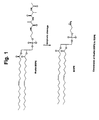
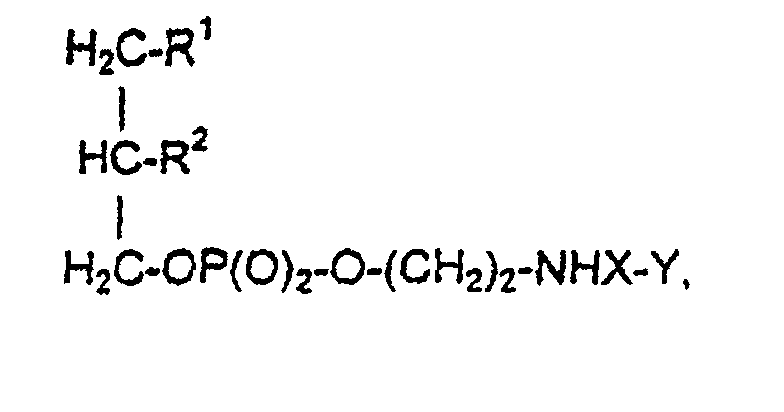
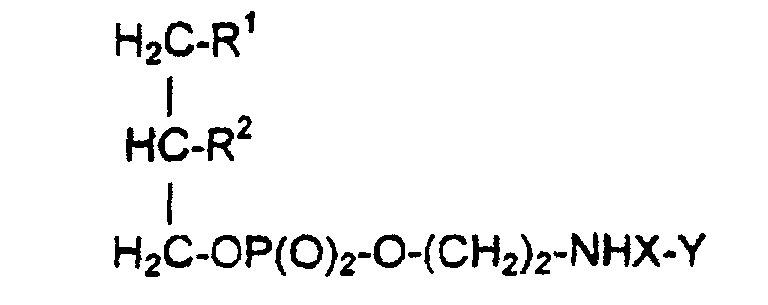
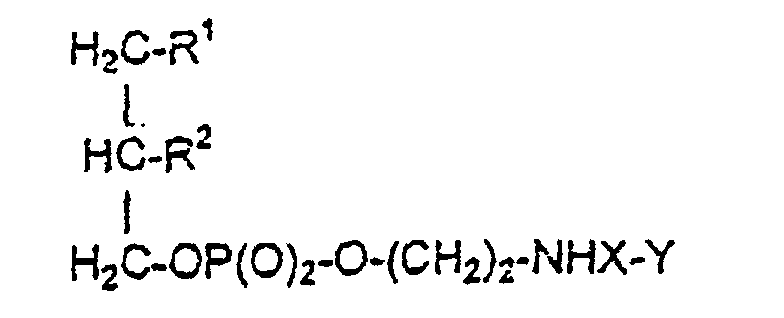
- Peptide-lipid conjugates of this invention have the formula: wherein: each of R 1 and R 2 is an acyl chain, X is a single bond or an acyl chain, and Y is a peptidase-cleavable peptide.
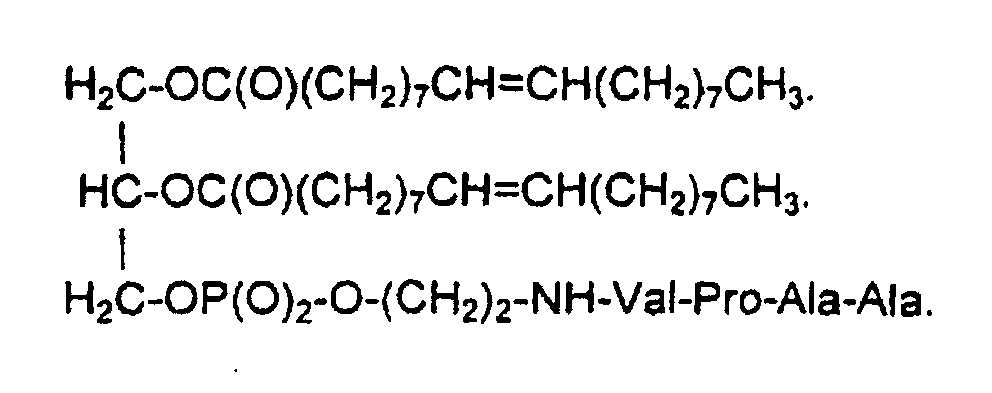
- the acyl chains are preferably oleic acid chains, X is preferably a single bond, and the peptide preferably contains the amino acid sequence Ala-Ala-Pro-Val. more preferably, N-methoxysuccinyl-Ala-Ala-Pro-Val.
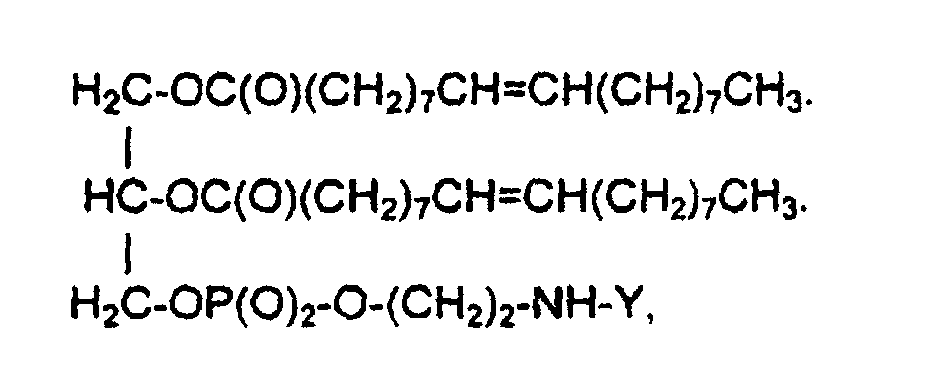
- the peptide-lipid conjugate preferably has the formula:
- the liposomes' lipid component can be entirely composed of the peptide-lipid conjugate, or can comprise one or more additional lipids.
- additional lipids include, without limitation, any of the types of lipids, e.g., phospholipids, glycolipids and sterols, which may be used in the preparation of liposomes.
- the liposome of this invention comprises a petide-lipid conjugate and the positively charged synthetic lipid DODAP.
- Controlled delivery with the liposomes of this invention can be used to deliver the liposomal drugs in vitro or in vivo , for example, in the treatment of mamis afflicted with various diseases, disorders or conditions, e.g., cancers, amenable to treatment with the bioactive agent associated with the liposome.
- n1 is equal to zero or an integer of from 1 to 22
- n3 is equal to zero or an integer of from 1 to 19
- n5 is equal to zero or an integer of from 1 to 16
- n7 is equal to zero or an integer of from zero to 13
- n9 is equal to zero or an integer of from 1 to 10; and, each of n2, n4, n6 and 8 is independently zero or 1.
- R 1 and R 2 the sum of n1 + 2n2 + n3 + 2n4 + n5 + 2n6 + n7 + 2n8 + n9 is equal to an integer of from 10 to 22.
- X is preferably a single bond; however, when X is other than a single bond, the sum of n1 + 2n2 + n3 + 2n4 + n5 + 2n6 + n7 + 2n8 + n9 for X is equal to an integer of from 1 to 22. X is then preferably saturated, most preferably -C(O)(CH 2 ) 11 -.
- DOPE dioleoyl phosphatidylethanolamine
- Y is an "enzyme-cleavable peptide,” which is a peptide comprising an amino acid sequence that is recognized by a peptidase expressed by a mammalian cell and found in surrounding tissue, or produced by a microbe capable of establishing an infection in a mammal.
- Enzyme-cleavable peptides can, but are not required to, contain one or more amino acids in addition to the amino acid recognition sequence; additional amino acids can be added to the amino terminal, carboxy terminal, or both the amino and carboxy terminal ends of the recognition sequence.
- Means of adding amino acids to an amino acid sequence e.g., in an automated peptide synthesizer, as well as means of detecting cleavage of a peptide by a peptidase, e.g., by chromatographic analysis for the amino acid products of such cleavage, are well known to ordinarily skilled artisans given the teachings of this invention.
- Enzyme-cleavable peptides typically from about 2 to 20 amino acids in length, are of sufficient length to project above the surfaces of lipid-based carriers into which they have been incorporated.
- Such peptides are well known to ordinarily skilled artisans given the teachings of this invention and include, for example and without limitation, the amino acid sequences: Ala-Ala-, Ala-Ala-Pro-Val, Ala-Ala-Met-, Ala-Ala-Pro-Phe-, Ala-Ala-Pro-Phe-, Ala-Ala-Pro-Met-, Ala-Ala-Arg, Ser-Ala-Ala-Arg-, Ser-Ser-Ala-Ala-Arg-, Ser-Ser-Ala-Ala-Arg-, Ser-S carboxyl sugar-Ala-Ala-Arg-, Ala-Ala-Asp-, Ser-Ala-Ala-Asp-, Ser-Ser-Ala-Ala-Asp-., Arg-Pro
- the peptide-lipid conjugate of this invention most preferably has the formula: wherein the peptide comprises the amino acid sequence N-methoxysuccinyl-Ala-Ala-Pro-Val.
- Enzyme-cleavable peptides can be modified at their amino terminii, for example, so as to increase their hydrophilicity. Increased hydrophobicity enhances exposure of the peptides on the surfaces of lipid-based carriers into which the parent peptide-lipid conjugates have been incorporated.
- Polar groups suitable for attachment to peptides so as to increase their hydrophilicity are well known, and include, for example and without limitation: acetyl ("Ac”), 3-cyclohexylalanyl (“Cha”), acetyl-serine (“Ac-Ser”), acetyl-seryl-serine (“Ac-Ser-Ser-”), succinyl (“Suc”), succinyl-serine (“Suc-Ser”), succinyl-seryl-serine (“Suc-Ser-Ser”), methoxy succinyl (“MeO-Suc”), methoxy succinyl-serine (“MeO-Suc-Ser”), methoxy succinyl-seryl-senne (“MeO-Suc-Ser-Ser”) and seryl-serine (“Ser-Ser-”) groups, polyethylene glycol (“PEG”), polyacrylamide, polyacrylomorph
- peptidases which recognize particular amino acid sequences are also well known to ordinarily skilled artisans given the teachings of this invention.
- Such peptidases include, for example and without limitation: matrix metalloproteinases, serine proteases, cysteine proteases, elastase, plasmin, plasminogen activator, stromelysin, human collagenases, cathepsins, lysozyme, granzymes, dipeptidyl peptidases, peptide hormone-inactivating enzymes, kininases, bacterial peptidases and viral proteases.
- Elastase for example, is involved in tumor cell tissue remodeling; the breast cancer cell line MCF-7 has been shown to secrete elastase, the levels of which are inversely correlated to overall survival in breast cancer patients (Yamashita et al.).
- the matrix metalloproteinase stromelysin-3 (“ST3")
- ST3 matrix metalloproteinase
- the cDNA of human collagenase-3 or MMP-13, another metalloproteinase was isolated from a breast tumor library (Knäuper et al.); this enzyme cleaves peptides containing the amino acid sequences Pro-Cha-Gly-Nva-His- and Pro-Leu-Gly-Leu-. Furthermore, the 72 kDa gelatinase (MMP-2) is involved in regulating tumor cell invasiveness, and cleaves the amino acid sequence Gly-Pro-Gln-Gly-Ile- between the Gly and Ile residues (Aimes and Quigley; Liotta et al.).
- Human neutrophils also secrete collagenases at sites of inflammation such as MMP-8 (neutrophil collagenase) and MMP-9 (type IV collagenase, 92 kDa gelatinase) (Fosang et al.).
- Cathepsin G is also secreted from human neutrophils at sites of inflammation; its specificity is greatest for peptides containing the amino acid sequences Suc-Ala-Ala-Pro-Phe-or MeOSuc-Ala-Ala-Pro-Met- (Nakajima et al.).
- Other enzymes secreted by neutrophils at sites of inflammation include cathepsins B and D as well as lysozyme.
- Granzymes A and B are secreted by cytotoxic lymphocytes in the synovial fluid of rheumatoid arthritis patients (Froehlich et al.); granzyme A cleaves peptides comprising Gly-Arg- and Ala-Ala-Arg- most efficiently, while granzyme B cleaves peptides comprising the amino acid sequence Ala-Ala-Asp (Odake et al.).
- Peptidases which hydrolyze enzyme-cleavable peptides also include the group of enzymes that inactivate peptide hormones, e.g., aminopeptidase P and angiotensin-converting enzyme, localized on the surface of endothelial cells.
- Aminopeptidase P cleaves the Arg-Pro bond in bradykinin, and is localized to lung endothelial cells (Prechel et al., 1995).
- Peptide-lipid conjugates are prepared by any of a number of means for forming an amide bond between the amino group of a phosphatidylethanolamine and the carboxy terminus of an amino acid sequence.
- Such means include, without limitation, those described in Example 1, hereinbelow. Briefly, an enzyme-cleavable peptide containing an N-terminal blocking group is prepared as an anhydride; a phosphatidylethanolamine such as DOPE is then reacted with the anhydride in the presence of suitable reagents, such as triethylamine.
- This invention also provides a liposome having a lipid component which comprises the peptide-lipid conjugate of the invention.
- “Liposomes” are self-assembling structures comprising one or more lipid bilayers, each of which surrounds an aqueous compartment and comprises two opposing monolayers of amphipathic lipid molecules.
- Amphipathic lipids comprise a polar (hydrophilic) headgroup region covalently linked to one or two non-polar (hydrophobic) acyl chains.
- Energetically unfavorable contacts between the hydrophobic acyl chains and the aqueous medium are generally believed to induce lipid molecules to rearrange such that the polar headgroups are oriented towards the aqueous medium while the acyl chains reorient towards the interior of the bilayer.
- An energetically stable structure is formed in which the acyl chains are effectively shielded from coming into contact with the aqueous medium.
- Liposomes of this invention can have a single lipid bilayer (unilamellar liposomes, "ULVs"), or multiple lipid bilayers (multilamellar liposomes, "MLVs”), and can be made by a variety of methods well known in the art. These methods include without limitation; Bangham's methods for making multilamellar liposomes (MLVs); Lenk's, Fountain's and Cullis' methods for making MLVs with substantially equal interlamellar solute distribution (see, for example, U.S. Patent Nos.
- ULVs can be produced from MLVs by such methods as sonication or extrusion (U.S. Patent No. 5,008,050 and U.S. Patent No. 5,059,421).
- the liposome of this invention can be produced by the methods of any of these disclosures, the contents of which are incorporated herein by reference.
- Liposome sizes can also be determined by a number of techniques, such as quasi-elastic light scattering, and with equipment, e.g., Nicomp® particle sizers, well within the possession of ordinarily skilled artisans.
- Liposomes of this invention can have lipid components entirely composed of a peptide-lipid conjugate.
- the liposomes preferably contain one or more additional lipids, including any of those lipids, such as phospholipids, glycolipids and sterols, typically used to prepare liposomes.
- the additional lipid is a positively charged lipid, more preferably such a lipid selected from the group consisting of DOTAP, 1-N,N-dimethylamino dioleoyl propane (DODAP), 1-oleoyl- 2-hydroxy-3-N,N-dimethylamino propane, 1,2-diacyl-3-N,N-dimethylamino propane and 1,2-didecanoyl -1-N,N,-dimethylamino propane, DC-Chol, DMRIE and DORI.
- DOTAP 1-N,N-dimethylamino dioleoyl propane
- DODAP 1-oleoyl- 2-hydroxy-3-N,N-dimethylamino propane
- 1,2-diacyl-3-N,N-dimethylamino propane 1,2-didecanoyl -1-N,N,-dimethylamino propane
- the positively charged lipid is DODAP.
- Positively charged lipids are incorporated into the liposomes, preferably in at most about equimolar concentration respective to the peptide-lipid conjugate, in order to adjust the net charge of the carrier.
- Increasing the positive charge on a lipid-based carrier enhances electrostatic interactions between the carrier and a biological membrane and hence, fusion between the carrier and the membrane.
- the additional lipid can also include one or more phospholipids, such as a phosphatidylcholine ("PC"), which are generally added to lipid carriers to serve as structural stabilizers, or a phosphatidylethanolamine (“PE”).
- the PE may be selected from the group consisting of trans-esterified phosphatidylethanolamine (tPE), dipalmitoyl phosphatidylethanolamine (DPPE), palmitoyloleoyl phosphatidylethanolamine (POPE) and DOPE; such additional PE's, can be fusogenic because of the relatively unhydrated state of their headgroups.
- the PE is a PE to the headgroup of which is attached a moiety selected from the group consisting of dicarboxylic acids, polyethylene glycols, polyalkyl ethers and gangliosides.
- modified PEs also known as "headgroup-modified lipids”
- the amount of the headgroup-modified lipid incorporated into the liposomes depends upon a number of factors well known to the ordinarily skilled artisan, or within his purview to determine without undue experimentation. These include, but are not limited to: the type of lipid and the type of headgroup modification; the type and size of the liposome; and the intended therapeutic use of the formulation.
- the concentration of the headgroup-modified lipid in the liposome is generally sufficient to prolong the liposome's circulatory half-life in an animal, but is not so great as induce unwanted side effects in the animal, and is typically at least about five mole percent of the lipid present in the liposome.
- Preferred headgroup-derivatized lipids include phospatidylethanolamine-dicarboxylic acids ("PE-DCAs”) and PEGylated lipids (for a description of which, see Woodle et al. and Allen et al.).
- PE-DCAs phospatidylethanolamine-dicarboxylic acids
- PEGylated lipids for a description of which, see Woodle et al. and Allen et al.).
- the liposome of this invention can comprise a "targeting moiety," i.e., a moiety that can be attached to a liposome and which can then direct the liposome to a specific site within the body of a mammal. Such directed delivery is generally believed to occur as a result of the recognition by the targeting moiety of a compound on the surface of the cells being targeted.
- Typical targeting moieties include, without limitation, antibodies, cell receptor ligands, lectins and the like.
- Targeting moieties can be attached to liposomes by any of the means generally accepted in the art for the covalent or noncovalent attachment of such moieties to liposomes.
- Such means include, for example and without limitation, those described in the following documents, the contents of which are incorporated herein by reference:
- U.S. Patent No. 5,399,331 describes the coupling of proteins to liposomes through use of a crosslinking agent having at least one maleimido group and an amine reactive function;
- U.S. Patent Nos. 4,885,172, 5,059,421 and 5,171,578 link proteins to liposomes through use of the glycoprotein streptavidin; Sato and Sunamoto describe the coating of targeted liposomes with polysaccharides.
- the liposomes of this invention can comprise one or more "bioactive agents," which are compounds or compositions of matter having biological, including therapeutic or diagnostic, activity in animals.
- Bioactive agents which may be associated with the liposomes include, but are not limited to: antiviral agents such as acyclovir, zidovudine and the interferons; antibacterial agents such as aminoglycosides, cephalosporins and tetracyclines; antifungal agents such as polyene antibiotics, imidazoles and triazoles; antimetabolic agents such as folic acid, and purine and pyrimidine analogs; antineoplastic agents such as the anthracycline antibiotics and plant alkaloids; sterols such as cholesterol; carbohydrates, e.g., sugars and starches; amino acids, peptides, proteins such as cell receptor proteins, immunoglobulins, enzymes, hormones, neurotransmitters and glycoproteins; dyes; radiolabels such as radioisotopes and radioisotop
- the liposome has a lipid component which comprises a positively charged lipid and a peptide-lipid conjugate having the formula: More preferably, the peptide comprises the sequence N-methoxy-succinyl-Ala-Ala-Pro-Val and the positively charged lipid is DODAP. Most preferably, presently, the lipid component comprises DODAP and the peptide-lipid conjugate in a respective molar ratio of about 50:50.
- compositions comprising the liposome and a "pharmaceutically acceptable carrier,” which is a medium generally acceptable for use in connection with the administration of liposomes to mammals, including humans.
- pharmaceutically acceptable carriers are formulated according to a number of factors well within the purview of the ordinarily skilled artisan to determine and account for, including without limitation: the particular liposomal bioactive agent used, its concentration, stability and intended bioavailability; the disease, disorder or condition being treated with the liposomal composition; the subject, its age, size and general condition; and the composition's intended route of administration, e.g., nasal, oral, ophthalmic, topical, transdermal, vaginal, subcutaneous, intramammary, intraperitoneal, intravenous, or intramuscular (see, for example, Nairn (1985)).
- Typical pharmaceutically acceptable carriers used in parenteral bioactive agent administration include, for example, D5W, an aqueous solution containing 5% weight by volume of dextrose, and physiological saline.
- Pharmaceutically acceptable carriers can contain additional ingredients, for example those which enhance the stability of the active ingredients included, such as preservatives and anti-oxidants.
- a method of delivering the contents of a liposome to a cell which comprises contacting the cell with the liposome of this invention in the presence of a protease capable of cleaving the peptide-lipid conjugate. Delivery can occur in vitro , such as for diagnostic purposes or for ex vivo delivery of a therapeutic agent or nucleic acid to bone marrow cells.
- In vitro contact of a biological membrane with a lipid-based carrier involves adding the carrier-containing composition of this invention to cultures of protease-secreting cells, including various tumor cell lines such as the MCF-7 line, or adding an endogenous protease to the culture medium containing the membranes and the carriers.
- the contacting can be in vivo , in which case the cells are preferably mammalian, a pharmaceutically acceptable carrier is used and the liposomes preferably comprise a targeting moiety.
- In vivo administration involves administering the composiions of this invention to the mammal by any of the means, e.g., by intravenous administration, generally accepted in the art for administering pharmaceutical compositions to mammals.
- the carriers will then circulate in the mammals, and will become fusogenic in the presence of peptidase concentrations sufficient to cleave the carriers' peptide-lipid conjugates: as described hereinabove, such peptidases are found in mammals at, for example, sites of inflammation, microbial infection and tumors.
- lipid-based carriers Moreover, incorporation of headgroup-modified lipids into lipid-based carriers increases the amount of time the carriers remain in circulation, and hence the proportion of the administered carrier reaching the intended site of action within the mammal.
- tumors generally have a higher degree of vasculature than does surrounding tissue, and these blood vessels are typically more permeable to structures such as lipid-based carriers. Accordingly, the carriers accumulate in tumors, thus further enhancing the proportion of administered carrier reaching the intended site of therapeutic action. Fusion in vivo can be to the cells secreting the protease as well as to nearby cells in the surrounding tissue.
- In vivo liposomal bioactive agent delivery can deliver therapeutically or diagnostically effective amounts of therapeutic or diagnostic agents into the cells of a mammal afflicted with a disease, disorder or condition amenable to diagnosis or treatment with the agent. Hence, such delivery can be used to diagnose or treat the mammal for the disease, disorder or condition.
- the method of this invention can also be used to treat mammals afflicted with inflammatory disorders, by administering to the mammal a liposome containing an anti-inflammation effective amount of an anti-inflammatory agent.
- Treatable inflammatory disorders include, without limitation, arthritic disorders, autoimmune disorders, atherosclerotic plaque, acute respiratory distress syndrome, inflammatory bowel syndrome, acute nephritis or gout;
- suitable anti-inflammatory agents include, without limitation, nonsteroidal anti-inflammatory agents, glucocorticoids, bioactive lipids such as ceramides and ether lipids, and prostaglandins.
- Peptidases known to be present at sites of inflammation include, without limitation: elastase, which recognizes Ala-Ala- and cleaves peptides such as Ala-Ala-, Ala-Ala-Ala-, Ala-Ala-Pro-Val, Ala-Ala-Pro-Met and Ala-Ala-Pro-Ala; stromelysin-1, which recognizes peptides comprising the amino acid sequence Arg-Pro-Lys-Pro-Leu-Ala-Nva-, such as Ac-Arg-Pro-Lys-Pro-Leu-Ala-Nva, MeOSucArg-Pro-Lys-Pro-Leu-Ala-Nva-, carboxy sugar-Arg-Pro-Lys-Pro-Leu-Ala-Nva-, Suc-Arg-Pro-Lys-Pro-Leu-Ala-Nva-, Ser-Arg-Pro-Lys-Pro-Leu-Ala-Nva-, Ac-S
- peptide substrates for the enzymes granzyme A and granzyme B secreted by cytotoxic lymphocytes in the synovial fluid of rheumatoid arthritis patients, include, without limitation: Ac-Ala-Ala-Arg-, MeOSuc-Ala-Ala-Arg-, Ala-Ala-Arg-, Ser-Ala-Ala-Arg-, Ac-Ser-Ala-Ala-Arg-, MeOSuc-Ser-Ala-Ala-Arg-, Ser-Ser-Ala-Ala-Arg-, Ac-Ser-Ser-Ala-Ala-Arg-, MeOSuc-Ser-Ser-Ala-Ala-Arg- and carboxyl sugar-Ala-Ala-Arg-, etc.
- Vessel wall damage e.g., after angioplasty or during other inflammatory states exposes the peptidase.
- inflammatory edema is associated with breach of the endothelial lining and exposure of smooth muscle cells.
- Appropriate substrates could be used for liposomal delivery to these sites.
- the method of this invention can also be used to treat mammals afflicted with cancers, by administering to the mammals a liposome containing an anticancer effective amount of an anticancer agent.
- Treatable cancers include brain, breast, colon, lung, ovarian, prostate and stomach cancers, as well as sarcomas, carcinomas, leukemias, lymphomas and melanomas;
- suitable anticancer agents include, without limitation, anthracycline antibiotics, bioactive lipids such as ceramides and ether lipids, taxanes and vinca alkaloids.
- Peptidases known to be present in the vicinity of tumors include, for example and without limitation: elastase, which cleaves peptides containing the amino acid sequence Ala-Ala-, Ala-Ala-Pro-Val (Nakajima et al., Castillo et al.); stromelysin-3, which cleaves peptides containing the amino acid sequence Ala-Met; stromelysin-1, which cleaves peptides containing the amino acid sequence Ala-Nva-; human collagenase-3, which cleaves peptides such as MeOSuc-Pro-Cha-Gly-Nva-, Suc-Pro-Cha-Gly-Nva-, Pro-Cha-Gly-Nva-, Pro-Leu-Gly-Leu-, MeOSuc-Pro-Leu-Gly-Leu- and Suc-Pro-Leu-Gly-Leu-; and, the 72-kD gelatinas
- peptidases are also found in neuronal tissue (e.g. O'Leary and O'Connor), suggesting that the liposomes may be designed to treat several neuropathies.
- Specific aminopeptidases are produced on the membranes of the placental tissue and later secreted suggesting primarily localization of this activity in the placenta (Rogi et al.).
- Several kininases are localized to the kidney. For example renin is found in the zona glomerulosa and/or adrenal medulla (Berka et al.). Certain peptidases have even been identified in skeletal muscle (Ward et al.).
- the method of this invention can also be used to treat mammals afflicted with microbial infections, by administering to the mammals a liposome containing an anti-infection effective amount of an anti-infective agent, such as the various antibiotics.
- an anti-infective agent such as the various antibiotics.
- a number of specific peptidases are associated with certain bacteria and may be utilized to delivery liposomal contents to sites of infection (e.g. Spratt et al.).
- Human immunodeficiency viruses have proteases with particular specificities (e.g. Hoog et al.) that may be expressed in or near infected cells and may be utilized to target fusogenic liposomes for therapy.
- Liposomal drug delivery can direct the liposomes contents to the vicinity of the target cells. It can also deliver the contents directly into cells, by way of fusion between the liposomes and the cells. "Fusion" of a liposome to a cell involves both binding of the liposome to the cell, as well as mixing of liposomal and cell membrane lipids. Binding and lipid mixing can be assessed by a number of means well known to ordinarily skilled artisans given the teachings of this invention comprising, for example, those described hereinbelow.
- liposomes are labeled by incorporation therein of a fluorescent marker and mixed with erythrocyte ghosts, prepared as described ihereinbelow.
- Erythrocyte ghosts are incapable of endocytosis, and hence, any transference of fluorescence between the liposome and ghosts must be due to fusion.
- Measurement of erythrocyte ghost fluorescence is thus a measure of the fusion of liposome to the ghosts.
- Peptidase-mediated cleavage of a peptide-lipid conjugate herein converts a nonfusogenic liposome into a fusogenic liposome.
- the liposome can contain one or more additional fusogenic lipids, including PE's such as DOPE and synthetic lipids such as DOTAP and DODAP.
- additional fusogenic lipids including PE's such as DOPE and synthetic lipids such as DOTAP and DODAP.
- the peptide-lipid conjugate can also contain a "blocking" group, e.g., a carboxy sugar such as lactobionic acid or N-acetyl neuraminic acid, or a polymeric compound such as a small polyethylene glycol derivative, a polyhydroxyl polymer or a number of other ammo acids in the range of 1-10 of a composition containing hydrophilic side chains such as serine or threonine.
- This blocking group is attached to the N-terminus of the peptide, and inhibits or blocks the liposome and lipidic membrane from approaching closely enough for fusion between the two to occur.
- N-acetyl-alanyl-alanyl-dioleoyl phosphatidylethanolamine (“N-Ac-Ala-Ala-DOPE”) was synthesized by first preparing an anhydride form of the peptide from N-acetyl-ala-ala-OH, or other suitably blocked carboxyl-terminating peptides; the starting reagent was incubated with N,N-dicyclohexyl carbodiimide (DCC) in the presence of chloroform for a few hours at room temperature.
- DCC N,N-dicyclohexyl carbodiimide
- the end-product anhydride is soluble in chloroform, whereas a reaction byproduct (dicyclohexyl urea) is not; therefore the anhydride is separated from the undesired byproduct by collecting the chloroform and discarding the precipitate.
- DOPE is added to the anhydride in the presence of triethylamine to catalyze the N-acylation reaction; the mixture is incubated overnight at room temperature.
- the reaction mixture is applied to a preparative thin layer chromatography (TLC) plate to purify N-acetyl-ala-ala-DOPE, the solvent system being chloroform/methanollwater (65/25/4).
- TLC thin layer chromatography
- the lipid band is identified by spraying the plate with water, after which the band is scraped and solubilized in chloroform/methanol (2/1). Lipid is stored under nitrogen at -70C.
- the lipopeptide molecule gave positive test for molybdenum reagent and negative test for ninhydrin reagent.
- the lipopeptide molecule identity was determined by TLC in two solvent systems: ((i) CHCl 3 :MeOH:NH4OH 65:25:4 v/v/v and (ii) CHCl 3 :MeOH:H 2 O 65:25:4 v/v/v). In both solvent systems the lipopeptide gave single spot and it is >99% pure.
- the lipopeptide was characterized by NMR and FAB mass analysis.
- N -Ac-ala-ala-DOPE Cleavage of N -Ac-ala-ala-DOPE to DOPE by elastase was monitored by thin layer chromatography (TLC).
- TLC thin layer chromatography
- 100-200 nmol of N -Ac-AA-DOPE SUVs were incubated with 1 mg enzyme in 0.1 ml overnight at 37°C.
- Lipid was extracted by organic phase separation [19] twice. Collected lipid was dried under N 2 stream and exposed to vacuum for 4 hours-overnight. Samples were resuspended in chloroform and spotted onto TLC plates. TLC was run using chloroform/methanol/water (65:25:4), air dried, sprayed with molybdenate blue, and charred on a hot plate.
- N -Ac-AA-DOPE iiposomes Treatment of N -Ac-AA-DOPE iiposomes with elastase generated a product corresponding to DOPE, whereas untreated N -Ac-AA-DOPE showed no change (Fig. 2A). Therefore elastase recognized N -Ac-AA-DOPE and cleaved the dipeptide to yield DOPE.
- proteases were tested to determine whether an enzyme with similar substrate specificity could be used as a model for elastase mediated cleavage of N -Ac-AA-DOPE.
- Proteinase K is a serine protease that, similarly to elastase, can cleave at peptide bonds C-terminal to aliphatic residues.
- N -Ac-AA-DOPE liposomes Upon incubation of N -Ac-AA-DOPE liposomes with proteinase K the peptide-lipid was cleaved and DOPE was generated (Fig. 2B).
- N-Ac-AA-DOPE LUVs were prepared and treated with or without proteinase K (1.5 mg protein/100 nmol lipid) overnight at 37°C. Samples were mixed with buffer (10% deoxycholate, 100mM EDTA, 20mM Hepes) and deuterium oxide (Cambridge Isotope Laboratories, Woburn, MA) (1:4:2) and transferred to 5mm NMR tubes. Samples were monitored at room temperature in a Bruker AC300 spectrometer operating at 121.5 MHz, with 110ms 90° radio frequency pulse for proton decoupling and set to 2 sec interpulse delay to avoid signal saturation.
- Sweep width was set at 50kHz. 1 Hz line broadening was applied to all spectra.
- N-Ac-AA-DOPE liposomes treated with proteinase K resulted in the appearance of a peak 0.3 ppm upfield from N -Ac-AA-DOPE, corresponding with pure DOPE.
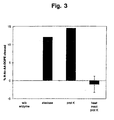
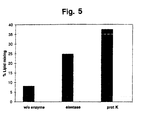
- Lipid peaks were quantitated in comparison to standard curves generated by injecting 5-200 nmol of DOTAP or N -Ac-AA-DOPE and monitoring 205nm signal. % cleavage was calculated by normalizing peaks to DOTAP, then determining the decrease in N -Ac-AA-DOPE peak size relative to starting amounts. Both elastase and proteinase K cleaved N -Ac-AA-DOPE to a similar extent (Fig. 3). To verify that the cleavage of N -Ac-AA-DOPE was due to proteinase K enzymatic activity, liposomes were treated with heat inactivated proteinase K.
- Proteinase K was inactivated by heating at 95°C for 1 hour, after which the enzyme was incapable of cleaving the chromogenic substrate N -Ac-AAA-pNA.
- Treatment of DOTAP/ N -Ac-AA-DOPE liposomes with heat inactivated proteinase K did not result in any cleavage of N -Ac-AA-DOPE (Fig. 3), indicating the requirement for active proteinase K. Since proteinase K has been shown to share substrate specificity with elastase and is considerably less costly than human leukocyte elastase, the majority of subsequent experiments were conducted with proteinase K.
- Lipid was extracted using the Bligh-Dyer technique (chloroform/methanol/water : 2/1.7/1), dried under nitrogen, placed under high vacuum for ⁇ 3 hours. Samples were resuspended in 5 ul chloroform and spotted onto TLC plates. 20ug of pure DOPE was also spotted for comparison purposes. TLC solvent system was chloroform/methanol/ammonium hydroxide (65/25/5). Plates were air dried, sprayed with molybdenate blue, then charred at 180C.
- OMe-suc-ala-ala-pro-val-DOPE liposomes were incubated with 0, 2.5, 5, 10, or 20ug neutrophil granule proteins overnight at 37C in 50 ul volume of 10mM TES/ 154 mM NaCl/ 0.1mM EDTA, pH 7.4, containing 1.5mM Ca and 1,5 mM Mg. Samples were processed as described above.
- Results show that 2.5 ⁇ g of neutrophil granule proteins were sufficient to detect cleavage of OMe-suc-ala-ala-pro-val-DOPE to DOPE, suggesting that crude neutrophil granule proteins can convert the peptide-lipid to DOPE, and therefore liposomes containing this peptide-lipid can be activated to fuse under physiological conditions.
- OMe-suc-ala-ala-pro-val-DOPE liposomes were incubated with 0 or 5 ug HLE for 1, 2, 4 hours, or overnight and processed as above.
- the peptide was cleaved by HLE in as little as 1 hour at 37C, suggesting that the cleavage of OMe-suc-ala-ala-pro-val-DOPE occurs within a physiologically relevant time frame.
- NBD/Rh labeled or unlabeled large unilamellar vesicles were prepared as described before (Marcher et al.). Briefly, the lipid mixture in chloroform was dried under a nitrogen stream to a thin film, which was then left under vacuum overnight to remove residual solvent. The lipid film was hydrated with TES buffered saline (10 mM TES, 0.1 mM EDTA, 154 mM NaCI, pH 7.4). Brief vortexing was applied to ensure complete hydration. After ten cycles of freeze/thaw in liquid nitrogen/room temperature water bath, the sample was extruded ten times through 0.1 ⁇ m polycarbonate membrane filter (Poretics Corp., Livermore, CA).
- the liposomes were stored at 4°C. Multilamellar vesicles were prepared by hydrating the dried lipid film. The phospholipid concentration of each liposome preparation was determined by phosphate assay (Bartlett). The approximately 0.1 ⁇ m size of the liposomes was confirmed on a Nicomp submicron particle sizer (Nicomp Instruments, Inc., Goleta, CA) using quasi-elastic light scattering.
- Resealed ghosts are referred to as erythrocyte ghosts unless otherwise specified, and were prepared as previously described (see Williamson et al.; Clague et al., the contents of which are incorporated herein by reference). Briefly, fresh human blood was washed several times with cold 10 mM TES buffered saline to remove plasma and white cells. Then 2 ml of washed erythrocytes (50% hematocrit) were pre-swelled in cold hypotonic solution containing 8 ml H 2 O and 9.6 ml 10 mM TES buffered saline, and then pelleted at 850xg for 5 minutes.
- the pellet was resuspended in 40 ml cold lysis buffer (10 mM Tris, 0.1% BSA, 2 mM MgCl 2 , and 0.1 mM EGTA) and incubated on ice for at least 2 minutes. After addition of 4.5 ml 10x resealing buffer (1.22 M NaCI, 30 mM KCI, 0.15 M Na 2 HPO 4 , 50 mM KH 2 PO 4 , and 2 mM MgCl 2 ), the sample was incubated at 37°C for 40 minutes. The resealed ghosts were pelleted at 1750xg for 10 minutes and washed several times until no hemoglobin could be observed in the supernatant. The ghosts were stored at 4°C and used within one week.
- the threshold of fusogenicity was determined by preparing liposomes with increasing amounts of PE transesterified from egg PC. This PE was preferred over DOPE because of its higher H II transition temperature ( ⁇ 37°C vs. 10°C, respectively), which aids in the preparation of stable liposomes yet does not inhibit fusion.
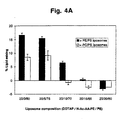
- DOTAP was chosen as the positively charged lipid. Fusion assays were performed for DOTAP/ N -Ac-AA-DOPE/PE liposomes containing the fluorescent membrane probes N -NBD-PE and N -Rho-PE and inversely varying amounts of N -Ac-AA-DOPE and PE.
- Liposomes were prepared with 1 mol% N -NBD-PE and 1 mol% N -Rho-PE, which results in quenching of the N -NBD-PE fluorescence signal. Membrane fusion results in probe diffusion and relief from self-quenching, which is monitored as an increase in N -NBD-PE fluorescence.
- Liposome-liposome lipid mixing was initiated by addition of 10 nmol of fluorescently labeled liposomes to 90 nmol unlabeled liposomes in microcentrifuge tubes containing 1 ml of TES/NaCl/EDTA buffer with 1.5mM Ca ++ /1.5mM Mg ++ .
- Defining the different threshold of fusion for different targets creates a gradient of sensitivity for fusion that can be used to determine optimum conditions for activating N -Ac-AA-DOPE containing liposomes to fuse.
- PE/PS liposomes appeared to be the most sensitive target, we focused on a composition of DOTAP/ N -Ac-AA-DOPE/PE liposomes that could be activated to fuse.
- the threshold of PE content appeared to be between 65-70 mol%.
- DOTAP and N -Ac-AA-DOPE were added in equivalent amounts to yield liposomes composed of DOTAP/ N -Ac-AA-DOPE/PE in a 15/15/70 mol ratio.
- Liposomes were incubated with protease at a 1 mg protease/100 nmol lipid/0.1 ml buffer ratio, unless otherwise stated. This concentration of proteinase K was found to have comparable activity, within an order of magnitude, with that of elastase in rheumatoid arthritis synovial fluid [21; unpublished data]. Mixtures were incubated at 37°C in microcentrifuge tubes with constant shaking in an Eppendorf Thermomixer, 700 rpm/min. Treated liposomes were then assayed for N -Ac-AA-DOPE cleavage by HPLC, as described above.
- liposomes containing fluorescent membrane probes were treated with protease and then the concentrations of liposomes were determined by monitoring direct N -Rho-PE fluorescence (550ex/590em) and comparing with a known amount of stock liposomes. Aliquots of these fluorescently labeled protease treated liposomes were incubated with unlabeled target liposomes or cells and lipid mixing was determined as described above.
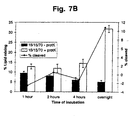
- DOTAP/ N -Ac-AA-DOPE/PE liposomes were either incubated with 0, 0.1, 0.25, 0.5, and 1 mg proteinase K/100nmol lipid overnight, or with 1 mg proteinase K/100nmol lipid for 1, 2, 4 hours or overnight. These liposomes were monitored for N -Ac-AA-DOPE cleavage by HPLC or for lipid mixing with acceptor liposomes by N -NBD-PE fluorescence dequenching.
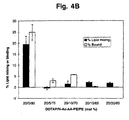
- DOTAP/ N -Ac-AA-DOPE/PE liposomes could be activated to fuse with target liposomes after enzymatic cleavage, we determined if activated fusion of N -Ac-AA-DOPE containing liposomes with cells could also be observed. As fusion with RBC ghosts (Fig. 4B) appeared to exhibit a different threshold of fusogenicity than liposomes (Fig. 4A), we prepared DOTAP/ N -Ac-AA-DOPE/PE liposomes at a 20/10/70 mol ratio.
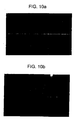
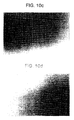
- DOTAP/ N -Ac-AA-DOPE/PE (20/10/70 mol%) liposomes were loaded with 10,000 MW fluorescent aqueous probe TX-red dextran. Liposomes were then treated with proteinase K and incubated with RBC ghosts. After washing the cells extensively to remove unbound liposomes the RBC ghosts were observed under fluorescence microscopy.
- the cell pellet was resuspended in 0.1 ml buffer and observed under an Olympus BH-2 fluorescence microscope (Olympus Corp., Lake Success, NY) using an apochromat 40x oil (N.A. 1.00) objective. TX-red fluorescence was excited by a xenon lamp transmitted through a green excitation cube (580nm dichroic mirror, 545nm excitation filter). Non-fluorescent images were observed with transmitted light Nomarski differential interference contrast microscopy.
- DOTAP/ N -Ac-AA-DOPE/PE liposomes can be activated by enzymatic cleavage of the peptide-lipid to fuse with cells and deliver their aqueous contents.
- DOTAP/ AAPV-PE 100 nmol of DOTAP/ AAPV-PE (3:1; 1:1; or 1:3) were incubated +/- HLE (5ug/100nmol lipid) in 100 ul for 2 hours at 37C, pH 7.4 with constant shaking. Afterwards 10nmol of liposomes +/- HLE pretreatment were incubated with 1-2 x 10 6 HL60 (human leukemia) cells at pH 7.4 or 4. Samples were incubated 2 hours at 37C with constant shaking. After incubation cells were washed 2x, resuspended in 0.5ml, and transferred to wells of Falcon 24 well plate (Primaria). Fluorescence was monitored +/- detergent in cytofluor. Liposome input (no cells) were not washed and were transferred directly to 24 well plate.
- Liposomes exhibited higher binding at pH 4.0. Binding also appeared to be higher after HLE pretreatment. In addition, DODAP/AAPV-PE (1:1) may possibly exhibit higher fluorescence dequenching after HLE treatment, suggesting lipid mixing between liposomes and cells had occurred.
Landscapes
- Chemical & Material Sciences (AREA)
- Health & Medical Sciences (AREA)
- Organic Chemistry (AREA)
- Life Sciences & Earth Sciences (AREA)
- Medicinal Chemistry (AREA)
- General Health & Medical Sciences (AREA)
- Molecular Biology (AREA)
- Biophysics (AREA)
- Proteomics, Peptides & Aminoacids (AREA)
- Genetics & Genomics (AREA)
- Biochemistry (AREA)
- Public Health (AREA)
- Veterinary Medicine (AREA)
- Pharmacology & Pharmacy (AREA)
- Epidemiology (AREA)
- Animal Behavior & Ethology (AREA)
- Dispersion Chemistry (AREA)
- Bioinformatics & Cheminformatics (AREA)
- Engineering & Computer Science (AREA)
- Chemical Kinetics & Catalysis (AREA)
- General Chemical & Material Sciences (AREA)
- Analytical Chemistry (AREA)
- Medicinal Preparation (AREA)
- Medicines That Contain Protein Lipid Enzymes And Other Medicines (AREA)
- Peptides Or Proteins (AREA)
Abstract
Description

| % lipo bound | % NBD FD | |||
| DODAP/AAPV-PE | pH 7.4 | pH 4.0 | pH 7.4 | pH 4.0 |
| 1:3 - HLE | 2.68 | 53.58 | 104.22 | 33.13 |
| 1:3 + HLE | 0.74 | 70.34 | -32.43 | 32.53 |
| 1:1 - HLE | 2.37 | 56.95 | 59.94 | 23.86 |
| 1:1 + HLE | 2.87 | 85.91 | 77.42 | 44.81 |
| 3:1 - HLE | 6.76 | 67.88 | -5.05 | 64.52 |
| 3:1 + HLE | 7.78 | 80.82 | 43.43 | 69.04 |
| w/o HLE | w/ HLE | |
| % bound | 20.29 | 45.22 |
| # bound | 1.22E+10 | 2.72E+10 |
| % lipid mixing | 48.06 | 44.24 |
| # lipid mixed | 5.87E+11 | 1.20E+12 |
| w/o HLE | w/ HLE | |
| % bound | 7.72 | 33.17 |
| # lipos bound | 4.60E+09 | 2.00E+10 |
| % lipid mixing | 57.12 | 25.89 |
| # lipid mixing | 2.65E+11 | 5.17E+11 |
| w/o HLE | w/ HLE | |
| % bound | 38.09 | 46.89 |
| # Lipos bound | 2.29E+10 | 3.08E+10 |
| % lipid mixing | 63.74 | 86.25 |
| # lipid mixed | 1.46E+12 | 2.43E+12 |
Claims (34)
- A peptide-lipid conjugate having the formula:wherein: each of R1 and R2 is independently a group having the formula OC(O)(CH2)n1(CH=CH)n2(CH2)n3(CH=CH)n4(CH2)n5(CH=CH)n6(CH2)n7(CH=CH)n8 (CH2)n9CH3 and X is a linker moiety selected from the group consisting of a single bond and an acyl chain having the formula OC(O)(CH2)n1(CH=CH)n2(CH2)n3(CH=CH)n4(CH2)n5(CH=CH)n6(CH2)n7(CH=CH)n8 (CH2)n9, n1 is equal to zero or an integer of from 1 to 22, n3 is equal to zero or an integer of from 1 to 19, n5 is equal to zero or an integer of from 1 to 16, n7 is equal to zero or an integer of from zero to 13 and n9 is equal to zero or an integer of from 1 to 10; and, each of n2, n4, n6 and 8 is independently zero or 1, for R1 and R2 independently, the sum of n1+2n2+n3+2n4+n5 + 2n6 + n7 + 2n8 + n9 is equal to an integer of from 10 to 22;
wherein for each of R1 and R2 independently, at least one of n2, n4, n6 and n8 is an integer equal to 1;
for R3 the sum of n1 + 2n2 + n3 + 2n4 + n5 + 2n6 + n7 + 2n8 + n9 is an integer equal to from 0 to 22;
Y is a peptide comprising an amino acid sequence which is the substrate of a cell-secreted peptidase. - The conjugate of claim 1, wherein X is a single bond.
- The conjugate of claim 1 or 2, wherein each of R1 and R2 is OC(O)(CH2)7(CH=CH)(CH2)7CH3.
- The conjugate of any one of claims 1 to 3, wherein the peptide comprises the amino acid sequence Ala-Ala.
- The conjugate of claim 4, wherein the peptide comprises an amino acid sequence selected from the group consisting of the sequences Ala-Ala-, Ala-Ala-Pro-Val, Ala-Ala-Met-, Ala-Ala-Pro-Phe-, Ala-Ala-Pro-Phe-, Ala-Ala-Pro-Met-, Ala-Ala-Arg, Ser-Ala-Ala-Arg-, Ser-Ser-Ala-Ala-Arg-, Ser-Ser-Ala-Ala-Arg-, Ser-S carboxyl sugar-Ala-Ala-Arg-, Ala-Ala-Asp-, Ser-Ala-Ala-Asp- and Ser-Ser-Ala-Ala-Asp-.
- The conjugate or any one of claims 1 to 3, wherein the peptide comprises an amino acid sequence selected from the group consisting of the sequences Arg-Pro-Lys-Pro-Leu-Ala-Nva-, Ser-Arg-Pro-Lys-Pro-Leu-Ala-Nva-, Ser-Ser-Arg-Pro-Lys-Pro-Leu-Ala-Nva, Pro-Cha-Gly-Nva-His-Ala-Dpa-NH2, Pro-Leu-Gly-Leu-Dpa-Ala-Arg-NH2, Pro-Cha-Gly-Nva-, Pro-Leu-Gly-Leu-, Pro-Leu-Gly-Leu-, Gly-Pro-Arg, Leu-Pro-Arg, Glu-Gly-Arg and Gly-Pro-Gln-Gly-Ile-.
- The conjugate of any one of claims 1 to 6, wherein the peptide is modified at its amino terminus by a moiety selected from the group consisting of acetyl, methoxy, carboxy sugar, polyethylene glycol and methoxy-substituted carboxy sugar modifications.
- The conjugate of claim 7, wherein the amino-terminal modification is by a methoxy-succinyl moiety.
- The conjugate of claim 8, wherein the peptide comprises the modified amino acid sequence N-methoxy-succinyl-Ala-Ala-Pro-Val.
- The conjugate of any one of claims 1 to 5 which isC(O)-CH2CH2NH2-Val-Pro-Ala-Ala.

- A liposome having a bilayer comprising a lipid component which comprises the peptide-lipid conjugate of any one of claims 1 to 10.
- The liposome of claim 11, wherein the conjugate comprises at least 20 mole % of the lipid component of the liposome.
- The liposome of claim 12, wherein the conjugate comprises from 20 mole % to 80 mole % of the lipid component.
- The liposome of claim 13, wherein the conjugate comprises 50 mole % of the lipid component.
- The liposome of claim 14, wherein the additional lipid comprises a positively charged lipid.
- The liposome of claim 15, wherein the positively charged lipid is selected from the group consisting of DOTAP, 1-N,N-dimethylamino dioleoyl propane (DODAP), 1-oleoyl- 2-hydroxy-3-N,N-dimethyiamino propane, 1,2-diacyl-3-N,N-dimethylamino propane and 1,2-didecanoyl -1-N,N,-dimethylamino propane, DC-Chol, DMRIE and DORI.
- The liposome of claim 16, wherein the positively charged lipid is DODAP.
- The liposome of claim 12, wherein the additional lipid is a phosphatidylethanoiamine.
- The liposome of claim 18, wherein the phosphatidylethaolamine is selected from the group consisting of trans-esterified phosphatidylethanolamine (tPE), dipalmitoyl phosphatidylethanolamine (DPPE), palmitoyloleoyl phosphatidylethanolamine (POPE) and DOPE.
- The liposome of claim 18, wherein the phosphatidylethaolamine is linked through its amino group linked to a moiety selected from the group consisting of dicarboxylic acids, polyethylene giycols, polyalkyl ethers and gangliosides.
- The liposome of claim 11 comprising DODAP and DOPE conjugated to a peptide comprising the amino acid sequence Ala-Ala-Pro-Val or N-methoxy-suucinyi-Ala-Ala-Pro-Val.
- The liposome of claim 23, having a lipid component comprising 50 % DODAP and 50 mole % of the peptide-lipid conjugate.
- A composition comprising the liposome of any one of claims 11 to 22.
- The composition of claim 23, further comprising a pharmaceutically acceptable carrier.
- Use of the composition of claim 24 for the preparation of a pharmaceutical composition for delivering the contents of a liposome to the cells of a mammal wherein the mammalian cells comprise cells secreting a peptidase and the peptide lipid conjugate has an amino acid sequence recognized by the secreted peptidase.
- The use of claim 25, wherein the liposome comprises a bioactive agent selected from the group consisting of antiviral agents, antibacterial agents, antifungal agents, antineoplastic agents, antiinflammatory agents, radiolabels, radiopaque compounds, fluorescent compounds, mydriatic compounds, bronchodiiators, local anesthetics, nucleic acid sequences and bioactive lipids.
- The use of claim 25 or 26, wherein the liposome is a large unilamellar liposome.
- The use of any one of claims 25 to 27, wherein the peptide-lipid conjugate comprises a peptide comprising an amino acid sequence recognized by a peptidase selected from the group consisting of matrix metalloproteinases, serine proteases and cysteine proteases.
- The use of any one of claims 25 to 28, wherein the peptide-lipid conjugate, comprises an amino acid sequence recognized by a peptidase selected from the group consisting of elastase, plasmin, plasminogen activator, stromelysin, human collagenases, cathepsins, lysozyme, granzymes, dipeptidyl peptidases, peptide hormone-inactivating enzymes, kininases, bacterial peptidases and viral proteases.
- The use of any one of claims 25 to 29, wherein the composition comprises a liposome having a lipid component which comprises DODAP and N-Ala-Ala-Pro-Val-DOPE.
- The use of claim 30, wherein the lipid component comprises 50 mole % DODAP and 50 mole % N-Ala-Ala-Pro-Val.
- The use of any one of claims 25 to 31 wherein the mammal is afflicted with a cancer and wherein the liposome comprises a therapeutically effective amount of an anticancer agent.
- The use of any one of claims 25 to 31 wherein the mammal is afflicted with an inflammatory disorder and wherein the carrier particle comprises a therapeutically effective amount of an anti-inflammatory agent.
- The use of any one of claims 25 to 31, wherein the mammal is afflicted with a genetic disorder and wherein the carrier particle comprises a nucleic acid encoding a protein capable of ameliorating the disorder.
Applications Claiming Priority (3)
| Application Number | Priority Date | Filing Date | Title |
|---|---|---|---|
| US2754496P | 1996-10-15 | 1996-10-15 | |
| US27544P | 1996-10-15 | ||
| PCT/US1997/018538 WO1998016240A1 (en) | 1996-10-15 | 1997-10-15 | Peptide-lipid conjugates, liposomes and liposomal drug delivery |
Publications (3)
| Publication Number | Publication Date |
|---|---|
| EP0964690A1 EP0964690A1 (en) | 1999-12-22 |
| EP0964690A4 EP0964690A4 (en) | 2000-03-29 |
| EP0964690B1 true EP0964690B1 (en) | 2003-07-09 |
Family
ID=21838338
Family Applications (1)
| Application Number | Title | Priority Date | Filing Date |
|---|---|---|---|
| EP97910950A Expired - Lifetime EP0964690B1 (en) | 1996-10-15 | 1997-10-15 | Peptide-lipid conjugates, liposomes and liposomal drug delivery |
Country Status (13)
| Country | Link |
|---|---|
| US (2) | US6087325A (en) |
| EP (1) | EP0964690B1 (en) |
| AT (1) | ATE244572T1 (en) |
| AU (1) | AU725376B2 (en) |
| CA (1) | CA2276267C (en) |
| DE (1) | DE69723473T2 (en) |
| DK (1) | DK0964690T3 (en) |
| HU (1) | HUP0000150A3 (en) |
| IL (1) | IL130823A (en) |
| NO (1) | NO993258L (en) |
| NZ (1) | NZ336539A (en) |
| SK (1) | SK283518B6 (en) |
| WO (1) | WO1998016240A1 (en) |
Families Citing this family (116)
| Publication number | Priority date | Publication date | Assignee | Title |
|---|---|---|---|---|
| US5545553A (en) * | 1994-09-26 | 1996-08-13 | The Rockefeller University | Glycosyltransferases for biosynthesis of oligosaccharides, and genes encoding them |
| US5981501A (en) * | 1995-06-07 | 1999-11-09 | Inex Pharmaceuticals Corp. | Methods for encapsulating plasmids in lipid bilayers |
| US7422902B1 (en) * | 1995-06-07 | 2008-09-09 | The University Of British Columbia | Lipid-nucleic acid particles prepared via a hydrophobic lipid-nucleic acid complex intermediate and use for gene transfer |
| US6339069B1 (en) * | 1996-10-15 | 2002-01-15 | Elan Pharmaceuticalstechnologies, Inc. | Peptide-lipid conjugates, liposomes and lipsomal drug delivery |
| WO1998051278A2 (en) | 1997-05-14 | 1998-11-19 | Inex Pharmaceuticals Corporation | High efficiency encapsulation of charged therapeutic agents in lipid vesicles |
| US20030104044A1 (en) * | 1997-05-14 | 2003-06-05 | Semple Sean C. | Compositions for stimulating cytokine secretion and inducing an immune response |
| GB9721901D0 (en) * | 1997-10-16 | 1997-12-17 | Univ Manchester | Particles |
| US6410328B1 (en) * | 1998-02-03 | 2002-06-25 | Protiva Biotherapeutics Inc. | Sensitizing cells to compounds using lipid-mediated gene and compound delivery |
| US6448390B1 (en) | 1998-05-20 | 2002-09-10 | The University Of Tennessee Research Corporation | Stable envelope proteins for retroviral, viral and liposome vectors and use in gene drug therapy |
| EP1165142A2 (en) * | 1999-03-25 | 2002-01-02 | Sapientia Therapeutics Limited | Lipid-based artificial particles inducing cell-mediated immunity |
| GB9919338D0 (en) | 1999-08-16 | 1999-10-20 | Celltech Therapeutics Ltd | Biological products |
| US20050249794A1 (en) * | 1999-08-27 | 2005-11-10 | Semple Sean C | Compositions for stimulating cytokine secretion and inducing an immune response |
| US6682545B1 (en) * | 1999-10-06 | 2004-01-27 | The Penn State Research Foundation | System and device for preventing restenosis in body vessels |
| US6331644B1 (en) | 1999-11-09 | 2001-12-18 | Alcon Universal Ltd. | 3-heteroatom substituted and two carbon homologs of 15-HETE and methods of use |
| US6552084B2 (en) | 1999-11-09 | 2003-04-22 | Alcon Universal Ltd. | Hydroxyeicosatetraenoic acid analogs and methods of their use in treating dry eye disorders |
| DE60019322T2 (en) | 1999-11-09 | 2005-09-08 | Alcon Inc. | HETEROATOMIC INTERRUPTED ANALOGS OF 15-HYDROXYEICOSATETRAENIC ACID AND METHODS FOR THEIR USE |
| DE60007547T2 (en) | 1999-11-09 | 2004-06-17 | Alcon, Inc. | 15-HYDROXYEICOSATETRAENIC ACID RELATED COMPOUNDS AND METHODS OF USE |
| US6458854B2 (en) | 1999-11-09 | 2002-10-01 | Alcon Universal Ltd. | Phospholipids of hydroxyeicosatetraenoic acid-like derivatives and methods of use |
| KR20020050240A (en) | 1999-11-09 | 2002-06-26 | 구이도 콜러, 스테판 바슬러 | Hydroxyeicosatetraenoate salts, compositions and methods of use in treating dry eye disorders |
| US6255343B1 (en) | 1999-11-09 | 2001-07-03 | Alcon Universal Ltd. | 2,2-difluoro 15-hydroxyeicosatetraenoic acid analogs and methods of use |
| BR0015402A (en) | 1999-11-09 | 2002-06-25 | Alcon Inc | Modified Èmega-chain 15-hydroxyeicosatetraenoic acid derivatives and methods of their use for the treatment of dry eye |
| AU1226001A (en) | 1999-11-09 | 2001-06-06 | Alcon Universal Limited | Phospholipids of hydroxyeicosatetraenoic acid-like derivatives |
| US6803385B2 (en) | 1999-11-09 | 2004-10-12 | Alcon, Inc. | Hydroxyeicosatetraenoic acid analogs and methods of their use in treating dry eye disorders |
| WO2001034550A2 (en) | 1999-11-09 | 2001-05-17 | Alcon Universal Ltd. | 15-hydroxyeicosatetraenoic acid analogs with enhanced metabolic stability and methods of their use in treating dry eye disorders |
| PT1228030E (en) | 1999-11-09 | 2005-08-31 | Alcon Inc | BENZENOID DERIVATIVES OF 15-HYDROXYETHYLATE-ACETATE ACID AND METHODS FOR THEIR USE IN THE TREATMENT OF DRY EYE PERTURBACTIONS |
| KR20030009388A (en) | 2000-03-15 | 2003-01-29 | 브리스톨-마이어스 스퀴브 파마 컴파니 | Peptidase-Cleavable, Targeted Antineoplastic Drugs and Their Therapeutic Use |
| US7718600B2 (en) * | 2000-09-29 | 2010-05-18 | The Trustees Of Princeton University | IAP binding compounds |
| US20020073441A1 (en) | 2000-12-13 | 2002-06-13 | Ross Brian D. | Compositions and methods for detecting proteolytic activity |
| FI113840B (en) * | 2001-03-26 | 2004-06-30 | Ctt Cancer Targeting Tech Oy | Use of matrix metalloproteinase inhibitors in targeting liposomes |
| CA2441893C (en) * | 2001-03-26 | 2015-01-20 | Dana-Farber Cancer Institute, Inc. | Method of attenuating reactions to skin irritants |
| EP1419252A2 (en) * | 2001-04-04 | 2004-05-19 | Merrion Research I Limited | Genetic analysis of peyers's patches and m cells and methods and compositions targeting peyer's patches and m cell receptors |
| US6743905B2 (en) * | 2001-04-16 | 2004-06-01 | Applera Corporation | Mobility-modified nucleobase polymers and methods of using same |
| JP2005501096A (en) | 2001-08-17 | 2005-01-13 | ユニヴァーシティ オブ ピッツバーグ | Administration of estradiol metabolites to treat or prevent obesity, metabolic syndrome, diabetes, vascular disorders and kidney disease |
| US6943267B1 (en) | 2001-08-24 | 2005-09-13 | Utah State University | Thiophosphonate inhibitors of phosphatase enzymes and metallophosphatases |
| US7157277B2 (en) | 2001-11-28 | 2007-01-02 | Neose Technologies, Inc. | Factor VIII remodeling and glycoconjugation of Factor VIII |
| US20080279936A1 (en) * | 2001-10-10 | 2008-11-13 | The University Of Pittsburgh | Estradiol metabolites for reduction of endothelin production |
| US7173003B2 (en) | 2001-10-10 | 2007-02-06 | Neose Technologies, Inc. | Granulocyte colony stimulating factor: remodeling and glycoconjugation of G-CSF |
| US7696163B2 (en) | 2001-10-10 | 2010-04-13 | Novo Nordisk A/S | Erythropoietin: remodeling and glycoconjugation of erythropoietin |
| US7179617B2 (en) * | 2001-10-10 | 2007-02-20 | Neose Technologies, Inc. | Factor IX: remolding and glycoconjugation of Factor IX |
| US8008252B2 (en) * | 2001-10-10 | 2011-08-30 | Novo Nordisk A/S | Factor VII: remodeling and glycoconjugation of Factor VII |
| US7214660B2 (en) * | 2001-10-10 | 2007-05-08 | Neose Technologies, Inc. | Erythropoietin: remodeling and glycoconjugation of erythropoietin |
| US7795210B2 (en) | 2001-10-10 | 2010-09-14 | Novo Nordisk A/S | Protein remodeling methods and proteins/peptides produced by the methods |
| US7399613B2 (en) * | 2001-10-10 | 2008-07-15 | Neose Technologies, Inc. | Sialic acid nucleotide sugars |
| EP1441763A2 (en) * | 2001-11-07 | 2004-08-04 | Inex Pharmaceuticals Corp. | Mucosal adjuvants comprising an oligonucleotide and a cationic lipid |
| WO2003047499A2 (en) | 2001-12-04 | 2003-06-12 | Ben Gurion University Of The Negev Research And Development Authority | Amphiphilic compounds and vesicles/liposomes for organ-specific drug targeting |
| WO2003063693A2 (en) * | 2002-01-31 | 2003-08-07 | Expressive Constructs, Inc. | Method for detecting microorganisms |
| US20040009944A1 (en) * | 2002-05-10 | 2004-01-15 | Inex Pharmaceuticals Corporation | Methylated immunostimulatory oligonucleotides and methods of using the same |
| MXPA04012496A (en) | 2002-06-21 | 2005-09-12 | Novo Nordisk Healthcare Ag | Pegylated factor vii glycoforms. |
| US20040146959A1 (en) * | 2002-09-09 | 2004-07-29 | Graham Ronald J. | Fluorescent enzyme assay methods and compositions |
| AU2003302676A1 (en) * | 2002-12-03 | 2004-06-23 | Blanchette Rockefeller Neurosciences Institute | Artificial low-density lipoprotein carriers for transport of substances across the blood-brain barrier |
| WO2004063216A1 (en) * | 2003-01-10 | 2004-07-29 | Yamanouchi Pharmaceutical Co., Ltd. | Conjugate for retention in blood and cancer tissue-specific drug delivery |
| US7169892B2 (en) | 2003-01-10 | 2007-01-30 | Astellas Pharma Inc. | Lipid-peptide-polymer conjugates for long blood circulation and tumor specific drug delivery systems |
| KR20050104383A (en) * | 2003-02-20 | 2005-11-02 | 유니버시티 오브 피츠버그 | Estradiol metabolites for the treatment of pulmonary hypertension |
| US20060194775A1 (en) * | 2003-02-20 | 2006-08-31 | University Of Pittsburgh | Estradiol metabolites for the treatment of pulmonary hypertension |
| JP2006523211A (en) | 2003-03-14 | 2006-10-12 | ネオス テクノロジーズ インコーポレイテッド | Branched water-soluble polymers and their composites |
| NZ542586A (en) | 2003-04-09 | 2009-11-27 | Biogenerix Ag | Method of forming a covalent conjugate between a G-CSF peptide and PEG |
| EP1613261A4 (en) * | 2003-04-09 | 2011-01-26 | Novo Nordisk As | INTRACELLULAR FORMATION OF PEPTIDE CONJUGATES |
| WO2007022512A2 (en) * | 2005-08-19 | 2007-02-22 | Neose Technologies, Inc. | Glycopegylated factor vii and factor viia |
| US8791070B2 (en) | 2003-04-09 | 2014-07-29 | Novo Nordisk A/S | Glycopegylated factor IX |
| WO2006127896A2 (en) | 2005-05-25 | 2006-11-30 | Neose Technologies, Inc. | Glycopegylated factor ix |
| AU2004240553A1 (en) | 2003-05-09 | 2004-12-02 | Neose Technologies, Inc. | Compositions and methods for the preparation of human growth hormone glycosylation mutants |
| US9005625B2 (en) | 2003-07-25 | 2015-04-14 | Novo Nordisk A/S | Antibody toxin conjugates |
| US20050054752A1 (en) * | 2003-09-08 | 2005-03-10 | O'brien John P. | Peptide-based diblock and triblock dispersants and diblock polymers |
| JP2007509040A (en) * | 2003-10-11 | 2007-04-12 | イネックス ファーマシューティカルズ コーポレイション | Methods and compositions for enhancing innate immunity and antibody-dependent cytotoxicity |
| US20080305992A1 (en) | 2003-11-24 | 2008-12-11 | Neose Technologies, Inc. | Glycopegylated erythropoietin |
| US8633157B2 (en) | 2003-11-24 | 2014-01-21 | Novo Nordisk A/S | Glycopegylated erythropoietin |
| US20050239217A1 (en) * | 2003-11-26 | 2005-10-27 | Applera Corporation | Fluorogenic homogeneous binding assay methods and compositions |
| WO2005054495A2 (en) * | 2003-11-26 | 2005-06-16 | Applera Corporation | Ligand-containing micelles and uses thereof |
| US20060040856A1 (en) | 2003-12-03 | 2006-02-23 | Neose Technologies, Inc. | Glycopegylated factor IX |
| US20080318850A1 (en) * | 2003-12-03 | 2008-12-25 | Neose Technologies, Inc. | Glycopegylated Factor Ix |
| US7956032B2 (en) * | 2003-12-03 | 2011-06-07 | Novo Nordisk A/S | Glycopegylated granulocyte colony stimulating factor |
| US7338933B2 (en) | 2004-01-08 | 2008-03-04 | Neose Technologies, Inc. | O-linked glycosylation of peptides |
| WO2005071095A2 (en) * | 2004-01-16 | 2005-08-04 | Applera Corporation | Fluorogenic kinase assays and substrates for kinases and phosphatases |
| US7608579B2 (en) * | 2004-06-16 | 2009-10-27 | Pneumrx, Inc. | Lung volume reduction using glue compositions |
| US7553810B2 (en) * | 2004-06-16 | 2009-06-30 | Pneumrx, Inc. | Lung volume reduction using glue composition |
| US20050281798A1 (en) * | 2004-06-16 | 2005-12-22 | Glen Gong | Targeting sites of damaged lung tissue using composition |
| US7678767B2 (en) | 2004-06-16 | 2010-03-16 | Pneumrx, Inc. | Glue compositions for lung volume reduction |
| US20050281740A1 (en) * | 2004-06-16 | 2005-12-22 | Glen Gong | Imaging damaged lung tissue |
| US20050281739A1 (en) * | 2004-06-16 | 2005-12-22 | Glen Gong | Imaging damaged lung tissue using compositions |
| US7468350B2 (en) | 2004-06-16 | 2008-12-23 | Pneumrx, Inc. | Glue composition for lung volume reduction |
| US20060035302A1 (en) * | 2004-06-21 | 2006-02-16 | Applera Corporation | Kinase substrates with multiple phosphorylation sites |
| JP5113519B2 (en) | 2004-07-08 | 2013-01-09 | ヌームアールエックス・インコーポレーテッド | Treatment device, treatment method and material for pleural effusion |
| WO2006010143A2 (en) | 2004-07-13 | 2006-01-26 | Neose Technologies, Inc. | Branched peg remodeling and glycosylation of glucagon-like peptide-1 [glp-1] |
| EP1799249A2 (en) | 2004-09-10 | 2007-06-27 | Neose Technologies, Inc. | Glycopegylated interferon alpha |
| US20060121553A1 (en) * | 2004-10-29 | 2006-06-08 | Applera Corporation | Fluorogenic enzyme assay methods, kits and compositions using charge-balancers |
| EP3061461A1 (en) | 2004-10-29 | 2016-08-31 | ratiopharm GmbH | Remodeling and glycopegylation of fibroblast growth factor (fgf) |
| WO2006066258A2 (en) * | 2004-12-17 | 2006-06-22 | Neose Technologies, Inc. | Lipoconjugation of peptides |
| US20060177918A1 (en) * | 2004-12-30 | 2006-08-10 | Applera Corporation | Compositions, methods and kits for real-time enzyme assays using charged molecules |
| US9029331B2 (en) | 2005-01-10 | 2015-05-12 | Novo Nordisk A/S | Glycopegylated granulocyte colony stimulating factor |
| CN101238142B (en) * | 2005-02-18 | 2012-11-14 | 国立大学法人德岛大学 | Lipid derivative containing polyoxyalkylene chain and lipid membrane structure containing the derivative |
| JP2006248978A (en) * | 2005-03-10 | 2006-09-21 | Mebiopharm Co Ltd | New liposome preparation |
| EP1866427A4 (en) * | 2005-03-30 | 2010-09-01 | Novo Nordisk As | MANUFACTURING PROCESS FOR THE PRODUCTION OF CULTIVE PEPTIDES IN CELL LINES OF INSECTS |
| EP1871795A4 (en) * | 2005-04-08 | 2010-03-31 | Biogenerix Ag | Compositions and methods for the preparation of protease resistant human growth hormone glycosylation mutants |
| WO2006127910A2 (en) | 2005-05-25 | 2006-11-30 | Neose Technologies, Inc. | Glycopegylated erythropoietin formulations |
| US20070105755A1 (en) | 2005-10-26 | 2007-05-10 | Neose Technologies, Inc. | One pot desialylation and glycopegylation of therapeutic peptides |
| WO2007056191A2 (en) | 2005-11-03 | 2007-05-18 | Neose Technologies, Inc. | Nucleotide sugar purification using membranes |
| US20080206142A1 (en) * | 2006-06-16 | 2008-08-28 | Lipid Sciences, Inc. | Novel Peptides That Promote Lipid Efflux |
| WO2007149355A2 (en) * | 2006-06-16 | 2007-12-27 | Lipid Sciences, Inc. | Novel peptides that promote lipid efflux |
| US20080227686A1 (en) * | 2006-06-16 | 2008-09-18 | Lipid Sciences, Inc. | Novel Peptides that Promote Lipid Efflux |
| US20080242607A1 (en) * | 2006-07-21 | 2008-10-02 | Neose Technologies, Inc. | Glycosylation of peptides via o-linked glycosylation sequences |
| EP2064300A4 (en) * | 2006-09-20 | 2013-05-22 | Pneumrx Inc | Tissue adhesive compositions and methods thereof |
| US20080138284A1 (en) * | 2006-09-26 | 2008-06-12 | Lipid Sciences, Inc. | Novel Peptides That Promote Lipid Efflux |
| US8969532B2 (en) | 2006-10-03 | 2015-03-03 | Novo Nordisk A/S | Methods for the purification of polypeptide conjugates comprising polyalkylene oxide using hydrophobic interaction chromatography |
| US20080207487A1 (en) * | 2006-11-02 | 2008-08-28 | Neose Technologies, Inc. | Manufacturing process for the production of polypeptides expressed in insect cell-lines |
| CN101796063B (en) | 2007-04-03 | 2017-03-22 | 拉蒂奥法姆有限责任公司 | methods of treatment using glycopegylated G-CSF |
| US20090053167A1 (en) * | 2007-05-14 | 2009-02-26 | Neose Technologies, Inc. | C-, S- and N-glycosylation of peptides |
| US9493499B2 (en) | 2007-06-12 | 2016-11-15 | Novo Nordisk A/S | Process for the production of purified cytidinemonophosphate-sialic acid-polyalkylene oxide (CMP-SA-PEG) as modified nucleotide sugars via anion exchange chromatography |
| US8207112B2 (en) | 2007-08-29 | 2012-06-26 | Biogenerix Ag | Liquid formulation of G-CSF conjugate |
| EP2227567A4 (en) * | 2007-10-28 | 2011-03-30 | Eci Biotech Inc | Sensors for measuring contaminants |
| DK2257311T3 (en) | 2008-02-27 | 2014-06-30 | Novo Nordisk As | Conjugated Factor VIII Molecules |
| US9161993B2 (en) * | 2011-05-16 | 2015-10-20 | Danmarks Tekniske Universitet | Charge triggering of self-organized nanoparticles |
| EP2537532A1 (en) | 2011-06-22 | 2012-12-26 | J. Stefan Institute | Cathepsin-binding compounds bound to a nanodevice and their diagnostic and therapeutic use |
| WO2013036827A2 (en) | 2011-09-08 | 2013-03-14 | The Regents Of The University Of California | Fungal-specific metalloproteases and uses thereof |
| EP3658125A4 (en) * | 2017-07-28 | 2021-04-28 | National University of Singapore | BIOMOLECULAR COMPOSITE WITH MODIFIED CELL GHOSTS |
| WO2021055865A1 (en) * | 2019-09-19 | 2021-03-25 | Seagen Inc. | Selective drug release from internalized conjugates of biologically active compounds |
| CN112402379B (en) * | 2020-12-04 | 2022-04-22 | 中南大学湘雅二医院 | A kind of bionic exosome and its preparation and application |
Family Cites Families (5)
| Publication number | Priority date | Publication date | Assignee | Title |
|---|---|---|---|---|
| US4837028A (en) * | 1986-12-24 | 1989-06-06 | Liposome Technology, Inc. | Liposomes with enhanced circulation time |
| US4920016A (en) * | 1986-12-24 | 1990-04-24 | Linear Technology, Inc. | Liposomes with enhanced circulation time |
| US5013556A (en) * | 1989-10-20 | 1991-05-07 | Liposome Technology, Inc. | Liposomes with enhanced circulation time |
| US5554728A (en) * | 1991-07-23 | 1996-09-10 | Nexstar Pharmaceuticals, Inc. | Lipid conjugates of therapeutic peptides and protease inhibitors |
| AU689479B2 (en) * | 1994-04-12 | 1998-04-02 | Transave, Inc. | Fusogenic liposomes and methods of making and using same |
-
1997
- 1997-10-15 EP EP97910950A patent/EP0964690B1/en not_active Expired - Lifetime
- 1997-10-15 HU HU0000150A patent/HUP0000150A3/en active IP Right Revival
- 1997-10-15 DK DK97910950T patent/DK0964690T3/en active
- 1997-10-15 US US08/950,618 patent/US6087325A/en not_active Expired - Fee Related
- 1997-10-15 SK SK992-99A patent/SK283518B6/en unknown
- 1997-10-15 IL IL13082397A patent/IL130823A/en not_active IP Right Cessation
- 1997-10-15 DE DE69723473T patent/DE69723473T2/en not_active Expired - Fee Related
- 1997-10-15 AU AU48207/97A patent/AU725376B2/en not_active Ceased
- 1997-10-15 CA CA002276267A patent/CA2276267C/en not_active Expired - Fee Related
- 1997-10-15 AT AT97910950T patent/ATE244572T1/en not_active IP Right Cessation
- 1997-10-15 NZ NZ336539A patent/NZ336539A/en unknown
- 1997-10-15 WO PCT/US1997/018538 patent/WO1998016240A1/en not_active Ceased
-
1998
- 1998-10-07 US US09/168,010 patent/US6143716A/en not_active Expired - Fee Related
-
1999
- 1999-06-30 NO NO993258A patent/NO993258L/en not_active Application Discontinuation
Also Published As
| Publication number | Publication date |
|---|---|
| IL130823A (en) | 2005-12-18 |
| HUP0000150A2 (en) | 2000-07-28 |
| AU725376B2 (en) | 2000-10-12 |
| AU4820797A (en) | 1998-05-11 |
| NO993258D0 (en) | 1999-06-30 |
| DE69723473D1 (en) | 2003-08-14 |
| DE69723473T2 (en) | 2004-05-27 |
| NO993258L (en) | 1999-07-30 |
| WO1998016240A1 (en) | 1998-04-23 |
| CA2276267C (en) | 2009-12-22 |
| EP0964690A4 (en) | 2000-03-29 |
| EP0964690A1 (en) | 1999-12-22 |
| CA2276267A1 (en) | 1998-04-23 |
| SK99299A3 (en) | 2000-05-16 |
| DK0964690T3 (en) | 2003-10-20 |
| SK283518B6 (en) | 2003-08-05 |
| US6143716A (en) | 2000-11-07 |
| IL130823A0 (en) | 2001-01-28 |
| HUP0000150A3 (en) | 2002-07-29 |
| ATE244572T1 (en) | 2003-07-15 |
| US6087325A (en) | 2000-07-11 |
| NZ336539A (en) | 2000-09-29 |
Similar Documents
| Publication | Publication Date | Title |
|---|---|---|
| AU725376B2 (en) | Peptide-lipid conjugates, liposomes and liposomal drug delivery | |
| US6339069B1 (en) | Peptide-lipid conjugates, liposomes and lipsomal drug delivery | |
| US7169892B2 (en) | Lipid-peptide-polymer conjugates for long blood circulation and tumor specific drug delivery systems | |
| US6224903B1 (en) | Polymer-lipid conjugate for fusion of target membranes | |
| Pak et al. | Triggerable liposomal fusion by enzyme cleavage of a novel peptide–lipid conjugate | |
| Zhang et al. | Pharmaco attributes of dioleoylphosphatidylethanolamine/cholesterylhemisuccinate liposomes containing different types of cleavable lipopolymers | |
| EP0783297B1 (en) | Polyethylene glycol modified ceramide lipids and liposomes | |
| EP0932390A1 (en) | Therapeutic liposome composition and method | |
| EP1056474B1 (en) | Affinity markers for human serum albumin | |
| NZ336538A (en) | N-acyl phosphatidylethanolamine-mediated liposomal drug delivery | |
| US8133482B2 (en) | Activatable photodynamic therapy agents | |
| JP5490085B2 (en) | Lipid membrane structure containing polyoxyalkylene chain-containing lipid derivative | |
| AU2005227364A1 (en) | Peptide-lipid conjugates, liposomes and liposomal drug delivery | |
| EP1591450A1 (en) | Conjugate for retention in blood and cancer tissue-specific drug delivery | |
| CZ237699A3 (en) | Conjugates of peptide with lipid, liposomes, preparations and method of their addressing | |
| US8647613B2 (en) | Drug carrier | |
| EP3466963A1 (en) | Anticancer peptides and uses thereof |
Legal Events
| Date | Code | Title | Description |
|---|---|---|---|
| PUAI | Public reference made under article 153(3) epc to a published international application that has entered the european phase |
Free format text: ORIGINAL CODE: 0009012 |
|
| 17P | Request for examination filed |
Effective date: 19990816 |
|
| AK | Designated contracting states |
Kind code of ref document: A1 Designated state(s): AT BE CH DE DK ES FI FR GB GR IE IT LI LU MC NL PT SE |
|
| A4 | Supplementary search report drawn up and despatched |
Effective date: 20000215 |
|
| AK | Designated contracting states |
Kind code of ref document: A4 Designated state(s): AT BE CH DE DK ES FI FR GB GR IE IT LI LU MC NL PT SE |
|
| RIC1 | Information provided on ipc code assigned before grant |
Free format text: 7A 61K 38/00 A, 7C 07K 5/06 B, 7C 07K 5/08 B, 7C 07K 5/10 B, 7C 07K 7/06 B, 7A 61K 9/127 B |
|
| 17Q | First examination report despatched |
Effective date: 20020502 |
|
| GRAH | Despatch of communication of intention to grant a patent |
Free format text: ORIGINAL CODE: EPIDOS IGRA |
|
| GRAH | Despatch of communication of intention to grant a patent |
Free format text: ORIGINAL CODE: EPIDOS IGRA |
|
| GRAA | (expected) grant |
Free format text: ORIGINAL CODE: 0009210 |
|
| AK | Designated contracting states |
Designated state(s): AT BE CH DE DK ES FI FR GB GR IE IT LI LU MC NL PT SE |
|
| PG25 | Lapsed in a contracting state [announced via postgrant information from national office to epo] |
Ref country code: NL Free format text: LAPSE BECAUSE OF FAILURE TO SUBMIT A TRANSLATION OF THE DESCRIPTION OR TO PAY THE FEE WITHIN THE PRESCRIBED TIME-LIMIT Effective date: 20030709 Ref country code: AT Free format text: LAPSE BECAUSE OF FAILURE TO SUBMIT A TRANSLATION OF THE DESCRIPTION OR TO PAY THE FEE WITHIN THE PRESCRIBED TIME-LIMIT Effective date: 20030709 |
|
| REG | Reference to a national code |
Ref country code: GB Ref legal event code: FG4D |
|
| REG | Reference to a national code |
Ref country code: CH Ref legal event code: EP |
|
| REF | Corresponds to: |
Ref document number: 69723473 Country of ref document: DE Date of ref document: 20030814 Kind code of ref document: P |
|
| REG | Reference to a national code |
Ref country code: IE Ref legal event code: FG4D |
|
| PG25 | Lapsed in a contracting state [announced via postgrant information from national office to epo] |
Ref country code: GR Free format text: LAPSE BECAUSE OF FAILURE TO SUBMIT A TRANSLATION OF THE DESCRIPTION OR TO PAY THE FEE WITHIN THE PRESCRIBED TIME-LIMIT Effective date: 20031009 |
|
| REG | Reference to a national code |
Ref country code: SE Ref legal event code: TRGR |
|
| PG25 | Lapsed in a contracting state [announced via postgrant information from national office to epo] |
Ref country code: LU Free format text: LAPSE BECAUSE OF NON-PAYMENT OF DUE FEES Effective date: 20031015 Ref country code: IE Free format text: LAPSE BECAUSE OF NON-PAYMENT OF DUE FEES Effective date: 20031015 |
|
| PG25 | Lapsed in a contracting state [announced via postgrant information from national office to epo] |
Ref country code: MC Free format text: LAPSE BECAUSE OF NON-PAYMENT OF DUE FEES Effective date: 20031031 |
|
| PGFP | Annual fee paid to national office [announced via postgrant information from national office to epo] |
Ref country code: ES Payment date: 20031107 Year of fee payment: 7 |
|
| NLV1 | Nl: lapsed or annulled due to failure to fulfill the requirements of art. 29p and 29m of the patents act | ||
| PG25 | Lapsed in a contracting state [announced via postgrant information from national office to epo] |
Ref country code: PT Free format text: LAPSE BECAUSE OF FAILURE TO SUBMIT A TRANSLATION OF THE DESCRIPTION OR TO PAY THE FEE WITHIN THE PRESCRIBED TIME-LIMIT Effective date: 20031209 |
|
| ET | Fr: translation filed | ||
| PLBE | No opposition filed within time limit |
Free format text: ORIGINAL CODE: 0009261 |
|
| STAA | Information on the status of an ep patent application or granted ep patent |
Free format text: STATUS: NO OPPOSITION FILED WITHIN TIME LIMIT |
|
| 26N | No opposition filed |
Effective date: 20040414 |
|
| REG | Reference to a national code |
Ref country code: IE Ref legal event code: MM4A |
|
| REG | Reference to a national code |
Ref country code: CH Ref legal event code: PFA Owner name: ELAN PHARMACEUTICALS, INC. Free format text: THE LIPOSOME COMPANY, INC.#ONE RESEARCH WAY PRINCETON FORRESTAL CENTER#PRINCETON, NJ 08540 (US) -TRANSFER TO- ELAN PHARMACEUTICALS, INC.#800 GATEWAY BOULEVARD#SOUTH SAN FRANCISCO, CA 94080 (US) Ref country code: CH Ref legal event code: NV Representative=s name: E. BLUM & CO. PATENTANWAELTE |
|
| PGFP | Annual fee paid to national office [announced via postgrant information from national office to epo] |
Ref country code: GB Payment date: 20041006 Year of fee payment: 8 |
|
| PGFP | Annual fee paid to national office [announced via postgrant information from national office to epo] |
Ref country code: FR Payment date: 20041020 Year of fee payment: 8 |
|
| PGFP | Annual fee paid to national office [announced via postgrant information from national office to epo] |
Ref country code: DK Payment date: 20041021 Year of fee payment: 8 Ref country code: SE Payment date: 20041021 Year of fee payment: 8 |
|
| PGFP | Annual fee paid to national office [announced via postgrant information from national office to epo] |
Ref country code: FI Payment date: 20041022 Year of fee payment: 8 |
|
| PGFP | Annual fee paid to national office [announced via postgrant information from national office to epo] |
Ref country code: CH Payment date: 20041029 Year of fee payment: 8 |
|
| PGFP | Annual fee paid to national office [announced via postgrant information from national office to epo] |
Ref country code: BE Payment date: 20041125 Year of fee payment: 8 |
|
| PGFP | Annual fee paid to national office [announced via postgrant information from national office to epo] |
Ref country code: DE Payment date: 20041130 Year of fee payment: 8 |
|
| PG25 | Lapsed in a contracting state [announced via postgrant information from national office to epo] |
Ref country code: IT Free format text: LAPSE BECAUSE OF NON-PAYMENT OF DUE FEES Effective date: 20051015 Ref country code: FI Free format text: LAPSE BECAUSE OF NON-PAYMENT OF DUE FEES Effective date: 20051015 |
|
| PG25 | Lapsed in a contracting state [announced via postgrant information from national office to epo] |
Ref country code: SE Free format text: LAPSE BECAUSE OF NON-PAYMENT OF DUE FEES Effective date: 20051016 |
|
| PG25 | Lapsed in a contracting state [announced via postgrant information from national office to epo] |
Ref country code: LI Free format text: LAPSE BECAUSE OF NON-PAYMENT OF DUE FEES Effective date: 20051031 Ref country code: DK Free format text: LAPSE BECAUSE OF NON-PAYMENT OF DUE FEES Effective date: 20051031 Ref country code: CH Free format text: LAPSE BECAUSE OF NON-PAYMENT OF DUE FEES Effective date: 20051031 Ref country code: BE Free format text: LAPSE BECAUSE OF NON-PAYMENT OF DUE FEES Effective date: 20051031 |
|
| PG25 | Lapsed in a contracting state [announced via postgrant information from national office to epo] |
Ref country code: DE Free format text: LAPSE BECAUSE OF NON-PAYMENT OF DUE FEES Effective date: 20060503 |
|
| REG | Reference to a national code |
Ref country code: DK Ref legal event code: EBP |
|
| REG | Reference to a national code |
Ref country code: CH Ref legal event code: PL |
|
| EUG | Se: european patent has lapsed | ||
| GBPC | Gb: european patent ceased through non-payment of renewal fee |
Effective date: 20051015 |
|
| PG25 | Lapsed in a contracting state [announced via postgrant information from national office to epo] |
Ref country code: FR Free format text: LAPSE BECAUSE OF NON-PAYMENT OF DUE FEES Effective date: 20060630 |
|
| REG | Reference to a national code |
Ref country code: FR Ref legal event code: ST Effective date: 20060630 |
|
| BERE | Be: lapsed |
Owner name: THE *LIPOSOME CY INC. Effective date: 20051031 |
|
| PG25 | Lapsed in a contracting state [announced via postgrant information from national office to epo] |
Ref country code: ES Free format text: LAPSE BECAUSE OF NON-PAYMENT OF DUE FEES Effective date: 20041031 |