EP0964057A1 - Method for separating nucleic acids by means of liquid chromatography - Google Patents
Method for separating nucleic acids by means of liquid chromatography Download PDFInfo
- Publication number
- EP0964057A1 EP0964057A1 EP99109441A EP99109441A EP0964057A1 EP 0964057 A1 EP0964057 A1 EP 0964057A1 EP 99109441 A EP99109441 A EP 99109441A EP 99109441 A EP99109441 A EP 99109441A EP 0964057 A1 EP0964057 A1 EP 0964057A1
- Authority
- EP
- European Patent Office
- Prior art keywords
- nucleic acids
- hydrophobic interaction
- packing material
- interaction chromatography
- separating
- Prior art date
- Legal status (The legal status is an assumption and is not a legal conclusion. Google has not performed a legal analysis and makes no representation as to the accuracy of the status listed.)
- Granted
Links
Images


Classifications
-
- C—CHEMISTRY; METALLURGY
- C12—BIOCHEMISTRY; BEER; SPIRITS; WINE; VINEGAR; MICROBIOLOGY; ENZYMOLOGY; MUTATION OR GENETIC ENGINEERING
- C12N—MICROORGANISMS OR ENZYMES; COMPOSITIONS THEREOF; PROPAGATING, PRESERVING, OR MAINTAINING MICROORGANISMS; MUTATION OR GENETIC ENGINEERING; CULTURE MEDIA
- C12N15/00—Mutation or genetic engineering; DNA or RNA concerning genetic engineering, vectors, e.g. plasmids, or their isolation, preparation or purification; Use of hosts therefor
- C12N15/09—Recombinant DNA-technology
- C12N15/10—Processes for the isolation, preparation or purification of DNA or RNA
- C12N15/1003—Extracting or separating nucleic acids from biological samples, e.g. pure separation or isolation methods; Conditions, buffers or apparatuses therefor
- C12N15/1006—Extracting or separating nucleic acids from biological samples, e.g. pure separation or isolation methods; Conditions, buffers or apparatuses therefor by means of a solid support carrier, e.g. particles, polymers
- C12N15/101—Extracting or separating nucleic acids from biological samples, e.g. pure separation or isolation methods; Conditions, buffers or apparatuses therefor by means of a solid support carrier, e.g. particles, polymers by chromatography, e.g. electrophoresis, ion-exchange, reverse phase
-
- B—PERFORMING OPERATIONS; TRANSPORTING
- B01—PHYSICAL OR CHEMICAL PROCESSES OR APPARATUS IN GENERAL
- B01J—CHEMICAL OR PHYSICAL PROCESSES, e.g. CATALYSIS OR COLLOID CHEMISTRY; THEIR RELEVANT APPARATUS
- B01J20/00—Solid sorbent compositions or filter aid compositions; Sorbents for chromatography; Processes for preparing, regenerating or reactivating thereof
- B01J20/281—Sorbents specially adapted for preparative, analytical or investigative chromatography
- B01J20/286—Phases chemically bonded to a substrate, e.g. to silica or to polymers
- B01J20/287—Non-polar phases; Reversed phases
Definitions
- the present invention relates to a method for separating and purifying nucleic acids to be used for genome analysis or gene manipulation.
- it relates to a method for separating long chain nucleic acids represented by particular DNA contained in the cells of animals, human, etc. that are effective for gene therapy to be utilized for the therapy of genetic disease etc. due to DNA abnormality, by utilizing liquid chromatography, for example, plasmids, in bacteria, organelle DNA, phage DNA, etc.
- nucleic acids for the therapy of human, it is desirable that the nucleic acids can be separated and purified keeping the same structure (higher-order structure) as they exist in organisms.
- the enzyme reaction is utilized for the recombination of nucleic acids, the nucleic acids are required to have been separated and purified to the extent that they can become the substrate for reaction.
- the nucleic acids are required to have been separated and purified up to high degrees of purity.
- a plasmid is currently utilized in many cases, because of limited cleavage sites by particular restriction enzymes and relatively easy recombination manipulation.
- a general example of purifying a plasmid from Escherichia coli will be shown.
- the cell wall is digested by treating with lysozyme for a short time, and RNase to degrade RNAs of Escherichia coli is added.
- a mixed solution of NaOH and sodium dodecylsulfate (SDS) is added for the purpose of dissolving the cytoplasmic membrane.
- NaOH partially denatures DNAs and partially degrades RNAs and SDS acts to dissolve the membrane and to denature proteins.
- SDS-protein complex and cell debris are precipitated by adding 5N potassium acetate (pH 4.8).
- pH is important for both to neutralize NaOH used in said manipulation and to renature the plasmid.
- centrifugation is applied to remove the precipitates, thus obtaining the desired plasmids in the supernatant.
- pretreatment process In a series of these manipulations (hereinafter referred to as pretreatment process), it is important to mix the components slowly and firmly. If introducing violent vibration during this manipulation, then the bacterial chromosomal DNA is cut off to small fragments so that they cannot aggregate, causing them to contaminate the plasmid.
- isopropanol is added to the supernatant, and the mixture is centrifuged to precipitate and concentrate plasmids. Finally, protein is removed from the plasmid fraction by precipitating with phenol and chloroform, and the plasmid is precipitated with alcohol.
- the electrophoretic method includes paper electrophoresis and gel electrophoresis, and gel electrophoresis is common currently.
- the electrophoretic method has an advantage of obtaining plasmids with very high purity, while it has many problems such as long separation time, difficult collection, low sample loading, etc. Consequently, at present electrophoretic separation is used only when the purity of plasmid fraction purified by the above chemical separating and purifying method should be improved further.
- the invention aims at providing a separating method that utilizes liquid chromatography, with which it is possible to separate a large quantity of long chain nucleic acids such as plasmids and DNAs in a shorter time.
- the invention as defined in claim 1 of the present application having been made in view of the aforementioned purpose provides a method of separating nucleic acids characterized by using hydrophobic interaction chromatography.
- the invention as defined in claim 7 of the present application provides a method for separating and purifying nucleic acids characterized by using hydrophobic interaction chromatography and ion exchange chromatography in combination.
- the invention will be illustrated in detail using the case of separating and purifying a plasmid being a long chain nucleic acid from Escherichia coli , cultured in large quantity as an example.
- the inventive methods are useful for separating and purifying nucleic acids such as plasmids and DNAs being the desired products.
- the compounds to be used for the synthesis of base materials that are used for the packing material for the hydrophobic interaction chromatography and ion exchange chromatography to be used in the invention may be any compounds, if various functional groups that exhibit hydrophobicity or various ion exchange groups can be introduced by a post-reaction after the base materials were synthesized in both cases.
- haloalkyl groups substituted on an aromatic ring halogens such as Cl, Br, I and F and straight chain and/or branched saturated hydrocarbons with carbon atoms of 2 to 15 are mentioned.
- divinylbenzene trivinylbenzene, divinyltoluene, trivinyltoluene, divinylnaphthalene, trivinylnaphthalene, ethylene glycol dimethacrylate, ethylene glycol diacrylate, diethylene glycol dimethacrylate, diethylene glycol diacrylate, methylenebismethacrylamide, methylenebisacrylamide, etc. can be exemplified.
- the compounds to be used in the invention there is no special restriction, provided it is possible to introduce various functional groups that exhibit hydrophobicity or various ion exchange groups by the post-reaction, but, in order to minimize the influence on the products desired to separate due to the hydrophobicity exhibited by the base material itself, or the swelling or shirinking of the base material itself due to the change in salt concentration and the change in pH value, it is particularly preferable to prepare the base material using relatively hydrophilic monomers, for example, glycidyl methacrylate, glycidyl acrylate, hydroxyethyl acrylate, hydroxymethacrylate, vinyl acetate, etc.
- relatively hydrophilic monomers for example, glycidyl methacrylate, glycidyl acrylate, hydroxyethyl acrylate, hydroxymethacrylate, vinyl acetate, etc.
- the mixture is submitted to a so-called oil-in-water type suspension polymerization wherein the mixture is added into an aqueous solution comprising a dissolved suspension stabilizer weighed out precisely beforehand, and oil droplets with the desired size are formed by mixing with a stirrer, and polymerization is conducted by gradually warming the mixed solution.
- the ratio of monofunctional monomer to polyfunctional monomer is not particularly restricted, and, to 1 mol of monofunctional monomer, around 0.01 to 0.2 mol of polyfunctional monomer are used in the case of making relatively soft particles (base material) and around 0.2 to 0.5 mol of that in the case of making hard particles; in the case of making harder particles, polyfunctional monomer alone may be used.
- the polymerization initiator is also not particularly restricted, and the azobis type and/or the peroxide type being used commonly may be used.
- the suspension stabilizer is also not particularly restricted, and, if possible to prevent the aggregation among oil droplets themselves, any ionic surfactants, nonionic surfactants and polymers with amphipathic property or mixtures of these can be used.
- the diameter of formed particles is also not particularly restricted and particles with appropriate diameter of 2 to 500 ⁇ m may be selected in line with the use purpose.
- the particle diameter is favourably 2 to 30 ⁇ m, more preferably around 2 to 10 ⁇ m.
- the diameter is around 10 to 100 ⁇ m and, when separating the desired product from crude stock solution, it may be 100 to 500 ⁇ m, more preferably around 200 to 400 ⁇ m.
- the rotational speed of the stirrer may be adjusted during polymerization; when particles with small diameter are needed, the number of revolutions may be increased and, when large particles are desired, the number of revolutions may be decreased.
- the diluent to be used is used for adjusting pores in the formed particles, the selection of the diluent is particularly important.
- adjustment is made by varying combinations of a solvent that is a poor solvent for the monomer with a solvent that is a good solvent for the monomer.
- the size of pore diameter may be selected appropriately depending on the molecular size of the nucleic acids which one aims to separate, but it is preferable within a range of 500 to 4000 Angstroms for the packing material for the hydrophobic interaction chromatography and within a range from 1500 to 4000 Angstroms for the packing material for the ion exchange chromatography.
- the surface modification of the base material is important.
- the applicable hydrophobic group is not particularly restricted as long as it does not deviate from the purpose to separate nucleic acids with different hydrophobicity with packing materials with different hydrophobicity, respectively, but hydrophobic groups having one or more kinds of compounds selected from a group consisting of following compounds (a) through (c) as major components are particularly preferable.
- alkyl groups that belong to Compounds (a) For example, for separating compounds with high hydrophobicity such as RNA originating from Escherichia coli and RNA in the cells of humans and animals, alkyl groups with carbon atoms of 2 to 15 are particularly suitable. Moreover, in the case of compounds with relatively low hydrophobicity such as DNAs originating from Escherichia coli and DNAs in the cells of humans and animals, alkyl groups with carbon atoms of 4 to 18 are particularly suitable.
- alkyl groups with carbon atoms of 6 to 20 are suitable.
- compounds may be selected appropriately to modify the surface without being confined to said exemplification.
- the reason for this is that the degree of hydrophobicity of the packing material varies depending on the concentration of salt in the medium or the concentration of salt in the eluent for adsorption. Moreover, this is because of the fact that, even with the same functional group, the degree of hydrophobicity of the packing material differs depending on the amount of the group introduced into the base material.
- the pore diameter of the base material for hydrophobic interaction chromatography is particularly preferable to be 500 to 4000 Angstroms, but it can be selected appropriately from said range depending on the molecular size of the nucleic acids which one aims to separate. In general, since the retention of nucleic acids on the packing material and the adsorption capacity (sample loading) differ depending on the pore diameter, it is preferable to use a base material with large pore diameter for nucleic acids with large molecular size and a base material with small pore diameter for nucleic acids with small molecular size.
- the base material being a styrene base and reacting with compounds in the first and second category, using a halogen-containing compound B and/or a carbonyl halide C and a catalyst such as FeCl 3 , SnCl 2 or AlCl 3 , and utilizing Friedel-Craft reaction, it is possible to add directly to an aromatic ring in the base material a dehalogenated compound B and/or acylated compound C.
- the base material being a particle containing a halogen group and, for example, using compounds with OH contained in functional group to be added, like butanol, and utilizing Williamson reaction with alkali catalyst such as NaOH or KOH, it is possible to introduce the functional group through an ether bond.
- the functional group which one intends to add being an amino group-containing compound, like hexylamine, it is possible to introduce this compound by using an alkali catalyst such as NaOH or KOH followed by a dehydrohalogenation reaction.
- halogen groups or carbonyl halide groups may be introduced beforehand into the functional group to be added, so that it is possible to introduce the functional group through an ether or ester bond.
- the base material containing epoxy groups and if reacting with a compound with OH groups or amino groups contained in the functional group one intends to add, it is possible to introduce the functional groups through an ether or amino bond.
- the functional group one intends to add contains halogen groups, it is possible to add the functional group through an ether bond using an acid catalyst. Since the proportion of functional groups to be introduced into the base material is influenced by the hydrophobicity of subject product to be separated, preferably in general, packing material with around 0.05 to 4.0 mmol of functional groups added per 1 g of dried base material is suitable.
- the base material to be used may also be porous silica gel.
- silane coupling may also be conducted, using a compound such as alkyltrimethoxysilane, directly onto particles manufactured according to the method described in "Latest High-Speed Liquid Chromatography", page 289 ff.
- the functional group may be added according to the method aforementioned.
- the proportion of functional groups to be introduced packing material with around 0.05 to 4.0 mmol of functional groups added per 1 g of dried base material is suitable.
- eluents to be used for the hydrophobic interaction chromatography of the invention at least two types of eluents consisting of eluent A containing high-concentration of salt and eluent B containing low-concentration of salt are used.
- the eluting method switching stepwise from eluent A to eluent B and the gradient eluting method continuously changing the composition from eluent A to eluent B can be used.
- buffers and salts to be used in these eluents those used usually for hydrophobic interaction chromatography can be used.
- an aqueous solution with a salt concentration of 1.0 to 4.5M and a pH value of 6 to 8 is particularly preferable.
- an aqueous solution with a salt concentration of 0.01 to 0.5M and a pH value of 6 to 8 is particularly preferable.
- ammonium sulfate and sodium sulfate can be exemplified.
- the hydrophobic interaction chromatography by combining a packing material having a functional group with weak hydrophobicity with a packing material having a functional group with strong hydrophobicity in sequence.
- This method is suitable particularly for the separation of plasmids.
- various components with different hydrophobicity such as polysaccharides, Escherichia coli genome DNA, RNAs plasmids and proteins are contained, and, according to the inventors' knowledge, there are differences in the hydrophobicity even among nucleic acids themselves; protein impurities have higher hydrophobicity compared with plasmids which are the desired product.
- nucleic acids it is preferable to separate and purify nucleic acids by hydrophobic interaction chromatography and ion exchange chromatography in combination for efficiently obtaining nucleic acids with high purity in large quantity.
- hydrophobic interaction chromatography packing material etc. as described above can be used.
- hydrophobic interaction chromatography it is particularly preferable to connect columns packed with various packing materials different in hydrophobicity in order from lower hydrophobicity.
- the packing material to be used for ion exchange chromatography for purifying the desired plasmid having been separated beforehand by means of hydrophobic interaction chromatography further to higher purity is preferable to have relatively large pore diameter, particularly within a range from 1500 to 4000 angstroms.
- How to commonly make the base material used for ion exchange chromatography is as described above, and the surface modification to introduce ion exchange groups to these base materials can be performed by publicly known methods.
- eluents to be used for the ion exchange chromatography at least two types of eluents consisting of eluent C containing a low concentration of salt and eluent D containing a high concentration of salt are used.
- the eluting method switching stepwise from eluent C to eluent D and the gradient eluting method continuously changing the composition from eluent C to eluent D can be used.
- buffers and salts to be used in these eluents those used usually for the ion exchange chromatography can be used.
- an aqueous solution with a concentration of buffer of 10 to 50 mM and pH value of 6 to 9 is particularly preferable.
- an aqueous solution with 0.1 to 2M sodium salt added to eluent C is particularly preferable.
- sodium salts sodium chloride and sodium sulfate can be mentioned.
- a component other than buffer can be contained in both eluents, and, in particular, a chelating agent for a bivalent metal ion, for example, ethylenediamine-tetraacetic acid is particularly in the case of separating plasmids preferable, since it can inhibit the degradation of plasmids due to DNA-degrading enzymes in the lysate of Escherichia coli .
- concentration of the chelating agent for the bivalent metal ion is preferably 0.1 to 100 mM.
- the eluent A with high salt concentration prepared according to the aforementioned method is passed through columns of hydrophobic interaction chromatography, which are connected in order from lower hydrophobicity. After having reached the stationary state, the medium of Escherichia coli etc. is injected into a column omitting the degrading manipulation of RNA with degrading enzyme etc. Successively, the eluent A is passed through to flow out the compounds that were not adsorbed in any column outside the system. Thereafter, the column with the desired compound adsorbed alone is detached and the desired product is eluted by the stepwise method or gradient method.
- the eluent C is passed through said ion exchange column, and, after the stationary state has been reached, the elute containing the desired product is injected as it is. Thereafter using the eluent D, the desired product is eluted by a stepwise method or gradient method to obtain the purified product.
- the invention provides a method for separating and purifying nucleic acids by simple manipulation.
- the desired nucleic acids in particular, long chain nucleic acids such as plasmids can be separated and purified simply in large quantity only by passing the solution front the pretreatment process in the conventional manipulation.
- it is also possible to separate and purify nucleic acids by passing the solution obtained from the pretreatment process involving degrading manipulation of Escherichia coli -originated RNA with degrading enzyme in the conventional pretreatment process which was omitted above, directly through the columns of hydrophobic chromatography.
- the hydrophobic interaction chromatography and the ion exchange chromatography in combination, which is preferable in particular, it is possible to separate and purify the desired nucleic acids with high purity, in particular, long chain nucleic acids such as plasmids in large quantity by simple manipulation.
- the desired products with high purity can be obtained in large quantity by simpler manipulation over the conventional method.
- the packing material for the hydrophobic interaction chromatography was prepared.
- a mixture of 20 g of G6000PW washed and substituted with 1,4-dioxane, 20 g of 1,4-dioxane and 1 g of 1,2-epoxybutane was stirred and mixed for 6 hours at 45 °C to obtain a packing material (hereinafter referred to as Butyl-6PW) having butyl group as a functional group of weak hydrophobicity.
- G6000PW gel filtration chromatography
- Escherichia coli having pBR322 as a plasmid was cultured for 16 hours at 37 °C, the medium was subjected to centrifugal separation for 20 minutes at 4 °C and 8000 rpm.
- the precipitated Escherichia coli was suspended into 10 ml of 25 mM Tris hydrochloric acid buffer (pH 7.5) containing 100 mg of lysozyme, 50 mM glucose and 10 mM ethylenediaminetetraacetic acid (hereinafter referred to as EDTA), which was stirred and then allowed to stand for 5 minutes at room temperature to dissolve cell wall.
- Tris hydrochloric acid buffer pH 7.5
- EDTA ethylenediaminetetraacetic acid
- 0.1M sodium phosphate buffer (pH 7.0) containing 1 mM EDTA was fed for 15 minutes at flow rate of 1 ml/min into only Octyl-6PW column.
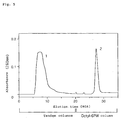
- a chromatogram as shown in Fig. 1 was obtained.
- numeral 1 shows a peak of impurities
- numeral 2 shows a peak of plasmid-containing fraction.
- the column eluate corresponding to the peak 2 was collected and purified further by means of ion exchange interaction chromatography as shown below.
- DEAE-5PW (trade name, from Tosoh Corp., inner diameter of 7.5 mm, length of 7.5 cm) was used.
- 20 mM Tris hydrochloric acid buffer (pH 7.5) containing 0.6M sodium chloride and 1 mM EDTA 3 ml of plasmid fraction was injected, and then 20 mM Tris hydrochloric acid buffer (pH 7.5) containing 0.6M sodium chloride and 1 mM EDTA was fed into the column for 35 minutes at flow rate of 1 ml/min to elute the impure substances outside the column.
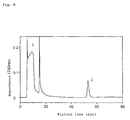
- a chromatogram as shown in Fig. 2 was obtained.
- numeral 1 shows peaks of impurities
- numeral 2 shows a peak of plasmid-containing fraction.
- the column eluate corresponding to the peak 2 was collected and the purity was examined by agarose gel electrophoresis. When dyeing the gel after the electrophoresis with ethidium bromide, electrophoretic images as shown in Fig. 3 were obtained.
- numeral 3 shows a DNA size marker
- numeral 5 shows a plasmid fraction obtained by the present purifying method
- numeral 6 shows an electrophoretic image of commercial purified pBR322.
- high-purity supercoil type plasmid could be obtained by simple manipulation according to the present purifying method.
- numeral 1 shows peaks of impurities and numeral 2 shows a peak of plasmid-containing fraction.
- the column effluent corresponding to the peak 2 was collected and the purity was examined by agarose gel electrophoresis.
- electrophoretic images as shown in Fig. 3 were obtained.
- numeral 3 shows a DNA size marker
- numeral 4 shows a plasmid fraction obtained in the Comparative Example
- numeral 5 shows a plasmid fraction obtained in the Example 1
- numeral 6 shows an electrophoretic image of commercial purified pBR322.
- Many impurities were contained in the plasmid fraction obtained by means of ion exchange chromatography alone.
- the packing material for the hydrophobic interaction chromatography was prepared.
- a packing material hereinafter referred to as Octyl-6 PW having octyl group for adsorbing plasmid and for hydrophobic interaction chromatography.
- a packing material for gel filtration chromatography (G5000 PW (from Tosoh Corp.)) with average particle diameter of 20 ⁇ m and average pore diameter of 950 angstroms as the base material
- G5000 PW gel filtration chromatography
- a mixture of 20 g of G5000 PW, 20 g of 1,4-dioxane, 1 g of 1,2-epoxybutane and 0.5 ml of boron trifluoride as catalyst was stirred and mixed for 6 hours and at 45 °C to obtain a packing material (hereinafter referred to as Butyl-5 PW) having butyl group for adsorbing RNAs and proteins and for hydrophobic interaction chromatography.
- Each packing material was packed into a stainless steel column with inner diameter of 7.5 mm and length of 7.5 cm.
- Escherichia coli having pBR 322 as a plasmid was cultured for 16 hours at 37 °C, the medium was subjected to centrifugal separation for 20 minutes at 4 °C and 8000 rpm.
- the precipitated Escherichia coli was suspended into 10 ml of 25 mM Tris hydrochloric acid buffer (pH 7.5) containing 100 mg of lysozyme, 50 mM glucose and 10 mM ethylenediamine tetraacetate (hereinafter referred to as EDTA), which was stirred and then allowed to stand for 5 minutes at room temperature to dissolve cell wall. Then, 20 ml of 0.2N sodium hydroxide solution containing 1 % sodium dodecylsulfate were added thereto, after gentle fluxing, the mixture was allowed to stand for 10 minutes under cooling with ice to dissolve cytoplasmic membrane.
- 0.1M sodium phosphate buffer (pH 7.0) containing 1 mM EDTA was fed into only Octyl-6 PW column for 15 minutes at flow rate 1 ml/min.
- chromatogram as shown in Fig. 5 was obtained.
- numeral 1 shows a peak of impurities
- numeral 2 shows a peak of plasmid-containing fraction.
- the column effluent corresponding to the peak 2 was collected and purified further by means of ion exchange chromatography as shown below.
- G6000 PW from Tosoh Corp.
- DEAE-6 PW anion exchanger having total ion-exchange capacity of 0.05 meq/ml-gel for purifying plasmid.
- This packing material was packed into a stainless steel column with inner diameter of 7.5 mm and length of 7.5 cm for ion-exchange chromatography.
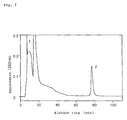
- a chromatogram shown in Fig. 7 was obtained.
- numeral 1 shows peaks of impurities
- numeral 2 shows a peak of fraction containing plasmid.
- the column effluent corresponding to the peak of numeral 2 was collected and the purity was examined by agarose-gel electrophoresis.
- the plasmid fraction obtained by ion-exchange chromatography alone was recognized to contain a lot of impurities.
- Adsorption capacity of the packing material for hydrophobic interaction chromatography employed in Example 2 Octyl-6 PW was examined.
- the gel was packed and 0.1M sodium phosphate buffer (pH 7.0) containing 2.0M ammonium sulfate and 0.1 mM EDTA was fed thereinto for 20 minutes at flow rate of 0.64 ml/min to make the column equibrated.
- about 0.4 mg/ml plasmid pUC 19 (2686 base pairs) of 4 ml was injected into the column and non-adsorption fraction which was not adsorbed onto the column was collected.
- a packing material of which pore diameter is smaller than that of Octyl-6 PW was prepared and the comparison of adsorption quantity was tested.
- the preparation was made by employing a packing material for gel filtration chromatography (G5000 PW (from Tosoh Corp.)) with average particle diameter of 20 ⁇ m and average pore diameter of 950 angstroms as a base material.
- G5000 PW gel filtration chromatography
- a mixture of 20 g of G5000 PW, 20 g of 1,4-dioxane, 1 g of 1,2-epoxyoctane and 0.5 ml of boron trifluoride as catalyst were stirred and mixed for 6 hours at 45 °C to obtain Octyl-5 PW having octyl group.
- Example 3 As evident from the above results of Example 3 and Comparative Example, those having larger pore diameter can submit good results for long chain nucleic acids such as plasmid in both adsorption capacity and recovery.
Landscapes
- Chemical & Material Sciences (AREA)
- Analytical Chemistry (AREA)
- Health & Medical Sciences (AREA)
- Engineering & Computer Science (AREA)
- Genetics & Genomics (AREA)
- Biomedical Technology (AREA)
- Organic Chemistry (AREA)
- Life Sciences & Earth Sciences (AREA)
- Zoology (AREA)
- Biotechnology (AREA)
- General Engineering & Computer Science (AREA)
- Wood Science & Technology (AREA)
- Bioinformatics & Cheminformatics (AREA)
- Molecular Biology (AREA)
- Plant Pathology (AREA)
- Microbiology (AREA)
- Biophysics (AREA)
- Physics & Mathematics (AREA)
- Biochemistry (AREA)
- General Health & Medical Sciences (AREA)
- Crystallography & Structural Chemistry (AREA)
- Chemical Kinetics & Catalysis (AREA)
- Treatment Of Liquids With Adsorbents In General (AREA)
- Solid-Sorbent Or Filter-Aiding Compositions (AREA)
- Saccharide Compounds (AREA)
Abstract
Description
- The present invention relates to a method for separating and purifying nucleic acids to be used for genome analysis or gene manipulation. In more detail, it relates to a method for separating long chain nucleic acids represented by particular DNA contained in the cells of animals, human, etc. that are effective for gene therapy to be utilized for the therapy of genetic disease etc. due to DNA abnormality, by utilizing liquid chromatography, for example, plasmids, in bacteria, organelle DNA, phage DNA, etc.
- In recent years, gene therapy is attracting attention, and a method for separating and purifying a large quantity of long chain nucleic acids such as plasmids and DNA fragments to be used for gene therapy in a simpler way and in shorter time is desired.
- For using nucleic acids for the therapy of human, it is desirable that the nucleic acids can be separated and purified keeping the same structure (higher-order structure) as they exist in organisms. Here, since the enzyme reaction is utilized for the recombination of nucleic acids, the nucleic acids are required to have been separated and purified to the extent that they can become the substrate for reaction. Also, in order to avoid the adverse effect of impurities in human body, the nucleic acids are required to have been separated and purified up to high degrees of purity.
- For separating and purifying long chain nucleic acids such as DNAs and plasmids contained in the cells and bacteria, chemical treatment methods have been used most frequently, so far.
- Among various long chain nucleic acids used for gene therapy, in particular, a plasmid is currently utilized in many cases, because of limited cleavage sites by particular restriction enzymes and relatively easy recombination manipulation. In the following, a general example of purifying a plasmid from Escherichia coli will be shown.
- First, the cell wall is digested by treating with lysozyme for a short time, and RNase to degrade RNAs of Escherichia coli is added. Next, a mixed solution of NaOH and sodium dodecylsulfate (SDS) is added for the purpose of dissolving the cytoplasmic membrane. NaOH partially denatures DNAs and partially degrades RNAs and SDS acts to dissolve the membrane and to denature proteins. Successively, the SDS-protein complex and cell debris are precipitated by adding 5N potassium acetate (pH 4.8). At this time, the pH is important for both to neutralize NaOH used in said manipulation and to renature the plasmid. Thereafter, centrifugation is applied to remove the precipitates, thus obtaining the desired plasmids in the supernatant.
- In a series of these manipulations (hereinafter referred to as pretreatment process), it is important to mix the components slowly and firmly. If introducing violent vibration during this manipulation, then the bacterial chromosomal DNA is cut off to small fragments so that they cannot aggregate, causing them to contaminate the plasmid.
- Successively, isopropanol is added to the supernatant, and the mixture is centrifuged to precipitate and concentrate plasmids. Finally, protein is removed from the plasmid fraction by precipitating with phenol and chloroform, and the plasmid is precipitated with alcohol.
- Through a series of manipulations as described above, it is possible to obtain a plasmid with relatively high purity (hereinafter, said method of separating and purifying nucleic acid is referred to as chemical separating method). However, with the chemical separating method, the separating and purifying process is complicated and a large quantity of organic solvent must be used, hence it poses many problems such as disposal of waste solvents and others.
- Besides the chemical separating and purifying method, there is a method of separating plasmids by electrophoresis. This method is a technique having the highest resolution at the moment. The electrophoretic method includes paper electrophoresis and gel electrophoresis, and gel electrophoresis is common currently. The electrophoretic method has an advantage of obtaining plasmids with very high purity, while it has many problems such as long separation time, difficult collection, low sample loading, etc. Consequently, at present electrophoretic separation is used only when the purity of plasmid fraction purified by the above chemical separating and purifying method should be improved further.
- For solving the problems in the chemical separating and purifying method and the electrophoretic separation as explained above, a method of separating and purifying nucleic acids that utilizes liquid chromatography has been used recently. So far, there are examples, wherein long chain nucleic acids such as plasmids were separated and purified by using ion exchange chromatography and reversed phase chromatography.
- Separating and purifying nucleic acids utilizing liquid chromatography is favourable in that manipulation is simple compared with chemical separating methods, easy collection of nucleic acids and no necessity of using organic solvent etc. With said conventional method using the ion exchange chromatographic method or reversed phase chromatographic method alone, however, there is a problem that the nucleic acids with sufficiently high purity, in particular, long chain nucleic acids such as plasmids cannot be obtained in large quantity.
- Therefore, the invention aims at providing a separating method that utilizes liquid chromatography, with which it is possible to separate a large quantity of long chain nucleic acids such as plasmids and DNAs in a shorter time.
- The invention as defined in
claim 1 of the present application having been made in view of the aforementioned purpose provides a method of separating nucleic acids characterized by using hydrophobic interaction chromatography. The invention as defined in claim 7 of the present application provides a method for separating and purifying nucleic acids characterized by using hydrophobic interaction chromatography and ion exchange chromatography in combination. - Fig. 1 is a chromatogram showing the result of separating a cleared lysate of Escherichia coli by means of hydrophobic interaction chromatography according to Example 1.
- Fig. 2 is a chromatogram showing the result of separating an eluate of hydrophobic interaction chromatography by means of ion exchange chromatography according to Example 1.
- Fig. 3 is a schematic diagram of the images of gel electrophoresis showing the results of the purity assay of plasmid fractions obtained according to Example 1 and Comparative Example 1.
- Fig. 4 is a chromatogram showing the result of separating a cleared lysate of Escherichia coli separated by means of ion exchange chromatography according to Comparative Example 1.
- Fig. 5 is a chromatogram showing the result of separating a cleared lysate of Escherichia coli by means of hydrophobic interaction chromatography according to Example 2.
- Fig. 6 is a chromatogram showing the result of separating an eluate of hydrophobic interaction chromatography by means of ion exchange chromatography according to Example 2.
- Fig. 7 is a chromatogram showing the result of separating a cleared lysate of Escherichia coli by means of ion exchange chromatography according to Comparative Example 2.
-
- In the Figures, the numerals represent the following:
-
numeral 1 - peak of impurities
-
numeral 2 - peak of plasmid-fraction
-
numeral 3 - DNA size marker
-
numeral 4 - plasmid-fraction obtained by comparative Example 1
-
numeral 5 - plasmid-fraction obtained by Example 1
-
numeral 6 - commercial purified plasmid
- In the following, the invention will be illustrated in detail using the case of separating and purifying a plasmid being a long chain nucleic acid from Escherichia coli, cultured in large quantity as an example. In such case, the inventive methods are useful for separating and purifying nucleic acids such as plasmids and DNAs being the desired products.
- The compounds to be used for the synthesis of base materials that are used for the packing material for the hydrophobic interaction chromatography and ion exchange chromatography to be used in the invention may be any compounds, if various functional groups that exhibit hydrophobicity or various ion exchange groups can be introduced by a post-reaction after the base materials were synthesized in both cases. For example, as monofunctional monomers, styrene, o-halomethylstyrene, m-halomethylstyrene, p-halomethylstyrene, o-haloalkylstyrene, m-haloalkylstyrene, p-haloalkylstyrene, α-methylstyrene, α-methyl-o-halomethylstyrene, α-methyl-m-halomethylstyrene, α-methyl-p-halomethylstyrene, α-methyl-o-haloalkylstyrene, α-methyl-m-haloalkylstyrene, α-methyl-p-haloalkylstyrene, o-hydroxymethylstyrene, m-hydroxymethylstyrene, p-hydroxymethylstyrene, o-hydroxyalkylstyrene, m-hydroxyalkylstyrene, p-hydroxylalkylstyrene, α-methyl-o-hydroxymethylstyrene, α-methyl-m-hydroxymethylstyrene, α-methyl-p-hydroxymethylstyrene, α-methyl-o-hydroxyalkylstyrene, α-methyl-m-hydroxyalkylstyrene, α-methyl-p-hydroxyalkylstyrene, glycidyl methacrylate, glycidyl acrylate, hydroxyethyl acrylate, hydroxymethacrylate, vinyl acetate, etc. can be exemplified.
- Here, as examples of haloalkyl groups substituted on an aromatic ring, halogens such as Cl, Br, I and F and straight chain and/or branched saturated hydrocarbons with carbon atoms of 2 to 15 are mentioned.
- As polyfunctional monomers, divinylbenzene trivinylbenzene, divinyltoluene, trivinyltoluene, divinylnaphthalene, trivinylnaphthalene, ethylene glycol dimethacrylate, ethylene glycol diacrylate, diethylene glycol dimethacrylate, diethylene glycol diacrylate, methylenebismethacrylamide, methylenebisacrylamide, etc. can be exemplified.
- As described above, for the compounds to be used in the invention, there is no special restriction, provided it is possible to introduce various functional groups that exhibit hydrophobicity or various ion exchange groups by the post-reaction, but, in order to minimize the influence on the products desired to separate due to the hydrophobicity exhibited by the base material itself, or the swelling or shirinking of the base material itself due to the change in salt concentration and the change in pH value, it is particularly preferable to prepare the base material using relatively hydrophilic monomers, for example, glycidyl methacrylate, glycidyl acrylate, hydroxyethyl acrylate, hydroxymethacrylate, vinyl acetate, etc.
- How to commonly make the base material using said monomers is as follows (how to make the base material is not confined to a method shown here): First, monofunctional monomers and polyfunctional monomers are weighed out at an appropriate ratio and precisely weighed-out diluent (solvent used for the purpose of adjusting the pores in the particles formed) and similarly precisely weighed-out; the polymerization initiator is added, followed by well stirring.
- The mixture is submitted to a so-called oil-in-water type suspension polymerization wherein the mixture is added into an aqueous solution comprising a dissolved suspension stabilizer weighed out precisely beforehand, and oil droplets with the desired size are formed by mixing with a stirrer, and polymerization is conducted by gradually warming the mixed solution.
- The ratio of monofunctional monomer to polyfunctional monomer is not particularly restricted, and, to 1 mol of monofunctional monomer, around 0.01 to 0.2 mol of polyfunctional monomer are used in the case of making relatively soft particles (base material) and around 0.2 to 0.5 mol of that in the case of making hard particles; in the case of making harder particles, polyfunctional monomer alone may be used. The polymerization initiator is also not particularly restricted, and the azobis type and/or the peroxide type being used commonly may be used. The suspension stabilizer is also not particularly restricted, and, if possible to prevent the aggregation among oil droplets themselves, any ionic surfactants, nonionic surfactants and polymers with amphipathic property or mixtures of these can be used.
- The diameter of formed particles is also not particularly restricted and particles with appropriate diameter of 2 to 500 µm may be selected in line with the use purpose. For example, when aiming at analysis, the particle diameter is favourably 2 to 30 µm, more preferably around 2 to 10 µm. When aiming at large scale purification of nucleic acids with high purity, the diameter is around 10 to 100 µm and, when separating the desired product from crude stock solution, it may be 100 to 500 µm, more preferably around 200 to 400 µm. For adjusting the particle diameter, the rotational speed of the stirrer may be adjusted during polymerization; when particles with small diameter are needed, the number of revolutions may be increased and, when large particles are desired, the number of revolutions may be decreased. Here, since the diluent to be used is used for adjusting pores in the formed particles, the selection of the diluent is particularly important. As a fundamental concept, for the solvent to be used for polymerization, adjustment is made by varying combinations of a solvent that is a poor solvent for the monomer with a solvent that is a good solvent for the monomer. The size of pore diameter may be selected appropriately depending on the molecular size of the nucleic acids which one aims to separate, but it is preferable within a range of 500 to 4000 Angstroms for the packing material for the hydrophobic interaction chromatography and within a range from 1500 to 4000 Angstroms for the packing material for the ion exchange chromatography. In the hydrophobic interaction chromatography, for separating nucleic acids with different hydrophobicity preferable by utilizing packing materials with different hydrophobicity, respectively, the surface modification of the base material is important. The applicable hydrophobic group is not particularly restricted as long as it does not deviate from the purpose to separate nucleic acids with different hydrophobicity with packing materials with different hydrophobicity, respectively, but hydrophobic groups having one or more kinds of compounds selected from a group consisting of following compounds (a) through (c) as major components are particularly preferable.
- Compounds (a): These may be long chained or branched, saturated hydrocarbon groups or unsaturated hydrocarbon groups with carbon atoms of 2 to 20 (however, aromatic ring may be contained in the hydrocarbon group).
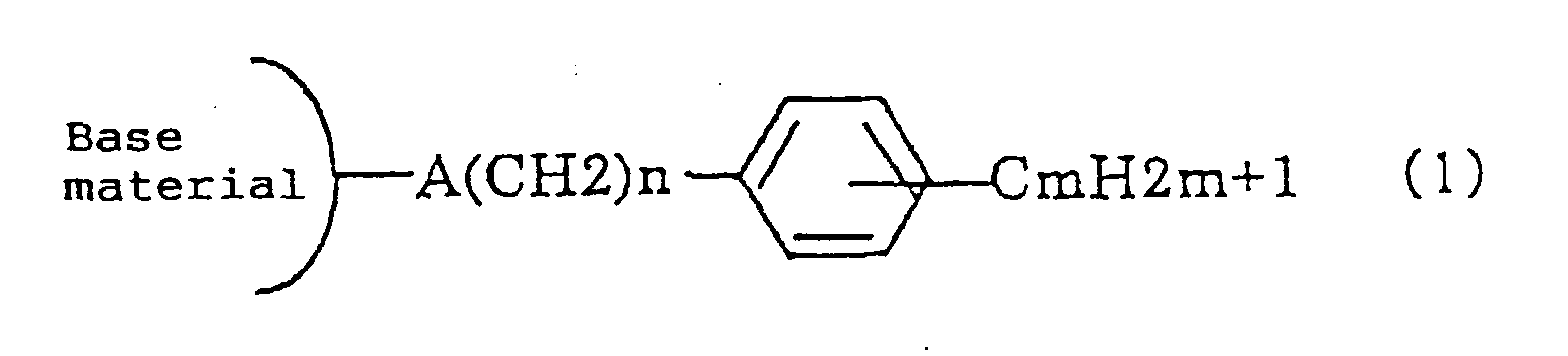
- Compounds (b): Compounds represented by a following structural formula (1) (however, n = 0 ∼ 20 and the alkylene group may be straight chained or branched, m = 0 ∼ 3 and the hydrocarbon group may be straight chained or branched, and A is a C = 0 group or an ether group, but the alkylene group may be bonded directly to the base material without A).
- Compounds (c): Ether group of alkylene glycol with carbon atoms of 2 to 20, which consists of repeating units of 0 to 10 (however, the opposite end of functional group reacted with the base material may be an OH group left as it is or may be capped with alkyl group with carbon atoms of 1 to 4).
-
- When modifying the surface using compounds dividable into three categories as above, they may be used solely or in mixture. In the following , one example of different ways to use them will be explained, taking alkyl groups that belong to Compounds (a) as an example. For example, for separating compounds with high hydrophobicity such as RNA originating from Escherichia coli and RNA in the cells of humans and animals, alkyl groups with carbon atoms of 2 to 15 are particularly suitable. Moreover, in the case of compounds with relatively low hydrophobicity such as DNAs originating from Escherichia coli and DNAs in the cells of humans and animals, alkyl groups with carbon atoms of 4 to 18 are particularly suitable. Furthermore, in the case of compounds with low hydrophobicity like plasmids, alkyl groups with carbon atoms of 6 to 20 are suitable. Upon separating these compounds, compounds may be selected appropriately to modify the surface without being confined to said exemplification. The reason for this is that the degree of hydrophobicity of the packing material varies depending on the concentration of salt in the medium or the concentration of salt in the eluent for adsorption. Moreover, this is because of the fact that, even with the same functional group, the degree of hydrophobicity of the packing material differs depending on the amount of the group introduced into the base material.
- The pore diameter of the base material for hydrophobic interaction chromatography is particularly preferable to be 500 to 4000 Angstroms, but it can be selected appropriately from said range depending on the molecular size of the nucleic acids which one aims to separate. In general, since the retention of nucleic acids on the packing material and the adsorption capacity (sample loading) differ depending on the pore diameter, it is preferable to use a base material with large pore diameter for nucleic acids with large molecular size and a base material with small pore diameter for nucleic acids with small molecular size.
- Next, one example of the methods for reacting these hydrophobic groups with base material will be described. In the case of the base material being a styrene base and reacting with compounds in the first and second category, using a halogen-containing compound B and/or a carbonyl halide C and a catalyst such as FeCl3, SnCl2 or AlCl3, and utilizing Friedel-Craft reaction, it is possible to add directly to an aromatic ring in the base material a dehalogenated compound B and/or acylated compound C. In the case of the base material being a particle containing a halogen group and, for example, using compounds with OH contained in functional group to be added, like butanol, and utilizing Williamson reaction with alkali catalyst such as NaOH or KOH, it is possible to introduce the functional group through an ether bond. In the case of the functional group which one intends to add being an amino group-containing compound, like hexylamine, it is possible to introduce this compound by using an alkali catalyst such as NaOH or KOH followed by a dehydrohalogenation reaction. If an epoxy group is to be introduced into a base material containing OH groups, halogen groups or carbonyl halide groups may be introduced beforehand into the functional group to be added, so that it is possible to introduce the functional group through an ether or ester bond. In the case of the base material containing epoxy groups, and if reacting with a compound with OH groups or amino groups contained in the functional group one intends to add, it is possible to introduce the functional groups through an ether or amino bond. Moreover, if the functional group one intends to add contains halogen groups, it is possible to add the functional group through an ether bond using an acid catalyst. Since the proportion of functional groups to be introduced into the base material is influenced by the hydrophobicity of subject product to be separated, preferably in general, packing material with around 0.05 to 4.0 mmol of functional groups added per 1 g of dried base material is suitable.
- With respect to the surface modification, a method of adding the functional groups through post-reaction after formation of the base material (particles) has been exemplified above, but no difference exists, even if a method may be adopted, wherein the base material is formed after polymerization using monomers with said functional groups added before polymerization, thus posing no particular problem. In addition, the base material to be used may also be porous silica gel. As an example of the method of manufacturing silica gel, silane coupling may also be conducted, using a compound such as alkyltrimethoxysilane, directly onto particles manufactured according to the method described in "Latest High-Speed Liquid Chromatography", page 289 ff. (written by Toshio Nambara and Nobuo Ikegawa, published by Tokyo Hirokawa Bookstore in 1988). Or, after conducting the silane coupling using an epoxy group-containing silane coupling agent, the functional group may be added according to the method aforementioned. As for the proportion of functional groups to be introduced, packing material with around 0.05 to 4.0 mmol of functional groups added per 1 g of dried base material is suitable.
- Next, one example of the methods of separating and purifying a nucleic acid using these packing materials will be described. First, as the eluents to be used for the hydrophobic interaction chromatography of the invention, at least two types of eluents consisting of eluent A containing high-concentration of salt and eluent B containing low-concentration of salt are used. The eluting method switching stepwise from eluent A to eluent B and the gradient eluting method continuously changing the composition from eluent A to eluent B can be used. For the buffers and salts to be used in these eluents, those used usually for hydrophobic interaction chromatography can be used. For the eluent A containing high-concentration of salt, an aqueous solution with a salt concentration of 1.0 to 4.5M and a pH value of 6 to 8 is particularly preferable. For the eluent B containing low-concentration of salt, an aqueous solution with a salt concentration of 0.01 to 0.5M and a pH value of 6 to 8 is particularly preferable. For the salts, ammonium sulfate and sodium sulfate can be exemplified.
- In the invention, it is particularly preferable to conduct the hydrophobic interaction chromatography by combining a packing material having a functional group with weak hydrophobicity with a packing material having a functional group with strong hydrophobicity in sequence. This method is suitable particularly for the separation of plasmids. For example, in the medium wherein Escherichia coli has been cultured in large quantity, various components with different hydrophobicity such as polysaccharides, Escherichia coli genome DNA, RNAs plasmids and proteins are contained, and, according to the inventors' knowledge, there are differences in the hydrophobicity even among nucleic acids themselves; protein impurities have higher hydrophobicity compared with plasmids which are the desired product. Hence, by connecting columns packed with various packing materials with different hydrophobicity in order from lower hydrophobicity, plasmids can be separated and purified efficiently. Concretely, after adsorbing sequentially onto the packing materials with increasing higher hydrophobicity in order from higher hydrophobicity of components in the medium, the column with the desired component adsorbed alone is detached and eluted.
- In the invention, it is preferable to separate and purify nucleic acids by hydrophobic interaction chromatography and ion exchange chromatography in combination for efficiently obtaining nucleic acids with high purity in large quantity. Here, for the hydrophobic interaction chromatography, packing material etc. as described above can be used. Moreover, here, as the hydrophobic interaction chromatography, it is particularly preferable to connect columns packed with various packing materials different in hydrophobicity in order from lower hydrophobicity.
- The packing material to be used for ion exchange chromatography for purifying the desired plasmid having been separated beforehand by means of hydrophobic interaction chromatography further to higher purity is preferable to have relatively large pore diameter, particularly within a range from 1500 to 4000 angstroms. How to commonly make the base material used for ion exchange chromatography is as described above, and the surface modification to introduce ion exchange groups to these base materials can be performed by publicly known methods.
- As the eluents to be used for the ion exchange chromatography, at least two types of eluents consisting of eluent C containing a low concentration of salt and eluent D containing a high concentration of salt are used. The eluting method switching stepwise from eluent C to eluent D and the gradient eluting method continuously changing the composition from eluent C to eluent D can be used. For the buffers and salts to be used in these eluents, those used usually for the ion exchange chromatography can be used. For the eluent C containing a low concentration of salt, an aqueous solution with a concentration of buffer of 10 to 50 mM and pH value of 6 to 9 is particularly preferable. For the eluent D containing a high concentration of salt, an aqueous solution with 0.1 to 2M sodium salt added to eluent C is particularly preferable. As sodium salts, sodium chloride and sodium sulfate can be mentioned.
- Moreover, a component other than buffer can be contained in both eluents, and, in particular, a chelating agent for a bivalent metal ion, for example, ethylenediamine-tetraacetic acid is particularly in the case of separating plasmids preferable, since it can inhibit the degradation of plasmids due to DNA-degrading enzymes in the lysate of Escherichia coli. The concentration of the chelating agent for the bivalent metal ion is preferably 0.1 to 100 mM.
- And, in the particularly preferable embodiment of the invention, the eluent A with high salt concentration prepared according to the aforementioned method is passed through columns of hydrophobic interaction chromatography, which are connected in order from lower hydrophobicity. After having reached the stationary state, the medium of Escherichia coli etc. is injected into a column omitting the degrading manipulation of RNA with degrading enzyme etc. Successively, the eluent A is passed through to flow out the compounds that were not adsorbed in any column outside the system. Thereafter, the column with the desired compound adsorbed alone is detached and the desired product is eluted by the stepwise method or gradient method. Following this, the eluent C is passed through said ion exchange column, and, after the stationary state has been reached, the elute containing the desired product is injected as it is. Thereafter using the eluent D, the desired product is eluted by a stepwise method or gradient method to obtain the purified product.
- The invention provides a method for separating and purifying nucleic acids by simple manipulation. Concretely, in the preferable embodiment of the invention using columns wherein columns packed respectively with packing materials different in hydrophobicity are connected in order from lower hydrophobicity, the desired nucleic acids, in particular, long chain nucleic acids such as plasmids can be separated and purified simply in large quantity only by passing the solution front the pretreatment process in the conventional manipulation. Besides, in the invention, it is also possible to separate and purify nucleic acids by passing the solution obtained from the pretreatment process involving degrading manipulation of Escherichia coli-originated RNA with degrading enzyme in the conventional pretreatment process which was omitted above, directly through the columns of hydrophobic chromatography.
- In the invention, if using the hydrophobic interaction chromatography and the ion exchange chromatography in combination, which is preferable in particular, it is possible to separate and purify the desired nucleic acids with high purity, in particular, long chain nucleic acids such as plasmids in large quantity by simple manipulation.
- As described, according to the inventive method for separating nucleic acids, the desired products with high purity can be obtained in large quantity by simpler manipulation over the conventional method.
- In the following, the invention will be illustrated in more detail based on the examples, but the invention is not confined to these examples.
- Employing a packing material for gel filtration chromatography (G6000PW (from Tosoh Corp.)) with average particle diameter of 20 µm and average pore diameter of 2000 angstroms as the base material, the packing material for the hydrophobic interaction chromatography was prepared. A mixture of 20 g of G6000PW washed and substituted with 1,4-dioxane, 20 g of 1,4-dioxane and 1 g of 1,2-epoxybutane was stirred and mixed for 6 hours at 45 °C to obtain a packing material (hereinafter referred to as Butyl-6PW) having butyl group as a functional group of weak hydrophobicity. Similarly, a mixture of 20 g of G6000PW, 20 g of 1,4-dioxane and 1 g of 1,2-epoxyoctane was stirred and mixed for 6 hours at 45 °C to obtain a packing material (hereinafter referred to as Octyl-6PW) having octyl group as a functional group of strong hydrophobicity. Each packing material was packed into a stainless steel column with inner diameter of 7.5 mm and length of 7.5 cm.
- After Escherichia coli having pBR322 as a plasmid was cultured for 16 hours at 37 °C, the medium was subjected to centrifugal separation for 20 minutes at 4 °C and 8000 rpm. The precipitated Escherichia coli was suspended into 10 ml of 25 mM Tris hydrochloric acid buffer (pH 7.5) containing 100 mg of lysozyme, 50 mM glucose and 10 mM ethylenediaminetetraacetic acid (hereinafter referred to as EDTA), which was stirred and then allowed to stand for 5 minutes at room temperature to dissolve cell wall. Then, 20 ml of 0.2N sodium hydroxide solution containing 1 % sodium dodecylsulfate were added thereto, and, after mixed gently, the mixture was allowed to stand for 10 minutes under cooling with ice to dissolve cytoplasmic membrane.
- Next, 15 ml of 3M sodium acetate buffer (pH 5.4) were added thereto, and the mixture was stirred slowly and allowed to stand for 30 minutes under cooling with ice. Then, after having been subjected to centrifugal separation for 20 minutes at 4 °C and 10000 rpm, the supernatant was collected to obtain a cleared lysate of Escherichia coli. After equal volume of 0.1M sodium phosphate buffer (pH 7.0) containing 4M ammonium sulfate was added to the crushed liquor of Escherichia coli, this mixture was subjected to a hydrophobic interaction chromatography.
- Into tandem columns of Butyl-6PW column and Octyl-6PW column linked in series, which were equilibrated with 0.1M sodium phosphate buffer (pH 7.0) containing 2M ammonium sulfate and 1 mM EDTA, 3 ml of the crushed liquor of Escherichia coli containing ammonium sulfate were injected, and then 0.1M sodium phosphate buffer (pH 7.0) containing 2M ammonium sulfate and 1 mM EDTA was fed into the tandem columns for 20 minutes at flow rate of 1 ml/min to elute the impure substances outside the columns. Following this, after having detached Butyl-6PW column outside the flow path system, 0.1M sodium phosphate buffer (pH 7.0) containing 1 mM EDTA was fed for 15 minutes at flow rate of 1 ml/min into only Octyl-6PW column. As a result, a chromatogram as shown in Fig. 1 was obtained. In Fig. 1, numeral 1 shows a peak of impurities and numeral 2 shows a peak of plasmid-containing fraction. The column eluate corresponding to the
peak 2 was collected and purified further by means of ion exchange interaction chromatography as shown below. - As a packed column for the ion exchange chromatography, DEAE-5PW (trade name, from Tosoh Corp., inner diameter of 7.5 mm, length of 7.5 cm) was used. Into DEAE-5PW column equilibrated with 20 mM Tris hydrochloric acid buffer (pH 7.5) containing 0.6M sodium chloride and 1 mM EDTA, 3 ml of plasmid fraction was injected, and then 20 mM Tris hydrochloric acid buffer (pH 7.5) containing 0.6M sodium chloride and 1 mM EDTA was fed into the column for 35 minutes at flow rate of 1 ml/min to elute the impure substances outside the column. Then, the elution was conducted by a gradient method wherein the concentration of sodium chloride in 20 mM Tris hydrochloric acid buffer (pH 7.5) containing 1 mM EDTA was changed continuously from 0.6M to 0.8M over 30 minutes at flow rate of 1 ml/min. As a result, a chromatogram as shown in Fig. 2 was obtained. In Fig. 2, numeral 1 shows peaks of impurities and numeral 2 shows a peak of plasmid-containing fraction. The column eluate corresponding to the
peak 2 was collected and the purity was examined by agarose gel electrophoresis. When dyeing the gel after the electrophoresis with ethidium bromide, electrophoretic images as shown in Fig. 3 were obtained. In Fig. 3, numeral 3 shows a DNA size marker, numeral 5 shows a plasmid fraction obtained by the present purifying method, and numeral 6 shows an electrophoretic image of commercial purified pBR322. As evident from the diagram, high-purity supercoil type plasmid could be obtained by simple manipulation according to the present purifying method. - For comparison, purification of a plasmid pBR322 was conducted from the cleared lysate of Escherichia coli by means of ion exchange interaction chromatography alone. After having prepared the cleared lysate of Escherichia coli similarly to the Example, equal volume of 20 mM Tris hydrochloric acid buffer (pH 7.5) was added thereto to make a sample for the ion exchange chromatography. Into the previous DEAE-5PW column equilibrated with 20 mM Tris hydrochloric acid buffer (pH 7.5) containing 0.6M sodium chloride and 1 mM EDTA, 3 ml of sample were injected, and then 20 mM Tris hydrochloric acid buffer (pH 7.5) containing 0.6M sodium chloride and 1 mM EDTA was fed into the column for 60 minutes at flow rate of 1 ml/min to elute the impure substances outside the column. Next, elution was conducted by the gradient method similarly to the Example. As a result, a chromatogram as shown in Fig. 4 was obtained. In Fig. 4, numeral 1 shows peaks of impurities and numeral 2 shows a peak of plasmid-containing fraction. The column effluent corresponding to the
peak 2 was collected and the purity was examined by agarose gel electrophoresis. As a result, electrophoretic images as shown in Fig. 3 were obtained. In Fig. 3, numeral 3 shows a DNA size marker, numeral 4 shows a plasmid fraction obtained in the Comparative Example, numeral 5 shows a plasmid fraction obtained in the Example 1, and numeral 6 shows an electrophoretic image of commercial purified pBR322. Many impurities were contained in the plasmid fraction obtained by means of ion exchange chromatography alone. - Employing a packing material for gel filtration chromatography (G6000 PW (from Tosoh Corp.)) with average particle diameter of 20 µm and average pore diameter of 2000 angstroms as the base material, the packing material for the hydrophobic interaction chromatography was prepared. A mixture of 20 g of G6000 PW washed and substituted with 1,4-dioxane, 20 g of 1,4-dioxane, 1 g of 1,2-epoxyoctane and 0.5 ml of boron trifluoride as catalyst was stirred and mixed for 6 hours at 45 °C to obtain a packing material (hereinafter referred to as Octyl-6 PW) having octyl group for adsorbing plasmid and for hydrophobic interaction chromatography.
- Next, employing a packing material for gel filtration chromatography (G5000 PW (from Tosoh Corp.)) with average particle diameter of 20 µm and average pore diameter of 950 angstroms as the base material, a packing material with weak hydrohobicity was prepared. A mixture of 20 g of G5000 PW, 20 g of 1,4-dioxane, 1 g of 1,2-epoxybutane and 0.5 ml of boron trifluoride as catalyst was stirred and mixed for 6 hours and at 45 °C to obtain a packing material (hereinafter referred to as Butyl-5 PW) having butyl group for adsorbing RNAs and proteins and for hydrophobic interaction chromatography. Each packing material was packed into a stainless steel column with inner diameter of 7.5 mm and length of 7.5 cm.
- After Escherichia coli having pBR 322 as a plasmid was cultured for 16 hours at 37 °C, the medium was subjected to centrifugal separation for 20 minutes at 4 °C and 8000 rpm. The precipitated Escherichia coli was suspended into 10 ml of 25 mM Tris hydrochloric acid buffer (pH 7.5) containing 100 mg of lysozyme, 50 mM glucose and 10 mM ethylenediamine tetraacetate (hereinafter referred to as EDTA), which was stirred and then allowed to stand for 5 minutes at room temperature to dissolve cell wall. Then, 20 ml of 0.2N sodium hydroxide solution containing 1 % sodium dodecylsulfate were added thereto, after gentle fluxing, the mixture was allowed to stand for 10 minutes under cooling with ice to dissolve cytoplasmic membrane.
- Next, 15 ml of 3M sodium acetate buffer (pH 5.4) were added thereto, and the mixture was stirred slowly and allowed to stand for 30 minutes under cooling with ice. Then, after being subjected to centrifugal separation for 20 minutes at 4 °C and 10000 rpm, the supernatant was collected to obtain a cleared lysate of Escherichia coli. After equal volume of 0.1M sodium phosphate buffer (pH 7.0) containing 4M ammonium sulfate was added to the cleared lysate of Escherichia coli, this mixture was subjected to a hydrophobic interaction chromatography.
- Into tandem columns of Butyl-5 PW column and Octyl-6 PW column linked in series, which were equilibrated with 0.1M sodium phosphate buffer (pH 7.0) containing 2M ammonium sulfate and 1 mM EDTA, 3 ml of the cleared lysate of Escherichia coli containing ammonium sulfate were injected, and then 0.1M sodium phosphate buffer (pH 7.0) containing 2M ammonium sulfate and 1 mM EDTA was applied into the tandem columns for 20 minutes at flow rate of 1 ml/min to elute the impure substances outside the columns. Following this, after having detached Butyl-5t PW column outside the flow path system, 0.1M sodium phosphate buffer (pH 7.0) containing 1 mM EDTA was fed into only Octyl-6 PW column for 15 minutes at
flow rate 1 ml/min. As the result, chromatogram as shown in Fig. 5 was obtained. In Fig. 5, numeral 1 shows a peak of impurities and numeral 2 shows a peak of plasmid-containing fraction. The column effluent corresponding to thepeak 2 was collected and purified further by means of ion exchange chromatography as shown below. - This was prepared by the way described below, employing a packing material (G6000 PW (from Tosoh Corp.)) for gel filtration chromatography with average particle diameter of 20 µm and average pore diameter of 2000 angstroms as base material. A mixture of 20 g of G6000 PW washed thoroughly with pure water, 40 g of pure water, 10 g of epichlorohydrin, 10 g of diethylaminoethanol and 5 g of NaOH was stirred and mixed for twenty-four hours at 40 °C to obtain anion exchanger (hereinafter referred to as DEAE-6 PW) having total ion-exchange capacity of 0.05 meq/ml-gel for purifying plasmid.
- This packing material was packed into a stainless steel column with inner diameter of 7.5 mm and length of 7.5 cm for ion-exchange chromatography.
- After 3 ml of a plasmid fraction was injected into a DEAE-6 PW column equilibrated with 20 mM Tris hydrochloric acid buffer (pH 7.5) containing 0.6M sodium chloride and 1 mM EDTA, 20 mM Tris hydrochloric acid buffer (pH 7.5) containing 0.6M sodium chloride and 1 mM EDTA was fed into the column for 35 minutes at flow rate of 1 ml/min to elute impure substances outside the column.
- Then, the elution was conducted by a gradient method wherein the concentration of sodium chloride in 20 mM Tris hydrochloric buffer (pH 7.5) containing 1 mM EDTA was changed continuously from 0.6M to 0.8M over 30 minutes at flow rate of 1 ml/min. As a result, a chromatogram as shown in Fig. 6 was obtained. In Fig. 6, numeral 1 shows peaks of impurities and numeral 2 shows a peak of plasmid-containing fraction. The column effluent corresponding to the
peak 2 was collected and the purity was examined by agarose gel electrophoresis. When dying the gel after the electrophoresis with ethidium bromide, a supercoil type plasmid of high purity could be obtained in the present Example. Comparative Example 2 - For comparison, purification of a plasmid pBR 322 from the cleared lysate of Escherichia coli was conducted by ion-exchange chromatography alone.
- After the cleared lysate of Escherichia coli was prepared like as in Example 2, equal volume of 20 mM Tris hydrochloric acid buffer (pH 7.5) was added thereto to make a sample. Into the above-mentioned DEAE-6 PW column eguilibrated with 20 mM Tris hydrochloric acid buffer (pH 7.5) containing 0.6M sodium chloride and 1 mM EDTA, 3 ml of the sample were injected, and thereafter 20 mM Tris hydrochloric acid buffer (pH 7.5) containing 0.6M sodium chloride and 1 mM EDTA was fed into the column for 60 minutes at flow rate of 1 ml/min to elute impure substances outside the column.
- Then, the elution was carried out by the gradient method likewise as in Example. As the result, a chromatogram shown in Fig. 7 was obtained. In Fig. 7, numeral 1 shows peaks of impurities and numeral 2 shows a peak of fraction containing plasmid. The column effluent corresponding to the peak of
numeral 2 was collected and the purity was examined by agarose-gel electrophoresis. As the result, the plasmid fraction obtained by ion-exchange chromatography alone was recognized to contain a lot of impurities. - Adsorption capacity of the packing material for hydrophobic interaction chromatography employed in Example 2, Octyl-6 PW was examined. Into a stainless steel column with inner diameter of 6.0 mm and length of 10 mm, the gel was packed and 0.1M sodium phosphate buffer (pH 7.0) containing 2.0M ammonium sulfate and 0.1 mM EDTA was fed thereinto for 20 minutes at flow rate of 0.64 ml/min to make the column equibrated. Then. about 0.4 mg/ml plasmid pUC 19 (2686 base pairs) of 4 ml was injected into the column and non-adsorption fraction which was not adsorbed onto the column was collected.
- Next, by changing the eluent to 0.1M sodium phosphate buffer (pH 7.0) containing 0.1 mM EDTA, plasmid adsorbed onto the column was eluted to collect the adsorption fraction.
- Following this, basing on the calibration curve of plasmid pUC 19 (an equation which shows the relationship between the injected quantity of plasmid pUC 19 and area of chromatograph) which was previously obtained by a gel filtration chromatography on TSK gel DNA-PW column (from Tosoh Corp.), the quantity of plasmid pUC 19 contained in every fraction was determined to calculate adsorption capacity per 1 ml of gel and recovery. With respect to the packing material for ion exchange chromatography, DEAE-6 PW, the adsorption capacity was likewise examined, too.
- Except adsorption and disorption eluents all of the others were conducted under the same condition. As the result, adsorption quantity of Octyl-6 PW was 1.1 mg/ml and adsorption quantity of DEAE-6 PW was 2.4 mg/ml. Further, recoveries thereof were 90.3 % and 77.3 %, respectively.
- For comparison, a packing material of which pore diameter is smaller than that of Octyl-6 PW was prepared and the comparison of adsorption quantity was tested. The preparation was made by employing a packing material for gel filtration chromatography (G5000 PW (from Tosoh Corp.)) with average particle diameter of 20 µm and average pore diameter of 950 angstroms as a base material. A mixture of 20 g of G5000 PW, 20 g of 1,4-dioxane, 1 g of 1,2-epoxyoctane and 0.5 ml of boron trifluoride as catalyst were stirred and mixed for 6 hours at 45 °C to obtain Octyl-5 PW having octyl group.
- With respect to packing material for ion-exchange chromatography, commercially available DEAE-5 PW (average particle diameter of 20 µm, average pore diameter of 880 angstroms, from Tosoh Corp.) of which pore diameter is smaller than that of DEAE-6 PW was employed, too. The determination of adsorption capacity of plasmid was conducted likewise as in the above-mentioned Example. As a result, adsorption capacity of Octyl-5 PW was 0.6 mg/ml and adsorption capacity of DEAE-5 PW was 1.2 mg/ml. Recoveries thereof were 89.9 % and 60.6 %, respectively.
- As evident from the above results of Example 3 and Comparative Example, those having larger pore diameter can submit good results for long chain nucleic acids such as plasmid in both adsorption capacity and recovery.

Claims (13)
- A method for separating nucleic acids by hydrophobic interaction chromatography.
- The separating method of Claim 1, wherein a packing material with a functional group introduced to adsorb nucleic acids that exhibit certain hydrophobicity is used for the packing material to be used for the hydrophobic interaction chromatography.
- The separating method of Claim 1 or 2, wherein packing materials with functional groups introduced to adsorb nucleic acids having different hydrophobicity, respectively, are combined for the packing materials to be used for hydrophobic interaction chromatography to separate nucleic acids.
- The separating method of claim 3, wherein a packing material having a functional group with weaker hydrophobicity and a packing material having a functional group with stronger hydrophobicity are combined in this order.
- The separating method of any of Claims 1 through 4, wherein the average particle diameter of the packing material to be used for the hydrophobic interaction chromatography is within a range from 2 to 500 µm.
- The separating method of any of Claims 1 through 5, wherein the average pore diameter of the packing material to be used for the hydrophobic interaction chromatography is within a range from 500 to 4000 angstroms.
- A method of separating nucleic acids using hydrophobic interaction chromatography and ion exchange chromatography in combination.
- The separating method of Claim 7, wherein a packing material with a functional group introduced to adsorb nucleic acids that exhibits certain hydrophobicity is used for the packing material to be used for hydrophobic interaction chromatography to separate, and then ion exchange chromatography is used to separate nucleic acids.
- The separating method of Claim 7 or 8, wherein packing materials for the hydrophobic interaction chromatography are combined in a way that the hydrophobicity is increased in sequence from a packing material having a functional group with the weakest hydrophobicity, successively to a packing material with the second weakest hydrophobicity to separate, and then ion exchange chromatography is used to separate nucleic acids.
- The separating method of any of Claims 7 through 9, wherein the average particle diameter of packing materials to be used for hydrophobic interaction chromatography and ion exchange chromatography is within a range from 2 to 500 µm.
- The separating method of any of Claims 7 through 10, wherein the pore diameter of packing material to be used for ion exchange chromatography is within a range from 1500 to 4000 Angstroms.
- The separating method of Claim 1 or 7, wherein the nucleic acids to be separated are long chain nucleic acids.
- The separating and purifying method of any of Claims 1 through 9, wherein the functional groups to be added to adsorb nucleic acids are derived from one or more kinds of compounds selected from a group consisting of following compounds (a) through (c) as major components in the packing materials to be used for the hydrophobic interaction chromatography:Compounds (a): These may be long chained or branched, saturated hydrocarbon groups or unsaturated hydrocarbon groups with carbon atoms of 2 to 20 (however, aromatic ring may be contained in the hydrocarbon group);Compounds (b): Compounds represented by the following structural formula (1) (however, n = 0 ∼ 20 and the alkylene group may be straight chain or branched, m = 0 ∼ 3 and the hydrocarbon may be straight chained or branched, and A is a C = O group or an ether group, but the alkylene group may be bonded directly to base material without A);Compounds (c): An ether group of alkylene glycol with carbon atoms of 2 to 20, which consists of repeating units of 0 to 10 (however, the opposite end the functional group reacted with the base material may be an OH group left as it is or may be capped with alkyl group with carbon atoms of 1 to 4).
Applications Claiming Priority (2)
| Application Number | Priority Date | Filing Date | Title |
|---|---|---|---|
| JP12766598 | 1998-05-11 | ||
| JP12766598 | 1998-05-11 |
Publications (2)
| Publication Number | Publication Date |
|---|---|
| EP0964057A1 true EP0964057A1 (en) | 1999-12-15 |
| EP0964057B1 EP0964057B1 (en) | 2004-12-22 |
Family
ID=14965701
Family Applications (1)
| Application Number | Title | Priority Date | Filing Date |
|---|---|---|---|
| EP99109441A Expired - Lifetime EP0964057B1 (en) | 1998-05-11 | 1999-05-11 | Method for separating nucleic acids by means of liquid chromatography |
Country Status (3)
| Country | Link |
|---|---|
| US (1) | US6441160B2 (en) |
| EP (1) | EP0964057B1 (en) |
| DE (1) | DE69922740T2 (en) |
Cited By (7)
| Publication number | Priority date | Publication date | Assignee | Title |
|---|---|---|---|---|
| EP1187840A4 (en) * | 1999-05-28 | 2002-09-18 | Cambrex Bio Science Inc | METHODS FOR PURIFYING DNA AND PURIFIED DNA |
| EP1321176A1 (en) * | 2001-12-18 | 2003-06-25 | Boehringer Ingelheim International GmbH | Method and device for isolating and purifying a polynucleotide of interest on a manufacturing scale |
| EP1245674A3 (en) * | 2001-03-27 | 2003-12-17 | Fermentas AB | Nucleic acid purification |
| WO2004094634A1 (en) * | 2003-04-22 | 2004-11-04 | Arkray Inc. | Method of isolating nucleic acid and, for nucleic acid isolation, kit and apparatus |
| US6953686B1 (en) | 1999-05-28 | 2005-10-11 | Cambrex Bio Science Baltimore, Inc. | Methods of DNA purification and purified DNA |
| EP1578763A4 (en) * | 2002-12-23 | 2006-12-06 | Vical Inc | Process for purification of plasmid dna |
| WO2007114762A1 (en) * | 2006-03-31 | 2007-10-11 | Ge Healthcare Bio-Sciences Ab | Method of separation of deoxyribonucleic acids |
Families Citing this family (13)
| Publication number | Priority date | Publication date | Assignee | Title |
|---|---|---|---|---|
| JP4597870B2 (en) * | 2004-02-12 | 2010-12-15 | ジーエルサイエンス株式会社 | Mechanism for separation and purification of DNA, etc. |
| SE0400490D0 (en) | 2004-02-26 | 2004-02-26 | Amersham Biosciences Ab | Plasmid purification |
| PL1737945T3 (en) | 2004-04-19 | 2011-07-29 | Aventis Pharma Sa | Method for purifying plasmid dna |
| CA2721409A1 (en) * | 2008-04-25 | 2009-10-29 | Can Ozbal | Separation cartridges and methods for fabrication and use thereof |
| US8969068B2 (en) | 2008-04-30 | 2015-03-03 | Gradalis, Inc. | Processes for the preparation of highly pure plasmid compositions by enzymatic digestion of colanic acid |
| TW201628649A (en) | 2014-10-09 | 2016-08-16 | 再生元醫藥公司 | Method for reducing microscopic particles in a pharmaceutical formulation |
| CN106884011B (en) * | 2015-12-16 | 2020-11-17 | 固安鼎泰海规生物科技有限公司 | Combined liquid chromatography separation method for large-scale plasmid purification |
| KR20230041834A (en) | 2016-08-16 | 2023-03-24 | 리제너론 파아마슈티컬스, 인크. | Methods for quantitating individual antibodies from a mixture |
| CN119492842A (en) | 2016-10-25 | 2025-02-21 | 里珍纳龙药品有限公司 | Method and system for chromatographic data analysis |
| CN118416215A (en) | 2017-09-19 | 2024-08-02 | 里珍纳龙药品有限公司 | Methods for reducing particle formation and compositions formed therefrom |
| TWI853823B (en) | 2018-07-02 | 2024-09-01 | 美商里珍納龍藥品有限公司 | Systems and methods for preparing a polypeptide from a mixture |
| EP3934620A1 (en) | 2019-03-05 | 2022-01-12 | Regeneron Pharmaceuticals, Inc. | Human serum albumin in formulations |
| CN114907430B (en) * | 2022-06-21 | 2023-12-01 | 中国科学院过程工程研究所 | mRNA separation and purification method |
Citations (1)
| Publication number | Priority date | Publication date | Assignee | Title |
|---|---|---|---|---|
| JPS56121635A (en) * | 1980-03-03 | 1981-09-24 | Seikagaku Kogyo Co Ltd | Adsorbent and its production |
Family Cites Families (10)
| Publication number | Priority date | Publication date | Assignee | Title |
|---|---|---|---|---|
| US3983299A (en) * | 1974-03-04 | 1976-09-28 | Purdue Research Foundation | Bonded carbohydrate stationary phases for chromatography |
| DE3639949A1 (en) | 1986-11-22 | 1988-06-09 | Diagen Inst Molekularbio | METHOD FOR SEPARATING LONG CHAIN NUCLEIC ACIDS |
| US4935342A (en) | 1986-12-01 | 1990-06-19 | Syngene, Inc. | Method of isolating and purifying nucleic acids from biological samples |
| US5019270A (en) * | 1989-07-06 | 1991-05-28 | Perseptive Biosystems, Inc. | Perfusive chromatography |
| US6087491A (en) * | 1993-01-08 | 2000-07-11 | Hybridon, Inc. | Extremely high purity oligonucleotides and methods of synthesizing them using dimer blocks |
| US5591841A (en) | 1993-01-14 | 1997-01-07 | Ji; Huamin | Rapid purification of circular DNA by triplex-mediated affinity capture |
| US5561064A (en) | 1994-02-01 | 1996-10-01 | Vical Incorporated | Production of pharmaceutical-grade plasmid DNA |
| AU2952395A (en) * | 1994-07-05 | 1996-01-25 | Hybridon, Inc. | Purification of oligodeoxynucleotide phosphorothioates using deae 5pw anion ion-exchange chromatography and hydrophobic interaction chromatography |
| AU708798B2 (en) | 1994-07-15 | 1999-08-12 | Merck & Co., Inc. | A method for large scale plasmid purification |
| US5707812A (en) | 1996-08-06 | 1998-01-13 | Vical Incorporated | Purification of plasmid DNA during column chromatography |
-
1999
- 1999-05-11 EP EP99109441A patent/EP0964057B1/en not_active Expired - Lifetime
- 1999-05-11 US US09/309,599 patent/US6441160B2/en not_active Expired - Lifetime
- 1999-05-11 DE DE69922740T patent/DE69922740T2/en not_active Expired - Fee Related
Patent Citations (1)
| Publication number | Priority date | Publication date | Assignee | Title |
|---|---|---|---|---|
| JPS56121635A (en) * | 1980-03-03 | 1981-09-24 | Seikagaku Kogyo Co Ltd | Adsorbent and its production |
Non-Patent Citations (8)
| Title |
|---|
| C.A. VAN DER MAST ET AL.: "Separation of translationally active mRNAs by reversed-phase io-pair high-performance liquid chromatography", J. OF CHROMATOGRAPHY, vol. 564, 1991, ELSEVIER SCIENCE PUBLISHERS B.V., AMSTERDAM, NL, pages 115 - 125, XP002112452 * |
| H. MORIYAMA AND Y. KATO: "New reverse-phase high-performance liquid chromatographic cloumn for oligonucleotide separation", J. OF CHROMATOGRAPHY, vol. 445, 1988, ELSEVIER SCIENCE PUBLISHERS B.V., AMSTERDAM, NL, pages 225 - 233, XP002112451 * |
| J. GOUDY GUENTHER: "A new, versatile solid phase matrix for rapid, selective extraction and purification of DNAQ and RNA from experimental mixtures", BIOTECHNIQUES, vol. 2, no. 5, November 1984 (1984-11-01), NATICK, MA, US, pages 320 - 325, XP002112450 * |
| JUN HIRABAYASHI ET AL: "APPLIED SLALOM CHROMATOGRAPHY IMPROVED DNA SEPARATION BY THE USE OFCOLUMNS DEVELOPED FOR REVERSED-PHASE CHROMATOGRAPHY", JOURNAL OF CHROMATOGRAPHY A, vol. 722, no. 1/02, 26 January 1996 (1996-01-26), pages 135 - 142, XP000550320, ISSN: 0021-9673 * |
| L. W. MCLAUGHLIN: "Resolution of RNA using high-performance liquid chromatography", J. OF CHROMATOGRAPHY, vol. 418, 1987, ELSEVIER SCIENCE PUBLISHERS B.V., AMSTERDAM, NL, pages 51 - 72, XP002112449 * |
| LIAUTARD J -P: "BEHAVIOR OF LARGE NUCLEIC ACIDS IN REVERSED-PHASE HIGH-PERFORMANCE LIQUID CHROMATOGRAPHY", JOURNAL OF CHROMATOGRAPHY, vol. 584, 11 December 1992 (1992-12-11), pages 135 - 139, XP000608596, ISSN: 0021-9673 * |
| P. N. NGUYEN ET AL.: "Resolution of RNA by paired-ion reverse-phase high-performance liquid chromatography", J. OF CHROMATOGRAPHY, vol. 236, 1982, ELSEVIER SCIENCE PUBLISHERS B.V., AMSTERDAM, NL, pages 508 - 512, XP002112453 * |
| PATENT ABSTRACTS OF JAPAN vol. 005, no. 200 (C - 084) 18 December 1981 (1981-12-18) * |
Cited By (9)
| Publication number | Priority date | Publication date | Assignee | Title |
|---|---|---|---|---|
| EP1187840A4 (en) * | 1999-05-28 | 2002-09-18 | Cambrex Bio Science Inc | METHODS FOR PURIFYING DNA AND PURIFIED DNA |
| US6953686B1 (en) | 1999-05-28 | 2005-10-11 | Cambrex Bio Science Baltimore, Inc. | Methods of DNA purification and purified DNA |
| EP1245674A3 (en) * | 2001-03-27 | 2003-12-17 | Fermentas AB | Nucleic acid purification |
| US7811807B2 (en) | 2001-03-27 | 2010-10-12 | Fermentas Uab | Nucleic acid purification |
| EP1321176A1 (en) * | 2001-12-18 | 2003-06-25 | Boehringer Ingelheim International GmbH | Method and device for isolating and purifying a polynucleotide of interest on a manufacturing scale |
| WO2003051483A1 (en) * | 2001-12-18 | 2003-06-26 | Boehringer Ingelheim Austria Gmbh | Method and device for isolating and purifying a polynucleotide of interest on a manufacturing scale |
| EP1578763A4 (en) * | 2002-12-23 | 2006-12-06 | Vical Inc | Process for purification of plasmid dna |
| WO2004094634A1 (en) * | 2003-04-22 | 2004-11-04 | Arkray Inc. | Method of isolating nucleic acid and, for nucleic acid isolation, kit and apparatus |
| WO2007114762A1 (en) * | 2006-03-31 | 2007-10-11 | Ge Healthcare Bio-Sciences Ab | Method of separation of deoxyribonucleic acids |
Also Published As
| Publication number | Publication date |
|---|---|
| DE69922740D1 (en) | 2005-01-27 |
| US20010007026A1 (en) | 2001-07-05 |
| DE69922740T2 (en) | 2005-12-08 |
| US6441160B2 (en) | 2002-08-27 |
| EP0964057B1 (en) | 2004-12-22 |
Similar Documents
| Publication | Publication Date | Title |
|---|---|---|
| EP0964057B1 (en) | Method for separating nucleic acids by means of liquid chromatography | |
| US6806362B2 (en) | pH dependent ion exchange matrix and method of use in the isolation of nucleic acids | |
| US6787307B1 (en) | Lysate clearance and nucleic acid isolation using silanized silica matrices | |
| Hanora et al. | Direct capture of plasmid DNA from non-clarified bacterial lysate using polycation-grafted monoliths | |
| US20090240044A1 (en) | Process for the reduction of endotoxins in a plasmid preparation using a carbohydrate non-ionic detergent with silica chromatography | |
| EP3663401A1 (en) | Purification process for biological molecules such as plasmid dna using anionic exchange chromatography | |
| Diogo et al. | Studies on the retention of plasmid DNA and Escherichia coli nucleic acids by hydrophobic interaction chromatography | |
| EP1187840B1 (en) | Methods of dna purification | |
| CA2444259C (en) | Isolation of dna molecules using mercapto-aryl ligands | |
| Gustavsson et al. | Purification of plasmid DNA with a new type of anion-exchange beads having a non-charged surface | |
| Levison et al. | New approaches to the isolation of DNA by ion-exchange chromatography | |
| EP2012118A1 (en) | SEPARATING AGENT FOR IgG PURIFICATION, AND METHOD FOR PURIFYING AN IgG MONOMER USING IT | |
| JP4537070B2 (en) | Separation using aromatic thioether ligands | |
| EP1341910B1 (en) | Lysate clearance and nucleic acid isolation using silanized silica matrices | |
| EP1232006A1 (en) | A method for selective removal of a substance from samples containing compounds having nucleic acid structure | |
| McLaughlin et al. | Resolution of RNA using high-performance liquid chromatography | |
| JP2000035423A (en) | Separation of nucleic acids by liquid chromatography | |
| US20090047734A1 (en) | Method of separation of deoxyribonucleic acids | |
| Kendall et al. | Separation of supercoiled and open-circular plasmid DNA by liquid-liquid counter-current chromatography | |
| KR20240034263A (en) | Methods for reducing endotoxin levels in nucleic acid purification | |
| US20110152510A1 (en) | Simple load and elute process for purification of genomic dna | |
| JP2006507825A (en) | Isolation of antisense oligonucleotides | |
| WO1998023630A1 (en) | Matrix for rapid purification of nucleic acids | |
| EP1670913A1 (en) | Purification of biological macromolecules |
Legal Events
| Date | Code | Title | Description |
|---|---|---|---|
| PUAI | Public reference made under article 153(3) epc to a published international application that has entered the european phase |
Free format text: ORIGINAL CODE: 0009012 |
|
| AK | Designated contracting states |
Kind code of ref document: A1 Designated state(s): BE DE FR |
|
| AX | Request for extension of the european patent |
Free format text: AL;LT;LV;MK;RO;SI |
|
| 17P | Request for examination filed |
Effective date: 20000203 |
|
| AKX | Designation fees paid |
Free format text: BE DE FR |
|
| 17Q | First examination report despatched |
Effective date: 20021015 |
|
| GRAP | Despatch of communication of intention to grant a patent |
Free format text: ORIGINAL CODE: EPIDOSNIGR1 |
|
| GRAS | Grant fee paid |
Free format text: ORIGINAL CODE: EPIDOSNIGR3 |
|
| GRAA | (expected) grant |
Free format text: ORIGINAL CODE: 0009210 |
|
| RIN1 | Information on inventor provided before grant (corrected) |
Inventor name: NAKATANI, SHIGERU Inventor name: KITAMURA, TAKISHI |
|
| AK | Designated contracting states |
Kind code of ref document: B1 Designated state(s): BE DE FR |
|
| REF | Corresponds to: |
Ref document number: 69922740 Country of ref document: DE Date of ref document: 20050127 Kind code of ref document: P |
|
| PGFP | Annual fee paid to national office [announced via postgrant information from national office to epo] |
Ref country code: FR Payment date: 20050519 Year of fee payment: 7 |
|
| PGFP | Annual fee paid to national office [announced via postgrant information from national office to epo] |
Ref country code: BE Payment date: 20050523 Year of fee payment: 7 |
|
| PGFP | Annual fee paid to national office [announced via postgrant information from national office to epo] |
Ref country code: DE Payment date: 20050630 Year of fee payment: 7 |
|
| PLBE | No opposition filed within time limit |
Free format text: ORIGINAL CODE: 0009261 |
|
| STAA | Information on the status of an ep patent application or granted ep patent |
Free format text: STATUS: NO OPPOSITION FILED WITHIN TIME LIMIT |
|
| 26N | No opposition filed |
Effective date: 20050923 |
|
| ET | Fr: translation filed | ||
| PG25 | Lapsed in a contracting state [announced via postgrant information from national office to epo] |
Ref country code: BE Free format text: LAPSE BECAUSE OF NON-PAYMENT OF DUE FEES Effective date: 20060531 |
|
| PG25 | Lapsed in a contracting state [announced via postgrant information from national office to epo] |
Ref country code: DE Free format text: LAPSE BECAUSE OF NON-PAYMENT OF DUE FEES Effective date: 20061201 |
|
| REG | Reference to a national code |
Ref country code: FR Ref legal event code: ST Effective date: 20070131 |
|
| BERE | Be: lapsed |
Owner name: *TOSOH CORP. Effective date: 20060531 |
|
| PG25 | Lapsed in a contracting state [announced via postgrant information from national office to epo] |
Ref country code: FR Free format text: LAPSE BECAUSE OF NON-PAYMENT OF DUE FEES Effective date: 20060531 |