EP0957621B1 - Computer email with telephony support - Google Patents
Computer email with telephony support Download PDFInfo
- Publication number
- EP0957621B1 EP0957621B1 EP99302587A EP99302587A EP0957621B1 EP 0957621 B1 EP0957621 B1 EP 0957621B1 EP 99302587 A EP99302587 A EP 99302587A EP 99302587 A EP99302587 A EP 99302587A EP 0957621 B1 EP0957621 B1 EP 0957621B1
- Authority
- EP
- European Patent Office
- Prior art keywords
- applet
- telephony
- email message
- recipient
- Prior art date
- Legal status (The legal status is an assumption and is not a legal conclusion. Google has not performed a legal analysis and makes no representation as to the accuracy of the status listed.)
- Expired - Lifetime
Links
- 238000000034 method Methods 0.000 claims description 12
- 230000004913 activation Effects 0.000 claims description 2
- 230000006870 function Effects 0.000 description 15
- 240000002853 Nelumbo nucifera Species 0.000 description 8
- 235000006508 Nelumbo nucifera Nutrition 0.000 description 8
- 235000006510 Nelumbo pentapetala Nutrition 0.000 description 8
- 238000004891 communication Methods 0.000 description 8
- 238000013459 approach Methods 0.000 description 6
- 230000010354 integration Effects 0.000 description 6
- 244000046052 Phaseolus vulgaris Species 0.000 description 3
- 235000010627 Phaseolus vulgaris Nutrition 0.000 description 3
- 230000001419 dependent effect Effects 0.000 description 3
- 230000008901 benefit Effects 0.000 description 2
- 230000005540 biological transmission Effects 0.000 description 2
- 238000011161 development Methods 0.000 description 2
- 238000013475 authorization Methods 0.000 description 1
- 230000000295 complement effect Effects 0.000 description 1
- 238000013461 design Methods 0.000 description 1
- 238000012938 design process Methods 0.000 description 1
- 230000000694 effects Effects 0.000 description 1
- 238000005516 engineering process Methods 0.000 description 1
- 239000000284 extract Substances 0.000 description 1
- 230000003993 interaction Effects 0.000 description 1
- 230000007246 mechanism Effects 0.000 description 1
- 230000008569 process Effects 0.000 description 1
- 238000012545 processing Methods 0.000 description 1
- 238000012552 review Methods 0.000 description 1
- 230000002269 spontaneous effect Effects 0.000 description 1
Images

Classifications
-
- H—ELECTRICITY
- H04—ELECTRIC COMMUNICATION TECHNIQUE
- H04M—TELEPHONIC COMMUNICATION
- H04M1/00—Substation equipment, e.g. for use by subscribers
- H04M1/247—Telephone sets including user guidance or feature selection means facilitating their use
- H04M1/2473—Telephone terminals interfacing a personal computer, e.g. using an API (Application Programming Interface)
-
- H—ELECTRICITY
- H04—ELECTRIC COMMUNICATION TECHNIQUE
- H04L—TRANSMISSION OF DIGITAL INFORMATION, e.g. TELEGRAPHIC COMMUNICATION
- H04L51/00—User-to-user messaging in packet-switching networks, transmitted according to store-and-forward or real-time protocols, e.g. e-mail
- H04L51/07—User-to-user messaging in packet-switching networks, transmitted according to store-and-forward or real-time protocols, e.g. e-mail characterised by the inclusion of specific contents
- H04L51/18—Commands or executable codes
-
- H—ELECTRICITY
- H04—ELECTRIC COMMUNICATION TECHNIQUE
- H04L—TRANSMISSION OF DIGITAL INFORMATION, e.g. TELEGRAPHIC COMMUNICATION
- H04L69/00—Network arrangements, protocols or services independent of the application payload and not provided for in the other groups of this subclass
- H04L69/30—Definitions, standards or architectural aspects of layered protocol stacks
- H04L69/32—Architecture of open systems interconnection [OSI] 7-layer type protocol stacks, e.g. the interfaces between the data link level and the physical level
- H04L69/322—Intralayer communication protocols among peer entities or protocol data unit [PDU] definitions
-
- H—ELECTRICITY
- H04—ELECTRIC COMMUNICATION TECHNIQUE
- H04L—TRANSMISSION OF DIGITAL INFORMATION, e.g. TELEGRAPHIC COMMUNICATION
- H04L69/00—Network arrangements, protocols or services independent of the application payload and not provided for in the other groups of this subclass
- H04L69/30—Definitions, standards or architectural aspects of layered protocol stacks
- H04L69/32—Architecture of open systems interconnection [OSI] 7-layer type protocol stacks, e.g. the interfaces between the data link level and the physical level
- H04L69/322—Intralayer communication protocols among peer entities or protocol data unit [PDU] definitions
- H04L69/329—Intralayer communication protocols among peer entities or protocol data unit [PDU] definitions in the application layer [OSI layer 7]
-
- H—ELECTRICITY
- H04—ELECTRIC COMMUNICATION TECHNIQUE
- H04L—TRANSMISSION OF DIGITAL INFORMATION, e.g. TELEGRAPHIC COMMUNICATION
- H04L9/00—Cryptographic mechanisms or cryptographic arrangements for secret or secure communications; Network security protocols
- H04L9/40—Network security protocols
-
- H—ELECTRICITY
- H04—ELECTRIC COMMUNICATION TECHNIQUE
- H04M—TELEPHONIC COMMUNICATION
- H04M1/00—Substation equipment, e.g. for use by subscribers
- H04M1/247—Telephone sets including user guidance or feature selection means facilitating their use
- H04M1/2478—Telephone terminals specially adapted for non-voice services, e.g. email, internet access
-
- H—ELECTRICITY
- H04—ELECTRIC COMMUNICATION TECHNIQUE
- H04M—TELEPHONIC COMMUNICATION
- H04M1/00—Substation equipment, e.g. for use by subscribers
- H04M1/26—Devices for calling a subscriber
- H04M1/27—Devices whereby a plurality of signals may be stored simultaneously
- H04M1/274—Devices whereby a plurality of signals may be stored simultaneously with provision for storing more than one subscriber number at a time, e.g. using toothed disc
- H04M1/2745—Devices whereby a plurality of signals may be stored simultaneously with provision for storing more than one subscriber number at a time, e.g. using toothed disc using static electronic memories, e.g. chips
- H04M1/27467—Methods of retrieving data
- H04M1/27475—Methods of retrieving data using interactive graphical means or pictorial representations
-
- H—ELECTRICITY
- H04—ELECTRIC COMMUNICATION TECHNIQUE
- H04M—TELEPHONIC COMMUNICATION
- H04M3/00—Automatic or semi-automatic exchanges
- H04M3/42—Systems providing special services or facilities to subscribers
- H04M3/42314—Systems providing special services or facilities to subscribers in private branch exchanges
-
- H—ELECTRICITY
- H04—ELECTRIC COMMUNICATION TECHNIQUE
- H04M—TELEPHONIC COMMUNICATION
- H04M3/00—Automatic or semi-automatic exchanges
- H04M3/42—Systems providing special services or facilities to subscribers
- H04M3/48—Arrangements for recalling a calling subscriber when the wanted subscriber ceases to be busy
-
- H—ELECTRICITY
- H04—ELECTRIC COMMUNICATION TECHNIQUE
- H04M—TELEPHONIC COMMUNICATION
- H04M3/00—Automatic or semi-automatic exchanges
- H04M3/42—Systems providing special services or facilities to subscribers
- H04M3/50—Centralised arrangements for answering calls; Centralised arrangements for recording messages for absent or busy subscribers ; Centralised arrangements for recording messages
- H04M3/53—Centralised arrangements for recording incoming messages, i.e. mailbox systems
- H04M3/5307—Centralised arrangements for recording incoming messages, i.e. mailbox systems for recording messages comprising any combination of audio and non-audio components
-
- H—ELECTRICITY
- H04—ELECTRIC COMMUNICATION TECHNIQUE
- H04L—TRANSMISSION OF DIGITAL INFORMATION, e.g. TELEGRAPHIC COMMUNICATION
- H04L51/00—User-to-user messaging in packet-switching networks, transmitted according to store-and-forward or real-time protocols, e.g. e-mail
- H04L51/02—User-to-user messaging in packet-switching networks, transmitted according to store-and-forward or real-time protocols, e.g. e-mail using automatic reactions or user delegation, e.g. automatic replies or chatbot-generated messages
-
- H—ELECTRICITY
- H04—ELECTRIC COMMUNICATION TECHNIQUE
- H04L—TRANSMISSION OF DIGITAL INFORMATION, e.g. TELEGRAPHIC COMMUNICATION
- H04L51/00—User-to-user messaging in packet-switching networks, transmitted according to store-and-forward or real-time protocols, e.g. e-mail
- H04L51/07—User-to-user messaging in packet-switching networks, transmitted according to store-and-forward or real-time protocols, e.g. e-mail characterised by the inclusion of specific contents
- H04L51/10—Multimedia information
-
- H—ELECTRICITY
- H04—ELECTRIC COMMUNICATION TECHNIQUE
- H04M—TELEPHONIC COMMUNICATION
- H04M2203/00—Aspects of automatic or semi-automatic exchanges
- H04M2203/50—Aspects of automatic or semi-automatic exchanges related to audio conference
- H04M2203/5054—Meet-me conference, i.e. participants dial-in
-
- H—ELECTRICITY
- H04—ELECTRIC COMMUNICATION TECHNIQUE
- H04M—TELEPHONIC COMMUNICATION
- H04M3/00—Automatic or semi-automatic exchanges
- H04M3/42—Systems providing special services or facilities to subscribers
- H04M3/42314—Systems providing special services or facilities to subscribers in private branch exchanges
- H04M3/42323—PBX's with CTI arrangements
-
- H—ELECTRICITY
- H04—ELECTRIC COMMUNICATION TECHNIQUE
- H04M—TELEPHONIC COMMUNICATION
- H04M3/00—Automatic or semi-automatic exchanges
- H04M3/42—Systems providing special services or facilities to subscribers
- H04M3/56—Arrangements for connecting several subscribers to a common circuit, i.e. affording conference facilities
-
- H—ELECTRICITY
- H04—ELECTRIC COMMUNICATION TECHNIQUE
- H04M—TELEPHONIC COMMUNICATION
- H04M7/00—Arrangements for interconnection between switching centres
- H04M7/006—Networks other than PSTN/ISDN providing telephone service, e.g. Voice over Internet Protocol (VoIP), including next generation networks with a packet-switched transport layer
Definitions
- the present invention relates to communication systems, and in particular to the integration of computer email and telephony systems.
- Modern office systems are equipped with two main forms of communications, namely the telephone and computer email.
- the telephone provides for real-time direct human-to-human contact, whilst email provides indirect contact in elapsed time.
- email is a less spontaneous and perhaps more cumbersome interface than the telephone, but it avoids the need for the simultaneous availability of both parties and provides a readily stored record of the message exchange.
- Both telephony and email therefore have their relative strengths and weaknesses, and so can be used in complementary fashion, depending on the communication needs of a particular situation.
- PSTN public switched telephone network
- PBX private branch exchanges
- US 5333266 describes a unified messaging system which allows a user to access both their email and their telephone voice messages from a computer system.
- the voice message might either be transmitted to the computer system as an audio file, or the user's telephone can be controlled to provide a call into the voice messaging system.
- the Callpath family of products available from IBM allows information about an incoming call (eg the calling or called number), which is passed into the call centre switch by the PSTN, to be sent to the desktop computer of an agent at the same time as the call itself is directed to the extension of that agent (see for example the manual IBM CallPath CallCoordinator for OS/2 and Windows, reference number GC22-0074-02, 3rd edition 1994).
- EP-A-740445 describes a Web server from which a customer can access various pages over the Internet using a browser in known fashion.
- ACD Automatic Call Distribution
- a Web Server can download a Java call control applet to start an Internet telephone call on the customer's machine into the call centre.
- a server in the call centre acts as an interface between the Internet and the call centre telephony system, so that the call centre agents in fact use their conventional telephone extensions (rather than Internet telephones).
- the invention provides method of integrating computer and telephony messaging comprising the steps of: creating an email message on a first computer system, said step of creating the email message including the step of embedding within said email message an applet for performing a telephony function; transmitting said email message to a second computer system; opening said email message on said second computer system, said step of opening said email message including the step of launching said applet; characterised by performing the telephony function of the applet (320) whereby the applet accesses telephony software (120) on the second computer system (30) to set up a telephone connection between the sender and recipient of the email message.
- the applet may access local telephony software on the second computer system, or possibly telephony software associated with the first computer system (ie the telephony server local to the first computer system).
- the method preferably further comprises the step of authenticating that the applet originated from the first computer, prior to the applet accessing telephony software on the first computer system. This can be achieved for example by a use of a digital signature, so that the receiving system can confirm the applet as "trusted", thereby enabling it to perform a wider range of activities than would otherwise be permitted.
- the applet accesses said telephony software on the first or second computer system via a standard interface.
- a standard interface is the Java telephone interface (JTAPI).
- JTAPI Java telephone interface
- An additional benefit of JTAPI is that it allows a wide range of configurations of the underlying telephony support software, for example encompassing setting up the telephony connection from the either first or second computer system as discussed above.
- Typical examples of the application of the present invention are for the telephony function of said applet to set up a telephone connection between the sender and recipient of the email message, thereby effectively functioning as a call-back, or to connect the recipient of the email message to a conference call.
- this functionality is offered to the recipient of the email message via one or more control buttons, whereby activation of the relevant button(s) causes the applet to form the requested telephone connection.
- the invention further provides an email system including: means for creating an email message; and characterised by means for embedding within said email message an applet for performing a telephony function; means for transmitting said email message; and means for presenting to a user said applet for embedding within said email message wherein the applet operates to set up a telephone connection between the sender and recipient of the email message.
- the invention further provides an email system including: means for receiving an email message; characterised by means for launching an applet for performing a telephony function contained within said email message; and means responsive to said applet for implementing said telephony function including means for accessing telephony software (120) on a local system.
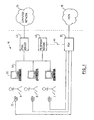
- FIG 1 is a schematic representation of the computer and telephony resources available in a known office environment 10 (everything to the left of the dashed line in Figure 1 can be found at a typical location).
- A, B, C multiple workers in the office
- the telephones are connected to PBX 20, which in turn provides a connection to the PSTN 18.
- the desktop computers are connected via a suitable network 50 to two servers, an email server 40 and a telephony server 45.
- network 50 is a conventional local area network (LAN).
- the email server is connected to a computer network 16 such as an Internet, Intranet or Extranet, whilst the telephony server is connected to the PBX by a computer telephony integration (CTI) link 60.
- CTI computer telephony integration
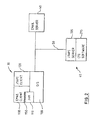
- Figure 2 illustrates schematically the software set-up on a typical client desktop workstation 30, email server 40, and telephony server 45 from Figure 1.
- the client has an operating system 100, such as Windows 95 from Microsoft Corporation, or OS/2 from IBM.
- An email client 130 runs on top of this operating system, interacting with email server 40.
- messages for the users A, B, C are stored on the email server 40 itself, but can be accessed from and processed by email client 130 (password protection is normally used to ensure that a user only has access to their own messages on the email server).
- the email client supports the Java applet interface (shown hatched as 150 in Figure 2), which is a standard Java interface (most notably supported in browsers) that allows an environment to launch an applet, and to perform simple interactions with it, such as passing parameters into the applet.
- Java applet interface shown hatched as 150 in Figure 2
- 150 is a standard Java interface (most notably supported in browsers) that allows an environment to launch an applet, and to perform simple interactions with it, such as passing parameters into the applet.
- JVM Java virtual machine
- the Java applets run on top of the JVM, which may be embedded into the operating system 100 or into the email client itself.
- the email software is implemented by a Lotus Notes v4.6 environment, so that email client 130 is a Notes client, and email server 40 is a Notes (Domino) server.
- the Notes v4.6 product allows Java applets to be embedded into documents. These documents can then be sent from one Notes user to another by email.
- Lotus Notes includes its own JVM, so that any applet running out of a Notes document is contained within the Notes environment.
- FIGs 3A, 3B, and 3C illustrate three potential forms representing an invoice, a conference call request, and a message respectively.
- Each form contains a number of standard fields 310 for entering data such as the date, amount of invoice, subject of message, etc (some of these fields would typically be completed automatically by the relevant application).
- Each form also includes an applet, which in turn presents one or more buttons.
- this is a Call Back button 320; if the recipient of the invoice activates this button, then they are connected automatically by telephone to the accounts department which originated the invoice.
- the applet displays two buttons, the first being a Call In button 322, which connects the recipient to the teleconferencing supplier, the second which is used to provide the relevant pass code for the conference 324.
- the applet button 326 is used to connect the recipient back to the sender of the message.
- the applet is invoked by the email client, and executes to present the illustrated button to the user (it will be appreciated that generally the applet actually opens its own window, with the button being enclosed within that window; however, for the sake of clarity the windows per se are not shown in Figure 3, only the relevant buttons).
- the applet then interacts with the JTAPI client 120 (see Figure 2) to set up the phone call back to the accounts department.
- the call request is passed to the JTAPI client, which in turn passes the request onto the JTAPI server 205 on the telephony server 45.
- FIG. 3B also has a passcode button 324 presented, which includes the authorisation code for the relevant telephone conference.
- button 324 can then be selected. This will instruct the JTAPI client, and through it the JTAPI server and CTI software, to place a specified sequence of DTMF keys on the line, to provide the caller access into the teleconference.
- the JTAPI support is provided by the Callpath program available from IBM (in particular Callpath Enterprise Server, which supports the use of a Lucent G3, Nortel SL1 and DMS100, or Siemens 9751, 9005, and 9006.3 PBXs).
- IBM in particular Callpath Enterprise Server, which supports the use of a Lucent G3, Nortel SL1 and DMS100, or Siemens 9751, 9005, and 9006.3 PBXs.
- This provides a client-server JTAPI implementation, as depicted in Figure 1, with the JTAPI server 205 effectively functioning as a Callpath daemon with the primary responsibility of converting JTAPI requests to Callpath Enterprise requests and Callpath Enterprise events and responses to JTAPI events and class exceptions respectively with respect to the underlying Callpath CTI software 215.
- the JTAPI client 120 which exposes the JTAPI interface to client applications such as email client 130 is a Java based toolkit, which runs on JVM 110 (the JTAPI client may run on a separate JVM from the email client, if the latter includes its own private JVM).
- the JTAPI client 120 is designed to be thin, with most of the processing delegated to JTAPI server 205.
- the Callpath product set also contains a toolkit for supporting the creation of applets which exploit JTAPI, by providing a set of telephony Beans (self-destribing Java components).
- Beans are provide to represent a telephone line resource, and also operations to performed on such resources (making telephone calls and so on). It is straightforward to assemble these Beans using a graphical development tool such as VisualAge for Java to produce an applet having the desired telephony functionality, without requiring any detailed telephony expertise.
- JTAPI allows for a wide variety of configurations which could be utilised instead of that shown in Figure 1 (see http://java.sun.com/products/jtapi for further details on JTAPI, including pointers to the full specifications). Indeed it is one of the strengths of JTAPI that it supports conventional third party call control (such as using the CTI link 60 of Figure 1), or first party call control (for example in locations with no PBX, or via the Internet). This helps to ensure that the message recipient is highly likely to have JTAPI support available.
- client 30 may directly be in control of its own local telephony, either because the client workstation itself incorporates its own telephony functionality (many modern PCs include FAX modems for example), or because the telephony service is in fact to be provided using Internet telephony or such-like over the computer network 16.
- the JTAPI server code 205 also effectively resides on the client (such a system essentially uses represents a unified rather than client-server JTAPI implementation).
- the applet may directly access JTAPI functionality on a remote machine; this might be performed routinely, or perhaps only in the circumstances where the applet is unable to locate any JTAPI support on the client which receives the email.
- the applet may try to contact a JTAPI implementation associated with the accounts department telephone system (again this represents a unified rather than client server structure).
- Knowledge of how to contact this system in terms of its network location and so on can easily be built into the applet.
- One implication of this approach is that the sender of the email would then typically pick up the bill for the cost of the call (this may or may not be regarded as an advantage).
- a difficulty with the use of a remote JTAPI system is that the applet may not be permitted to access remote machines, dependent on the security policy of the email client.
- One way around this is simply to relax the security of the email client, but other more sophisticated solutions could also be adopted.
- the recipient of the invoice may have agreed with its main suppliers a policy on how to authenticate the origin of any given invoice. Assuming then that the invoice is indeed verified as having originated from the proper supplier, then it would be reasonable for the client to allow the applet access to a JTAPI system associated with that supplier.
- the applet generally needs to know two telephone numbers, effectively the called and calling numbers.
- the called number can be hard-wired into the applet; this might typically be the case with the example of Figure 3A, where the applet be provided at creation time with the number of the relevant accounts department.
- the called number needs to vary in accordance with whoever is the originator of the message.
- this is relatively easy to accomplish by passing the called number into the applet as a parameter.
- this is achieved by dynamically associating the parameter with a field in the form (for example, in the case of Figure 3B, this would be the field marked "PHONE").
- the applet it is also possible for the applet to explicitly prompt the message recipient for the callback number (they could possibly paste it in from elsewhere in the message), although this is a somewhat less elegant approach.
- the calling number ie the number of the telephone associated with the email client receiving the message
- the situation is simpler for direct JTAPI systems operating on single machine, since they are only concerned with the local machine (in other words there is no need to determine which PBX extension is to be associated with a particular client desktop).
- there are many further potential techniques for obtaining telephone numbers such as using an organisation address books to determine numbers based on the sender's and recipient's email messages, although in general these may have limited portability.
- a significant aspect of the preferred embodiment is the use of standards such as the Java applet interface and JTAPI. This follows from the objective of ensuring that the telephone functionality will operate correctly irrespective of the destination of the email message in which it is included. To this end, the overall solution described herein is therefore platform independent, and so ideally suited to deployment in an email environment.
- the telephony functions described herein have been relatively simple (eg the call-back function of Figures 3A and 3C), it will be appreciated that there is no real limit on the complexity of an applet, and so many extensions are possible. Simple examples are that the applet may be programmed to try second and third numbers, etc, for the "call me back" function, if the first number does not succeed (eg office, mobile, home), or perhaps to try different numbers dependent on time and so on. It may also be possible for the applet to access calendar information to determine a current location and number to call. As another example, the applet of Figure 3A might offer a range of numbers to call, dependent on the nature of the query (technical, financial, sales, etc), or the type of product involved.
- a button might also offer the possibility of calling one or more of the people copied on an email message.
- the applet if so requested, to ring each one of the message addresses in turn, to join the calls together (telephony system permitting), and to therefore provide a telephone conferencing function from perhaps just one simple button.
Landscapes
- Engineering & Computer Science (AREA)
- Signal Processing (AREA)
- Computer Networks & Wireless Communication (AREA)
- Computer Security & Cryptography (AREA)
- Computer Vision & Pattern Recognition (AREA)
- Human Computer Interaction (AREA)
- Multimedia (AREA)
- Telephonic Communication Services (AREA)
- Data Exchanges In Wide-Area Networks (AREA)
- Information Transfer Between Computers (AREA)
Description
- The present invention relates to communication systems, and in particular to the integration of computer email and telephony systems.
- Modern office systems are equipped with two main forms of communications, namely the telephone and computer email. The telephone provides for real-time direct human-to-human contact, whilst email provides indirect contact in elapsed time. Thus email is a less spontaneous and perhaps more cumbersome interface than the telephone, but it avoids the need for the simultaneous availability of both parties and provides a readily stored record of the message exchange. Both telephony and email therefore have their relative strengths and weaknesses, and so can be used in complementary fashion, depending on the communication needs of a particular situation.
- Of course, in recent years telephone networks and computer networks have developed significantly to offer many more facilities; for example, telephone networks can be used to FAX documents, whilst it is possible to embed audio data files in multimedia email messages. It is now also possible to use computer networks such as the Internet to provide very cost-effective audio connections, so-called Internet telephony (see for example the article "Dial 1-800-Internet" in Byte Magazine, February 1996, p83-88, and the article "Nattering On", in New Scientist, 2 March 1996, p38-40).
- Despite the increasing impact of Internet telephony however, the heavy usage of conventional telephony is unlikely to reduce much in the foreseeable future. This is due to the vast investment which has already been made in the infrastructure of the public switched telephone network (PSTN) to provide simple, reliable, and ubiquitous communications, combined with the availability of increasingly complex services on top of the PSTN such as voice mail, conferencing, etc. Note that many business locations also have sophisticated telephony switches or private branch exchanges (PBXs) which support more advanced features, such as callback requests, call forwarding, and so on.
- There have previously been attempts to integrate telephony and computer services. For example, US 5333266 describes a unified messaging system which allows a user to access both their email and their telephone voice messages from a computer system. Typically in the latter case the voice message might either be transmitted to the computer system as an audio file, or the user's telephone can be controlled to provide a call into the voice messaging system.
- It is also known in specialised environments such as call centres to coordinate operations of the telephone and desktop computer of a customer agent. For example, the Callpath family of products available from IBM allows information about an incoming call (eg the calling or called number), which is passed into the call centre switch by the PSTN, to be sent to the desktop computer of an agent at the same time as the call itself is directed to the extension of that agent (see for example the manual IBM CallPath CallCoordinator for OS/2 and Windows, reference number GC22-0074-02, 3rd edition 1994).
- Call centres are also being developed to take account of the increasing prominence of the Internet and more particularly the World Wide Web as a customer interface. Thus EP-A-740445 describes a Web server from which a customer can access various pages over the Internet using a browser in known fashion. A "Call Me" button is provided for inclusion in a Web page. Responsive to the customer selecting this button, they are presented with an html form ("html" = hypertext markup language), into which they can enter their phone number and desired callback time. This form is then returned to the Web server, which extracts the call information and passes an appropriate call request to an Automatic Call Distribution (ACD) system, which in turn then places the desired call to the customer over the conventional telephone network.
- An extension of this approach is the "Internet Voice Button" described at http://www.nortel.com/pcn/voicebutton, which allows a customer to select between receiving a call over the conventional telephone network, or instead over the Internet. Note that technically this latter option is actually the somewhat simpler of the two options, given that both the Web page and the audio data are being transferred over the same network using the same protocol (TCP/IP).
- Another somewhat similar system is described in a White Paper by Lucent Technologies entitled "Internet Call Centre" and dated 15 December 97. As described in this document a Web Server can download a Java call control applet to start an Internet telephone call on the customer's machine into the call centre. Note that a server in the call centre acts as an interface between the Internet and the call centre telephony system, so that the call centre agents in fact use their conventional telephone extensions (rather than Internet telephones).
- Hanckmann J; "Telescript: The emerging standard for intelligent messaging" Philips Telecommunication review, Philips Telecommunication inductrie N.V Hilversum NL, vol.52, no.1, 1 March 1994, pages 15-19, XP000435511 discloses a method of integrating computer messaging and another communication function - such as smart messages. Smart messaging system Magicmail written in Telescript allows messages to be delivered to their destinations by Magicmail agents running on Telescript systems. The agents are executables that are sent between the Telescript destinations and are executed at the destination.
- International patent publication WO 9739564 A (Motorola Inc) 23 October 1997 discloses a mobile telephony device which can retrieve an email and set up a telephony call between the device and the phone referenced in the email. D2 does not disclosure call set up applets in an email as only the telephone number is in the email. The functionality needed to set up the call exists already in the mobile telephony device.
- In view of the above art, it will be seen therefore that much of the focus on computer telephony coordination has centered around relatively specialised applications, such as Web access to call centres. There has been comparatively little attention paid to the possibility of a broader and more flexible integration. Consequently most people still regard their telephone and their desktop computer in a typical office environment as providing essentially independent methods of communication.
- Accordingly, the invention provides method of integrating computer and telephony messaging comprising the steps of: creating an email message on a first computer system, said step of creating the email message including the step of embedding within said email message an applet for performing a telephony function; transmitting said email message to a second computer system; opening said email message on said second computer system, said step of opening said email message including the step of launching said applet; characterised by performing the telephony function of the applet (320) whereby the applet accesses telephony software (120) on the second computer system (30) to set up a telephone connection between the sender and recipient of the email message.
- Thus telephony functionality can now be effectively embedded into an email message, so that the two primary forms of office communication, namely email and the telephone, can be utilised in a far more integrated and effective manner than has hitherto been possible.
- In order to support the telephony function of the applet, the applet may access local telephony software on the second computer system, or possibly telephony software associated with the first computer system (ie the telephony server local to the first computer system). In the latter case, there are security implications, and the method preferably further comprises the step of authenticating that the applet originated from the first computer, prior to the applet accessing telephony software on the first computer system. This can be achieved for example by a use of a digital signature, so that the receiving system can confirm the applet as "trusted", thereby enabling it to perform a wider range of activities than would otherwise be permitted.
- In the preferred embodiment, the applet accesses said telephony software on the first or second computer system via a standard interface. This ensures platform independence of the approach described herein, which is important given that by its very nature email may be directed to a wide range of receiving systems. The preferred standard interface is the Java telephone interface (JTAPI). An additional benefit of JTAPI is that it allows a wide range of configurations of the underlying telephony support software, for example encompassing setting up the telephony connection from the either first or second computer system as discussed above.
- Typical examples of the application of the present invention are for the telephony function of said applet to set up a telephone connection between the sender and recipient of the email message, thereby effectively functioning as a call-back, or to connect the recipient of the email message to a conference call. Generally this functionality is offered to the recipient of the email message via one or more control buttons, whereby activation of the relevant button(s) causes the applet to form the requested telephone connection.
- The invention further provides an email system including: means for creating an email message; and characterised by means for embedding within said email message an applet for performing a telephony function; means for transmitting said email message; and means for presenting to a user said applet for embedding within said email message wherein the applet operates to set up a telephone connection between the sender and recipient of the email message.
- The invention further provides an email system including: means for receiving an email message; characterised by means for launching an applet for performing a telephony function contained within said email message; and means responsive to said applet for implementing said telephony function including means for accessing telephony software (120) on a local system.
- A preferred embodiment of the invention will now be described in detail by way of example only with reference to the following drawings:
- Figure 1 illustrates the computer and telephony equipment available in a typical office environment;
- Figure 2 illustrates the software present on the computer equipment of Figure 1; and
- Figures 3A, B, and C illustrate three examples of email messages including telephone functionality.
- Figure 1 is a schematic representation of the computer and telephony resources available in a known office environment 10 (everything to the left of the dashed line in Figure 1 can be found at a typical location). Thus there are multiple workers in the office, denoted A, B, C, each having their
own telephone extension 25 anddesktop computer 30. In conventional fashion, the telephones are connected toPBX 20, which in turn provides a connection to the PSTN 18. The desktop computers are connected via asuitable network 50 to two servers, anemail server 40 and atelephony server 45. Typicallynetwork 50 is a conventional local area network (LAN). The email server is connected to acomputer network 16 such as an Internet, Intranet or Extranet, whilst the telephony server is connected to the PBX by a computer telephony integration (CTI)link 60. It will be appreciated that users A, B, and C are not limited to simply communicating with one another, but may exchange messages and telephone calls withothers using networks - Figure 2 illustrates schematically the software set-up on a typical
client desktop workstation 30,email server 40, andtelephony server 45 from Figure 1. Thus the client has anoperating system 100, such as Windows 95 from Microsoft Corporation, or OS/2 from IBM. Anemail client 130 runs on top of this operating system, interacting withemail server 40. Typically messages for the users A, B, C are stored on theemail server 40 itself, but can be accessed from and processed by email client 130 (password protection is normally used to ensure that a user only has access to their own messages on the email server). The email client supports the Java applet interface (shown hatched as 150 in Figure 2), which is a standard Java interface (most notably supported in browsers) that allows an environment to launch an applet, and to perform simple interactions with it, such as passing parameters into the applet. - Also shown at the client in Figure 2 is a Java virtual machine (JVM) 110. The Java applets run on top of the JVM, which may be embedded into the
operating system 100 or into the email client itself. The client further contains JTAPI client code 120 ("JTAPI" = Java Telephony API) installed locally. Note that JTAPI is a standard Java extension, and so is readily accessible from within the Java environment. - In the preferred embodiment, the email software is implemented by a Lotus Notes v4.6 environment, so that
email client 130 is a Notes client, andemail server 40 is a Notes (Domino) server. The Notes v4.6 product allows Java applets to be embedded into documents. These documents can then be sent from one Notes user to another by email. Note also that Lotus Notes includes its own JVM, so that any applet running out of a Notes document is contained within the Notes environment. - In order to embed an applet into a Notes document, it is necessary to design a form (this requires designer permission), the form then acting for as a template for future documents. As part of the design process, there is the option to embed an applet, including specifying the screen size to be allocated to the applet, the source of the applet code, and any parameters to be made available to the applet. Typically the applet is first created outside Lotus Notes using a suitable development tool such as VisualAge for Java, available from IBM Corporation.
- Figures 3A, 3B, and 3C illustrate three potential forms representing an invoice, a conference call request, and a message respectively. Each form contains a number of
standard fields 310 for entering data such as the date, amount of invoice, subject of message, etc (some of these fields would typically be completed automatically by the relevant application). Each form also includes an applet, which in turn presents one or more buttons. In Figure 3A this is aCall Back button 320; if the recipient of the invoice activates this button, then they are connected automatically by telephone to the accounts department which originated the invoice. In Figure 3B, the applet displays two buttons, the first being a Call Inbutton 322, which connects the recipient to the teleconferencing supplier, the second which is used to provide the relevant pass code for theconference 324. Finally, in Figure 3C, theapplet button 326 is used to connect the recipient back to the sender of the message. - Thus when one of the above forms is received, the applet is invoked by the email client, and executes to present the illustrated button to the user (it will be appreciated that generally the applet actually opens its own window, with the button being enclosed within that window; however, for the sake of clarity the windows per se are not shown in Figure 3, only the relevant buttons). With reference to Figure 3A for example, assuming that the recipient of the invoice activates
button 320, the applet then interacts with the JTAPI client 120 (see Figure 2) to set up the phone call back to the accounts department. In particular, the call request is passed to the JTAPI client, which in turn passes the request onto theJTAPI server 205 on thetelephony server 45. This in turn processes the request by passing it ontoCTI software 215 on the telephony server, which sends an instruction to thePBX 20 over CTI link 60 to make the desired connection. The call buttons in Figures 3B and 3C operate in substantially the same way. Figure 3B also has apasscode button 324 presented, which includes the authorisation code for the relevant telephone conference. Thus after thepressing button 322 to initially dial into the conference,button 324 can then be selected. This will instruct the JTAPI client, and through it the JTAPI server and CTI software, to place a specified sequence of DTMF keys on the line, to provide the caller access into the teleconference. - In the preferred embodiment, the JTAPI support is provided by the Callpath program available from IBM (in particular Callpath Enterprise Server, which supports the use of a Lucent G3, Nortel SL1 and DMS100, or Siemens 9751, 9005, and 9006.3 PBXs). This provides a client-server JTAPI implementation, as depicted in Figure 1, with the
JTAPI server 205 effectively functioning as a Callpath daemon with the primary responsibility of converting JTAPI requests to Callpath Enterprise requests and Callpath Enterprise events and responses to JTAPI events and class exceptions respectively with respect to the underlyingCallpath CTI software 215. TheJTAPI client 120 which exposes the JTAPI interface to client applications such asemail client 130 is a Java based toolkit, which runs on JVM 110 (the JTAPI client may run on a separate JVM from the email client, if the latter includes its own private JVM). In this implementation, theJTAPI client 120 is designed to be thin, with most of the processing delegated toJTAPI server 205. - The Callpath product set also contains a toolkit for supporting the creation of applets which exploit JTAPI, by providing a set of telephony Beans (self-destribing Java components). For example, Beans are provide to represent a telephone line resource, and also operations to performed on such resources (making telephone calls and so on). It is straightforward to assemble these Beans using a graphical development tool such as VisualAge for Java to produce an applet having the desired telephony functionality, without requiring any detailed telephony expertise.
- The skilled person will recognise that JTAPI allows for a wide variety of configurations which could be utilised instead of that shown in Figure 1 (see http://java.sun.com/products/jtapi for further details on JTAPI, including pointers to the full specifications). Indeed it is one of the strengths of JTAPI that it supports conventional third party call control (such as using the
CTI link 60 of Figure 1), or first party call control (for example in locations with no PBX, or via the Internet). This helps to ensure that the message recipient is highly likely to have JTAPI support available. - Thus
client 30 may directly be in control of its own local telephony, either because the client workstation itself incorporates its own telephony functionality (many modern PCs include FAX modems for example), or because the telephony service is in fact to be provided using Internet telephony or such-like over thecomputer network 16. In this situation there is no separate telephony server, and theJTAPI server code 205 also effectively resides on the client (such a system essentially uses represents a unified rather than client-server JTAPI implementation). - Another possibility is for the applet to directly access JTAPI functionality on a remote machine; this might be performed routinely, or perhaps only in the circumstances where the applet is unable to locate any JTAPI support on the client which receives the email. For example, in the invoice example of Figure 3A the applet may try to contact a JTAPI implementation associated with the accounts department telephone system (again this represents a unified rather than client server structure). Knowledge of how to contact this system in terms of its network location and so on can easily be built into the applet. One implication of this approach is that the sender of the email would then typically pick up the bill for the cost of the call (this may or may not be regarded as an advantage).
- A difficulty with the use of a remote JTAPI system is that the applet may not be permitted to access remote machines, dependent on the security policy of the email client. One way around this is simply to relax the security of the email client, but other more sophisticated solutions could also be adopted. For example, it is possible to add digital signatures to applets to authenticate them, allowing them to be treated as so-called "trusted" applets. Thus returning to the example of Figure 3A, the recipient of the invoice may have agreed with its main suppliers a policy on how to authenticate the origin of any given invoice. Assuming then that the invoice is indeed verified as having originated from the proper supplier, then it would be reasonable for the client to allow the applet access to a JTAPI system associated with that supplier.
- Clearly in order for the applet to perform telephony functions, the applet generally needs to know two telephone numbers, effectively the called and calling numbers. In some situations, the called number can be hard-wired into the applet; this might typically be the case with the example of Figure 3A, where the applet be provided at creation time with the number of the relevant accounts department. However, in the example of Figure 3C, the called number needs to vary in accordance with whoever is the originator of the message. Within Notes this is relatively easy to accomplish by passing the called number into the applet as a parameter. In the preferred embodiment, this is achieved by dynamically associating the parameter with a field in the form (for example, in the case of Figure 3B, this would be the field marked "PHONE"). It is also possible for the applet to explicitly prompt the message recipient for the callback number (they could possibly paste it in from elsewhere in the message), although this is a somewhat less elegant approach.
- As regards the calling number (ie the number of the telephone associated with the email client receiving the message), this could be included by the sender in the form, or made available as some form of environment parameter at the client system, or the applet might simply prompt the recipient to enter their own phone number. Note that the situation is simpler for direct JTAPI systems operating on single machine, since they are only concerned with the local machine (in other words there is no need to determine which PBX extension is to be associated with a particular client desktop). Of course, it will be recognised that there are many further potential techniques for obtaining telephone numbers, such as using an organisation address books to determine numbers based on the sender's and recipient's email messages, although in general these may have limited portability.
- The preferred embodiment has been described in the context of the Lotus Notes environment. The skilled person will appreciate that this is in fact a groupware product for document sharing, which provides an email facility as a method of communicating documents between people. Thus the ability to include applets in Lotus Notes email messages reflects the broader support for applets in Lotus Notes documents.
- It should be noted that the current support for applet integration in Lotus Notes v4.6 only allows an applet to be incorporate into a document when the structure of the document is originally designed (ie when the form for that document is laid down). Thus the examples of Figures 3A, 3B, and 3C all represent predetermined mail templates. However, it will readily envisaged that this support could be extended using the same basic interface to enable users to integrate applets into documents on an individual basis at the time the document is created. Indeed, it would be generally advantageous for the email system to provide the user with applets for the most common functions such as call back, so that these could be directly embedded into an email message, incorporated into a signature block or whatever.
- The implementation described herein exploits certain features of Lotus Notes (such as applet support and parameter passing), which are not currently available in all other mail systems, so that sending an email as illustrated in Figure 3C for example outside Notes may not preserve the telephony function. However this is essentially a standardisation problem, rather than a reflection of any underlying technical difficulties. Thus it is clearly a desirable feature of email that it can be readily processed by a wide variety of recipients, irrespective of the systems that they use (and note that there is typically no way to determine or ask in advance of message transmission what type of system a particular intended recipient has). This is why Internet email systems follow the Simple Mail Transport Protocol (SMTP), based around straightforward ASCII text. However, on many occasions the limitation to ASCII is unduly restrictive, and so it is already very common to integrate other components into SMTP email messages by encoding them as ASCII. Most email systems for example handle so-called MIME extensions, which allow images and so on to be incorporated into email messages. It is also increasingly common for email systems to support embedding html into email messages, and this combined with support for the Java applet interface provides a mechanism for other email systems to handle the telephony applets described herein, since they can now be included in an html page attached to an email message. Nevertheless, the integration of an applet straight into an email as described herein (rather than via an html page) represents a particularly powerful and flexible approach, and one which is especially amenable to applications such as depicted in Figures 3A, 3B, and 3C.
- A significant aspect of the preferred embodiment is the use of standards such as the Java applet interface and JTAPI. This follows from the objective of ensuring that the telephone functionality will operate correctly irrespective of the destination of the email message in which it is included. To this end, the overall solution described herein is therefore platform independent, and so ideally suited to deployment in an email environment.
- The skilled person will recognize however that there may be circumstances in which it is acceptable to lose some of this platform independence, for example for internal company communications, where the company has a substantially homogeneous computing and telephony environment. An example of such an alternative embodiment would be where the telephony functionality is embedded into the email using Active X controls, which are then processed by the email client to interact with the telephony server (probably using the Microsoft TAPI interface). One bonus of such an approach would be the possibility for tighter integration between the email system, embedded executable object (applet), address book, calendar, and so on (eg messages directed to someone in an address book might automatically pick up their telephone extension for inclusion in the email applet). Again such enhancements would be unlikely to survive transmission into an external environment.
- Although the telephony functions described herein have been relatively simple (eg the call-back function of Figures 3A and 3C), it will be appreciated that there is no real limit on the complexity of an applet, and so many extensions are possible. Simple examples are that the applet may be programmed to try second and third numbers, etc, for the "call me back" function, if the first number does not succeed (eg office, mobile, home), or perhaps to try different numbers dependent on time and so on. It may also be possible for the applet to access calendar information to determine a current location and number to call. As another example, the applet of Figure 3A might offer a range of numbers to call, dependent on the nature of the query (technical, financial, sales, etc), or the type of product involved. As yet another example, a button might also offer the possibility of calling one or more of the people copied on an email message. Thus it would be possible for the applet, if so requested, to ring each one of the message addresses in turn, to join the calls together (telephony system permitting), and to therefore provide a telephone conferencing function from perhaps just one simple button.
Claims (12)
- A method of integrating computer and telephony messaging comprising the steps of:creating an email message on a first computer system, said step of creating the email message including the step of embedding within said email message an applet (320) for performing a telephony function;transmitting said email message to a second computer system (30);opening said email message on said second computer system (30), said step of opening said email message including the step of launching said applet (320); characterised byperforming the telephony function of the applet (320) whereby the applet accesses telephony software (120) on the second computer system (30) to set up a telephone connection between the sender and recipient of the email message.
- The method of claim 1, wherein said step of performing the telephony function of the applet (320) comprises the step of the applet accessing telephony software associated with the first computer system (30).
- The method of claim 2. further comprising the step of authenticating that the applet (320) originated from the first computer (30), prior to the applet accessing telephony software (120) on the first computer system (30) .
- The method of any of claims 1 to 3, wherein the applet accesses said telephony software (120) on the first or second computer system via a standard interface.
- The method of any of claims 1 to 4, wherein the telephony function of said applet (320) operates to connect the recipient of the email message to a conference call.
- An email system comprising:means for creating an email message;means for embedding within said email message an applet (320) for performing a telephony function;means for transmitting said email message; andmeans for presenting to a user said applet (320) for embedding within said email message; and characterised bythe applet (320) being adapted to set up a telephone connection between the sender and recipient of the email message.
- The email system of claim 6, further comprising means adapted to operate the applet to connect the recipient of the email message to a conference call.
- An email system including:means for receiving an email message;means for launching an applet (320) for performing a telephony function contained within said email message; and characterised bymeans for accessing telephony software (120) on a local system andwherein the telephony function of said applet (320) operates to set up a telephone connection between the sender and recipient of the email message.
- The email system of claim 8, further includes means for accessing telephony software (205) on a remote system.
- The email system of claim 8 or 9, further comprising means responsive to said applet (320) for accessing said telephony software via a standard interface.
- The email system of any of claims 8 to 10, further comprising means responsive to said applet for setting up a telephone connection for the recipient of the email message into a conference call.
- The email system of claim 11, further comprising means responsive to said applet for presenting a button to the recipient of the email message, wherein activation of the button causes the applet to set up said telephone connection.
Applications Claiming Priority (2)
| Application Number | Priority Date | Filing Date | Title |
|---|---|---|---|
| GB9809969A GB2337399A (en) | 1998-05-11 | 1998-05-11 | Computer E-mail with telephony support |
| GB9809969 | 1998-05-11 |
Publications (3)
| Publication Number | Publication Date |
|---|---|
| EP0957621A2 EP0957621A2 (en) | 1999-11-17 |
| EP0957621A3 EP0957621A3 (en) | 2003-07-23 |
| EP0957621B1 true EP0957621B1 (en) | 2006-07-12 |
Family
ID=10831763
Family Applications (1)
| Application Number | Title | Priority Date | Filing Date |
|---|---|---|---|
| EP99302587A Expired - Lifetime EP0957621B1 (en) | 1998-05-11 | 1999-04-01 | Computer email with telephony support |
Country Status (4)
| Country | Link |
|---|---|
| US (1) | US6502127B1 (en) |
| EP (1) | EP0957621B1 (en) |
| DE (1) | DE69932283T2 (en) |
| GB (1) | GB2337399A (en) |
Families Citing this family (28)
| Publication number | Priority date | Publication date | Assignee | Title |
|---|---|---|---|---|
| US6535506B1 (en) | 1999-05-11 | 2003-03-18 | Click Interconnect, Inc. | Method and apparatus for establishing communications with a remote node on a switched network based on hypertext calling received from a packet network |
| US7187662B1 (en) | 1999-08-11 | 2007-03-06 | Klingman Edwin E | Table driven call distribution system for local and remote agents |
| AUPQ449399A0 (en) * | 1999-12-07 | 2000-01-06 | Automatic Pty Ltd | Internet redirection methods |
| US7050861B1 (en) * | 1999-12-22 | 2006-05-23 | Nortel Networks Limited | Controlling a destination terminal from an originating terminal |
| WO2001049015A1 (en) * | 1999-12-24 | 2001-07-05 | Siemens Ltd | A portable symbol |
| AU2001238667A1 (en) * | 2000-02-29 | 2001-09-12 | Sylantro Systems Corp. | Internet server including internet-pstn gateway and http server |
| US20020023134A1 (en) * | 2000-04-03 | 2002-02-21 | Roskowski Steven G. | Method and computer program product for establishing real-time communications between networked computers |
| US7451187B2 (en) * | 2000-05-04 | 2008-11-11 | At&T Intellectual Property I, L.P. | Viewing attachments to electronic communications via pushing the attachment to a networked viewing site |
| US20050223073A1 (en) * | 2000-05-04 | 2005-10-06 | Malik Dale W | Attaching applets to messaging communications |
| EP1156630A1 (en) * | 2000-05-15 | 2001-11-21 | Alcatel | Method for automatically returning a phone call upon receipt of an electronic mail and using directory inquiries services to obtain the phone number |
| US7010610B1 (en) * | 2000-05-22 | 2006-03-07 | International Business Machines Corporation | Programmable agent workstation system and method |
| US7116657B1 (en) * | 2000-08-22 | 2006-10-03 | Internet Operator (Asia) Pte. Ltd. | System and method for establishing long distance call connections using a desktop application |
| EP1202542A1 (en) * | 2000-10-23 | 2002-05-02 | Ascom AG | System, device and method for operating a communication system whereby voice and signalling data is separated from the Man-Machine-Interface data |
| US20020085535A1 (en) * | 2000-12-28 | 2002-07-04 | Williams Donald A. | System for enhancing internet telephony |
| US7092992B1 (en) | 2001-02-01 | 2006-08-15 | Mailshell.Com, Inc. | Web page filtering including substitution of user-entered email address |
| GB2373959B (en) | 2001-03-28 | 2003-02-26 | 3Com Corp | Method and apparatus for telephone dialling using a network device |
| GB2377119A (en) * | 2001-06-27 | 2002-12-31 | 365 Plc | Interactive voice response system |
| US7003305B2 (en) * | 2002-03-08 | 2006-02-21 | Motorola, Inc. | Method and apparatus for message callback in a communication system |
| US7184534B2 (en) | 2002-12-19 | 2007-02-27 | International Business Machines Corporation | Using a telephony application server for call control with a voice server |
| US7590694B2 (en) | 2004-01-16 | 2009-09-15 | Gozoom.Com, Inc. | System for determining degrees of similarity in email message information |
| US7644127B2 (en) * | 2004-03-09 | 2010-01-05 | Gozoom.Com, Inc. | Email analysis using fuzzy matching of text |
| US8918466B2 (en) | 2004-03-09 | 2014-12-23 | Tonny Yu | System for email processing and analysis |
| US7631044B2 (en) | 2004-03-09 | 2009-12-08 | Gozoom.Com, Inc. | Suppression of undesirable network messages |
| US20050227680A1 (en) * | 2004-04-12 | 2005-10-13 | Sony Ericsson Mobile Communications Ab | Mobile phone auto-dial mechanism for conference calls |
| US7831668B2 (en) * | 2005-02-07 | 2010-11-09 | Nokia Corporation | Terminal and computer program product for replying to an email message using one of a plurality of communication methods |
| US9824335B1 (en) | 2011-06-16 | 2017-11-21 | Google Inc. | Integrated calendar and conference application for document management |
| US11423122B2 (en) * | 2016-06-15 | 2022-08-23 | Shimadzu Corporation | Software license management system and management method |
| US10885155B2 (en) | 2016-06-15 | 2021-01-05 | Shimadzu Corporation | Software license management system and management method |
Family Cites Families (9)
| Publication number | Priority date | Publication date | Assignee | Title |
|---|---|---|---|---|
| US5675733A (en) * | 1992-11-30 | 1997-10-07 | International Business Machines Corporation | Statistical analysis and display of reception status of electronic messages |
| CA2173304C (en) | 1995-04-21 | 2003-04-29 | Anthony J. Dezonno | Method and system for establishing voice communications using a computer network |
| CA2187837C (en) * | 1996-01-05 | 2000-01-25 | Don W. Taylor | Messaging system scratchpad facility |
| WO1997039564A1 (en) * | 1996-04-12 | 1997-10-23 | Motorola Inc. | Method of originating a call in a communication system |
| GB2320843A (en) * | 1996-12-24 | 1998-07-01 | Ibm | Establishing real time voice and/or video link via the Internet |
| JPH10207798A (en) * | 1997-01-27 | 1998-08-07 | Mitsubishi Electric Corp | Information collection system with transfer mechanism |
| US5999609A (en) * | 1997-04-04 | 1999-12-07 | Sun Microsystems, Inc. | Computer-telephony (CT) system including an electronic call request |
| US6014688A (en) * | 1997-04-25 | 2000-01-11 | Postx Corporation | E-mail program capable of transmitting, opening and presenting a container having digital content using embedded executable software |
| US5987508A (en) * | 1997-08-13 | 1999-11-16 | At&T Corp | Method of providing seamless cross-service connectivity in telecommunications network |
-
1998
- 1998-05-11 GB GB9809969A patent/GB2337399A/en not_active Withdrawn
-
1999
- 1999-01-11 US US09/227,948 patent/US6502127B1/en not_active Expired - Lifetime
- 1999-04-01 DE DE69932283T patent/DE69932283T2/en not_active Expired - Lifetime
- 1999-04-01 EP EP99302587A patent/EP0957621B1/en not_active Expired - Lifetime
Also Published As
| Publication number | Publication date |
|---|---|
| DE69932283T2 (en) | 2007-07-12 |
| GB2337399A (en) | 1999-11-17 |
| DE69932283D1 (en) | 2006-08-24 |
| EP0957621A3 (en) | 2003-07-23 |
| US6502127B1 (en) | 2002-12-31 |
| GB9809969D0 (en) | 1998-07-08 |
| EP0957621A2 (en) | 1999-11-17 |
Similar Documents
| Publication | Publication Date | Title |
|---|---|---|
| US6502127B1 (en) | Computer email with telephony support | |
| US6690672B1 (en) | Method and apparatus for placing an intelligent telephone call using an internet browser | |
| US6445694B1 (en) | Internet controlled telephone system | |
| US6785266B2 (en) | Internet controlled telephone system | |
| CA2256221C (en) | Method for adding context to communications | |
| US20040208303A1 (en) | Methods and systems for computer enhanced conference calling | |
| EP1108303A1 (en) | A system and method for controlling telephone calls through a cross platform enabled internet browser | |
| JP2010193532A (en) | Method and system for cpn-triggered collaboration | |
| CA2507492A1 (en) | Methods and systems for a call log | |
| US8751571B2 (en) | Methods and systems for CPN triggered collaboration | |
| US6788674B1 (en) | Method and apparatus for establishing a collect call originated through a packet based network | |
| GB2337400A (en) | Java enabled Groupware in a telephony application | |
| US6675194B1 (en) | Handling different communications types by using agents to implement communication goal commands | |
| WO2004049677A2 (en) | Methods and systems for computer enhanced conference calling | |
| US6771745B2 (en) | Method and apparatus for telephone dialling using a network device | |
| US7372822B2 (en) | Computer-based telephone call conferencing | |
| CA2270820C (en) | Communications system and method | |
| EP1372325A1 (en) | Telecommunication system comprising platform for activation and control of telephony services | |
| WO2000052902A1 (en) | Universal internet voice addressing scheme | |
| CA2454504C (en) | Establishing a collect call through a packet based network | |
| CA2507096A1 (en) | Methods and systems for cpn triggered collaboration | |
| WO2001065815A2 (en) | Internet server including internet-pstn gateway and http server | |
| JP2004096643A (en) | Free call receiving server and free call telephone system using the internet |
Legal Events
| Date | Code | Title | Description |
|---|---|---|---|
| PUAI | Public reference made under article 153(3) epc to a published international application that has entered the european phase |
Free format text: ORIGINAL CODE: 0009012 |
|
| AK | Designated contracting states |
Kind code of ref document: A2 Designated state(s): AT BE CH CY DE DK ES FI FR GB GR IE IT LI LU MC NL PT SE |
|
| AX | Request for extension of the european patent |
Free format text: AL;LT;LV;MK;RO;SI |
|
| PUAL | Search report despatched |
Free format text: ORIGINAL CODE: 0009013 |
|
| AK | Designated contracting states |
Designated state(s): AT BE CH CY DE DK ES FI FR GB GR IE IT LI LU MC NL PT SE |
|
| AX | Request for extension of the european patent |
Extension state: AL LT LV MK RO SI |
|
| 17P | Request for examination filed |
Effective date: 20031024 |
|
| AKX | Designation fees paid |
Designated state(s): DE FR GB |
|
| 17Q | First examination report despatched |
Effective date: 20040708 |
|
| GRAP | Despatch of communication of intention to grant a patent |
Free format text: ORIGINAL CODE: EPIDOSNIGR1 |
|
| GRAS | Grant fee paid |
Free format text: ORIGINAL CODE: EPIDOSNIGR3 |
|
| GRAA | (expected) grant |
Free format text: ORIGINAL CODE: 0009210 |
|
| AK | Designated contracting states |
Kind code of ref document: B1 Designated state(s): DE FR GB |
|
| REG | Reference to a national code |
Ref country code: GB Ref legal event code: FG4D |
|
| REF | Corresponds to: |
Ref document number: 69932283 Country of ref document: DE Date of ref document: 20060824 Kind code of ref document: P |
|
| ET | Fr: translation filed | ||
| REG | Reference to a national code |
Ref country code: GB Ref legal event code: 732E |
|
| PLBE | No opposition filed within time limit |
Free format text: ORIGINAL CODE: 0009261 |
|
| STAA | Information on the status of an ep patent application or granted ep patent |
Free format text: STATUS: NO OPPOSITION FILED WITHIN TIME LIMIT |
|
| 26N | No opposition filed |
Effective date: 20070413 |
|
| REG | Reference to a national code |
Ref country code: FR Ref legal event code: TP |
|
| REG | Reference to a national code |
Ref country code: FR Ref legal event code: PLFP Year of fee payment: 18 |
|
| REG | Reference to a national code |
Ref country code: FR Ref legal event code: PLFP Year of fee payment: 19 |
|
| REG | Reference to a national code |
Ref country code: DE Ref legal event code: R081 Ref document number: 69932283 Country of ref document: DE Owner name: OATH INC., NEW YORK, US Free format text: FORMER OWNER: YAHOO! INC. (N.D.GES.D. STAATES DELAWARE), SUNNYVALE, CALIF., US Ref country code: DE Ref legal event code: R081 Ref document number: 69932283 Country of ref document: DE Owner name: YAHOO HOLDINGS, INC. (N.D.GES.D. STAATES DELAW, US Free format text: FORMER OWNER: YAHOO! INC. (N.D.GES.D. STAATES DELAWARE), SUNNYVALE, CALIF., US Ref country code: DE Ref legal event code: R082 Ref document number: 69932283 Country of ref document: DE Representative=s name: WEICKMANN & WEICKMANN PATENT- UND RECHTSANWAEL, DE Ref country code: DE Ref legal event code: R082 Ref document number: 69932283 Country of ref document: DE Representative=s name: WEICKMANN & WEICKMANN PATENTANWAELTE - RECHTSA, DE |
|
| REG | Reference to a national code |
Ref country code: GB Ref legal event code: 732E Free format text: REGISTERED BETWEEN 20171109 AND 20171115 |
|
| REG | Reference to a national code |
Ref country code: FR Ref legal event code: TP Owner name: YAHOO HOLDINGS, INC., US Effective date: 20171212 |
|
| REG | Reference to a national code |
Ref country code: FR Ref legal event code: PLFP Year of fee payment: 20 |
|
| PGFP | Annual fee paid to national office [announced via postgrant information from national office to epo] |
Ref country code: GB Payment date: 20180329 Year of fee payment: 20 |
|
| PGFP | Annual fee paid to national office [announced via postgrant information from national office to epo] |
Ref country code: FR Payment date: 20180315 Year of fee payment: 20 |
|
| REG | Reference to a national code |
Ref country code: GB Ref legal event code: 732E Free format text: REGISTERED BETWEEN 20180510 AND 20180516 |
|
| REG | Reference to a national code |
Ref country code: DE Ref legal event code: R082 Ref document number: 69932283 Country of ref document: DE Representative=s name: WEICKMANN & WEICKMANN PATENT- UND RECHTSANWAEL, DE Ref country code: DE Ref legal event code: R081 Ref document number: 69932283 Country of ref document: DE Owner name: OATH INC., NEW YORK, US Free format text: FORMER OWNER: YAHOO HOLDINGS, INC. (N.D.GES.D. STAATES DELAWARE), SUNNYVALE, CALIF., US |
|
| PGFP | Annual fee paid to national office [announced via postgrant information from national office to epo] |
Ref country code: DE Payment date: 20180320 Year of fee payment: 20 |
|
| REG | Reference to a national code |
Ref country code: FR Ref legal event code: TP Owner name: OATH INC., US Effective date: 20180702 |
|
| REG | Reference to a national code |
Ref country code: DE Ref legal event code: R071 Ref document number: 69932283 Country of ref document: DE |
|
| REG | Reference to a national code |
Ref country code: GB Ref legal event code: PE20 Expiry date: 20190331 |
|
| PG25 | Lapsed in a contracting state [announced via postgrant information from national office to epo] |
Ref country code: GB Free format text: LAPSE BECAUSE OF EXPIRATION OF PROTECTION Effective date: 20190331 |