EP0936917B1 - Prevention of gastrointestinal damage - Google Patents
Prevention of gastrointestinal damage Download PDFInfo
- Publication number
- EP0936917B1 EP0936917B1 EP97943046A EP97943046A EP0936917B1 EP 0936917 B1 EP0936917 B1 EP 0936917B1 EP 97943046 A EP97943046 A EP 97943046A EP 97943046 A EP97943046 A EP 97943046A EP 0936917 B1 EP0936917 B1 EP 0936917B1
- Authority
- EP
- European Patent Office
- Prior art keywords
- derivative
- colostrum
- use according
- administered
- damage
- Prior art date
- Legal status (The legal status is an assumption and is not a legal conclusion. Google has not performed a legal analysis and makes no representation as to the accuracy of the status listed.)
- Expired - Lifetime
Links
- 230000006378 damage Effects 0.000 title claims abstract description 36
- 230000002496 gastric effect Effects 0.000 title description 20
- 230000002265 prevention Effects 0.000 title description 2
- 235000021277 colostrum Nutrition 0.000 claims abstract description 60
- 210000003022 colostrum Anatomy 0.000 claims abstract description 60
- CGIGDMFJXJATDK-UHFFFAOYSA-N indomethacin Chemical compound CC1=C(CC(O)=O)C2=CC(OC)=CC=C2N1C(=O)C1=CC=C(Cl)C=C1 CGIGDMFJXJATDK-UHFFFAOYSA-N 0.000 claims abstract description 35
- 229940021182 non-steroidal anti-inflammatory drug Drugs 0.000 claims abstract description 30
- 229960000905 indomethacin Drugs 0.000 claims abstract description 18
- 239000000041 non-steroidal anti-inflammatory agent Substances 0.000 claims abstract description 17
- 210000002919 epithelial cell Anatomy 0.000 claims abstract description 13
- 206010017943 Gastrointestinal conditions Diseases 0.000 claims abstract description 9
- 238000011321 prophylaxis Methods 0.000 claims abstract description 7
- 239000005862 Whey Substances 0.000 claims description 15
- 102000007544 Whey Proteins Human genes 0.000 claims description 15
- 108010046377 Whey Proteins Proteins 0.000 claims description 15
- 241000283690 Bos taurus Species 0.000 claims description 8
- 239000007921 spray Substances 0.000 claims description 8
- 239000007788 liquid Substances 0.000 claims description 7
- 239000003814 drug Substances 0.000 claims description 5
- IJGRMHOSHXDMSA-UHFFFAOYSA-N Atomic nitrogen Chemical compound N#N IJGRMHOSHXDMSA-UHFFFAOYSA-N 0.000 claims description 4
- 230000032696 parturition Effects 0.000 claims description 4
- BSYNRYMUTXBXSQ-UHFFFAOYSA-N Aspirin Chemical compound CC(=O)OC1=CC=CC=C1C(O)=O BSYNRYMUTXBXSQ-UHFFFAOYSA-N 0.000 claims description 3
- HEFNNWSXXWATRW-UHFFFAOYSA-N Ibuprofen Chemical compound CC(C)CC1=CC=C(C(C)C(O)=O)C=C1 HEFNNWSXXWATRW-UHFFFAOYSA-N 0.000 claims description 3
- CMWTZPSULFXXJA-UHFFFAOYSA-N Naproxen Natural products C1=C(C(C)C(O)=O)C=CC2=CC(OC)=CC=C21 CMWTZPSULFXXJA-UHFFFAOYSA-N 0.000 claims description 3
- 229960001671 azapropazone Drugs 0.000 claims description 3
- WOIIIUDZSOLAIW-NSHDSACASA-N azapropazone Chemical compound C1=C(C)C=C2N3C(=O)[C@H](CC=C)C(=O)N3C(N(C)C)=NC2=C1 WOIIIUDZSOLAIW-NSHDSACASA-N 0.000 claims description 3
- 239000002775 capsule Substances 0.000 claims description 3
- 229960001259 diclofenac Drugs 0.000 claims description 3
- DCOPUUMXTXDBNB-UHFFFAOYSA-N diclofenac Chemical compound OC(=O)CC1=CC=CC=C1NC1=C(Cl)C=CC=C1Cl DCOPUUMXTXDBNB-UHFFFAOYSA-N 0.000 claims description 3
- 235000013305 food Nutrition 0.000 claims description 3
- 229960001680 ibuprofen Drugs 0.000 claims description 3
- DKYWVDODHFEZIM-UHFFFAOYSA-N ketoprofen Chemical compound OC(=O)C(C)C1=CC=CC(C(=O)C=2C=CC=CC=2)=C1 DKYWVDODHFEZIM-UHFFFAOYSA-N 0.000 claims description 3
- 229960000991 ketoprofen Drugs 0.000 claims description 3
- 229960002009 naproxen Drugs 0.000 claims description 3
- CMWTZPSULFXXJA-VIFPVBQESA-N naproxen Chemical compound C1=C([C@H](C)C(O)=O)C=CC2=CC(OC)=CC=C21 CMWTZPSULFXXJA-VIFPVBQESA-N 0.000 claims description 3
- 229960002702 piroxicam Drugs 0.000 claims description 3
- QYSPLQLAKJAUJT-UHFFFAOYSA-N piroxicam Chemical compound OC=1C2=CC=CC=C2S(=O)(=O)N(C)C=1C(=O)NC1=CC=CC=N1 QYSPLQLAKJAUJT-UHFFFAOYSA-N 0.000 claims description 3
- 241000792859 Enema Species 0.000 claims description 2
- 239000003963 antioxidant agent Substances 0.000 claims description 2
- 235000006708 antioxidants Nutrition 0.000 claims description 2
- 235000014633 carbohydrates Nutrition 0.000 claims description 2
- 150000001720 carbohydrates Chemical class 0.000 claims description 2
- 239000003995 emulsifying agent Substances 0.000 claims description 2
- 239000007920 enema Substances 0.000 claims description 2
- 229940095399 enema Drugs 0.000 claims description 2
- 239000000835 fiber Substances 0.000 claims description 2
- 229910052500 inorganic mineral Inorganic materials 0.000 claims description 2
- 150000004668 long chain fatty acids Chemical class 0.000 claims description 2
- 238000004519 manufacturing process Methods 0.000 claims description 2
- 239000011707 mineral Substances 0.000 claims description 2
- 229910052757 nitrogen Inorganic materials 0.000 claims description 2
- 239000003921 oil Substances 0.000 claims description 2
- 235000019198 oils Nutrition 0.000 claims description 2
- 239000003826 tablet Substances 0.000 claims description 2
- 235000015112 vegetable and seed oil Nutrition 0.000 claims description 2
- 239000008158 vegetable oil Substances 0.000 claims description 2
- 235000013343 vitamin Nutrition 0.000 claims description 2
- 239000011782 vitamin Substances 0.000 claims description 2
- 229940088594 vitamin Drugs 0.000 claims description 2
- 229930003231 vitamin Natural products 0.000 claims description 2
- 238000001471 micro-filtration Methods 0.000 claims 1
- 238000000108 ultra-filtration Methods 0.000 claims 1
- 241001465754 Metazoa Species 0.000 description 16
- 235000013336 milk Nutrition 0.000 description 12
- 210000004080 milk Anatomy 0.000 description 12
- 239000008267 milk Substances 0.000 description 12
- 239000003102 growth factor Substances 0.000 description 9
- 239000003795 chemical substances by application Substances 0.000 description 7
- 230000000694 effects Effects 0.000 description 7
- 208000025865 Ulcer Diseases 0.000 description 6
- 238000002560 therapeutic procedure Methods 0.000 description 6
- 241000699670 Mus sp. Species 0.000 description 5
- 239000003651 drinking water Substances 0.000 description 5
- 235000020188 drinking water Nutrition 0.000 description 5
- 210000000981 epithelium Anatomy 0.000 description 5
- 238000011282 treatment Methods 0.000 description 5
- 230000008901 benefit Effects 0.000 description 4
- 235000005911 diet Nutrition 0.000 description 4
- 230000037213 diet Effects 0.000 description 4
- 230000000968 intestinal effect Effects 0.000 description 4
- 208000037817 intestinal injury Diseases 0.000 description 4
- 239000000203 mixture Substances 0.000 description 4
- 230000009467 reduction Effects 0.000 description 4
- 201000003883 Cystic fibrosis Diseases 0.000 description 3
- 108060003951 Immunoglobulin Proteins 0.000 description 3
- 230000009286 beneficial effect Effects 0.000 description 3
- 102000018358 immunoglobulin Human genes 0.000 description 3
- 229940072221 immunoglobulins Drugs 0.000 description 3
- 210000000936 intestine Anatomy 0.000 description 3
- 230000007774 longterm Effects 0.000 description 3
- 201000008482 osteoarthritis Diseases 0.000 description 3
- 230000035755 proliferation Effects 0.000 description 3
- 230000000069 prophylactic effect Effects 0.000 description 3
- 206010039073 rheumatoid arthritis Diseases 0.000 description 3
- 231100000397 ulcer Toxicity 0.000 description 3
- 230000036269 ulceration Effects 0.000 description 3
- LFQSCWFLJHTTHZ-UHFFFAOYSA-N Ethanol Chemical compound CCO LFQSCWFLJHTTHZ-UHFFFAOYSA-N 0.000 description 2
- 239000013543 active substance Substances 0.000 description 2
- 230000002411 adverse Effects 0.000 description 2
- 210000001035 gastrointestinal tract Anatomy 0.000 description 2
- 239000000122 growth hormone Substances 0.000 description 2
- 238000001727 in vivo Methods 0.000 description 2
- 210000004347 intestinal mucosa Anatomy 0.000 description 2
- 230000031864 metaphase Effects 0.000 description 2
- 238000000034 method Methods 0.000 description 2
- 239000000902 placebo Substances 0.000 description 2
- 229940068196 placebo Drugs 0.000 description 2
- 239000000843 powder Substances 0.000 description 2
- 230000002035 prolonged effect Effects 0.000 description 2
- 230000001681 protective effect Effects 0.000 description 2
- 235000018102 proteins Nutrition 0.000 description 2
- 102000004169 proteins and genes Human genes 0.000 description 2
- 108090000623 proteins and genes Proteins 0.000 description 2
- 230000008439 repair process Effects 0.000 description 2
- 210000000813 small intestine Anatomy 0.000 description 2
- 210000001519 tissue Anatomy 0.000 description 2
- SUBDBMMJDZJVOS-UHFFFAOYSA-N 5-methoxy-2-{[(4-methoxy-3,5-dimethylpyridin-2-yl)methyl]sulfinyl}-1H-benzimidazole Chemical compound N=1C2=CC(OC)=CC=C2NC=1S(=O)CC1=NC=C(C)C(OC)=C1C SUBDBMMJDZJVOS-UHFFFAOYSA-N 0.000 description 1
- 102000011632 Caseins Human genes 0.000 description 1
- 108010076119 Caseins Proteins 0.000 description 1
- 208000017667 Chronic Disease Diseases 0.000 description 1
- 102000010834 Extracellular Matrix Proteins Human genes 0.000 description 1
- 108010037362 Extracellular Matrix Proteins Proteins 0.000 description 1
- 108050007372 Fibroblast Growth Factor Proteins 0.000 description 1
- 102000018233 Fibroblast Growth Factor Human genes 0.000 description 1
- 102000003972 Fibroblast growth factor 7 Human genes 0.000 description 1
- 108090000385 Fibroblast growth factor 7 Proteins 0.000 description 1
- 206010016654 Fibrosis Diseases 0.000 description 1
- 208000032843 Hemorrhage Diseases 0.000 description 1
- 108090000723 Insulin-Like Growth Factor I Proteins 0.000 description 1
- 102000004218 Insulin-Like Growth Factor I Human genes 0.000 description 1
- 102000048143 Insulin-Like Growth Factor II Human genes 0.000 description 1
- 108090001117 Insulin-Like Growth Factor II Proteins 0.000 description 1
- 241000699666 Mus <mouse, genus> Species 0.000 description 1
- 108010038512 Platelet-Derived Growth Factor Proteins 0.000 description 1
- 102000010780 Platelet-Derived Growth Factor Human genes 0.000 description 1
- 108010009583 Transforming Growth Factors Proteins 0.000 description 1
- 102000009618 Transforming Growth Factors Human genes 0.000 description 1
- 208000027418 Wounds and injury Diseases 0.000 description 1
- 206010000059 abdominal discomfort Diseases 0.000 description 1
- 238000000540 analysis of variance Methods 0.000 description 1
- 230000003466 anti-cipated effect Effects 0.000 description 1
- 230000006907 apoptotic process Effects 0.000 description 1
- 239000008280 blood Substances 0.000 description 1
- 210000004369 blood Anatomy 0.000 description 1
- 210000004027 cell Anatomy 0.000 description 1
- 230000001684 chronic effect Effects 0.000 description 1
- 210000001072 colon Anatomy 0.000 description 1
- 235000009508 confectionery Nutrition 0.000 description 1
- 235000013365 dairy product Nutrition 0.000 description 1
- 229940079593 drug Drugs 0.000 description 1
- 230000002183 duodenal effect Effects 0.000 description 1
- 201000006549 dyspepsia Diseases 0.000 description 1
- 230000008378 epithelial damage Effects 0.000 description 1
- 230000008508 epithelial proliferation Effects 0.000 description 1
- 210000002744 extracellular matrix Anatomy 0.000 description 1
- 238000000605 extraction Methods 0.000 description 1
- 229940126864 fibroblast growth factor Drugs 0.000 description 1
- 230000004761 fibrosis Effects 0.000 description 1
- 235000020243 first infant milk formula Nutrition 0.000 description 1
- 239000012530 fluid Substances 0.000 description 1
- 239000003485 histamine H2 receptor antagonist Substances 0.000 description 1
- 229940088597 hormone Drugs 0.000 description 1
- 239000005556 hormone Substances 0.000 description 1
- 238000010191 image analysis Methods 0.000 description 1
- 230000002757 inflammatory effect Effects 0.000 description 1
- 230000004054 inflammatory process Effects 0.000 description 1
- 230000002401 inhibitory effect Effects 0.000 description 1
- 230000000977 initiatory effect Effects 0.000 description 1
- 208000014674 injury Diseases 0.000 description 1
- 230000002147 killing effect Effects 0.000 description 1
- 210000002429 large intestine Anatomy 0.000 description 1
- 230000003902 lesion Effects 0.000 description 1
- 230000000670 limiting effect Effects 0.000 description 1
- 231100000516 lung damage Toxicity 0.000 description 1
- 210000005075 mammary gland Anatomy 0.000 description 1
- 230000008774 maternal effect Effects 0.000 description 1
- OJLOPKGSLYJEMD-URPKTTJQSA-N methyl 7-[(1r,2r,3r)-3-hydroxy-2-[(1e)-4-hydroxy-4-methyloct-1-en-1-yl]-5-oxocyclopentyl]heptanoate Chemical compound CCCCC(C)(O)C\C=C\[C@H]1[C@H](O)CC(=O)[C@@H]1CCCCCCC(=O)OC OJLOPKGSLYJEMD-URPKTTJQSA-N 0.000 description 1
- 238000001531 micro-dissection Methods 0.000 description 1
- 235000010755 mineral Nutrition 0.000 description 1
- 229960005249 misoprostol Drugs 0.000 description 1
- 238000010172 mouse model Methods 0.000 description 1
- 230000004678 mucosal integrity Effects 0.000 description 1
- 235000015097 nutrients Nutrition 0.000 description 1
- 235000016709 nutrition Nutrition 0.000 description 1
- 229960000381 omeprazole Drugs 0.000 description 1
- 229940094443 oxytocics prostaglandins Drugs 0.000 description 1
- 230000035699 permeability Effects 0.000 description 1
- 239000000546 pharmaceutical excipient Substances 0.000 description 1
- 239000000825 pharmaceutical preparation Substances 0.000 description 1
- 229940127557 pharmaceutical product Drugs 0.000 description 1
- 239000011591 potassium Substances 0.000 description 1
- 229910052700 potassium Inorganic materials 0.000 description 1
- 150000003180 prostaglandins Chemical class 0.000 description 1
- 238000000746 purification Methods 0.000 description 1
- 230000002829 reductive effect Effects 0.000 description 1
- 235000020183 skimmed milk Nutrition 0.000 description 1
- 238000001694 spray drying Methods 0.000 description 1
- 239000003381 stabilizer Substances 0.000 description 1
- MNQYNQBOVCBZIQ-JQOFMKNESA-A sucralfate Chemical compound O[Al](O)OS(=O)(=O)O[C@@H]1[C@@H](OS(=O)(=O)O[Al](O)O)[C@H](OS(=O)(=O)O[Al](O)O)[C@@H](COS(=O)(=O)O[Al](O)O)O[C@H]1O[C@@]1(COS(=O)(=O)O[Al](O)O)[C@@H](OS(=O)(=O)O[Al](O)O)[C@H](OS(=O)(=O)O[Al](O)O)[C@@H](OS(=O)(=O)O[Al](O)O)O1 MNQYNQBOVCBZIQ-JQOFMKNESA-A 0.000 description 1
- 229960004291 sucralfate Drugs 0.000 description 1
- 239000011573 trace mineral Substances 0.000 description 1
- 235000013619 trace mineral Nutrition 0.000 description 1
- 238000007492 two-way ANOVA Methods 0.000 description 1
- OGWKCGZFUXNPDA-XQKSVPLYSA-N vincristine Chemical compound C([N@]1C[C@@H](C[C@]2(C(=O)OC)C=3C(=CC4=C([C@]56[C@H]([C@@]([C@H](OC(C)=O)[C@]7(CC)C=CCN([C@H]67)CC5)(O)C(=O)OC)N4C=O)C=3)OC)C[C@@](C1)(O)CC)CC1=C2NC2=CC=CC=C12 OGWKCGZFUXNPDA-XQKSVPLYSA-N 0.000 description 1
- 229960004528 vincristine Drugs 0.000 description 1
- OGWKCGZFUXNPDA-UHFFFAOYSA-N vincristine Natural products C1C(CC)(O)CC(CC2(C(=O)OC)C=3C(=CC4=C(C56C(C(C(OC(C)=O)C7(CC)C=CCN(C67)CC5)(O)C(=O)OC)N4C=O)C=3)OC)CN1CCC1=C2NC2=CC=CC=C12 OGWKCGZFUXNPDA-UHFFFAOYSA-N 0.000 description 1
Images
Classifications
-
- A—HUMAN NECESSITIES
- A61—MEDICAL OR VETERINARY SCIENCE; HYGIENE
- A61K—PREPARATIONS FOR MEDICAL, DENTAL OR TOILETRY PURPOSES
- A61K35/00—Medicinal preparations containing materials or reaction products thereof with undetermined constitution
- A61K35/12—Materials from mammals; Compositions comprising non-specified tissues or cells; Compositions comprising non-embryonic stem cells; Genetically modified cells
- A61K35/20—Milk; Whey; Colostrum
-
- A—HUMAN NECESSITIES
- A61—MEDICAL OR VETERINARY SCIENCE; HYGIENE
- A61P—SPECIFIC THERAPEUTIC ACTIVITY OF CHEMICAL COMPOUNDS OR MEDICINAL PREPARATIONS
- A61P1/00—Drugs for disorders of the alimentary tract or the digestive system
- A61P1/04—Drugs for disorders of the alimentary tract or the digestive system for ulcers, gastritis or reflux esophagitis, e.g. antacids, inhibitors of acid secretion, mucosal protectants
Definitions
- the present invention relates to the prevention of gastrointestinal damage and more particularly, but not exclusively. to such damage which occurs in the intestine.
- this damage may be in the form of ulceration, increased permeability with protein and blood loss from the intestine or structuring.
- NSAIDs Non Steroidal Anti-inflammatory Drugs
- indomethacin. ibuprofen. azapropazone. naproxen. piroxicam. ketoprofen, diclofenac. asprin etc examples of such chronic conditions which require prolonged administration of NSAIDs are rheumatoid arthritis and osteoarthritis.
- NSAID therapy is also beneficial for sufferers of Cystic Fibrosis (to ameliorate the inflammatory process causing lung damage). Long term use of NSAIDs is associated with a high risk of developing gastric or intestinal damage including structuring, fibrosis and ulceration.
- a major effect of NSAIDs is damage to gastrointestinal epithelial cells which may lead to the development of ulcers. Such ulcers may unexpectedly haemorrhage or become perforated. This leads to the requirement for emergency treatment and when undetected may even be associated with mortality. Mortality is especially associated with patients on NSAIDS who perforate because these patients are often symptomless and do not suffer pain because of the pain dampening effects of NSAIDs.
- NSAID-induced ulcers include the use of several types of pharmaceutical products, such as Histamine H 2 receptor antagonists, sucralfate, prostaglandins (e.g. misoprostol) and hydrogen-potassium pump inhibiting agents (e.g. omeprazole).
- Histamine H 2 receptor antagonists such as Histamine H 2 receptor antagonists, sucralfate, prostaglandins (e.g. misoprostol) and hydrogen-potassium pump inhibiting agents (e.g. omeprazole).
- a major disadvantage of these products is that, although they are effective at treating gastric damage, they are largely ineffective when directed towards intestinal epithelium. It is therefore desirable that there is an agent which is effective for intestinal epithelium. It is particularly desirable that there is a suitable agent that may be used prophylactically to prevent gastrointestinal damage occurring.
- prophylactic treatment would be of benefit for sufferers of rheumatoid arthritis, osteoarthritis or cystic fibrosis who are taking NSAIDs.
- bovine colostrum or a derivative thereof for the manufacture of a medicament for prophylactic treatment of a gastrointestinal condition partially characterised by damage to epithelial cells and caused by administration of a non-steroidal anti-inflammatory drug.
- prophylactic treatment we mean either (i) a treatment that protects gastrointestinal epithelium such that a gastrointestinal condition that is at least partially characterised by damage to epithelial cells does not occur; or (ii) a treatment that prevents healthy epithelial cells from becoming damaged if a gastrointestinal condition already exists.
- the invention is applicable for prophylactic treatment of patients who are at risk of suffering NSAID induced damage to gastrointestinal epithelial cells (such as sufferers of rheumatoid arthritis, osteoarthritis or cystic fibrosis who are taking NSAIDs). Therefore colostrum or a derivative thereof may be used to prophylactically prevent damage caused by NSAIDS such as indomethacin, ibuprofen, azapropazone, naproxen, piroxicam, ketoprofen, diclofenac or asprin.
- NSAIDS such as indomethacin, ibuprofen, azapropazone, naproxen, piroxicam, ketoprofen, diclofenac or asprin.
- Colostrum is the milk secreted by the mammary gland during the first 48 hours following parturition.
- the composition of this "first milk” is fundamentally different to that of the subsequently secreted normal milk.
- colostrum contains increased concentrations of growth hormones, growth factors and maternal immunoglobulins.
- the colostrum used in the present invention is preferably the milk obtained in the first 2 milkings following parturition. Derivatives of such milk may also be used.
- colostrum derivatives referred to in this invention are those which contain viable immunoglobulins, growth factors and /or growth hormones as may be found in colostrum.
- colostrum derivatives are:
- the bovine colostrum may be obtained by normal milking procedures, after which it may be pooled and frozen prior to being processed, if desired, to produce a colostrum derivative.
- colostrum or a derivative thereof, has the beneficial effect of preventing gastrointestinal epithelial cells from being damaged. These beneficial effects are surprising when it is considered that in our quietcs normal milk, or a derivative thereof, is significantly less effective for preventing such damage.
- Colostrum contains significantly higher levels of physiologically active agents such as hormones, Growth Factors and Immunoglobulins than can be found in normal milk and while we do not want to be bound by any theory, we believe this may contribute towards its efficacy in preventing the development of the abovementioned conditions.
- these agents within colostrum, or a derivative thereof protect epithelial cells from damage being inflicted upon them (thereby acting as a prophylactic). It is also possible that these physiologically active agents found in colostrum, or a derivative thereof, regulate apoptosis or regulate modelling of the extracellular matrix in the gastrointestinal tract.
- colostrum or a derivative thereof, has many advantages over therapies currently being used for NSAID induced gastrointestinal conditions that are characterised by epithelial damage. For instance, large quantities of bovine colostrum can be readily obtained from dairy cattle. This means there are sufficient resources for the wide scale prophylactic use of colostrum to help patients who are on long term NSAID therapy. Furthermore, bovine colostrum is a natural and safe resource.
- the colostrum or derivative thereof is preferably administered by an enteral route. This may be by means of an enema, an asogastric tube or alternatively by means of gastrostomy tubes or jejunostomy tubes. A most preferred route of administration is by an oral route.
- colostrum, or a derivative thereof is administered at least once daily. Treatment with colostrum or derivatives thereof may continue until the risk of gastrointestinal damage occurring has been removed. It is also preferred that the colostrum or a derivative thereof is administered from 6 to 72 (more preferably from 24 to 48) hours in advance of initiation of NSAID therapy and should ideally continue until NSAID therapy has stopped.
- the amount of colostrum. or derivative thereof, to be administered for prophylactic treatment of an NSAID induced gastrointestinal condition that is at least partially characterised by damage to epithelial cells depends on a number of factors. These include, for example, the particular colostrum or derivative to be administered, the severity of the condition, and the age of the subject, to be treated.
- bovine colostral whey is preferably administered in the range of 30-300mls/day. 0.1-60.0 grammes/day represent a suitable daily dosage of spray dried derivatives of bovine colostrum. It will be appreciated that the amount of a colostrum derivative required will depend upon the precise extraction or purification steps undertaken to prepare such a colostrum derivative.
- the colostrum may be supplemented with one or more growth factors (e.g. purified growth factors) such as an IGF (e.g. IGF-1 or IGF-2), a transforming growth factor (e.g. TGF ⁇ 1, TGF ⁇ 2 or TGF ⁇ 3), a keratinocyte growth factor, a fibroblast growth factor, or a platelet-derived growth factor.
- IGF e.g. IGF-1 or IGF-2
- a transforming growth factor e.g. TGF ⁇ 1, TGF ⁇ 2 or TGF ⁇ 3
- keratinocyte growth factor e.g. keratinocyte growth factor
- fibroblast growth factor e.g. fibroblast growth factor
- platelet-derived growth factor e.g. purified growth factors
- Colostrum may be formulated with other agents to form a composition suitable for enteral consumption.
- agents such as carbohydrates, a nitrogen source, vegetable oils, emulsifiers, oils containing long chain fatty acids, antioxidants, vitamins, soluble fibre or minerals and other trace elements may be included in the composition to fulfil nutritional requirements when colostrum is being incorporated into a food product (such as a confectionery bar) or drink product (in which case a liquid derivative or a powder derivative reconstituted as a liquid may be used).
- derivatives or colostrum may be formulated with suitable excipients, stabilizers and the like to make a tablet, capsule or liquid medicament.
- flavouring may also be included to make such compositions more palatable if the medicament is to be taken orally.
- mice were fed on a standard chow diet.
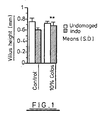
- a control group of mice (16/group) were given a placebo consisting of drinking water containing 10% (vol/vol) of defatted, microfiltered milk whey and a "colostrum” group was given drinking water that contained 10% (vol/vol) of defatted, microfiltered colostral whey.
- half the animals in each group also received indomethacin (85mg/kg subcutaneously) for a further 24 hours to induce intestinal injury. After this time the animals were sacrificed and intestinal villus height measured. Referring to Fig. 1.
- mice were randomised into groups of twenty and fed on a standard chow diet ad libitum. The drinking water was supplemented with 10% solution of defatted colostrum or milk whey for six days. Pilot studies showed that the addition of these solutions did not affect the total volume drunk (mean 5 ml/mouse/day). Small intestinal injury was induced in half of the animals in each group by administering a single dose of indomethacin (85mg/Kg sc.). Animals were killed 24 h later. In order to assess changes in proliferation, each animal also received vincristine (1 mg/Kg i.p.) two hours prior to killing.
- indomethacin 85mg/Kg sc.
- the wet weight of the various sections of the gastrointestinal tract were recorded and samples of the small intestine and colon (defined by their percentage length) were fixed in Carnoy's fluid and stored in 70% (v/v) ethanol. Tissues were subsequently stained with the Feulgen reaction and the crypts displayed by microdissection. The numbers of arrested metaphases in 20 crypts per animal per site were counted.
- Differences in villus height were determined in various regions of the intestine by microdissecting the tissue and tracing the outline of the villi using a stereo dissecting microscope. Tracings were subsequently scanned and analysed by computer image analyses.
- Indomethacin caused a 25% reduction in the proliferation rate (as determined by 2-hour metaphase assessment. P ⁇ 0.001) of the small and large intestine in control animals and also those receiving colostrum or milk solution.
- indomethacin also caused a 25% reduction in the villus heights of control animals. Similar changes were seen in animals which had received 10% milk solution. Animals receiving 10% colostrum, however, had only about a 5% reduction in their villus height (p ⁇ 0.001 compared to control animals receiving indomethacin). This shows that colostrum prevents damage from occurring to gastrointestinal epithelial cells.
Landscapes
- Health & Medical Sciences (AREA)
- Life Sciences & Earth Sciences (AREA)
- General Health & Medical Sciences (AREA)
- Veterinary Medicine (AREA)
- Engineering & Computer Science (AREA)
- Chemical & Material Sciences (AREA)
- Medicinal Chemistry (AREA)
- Animal Behavior & Ethology (AREA)
- Public Health (AREA)
- Pharmacology & Pharmacy (AREA)
- Chemical Kinetics & Catalysis (AREA)
- Cell Biology (AREA)
- General Chemical & Material Sciences (AREA)
- Organic Chemistry (AREA)
- Developmental Biology & Embryology (AREA)
- Biomedical Technology (AREA)
- Nuclear Medicine, Radiotherapy & Molecular Imaging (AREA)
- Biotechnology (AREA)
- Immunology (AREA)
- Bioinformatics & Cheminformatics (AREA)
- Virology (AREA)
- Zoology (AREA)
- Epidemiology (AREA)
- Medicines Containing Material From Animals Or Micro-Organisms (AREA)
- Materials For Medical Uses (AREA)
- Pharmaceuticals Containing Other Organic And Inorganic Compounds (AREA)
Abstract
Description
Claims (19)
- The use of bovine colostrum or a derivative thereof for the manufacture of a medicament for prophylactic treatment of a gastrointestinal condition partially characterised by damage to epithelial cells and caused by administration of a non-steroidal anti-inflammatory drug.
- The use according to claim 1 wherein the colostrum is obtained in the first 48 hours post parturition.
- The use according to claims 1 or 2 to wherein the colostrum is obtained from the first and / or second milking post parturition.
- The use according to any one of claims 1 to 3 wherein a colostrum derivative is used and is in a spray dried form.
- The use according to claim 4 wherein 0.1- 60.0 grammes of the spray dried derivative is administered daily.
- The use according to any one of claims 1 to 3 wherein a colostrum derivative is used and is a liquid reconstituted from a spray dried colostrum derivative.
- The use according to any one of claims 1 to 3 wherein a colostrum derivative is used and that derivative is colostral whey or a colostral whey derivative.
- The use according to claim 7 wherein the colostral whey derivative is obtained by ultrafiltration or microfiltration.
- The use according to claims 7 or 8 wherein 30 - 300mls of colostral whey or colostral whey derivative is administered daily.
- The use according to any preceding claim wherein a colostrum derivative is used and that derivative is defatted.
- The use according to any preceding claim wherein colostrum or a derivative thereof is administered by an enteral route.
- The use according to claim 11 wherein colostrum or a derivative thereof is administered by an enema, a nasogastric tube, gastrostomy tube or jejunostomy tube.
- The use according to claim 11 or 12 wherein the colostrum, or derivative thereof, is administered in the form of a capsule or liquid.
- The use according to claim 11 wherein colostrum or a derivative thereof is administered by an oral route.
- The use according to claim 14 wherein the colostrum. or derivative thereof, is administered in the form of a tablet, capsule, liquid, food product or drink product.
- The use according to claim 15 wherein the food product or drink product contains at least one of carbohydrates, a nitrogen source vegetable oils, emulsifiers, oils containing long chain fatty acids, antioxidants, vitamins, soluble fibre, minerals and flavouring.
- The use according to any preceding claim wherein colostrum or a derivative thereof is administered, from 6 to 72 hours in advance of the non-steroidal anti-inflammatory drug.
- The use according to claim 17 wherein colostrum or a derivative thereof is administered from 24 to 48 hours in advance of the administration of the non-steroidal anti-inflammatory drug.
- The use according to any one of claims 1 to 18 wherein the non steroidal anti-inflammatory drug is one of indomethacin, ibuprofen, azapropazone, naproxen, piroxicam, ketoprofen, diclofenac and asprin.
Applications Claiming Priority (3)
| Application Number | Priority Date | Filing Date | Title |
|---|---|---|---|
| GBGB9619634.0A GB9619634D0 (en) | 1996-09-20 | 1996-09-20 | Prevention of gastrointestinal damage |
| GB9619634 | 1996-09-20 | ||
| PCT/GB1997/002572 WO1998011904A1 (en) | 1996-09-20 | 1997-09-19 | Prevention of gastrointestinal damage |
Publications (2)
| Publication Number | Publication Date |
|---|---|
| EP0936917A1 EP0936917A1 (en) | 1999-08-25 |
| EP0936917B1 true EP0936917B1 (en) | 2003-11-12 |
Family
ID=10800219
Family Applications (1)
| Application Number | Title | Priority Date | Filing Date |
|---|---|---|---|
| EP97943046A Expired - Lifetime EP0936917B1 (en) | 1996-09-20 | 1997-09-19 | Prevention of gastrointestinal damage |
Country Status (6)
| Country | Link |
|---|---|
| EP (1) | EP0936917B1 (en) |
| AT (1) | ATE253923T1 (en) |
| AU (1) | AU4466397A (en) |
| DE (1) | DE69726174D1 (en) |
| GB (1) | GB9619634D0 (en) |
| WO (1) | WO1998011904A1 (en) |
Cited By (3)
| Publication number | Priority date | Publication date | Assignee | Title |
|---|---|---|---|---|
| US7426440B2 (en) | 2004-09-24 | 2008-09-16 | Nutritional Bioscience Ltd. | Repair and protection factor scoring method for bioactive agents |
| US9055752B2 (en) | 2008-11-06 | 2015-06-16 | Intercontinental Great Brands Llc | Shelf-stable concentrated dairy liquids and methods of forming thereof |
| US11490629B2 (en) | 2010-09-08 | 2022-11-08 | Koninklijke Douwe Egberts B.V. | High solids concentrated dairy liquids |
Families Citing this family (5)
| Publication number | Priority date | Publication date | Assignee | Title |
|---|---|---|---|---|
| AU741299B2 (en) * | 1998-04-30 | 2001-11-29 | N.V. Nutricia | A food composition and method of using same |
| AUPP327198A0 (en) * | 1998-04-30 | 1998-05-21 | Northfield Laboratories Pty Ltd | A food composition and method of using same |
| US8252341B2 (en) | 2004-09-14 | 2012-08-28 | Paul Brazeau | Isolation of growth and differentiating factors from colostrum |
| US20060068022A1 (en) * | 2004-09-29 | 2006-03-30 | Playford Raymond J | Bioactive agent compositions for repair of cell injuries |
| WO2007014167A2 (en) * | 2005-07-22 | 2007-02-01 | Five Prime Therapeutics, Inc. | Compositions for and methods of treating epithelial diseases with growth factors |
Family Cites Families (7)
| Publication number | Priority date | Publication date | Assignee | Title |
|---|---|---|---|---|
| DE58904683D1 (en) * | 1988-04-19 | 1993-07-22 | Biotest Pharma Gmbh | PREPARATION WITH ANTI-CORE PERACTIVITY AND WIDE RANGE OF EFFECTS, SUBSTANCES CONTAINING OR CONTAINING THEM AND THE USE THEREOF FOR THE TREATMENT OF BACTERIAL OR TOXINE-RELATED DISEASES AND FOR THE POTENTIAL OF PROTECTION. |
| AUPN271295A0 (en) * | 1995-05-02 | 1995-05-25 | Gropep Pty Ltd | Method of treatment |
| WO1992002538A1 (en) * | 1990-07-30 | 1992-02-20 | Procor Technologies, Inc. | Product and method for transfer of colostrum-derived disease preventing constituents across the gastrointestinal tract |
| US5434135A (en) * | 1990-08-02 | 1995-07-18 | Indu Parikh | Growth factor compositions, preparation and use |
| JPH04169539A (en) * | 1990-11-01 | 1992-06-17 | Imuno Japan:Kk | Preventive and therapeutic agent for alimetary disease and production thereof |
| EP0527283B1 (en) * | 1991-08-12 | 1997-11-26 | Societe Des Produits Nestle S.A. | Food composition |
| DE69431300T2 (en) * | 1993-06-23 | 2003-07-31 | Novatreat Oy, Turku | A PHARMACEUTICAL OR COSMETIC PREPARATION THAT CONTAINS A COLOSTRUM FACTION AND THEIR MEDICAL USE |
-
1996
- 1996-09-20 GB GBGB9619634.0A patent/GB9619634D0/en active Pending
-
1997
- 1997-09-19 EP EP97943046A patent/EP0936917B1/en not_active Expired - Lifetime
- 1997-09-19 WO PCT/GB1997/002572 patent/WO1998011904A1/en not_active Ceased
- 1997-09-19 DE DE69726174T patent/DE69726174D1/en not_active Expired - Lifetime
- 1997-09-19 AU AU44663/97A patent/AU4466397A/en not_active Abandoned
- 1997-09-19 AT AT97943046T patent/ATE253923T1/en not_active IP Right Cessation
Cited By (3)
| Publication number | Priority date | Publication date | Assignee | Title |
|---|---|---|---|---|
| US7426440B2 (en) | 2004-09-24 | 2008-09-16 | Nutritional Bioscience Ltd. | Repair and protection factor scoring method for bioactive agents |
| US9055752B2 (en) | 2008-11-06 | 2015-06-16 | Intercontinental Great Brands Llc | Shelf-stable concentrated dairy liquids and methods of forming thereof |
| US11490629B2 (en) | 2010-09-08 | 2022-11-08 | Koninklijke Douwe Egberts B.V. | High solids concentrated dairy liquids |
Also Published As
| Publication number | Publication date |
|---|---|
| AU4466397A (en) | 1998-04-14 |
| ATE253923T1 (en) | 2003-11-15 |
| DE69726174D1 (en) | 2003-12-18 |
| GB9619634D0 (en) | 1996-11-06 |
| WO1998011904A1 (en) | 1998-03-26 |
| EP0936917A1 (en) | 1999-08-25 |
Similar Documents
| Publication | Publication Date | Title |
|---|---|---|
| Levy et al. | Continuous enteral nutrition during the early adaptive stage of the short bowel syndrome | |
| Winter | Terminal nutrition: framing the debate for the withdrawal of nutritional support in terminally ill patients | |
| JP2008143909A (en) | Method for preventing or treating digestive tract damage by chemotherapy or radiation | |
| AU2007250624B2 (en) | A method to reduce the symptoms of heartburn and gastro-oesophageal reflux disease (GERD) by specific polysaccharides | |
| KR101390044B1 (en) | Visceral fat accumulation inhibitor, and agent for promoting the increase in and/or inhibiting the decrease in blood adiponectin level | |
| WO2001024812A1 (en) | USE OF TRANSFORMING GROWTH FACTOR β AND GROWTH FACTORS IN THE TREATMENT AND PREVENTION OF DISEASES OF THE INTESTINAL MUCOSA | |
| EP0927042B1 (en) | Prevention of gastrointestinal damage | |
| US20100120667A1 (en) | Composition for preventing and/or treating peptic ulcers | |
| EP0936917A1 (en) | Prevention of gastrointestinal damage | |
| JP2010111646A (en) | Treating agent for ulcerative colitis | |
| CN114432425A (en) | Application of polypeptide in medicine for preventing and treating stomach diseases | |
| US20080118441A1 (en) | Compositions and methods for the treatment of gastrointestinal conditions | |
| WO2005032276A1 (en) | Dietetic preparation with hyaluronate for treatment of osteoporosis | |
| CN101027063B (en) | Use of difructose anhydride for preparation drug | |
| TWI754662B (en) | Composition for improving peripheral nerve damage caused by anticancer agent | |
| Talley et al. | Long-term follow-up of patients with non-ulcer dyspepsia after Helicobacter pylori eradication. A randomized double-blind placebo-controlled trial | |
| JP2907603B2 (en) | Novel physiologically active peptide, gastric acid secretion inhibitor containing the active peptide as an active ingredient, anti-ulcer agent, and food and drink | |
| JP3108518B2 (en) | Pharmaceutical and food additives for prevention or treatment of gastric ulcer | |
| BR112021015101A2 (en) | THERAPEUTIC COMBINATIONS AND COMPOSITIONS FOR THE TREATMENT OF INFLAMMATORY BOWEL DISEASE (II) | |
| Oguz et al. | Evidence that oral immunoglobulins (KMP01) suppress pro-tumor inflammation in rectal carcinoma: Case report and treatment concept | |
| Talley et al. | Is acid suppression efficacious in non-ulcer dyspepsia? a doubleblind, randomised, controlled trial with omperazole | |
| Daubeney et al. | Recurrent Stevens-Johnson syndrome | |
| Wiggins et al. | Clinical case history: donor milk use for severe gastroesophageal reflux in an adult | |
| Euler et al. | Arbaprostil [15 (R)-15-methyl prostaglandin E2] in a single nighttime dose of either 50 or 100 μg in acute duodenal ulcer | |
| JP2008024662A (en) | Helicobacter pylori eradication method and administration agent thereof |
Legal Events
| Date | Code | Title | Description |
|---|---|---|---|
| PUAI | Public reference made under article 153(3) epc to a published international application that has entered the european phase |
Free format text: ORIGINAL CODE: 0009012 |
|
| 17P | Request for examination filed |
Effective date: 19990407 |
|
| AK | Designated contracting states |
Kind code of ref document: A1 Designated state(s): AT BE CH DE ES FR GB LI NL |
|
| RAP1 | Party data changed (applicant data changed or rights of an application transferred) |
Owner name: SHS INTERNATIONAL LTD. |
|
| 17Q | First examination report despatched |
Effective date: 20010813 |
|
| GRAH | Despatch of communication of intention to grant a patent |
Free format text: ORIGINAL CODE: EPIDOS IGRA |
|
| RIC1 | Information provided on ipc code assigned before grant |
Ipc: 7A 61P 1/04 B Ipc: 7A 61K 35/20 A |
|
| GRAS | Grant fee paid |
Free format text: ORIGINAL CODE: EPIDOSNIGR3 |
|
| RIN1 | Information on inventor provided before grant (corrected) |
Inventor name: PLAYFORD, RAYMOND, JOHN Inventor name: JOHNSON, WENDY, SUSAN |
|
| GRAA | (expected) grant |
Free format text: ORIGINAL CODE: 0009210 |
|
| AK | Designated contracting states |
Kind code of ref document: B1 Designated state(s): AT BE CH DE ES FR GB LI NL |
|
| PG25 | Lapsed in a contracting state [announced via postgrant information from national office to epo] |
Ref country code: LI Free format text: LAPSE BECAUSE OF FAILURE TO SUBMIT A TRANSLATION OF THE DESCRIPTION OR TO PAY THE FEE WITHIN THE PRESCRIBED TIME-LIMIT Effective date: 20031112 Ref country code: FR Free format text: LAPSE BECAUSE OF FAILURE TO SUBMIT A TRANSLATION OF THE DESCRIPTION OR TO PAY THE FEE WITHIN THE PRESCRIBED TIME-LIMIT Effective date: 20031112 Ref country code: CH Free format text: LAPSE BECAUSE OF FAILURE TO SUBMIT A TRANSLATION OF THE DESCRIPTION OR TO PAY THE FEE WITHIN THE PRESCRIBED TIME-LIMIT Effective date: 20031112 Ref country code: BE Free format text: LAPSE BECAUSE OF FAILURE TO SUBMIT A TRANSLATION OF THE DESCRIPTION OR TO PAY THE FEE WITHIN THE PRESCRIBED TIME-LIMIT Effective date: 20031112 Ref country code: AT Free format text: LAPSE BECAUSE OF FAILURE TO SUBMIT A TRANSLATION OF THE DESCRIPTION OR TO PAY THE FEE WITHIN THE PRESCRIBED TIME-LIMIT Effective date: 20031112 |
|
| REG | Reference to a national code |
Ref country code: GB Ref legal event code: FG4D |
|
| REG | Reference to a national code |
Ref country code: CH Ref legal event code: EP |
|
| REF | Corresponds to: |
Ref document number: 69726174 Country of ref document: DE Date of ref document: 20031218 Kind code of ref document: P |
|
| PG25 | Lapsed in a contracting state [announced via postgrant information from national office to epo] |
Ref country code: DE Free format text: LAPSE BECAUSE OF FAILURE TO SUBMIT A TRANSLATION OF THE DESCRIPTION OR TO PAY THE FEE WITHIN THE PRESCRIBED TIME-LIMIT Effective date: 20040213 |
|
| PG25 | Lapsed in a contracting state [announced via postgrant information from national office to epo] |
Ref country code: ES Free format text: LAPSE BECAUSE OF FAILURE TO SUBMIT A TRANSLATION OF THE DESCRIPTION OR TO PAY THE FEE WITHIN THE PRESCRIBED TIME-LIMIT Effective date: 20040223 |
|
| REG | Reference to a national code |
Ref country code: CH Ref legal event code: PL |
|
| PGFP | Annual fee paid to national office [announced via postgrant information from national office to epo] |
Ref country code: NL Payment date: 20040730 Year of fee payment: 8 |
|
| PLBE | No opposition filed within time limit |
Free format text: ORIGINAL CODE: 0009261 |
|
| STAA | Information on the status of an ep patent application or granted ep patent |
Free format text: STATUS: NO OPPOSITION FILED WITHIN TIME LIMIT |
|
| PGFP | Annual fee paid to national office [announced via postgrant information from national office to epo] |
Ref country code: GB Payment date: 20041027 Year of fee payment: 8 |
|
| 26N | No opposition filed |
Effective date: 20040813 |
|
| EN | Fr: translation not filed | ||
| PG25 | Lapsed in a contracting state [announced via postgrant information from national office to epo] |
Ref country code: GB Free format text: LAPSE BECAUSE OF NON-PAYMENT OF DUE FEES Effective date: 20050919 |
|
| PG25 | Lapsed in a contracting state [announced via postgrant information from national office to epo] |
Ref country code: NL Free format text: LAPSE BECAUSE OF NON-PAYMENT OF DUE FEES Effective date: 20060401 |
|
| GBPC | Gb: european patent ceased through non-payment of renewal fee |
Effective date: 20050919 |
|
| NLV4 | Nl: lapsed or anulled due to non-payment of the annual fee |
Effective date: 20060401 |