EP0935463B1 - Use of anti-neurogenic inflammatory compounds and compositions - Google Patents
Use of anti-neurogenic inflammatory compounds and compositions Download PDFInfo
- Publication number
- EP0935463B1 EP0935463B1 EP97946578A EP97946578A EP0935463B1 EP 0935463 B1 EP0935463 B1 EP 0935463B1 EP 97946578 A EP97946578 A EP 97946578A EP 97946578 A EP97946578 A EP 97946578A EP 0935463 B1 EP0935463 B1 EP 0935463B1
- Authority
- EP
- European Patent Office
- Prior art keywords
- bis
- indole
- ear
- use according
- compounds
- Prior art date
- Legal status (The legal status is an assumption and is not a legal conclusion. Google has not performed a legal analysis and makes no representation as to the accuracy of the status listed.)
- Expired - Lifetime
Links
- 0 CC1(C)c(c(*)c(*)c(*)c2C)c2N(*)C1* Chemical compound CC1(C)c(c(*)c(*)c(*)c2C)c2N(*)C1* 0.000 description 6
- OFEOLUBQUWSZKA-UHFFFAOYSA-N CC(CN=C(C)C1=O)N1N=C Chemical compound CC(CN=C(C)C1=O)N1N=C OFEOLUBQUWSZKA-UHFFFAOYSA-N 0.000 description 1
Images




Classifications
-
- A—HUMAN NECESSITIES
- A61—MEDICAL OR VETERINARY SCIENCE; HYGIENE
- A61K—PREPARATIONS FOR MEDICAL, DENTAL OR TOILETRY PURPOSES
- A61K31/00—Medicinal preparations containing organic active ingredients
-
- A—HUMAN NECESSITIES
- A61—MEDICAL OR VETERINARY SCIENCE; HYGIENE
- A61K—PREPARATIONS FOR MEDICAL, DENTAL OR TOILETRY PURPOSES
- A61K31/00—Medicinal preparations containing organic active ingredients
- A61K31/33—Heterocyclic compounds
- A61K31/395—Heterocyclic compounds having nitrogen as a ring hetero atom, e.g. guanethidine or rifamycins
- A61K31/40—Heterocyclic compounds having nitrogen as a ring hetero atom, e.g. guanethidine or rifamycins having five-membered rings with one nitrogen as the only ring hetero atom, e.g. sulpiride, succinimide, tolmetin, buflomedil
- A61K31/4025—Heterocyclic compounds having nitrogen as a ring hetero atom, e.g. guanethidine or rifamycins having five-membered rings with one nitrogen as the only ring hetero atom, e.g. sulpiride, succinimide, tolmetin, buflomedil not condensed and containing further heterocyclic rings, e.g. cromakalim
-
- A—HUMAN NECESSITIES
- A61—MEDICAL OR VETERINARY SCIENCE; HYGIENE
- A61K—PREPARATIONS FOR MEDICAL, DENTAL OR TOILETRY PURPOSES
- A61K31/00—Medicinal preparations containing organic active ingredients
- A61K31/33—Heterocyclic compounds
- A61K31/395—Heterocyclic compounds having nitrogen as a ring hetero atom, e.g. guanethidine or rifamycins
- A61K31/40—Heterocyclic compounds having nitrogen as a ring hetero atom, e.g. guanethidine or rifamycins having five-membered rings with one nitrogen as the only ring hetero atom, e.g. sulpiride, succinimide, tolmetin, buflomedil
- A61K31/403—Heterocyclic compounds having nitrogen as a ring hetero atom, e.g. guanethidine or rifamycins having five-membered rings with one nitrogen as the only ring hetero atom, e.g. sulpiride, succinimide, tolmetin, buflomedil condensed with carbocyclic rings, e.g. carbazole
- A61K31/404—Indoles, e.g. pindolol
- A61K31/4045—Indole-alkylamines; Amides thereof, e.g. serotonin, melatonin
-
- A—HUMAN NECESSITIES
- A61—MEDICAL OR VETERINARY SCIENCE; HYGIENE
- A61K—PREPARATIONS FOR MEDICAL, DENTAL OR TOILETRY PURPOSES
- A61K31/00—Medicinal preparations containing organic active ingredients
- A61K31/33—Heterocyclic compounds
- A61K31/395—Heterocyclic compounds having nitrogen as a ring hetero atom, e.g. guanethidine or rifamycins
- A61K31/41—Heterocyclic compounds having nitrogen as a ring hetero atom, e.g. guanethidine or rifamycins having five-membered rings with two or more ring hetero atoms, at least one of which being nitrogen, e.g. tetrazole
- A61K31/4164—1,3-Diazoles
- A61K31/4178—1,3-Diazoles not condensed 1,3-diazoles and containing further heterocyclic rings, e.g. pilocarpine, nitrofurantoin
-
- A—HUMAN NECESSITIES
- A61—MEDICAL OR VETERINARY SCIENCE; HYGIENE
- A61K—PREPARATIONS FOR MEDICAL, DENTAL OR TOILETRY PURPOSES
- A61K31/00—Medicinal preparations containing organic active ingredients
- A61K31/33—Heterocyclic compounds
- A61K31/395—Heterocyclic compounds having nitrogen as a ring hetero atom, e.g. guanethidine or rifamycins
- A61K31/495—Heterocyclic compounds having nitrogen as a ring hetero atom, e.g. guanethidine or rifamycins having six-membered rings with two or more nitrogen atoms as the only ring heteroatoms, e.g. piperazine or tetrazines
- A61K31/4965—Non-condensed pyrazines
- A61K31/497—Non-condensed pyrazines containing further heterocyclic rings
-
- A—HUMAN NECESSITIES
- A61—MEDICAL OR VETERINARY SCIENCE; HYGIENE
- A61P—SPECIFIC THERAPEUTIC ACTIVITY OF CHEMICAL COMPOUNDS OR MEDICINAL PREPARATIONS
- A61P17/00—Drugs for dermatological disorders
- A61P17/02—Drugs for dermatological disorders for treating wounds, ulcers, burns, scars, keloids, or the like
-
- A—HUMAN NECESSITIES
- A61—MEDICAL OR VETERINARY SCIENCE; HYGIENE
- A61P—SPECIFIC THERAPEUTIC ACTIVITY OF CHEMICAL COMPOUNDS OR MEDICINAL PREPARATIONS
- A61P25/00—Drugs for disorders of the nervous system
-
- A—HUMAN NECESSITIES
- A61—MEDICAL OR VETERINARY SCIENCE; HYGIENE
- A61P—SPECIFIC THERAPEUTIC ACTIVITY OF CHEMICAL COMPOUNDS OR MEDICINAL PREPARATIONS
- A61P29/00—Non-central analgesic, antipyretic or antiinflammatory agents, e.g. antirheumatic agents; Non-steroidal antiinflammatory drugs [NSAID]
-
- A—HUMAN NECESSITIES
- A61—MEDICAL OR VETERINARY SCIENCE; HYGIENE
- A61P—SPECIFIC THERAPEUTIC ACTIVITY OF CHEMICAL COMPOUNDS OR MEDICINAL PREPARATIONS
- A61P37/00—Drugs for immunological or allergic disorders
- A61P37/02—Immunomodulators
- A61P37/06—Immunosuppressants, e.g. drugs for graft rejection
-
- A—HUMAN NECESSITIES
- A61—MEDICAL OR VETERINARY SCIENCE; HYGIENE
- A61P—SPECIFIC THERAPEUTIC ACTIVITY OF CHEMICAL COMPOUNDS OR MEDICINAL PREPARATIONS
- A61P37/00—Drugs for immunological or allergic disorders
- A61P37/08—Antiallergic agents
Definitions
- This invention relates to the use of bis-indoles as anti-inflammatory agents.
- Indole compounds of marine origin have also been described in Moquin et al (1984) Tetrahedron Letters 25(44):5047-5048, and Norton et al (1982) J. Am. Chem. Soc. 104(13):3628-3635.
- WO-A-9404494 and WO-A-9533744 disclose bis-heterocyclyl compounds, including bis-indol-3-yl compounds, having tachykinin antagonist activity and being useful for the treatment of inflammation and neurogenic inflammation.
- WO-A-9532966 discloses 5-heteroaryl substituted indoles for the treatment of neurogenic inflammation.
- WO-A-9419343 describes bis-indoles and their use in treating inflammation.
- WO-A-9626922 describes bis-indoles which are separated by a bissulphonamido bridge, for treating migraine.
- bis-indole compound selected from dragamacidins, hamacanthins, homocarbonyltopsentins, nortopsentins, topsentins and analogues, salts and derivatives thereof is used for the manufacture of a medicament for treating pain, chemical bums, radiation bums, thermal bums or neurogenic inflammation, or for promoting wound healing.
- such a bis-indole is used for cosmetic treatment.
- Bis-indoles for use in the invention can be highly effective in inhibiting neurogenic inflammation.
- Bis-indoles for use in the invention have the general formula: A 1 -M-A 2 wherein each of A 1 and A 2 is an indole, and M is a core moiety linking the indoles, A 1 and A 2 .
- the indole rings can be linked to the core group at any position on the heterocyclic ring.
- the core moiety is a ring structure
- the indole rings A 1 and A 2 can be linked thereto at any position on the core moiety.
- the specific bond position for any particular compound of the subject invention would be apparent to an ordinarily skilled artisan having the benefit of the instant disclosure. Substitutions and additions to the heterocycles are also readily recognized by those persons of ordinary skill in the organic chemical arts.
- the core moiety, M can be a cyclic or acyclic group comprising at least three atoms.
- the core moiety can comprise an acyclic chain having C, H, N, O, or S atoms.
- M can be the core group wherein R is a C1-C8 alkyl or alkoxyl group.
- Other heterocycles which can be used as the core group for compounds used in the subject invention are known to, and easily recognized by, those of ordinary skill in the art.
- the bonds to the heterocycles can be at any position of the core ring.
- These other core group heterocycles include: and the like, wherein X can be present or absent and can be an organic moiety, e.g., any lower alkyl or lower alkoxyl, or an inorganic molecule which can bond to the core group and the bis-heterocycles of the compound; and Z can be CH 2 , NH, O, or S.
- a preferred embodiment of the subject invention is a bis-indole compound, wherein the indoles can be linked to the core group at the 2- or 3- positions of the indoles.
- One preferred embodiment includes a bis-indole compound wherein both indoles are linked to the core group at the 3- position.
- X an acyclic or a heterocyclic moiety selected from the group consisting of: R 1-8 are the same or different selected from -H, -OH, halogen, -R, -OR, -OCOR, -OA, NHZ, NZZ (wherein the Zs can be the same or different), or NH 2 ;
- Z is independently selected from the group consisting of-H, -R, -OH, and -COR;
- R is C1-8 alkyl or C1-8 alkoxyl, mesyl, or tosyl; and
- A is -R-phenyl.
- any suitable filtration, chromatographic, and other purification techniques include reversed phase (RPLC), column, vacuum flash, medium pressure (MPLC), and high performance liquid chromatography (HPLC) with a suitable column as would be known to those skilled in the art, including silica gel, Sephadex LH-20, ammonia-treated silica gel, bonded phase RP-18, RP-8, and amino (NH 2 ) columns.
- RPLC reversed phase
- MPLC medium pressure
- HPLC high performance liquid chromatography
- Such columns are eluted with suitable elements such as heptane, ethyl acetate, methylene chloride, methanol, isopropanol, acetonitrile, water, trifluoroacetic acid (TFA), and various combinations and ratios thereof.
- suitable elements such as heptane, ethyl acetate, methylene chloride, methanol, isopropanol, acetonitrile, water, trifluoroacetic acid (TFA), and various combinations and ratios thereof.
- One method of preparation for certain compounds used for the subject invention involves extraction from marine sponges of the genus Spongosorites (Phylum Porifera, Class Demospongiae, Order Halichondrida, Family Halichondriidae). Certain of the samples used in connection with this invention have been assigned to the species Spongosorites ruetzleri (HBOM catalog numbers 003:00112, 003:00113, 003:00114, 003:00115, 003:00116, 003:00117, 003:00118, 003:00119, 003:00120, 003:00927); other specimens represent new species of Spongosorites (HBOM Catalog Numbers 003:00594 and 003:00696).
- a current taxonomic identification of the sponge from which the compound dragmacidin (VI(1)) was extracted is: Phylum Porifera, Class Demospongiae, Order Axinellida, Family Axinellidae, Genus Dragmacidon, as disclosed in U.S. Patent No. 4,895,844.
- hamacanthin compounds exemplified herein as Formulae VII and VIII, were isolated from a species of Hamacantha sponge (phylum Porifera, class Demospongiae, order Poecilosclerida, family Biemnidae). See U.S. Patent No. 5,464,835.
- a novel use for the described compounds and compositions is their administration to an animal, eg., a human, as an agent in the control of a neurogenic inflammatory response.
- Anti-inflammatory activity against cellular activation of specific immune cells eg. , phorbol myristate acetate (PMA)-induced inflammation
- PMA phorbol myristate acetate
- U.S. Patent Nos. 5,290,777 and 5,464,835 which are hereby incorporated by reference.
- activity of a compound in inhibiting cellular activated inflammation e.g. , PMA-induced edema or inflammation
- RTX capsaicin-induced or resiniferatoxin
- Neurogenic inflammation is evoked by neuropeptides released from primary afferent nerve terminals and by other secondarily released inflammatory mediators.
- neurogenic inflammation can be evoked by neuropeptides, such as substance P (SP), calcitonin gene-related peptide (CGRP), vasoactive intestinal peptide (VIP), and neurokinin A (NKA), released from primary afferent C-fiber nerve terminals and histamine, secondarily released from mast cells.
- SP substance P
- CGRP calcitonin gene-related peptide
- VIP vasoactive intestinal peptide
- NKA neurokinin A
- the terms “inflammation” and “inflammatory response” refer to any and all such neurogenic inflammatory reactions including, but not limited to, immune-related responses and/or allergic reactions to a physical, chemical, or biological stimulus.
- “Anti-neurogenic inflammatory activity,” as used herein, will be understood by those of ordinary skill in the art to mean biological activity inhibiting or controlling a neurogenic inflammatory response.
- Anti-inflammatory activity can occur by modes of action which can include, but are not limited to, lipid-mediated inflammatory responses, e.g., (i) suppression of cellular activation of phospholipase A2, either directly (as is known for the anti-inflammatory compound, manoalide) or indirectly (as is known for the anti-inflammatory compound, hydrocortisone); (ii) by inhibiting, or controlling, cyclooxygenation of arachidonic acid, similar to the action of non-steroidal anti-inflammatory drugs; or (iii) by affecting lipooxygenase products of peroxidase reactions to arachidonic acid, or by non-lipid-mediated inflammatory responses, eg. , protease-induced inflammatory responses, and the like.
- lipid-mediated inflammatory responses e.g., (i) suppression of cellular activation of phospholipase A2, either directly (as is known for the anti-inflammatory compound, manoalide) or indirectly (as is known for the anti-
- capsaicin the active constituent found in cayenne pepper, induces an acute neurogenic inflammatory response when applied topically to skin.
- CAP is a highly selective pain producing substance that selectively stimulates nociceptive and thermal-sensitive nerve endings in tissues by acting on a specific membrane receptor.
- the mode of action of capsaicin therefore differs significantly from phorbol myristate acetate (PMA)-induced inflammation.
- PMA phorbol myristate acetate
- the compounds and compositions of the subject invention advantageously can block the nociceptive (CAP-induced) inflammatory pathway, thereby providing a method for inhibiting neurogenic inflammation.
- the subject compounds and compositions can be useful in the treatment of chronic pain, migraines, thermal-induced pain, such as sunburn, or other thermal and nociceptive pain, and chronic pain associated with arthritis. Uses can also include other inflammatory conditions that involve a neurogenic pain-producing component, eg., certain metastic carcinomas or inflammation of the blood vessels.
- the compounds of the subject invention can be used to treat a variety of skin conditions including, but not limited to, radiation irritation and bums (including UV and ionizing), chemical bums, rhinitis, thermal burns, and reddening of the skin.
- the compounds of the subject invention can also be used to treat allergic response and/or promote wound healing.
- Topsentin, bromotopsentin, and 4,5-dihydro-6"-deoxybromotopsentin can be obtained and prepared as described in U.S. Patent No. 4,866,084, which is incorporated herein by reference.
- Homocarbonyl topsentin and homocarbonyl topsentin monoacetate can be obtained and prepared as described in U.S. Patent Nos. 5,290,777 and 5,464,835, which are incorporated herein by reference.
- Topsentin monoacetate III(k), topsentin diacetate III(l), and bromotopsentin-O-mesylate I(i) can also be converted from topsentin or its analogs by methods well known and readily available to those skilled in the art.
- Nortopsentin compounds can be obtained and prepared as described in U.S. Patent No. 4,970,226, which is incorporated herein by reference.
- Dragmacidin compounds can be obtained and prepared as described in U.S. Patent No. 4,895,844, which is incorporated herein by reference.
- the '844 patent refers to Dragmacidin (VI) as "biemnidin.”
- Hamacanthin compounds can be obtained and prepared as described in U.S. Patent No. 5,464,835, which is incorporated herein by reference.
- the genus is characterized by a distinct dermal layer of smaller spicules arranged tangentially to the surface of the sponge and a confused choanasomal arrangement of spicules with sporadic spicule tracks (30-100 ⁇ m in width) running parallel to the surface.
- a distinct dermal layer of smaller spicules arranged tangentially to the surface of the sponge and a confused choanasomal arrangement of spicules with sporadic spicule tracks (30-100 ⁇ m in width) running parallel to the surface.
- sporadic spicule tracks (30-100 ⁇ m in width) running parallel to the surface.
- oxeas there are two categories of oxeas, some of which are slightly flexed at the midpoint. This new species is most similar to S. ruetzleri from which it is distinguished by the absence of bromotopsentin.
- Isolation of dragmacidin d (IX). 100 g of the frozen sponge was extracted exhaustively with ethanol by macerating in a Waring blender. The extract was filtered through a bed of Celite and then concentrated to a red-orange oil by distillation under reduced pressure. The residue was chromatographed under vacuum column chromatogorahic conditions on an RP-18 stationary phase. The column was eluted with a step gradient of acetonitrile (ACN) in water containing 0.05 % triflouroacetic acid (TFA).
- ACN acetonitrile
- TSA triflouroacetic acid
- the column was eluted as follows; Fraction 1, 500 mL of water containing 0.05% TFA by volume; Fraction 2, 250 mL of water containing 0.05% TFA by volume; Fraction 3, 200 ml of water-ACN-TFA (160: 40: 0.1 v/v/v); fraction 4, 200 ml of water-ACN-TFA (120:80:0.1 v/v/v); fraction 5, 200 ml of water-ACN-TFA (80:120:0.1 v/v/v); fraction 6, 200 ml of water-ACN-TFA (40:160:0.1 v/v/v); fraction 7, 500 ml of ACN.
- Dragmacidin d eluted in Fractions 3, 4, and 5.
- IR absorption (neat, microscope) ⁇ max (cm-1), 3165 broad, 1678, 1637, 1531, 1447, 1408, 1244, 1200, 1136, 955, 806.
- Taxonomic and collection data A sample of Spongosorites sp. (HBOM catalog number 003:00696) was collected by the Johnson Sea Link manned submersible at a depth of 927 feet at San Juan, Tenerife, Canary Islands. This specimen is massive and amorphous. It is white both internally and externally alive and light tan when frozen. Vermetid gastropods are associated with and incorporated into the sponge. The consistency is firm but crumbly.
- the column was eluted as follows; Fraction 1, 100 mL of water containing 0.1 % TFA by volume; Fraction 2, 100 ml of water-ACN-TFA (80:20:0.1 v/v/v); fraction 3,100 ml of water-ACN-TFA (60:40:0.1 v/v/v); fraction 4, 100 ml of water-ACN-TFA (40:64:0.1 v/v/v); fraction 5, 100 ml of water-ACN-TFA (20:80:0.1 v/v/v); fraction 6, 100 ml of ACN; fraction 7, 100ml of methanol; fraction 8, 100ml methanol:methylene chloride (1:1 v/v). 2,2-bis(6-bromoindol-3-yl) ethyl amine (X) eluted in Fractions 3, and 4 (69 % of the extract by weight).
- the inhibition of inflammation activity of a particular compound can be demonstrated by a standard and accepted in vivo assay which employs capsaicin (CAP) to induce inflammation (edema) in an animal.
- the assay employing mice (e.g., administration to the ear of the mouse) (1993).
- Compounds to be tested for anti-neurogenic inflammatory activity are topically applied in acetone to the ears of mice in a solution that includes the edema-causing irritant, capsaicin (CAP).
- CAP alone 250 ⁇ g/ear or in combination with various dilutions of test compound are applied to both sides of the left ears (5 mice per treatment group) and acetone is applied to all right ears. After a 30 minute incubation, the mice are sacrificed, the ears removed, and bores taken and weighed. Edema is measured by subtracting the weight of the right ear (acetone control) from the weight of the left ear (treated). Results are recorded as % decrease (inhibition) or % increase (potentiation) in edema relative to the control group edema.
- the bis-indole compounds show significant anti-inflammatory properties.
- CAP capsaicin
- topsentin and bromotopsentin were found to have greater potency in inhibiting neurogenic inflammation than capsazepine, a synthetic analog of capsaicin and specific capsaicin antagonist.
- Capsazepine was screened as a positive control at 1500, 1000, and 500 ⁇ g/ear and inhibited CAP-induced edema by 76%, 52%, and 33%, respectively.
- Topsentin and bromotopsentin were screened at 500 ⁇ g/ear and inhibited CAP-induced inflammation by 74% and 79%, respectively. See Tables 1 and 2, below.
- a dose-response curve for the inhibition of capsaicin-induced edema by topsentin was generated and is shown as Figure 1. Specifically, the dose-response curve for topsentin, measured as percent inhibition of edema, shows topsentin having up to approximately 90% inhibition at a final concentration of about 1000 ⁇ M. In the mouse ear edema inhibition assay, a dose of about 100 ⁇ g/ear of topsentin achieved more than 25% inhibition of edema. The ED 50 of topsentin in inhibition of capsaicin-induced inflammation was about 200 ⁇ g/ear. Experiments using bromotopsentin were also conducted. Percent inhibition of mouse ear edema by 500 ⁇ g/ear of bromotopsentin resulted in about 79% inhibition, similar to the results shown for topsentin.
- RTX neurogenic inflammation producing compound
- resiniferatoxin resiniferatoxin
- a dose-response curve for inhibition of RTX-induced edema by topsentin was generated, showing an ED 50 of about 20 ⁇ g/ear. See Figure 2. Inhibition of RTX-induced inflammation by topsentin Treatment Right ear(mg) Left ear(mg) Difference (mg) Mean SEM % Inh.
- O-Mesylbromotopsentin HB227 was also tested for its inhibitory activity against inflammation induced by the neurogenic inflammation producing compound resiniferatoxin (RTX).
- RTX neurogenic inflammation producing compound resiniferatoxin
- o-Mesylbromotopsentin inhibited RTX-induced edema 28 % using as little as 6.25 ⁇ g topically applied tothe ear. Use of 50 ⁇ g on the ear inhibited 70% in certain animals.
- Table 4 A dose response curve for inhibition of RTX-induced edema by o-Mesylbromotopsentin was generated, showing an ED 50 of about 17 ⁇ g/ear. See Figure 3.
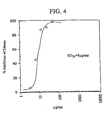
- Nortopsentin c was also tested for its inhibitory activity against inflammation induced by the neurogenic inflammation producing compound resiniferatoxin (RTX). Nortopsentin c inhibited RTX-induced edema 45% using as little as 6.25 ⁇ g topically applied to the ear. Use of 50 ⁇ g on the ear inhibited nearly 100% in certain animals and averaged about 98%. These results are shown in detail in Table 5 below. A dose response curve for inhibition of RTX-induced edema by Nortopsentin c was generated, showing an ED 50 of about 8 ⁇ g/ear. See Figure 4.
- Hamacanthin b was also tested for its inhibitory activity against inflammation induced by the neurogenic inflammation producing compound resiniferatoxin (RTX).
- RTX neurogenic inflammation producing compound resiniferatoxin
- Hamacanthin b inhibited RTX-induced edema 68 % using as little as 3.12 ⁇ g topically applied to the ear.
- Use of 50 ⁇ g on the ear inhibited nearly 100 % in certain animals and averaged about 97 %.
- Table 6 A dose response curve for inhibition of RTX-induced edema by Hamacanthin b was generated, showing an ED 50 of about 1.5 ⁇ g/ear. See Figure 5.
- Deoxytopsentin was also tested for its inhibitory activity against inflammation induced by the neurogenic inflammation producing compound resiniferatoxin (RTX). Deoxytopsentin inhibited RTX-induced edema 13 % using as little as 6.25 ⁇ g topically applied to the ear. Use of 100 ⁇ g on the ear inhibited nearly 100 % in certain animals and averaged about 90 %. These results are shown in detail in Table 7 below. A dose response curve for inhibition of RTX-induced edema by Deoxytopsentin was generated, showing an ED 50 of about 17 ⁇ g/ear. See Figure 6.
- 2,2-bis(6-bromoindol-3-yl) ethyl amine was also tested for its inhibitory activity against inflammation induced by the neurogenic inflammation producing compound resiniferatoxin (RTX).
- RTX neurogenic inflammation producing compound resiniferatoxin
- 2,2-bis(6-bromoindol-3-yl) ethyl amine inhibited RTX-induced edema 18 % using as little as 6.25 ⁇ g topically applied to the ear.
- Use of 50 ⁇ g on the ear inhibited nearly 100 % in certain animals and averaged about 99 %.
- a dose response curve for inhibition of RTX-induced edema by 2,2-bis(6-bromoindol-3-yl) ethyl amine was generated, showing an ED 50 of about 18.1 ⁇ g/ear. See Figure 7. Inhibition of RTX-induced inflammation by O-mesylbromotopsentin. Treatment Right ear (mg) Left ear (mg) Difference (mg) Mean St. Dev. SEM % Inh.
- the bis-indoles are useful for various non-therapeutic and therapeutic purposes. It is apparent from the testing that the bis-indoles are effective for anti-inflammatory uses.
- the bis-indoles are administered in a lotion or other cosmetic preparation. This administration is done directly to the skin where anti-inflammatory activity is desired.
- the dosage administration to a host in the above indications will be dependent upon the identity of the infection, the type of host involved, its age, weight, health, kind of concurrent treatment, if any, frequency of treatment, and therapeutic ratio.
- the bis-indoles can be formulated according to known methods for preparing pharmaceutically useful compositions. Formulations are described in detail in a number of sources which are well known and readily available to those skilled in the art. For example, Remington's Pharmaceutical Science by E.W. Martin describes formulations which can be used in connection with the subject invention. In general, the compositions of the subject invention will be formulated such that an effective amount of the bioactive compound(s) is combined with a suitable carrier in order to facilitate effective administration of the composition.
- compositions comprising, as active ingredient, an effective amount of one or more of the bis-indoles and one or more non-toxic, pharmaceutically acceptable carriers or diluents can be used by persons of ordinary skill in the art.
- the pharmaceutical composition can comprise one or more, a bis-indole as a first active ingredient plus a second active ingredient comprising an antiviral, antibacterial, antifungal or other antimicrobial, or (preferably) anti-inflammatory compound known in the art.
- Such known antiinflammatory drugs include, but are not limited to, the steroidal anti-inflammatory drugs such as hydrocortisone and the non-steroidal anti-inflammatory drugs (NSAIDs) such as aspirin, ibuprofen, acetomprophen or indomethacin.
- NSAIDs non-steroidal anti-inflammatory drugs
- compositions may be administered to the patient at one time or over a series of treatments.
- the bis-indole and any second anti-inflammatory agent are administered sequentially to the patient, with the anti-inflammatory agent being administered before, after, or both before and after treatment with the bis-indole compound.
- Sequential administration involves treatment with the anti-inflammatory agent at least on the same day (within 24 hours) of treatment with bis-indole and may involve continued treatment with the anti-inflammatory agent on days that the bis-indole is not administered.
- Conventional modes of administration and standard dosage regimens of anti-inflammatory agents may be used (see Gilman, A.G. et al. [eds.] The Pharmacological Basis of Therapeutics, pp. 697-713, 1482, 1489-91 [1980]; Physicians Desk Reference, 1986 Edition).
- indomethacin can be administered orally at a dosage of about 25-50 mg, three times a day. Higher doses can also be used.
- aspirin about 1500-2000 mg/day
- ibuprofen about 1200-3200 mg/day
- conventional therapeutic doses of other and-inflammatory agents can be used. Dosages of anti-inflammatory agents can be titrated to the individual patient.
- the patient may receive concurrent treatments with the anti-inflammatory agent and compositions comprising bis-indoles.
- the anti-inflammatory agent should preferably be administered by subcutaneous injection, subcutaneous slow-release implant, or orally.
- the patient can receive a composition comprising a combination of one or more bis-indole compounds and an anti-inflammatory agent according to conventional modes of administration of agents which exhibit antibacterial, anticancer, antitumor, or anti-inflammatory activity.
- agents which exhibit antibacterial, anticancer, antitumor, or anti-inflammatory activity include, for example, parenteral, subcutaneous, intravenous, or intralesional routes of administration.
- compositions used in these therapies can also be in a variety of forms. These include, for example, solid, semi-solid, and liquid dosage forms, such as tablets, pills, powders, liquid solutions or suspension, suppositories, injectable and infusible solutions. The preferred form depends on the intended mode of administration and therapeutic application.
- the compositions also preferably include conventional pharmaceutically acceptable carriers and adjuvants which are known to those of skill in the art.
- the compositions of the invention are in the form of a unit dose and will usually be administered to the patient one or more times a day.
- the compounds of the subject invention may also be administered utilizing liposome technology, slow release capsules, implantable pumps, and biodegradable containers. These delivery methods can, advantageously, provide a uniform dosage over an extended period of time.
- compositions include ethanol, dimethyl sulfoxide, glycerol, silica, alumina, starch, and equivalent carriers and diluents. While effective amounts may vary, as conditions in which compositions are used vary, a minimal dosage required for anti-inflammatory activity is generally between 0.01 and 100 ⁇ g of the compound. To provide for the administration of such dosages for the desired therapeutic treatment, pharmaceutical compositions will advantageously comprise between about 0.1% and 45%, e.g. 1 and 25%, and especially 1 and 15%, by weight of the total of one or more of the bis-indoles based on the weight of the total composition including carrier or diluent.
- dosage levels of the administered active ingredients can be: intravenous, 0.01 to about 20 mg/kg; intraperitoneal, 0.01 to about 100 mg/kg; subcutaneous, 0.01 to about 100 mg/kg; intramuscular, 0.01 to about 100 mg/kg; orally 0.01 to about 200 mg/kg, and preferably about 1 to 100 mg/kg; intranasal instillation, 0.01 to about 20 mg/kg; and aerosol, 0.01 to about 20 mg/kg of animal (body) weight.
- a maintenance dose is administered if necessary. Subsequently, the dosage or the frequency of administration, or both, may be reduced, as a function of the symptoms, to a level at which the improved condition is retained. When the symptoms have been alleviated to the desired level, treatment should cease. Patients may, however, require intermittent treatment on a long-term basis upon any recurrence of disease symptoms.
Landscapes
- Health & Medical Sciences (AREA)
- Pharmacology & Pharmacy (AREA)
- Veterinary Medicine (AREA)
- Public Health (AREA)
- General Health & Medical Sciences (AREA)
- Chemical & Material Sciences (AREA)
- Animal Behavior & Ethology (AREA)
- Medicinal Chemistry (AREA)
- Life Sciences & Earth Sciences (AREA)
- Epidemiology (AREA)
- General Chemical & Material Sciences (AREA)
- Organic Chemistry (AREA)
- Nuclear Medicine, Radiotherapy & Molecular Imaging (AREA)
- Chemical Kinetics & Catalysis (AREA)
- Bioinformatics & Cheminformatics (AREA)
- Engineering & Computer Science (AREA)
- Immunology (AREA)
- Neurology (AREA)
- Biomedical Technology (AREA)
- Transplantation (AREA)
- Neurosurgery (AREA)
- Pain & Pain Management (AREA)
- Rheumatology (AREA)
- Pulmonology (AREA)
- Dermatology (AREA)
- Pharmaceuticals Containing Other Organic And Inorganic Compounds (AREA)
- Plural Heterocyclic Compounds (AREA)
- Indole Compounds (AREA)
Abstract
Description
- This invention relates to the use of bis-indoles as anti-inflammatory agents.
- The prevention and control of inflammation is of prime importance to man, and much research has been devoted to development of compounds having anti-inflammatory properties. Certain methods and chemical compositions have been developed which aid in inhibiting or controlling inflammation, but additional anti-inflammatory methods and compositions are needed.
- It has been found that some natural products and organisms are potential sources for chemical molecules having useful biological activity of great diversity. Marine sponges have proved to be such a source, and a number of publications have issued disclosing organic compounds derived from marine sponges. Such publications include Scheuer, P.J., Ed. (1978-1983) Marine Natural Products, Chemical and Biological Perspectives, Academic Press, New York; Faulkner, D. (1995) J. Nat. Prod. Rep. 12:223-269; (1994) 11:355-394; (1993) 10:497-539; (1992) 9:323-364; (1991) 8:97-147; (1990) 7:269-309; (1988) 5:613-663; (1987) 4:539-576; (1986) 3:1-33; (1984) 1:551-598; and Uemura, D., K. Takahashi, T. Yamamoto, C. Katayama, J. Tanaka, Y. Okumura, Y. Hirata (1985) J. Am. Chem. Soc. 107:4796-4798.
- Indole compounds of marine origin have also been described in Moquin et al (1984) Tetrahedron Letters 25(44):5047-5048, and Norton et al (1982) J. Am. Chem. Soc. 104(13):3628-3635.
- Utilising sponges as a source material and supplemented by novel synthetic production methods, new classes of biologically active compounds and new pharmaceutical compositions useful as antitumour and antiviral agents have been provided. For example, bis-heterocyclic compounds such as bis-indoles have been described as having antimicrobial, antitumour or antiviral activity. Specifically, the bis-indole compounds known as topsentins are disclosed in US-A-4866084. Dragmacidin and its related compounds isolated from the marine sponge of the Dragmacidon sp. are disclosed in US-A-4895844. Similarly, the nortopsentins are disclosed in US-A-4970226. These compounds, as well as the homocarbonyltopsentins and hanacanthins, have also been described as having inhibitory activity against cellular inflammatory responses. See US-A-5290777 and US-A-5464835.
- WO-A-9404494 and WO-A-9533744 disclose bis-heterocyclyl compounds, including bis-indol-3-yl compounds, having tachykinin antagonist activity and being useful for the treatment of inflammation and neurogenic inflammation. WO-A-9532966 discloses 5-heteroaryl substituted indoles for the treatment of neurogenic inflammation. WO-A-9419343 describes bis-indoles and their use in treating inflammation. EP-A-0328026, EP-A-0384349 and EP-A-0397060, EP-A-0470490, describe indol-3-yl-maleimides wherein the substituent attached to the 4-position of the maleimido (=pyrrol-2,5-dione) group can be a heterocyclic group, inter alia another indol-3-yl group, as being useful for treating inflammatory diseases, such as arthritis, and immunological disorders, such as asthma, as well as allergies. WO-A-9626922 describes bis-indoles which are separated by a bissulphonamido bridge, for treating migraine.
- According to the present invention, bis-indole compound selected from dragamacidins, hamacanthins, homocarbonyltopsentins, nortopsentins, topsentins and analogues, salts and derivatives thereof is used for the manufacture of a medicament for treating pain, chemical bums, radiation bums, thermal bums or neurogenic inflammation, or for promoting wound healing.
- According to another aspect of the invention, such a bis-indole is used for cosmetic treatment.
- Bis-indoles for use in the invention can be highly effective in inhibiting neurogenic inflammation.
-
- Figure 1 shows a typical log dose response curve of a bis-heterocycle of the subject invention (topsentin) illustrating its inhibition of capsaicin-induced edema in a mouse ear model.
- Figure 2 shows a log dose response curve for a bis-heterocycle of the subject invention (topsentin) illustrating its inhibition of resiniferatoxin (RTX)-induced edema in a mouse ear model.
- Figure 3 shows a dose response curve for inhibition of RTX-induced edema by o-mesylbromotopsentin. ED50 is about 17 µg/ear.
- Figure 4 shows a dose response curve for inhibition of RTX-induced edema by nortopsentin c. ED50 is about 8 µg/ear.
- Figure 5 shows a dose response curve for inhibition of RTX-induced edema by hamacanthin b. ED50 is about 1.5 µg/ear.
- Figure 6 shows a dose response curve for inhibition of RTX-induced edema by deoxytopsentin. ED50 is about 17 µg/ear.
- Figure 7 shows a dose response curve for inhibition of RTX-induced edema by 2,2-bis(6-bromoindol-3-yl) ethyl amine. ED50 is about 18.1 µg/ear.
-
- Bis-indoles for use in the invention have the general formula:
- The core moiety, M, can be a cyclic or acyclic group comprising at least three atoms. The core moiety can comprise an acyclic chain having C, H, N, O, or S atoms. For example, M can be the core groupwherein R is a C1-C8 alkyl or alkoxyl group. A condensation reaction with this group yields the heterocycle:
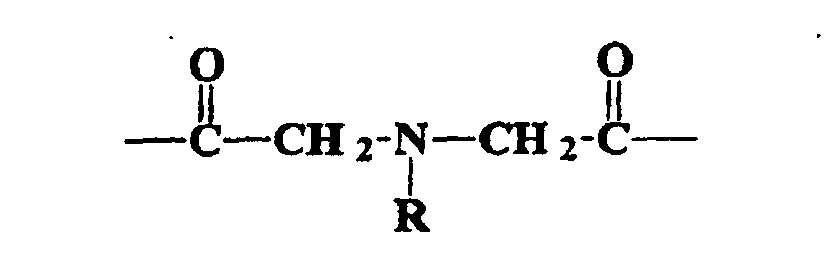 wherein Z = CH, CH2, N, NH, O, or S; and R = C1-C8 alkyl or alkoxyl group. Other heterocycles which can be used as the core group for compounds used in the subject invention are known to, and easily recognized by, those of ordinary skill in the art. As with the heterocycles discussed above, ordinarily skilled chemists would recognize that when the core moiety is a cyclic structure, the bonds to the heterocycles can be at any position of the core ring. These other core group heterocycles include:
 and the like, wherein X can be present or absent and can be an organic moiety, e.g., any lower alkyl or lower alkoxyl, or an inorganic molecule which can bond to the core group and the bis-heterocycles of the compound; and Z can be CH2, NH, O, or S.
- A preferred embodiment of the subject invention is a bis-indole compound, wherein the indoles can be linked to the core group at the 2- or 3- positions of the indoles. One preferred embodiment includes a bis-indole compound wherein both indoles are linked to the core group at the 3- position. This preferred embodiment is shown below as the structure:wherein X = an acyclic or a heterocyclic moiety selected from the group consisting of:


 R1-8 are the same or different selected from -H, -OH, halogen, -R, -OR, -OCOR, -OA, NHZ, NZZ (wherein the Zs can be the same or different), or NH2;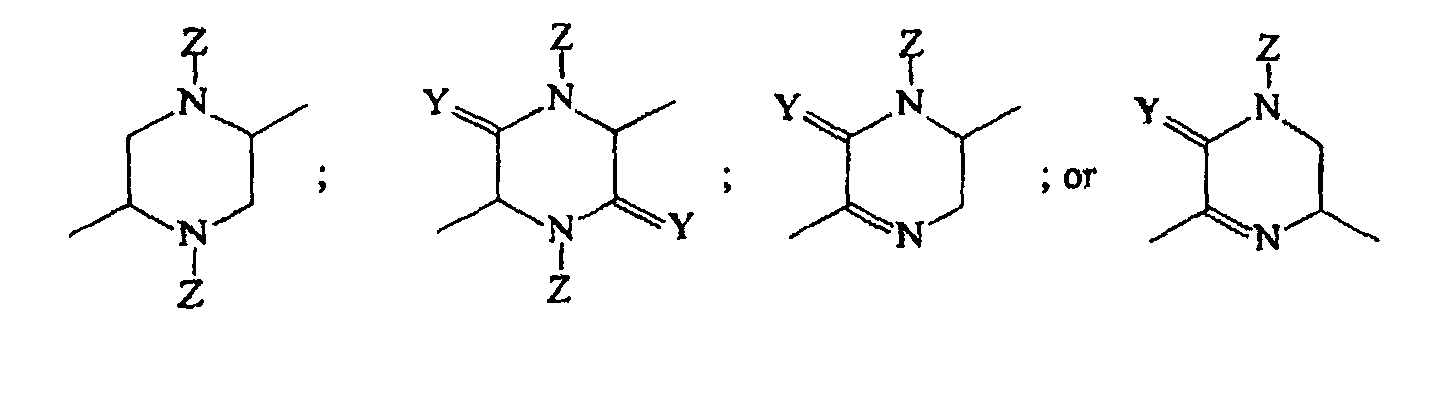
Y is the single group =O, or the single group =NZ, or two groups, same or different, selected from -H, -OH, -OR, -OCOR, NHZ, NZZ (wherein the Zs can be the same or different), or NH2;
Z is independently selected from the group consisting of-H, -R, -OH, and -COR;
R is C1-8 alkyl or C1-8 alkoxyl, mesyl, or tosyl; and A is -R-phenyl. - A preferred group of compounds of the invention are those of the formula:wherein X =

 or
or and wherein R1, R3, R4, R5, R7 and R8 are -H while R 2and R 6are independently -H, -OH, halogen, -R, -OR, -OCOR, NH2, NHZ, NZZ (wherein the Zs can be the same or different), or -OA; or R1, R2, R4, R5, R6 and R8 are -H while R9 and R7 are independently -H, -OH, halogen, -R, -OR, -OCOR, NH2, NHZ, NZZ (wherein the Zs can be the same or different), or -OA; Z is independently selected from the group consisting of-H, -R, -OH, and -COR; R is C1-5 alkyl, and A is -R-phenyl; or R1, R2, R3, R4, R6, R7 and R8 are independently -H, -OH, halogen, -R, -OR, -OCOR, or -OA are Hand R5 is C1-5 alkyl-1-(2-amino imidazole) ethyl.
- Particularly preferred compounds of the invention are those of the formulae:


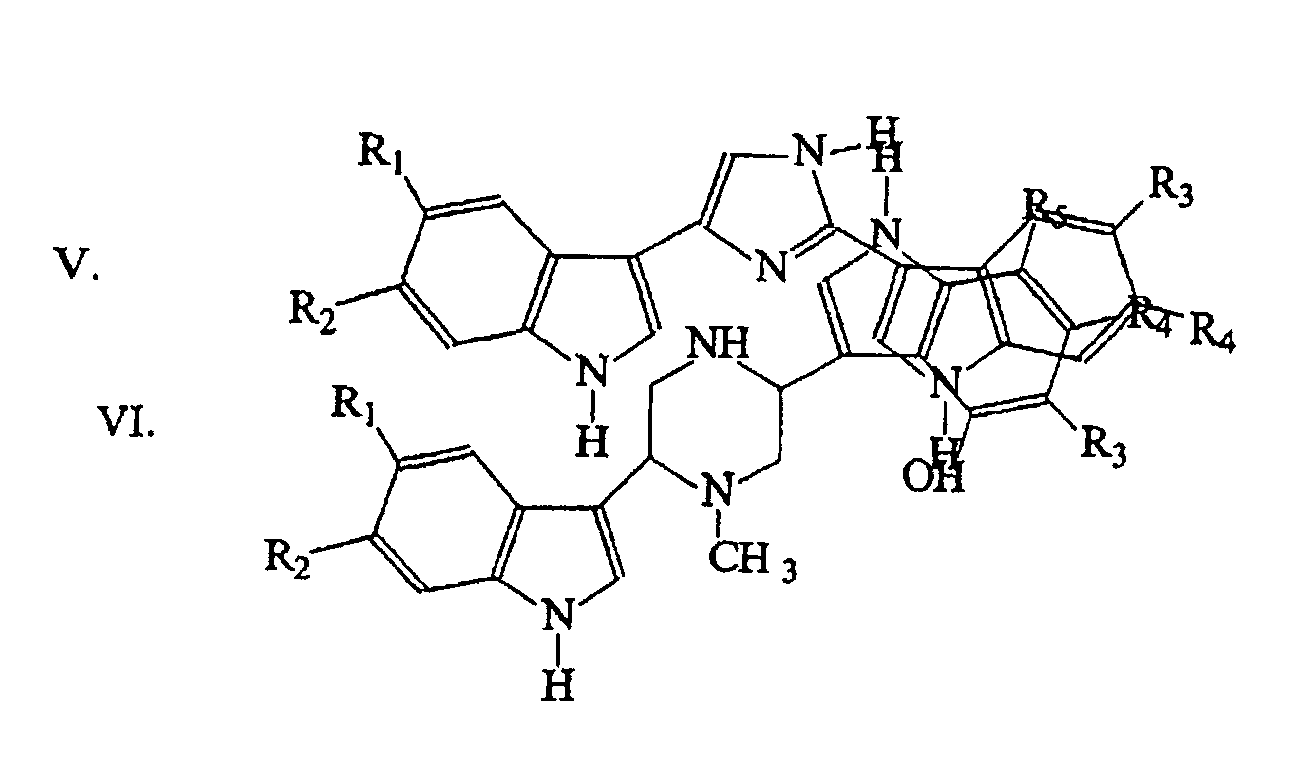


 wherein:
- I(a): R1, R2, R3 = H; R4 = OH (Topsentin)
- I(b): R1, R3 = H; R2 = Br; R4 = OH (Bromotopsentin)
- I(c): R1, R3, R4 = H; R2 = OH (Isotopsentin)
- I(d): R1, R3 = H; R2, R4 = OH (Hydroxytopsentin)
- I(e): R1, R2, R3, R4 = H (Deoxytopsentin)
- I(f): R1, R2, R4 = H; R3 = OH (Neotopsentin)
- I(g): R2, R3, R4 = H; R1 = OH (Neoisotopsentin)
- I(h): R1, R3 = OH; R2, R4 = H (Neohydroxytopsentin)
- I(i): R1=R3=H, R2=Br, R4=O-SO2CH3 (bromotopsentin-O-mesylate)
- II(j): R1, R2, R3 = H; R4 = OH (Homocarbonyltopsentin)
- III(k): R1, R2, R3, R5 = H; R4 = OCOCH3 (Topsentin monoacetate)
- III(I): R1, R2, R3=H; R4=OCOCH3; R5=COCH3 (Topsentin diacetate)
- IV(m): R1, R2, R3, R5=H; R4=OCOCH3 (Homocarbonyltopsentin monoacetate)
- V(n): R1, R3= H; R2, R4 = Br (Nortopsentin A)
- V(o): R1, R2, R3 = H; R4 = Br (Nortopsentin B)
- V(p): R1, R3, R4 = H; R2 = Br (Nortopsentin C)
- VI(q): R1, R3 = H; R2, R4, R5 = Br (Dragmacidin)
- VII(r): R1, R2, R4, R5, R6, and R8 = H; R3 and R7 = Br (Hamacanthin A)
- VIII(s): R1, R2, R4, R5, R6, and R8 = H; R3 and R7 = Br (Hamacanthin B)
- IX(t): R1, R2, R4, R6, and R7 = H; R3= Br; R5 = OH; and

- X(u): R1, R2, R4, R5, R6, R8 = H; R3 and R7 = Br;
- Z=Z=H (2,2-bis(6-bromoindol-3-yl)ethyl amine)
- XI(v): R1=R3=R4=H, R2=Br (4,5-dihydro-6"-deoxybromotopsentin)
-
- Skilled chemists will be able to use procedures as disclosed herein and others to synthesize these compounds from available stock substances. In carrying out such operations, any suitable filtration, chromatographic, and other purification techniques include reversed phase (RPLC), column, vacuum flash, medium pressure (MPLC), and high performance liquid chromatography (HPLC) with a suitable column as would be known to those skilled in the art, including silica gel, Sephadex LH-20, ammonia-treated silica gel, bonded phase RP-18, RP-8, and amino (NH2) columns. Such columns are eluted with suitable elements such as heptane, ethyl acetate, methylene chloride, methanol, isopropanol, acetonitrile, water, trifluoroacetic acid (TFA), and various combinations and ratios thereof.
- One method of preparation for certain compounds used for the subject invention involves extraction from marine sponges of the genus Spongosorites (Phylum Porifera, Class Demospongiae, Order Halichondrida, Family Halichondriidae). Certain of the samples used in connection with this invention have been assigned to the species Spongosorites ruetzleri (HBOM catalog numbers 003:00112, 003:00113, 003:00114, 003:00115, 003:00116, 003:00117, 003:00118, 003:00119, 003:00120, 003:00927); other specimens represent new species of Spongosorites (HBOM Catalog Numbers 003:00594 and 003:00696). For descriptions of these samples and other Spongosorites species, refer to Diaz, M.C., Pomponi, S.A. and Van Soest, R.W.M. 1993. A systematic revision of the central West Atlantic Halichondrida (Demospongiae, Porifera), Part III: Description of valid species. Scientia Marina, 57(4): 283-306. All taxonomic voucher samples cited herein with HBOM catalog numbers are deposited in the Harbor Branch Oceanographic Museum, Fort Pierce, Florida. All voucher specimens are preserved in 70% ethanol with an expected shelf life of at least 30 years and are accessible to those skilled in the art for taxonomic identification purposes.
- A current taxonomic identification of the sponge from which the compound dragmacidin (VI(1)) was extracted is: Phylum Porifera, Class Demospongiae, Order Axinellida, Family Axinellidae, Genus Dragmacidon, as disclosed in U.S. Patent No. 4,895,844.
- The hamacanthin compounds, exemplified herein as Formulae VII and VIII, were isolated from a species of Hamacantha sponge (phylum Porifera, class Demospongiae, order Poecilosclerida, family Biemnidae). See U.S. Patent No. 5,464,835.
- A novel use for the described compounds and compositions is their administration to an animal, eg., a human, as an agent in the control of a neurogenic inflammatory response. Anti-inflammatory activity against cellular activation of specific immune cells, eg., phorbol myristate acetate (PMA)-induced inflammation, has been described for the subject compounds. See U.S. Patent Nos. 5,290,777 and 5,464,835, which are hereby incorporated by reference. However, it is well recognized that activity of a compound in inhibiting cellular activated inflammation (e.g., PMA-induced edema or inflammation) is not predictive or suggestive of that compound's activity in inhibiting neurogenic inflammation, e.g., capsaicin-induced or resiniferatoxin (RTX)-induced edema or inflammation. Therefore, the discovery that the subject compounds have inhibitory activity against neurogenic inflammation is unexpected and advantageous.
- Neurogenic inflammation is evoked by neuropeptides released from primary afferent nerve terminals and by other secondarily released inflammatory mediators. Specifically, neurogenic inflammation can be evoked by neuropeptides, such as substance P (SP), calcitonin gene-related peptide (CGRP), vasoactive intestinal peptide (VIP), and neurokinin A (NKA), released from primary afferent C-fiber nerve terminals and histamine, secondarily released from mast cells. Dray, A. (1992). Neuropharmacological mechanisms of capsaicin and related substances. Biochem Pharm 44(4):611-15. For purposes of the subject invention, unless otherwise noted, the terms "inflammation" and "inflammatory response" refer to any and all such neurogenic inflammatory reactions including, but not limited to, immune-related responses and/or allergic reactions to a physical, chemical, or biological stimulus. "Anti-neurogenic inflammatory activity," as used herein, will be understood by those of ordinary skill in the art to mean biological activity inhibiting or controlling a neurogenic inflammatory response.
- Anti-inflammatory activity can occur by modes of action which can include, but are not limited to, lipid-mediated inflammatory responses, e.g., (i) suppression of cellular activation of phospholipase A2, either directly (as is known for the anti-inflammatory compound, manoalide) or indirectly (as is known for the anti-inflammatory compound, hydrocortisone); (ii) by inhibiting, or controlling, cyclooxygenation of arachidonic acid, similar to the action of non-steroidal anti-inflammatory drugs; or (iii) by affecting lipooxygenase products of peroxidase reactions to arachidonic acid, or by non-lipid-mediated inflammatory responses, eg., protease-induced inflammatory responses, and the like. In addition, it is known that capsaicin (CAP), the active constituent found in cayenne pepper, induces an acute neurogenic inflammatory response when applied topically to skin. CAP is a highly selective pain producing substance that selectively stimulates nociceptive and thermal-sensitive nerve endings in tissues by acting on a specific membrane receptor. The mode of action of capsaicin therefore differs significantly from phorbol myristate acetate (PMA)-induced inflammation. By comparison, PMA elicits its pro-inflammatory effects through cellular activation of specific immune cells, such as macrophages and neutrophils. Consequently, the pain response to PMA develops more slowly than the immediate, but transient, pain response to capsaicin.
- The compounds and compositions of the subject invention advantageously can block the nociceptive (CAP-induced) inflammatory pathway, thereby providing a method for inhibiting neurogenic inflammation. Accordingly, the subject compounds and compositions can be useful in the treatment of chronic pain, migraines, thermal-induced pain, such as sunburn, or other thermal and nociceptive pain, and chronic pain associated with arthritis. Uses can also include other inflammatory conditions that involve a neurogenic pain-producing component, eg., certain metastic carcinomas or inflammation of the blood vessels.
- The compounds of the subject invention can be used to treat a variety of skin conditions including, but not limited to, radiation irritation and bums (including UV and ionizing), chemical bums, rhinitis, thermal burns, and reddening of the skin.
- The compounds of the subject invention can also be used to treat allergic response and/or promote wound healing.
- Following are examples which illustrate procedures, including the best mode, for practicing the invention. A more complete understanding of the invention can be obtained by reference to preferred embodiments of the invention, which are illustrated by the following specific examples of compounds, compositions, and methods of the invention. It will be apparent to those skilled in the art that the examples involve use of materials and reagents that are commercially available from known sources, e.g., chemical supply houses, so no details are given respecting them. These examples should not be construed as limiting. All percentages are by weight and all solvent mixture proportions are by volume unless otherwise noted.
- Topsentin, bromotopsentin, and 4,5-dihydro-6"-deoxybromotopsentin can be obtained and prepared as described in U.S. Patent No. 4,866,084, which is incorporated herein by reference.
- Homocarbonyl topsentin and homocarbonyl topsentin monoacetate can be obtained and prepared as described in U.S. Patent Nos. 5,290,777 and 5,464,835, which are incorporated herein by reference.
- The conversion of bromotopsentin to topsentin; the preparation of 3-(hydroxyacetyl)indole, 3-chloroacetyl-6-(benzyloxy)indole, and 3-hydroxyacetyl-6-(benzyloxy)indole as synthons; the synthesis directly from (hydroxylacetyl)indoles of O-benzyltopsentin, O-benzylisotopsentin, O,O'-dibenzylhydroxytopsentin, and deoxytopsentin I(e); the preparation of compounds I(e) and O-benzyltopsentin, O-benzylisotopsentin, and O,O'-dibenzylhydroxytopsentin from isolated glyoxal intermediates; the conversion of O-benzyltopsentin to topsentin I(a); the conversion of O-benzylisotopsentin to isotopsentin I(c); the synthesis of hydroxytopsentin I(d) from 3-hydroxy-acetyl-6-(benzyloxy)-indole; preparation of 3-chloroacetyl-5-benzyl(oxy)indole; the preparation of 3-hydroxyacetyl-5-(benzyloxy)indole; synthesis of neohydroxytopsentin I(h); and synthesis of neotopsentin I(f) and neoisotopsentin I(g) are described in U.S. Patent No. 4,866,084, which has been incorporated herein by reference. Topsentin monoacetate III(k), topsentin diacetate III(l), and bromotopsentin-O-mesylate I(i) can also be converted from topsentin or its analogs by methods well known and readily available to those skilled in the art.
- 1H NMR (500 MHz, DMSO-d6) δ 3.384 (3H, s), 7.242 (1H, dd, J= 7.0, 1.5 Hz), 7.544 (1H, d, J= 2.0 Hz), 7.638 (1H, d, J= 1.0 Hz), 7.729 (1H, s), 7.997 (1H, s), 8.421 (1H, d, J= 9.0 Hz), 9.281 (1H, s), 11.511 (1H, s), 12.272 (1H, s).
- Nortopsentin compounds can be obtained and prepared as described in U.S. Patent No. 4,970,226, which is incorporated herein by reference.
- Dragmacidin compounds can be obtained and prepared as described in U.S. Patent No. 4,895,844, which is incorporated herein by reference. The '844 patent refers to Dragmacidin (VI) as "biemnidin."
- Hamacanthin compounds can be obtained and prepared as described in U.S. Patent No. 5,464,835, which is incorporated herein by reference.
- Taxonomic and collection data. A sample of Spongosorites n.. sp. (HBOM catalog number 003:00544) was collected by the Johnson Sea Link manned submersible at a depth of 292 feet at York Bay, St. Vincent, Grenadines. This new species is a massive amorphous thickly encrusting sponge , dark yellow alive and dark brown in ethanol preservative. Vermetid gastropods are associated wth and incorporated into the sponge. The consistency is firm but crumbly. The genus is characterized by a distinct dermal layer of smaller spicules arranged tangentially to the surface of the sponge and a confused choanasomal arrangement of spicules with sporadic spicule tracks (30-100 µm in width) running parallel to the surface. In 003:00544, there are two categories of oxeas, some of which are slightly flexed at the midpoint. This new species is most similar to S. ruetzleri from which it is distinguished by the absence of bromotopsentin.
- Isolation of dragmacidin d (IX). 100 g of the frozen sponge was extracted exhaustively with ethanol by macerating in a Waring blender. The extract was filtered through a bed of Celite and then concentrated to a red-orange oil by distillation under reduced pressure. The residue was chromatographed under vacuum column chromatogorahic conditions on an RP-18 stationary phase. The column was eluted with a step gradient of acetonitrile (ACN) in water containing 0.05 % triflouroacetic acid (TFA). The column was eluted as follows;
Fraction 1, 500 mL of water containing 0.05% TFA by volume; Fraction 2, 250 mL of water containing 0.05% TFA by volume; Fraction 3, 200 ml of water-ACN-TFA (160: 40: 0.1 v/v/v); fraction 4, 200 ml of water-ACN-TFA (120:80:0.1 v/v/v); fraction 5, 200 ml of water-ACN-TFA (80:120:0.1 v/v/v); fraction 6, 200 ml of water-ACN-TFA (40:160:0.1 v/v/v); fraction 7, 500 ml of ACN. Dragmacidin d eluted in Fractions 3, 4, and 5. - UV absorption: EtOH λmax 213( 47,870), 270 sh, 278 (14470), 383 (20,740) after addition of one drop of HCl to a 2 mL cell: 214 (54,000), 280 (16,400), 452 (19,946).
- IR absorption: (neat, microscope) υmax (cm-1), 3165 broad, 1678, 1637, 1531, 1447, 1408, 1244, 1200, 1136, 955, 806.
- 1H NMR (360 Mhz, d6-DMSO, trace of TFA): 11.88 (bs), 11.85 (bs), 11.75 (d, 2.7 Hz), 11.62 (d, 2.6 Hz), 8.80 (d, 2.7 Hz), 8.58 (d, 8.6 Hz), 7.69 (d, 1.7 Hz), 7.52 (d, 2.6 Hz), 7.50 (s), 7.34 (bs 2H), 7.27 (dd, 8.6, 1.7 Hz), 6.61 (s), 6.61 (s), 6.37 (s), 4.33 (q, 6.8 Hz), 1.33 (d, 6.8 Hz, 3H).
- 13C NMR (90 Mhz, d6-DMSO, trace of TFA): 155.10 s, 148.46 s, 147.48, s, 143.10 s, 137.44 s, 131.51 d, 131.43 s, 131.16 s, 127.35 d, 126.94 s, 125.89 s, 125.59 s, 125.25 s, 124.60 d, 123.87 d, 123.32 d, 118.56 d, 115.11 s, 114.55 d, 113.55 d, 112.17 s, 108.98 d, 107.52 s, 106.54 d, 31.22 d, 20.48 q
- Taxonomic and collection data. A sample of Spongosorites sp. (HBOM catalog number 003:00696) was collected by the Johnson Sea Link manned submersible at a depth of 927 feet at San Juan, Tenerife, Canary Islands. This specimen is massive and amorphous. It is white both internally and externally alive and light tan when frozen. Vermetid gastropods are associated with and incorporated into the sponge. The consistency is firm but crumbly.
- Isolation of 2,2-bis(6-bromoindol-3-yl) ethyl amine (X). 20 g of the frozen sponge was extracted exhaustively with ethanol by macerating in a Waring blender. The extract was and then concentrated to 1.5 g of a brown oil by distillation under reduced pressure. 400 mg of the residue was chromatographed under vacuum column chromatogorahic conditions on an RP-18 stationary phase. The column (60 mL volume) was eluted with a step gradient of acetonitrile (ACN) in water containing 0.1 % triflouroacetic acid (TFA). The column was eluted as follows;
Fraction Fraction 2, 100 ml of water-ACN-TFA (80:20:0.1 v/v/v); fraction 3,100 ml of water-ACN-TFA (60:40:0.1 v/v/v);fraction 4, 100 ml of water-ACN-TFA (40:64:0.1 v/v/v);fraction 5, 100 ml of water-ACN-TFA (20:80:0.1 v/v/v);fraction 6, 100 ml of ACN; fraction 7, 100ml of methanol; fraction 8, 100ml methanol:methylene chloride (1:1 v/v). 2,2-bis(6-bromoindol-3-yl) ethyl amine (X) eluted in Fractions 3, and 4 (69 % of the extract by weight). - 1H NMR (500.3 MHz, d3-MeOD) 7.53 (2H, d, J=1.6 Hz), 7.38 (2H, d, J=8.8 Hz), 7.24 (2H, s), 7.03 (2H, dd J=8.8,1.6 Hz), 4.82 (1H, m, J=7.5 Hz), 3.68 (2H, d, J=7.5 Hz).
- 13C NMR (125.7 MHz, d3-MeOD) 139.2 (s, 2H), 126.5 (s, 2H), 124.7 (d, 2H), 123.1 (d, 2H), 121.0 (d, 2H), 116.2 (s, 2H), 115.4 (d, 2H), 115.0 (s, 2H), 44.4 (t), 34.1 (d).
- The inhibition of inflammation activity of a particular compound can be demonstrated by a standard and accepted in vivo assay which employs capsaicin (CAP) to induce inflammation (edema) in an animal. The assay employing mice (e.g., administration to the ear of the mouse) (1993). Profile of capsaicin-induced mouse ear oedema as neurogenic inflammatory model: comparison with arachidonic acid-induced ear oedema. Br. J. Pharm 110: 1614-20. Compounds to be tested for anti-neurogenic inflammatory activity are topically applied in acetone to the ears of mice in a solution that includes the edema-causing irritant, capsaicin (CAP). CAP alone (250 µg/ear) or in combination with various dilutions of test compound are applied to both sides of the left ears (5 mice per treatment group) and acetone is applied to all right ears. After a 30 minute incubation, the mice are sacrificed, the ears removed, and bores taken and weighed. Edema is measured by subtracting the weight of the right ear (acetone control) from the weight of the left ear (treated). Results are recorded as % decrease (inhibition) or % increase (potentiation) in edema relative to the control group edema.
- The bis-indole compounds show significant anti-inflammatory properties. When screened for the ability to reduce edema in mouse ears caused by application of capsaicin (CAP), a known inflammatory agent, topsentin and bromotopsentin were found to have greater potency in inhibiting neurogenic inflammation than capsazepine, a synthetic analog of capsaicin and specific capsaicin antagonist. Capsazepine was screened as a positive control at 1500, 1000, and 500 µg/ear and inhibited CAP-induced edema by 76%, 52%, and 33%, respectively. Topsentin and bromotopsentin were screened at 500 µg/ear and inhibited CAP-induced inflammation by 74% and 79%, respectively. See Tables 1 and 2, below.
Inhibition of capsaicin-induced mouse ear edema by capsazepine Treatment Inflammation (mg) ±SEM % Inhibition Capsaicin Control
250 µg/ear6.6 ± 0.6
(n=20)― Capsazepine
500 µg/ear4.4** ± 0.7
(n=5)33 Capsazepine
1000 µg/ear3.1± 1.0
(n=5)52 Capsazepine
1500 µg/ear1.6* ± 0.3
(n=5)76 Inhibition of capsaicin-induced mouse ear edema by the topsentins Treatment Inflammation (mg)±SEM % Inhibition Capsaicin Control
250 µg/ear6.6 ± 0.6
(n=20)― Topsentin
100 µg/ear4.8 ± 1.0
(n=10)28 Topsentin
250 µg/ear2.2* ± 0.2
(n=10)66 Topsentin
500 µg/ear1.7* ± 0.5
(n=10)74 Topsentin
1000 µg/ear0.7* ± 0.2
(n= 10)90 Bromotopsentin
500 µg/ear1.4* ± 0.2
(n=5)79 - A dose-response curve for the inhibition of capsaicin-induced edema by topsentin was generated and is shown as Figure 1. Specifically, the dose-response curve for topsentin, measured as percent inhibition of edema, shows topsentin having up to approximately 90% inhibition at a final concentration of about 1000 µM. In the mouse ear edema inhibition assay, a dose of about 100 µg/ear of topsentin achieved more than 25% inhibition of edema. The ED50 of topsentin in inhibition of capsaicin-induced inflammation was about 200 µg/ear. Experiments using bromotopsentin were also conducted. Percent inhibition of mouse ear edema by 500 µg/ear of bromotopsentin resulted in about 79% inhibition, similar to the results shown for topsentin.
- was also tested for its inhibitory activity against inflammation induced by the neurogenic inflammation producing compound, resiniferatoxin (RTX). Using a mouse ear model, the experimental procedure is substantially the same as that described for the capsaicin-induced inflammation assay (see section A of this Example, above). Topsentin inhibited RTX-induced edema approximately 12% using an amount of as little as 5 µg topically applied to the ear. Use of about 100 µg on the ear inhibited RTX-induced edema nearly 100% in certain animals and averaged about 91%. These results are shown in more detail in Table 3, below.
- A dose-response curve for inhibition of RTX-induced edema by topsentin was generated, showing an ED50 of about 20 µg/ear. See Figure 2.
Inhibition of RTX-induced inflammation by topsentin Treatment Right ear(mg) Left ear(mg) Difference (mg) Mean SEM % Inh. of Edema RTX control 0.1 µg/ear n=25 14.0 0.4 ― Topsentin 100 µg/ear11.1 11.8 0.7 1.3 0.5 91 12.1 13.3 1.2 11.8 12.4 0.6 11.3 12.6 1.3 11.6 11.8 0.2 11.8 13.1 1.3 11.6 16.9 5.3 11.4 13.0 1.6 11.3 11.6 0.3 10.8 10.8 0.0 Topsentin 50 µg/ear 12.3 14.8 2.5 2.6 0.6 82 12.8 18.8 6.0 12.2 16.3 4.1 11.8 12.1 0.3 11.6 13.6 2.0 11.8 15.9 4.1 11.2 12.6 1.4 11.7 15.9 4.2 11.3 12.4 1.1 10.9 11.0 0.1 Topsentin 25 µg/ear 12.1 18.1 6.0 8.3 0.7 41 11.7 19.4 7.7 10.7 20.2 9.5 12.0 22.5 10.5 11.2 16.6 5.4 11.4 19.4 8.0 11.8 22.8 11.0 11.2 18.0 6.8 11.4 18.4 7.0 11.6 22.9 11.3 Topsentin 10 µg/ear 10.5 17.8 7.3 9.6 1.1 31 11.2 15.6 4.4 9.9 20.3 10.4 11.2 19.5 8.3 11.3 25.6 14.3 11.5 20.3 8.8 12 22.1 10.1 12.4 20.1 7.7 12.0 20.9 8.9 13.5 29.5 16.0 Topsentin 5 µg/ear 11.6 19.7 8.1 12.3 0.8 12 11.9 24.8 12.9 12.1 22.4 10.3 11.3 22.3 11.0 11.4 25.6 14.2 11.5 23.5 12.0 11.6 22.8 11.2 11.0 28.0 17.0 11.2 22.7 11.5 12.6 26.9 14.3 - O-Mesylbromotopsentin HB227 was also tested for its inhibitory activity against inflammation induced by the neurogenic inflammation producing compound resiniferatoxin (RTX). o-Mesylbromotopsentin inhibited RTX-induced edema 28 % using as little as 6.25 µg topically applied tothe ear. Use of 50 µg on the ear inhibited 70% in certain animals. These results are shown in detail in Table 4 below. A dose response curve for inhibition of RTX-induced edema by o-Mesylbromotopsentin was generated, showing an ED50 of about 17 µg/ear. See Figure 3.
- Nortopsentin c was also tested for its inhibitory activity against inflammation induced by the neurogenic inflammation producing compound resiniferatoxin (RTX). Nortopsentin c inhibited RTX-induced edema 45% using as little as 6.25 µg topically applied to the ear. Use of 50 µg on the ear inhibited nearly 100% in certain animals and averaged about 98%. These results are shown in detail in Table 5 below. A dose response curve for inhibition of RTX-induced edema by Nortopsentin c was generated, showing an ED50 of about 8 µg/ear. See Figure 4.
- Hamacanthin b was also tested for its inhibitory activity against inflammation induced by the neurogenic inflammation producing compound resiniferatoxin (RTX). Hamacanthin b inhibited RTX-induced edema 68 % using as little as 3.12 µg topically applied to the ear. Use of 50 µg on the ear inhibited nearly 100 % in certain animals and averaged about 97 %. These results are shown in detail in Table 6 below. A dose response curve for inhibition of RTX-induced edema by Hamacanthin b was generated, showing an ED50 of about 1.5 µg/ear. See Figure 5.
- Deoxytopsentin was also tested for its inhibitory activity against inflammation induced by the neurogenic inflammation producing compound resiniferatoxin (RTX). Deoxytopsentin inhibited RTX-induced edema 13 % using as little as 6.25 µg topically applied to the ear. Use of 100 µg on the ear inhibited nearly 100 % in certain animals and averaged about 90 %. These results are shown in detail in Table 7 below. A dose response curve for inhibition of RTX-induced edema by Deoxytopsentin was generated, showing an ED50 of about 17 µg/ear. See Figure 6.
- 2,2-bis(6-bromoindol-3-yl) ethyl amine was also tested for its inhibitory activity against inflammation induced by the neurogenic inflammation producing compound resiniferatoxin (RTX). 2,2-bis(6-bromoindol-3-yl) ethyl amine inhibited RTX-induced edema 18 % using as little as 6.25 µg topically applied to the ear. Use of 50 µg on the ear inhibited nearly 100 % in certain animals and averaged about 99 %. These results are shown in detail in Table 8 below. A dose response curve for inhibition of RTX-induced edema by 2,2-bis(6-bromoindol-3-yl) ethyl amine was generated, showing an ED50 of about 18.1 µg/ear. See Figure 7.
Inhibition of RTX-induced inflammation by O-mesylbromotopsentin. Treatment Right ear (mg) Left ear (mg) Difference (mg) Mean St. Dev. SEM % Inh. of Edema RTX Control 0.1 µg/ear 10.8 26.2 15.4 10.1 4.1 1.8 9.2 17.6 8.4 9.7 17.8 8.1 10.5 23.9 13.4 9.6 22.8 13.2 o-mesylbromotopsentin 50 µg/ear 9.0 13.2 4.2 3 1.4 0.6 70.3 9.5 10.2 0.7 10.7 13.5 2.8 11.1 15.3 4.2 11.6 14.7 3.1 o-mesylbromotopsentin 25 µg/ear 9.7 11.0 1.3 2.3 1.6 0.7 77.6 10.6 11.9 1.3 11.7 12.5 0.8 9.9 14.0 4.1 11.3 15.1 3.8 o-mesylbromotopsentin 12.5 µg/ear 11.2 16.6 5.4 8.3 2.1 0.9 86.8 10.9 17.8 6.9 9.6 19.1 9.5 9.3 18.5 9.2 10.6 21.0 10.4 o-mesylbromotopsentin 6.25 µg/ear 10.6 17.0 6.4 7.2 1.1 0.5 28.3 9.1 18.0 8.9 10.0 17.4 7.4 10.5 18.2 7.7 10.4 17.4 7.0 o-mesylbromotopsentin 3.12 µg/ear 9.1 22.0 12.9 9.2 3.1 1.4 8.9 8.9 14.8 5.9 10.1 16.2 6.1 10.4 21.6 11.2 10 19.9 9.9 Inhibition of RTX-induced inflammation by nortopsentin c. Treatment Right ear (mg) Left ear (mg) Differenc e (mg) Mean St. Dev. SEM % Inh. of Edema RTX Control 0.1 µg/ear 11.1 20.3 9.2 9.8 2.4 1.1 10.3 20.0 9.7 10.2 17.3 7.1 11.1 23.9 12.8 10.9 20.5 9.6 nortopsentin c 50 µg/ear 10.3 10.3 0.0 0.2 0.5 0.2 98.4 11.3 11.0 -0.3 10.7 11.6 0.9 11.0 10.7 -0.3 11.3 11.8 0.5 nortopsentin c 25 µg/ear 10.7 11.0 0.3 1.0 0.6 0.3 90.2 10.6 11.8 1.2 10.1 11.7 1.6 10.0 11.3 1.3 11.5 11.9 0.4 nortopsentin c 12.5 µg/ear 10.4 11.9 1.5 1.3 1.1 0.5 86.8 13.0 13.0 0.0 13.0 15.1 2.1 10.9 13.4 2.5 11.4 11.8 0.4 nortopsentin c 6.25 µg/ear 10.7 13.9 3.2 5.4 1.7 0.8 45.1 11.0 18.7 7.7 11.6 17.4 5.8 11.1 15.4 4.3 11.6 17.6 6.0 nortopsentin c 3.12 µg/ear 11.6 25.6 14.0 9.3 3.0 1.4 5.9 10.3 17.7 7.4 10.2 18.0 7.8 11.1 21.6 10.5 12.0 18.6 6.6 Inhibition of RTX-induced inflammation by hamacanthin b. Treatment Right ear (mg) Left ear (mg) Difference (mg) Mean St. Dev. SEM % Inh. of Edema RTX Control 0.1 µg/ear 10.6 21.5 10.9 12.4 1.8 0.8 10.4 24.4 14.0 10.0 24.0 14.0 11.0 23.9 12.9 11.0 23.9 12.9 hamacanthin b 50 µg/ear 10.6 10.8 0.2 0.4 0.6 0.3 96.9 10.2 10.4 0.2 11.6 11.6 0.0 9.4 10.8 1.4 9.5 9.6 0.1 hamacanthin b 25 µg/ear 10.7 13.0 2.3 2.3 1.2 0.5 81.6 10.2 14.4 4.2 9.2 11.2 2.0 10.2 11.2 1.0 10.6 12.5 1.9 hamacanthin b 12.5 µg/ear 11.1 15.7 4.6 4.9 2.5 1.1 86.8 9.6 13.7 4.1 10.5 16.6 6.1 10.0 18.3 8.3 10.1 11.5 1.4 hamacanthin b 6.25 µg/ear 10.3 17.2 6.9 6.7 1.3 0.6 46.0 10.8 18.2 7.4 10.4 17.4 7.0 10.1 18.5 8.4 9.9 15.3 5.4 hamacanthin b 3.12 µg/ear 9.0 13.4 4.4 3.9 2.5 1.1 68.8 10.2 17.1 6.9 11.1 12.6 1.5 10.3 11.5 1.2 10.9 16.2 5.3 Inhibition of RTX-induced inflammation by deoxytopsentin Treatment Right ear (mg) Left ear (mg) Difference (mg) Mean St. Dev. SEM % Inh. of Edema RTX Control 0.1 µg/ml 11.5 28.8 17.3 10.9 2.7 0.9 12.4 20.5 8.1 11.4 20.6 9.2 11.0 23.9 12.9 11.9 21.3 9.4 12.2 21.7 9.5 11.3 22.8 11.5 11.1 24.5 13.4 9.6 20.3 10.7 10.7 19.8 9.1 Deoxytopsentin 100 µg/ml 10.9 11.8 0.9 1.1 1 0.3 89.7 10.4 10.8 0.4 10.6 13.1 2.5 10.6 13.7 3.1 9.7 11.4 1.7 12.0 12.4 0.4 9.8 10.2 0.4 11.5 12.9 1.4 11.3 11.7 0.4 11.1 11.1 0.0 Deoxytopsentin 50 µg/ml 9.6 11.8 2.2 1.7 0.9 0.3 84.4 10.8 12.1 1.3 11.5 17.4 5.9 9.4 11.9 2.5 9.4 11.6 2.2 10.2 12.5 2.3 12.5 15.6 3.1 11.8 12.5 0.7 10.8 12.3 1.5 10.3 10.8 0.5 Deoxytopsentin 25 ug/ml 9.4 11.7 2.3 3.7 2.5 0.8 66.5 10.3 13.1 2.8 9.4 19.3 9.9 10.3 12.9 2.6 10.3 13.3 3.0 10.4 11.3 0.9 10.3 12.4 2.1 11.2 15.6 4.4 9.3 13.7 4.4 11.3 15.4 4.1 Deoxytopsentin 12.5 ug/ml 10.2 17.4 7.2 6 2.8 0.9 45.1 10.9 14.9 4.0 10.7 23.1 12.4 11.9 16.0 4.1 13.5 19.1 5.6 10.7 16.2 5.5 12.0 19.2 7.2 11.5 15.7 4.2 11.0 18.0 7.0 12.4 14.9 2.5 Deoxytopsentin 6.25 ug/ml 9.7 20.5 10.8 9.5 1.7 0.6 13.1 11.6 18.3 6.7 11.9 21.6 9.7 12.6 21.5 8.9 12.7 22.0 9.3 11.6 22.0 10.4 11.0 20.7 9.7 11.5 17.9 6.4 13.0 23.8 10.8 11.1 22.9 11.8 Inhibition of RTX-induced inflammation by 2,2-bis(6-bromoindol-3-yl)ethylamine. Treatment Right ear (mg) Left ear (mg) Difference (mg) Mean St. Dev. SEM % Inh. of Edema RTX Control 0.1 µg/ear 10.4 24.4 14.0 11.1 2.5 1.1 10.1 17.8 7.7 10.6 21.5 10.9 11.0 23.9 12.9 11.0 21.1 10.1 2,2-bis(6-bromoindol-3yl)ethylamine 50 µg/ear 12.5 11.8 -0.7 0.1 0.9 0.4 99.3 10.2 11.0 0.8 10.4 11.6 1.2 11.9 11.4 -0.5 10.8 10.4 -0.4 2,2-bis(6-bromoindol-3yl)ethylamine 25 µg/ear 11.1 14.5 3.4 2.1 1.1 0.5 81.5 10.5 12.4 1.9 11.6 12.7 1.1 10.5 13.4 2.9 10.7 11.7 1.0 2,2-bis(6-bromoindol-3yl)ethylamine 12.5 µg/ear 10.0 16.5 6.5 5.8 3.2 1.4 86.8 10.0 17.6 7.6 10.6 20.5 9.9 10.1 12.8 2.7 9.6 12.0 2.4 2,2-bis(6-bromoindol-3yl)ethylamine 6.25 µg/ear 10.7 28.5 17.8 13.2 3.4 1.5 18.5 11.2 20.2 9.0 10.3 17.4 7.1 10.8 23.3 12.5 10.9 22.2 11.3 2,2-bis(6-bromoindol-3yl)ethylamine 3.12 µg/ear 10.0 22.8 12.8 11.9 5.6 2.5 6.8 9.3 28.1 18.8 9.9 17.9 8.0 10.4 15.2 4.8 10.8 25.8 15.0 Inhibition of RTX-induced inflammation by Dragmacidin d Treatment Right ear (mg) Left ear (mg) Difference (mg) Mean St. Dev. SEM % Inh. of Edema RTX Control 0.1 µg/ear 10.3 26.8 16.5 13.3 3.1 1.4 9.2 22.6 13.4 10.1 20.3 10.2 9.5 25.6 16.1 10.5 20.7 10.2 Dragmacidin d 50 µg/ear 9.4 11.8 2.47 1.4 1.6 0.7 89.6 11.3 10.9 -0.4 10.1 13.0 2.9 9.9 12.3 2.4 10.5 10.1 -0.4 Inhibition of RTX-induced inflammation by 4,5-dihydro-6"-deoxybromotopsentin Treatment Right ear (mg) Left ear (mg) Difference (mg) Mean St. Dev. SEM % Inh. of Edema RTX Control 0.1 µg/ear 9.0 18 9.0 10.0 1.2 0.6 10.1 19.4 8.3 8.9 18 9.1 9.5 20.6 11.1 8.5 20.1 11.6 4,5-dihydro-6"-deoxybromotopsentin 50 µg/ear 9.7 13.5 3.8 3.3 2.1 0.9 87.1 9.8 18.0 6.2 9.0 12.8 3.8 10.8 12.8 2.2 11.0 11.5 0.5 Nortopsentin A 50 µg/ear *pink 10.3 9.9 -0.4 -0.4 0.7 0.3 100 10.1 10.8 0.7 9.4 9.0 -0.4 9.0 8.3 -0.7 10.1 8.8 -1.3 Nortopsentin B 50 µg/ear *pink 7.6 9.1 1.5 0.9 0.7 0.3 91.2 9.3 9.5 0.2 8.8 9.9 1.1 8.9 9.0 0.1 8.5 10.0 1.5 - The bis-indoles are useful for various non-therapeutic and therapeutic purposes. It is apparent from the testing that the bis-indoles are effective for anti-inflammatory uses.
- Therapeutic application of the bis-indoles and compositions containing them can be contemplated to be accomplished by any suitable therapeutic method and technique presently or prospectively known to those skilled in the art.
- In a preferred embodiment, the bis-indoles are administered in a lotion or other cosmetic preparation. This administration is done directly to the skin where anti-inflammatory activity is desired.
- The dosage administration to a host in the above indications will be dependent upon the identity of the infection, the type of host involved, its age, weight, health, kind of concurrent treatment, if any, frequency of treatment, and therapeutic ratio.
- The bis-indoles can be formulated according to known methods for preparing pharmaceutically useful compositions. Formulations are described in detail in a number of sources which are well known and readily available to those skilled in the art. For example, Remington's Pharmaceutical Science by E.W. Martin describes formulations which can be used in connection with the subject invention. In general, the compositions of the subject invention will be formulated such that an effective amount of the bioactive compound(s) is combined with a suitable carrier in order to facilitate effective administration of the composition.
- In accordance with the invention, pharmaceutical compositions comprising, as active ingredient, an effective amount of one or more of the bis-indoles and one or more non-toxic, pharmaceutically acceptable carriers or diluents can be used by persons of ordinary skill in the art. In addition, the pharmaceutical composition can comprise one or more, a bis-indole as a first active ingredient plus a second active ingredient comprising an antiviral, antibacterial, antifungal or other antimicrobial, or (preferably) anti-inflammatory compound known in the art. Such known antiinflammatory drugs include, but are not limited to, the steroidal anti-inflammatory drugs such as hydrocortisone and the non-steroidal anti-inflammatory drugs (NSAIDs) such as aspirin, ibuprofen, acetomprophen or indomethacin.
- In accordance with this invention, pharmaceutically effective amounts of a known anti-inflammatory agent and the bis-heterocycle compounds are administered sequentially or concurrently to the patient. The most effective mode of administration and dosage regimen of bis-heterocycle compounds and anti-inflammatory agent will depend upon the type of condition to be treated, the severity and course of that condition, previous therapy, the patient's health status, and response to bis-indoles and the judgment of the treating physician. Bis-indole compositions may be administered to the patient at one time or over a series of treatments.
- Preferably, the bis-indole and any second anti-inflammatory agent are administered sequentially to the patient, with the anti-inflammatory agent being administered before, after, or both before and after treatment with the bis-indole compound. Sequential administration involves treatment with the anti-inflammatory agent at least on the same day (within 24 hours) of treatment with bis-indole and may involve continued treatment with the anti-inflammatory agent on days that the bis-indole is not administered. Conventional modes of administration and standard dosage regimens of anti-inflammatory agents may be used (see Gilman, A.G. et al. [eds.] The Pharmacological Basis of Therapeutics, pp. 697-713, 1482, 1489-91 [1980]; Physicians Desk Reference, 1986 Edition). For example, indomethacin can be administered orally at a dosage of about 25-50 mg, three times a day. Higher doses can also be used. Alternatively, aspirin (about 1500-2000 mg/day), ibuprofen (about 1200-3200 mg/day), or conventional therapeutic doses of other and-inflammatory agents can be used. Dosages of anti-inflammatory agents can be titrated to the individual patient.
- According to one embodiment of this invention, the patient may receive concurrent treatments with the anti-inflammatory agent and compositions comprising bis-indoles. For example, local; intralesional, or intravenous injection of bis-indoles is preferred (see Gilman et al., supra at pp. 1290-91). The anti-inflammatory agent should preferably be administered by subcutaneous injection, subcutaneous slow-release implant, or orally.
- Alternatively, the patient can receive a composition comprising a combination of one or more bis-indole compounds and an anti-inflammatory agent according to conventional modes of administration of agents which exhibit antibacterial, anticancer, antitumor, or anti-inflammatory activity. These include, for example, parenteral, subcutaneous, intravenous, or intralesional routes of administration.
- The compositions used in these therapies can also be in a variety of forms. These include, for example, solid, semi-solid, and liquid dosage forms, such as tablets, pills, powders, liquid solutions or suspension, suppositories, injectable and infusible solutions. The preferred form depends on the intended mode of administration and therapeutic application. The compositions also preferably include conventional pharmaceutically acceptable carriers and adjuvants which are known to those of skill in the art. Preferably, the compositions of the invention are in the form of a unit dose and will usually be administered to the patient one or more times a day.
- The compounds of the subject invention may also be administered utilizing liposome technology, slow release capsules, implantable pumps, and biodegradable containers. These delivery methods can, advantageously, provide a uniform dosage over an extended period of time.
- Examples of such carriers or diluents include ethanol, dimethyl sulfoxide, glycerol, silica, alumina, starch, and equivalent carriers and diluents. While effective amounts may vary, as conditions in which compositions are used vary, a minimal dosage required for anti-inflammatory activity is generally between 0.01 and 100 µg of the compound. To provide for the administration of such dosages for the desired therapeutic treatment, pharmaceutical compositions will advantageously comprise between about 0.1% and 45%, e.g. 1 and 25%, and especially 1 and 15%, by weight of the total of one or more of the bis-indoles based on the weight of the total composition including carrier or diluent.
- Illustratively, dosage levels of the administered active ingredients can be: intravenous, 0.01 to about 20 mg/kg; intraperitoneal, 0.01 to about 100 mg/kg; subcutaneous, 0.01 to about 100 mg/kg; intramuscular, 0.01 to about 100 mg/kg; orally 0.01 to about 200 mg/kg, and preferably about 1 to 100 mg/kg; intranasal instillation, 0.01 to about 20 mg/kg; and aerosol, 0.01 to about 20 mg/kg of animal (body) weight.
- Once improvement of the patient's condition has occurred, a maintenance dose is administered if necessary. Subsequently, the dosage or the frequency of administration, or both, may be reduced, as a function of the symptoms, to a level at which the improved condition is retained. When the symptoms have been alleviated to the desired level, treatment should cease. Patients may, however, require intermittent treatment on a long-term basis upon any recurrence of disease symptoms.
Claims (15)
- Use of a bis-indole compound selected from dragmacidins, hamacanthins, homocarbonyltopsentins, nortopsentins, topsentins and analogues, salts and derivatives thereof for the manufacture of a medicament for treating pain, chemical burns, radiation bums, thermal bums or neurogenic inflammation, or for promoting wound healing.
- Use according to claim 1, for treating pain.
- Use according to claim 2, wherein the pain is associated with migraine or rhinitis.
- Use according to claim 1, for treating an allergic response associated with neurogenic inflammation.
- Use according to any preceding claim, wherein the bis-indole has the structure wherein X = an acyclic or a heterocyclic moiety selected from the group consisting of:


 R1-8 are the same or different selected from -H, -OH, halogen, -R, -OR, -OCOR, -OA, NHZ, NZZ (wherein the Zs can be the same or different), or NH2;
Y is the single group =O or the single group =NZ, or two groups, same or different, selected from -H, -OH, -OR, -OCOR, NHZ, NZZ (wherein the Zs can be the same or different), or NH2;
Z is independently selected from the group consisting of -H, -R, -OH, and -COR;
R is C1-8 alkyl or C1-8 alkoxyl, mesyl, or tosyl; and A is -R-phenyl. - Use according to any of claims 1 to 4, wherein the bis-indole has the structurewherein X =
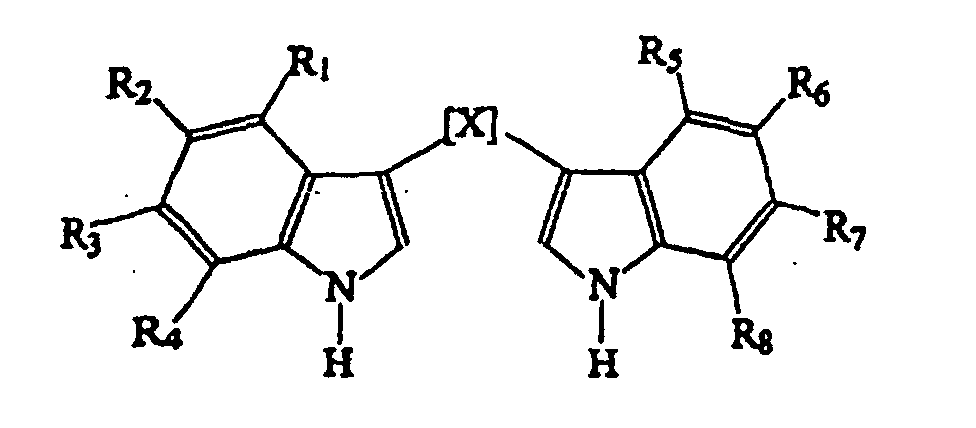
 or
or and wherein R1, R3, R4, R5, R7 and R8 are -H while R2 and R6 are independently -H, -OH, halogen, -R, -OR, -OCOR, NH2, NHZ, NZZ (wherein the Zs can be the same or different), or -OA; or R1, R2, R4, R5, R6 and R8 are -H while R9 and R7 are independently -H, -OH, halogen, -R, -OR, -OCOR, NH2, NHZ, NZZ (wherein the Zs can be the same or different), or -OA; Z is independently selected from the group consisting of -H, -R, -OH, and -COR; R is C1-5 alkyl, and A is -R-phenyl; or R1, R2, R3, R4, R6, R7 and R8 are independently -H, -OH, halogen, -R, -OR, -OCOR, or -OA and R5 is C1-5 alkyl-1-(2-aminoimidazole)ethyl.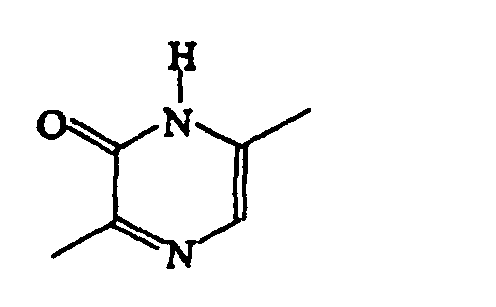
- Use according to any of claims 1 to 4, wherein the bis-indole is topsentin or a salt or derivative thereof.
- Use according to any of claims 1 to 4, wherein the bis-indole is bromotopsentin or a salt or derivative thereof.
- Use according to any of claims 1 to 4, wherein the bis-indole is a hamacanthin.
- Use according to any of claims 1 to 4, wherein the bis-indole is a dragmacidin.
- Use according to claim 10, wherein the dragmacidin is dragmacidin d.
- Use according to any of claims 1 to 4, wherein the bis-indole is a bis-indole ethylamine.
- Use according to any of claims 1 to 12, wherein the medicament additionally comprises, as a second active ingredient, steroidal anti-inflammatory drug.
- Use according to any of claims 1 to 12, wherein the medicament additionally comprises, as a second active ingredient, non-steroidal anti-inflammatory drug.
- A method of cosmetic treatment, which comprises administration of a bis-indole as defined in any of claims 1 and 5 to 12.
Applications Claiming Priority (3)
| Application Number | Priority Date | Filing Date | Title |
|---|---|---|---|
| US3026196P | 1996-10-31 | 1996-10-31 | |
| US30261P | 1996-10-31 | ||
| PCT/US1997/020300 WO1998018466A2 (en) | 1996-10-31 | 1997-10-31 | Anti-neurogenic inflammatory compounds and compositions and methods of use thereof |
Publications (2)
| Publication Number | Publication Date |
|---|---|
| EP0935463A2 EP0935463A2 (en) | 1999-08-18 |
| EP0935463B1 true EP0935463B1 (en) | 2004-01-21 |
Family
ID=21853343
Family Applications (1)
| Application Number | Title | Priority Date | Filing Date |
|---|---|---|---|
| EP97946578A Expired - Lifetime EP0935463B1 (en) | 1996-10-31 | 1997-10-31 | Use of anti-neurogenic inflammatory compounds and compositions |
Country Status (8)
| Country | Link |
|---|---|
| US (2) | US5955462A (en) |
| EP (1) | EP0935463B1 (en) |
| JP (1) | JP2001503414A (en) |
| AT (1) | ATE258050T1 (en) |
| CA (1) | CA2268399C (en) |
| DE (1) | DE69727305T2 (en) |
| ES (1) | ES2212814T3 (en) |
| WO (1) | WO1998018466A2 (en) |
Families Citing this family (15)
| Publication number | Priority date | Publication date | Assignee | Title |
|---|---|---|---|---|
| WO1999042092A2 (en) * | 1998-02-20 | 1999-08-26 | Harbor Branch Oceanographic Institution, Inc. | Compounds and methods of use for treatment of neurogenic inflammation |
| US6589975B2 (en) | 1998-07-08 | 2003-07-08 | The Regents Of The University Of California | Synthetic compounds for treatment of inflammation |
| JP2002520315A (en) | 1998-07-08 | 2002-07-09 | ハーバー ブランチ オーシャノグラフィック インスティテューション インク. | Bisindole derivatives and their use as anti-inflammatory agents |
| WO2003022274A2 (en) | 2001-09-13 | 2003-03-20 | Synta Pharmaceuticals Corp. | 2-aroylimidazole compounds for treating cancer |
| KR20040035798A (en) * | 2001-09-17 | 2004-04-29 | 존슨 앤드 존슨 컨수머 캄파니즈, 인코포레이티드 | Method for treating skin disorders |
| CN105473318B (en) | 2013-03-14 | 2017-12-01 | 可口可乐公司 | Choke strengthens additive and method |
| US9522168B2 (en) | 2014-05-29 | 2016-12-20 | Johnson & Johnson Consumer Inc. | Topical compositions comprising Acmella oleracea extracts and uses thereof |
| MX2021012250A (en) | 2019-04-11 | 2022-01-18 | Angion Biomedica Corp | Solid forms of (e)-3-[2-(2-thienyl)vinyl]-1h-pyrazole. |
| PH12022551379A1 (en) | 2019-12-06 | 2023-05-03 | Vertex Pharma | Substituted tetrahydrofurans as modulators of sodium channels |
| AU2021215709A1 (en) | 2020-02-04 | 2022-09-01 | Mindset Pharma Inc. | 3-pyrrolidine-indole derivatives as serotonergic psychedelic agents for the treatment of CNS disorders |
| AU2021342568B2 (en) | 2020-09-21 | 2025-04-03 | Landos Biopharma, Inc. | Nlrx1 ligands |
| SI4347031T1 (en) | 2021-06-04 | 2026-01-30 | Vertex Pharmaceuticals Incorporated | N-(hydroxyalkyl (hetero)aryl) tetrahydrofuran carboxamides as modulators of sodium channels |
| CN113480524B (en) * | 2021-08-10 | 2022-08-30 | 河北工业大学 | Alkaloid hamacanthins series derivatives, and preparation method and application thereof |
| JP2025513455A (en) | 2022-04-22 | 2025-04-24 | バーテックス ファーマシューティカルズ インコーポレイテッド | Heteroaryl compounds for the treatment of pain - Patents.com |
| CN121135694A (en) * | 2025-09-22 | 2025-12-16 | 湖南中医药大学 | An asymmetric preparation method of a bisindole alkaloid (S)-6’’-Debromohamacanthin A |
Family Cites Families (14)
| Publication number | Priority date | Publication date | Assignee | Title |
|---|---|---|---|---|
| US4895844A (en) * | 1987-03-25 | 1990-01-23 | Harbor Branch Oceanographic Institution, Inc. | Indole alkaloid compositions and their methods of use |
| US4866084A (en) * | 1987-07-17 | 1989-09-12 | Harbor Branch Oceanographic Institution, Inc. | Topsentin compounds effective against viruses and certain tumors |
| CZ280738B6 (en) * | 1988-02-10 | 1996-04-17 | F. Hoffmann - La Roche And Co., Aktiengesellschaft | Substituted pyrroles, their use for preparing medicaments and medicaments based thereon |
| MC2096A1 (en) * | 1989-02-23 | 1991-02-15 | Hoffmann La Roche | SUBSTITUTED PYRROLES |
| CA2015996C (en) * | 1989-05-05 | 2001-08-28 | Hartmut Osswald | Bis-(1h-indol-3-yl)-maleinimide derivatives and their use as pharmaceuticals |
| US4970226A (en) * | 1989-10-03 | 1990-11-13 | Harbor Branch Oceanographic Institution, Inc. | Bis-indole imidazole compounds which are useful antitumor and antimicrobial agents |
| CA2046801C (en) * | 1990-08-07 | 2002-02-26 | Peter D. Davis | Substituted pyrroles |
| CA2140640A1 (en) * | 1992-08-13 | 1994-03-03 | David C. Horwell | Tachykinin antagonists |
| US5290777A (en) * | 1993-02-24 | 1994-03-01 | Regents Of The Univ. Of California | Use for topsentin compounds and pharmaceutical compositions containing same |
| JP3262800B2 (en) * | 1994-06-01 | 2002-03-04 | ゼネカ・リミテッド | Therapeutic heterocyclic compounds |
| DE69523154T2 (en) * | 1994-06-06 | 2002-06-06 | Warner-Lambert Co., Morris Plains | TACHYKININ (NK1) RECEPTOR ANTAGONISTS |
| FR2731224B1 (en) * | 1995-03-02 | 1997-05-30 | Pf Medicament | NOVEL BI-TRYPTAMINIC SULFONAMIDE DERIVATIVES, PROCESS FOR THEIR PREPARATION AND THEIR USE AS MEDICAMENTS |
| CA2234166A1 (en) * | 1995-10-10 | 1997-04-17 | Patric James Hahn | N-¬2-substituted-3-(2-aminoethyl)-1h-indol-5-yl|-amides: new 5-ht1f agonists |
| WO1997038692A1 (en) * | 1996-04-12 | 1997-10-23 | Eli Lilly And Company | Bisindoles for treating pain or nociception |
-
1997
- 1997-10-31 JP JP52082898A patent/JP2001503414A/en active Pending
- 1997-10-31 WO PCT/US1997/020300 patent/WO1998018466A2/en not_active Ceased
- 1997-10-31 CA CA002268399A patent/CA2268399C/en not_active Expired - Fee Related
- 1997-10-31 ES ES97946578T patent/ES2212814T3/en not_active Expired - Lifetime
- 1997-10-31 DE DE69727305T patent/DE69727305T2/en not_active Expired - Lifetime
- 1997-10-31 AT AT97946578T patent/ATE258050T1/en not_active IP Right Cessation
- 1997-10-31 EP EP97946578A patent/EP0935463B1/en not_active Expired - Lifetime
- 1997-10-31 US US08/961,475 patent/US5955462A/en not_active Expired - Lifetime
-
1999
- 1999-07-16 US US09/356,282 patent/US6090811A/en not_active Expired - Fee Related
Also Published As
| Publication number | Publication date |
|---|---|
| EP0935463A2 (en) | 1999-08-18 |
| CA2268399C (en) | 2008-08-19 |
| DE69727305D1 (en) | 2004-02-26 |
| US6090811A (en) | 2000-07-18 |
| CA2268399A1 (en) | 1998-05-07 |
| US5955462A (en) | 1999-09-21 |
| ES2212814T3 (en) | 2004-08-01 |
| WO1998018466A3 (en) | 1998-08-13 |
| DE69727305T2 (en) | 2004-06-24 |
| JP2001503414A (en) | 2001-03-13 |
| ATE258050T1 (en) | 2004-02-15 |
| WO1998018466A2 (en) | 1998-05-07 |
Similar Documents
| Publication | Publication Date | Title |
|---|---|---|
| US6090811A (en) | Anti-neurogenic inflammatory compounds and compositions and methods of use thereof | |
| EP0686154B1 (en) | Novel use as anti-inflammatory agents for bis-heterocyclic compounds and pharmaceutical compositions thereof | |
| EP2327408A1 (en) | Tetracyclic cyclic gmp-specific phosphodiesterase inhibitors for the treatment of benign prostatic hypertrophy | |
| WO2001021589A2 (en) | Mono- and bis-indolylquinones and prophylactic and therapeutic uses thereof | |
| US6323233B1 (en) | Synthetic compounds for treatment of inflammation | |
| WO2019084496A1 (en) | 6-(5-membered heteroaryl)isoquinolin-3-yl-(5-membered heteroaryl) carboxamides and preparation and use thereof | |
| US20030176484A1 (en) | Methods for increasing bone formation using inhibitors of glycogen synthase kinase-3 betta | |
| TWI290046B (en) | Phenanthroindolizidine alkaloids | |
| US6589957B2 (en) | Compounds and methods of use for treatment of neurogenic inflammation | |
| US6387916B1 (en) | Anti-inflammatory uses of manzamines | |
| JP4339679B2 (en) | Carboline derivatives as PDE5 inhibitors | |
| US6589975B2 (en) | Synthetic compounds for treatment of inflammation | |
| HK1128423A (en) | (6r,12ar)-2,3,6,7,12,12a-hexahydro-2-methyl-6-(3,4-methylenedioxyphenyl)-pyrazino[2',1':6,1]pyrido[3,4-b]indole-1,4-dione for the treatment of benign prostatic hypertrophy | |
| HK1227033A1 (en) | 1-(3-aminopropyl) substituted cyclic amine compounds, preparation method therefor, and pharmaceutical compositions and uses thereof |
Legal Events
| Date | Code | Title | Description |
|---|---|---|---|
| PUAI | Public reference made under article 153(3) epc to a published international application that has entered the european phase |
Free format text: ORIGINAL CODE: 0009012 |
|
| 17P | Request for examination filed |
Effective date: 19990517 |
|
| AK | Designated contracting states |
Kind code of ref document: A2 Designated state(s): AT BE CH DE DK ES FI FR GB GR IE IT LI LU MC NL PT SE |
|
| 17Q | First examination report despatched |
Effective date: 20020318 |
|
| GRAH | Despatch of communication of intention to grant a patent |
Free format text: ORIGINAL CODE: EPIDOS IGRA |
|
| RIC1 | Information provided on ipc code assigned before grant |
Ipc: 7A 61P 29/00 B Ipc: 7A 61K 31/495 B Ipc: 7A 61K 31/415 B Ipc: 7A 61K 31/40 A |
|
| RTI1 | Title (correction) |
Free format text: USE OF ANTI-NEUROGENIC INFLAMMATORY COMPOUNDS AND COMPOSITIONS |
|
| GRAS | Grant fee paid |
Free format text: ORIGINAL CODE: EPIDOSNIGR3 |
|
| GRAA | (expected) grant |
Free format text: ORIGINAL CODE: 0009210 |
|
| RAP1 | Party data changed (applicant data changed or rights of an application transferred) |
Owner name: THE REGENTS OF THE UNIVERSITY OF CALIFORNIA Owner name: HARBOR BRANCH OCEANOGRAPHIC INSTITUTION, INC. |
|
| AK | Designated contracting states |
Kind code of ref document: B1 Designated state(s): AT BE CH DE DK ES FI FR GB GR IE IT LI LU MC NL PT SE |
|
| PG25 | Lapsed in a contracting state [announced via postgrant information from national office to epo] |
Ref country code: NL Free format text: LAPSE BECAUSE OF FAILURE TO SUBMIT A TRANSLATION OF THE DESCRIPTION OR TO PAY THE FEE WITHIN THE PRESCRIBED TIME-LIMIT Effective date: 20040121 Ref country code: FI Free format text: LAPSE BECAUSE OF FAILURE TO SUBMIT A TRANSLATION OF THE DESCRIPTION OR TO PAY THE FEE WITHIN THE PRESCRIBED TIME-LIMIT Effective date: 20040121 Ref country code: BE Free format text: LAPSE BECAUSE OF FAILURE TO SUBMIT A TRANSLATION OF THE DESCRIPTION OR TO PAY THE FEE WITHIN THE PRESCRIBED TIME-LIMIT Effective date: 20040121 Ref country code: AT Free format text: LAPSE BECAUSE OF FAILURE TO SUBMIT A TRANSLATION OF THE DESCRIPTION OR TO PAY THE FEE WITHIN THE PRESCRIBED TIME-LIMIT Effective date: 20040121 |
|
| REG | Reference to a national code |
Ref country code: GB Ref legal event code: FG4D |
|
| REG | Reference to a national code |
Ref country code: CH Ref legal event code: EP |
|
| REG | Reference to a national code |
Ref country code: IE Ref legal event code: FG4D |
|
| REF | Corresponds to: |
Ref document number: 69727305 Country of ref document: DE Date of ref document: 20040226 Kind code of ref document: P |
|
| REG | Reference to a national code |
Ref country code: CH Ref legal event code: NV Representative=s name: E. BLUM & CO. PATENTANWAELTE |
|
| RAP2 | Party data changed (patent owner data changed or rights of a patent transferred) |
Owner name: THE REGENTS OF THE UNIVERSITY OF CALIFORNIA Owner name: HARBOR BRANCH OCEANOGRAPHIC INSTITUTION, INC. |
|
| PG25 | Lapsed in a contracting state [announced via postgrant information from national office to epo] |
Ref country code: SE Free format text: LAPSE BECAUSE OF FAILURE TO SUBMIT A TRANSLATION OF THE DESCRIPTION OR TO PAY THE FEE WITHIN THE PRESCRIBED TIME-LIMIT Effective date: 20040421 Ref country code: GR Free format text: LAPSE BECAUSE OF FAILURE TO SUBMIT A TRANSLATION OF THE DESCRIPTION OR TO PAY THE FEE WITHIN THE PRESCRIBED TIME-LIMIT Effective date: 20040421 Ref country code: DK Free format text: LAPSE BECAUSE OF FAILURE TO SUBMIT A TRANSLATION OF THE DESCRIPTION OR TO PAY THE FEE WITHIN THE PRESCRIBED TIME-LIMIT Effective date: 20040421 |
|
| NLT2 | Nl: modifications (of names), taken from the european patent patent bulletin |
Owner name: HARBOR BRANCH OCEANOGRAPHIC INSTITUTION, INC. EN T |
|
| NLV1 | Nl: lapsed or annulled due to failure to fulfill the requirements of art. 29p and 29m of the patents act | ||
| REG | Reference to a national code |
Ref country code: ES Ref legal event code: FG2A Ref document number: 2212814 Country of ref document: ES Kind code of ref document: T3 |
|
| ET | Fr: translation filed | ||
| PG25 | Lapsed in a contracting state [announced via postgrant information from national office to epo] |
Ref country code: MC Free format text: LAPSE BECAUSE OF NON-PAYMENT OF DUE FEES Effective date: 20041031 Ref country code: LU Free format text: LAPSE BECAUSE OF NON-PAYMENT OF DUE FEES Effective date: 20041031 |
|
| PG25 | Lapsed in a contracting state [announced via postgrant information from national office to epo] |
Ref country code: IE Free format text: LAPSE BECAUSE OF NON-PAYMENT OF DUE FEES Effective date: 20041101 |
|
| PLBE | No opposition filed within time limit |
Free format text: ORIGINAL CODE: 0009261 |
|
| STAA | Information on the status of an ep patent application or granted ep patent |
Free format text: STATUS: NO OPPOSITION FILED WITHIN TIME LIMIT |
|
| 26N | No opposition filed |
Effective date: 20041022 |
|
| REG | Reference to a national code |
Ref country code: IE Ref legal event code: MM4A |
|
| REG | Reference to a national code |
Ref country code: CH Ref legal event code: PFA Owner name: HARBOR BRANCH OCEANOGRAPHIC INSTITUTION, INC. Free format text: HARBOR BRANCH OCEANOGRAPHIC INSTITUTION, INC.#5600 U.S. 1 NORTH#FORT PIERCE, FL 34964 (US) $ THE REGENTS OF THE UNIVERSITY OF CALIFORNIA#12TH FLOOR, 1111 FRANKLIN STREET#OAKLAND, CALIFORNIA 94607-5200 (US) -TRANSFER TO- HARBOR BRANCH OCEANOGRAPHIC INSTITUTION, INC.#5600 U.S. 1 NORTH#FORT PIERCE, FL 34964 (US) $ THE REGENTS OF THE UNIVERSITY OF CALIFORNIA#12TH FLOOR, 1111 FRANKLIN STREET#OAKLAND, CALIFORNIA 94607-5200 (US) |
|
| PG25 | Lapsed in a contracting state [announced via postgrant information from national office to epo] |
Ref country code: PT Free format text: LAPSE BECAUSE OF NON-PAYMENT OF DUE FEES Effective date: 20040621 |
|
| PGFP | Annual fee paid to national office [announced via postgrant information from national office to epo] |
Ref country code: ES Payment date: 20081106 Year of fee payment: 12 |
|
| PGFP | Annual fee paid to national office [announced via postgrant information from national office to epo] |
Ref country code: IT Payment date: 20081029 Year of fee payment: 12 |
|
| PGFP | Annual fee paid to national office [announced via postgrant information from national office to epo] |
Ref country code: FR Payment date: 20101202 Year of fee payment: 14 |
|
| PGFP | Annual fee paid to national office [announced via postgrant information from national office to epo] |
Ref country code: DE Payment date: 20101027 Year of fee payment: 14 Ref country code: CH Payment date: 20101025 Year of fee payment: 14 |
|
| PG25 | Lapsed in a contracting state [announced via postgrant information from national office to epo] |
Ref country code: IT Free format text: LAPSE BECAUSE OF NON-PAYMENT OF DUE FEES Effective date: 20091031 |
|
| PGFP | Annual fee paid to national office [announced via postgrant information from national office to epo] |
Ref country code: GB Payment date: 20101025 Year of fee payment: 14 |
|
| REG | Reference to a national code |
Ref country code: ES Ref legal event code: FD2A Effective date: 20110401 |
|
| PG25 | Lapsed in a contracting state [announced via postgrant information from national office to epo] |
Ref country code: ES Free format text: LAPSE BECAUSE OF NON-PAYMENT OF DUE FEES Effective date: 20110321 |
|
| PG25 | Lapsed in a contracting state [announced via postgrant information from national office to epo] |
Ref country code: ES Free format text: LAPSE BECAUSE OF NON-PAYMENT OF DUE FEES Effective date: 20091101 |
|
| REG | Reference to a national code |
Ref country code: CH Ref legal event code: PL |
|
| GBPC | Gb: european patent ceased through non-payment of renewal fee |
Effective date: 20111031 |
|
| REG | Reference to a national code |
Ref country code: FR Ref legal event code: ST Effective date: 20120629 |
|
| PG25 | Lapsed in a contracting state [announced via postgrant information from national office to epo] |
Ref country code: LI Free format text: LAPSE BECAUSE OF NON-PAYMENT OF DUE FEES Effective date: 20111031 Ref country code: DE Free format text: LAPSE BECAUSE OF NON-PAYMENT OF DUE FEES Effective date: 20120501 Ref country code: CH Free format text: LAPSE BECAUSE OF NON-PAYMENT OF DUE FEES Effective date: 20111031 |
|
| REG | Reference to a national code |
Ref country code: DE Ref legal event code: R119 Ref document number: 69727305 Country of ref document: DE Effective date: 20120501 |
|
| PG25 | Lapsed in a contracting state [announced via postgrant information from national office to epo] |
Ref country code: GB Free format text: LAPSE BECAUSE OF NON-PAYMENT OF DUE FEES Effective date: 20111031 Ref country code: FR Free format text: LAPSE BECAUSE OF NON-PAYMENT OF DUE FEES Effective date: 20111102 |