EP0931119B1 - Chiral compounds with liquid crystalline nature and ferroelectric liquid crystal device adopting the same - Google Patents
Chiral compounds with liquid crystalline nature and ferroelectric liquid crystal device adopting the same Download PDFInfo
- Publication number
- EP0931119B1 EP0931119B1 EP97939249A EP97939249A EP0931119B1 EP 0931119 B1 EP0931119 B1 EP 0931119B1 EP 97939249 A EP97939249 A EP 97939249A EP 97939249 A EP97939249 A EP 97939249A EP 0931119 B1 EP0931119 B1 EP 0931119B1
- Authority
- EP
- European Patent Office
- Prior art keywords
- group
- aromatic compound
- compound according
- chiral
- chiral aromatic
- Prior art date
- Legal status (The legal status is an assumption and is not a legal conclusion. Google has not performed a legal analysis and makes no representation as to the accuracy of the status listed.)
- Expired - Lifetime
Links
- 239000005262 ferroelectric liquid crystals (FLCs) Substances 0.000 title claims description 6
- 150000001875 compounds Chemical class 0.000 title description 42
- 239000007788 liquid Substances 0.000 title description 2
- 150000001491 aromatic compounds Chemical class 0.000 claims description 12
- 125000004432 carbon atom Chemical group C* 0.000 claims description 10
- 125000000217 alkyl group Chemical group 0.000 claims description 8
- 239000004973 liquid crystal related substance Substances 0.000 claims description 5
- 125000005843 halogen group Chemical group 0.000 claims description 4
- 229910052801 chlorine Inorganic materials 0.000 claims description 3
- 239000000460 chlorine Substances 0.000 claims description 3
- 125000000959 isobutyl group Chemical group [H]C([H])([H])C([H])(C([H])([H])[H])C([H])([H])* 0.000 claims description 3
- 125000001449 isopropyl group Chemical group [H]C([H])([H])C([H])(*)C([H])([H])[H] 0.000 claims description 3
- 125000002496 methyl group Chemical group [H]C([H])([H])* 0.000 claims description 3
- 125000002914 sec-butyl group Chemical group [H]C([H])([H])C([H])([H])C([H])(*)C([H])([H])[H] 0.000 claims description 3
- 125000001309 chloro group Chemical group Cl* 0.000 claims 1
- 125000001183 hydrocarbyl group Chemical group 0.000 claims 1
- 239000012071 phase Substances 0.000 description 33
- LFQSCWFLJHTTHZ-UHFFFAOYSA-N Ethanol Chemical compound CCO LFQSCWFLJHTTHZ-UHFFFAOYSA-N 0.000 description 24
- 239000004990 Smectic liquid crystal Substances 0.000 description 22
- YMWUJEATGCHHMB-UHFFFAOYSA-N Dichloromethane Chemical compound ClCCl YMWUJEATGCHHMB-UHFFFAOYSA-N 0.000 description 18
- RTZKZFJDLAIYFH-UHFFFAOYSA-N Diethyl ether Chemical compound CCOCC RTZKZFJDLAIYFH-UHFFFAOYSA-N 0.000 description 10
- 150000002148 esters Chemical class 0.000 description 8
- 230000007704 transition Effects 0.000 description 8
- XLYOFNOQVPJJNP-UHFFFAOYSA-N water Substances O XLYOFNOQVPJJNP-UHFFFAOYSA-N 0.000 description 8
- QOSSAOTZNIDXMA-UHFFFAOYSA-N Dicylcohexylcarbodiimide Chemical compound C1CCCCC1N=C=NC1CCCCC1 QOSSAOTZNIDXMA-UHFFFAOYSA-N 0.000 description 7
- 239000011541 reaction mixture Substances 0.000 description 7
- 239000007787 solid Substances 0.000 description 7
- 239000002904 solvent Substances 0.000 description 7
- CSCPPACGZOOCGX-UHFFFAOYSA-N Acetone Chemical compound CC(C)=O CSCPPACGZOOCGX-UHFFFAOYSA-N 0.000 description 6
- UHOVQNZJYSORNB-UHFFFAOYSA-N Benzene Chemical compound C1=CC=CC=C1 UHOVQNZJYSORNB-UHFFFAOYSA-N 0.000 description 6
- XEKOWRVHYACXOJ-UHFFFAOYSA-N Ethyl acetate Chemical compound CCOC(C)=O XEKOWRVHYACXOJ-UHFFFAOYSA-N 0.000 description 6
- KWYUFKZDYYNOTN-UHFFFAOYSA-M Potassium hydroxide Chemical compound [OH-].[K+] KWYUFKZDYYNOTN-UHFFFAOYSA-M 0.000 description 6
- HEMHJVSKTPXQMS-UHFFFAOYSA-M Sodium hydroxide Chemical compound [OH-].[Na+] HEMHJVSKTPXQMS-UHFFFAOYSA-M 0.000 description 6
- 229910052799 carbon Inorganic materials 0.000 description 6
- 239000010410 layer Substances 0.000 description 6
- -1 1-valine Chemical class 0.000 description 5
- 239000002253 acid Substances 0.000 description 4
- 230000015572 biosynthetic process Effects 0.000 description 4
- 238000001816 cooling Methods 0.000 description 4
- 230000001747 exhibiting effect Effects 0.000 description 4
- 239000000047 product Substances 0.000 description 4
- 239000011734 sodium Substances 0.000 description 4
- 238000003786 synthesis reaction Methods 0.000 description 4
- RYHBNJHYFVUHQT-UHFFFAOYSA-N 1,4-Dioxane Chemical compound C1COCCO1 RYHBNJHYFVUHQT-UHFFFAOYSA-N 0.000 description 3
- OKTJSMMVPCPJKN-UHFFFAOYSA-N Carbon Chemical compound [C] OKTJSMMVPCPJKN-UHFFFAOYSA-N 0.000 description 3
- PMZURENOXWZQFD-UHFFFAOYSA-L Sodium Sulfate Chemical compound [Na+].[Na+].[O-]S([O-])(=O)=O PMZURENOXWZQFD-UHFFFAOYSA-L 0.000 description 3
- 150000001721 carbon Chemical group 0.000 description 3
- 239000000203 mixture Substances 0.000 description 3
- VLKZOEOYAKHREP-UHFFFAOYSA-N n-Hexane Chemical compound CCCCCC VLKZOEOYAKHREP-UHFFFAOYSA-N 0.000 description 3
- 239000012044 organic layer Substances 0.000 description 3
- ISWSIDIOOBJBQZ-UHFFFAOYSA-N phenol group Chemical group C1(=CC=CC=C1)O ISWSIDIOOBJBQZ-UHFFFAOYSA-N 0.000 description 3
- 238000002360 preparation method Methods 0.000 description 3
- JGMBQAGNZLBZCE-UHFFFAOYSA-N 3-methoxy-4-phenylmethoxybenzoic acid Chemical compound COC1=CC(C(O)=O)=CC=C1OCC1=CC=CC=C1 JGMBQAGNZLBZCE-UHFFFAOYSA-N 0.000 description 2
- VHYFNPMBLIVWCW-UHFFFAOYSA-N 4-Dimethylaminopyridine Chemical compound CN(C)C1=CC=NC=C1 VHYFNPMBLIVWCW-UHFFFAOYSA-N 0.000 description 2
- HEDRZPFGACZZDS-UHFFFAOYSA-N Chloroform Chemical compound ClC(Cl)Cl HEDRZPFGACZZDS-UHFFFAOYSA-N 0.000 description 2
- MWAYRGBWOVHDDZ-UHFFFAOYSA-N Ethyl vanillate Chemical compound CCOC(=O)C1=CC=C(O)C(OC)=C1 MWAYRGBWOVHDDZ-UHFFFAOYSA-N 0.000 description 2
- DGAQECJNVWCQMB-PUAWFVPOSA-M Ilexoside XXIX Chemical compound C[C@@H]1CC[C@@]2(CC[C@@]3(C(=CC[C@H]4[C@]3(CC[C@@H]5[C@@]4(CC[C@@H](C5(C)C)OS(=O)(=O)[O-])C)C)[C@@H]2[C@]1(C)O)C)C(=O)O[C@H]6[C@@H]([C@H]([C@@H]([C@H](O6)CO)O)O)O.[Na+] DGAQECJNVWCQMB-PUAWFVPOSA-M 0.000 description 2
- 125000004429 atom Chemical group 0.000 description 2
- AGEZXYOZHKGVCM-UHFFFAOYSA-N benzyl bromide Chemical compound BrCC1=CC=CC=C1 AGEZXYOZHKGVCM-UHFFFAOYSA-N 0.000 description 2
- 239000003610 charcoal Substances 0.000 description 2
- 238000006243 chemical reaction Methods 0.000 description 2
- 238000000113 differential scanning calorimetry Methods 0.000 description 2
- 238000010438 heat treatment Methods 0.000 description 2
- 150000002430 hydrocarbons Chemical group 0.000 description 2
- 238000002844 melting Methods 0.000 description 2
- 230000008018 melting Effects 0.000 description 2
- 238000000034 method Methods 0.000 description 2
- 150000002894 organic compounds Chemical class 0.000 description 2
- 239000003208 petroleum Substances 0.000 description 2
- YQUVCSBJEUQKSH-UHFFFAOYSA-N protochatechuic acid Natural products OC(=O)C1=CC=C(O)C(O)=C1 YQUVCSBJEUQKSH-UHFFFAOYSA-N 0.000 description 2
- 229910052708 sodium Inorganic materials 0.000 description 2
- QDRKDTQENPPHOJ-UHFFFAOYSA-N sodium ethoxide Chemical compound [Na+].CC[O-] QDRKDTQENPPHOJ-UHFFFAOYSA-N 0.000 description 2
- WKOLLVMJNQIZCI-UHFFFAOYSA-N vanillic acid Chemical compound COC1=CC(C(O)=O)=CC=C1O WKOLLVMJNQIZCI-UHFFFAOYSA-N 0.000 description 2
- TUUBOHWZSQXCSW-UHFFFAOYSA-N vanillic acid Natural products COC1=CC(O)=CC(C(O)=O)=C1 TUUBOHWZSQXCSW-UHFFFAOYSA-N 0.000 description 2
- DDTJFSPKEIAZAM-BYPYZUCNSA-N (2s)-2-chloro-3-methylbutanoic acid Chemical compound CC(C)[C@H](Cl)C(O)=O DDTJFSPKEIAZAM-BYPYZUCNSA-N 0.000 description 1
- MYMSJFSOOQERIO-UHFFFAOYSA-N 1-bromodecane Chemical compound CCCCCCCCCCBr MYMSJFSOOQERIO-UHFFFAOYSA-N 0.000 description 1
- 229960000549 4-dimethylaminophenol Drugs 0.000 description 1
- 0 Cc1ccc(*c(ccc(C(O)=O)c2)c2OC)cc1 Chemical compound Cc1ccc(*c(ccc(C(O)=O)c2)c2OC)cc1 0.000 description 1
- ZAMOUSCENKQFHK-UHFFFAOYSA-N Chlorine atom Chemical compound [Cl] ZAMOUSCENKQFHK-UHFFFAOYSA-N 0.000 description 1
- UFHFLCQGNIYNRP-UHFFFAOYSA-N Hydrogen Chemical compound [H][H] UFHFLCQGNIYNRP-UHFFFAOYSA-N 0.000 description 1
- VYPSYNLAJGMNEJ-UHFFFAOYSA-N Silicium dioxide Chemical compound O=[Si]=O VYPSYNLAJGMNEJ-UHFFFAOYSA-N 0.000 description 1
- HEDRZPFGACZZDS-MICDWDOJSA-N Trichloro(2H)methane Chemical class [2H]C(Cl)(Cl)Cl HEDRZPFGACZZDS-MICDWDOJSA-N 0.000 description 1
- 150000001347 alkyl bromides Chemical class 0.000 description 1
- 229940024606 amino acid Drugs 0.000 description 1
- 150000001413 amino acids Chemical class 0.000 description 1
- 125000003277 amino group Chemical group 0.000 description 1
- 125000003118 aryl group Chemical group 0.000 description 1
- VCCBEIPGXKNHFW-UHFFFAOYSA-N biphenyl-4,4'-diol Chemical compound C1=CC(O)=CC=C1C1=CC=C(O)C=C1 VCCBEIPGXKNHFW-UHFFFAOYSA-N 0.000 description 1
- 229910052794 bromium Inorganic materials 0.000 description 1
- 239000007795 chemical reaction product Substances 0.000 description 1
- 238000004440 column chromatography Methods 0.000 description 1
- 238000009833 condensation Methods 0.000 description 1
- 230000005494 condensation Effects 0.000 description 1
- 230000001268 conjugating effect Effects 0.000 description 1
- 238000010276 construction Methods 0.000 description 1
- 125000004093 cyano group Chemical group *C#N 0.000 description 1
- 125000002704 decyl group Chemical group [H]C([H])([H])C([H])([H])C([H])([H])C([H])([H])C([H])([H])C([H])([H])C([H])([H])C([H])([H])C([H])([H])C([H])([H])* 0.000 description 1
- 239000012954 diazonium Substances 0.000 description 1
- 238000004821 distillation Methods 0.000 description 1
- 238000005516 engineering process Methods 0.000 description 1
- 230000032050 esterification Effects 0.000 description 1
- 238000005886 esterification reaction Methods 0.000 description 1
- NCMSHHQTVHPWPA-UHFFFAOYSA-N ethyl 3-methoxy-4-phenylmethoxybenzoate Chemical compound COC1=CC(C(=O)OCC)=CC=C1OCC1=CC=CC=C1 NCMSHHQTVHPWPA-UHFFFAOYSA-N 0.000 description 1
- 238000001704 evaporation Methods 0.000 description 1
- 230000005621 ferroelectricity Effects 0.000 description 1
- 238000007667 floating Methods 0.000 description 1
- 239000012530 fluid Substances 0.000 description 1
- 229910052731 fluorine Inorganic materials 0.000 description 1
- 125000001188 haloalkyl group Chemical group 0.000 description 1
- 229910052736 halogen Inorganic materials 0.000 description 1
- 150000002367 halogens Chemical group 0.000 description 1
- 125000000623 heterocyclic group Chemical group 0.000 description 1
- 229910052739 hydrogen Inorganic materials 0.000 description 1
- 239000001257 hydrogen Substances 0.000 description 1
- 238000007327 hydrogenolysis reaction Methods 0.000 description 1
- 238000010348 incorporation Methods 0.000 description 1
- 229960000310 isoleucine Drugs 0.000 description 1
- 239000007791 liquid phase Substances 0.000 description 1
- 229920002521 macromolecule Polymers 0.000 description 1
- 125000000956 methoxy group Chemical group [H]C([H])([H])O* 0.000 description 1
- 125000000325 methylidene group Chemical group [H]C([H])=* 0.000 description 1
- 238000005457 optimization Methods 0.000 description 1
- 230000005693 optoelectronics Effects 0.000 description 1
- 239000000843 powder Substances 0.000 description 1
- 239000002244 precipitate Substances 0.000 description 1
- 238000001556 precipitation Methods 0.000 description 1
- 239000002243 precursor Substances 0.000 description 1
- 238000010992 reflux Methods 0.000 description 1
- 239000000741 silica gel Substances 0.000 description 1
- 229910002027 silica gel Inorganic materials 0.000 description 1
- 239000007858 starting material Substances 0.000 description 1
- 239000012258 stirred mixture Substances 0.000 description 1
- 238000003756 stirring Methods 0.000 description 1
- 239000000126 substance Substances 0.000 description 1
- 125000001424 substituent group Chemical group 0.000 description 1
- 230000001502 supplementing effect Effects 0.000 description 1
- 238000004381 surface treatment Methods 0.000 description 1
- 230000009897 systematic effect Effects 0.000 description 1
- JOXIMZWYDAKGHI-UHFFFAOYSA-N toluene-4-sulfonic acid Chemical class CC1=CC=C(S(O)(=O)=O)C=C1 JOXIMZWYDAKGHI-UHFFFAOYSA-N 0.000 description 1
- 239000004474 valine Substances 0.000 description 1
Images




Classifications
-
- C—CHEMISTRY; METALLURGY
- C09—DYES; PAINTS; POLISHES; NATURAL RESINS; ADHESIVES; COMPOSITIONS NOT OTHERWISE PROVIDED FOR; APPLICATIONS OF MATERIALS NOT OTHERWISE PROVIDED FOR
- C09K—MATERIALS FOR MISCELLANEOUS APPLICATIONS, NOT PROVIDED FOR ELSEWHERE
- C09K19/00—Liquid crystal materials
- C09K19/04—Liquid crystal materials characterised by the chemical structure of the liquid crystal components, e.g. by a specific unit
- C09K19/06—Non-steroidal liquid crystal compounds
- C09K19/08—Non-steroidal liquid crystal compounds containing at least two non-condensed rings
- C09K19/10—Non-steroidal liquid crystal compounds containing at least two non-condensed rings containing at least two benzene rings
- C09K19/20—Non-steroidal liquid crystal compounds containing at least two non-condensed rings containing at least two benzene rings linked by a chain containing carbon and oxygen atoms as chain links, e.g. esters or ethers
-
- C—CHEMISTRY; METALLURGY
- C09—DYES; PAINTS; POLISHES; NATURAL RESINS; ADHESIVES; COMPOSITIONS NOT OTHERWISE PROVIDED FOR; APPLICATIONS OF MATERIALS NOT OTHERWISE PROVIDED FOR
- C09K—MATERIALS FOR MISCELLANEOUS APPLICATIONS, NOT PROVIDED FOR ELSEWHERE
- C09K19/00—Liquid crystal materials
- C09K19/04—Liquid crystal materials characterised by the chemical structure of the liquid crystal components, e.g. by a specific unit
- C09K19/06—Non-steroidal liquid crystal compounds
- C09K19/08—Non-steroidal liquid crystal compounds containing at least two non-condensed rings
- C09K19/10—Non-steroidal liquid crystal compounds containing at least two non-condensed rings containing at least two benzene rings
- C09K19/20—Non-steroidal liquid crystal compounds containing at least two non-condensed rings containing at least two benzene rings linked by a chain containing carbon and oxygen atoms as chain links, e.g. esters or ethers
- C09K19/2007—Non-steroidal liquid crystal compounds containing at least two non-condensed rings containing at least two benzene rings linked by a chain containing carbon and oxygen atoms as chain links, e.g. esters or ethers the chain containing -COO- or -OCO- groups
- C09K19/2021—Compounds containing at least one asymmetric carbon atom
-
- C—CHEMISTRY; METALLURGY
- C07—ORGANIC CHEMISTRY
- C07C—ACYCLIC OR CARBOCYCLIC COMPOUNDS
- C07C69/00—Esters of carboxylic acids; Esters of carbonic or haloformic acids
- C07C69/76—Esters of carboxylic acids having a carboxyl group bound to a carbon atom of a six-membered aromatic ring
- C07C69/84—Esters of carboxylic acids having a carboxyl group bound to a carbon atom of a six-membered aromatic ring of monocyclic hydroxy carboxylic acids, the hydroxy groups and the carboxyl groups of which are bound to carbon atoms of a six-membered aromatic ring
- C07C69/92—Esters of carboxylic acids having a carboxyl group bound to a carbon atom of a six-membered aromatic ring of monocyclic hydroxy carboxylic acids, the hydroxy groups and the carboxyl groups of which are bound to carbon atoms of a six-membered aromatic ring with etherified hydroxyl groups
Definitions
- This invention relates to the synthesis of novel compounds that exhibit the chiral smectic C phase [S c *] and a ferroelectric liquid crystal device adopting the same.
- Organic compounds in their liquid crystalline phases offer an electro-active media that interacts with light in a systematic manner.
- This electro-optic property has been used in the construction of display devices.
- the structural requirements of the organic compounds used vary according to the phase and the type of the device.
- symmetry arguments were presented for the existence of ferroelectricity in tilted smectic phases comprised of chiral molecules. [R. B. Meyer, L. Liebert, L. Strzelecki, and P. Keller J. Phys. (Paris) Lett. 36 L-69.]
- an electro-optical effect that utilized the ferroelectric property was demonstrated in 1980 [N. A. Clark and S. T. Lagerwall, Appl. Phys. Lett. 36 , 899.]
- bistable devices over the conventional nematic technologies rests in the fact that their switching times are one hundred to one thousand times faster.
- the chiral smectic C phase is the most fluid phase to have such a property and hence synthesis of compounds exhibiting this phase has gained importance in the industry.
- the compounds must have a chemical, photochemical, thermal and electrical stability in addition to possessing a wide range of the smectic C* phase in order to be useful.
- a smectic A phase following the C* phase is found to improve the quality of the alignment and hence is also desirable.
- the prior art compounds are not entirely satisfactory. Specifically, the prior art chiral compounds fail to meet all of the above-identified requirements simultaneously.
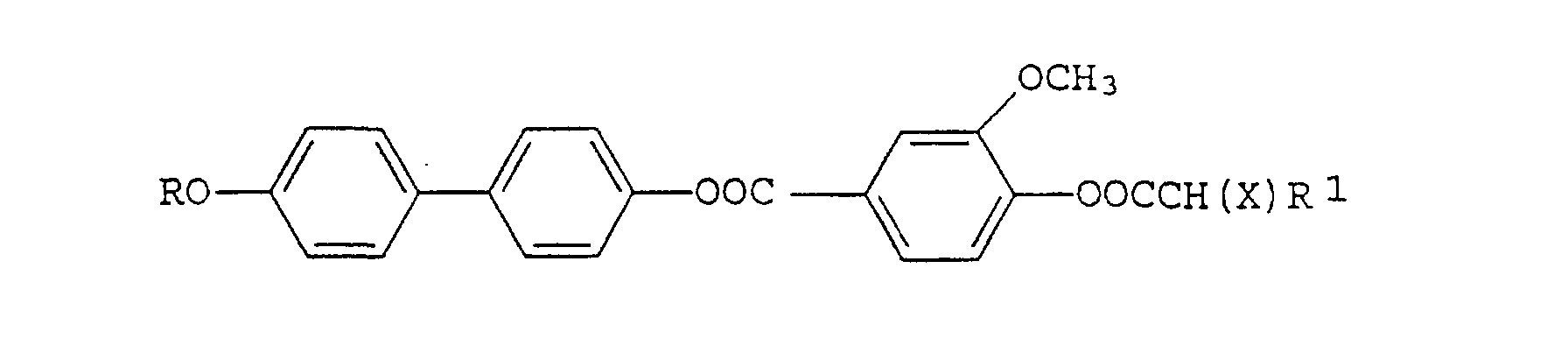
- the first object of the present invention is achieved by compounds represented by the following formula: wherein R represents a hydrocarbon group having 1 to 14 carbon atoms, X is a halogen atom, and R 1 represents a branched alkyl group having 3 to 8 carbon atoms.
- the second object of the present invention is achieved by a ferroelectric liquid crystal device comprising a liquid crystal layer disposed between two electrode layers, wherein the liquid crystal layer comprises the chiral aromatic compound represented by the above formula as a main component.
- R represents a hydrocarbon group having 1 to 14 carbon atoms.
- R represents a straight chain alkyl group having 1-14 carbon atoms, more preferably 6-12 carbons.
- X represents a halogen atom (F, Br, Cl, or I) and is preferably chlorine.
- R 1 represents a branched alkyl group having from 3 to 8 carbon atoms, preferably 3, 4 or 5 carbon atoms. While multiple branching is contemplated to be within the scope of the present invention, single branching is preferred. In one embodiment R 1 contains a methyl group as the sole branching substituent.
- the methyl branching group is preferably located on the first, second, or third carbon atom (counting from the halogenated carbon atom), more preferably on the first or second carbon atom.
- R 1 include an isopropyl group, a 2-methylpropyl group, and a 1-methylpropyl group.
- the lateral methoxy group present in the core is in a position to restrict the rotation of the ester carbonyl adjacent to the chiral carbon to which the halogen atom is attached.
- the compounds of the present invention generally exhibit a chiral smectic C phase over a temperature range that is at least 60°C wide, preferably at least 70°C wide.
- the compounds of the present invention can be made by conventional synthesis steps known in the art, without undue experimentation, from known and/or commercially available starting materials.
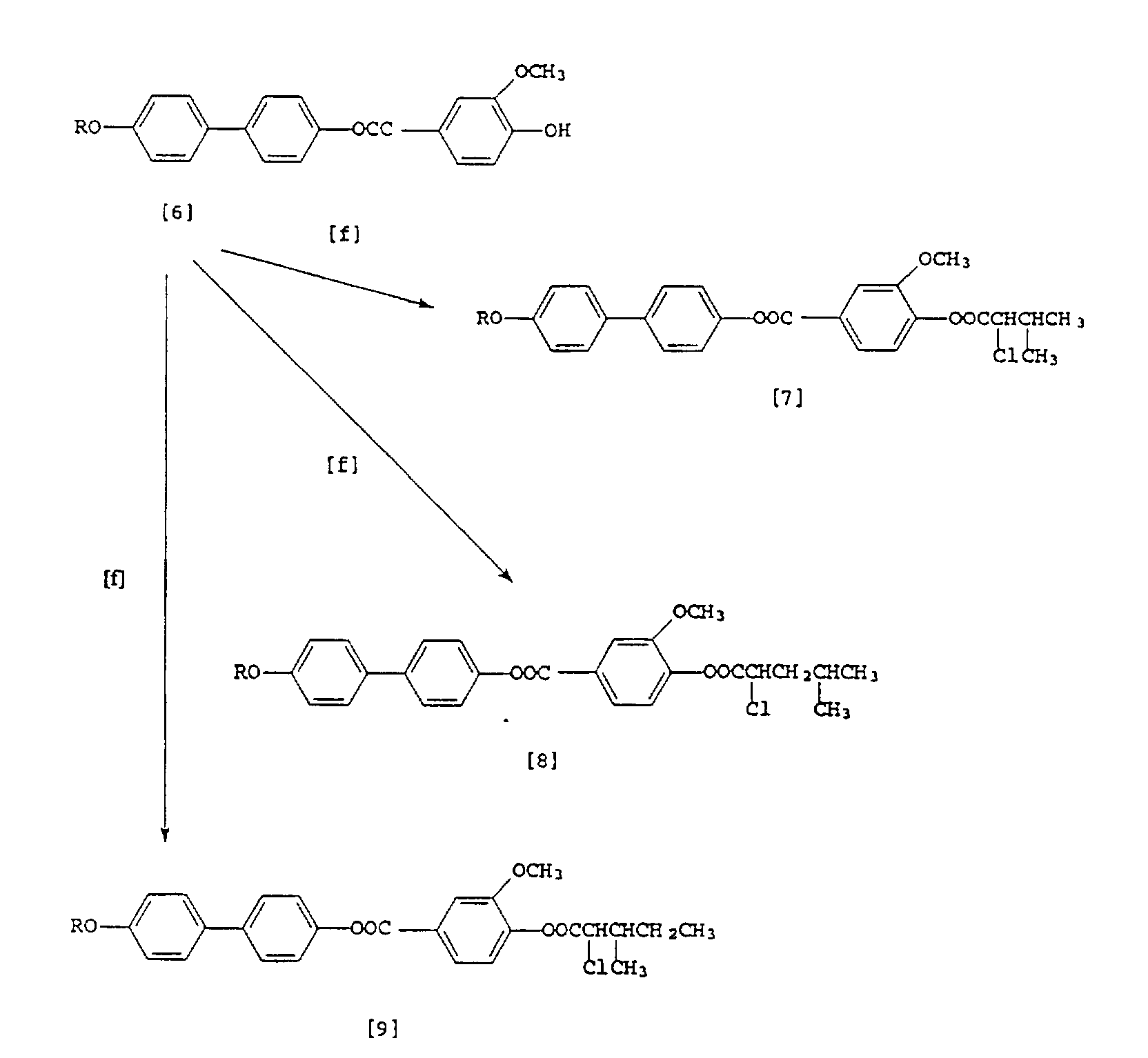
- the compounds of the present invention are comprised of the alkoxybiphenyl esters of vanillic acid in which the phenolic group has been esterified by the corresponding optically active haloalkyl acid.
- the group -C(X)R 1 can be conveniently obtained from the halo-analogues of optically active amino acids such as 1-valine, 1-leucine and 1-isoleucine. That is, the amino groups thereof can be replaced with a halogen by conventional reactions; i.e., by the use of diazonium chlorides.
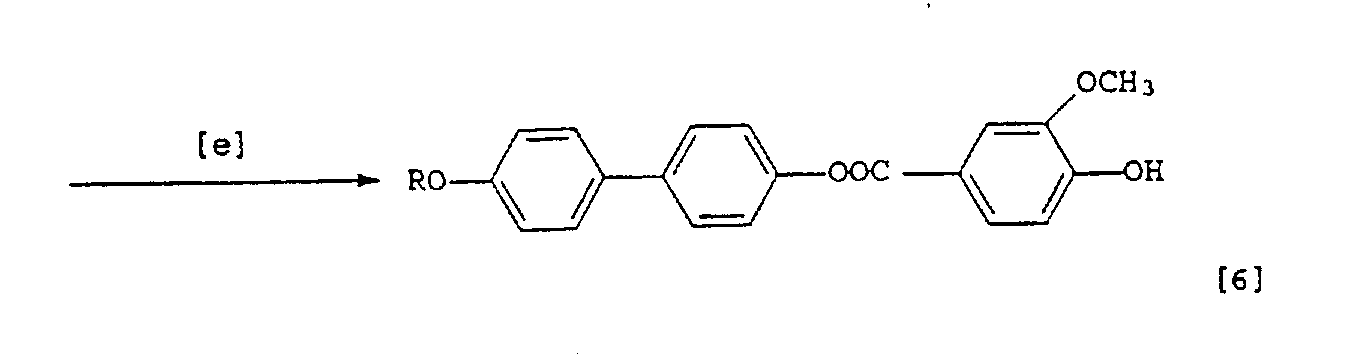
- a preferred scheme for the synthesis of the compounds of the present invention is shown below with respect to inventive compounds [7] through [9] and is detailed in the following examples. Other compounds according to the present invention can be made by similar and/or analogous processes.
- Inventive compound [9] with two chiral carbons is isomeric to inventive compound [8] while compound [7] has the lower homologue of the chiral acid attached to it.
- a condensation of alkoxybiphenol and benzyloxy vanillic acid in the presence of 4-N,N'- Dimethylaminopyridinium 4'-toluenesulfonate and N,N', dicyclohexylcarbodiimide in methylene chloride yielded the ester [5] which was subjected to hydrogenolysis with palladised charcoal in dioxane to obtain the precursor phenol [6].
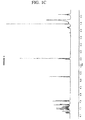
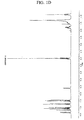
- the reaction products, wherein R is n-decyl were characterized by proton magnetic resonance which are shown in FIGs. 1a-1g using a Bruker 200 MHz NMR and deuterated chloroform (CDCl 3 ) as the solvent.
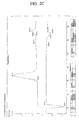
- the differential calorimetric plots of compounds [7], [8], and [9] are shown in FIGs. 2a-2c and were obtained on a Netzsch instrument wherein the heating and cooling scans were each run at a rate of ten degrees per minute.
- the smectic C*-smectic A transition is present in the heating as well as cooling cycles.
- the chiral smectic C phase which is seen to be the predominant phase, has an enantiotropic temperature range of about forty-five degrees and supercools to room temperature on average about forty degrees below the melting point of the compound.
- the smectic A phase is preceded by the chiral smectic C phase which is also the predominant phase. Further, the enantiotropic temperature range of this smectic C phase was about forty-five degrees and it was supercooled to room temperature about forty degrees below the melting point of the compound.
- the compounds of the present invention are thus suitable for use in ferroelectric liquid crystal display devices.
- a ferroelectric display having both a practical and a wide operating temperature range can be obtained.
- the display will have good stability and long life owing to the excellent stability of the compounds of the present invention.
Landscapes
- Chemical & Material Sciences (AREA)
- Organic Chemistry (AREA)
- Crystallography & Structural Chemistry (AREA)
- Engineering & Computer Science (AREA)
- Materials Engineering (AREA)
- Organic Low-Molecular-Weight Compounds And Preparation Thereof (AREA)
- Liquid Crystal Substances (AREA)
Description




Claims (11)
- A chiral aromatic compound represented by the formulawherein R represents a hydrocarbon group having 1 to 14 carbon atoms, X is a halogen atom, and R1 represents a branched alkyl group having 3 to 8 carbon atoms.

- The chiral aromatic compound according to claim 1, wherein R1 represents a singularly branched alkyl group.
- The chiral aromatic compound according to claim 2, wherein R1 has from 3 to 5 carbon atoms.
- The chiral aromatic compound according to claim 3, wherein said singular branch in R1 is a methyl group.
- The chiral aromatic compound according to claim 1, wherein R1 represents an isopropyl group.
- The chiral aromatic compound according to claim 1, wherein R1 represents a 2-methylpropyl group.
- The chiral aromatic compound according to claim 1, wherein R1 represents a 1-methylpropyl group.
- The chiral aromatic compound according to claim 1, wherein R represents a normal alkyl chain having from six to twelve carbon atoms.
- The chiral aromatic compound according to claim 1, wherein X is chlorine.
- The chiral aromatic compound according to claim 9, wherein R1 is a group selected from the group consisting of an isopropyl group, a 2-methylpropyl group, and a 1-methylpropyl group.
- A ferroelectric liquid crystal device comprising a liquid crystal layer disposed between two electrode layers, wherein said liquid crystal layer comprises the chiral aromatic compound according to claim 1 as a main component.
Applications Claiming Priority (3)
| Application Number | Priority Date | Filing Date | Title |
|---|---|---|---|
| US720874 | 1996-10-03 | ||
| US08/720,874 US5755997A (en) | 1996-10-03 | 1996-10-03 | Chiral compounds with liquid crystalline nature |
| PCT/KR1997/000168 WO1998014529A1 (en) | 1996-10-03 | 1997-09-11 | Chiral compounds with liquid crystalline nature and ferroelectric liquid crystal device adopting the same |
Publications (2)
| Publication Number | Publication Date |
|---|---|
| EP0931119A1 EP0931119A1 (en) | 1999-07-28 |
| EP0931119B1 true EP0931119B1 (en) | 2001-12-05 |
Family
ID=24895602
Family Applications (1)
| Application Number | Title | Priority Date | Filing Date |
|---|---|---|---|
| EP97939249A Expired - Lifetime EP0931119B1 (en) | 1996-10-03 | 1997-09-11 | Chiral compounds with liquid crystalline nature and ferroelectric liquid crystal device adopting the same |
Country Status (8)
| Country | Link |
|---|---|
| US (1) | US5755997A (en) |
| EP (1) | EP0931119B1 (en) |
| JP (1) | JP2001506582A (en) |
| KR (1) | KR100298232B1 (en) |
| AU (1) | AU4137997A (en) |
| DE (1) | DE69708902T2 (en) |
| TW (1) | TW452595B (en) |
| WO (1) | WO1998014529A1 (en) |
Families Citing this family (2)
| Publication number | Priority date | Publication date | Assignee | Title |
|---|---|---|---|---|
| GB2541910B (en) * | 2015-09-03 | 2021-10-27 | Thermographic Measurements Ltd | Thermochromic composition |
| US10539848B2 (en) * | 2016-08-03 | 2020-01-21 | I-Core Technology, Llc | In-plane retardation switching device |
Family Cites Families (2)
| Publication number | Priority date | Publication date | Assignee | Title |
|---|---|---|---|---|
| DD240386B1 (en) * | 1985-08-26 | 1989-01-18 | Univ Halle Wittenberg | METHOD FOR PRODUCING BRANCHED ACYCLIC ALPHA CHLORO CARBON ACIDES |
| JPH04282344A (en) * | 1991-03-11 | 1992-10-07 | Mitsubishi Petrochem Co Ltd | Optically active compounds and display elements |
-
1996
- 1996-10-03 US US08/720,874 patent/US5755997A/en not_active Expired - Fee Related
-
1997
- 1997-09-09 TW TW086113064A patent/TW452595B/en not_active IP Right Cessation
- 1997-09-11 JP JP51639098A patent/JP2001506582A/en active Pending
- 1997-09-11 EP EP97939249A patent/EP0931119B1/en not_active Expired - Lifetime
- 1997-09-11 WO PCT/KR1997/000168 patent/WO1998014529A1/en not_active Ceased
- 1997-09-11 DE DE69708902T patent/DE69708902T2/en not_active Expired - Fee Related
- 1997-09-11 AU AU41379/97A patent/AU4137997A/en not_active Abandoned
-
1999
- 1999-03-26 KR KR1019997002633A patent/KR100298232B1/en not_active Expired - Fee Related
Also Published As
| Publication number | Publication date |
|---|---|
| US5755997A (en) | 1998-05-26 |
| DE69708902D1 (en) | 2002-01-17 |
| KR100298232B1 (en) | 2001-09-22 |
| EP0931119A1 (en) | 1999-07-28 |
| KR20000048685A (en) | 2000-07-25 |
| AU4137997A (en) | 1998-04-24 |
| JP2001506582A (en) | 2001-05-22 |
| TW452595B (en) | 2001-09-01 |
| DE69708902T2 (en) | 2002-04-11 |
| WO1998014529A1 (en) | 1998-04-09 |
Similar Documents
| Publication | Publication Date | Title |
|---|---|---|
| US4911863A (en) | Alkylbyphenyloxyacetic acid esters and their use in smectic liquid crystal materials | |
| EP0175591A2 (en) | Lactic acid derivative, liquid crystal composition containing same and liquid crystal device | |
| Kaspar et al. | New series of ferroelectric liquid crystals with four ester groups | |
| EP0327349B1 (en) | Liquid crystal compounds | |
| US4212762A (en) | Liquid crystal materials having a formula containing a diphenylethane nucleus | |
| JPH09165356A (en) | Antiferroelectric liquid crystal compound and antiferroelectric liquid crystal composition | |
| US5755997A (en) | Chiral compounds with liquid crystalline nature | |
| JPH0645573B2 (en) | Liquid crystal compound and liquid crystal composition | |
| JPH0416454B2 (en) | ||
| JPH10204036A (en) | Antiferroelectric liquid crystal compound | |
| US4943385A (en) | Thioether compound and liquid crystal composition | |
| US5364561A (en) | Liquid crystal compounds and liquid crystal compositions containing them | |
| Faye et al. | Synthesis and characterization of a chiral antiferroelectric series with new SmC A*-L transition | |
| JP2830361B2 (en) | Optically active compound and ferroelectric liquid crystal composition using the same | |
| JP2548943B2 (en) | New optically active compound | |
| JP2593216B2 (en) | Novel halogen-containing ester compound, liquid crystal composition containing the same, and optical switching element | |
| JP2938623B2 (en) | Novel phenylquinoline compound, liquid crystal composition containing the same, and optical switching device | |
| JP2857230B2 (en) | Novel ester compound, liquid crystal composition containing the same, and optical switching element | |
| US5360575A (en) | Lactic acid derivatives having two asymmetric carbon atoms, liquid crystal composition containing same and liquid crystal device | |
| JP2528663B2 (en) | Liquid crystalline compound | |
| JP2975157B2 (en) | Novel phenylquinoline compound and liquid crystal composition containing the same | |
| US5366656A (en) | Optically active alcohol and derivatives thereof, liquid crystal composition containing same and liquid crystal device | |
| JP2848471B2 (en) | Optically active compound and liquid crystal composition containing the same | |
| JP2639385B2 (en) | Novel lactic acid derivative and liquid crystal composition containing the same | |
| JP2790709B2 (en) | New ester compound and liquid crystal additive material |
Legal Events
| Date | Code | Title | Description |
|---|---|---|---|
| PUAI | Public reference made under article 153(3) epc to a published international application that has entered the european phase |
Free format text: ORIGINAL CODE: 0009012 |
|
| 17P | Request for examination filed |
Effective date: 19990414 |
|
| AK | Designated contracting states |
Kind code of ref document: A1 Designated state(s): DE FR GB |
|
| RIN1 | Information on inventor provided before grant (corrected) |
Inventor name: SHIVKUMAR, BAGAVANT |
|
| 17Q | First examination report despatched |
Effective date: 19991228 |
|
| GRAG | Despatch of communication of intention to grant |
Free format text: ORIGINAL CODE: EPIDOS AGRA |
|
| GRAG | Despatch of communication of intention to grant |
Free format text: ORIGINAL CODE: EPIDOS AGRA |
|
| GRAH | Despatch of communication of intention to grant a patent |
Free format text: ORIGINAL CODE: EPIDOS IGRA |
|
| GRAH | Despatch of communication of intention to grant a patent |
Free format text: ORIGINAL CODE: EPIDOS IGRA |
|
| GRAA | (expected) grant |
Free format text: ORIGINAL CODE: 0009210 |
|
| AK | Designated contracting states |
Kind code of ref document: B1 Designated state(s): DE FR GB |
|
| REG | Reference to a national code |
Ref country code: GB Ref legal event code: IF02 |
|
| REF | Corresponds to: |
Ref document number: 69708902 Country of ref document: DE Date of ref document: 20020117 |
|
| ET | Fr: translation filed | ||
| PGFP | Annual fee paid to national office [announced via postgrant information from national office to epo] |
Ref country code: FR Payment date: 20020910 Year of fee payment: 6 |
|
| PGFP | Annual fee paid to national office [announced via postgrant information from national office to epo] |
Ref country code: GB Payment date: 20020911 Year of fee payment: 6 |
|
| PGFP | Annual fee paid to national office [announced via postgrant information from national office to epo] |
Ref country code: DE Payment date: 20020918 Year of fee payment: 6 |
|
| PLBE | No opposition filed within time limit |
Free format text: ORIGINAL CODE: 0009261 |
|
| STAA | Information on the status of an ep patent application or granted ep patent |
Free format text: STATUS: NO OPPOSITION FILED WITHIN TIME LIMIT |
|
| 26N | No opposition filed | ||
| PG25 | Lapsed in a contracting state [announced via postgrant information from national office to epo] |
Ref country code: GB Free format text: LAPSE BECAUSE OF NON-PAYMENT OF DUE FEES Effective date: 20030911 |
|
| PG25 | Lapsed in a contracting state [announced via postgrant information from national office to epo] |
Ref country code: DE Free format text: LAPSE BECAUSE OF NON-PAYMENT OF DUE FEES Effective date: 20040401 |
|
| GBPC | Gb: european patent ceased through non-payment of renewal fee |
Effective date: 20030911 |
|
| PG25 | Lapsed in a contracting state [announced via postgrant information from national office to epo] |
Ref country code: FR Free format text: LAPSE BECAUSE OF NON-PAYMENT OF DUE FEES Effective date: 20040528 |
|
| REG | Reference to a national code |
Ref country code: FR Ref legal event code: ST |